In this video I answer a question from a viewer (PickUpYourPantsPatrol).
Can you make a video on atheist special pleading? More specifically God needing a cause but the universe is allowed to be causeless (Despite the fact that it’s always naturalists who argue this)
Cheah Kai Wai (Benjamin Cheah) and I had a conversation about the pulp revolution, writing, story construction, and other related topics.
It was a fun conversation. Benjamin is Singaporean, so it was also very interesting to get his perspective on stories and genres that are influential on both of our writing, but from a different cultural background.
For a while I’d been running a podcast which was the audio of my YouTube videos, but because of a problem in wordpress’s API for file uploads, it’s just too much of a pain in the neck right now, so for the foreseeable future I’m not going to be uploading the podcast.
(I am planning to make posts which embed the YouTube video, which is far less work for me than extracting the audio and uploading it.)
Of all the kinds of murder mysteries, I think that the murder for revenge is the least fun. The basic problem with them, if it can be called that, is that they necessarily leave justice improperly served. That’s not quite entirely true, as it is possible for the death to be a justified killing, as in Murder on the Orient Express. In that case, though, the killer must not be convicted for murder. If that happens, justice has been served but in figuring out what happened the detective is mostly only satisfying his own curiosity. That can be an interesting story, but it lacks the satisfaction of the detective using reason to put right what was put wrong through a misuse of reason.
The Adventure of the Cardboard Box is very much a tale of revenge. If you haven’t read it, the short version is that Holmes is called in to a case where a respectable woman was sent a box filled with salt and in the salt were two severed human ears. Holmes does some detection and realizes that the ears are those of the youngest sister of the woman and the man with whom she was adulterating her marriage; her (now former) husband was the killer. It turned out that the package was not meant for the oldest sister, however, but for the middle sister. The middle sister, who had been in love with her sister’s husband, tried to seduce him, and failing this, had turned her sister against her husband and then introduced her sister to a captivating man she fell in love with. Holmes directs Lestrade where to find the husband, who is a sailor. Lestrade was, at first, worried because the husband was a large man, but he was haunted by what he had done and had given up living. He went in and gave a full confession, which Lestrade sent a copy of to Holmes, and fills in many of the details.
The story ends with some thoughts on the story by Holmes:
“What is the meaning of it, Watson?” said Holmes solemnly as he laid down the paper. “What object is served by this circle of misery and violence and fear? It must tend to some end, or else our universe is ruled by chance, which is unthinkable. But what end? There is the great standing perennial problem to which human reason is as far from an answer as ever.”
The Adventure of the Cardboard Box was originally published in Strand magazine in 1893, which places it among the first Holmes stories published and among those short stories which made Sherlock Holmes so famous and popular. Its contents were so shocking, however, that for a time it was removed from publication and was not collected in the collection of short stories called The Memoirs of Sherlock Holmes. When it was removed, an initial section in which Holmes mind-reads Watson (in imitation of Edgar Allen Poe’s C. Auguste Dupin) was transferred to The Adventure of the Resident Patient.
It is, perhaps, a commentary on the great principles and sensitivity of our forebears that it was later published in the 1917 collection of Holmes stories, His Last Bow, in America, and added to later additions of The Memoirs of Sherlock Holmes (first published in late 1893, where the rest of the Holmes short stories published in 1893 were collected). It took twenty one years to conclude that people were now so bad that they would not be corrupted by contemplating the sins described in the story.
It is a rather strange story, all things considered. It is pathetic, in the original sense of the word—creating pathos. It involves a certain amount of detection, but overall not a very great amount. In fact, Holmes says so himself:
Holmes scribbled a few words upon the back of one of his visiting cards and threw it over to Lestrade.
“That is the name,” he said. “You cannot effect an arrest until to-morrow night at the earliest. I should prefer that you do not mention my name at all in connection with the case, as I choose to be only associated with those crimes which present some difficulty in their solution.
Holmes solved it more quickly than the police did, of course, but it is likely they would have eventually found the solution, too. When Mary was reported as missing, they would have gone to look for her husband. He had given up on living, and confessed as soon as he was able. When they went to ask him about his wife, it is doubtful that he would not have confessed then. Alternatively, Sarah would at some time have come out of her “brain fever” and, since she was motivated by hate for her brother in law after he spurned her, she would in all probability have gone to the police and accused him.
In any event, finding out that a husband killed his wife in a fit of rage for her adultery is… a story without any twists. About the only twist in the entire story is that the box was only addressed by the initial, S, which both the older and middle sister shared, and since the middle sister had quit the premises recently, it was assumed that it was meant for the older sister when it was, in fact, meant for the middle sister.
It’s not a bad story, all told, though I do actually agree with the people who decided not to republish it that it is not really a story that people need to read. There are two types of good stories: the celebration of virtue and the lament of vice. This story does qualify as the second, but not in a useful way. It may, perhaps, be of some use as a warning to women who fall in love with their sisters’ husbands that nothing good will come of turning their sister against their husband then luring her into adultery with another man, but I’m not sure this is a warning many people need.
And the story has some real flaws in it. For example, the husband who committed the murders describes the three sisters, “There were three sisters altogether. The old one was just a good woman, the second was a devil, and the third was an angel.” Angels are not so easily manipulated into being unfaithful to their husbands.
Granted, the characterization is given by a broken man who has not been shown to have great judgment, but at the same time this is towards the beginning of a long explanation and is never challenged. Worse, the pathos of the story depends, to some degree, on the wife being angelic and innocent in spite of her obviously culpable sins. Framed properly, the story really offers no insight into human nature past the observation that if everyone is bad, the results will be bad. It’s not wrong, precisely. It’s just that I don’t see what good wallowing in it does. We already know that the evil man brings evil out of the evil stored in his heart. That the bad tree goes not produce good fruit.
And so we come again to Sherlock Holmes’ question at the end of the story.
“What is the meaning of it, Watson?” said Holmes solemnly as he laid down the paper. “What object is served by this circle of misery and violence and fear? It must tend to some end, or else our universe is ruled by chance, which is unthinkable. But what end? There is the great standing perennial problem to which human reason is as far from an answer as ever.”
There is an element of hope here, but not much of one. This non-answer could really have been improved upon a great deal; if nothing else he could have quoted the parable of the wheat and the tares. Even if the answer was not accepted, merely entertaining it would have been an improvement over this blank mystification.
As a curious side-note, at the time the story would have been set cardboard was a relatively recent invention, though that depends in part on what sort of cardboard it was. The two main candidates are paperboard (the sort of thing cereal boxes are made of) and corrugated fiberboard (probably better known as corrugated cardboard). The first paperboard boxes were readily available in the 1860s. Corrugated fiberboard was developed in the 1870s.
The Holmes stories were often set before their publication, many of them in the 1870s or possibly the 1880s. Cardboard would have been a relatively new thing, though not a complete novelty. Then again, it may possibly be an anachronism; by 1893 it would have been common enough that it would no longer feel new and Conan Doyle might, taking it for granted, not have bothered to remember when it first came into use.
From the comedians Tripp and Tyler, we have Regular People Stunts:
It’s funny, but there’s an interesting point to it, too, which is that with a combination of great camera work, good editing, good acting, and intense music, they make very ordinary things look amazing. It’s a lesson about what one sees on television and in movies, and how much of it is really what you’re seeing versus how it’s presented.
Nearly anything can be a good setting for a murder mystery, but I’ve been thinking of late of how to select fun settings. One of the great archetypal settings for a murder is a mansion. My own survey over golden age detective fiction is that murders in a mansion—especially during dinner parties—are not nearly as common as they are iconic. I think that they’re iconic for two main reasons.
The first reason that a mansion is iconic for a murder mystery is that it’s a closed environment. The ability to exactly identify all of the suspects makes the problem fit in one’s head better, and also promises that a solution is available. The other reason is that a mansion would be a really fun place to visit. One wouldn’t necessarily want to live in a mansion, it certainly has its downsides. But one does not read a book forever. In a book one necessarily only visits, and a mansion would be a ton of fun to visit.
Looked at this way, Murder on the Orient Express, which I think everyone will agree has one of the great settings in murder mysteries, has these properties. A train is a closed environment, at least when between stations. (Yes, a person might slip out of the train, but then someone might slip out of a window in a mansion. It’s even harder in a train than it would be in a mansion.) Equally important, the Orient Express was a piece of high luxury that few of us could ever afford.
Of the two, I think that the second reason is probably more important than the first. A closed group of suspects is interesting, but it is by no means the only interesting possibility. Even if a person is murdered in a crowded train station, one tends to suspect only those people who actually had a connection to the victim. It has a different feel, to be sure, but it makes for perfectly good stories.
And, to be fair, a boring setting can still host a fascinating murder mystery. The Adventure of the Clapham Cook comes to mind as an example—Poirot is called in because of a missing cook and his investigations largely center around a suspicious border in the extra room of this not very interesting house. That said, that even the apparently ordinary can lead to something extraordinary is the theme of the story; its being an exception is not lost on the story itself.
My own two murder mysteries are set in a college campus that’s mostly deserted because of winter break and a large (public) conservatory and botanical garden. The mystery I’m working on at the moment, tentatively titled He Didn’t Drown in the Lake, is set in a camp resort in the Adirondack mountains of upstate New York and promises to be a lot of fun. The one after that will be set at a Renaissance faire next to a Monastery, which takes its name from is neighbor, Saint Anselm’s Fair. None of these settings is opulant, but each is interesting, I think. The university on break has something of the feel of a mansion, though the field of suspects is much wider than the guests at a dinner party. The conservatory also has the mansion feel and, if you discount a stranger jumping the fence, does have the closed list of suspects. There is the difficulty that a conservatory is a very visual place, though, which—even if superbly described—doesn’t carry over as well in a book as it would in a movie. The resort camp should be quite a lot of fun. It may not be the height of luxury, but it is certainly the sort of place I would love to go. The Renaissance fair is a bit different, as after all anyone with fifteen dollars plus gas money can go to one, but it should be a really fascinating and fun place to be.
I think that after that I should probably go to someplace expensive, for a change. It will be a minor difficulty that I’ve never personally been to anyplace very expensive, but then most readers won’t have, either, so at least they won’t be in a position to spot my mistakes. It should also be a fun contrast with the friars who’ve taken vows of poverty, investigating.
In a very interesting blog post, Cheah Kit Sun explains why Chinese is a language uniquely suited for writing epic fantasy. It’s a good post and I recommend reading the whole thing. The short short version is that the Chinese language is packed with tons of meaning in each word, for various reasons but especially because etymology influences meaning.
To give a little bit of his post to show what he means:
Upon hearing the order, he answers, “弟子遵命!”
In English, this is usually translated as “Understood!” or “I will obey!”. But in Chinese, spoken as dizi zunming, it carries huge connotations.
弟子 means ‘disciple’ or ‘follower’. By using this term to refer to himself in the third person, Jiang demonstrates humility, and acknowledges and reinforces his relationship with [those who gave the order]. The word ‘弟’ means ‘younger brother’. More than just a student, he is considered part of the family. In classical Chinese etiquette, laid down by Confucius, everyone has duties to uphold to their social betters and inferiors. As the younger brother, he is expected to immediately and faithfully carry out all orders from his superiors. In turn, his elders are expected to nurture him, as if he were their younger brother.
遵命 is usually translated as ‘obey orders’ or ‘follow orders’. 遵 is to comply, to follow, to obey. It is also a homophone of 尊, to respect, honour and revere. 命 is an abbreviation of 命令, to ‘order’ and ‘command’. 命, by itself, means ‘life’.
These four words are spoken with literary meter and deep conviction. This line is not merely a soldier acknowledging an order. Terse and forceful, it is a warrior sage paying homage to his superiors, demonstrating humility, upholding the Chinese social contract, and speaking his convictions.
This is in keeping with other things that Benjamin (Kit Sun) has said when explaining the connotations which Chinese etymology imbue words. (For example, see my post Benjamin Kit Sun Cheah on Wuxia which quotes a Twitter thread of his.)
He’s also correct that English words frequently change meaning and that their etymology is not often revealing. It’s worse than this, since there is such a broad swatch of English speakers, every English word has been used to mean a wide variety of things. On the plus side, English speakers are fairly used to words being given specific definitions, so one strength of English is that it’s possible to develop specific definitions of a word and then use it that way to convey fine shades of meaning, even within a paragraph.
But what is the English speaker to do when he wants to convey a lot of meaning in a few words? Context is key, but English words don’t come with their own context.
There are two basic solutions, and really only one of them is available in fantasy writing (unless it’s urban fantasy).
The better, but less universally available approach, is reference, typically by quoting snippets. The most common sorts of references used to be from the bible because one could rely on people being familiar with it. For example, if you were to have the commander of an army be told that the village he’s about to attack is, in truth, not in the fight, and he replies, “Truth? What is truth?” That would convey a great deal about that commander.
Shakespeare is also common, even if he’s not always quoted correctly, as anyone who’s seen the phrase “the lady doth protest too much, methinks”. (In The Tragedy of Hamlet, Prince of Denmark, the queen meant that the character in the play made too many vows, since at the time to “protest” was to assert something to be true, and the character was vowing that she would never remarry if her husband died. It did not mean that she objected to something too often.)
Interestingly, the common misquotation of Shakespeare with regard to protesting itself offers layers of meaning. It can be quoted correctly, which would also convey aspects of having actually read Shakespeare, or in the common way, which adds ambiguity. In either case, you can get a lot of meaning out of a few words not only because of the original referent, but also because of the intermediate referents.
The field for quotation is quite wide, of course. Consider the opening to Alexander Pope’s famous poem:
A little learning is a dangerous thing ; Drink deep, or taste not the Pierian spring : There shallow draughts intoxicate the brain, And drinking largely sobers us again.
It would be possible to convey quite a lot of meaning with just the words “a little learning”.
One cannot make use of quotations in high fantasy, though. In period fantasy (set in a historical timeplace) one would be quite restricted to giving characters words that might possibly have gotten to them; it would be a bit egregious to have a medieval knight quote a man who won’t be born for centuries (whether you’re talking about Shakespeare or Pope). So what is an English author to do in this case?
The solution here is to develop one’s own references. This can be part of world building—working into the narrative the stories that all children are told as they are growing up—or it can be part of the narrative itself, giving people noteworthy phrasings at critical moments that can be referred to later.
The phrasing must be noteworthy in order to be referenceable. Imagine how hard it would be to reference the annunciation if Gabriel had only said, “hello” and Mary had only said, “OK”, rather than “Hail, full of grace” and “Behold the handmaid of the Lord. Be it done unto me according to thy word.” But, to be clear, the noteworthy aspect in this is not the archaic language that is commonly quoted. Even if one went with a more contemporary translation, such as from the New Jerusalem Bible, “Rejoice, you who enjoy God’s favour!” and “You see before you the Lord’s servant, let it happen to me as you have said.” If one is referencing something, using the actual words of the quote is important; my point here is that if the words of this momentous occasion were commonly translated into contemporary English like that of the New Jerusalem Bible’s translation, they would be just as possible to reference. The key is that the way the thing is said must not be the most common way, and it can’t (with rare exception) be single words.
A good example of this comes from the movie The Princess Bride. The beginning fairy tale backstory builds up the meaning of “as you wish”, such that the phrase can convey tremendous meaning later on in the story, and can even be the grandfather’s way of telling his grandson how much he loves him at the end. That ending bears some examination to make my present meaning clear, btw. The phrase “as you wish” is not merely code for “I love you”, as if the original words don’t mean anything and are just an index into a code book, like one might have found during World War II. Instead, the grandfather is conveying the one level of meaning, “I love you” but also another layer of meaning, that the two now share the bond of shared knowledge. Another layer is that bond of friendship of both loving the same thing, together. There is even the layer of meaning that the two have gone through something together—the grandfather reading a story to an at-first unwilling grandson, and persevering through the grandson’s initial resistance, snarky comments, etc. The literal meaning of the phrase is also a layer of meaning, that the Grandfather is respecting the child’s will now, though he mostly wasn’t at the beginning, when his grandson would rather have been watching video games. Having gone through the story, the grandson has now matured enough that he can make his own decision about whether he would like it read a second time. Yet another layer of meaning is reflected in the structure of the containing story, where the child is growing up with modern things, like the video game he was playing when he was told his grandfather had arrived to read him a story; there is a gap between the generations. The grandfather gives him the book wrapped up, and when the kid opens it he is disappointed. “A book?” he says, incredulous. He had expected something he would recognize as giving pleasure. The grandfather replies, “That’s right. When I was your age, television was called ‘books,’ and this is a special book. It was the book my father used to read to me when I was sick and I used to read it to your father, and today I’m going to read it to you.” In the end, that words from the book convey meaning from grandfather to grandchild means that this gap has been bridged. Not a shabby amount of meaning for three words to convey.
My son recently mentioned that it’s something of a pity that costume parties in murder mysteries all have basically the same plot: two people are dressed similarly enough that they are confused. This does, of course, betray a lack of breadth in his experience of murder mysteries, but in his defense he’s only eleven years old.
To be fair, there are several basic plots to costume parties:
Two people have similar costumes that are confused for each other, at least in unusual lighting. (This can give the murderer an alibi or make the victim appear alive later than they were.)
One person dresses in the costume of another in order to frame them.
One person can, with a few alterations, make his costume look like another’s.
One person had the costume of another on underneath his own, much bulkier costume.
Curiously, I can’t recall ever seeing someone switch into another costume—that no one had come to the party in—to commit the murder, then don their original costume again. It probably exists, but this does seem pretty rare.
The main difficulty with costume parties in murder mysteries is that there is very little that one can do in a costume party that one can’t do elsewhere except for some confusion of costumes. The only other thing which comes to mind is the disguise of an unusual weapon in costume props. The difficulty there is that there are very few murders where the main difficulty is sneaking the weapon into and out of the scene of the crime, and hence being able to smuggle it in a costume is a solution to this problem, enabling the crime. I suppose one could work something up with a poisoned blow-gun, or something like that, but even there it’s not obvious why the murderer would want to keep the thing. There are too many small weapons concealed easily enough in ordinary clothing to make this really appealing.
Past that, a costume party is such a big thing that it would feel very strange for a writer to set a murder mystery in a costume party and for the murder to have nothing whatever to do with the costume party. I’m sure that’s been done because every setup in murder mysteries will also be used as a bluff, and also a double-bluff. Still, to be fair to my son, if everyone is dressed up in different costumes, it is a fair bet that someone will look like someone else, and the solution will involve figuring out who was really underneath the crucial costumes.
Murder in a Minor Key is a very special episode of Murder, She Wrote, because it’s the only episode in which we actually get to find out what murder she wrote. Unlike the typical episode it doesn’t even start with the title card. After an establishing shot of Jessica’s house, we begin with Jessica walking down the stairs.
But she’s not just walking down the stairs. She’s talking to the camera. She tells us that she had changed into something more comfortable as she has a long night of reading ahead of her because her publisher just sent her the galley proofs for her latest book, Murder in a Minor Key.
She adds that she doesn’t know why they bother sending her the galley proofs as she’s the world’s worst proof reader. I can’t help but wonder what sort of English teacher she made if that’s actually true. (Jessica had been an English teacher for decades before retiring.)
Jessica then walks over and sits in a comfy chair and says that it’s so good to sit down. She spent half the day on her feet at the power company, trying to get her last bill sorted out. Meanwhile, the audience is wondering why Jessica knows we’re here and why she is telling us about the minutiae of her day as if we’re old friends. Those of us who watched Mr. Rogers as a kid might have been wondering if she had recently installed any model trains. But wait, it gets weirder.
Jessica not only is wearing “slippers” with 2″+ heels and pink ostrich feathers, she calls our attention to them and explains that she is wearing them because they’re actually very comfortable, though she only wears them around the house when no one else can see them. For bonus points, her nephew Grady gave them to her.
Jessica laughs about this, then gets down to business. She starts telling us about her book. She’s very pleased with it—it’s a “nice little puzzle” about some young students at a southern California university.
This is certainly not what I expected Jessica to be writing about. What does she know about young students at a southern California university? Aside from book tours, teaching university courses in NYC about crime writing, visiting dozens of nieces and hundreds of wealthy and/or famous friends, she’s spent her entire adult life in Cabot Cove, Maine. I wouldn’t necessarily expect her to write about a fictional small town in Maine, but then I wouldn’t necessarily expect her to not write about that, if you get my meaning. At the very least I would expect her books to feature a consistent detective.
Jessica introduces us to three friends who will be the main characters. There’s Michael Prentice, who’s a “bright, budding music composer”. His best friends are Chad Singer, a law student from the deep south, and Jenny Coopersmith, a quirky young lady from New York. As a testament to Angela Lansbury’s stage background, she delivers the exposition in one take, which is no mean feat as it’s comprised of several different topics. Anyway, our main characters introduced, we finally get to the title screen. Oh, but before we do, fun fact: Shaun Cassidy, the actor who played Chad, previously played the character of Joe Hardy. That was eight years before this episode, on a Hardy Boys TV series. Shaun Cassidy only acted for another year, then a few years later started producing shows. Anyway, we finally get to the title.
The trio goes to a night club that has a singer who also plays the piano. Even in the 1980s, this feels a little odd. Perhaps it was more common in southern California, though. Anyway, the singer says that she’s got an advance copy of a song from a broadway musical. She starts to play and Michael recognizes the music as his. He goes to the piano player and looks at the sheet music, then hands it to her and sits down and plays several measures. He asks how he’s doing and she says that he hasn’t missed a note.
Michael storms off and confronts Professor Tyler Stoneham, who is a music teacher. Stoneham is conducting a quartet, and icily says that he and Michael will discuss the sheet music in his office, in half an hour, but in the meantime will he cease being rude and let Stoneham finish his rehearsel. Michael accepts this for some reason, and the next scene is in Stoneham’s office.
Stoneham denies any wrongdoing and tells Michael that if he goes to the Chancellor nothing will come of it. Irate college students who feel that they’ve been wronged are a dime a dozen, and besides it’s Michael’s word against Stoneham’s. This admission of guilt made, Michael issues some threats as Professor Papasian (played by Rene Auberjonois) walks in in order to witness the threats and Michael holding a tuning fork in a threatening way.
The next scene is at Professor Stoneham’s house, at breakfast with his wife.
Her hands tremble while she pours herself tea and he asks her “What the devil is wrong with you, Christine?” She replies, “are you being solicitous, Tyler, or merely polite?”
Eating breakfast at opposite ends of a long dinner table is effective symbolism for the state of their marriage. She accuses him of infidelity when he’s been away on business trips and she can’t reach him, and he laughs at her fears. He seems genuinely amused that she was worried he was dallying with other women when he was actually engaged in non-sexual criminal enterprises.
That said, the very next scene is of a woman being called on the phone by her friend to draw her attention to a picture in the newspaper.
The picture is of professor Stoneham, and she clearly recognizes it as the man she worked with. So, it turns out that the composer she had worked with—and, it is implied, slept with—who called himself Alden Gilbert turned out to be Professor Stoneham. (Alden Gilbert is also the name on the sheet music which had Michael’s music in the earlier scene with the piano.)
This brings up the question: why did Stoneham find the idea of him cheating on his wife so funny? He actually was. Was that supposed to be a bluff? But I thought that the joke was that she was worried that he was cheating on her when in fact he was engaged in criminal fraud, so what amused him was that for a moment he thought she was on to him and then it turned out that she was way off. If that wasn’t it, it was a very missed opportunity.
The scene now shifts to the campus, at night, where there’s a protest going on creating a lot of noise, making it a great night for murder as no one would be likely to hear a gunshot so the murderer can easily get away.
That makes it a bit strange that the victim is actually killed with a tuning fork. I mean, that’s strange even on its own. A tuning fork is not exactly easy to kill a man with. It’s blunt, so the speed and force required to make it pierce skin would be enormous. And then, well, it’s blunt, so how is it supposed to kill? It’s not very likely to sever blood vessels, and I really don’t believe that a human being is going to be able to hit someone else with a tuning fork with enough momentum to kill by trauma. Then again, given where it was, perhaps it cracked the sternum and a sharp piece of bone severed an artery.
Be that as it may, death by tuning fork isn’t the sort of thing one needs loud noise to cover. Perhaps it was just to cover the killer’s voice? But I’m getting ahead of myself.
We don’t really find out what the protest is about. There seems to be a company called “Transcomm” who caused some professor to be fired, and the students are protesting this firing. There’s a scene of the Vice Cancellor asking a journalism student if this protest is his doing and he admits it may have been caused by his editorial at the school newspaper.
During the protest Michael goes into the music office building to raid professor Stoneham’s filing cabinets to get his music back. However, Stoneham is still there so Michael hides out in a music room that has an open window to the protest outside and also a dashboard that shows when the phones in the nearby offices are getting used. Actually, it’s a shared phone, presumably so one can receive a call in the music room during a class, park it, then pick it up in one’s office. Either way, it’s convenient that one of the primary suspects was able to keep close surveillance on the victim’s phone usage.
Stoneham makes a number of phone calls and is also visited by a drunk professor Papasian who is angry over not getting credit in their new music dictionary. Stoneham promises him the headship of the music department, whenever he decides to leave, if he still feels like it, then.
Clearly, no one is going to miss Stoneham after he’s gone. Which will be quite soon. The next sequence of events isn’t quite clear, but eventually Michael hears Stoneham’s door close, waits a little bit, then goes and burgles the professor’s office using the narrowest flashlight I’ve ever seen.
Seriously, that tiny circle of light wouldn’t be big enough to illuminate the whole area one plans to put one’s foot, to say nothing of where one is going. Perhaps owing to his flashlight, Michael goes into Stoneham’s office with laser-like focus to the filing cabinets and doesn’t notice Stoneham’s corpse near his chair. He’s interrupted by a security guard who, on account of turning on the lights, does notice the corpse.
I just want to note again that I really doubt that tuning fork could have been a deadly weapon, to say nothing of it having killed Stoneham so quickly that he was unable to cry out, go for help, etc. What was he even supposed to have died of? Clearly it wasn’t blood loss. The wound looks too low to have punctured either the lungs or the heart.
Let’s take another look at that tuning fork, when Michael was holding it in a threatening manner.
Let’s do that thing where the computer enlarges and enhances.
Hm. It usually works better in the movies. Still, we can pretty clearly see that the ends of this are not sharp. They might be rounded or like most tuning forks end abruptly because a change in width would cause a change in resonant frequency. Either way, it would take enormous power to drive those 6″ tongs 4″ deep into a human body through a sweater and a broadcloth shirt, no less.
I suspect that I’m just going to have to let this one go.
We now cut to Jessica pouring herself a cup of tea and talking to us about the story.
This bouncing back and forth between the story and Jessica talking to the audience is really weird. Don’t get me wrong, Angela Lansbury pulls it off. But it’s still really weird. And it was completely unnecessary, too. She could easily have had a friend come over who wanted to hear about her latest book.
Jessica says that when the security guard came in and found Michael then saw Stoneham’s body, he put two and two together and came up with five. Granted, Jessica does deal with a lot of people who leap to bad conclusions, but under the circumstances I don’t think that we can blame the security guard for holding Michael until the police arrived.
The next scene is back to the story, with Chad talking to Michael in prison. Chad asks for all of the details and Michael asks why. Is Chad going to represent him? Chad says no, but it’s like his uncle always said, “Finding a fox in the hen house don’t mean a thing. Unless the fox is picking feathers out of his teeth.” What does this have to do with Michael and why Chad wants to know all the details? Your guess is as good as mine.
Chad then talks with Jenny and they agree to investigate the crime together. Jenny makes the observation that it seems like Professor Papasian must have killed Stoneham, since Michael didn’t and Papasian was the last one to talk to Stoneham before Michael went in (that they know about at the time). The counter-evidence to this is that Papasian claims that Stoneham was alive when he left and he passed a polygraph test with flying colors, while Michael’s polygraph test was inconclusive. They agree to investigate together, Chad on campus and Jenny on broadway. This part of the story is quite solid.
Chad next goes to read back-issues of the campus newspaper, which seems to be a pretty major affair.
Chad’s friend at the paper has his own desk, and it’s only one of several. The room itself is quite large, what you see in the image above is only one corner of it. It’s only a slightly scaled-down version of the sort of set Murder, She Wrote would use for a full-blown newspaper. Chad asks to read through their files to dig up old information, and the mustache guy makes giving him an exclusive interview about Michael a condition. Why the school newspaper has secret files that only some students have access to, we are never told. In fact, I’m unclear on why the mustache guy is a character at all. (He’s the guy in the earlier scene about the protest and it possibly being because of an editorial he wrote in the school newspaper.) The idea that the school newspaper has such a huge effect strikes me as a bit silly. Granted, I went to college about 10 years after this episode was written and in a small school rather than a large state school, but I can’t even remember clearly if we had a school newspaper. I do remember we had a student-run radio station that more people DJ’d for than listened to and a student-run local TV show that I never heard of anyone watching. I assume that we had a school newspaper. Looking it up, it turns out that we did. I can’t remember ever seeing anyone read it and I have a lot of trouble believing that anyone could stir up trouble with an editorial in it. (Also, looking it up, it seems like the school newspaper came out about once a month, not daily, as the newspaper in this story seems to.) Why it is that TV shows in the 1980s (and 1990s) took newspapers of all kinds to be enormously important affairs, I’m really not sure. Wishful thinking, perhaps?
Be that as it may, Chad gives his interview than does his research and goes off to question people. He starts with the vice-chancellor, who he gathered from back-issues of the school newspaper used to be something of an item with Christine (the now-widow of professor Stoneham). The school newspaper was apparently so complete it even had a gossip column, I guess. Chad said something about seeing them in photographs together, but this strains credulity. Anyway, the vice-chancellor admits that he and Christine were friends, but nothing more, and he remained on excellent terms with Christine and Stoneham after their marriage.
He then interviews professor Papasian. They start out in the room that Michael had hidden in the night before, which turns out to be an instrument storage room. A call comes in which Papasian answers and it turns out to be for professor Stoneham, from someone who doesn’t know he’s dead. Papasian then explains that Stoneham’s phone also rings in the instrument storage closet because professor Stoneham use to spend a lot of time there, noodling around on the piano.
I find this explanation a bit thin, for two reasons. The first is that this is a terrible room to noodle about on a piano in. The acoustics will be terrible and there will probably be sympathetic noise from many of the loose instruments. Second, when trying to compose music one presumably does not want to get interrupted by every phone call that comes in. However, it’s necessary to set up how the killer is caught, so I guess we have to let Jessica have this one. Professors of music do get tons of important phone calls that they have to take, after all.
Chad and Papasian talk a bit. Papasian said that it was a great pity that Michael killed Stoneham, as Michael was a great guy. In the ensuing conversation Chad mentions the fight that Papasian had with Stoneham, and Papasian says that it was a disagreement, not a fight. To borrow a line from the MST3K episode of The Dead Talk Back: and another brutal interrogation scene… peters out.
We next see Jenny talking to someone named Rhoda.
I really love the shoulder pads on her sweater. I know that there was a time in the late 1980s where shoulder pads were high fashion for women, but Jenny looks like she just got back from football practice and didn’t have time to take off her armor before she had to throw on a sweater and make some phone calls. Either that or she does a truly impressive number of lateral raises and no other exercises.
Jenny’s idea of fashion aside, she dug up some info through the grapevine of her network of girlfriends (she comes from NY, you will recall). It turns out that there is a broadway play called Blue Lights and the producer is a man named Max Hellinger. She even got a phone number for Hellinger, though he is out of town for a while. There was no number of Alden Gilbert, he always called Hellinger, not the other way around. All correspondence went to a P.O. Box in Westwood, NY. Chad concludes that Stoneham was living a double life.
Next he goes to visit Mrs. Stoneham at her mansion.
OK, mansion might be an exaggeration, but the home is clearly large and impressive. This might possibly be intended to suggest that Stoneham had more than a professor’s income, but I have a hard time believing that he could really make all that much money selling his brilliant students’ compositions to broadway producers. Christine—Mrs. Stoneham—invites him in. She reminisces that Stoneham and Michael used to work together all the time in their music room. That was in the past, though. Lately he had been travelling to San Diego very frequently for… school business.
Anyway, time to question the suspect. He asks her if she talked to her husband that night, and she said that she called him and he said he was waiting for Professor Papasian to drop off the galley proofs of his new book. He asks what time she called and she works out that she called at about 9:45 because it was during a commercial break in a comedy show she was watching that started at 9:30. They talked a bit more, she did some crying about having lost her husband, then he bid her adieu, though not before commenting on how Mr. Stoneham must have been from a wealthy family because it’s one heck of a house.
Curiously, right after Chad leaves the vice-chancellor walks down the grand staircase and remarks that it was a strange visit.
I really can’t tell if the shirt collar and vest being unbuttoned are meant to indicate that he was in the process of taking off his clothes, or in the middle of recently putting them back on again. That said, it was about three seconds between when Chad rang the door bell and when Christine opened the door, so she had to be almost next to it when he rang the bell. The vice chancellor could have taken longer to get dressed than she took, but even so it was a bit odd for them to have been on completely separate floors no matter what the reason. I’m inclined to say that the two are meant to have recently slept together and the writers were a bit sloppy with the details.
Before we go to the next scene, Christine mentions that she got the impression that Chad thought that she might have been involved in her husband’s death.
Next we go back to Jessica, doing something with a pet bird I don’t think we’ve ever seen before or will see again.
Birds are terrible pets for people who travel a lot and by season three (which this episode is from) Jessica was travelling a lot, including teaching courses in a NYC university. As an interesting tie-in, the bird is yellow, and during the episode in which Angela Lansbury played both Jessica and Jessica’s English cousin, the English cousin sang the song, “Hello, Little Yellow Bird.”
Jessica notes that the vice-chancellor had claimed to only be friends with Christine, but then why was he hiding out in another room? If you ask her, it was hanky panky of the highest order. But she’s the writer! It’s up to her whether it was hanky panky or not. Literally. She can choose to make it either one. This isn’t a reminiscence she’s telling, it’s her own invention. She’s the creator. And if this was hanky panky, why is she telling us this only moments after hinting about it? Is she relaying what the narrator of her book says, or is she adding commentary on her own story as she goes? And what sort of mystery writer is she, giving away plot points partway through telling someone about the story???
Oh well. Having done taking care of the bird she walks back to her favorite sitting chair, plops down, and gets us back into the story.
Professor Papasian has just been promoted by “the board,” whoever they are, to professor Stoneham’s job, whatever it is. His celebrations are cut a bit short by Max Shellinger rifling through Professor Stoneham’s filing cabinets. He’s looking for two songs that Stoneham composed under the name Alden Gilbert. Upon learning that Papasian is now the head of the department, he makes him a proposition.
Why Shellinger is dressed like Sherlock Holmes (minus the deerstalker cap) is unclear, and it seems to put Papasian somewhat on edge. When he hears that Shellinger will give him “five big ones” if Papasian can find the other two songs that Stoneham owes him, his ears perk up, though. He agrees to help.
Next Chad goes back to the apartment he shares with Jenny, where she’s playing and singing one of Alden Gilbert’s songs. She gets to musing who wrote the lyrics, because it sure wasn’t Stoneham, and it definitely couldn’t have been Michael either. Chad deduces that there must have been a lyricist. The next day Jenny is going to use a contact she has in the business office to check all of Stoneham’s outgoing calls with a 619 area code to see if they can find the lyricist (since Stoneham had spent a lot of time in San Diego). There’s an odd moment where Jenny is reluctant to do more investigation and demands that Chad bribe her with sex in order to get the information he wants. Jessica’s small town mores are, shall we say, a bit questionable.
Next we get a scene where professor Papasian is burgling the Stoneham house, but clumsily, so Christine hears him. She takes a gun and goes to investigate. He runs out through a large window in the music room and she shoots at him.
The next day Chad pesters Professor Papasian, whose right arm is clearly almost useless. He then offers to shake his hand, which Papasian reluctantly agrees to, then he winces in tremendous pain at the handshake. Frankly, it was rather unkind of Chad, as Professor Papasian was obviously injured, going to great lengths to use his left hand instead of his right hand.
Chad then tells Papasian about the events of the previous evening, and Papasian admits that it was him. I guess he figures that the injury is sufficient evidence, and he hopes to keep Chad quiet. It’s a plausible enough reason to talk, though talking is risky. Anyway, he says that he was looking for the songs because of an offer from Max Hellinger.
Chad meets Hellinger coming from police headquarters where he wasn’t able to see Michael. Chad and Hellinger go to a bar, where they talk. Hellinger admits that he knew Stoneham must have been taking someone else’s music because up till now he had been giving Hellinger mediocre-at-best songs, then suddenly this. He had arrived in town the evening that Stoneham was killed, but all he did was phone him at about 9:30 to make a breakfast date, but Stoneham didn’t show up then Hellinger found out why.
It was a pretty reasonable fact-finding interview. He got Hellinger to talk by semi-accusing Hellinger of the murder (after showing that he knew Hellinger had arrived that evening and was not in NY as he had claimed). It’s an odd trope that a detective can get a person to tell everything he knows by accusing the person of the crime. It seems to me far more plausible that a person would take offense and moreover decide that if they say nothing, they cannot be caught in either mistakes or lies. That said, it is a common trope so it mostly won’t be noticed if employed.
Also, if Stoneham had mostly composed shlock until he started stealing from Michael Prentice last year, how did he manage to afford his gorgeous house? There’s no indication that they had moved into it just a few months ago. And if writing shlock for broadway really paid that well, why bother stealing Michael’s work?
Be that plot hole as it may, Chad returns home, where Jenny has the lyricist (Reagan Miller) sitting on the couch with her.
It turns out that Reagan is a big fan of shoulder pads too.
Anyway, she doesn’t have much to tell that we don’t already know. She wrote the lyrics but Stoneham took credit for them. She came to the campus to confront him but couldn’t find his office, then the police showed up. She then excuses herself because she needs to go home to tape an real estate commercial that she wrote a jingle for. This prompts Chad to go into a deep trance. Jenny tells Reagan to ignore him, he gets like this sometimes, then goes over, snaps her fingers in front of his face, and asks if she gets a prize. He replies, “Darling, you’re not going to believe this, but I think I just figured out which fox got in the hen house.”
We then get interrupted by Jessica again.
“Well how about you?” she asks. “Have you figured out who killed the good doctor? You can’t be hurting for suspects. Heaven knows, there were plenty of people with motive and opportunity. But if you’ve been paying attention there’s one particular clue that should pinpoint the guilty party.”
This is quite a change in tone from her commentary on how the vice chancellor hiding in another room in the Stoneham house probably meant that hanky panky of the highest order was going on. If we were supposed to be guessing who did it, why was Jessica commenting on the story, earlier, as if she was trying to figure it out too?
It’s also curious that this makes very explicit the murder-mystery-as-game. That’s not everyone’s idea of what a murder mystery should be, and it’s only somewhat an aspect of Murder, She Wrote. It is, I maintain, why Jessica typically solves murders by inspiration, often from some innocuous phrase that someone says—that’s to give people time to solve the mystery themselves after all of the clues necessary to do it are in. If Jessica solved it immediately, there’d be no time (or at least very little time) for people to guess. Worse, it would drive home what the clinching clue was. By delaying Jessica coming to the conclusion, it both avoids highlighting the clinching clue and also gives the audience time to guess or even to discuss with the other people watching who each person thinks did it. Here, that time is provided by Jessica asking who did it. It’s weird—which may be why they never did it again—but it does kind of work.
Then we fade back to the campus, where Chad has organized a recreation of the events of the night. Each person who was involved is supposed to do and say what they did the night of the murder. They even bring Reagan, who didn’t say or do anything so she’s supposed to not do that… again. The recreation of the events is pretty long (four minutes of screen time) and frankly it drags. The climax comes when Christine uses the payphone to place the call to her husband she placed that night, and Michael Prentice comes out of the instrument storage closet to say that the phone call going through at that moment didn’t happen the night of the murder.
Everyone looks at Christine and Chad says, “that’s right, Ma’am. It never rang. The call you said you made to your husband during the commercial break never happened… a fact I believe will be validated by your next month’s phone bill. It’s a toll call.”
For those too young to remember this, it used to be the case that people only got free telephone calls (made over landline phones) to regions within a mile or two, and calls more than a short distance away were “toll” calls, i.e. calls for which one paid by the minute, though not very much. (More expensive still were long-distance calls, such as calls between states.) Since toll calls were charged by the minute, phone bills would have an itemized list of what numbers were called, when, and for how long.
Christine does not respond until Chad says, “The only thing I don’t know is: was [the vice-chancellor] in on it with you?” Christine angrily replies, “No. No he wasn’t… Tyler was my problem.”
The police detective who was there in custody of Michael then walks toward her to (presumably) arrest her and we fade back to Jessica, who is still in her kitchen.
“Poor Christine,” she says. “It was only a little slip, but those are the ones that get you. She’s come to the office to surprise her husband, they fought, and long-suffering Christine finally went over the edge.”
And this slender woman in her fifties who looks incapable of lifting a full bag of groceries then plunged a tuning fork four inches into her husband’s chest, instantly killing him. Somehow.
I know I’m a bit obsessed with this, but seriously. I’m a reasonably large guy—I’m 6 feet tall, my best deadlift is 385 pounds (for 5 reps) and my best bench press is 300 pounds—and if you handed me that tuning fork to kill someone with and for some crazy reason I actually needed to kill them, I’d go for the eyes then throw the tuning fork away, get behind the person, and strange them with my bare hands. In all honesty I think that a large music textbook would have been a more plausible murder weapon. Even a small music textbook used to give someone a paper cut on the jugular vein would have been more plausible, though admittedly that’s in the same ballpark as the tuning fork.
OK, that aside, Jessica’s explanation of what happened seems very hard to reconcile to what Christine said about how Tyler was her problem. That really makes it sound like she killed him in order to get rid of him in order to enable her affair with the vice-chancellor. Further, how are we supposed to reconcile her affair with the vice-chancellor with the fight she had with Stoneham over his frequent business trips and shutting her out. A woman with a lover would welcome her husband going on frequent business trips where he was completely out of contact. She might or might not feel jealous about there being another woman, but if she’s at the point of murdering her husband in order to get rid of him—and Stoneham really seemed like the sort of person who wouldn’t even notice if his wife divorced him—another woman would probably be welcome news because it would make it easier to get rid of him.
Christine as the killer just makes no sense, no matter how you cut it. If she wanted to go with her lover, she would have just divorced her husband. If she was content having a lover on the side, she wouldn’t show up to his office to surprise him, nor, having done so, would she have fought with him and killed him in a fit of rage.
Leaving that aside, her “little slip” was also astonishingly unnecessary. Why on earth did she make up a story about calling her husband during a commercial break in a TV show when she didn’t and the phone records wouldn’t back her up? It would be one thing if she had set up some device to place a phone call at that time in order to establish an alibi (and actually picked the phone up herself, in the office, in order to complete the call to give herself the alibi), but she did the exact reverse. She invented a falsifiable story that served no purpose. OK, not precisely no purpose—it did provide an alibi that would have been difficult for the law student with no authority talking to her to have disproved. But he also could not have even superficially confirmed it, either, and she didn’t need to give him an alibi. Saying that she was home watching TV would have worked just as well.
The other problem with the demonstration was that—if we take Michael’s word for how many calls there were—all it proved was that of the several people who claimed to call him, one of them didn’t. They were not precise enough about the time of their calls to say it had to happen during the few minutes Michael was in the closet. He got there while a call was already going.
The timing of this murder is also really weird. On the night of the murder, Michael leaves off listening to Papasian and Stoneham shouting at each other to go to the window to look at the protest outside, and is attracted back when he hears Stoneham’s door closing. Given that he was next to an open window letting in a lot of noise, the door needed to be slammed shut for him to have heard it, which would be a weird thing for Christine to do as she’s leaving the office after just having murdered her husband. Anyway, these two events are less than 60 seconds apart. That’s not much time for Papasian to storm out, Christine to come in, them to fight, Christine to stab him with the tuning fork in a fit of rage, wipe her fingerprints off of it, and run away. Doubly so when you consider that she either had to walk down the hallway past the music storage room or Papasian did, in order for them to not meet on the stairs Papasian took to go to Stoneham’s office. As a side note, she also had to fly home in order to be there when the police found her husband’s body only minutes later then came to notify her.
When you put this all together, this seems like very sloppy plotting by Jessica, doubly so with there being no evidence of any kind that points to Christine except for a lie she told for minimal reason. Worse, she either would already have been interviewed by the police or would be soon, and she surely would not have told them such a disprovable lie as having made a phone call she didn’t make. So she either told them an obviously disprovable lie or gave them a different story than she gave Chad. Either way stretches belief.
Leaving all that aside, this is still a really strange story to be her latest book. I really would have expected to meet her world-famous detective. That said, established authors will occasionally create a new detective. Agatha Christie gained her fame with Hercule Poirot, but she also created Miss Marple and also Tommy and Tuppence. Still, it’s kind of odd that this is merely her “latest book” when it’s got an all-new detective. She should be nervous about this change of direction. Instead, she mentions that she’s been noodling around with an idea for a sequel where, on the way to Mississippi to meet Chad’s parents, they run into a defrocked priest and a professional wrestler. She interrupts herself and says, “maybe we just better wait for the sequel”.
“Thanks for dropping by, and goodnight.”
The whole episode is weird. It’s tempting to think that Angela Lansbury had some time commitments and so they didn’t have time to film a real episode with her, and that would explain some things. On the other hand, they had plenty of those episodes, featuring all sorts of other detectives (my favorite were the ones with Dennis Stanton, the ex-jewel-thief who worked for an insurance company). Maybe this was an unsuccessful first attempt? Frankly, it is a bit odd that they never got into what Jessica’s famous stories were, besides this really weird episode.
Anyway, I think that the lessons are clear: if you’re going to write murder mysteries about a murder mystery writer, invest some time in giving the detective some good stories of his own. And either way, if you’re going to stage a recreation of the night of the murder, don’t make it drag on with everyone complaining about it, with the denouement hinging on the word of the police’s prime suspect. Also, have the victim killed with a weapon that could plausibly kill a person without them having superhuman strength. Seriously, a tuning fork???
Update: I forgot about the missing song sheets that Stoneham owed Hellinger. There was absolutely no resolution on those. Who has them? Why were they missing? So far as I can see, absolutely no one had a motive to hide the missing song sheets. And the thing is, this isn’t a minor point. The missing song sheets drove much of the plot. Michael was looking for them in Stoneham’s office and was still there when the police came in because he didn’t find them. Max Hellinger flew to California in order to get them. He met professor Papasian because he was rifling through files in the school office looking for them. Papasian was shot while burgling the Stoneham residence in order to find them, which led to him telling Chad about Hellinger. Hellinger talked with Chad in the bar and gave him information because he wanted the song sheets. And then… nothing. The missing song sheets are completely forgotten about. (Papasian says that he suspects that Stoneham had put them in a safe deposit box, but we’re given zero evidence that this happened, there’s no obvious reason for it to have happened, and either way we get no resolution on it.)
Speaking of things being completely forgotten, Professor Papasian having been shot in the arm and unable to use his right arm or hand was completely forgotten about during the re-creation. He waves his hand around and at one point carelessly stuffs it into his pocket. Earlier that day he couldn’t move it enough to start to take his coat off. Perhaps he took some extra strength aspirin which he kept in his desk drawer at work.
Late in Season 3 of Murder, She Wrote we get an episode set in a Denver TV sation called The Bottom Line is Murder.
As is fairly common with titles, it’s something of a pun on the episode itself—the TV show in the enter of the episode is called The Bottom Line.
It is a hard-hitting investigative journalism show which focuses on faulty consumer products. The show feels like a reference to something, but as it originally aired in February the year of our Lord 1987, I don’t know what it was referencing. I wasn’t even 10 at the time the episode originally came out, and even if I remembered much from that time I wouldn’t have watched the sort of TV shows this was referencing.
I was tempted to say it this was a generalized Dateline: NBC, as I have a vague memory of them having done the sort exposé journalism that The Bottom Line does, but Dateline: NBC first aired in 1992. Even if the writers could be that prescient, they would not have referenced something their audience wouldn’t know for another five years, so that possibility is right out.
It does seem like it was quite prescient, though. I looked up Dateline: NBC on Wikipedia and there was a section about a show that Dateline did about a GMC pickup truck purportedly exploding on impact because of poor design. The only problem was that their demonstration was completely fabricated. They planted remote control incendiary devices on the truck that they crashed and those were what caused the explosion that Dateline showed the public. An investigation actually found the burned husk of the vehicle in a junkyard and did analysis on it, finding that the fuel tank had remained intact. As a minor detail, they drove the truck into the barrier at about forty miles per hour but lied and said that it was at thirty miles per hour. It turns out that sanctimonious people are not always honest.
Actually, the entire format has a problem designed into it. A show which is focused on finding outrageous things can only find as many outrageous things as the world produces; if this is fewer per year than the number of episodes the show has, it must either cancel episodes or fabricate outrages. Worse, if someone looks at thirty outrages a year (one per week), they will become numb and require a higher dose to achieve the same level of outrage. Since the world can be relied upon to not produce ever-growing levels of outrageous material every week, either honesty or the show will have to give. (It should be noted that this also forms a selective pressure for bad judgement, which is more effective than outright dishonesty.)
Anyway, the show opens with a graphic demonstration of a bulletproof vest that doesn’t stop bullets.
The only problem is that the vest does stop the bullet, which causes the host doing the demonstration, Kenneth Chambers, to go into a meltdown. In fairness to him, though, he claims that they tried it ten times before filming and the bullet went through every time when the cameras were off. He then yells at everyone for everything, establishing that he’s a self-centered egomaniac without manners or human kindness. In other words, we establish who is 98% likely to get murdered in this episode.
We’re then introduced to a few more characters:
The guy on the left is Steve. He’s the producer of the show. The woman has a name I’ll remember at some point but she’s played by Adrienne Barbeau, which is far more memorable. (If you confuse her with Sigourney Weaver, you’re not alone.) This is Ms. Barbeau’s second (and final) appearance in Murder, She Wrote. She’s a tough-as-nails career woman who doesn’t like anyone and isn’t afraid to let them know. A few moments later we get introduced to another character, Ryan, but even though his introduction establishes that he was probably dallying with a female staffer in a closet, he’s so minor I’m going to use the shot which only shows the back of his head. We almost never see his face again, anyway:
Adrienne chews Ryan out and sends him to Mr. Chambers. Ryan is some sort of assistant and Mr. Chambers clearly needs assistance. Then we finally find out what Jessica has to do with this bunch of people:
The woman driving the car is Dr. Jayne Honig. It’s likely that Jayne isn’t one of Jessica’s many neice’s as there’s a reference made to Jayne’s wedding seven years ago and how she rescued Jessica from a dance marathon with Jayne’s Uncle Buck. Jessica also asks “how is your dear husband” which suggests that of the two it’s Jayne she knows better.
This question brings up an awkward moment, apparently the couple are having trouble related to Steve constantly being stressed and working late. Jayne has given up her career as a psychiatrist to be a full time wife in order to save the marriage, though why this is necessary as the problem is that Steve is never home is unclear.
Also, it turns out that Jessica is in town because she’s going to do a book review segment for the TV show. It’s not spelled out, but presumably this is a favor to Jayne. This was during the days of broadcast television when local TV stations were common and KBLR (the name of the station) certainly seems like a local affair. Maine to Denver is an awfully long way to go in order to review books on a local TV station.
Next we get more establishing of what a sleazeball Kenneth Chambers is. There was a segment where the police chief, acting as an expert for the show, said that while the Acme bulletproof vest (the vest from the opening of the show) is cumbersome, in a dangerous situation it’s the best safety equipment he knows. Kenneth had “the boys” do some editing, and he changed the testimonial around to have the police chief say that in a dangerous situation, he wouldn’t put it on his dog.
Steve objects that this is dishonest and unethical. Kenneth asks who cares, because it’s great television. Steve, defeated, says that he cares. Apparently no one stopped to think that this is the sort of thing which can generate lawsuits and, if nothing else, make an enemy of the chief of police which doesn’t seem like a great strategy.
Adrienne Barbeau then walks in saying that after weeks of intensive effort, she has finally dug up the evidence on some cheese producer that will “throw them into the fondue, as it were”. Kenneth declares that the story is dead, which does not please Adrienne.
Kenneth walks out, Adriene storms out, then Jessica and Jayne walk in. As a side note, these offices are really huge. It takes Adriene twelve steps to get from Steve’s desk to the door of his office. Adriene Barbeau is 5’3″ tall, so if we assume she has a 5′ stride, that makes it 30′ from the desk to the door. My house, which admittedly is not large, is shorter than that from one side to the other. This is one heck of an office.
“*Ahem* Got a minute for a famous author?” Jayne asks. Warm greetings ensue, and then we meet the final character who will make up the suspects cast. His name is Robert Warren and he is the station manager. He begins by asking Jayne when she’s going to leave Steve for him, and then remarks, after some banter, that when your best friends steals the love of your life it’s either “Laugh, Clown, laugh” or slit your wrists, and he had no blood to spare. He then charms Jessica, kissing her hand and saying that if there’s anything she wants, she has but to command. The character is played as flamboyant and over-the-top, but even so the professions of love for Jayne are far too sincere to just pass over. It’s a clue, of course—if someone is not the main suspect, background information about them is just about guaranteed to be a clue—but it’s not that well disguised. Especially because a TV station manager couldn’t plausibly be that light-hearted and unserious.
He then offers to take Jessica on the “fifty cent tour”. I’m genuinely unsure whether that’s meant to be a grand tour or a meagre one. Throwing fifty cents from 1987 into an inflation calculator, that’s worth approximately $1.15 now (it would be worth $1.19 if we use 1986, presuming that the script was written at least two months before it aired, but what’s $.04 between friends?). On the other hand, it sounds like a throwback phrase, though to when I’m not sure. If we were to go all the way back to 1925, it would be the equivalent of a $7.44 tour today. At the end of the day I don’t often go on tours that I have to pay for, so I’m out of my element here.
Either way, Jessica goes on the tour. She’ll soon get to see how unpleasant Kenneth Chambers is for herself, but first we get the semi-obligatory scene of a tough guy threatening the victim.
The tough guy, who is the owner of toy bears that Mr. Chambers is going to do an exposé on, demonstrated on the bear how he would touch Chambers if Chambers did a show about his bears. This character does show up again, but not as a suspect. For the most part people who were heard to threaten the victim are only suspected by the police if they are a friend of Jessica’s.
Shortly after this we get a scene of Mr. Chambers yelling for his assistant because his assistant was supposed to fix his TV.
This is a clue, of course—I would be hard pressed to think of a time in a Murder, She Wrote episode where a piece of technology was broken that wasn’t a clue—but it is disguised fairly well as a scene of showing just how awful Kenneth Chambers is by how he is short-tempered and yells at his subordinates.
There’s an argument that Robert Warren has with Chambers about the toy bears, saying that the tough guy (his name is Rinaldi) spends a lot of money advertising with the station and maybe they should cool it with the antagonistic episode. Chambers stands firm on principle. Then we meet someone who is, technically, a member of the cast, but she so consistently seems to be unambitious, reactive furniture that it’s impossible to consider her a suspect.
She lets it slip that she has a romantic relationship, as well as a business relationship, with Kenneth Chambers because she calls him Kenneth and then corrects herself to Mr. Chambers. This is something of a dated way of letting that information slip, since even at the time the transition from last names to first names in workplaces in America was well underway. In this case it’s especially strange since she appears on the show with Chambers, helping out in his demonstrations. Being both a mousy secretary and an on-air personality is really weird, almost to the point of saving on casting. I suppose giving her a romantic relationship with Chambers gives her some sort of motive for killing him, making him a suspect, but I don’t think that at any time it’s plausible. (Of course, the very fact that it’s implausible can be a red herring; one should always be on the lookout for the least suspicious person in a murder mystery.)
There’s some small talk, Mousy Girl says that Mr Chambers has been looking forward to her coming because he’s such a fan, etc. Then we get another clue. Kenneth leans back into his chair, knocking over the cup of coffee that Ryan the assistant was holding while fiddling with the knob on a sound system in order to get the VCR to give a video signal to the TV.
I know I always hold coffee while fiddling with nobs. How else would the detective be able to tell two identical chairs apart? There’s an attempt to disguise this clue by having Chambers fly off the handle and fire Ryan but if you’re at all familiar with the habits of Murder, She Wrote, there’s no missing this clue.
What the clue means is a different matter, though. You know that this chair and another chair will be switched, but—credit where credit is due—you don’t know why they will be switched.
Next we see Jessica, Jayne, Steve, and, for some reason, Robert, at a restaurant. Jessica works it into the conversation that Robert was a former patient of Jayne’s. Steve says, speaking of a racketball game he played with Robert, that Robert is competitive to the point of compulsion. Jessica then says, “Oh, perhaps your former psychiatrist could give us some insight into that.” But Jayne demures, saying that there are strict rules about doctor-patient confidentiality. Yeah, no kidding. Of course Jessica knows that; I don’t think that the attempt to disguise this clue as dinner banter works at all. The actors do a good job making it feel like trading wit but it really stands out.
Steve excuses himself because he has to go back to the station to work. Kenneth Chambers has demanded it, though how Chambers is in a position to demand it is not clear, since Steve is, in theory, Chambers’ boss. Shortly afterwards Robert says that he can commiserate with Steve, having worked at the station every night for the past week he can say that the station is a very lonely place when you’re the only one there. Robert then goes off home to get a good night’s sleep.
As he drives off, Jessica notices that Jayne looks upset. Asked, Jayne says that Steve had said he had worked late at the station every night that week, but Robert just let it slip that he had been there all alone.
In the next scene George Takei, sorry, Bert the janitor, discovers Kenneth Chambers slumped over in a chair. He turns the chair around and then is horrified, though of what we can’t see. It’s dark, and the bullets didn’t seem to penetrate through to the front of Chambers, so we don’t see any blood.
In the next scene Jayne is driving Jessica to the station in the morning.
Curiously, they both forgot to wear their seatbelts. This is consistent with other times that they’re shown in the car. I wonder if it was deliberate or if the actors just forgot because they were filmed in a stationary car with the driving just being a rear-projected film. The rear projection is pretty good, except that they’re on a two-lane highway that ends in the parking lot of the TV station without any kind of turning off. The station parking lot is filled with police cars and camera crews, so Jayne and Jessica discover that something happened.
We then meet Lieutenant Lou Flanagan, the police detective for the case. He turns out to be the expert that Chambers had dishonestly edited, though he never actually learns this and nothing comes of it.
He tells the reporters that Chambers was shot twice, and Jessica manages to get out of him that Chambers was shot between 10pm and midnight before he asks who she is. She is familiar, but he can’t place her, but thinks that she’s part of the media. She says no, she’s just a friend, but when he loses interest in talking to her, she pretends to be a reporter (though with plausible deniability in her wording) and was impressed that he “saw through” her.
Steve shows up from a run he was on—the man is certainly dedicated to exercise. Despite having gotten to be after 1am, he was up in the morning before his wife so he could go on a run in a sweatsuit. It’s a bit of an odd choice to do that early morning run and return to the office in need of a shower, rather than to return home, take a shower, then go to work. Nothing really comes of it, though, since it was his absence the night before which makes him a suspect. (He’s a friend of Jessica’s with no alibi, so the Lieutenant is, of course, convinced that he did it.)
During the investigation, Lieutenant Flanagan helpfully shows an ashtray with a large cigar ash in it to the camera, but it’s so blatant an action that even Jessica notices.
He then blows on the cigar ash (for good luck?) and puts the ashtray back on the desk. It’s instincts like that for bringing clues to the attention of other people which got him all the way to Lieutenant!
Then another clue turns up. The murder weapon (a revolver) was found in the back seat of Steve Honig’s car! A deputy spotted it when he looked in the window!
Flanagan asks if Steve has a permit for the gun, but Steve dismissively says that it isn’t his. Flanagan doesn’t believe him, and Jessica has had enough. She goes on a tirade about how there’s no common sense here. Why would Steve, if he was the killer, come to the scene of the crime with the murder weapon in plain sight in his car when he had hours to dispose of it?
Before he can answer, Robert Warren shows up in an exercise outfit that puts Steve’s to shame.
Warren asks what’s going on and Flanagan says that he is taking Steve into custody on suspicion of the murder of Kenneth Chambers. Apparently Flanagan has a very short memory. Warren says that he will send a lawyer along with Steve.
We’re almost halfway through the episode and the middle of a Murder, She Wrote rarely contains any clues. I think that this is to give the audience some time to think over the clues that they were already presented with. We’re given a bunch of suspicious stuff, of course. Jessica asks Jayne when Steve actually came home and it was around 1am. Adrienne Barbeau talks the blond assistant to become the new host of The Bottom Line.
Jessica walks onto the set of the new The Bottom Line and talks with Adrienne, who is the new producer. She observed that Steve never wanted the job anyway. He really wanted to be the producer, but Kenneth Chambers had made sure that Warren got that job. This might have been an interesting sub-plot, but we never learn any more about it.
Jessica talks to the blond assistant, but not much comes out. The subject of Rinaldi (the teddy bear thug) comes up. They look for the tapes of the show, but can’t find them. Jessica Fletcher talks to Rinaldi about the missing tapes, and he tells her that he paid Chambers twenty five thousand dollars in cash to buy the tapes and kill the show. This leads to a scene of a bunch of people standing around while Lieutenant Flanagan opens a safe in what I assume was Chambers’ office.
It turns out that Kenneth Chambers accepted bribes to kill stories. The cheese maker story that was killed towards the beginning of the episode was also in the safe. The blond assistant is disillusioned, and Adrienne Barbeau is excited because now she knows why the story was killed and as the new producer she’s going to run it.
This new evidence should have opened up the possibility of Chambers being killed for some reason relating to his criminal enterprise. It doesn’t, though. Flanagan gives Jessica a ride to somewhere and while riding they talk about the case and Flanagan comes up with the theory that Steve planted the tapes and money to smear Chambers’ good name and Chambers surprised him to Steve had to shoot him. How Chambers ended up sitting in his chair and turning his back to Steve isn’t mentioned, and the idea is so absurd Jessica just asks to see pictures of the crime scene instead.
Jessica notices that the chair was shot in the back, meaning that his back had to be to the door. Unfortunately for this revelation we already saw it when George Takei found the body. Flanagan says that he must have been watching TV, but Jessica points out that this is impossible since his TV was broken. Somehow it never occurs to either of them that he could have been shot while facing another direction then his chair rotated afterwards, e.g. to make people think that he was doing something so as to delay the finding of the body. Fortunately, that wasn’t the case so our sleuths not thinking of it doesn’t matter.
The next morning Jessica talks with Robert Warren to get some more information. It turns out that it was Adrienne Barbeau’s idea to revive the show with the blond assistant as the star. Warren went on to say that Chambers wanted to take the show to the national network and leave everyone behind, but with him dead everyone comes out ahead, especially the blond assistant. Personally, I don’t think that this red herring is very plausible based on the character herself, but I do have to admit that the motive was a decent one and innocents with big doe eyes have turned out to be murderers before and will again.
Jessica then steps in to watch the filming of the new Bottom Line, with the blond assistant as the star.
Claire flubs a line and they move on to another scene. Jessica runs into Ryan, who Chambers had fired by Adrienne Barbeau re-hired. Jessica says that she finds it perplexing how much better off everyone his. Ryan tells her the secret of show business. “The secret to this business is hustle. Any boob can do these jobs. You just have to make sure that you’re the any boob who gets hired.” There’s another minor interaction, but that’s the last we see of this character. He had a good line before we went, at least.
Now we finally move on to the last act before the denouement. Jessica meets George Takei, who has a bunch of evidence to give her. Jessica tries to throw away her coffee cup but George grabs it before it lands in the garbage.
It turns out that he has a collection of trash from famous people, which he offers to show her. Jessica agrees to see it because she would like to talk to him. Pleasantly, he not merely collects trash but he preserves it in a way that sanitizes it.
I thought that the embedding the trash in lucite was a nice touch. (He also bronzed an apple core someone threw out.) I suspect that this would have been funnier back in the late 1980s because there was more of a trend for preserving things in bronze and lucite back then—more typically things like baby shoes and comic books—but it’s still amusing now.
During the course of the conversation George reveals three important clues. The first is that he cleaned Steve’s office when Steve and Kenneth were fighting. The second was that Steve actually was working late every night for the past week. The third was he spilled coffee from his coffee mug, making Jessica think to look for the chair with the coffee stain, which turns out to be in Steve’s office.
Can you see the coffee stain? I can’t. We just have to trust Jessica that it’s there.
Jessica runs over to police headquarters and gets Lieutenant Flanagan to let her look at the murder chair.
Personally, I don’t see a coffee stain here about as much as I don’t see one on the other chair.
No coffee stain! That proves it!
What does it prove? We’ll have to wait for Jessica to set a trap for the killer to find out.
George helpfully plants the bait. He very conspicuously says that the chair in Steve’s office needs to be replaced because of the terrible coffee stain that no power on earth can get out. So, of course, the killer will come to take the chair away at night once everyone has left in order to… OK, I’ve got nothing. Once it’s publicly known that the chair had an awful coffee stain, removing it will accomplish precisely nothing. Still, someone has to go to the trap and threaten to kill Jessica to hush her and her flimsy evidence up.
Jessica actually waited in the chair, in the dark, for the murderer. You’ve got to give it to her—when she sets a trap, she’s willing to use herself as bait. And the murderer turns out to be…
Robert Warren!
But, there’s a twist. He wasn’t trying to kill Kenneth Chambers, he was trying to kill Steve Honig. All those things about being madly in love with Jayne? Yeah. It turns out that they were true. Robert wanted Jayne for himself and tried to kill Steve to make room for himself. But when he discovered that the man he shot in Steve’s chair was actually Kenneth—who was watching Steve’s TV because his own was broken—he figured that framing Steve for the murder would serve the same purpose.
Steve does what any Murder, She Wrote killer does when Jessica presents him with extremely flimsy evidence alone, at night—he announces his intention to kill her.
He doesn’t say it, but one gets the distinct impression he’s planning to strangle her with his necktie. Jessica asks if his solution is to kill her too, and he replies that it shouldn’t be too hard to find another writer for their book review show.
Jessica then says that he needs help. Specifically, help from Jayne. I really don’t get that last part; she’s given up her practice and a man who is madly in love with his psychiatrist probably should get help from just about anyone but the object of his fixation. However that may be, as is the case in about 9 out of 10 episodes, Jessica has witnesses waiting in the wings to hear the killer’s confession. As is often the case, one of them is the police detective.
Oddly, the other witness is Jayne. This is a very odd choice for a witness, but it gives her the opportunity to talk to him. She says that violence didn’t work before, and it won’t work this time.
Yeah, no kidding. That’s kind of the meaning of that police offer standing there in the background looking glum.
He says that she shouldn’t be there and she asks why. Would he kill her too? Then she caresses his face.
This seems wildly inappropriate no matter which way you look at it—as a psychiatrist or a married woman or the woman he murdered someone for or the wife of the woman he framed for the murder. Maybe that’s why, when she looks over at Jessica, Jessica just looks down.
The next morning Jessica talks to Steve and Jayne on the front stairs of the television station and explains why she set the trap. Steve says that he can’t thank her enough, both for getting him off of the murder charge and also for the brilliant interview she gave. Apparently they didn’t bother talking about what happened the night before until after they filmed her book review show. That’s show biz for you, I guess.
Lieutenant Flanagan then walks out of the station, followed by a gaggle of reporters. What he was doing in the station or why the reporters were in their with him, I cannot imagine. He stops at the top of the stairs and tells the reporters that it takes a trained eye to spot something like the switched chairs because of the coffee stain. He’s going to take credit for it but then spots Jessica. However, she gives him her blessing to take credit.
Which he does, with aplomb. The episode ends with Jessica, Jayne, and Steve laughing when Flanagan said, “I said to myself, ‘mere furniture? I think not.'”
The Bottom Line is Murder is, overall, a strange episode. It is very memorable, but not really for the mystery, which was not all that well crafted. Don’t get me wrong, it holds together well enough, minus it being a bit strange that the janitor didn’t hear the gunshots and the direction the chair was facing in no way being an indication of the direction it was facing when the victim died. The coffee stain indicating the switched chair was solid enough, though it was extremely contrived that the chair had a coffee stain. Likewise the broken TV causing the victim to be in the wrong place was fine, if the significance of the broken TV was a bit telegraphed. (Also fairly coincidental. It isn’t very plausible that Chambers would have had hours of footage to watch, so the odds of catching him in Steve’s office, sitting down and watching, would not have been very high. Granted, it’s fine for coincidence to be involved in the murder itself, but only up to a point.)
I think that what really makes the episode so memorable is that it has so many talented actors playing well defined—if not always sensible—characters. Adrienne Barbeau’s tough, ambitious producer leaps off the screen, even if she is barely related to the plot. Barry Corbin’s Lieutenant Flanagan is, despite his foibles, deeply likable. Judith Chapman’s Jayne makes you feel all of the trouble and pain her character is going through; one believes that she was a magnificent psychiatrist before she gave it up. She is plausible as a woman worth killing for. George Takei’s janitor was a fascinating character. He’s almost like a happy grouch, with a completely unrelatable love of garbage. One might almost want to see his collection of immortalized trash. Even Pat Klous’s blond assistant was a vivid character—so innocent, fragile, and trusting. That makes no sense for a woman who was romantically involved with a man like Chambers, not to mention being both his secretary and an on-air co-host makes absolutely zero sense. Still, she was a vulnerable almost-child, and you felt that. And then there’s Morgan Steven’s Robert Warren. He is plausible as a charming psychopath, especially the charming part.
So, ultimately, the story structure doesn’t make much sense but the setting is great and the actors are phenomenal. To some degree they’re under-developed because there are so many great characters, development takes time, and there is only 47 minutes divided by the number of characters available to develop them. None the less, it makes for a very memorable episode. I am almost fixated on structure, so I have trouble regarding it as a really good episode, but it is certainly an extremely memorable one.
I also have to say that I found the set decoration very interesting in both Steve and Kenneth’s office. (It was pretty clearly actually the same set just redecorated, with the TV/sound equipment on the back wall not even being different.) The cavernous office was so large it had quite a lot of furniture in it, so there was plenty to look at. Wall sconces, art on pedestals, five varieties of things to sit on, statues, paintings—there was a ton of visual interest. It was just an interesting place to watch a murder mystery.
Recently, I was idly browsing Amazon for bamboo towels. (Technically bamboo used in towels is a rayon, which is essentially a chemically spun cellulose rather than a mechanically spun cellulose like linen. It’s very soft and absorbant.) While browsing, I came across several listings which advertised the towels being sold as “hotel quality”. Why anyone would want to proudly proclaim that their towels are small, rough, and threadbare is beyond me. But, still, there it is.
I wonder if the package comes with a card asking you to not wash the towels in order to save water.
One of the decisions which needs to be made in a story (I’m thinking of mysteries, of course, but this is a general issue) is whether to make characters realistic or fun.
I do have to admit that I am cheating, slightly, when I pose the dichotomy of fun versus realistic. There are fun characters who are realistic; what is unrealistic is really the presence of more than one such character in a story. Whatever exactly the criteria one has for a fun character—whether it’s having interesting hobbies, being wide read in literature, being a wit, etc.—such people are, simply, rare. People are, on average, average. That is no slight against them; God evidently likes many variations on a theme—just look at The Lessons of Beetles.
Anyway, when the question is posed, “should I have interesting characters or realistic characters” the answer is almost self-evident. (Despite having a central conceit as unrealistic as a Franciscan order of consulting detectives, I suppose I still have a hangup about realism that I’m working my way through.) The real question, I guess, is how to make the interesting characters seem realistic.
To some degree I think that the answer is to commit to them. From afar they will seem improbable. However, everyone is normal to himself so if we actually get to know the character sufficiently his odd point of view (that he’s not odd) will tend to rub off on us.
The other important thing, which is really another form of committing to the characters, is to follow through with what makes them interesting. That is, not merely to add it in for spice, but to actually make use of it and even to consider what sorts of things such an interesting person would under the interesting circumstances we’ve put them in. That said, a murder mystery tends be something of an equalizer. As Chesterton observed human beings are most like each other in the great events of their lives—birth and death and so on. I suppose that murder mysteries make life easier on the author this way, that we can throw in interesting characters and they’ll act much the same as any other, except they’ll do it in a more interesting way.
In his YouTube channel The Symbolic World, Jonathan Pageau has an interesting video about the symbolism of conspiracy theories:
It’s a very interesting video and very much worth watching. He talks about how conspiracy theories have a tendency to be symbolically true (at least from the vantage point of the conspiracy theorists) even though they tend to be factually wacko.
For example, consider the conspiracy theory that the moon landing was faked. Actually executing such a conspiracy in a way that would usefully fool the Russians (who were the primary audience for the moon landing) would be absurdly difficult. This Mitchell & Webb sketch isn’t terribly accurate, but it will suffice for my present purpose, and as a bonus it’s funny:
The idea that the moon landing was faked on a sound stage is ridiculous if you try to think it through, but it’s interesting what it means if you take it symbolically. Doing the moon landing on a sound stage symbolizes that going to the moon was not a real capability. Not in the literal sense that we couldn’t do it, but that we couldn’t keep it up. And, indeed, we couldn’t. Going to the moon was a cold-war flex on the Russians designed to try to win that war without resorting to nuclear weapons. If you want to know why, in 48 years, we haven’t been back to the moon, the real reason is obvious if you just look at a picture of NASA’s budget over time (moon landings took place from 1969-1972):
Going to the moon is extremely expensive. Absent dunking on the Russians, it’s really hard to justify spending a ton of money on it. Following the few years where we did it to dunk on the Russians, we in fact haven’t spent a ton of money on it. So, was the whole “We can go to the moon! We can do anything!” thing a lie? Yes. In a sense, it was.
There are an awful lot of things that we, as a society, could do if we decide to allocate a large fraction of our national resources to it. We could bell every cat to protect the song birds. We could build high speed trains connecting every city with at least ten thousand people in the country. We could give every person their own pet robot elephant, if we wanted to. However, none of these things—and many others—are worth the trouble. There is some technical sense in which we could do these things, but we can’t do them in the very practical sense that we won’t do them. We don’t want to do them. We might airily daydream that they would be nice. Especially the robot elephants. But when it comes to the actual things rather than merely a passing thought about them—we don’t want them if we’d have to actually do them in order to get them.
And so it is with going to the moon. It is possible that in another decade or two SpaceX and its competitors will have brought down the cost of massive rockets enough that someone will consider the few hundred million dollars it will probably cost worth it. If so, it will not really change things; going to the moon was supposed to usher in the space age. Instead, we’ve stayed firmly on the ground because, quite literally, there’s nothing in space and therefore no reason to go there.
In short, there were people who hoped that the moon missions meant that we’d soon be building these:
The conspiracy theory that the moon landings were faked basically means that we aren’t. And that part—the practical part—is right. We’re not building a Stanford torus anytime soon.
Despite being in my early 40s, I grew up listening to folk songs and especially protest songs, like Leaving on a Jet Plane, Blowing in the Wind, Sunshine Go Away Today, and pretty much anything by Phil Ochs. It was not what kids typically listened to in the 1980s, but I was exposed to it and it resonated. In a sense the cry for justice is timeless.
But only in a sense.
The basic problem that protest songs from the 1960s have, in terms of being timeless, is that they are fundamentally childish. Not that it’s childish to cry out for justice—that cry is an ancient and very adult cry. But the adult cry for justice is a cry to God. It is childish to cry out to men for justice with an expectation that the cry will be answered.
The protest movement of the 1960s and the folk song movement were both many actions taken by many people so they are complex things with many causes and many aspects. To accurately describe this would take tens of thousands of years. That said, there is some useful painting with a broad brush that we can do.
The key to understanding protest songs is to situate them historically. The people big in the folk song movement were, for the most part, in their 20s or early 30s when the movement was at its height in the 1960s. This means that they were born in the 1940s and grew up in the 1950s. In fact, looking it up, I discovered that Joan Baez, Bob Dylan, Paul Simon, and Art Garfunkel were all born in 1941. To be fair, Peter and Paul were born in 1937 while Mary was born in 1936. Phil Ochs was born in 1940. The major exception I’m aware of was Pete Seeger, who was born in 1919, but some people never grow up.
While decades like the 1920s, 30s, 50s, 60s, 70s, 80s, and to a lesser extent the 90s tend to be characterized with particular cultural trends, that’s not so true of the 1940s, and for good reason. The first half of the decade was dominated by World War II, while the second half was the beginning of the post-war boom. The first half of the decade was very much its own thing. With much of the culture being shifted over to a war-time footing, it was a radical change from the 1930s. The second half of the decade featured an aggressive return to a normalcy which young people had never really known after the depredations of the great depression and the war. This attempt to return to a normal they hadn’t experienced in people just settling down to (sometimes delayed) parenthood was aided by the tremendous technological progress which happened during the war. Though every age is made up of many feelings and many trends, one of the dominant feelings the late forties and 1950s was optimism. All of the people who had caused World War II had unconditionally surrendered and we were fixing their countries so that they wouldn’t do it again. Moreover, technology was booming, television was just starting to become a widespread thing, and we would soon have free, unlimited energy because of the nuclear age. Things were, at long last, finally going to become great.
By the 1960s, it became apparent that things were not, in fact, going to become great. The cold war was on. The Soviet Union had gotten the nuclear bomb and was pursuing an aggressive expansionist policy to spread communism and create buffer states to protect themselves. At home, the evil of racism was becoming less overlookable and in the late 1950s the civil rights era was really getting underway.
To someone who was born in the early 1940s and was a teenager in the 1950s, all of their memories would be from the post-war boom when optimism dominated and the general expectation was that life was going to be wonderful. The future, if you look at how it was portrayed, was largely supposed to be great. (There were, of course, premonitions that this would not be the case. The Day The Earth Stood Still was made in 1951 and Forbidden Planet was made in 1956. Again, I’m painting with a broad brush.) The clash of the unreaslistic post-war prosperity and expectations (as received by children) with late 50s and early 60s disappointments produced a specific sort of outrage.
Anyone, at any time, can be outraged that an injustice has happened. Anyone, at any time, can be outraged that the people with the power to fix it have not fixed it. Only people at a time like this could really be surprised that the people with power did not fix it, though. Most people, at most times, are more cynical, by which I mean, they are more realistic. The people who sang Blowin’ In the Wind really thought that there was a real chance of ending war if only everyone would just decide to. Speaking about the song at the time, Bob Dylan said:
There ain’t too much I can say about this song except that the answer is blowing in the wind. It ain’t in no book or movie or TV show or discussion group. Man, it’s in the wind — and it’s blowing in the wind. Too many of these hip people are telling me where the answer is but oh I won’t believe that. I still say it’s in the wind and just like a restless piece of paper it’s got to come down some … But the only trouble is that no one picks up the answer when it comes down so not too many people get to see and know … and then it flies away. I still say that some of the biggest criminals are those that turn their heads away when they see wrong and know it’s wrong. I’m only 21 years old and I know that there’s been too many wars … You people over 21, you’re older and smarter.
The protest movement was, fundamentally, asking the people in power to fix things. It was a childish thing in that it was underlied by the assumption that the people in power could fix everything if only they decided to. A parent sees this all the time with children; they are certain that if only they ask hard enough the parent can do anything. If only they beg hard enough, they can eat candy right before bed and not brush their teeth and go to the toy store instead of going to bed and everything will be fine because their parents will make it fine.
It is possible to sing protest songs as a general lament of sin and the fallenness of the world, but at least at present, it’s not easy to ignore the childish nature of such songs. It’s not easy to appreciate a flawed thing in the way a child does, paying attention only to the best parts and ignoring the flaws. Children have the advantage that they usually don’t even notice the flaws. I don’t mean that they take them in without noticing, I mean that their limited attention, knowledge, and understanding strains out the flaws so they don’t get them. Perhaps this is one reason that the older one gets, the harder it is to take part in popular culture.
My novels, printed in hardcover, come with the cover art printed on the book itself, and with no dust jacket. Though this is clearly superior to the flimsy paper which easily tears and makes reading more difficult it one tried to do it without setting the dust jacket aside, it did make my books (printed by a small indie publisher) feel less real, somehow. Wondering why a superior bookbinding felt less real, I looked up the history. It turns out to be interesting and different than I expected.
Apparently until the 1820s books were not (typically) bound by their publishers. The publisher’s job was to print the book up, it was left to a bookseller or the customer to bind it in whatever way they wanted. It was a man by the name of William Pickering who, in 1819, first offered inexpensive books bound with a cloth binding. These books were quite popular and it changed the publishing industry forever. It was not long before publishers started making the bindings fancy.
An issue which came up is that fancy bindings do not do well with the rigors of distribution such as being carted around in boxes on trains or thrown into carts. In order to protect these fancy bindings, publishers began to wrap the books in dust jackets, though they were more akin to a paper version of modern plastic wrap—wrapped all around and sealed. Being paper they were not transparent, so some indicating of what book was inside was found to be a good idea, and a name was often printed on this paper, though very plainly. The expectation (and frequent reality) was that the bookseller would remove the protective paper as he was stocking the books in his store.
By the 1850s, the all-around dust jacket was replaced the dust jacket that folds around and is tucked inside the cover, as we typically know it today. It was still very plain and meant to be discarded, but this format provided the requisite protection without costing as much either in material or labor to wrap, as well as to unwrap for display in a bookstore.
In the early 1900s the economics of books changed and since it was cheaper to make the dust jacket fancy than it was to make the book binding fancy, that’s what happened. It seems like the transition was mostly complete by the 1920s, when the price of a (harcover) book was moved to the inside flap, rather than the spine, where it would not get in the way of appreciate the cover art.
Thus hardcover books remained until recently. With printing technology having changed to use what are effectively (as I understand it) industrial scale laser printers and even industrial scale color laser printers, together with other machines of automation and more advanced plastics, it became viable to inexpensively print durable cover art directly onto hardcover books.
This is better in every way than the dust jackets which dominated the twentieth century, and yet it’s curious how powerful associations can be. Instinctively, I still think of a book with a plain, dark cover wrapped in a dust jacket to be better, somehow. In spite of the fact that it is typically much worse, including having no water resistance on the cover. In fact, so annoying is this, that I actually used wood finish on the cover of a beloved copy of Pride and Prejudice in order to make it resist the occasional unlucky drop of water (the dust jacket wasn’t very good and has long-since been lost).
There is a curious relationship, I think, to how we grew used to thinking of classical marble statue as monochromatic (white). In its day it was painted bright colors; by our time the paint has long-since flaked off. We took the simplicity to be deliberate and learned to appreciate it, associating it with good judgement because it so commonly went with good judgement.
In the end of The Three Gables, the woman responsible for the trouble in the story asks Sherlock Holmes for help.
“Well, well,” said he, “I suppose I shall have to compound a felony as usual.”
It’s an interesting phrase, because it’s true—Holmes does often let the criminal go. I was reminded of this when I recently re-watched the Jeremy Brett version of The Priory School, and then re-read the short story to see the differences. Perhaps the biggest change is that in Conan Doyle’s version, Holmes lets the criminals off, while in the Jeremy Brett version there’s one fewer criminal, and the main criminal ends up falling to his death rather than being let off. (To be fair, in the Conan Doyle version, the actual murderer does get caught and is said to be almost certain to hang for the murder.)
This is a rather curious trend. Though the Holmes stories in large part launched the genre of detective stories, in many ways they frequently bucked the trends that quickly came to dominate the genre.
Holmes stories do not tend to feature fair play; in fact they often almost pointedly eschew it with Holmes seeing some evidence which he refuses to show to Watson. The Priory School has an example of this; Holmes stands on Watson’s shoulders to see who is holding the young boy who was kidnapped, but Watson doesn’t get to see who it was and only learns it when Holmes accuses the man.
Holmes stories are frequently not about murder, though admittedly even in the golden age not every mystery story was about murder. I can think of at least three Father Brown stories off of the top of my head which were not. That said, in Holmes stories murder is probably more the exception than the rule.
But perhaps nowhere do Holmes stories buck the trends of the genre they started so much as in how often Holmes lets the criminal off. It’s not merely occasional, it’s all over the place. Perhaps the most memorable instance of it is in the end of The Blue Carbuncle:
“After all, Watson,” said Holmes, reaching up his hand for his clay pipe, “I am not retained by the police to supply their deficiencies. If Horner were in danger it would be another thing; but this fellow will not appear against him, and the case must collapse. I suppose that I am commuting a felony, but it is just possible that I am saving a soul. This fellow will not go wrong again; he is too terribly frightened. Send him to jail now, and you make him a jail-bird for life. Besides, it is the season of forgiveness. Chance has put in our way a most singular and whimsical problem, and its solution is its own reward.
Perhaps it’s the second bucking of the trend which is so often responsible for the first; I can’t think of any case where Holmes lets a murderer go. (I should note that my knowledge of his cases is not encyclopedic. That said, I think that in later stories the preference in both readers and writers developed for the detection in detective stories to have some purpose, that is, to have some effect. It need not be a legal effect, of course, though it commonly was that. The solution should please more than just the detective; it should reconcile people to each other or give someone peace.
There are no hard and fast rules on this, of course. I’m quite fond of the Poirot story Murder on the Orient Express, where Poirot lets the killers off. It’s actually more complicated than that; he does not make the decision at all. The director of the Wagon-Lit company that runs the orient express asked him to investigate and he did. He then presented to the director two possibilities. The first was of an assassin who snuck out through a window when he was done. The director dismisses, but Poirot warns him not to dismiss it so quickly. After he hears the second explanation, he may not think so badly of this one. He then explains what really happened, where the death was, basically, the execution of a foul murderer of an innocent child, who had heretofore escaped justice. When he fully understood what had happened, the director did indeed prefer the first explanation, and it was what was given to the police when they eventually arrived. There was a cathartic effect to the action, though, where an impartial judge was given to judge the case, and pardoned the killers. The detective, effectively, reconciled the killers with society.
I am, in fact, fond of the surprise ending where the detective lets the killer go because he is not really a murderer. I suppose I just think that it should be a rare exception for it to have its real effect.
Ultimately, though, it is right that the detective cares more for justice than for the law, and it is generally best when the detectives are not retained by the police to supply their deficiencies.
On his YouTube channel, Jonathan Pageau gave an interesting talk on the symbolism in the story of Jonah.
There’s something very interesting about the story of Jonah which Jonathan didn’t touch on. It was pointed out to me by Brant Pitre in his book The Case for Jesus (which I highly recommend, btw). Here’s the thing: Jonah didn’t survive in the belly of the fish (ancient Hebrew did not distinguish whales from fish, so it can be translated whale, too).
Jonah died.
I know all of the kids books always show Jonah camping out in the belly of a whale with a big air pocket and a lantern and a canteen with fresh water and whatnot. But if you look at the text, not at children’s books, it’s very much written as if he died. The fish didn’t swallow him with a huge pocket of air, and not digest him, and so on. It ate his corpse.
The prayer of Jonah is, I believe, a mosaic of psalms, but it states fairly clearly that he is calling out to God from the land of the dead. It also describes him dying in the ocean. That he spent three days in the belly of the fish shows that he was good and dead. Absent a miracle, no one survives in the belly of a fish for one day, let alone three.
Then Yahweh made the fish vomit Jonah up onto dry land. And what does God say to Jonah? “Up!” This sure reads like a command to a corpse to get up and stop being dead (with echoes of Christ’s words to the daughter of Jairus, “little girl, arise”).
Granted, the text doesn’t explicitly say “Jonah died, he did not survive in the belly of the fish”, but absent someone starting a tradition of interpreting the text that way, it’s not ordinarily the sort of thing you’d need to be that explicit about; the man dying and praying in the land of the dead would, ordinarily, suffice.
The whole book of Job is a very interesting book, for a great many reasons. But I do very much like that when it comes to a prophet, not even dying is enough to get out of the job.
There are two types of suspects in murder mysteries: sympathetic and unsympathetic suspects. Oh, a suspect can go from one category to the other. We might not know which category a suspect is in. But ultimately, every suspect will be sympathetic or else not. So, which is better?
I can already all but hear people clamoring that a mystery story needs both. These people are probably right, but “both” is no fun as an answer so bear with me while I consider the question as a simple binary.
The first thing to say in favor of sympathetic suspects is that they are more pleasant. One can stand to read far more about sympathetic characters, in general, than unsympathetic ones. This is an important consideration. There is a danger here, though, which is that if a sympathetic character turns out to be the murderer, it is something of a blow. This is often a popular way to disguise a murderer, but it runs the risk, when overdone—as it often has been—of unintentionally conveying the idea that apparently good people always have some secret evil which they are hiding.
I should clarify that a sympathetic character need not be an outwardly moral character. It is possible to make an explicitly immoral character sympathetic, though care should be taken here not to let that lead the reader to approve of the sympathetic character’s vice. I will say that this sort of sympathetic character would be the better choice for murderer, if one must make the murderer sympathetic.
That is especially true in the modern era, where the general trend is in favor of excusing all vices, or at least almost all vices. Tempting people to excuse the vice of the sympathetic immoral person and then it turning out that they were merely being taken advantage of—there may be a useful corrective in that to the general vices of our time.
Probably the strongest argument to be made in favor of unsympathetic suspects is that it is often better for the murderer to be an unsympathetic character. Having said that, this does have the unfortunate consequence that one must have several unsympathetic characters in order to avoid making it obvious who the murderer is. (I’m speaking in generalities, of course. Enough gambits have been tried, and bluffed, and double-bluffed that one can probably pull off making the murderer unsympathetic, and making everyone suspect him, and starting off with some pretty damning evidence against him, only for the reader—and detective—to refuse to believe it because it’s too obvious. I can’t think off-hand of an Agatha Christie in which this was done, but if anyone could pull it off, she could.)
The downside to unsympathetic suspects is so obvious it may go without saying, but just in case it doesn’t: they tend to be unpleasant to read about. One must, therefore, keep their “screen time” short. A little bit of them will, usually, go a long way. This puts us in an especially bad place if the murderer is unsympathetic, since then we’ll need to have at least a few unsympathetic characters. Several characters, all of whom get fairly little time on the stage in order to spare the reader, will be harder to keep separate in the reader’s mind.
It will be well, therefore, to make them more stylized, in order to make them more memorable. One way of doing this is to give them vices which tend to be excused in popular culture. Poking fun at the vice will be more tolerated in an unsympathetic character, and it will be more memorable. It will also probably be more realistic, too, since vices have a tendency to cluster (as several vices often share a root cause).
In the end, I think that there’s a lot to be said for having a good number of sympathetic characters. Care must be taken if one of them is the murderer, but care will always have to be taken in writing a murder mystery.
A friend of mine was recently telling me about some COVID-19 mitigations going on in Washington DC, where restaurants were permitted to winterize their outdoor dining areas, which means putting walls around them and a roof over them. I.e. they are putting their outdoor dining area indoors for the winter, and it apparently counts as being what we might call “ritually outdoors”.
My friend laughed at this, but it’s actually a really interesting example of how paganism works and the human urge to pagan superstition. I’d like to talk about it for the sake of understanding those better. (COVID-19 will eventually pass, the urge to paganism will always be with us.)
I maintain that one can see the most essential element of paganism in the Book of Exodus, when the Israelites turn to paganism while Moses is talking with God on Mount Sinai. They are wondering in the desert and are running low on food and water. They asked Moses whether he brought them out into the desert to die, because they could have done that with more convenience back in Egypt. Moses went up to Mount Sinai to ask God for help, and when he was gone for longer than the Israelites had patience for, they asked Aaron to make them a god. He gathered up their gold, and using the fire melted it and cast it into the form of a calf. Then the Israelites worshiped it, and shouted,
Israel, here is your God who brought you here from Egypt!
The key thing to notice is that they did not turn to worshiping someone else’s god. They were still trying to worship the one who brought them out of Egypt; they were just trying to worship him on their own terms. They did not want to worship him according to his instructions; that was taking too long and they couldn’t see Moses and didn’t know what became of him. They did not want to trust. They wanted something that they could take an active part in. They wanted control.
So they made themselves a statue. They made it of gold, to please the god they were trying to worship. They worshiped it, to please the god. In effect, they were trying to do what all pagans do—they were trying to engage in a transaction with the god. They had no real way of knowing what, exactly the god wanted. That wasn’t really the point, since the gods were, if you get down to it, unknowable. The point was that they were doing something, and about as much as a human being could be expected to do, and that really should be enough, shouldn’t it?
And here we come back to indoor areas which are ritually outdoors. COVID-19 has a lot in common with the ancient gods, especially if you bear in mind that the ancients generally had gods of sickness and pestilence that one would give offers to in order to be spared. We have some basic knowledge about how COVID-19 works, but it’s still mostly guesswork how it spreads. (It’s pretty clear that it’s airborn, I don’t mean that basic fact, but what actions actually spread it, and how far, etc are not known with certainty.) No one can ethically set up controlled experiments to see what does and does not spread it, so we have to remain in ignorance about most of the practical aspects of how it spreads. Still, we have to do something. We can’t all hide in individual burrows until the disease goes away (storing up weeks of food per person would massively overtax our food delivery infrastructure), so what do we do while we’re not doing the thing we know would actually work? It’s got to be something.
As the days with COVID-19 drag on, the amount people are willing to not do grows less and less. So, in the absence of knowing how to do the things we want to do while staying safe, we must do something to show that we have not grown proud, that we’re doing as much as a human being can be expected to do, and so we should be spared. So we wear masks while no one really knows their effectiveness. (There are some designs of mask which do a very good job at stopping respiratory droplets. There are some designs of masks that aerosolize respitory droplets more than wearing nothing. Whether stopping respitory droplets or aerosolizing them further affects transmission is, however, not known. Even apart from that, how masks are worn significantly affects their performance, making any sort of generalization near impossible. In medical settings people are trained in how to use N95 masks and are actually tested on it by being put in environments with aerosolized aspartame. If they can taste the aspartame, the mask doesn’t fit correctly. Without a proper fit, air tends to pull in from the outside through the bad seal because there’s less resistance there than through the filter medium, meaning that a poorly fitted N95 mask provides almost no protection.)
And when people want to eat at restaurants, the restaurants ritually purify themselves by building new buildings, dedicated to the god of disease, in order to placate the god of disease to show that we are not being hubristic but are taking it seriously and asking it to spare us.
This is a thing you will see any time danger intersects partial ignorance and necessity or desire. When people do not know what to do in order to avoid bad fates, they will make offerings to the gods in order to be spared.
And, as a bonus, if the one who made the offering was not spared, then at least he will not be shamed before other men; he did everything he could, and the gods are capricious.
Unfortunately, so are men. His fellow creatures will be very tempted to suspect that he did not make the offering in good faith, that he had some private vice that the god saw but men didn’t, and is being punished.
As COVID-19 has recently reminded us all, we human beings live in ignorance and so paganism will always temp us.
I recently watched the Jeremy Brett version of the Sherlock Holmes story, The Adventure of the Red Circle. There were a number of changes from the original short story, as there inevitably are in translations of Holmes stories to the screen.
Some of these changes make perfect sense—these are generally of the form of filling in the minor actions which can be elided in prose, or creating dialog which was merely described. Of the former, an example might be greetings exchanged with a servant, the giving of hat and walking stick, etc. Of the latter, an author may write “he gave his consent enthusiastically,” but an actor must actually say specific words. These sorts of things are just a necessary act of translation of the written word to the performed word.
Some of these changes are mere additions. One such are things done to set the scene and tone. Examples of this might be showing the man merely described as a teacher actually teaching a class, or showing a blacksmith working iron. Another mere addition is padding. This is often an issue in the Jeremy Brett Sherlock Holmes episodes based on short stories, as the short story really gave material for about half an hour, while the TV episodes were an hour. It varied from episode to episode, but some of them involve a fair amount of padding. A good example of this might be from the Adventure of the Blue Carbuncle—the TV episode begins with showing the lady who owned the gemstone coming to her hotel after shopping, going to her room, order a bath to be drawn for her, and finally discovering the stone to be missing. None of this appeared in the short story itself, but as presented it was congruent with it. It also served no discernible function beyond avoiding the credits being twenty minutes long.
Padding can be done well, though in later Jeremy Brett episodes the padding often consisted of revealing a good chunk of the mystery right at the beginning. An extreme example of this is the Jeremy Brett version of The Three Gables, in which the opening depicted the relationship between the dead man and the rich lady which was the reveal toward the end of the short story. I don’t think that there’s really any defense of this which can be given; it makes no sense to turn a Sherlock Holmes story into an episode of Colombo. That said, this is just a question of execution; padding need not hurt the story that is being added to.
And then we come to the changes which make no sense, in which something that appeared in the original story was removed and something else substituted in its place. I will draw my example from The Red Circle, since it’s what inspired this blog post. In the short story, Holmes meets inspector Gregson on the street as Gregson had been working with a Pinkerton detective to follow and try to arrest Black Gorgiano of the Red Circle, and Black Gorgiano was after the lodger that Sherlock Holmes had been called in to investigate. In the TV episode, Holmes met Inspector Hawkins (who replaced Gregson, presumably for casting reasons) at the murder scene of an invented character named Enrico Formani, and then the two joined forces. It might be argued that this was done in order to pad the story out, though, so I will move on to another, though shorter, change, as my example.
In the TV episode, Inspector Hawkins insists that Emilia and her husband Gennaro must be tried for the murder of Black Gorgiano, though he expects that they will not be convicted because it was self defense. He even takes tickets for departure on a ship from Gennaro. (There is also a post-script by Watson which says that they were aquitted and lived happily ever after in Australia.)
In the short story, Emilia surmises that it was her husband who killed Gorgiano and tells the story of what happened—how Gorgiano was following them to murder them, and how he must have come upon her husband and he defended himself. At the end, she asks, ” And now, gentlemen, I would ask you whether we have anything to fear from the law, or whether any judge upon earth would condemn my Gennaro for what he has done?” Here’s the rest:
“Well, Mr. Gregson,” said the American, looking across at the official, “I don’t know what your British point of view may be, but I guess that in New York this lady’s husband will receive a pretty general vote of thanks.”
“She will have to come with me and see the chief,” Gregson answered. “If what she says is corroborated, I do not think she or her husband has much to fear.
There was absolutely no need to change the ending in this way. It might be argued it followed from the earlier change of pushing the explanation from the scene of the death to Holmes going into Emilia’s room, but that change did not entail this one. Emilia could just as easily have asked if they had anything to fear this way. This change accomplished nothing except to slightly dehumanize the character of the inspector and create an element of fear for the couple which was immediately put to rest by Watson’s postscript.
I can think of no explanation for this sort of change except to try to make the story feel a bit more like a cookie cutter TV episode. The mantra of the time, in television (though more in the US than in the UK) was to “raise the stakes”. This was, more often than not, bad advice, though it made sense in the context of an era in which people had recently gained remote controls for their television and, with a much larger number of available channels than two decades before, people growing restless and changing channels was the TV writer’s greatest fear.
(Less talked about, but also interesting, was the concomitant effect on TV episodes that the writers had to bear in mind that the viewer at any given moment may not have watched the episode from the start and thus cannot be relied upon to remember what happened before the current scene. Keeping a viewer from losing interest and changing channels was of utmost importance, but keeping a viewer who lost interest in his original show and changed channels to yours was also very important, and this definitely had an effect on how TV shows were written.)
After much searching and asking friends if they can find the data, I’ve finally found a source for all-cause mortality data for the United States of America. It’s the CDC’s excess mortality data page. There is a ton of data on this page, and I recommend checking it out. Before I show you a screenshot of what it looks like at the moment, I’ll explain why this data is so useful.
Consider the following hypothetical: a person suffers from COPD (chronic obstructive pulmonary disorder). This is a deadly condition where the lungs are deteriorating, and it just keeps getting worse until the person dies from it. Suppose the person with COPD probably is sufficiently advanced that they only have six months to a year left, and then they get COVID-19, and die. Did they die from COVID-19 or from COPD? Different doctors, hospitals, and medical systems will answer that question differently, and all in good faith.
(To see how it can all be in good faith, how much the COVID-19 pushed them over the edge is something God knows, but man can’t know with certainty. Had they gotten something else, like the flu or a common cold, that might have pushed them over the edge instead. If they got a common cold and died, we would call it a COPD death, not a common cold death. This is just one example, there are a lot of cases which are legitimately judgement calls on which people disagree.)
This disagreement is especially a huge problem internationally. There’s absolutely no reason why doctors in Russia, China, Kenya, and Paraguay would have the same standards for things; it’s not like they would ever talk to each other, or report anything to the same place.
However.
Everyone diagnoses death in the same way, at least after a few minutes. Not being alive is a very difficult condition to miss, no matter what tests are common or what doctors are habituated to look for or what their beliefs or customs are on the primary cause of death. And what is true across countries is helpful across states, too. It doesn’t take much looking for find endless debate about whether COVID-19 deaths are being over- or under-counted; we can be fairly sure about deaths being accurately counted.
Or, rather, we can be after about eight weeks. One problem that we run into here is that the CDC has found that only about 60% of deaths are reported within 10 days of the death; it takes about 8 weeks to get completely stable numbers. This is a very long time to wait, so they have algorithms based on how long it typically takes each reporter that feeds into the CDC to report all deaths to predict, after 10 days, what the final count will be. It looks like lately they’ve been under-predicting deaths in the first week by (about) 15-20%, though it varies from week to week, and I don’t have enough data to say that with certainty. I’ve tracked it for 3 weeks now and the numbers seem to get reasonably stable (by which I mean changing by less than 5%) after a few weeks of being on the chart. That said, everything in the right-most 8 weeks does need to be taken as provisional, the further to the right, the more provisional, and bearing in mind that the provisional numbers have a bias towards under-predicting the final number of deaths per week:
As you can see, this spans a little more than 3 years. I’ve no idea what happened in January of 2018; I don’t recall any news items about excess mortality back then, nor anything that would have been an explanation for it.
I’m not, here, going to get into any sort of in-depth analysis. I think it’s a bit early for analysis, aside from a few observations. The first is that the excess deaths do, more or less, follow the same pattern as COVID-19 deaths reported by the CDC, which gives some confidence that those numbers on COVID-19 deaths aren’t wildly inaccurate.
The other observation is that COVID-19 is obviously not affecting mortality all that much. The worst weeks for excess mortality were about 40% excess deaths, but that only lasted a few weeks. Excess mortality quickly dropped to below 20% and often below 10%. Or you can just look at the area in blue under the yellow line versus the area in blue above it (that’s not quite perfect because there is a bit of uncertainty built into the yellow line, but not a lot). It did go back up again, in time with the second wave of COVID-19 cases, but it appears to have peaked. The peaking is within that 8 week window, but the CDC’s numbers on COVID-19 deaths show that they peaked back in august, so if all-cause follows COVID-19 deaths as well as it has in the past, it is likely that the peak in all-cause deaths we’re seeing is real. We’ll be able to be a lot more confident about that in November or December.
By the way, an interesting question, which we won’t be able to settle for months at the earliest, is whether there will be a discernible drop in all-cause mortality for a while. If there is, that would strongly suggest that COVID-19 mostly just hastened the deaths of people who were going to die soon anyway. It will be interesting to watch for this.
On Twitter, I recently saw the following question:
I saw a post saying “Men should spend at least $1000 on a first date.” What ya’ll think?
The answer is, obviously, “no”. At least if that’s denominated in US dollars. But that’s not the interesting part. The correct answer to what a man should spend on a first date is: the price of admission to a museum, zoo, art gallery, or similar. And, as far as possible, during the day.
There are several reasons for this, mostly related to the function of courtship, but some of them are practical, too.
To get the practical reasons out of the way, one wants to make a good first impression on a person in a first date, and people are at their best when they have something to do. Even an excellent conversationalist does better with material to hand, and most people are not excellent conversationalists.
The other practical reason is that museums, zoos, etc. tend to make people comfortable. First dates can be awkward and a setting that will put both people at ease is helpful.
When it comes to courtship, the benefits are several fold. The first is that it is a demonstration of patience on the part of both parties. Marriage requires large amounts of patience; being willing to demonstrate small amounts of patience by being among people, and with a purpose, on a date, helps both to show this to the other. (Also frequently one has to wait for the people in front of one.)
Going to a museum, or to a zoo, or some such place will also inevitably involve some amount of minor inconvenience. How people bear up under minor inconvenience is extremely useful to know in marriage. How people bear up under great inconvenience may be more important, but most days involve minor inconvenience, and if a person handles it badly, that will add up to a lot of problems, over the years.
Zoos, museums, and the like also involve some amount of making joint decisions. If one wants to see the polar bears and the other wants to see the orangutans, the couple will need to work out which to actually go see, or at least the order to see them in. How good people are at making joint decisions—actually working them out and not merely something unsustainable like one always deferring to the other—is extremely valuable in marriage. (I would hope it would go without saying that if a person shows themselves to be selfish and demands to always have their way, this is a huge red flag; in case it doesn’t go without saying—it is.)
A final benefit is that most zoos, museums, etc. are physically large, and large amounts of walking will slightly tire people out. What people are like when mildly fatigued is also very useful to know, as much of marriage will be spent when one, the other, or both are a little tired. When they have young children, it will be spent when both are very tired.
When you sum these benefits up, a first date at a zoo, museum, or the like will work well to show both people whether a second date is worthwhile. It will teach both people a great deal about the other, but under conditions which are pleasant and favorable.
Oh, and while it is cheap in terms of money, going with someone to a zoo, museum, or the like is a significant investment in terms of time and effort. How much a person appreciates that is also useful to know in a marriage, both because effort is more important than money (especially above a certain minimum), and because in any case it is (very frequently) more available in marriage, too.
I recently put up a video where I talked about Saint Thomas’ fifth proof for God from the Summa Theologica.
The fifth way is from the governance of the universe. In modern times people misunderstand evolution as an answer to this proof, when in fact evolution in no way contradicts the proof and even somewhat strengthens it. In this video I explain why.
There’s an interesting complaint about what might be the most famous plot twists of all time: Luke and Leia being brother and sister, and both being the children of Darth Vader. The complaint, which is not entirely illegitimate, is that, though interesting, this also takes a galactic adventure story and turns it into a family feud.
There is, of course, an element of truth to this, but in another way it is actually a mistake. It is not true that everyone is related to everyone else, and by the time of Return of the Jedi, Darth Vader, Luke, and Leia are actually somewhat minor characters, with regard to the fate of the galaxy.
This is not as true in A New Hope, though even there, it’s mostly because Leia had been entrusted with the plans to the death star and Luke takes the critical shot which blows up the death star. If one doesn’t pay attention, it’s possible to get the idea that Leia is in charge of the rebellion, but it’s really not the case. Even Vader says as much; he objects to Leia saying that she was on a diplomatic mission for Alderaan by saying “You are part of the rebel alliance, and a traitor” (emphasis mine). She’s not the head of it.
Luke does take a critical role in blowing up the death star, and there’s no getting around that. However, his role fades after this. He spends much of The Empire Strikes Back training on Dagoba, then gets his ass handed to him by his father. (Not literally; it’s actually his hand which gets handed to him, except he doesn’t catch it.) His major contribution to the rebel alliance is to blow up a couple of AT-ATs, which doesn’t accomplish much as the AT-ATs destroy the shield generator anyway. In terms of his importance to the galaxy in this movie, he has none. In Return of the Jedi, it might be argued that Luke trying to save Vader distracted the Emperor, which is why the Rebels were able to destroy the second death star and kill the Emperor, but that’s actually quite unclear. The emperor was not omniscient, and everything had been proceeding as he had foreseen right up until it didn’t. The only thing we really know for sure is that Luke saved his father’s soul. (I will grant that he did help to save the team sent to blow up the shield generator from the ewoks, but for the most part all he did was levitate C3PO so that the ewoks would take his anger seriously; there probably was another way to get them to take C3PO seriously.)
Vader has a very interesting roll in the Star Wars trilogy. On the one hand, he is the apprentice of the Emperor and his right hand man. On the other hand, he only sort-of is even in the military hierarchy of the Empire. In A New Hope he takes orders from Grand Moff Tarkin (“Enough of this pointless bickering. Vader, release him.” “As you wish.”). Even Leia remarks on this, “I should have known I’d find you holding Vader’s leash.”
In The Empire Strikes Back, we are told that Vader is intent on pursuing the rebels as a sort of monomania because he is obsessed with finding young Skywalker. He is free to direct some imperial star destroyers, but not that many. He’s even forced to employ bounty hunters. He is a major character in this movie and a major driver of its events, but The Empire Strikes Back is, on a galactic scale, a very small movie. The rebels seem to be able to fit on a single planet, and not very much in the way of imperial resources have been dedicated to hunting them down at this point.
In Return of the Jedi, Vader has an even smaller role. He shows up at the new Death Star to oversee its construction. Other than that, he’s present when Luke surrenders and the Emperor tries to tempt Luke to the dark side. In galactic terms, he basically does nothing.
Leia’s ark is somewhat similar to Luke’s, though in a different direction. She starts out smuggling plans to the death star in A New Hope. In The Empire Strikes Back she’s clearly important, but at the same time doesn’t seem to be in charge in a highly practical sense. She spends most of the movie being chased aboard the Millennium Falcon. On a galactic scale, big whoop. In Return of the Jedi, she joins the special ops team led by (now general) Han Solo. The team does important work, but Leia is only a small part of that work, and not really critical to it.
So, when we really consider it, yes three major characters from the first movie turn out to be closely related to each other, but the curious thing about this is that while they loom large in the story, it’s because the story zoomed in and wasn’t so big. After A New Hope, no one in the Skywalker bloodline did anything of any real galactic importance, at least that would not likely have happened without them, and shortly afterwards.
Which is, actually, fine. The truth is that it’s people who matter, not nations or empires or republics or even rebellions.
I think that it was a mark of brilliance on the part of George Lucas that it was Lando Calrissian who fired the shot that destroyed the second death star, and with it, the Emperor. He wasn’t even in the first movie. This is, indeed, what life is often like. Most of the time, people only make one big contribution, and after that they tend to only help the next guy who makes the huge accomplishment. And Lando wasn’t even a major character in the second or third movies. He wasn’t in the movie poster for The Empire Strikes Back and barely made it into the poster for Return of the Jedi. And yet, he’s the guy who destroyed the second death star.
On Twitter I recently saw Misha Burnett say that The Empire Strikes Back was probably the movie which ruined sequels for him.
In isolation, Star Wars had a triumphant ending. The kid from the boondocks rose to the occasion and became a hero. He showed himself worthy in the eyes of the tough kid and the pretty girl and the wise old man, and he did something that would have made his father proud. Empire took all that away from us. As the first film in a trilogy (or film number whatever in a series) the story of Luke Skywalker goes from being a boy becoming a hero to a naive recruit becoming just another soldier. The final scene of Star Wars is a recognition of a hero who has saved the galaxy and won the admiration of the beautiful space princess. The final scene of A New Hope is just a bureaucrat entering a commendation into a personnel file. And that is why I don’t like series fiction. In a series, there are no happy endings because in a series nothing ever ends.
This is a very interesting perspective, and in one sense I think that he’s right. What’s really curious is that the reason that he is correct is also why anyone remembers Star Wars well enough to make this observation.
If you just consider Star Wars (later retitled to Star Wars Episode IV: A New Hope) on its own, it’s a fun popcorn flick and possibly the second summer blockbuster after Jaws. It’s the basic Campbellian “hero’s journey,” which is fun but not very interesting. It’s not very interesting because it’s only a very narrow slice of life.
What happens in The Empire Strikes Back and Return of the Jedi is that Luke has to deal with the fact that life isn’t over until you die, even if you accomplish something big. At the end of A New Hope, they defeated the Empire’s super-weapon, but didn’t defeat the Empire. And it’s true that there is always more work to be done. It’s in The Empire Strikes Back where we find out whether the seed fell on rich soil and will yield one hundred fold or whether it fell on rocky soil and sprung up quickly but then withered quickly when the sun came out because it had no root.
In A New Hope, there is a sense in which Luke got the girl. In Empire Strikes Back, we see the much more interesting action of Luke giving up the girl for a higher calling. Then in Return of the Jedi we see, after Luke’s rigorous monastic training, his self-sacrificing love saves his father’s soul. Luke went from a kid who wanted to grow up to an actual adult who had adult adventures.
Another way of looking at it is that look progressed from natural goods to supernatural goods. At the end of A New Hope, we see Luke bathed in glory. At the end of Return of the Jedi, we see Luke alone, burying his father who he alone knew the fate of, then joining the others but even there apart, having a religious vision which showed him the deeper reality that makes the celebration good, but only a small good.
If Star Wars had remained Star Wars instead of becoming A New Hope, it would have been forgotten as one among many stories of someone getting started in life. This is the adventure movie equivalent of the romantic comedy which ends with the couple getting married. (Or, if anyone told such stories, of a man becoming a priest ending with him being ordained.) The Star Warstrilogy is the far more difficult and thus far more unique story of describing adults. We see a working marriage in Han and Leia—fighting together through suffering and pain for the sake of something besides themselves—and we see a living priesthood in Luke.
Ultimately, in life, it’s cool to see the seed germinate, but all sorts of seeds germinate. It’s the seeds which turn into fruitful plants which stay with us.
(This, by the way, is why most sequels suck—instead of telling the different story of a seedling turning into a plant, they just reset everything and try to tell the story of a seed germinating again. That’s really when all of the progress of the original story is lost.)
Oh, and even considered in the trilogy, the end of A New Hope is a whole lot of people celebrating the two men and a wookie who just saved their lives. Princess Leia doesn’t become a bureaucrat just because she eventually stops clapping and gets back to the rebellion she was leading at the beginning of the movie and which clearly wasn’t over at the end of it.
From the same people who brought us Hotel Inn, we have a video conference call in real life:
Amusingly, despite having worked from home for over 10 years, I’ve never done a video call for work. It’s funny because in theory they should be superior, but I can count on a single hand the times I’ve been on a conference call at work and wished that we had video to go with the audio.
One tip I can give about conference calls over the phone for anyone new to them is to invest in a high quality set of headphones that puts sound into both ears. It was way easier to understand people when both ears are hearing the same thing and your brain can process what it hears in the way it’s used to. The quality is important, too, because if there is no distortion on the audio, it’s much easier to tell what people are saying. This applies not just to the fundamental frequency which their vocal cords are producing, but also to the higher frequencies produces by the mouth (called “formants”) which help to distinguish sounds like “ba” “ta” and “da” or “eh” and “ee”. A high quality speakerphone (which can do full duplex) will work, too. Cheap speakerphones are almost worse than nothing, though.
I recently heard a song from the very late 1970s in which plastic was used as a synonym for “phony”. This made me remember how in my early youth, plastic was generally (though not exclusively) used as a cheap replacement for better quality materials. While at the time of this writing (2020) it is possible to find cheap things made of plastic, it is by no means the case that plastic is merely a cheap alternative. Often, these days, plastics are a superior alternative. PeX pipes are better and longer-lasting than copper pipes. Plastic pipes are strongly preferred to metal pipes for gas lines buried beneath the ground. I’ve got more than a few glass-reinforced nylon gardening tools and prefer them to metal ones. What is commonly called “carbon fiber” is commonly an epoxy plastic reinforced with carbon fibers, and it may be the pre-eminent high-tech material of our day.
It’s interesting to trace the factors which went into plastics becoming frequently superior materials, because it wasn’t just one thing. The introduction of new plastics, such as more advanced epoxies, clear polycarbonates (possibly better know as Lexan), and PeX had a significant impact. They enabled all sorts of new uses for plastics that hadn’t been possible before, and in some cases enabled new sorts of things. Bulletproof glass, for example, is frequently made as a laminate of glass and polycarbonate, the glass giving hardness and the plastic shatter-resistance. That’s very hard to do, in an optically clear way, without plastics.
Another advance in plastics was the development of economical composite plastics. The most famous composite is, of course, fiberglass, though not far behind it is carbon fiber. Another great one that’s been in common use for 10-20 years now is glass-reinforced nylon. Almost as strong as low-grade steel, it is far more rigid and doesn’t rust—it’s great for gardening tools. More generally, composite materials have made for all sorts of things both strong and light. Ladders, camera tripods, bicycles, shovels—anything where one wants weight and strength, it is usually the case that the cheap one uses metal and the good one uses composite plastics. (To be fair, there are some very advanced aluminum alloys, these days, though.)
Another improvement to plastics was simple experience with the making of things out of plastic. The making of things out of plastic is as much an art as a science. The exact temperatures used in injection-molding plastics has an enormous impact on the quality of the resulting part. In the 1970s and 1980s, widespread injection molding of plastics was near its infancy. Worse, since all it was fit for was making the cheapest stuff possible, there was not much money or incentive to make the stuff better. Eventually, however, people learned how to do it. How to design stuff made of injection-molded plastics was another area of improvement, with the right thicknesses, reinforcements, etc. being learned through experience as well.
To my mind the most interesting advancement in plastics, however, has been learning how to make them in ways that go beyond the chemical formula. A good example of this is how polyester went from being an awful but cheap replacement for silk in the 1970s that felt akin to wearing a garbage bag to a vastly superior fabric for athletic clothes. These days, if you’re going to do something that will make you sweat, you will be far more comfortable in a wicking fabric, which are mostly made of polyester. The trick is that when making the polyester strands, instead of making them thick, so that one is almost making the cloth out of fishing line, one makes the plastic strands incredibly thin. These are then spun together much like natural fibers, and produce a fabric which is light weight, breathes well, and tends to pull moisture away from the body and allow it to evaporate on the surface. On the flip side, making polyester in very thick sheets has created its use for things like unbreakable drinking glasses. Admittedly more prone to scratching than glass is, they never shatter when you drop them and they are much better insulators, helping to keep the drink at whatever temperature it started at.
Probably the best example, however, is Ultra High Molecular Weight Polyethylene, sometimes sold under the brands Dyneema or Spectra. As a super-quick background, if you don’t know it, plastics are polymers, which means that they are a chain of simpler molecules known as monomers. These monomers are frequently liquids. The way plastics are synthesized is from a monomer stock, with a chemical reaction catalyzed by a catalyst that combines the monomers into chains, which form solids. Polyethylene comes in varieties, based on how many monomers are in the (typical) polymer chain. Low density polyethylene has a few hundred, and they tend to be in branched chains that don’t stick together well. This is the sort of plastic one finds commonly in grocery store bags. High density polyethylene has (typically) 700-1800 monomers in a polymer molecule, and arranged in much straighter lines, which stick together better. This is the plastic one finds in things like soda bottles. Ultra high molecular weight polyethylene has anywhere from 100,000 to 250,000 monomers in a polymer molecule. It has greater tensile strength than steel (by weight), similar abrasion resistance, similar friction to Teflon, and is highly chemically resistant to corrosion from acids and alkalies. It’s truly amazing stuff. And what’s really interesting is that (one of the more common forms) is made with a metal spinneret, in a matter not entirely unlike the way a spider spins its silk from its spinnerets.
In the early and mid 1900s, chemistry got most of the glory when it came to advances in technology, bringing us wonderful new materials. In the later half of that century, it turned out that chemical formulae were only a small part of the story. How you put things together is at least as important as what you put together. It’s an interesting lesson, not in the least because metals were often seen as so superior to biological materials, but it turns out that our best materials are often made by imitating biological materials.
I’ve never seen a coherent account written down of why Dorothy L. Sayers stopped writing Lord Peter when she did. There are plenty of bits and pieces, of course, but I’ve not seen them organized into a coherent account, so I will endeavor to do so here.
The last piece of hard evidence that I know of was an essay she wrote about Gaudy Night in the book Titles to Fame, first published in October of 1937. Presumably Ms. Sayer’s chapter in it was written not long before, as she quotes from Busman’s Honeymoon, also published in 1937. Though, to be fair, Busman’s Honeymoon was originally a play which came out in 1936. In this chapter she says that she is often asked if Peter’s career will end with marriage, and she says (with some regret) that she does not foresee Peter’s career ever ending while she is still alive. How is it, then, that no more Lord Peter was forthcoming?
Actually, it’s not quite true that none was. After Busman’s Honeymoon, three Lord Peter short stories were written. Striding Folly and The Haunted Policeman were published in something called Detection Medley (I do not know whether that is a magazine or a book, though I would guess a magazine) in 1939. The short story Tallboys was written in 1942, though only discovered and published in 1972. But why were there no more novels?
There was supposed to be. In 1936, she began work on the novel Thrones, Dominations, which was to explore the married life of Harriet and Lord Peter, in part by contrasting it with other marriages. She never got more than about six chapters into it. One theory, which I find compelling, is that the abdication of King Edward VIII so that he could marry a devorcée threw a wrench into Ms. Sayer’s plans because this new environment would cause the book to be read very differently than she had intended. It is very believable to me that she would find the whole thing a mess and need some time to sort it out, and the more she tried to sort it out, the more of a mess it became while she was still trying to salvage the original form. And unfortunately, she didn’t have all that much time to sort it out.
England entered World War II in September of 1939, shortly after Germany invaded Poland. This was three years after she had begun Thrones, Dominations, but with Gaudy Night having been such a turning point in adding depth to her characters and Busman’s Honeymoon having been a strong continuation of that, it’s believable to me that she got bogged down by the more difficult task of making drama with a working marriage that needs to remain a working marriage at the end and thus cannot materially alter. The thing is doable, but it is far from easy, which is why most people don’t attempt it. Once World War II came, Ms. Sayers put down Lord Peter, except from some wartime propaganda to bolster morale (letters ostensibly from the Wimsey family about wartime conditions) and the short story Tallboys which wasn’t even published until after her death.
I should note, in passing, that Tallboys is not a bad story, though it’s really not much of a mystery. It explores, though briefly, Lord Peter and Harriet as parents, by contrast with a prig staying with them for the summer who is vocally against disciplining children, especially physically. The mystery is simply who stole Mr. Puffet’s peaches off of the peach tree in his garden, which Lord Peter does with some investigation and a clue furnished by his 8 year old son about another child’s missing fishing apparatus. It is worth reading, especially for a few more glimpses into Harriet and Lord Peter, though the two barely interact with each other in the story. Unlike The Learned Adventure of the Dragon’s Head, it’s not really a story that one would read merely for itself. Basically, it’s not entirely shocking that the story remained unpublished until after the authoress’ death.
It makes sense that in England in World War II, Miss Sayers found it impossible to write Lord Peter. The war was not a universal block to writing—Agatha Christie kept writing mysteries throughout it—but it makes sense that to Ms. Sayers, who had chafed under the constraints of writing detective fiction which was not also significant, in a literary sense, the pressures of World War II were overwhelming. How could she write a Lord Peter story during World War II without it being about what’s going on, but at the same time with things being uncertain and always changing, how could she write a Lord Peter story in that time period and be sure conditions would be the same when it was published as when it was written? She had already been bitten by this once with Thrones, Dominations and the abdication of the King.
So much for Lord Peter during the war, but what about after it? Dorothy L. Sayers lived for twelve years after the resumption of peace in England. From what I’ve read, though I can’t at present remember where in order to cite it, post-war England was just a very different place than inter-war England, and Lord Peter was a creature of the inter-war period. This was so in a number of ways; his defining characteristics were largely from the first world war, in 1946 he was now fifty six years old, and as the parent of several children and (with the plan to have Lord Saint-George die in the war and Gerald to peg out as well) with heavy responsibilities, his time would not be his own to run around investigating crimes in the same way as it used to.
This last part would not be so much of a problem if the goal was merely to preserve the character’s function in the story, but it would be a rather large problem with the humanization of Lord Peter that happened in the last few novels. In the end, I suspect that it was precisely the determination to make Lord Peter a fully human character that made Gaudy Night and Busman’s Honeymoon such great books which also made them the last books. The main concerns of the prime of Lord Peter’s life—his mid fifties—would be at odds with him being a detective, and moreover are not the sort of thing which lend themselves well to novels. Novels are a concentration of life; they are about moments which symbolize much larger patches of life. Simply put, novel-worthy events really should not happen to a successful man in his mid-fifties. They may happen to those around him, drawing him in to such a novel. He should have his life sufficiently well figured out at this point that he has fairly little personal growth to do.
That last point would not be generally fatal; it was not fatal to any of Agatha Christie’s detectives. Poirot kept detecting his whole life, and Miss Marple started detecting in her old age. Both were stable people who were swept into the troubles of others. Lord Peter got into detection because it was one of the few things which drew him out of the shell he grew in the shock of the first world war. I do not mean that this could not have been overcome, but it would have been difficult to overcome. Lord Peter novels almost entirely consisted in Lord Peter sticking his nose into other people’s business. The one major exception to this is Clouds of Witness, and even there it was, technically, his brothers’ business. People came to Poirot because it was his job; he hung out a detective shingle, as it were. To write Lord Peter mysteries in his fifties and beyond would require people to come to Lord Peter, since Lord Peter should no longer be seeking these problems out. I can say from experience that stories in which people seek out a detective are very different stories from ones in which a detective seeks out the problem; the structure of them is different. Someone must already have suspicions; something grave must be at stake to bring in a stranger. In short, to have kept writing Lord Peter stories after the second world war would have required significantly changing what a Lord Peter story was. I do not say that Ms. Sayers could not have done it. All I am saying is that it makes sense why she did not, in fact, do it.
There has been a really weird… phenomenon, I think mostly on Twitter, where some people referred to 2+2=4 as a basic, incontrovertible fact, and some other people have been invoking higher mathematics to say that sometimes 2+2=5. Since I’ve got a master’s degree in math, I thought I might as well explain what’s going on, and when 2+2=5.
To get an obvious point out of the way so as to avoid misunderstanding, in normal conversation, when people talk about 2+2=4, they are clearly referring to the natural numbers under one of the the ordinary definitions of addition (such as under the peano axioms, where addition is combined succession). Given that set and that operation, 2+2 equals 4, always, no exceptions.
Where higher level mathematics comes in is that a mathematician is free to consider any set whatsoever, and to define any operations on it that he wants. Most of these sets and operations won’t be interesting, but they will be valid. Let me give you an example of such a set with such an operation, so you can see what I mean.
Let us define the set F, such that F={2,5} (that is, F has two elements, one called “2” and the other called “5”). Let us define an operation on F×F→F (the cross product of F, mapping to F), called +. It is defined such that + of any two elements in F is the element “5” in F. Thus, 2+2=5. Under this definition, it is also the case that 2+5=5 and 5+5=5.
OK, so we now have a set F and an operation + such that in F under + as we’ve defined it, 2+2=5. Whoohoo. This is obviously a completely uninteresting set and operation. There’s nothing to say about it. There’s no reason one would ever want to actually define it, other than as a joke. (There is a certain similarity, here, to the classic set of outcomes to a coin flip, “heads I win, tails you lose”, if that is of any interest.)
But this is it. It’s not some great truth of higher mathematics, it’s a trivial side-effect of what is doable in higher mathematics which has generalized the more common mathematics.
I should note that there are very interesting sets and operations to define. For example, given a prime number m, the set of non-negative integers less than m, with addition defined to be addition modulo m, is quite interesting. (For those not familiar, modular arithmetic is basically doing arithmetic and if the result is larger than the modulus, you keep subtracting the modulus until it isn’t. Thus (2+6) % 7 = 1, since 2+6=8, but 8 is bigger than 7, so we subtract 7, and 8-7=1. You can also define modulus in terms of remainder after division.) These are quite interesting because the operation we’ve defined as + is closed, so every number has an additive inverse. It would take too long to explain why that’s interesting, but the short short version is that it’s the basis of many cryptographic algorithms, including some of the most widely used public key cryptographic algorithms like RSA which underly most encrypted web traffic.
Thus I hope it’s clear that it is not the case that higher mathematics is all uninteresting. It is only that the abstractions which are used in higher mathematics have boring side-effects. This is no different from the oddity of “Buffalo” meaning (1) an animal, (2) a city in NY and (3) to confuse someone allowing one to claim that “Buffalo buffalo buffalo buffalo buffalo” (meaning that buffalo from the city of Buffalo confuse buffalo from the city of Buffalo) is a perfectly valid English sentence. It is, but this is, at most, an amusing accident. It doesn’t mean that English is stupid, nor that people who study language are stupid. It’s just that complex things occasionally have odd quirks. What is true of the English language is also true of higher mathematics.
And none of this means that the people who say, “well, actually, sometimes 2+2=5…” aren’t intentionally missing the point.
In closing, let’s never forget the point in this XKCD comic:
The Problem of Thor Bridge was first published in 1922, making it one of the last Sherlock Holmes stories published in The Strand Magazine and towards the last of the Holmes stories published anywhere. (Only ten Holmes stories were published after, the last in March of 1927.)
By this time, other detective stories were well underway. Dr. Thorndyke had been solving cases for fifteen years, Father Brown had been solving cases for twelve years and Poirot for two. I don’t know whether Sir Arthur ever read any of these stories, or to what degree they influenced him. It seems possible, though, as this is one of the only Holmes stories in which there is a ingenious murder device, that is, with a clever and unusual method of committing murder. Far more common in Holmes stories are fairly ordinary means of committing murder that only left a few clues behind. (As well, there are plenty of non-murder cases entirely. Possibly the majority—I haven’t counted.)
Technically all the villain got away with, in the story, was self-murder, and merely attempted to murder the woman she hated by setting the scene to look like murder and framing her rival. It was still a very clever and original technique for murder.
For those who aren’t familiar with the story, Mrs. Maria Gibson was jealous of miss Grace Dunbar, the governess of her children, because her husband had fallen in love with Miss Dunbar. Mrs. Gibson made an appointment with Miss Dunbar for a certain time in the evening and had Miss Dunbar confirm it with a note. After Miss Dunbar came, Mrs. Gibson insulted her until she ran away. Once Miss Dunbar was safely out of earshot, she tied a heavy rock, with a long piece of twine, to a gun, and shot herself, with the note clutched in her other hand. When she fell dead, the rock pulled the gun over the edge of the bridge and into the water below. The final piece of evidence against Miss Dunbar was a duplicate gun, planted in Miss Dunbar’s wardrobe.
The absence of the gun was very strong evidence against suicide, and the timing selected gave most people, except for Miss Dunbar, an alibi for the time of death. It’s quite clever.
I find it curious that this means of murder has been copied so little. I couldn’t think of any examples, and the Wikipedia page mentions only two TV shows which have borrowed the idea, one CSI in an episode titled Who Shot Sherlock? The other is a Murder, She Wrote episode from the eighth season titled To The Last Will I Grapple With Thee.
I watched that episode of Murder, She Wrote, as I didn’t remember it. It’s a good episode, though a bit strange because most of the cast are Irish immigrants; most of the cast except for Jessica Fletcher and the Police Lieutenant speak with an Irish brogue. It’s one of the episodes set in New York City when Jessica is teaching classes as some university. There’s an Irish ex-policeman who moved to America to start a new life, with his adult daughter, and he’s pursued by a career criminal from Ireland, with whom he had a long history including having tried to win the hand of the same woman, who tries to frame the ex-policeman for his murder. He uses a weight on a string tied to a heavy weight to hide the gun in the open cavity of an unfinished wall, but Jessica spots the marks the gun made on the wall and deduces what happened. It turned out that the career criminal had an inoperable brain tumor, and since he had so little time left, he decided to make one last attempt to get back at his old enemy.
He is explicitly likened to Ahab in Moby Dick, and a part of Ahab’s final speech is quoted. It’s worth quoting in full (if you haven’t read Moby Dick, Ahab had dedicated his life to veangeance against the white whale, who has just rammed Ahab’s ship, the Pequod, and the ship is sinking).
I turn my body from the sun. What ho, Tashtego! let me hear thy hammer. Oh! ye three unsurrendered spires of mine; thou uncracked keel; and only god-bullied hull; thou firm deck, and haughty helm, and Pole-pointed prow,—death-glorious ship! must ye then perish, and without me? Am I cut off from the last fond pride of meanest shipwrecked captains? Oh, lonely death on lonely life! Oh, now I feel my topmost greatness lies in my topmost grief. Ho, ho! from all your furthest bounds, pour ye now in, ye bold billows of my whole foregone life, and top this one piled comber of my death! Towards thee I roll, thou all-destroying but unconquering whale; to the last I grapple with thee; from hell’s heart I stab at thee; for hate’s sake I spit my last breath at thee. Sink all coffins and all hearses to one common pool! and since neither can be mine, let me then tow to pieces, while still chasing thee, though tied to thee, thou damned whale! Thus, I give up the spear!
The most famous of the lines is, of course, “to the last I grapple with thee; from hell’s heart I stab at thee; for hate’s sake I spit my last breath at thee”. (It was also quoted very well by the dying Khan, in Star Trek II: The Wrath of Khan, as Khan self-destructed his ship to try to kill Kirk. Ricardo Montalbán was a good actor.) You wouldn’t think that Murder, She Wrote could pull this sort of true drama off, but somehow it did.
I’ve never seen CSI and have no intention of seeing it, so I can’t comment on it, but I find it curious that the only place this murder device has been used was in long-running TV shows, which have a huge demand for material, and only after many years. And in the Murder, She Wrote episode they played somewhat fast and loose with the wall having an open cavity in it. They never really showed us that it had that feature.
I wonder why this is. Is it just that copying the greats feels cheap? But copying the greats is usually the best strategy for a writer, at least while making it one’s own. Mediocrity borrows, genius steals, and all that.
Perhaps it’s just that the disguised suicide of The Problem of Thor’s Bridge is so recognizable? If a body was found on a bridge with a chip in the stonework, a modern audience might scream if the detective does not immediately dredge the lake or stream for the gun. Yet, I have not seen even variants of this—murdering someone and then dropping the gun over a bridge with a rock on a rope to disguise the murder as suicide-disguised-as-murder. With modern materials one need not even use a rock a a counterweight. Elastics, springs, and other things would expand the range of hiding places for a murder weapon. It is, at least, an interesting direction to explore.
Recently, I wrote about Writing Villains and Satanic Banality and Bad Guys Who Think They’re the Good Guys. In the latter, I mentioned an annoying habit some writers have where they mangle bad guys thinking that they’re good guys into bad guys actually being good guys. This leaves them with the problem of coming up with who the real bad guy is, and they usually do a bad job at this since the real bad guy’s motivations and actions are (typically) an afterthought. The way I put it, when explaining how the good guy was convinced that another good guy was actually a bad guy, was:
There’s only one way to do this, and Miss Bennet hit upon it in Pride & Prejudice when she was trying to exculpate both Mr. Darcy and Wickham: interested people have misrepresented each to the other. But there is a problem with this. As Elizabeth Bennet observed in reply, if you cannot clear the interested people, one will be obliged to think ill of someone. It is not an accident that in this sort of story the good guy inevitably discovers that he’s actually working for the real bad guys. The only other way out is the way the X-Files took: behind each good guy who seems to be a bad guy is some other apparent bad guy responsible for the deception. Every time you peel the onion, there’s another layer. If one doesn’t go that sort of unsatisfying route—perhaps because one is writing in a book or movie and not a TV story with hundreds of episodes coming down the pike—then what we end up with are villains who had plausibly convinced the good guy that they were good guys who are performing their evil for no real reason. They always want to take over the world because it’s there, or kill off three fourths of the population of the world because by some convoluted logic this would drive the share price of their company up by fifteen percent.
I want to go into a bit more depth on why the bad guy killing three fourths of the world to drive a stock price up by fifteen percent makes no sense despite the thing making a bad guy a bad guy being a fundamental error about what is good. Or, in other words, I want to discuss what it is that bad guys get right. Having them get the things wrong that they would get right is as bad as having them get nothing wrong.
The key to knowing what mistakes a villain will necessarily make and those he would never make comes from knowing which other beliefs about the world the villain will hold at the same time as he is considering his fundamental mistake. I probably need to pause here to explain what I mean.
When a person makes a mistake about the world, they will inevitably believe something else which contradicts that mistake. That is because there is only one completely consistent set of beliefs about the world—the correct ones. But a person who makes a mistake is unlikely to make all of the mistakes required to be completely consistent with that mistake; in general that would involve believing all sorts of weird things, like dogs not existing or trees being a figment of one’s imagination. For those who have not studied logic, there is a problem that immediately arises: anything follows from a contradiction. What this means is that if you believe two contradictory things, you can logically derive, through entirely valid logic, any conclusion that you want. You can, but the thing is: people don’t actually do that.
There are various ways to work around the problem that anything follows from a contradiction (I discuss one of the more common ways in my post Kant’s Version of Knowledge), but they all have the basic feature that the world becomes fractured to the person who believes the contradiction. The fracture lines are the contradictions. On one side of the contradiction, the person believes a fairly consistent set of beliefs which they only apply when that truth value of the contradiction is relevant. On the other side is another fairly consistent set of beliefs, many of which contradict the first one, which are only applied when the other side of the truth value is relevant. It is the selective application of universal worldviews which is how the person avoids having to deal with the contradiction.
Let’s get back to our hypothetical bad guy who would do anything to raise the price of his company’s stock. His fundamental error is that he takes the price of his company’s stock to be a much greater good than it is. When he is worshiping at the altar of the stock market, he sets the value of human life at zero, or close enough to that. So why is killing three fourths of the population off not something this villain would do? Because it would cause the price of his company’s stock to plummet in the long term. When thinking about the exaggerated value of a stock price, the villain would certainly include those things which are consistent with valuing a stock price, and knowledge of what raises and lowers a stock price most certainly are compatible with exaggerating the value of the stock price. No one would worship the price of stock but ignore what actually affects the price of stock. In fact, his worship of stock prices would lead him to know better than most men what makes stock prices go up and what makes them go down.
There are two things that affect the value of stock more than the performance of the individual company. They are, roughly in order of importance:
General demand for stock
Market stability
If three fourths of the population die off, markets will be horrifically unstable. This will push what investors remain away from the stock market and into things with more stability, like gold. But in our apocalyptic scenario, and more to the point, if three fourths of the population of the world die off, there won’t be many people left to buy the stock and most of them will be putting all of their money into surviving the post-apocalypse hellscape, not into stocks, if the stock market were even to survive.
If you were to ask anyone, “would killing three fourths of the population of the world off be good for the price of a stock, any stock?” If they were at all knowledgeable about stocks, they would answer “no”. The more knowledgeable, the faster and more emphatic the answer would come. If you found a man so twisted by over-valuing the price of the stock of a company for which he works, he will answer your question before you’ve even finished asking it, since you are causing him to think about the thing which is to him the most painful in the world—the price of his company’s stock dropping like a rock.
None of this in any way contradicts that, at least when he’s thinking about his true love—stock prices—he would set the value of human life near zero. He might not care whether men live or die, but he would care very much what those worthless men would pay for his stock. Something that kills off a few people, he would not mind at all. Something that kills off enough people to affect the markets, he would not give a hearing to.
Now, to fully consider the nature of the fractured mind that results from moral error, none of this means that the villain would not care about the lives of people he interacts with in ways that do not affect stock prices. When that beloved subject is sufficiently far from his mind—and no one can concentrate on one thing forever—he will, mentally, live in a very different world. He will live in a world in which people have value apart from what they will pay for a stock. He might be quite fond of the person who makes the best smoothies at his favorite juicery. He might be quite fond of his wife, or children, when he is home and not working; he might be a dog lover when he is on vacation. He might be strongly in favor of welfare for the poor, when he gives them a thought, at a party.
None of these things are required, but they are all entirely realistic. I nearly said “consistent,” which they would not be. They would be a highly realistic inconsistency, though.
The final thing required, to understand this mentality, is to understand what happens when conflicts do arise between the two worldviews. What happens is that one will win, but it will very rarely win completely. The victory will look like a subordination of the less dominant worldview to the more dominant worldview. But to understand what this subordination will look like, it’s important to bear in mind that the mistake is real and thus the thing which is regarded with exaggerated value really is regarded as having that value. In our example, the villain really does believe that his company’s stock price is of truly enormous importance, far beyond individual human life. When the world view where the person who makes his favorite smoothie contradicts, such as the person being put out of work by a corporate merger, his love for the smoothie maker will subordinate to the value of the share price. That is, he will make out some way that this suffering has value, and that value given by the increase in share price.
Here, if one was writing this character, some knowledge of how corporations actually work would be quite valuable. Unfortunately, writers (especially Hollywood writers) seem to live in an almost perfect ignorance of the stock market, apart from having heard a few terms and know that stocks are bought and sold. There are only two ways in which the price of a company’s shares actually benefit the company, and only of them actually benefits the company. The first is that the company can raise money by creating new shares to sell (diluting the value of the existing shares, but in theory it being worth it to existing shareholders because the value created exceeds the dilution incurred). The other is that shareholders vote for the board of directors, who pick the CEO and determine his salary, and they have a strong tendency to reward CEOs who drive up stock prices and punish CEOs who let share prices fall. That affects behavior, but it doesn’t actually do the company any good. (There is also the fact that a sufficiently high share price protects a company against a hostile takeover, since no one would have the money to buy the company, but this is not typically very relevant.)
The person who worships the stock price will know that this allows the company to gain funds to expand the business, so he would probably rationalize the smoothie guy’s suffering as being for the greater good by pointing to how the increased efficiency makes more capital available to the corporation to grow and provide its services. The mere fact that growth and increased services are secondary goods to the stock-price-worshiper does not mean that he is unaware of them, and this knowledge will be very useful to him when trying to reconcile his love for the smoothie maker with his greater love for the stock price which was increased by the merger.
In short, when faced with this, he will not say that the smoothie maker’s doesn’t matter, but that his (involuntary) sacrifice is for the greater good, and so the smoothie maker, in accepting his fate, is noble and should be praised. He might even try to help the smoothie maker out, so long as there’s a way he can do it which won’t hurt his company’s share price.
A person worshiping a stock price is a somewhat silly example, though not so silly that it has not been done before in fiction. However that goes, it does serve to show how the villain’s thought process works. And if you ever wondered how Hitler could be a vegetarian who loved dogs and also a mass murderer, this is how. Rest assured, he had theories as to how his mass murder was really, truly, in the end, humanitarian. Villains always do.
These explanations that the villain has of how his villainy is really virtuous will always seem convoluted, but only to outsiders. They will not appear convoluted to the villain himself. They seem natural to the villain because he has learned to live with a fractured mind; to reconcile contradictory worldviews. It only seems convoluted to outsiders because they have not learned this mental agility.


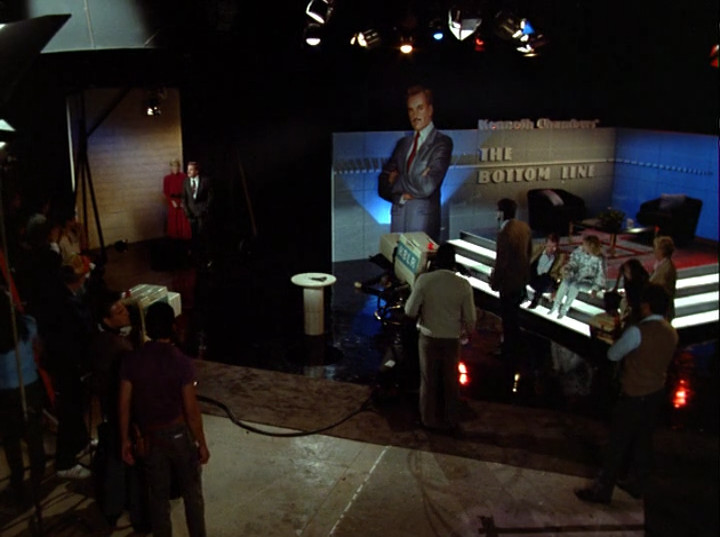
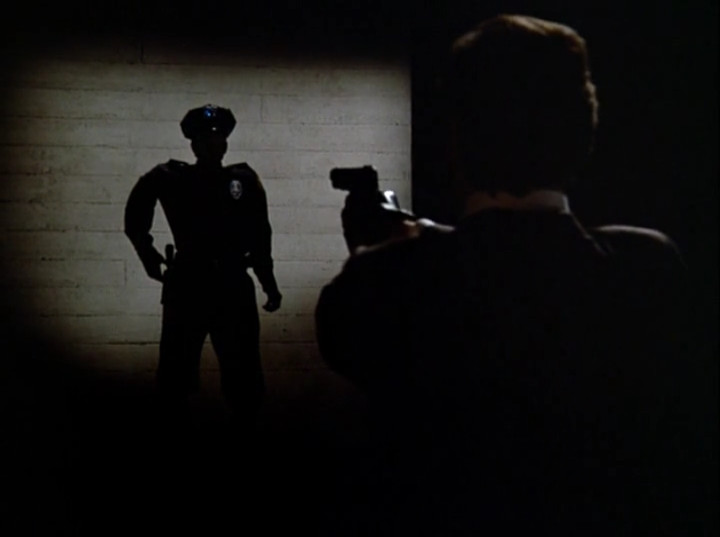

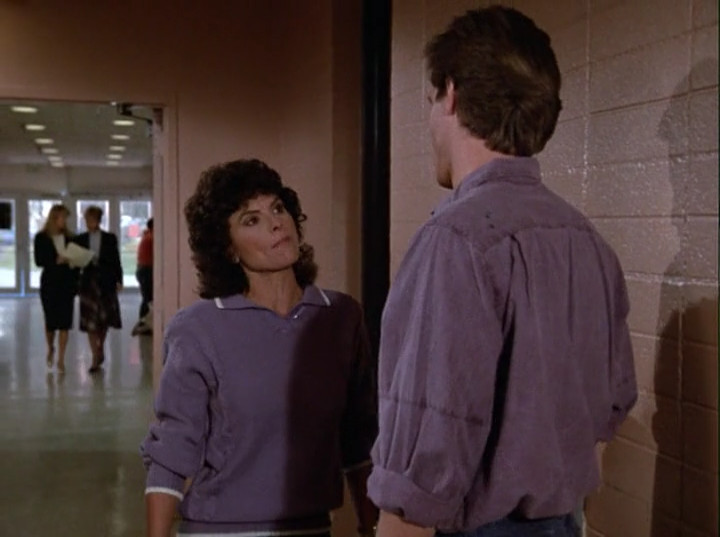


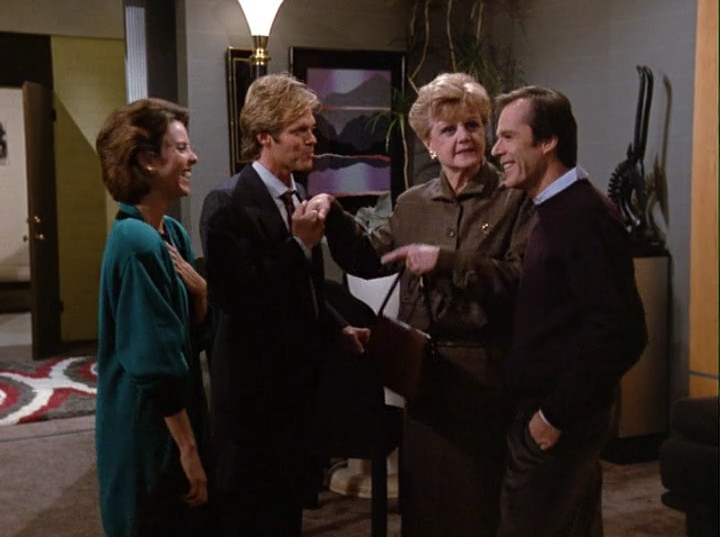
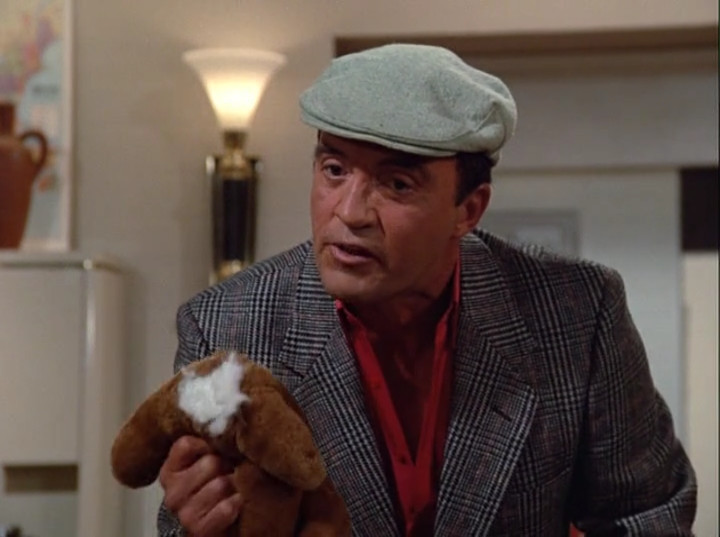
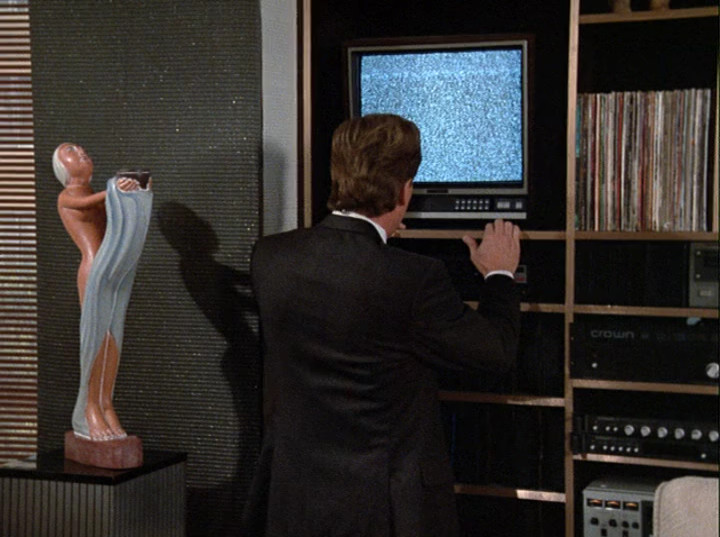
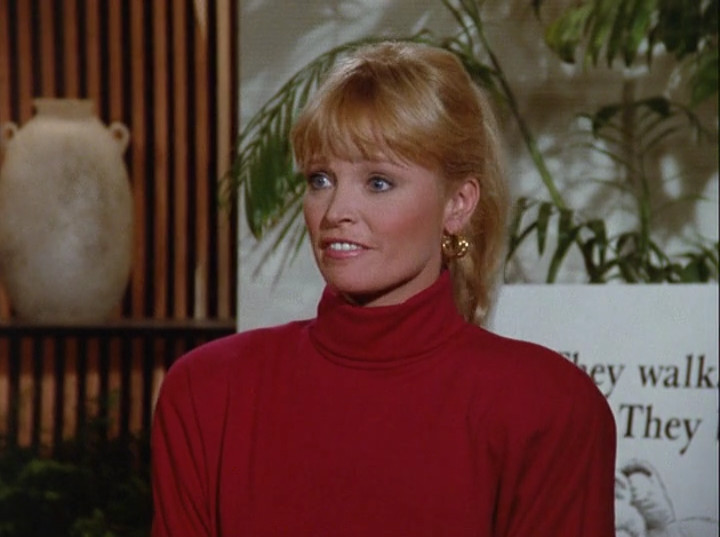

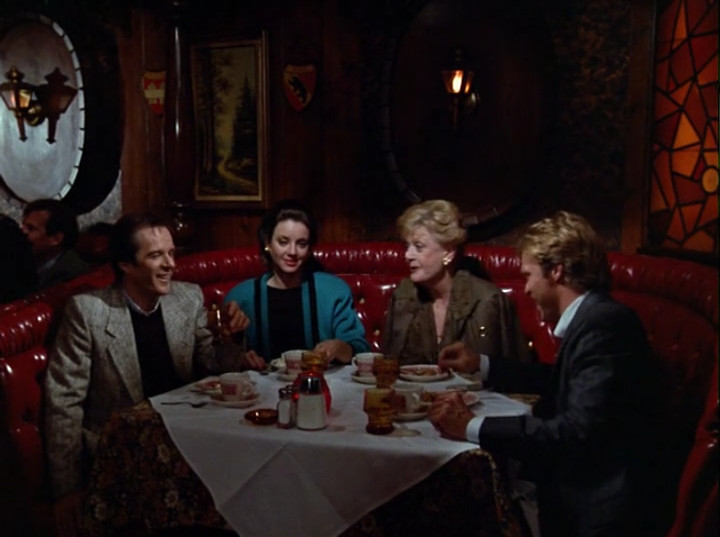


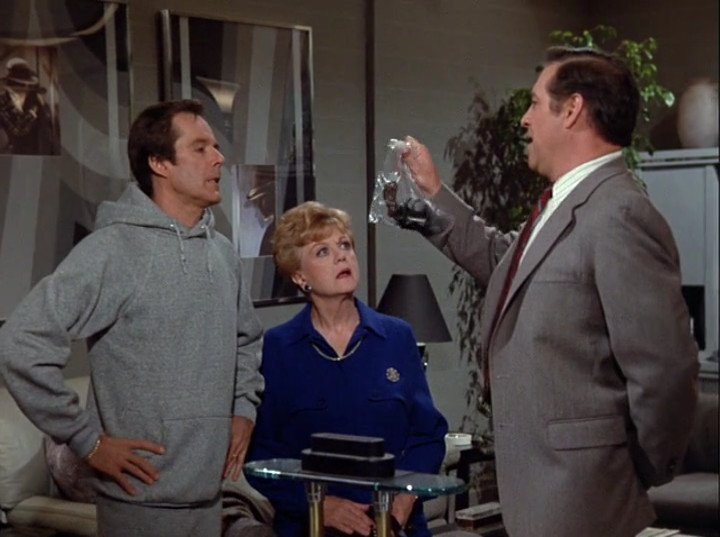
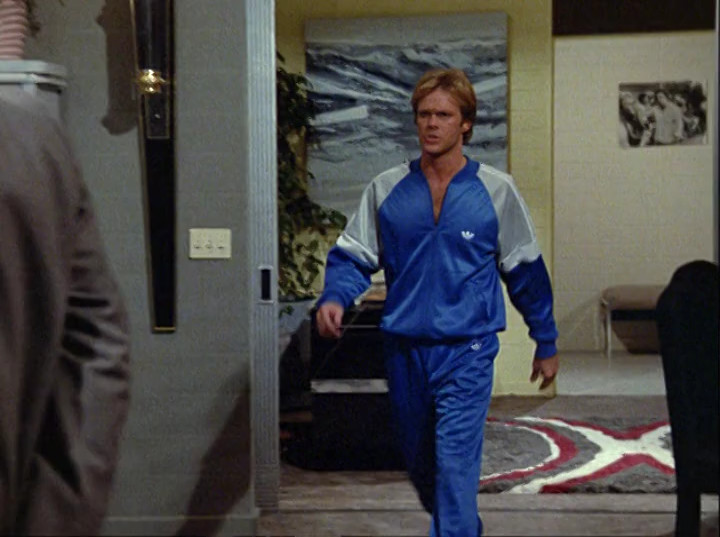

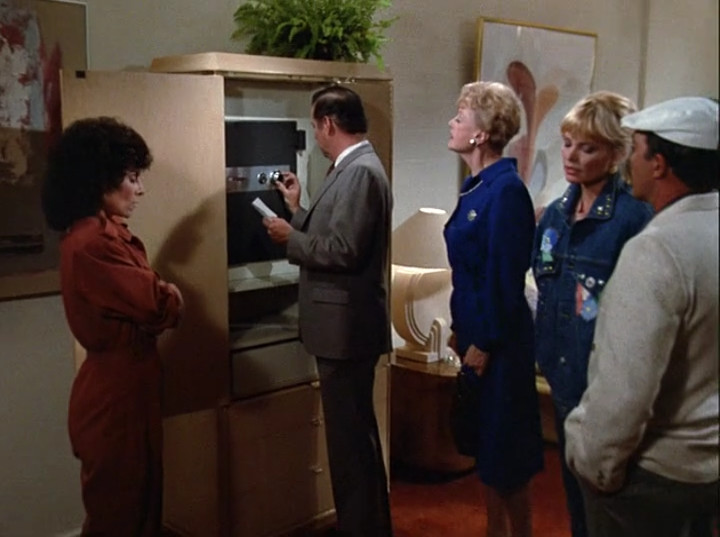


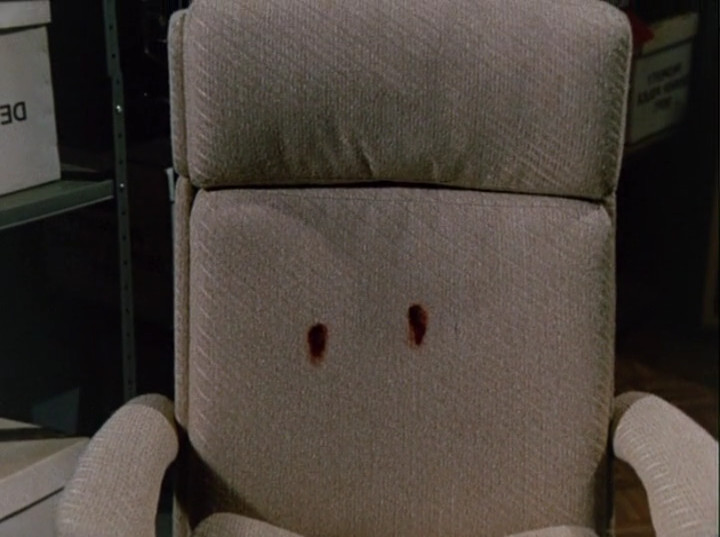
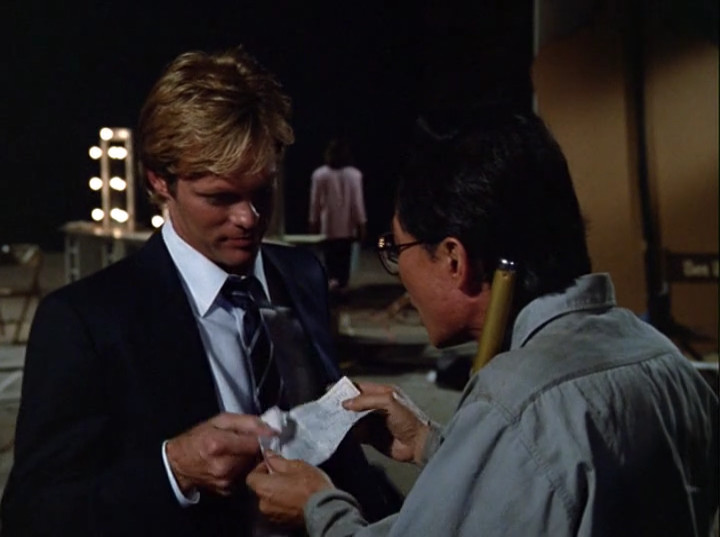

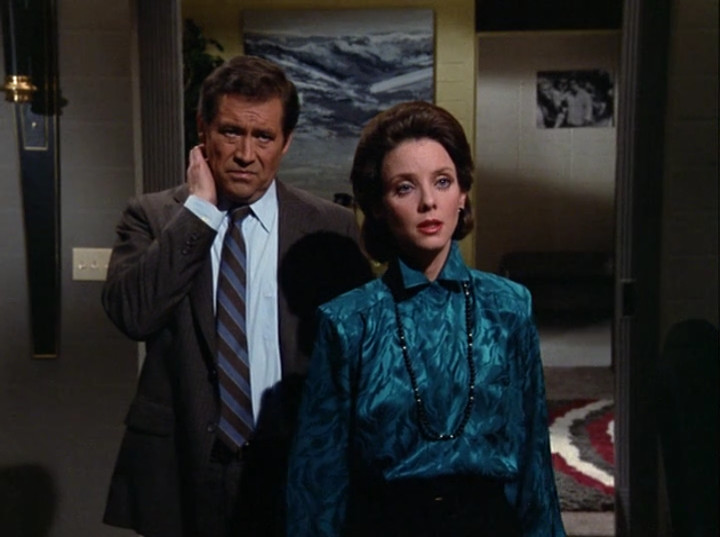


 Chris Lansdown
You must be logged in to post a comment.