When I was young, it was common for people to blame Christianity in particular or religion in general for the existence of scolds. It never seemed to occur to these people that scolds love to scold people, and will use whatever seems to them the dominant moral framework to scold people.
Scolds need to be distinguished from more general manipulators, who will also use whatever they perceive to be the dominant moral framework of the time to get what they want. For example, suppose a person who is often late and doesn’t want to just apologize for it will try to get people to stop complaining about it. If people are very concerned with racism, they’ll figure out how objecting to them being late is racist. If people are concerned with communism, they’ll figure out how objecting to them being late is communist. If people are concerned with demons, they’ll figure out how objecting to them being late is demonic. They are using whatever is popular, but, unless they’re lucky, the connection is often extraordinarily tenuous.
Scolds tend to operate differently. They stick closer to whatever the dominant moral paradigm is, but make no allowances for context—or implicitly throw away every other concern. Since a human being must balance out all of the virtues in order to live well, this means that they will always do things below the standard of the scold, who makes no allowances for that balance. Thus the scold always has the opportunity for the pleasure of telling somebody else what’s wrong with them.
If one tried to prevent the scolds by getting rid of all rules whatever, the scold would probably just start hurting people by hitting them with whatever sharp objects were ready to hand, since this would no longer be against society’s rules. Such a life would, of course, be, as the saying goes, “nasty, brutish, and short,” but the scold would die with Ahab’s words on his lips, “From hell’s heart I stab at thee; for hate’s sake I spit my last breath at thee.”
There will be no escaping the scolds until the end of time when the angels bind up the weeds and cast them into the fire. And one can only escape the scolds then if one is not a weed oneself. And, after all, that’s the thing each of us actually has control over.
It seems to me that the institution of family gatherings has been on the way out for a long time in America, and as so often happens, people tend to mistake the last stages of a thing dying for when it started dying, because it is in the last stages of it dying that its death becomes undeniable. In this case, I would trace the beginnings of when family gatherings started dying to when it became considered acceptable for them to be unpleasant.
In my experience, the particular form of unpleasantness which was common was complaining about whatever people saw on the news recently. When I was young, I mistook the order of cause and effect and thought that the news was ruining family gatherings. While it certainly didn’t help—news made its money by trying to make people anxious—people would rant about whatever the news led them to conclude was the problem of the minute not because they were overwhelmed and couldn’t help themselves, but because the people at whom they were ranting didn’t matter to them.
If you want to get really technical, I suspect that they thought that everyone agreed with them because it didn’t occur to them anyone might not be a mind-slave of the news since they themselves never questioned it, and so they thought that a five minute hate would be a nice group bonding exercise. But it’s instructive to notice where they don’t make this mistake: with strangers. With strangers, they care about how the other people might feel, whereas at family gatherings it just doesn’t matter enough to think about.
To be sure, part of it is a sense that family is stuck with one, and so one doesn’t need to be careful. But even that is quite telling, because it clearly doesn’t contain any consideration that one has a responsibility to the family to make their time at the family gathering pleasant. Conversation is an art form that requires skill and effort. I’m not sure when American society decided that family wasn’t worth that time and effort, but it feels to me like it happened a long time ago.
One of the things which struck me when I recently read The Communist Manifesto (plus two earlier drafts of it in FAQ form) was that Karl Marx seemed to believe that the industrial revolution meant the end of scarcity. When he described a never-before-seen problem of over-production, he made it sound like the problem was too many products now existing with nothing to do with them, not a bad use of scarce resources. And much of the insanity of the Communist Manifesto follows at least somewhat logically from that incorrect premise. Having said that, as I was recently cleaning up the family room, it did strike me how much junk it’s easy to accumulate in the modern world—and I mean stuff literally no one wants and you can’t give away, so all you can do is throw it out. In certain ways, if you’re reasonably well off, it can feel a little like a post-scarcity world. And this reminded me of something Rob K. Henderson talks about with regard to luxury beliefs—that the wealthy no longer show off their wealth with luxury goods, but by flaunting luxury beliefs.
If you’re not familiar, luxury beliefs are basically beliefs so stupid that you can only survive them if you’re rich enough to avoid the consequences of them. (Technically, Rob defines a luxury belief as “ideas and opinions that confer status on the upper class, while inflicting costs on the lower classes.”) The basic idea, as Rob describes it, is that it used to be the case that the rich flaunted their wealth with fancy clothes, fancy cars, jewelry, and the like. But these are now too accessible, so instead the wealthy flaunt their wealth in ways which are not so accessible. In a sense, this is not entirely new. Bertie Wooster, P.G. Wodehouse’s satire of the idle rich, and his friends flaunted their wealth through being conspicuously stupid in the 1910s, 20s, and 30s. Even earlier, in his 1910 book What’s Wrong With the World, G.K. Chesterton remarked:
Sir William Harcourt, that typical aristocrat, put it quite correctly. “We” (that is, the aristocracy) “are all Socialists now.”
That said, I think that Rob is right that there is something peculiar to our time in the abandonment of luxury items as signifiers of status. And I think that no small part of it is the general level of material wealth. It’s true that there are still very expensive versions of common things, but they’re usually not all that much better. They’re mostly just more exclusive. An exclusive watch doesn’t keep the time better, or sparkle brighter, than a cheap watch. To know which are the very expensive handbags you need to be able to recognize logos. Gold, as in the metal composed primarily of the seventy ninth element on the periodic table, is still quite rare, but gold the shiny color is everywhere. To quote Chesterton again, this time in response to the common phrase that “not all that glitters is gold”:
All is gold that glitters, for the glitter is the gold.
That is to say, people valued gold because it’s pretty. Now that there are things equally pretty, some people cling to the exclusivity of the rarity of one particular gold-colored metal, but most people don’t really care. You can buy children’s jewelry for a few dollars that’s as pretty as anything you buy for tens of thousands of dollars in a real jewelry store—at least if you don’t pull out a microscope, and most of us don’t even rent microscopes, let alone own them. (Admittedly, the children’s jewelry isn’t as durable, since the pretty part is usually on the outside, as a paint, but the children’s jewelry is so cheap one might as well throw it out and buy new once the glitter has been worn off.)
This is true of many other things, too. Chemically synthesized pigments and plastics have made things that used to be extremely rare now universal and extremely cheap. Digital distribution of media from books to music to movies have had a similar effect. And here we come to the point about the end of scarcity: scarcity is quite far from over, but I can see how people raised in affluence and with certain kinds of tastes could mistakenly think that we’ve basically come to the end of scarcity.
To spell that out a little: affluent people tend to be raised in such a way that they think of having a job as a normal and desirable way to spend their time; they often (mostly erroneously) think that if they didn’t need to work, they’d still work anyway. So it would not be hard to ignore that they do work for which they happen to be paid well. On the other half of it, if their tastes happen to run to things that have become extremely cheap, they will tend to have the ability to get more than what they want. These are the people for whom it is very difficult to buy birthday presents because they already have everything they want. That’s not a matter of being fabulously wealthy, it’s just a matter of what they want costs $100 per month in subscriptions and maybe another $100 per month from Amazon (and their cell plan and internet bill are, to them, just basic living expenses they can easily take care of) and they spend most of their time on social media or consuming stuff they get from their subscriptions. If such a person has no curiosity about how things like the phone they use or the cell service they pay for work, I think it’s possible to see how they would, without thinking about it, assume that scarcity is over.
If a person does make such a mistake, I suspect it might easily lead them in the direction of some of the very destructive places the belief in the end of scarcity led Marx. For example: if scarcity is over, there are no question about how resources should be allocated which need to be answered. They can thus be ignored, or else whatever the answer which sounds most pleasing on the hearing of it can be accepted. Since scarcity is over, there’s no real need to motivate people to work, since you have unlimited everything anyway. Since scarcity is over, there’s no need to take care of anything since you can always replace whatever is destroyed through neglect with a new one out of the infinite supply of new ones. Since scarcity is over, the only reason anyone is lacking anything is because someone is keeping the infinite supply of things from getting to the person who is lacking.
I suspect that this illusion of scarcity having ended is a big part of why luxury beliefs seem plausible to so many people.
On the twenty seventh day of October in the year of our Lord 1985, the fifth episode of the second season of Murder, She Wrote aired. Titled Sing a Song of Murder, it is set in London. (Last week’s episode was School for Scandal.)
After some establishing shots of London and a small theater, the episode opens in a theater. On stage is Oliver Trumbull, who is this theater’s Fozzie Bear (I find it’s easiest to explain this theater as a live-action Muppet Show).
His jokes aren’t nearly as good as Fozzie’s, though. Here’s his first one:
A bloke never gets in trouble chasing women. It’s after they’re caught the trouble begins.
His second is no better:
I just got this letter from a man. Says if I don’t stay away from his wife, he’s gonna shoot me. Ruddy mess he’s put me in. He didn’t sign it.
His delivery is bored and lethargic, which, when combined with the terrible material, makes the audience’s non-reaction easy to sympathize with.
Unfortunately for us all, there’s no Statler and Waldorf to liven things up. Instead, Mr. Trumbull heckles the audience for not laughing, which is a bit painful.
We then meet Archie, the Kermit of this theater, who is standing in the wings, waiting for the act to be over, when Oliver Trumbull’s daughter Kitty shows up and he greets her.
He was actually pleased to see her but expressed that when we couldn’t see his face.
Trumbull’s daughter, Kitty, is played by Olivia Hussey, who you might recognize as having played Mary in the movie Jesus of Nazareth some years before.
He’s surprised to see her on a weekday and she explains that school is on vacation (“on holiday”). Archie asks if her Dad has mentioned the offer the theater has received to buy it but she doesn’t think it matters because “the great lady” won’t sell. (She makes it pretty clear that she dislikes “the great lady”.)
Kitty then runs into Bridget, who isn’t overly friendly to her. Bridget is Irish, which might be related (in stereotypes, the Irish often have sharp tongues).
Bridget is played by Glynis Johns, who you might recognize as Maid Jean in The Court Jester or Mrs. Banks in Mary Poppins.
Shortly after this, Fozzie’s act is finally over and Kermit goes out on stage to bridge the acts:
He actually says, “Thank you, thank you, thank you.”
Then he introduces “the gemstone of our evening’s diversion,” Miss Emma McGill. (She’s a less violent Miss Piggy.)
Emma is Jessica’s cousin, and just happens to look exactly like her. Anyway, she sings a song called Little Yellow Bird. Here is the first two verses, which give a pretty good idea of what the song is like:
The snow was very plentiful, and crumbs were very few
When a weather-beaten sparrow through a mansion window flew.
Her eye fell on a golden cage, a sweet love song she heard
Sung by a pet canary there, a handsome yellow bird.
He said to her, "Miss Sparrow I've been struck by Cupid's arrow
Would you share my cage with me?" She looked up at his castle
With its ribbon and its tassel and in plaintive tones said she:

Sweet, sweet little Yellow-bird,
I'd gladly mate with you
I love you, little Yellow-bird,
But I love my freedom too ...
So good-bye, little Yellow-bird,
I'd rather brave the cold
Than a prisoner be, and a slave like thee
In a cage of gold.
First published in 1903, it was features in the 1945 movie The Picture of Dorian Gray. Sung by Angela Lansbury!
Given that Emma McGill is singing out of date songs while she desperately clings to past glory, it is a fascinating choice to use a song which Angela Lansbury sang in a movie almost exactly forty years before. If you have any familiar with the career of Angela Lansbury, you’ll be aware that she did a great many very different things in those forty years and was in no way trying to hold onto the past.
But on the other hand, one of the main themes of Murder, She Wrote is that old things are still valuable. Which makes the reaction of the crowd interesting. They start singing along. Even the punks.
On the flip side, we get a scene with Archive and his wife Violet (who, so far as I can tell, has no equivalent on the Muppet Show because she’s not a performer, but she doesn’t have a big part in this episode, so it doesn’t really matter).
She’s upset that Emma isn’t willing to sell the theater and wants Archie to try to talk her into it.
Back on stage, Emma finishes her song and the audience claps enthusiastically.
Back in her dressing room, Emma remarks to Bridget that if the weather hadn’t been so ghastly they’d have done much better. Bridget replies, “Right. That and have parliament black out the tely.”
Archie comes in and tries to talk Emma into selling, but she won’t budge.
Later that night, Emma joins Oliver, who was waiting for her. They decide to go to the “Ram’s Head” for a pint (of beer). As they start walking, Emma says that she wishes that Kitty (Oliver’s daughter) liked her better. Oliver assures Emma that Kitty adores her, in a way that suggests that Oliver really is this oblivious. Also, he tries to talk Emma into selling the theater and retiring, and she replies that she loves him, which is why she’s going to do him the favor of not marrying him.
As they go outside, Oliver realizes his forgot his wallet and goes back inside to get it. As she starts walking outside, someone tries to run Emma over and she’s barely able to dodge out of the way.
Oliver comes out and runs over to her and she lies that everything is fine and it was just a drunk driver.
The next day, Emma gets into her car while someone in another car watches on, and music plays which is equally ominous the music which played while the car was waiting to run over Emma the night before. Emma drives off the car follows.
Then in Cabot Cove, Jessica gets a call from Emma’s solicitor, Earnest Fielding.
Interestingly, the actor, Kristoffer Tabori, played Philip Carlson in the first season episode We’re Off To Kill the Wizard. (In a year or two, he would also play Sir Henry Baskerville in the Grenada version of The Hound of the Baskervilles starring Jeremy Brett.) Anyway, Mr. Fielding gives Jessica the sad news that her cousin Emma has been killed in a fatal auto accident. Emma specifically requested that Jessica attend the service in her will, so we get some stock footage of a Boeing 747 landing and Jessica is in London.
Before Fielding can pick her up, she’s approached by Danny Briggs, who uses a copy of one of Jessica’s books to identify her.
He offers to buy her half of the music hall.
Jessica’s telling him that this conversation is premature is interrupted by Fielding, who then brings her to his car, where to Jessica’s astonishment, Emma is waiting for her in the back.
It’s a little strange that she’s dressed in mourning for herself, but in any event on this bombshell we fade to black and go to commercial.
Had you been watching in 1985, you might have seen a commercial like this:
When we get back, Jessica and Emma are talking in the back of the car as Fielding drives them to the hotel where Jessica will be staying. Emma explains that someone is trying to kill her. The first attempt was two weeks ago—her gas heater blew up right after she got home from church. The following Sunday evening, the rug at the top of the stairs was loose. And this past Saturday, someone tried to run her down right outside of the theatre.
Jessica is incredulous and insists that Emma must go to the police. When Emma refuses, they go to the flat Fielding rented to hide Emma in and discuss the case. When that turns up nothing, Jessica says that she wants to go to the police, saying that she knows a guy.
When Jessica gets to Scotland Yard, though, it turns out that Inspector Kyle is on holiday. (Jessica knew him from Paint Me a Murder.) Instead, Jessica gets Inspector Crimmins:
He’s available to help Jessica because the new superintendent is trying to force him into early retirement by giving him a light and very boring workload. In fact, he’s dying for the opportunity to do something interesting, so he leaps at the opportunity to help.
When he asks if Jessica has stumbled in here with a murder, she replies, “Not exactly. At least, not yet.”
We then cut to the memorial service the next day.
Since they don’t have a body, they make do with a painting and black drapes.
Jessica makes quite a stir when she enters as people think they’re seeing a ghost, but that’s quickly cleared up. After some minor conversations, Inspector Crimmins shows up and asks for everyone’s attention. He carries the news that Emma’s body has been recovered from the beach, and he needs Jessica to come identify the body. Fielding requests that he be allowed to make the identification and to spare Jessica the ordeal, which the inspector readily agrees to. They head off, leaving Jessica behind.
In Emma’s dressing room, Bridget catches Jessica going through everything and begins complaining about what she may or may not have been left in Emma’s will. Jessica tries to pump Bridget for information about the accidents, but she doesn’t get anything we don’t already know. We do get the cute line, though, about Archie’s wife, Violet, “Now, there’s one who’d make Lady Macbeth seem like a flower girl.”
Jessica then interrupts Oliver rehearsing for an audition. The dialog doesn’t reveal much other than how protective Kitty is of him. Jessica’s manner is also a bit odd—she’s her usual cheerful self and seems to forget that she’s supposed to be in mourning. She doesn’t even bother with mourning clothes.
Outside, Oliver tells Kitty that he wants to go to the audition alone, and Kitty relents, saying that she’ll go to a travel agents and book an inn in Brighton for next weekend so they can get away.
The scene then changes to Jessica having dinner with inspector Crimmins. During the conversation, Jessica suggests that they take a look at the Chelsea road flat. Crimmins agrees and when they get there they see a figure in Emma’s coat walking out the front door. When she gets to the road, she’s run over by a yellow sports car.
Jessica and Crimmins rush over and, turning over the body, discover that it’s Bridgit O’Hara in Emma’s leopard coat.
She’s dead.
And on that bombshell, we fade to black and go to commercial.
When we come back from commercial, inspector Crimmins calls Mr. Fielding and tells him that the deception has gone far enough and Emma needs to come in to Scotland Yard as soon as possible.
So they do. Or at least say that they will.
In Scotland Yard, Archie Weems runs into Jessica as she’s waiting in a corridor. He asks if the rumors he heard from a friend on the force are true, that Emma is still alive. Jessica confirms and and when Archie asks what’s going on, instead of directly answering, she gives us a bit of exposition: Bridgit was wearing Emma’s coat, and in the darkness the killer probably thought that Bridgit was Emma. Archie asks if it was Emma’s leopard coat and says that explains it—it was well known that Emma promised that coat to Bridgit and Bridgit probably figured to make good on that promise before the lawyers started mucking things up.
For some reason Jessica and Crimmins then go to Emma’s flat to talk to her. Perhaps they didn’t build a big enough Scotland Yard set and this saved money. Anyway, the interview with Emma happens in Emma’s temporary flat.
After a bit of rehashing of what we already know for the benefit of Emma and Fielding, Jessica asks the obvious question: why did the killer assume that Bridget in Emma’s coat was Emma, seeing as how everyone believed that Emma was dead?
After a bit of subtle finger-pointing at Emma, Emma confesses that she called Oliver and left a message on his answering machine since he seemed so poorly.
This causes as much general dismay as you might expect, with Crimmins saying that while Oliver wouldn’t have hurt her, he might have let the secret slip to someone who would have. When Jessica points out that this might be premature since they didn’t know whether Oliver even heard the message, Crimmins says that it’s time for them to pay Oliver a visit.
(Also, he’s going to post a 24 hour surveillance on Emma.)
Over at the theatre, Danny Briggs meets with Archie at his request. He informs Danny that Emma is still alive, and it was a stunt because it “seems someone’s been trying to put her away.” Danny protests his innocence, but Archie says he draws the line at murder. Danny replies, “So do I, Archie.”
Over at Oliver Trumbull’s apartment, Jessica and Crimmins listen to his answering machine. There are two messages on it. The second is from a director saying that they’re prettymuch cast but if he wants to pop around to the director’s hotel (the Cumberland) at around 9, he’ll have a look at him. They have to rewind to get to the first, which is Emma’s message. It doesn’t give any details, just lets him know she’s alive and will be in danger if he tells anyone.
They track Oliver down to his audition for the part of Falstaff. Oliver chews the scenery with a ferocity that would do credit to any beaver, but the director isn’t impressed and thanks him for his time when he forgets his lines. This causes him to sputter in rage, and the director angrily replies that he begged the director for an audition at his hotel last night and when he (Oliver) does this badly he (Oliver) should have the courtesy to let the director go without having to sit through more of it. (Not precisely in those words.)
When Oliver runs into Jessica, he apologizes that she saw that and, weirdly, Jessica replies, “Oh, Mr. Trumbull, the embarrassment was not yours, believe me.” His daughter, Kitty, adds to this “You were magnificent.”
In fact, he most certainly was not magnificent, and the embarrassment was all his.
Anyway, Jessica asks if there’s someplace to talk and Oliver invites her to a nearby pub. There, she breaks the news that Emma is alive and Bridget is dead. She also explains the reason for the deception—that someone has been trying to kill her. Oliver demands to see her immediately and gets quite upset when Jessica says no. She then challenges him, saying that she’s surprised that this is news to him since she telephoned him late yesterday.
Trumbull says that he didn’t hear it because he didn’t go home. He camped out all night at the director’s hotel. Kitty said she found him around 12:30 in the lobby, half awake, a room key dangling from his pocket. (He booked a room because it was the only way to get a drink after 11pm.)
Jessica replies that this can’t be true, though, because the message from the director saying to meet him at the hotel lobby was after the message from Emma, so he couldn’t have heard the one without hearing the other.
At this, Inspector Crimmins emerges from the shadows saying, “My thoughts precisely,” and arrests Oliver. Oliver looks at Kitty, who looks at Jessica, and then we fade to black and go to commercial.
When we get back, Oliver is being interrogated at Soctland Yard. There, Oliver explains that he overheard the director’s secretary book a table for him in the Cumberland hotel dining room, which is how he knew to go there without having heard the message. Trumbull says that the porter and concierge should remember him being there from 7:30 until past 11, since he was paged for a phone call from his daughter.
Unfortunately for him, while the porter and concierge remember him and they remember the phone call, they don’t remember the times for any of that.
Jessica and Kitty are waiting outside of the interrogation room and Fielding and Crimmins come out and Fielding informs Kitty that her father will be formally charged on the morrow. Kitty objects that this is impossible because she phoned him at the hotel at 8:00 and there’s no way he could be in two places at once. Crimmins replies that the concierge confirmed the phone call, but at 9:00, not 8:00.
Outside of Emma’s flat, the plainclothes officer conducting surveillance is distracted by a car crash.
Given that the guy whose car was driven into is Archie Weems, it seems likely that this is a set-up. And, indeed, it is. Danny Briggs takes the opportunity to pop up to Emma’s flat unobserved. He gets Emma to open the door by knocking and announcing himself as “Constable Boyles” in a hoarse voice.
Inside, he demands that she sign the papers selling the music hall, but Jessica and Inspector Crimmins arrive on the scene and when they call through the locked door, Briggs tried to flee out the window. He doesn’t make it, though, because Emma hits him on the back of the head with a flower pot.
The Inspector and Jessica come in and Inspector Crimmins congratulates Emma on a nice bit of work. Jessica is not so thrilled, though. Briggs isn’t the culprit, but Jessica knows who is.
Over at the theatre, Oliver and Jessica walk in, with Oliver thanking Jessica for arranging his release. Oliver then reminisces about how he’s “trod these boards” for seventeen years, and back then it was grand.
(Given that 17 years before 1985 was 1968, I do have to wonder how accurate this is—did people really enjoy terrible jokes and “Goodbye, little yellow bird, I’d gladly mate with thee” in 1968? Beetlemania started in 1963, so I have my doubts about how popular this stuff that was old-timey in the 1940s would have been in the late 1960s. Honestly, even the nostalgic aspect is a bit too short—when you’re in your sixties, seventeen years ago feels more like “just yesterday” than “a long time ago”.)
Kitty comes in and is overjoyed by seeing her father free. Jessica puts a damper on this by accusing Kitty of the murder. Jessica then runs through the evidence. First, all of the attempts on Emma’s life being on weekends suggests someone who was only here on weekends. But the real clincher is Kitty’s phone call to the hotel. There was no way she could have known to call him at the hotel unless she had heard the message on his answering machine, which would have meant that she also heard Emma’s message. She had no way of knowing about the temporary flat, so she drove to Emma’s house on Chelsea Road and waited.
Kitty angrily admits it to get Jessica to stop talking. Oliver is confused and hurt and asks Kitty why. Kitty says
She was destroying you, Dad. Or couldn’t you see it? You were so magnificent with a God-given gift that you—you prostituted to become a second-rate music hall comic. You couldn’t break away. Every year, you got weaker and more dependent while I stood there and watched. You couldn’t help yourself, Dad. But I could. Don’t you see? I had to kill her… for you.
She begins weeping and her father comforts her, and we freeze frame and go to credits.
Gimmick episodes were almost never good episodes of TV series and this episode is no exception. I don’t know who thought that “let’s give Jessica an English cousin who looks exactly like her” was a good idea—well, that’s not quite true. It was almost certainly Angela Lansbury who thought it was a good idea because she wanted to do an English accent. She seemed to love roles that gave her the opportunity to over-act, and if she could do an accent at the same time, all the better. But I never read her claiming credit, so technically what I said was right. I don’t know who thought it was a good idea.
The direction in this episode was really strange, too, though it is generally consistent with other episodes—whenever Murder, She Wrote depicts great acting on stage, it’s always the most scenery-chewing over-acting you’ve ever seen. A termite genetically engineered to be the size of a dog and hyped up on cocaine could not chew the scenery with more vim and vigor. What’s even weirder is that the acting performances on stage are usually quite bad even apart from being overdone. I know Angela Lansbury can act well, and I assume that the bloke who played Oliver Trumbull can, too. Yet on stage, like Nigel Tufnell in This is Spinal Tap, he dials it up to 11. Except here that’s the starting point, and he just turns it up from there.
As far as the mystery goes… it’s given short shrift. How did Kitty manage to sabotage Emma’s gas cooker or the rug on her stairs? We never get so much as a speculation. The running over of people with cars is easy enough, though how Kitty did it in two different cars is never explained.
The one thing I think the episode does have going for it is Kitty’s motive for murder—a massive over-estimation of her father’s talent. It does make a certain sort of sense that being that disconnected from reality bleeds over into bad problem-solving, too. Since she thought her father amazing while he was actually terrible, she needed some kind of explanation for the discrepancy between what she “knew” him to be and how everyone reacted to him. Localizing that into a single point that means destroying someone will fix all of her problems is exactly the kind of thing that human beings often do.
Oh well. Next week we’re in an undisclosed location that contains the mansion of one of Jessica’s man rich friends for Reflections of the Mind.
When it comes to the monotheism of the Jews, one hears some amazingly stupid things from atheists. So much so that it’s hard to even rank them. Sometimes it’s not even the conclusion that’s so bad, it’s just the argument for it. In this latter category I rank things like atheists breathlessly saying that the Jews were not originally monotheists and believed that other gods besides Yahweh existed. Yeah, no kidding. But the thing is, they don’t get this from just reading the Torah and noting where it explicitly says this over and over—often as a complaint. Instead, they point to the most untrustworthy records one can image.
I was talking with an atheist the other day who cited the argument he read that there were trading partners who wrote down a few things about the Jews, of which we have a few shards, and they don’t mention the Jews as being strict monotheists. I would have a difficult time imagining worse evidence for something so obviously true. Leaving off that absence in fragmentary records—and all records from the ancient world are incomplete—is not dispositive, these are the records of people I’d never in a thousand years considering going to for an authoritative report on the theology of the Jews. This would be like concluding that not all physicists believe the Copenhagen interpretation of quantum mechanics by citing the diary of a used car salesman who sold cars to a few physicists. How does anybody cite this kind of thing with a straight face?
And even weirder, why would anyone cite the diary of a used car salesman that not all physicists believe in the Copenhagen interpretation when one can cite actual physicists saying that they don’t all believe it?
Another weird part of this lunacy is often the claim that Yahweh was originally just a local god who “won.”
That’s not a thing that happens in polytheism. Sure, the gods fight with each other, but that’s to achieve some goal or other, or to punish each other for infidelity, or prettymuch anything else that makes a cool story. They don’t supplant each other like paganism is some kind of version of Highlander where eventually one god cuts off the heads of all the others and gains their powers and in the end there can be only one. That just doesn’t even begin to make sense. It’s like explaining that temperature was thought to be the average kinetic energy of molecules because kinetic energy won out over temperature, but electro-magnetism hasn’t beaten kinetic energy yet, which is why we still have those two. That’s just not how it works at all. Most things in life aren’t a winner-takes-all elimination competition. There’s one president of the United States because he used to be a governor, but then Washington DC conquered the states and killed all the governors and the governor of Washington DC became President! Not how it happened, but at least that kind of thing can happen. Eventually the personification of rain came to supplant the personification of the sea so that people stopped believing in the sea—that’s just not how things work.
Then there’s the version where Yahweh was a purely local god who the Jews still worshipped during the Babylonian captivity so they had to explain why they’re still worshipping him even though they’re now hundreds of miles away from where he lives so they claimed he’s the uncreated creator of all that is and so is universal.
Right.
The sky god was universal. And the earth goddess. And the sea god. There were lots of universal (or at least non-local) gods in the ancient world. And wouldn’t it have been a little simpler for Yahweh to… walk to Babylon? Why universalize him rather than just… move him?
What’s weird to me is how absurd these theories are. I’m not saying that one cannot come up with a plausible secular story, but it’s really weird to me how often the secular stories atheists propose are preposterously dumb.
For the last thirty years or so, I’ve been watching people complain about the progressive capture of institutions, turning them from what they had been into instruments of progressive propaganda. Newspapers became instruments of progressive propganda before I was born, and Universities turned into it while I was a child, but it became especially noticeable perhaps thirty years ago. We’ve seen similar things with comic books and movies. And these have all declined tremendously in their cultural significance. And consistently, people have tended to reverse the order of causality there.
If you look at parasitic infestations in the real world, they’re almost never of healthy organisms. There are a few exceptions, like the wasps who paralyze caterpillars and then lay their eggs inside the caterpillar, but this is a direct attack by a larger and powerful foe. The eggs—which are the actual parasite—would have no chance without their parent attacking the caterpillar. Malarial parasites are like this too—they hitch a ride on a much larger and more powerful creature (a mosquito). But if you look at parasites to make their own way into a host, you’ll notice that by and large they can only attack weakened hosts. Fungi, for example, can only decompose dead trees, they can’t do anything with living trees.
And if you look at how progressive institutional capture goes, with some exceptions having to do with Soviet and/or Chinese funding, which act a bit more like the parasitic wasps or the mosquitoes, it’s usually quite a lot like how fungus takes over dead trees which haven’t fallen over yet. In trees, once the tree no longer has vitality left, it stops being able to heal the incredibly minor wounds caused by insects. Then funguses, which have the ability to digest the lignins which make wood strong, move in and the tree doesn’t have the strength to fight them off, so they start spreading within the tree, digesting it from the inside. Eventually, the tree no longer has the strength to stand, and so it falls. The fungi keep digesting it until it turns into dirt, and the fungi die off.
If you really look into the institutions which have been captured by progressives and worn like a skinsuit in the effort to spread progressivism, you can usually notice that the vitality left a while before. It’s often, in fact, when the organizations transitioned from an organization with a mission into an institution. The source of vitality had been the mission; once the organization no longer has the mission it becomes just a structure with nothing animating it. This is very easy to see within academic institutions. They ceased to be about the pursuit and transmission of truth somewhere around the 1700s, as Protestantism entered its late stages and turned into Modern Philosophy. This took time to work itself out. A lot of things in this world take time for their effects to be visible—if you’ve ever chopped a branch off of a tree, you’ll notice it can take days for the leaves to wilt. By the 1900s, Universities were in no small part finishing schools for the children of the rich and so they had no defenses against parasitic infestation. But because rot usually happens from the inside out, it took the rest of us a long time to notice. In many ways it was only because progressive institutional capture is so brazen and shameless that we tend to notice it. But if you look at what Universities were actually publishing, the quality has been pretty bad for a long time.
Comic books took a massive turn toward anti-heroes and away from real heroes in the 1990s. It was after a decade or two of this that we started to see social justice messaging in comic books. Movies largely lost their cultural relevance in the 1990s, and it was in the 2010s that we saw them going woke. But they lost their moral compass in the 1970s with the death of the Hays code in 1968, and we saw this working itself out in the 1970s and 1980s. It wasn’t a straight line; there was a rebellion against the nihilistic cynicism of 1970s movies in the 1980s, before largely falling back to it in the 1990s. And there were, certainly, exceptions. Star Wars was vibrant and alive with its defiantly hopeful message of life having a meaning and good being worth fighting for.
I am, of course, painting with an extremely broad brush, because I’m only trying to give an outline of something to look for in history, I’m not trying to write an actual history of any of these fields. But the general pattern in life is: mushrooms sprout in dead things, not in living ones. Though sometimes they sprout in dying things.
Disney Star Wars is an endlessly fascinating thing not because it is such a colossal failure, but because it was such a predictable colossal failure that managed to be even worse than one would have expected it to be. (If you want to laugh at part of it, consider reading my review of the second film, The Least Jedi.) The aspect of this failure I want to discuss today is the issue that the sequel trilogy intrinsically needed to pass on the torch, and how they snuffed it out instead.
There’s nothing wrong with the idea that the sequel trilogy should have passed on the torch from the original characters, who are now in their sixties and seventies, to the next generation. This was necessary from a purely practical perspective for keeping the franchise going, but the good news for Disney, as far as this goes, is that passing on the torch is an intrinsic human activity. We’re all here only for a while, and then we’re gone, so we’re all eventually replaced. Passing the torch on to the next generation is a very human thing to do and part of our natural lifecycle. Indeed, as we grow older, healthy human beings begin to want to pass the torch on as befits our stage in life. And there’s the rub. Healthy human beings want to do that. Hollywood’s problem is that it’s filled with utterly broken people who wouldn’t know healthy if they were handed a textbook on it.
This is related to the reason Why Moderns Always Modernize Stories. Because, at base, they are will-worshippers, they cannot have real community. The will must be subservient to the intellect in order to have real community, because the intellect is the way one will can communicate with another; intellect is the thing which allows one self to know another, because of the shared reality that neither created. Because the modern worships the will, they can only love what they create, which means that they cannot love other human beings. So they must necessarily be radical individualists, and this makes it impossible for them to engage in the human activity of passing on the torch. In a Nietzschean struggle of will, at most one can win. When human beings pass on the torch, they both win, because both gives up a portion of themselves to the other.
A mentor does not want to make a protege a carbon-copy of himself, but neither does he want his protege to be completely independent. What he wants is to give the best of himself that his protege is capable of accepting to his protege. He wants the protege to accept this and incorporate it into how the protege acts, but not to replace himself, but to build the two together, so that the protege is more than either of the two of them would have been alone. SImilarly, the protege does not want to be a slave to his mentor, but neither does he want to be completely free of his mentor. He wants to honor his mentor, incorporating the best of his mentor into himself. Thus each man, in his turn, is both himself and a summation of those who came before. The past does not dominate the future, nor the future dominate the past, but the two co-operate. This is the way healthy human beings pass on the torch.
Moderns, however, being will-worshippers, can only exist in a war of all-against-all. They cannot love, because that entails giving up a part of themselves to something they didn’t create, which they can only understand as death. This is actually a universal weakness of will-worship; anything which is not imposing one’s will is the same thing as death to the will-worshipper. Thus it is not possible for someone’s work to be completed and it now to be time to pass on the torch. Thus for the modern to understand passing on the torch, the legacy character must be broken and then die. The new character can’t learn from the legacy character because then he would be dominated and, to the degree the teaching worked, killed, by the legacy character. The new character can’t love and wish to honor the legacy character because love is a lie and only the desire to dominate is real. (Hence the modern aphorism, “everything is about sex except for sex, which is about power.”)
So it was inevitable that the sequel trilogy would fail to establish new characters, since they had to be enemies of the beloved legacy characters, and how can you love the people who killed off the legacy characters you love?
Of course, Hollywood knows that it can’t tell passing-the-torch stories, but it does believe it can tell bait-and-switch stories. The idea was something like people nostalgic for the legacy characters would drag children and others who didn’t care about the legacy characters to the theater, who would then love the new characters while not caring about the broken legacy characters who died off. Which is where the sequel trilogy managed to be an even more colossal disaster than one would have predicted. It takes rare skill to make so many completely unlikable new characters.
Anyone who pays attention to the stupid things said by actors these days is aware that actors saying stupid things has far less effect on how movies perform than they used to. These days all sorts of awful things barely make a splash. Even when they do, as in the case of Rachel Zegler with Snow White 2025, it’s highly questionable whether her offensive remarks had any effect beyond revealing what the movie actually was prior to its opening weekend. One interpretation of this is that audiences have grown jaded. I’d like to propose a contrary interpretation: stupid things said by actors don’t make a splash anymore because stars don’t exist anymore.
The studio system during the golden age of Hollywood, which very carefully controlled all public appearances by actors and made sure that stars were presented to the public only in very flattering ways, is often interpreted as being primarily about avoiding scandal. It is my belief that this interpretation is backwards. To coin a phrase, it’s putting the cart before the horse. The careful management of stars didn’t exist to avoid scandal. It existed in order to create stars. Lead actors are not naturally stars—they’re just people. As one member of the stage crew in a college theatrical troupe I was in put it: actors are just props with lines. That’s really the natural state of things. The careful management of the publicity of actors that the studio system was able to pull off for a few decades was what turned them into stars.
One of the main tools that the publicists during the golden age of Hollywood used was what used to be called mystique, but which might these days be called artificial scarcity. By keeping the appearances of actors—people who are frequently desperate for attention, hence the acting—rare, people tend to value them more. Plus, this hooks into the assumption people usually make that if someone keeps something a secret, it’s because it’s valuable. Thus actors were made to seem like they’re interesting by keeping their private lives (and their private thoughts) secret. This was paired with manufacturing occasional public appearances which were carefully controlled. This did not mean appearances where there was no chance of the actor saying something stupid, though. It meant appearances where the people the actors were with would help them to look impressive. There was an odd fad for “gotcha journalism” during the 2000s and 2010s, but for most of the time when there was such a thing as a public interview, a good interviewer is someone who knows how to ask questions which make his guest look good. Publicity agents know who the good interviewers were and would get stars interviews with the good interviewers. Other public appearances would be done with hosts or co-hosts who could make the stars look good. And, of course, the stars were also coached on what to do and say to get people to like them.
All of this intertwined with movie magic, of course. It won’t do a ton of good for a plumber to get a skilled publicist. Movies were magical things during the golden age of Hollywood and actors being visibly involved with this magic gave the publicists a lot to work with. And, of course, this secrecy and artificial scarcity helped to accomplish its primary purpose—it sold movie tickets. When people were obsessed with stars, who they didn’t see much of, the stars’ next movie was a way to see an hour and a half of them. (Movies back then were shorter.)
As I said, I don’t think that stupid things said by actors have no effect because people are jaded. I think it’s that stupid things said by actors don’t matter because nobody cared about the actors in the first place, so there was nothing to lose. No one was ever going to see the movie because the actor was in it to begin with, so they can’t decide that they won’t go see it because the actor was in it after all. There probably still is some minor ability for actors to hurt a movie in terms of making people who would have gone to the movie decide to not go after all because the actor is so distasteful, but I doubt there’s actually much capacity for that until you get into really extreme things like running a terrorist cell or a child grooming gang or something like that. We’re already ignoring the actor and pretending that they’re the character anyway.
In my post about people who think LLMs are intelligent, I said that I think that these people are like the people who trust TV news commentators or newspapers. But people who actually trust those are largely people who hate “AI” and want to destroy it, datacenters, 5G, and frequently Republicans. These are not at all the people claiming that LLMs are intelligent and humans are obsolete. So how do I reconcile this?
I think it’s useful to distinguish between a fundamental mistake and the expression of it. A fundamental mistake is something like blindly trusting an authority. The expression of it is which authority is blindly trusted.
To give an example of what I mean, take people who unquestioningly trusted mainstream doctors until they were completely failed by mainstream medicine, who then became devotes of alternative medicine. They haven’t really changed their attitude—they are still unquestioningly trusting an authority—they’ve just switched which authority they unquestioningly trust.
You can also see this same phenomenon fairly often in people who reject mainstream news media only to assume everything some new media outlet tells them must be true. You can also see it in people who bounce from one love affair to another, always sure that this time they’ve found “the one”.
It’s not that the people who think LLMs are intelligent also blindly trust news commentators. In fact, they’re highly like to not, because you can only serve one master. They’re just the kind of person who, under different circumstances, would blindly trust news commentators.
Large Language Models (LLMs) are the things which are often called by the marketing term “AI.” To oversimplify, they consist a of a collection of enormous matrices and some ways of turning text into matrices and matrices into text. They are enormously useful tools for many applications, but the idea that they are intelligent is simply a category error.
“Come see our artificial bird!” “Impressive, but that’s a tower.” [Later]”What about this bird?” “A fine tower.” [Later]”This one reaches the stratosphere, higher than any bird.” “Still a tower, not a bird.” “Bah! Stop moving the goalposts! How high must it reach convince you?”
Now, I want to highlight again that LLMs are extraordinarily useful tools. They have a variety of uses (such as being the best machine translation between languages available) but in the correct software harnesses (such as openCode) they are enormously helpful tools when programming. Speaking as a professional programmer, I think that they’re as big a step forward in programming as the introduction of the compiler was. (As a side note: “vibe coding” a way to write fragile, unmaintainable code that can’t grow past a certain low level of complexity. Programming with LLM coding agents still involves designing the program and making all of the important decisions; the enormous productivity boost comes from how you can have the LLM do the stuff that is just following commonly available examples and doesn’t require judgment. The enormous productivity enhancement comes from that having made up most of the code that people used to write by hand.)
But it’s the very fact that I’ve used LLMs extensively and even written several programs that use LLMs to do tasks that makes me wonder about the sanity of people who use LLMs and claim that they’re intelligent. They’re incredibly powerful tools, but if you actually try to use them to get work done, it becomes painfully obvious very quickly that they are tools that you have to learn how to use and are not intelligent at all. So this should be obvious even to people who aren’t used to thinking abstractly and have never asked themselves what intelligence actually is.
But then it occurred to me that there are people who never notice when people who use “big words” are idiots—TV news commentators, for example. (Really, of course, it’s not big words. It’s people who use speech patterns typical of universities.) TV news commentators can be wrong constantly, and some kinds of people just don’t care and still treat them as respectable.
You can see the same thing in the way some people respect newspapers, which seems related to the Gell-Mann Amnesia Effect.
Briefly stated, the Gell-Mann Amnesia effect works as follows. You open the newspaper to an article on some subject you know well. In Murray’s case, physics. In mine, show business. You read the article and see the journalist has absolutely no understanding of either the facts or the issues. Often, the article is so wrong it actually presents the story backward-reversing cause and effect. I call these the “wet streets cause rain” stories. Paper’s full of them. In any case, you read with exasperation or amusement the multiple errors in a story-and then turn the page to national or international affairs, and read with renewed interest as if the rest of the newspaper was somehow more accurate about far-off Palestine than it was about the story you just read. You turn the page, and forget what you know.
There seems to be a sort of person who simply ignores how often someone is wrong, and only pays attention to how authoritative they sound. And I’m strongly wondering whether this is the sort of person who claims that LLMs are intelligent.
On the twentieth day of October in the year of our Lord 1985, the fourth episode of the second season of Murder, She Wrote aired. Titled A School for Scandal, it’s set at Crenshaw College in Vermont. (Last week’s episode was Murder In The Afternoon.)
It opens with a man solemnly reading from a book:
Clothilde watched the dying rays of sunset fade on the boats that had been beached on the sand and marveled at the colors that defied the onslaught of night. It was a sight worthy of van Gogh at Sainte-Marie’s and she shivered slightly, though the air was warm and no breeze stirred. It was then that she sensed his presence. She turned and felt the power of Jean-Paul’s hard, sinewy arms pulling her against him. Her arms moved to encircle and hold him, her mouth seeking his, speaking urgently in hungry tongues of rippling desire.
The camera pans down as we hear this and we find out who is reading:
It’s a college professor in the English department, reading to his class. (His name is Ron Mercer.)
He then asks for comments and a student volunteers that it’s garbage. Ron challenges them, but not very effectively. In the ensuing discussion we find out that the author of this romance novel, Daphne Clover, is the daughter of the head of the English department at the university. One student heard that Professor Laird (Daphne’s mother) tried to get her daughters’ books banned from the campus bookstore, but Ron replies that the student heard wrong.
And then he concludes, “Now, let’s get back to James Joyce,” as if it had been the students who changed the subject from James Joyce, rather than him who read the trashy romance novel in class.
The scene then shifts to Jessica standing at what is supposed to be a train station.
Here’s another angle on the train station:
(Those are friends of Jessica’s here to pick her up; she’s going to get an honorary degree and give a commencement speech at the local university. He’s Henry Hayward and is the president of the university; Beryl is his wife.) Those do look like metal rails on the ground, but I don’t know what to make of there being no railroad ties underneath them. Also, this isn’t an elevated platform. Which, of course, is not strictly required for trains.
We get another shot of the train station station from the outside:
I wonder what this building really was.
Oh, and we get the news that Jocelyn Laird, head of the English department, is holding a party in Jessica’s honor tonight.
We then meet the head of the English department whom we’ve heard so much about.
We also meet Alger, another English professor.
His sweater tells you most of what you need to know about the character. And yes, that’s Roddy McDowell playing him.
Then they ever-so-subtly hint that there’s something going on between Ron Mercer and Jocelyn Laird when he helps her get a bowl for punch.
He then asks if they can talk about the position of assistant department head. She replies that they’ve already discussed it and she can’t promote him if he doesn’t publish. He replies by arguing that the academic publication system is stupid; they’re supposed to be teaching, not writing articles no one reads.
This may possibly be one of the most realistic exchanges to have ever happened in Murder, She Wrote. Far more realistic than many of the exchanges which happen when Hollywood screenwriters are involved, which one would assume the writers of Murder, She Wrote would know something about. This makes me wonder if the realism was an accident. But, as the saying goes, truth is truth, even when spoken by a fool, and in error. I actually witnessed just such an argument between a professor and the department head when I was in grad school (for Math).
Shortly afterwards, the doorbell rings, and it turns out to be Daphne.
Jocelyn isn’t happy to see her and Daphne seems to enjoy the discomfort she brings. She kisses Alger on the cheek, much to his chagrin, and greets Ron as “Mom’s cute protegé”. Then she introduces her boyfriend, Nick, who came with her.
They’re here to spend the weekend to get away from all of the work of being a huge celebrity in New York City. The good news, given Jocelyn’s party, is that they will spend most of their time in her guest house.
The scene then shifts to the party that night. There’s various incredibly pretentious small talk, then we pan over to Jessica talking with Jocelyn. Jessica remarks, “That is such a beautiful table. It has to be an original Duncan Phyfe.”
Jocelyn delightedly replies, “You have very discerning taste, Mrs. Fletcher.”
I looked this up and Duncan Phyfe was a furniture maker who worked primarily in the first half of the 1800s (he was born in 1768 and died 1854). He was a furniture maker who interpreted European fashions in a neoclassical style and his work was widely admired and often copied.
I wonder when Jessica became an expert in furniture, to be able to spot an original from across a room.
Anyway, she says that Jocelyn obviously loves beautiful things, and call her Jessica. Jocelyn replies that she loves Jessica’s books; Jessica says this is high praise coming from a scholar of her stature. She adds that she enjoyed Jocelyn’s book Walt Witman’s Life and Times.
Jocelyn is then interrupted by Ron Mercer’s wife telling her that they need more cucumber sandwiches, and after she leaves Alger comes over and introduces himself. This includes volunteering that he loves her books and he writes about seven articles per year on Elizabeth Browning, his first love, but doesn’t expect to write any the next year because he will be taking on the duties of assistant department head.
He’s then distracted by seeing Jocelyn talk to Ron Mercer.
This is interrupted by the sound of splashing outside and the voice of Nick saying “that ought to cool you off.” The guests all rush outside and Daphne is swimming naked in the pool while Nick is standing next to the pool, shirtless, with a bottle of wine in his hand. One of the professor’s wives comments in a scandalized voice that Daphne isn’t wearing any clothes and Jessica agrees in a tone of mild amusement.
Back inside, President Hayward and his wife explain to Jessica that the young man, Nick Fulton, used to be a student at the university and left under a terrible cloud.
Then Nick and Daphne come into the party, with Daphne in a fur coat. Nick goes around (still without a shirt) offering people champagne from the bottle he brought while Daphne introduces herself to Jessica. She tells Jessica she loves her books, and Jessica replies that she thinks that Daphne writes well—she has a very real talent for setting a scene. “You create very evocative word pictures, like beautiful paintings. It’s a talent that I wish that I had.”
Daphne’s reply is curiously air-headed. She mentions that “art is where it’s at” and that her business manager bought her some paintings so she could keep her money where she could see it, and she hears that Picasso is really hot. Jessica replies that his paintings may be, but she’s heard that Picasso is dead. (Pablo Picasso died in 1973, so only 12 years before.)
This odd conversation is interrupted by Nick trying to drag Ron Mercer’s wife out of the party. This is interrupted by Ron Mercer, who pulls his wife away from Nick, who then punches Ron, knocking him down into a table on which a precious vase was precarious perched, shattering it when it hits the floor. Oddly, or perhaps realistically given that these are college professors, everyone just stares awkwardly.
Alger goes over to Daphne and, after inquiring as to whether she has no decency at all, asks her to please just leave. Daphne agrees, calls Nick over, and, right before leaving, turns and wishes everyone a good night while opening her coat to display her nakedness.
One of the sophisticated women from the party gasps, indicating how demure the gathering is. (I really can’t decide whether that’s realistic or not; mature women do tend to take a dim view of young women being sexually unrestrained, especially in male company, but on the other hand the naked female form isn’t intrinsically shocking to a woman and unlike the naked male form it’s not threatening, either.)
After a few reaction shots, we cut to that night, where Joscelyn is sitting in front of a mirror in a nightgown in her room. We hear a loud bang and Nick and Daphne shouting at each other.
Nick: Yeah, well maybe I’m pushing the wrong lady Daphne: What happened to what I gave you last week? Nick: It’s not enough. Daphne: It’s never enough. Nick: Is that any way to treat a partner? Daphne: It’s over, Nick. Get out! Nick: It’s over when I say it’s over, and don’t you forget that. Daphne: You know what you are, don’t you, Nick? Nick: Me? What about you? Daphne: You’re disgusting. You don’t care about me. You’re just using me. One of these days you’re gonna push me too far, Nicky! Nick: I told you. I got debts. I need it. Daphne: No. No more money, Nick. Nick: Look, honey. What I get from you, I earn. And don’t you forget it.
During this argument Joscelyn comes out of her room and looks across the pool into the guest house, whose door is open. At one point Nick pulls Daphne’s hair.
This doesn’t really intimidate her, though. Right after the exchange above, she slaps him, and he slaps her back, and harder, knocking her onto the bed. He walks off and she gets up and screams after him, “You touch me again, I’ll kill you!”
I think we’ve just learned who the victim in this episode is and also one person who certainly didn’t do it.
Joscelyn goes back into her room and closes the door (her bedroom has a door that opens to the outside). A few moments later, Nick knocks on it. For some reason Joscelyn opens the door and Nick comes in. Neither of them says anything, but Joscelyn gives him quite a look.
The scene then cuts to Jessica on her early morning jog. These early morning jogs are perfect for finding corpses before anyone else is awake, not only because they’re early, but because jogging covers so much distance, which increases the odds of running into the corpse (sometimes literally). Perhaps that’s why Jessica is so into them.
Jessica gets a rock in her shoe and stops to get it out. As she is putting the shoe back on, she happens to notice a hand amongst some construction debris.
Jessica gets up to examine it more closely, and it turns out to be Nick.
I’d feel bad for the actor’s knee if I didn’t think that was just an empty sneaker.
We then get a dismayed reaction shot from Jessica, who then looks up at a window at the nearby building:
I suppose the idea is to suggest that he somehow fell out of the window. I can’t say that looks very plausible.
Then we fade to black and go to commercial.
Had you been watching back in 1985, you might have seen a commercial like this:
When we come back, the police are examining the body. Jessica then gets introduced to Chief Griffin, the head of the local police department. He isn’t used to dealing with major crimes.
Jessica seems to sense this and tells him that this may not have been an accident. The room from which he is supposed to have fallen has a floor covered in plaster dust (she just examined it) and the soles of his shoes are clearly clean.
When he finds out who Jessica is, he’s delighted to meet her. This will be his first murder case and he’s only in the middle of a correspondence course on criminology and would love any help Jessica can give him. Since the writers consider the most important thing to be Jessica contradicting whatever the episode’s police detective says about how much help he wants Jessica to give, she replies that she doesn’t want to interfere. However, she relents quickly and tells him that she heard from a student that he was driving by late last night and saw a light-colored station wagon parked very close to where the body is now.
She’s being such a big help, and since she seems to know everyone around here, would she do the investigation for him tag along and help him out. Jessica agrees, but asks for a few minutes to get changed out of her jogging outfit.
The first person they interview is Daphne, who’s rather surprised to hear that Nick was murdered. Chief Griffin loses no time in asking her where she was after the party in a manner that strongly suggests he suspects her of the crime.
Daphne’s alibi isn’t great. She came back to the guest house. She was tired, took a few sleeping pills, and went straight to bed. Nick was here with her when she fell asleep.
Interestingly, he calls her “Miss Laird” when he denies having accused her of the crime, and she corrects him to “Clover.” I guess that suggests that her mother didn’t take her father’s name, or else remarried. It’s weird that they make a big deal of this but don’t tell us why.
Daphne also gives the back-story on Nick. She knew him vaguely from the campus and ran into him in a disco in New York City. A week later he moved into her townhouse. When asked what she’s doing in Crenshaw, she replies that she sometimes comes here to escape the Big Apple and write in peace, especially when she’s been inspired by a hunk like Nick Fulton.
She then asks them to leave and they do.
Jessica tells the chief to go ahead without her, she wants to pay her respects to professor Laird.
She has tea with Joscelyn, who claims to have known Nick Fulton only very slightly. Jessica assures her that Daphne isn’t too seriously under suspicion, then politely excuses herself to go work on her speech that she’ll give the next day. (She really should have had that written already, but I guess that doesn’t matter.)
Jessica’s next stop is President Hayward’s house. President Hayward is deeply upset as Alger is giving him the news that there’s been a murder on campus and it’s all anyone can talk about. Jessica asks about him having been away and Alger explains that he was visiting his ailing mother and had to take the late train to Boston last night after the party.
Usually the only reason someone in a Murder, She Wrote episode volunteers this kind of information is because it’s a lie, so presumably he didn’t actually take the late train. Also, what are the odds that there’s a train to Boston that late at night in a tiny little station like this? In England during the time of Sherlock Holmes, perhaps. But in Vermont in the 1980s? There’s no real chance of it. That said, it’s an absurd thing to lie about since it’s so easily checked, so there’s a very slight chance he’s actually telling the truth.
Alger then excuses himself because he should call his mother now (she’s not doing at all well).
Which, of course, raises the question of what good he could possibly have done her by showing up well past midnight then leaving again so quickly that he was back here before lunchtime. No part of Vermont is close to Boston. The old girl would almost certainly have been asleep. Or did she need him to pick something up off the floor for her?
Anyway, as Alger is leaving Chief Griffin comes in to ask President Hayward some questions. When he sees Jessica, though, he first gives her some facts. According to the Coroner’s Report, the time of death was about 1:00 in the morning. The cause of death was a massive skull fracture with a blunt instrument (not the ground).
In the ensuing discussion, Beryl mentions that she saw Ron Mercer at about 1:00 in the morning, walking towards Joscelyn’s house. A phone call then comes in for Chief Griffin. It’s an anonymous tip about Daphne Clover.
Chief Griffin, a deputy, and Jessica go to Joscelyn’s guest room and find what the tip said would be there—a blackmail note demanding $10,000 dollars (about $30,800 in 2026 dollars). The tip also said that there’d be a murder weapon, and they would find a candlestick on the mantle with blood on it.
Possibly the world’s stupidest hiding place for an uncleaned murder weapon.
At this point Daphne comes in and asks to know what’s going on, whereupon Chief Griffin arrests her for the murder. Jessica tries to stop him because this is such an obvious setup, but he doesn’t listen to her because we’re almost at a commercial break and we really need something dramatic to end on. In this case, it’s Daphne shaking her head and saying, “No. No.”
And on that note, we go to commercial break.
When we come back, Jessica goes to Joscelyn’s house where she finds the mate to the bloodstained candlestick.
The scene then shifts to Chief Griffin’s office with Jessica, Daphne, and Joscelyn.
I love this office. It’s got no ceiling and is separated from the stairs and a head-high information desk by a few feet. One of its main tables is a portable table with folding legs and two different kinds of chairs that one often finds in school buildings.
Anyway, Jessica points out that the candlestick was taken from the main room and planted in Daphne’s room. When Jessica points out that anyone could have taken the candlestick, Chief Griffin remarks that anyone includes Daphne. Jessica replies that she doubts that—a candlestick couldn’t be hidden in the pocket of a fur coat and Daphne graphically demonstrated that there was nothing underneath the coat.
Chief Griffin is inclined to grant this, but wants an explanation for the blackmail note. Jessica asks to see the note and Chief Griffin hands it to her (it’s in a plastic bag).
Jessica notes that it’s been typed on a machine with a slightly bent ‘e’.
Jessica then points out the obvious: given that Daphne and Nick were sharing a bed, why on earth would he type up a blackmail note rather than just tell her the demand? Jessica then points out the painfully obvious: the candlestick and note were almost certainly planted in the guesthouse by the person who phoned in the anonymous tip. After thinking about it, Chief Griffin relents and releases Daphne.
Chief Griffin then drives Jessica to the train station. On the way, she asks about Nick Fulton’s background and Griffin tells her that Nick was arrested twice for assault but charges were never pressed.
He then tells Jessica that in spite of her “fancy talk” Daphne is the killer, he just has to prove it. “Anybody who’d write scuzzy books the way she does doesn’t have the same moral code the rest of us do.” When Jessica asks if he’s actually read any of them, he replies, “Oh sure. All of them.”
At the train station, she checks connections to Cabot Cove via Boston. The trains to Boston leave every hour on the quarter hour until 20:15 (8:15pm). Jessica notices that the schedule says that there are later trains, but the clerk at the info desk tells her that the schedule changed two weeks ago. (Which explains why Alger thought the lie would not be so obvious.)
On her way to walk back to the college, Ron Mercer’s wife Trish gives Jessica a lift for some reason.
This gives Jessica a convenient opportunity to interrogate Trish, who admits that she did know Nick Fulton from before. Nick was on an athletic scholarship and would come over to the house for tutoring, and then he started coming over to the house when Ron wasn’t home. Trish then tries to alibi Ron but Jessica tells her that someone saw Ron near the time of the murder and someone else saw their station wagon parked near the body at the time the body was moved.
Trish breaks down and admits that she thinks that Ron may have been seeing another woman.
Jessica then goes to see the other woman (Joscelyn). During the conversation, she admires Joscelyn’s house as she walks around it. She noticed the word processor, which Joscelyn says that the university got for her but she’s never learned to use.
I wonder why the word processor has an integrated telephone.
Jessica then wanders over to the typewriter and says that she just got a flash for her speech and asks if she can use Joscelyn’s typewriter. Joscelyn replies that if she had typed the blackmail note, she would have been smart enough to get rid of the typewriter she used. (I’d have used someone else’s typewriter, myself, but each to their own.)
Jessica laughs and admits that her ploy was a bit obvious. Which is understating how obvious it was by two orders of magnitude.
The conversation then awkwardly transitions to Jessica letting Joscelyn know that she knows that Joscelyn writes the romance novels and Daphne just pretends to be the author. Joscelyn then launches into a monologue about her Walt Witman biography barely earned enough money to pay off a second-hand car. What the public really wants is sordid sex. While she was one of the proper paupers of the literary world, hacks with a third-rate vocabulary were living like royalty, so she decided that if you can’t beat them, join them. She wrote the first novel in six weeks. She asked Daphne to submit it to a publisher under her name since Joscelyn couldn’t use her own and, apparently, she’s never heard of pen names.
Jessica prompts her to continue by saying that Nick found out about the arrangement.
Joscelyn then confesses to killing Nick in self defense.
At the police station, Daphne rushes in and snatches the typed confession from her mother before she has a chance to sign it, declaring that she, Daphne, killed Nick Fulton in self defense.
And on that bombshell, we fade to black and go to commercial.
When we come back from commercial, Chief Griffin is telling Jessica that two people confessing was the damndest thing he ever saw. And we get a look at the back of Chief Griffin’s office:
This is quite the office Chief Griffin has. It almost looks like a repurposed school cafeteria.
Anyway, Jessica points out that obviously one is lying to protect the other, then remembers she has a speech to go make and says she has to leave.
On her way out, Jessica points out that it’s unlikely that either Daphne or her mother could have carried Nick Fulton’s body up the stairs to the third floor unaided.
Over at the Hayward residence everyone is preparing for the commencement when Beryl hands her husband a letter from Alger. He can’t find his glasses so he asks Jessica to read it to him.
President Hayward is astonished that Alger is resigning but Beryl thinks it’s obvious—Alger is is madly in love with Joscelyn and is resigning because Joscelyn gave the assistant department head job to Ron Mercer.
This bit of news enables Jessica to figure out who did it. Jessica asks how long until the commencement and when she’s told it’s about an hour she replies, “good, I have a couple of phone calls to make. Then, can I borrow your bicycle?”
The scene then cuts to Jessica walking into a room with Alger Kenyon, who says he doesn’t have much time because he has a lot of packing to do. It turns out to probably be the English department, as Ron Mercer and his wife are there too. The episode a bit light on extras, though, or else this is a three-professor department and the job of assistant head of the English department isn’t very prestigious.
Anyway, Jessica explains that she couldn’t just stand by while Joscelyn and Daphne confess to something that they didn’t do. Had Joscelyn done it, she wouldn’t have framed Daphne with the bloody candlestick. And Daphne would never have left it on her own mantel. She then explains to Trish that the woman Ron was having an affair with was Joscelyn, in order to get the position of assistant department head. She invited him back after the party and he knew what she had in mind, but Nick was already dead when he got there.
This begins a flashback.
(I love the visual imagery used for flashbacks—wavy distortion combined with fading to the other scene.)
Joscelyn explained the dead body to Ron by saying that there had been a terrible accident and she would give Ron the job of assistant department head if he would move the body and make it look like the terrible accident happened somewhere else.
After the flashback is over, Ron assures Trish that making love to Joscelyn wasn’t his idea, he only did it to get the job.
Hearing about Joscelyn using her position of power to bribe/pressure Ron into fornicating with her is too much for Alger, who loudly protests. This can’t be true. He and Joscelyn were very close. Never physical, of course, because their relationship didn’t need that. But they loved each other.
Jessica replies, “You may not really understand Jocelyn, Alger.”
Given that he thought of her as a morally pure intellectual while she in fact wrote pornography and sold academic positions to unqualified men in exchange for sexual favors, I’d say that Jessica is on very safe ground, here. Oddly, Jessica says it in a manner that suggests Alger doesn’t realize that old women have voracious sexual appetites, which seems to me to miss the mark a bit.
Anyway, she adds, “but I think you love her too much to let her take the blame for something you did.”
Alger initially denies it, but then Jessica points out that the blackmail note was typed on the same typewriter which typed Alger’s letter of resignation—the one with the bent ‘e’. This makes Alger one of the stupider murderers in the history of detective fiction, but c’est la vie.
The thing which gets him to confess is asking why he framed Daphne. Of course, the answer is quite predictable: everything was Daphne’s fault. (I’m guessing he’s supposed to not know that Joscelyn actually wrote the books, which makes the blackmail note a little strange.)
It turns out that while their friendship was discrete, Joscelyn had given Alger a key. He came back later that night to cheer Joscelyn up. He heard her voice from the bedroom and she sounded frightened. He grabbed a candlestick and got closer. He only heard a little bit of the conversation but caught that Nick Fulton was demanding money. Joscelyn went to another room to get her checkbook and Alger snuck up and struck Nick on the back of the head while he waited for Joscelyn. After killing Nick, Alger went out through the door before Joscelyn came back.
Jessica calls Chief Griffin then runs off to give her speech because she’s late.
As Jessica rides her borrowed bicycle over to the commencement, we freeze frame and go to credits.
This episode combined a really fun setting with a very strange plot. Universities make great places for a murder mystery for two primary reasons that work together:
They are a normally peaceful place where it is incredible difficult to see through surface appearances.
They are complex places with a lot of history where many things are mysterious but have explanations
Or, as Dorothy L. Sayers put it in the foreword to Gaudy Night:
It would be idle to deny that the City and University of Oxford (in aeternum floreant) do actually exist, and contian a number of colleges and other buildings, some of which are mentioned by name in this book. It is therefore the more necessary to affirm emphatically that none of the characters which I have placed upon this public stage has any counterpart in real life. In particular, Shrewsbury College, with its dons, students and scouts, is entirely imaginary; nor are the distressing events described as taking place within its walls founded upon any events that have ever occurred anywhere. Detective-story writers are obliged by their disagreeable profession to invent startling and unpleasant incidents and people, and are (I presume) at liberty to imagine what might happen if such incidents and people were to intrude upon the life of an innocent and well-ordered community; but in so doing they must not be supposed to suggest that any such disturbance ever has occurred or is ever likely to occur in any community in real life.
So, I repeat, it was a good setting.
But the plot suffers from what is often a problem in Murder, She Wrote—who the sympathetic characters are supposed to be. The writers of Murder, She Wrote only ever held three sins to be bad:
Direct violence
Making a lot of money
Being the antagonist of an episode
Since Joscelyn Laird was none of these things, her being a lying pornographess who abused her position of power to force a married man to adulterate his marriage in order to satisfy her lust didn’t affect how sympathetic she was in any way.
Indeed, one of the really strange parts of the character of Jessica Fletcher, after the first few episodes of Season 1, was how she was New York socialite living in Cabot Cove, Maine. She spent most of her time hobnobbing with the rich and famous and to her the greatest virtue was sophistication and the greatest sin was harshing people’s buzz, though of course she would have phrased it in the language of the New York socialite—being uncouth. Jocelyn Laird was extremely couth, so of course Jessica loved her to death and considered everything she did wrong to be the most minor of peccadilloes. I mean, whomst among us hasn’t used a servant to scratch an itch during a dry spell? Let he who is without sin cast the first stone, and all that, what?
(I slipped into 1920s British foppery at the end there because I do find it interesting how the stereotypical New York socialite and the 1920s British fop actually have a lot in common. They’re both extremely well educated and highly polished nihilists trying to escape their existential dread through pleasure, habit, and social collaboration. So there may actually be something of an homage to golden age detective stories in Jessica turning into a New York socialite.)
As for the plot… I tend to think that it’s a bit of a problem that the crux of the entire episode is that an English professor has never heard of the concept of a pen name.That blackmail is necessary to the plot and it is necessary for the blackmail to be possible that the books actually be published under Daphne’s name, but this just makes no sense. It makes even less sense for Daphne to be living the life of a socialite author when she’s really neither a socialite nor an author. It also makes no sense why she’s so antagonistic toward her mother when they’re secretly working together. One could justify this public antagonism by being a ruse to protect Dr. Laird’s reputation, but that only works if there’s some reason she has to risk her mother’s reputation by visiting. But there really isn’t. Also, flashing everyone while she’s naked is really committing to the bit far beyond any possible need to commit; but if Daphne is actually antagonizing her mother for fun and exposing herself to strangers for fun, why on earth did her mother trust her to publish the romance novels? Not only has Joscelyn Laird never heard of a pen name, she’s either a horrible judge of character or has no sense of self preservation.
Also, we’re never actually told why Daphne comes to visit; all we get is the cover story that she’s here to write, which Jessica easily disproves. But we’re not given the real reason that she came because, presumably, there isn’t a real reason. At least, I cannot imagine what that real reason could be. If she needed to talk to her mother, she could just call her on the phone. If her mother needed to send her the text of the next novel, she could just mail it to her. Being in the same place at the same time served no purpose that couldn’t be accomplished more conveniently by less dangerous means. There was no possible reason for the visit, and since Daphne and her mother were working together, unless it was an emergency there was no reason for the visit at such an inconvenient time.
Speaking of things that there was no reason for, why on earth did Joscelyn give Alger a key to her house? I would think that the last thing she’d want would be for Alger to come inside her house without having to knock.
I suppose the actual murder should be considered, but I think it’s a problem that the main thing to say about it is: what is there to say about it? It’s a little weird that, on the spur of the moment, Alger decided to assassinate Nick and then run away, but if they had made Alger more of a character I think it could actually be workable. First, there would have to be his silent rage during the party as he saw Joscelyn being treated as she was by Nick and Daphne. I think he’d need to misunderstand Nick’s demand for money as being a threat to Joscelyn rather than blackmail for something Joscelyn didn’t want to come out. Then something snaps in him and he decides the world would be better off without Nick. That could work, but it wouldn’t work with Alger just running away at that point. If he had the kind of grit to kill Nick like a rabid dog that needed killing, he wouldn’t have just panicked and abandoned Joscelyn. I really don’t see any way of him not taking Joscelyn into his confidence, with the possible exception of him having removed the body immediately. That could still have left some blood stains he didn’t notice, or something like that, allowing the rest of the plot to happen (with Daphne and Joscelyn protecting each other). It would have meant we couldn’t have the subplot with Ron Mercer having been an accomplice, but since that accomplished nothing, I think that would be a very small sacrifice.

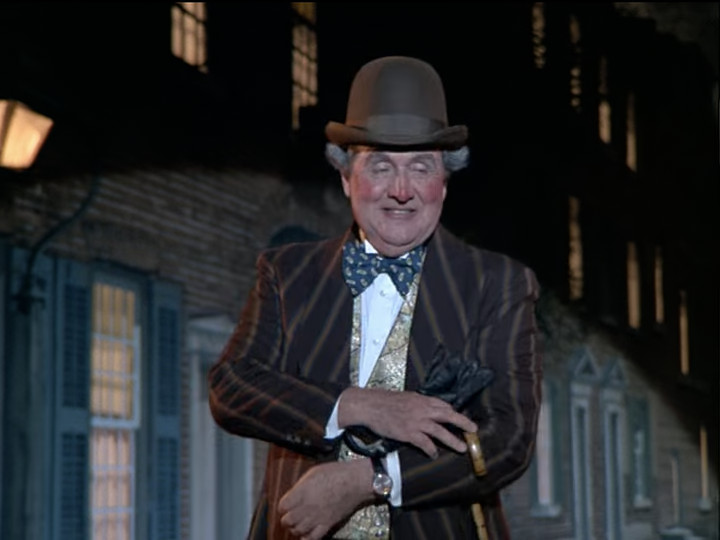
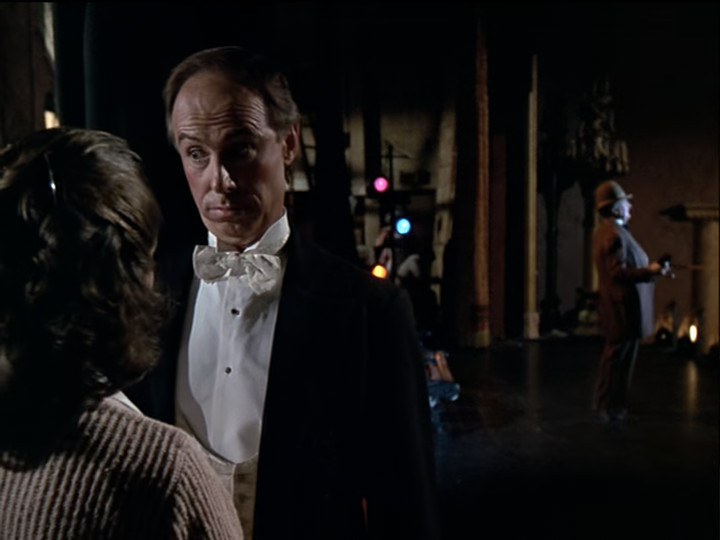
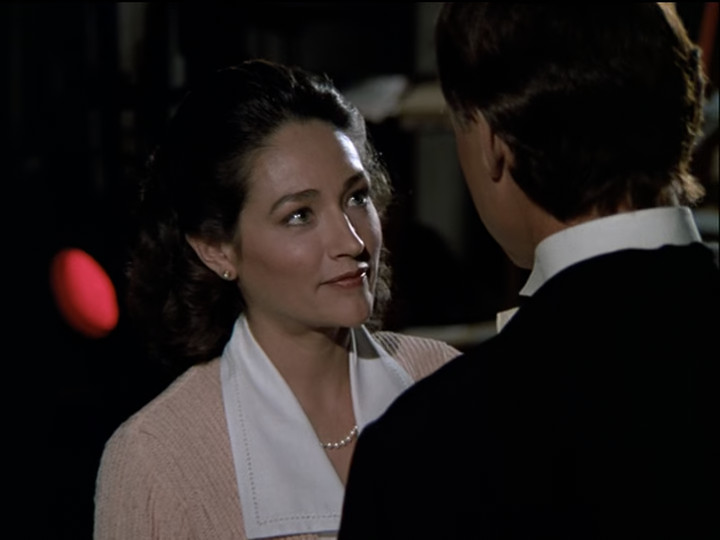

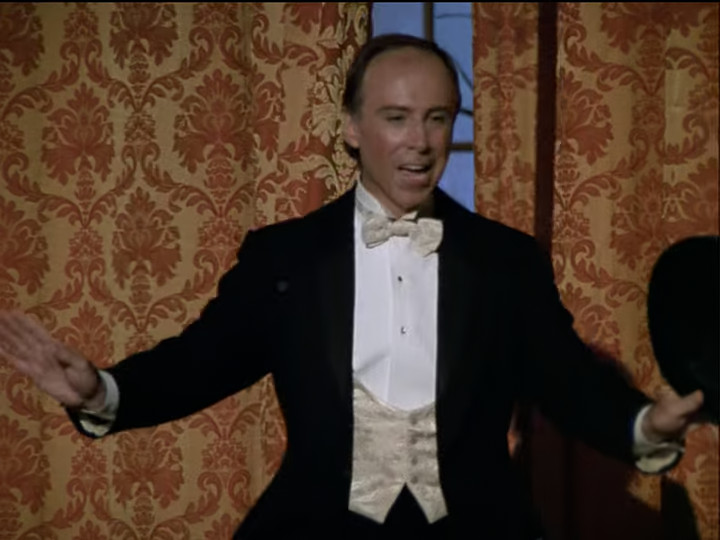
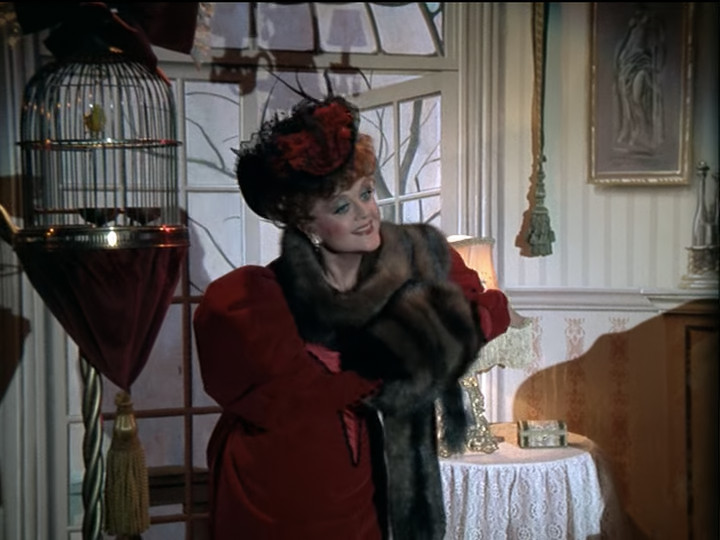


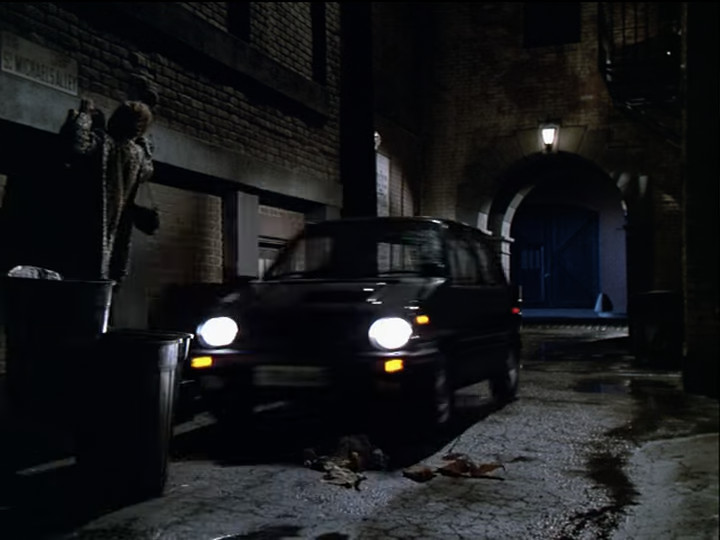
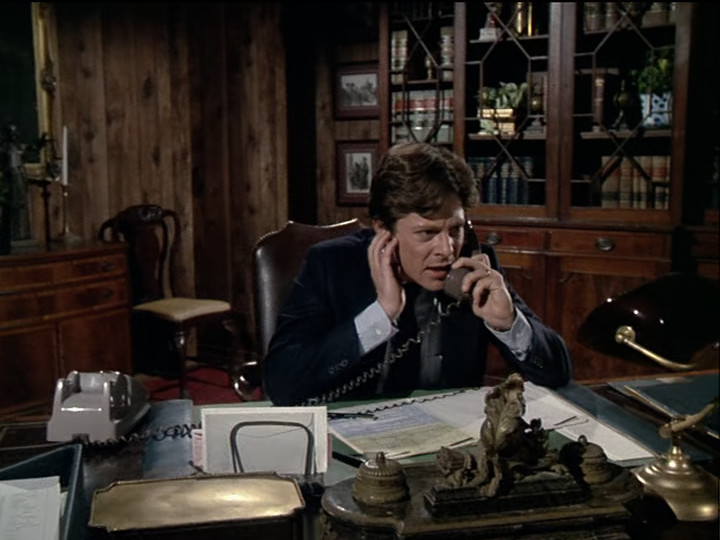

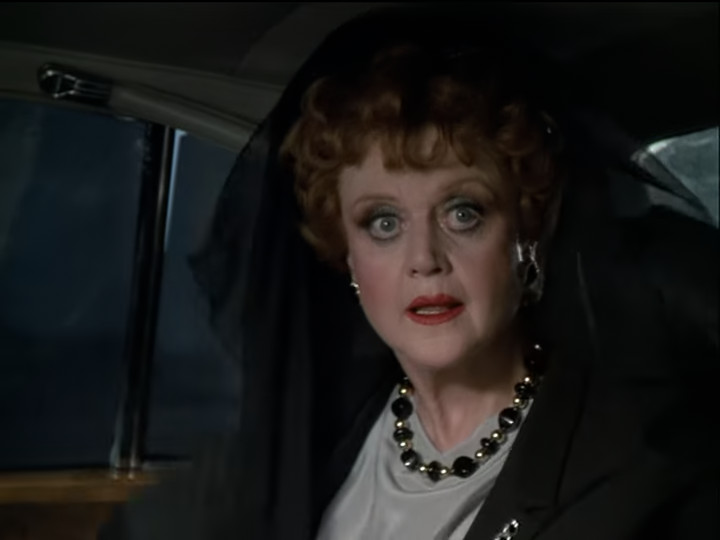
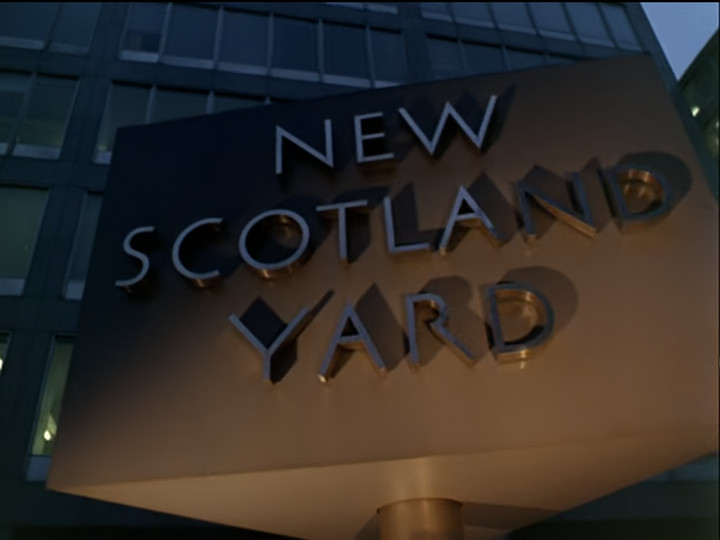
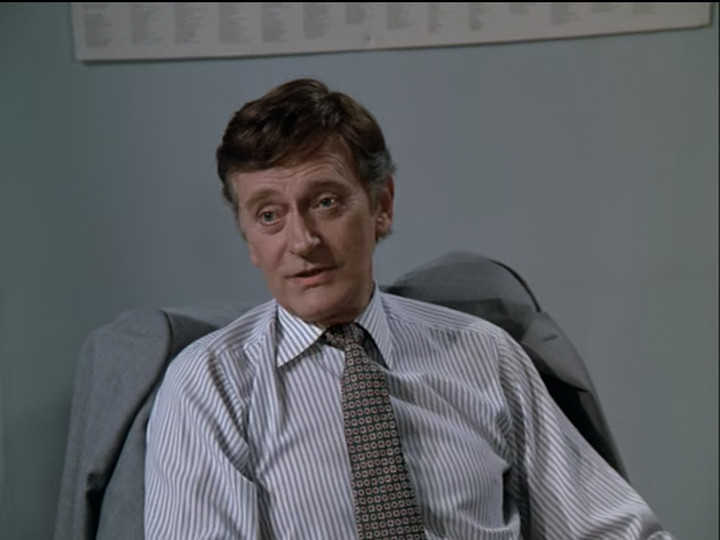

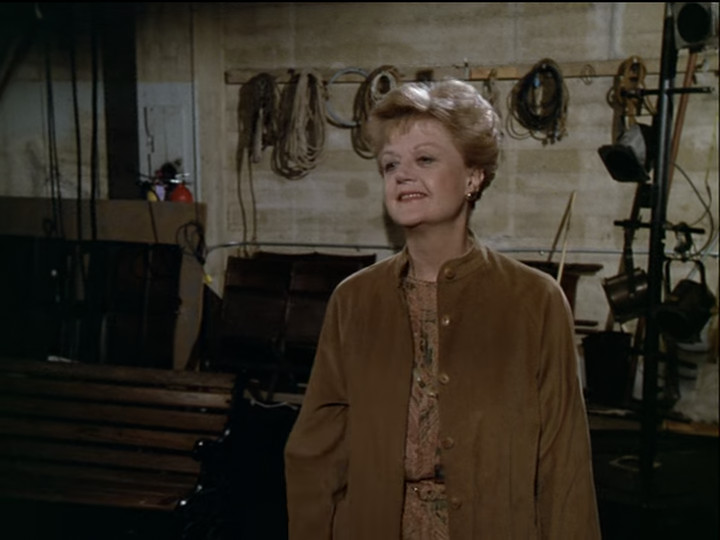

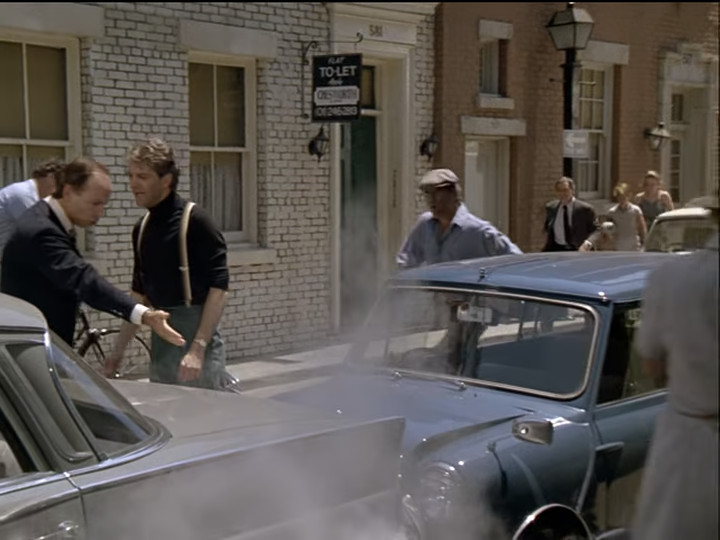

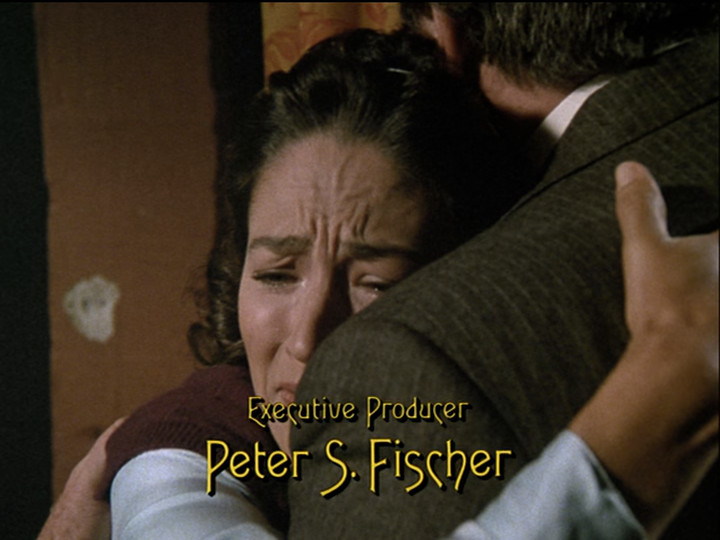
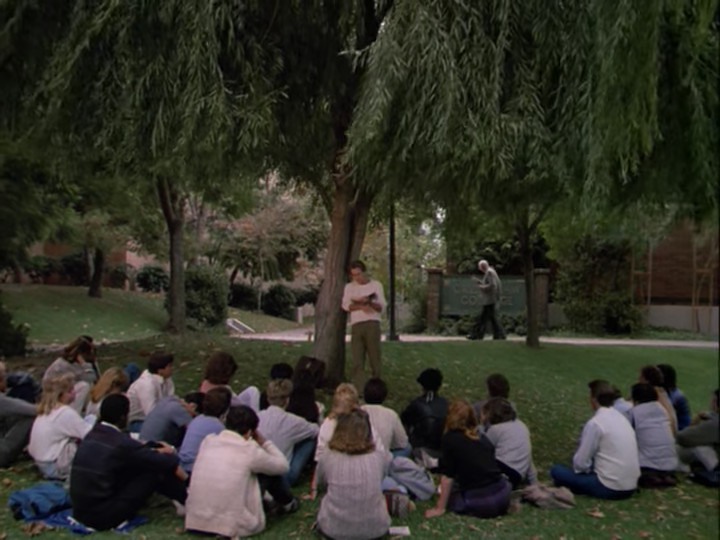
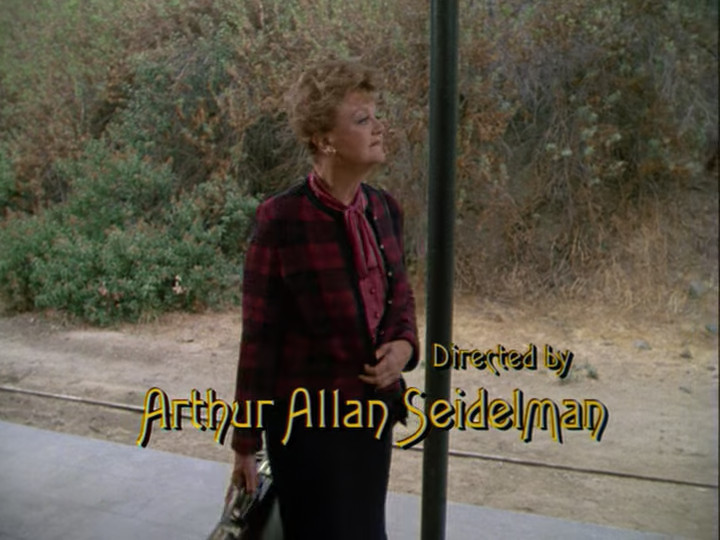
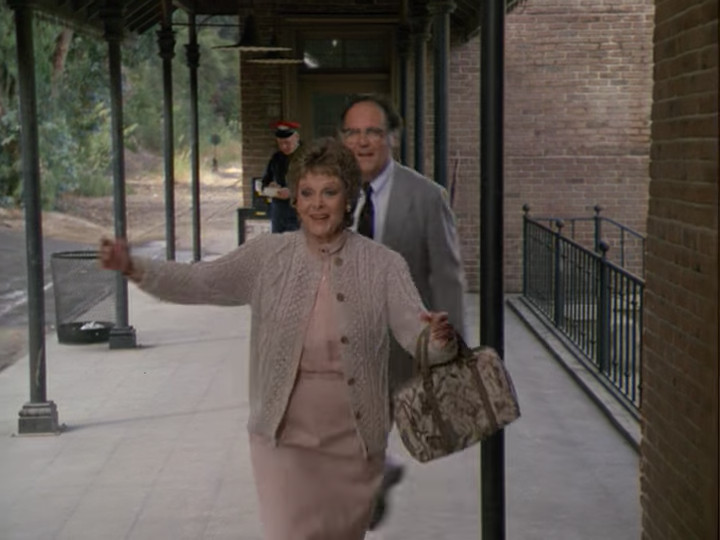
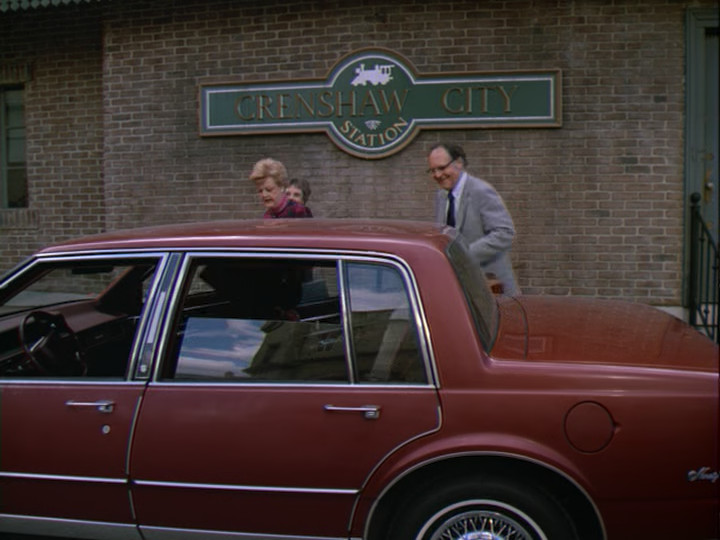
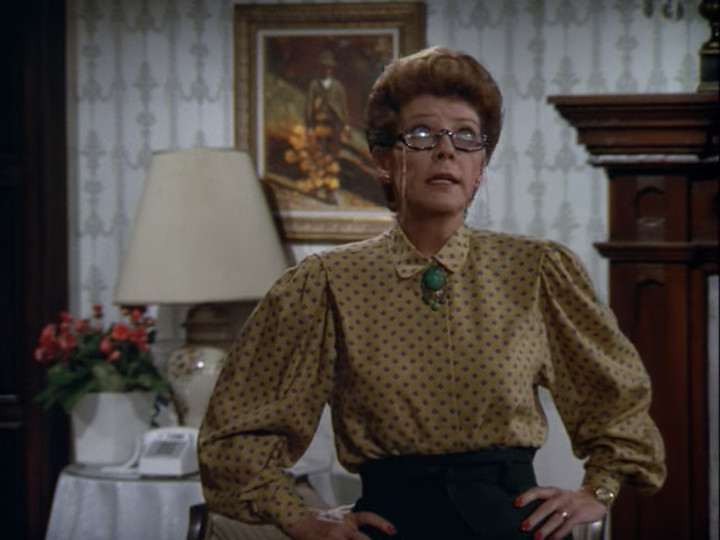
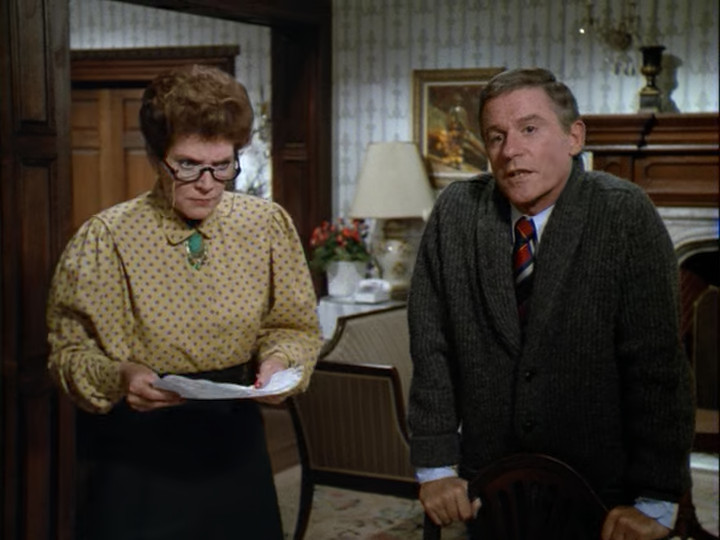
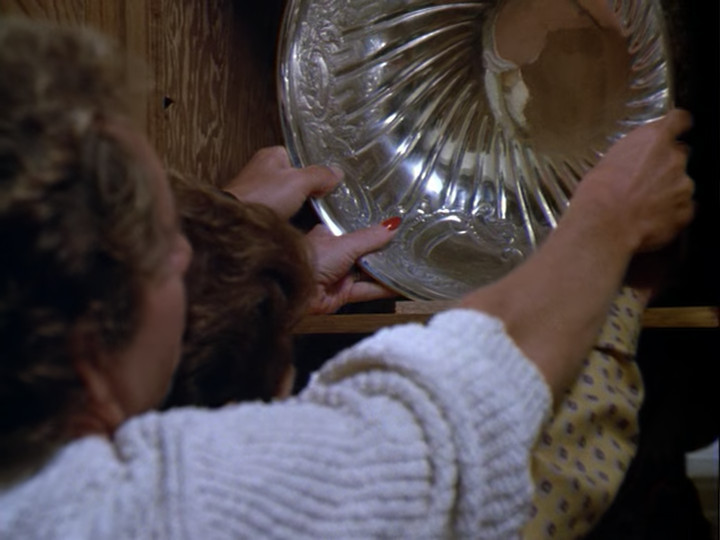
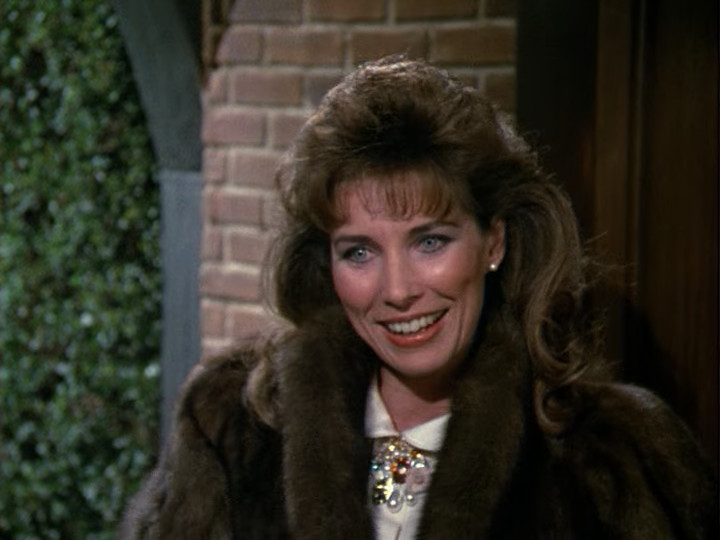
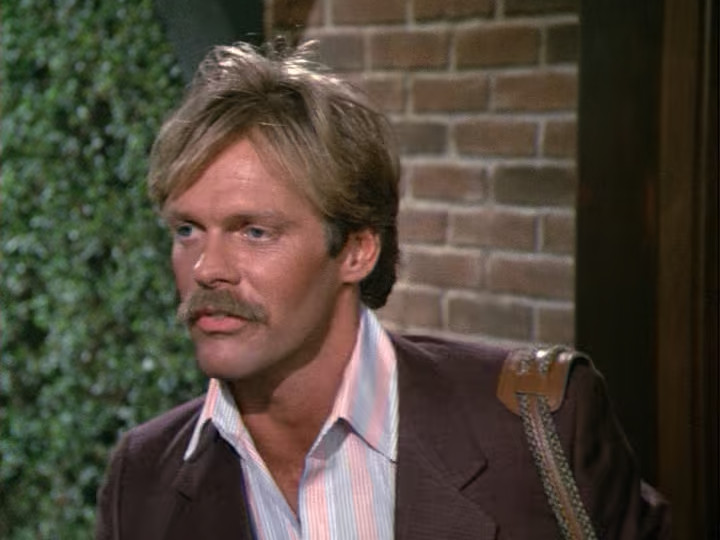
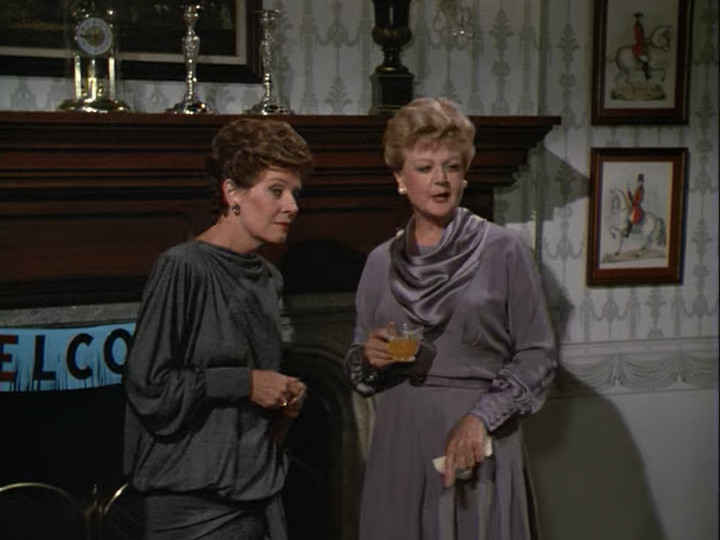
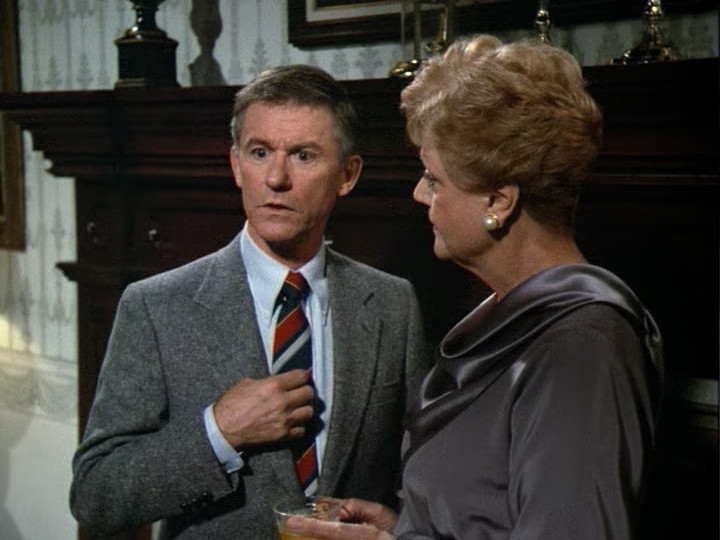
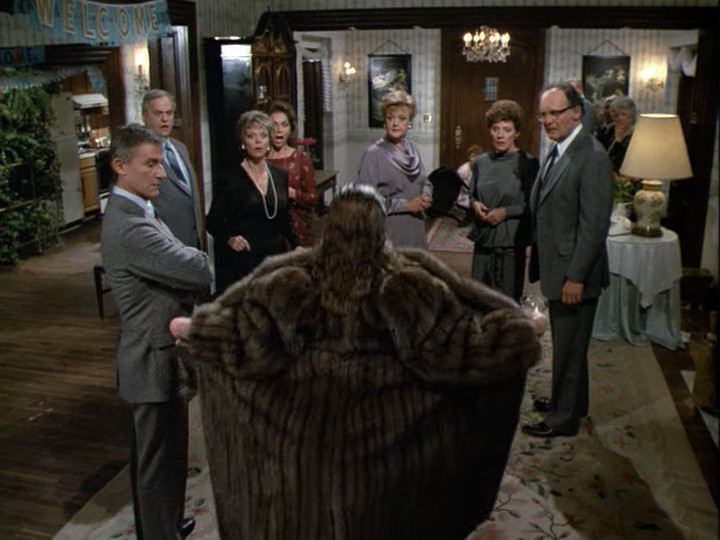
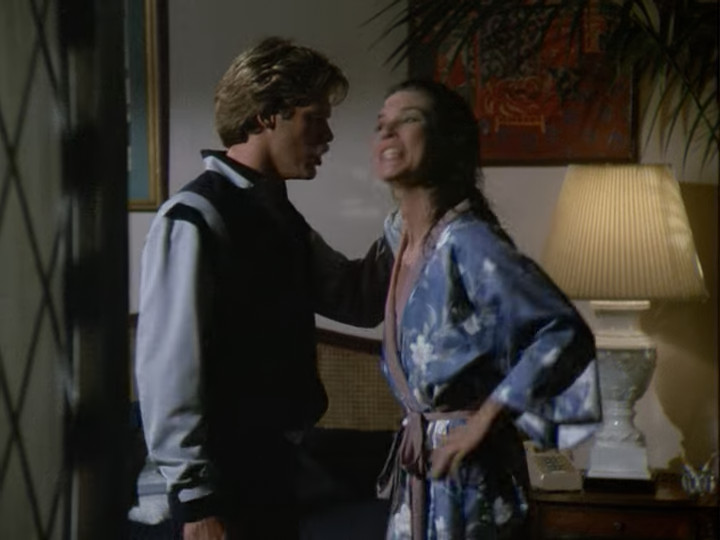
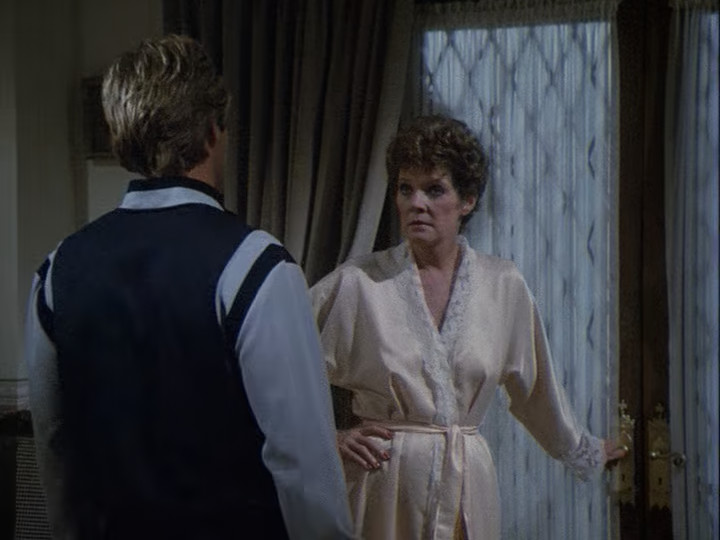
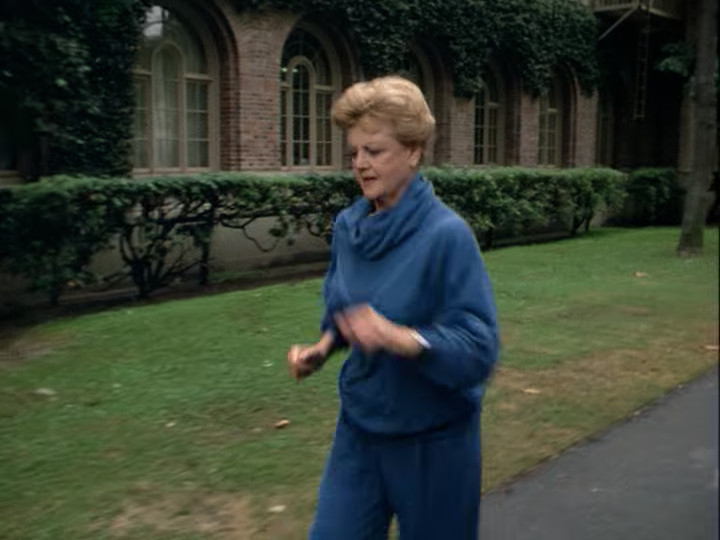
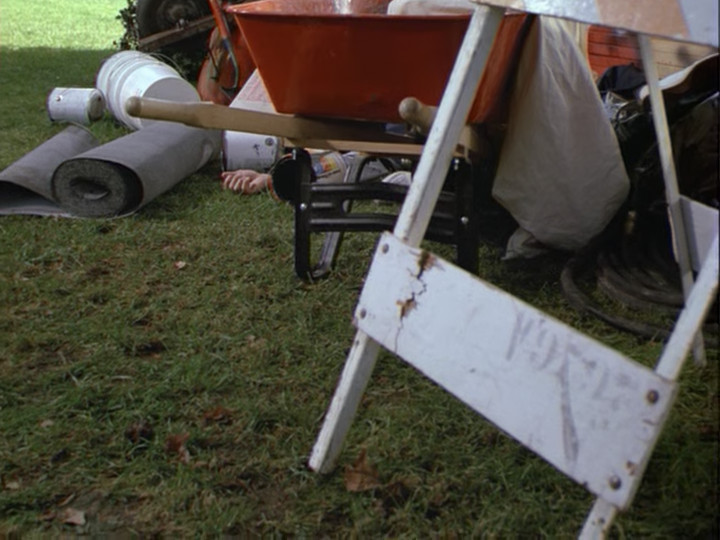

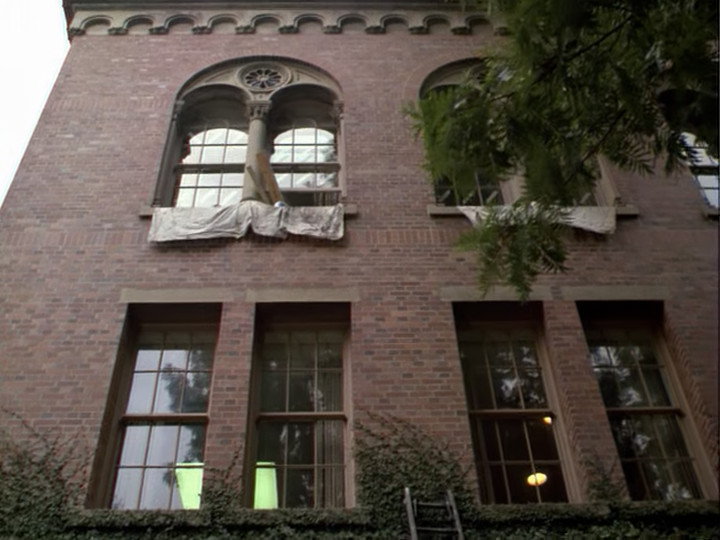
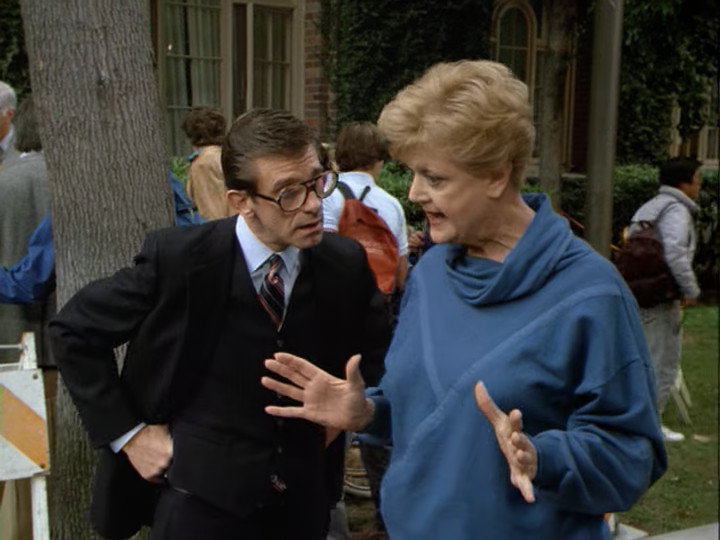
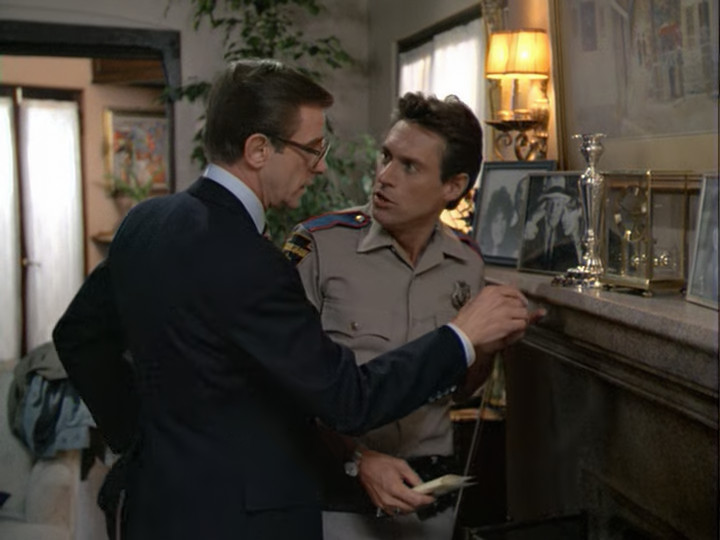
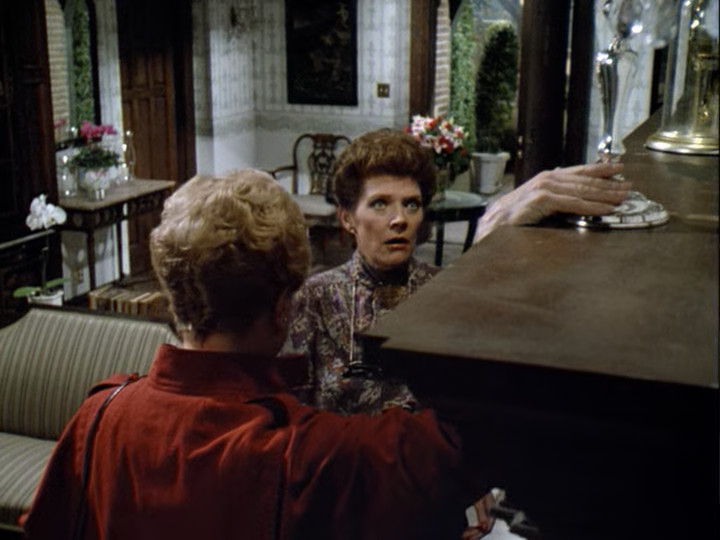
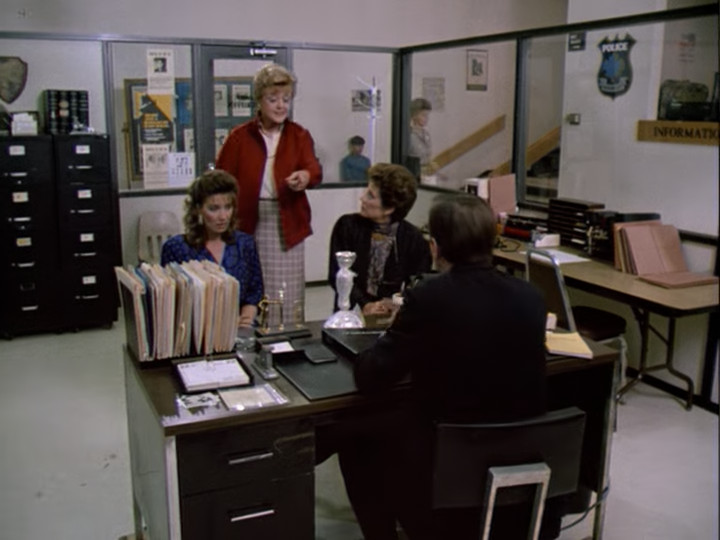
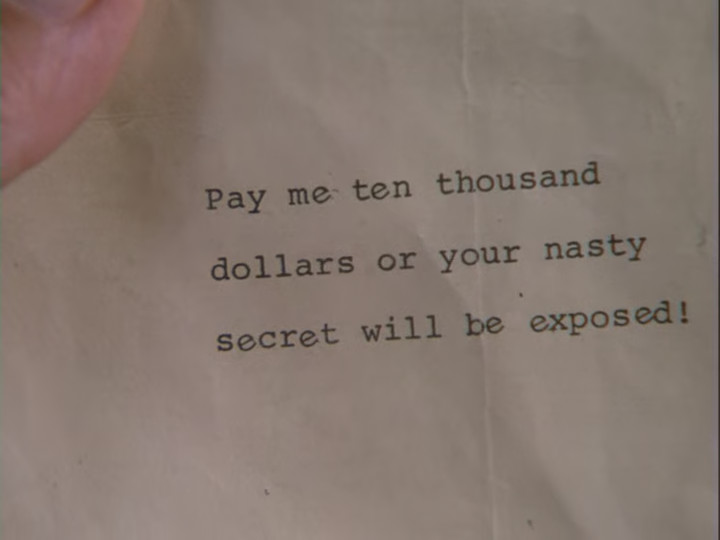
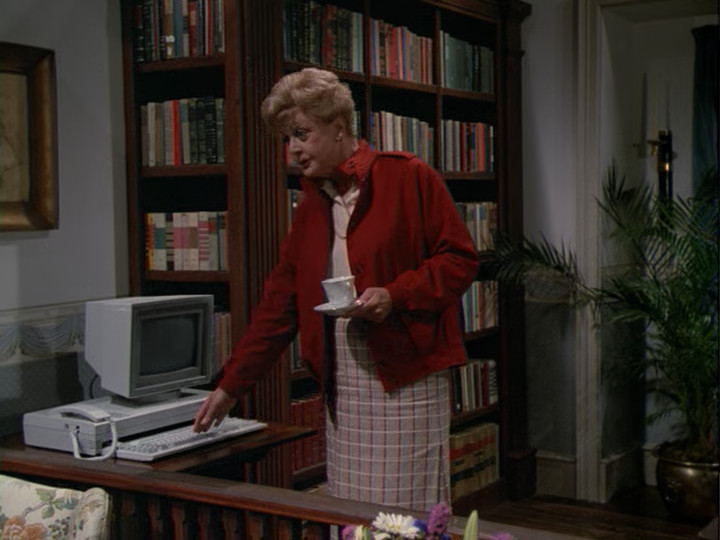
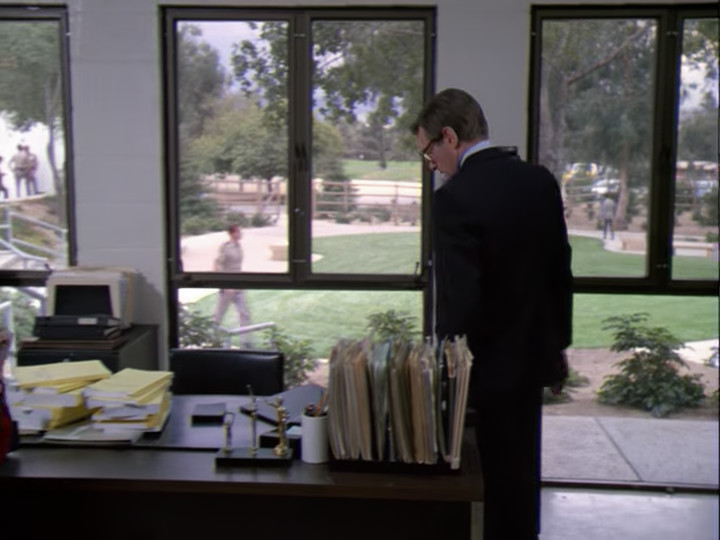
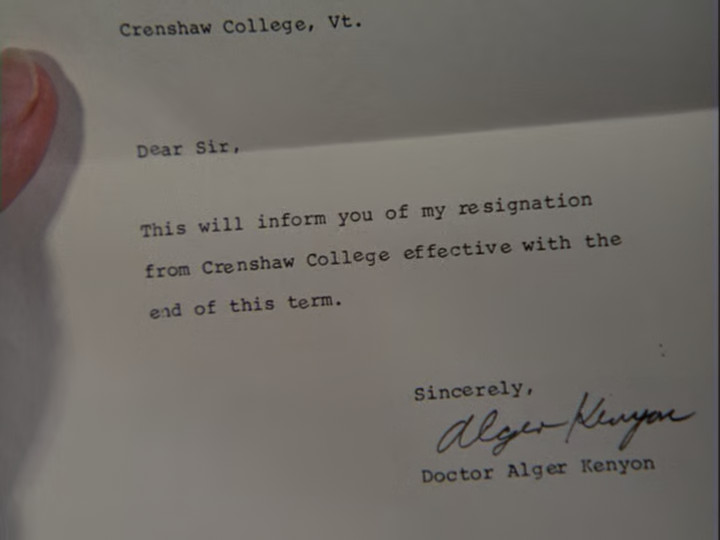


You must be logged in to post a comment.