The term AI, short for Artificial Intelligence, is a marketing term rather than a serious description of anything. These days it mostly refers to either Large Language Models (LLMs, the things which generate text) or Diffusion Models (the things that generate images). Neither of these are intelligence—natural or otherwise—and calling them AI is just a marketing term. Both of these things are just massive matrices (if you’re too lazy to click the link, grids of numbers multiplied in a special way) and a tiny bit of code for how to multiply them together. Though these days that’s becoming more than a tiny bit of code in order to make the multiplications more efficient. And a bit of code to map text to input matrices and the output matrices back to text. Or to pixels, if they’re applied to images.
Be the implementation details as they may, it’s still just code controlling massive matrix multiplications, and this is all work that could, in theory, be done with a few reams of paper and a few boxes of pencils. Just imagine working through all of this, mapping the resulting matrix to text, and shouting, “Oh my God, the numbers I wrote down on this paper are intelligent!” It’s ridiculous, right?
LLMs (and diffiusion models) aren’t intelligence, they’re just extremely useful mathematical tools which are possible in practical amounts of time (and space) because computers have made it possible to do trillions of multiplications and additions per second.
Matrices are usually studied in the branch of mathematics called Linear Algebra, and their first great use in computers was 3D graphics. Leaving out all of the actual mathematics in order to keep this accessible, it turns out that in a 3D coordinate system, it’s possible to create matrices that, when multiplied against other matrices, have the effect of rotating them. Other matrices can translate them, and still others can scale them. And, critically, still other matrices can do a 3D to 2D projection with perspective transform. This is what lets 3D graphics work; it’s why your computer can render millions of triangles that approximate real world shapes and make the ones that are closer bigger while the ones that are further away are smaller. And this actually gives a hint as to how LLMs work.
If you boil it down, LLMs really only do one thing: selectively apply transforms to inputs in a huge many-dimensional coordinate space. The reason that this is interesting is that one can map text into these huge many-dimensional coordinate spaces, and one doesn’t need to know what kinds of transforms one wants to do ahead of time. The (apparent) magic is that people figured out ways of using pre-existing text to create matrices that happen to have very useful transforms in these many-dimensional coordinate spaces.
An issue for discussing any of this is that every aspect of LLMs is given names by analogy to how people do things. Thus the step which could quite accurately be called “sample-based matrix creation” is called by the catchier name of “training”. What could very accurately be called, “selective transform emphasis” is called by the catchier name of “reinforcement learning”. And so it goes.
But if we side-step all of the marketing terms and analogies and focus on what the things actually do, LLMs have the effect of translating input text according to patterns in the data that was used to construct them. Very loosely speaking, you can think of this as reproducing patterns in their training data.
This is actually why they’re currently transforming the art of programming. Programming has always involved having to re-solve problems that have been solved many times before, just with different words this time because the context is different. We programmers hate doing this, and have put enormous work into trying to do this as little as possible. We’ve invented progressively higher level programming languages in which more and more previously solved problems are just embedded into the programming language. We make functions so we only have to write the code once and share libraries with each other like it’s going out of fashion. LLMs are such a godsend because a thing which reproduces existing patterns but altered to the particulars of the exact source code we’re working on means that, finally, we can work on the new problems instead of re-solving the problems which have been solved ten thousand times before. It’s fantastic.
You’ll notice what I haven’t said anything about, there, is judgment. That’s because LLMs don’t have any judgment. It’s literally not even a concept within the models. Judgment is understanding the relationship between things as they are. LLMs apply selective transforms in many-dimensional coordinate spaces. The two things have nothing to do with each other.
This is why LLM writing of novel English prose is so bad. They’re fine when they’re just translating prose which was in their training data into the answer to a question. (They will always produce a transform; these transforms may simply not happen to produce text which happens to have a correspondence with anything real, just as you can try to divide by zero or claim that infinity + three is bigger than infinity plus two. The mere fact that words can be parsed according to the rules of grammar doesn’t guarantee that they are meaningful sentences, and still less that they’re true sentences.) LLMs are even better when the transforms they’re applying are just pulling sections of input data (such as a search result from a book that got appended to your text with a question in it) and translating it to the form of an answer to your question. But when they’re writing new text, it’s really impressively bad.
Here, let me give you an example. I wrote this paragraph giving advice on the importance of having highly descriptive names for functions and variables in programs when using an LLM coding agent:
If an acorn is defined as a tree rodent with a bushy tail and squirrel is defined as the seed of an oak tree and day is defined to be 42 seconds longer than twice nine seconds, how many squirrels can an acorn eat in three days? Most people familiar with the relevant wildlife can tell you that the answer is somewherearound 2, but the proportion will clearly be higher if you ask how many acorns a squirrel can eat in 3 minutes. The same is true of LLMs.
Here’s what Gemini said what I asked it to evaluate this advice, then asked it how it would rewrite it:
Imagine defining acorn as a bushy-tailed rodent and squirrel as the nut of an oak tree. If you ask, “How many squirrels can an acorn eat in a day?”, humans and LLMs alike will stumble. Even if you explicitly redefine your terms, an LLM’s pre-trained semantic associations constantly fight misleading or cryptic names. Descriptive, conventional naming aligns your code with the model’s weights instead of forcing it to fight its own priors.
The LLM’s version isn’t terrible, of course. But it also isn’t good. Not that my version was perfect, but it works on several levels because I had several ideas in mind. One of which is that I was mentally modeling the amount of confusion my convoluted version would produce in the reader, especially taking into account the speed I was going and the relatively short words I was using. That feeling is essential to communicating the cognitive load involved in keeping track of unintuitive definitions. It’s also worth noting that my version is correct while the LLM’s version isn’t. There are people and LLMs which can answer the question just fine. That’s why my version acknowledged that and talked about the proportion of people who would get it right.
And this isn’t even a good example of how bad LLM writing usually is, it’s just one I happened to have handy because it came up recently in conversation. LLM writing is bad precisely because it lacks judgment, and unlike programming languages, natural language writing is there to convey things which haven’t been said a thousand times before. It’s not precisely that LLMs aren’t creative. They actually kind of (technically) are, since they actually use random number generators to select the exact text they generate. Creativity, at least in the sense of creating novel arrangements of words, is rather overrated. Throwing scrabble tiles on the ground can be creative in that sense. The real problem is that they have no judgment, and so they don’t put words together in ways that convey good judgment. So their writing is fluffy and flabby in the best case, and outright wrong in the worst case.
And here’s where we get to the part of the discussion which is really frustrating: a lot of people have bad judgment, so they don’t notice this. I’ve seen people quoting absolutely terrible writing and talking about how magnificent it is. Of course, that can apply to human writing as well as LLM writing. There are awful books which have been praised, because, alas, there is no shortage of fools in the world.
Also, for various reasons, people sometimes massively exaggerate what LLMs have done through hearsay. For example, this interesting blog post about novel writing in the age of LLMs contains the line (this link was in the blog post, and is to the source): “AI books winning awards.” But if you follow the link, it turns out that the thing which won an award was a short story. (It’s even in the title.) I did a bit of searching, and I can find no evidence that a novel written entirely with an LLM has ever won a prize in any language.
Is it possible that an LLM-written novel will win a prestigious literary prize some day? Of course. If you are at all familiar with literary prizes, you know that quality is a requirement for winning them far more in theory than in practice. And the same thing is true for being popular. If you’ll allow me to bring in movies, Disney’s The Last Jedi was a movie of almost indescribable badness (so much so I wrote a 21,564 word review of it called The Least Jedi) and it grossed over a billion dollars. Heck, its script was so bad I assume that, with minimal prompting and a halfway decent harness (a program which invokes an LLM multiple times to achieve a coordinated result), any modern LLM would write a much better script than the atrocity which Ryan Johnson wrote. This is a low bar, though. The ancient program Dissociated Press, which used simple markov chains, would still have probably written a better script than what Ryan Johnson wrote. A single monkey, typing for ten minutes on a children’s toy typewriter where the keys are all just stickers and there are no hammers, ribbon, or paper, would have written a better script. So I figure it’s just a matter of time until an LLM writes a novel which wins a prestigious literary award.
What it will be a very long time before we see is an LLM which writes a good novel, because that requires a true understanding of the nature of reality, and that’s not the kind of thing an LLM even can have.
I can’t help but wonder whether it will be better or worse when LLMs are writing popular novels. On the plus side, at least they won’t be trying to sneak bad philosophy into their stories, which is the case for an awful lot of popular novels written by people. Machines lack souls, which means that they’re not actively trying to damn you (or, more accurately, trying to trick you into damning yourself). The same cannot be said of human authors.
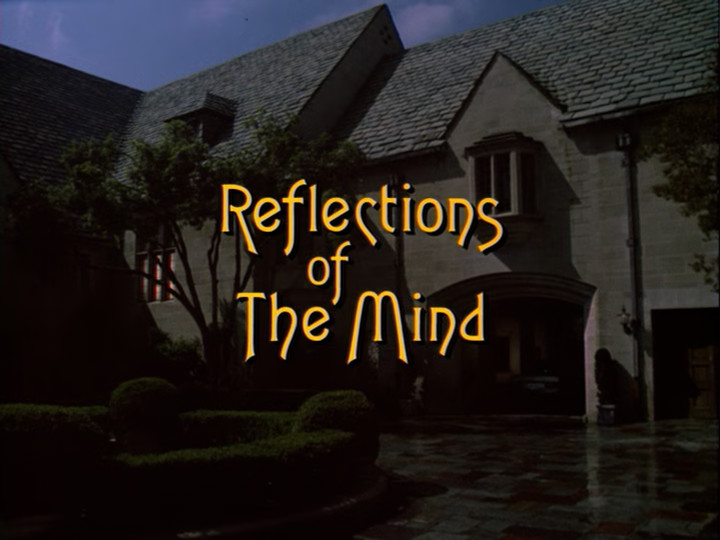
On the third day of November in the year of our Lord 1985, the sixth episode of the second season of Murder, She Wrote aired. Titled Reflections of the Mind, it’s set in Ohio. (Last week’s episode was Sing a Song of Murder.)
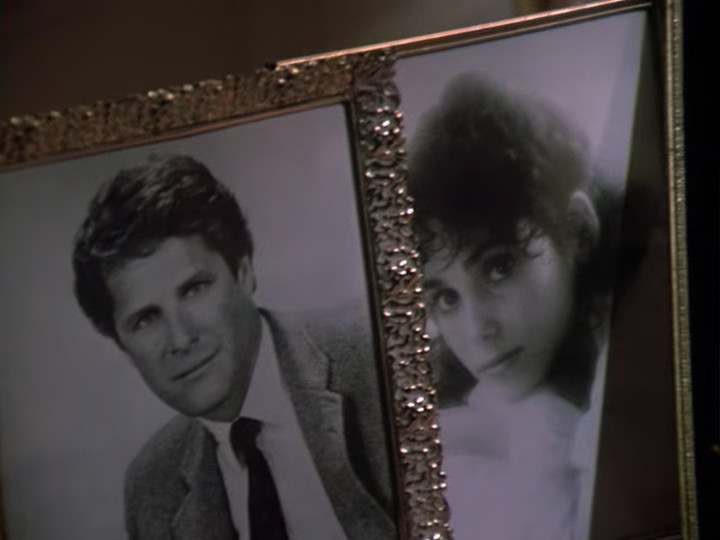
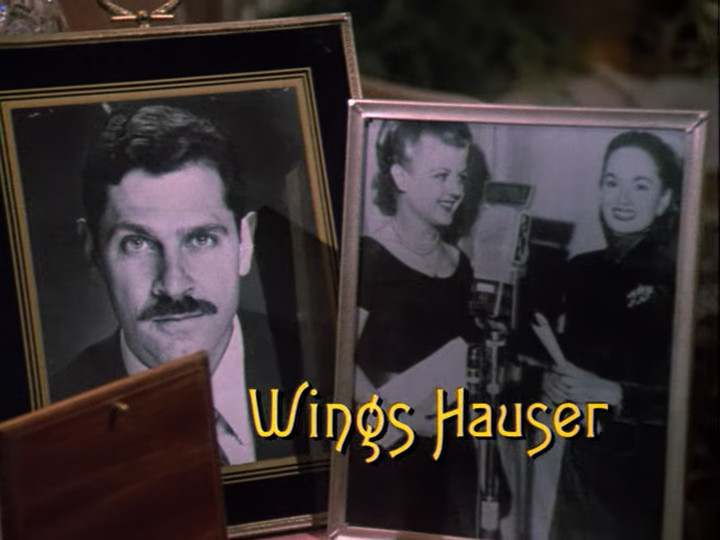
As we zoom into this enormous house, we hear a music box playing. But first, we pan over some interesting photos:
We don’t know who most of those people are, but in the photo of the two women, the one on the left is clearly a very young Angela Lansbury. The other woman in the photo is actually a young Ann Blyth, who is going to play Jessica’s old friend in this episode, Francesca Lodge.
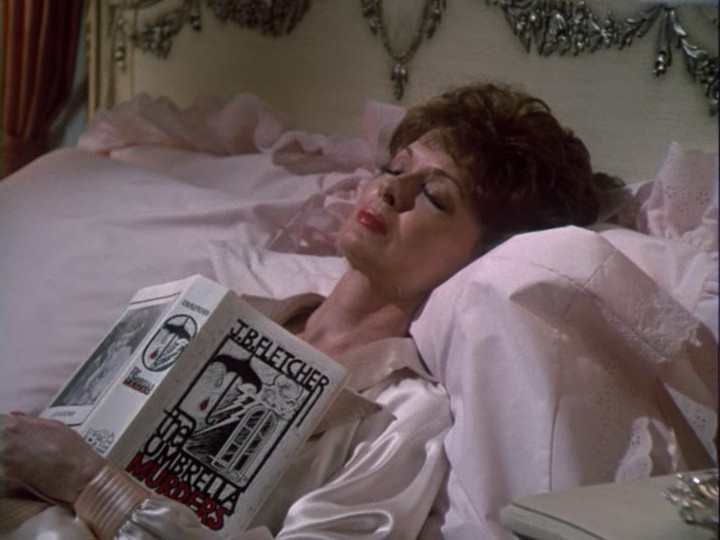
Anyway, eventually we see Francesca sleeping on on the bed reading one of Jessica’s books:
The Umbrella Murders is quite the title for a book.
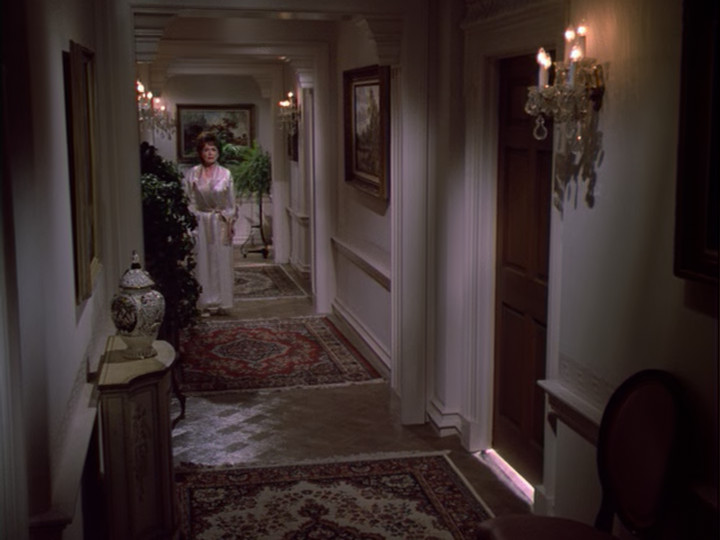
She wakes up violently and is distressed by the sound of the music box, I think because she didn’t open it. She closes it violently and starts calling out “Scott?” She goes into the hallway and sees a light under a door that distresses her:
She then hears the music box music start up again, but this time from inside the room with the light coming from under the door. She panics and runs downstairs. She knocks several things over on the way to the telephone, but manages to call what I assume is 911. She says that she’s alone and there’s someone in the house, and asks them to hurry.
She then picks up scissors and hides in a closet.
A moment later, someone walks up and opens the door. She tries to stab him with the scissors but he fends her off and calls her name. He then tells her that it’s him, Scott, and we see that he’s the man from one of the photos in the beginning.
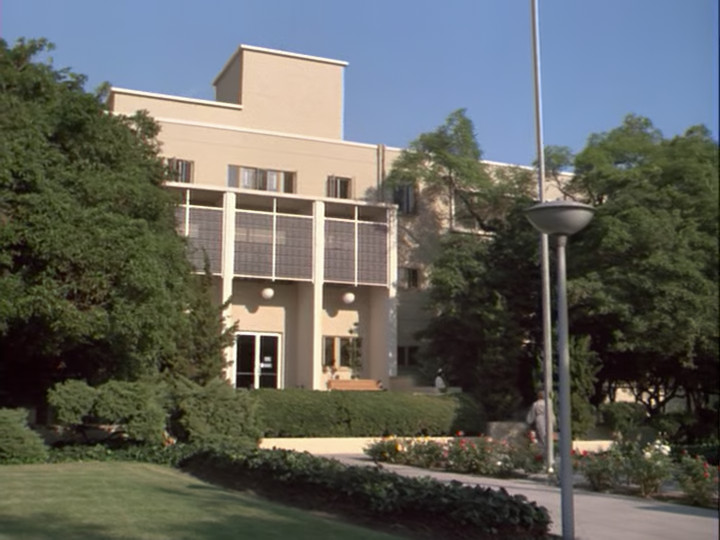
When she realizes who he is, she collapses into his arms and he comforts her, and we go to the next day where Jessica arrives by taxi at the Dalesboro medical center.
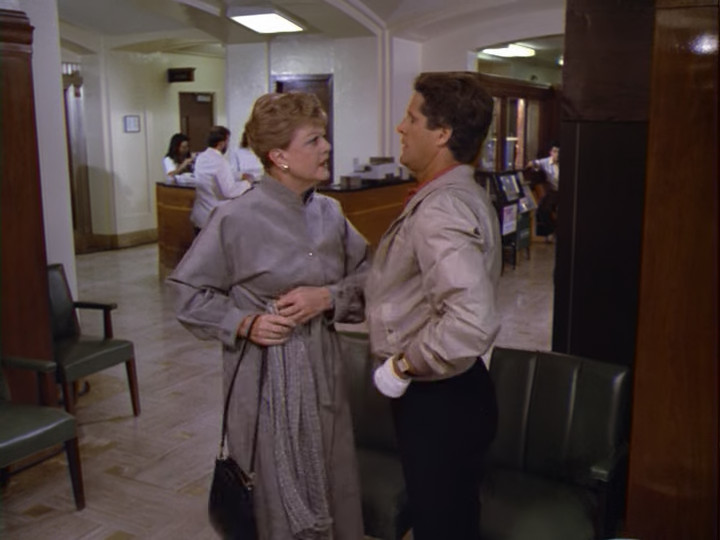
Jessica meets Scott in the waiting area of the psychiatric ward, which causes Jessica more than a little consternation (that it’s the psychiatric ward, not that he’s waiting for her).
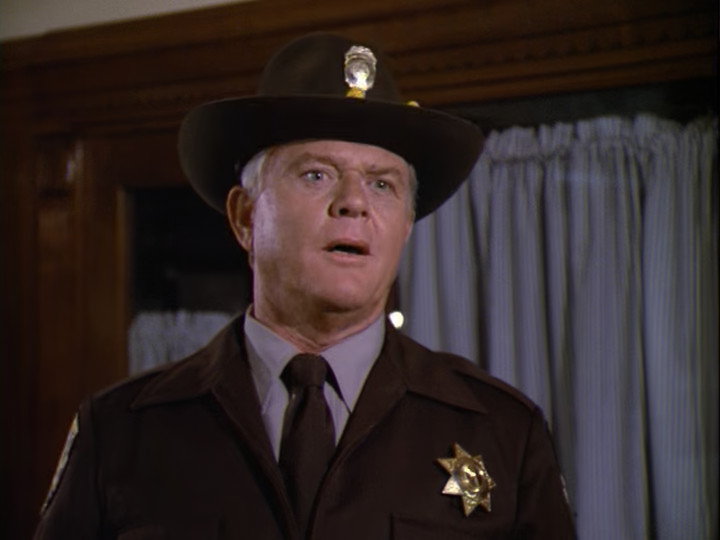
Sheriff Bodine then comes over and asks Scott about a report of a break in at their place the night before.
Scott explains that it was a false alarm.
The Sheriff then inquires about the enormous bandage on Scott’s hand but he claims that it’s just a scratch, so the Sheriff wishes Francesca a speedy recovery and takes his leave.
When he’s barely out of earshot, Jessica asks Scott what actually happened. He tells her what we already saw, then adds something we didn’t know: last week he almost crashed in the car because the breaks failed. The break lines had been cut. He didn’t report it to the police, but he knows what a broken breakline looks like vs. one that had been cut. And he found a hacksaw and Francesca’s clothes splattered with break fluid hidden in the back of her closet. (She said she didn’t know how they got there.)
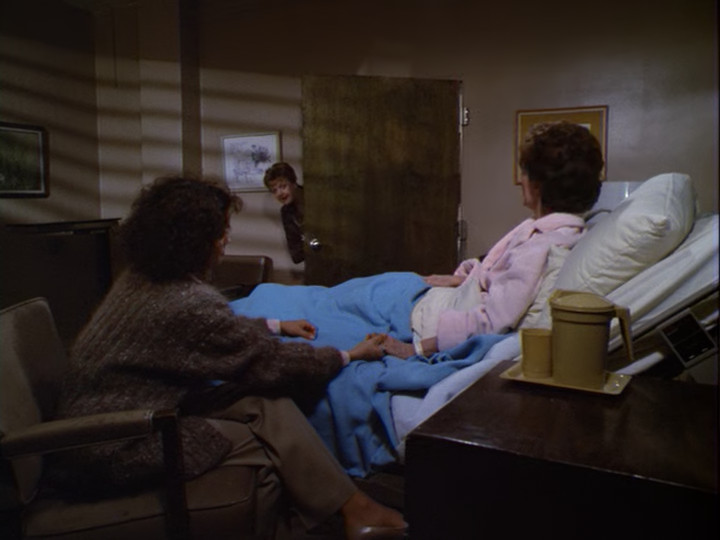
Jessica then goes to see Francesca.
We also meet Cheryl, Francesca’s daughter from her first husband (deceased).
Jessica barely recognizes her and says that she’s blossomed. She last saw her 5 years ago at Scott and Francesca’s wedding.
The only issue with this is that the actress is 26 and looks it. Five years ago she’d have been 21, and (absent major life changes like accidents or taking up weight lifting) people don’t look very different between 21 and 26. I suppose it’s possible that the actress is playing younger; if the character is supposed to be 21, then she might indeed have changed a fair amount in the last 5 years, though even there, I doubt so much as to be unrecognizable. If the goal was to establish the character as younger, it would have been much cleaner to work the age into the line, “Oh my, Cheryl, it’s been so long, you must be what? 20 now?” to which Cheryl replies, “21.” There would still be a bit of dissonance with the character’s appearance, but at least we’d have the information we need instead of wondering why Jessica had a hard time recognizing her.
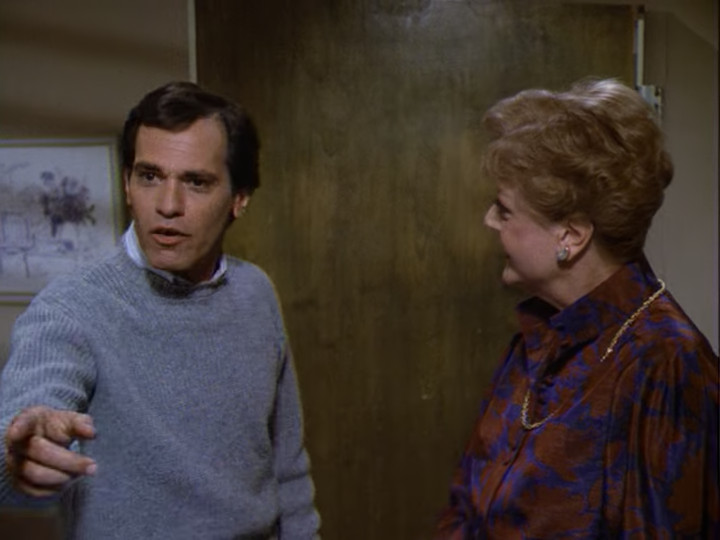
Anyway, Francesca saying in a distraught voice that she wants to go home is interrupted by the appearance of her personal psychiatrist, Dr. March.
He agrees that Francesca should go home.
He also thinks that he read one of Jessica’s books and couldn’t put it down, but gets the title wrong and murder weapon wrong. (He thought it was The Corpse Danced At Dawn when it’s actually The Corpse Danced at Midnight and that the murder weapon was a crossbow instead of poison.) He laughs and says he must be thinking of a different book.
I’m really not sure what this is meant to do. Perhaps to establish the character trait of trying to pretend to stronger connections with people than he actually has?
On the car ride home, Jessica mentions that he has an unusual beside manner and Scott says that he’s one of the best. Cheryl adds that he treated her when she had her problems. A couple of years ago she ran a way with a rock group and did drugs and a lot of dumb things. Scott and Francesca were frantic and had to hire a detective to find her. Dr. March helped her get herself sorted out.
As they’re driving, a man who’s hitchhiking is nearly in the middle of the road around a blind curve and Scott (who’s driving) swerves to avoid him, missing him narrowly. Jessica is amazed he managed to avoid the man and Scott explains that it’s reflexes – he used to drag race a lot as a kid. Which is nearly the one kind of racing which wouldn’t do much for training obstacle avoidance in a car, but whatever. We have it established that Scott is a superb driver. This will probably come up later.
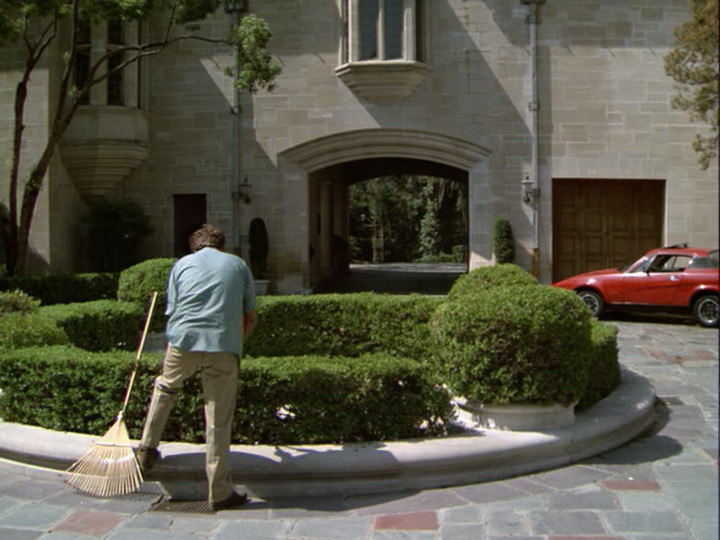
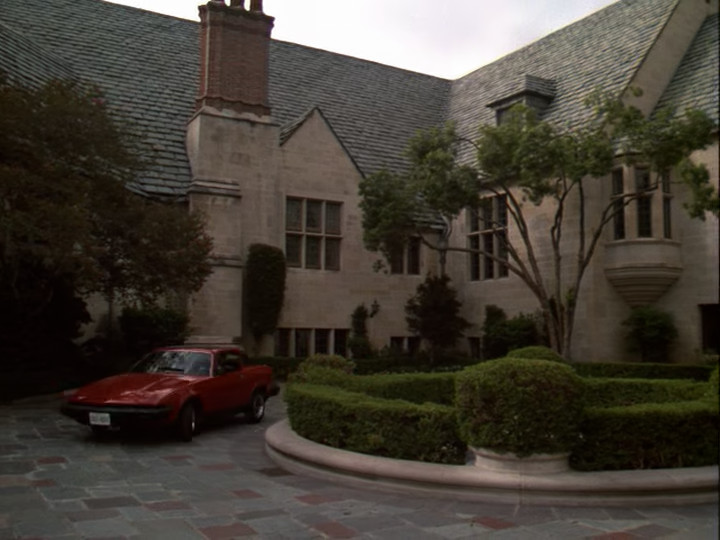
Then we get home to Francesca’s mansion, where a gardener is trimming the hedges.
I find the establishing shot interesting because of how clearly it establishes how rich Francesca is. A huge house is one thing, a hedge fixture in the middle of a giant flagstone driveway is a whole other level of riches.
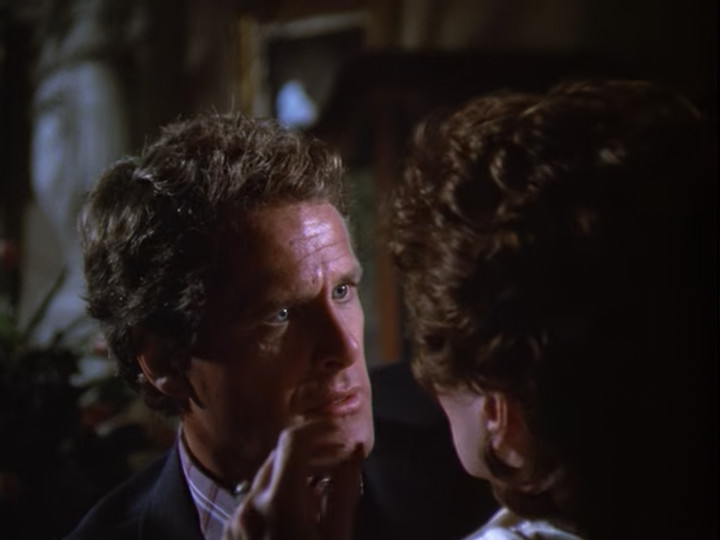
Here’s the gardener’s face:
His name is Carl, but possibly more interesting is that the actor’s name is Wings Hauser. “Wings” is apparently a nickname from having played a “wingback” in (American) football. According to Wikipedia, the wingback is a position that only exists in a few plays. Anyway, I can believe the guy is a “Wings”. He looks it.
Inside, in Francesca’s room, she and Jessica catch up since they last saw each other five years ago. This is oddly awkward but it gives us a bit of backstory: after Francesca’s first husband, Ross, died, she was desperately lonely. She’s self-conscious about the difference in her and Scott’s ages, but Jessica reassures her.
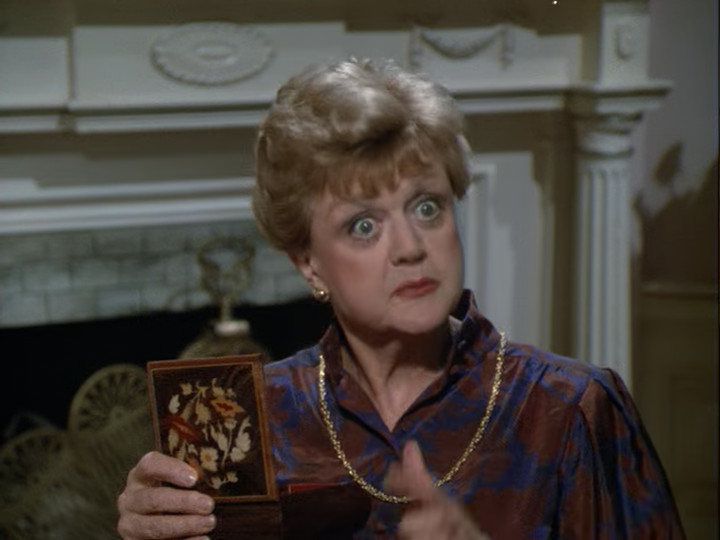
After some more smalltalk, Jessica picks up the music box which had upset Francesca in the opening scene and reminisces about it.
Ross gave it to Francesca as an engagement present and Jessica helped him to pick it out.
Francesca walks over, snatches it out of Jessica’s hands, slams it shut dramatically, shakes like she’s about to have a nervous breakdown, then says that everything is fine. But under questioning, she explains that she sometimes forgets doing things.
This is interrupted by Scott coming in. Scott tells her that he has to leave for the shareholder’s meeting soon, so he invites her to come down and have a drink with him before he goes. He then tells her that he’ll see Jessica to her room, which really is an excuse to talk with Jessica alone. That said, he interrupted her before she’d learned anything, so Jessica isn’t able to tell him anything.
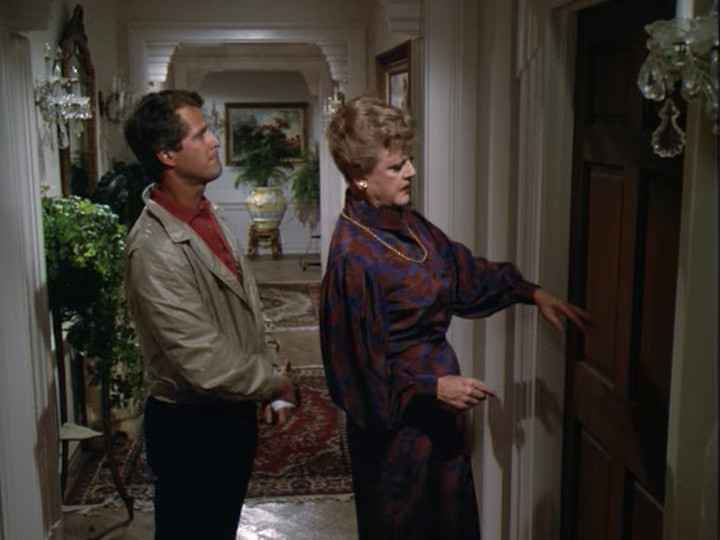
Jessica does ask about the door we saw bother Francesca in the beginning of the episode:
It was Francesca and Ross’s bedroom. When he died (in an automobile accident) she had it sealed. Interestingly, Jessica remembers that it was a closed coffin because the accident was so bad.
(That, of course, raises the question of whether Ross really died or only faked his death.)
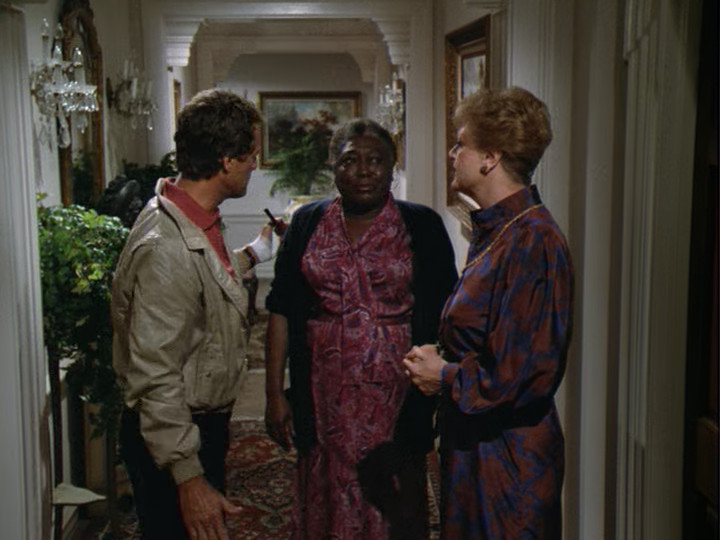
This conversation is interrupted by Margaret coming and telling Scott that his secretary is here. Scott excuses himself and asks Margaret to take Jessica to her room.
In Jessica’s room, Margaret lets Jessica know that Francesca hasn’t been right in the head and is imagining things. She’s always misplacing things. Like her diamond bracelet which Margaret found in the garbage disposal and Francesca didn’t even know was gone.
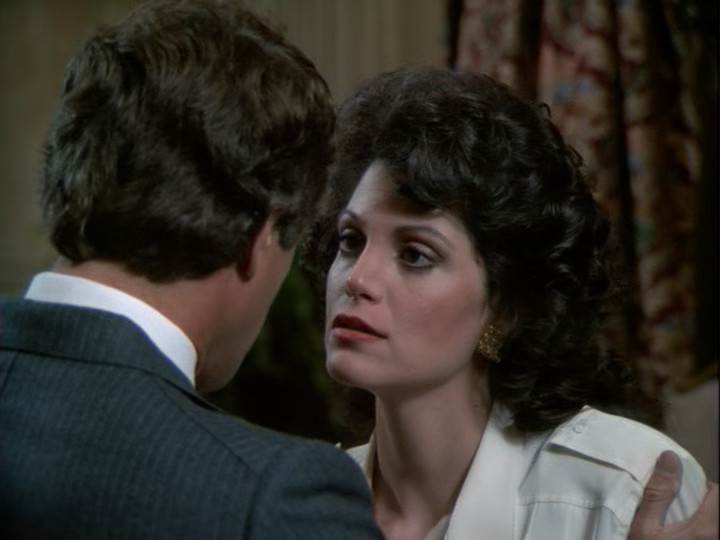
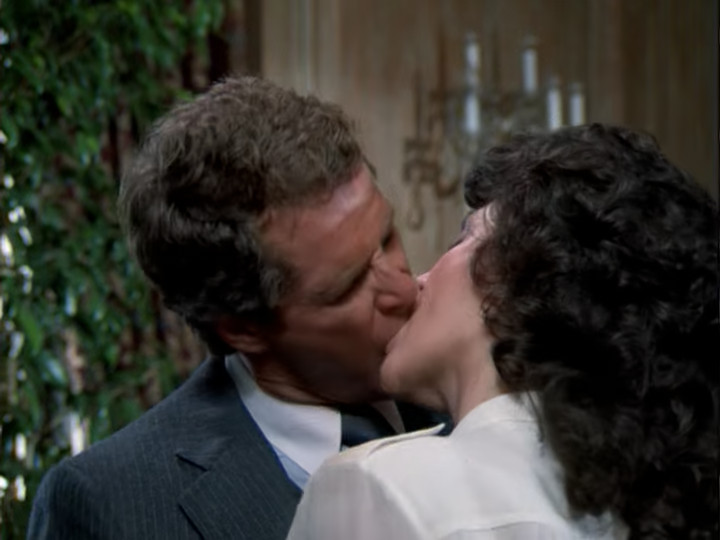
The scene then changes to Scott with his secretary Brooke.
It turns out that she’s more than just his secretary.
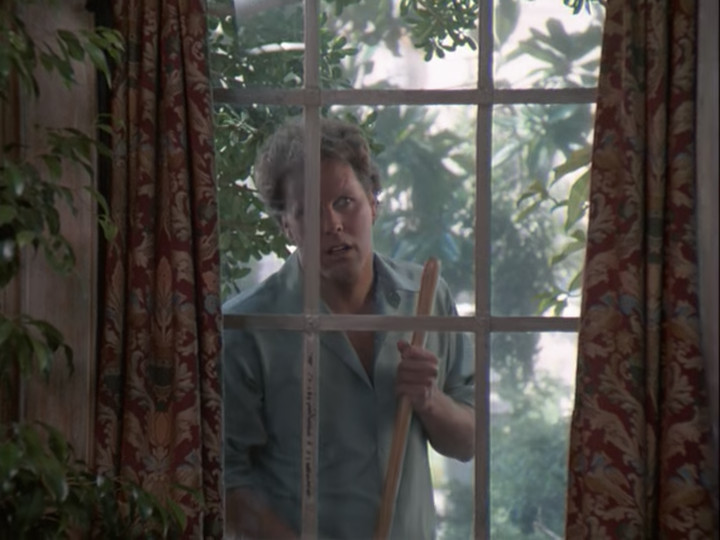
This is witnessed by the gardener who’s at the window looking in for some reason.
There’s something fascinating about this image; it makes the gardener look incredibly sinister. (Which means that he didn’t do the murder.)
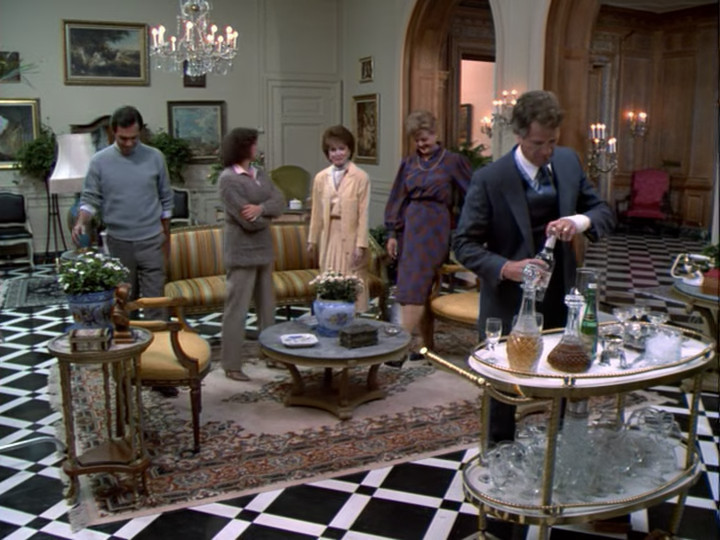
The scene then shifts to the living room where Dr. March comes in and says hello to Cheryl. He’s here to check in on Francesca but takes a minute to stroke Cheryl’s hair and ask her out to dinner, which she rejects. Then everyone comes in for that goodbye drink for Scott before his trip. (The private jet is waiting at the airport.)
Scott pours the drinks.
Cheryl explains to Jessica that Scott never flies without several ounces of his favorite anesthetic. Why he’s imbibing it now before driving, rather than at the airport or on the airplane, she doesn’t explain. Ah, the 1980s.
Francesca invites Dr. March to join them, but he declines and leaves, saying he has to check in on a patient. I guess the sting of Cheryl rejecting his dinner invitation made him forget that he was here to check in on Francesca.
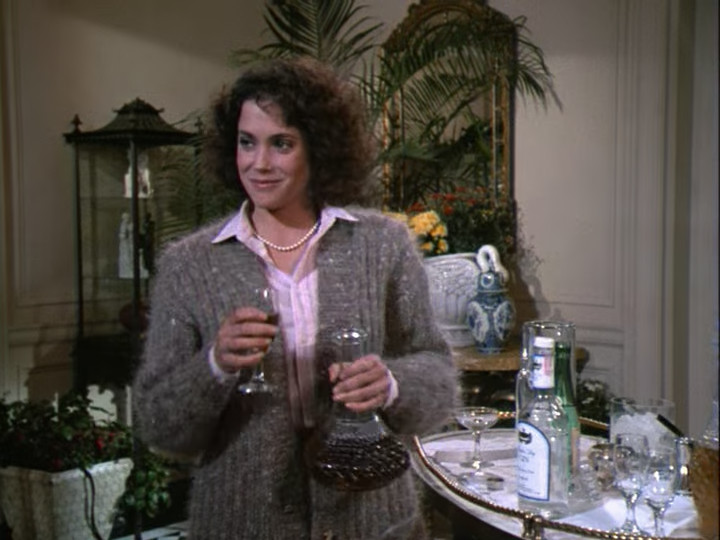
Scott asks if Jessica wants a drink and she says it’s too early for her. He then mixes three martinis and gives one to each of Francesca and Cheryl, and takes one for himself. Cheryl, however, spills hers so goes and gets herself another. Except she gets herself cherry rather than another martini.
Either she poisoned the gin or she really dislikes martinis and doesn’t have the heart to tell Scott.
Anyway, Scott then drives off. I love the size of this house. At no point in this episode does the entire house fit in frame. It’s magnificently huge.
Back inside, Francesca challenges Jessica to a game of cribbage, but is interrupted by Margaret, who says that a gentleman is on the telephone but didn’t give a name. We hear a man’s voice say, “remember that I love you very much and I’ll see you again tonight.”
This upsets Francesca greatly. When Cheryl asks her what was the matter, she says that the man on the phone call was Ross. When Jessica picks up the phone, the caller had already disconnected.
Francesca exclaims that Ross has come back, then faints.
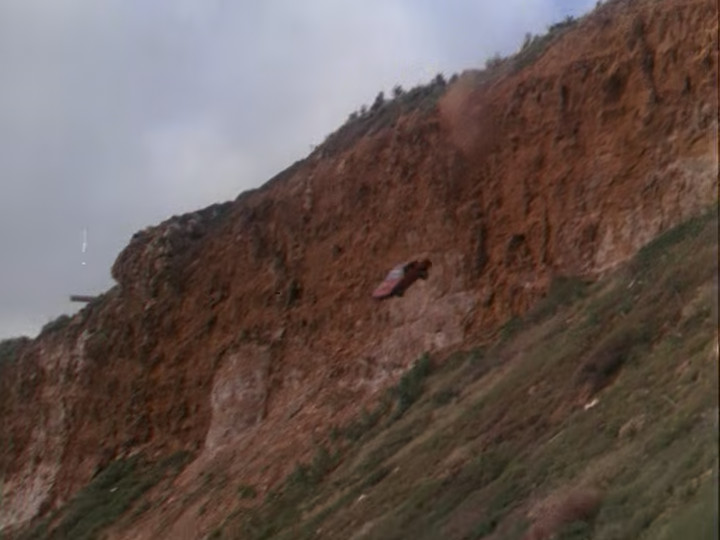
Over on his way to the airport, Scott begins driving erratically, then we see his head slump over and he drives off of a cliff.
And with that, we fade to black and go to commercial.
Had you been watching back in 1985, you might have seen a commercial like this:
When we come back from commercial, the police are at Francesca’s mansion. Inside, Sheriff Bodine is breaking the news that Scott is dead to Cheryl since Francesca is asleep.
He adds that they usually ask a member of the family to identify the body, but in this case there isn’t much to identify. He asks if there’s a family doctor and Cheryl suggests Dr. March. (I’m not sure how good Scott’s wife’s psychiatrist would be at identifying his charred remains, but I suppose no one could be very good at it so the bar is pretty low.) After he leaves, Cheryl says that they have to tell her mother but Jessica tells her to let Francesca sleep for a while.
Jessica then rushes outside to talk to Sheriff Bodine. She asks if he’s sure that there was no other car involved, and when he is, she says that it’s unlikely such a skilled driver would just randomly go off the side of the road. What she actually says is that it’s unlikely this would happen to a man who spent his youth drag racing, but drag racing is famously in a straight line and this was a curved road. Still, it’s the thought that counts, I guess.
Sheriff Bodine isn’t very receptive to the idea that Scott was (somehow) murdered until Jessica mentions that Scott told her that last week his break line had been cut. At that, his ears perk up and he considers digging deeper.
Back inside, Francesca is woken by the sound of the music box playing. It’s sitting on her dresser, open. She walks over and closes it.
It should be noted that the explanation that she did this without remember then went to sleep is remarkably implausible. Music boxes don’t have large drive springs; they would tend to last a minute or so, sometimes a little longer, but rarely even two minutes. That’s not a lot of time to open it then go to sleep, forget that she opened it, and wake up wondering why it’s playing.
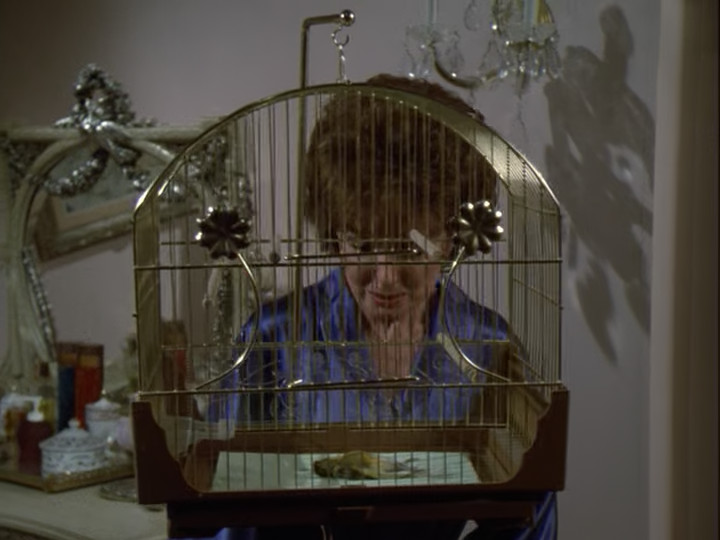
She puts it in a drawer then noticed that her favorite canary is dead.
She then notices something else which we don’t see, screams, and runs out of her room. Jessica, Margaret, and Cheryl all come running. Francesca says that canary has died and Jessica asks Margaret to take it out of her room, while they go to Jessica’s room.
A moment later, Margaret walks in with the cage with the bird in it, quite alive.
Francesca is very confused, but seems to figure that the bird must have feinted or something. Jessica then tells her about Scott.
We then fade to the evening, where Sheriff Bodine is talking to everyone in the parlor. At Mrs. Fletcher’s suggestion, he took another look at the circumstances surrounding Scott’s death. The car was fine but there was a high level of benzodiazepine in his body. Cheryl says that this is ridiculous—Scott was far too straight-laced to be fooling around with drugs. Dr. March (who’s there for some reason) points out that benzodiazepine is a tranquilizer. (I can’t help but mention that there isn’t a single drug called benzodiazepine; they’re a class of drugs that all have similar affects. They are, at least, CNS depressants, though.)
They then go over the circumstances of the cocktails—how Scott mixed them himself, etc.—and it is established that Dr. March had prescribed tranquilizers for Francesca. Sheriff Bodine asks to see them and Francesca sends Margaret to get them. After some further questioning, Francesca points out that no one had much of anything to gain by Scott’s death. Almost everything was owned by her; Scott owned very little in his own name.
When Margaret comes with the bottle, it’s empty. Dr. March is surprised because he gave her a full bottle this very morning. Francesca protests that she only took one and it can’t be empty. She gets very upset and Dr. March insists that she get some rest. Sheriff Bodine says OK, but he’ll be back tomorrow and everyone better be here.
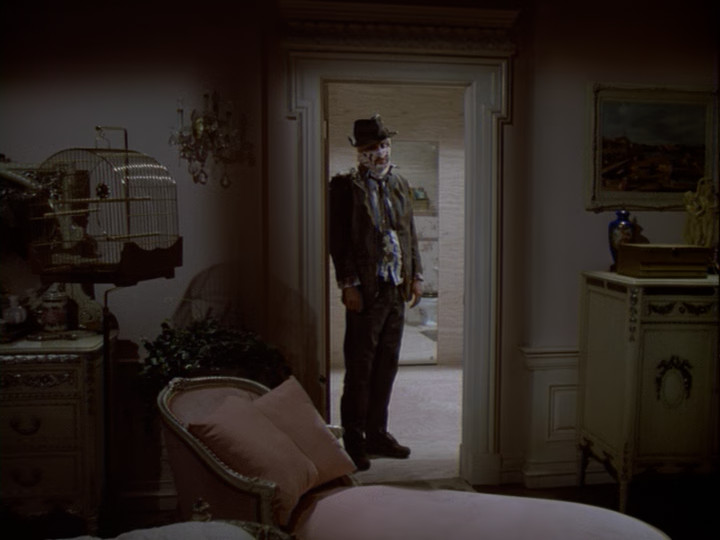
Later that night, Francesca wakes up and sees a man with ragged clothes and bandages on his face standing in her doorway:
She screams, of course.
It’s interesting that they’re going for a psychological thriller vibe, but also making it clear to us that the strange things are real and not all in Francesca’s mind. I’m not sure if that’s just to make us more comfortable—this was a family TV show—but it also puts a curious distance between us and Jessica, who hasn’t seen these things and so doesn’t know what we know.
Anyway, Jessica comes running, and tries to tell Francesca that it was only a nightmare.
As she tries to comfort Francesca, she tells her that she has to accept that Scott is dead. Francesca replies, “Oh, it wasn’t Scott. It was Ross.”
And on that bombshell, we fade to black and go to commercial.
When we get back from commercial, Jessica is examining the sealed room from the outside, and seems to conclude that it’s not very viable to get into it. She then tries to strike up a conversation with Carl the gardener, but he’s not very friendly.
Jessica then asks to borrow a ladder, and examines the window of the bedroom from the outside. It’s been nailed shut, like the door.
As she is climbing down, a local dog uncovers something in the flower bed Carl had just been working on.
Jessica identifies it as a dead canary. Carl replies that the “stupid dog” is always burying things around here.
Later on, Margaret catches Jessica examining the gin bottle in the parlor. Jessica notes that there’s a fresh, unopened gin bottle on the drink tray, and tries to ask Margaret about it, but Margaret only understands Jessica to be accusing someone of theft—which she didn’t do—and isn’t much help.
After Margaret leaves, Jessica surprises Brooke breaking open a desk and stealing some letters from Scott’s office. She asks Brooke if she found what she was looking for. Sheriff Bodine arrives and confiscates the letters, then says she wants to see everyone in the next room.
While Francesca is in her bathroom, she hears the music box suddenly playing. She goes and closes it, but the music keeps playing. Jessica then fetches her.
In the parlor, Sheriff Bodine asks Francesca if she knew that Scott was having an affair with Brooke. Francesca says that it’s ridiculous but when she looks at Brooke, Brooke looks guilty. The Sheriff then says that it’s possible she did know and decided to put an end to it with a handful of her own tranquilizers.
Jessica then says, as she does whenever a friend of hers is accused, “Sheriff, think! Those tranquilizers weren’t under lock and key. Anyone could have gotten to them.”
The Sheriff, undeterred by this incredibly weak objection, points out that the anyone who could have gotten to the tranquilizers includes Francesca, who, so far, is the only person with a motive.
Cheryl slings an accusation at Brooke and Francesca says that maybe she (Francesca) did it but she just doesn’t remember. Dr. March demands to be able to take Francesca to the hospital, which Bodine permits as he’s not ready to arrest her yet.
After everyone but Jessica leaves, she upbraids the Sheriff for being so rough with Francesca. He tells her that she should keep an open mind as people do change. But he’s happy to listen to any other ideas she has, because he would be happy for the culprit to not be Francesca.
Jessica says she has one idea: the answer may be in the sealed room. Just outside the sealed room the Sheriff objects that they shouldn’t be breaking into the room without a warrant and Jessica says that she will take full responsibility, then has (for some reason) Carl pry open the door.
The room is quite dusty, as one would expect, though perhaps not quite as dusty as it should have been. The Sheriff looks around for about five seconds then decides that this was a waste of time. For some reason, Jessica accepts this and they leave.
Later, Jessica and Cheryl are having tea and Jessica asks about Dr. March and how fond he seems of Cheryl. She says that he comes on to her but he’s not her type. Jessica then asks if Dr. March prescribed her drugs when he was treating her and she said yes. Which has no point as far as I can see, because even if she did it, it would be absurd to use left-over medication from years before then steal Francesca’s perfectly good identical medication and just throw it out.
Jessica then asks why Francesca feels so responsible for Ross’s death. Cheryl said that they had a minor squabble that day, but it doesn’t really explain it. The day her father died, he had to go somewhere and Francesca didn’t want him to go. He was late leaving because of the argument so he drove fast to make up time and crashed.
Cheryl then leaves to see Francesca at the hospital while Jessica says that she’ll probably take a nap.
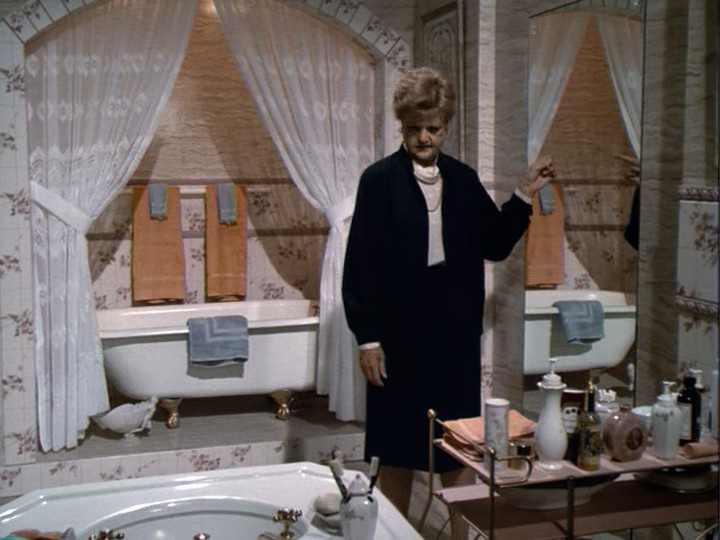
Instead of taking a nap as she told Cheryl she would, she goes and looks at the sealed room, Francesca’s room, and the bathroom between them. As she’s examining the bathroom…
…she asks herself why the side bedroom has a bathroom but the master bedroom doesn’t.
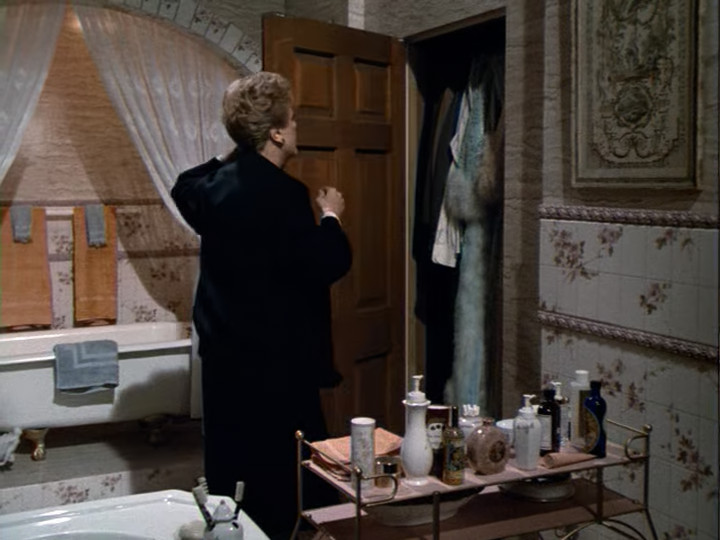
She then wonders about the mirror. She can’t find a button that makes it open, but she does feel a draft next to the door. She tries lighting a match and holding it up and the draft into the sealed room with no place for air to go is so strong it extinguishes the match.
Jessica then simply tries pulling at the mirror and it turns out to be a door.
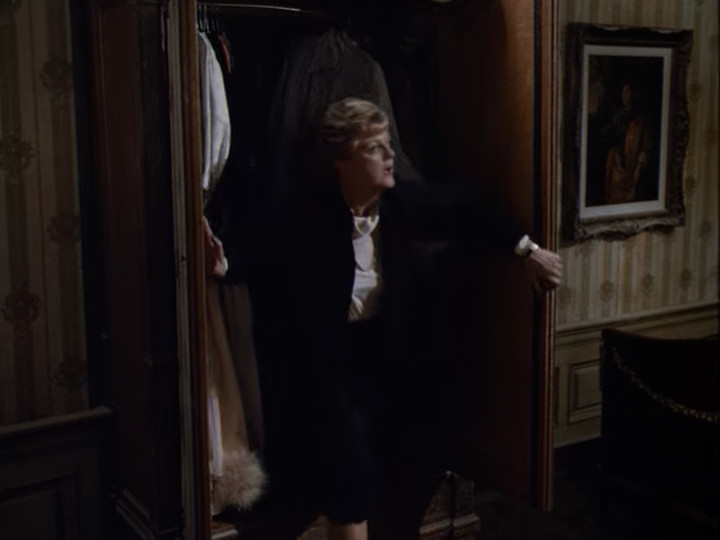
Putting a mirror over a door that is, in theory, sealed, does make a certain amount of sense. But what doesn’t is the door leading into a wardrobe.
Back when this was Francesca and Ross’s bedroom, did they really walk through their closet to go to the bathroom that was shared with the other bedroom?
Anyway, we at least are starting to get an explanation to the mystery.
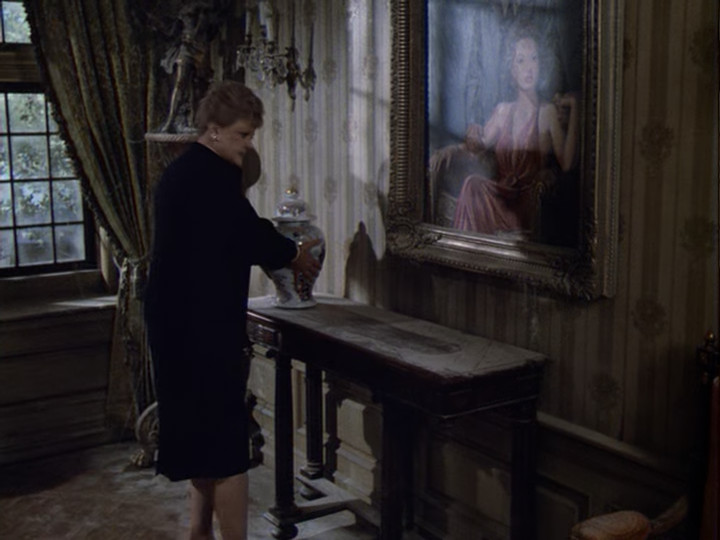
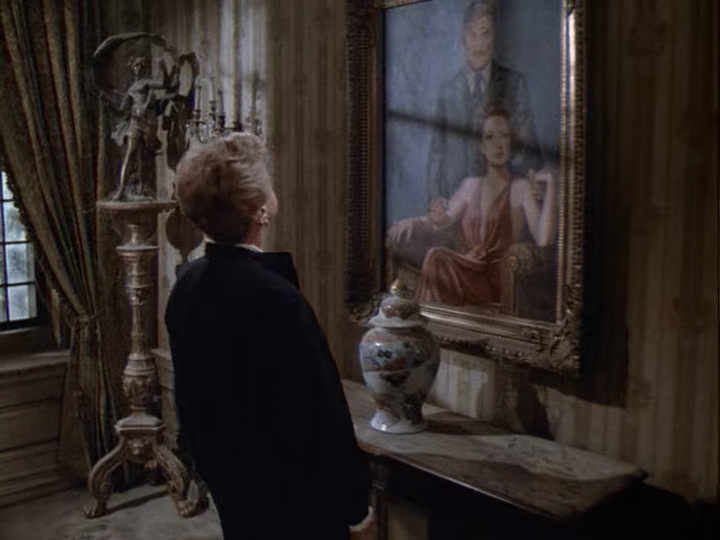
Jessica then goes and examines a table with a vase on it and remarks, “even ghosts disturb the dust when they move vases.” She carries the vase over to the other end of the table and we can see an obvious track in the dust from where someone else just slid it over.
The only thing is, here’s the scene of Jessica looking at this maybe an hour or so before (about two minutes, from our perspective) when she was in the room for ten seconds with the Sheriff before giving up:
You can clearly see that the table is in a different place, the vase is in a different place on the table, and there is no track in the dust. Perhaps more importantly, Jessica can also see that. This is just cheating.
Anyway, she checks the painting and figures out how to open it (it’s on hinges) and sees a stash of stuff in the secret hiding place behind the painting, including bandages, a telephone, a duplicate bird cage, and this:
There’s also a tape player with a recording Ross made. It says:
Cheryl, honey, I’m sorry. I’m going to miss your party his afternoon. So I’m leaving you this little cassette to wish you a very happy birthday. Have a wonderful party. And remember that I love you very much and I’ll see you again tonight.
And on that, we fade to black and go to commercial.
When we come back from commercial, it’s nighttime and the mood is set by a rainstorm with some lightning.
Cheryl arrives and comes in and Jessica meets her. Jessica remarks how worried she was because she tried to call the hospital and the phone is out of order. Cheryl says that she tried to phone Jessica, too, but couldn’t get through. When she says that it must be the electrical storm, Jessica replies, ominously, “or the wires have been cut.”
Back at the hospital Francesca is almost out of her mind with fear when she can’t get through and summons Dr. March, who yells at her to get a hold of herself, to some positive effect.
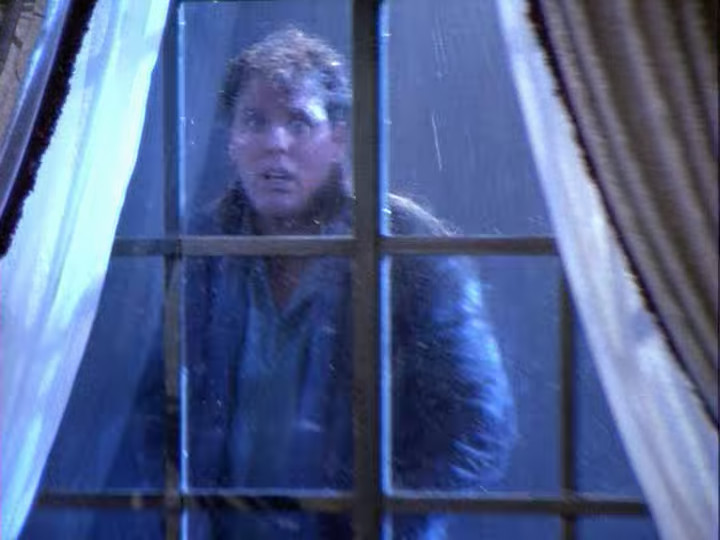
Back at the house, Jessica tells Cheryl that something very sinister is going on. Cheryl thinks she’s being melodramatic until the little dog comes in carrying Scott’s hat in its mouth. Then they hear a noise and Jessica grabs a stick and they go investigate. The camera pans past them to the window, where we see Carl looking in.
It must save Carl a lot of money on rent to work 24 hours a day at the mansion.
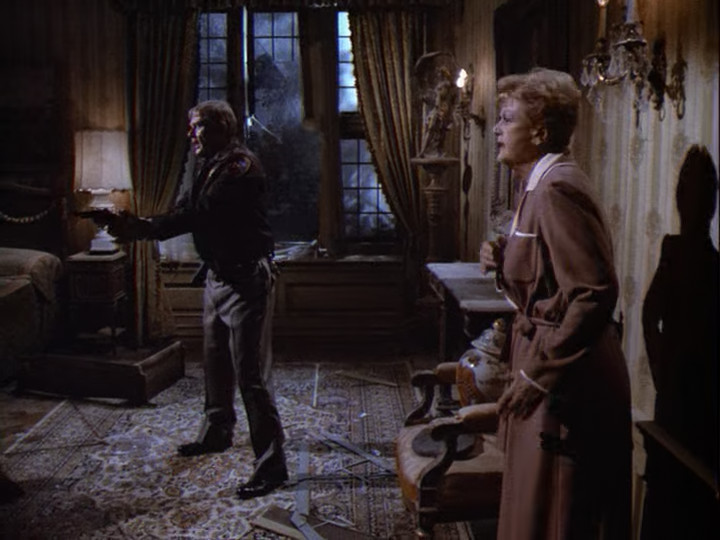
It turns out that the sound is coming from Francesca’s bedroom, where a window (which swings horizontally on hinges) is unlatched and is blowing open and closed in the wind.
Cheryl then asks if Jess smells anything and Jessica replies that in fact she does—pipe tobacco. Then she notices that on the floor is Scott’s pipe. Jessica picks it up and it’s still warm.
Jessica then shows Cheryl the way into the sealed room. As Jessica is showing her stuff, Cheryl is getting more scared by the minute.
Outside, Dr. March comes up to the house (I guess he promised Francesca he’d check in on it) and someone grabs him from behind right after he rung the doorbell.
Back inside, Cheryl is in an absolute panic, saying that Scott isn’t really dead. His body was disfigured beyond recognition—he knew what “we” were doing and he faked the whole thing.
When Jessica asks what she means, Cheryl screams that Scott knew she was trying to kill him and now he’s waiting, outside, to kill her.
At this, Carl bursts through the closet door and shouts, “Shut up! Not one more word!”
Jessica then says hello to Carl, “or should I say, Carson Todd.” She adds that he probably knows a lot more about music than he does about gardening. And she knew he was in on it because Cheryl couldn’t have made all those things happen without a confederate.
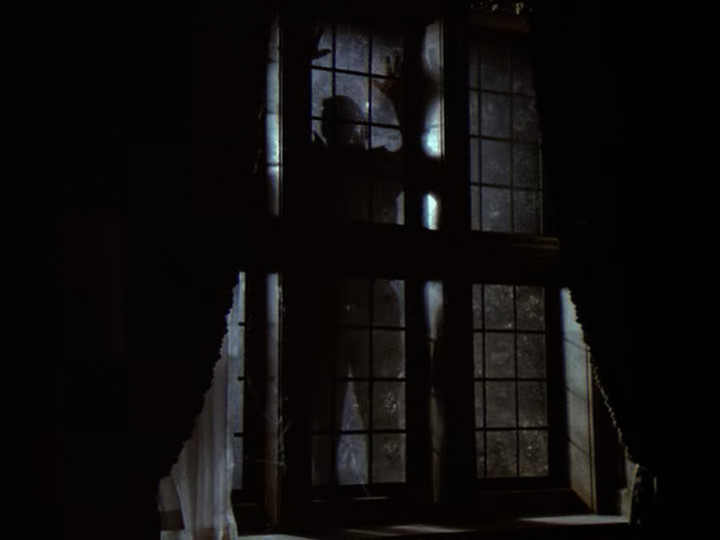
Once she gets enough of a confession, she flips the light switch to turn off the lights. In the darkness, we see the figure of a man at the window illuminated.
This terrifies Cheryl and Carl, but only for a moment. The figure then breaks through the glass and stands up.
It turns out that it’s Sheriff Bodine. Jessica remarks that for a moment she was worried that he had wandered off and he remarks that he couldn’t get the damn window open. But he heard enough of the confession, so all’s well that ends well.
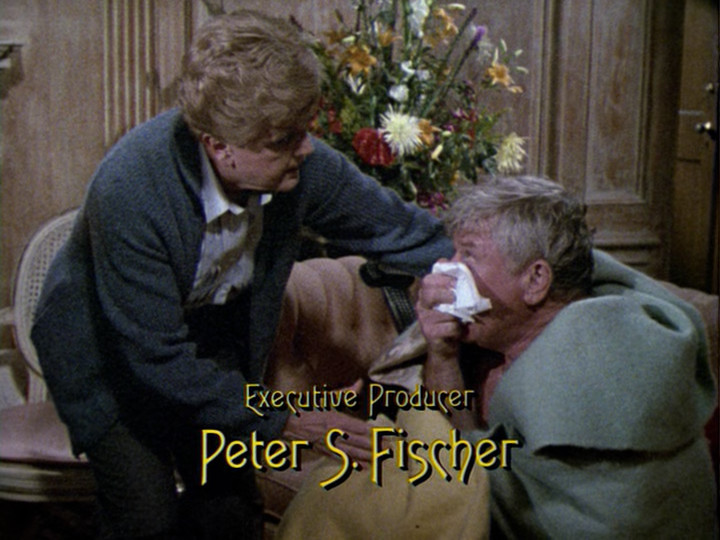
Later, as the Sheriff is huddled in blankets and his uniform is drying by the fire, he, Jessica, and Dr. March discuss the case. She first started suspecting Cheryl when she spilled her tea and got to thinking about the drinks right before Scott was killed. The doctor didn’t have a martini, and neither did Jessica. Of the three who were supposed to, Cheryl spilled her drink and then got cherry instead of mixing another martini, which suggests she spilled her drink deliberately because she knew drinking the martinis was a bad idea. And Francesca didn’t feint after getting the phone call, that was just the tranquilizer taking effect.
Cheryl wanted her mother’s money, of course, which she would have access to with Scott dead and her mother committed to a mental institution. When she found all of those things in the sealed room, that convinced her Cheryl and Carl were working together, and when she showed Sheriff Bodine, it convinced him too, but none of it was proof that would stand up in court. So they had to stir things up. Sheriff Bondine provided the props. And it worked.
The Sheriff mentions that the one thing he can’t figure out is why Cheryl didn’t just kill her mother. Here, Dr. March is able to provide them with some information. Because of Cheryl’s wild days, Francesca’s will provided a trust for Cheryl until she was 35 years old. If Francesca died, Cheryl wouldn’t be able to touch the money for another 12 years.
Dr. March says that he doesn’t know how to break the news of what Cheryl did to Francesca and Jessica says that he won’t have to. She’ll do it. She’ll be taking Francesca with her to Cabot Cove. A change of scene, some rest, and sea air is what Jessica prescribes.
The Sheriff, who has been fighting back sneezing for some time now, finally sneezes violently and after Jessica gives him some tissues we freeze frame and go to credits.
This is an interesting episode. While I didn’t love it, I really respect how ambitious it was. It’s not easy to combine a psychological thriller that borders on gothic horror with a murder mystery. It didn’t do a fantastic job, but given its limitations, it did surprisingly well.
One of its limitations was having an absolutely tiny cast. Not counting Jessica and the nurse with only 1 line, there were a total of eight characters. If you subtract the Sheriff and the murder victim, this brings us down to six characters—and Brooke was barely a character. If you assume that Francesca is the victim of a plot, because they showed us pretty early on that she was, and if you discount Margaret because it would be cheating to have the housekeeper be the murderer, that leaves us with three real characters: Cheryl, Dr. March, and Carl. That’s a really tiny list of possible suspects. It’s even smaller if you consider that Dr. March has no possible motive to kill Scott.
I think that they help it to work out by making the central mystery what is happening to Francesca and how it is happening to Francesca, rather than who killed Scott. This focus on how rather than who really helps us to not notice that there are between one and two plausible suspects (if you consider the gardener a legitimate suspect).
That said, they do play a bit fast and loose with the how. OK, there’s a secret passage from the bathroom into the sealed room, so that lets people disappear inside the house. Cool. But there’s only one way out of the sealed room, which is through Francesca’s bedroom. Which means that there are several times where that would result in Carl having to stand around inside the sealed room for hours waiting for Francesca to go to sleep so he could sneak out. In reality, he’d probably need to wait even longer because it would be really bad for someone still awake to see him sneaking out of Francesca’s room, or even just to be found inside the mansion.
There’s also the issue that some of the evidence is a bit unrealistically convenient. For example: the Carson Todd record behind the painting. What earthly motive could Carl or Cheryl have for keeping it there? There wasn’t a record player in the room.
And the telephone in the secret compartment—why was that there? Did the master bedroom have its own private telephone line that they kept paying for all those years, that Carl was able to call from the secret room to play the tape? And how did Carl sneak into the sealed room to make that phone call while everyone was busy having their martinis?
I also really don’t understand the character of Brooke. Why was she in the episode? She was barely a character; she was only there to make Scott unfaithful. And what was the point of making Scott unfaithful? Is it just that the writers of Murder, She Wrote believe that all young people married to rich older people are unfaithful? Or to give Francesca a motive in order to make her a suspect? It’s not like the police actually arrested her, so she was never in much danger.
Having said that, I do think that, on balance, they did a fairly good job. This episode is very slightly like The Hound of the Baskervilles, in that it blended gothic horror with mystery, and I think that it goes to show that this is a very workable combination.
In the excellent movie Interview with the Vampire, there is a fascinating scene where the 500 year old vampire Armand explains to the recently made vampire (and main character) Louis that there are not, in fact, many old vampires. As he explains that most die for pointless reasons or just fade away because they lose the will to continue, he says:
Do you know how few vampires have the stamina for immortality? How quickly they perish of their own will? The world changes, but we do not. Therein lies the irony which finally kills us.
This life is very strange, because it is not really about itself. We are made for eternity but currently living in time; we are not in the book, but in the preface to the book. We make things which, being good in themselves, should last forever, but instead all good things must come to an end in order to make way for other good things. This is the (apparent) contradiction which fools so many people into thinking that life is an illusion. This is also the (apparent) contradiction which fools so many people into sinning, since most sin consists of trying to hold on to the good things which we should let go of.
Interestingly, what Armand is describing to Louis is really why it is so difficult for a rich man to enter the kingdom of heaven. As I explained in some detail in my video The Rich Young Man & Who is Rich Today, there are two ways of defining “rich.” The one which is only really relevant to envious people and people dealing with envious people is relatively. One can coherently define “the rich” as “the top 1%” or “the top 0.1%” or “the top 50%” or whatever suits one’s purposes to the moment, which usually means defining “the rich” as “those who have more than me” because the most common purpose for this kind of definition is to complain about those who have more than one. The other way to define “the rich” is in terms of the power one has to modify one’s environment to one’s desires.
If you consider the vampires in Interview with the Vampire, they very much fit this definition of rich. They’re beautiful, physically capable of dominating humans, can easily live in places with abundant prey, and can easily avoid all danger. Combining the experience of age with the vigor of youth, they can build almost anything they want. With the exception of having to sleep during the day or at least spend their days underground, they can easily satisfy almost any immediate desire that they have.
But what they cannot do is to take part in building up eternity. Not literally, but symbolically, I mean. Vampires are no longer reproductive creatures, and they’re no longer part of society. They’re here, but that’s it. They’re not doing anything. They are merely existing. And the problem they run into is that they know that they’re supposed to be doing something else, but can’t. That’s what “the world changes, but we do not” means.
Of course, if one went beyond the symbolism of the story and took this merely as a science fiction premise, vampires could take part in society, and in building up eternity. Monks did enormously valuable work in building up the world despite not being reproductive creatures who were not immediately in society, and vampires could, in theory, do likewise. They would be absolutely fantastic builders, for example. A single vampire could probably build a gothic cathedral in a year. They could contribute enormous amounts of beauty to the world. They could combine extensive learning with long-practiced wit and obliterate most heresies before they spread, guiding the youth on the path of truth. There’s a lot they could do.
But the vampires in Interview with the Vampire did none of that.
Because it is very hard for a rich man to enter the kingdom of heaven.
Because, being so able to conform the world to his whims, it’s much easier for him to lie to himself that he already is in heaven, where people do not marry nor are given in marriage, but are like the angels. It would be very hard for a vampire, who is immortal, to have a sense of urgency. And that is one of the things necessary for happiness in this life—to realize how each moment is precious because each moment is different, and so to know the urgency of not wasting a single moment. For the rich man craves eternity, and so he uses his power to make the moments like each other, and so he doesn’t value them, and so he wastes them.
It is interesting to note that what is true of the Vampires in Interview with the Vampire, with regard to how they are able to conform their environment to their desires, is largely true of middle class people in modern industrialized society. We are all rich, in an absolute sense. And, as can be seen by the explosion of mental illness and epidemics of suicide, a surprising number of rich people don’t even have the stamina for mortality.
The Hound of the Baskervilles is an excellent story which is fascinating for many reasons. In this post, I’d like to consider the moor itself. The moor has two rather distinct natures, despite being the same place. During the day it is safe and even cheerful. At night, it is a place of unknown dangers. This is highlighted in the colorful advice to “avoid the moor in those hours of darkness when the powers of evil are exalted.”
This dual nature of the moor served several functions. One of them was to create a rhythm which alternated investigation with danger. This allowed the excellent narrative structure of punctuated progress in trying to solve the mystery racing against a danger where one doesn’t know the progress the danger is making. This was excellent for creating an exciting atmosphere.
I think that another important thing that the dual nature of the moor does is to provide a background explanation as to why anyone is here at all. This is kind of an issue with the D&D setting Ravenloft, at least as it seems to me from descriptions of it without ever having played it. A land that’s all darkness and evil is one that everyone would leave if they don’t simply die first, and so there would be no one left for the evil to be parasitic on. And evil is always parasitic; what makes it evil is that it can only destroy, it can’t produce anything itself. (This is why the orcs in Tolkien couldn’t reproduce themselves and had to be made by others in order to be evil by nature.)
If the moor were always death to be on, no one would have their homes here. If there were no homes there, there would be no innocent people for Stapleton to hide among. For that matter, there would be no Sir Charles Baskerville for Stapleton to send his hound after.
The story is only interesting because the moor is dangerous at night, but it’s only possible because the moor is safe during the day. And, if you think about it for a moment, you’ll also realize that the danger of the moor at night would have been far less interesting without the safety of the moor during the day.
There’s a lesson in this for writers. One should not get so distracted by the most interesting part of a story so that one forgets the less interesting (and harder) parts of the story that make it possible. Without the parts that make it possible, it won’t even be interesting.
As I’ve been re-watching episodes of Murder, She Wrote, I’ve begun to notice that in most episodes, while it would be quite accurate to call them murder mysteries, they’re usually not detective fiction. That is to say, while Jessica does solve the mystery of who committed the murder, she doesn’t do it by detection. She does it by remembering.
(Please note that I’m not trying to get on a soapbox and lay down rules for how murder mysteries should be written, I’m only try to describe a difference of approach which I think is interesting to think about.)
As I’m using the term here, a detective is somebody who detects things, that is, who enters an environment and learns what’s there. By contrast, a rememberer is somebody who was in the environment when the crime happened and simply didn’t attach importance to the right things at the time. Detectives need to do things like interview people and examine crime scenes, while rememberers need to experience things and then think them through. The main difference is that the story of a rememberer is more internally oriented, while the detective is more relational. And, I mean, you can see this in the way the rememberer reveals things. “But do you remember what he said next?” “Ah, but do you remember what he did then?” Then they go on to explain why the wrong significance had been attached to the things. This is not purely introspective, but it is at least largely introspective.
The detective is more relational in two ways, I think. The first is that he talks to people more. Since he didn’t experience the crime or the events leading up to it, he needs to talk to the people who did. And since he’s an outsider in the liminal space created by an unresolved murder, this gives him the opportunity to probe aspects of human life which are normally hidden. The detective can be told things one wouldn’t normally tell a person because one doesn’t have a relationship with him to be affected by these disclosures. The detective also has no obligation to anyone else, either, so telling him things doesn’t change his relationship to anyone else in the group. This allows a very interesting perspective into human relationships.
The detective is also more relational because detection lends itself to being collaborative. It is natural for a detective to have a Watson that he discusses the case with. It’s hard for a rememberer to have a Watson because the Watson would have to be friends with the same people the detective is. Further, if the Watson is also friends with these same people, then the discussions become complicated because they affect the pre-existing relationships which the Watson has with the people. They can even affect the relationship the rememberer has with the Watson. When the detective and the Watson are both outsiders, discussion between them becomes much freer.
The major advantage which remembering has over detection is that it is far more compact. Murder, She Wrote was usually very pressed for time; making Jessica primarily a rememberer rather than a detective saved time.







You must be logged in to post a comment.