With a hat tip to Father Poeking on Twitter, I came across this fascinating video:
It’s a (scripted) rap battle and boxing match which is actually about the main economic arguments of Keynes and Hayek. A thing which is entertaining about economics is already a very rare beast, but one which has high production values and good acting is a bit like finding a two-headed unicorn.
Also interesting is that, as the thumbnail suggests, the rap battle is interspersed with a boxing match. There is the interesting detail that boxing has been called “the sweet science” while economics has been called “the dismal science”.
It’s very much worth watching; it’s entertaining and there’s a lot of attention to detail.
A friend brought up the subject of people demanding signs from God, which reminded me of a thing that comes up sometimes among atheists where they say that if God wanted people to believe in Him, he should do [whatever]. It doesn’t take much experience of atheists to realize that it doesn’t matter what the thing is, it wouldn’t be enough. There could be mile-high letters in the sky made of unquenchable flames saying, “I made the world. –God” and atheists would say it’s an unexplained natural phenomenon that guided the development of language and its inexplicability was what drove the development of religion before the advent of modern science.
Vary the thing as much as you like, as long as it predates what the atheist sets as the condition, the result will be the same. It will only be believable if it happens in response to what the atheist asks for. That is, it will only be believable if God’s actions conform perfectly to the will of the atheist.
That’s the key to understanding the fundamental problem.
You can see the exact same phenomenon in romantic relationships where one partner is insecure. Let’s call them I and O, for brevity: I isn’t sure that O loves her, and asks him to do something reasonable to show it. But as soon as he does it, it occurs to her that maybe he did it for some other reason. Maybe he just thought it was a good idea, or thought that he was going to get something out of it. So I comes up with some other test for O’s love, this time more extreme; something he couldn’t think is reasonable. When he does it, she then wonders if he really loves her or is just trying to humor her because he wants sex. So she needs to push him away and demand something that he would have to hate. If O is sane, I will eventually succeed in driving him off, proving that he didn’t “really” love her. And if he isn’t sane and stays, it’s always possible that he’s doing that because the alternative is even worse, which isn’t really love, etc.
Ultimately, the problem in both cases is that the person will only believe in what is a complete extension of their own will. But if it a thing were a complete extension of one’s will, it would be a part of one (since we can’t create ex nihilo). Ultimately, the only thing that the atheist and the insecure person can believe in is… themselves.
It’s a solipsistic trap.
They will tend to be very angry that they are in this trap; they don’t want to be. They cry out to people to get them out of this trap. But no one can get them out. That’s the problem with mental prisons: the prisoner is the guard.
In this video I take a look at the concept of “emergent properties” (which is just a more recent name for “epiphenomena”, what they are and what they aren’t, and how they don’t mean what internet atheists claim they mean.
I was talking with a friend about how I’ve noticed that my children aren’t as interested in narrative fiction as I was at their age, and they’re more interested in YouTube stuff. A lot of it is educational in one form or another, though some of it is also a discussion of fiction. He made the point that YouTube has a heavily para-social component to it, and while that’s true, I do think that it’s more about the incredible specificity of topic possible on YouTube.
In thinking about that conversation later, it occurred to me that Television has always been para-social, though, even the narrative stuff. There is probably a more para-social component to non-narrative programming, which might be why shut-ins are more likely to watch the news. However, narrative TV was also para-social. We grew fond of the people on TV.
I suspect that the para-social aspect was especially responsible for the boom in family-based shows (and, more generally, domestic shows) like sitcoms in the 1980s. Though it certainly applies all over.
And come to think of it, there was a joke about the para-social nature of old time radio programs in an episode of Hogan’s Heroes. Someone had to break the bad news to Carter that the bank foreclosed on Mary Noble, Backstage Wife and Carter almost broke down in tears.
This raises the interesting question of why does YouTube work better for para-social video? I suspect that the answer is the vastly lowered production costs mean that it can be worth it to do YouTube videos for much smaller audiences, which means that they can be far more specific, and so the match with the much smaller audience is much better.
In this video I explain what the Catholic doctrine of transubstantiation (i.e. the Real Presence of Christ in the Eucharist) is, what the doctrine isn’t, give an analogy that we can use to approach understanding it, and also explain how no one who believes in the Real Presence in the Eucharist can actually disagree with the doctrine of transubstantiation.
The episode Just Another Fish Story first aired on March 27, 1988 putting it late in the fourth season of Murder, She Wrote. It is a Grady episode, set in New York City, and features Grady being engaged to a young woman named Donna.
The first scene opens with an introduction to a shady character:
“Listen, just because it’s you, how about 1,000 for the lobster and 2,000 for the caviar?” he says quietly, so no one can hear. He asks if the other party wants it delivered at the usual time, and answers some question with, “Hey, they haven’t noticed so far. Why should they now?”
We then cut to Jessica in a taxi cab looking at her watch and saying to the driver that she would like to stop off at her hotel and freshen up but Grady said that they can’t change the time of the reservation for anything, so she doesn’t have time. The driver replies that if they hit cross-town traffic, she’ll be lucky to get there for desert, if the place is still open by then. A lot of places have opened and quickly closed on the block she’s going to.
Well do I remember NYC cabs with their raised back seats and lack of windshields.
Jessica mentions that Grady advised her to invest in this restaurant, and it seems to be doing well. The driver mentions that he took a lot of people to a Serbo-Croation restaurant at the same address last year, and it was doing well, then, too. This cab ride fit a lot of exposition into a short space, and made it all the more entertaining with glorious rear-projection and the occasional camera shake to make it seem like the car was going over a bump.
When they get to the restaurant, Grady is outside, dressed like a cowboy for some reason.
He really looked like he was about to draw a six-gun.
Apparently this is the dress code for accountants at Alice’s Farm Restaurant, where Grady works. Or perhaps it’s Donna, his fiancé, who works there, and Grady is just dressing appropriately for a theme restaurant. He doesn’t say.
Their sign is interesting:
I can’t help but wonder if this is meant to be a reference to Arlo Guthrie’s song, Alice’s Restaurant. It was a somewhat famous 1967 anti-vietnam war song (sort of) and also a film of the same name based on the song. I’m pretty sure that the plot has nothing to do with the song or the movie; at most it would be meant for a humorous moment.
When they get inside it turns out that the shady character from the first scene—his name is Chaz—is the maître d’ of the restaurant and cannot find their reservation. He keeps interrupting the conversation to welcome famous people and bring them to their table.
Chaz excuses himself to see to someone exceptionally famous and a new character, Doug, walks over and greets Grady.
That is a weird, weird necktie.
He’s apparently the brother of the Alice after whom the restaurant is named. They have a convenient arrangement: he stays out of her kitchen and she stays out of his books. Once he finds out that their reservation has been lost he angrily finds Chaz and points him to the reservation. Chaz claims he mis-heard the name and sheepishly says he’ll have their table ready in a few minutes. Doug takes them to the bar to buy them some drinks.
A famous video artist named Narissa walks in and hands Chaz money to get her a table, which he gladly does. Doug walks up and tells him that he’s had it with Chaz selling off tables and snatches the bribe, but Chaz snatches the money back and replies, “Look, amigo, I don’t take orders from some punk who rides in here on his sister’s apron strings.” Doug angrily walks off to the kitchen where he talks with his sister about what a problem Chaz is.
Ah, the 80s, where even casual blouses for professional kitchens had shoulder pads.
Doug suggests buying Chaz out but Alice doesn’t really care that Chaz takes bribes since he brings in a lot of investors and also attracts the right sort of clientele. In her words, “Look, he brings in the right kind of people, OK? The kind of people who think there’s something chic in paying $22.50 for fried chicken.” That would be $53.47 in 2022 dollars, which for an exclusive Manhattan restaurant isn’t all that expensive. Considering that in 2018 you could get 10 gold-covered chicken wings for $30 (I’ve got a post talking about its symbolism, btw), this is closer to the value-side of Manhattan pricing than it is to the Ritz.
It also puts the character of Chaz in a strange light. He’s sleazy, but his partners accept him being sleazy. Also, for that matter, he’s a partner. It’s a bit weird that he’s stealing from the restaurant for relatively petty amounts, considering that the restaurant is, at the moment, highly profitable, and he’s making plenty of money on bribes for tables, too. Greed knows no bounds, however, so it’s not implausible.
Back at the bar, the bartender, Harry, is pouring wine for Jessica. The same wine he poured for “Tennessee”, presumably Tennessee Williams. Jessica likes it.
He looks really familiar but, oddly, was in only one other episode (Dead Heat)
Given that Tennessee Williams died five years prior to this episode, that bottle must have been open for a long time. He then does something where we get a closeup. I don’t know what it means, but it’s got to be a clue—Murder, She Wrote doesn’t give closeups for non-clues.
He said that he’s got a wine cork signed by Hemmingway. Given that Ernest Hemmingway died in 1961 and this restaurant is only a year old, it’s a bit strange that he keeps this treasured memento here. Anyway, we can see that the drawer has no handle and Harry uses some sort of knife to open it; it has scratches from where he did that many times before.
Shortly after, another character comes up.
I wonder if you can see a message in her coat if you look at it through red cellophane.
Her name is Mimi and she writes a gossip column. Harry introduces her to Jessica with, “meet a real writer.” She’s rude and brash, and also seems to be given Jessica and Grady’s table.
They don’t have long to lament that their table has been given to another, though, as Grady’s fiancé Donna walks in.
Ah, the late 80s, where even accountants wore shoulder pads.
Fun Fact: in real life Michael Horton, who played Grady, and Debbie Zip, who played Donna, are married (and were at the time of filming, too).
Donna is thrilled to meet Jessica and, if anything, is even more nervous than Grady is. She also has the news that her parents are throwing a party for her and Grady at their house up in Fishkill and she’d like terribly if Jessica could come. Her parents are looking forward to meeting both Jessica and Grady.
It strikes me as a bit odd that Grady is engaged to their daughter and they’ve never so much as met him, but the 80s were a strange time.
Jessica asks them to tell her about their plans for the wedding, and is greeted with an embarrassed silence. Neither one wants to be responsible for making any decisions and the conversation devolves into them assuring the other that whatever the other wants would be fine.
Finally they’re seated at a table and Jessica tries to order caviar. The restaurant is out of caviar, though, but the waiter recommends “Alice’s Farm Caviar”, where instead of fish eggs it’s made of “oeufs de poulet”, aka chicken eggs.
Presumably they’re out of caviar because Chaz sold it. This means that he’s not only greedy and dishonest, but also stupid. It’s one thing to steal some lobster and caviar such that they need to be ordered more frequently than makes sense. It’s another thing to clean the place out; that just draws attention.
By the way, given how the place is southern-country themed and sells fried chicken for $22.50, why do they have lobster and caviar in their freezer?
Alice comes over and thanks Jessica for her investment and asks how the food was. Jessica says that it was marvelous. She didn’t know it was possible to get yellowtail on the east coast, and Alice admits that it was frozen. Jessica is surprised; she never would have guessed that.
In the next scene, Grady and Jessica drop Donna off at her place, then Grady smashes his fingers in the door getting back into the cab. Jessica relates the story of how Frank (her deceased husband) had a broken leg when she and he got married.
The scene then shifts to Chaz stacking up boxes of frozen lobster in the empty kitchen (presumably it’s late at night). He checks his watch, then the scene shifts to the next morning. The phone rings while Grady is singing in the shower so Jessica answers the phone. It’s Donna, in distress.
Does her dressing gown have shoulder pads?
The police have come to her apartment to take her to the restaurant. Chaz was just found murdered at there. Then the scene fades to black and we go to commercial break.
It seems a bit weird that they are escorting Donna to the scene of the crime, but there is an explanation and we find out what it is as soon as we come back from commercial break:
It turns out that there is a ledger that has entries whited out, and the detective wants to know what they were. When Donna says that she doesn’t know off the top of her head. He asks her to find out. Now.
Lt. Rupp goes to look at the body and Jessica follows to ask if Donna can look up the books after the weekend (because of the party). In the freezer, where the corpse was frozen, Jessica finds a pocket knife tucked away.
How did it get wedged between the boxes?
We never got a good look at the tool that Harry used to open the drawer, but it might well have been a pocket knife, which means it’s highly like that this is his pocket knife.
The cause of death is currently unknown. The victim was slashed across the chest but the wounds seem too shallow to cause death. He was also hit on the head by something. After Rupp is done examining the body he talks to Doug about a slip found on the body. Alice interrupts to announce that they’re missing six cases of lobster (Lt. Rupp had her check). That’s about $1,500 worth of lobster ($3,564 in 2022 dollars). Lt. Rupp suggests that Chaz interrupted a thief at work.
That’s a curious suggestion because, while in real life it might be plausible, we know it wasn’t the case because we’re watching a murder mystery and that would be a completely unsatisfying solution. As a result, it makes Rupp look a little dumb, or at the very least not clever, since we know he has to be wrong.
There’s a small interlude where Grady is reluctant to go up to meet Donna’s parents because, he reveals to Jessica, several years ago he worked for Donna’s father for a few days then was fired. Then Mimi calls and asks for a breakfast date with Jessica, and Grady accepts on Jessica’s behalf. Jessica doesn’t like this but since it would be convenient to pump Mimi for information, she goes.
Mimi gossips about the restaurant they’re at and in so doing reveals that it’s the restaurant at which Alice had worked before opening up her farm restaurant. Moreover, Alice took Harry and Chaz with her when she left. Valentino, the owner of the restaurant, was absolutely furious. I suppose Chaz could have been the maitre d’ here, though his style would certainly seem to clash. But what did Harry do? This doesn’t seem like the kind of restaurant to have a bar, and certainly when we pan over the restaurant, none is visible. So what did Harry—a lifelong bartender—do there?
Mimi then gets a message on her beeper, asks the waiter for a phone, and calls whoever paged her. She discovers that her fingernail designer has been arrested and—since she has a major party to go to that evening—she has to go and bail him out. She asks Jessica to messenger her a bio for the article Mimi is writing, then leaves after handing Jessica money for her portion of the breakfast since she always pays her own way because of journalistic ethics.
There’s an interesting gag which happens as they leave. Someone tells Valentino to turn off the ambiance tape as no one is listening anymore, which he does, and and the restaurant goes silent. As Jessica comes up to the register, we see that she and Mimi were the only customers.
The camera panned to get here and there was no one anywhere else.
Jessica goes to pay the bill and Valentino tells her the meal is on the house. Besides, he adds, it’s easier than starting a new register tape. This gives Jessica an idea, which she presents to Lt. Rupp over at police headquarters.
I think the American flag in the corner really pulls the office together.
Jessica explains that perhaps Chaz closed the register out early and pocketed the money from later meals. Donna explains that it’s consistent with the white-out entries, which always had smaller amounts written in—after Donna paid the larger amount. Rupp asks why Chaz would rip himself off and Donna explains that Chaz was ripping off the investors in the restaurant.
Rupp asks for a list of the investors and who had access to the books, since anyone who found this out could have a motive to kill Chaz. When Jessica objects, he threatens to arrest them for suspicion of murder. While the charges wouldn’t stick, it would take all weekend to process them, so it would be faster for them to just get him the information he wants.
In response to an accusation from Jessica that he’s having them do all of his work, he tells her that he found out that the blade which caused the wound was “a sickle-shaped, jagged-edged knife.”
At lunch the next day, Jessica is enjoying the fish, which was also previously-frozen yellowtail. it was left out over night to defrost, Alice thought by Doug but he disclaimed this. Jessica says “Oh my.”
“I think I just found our sickle-shaped murder weapon, and we just ate it,” Jessica says. (This makes the title of the episode a bit on-the-nose.)
“Yellowtail” can actually refer to several different species, but apparently the yellowtail amberjack is the most common. Here’s what it looks like before eating:
I can see the sick-shape of the dorsal and anal fins, but I’m having trouble believing that the fins could be strong enough to cut deeply enough into a human being’s chest to cause fatal wounds. There’s a lot to get through, and the vital stuff is protected by ribs. A fin, when frozen, might be sharp, but I doubt it’s got the structural integrity to cut through bone.
Actually, I guess the writer’s thought the same thing because in the next scene—Alice and Jessica are in Rupp’s office—it comes up that the wounds were not the cause of death. (The police did find traces of the victim’s blood on the fins, btw.) Rupp wonders who would use a fish as a weapon to attempt to murder someone in a kitchen full of much better weapons.
Jessica suggests that the person caught Chaz steeling, then Chaz attacked them and they defended themselves with the fish because it was close at hand. It fits the position of the body, Jessica says, and he might have bumped his head as he stumbled back. Rupp replies that he needs to read one of Jessica’s books. (Also, it comes up that Alice was home with her brother when Chaz was murdered. They live together because no one can afford to live alone in Manhattan.)
The only problem with this theory is that it doesn’t account for how the fish got out of the freezer and into the kitchen. If the frozen fish was the closest thing to hand in the freezer, where Chaz was killed, the killer would have had to carry it out to the kitchen and leave it on the counter in order for Alice to have found it there, defrosted, the next day. It’s hard to see how anyone could have a motive to do that, but that is especially the case for someone who struck out in self defense.
In the next scene, Jessica visits Grady and Donna, who are working on the information that Rupp wants. Grady can’t make the investors’ investments add up to the total capitalization of the restaurant and Jessica suggests that there are silent partners. There is also a list of initials nearby, one of which matches Mimi Harcourt’s initials, and Jessica takes a cab ride over to see if she can find out from Mimi that this is correct.
It is. Chaz talked her into investing, promising her secrecy, then blabbed all over town about Mimi’s involvement. Jessica all but accuses Mimi of murdering Chaz, so Mimi produces an alibi—she was in her apartment all night with Doug (Alice’s brother).
Jessica confronts Alice about this, who admits that she lied, but now swears that she didn’t leave her apartment all night. She lied, not for herself, but to give Doug an alibi. (I don’t know that a sister swearing her brother was home would count as an alibi… for precisely this reason. A sister might be 1% better than a mother as an alibi, but that’s not saying much.) Doug takes offense that she thought he needed an alibi, and they squabble for a bit. Then Jessica asks if there would be many people interested in cases of stolen lobster.
This leads Jessica to talk to Valentino, who, after all, is not an unreasonable guess for the purchaser. Chaz had a relationship with him, and he had no great love for Alice’s Farm Restaurant. Jessica’s pretext is that she is thinking of setting a novel in a restaurant and wants to do research. Of course, Jessica discovers the boxes of lobster left out on the counter.
Odd that he’s thawing all of it out at once.
She accuses him of it and he more-or-less admits to buying them from Chaz. How else can I get lobster and caviar at reasonable prices, he asks? Then Grady calls calls her at the restaurant because Donna broke off the engagement.
They talk, then Lt. Rupp comes and finds Jessica. He thanks her for putting him onto Valentino, as his alibi “won’t hold minestrone.” Jessica points out that this doesn’t make any sense—Valentino had no motive. Perhaps there’s someone they hadn’t thought of, though. Chaz wouldn’t have done his own deliveries. Harry then goes to show somebody his Hemmingway cork, but can’t find his pocketknife to open the drawer. Rupp notices this and accuses him of being the owner of the pocketknife found at the scene of the crime.
He denies it, but Jessica points out that it wouldn’t be hard to get fingerprints from the pocketknife, or to get Valentino to identify the guy who dropped off the stolen supplies. Harry admits that he worked with Chaz to scam the restaurant, but last night was weird because the supplies were out but Chaz was nowhere to be found. He went into the freezer to get one more box of lobster tail to complete the order—how he knew what the order was, he didn’t say—and then he saw Chaz just lying there. (He guesses that the pocket knife fell out of his pocket as he was backing up. Pocketknives jumping out of pockets is a common problem when walking backwards, and why one should always stick to walking forward if carrying a pocket knife in one’s pocket.)
Jessica goes back to Grady, who is trying to figure out what’s wrong and says that he snapped a little bit when Donna said that she was calculating the value of the lobster and caviar that was stolen—Jessica interrupts him in surprise that caviar was stolen, too. When she confirms that Donna said lobster and caviar, she realizes who did it.
We get clue face.
Jessica then excuses herself.
We next see Donna packing when there’s a knock on her door.
I don’t believe that Donna would have that awful modern art on her wall. The unicorn on the desk, I believe.
Jessica points out that the only way she (Jessica) knew about the stolen caviar was because Valentino told her. The only way Donna could have known about it was if she had seen it the night Chaz was killed.
Donna tearfully admits that this is true. She thought she made a mistake when she heard at dinner that they were out of caviar, since she had just paid for a shipment of it the day before. She asked Chaz and he told her to come back later. When she arrived, he let her in and wasn’t even trying to hide what he was doing. He tried to bribe her to join him and got angry when he refused. He hit her and she ran away, accidentally going into the freezer. He followed her and was about to hit her again when she grabbed the frozen yellowtail.
I get why they used a styrofoam prop, but they could have cut a sickle shape into the fin.
He was going to hit her again, so she struck out with it.
The scene shifts from this recollection to Lt. Rupp’s office, where Jessica asks if he agrees that it was self defense. He says that it looks like it, but they should talk to the DA first thing on Monday morning.
Grady comes to the police station and he and Donna are reunited. There’s a cute bit where Grady finally confesses that he’s already met her father, and he fired him. Donna replies, “Oh, that’s fine. He fires everyone. He probably won’t remember it. He fired me, once…”
And we go to credits.
There’s something always a bit disappointing about a mystery whose solution is that the killing was done in self defense but the person who committed the justified homicide just didn’t admit it. It robs the mystery of the element of the detective restoring the right order of things, since things were not actually disordered. The detective still provides a service, but it’s not much of a service to explain that everything’s actually the way it should be. Instead of the brilliance of the detective, all that would have been required was a little bit of courage on the part of the innocent killer.
This episode was pleasantly low on plot holes, though to some degree that was because very little actually happened. No one had a motive to kill Chaz and no mysteries were untangled before coming to the solution; we kind of killed time until Jessica figured out that Donna did it.
The one plot hole I can think of is that it makes very little sense for Valentino to spend $3000 on lobster and caviar when he doesn’t have any customers. Where is he getting the money from, and who is he planning to feed them to? The problem is that if his business was only a little hurt, it wouldn’t be possible to set him up as a suspect (which I think the episode was trying to do). If his business was badly hurt, he shouldn’t have the money. It would have made more sense if his business was doing fine but he was unreasonably angry at Alice and was buying the stolen goods just to hurt her. That would have been a very minor alteration to the story.
Speaking of Valentino, it’s a historical curiosity that Sonny Bono played the character. It was later in 1988 that Bono became mayor of Palm Springs and thus began his political career. At the time this episode was cast, he was just a former rock star doing bit parts on TV.
Oddly, I can’t find much to talk about in this episode. The only real human drama in it was Grady and Donna. I’m more sympathetic to Grady than most people I know are, but instead of Donna being written to temper Grady, the writers took everything that people dislike in Grady (his cluelessness, social awkwardness, and timidity) and turned it up to 11. I think that this was done to make it believable that Grady could find a woman who would tolerate him, but this was the wrong way to go about that. It would have been much better to have a more normal woman—only a little mousy—who could see past his flaws. As it was, one is just left hoping that the scenes with Donna in them would be over sooner than they were.
(I want to be clear that I don’t think that this is a question of the actress, but of the part she was given.)
Lt. Rupp wasn’t a sympathetic police detective, given how much he bullied Grady and Donna to do accounting work for him, but he then was shifted into that role towards the end, especially in his collaborations with Jessica. This made him hard to like. You need enough consistency to feel like he’s a person in order to like him. A bully who suddenly turns nice just feels like a manipulative bully.
Alice and Doug were barely characters in the story, and the plot twist where Mimi spent the night of the murder with Doug was, perhaps, the least believable part of the episode. I think that they just cast about to find some man who was actually a character and since Harry was unavailable because he had to be at the scene of the crime to drop his pocket knife, the only other option was Lt. Rupp, and that would have been even less believable. I suppose that there was also Valentino, except they needed his alibi to be unable to hold minestrone. Anyway, I don’t think that Mimi was ever a very plausible suspect. There wasn’t much of a reason for her to avoid publicity about investing in the restaurant—she wrote a gossip column, not a restaurant review column—so even by the standards of Murder, She Wrote she didn’t have much of a motive.
Ultimately, I suspect that the episode was more of a comedy episode than a mystery episode. Grady is always played for laughs, and much of the beginning of the episode was making fun of expensive gimmick restaurants. As such, it’s bound to be a bit disappointing as a mystery. There can be jokes in mysteries—there certainly were plenty of funny parts in the Father Brown mysteries—but I don’t think that a comedy can really be a mystery. Actually, that’s not quite right. It can. But it is very difficult and must be a certain sort of comedy—the sort where the comedy is over at the end. Since the essence of a mystery story is that something wrong is put right, the problem the detective is trying to solve can generate comedy, but when the detective solves it, there should be nothing left to generate the comedy. If there is, the detective has not really put things right; at most he put a small thing right.
A good example of this is the movie Clue. It has some plot holes which are excusable for the sake of the comedy but make it hold together poorly as a mystery. Even if they had been resolved, though—for example, had Mr. Body’s butler been given a plausible motive for why he showed up and acted as he did—it would still not have been a satisfying mystery because the characters were all too shallow for the sake of the comedy. The third ending is my favorite because it comes closest to a satisfying mystery ending, but even so it’s a thing that needs to be enjoyed for the jokes, not the mystery.
That said, while I’m sure it can be done, it would need a very deft touch indeed. Clue didn’t try—part of why it was excusable that they didn’t succeed—but it feels like Just Another Fish Story tried a little bit. It also tried just a little bit at being a comedy, though. I suppose the lesson we can take away from it is: if you’re going to do something, commit.
Next week’s episode is Showdown in Saskatchewan. Jessica is going to go to the Great White North (in summer, when it’s green) to track down a wayward niece who’s at a rodeo. If nothing else, it should be picturesque.
The natural theology argument for the existence of God from contingency and necessity rests on the existence of something contingent. This is remarkably easy to supply, since any telling of this argument is, itself, contingent, and supplies the necessary contingent thing. However, explaining why it is contingent sometimes confuses people, because the non-existence of the contingent thing at some point in time is most typically used.
There’s nothing intrinsically wrong with this, but it can accidentally mislead people into thinking that the causal chain that must be finite (since there cannot be an actual infinity) is a temporal chain of causation. E.g. I’m here because of my parents, who are here because of their parents, and so on back to the Big Bang, which is here because of God. This can be helpful to illustrate the concept of a causal chain, but it’s not the kind that’s actually used in the argument, since it’s not the sort referenced by “actual infinity”. What’s discussed is why the contingent thing is here, now, as in, what is giving it the power to exist this moment. It cannot be something that doesn’t exist, because things which don’t exist have no power. So it must be something that also exists right now. That thing which exists right now can either be contingent or necessary, and if contingent, it too must be dependent for its existence on something else which also exists right now. And so on; this is what must terminate in something necessary because there cannot be an actual infinity.
Something that my attention was drawn to by a commentor asking me a question in one of my videos is that one can use the existence of a thing in one part of space but not another as a demonstration of contingency. If a thing were necessary and not contingent, it would exist at every point in space, since a particular location cannot cause a necessary thing to not exist. Thus anything which is someplace but not another must be contingent. The advantage to demonstrating contingency in this fashion is that space is simultaneous, and a temporal sequence will not be suggested. It is possible, then, that a person will not be accidentally led astray into thinking of a temporal sequence of events where the argument about how an actual infinity cannot exist is less clear, since the moments of time don’t exist side-by-side. (From our perspective; all moments are present to God in His eternity, of course.)
Last night I watched the Fred Astaire / Ginger Rogers movie Top Hat with my oldest son who, at twelve, is finally old enough to get the humor, or at least most of it.
Early on he kept asking why the characters don’t just talk to each other and explain the mix-up. I took a minute to explain how the characters were acting in reasonable ways given what they knew at the time, and we looked at it a bit in detail. After Dale thought that Jerry was actually Horace, she slapped him and then walked off; he was stunned for a moment then tried to follow but the elevator doors closed. Before he could get up to see her, though, he was detained by Horace who was extremely concerned with scandal ruining the show. When he finally was able to get away, he wanted to go see Dale and straighten things out, but she had already left.
Considered from Dale’s perspective, as soon as the mistake was made in which Jerry was mis-identified to her as Horace, she felt enormously betrayed on several levels. Before she had any time to think, he approached her and tried to flirt, which only made things worse, and before he could say anything else she slapped him and left. At this point, any further interaction with him was awful, and though she was willing to go to Italy and see Madge, she very reasonably wanted to put off for as long as possible seeing “Horace”. So she left.
In the morning in Italy, it was still too fresh and she couldn’t bear to see “Horace” yet, so she ran off. Having already told Madge what happened, Madge told Jerry to leave Dale be for the moment, so he didn’t follow her. Later at dinner, it was natural that Madge didn’t use Jerry’s name as she had earlier found out from Jerry that he and Dale had already met. There was no office of introduction to perform, and the habit people have of addressing others by name is actually pretty unnatural—an artifact of movies needing to remind the audience of who everyone’s name is.
And so it went until it was finally revealed that Dale thought Jerry was Horace. There were plenty of circumstances where things could have gone differently, but none where things were unnatural or out of character in order to keep the mistake going. That last part is important as the characters were, for the most part, all eccentric. They were, however, consistently eccentric. They weren’t merely eccentric when it was convenient, and moreover they all knew each other’s eccentricities. Madge was an over-eager match-maker, but she was up front about that and everyone knew it. That she told Dale that Dale should get a husband of her own should have tipped Dale off when Madge was encouraging her to dance closer to Jerry, but she was convinced that Jerry was Horace, and that’s the sort of mistake it takes a lot of evidence to make one re-evaluate. She was confused, which was a realistic result.
I thought it especially brilliant how Horace made Jerry promise not to ask Dale to marry him until Horace learned more about Dale’s past, and then when Jerry and Dale were talking and Dale thought that Jerry was trying to talk her into marrying him after he divorces Madge, and she says, “Go on,” he replies, “if it weren’t for a promise I made in a moment of weakness, I would go on.” It’s both entirely correct from his perspective and sounds exactly like what Dale was expecting from someone trying to say that it’s fine to disregard a marriage vow. It really was brilliant writing.
As an Astaire/Rogers film, it had great dancing, but I appreciate Top Hat more for its excellent writing. The jokes are great and I’ve never seen a mistaken identity premise carried through half as well. If you’ve never seen it, do yourself a favor and watch it. At the time of writing, the DVD is only $13 on Amazon. (Rather disappointingly, the blu-ray seems to be out of print, and I never managed to get a copy of it.)
In the discussion of William Gillette’s lost of faith, in the biography of him I’m reading, there was some discussion of how something that pushed him to give up the faith was that he was disgusted by the Mallory brothers, one of whom was a protestant minister, because they posed as pious but were only using the public appearance of virtue in order to profit from patronage of their theater by devout Christians who were otherwise suspicious of the theater (because theater has tended to be vicious for the last several millennia).
Now, while I only have the book’s work that the Mallory brothers were pious frauds, I don’t have reason to doubt it. So let’s assume that they were. That gets a rational person absolutely nowhere with regard to the faith. It makes no sense to infer from the existence of pious frauds—that is to say, people who are merely pretending to be pious—that piety is bad. If a person is going to try to assume the guise of virtue in order to cheat people, how can he do this other than by pretending to be what is generally regarded as virtuous?
Moreover, the reaction—a dishonest man lied about being virtuous, therefore I reject all attempts to be virtuous—is not only nonsensical, but it makes the moral indignation that generally accompanies this meaningless. If there’s no point in trying to be good, then it doesn’t matter that the hypocrites weren’t trying.
There’s a bizarre sort of childishness to this reaction. I mean that in a literal sense—”If he’s not trying then I won’t either” is something children do say. Oddly, it’s almost never about the sort of things that actually should be reciprocal or abandoned. Part of raising them is teaching them to get over this sort of reaction and to try to do what’s right because it’s right, and to rationally evaluate their circumstances and make good decisions, even if someone else is being an idiot.
Which reminds me that I really need to get around to reading the book The Faith of the Fatherless.
In the biography of William Gillete which I’m reading is a description of a book Robert Elsmere, which Gillette at one time worked on an adaptation of. The description of the plot of the book caught my attention:
This was the story of an Anglican clergyman’s loss of Christian faith and conversion to a type of Unitarian belief. His loss of faith begins in the study of his country home where he reads up on the philosophical and scientific theories of the day. This leads to his loss of belief in the miracles described in the Bible, including the virgin birth an physical resurrection of Jesus Christ.
This caught my attention because it is appallingly stupid. If a man can lose his faith in a miracle because of scientific knowledge he gained, he is an idiot. The whole point of a miracle is that it is something that is ordinarily impossible. The entire reason that anyone ever thought the virgin birth remarkable was that they thought it could not happen.
(I know, of course, that this was not unrealistic to the late 1800s. That’s not what actually happened, but it was how things might be described then, for reasons too complex to go into here. But it is appalling when it gets repeated in a context that doesn’t make what was, essentially, a polite lie, something that could be said with a straight face.)
A quick discussion of how funny it is that determinists (people who deny free will) so frequently base their morality upon consent, since according to their theory, it is impossible for anyone to consent to anything. They are literally basing their morality on something which they deny can exist.
That, for some reason, have a connection in my mind:
One: Bobby Darin’s Dream Lover
Two: The Monkee’s Daydream Believer
Three: The Monkees’ I’m a Believer
As a side note, looking up the Monkees on Wikipedia, I discovered that instead of being the first “boy band,” they were actually hired for a TV show about musicians (it had the same name as the band). Being musicians, they also put out songs and albums based (in part) on the music made for the show. It’s a subtle difference, of course, but they’re more like Spin̈al Tap or The Folksmen. As a side-side note, I’ve heard that it’s a bit confusing for Christopher Guest, Michael McKean, and Harry Shearer that they’re in two fake music groups (with very different musical styles) that do real concerts together.
Back to the songs: I presented them in the order I did because Daydream Believer is the thing which links the other two songs together, sharing dreams with Dream Lover and belief with I’m a Believer. Belief is, however, a concept inextricably linked to dreams, since the whole nature of dreams is to seem real but to be fake. (If you’ll pardon another side note, if you ever need to tell the difference, look at something complex and detailed, like dirt on a window or dust on a table; in real life these things stay constant as you get closer and see more detail, but in dreams they are unstable and usually fuzzy. It’s easy to see whether a thing is made by God or by us by the level of detail, since God can handle the details and we can’t.)
Dream Lover is, for me, a very poignant song. It’s possible to take it in a hopeful light, but it always seems far more sad than hopeful, because of that line, “Some day, I don’t know how, I hope she’ll hear my plea; some way, I don’t know how, she’ll bring her love to me. Dream lover, until then, I’ll go to sleep and dream again. That’s the only thing to do till all my lover’s dreams come true.” They’re pretty lyrics, but they’re the path to misery. Emphatically, the way to be happy in this world is to be awake and live in the real world, the world that God created, and not a heaven which only exists in our heads.
It’s not always easy, because this world is so full of disappointments. We wish for grand adventures, big responsibilities, fame, fortune, lots friends; we wish for a dream lover. And we so rarely get these things. That’s why it’s important to remember The Lessons of Beetles.
Just sharing some thoughts on Ash Wednesday (the beginning of the penitential season of Lent, preceding Easter) and the words spoken with the anointing with ashes, “Remember, O man, you are dust, and to dust you will return.”
Off and on, I’ve been reading a biography of William Gillette.
It is, perhaps, the most detailed biography I’ve ever read; the main part (before the endnotes) runs almost 600 pages of small print. Anyway, there’s a very interesting part of Chapter 6, in the context of how someone Gillette studied under (Steele MacKaye) created various inventions for the theater, including things like indirect lighting, two stages which could be rapidly moved into the audience’s view through a system of counter-weights that allowed rapid scene changes, and all sorts of other things. It goes on to say:
Never had the world changed as rapidly and as thoroughly. Every major invention or discovery that impacts our daily lives today came along in the last three decades of the nineteenth century and the first three decades of the twentieth. In that time America advanced from the horse and buggy to the bicycle, the automobile, the airplane, and prototype rockets; from small wooden steamers to luxury ocean liners and from wooden battleships in the age of sail to huge power-driven dreadnaughts int he age of steam; from rapid food decomposition to cold storage; from handheld fans to air conditioning; from paintings and photographs to motion pictures; from candles and kerosene lamps to incandescent and fluorescent lighting; from kerosene lanterns and gas lines to alternating current electricity; from obstructed or limited vision to X-rays and radar; from the printed page to the telegraph, the telephone, and wireless telegraphy; from live performance to the phonograph, the motion picture, radio, a and television; and from structures of wood and stone to skyscrapers of steel. The discovery of radium, the pronouncement of Einstein’s theory of relativity and our realization that the universe is expanding are only three of the many revolutionary discoveries that would rock the scientific establishment and change forever the world we live in, both theoretical and practical. It all happened then.
There would, of course, be large changes still to come, but for all that I do think that this is fundamentally right. Reading from things people wrote at the time, there was a great excitement and anticipation. All the time, new inventions were coming along that made things better, faster, and stronger. Zecher doesn’t touch on it, but as much as anything this created a major social upheavel by changing what the sources of wealth were.
For most of human history, land was the main source of wealth. This was especially true because land brought forth food, and it was difficult to move that food very far. There were mineral sources of wealth, of course; gold and silver mines have been prized for a very long time. But land and livestock were the sources of most wealth.
The industrial revolution did not happen all at once, of course, and the tremendous shifts it would bring about began in their effect well before the 1870s. That said, I think it right that they were accelerating greatly, then, with each new invention and improvement of industry shifting wealth away from land and in directions no one yet understood. This shift in the patterns of wealth had enormous social consequences, and they, as much as the actual changes themselves, were probably responsible for much of the feeling that the old order was being swept away by human ingenuity and knowledge.
It’s also interesting how, before World War 1, there was a tremendous feeling of optimism about all of this technology and more than a few people interpreted it as man ascending to godhood, taking control of the elements from the old gods and replacing them, much as in Greek mythology the gods supplanted the titans.
Then came World War 1 and people discovered that technology was not bound to bring heaven on earth; it could, perhaps more easily, bring hell on earth, too.
This tends, in the literature I’ve read from the time, to bring a shift in attitude. The world is changing and the old world is fading; people were confident of that. But they were no longer confident that it was changing for the better.
In British literature, at any rate, you can see this especially in the relationships between young people and older people. The older generations had their ideas of how the world should work, and were divided between the sticks-in-the-mud who thought young people should keep on living as if nothing had changed, and those who had no idea what young people should do, and so gave their blessing to anything. Young people, of course, had no better ideas, so some of them muddled through as best they could, and some turned to hedonism, because please is incontrovertible, if soon to be discovered to be inevitably fleeting.
It is, no doubt, in large part owing to the practical necessities of detective fiction that detective stories of the period so often involve people who want to inherit the fortunes of their ancestors in order to squander them on riotous living, but it is curious how explicitly parasitic the roaring part of the roaring twenties was. You can only inherit your Aunt Tillie’s money once, after all, and parties always turn out to be more expensive than one expects. But there was some intelligibility to this parasitism; the old fortunes were made in ways that new fortunes probably would not be. Aunt Tillie probably inherited the fortune herself, and the people inheriting it now almost certainly could not keep it going, to say nothing of making it again. Since the fortune would disappear one way or another, why not enjoy it while it lasts? That’s not particularly wise, but there are no obvious secular arguments against it.
I think this gets to why our own time feels so much more settled than the early 1900s did, though of course we’re still going through a strong cultural paroxysm as Protestantism dies off which makes it anything but a peaceful time. The economy has transitioned to an industrial economy and we have a sense of where wealth comes from, again. (Especially if we’re talking about moderate wealth rather than extravagant wealth.) It’s not as stable as where it used to come from, as businesses are created and die off all the time while new land is rarely formed and rarely falls into the sea. There is no small amount of luck, involved, of course, but we at least have a sense of what that luck looks like and what we can do within our power to maximize it.
I don’t want to overstate this. Rules like, “go to college and you’ll get a great job and be in the upper middle class” don’t work out nearly as well as they’re supposed to. Still, people have a sense of what tends to work out well. People who go into the skilled trades tend to be able to afford nice stuff in their 40s and 50s. People who go to college and then get an office job frequently live comfortably and some very comfortably. Founding a business is a high-risk, high-reward way to get about the best chance you will have to become wealthy. People who are clever and hard-working tend to go further than the dull and lazy. There are no guarantees, but these give people a sense of who on earth they should try to associate with; where to look for the kinds of marriages they’re hoping to get into. It gives parents some semblance of an idea of how to guide their children. All sorts of things are uncertain—see my previous comment about businesses failing all the time—but people can deal well with uncertainty, as long as it’s uncertainty in the things they grew up expecting to be uncertain. No one is in an existential crisis because they have no idea what the whether will be in three weeks time.
When we grow up thinking of something as uncertain, we are careful with it, have backup plans, and buy insurance for it. We can handle uncertainty where we expect it, and are, to greater and lesser extents, prepare to take our knocks, there. It’s when uncertainty is in all the wrong places that people can’t handle it.
I answer a question about how advisable it is to date outside the faith. The original question was about atheists, but I broadened it a little bit since the same considerations apply to dating protestants, etc.
I recently re-read Agatha Christie’s novel, Murder On The Links. It is the second of her novels featuring Hercule Poirot. I will, at some point, write a full analysis of it, but I wanted to share a few thoughts while they were fresh. (There are spoilers ahead, but you’ve had up to 99 years to read it, depending on your age.)
The first is that I must say that I like the love story in it featuring Captain Hastings. It is by no means the greatest love story ever told, but the character of Dulcie Duveen was a good fit for Hastings. She was an interesting character whose fondness for Hastings was developed in a natural and believable way, strengthened throughout the story by his devotion to her. She was given natural virtues beyond beauty, and, though clever enough, beyond intelligence, too. Hastings was no genius, and a brilliant woman would not fall in love with him.
Their love story was well paced and given twists and turns to develop in a way that felt natural. Initial attraction leading nowhere, to a second chance meeting where that attraction could strengthen, difficult circumstances, the opportunity for self-sacrifice, and the demonstration on the part of each of virtue (more natural virtue than moral virtue, but still, something).
It was also interesting how this romance was tangled up with the romantic lives of several other couples; of Jack Renaud and Bella Duveen, of M. Renaud and Mrs. Renaud, and of Jack Renaud and Marthe Daubreuil. Each pair, in the devotion of at least one to the other, got in the way of the other pairs. This tangle was fundamentally realistic, though of course compressed in time as novels will tend to do. Life is kind of like that; everyone acting at cross-purposes.
Detective stories are unrealistic, in the sense that real life rarely has crimes that were carefully plotted out by a highly intelligent criminal. They also tend to be unrealistic in that life rarely has so many clues which can actually be figured out. That said, where they are very realistic indeed is in their red herrings. Life is complicated. Life is not the story of just one person; life is not just one story. Life is many stories running simultaneously, intertwining to make each story complicated.
Shifting subjects, I find the main idea of the plot—an old crime coming back to haunt the present—very interesting. There’s something especially appealing in a detective needing to learn the distant past as well as the present. I also find interesting the idea of trying a clever crime a second time, this time fixing the one thing that went wrong the first time. On this point Poirot was, I think, a little unsatisfactory in his explanation—he claimed that human beings are fundamentally unoriginal. There may be some truth to this, but I think it would be a much better explanation to say that he learned from his past mistakes and re-used this scheme because it came so close to working the first time except for a few small problems. Briefly, all that went wrong the first time was that he tied the ropes too loosely, and Jeanne Beroldy had an ordinary past and no connection with Russians. In this case, both of those would be fixed. M. Renauld had a past that was unquestionably connected with Chile and South America more generally, for he really did live there for years. And he tied the ropes very tightly on Mrs. Renauld. This is the more interesting aspect, rather than speculations about the unoriginality of human beings.
The one problem here—and it applies no matter which explanation you use for the selection of M. Renauld’s plot—is that he was using it to escape the one person he could be sure would recognize it. In any context other than escaping his former accomplice, re-trying an old plot that nearly worked would make sense. What could Jeanne Beroldy think happened to M Renauld when the plot was nearly identical to the one she went through with the same man, except that this was another scam? And what could the object of that scam be other than to fake his death to escape her?
On a related note, the fundamental underlying coincidence—that in all of France Georges Conneau happened to buy the villa neighboring the one in which Jeanne Beroldy lived—is a bit far fetched. This isn’t a critical flaw because it is a inaugural coincidence. Coincidences are only a problem when they help the detective; they are not intrinsically objectionable when they are why the murder happened. Coincidences do happen, and properly looked at all of life rests on coincidences. No one ever married a person with whom they did not have the coincidence of coming into contact with. Everyone who interacts must, ultimately, be thrown into contact with the people with whom they interact by some sort of coincidence.
Still, that a wanted man who lived abroad for more than two decades should happen, by chance, to buy a villa that is literally adjoining the villa in which his accomplice lived for many years is… bordering on too much of a coincidence. It would have been easier on the imagination had he returned to France, and she somehow seen him, found out where he lived, and bought the villa next to his. This would have accomplished everything the plot required without quite as much of a stretch. Still, this is a very minor thing, especially since it could be changed with no impact on the rest of the plot.
Shifting subjects again, something I really appreciated—given my fondness for Captain Hastings at his better moments—was that there was a moment in the story where he wasn’t an idiot.
“Think, my friend,” said Poirot’s voice encouragingly. “Arrange your ideas. Be methodical. Be orderly. There is the secret of success.”
I endeavoured to obey him, casting my mind back over all the details of the case. And reluctantly it seemed to me that the only clear and possible solution was that of Giraud—which Poirot despised. I reflected anew. If there was daylight anywhere it was in the direction of Madame Daubreuil. Giraud was ignorant of her connection with the Beroldy Case. Poirot had declared the Beroldy Case to be all important. It was there I must seek. I was on the right track now. And suddenly I started as an idea of bewildering luminosity shot into my brain. Trembling I built up my hypothesis.
“You have a little idea, I see, mon ami! Capital. We progress.”
I sat up, and lit a pipe.
“Poirot,” I said, “it seems to me we have been strangely remiss. I say we—although I dare say I would be nearer the mark. But you must pay the penalty of your determined secrecy. So I say again we have been strangely remiss. There is some one we have forgotten.”
“And who is that?” inquired Poirot, with twinkling eyes.
“Georges Conneau!”
The next moment Poirot embraced me warmly. “Enfin! You have arrived. And all by yourself. It is superb! Continue your reasoning. You are right. Decidedly we have done wrong to forget Georges Conneau.”
I was so flattered by the little man’s approval that I could hardly continue. But at last I collected my thoughts and went on.
“Georges Conneau disappeared twenty years ago, but we have no reason to believe that he is dead.”
“Aucunement,” agreed Poirot. “Proceed.”
“Therefore we will assume that he is alive.”
“Exactly.”
“Or that he was alive until recently.”
“De mieux en mieux!”
Hasting ran off the rail after this, but for a few moments he was able to think. That was a very nice piece of character development, even if it was mostly ignored afterwards. If only Mrs. Christie had followed this up, turning Hastings into more of a real character!
In this video I talk about God’s actions, and how miracles—direct interference within creation—are not God’s only actions; how God very frequently works through creation so that creation cooperates with His purposes, but that these are no less God’s actions for God having given it to creation to co-operate with His purposes.
I recently re-read the first Poirot novel, The Mysterious Affair At Styles. Some day I will write a full, detailed analysis of it, but right now I just wanted to jot down a few thoughts. It’s a very interesting book, both in itself and because of its historical significance.
One of the things that is very striking—especially for a person whose first introduction to Poirot was through the David Suchet adaptations—is how much of an idiot Captain Hastings is. One of the Fr. Ronald Knox’s ten commandments of detective fiction was “The stupid friend of the detective, the Watson, must not conceal from the reader any thoughts which pass through his mind: his intelligence must be slightly, but very slightly, below that of the average reader.” Christie seemed to take the idea of the “stupid friend” to rather extraordinary lengths. Hastings is constantly making unwarranted assumptions, thinking Poirot is senile, saying that inexplicable things don’t matter, taking offense, telling Poirot that he did the wrong thing, etc.
Despite all of this, there is a kernel of a character inside the depiction which is quite intriguing, and which I think that Hugh Frasier and the writer who did the David Suchet adaptation of Poirot really got hold of. This kernel is the “beautiful soul” which Hastings had; it explains why Poirot is so fond of him and why he keeps him around. Hastings is not clever, but he is simple and earnest. He is innocent and means well.
I can’t help but think that Agatha Christie did not see this in Hastings; it seems to be as much an excuse to have Hastings around as it is anything else. He was there because Watson was there before him; he was stupid because Watson being mystified by Holmes made Holmes more impressive. I think these two issues go some of the way to explaining why she got rid of Hastings and immediately brought him back.
Moving on: Agatha Christie is rightly known as a master of mystery plots, but I can’t help think that the final proof in this case was not her best work. That Alfred should write to Evelyn when the plan didn’t go off at the right time is defensible, if it stretches the imagination a little bit. That Mrs. Inglethorpe found the letter is not a problem, and given that she found it, that Alfred had to get it back after her death makes perfect sense. The problem comes in with the way he hid it in the spills.
He had a very small number of minutes in which to recover the letter and had to reveal that someone had broken into the despatch case, so in consequence he had to hide it in a hurry, fine. Putting it into the spills rather than sliding it under his own door was… iffy, but I think defensible because if he was caught and it was revealed that he must have stolen something, his room might be searched. It is something of a difficulty that he was not caught; if he could get away so easily, it takes away considerably from his fear of being caught. Still, this is defensible.
I think it much more difficult to justify why he never recovered the letter from the spills. Poirot explained this as a result of his taking the household into his confidence that a document had been stolen from the despatch case, and in consequence Alfred could not enter the room without being observed. I find this a bit thin—there were only four of five servants inside the house, and they had duties which would in all probability make for moments when Alfred could move unobserved. What I really can’t see, though, is what would have prevented Alfred from entering his wife’s room during the night. The servants would all be asleep, and the only person in his wing of the house would be Cynthia. Even when not drugged, she was not described to be an especially light sleeper. And he had more than one night to try. He did not move out of the house and into the hotel until the day after the funeral, and was not really forced to even then. His being in the house during this time, however, was not necessary for anything within the plot. I think this could have been solved by having Alfred be forced to leave the house the day of the murder. It would not have been difficult to come up with something which would force John to tell Alfred that Mrs. Inglethorp only had a life interest in the house and now it’s his and under the circumstances it would be better if Alfred removed himself, etc. etc.
Some advice for men on dating and finding a wife. To paraphrase Winston Churchill: this video, by its very length, defends itself against ever being watched. Still, I hope some of it might be helpful. It contains some thoughts on dating, courtship, being friends with women, how acquaintanceship differs from being friends, how to go about trying to maximize one’s attractiveness to women, and other subjects.
(I intend to make a video with advice for women on dating and finding a husband, but it’s going to take me a bit to finalize what I want to say on the subject and record that video.)
I was recently re-reading a section of Agatha Christie’s first novel, The Mysterious Affair At Styles, and was reminded that the character of Evelyn Howard spoke in a strange way. Her sentences were short and clipped, almost in the style of telegram messages. (Telegram messages tended to omit whatever words they could because one paid for a telegram by the letter. “MOTHER ILL. SURGERY TOMORROW. COME EARLIEST.”)
Evie’s strange style of speaking was not always easy to read, but it did certainly have the effect of making her speech highly distinct, when reading, which is a great advantage to the reader. It’s a problem somewhat unique to novels that character voices are extremely helpful in telling the characters apart; in a play or movie—presuming the actors don’t all look and sound alike, which was occasionally a problem when casting trends were too pronounced—you don’t need the characters to speak in markedly different ways because different people are saying the lines, each with his own (literal) voice, with his own face, and when two people are speaking two each other, from two different places. That said, the latter isn’t always helpful; when I watch movies with my wife I’m always having to remind her who most of the characters are. Be that as it may, it is important in novels to help the reader to keep track of who is actually talking.
Tagging the dialog with who is saying it is normal, and does help tremendously. That said, it only goes so far. The best way to give characters different voices is to have them say things that only they would say. Unfortunately for authors (and readers), people are not nearly as unique as this would imply. Most of us, in the same circumstances, will say much the same thing, at least when there is any sort of practical necessity guiding our speech. If a pan is hot and someone doesn’t know it, most people will warm them and a few won’t. Those are the only real options as to content.
The next distinguishing feature is how the thing is said, and there is a lot of variety to be found here. Some people speak very simply—”Pan’s hot!”. Others speak in a more flowry way—”Take care lest you burn yourself, for the pan you are about to grasp is hot”. Some prefer latin vocabulary to germanic, or at least longer words to shorter ones—”Exercise caution, the temperature of the cookware is greatly elevated”. Some people prefer to speak in double-negatives instead of positives—”Be careful: if you’re not in the mood to burn yourself you might want to avoid holding that pot without a potholder”. Some people use allusions whenever possible—”If you grab that pan barehanded the pot will will have company in being a tad unreflective in calling the kettle black.” Others prefer to curse and swear a lot—”Get a fudgin’ potholder you dingleberry or by gum you’ll burn your effin fingers, or my name isn’t Dufflestuff McGumblethorp.” And on and on.
This is the category into which Evelyn Howard’s speech falls, and it illustrates a problem with leaning too heavily on unusual ways of speaking: it can be annoying. Worse, it tends to get annoying precisely in proportion to how unusual it is because processing speech is itself a skill that depends on familiarity. There are two main ways to deal with this, but they amount to much the same thing.
Make the unusual speech more subtle.
Have the character use it sparingly.
That is, they both amount to making the reader read very little of the weird stuff.
I should mention that there really is a third option, though, and Poirot, himself, embodies it: make the unusual speech fun. Poirot has a manner of speech that is unique, to be sure, but it is also of a nature most charming. Whether it is actually French or no, that I cannot say. It is unusual, that one, most unusual. When he speaks, you know it is him and no other. But, mon ami, it is also of the fun most great.
In this video I discuss how the various major religions of the world don’t all look like Christianity, and so newer religions, like environmentalism, progressivism, animal rights, etc. are religions despite not looking like Christianity, too.
Benedict Arnold Slipped Here first aired on March 13, 1988, which puts it in the later part of the fourth season of Murder, She Wrote. “Slipped here”, in the title, is, of course, a play on “slept here.” For those not familiar: there was a trend—or at least a supposed trend—of making places such as bed & breakfasts in the United States more interesting by claiming that a famous person once slept there. George Washington was a popular figure for this.
Also for those who aren’t familiar: Benedict Arnold was an American general in the American revolutionary war who switched sides and fought for the British. In consequence, he is regarded as a traitor in America and his name became, here, synonymous with betrayal and treason. Curiously, I don’t know how much that is still the case. American history largely isn’t taught, anymore, and the current fashion against patriotism heavily mitigates against being angry at someone for switching sides. Some of the punch of the episode will thus be lost to modern audiences.
The scene opens with Jessica and Seth entering an old and very cluttered house, with Seth holding a paper bag and asking Jessica, “Now what did you get for her?”
Cardboard boxes are surprisingly organized for decades of unattended clutter.
The “her” is an old woman named Tillie who doesn’t leave her house much owing to her age and health. They talk a little bit about what poor repair the house is in and what little evidence there is that the cleaning woman does anything, then they go up to see Tillie.
You’d think Seth would know to not take a person’s pulse with his thumb.
Tillie, however, is dead. Jessica and Seth are somber, but not shocked.
The scene shifts to a pawn shop:
It’s not Tatoine, but it’s a pretty wretched hive of scum and villainy.
The young fellow is Kevin Tibbles, son of Benny Tibbles (in the center), and on the right is the cleaning lady who doesn’t clean, Emily Goshen. She tries to buy something back from him at the price he paid for it six months ago, $30, but the price has gone up to $50 now. ($70 and $118 in 2022 dollars.) She accuses him of trying to cheat her and he accuses her of stealing it from Tillie’s house. Emily leaves and Kevin gives the news that Tillie is dead. Benny declares he had nothing to do with it and Kevin tells him that she died of natural causes. Benny begins to calculate what money he can make off of Tillie’s estate if he can get his hands on it.
The funeral is not very big.
Characterization of a lonely old woman or cheaping out on extras: you decide.
Nothing happens at the funeral, other than Benny loudly sobbing and everyone rolling their eyes at him. I’m not sure who he was trying to impress; no one there had any power over the disposition of Tillie’s stuff. The scene then shifts to Jessica’s house after the funeral, where Amos Tupper visits.
It’s always fun to see that smiling face coming through that door.
Amos missed the funeral because he had to be in court, but while there he ran into Tillie’s lawyer, who told him about the contents of Tillie’s will. Tillie left her house to her grand niece, and the contents of the house to Benny Tibbles. Jessica was named executor of the will. Jessica is honored, but Seth points out that this leaves a lot of work for Jessica, since she’ll need to catalog what all it is so that death taxes can be paid.
The next scene is in a fancy antique shop, where Benny’s younger brother, Wilton, receives a call from Benny.
Wilton is far more successful than his older brother.
Benny asks him to come down to help him with Tillie’s stuff. Initially reluctant, he decides to go when he finds out a customer just purchased a settee for twelve thousand dollars which he bought from Benny for seventy (the $12k would be about $28k in 2022 dollars). He decides to go to Cabot Cove since there might be more where that came from.
In the next scene Eve Simpson, the town real estate agent, comes in and talks to Jessica and tells her that the house is in truly awful condition.
Jessica asks if there isn’t some redeeming feature? She recalls there being a legend about some American revolutionary war figure who slept there. Eve breaks the news that it was Benedict Arnold, which is hardly likely to make the house go up in value.
After Eve leaves, Jessica talks with Emily Goshen, who tells her that Tillie (who was a relative of Benedict Arnold on the wrong side of the sheets) told her that there was treasure in the house, though no one knows where it is hidden.
That night, Liza Adams, Tillie’s grand niece, shows up.
She is a gruff, unpleasant person. She says that she heard that Tillie is dead and has come for her inheritance—in cash. Jessica raises her eyebrows and the scene moves to early the next morning.
Jessica answers the phone and it’s Eve Simpson, who has a gentleman from out of town who is very interested in buying Tillie’s house. Jessica says that this may be premature, as legal ownership hasn’t been established yet, but she will certainly introduce Eve to Tillie’s grand niece.
Seth comes over while Jessica is on the phone. After she hangs up, he notices that Jessica has a squatter in her back yard.
Jessica told Eve, in Seth’s hearing, that she had advised Liza to stay close. When Jessica identifies the squatter as Liza Adams, Seth remarks, “Appears she took your advice. Couldn’t be much closer unless she moved in.”
The scene then shifts to Tillie’s house, where Jessica is taking inventory and Seth is sitting around complaining about how Tillie never threw anything out. Jessica then pauses to reflect on the sampler on the wall, saying that she’s gone past it many times but never really noticed it.
Samplers normally have an alphabet and a homely motto that shows off the worker’s skill. Whoever made this one was short on either skill or patience. (That’s Jessica’s appraisal.)
Shortly after, Benny, his Brother Wilton, Wilton’s lovely assistant, Liza Adams, and Emily Goshen show up (at slightly separate times) and, though bickering, insults, and general unpleasantness, all establish that they all have motives for whichever of them is going to be murdered.
Later that evening, Mr. Andrews—the gentleman from out of town who’s interested in buying Tillie’s house—shows up at Jessica’s house.
He’s hoping to get a look at the house. Jessica asks why he’s so eager and he explains he has a fascination with Benedict Arnold. He had worked in cryptographer during the war (World War 2) and in doing so worked with Americans, one of whom was a new Englander who made a joking reference to General Arnold’s mistress. He’s been writing a book on Benedict Arnold from a whole new perspective, and he requests to see the house.
Jessica says that she can’t let him in on his own and is so far behind in her writing that she can’t spare the time to accompany him. She offers to arrange with Eve Simpson to show him the house the next morning. He thanks her and leaves.
The scene shifts to somewhere—I think Benny’s pawn shop—where Wilton is adding numbers on an antique adding machine.
You have to admire a man who wears formal clothing to try to cheat his brother.
After each number he enters, he pulls the handle back to add it to the total. I can’t imagine why the thing is there. Perhaps to show how utterly cheap Benny is that he hasn’t bought an electronic calculator in the decades that they’ve been out?
Anyway, Wilton makes Benny an offer which is ridiculously low and Benny ridicules it, then tells Wilton to leave. Wilton tells Benny, “Well, there’s more than one way to skin a cat.” Benny says that he’s heard it all his life and still doesn’t know what it means. “Be careful,” replies Wilton. “You might find out.” This raises the odds of the victim being Benny, but there were no witnesses to the threat, which is unusual for Murder, She Wrote.
The next day Jessica and Seth come to Tillie’s house but find the door unlocked. When they go in the door to the den is open, too. Jessica suggests perhaps Emily came back, and tells Seth to remind her to ask Emily for her key.
Then they find the corpse.
This looks a lot more like the body fell, lifeless, than the typical Murder, She Wrote corpse
Seth goes to it and turns the corpse over, recognizes it as Benny, then takes a pulse and pronounces him dead.
Then we go to commercial break.
When we come back, Amos Tupper is at the house, investigating. He identifies the poker by the floor as the murder weapon and goes to pick it up until Jessica stops him and points out it should be checked for finger prints. Seth puts the time of death at around midnight, give or take an hour.
Eve shows up with Mr. Andrews, who asks about the presence of the ambulance and police car, but Eve tells him to nevermind all that and begins showing him the house. Then they wheel the body through. Eve tries to keep showing him the house but Amos puts the kabosh on that. Mr. Andrews agrees, saying that he’ll have to see the original part of the house some other time.
Some conversation ensues in which it comes out that Mr. Andrews intends to buy the house, have it dismantled and shipped to England, where it will be reassembled as a shrine to Benedict Arnold. Amos is none to pleased at this, taking a more traditional American view of Benedict Arnold, and is sent by Jessica out to get his police tape while he mutters, “next thing you know we’ll be celebrating Mussolini’s birthday.”
Mr. Andrews takes his leave and Eve stays behind to tell Jessica that she is in dire financial straights and desperately needs the sale of this house. She asks Jessica to give her some support in getting it sold, and upbraids the doctor for doing nothing. After she leaves Jessica remarks to Seth that Eve’s behavior is strange; she never even asked who had been murdered. This is an interesting detail; I don’t know that it makes Eve a suspect, though. Her interest is in selling the house and murdering Benny couldn’t help with that. If anything, it would get in the way since he was going to clean out all of the junk which a buyer wouldn’t want to have to haul away.
Seth and Jessica begin their inventory work, and Jessica notices that the sampler is missing. Seth says that there was a picture of it in the gazette last year; Tillie stood in front of it for a picture for her ninetieth birthday. He’ll see if he can get her a copy.
He wonders if everything will go to Kevin and Jessica suspects it will, then wonders how many people will attend Benny’s funeral. In the next scene we get the answer:
Nice that it’s a different coffin & flowers even though this was probably shot minutes apart.
It’s the same number as attended Tillie’s funeral. Like at Tillie’s funeral, the scene lasted a few seconds and no one spoke a word.
The next scene involves Wilton, his assistant, and Kevin, and further cements that they are unpleasant characters. The one practical upshot is that Wilton and Kevin agree to go in together to buy Tillie’s house so that they can take possession of the antiques inside of it without Liza Adam’s interference. (That said, while Liza spoke some nasty words about Benny’s taking the stuff he inherited, she’s not actually causing any trouble for the disbursing of the goods. The holdup, if there even is one, is that Jessica and Seth are taking a long time to inventory the place.)
After that, Jessica talks to Liza Adams, who heard about Benny’s murder on Jessica’s radio and who was not in her tent last night because she went out for a walk. Also, she has no form of identification, having burned her birth certificate in 1970 and her driver’s license in 1972, which Jessica points out will make it difficult for her to establish a legal claim to the house. Liza is offended by this, rather than taken aback that her actions rendered it difficult for people who don’t know her to recognize her claim, proving that she’s stupid and unimaginative.
Hippy Moonbeam leaves and Eve Simpson calls Jessica and asks for help. She’s got a second bidder on Tillie’s house, but Mr. Andrews insists on seeing the rest of the house today. Can Jessica show him around? Jessica reluctantly agrees.
That evening, she shows Mr. Andrews around in the house. Just as they’re getting to the original room the doorbell rings and Jessica excuses herself. It turns out to be Amos who saw the light on and wanted to check that everything was OK. When they get back to the room, the light is on and Andrews is standing by the fireplace, soaking in the presence of Benedict Arnold. He talks about how magnificent it is, then excuses himself as he has to go home and write down the feeling before he loses it. Amos offers to give Jessica a ride home, which she accepts.
On the way out of the room Amos goes to turn off the light but there’s no switch by the door. Instead it’s on another wall by a bookshelf.
That is a weird place for a light switch.
Amos remarks on how this is a strange place for a light switch, and Jessica explains that when they wired up these old houses they sometimes had to put things in rather strange places. What she doesn’t explain is why anyone bothered with a light switch in such a strange place. If a switch is that far out of the way, it’s easier to just use the knob or pull chain on the lamp itself.
They talk about the case as they leave and Amos says that his deputies looked all over the house and couldn’t find any sign of forced entry. If Benny got there after the killer, then the killer had to break in unless he had a key. The only people with keys, though, were Jessica, Eve Simpson, and Emily Goshen. The sheriff suspects Emily, but Jessica can’t bring herself to think that Emily is a thief, to say nothing of a murderer.
In the next scene Emily Goshen breaks into the pawn shop and tries to steal the brooche she was trying to buy back earlier in the episode, but she’s caught by Kevin and Wilton’s assistant who heard the sound of the breaking glass while they were discussing antiques in the next room.
Whatever they were doing, the state of their clothes and hair shows it wasn’t athletic.
Amos gets Jessica out of bed to come get Emily Goshen, as apparently they only have a single cell and he wouldn’t want to put a drunk in with Emily should one be arrested before morning. This clearly isn’t Jessica posting bail (Jessica later says that the Sheriff is releasing Emily into Jessica’s custody), so I guess Jessica is supposed to lock Emily up in a closet in her house?
Anyway, they get Emily out of the cell and upon seeing Jessica Emily asks if Jessica has been arrested too. Jessica asks Emily if she understands why she’s been arrested and Emily replies, “I can’t say that I do.” I guess she’s supposed to be mentally retarded? She didn’t seem like it before, but from this point on Jessica talks to her as if she’s a child and she replies much as if she is. Jessica asks if Emily took the sampler on the wall and she says that she wouldn’t want it. The words on it didn’t make any sense.
The next day Seth is over at Jessica’s house with a blow-up of the section of the photo that had the sampler in it. Jessica points out that Emily is right, the words don’t make sense. It should be “Pause and Relfect” not “Reflect and Pause”. Then Jessica suddenly realizes what this means: it’s a key to the treasure. Jessica looks at the picture of the sampler in the mirror. Most letters stay the same in the reflection, but capital ‘E’ becomes a 3 and the small ‘r’ becomes a 7. Seth points out the B, so it’s 3B7. Jessica figures that this might mean the third brick in the seventh row on the fireplace.
Jessica decides to set a trap by calling Eve Simpson, who was concluding a deal where Liza Adams was selling the house to Wilton for a handsome price, to tell her that the building inspector said that the fireplace was about to collapse and that the house would be closed until the fireplace was completely rebuilt. This is a little ironic because fireplaces are generally the most structurally sound part of a building—they’re masonry resting directly on the foundation. They often survive the building burning down or rotting away. That said, it’s not like anyone Jessica was trying to bait was likely to know that. Seth, who was standing next to Jessica, remarks, “Now that’s what I call throwing the fat into the fire.”
(For those not familiar, fat, once in a fire, will burn very intensely, producing a large flame.)
We next see the murderer letting himself into the trap:
The figure remains in shadows, his face framed out of the shot as he walks along with a flashlight, giving us time to talk over who it is with the people we’re watching with.
The murderer removes the brick in question and Amos switches on the lights, remarking, “Looks like you were right, Mrs. Fletcher.”
Then we see who the murderer is.
I wonder what the purpose of the burglar costume is.
Jessica presents the theory that he let himself into the house and found the sampler while he was looking for the den. Being a cryptographer, he recognized the simple code and knew at once what it meant. Benny surprised him and was an excitable person. Mr. Andrews figured he could kill Benny to keep him quiet and return later, so he killed Benny, then stole the sampler on his way out in order to prevent anyone else from figuring out the secret.
Mr. Andrews points out that this is pure conjecture and he will swear that he knew the location through other sources. Jessica then points out earlier when he revealed he knew the location of the light switch despite it being in a stupid location since he found it in a few seconds, in the dark.
He crumbles at this and admits his guilt. He asks if he can take a look at the contents of the hiding place, and Amos says that it can’t hurt and he is curious, himself. Andrews looks inside and find a box which contains a very old letter. Andrews says that if his theory is correct, the document will prove that Benedict Arnold was under the direct orders of George Washington when he surrendered West Point to the British.
It turns out to be an angry letter from Benedict Arnold’s mistress saying that he betrayed not only his country, but his mistress with one of her maids.
Andrews remarks, “It’s ironic. It seems that I, too, was betrayed by Benedict Arnold.”
The episode ends in Jessica’s house, where she makes a present of the chess set from Tillie’s house that Seth fell in love with because it was an 18th century British chess set with intricate workmanship—he saw one like it in a museum once. After Seth thanks Jessica in a very unpracticed way, they sit down to a game of chess and we go to credits.
This was better than the last two episodes, but it was not one of the greats. It’s also much better in the way I related it, with most of the scenes of anyone with the last name Tibble in them left out. Both generations of Tibbles were terrible, the older generation focused on greed and the younger generation on greed and lust (I’m counting Wilton’s assistant as an dishonorary Tibble for these purposes). Emily Goshen was unpleasant in every scene she was in and Liza Adams really should have been shot. Eve Simpson, who is, as always, a comedic figure, was practically having a panic attack in every scene instead of being funny. That’s the majority of the characters in the episode.
Standing against this, Seth was a lot of fun. He’s often a curmudgeon, but in this episode his sense of humor wasn’t nearly as biting as it often is and his detachment was, most of the time, detached amusement. He was one of the bright points of the episode.
Amos Tupper was also fun in this episode. He wasn’t at his best, but he was in good form. (As a side note, this is the last episode he appears in.)
Cabot Cove outside of Jessica’s house didn’t show up too much, but Jessica’s house did show up a lot, which is always pleasant because it’s familiar and homely. Jessica is at her best in Cabot Cove, and especially in her home.
Alistair Andrews, the Benedict-Arnold loving Brit, was mostly enjoyable. He was constantly impatient, which wasn’t great thought it was necessary to the plot, and at least he was impatient in a very polite way. It also helped to give him character flaws which make him turning to murder more plausible. It was not wildly plausible, but by Murder, She Wrote standards it was in character. It at least wasn’t directly contrary to both his immediate and long-term interests, though, unfortunately, it wasn’t directly in line with them, either. It would probably have made more sense to just offer to pay Benny for the letter, or at least a copy of it—it would not have been hugely valuable to anyone else—but he was shown to be impatient and to not have the greatest self discipline. Also, fun fact: the author who played Alistair Andrews played Robin Hood in the 1973 Disney movie of the same name where Robin Hood was a fox and Little John was a bear.
There were a few plot holes in the story, though not really major ones. It doesn’t make any sense how Liza Adams heard of her great aunt’s death and got to Cabot Cove so quickly. The last anyone had heard of her was around the time of Woodstock (the Woodstock Music and Art Fair was in 1969, which was 19 years before this episode). No one even knew if she was dead or alive. Since she showed up on the night of Tillie’s funeral, this gives us a rough idea of how much time she had to show up—about a week, at most. How on earth did the news of Tillie’s death reach wherever Liza was in that time? We can expect that there was an obituary for Tillie in the Cabot Cove Gazette, but I doubt that’s a daily paper and its circulation is going to be limited to Cabot Cove. It’s hardly likely that Jessica would have put a notice in more major newspapers, though to be fair that was the thing to do if you have no idea where the relatives are. That said, even if she did, I can’t imagine that Liza would regularly read the obituary section of major newspapers. And she didn’t seem like the sort to have friends, let alone friends who would read the newspaper and tell her about it. (I’m not counting this has a major plot hole, by the way, because the episode would have been improved had Liza been written out of it, and that would certainly have solved this problem.)
It’s also never explained how Alistair Andrews managed to make a duplicate key to the house for himself. How would he have stolen the key to have a duplicate made? I suppose he could have stolen it from Eve Simpson; this is not as hard to work around as Liza Adams hearing of her great Aunt’s death. It would have been nice to have it addressed, though.
Another minor plot hole is that it’s not explained why Benny showed up to the house at night (the night he was murdered) despite not having a key and thus not being able to expect to get in. What possible motive could he have had to go to the house and peer in the windows so late at night?
There’s also the question of why anyone hid this letter from Benedict Arnold’s mistress in the house and kept it secret. I can’t really see a possible motive for this. Still less can I see a motive for it that would extend as far as creating a sampler with secret instructions as a sort of homely treasure map. Who could have thought it valuable but also in need of such secrecy? And since the house belonged to Benedict Arnold’s mistress, why would she write the letter and then not send it but keep it in her own house in a secret hiding spot and then make a low quality sampler as a coded treasure map to it? Who could she want to hide it from? And who could she have wanted to find it?
(On the plus side, Benedict Arnold did actually go through Maine, though I doubt by where present day Cabot Cove would theoretically be, so having a mistress in Maine has some slight historical plausibility.) Still, though there is no obvious solution to this problem, it can be waved away through the quirks of people long dead. Human beings do occasionally do strange things, and when we know so little about them because they’ve been dead for two hundred years, who are we to say that it didn’t make sense to them at the time?
A related problem is why Alistair Andrews removed the sampler. As a cryptographer he could recognize the code, but it wasn’t likely anyone else would have—most of them had seen it for years and took no notice of it. This wasn’t something just discovered in a box, it was hanging on the wall in front of the noses of everyone but Andrews. And, in fact, removing the sampler had the predictable effect of drawing attention to it. This could have been fixed by simply having taken the sampler down to examine it and put it back up slightly wrong because of some mishap, or having disturbed the dust that Emily Goshen never disturbed, or something like that.
Not really a plot hole but just a kind of loose thread, Eve Simpson’s odd behavior of not even asking who was murdered was never explained. It was only ever meant to confuse suspicion, of course, but it’s always nicer when those red herrings get explained in the story.
The main problems with this episode were related to the characters, not the plot.
This episode is marred by a lot of scenes that are both hard to watch because of the characters in them and are also irrelevant to the mystery. Mostly these involve any of the Tibbles and/or Wilton’s assistant, though Emily Goshen is such an unpleasant character that I can’t think of any scene with her in it that’s a good scene. I also don’t understand whether she was meant to be mentally retarded or not. She seemed to understand what was going on some times, but not others. Not understanding why she was arrested for breaking and entering in order to steal something suggests she should be in somebody’s custody who has power of attorney over her. On the other hand, living independently and being hired to do cleaning for an old woman suggests that she was trusted on her own.
One real lesson of this episode is the difference between making a character unpleasant and making him a suspect. Most of the characters were unpleasant, I suspect to try to cast suspicion in their direction. But none of them were given motives. Well, that’s not quite true—Kevin could have murdered his father to inherit the family pawn shop—he asked his father for money to go start his own business in Boston and was refused—and Wilton could have murdered his brother because Benny dismissed him and he thought Kevin might have been easier to manipulate. Neither of these seems a serious possibility, though. Wilton is too delicate to commit murder, and his assistant was only really interested in getting her leg over Kevin (to use a British expression). Kevin was, perhaps, a bit more plausible, except that as a jock type that likes restoring old cars it’s hard to see him coveting a pawn shop—and it would be a hard thing to convert into ready cash.
This brings up a problem with Murder, She Wrote as a game where you’re supposed to guess who did it that applies to the concept of fair play in general but is especially significant in Murder, She Wrote—it’s very hard to account for plot holes when trying to make deductions. There was no way for Kevin or Wilton to get into the house before Benny, but it was kind of a plot hole that Alistair Andrews had a key, too. None of the Tibbles had a plausible motive, but Alistair Andrews’ motive was… not very convincing. If a Tibble had wanted to put an end to Benny, they could have done it anywhere—but there was equally no reason for Benny to go the house at night. This makes guessing the murderer as much an exercise in mind reading as it is in deduction. Even if a particular episode doesn’t have plot holes, since so many other episodes do it still requires telepathy to know that this one is the exception. That said, I suspect that the best we can do is to guess at who the murderer is if there are no plotholes, and merely give ourselves credit anyway if the episode’s murderer required a plot hole to do it.
Next week’s episode is Just Another Fish Story, which is a Grady episode. Those are always fun.
On the show Forgotten Weapons, which at this point should be renamed Interesting Guns, Ian interviews one of the founders of a company selling a prototype but working coil gun:
It’s not very powerful right now; it shoots projectiles about as heavy as the arrows I shoot from my 90# compound bow at about the same speed that I shoot them from my 90# compound bow. But it’s a genuine portable coil gun, which means that we’re living in the future.
(For those that don’t know, coil guns use magnetic coils to accelerate steel projectiles.)
Fame can be an incidental thing that can be used as a tool, but can also be a thing pursued as a replacement for the love of God. In this latter approach, the adulation of the crowd is taken to be the voice of God saying, “well done, my good and faithful servant.” There is a problem with this—beyond the obvious that it’s simply false and thus will lead to misery, and that it’s idolatry, which is just saying the same thing.
The practical problem with trying to use fame as a justification for one’s life is that one is not famous among people who are better than oneself. No one is famous for deadlifting 500 pounds among people (of the same bodyweight) who can deadlift 600 pounds. No one is famous for playing the guitar very well among people who play it better. This can, to some degree, be forgotten as long as the famous person doesn’t meet his fans, but it will become very obvious the moment he does.
Now, this is actually the proper relationship. He who would be the lord of all must be the servant of all. It is the natural order of creation that the greater serves the lesser, because this is how God fills creation up with being, as in a stack of Champaign glasses where each layer overflows into the one below it. That can only be satisfying, though, if one understands the order of creation and how the serving of the lower order of being is in fact the fulfillment of one’s telos and the parking in God’s act of creation out of generous love. It does not satisfy at all if one looks to get something out of it, rather than to give merely because it is possible to give.
In this video I talk about usury, lending money at interest, the development and refinement of economies, investment, and lending money, as well as how the modern understanding of lending at interest does not contradict ancient views on usury as sinful because of a change in context, and what things within the modern context are still sinful because they are the same thing as what was prohibited in former times.
As the result of looking something up in a discussion with a friend, I came across the section in the Wikipedia article on Isaac Asimov about his sexual harassment of women, which linked to this article by Alec Nevala-Lee for most of its sources.
It’s an interesting article and I recommend reading the whole thing, but one part especially stood out to me:
If Asimov had an empire, it was science fiction, and his acts deserve greater emphasis because of his monumental stature. His collaboration with the editor John W. Campbell produced such milestones as the story “Nightfall,” the Three Laws of Robotics, and the “psychohistory” of the Foundation series, all of which had an incalculable influence on the field. In the wider world, with his trademark sideburns and glasses, Asimov was one of the most recognizable writers alive, and in his familiar capacity as a public speaker, essayist, and talk show guest, he became the most prominent ambassador of science fiction to the mainstream.
The damage he caused was inseparable from his power. In general, Asimov chose targets who were unlikely to protest directly, such as fans and secretaries, and spared women whom he saw as professionally useful. There were exceptions—he chased the editor Cele Goldsmith around her desk—but he preferred to focus on women who were more vulnerable…
Isaac Asimov was a famous atheist and much of his science fiction, from what I can tell, rested on that; it used the blank slate provided by atheism to allow an easy creativity. It never seems to occur to the author that Asimov’s immorality might be linked to the same source.
After all, why should Asimov not take advantage of women if he can get away with it? If there is no God, there is nothing but one’s will and the only question that remains is whether one can enforce it or not.
Consider that Asimov’s biggest contribution to science fiction was probably his three laws of robotics, which as far as I can tell cannot possibly work. The laws are too vague, which requires judgement that implies free will, at which point you have to ask what enforces these laws. The answer, basically, is magic, though from what I understand it’s never explicitly stated or particularly questioned. In essence, the laws of robotics are a con job. They get the reader to pretend that he’s thinking about deep issues when he’s just thinking about nonsense.
Asimov’s other really big contribution, psychohistory—that you can’t predict individual events but can accurately predict aggregate effects—is also nonsense. (In some ways Jurassic Park is the anti-foundation series, as chaos theory is such a central aspect to it.) Again, this is basically taking the atheistic idea that there is nothing free about human beings and then using it to make a story that is superficially plausible.
In both cases, this is just flim-flam. Flim-flam is, itself, nothing other than a means of control. It is getting people to believe something impressive is going on when it isn’t. But why shouldn’t Asimov have engaged in this? What reason was there for him to have any regard for his readers, rather than treating them as a means to his ends—like a gas, something useful in the aggregate? Why should he have cared whether his actions harmed the women he mistreated? Why should he have cared whether it discouraged them from entering science fiction?
One sees this sort of thing all over; atheists make icons out of their favorite atheists, and really hope that their icons will be saints, despite not believing in sainthood. But why should they be? Why shouldn’t their heroes do whatever they can get away with, when the whole reason that these people are heroes is that they preach getting away with whatever you can?
It reminds me of something curious a philosophy professor once pointed out to me. If one person out of a group of people who rob banks together were to secretly take more than his fair share of the money, the rest would be incensed that he stole from them, despite them only existing as a group to steal from others. Some people just want exceptions made for them but not others.
In the later half of the fourth season of Murder, She Wrote was the episode A Very Good Year for Murder. The episode is set in a vineyard, so the title is a reference to a thing commonly said of wines. Fine wines don’t really enter into the murder, though, so the pun, such as it is, is not great. Pretty scenery, though.
The title card is an overview of the Gambini vineyard. We know because of a voiceover provided by Marco Gambini. The Gambinis grow the finest grapes in the world, using love. The voiceover turns out to be a conversation between Marco and Jessica, as they walk their horses on a trail:
I imagine that actors walking horses is less expensive than having the actors ride them.
Can you believe that a penniless immigrant (his father) created all of this from nothing, he asks? Speaking for myself, I can’t. And I don’t even mean that only God can create ex nihilo. I strongly suspect he had to have some seed money to at least buy the land and some starting grape vines (grapes are grafted, not grown from seed). Still, it does help to establish characters; there is an intense sense of ownership and pride in the vineyard because it was built by the family. There’s also a weird exchange where Marco says “Papa did all of this” and asks Jessica what she thinks and she replies, “I’d say that you are very proud of him, Marco.” Answering a request for an opinion with not giving one is normally an insult, since it implies that anything you could say would be too painful and you’re trying to spare the other person. Marco takes it well, though, saying, “Proud? You bet.”
Jessica is in town for Papa Gambini’s seventy fifth birthday party, because apparently she’s an old friend of the family. How a school teacher in Maine became a family friend of rich vineyard owner in California, I doubt we’ll get an explanation for because I don’t think an explanation is possible. One advantage of Jessica being in her sixties is that she’s had a long time to make friends. Still, this is stretching things, given her small-town backstory.
Here, by the way, is the family mansion:
We then meet one of Marco’s children, Paul, and also (to my surprise) find out how Jessica is a family friend:
It turns out that she used to tutor Paul in English, and in fact Jessica is the reason he was able to stay on the football team in… they don’t say. College is the most likely answer, but how on earth would a kid from California require summer tutoring in English from a high school English teacher in Maine? Are we to suppose he somehow ended up playing football for a university right next to Cabot Cove that had a major football program that fed to the NFL? Jessica’s backstory was that for most of her life she lived in a small town (Cabot Cove), teaching English in the local high school until she retired. She only became a literary titan when her nephew Grady stole a manuscript for a murder mystery that she wrote—to keep busy during her retirement—and showed it to a publisher. (This happened in the pilot episode, The Murder of Sherlock Holmes.)
All that said, stranger things have happened. But how did she go from tutoring Paul in English to being a family friend? Even if Paul was somehow in Cabot Cove during the summers he was at college, that doesn’t explain how any other members of his family met her.
Anyway, another of Marco’s children arrives. His name is Tony:
He introduces himself to Jessica as Paul’s younger brother, and she says that she remembers him. No details on where or how, of course. It’s clear that she hasn’t seen him in years, though.
Paul asks Tony if their sister is coming. He says that she is, presumably with her latest boyfriend. Tony and Paul explain to Jessica that their sister has a constant stream of new boyfriends which she uses to make her father think that she’s going to settle down, but it’s just for show as she’s having too much fun being free. We then meet their aunt, Marco’s sister, Stella:
She tells Tony in a disappointed voice that she got a message from a “John” in Tahoe. John apparently knows horses like Tony knows nuclear physics, which is said in a way that suggests John knows a lot about horses and Tony knows a lot about nuclear physics. He goes off to see about the phone call. After Tony leaves, Paul remarks to Jessica that Tony has a gambling problem, which is a pity because he’s got more brains than the rest of the family put together.
We then meet two more characters:
The woman is Fiona, Marco’s wife. The old man is Salvatore Gambini, the patriarch of the family and the immigrant that Marco spoke about building the vineyard up from nothing. She’s trying to get him to take his medication, but he out-stubborns her and she gives up and hands the pill bottle to Jessica as she leaves. Salvatore asks Paul to leave her and Jessica alone.
Paul overhears Tony on the phone with some gambling associate; there’s not much to the conversation but Tony tells his associate to not threaten him, and moreover he’s definitely good for the money he owes.
We next see Salvatore showing some special wine to Jessica that they’ll have at the evening meal; it’s made from special grapes from northern Italy that he imported 18 years ago and he only drinks it with special people. He then talks to Jessica about how, when he’s dead, all of this will belong to Marco, and he hopes that Marco and his children will value it as much as he (Salvatore) does. He clearly doesn’t believe that they do.
Jessica goes to the kitchen and talks with Stella. She says that Salvatore doesn’t look as good as he should. Stella explains that there’s a company from out east who wants to buy the vineyard. Salvatore is fighting it, but how much fight does he have left? Jessica reasonably points out that if Salvatore doesn’t want to sell, that’s the end of it, but Stella refutes this by saying that the men who want to buy the vineyard wear suits. (I’m not kidding. Her exact words are, “Do you know what kind of people we’re talking about here? Men in fancy suits who make screwdrivers and shaving cream.”)
The conversation is interrupted by the arrival of Michelle with her boyfriend-of-the-week, Ben Skyler. (Michelle is the wayward sister Paul and Tony talked about before.)
I will miss giant hair and shoulder pads when we get into the later seasons.
Paul and Tony come out to meet their sister and are introduced to Ben. He makes some small talk which makes Ben seem as dumb as a box of rocks, then they go in.
The camera pulls back to Marco’s room, where he was watching this happen through a window. Fiona is sitting on a chair in front of a mirror in a dressing gown, brushing her hair. He mutters frustration at how Michelle can’t keep a boyfriend, but Fiona changes the subject to how oppressive living on a vineyard is and how she and Marco are just part of the farm equipment. Fiona is not at all a sympathetic character, and I suspect that she’s being set up as a suspect for Salvatore’s murder. Time will tell, though.
The scene shifts to dinner, which is quite awkward. Paul talks about his recent football games which Stella finds offensive because of the violence. Tony accuses Paul of accepting bribes to throw games, or at least that the team is even if Paul isn’t. There’s a lot of complaining and not much in the way of manners. Marco interrupts the bickering with a toast to his father. Salvatore then makes a speech about how happy he is to have his family (plus Jessica, who is like family) gathered together, and how it warms his heart that they will all toil for the rest of their lives on his precious vineyard, long after he’s gone. (That’s not quite how he puts, but it’s not too far off.)
The next morning Tony wakes Salvatore to tell him that he’s got to run off to Tahoe for business but will be back in time for the party—he’s chartered a plane. Salvatore is very understanding. He intends to sleep in, though, so he asks Tony to go fetch some wine from the basement so it can be decanted. He then tells Tony not to do anything dumb, and that if he gets in trouble he should come to his grandfather.
As Tony goes into the cellar one of the steps gives way and he falls. The rest of the family wakes up and finds Tony on the floor at the bottom of the steps.
Hard to see how he hit the front of his head but is lying unconscious on his back.
Then we go to commercial break.
When we come back, Tony is sitting on a stool in the kitchen having his wound cleansed by Stella.
Jessica goes to the cellar, where Paul is installing a makeshift new step. Jessica examines the old step. Paul remarks that it’s just an old step that gave way. Jessica says that in spite of the splintered wood, it’s obvious that the step had been sawed through:
The prop department went to town on this board.
Maybe this is a Californian wood I’m unfamiliar with, but that’s not how normal wood breaks when you support it on two ends and put pressure in the middle. For one thing, the fibers are bent in both directions (up and down). Really, the fibers look like they were raised by being banged with a hammer edge-on, or perhaps with a chisel. When wood fails from weight being applied to the middle, it’s one of two ways: either you get tensile failure (the fibers are pulled apart from each other) or you get delamination (layers of wood grain that correspond to growth rings separate from each other). This is neither of those.
Perhaps worse, the part of the board that was clearly sawed through is about 5% of the total cross-sectional area of the board. On a step as big and thick as the one shown, that wouldn’t even make it creak. There’s no way it would not result in catastrophic failure.
Now, based on what Jessica said, it is established that, plot-wise, the board failed from being tampered with, so that’s what we need to base our understanding of the plot on. So, we’ll do that. I just don’t understand the purpose of a close-up of the evidence that’s completely wrong.
Paul and Jessica don’t do anything with this information, though. The scene shifts to Tony leaving to go to Tahoe and having an argument with his father while doing it, but it’s just yelling and a rehash of what we already know. Then we move on to the party that night.
Jessica strikes up a conversation with Ben Skyler. He’s not dancing with Michelle, and Jessica asks if it’s not his kind of music. He says that when it comes to dancing, he’s all thumbs. He then tells her that he grew up on a little farm outside of Moline, Illinois, and wrote stories. He asks for advice on novel writing. Jessica’s advice is to read, read, and read some more.
This isn’t the worst advice in the world, to be sure, but at the same time writing is actually pretty important, too. Writing is a skill that takes practice, and some advice about going for it and not waiting around until you think you can do it perfectly would probably be better advice than just doing copious amounts of reading.
Be that as it may, Jessica says that she’s in the middle of a gripping novel by P.D. James. Ben says that he loves “his” (James’) work. Jessica corrects him that P.D. James is a she, not a he—the P is for Phyllis—and Ben laughs and says that he knew that. This establishes pretty clearly that Ben is lying, though not why. Whatever the reason, though, he clearly isn’t the sharpest light bulb in the picnic basket
Later on at the party the local police chief, Thaddeus Kyle, introduces himself to Jessica and asks her about the accident that morning. He’s got men stationed around the place, and asks if she has any ideas who might have done it—he’s heard of her reputation as an amateur solver of crimes. Jessica demurely says that her reputation is exaggerated, then gets down to business but doesn’t have any ideas.
The next morning everyone gathers in the kitchen and Salvatore invites Jessica to pick the wine for lunch. They go down to the wine cellar and discover Ben Skyler, dead on the floor.
The wine cellar’s constant temperature should help with the time of death.
This was definitely an unexpected turn of events. It’s hard to imagine who could want the poor dope dead. No one even knew him.
Anyway, as soon as Jessica stoops over the body and announces who it is, we go to commercial break.
When we come back Thaddeus Kyle is overseeing the body being put into an ambulance to be taken to the morgue. Then Jessica questions Michelle and asks if Ben could have had a heart condition she didn’t know about. Michelle says that she didn’t really know him well. She met him eight weeks ago when he came to the agency she works for and asked her boss for a copywriting job.
Jessica confers with Thaddeus and he tells her that the doctor puts the time of death at around 2am, give or take an hour. The cause of death is uncertain, but could be poison. Another thing that concerns Thaddeus is that the door to the wine cellar was locked, and there’s only one key—Salvatore’s. He keeps it in the nightstand by his bed. Jessica asks if Thaddeus is accusing Salvatore, and Thaddeus says no, someone could have copied the key or even borrowed it while the old man was sleeping—he’s reputed to be a sound sleeper. What he’s getting at is that it points at someone inside the house.
Jessica asks to see Ben’s luggage, and Thaddeus agrees. They go to do it and it’s revealed that Marco was listening in from behind a nearby door.
I know that look. It means he’s not the killer but we’re supposed to think he is.
Jessica and Thaddeus go through Ben’s luggage. Jessica finds a receipt from a gas station in Long Island City, NY. It’s dated nine weeks ago, which is one week before Michelle met him. However, he had told her (in their brief conversation) that he had spent the last four months in California researching lost gold mines. Jessica wants to know why he lied about that. Thaddeus points out, reasonably, that he didn’t exactly lie; a short trip to New York City over two months ago would hardly be worth mentioning in small talk at a party. Jessica admits the possibility in a way that makes it clear she doesn’t believe it for a second.
This is a weakness that Murder, She Wrote has because of time constraints. It doesn’t really have the time to put many clues out and very little time for red herrings. As a result, when it tries to make it seem possible that clues are red herrings, it tends to overdo it because it doesn’t have time to provide the counter-evidence that the clue is a real clue. In this case, it isn’t even a little bit strange that the guy didn’t mention being in New York nine weeks ago while making small talk—he wasn’t very conversationally skilled, but irrelevant details are precisely the sort of thing one should leave out at a party when you get a once-in-a-lifetime opportunity to talk with a famous author.
Also, he never actually said he was in California for the last four months. His exact words were, “For the last four months, I’ve been writing every day on a piece about lost California gold mines.”
In the next scene Jessica is snooping around the outside of the house when Salvatore walks up and asks what she’s doing. She says that she’s almost embarrassed to tell him, and he surmises that she’s “playing detective.” She explains that Thaddeus thinks that someone inside the house killed Ben, so she was hoping to find some indication that someone broke into the house. Salvatore angrily says that Thaddeus is crazy for thinking it was someone inside the house. This indignation is odd, since how could an outsider sneak Ben into Salvatore’s private wine cellar? Jessica changes the subject to asking about Ben, though of course Salvatore knows nothing. Michelle has a new boyfriend each month; they’re all the same so why should he take notice? Jessica says that there’s something different about this one. She relates the P.D. James story to no effect, then says that he drove a luxury car and wore expensive clothes, despite claiming to be an unsuccessful writer who grew up on a farm in Illinois.
They’re interrupted by the news that Tony is back. Apparently he didn’t show up for the party as he’d promised; no one mentioned it at the party so this is the first we’d found out about it. There’s some pointless bickering, then a call comes in from Thaddeus for Jessica, so she excuses herself. The Coroner’s report is in and the cause of death was, indeed, poison. (No poison is named. Just… generic poison.) That’s not the only news he has, however. On a hunch, he sent Ben’s fingerprints “to the central file in Washington” (I assume this means with the FBI). Ben Skyler’s real name is Benito Soriano. He is, or was, a hitman for the mob.
(“Benito Soriano” seems to me to be quite a stretch. The guy had no accent; certainly not a NY Italian accent, and I suspect that the actor, Grant Goodeve, is about as Italian as Angela Lansbury. I mention this not to nitpick, but to say that the casting/acting was misleading. I suppose, though, he could have been actually quite intelligent and merely faking his accent as well as pretending to be dumb in order to make people not suspect him.)
In the next scene Michelle is sitting in Thaddeus’ office, telling him about Ben.
I really admire the set decoration. It feels like a real office.
The only thing is that she doesn’t have anything to tell. They met when he came in looking for a copywriting job, one thing led to another, and they went on a date the following evening. Jessica asks who initiated the date and it was Ben. I’m not sure what the point of that is, though, since it would be unusual for the woman to ask the man out, just given social norms. Jessica also asks if he ever tried to pump her for information about anyone in the family, but he didn’t.
Thaddeus lets Michelle go and Marco takes her home. Jessica stays behind to speculate with the chief. He asks who Ben would have been there to kill, and Jessica says that if Tony’s accident was Ben’s handiwork, the target must have been Salvatore. Thaddeus asks who might have done it; he wonders about Tony’s shady Tahoe contacts.
Jessica dismisses this because Tony was injured; Thaddeus says that he just got a bump on the head and for all anyone knows didn’t even fall. The problem with this counterpoint, that otherwise could have raised suspicion, is that we, the viewer, saw Tony fall when he was alone. Be that as it may, both of these arguments seem to miss the fact that there’s no reason to suppose that—if Tony had hired the mob hitman—that he’d know who the hitman was, and still less that he’d know how the hitman planned to perform the hit. Since (I assume) Tony isn’t the culprit, though, I suppose it’s OK that they miss this.
In the next scene, a weird, open-mouthed fellow whose name turns out to be Steve Ridgely shows up at the Gambini mansion in a blue car.
His mouth was open before he got out of the car.
I don’t know why he keeps his mouth open so much of the time; it’s a very strange acting choice. It doesn’t seem to be part of the character, though, as it’s never remarked on. He’s come to talk to Paul, explaining that he took the first flight he could could get when he heard about the murder on TV in LA. Paul suggests that they go for a drive.
As they drive off the scene shifts to Salvatore’s office, where Salvatore wants to know who it is and Marco says that he will ask the deputy later. Right now he wants to grill Tony about the fifty thousand dollar check he wrote when he doesn’t have fifty dollars in his bank account. Tony whines that “they were threatening me!” Marco is furious, and Salvatore tells him to leave. Salvatore then gives Tony a check and a lecture about how he needs Tony to take over the vineyard when he and Marco are gone, since he’s the smart one.
There’s an interesting part to the conversation where he says, “I’m an old man. I don’t have much time left. I don’t want to die with things like they are now.” Tony replies that Salvatore won’t die, and Salvatore corrects him, “Everybody dies. It’s what you do before you die that’s important.”
I like this scene both for the content and the characterization. The episode hasn’t been subtle about Salvatore being concerned with the vineyard, but it does establish that he has a sense of urgency about fixing the problems with his wayward grandchildren, but doesn’t know how to do it.
After this Jessica runs into Steve and Paul. Paul introduces Steve, and Jessica asks if he’s on Paul’s football team. Steve laughs, and Paul hesitates, then says that Steve is an investment advisor. Whatever he is, he’s clearly not an investment advisor.
Salvatore then asks Jessica to come into his office. He’s upset because Thaddeus had called him and asked questions about the company that wanted to buy his winery, because Jessica told him about it. He then yells at her that his business dealings have nothing to do with the death of the hired killer.
Ordinarily, I’d take that to be a slip—that he shouldn’t have known Ben was a hired killer—but since he was recently talking to Thaddeus, it’s possible that Thad told him.
Jessica suggests that it might be related—that the so-called accident was clearly aimed at him, not at Tony. Salvatore angrily replies, “I don’t know what that New York bum was up to. The guy is dead. Who cares?”
Again, this is information that Salvatore shouldn’t know, unless Thaddeus told him, which he very well might have done. It’s also suspiciously bizarre. How could what the “New York bum” was up to not be relevant to his murder investigation?
Salvatore insists that Ben’s death has nothing to do with anything, and the people who want to buy the winery have nothing to do with anything, and in fact nothing has anything to do with anything, and Jessica should just go home.
Jessica leaves to pack her things and we go to commercial break.
When we come back from commercial break, Jessica finds Steve Ridgley sneaking around some room he’s not supposed to be in. She rushes away but Paul catches her before she makes it many steps and tells her that it’s not what she thinks, but he can’t tell the rest of the family. In a private conference Steve shows his credentials—it turns out that he’s a special investigator working for the football commission investigating gambling. There had been rumors that some of Paul’s teammates had thrown some games and Paul was working with Steve to find out if they were true, and if so, who was involved.
Jessica says that she now understands; when Steve heard that a mob killer turned up on the Gambini house, he thought that the mob might have hired a killer to put an end to the investigation. Paul then says that it doesn’t make sense that anyone would go to that much trouble to kill him. They could have killed him anytime, anywhere—he’s a proverbial sitting duck. (Which is a slightly odd metaphor because it is his frequent traveling that makes him accessible, but the point is that one hardly needs to lay months of groundwork to get at him to kill him.)
Jessica agrees, and then in a moment of inspiration says that the same is true of Tony. She doesn’t say it, but she knows of whom that isn’t true.
Clue face.
She excuses herself and goes off to confront Stella.
Just kidding.
After clue face, it’s the kiss of death for Jessica to walk in on you alone.
The odd thing, here, is that Jessica has maintained throughout the entire episode—at least since Ben Skyler turned out to be a hitman—that the real target had to be Salvatore. How she had a revelation of what she already knew, I can’t figure.
Jessica confronts Salvatore and he admits it. He researched all of Michelle’s boyfriends through contacts of his, and when he research “Ben Skyler” he found out who he was. He let Ben come because he figured that him being murdered might finally bring his family together. His health is bad and he only had a few months to live, anyway. He willed the winery to the entire family in equal portions, where none could sell unless they all agreed on it, and wrote up a letter explaining what happened in an envelope marked “To be opened in the event of my death”
Those don’t look like Angela Lansbury’s hands, to me.
Salvatore soured on this plan when Tony was almost killed, so he brought Ben down and gave him a very special wine—the first wine that Salvatore ever bottled. Ben’s palate was so dull he didn’t taste anything; neither the wine nor the poison. Salvatore remarks in disgust that he shouldn’t have wasted the good wine on Ben; he should have given him junk. (How a fifty year old wine wasn’t junk, he didn’t say. Most wines go bad after a few years.) He then asks Jessica to make sure that his family gets that letter and collapses. Salvatore was drinking wine while talking with Jessica and it’s implied, but not stated, that he laced his wine with poison as he was confessing to Jessica. Or possibly that he just kept the bottle of poisoned wine from when he murdered Ben and that’s what he drank.
The scene shifts to a hospital waiting room, where the family plus Jessica and Thaddeus are gathered.
That’s quite the hospital waiting room, even for the 80s.
After a bit, Fiona gets up and walks to Jessica (who is sitting next to Paul) and tells her that they all want her to know that, whatever happens, the family is going to fight to keep the winery. Jessica is very relieved by this, and Fiona continues that she’s been very selfish and never realized how much Marco was like his father—how much he loved the place.
Then the doctor walks in and says that Salvatore is going to make it. He’s asked for Marco. Marco and Fiona go off to his room.
Jessica and Thaddeus then talk, privately. Thaddeus remarks that there are parts of his job that he hates (that he’s going to have to arrest his friend for murder). Jessica points out that the only real evidence against Salvatore is his confession, and it’s fading fast in her memory. By the time the county prosecutor got around to questioning her, she wouldn’t be surprised if she’d forgotten it entirely. Thaddeus thinks on this and remarks that if Salvatore got himself a good lawyer, it would be six months, at least, by the time they got him to trial. By that time, it hardly seems worth the bother of the paperwork. Jessica says, “That was my thought,” and we go to credits.
Overall, I’d say that this was in the bottom half of Murder, She Wrote episodes. In many ways it suffered from the limitations of TV of its era. For example, Jessica is a close family friend of the Gambinis but we’ve never heard of these people before and never will again. Worse, from the perspective of consistent characterization, she is a dear family friend despite the fact that she spent her life teaching high school English in Cabot Cove, Maine, while Salvatore and Marco, if not necessarily their children, spent their lives growing grapes in California. Also, despite being a close family friend, she hasn’t seen them in a long time and this is the first time she’s seen the vineyard. There’s just no way to take this and the characters seriously. But television writers, in the 1980s, largely didn’t take their characters seriously. They were so focused on the individual episode that they generally were willing to sacrifice the characters for the needs of the moment. (I’ve read about this in books about TV screenwriting.)
Another thing typical of 1980s screenwriting was the focus on the drama of the moment. This was driven in large part by the existence of TV remotes and the (comparative) plethora of channels which had become recently available; it was important to always hold people’s attention so they wouldn’t flip the channel. Thus we get the nonsensical drama of Ben Skyler being killed right where Tony was almost killed the night before. It made for a great moment to go to commercial break on. It would really hook the viewer to not flip the channel, or at least to come back after a minute. But it made absolutely no sense.
Ben’s murder was premeditated and carried out at Salvatore’s convenience. Why would he do it in his private wine cellar and lock the door? He couldn’t really expect that the police wouldn’t investigate, and killing Ben in a place where only a member of the family could have done it was just asking for trouble.
The whole thing about Ben having been killed by “poison” was also badly done. That’s just not how cause-of-death works. Poisons kill people by some actual means, such as cardiac arrest, asphyxiation, etc. Cyanide, for example, (in high doses) generally kills by cardiac arrest. If you look at a corpse killed with a high dose of cyanide, you’ll find, basically, that they died of heart failure (I’m oversimplifying). To find out that it was cyanide, you have to run tests to detect cyanide in their body. And so it goes with other poisons; they kill by making some part of the body fail, so to the degree that you can tell how they died, you’ll find that they died of something-failure. It’s chemical tests for particular poisons that let you find out that the poison was in sufficient quantities in the body to determine that it was the poison that caused the whatever-failure.
This is why there are undetectable poisons—because there are no specific tests for the poison. It’s also why there are many detectable poisons that often go undetected—because no one thinks to test for that poison. This is why recognizing the symptoms of rare poisons was a somewhat popular subject in golden age mysteries—without knowing what to test for, the odds of finding it were essentially nil. Without knowing that the person was poisoned, it was very hard to prove that someone murdered his uncle to inherit the title and fortune since as far as anyone could tell, the uncle died of natural causes.
Here, all we have is that Ben Skyler died of “poison.” And this isn’t a detail. The kind of poison really matters; did it kill almost instantly or hours later? That’s going to dramatically effect questions like where was he killed and who did it?
That said, it won’t affect questions like, “how did he get into Salvatore’s locked wine cellar?”
Which is a question which Salvatore really should have asked himself before killing Ben there. It’s a question which should have been central to the investigation and was only dropped in favor of investigating Ben’s background as a mob killer because, I suspect, it would have led directly to Salvatore too quickly.
Also, why did a New York organized crime syndicate want to buy the Gambini winery so badly that they’d first offer a lot of money then send a hitman on a multi-month assignment to kill Salvatore in order to get it? If they just really want to make good wines, there are plenty of wineries in the finger lakes region of upstate New York that they could try to acquire. If they want to make money, making wine isn’t exactly a get-rich-quick scheme. It’s even less of a get-rich-quick scheme if you pay a high price for the winery, which is usually what happens if you make a very handsome offer and the offer gets accepted. So what was the idea?
And why would this crime syndicate pick a dumb hitman to go off to pretend to be Michelle’s boyfriend for months in order to get into the house? Jessica tried to explain it as Salvatore rarely leaving the house anymore, but it’s a big house with few people in it, not a fortress. I assume Marco and Fiona live there too, but Marco works in the vineyard, most days, and I’d tend to assume that Fiona likes to drive elsewhere. It wouldn’t be that hard to wait for Stella to go to the grocery store, or the beauty parlor, or somewhere, and then go into the house and push Salvatore down the stairs. Heck, it would be pretty easy to pretend to be a burglar and kill Salvatore when the old man caught the “burglar”. If he had a flair for the dramatic, he could have just shot Salvatore through a window then left a note saying, “In the old country you shot my father through a window before you fled. Finally, justice has caught up with you.” They might have thought a lot of things, but probably not, “let’s not sell to that eastern company because the crime syndicate that they’re a front for probably had Papa killed this way so they could buy it.”
Becoming someone’s boyfriend for two months is such an uncertain way to gain access to their grandfather, too. She could get tired of him and move on at any moment.
The character of the football investigator was an interesting plot thread, though it was only there for about seven minutes (by timestamps). That’s something of another issue with this episode—instead of front-loading possibilities then working through them, the episode tended to deal with one thing at a time. There was Ben’s mysterious identity, which was answered almost immediately. There was the question of what Michelle could tell us about Ben—which was absolutely nothing. Then there was the mysterious investment advisor, who turned out to be a football investigator two scenes later. Had these things been re-ordered—and had Michelle even had so much as a red herring to tell about Ben—it would have given us a lot more to chew on during the episode.
There’s also an issue that comes up in a lot of Murder, She Wrote episodes, which is that the murderer didn’t have much of a motive for the murder. Usually, though, it’s more that the murderer turning to murder is an over-reaction. This is excusable because we need a murder each week and human beings do occasionally overreact. In this case, it’s contrary to the murderer’s immediate and long term motives. Salvatore permitted the hitman to come because he thought that being murdered might help to solidify the family. OK. But when the hitman proved to be dangerous to others, why kill the hitman? Why not simply tell him to leave? Either he leaves, which makes him not a danger to the grandkids, or he kills Salvatore then and there since his cover was blown, which is what Salvatore wanted.
Then we come to the issue of what Salvatore wants, which is a major driver of the plot of this episode: that all of his descendants will spend their lives working on his vineyard. This is always portrayed as a noble thing, but it isn’t. Don’t get me wrong, there’s nothing wrong with growing excellent wine on a vineyard and making a lot of money by selling it to people. There is just nothing especially wonderful about it, either. It’s simply a way to earn one’s living, and perhaps an art form. There are many ways to earn a living and many forms of art. The vineyard is his dream. To be fair, it’s also Marco’s dream. But if it’s not his grandchildren’s dream, that’s either the way things go or his fault, depending on whether God didn’t make his grandchildren to be wine makers or whether they had the potential to love making wines as he did and were never shown what’s good about it.
I suspect that the grandchildren taking an interest in the winery is related to Murder, She Wrote‘s theme that old things are still good. There was a generational disconnect which existed, and which older people partially blamed younger people for. The younger generation didn’t value the things the older generation did, and they should. Etc. etc. So I suspect it was enough that this had that structure; it was referencing a problem that most of the audience would recognize, so it didn’t need to be plausible in itself.
In thinking about what went wrong in this episode, it seems to me that a big part of it is that there were a lot of characters, but they were all wasted. The grand children had potential, but none of them were taken anywhere with it. Paul is somewhat dutiful but mostly uninvolved. Further, being a professional football player would have made him financially independent of the winery, but this never comes up. He neither seems to show interest in the winery nor disinclination for it; the closest we come is a moment when Thaddeus offers Paul a job as a deputy and Salvatore says no, he’s going to work in the winery when he retires from football. Paul says nothing, positive or negative.
Tony’s gambling problem drives a lot of yelling in the episode, and some lecturing and some sighing, but very little else. Tony isn’t emotionally connected to anyone else, except his father who is angry with him, so his gambling problem just kind of takes up space. I think it was supposed to provide an alternative target for the hitman, but Tony will drive up to Tahoe so that his gambling associates can beat him up, so it’s not a very realistic possibility.
Michelle is barely even a character. She’s in the story to bring Ben to the house. Apart from that and being the occasion of a bit of complaining, she ads nothing to the episode.
When we come to their parents, it’s no better. Fiona resents Salvatore and the winery, even though she married into it, then repents of wanting luxury for no reason we can see.
Marco is angry at his sons for bickering, angry at Tony for gambling, secretly angry at Michelle for not settlng down, and annoyed with Thaddeus for questioning Michelle when her boyfriend turns out to be a mob hitman, as if Thaddeus should just ignore the presence of a mob hitman. Other than a few lines here and there about being proud of his father, all he brings is negativity. Even the part where he’s praising his father, he does negatively: “When I die, I hope the only thing they say about me is, ‘he was the son of Salvatore Gambini’.” Granted, he adds “and that, ‘he was a credit to his father’.” Still, that’s not much in the way of positivity.
Also, when my children come to die, I hope that people will be able to say more about them than that they were my children.
Anyway, with all of these wasted characters, there wasn’t much time to do anything good. Though that’s only a partial excuse; what they had could have been better had they re-ordered it to produce some mystery.
So, I’ve pointed out a lot of problems with this episode; is there anything good to say about it?
Salvatore Gambini’s accent was a lot of fun and the actor who played him (Eli Wallach) played him quite well. The police chief, Thaddeus Kyle, was a fun character. He didn’t get a ton of screen time, but he was intelligent and humble. Murder, She Wrote could use more police chiefs like him.
Ummmm.
I’m having trouble, here. Most of the things that weren’t problems were merely… serviceable. You’d think a California winery would at least provide beautiful scenery, but all we get is an overview at the title card and a narrow path with greenery on the side during the horse walking. There are some overview shots of the house, too, but they’re nothing spectacular. So even the setting is merely serviceable.
In this video I talk about how authenticity is overrated—just pick a worthwhile goal, pursue it because it’s good, and hey presto you’re authentic, but if you’re doing it right, you won’t notice because you’ll be focused on your worthwhile goal.
In the fourth season of Murder, She Wrote towards the later middle of the season was the episode Murder Through the Looking Glass.
The car we see in the opening title pulls up at the peer and two men get out. The older, grey-haired one pulls out a gun and tells the other to face him.
The man who is about to be shot asks who it was who ordered the hit, but the hitman says that it would do him no good and then shoots him twice. The shots are off-screen while the camera pulls in on a headlight. In theory, this is supposed to be to shield the viewer from witnessing even simulated violence. In practice, I suspect that it’s a heck of a lot cheaper to just film a headlight and put the sound of two bullets and a splash over it in post-production than it would be to use special effects and do a stunt.
The hitman gets back in the car and drives off.
The scene then changes to a sign saying that the guest speaker of tonight’s meeting of the New England Booksellers’ Association is J.B. Fletcher. She leaves amid thunderous applause, and accepts the organizer’s invitation to get some coffee up the street. As they’re going to the coffee place, the hitman suffers a heart attack and crashes his car next to her. He asks for a priest, and Jessica calls out for one. A priest actually pulls up in a car, across the street, and she calls him over. The hitman, in his delirium, he seems to mistake Jessica for the priest and gives her his dying confession. “I killed a man tonight: Karl Kosgrove from Farmington. H&H.”
He then slumps over dead, and the priest gets there. He asks what the man said, and Jessica merely says that he asked for a priest. The priest checks the hitman’s pulse and pronounces him dead. Jessica widens her eyes in shock, and we move onto police headquarters the next day. There we meet the police detective for our episode.
His name is Sergeant Cooper. He’s telling a woman named Edie the story of how he insulted her sister the previous night. From context, Edie’s sister is Cooper’s wife, and she’s left their house and he doesn’t know where she is and is trying to find her. Jessica walks in and talks to him about the man who had the accident last night whose death she reported to him half an hour ago. Yeah, that doesn’t make sense to me either, but it’s going by very quickly and I think that they’re just trying to get it over with as quickly as possible.
Anyway, Jessica is surprised to hear that he didn’t have any identification on him. He was driving a car so he should have, at least, a driver’s license. Unless, she adds, he wanted to conceal his identity because he was a professional killer. Sergeant Cooper is amused by the idea that he was a professional killer and wonders where Jessica got that idea. She said from his dying confession—he said H&H, which according to her research means “head and heart”; a bullet in both places is the mark of a professional killing.
She doesn’t explain why the assassin’s union—or would it be a guild?—would have this standard. I suppose the idea of two bullets is to ensure that the victim can’t possibly survive, but why not two bullets in the head and two in the heart? If the idea is that they only need two in order to show off their skill, why not one?
Be that as it may, why would a professional killer benefit from not having identification on him? If he’s arrested for the murder he just committed, not having ID will not help him at trial. If he were pulled over for a traffic violation, it could get him in extra trouble for not having his driver’s license. I can see why he might have a fake ID, but not why he would have no ID.
Be that as it may, Sergeant Cooper finds Jessica’s very amusing. Jessica makes clear her expectation that the police will investigate, starting with Carl Cosgrove in Farmington. Cooper is in the mood to humor her, so he dials directory assistance to get Cooper’s phone number and calls it.
At the residence that the phone number reaches, a woman dressed in black comes down the stairs and answers the phone.
She says that she’s Mrs. Cosgrove and that Mr. Cosgrove is alive and well. Cooper asks to speak to Carl but Mrs. Cosgrove says that he can’t—he was working in the rose garden and had an asthma attack, but she can have him call Sergeant Cooper when he recovers. Sergeant Cooper says that that won’t be necessary.
Jessica is satisfied, and the episode ends only 8 minutes in.
Just kidding.
Since Sergeant Cooper will not help, Jessica takes a taxi over to the Cosgrove house to investigate for herself. The house has a gated driveway with a security guard at the gate. As he talks with her and asks if she has an appointment, several people inside watch the security camera footage of this in some sort of command center.
What has Jessica stumbled into? On the other hand, when you hear the dying confession of a professional killer, it’s probably not something ordinary. Still, this is one heck of a control room. They’ve got a super-computer in the corner (look at all the blinkenlights) and also some very serious grey drapes to keep the tone somber.
The security guard is reluctant but calls the command center to ask what to do. The youngest one says that perhaps they should ask “Adams,” but the middle one (the one with the mustache) who seems to be the most authoritative says that Adams isn’t here. The one in the tan sport coat says that a woman this persistent could be trouble, and the authoritative one with the mustache says, “Let’s get this over as quickly as possible.” After being told she can go in, Jessica thanks the security guard and for some reason gets back into her cab, which then pulls up to the house.
I find the houses in Murder, She Wrote very interesting. There was a lot that they were trying to convey with an establishing shot. At least, normally. In this case, I’m really not sure. This sort of estate is a strange place in which to run a… well, whatever this is. And whatever it is, who is supposed to live here? As a cover story, I mean? A gated property with a security guard manning the gate is no trivial matter, but it’s hardly enough to keep out an attacking force. On the other hand, if the purpose of the security guard is not to defend against direct attacks, what purpose does he serve? If people don’t know what’s here to attack it, the security guard would, if anything, draw attention.
Jessica comes to the front door and Mrs. Cosgrove lets her in. Jessica apologizes for Sergeant Cooper’s phone call, as if somehow the problem was Sergeant Cooper’s manner and not the call itself or Jessica’s refusal to believe Mrs. Cosgrove. There’s some chitchat and Jessica says, suggestively, that the police have reason to believe that something happened to Carl Cosgrove. Mrs. Cosgrove replies that it’s time to introduce Mrs. Fletcher to her husband, and leads the way upstairs.
That’s one heck of an asthma attack.
When she introduces Jessica, he weakly waves his hand. Jessica expresses her condolences on his asthma attack. While she’s doing this, the shot changes to the other side of a one-way mirror in the room, where the same people who were in the control room are watching:
The mustached fellow in the grey suit asks if Jessica buys it, and the man in the tan sports jacket expresses the opinion that Jessica isn’t even slightly fooled. Mrs. Cosgrove then leads Jessica out to show her the rest of the house (for some reason). Once the door is closed the man pretending to be Carl Cosgrove—his name turns out to be Señor Delgado—gets up and talks to the mirror, saying that he does not like role-playing. Mustache Man acknowledges this, but says that it’s sometimes necessary for security. Another man walks in—he appears to be some sort of aide and refers to Señor Delgado as “Comandante”. They speak in Spanish and he translates, despite Delgado seeming to speak English perfectly well.
Delgado feels uneasy in the house and wants to return to Washington. Mustache Man says that this cannot be arranged, but they will bring him back to Washington the next day. Delgado demands to speak with Adams but is told that Adams is in Washington arranging the security for his appearance before “the committee”. Delgado says that he doesn’t believe them, and on that bombshell the scene fades out.
We’ve gotten some definite clues about what Jessica as stumbled into, though I’m not sure that they make sense. Delgado is some sort of South-American dictator, or at least military figure. It doesn’t make sense why a South American dictator would be hiding out in a safe house, so presumably he’s a military commander who has run away from his country to testify in front of congress that… who knows?
This is apparently a safe house run by some government agency. Why they let Jessica in and why they picked Delgado to pretend to be Carl Cosgrove, I can’t make out. Perhaps it will eventually be explained.
The next scene is of Jessica in her hotel room. A desk clerk recognizes her as she walks past and tells her that Father Francis was looking for her. He left a message for her to meet him at his church, Saint Jerome’s, which is only two blocks away.
Jessica goes there directly.
Fr. Francis calls out to her by name as she’s walking along the nave of the church, which startles her. She asks how he knew her name. He says that he described her to the desk clerk who identified her. He asked her to come because he wanted to know what the dying man said in his confession, as the confession was meant for a priest. Jessica acknowledges this and, knowing nothing about how the sacrament of reconciliation (“confession”) works, tells him.
He responds that a parishioner who is a police officer told him that the man who died was identified as a professional killer from another city. He asks if the confession included who hired him to kill Mr. Cosgrove.
Frankly, this isn’t a great impression of a priest. (It’s pretty obvious by now that “Fr. Francis” is not a real priest.)
Jessica says that no, the killer didn’t say, and she just met Mr. Cosgrove and he seemed very much alive.
“Fr. Francis” then asks if she’s sure that it was the Mr. Cosgrove. Jessica starts to ask him what it is he wants to know, but they’re interrupted by the actual pastor of the church who calls out, “Anything I can do for you, Father?”
“Fr. Francis” replies, awkwardly, “No. Thank you very much, Father.”
He then turns back to Jessica and explains why he wasn’t recognized, “Father Sweeney. His eyes aren’t what they used to be.”
Jessica replies, “Well, in the words of Saint Thomas Aquinas, we are much as we see. Faith is sight and knowledge.”
“Father Francis” grins, thinks for a moment, then replies, “and the old boy certainly knew what he was talking about.”
You’d think he’d be better at imitating a priest than this if he took the time to actually get black clothes and a roman collar. They’re laying it on pretty thick, but I suppose it’s for an audience who knows nothing about priests. Or Saint Thomas Aquinas. I mean, you don’t even need to have read any Saint Thomas to know that this isn’t a quote from him. That said, Saint Thomas isn’t a great choice to catch someone up on—if you’re not making the quote obviously impossible—since he wrote so much you have to be a Saint Thomas scholar to recognize every possible quote from him. That said, it’s not even a great test since it’s rude to correct somebody on a misquotation, and a person may let it slide out of politeness rather than ignorance.
The actual pastor of the church then gets a message from a boy in a cassock and surplice who apparently wears them to do office work:
The message turns out to be that there is a phone call for a Mrs. Fletcher. The priest asks if Jessica is Mrs. Fletcher, and tells her that she can take the call in her office. When she takes the call in her office, she notices the nameplate that the camera zoomed in on which says, “Reverend Paul Kelly.” This is for the slow witted, I assume, though given that they think that churches employ 10 year old alter servers in full vestments as office secretaries, perhaps they thought that they were actually being subtle and the nameplate was necessary.
The phone call turns out to be from Sergeant Cooper, who knew where to find her from the desk clerk at her hotel. He would take it as a personal favor if she came down to police headquarters immediately because they just pulled a body out of the Connecticut river with two bullets in him, one in his head and one in his heart, and his ID says that he’s Carl Cosgrove of Farmington.
Jessica arrives at the police station and there is some banter between her and the sergeant, but she explains what she found in Farmington and Sergeant Cooper says that it’s time for a house call.
When they’re let in, the fellow in the tan sportscoat says that Mrs. Cosgrove is not at home, but he’s her brother and asks if there’s anything he can do. Sergeant Cooper starts to go up the stairs to look around, but his way is blocked by the Spanish assistant, then Tan Sportscoat pulls a gun on Cooper. Mrs Cosgrove comes out and checks Cooper’s badge, then Mustache Man comes out and asks everyone to join him in the living room.
In the living room Mustache Man says that their insistence on coming might have compromised the security of a DSS safe house. Jessica is unfamiliar with the acronym DSS, and Sergeant Cooper explains that it stands for “Department of Special Security”—which is a made up department, explaining why Jessica never heard of it. Mustache Man is angry with Sergeant Cooper for coming to the house as DSS authority supercedes local authority, but since he has no idea why Sergeant Cooper is there and Sergeant Cooper couldn’t have known that it was a DSS safe house, this makes no sense.
There’s some banter where Jessica deduces that the “Carl Cosgrove” she saw was their house guest and Mustache Man says that he expected no less deductive ability from a mystery writer who outwitted a KGB agent to help a pair of Russian ballet dancers defect (a reference to a first season episode). Jessica surmises that they have a file on her and he rattles off a bunch of harmless facts about her like her maiden name and marital status. Jessica is deeply upset by this recital of information that might as well have come from the jacket cover of one of her books, for some reason. Anyway, they finally get to who “Carl Cosgrove” is—a house identity that they all use when they go out on house business. Sergeant Cooper then shows a picture of the stiff, and it turns out that it is Adams. “Mrs. Cosgrove” then cries at Mustache Man that he lied—he had said that Adams was on assignment in Washington. Tan Sportscoat then says, “Meeting with somebody he didn’t know in a deserted parking lot was stupid. You should have stopped him.” Mustache Man replies, “I didn’t know anything about it.” He then reminds them that they’re secret agents in front of non-agents. Tan Sportscoat takes Mrs. Cosgrove out for some fresh air.
Why they’re blaming Mustache Man is very non-obvious. He was clearly Adams’ subordinate. Also, how did Tan Sportscoat know that Adams met with somebody he didn’t know in a deserted parking lot when Mustache Man didn’t? This seems like a pretty typical Murder, She Wrote slip up, though you never can be 100% certain. There’s some more banter between Mustache Man, Jessica, and Sergeant Cooper. The only really interesting part is when Cooper asks if Mustache Man and Adams were friends, and Mustache Man replies, “I found his company bearable… most of the time.”
We still have no explanation for why on earth they used the person they’re guarding as a pretend Mr. Cosgrove to try to fake Jessica out. For that matter, if Mr. Cosgrove was a name that they all used when going out, why did Mrs. Cosgrove pretend that “Mr. Cosgrove” wasn’t home? Why didn’t she just fetch one of the men who had a driver’s license that said “Mr. Cosgrove” on it to the phone?
Come to think of it, why did every agent in the house use the same fake ID? It would get very awkward if they had to come into contact with the same person twice—by all pretending to be the same person, they would need to coordinate who they met so the rest could avoid them. If everyone had his own ID, it would simplify their safe house business and also provide an explanation for why they would pretend that Mr. Cosgrove was just fine without actually getting him because Adams was out.
Be that as it may, the scenes at the safe house are done and Jessica goes back to her hotel. Incidentally, I really love the hotel rooms in Murder, She Wrote:
Jessica had to walk down the hallway inside her hotel room to get this this enormous living room, btw. To be clear, I don’t mean the hotel hallway. Inside of her hotel room was a hallway past other rooms to get to this one.
The New England Bookseller’s Association sure put her up in style.
She notices the beer on the table and “Father Francis” walks out of the shadows and says that they need to talk. Jessica suggests that he talk to the police and explain why he broke into her room, but he merely says that she nailed him on the quotation in the church. He had to look it up—it wasn’t Saint Thomas Aquinas, it was Henry David Thoreau.
I’m actually quite surprised that this was a real quote—I mean apart from it being very stupid. “We are much as we see. Faith is sight and knowledge” doesn’t mean anything. Actually, it’s a slight mis-quotation. The real quotation is “We are as much as we see…” That doesn’t make sense either, though. And it’s not just that it’s taken out of context. Take a look at the quotation in context (it’s from the seventh volume of Henry David Thoreau’s collected writings):
How much virtue there is in simply seeing! We may almost say that the hero has striven in vain for his pre-eminency, if the student oversees him. The woman who sits in the house and sees is a match for a stirring captain. Those still, piercing eyes, as faithfully exercised on their talent, will keep her even with Alexander or Shakespeare. They may go to Asia with parade, or to fairyland, but not beyond her ray. We are as much as we see. Faith is sight and knowledge. The hands only serve the eyes. The farthest blue streak in the horizon I can see, I may reach before many sunsets. What I saw alters not; in my night, when I wander, it is still steadfast as the star which the sailor steers by.
To be fair, the passage as a whole is merely wrong, not meaningless. But the part about “faith is sight and knowledge” is meaningless, especially when you realize in context that he’s talking about literal eyesight since the whole is a panegyric to eyesight.
Anyway, the real reason I assumed that it was not a real quote was not that it’s meaningless prattle, but that if you use a real quote you might accidentally get something that two people said. I’m quite certain that Jessica never read so much as a word of Saint Thomas Aquinas, and frankly it would be a bit shocking if she even knew who he was. Even having heard of his name is a bit of a stretch. Since she could have no idea what he’d actually said, for all she knew Thoreau got it from Aquinas. No, if you want to catch someone out on a quotation, you should make it up yourself so you can be sure it’s not real.
Anyway, Father Patrick reveals that he works for the DSS in internal affairs—investigating all the other DSS agents to keep them honest. Jessica asks if he can show her identification, and he laughs—he can, but it all says, “Father Patrick Francis”. He asks if they can go outside to talk and Jessica agrees but only somewhere with people around. He very readily agrees to that suggestion and asks her to name the place. She picks a public park.
I like this turn of events. Finally having a good guy in the story is pleasant. Also, I like that he recognizes the difficulty of proving who he is and takes steps that demonstrate trust and make Jessica feel safer, such as going someplace public and letting her pick the place. It doesn’t prove he’s telling the truth, but it’s consistent with him telling the truth and also with being able to see things from her perspective. That’s a good trait for a character to have.
They go the park and he gives Jessica some backstory.
Last week Adams called internal affairs and said that he suspected that there was a traitor in the DSS safe house. We get a bit of backstory on the people there; Mustache Man was passed over for promotion for a younger man. Tan Sportscoat was a hotshot recruited off of an Ivy league campus, but hasn’t gone anywhere because of his lack of leadership material. The young timid guy is young and timid. Delgado, not that I can see how it matters, is actually the leader of a revolution in his country here to ask Washington for more money for his revolution. Sanchez is his bodyguard, factotum, personal servant, etc.
He then tells what he knows about Adams death: Adams telephoned “Fr. Francis” last night and told him that he heard from an informant who would reveal the traitor. They arranged to meet at the Trinity College parking lot, and Adams told no one about this. It didn’t smell right to “Fr. Francis” so he persuaded Adams to wear a tracking device. Adams spoke to the so-called informant briefly then got in his car and they drove off. “Fr. Francis” followed at a safe distance but well within range of the tracking device. As he was going over the Connecticut river, the signal suddenly stopped. He retraced his steps but couldn’t pick it up again. He waited a bit but then saw the “informant’s” car, so he tailed him back to the city, only to see him crash in front of Jessica’s hotel.
Jessica then asks what he wants, and he wants her to do the investigation for him, since the people in the safe house will just close ranks if he shows up and identifies himself as being with internal affairs. Jessica absolutely refuses to be a spy for him—despite that being exactly the same thing as investigating the murder that she wants to investigate.
In the next scene Jessica is in her hotel room and runs in a bath robe to catch the phone which is ringing.
It turns out to be “Mr. Secretary.” She does remember meeting at at the cocktail party at the state department, and—short story even shorter—in the next scene she’s being prepped for going into the safe house to dig up what she can. This includes a lipstick that is actually an emergency beacon.
Interestingly, the cover Jessica is using is that she wants to gather information about the safe house for an upcoming book and has pulled strings with friends in Washington to get her access. I do like this twist on what really happened—that Washington used their connection with her to get her to do it. It’s got a nice plausibility to it, though, given that within the world of Murder, She Wrote Jessica is a literary titan who routinely attends everything, everywhere, and knows everyone. She certainly could pull strings to get access, if she wanted to.
Mustache Man is reluctant, then Tan Sportscoat (now wearing a sweater, and his name was revealed to be Van Buren, but for consistency I’m going to keep calling him Tan Sportscoat) comes in and he and Mustache Man bicker until a call comes in from the gate that Sergeant Cooper is there and wants in to discuss a development in Adams’ murder. (Incidentally, Mustache Man’s actual name—or at least code name—is Jackson, but again I’m going to keep using the name I first had for him since we learned his name pretty late in the episode.)
The new development is that Sergeant Cooper ran Adams’ prints and he had a rap sheet a mile long. This isn’t a development, though, since this is just leftover from a previous cover identity. However, while Cooper and Mustache Man are bickering, a real development happens:
Sanchez can’t wake up Delgado, and not in the “he’s sleeping very deeply” sense. As opposed to Timid Guy, who is sleeping pretty deeply but quite alive. We’ve got a second murder on our hands. I guess it’s convenient that Sergeant Cooper is on the premises.
Timid Guy wakes up and hears from Sanches that Delgado is dead and runs off to bring the news to Mustache Man. Everyone runs out of the room except for Jessica, who goes and activates her lipstick beacon for some reason. “Father Francis” picks up a walkie talkie and tells everyone to surround the house. Then we go to commercial break.
When we come back, Sergeant Cooper is yelling into the phone that he needs the homicide team. The camera then pans over to the next room where Timid Guy is being interrogated. He admits he fell asleep, which had been a problem before, but those times were late at night. That’s why he thought switching to taking a morning shift would be a good idea. But it didn’t work, even with an entire thermos of black coffee.
Cooper then interrupts and starts his own line of questioning, which leads to how Timid Guy saw saw Sanchez shaking Delgado, but couldn’t actually see what he was doing, so Cooper leaps to the conclusion that Sanchez strangled Delgado while he pretended to try to wake him.
Jessica decides to confront Sanchez, says that he was more loyal to his Comandante than to the revolution, and asks if he would be so even if Delgado was stealing money meant for food for the people and to fund the revolution. Sanchez angrily says this was a lie, that Delgado was a good man, and that he never would have stolen from his people. I’ve no idea what the point of this is, since Sanchez is literally the least likely suspect in the building (after Jessica).
Francis and Cooper come and arrest Delgado for the murder, but Jessica isn’t buying it. Sanchez could have had no way of knowing that Timid Guy was asleep, and it seems more than a bit foolish to kill Delgado right in front of someone watching him. Francis says that Sanchez was the only one who could have done it, but I don’t see how this was the case since they have no idea what happened while Timid Guy was asleep.
Jessica is more bothered that this wouldn’t link the murder to the murder of Adams, and she’s convinced that there must be a link.
A little later Mrs. Cosgrove talks to Jessica and plaintively says that Adams would never have let this happen. He was omniscient, I suppose, except when it came to obvious traps. Jessica suggests that the impossibility of killing Delgado with Adams around might be why he was killed. Mrs. Cosgrove wonders why he went off on his own without telling anyone where he was going and Jessica replies, “I don’t think he meant to hurt you. I think he wanted to prevent any possibility of a leak by not confiding in anyone.”
Then she realizes what she just said and we get clue-face:
So, the good money is on Tan Sportscoat’s remark about Adams meeting someone he didn’t know in an abandoned parking lot being a real slip.
Jessica anounces that she knows who killed Adams and Delgado.
We next see her in the murder room.
Yup, the murderer is Tan Sportscoat (now wearing a sweater). To seal the deal, he says, “You wanted to see me?” (I can’t recall a time that Jessica wanted to see someone with less than 5 minutes to go in the episode who wasn’t the murderer.)
Jessica asks Tan Sportscoat if he’ll give her his opinion on a theory she has: the killer was assigned to the safe house and felt his career had reached a dead end. He was restless, and Delgado’s country contacted the killer and offered a large sum of money for the assassination of Delgado.
Oddly, Tan Sportscoat doesn’t stop her here and ask how on earth the head of some South American country would be aware of the personnel in a safe house in Connecticut, to say nothing of how they would know that Delgado would be assigned to this safe house ass presumably the DSS has more than one. Both of those seem effectively impossible, ruling out this theory, but we hear not a word about this.
In fact, he says nothing and Jessica continues. First, the killer had to get rid of Adams, who kept a very watchful eye on the safe house. Which meant the killer had to contact a hit man.
Also oddly, Tan Sportscoat doesn’t object that Adams wasn’t omniscient and could hardly personally watch the safe house 24/7, so there was no need to kill him. Instead he observes that Mustache Man had access to the department’s list of hit men. Jessica pounces, saying, “Oh, you know about the list?” He replies that he’d heard of it.
He asks how Mustache suckered Adams, and Jessica says it was with a scenario. First, creating suspicion about a traitor in the ranks, then having the hitman contact Adams with an offer of information of who it was. Tan Sportscoat says that he didn’t think Mustache had it in him, and Jessica says that he didn’t—she’s talking about Tan Sportscoat. He then walks over to the mirror and asks who’s behind it—the cop or the internal affairs man. Jessica replies, “both.”
This is a very strange setup. I can’t see how it accomplishes anything for Jessica to accuse Tan Sportscoat with people watching from behind a mirror instead of being in the room with them. For that matter, why does the safe house have a room behind a one-way mirror at all? If they want to be able to observe the person that they’re guarding, closed circuit TV would work perfectly well and be less cumbersome. Plus if they had closed circuit TV throughout the house they could then watch the person that they’re guarding at times other than when they’re sleeping. And they do have closed circuit TV watching the gatehouse. (Presumably the answer is that the plot wouldn’t work with closed circuit TV since that would almost certainly be recorded on 24 hour loop, making the murder impossible.)
Be that as it may, there’s an interesting twist that comes up: Tan Sportscoat says that he can account for his whereabouts during every minute of Timid Guy’s shift. Jessica replies that he didn’t kill Delgado during Timid Guy’s shift, he killed him during his own shift, then made it look like Delgado was still sleeping so that Timid Guy would assume Delgado was still alive and everyone would think that Delgado was killed during Timid Guy’s shift (Tan Sportscoat had been drugging Timid Guy’s coffee and increased the dose today).
He replies, “Well, your theory… turned out to be better than I thought.”
“Father Francis” asks him why he did it, and he replies that Jessica got it right—for the money. Jessica gives him a disapproving look, and he asks her, “Or would you prefer if I did it because I believed in a cause?” Jessica says, in her dour way, “Either way, it was murder.”
Oddly, this is not the end of the episode. There’s a final scene at police headquarters where Sergeant Cooper tells Jessica that Mr. Francis called and Tan Sportscoat is singing like a bird about the people who paid him to murder Delgado. This is interrupted, briefly, by a call from his wife, to which he habitually replies, “I can’t talk now, Norma” then goes back to talking to Jessica. She interrupts him to point out that he’s been trying to get in touch with his wife for days, and he realizes what he did and asks somebody to trace the call. Then we go to credits:
This is a really weird episode. On the face of it a spy-thriller should mix well with a murder mystery, but I’ve never heard of that being done in a way that isn’t just a spy thriller. This episode is, of course, not really a spy thriller. It only pretends to be one as a red herring for the murder mystery. Still, that takes enough time away from the episode that it doesn’t feel like a murder mystery.
For one thing, there isn’t really much of an investigation in this episode. Much of Jessica’s time is spent uselessly trying to figure out who the hitman killed, only to have that eventually revealed by forces outside of her control. Another large chunk is figuring out the identity of the pretend priest, but he turns out to be another investigator, and investigators are (in legitimate mysteries) outside of the mystery.
Of course, ultimately, it turns out that the spy thriller is a red herring and this is a murder mystery, but we only get the murder to investigate 10 minutes from the end of the episode. Better late than never, but it robs a lot of the fun, especially since Jessica knows who did it 5 minutes from the end of the episode. The problem with using the appearance of being the wrong genre as a red herring is that, “it only looks like it’s in the wrong genre,” is still not in the right genre for most of the episode.
The story also had a lot of problems with its plot, too. The way everyone at the safe house stonewalls about Adams’ death makes no sense. They’re running a safe house on US soil, not a fake business in foreign territory. There’s no one they need to convince that nothing has happened. Moreover, there’s no real reason for the agents to be under cover at all, but still less is there a reason to have them rotate through the same cover identity. However, given that they rotate through the same cover identity, there was absolutely no reason to pretend that “Carl Cosgrove” was having an asthma attack. Since any man there could be Carl Cosgrove, one of them should have been. And if not, there was no reason to say he was having an asthma attack rather than just saying that he’s on a business trip. And given that they said that he was having an asthma attack, why on earth did they pick Delgado to play Carl Cosgrove? In the entire house, only two men did not have ID which said Carl Cosgrove, and they picked one of them. In the house, only two people did not speak English natively, and of the two they picked the one who spoke English worse. Also, in the house, everyone there is guarding one person, who is being kept in the house anonymously, and that’s the guy they picked to introduce to a stranger??? In what way did picking Delgado to pretend to be Carl Cosgrove make even a shred of sense?
Next, and though it’s a comparatively small thing, why did they have Tan Sportscoat say that Jessica didn’t buy Delgado-as-Cosgrove for a minute? She seems to have dropped the matter when we see her next and in fact she protested to “Father Francis” that Carl Cosgrove seemed very much alive when she saw him. As far as we can tell, she did buy it.
The parts with Father Francis were laid on thick, but were fine, if more spy thriller than murder mystery.
We run into problems, again, when we get to the background on the people at the safe house. First, only two of the five people assigned there have anything like a motive to murder Adams (since Adams didn’t order the hit on himself). Of the two, Mustache Man’s motive is a bit weird. Supposedly he’s jealous that a younger man was chosen for promotion ahead of him. The thing is, Adams doesn’t look like the younger man:
To be fair, Robert Reed, who played Mustache Man, was 56 at the time of filming while Kirk Scott, who played Adams, was 52. That’s not much of an age gap, though. Also, we’re told that Jackson was shunted aside when Adams was put in charge of the safe house, but how long are agents assigned to the safe house for? And how much can being in charge of a safe house be worth killing for? It’s basically a high (ish) security secret one-room hotel. Apart from when the head of it gets assassinated, the routine must be very dull.
Speaking of which, I can’t help asking again: why on earth do these people have cover identities? They’re just running an extremely small hotel that, presumably, they all live in. They don’t need to go to work, or really to go to anywhere. Is it really critical that they have a fake ID when they go to the grocery store or the hardware store, or run out to the drug store to pick up some extra toothpaste when they’re running low? Can’t they just pay in cash and not need an ID at all?
If this safe house was the home of a couple who was stationed at it, I can see why they’d have fake ID, just so that the people aren’t really traceable when they get reassigned because somebody’s name needs to be on the deed to the house. But in this case everyone had a unique code name despite most of them would not be listed on any official documents, plus they had the “Carl Cosgrove” fake identity to use when going outside of the house. No matter which way you look at it, it seems to serve no conceivable purpose. It’s intrigue just for the sake of having something more complicated.
Speaking of things just for the sake of having something more complicated, Sanchez being suspected of Delgado’s murder makes no sense. Granted, motive isn’t everything. Still, it’s a lot, especially when it would have been utterly idiotic to kill Delgado in the way he would have had to do it then when he could have killed Delgado at any time. It’s not even slightly plausible, and just makes Francis and Cooper look like idiots. That’s especially unfortunate for Francis since he started off seeming intelligent.
But that brings me to Cooper: why was he part of the episode? Does Murder, She Wrote simply have to have a policeman in every episode because of some sort of clause in the contract with the studio? He served no purpose that I can see. He didn’t even help Jessica find Carl Cosgrove of Farmington—he used directory assistance to find the number. He did tell Jessica about Carl Cosgrove being pulled out of the Connecticut river and give Jessica a ride into the safe house the second time she went there, but she just as easily could have taken a taxi after reading, in a newspaper, about the body being found.
So, was there anything good about this episode?
Yes.
I really liked how they snuck Jessica into the safe house. Pretending that she pulled strings in Washington to get in when Washington pulled strings with her to get her to go was a very nice twist. It was also a clever cover story because it was both plausible and gave her a reason to snoop and ask questions. It also played nicely into the character of Musctache Man who is inclined to defer to his superiors on everything and to do what he is told without question. This is somewhat marred by the fact that she didn’t actually do any investigating under her cover story, though.
I also liked the twist where Tan Sportscoat had given himself an alibi for the entire time that Timid Guy was on duty. This was diminished by the statement of the alibi and Jessica’s solution taking only 46 seconds from start to finish. It’s the sort of difficulty which should have taken most of an episode to unravel, or at least should have posed some sort of challenge that Jessica would need to think about. They could easily have cut Cooper’s part to make more time for this. It would have been a much better use of time.
I also like the beginning of Tan Sportscoat’s confession at the end. After she broke his alibi, he said, “Your theory… turned out to be better than I thought.” A moment later, after Francis asked him why he did it, he replied, “She got it right.” The calmness in being caught aligns with the way both murders were cold and calculating. They also contain a certain amount of respect at being bested by a superior intellect.
There were also a few comedic moments that were enjoyable. For example, when Jessica activated her lipstick beacon, she first tried the motion on her actual lipstick, but all that happened was lipstick came out. Not high comedy, but it was fun in the moment, and I think helped to distract from there not really being a reason to turn on the emergency beacon. Cooper’s arguing with his various female relatives and in-laws, followed by habitually hanging up on his wife when she finally called him, was mildly amusing.
Overall, I’m not sad to see this episode over. I don’t watch Murder, She Wrote for spy thrillers, and certainly not for nonsensical spy thrillers. I think that main lesson of this episode is that it’s good to stay within one’s genre, and very good to at least stay within a genre one can write competently.
Next week’s episode is A Very Good Year for Murder, which takes place in a vineyard, which is certainly more promising than a spy thriller.

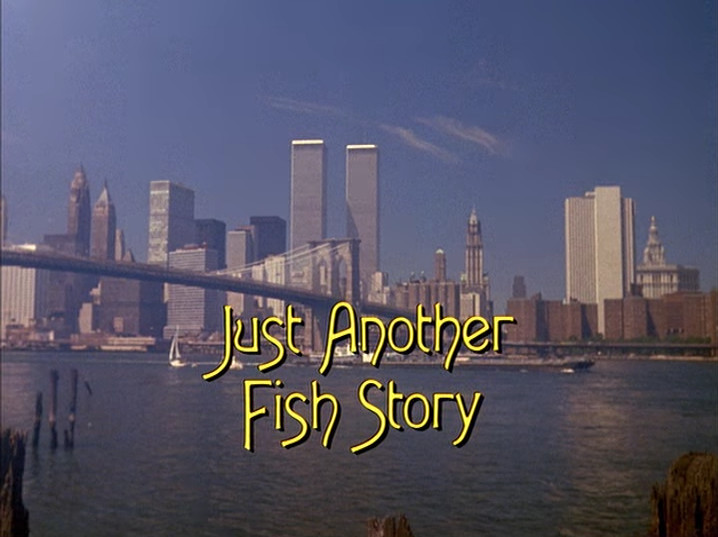
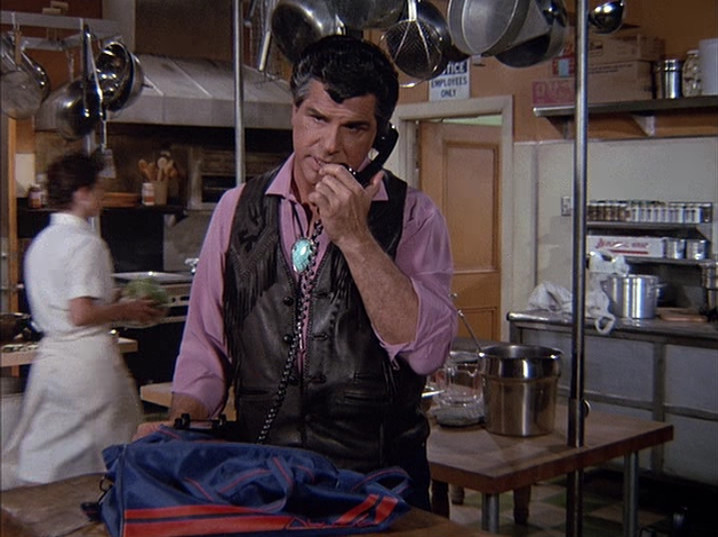


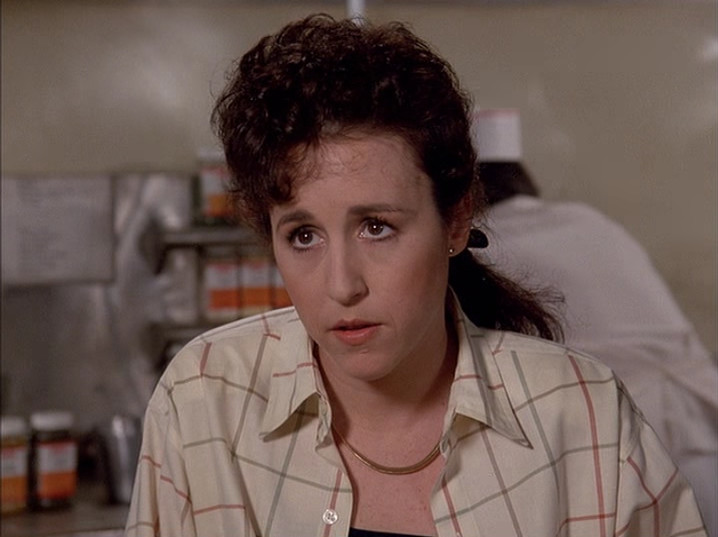





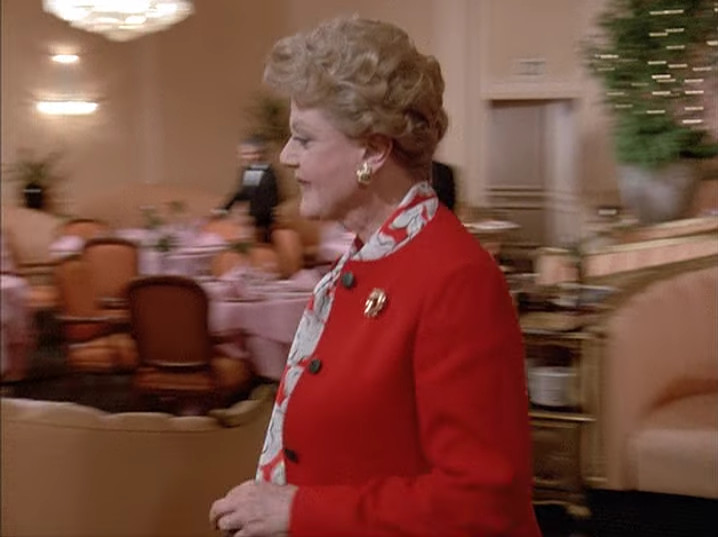

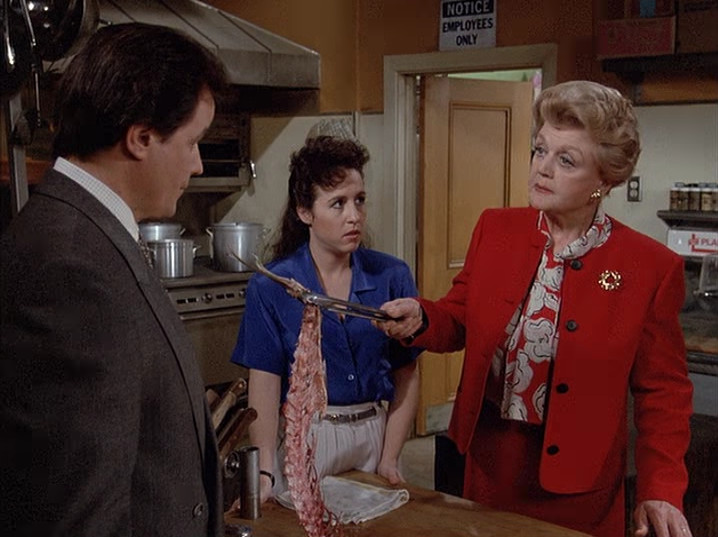

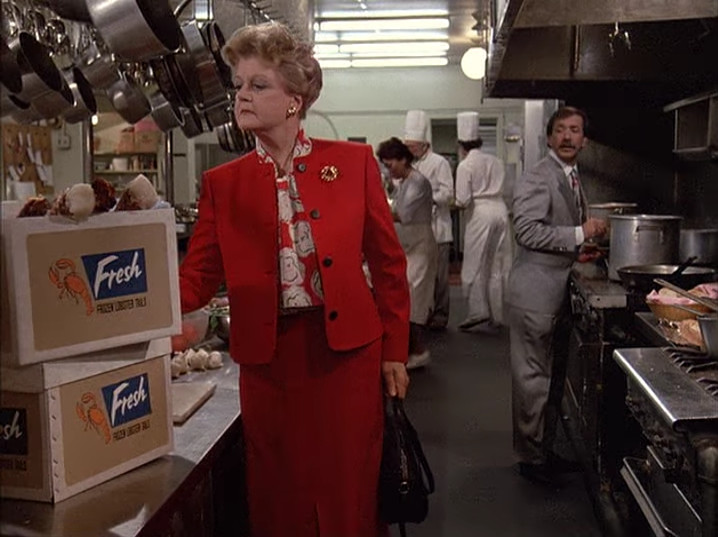


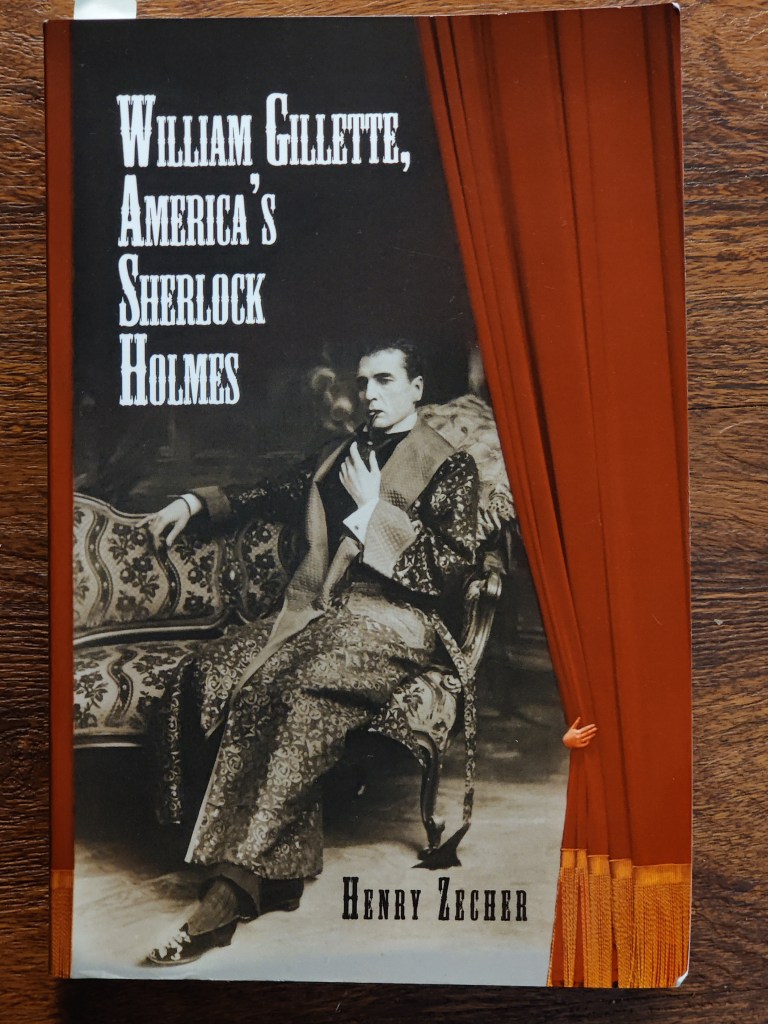


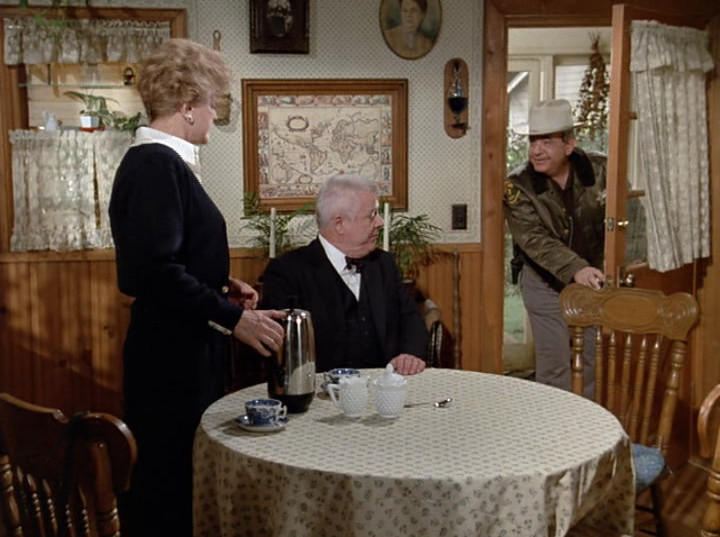

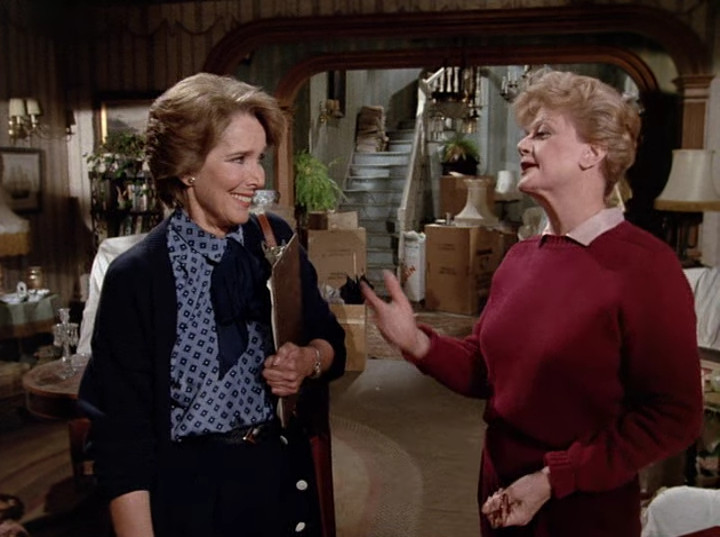

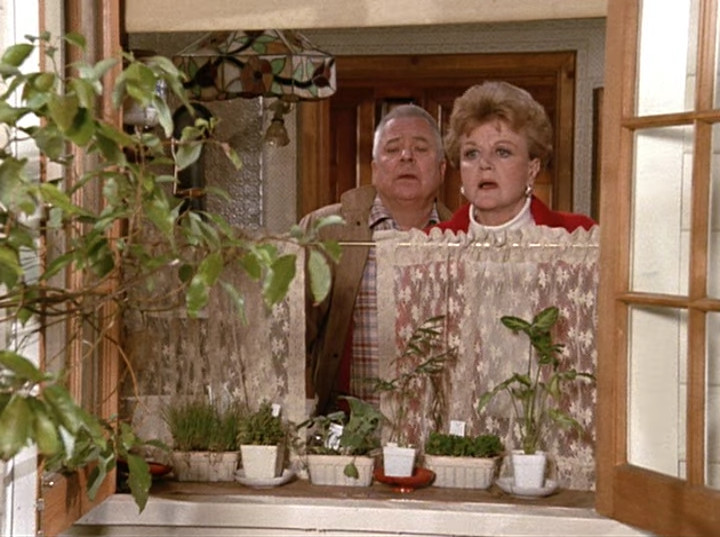
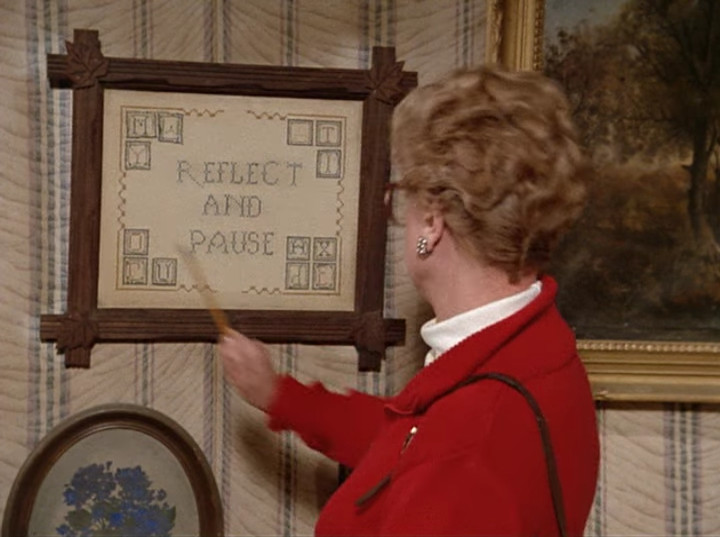
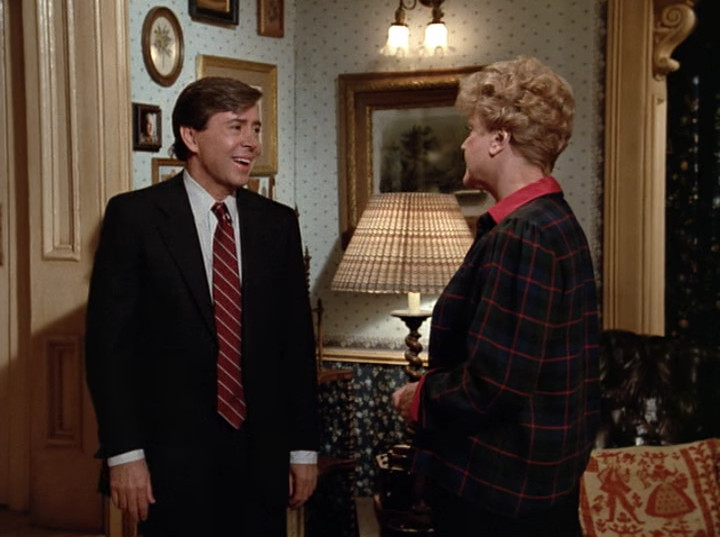


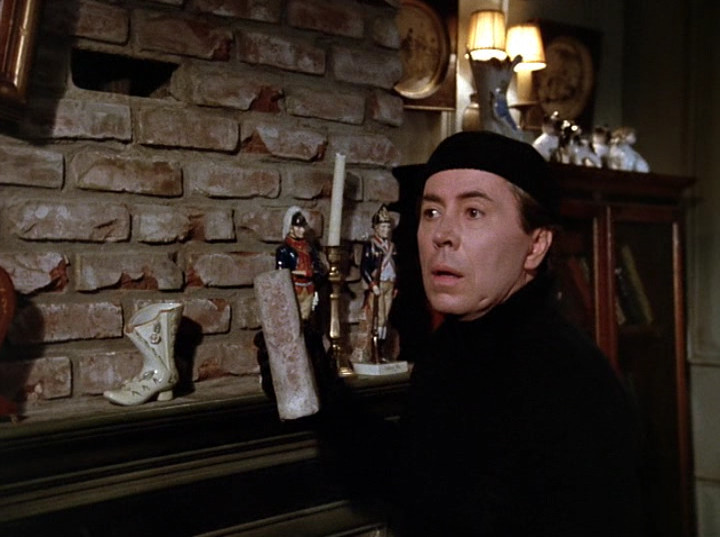
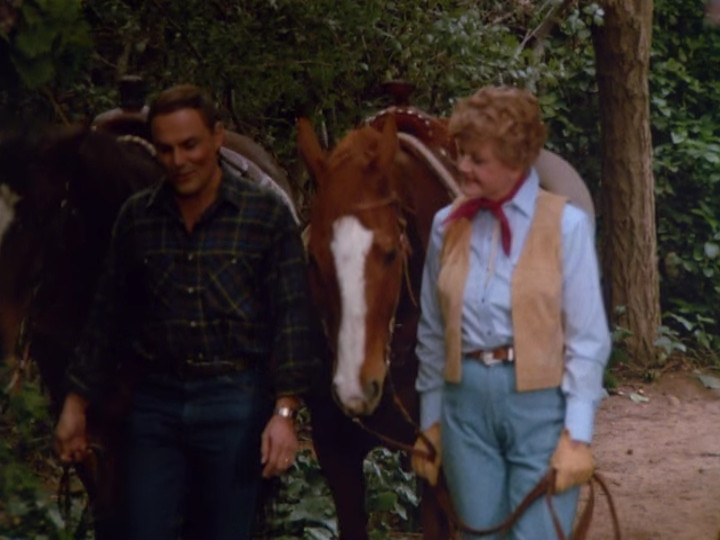


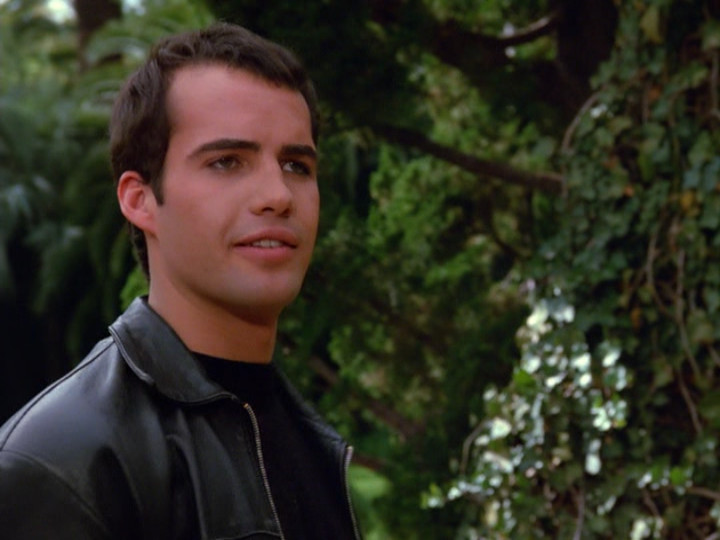




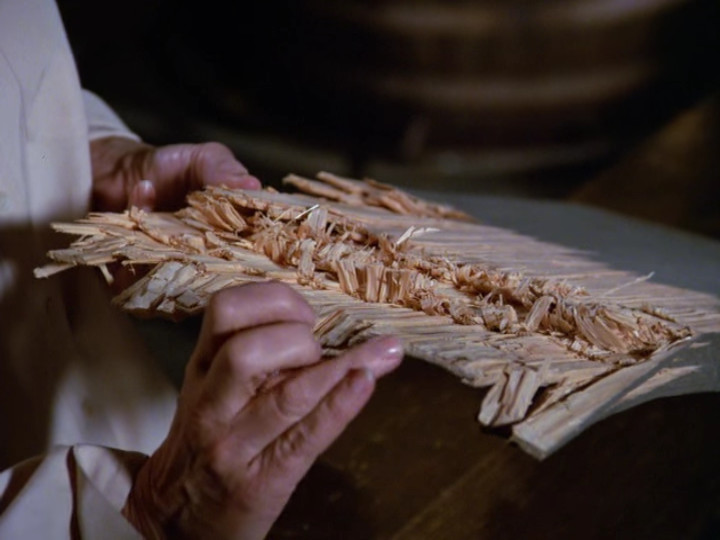
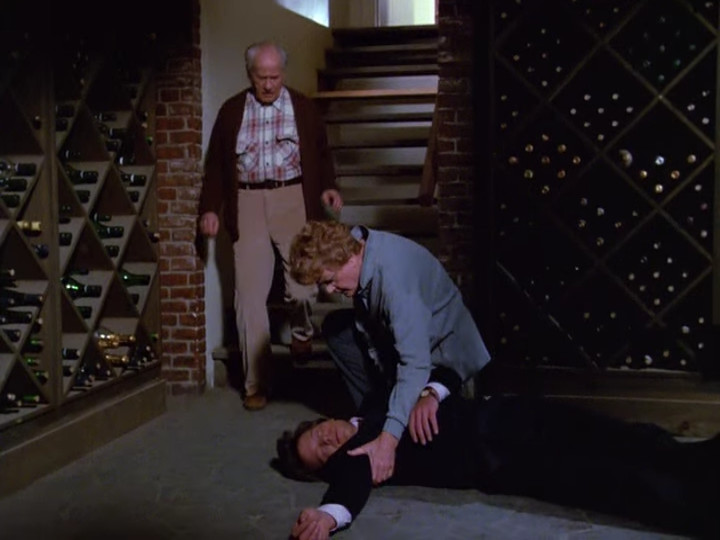

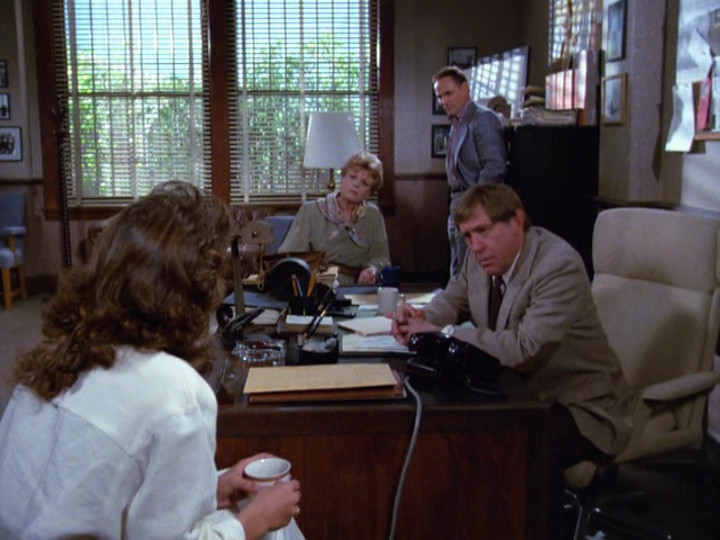




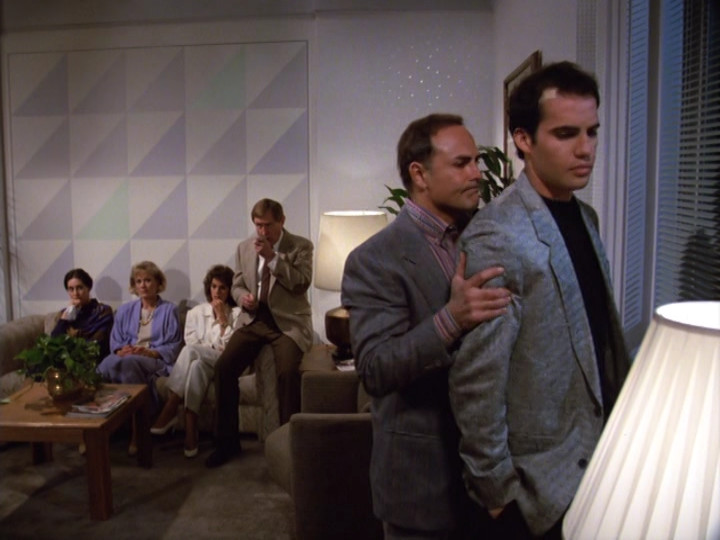
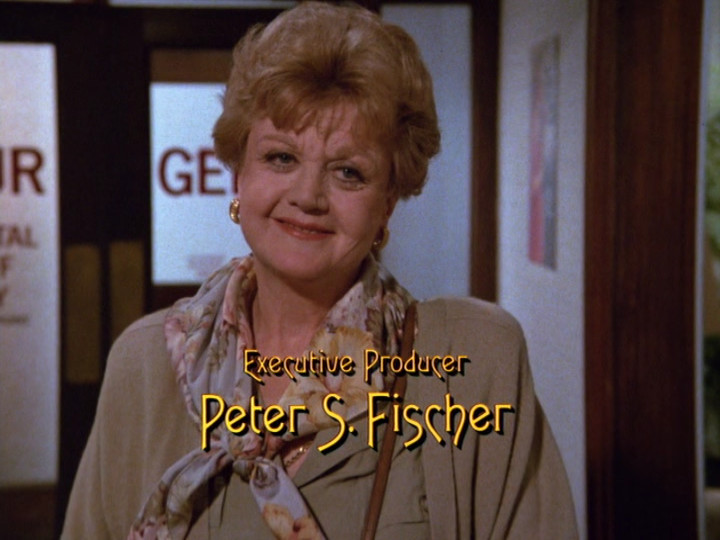

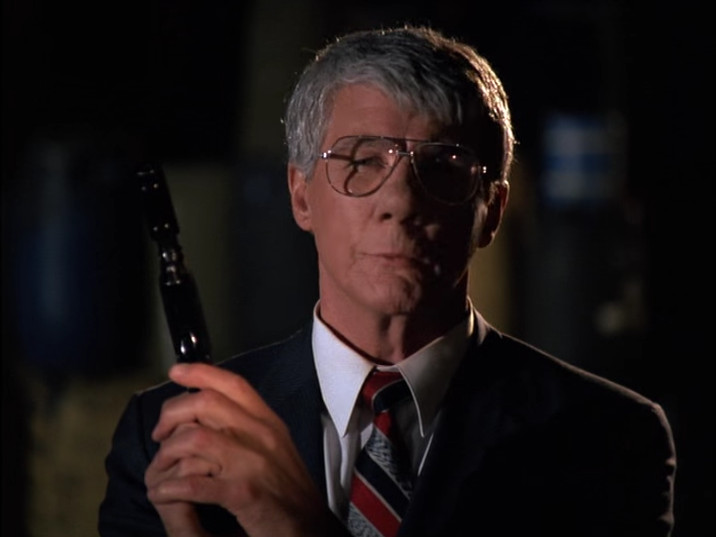
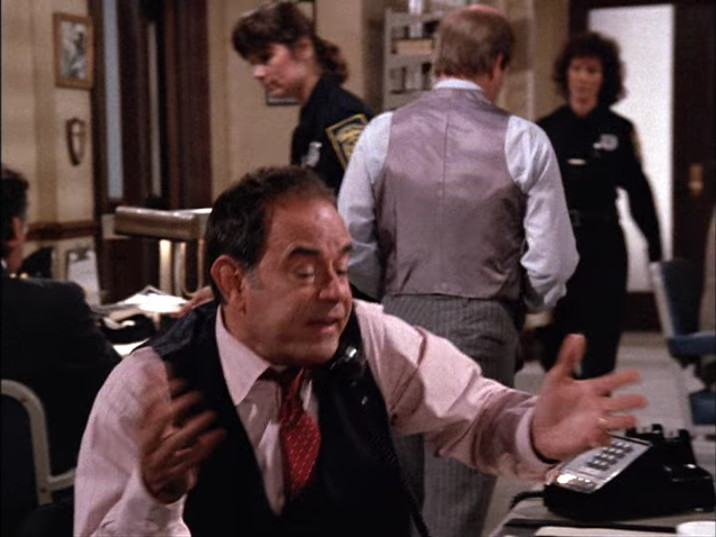

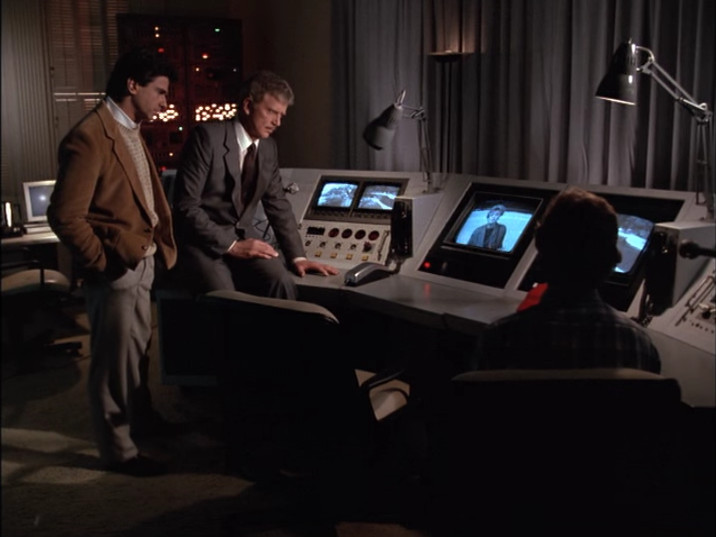


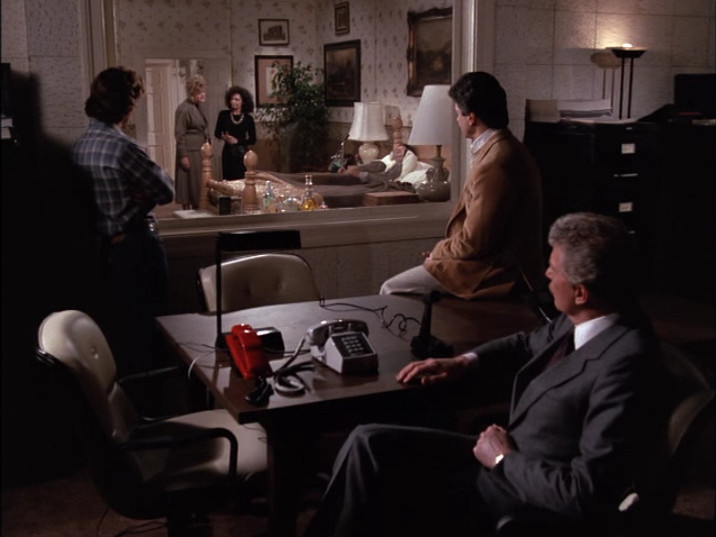


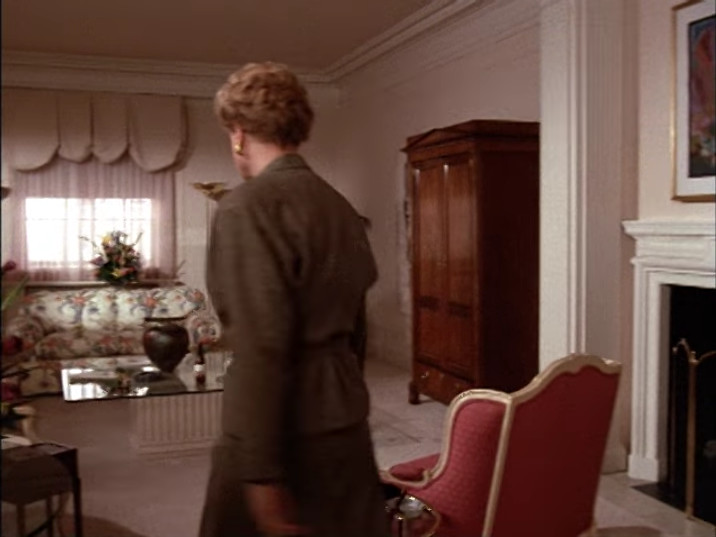
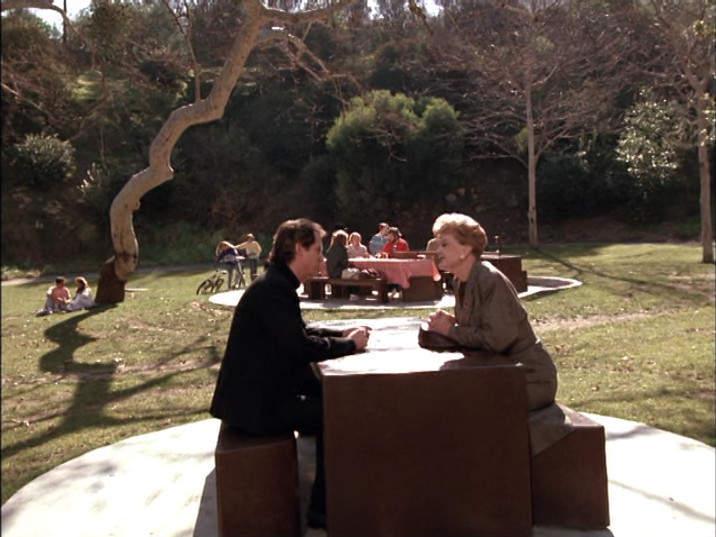

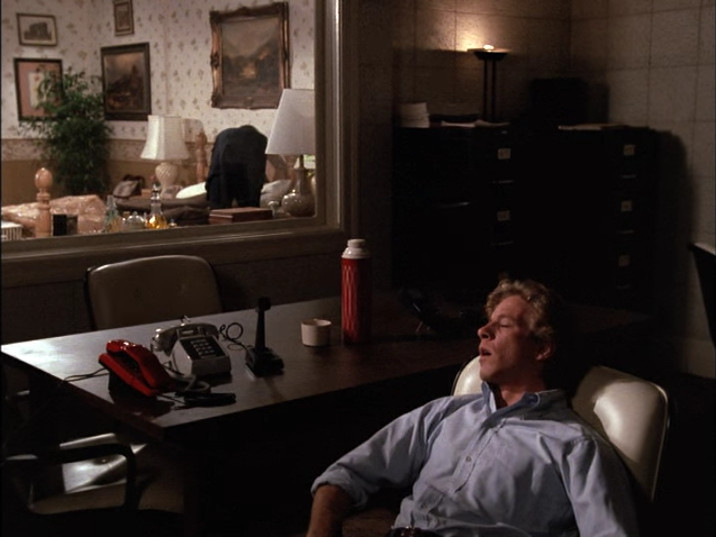
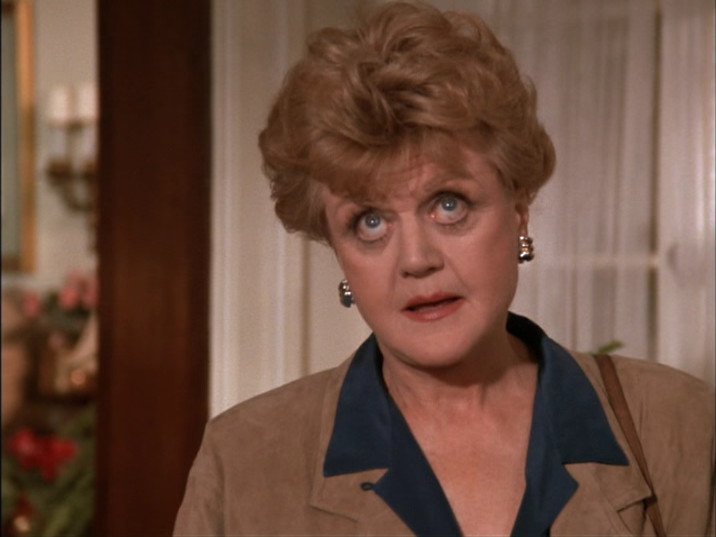
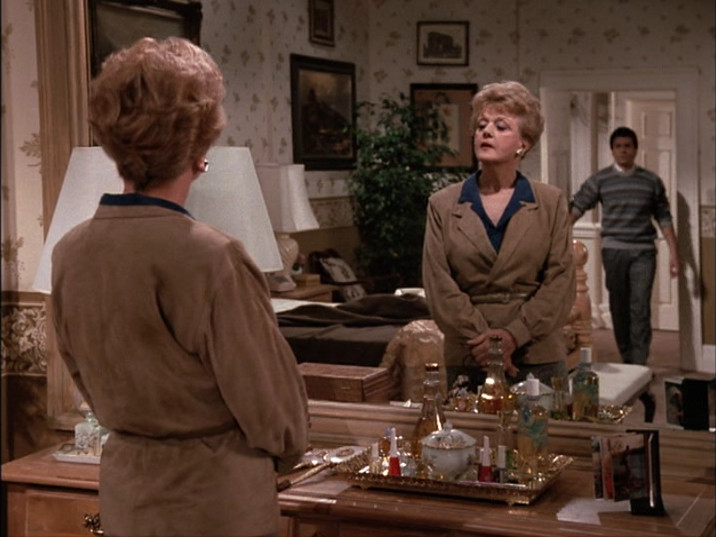
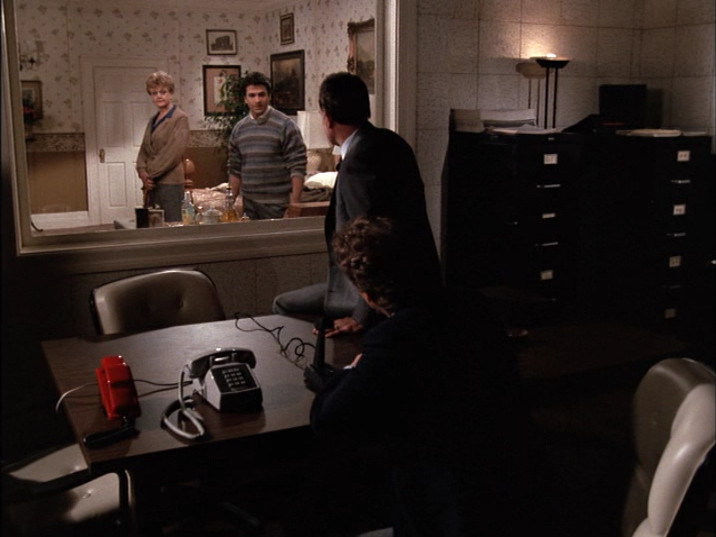
 Chris Lansdown
You must be logged in to post a comment.