I’m working on another review of a Murder, She Wrote episode, and I wanted to pause to reflect on what it’s been like.
Each review that I write takes me on average about a week to write. I only review episodes that I’ve already seen (typically more than once) but I go through them again as I write in order to ensure that I’m not missing anything, as well as to provide screenshots that capture crucial detail to understanding the episode and the commentary I’m going to give on it. The first few didn’t take me so long, but as I settled into how I want to analyze the episodes, that’s what it ended up coming out to. It’s a lot of time, but I do enjoy the process of paying such close attention.
One thing that’s really jumped out at me as I’ve been re-watching Murder, She Wrote is the degree to which Jessica is not really a small-town retired school teacher. She is, to the last degree, a big-city celebrity who has a private home somewhere that the people don’t really bother her. About the only exception to this is her distaste for people selling recreational drugs, which I would expect a big-city celebrity to be more cool about. Other than that, all of her morays are ones that make sense in a big city—not asking about people’s background or character, not being bothered by things like adultery, fornication, divorce, theft, trespassing, or really anything that doesn’t affect her personally. Most of what she is indignant about is the implication that Cabot Cove lacks anything you can find in a big city. That’s precisely the sort of thing that someone from a big city who is hiding out in a small town would be indignant about. People who are actually from small towns are quite candid that they’re different from big cities—for worse and very much for better. Especially back in the 1980s, people from small towns were proud of the fact that they don’t have to lock their doors at night. Jessica never is.
Another thing that’s really stood out to me is the degree to which the plotting of the episodes was often sloppy. It’s not that, when I watched them as a kid, I thought that every episode was a masterpiece. Further, I understood then and understand now that with over two hundred episodes, they can’t all be winners. As the saying goes, fifty percent have to be in the bottom fifty percent. Still, they’re often unnecessarily sloppy. A flashback will include things that Jessica couldn’t possibly have seen. People will behave in odd ways that could be explained but no explanation is given. Murderers will reveal secrets they shouldn’t have known for no reason, saying things that no one would ever say as if it was normal, like explaining why the person they framed won’t like jail. Jessica will lure the murderer back to the crime scene at night by pretending that an earring is there, when the murderer could first check her jewelry box to see if she’s actually missing an earring.
Having realized this, my examinations of the episodes of Murder, She Wrote have ended up being a little different than the original intention. At first I wanted to look how they were constructed to learn from them. I should say that this is still possible in some cases. If the Frame Fits comes to mind as one of the very well constructed episodes. One White Rose for Death is another. Most of the time, though, the analysis is more about why the episode is interesting despite its plot holes and flaws. In some ways this may be more instructive yet.
When a plot is really excellent, it can be easy to miss all of the other things that go into making the episode good, such as characters, setting, dialog, etc. When the plot is not the strong part but the episode is enjoyable anyway, it forces one to notice the other parts more. The best stories will be well done in every aspect of the story, not merely the plot, so it is well to notice these other things, too.
Apparently again making the rounds is the story of a “real life lord of the flies.” Six boys were stranded on an island for over a year, but unlike Lord of the Flies they actually worked together and got along. Generally left out of the retelling of the story was that they were all Catholics and kept up a strict prayer life (it is sometimes mentioned in a more general way, such as one made a guitar and then would sing songs and prayers at night). Even neglecting that, these retellings always seem to miss the point, not only of the real-life version, but also of the original story.
(For reference, he’s the article in The Guardian that is the source for many recent retellings. Also, a disclaimer, I’ve never read Lord of the Flies and have no intention to, I’ve only read about it, but that’s quite sufficient.)
The general thrust I’ve seen of the retellings is “in Lord of the Flies, William Golding took a dark view of human nature, that without the restraint of civilization we’re brutal and nasty, but when this happened for real, the boys were wonderful and got along great!” There are some superficial issues this misses, as well as some deeper ones. I’ll deal with them in that order.
To get to the superficial differences, the novel and real life had significant age differences. The boys in Lord of the Flies were all older children or pre-adolescent. The Tongan boys who were stranded on an Island ranged from 13 to 16 years old. This is a significant difference, as a few years at that age makes an enormous difference in emotional stability, self-control, a sense of responsibility, how much civilization they’ve actually absorbed so far, etc. The boys in the novel were also merely schoolmates whereas the six Tongan boys stranded on an island were friends who set out on a boat together and got lost in a storm. The six Tongan boys were all Catholics who regularly prayed together while the boys in the novel, being British from the mid-1900s would have been mostly effectively atheist though nominally Christian; Britain had largely ceased to be a Christian nation by the early 1900s. There were only six Tongan boys while there were a far larger number of boys in the novel, which makes the interpersonal dynamics far more complicated and much more liable to factionalism. There are others, but I think this suffices.
The much more fundamental problem with the common analysis I’ve seen is that it utterly misses the point of the book. I gravely doubt that Lord of the Flies is a good book; I’ve never read it and have no intention of reading it. However, all it takes is a very slight acquaintance with the plot to see that it’s an anti-war book where what happens on the island is a metaphor for World War II. The culmination of the book is the rescue of the surviving children by British naval officers from a cruiser (i.e. a warship) who is disappointed that the boys put up such a bad show, then looked awkwardly at the warship he served on, the obvious point being that the adults are no better than the horrible pointless savagery of the feral boys.
Lord of the Flies is not about what human beings are like without civilization to improve them or rules to control them. Its entire point is that civilization is just as brutal as the wild, it only pretends to be better. Now, one can argue until the cows come home about what people will be like stuck on a desert island and the truth is that it’s going to depend on who, precisely, is stuck on the desert island and what choices they make. There’s no point in arguing that World War II didn’t happen.
Lord of the Flies is probably not a good book and its central message—that World War 2 proves that civilization is a lie and human beings are unredeemable savages—is not true. It was a popular lie shortly after World War II. You can see all sorts of variants of it in the “best” literature of the time (the early 1950s), such as A Streetcar Named Desire, A Long Day’s Journey Into Night, etc. The thing is, a small group of people who get along with each other on a desert island don’t prove this is a lie. Any number of people could get along on any number of desert islands and it wouldn’t prove this is a lie. After all, World War 2 happened.
What proves that human beings are redeemable is that God, in Christ, has redeemed them.
Early in the fourth season of Murder, She Wrote is the episode Witness For the Defense. It’s a courtroom drama, which is rare for the series. The action takes place mostly outside of the courtroom, it’s true, but that also tends to be true of courtroom dramas. Interestingly, it takes place in Canada where the court system is pleasingly British.
Jessica, by the way, is the eponymous witness for the defense. She’s been called up to Canada to be a witness in the murder trial of a friend of hers. The scene opens with Jessica being shown into the law office of Oliver Quayle. She meets, however, not Mr. Quayle but his assistant, Barnaby Friar.
Barnaby is an affable, likeable fellow who, it turns out, is much of the reason that people will deal with Oliver Quayle at all. That plus his amazing record at winning murder trials. Which brings us to the subject of why Jessica is there: she was asked to come as a witness in the trial of the Crown vs. James Harlan. Barnaby suggests letting the great man do the explanation. This, by the way, is the great man:
If you can imagine it, his speech is even more pompous than he looks. He’s also very busy; his tailor is fitting him for a new suit while he’s on the telephone. (The call was about a friend who wanted to borrow his jet for a few weeks.)
Instead of telling Jessica what the trial is all about, he has her narrate the events of the fateful night that Jim’s wife died. Jessica, for once, complies instead of demanding answers. I suppose exposition is more important than Jessica’s principles.
It was about six months ago, and Jim was about to publish his second novel, and he had invited her up to look at the galleys…
As a side note, it’s curious how many writers ask Jessica to read their book, regardless of what genre they’re writing in. I suppose her having been a high school English teacher comes in handy, here. Why they all invite Jessica over rather than sending her the manuscript I don’t know; it seems like an inefficient use of time. The writers do need to get Jessica out of Cabot Cove somehow, though, and (I suppose) this is as good an excuse as any. Even so, I can’t help but wonder how Jessica is on such close terms with people all over the world as to read their manuscripts and give them advice on their life’s work. Her myriad of nieces is more plausible.
Jessica explains by saying that she had shown him encouragement on his first book and they had become close. This reminds me of C.S. Lewis’s comments on saying that life started on earth because aliens planted it here: it’s just kicking the can down the road. If memory serves, his analogy was that it’s no answer to where did the ghost in the cemetery come from to say that it came from a neighboring cemetery. She was asked to give him advice on his second book because she had given him advice on his first book doesn’t really answer anything.
Still, I can be sympathetic to the problem of how you call your amateur detective in. It’s not easy, and the writers of Murder, She Wrote had to do it two hundred and sixty four times. With that many times of calling Jessica in, they can’t all be winners.
Here’s Jim worriedly asking what she thought of the book:
(If you recognize him, that’s because Christopher Allport, the actor playing Jim, had previously played Donald Granger in If The Frame Fits.)
After Jessica talks about how wonderful his book is, a car pulls up outside. Jim goes to the window and announces that Patricia is back. Patricia is his wife, and in the picture below is the one in blue. As she and a friend named Monica Blane walk out of her expensive sports car…
They look over at the gardener, who winks at Patricia.
She nods her head in acknowledgement, then goes into the house. How Jessica knew either about the winking or the nodding I have no idea, because Jessica was toward the back of the room with a curtain on the window and couldn’t possibly have seen either. (She’s in the same place in the room you can see in the picture of Jim asking her how she liked the book.)
There’s some schmoozing and Jim and Patricia seem genuinely affectionate. There are a few important points, though:
Monica has to leave on a 7:40pm flight
Patricia has a lovely brooch that is a gift from her husband on their first anniversary and
a family heirloom that belonged to his grandmother.
Patricia booked an appointment to have her hair done at 6pm so she asks Jim to run Monica to the airport for her.
Jim agrees and talks about stopping for some drinks with Monica on the way to the airport in a highly suggestive manner.
When this clue session is over, Jessica then skips the narration to that evening, when they gathered for dinner at precisely 8:30pm in the Harlan town house in the city. Jim’s mother, Judith, will let nothing interfere with her routine.
After a bit of chatter in which Judith seems to imply that Jim’s book isn’t any good, a servant comes in and tells her that there was a fire at the country house.
Jessica then returns to the present and tells Mr. Quayle that Jim was devastated when he learned that Patricia died in that fire. Mr. Quayle then goes on about what a great witness Jessica will make, with her national standing and Cabot Cove Maine down-home background. He asks if she has a straw hat with violets in it and says that Barnaby will get her one to complete the look. Jessica indignantly protests that she will not play a country bumpkin for him or for anyone else when he’s interrupted by a phone call from his ex-wife.
I find it difficult to take Jessica’s indignation seriously. She is not so scrupulously honest that she never lies during her investigations. In Night of the Headless Horseman she pretended to be Dorian Beecher’s mother. Mr. Quayle isn’t even asking her to lie—he’s just asking her to dress in a way that will be particularly sympathetic to the jury. This isn’t the sort of thing that anyone should be indignant about, let alone a woman who will lie and wear costumes during an investigation and who is never bothered adultery to say nothing of fornication.
As Quayle’s phone call with his ex-wife—which, oddly, contained an amount of affection which might have been excessive had it been his wife—concludes, Barnaby reminds him of his next appointment and he leaves a flustered Jessica without answers. The next scene goes to the Harlans’ town house at night where Jessica asks Jim why he’s been charged for murder. He explains that the authorities believe that the fire was arson. His mother then comes down and he goes up to bed. During the conversation with Judith, it comes out that Judith thought that Patricia was a bad woman. “Jim was such a serious, studious boy, that he really had no experience with that sort of person.”
In the next scene we go to the courtroom where the prosecutor for the crown (Miss Pirage, pronounced “peer-ahj”) asks a witness what he concluded after his laboratory investigations. I can’t tell what her accent is supposed to be; she pronounces laboratory “lah-bohr-a-tory” as the posh English do, but this is in Canada. Quebec, even, which makes it strange that the trial is conducted in English, and even more strange that the judge, learned counsel, etc all have quasi-English accents rather than French accents. C’est la vie, I suppose.
In his laboratory investigations, he discovered that a gas line in the hot water heater in the basement was disconnected, allowing gas to escape. A gas jet in the stove had been left on upstairs, causing a gas explosion. I’d have thought that all this would have been easier to determine in a crime-scene investigation than a laboratory investigation, but perhaps in Canada they have better lighting in their laboratories and no flashlights. It’s been a long time since I’ve been to Canada. I don’t remember what it’s like up there.
Mr. Quayle cross-examines in a pompous style that’s pretty funny. He begins by clarifying whether it’s Miss Pirage or Mrs. Pirage, and explains that he prefers to be precise and would hate to begin by giving her a husband she does not have. She quips back that if she decides she wants a husband, she’ll remember his generous offer. The actors pull it off, and it does come across as funny.
Mr Quayle then begins his cross-examination; he very theatrically elicits from the witness that all he found was an open valve on the stove which is the limits of his knowledge, and is merely surmising that it was left on and was the cause of the fire.
The next witness is the gardener, who testifies that on the day she died he heard Patricia and Jim yelling at each other. She wanted a divorce. Jim’s answer to this request was, “before I give you a divorce I’ll see you dead.”
Mr. Quayle’s cross-examination is basic character assassination; he brings up that the gardener passed a course in auto-repair from a penitentiary institution, and was fired for theft. He concludes, from the way that the gardener shouts that it was a lie, that he was going to ask if the (the gardener) bears the Harlan family ill-will, but the question is no longer necessary.
The next witness is a doctor who testifies that autopsy was very difficult because the fire had almost entirely destroyed the remains. They could only identify the body from the jewelry on it—a engagement ring and engraved wedding band. She does elicit from him—he’s prone to tangents—that what was left of the victim’s skull had a large fracture in the frontal lobe, and there’s no question about it, the victim died from the blow to the head.
We do not see Quayle’s cross-examination. Instead we go back to Mr. Quayle’s office where Jessica, Judith and Jim are sitting on a couch while Barnaby is pouring them tea and Mr. Quayle is asking Barnaby for a list of doctors they’ve used in the past. What they’re all doing here, I’ve no idea; I can’t see why Jessica and the Harlans would go back to their barrister’s office. Anyway, Jessica goes into Mr Quayle’s office as he’s doing research and informs him that it seems to her that Patricia was dead before the fire started. Mr. Quayle asks if she has some medical expertise and she replies that it’s just a matter of common sense—it must have taken some time for the gas to have gotten up to the top floor and if she were alive she would have smelled it.
Quayle replies that it’s up to the crown to prove that she didn’t die in the fire. Jessica answers that it’s not a matter of proof, it’s a matter of logic. I think this is supposed to come off as dishonest Quayle vs. honest Jessica, but she just seems a bit thick-headed to not realize that in a murder defense, ambiguity is on the side of justice if the defendant is innocent.
Quayle is interrupted by his secretary, who tells him that his ex is on the line. This turns out to be another ex-wife, who he addresses in terms equally affectionate as he addressed his previous ex-wife.
Jessica walks back into the waiting room and talks to Jim. She tells him that if Patricia did die prior to the fire, he may need to establish his whereabouts. He reminds her that he took Monica to the airport. How that’s supposed to help, I’m not sure. Her flight was at 7:40pm and even back then you didn’t drop someone off at 7:39 for a 7:40 flight. Unless these things are far apart he would have had plenty of time to get back, murder Patricia, and arrive on time for dinner. Jessica decides that it’s very important to track Monica Blane down. She goes and asks Mr. Quayle if he’s tried to track her down and he tells her that he has decided that her (Jessica’s) testimony will not be necessary, Barnaby will reimburse her for expenses, and he wishes her a pleasant trip back to Maine. (Judith slipped into Quayle’s office before this; it seems possible that she might have had something to do with it.)
Jessica and Jim then go for a walk past a Mounty to talk over the case.
Jessica then asks Jim about the gardener’s testimony. He says that Patricia had been going through a lot of money and refused to account for it. They both got upset and said things that they didn’t mean, but he didn’t threaten Patricia and never would have hurt her. Jessica says that the question is, then, why the gardener was lying.
Jessica then takes a cab to the gardener’s shack where he’s working on a vintage car.
Jessica pretends to be a country bumpkin who is hoping to get a story into the Cabot Cove Gazette. I suppose she won’t pretend to be a country bumpkin for Mr. Quayle or anyone else; she’ll only pretend to be a country bumpkin for herself. I believe that in modern parlance that sort of selfishness is supposed to be independence, or integrity, or something. Be that as it may, it’s things like this that make it very hard to take Jessica’s indignation seriously. And be that as it may, she does manage to pump the gardener for a little information. It turns out that he saw Patricia lying on the floor (presumably dead) through a window before the fire. He didn’t say anything about it because he doesn’t get involved with the police and he would deny what he told her if anyone else asked about it.
For some reason we now get back to the cross-examination of the crown’s medical witness by Mr. Quayle. He asks whether the skull could have been crushed by a falling beam during the fire, or if in fact it is not most probable that the skull was crushed in that fashion. The medical examiner admits that it is possible.
The crown next calls Nathan Klebber, whoever he is.
He turns out to be the owner and operator of the Blue Sky Motel on Aviation Boulevard near “the airport”. I find that last little imprecision amusing because it makes sense for television but is out of character. If the learned counsel is going to the trouble of specifying the Blue Sky Motel and the street it’s on, it would be natural to specify its distance from the airport and also which airport. I haven’t checked but it seems likely that there is more than one airport in Canada. That’s the sort of detail that screenwriters often leave out, in part because it’s (almost) certain you won’t get sued by a real person or business if you don’t actually name them. It’s a little odd not to make up a fake name for it, though.
The learned counsel for the crown asks if on May 14 “of last year” whether he rented a room to an attractive blond woman in her early thirties. He replies that he did; he punched “the card” at 6:53pm. He then leans forward and in his sleasiest voice says that with everyone travelling he sometimes rents by the hour. She gave the name “Monica Blane” on the registration card. She came into the office alone but there was a man with him, and he saw the man. He then identifies Jim Harlan.
This is a strange turn of events for several reasons. The one that stands out most in my mind is that the sleazy motel owner makes a remarkably confident identification for a man he saw out his office window and in a car, somewhere around a year ago.
Actually, this time frame is itself a problem because when Jessica gives her narration to Mr. Quayle in the beginning of the episode she says that the events she narrated took place “about six months ago”. Six months from May 14th would be in November of the same year. Even if one stretched eight months to be “about six months” that would only place the episode in early January. As I’ve previously noted, I’m not an expert on Canada. That said, it is my distinct impression that Canada, in January, tends to be cold. It’s not really the sort of place that a person would work on a car outdoors with rolled up sleeves. Moreover, the exterior scenes we’ve seen so far all showed the lush greens of late spring or summer. Jessica’s flashbacks, likewise, showed lush greens—the gardener was outside trimming bushes—so I don’t see any way for this trial to be less than about a year ago, despite Jessica’s putting it only six months ago.
So how valuable is the identification provided by one of the sleaziest witnesses ever to sit in the witness box of a man he saw a year ago, through his office window, sitting inside a car? Moreover, when there was absolutely no reason for the motel owner to have attached any significance to the event?
To be fair on that last point, it’s likely that the police, during their investigation, would have questioned him days or weeks after the event. Presumably he would have identified Jim from a photograph then and his testimony in court a year later is merely referencing his earlier identification. They don’t show that, but it’s more reasonable and plausible with what they’ve said. Even so, though, that identification would have been under the really terrible circumstances I described above. I also have to question why a motel owner who rents by the hour would even look at his guests enough to notice them. When you deal with the general public they tend to become a blur. Perhaps Jim stood out because Monica was so pretty and he was curious who was with her? That’s not absurd, but it would have been nice to establish.
However that goes, Mr. Quayle does not tear the motel owner to shreds but instead asks to cross-examine at a later time, which the judge grants. The crown then calls Jessica Fletcher to the stand!
Some very dramatic music plays. Mr. Quayle looks surprised then looks at Jessica as if she’s betrayed Jim. She looks around as if he might have been looking at someone else.
Or perhaps she was just looking away in shame.
The sum total of what she’s asked is all she would have testified had Mr. Quayle called her—that Jim and Monica left the country house just before six o’clock and dropped her off at the Harlan town house just after 6:30. He then left with Monica and the next she saw Jim was at 8:30 for dinner. The learned counsel for the crown dramatically asks if Jessica has no knowledge of Jim’s whereabouts between 6:30 and 8:30 and Jessica confusedly says that’s correct.
The learned counsel for the crown then states that these two hours were plenty of time for the defendant to go back to the country house, murder his wife, then get back to the city for dinner.
Perhaps so, but if it takes over half an hour to get from the country house to the city house, as the learned counsel for the crown just established, what on earth is her theory of the crime given that she was the one who called the witness to testify Jim was checking into a by-the-hour motel with Monica Blane at 6:53pm? I suppose that the airport could be right next to the country house, but unless that’s the case and we’re further to suppose that Jim and Monica didn’t actually do anything in the hotel room they rented, the learned counsel for the crown just established Jim’s alibi.
Instead of thanking the Queen’s Counsel for proving the innocence of his client, Mr. Quayle immediately cross-examines Jessica and engages in one of the most entertaining courtroom character-assassinations I’ve ever seen.
He begins by asking if she has ever used the alias “J.B. Fletcher,” and when she says that it’s the name she uses on her books, he asks, “So, you admit that you are a writer?” When she admits this, he asks, “And it was in the guise of a writer that you wheedled your way into the confidence of the Harlan family?” A moment later he asks, “Do you deny that the plot for your next book was stolen from an unpublished manuscript by James Harlan?” Quayle replies to her denial that it’s a matter that they will leave to the civil courts to decide. He then asks if she remembers being committed to the State of Maine Institute for the Criminally Insane in 1985.
The learned counsel for the crown objects and the judge sustains the objection, but Jessica answers anyway—she wasn’t committed, she entered the institution voluntarily. Mr Quayle asks if it was under the care of Dr. Sidney Buckman, a specialist in the field of criminal psychosis (whatever that is). Jessica says yes, she was researching a book. Mr. Quayle then commends it as a perfect subterfuge. Jessica replies that the book was called Sanitarium of Death and was dedicated to Dr. Buckman. Mr. Quayle surmises out of gratitude for the care which she received.
He proceeds to ask whether Jessica’s neice, Victoria Griffin, was arrested for murder last year. Jessica says yes. (This is referring to the third season episode Corn Beef & Carnage.) He also asks whether another neice, Tracy Magill, was also arrested for murder. (This is referring to the second season episode Dead Heat.) And that her nephew, Grady Fletcher, was arrested for murder not once but twice? (I forget which episodes this would be and there are too many with Grady to spend the time refreshing my memory of the plots of them all, unfortunately.) He concludes that “it seems that one of New England’s most respected families is a breeding ground for homicidal lunatics!”
Part of what I love about this character assassination is how completely pointless it is. Quayle had no interest in discrediting Jessica’s testimony—she gave Jim an alibi up to 6:30pm and placed him at the townhouse at 8:30pm, which was better than he was doing without her. Moreover, this testimony was in no way different than what he had previously said was a small but vital role for her to play in getting Jim off of the charge. In any event, it’s not like the jury is going to not believe Jessica about being dropped off at the townhouse at 6:30pm because she comes from a family that’s frequently arrested for murder. About the only possible reason that Mr. Quayle had for performing this pointless character assassination was to keep in practice.
It was a lot of fun to see an episode of Murder, She Wrote that actually acknowledges previous episodes, though. Further, the actor playing Mr. Quayle (Patrick McGoohan), plays him very over-the-top. It’s just delightful.
Quayle says that he has no further questions and Jessica, bewildered and appalled, gets up. The learned counsel for the crown buries her head in her hand as if something bad just happened for her case.
As I noted, I think that something bad did just happen for her case, but it was what the last two witnesses which she called testified to. Quayle did her a favor in discrediting Jessica, if indeed we are to assume that he succeeded in that. No one seems to notice this, however, so we move to the next scene in some sort of cafeteria, where Jessica, sits down with the Queen’s Counsel at her invitation.
The QC condoles with her, saying that it feels like being mugged. Jessica asks whether she really believes that Jim Harlan murdered his wife, and Miss Pirage (the QC) says that she intends to prove that Jim Harlan conspired with Monica Blane to kill Patricia.
Next we see Jessica and Jim driving in a car. Jessica asks Jim for the truth, and he agrees to tell her. He and Patricia tried to keep up appearances but their marriage was sinking fast. Patricia went through money like Jessica wouldn’t believe. Even on the day she died she took out twenty thousand dollars in cash. (It was never found.)
Jessica asks about Monica Blane and the motel. Jim admits that it’s true. He left at 8pm. Monica took a taxi to get to her flight. Given that her flight was at 7:40pm, that taxi must have driven awful fast for her to make it on time. Jim went straight back to the town house to it make it there for dinner. Jim says that he’s embarrassed by it, but Jessica points out that at least Monica Blane could give Jim an alibi. If she could be found.
That evening while Jessica is getting ready for bed, Judith knocks on her hotel room door and asks if she can come in. She apologizes for the vicious way that Mr. Quayle attacked her. After some conversation, it comes up that Judith found out that Patricia had spent a year in jail for embezzling funds from a previous employer and that she had been nothing more than a common Las Vegas showgirl when Jim had met her. Jessica surmises that Monica Blane was not an old schoolmate of Patricia’s but in fact had met her in prison, and was blackmailing Patricia. Judith had paid Monica a great deal of money to disappear through an intermediary—a private investigator.
The next day Jessica goes to Mr. Quayle’s office and talks to Barnaby where she gets him to show her a copy of the police report. It’s got a picture of the jewelry that Patricia’s body was identified with. Jessica asks where the diamond brooch is that Monica was wearing, and Barnaby tells her that there was no mention of a brooch.
Just then a private investigator walks in and announces that he’s there to see Mr. Quayle with information about the location of Monica Blane in exchange for “five large”.
Since Mr. Quayle isn’t around, Jessica goes to meet the private investigator instead. Then Mr. Quayle shows up. It doesn’t matter much because either way they get the location of Monica Blane.
The next day in court, before Mr. Quayle can call Monica Blane the Queen’s Counsel does instead. Monica testifies that she did spend time with Jim at the motel, but then she took a taxi to the airport because she had a 7:40 flight. When asked if it’s true that Jim did not drive her, she said that no, he said that he had to go to the country house to straighten some things out with his wife. Jim stands up and shouts that this is a lie and Mr. Quayle tells him to sit down.
At this point I don’t think that the timing works out no matter who you believe. The motel owner testifies that they booked the room at 6:53pm. Even back in 1987, arriving 47 minutes before an international flight was cutting it close. But she didn’t teleport to the airport, she spent time with Jim and then called a cab. Given the time it would take to call a cab, for a cab to arrive, then to drive Monica to the airport, it’s not very plausible that she spent any time with Jim and still made her flight.
More relevantly to the case, if we assume that the couple only spent ten minutes together… coupling, then Jim has an alibi until 7:03pm. Since it takes well over half an hour to get from the country house to the town house, where Jessica put him at 8:30, this gives him less than an hour to go from the motel by the airport to the country house to kill his wife and arrange the gas. I suppose that this depends on where the airport is, but my impression was that the town house was on the way to the airport, which would make the timing extremely close and pretty implausible. Outright impossible if the couple was together for twenty minutes and the airport was at least ten minutes further away from the country house than the town house was.
No one bothers to think about this, though. The next scene is at Mr. Quayle’s office, where Jessica and the Harlans are seated, talking. Jessica offers the suggestion that if Monica was blackmailing Patricia, perhaps she was trying to incriminate Jim in order to distract from her own crimes. This possibility really should have occurred to Jessica when she was spending so much effort to try to locate Monica to help Jim.
Mr Quayle arrives, yells at Jessica, then demands the Harlans come with him into his office. Mr. Quayle’s secretary comes in looking for an earing, which Jessica finds for her. She remarks that it’s not worth much but has a lot of sentimental value to her. Jessica then realizes who murdered Patricia.
The problem is how to prove it. Jessica talks to Barnaby and explains her idea. The gardener had told her that he went back to the house long after everyone had left. Perhaps he killed Patricia and stole the brooch. It would be stupid to sell the brooch so soon after the death, so if he took it he probably still has it hidden somewhere. Barnaby interrupts Mr. Quayle’s conference with the Harlans to propose this idea (Jessica thought Mr. Quayle would be more receptive if it came from Barnaby), and Mr. Quayle thinks he may be on to something. He instructs Barnaby to telephone a judge to get a search warrant. I guess in Canada private citizens can get search warrants? What a strange country.
Anyway, the next thing we see is a shadowy figure in a fancy car driving up to the gardener’s shack (where Jessica had interviewed him).
Oddly, for Murder, She Wrote, they didn’t disguise the figure very well, and in fact in the very next scene they show us that it’s Judith, wearing sunglasses and gloves but also distinctive jewelry and with her unusual hair on full display.
This strikes me as being about a 3% disguise. I suppose that there was no real point in trying to hold out the suspense of who the murderer was since the options were:
Jim
Judith
Monica Blane
The Gardener
Option 1 isn’t impossible, but it’s highly unlikely since Jim is a friend of Jessica’s and also a writer. I don’t think that they’re ever the murderer. Also, I can’t remember Murder, She Wrote ever pulling a bluff by having Jessica working to clear the murderer the whole episode while the dumb police officer turned out to be right.
Option 3 would be very difficult to believe, even given the sloppy way that this episode plays with time. Jim alibis Monica until some time after 7pm and at a motel near the airport. Wherever exactly the airport is, it’s clearly not in walking distance of the country house, so Monica would have had to take a cab or rent a car to get there, both of which would have been idiotic. Plus, Patricia was Monica’s cash cow. The blackmailer doesn’t kill the victim for the same reason that children are told the story of the goose that laid the golden eggs.
Option 4 is unlikely, too, since the gardener had no motive to kill Patricia and also didn’t use the time-delay given by the gas leak to try to establish an alibi for himself. It’s not outright impossible. If Jessica was wrong about the blackmail, the gardener could have seen the twenty thousand dollars in cash and tried to steal it, killing Patricia in the process. The only problem, there, is that he would have had no way to know that anyone was searching for the brooch so he couldn’t be caught moving it to a better hiding place and we could hardly expect him to sneak into his own shack to plant the brooch on himself to throw suspicion onto himself.
That just leaves Judith. Since we don’t have any options, I guess that there was no point in pretending that we did.
As a small point, I wonder how Judith knew or expected that the gardener would be away from his shack. It would be very awkward for him to have found her there. She does call to him several times to make sure he’s not there, but I can’t imagine what she would have done had he been there.
Be that as it may, Judith is caught planting the brooch…
…by Jessica and the Queen’s Counsel, Miss Pirage. Normally, I’d say that this was a strange choice for an authority figure since prosecutors never go on searches for evidence because if anything happens during the search, they will be unable to prosecute the case because they are now a witness in the case. Who else could do it, though? There is no police detective in the case and it’s too late to bring one in. Jim wouldn’t be a great choice and Mr. Quayle or Barnaby would be worse choices. The gardener would technically be a possibility, but I know I wouldn’t want to rely on his testimony. It’s kind of curious that he’s not there, though, since without his permission Jessica and Miss Pirage are trespassing. Perhaps that’s not illegal in Canada?
Judith asks Jessica how she knew, and Jessica says that she had to ask herself who would take an antique brooch and leave a five karat diamond. The answer is someone to whom it was a family heirloom. Judith says that her mother was very fond of it, and it was a gift from her father.
Judith decides to confess to everything. Patricia’s appointment was not with her hairdresser (what a shock!) but with Judith. She was going to confront Patricia with everything that the private investigator had found out about her background. She offered Patricia a lot of money to quietly divorce Jim, without scandal. Patricia was not only greedy but abusive; she hit Judith. Judith grabbed whatever was nearby—the poker in the fireplace—and struck her down. She’s the one who disconnected the gas. She calculated that she had enough time to get to the town house before the fire consumed Patricia’s body. She couldn’t bear to see her mother’s brooch destroyed so she removed it from the body.
I find it curious that the brooch was the only thing of sentimental value in the entire country house. It was fortunate, I guess, that all of Judith’s sentimental attachments were stored in the town house.
Miss Pirage leads Judith away as if she has some sort of authority to arrest her, and before leaving the shack Judith turns to Jessica and says, “I hope you realize that I never would have let Jim be convicted for something I had done.” Jessica nods.
The closing scene is of Jessica and Barnaby talking. Barnaby says that their ploy worked, so I guess he was in on it. Jessica replies that she hopes Mr. Quayle appreciates what Barnaby did for him, and Barnaby shows off his new title.
Jessica comments that it has a “good, solid sound.” Mr Quayle walks in and Jessica says goodbye to him. He corrects her that it’s not goodbye, but au revoir. He’ll see her again a few months for the trial. He’s going to defend Judith. “Even the guilty deserve their day in court. I’m going to get her off. I always get them off.” Jessica says that it’s a trial she would rather skip, and Mr. Quayle says that she can’t. He’s going to call her as a witness.
The episode ends on Jessica’s look of horror.
There are a few things which are not small points that this episode leaves unanswered. Why did the gardener testify that Patricia asked for a divorce and that Jim replied that he’d kill her first? I suppose we’re meant to assume that he lied about it to try to hurt the Harlans in revenge for having been fired, but this would have been nice to establish. It’s also a somewhat strange motive. Again, we have to assume that this is based on testimony he gave the police in the days or weeks after the crime; without knowing that the fire was started intentionally, it would be a somewhat odd lie to tell. On the other hand, if he was telling the truth about having seen Patricia’s body before the fire, perhaps he thought that Jim really did do it and was trying to help the police get him. Which would be out of character, since he doesn’t like to talk to the police. Come to think of it, why did he cooperate with the police enough to lie about the fight but not enough to tell the truth about having seen the body on the floor prior to the fire? I don’t see any way that this makes sense.
Another question that is left unanswered is what actually happened with Jim Harlan and Monica Blane? I don’t see any way that she actually made her 7:40pm flight, but if she didn’t, what happened to her? Why did she try to incriminate Jim in the death of Patricia if she wasn’t involved? It doesn’t help her to make an enemy of Mr. Quayle (even if she doesn’t know him by reputation). Having just testified that they spent time together then she took a cab to the airport would have been her safest bet.
Another weird point is how on earth the two ended up getting a room together. They were, so far as we can tell, barely in each other’s company prior to driving Jessica to the town house and in Jessica’s company from then until about twenty minutes before they got a motel room next to the airport. I realize that some people move quickly but this rivals how fast Pepe le Pew falls in love. Perhaps Monica Blane, with her criminal background, might be this impulsive. Jim Harlan, the studious and sensitive soul, would hardly be likely to jump into bed with Monica twenty minutes into what seems to be his first private conversation with her. Especially since he wanted his marriage to work out.
Another question that’s completely unanswered is what existed between Patricia and the gardener? If Monica Blane was blackmailing Patricia and Patricia was paying, that would mean that Patricia wanted to stay in her marriage. Why would she cheat with the gardener if she wanted to remain married to Jim? Was she even cheating with the gardener? The only real evidence we have is the gardener winking at her and her nodding back—all of which happened in Jessica’s retelling and which Jessica couldn’t have known.
Also, on the assumption that Patricia was paying Monica blackmail money, why was she? The things that Judith’s private investigator found out about were that Patricia had spent a year in prison for embezzling money and that she was a las vegas showgirl when Jim met her. Presumably Jim already knew she was a showgirl when he met her, so what harm was there in her past coming out. It would be embarrassing to have served prison time for a crime, but why would she wreck her marriage over keeping this secret?
These questions aside, I was really shocked when the completely unidentifiable corpse turned out to be who it was assumed to be on the basis of jewelry and not the person who has been missing ever since then. I had assumed that the corpse was actually that of Monica Blane until she was located. That the mystery was not so complicated was a kind of twist, but not the good kind. Nothing was made of it; none of the characters were misled by it. Nothing was covered up by it. It almost seems like it was just an accident that this was possible until it wasn’t anymore.
The unwritten rule of mysteries is that it only counts as a twist if the story turns out to be more clever than it seems.
Overall, this is a very curious episode. As a mystery, it isn’t very good. It’s overly simple. Absent Jessica’s interference, the learned counsel for the crown had probably proved Jim’s innocence herself. Failing that, the murderer would have revealed herself had the person Jessica was trying to save been convicted. Most of the ends were loose ends; very little was made to fit. On the other hand, as an episode of a TV show, it was extremely entertaining. The courtroom scenes were enjoyable, especially Oliver Quayle’s over-the-top pomposity. It was especially fun to see a nod toward the ridiculousness of all of the episodes when put together. The supporting characters were also fun, except for Judith who was kind of grating but she turned out to be the murderer so that was OK.
All things considered, Witness For the Defense is a good lesson in how strong characters can carry a weak story. It’s better to have strong characters in a strong story, of course, but strong characters are, clearly, worth an awful lot.
Back in the fall, as the weather was getting cold and plants were dying off I bought some flower bulbs and planted them in a newly open spot by my house. This spring, they’ve bloomed, justifying the effort involved. (Already done are some crocus, in the foreground, and not yet done is some weeding.)
I also planted some tulips next to some rhododendron bushes.
Back when I planted them things were cold and there was not much green to be seen. The bulbs I planted were brown and gave no visual hint of the flowers that would come forth from them. In order to get the tulips in spring, I needed to trust that the brown balls I was planting in the cold dirt were alive, and would stay alive, and would in fact put forth beautiful flowers come spring-time.
It is often under-appreciated how practical a virtue faith is. For some reason people talk as if the practical virtue of faith and the theological virtue of faith were somehow utterly unlike each other. In both cases they amount to trust in previously known evidence during the immediate absence of that evidence. We trust that God’s purposes are good because we know that His purposes are good because He is good, even though we can’t see that in the moment because all we can see is suffering or pain, such as weeds growing among the flowers or deer eating the leaves on one’s recently planted apple trees. This is not really different in kind from knowing that a brown ball is alive despite looking dead and when planted in the cold dirt will take root and put forth beautiful flowers when—despite the world growing colder and darker—it will one day be warm enough for flowers to bloom.
As we’re getting into Spring and COVID-19 vaccination is rolling out, it’s time to revisit the all-cause mortality data for the US. As a quick refresher, all-cause mortality data is important because (after a few hours) there’s no ambiguity to whether a person is dead or alive and so mortality numbers are comparable across time, medical systems, states, countries, etc. If a person with COPD and COVID-19 died, we can have legitimate arguments about whether they died from COPD or COVID-19; we will all agree that they’re dead. Thus we can look at trends in all-cause mortality to get a sense of what might be going on. It won’t tell us what is going on, but it’s a very important sanity check.
On caveat to this is necessary. While it is the case that all-cause mortality is reliable, it’s only reliable over time. At least in the United States, it takes up to two months for all deaths to be reported to the CDC. The CDC, therefore, estimates deaths for the most recent two months on the basis of how jurisdictions have historically updated their numbers over time. In the past, that has meant sometimes over-estimating deaths; in the last year or so that’s tended to under-estimate the deaths, so we have to assume that the most recent 6 bars on the graph will grow over time, though less the further in the past they are. That said, let’s look at the data:
To see the change over the last two months, let’s look at what the graph was back in February:
As you can see, the third wave did eventually turn out to be very slightly higher than the first wave, though it was considerably wider at that height than the first wave. On the other hand, the first wave was mostly just New York City, while the third wave was most of the country.
Unfortunately, the data being so unreliable for the most recent two months makes it very difficult to draw much in the way of conclusions. We haven’t seen so many recent weeks in a row so far under the excess-mortality line but we can’t really know if that’s just because the jurisdictions are now sitting on data even longer than normal before reporting it. The change in presidential administration is not likely to have made the various jurisdictions substantially worse at reporting deaths, but it cannot entirely be ruled out as impossible. (I have in mind less cascading incompetence and more a change in priorities making old priorities fall by the wayside.) I think that we can reasonably assume that the jurisdictions haven’t suddenly turned radically incompetent, though, so we can at least conclude that the third wave is over.
Past that there isn’t much to say. All of the interesting data is in the window that is too subject to revision to say much about it. It’s suggestive, but at this point we need more to refrain from conclusions than to even tentatively come to conclusions. I suspect in another six months, we’ll be in a good position to start doing historical analysis on the covid-19 contemporary analysis and reactions vs. what actually happened.
One downside to blogs is that older posts have a tendency to get lost to the passage of time. This isn’t so much of a problem for blogs which are about current events, but for those which aren’t, the options are largely either to repeat oneself or to remind people of the better ones. I’m going to try the latter approach. So, here’s a post I did on navel gazing.
To give you a sense of what it’s about, it begins:
It has always struck me as very strange that navel gazing has a bad reputation. The first thing that should occur to a person looking at his navel—other than perhaps gratitude to his mother—is that it is obvious that he did not create himself. From there, it should be obvious that his parents—having navels—didn’t create themselves either, and so on back until one comes to a necessary being. That is, something that is uncreated, utterly different from us, existing outside of time and space, and which was the sufficient condition for us. That is, gazing at one’s navel should lead pretty directly to contemplating God…
A fairly popular mantra on the subject of weight loss is that “it’s just calories in vs. calories out”. There’s a sense in which this is obviously true but uninteresting and also a sense in which it is obviously false but uninteresting. I’ll explain, then get to why this is so tiring.
Calories-in-vs-calories-out is obviously true in the sense that through mere chemical reactions matter is neither created nor destroyed, so if a person’s body is going to be made up of less matter, the matter no longer a part of them had to go somewhere. Since the human body is highly efficient, calories are a reasonable approximation of this. That is, since calories are precious to the human body it will not merely throw them away uselessly. Thus if one wants to get rid of fat matter without using a scalpel to cut it away, all of the options involve convincing the body to burn the calories for what it perceives as a useful purpose. This is quite true. It is uninteresting because it merely describes what goes on during fat loss. It says nothing whatever about how to convince one’s body that burning fat for energy is a good idea. That’s the thing we actually want to do and the part that’s not so easy to figure out how to do while still being a functioning member of society. (Observationally, the people who say that this is easy are unmarried and/or have no children.)
Calories-in-vs-calories-out is obviously false in the sense that this formula does not in fact compute fat loss. All it tells you is a uni-dimensional constraint on a complex system. It’s quite possible for your body to burn protein (harvested from muscles) in order to make up a caloric deficit while conserving fat. In fact, the body somewhat prefers to do this because it’s a much better strategy in a famine than conserving muscle and spending all of its fat. Plus, in extremes like starving to death, one will die before there is zero fat in the body (even excluding the brain). Very little fat, but more than zero. It’s entirely theoretically possible that if the body were to become disregulated, the body could think it’s got no fat to burn while it’s got tons. You can induce this with certain kinds of brain lesions in rodents, where they swell up to astonishing obesity on tiny amounts of food and you can starve them to death without them getting meaningfully thinner. Most of us, fortunately, are not in the unhappy position of lesion-induced-fatmice, but the point is that calories-in-vs-calories-out will only tell you that in a calorie deficit you will burn something. If your house is warmer in winter than the outdoors, we know you’re burning something. The problem is, it might be your furniture, or worse, your floor joists. This is uninteresting because you don’t even have a good way of measuring calories in and you barely have a terrible way of measuring calories out. Measuring food works to like +/- 10%. The sort of calorie deficits that people try to achieve are often in the 15-20% range. The other end is even worse, though. The only really reliable way of knowing how many calories you burn is to have a device which measures your CO2 output—this can be a thing strapped to your head or an airtight room. After that, guesses about how many calories you are burning might be accurate to +/-50%. (This is exascerbated by the fact that the body will, in a calorie deficit, down-regulate your metabolism.) This is why the advice from non-idiots for achieving a calorie deficit is to keep reducing food until you start losing weight, at which point you know you’re in a calorie deficit (assuming you’re not merely losing water weight).
The reason that all of this is so tiring is that it’s all an exercise in missing the point. It is true that there are laws which govern the human body, but we operate within all of them all the time. Merely picking one and ignoring the rest is not being insightful. Sometimes it’s not even getting that limited relationship correct.
To give an example, suppose you came across a strength coach who told you that f=ma. (That is, force is equal to mass times acceleration.) Thus if you want to get stronger, that is, to produce more force, you need to increase your acceleration. The more you accelerate the same mass, the stronger you will get. It’s basic science!
The problem is that this is treating an instantaneous relationship as if it was a causal relationship. f=ma is describing what happens in the moment when force is being applied to mass. It’s not training advice for the long term. It says nothing about what stimulates muscles to be able to apply more force.
In like manner, calories in vs calories out only describes what happens in the moment. The second law of thermodynamics only tells you the momentary relationship between various things. It’s not dieting advice.
If you want to know what to eat, you need to consider how the body behaves in response to various stimuli. Bodies do not all behave in the same way, otherwise there would be no such thing as diabetics. Moreover, you also need to consider how much exercise the body is getting; exercise induces all sorts of changes in the body such as increasing hunger, basal metabolism, insulin sensitivity, and many, many other things. All of this means that a person who has too much fat on their body and wants to get rid of some of it will have to do a lot of work to find out what works for them. A person with a particular dysregulation in their body will have an enormously difficult time losing fat until they figure out how to fix this dysregulation. For someone who dysregulates because of insulin problems, they will need to solve this differently than someone who is dysregulating because of thyroid problems.
To give an example, about 6 years ago I lost close to 40 pounds eating an extremely low-carb diet, eating when I was hungry until I was full. This diet clearly fixed a disregulation in my metabolism because after about a week on it I simply became a lot less hungry. I didn’t eat as much, or as often, and felt full and had plenty of energy. I wasn’t stressed, I just felt like everything was fine with less food. (I subsequently gained much of the weight back through some poor choices involving candy; I have discovered that I will significantly dis-regulate if I eat a lot of fructose. As long as I limit candy, cookies, etc. to Christmas and Easter, my weight is very stable while eating when I’m hungry until I’m full. I plan to go back to eating strictly low-carb to see if that will get rid of the weight again, but I need to get some things in my life in order before I do because of dealing with antagonistic family members.)
There’s an interesting saying, attributed to Bion of Borysthenes:
Though boys throw rocks at frogs in jest, the frogs die in earnest.
There is an interesting phenomenon in life that people can play entirely serious games. This is an oxymoron, of course, but the nature of a fallen world is that it will contradict itself without blushing.
There is a sense in which all sin is this sort of serious game. Fornication makes as good an example as any. The fornicator generally pretends at marriage when he engages in the marital act. He may even make children by doing it. He meant none of this; to him it was just a game.
It is a strange thing that we human beings can think that we can play at real life and it will obligingly not be real merely because we didn’t really mean it.
This is, I think, a key to understanding more than a few perplexing behaviors.
There are various sayings which one can come across expressing the same basic idea, such as “the only real tragedy in life is to not be a saint” or “the saddest thing in the world is that not everyone is a saint.” All excellent sentiments, especially because they’re quite true.
There’s an interesting saying from Mark Twain, though I suspect more properly from a character he wrote, which proposes an interesting sort of goal because it gets at the same sort of idea, though by being secular in a very narrow and lacking sort of way:
Let us endeavor so to live that when we come to die, even the undertaker will be sorry.
–Mark Twain, Pudd’nhead Wilson’s Calendar
I find it a very evocative quote for two reasons. The first is that the undertaker profits by death, since he’s paid to bury people. When a man would rather not earn his living this way, it says something.
The other reason the quote is evocative is that since the undertaker is a professional, he cannot help but become used to his profession. It is not easy for a man to feel much about the two hundred and thirty first person he’s buried this year, especially if he buried five hundred and seventeen last year.
In my recent video about Jonah and the Great Fish, I used a great white shark in the thumbnail for the video. Here’s the thumbnail:
The book of Jonah does not identify the species of fish that swallowed Jonah; heck, the Hebrew doesn’t even distinguish between fish and whales, as modern people are obsessed with doing. Realistically, how important is it that whales nurse their young with milk? Is anyone planning to try keeping dairy whales?
How we think of the great fish that swallowed Jonah has a real impact on how we think of the story, though. I think a lot of people think of it as a baleen whale, which makes them think of it as a relatively comfortable experience. Something like this:
And, admittedly, the fin whale, the second longest whale in the world, does live in the Mediterranean sea. There’s a real problem with this version of the story, though—baleen whales are designed to eat krill, not large things. The blue whale (which doesn’t live in the Mediterranean) has an esophagus that is normally around 5 inches in diameter and may be able to expand up to about 10 inches in diameter. That couldn’t fit a child of ten, to say nothing of a grown man.
There is a cetacean option for the big fish in the Mediterranean, but it’s not a comforting one: sperm whales. Sperm whales have a lot of teeth and they are best known for using them to kill giant squid half a mile or more under the sea. To be fair, they probably do use suction to pull food into their throat but we’re not talking about gentle suction. If you’ve ever been hit by even a moderate size wave, you have a sense of just how much water suction can rip limbs off of a body. No matter which plausible enormous sea-dwelling critter you consider as the great fish that swallowed Jonah, merely the swallowing itself will normally kill you.
I don’t want to get into the argument over whether Jonah died and was resurrected on the third day—that takes too long here, and I went over it in the video—but I just want to emphasize that even if you really want to hold that Jonah miraculously survived being eaten by a great fish and being in its belly for three days rather than Jonah dying and miraculously being brought back to life, appreciating the degree to which Jonah should have died is necessary to understanding how miraculous the story really is.
In his book The Utopia of Usurers, G.K. Chesterton has a fascinating essay on the difference between holidays and rest. In the chapter The War On Holidays, he lays out the distinction:
The general proposition, not always easy to define exhaustively, that the reign of the capitalist will be the reign of the cad—that is, of the unlicked type that is neither the citizen nor the gentleman—can be excellently studied in its attitude towards holidays. The special emblematic Employer of to-day, especially the Model Employer (who is the worst sort) has in his starved and evil heart a sincere hatred of holidays. I do not mean that he necessarily wants all his workmen to work until they drop; that only occurs when he happens to be stupid as well as wicked. I do not mean to say that he is necessarily unwilling to grant what he would call “decent hours of labour.” He may treat men like dirt; but if you want to make money, even out of dirt, you must let it lie fallow by some rotation of rest. He may treat men as dogs, but unless he is a lunatic he will for certain periods let sleeping dogs lie.
But humane and reasonable hours for labour have nothing whatever to do with the idea of holidays. It is not even a question of ten hours day and eight-hours day; it is not a question of cutting down leisure to the space necessary for food, sleep and exercise. If the modern employer came to the conclusion, for some reason or other, that he could get most out of his men by working them hard for only two hours a day, his whole mental attitude would still be foreign and hostile to holidays. For his whole mental attitude is that the passive time and the active time are alike useful for him and his business. All is, indeed, grist that comes to his mill, including the millers. His slaves still serve him in unconsciousness, as dogs still hunt in slumber. His grist is ground not only by the sounding wheels of iron, but by the soundless wheel of blood and brain. His sacks are still filling silently when the doors are shut on the streets and the sound of the grinding is low.
(Important to remember is that in Chesterton’s time, “capitalism” did not mean “not communism” as it has come to mean after the Cold War, but rather a theory that men should stop aiming at virtue and instead aim at greed, but harness greed to do the work of virtue. This is rather unlike the more modern idea of aligning incentives so as to support men being virtuous rather than mis-aligning incentives so as to tempt them.)
A holiday, he goes on to say in a less direct route, is about a man directing himself to higher things than work or more generally the maintenance of the body. A holiday is about remembering that the world is really about God, not about itself.
I’m actually not much concerned with Chesterton’s remarks on employers, here, because the exact same attitude applies to the men themselves. If one regards Christmas as being about family and Sundays are about watching football, the man who regards them this way only rests, he has no holidays. In effect, a holiday is only a holiday when it is a holy day.
What Chesterton doesn’t describe in this essay, but which is true none the less, is that a man will have no holidays if he thinks that the purpose of leisure is leisure just as much as if he thinks that the purpose of leisure is work.
For some reasons which don’t involve me being the most clever I’ve ever been in affixing a thermostat probe to the inside of my snake enclosure (hint: don’t use tape), I’ve discovered how to get gorilla tape off of a snake. This should also work for duct tape and other kinds of tape, too.
One of the problems, here, is that snake skin turns out to be, under the scales, much thinner than human skin. The smoothness of their scales and lack of skin oil also seems to produce a much stronger bond to the tape than it does to our skin. Put those together and you have a dangerous situation: if you pull too hard—or if the tape gets stuck on something and the snake pulls on it—it could rip the snake’s skin since the tape is stronger.
Based on advice I got, I poured some mineral oil into a dixie cup and then used a q-tip periodically dipped into the mineral oil to rub the mineral oil onto the tape where it contacts the snake. This required a great deal of patience. It took me about an hour and a half to get the tape off of my snake and it was only about a half inch long strip (2.5″ wide, IIRC). What I found especially helpful was to rotate the q-tip (sideways) between the tape and the snake. This applies very gentle pressure to pull the tape away from the snake and at the same time works the mineral oil into the very edge of where the adhesive is contacting the snake, which is the place where the oil needs to get in order to dissolve the adhesive. It takes time, and it takes patience, but it does eventually work.
NOTE: there are many kinds of mineral oil. Look for the one sold as a laxitive, because that won’t be poisonous if it ends up getting a little in the snake’s mouth. This is very much not true of some other kinds of mineral oil, or of other oils like goo gone. (When in doubt, look at whether it’s meant to be swallowed or whether it tells you to contact poison control if you swallow it.)
(If the embed is broken, Joseph Dooley said, “The danger of interpretation, or theory, is in eisegesis: the eschewing of shared reality and embrace of subjective lensing.”)
If you’re not familiar with the term eisegesis, it’s the opposite of exegesis: instead of explaining what is in the text, it is explaining things into the text. That is, rather than helping people to get more out of the text, one tries to supplant the text and claim its authority for one’s own ideas. This is more relevant to authoritative texts than to fiction, of course, but the analogy there is fairly clear. And Mr. Dooley is correct, that one danger of artistic interpretation is that two people may get different things out of the same work, which in effect removes it from being part of their shared culture. This danger is minor in many if not most cases.
Before I explain why, I want to give a super-brief recap of my argument for why multiple artistic interpretations can be valid: artistic works, being made by men and not by God, are always under-specified. Key information necessary to understanding the meaning of the work is missing and must be supplied by the viewer. To pick an example at random, we assume that Hamlet is an only child because no siblings of his are ever mentioned, but we are not told this. Many things in the play would be strange, but nothing would be contradicted, if Hamlet had an older brother or a younger sister or was the fourth of eight children. How many siblings we assign to Hamlet is a question of artistic interpretation, and each answer we give changes the meaning of other things in the play. Such interpretation is valid when it does not contradict anything and, critically, when it yields some truth about real life. That is my conclusion.
Differing interpretations will, by their nature, produce different insights into real life; as such when two people prefer different interpretations, they get different things out of the work, and it is not a shared experience. This is not, however, an all-or-nothing proposition. Very few works are so under-specified that artistic interpretations completely change them.
The danger of two interpretations resulting in the same work being taken in two entirely different ways is probably greatest in the interpretation of songs, since songs are so often oblique, minimalist, and often intentionally under-specified even by human standards. An example which comes to mind is the song Can’t Feel My Face by The Weekend. One interpretation is that the song is about a romantic relationship. Another is that the singer is singing about cocaine. The latter is probably the intended interpretation; cocaine is a topical anesthetic and is actually used for that purpose within medicine to this day where its other property of being a vasoconstrictor is helpful, such as when an incision is going to be made. These are essentially two different songs, depending on whether you want to take the song to be addressed to a human being or to a recreational drug, personified.
Most works don’t have this property, though, at least for interpretations which aren’t trying to outright change the meaning of the work. It’s pretty much always possible to begin with “what if this is a dream visited to a person by a demon trying to trick him”. The universality of this possibility tends to make it uninteresting to all but teenagers trying to prove how clever they are. Apart from such intentionally perverse interpretations, most interpretations involve supplying unspecified details which change far less about the work. Given that, if two people have different interpretations they will still have much that is common to both of their interpretations and thus they will still have a large part of the work as shared culture.
The other problem is that you can’t avoid artistic interpretation. When a character says that a meal is delicious and the scene is not about finding out whether he really does enjoy the food, you have to either assume that he’s telling the truth or that he isn’t. If you conclude that he isn’t telling the truth, you must further assume whether he’s intentionally lying to manipulate people or merely being polite in order to avoid offending. The only alternative to making some sort of interpretation about what happened is to forget that it happened.
This need for interpretation is perhaps made clear by how all performances of a play are interpretations of it. When MacBeth says, “She should have died hereafter. There would have been a time for such a word. Tomorrow and tomorrow and tomorrow creeps in this petty pace from day to day to the last syllable of recorded time and all our yesterdays have lighted fools the way to dusty death. Out! Out! brief candle. Life’s but a walking shadow. A poor player that struts and frets his hour upon the stage, and then is heard no more. It is a tale told by an idiot, full of sound and fury, signifying nothing,” how does he say it? Is he angry? Sad? Resigned? First angry then resigned? Resigned then angry then resigned again? If you ever try reading this speech aloud, you will find that there are many convincing ways to say it which fit in which the character of MacBeth. Each way means something a little different, and if you say it out loud, you have to pick some way of saying it because you can’t read it without some sort of expression. If you were to read it in a flat monotone with no variation of pacing, like a computer from fifteen years ago, that would turn it into comedy, which is, after all, just another interpretation of it.
This same problem obtains when you merely read the text to yourself, though. You have to read it somehow or other, and however you read it, it probably won’t be the same as how somebody else reads it. In the end it doesn’t really matter that there is the danger in artistic interpretations that they take one work and make it several, doing less to bridge the gap between people than we might wish. You can’t do without artistic interpretations; the best you can do is work to pick a valid interpretation. That and share your preferred interpretation in case it helps others.
The Catholic doctrine of transubstantiation means that in the Eucharist, when the priest speaks Christ’s words of consecration (“this is my body”, “this is my blood”) over the bread and wine on the alter, the power of Christ is invoked, by the authority he gave to his apostles and they delegated to their successors and they delegated to the priests whom they consecrate, and it changes the bread and wine on the alter to become the body and blood of Christ. (This is sometimes called the “real presence.”) Much difficulty arises over exactly what is meant because the bread doesn’t turn into muscle tissue and the wine doesn’t develop red blood cells.
The Eastern Orthodox basically just say “it’s a mystery” and leave it at that. (I liked the styling I saw someplace, “eeeet’sss aaaaa myyyysssterrrryyyyy”.) The Catholic Church says that it’s a mystery, but it gives a few helpful details. You can actually see this in the word “transubstantiation.”
“Transubstantiation” is derived from two words: “trans” and “substance”. “Trans” meaning “change” and “substance” being that part of being which is not the accidents. Accidents, in this case, not meaning “something unintended” but rather the properties a thing has which, if they were changed or removed, would not make the thing something else. A chair might be made out of wood, but if you made it out of plastic it would still be a chair. The ability to hold up someone sitting is the substance of a chair, the material it is made out of is an accident (again, not in the colloquial sense of accident but in a technical sense). You can also do the reverse. You can take the wood a chair is made out of and rearrange it into a collection of splintery spikes protruding up. It has the same accidents (the wood), but the substance has changed. “Transubstantiation” just means that the accidents (the gluten, starch, etc. in the bread and the water, sugar, alcohol, etc. in the wine) remain the same but the substance—what it is—is what has changed.
Or, to put this more simply: in the Eucharist, the body and blood of Christ has the same chemical composition as bread and wine. Something to consider, when trying to understand this, is that a living human being has exactly the same chemical composition as a human corpse.
My progress on The Corpse in Crystal Lake has been slow, but at least I’m up to chapter 4. Then I suddenly realized that, while I have a guest list of the people staying at Crystal Lake, and I have a map, I haven’t actually put the two things together and assigned people to cabins. Argh.
It matters, too. Which cabin someone is in will influence what they see, who they’re likely to run into on their way someplace else, etc. It will even tend to influence the order in which the brothers talk to them. So, officially, argh. The amount of background work required for murder mysteries can be really frustrating sometimes.
Oh, and I need to figure out if I have to put the assignments on the map somehow. I do have the cabins numbered, so maybe I don’t have to. That would certainly be more convenient.
Playing pretend as a grownup sure is a lot of work.
One sometimes hears the claim that real socialism has never been tried. The many things that have claimed to be socialism—German National Socialism (Nazism), Italian Fascism, Soviet Communism, Chinese Communism, East German Communism, North Korean Communism, Vietnamese Communism, etc. etc. etc.—were not socialism, they were authoritarianism. I’m not, here, interested in debating the point, though I can’t help but note that defining socialism to be, roughly, “a system where people voluntarily share things rather than selling them” makes it not a political system but just a free market with impressively effective preachers of the gospel and extraordinarily receptive listeners to it (since it would be pretty much exactly how the early christian community operated in the pagan world, as described in the Acts of the Apostles, before the church expanded much outside of Jerusalem).
No, what I propose to do in this post is to just grant the proposition that no one has actually tried real socialism and see what follows from it. If we grant this premise, we come to some pretty strange conclusions. Well, perhaps not so strange.
The first question we must ask ourselves, if no one has ever tried real socialism, is: why did all of the people who set out to try real socialism fail to try it?
This is a very important question. We have had many people in many places throughout the last 100 or so years who have tried to set up socialism. People like Vladimir Lenin, Adoplh Hitler, Benito Mussolini, Mao Zedong, Kim Il-Sung and Hồ Chí Minh, were not joking. They thought that capitalism was evil and that the government and the economy should exist to benefit the people, not a rich minority or the well-born or an elite of any kind. There are plenty of others who thought the same thing, too. Karl Liebknecht and Rosa Luxemburg formed the Communist Party of Germany, which merged with the Social Democratic Party of Germany (itself a merger of other, earlier parties) to form the Socialist Unity Party of Germany, which was the ruling communist party of East Germany. They weren’t kidding. Hugo Chavez formed the Movimiento V República, which went on to join with other socialist parties to become the United Socialist Party of Venezuela. He wasn’t kidding. Does anyone think that Fidel Castro was joking?
By hypothesis, all of these people—and others—failed to try real socialism. They tried to try real socialism but just couldn’t succeed enough to actually give it a try. So what is so difficult about trying socialism that, so far in human history, every single one of the many people who have tried to try it have all failed? And they didn’t just fail a little bit, either. They have generally produced the worst hell-holes that the world has ever seen. Some of that is, undoubtedly, owing to the more advanced state of technology in the world when all of these people tried to try socialism and failed to try it. Still, they didn’t try to try socialism and end up trying multi-party democracies with thriving free-market economies. A bit like trying to catch a bullet someone shot at you with your teeth or riding a unicycle over a rope stretched across the grand canyon, failure has a pretty high cost.
So we must ask the person suggesting that we give real socialism a try because it’s never been tried before—how does he know that he’ll actually be able to try it, unlike all of the other people who have tried to try it and plunged their nations into misery when they accidentally tried something else instead? Has the world simply been waiting around for someone as great as this kindly intentioned person, that finally the human race has produced the pinnacle of evolution, with all of the multitude of powers required to actually try real socialism?
Now, supposing that the answer is yes, a further question arises—and I don’t mean how can we find out if this lovely soul is correct that they can do what so many others failed to without giving them the power necessary to try to try real socialism—supposing this wonderful fellow is right and has that rare combination of qualities necessary to try real socialsm, what happens if trying real socialism doesn’t work? The human race has finally produced a member great enough to succeed at trying real socialism—what if he really tries it, but fails to achieve it? I can really try to throw a three-point shot in basketball, but most of the time this very real attempt fails to succeed in actually putting the ball in the net. What if really trying socialism and failing is even worse than trying to try real socialism and failing to try it?
Let us, however, assume that this greatest human being ever is sufficiently great not only to try real socialism, but even to succeed at real socialism. What if real socialism is awful? Remember that, by hypothesis, real socialism is completely untested. What happens to the millions of souls who would live under the result if it turns out that, say, real socialism is even worse in practice than fake socialism, or whatever you get when you try to try real socialism but fail? No one’s ever tried real socialism, so how on earth do we know what will happen if that attempt were to actually take place?
Another curious problem is introduced by the fact that it requires the pinnacle of human evolution to succeed in trying to try real socialism—in order for this attempt at an attempt to work, we’re going to have to put this most magnificent achievement of our species in charge. If they shared responsibility with anyone, they, being inferior, would drag them down, and then how would we possible succeed at trying to try real socialism? I suppose that the magnificent one could be so great that even as one among a large group of his inferiors he would lift them up to the heights required to succeed at trying to try real socialism. That seems like asking a lot of evolution, though. We so far haven’t produced one human who can bring about real socialism and all of a sudden we have one that can turn a group of people who can’t try real socialism into a group that can? How could that much incomparable magnificence possibly be achieved in just one generation?
There is a further problem, though, even if we just assume for some reason that real socialism, if attempted, will be good instead of even worse than fake socialism—and I, for one, would much rather drink fake poison than real poison—and that this pinnacle of evolution is so magnificent he doesn’t need to be a dictator but can, by his magnificence, make an entire parliament of people who cannot, on their own, succeed even at trying to try real socialism not only succeed at trying to try real socialism but actually achieve real socialism, too. If we assume all this, what happens when this pinnacle of evolution comes to die? It happens to all of the descendants of men, after all. How are we to replace the greatest human being the world has ever produced? And if we can’t, what will happen to this real socialism now that it is run by people who, left to themselves as they now are, could not succeed even in trying to try it? Are we to suppose that this thing which is so difficult that no one has hitherto succeeded even in trying to try it will go along merrily when run by ordinary people who, in the whole course of history, have never gotten anything right until now?
And, if so—if we are to suppose that real socialism is so difficult to get going that no one has yet succeeded in trying to try it but so easy to keep going that anyone can do it—can I interest the person claiming this in buying a bridge? It’s a real nice bridge. Very popular. Tons of people drive over it. I hate to part with it.
He doesn’t even need to keep the tolls for himself. He can use the money he’ll get from it in order to fund his local socialist party.
I recently made a video called Why I Keep Going Even Though My Channel is Small. I’ve run into a few people who objected to the description because I have almost 3,000 subscribers. There’s a sense in which this is true, and I actually address that in the video. The video was answering a question that someone asked me about why people with small channels like mine keep going. I started with describing the proper perspective and moved on to the point is to give to others knowledge and understanding that I’ve been given and there’s a division of labor here: it’s my job to make the videos and tell people about them as best I can, and God’s job to figure out who should actually see them and arrange the world such that they do. However many or few people that is God knows, not me.
That said, the number of subscribers to a channel like mine that’s been around for years can be misleading. You might think that this is the number of people who want to watch my videos, but it’s actually the number of people who, at some point over the last several years, thought for at least a moment that they would like to see more videos like the one that they just saw. Thus if you look at the view counts for my recent several months of videos, you can see what I mean:
The view numbers tend to range from 100 to 300 views. In round numbers, that’s around 4%-10% of the number of subscribers. But this is not telling the full story, because the view numbers are of people who watched the video at all, not of people who watched the whole thing. Here’s the audience retention graph for the video on why I keep going even though my channel is small:
I can get specific numbers by highlighting the graph with my mouse, which is why there are no y-ticks. Giving approximate numbers, only 75% of the audience is still there by about 15 seconds in. The audience is down to 50% about about 1:35 in. After that the audience leaves more slowly and 22% watch to the end. So of the 2969 subscribers my channel had at the time of this writing, only 1.8% actually watched the video in its entirety. But wait, there’s more!
Viewership of a video is not entirely from subscribers. Here’s the numbers on where traffic came from:
“YouTube recommendations” is a bit ambiguous, since YouTube often recommends videos from channels one is subscribed to, but that’s not going to be all of the recommendations. So we know that at least 37% of views came from subscribers, but adding it together it looks like maybe 70% did. So that 1.8% of subscribers who watched the video may be more like 1.3%.
Here, by the way, is a list of the videos that my video was recommended after, that people actually clicked through for (or autoplayed from):
Of those, 3 are my own videos, though one of those has no view time on the video it referred to (I’m not sure why the ones with 0 impressions are on this list). Frankly, I don’t think this list tells one anything, but it does, at least, give a sense of how little control one has as there’s nothing actionable here. I don’t know whether YouTube is more likely to recommend videos from channels one subscribes to, but just looking at the recommendations it gives me, it doesn’t seem big on that. (On the other hand, channels that one found from recommendations are more likely to have other videos show up in recommendations, I think because many of its videos seem recommendable for roughly the same reasons. Which, if true, makes subscriptions that much less important.)
There’s also the weird problem that subscribing to a channel doesn’t actually get you notified about all of the videos from the channel, which is contrary to what most people expect. Instead, one has to “ring the bell” i.e. click the bell icon next to the subscribe button and set the notification preferences to “all”. This goes some of the way to explaining why so (relatively) few subscribers actually watch a channel’s videos.
Please bear in mind that none of this is meant as a complaint. As I said in my video, it would be worth it to make a video for 1 person if I couldn’t just talk to him in person and it’s God’s job to figure out how successful I should be. That my videos reach dozens of people who watch to the end and often a hundred or more who watch halfway is a bonus. My only purpose to this post is to illustrate how misleading the numbers YouTube presents to the public can be if you don’t understand them. Like most things in life, the reality is not as impressive as the surface glitz, but reality is what it is and, taken properly, being realistic should not be discouraging. In a sense, that’s what the video about why I keep going with a small channel is all about.
I was about to write a blog post about the symbolic interpretation of the conspiracy theory on the moon landings being faked when I remembered that I already wrote it. Sigh. It’s even a pretty good post. You probably should read it instead of this post. Or perhaps read it then read this post.
That said, the one thing that I have to add is that I suspect that most everyone into the “fake moon landings” conspiracy theory is probably a fan of science fiction, as they are the people who would feel most betrayed by us never going back to the moon. Science fiction, especially in its heyday, was largely bound up with the idea of the progress of technology. This was by no means its only theme and it often has just been “fantasy in spandex,” but it arose during the era when technology was constantly changing the world and people could not predict how the world would be but it was fun to guess. For various reasons, some of them historical contingency, science fiction—and especially hopeful, non-dystopian science fiction—been about space travel. We would, in the words of the Star Trek opening narration, “explore strange new worlds… seek out new life and new civilizations… boldly go where no man has gone before!”
With the Apollo missions culminating in landing a man on the moon, it looked, to science fiction fans, like the future they’d read so much about was finally here. We went to the moon! We explored a strange new world! Granted, there was no life and no civilization on it, but we had boldly gone where no man has gone before!
Then we stopped.
It turned out that the future they’d read so much about was not here. It was still in the future.
So, in a sense, the moon landing was a hoax. It may not have actually been filmed on a sound stage, but it has no more practical significance to the life of someone who dreamed about serving on a star ship than all of the TV shows filmed on sound stages. That is, to these people, it might as well have been filmed on a sound stage for all the good it did them. It was, to the science fiction fan, just one more dream that will never come true (for them).
I suspect that this state of affairs has gotten even more galling as time has progressed. Fifty years later our technology has advanced significantly and yet here we still are, no more able to be captain of a star ship than people were fifty years ago. That glorious and shining future of exploring strange new worlds is no closer, which means that it’s fifty years further away than it was (that is, seemed) back when Neil Armstrong set foot on the moon. His most famous words, “one small step for [a] man, one giant leap for mankind” were wrong. It wasn’t even a step for mankind. Mankind gingerly tested the ground, then pulled its foot back and stayed put.
Addendum: I think that when companies like SpaceX end up making moon missions again because they’ve brought the price down far enough that it’s worth it as something other than a flex on the Russians, this conspiracy theory will probably die out because its symbolic value will go away. So hey, it’s a falsifiable prediction!
I recently came across a video about the Impossible burger and the Beyond burger. As so often happens with vegetarian propaganda it starts out with reasonable things that are probably true before it gets into really weird, obviously dishonest things.
The documentary begins with looking at how the burgers are made. I really liked the one with the presentation of only 6 bowls of ingredients, and one of them is water! Of course, one of them is potato protein, one of them is soybean protein, one of them is plant-based heme, and one of them is cellulose-based binder. Just for fun, here’s how Wikipedia describes how plant-based heme is made:
Impossible Foods, producers of plant-based meat substitute, use an accelerated heme synthesis process involving soybean root leghemoglobin and yeast, adding the resulting heme to items such as meatless (vegan) Impossible burger patties. The DNA for leghemoglobin production was extracted from the soybean root nodules and expressed in yeast cells to overproduce heme for use in the meatless burgers.[30] This process claims to create a meaty flavor in the resulting products.
So natural!
In terms of the reasonable things that are probably true, I believe that the fake-meat burgers do actually taste and feel like ground beef, once cooked. That’s impressive, but I’ve heard it from enough sources that it seems plausible. They are massively engineered foods and modern engineering methods can accomplish a lot, especially when it comes to color, texture, and taste.
The video does, of course, then go downhill rapidly when it gets to why on earth you would want to eat such a thing. (Note: if one is vegetarian for religious reasons, including some monastic traditions for a vegetarian diet as a penitential exercise, this is unrelated to the video and my criticisms of that video.)
They start with some mention of how this is healthier for you, as for example it has no cholesterol in it. This doesn’t actually make the food healthier as it turns out that (1) cholesterol isn’t bad for you and (2) dietary cholesterol has, outside of rare exceptions, no effect on serum cholesterol. (There are various kinds of lipoproteins found in the blood which use cholesterol as one component in them, so for historical reasons blood panels which measure lipoprotein content of the blood are sometimes called “cholesterol” though they in fact are not.) The idea that cholesterol is bad for you is junk science from 70 years ago.
Later on, when they get to impact on the planet, it goes downhill rapidly. For example, they claim that it’s inefficient to feed plants to animals then eat the animals because we could just eat the plants. If we fed cows avocados, coconuts, peanuts, beans, etc. this would be true. We don’t. Better meat comes from cows raised on fields where they eat grass, worse meat comes from cows fed grain not fit for human consumption. (There’s often a hybrid where cows are raised on grasslands then “grain finished” because grains promote more intramuscular fat making the meat more tender.) Human beings can’t live on grass. As an acquaintance of mine who was a vet student put it: a cow is an extremely efficient way to turn grass into food.
Later on, they do a comparison of water usage. They present twenty hamburger patties and say that the equivalent water can produce far more loaves of bread and jars of peanut butter. None of this is cited, of course, so they could just be making it up. Moreover, water consumption is, within reason, unimportant in much of the country. It’s a weird metric to use when it’s very important in New Mexico and meaningless in New York.
Worse, though, it’s very little beyond red flags. They include:
No one except those on low-carb diets eat just burger patties, and peanut butter sandwiches are not low-carb so not comparable. Presumably, if they included buns, lettuce, tomato, cheese, etc. the comparison would not be nearly so favorable.
They don’t specify whether the water for 20 burgers is for the entire cow or just that fraction of the cow that the burgers would come from. Also no mention of leather, bone meal, etc. that you also get from the cow.
Why on earth are they talking about peanut butter sandwiches rather than the fake meat burgers that the video is actually about? This shift in what they’re comparing to without extensive justification suggests they’re trying to pull something over on us. If I tell you that walking is better than driving then compare a diesel truck to riding a bicycle, you know something is up.
If they can shift from a fake burger to peanut butter sandwiches, why not switch to chicken instead of burger patties? Chickens grow much faster than cows and almost certainly need far less water.
Almost no one eats peanut butter sandwiches. Far more common is a peanut butter & jelly sandwich. The numbers for that wouldn’t be nearly as good, however, and also have more sugar and less protein. That they went for the unrealistic option that gives better numbers is a bad sign.
If water consumption is so important, wild fish uses even less (fresh) water than peanuts do. Why isn’t the conclusion, “therefore ditch plants and land-animals and eat mainly wild-caught fish”?
I suppose it shouldn’t be surprising how often vegetarian propaganda is dishonest. The vegetarian’s fundamental problem is that human beings are not herbivores, we merely can get by on a herbivorous diet (with enough supplementation). None of this is important if one is vegetarian for religious reasons, of course, especially if those reasons are penitential. It’s just trying to sell an impractical idea as being more practical that isn’t compatible with honesty.
The final episode of the third season of Murder, She Wrote is titled Murder, She Spoke and for some odd reason is one of the episodes that stands out in my memory most from when I saw it as a kid (explaining why will involve spoilers, so I’m leaving that to later in this discussion of the episode).
The episode opens with a band recording a country song.
They sing for a bit about a fellow named Lucky who has a silver dollar in his pocket but doesn’t have a woman to his name. As a side note, having a silver dollar in his pocket is pretty unusual for any recent historical time. The last silver dollar coins that were in general circulation were minted in 1935.
The singer’s name is Stony Carmichael, and he’s played by Charlie Daniels, perhaps most famous for his song The Devil Went Down to Georgia. If you’ve never heard it, here’s Charlie and his band playing it in a concert:
I’ve no idea how they got Charlie Daniels to do this but he’s great in the part and it explains why Stony’s band sounds so good. Anyway, we then discover why we’re here. In another booth in the studio, Jessica is recording an audio book version of one of her books.
The body was discovered by Edie Babbage on November 2nd, at 3:30 in the afternoon. She knew it was 3:30 because she was late returning from her marketing. She checked her watch in the elevator, bothered the dinner wouldn’t be ready. Nothing fancy, just her husband’s favorite stuffed cabbage. But it took at least four hours. She was equally certain about the location of the body—the man’s throat had been slit and he was making a dreadful mess all over her freshly scrubbed kitchen floor. It had not been Edie’s day…
The sound engineer interrupts and asks her to take two steps back because her voice is too authoritative. She does, but then can’t read the manuscript. The woman who seems to be directing her from within the recording studio, where her breathing and every moment would be caught on the microphone, moves the stand for her and calls that “emergency procedure number 483.” The sound engineer says that they’re ready to roll, but she says that she wants to give someone another minute, he should have been here by now. I’ve no idea why it was OK to roll before, but not now, or why they didn’t figure out where Jessica was supposed to stand before recording.
The scene moves back to Stony, who just finishes up. The sound engineer says that it’s pure gold, but Stony says that Al would say that the partridge family was platinum if it would get them out of the recording studio. This, by the way, is Al:
Stony wants him to play the recording back. Al is reluctant, but Stony insists and Al acquiesces. We then go back to the studio with Jessica, where the woman has finally given up on the man coming and tells the sound engineer to start recording, then instructs Jessica to forget that there’s a microphone in front of her. Just then the man she was waiting for walks in. He introduces himself as Greg Dalton. He’s the producer of the audio book.
He doesn’t wear sunglasses indoors because he’s cool, though. It turns out he’s blind. We find this out by him bumping into the music stand that Jessica’s manuscript is on. Somebody, he concludes, must have moved the stand. The camera pans over to show his cane. He doesn’t need it in places that he’s familiar with, except when people move things on him. They kind of got this wrong because he went to where Jessica was now, rather than where she would have been had the music stand not been moved. And it would have been a bit weird for him to try to walk between where the music stand had been and Jessica, standing (what he thought was) several feet behind it. It would have made more sense to walk around it.
The woman turns out to be Greg’s wife, by the way. There’s then a weird joke where he reaches out to take his wife’s hand and she takes his, then he kisses the music stand as if he didn’t have her hand in his. He then makes a joke about it. I’m not sure why, but they’re really doing a bad job with setting up the blind jokes. (These are actually a setup for character development later, they’re not here to make fun of him for being blind. It would probably be more accurate to call them blindness-related mistakes.)
We then get a few more characters introduced.
The guy in the white jacket walked in from an outside door and just ran into the woman in denim. Her name is Cheryl and she seems to be the executive assistant to the head of the studio, which seems to be him. She relays several messages he missed while he was at dinner.
We then get a bit of character development on the young woman with the band. She turns out to be Stony’s niece. She tells him to stop treating her like a kid, but replies, “Honey, you are a kid.” He then tells her that the first rule of being a musician is to take care of your band and orders her to go get them some sodas.
Stony walks into the sound engineering room where the head of the studio stopped in to listen. He shows them a bootleg cassette tape which he found at a “swap meet” for $20. They’re even using the official cover.
Granted, covers aren’t always complicated, but this cover is just some words on white over a picture of Stony (from what I can only assume is a long time ago). That’s actually about the quality I would expect of a bootleg-original cassette cover. The only thing even slightly difficult about it in 1987 would be the lettering. I’m so used to doing that sort of thing on a computer that I’m not even sure how one would have done it back then. Other than that, it could easily be made on the photocopy machine at the library by having two strips of paper with the words on them over the photo of Stony.
The studio head says that he told Stony that there was a risk in pushing back the release date, and that he’s equally mad about them since it’s money out of his pocket, too. Stony replies that he talked to a fancy uptown lawyer who said that if he can prove that the bootleg cassettes are coming out of the studio, it will nullify his contract with them. The studio head says that he’s Stony’s friend and if Stony wants out of the contract, all he has to do is say so. Stony points out that according to the contract he signed if he does that he’ll be liable for all expenses the studio incurred, plus fifty percent of any future contract he comes up with. The studio head replies that no one held a gun to Stony’s head to sign the contract when he found him “in that dive in Waco”. Stony replies maybe not, but somebody got him mighty drunk. “I guess I’ll even be billed for the liquor, too, huh?”
It’s pretty well established that these two are not on good terms. Odds are pretty good that one of them will be a corpse before the episode is over.
The studio head then asks Al what he knows about it and Al replies that the place used to be very loose before security was beefed up—anybody could have come in and dubbed the masters. Something not said is how all of this happened while the album is still being recorded. Even lax security won’t let people dub master tapes that weren’t recorded yet.
The studio head then notices a monitor of a different room in which Jessica is recording and remarks that no one would mistake her for a rhythm and blues girl. “That’s the last book for the bleeding blind you’re gonna catch outa here.”
In the next scene the studio head is in the recording studio telling Jessica, “Thanks for being here, Mrs. Fletcher. This is such an important series.” He then ignores Jessica’s reply as he talks to the sound engineer.
Greg then gives them the news that this is the last of the Mystery Books For the Blind series that will be recorded in this studio. That was why the studio head had taken him out to dinner—to tell him.
Both his wife and Jessica are aghast. Jessica says, “but can’t you take the series to another company?” He replies, “That’ll be tough. This isn’t exactly a money-making proposition. I can’t say I blame him.”
At this point we can be pretty confident that it’s the studio head who’s going to end up dead, given how many people have been established to have motives to hate him. This one is a bit weird, though. By 1987, audio books were being regularly made. The Sony Walkman—which helped in no small part to create demand for audiobooks because of the many places they could now be played such as when going for walks, commuting to and from work, etc.—had been released in 1979. Eight years later, there was a real and growing market for audio books. Moreover, mysteries are popular and Jessica’s mysteries, which were best sellers, would almost certainly have been financially worthwhile to any company to do. This feels like someone had taken a plot for a different show, written about ten years before, and just recycled it to Murder, She Wrote. It’s the plot we’ve got, though, so we’re going to have to run with it.
As they discuss what to do, Jessica notices the studio head having an argument with the sound engineer. (“Perhaps this isn’t the best time to approach Mr. Witworth.”) The studio head, whose name turns out to be Randy Witworth, then goes back to his office. It turns out his wife is waiting for him there:
Her name is Margaret Witworth, and if you’re wondering about the apparent age disparity, she’s rich. That said, the actors are only six years apart. Constance Towers, who played Margret, was born in 1933 while Patrick Wayne (second son of the legendary John Wayne) was born in 1939. This would have made them fifty-four and forty-eight, respectively. It’s atypical, but not a huge gap at their ages. They were recently married, by the way.
She expresses some jealousy over how late his secretary works and he assures her that she has nothing to worry about. She drops her purse while they kiss and he picks it up for her (odds are good that something will have fallen out of her purse that will be a clue, later). He tells her to go home and start one of her special bubble baths and he’ll join her at 10 O’Clock. He’s got a business appointment with a “Carl” in a few minutes.
We next go to Jessica continuing her reading.
But what really bothered Mrs. Babage was, the body was dressed in her only fromal gown…
They then laugh over the typo and Greg excuses himself to go get a drink. I really don’t get why both and he his wife are in the recording studio with Jessica. The only things they can add are unwanted noises. That’s why there’s a room that can see in and talk over microphones to the sound room, but normally is isolated from it, where the sound engineer sits.
We move over to the other recording studio, with Stony, and Al places a call to Randy. Then we cut to outside where the businessman that Randy is waiting for arrives.
If audio books not being profitable was an anachronism, that car is a straight-up antique. Lord Peter Wimsey might have owned it at one point.
The lights on the recording studio go off just as he’s walking up to the door. The scene cuts to complete blackness and we hear Al complaining to Randy that this is the third time this month and that he and “Carl” have to get some people in who know what they’re doing. Randy replies that the electricians were just in. Curiously, during this conversation, Al doesn’t let Randy interrupt him and just keeps on talking.
Various people talk to each other. Greg’s wife tells Jessica that this has happened before and she knows her way around so she’s going to go look for the circuit breaker. The businessman who came up walks in and asks what happened to the lights. Then the lights come back up.
Al, on the phone, asks Randy if he’s OK, and Randy replies that he’s hurt. Somebody…
Sally Ann starts screaming, and the camera moves over to her. It pans out as the Texan businessman comes in and holds her to comfort her and Al is just getting to the room.
Randy, it turns out, has been stabbed to death. Actually, that’s not quite right, since he isn’t dead yet. He’s able to say “help me,” “stabbed me,” and “somebody stabbed me. in the dark.” He’s rushed off in an ambulance. He doesn’t make it, though, so it’s close enough.
The police arrive, including Lieutenant Farady, played by G.W. Bailey. He had, only three short years before, played Lieutenant Harris in the slapstick comedy, Police Academy.
Bailey played a straight man in Police Academy, and seems to play a different sort of straight-man here. In Police Academy he was a rigid disciplinarian. Here is is a rigid misogynist. That’s not quite the right word; he doesn’t hate women, he merely regards them as children. He has a Kinder, Küche, Kirche attitude, except without any respect for these things. Why he was written this way, I have no idea. I imagine that it’s supposed to be funny, except it isn’t.
In the old vaudeville days they said if you have a funny man you have a bit, if you have a straight man, you have an act. There is some truth to this because the funny man does much better when he has a straight man to play off of. Humor is related to contrasts and the straight man sets up a stream of contrasts for the funny man to play off of. What somebody seemed to have missed in this episode is that the act does, in fact, also require the funny man. If all you have is the straight man, you don’t even have a bit.
This strange shtick comes up in every scene that the Lieutenant is in but it serves no identifiable purpose. It’s not funny, it doesn’t advance the plot, it doesn’t hinder Jessica—it doesn’t do anything but annoy the viewer. It continues throughout the rest of the episode, but I’m going to ignore it from here on out.
Jessica points out to the Lieutenant that if someone had been in the office with Randy when he was stabbed that person could easily have left and no one would have seen since it was dark. While true, this is of dubious relevance because Randy probably would have mentioned the person with him if there had been anyone. It’s also just unlikely that someone would be with Randy, with a knife at the ready, and just luck out that a blackout happened right then.
The Lieutenant is in Randy’s office speculating with his deputy when Jessica brings Greg in. He was taking a pill at the water fountain—he has a circulation problem in his leg—when he heard someone run past him and something drop. The Lt. asks if this was when the lights were out and Greg says that he doesn’t know, since he’s blind.
Jessica sees something on the floor.
The Lt. says that the cleaning lady will get that in the morning, and he noticed it too. It’s a splash of paint. How there was supposed to be a splash of wet paint on the carpet in the middle of an office in which no painting is going on, he doesn’t explain. Apparently he didn’t notice the bottle of nail polish that’s pretty obvious. Jessica asks to borrow his pocket handkerchief and use it to pick the bottle up, then screw the lid on, though I can’t imagine that any fingerprints survived the vigorous wiping she gave the bottle while she screwed the lid on. Before moving on, I really would like to know how on earth the nail polish was supposed to splash like that then bounce 8″ over without leaving any nail polish, then lay on its side not dripping at all.
The Lieutenant suggests that Jessica take the bottle of nail polish home with her as a souvenir. At this point I’m going to refer to him as Lt. Idiot, and also reference my previous statements about how a straight man without a funny man isn’t even a bit.
Jessica identifies the nail polish as “Moné Mauve,” an extremely expensive brand of nail polish. It’s still wet, which means that it must have been dropped very recently. So recently that I really doubt that it would be still damp, given the time it took for the police to come and begin their investigation. It really should have stank to high heaven, though, given how man VOCs (Volatile Organic Compounds) nail polish gives off while it dries. Oddly, no one comments on that.
Jessica recommends that Lt. Idiot find out who it belongs too but he seems reluctant to follow up on clues. A phone call comes in on the phone in Randy’s office, which Lt. Idiot picks up. Randy Witworth was dead on arrival at the hospital, making this a murder investigation. How on earth the hospital had Randy’s office phone number or why on earth they called it is not explained.
Shortly afterwards, they find the murder weapon behind a soda machine.
Jessica says that it must be what Greg heard drop. Jessica notices that Greg’s wife recognizes it.
It was the sharp intake of breath that Alerted Jessica.
The scene moves to the next day, where Greg and Jessica are taking a morning run. Jessica tells Greg, as they run, that she admires how he doesn’t let anything stop him. They get home and Greg’s wife is making breakfast. Greg does basically everything himself, barely letting her do anything. Then he gets a call from Carl, who I believe was the Texan businessman, who cancels Mystery Books for the Blind. “Does he have the power to do that?” Jessica asks. “Guess he must have,” Greg replies. I’m not so sure, Jessica says. So they visit Carl at his house.
In the conversation, it comes up that the Stony Carmichael tape that Jessica saw on Randy’s desk was a bootleg. Jessica pursues the subject of ownership of the company, because the previous night she saw a sizable cashier’s check attached to a contract transferring Carl’s ownership to Randy. Carl replies that a lot has changed since last night.
When they get back from this meeting, Lt. Idiot is waiting at Greg’s house. Lt. Idiot has a warrant to search the house. It turns out that they had a barbeque at their house a few days ago and most everyone from the studio attended. Jessica goes to help Greg’s wife with the coffee, and finds her reaching into the dryer.
Jessica chides her that Lt. Idiot isn’t stupid and will look in the dryer, too. Given that he told Jessica to take a bottle of nail polish from the crime scene home as a souvenir, I find this highly doubtful. Anyway, Nancy (Greg’s wife) had hid their knives in the dryer because one is missing—the murder weapon. Jessica tells Nancy that she can’t withhold evidence, and the knife may clear Greg.
In the next scene they’re standing in the living room and Jessica is exasperatedly telling Lt. Idiot that anyone could have stolen the knife at the barbecue, as the prints were wiped off the murder weapon. Lt. Idiot replies that Greg was standing next to the master switch when the lights went off. Apparently they put the master switch to the electricity in the building not in a locked service closet on an exterior wall where the electrical service comes in, like it normally is in commercial buildings, but on the wall next to a drinking fountain in the hallway.
Lt. Idiot’s main case is that the person most capable of operating in a blackout is a blind man, hence Greg must be guilty. He does have a motive, though. Randy said that he was cancelling books for the blind and Greg got angry. He said that Randy owed him.
Greg then elaborates. “A man owes something to somebody he blinds in a car accident. But not his life. A job, maybe. But not his life.”
This eloquence falls on deaf ears, as the next scene is in the police station with Greg under arrest. For some reason Jessica is interrogating Greg and no police are present.
She asks Greg if he can identify anything about the person who ran past him. Greg replies that sometimes he can tell the difference between a man or a woman, but not when they’re wearing soft-soled shoes. Jessica asks if he can say anything about it, such as “but did they sound heavy or light, did they move fast, were they young?” Given that they were running, I’d say he already answered the question of whether they were moving fast.
Nancy tartly tells Jessica that he’s not an eyewitness, he’s blind. When Greg objects, Nancy yells at him that he’s not superman and can’t do everything by himself, and it will never be the same as it was before the accident. Greg objects that he’s happy, with a good life, and she asks why he has to be so damn happy.
Basically, she complains that he’s dealing with his problems like a man, by dealing with them directly, and not like a woman, by talking about them with other women (note: generalization with exceptions). She also complains that he doesn’t confide in her anymore. This is the character development I said that the earlier issues with him stumbling into things were leading towards. I didn’t like this sub-plot, but it was intentional and worked for its intention.
After Jessica finished interrogating Greg, she and Nancy left and Jessica asked her about the previous power outages. Nancy asks if she thinks that they were related and Jessica says that if she were going to pull a murder in total darkness and frame a blind man, she’d want a few dress rehearsals under her belt.
Jessica then goes back in to talk to Lt. Idiot.
He’s checking out a “night scope” on his hunting rifle. “This night scope is great! The deer don’t even see you coming.”
Aside from this being obviously related to the plot, night vision scopes, before the advent of digital ones, did not work during the day. In fact for many of them it would damage them to be used during the day with bright light going into them.
Lt. Idiot then gets a call from someone or other and he has the last piece of evidence he needs—the blood on the knife matches the victims. As if a knife covered in fresh blood could have been dropped behind the vending machine from some other stabbing and be unrelated to this case! Anyway, now that the blood type matches (they weren’t doing DNA ID in 1987), the case against Greg is complete, so Lt. Idiot orders the studio unsealed. Jessica goes to the studio just as the police are removing the tape from it.
Jessica walks in and we get a shot of the main power switch:
Actually, this is the second shot of it. We got another shot of it ealier, for a moment, when people were running past Greg:
You can see the sign saying “DO NOT TOUCH! THIS MEANS YOU!” on it better in the shot with Greg in it.
It’s really convenient that they have a master switch for the electricity for the entire building here, where if you’re doing electrical work you’ll be plunged into complete darkness and then have to grope your way over to wherever they have the switch breaker panel, since installing new electrical lines or changing out switch breakers is the only reason to shut off the power to the entire building, rather than to shut off just one circuit. I wonder why they didn’t go whole hog and have it be an old time two-pole knife switch.
As Jessica examines this weird plot device attached to the wall, Stony and his neice arrive, as does Al on his motorcycle, not wearing a helmet.
As he goes into his office Jessica walks up to him. He asks if there’s anything she can do for him and she says says. As he comes in and puts his leather jacket next to his motorcycle helmet on the coat rack…
…Al says that Greg used to invite them over for barbecues, so he can’t believe Greg did it. He then excuses himself because he has a ton of work to do.
Jessica mosies on over to the other sound engineer’s recording booth, where she asks him some questions. The most important of which is whether it’s possible to tell the difference between a power outage due to electrical failure and one due to the master switch being thrown. The recording engineer says that they look the same, but he knows that it wasn’t the master switch because during other blackouts he checked the master switch and it was in the on position. The lights just come back on when they want to. The electricians can’t figure it out and it always happens during a recording session. Jessica asks if it’s during a recording session of mystery books for the blind, and he says, “come to think of it, during Stony Carmichael’s sessions too, as I recall”.
Jessica then asks the engineer about his fight with Randy. Randy accused him of selling the bootleg Stony tapes and he took exception to that. But he never saw anyone mad like Stony was about them. If Stony wasn’t in the recording studio at the time Randy was stabbed…
Jessica then goes out and runs into Sally Ann trying to work a vending machine. Under cover of helping her with the vending machine, she asks Sally Ann where she was in the blackout and is surprised that Sally Ann said she waited until the lights went on to leave because Sally Ann was the first to discover Randy. Sally Ann takes offense at this clumsy attempt to pump her for information because it looked like she was being accused of murdering Randy. Why Jessica sometimes does these clumsy interviews when she’s capable of tact, I don’t know. Perhaps Sally Ann’s angry reaction is meant to make us suspect her?
Jessica goes into Randy’s office and looks around. Margret Witworth (the widow) walks into the office with Carl. He leaves to get Jessica’s tape from the sound engineer. Jessica notices Margaret’s nail polish. When Margaret claims she last saw her husband in the morning, Jessica calls her on it. That goes nowhere, she just does and the scene ends. The end is coming so we need some suspicion to be sprinkled around, I guess.
After Carl escorts Jessica out to a Taxi, Stony accosts him and tells him to stay away from his neice.
Apparently she came to him to help her with her singing career. “Yeah, she came onto Randy too and I straightened him out just I’m going to straighten you out right now. What you got in mind for my neice sure ain’t no singing career. She’s got a tin ear and a voice like a screech owl which means that she’s only good for one thing.”
As a side note, Charlie Daniels turns in a good performance here. I’m surprised he didn’t do more acting than this (at least, I didn’t see on IMDB that he did any other fiction work).
This scene ends with Carl looking embarrassed as Jessica stops peeping and gives the taxi driver directions.
The next scene is that night at Greg and Nancy’s house. Jessica says that something has been bothering her, which is that how did the person who ran past Greg run in the dark? Greg replies, “maybe he had a flashlight?” Nancy says that she didn’t see one, but I don’t know that she would have.
Greg then plays the tape of Jessica, which he is eager to do because all he can think of is trying to salvage the mystery-books-for-the-blind program with some other company. That he needs this tape that has Jessica reading a few paragraphs—when it is made clear by earlier dialog that they have already produced completed audio books—makes no sense. It’s a ploy to have the tape playing, but it would have been just as natural to play the tape for fun. This is the part of the book Jessica was reading on the tape. It seems to have come right after what he had heard before:
…only ten minutes before Lt. Garfield arrived. Garfield took in the scene quickly. It wasn’t a pretty picture but he’d seen worse. He noted the swarthy man with the hideous bloody grin cut into his throat, noted the gown he was wearing, and dryly observed that he appeared to be wearing a size 12. It seemed bizarre that he was wearing a dress belonging to the lady of the house, but as Garfield said, we’re lucky at least the corpse wasn’t wearing makeup. Even more bizarre was the fact that there were no bloodstains on the dress.
During this reading Lt. Idiot calls on the phone to talk to Jessica. He hears the tape playing and asks what all this is about the corpse wearing makeup. Jessica replies that it wasn’t her, well, it was, but not her on the phone…
Jessica then realizes who did it and how it was done. As I’ve mentioned before, Jessica having to be given an idea by someone accidentally, which allows her to solve the mystery, is primarily there not because it makes for a good story but because it gives the audience time to process the clues and make a guess as to who did it. This isn’t necessary in a book, though you sometimes see it there just to distance the final clue from the realization that it’s the final clue and thus not draw excessive attention to it. In broadcast television, though, one cannot set the episode down for a minute to think about the story so far so the writers have to consciously give the audience time.
Lt. Idiot doesn’t see this look on Jessica’s face, though, so he proceeds to tell her what he called to tell her: he really wishes that she hadn’t accused Margret Witworth, because Mrs. Witworth has been talking his head off for the last hour about it. All rich people have the privilege of talking the heads of police detectives off, it seems, even though there’s no indication that this is a small town or that Mrs. Witworth is rich enough to get everyone on the city council elected and thus be owed favors. American rich people are basically just the English aristocracy from the early 1900s, I guess.
Jessica tells the chief to never mind Margret Witworth, she didn’t do it. Jessica knows who did it, and how, but she doesn’t know how to prove it. (This means that an elaborate stunt is going to be required to make the killer confess.) Greg shouts, “Who did it? Who?” and Jessica wheels around. I suspect that this was the out to a commercial break. The next scene is at the recording studio as the members of a rock band pack up their van. (Their band name appears to be Larry & The Lashers.)
We then cut to inside the recording studio where Al and the other sound engineer are talking. Al thanks him for the help and suggests that he go home for the night. The other sound engineer thinks that’s a good idea and leaves. Al then takes a screwdriver out of his pocket, turns toward his sound board, and the lights go out.
The door to the recording room—in desperate need of oiling—loudly creeks. Al asks who’s there. It’s Greg. He asks Al why he wanted to frame him (that is, to frame Greg). “You knew I could move around in the dark, Al. And I can. I’m getting closer.” Al then shouts at him that he’s crazy and to stay away, then hits a switch on the bottom of his sound board, which turns the lights back on.
Apparently Al has a switch on the bottom of his sound board which can turn on the lights to the building even if it wasn’t the switch used to turn them off. I’ll get to this more in a bit, but I guess when he installed the switch it was a 3-way switch with whatever switch Jessica & friends used to turn the lights off. That was very forward thinking of Al, assuming that he wanted to get caught.
Al then looks up and sees an unwelcome sight.
Somehow all four of these people, none of whom were familiar with the room and only one of whom was blind, managed to walk in and surround Al without bumping into anything. At this point they proved that anyone could have pulled off Randy’s murder, but no one remarks on this.
Al says, “What do you know, the lights came back on.” Jessica replies, “No, Al, you switched them on. Just as you switched them on the night you killed Randy Witworth.” When Al says, “I have no idea what you’re talking about,” Lt. Idiot reaches down to a different place on the sound board than Al had used and flicks the lights off, then flicks them back on again.
You can very clearly see that Randy used his right hand, to the right of his leg, to hit the switch. Lt. Idiot is equally clearly reaching to the left of Randy’s left leg. I really should check the credits to see if there was a continuity person… I just checked. No, there was no continuity person in the credits. That might explain a lot.
Anyway, Jessica tells Al that she realized he had to have rigged a way to turn the studio power on and off and he wouldn’t have had time to dismantle it with the studio being sealed and then recording sessions all day from the backlog. Al replies, “Just because I have a master switch here doesn’t prove anything. How could I see in the dark?”
Not exactly the greatest comeback of all time.
Lt. Idiot replies, “With this! We figure.” and picks up Al’s motorcycle helmet. Jessica points out that he didn’t wear it into work that morning but when she went into his office it was already there, which means that it had to have been left in the studio since the night of the murder. That seems odd. Was it because he figured he would be searched and in being searched the police would discover that the motorcycle helmet has an infrared visor?
They go over some other details, then we get a shot of infrared motorcyle helmet vision:
Curiously, this is why this episode stuck with me all those years. Here’s another shot of infrared motorcycle helmet vision:
I’m going to include one more shot of infrafred motorcycle helmet vision because it shows a few major problems with the plot, taken together with the previous one:
That door on the left is the door to recording studio A, which is Al’s studio and where he returns in a moment. You can’t see her clearly in this picture because of motion blur, but standing perhaps 8 feet away from the door to Studio A is Nancy, Greg’s wife. In other words, in order for Al’s brilliant plan to work, he had to somehow open the door to the studio, slip in, and close the door, all with neither Greg nor Nancy hearing the door move. The plausibility of this is… low.
And then we come to infrared motorcycle helmet vision.
While it is true that there is such a thing as night vision which can use illumination from an infrared light source to see in the dark, it’s a system of optics that tends to give a narrow field of view, it’s not a thin sheet of plastic with a wide field of view. It also requires an infrared flashlight to do that illumination. They’re also horribly blinded by daylight, so Al would have had to have brought a regular visor for his motorcycle helmet if he was going to wear the thing into work while driving anyway. In the 1980s infrared scopes were analog and those processes tended to make the night vision tinted green, not red. What they’ve actually done—and this is related to why it stuck in my head, so bear with me—is to just put a red filter on top of the camera and shoot in regular light. Probably the easiest way to tell is that things do not reflect infrared light the same way they reflect visible light. They do to a surprising degree; white things tend to reflect infrared well and black not nearly so well, so black letters on a white background is often readable. Where you really see the difference is in colors. Some blues and greens reflect infrared well and look white under infrared. The greens of plants, in particular reflect fairly well. Under a red filter, greens and blues tend to look black—like in the images above—rather than white, as in real infrared vision.
All of this went together to make me think that Al just had a red-tinted visor. I must have misheard “infrared visor” as “red visor”, which was then confirmed by the shots of what Al saw which were, clearly, just using an ordinary red filter. I puzzled over this at the time because it doesn’t make sense that removing light helps you to see in the dark, but I recall that I chalked it up to not quite understanding it. I may have even tried turning off the lights and looking through red cellophane, and been disappointed. I vaguely recall that I did.
All this while, it turns out that the episode just got it wrong. A motorcyle helmet could be tinted red, but it can’t give you infrared night vision. Infrared night vision doesn’t look like daylight filtered through red plastic. Oh, and you’re not going to have a simple toggle switch to the master power for the building hidden in a sound board.
The more direct way of doing this would be to run the main power lines to the building through Al’s sound board, but they’re probably about 2″ thick and he’d have no way of running them over or of hiding them in a sound board. Only slightly more plausible, then, would be for the switch in Al’s sound board to run over thin wires that remotely control a battery-powered switch that interrupts the electrical feed to the building. He’d still have to run these wires from the bottom of his sound board over to the ceiling and through the ceiling over to someplace he has access to the electric feed to the building. Oh, and he’d have to shut off the power to the building while he was installing this switch. All without anyone noticing what he was doing.
I suppose he could have stayed late, past when everyone else went home, then waited out the cleaning staff, then in the wee hours of the morning shut off the building’s power and installed a remote-operated cutoff switch. A cutoff switch that the electricians who had been called in to diagnose the blackouts missed.
So it turns out that several decades of me wondering how it’s possible to use a thin piece of red plastic to see in the dark is just the writer of this episode having no idea how technology works and the film crew being lazy.
Back to the episode, Al says that Jessica is crazy, that anyone could have rigged up the board, and that his lawyer will make sushi out of them. Lt. Idiot tells Jessica not to feel bad, he’ll find a way to make Al confess. Jessica points out that since they searched Al the night of the murder, and didn’t find a cassette tape on him—why would anyone have taken note if they did find a cassette tape on him?—it must still be there, in the recording studio. Unless Al wasn’t an idiot and erased the tape or recorded over it while he was there all day, of course. Probably not a big worry in this episode.
The next day Jessica is packing her bags into a taxi at Greg and Nancy’s house when Lt. Idiot drives up. He got Al to confess—he was the bootlegger. Jessica asks if he found the tape, then, and Lt. Idiot replies, “after 10 hours”. I guess Al was an idiot, after all. Lt. Idiot sees her into her taxi, and thanks her for her help in wrapping up the case. His final words are, “as long as I live, I will never again underestimate the power of women’s intuition. Jessica laughs and we go to credits.
It’s interesting how often Murder, She Wrote ends on Jessica laughing. This is something I forgot to comment on in my analysis of Mourning Among the Wisterias. Probably three out of four episodes end with Jessica laughing, about one out of four on a more somber note. There doesn’t seem to be any rhyme or reason to why some end on a somber note—it may just be timing as much as anything else. Part of the ending-on-laughing is probably just that it’s a good note to end on. As it says in the old song, always leave them laughing when you say goodbye.
I think it does have a greater artistic significance than this, though. As I’ve described in my post Detectives as Christ Figures in Mystery Stories, the detective story is a suspension of normal. With the crime the world has been broken by the misuse of reason and the detective, through the right use of reason, steps in and fixes it. During the investigation the detective takes on many attitudes and passes as many different characters. When the investigation is over, laughter serves to indicate that things are back to normal. It’s not the only way for a mystery to end, of course, that serves this purpose. It’s merely a very succinct way to achieve the purpose.
So, watching this episode again, thirty four years later, I have to admit that I’m a bit disappointed that one of the most (to me) memorable episodes was not one of the best. It had its charms, of course. Charlie Daniels was great as Stony Carmichael, though it’s a pity that he and Jessica never got to interact. The title was great. Really, that’s about it, though.
The plot was a mess. It depended entirely on technology which was completely misunderstood at every level. This isn’t like the murder weapon in Unnatural Death being an empty syringe whereas in reality it would have to be an extremely large empty syringe. At no point was the size of the syringe of any great consequence to the plot. How the killer would have gotten a syringe of sufficient size might pose some difficulties, but not insuperable difficulties. In the worst case they had bicycle pumps and needles hooked up to tubing in the 1920s. Dorothy L. Sayers got the details wrong, but not in a way that mattered much to the plot.
By contrast, night vision equipment and how it could be concealed and detected was central to the plot of Murder, She Spoke. Had Al been given a realistic night vision scope, if he didn’t hide it like a moron Jessica would have had no reason to suspect he had it at all, and that’s what led her to him. There was no realistic way for Al to have switched off the electricity to the building from his sound board. Without that, he could not have carried his plan out. There was no way for him to get into and out of his office without making any sound and his plan required a blind man—someone they go out of their way to point out has extra keen hearing—only a half dozen paces from the door. Moreover, his plan involved running past that blind man and into his own office and following a trail of sound is easier than locating an isolated noise.
The other major problem I have with the plotting of this episode is that the solution to the central problem is just the obvious technology for it. How could anyone see in the dark? It can be an intriguing question, but not if the answer is, “by using the technology specifically designed to do that.” It would be like having the reveal to, “how did the killer manage to reach such a high place?” be, “he used a ladder to climb up to it.” Or “how did the killer manage to separate the paper into two pieces so cleanly?” be “he used scissors.” It doesn’t take a detective to figure out that the killer did the thing in the obvious way when there was no misdirection away from the obvious way. Al’s plan only came close to working because Lt. Idiot didn’t bother searching the recording studio for clues.
I’m not saying anything about the weird sub-plot of Mystery Books for the Blind being unprofitable making no sense in 1987 because, though they spend a bunch of time on it, it really has no effect on the plot. It sort-of gives Greg a motive for killing Randy, but since Randy was established to be responsible for Greg’s blindness and bum leg, it’s superfluous. (Frankly, it’s actually slightly a problem because it’s pretty ridiculous to suppose that Greg had brought a steak knife from his house to dinner just in case Randy should cancel the mystery books for the blind program that night.)
Oh, and the motive for the murder doesn’t make any sense, either. Al made bootleg tapes of Stony Carmichael’s comeback album, which Randy didn’t know, so he murdered Randy and framed Greg. He had been rehearsing the murder for weeks prior to Stony discovering the bootleg tapes in a “swap meet”. Worse, Randy had no evidence that Al was behind the bootlegging and didn’t even suspect him. In fact, he suspected the other sound engineer, not Al. Moreover, killing Randy didn’t solve any problem for Al. Stony still knew about the bootleg tapes and was still boiling mad about them. Whoever inherited the studio would still try to investigate to find out who was responsible for the bootleg tapes.
Killing Randy didn’t even get rid of any evidence. The way to track the bootlegger down would be by asking the person selling the tape at the swap-meet where he got it from and tracing this back. As far as I can see, killing Randy would have achieved exactly nothing for Al. He might as well have killed the other recording engineer or even the janitor. At least, then, he could have planted evidence on their corpses that they were the bootlegger. As it was, Al had precisely no motive.
I’ve got nothing more to say about the episode as a mystery, but I want to take a moment to put together all of the text of Jessica’s book as we heard it:
The body was discovered by Edie Babbage on November 2nd, at 3:30 in the afternoon. She knew it was 3:30 because she was late returning from her marketing. She checked her watch in the elevator, bothered the dinner wouldn’t be ready. Nothing fancy, just her husband’s favorite stuffed cabbage, but it took at least four hours. She was equally certain about the location of the body—the man’s throat had been slit and he was making a dreadful mess all over her freshly scrubbed kitchen floor. It had not been Edie’s day… But what really bothered Mrs. Babage was, the body was dressed in her only fromal gown… only ten minutes before Lt. Garfield arrived. Garfield took in the scene quickly. It wasn’t a pretty picture but he’d seen worse. He noted the swarthy man with the hideous bloody grin cut into his throat, noted the gown he was wearing, and dryly observed that he appeared to be wearing a size 12. It seemed bizarre that he was wearing a dress belonging to the lady of the house, but as Garfield said, we’re lucky at least the corpse wasn’t wearing makeup. Even more bizarre was the fact that there were no bloodstains on the dress.
I suspect that snippets like these are as much jokes as anything, but it is curious to see what J.B. Fletcher’s best sellers are supposed to be like. I do find it curious that they don’t give Jessica a detective that appears in more than one of her novels. Ariadne Oliver had Sven Hjerson and Harriet Vane had Robert Templeton. I suppose that the less continuity they had the easier it was to farm scripts out to non-staff writers. It’s a pity, though. It would have been fun for people to ask her what her fictional detective would do in various circumstances.
Over at her blog, Mary wrote an interesting post (which I’m quoting with permission):
Typing innocently along and abruptly realizing: there will be math.
Given that our heroine is a member of a class of five students — admittedly, the girls’ class, and a specialized course of study, and I can make make it a small one, but not astoundingly so — how large is the town they are in?
If this much of the population does the work that this course trains them for, and they are half of one year, the percentage should be feasible to work out. Though I might consider having more than one school in the town. And I still have to work out how many do it. (Not enough to make it easy!)
And then I have to break it down because the town also is divided in several populations, which I have already shown as rather large. Or perhaps they were supplemented by visitors? Still, a non-trivial number must live in the town. . . .
I’ve run into similar things, especially in writing mysteries. What may seem like a simple choice has all sorts of implications to it which you need to think out in order to avoid plot holes. I also hit this sort of thing all the time when I was designing the space ship for A Stitch in Space.
Part of what caught my eye about Mary’s post is that typically when people say “there will not be math” they mean “this won’t be hard” which is partly about math being exacting and partly about math generally being taught badly. I have a background in Math—I got a master’s degree in mathematics for fun—so I tend to think of “there will be math” differently than most do, but in this case I think that the symbolism is actually quite helpful.
The case that Mary is considering involves math because the relationships involved are well defined. A child has two parents. That simple fact imposes a great many restrictions on a storyteller. The moment you have a character you have two parents and (unless they’re very inbred) four grandparents and eight great-grandparents. The novel writer can kill or otherwise get rid of as many of these off as he pleases, of course, but on some level the mere presence of a single character obliges him to do something with this much larger cast. Even in Young Adult fiction where the parents are nowhere to be seen, achieving that limits the possible settings. You can’t set a ten year old and an eleven year old as neighbors in London each owning his own house. You can’t have two eight-year-olds with adjoining estates in the country. You can do either, of course, if you permit the parents to be present, even if you get them out of the way by being very busy. Within society, somebody must be in loco parentis. (You can, of course, come up with nearly anything you want if the children are the last survivors of a doomed ship on a desert island. But then, you are stuck with the ship and the island.)
Mary’s example shows these restrictions on the author even further. If there are parents and this isn’t Little House on the Prairie, there will probably be a butcher and a baker and possibly even a candlestick maker. Somebody will do the carpentry and somebody will have to sell the carpenter the lumber to do it with. People will have to have some way to earn money in order to pay for whatever they can’t pick up locally, too.
Of course, to do this properly one would have to be God. The best a human author can do is some believable approximations. That said, I find it very helpful to figure this stuff out ahead of time. Having thought it through, at least once, tends to make one’s later decisions much easier to reconcile with one’s earlier decisions, which cuts down quite considerably on plot holes.
The other thing—which I’ve learned the hard way—is that after you do this sort of planning, write it down. I can say from experience it’s really annoying to have to reread your earlier books to find out how tall a character is, or in what year he joined your order of consulting detectives, or such-like. Because Mary is quite right. If you’re not writing stand-alone short stories, there will be math ahead. The only open question is whether you’re going to take the trouble to do the math (as Mary is), or whether you’re going to get it wrong by making up the answers as you go.
A lot of people go the make-it-up-as-you-go route, but this isn’t being fair to your readers, since it amounts to asking them to forget what you wrote in previous books. Forgetting a book is the opposite of deriving benefit from it. If you’re going to do that, why ask them to read it in the first place?
We’ll all make mistakes, of course. One of the unfortunate things about being a fallen creature is that we will all hurt those we love—I assume all writers love their readers, otherwise, why write at all?—and must act anyway because curling up into a ball and softly weeping for four score and ten years won’t do anyone any good at all. My point in all this is merely that it’s good to be aware of the crosses that you’re going to have to take up before you get to them. When they’re not a surprise, you can settle them on your shoulder better to distribute the weight. They’re still crosses, of course, but this way you have a better chance of carrying them the distance.
Because of an odd set of coincidences, I’ve discovered that there exists a movie called The Big Chill. Released in 1983, it stars Kevin Kline, Jeff Goldblum, and Glenn Close. (I think that Tom Beringer might be equally famous but I just don’t know him.) In the words of Wikipedia, “the plot focuses on a group of baby boomers who attended the University of Michigan, reuniting after 15 years when their friend Alex commits suicide.”
The plot summary on Wikipedia is long but contains very little but angst, fornication, and adultery during several days while the old friends stay at the house of two of them for the funeral and a little after it. Without recapitulating the sordid details, this review by Richard Corliss in Time will suffice to get at why I find interesting the existence of this film that I never want to watch and you shouldn’t either:
These Americans are in their 30s today, but back then they were the Now Generation. Right Now: give me peace, give me justice, gimme good lovin’. For them, in the voluptuous bloom of youth, the ’60s was a banner you could carry aloft or wrap yourself inside. A verdant anarchy of politics, sex, drugs, and style carpeted the landscape. And each impulse was scored to the rollick of the new music: folk, rock, pop, R&B. The armies of the night marched to Washington, but they boogied to Liverpool and Motown. Now, in 1983, Harold & Sarah & Sam & Karen & Michael & Meg & Nick–classmates all from the University of Michigan at the end of our last interesting decade–have come to the funeral of a friend who has slashed his wrists. Alex was a charismatic prodigy of science and friendship and progressive hell raising who opted out of academe to try social work, then manual labor, then suicide. He is presented as a victim of terminal decompression from the orbital flight of his college years: a worst-case scenario his friends must ponder, probing themselves for symptoms of the disease.
I suppose what I find interesting is that the problem is immediately obvious but completely unacknowledged: these people have to purpose in life. Without a purpose one thing is as good as the next and suicide no worse an option than living. It takes exceedingly little thinking to recognize this and if it’s too hard on one’s own there’s always Nietzsche available for a few dollars at the local bookstore (back then, when there were local bookstores).
Yet, despite the problem they’re grappling with being exceedingly simple and the sort of thing any thirteen year old should be able to figure out in half an afternoon—the world is not enough—it’s presented as some sort of inexplicable mystery and they’re deep for confronting minor aspects of it.
Given that this movie seems to have been completely forgotten, I’m probably making too much of it. Still, in the early 1980s enough people watched it that it made $56M on an $8M budget. Not earth shattering but it tapped into something.
Also curious is that it reminds me a bit of The Breakfast Club (which came out in 1985). That movie was about teenagers. In some sense, I get the feeling that The Big Chill was, too. Hippies from the 1960s (a subset of baby boomers, it must be remembered) never really grew up. If you look at the people who used to be hippies, many of them still haven’t. (This is a whole topic unto itself, but I think it actually says far more about how “the greatest generation” raised the relevant baby boomers than it says about those baby boomers.)
We’d been having issues with our toilet for a while that it would not flush properly. The symptom which indicated the problem was that it would fill the bowl very slowly, at which point maybe it would flush, maybe it wouldn’t. It turns out that the problem was not that the drain was clogged but that the siphon jet had become clogged with mineral deposits. For this to make sense, we have to quickly describe how a toilet works (which is interesting, especially considering how old and barely-modified-since-then the design is).
To help with this, I’ve made a crude diagram of the important parts of a toilet (note: nothing is to scale):
The goal of a toilet is to use water to move everything in the bowl into the drain pipe that leads to the sewer system (in a modern toilet, with as little water as possible). Any sort of basic hose arrangement can do this, but for various reasons it is preferable to have standing water in the toilet bowl when not actively flushing. This introduces the problem of how do we pump the water out of the toilet bowl and into the drain pipe?
Obviously, a giant plunger that used enormous amounts of air pressure to force everything in would work, but it would be difficult and if one is not very careful, messy. There is another way to take advantage of air pressure to do this work for us, though: a siphon!
If you don’t remember, here’s a helpful illustration of a siphon from Wikipedia:
If you can get the tube to be filled completely with water, the pressure of the air will force all of the water in the higher container to go up through the tube and back down again, transferring the water into the lower container. The key to this siphon action is that the water falling down the tube has the effect of pulling water up the tube, and so the water flow is proportional to the distance between the height of the intake and the height of the output, with the height of the tube in the middle having negligible effect. For anyone who’s tried to use a siphon in practice, the trick is how you get the tube completely filled with liquid.
If you look at a toilet, you’ll notice that the output drain has a siphon shape. The tube goes up, higher than the normal water level in the bowl, and then down again. It is, in fact, a siphon, whose purpose is to pull all of the liquid out of the bowl and drain it into the sewer system. The tube is porcelain rather than rubber, but that doesn’t make a difference to the siphon action.
So, how do we get the siphon started, i.e. how do we fill the tube with water? You’ll notice that the top of the bowl is above the top of the siphon, so one way would be to just pour so much water into the bowl so quickly that the siphon tube can’t help but fill up. This works, but the downside is that it needs a very large amount of water to do it. This isn’t so helpful in places that don’t get much rain, but it’s also annoying in that it just takes a long time to transfer that large a volume of water, especially if done by gravity, and also means it would take a long time between flushes to refill the tank.
Enter the siphon jet. It’s an output port of water from the tank which is directly opposite to the intake port of the siphon. It’s far below the tank, so water pressure is at its highest, and it’s built so as to accelerate the water coming out of it. The result is that it shoves water up the siphon tube much faster that filling the bowl would, causing the siphon to form which then pulls the liquid out of the toilet bowl and into the sewer.
This is better in approximately every way since the toilet flushes faster, uses less water, and refills more quickly. The only problem is that it makes the siphon jet a point of failure. If mineral deposits build up on the siphon jet it can significantly reduce the speed of the water coming out of it. If the water coming out of the siphon jet is slow, it can’t shove the water up the siphon tube and the siphon doesn’t get formed. If the siphon doesn’t get formed, the contents of the toilet bowl will remain in the bowl.
The good news is that cleaning mineral deposits isn’t super difficult. Basically what you need is some sort of acid to bread down the mineral deposits. Common household vinegar is a weak acid but will work if you use enough of it, for long enough. Getting out as much water as possible from the bowl (a good start is to use a plunger to force as much of it up the siphon as possible, then you can use a dixie cup and a buck to remove most of the rest, and small amounts of water don’t matter) then pouring in enough vinegar to cover the siphon jet will do a lot toward removing mineral deposits.
This is as far as I’ve gotten and there’s been a significant improvement in my toilet that is having this problem. The mineral deposits are rather bad, though, so I’m planning to buy some hydrochloric acid (frequently sold as “muriatic acid”) at the hardware store to try. It’s a much stronger acid and also is sold in more concentrated forms, so it should remove the decade of mineral buildup much faster. At the current rate of improvement, I’d probably need a few gallons of vinegar per week to completely clear away the deposits that have built up.
Oh, I forgot to mention that the rim of the toilet also puts some water into the bowl so that all of the sides of the toilet get wet. It is important to make sure that these outlet ports (there are a lot of them) are unobstructed, but their primary purpose is to move everything in the bowl down towards the area in the bottom with the siphon jet so they’re not as critical to whether the toilet flushes.
I hope that this is useful and possibly interesting. Good luck with your toilets.
Update: I was asked if older, non-low-flow toilets also have siphon jets. My understanding is that yes, they do, but they were bigger and didn’t accelerate the water as much so they weren’t as subject to working badly because of mineral deposit buildup. It’s still worth keeping them cleaned off of mineral deposits, it’s just less critical. This is related to how Efficiency and Robustness Are Enemies.
In the fourth season of Murder, She Wrote is the episode Mourning Among the Wisterias. It’s an interesting episode in part because it is, in its way, an extremely typical episode. There’s nothing very remarkable about it, which makes it a good choice to remark on to discuss the bulk of Murder, She Wrote episodes. You might even call it a prototypical episode.
Before we proceed to the episode itself, I want to mention what a Wisteria is, since I had to look it up. It’s a flowering vine in the legume family that likes to cling to buildings and can become quite large. Here’s a picture from the Wikipedia article on wisterias:
PENTAX Image
Wisterias are fast growing, as are many vines, since they don’t need to produce their own support structure, but even fast growing plants take time to climb up buildings. Moreover they can get quite heavy, so the buildings need to be strong buildings to support wisterias. As such, they suggest old, large buildings (they tend to strangle trees they grow on). I bring this up because the title feels like it should be a reference to some other title (like Snow White, Blood Red or Something Borrowed, Someone Blue was), but I can’t find anything it’s referring to.
The episode opens with a panning shot of a magnificent southern mansion, while rich and famous playwright Eugene McLenden reads his latest play.
He’s reading it to Jessica, who sits fanning herself in a huge chair.
This is somewhat anachronistic as a rich man in 1988 would have been able to afford air conditioning. I suspect it’s of a piece with the way that Jessica works on an old mechanical typewriter. Murder, She Wrote, is not about being up to date. In fact, being out of date is one of its themes. I don’t think that this is a coincidence with it being a murder mystery show; solving murders using one’s wits was, even at the time of Murder, She Wrote, something of an anachronism. This became especially true after the second season, when (in the real world) DNA identification began to be used to obtain criminal convictions. Even before that, using ones wits rather than the latest scientific methods has an anachronistic element to it. You can see this in the great success of historical detectives. My favorite example is Cadfael. (For those not fortunate enough to have read the Cadfael series, he’s a Benedictine monk in the twelfth century who solves murders.)
There is a certain irony to this development in murder mysteries, as the genre started in new, scientific methods of deduction often coupled with the latest in forensic science, such as chemical analysis and microscopes. (Microscopes were around since the 1600s but only became really good in the late 1800s.) Detective stories were quick to jump on fingerprints when they started to be used for criminal investigations. (First used to convict someone in 1902, fingerprints were established as a means of identification by a huge statistical analysis performed by Francis Galton in 1892 and a method for transferring latent fingerprints was developed by the french scientist Paul-Jean Coulier in 1901.)
It did not, I should add, take long for this trend to be replaced by greater interest in more human-focused and therefore less cutting-edge detection. G.K. Chesterton’s Father Brown started solving crimes by understanding criminals in 1910, Hercule Poirot began using his little grey cells and letting other people hunt for clues with magnifying glasses in 1920, and Lord Peter Wimsey may have started with a monocle that offered powerful magnification in 1923, but he wasn’t using it any more by 1926. Fifty eight years later, in 1984, Murder, She Wrote wasn’t about to have a retired school teacher running a high tech crime lab in her guest bedroom. To be fair, the police procedural would be that, except in an office, and they have been very popular ever since Dragnet. They’re just a different thing. Murder, She Wrote is on the extreme other end of the spectrum.
In this case, accentuating the universality of the detective, Eugene is an old friend of Jessica’s. This is a surprisingly common setup in Murder, She Wrote, perhaps even more common than Jessica visiting a niece. It is curious, then, that it doesn’t really make sense with Jessica’s backstory. Until she (recently) became famous as a mystery novelist, she was just a school teacher in a little town in Maine. How she has so many close friends scattered around the country, most of whom are accomplished and many of whom are rich or famous, is never explained, nor could it be. Doubly so in the era in question. Jessica’s age is never explicitly given, but since she’s a retired widow, it’s pretty reasonable to guess that she’s sixty when the series begins. School teachers can retire early, but not at forty five. (For what it’s worth, Angela Lansbury was 59 when the series began, and, unusual for Hollywood, she tends to play older, rather than play younger.) This would mean that Jessica Fletcher was born in the 1920s and was a young adult in the 1940s. How would a school teacher in Maine in the 1940s, 1950s, and 1960s be making friends with famous playwrights, business moguls, vineyard owners, and such-like, in order for them to be old friends in the 1980s?
It barely makes sense how Jessica can have one such old friend, let alone the dozens she turns out to have throughout the seasons of Murder, She Wrote. If we consider the setup more symbolically, though, I think that we’ll find that the writers overlooked this because it works so well for the general theme of the show. At its heart, Murder, She Wrote is about the ordinary being interesting. Jessica Fletcher is a retired school teacher from Maine because this is, to Hollywood writers, at least, the quintessence of normal. She’s barely ever actually in Maine, but in theory she’s grounded and rooted, with a solid past and a life that doesn’t change much. Most of us are surrounded by the familiar; visiting old friends means immersion in the familiar.
There being multiple episodes of Murder, She Wrote imposes a requirement for some minimum amount of novelty, since people can’t (ordinarily) die twice. Even if Jessica’s old neighbors were to die, she would soon become surrounded by new neighbors. A compromise, then, is for Jessica to visit old friends, since this spreads them around and she can still come back to her old neighbors when the visit is over. That’s part of what makes this such a prototypical episode of Murder, She Wrote.
To get back to this particular episode: while Eugene is reading his new play to Jessica, the camera moves over to the bedroom of two other principles characters:
The man is Todd Wendle, Eugene’s nephew. The woman is his wife, Crystal Wendle. They were recently married, as he tells her to come over to the bed to “comfort your new husband”. This makes it sound like they were just married a few weeks ago—she makes reference to how pleasantly cool it was on their honeymoon. For reasons that will come up later, though, they have to have been married for at least a few months and a year or two would work better.
Todd is Eugene’s nephew and sole heir. She asks him to go on vacation somewhere it’s less hot for a while and he replies that he’s only been at his current job a few months, plus they have no money for travelling. She suggests asking Eugene for some but he dislikes the idea and replies that there are other ways to get money besides begging.
We cut back to Eugene, who finishes reading the play. Jessica says that it’s beautiful, of course, but so sad. Eugene replies that it’s downright miserable and that happy endings are for movies. “It’s art, Jessica. It has to end badly.”
I really can’t tell whether they’re making fun of this sort of thing or not. The writers seem to take it seriously enough, which makes me wonder. There is a place for tragedy, of course, but I can’t say I like this theory of art. There’s something pagan about it. Except that’s not quite true, because pagan art ends badly for good characters. The sort of plays Eugene writes tend to end badly because all of the people in them are bad people. This has Christian fundamentals—that the cause of misery is vice, not fate—but it tends to be done without understanding. Worse, it tends to be about awful people who have somehow escaped the consequences of their evil up till now, when—rather than their past catching up to them—suddenly cause and effect starts working. My complaint of this style of art is, basically, that it is neither a Greek tragedy nor a Christian lament of vice; it’s a weird hybrid of the two that tends to be more a lament that vice doesn’t work. It has neither the pathos of bad things happening to good people, nor the hope of good people being happy in spite of bad things happening to them, nor the satisfaction of justice being visited upon bad people. The problem is not that it’s sad, but that it’s sad about the wrong things. Which is why, ironically, it makes men like Eugene rich. “If you were of the world, the world would love you as its own”—men like Eugene are of the world, so the world loves them as its own. For a time.
Part of what makes me think that they’re not treating Eugene’s theory of art ironically is that I think he’s supposed to be a fictionalized Tennessee Williams or Eugene O’Neil. Both wrote miserable plays that were described in glowing terms, back in the day. Of A Streetcar Named Desire, Wikipedia says, “Williams’ most popular work, A Streetcar Named Desire is considered one of the finest and most critically acclaimed plays of the twentieth century.” Of A Long Day’s Journey Into Night, by Eugene O’Neill, it says, “The play is widely considered to be his magnum opus and one of the finest American plays of the 20th century.”
A Streetcar Named Desire is well written but not a good play, in the sense that it has no actual value other than as a stimulant for unpleasant emotions. It is merely wallowing in the fact that the consequences of unrelenting vice are misery. I’ve never read or seen A Long Day’s Journey Into Night but the plot synopsis of it on Wikipedia, together with the fact that the people who praise it are the same people who praise A Streetcar named Desire, do not make me sanguine that it’s any better. Both men were lauded, however. They were major cultural figures, widely respected. It seems likely that the writers of Murder, She Wrote meant for Eugene to be an equally respected figure, and thus that his miserable plays must be heartbreaking works of crushing genius.
However that is, we’re next introduced to Dierdre:
I’ve watched the episode more than once and I still don’t really know who she is. She seems to be an actress who has starred in some of Eugene’s plays, though why she’s staying an Eugene’s house is never explained. He doesn’t seem to like her. She’s also of a very indeterminate age. The actress who played her, Lois Nettleton, was 60 years old at the time, though she seems to be playing a woman in her forties or fifties. She seems desperate to star in this play, at any rate, and gushes over Eugene about it. During this gushing, a very memorable exchange takes place:
Eugene: Why are you so sure it’s for you? You don’t even know what it’s about. Dierdre: I’m sure it’s about another one of your sex-starved southern women. [looks at Jessica] But from what I’ve observed, women in the south are rarely starved for sex. Jessica: Well, I wouldn’t know. I’m from Maine.
They walk inside, and Eugene is very sick. He’s coughs a lot, is out of bourbon, and asks his nephew and niece to get him more. They are at first reluctant since it’s not good for him, but he rudely insists. Jessica agrees with them and after his nephew leaves to get the bourbon points out that Eugene is being unduly harsh on his nephew. Eugene talks about how he’s given the boy everything and he’ll get everything, but damn it the boy has no spine.
We’re next introduced to several characters:
This is Ola Mae, the maid and cook. Or maybe just cook. Except I think I did see her cleaning something at one point.
The guy on the left is Jonathan Keeler, Eugene’s Lawyer, and the fellow on the right is Arnold Goldman, a big-shot producer. He’s played, incidentally, by Frank Gorshin—most famous for playing the Riddler on Batman. I didn’t realize it until I saw it on IMDB; he has none of that manic energy here. That’s not significant to the plot, but it was one of the charms of Murder, She Wrote that one got to see actors who had been famous, thirty years earlier, one more time.
Eugene comes out they talk business. Eugene and Jonathan want more money, while Arnold says that the numbers don’t make sense and they want more than they can get. It will cost at least a million dollars just to stage the play—it’s got fourteen speaking parts and seven sets. Arnold summarizes, “I want to produce this play but we have to come to some kind of understanding.” Eugene says, cryptically, “Gentlemen, before the weekend is over, I’m sure we’ll all come to a better… understanding. About a lot of things.”
After this Eugene visits Jessica in her room while she is unpacking. He asks her to marry him. She’s a bit perplexed by this and he explains it’s a business arrangement. He’s dying and wants a legal wife to survive him in order to ensure that the play is done right and Arnold “doesn’t turn it into a musical on roller skates.” Jessica asks why his nephew can’t do it and Eugene replies that he’s just a boy who doesn’t understand art. She asks why Jonathan can’t do it and he says that he’s discovered that his lifelong friend has been cheating him.
The next scene has Crystal telling Ola Mae that dinner was “scrumptious.”
Ola Mae complains that there doesn’t seem any point in cooking since Mr Eugene hardly ate more than a mouthful. Crystal attributes his lack of appetite to the heat and humidity, then goes off to fix a fruit cocktail. Ola Mae angrily tells her “don’t you make a mess in my kitchen”. I’m not sure the point of this bit of characterization. It makes Ola Mae an unlikable character, but does little else. Since she’s a servant and Murder, She Wrote plays by the rules, she’s not a plausible suspect for whatever murder is going to happen.
Ola Mae walks past Deirdre and Arnold. Deirdre is pitching an interpretation of the character that makes Deidre perfect for the part.
Arnold is receptive but thinks Eugene won’t be, and if Jonathan keeps jacking up the price of the play there won’t be any play to cast. Deidre tells him to worry about Eugene and she’ll take care of Jonathan. He asks her how far she’d go for a part like this and she suggests they go onto the veranda because it might be cooler there. As they walk onto the veranda the scene moves into a living room where Eugene, Todd, Jonathan, and Jessica are talking.
Jonathan tries to convince Eugene to demand enormous sums of money for his new play and even goes so far as to suggest that Arnold had cheated Eugene on previous plays. Eugene suggests asking Arnold about it, since Arnold is here, and Jonathan looks very worried. Eugene asks for a refill of his bourbon, which Jonathan volunteers to go get. Eugene then starts doubling over with pain and explains it as indigestion. He asks Jessica to go to the kitchen to see if Ola Mae has any bicarbonate of soda.
On walking into the kitchen, Jessica discovers a scene between Jonathan and Crystal.
Crystal loudly says “let me go!” as the door opens, and drops a glass, which shatters on the floor. Jessica apologizes, saying that she didn’t realize that anyone was in the kitchen, and Jonathan replies that Crystal broke a glass because she was a little careless. Crystal angrily replies that Jonathan has apparently misunderstood something, but he smiles and replies, “On the contrary, my dear, my understanding of things has been greatly improved.”
Jessica gets the bicarbonate for Eugene then offers to help Crystal clean up the glass, but she quickly declines, then says that she wants to be alone for a moment.
The next scene is Eugene getting undressed for the night while Crystal says, in a concerned voice, that he hardly ate a bite at dinner (he’s in the early stages of undressing, removing the outermost layers of his suit, and still decent). Jonathan walks in and says that he’s got something he wants to talk to Eugene about, privately, but Eugene waves both of them away saying that whatever they have to say will keep until morning. Crystal and Jonathan glare at each other and, if looks could kill, we might already have two corpses on our hands.
Later that night Jessica is reclining on a couch reading what I presume is the manuscript for the play when she hears two gunshots in rapid succession. Everyone in the household goes running, looking for everyone else. Eugene isn’t in his room, but when they call for him he shouts back “in here” from Jonathan’s room. When they get in, they see Eugene standing over the body holding a gun pointed at it:
This being Murder, She Wrote, that means that he’s the one person we know didn’t do it (other than Jessica, of course). Here’s the body from Jessica’s perspective:
Next, Homicide Captain Walker Thorn arrives to conduct the investigation.
That is, indeed, René Auberjonois. Ola Mae recognizes him and he knows her by name. Jessica asks if she can help—show him the body. He declines, saying that he can find it. It turns out that Thorn Creek (the estate) used to belong to his family. Jonathan Keeler (the corpse) had called in some notes which somehow or other forced the Thorn family to sell the place and Thorn figures that Jonathan made a handsome profit when he sold the place to Eugene.
Thorn interrogates everyone present. When the shots were fired Arnold was asleep, Todd and Crystal were together, he in bed she in the bathroom, and that’s as far as we get. Eugene heard shots fired and grabbed a gun from the gun cabinet in his bedroom and went to investigate. Captain Thorn shows him a gun and asks if it was the gun he was holding. It was found in Eugene’s gun cabinet, recently fired.
Arnold and Crystal say that it was the gun. Eugene takes a closer look and says that he had the Colt. What Captain Thorn is holding is the Smith & Wesson. (All .38 revolvers look similar, he helpfully offers.)
In the next scene, which is around breakfast time the next day, Jessica and Eugene are talking over the case when Grace arrives.
She is apparently some sort of paramour of Eugene, though he doesn’t seem to like her very much and she doesn’t much seem to like him either. She was also the one who put Eugene wise to Jonathan robbing from him—he had been doing the same to her investments.
Grace seems to also dislike Jessica—though that, at least, seems to be simple jealousy. She’s rude to Jessica and asks Jessica to tell Ola Mae to bring up her bags to Eugene’s room. Eugene asks Jessica, if she would be so kind, to tell Ola Mae to put Grace’s bags in the Magnolia room. I’m not sure what the purpose of all this unpleasantness is; it seems unlikely that Grace could be a suspect. It also makes no sense how she and Eugene are together—in whatever sense they are together. Perhaps we’ll find out. (Spoiler: we don’t.)
However that goes, this sends Jessica with Eugene’s uneaten breakfast down to the kitchen, where she runs into Deirdre.
As Deirdre is offering Jessica coffee, she spots some ants. As she crushes them with a paper towel, she exclaims that she can’t understand why Ola Mae doesn’t do something about them. Crystal walks in to the kitchen as Deirdre leaves it. Crystal says she feels she owes Jessica an explanation for what happened the previous night. She says that it was important to her that Todd advance in his career, which, since he worked at Jonathan’s law firm, meant advancing in the firm. Jonathan misunderstood that and tried to take advantage of her in exchange for helping Todd. She asks Jessica not to say anything about this and Jessica promises to say nothing. “Sometimes what husbands don’t know is very good for them.”
Crystal beams, saying she knew Jessica would understand. Jessica then adds, “and if Todd didn’t know, then no one could think that he’d have any reason to resent Jonathan, could he?” This turns Crystal’s smile upside down, into a frown.
In the next scene Todd and Arnold are negotiating and Todd says that he can agree to Arnold’s figures. He’s not, he explains, as greedy as Jonathan. Arnold asks if he can persuade Eugene to agree and Todd expresses doubt that with Eugene’s failing health that he’ll want to spend energy on business details. “I think we’ll enjoy doing business together,” he smarms, as he walks out of the room.
The next scene is of Captain Thorn giving Eugene some papers and telling him that the ballistics tests definitely establish Eugene’s gun as the murder weapon. He’ll have to come down to headquarters for fingerprinting and questioning. Eugene refuses to comply without Thorn having a warrant for his arrest. Thorn says that he could easily get one and Eugene suggests that he does so but threatens to have his lawyer sue Thorn’s butt off for false arrest if he does. I’m not sure what the point of this bravado is, as one cannot sue for false arrest if the arrest is made pursuant to a warrant issued by a judge—unless the person arrested is not the person named in the warrant. It doesn’t matter, though, as Eugene then keels over in pain and collapses on the ground.
I suspect that in the original broadcast the episode went to commercial break here. In the very next scene Eugene is in bed, being attended to by a doctor. He claims that there’s no need to go to a hospital as there’s nothing wrong with him but a little indigestion. When the doctor presses him, he point-blank refuses to go to the hospital. The doctor takes some blood samples and leaves.
The next scene is of Deidre and Arnold talking over the play and deciding what drastic changes to make in order to reduce the cast, reduce the number of sets, and make the play more commercial. (This is exactly what Eugene is afraid will happen after he’s gone.)
The next scene is Jessica and Thorn talking over the case in one of the many rooms in the house. I’m not sure what to call it. Perhaps it’s a library. Jessica speculates that Eugene can’t be the only person that Jonathan was stealing from and Thorn agrees. He had been stealing from Grace, too—she had a meeting with him about it only the day before. Jessica is surprised, as Grace had told Eugene that she only got to Savanna today. She wasn’t at the house last night, though, Thorn points out.
Jessica admits it and moves on. When she first heard the shots she got the impression that they came from outside. With the heat, every window in the house would have been open. Except, Thorn points out, the window in Jonathan’s room. Thorn thinks she’s suggesting that someone might have fired the shots from the outside and then closed the window. “You know, for a Yankee, you don’t miss much, Ma’am.”
Except that it was clearly established (see earlier photos) that Jonathan was shot on his side facing the door, not on the side facing the window. That seems like a pretty big thing to miss. Perhaps what Jessica actually had in mind was the killer shooting Jonathan when the window was open, then left by the window, closing it after them. Even this seems a little far fetched as the room was on the second floor (the floor above the ground floor, for those who count floors differently than Americans). Even this seems implausible. And why draw attention to the window by closing it on the way out? Thorn seems impressed, though. He then excuses himself as having work to do.
Ola Mae walks into asking if it was Captain Thorn who was just there. She wanted to get a receipt for the comforter from the room which he had taken. Jessica didn’t see a comforter in that room but Ola Mae said it’s been there for the last twenty five years. It was goose down, hand-made by Captain Thorn’s mama. Jessica says that Captain Thorn didn’t mention anything about the comforter to her and Ola Mae tartly replies, “well maybe he didn’t think it was any of your business.”
A missing comforter, this late in an episode (there are less than fifteen minutes left), is clearly a clue. I suspect that Ola Mae’s rudeness is meant to distract from the clue. It doesn’t seem to serve any other function. There’s no purpose to needlessly antagonizing people, especially for servants.
In the next scene Crystal comes into a room Jonathan is in. He’s sitting at a desk looking over some legal papers. It looks like it might be a bedroom, except that I don’t think that it’s their bedroom as the bed is in the wrong place. Anyway, she informs him that she just heard from Grace that Eugene had terminated their engagement as he’s made other plans. Todd tells her that Eugene is a dying man and doesn’t plan to marry anyone. Crystal seems devastated; the doctor said it was just indigestion. Todd explains that Uncle Eugene doesn’t tell the doctor anything. She asks what he’s studying so intently and Todd says that it’s a copy of Uncle Eugene’s will. Except for a few odds and ends, everything goes to Todd.
In the next scene, Arnold is talking to Eugene, who says that Arnold has to do the play and to work the money out with Todd. But, Deirdre is not only too old for the part of Marguerite, she’s also wrong for it. Even though she snuck him a bottle of bourbon. He he proceeds to pour himself some of.
In a Murder, She Wrote, one’s ears should perk up any time one hears about someone sneaking a sick person something they’re not supposed to have. There’s some further discussion about the play, but that’s just here because needles need to have some hay around them in a murder mystery. Eugene makes Arnold promise not to change a single line, and Arnold promises he won’t change even a single word (we get the impression, entirely insincerely). He also promises to break the news to Deidre that she won’t get the part. I suspect this is also quite insincere, though here it’s hard to be sure because I could easily see him double-cross her.
In the next scene Jessica goes into the kitchen where Ola Mae is pouring ant poison into a glass. Since getting this clue involves recognizing what Ola Mae is holding and since television in the late 1980s was mostly broadcast and thus subject to interference which produced static, making small words hard to read, this calls for clue-o-vision:
Even on a mediocre television with static from interference you can figure out that this isn’t good for the health of whoever might drink it, be they mice or men (or ants, the intended victims).
We then get very dramatic music as the camera zooms in on Ola Mae holding the glass of poison and looking very guilty:
There are twelve minutes to go, however, so we can be pretty sure, despite the ominous music, that this is entirely innocent. There’s a cut to commercial here, so I suspect this is just an artifact of television writers needing to try to go to commercial break on a cliffhanger in order to get people to not change the channel during the commercials.
Jessica comes over and picks up the bottle. “Arsenic Base,” she reads. “The best thing I’ve found for those ants,” Ola Mae replies. “Works on aphids, too, and goes a lot further than those spray cans.” In answer to Jessica’s query, she usually keeps it here in the drawer.
In the next scene, Jessica asks Dr. Church (Eugene’s doctor) to run a special test for arsenic poisoning. They don’t waste any time getting the results of this; Captain Thorn and Jessica break the news to Eugene in the very next scene:
That is quite a fancy “you’re being poisoned” dress Jessica is wearing.
Jessica explains that the beauty of arsenic poisoning is that small doses, administered over a long time, take on the characteristics of a dozen other illnesses. The victim goes into a decline and then when the lethal dose is finally administered the attending doctor will write it off as natural causes from whatever he diagnosed the decline as.
What does all this have to do with Jonathan’s death, though, Jessica wonders? Captain Thorn asks Eugene if he caught Jonathan poisoning him and that’s why he killed him. Eugene just grumbles. Jessica asks Captain Thorn if he or his men removed a down comforter from the room Jonathan was killed in. Neither he nor his men removed it and Thorn doesn’t even recall there having been a comforter in the room.
Eugene asks why anyone would take a comforter when it’s been so hot? Jessica suggests it was because the comforter had powder burns on it and bullet holes in it—it was used to muffle the sound of killing Jonathan and then later, at a safe remove, two more shots were fired to give a false time of death while the killer had an alibi. It’s an intriguing possibility, Thorn admits, but it would be very difficult to prove.
Unless, Jessica says, something happens to force the killer’s hand.
In the next scene, Eugene announces his engagement to Jessica.
Reactions vary. Todd is surprised. Grace just looks angry. Deidre gushes for Jessica. Crystal says, “My goodness, another wedding at Thorn Creek. How exciting.”
That’s a picture of two people who realize that their inheritance is in jeopardy.
Meanwhile, if looks could kill, Grace might have produced a second corpse:
That’s the last we see of Grace. She was barely a character in this episode, to the point that I wonder why she was a character at all.
Eugene says that they’re going to be married ASAP then go on an extended honeymoon abroad since Thorn hasn’t filed any charges yet. Reactions to this are generally negative, even from people with a minimal stake in it like Deidre and Arnold. Eugene then tells Todd that he wants to discuss some legal matters in the morning. “Do you think you could find a copy of my old will?”
They’re laying it on rather thick, here. Obviously subtlety isn’t the goal but at some point there should be a worry that the murderer will catch on that it’s just a ploy.
Jessica then asks all of the women present to be her bride’s maids. Technically Crystal can’t since she’s a married woman, not a maiden. I know that there can be a “matron of honor” in place of the “maid of honor”; I’m not sure if it’s possible to have “bride’s matrons” otherwise. These are technical points, I know, but I would really expect Jessica to know this and get it right. I suppose it can be chalked up to her playing the character of a woman rushing headlong into a marriage without thinking but that’s a strained character as it is. Not that any of the suspects actually know Jessica, except by reputation, I suppose. Still. A more carefully laid trap would be all to the good.
It doesn’t matter, though, because the murderer does take the bait. In the very next scene Eugene is lying in bed and the door furtively opens.
The total count of suspects is, curiously, not very big. If we list everyone in the episode, even if we can rule them out, it’s only (in approximate order of appearance):
Deidre
Crystal
Todd
Ola Mae
Arnold
Captain Thorn
Grace
We can rule out Ola Mae because she’s the cook and also because she was incriminated with a closeup shot as ominous music played. We can rule out Captain Thorn because he didn’t have access to Eugene until Jonathan was killed. We can rule out Arnold for the same reason—he was off in New York producing plays. Grace was barely a character in the story but it is implied that she’s generally had access to Eugene, and arsenical poisoning isn’t the sort of thing you need to keep constantly topped off, so we can’t entirely rule her out. The problem there is that she has nothing to gain from Eugene’s death. It could, I suppose, be revenge for his never marrying her but she didn’t seem to want to marry him anyway.
That only leaves Crystal and Todd. That’s not a long list of suspects. They have roughly an equal motivation, though between them Crystal seemed the more dissatisfied with her life. On the other hand, Todd seemed the more conniving of the two.
Then the shadowy figure moves into the light and gently wakes Eugene up, telling him that he was groaning and asking if he was having a bad dream, a glass of bourbon in hand to make sure he has no more bad dreams.
If your money was on Crystal, congratulations.
Eugene takes the glass and tells her that he’s not going to drink it, he’s going to give it to Captain Thorn for analysis. Crystal tries to run out, but the way is blocked.
I’ve got to say, René Auberjonois cuts a very impressive figure, here. It’s almost hard to believe that he was the timid music professor, Howard Papasian, in Murder She Wrote: Murder in a Minor Key. The one thing I wonder about is how he knew that Crystal had crept into Eugene’s room and so it was safe to come out into the hallway. Usually the police detective is waiting in the next room or somewhere else that the killer couldn’t have seen him. Here, he had to creep down the hallway without being heard after Crystal had done the same thing. It’s a great shot, though.
Somehow this turns into Jessica and Eugene talking about what happened while Captain Thorn escorts Crystal down the stairs. Eugene asks Jessica how she knew it was Crystal and Jessica says that she didn’t, not for sure, but she was sure that the murder of Jonathan was tied up with the poisoning, and it occurred to her that he might have been killed because he knew who was poisoning Eugene. Then she couldn’t help but remember the incident earlier that night, where a glass was smashed and Jonathan was holding Crystal by the wrist. He must have caught her putting ant poison into the bourbon.
The only problem with this supposition is that if he did catch her, he had to have waited until after she put the ant poison away in order to grab her by the wrist and force her to drop the glass. Jessica walked into the kitchen right as the glass was dropped, so if the bottle of ant poison was anywhere to be seen—which it would have had to for Jonathan to see her putting the ant poison in—Jessica would have seen it too. So would the viewer, since they panned across the kitchen.
No ant poison visible that I can see and Jessica is right next to the drawer it is stored in.
I’m not sure that this is really a solvable problem. It’s pretty far fetched that Jonathan would have watched Crystal add the and poison to the glass of bourbon and put the ant poison away again, then grabbed her wrist and forced her to drop the glass.
There’s also the problem that during a dinner party with house guests present is a really stupid time to administer another dose of ant poison. Also strange, for someone who had been executing a cunning long-term strategy, was using the bottle of ant poison for each dose. Far more sensible would have been to take some into a smaller bottle, perhaps a cleaned-out cosmetic bottle, that she could have then administered the doses from. Better yet would be a bottle of vitamin drops she had previously emptied. Doubly so if it was a double of a bottle of vitamin drops that was kept in a known location, so that if anyone saw her sneaking a drop in she could claim she was just trying to get him a few vitamins and if anyone later went to test the vitamin drops they’d go for the ones in the known location which had only normal, healthy, vitamin liquid in it.
Crystal objects that she couldn’t have shot Jonathan because she was in bed with her husband when Jonathan was shot. Jessica corrects her that her husband said that she was in the bathroom. She goes on to reconstruct the crime. Crystal closed the window in Jonathan’s room then wrapped the gun in the down comforter to muffle the shots.
Jessica’s reconstructions of the crime get the same hazy blur around the edges that flashbacks do.
I am very dubious that this would actually work, btw. Guns are unbelievably loud and in my experience a comforter doesn’t muffle even a cell phone. That said, I’m not certain that this would not work with a gun. The back-pressure the comforter would create might affect the way the gun discharges and most loadings of a .38 fire sub-sonic bullets so the bullet itself won’t create a sonic boom. That said, I’m still dubious and Crystal really should have been dubious about it, too. This is an awful big risk for her to have taken. She’d certainly have been caught immediately if anyone had heard the gun. Granted, she was desperate, but stabbing Jonathan would have been less of a risk. She wouldn’t have been able to produce an alibi, but then it was her husband who was providing the alibi so it wasn’t worth anything anyway.
All of this is, of course, pure speculation. There’s no proof of it. Fortunately for Jessica, the reconstruction being spot-on is sufficient to get Crystal to confess. She says that Jonathan had made unseemly advances on more than one occasion and she didn’t mind killing him at all. She turns to Eugene and tells him that it took all the courage she could muster to try to murder him.
He asks her why and she replies that it was for the money, of course. He objects that he had always treated her and her husband very generously. “Oh yes, you lorded your generosity over my husband. He has choked on your kindness, Uncle Eugene. Oh, you made him son and heir, then kept him dangling on a paltry little allowance and I don’t think we should have to wait forever for what is rightfully ours. We have a position in society to maintain.”
This explanation is, perhaps, the least convincing part of the episode. The first problem is that I’m not sure how to reconcile it with Todd calling himself “her new husband” in the beginning of the episode. This is somewhat born up by her remarks about “another wedding at Thorn Creek.” Yet if she was newly married, she could hardly be chafing under the strain of not being wealthy, nor seen her husband withering under the load of having only a small allowance on top of his salary as a lawyer.
Furthermore, her reason for wanting the money was one of the few things inheriting money wouldn’t accomplish. The heir to a fortune has, approximately, the same social status as if he had the fortune. He doesn’t have the power—the ability to do what we wants—but people will invite him to parties, let him into clubs, etc. Even more to the point, Crystal and Todd would have a higher position in society while they’re connected to a popular and respected playwright. Once Eugene is dead they will lose the cachet of being close relatives with easy access to him. If Crystal is concerned about their social standing the last thing in the world she would want would be Eugene’s death. Having his money would bring in small social standing in comparison to having the power to introduce people to him.
Her trying to murder Eugene would make far more sense if she longed to travel, or to buy fancy clothes, or buy enough horses to drive in a horse-drawn carriage everywhere she went, or to do any of the things that money can actually accomplish. We’re given the explanation we’re given, though. The younger generation wants the fruit of the older generation’s labor. It doesn’t make much sense for the characters as written but it does make sense for a prototypical episode of Murder, She Wrote. (I’ll expand on this below.)
The episode ends with Eugene and Jessica talking. He expresses disappointment that she has refused to marry him but grants that it did work to bring out the killer. He also says that he has some bridges to mend with Todd. Seeing as how it was Todd’s wife who had been poisoning him, it really should be Todd who is trying to mend the bridges. They end when Jessica asks what the typing she heard from his room in the morning was and he says that he’s working on a new play. When asked what it’s about, he replies, “Same old thing. My nearest and dearest friends. Whatever would I do without them?” He raises his glass, and Jessica, laughing, returns the gesture.
This was by no means the best episode of Murder, She Wrote but a prototypical episode couldn’t be, almost by definition. In this episode elements of the murder and the investigation don’t really make sense with the characters and situations as they’re presented, but they fit the theme of the show very well. I should clarify that Murder, She Wrote did not have a single theme. No complex work, and especially not one written by many different authors, can. Still, if we had to give one theme for Murder, She Wrote it would be living nostalgia.
Murder, She Wrote is about, more than anything else, the past still having value. You can see this most prominently in its older cast but you can see it in anachronisms like mechanical typewriters and southern mansions without air conditioning. You can also see it in plots borrowed from golden-age mysteries.
Does it make sense that Crystal was trying to poison Eugene in order to inherit his money in order to maintain her social position? No. Not at all. An heir trying to poison a rich relative in order to inherit their money is a classic mystery plot but in the original it tends to be in order to pay off debts. Frequently the debts were incurred from investments which went bad but sometimes they were just business debts or gambling debts. Such debts, if they came to maturity without the debtor being able to pay, would in fact ruin someone’s social standing. These are specifics, though, and themes are not concerned with specifics. In broad strokes, the plot of a poor heir doing away with a rich ancestor in order to inherit is a classic. As such, it’s good enough for Murder, She Wrote, because old things are still good.
Even the murder weapon being arsenic in small doses to cause symptoms of gastritis is a golden age plot device. In the early 1900s and especially in England, arsenic was commonly found in weed killer, insect poisons, and even over-the-counter medications. That is, it was readily accessible. In the late 1980s, arsenic was nowhere near as readily available as it was back then. Further, not being used in medications anymore dosing information would not be so easy to come by. This is a real problem for someone who was intending to administer sub-lethal doses over time—knowing how much to give isn’t common knowledge and when the stuff is not normally given to people, it’s not easy to come up with, either. This isn’t such a problem for someone trying to administer an acutely lethal dose—they can take a guess then use ten times as much, to be safe. It’s not an insurmountable problem, but it does make it even stranger for Crystal to choose this method. That said, it would have worked (if it wasn’t for Jessica), showing—again—that old things are still valuable.
We can also see this theme even in the choice of murder victim. Eugene is a respected playwright. He’s also, as I said before, supposed to be someone like Tennessee Williams or Eugene O’Neil. Tennessee Williams’ most popular play was published in 1947. Eugene O’Neil’s was published postumously in 1956 (O’Neil died in 1953). Since he’s often lumped in with them, Arthur Miller’s most famous works, Death of a Salesman and The Crucible, were published in 1949 and 1953. The idea of Eugene’s new play being earth-shattering material, and of Eugene being a celebrated figure, were anachronistic. I don’t want to overstate this, but plays being such a big deal was, itself, a throwback. Plays became increasingly niche things as movies and, ironically, television came to dominate performed entertainment. (I’m probably in danger of overstating this as it’s not like Broadway has gone away, but when I was a kid in the 1980s, I would not have been nearly as impressed to hear that someone was a broadway playwright as I would have been to hear that they were a TV writer.)
Murder, She Wrote episodes varied considerably over the twelve seasons that they ran, and Jessica did eventually get with the times and traded her typewriter in for a computer. For all that, though, I think that there’s a great deal to be learned about Murder, She Wrote from studying Mourning Among the Wisterias. It’s anachronistic, not that well put together, predictable, interesting, has fun characters, great acting, and is a lot of fun. There are a lot of exceptions, but that’s what Murder, She Wrote mostly was.
In my previous post about Captain Power And the Soldiers of the Future I had questioned the value of the space ship light gun toy that was sold as a tie-in to the series. A reader who enjoyed the show as a kid mentioned that the space ship toy came with an animated VHS tape so you could use it whenever you wanted, not just when the show was airing. Also, the ships could shoot at each other so you could play a form of laser tag with them. This does make them a better value than they initially sound, though I don’t think it significantly changes the outcome of the value calculation parents were likely to make and, in fact, did make (in the aggregate).
It’s been a while since I talked about all-cause mortality data for the USA so I wanted to look at the most recent numbers. Just as a refresher, all-cause mortality data is so important because it’s unambiguous. Doctors may diagnose a particular death as due to one cause or another for a variety of reasons, but they all diagnose a dead person as having died. For example, did someone with COPD and COVID-19 die of the COPD or the COVID-19? Both answers are legitimate, and either might be preferred for a variety of reasons. No matter what the doctor who signs the death certificate puts down as the cause of death, though, he puts down the fact of death just the same. A trend for diagnosing death in a particular way might look like an underlying trend in the disease when it’s really just a trend in bookkeeping. Or a trend in diagnosis might make a new disease seem like it’s not killing people when it is. Looking at the absolute number of people who are dying, regardless of cause, can help us tell the difference. That’s why it’s so good to look at all-cause mortality. It doesn’t tell us much, but at least it can’t lie. So, without further ado, let’s look at the most recent data. (As before, you can get the data and see the latest data after this post becomes outdated here.)
Always ignore the data for the most recent week, and based on recent trends the second most recent week is likely to change a lot, too. It takes oddly long for mortality data to come into the CDC (up to two months to get all of it), so they have to do some guesstimating on more recent weeks. In the last few months they’ve tended to under-estimate rather than over-estimate it (I believe around six months ago they were over-estimating it a bit and over-corrected from that). Accordingly even a few weeks back may increase some. (Later on in this post I have a comparison to what this looked like a month ago so you can see for yourself.)
The orange line is the threshold for “excess mortality”, i.e. if the all-cause deaths/week is above that, this is more than we would expect from normal variation, based on previous years, and there might be something up. They also helpfully put a red plus sign above each week where the mortality exceeds the excess mortality threshold. Here is a zoomed-in shot to the last year or so:
Unfortunately this format, though good for having a sense of what’s going on with overall mortality, doesn’t make it easy to compare excess mortality across weeks since there is normal seasonal fluctuation in deaths. To help with this, I downloaded the data as a CSV file from their website and created a graph of excess mortality that’s much easier to compare (note that this is the full data, i.e. going back to January 2017):
This third wave is turning out to be the biggest yet, at least in terms of area under the curve. That said, since the definition of excess mortality is only a guess, though a guess made by applying statistics to historical data, I don’t think that we can put much stock in small differences. That is, the first wave having a very slightly higher peek in excess mortality probably doesn’t mean much. On the other hand, its peak was during the time when mortality is normally going down (heading into spring) while the peak in excess mortality in the third wave was close to the worst time (winter). Probably the best thing to do is to not worry about small differences and consider them equivalent in peak, but with the peak being sustained longer in this third wave.
The third wave looks like it has peaked but unfortunately the data isn’t really reliable enough to tell, yet. Here is the graph from my previous post, which only contained data through January 1st:
That had looked like it was peaking, too, and it turned out that even several weeks back on that graph were still incomplete. Again, for reference, here’s the graph I made from the CSV data at the time:
This may make it even clearer how far back the data can be revised. One thing that’s very clear is that, as a country, we need more timely mortality reporting. Having to wait two moths to get accurate data makes the data hard to use for any practical purpose. I do get that there will always need to be some revisions—someone who dies at home and is only discovered days or weeks later, for example—but it’s hard to believe that this is such a large fraction of deaths. It seems far more likely that antiquated reporting standards are to blame. That said, I don’t know that for sure; I think it is worth spending resources to find out why the data takes so long to be reliable.
So, given that the data is subject to revision, if diminishing revision, for up to two months, what can we make of this data? Not a whole heck of a lot, frankly. Just to refresh our memories, here’s the latest graph one more time:
It is inarguable that something is going on; it is equally inarguable that this is not the second coming of the black death (which killed off around a third of Europe). It is clear that we’ve had three waves of significant excess mortality, which do correspond pretty well to the three waves of COVID-19 infections we’ve detected as well as the three waves of deaths attributed to COVID-19. It is, of course, not possible just from these numbers to say what is up, however. It could be that COVID-19 is killing people. It could be that lockdowns meant to stem the flow of COVID-19 are killing people. It could be that there are homicidal maniacs running about killing extra people in three waves. This is the limitation of all-cause mortality. That said, if you compare the numbers of COVID-19 attributed deaths and excess mortality, they actually do tend to line up reasonably well. I don’t have the time to generate the side-by-side graph of that which would make it clear just how closely they do or don’t track, this is just me having done some quick approximations, so take it with at least one grain of salt, more being better.
Assuming that the numbers in December 2020 are not revised higher, I do find it interesting that the excess mortality was not significantly higher, on a weekly basis, than it was during the peak of when COVID-19 first hit the US. COVID-19’s first entry was only into some locations. Though it spread quickly, it was doing this spreading during the time when the weather was getting mild and people tended to be outdoors, which seems to correlate with when COVID-19 infections (and deaths) are at their lowest. During the third wave, COVID-19 was already well spread out through the country, such that when winter set in and infections began to spike, it didn’t need to spread in order to bloom everywhere.
Though infection numbers are not directly comparable across time because testing is so much more widespread and available as time progresses, testing was pretty available by the middle of the summer, so you can see COVID-19’s prepositioning for the third wave in the infection numbers:
In spite of these advantages that COVID-19 had in the winter of 2020 over the spring of 2020 we don’t see a similarly massive increase in all-cause mortality. There are various possible explanations for this but the data doesn’t really support any of them better than the others, so far as I can tell. It may be that the virus spread far more widely among the population during the first wave than we had any idea of. It may be that the most vulnerable people already died from COVID-19 in the first two waves, or it may be that treatment got better, or it may be that the virus became less deadly, or it may be that we got better about isolating the most vulnerable people. It may be a combination of all of these things, each contributing something to the outcome. Undoubtedly there are other possibilities I didn’t name, too.
I don’t have any grand conclusions to this post; I don’t make these posts about the all-cause mortality data to argue for any particular point. My goal is to highlight the little bit of highly reliable data we have, because I think we’re all better off if we’re at least familiar with it.
Our hero is returning in triumph from his quest and going from success to success —
No.
He’s going success to nerve-wracking attempt to success.
This is fundamentally correct, of course—it’s not very interesting to read about someone who is merely doing chores. When sweeping the floor (in the ordinary course of things) every stroke is an unchallenged triumph of debris-moving. Even someone who could not sweep, such as a man with no arms, would probably not find the blow-by-blow of someone sweeping spilled cheerios off of the floor attention-grabbing.
The one major exception to this, which G.K. Chesterton has noted, are very young children.
…a child of seven is excited by being told that Tommy opened a door and saw a dragon. But a child of three is excited by being told that Tommy opened a door. Boys like romantic tales; but babies like realistic tales—because they find them romantic. In fact, a baby is about the only person, I should think, to whom a modern realistic novel could be read without boring him.
(Orthodoxy, Chapter 4: The Ethics of Efland)
The one thing I take issue with in Mary’s formulation is the “nerve-wracking” part. This is a common feature of entertainment, but it is not a necessary feature of entertainment. I know this from experience. Since having young children, I don’t like nerve-wracking challenges anymore. I want calm challenges. My children wrack my nerves from when they wake up until they are asleep. My nerves can’t really take more wracking. (I do suspect that this will change when my youngest child is old enough.)
To some degree this is a matter of sensitivity, just as one must shout in the ear of a person who is hard of hearing and speak very softly to someone who is hung over. To some degree, though, I think that the amount of entertainment which can be gotten out of low-stakes challenges calmly dealt with is underrated.
Or perhaps, now that I say that, it’s not. My favorite genre, mystery, frequently is a calm investigation without huge stakes on the line. It is full of challenges, of course; they just tickle the brain without torturing the nerves.
It’s not a big point, of course. I just want to highlight, perhaps from self-interest, that the size of the challenge is not at all the same thing as how dire the consequences of failure are, nor how close to those consequences one comes prior to solving the problems.
To some degree this is just a historical curiosity. I think that the market for short stories is never coming back. It’s moved into television and the streaming that is replacing television. It’s interesting to look at short stories, though, since they were so influential in the early development of the mystery genre.
I should clarify that there is still a market for short stories; it’s merely a small one in comparison to the market for novels. I should probably add that the market for novels is not huge, in comparison to the market for other forms of entertainment, but I don’t think that it ever really was all that large. On the plus side, that also means that it is less likely to shrink considerably as times change. (It is always the biggest things which are the most volatile, in this world.)
To understand the history of short stories is largely to understand the history of technology relating to the distribution of images. I’m only going to give the barest sketch of the relevant part of history, in part because I haven’t done any deep research into the subject yet and do not know enough to give more than this sketch. But even this bare sketch will show how dependent on certain aspects of overall technology the short story was, and therefore why it is a market that isn’t coming back.
Prior to the invention of the printing press, writing had to be copied out by hand, which was a laborious and therefore expensive process. As a result, it was popular to do this writing on very high quality (read: durable) materials, such as velum. Paper came into Europe during the late middle ages, but its advantage for being able to be made cheaply wasn’t very important so long as it was still expensive to copy things. (Technically there were hand presses that predated the printing press, but they were only about ten times as efficient as the printing press, so we can neglect them here.) With the advent of the printing press, it suddenly became much cheaper to make books, at which point there became a real purpose to trying to make other aspects of bookmaking cheaper. To reduce the cost of something from (to make up numbers) $500 to $495 is not very significant, but to reduce its cost from $20 to $15 is. This is why you tend to get two main price points on goods: very cheap, and very expensive. In the former, one economizes on everything, in the latter, one uses the best of everything. There isn’t much point in paying top dollar for something that will be ruined by one cheap ingredient. (Due to psychology there is often a third price point in the middle because people don’t want to feel like they’re cheaping out nor being wasteful, but that’s a discussion for a different day.)
Once printing was becoming cheap, two things happened: people started working on making it even cheaper, and new markets opened up because it was now economically viable to make things to sell to people who won’t pay more than a relatively small amount for them. Thus, in a commercial sense, were born newspapers. I’m concentrating on English-speaking history here, so for practical purposes we’re talking about the 1700s.
Advances in being able to make things cheaply create markets, which in turn take time to develop thus increasing demand and putting more money into satisfying these markets. Roughly by the early 1800s we’re seeing the market for newspapers growing tremendously, and as a result there becomes a need for material to fill these newspapers. News at this time still travels slowly and newspapers (and worse yet, TV news) haven’t yet utterly destroyed people’s sense of proportion, so the newspapers often sell on the strength of various kinds of arts that they include, such as poetry, in some cases sermons, and works of narrative fiction. Of course, you can’t print very much of a story on a newspaper that might only be one large sheet of paper, so the stories have to be short. I believe it’s not also long before it’s discovered that if you break the story up over several issues, customers are more likely to buy all of the issues necessary to read the story.
We’re now in, roughly, the mid 1800s. Newspapers are popular, but still fairly small. They are primarily of interest for their works of art and sports scores, but their ability to convey fiction is limited by their size. Other ways to get fiction for entertainment include novels, going to a play, and having a friend or family member tell you a story while you sit next to a fireplace. (The fireplace is not, strictly speaking, necessary.) You can also listen to local gossip, though there is the danger there that occasionally bits of it might be true. Novels are quite expensive, still, since after buying the novel you have to pay someone to bind it for you. Plays are not cheap, and unless you’re fairly rich and in London, there is not much of a variety in plays available at any given time, at least in comparison with one’s ability to watch them and remember their plots.
With a widespread demand for entertainment and cheap printing to supply it, but with the size of a newspaper restricting what can go in it, the magazine is born. Larger than a newspaper and weekly or monthly, it costs more but provides more. The format allows the printing of multiple short stories in full. At the same time advertising is coming to provide much of the profit for publication. With tremendous demand there was a lot of money in them, and with magazines competing for popular stories, they paid very well. This is part of why so many novels from the late 1800s and early 1900s were first published as serializations in magazines and only later as novels—the author might make more money from the serialization than from the novel. This is also why anyone who wrote novels about a detective tended to also write short stories about them—the real money was in the short stories.
Competition from radio would only really get started in the 1890s and though very popular was, for various reasons such as transmission power, transmission distance, limited bandwidth, etc., limited in its ability to replace magazines. Once we hit the 1920s, competition from movies would get started in earnest. This was a bigger competition than radio, but it was not a very direct competition. Movies took much longer than reading a short story, you had to go to a movie theater, you couldn’t interrupt them if something came up; in short movies would not, on their own, have killed off short stories, and didn’t.
Where we start to see the decline of the short story is really with the advent of television. Television is watched in the home, is paid for entirely by advertising and so doesn’t even have the small cost of a magazine. It would take a decade or two for television to really get going but by the 1980s with dozens of channels available there was likely to be something interesting to watch. A television show takes half an hour or an hour, but they are easy to pick up if you’ve missed a bit. Since they’re free (paid for by advertising) one might as well try to see if there’s anything good to watch, when one is in the mood for entertainment. It works well when one is tired, too, since the work of imagination is largely done for you. Television can even be watched during certain kinds of chores. (Hence the “soap opera”.)
People only have so much capacity for entertainment; if they’ve already consumed hours of it on the television, the relative advantage of a magazine begins to fade. Worse for the magazine, and thus the short story, television tells the same kinds of stories. Short, fun stories that are stimulating then forgotten are what television specializes in. Basically television shows are short stories that are acted out, and thus easier to consume than written short stories.
This is not true of novels, though. Novels are far more complex and substantial. They’re meant to last, in the sense of to stick with one. Moreover, this is what those of us who read novels want from a novel. We don’t read a novel to pass a few moments in a way we’ll forget. We read novels to encounter new worlds, to spend time with interesting people, and to engage our imaginations. You can see that this is so because of how much people who love a book always say that the book was much better.
The one exception to this that I can think of proves the rule: the A&E-BBC co-production of Pride & Prejudice starring Colin Firth and Jennifer Ehle was almost as good as the novel. It was, however, a six hour miniseries.
In the end, short stories being so popular that novel writers needed to write short stories—or at the very least, serialize their novels—was largely a product of a particular stage in the development of entertainment and technology. As technology and the state of entertainment moved on, other forms of entertainment moved into the niche that had been occupied by short stories.
Video did not entirely kill the radio star and television has not entirely killed off short stories. They are still written, on occasion. There are a few magazines left, and perhaps more common are collections of short stories. There are a few genres in which short stories are a more natural fit, too—the foremost one that comes to mind is horror. It is rare for a genre to completely die off—there are even places where one can get rids in horse-drawn carriages. The thing which is gone, I think forever, is the primacy of the short story.
The Unprincipled Affair of the Practical Joker, first published as Beyond the Reach of the Law in Volume 61 of Pearson’s magazine, in February of 1926 (according to this discussion of the bridge talk in it), is a curious Lord Peter Wimsey story in which there isn’t any mystery.
The story begins with a Mrs. Ruyslaender, who happens to see Lord Peter’s name in the hotel book of a hotel she is spending the night at. She knocks on his door and asks for help. It turns out that her husband had given her a diamond necklace and it was stolen by a distant relative of her husband, a Mr. Paul Melville. He also stole a portrait with names and a very indiscreet inscription. The portrait plus incriminating inscription was of a man she had had cheated on her husband with a few years ago. He’s now married to someone else. If the police were to get involved, both the necklace and the portrait would be found, her husband would find out about the affair, he would divorce her, and what’s worse from her perspective is that her ex-lover would be ruined. Though she hates him and would like him to be ruined, she couldn’t bear to be the means of his ruination.
For some reason Lord Peter agrees to help her get the diamond necklace and the portrait back discreetly, so as to avoid scandal. This is such an unsympathetic case that I wonder whether the Victorian (and post-victorian) horror of blackmail isn’t partially an invention of detective stories in order to justify plots. In this case a woman who cheated on her husband holds on to a terribly incriminating piece of evidence after coming to hate the man with whom she adulterated her marriage. She then actually put it into the clutches of a man she didn’t trust because she kept the piece of evidence in a hidden drawer in her jewelry box. A jewelry box which was actually her husband’s and so the knowledge of the secret compartment was in her husband’s family. I rather wonder that Lord Peter didn’t tell her to make up whatever story she could and deal with the consequences.
I suppose what makes no sense to me in the Victorian and post-Victorian stories of blackmail is that the people in them are horrified at the blackmail but think nothing whatever of the adultery (or perhaps more often, fornication). Blackmail is bad, but it only works in a society which disapproves of the action the person is being blackmailed for. If that’s the case, we should see some of that disapproval. Things are unbalanced without it.
Anyway, Lord Peter then cultivates the acquaintance of Melville and frames him, in front of witnesses, for cheating at cards. In particular, Lord Peter uses his card sharping skills we didn’t know he had in order to give Melville a run of extraordinary luck, then uses his sleight-of-hand skills we didn’t know he had in order to plant an ace up Melville’s sleeve and make it fall out in front of those witnesses.
He then blackmails Melville into returning the diamond and the portrait, then leaving the club. He then goes to the witnesses (who are friends of his) and asks them what they think of blackmail, and they both remark in one fashion or another that it’s the worst crime in the world because the law can’t touch it. Sir Impey Biggs, in particular, mentions that he has always refused to represent a blackmailer and has never consented to prosecute someone who murdered a blackmailer. Lord Peter then demonstrates his card sharping ability as well as his sleight-of-hand ability to his friends, and asks them not to mention anything about the events of the evening because there are some crimes the law cannot reach.
I don’t know what to make of this story. It’s neither a mystery nor an adventure; to some degree it’s just giving Lord Peter a super-power in a one-off fashion. (At least, I cannot recall another time when Lord Peter was a card sharp.) Indeed, the number of skills Lord Peter keeps in practice in is rather astounding, if one takes all of these stories as meant to be simultaneously true.
I’m not sure how much they are meant this way, actually. When Dorothy L. Sayers was dealing with trying to turn Lord Peter into a fleshed out character in the aftermath of Harriet Vane refusing to marry a charicature, Ms. Sayers mentioned having as raw materials the “random attributes as I had bestowed upon him over a series of years in accordance with the requirements of various detective plots” (Gaudy Night, Titles to Fame).
I don’t want to accuse Ms. Sayers of careless workmanship, at least any more than she accuses herself of it, but at the same time I think it fair to say that this was an early Lord Peter story, coming only three years after the introduction of Lord Peter in Whose Body? It seems that, during this early period, she didn’t take the detective story as seriously, or at least she didn’t take the short stories as seriously. To be fair she set out to write Whose Body? as more of a novel and less of a conventional detective story, but even she said that in retrospect it was “conventional to the last degree”. She attributes this to a person not being able to write a novel unless they have something to say about life, and she had nothing to say because at that point in her life she knew nothing. I actually suspect, having written two detective novels and working on a third, that it may be as much that the technical aspect of writing a detective story can become very consuming. Though fundamentally unrealistic in that crimes are rarely cleverly committed or afterwards disguised by complicated circumstances, detective stories are, after that conceit, highly realistic stories. It’s not easy to make the whole thing work out naturally and with internal consistency. Worse, from the author’s perspective, is that the detectives have some very determined ideas of how to proceed (characters can only ever be partially controlled by their author) and this has a tendency to put the plot on rails. The author can bend these rails, but it takes a great deal of effort to do it in such a way that the train doesn’t derail. This is the origin of a great many stupid lies told by people who are not guilty but complicate matters; if the author needs the detective to go talk to someone, some poor character has to be the one to point him in that direction.
This, incidentally, is where we can see part of the genius of Gaudy Night. By having the campus poltergeist only striking occasionally, Harriet is given opportunities to go do things in the quiet interludes. The initial absence of evidence together with its occasional dripping out gives space for the author to push Harriet into meeting people without some poor sap having to lie about whose handkerchief they saw at the crime scene.
How Ms. Sayers would have regarded short stories during this early period of Lord Peter I do not know. This was the time period in which short stories were where the real money was in fiction, for most authors at least, and so she would have had ample motivation to just make the stories work in order to meet deadlines. It was only after her failure to marry Lord Peter to Harriet that she started working on fleshing him out as a character, so I suspect that she didn’t much regard him in this way yet. Putting this together, I suspect that this story was meant to be an interesting moment that would pass and then be forgotten about, as most of the material of a monthly magazine would be. Granted, detective short stories had a habit of being published as a collection in book form once enough of them had been written, still, I suspect that at least part of the reason it’s hard to know what to make of this story is that the authoress never intended us to make anything of it. It contains the interesting idea, “what if one blackmailed a blackmailer?” and featured Lord Peter as much because name recognition of a character is probably better for sales than name recognition of an author is.
I was recently speaking with a friend of mine who’s a Franciscan friar and retired philosophy professor. During a discussion of Spinoza he mentioned that he tends to take determinism in philosophers not literally but as a metaphor for the limits of philosophical argumentation. This is a very interesting idea.
The basic problem with determinism (other than it being false) is that, if taken seriously, it would result in complete paralysis, or at least complete philosophical paralysis. If determinism is true, there is no purpose in telling anybody anything because there is nothing he can do with it. His thoughts are all predetermined. There isn’t even a point in telling him that there is no point, because even that cannot change what he will do—even to help him to make peace with being a slave. Of course, the same applies to the philosopher himself, so he can always say that he’s engaging in pointlessly telling people they are not free because he is predetermined to do so. Determinism means never having to say you’re sorry. Unless you have to.
Even so, determinist philosophers do not, as a rule, tend to acknowledge that everything that they write is pointless. Why is that? The utter pointlessness of telling a man that he has no more choice than does a rock is obvious. So obvious that we instinctively know it about rocks. Never yet has a man preached to the rocks that they cannot do other than what their nature and circumstances foreordain them to do. Not even to rocks which someone has carved ears into. Why, then, if one’s philosophy dictates that men are no more free than rocks will the philosopher preach this bad news to men?
(If it be objected that they do not preach to rocks because rocks cannot hear, I answer that this is irrelevant. There is no practical difference between something that cannot hear and something that, though it can hear, can do nothing with the words spoken to it. A man who speaks only Russian can still hear English, but we do not waste our time preaching to him in English. To object that he cannot understand changes nothing; we do not preach things a man cannot do even to men who understand. No one walks around in their native language telling men that it would be exhilarating to jump to the moon or very convenient if they were to grow thirty feet tall. It is the usefulness of the words which governs whether they leave our lips, not the intelligibility of them.)
So why on earth do determinist philosophers preach determinism? The answer, suggests my friend, and I suspect he’s right, is that they don’t mean it. What they actually mean is a metaphor for how little philosophical argumentation sways people, even the philosopher himself. As Saint Paul complained, “I do not understand my own actions. For I do not do what I want, but I do the very thing I hate.” Determinism is, thus, a metaphor for the fallen state of humanity. And, in practice, it does seem to be a popular idea more with men who have difficulty restraining their passions. I can’t think of any extremely virtuous men who were determinists.
That said, this probably is more about how little philosophical argumentation sways the masses than about the philosopher himself. When the philosopher sees things clearly which seem to him momentous and the ordinary man shrugs his shoulders if he takes note at all—this requires some sort of explanation. There are better explanations than determinism but determinism does have a sort of superficial appeal. “Men do not care about the thoughts of the gods because they are mere beasts” is an explanation that does, to some degree, explain. That’s an important quality in an explanation—one that is missing in far more explanations than it should be.
Speaking of explanations which explain, I think that this idea makes sense of determinism, and especially why it is that its proponents never seem to take the idea seriously. They do take it seriously, just as a fairy tale to comfort them for why no one listens to them.
(I should note that I think this works synergistically with what has seemed to me to be the primary motivator of determinism: it simplifies the world. If one has to take into account many origins of causation, the world will not fit inside of one’s head. Determinism is appealing, then, because it eliminates a great deal of complexity. Even where the determinist is not an atheist, I think it functions as a sort of vicarious solipsism.)
Dumb Witness (originally titled Poirot Loses a Client), published in 1937, is the seventh and penultimate appearance of Captain Hastings in a Poirot novel. (The last would be the final Poirot novel, Curtain, which was written in the early 1940s and put in a bank vault until 1975, when Agatha Christie knew she would write no more novels.) The portrayal of Captain Hastings, in Dumb Witness, represents something of a strange development of the character.
The Wikipedia article on Dumb Witness has a quote from an E.R. Punshon, in a review of the novel, who said that Poirot, “shows all of his usual acumen; Captain Hastings – happily once more at Poirot’s side – more than all his usual stupidity…” This seems an adequate description. His stupidity is only slightly more pronounced than it was in the previous novel with him, The A.B.C. Murders. In fact, I wrote about this aspect of the portrayal of Hastings in it. In both, Hastings seems to have had a turn for the worse, compared to his earlier portrayals. I find myself wondering all the more why he did.
One thing I will say for Hastings in Dumb Witness over The A.B.C. Murders is that he does not, at least, lose his head over pretty women. This may be that Christie only put one beautiful woman in Dumb Witness and she was engaged, but happily Captain Hastings at least behaved like a married man. he seems to have become even dumber, though.
Hastings’ stupidity in Dumb Witness seems to be channeled primarily into one action—complete certainty that Emily Arundel died of natural causes. Why he is so certain is given no explanation whatever. He at first bases this certainty on the casual word of a real estate agent—and one who only got his news from local gossip, at that. Each person who had no better knowledge of Miss Arundel’s death thinking it was natural causes would have strengthened this conviction if it didn’t start out as complete certainty, but it certainly didn’t weaken it. This feels like it is here to serve some practical purpose, but I can’t imagine what that practical purpose is.
Hastings started off as a Watson, that is, as a character of ordinary intelligence who narrated the stories, was impressed by the detective, and asked questions which gave the detective an opportunity to explain clues to the reader. As a mild variation, the Watson can have an intelligence very slightly below the average reader, as commanded in the decalogue of Fr. Ronald Knox.
Hastings seems, here, to be a complete idiot. He is, until about three quarters of the way through the book, unable to consider the possibility that Emily Arundel might have been murdered. He holds as absolutely certain, for no reason whatever, that a rich old woman, upon whose life one attempt had been made, must have died of completely natural causes. This might have served some literary function if it prompted Poirot to explain why there is doubt, but it long-since lost that purpose after the first such explanation. Especially since Hastings’ doubts were often in the narrator’s commentary, it took on the character of a simple monomania.
I suppose that this might have been meant to produce a contrast when Poirot turned out to be right, except that we already knew that. There is not going to be a Poirot novel in which Poirot turned out to be wasting his time and there was nothing whatever to discover. This is as implausible as a Poirot novel in which Poirot doesn’t appear, or shave his mustache, or dies on the first page. So why spend so much time and effort suggesting such a thing?
Even stranger, this seems to be at odds with the character’s function as a Watson. Watson admires Holmes. He all but worships Holmes. He doesn’t bemusedly play chauffeur all the while thinking his friend is senile and wasting his time. This is all the more the case given that this is a late case of Poirot’s and Hastings should, by now, have an ample store of experience to draw on that Poirot’s instincts are usually right. What’s the point of bringing a character back if he isn’t the same character from the previous stories—or acts like he wasn’t in them. What’s the purpose of a close friend of Poirot’s who grows to trust Poirot less and less as time wears on?
I think that there must be an answer because Agatha Christie was an intelligent, thoughtful woman. I don’t think that writing Hastings this way was a good choice but it seems very likely that it was at least an intelligible idea. Of course, given that this was his last appearance before the final Poirot novel, I suspect that Mrs. Christie also came to think that it wasn’t a good choice. But what on earth was the goal with him that didn’t work out? She did, after all, pack him off to Argentina in Murder on the Links. Bringing him back was a choice.
I’m in some danger of repeating myself, but I find the whole thing very perplexing. Approximately every character but Hastings has a reasonably consistent psychology to them. Hastings, alone, seems more a collection of a pointless literary devices than a character. Even Poirot seems to tire of him. Since Hastings refuses to think, Poirot doesn’t explain anything to him. His function even as a literary device seems to be lost.
Perhaps Hastings was merely meant as comic relief? There is some possibility here, except that for the most part he isn’t funny.
Perhaps I’m merely biased because Hugh Frasier’s portrayal of him in the David Suchet Poirot is so compelling. It just seems like such a pity. Captain Hastings had the potential to be so interesting but he simply wasn’t used. Perhaps Mrs. Christie thought that he was beloved by the fans and so brought him back for their sake, but reluctantly, and that’s why she didn’t make any use of him. If so, it’s a great pity. It is an explanation which explains, at least.
Working on my third Brother Thomas mystery, I learned how to use the vector graphics program inkscape and have made a map of the resort camp where the novel takes place! I’m not sure it’s finished, but it’s close:
I think I’m going to add a legend to it. Some of the detail work is hard to see, so I might have to include a zoomed in section to spare people having to use a magnifying glass. Still, I think it’s come out pretty well.
(I might also add some trees to indicate where there is forest, but that’s most places, so it might make it too crowded.)


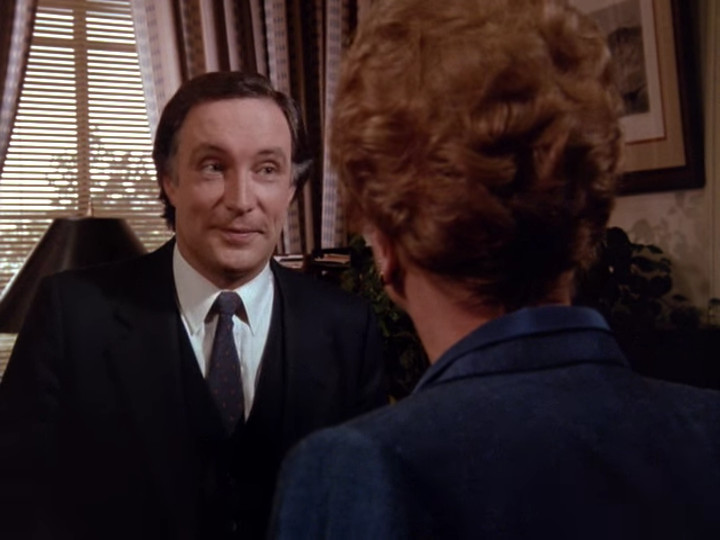


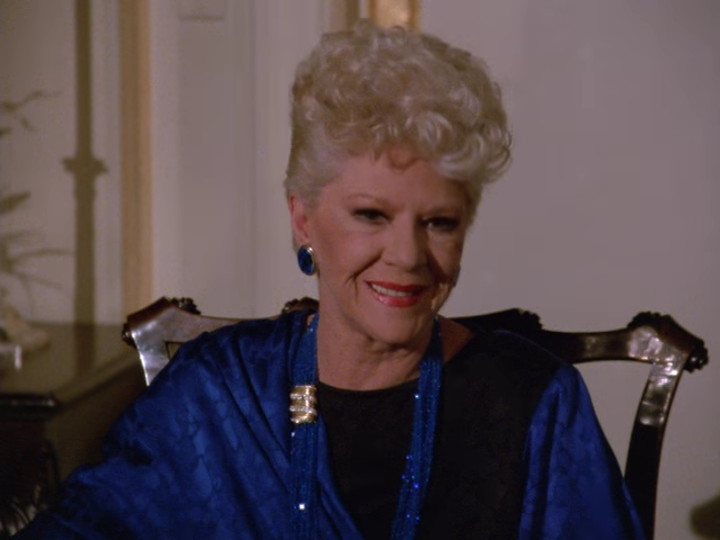


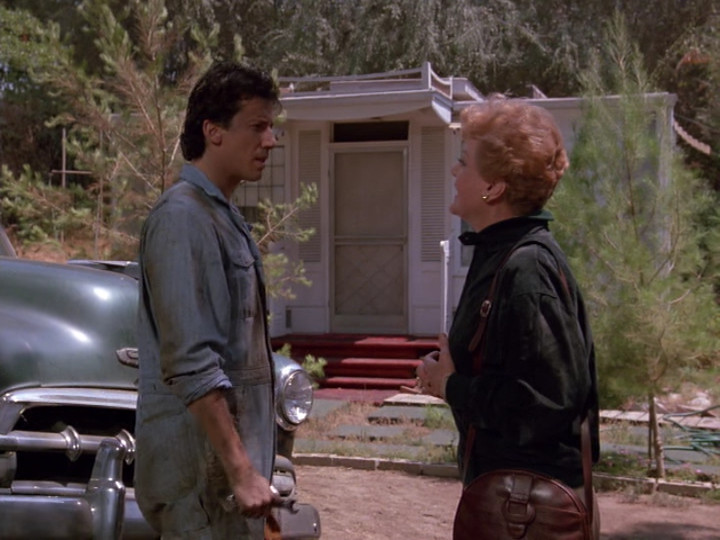
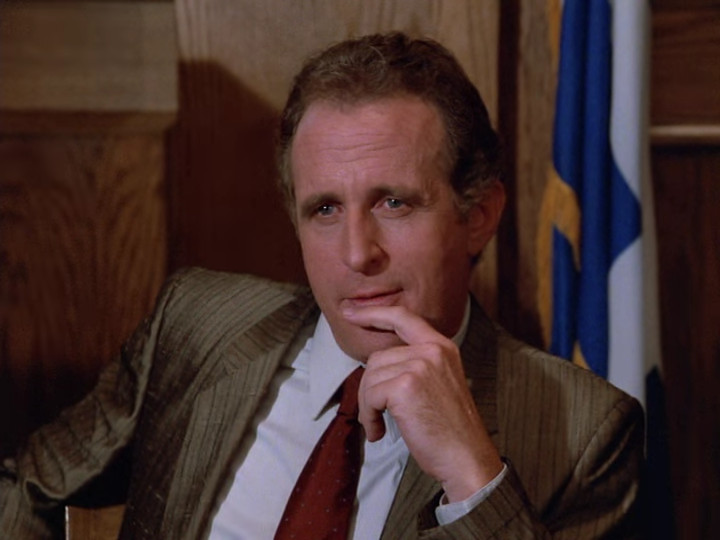


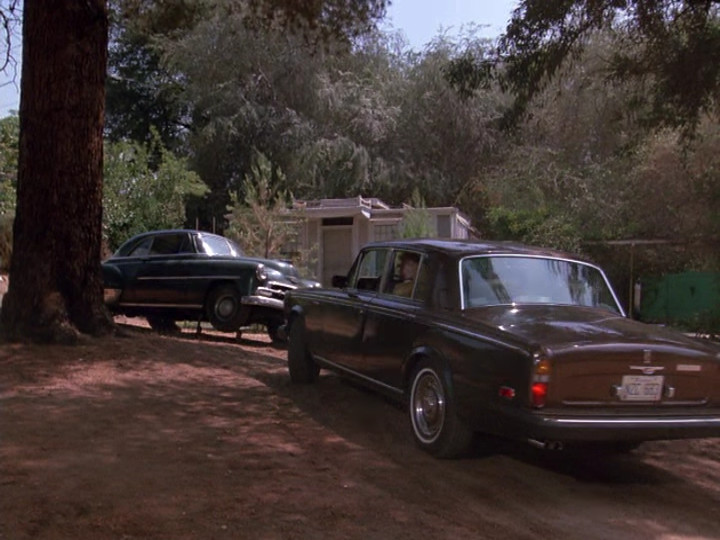
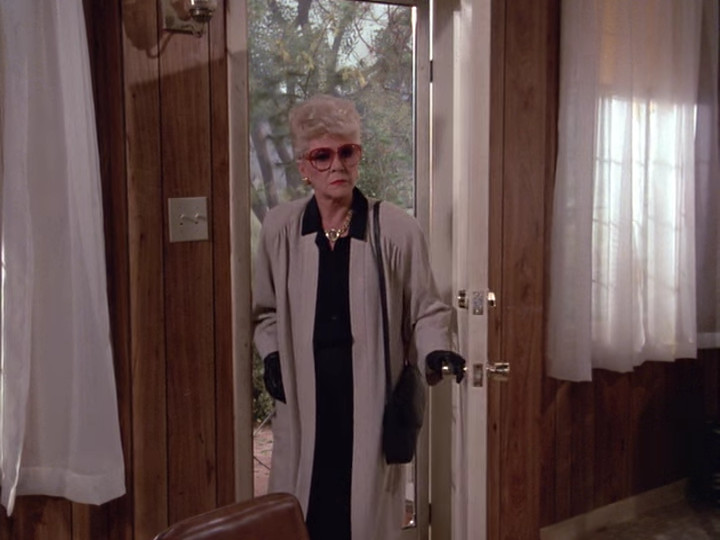

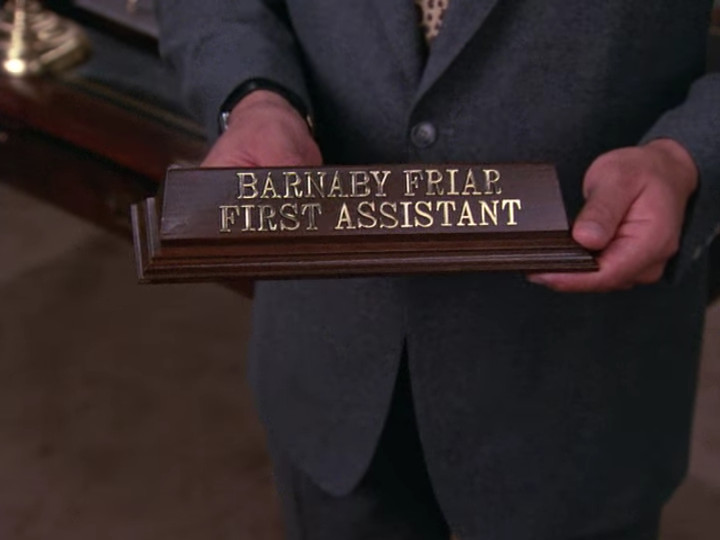














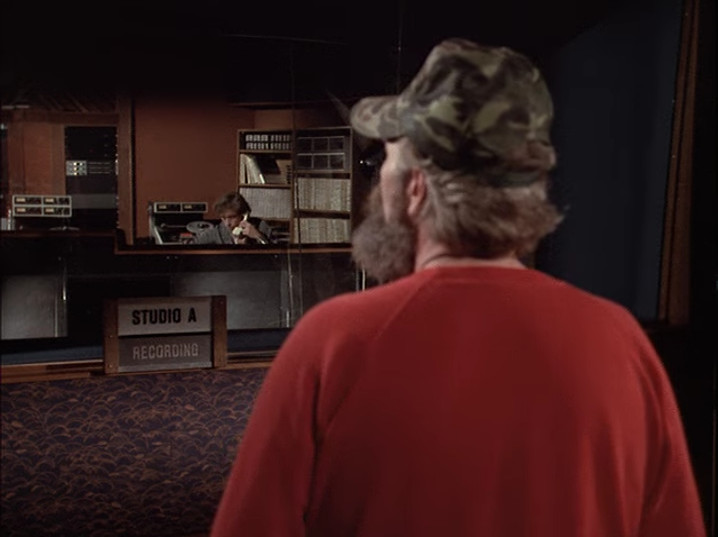
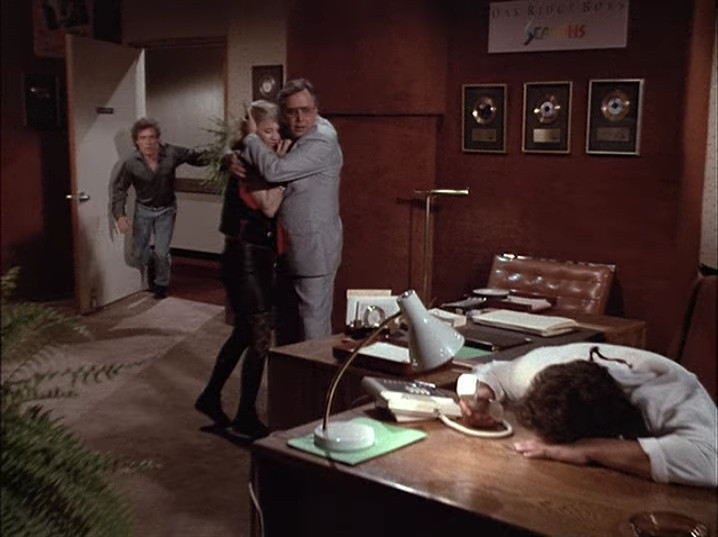




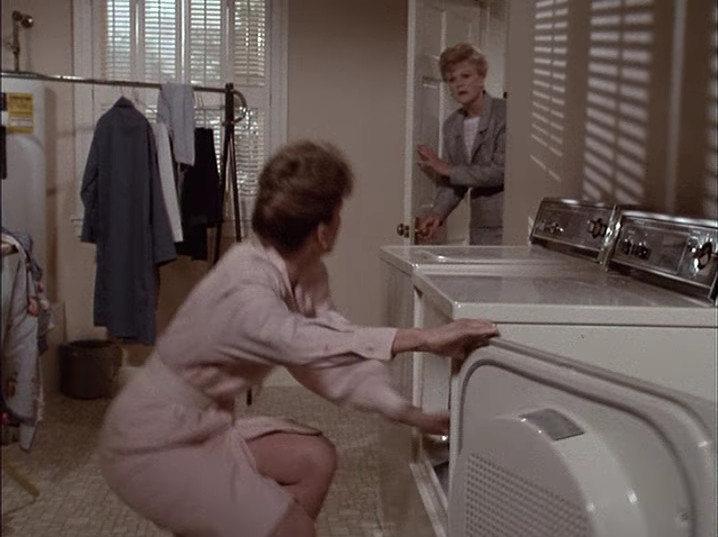

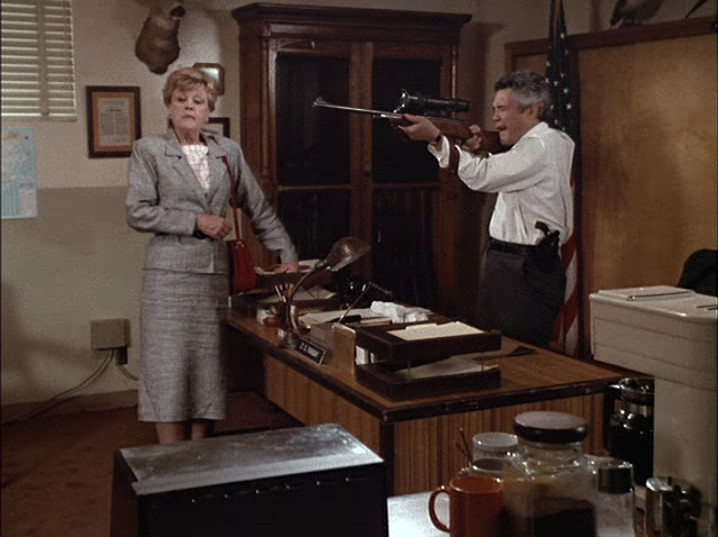
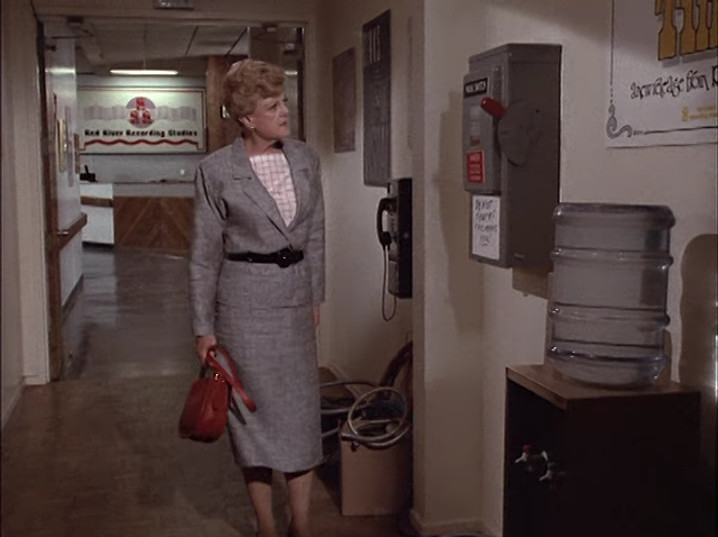
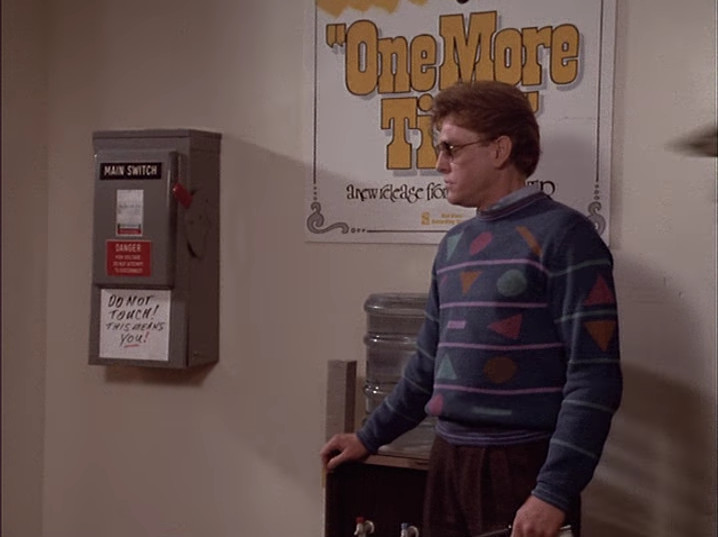

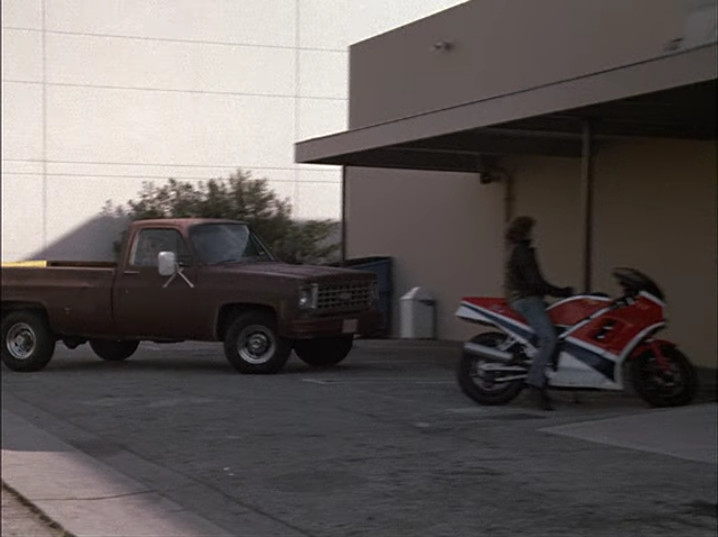


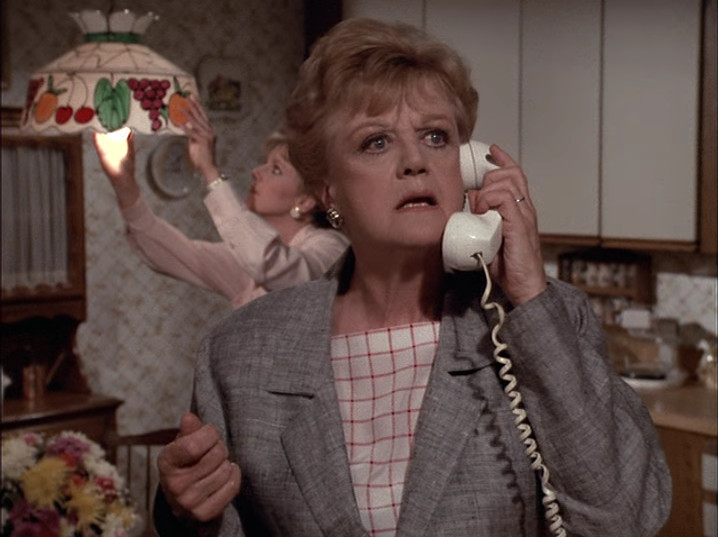
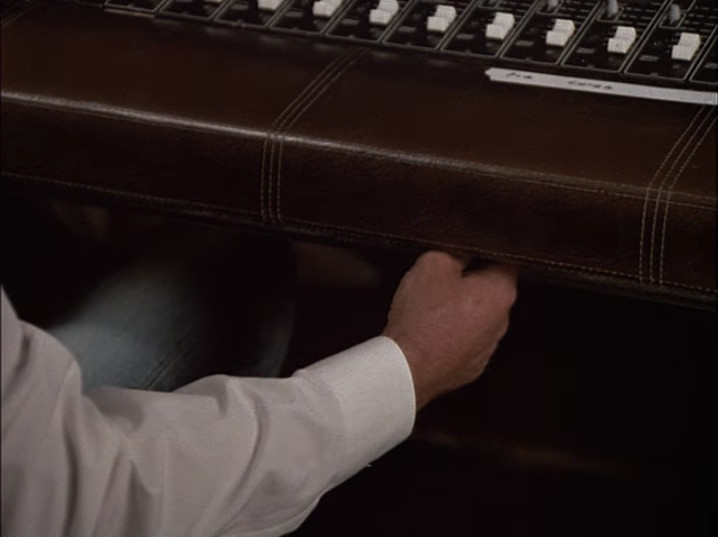
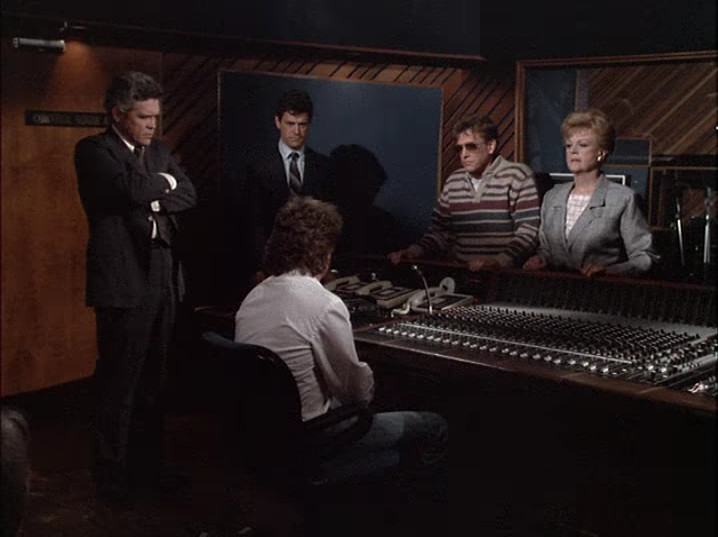

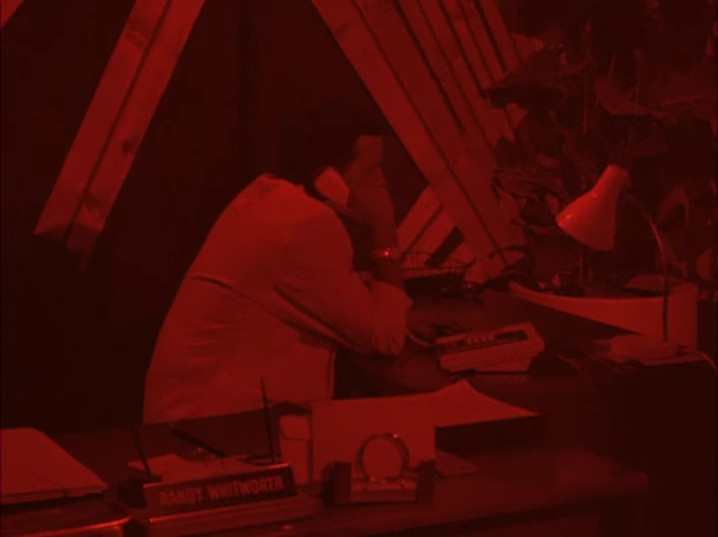





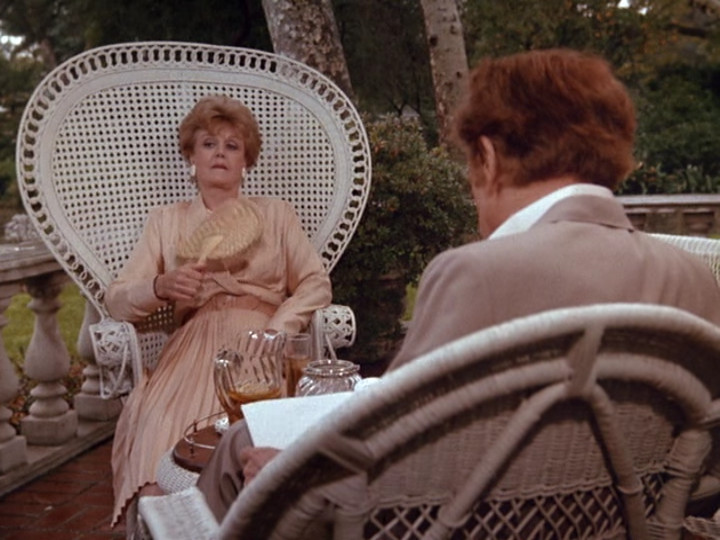
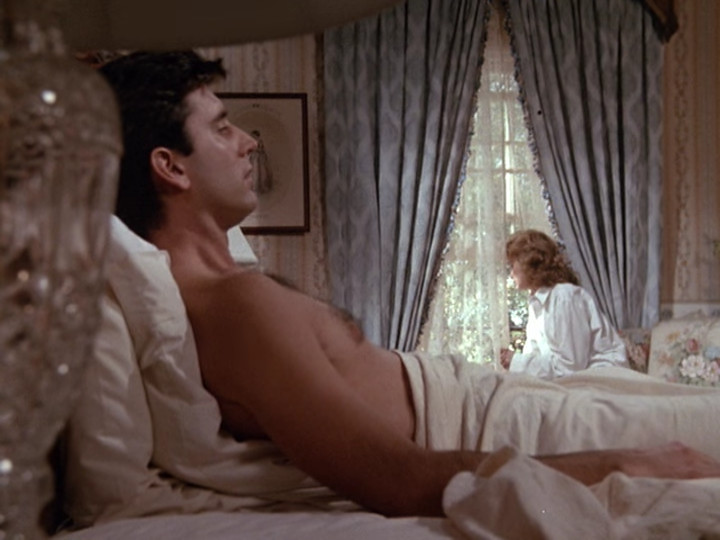

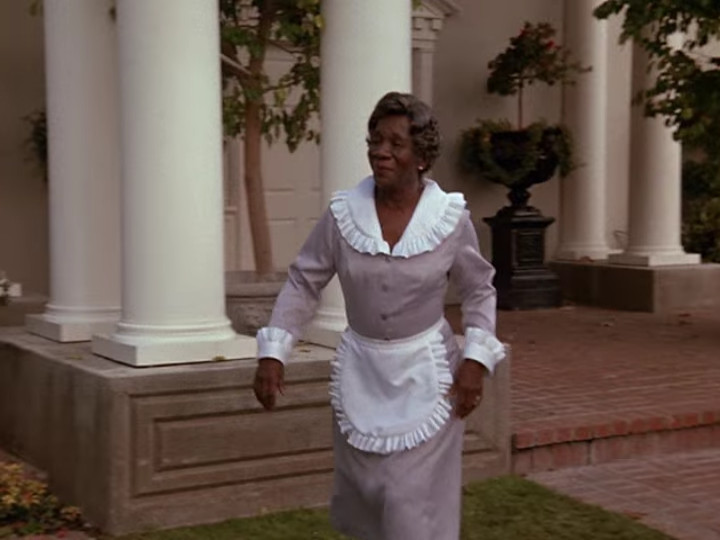

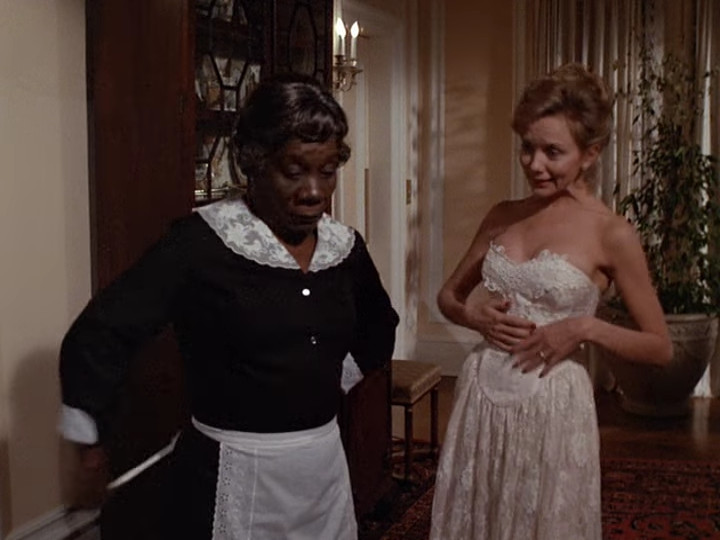


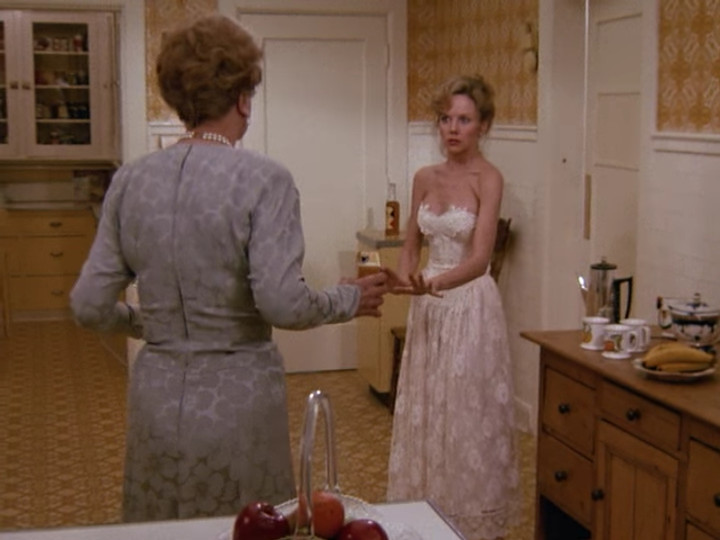





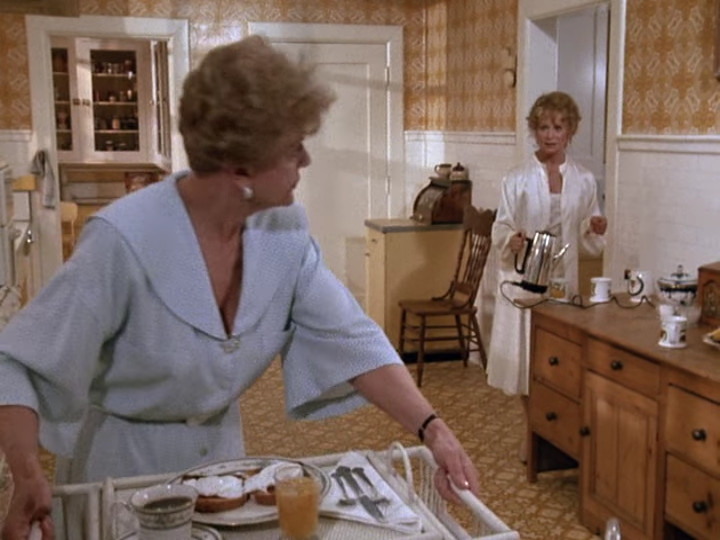
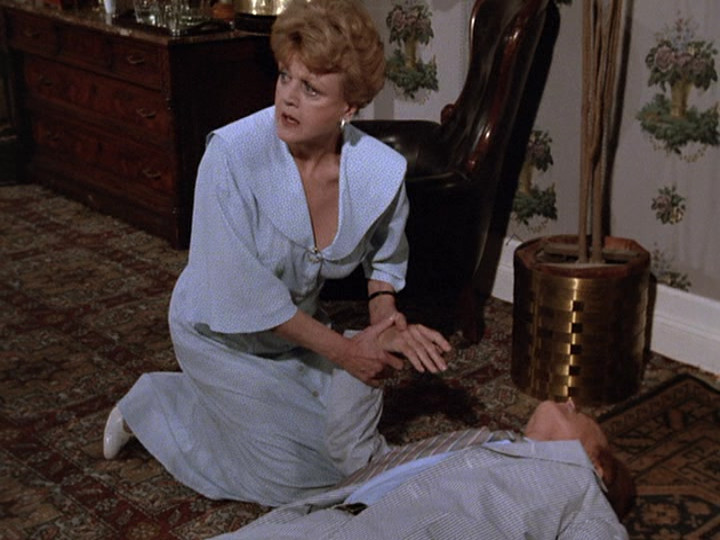

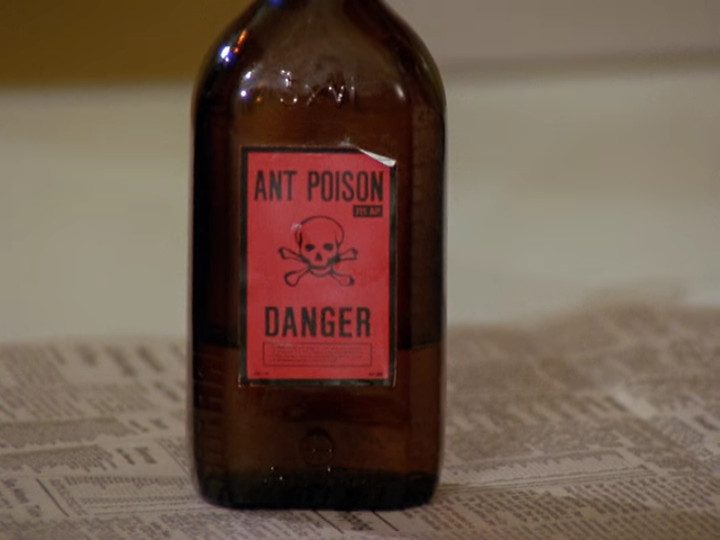
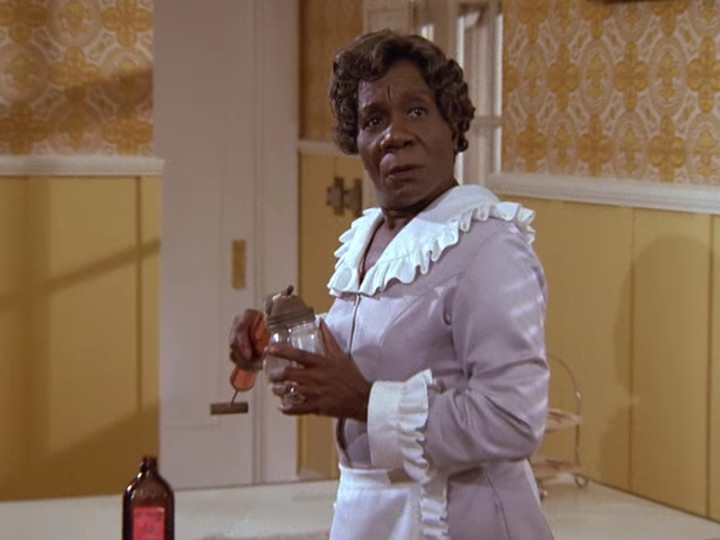
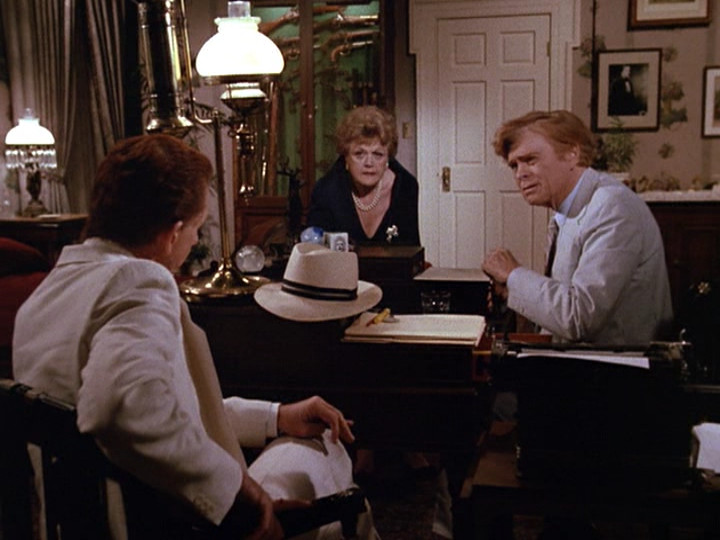
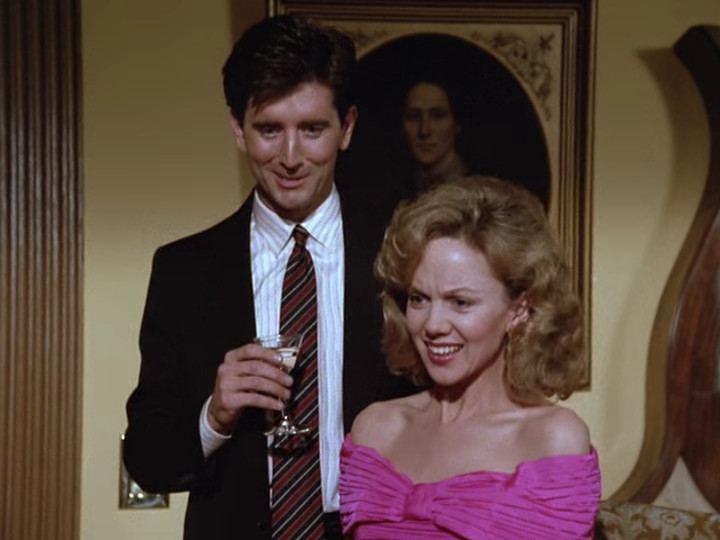
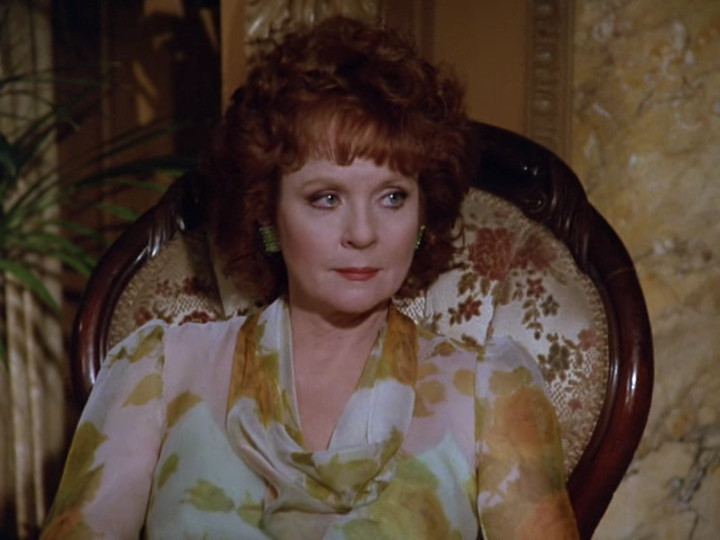
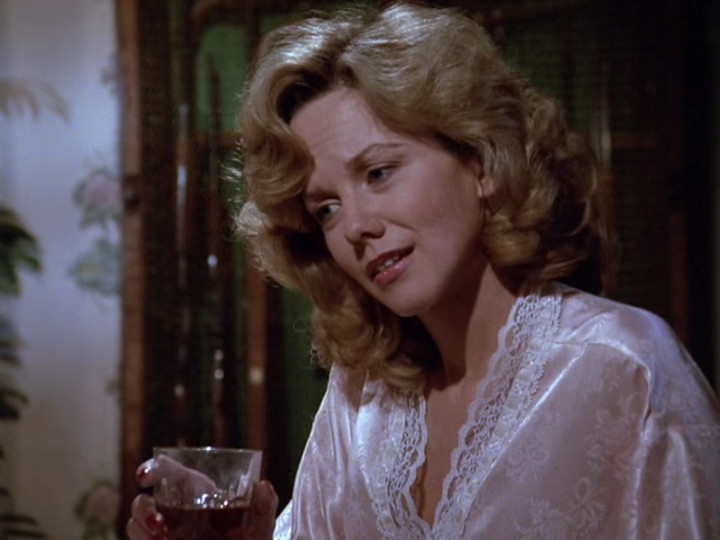


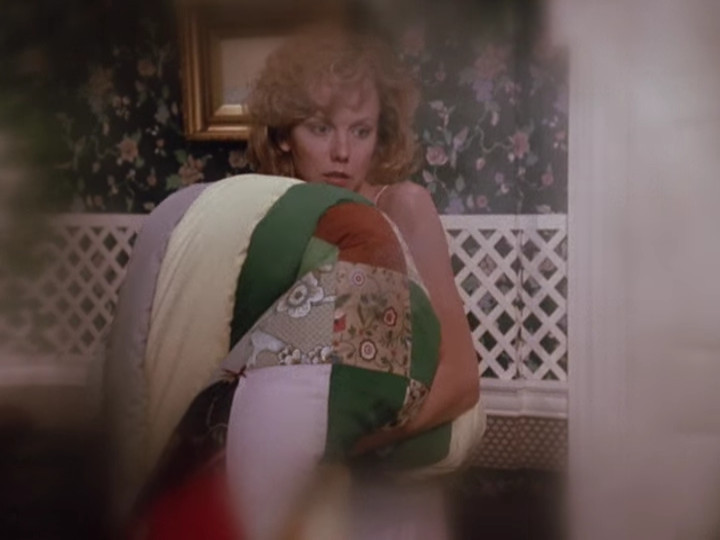







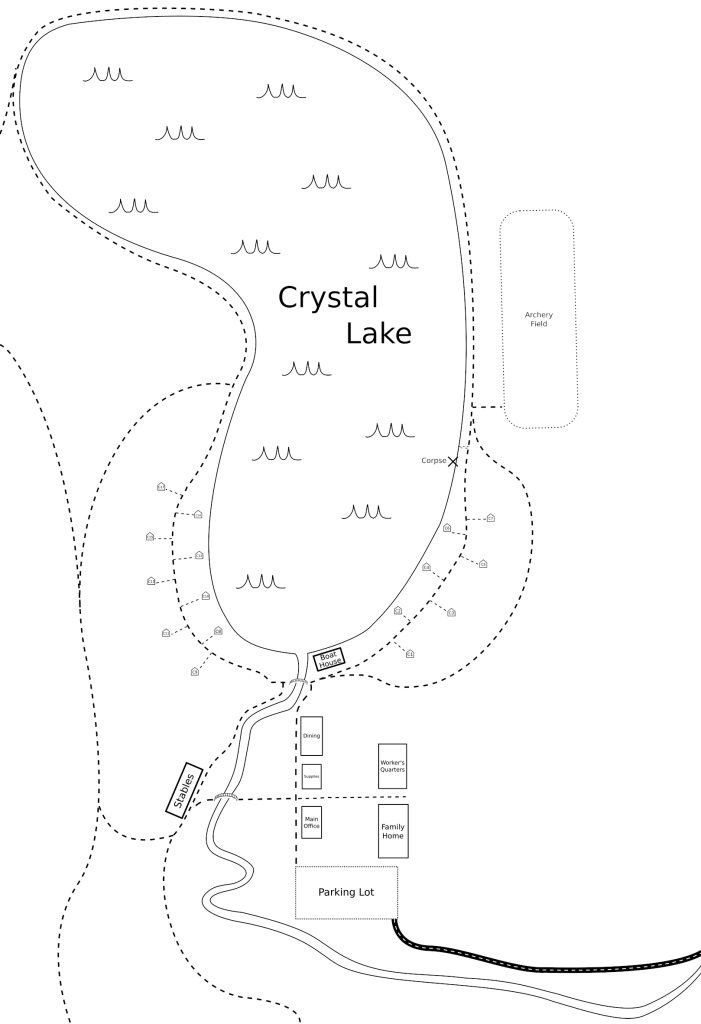


You must be logged in to post a comment.