When it comes to things like defending the faith, the aphorism that one catches more flies with a spoonful of honey than with a barrel of vinegar is very much on people’s minds, especially in America. Puritans were so dour and miserable that they drove people away from Christianity, etc. So, given that, why be such a downer and talk about the problems of atheism, such as meaning, irrationality, etc? Won’t that just turn people off?
One brief word before I dive into it: it should go without saying that one should not be purely negative, that one should spend most of one’s time on the positives. This post is about why talk about the negatives at all?
One very practical thing to get out of the way before we get to the real reason is that “nice” Christianity has already been played out. That sort of positivity is really an attempt to manipulate people and probably does more harm than good. Patience is a virtue, but imprudent patience is not. Nothing but patience just looks like weakness.
OK, that stuff out of the way, the big reason to talk about the problems with atheism is that a lot of people make what might be described as an inverse Pascal’s wager. Call it the Cheese Pizza Wager. If everyone agrees on cheese pizza but people do not agree on toppings, even if the toppings may be better, just go with plain cheese because it’s safer.
Given how many people will do that, it’s important to point out that we’re not in a pizza situation; the options aren’t cheese pizza vs. barbecue chicken pizza, it’s barbecue chicken pizza vs. poison pizza.
Atheism is not like Christianity but with sleeping in on Sundays. Atheism has real and serious problems such as reason not working, life having no meaning, morality being completely arbitrary, concepts such as a human being not being philosophically tenable on any level (the you-can’t-dip-your-toe-in-the-same-river-twice problem), to say nothing of the more practical issues it has with the breakdown of culture and the tendency to produce totalitarian dictatorships as people’s need for God is replaced by the state. And there’s plenty more. (Atheists will, of course, repudiate all of these things, which isn’t a problem for them since they don’t hold rationality to work and therefore don’t object in the slightest to contradicting themselves left and right while the incoherently scream that they’re being completely rational and calm.)
It’s good for people to realize that there is no consensus and that they can’t safely leave off the difficult task of understanding the world that they live in.
If you are not familiar with Daniel Dennett, one of the Four Horsemen of the New Atheism, he is a good friend of Richard Dawkins and an atheist “philosopher”. (I use the scare quotes advisedly.) As an atheist he is, almost as a matter of course, a determinist. However, he’s also a proponent of “compatibalism,” the “idea” that free will and determinism are compatible. (The trick is to redefine “free will” to mean, not something freely chosen, but something deterministically done without outside force being applied at the time.) There is a wonderful video that Dennett made in which he chides neuroscientsts who tell people that they don’t have free will for being irresponsible in doing so, because if people don’t believe that they are responsible for their actions they make less morally responsible choices:
You read that correctly. A determinist is telling other determinists that if they tell people who have no free will that they don’t have free will, the people without free will will then make morally worse choices because they now know the truth that they’re not making any choices and are thus not culpable for the choices that they’re not making.
He even cites a scientific study showing that people more frequently choose to cheat if they’ve recently read an article telling them that neuroscience proves that people don’t have free will and thus are not culpable for their actions.
Of course, Dennett is a determinist, so therefore doesn’t believe that the neuroscientists can choose to be more responsible and lie to people that they have free will in order to get them to make better choices in their lives. But determinism means never having to say you’re sorry (unless you have to): Dennett himself believes that he has no free will and so he had no choice but to make this video. So it’s all OK. He’s not actually an idiot.
He’s just a puppet being made to look like an idiot by the forces pulling his strings.
Recently in looking something up I came across a gentleman by the name of Bill Peschel who publishes some annotated versions of golden age mysteries. The two which caught my eye are The Mysterious Affair At Styles and Whose Body?
I don’t have the time to read them at present, but I’ve put them on my wishlist.
Some of the questions he promises to answer about The Mysterious Affair At Styles are:
Why Would People Drink Strychnine For Their Health? What Does ‘English Beef and Brawn’ Mean? What Are Land Smocks? Spill Vases? Patience Cards?
Not having read these I can’t testify as to their quality, of course, but they certainly seem interesting.
There is a tension which authors face in writing their stories. On the one hand, they wish to make their stories original—why bother to write the story at all if someone else already wrote it just with different names? On the other hand, stories with familiar elements greatly help readers to understand the stories. This can be fairly extreme—when an individual work defines a new genre, quite a few elements of the original may be necessary in order to seem to the reader to be in that genre and they can feel lost, or worse, disinterested, if it strays to far from those elements. Something that may help authors to feel better about this is that derivative origins of a character can easily be lost over with the readers being accepting of this and possibly even forgetting that the beginnings of the characters were clichéd when the many other copies of the work disappear under the sands of time. This will get to an interesting question that I will save for the end. First, I want to give a few examples from my own genre, mystery.
Hercule Poirot had a remarkably derivative beginning as a detective but is now one of the most celebrated fictional detectives of all time and thought of only for his original qualities. For a more highbrow example, Lord Peter Wimsey is a fiercely beloved character so original and lifelike he feels real to a great many of his readers. And yet, to quote Ms. Sayers herself:
When in a light-hearted manner I set out, fifteen years ago, to write the first “Lord Peter” book, it was with the avowed intention of producing something “less like a conventional detective story and more like a novel.” Re-reading Whose body? at this distance of time I observe, with regret, that it is conventional to the last degree, and no more like a novel than I to Hercules.
Gaudy Night, Titles to Fame
In order to explain how they began so conventional and in Poirot’s case outright derivative, I need to go over a (very) brief history of the detective genre. This won’t take long as it only existed for about thirty years by the time these detectives came on the scene.
The origin of the modern murder mystery is Edgar Allen Poe’s Murders in the Rue Morgue. Published in 1841, it is told by an unnamed narrator who is a friend of C. Auguste Dupin. Dupin is a brilliant and logical thinker who solves the murders for which the story is named. Poe wrote two other “tales of ratiocination”, but neither is remembered in anything like the same way for various reasons that aren’t pertinent to the moment.
There are a few things published over the next forty six years that people occasionally try to argue are murder mysteries, but the next unambiguous murder mystery is Sir Arthur Conan Doyle’s A Study in Scarlet, which introduced to the world Sherlock Holmes. It was the Sherlock Holmes short stories, however, first published in 1891, that became wildly popular and created the mystery genre.
Even Holmes was not an altogether original conception, as we can see elements of Dupin. Holmes, like Dupin, is a brilliant and logical thinker who goes so much father than others because of his orderly thinking and his methods of the science of deduction. Watson, like Dupin’s unnamed narrator, learns of Sherlock’s brilliance and science of deduction and moreover the adventures that he narrates after becoming his roommate because neither has much money. There are differences of detail, to be sure, but there is an unmistakable inspiration. Heck, there is even a Holmes short story (The Resident Patient) of Holmes imitating a trick of Dupin’s of predicting what someone was thinking about based on what his last conversation was some minutes ago—and Holmes explicitly said that he did so in order to prove that Dupin might have done so as well.
Conan Doyle did not write Holmes for long, however. In 1893 he killed Holmes off. Feeling some financial pressure, he wrote The Hound of the Baskervilles in 1901 and its financial success prompted Conan Doyle to bring Holmes back, which he did in the short story The Adventure of the Empty House in 1903. He wrote twelve more stories through 1904, then nothing again until 1908.
This dearth of an extraordinarily popular character created a vacuum that pulled a great many people into the mystery genre. Most of these short stories are lost to the sands of time, or at least require more than a little digging to find them. It was not too long before these stories would start to broaden the genre out, but I suspect with new Holmes stories occasionally coming out until 1927, the pull of the Holmes premise was strong. Moreover, examples in the genre that I’ve researched from the early 1900s and 1910s have tended to stick close to the Homles-Dupin formula.
Certainly we can see it in Hercule Poirot. His story is narrated by Captain Arthur Hastings, who was invalided out of the army in The Great War and now lived on his pension. (You may recall that Doctor Watson was invalided out of the army after Afghanistan and lived on his pension.) Hastings had met Poirot in Belgium before Poirot was forced by the war to flee to England, but after being reunited by the events in the first Poirot story, The Mysterious Affair at Styles, the two became roommates and Hastings, like Watson, helped Poirot to solve crimes as a private consulting detective. Indeed, Poirot even told Hastings, as Holmes told Watson, that his instincts for deduction were almost perfectly wrong; the great detective found them invaluable for knowing where not to look.
The case of Hastings is curious, as Agatha Christie married him off and sent him to live in Argentina in her second Poirot novel but she then spent the next ten years frequently bringing him back for story after story, and he was in almost all of the short stories.
For all that he started out as an obvious Watson character, Hastings would bloom into his own man. More importantly, Poirot very quickly became his own detective. His talk of his little grey cells, his fastidious manner, his selectively broken English, his French immodesty, his self awareness, his Catholic faith, and his habit of gathering everyone together and telling the story first as it is known and then as it really happened created a genuinely interesting character. One reads Poirot for Poirot, not because one cannot get enough Sherlock Holmes, but because one wants Poirot.
Heck, even his name was not original in its day. According to Wikipedia, “Poirot’s name was derived from two other fictional detectives of the time: Marie Belloc Lowndes’ Hercule Popeau and Frank Howel Evans’ Monsieur Poiret, a retired Belgian police officer living in London.” Yet as the best fleshed out character with the most interesting mysteries, Hercule Poirot is remembered and the others are not.
Lord Peter Wimsey was not quite so obviously a direct rip-off of Sherlock Holmes. His books were not narrated by his Watson, who was a police detective and who did not live with Wimsey. Wimsey, being rich, needed no roommates, and did his detecting for fun. Wimsey was himself invalided out of the Great War, by the way, while Charles Parker—his Watson, at first—was never, that we knew, in it. Wimsey had, however, his tricks of the trade just as Holmes did. He had a magnifying monocle that could be used much as Holmes’ famous magnifying glass. He picked the hairs out of a hat to identify just as Holmes concentrated on such trivia that turned out to be important. (In 1923, when Whose Body? was published, R. Austin Freeman’s Dr. Thorndyke was extremely popular and made even more out of even smaller clues, so this may as much be copying him as Holmes.) Even Wimsey’s comic manner feels like it almost certainly owes something to P.G. Wodehouse’s Bertram Wooster, as Lord Peter’s valet, Bunter, almost certainly owes something to Wooster’s valet, Jeeves. Jeeves & Wooster never investigated a crime, that I’ve heard of, so I suppose we can accuse Ms. Sayers of having stolen from two genres. Indeed, one might almost hear the Hollywood pitch meeting phrasing, “What if Bertie Wooster was actually brilliant and used being a fop as a cover to let him solve crimes?”
And yet Lord Peter becomes one of the most memorable characters of all of detective fiction, and consequently of all time. He continued, it must be admitted, a somewhat two dimensional character until Ms. Sayers got tired of him and tried to marry him off to an honorable retirement—she had learned from Sherlock Holmes’ ignominious climb up the Reichenbach Falls not to actually kill one’s detective off. The problem was that she made the girl he was to marry a real character, and she wouldn’t marry him in the sorry two-dimensional state that he was in. (This was in Strong Poison.) Sayers then decided that she had to make him a real character.
If the story was to go on, Peter had got to become a complete human being, with a past and a future, with a consistent family and social history, with a complicated psychology and even the rudiments of a religious outlook. And all this would have to be squared somehow or other with such random attributes as I had bestowed upon him over a series of years in accordance with the requirements of various detective plots.
Gaudy Night, Titles To Fame
The result was magnificent, though. Lord Peter and Harriet Vane (the aforementioned girl who wouldn’t marry him) investigated a murder together in Have His Carcase, and it is one of the best murder mysteries ever written. Lord Peter becomes a really interesting character who is quite unique within detective fiction. He really comes into his own in Gaudy Night, widely considered Sayers’ best novel, becoming an extraordinarily rich character with a character arc that rings very true to human nature. Harriet also blossoms in Gaudy Night, and the whole thing is a truly excellent study of human nature. (The excerpts I quoted, by the way, are from her essay in the collection Titles To Fame.)
So, what is the author to make of all of this? Especially when faced with the question of how to get people to read a story when people really like what is familiar? If I had the answer I’d be a rich man, or at least a richer man than I am. I can say, though, that it certainly seems that it is not, in the end, who did it first that really matters. It’s who did it best. This is perhaps the true meaning of the saying, “mediocrity borrows, genius steals.” When the genius borrows, he makes the thing his own, and it is his version that is remembered, even if he was twenty years late to the party.
Bishop Barron recently put out a video on the suffocating quality of subjectivism:
He’s entirely correct that one of the problems with subjectivism is that without objective value, people cannot talk to each other, they can only ignore each other or try to subjugate each other by force. It is only by appeal to transcendent truths to which human beings are morally bound to conform themselves is it possible to try to persuade someone (because persuasion is by pointing to the transcendent truths, upon the perception of which the other will voluntarily conform himself because it is the right thing to do).
In practice, though, Subjectivists never mean it. Once they have convinced someone else of subjectivism and thereby gotten the person to stop trying to persuade anyone, the very next move is always to try to smuggle objectivism in again, but only as available to the original Subjectivist.
The normal technique for trying to smuggle objectivism back is through innovations in language. You may not call art good or bad, because that is implying objective evaluation of it. But you can call it subversive or conventional, which are objective, despite just meaning good or bad. You cannot say that a person wearing immodest clothing in public is bad. That’s horribly patriarchical and body-shaming of you. You are free, however, to call it problematic.
The technique is always the same, because it has to be. First there is a move to shut down all criticism that a person doesn’t like by universally disallowing criticism. Once that is achieved, criticism becomes re-allowed using different language, which initially only lends itself to criticizing whatever the putative Subjectivist wants to criticize.
The Subjectivist’s victory tends to be short-lived, though. Semantic drift inevitably sets in. Whatever new word the Subjectivist has introduced in order to have a monopoly on the right to criticize quickly becomes adapted to all criticism and the Subjectivist is back to seeing criticized the things he was trying to protect. If he still has the energy for it—after a certain age, criticism tends to sting less—this begins another cycle of subjectivism.
The first six minutes or so are the best part, and by far the most relevant part.
A large part of what’s funny about the constant “I anticipated you and went further back in time” is that it is merely taking the time travel premise seriously. If you can time travel, the past is up for grabs, and to quote George Orwell: who controls the past, controls the future. Thus the fundamental problem in a time travel story is that, if it doesn’t conveniently forget about time travel, nothing that anyone does matters because it can always be undone.
Of course, they do all conveniently forget about time travel, in practice. Or else they come up with some excuse for why they can only time travel once. Either way, the only way time travel stories are in any way enjoyable is to only play at them being time travel stories but to carefully keep them from being time travel stories. Because a time travel story isn’t a story, since a story has a sequence and time travel has no sequence. (You can pretend to have a story from the perspective of the time traveller, but that doesn’t help because he intersects himself, at least in his effects, and so his chronology becomes out of order.)
Time travel stories end up being like superhero stories where the character isn’t just super-strong but the cars are reinforced to be pick-upable with a human hand (in reality that much force would just rip a bit of the car off), but they’re not reinforced enough that he does need to grab them to keep them from hitting a building or they’d be destroyed. They’re day-dreams about specific moments that are enjoyable to toy with precisely because they could never happen. It’s the fact that they’re impossible which makes them fun. “Imagine if I could run at 100,000 miles per hour but the air magically gets out of my way except when I’m trying to breath it and then it’s exactly like regular air, and when I open a door the air gets out of its way too and I’m pulling on the whole thing not just the handle so the handle doesn’t just rip off but when I let go the door doesn’t go smashing through the wall and…”
It’s all a form of the fantasy, “what if reality was whatever I wanted it to be?”
Or, in other words, “what if I was God?”
That can’t really be a good story.
Note: superheroes are great when they are mythic; the super-strong hero being merely symbolic of strength as a means to consider the responsibilities of being strong as well as the pleasure of achievement and service, etc. When they are symbols, the fact that they aren’t even slightly realistic doesn’t matter because one isn’t supposed to enter into them that way.
There is a movie called The Tomorrow War, which has the premise that in the year 2050 (or thereabouts) humanity is almost wiped out by an alien invasion. So they go to the only place they can to recruit more soldiers… the past!
But why not go to the future to get soldiers? They’ll probably have even more awesome technology to bring back with them, too, and the possibilities for genetic engineered super-soldiers are almost limitless.
It might be objected that the problem with going to the future to find the soldiers to save humanity is that until you save humanity, there are no people in the future to bring back. But there are people in the future because you’ve saved humanity, so you can go get them. But you can’t do that until you’ve already saved humanity! a friend of mine cried when I brought this up (or at least typed; he was too far away to hear how loudly). Ah, but this isn’t a problem in time travel, because there is a future for you to go to in order to bring back soldiers to save humanity because by the time they would have died off you’ve already brought soldiers from the future back to save them. Problem solved.
“OK, once this loop got going it can keep going, but what about the first time?” an eagle-eyed defender of the movie might ask. I’ve been assured by atheists that this is simply an invalid objection, though. Things can keep going forever without having to start. There just never was a time when the soldiers from the future didn’t go even further into their future to recruit soldiers to bring back into the past, and it keeps working because it already worked, without ever having to have gotten started. No matter how far into the past of the time-loop you go, it’s explained by the previous loop. Obviously, this is a highly satisfying explanation for a movie because atheists are quite satisfied with it for the universe.
Not to mention, if the people from 2050 can come to 2021 and convince everyone of the severity of the situation such that a world-wide draft gets instituted in 2021, why on earth is the answer to go forward to 2050 and fight in small groups alongside a tiny remnant of humanity against a mostly dominant alien force? Why not send everyone to 2049 alongside the still numerous humanity to try to overwhelm the invaders? Or why go forward in time at all? It would be far more effective to instead stay in 2021 and focus on building up humanity’s numbers and weapons stockpiles and such-like using the technology brought from the future to speed up development. It would make far more sense for the remnant of humanity from 2050 to come back to 2021 to help us prepare then fight alongside us than for us to go and fight alongside them. Or, rather, to warn us in 2021 then go back to 2045 to fight alongside us then.
All time travel stories intrinsically have plot holes in them, but I find it interesting—suggestive, even—that they so often make the worst decisions they can, given their premises. It’s almost like the sort of people who would tell time travel stories don’t really care about plot holes.
In the middle of the fourth season of Murder, She Wrote was the episode Doom With a View. An episode set in New York City, it also features Jessica’s nephew, Grady. There is always something special about episodes with Grady since he is the reason that Jessica is a literary titaness who travels the country solving murders—he is the one who showed her first manuscript to a publisher when Jessica was just a retired school teacher and was unwilling to show her manuscript to anyone.
Jessica arrives at Grady’s apartment as he is being temporarily evicted because of cockroaches (they moved in from the apartment above when that was sprayed). Instead, they’ll be staying at the Montaigne plaza hotel, an extraordinarily expensive hotel owned by Cornelia Montaigne. They’re going there because his old college buddy, Garrett, married Cornelia and is going to comp him the hotel room. Jessica is surprised because Cornelia Montaigne is Jessica’s age, at least, though she doesn’t phrase it that way. How a retired school teacher from Maine has any idea who Cornelia Montaigne is, I don’t know. Even if she is supposed to be a fictionalized version of Paris Hilton’s mom, this was before reality television and people outside of the hotel industry had any idea who owned the things. (That said, perhaps Cornelia was featured in a woman’s magazine, which Jessica read while having her hair done a the beauty parlor. I almost forgot about that possibility since I never read women’s magazines or went to beauty parlors.)
In the next scene we meet Garrett and Cornelia:
They are not the two lovebirds with but one soul that Grady described them to Jessica as, though. We catch them in the middle of an argument. She spent the entire night vacating the 32nd floor and he went and put the countess into one of the rooms! If he weren’t her husband, she’d have his job for it! Oh, when will he learn to check with her first?
Cornelia’s right hand man, Mark Havlin, interrupts to say that he moved the Countess to the blue room on the thirty ninth floor an hour ago.
Cornelia asks why he didn’t tell her and he replies, “Oh, If I let you know all the wonderful things I do around here, you’d have to give me a raise.”
Garret sees Grady and excuses himself. He greets Grady and Jessica affectionately. In the course of conversation with reminiscences he invites them to dinner at 7:00 sharp. His mother will be there, and he could also invite Sandra Clemens. Grady gets wobble-kneed at the mention of her. She was at homecoming, third cheerleader from the left. Jessica doesn’t remember and attributes this to being distracted by watching the game.
They walk over to Cornelia and she greets them even more affectionately than Garrett did, commenting that Grady has lost weight and that she’s absolutely delighted to meet Mrs. Fletcher. Interestingly, she doesn’t pretend to have read Jessica’s books. “I must confess, I don’t have time to read your books, or anyone else’s, I’m afraid, but I am delighted you’re staying with us.”
She excuses herself because she’s expecting a call from the Secret Service to make arrangements for the following week.
Jessica and Grady go up to their room. On the way, they run into Sandy.
(I love those 80s shoulder pads.) Jessica identifies her as the third cheerleader on the left at homecoming, and Sandy comments that Jessica has a remarkable memory. Jessica denies this; she explains it as Grady having a picture on his coffee table. I’m honestly not sure if she’s trying to embarrass him or be his wing-woman. Jessica goes on to their room, leaving Grady and Sandra alone.
Grady can barely talk, despite Sandy’s smiling encouragement. Sandy invites herself to dinner, tells him to pick her up at her room, 4553, at 7, and excuses herself since Grady clearly won’t be able to say anything for a while.
In the lobby Garret sees her and walks up to her, asking if she saw Grady. She replies that she did, and met his Aunt, and in a very changed voice from when she talked with Grady says, “You know Garry, this is dumb. This is really dumb.” Garret replies, “Look. Anything to keep Cornelia off my back. If she catches on, the party’s over… for both of us.”
Until this moment I had expected Cornelia to be the murder victim, but it strikes me as now just as likely for Sandra to be the victim.
There’s also a curious aspect to this story that we’re being let in on evidence that Jessica doesn’t have. I’m not sure what to make of that. I’ve argued that play-fair rules of evidence in mysteries are good for mystery construction, and I stand by that. I don’t think that it follows, however, that it’s good to give the reader clues that the detective doesn’t have. It’s frequently a form of misdirection, but where it isn’t, I think it serves the dubious purpose of making leaps of logic on the part of the detective more believable. We are naturally less interested in the specifics of how a person came to a conclusion we already know to be true, so authoritatively telling us the conclusion before the detective gets to it means that the writer doesn’t need to construct the plot to justify the detective’s deductions.
That evening, Grady shows up at Sandra’s room to pick her up for dinner. Right after she lets him in, she receives a phone call, which she takes while Grady looks for somewhere to put the flowers he brought her.
I love the opulence of the hotel. Set decoration did a really good job making this seem like a truly high-end hotel. This is not directly related to the plot, but it’s part of what makes the episode enjoyable. It’s fun to look at pretty things and spend an hour vicariously living in the lap of luxury. This is something to keep in mind when evaluating plots; a little weakness in a plot that makes for a more enjoyable setting can be a worthwhile tradeoff.
Sandra tells the person that she’s speaking to that something won’t do, and neither will a second option presented to her. “Look, I can’t really get into it right now. Can I call you back?” She puts the phone down, fetches a pen and an envelope from her purse, then writes down the number. That completed she looks over at Grady and notes that he put the flowers into vermouth (she had just made them martinis).
We then go to dinner, where Garret, his mother, and Jessica are sitting at the table waiting for Grady and Sandra.
Garrett’s mother is a very overbearing woman. (As a side note, it’s interesting to see how well Charlotte Rae played this character because she is best known for the kindly maternal figure Edna Garret in the TV show The Facts of Life, which she left the year before.) Not merely overbearing, she’s manipulative and somewhat mean-spirited, though she has an excellent sense of how to avoid stepping over the line of plausible deniability.
She asks Grady for a kiss and kisses him on the cheek, then loudly tells him, “I hope you enjoyed that, young fella, because that’s about as good as it’s gonna get for you, tonight.”
Jessica asks for the menu and looks it over, saying that the wine list is excellent. She then insists that tonight, the wine will be on her.
Nettie says, sotto voce, “Forget the wine list, Jessie. You’re missing the big picture. Look at her. Look at her.” (the camera obligingly does.)
“Her eyes haven’t left this table since Grady arrived with Miss Sis-boom-bah. She knows we’re talking about her, too.” (Here, she waves at Cornelia.) “Mark my words, Jessie. There’s gonna be fireworks tonight. And I love it.”
The last few words are said intensely, almost in a growl. It’s a powerful performance which demonstrates one of the real advantages that television has: actors. The words are not insignificant, but Charlotte Rae gives them a great deal more significance. In the context of this performance, Nettie is a force to be reckoned with.
The scene shifts to after dinner where Cornelia accuses Garrett of cheating on her with Sandra. Garrett tries to convince her that she is merely Grady’s friend, but she’ll have none of it.
The scene shifts to Jessica and Grady’s room, where Jessica is laying on a couch reading a manuscript.
She is having trouble staying awake for it, though. “If I read one more paragraph tonight, this manuscript is going to start looking like one big typo. I’m gonna go to bed.”
Grady asks if she wants to play gin rummy, and she says, “not tonight.” She encourages him to go out to enjoy himself. It’s pouring rain, but he has two good friends right here in the hotel. Grady asks if she’s sure she doesn’t mind, and she replies that not only doesn’t she mind, she insists that he does. He excitedly leaves.
The moment he’s out the door, it turns out that Jessica was lying to her nephew. She sighs in relief, then picks up the manuscript and goes back to reading.
Grady goes over to Sandra’s room, but the door is open. He goes in, calling her name, but the lights are off and no one responds. He goes into her bedroom to investigate.
Murder, She Wrote sometimes goes in for artsy shots, but it’s hard to not notice that the silver tray with the flower and chocolates there in the foreground had to have been put there by someone, and that’s going to establish a time after which the murder had to have happened. (It may seem like I’m spoiling that the murder happened, but in the episode they’re playing murder discovery music so we know by this point Grady is going to find a body.)
He has to walk a little further into the cavernous bedroom, but then he finds it:
At not even fifteen minutes into the episode, this is pleasantly early for the body to be found. Grady checks for a pulse, then when he doesn’t find one gets up and goes to the telephone to call the police. There he sees Garrett in a mirror.
Garrett looks for a moment then runs away.
In the next scene the police are there, as is Mr. Rice, the head of hotel security:
Rice complains that Grady should have notified him first. They don’t like to bother the guests with accidents. Jessica is astonished that he said accident. Shirley, he can’t be serious. He is serious, though, and don’t call him Shirley. (They don’t actually make the Airplane reference, but Jessica does say, “You can’t be serious, Mr. Rice,” and he assures her that he’s very serious.)
Garrett walks by and catches Grady’s eye. He excuses himself and goes into the hallway to talk to Garrett. Grady demands to know why Garrett was in Sandy’s room, and he explains he came to see how it went between them. When he got there he saw Grady bending over the body and figured that he should go get help.
Then Inspector Matheney arrives.
Rice apologizes for Matheney having to be dragged out for this, and Matheney says that it looks routine, and with luck he can get back to the ballet in time for the Rose Adagio. The Rose Adagio (I had to look this up) is a scene in the ballet Sleeping Beauty. It’s a scene in Act 1—of 3, there is also a prologue—so Inspector Matheney seems to expect to spend very little time here indeed.
The inspector asks where “Mrs. Harper” is and Rice replies that they’re trying to locate her. The Inspector looks around and concludes that he’s not needed, and begins to head off to the ballet. Jessica stops him on his way out and remarks that Mr. Rice has described this as an accident. Matheney replies that he’s sure that Rice has. “Mr. Rice has an instinct for… public relations.” Jessica replies, “but perhaps not for homicide? May I show you something?”
Matheney willingly comes with her.
“She seems to have hit her head here.”
Jessica then asks what she tripped over? The spacious room doesn’t have much in the way of tripping hazards nearby. Matheney points out that she might have had a fainting spell.
Jessica admits that it’s possible, but then points out the pillow on the foot of the bed.
The pillow is crumpled and stained with lipstick and makeup. Perhaps, says Mr. Rice, she had to lie down because of a fainting spell. But if she laid down, asks Jessica, why is the rest of the bed unrumpled, and freshly turned down.
A small note about what turn-down service is: this is where the bed is stripped of things that are unconducive to sleeping, such as the decorative heavy comforter, and the sheets are pulled back a bit to make it easy for the person to climb into bed. We never get a full view of the bed, but I think that the writers, or at least the set decorators, confused turn-down service with making the bed in the morning. (The silver tray with the flower and chocolates would be a normal part of turn-down service in a fancy hotel, though, so they got that part right.)
Jessica then suggests that if they can’t find Mrs. Harper, whoever she is, that he speak with Mark Havlin, the hotel manager. Inspector Matheney says that he will wait for Cornelia for a few more minutes, which suggests to me that they changed Cornelia’s last name in the script at some point and didn’t change it in all of the places. Actually, having looked it up, Harper is Garrett’s last name, so Mrs. Harper is, presumably, referring to Cornelia by her married name, and this is merely confusing because no one has done that yet.
He then adds that if there was foul play, he’d like to speak to Grady, which disconcerts Jessica greatly. “My dear Lady,” says Inspector Matheney, “He was alone with the corpse. He was intimately involved her. How intimately, I don’t know… yet.”
Jessica sighs in frustration. For a mystery writer and a great detective, she tends to be very bad at seeing things from other people’s perspectives, at least where her relatives are concerned.
In the next scene Jessica gets Mark Havlin out of bed. She apologizes for it, but explains that his phone was off the hook. Why waking him up by calling him on the phone would have been superior, she doesn’t explain. He merely says that the situation is dreadful and Jessica says that it won’t get any better with Mr. Rice representing the hotel. Havlin agrees. He puts the phone back on the hook and explains that he had been up for twenty four hours before he managed to snatch three hours sleep.
He then says that the Sheik arrives at midnight with all 36 of his wives, which means 37 bathrooms and all on the same floor. As he says this, he puts down his old, wilted carnation and picks up a new carnation from the silver tray that’s part of turn-down service.
Since they switch to clue-cam, we know that this has to be related to the murder, somehow. Presumably it establishes something about a time, since turn-down service happens at a particular time and clearly happened in his room. (Incidentally, the clock shows that it’s 10:30, Havlin’s arm didn’t obscure it for the entire shot.) The obvious conclusion is that he was not sleeping when he said that he was. That doesn’t guarantee that he is the murderer—it could be a red herring of a liason with a woman or conducting a drug deal or receiving a late night shipment of stolen lobsters or something like that, but they don’t zoom in on things like this without it being quite significant.
The thing about a Sheik having thirty six wives is pretty strange, by the way. “Sheik” is an Arabic term that refers either to scholars or to kings and other rulers within the Islamic world (it literally means “elder”). The problem, here, is that Islam forbids a man from having more than four wives. Having thirty six wives would be a very public thing, too, not like having a private stash of alcohol brought out for guests. A Sheik wouldn’t get to half of thirty six wives before running into quite a lot of trouble and rapidly ceasing to be whichever kind of Sheik he is.
If you want a character with thirty six wives in 1987, you’d have to make him an extraordinarily wealthy African king, and even that would be stretching things. (Back in grad school, a fellow grad student was from Cameroon and his father had, if memory serves, about a dozen wives, and he was the chief of a moderately large tribe.)
Anyway, back to the episode, Havlin remarks, “and now this accident. Death. Whatever. Night shift came on at 8:00. At least all the beds have been turned down.” (Which means that his room would have gotten turn-down service half an hour after he’d gone to sleep, if he was being precise when he said that he snatched three hours of sleep.) He then leads her out.
We next see Jessica talking with Grady in their room. Grady is depressed because Matheney suspects him. Grady laughs at the inspector thinking that he and Sandra were intimately involved. The most exciting thing that happened was when he put the flowers in the martinis. He then relates, in detail, the phone call and Sandra writing the number down on an envelope. Jessica’s ears perk up at this. She insists that Grady tells the Inspector about it because the phone number might be important, but Grady replies that he did and the Inspector said that no envelope was found. He wonders if the killer might have taken it because his phone number was on it.
Jessica asks what Sandra did for a living, and Grady said that she was a computer operator. Jessica wonders how she could have afforded to stay at the Montaigne, and Grady suggests that Garret probably picked up her bill.
Jessica goes to Mark Havlin and talks to her about Sandra. She wants to do something to help, but flowers seem insufficient. Perhaps if there’s any trouble about her hotel bill?
Havlin tells her that she can put away her fishing rod; he is as perplexed as she is about how Sandra could afford to stay at the Montaigne. She paid by credit card, and there’s never been a problem with it. The tantalizing question is: who’s been paying the credit card bill?
Jessica next goes to see Nettie, who is staying at the hotel. As she comes up to Nettie’s room, the door is open because room service is leaving.
Nettie is having a loud conversation with Garrett on the telephone, which Jessica can’t help but listen to. Nettie even has her back turned to the door.
“Wait a minute. Wait a minute. What’s so complicated, Gary? However it happened, it’s a stroke of luck. Now you really can divorce Cornelia.”
She then turns and sees Jessica in the doorway and hastily ends her phone call then invites Jessica in. They sit down and Nettie offers Jessica hotel chocolates, which she says she has to steal like everyone else. She even gives Jessica a box.
Jessica then says that this is a condolence call, as she’s sure that Nettie was devasted by Sandra’s death. Nettie disclaims this, saying that she and Gary hardly knew the girl, or at least never really saw her since the kids went to Purdue. Jessica is surprised, since Sandra stayed at the Montaigne regularly. Nettie replies that she didn’t know that and Gary must have forgot to mention it. She shifts the subject to how sorry she feels for Grady. “A fool could see how he felt about Sandra. And then to find himself mixed up in her death.”
Jessica says that Grady found the body, that’s all. “Oh, but of course. Did I sound like I implied otherwise? How terrible of me. Oh, no no no no. I’m sure he’s going to get off. I don’t think they have a lick of real proof that he was involved in any way. Mmm. Oh, try one of those dark ones on the end. Brazil nuts and brandy.”
Jessica looks at the chocolate, then looks away and declines.
Jessica then folds her hands and doesn’t know what to do. Nettie is not a likeable character, but she is very good at what she does, and that’s impressive to watch. Few people can really see Jessica off when Jessica is sniffing for clues, but Nettie does it masterfully.
Speaking of masterful, this is actually an excellent job of setting Nettie up as a suspect. She is demonstrated to be cunning, cold, and self-possessed. The part where she blurted out the clue about Garrett now being able to divorce Cornelia was a bit absurd—she didn’t leave the door open, that was room service, but I can’t believe that she was really stupid enough to have this conversation in front of a hotel employee. People sometimes treat hotel staff like movable furniture, but schemers tend to be even less trusting than they are inclined to take menial staff for granted. Every person a true schemer meets is either someone to be manipulated or a threat. This clumsy and out-of-character way for Jessica to get the clue aside, Nettie seems very capable of murder where it would suit her ends. There’s a further skill of execution, here, in the way that Nettie uses the chocolates as a prop. Back when we were looking in clue-vision at the silver tray in Mark Havlin’s room, there were two things we saw on the tray. One was the carnation which Mark exchanged. The other were two hotel chocolates.
There is not, at this point, an obvious connection with Nettie’s chocolates, and there may in fact be no connection between them. Nettie may not be the murderer, in which case there probably wouldn’t be a connection. However, there is a possible connection here which helps to make her a truly plausible suspect.
In the next scene, Garret and Grady have lunch among some very yellow tables, chairs, and umbrellas, presumably on the patio of the hotel. Garrett is scared because there is an incriminating bracelet which he gave Sandra years ago and she still has. In fact, it’s in the pocket of her bathrobe. Garret needs Grady to go into Sandra’s room and retrieve it for him. Grady is reluctant, but Garrett reminds Grady of who dragged him out of that beer joint when three goons from Ohio State were going to turn Grady into a pretzel. He then gives Grady the master key. Grady, overly loyal and not the brightest, does it. Also, not being the brightest, he does it badly:
Grady cuts open the letter on the door which is acting as a seal using the master key, tearing it very obviously. He made no attempt to peel it off so he could replace it, and didn’t even try to cut it subtly. Which probably doesn’t actually matter that much because when he sneaks into the room, he leaves the door wide open.
He goes into the bathroom, and there hanging on the door is a bathrobe.
Well, some sort of robe. That sheer silky thing doesn’t exactly look very absorbent. I really want to know how Garrett knew where the bracelet was. There’s no obvious way for him to have, and the implication that he had been hiding out in the living room when Grady came in really doesn’t fly; we saw the room in previous shots and there’s no obvious place to hide, nor is there an obvious reason for Garrett to have hidden even if he was the murderer.
Grady reads the inscription: “To Sandra. Forever, G.”
That’s conveniently vague.
Speaking of convenience to the plot, House Detective Rice catches him:
It turns out that ripping the “keep out” notice and leaving the door wide open were as bad an idea as they seemed.
We cut (presumably after a commercial) to Jessica walking through the grand lobby of the Montaigne.
It takes Jessica several seconds to cross it, which is part of what makes me think that there was a commercial break here. When one scene directly followed another, it was important to keep things moving, lest people change the channel. After a commercial break, by contrast, it was important to give people a few seconds to realize that the commercials were finally over—often people would be in other rooms with one person left behind to watch and call out, “it’s back on!”
As she walks on, Cornelia Montaigne calls her name and rushes out to talk to her. She just heard about Grady and she can’t believe it! Jessica can, however, since Grady has a frequently misplaced sense of loyalty. Cornelia is shocked that Jessica thinks that Grady committed the murder, and Jessica sets her straight. Grady was found with a passkey, that had to come from Cornelia’s husband. Moreover, the bracelet probably was a gift from her husband, not from Grady, and Grady was merely retrieving it. Moreover, it won’t be hard to prove.
Cornelia admits it, and says that the bracelet only confirmed her suspicions. She had the hotel manager—Mark Havlin—looking into Sandra for weeks, but he hadn’t come up with anything. She hated herself for being jealous, but had been sure that there was something. Jessica expresses her condolences but excuses herself as she has to get Grady out of jail. Cornelia decides to be helpful. “If it’s Matheney you want, I wouldn’t waste my time going to police headquarters.”
She’s right. Matheney is… somewhere. “…but even if the exhibit is a trifle deficient—certainly not the best of Van Gogh—at least it is Van Gogh. Although there’s always the possibility of forgery, given the recent developments in…”
Then he spies Jessica and excuses himself. I suppose that this is some sort of opening of an art exhibition. I can’t imagine who the people he’s talking to are. They all are listening to him with a rapt air, but this implies that they value his opinion. A police inspector on the NYPD is not going to command the attention of high society people in New York City merely by virtue of his rank. This suggests he not only enjoys high culture, but has something valuable to say on it. That has the makings of an interesting sort of detective, which makes it a pity that we barely see much of him in this episode.
Anyway, he makes his way over to Jessica, who demands to know what Grady has been charged with. Instead of answering her, Matheney merely replies that when a prime suspect in a murder investigation breaks into a crime scene to remove a piece of evidence, it’s hardly surprising that he’s been incarcerated.
Jessica then tells him that (she suspects) Grady was doing a favor for Garret, who was the person who gave Sandra the bracelet and whose initial was on it. He replies that Garret Harper would hardly have bought a mistress such an inexpensive trinket. Jessica replies, “If you spent more time on this case and less time at art exhibits, you would know that Gary Harper didn’t always have money.”
She also accuses him of not following up leads such as the envelope with the phone number that Grady told him about. How she would know whether or not he’s following up that lead, she doesn’t say. I’m not even sure what following up that lead would even look like. Is Inspector Matheney supposed to be scouring every garbage can in New York City to find an envelope that, had the murderer removed it, he surely would have destroyed, or kept as a souvenir, or done anything with it besides leaving it somewhere that the police could find it?
He tells her that she certainly as a writer’s imagination. I’m not sure that a highly active imagination is really required to look into a phone call that the victim received within hours of being murdered. Jessica thanks him, and he said that he didn’t mean it as a compliment. Jessica replies that she knows what he meant and she didn’t come to pick a quarrel, she’s only interested in getting the ridiculous charges against her nephew dismissed. Matheney’s reaction is expressive, but of what, I’m not really sure.
Oddly, though, this works. The next scene is of Jessica and Grady walking into their room. That said, I don’t think that the charges against Grady were all that ridiculous. He was caught red-handed breaking into a crime scene to tamper with evidence in a murder investigation. That seems more like an open-and-shut case, than ridiculous.
Anyway, back at the hotel room, Jessica asks for the truth. Grady says that he was just helping a friend. Garrett said that his wife would be jealous, and he owed him that much, considering everything he’s done for Grady. Jessica asks what Garrett has actually done for Grady besides giving him a free room in his wife’s hotel. Oddly, Grady doesn’t tell Jessica about Garrett rescuing him from the Ohio State goons in the beer joint. Instead, he says, “That’s not fair. He was very supportive when we found Sandra’s body.”
This is an odd thing to blurt out because it’s simply not true. Garrett wasn’t supportive in the least. In fact, he ran away the moment Grady noticed him, and the next time he saw Grady he begged Grady not to tell the police. There is no way whatever to characterize that as “supportive.” I think that the writers just needed Grady to tell Jessica about Garrett being there and this was the best that they could come up with.
Jessica tries to convince Grady to go to the police and tell them, but he’ll have none of it. Jessica has Garrett all wrong. Jessica tells Grady to take a good, hard look at the case—there’s a real possibility that Garret is the killer.
This seems very unlikely. It would entail him having gone into Sandra’s room leaving the door open, killed her, then hid out in the living room for a while in case Grady should happen to come by, then when Grady actually did come by instead of sneaking out of Sandra’s suite he went up to the door to the bedroom and looked straight at Grady in order to catch his eye, then left. The murderers in Murder, She Wrote are not always geniuses, but this strains credulity.
Grady takes this hard, though, and goes for a walk. Jessica then receives a phone call from Inspector Matheney—he’s got something he thinks Jessica would find interesting. She goes over to police headquarters immediately.
He hands Jessica Sandra Clemens’ bank book—back in the day, bank transactions were often recorded in bank books (by the bank) to make it easy for the person to review their finances, and people might keep these books, though rarely on their person unless they intended to go to the bank. Jessica looks it over while Matheney summarizes.
Twenty to twenty five thousand dollars each, over a dozen of them. Where does a computer operator get that kind of money, Matheney asks? Jessica says that while it could be a lot of things, the one that jumps to mind is blackmail.
Matheney replies, “Yes, I know. But who? And why?” I like Matheney. The actor who plays him does a good job, and moreover he’s actually intelligent, which is rare for a Murder, She Wrote detective.
Jessica asks how long it would take to get a list of all of the dates that Sandra stayed at the Montaigne, and Matheney replies he ordered it yesterday and it arrived this morning. As I said, I like that Matheney is competent, and it’s also interesting that he’s taking his job more seriously than Jessica thought when she was indignant that her nephew was arrested for the crime he provably committed. They look over it together.
“Just as I thought. The deposits and the checkin dates match exactly.”
Matheney points out that while that tells them that she came to New York to get her payoffs, it still doesn’t tell them who the victim was. Jessica points out that the visits and the deposits started shortly after Garrett married Cornelia. Matheney responds that even if Garrett was the victim, with Sandra dead we can hardly expect him to tell them what he was being blackmailed for. Jessica muses that perhaps they don’t need the victim to tell them.
Jessica goes to see Nettie.
She asks Nettie about the conversation which Nettie had with Garrett, where she said that now Garrett could divorce Cornelia. If there was a time when they couldn’t get divorced, perhaps it’s because they were never legally married. Nettie demurs, but Jessica points out that the marriage which took place wouldn’t be valid if Garrett were already married to someone else.
When she claims that it would be easy to prove, Nettie breaks down and admits it. “Do you know how much anguish, and cash, that secret has cost over the past years?… Gary was foolish. So foolish. And that little tramp carried the marriage license in her purse and waved it under Gary’s nose until the day she died.”
The scene then shifts to a jazz club, where Grady and Jessica are waiting for Garrett.
This is a weird place to meet Garrett. It is true that a crowded place can be a good place to meet somebody, but that’s somebody you don’t want to be seen meeting. There’s absolutely no reason for Garrett to not just come to their hotel room.
This scene also has odd television timing. It begins with Grady exclaiming “So Garrett and Sandy were married?!?” but shortly afterwards Jessica doubts that Garrett will show up because he’s already an hour late. Why would Jessica have waited an hour to tell Grady about the marriage?
Anyway, Jessica doubts that Garrett will level with them now. The only reason that Nettie blurted out what she did was that she thought that the death of the first wife made the marriage to Cornelia valid. Even Grady is surprised at such a mistake, but no one’s perfect, not even Nettie. That said, Jessica then says, “That’s why she was pushing for Gary to go for a settlement now, before Cornelia found out that her own marriage was invalid.” That is the opposite of what Nettie believed, though. If Nettie believed that the marriage was now valid, she would have no reason to believe that there was a rush to obtain a settlement.
This is a weird mistake because it’s fixable; Nettie could have thought that with the marriage having become retroactively valid, there was no longer a need to wait to try to obtain a settlement.
Grady then makes a non-sequitur of a response: “You mean, Gary was paying Sandy blackmail money?” There is absolutely nothing in what Jessica said that means or even implies this. Again, this would be easily fixable; Grady could have said, “So what was Sandy doing there? Trying to win Gary back? But then why was she pretending to be interested in me?” And with a knowing look from Jessica, Grady could have then come to that conclusion. Or Jessica could have made the conclusion for Grady.
Grady then points out that this doesn’t mean that Garrett murdered Sandra because Nettie had (approximately) as much of a motive for murdering Sandra as Garrett did. Unlike much of the earlier conversation, this both makes sense and is appropriate to what came before it.
Grady then apologizes for earlier, when he was rude and wouldn’t listen to Jessica about going to the police. Jessica kindly replies, “Look, Grady, the day that you and I can’t have a good old-fashioned argument, I’m gonna start wondering where I went wrong.” This is a nice bit of characterization and, for a change, is actually appropriate to a retired school teacher from a little town in Maine. Unlike in big cities, where moving on is always easy, in small towns the ability to reconcile is an important skill.
The next scene is on the roof of the hotel, where Garret finds Cornelia, who had gone there to be alone.
They argue. She seems to already know that Garrett had been married to Sandra and had been paying him blackmail, though it’s not obvious how she would have learned that. The argument goes on for a while, but Garrett is slick and woos Cornelia back. (He makes an interesting gambit of asking her to give up the money and power and go live with him in a little cabin in upstate NY.)
This is one of the longer scenes in the episode, but it’s not very germain to the mystery and I don’t like either character much, so it seems to me an unfortunate use of time.
In the next scene Garrett offers House Detective Rice $5,000 to “remember” something which will fix the blame for Sandra’s murder on Grady.
Rice accepts, though only if Garrett throws in a raise, too.
Unfortunately for Garrett, Grady was right around the corner and heard everything.
Grady gives Garrett back his master key, which I suppose the police allowed him to keep for some reason despite it being evidence of the crimes that Grady was caught committing. Garrett tries to pass what he did with Rice off as testing Rice to see how far he’d go.
Grady replies, “You know something, Gary? You’re good. Ten, maybe eleven years, and I never saw it. I guess maybe I’m not too bright. But the funny thing is, there was a time when I probably would’ve taken the rap for you. But like I said, I guess maybe I’m not too bright.”
This is interesting characterization. Eleven years is a bit long to be led on like this, but on the other hand for years of it they hadn’t seen each other, so it’s probably not too unrealistic. Guys like Garrett—smooth liars who can explain everything—really do exist, and Garrett is a good representation of them. His downfall is that he gets sloppy. There was no real need to pay Rice to frame Grady, and it was foolish to do it in a hallway rather than someplace private. But the thing is, liars like Garrett tend to get sloppy. Success goes to their head, to some degree, but it’s as much that the reason that they lie their way out of everything is because they’re lazy and don’t want to do things for real. They don’t want to spend time and energy actually apologizing to people. They don’t want to put in the work of patching up relationships. This same laziness makes them take chances, and sometimes, to use a gambling metaphor, they roll snake eyes.
Grady is also very realistic as the loyal sort of person who wants to believe Garrett and thus is easy prey. They really want everything to be OK, they want the liar to actually be honest, so they make excuse after excuse and bend over backward. They will keep doing it as long as they can because they really want everything to work out—and they want the work they did making allowances for earlier lies to have had some value. They may be gullible and hopeful, but they also have a memory, and eventually the idea that all of the lies were true becomes unmaintainable, and the relationship snaps.
In the next scene, Grady is moping while watching the TV and Jessica tells him come with her to dinner. They’ve got a reservation in forty five minutes, and the exercise will do them good. Jessica tells Grady that he’s not allowed to bring his long face, however, and he tells her that she’s his favorite person in the world. As they’re leaving they run into the maid who came to do turn-down service.
Because this was too subtle, Jessica stares at the silver tray and we look at it in clue-vision:
Jessica then tells Grady that they have a stop to make, first. This is the notice to the viewer that if you’re placing bets on who the murderer is, this is the last call to get them in.
The clue-vision show of the silver turn down service platter prettymuch guarantees that the silver turn-down service platter that we got a clue-vision shot of in Mark Havlin’s room was the key to solving the mystery, though it doesn’t guarantee how. It makes it likely that Mark wasn’t in his room when he claimed to be, though why he wasn’t is not as certain. That said, the only other serious suspect at this point is Nettie, since she had a real motive. Cornelia would too, actually, if she knew about the marriage and the blackmail, but as far as we can tell in the episode, she didn’t.
So really it comes down to Nettie and Mark. She’s the better suspect, but he’s the one in whose room the first clue-vision focused on a silver, so it turns out to be him.
Jessica confronts him with a made-up story about Cornelia having gotten into her head that Mark and Garrett contrived together to bring Sandra Clemens into the hotel. She claims that Garrett implicated Havlin, and that it was Havlin that was principally responsible for rekindling their college romance. Havlin asks if Garrett also told them that he and Sandra had been married for the past several years. Jessica laughs and corrects him that Sandra was Garrett’s mistress, not his wife. He goes to his safe and pulls out the marriage certificate to prove it, then hands it to her. He claims that it came in the mail this morning from the Fort Wayne hall of records.
Unfortunately for him, that’s the envelope that Sandra had written down the phone number on. (Oddly, as you can see, the envelope is not even addressed, so claiming that the certificate had come in the mail that day was especially silly.)
Jessica calls him on it, but he denies it. She mentions how Nettie told her that Sandra kept the marriage certificate on her person at all times to wave under Garrett’s nose. She then calls to Grady, who had been hiding out in the next room. He walks in and identifies the envelope. “That’s the envelope, Aunt Jess, I’m sure of it.”
Being able to positively identify a blank envelope with a phone number on it is… not impossible, but Grady never—that we saw—got a good look at it. Given how he never took his eyes off of Sandra, and he was about fifteen feet away from her when she wrote the number down, it’s not even very plausible. On the other hand, it would not be hard to check with the Fort Wayne hall of records to see if they ever sent Mark Havlin a copy of the marriage certificate, so I guess this can just be chalked up to being a shortcut.
We then come to the motive, since there wasn’t an obvious one: Mark Havlin wanted to blackmail Garrett himself. He demurs, but Jessica points out the problem of the turn-down dish, and how if Havlin had gotten three hours of sleep ending at 10:30 he had to have gotten to bed at 7:30 and turn-down service is at 8:00 and it would be easy to check with them if he was asleep in his bed when they came in. That said, if he got to bed at 8:05 instead of 7:30, that’s not much of a discrepancy.
That clinches it, though. Havlin decides to confess. Every time he asked Cornelia for a raise, she turned him down. So this was his ticket. It wasn’t hard to figure out where Sandra was getting the money from. He went to her room to propose splitting the blackmail money with her, but she laughed in his face. They argued, and he hit her hard, which knocked her down and she accidentally hit her head on the dresser. While she was barely conscious, he smothered her with the pillow so he could have it all. “If she hadn’t picked up that phone call, it would have been perfect.”
I mean, sort of. It would have been awkward when he went to blackmail Garrett. Still, he might plausibly have gotten away with it.
The next day, Grady and Jessica are checking out. Grady says that he’ll feel much better when they’re out of the hotel. He asks if Jessica ever found out what the phone number that Sandra wrote down was. Jessica did, it was Sandra’s periodontist’s office. They were calling to reschedule an appointment with her. (According to perio.org, “A periodontist is a dentist who specializes in the prevention, diagnosis, and treatment of periodontal disease, and in the placement of dental implants.” The periodontium is the support structures of the teeth, including the bones that hold them, the ligaments that hold them, and the gums which cover them.)
This is a very curious explanation. On the one hand, it’s interesting that Mark Havlin’s undoing was something trivial. That is a theme one finds in murder mysteries, where a brilliant murder was undone by one of those trivial details that no one can control. You see that in the first Lord Peter Wimsey story, Whose Body?, where the murderer is undone by the victim having chanced to meet someone in the street who he knew while on his way to the secret appointment at which the murderer killed him. (It took most of the book to figure out the significance of that chance meeting.) It is almost something out of Greek tragedy, where hubris is always punished; the murderer is playing at being God and his inability to control details proves that he isn’t.
The only major problem here is why would a periodontist’s office be calling to reschedule an appointing at 7:00 pm?
Garrett and Cornelia come up to give them the good news that they’ve had a long, hard talk and worked things out and are going to give it another try.
Jessica takes the news in stride. She remarks, choosing her words carefully, “Well, I can’t imagine two people more ideally suited to each other.”
Garrett then says to Grady, “Now that Havlin has confessed, how would you like to be my best man?”
Grady responds that he’d really like to but he’s going to be busy that day. When Garrett points out that he hasn’t told Grady the day, Grady merely smiles and replies, “I know.”
The desk clerk gives Grady the bill. Garrett tells her that he’s taking care of it, but Grady refuses and takes out his wallet. He is then stunned that it comes to $2,5000 (that would be approximately $5,900 in 2021 dollars). The desk clerk then tells Grady that there’s been a mistake… they forgot to add the restaurant charge.
And we go to credits.
Overall, I’d say that Doom With a View is in the top twenty percent of episodes. It’s got a lot going for it, including an efficient setup, an early appearance of the corpse, more than one plausible suspect, a beautiful setting, and a creative problem that drove the mystery. (As much as killing a rich person for his money never gets old, it’s nice to have plots which aren’t that, too.) That last part is especially difficult in a modern context where easy divorce and loose morality means that there’s very little left to blackmail anyone for. Doubly so in a big city where most people wouldn’t even mind if an acquaintance had committed a string of murders—if anything, it would give them something to talk about at cocktail parties. (Obviously the police would care, but there’s a big difference between sufficient evidence to blackmail somebody to avoid exposure to his friends, and sufficient evidence to blackmail somebody to avoid criminal conviction.)
I know that in my own mysteries I have all too easy a time forgetting to include the pleasures of a setting that the reader might have a fun time vacationing in, so I always like to notice this when it’s a feature of a Murder, She Wrote episode. A super-fancy hotel is this in spades. The cavernous rooms are actually fun, rather than head-scratching, as they often are when they’re business offices.
I also really like the timing of this episode. A typical Murder, She Wrote episode often has the murder happening twenty or even twenty five minutes into the episode. The setup is nice and efficient, with the full introduction of characters taking place as much after the murder as before. That tends to be a much better construction, as much of the point of a murder mystery is that the investigation of the murder creates a liminal space in which people can say and do things that would not normally be permitted on either side of that threshold.
I also really like the driving force for the episode. As I said, blackmail is not nearly so easy to pull off in modern times, since the evidence threshold to obtain legal consequences is quite high and the loose morals and complete lack of principles of modern people mean that social blackmail just isn’t as effective as it used to be. This is doubly true with anything sexual. To pull off a plausible blackmail story with regard to a marriage is, therefore, quite impressive. I also like the construction of the blackmail victim not being innocent. That’s not unheard of, in blackmail stories, but an awful lot of them consist of “I wrote a letter to a former lover which was indiscreet and suggested more than actually happened”. (That said, when the fair lady tells the great detective that the letter was merely written with poor word choice owing to youth, it’s not obvious how much we’re supposed to believe this versus it being revisionist history which the great detective politely does not inquire into.) In this case, Garrett is pulling off a scam, and he’s being blackmailed about that scam. There is also the interesting psychological insight that a woman who would marry Garrett is not going to be an honest woman. There’s even a good chance that she could have stopped the wedding to Cornelia but instead let it happen so that she could take advantage of it.
In that light, I even like the choice of murderer. Blackmail is a dangerous profession, but that’s usually because the victim may take revenge. In this case, it’s dangerous because someone else might want to take over the blackmail. I also like that at first Mark Havlin only wanted to be cut in on the money. It’s not that often talked about, but blackmailers are, themselves, open to blackmail. Not merely for revealing the crime they’ve committed by blackmailing, but possibly even more forcefully, by threatening to cut off their cash flow. (If the secret gets revealed, there is no further reason for the victim to pay the blackmailer.)
That being said, I think that Nettie would also have been a good choice for the murderer. Cunning, manipulative, and ruthless, she would have been great for the part. I suppose because of that she might have been a touch obvious, but at the same time it could have been worked out well. The scene of Sandra’s death would have had to have been better disguised, probably framing someone well, and Nettie would have been harder to catch. Probably the way to have caught her would be in a defect of framing someone else. Even with the path the writers took, though, Nettie was a great red herring to distract from Mark Havlin.
All of that said, this episode was not perfect. One of the key clues was blurted out by Nettie in a gratuitous and, frankly, out-of-character way. Havlin using evidence he stole from Sandra, rather than holding his tongue or actually requesting a copy of the marriage certificate from the Fort Wayne hall of records, was a bit sloppy. Also, the timing on his claim to have snuck in three hours of sleep when at most he could have gotten about two and a half hours of sleep is… almost Enclopdia Brownic in its fixability by the bad guy. “Did I say three hours? I meant two. I haven’t got much sleep lately and arithmetic is not my strong suit when I’m tired” would have entirely fixed that slip. (Encyclopedia Brown stories often catch the culprit by a slip which the culprit could easily explain away.)
I also thought it disappointing that Inspector Matheney disappeared from the episode after showing Jessica the victim’s bank book and travel records. He was an interesting character and, for a pleasant change among policemen in Murder, She Wrote, competent. For all that Jessica complained about him, she complained that he wasn’t doing things that he either was doing, or couldn’t have done. And while he wasn’t quite Dennis Stanton, his suave, cultured manner was fun. His initial entrance where he basically said, “a healthy young woman slipping on the carpet and hitting her head on the corner of the desk seems entirely routine, nothing to look at here” was a bit silly, but his manner was as much that the forensic team would do a sufficient investigation of the crime scene and his investigation would need to be along different lines.
Overall, it’s a really fun episode that was well constructed and its flaws were mostly of the easily fixed variety, which are the most forgivable sort of flaws.
Back in the year of our Lord’s incarnation 2011, Theodore Beale, under his pen name Vox Day, posted his selectively famous socio-sexual hierarchy (famous in some corners of the internet). It was, in those places, hailed as a revolution over the far more reductive alpha-beta hierarchy of males that had dominated those sorts of conversations before. I got into a conversation about it recently and want to relay a few things that came up in that conversation, but I suspect I need to go over a little background, first.
Why do such things exist? Well, we live in a culture where a great many young people aren’t raised past some basics like being trained to eat with tableware or washing their hands after going to the bathroom, so people don’t have any sort of operating model of the opposite sex—or even of their own. Yet they still have basic human desires such as finding a mate and having a family and fitting into the society in which they live. How are they to go about these things? All that’s on offer (outside of traditional homes) are non-answers such as, “you can be anything that you want to be,” “you are special just the way you are,” and “just be you.” (For the record, I don’t think that these things are as much based in trying to raise children’s self-esteem as much as they are in the fear of telling things to children because children believe what they’re told, which means that you need to be very confident in what you say to them; people who don’t believe in anything have, therefore, nothing to say to children. But silence is awkward.)
So for a young man, if he concludes that finding a young woman to pair up with is part of the path to happiness, how is he to go about making this happen? Even if he happened to come across traditional answers, they tend to only work with women who have been raised traditionally, and women who were raised traditionally won’t be interested in men who weren’t because of the deficiencies in character caused by the deficiencies in their upbringing. (Note: young men can learn and improve themselves and make up for the deficiencies in their upbringing, just as young women can. It’s just not the statistical norm for these victims of Modernity.)
So what are these poor souls to do, given that they literally haven’t heard of the good options? How is someone who was raised to believe that genitalia are for fornication and pregnancy is a type of cancer supposed to navigate male-female interactions, especially when they were also raised to believe that there are absolutely no differences between males and females except purely accidental ones that shouldn’t be talked about lest anyone mistake them for essential differences?
As a side note that is relevant, it’s helpful in understanding a lot of the frustration that one sees that—given the modern assumptions about how fornication is a meaningless act which is only about pleasure, as binding as shaking someone’s hand or riding a roller coaster next to them—the phenomenon where women say ‘no’ to offers of sex from most men makes absolutely no sense. There’s no way, under these assumptions, for refusing sex to be anything but selfishness. If it is rude to refuse somebody at a dance, why should it not be rude to refuse a quick trip to the lavatory? Yet women, for some reason, are not considered rude for saying ‘no.’ The real answer, of course, is that people cannot become as completely debased as their theories, so they cling to some shreds of reality, but this cognitive dissonance must be painful, and that pain explains a lot.
So, from the secular male perspective, women are basically defective, since they constantly don’t do what—according to the generally accepted theory—they should be doing. (Generally accepted except among traditionalist Christians, Jews, Muslims, Hindus, and other religious wackos.) One can cry out to the empty heavens about how unjust the world is, of course, but there is no one to hear these wails, so it does no good. The alternative is to figure out how to work around the defects of this broken world, which is most of what one has to do anyway. Hence is born the Pick Up Artist.
Pick Up Artistry is best understood in theory as an attempt by broken males to deal with the few bits that aren’t broken in broken females. In practice, it consists of a sort of practical psychology for figuring out how to manipulate women into wanting to fornicate with the man in front of them. Unless the man has STDs and intends to fornicate without using a condom, there is precisely no reason for her to not want to do this, which is the key to understanding why PUAs do not understand themselves to be predatory. PUAs are not, however, the really interesting group, here.
There are people who are not quite so far gone—that is, not quite so secular—who still think that there could be something more than the sum of its parts in a man and a woman sticking with each other for a prolonged period of time. They typically were raised in the same way as the pick up artists but just didn’t believe it quite as much. In consequence, they have no idea how to make their goals happen. Looking around for some ideas, PUAs are nearly the only people who aren’t religious wackos who are willing to make definite claims about the nature of reality, rather than give nice-sounding non-answers like “do what brings you joy.” (Parenting tip: if your life lessons could be the slogans of credit card companies, rethink your life and do it quickly before your child grows up and it’s too late.)
It’s true that the PUAs are secular wackos, but that’s much better than being religious wackos, so maybe they have some insights, and that’s better than nothing.
The problem is that the PUA model of reality is more than a little… anemic. PUA models vary with each person writing a book or blog post (much as gnosticism varied with each gnostic teacher), but there are some broad strokes that are very common: according to the PUA model women have one trait, physical beauty, and it can be rated on a scale of 1-10. (Some permit the use of rational numbers (fractions), turning this into a continuum, while others reject that individuals are so unique.) Men also have one relevant quality, attractiveness, which is not quite the same as beauty, but its distribution is simpler: men are either attractive or unattractive. The former is called alpha, the latter called beta. (This is in somewhat explicit reference to the well-known characterization of feeding patterns among unrelated wolves who are strangers to each other but forced to occupy the same place, such as a pen in a zoo.)
Women want to fornicate with alphas and not with betas. This is presumably for the superior genetics for their offspring which alphas offer. (Secular people always make up evolutionary just-so stories when they need to explain anything about human nature.) Since the invention of contraceptives, sex is no longer about reproduction, so this is only relevant insofar as it gives insight into how to be attractive to women: the key is to identify the external traits by which a woman identifies alphas, and then to mimic those. (Again, it’s important to realize that since the woman isn’t going to have any offspring, this is a maladaptive trait and so fooling it is more akin to how glasses fool an eye with an astygmatism into presenting an accurate image to the retina. Women come in only two varieties: hoes and unhappy women, just as men come in only two varieties: players and unhappy men. The goal of the PUA is not to make a woman do what she doesn’t want to, but to make her want to do what the PUA wants to do. Pick Up Artistry is 100% about obtaining consent.)
As I said, this world view, even in the dim vision of a mostly secular person, is more than a little bit anemic. It obviously leaves a lot of even the secular world out of account. Still, when it’s the only thing on offer, beggars can’t be choosers.
Into this near-void comes Vox Day’s socio-sexual hierarchy. Instead of dividing males into just two groups, he divides them into six. Right away, we can see that this is at least three times better. His groupings still use Greek letters (though not in alphabetical order): alphas, betas, deltas, gammas, omegas, and sigmas. (Technically there is a seventh classification, lambas, but that’s for men who have no interest in women, so it’s irrelevant to his audience.)
In Vox Day’s description, alphas are the most attractive, but betas are men who are also attractive, but not enough to be alphas. They tend to hang around alphas. Alphas get 10s while betas get 7s, 8s and 9s. Deltas are ordinary men and make up the bulk of males, and can only get 6s and below, but frequently do get them if they’re not fixated on getting 7s and above. Gammas are socially inept men of typically moderately above average intelligence who aren’t able to be as attractive as ordinary men despite thinking that they’re above them. They don’t tend to get women because they are too much in their own head to be attractive. Omegas are ugly, socially awkward men who either can’t get any kind of woman or might luck into an ugly woman who will deal with them. Sigmas are exceedingly unusual—men who are uninterested in society but who end up with 10s anyway. (I suspect that this is mostly just Vox Day himself, who was a semi-nerd who got wealthy at a young age and who has a wife of noted beauty; he may possibly be over-generalizing from his own experience, rather than taking this counter-example as a defect in his approach.)
This is vastly more satisfying to a secular man who wants to figure out how to get a girlfriend than is the PUA model, since it’s got more recognizable parts. It’s not as easy to think of exceptions (in the very limited experience of a secular man) and these exceptions will be closer to one of the categories, if for no other reason than that there are more categories.
As a side note: there is probably an optimal model sizes for superficial plausibility, where any smaller and it seems too reductionist and any bigger and it’s too hard to keep track of. If so, I suspect that Vox’s socio-sexual model is near to that ideal size.
The problem with this model, of course, is that it still leaves out most of life. It carries over from the PUA model the idea that a woman can be rated on a scale of 1-10, though it expands the male side to a scale of 1-5 from a scale of 1-2. Even if we stick to numerical scales which oversimplify things for the sake of simplicity, though, there are still far more traits to a human being that are important in a wife, or even in a girlfriend, and these traits tend to be uncorrelated with physical beauty. (I mean that they can be coincident or not, I don’t mean that they are negatively correlated.) There are traits that matter in choosing a mate such as honesty, loyalty, courage, prudence, wisdom, temperance, piety, etc. The idea that an alpha male should choose a woman who is a 10 for physical beauty without any regard for her other traits is absurd on its face, even if secular people will leave off piety. Further, since these traits are uncorrelated, and if we assume that the alpha can attract the best mate, he might well have a mate who is only a 6 for physical beauty but a 9 for honesty, a 10 for temperance, an 8 for courage, a 9 for prudence, etc. But this will depend, to no small degree, on his own wisdom, prudence, and temperance.
There is a further issue that if you read the original, he describes each group with an estimated number of lifetime sexual partners. Alphas have 4 times the average number of sexual partners or more. Betas have 2-3 times the average number of sexual partners. Etc. But the only way for a man to have more than one lifetime sexual partner is via tragedy—either the tragedy of his first wife dying or the tragedy of sin. Since first wives don’t die very often, this is mostly about the tragedy of sin.
The entire thing is predicated on going about life all wrong. It’s a bit like a guide to golf that measured success by the number of spectators that the golfer hit with a golf ball. It could give tips on how to lull the spectators into a false sense of security or how to aim out of the corner of one’s eye. Someone who followed it might really hit quite a few more spectators than someone who didn’t. Such a guide would be internally consistent, but it would be missing the entire point of the game.
Midway through the fourth season of Murder, She Wrote is the episode, Indian Giver. It is a Cabot Cove episode and concerns the esoteric subject of historical land grants. It opens with a helicopter shot of a forest near Cabot Cove:
The helicopter moves around and closes in on our eponymous Indian:
We later learn that his name is George Longbow. This is a curious name for an American Indian since the longbow is an English weapon of only historical interest by the time that the English made contact with anyone in Maine (the first English colony was Popham Colony in 1607, though it only lasted 14 months).
From this high place he looks down on Cabot Cove, where he will soon make his appearance.
This is a very interesting view of Cabot Cove. Obviously it’s only a part of it, but it’s curious to consider that this is the place that can supply a high school large enough to have a football team (see When Thieves Fall Out).
Down in Cabot Cove, they’re having a celebration, possibly Founder’s Day, of the long history of Cabot Cove. There’s a shot of the crowd which is quite interesting:
It’s an interesting picture of what small-town America is supposed to look like, back in the mid 1980s. That said, it may even be somewhat accurate to whatever small town in California it was shot in; it is not that uncommon to hire extras on location—you wouldn’t want to pay to transport people with no lines, after all.
The mayor, Sam Booth, begins to give a speech when some boys run up and say “Hey look! Look what’s coming! Look!” The camera then looks down the street and George Longbow comes galloping around the corner:
I know that I can be a little prone to nit-picking, but I can’t imagine how the boys saw George from far enough away that they had time to run up to shout about “what’s coming”. Horses can’t gallop at full speed on pavement, but they still move way faster than ten year old boys do. Also, I can’t help but wonder how that derelict car with the bright green hood got into this shot. George then gallops down main street to the gathering, though he brings his horse up to a walk as he comes to the crowd, which parts for him.
George then throws his spear into the podium.
I’ve got to say, that’s a pretty good shot. It’s hard to see the actual distance, but I’d guess it was about ten yards, and mounted on horseback, too. George has to be either very good or very reckless to have taken that shot; had he been about 8″ higher he’d have skewered the mayor, and had he been about 18″ lower he might well have run him through the leg, which could be fatal if he hit a major blood vessel. George then turns and gallops away.
The white thing behind the feathers turns out to be a piece of paper, which Jessica takes off of the spear and reads. She then says “oh dear.” The mayor tells everyone that it’s nothing, but then he, Doc Hazlet and Amos drive off. On the drive over to wherever they’re going, the three discuss the piece of paper. It’s a photocopy of a land grant. “Granted to chief Manitoka and his heirs in perpetuity, all those lands ending at the waters edge which can be seen from the hill of the god that creates rain, also known as Algonquin peak, to the east, to the north, and to the south as far as the eye can see on a day of bright sunshine.”
Sam appoints doc Hazlet and Jessica Fletcher as a committee of two to get to the bottom of whether the land grant is authentic. There’s no indication of who actually made this land grant, but I suppose we can’t have everything. They go to an expert at a nearby university:
Unfortunately he can’t speak to whether the land grant is genuine until he examines the original. Jessica thinks that, since the Indian is media savvy, he may put in an appearance and be willing to show the original document if he gets a big enough audience. Jessica persuades Sam to call a town hall meeting for that night, which he does.
We then meet one of the Cabot Cove characters in the episode:
His name is Norman Edmonds, and he works for and/or owns a bank that holds most of the mortgages in Cabot Cove. (If you recognize him, the actor played the dentist in Night Of The Headless Horseman.) He’s talking with Harris Atwater, but he isn’t much of a character in this episode. He does drive some of the plot, though. His company is going to build a $17 million resort hotel in Cabot Cove, but not if there’s any legitimacy at all to the land grant.
Attwater runs into Addison Langley and his wife Helen:
Addison has a piece of land that he wants to sell to Attwater, but Attwater isn’t interested until the business with the Indian land grant is resolved. Addison is wholely unreasonable, possibly because he is drunk. He seems violent, too. He starts berating her for interrupting while he was talking business, and her brother walks up and interrupts.
His name is Tom Carpenter, and he’s none too happy about the way that Addison treats his sister.
At the last minute George Longbow shows up, this time dressed in a suit and carrying a briefcase.
the shot of the Cabot Cove town meeting is interesting:
As is obvious, the age skews older, here, as is typical for all kinds of government, including local government. That said, unless the citizens of Cabot Cove are generally uninterested in George Longbow’s claims, Cabot Cove is not that big of a place, and certainly not the sort of place to have its own high school large enough to have a football team.
The angry members of the community speak up and demand… what, is not really clear. Some sort of undefined end to the threat hanging over them.
George speaks up. It turns out that the land grant is from 1758. Manitoka helped the British to win a major battle against the French and the British governor-general granted the land that includes Cabot Cove to Manitoka and his descendants, and George is the eleventh direct descendant of that chief. In response to a question from Jessica about what he intends to do if his claim is legitimate, he says that he’s not planning to evict people from their owns, only to have them pay rent.
It’s a bit difficult to take this premise seriously, since a British land grant from the mid 1700s is not, in practice, going to overthrow everything that’s happened in the two hundred and thirty years since. The hundreds of years of not acting like the land belonged to them by Longbow’s ancestors will constitute abandonment of title. If nothing else, adverse possession will render the whole question moot, as the people of Cabot Cove clearly were in open and notorious possession of the land. Even if we were to set aside all of that—and it would be effectively impossible to set it aside in practice—he’s going to have a hard time proving that none of his ancestors ever sold any of their land to any of the founders of Cabot Cove.
There are some other issues that might make George unwilling to press his claim, even apart from the claim being completely untenable. For one thing, he’s going to have one heck of an inheritance tax bill to pay. For another, he’s going to have a heck of a lot of legal liability for all of the accidents that happen on his property owing to his negligence in keeping the place in good repair.
The residents of Cabot Cove apparently are not familiar with basic law concerning real estate—let me take this opportunity to mention that it’s a great idea to take one business law course, by the way—so Addison Langley insults George, who gets into a shoving match because he objects to the description Langley used of him, “redskin.” This fight is broken up, and the meeting adjourns to a room with a select few:
It comes up that George met Donna, the expert’s daughter, while he was doing research at the university. We then move onto proof. He takes out of his briefcase the original document, which he found several months ago among his late mother’s possessions. He hands it to the professor. The professor is professorly—it’s “very interesting.” It appears to be genuine but he’ll have to conduct some tests.
George thought of that, though. He hands the professor validation reports from several experts. The professor reads through the reports and concludes, “if all this checks out, it appears that this man does indeed own Cabot Cove.”
Norman (the banker) shouts that there are courts in this country, yadda yadda. George replies that he’s a graduate of Harvard law school, so he’s not intimidated by legal fights. If he’s telling the truth—and apart from the fact that he should be aware of the laws about adverse possession—while he might not be intimidated by the threat of legal action, he should be aware that legal action tends to be very slow.
This is apart from the threats of legal actions being backwards. It’s not up to the people (putatively) squatting on what he claims to be his land to sue Longbow, it’s up to him to sue them to either evict them or force them to pay rent that they owe him.
More bickering ensues which Jessica interrupts to ask Longbow what he intends to do, and he says that he intends to assess a rent on every landowner of one half of one percent of value, and the average resident will pay only $200 per year. This is downright silly, given how much in property taxes he’s going to owe, the maintenance he’s going to be responsible for, etc. I’m really starting to question whether he actually went to Harvard law school. If he did, I’m certain that he never took any basic business accounting classes at wherever he got his undergraduate degree.
The meeting ends, rather than concludes. Outside the building, George is accosted by a bunch of angry townsfolk. Jessica tries to stop them, calling them by name, but they are in no mood to listen to her. Donna, the professor’s daughter, drives up in a car and calls to George. He hits, with his briefcase, a townsperson who lunges for him, then runs into the car, which pulls away.
The next scene is of George and Donna arguing. She feels used, and he admits to not telling her about the land grant because he didn’t know how she’d react. (what other motive could he have had for not telling her?) She asks if he has any sense of self preservation, and he says that he has lots, which is why no one knows where he’s staying. On the other hand, he didn’t seem to have much of an escape plan from the town meeting, and he’s implying that he’s staying not that far away, rather than in, say, Portland or some other large city in Maine where the police don’t have a dog in the fight. Heck, Obituary for a Dead Anchor episode establishes that Cabot Cove is only a six hour drive from New York City. He could have stayed in New Hampshire or even Massachusetts and been a reasonable drive away from Cabot Cove. He had no real need to be nearby, if he actually had a sense of self preservation.
Donna has a fun line, “I hope that your reign as emperor of Cabot Cove is a long and happy one.” He asks her to drop him off at where his pickup truck is parked outside of town. (Was his plan for leaving safely really to walk all the way to his pickup truck???) She agrees, but first gives him the warning to be careful. The people of Cabot Cove feel threatened, and it doesn’t take a whole lot of fear to turn a crowd into a mob.
The next scene is in the motel room in Cabot Cove of Donna. Her father drops in and asks why she didn’t tell him about George, and she says that she did, twice. He just didn’t listen. He asks if there’s anything that he should know about her and George, and she says no, they’re just friends. (The scene is actually well written, with good characterization; they offend each other but immediately apologize.) She also didn’t help George with the land grant. he bids her a good night, but instead of going to his room, he goes off somewhere. We don’t see where; the next scene is in Cabot Cove in the morning.
Jessica is going for a morning walk when she pauses because she sees Helen Langley and Attwater talking. The conversation over, Helen then walks back to her house and trips over nothing:
I know I’m nitpicking, here, but her weight was already on her front foot when she started to “trip” on her back foot. Jessica runs up to help her and Helen explains it “I just got a little dizzy, that’s all.” It’s funny how “woman trips” was just a plot point that writers would use back in the day. I think that it a sort of fashion; I don’t recall seeing a woman tripping over ordinary ground being a plot point in movies from the 1930s or 1940s. The apotheosis of this must be the novel Twilight, in which the protagonist running in a forest resulted in her falling so many times her arms and legs were covered in scrapes, and when she was about to be assaulted by a gang of people a block and a half over from a movie theater she adopted a fighting stance rather than running to safety because she didn’t expect to be able to run a few hundred feet on smooth pavement without falling (and she was wearing sneakers, so improper footwear was not an excuse).
Anyway, Helen tripping is really just an excuse for Jessica to see that Helen’s forearm is covered in bruises.
Jessica walks her inside and then gets her a cup of tea. As she’s going into the kitchen to get the tea, we see it in clue-vision:
Murder, She Wrote occasionally does artsy shots but they never crop out the top half of a person without good reason. There’s a pretty good chance that either the murder victim has wet paint on them, or someone who shouldn’t have been visiting Helen will have wet paint on him.
Jessica notices that her eye looks puffy, too, which Helen attributes to doing a lot of crying over the Indian business. Jessica observes that Helen and Addison are fixing up the kitchen, which will look lovely, and Helen says that it’s her handiwork. “Ad’s a dreamer, not a doer.” Helen pauses, looks like she’s about to cry, then says that it’s no secret that Ad’s been drinking again. She hasn’t even seen him since the night before.
She also explains, after a question of Jessica’s, that a few years back Addison got the idea that a piece of land by a creek would be worth something, so he bought an option on it, and it turns out that’s the exact piece of land that Mr. Attwater wants to build his resort on.
In the next scene, Jessica goes over to police headquarters, where Seth, Amos, and the mayor are already in conference. There’s the minor news that the professor left town an hour ago after getting a call from Norman Edwards. A call then comes in that there’s trouble over at city hall, concerning Addison Langley, and the doctor better go too.
There is no way, if that blow from the spear could have killed Langley, that it did so with that little blood. Jessica, instead, notices lots of sand on Langley’s feet (that the camera didn’t show us). Apparently there are traces of sand all along the floor and out a side door.
Seth tells Jessica that Langley definitely didn’t die here, as there isn’t enough blood. He’s right, of course, but he could have gone a step further and said that he wasn’t killed with the spear, either, for the same reason. (To be fair, though, in a stabbing wound much of the bleeding can be internal.)
Amos walks over and asks if there’s anything else he should know about the body, like was there any bruising. Seth says no, just a little varnish on one hand. The time of death was midnight, give or take an hour or two.
Jessica is on her way into somewhere when she runs into Mr. Attwater. Jessica accuses him of the murder (her phrasing is just that the murder is very convenient), and he takes reasonable offense.
In the next scene a truck full of Cabot Covers spot George Longbow in his truck and run him off the road, then chase him down on foot. They bring him, beaten and bloodied, to the Sheriff’s office.
While that’s going on, Jessica tracks Norman down. He’s working on something relating to a mortgage on a house where a nice couple from Boston is buying it. Jessica is surprised that he’s intending to hold the mortgage, given the uncertainty, but Norman is certain that Longbow will pose no more trouble. Jessica asks why everyone in Cabot Cove is so certain that Longbow killed Langley.
I’d like to know why they think that George Longbow having murder Langley would in some way invalidate his property claim. I could see that if this was England during the golden age of detective fiction where Longbow would be hanged for the murder in a few weeks and, dying without issue, his property claim would go away. (More properly the land would revert to the crown, but close enough.)
Jessica grills Norman about his phone call to the professor, and he admits that this morning he offered the professor fifty thousand dollars for irrefutable proof that George Longbow’s claim is fraudulent. Jessica is shocked at that amount of money, and Norman replies, “if that man is who he says he is, my bank is ruined. I’m ruined.” It was a little dense of Jessica not to know this, but I think the goal here is to set Norman up as a suspect.
And to think he’d only have had to pay a lawyer a few hundred dollars! Seriously, they bring in a university professor who’s an expert on Indian history, but no one thinks to ask a lawyer anything. There literally isn’t a lawyer character in the entire episode.
At the Sheriff’s office, Amos is none too happy about the condition in which the people who brought Longbow in delivered him. They show no repentance and Amos doesn’t push the matter, though.
A few minutes later, Tom (Helen’s brother and Addison’s brother in law) shows up with Longbow’s truck. He returns Longbow’s wallet, keys, etc.
Jessica goes and sees George in the jail cell, because apparently no one thought that medical attention was appropriate for Longbow. Seriously, people can die from beatings due to internal bleeding. Bringing him to the hospital (in police custody) would have been entirely appropriate. Jessica’s speech is a little odd, too. Right after she sits down next to him, she says:
Now, listen to me, young man. At the moment, you and I may be the only two people in Cabot Cove who think that you are innocent of this murder. But retreating into stony, self-righteous silence isn’t going to help the situation one bit. Now, you’re much too intelligent to commit such a stupid murder. Now, suppose you tell me the truth, starting with why you really came to Cabot Cove.
He tells her that he doesn’t want to bilk the people of the town for his own personal gain. The money is to be used to fund a scholarship program for Indian youth who otherwise wouldn’t get a chance to go to college. Jessica asks why he used such a confrontational way to open up negotiations, and he said that if he had used conventional means to approach the “town fathers” he would have just been ignored.
Given that the only way to enforce his claim would be through the courts, that really wouldn’t have mattered, though. I’m starting to have my doubts about him being too intelligent to commit a stupid murder. If it weren’t for the varnish on the victim’s hand, which presumably is a continuity error from “wet paint” we saw in Helen’s kitchen, I’d start suspecting George of the murder.
Jessica asks where he was at the time of the murder, and if he can prove it. He was at a motel, and he arrived there at 11:30, after the office had closed, so he can’t prove it.
Amos interrupts saying that he just got a call from the mayor and that they’re to go there right away because the professor has news. Jessica gets up and tells George that she believes him and she’ll do what she can for him. Since he doesn’t know her from Eve, I’m not sure how comforting that is to him.
On their way to their meeting, Amos tells Jessica that his deputy found beach sand in the back of George Longbow’s pickup truck, the same sand they found on Ad Langley’s body.
At the meeting, the professor says that George Longbow is a fraud.
The land grant is genuine enough. No, I’m talking about Longbow himself. Do you remember the flu epidemic that hit this country in 1918, especially in the northeast? Thousands died in this area, and particularly hard hit was the Indian population. The survivors were adopted by the few families that remained intact. Well, under the circumstances, Longbow cannot possibly claim direct and provable lineage to Chief Manitoka.
I don’t see how this is supposed to make such a claim impossible. Longbow could have been from a line that moved elsewhere in the early 1900s. Perhaps he’s trying to claim that when so many were killed by the flu of 1918, all of the Indian birth records were destroyed, and so no one can prove ancestry back that far? But why would the flu destroy Indian birth records? (If, indeed, such records were even kept.) Of all the ways to defeat this claim, this seems like the least certain way to do it.
The mayor and the professor go off to talk to George Longbow. Jessica and Amos pick up George’s motel key and go off to search his motel room. There are shoes with beach sand on them, and there’s beach sand around the floor of the motel, too. There’s only one problem.
The soles of the shoes are gummed soles, and there isn’t a trace of sand on them. (Gum soles are, by the way, soles of shoes made from natural rubber, which is very durable and very sticky, giving good traction. These were what sneakers used to be made from before the switch to the lighter polyurethane.)
Jessica is now sure that George Longbow is being framed.
She and Amos go to Helen’s house. Her brother, Tom, is there, keeping his sister company. Amos doesn’t believe in beating around the bush, she he accuses Helen and Tom of being up to the framing of George Longbow up to their hip pockets.
Jessica points out that Tom knew the motel that George Longbow was staying at because he arrived separately, carrying the motel key and George’s wallet. He used the key to plant the false evidence.
How the timing on this works out, I have no idea. Presuming that he didn’t just donate his own shoes to frame Longbow, he would have had to have been carrying around sand with which to frame Longbow when he and his friends were looking for Longbow to not have to drive over to the beach to get some. Even if he did that, he only arrived slightly after Longbow was brought to the Sheriff’s office, and he had to get Longbow’s truck out of the ditch that it had been driven into, on his own if he didn’t wait for a tow truck.
Jessica points out to Helen that the Sheriff can prove that she was involved, since varnish was found on Addison’s hand and there was wet varnish on the furniture that she was refinishing. Jessica is also pretty sure that no matter how hard she scrubbed she couldn’t get Addison’s blood out of the kitchen floor. Jessica suggests that she tell them what happened—by the way, never take legal advice from Jessica Fletcher—and she does.
Addison came home late last night after walking the beach looking for George Longbow. He really wanted to hit someone and she was the only one around, so he hit her. He wouldn’t stop, so she grabbed a kitchen knife and stabbed him.
She then called Tom. She was out of her mind with fear when he got there. He then explained how he covered up the murder and framed Longbow, stabbing the spear into the kitchen knife wound to cover over the real cause of death.
There is an ending scene with Seth, Jessica, George Longbow, and Donna.
Jessica just came from the telephone, and she brings the news that Attwater’s company has been put off by the murder, and are now exploring property in New Jersey. Because murders don’t happen in New Jersey.
Seth and Jessica are thrilled, since they hate anything that brings more people to Cabot Cove. George and Donna have to get going, and Seth offers to drive and Jessica is coming with them, so they go over to Donna’s hotel.
Jessica asks George and Donna what their plans are. They don’t have any solid plans yet, but they’re working on it.
Jessica also mentions to George that there’s a lot of support for the idea of forming a scholarship for worthy young American Indians, and they’ve already formed a committee to get it going. George asks Jessica if she has an Algonquin blood in her. She says that with her complexion she very much doubts it, but if she did, she would be very proud of it.
The professor then comes into the scene and explains that he had gotten halfway back to the university, then turned around. He apologizes to Donna—heaven knows for what—and asks if they can go inside and have lunch. They can make it a table for three. Donna is overjoyed at… something. She says, “Come on, George. I think we’re about to negotiate a peace treaty.”
The three of them then walk into the hotel arm in arm. Once they’re gone, Jessica and Seth start to go home. Jessica asks Seth why, when everyone else was terrified that they were going to lose their homes, Seth was as calm as a mountain lake. He replies that he’s much too old to get caught up in that kind of hysteria. Besides, he rents. Despite Jessica not laughing, we go to credits.
This is definitely not one of the better Murder, She Wrote episodes. It is interesting to consider that it could never be made now, despite TV viewership being much, much lower than it was back when this episode first aired, and despite much of the episode’s (avowed) purpose being to be against anti-Indian racism.
Now, don’t get me wrong. Starting off George Longbow in war paint and throwing a spear was only meant to be sensational and much of the rest was probably as much an excuse to have the beginning as it was anything else. Virtue signaling is not an exclusively modern phenomenon.
I also suspect that this appealed on Murder, She Wrote as much because it was a throwback to the youth of the typical viewer, when they watched Hollywood Indians on TV shows like The Lone Ranger, Gunsmoke, Wagon Train, etc. TV in the 1980s could not be what it was in the 1950s, though. Hollywood was degenerating; TV and movies were increasingly about explicit and illict sex, recreational drugs, and pointless violence (that is, violence which was not about achieving justice in a rough world but merely about titillating the viewer, much like feeding Christians to starving baboons in a circus). They had to pretend to be better about something; various progressive social issues then, as now, served to numb their consciences. Possibly even more to the point, it served as an excuse for people who wanted to excuse it, in much the same manner as you can find people who will tell you that the nude brothel scenes in Game of Thrones were absolutely integral to the plot. Full disclosure: for all I know—I never watched the show—the brothel scenes were essential to the plot as written, but I don’t find it plausible that it would have been impossible for the writers to set the scenes elsewhere, or at least in a brothel before people took their clothes off or after they put their clothes back on.
Something important to understand television is that many people don’t want the writers to be ingenious enough to write Game of Thrones without the brothel scenes. They want moral laxity which they can defend, because they do not want the stringency of being moral, but they also don’t want to admit to themselves that they don’t want it. Hollywood’s hypocrisy is somewhat intrinsic to a town full of people competing to be famous and liked, but it is also intrinsically a reflection of the people who watch it, at least in aggregate.
Be that as it may, the very special episode aspect to the episode is… weird, not well done, and frankly a bit half-hearted. The redneck mob is a staple of Hollywood probably because they love cities and hate small towns, and it’s just as much a caricature here as it always is.
There’s also the very strange aspect of how superfluous to the mystery the whole Indian land grant is. To be fair, it’s entirely reasonable to have a driving force in a murder mystery which is a giant red herring for the mystery. Traditionally the murder has something to do with the main driving force of the story, though; creating an opportunity or stirring into motion something only tangentially related. (In the latter category would be taking advantage of the big distracting thing to commit the murder while it’s going on in the hope of disguising it.) Here, the only relationship was that the thing that Addison was mad about this night was the land grant. That’s pretty trivial.
There is the further problem that, as I said, the whole premise of Cabot Cove being in danger from a two hundred and thirty year old British land grant is… absurd. This just isn’t how land ownership works. The old saying that possession is nine tenths of the law isn’t strictly accurate, but there is something to it, especially when it comes to land. Land must, in some sense, be defended, to remain in one’s possession. I think it stems from the intuition that it is the one who maintains land who really has the right to its fruits, and though that’s not the legal principle, the legal principles aren’t too far from it. You will find exceedingly few instances (that last) where a different person pays for the maintenance of land than the person who owns it. (Renters pay rent, and they will vacuum the carpets, but they do not replace bathtubs or replace worn out electrical wiring.)
The problem with absurd premises is not that they are absurd, but that they mean that all rational rules are temporarily suspended. This removes much of the enjoyment from a mystery. Most of the fun of a mystery is that, while it is a tangle, it is a rational tangle. If the writer of a mystery tells you to stop thinking so hard, it’s just entertainment, he’s writing for the wrong genre. It would be like the writer of a crossword puzzle telling players to stop worrying so much about spelling words correctly when he needs “book” spelled with a “u” in order to make the crossword fit.
Another issue that comes up in this episode is that when the murder is only tangentially related to the driving force of the plot, the driving force of the plot must be resolved on its own terms or most of the story will be a waste of time. Thus we need the story about the Indian land grant to be interesting on its own terms. Since the land grant can’t work out (because this is episodic television), this means we need some ancillary characters. Thus we have the professor and his daughter.
There are two main scenes between them. The first is exploring their relationship and the harm that his workaholism has caused it; how they love each other in spite of having a difficult time communicating. This scene was well done and even compelling.
The other scene was of the two of them reconciling from some huge fight. The only major problem with it was that there was no huge fight for them to reconcile from. Their previous scene together ended on them being on good terms, and with no outstanding problems. Their reconciliation almost seems like it was meant to be the father coming to terms with his daughter wanting to marry George Longbow, except that according to the rest of the episode they’re just friends and only, at the end of the episode, exploring the possibility of their friendship becoming romantic.
Given the rest of the episode, I suppose it’s possible that the father was supposed to object to his daughter wanting to marry an Indian. If that was supposed to be it, they forgot to actually include that part. The other problem with it is that he’s a workaholic who’s dedicated his life to studying Indian history. It’s implausible in the extreme that he would be horrified by his daughter marrying an Indian. But even if this was supposed to be it—I mean, after the land-grant being taken seriously, anything is possible—they straight-up forgot to include it in the episode. So, at best, we’re left with a touching reconciliation scene of two people who never quarreled. Also, it’s never explained why, after he and Donna reconciled at the motel, he went to his room but then turned and walked into the night.
The character of Norman Edwards is kind of an odd non-entity in this story. He’s played by an actor with tremendous presence, but has nothing much to do. I think that he’s meant to be set up as a suspect, since so much was on the line for him. He’s not a very plausible suspect, though, since killing a random Cabot Cover and framing George Longbow for it isn’t much of a plan to save his bank. Granted, the writer may not realize that George Longbow would still have property rights even in prison—as I said, this is one of the problems with reality being arbitrarily suspended.
The other weird quasi-non-entity in the story is Harris Attwater. His intention to build a resort next to Cabot Cove is a driving force for some of the episode, but his presence as a character is completely unnecessary for that. Despite the fact that Jessica accuses Attwater of murdering Addison Langley, he’s never a plausible suspect. Business people don’t go murdering the people they want to buy land from in order to frame someone who might actually own it in order to get rid of that claim of ownership. They either move on, or wait to find out who owns the land and then negotiate with him. Assuming that George Longbow’s absurd claim actually held legal water, he is just as capable of selling the land next to the creek to Attwater as Langley was. Indeed, of the two, I suspect that Longbow would be the preferable one to deal with.
As a side note, it’s curious how often the threat of development near Cabot Cove was a threat. This gets, I think, to the nostalgia of Murder, She Wrote and its theme that old things are still good. Land development implies that things were not good enough the way that they were, or at the very least threatens that the old things will go away.
All of that said, we do at long last have a Cabot Cove episode, and moreover one in which Cabot Cove is actually a small town. That’s a lot of fun. The redneck stereotypes detract from that fun, but it’s enjoyable when Amos knows the owner of the motel and his habits—it would be nice to live in a place where people actually know each other.
Overall, Indian Giver is not a great episode and doesn’t have much in the way of redeeming features. If this had been the typical Murder, She Wrote episode, it would never have lasted twelve seasons. On the other hand, this gets to the heart of what made TV what it was at the time—most of it wasn’t very good, but some of it was, and there wasn’t much else to do, so it was worth it to tune in every week to see whether this was a week we got lucky. And it was easy to guess who the murderer was, since it was pretty obvious the moment that Seth mentioned varnish on the hand of the corpse. It’s a gimme, but those can contribute to the fun.
Next week’s episode is Doom With a View. Jessica is off to New York City to visit Grady.
I was asked to explain what the genre of Genesis actually is (the early chapters, before the call of Abram). So, here I try to explain that. The modern world only has one narrative genre, which might very loosely be described as a newspaper report, so people accustomed to it tend to think of everything that isn’t that as a failure to be that. Here I try to explain what mythology (true mythology) actually is.
Midway through Season 4 of Murder, She Wrote is the episode Steal Me a Story. Having recently watched an episode in which the writers had no idea what they were talking about (The Way To Dusty Death), we now have an episode where I actually believe that the writers know a lot about the subject: it’s set around a TV show.
The show is called Danger Doctor and is about a doctor who solves murders. The show is stylized, of course.
Dr: “If that don’t beat all. See that scar?” Nurse: “Well, good heavens, Doctor. That looks like an old knife wound.” Dr: “It sure does. I guess we know what that means.” Nurse: “I’m sorry, doctor. You’re way ahead of me, as usual.” Dr: “Unless I miss my guess, Dalton Ramsey was severely wounded… Oh, I’d say no more than two months ago. Which means he was the one who hid in the alley waiting for Agatha Baxendale’s chauffeur to respond to the blackmail note that had been sent to Agatha’s brother-in-law Sidney, the night before Naomi Randall’s elopment with [Sigfried Permutter]”
We’re actually watching the taping, so the actor doesn’t remember the name of the man with whom Naomi Randall eloped, but it gives a flavor of what the show is like.
The camera pulls back from this recording to show two people talking:
The man is Avery Stone, and he’s one of the producers of the show. The woman is Gayle Yamada, an aspiring TV writer. He explains the important parts of the show, that Gary’s down-home easy going style contrasts with Brenda’s big city point of view. She gets the show access to younger female viewers but isn’t so tough that she turns off the male viewers. (He uses the actors’ names; the doctor is “Dr. Steve Valiant,” I’m not sure that the nurse is ever named.)
Basically, Avery Stone is the businessman who doesn’t care about the art and only cares about numbers and dollars. These people seem very much to exist in Hollywood, from everything I’ve read about it. Hollywood writers like to pretend that the businessmen are unnecessary, that “great art” will attract an audience and take care of everything else. Given how few shows ever succeeded this was delusional at best, but for the most part so was the idea that you could make a TV show people wanted to watch as a frankensteinian mish-mash of popular elements, so there were no good guys here.
At the end, she summarizes the series to see if she understands as, “So, every week Dr. Steve Valiant gets involved with a major crime and Dr. Valiant solves the case with foxy down-home common sense assisted by his street-smart big-city nurse. In the end, Dr. Valiant beats up the bad guys and hands them over to the police.”
When he says that’s correct, Gayle replies that she’s not ungrateful for the opportunity, but she doesn’t think that she could come up with a story that he would like. Stone tells her not to worry, as he came up with a great plot last night.
After she reads it, Gayle thinks that it’s very good. The only problem is that “this business with the poison and the dead brother who faked his death and then the switch at the end with the fire at the mortuary” is the same as J.B. Fletcher’s new book. Gayle isn’t sure that she can just steal J.B. Fletcher’s plot.
Stone is astonished. “Honey, what do you think television’s all about? We haven’t got time to think up new plots.”
I said that I think that the writers are writing about something they know about, and I did mean it, but this conversation is a bit absurd. Plots are not proprietary things, that it is stealing to steal them. When it comes to writing, the saying is “mediocrity borrows, genius steals.”
Moreover, it would be very difficult to take someone else’s plot and put it into a very different setting and not change enough things to make it your own plot. Heck, in television, they’d almost have to change the plot just for cost savings. It costs books nothing to be extravagant but TV shows need to economize on settings. One change leads to another, and pretty soon you will have a legally distinct story even if you didn’t mean to.
Even apart from that, writers tend to want to do things their own way. Just think of how many stories are based on a play by Shakespeare—especially Romeo and Juliet. Are any of them better than Romeo and Juliet? Hardly. And yet they keep getting made, because people want to make their own versions of it.
Even more to the point, network interference is almost always in the direction of changing a story to make it more fit for television—to include car chases, fist fights, and sex scenes that were not in the source material. This is true even when a story is billed as a faithful adaptation of the original! The ideal that a network would insist on keeping a plot from a novel exactly the same in a television episode is… far fetched.
I think what’s going on, here, is oversimplification. It certainly is true that Hollywood was not built on respecting people or ideas or ownership—in fact, aside from having plenty of sunlight for filming, a big part of why the movie industry set up in Hollywood was that it was too far away from New York for it to be practical for Thomas Edison to enforce his patents there.
This setup, absurd as it is, also gives the writers a way to bring Jessica in. Gayle, her conscience troubled, finds Jessica at a local book signing.
She asks Jessica if they can talk privately, and Jessica invites her up to her hotel room. I don’t know what happens to the rest of the people who want a book signed by Jessica, though in fairness there doesn’t seem to be a long line. I do wonder who all of the people milling around the hotel lobby are—they look more like an art gallery crowd than a book signing crowd.
Gayle explains her dilemma—she doesn’t want to throw the opportunity away but she feels bad about stealing the plot to Jessica’s book. Jessica, always willing to help, proposes that they work together to come up with a new story. I have to wonder, though: why is Gayle trying to be a professional TV writer if she can’t come up with even one story on her own? She does realize that TV writers have to come up with a new story for each episode, right?
This is a strange case of writers putting the needs of their plot over verisimilitude that should bother them. TV writers love to come up with stories. The chance to come up with so many stories is a big part of what attracts them to television over writing movies or novels or other media where they come up with only one story every few years.
Gayle says that she couldn’t impose on Jessica, but Jessica asks, “why not? I think it would be a lot of fun.” Yes, it would. Why on earth does it not seem that way to Gayle?
The episode then shifts to what I assume is the next day, where we get to meet some more characters in our episodes. Here’s Gary and Brenda, who we saw above from the back:
Gary doesn’t like the lines he’s given in the upcoming episode such as, “You’re out on a ledge, Rocco. Come to grips with your iniquity while you still have a chance.” After they discuss how little they like the dialog, Brenda goes to see Bert Puzzo, the director:
Brenda asks him, “Perhaps you can tell me what the dramatic values are in this scene we’re about to shoot.” He replies, “It’s about two pages long and we have to have it in the can by 4:00 which means we hit our marks and say our lines.” As character introductions go, I’d say this one is pretty good. We get a good sense of how much this guy is here to get the job for which he is being paid done, and how little it’s about art to him.
This scene doesn’t last, though. We next see Gary talking to someone named “Leo” about how Gary doesn’t want to invest any further money into Leo’s business ventures. He then complains to his girlfriend that he only makes $50,000 an episode and 10% goes to his manager, 10% to his agent, and then after a bunch of other fees there’s barely anything left for him.
I can’t help but feel that he’s being set up as a suspect. (Interestingly, by the way, the actor who played Gary, Doug McClure, played the sheriff in Night Of The Headless Horseman.)
We next meet Sid Sharkey, who comes to chew out the directory for being late:
(If Sid Sharkey looks to you like Grover Barth, owner of the now-bankrupt Corned Beef Castles fast food empire from the episode Corned Beef and Carnage, you’re right.)
He chews Bert out for filming being late, and Bert then complains that the crew he’s working with is terrible. He’s got a blind cameraman, the gaffer is loaded by 10am, and Gary can’t remember two lines in a row.
Sid tells him that he needs to straighten Gary out, and then dangles the carrot in front of him of a new show called Undercover Urchins about 5 rag-tag street kids who work for the cops solving crimes, and if it goes he’s going to use Bert—if Bert can straighten Gary out. Bert doesn’t seem to buy it, but the conversation ends there.
This seems to be part of the realism of the episode—from everything I can tell from reading non-fiction about Hollywood written by people who were in Hollywood, it’s a great deal like the Soviet Union: everyone lies and everyone knew that everyone is lying, but there’s no point in calling anyone on it, and it’s not like you tell the truth either. Heck, one of William Goldman’s books is titled “Which Lie Did I Tell?” (William Goldman is a famous screenwriter who wrote a bunch of important stuff like Butch Cassidy and The Sundance Kid, All the President’s Men, and A Bridge Too Far, but most importantly wrote The Princess Bride.)
Next, Gayle pitches the story that she and Jessica came up with to Avery Stone. The dialog is very interesting, primarily as a commentary on television:
G: “And then she starts down the stairs into the dark, damp basement. The dark figure in the shadow steps forward but we only see his feet.”
A: “Yeah, yeah, it’s… it’s… it’s nice. It’s very nice. Listen, Miss Yamada.”
G: “Very nice?”
A: “Well, it’s even pretty good. But it’s not our kind of story. Honey, it’s too original. Our audience doesn’t wanna think about what’s going on. They tune in Danger Doctor to see something familiar.”
Gayle says that Jessica was afraid that this would happen, and Avery is appalled that she went and told Jessica about them ripping off her book. She says that she couldn’t, in good conscience— and he interrupts her to tell her that she should do herself a favor and lose the conscience. This seems very realistic advice for Hollywood.
Gayle talks to Jessica, who says that she has leverage because the network has been negotiating for the rights to one of her books as a miniseries. She makes an appointment with Kate Hollander, who is some sort of generic high-level executive:
She’s on the phone with Sid Sharkey, who pitches her the Undercover Urchins show. She dislikes it and she dislikes him. When that call is over, Jessica comes in. As a side note, I love her 1980s giant hair and giant shoulder pads.
Kate Hollander is insincere, though she fakes sincerity better than did Avery Stone or Sid Sharkey. Jessica calls her on it, for some reason, though that doesn’t go anywhere. Kate knows it, so closes the conversation saying that she’s going to deal with Sid Sharkey in the strongest possible terms. Presumably that means that Sid is going to be murdered and Kate will be a suspect.
In the next scene Sid Sharkey calls Avery Stone into his office and accuses him of sucking up to Kate Hollander behind his back. He then fires him, which it seems unlikely that he can do since they’re partners with a contract. Stone threatens to have his lawyer eviscerate Sharkey. I’m now really guessing that Sharkey is going to get killed, and Stone is going to be another suspect.
The one thing which makes me hesitant that Sharkey will be the victim, though, is that there is no way for Gayle to be a suspect, which would be normal for Murder, She Wrote.
The next scene is of a problem on set, where Gary just walked off stage and Bert (the director) wants Sid to handle it. Sid demands that Bert does, and reminds Bert of several years ago when he found Bert half-fried from cocaine in a Tijuana hotel. He makes it clear that he’s blackmailing Bert, so at this point, with 3 credible-ish suspects, I think it’s a certainty that Sid Sharkey is going to be the victim, even if the police can’t suspect Gayle.
Brenda then accosts Sid and says that she needs to be written out of 3 episodes in order to do a part in a movie, and he tells her flat-out no, she’s stuck in the series because of her contract. “Now it may be a trap but it’s lined with mink so as they say, lay back and enjoy it.” So we’re now up to four credible-ish suspects for Sid Sharkey’s death.
Later that evening, Jessica goes to see Sid Sharkey for some reason, but he’s not in. She meets Frieda, Mr. Sharkey’s secretary, though:
Her hair is even taller than Kate Hollander’s! Frieda takes a phone call about a lunch at a polo lounge, then Jessica asks if she can use the phone to call a cab. Frieda instead offers to drive her to her hotel, since there’s nothing waiting for her (Frieda) at home. She leaves a note for Sid Sharkey, though.
Then we find out what will stand in for Gayle as the innocent that Jessica must save:
Jessica. This seals it. Sid Sharkey is going to be murdered and Jessica is going to be accused of it and is going to have to get herself off.
Later on that evening, Avery Stone was working late and is just going home. He’s talking with the cleaning lady while he waits for the elevator, and they hear somebody near Sid’s office.
“That’s strange, I thought that you were the last person still here.” Unfortunately for Avery, Sid Sharkey was in the elevator he was waiting for. Sid wants Avery to deal with all of the trouble, though, so he apologizes for the blowup earlier.
“No hard feelings?” “No more than usual.”
Sid tells him about the various problems going on that Sid wants straightened out, and among them are the director (Bert) being in his trailer with an anxiety attack. Sid says that they’re going to dump him and replace him in the morning, so Avery needs to find someone to replace Bert with.
This is another time when the writers sacrificed accuracy for the sake of the plot. TV shows do not have a single director for all their episodes. They don’t even have just two or three. In the first four seasons of Murder, She Wrote they tended to average, per season, around eight directors for twenty two episodes. Also, individual directors tended to also work on several TV shows at once. John Llewellyn Moxey, the director of this episode, also worked on the following shows during the same years that he worked on Murder, She Wrote: Jake and the Fatman, Lady Mobster, Outback Bound, Sadie and Son, Deadly Deception, Matlock, Magnum, PI, Blacke’s Magic, When Dreams Come True, Miami Vice, Legmen, and Masquerade. Some of those were TV movies, but I think it makes the point.
Still, while it is a dramatic oversimplification (pun, unfortunately, intended), this does capture the spirit of Hollywood: insincere, back-stabbing, cutthroat, and unstable. If one reads about Hollywood as written by Hollywood people who aren’t promoting a movie or TV show, most of the time you will hear people criticized but sometimes you will hear them praised. On those occasions, I have heard people praised for being skilled, thoughtful, patient, and even (rarely) for being kind. I’ve never heard anyone praised for being honest or loyal.
Sid walks into his office and sees a wrapped present on his desk:
He picks it up and beings to open it with an expression of childish glee on his face. We then cut to watching the result from the next room:
We then get an exterior shot of police cars and ambulances pulling up, and we fade to Jessica making her way to Sid’s ex-office. She runs into Gayle waiting in an office nearby, and asks what happened. Gayle tells her what little she knows. Lieutenant Bradshaw, who is in charge of the case, then comes in.
The detective investigating the case in a Murder, She Wrote tends to come in one of several flavors. This one is gruff. He mentions that a few years back he read several of Jessica’s books, but they were a waste of time. (Why, if they were a waste of time, he read several, isn’t explained.)
Apparently the cleaning lady described the footsteps as a woman’s footsteps, so Lt. Bradshaw suspects everyone woman even remotely connected with Sharkey. This is about as far as it goes with suspecting Jessica, though.
In the next scene Gayle drives Jessica home (well, to her hotel) in glorious rear-projection:
They commiserate over Bradshaw’s aggresiveness. Gayle mentions that she was home, writing from 4:00 until 10:00 when the policeman came to get her. Her only witness was a canary, though since there’s no reason to believe that she ever met Sid Sharkey she isn’t exactly a credible suspect. She asks Jessica where she was at the time of the murder, and Jessica was soaking in a hot tub. Gayle suspiciously asks, “was anyone with you?”
This is a very odd turn for her character to take. It’s far more initiative than she’s ever shown before, and even has a whiff of wanting to take Jessica’s place as a murder-solving writer… which she has shown absolutely no desire for before. It would be an interesting bit of character development if they follow through with it—how Hollywood corrupts even those who hate it—but I really doubt that it’s going anywhere. Gayle only really exists as a plot device in this episode, and I fear she’s going to stay that way until she leaves it.
The next day, Jessica goes to the set of Danger Doctor, where everyone is gathered in a moment of silence for Sid. Avery Stone tearfully says that they will be dedicating the rest of the season to Sid’s memory. This is another bit of Hollywood realism—the moment that someone is dead and no longer a threat, everyone loves him, at least in public.
Jessica overhears Avery Stone telling Bert that he doesn’t want a repeat of last night—he heard that Bert went to his trailer a half hour before dinner break and the assistant director had to do the directing work. This is passed off as characterization, but it does establish that Bert doesn’t have an alibi for part of the night—though without knowing when dinner break was, we don’t know if this happened during the crucial time or not.
As a side note: why would the director have a trailer? This is a TV production on a studio lot, it’s not a movie set on location. People in movies have trailers because they need temporary housing for the short time that they’re at a location. In Hollywood TV shows on studio lots, people commute in to work like a normal job. Bert would live (reasonably) nearby. I suspect that this is as much just because people are more familiar with how movies are shot than how TV shows are shot, but it may also be to make things convenient for the plot—to keep people closer than they would otherwise be.
Jessica talks with Avery, but he doesn’t really want to talk with her. He points out that she has no right to be on the set or on the studio grounds—it’s unclear how Jessica even got onto the studio grounds; they tend to have security guards and fences and what not to keep random people away—and asks her to leave. He then walks off, rather than seeing that she does leave, and Diane Crane (Gary’s girlfriend) approaches Jessica and asks Jessica to come talk with Gary. Jessica complies with this request.
The conversation isn’t very interesting except for one bit where Jessica says that she remember’s Gary’s movies and Gary says that he hasn’t done movies in over 9 years. “I don’t care to. Television: that’s where it’s at. Reaching tens of millions of people, week in and week out.”
There was, back in the day, an interesting cycle that existed, where actors would often get their first roles in television, but would pine for the glory of movies. The lucky few would make it into movies, and the lucky few of them would make it big. They’d be stars for a while, but aside from Clint Eastwood, Tom Cruise, and Julia Roberts, every star fades and eventually they would come back to television. Angela Lansbury didn’t start in Television—she was too early—but clearly she ended up in television. (In fact the last movie she starred in before doing Murder, She Wrote was Disney’s Bedknobs and Broomsticks in 1971.)
He also says, “if you watch television, I’m sure that you know that good writers are scarcer than snowballs in Tallahassee.” He is correct, though I expect that the writers of the show didn’t mean that line seriously.
Anyway, the upshot is that he offers Jessica a job writing for the show. I’ve no idea how he can do this, but Jessica accepts because it gives her access to the studio to investigate the murder. He also claims to have been in his dressing room (or whatever the room is) trying to make sense of his lines from 8:30-9:30 the night before, which is a very oddly specific way to put it. When Jessica asks if he was alone, he clearly lies and says that Diane was with him, and she backs him up.
In the next scene Frieda shows Jessica her new office apologizing that they don’t have any of the good offices but those are given to the movie people.
This is the same set they use for every office, though they redecorate it for every one. It’s cavernous and always has an anteroom with no one in it, I suspect because a hallways would be a lot more expensive to decorate. It’s kind of fun to see all of the different ways they have to make the same office set look different.
Jessica talks with Frieda, who had been with Sid Sharkey for seventeen years. Originally she was supposed to get a chance to produce, but Sharkey never made good on the promise and he paid her too well for her to leave. It’s an interesting bit of character development, and does get to the truth that a great many people in Hollywood never intended to do what they ended up doing but they had to make ends meet while they waited for their chance, which never came, and at least they’re connected to show business.
A clue does come up that Frieda noticed that Sid’s office, post-explosion, had a file drawer that was open, and Frieda would never have left it open. It held Sid’s personal files, such as correspondence, contracts, etc.
There’s a very confusing scene which comes up soon after where Diane finds Jessica and begs her, on Gary’s part, to polish the script for the latest episode. Jessica refuses because it’s a television script, despite having just accepted a job writing television scripts for the show. I really don’t get why Diane is so insistent, and I especially don’t get why Jessica refuses to do the job she just accepted.
Jessica turns the conversation to asking about Diane and Gary, and asks where they really were because obviously they were lying about being together going over a script the whole time, despite Diane’s insistence that they were. I don’t know why this matters much, since her insistence isn’t worth much of anything in a court of law, but in any event Jessica pressures her and she breaks down and admits that she ran home (they live nearby) to get some medicine for Gary, but she was only gone for a short time.
For some odd reason Diane asks Jessica if she thinks that they did the wrong thing by lying to cover up this short absence (since a woman’s footsteps were heard), and Jessica gives the terrible advice to tell the truth to Lieutenant Bradshaw. “He’s a bulldog, but he’s fair, and until he has all the facts, I don’t think that he’ll make any wild accusations.” I don’t think that I’d recommend taking Jessica’s advice about anything, but should you ever find yourself in the odd circumstance of being offered her advice on talking to the police, do yourself a favor and don’t take it. We actually never find out if Diane takes the advice, because this is the last scene that she’s in.
Ironically, though (the irony is intentional), the next scene is of Lt. Bradshaw making the wild accusation that Kate Hollander killed Sid Sharkey.
For some reason there is a reporter and a photographer present for this accusation / interrogation, and Miss Hollander’s publicity agent directs the reporter to take down important information such as how Miss Hollander was about to buy a new series from Sid Sharkey. A mousy guy who might be her lawyer tries to get her to stop answering questions and the publicity guy to stop volunteering information, but to no avail.
Bradshaw asks her if she did or did not say, to Mrs. J.B. Fletcher, “I’m going to deal with Sid Sharkey in the strongest possible terms. You have my word he will no longer be a problem.” I knew that was going to come up again! She laughs, but he declares it to be a threat. He then demands to know where she was from 8 to 10, and she says that she was in bed reading scripts and her secretary was in bed with her, taking notes. That ends the interrogation.
Gayle shows up again in Jessica’s office. She thanks Jessica for her help on their script, and doesn’t want to seem ungrateful, but she’s decided that television isn’t for her. She’s got forty pages of a novel in her desk drawer, and though it means starvation for a while, she wants to give it another try. Jessica wishes her the best and offers to read the novel when it’s finished. They hug and Gayle leaves. It’s interesting that this character gets closure (of a kind), given that she was a very minor character who was basically just a plot device. It also means that what little character development she seemed to have on the car ride with Jessica went nowhere, which is a pity.
After Gayle leaves, Frieda comes into Jessica’s office with the news that she dug through the file drawer and Brenda’s personal services contract with Sid Sharkey is conspicuously absent. Jessica goes and talks to Brenda, who says she doesn’t know what Jessica is talking about. Just then, Lt. Bradshaw shows up.
I really like his line, here. He addresses Mrs. Fletcher: “Maybe we came up with the same three cherries on the slot machine, but I’ve got the warrant.” He arrests Brenda. After arresting her, he interrogates her in Jessica’s office.
No, I’m not kidding. Look:
I can only assume that they didn’t have the budget for a police station set, because this makes precisely zero sense. He’s just placed her under arrest with a warrant for her arrest—he’s supposed to take her to the police station, and from there to jail. He’s not supposed to take her to Jessica’s office. We’re also given no explanation as to why Jessica is there.
He presents the evidence against her, which is that she’s an actress who wanted to do a movie and Sid wouldn’t let her. Motive enough for him.
She replies, “Who says that he wasn’t going to let me off? The fact is: Bert Puzzo told me that Sid was having lunch with Perlman the next day at the Polo lounge. You know what that says to me? Sid was going to sell me off for a big price.” She couldn’t have known that at the time, but no one notices that. (Sid never actually accepted that appointment, either, but I suppose that doesn’t really matter because no one knew that except for Jessica and Frieda.)
She gives as her alibi that she was asleep in her trailer. Jessica plants a trap for her, telling her that the assistant director knocked several times but she didn’t answer. Brenda replies that she herd the knock but ignored it, then Jessica says that she just made it up. Bradshaw pounces and demands the truth, now that Jessica has disproved the hopelessly weak alibi Brenda initially offered.
Brenda admits that she went to Sid’s office to steal the personal services contract, because Sid wouldn’t have copies of important documents like that in a safe deposit box or on file with his lawyers. It was her footsteps that people heard shortly before 9pm. Jessica asks if she saw the pink package, and though she initially said that she didn’t notice, she thinks about it harder and is sure that she did see it on the desk.
Lt. Bradshaw exclaims, “Oh, great. That means anyone could have left it there earlier.”
Apparently he didn’t trust the alibi of being alone in her trailer, but he does believe the alibi of being at the crime scene shortly before the murder. Is that even an alibi? Perhaps he just believes in the force of his imperious commands to start telling the truth?
Be that as it may, Jessica replies, “Not just anyone. Someone specific.” Bradshaw asks her to share, but Jessica instead asks Frieda to come in, after ascertaining that the company is working until midnight. She knows who did it, but they have no proof, so they’re going to need a trap. I love how Jessica puts it: “Look, I don’t know how legal this is or if it’ll work, but without any real proof, it may be the only chance we have to catch the killer.”
I also love Bradshaw’s face when he hears this:
We next see Frieda confronting Bert and telling him that she knows that he murdered Sid, explaining that she knew he was in Sid’s office that night because he told Brenda about the appointment Sid had with Buddy Perlman and that call came in at 7pm, so he could only have known about it when he was putting the bomb on Sid’s desk. She then blackmails him and Avery Stone interrupts saying that he needs some notes typed up. Frieda complains that it will take hours, but Stone insists. Frieda says that she’ll talk with Bert later.
The Lieutenant and Jessica wait in Jessica’s office while Frieda types, but Puzzo never comes in to try to murder her. A police officer comes up and tells them that Puzzo never took the bait. The company broke only once for half an hour to eat, and during that time Puzzo only left to put his briefcase in the trunk of his car. Jessica finds this suspicious, because she has seen his car and it has no trunk.
Technically, she’s right. Earlier in the episode, when Diane was talking with Jessica, we did see Bert get into his jeep. This is the rare case of having to see something in the background of an episode:
A moment later he pulled back, revealing that in fact his jeep does not have a trunk, per se:
That said, saying that he put something into his trunk as a description for putting something into the storage area behind the seats would be a very natural way of describing that. It’s also very curious that they actually worked subtle detail into this scene when something else was going on.
Still, as I said, it’s not very convincing detail. Which is why, I suppose, they had to work into the script that it wasn’t. Jessica asks what kind of car was it Bert put the suitcase into, and where was it parked.
The next scene is a final scene of one of the Danger Doctor episodes:
I find it a little bit amusing that they’ve blocked the actors from our perspective, not from the perspective of the camera which is ostensibly filming. The director then calls cut and it’s a wrap. Jessica urgently talks to Bert. She tells him that something is up with Frieda, but he won’t believe it. When they walk to Bert’s trailer, Frieda approaches them carrying a gun. She demands that they go to her car, as she’s taking Bert in to the police.
When they get into the car, Frieda demands that Bert start the engine. When Bert refuses, Jessica says, “then I’ll do it” and reaches for the ignition. Bert shrieks “no!” and jumps out of the car in a dramatic roll, covering his head:
Police walk in from all angles. Lt. Bradshaw tells Bert that they already removed the bomb from the car that he’d planted. I’m not sure how he’d have planted an ignition-triggered bomb in the trunk, but perhaps he pulled an electrical line from the trunk light switch and wired into that. Bert just looks confused and scared.
The next day, Lt. Bradshaw thanks Jessica for her help. “Well, Mrs. Fletcher, I guess I oughta say thanks. You may not be much of a writer, but you’d make one hell of a cop.” Jessica replies, “Well, I’ll take that in the spirit in which it was intended… I think.” He offers her a ride, but she declines, saying that she needs to go resign as a writer for the show.
On her way to do that, she’s waylaid by Kate Hollander, who pitches the Jessica Fletcher Mystery Hour: the real life adventures of a crime-busting mystery writer. It will be “new, different, original… but familiar.”
Jessica replies, “Miss Hollander, I don’t write gun fights, car chases, or bedroom scenes, so who would watch? I’m sorry, but that is absolutely the worst idea that I have ever heard.” Then she laughs and we go to credits.
Overall, it’s a decent episode. It has interesting actors more than interesting characters, but they’re enjoyable to watch. I think that the weak characters were due to the episode having a larger than ordinary cast, so there wasn’t time to develop any of the characters. Frieda and Kate Hollander could have been cut from the episode with very little loss to it, though obviously with some minor changes. Brenda could have blackmailed Bert, and Sid Sharkey could have taken Kate’s role except for her closing joke (since he was dead by then; Avery Stone could have pitched the new show). Gayle could easily have been cut as well, with only a small modification necessary to bring Jessica in, or else her character could have been expanded if some others had been removed. It also would have done very little harm to the episode if Diane hadn’t been in it.
The plot… was also a bit weak.
There were two main drivers of the plot:
Avery Stone stealing the plot of Jessica’s latest book.
Everyone getting the current episode of Danger Doctor filmed.
Neither of these is really very interesting. I don’t care if anyone steals the plot to Jessica’s book for a TV show where they have to adapt it significantly for it to make any sense on the TV show, and neither, frankly, does Jessica. There’s no way that the episode of Danger Doctor would reduce the readership of Jessica’s book by even a single reader. Apart from changing out the detective, they’re going to change the tone and pacing, and leave out most of what people read novels for. They’re also going to have to restructure the story so that Dr. Valiant could solve the case with a fist fight. I doubt the book would even be recognizable in the episode. Jessica only make’s a (half-hearted) attempt to complain to Kate Hollander as a favor to Gayle.
Speaking of Gayle, I think that her career was meant to be a driver of the plot, too, except that it clearly didn’t drive anything except Jessica that one time. She was being forced on Avery Stone in order to have a female writer—for simplicity they leave out all of the male writers the show would have had, because a hit show at the time would have had a bunch of staff writers—and so all she has to do in order to have the job is accept it. So the episode is forced to have her not want the job, which is more than a little strange. However, her career path is that if she wants the job, it’s hers. There isn’t any danger, there, or at least nothing for Jessica to do, nor for anyone else to do. This is all on Gayle, so it can’t really drive the plot in any way. So much so that in order to try to keep Gayle alive in the story they pretended that Lt. Bradshaw summoned her to the scene of the crime in order interrogate her, despite her never having met the victim and having precisely zero motive.
The other main driver of the plot—getting an episode of Danger Doctor filmed—is only slightly more interesting than is the stealing of a plot from one of Jessica’s books. There are several problems here, one of which is just that as pretend within pretend that we don’t see much of and won’t see the result, it doesn’t really matter to us if the episode is filmed on time. A bigger problem is that none of the characters are invested in Danger Doctor. It is supposed to be a popular show, and yet no one on it is any good, and no one on it even cares. The producers only care that episodes get finished, the director only wants to get the producers off his back, and the actors don’t even want to act. And to be fair to the actors, the scripts are pretty bad, or at least the parts we’ve heard them read are. So why on earth should we, the viewers, care if the episode gets finished?
This is a problem that a lot of murder mysteries can fall into. In order to have suspects, people have to have motives. It’s easier for people to have motives when everyone’s relationships are highly disfunctional. The problem with that is that it’s not interesting to read about highly disfunctional groups of people, since everyone is bad and no one deserves any better than they already have. This can be overcome if the detective, in solving the case, fixes everyone such that the disfunction is made functional, but that’s not easy to do and so is rarely done.
Far more interesting is mostly functional people, were the murderer has a lapse where they give into temptation, rather than the murderer being the person among the group who would have done it given time except that one of them happened to do it first.
Which makes me think of another weakness in the plot: the murder didn’t really affect any of the characters, other than making some people’s lives a little more convenient. Catching the murderer didn’t do anything to restore the community damaged by the murder since the community wasn’t really damaged by the murder, since there wasn’t really a community to be damaged by the murder. It takes much of the satisfaction out of the solution.
The last thing I’d like to consider are the jokes about Murder, She Wrote itself. There were a few, but the final one is sufficient. By the time that Jessica says that The Jessica Fletcher Mystery Hour would never work, Murder, She Wrote was in its fourth season. They couldn’t know it at the time, but it would go on to have eight more seasons. Still, they knew that the concept worked well.
Now, I think the joke would have been funny had Jessica left it at saying that she doesn’t write car chases, gun fights, or bedroom scenes, so who would watch? This implies that there are better things, but perhaps only special people appreciate them. It leaves the door open for most people appreciating them and car chases, gun fights, and bedroom scenes not being as popular as the makers of TV think that they are. When Jessica goes on to say that the Jessica Fletcher Mystery Hour is the worst idea she’s ever heard, this feels more like it’s meant to make fun of people who were iffy on green-lighting Murder, She Wrote. It feels like this all the more because it breaks character for Jessica, since it’s rude. You can see this in Miss Hollander’s reaction to Jessica calling it the worst idea she’s ever heard:
I know I harp on it a lot that, despite being from Cabot Cove in about four episodes per season, Jessica is really a big city character. That’s true, but even people from big cities have manners.
It’s even weirder that Jessica’s reaction to hurting Miss Hollander’s feelings with her rudeness is to then laugh. If you scroll back and look at the freeze frame on the closing credit, that was right after looking at the pain in Miss Hollander’s face.
The angry atheist is a very recognizable type on the internet, and as unpleasant as they can be to deal with they do sometimes also bring with them a certain amusement. What I have in mind (because it recently happened) was an angry atheist yelling at me about how science disproves Christianity because evolution means that there was no first human beings. Then a different one came along and yelled at me because everyone knows that all human beings have a common ancestor named “mitochondrial eve”. (Actually, he forgot the mitochondrial part in her name, but he did know that the evidence was mitochondrial DNA.)
This is only the most recent example, I’ve had plenty of times when one angry atheist yelled at me for the straw man of what another angry atheist had recently yelled at me, telling me that no one actually thinks that. What’s very curious is that every once in a great while this happens close enough in time and virtual space that you can actually put the people in touch with each other, but when you do, they never argue with each other. Their point was definitely worth yelling at you about, but immaterial when talking to each other.
I’ve often heard it said that Murder, She Wrote tended to be set in Cabot Cove less often later on in the series, so I’ve decided to go through the first season episodes and look at their setting:
The Murder of Sherlock Holmes — Cabot Cove (8 minutes), New York City (84 minutes)
Deadly Lady — Cabot Cove
Birds of a Feather — San Francisco
Hooray for Homicide — Hollywood
It’s a Dog’s Life — Someplace in the South (Virginia?)
Lovers and Other Killers — Seattle
Hit, Run, and Homicide — Cabot Cove
We’re Off to Kill the Wizard — Chicago
Death Take s a Curtain Call — Boston, Cabot Cove
Death Casts a Spell — Lake Tahoe (California/Nevada)
Capitol Offence — Washington DC
Broadway Malady — New York City
Murder to a Jazz Beat — New Orleans
My Johnny Lives Over the Ocean — Cruise Ship
Paint me a Murder — Private Island (someplace warm)
Tough Guys Don’t Die — Cabot Cove for a few minutes, New York City
Sudden Death — A University somewhere other than Cabot Cove
Footnote to Murder — New York City
Murder Takes the Bus — A bus & bus stop outside Cabot Cove
Armed Response — Texas
Murder at the Oasis — Somewhere near Las Vegas, I think?
Funeral at Fifty-Mile — Wyoming
By my count that’s approximately two and three quarters episodes that were in Cabot Cove in the first season. That’s a mere 12.5% of the first season episodes. I suppose you could argue that Murder Takes the Bus is a Cabot Cove episode since it has Amos Tupper in it, but Tough Guys Don’t Die doesn’t have Amos (or anyone else from Cabot Cove), so that would still only bring us to about 3.5 episodes or 16%.
I don’t know if Cabot Cove episodes ever accounted for a majority of the episodes of any season. There are good reasons for that, since twenty two murders a year in Cabot Cove would be too ridiculous to keep up, even if it was mostly out-of-towners coming in to get murdered. I think that the perception of Murder, She Wrote starting out in Cabot Cove has more to do with Cabot Cove being so picturesque and the characters in it more vivid. They were more vivid in part because we saw them more than once, so they were actual characters rather than stereotypes for quick reference.
Why anyone has the impression that the Cabot Cove episodes had been more common and became less common, I’m not sure. It may be a confusion with the experiments that were done with having detectives other than Jessica (in, if I recall correctly, Seasons 7 through 9), when Jessica appeared in fewer episodes. It may also be the assumption that things tend to degrade over time, so it would be more natural for it to have gotten worse. It may even have been the perception that Murder, She Wrote became lower in quality towards the end of its run and a probable cause being assigned.
Whatever the reason for it, it’s interesting that Murder, She Wrote started off barely set in Cabot Cove.
Having seen enough Bishop Barron videos where he says that polls show that people who leave the church frequently cite the “conflict” between “science” and “religion”, I’m thinking that I might make some videos on my YouTube channel about how there is no conflict between science and (orthodox) Christianity. This is a multi-faceted topic, though, so it will probably result in multiple videos.
Sub-topics include:
Most People Don’t Know Science: Probably the biggest issue is that a lot of the “science” which is supposed to contradict religion isn’t actually scientific, or isn’t modern science. (E.g. the idea that human beings don’t have a common ancestor isn’t scientific, or, if you can find someone who does propose that, has no evidence to back it up.) The scientific theory of evolution is widely misunderstood, as is quite a lot of physics, too. Etc.
Many People Don’t Know Christianity: A lot of people don’t know what would and would not contradict Christianity, anyway. E.g. the universe being 12+ billion years old doesn’t contradict Christianity, evolution doesn’t contradict Christianity, etc.
Models vs. Reality: Science, or what most people think of as science, consists in the making of models, not in describing reality as it is. Models can be useful while being inaccurate, just as the ptolemaic model of the solar system was quite useful for predicting the movement of the planets. A model having predictive power about a very narrow aspect of reality doesn’t tell you much about reality as it is.
Science Isn’t Engineering: A lot of people confuse science with engineering and think that engineering means that “science” must be “true”. In fact, a very narrow bit of theoretical science actually precedes engineering, rather than tries to explain it after the fact. Where it does, the parts which are demonstrated to be “true” are things like the theory of electromagnetism.
Epistemology: the nature of the scientific method is that all it produces are hypotheses, and these hypotheses have often turned out to be wrong in the past. Even scientific experiments are often badly misinterpreted until later, when they are retroactively interpreted correctly (or, more precisely, in line with our current preferred interpretation).
Rationality: Science presumes the world to be rationally intelligible, which only makes sense within a framework where human beings are made in the image of a creator who created the world according to a rational purpose. (This includes Judaism and Islam, and some variants of philosophical theism, e.g. Platonism or Aristotelianism.)
Religion as Bad Science Creation Myth For Religion: A lot of people think of religions in general as merely being bad science, i.e. as a way to explain the world around them. As if, to quote my friend Andrew, the Romans worshiped Janus the god of doors to explain why doors existed.
No One Actually Believes Science Anyway: E.g. Neck-down darwinism (“from the neck down, our bodies are evolved, from the neck up, all men are created equal”). No one holds that physical determinism (assumed in science) means that rapists shouldn’t be punished because they couldn’t help it. The point is that people know how limited science really is when they care to.
Scientific Methodological Assumptions Aren’t Science: Science is well known for what is sometimes called “methodological naturalism,” i.e. the assumption that what it studies is purely natural. This doesn’t mean that the whole world is natural, only that science is only looking at the parts that are. In like manner, the assumption that the laws of physics are the same throughout space and time is purely an assumption with no proof. The assumption that what we can see (detect) is all that exists, despite us clearly being at the wrong scale to see what electrons do in low-energy environments, does not make it so.
What other subjects should be included? (Please comment below.)
Update: I got a request on Twitter to go into depth on theistic evolution.
As I mentioned a while ago, I’m working on a review of The Rocky Horror Picture Show (as a video for my YouTube channel, primarily, though as a scripted video I’ll post the script here, too), describing how it’s a morality play.
It’s coming along well. Almost finished… at 8500 words. It’s not brief, but I really like it so far.
I’m actually struggling a little bit at the conclusion because I think the deep dive into the plot and characters makes any conclusion almost superfluous. I think I might talk a little about why people sometimes miss that the movie is a morality play.
One real downside to larger projects is that they leave so little time for other things. Like, for example, I have a mystery novel that I should be writing. At this point, I think I’m going to have to take a few days off from work to get back into it. My backlog of stuff to do is a bit overly long for my own good.
In the history of naval travel, it was easy enough to tell what latitude you’re at—just look at where the sun is in the sky at noon—but telling your longitude was actually a very difficult problem, and just as important as telling your latitude. In the 1700s the British government actually offered a serious cash prize for anyone who could devise a simple, practical way of figuring out one’s longitude. Ultimately, the winning strategy was a very precise clock, since if you know the exact time you can just look at your angle to the sun and calculating your longitude from that is easy.
The precise clock never actually won the prize, though. Why not turns out to be interesting, because the Longitude Committee was actually kind of reasonable in not awarding it.
In the 1720s clockmaker Henry Sully thought it would be possible to make a clock precise enough to do this. To give an idea of the problems to be overcome, watches were generally sensitive to temperature, which caused the metal in them to expand and contract, as well as other problems such as keeping time while being wound. Sully did come up with a highly accurate clock, but unfortunately his use of gravity to power it rather than a spring meant that the clock was only accurate in calm weather. Not a great plan for keeping time on seagoing ships.
In the 1730s John Harrison thought that he could do better, and worked on making more accurate clocks that worked even when jostled. Harrison developed several clocks over the next 30 years which earned enough prizes to keep working on his designs, but it was only with his fourth attempt, “H4”, finished in 1760, that he finally had a clock that would work. It was tested on several long sea voyages and found to be accurate to within a few seconds over the course of months, which translated into a longitude accuracy of about 10 miles. This was a fantastic result, and Harrison applied for the prize.
So why didn’t he get it? Well, it took six years to build H4 and it cost £400 at a time when an entire ship cost about £1,200 pounds. It worked, to be sure, but was it really practical? It was phenomenally expensive and took a very long time to build. Granted, his next sea watch, H5, only took about three years to build, this is still a very long time for skilled craftsmen to be working. There are only so many skilled watchmakers in England, after all.
To be fair, Larcum Kendall (another watchmaker) was asked by the Longitude Board to copy H4 and did so in far less than six years, though at a cost of £450. Kendall went on to make other, simplified copies that cost less money but didn’t work as well.
The other thing is that a competing methodology, the lunar distance method, was also being tried out at the time. It relied on having tables of extremely accurate measurements of the moon’s motion, which were made, and one could compare the position of the moon to the sun in order to figure out one’s longitude. It was tested and worked, though it was about a third as accurate as H4 (i.e. correct to within 30 miles compared to H4’s 10) and required difficult calculations to be carried out on board the ship. On the other hand, it was way cheaper and with the printing press having been invented back in the 1400s, the tables could be copied way faster than one per several years.
So what happened, that accurate watches won but Harrison didn’t win the prize?
Basically, Harrison’s watches were great but way too difficult to make and way too expensive to be actually practical. Some were in fact made. For example, James Cook used K1 (the first copy of H4 made by Kendall) during his famous voyages in the Pacific ocean. There aren’t records of many being made, though. What happened is what often happens in the adoption of technology—after a while, people got better at making them, and making them cheaper. This wasn’t all the development of watch technology, by the way. Metallurgy played a roll, for example, as metals with better properties were developed that allowed greater accuracy at lower cost.
That’s not to say that improvements in watch technology didn’t play a roll. In the 1780s, John Arnold developed a simpler design that, unlike Kendall’s simplifications, kept time as accurately. Once his patents expired in the 1790s, other watchmakers could copy his designs, bringing the cost of accurate clocks (or “chronometers”) down further. When chronometers cost between £25 and £100 pounds, their use became extremely common because they provided enough benefit (including ships not being lost at sea or running aground in the dark because they don’t know where they are).
So why didn’t the prize ever get awarded? By the time it was clear that chronometers were the winning solution to the problem of longitude, they had already been solving it for a while, and that was due to a lot of people bringing the costs down over time, bit by bit. There wasn’t any person you could really point to as being the one who did it.
That said, Harrison was not left empty handed. Over the course of the thirty-plus years he worked on the problem, he was awarded, in total, £23,065. Not bad at a time when a ship might cost £1,200.
This is often the way technology develops; one person comes up with the idea, another makes it work, and then an army of people make it practical. When we remember anyone, we tend to remember the guy who was the first to make it work. A lot of credit goes to the people who made it practical, though.
Which is not to say that we should feel sorry for the people no one remembers who made the technology practical. They were generally well paid for their labor, and if they rarely become rich, they usually can support themselves and their family in comfort, which is what most people labor for anyway. There are more important things in life than money and fame.
I’ve been reading a very curious book, at the request of a friend. To save you a click, it’s the memoir of someone trying to become famous as a punk rocker and failing miserably (by which I mean that he failed and that he was miserable). While it’s been very painful to read because (so far) he makes no decisions that aren’t bad decisions and he mistreats approximately everyone he interacts with, it does also have some applications beyond the reasons my friend asked me to read it. In particular, it gives insights into what villains are like in real life.
When I was young, it was common for people to complain about villains being “cardboard cutouts.” They were there only to be evil, so the refrain went, and we never heard their side of the story. Why are they doing what they do? Why does it seem good them? Everyone is the hero in his own story, so why do these people think that they’re heroic? And so on.
This led to all sorts of stories in which the villain was sympathetic. Often, he was just a misunderstood good guy. When the protagonist of the story took the time to find out the villain’s perspective, he realized that there was a lot going for it, and instead of defeating him, a compromise could be reached. Maybe even a mutually beneficial compromise, where both parties were better off than if they were alone.
There’s a lot that can be said about this, and to some degree I’ve already said some of it. To some degree I think that this also appeals to modern laziness, which hopes that at bottom there isn’t really conflict, only misunderstanding, and so a little bit of talking things out will resolve all problems. What I want to talk about now, though, is that it’s just flat-out wrong. Villains are not always complex.
The guy in the memoir, at least as he describes himself, is easily recognizable as the bad guy in other people’s biographies. He doesn’t run an evil empire and he’s not the dictator of a small communist country, but he is the guy who makes the lives of everyone he’s around worse. He is sometimes violent (without justification) and often cruel. He adds nothing to other people’s live but does quite a lot of taking. Normally you see this character during the section of someone else’s biography where they improved their life by finally getting away from him.
In this book, we get his perspective. What makes it even more interesting, we get his perspective on events that we only know about because he tells us. We have no (practical) way of checking up on the stories he tells us. For all we know, he was much worse and the people around him much better than the version of events that he gives us. And what’s so very strange, and thus interesting, is that in his version of events, he comes off as the bad guy.
He offers no justification for the awful things that he does. Quite the opposite: where he should be putting the most effort into explaining away what he did and trying to make himself seem sympathetic, he expects the reader to be impressed with him. The only regret he ever expresses is over times when he did not lash out at people because it would have been imprudent, such as not attacking someone he was angry at because the guy was a friend of the guy who booked gigs at a venue, and he wouldn’t be able to book gigs there if he lashed out as he wanted to. Or when the guy he wanted to attack was just too big and strong.
Let’s take a made-up example because all of the real examples are too long: suppose there was a memoir written by a dog and he mentions a time when he drank from the toilet. The 3-d villain version would go something like:
When the level of the water in the toilet is too high, it angers the earth spirits who shriek in agony, which gives me a headache. I drank from the bowl in order to appease them, so that we might have peace in the land. I did not realize that the hind-leg-walkers wanted the water to mask the smell of their bodily functions.
The version that would be in the real dog’s memoir, if it was written like this memoir, would go more like this:
The stupid apes never let me drink from the toilet even though it was at a great height for me and the water was extra delicious. Then one day the morons left the toilet lid up, so I walked right up and drank the thing dry. !@#$ them and their trying to keep me from drinking what I want. When the smaller stupid ape saw me she shrieked so much I thought she’d fall over from not breathing. Dumb $#@!. Take a breath every now and then. It was so funny. I didn’t let them stop me from being me.
I do not mean, of course, that in all instances of conflict that one side is pure good and the other pure evil. It’s just worth noting, though, that cardboard cutout villains are, in fact, realistic.
In the fourth season of Murder, She Wrote is the episode The Way To Dusty Death. It is one of the greatest of the Big Business episodes, in the sense of being most about Big Business without knowing anything about business, especially big business. You can see this even in the opening card:
The episode is not set anywhere in New York City, or at least not in any of the buildings pictured here, yet what symbolizes big business better than lower Manhattan with its dominating skyline?
The title of the episode is, of course, a reference to MacBeth’s most famous solliloquy, said immediately after learning that Lady MacBeth had just died:
She should have died hereafter. There would have been a time for such a word. Tomorrow, and tomorrow, and tomorrow Creeps in this petty pace from day to day To the last syllable of recorded time. And all our yesterdays have lighted fools The way to dusty death. Out, out, brief candle. Life’s but a walking shadow, a poor player That struts and frets his hour upon the stage, And then is heard no more. It is a tale Told by an idiot, full of sound and fury, Signifying nothing.
MacBeth did murder for a kingdom. In this episode, murder is done for a corporation, setting it up as an ersatz kingdom. In many ways this will be the theme of the episode, which is what makes this episode the epitome of Murder She Wrote Big Business episodes.
Murder, She Wrote had an attitude towards big business which was typical of its time in Hollywood. It’s equal parts disgust, envy, distrust, and scapegoat. Businessmen were all, in the eyes of Hollywood writers, unscrupulous and greedy. In many ways they were written as jocks with big wallets instead of big muscles.
This episode will pay tribute to the play MacBeth in a variety of ways. For example, right after the opening credits, the first scene is a psychic rubbing a watch.
He foretells wealth and power for those bold enough to take quick and decisive action for it that most men would shrink from. I suppose having one witch instead of three can be attributed to budget cuts, and it being a man instead of a woman makes it an homage rather than mere copying. He’s telling this fortune to a woman and a man.
This is our Lady MacBeth for the episode (sort of). The episode’s MacBeth is played by a familiar face:
The actor is Richard Beymer. We last saw him as Sydney in The Days Dwindle Down. Here he’s Morgan MacCormack, an ambitious businessman.
The psychic goes on to say that Mr. McCormack must beware of a very determined woman whose will is even more powerful than his.
After the psychic leaves, the wife (whose name is Virginia, by the way) decides that the fortune means that Morgan will be appointed chairman (we’re not told of what, yet). As they debate this, the phone rings. It’s the chairman of the board of directors of Company Corp. He invites the couple to come to his house for the weekend. The chairman intends to make a big announcement. Virginia is certain this means that he’s going to resign and make Morgan the new chairman (because that’s how companies work in Hollywood—though, to be fair, in reality if a former chairman of a board of directors who is leaving under good circumstances and makes a strong recommendation, it is likely to be heeded by the board). The one thing she wonders is who is the determined woman with a strong will? Then we cut to this scene:
The episode strongly implies that the determined woman of strong will is Jessica, though I’m not certain that’s right, in the end. I’ll get to that in the episode analysis later. The woman to the left of Jessica is Lydia Barnett, wife of Duncan Barnett, the chairman of the board of directors of Barnett Industries. (You’ll recall that the king who MacBeth killed to take over the throne was named Duncan.) They are admiring Lydia’s garden when Duncan comes up:
When Jessica turns down the (joking) offer of being gardener on their estate because after all of the effort it took to tame her garden she doesn’t have the heard to begin again, Duncan remarks that Jessica is afraid of nothing, which is why he asked her to join their board of directors. This is slightly odd as it’s normally publicly traded corporations that have a board of directors and the board members of a publicly traded corporation are elected by the shareholders. (Granted, often at the recommendation of the top management of the company.)
Jessica has, apparently, been on the board for some time as she makes reference to the most recent board meeting. Also, apparently the company owns a paper mill near Jessica’s home town which Barnett wants to close and Jessica wants to keep open because its closure will put many of her neighbors out of work (the size and composition of Cabot Cove varies considerably with each episode).
We’re then introduced to two more suspects characters:
The guy on the left is Spruce Osborn, a competitor to Barnett, and the woman is Serena. These two are the first characters who don’t have any obvious analog in MacBeth. Lydia receives them ungraciously for some reason. She directs a manservant (“James”) to show Spruce to a suite that adjoins Duncan’s suite—it was her husband’s specific wish.
It comes up in conversation, once Spruce leaves, that he’s been trying to take over the company—he made Jessica “a very generous offer” for her shares. This really makes me wonder about the ownership of the company. If the majority of shares are owned by Duncan, then Spruce has zero chance of acquiring the company without Duncan selling to him. If Duncan owns a minority of the shares, it’s not his company. I don’t think that we’re ever going to find out because I don’t think that the writers ever thought it through.
The action moves to the tennis courts on Duncan’s estates. We meet another couple who have been summoned to this weekend:
The wife is Kate Dutton, and the husband is Tom Dutton. We also meet another “vice president” who is also a board member—the writers really don’t keep the corporate structure straight—Anne Hathaway:
The name is curious, as it’s another Shakespeare reference, though not to The Tragedy of MacBeth. Anne Hathaway was the name of Shakespeare’s wife. We know approximately nothing about her beyond her name, so in this case it really is the case that any similarity to real people, living or dead, are purely coincidental.
The scene moves to Jessica and Kate Dutton, who are sitting at a table drinking iced tea. Kate remarks to Jessica that she has trouble keeping up with modern women, and Jessica replies that she doesn’t think that modern women are really all that different. I suppose Jessica should know, since she is one.
I know I keep beating on this drum, but Jessica is always written as a big city character. She holds to no traditions and the only thing she disapproves of is getting in the way of other people’s fun. For all that Jessica is supposed to be from Cabot Cove, the only way to tell is that she frequently says it. Though not in this episode, as I recall. If this episode was the only episode anyone saw, they’d quite possibly come away with the impression that Jessica lives in New York City.
That aside, it was a strange remark for Kate Dutton to have made. You can find all sorts of modern women—in the sense Kate means—back in the 1920s. In the late 1980s she really should have been used to them since they were common enough when she was still a babe in arms. Kate doesn’t really defend her remark, though, she just shifts slightly and says that she could never keep up with Anne Hathaway. There’s a bit more discussion where Kate admits that the wives of senior executes go through all sorts of scrutiny and put on performances to help their husbands ascent the corporate ladder.
Another facet of big business, as written by hollywood writers, is that they really want to be writing stories about kings and dukes and court intrigues, and seem to figure that a CEO and vice presidents are basically the same thing, or at least are close enough. I don’t know that this is harmless; I’ve met people whose stupid politics seem to have been based on this sort of nonsense in TV shows. Of course, they also usually thought that kings didn’t have responsibilities, either, so possibly the bigger problem was that all they knew of anything came from TV shows, and I doubt that well written TV shows would have helped all that much for a person in such dire intellectual straits.
That evening, there is a party in formal dress outside of the Barnett mansion:
Duncan comes in talking with Anne Hathaway and his wife reminds him of his medication. He orders a selters with no salt and Spruce Osborn objects, telling the bartender to give Duncan a brandy. Duncan demurs, saying that his doctor only allows him one brandy—before bed—and that’s it. Then he finally makes his announcement. He plans to continue continue being the whatever-the-hell-he-is of Barnett Industries for a very long time. (The writers actually side-step what on earth he is by having him say “the rumors of my imminent resignation have been greatly exaggerated.”)
He then bids his guests a good evening, and retires for the night.
Virginia and Kate follow him and assure him that they’re delighted to hear that he’s going to remain king. He laughs in their faces, and continues on his way to bed.
The next scene shows Morgan and Virginia talking in their room about their disappointment. Morgan reassures his wife that time is on their side, and she suggests that they speed things up. Morgan is reluctant, but she resolves to do it.
We then see a spoon drop white powder into a brandy snifter while Virginia’s voice says that the only reason he can’t do it is that he doesn’t have the guts:
This is a bit of a departure from MacBeth, as in the play lady MacBeth only urges MacBeth to kill his king, she doesn’t actually do it herself. She only takes over after, in performing the coverup.
Though it is a small departure from MacBeth, it is a large departure from Murder, She Wrote. It does not, normally, show us who the murderer is before the investigation has started. This leaves us with only two options:
It is not Virginia or Morgan who is poisoning the brandy.
It is not the brandy that kills Duncan.
In a few seconds, we find out that it’s option #2.
The camera pans over to show that the TV is plugged in, but that doesn’t matter much. Interestingly, when Jessica comes into Duncan’s bedroom to comfort his grieving widow, the glass of brandy is still sitting on the night table. Jessica notices it, too.
They didn’t make this subtle, so we find out that the brandy didn’t kill him within moments of seeing it be poisoned. (I do suspect that there was a commercial break inbetween, so the writers would have expected it to be several minutes, rather than seconds. Also, there’s a short scene of Jessica reading a book, the night before, and the lights dimming for a bit, causing her to look at her clock.)
I’m really not sure what to make of this, because what’s the point in pointing us in one direction only to conclusively change the direction moments later?
There’s an interesting clue presented in the next scene. It’s some time later and Jessica is comforting Lydia (Duncan’s wife) while Spruce Osborn gives her his condolences. He says, “I just wanted to extend my sympathies, Mrs. Barnett. Duncan and I were adversaries, but I wish it hadn’t had to be this way.” Jessica asks, “had to be this way?” and Osborn replies, “I didn’t mean that the way it sounds.” I think that this is meant to be a red herring, though it suffers a little bit from the typical Murder, She Wrote issue of anything that’s too obvious being certain to be a red herring. Plus, you wouldn’t expect the murderer to make so obvious of a slip before anything has had a chance to go wrong.
Spruce makes his goodbyes and leaves with Serena, then Dr. Chatsworth says that Duncan probably suffered very little.
With his weak heart, the electrical shock killed him almost instantly. The doctor figures that he had a heart attack and in struggling to get out of the tub, he pulled the TV in with him. Now, this is the only shot they give us of the TV stand and the tub before things might have been moved:
(the TV stand is the dark wooden stand in the foreground) and it’s not great because of the foreshortening, but in a later panning shot they establish that the stand is a good three or four feet away from the tub. The cord is at basically full extension and is at least 6′ long, with the outlet being right next to the stand. If he had knocked it off of the stand, it would have fallen on the floor. He’d have had to carry it backwards several steps to be able to drop it in the tub. Granted, this isn’t the sort of thing one has an entire course on in medical school, but it does make me question the good doctor’s judgment.
Jessica asks if it could have been the other way around, and the TV could have fallen in the water before the heart attack. The doctor says that he supposes that it was possible it happened that way. Lydia then starts unburdening herself to Jessica, saying that she used to warm him about watching TV in the tub, and even gave him a stand because he used to perch the TV on the edge (confirming that the TV really was quite far away from the tub).
As Lydia gets more emotional, Jessica offers her a drop of brandy. She gestures over at the brandy glass, but it’s missing!
“Strange, I thought I saw a glass of brandy there.”
It is helpful to point out that the glass of brandy is missing, but it is more than a bit strange to offer someone brandy from an already poured glass when you don’t know who the owner of the glass is. Even if she presumed it to be Duncan, “would you like to drink the brandy your freshly dead husband poured for himself but never got a chance to drink?” is not a question I would normally expect Jessica to ask.
I suspect that the problem is that this is not something that they can be subtle about, precisely because it’s a TV show, and a TV show from the late 1980s. That caused two problems which made subtlety difficult.
The first is specific to the 1980s: televisions didn’t show detail well, especially because so many people watched TV on broadcast television and so static was an issue in addition to the relatively low resolution of TVs at the time. As a result, if you wanted viewers to see things clearly, you had to be cropped in fairly closely on what you wanted them to see. As you can see above, to show us that the brandy glass is missing they have to zoom in. In these close-cropped shots, you can’t tell where you are within the room; if they merely showed an empty night-stand we might reasonably think we’re just being shown a different night-stand.
The second problem is more general to television: continuity problems abound in TV shows, so we might also reasonably conclude that a missing brandy glass which the script doesn’t mention was just a continuity error. If you compare the shot of the white powder being poured into the brandy glass with the shot of the missing brandy glass, you can see that they’re not in the same place relative to the lamp, they’re not next to the same lamp, and they’re not next to the same wall. (If you compare to wider shots of the room, they’re not even in the same room.)
Technically, the scene of the powder being poured into the brandy glass could have been meant to take place in an entirely different room, but that doesn’t make sense with either the plot or with the way the scene with the powder was shot. After the powder was poured, the spoon was used to stir the brandy very quietly, as if to avoid detection. Who would bother to quietly stir a glass of brandy in the privacy of their own room, before carrying it over to Duncan’s room? Who would switch brandy glasses and thus have to get the level very close to perfectly accurate, not to mention having to take the trouble of wearing gloves while carrying it or else wipe it afterwards? It was clearly meant to be lacing the glass that Duncan had already poured himself (and told the assembled crowd about at the party, earlier). Yet if you look at the subtleties, the details are all wrong, except for the glass itself. Heck, even the room wrong—in Duncan’s room the bottom 3′ of the wall are a dull green color with dark wood baseboard and a beige carpet, whereas in the scene with the powder we can see a white wall with white baseboard and a tiny amount of green carpet. (You can see the wall-to-wall carpet and baseboard in other shots of Duncan’s bedroom.) So we’re left with two possibilities: the person poisoning Duncan’s drink acted in an absurd manner, or there were continuity errors. My money is on the latter.
Regardless of which way you choose to interpret the different rooms, stands, and lamps, the fact that it’s an open question makes it difficult to rely on subtleties in TV shows. The writers have to work anything the audience is supposed to notice into the dialog, or at least into the plot—such as having a character pick something up and examine it. It could have been done more naturally than offering the widow her dead husband’s glass of brandy he didn’t get to drink, but I think it is more forgivable when one considers the necessities of TV shows, especially from this era.
Anyway, Morgon interrupts Jessica’s observation that there had been a brandy glass on the table by expressing his condolences, then asking to borrow Jessica for business. He informs her that he’s called an emergency meeting of the board of directors for that evening. Jessica is surprised that it’s tonight and asks if that isn’t a little hasty. I can’t imagine why she’d think it would be hasty—Duncan is very clearly dead. It would be one thing if he were lost at sea, or in the woods, or anyplace that he might still be alive and in consequence presuming him to be dead could be hasty. In this case, the doctor has given a death certificate. Also, the board of directors is less than a dozen people. It’s not like there are thousands of members of the board, many of whom will not be able to arrive for days. There’s nothing to wait for that could make this hasty.
Instead of pointing any of this out, Morgan merely says “perhaps” but that there are things that the board must decide before the market opens on the morrow, and that this tragedy is all that Spruce Osborn needs to stage a takeover. How this could help Spruce Osborn to stage a takeover is never mentioned, probably because there is no way for it to help that. Takeovers consist of buying shares from people who own them, not in riding up to castles with armies before the castle has had time to prepare and before they can be sure of who will support them during a siege. Duncan dying is not going to make a large number of people instantly willing to sell, especially if Duncan owned the majority of shares anyway. I think that this is probably just best understood as the need to elect a new king before the French seize on the moment of disarray to invade. There would actually be some truth to that necessity and possibility.
Morgan says that he understands that it’s short notice and that Jessica is very busy and he will understand if she can’t make it. She says that of course she’ll be there and he very clumsily tries to talk her out of it, saying that it will be very boring. Jessica points out that they’ll be choosing a new chairman of the board, and he guiltily admits that they will. If he was trying to lose her vote, he couldn’t have done a better job.
We then get an establishing shot of the king’s castle:
I mean, of the Barnett industries office building. Morgan and Tom Dutton are at each other’s throats, especially Tom Dutton. When Jessica arrives, Morgan welcomes her, and strangely Jessica says that she doesn’t expect to be able to help much, since she doesn’t know much about business. This is a complete change from her earlier stance of it being critical that she be there because they will be electing a new chairman of the board. I suppose that complete change makes Morgan’s complete change of reassuring her that her input will be valuable (“it’s people like you who keep us honest”) at least intelligible. Why any of this happened, I cannot tell.
Then the final board member shows up:
His name is Q.L. Frubson, the former assitant secretary of the treasury (of what, we’re not told; but he makes a point of saying that his boss was the one who was indicted, he resigned without a blemish on his record). He’s played by Ray Walston. Walston was in a ton of things (he has acting 155 credits on IMDB). I knew him best as the judge from Picket Fences, though he wouldn’t do that until 1992. Here, he plays a professional board member who is gruff and doesn’t want to be here. He arrives complaining about the travel to get here and how he as to take a 2am flight to get to his next board meeting the next day at the next company (whose name he can’t recall).
Jessica suggests that they begin with a moment of silence in Duncan’s memory, but Frubson objects saying that there is nothing in the rules of order about moments of silence, and besides Duncan would never have observed one himself. Given that he had to refresh his memory about what company he’s in, it’s curious that he seems to have known Barnett personally.
During an interlude where Jessica speaks confidentially with the secretary, it comes out that Duncan had been taking digitalis since his heart attack, and took two pills every day, one in the morning and one in the evening. Jessica calls the doctor and asks if it would be possible to find out if he had been given an overdose of the medication. The doctor says that it would, but the test needs to be done soon. He hangs up to order it.
It would be a bit odd if Duncan had been poisoned by brandy that we know he didn’t drink, so I’m not sure what’s on Jessica’s mind, here. It would not have been easy for anyone to have poisoned Duncan after dinner when he wouldn’t be likely to eat or drink anything before bed except that brandy.
I want to take a moment to look at the shot of the doctor when Jessica calls him:
Jessica opens her purse before calling, as if to pull out a paper and look up something. It strikes me as a bit odd that the doctor gave Jessica his home phone number, but perhaps she managed to wrangle that out of somebody else, and made a few calls and we’re only seeing the last, successful one. What I find more interesting is the setup. The whole thing just oozes eurdite authority. There’s the bookshelf filled with old books, many of them bound in leather. There’s the high backed chair, the table with tasteful nicknacks, and of course the jacket worn over his dress shirt which is only unbuttoned at the neck. Who, in 1987, gets home after a hard day of work, takes off only his tie, and puts on a jacket to relax? In 1887 Sherlock Holmes might do this because (1) no clothing was particularly comfortable at the time, knit cotton jersey not being common yet and (2) without central heating, indoor jackets were useful for comfort in the cool of British evenings. I really love how antique everything about this shot is except for the electric light and the telephone. It really fits Murder, She Wrote well.
The first order of business is to elect a new chairman of the board. Morgan and Tom each vote for themselves plus each gets one other vote. Anne Hathaway abstains, Frubson votes for Anne Hathaway, and Jessica doesn’t know what to do, so the vote is postponed. Tom and Morgan begin courting her for her vote, with Tom going first, over takeout dinner in the chairman’s office. We get the backstory that Tom has been with the company since he was seventeen, and has been everything from mail boy to factory foreman. Duncan as good as promised him that he would take over at some point.
After they’re done, they walk into Morgan telling Frubson that he knows why Frubson gave his support to Anne and he won’t let Frubson get away with it. Morgan then apologizes to Anne saying that she’s qualified but he’s only being realistic about the market’s perception of a chairwoman. Anne tells him that she understands. It makes no sense that Morgan waited this long to say this to Frubson, given that he wasn’t waiting for privacy to say it. The viewer needed to see it, though, so it’s one of those cases where we just pretend that no one is doing anything while the camera is away. Frubson excuses himself to go call the airline to change his flight.
Jessica forgot her sandwich in Duncan’s office, so she goes back to get it. She walks in on Frubson talking to Spruce Osborn on the phone. He doesn’t notice her as she walks in, but when he finally notices her he pretends he’s talking to the airport. This scene fades to an establishing shot of the next day, on what I’m pretty sure is a different building than the one we saw at night:
It’s hard to be absolutely sure that this is a different building, since the shot at night was not exactly a 4k HDR shot, but at a minimum the angle is very different. That said, I’m 99% sure it has a different number of windows per vertical column. This gets to what I was talking about before—that a problem television has is that you can’t trust visual details because they may simply be a lack of continuity. Frankly, it’s actually doubtful that the outside establishing shots were shot for this episode; if they weren’t straight-up stock footage, they may well have been shots gathered on an expedition (seasons before) to get some b-roll to be used for establishing shots on other episodes. At the time of shooting, they may never have been intended to represent the same thing at all.
(A curious example of this reuse of footage for a different purpose is in the movie Terminator 2, the closing shot of a car driving in the dark over which Sarah Connor gives her closing narration in voiceover was actually shot on approach to the hospital, earlier in the film. It lacked any detail to give away that it wasn’t Sarah and John driving away from where the T-1000 hunted them, though, so it was used in a way to suggest that. TV, with lower budgets than movies, tended to be even more economical about these sorts of things.)
In short, when writing a TV show you can’t expect the viewer to look closely at shots to find clues because the entire nature of television shows is that you don’t want the viewer looking too closely.
Inside the building, the board is still in the board room arguing over who should be the chairman of the board. Jessica gives one of her moral scoldings that might have had some weight if she ever disliked anything besides unpleasantness. (See the conclusion to Murder She Wrote: When Thieves Fall Out.) The upshot is that Tom moves to make Morgan temporary chairman for ninety days. Anne Hathaway, who is the only one really selling the idea that they’ve been up all night, moves that they make the motion unanimous, and everyone agrees, though Frubson is very reluctant to do so.
This is one of those issues with TV, btw, that all of the people who are, theoretically, completely exhausted are all being played by actors who got plenty of sleep the night before the scene was filmed. It’s not very important to the plot, here, but it sometimes is (as in the case of drunks played by sober people). It’s related to how Movies Are Intrinsically Misleading. It actually gets worse later that day, though, when the people who should be even more tired are now all completely wide awake.
Jessica comes into Morgan’s office and talks to him about his accusation to Mr. Frubson the night before. She did some digging and it turns out that Frubson served on four boards of companies that had been taken over by Spruce Osborn. Morgan assures her that he’s going to get Frubson off of the board as soon as possible. How, I’ve got no idea, since that’s not really how boards of directors work, but who cares? This episode isn’t really about corporations.
In the next scene Jessica walks into a room where Anne Hathaway and Tom Dutton are talking in a conspiratorial manner. Anne says that she agrees with Tom, but can be of most use to him if she keeps her nose clean. He insists that she can “get those proxies signed”. Why he thinks this, I’ve no idea. Proxy solicitation is the sort of thing that proxy solicitation companies do. It’s labor-intensive work to try to convince shareholders to have someone be their proxy in shareholder voting. A vice president/member of the board of directors isn’t going to have any special ability to “get proxies signed,” unless she happens to be personal friends with a major shareholder. Who, incidentally, is likely to be Duncan’s widow. At least if the suggestions that Duncan held a controlling fraction of the shares of his company are true, it would basically be up to Lydia to determine who is on the board of directors, so you’d expect the members of the board to be sucking up to her.
Jessica asks for directions to Spruce Osborn, and for some reason Anne knows his home address. Jessica goes and visits him. He tells her that if she’s come to sell her shares, he’s no longer buying, and has withdrawn his bid. Jessica asks him about Frubson, and he admits that Frubson is his man, and because Frubson was unable to complete his mission, he has withdrawn his bid. He sold his Barnett Industries stock this morning, before the news of Barnett’s death got out. He does plan to buy it back if the stock goes low enough. I don’t really follow the logic, here; nothing Frubson could have done would have resulted in Osborn wanting to not sell his stock prior to its value dropping because of the news of Duncan’s death. In fact, as far as I can tell, Frubson’s mission was to prevent a new chairman from being elected, which would, presumably, make the stock plummet even more. That would give him even more incentive to get out of the stock, not less. I really hope that the writers of this episode kept their money in bonds, or gold, or pork bellies, or something that they understood at least a little bit.
Jessica accuses Osborn of killing Duncan (not in those words) and Osborn said that if he had wanted to win, he would have. His advice to Jessica is to look at who did win.
The next scene is of Morgan talking to Virginia about how Jessica knows what they did. He realizes that she must have seen the brandy glass before he took it away. Again, this is strange because it’s just rehashing how they didn’t kill Duncan. Given how pressed for time Murder, She Wrote is, it seems like a waste of time. There is a callback to the fortune teller from the opening, when Morgan identifies Jessica as the woman with a will more powerful than his. Perhaps it was to keep that opening alive? But why? We’ve (pretty) clearly established that Morgan and Virginia didn’t kill Duncan. Maybe this is an attempt at a red herring?
Jessica talks with the doctor on the way into the Barnett house for the funeral. The digitalis test is taking a long time, so instead Jessica proposes counting the pills. The doctor only needs to call his office to find out how many Duncan should have had left. He goes off to do that and Jessica talks with Lydia. When Jessica tells her that she thinks it was murder, Lydia tells Jessica that she knew that Duncan was having an affair with some woman. The doctor comes back and tells Jessica that four pills are missing, and that would have been sufficient to induce a heart attack. Lydia exclaims, “then it was murder!”
Kate Dutton, who was just walking into the room, drops the vase of flowers she was carrying when she hears the word, “murder.” Jessica and the doctor go up to look at the hot tub, and Kate follows them. She tells Jessica that the night Duncan died she passed by his room and heard voices coming from the hot tub. Duncan was in there with Serena—the girl who came with Spruce Osborn.
Jessica and the doctor examine the hot tub area and Jessica finds a gold charm.
The next scene is at the close of the funeral. Some guy (who later turns out to be police Lieutenant Grayson) comes up and gives the results of the digitalis test—there was no overdose of digitalis in Duncan’s system. They ran the test twice just to be absolutely sure.
At the reception at the house, Jessica sees Serena go up to Duncan’s hot tub to look for her missing charm. Jessica follows Serena and confronts her with it. Serena admits to being in the hot tub but claims that she and Duncan never did anything, and Jessica concludes that Duncan had Serena insinuate herself with Spruce to gather information on him, which she admits.
Jessica then goes off to find Morgan to accuse him of attempting to murder Duncan. Morgan denies it but Jessica blackmails him and Virginia admits it. She talks with Jessica privately (and promises to deny everything she will say). She begins by telling Jessica about their psychic’s prediction to be ware of a woman with a powerful will. Jessica asks her about what happened because she’s more interested in figuring out who did kill Duncan than in proving that Morgan and Virginia only tried to. It turns out that Morgan was going to do it but was scared off by the sound of a woman’s voice coming from the bathroom. Jessica remarks, “Oh, yes, Serena.” Virginia doesn’t know, however, because it was impossible to identify the voice with the water gushing and the door closed.
The remark, “the door closed,” gives Jessica the critical insight. Cue clue face:
Jessica then sets the trap to catch the murderer:
The guy is Lieutenant Grayson. (I had to look him up on IMDB.) They mention him elsewhere in the episode, but he got exceedingly little screen time. They go to where Kate said she heard Serena, and Jessica asks if she’s sure that it was Serena. Kate is absolutely positive. Lt. Grayson then uses his radio to tell people in the hot tub to start talking, and we hear muffled voices. Kate says that the door was slightly open that night, and they slightly open the door, though the voices are still too muffled to identify.
Kate then says that she actually saw Serena. Unfortunately for her, Serena left by the connecting door, as Duncan had placed Spruce (and thus Serena) in the room right next to his. The only way she could have known that Serena was there was if she were hiding in Duncan’s room, waiting for Serena to leave.
Kate, confused and scared, said that she doesn’t know what Jessica is talking about, this is obviously Serena’s voice. The Lieutenant leads the way, and it turns out to be the doctor and Anne Hathaway.
Kate tries to blame Anne, though that makes no sense whatever and Lt. Grayson says that Anne has an airtight alibi.
Kate then breaks down, saying that she didn’t mean to kill Duncan. She only wanted to talk to him. It was so unfair the way she had been treating Tom. She begged him to give Tom a chance and his only response was to ask her to adjust the horizontal hold on the way out. (For those not familiar, analog TVs had timing signals that controlled what information was on which line; they could be manually adjusted with dials because the timing signals were not always picked up on properly by the television, especially if there was interference.) As she adjusted it for him, she got angry and threw the television in.
Curiously, in the flashback she walks several steps over to put the TV in the far side of the tub. This is actually consistent with where it was found, which is almost surprising. I wonder why they put it so far from where the stand was, though? The character had no real reason to do it, and I can’t even think of why the TV crew would want the prop there instead of closer.
Interestingly, Kate says that she’s not sorry that she did it. You only get one of those exclamations in about one out of ten Murder, She Wrotes, if that. “He was a horrible man and he just used people. He’d find good men, and just use them up.”
The final scene is at the Barnett industries corporate building. I think that the building in the establishing shot is a a different building yet again, making that three different buildings in three establishing shots of the same building:
As I said, you really can’t trust details in a TV show.
Curiously, we actually get a fair amount of closure on the non-murder plot in this episode. Anne Hathaway is voted chairman of the board, nominated by Tom Dutton. Jessica commends him because it had to be hard, and Tom replies that there was no other choice, with Morgan’s resignation. He would just be a liability, and he doesn’t think that he’s going to be around much longer. Anne tells Jessica that the paper mill is going to stay open. Jessica says that it’s very public-spirited of Anne, but Anne replies that it’s just a business decision. They’ve bought three magazines and her figures show that if they can make their own paper, they will save a lot of money.
Jessica says that the company seems to be in good hands, and Anne gives Jessica her word that it is. “I’m a very determined woman.” Jessica smiles—possibly connecting this with the psychic’s prediction she was told about—and we go to credits.
All things considered, this is a very strange episode. It derives a certain amount of inspiration from The Tragedy of MacBeth, but not really enough to be called an homage. It doesn’t take any of the real insight into human nature from MacBeth, which is what an homage should do. It doesn’t even much steal any of the plot from MacBeth, either. All in all, it’s about as related to MacBeth as Murder She Wrote: Night Of The Headless Horseman was to The Legend of Sleepy Hollow. I suppose it was a bit much to expect more, but there was a certain amount of promise in the beginning.
One thing that I will give this episode is that it was beautiful. The major locations were luxurious and opulent. Duncan’s home was delightful to look at, the board room had beautiful wood paneling and excellent furniture.
The plot, itself, is fairly basic; a rich man was killed in order to take what was his. The setup was a bit complicated but the mystery itself was relatively simple. Since we can rule out Morgan and Virginia, the only other suspects were Lydia (Duncan’s wife), Spruce Osborn, Serena, and the Duttons. We can rule out Spruce because he’s not the sort of man to do his own dirty work just to complete one more business deal that wasn’t that important to him. We can rule out Serena because her only motive would be… I don’t know. I can’t even think of a motive. Maybe doing Spruce’s dirty work, except that wouldn’t even make sense. So we can cross her off too. As far as I can tell, she was only in this episode in order to have someone in the hot tub with Duncan shortly before he was killed.
Other than the Duttons, that only leaves Lydia. She’s unlikely since she starts off seeming like an old friend of Jessica’s, but that’s not impossible. Old friends of Jessica do occasionally murder people in Murder, She Wrote. She’d have been a good choice in terms of being the least likely suspect, since the entire episode pointed to a business reason for the murder. If Lydia killed Duncan because she was enraged at his infidelity, that would be a reasonable motive and a great way to foil expectations. The real problem was that she just wasn’t enough of a character in the story. She’s a loyal wife in the beginning and seems to have affection for her husband. After that, she’s a grieving widow in about two scenes. Granted, Kate Dutton didn’t have that much more screen time, still, we did at least get some of her motivations. We really have no idea what motivated Lydia.
Actually, it’s a bit worse than that. We really have no idea what Lydia’s relationship to anyone was. She and Jessica speak to each other in affectionate ways about gardening, but there’s no indication that the two actually knew each other before that day. She barely talks to her husband, but does show some concern for him, at least enough to remind him to take his medication. She also cared enough to be jealous of Anne Hathaway. On the other hand, she slept in a separate bedroom and was sure that Duncan was having an affair with someone.
Those last two are a bit strange, actually. I’m pretty sure that she slept in a separate bedroom because it would have been near-impossible to have Duncan murdered in his hot tub if Lydia slept in the same bedroom as her husband. The justification for it we were offered was that Duncan’s idea of relaxing was to listen to stock quotes before going to sleep, which is fair enough. Wanting to go to sleep at different times is a legitimate reason to sleep in different rooms, though Duncan could easily have watched TV in a recliner somewhere before he walked off to bed, which makes one wonder if this was less about simple practicality and more about the state of their marriage.
The part where Lydia was sure that Duncan was having an affair with someone, though, really needed more explanation. Why was she sure of this? Why did she even suspect it? This was the last substantive thing that Lydia ever said in the episode, though. She was interrupted by the doctor coming in, and her only other line in the scene—which is the last scene she’s in—is her telling Kate not to worry about the dropped flowers. I suppose Lydia not getting any closure on her character doesn’t matter all that much with her character never having been developed.
I do want to consider the character of Serena a little bit more, as it doesn’t really make sense either. She was only substantively in one scene, where it’s revealed that her airhead demeanor earlier on was merely for show. She was actually a spy for Barnett, who had planted her as Spruce Osborn’s girlfriend in order to gain information. Completely unexplained was how she and Barnett knew each other. Since she invokes copulating with Spruce on the night of Duncan’s death as an alibi, this would make her a prostitute as well as a spy if she’s being paid for it, and if not, what terms could she possibly be on with Barnett to do this for free? If she was being paid for it, though, why would she undress to get into the hot tub with Barnett in order to convey the information she was being paid for? In 1987 she wouldn’t have had a cell phone to call him to relay this information but landline telephones were easy to come by. She would hardly have moved in with Spruce having only started dating him a few weeks before, so she’d have her own telephone, too. Even if she didn’t want calls to Barnett to show up on her telephone bill for fear of Spruce finding out (somehow), in the late 1980s pay phones were plentiful. There was absolutely no reason to meet Barnett clandestinely at night in order to relay the secrets she acquired, to say nothing of getting undressed to do it. On the other hand, she was very clear that she and Duncan never did anything physical, and had no reason to lie about this. No matter how you slice it, I can’t make out a motivation for her to go to the lengths she did to spy on Spruce Osborn or why she was in the hot tub with Duncan in order to tell him about it.
To some degree I suspect that she was in the hot tub with Duncan only in order to give Kate a way to give herself away. Which brings me to how Kate gave herself away.
It was very curious to have Kate drop the vase when the word “murder” was spoken. Murder, She Wrote doesn’t usually foreshadow the murderer in that way. This is the first way she gave herself away, and I don’t really know what to make of it. On its own, it doesn’t prove anything, but it does make one feel more like she was built up to as a murderer. I’m undecided on whether it’s a fair way of doing it, though. Ambiguous evidence should really be more about things said or done that are related to the murder, not merely to feeling guilty. I suppose that this could be meant as being related to MacBeth, where Kate, and not Virginia, is the Lady MacBeth being eaten by guilt. It’s a bit of a one-off, if it is, though.
The more substantive way that Kate gives herself away is by telling Jessica about hearing Serena in the hot tub with Duncan. There is some reason for it, though not a great reason. In theory she could want to try to frame Serena for Duncan’s murder. I don’t know that this would have seemed all that plausible, though. Serena had no motive and Kate’s testimony is the only evidence that Serena was there (so far as she knew). Even stranger is that she had no motive to actually succeed in framing Serena; all she could have cared about was diverting suspicion away from herself. This is important because, had she been more careful and merely said she thought it was Serena but couldn’t be sure, she wouldn’t have been caught. She could have said that it sounded like a young woman and Serena was the only young woman in the house. She could have said she heard a woman, but couldn’t tell what woman. Jessica even gave her an opportunity to say that she didn’t hear clearly, but Kate expressed certainty that it was Serena. Her conviction that it was Serena did her no good, and proved her undoing.
It’s also a bit curious that she broke down and admitted to the murder with extremely little evidence against her. She said that she was certain that the re-creation voice was Serena, but it turned out to be Anne Hathaway. Had she expressed surprise and then said that she isn’t certain at all, now, because clearly she’s not as good at identifying muffled voices as she thought, she would still have gotten away with it.
It’s always unfortunate when the thing which catches the killer is something that they did afterward, and not a piece of evidence about the murder, itself. This is no exception. Heck, until Kate confessed, not only could Jessica not prove that it was her, Jessica couldn’t even have proved that Duncan was murdered.
Duncan is also a curious character in this story, by the way. He is initially played as affable, but is quickly revealed to be cruel and eventually to be immoral. He invited a bunch of people up to his house at short notice just to get their hopes up in order to enjoy dashing them. He hired or otherwise influenced Serena to prostitute herself to Spruce Osborne in order to spy on him for corporate secrets. In the end, Kate’s description that he was a cruel man who took good men and used them up seems entirely plausible. Which takes this even further away from MacBeth.
Then there’s the subject of how much the writers of this episode misunderstood how corporations work. Heck, they couldn’t even keep CEOs and Vice Presidents straight with chairmen and members of the board of directors. Boards of directors are not the same thing as senior management. Also, public companies can only be purchased in a hostile takeover if a majority of their shares are available for purchase. If Duncan owned a majority of the stock in his company, Spruce Osborne couldn’t have dreamed of taking it over. If he didn’t, he couldn’t have told Spruce Osborne that the company wasn’t for sale.
Oh, and the chairman of the board of directors is not a position for life. Duncan couldn’t announce that he’ll never leave. Well, unless he was the majority shareholder, in which case the board of directors were people that he simply voted onto the board himself, and thus would be yes-men, not corporate climbers. They’d be people like Jessica and Q.L. Frubson—outsiders who did very little, selected mostly for prestige.
It is possible to take the line that this is a murder mystery, not a corporate documentary, so verisimilitude doesn’t matter. There is a sense in which this is correct, but it only goes so far. First, it is possible to get things far more correct than they did here while maintaining the plot. Many of the mistakes were just straight-up laziness. Worse, getting this stuff wrong makes it harder to follow the plot. If a man was killed by a computer programmer and it turns out that the janitor did it because his janitorial work isn’t mopping floors but is actually programming computers, this would be cheating. Bleating, “but it’s just a work of fiction, who cares if janitors don’t really program all the time!” would not excuse it, any more than it is excusable to make perfectly harmless substances poisonous or to have somebody travel two hundred miles an hour on a highway in order to get around their alibi. Since no one’s relationship to anyone else makes any sense in this episode, it’s more difficult to figure out who is and is not a suspect. Would Spruce Osborne murder Duncan in order to seize his company? Who knows? In real life that wouldn’t be possible, but maybe it’s easy in this episode. Would Anne Hathaway try to get Duncan to divorce his wife who gave him no children so she could give him a male heir so his company won’t fall into civil war after he dies? Maybe, given how little the writers understand business. Could she have killed him so that their illegitimate son could inherit the company? Why not? Given that reality is not a tether, here, the sky is the limit!
(There’s also the issue that some poor, unfortunate souls learn about business from TV like this, and so become astonishingly badly informed. I don’t think it’s fair to put too much about general education on the shoulders of television, but it is another reason to not make pointless mistakes.)
Ultimately, this was an ambitious episode that didn’t work. It was beautiful, and to that degree it was a lot of fun, but it was confusing and a bit infuriating in its sloppiness, and Jessica only caught the murderer because the murderer was stupid after the fact. The references to MacBeth were mostly dropped once the episode got going and neither served to make the episode better nor to give any insight into the play. Not that it really could have; a play in which the murderers mentally fall apart is approximately the opposite of a murder mystery.
I called it the greatest of the business episodes, and yet in many ways it’s one of the worst of the Murder, She Wrote episodes. To some degree, those are the same thing. Murder, She Wrote did worst when episodes had any form of business in them.
Since we live in, as the comedic show Futurama called it, the Stupid Ages, where an astonishing number of people are willing to admit the evil of only truly extraordinary cases, it is very tempting when trying to have a discussion of a moral subject to invoke Adolph Hitler and the Nazi party. Unfortunately, Mike Godwin ruined this by coining Godwin’s Law. If you’re not familiar, Godwin’s Law states:
As an online discussion grows longer, the probability of a comparison involving Nazis or Hitler approaches one.
Godwin claims that he set out to try to reduce the incidence of glib Nazi comparisons, but I think that his main supporters are people who really don’t like the ability to clearly and unambiguously point out an instance of evil. This is a different time and place to when Godwin coined it, but certainly the majority of times I’ve seen it invoked is as a defense against thinking.
It occurred to me recently, though, that Genghis Khan works approximately as well as Hitler for a person who did what is (almost) universally acknowledged to be great evil while he thought that he was doing good. He’s not interchangeable with Hitler in all contexts, but he is in an awful lot of them. Where he is, you will probably save yourself some trouble while trying to stimulate thinking. Since he’s not quite as well known as Hitler, though, I do recommend always mentioning that he raped an awful lot of people. That will insure that people will think of him in the correct frame of mind.
(Note: this way not work as well in Mongolia, but you probably won’t need to do this as much in Mongolia anyway.)
When I was young, I heard a fair amount of argumentation that “atheists can be just as moral as Christians,” and in a very theoretical sense—and neglecting the duty of piety to God which an atheist must necessarily transgress—there is a sense in which this is true. As time has proven, though, it’s an irrelevant sense.
There are two possible meanings to “atheists can be just as moral”, though they end up in the same place. The first meaning is that an atheist can, through practice and effort, form virtuous habits according to whatever theory of morality he holds, and continue in these virtuous habits all the days of his life. This is true, especially for people who become atheists as adults, since adults tend to be fixed in their habits relative to children. Habits formed in youth are, certainly, possible to keep even if the reason for them has been rejected. It is not easy for such an atheist, since the continuation of his habits will have only the support of his prejudices and not of his intellect, but it is certainly doable. At least so long as he doesn’t face temptation. Upper middle class bachelors, with cheap hobbies, few wants, and no family obligations, will in fact tend to be harmless until they return to dust.
This misses is that there is more to morality than simply being harmless, or even than simply being “a productive member of society”. These are fine things, but human beings were made for greatness, not for being somewhat more convenient to their neighbors than absolutely nothing would be. It doesn’t really matter, anyway, because of the second possible meaning.
The second possible meaning of “atheists can be just as moral” is that they can be just as moral, according to their own moral standards. If this sounds good to you, consider that Genghis Khan thought that pillaging, raping, and murdering were heroic actions and that he was a really great guy for doing them. Being moral according to your own moral standards—assuming you’ve done your best to ensure your moral standards are correct—may possibly be sufficient to make you saveable by the salvific power of Christ on the cross atoning for the sins of the world, but it doesn’t mean that you aren’t being immoral according to the correct moral standards.
To say that an atheist can follow his own moral standards is, in fact, to say that he is liable to be immoral precisely to the degree in which his standards differ from real morality. It is no answer to say that he will approve of himself while he fornicates, adulterates marriages, and murders. It is no answer to say that he will only murder the people he believes it’s perfectly fine to murder, or that he will only murder people he declares aren’t human beings before he murders them. Approving of his evil actions doesn’t make him less wrong, it makes him more wrong.
When the famous enlightenment philosopher said, “there is no God, but don’t tell that to the servants or they will steal the silver,” it is no answer to say, “perhaps, but they will not think that it’s wrong to steal the silver while they steal it.”
This does bring up something of a side-note, which is sometimes talked about in this context: people who believe that God sees everything and punishes wrongdoing in the afterlife are more likely to think that they cannot get away with a moral transgression than are people who think that no one will catch them now or later. There is something to this, since the feeling that someone will know what you do is a support to doing the right thing. This is not the entirety of morality, however. People can habituate themselves to virtue such that they do not need this support in order to do the right thing, i.e. so that they can do the right thing even if they don’t believe anyone will know, merely because it is the right thing to do. Which brings us back to this second point: that does no good if the person’s theory of right and wrong is wrong.
If someone’s theory of right and wrong is wrong, he will not just do wrong (that he approves of) when no one is looking, he will also do wrong when everyone is looking.
Many atheists of the late 1800s and early 1900s took great offense at the idea that an atheist could not recognize moral standards. All people know right from wrong, they indignantly said. That modern atheists are busy villifying those older atheists for not living up to the different moral standards of modern atheists tells you what you need to know about this silly claim.
In the end, it doesn’t matter whether atheists can, through effort and practice, create virtuous habits and stick to them even if no one is looking, until the day they die. History tells us, if common sense didn’t already, that they will alter their moral standards before then. Once that happens, it’s only a matter of time and temptation before they form new habits accordingly.
What people are really referring to is that Murder, She Wrote generally used very clichéd characters. Writers, businessmen, police detectives, lawyers, real-estate agents—these were all variants on the standard cliché of them. Businessmen did business and they cared about numbers and money, especially if the numbers represented money. Real estate agents were always desperate to make sales, no matter what. TV actors were always full of themselves and demanding. (When I say “always” what I really mean is “almost always.) There was a reason for this, though.
Once you subtract out the commercials, an episode of Murder, She Wrote were approximately 45 minutes long (once you subtract the coming attractions, intro sequence, and closing credits). That’s not a long time to tell a complicated story, and if—as I’ve done recently writing episode reviews—you pay close attention to how many plot elements there are in a typical episode, you’ll discover that they’re actually quite densely packed. Once I started describing and analyzing all of the plot elements, it started taking me about a week to review one. This comes from the need to establish why Jessica is present, to give several people plausible motives, to do some basic investigation to uncover clues, and to throw in a red herring or two. Once you consider how much needs to be done, it becomes clear that there just wasn’t much time for characterization.
The characters in Murder, She Wrote were not, in the main, clichés because the writers had no creativity. I don’t want to oversell this; the writers were TV writers. They churned product out on a tight schedule and were not, for the most part, brilliant people. However, they did tend to flavor their characters in creative ways, if sparingly. What they were really doing was using clichéd characters in order to save time. We’ve all seen the characters they’re referring to a hundred times, generally more developed in those other places. Even if not more developed in those other places, a hundred variants on the same idea fleshes it out in our imagination. This is shorthand.
Had Murder, She Wrote used really original characters in each episode, the episodes would have had to be two hours long. That is, they would have been movies.
This shorthand is also part of what makes Murder, She Wrote a kind of comfort food. We’re familiar with all of these characters; we’ve spent a long time with them and now we’re seeing them again. Sometimes even played by the same actors we’re used to watching play them in the old days. This isn’t really a coincidence, it’s part of the show’s theme that old things are still good.
I recently got a notification that Amazon’s “holiday,” Prime Day, is coming this summer. This amuses me on several levels.
The first is that Prime Day is actually two days long. So far as I know, this isn’t a sundown to sundown thing, either. Amazon just has their own special definition of “day.”
Also, for those who haven’t heard of it, Prime Day is basically Amazon trying to make up its own Black Friday which no one else celebrates. In theory is is a “day” on which there are all sorts of amazing deals, such as usually are only found on Black Friday.
At least based on previous prime days, there aren’t any amazing deals to be had, at least not on anything that anyone wants, or in comparison to what items normally sell for. There is a certain amount of removing all discounts in the days leading up to Prime Day so that re-applying the ordinary discounts can be claimed to be a sale, but that’s not exactly impressive. There are, of course, the occasional significant markdowns on overstocked items, but if one pays attention those always come up from time to time. If they’re still doing it, those are available year-round on Amazon’s “gold box”. I once got a very nice kitchen knife for $20 that way. (I think it may have been overstocked because the factory forgot to sharpen it and it couldn’t cut a paper towel out of the box. Since one has to periodically sharpen kitchen knives anyway, this wasn’t exactly a big deal to me.) A “day” dedicated to buying things at basically the same prices but with more fanfare than normal isn’t very exciting.
Which actually brings me to Black Friday. There was a short time when Black Friday sales really were a thing, large box stores offering exceptionally deep discounts on some items in order to lure people into the store, at which point they would start doing the rest of their Christmas shopping while they were there. As the saying goes, though, while you can fool all of the people some of the time, you can’t fool all of the people all of the time, and competition from other stores combined with awareness that it would be better to hold off on one’s other shopping until the crowds weren’t of quite such deadly sizes rendered the practice of huge discounts on attractive items economically untenable. And whatever can’t go on forever, won’t.
Black Friday is already passing into the sands of time. Cyber Monday never really became a thing. I find it quite funny that Amazon is trying to invent a pretend holiday which Amazon can own based on holidays already on their way out.
In my previous post about the taxonomy of atheists, I realized that I missed one: the atheist who hates human nature. This is probably more commonly known as the atheist who wants to be immoral, though they amount to the same thing. The example which comes to mind quickest is Bertrand Russell.
I wrote about Bertrand Russell a bit in my post about his famous teapot argument. The short version was after seeing how stupid his teapot argument was, and knowing that he was a well educated man, I knew he had to have an ulterior motive and so I knew that he was a bad man. And briefly looking up his biography turned up that he was a serial adulterer.
This sort of atheist is not limited to those who wish to contravene sexual morality, though that may be the most common form of it. People who wish to be something other than they are can also fall into this trap, since it amounts to hating God for giving them the nature that they have and not the nature that they want. People can hate God for giving them the wrong hair, or the wrong skin, or making them short instead of tall. It will, of course, be most common where people think that they can do something about it and God is standing in their way. That is why you see this more commonly with morality, since somebody who believes that he should be, by nature, a bigamist, will tend to think that if he simply practices bigamy he will be what he wishes to be. And, indeed, if our nature was our own creation, he would be right. If God exists, however, essence precedes existence and he is what God made him, regardless of what he’s futilely trying to remake himself into.
This, by the way, is why the life history of people trying to make themselves into something that they’re not is always extremely depressing. I’m currently reading the biography of a guy who was certain in his heart that he was a rock star—and he absolutely hated reality for disagreeing with him. The harder he pursued his delusion, the angrier he got at everyone around him. This is really what Sartre was talking about when he said, “hell is other people.” If you take the existentialist position seriously (that existence precedes essence), other people will be hell because, being just as real as you are, they will inevitably prove that the essence you’re trying to give yourself is a lie.
The argument for God’s existence from contingency and necessity is not very long, so there aren’t many ways to attack it. Mostly they consist of holding that reason doesn’t actually work. However, one of the more reasonable approaches is to question whether anything is contingent. The traditional approach looks at whether something exists at all points in time, but since time is so mysterious this can be questioned simply because anything regarding time can be, despite our direct perception of time. But we also dichotomy perceive our free will, and yet determinists exist, too. Perhaps a way of helping such people is to look at space rather than time. If a thing does not exist at all points in space simultaneously, it is clearly not necessary since there are places where it is not anything at all – the places where it isn’t. If a thing exists in one place and not another, it’s existence in the one place and not another must be contingent on something other than itself. If that thing is not necessary, then it must be contingent on something else. There cannot be an infinite chain that doesn’t terminate in something necessary, or else there would be nothing at all since no contingency would be fulfilled. That necessary thing all (reasonable) men call God.
I’m planning to do a video soon in which I present a taxonomy of atheists. I wanted to present my rough draft for it here in case anyone has feedback to give to help me improve it:
Philosophical Atheists — atheists who think about fundamental questions 1.a. Spiritual atheists — Nietzsche, etc. 1.b. Parasitic atheists — Modern Philosophers, the sort of people you find in academia where all they can do is deconstruct what others have done
Simple atheists — engineer types who don’t think about big things at all, ever
Cultural atheists — rabbits who just go with the herd and don’t think; the dominant culture is secular, so they are too; had it been religious they would be exactly that religious
Teenage rebels — raised religious, either in an irrational tradition or in a rational tradition but not taught it; when they started having questions their parents had no answers
Angry atheists — people with daddy issues, often a lack of father in their life, though a week father, a neglectful father, a drunkard, etc. can all produce this; they grew up too early and so think of themselves as the ultimate authority figure in their life, they need everything to make sense on their terms, etc.
Cult atheists — atheists who have found some measure of community and purpose in Atheism™ brand disbelief in God, and their actions reflect their attachment to this community and the purpose they find in it.
An individual atheist can be in multiple taxons at once, though mostly that’s true of taxon 6, while they start out in one of the other ones and then move into it.
In the video I will of course clarify that #6 doesn’t mean that there’s one big cult, rather rather there is a loose network of cults, primarily online, and less intense than the sort where everyone moves onto one compound and practice taking suicide cool-aid. There are similar relationships, though; a similar drive to find new members, a similar us-vs-them mentality, a similar view that their life isn’t lacking purpose and meaning.
In February in the year of our Lord 2016, I wrote a post titled Reductio ad Absurdum Isn’t Straw. The first paragraph does a fairly good job of describing what the post is about, since for once I didn’t wander around too much:
Reductio ab Absurdum is a criticism of a position which shows that it is false by demonstrating that absurd conclusions follow from it. A Straw Man is a fake position that sounds like someone’s real position which is constructed by an opponent because it’s easier to disprove than the person’s real position. (It is often the case that the straw man is accidentally constructed because the attacker has never understood his opponents real position.) These two are often confused for each other, which is a bit odd, and I think that a big part of the explanation for why is Kantian epistemology. (I wrote about Kant’s substitute for knowledge here, and this blog post won’t make much sense unless you read that first.)
I think it’s a useful explanation on its own, but it also serves as an example of how Kantian epistemology has practical effects. As they say, read the whole thing.
In honor of Bob Dylan’s eightieth birthday, Bishop Barron sung a verse from one of his favorite of Dylan’s songs in tribute:
He does a really good job. This is one hell of a birthday tribute.
As a side note, Bob Dylan is a curious figure—one of the most popular singers of all time, but not exactly gifted with a great voice. To be fair, he’s famous as a singer on the strength of his writing rather than his singing; there are many of his songs I haven’t heard, but the best versions of all of his songs I know of are covers. Heck, Bishop Barron sings the song better than Dylan did in the recording that I looked up of the original.
Just to pick an example at random, Jeff Healey did When the Night Comes Falling From the Sky sooo much better:
I think just about every cover of Blowin in the Wind was better than Bob Dylan’s. My favorite is Peter, Paul, and Mary’s:
That, by the way, doesn’t have the best audio—it clips sometimes. This version is a much cleaner recording:
I think you can make a decent case that even William Shatner’s version of Hey Mr. Tambourine Man is better than the original, but I don’t think that there’s much argument that the Byrd’s version is the best:
When it comes to The Times They Are a Changin’ I think that Dylan’s version is closer to some of the covers, but still Simon and Garfunkel did it way better:
To be fair, his voice works much better for Like a Rolling Stone:
If you compare it to the Rolling Stones’ version, I think it’s about a draw:
Anyway, here is the full version of the song which Bishop Barron sang a verse from (Every Grain of Sand):
The lyrics really are brilliant. Consider this verse, which comes shortly before what Bishop Barron sang:
I gaze into the doorway of temptation’s angry flame And every time I pass that way I always hear my name Then onward in my journey I come to understand That every hair is numbered like every grain of sand
It’s quite profound. Or again, this verse that comes right before it:
Oh, the flowers of indulgence and the weeds of yesteryear Like criminals, they have choked the breath of conscience and good cheer The sun beat down upon the steps of time to light the way To ease the pain of idleness and the memory of decay
Somehow these few words capture both the complexity and the simplicity of sin; and of the desperate need to escape it once you can see clearly enough to see it for what it is.
In January of the year of our Lord 2016, I wrote the post Kant’s Version of Knowledge. If you want to understand the modern world, it’s important to understand the substitute that Immanuel Kant came up with for knowledge, as it leads to many of the very strange things we observe today. The post begins:
For those who don’t know, there is a school of philosophy called, unfortunately enough given the passage of time, Modern Philosophy. It had several features, but the main one was that it denied that knowledge was really possible. It was rarely that explicit, and oddly enough started in the 1600s with René Descartes’ proof that knowledge is possible. It ended with Immanuel Kant’s work in the 1700s trying to come up with a workable substitute for knowledge.
I know that it’s my own post that I’m recommending, but nevertheless it’s worth reading the whole thing.
Back in 2016 I wrote a post called Analysis of Detective Fiction, which was both about how detective fiction tends to include analysis of detective fiction in it, and also where I give some of my own analysis of detective fiction.
To give a taste of the beginning:
Detective fiction is a curiously self-referential genre. Other genres may discuss themselves, for all I know, but this does seem to be a very common theme in detective stories. Sherlock Holmes talked about C. Auguste Dupin, Dorothy L. Sayers talked about the plot to one of the Father Brown stories in Busman’s Honeymoon, and both Agatha Christie and Sayers introduced successful female mystery writers as important characters into their stories.
In order to explain the dad joke of singing, “swinging in the rain,” to my eight year old son who was, the other day, swinging in the rain, I had to show him the most famous clip from the movie Singin’ in the Rain:
About a decade ago I took the time to actually watch the movie. It has an interesting premise—it’s about a bunch of actors right at the time of the switch from silent film to talkies. The lead man, played by Gene Kelley, had a pleasant voice and can make the switch, while the leading lady is beautiful but, unfortunately, has a voice for silent films.
There are also some funny parts where the studio that Gene Kelley’s character works for turns their latest silent film into a talkie by just recording the audio while they film. The dialog was written to be physically expressive, not to really make sense, and so it sounds stupid. (“I love you! I love you! I love you! I love you! I love you!”) There are also some amusing parts where they don’t have any experience with recording sound so the microphones are in bad places and the actors don’t face the mics so the mics don’t pick up their voices, too.
There’s also a really bizarre scene where someone is pitching a new kind of movie and then instead of hearing his description we see it—for about three minutes it’s a kaleidoscope of color and sound, mostly of dancing but with some singing, and then when it’s finally over about three minutes after it should have been, we get the joke, “I don’t know, I’d have to see it.”
At its core, it’s a love story. Gene Kelley’s character pursues a chorus girl he accidentally meets and fell in love with. Unusual for love stories, Kelly’s character is popular and well off, not struggling and unknown and yet to make his way in the world. He faces some struggles, it’s true, but it’s a very different dynamic. In fact, given that Kelly’s character uses his fame and influence to make his love interest’s career in films, it’s almost a Pygmalion story, though not nearly as much as, say, My Fair Lady.
It’s one of those movies where I really wonder if I’m going to show it to my children some day. On the one hand, it’s absolutely a classic. On the other hand, I’m not sure it’s worth the time, given how many other things there are to see. Especially when you can watch the best four and a half minutes of it on YouTube.
One of the very curious things about reading literature from the early 1900s is that people were extraordinarily impressed with the rate of technological change. World War I not withstanding, life was generally getting better in ways that would have seemed like magic to people’s grandparents. Walking and horses gave way to motor cars. Telephones allowed people to talk at a distance of hundreds of miles. Radio allowed people to get news from hundreds of miles away within seconds. Indoor plumbing and central heating produced comfort and convenience like never before.
As we come to the 1930s, cars were becoming much faster. Travel by aeroplane was becoming possible and even affordable for upper middle class people. Travel by sea was safe and comfortable thanks to large metal ships. In 1927 Charles Lindbergh had recently crossed the Atlantic ocean from New York to Paris, and who knew how much more would be possible soon?
Less often remarked upon but equally significant, astonishing advances in chemistry were underway. Synthetic rubber was invented in the 1920s which made pneumatic tires vastly more practical and affordable. Bakelite, the first plastic, was invented in 1907 and plastics would take off rapidly. (It would be some time before they came to be used to make cheap junk; at first their amazing insulating and other properties enabled the creation of all sorts of things, including many kinds of electrical inventions.) Steels were getting stronger and more corrosion resistant.
There were many other reasons why people thought about progress, and by no means did everyone think that the world really was getting better. All change comes with loss, even if it sometimes comes with greater gain, and there has never been a time when this wasn’t noticed. Still, the world was changing and even where it was changing for the worse, old ways of life would no longer apply. Women no longer wanted to be mothers; they wanted to get drunk and do drugs at wild parties and slave away at typewriters during the day—this may be a turn for the worse, but teaching girls motherhood was no longer preparing them for the life they would live. Etc. etc. etc.
This theme of change lasted a long time. The flappers who rejected their parents in the 1920s were rejected by their own children in the 1950s, and they were rejected by their children in the 1970s. Society was overthrown and then overthrown and then overthrown again; people who worried about being in advance of their age were always behind the next one when it came.
I grew up in the 1980s and I don’t recall the same level of expectation that I meet in literature earlier in the century. It’s the 1990s, though, that I really remember well since I was a teenager during them, and while there was an expectation of change, it was not at all the same sort of thing as, say, during the 1920s. I think that part of it was that the changes were more of quality than of type.
There really wasn’t anything like the bicycle before it was invented. The horseless carriage had a predecessor, of course, but it was an enormous change from it. There was nothing like an aeroplane before they were invented. Radio and telephone were remarkably unlike shouting very loudly.
By the 1990s, the only thing that was really utterly unlike what came before it was the computer, but there were primitive computers around as far back as I can remember. (If I could remember all the way back to when I was three or four there weren’t, at least in the home.) So while home computers were new in my lifetime, they were new so early on that they were barely noticeable.
There was also the internet, of course, but that was just an extension of how computers could call each other up on the phone—and people could already do that. E-mail was great, but it was just, well, electronic mail. We already had mail. This was just better mail. DVDs were just better VHS tapes. Internet video was just better television.
(Also, it should be noted, not everything even stayed the same. We put a man on the moon in 1969 and then (let’s ignore later apollo missions) never again. By the 1980s, we couldn’t if wanted to. Then the space shuttle started blowing up…)
Fast forward to 2021 and I don’t feel like life has changed all that much since I was a teenager. I will grant that, objectively, very little is exactly the same. People have smartphones and yell at each other on social media; all sorts of businesses are possible because of the internet; craig’s list has killed off newspapers and YouTube is killing off television. (That last one is kind of hard to separate from hollywood writers having become emancipated from decency and almost everything they write is shiny garbage.)
And yet, I don’t get the sense when talking to people my age and younger (or even a little older) that they feel like they’re living in an exciting era of wonderful new things with even more amazement to come. In fact, the idea that change is bad is, if anything, more pervasive now than it was when I was a kid. Organic foods, which to most people’s mind means food grown in older, more traditional ways, is phenomenally popular. Skepticism about vaccines, antibiotics, and most parts of modern medicine seems to be on the rise.
Even apart from that, with change having being constant our whole lives, change is normal. People who grew up in the last fifty years or so never expected the way we do things today to be like how we do them ten years from now, so when they’re not—it’s not amazing, it’s just work to get used to the new way of doing the same basic things. Now instead of emailing our friends, we DM them on discord or telegram or signal or, heaven help us, on Facebook (where we probably won’t have them as friends for long). To quote annoying teenagers from several years ago: amazeballs. (yes, that was actual slang in the late 2010s.)
I think that the era of technological excitement is well and truly over. Technological advancement continues, but it no longer produces a world that we don’t recognize, or discontinuities between the generations. No one suggests that because teenagers have cell phones adults have no right to tell them that they should be honest or that fornication is wrong. We have, of course, the results of decades of people claiming that fornication is, in fact good, but at least the thing is defended on its own merits (“I wanna!”) rather than on the absurdly irrelevant grounds that now the aeroplane exists and who knows whether tomorrow people will travel into space. It’s no longer a whole new world. It’s the same old world, except that instead of having to be patient with the village idiot from your village, you have to be patient with the village idiot from every village on the planet because they all have Facebook accounts. But at least we may start to have parents with the courage to tell their children that twice two is four, or at least if they leave it off it will probably be on the grounds that maybe one of the twos identifies as a three, rather than because radio now has pictures and who knows, perhaps in the future it will be in 3D.

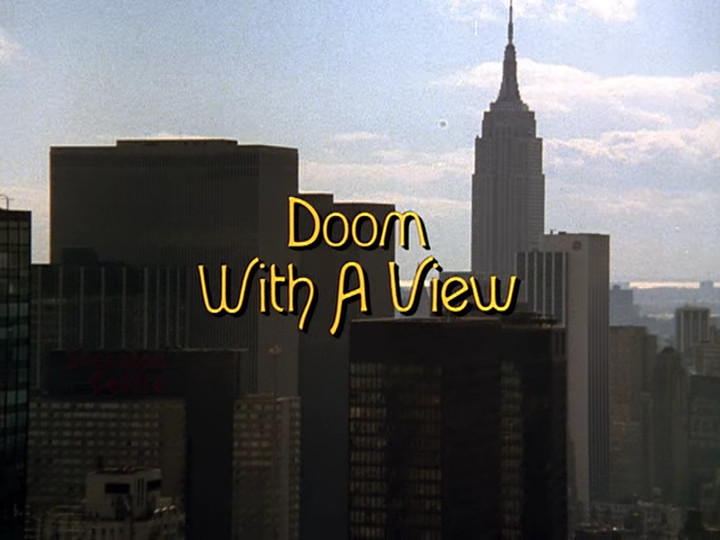
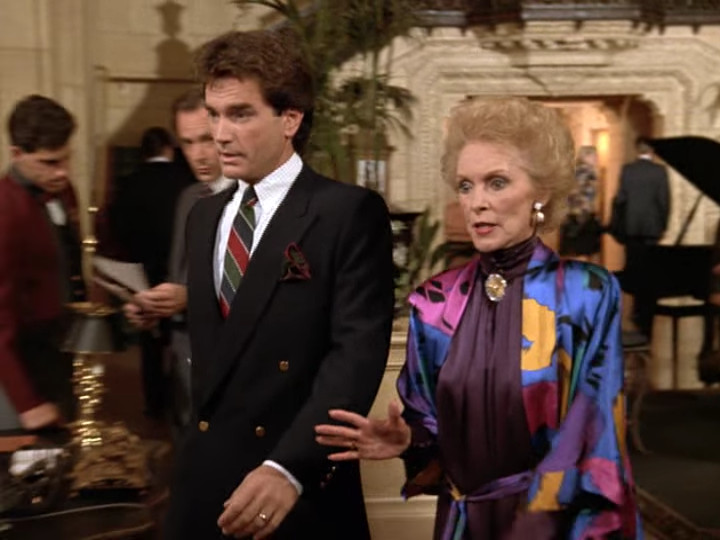


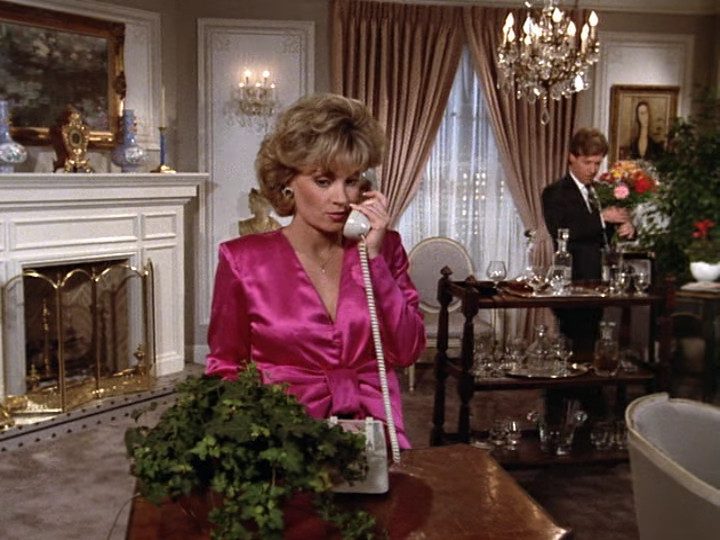

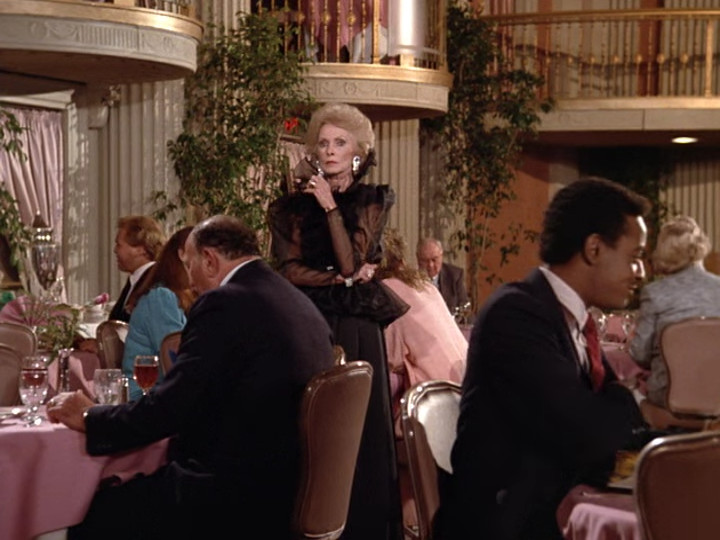
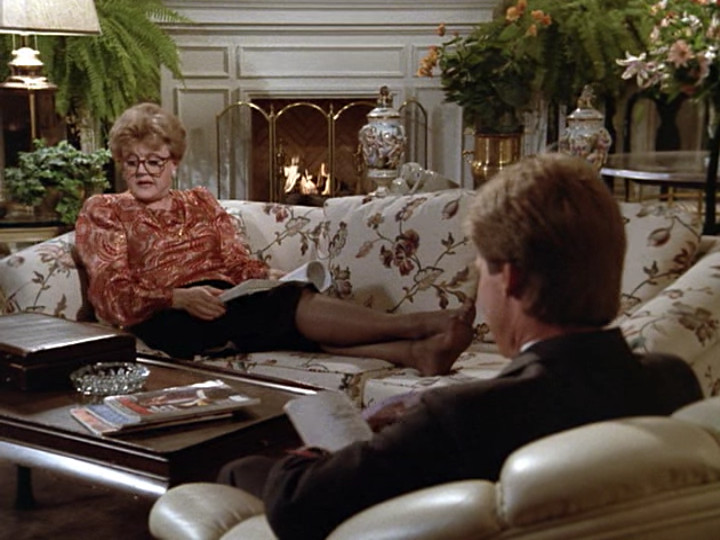


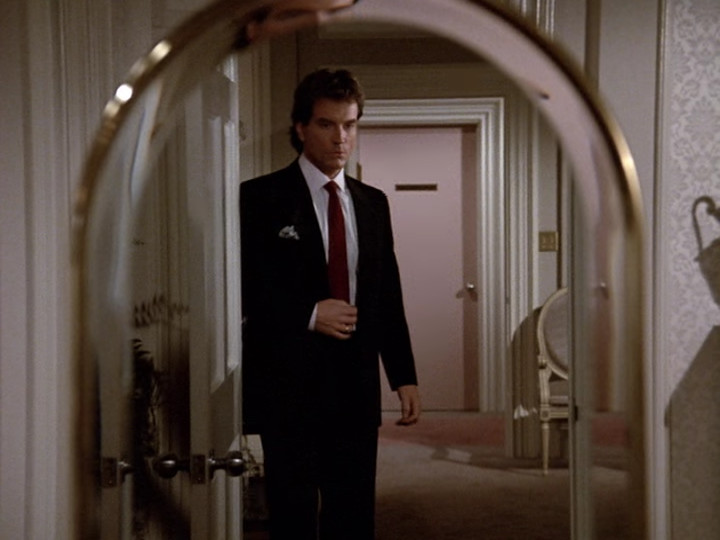
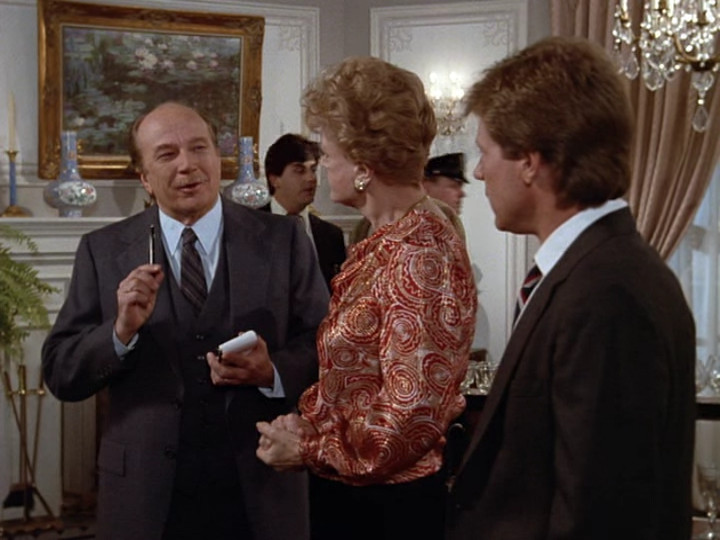


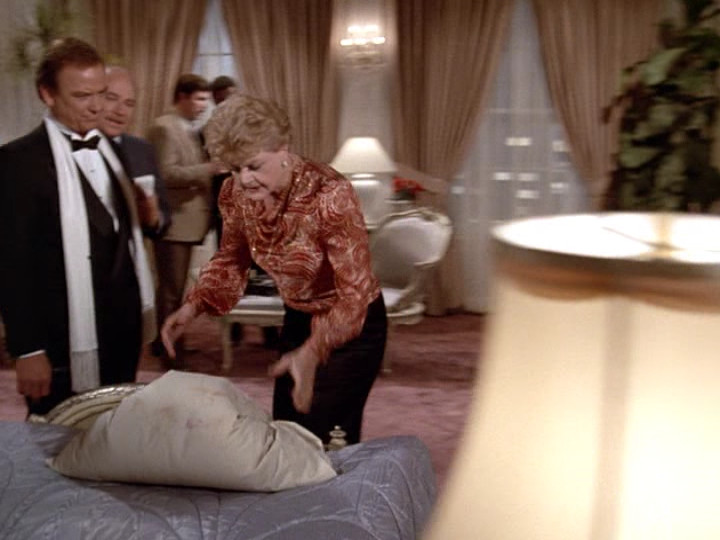


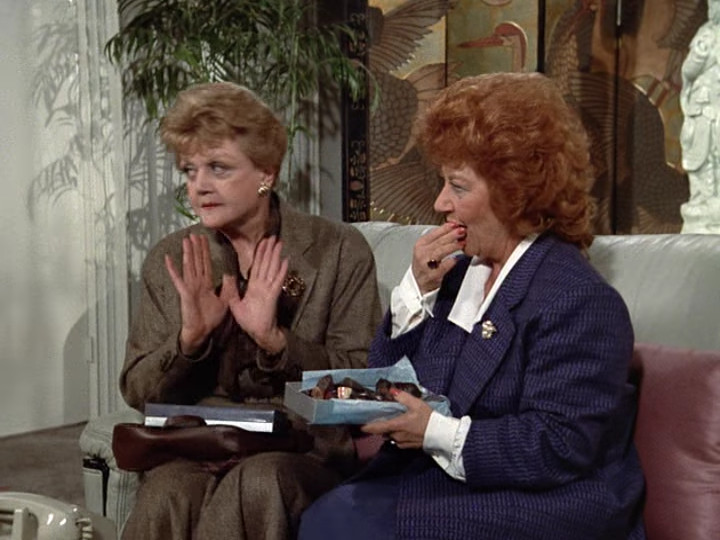
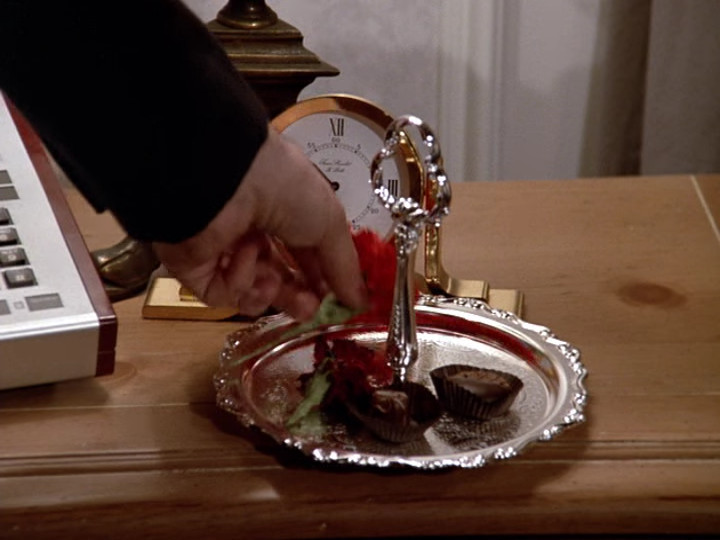


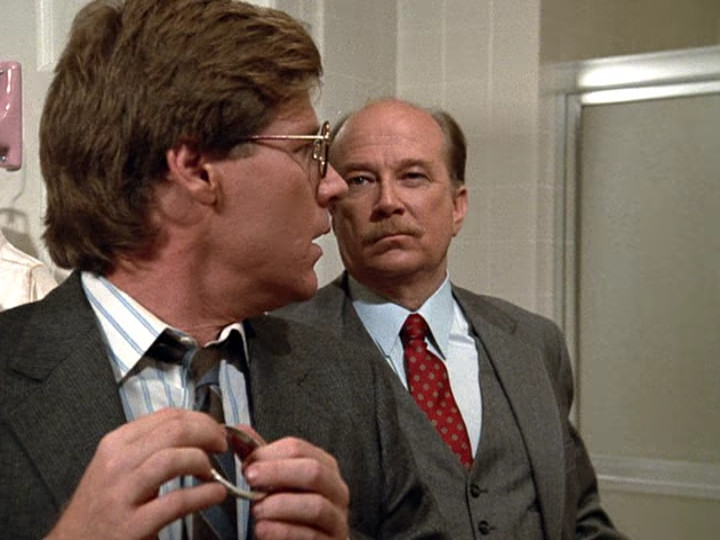


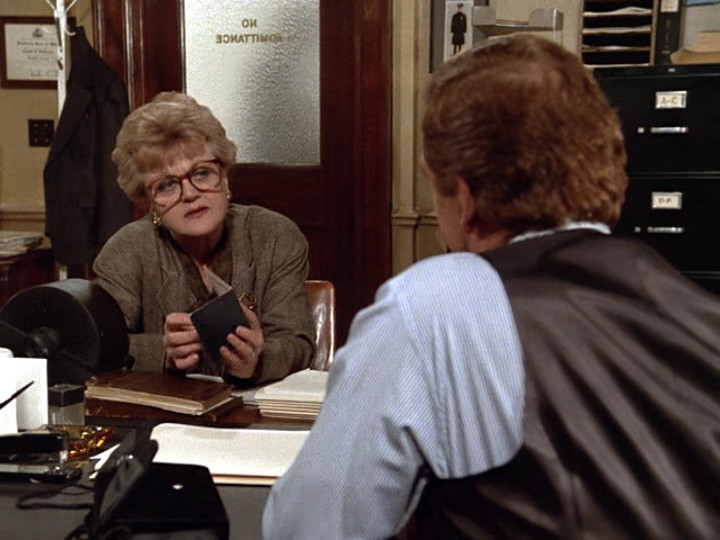
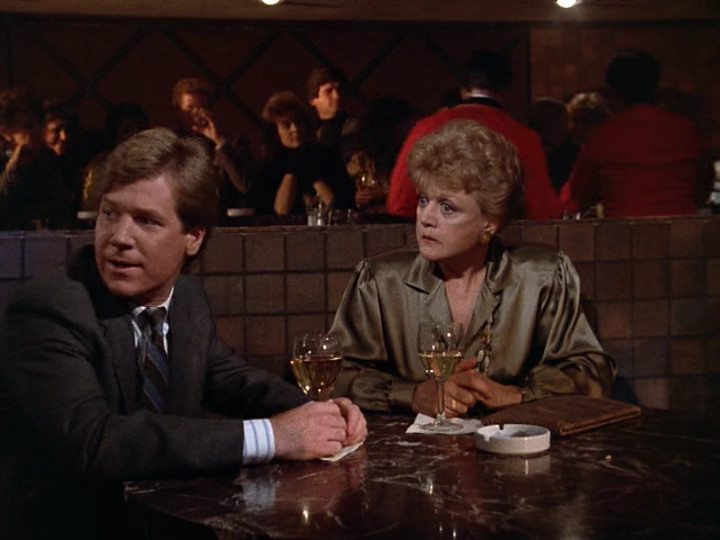


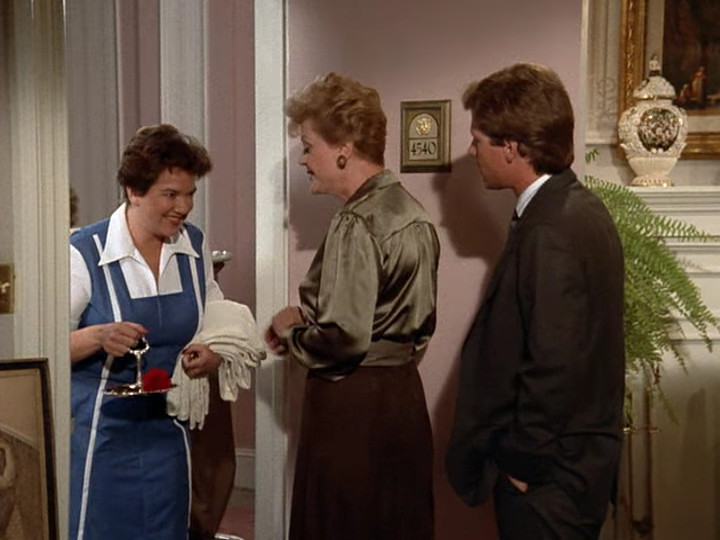




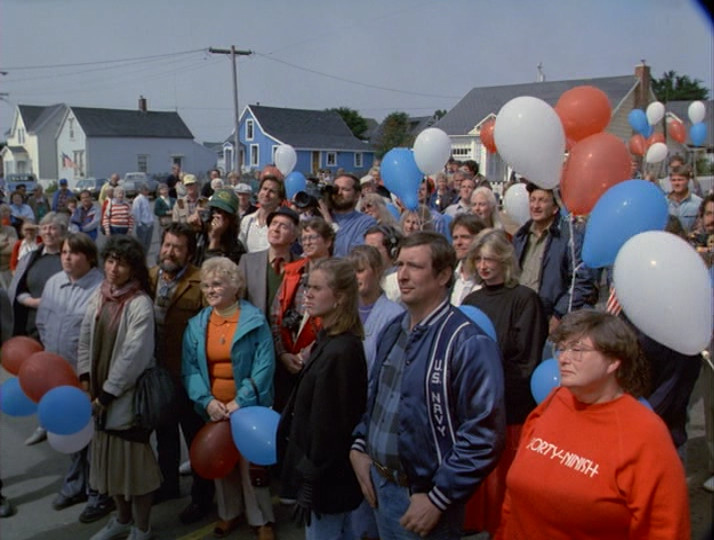


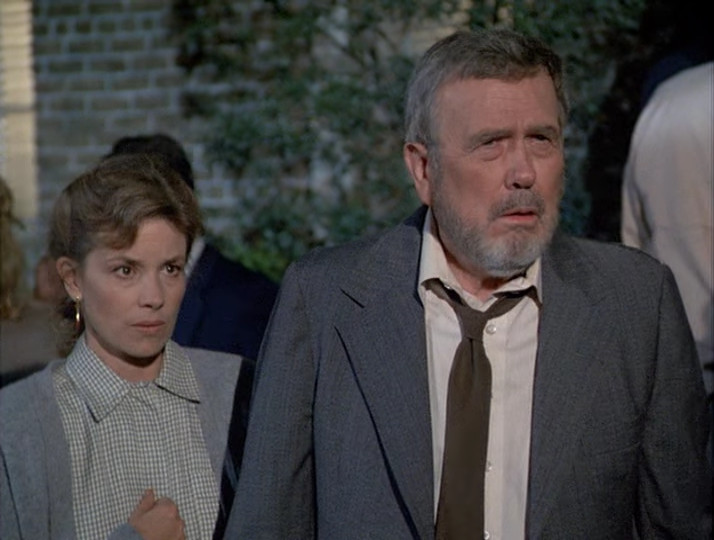


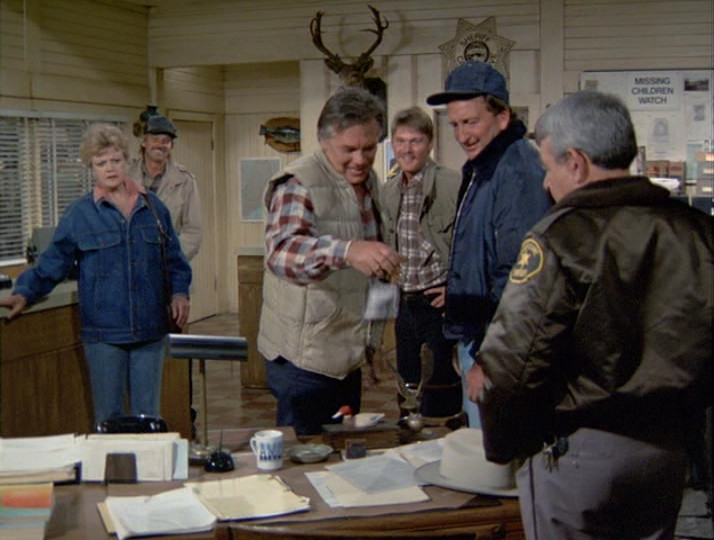

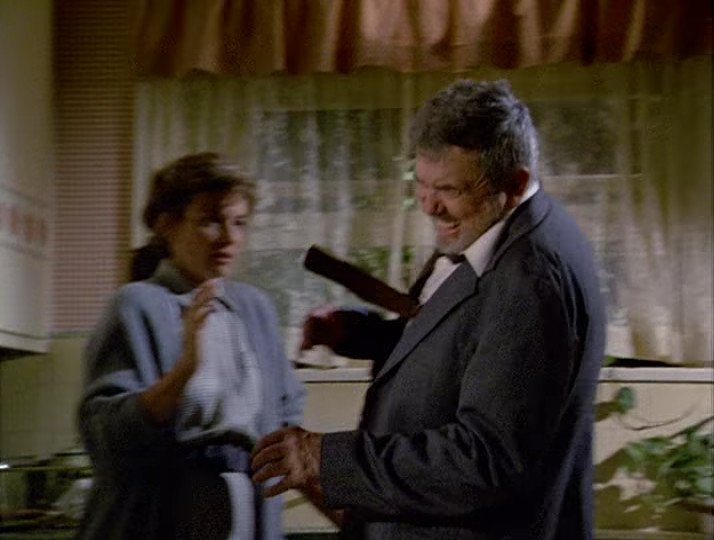
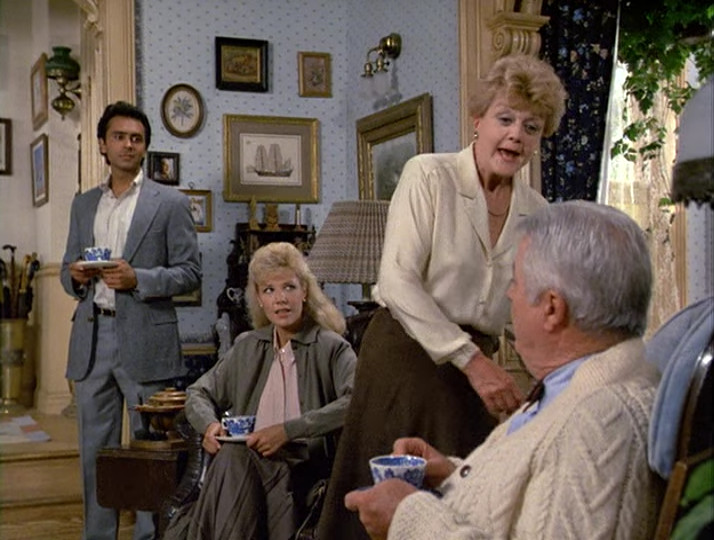


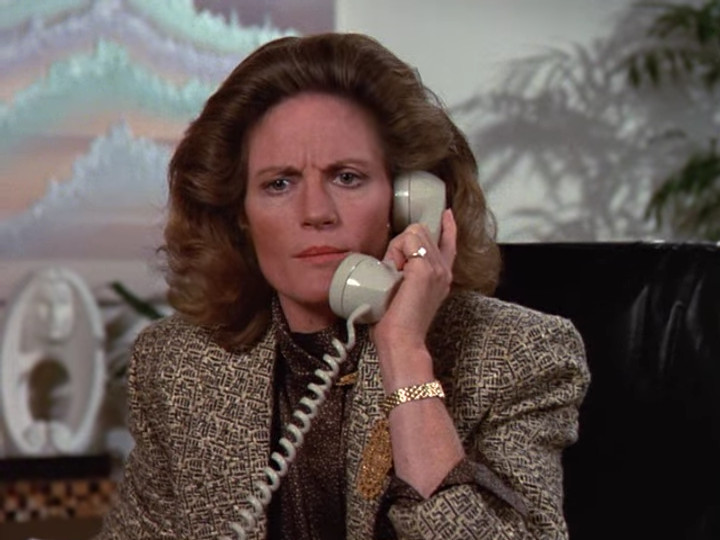

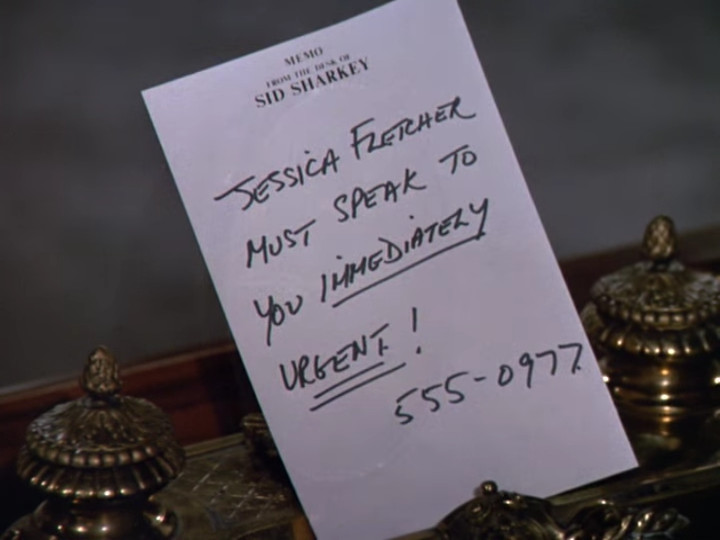
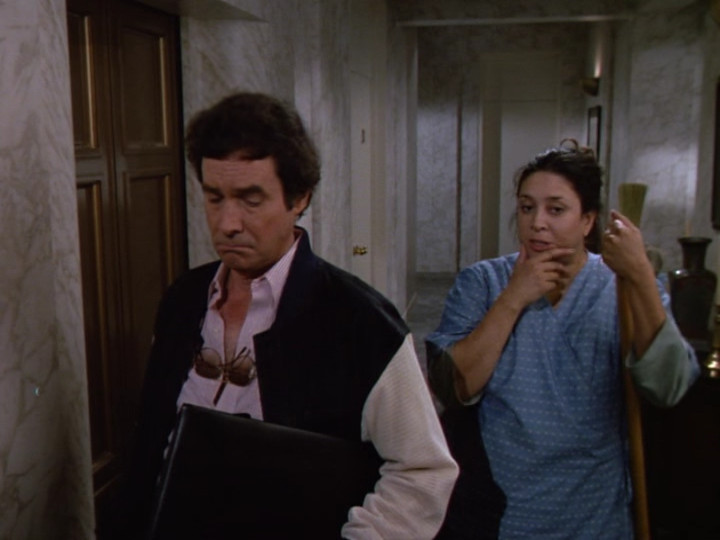



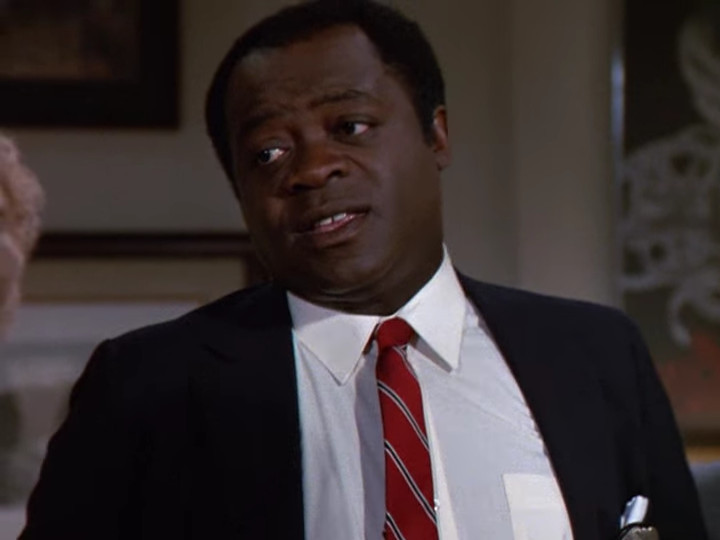
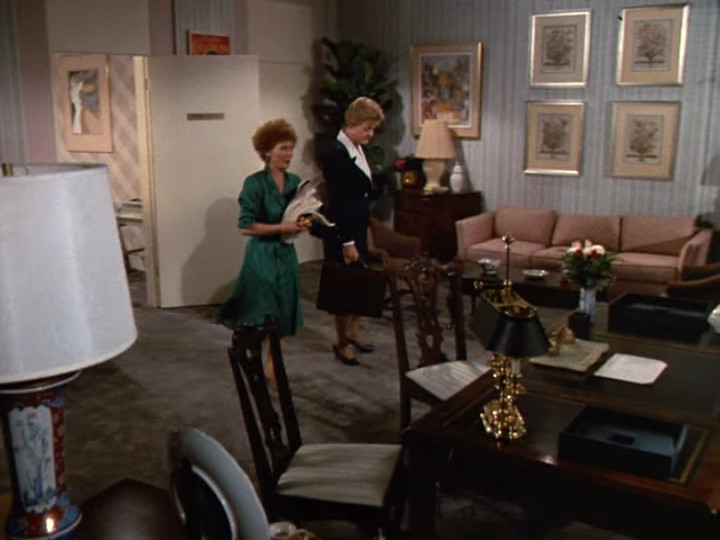


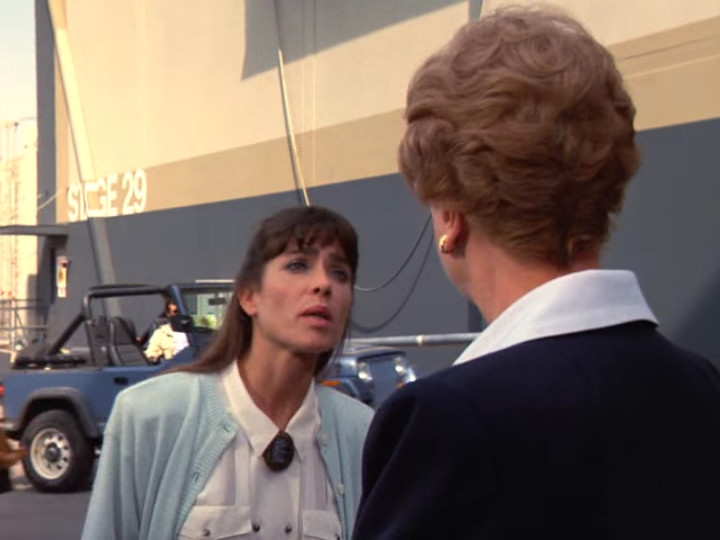
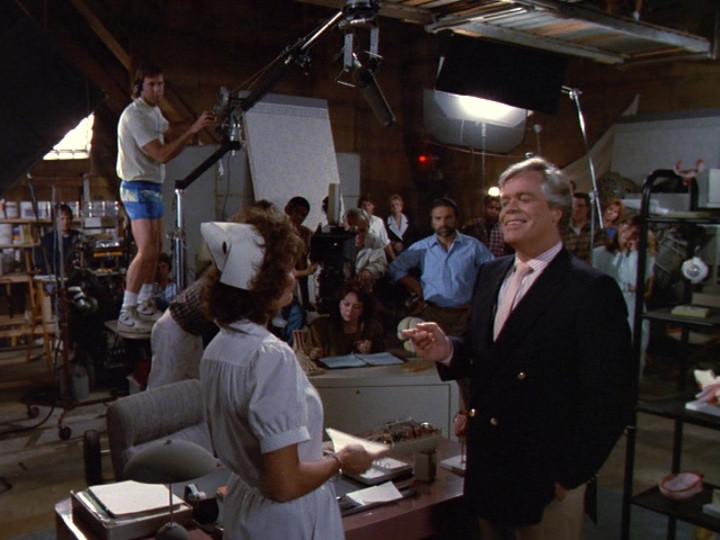


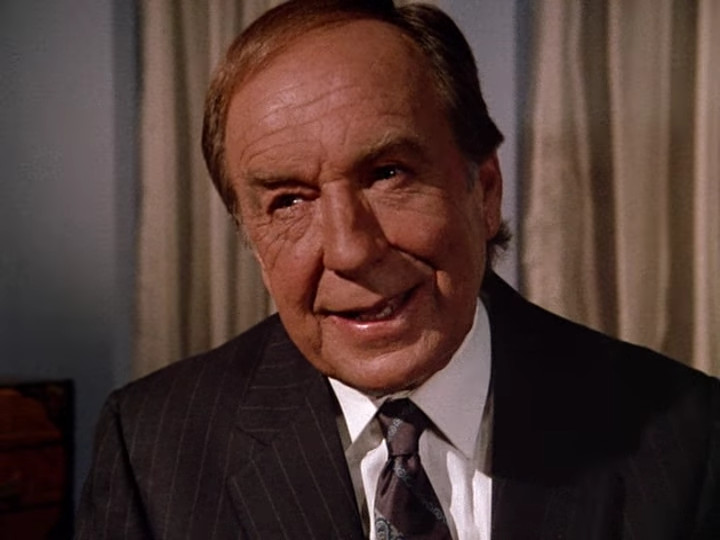

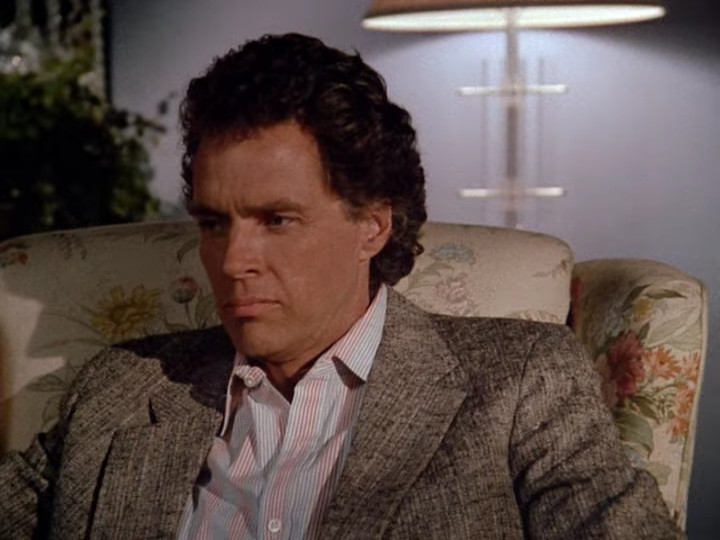


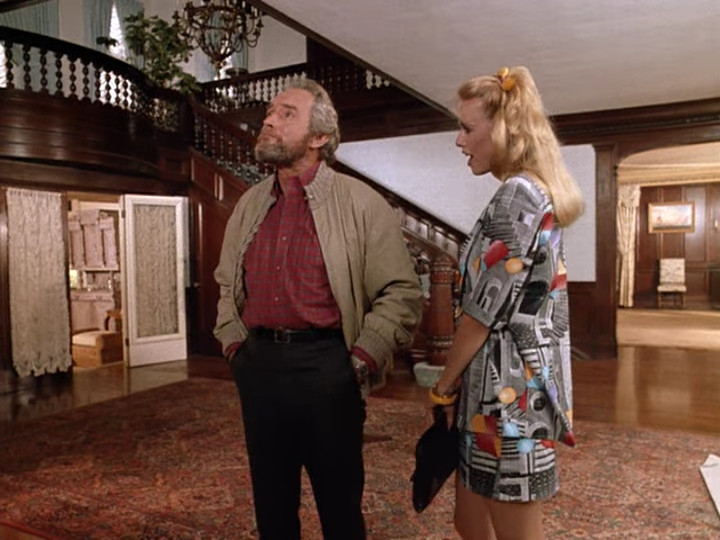

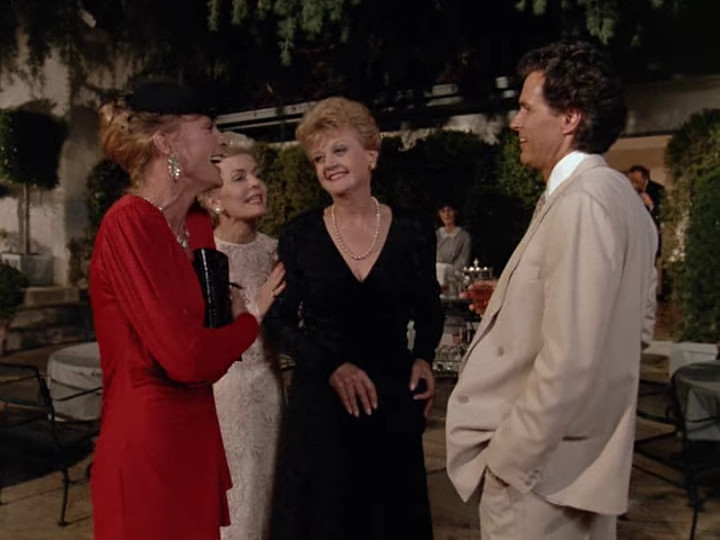

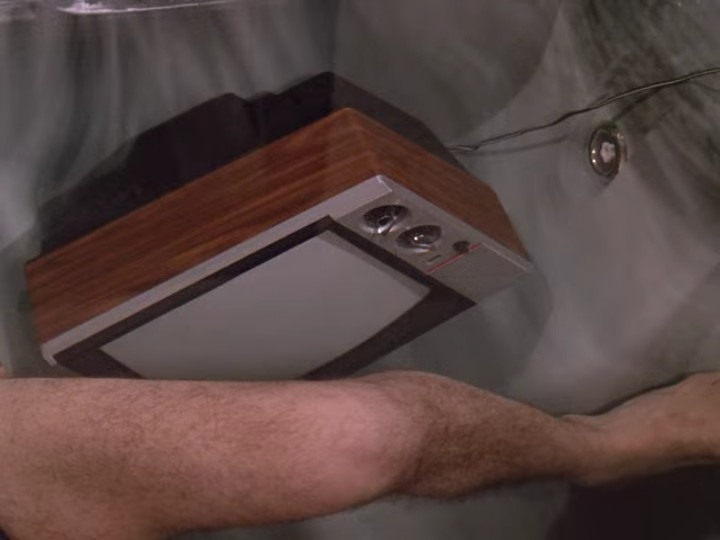

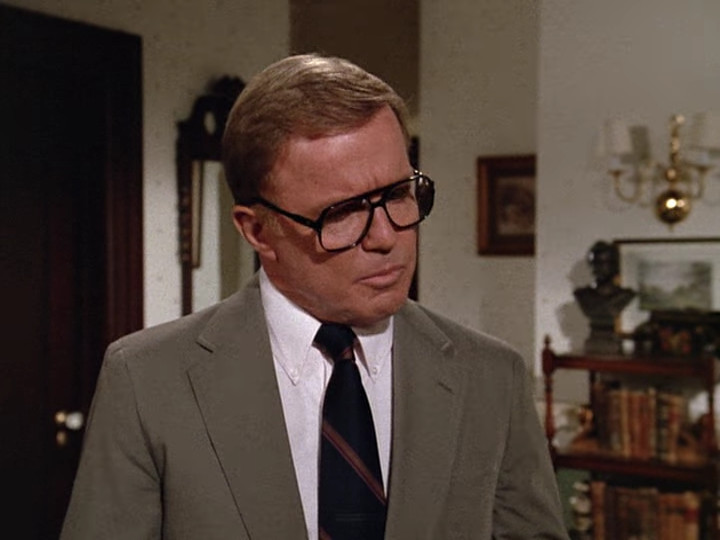
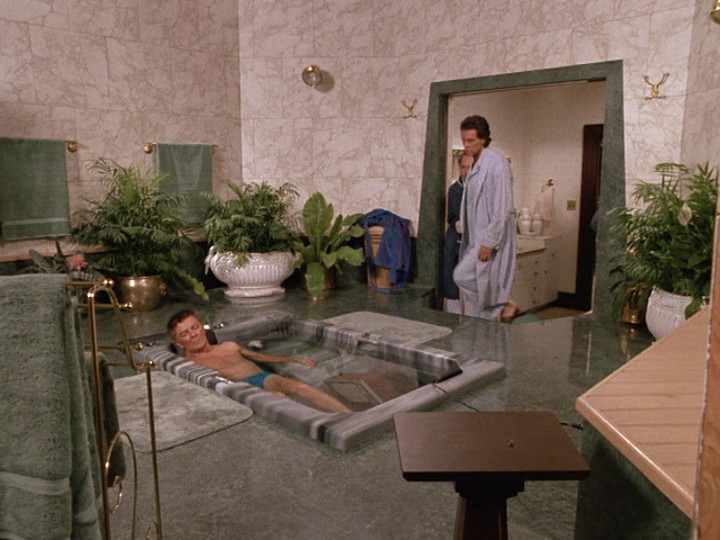


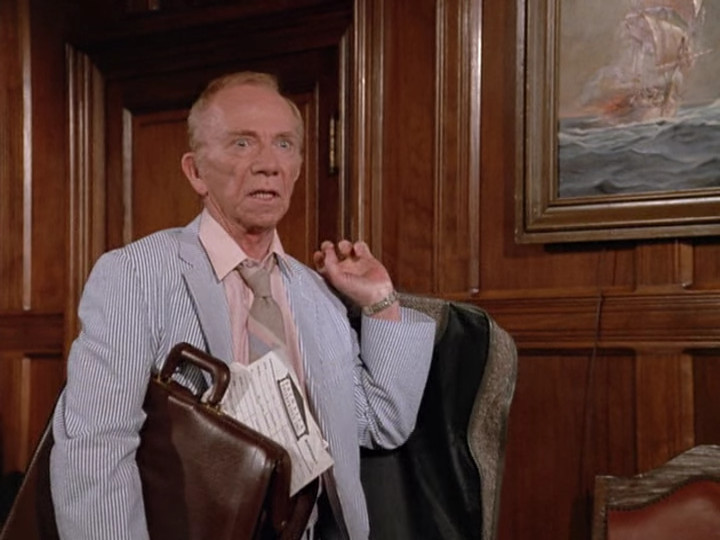

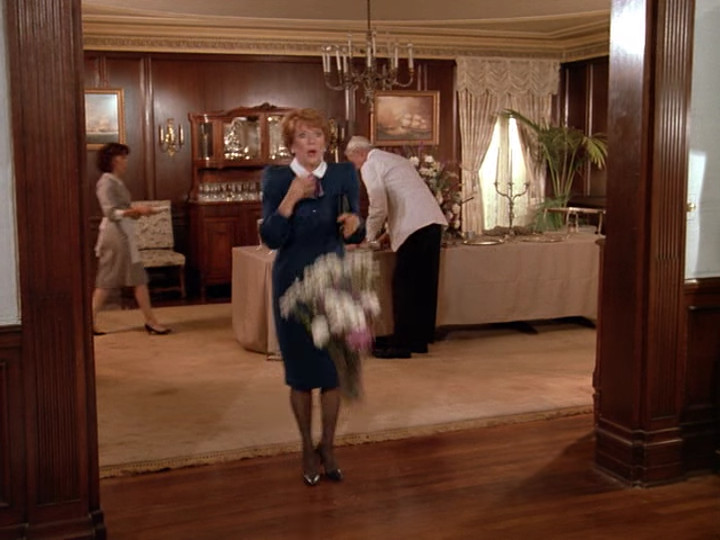
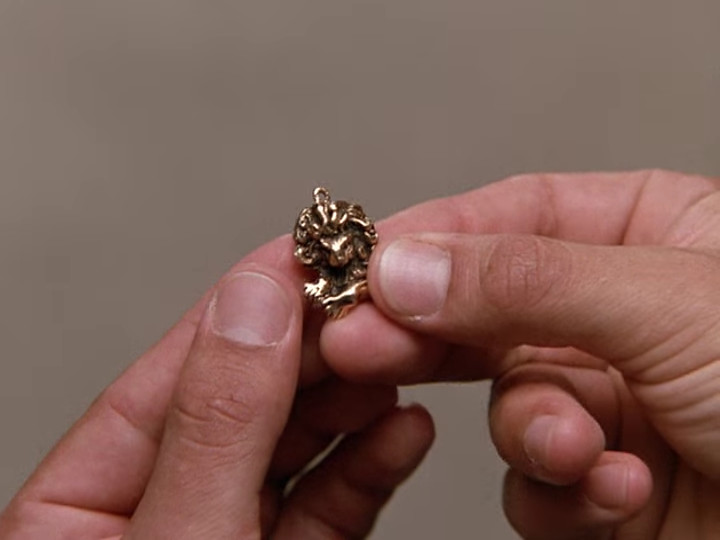

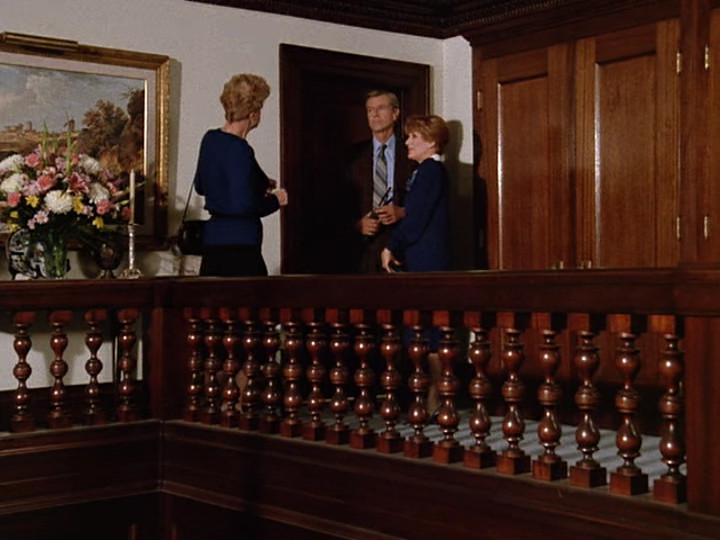


 Chris Lansdown
You must be logged in to post a comment.