Loyd, possibly better known as Lindybeige, put a video (several years ago) in which he very humorously critiques the archery in the movie Helen of Troy:
There’s actually a rather important historical / technical point which he left out, however.
One of the recurring jokes he makes is that the arrows limp out of the frame but then, “every one a coconut when it hits”, i.e. they often knock men back, off their feet. Now, you might suspect that I would point out that the same problem applies to bows and arrows as does to guns: recoil. That is, if the projectile was capable of knocking the man back when it hit, it would have enough recoil to knock the archer/rifleman back when it fired. But while that’s true, that’s not the interesting thing Loyd didn’t remark upon.
What was left out is that arrows kill in an entirely different way than guns do. There’s a hint in this difference when you look at the shape: bullets are round and arrows are sharp. So sharp, in fact, that you could shave with them. Bullets kill (mostly) by the simple transfer of kinetic energy damaging internal organs. The more kinetic energy, the more deadly. This is also why you want a bullet to mushroom and become as flat as possible when it hits—if it leaves the body all of the kinetic energy it still has is wasted.
(Incidentally, this is why (Geneva Convention) militaries use full metal jacket bullets. The full metal jacket keeps the bullet from deforming which makes it far more likely to leave the body and only wound the target. A wounded man is still out of combat and it’s better for both sides if fewer people die. There’s also the theory that a dead man will be left where he falls but a wounded man will cause some of his comrades to stop fighting and help him, thus taking even more people away from shooting at your side.)
Arrows, by contrast, kill by slicing arteries and veins which causes the target to rapidly bleed to death. Since the further an arrow goes into a body the more blood vessels it can sever, the goal with an arrow is complete penetration. Once there is enough kinetic energy in the arrow for it to penetrate all the way to the other side of the body and out again additional kinetic energy serves no great purpose. In fact, it can actually cause problems if it results in the arrow bending too much when it hits. (The head slows down faster than the tail, which causes bending. This is why hunters do better with their arrows having the weight disproportionately front-of-center. In tests, an FOC of 30% significantly improves penetration.)
So, back to the movie, the arrows have enough kinetic energy to knock a man off his feet but then only penetrate an inch or two. Which means that the Trojans must have been shooting the dullest arrows ever made by man or beast.
A lot of people love gmail because it filters out all of their spam. “I never see any spam!” they say, proudly. But the problem is that gmail achieves this by being way too aggressive about classifying things as spam, and the result is that it loses a lot of legitimate emails, too.
So the user is left with one of three options:
Have things go wrong when they miss important emails.
Check their spam folder once a day or so to make sure they don’t miss any important email.
Don’t use email for anything important.
Option #1 is terrible and option #3 is just another way of saying that gmail is a bad email client. But the funny thing about option #2 is that the user is actually reading more spam than I am with my spam filter configuration that allows all of the important email through and only a few spams. I never have to check my spam folder, which means seeing 0-4 spams a day in my regular inbox is reading through way less spam than if I had to check my spam folder.
This relates to the concept in engineering of “which way do you want to fail?” It’s almost never the case that one can do something perfectly—getting absolutely every classification of email right. And every system is going to have a bias—would you rather when it fails your spam filter tends to mis-classify legit email as spam or spam as legit email?
The problem with focusing too much on getting the system perfect is that one can too easily forget that it won’t be perfect anyway, and then one won’t think about how it will fail when it does. A better engineered system puts some thought into figuring out the systemic biases and tweaking them to do the least harm, while also trying to get as close to perfect as is practical without changing the general target of how failure will happen.
Because failing in the wrong direction can be worse than useless. It can be actively harmful.
(The same principle applies to social engineering, by the way.)
The classical theistic tradition makes it well known that any knowledge of God’s essence is impossible, and even advances several argument as to why this is the case. However, if this is correct, I can’t really understand how the arguments from natural theology can give us any knowledge of his existence: isn’t the point of those arguments to show that God just is his existence itself, that is, that in God essence and existence are one and the same? Wouldn’t this mean that knowledge of his existence is also knowledge of his essence? And the latter being impossible, aren’t we left with a contradiction?
There are two answers to this. They depend on how one answers the question of whether we can predicate anything of God by analogy or whether we can only negatively predicate things of God.
I fall into the former camp and hold that one can predicate things of God by analogy. Thus when we say that God exists, we mean something which is analogous to our own existence but not something which is known in its entirety to us. To make a poor analogy but one that points in the right direction, when we say that a flower is white, we are describing an aspect of its color but we’re not saying anything about what it looks like in spectra that we can’t see. (It is the case that most white flowers look different in the UV spectrum which some insects can see.)
To say what God is, completely, is beyond our ability. But it is not accurate to say that we can’t know anything about God.
Part of why I fall into this camp is that it doesn’t make sense for creation to not even be like its creator; if we do not reflect any of God, then from where do we draw our qualities?
However, it is possible to go the other way and to say that we can only negatively predicate things of God. (These are not, in general, the people who do natural philosophy.) In which case, you get this result:
(“It is wrong to say that God exists. It is wrong to say that God does not exist. But it is more wrong to say that God does not exist. –Saint Dionysius the Areopagite)
A friend of mine (rather incautiously, given how little provocation it takes to get me to write a blog post) said,
[T]here’s a part in the trailer for this movie where Peterson says “Falsehoods have consequences. That’s what makes them false.” If you discern any meaning in that statement, please tell me.
I’m now going to explain what Peterson means. (Or what I think he means—I haven’t been given the gift of reading souls.) First, I think that we can rephrase this less poetically but more clearly as:
[Falsehoods have negative consequences. That’s intrinsic to them being false.]
To break this down, we need to start with what a “falsehood” is. It’s not merely something that’s not true, but it’s an idea of something that’s not true. An idea points to something. What a false idea points to is something that’s simply not there. That is, the falsity is a relationship between the idea and reality.
Take a really simple example from classic bugs bunny cartoons: someone walks off a cliff but doesn’t look down so he keeps walking as if the ground is there. He only falls when he notices. This is funny because it’s the opposite of how reality works—in real life if you believe the cliff is a flat plain and walk off the cliff, you fall immediately. Believing the cliff to be a prairie is the falsity. Falling when you try to stand on what’s not there is the consequence.
What Peterson is trying to point out is that this relationship is inherent because truth and falsity are not properties of the idea but of the relationship of the idea to reality. We live in such a pluralistic culture and want so badly to get along with each other that we try to pretend that truth and falsity are private things—that they only apply to the idea itself. If we can believe this, we can then not care about what awful beliefs someone else has because we can pretend it doesn’t really matter.
But ideas do matter—precisely because they either correspond to reality or don’t. If you treat reality as if it’s something else, very bad things will happen because what you’re actually doing is contrary to reality. That’s the primary meaning.
However, this quote also works the other way—you can use consequences as a test for truth. This is, basically, the entire approach of science. It’s got some major problems if you take it too seriously, but if it’s only one tool in your tool belt, pragmatic truth can be a useful tool. To continue our original analogy—suppose instead of thinking that the cliff is a cliff you think it’s a canyon but the opposite side of the canyon is too far away to see. There’s a pragmatic sense in which this isn’t false—to put it in a more scientific way, your model corresponds to reality as far as you are able to measure.
A more practical example of this would be the “white lie”. Suppose your wife asks you if she looks good in a particular dress and suppose further that it’s really one of the least flattering dresses she owns. But suppose further that the question at hand—whether she knows it or not—is really, “should I be embarrassed to show my face while I wear this dress—will I be risking social ostracism by wearing it?”
If you give the answer, “yes, it looks good on you”, what is the difference between that and the strictly more accurate, “It doesn’t look very good on you but is still well within the range in which no one’s opinion of you is going to change because they love you, they will still think you put effort into your appearance for their sake, and realistically you would need to be wearing a rotting corpse or something equally extreme to change our friends’ opinion of you and hence your social standing, so by all means wear it if your favorite dress is in the wash and this is way more comfortable than the other dress which looks better on you and is clean”?
Assuming for the sake of the example the obviously unrealistic idea that your wife could accept such a robot-like answer at face value, neither of them has any sort of negative consequence to living—in both cases your wife will wear the dress, feel that she didn’t quite make the maximal effort she could have, and not worry more than she would regardless of what she was wearing. So in a practical sense, neither of these statements is false—that is, neither of them corresponds to reality so badly that you’re going to walk off a metaphorical cliff by acting according to it.
When you put these two things together, you have the meaning of the original quote:
Falsehoods have consequences. That’s what makes them false.
The following is the script to my video, A Few Gumballs Short of a Picnic.
I got an email from an (I presume young) man by the name of Ken who said:
What you say about the burden of proof is very interesting to me, especially about engaging with [the] question and not just saying “you have to prove it to me; I don’t have any burden of proof so get busy proving your idea to me”: I think part of why so many atheists, and I am an atheist at this time say the burden of proof is on the one making a positive claim i.e. god exists or god doesn’t exist is because so many Christians respond to questions of how do you know god exists with ‘”well, can you prove god doesn’t exist?” “I’m going to continue to believe god exists until someone proves to me he/she/it doesn’t” Have you heard of Matt Dillahunty? He said something about burden of proof I find very compelling: He talked about the game of guessing how many [whole gumballs] are in a clear glass jar. Matt said that before you even begin to try to figure out the answer there is one thing you absolutely know and that is that the number is either and odd or even. If someone asserts that the number is even and I say I don’t believe that, that is not the same as saying I think the number is odd. The default position before you find out the answer is “I don’t know yet’. He said a god either exists or it doesn’t exist. For clarity we need to keep god exists and “god doesn’t exist” separate and examine them separately. if I say you have failed to meet your burden of proof that your god exists I am not saying your god doesn’t exist but that you have not established that it exists. It seems to me that if the burden of proof is on atheists to prove YHVH does not exist then Christians have the burden to prove that the thousands of other gods do not exist and if you set about trying to prove all those gods/goddesses don’t exist those believers will use the same defenses Christians use to defend their god claim [and will say] you failed to prove their deity doesn’t exist. I am wondering what you would say I am missing here?
This video will answer this question.
I’d like to preface my video by saying that the Christians who respond to questions about how one can know the faith is true with “how can you know it’s false” are simply not the people to talk to. Most people—regardless of belief system or topic—are simple people and simple people are not good at explaining things. This is true whether you’re talking about religion, engineering, science, art, swing dance, wine making, or anything else. Only some people are good at explaining things and these are the people you should seek out when you want an explanation. But, unlike in engineering, science, art, swing dance, wine making, or just about anything else, Christians who are good at teaching will happily teach you about the truth of Christianity for free. There are tons of free apologetical materials online and plenty of excellent books available at basically the cost of printing—and plenty of Christians will happily buy books for people who are sincerely seeking the truth.
With that out of the way, there’s one other thing which will help for us to establish before we proceed: every positive claim is convertible to a negative claim, and vice versa. This is because a double-negative is equivalent to a positive. You can say that a man is dead or not not-dead, and they mean the same thing. If you want to make it sound better, just give not-dead a name, like “alive”. This will come up in a bit.
So the first thing to say about Matt Dillahunty’s jar of gumballs is that his explicit conclusion is entirely true. To not come to a conclusion and to conclude a negative are not the same thing. To not be convinced that somebody is right and to be convinced that they are wrong are not the same thing. To not accept the truth of a proposition and to accept the truth of its negation is not the same thing.
Here’s the thing: no one ever thought that they were the same thing. What he is saying is true, but it is also trivial and irrelevant to the subject of whether God exists as it is discussed by human beings. And, to be clear, by God I mean the uncreated creator of all that is; the unchanging source of all change, the necessary source of all contingency, the ground of all being, the reason why there is something rather than nothing. I don’t care about big guys with hammers or worshipping the sun. If Thor exists, at most he is a more powerful creature than I am but still just a creature; this is utterly unlike the source of every moment of my—and if he exists, Thor’s—existence.
Matt Dillahunty’s example is about whether the number of gumballs in a jar is odd or even. Now, within the example, the number of gumballs has no practical consequence, and whether the number is even or odd has, if possible, even less significance. It doesn’t matter in the slightest to anyone. This is not true of whether God exists, however. There is nothing that matters more, and nothing of greater practical consequence, than whether God exists. It affects every aspect of life in every moment of life. And everything you do is going to be consistent either with God existing and having created the universe on purpose and with meaning, and therefore with a nature out of which flows a particular morality, or it won’t be. I talked about this at length in my video Atheist Morality, but the short short version is that morality either flows out of human nature, which can only have been given to us by a rational creator, or what you call morality is just a name for people doing whatever they want—which needs no name. The short short short version is that you can’t know whether you’re using or misusing something until you know what it’s for. In Dillahunty’s made-up example, you can ignore the question and the question goes away. But real life doesn’t go away when you stop believing in it.
In a moment I’m going to present a much better analogy for the situation human beings find ourselves in, but first, I want to point out that you can see this flaw even in Dillahunty’s example just by looking at where he stops: he ends the example before he writes his name and contact info and a number on a piece of paper and puts it in the submission box. The jar of gumballs is part of a contest (if you look up the video where he first presents this analogy, it’s explicitly part of it). And yet in the analogy he never enters the contest. He apparently just loses by not trying. Of course he couldn’t enter the contest in his analogy because if he did, the number he wrote down, being a specific number, would have to be odd or even. The only way he can remain uncommitted is by not playing the game for which the jar of gumballs was set out. Let’s be really clear here: this is a strategy to guarantee that you lose. This is, literally, a loser’s strategy.
But even if you include the parts which were left out of his analogy, a jar of gumballs just isn’t much like real life. So let’s take a different example which has the same point that the gumball example does but like real life involves skill and effort, and the results actually matter:
Suppose you are the umpire in a baseball game. It’s the bottom of the ninth inning in the last game of the world series, there are two outs, and the score is tied. A ground ball is hit and the runner on third base dashes madly toward home plate. The short stop initially fumbles the ball but the third baseman ran behind him and picks up the ball, then throws it home. The catcher catches the ball and tags the runner as he slides into home plate.
Now, one thing you know for sure is that the runner is either out or safe. The runner says to you that he’s safe, but doesn’t offer enough evidence to convince you. The catcher says that the runner is out, but also doesn’t offer enough evidence to convince you. If you simply announce that you don’t have enough evidence to make a call and so you’re going home now, this is definitely very different from calling the runner safe because you believe he’s safe or calling the runner out because you believe he’s out. For one thing, you’re going to be fired from your job as umpire and may well be hanged from the nearest lamp post by outraged fans before you make it home.
And now we come to the big problem with the umpire who refuses to come to a conclusion if the players don’t prove their case to his satisfaction. Why is he being so damn lazy? As the umpire, it’s his job to know whether the runner is safe or out. That’s the whole reason he’s on the field at all. It’s not the players’ jobs to prove they succeeded in their goals, it’s his job to pay attention to the game closely enough to know who succeeded and who failed. If he spends the entire baseball game in a closet playing video games and then throws up his hands when a call is necessary, he’s not nobly committed to intellectual honesty, he’s just neglecting his duty.
But bear in mind that this example does prove, just as much as the marble example, that there is a difference between refusing to commit to a side and committing to the negative side. Does anyone wonder why Matt Dillahunty picked his jar-of-gummballs example and not this umpire-in-a-baseball-game example?
But throwing up one’s hands and going home—in the real world this is the equivalent of freezing motionless or perhaps committing suicide—is not what people actually do. Atheists like Matt Dillahunty define some course of action as the default—they never, of course, explain why it’s the default, since they can’t, since there’s no such thing as a default when it comes to morality—and then do that if the contrary isn’t proven to them. So let’s look at that.
Suppose you decide to define “safe” as a positive claim and “out” as the negative claim then—without believing that the runner is actually out—call him “out” since the runner didn’t satisfactorily prove his positive claim. So what? You are still calling him out. That you don’t really believe him out changes exactly nothing about what you’re doing. The game will go into overtime just as much as if you actually believed your call was correct.
Suppose that you did the contrary and defined “out” as the positive claim and “safe” as the negative claim then—without believing that the runner is actually safe—call him “safe” since the catcher hasn’t satisfactorily proven his positive claim. Again, so what? The runner is still just as safe, the run counts just as much, and the team has won the game to exactly the same degree as if you actually believed that your call was correct.
Incidentally, I’ve heard it claimed that there is a rule in baseball that “the tie goes to the runner”. Several things need to be said about this. First, if you look this up, it refers not to uncertainty on the umpire’s part but to the case when the ball and the batter-turned-runner reach first base at the exact same instant such that neither arrives ahead of the other. Second, this is not a rule in baseball but rather an interpretation of the rules—which not all major league umpires subscribe to. And third, let’s ignore those first two and suppose this actually was a rule for there being a default to resolve epistemic uncertainty. Find me a case in real life where the following happened:
In a situation like above, bottom of the ninth, etc. where the umpire wasn’t paying attention and doesn’t know what happened at home plate, so he follows the default and calls the runner safe. The team manager from the team who has now lost comes up to the umpire, screaming at him that he must be incompetent, stupid, blind and on drugs. The umpire calmly tells him, “Sir, I wasn’t actually looking when the play happened and so I went with the default call of safe.”
The team manager, clearly taken aback, stammers and says, “Oh man, I’m so sorry for what I said. I thought that you actually thought that the runner was safe. Oh man. I didn’t realize that you had no idea what happened and just went with a default call. I take back everything I said about you being incompetent. Please accept my most sincere apologies for insulting your umpiring. You are a credit to your profession.”
Find me that. Preferably in video. But I’ll accept newspaper reports.
If an umpire makes a bad call because he was going with some default because he didn’t know what happened, this is not better than making a bad call because he was mistaken. It’s still a bad call, and it’s still his fault because he didn’t take the trouble to make a good call.
If you cheat on your wife with her sister but “don’t really mean it,” you’ve still cheated on your wife. If you cheat on your wife with her sister and father a bastard, that child exists just as much and has the same needs whether or not you actually believe that you should have cheated. This whole project of trying to do things without having them count is just pure cowardice. There’s no honor in doing things without thinking that you should do them and there’s even less in—if you don’t know what you should be doing—not spending every waking moment of your life trying to find out what you should be doing.
The Matt Dillahunties of the world are busy trying to say that if I shoot you in the head because I believe you are a zombie, I’m crazy, but if I shoot you in the head because I haven’t been convinced that you’re not a zombie (that is, that you’re alive), I’m the pinnacle of rationality. (And since this is the internet, don’t take this analogy literally. Shooting someone in the head symbolizes, say, fornication, and “because they’re a zombie” symbolizes sex being purely about pleasure.)
Now, to come to the crux of the matter: the only reason anyone likes this irrelevant gumball example is that it sneaks in the assumption that it doesn’t matter whether God exists. Just like a stage magician getting you to focus on the hand that’s pretending to have the coin when the coin is actually in the hand that you’re not looking at, this example is purportedly about whether or not indecision is identical to disbelief, but in reality is about whether disbelief matters.
I talked about this before, but to go over it again because it’s so important: there is no truth more important to human life than whether or not God exists. I’ve also covered the practical importance of the question of whether God exists in my video Atheism Changes Everything, but just consider for a moment that if a rational, loving God created the world, we have a nature out of which morality flows so morality is not merely the arbitrary question of what people happen to approve of. We have a soul which can live past the death of the body and live with the consequences of whether we acted in accordance with our nature or against it, that is, it is possible we will go to some sort of heaven or some sort of hell, with justice actually being enforced in the end. There is no such thing as a hidden deed; it is not possible to get away with something merely because no other human beings know about it. Having a common creator all human beings are a sort of sibling; we can have duties to strangers and even to enemies. The good things in life like beauty can be true and not merely meaningless preferences.
Someone who thinks that whether these things are true is like whether the number of gumballs in a jar is odd or even has to have replaced his brains with rat droppings. Then taken the rat droppings out and burned them. Then used a hose to suck even the air out of the empty cavity in his skull so that in place of his brain there is now only vacuum.
The idea that it doesn’t really matter whether God exists is not even within spitting distance of a reasonable position. It’s not within sight of a reasonable position. It’s not on the same planet as a reasonable position.
And yet, you see this from atheists all the time. They say, “I don’t believe in God and I’m able to go on living without any problems.” Perhaps, but how do they live their life?
Just take a look at the lives of the atheists who make these arguments about how their life is unaffected by disbelief. It’s not a pleasant thing to have to point out, but when they say this, then take a look. Do they refrain from excessive alcohol, recreational drugs, pornography, fornication, adultery, gossiping, backstabbing, and so forth? Do they further spend their own time, energy, and money being generous to people who can’t repay them? Do they constantly strive for greater self-control, that all they do may be upright and good? Is their life marked by a sense of gratitude for all of the good things they’ve received, including existence, intelligence, and the opportunity to see beauty and help others?
Now, Christians fall short of these things all the time. It is a terrible shame, but it is true, that not all Christians are saints. But are any atheists saints? Just take a look at them. Is there a single atheist anywhere who hasn’t noticed that the world being a meaningless accident that only has the meaning they give it (that moment) has the implication that whatever they find hard isn’t worth doing and whatever temptation they want to give into is justified? Especially over time? Atheism is, I fear, a degenerative disease.
So take a look at the older atheists. How many of them have any sort of remarkable virtue or self-control? How many ascetics practicing self-denial do you find? How many of them have dedicated their life to helping people who can’t contribute to their patreon account? How many of them have forsworn sex so that they may dedicate all of their time to service? Heck, how many of them spend even one hour a week set aside for appreciating that existence exists and being grateful for it? Most of the atheists I know talk about how going to church once a week is such an unbearable burden that you would think they were talking about being woken up at 2am to spend 14 hours in a hot standing cell without food or water.
So yes, there is theoretically a difference between acting as if God does not exist because you believe that he does not exist versus because you merely assume that he does not exist. There is not, however, a practical difference between these two things. The difference doesn’t matter in the slightest.
Well, actually, that’s not quite true. Someone who believes he knows that God does not exist is justified in not spending time trying to find out whether God exists, since he already has an answer with which he is satisfied. Someone who claims to not know—and therefore to have no idea whether what he is doing is good, evil, or indifferent—had better be spending all of the time and effort he can spare from immediate necessity trying to find out the answer.
Consider a man holding a gun. If he knows that it is unloaded because he verified it himself (including checking the chamber), it is fine for him to wave the gun around or even to point it at someone and pull the trigger—since he knows he will certainly do no harm. A man who has no idea whether the gun is loaded is grossly irresponsible for doing the same thing and no amount of him saying that it has not been proven to him that the gun is loaded changes that he is being a bad man.
Men who exist in the world will act or not act in each moment they continue to exist. It is their first responsibility to find out what they should do and what they should refrain from doing. And there is nothing more important to answering that question than whether a rational God created the world and, if so, what purpose and nature he gave it.
Someone who tries to answer that question, even if he comes up with the wrong answer, is at least trying to be a decent human being. Someone who merely ignores the question isn’t even trying to be human.
Ironically, though perhaps it shouldn’t be surprising, it’s that latter group who seems to spend the most time boasting about how rational they are.
Until next time, may you hit everything you aim at.
I got an email from a young man named Ken who asked me about an analogy Matt Dillahunty presents about whether the number of gumballs in a jar is odd or even. I originally did an unscripted answer but a lot of people missed the point so I did a scripted video which should be a lot clearer. You can of course watch it in YouTube:
If you haven’t seen this video where Owen Stephens tells the story of the time he was running a Star Wars RPG playtest and an (probably World War II) British Lieutenant showed up to the table, it’s well worth the six minutes:
I really love that they blast through the material because the Lieutenant, being an officer, does what an officer does: he leads them. He lays out plans which make sense and in which the boys at the table can see their parts and so they do what people do in the presence of a competent leader: they follow. And together, they did what people cooperating do: a lot more than they can do on their own.
I think my favorite part is when he explains to the boys at the table what a commando raid is.
There’s a lot that could be said about how young men need older men and it is one of the great follies of our civilization that we separate the two groups so completely, but I think it’s sufficiently obvious in this video that it actually does go without saying.
Over on the Red Pill Religion channel Max Kolbe and I had a conversation which you might enjoy listening to. And it’s much briefer than the conversations held on my channel!
Some thoughts on the story of the Rich Young Man (from the gospels) as well as what it means for it to be difficult for a rich man to enter the kingdom of heaven given our modern technological wealth. Or you can watch it on YouTube:
On the internet it’s very useful to quickly tell whether someone is asking questions about Christianity in good faith or just trying to waste your time. There are lots of ways, I’m going to show one easy one.
It’s this: Point out that the existence of gravity cannot be empirically verified, it can only be shown through its effects. Then see what they do.
Now, this is unarguably true. Something which can be empirically verified is something which can be directly observed by the senses (possibly with the aid of an instrument, such as a magnifying glass or stethoscope). Gravity:
Has no color and cannot be seen*.
Has no taste.
Has no smell.
Does not feel like anything. (if you push on it, there’s no resistance. Your arm might feel heavy, but the gravity itself doesn’t feel like anything.)
Has no sound.
It is easy to discover that there is gravity, though the difficulty depends on exactly what you mean by gravity (gravity as described by general relativity is hard to discover), but it must be done by observing the effect of gravity upon things. After observing this effect one can then infer the existence of gravity, but the gravity itself cannot be observed.
Gravity is, in this regard, like observing wind purely by sight. You cannot see the wind, you can only see the effect of the wind.
This is not a controversial point, and it’s not a difficult point. If you can empirically observe something you can say what color it is, how loud it is, what it tastes like, what it smells like, or what it feels like. You can do none of these things with gravity. This is what makes it a useful test.
If an atheist acknowledges this point (and proceeds in a manner consistent with acknowledging this point), he’s probably sincere and not merely trying to waste your time. If he twists himself up into self-contradictory knots trying to fight this point, he’s just trying to waste your time.
The only reason anyone ever has for denying something which is obviously true is because their primary goal is not the truth.
*This is not quite 100% true as one can argue that gravitational lensing is actually directly observing gravity. The only problem with this is that no one has actually seen gravitational lensing. It has been observed in radio frequencies by radio telescopes, but humans do not see in radio frequencies. Once you have an instrument which translates what we cannot see (etc) to something that we can, you have to make arguments for why the translation is correct, and those arguments cannot be empirically verified. Thus anything which rests upon observations through translating equipment is not empirically verified by rests upon indirect observation and argument.
I got a request to look at an analogy originally presented by Matt Dillahunty, so I explain why it’s a bad analogy. (Oddly, some atheists don’t seem to understand that to call something trivial is to say that it’s true. They seem stuck on the idea I’ve missed the point that reserving judgment is not identical with affirming a negative; which is true but only important in cases where one doesn’t have to act on the truth or falsity of the proposition, which has nothing whatever to do with whether God exists.) There’s a correction or two I should note, such as the original example was gumballs instead of marbles, and in some examples he specifies whole gumballs.
(I’m coming out with a scripted version of this video which will be much tighter, by the way.)
Over at Deflating Atheism, Rob examines the quote, “For good people to do evil, that requires religion.”
I love that he tackles it by just taking it at face value. I don’t come across this quote much—it’s the sign of a complete idiot if you see someone think there’s anything to it, and I tend to avoid complete idiots—but the few times I have I just look at how ridiculous the idea is that people are naturally good. As if theft, murder, rape, adultery, lying, and so forth never occurred to anyone on their own but only came from directives they were taught!
So I found it especially fun that he demolished it from the opposite end.
A little-known change in the attempt to learn about nature happened, in a sense, several hundred years ago. People replaced Natural Philosophy with mathematical Science, in which the attempt to know what nature is was replaced with mathematical models of nature which can predict measurable aspects of nature.
The difference between these two things is that a model may, possibly, tell you about what the underlying reality is. On the other hand, it may not. Models can be accurate entirely by accident.
Trivial examples are always easier, so consider the following model of how often Richard Dawkins is eaten by an alligator, where f is the number of times he’s been eaten by an alligator and t is the time (in the sense of precise date):
f(t) = 0
This model is accurate to more than 200 decimal places. If you conclude from this model that Richard Dawkins is alligator-proof and throw him in an alligator pit to enjoy the spectacle of frustrated alligators, you will be very sadly mistaken. But it’s so accurate!
This is of course a silly example; no one would ever confuse this model or its accuracy for a full description of reality. However, there’s a very interesting story from astronomy where people did exactly that.
I’m speaking, in particular, of the long-running Ptolemaic model of the planets and its eventual overthrow of the Copernican model. The Ptolemaic model was the one where the earth was at the center of the solar system and the planets traveled in cycles and epicycles around it. The thing about this model is that it was actually extremely accurate in its predictions.
(If you’re wondering how it could be so accurate while being so wrong, the thing you have to realize is that Special Relativity actually means that it’s just fine for the earth to be taken as the center of the coordinate. The math just gets harder for some calculations; this is basically what happened. The Ptolemaic model was, basically, a close approximation of that more complicated math.)
However, there is a yet simpler example of incorrect models producing correct results: just consider, for two minutes, that for most of history everyone believed that the Sun orbited the earth and yet they still had highly accurate calendars. Despite not thinking of a year as the time the earth takes to orbit the Sun they nevertheless recorded the years and predicted the solstices with great precision.
Incidentally, if you’re interested in a full history of the shift from the Earth being the center of the solar system to the Sun being at the center, be sure to read the extraordinarily good series of articles by TOF, The Great Ptolemaic Smackdown (originally published in Analog magazine). It is very well worth your time.
A curious experience I have from time to time is when discussing some sort of sin or other moral error, when I identify the lesser good aimed at, I’m told that I’m very charitable. This confuses me somewhat because my goal is not to be charitable, but merely to be accurate.
All sin is the seeking after of some lesser good in place of a higher good. The clearest and easiest example is idolatry—this is worshiping some created good as if it were the Creator. But that means that the idolater is seeking God in a creature. It’s not particularly charitable to note this; it’s simply accurate.
To take a slightly less obvious example, when a person is wrathful—i.e. indulging in excessive anger—they are placing the rectification of some wrong above the good of the injured party and the culprit. In true justice, a wrong done is rectified and a balance restored between aggressor and victim, so that they can return to their proper relationship of friends. When one is wrathful one seeks only to redress the wrong done to the victim, but not to restore the relationship between creatures. By giving an infinite weight to the good of which the victim was deprived, the wrathful person is never satisfied at the restitution and therefore ignores the greater good (once proper restitution has been made) of restoration of the proper relationship between sinner and victim. But saying that the wrathful person goes wrong by over-valuing the victim (or the good of which the victim was deprived which constitutes the injury to the victim) is not—in any way that I can see, at least—being charitable to the wrathful person. It’s just being accurate.
I suppose it’s possible that this is taken for charity because commonly people ascribe sin to the desire to do evil, but this is not actually possible. It’s simply a point of metaphysics that the will can only move towards some good, though it can move toward a lessor good in place of a greater good. As such, whenever a person goes wrong, you know with iron certainty that they were seeking some good, however minor. This doesn’t lessen their sin since it’s inherent in their sin being sin that they are seeking some (lesser) good.
Perhaps people think I mean that the one whose sin I’m explaining must therefore have sinned by accident, or been misled through no fault of their own? That certainly does not follow; we know from the fact that sin is voluntary that one can knowingly choose a lesser good over a greater good.
I suspect everyone who knows atheists has encountered people who say that atheism does not entail nihilism, because “life has the meaning you give it”. I just want to mention a small point regarding that.
My favorite definition (more a description) of “reality” is:
That which, when you stop believing it, doesn’t go away.
It’s not a complete description, but it’s a pretty good working description, especially in our confused times. Anyway, it’s worth noting that “the meaning you give to life” goes away when you stop believing in it.
The atheist retort that atheism does not entail nihilism thus amounts to:
Life doesn’t have any meaning, but I can pretend that it does.
Why is the proud man angry or peeved with the stupidity (real or imagined) of his fellows? I ask because one would think a saint would be very patient with someone who was stupid, if it were honest stupidity, and not merely laziness in thinking. Whereas the devil (or Lex Luthor) is always in a state of haughtiest annoyance, because he is brighter than those around him. Their stupidity proves his superiority – yet it irks him. Why?
To answer this question we have to first answer the question, “what is pride?” (I’m taking the distinction between pride and vanity as a given.) A generally workable description of pride is an inflated sense of the worth of the self. This is, however—when properly considered—a symptom rather than a cause.
The cause of pride is a mistake about the nature of the self. This is inescapable because the value placed on something is inherently a description of its nature. (I should probably clarify that pride is an inflation of the inherent worth of the self—it’s not a utilitarian measure of the worth of the self to someone else’s purposes, as a means to their end. That’s actually a form of vanity.)
There are two possible mistakes to make about the nature of the self which aggrandize it:
That one is a higher creature than one is, but still subordinate to God
That one is God
While #1 is possible, I suspect it’s not the common mode of pride since it’s too subject to correctives. A human being who thinks that he’s an angel, for example, will have a hard time not noticing that he has a physical body and is, therefore, actually a human being. If he still thinks himself subordinate to God, he will in humility accept this recognition. It is, therefore, hard to see how #1 can be a long-lived error. Even Gulliver couldn’t think himself a Houyhnhnm for long at a stretch.
This leaves #2 as the common form of pride, and it is this form of pride in which stupidity angers the proud man. It angers him because it is proof that he is not God. The proud man wills that the people around him are not stupid and yet they are. This proves his limitations and therefore disproves his opinion of his own power. The larger the difference between what he wills reality to be and what it is, the greater the proof that he is not God, and therefore the greater is his anger.
There are a lot of traps which humanity falls into over and over again. The one on my mind lately goes something like this. Some atheist, proto-atheist, or other person who has never studied history nor thought about human nature says:
People have been evil because it never before occurred to them to be good. I have gotten the idea that I will be good. Come, follow me, and you will be happy in the perfect society I will construct because it has occurred to me to do a good job this time!
And some other atheist, proto-atheist, or person who has never studied history nor thought about human nature replies:
Finally, someone has explained why it is that things are not perfect. Life would be much better if things were perfect, and here is a man who is setting out to make them perfect. Since I would prefer life to be perfect, I will follow him and live in the perfect society he will build. What fools my fellow men are to stay in their imperfect world when perfection is so easily attainable!
Then the first atheist, proto-atheist, or other person who has never studied history nor thought about human nature tries to build his perfect society and things go wrong. He refuses to acknowledge this and tries to hide it. In time this is noticed. He blames his followers. They say, “He lied to us!” But they do not agree after that. Some say:
The problem was that we followed a bad man. Let us find a good man to implement the good ideas and all will turn out well.
Others say:
The problem was that we trusted a man. Let us no longer trust anyone for all ideas are bad.
The children of the first people would go on to distrust organizations because their parents were so often duped. The children of the second people would go on to trust organizations because their parents’ life was difficult, working entirely on their own.
And along came an atheist, a proto-atheist, or other person who has never studied history nor thought about human nature who said:
People have been evil because it never before occurred to them to be good. I have gotten the idea that I will be good. Come, follow me, and you will be happy in the perfect society I will construct because it has occurred to me to do a good job this time!
I’ve heard the explanation that some atheists become atheists because they want to feel smart. That never made much sense to me, but I’ve recently gotten some insight into what it might mean and I present that interpretation of the idea for consideration. You can also watch this on YouTube if you prefer:
I recently came across a performance of I’ve Got You Babe done by Sonny and Cher in 1987:
This performance was approximately 12 years after their divorce (if you’re not familiar with Sonny & Cher, they were a husband-and-wife singing duo in the 1960s and 1970s). This makes many of the lyrics quite ironic.
They say we’re young and we don’t know
We won’t find out until we grow
You were young and didn’t know.
Well I don’t know if all that’s true
Cause you got me, and baby I got you.
It was true.
[HER:] They say our love won’t pay the rent
Before it’s earned, our money’s all been spent
To be fair, here, their love did pay the rent. They were a very popular singing duo. But like many things in this life, it did until it didn’t. After their divorce, they ceased to be popular.
They would each eventually recover in their own way, but their attempt to continue singing together failed. There’s an interesting subject here about popular figures selling an idea, not themselves, and when the idea turns out to be an illusion, the figures cease to be popular. It’s an interesting subject that popular people often have to deal with—that it’s not them that their fans love, but who they are when they perform. And yet, who else could their fans love?
Fame is a very curious thing, because while not bad in itself, in this fallen world it makes all sorts of very empty promises.
[HIM:] I guess that’s so, we don’t have a pot
But at least I’m sure of all the things we got
Yeah. That turned out to be mistaken certainty. There’s a great line in either C.S. Lewis or Chesterton which I cannot find again, which was itself quoting something that was, if my memory isn’t deceiving me, a line given to a fictional pagan:
In this way can man best the gods: he can keep his promises.
The Greek and Roman gods set a very low bar for behaving better than them and yet so often human beings fall below it all the same.
Anyway, back to the song:
[HIM:] I got flowers in the spring
I got you to wear my ring
That’s a start. Alas, the promise implied in wearing the ring turned out to be a false promise.
[HER:] And when I’m sad, you’re a clown
And if I get scared, you’re always around
Well, not always.
[HER:] So let them say your hair’s too long
Cause I don’t care, with you I can’t go wrong
Eventually he cut his hair and, according to her divorce filing, she went wrong with him. (Cher alleged involuntary servitude for his withholding of money they made together.)
[HIM:] Then put your little hand in mine
There ain’t no hill or mountain we can’t climb
But long before the end, they couldn’t climb any hills together. Let alone any mountains.
[HIM:] I got you to hold my hand
[HER:] I got you to understand
[HIM:] I got you to walk with me
[HER:] I got you to talk with me
[HIM:] Igot you to kiss goodnight
[HER:] I got you to hold me tight
[HIM:] I got you, I won’t let go
[HER:] I got you to love me so
[BOTH:] I got you babe
I got you babe
I got you babe
I got you babe
I got you babe
They did. Then they didn’t.
It’s a truism of human life that promises are easy to make and hard to keep; the trick to making a lot of money as an entertainer is to sell the illusion that you’re keeping a promise when all you’re doing is making it. (That enables you to make mutually exclusive promises, increasing your revenue.)
And then figuring out a new shtick when people find out that all you were doing was making promises you weren’t going to keep.
For some reason I always connect this song with Cher’s much later song If I Could Turn Back Time.
There’s no actual connection between these two songs, of course. If I could Turn Back Time was released in 1989. Sonny and Cher had long-since moved on from each other and by this time Cher’s public persona was utterly disconnected from Sonny’s. Moreover, given her desperation for fame (fun fact: Cher was 43 at the time the music video was filmed and it was her creative decision to be semi-nude), it seems unlikely that Cher actually had regrets about not fulfilling her personal responsibilities.
And yet. And yet, the songs do go really well together as a pairing. One of those odd coincidences of life, I suppose.
A discussion about doing the easy stuff which makes one feel virtuous and the danger of therefore leaving off the harder acts of virtue because we feel like we already put a lot of work into being virtuous. You can watch it on YouTube if you prefer:
At his inimitable blog, author John C. Wright has an interesting blog post (which is mostly a quote of one of his readers’ comments) about what makes a Mary Sue. The key insight is that the defining characteristic of a Mary Sue is not that she is super-awesome. It’s that she’s super-awesome but we’re supposed to treat her as a young, innocent ingenue:
Rey is great at everything she does. The reasoning behind that may be justified…but that is not the issue.
The issue is that Abrams clearly expects us to think of her as a sort of female Luke Skywalker. Except Luke was nothing like that! We are asked to accept that she is a natural born pilot, better mechanic than Han Solo, better natural Jedi than Luke was at the same point of his training, and a natural swordsman…but we’re ALSO supposed to think of her as a plucky orphan farmgirl.
I think that’s right. A 35 year old queen who is beautiful, intelligent, a skilled warrior and a crafty statesman wouldn’t be a Mary Sue if she’s presented as someone with a past who’s used her 35 years to good effect—if she’s someone who’s already been on the hero’s journey and come out of it having learned some lessons. The real problem comes in when she’s all of those things and only 16 years old.
The commentor which Mr. Wright is quoting calls it fundamental dishonesty, and while I think that he’s right, I’d prefer to call it a fundamental contradiction in the character. What really makes Mary a Mary Sue is when she’s got all of the benefits of experience without having any of the experience. I think that it really comes down to sympathy.
Growing up is rough so (sane) human beings have sympathy for people who are still doing it. We are willing to tolerate all sorts of mistakes in those who are young and inexperienced which we will never tolerate in the old and experienced. (This is why it’s so important to not waste one’s youth and to learn how to be competent while people will still be forgiving of your mistakes.) The upshot is that young protagonists are much easier to write—the audience will naturally be sympathetic with them. The author’s mistakes will get much of the forgiveness that the character gets since the author’s mistakes often are also the characters’ mistakes.
The other thing is that this makes character development a snap. Children don’t know anything and make (nearly) all the mistakes one can make, so giving them something to improve about is trivial. Because of the instinctual forgiveness given to children, they don’t cease to be sympathetic merely because they start out awful, either.
This creates a temptation on the part of the author to make his character younger than he should be because it’s easier to write. A competent adult is much harder to make sympathetic, especially if he has a character arc. It’s easy enough to give him a character arc if you make him start off as a bastard who deserves to be shot. (This is the reason why the Loveable Rogue™ is to popular, by the way—just be careful to say that he’s a rogue rather than show it or the sympathy goes away. Show don’t tell does not apply to flaws in characters you want the reader to like!)
What’s really hard is writing a competent adult with a character arc who starts off as a decent human being. The reason this is much harder, of course, is that the writer has to be better than minimally decent. Because one can’t give what one doesn’t have, one can’t fake wisdom. And the character arcs of decent adults are all about growing in wisdom. A child has the (easy from an adult’s perspective) task of becoming a minimally competent adult. A minimally competent adult has the task of becoming a wise old mentor. Children generally succeed; adults often fail. For that reason, nearly anyone can write a coming-of-age story. It takes a real man to write a story about someone who already came of age.
A Mary Sue is the attempt to have it both ways—to write a coming-of-age story about a competent adult.
I’ve been watching the British detective show Death in Paradise. It’s about a British detective who is assigned for a few years to the fiction Caribbean island, Sante Marie. It’s a great premise in that it involves beautiful people with beautiful accents investigating murders in beautiful places, so there’s very little to not like.
Due to the difficulties of the shooting schedule (the actors have to live in Guadalupe for 6 months out of the year), they’re currently on their third detective. It’s made for an interesting study in character since the setting and formula (and many of the supporting characters) are the same.
So far my favorite detective has been the third, Jack Mooney, who’s an Irishman. Granted, I’m something of a sucker for anyone who will talk about God sincerely, but somewhat apart from that he had a very friendly, jovial style. The first detective was serious but detached. The second was bumbling and clueless and solved mysteries largely as an intellectual exercise. The third started off as more grounded. He was a widower with a teenage daughter whose faith in God let him weather all storms.
But unfortunately TV writers—who are mostly miserable wretches, from what I gather—can’t really write happy characters. The effort at pretending to be healthy is too much for them, I suppose. Anyway, they shipped his daughter off to university and gave him angst over it. Worse, they’ve significantly toned down his joviality. And what’s really disappointing me is that they’ve starting having him scold the murderers.
Outraged detectives are fairly common, but I’ve never seen an instance of it which didn’t strike me as a mistake. I think that it originates in the idea of trying to write realistic characters, but it’s doing so about the wrong thing.
Consulting detectives—whether independent or technically on the police force—are extremely unrealistic. Murders which are caught are almost never clever, either in their commission or afterwards. For all we know there are brilliant murders carried out that are never detected, but they are never detected. Murder mysteries as a genre invents a combination of the two which simply doesn’t happen, and moreover makes it common enough for someone to specialize in it. This is fundamentally unrealistic.
The other thing is the real-life context: people read murder mysteries for fun. The main detective being outraged at the murderer—without whom the reader would not have had several hundred pages of fun—is simply not pleasant. It’s effectively scolding the reader for enjoying the book. Or in the example I started with, for having enjoyed watching the TV episode. Now, there are all types of people in this world. There are people who pay others to insult them while they do calisthenics; I assume that there are people who want to be lectured about how they shouldn’t have enjoyed the book they just read. That said, I think the world would be a better place if this were an under-served market.
I came across an interesting series of tweets recently about whether Magic should have rules (within fantasy fiction):
To explain the mechanism is bad. To explain the rules for the magician can be good.
— Andrew Stratelates ⚓️(Traditional Anglican Church) (@AStratelates) August 19, 2018
In case it goes away, Andrew said:
To explain the mechanism is bad. To explain the rules for the magician can be good.
Andrew is right, though only in the case where the magician is either one of the protagonists or antagonists. If the magicians are all omniscient mentors or the long-dead creators of artifacts, then there is no need to create rules for their magic.
Long-dead artificers are constrained not by rules but by causality. They did what they did and not what they didn’t and they aren’t doing anything any more. Further, their actions were based on their own time and not the present so the author is free to have them create the artifacts with any combination of powers and limitations the author wants. In essence, rules aren’t necessary for the magic because rules are already present for time.
With respect to omniscient mentor wizards, there is no need for rules because the mentor is not necessarily ignorant of the plot. Not that he’s breaking the fourth wall but rather his omniscience, wisdom, and benevolence means that he will often refrain from doing what he is capable of doing for reasons of his own. Such characters aren’t really part of the plot so much as intermediate authors. Analogous to how God gives us the power of secondary causation, the omniscient mentor is a sort of secondary author to the story. Characters need limits, but authors do not.
Over at Amatopia, Alex has a post about Geek Conformity. The main subject is a former drummer of the band Nirvana who left to join the army. When asked why he left, he explained that punk rock was too stifling. About this, Alex says:
But his comments–“strict rules for practicing the right kind of individualism”–perfectly encapsulate the contempt I feel for a lot of so-called scenes involving “free thinkers.”
And this is something I find interesting. I grew up with music from my parents’ generation, not my own. The Beatles, Simon & Garfunkel, Peter, Paul, & Mary—that’s what I listened to while I was growing up in the 1980s. The closest I came to anything contemporary was borrowing my father’s Billy Joel’s Greatest Hits CD. Punk Rock was something very foreign to me that moreover seemed dangerous.
Then as an adult, I actually listened to some. (Note: I’m enough enough of an expert to tell the various genres of people in death-inspired makeup apart. If this is Emo or some other genre I don’t know the difference between and regarded as equally dangerous in my youth, please forgive me.) And I found that it wasn’t actually very different.
Granted, there’s what for simplicity I’ll call “shout rock”, which tends to be very fast and might as well not have lyrics because one can’t tell what any of them are, but amongst the supposedly dangerous stuff where the singers actually sing, well, it turns out to be a bit underwhelming in its satanic majesty.
Readers of this blog might have seen me mention that song before, because it was the opening theme to Friday Night Live’s performances. Anyway, this is hardly scary. In fact, it sounds somewhat reminiscent of The Beatles. Compare it to Hard Day’s Night:
I’m not saying that you’re going to mistake the one song for the other, but if it turned out that Friday I’m In Love was inspired by Hard Day’s Night—or even was intended as a tribute to it—it would hardly be surprising.
There’s another song by The Cure which I discovered I like:
It’s a nice song. Granted, the lead singer is gotten up to look a bit like Pinhead from Hellrazer, but it’s basically a breathy love song. The music itself sounds a bit unfamiliar because of its heavy use of synthesizer, but as this acoustic cover shows, you can easily substitute a wind instrument and it sounds similar:
At the end of the day, it looks strange, but it isn’t actually that strange. And that makes sense when one remembers the context: punk music is a performance. It was also a product, but that just means that it was a performance intended for a large audience.
Now, the thing about performances is that in order to be successful they must be intelligible to the audience. I know that it’s popular for artists to say that they make their art for themselves but that’s (about 99%) nonsense. If they did that, they wouldn’t perform it. And the thing about audiences is that they don’t vary that much in what they find intelligible. They do vary—hence the existence of shout rock and jazzy noise (I don’t know the technical term for the genre of jazz in which the musicians, all heavily under the influence of mind-altering drugs, play random notes for interminable lengths of time with traditional jazz instruments)—but the further outside of common experience one goes, the vastly more one limits the potential size of one’s audience.
Anyone who wants to make a living off of their performances requires either an impressively rich audience or a fairly large one and the former is much harder to come by than the latter. The consequence is that the performer—if he wants to be different—must clever disguise what the audience is familiar with as something that it isn’t. Those who wish to be popular may only ever use novelty as a spice, never as a main course.
All the same, it’s tempting to thing that Rob Parvonian is right: “Punk Music’s such a joke, it’s really just baroque.”
A few days ago, I was stung by a yellow jacket. (If you’re not from the north-eastern United States, they’re a type of wasp.) I was mowing the lawn in a section where I had let the grass grow a little too long and so didn’t notice their burrow. They felt threatened by my presence and so one stung me.
It was quite painful, and has been for a few days since, but ultimately, that’s not too important. I can simply avoid the nest. But my children play in my back yard and young children can’t be expected to remember where the yellow jacket nest is. So, shortly, the yellow jackets are going to die.
There’s an interesting lesson here—neither I nor my children would normally bother with the nest at all, except that they consider us a threat. By playing it safe—in the sense of not taking chances on what’s a danger and what isn’t—they’re actually playing it dangerous. Because when my children’s safety is on the line, I’ve got some very powerful tools to ensure that not a single one of the things survives to sting my children. And unlike them, I can make sure that they’re completely gone.
There’s a lesson in there, when it comes to dealing with potential threats. In a sense it’s related to Ed Latimore‘s dictum:
Never make enemies for free.
But the general rule is fairly simple. If you’re not sure that somebody is an enemy, be sure that you can beat them before you guarantee that they’re an enemy.
Actually, there’s an additional aspect to that rule. Before you make somebody an enemy make sure that you can beat them and their friends. In this case, the yellow jackets don’t stand a chance against my friends Amazon and the Sawyer company, who will provide me with this rather potent insect poison to pour into their nest:
(There are a lot of alternatives; I’m actually trying permethrin out for the first time. Something I’ve done before which is cheap and effective is to pour 91% isopropyl rubbing alcohol into the nest. Note: when doing this, keep your eyes open and be ready to run quickly when they notice who is disturbing them. If you’re dealing with hornets—who I’ve heard will pursue people long distances—dress appropriately and have an escape plan to indoors you can get to quickly. In that case, though, you should probably invest in a more special-purpose wasp killer than can be deployed from 20+ feet away. And as always, since this is the internet: don’t do anything yourself and instead hire a professional to do it for you. Including hiring the professional. Hire a professional hirer to hire the professional.)
If one pays attention to how movies are made, it’s hard not to notice that they’d probably be more virtuous enterprises if they were written, directed, performed, etc. by prison inmates. I’m not even really referring to what Rob Kroese described in this tweet:
Nice to see celebrities taking time off from raping each other to condemn prayer
(If it ever gets deleted, he said, “Nice to see celebrities taking time off from raping each other to condemn prayer”.)
That doesn’t help, of course, but ultimately that concerns the personal virtue of the people involved, which is between them and God. As Chesterton said in a different context, “for [their] god or dream or devil they will answer not to me”.
What really bothers me is the degree to which Hollywood wants to sell evil as good. It’s not a single-minded occupation; they also want to make money, to be praised, and the fulfillment of several other self-interests. But the problem is that there’s a certain amount of trust involved in listening to someone’s story, and people who actively mean you harm are hard to trust.
Part of how I work around this is that I rarely watch new movies and—when I watch movies—tend to re-watch movies I already know are good. But even that is getting harder. Part of it is becoming aware of how long Hollywood has desired to destroy the concepts of decency and goodness in those who watch their movies. Merely watching old movies isn’t safe. Part of it is that it’s easy to become paranoid; to borrow an analogy, when 23 out of 24 M&Ms in the bowl are poisoned, one begins to wonder about one’s skill at picking out the good ones.
The thing is: fear is not a good master. Paranoia is rational, in a certain sort of very limited sense, but it’s not healthy. I suspect that the right way forward is to emphasize how not everyone in Hollywood is actively attempting to be evil, and good can slip through the cracks. The devil is not well organized. He can’t be, since evil is the privation of good and order is good. Or, as Saint Paul said, “where in abounds, grace abounds much more.”
Some thoughts on how atheism is not a free-floating proposition but instead affects every aspect of reality. You can of course watch it on YouTube, too:
I was recently watching the Mystery Science Theater 3000 episode featuring the movie The Sinister Urge, and then I watched Plan 9 From Outer Space with the Mike Nelson commentary. Out of curiosity, I looked it up the cast, because one of the major villains in Sinister Urge was a good guy in Plan 9. His name was Carl Anthony. Here’s a picture of him:
He’s the one in the police uniform. Here’s another picture of him.
Two things caught my attention. The first was that after some initial success, it was 22 years before he got another part. It’s not much of a movie, but it is a real movie. The IMDB synopsis for Raw Force is:
A group of martial arts students are en route to an island that supposedly is home to the ghosts of martial artists who have lost their honor. A Hitler lookalike and his gang are running a female slavery operation on the island as well. Soon, the two groups meet and all sorts of crazy things happen which include cannibal monks, piranhas, zombies, and more!
The second thing I noticed was that there was a TV show called Grand Jury. Carl Anthony was in the episode called Boxing Scandal. The Wikipedia page has next to no information beside an episode list. Yet there are writers for each episode, and it has actors, so presumably it was some sort of crime drama or detective show about a grand jury. I’m very curious what their premise was since grand juries don’t have continuity. They’re assembled for a few weeks, hear a bunch of cases, determine whether there is sufficient evidence to proceed to trial, then disband. Their goal is not to determine guilt or innocence, which would make it a very odd fit for a detective series.
Then it occurred to me to check to see whether there are any episodes on YouTube. Luck! There is:
It’s curious, to be sure. After a bit more research I discovered that Grand Juries actually do have investigative functions, such as the ability to compel witnesses to testify. The basic format is that some people committed a crime, then the grand jury investigates and tries to catch them. It’s actually a bit reminiscent of Columbo, in the sense of being a how-catch-em rather than a who-dunnit. That said, at least the episode Fire Trap is really more about the tragedy of how crooks fall apart than about investigations by the grand jury.
The acting was decent. The writing was… adequate. Really, it was kind of minimal. It wasn’t subtle, to be sure. To some degree it actually felt like a morality play—somebody made the choice to do a wicked deed and his life fell apart because of it. Of course, I have no way of knowing whether this was a typical episode. Still, I can see why this was not one of the great TV shows which is still remembered. That might be why Carl Anthony got a part in it (this was after Plan 9 but before The Sinister Urge).
This ties in to my earlier post, Most of Life is Unknown. People worked on this show and—presumably—people watched it. Most of them are probably dead by now, and the show is barely known. The wikipedia page which gives its list of episodes is presumably copied from somewhere since most of the entries are TBA. Even the things which we think should last disappear quite quickly from human memory. Fame promises so much and delivers so very little.
It’s a good thing that God is in charge of the world, or we’d be really screwed.
Yesterday, I wrote about The Future of Cars According to (Disney in) 1958. This reminded me of a conversation I had, about two decades ago, when I was a freshman in college. One of my majors was computer science (at the time I was tripple-majoring in Math, Computer Science, and Philosophy) and I was speaking with a senior who was also a computer science major. We were discussing Windows versus Linux. I can’t recall exactly how it came up, but he said, very confidently, that in 10 years neither Linux nor Windows would exist any more, both having been replaced by something completely new.
Twenty years later, both Windows and Linux are going strong, though the writing is on the wall for windows and it is gaining ever-more Linux-like features. (Including, recently, a way to easily install Linux within a virtual machine.) Which brings me to the title of this post—the future is notoriously difficult to predict. And I’d like to consider a few of the things which people tend to get wrong.
Adaptation
For some reason, people tend to think of current companies, products, etc. as either completely changing or completely static. Which really amounts to the same thing—the idea that whatever comes next will be completely new. And yet, this is rarely the case. Not never, of course, but rarely.
What prognosticators tend to leave out, here, is the market forces which operate on technology. Most people don’t like completely new interfaces; that means a lot of learning for marginal benefit. Far preferable are modifications to existing tools, so that the amount of learning requires is in proportion to the benefit received. An extra button or two is a small price to pay for new capabilities; having to learn all-new muscle memories for mostly old capabilities and some new ones is a price which is usually too large.
In many cases there is also the issue of interoperability. Computers benefit tremendously from backwards compatibility, but so do tools. A drill which cannot take normal drill bits renders one existing collection of drill bits worthless. Or worse, drill bits which can’t be chucked into one’s drill collection renders one’s drill collection worthless—and one generally as more money in the drills than in the bits.
These are powerful forces which tend to make new technology look and feel like old technology wherever possible.
And of course, people don’t like going out of business. Those who already have tools are motivated to improve them in order to stave off replacements—and this often works.
Technology Changes, Human Beings Don’t
Another place where prognosticators often fall down is that the human beings who are served by technology don’t change. We still have two eyes, two hands, are social, need to eat and sleep, etc.
So for example people look at the steering wheel, see that it’s been around for a long time, and think “that’s due for a change!” What they don’t consider is the problem at hand: we need a control interface to a car which translates fairly large movements into fairly small movements (for precision) while still allowing large movements, but where large movements are impossible to do by accident. This interface needs to control one dimension (left-to-right), should be usable for long periods of time without fatigue, and should be operable without looking at it. The steering wheel does all these things and does them well. Joysticks, nobs, and other such video-game replacements do at least one of these things poorly. It is of course possible that other sorts of interface will be made that can do the job just as well, but how much better is it possible to do the job, given the limitations of human physiology?
There’s a related example in 3D movies. Some people take 3D as the next obvious step, since silent movies to talkies went well and black-and-white to color went well and low-definition to high-definition went well. But what they miss is that all of these things made movies more realistic. Stereoscopic 3D information gives us distance information—and for typical movies these distances are almost always wrong for our viewing. Granted, they would probably be about right for The Secret of Nimh (which is about mice) in a 50″ TV about 10′ away—if the director would refrain from close-up shots. If you watch a movie, you will realize that there is almost no configuration of movie shots and TV size/location that will make the distance information to the characters correct for the viewer. Worse, if it were, instead of an immersive world of photographs, you’d have a window you’re looking through onto a stage play. The Nintendo 3DS had this problem, with its tiny screen—looking at it one had the feeling of watching a tiny animated diorama. It was novel, but not really interesting. The problems here are that the human being is simply not being taken into account.
Which is why, incidentally, the filming of 3D movies using two cameras at approximately eye-distance apart has all but been abandoned. Instead, 3D is (essentially) painted into a scene in post-processing by artists, who artistically fake the 3D to make it look good when viewed. I’m told that this can really help with scenes that are very dark, making it possible to distinguish dark grey blurs from a black background. This is adapting the technology to the realities of the human being, which is why it’s actually successful. But it’s also quite expensive to do, which greatly limits the appeal to viewers since it translates into much higher ticket prices.
Better Implementation Often Trumps A Better Idea
This is one of the more under-appreciated aspects of technological change. A mediocre idea implemented well is often superior to a good idea implemented in a mediocre way. I’m not just referring to actual fabrication; ideas for technology are themselves developed. Mediocre ideas which are developed well can produce better results than good ideas which are not much developed.
Perhaps the best example of this I can think of is the x86 processor. It has what is called a Complex Instruction Set. This is in contrast to the ARM processor which has a Reduced Instruction Set. (These give rise to the acronyms CISC and RISC.) The x86 processor was developed during the days when CISC was popular because computer programs were largely hand-coded in machine instructions. The complex instruction sets saved the programmers a lot of time. The trade-off was that it took far more silicon to implement all of the instructions, and this resulted in slower CPUs. After the advent of higher level languages and compilers, the idea of RISC was born—since a program was generating the machine instructions anyway, who cares how hard a time it had? The trade-off was that the compiler might have to do more work, but the resulting CPU used far less silicon and could be much faster (or cheaper, or both). In the modern environment of all programs being compiled, RISC is clearly the better approach to computing. And yet.
Because Intel CPUs were popular, Intel had a ton of money to throw at the engineering of their chips. AMD, who also manufactured x86 processors, did too. So RISC processors were only a little faster and actually significantly more expensive. And then something interesting happened—Intel and AMD figured out how to make processors such that they didn’t need nearly so much silicon to implement the complex instruction set they had. In effect what they did was to introduce a translation layer that would translate the complex instruction set into a series of “microcode” instructions—basically, internal RISC instructions. So now, with x86 processors being interally RISC machines, the penalty paid for supporting a RISC instruction set is an inexpensive translation layer in hardware—a pentalty which generally isn’t paid unless the complex instructions are actually used, too. And compilers generally don’t bother with most of the complex instructions.
The result is that ARM processors have a small advantage in not having to do translation of opcodes to an internal microcode, but this usually takes only 1 step out of the 12 execution steps in an x86 pipeline anyway. And Ahmdal’s law should always be born in mind—the maximum improvement an optimization can produce is the total execution time of the process being optimized. That is, eliminating 1 step out of 12 can produce at most a 1/12th improvement.
But then modern Intel and AMD CPUs also do something interesting—they cache the results of decoding instructions into microcode. So this decode penalty is only paid for code that isn’t executed very often anyway. The most performance-critical code—tight loops—don’t pay the decode penalty. As I said, a better implementation often trumps a better idea.
(People familiar with x86 versus ARM may point to the difference in performance on mobile phones, but this is really about what the respective CPUs were designed for. x86 processors are designed for achieving the maximum efficiency possibly at high power draws, while ARM CPUs are designed to achieve the maximum efficiency at low power draws. ARM CPUs are therefore better in very low power draw environments but simply cannot be scaled up to high power draw environments. There is no power configuration possible in which an ARM processor will come close to the single-threaded performance of an x86 processor. The tradeoff they make for the low-power efficiency is that they cannot be scaled up. This has nothing to do with technical superiority of either x86 or ARM processors, but the fact that they’re designed for extremely different workloads and environments. The thing which Intel and AMD need to be careful about is that the amount of processing power which they can provide at 15W, 35W, or even 60W may simply be far more than is necessary in a laptop (since the tasks which laptops are asked to do is becoming more standardized as the development of software slows down), at which point ARM might eat their lunch not because of technical superiority but because of its capabilities becoming a better match for a changing problem-space.)
In the 1950s, Walt Disney started a television show in order to fund the theme park he wished to build called Disneyland. In 1958, this television show featured a segment called The Magic Highway, which discussed the future of cars:
I am very fond of historical projections of the future, and this is an especially well-done one. Though I should mention that one bit of the future it predicted—larger, straighter highways designed for faster travel—was not much of a prediction as the US interstate highway system was already underway (it began in 1956).
There are some things which are remarkably common to predictions of the future which can be seen in this movie too. One is the way that user interfaces are either predicted to change when they won’t or remain static when they will change. In this case the computer which drives the car is given its destination via punch card. (In another scene data is entered via toggle switches.) On the other hand, the steer wheel was replaced by by joysticks, which are actually a terrible interface for driving a car. By contrast, steering wheels are actually a very good interface for driving a car, so there’s no real reason to replace them.
There is also the assumption that energy will be free and consequently used in the most lavish of fashions (like heating highways to dry them off from the rain). I think that was related to the expectation of the coming nuclear age and how it will provide almost unlimited power. That was still highly optimistic since at a minimum one needs to maintain an electrical distribution grid, and wires have to be sized to the electricity they’re carrying, which means copper or aluminum fabrication and distribution.
But details like distribution aside, the predictions that nuclear power would result in free power never panned out for the simple reason that the nuclear part of a nuclear power plant is actually a small fraction of the work which goes on in a nuclear power plant. At their heart, nuclear power plants are giant hot-water heaters. The electricity is produced in turbines which are turned by steam. The only significant difference between a nuclear power plant and a coal power plant (or oil, natural gas, etc.) is what heats the water.
Anyway, check it out. It’s very interesting to see the ways in which futurians are often wrong and sometimes right.
If you’re not familiar with the movie Clue, it’s based on the boardgame of the same name (known as Cluedo in Britain). It’s not the greatest movie ever made, but it’s a lot of fun. I own it both on DVD and Blu-ray and recommend it if you like murder mysteries and fun.
A curious feature of the movie is that it was filmed with three different endings. Movie theaters would be given one of the three endings, so viewers would see a different ending depending on which movie theater they saw it in. However, this posed something of a problem for the VHS version of the movie.
Technically, of course, it was possible that they could have made three copies of the VHS cassettes, but probably would have been prohibitively expensive. Thousands of people see the copy of a movie sent to a theater, whereas each VHS cassette would have cost $15 or $20 at the time. The labor involved in shuffling the cassettes couldn’t have been worth it.
Whatever the reason, three different copies of the movie was not the approach taken by the makers of the VHS. And since VHS was a linear medium, it wasn’t possible to shuffle the endings. So the of the endings were presented as possible endings, while the third was presented as “what really happened”. A nice touch is that this information is presented in the sort of text cards that one might see in a silent film; it fits nicely with the setting in the 1950s (desipte that being long after the era of silent films, curiously) and with the fact hat it’s a movie based on a board game. (Which would be ludicrous except that the movie doesn’t take itself seriously, though not in the modern wink-at-the-audience way which we all know and hate.)
About ten years after the release of Clue (the movie), DVDs hit the market. Unlike VHS cassettes, DVDs did not have to be linear and it became possible to play one of the theatrical endings at random. And the first DVD of Clue that I bought indeed had that option, though thankfully it also had (and defaulted to) the option to play the VHS ending, i.e. the three endings together with the title cards identifying the first two endings as possibilities. I’m thankful because I far prefer that ending; it’s in keeping with the fun and tone of the rest of the movie.
But this raises the interesting question: if VHS hadn’t had the technical limitation of being purely sequential, would the three-in-one ending ever have been made? There’s no way to know, of course, but it points to a larger issue of providence and limitations. Limitations often force people to be creative in ways they would not have been without them. Perhaps the best example of this I can think of is Star Wars episodes IV-VI. When one compares them to episodes I-III, when George Lucas, now very rich, had (effectively) no limits, he did much worse work.
The issue of providence is probably fairly obvious, but we as finite creatures don’t see the big picture; we chafe at our limitations. But our limitations often guide us to the work which we’re supposed to be doing. The things which frustrate us are often safety rails. Not so much that they protect our health—though they occasionally do that—but they protect the good work which we’ve been given to do. This is all the more helpful because we so rarely recognize that work until long after it was (all but) forced on us. If we even recognize it then. Something to remember is that God loves Beetles.

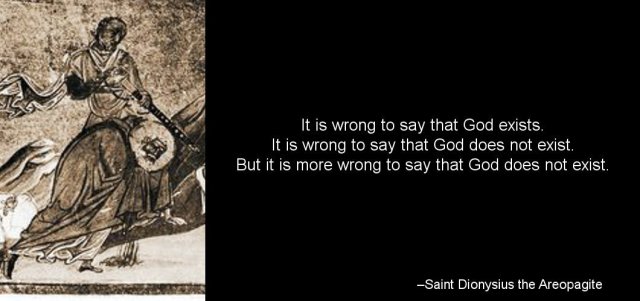


 Chris Lansdown
You must be logged in to post a comment.