Unusual poisons are not that popular as a means of murder in mystery stories these days, but all the same, I just got an idea for an interesting one: injected snake venom with the same symptoms as a poison.
One of the difficulties with poisons is that it’s really hard to have an alibi with one. The benefit to a snake venom is that if people don’t look for injections, they won’t be able to find out how the poison was administered, because it wasn’t. A person who thus had no access to the food of the victim could probably put themselves out of suspicion this way.
As an additional benefit, if the police do not specifically suspect snake venom, it is exceedingly unlikely that the lab will run any assays for snake venom. Even if they did, they would tend to look for the venom of native species rather than rare imports.
This is only a half formed idea so far, but it has some interesting possibilities.
On my recent post The Butler Did It: Poirot Style, I got an interesting comment from Paul. It brings up some points which I would like to discuss at greater length.
Somewhere I heard the phrase “nobody’s a hero to his valet” which could apply to his butler.
So I disagree that a murder by the butler is out of bounds because the butler is an employee “thus” not personally connected to the victim.
An employer could very well give an employee Very Good Reasons for the employee to want his boss dead.
And yes, a valet or a butler could quit (although getting a good reference might be a problem), but have other reasons to not quit.
One thought on the butler, as I understand the job, the butler manages the household staff so might likely know “when the best time/place to kill somebody without witnesses”. 👿
On the subject of no one being a hero to his valet, I believe that this is because the man is an object of professional aid to the valet; he is passive while the valet helps him to dress. The valet, though a servant, is an intrinsically superior position during the performance of his duties. This is not precisely the same for a butler, who would not, in the ordinary course of things, lay his hands upon his master. Which brings us to the last point, about the butler managing the household staff. This will depend to some degree on the particular household, as the jobs of servants were somewhat elastic with the actual number of servants present.
In Victorian times and through (about) World War II, butlers did tend to be in charge of the servants in midsize to large households. They did not tend to be present in smaller houses, and in the very great houses there might be a steward who was in charge of the domestic staff with the butler taking on his more historical role of being in charge of the wines, or somewhat more expansively, of the food and drink. (The term “butler” comes from words in older languages meaning, basically, bottler, i.e. one in charge of the bottles.) Murder mysteries don’t tend to be set in the mansions of kings or similar, though, so I think it would be reasonable to presume butlers will be in charge of the household staff and thus in a good position to arrange a time that is especially convenient for murdering someone. But this, in fact, raises something of a problem in choosing the butler as the murderer—it makes it too easy for the murderer.
I know that most most of the rules of detective stories focus on not making it too easy for the detective, but it is actually the case that if one makes it too easy for the murderer, it spoils the fun. Murder mysteries are meant to be a human drama, and in a human drama the reader sympathizes with both sides of the puzzle. We want the detective to win, but at the same time we do also need to be able to see ourselves in the role of the murderer, if for no other reason than we have to think like him in order to try to catch him before the detective does. A murderer who merely has special powers (such as being able to arrange everyone to avoid witnesses) is too unlike us. And then there’s the even more basic problem that the puzzle has to be difficult to solve or there’s no fun in solving it. That’s why the dumb police detective always arrests some poor servant, since the servants have obvious opportunity. Abusing a position of trust is too easy.
All that said, I think that Paul is right that the butler could make a reasonable choice for the murderer within the bounds of the murder having to be personal. Off the top of my head, he could know that the victim was carrying on some evil that he thought needed to be stopped. The employer taking advantage of serving women would work for this. The butler could know that his employer committed some heinous crime and got away with it (but without sufficient legal proof to ensure a conviction). The butler could do it for the sake of a child that the victim was mistreating, or even just to bring the inheritance to the adult child from whom help was being cruelly withheld in getting started in the world. The butler could even secretly desire to have an affair with his master’s wife and hope that by killing his master he will have cleared his chance to take his master’s place.
I think that if one wanted to take this approach, it would be important to make sure that the butler is noticed as a character. He would need to be active during the investigation. Doing things outside of his duties, and speaking not only when spoken to. If he remained entirely passive and looking like the normal servant, who is there in the typical mystery only to furnish some alibis and clues, the typical reader would, I think, feel he had been treated unfairly. Yes, the reader is hoping that the writer will try hard to trick him, but at the same time the trickery has to be of a certain sort. A double-bluff, such as having somebody else frame the murderer for the crime, is a great sort of trick. Bluffing that someone is out of bounds when they’re not isn’t the right sort of trick. In real life someone might creep over to his neighbor’s house during a dinner party to murder him, hoping to throw suspicion on the guests. In a murder mystery, if someone dies during a dinner party in an mansion and it isn’t one of the guests, but it is revealed in the last page that the detective found the neighbor’s footprints, the writer has played foul. Granted, I’ve emphasized it by having the writer play double-foul by not revealing the clue which incriminated the neighbor, but even if there were some tracks leading to the neighbor’s house, if they were not cunningly planted by a dinner guest in order to make the absurd suggestion that it was the neighbor, the reader would still justifiably feel aggrieved. It’s not on any of the lists, but we do need some reason to doubt that the murderer committed the crime. Having an obvious criminal and not going with it because the detective is too clever for his own good is the stuff of parodies. (Quite literally. If you want to read such a parody, The Viaduct Murder is an excellent example of exactly this.)
I think that a decent example of what I mean about how to do this well can be found in the Poirot story which my previous blog post was about: The Adventure of the Italian Nobleman. In it the butler is quite prominent. We get all sorts of information from him which he volunteers beyond the scope of the ordinary butler. He stayed to overhear a conversation with his master; a thing which no ordinary butler would have done. He is an obvious suspect, but manufactured for us a still more obvious suspect. Moreover, there is evidence in the beginning to make us suspicious of the butler’s story, such as the last course not having been eaten by anyone, and the telephone having been on the receiver, requiring the dying man to have replaced the receiver as he gasped out his last breath. These incongruities make us notice the butler early on, such that his being the culprit is a shock we were prepared for. Moreover, he did not merely hide in his job. He took an active role in the misdirection after the crime. He was caught, not by process of elimination, or by fingerprint identification as being a notorious criminal, but by having made mistakes which Poirot noticed and caught him by. This, I think, is the sort of template to follow if one wants to write a mystery in which the butler did it.
Yesterday, I asked the question, Are Plot Holes Like the Dark Side? This brought in some interesting comments on the idea of intentionally including plot holes. As my friend Alexander Helene said, “I never thought plot holes were deliberately used for the sake of ease. I always figured they were unintentional.”
I want to clarify that I don’t think that anybody says to himself, “Man, these plot holes I’m including will make audiences think I’m a genius! Muahahahaha!” Intentional plot holes look different.
The most common kind of intentional plot hole is the mysterious event which the author intends to figure out later. “Man, wouldn’t it be cool if the space wizard was off on a far away planet with a cryptic map leading to him? [I’ll figure out why on earth he left his friends to the mercies of the Sith but left a very hard-to-find map behind later. I’m sure there’s some good reason which could explain it. I need to get on with the story now.]”
This sort of thing is much worse, of course, in TV shows, where the authors have already published the really cool stuff by the time they come to trying to figure out how to explain it. Perhaps the best example of this is the Star Trek: The Next Generation episode The Best of Both Worlds Part I. It is the final episode of season 3. It ends with Picard having been assimilated by the Borg and the Enterprise about to fire a super-mega-ultra blast from its main deflector dish which is powerful enough to destroy the Borg cube and which they haven’t seen before so they have not yet adapted to it. So what do the writers do when they come back at the beginning of Season 4 and need some way of getting out of this mess?
They decide that since Picard knew about it and was assimilated, the Borg could just pre-adapt to it, so the mega-ultra-hyper weapon of doom… does nothing and they move on as if nothing happened. This is what an intentional plot hole looks like when you can’t avoid dealing with it. The episode goes on to have to deal with the insuperable problem of the Borg as created in part 1 by the absurd idea that the hive mind can be given a “sleep” command, which it obeys because the way hive minds work is accepting commands as if they’re a computer from a single drone. It was stupid, but the entire episode had to be stupid, because the lack of planning had foreclosed all non-stupid possibilities.
It’s not that the writers of The Best of Both Worlds set out to foreclose every non-stupid possibility for how the episode would end. They just kept upping the stakes and raising the tension and introducing cool stuff without any thought as to how it would work with what they needed to do later on in the episode. This is the normal pattern for intentional plot holes. The writers don’t think of them as plot holes, they just make them plot holes by refusing to think about them. It is, however, the same thing which makes these cool ideas that makes them plot holes.
There is an analogy to sin, here. Sin is hamartia, missing the mark. It is aiming at something but not hitting it. In particular, the person, when sinning, desires some good he mistakenly thinks that he will achieve by sinning. What he gets is, instead, and evil. Sinners are always surprised by this evil because it was not their intention. They are not innocent of it, though, because they could have foreseen the evil that they have wrought, but refused to look, honestly, at what they were actually doing.
In like manner, the author putting plot holes into his writing to make it more interesting does not intend for them to be plot holes, as such. He merely aims for the interest that they lend to the story and does not think about them as actual parts of the plot that are supposed to cohere with the rest. He focuses on the details and ignores the big picture. This intentional ignorance is why he doesn’t realize that the plot holes he is introducing are plot holes, much like the man who cheats on his wife with another man’s wife does not intend to adulterate both marriages. He only aims for the pleasure of intimacy. Both go in roughly the same way, too—it was great until everything fell apart.
(Because this is the internet, I should probably explicitly state that I do not think that writing a story with plot holes has the same degree of evil as adulterating two marriages, though the way that society is going at present perhaps some day soon this disclaimer will be taken to mean that I do not have the audacity to say that adulterating marriages is more than a matter of taste, whereas plot holes are objectively evil, if only a very minor evil. However one wishes to take that, the two are similar in kind, not in degree.)
In Star Wars Episode V: The Empire Strikes Back, Luke famously asks Master Yoda if the dark side of the force is more powerful than the light side of the force. Yoda’s answer is no, it’s not more powerful. It’s only faster. That is, one gains power more quickly on the dark side, but there isn’t more power to be gained. And, of course, that faster power comes at a price.
I’ve been wondering if there isn’t something analogous in writing, where plot holes make interesting stories easier to write.
In one sense this is obviously true. Shoddy workmanship is easier than good workmanship. On the other hand, Rian Johnson supposedly worked for weeks on the opening word crawl for Star Wars Episode VII: The Last Jedi, and the first two sentences contradicted each other. Shoddy workmanship requires less effort, but apparently it is not always the result of less effort. In any event, this isn’t what I’m wondering about.
There are two ways in which something being easier is interesting. The first is that easier things, if one keeps the results the same, require less effort and are thus more comfortable. It’s in this sense that doing a bad job is easier than doing a good job. The other way in which something being easier is interesting is if it allows one to produce better results. A lever is a good example of this: a lever allows a man who is pushing his hardest to push more weight. Or to give another example, a wheel allows a man who is pulling as hard as he can to pull far more weight. This is what I’m wondering about.
Do plot holes allow a writer of a given skill level to write a more interesting story than his skill level would normally allow?
Obviously, I mean before one gets to the end and finds out that the implicit promises of an explanation will not be fulfilled.
What makes a story interesting are questions which are raised and which the story (implicitly) promises will be answered at the end. One of the most intriguing questions which can be raised is an apparent contradiction which admits of some deeper explanation which shows that the appearance is deceiving and the contradiction is not really a contradiction. In Silver Blaze, Holmes draws the inspector’s attention to the curious incident of the dog in the night. But the dog did nothing in the night, which is, itself, the curious incident. How can this be? There seems to be a contradiction here.
The solution of this apparent contradiction is that the dog would have barked had a stranger been about, so his doing nothing was positive evidence that no stranger had come by. The apparent contradiction of an interesting-nothing was paid off, and paid off well. So well, it was imitated so often as to make its way onto a list in 1920 of tricks that should be dropped for being too well-used (Silver Blaze was first published in 1892).
Plot holes are contradictions in a story. As such, they have the appearance of being a contradiction. Until the story is over, however, the reader cannot know that there will be no explanation of them. They thus make the story more interesting, as the reader keeps trying to guess what the solution will be. This can go badly for the author, but it need not. It will only go badly if the reader remembers the plot hole when the story is over.
There are two main ways of making the reader forget that there was a plot hole in a story:
Distract the reader
Give a bad explanation
In the first case, if there are enough twists and turns and the characters no longer are concerned with the events in which the plot hole occurred, the reader may simply forget the plot hole entirely. This will work better with readers who have bad memories, but they certainly can be found. (It probably works better in movies and television.)
In the second case, if the author only gives part of the bad explanation and has the characters are seen to accept it, many readers won’t pause to think through the rest of the explanation and how it doesn’t work. The more quick-witted readers, as well as the more dogged readers, will, of course, but there are plenty of readers with little patience and not much more wit.
If the author is able to disguise his plot holes in this manner, he will have gotten the advantage of his book being more interesting while the reader was reading it. The use of this technique—possibly without the author even realizing what he is doing it—might well enable him to write books which, to an inattentive reader, seem far more interesting than they really are. In this way, plot holes may be like the dark side of the force. It’s not that they let one write better stories—clearly they don’t do that—but they may make it much faster in the learning of the craft of writing to write stories which capture readers’ interest.
And this may be why we see stories with plot holes so often.
As I mentioned in Fun Settings for a Murder Mystery, murder at a dinner party held in a mansion is one of the most iconic golden-age settings for a murder mystery. It’s so iconic that the (sort of) murder mystery board game Clue (or Cluedo, if you’re British) has exactly this setting. It was necessary, but fitting, that the movie Clue had it as well. Parodies must be instantly recognizable.
There may not be a more recognizable setting for a murder mystery. And yet, I can’t actually think of them being done very often in golden age mysteries.
I cannot think of any Sherlock Holmes stories like this, though a few came close. Of all of the Lord Peter Wimsey novels, only Clouds of Witness comes close, though that was a rented hunting lodge, not a mansion, and there was no dinner party and the murder happened in the middle of the night. I’m sure that there was at least one Poirot with this. A quick search turns up Murder in Three Acts, which has more than one poisoning at a dinner party. As I’ve mentioned, Murder on The Orient Express is similar in structure to a dinner party at a mansion, though it is, of course, a train and not a mansion. I can think of a Miles Bredon case, The Body in the Silo, which is a fairly classic example of it. I can’t think of any Father Brown stories with this setting. I’ve only read two Dr. Thorndyke stories, so I can’t speak with any authority on them. I find the dinner party plot unlikely in a Dr. Thorndyke story unlikely, though, and a quick search doesn’t turn anything up.
To be fair, I suspect that murder at a dinner party is likely to have been the plot of plays more often than of novels. They’re a fun and interesting setting for a novel, but they have a much greater benefit to a play: they put everyone into very few settings that don’t need to be changed out. As I discussed in Were Plays the TV of Previous Centuries? most of these were lost.
So, why is this setting, despite being so richly suggestive and iconic, so (relatively) uncommon in novels?
I think that the answer is that it’s hard to pull off. Especially if the murderer does not use poison, getting time alone with the victim in order to do away with him is not easy in the context of a dinner party, with cigars, billiards, tea, etc. following. The timing is tight, and that is not easy to manage with many people going about the activities of a party, even a low-key party. This is not merely a problem for the writer; it is also a problem for the murderer. There must be some reason, then, why the murderer would wait for such a difficult time to commit his murder, and moreover one that undeniably puts him, if not at the scene of the crime, at the most a room or two over from it.
Novels, being so much longer than either short stories or plays, give the reader time to think about the story. They spend time with all of the characters in a way that they don’t in a play or short story (or movie, though those are less common). The audience to a play will forgive a playwright for taking liberties with a story that are necessary to fit the story onto a stage. The reader of a novel is not nearly so forgiving because the writer of a novel does not need to take liberties to fit a story into a book.
I think that the rock upon which this setting falters, in novels, is plausibility from the murderer’s perspective. At a dinner party in a mansion is an absolutely terrible place to murder someone. All of the things which make it interesting also make it a bad plan. This can be made to work by springing the need for the murder upon the murderer—a sudden realization that he has mere minutes to silence the victim before he is ruined, for example. This is a workable condition, but a limiting one.
Another possible way of working around it is for the murderer to have as part of his plan the framing of someone. He might be killing two birds with one stone, as it were—killing the one and getting the other out of the way through a conviction for murder. That said, this was a better plot back in the golden age of mysteries, in England, where execution was common and swift. In the modern US, where execution is rare and often takes decades, the amount accomplished by framing someone for murder is less. Not nothing, though. It could effectively get a love-rival out of the way, or open up a coveted job.
In summation, I think that this is an under-used setting, which can be made greater use of, and should.
In the first Sherlock Holmes story, he identifies the brand of cigar which a murderer smoked by its ash. As he explained to Dr. Watson:
I have made a special study of cigar ashes—in fact, I have written a monograph upon the subject. I flatter myself that I can distinguish at a glance the ash of any known brand, either of cigar or of tobacco. It is just in such details that the skilled detective differs from the Gregson and Lestrade type.
I wonder if anyone ever read this monograph.
I should, perhaps, explain my curiosity, as well as my meaning. This scene reminds me of a list of 20 rules for detective fiction which S.S. Van Dine wrote in 1920. The twentieth rule included a list of then-overused plot elements:
20. And (to give my Credo an even score of items) I herewith list a few of the devices which no self-respecting detective-story writer will now avail himself of. They have been employed too often, and are familiar to all true lovers of literary crime. To use them is a confession of the author’s ineptitude and lack of originality. A. Determining the identity of the culprit by comparing the butt of a cigarette left at the scene of the crime with the brand smoked by a suspect. B. The bogus spiritualistic séance to frighten the culprit into giving himself away. C. Forged finger-prints. D. The dummy-figure alibi. E. The dog that does not bark and thereby reveals the fact that the intruder is familiar. F. The final pinning of the crime on a twin, or a relative who looks exactly like the suspected, but innocent, person. G. The hypodermic syringe and the knockout drops. H. The commission of the murder in a locked room after the police have actually broken in. I. The word-association test for guilt. J. The cipher, or code letter, which is eventually unravelled by the sleuth.
As you can see, identifying the culprit by the brand of cigarette he smokes was hackneyed by 1920. Granted, that’s 33 years after the publication of A Study in Scarlet. Moreover, a thing being hackneyed implies that it was commonly used. And, of course, identifying the brand of a cigarette by its end is not the same thing as identifying a cigar by its ash.
Still, when I think over the golden age detectives with which I’m familiar (that, admittedly, mostly come after 1920), identifying people by their unusual preference in tobacco was quite uncommon. Indeed, the only instance I can recall where tobacco brand comes up as a means of identification at all was a red herring in the Miles Bredon story The Three Taps by Fr. Ronald Knox (published in 1927). I can’t remember it at all in Poirot, Lord Peter Wimsey, or Father Brown. I’ve only read two Dr. Thorndyke stories, but neither of them ever features identification via tobacco products. My memory may simply be failing me, but I’m not sure that cigar ash was ever used for identification again even by Mr. Sherlock Holmes. In The Hound of the Baskervilles, he identified Watson by a cigarette end, not by ash.
Overall, the use of identification by tobacco products (or a favorite candy wrapper, etc) occupies a very curious place in detective fiction. We can probably lump these in with other identifying things, such as monogrammed handkerchiefs, cigarette cases, fingerprints, the victim having written the murderer’s name in his own blood, etc. What these things all have in common is that they are simple evidence. If they mean what they seem to mean, no cleverness is required in order to catch the murderer. That is, no cleverness is required on the part of the reader.
At least in the very early 1900s, some cleverness on the part of the detective was required to take finger marks. Occasionally even modern shows will have a police detective using some clever means to take fingerprints off of an unusual surface in a low-tech setting. All of that may be interesting, but it is not very satisfactory for the reader. It is the fictitious equivalent of watching a reality TV show about someone doing his job with cameras following along. There’s nothing mysterious about finding out that, after some tricky work, the fingerprints of Mr. John Smithington were found on the knife plunged into the back of his creditor, Mr. Dalrymple Worthorford, so the police went and arrested him and he confessed. It might possibly be interesting that if one mixes equal parts vanilla icecream, superglue, and hand sanitizer one can cause fingerprints on cork-bark handles to fluoresce under infrared light (I made all that up), but if all that happens is the detective asks his assistant for these items, he gets them, then shines the light and takes a picture of the fingerprints, we might as well have been watching a science show for children.
The problem, then, is that for our mystery story to be a mystery story, the simple clues must be, in some measure, misleading. They tend to be misleading in only two ways, however. Either they mean that the murderer is trying to frame someone, or else they mean that the person they identify was at the scene of the crime (probably) before or (possibly) after it occurred. These are great features of a mystery story, but they are only sometimes used, and of all of the ways to use them, cigar ash is probably the weakest form of evidence to achieve the desired end. (Cigarette ends are not that much stronger, unless one is going to drag in modern forensic teams and do DNA analysis, but that is largely to drain the fun out of the story.)
All of which adds up to why I wonder whether anyone ever read Mr. Holmes’ monograph on cigar ash. There have been many detectives since Holmes with approximately his brilliance and attention to detail. I don’t know whether any of their authors have ever given them cigar ash to identify, though.
There are many types of clues in a detective story which can be left at the scene of the crime. They are often looked at from the perspective of the detective, or really of the reader, since he is on the detective’s side. I think it might be profitable to look at them from another perspective: from that of the murderer.
We can first divide clues found at the scene of the crime by whether they help the murderer or help to catch him. After that, we can divide them based upon whether they were intentional, unavoidable, or accidental.
There are not many sorts of clues which help a murderer. Aside from clues which lead to disprovable theories, by which plot a murderer can be found innocent at trial and thus protect himself by the legal prohibition on double jeopardy, all clues which help the murderer must lead the detective to suspect someone else. We can divide these up by whether they mislead to another person, or only to a trait which the murder doesn’t have.
A clue which misleads to a specific person can be desirable or undesirable from the murderer’s perspective. Sometimes a murderer hates the person toward whom the clue leads; other times the murderer may accidentally framed his fiancé. There is wide latitude here—any place on this spectrum is workable. Clues which accidentally frame the murderer’s fiancé will probably need to be accidental clues, such as the fiancé having been in the room for some other purpose before the murder took place and dropping an earring or a cigarette. On the flip side, clues which implicate someone the murderer dislikes or even hates can be either purposeful or accidental. Both can be made to work; it is not so distasteful to have luck on the side of the murderer as it is on the side of the detective. That said, it will probably be more satisfying for such clues to be intentional. Stories in which all of the complications turned out to be an extraordinary run of (bad) luck can be interesting, but they almost need to be titled Much Ado About Nothing. (Despite there being no coincidences in that play and the misunderstanding being the work of the villains.) Where such clues are by design, this tends to require quite a lot of planning on the part of the murderer, since he has to ensure that the person he’s framing has no alibi. This will almost certainly involve some risk on his part; it’s not easy to know what someone else is doing without being unobserved. Such clues will, except by very good luck on the murderer’s part, only work in a highly premeditated murder.
Clues which lead, not to specific people, but only to traits that the murderer doesn’t have give more leeway in how they are done, but are also more hard to pull off. A good example of this would be Chesterton’s story The Hammer of God. The victim was killed by a tremendous blow with a hammer, which points to an enormously strong man (which the real murderer was not). Another example which comes to mind is the Lord Peter Wimsey story Busman’s Honeymoon. In that story, the blow to the head points to an extremely tall man, which, again, the murderer was not. Come to think of it, it’s curious that both of my examples involve a blow to the head. It’s not necessary, though. It’s quite possible to shoot from a higher place than the natural standing point of the murderer, suggesting a taller person—bullets even have the advantage, if they pass through the body, of giving a second point in space to line up, showing the height more clearly.
The downside to this is that the number of traits one can indicate via evidence is limited. Height, strength, possibly in some circumstances weight—or more likely not being above a certain weight—are about all that come to mind. It would be possible to have evidence which seems to eliminate certain disabilities, though. A gunshot which requires sight, or something done when one hears a sound, or distinguishes who someone is by their voice. Those get quite special purpose, though, since the field of suspects has to get small if a blind man is the murderer and the evidence seems to rule out a blind mind. I suppose one could set a murder in a conference for the blind, but otherwise there just aren’t enough blind men around to fill up a suspect list, once the main issue of the evidence not actually ruling out a blind man is found. It’s the sort of thing which would work pretty well in a short story, but I doubt it could sustain a novel.
The other major classification of clues are clues that help to catch the murderer. These are the meat of a detective story. Without these sorts of clues, detective stories must be in vain. Clues which help the murderer are optional, but clues which hinder the murderer are mandatory. Very well, then. What can we say about clues which help the detective to catch the murderer?
I think that the most important thing to consider with such clues is that from the perspective of the murderer, they are mistakes. In designing these clues, we are choosing what mistakes the murderer will make. This will, of course, be a function of the murderer, whether this was planned, and the circumstances that may intervene.
The first category encompasses the murderer’s intelligence and imagination. There can be a pretty big variance here, though if the murderer is too lacking in either there won’t be much to investigate. The two do not even necessarily go in sync; a young murderer might be quite intelligent but not very imaginative through lack of experience. The reverse can be true as well—a murderer with wide experience of the world might be quite imaginative, though not highly intelligent. The experience would have to be relevant, though, which I think would mostly limit us to murderers who are or have been detectives. That’s a very specialized murder mystery. I suspect one could broaden it out to a person who is very familiar with the workings of a particular place, such as intimate knowledge of how a hotel or other business functions, to know who is where, when. The downside to that specialized knowledge taking the place of intelligence is that it will be harder to hide the murderer, since not many people will have that knowledge.
An interesting sub-category of intelligence and imagination would be the murderer trying to disguise a clue as something harmless and not realizing how it will look. An old school example might be a murderer flicking a burnt-out cigarette end onto the ground where there are others, and assuming that it will be taken to just be one among many. In that case the detective usually finds it either by its residual warmth or by a lack of dirt on top of it or some other sign which the murderer didn’t think would be present to indicate what it is. I’ve also seen cases where a murder thought something would be taken as belonging to the victim when a better knowledge of the victim would show that it didn’t. A good example of this would be the razor in the Lord Peter Wimsey story Have His Carcase. It would be plausible for most men that they owned a cutthroat razor (back in England in the 1930s), but minor investigation of the victim showed that he was extremely unlikely to have one. The pursuit of this clue helped to catch the murderers.
The second category is almost self-explanatory. If the murder was planned out, all else being equal there will be fewer clues in the crime scene since any quarter-way decent plan will have the avoidance of such clues as a primary consideration the forming the plan. A more impromptu murder will lend itself to the presence of more clues. In both cases, however, any clues left will have to pass the stage where the murder is leaving the scene of the crime. Unless fleeing in haste, the murderer will, presumably, look over the scene for clues to remove.
This is where circumstances can intervene to preserve clues for the detective. It can take the form of introducing something that makes the murderer flee in haste, of course. It can also take the form of something which conceals the clue from the murderer during his investigation. Something falling over in the death throws of the victim, for example, might conceal a clue beneath it. Poor lighting can also make a murderer overlook a clue during the cleanup stage. The field for intervening circumstances is very wide. Even pet animals that steal clues have been used successfully. Books that were put back when they should not have been can be a clue, or contain a clue. And of course there are the environmental clues that were so popular back in the early days of detective fiction. Things found that would not be noticed except that they were damp among dry things, or dry among damp things, or clean among dirty, or recent among moldy; the list can go on and on. Changing conditions also work well here; an unpredictable rain can show that the victim was killed before the ground was wet. Temperatures plummeting to below freezing can preserve a clue that would normally have melted away. Even the reverse is possible; hot temperatures can melt away a clue that was meant to make the murder look like suicide.
This very anemic overview of types of clues is meant only as a starting point. I’m not sure that I’m going to make it a series, but as time permits I think I’d like to go through each of these sorts of clues, one at a time, to consider them more closely. Until then, I hope that this systematization was of some interest. When writing a murder mystery imagination is key, but a little bit of order can help to pick among the vast array of possibilities.
In the middle of season three of Murder, She Wrote is another episode about newsmen. This time it’s TV news rather than newspaper news, but other than that, it’s much the same.
Unusually for Murder, She Wrote the title card has a person in it. This is the titular anchorman, no less. His name is Kevin Keats and he’s a hard hitting reporter and also a self-important jerk.
He is conducting what is ostensibly an interview about art with Ronald Ross, who has one of the finest private collections of abstract expressionism in the country. This lasts for a few seconds, then Keats starts accusing him of being a drug dealer. Ross says that he’s very disappointed, because he loves to show off his art collection. He walks off, and his enforcer, Gerald Foster, a big bald man, signals that the interview is over by blocking the camera.
The TV that’s being watched in this shot belongs to Mr. Ross, btw, who is watching it with his enforcer. As a side note, I love the close, personal friendship that crime bosses almost invariably have with their enforcers. It’s so helpful for the casting departments of TV shows and movies that crime bosses never have intermediates so as to have plausible deniability if their enforcers are caught in one of the many criminal assaults they commit. Also nice to know that enforcers aren’t, generally, unpleasant psychopaths who enjoy hurting people but rather cultured and sophisticated gentle souls who by preference would discuss art and are merely willing to do the dirty jobs that someone has to do, out of a deep sense of loyalty to their best friend and employer.
The show cuts to Kevin Keats talking about how he’s got new and explosive information to reveal next week. Mr Ross throws a towel at the television and shouts at it, “You’re a dead man!”
I wonder if, in the whole history of Murder, She Wrote, the murderer has ever shouted a death threat at the victim? Certainly, I can remember no instance of it. Granted, we’re only three seasons in at this point so it’s harder for the audience to be sure that Mr. Ross’s threat entirely exonerates him of the murder soon to take place, but even at this point in the series it’s a good bet.
The end of the show is interesting, btw.
When they’re done they sign off in a curious way. Keats says, “Goodnight, Nick.” Nick replies, “Goodnight. And goodnight, Paula.” She looks up at the audience and says, “Goodnight, America.”
It reminds me a bit of how 60 Minutes ends, though it’s been decades since I saw the show and I can’t easily find any clips to verify that they sign off like this. My recollection is that it did have a bit of a Waltons feel (“Good night, John Boy”), but I’ve no idea if that’s accurate. Either way, I suppose that this is at heart a callback to Edward R. Murrow’s “Good night and good luck.”
I often confuse Edward R. Murrow with Walter Cronkite, who was, back in his day, “the most trusted man in America.” In hindsight, that was largely a testament to how gullible Americans were in the post-war period. From what I’ve gathered from family stories, Murrow was regarded in a similar way, though Murrow acquired a halo of sanctity around him, granted by marxists in the media, because of his supposed role in the takedown of Joe McCarthy (how much of an influence Murrow had is a subject of debate, but popular history will always be simplified history). Be that as it may, the real news had, in this time, acquired a tone of faux-familiarity that was very ingratiating. I suspect that this pretense of being part of the family watching—together with other things, such as the relatively few television channels, the imprimatur implicitly granted by the US government in its fairness doctrine, and many other reasons—was part of why so many people now in their sixties and older regard the news with a completely unreasonable level of trust.
The faux news show in this episode, coming, as it did, in 1986, is in an interesting time. Older people still regarded the news with obsequious gullibility, but children (I was not yet ten) did not, and even in this show one can see a certain amount of cynical realism about the news starting to creep in even to the way it’s presented here in Murder, She Wrote. News was, by this time, a business. Nick, the old man of the three, represents the old time, respected news. Confidential audience research suggests that audiences don’t like him nearly as much as his two younger, better-looking co-stars.
(As a side note, the sub-plot of the network wanting to replace him with a younger, more attractive reporter is a bit silly. It was at the time, and even still is, common practice to have at least one older, respectable-looking character on a show to reflect respectability onto the younger, prettier ones. It would be far more realistic to move him to a small part where he’s often visible but not doing anything of substance.)
The show, Scrutiny, presents itself as beyond reproach, but we do catch a glimpse of what goes on behind closed doors, and the sausage making is not attractive. But I’m getting ahead of the episode. Before we see the inner workings of the show, Paula Roman pitches a feature on Cabot Cove to Jessica Fletcher.
Apparently Scrutiny has down-to-earth, gentle segments, and Paula does those. That feels quite dissonant with the segments that Kevin Keats does, but perhaps Nick does some sort of middle-ground which acts as the glue for these two very different kind of segments. Anyway, Paula insists that unlike Kevin’s mean-spirited exposés, her segment will be like a television post card.
Jessica isn’t sure, but Paula’s assurances that the interview will be a gentle, lovers’ caress of Cabot Cove makes Jessica say that she’ll bring it up with the town council and see what they think (spoiler alert: they love the idea).
Then we get a plot twist!
In a meeting with the producer, the anchors, and the guy whose job it is to liaise with the “network” (his title is “vice president in charge of the news”), after they abuse the network guy for thinking about the people who pay for everyone’s fun and he leaves, it turns out that they’re killing part 2 of Kevin’s show about the drug dealing art collector and instead he’s going to be doing Paula’s Cabot Cove segment. She’s been reassigned to do a story on a boy who joined a girl’s basketball team.
Oh, and it comes out that the “network” is very concerned about the shows’ ratings. Nick is an American institution and Kevin and Paula are young and attractive, but the show is not doing so well anyway. This will be a major plot point, later, but it does feel a bit dissonant. Within TV-land, what is the show supposed to do to get higher ratings?
In reality they need to move more niche and pretend that the world is constantly about to end and only watching their show will save it. Even that is a short-term solution as TV news is constantly slipping in ratings to the point where many brand-name news shows have lower viewership than some of the bigger YouTube channels, but that would make for a very different episode. And TV news’ falling ratings doesn’t seem to result in personnel changes anyway.
But what are they supposed to do in TV land? Usually there is some unsavory alternative presented, such as bringing on women in bikinis or covering more sensational events even though they aren’t as Important. This show already covers sensational things that aren’t important. I suppose they could have Paula wear a bikini, but nothing like this is mentioned. It’s just left in the air that things aren’t great despite Scrutiny being a smash hit that enough people watch that Kevin Keats’ face is almost as well known as that of Ronald McDonald (this is mentioned later in the episode).
This being left completely unresolved, we move to Cabot Cove, where the residents are getting ready for their closeup. Interestingly, this episode, despite being in Cabot Cove, does not feature Seth Hazlet. Filling in for him while he’s visiting his sister is Wylie.
Wylie is only in two Murder, She Wrote episodes. The other is Dead Man’s Gold. (The actor, Robert Hogan, showed up in two other episodes, one as Lt. Bergkamp and one as FBI Agent Guilfoyle.) He’s a fun character. He’s got Seth’s crusty cynicism, except with more charm. He notes that the town is going crazy with the coming of the TV show. Then we get the gag of the TV news crew overwhelming Jessica’s house with TV equipment (mostly lights).
I really wonder how realistic this is. It’s made by a TV show who knows how to film outdoors, so I expect they could use very realistic equipment if they chose to. On the other hand, I doubt they would have chosen to. For one thing, not a single one of those lights is like the other and real lighting has a tendency to be symmetric about the subject it’s trying to illuminate. For another, I suspect that the crew who set up would have found it funny to make the lighting as unrealistic as possible. Also, these aren’t the days of technicolor with its huge light requirements because they’re exposing three films, one with a red filter in front of it, one with a green filter, and one with a blue filter. How many lights do they really need outdoors on a sunny day, for a TV show?
Jessica demands that they get the lights out of her flower gardens (you’d think, if they were setting up, they’d have wanted to get her flower gardens as background), and Kevin Keats introduces herself.
We then cut to Amos Tupper, in an ugly brown suit which he apparently bought just for the occasion, driving along the coast road. (I’ve got a screenshot of the ugly brown suit later on.) He pulls over when he sees a helicopter descending towards a stretch limo. The helicopter lands…
…and out of it steps the drug trafficing art collector’s enforcer, carrying a suitcase. He runs to the stretch limo.
As soon as he’s in, the stretch limmo tears onto the road, wheels screeching.
All of this sure attracts Amos’ attention, but it serves absolutely no discernible purpose. There is no reason for the enforcer to be in such a rush, or at least no reason that we are ever told about. There’s no obvious reason for the guy to have taken a helicopter when there’s an airport near Cabot Cove that everyone else uses. There’s no reason for him to have a stretch limo waiting in a field for him. There’s no reason for him to run from the helicopter to the stretch limo. There’s no reason for the stretch limo to tear onto the road so fast its wheels squeak. Literally the next thing we know that the enforcer does is to show up the next morning at the docks. There is absolutely no plausible reason for all of this haste. Moreover, if the enforcer is here to murder Kevin Keats, he would need to wear one of those one-man-band outfits with all of the instruments tied to him in order to draw more attention to himself. It’s almost a small thing, in comparison, that there is no way (we know of) for the enforcer to know that Kevin Keats is in Cabot Cove. It was in no way the obvious place to look for him, and with them worrying about death threats against Keats, it’s a bit odd that they’d publicly mention where they’re filming taped segments.
However improbable, though, this dramatic appearance moves the plot along. Amos shows up in the middle of Kevin Keats interviewing Jessica and tells her all about the big ugly bald guy, which makes Keats request the Sheriff (in private) to quietly hire a boat for him.
I don’t want to entirely skip over that interview, though. We come to it as Keats is asking Jessica, “It makes you wonder, J.B. Fletcher, how you came to buried in a tiny town in the back of Maine where the people are, if you’ll forgive me, hardly your intellectual equals.”
Her intellectual equals? She’s not a philosopher, or even someone who is reputed to write Great American Novels about people without principles or religious beliefs being depressed that life is meaningless and full of suffering. (Those aren’t, in fact, intellectually great, but I would at least see why a pretentious TV news anchor would treat them as if they were works of agonizing brilliance.) She’s a mystery writer! She writes whodunnits where a law student from the deep south catches a murderer because his friend who is accused of the murder claims he didn’t see a light flashing on an extension when he was hiding in the music closet. Mystery stories are actually quite deep, at least when done well, but it’s implausible in the extreme Kevin Keats would regard them that way. The detective being a Christ figure who descends into a world broken by the misuse of reason in order to, by the right use of reason, restore right order to it, is not something it is slightly plausible Kevin Keats would appreciate.
Besides, if she was living in an apartment in New York City she’d be likely to have a corporate lawyer on one side of her, a banker on the other, and the personal assistant to an executive across the hall. Why on earth would these be her “intellectual equals”? People in big cities like a variety of ethnic foods, unusual shops, fornication, committing crimes, and stepping over homeless people to get to all of these things. They would be far more urbane than Jessica’s Cabot Cove neighbors, but why on earth would he think that they’re intellectually superior? If you’ve ever encountered city dwellers, plenty of them can go several weeks at a time without having a single thought in their heads that a dog would not. Liking varied entertainment is not at all the same thing as being intelligent. If anything, it’s a symptom of intellectual weakness to require constant variety in order to sustain interest.
None of which Jessica says because she’s written by people who live in a big city (Los Angeles). Instead she tells Keats that if he’s going to insult her friends and neighbors, he’s going to have to do the segment without her. He apologizes and they do it over again. He asks roughly the same question but without the insults, and she talks about how this is where her roots are, and how she’s lived for decades in that old, drafty house with Frank…
I really wish she gave an answer that had something to do with loyalty and how each place is good in its own way, and she’s good at appreciating the goodness of this particular place. Of course, the problem here, too, is that she’s being written by Hollywood writers, which means people who gave up their roots to move to Los Angeles in order to pursue their dreams of fame and fortune. That is, they are nearly the worst people in the world to answer this question, and not nearly imaginative enough to think of how someone unlike them would answer it for real. All they can do is give the pat answer, “I’ve had lots of experiences here.” I doubt that it’s ever occurred to Hollywood writers that there actually are people you couldn’t pay to move to Los Angeles.
Anyway, Amos Tupper interrupts this interview which Jessica has to know is going to be cut up and mangled, but goes along with anyway, because he’s got extremely important news that just can’t wait. There’s a not very funny bit where he pointedly ignores Keats and tells Jessica about the guy he just saw get out of a helicopter and into a limo.
Amos doesn’t even notice when Keats tells the TV crew to cut the film. Eventually he asks who this fellow is. It’s mildly amusing, but I don’t think it was worth sacrificing Amos’s manners for. It’s also nearly the only time I can think of where Amos was in a hurry for anything. Anyway, he eventually finds out that it’s Kevin Keats, and is embarrassed, though not very embarrassed. He shakes Keats’ hand and says that he looks a lot taller on TV.
The scene is very odd because Amos bought a new suit to show off for the TV cameras and yet doesn’t care about them and even partially looks down his nose at them. I don’t know what to make of it; I guess they just had to stitch the next plot element to the current scene and wanted to get through it as quickly as possible (when writing). It does, at least, do that; we’re now on to the next part of the plot.
Oh, almost. We have a few things to get out of the way, first. It’s now night time and Kevin Keats’ estranged wife calls him at his hotel to vaguely threaten him.
That phone call over, it’s time for Dough, the producer, to walk in and have a fight with Kevin in front of the hotel manager.
“This assignment was a change of pace. A fresh approach. Don’t take it personally.” “Oh, but I do. Scrutiny is a hit for one reason, and you’re looking at him. They toss out producers like so many empty beer cans but I keep rolling along. So you get off my back, before I do something you’ll regret.”
Scrutiny is a hit but the network is worried about the ratings. OK, whatever. This publicly-witnessed threat session over with, we can finally get to the important part: in the morning Kevin gets on the boat the Sheriff Tupper rented for him. Sheriff Tupper then turns around and sees the bald enforcer standing by the dock, watching Kevin. He shouts to him to hold it, whereupon the enforcer runs away and Tupper sighs in disappointment since running after the man is clearly out of the question.
Kevin Keats’ boat makes it about 100 yards away from the dock and then we get the murder.
It was kind of whoever planted the bomb to put it on a timer after the ignition started so that it wasn’t right next to the dock when it exploded. Sure, he destroyed an innocent man’s boat, but at least he didn’t cause unnecessary damage to the dock, which having the bomb go off as soon as the ignition was started would probably have done.
Anyway, we go to commercial and when we came back the big bald enforcer calls the art collector from a phone in the limo and tells him that the situation has resolved itself. The art collector replies that he’s late—he’s watching Paula Roman live, from the scene of the explosion.
I find this perplexing since it entirely rules the enforcer out as a suspect. We’re seeing him in a private conversation where he would have no motive to lie. So what is the point of these characters? If they’re not suspects, why spend time on them? I suppose they could be trying to suggest that the art collector actually carried out the hit without telling his enforcer and was using the enforcer as a blind, but neither appears again in the episode.
We go to Paula Roman, live on the dock only an hour or so later. After she signs off, she talks to Jessica. She claims that she took the first flight over. Jessica looks dubious, but says nothing. They leave together.
They get to the hotel, where Paula doesn’t recognize the busy-body hotel manager, and he directs them to the private dining room where the “TV folks” have set up a temporary field office.
Nick is there, running things in the absence of anyone else. Paula asks where Doug is and Nick says that nobody knows. He checked into his hotel late last night, left early this morning, and nobody has seen him since. He’s probably off climbing a mountain somewhere. This being a potentially identifying personal detail in a Murder, She Wrote, you can bet that it will be significant before the end of the episode.
Paula and Jessica have coffee, and Paula asks about the look Jessica gave her when she said she flew in on the first flight this morning. Jessica tells her that she was on the air a half hour before the first flight from NYC landed in Portland. Paula then admits to having flown in the night before with Doug, the producer. Jessica knows that Paula spent the night with Kevin because she didn’t recognize the hotel manager, which meant that she didn’t go to her own room. We also learn that Richard Abbott, the vice president in charge of news, is also missing (back in NYC).
Some comic relief later, Jessica calls the hotel manager on the phone and asks about the phone call from Keats’ wife. She wasn’t calling from California, it turns out, she “left a local number”. It’s the phone number of a nearby motel. How she left a number when the hotel manager never talked to her other than to say “hello” is unclear. This is before the days of caller ID and the phone had no caller ID screen on it anyway. It’s useful information, though, because it enables Jessica to go interrogate Kevin Keats’ wife, which she does.
It turns out that she came to Cabot Cove in order to try to reconcile with her husband, but he saw Keats with Paula and realized that there was no chance of it when she saw the look of love in his eyes when he looked at Paula. This makes the timing a bit suspect, since Paula arrived with Doug the producer but Mrs. Keats called her husband both after she saw Paula with Kevin but also before Doug walked in the front door.
Plot holes aside, Jessica is busy rudely observing that now that Kevin is dead Mrs. Keats will get all of his assets when the bartender says that there’s a call for a Jessica Fletcher. It turns out it’s Wylie.
He asks Jessica to ask Mrs. Keats how many toes her husband has. Jessica asks, and before she can relay the answer, Wylie tells Jessica, “Unless she said eight, the fellow I’ve got lying here on my table is not the late Kevin Keats.”
Amos, Jessica, and Wylie meet to discuss this new development. Amos, as usual, takes the changing of facts personally. He saw Kevin Keats get on the boat, and doggone it, it’s not fair that it isn’t Kevin Keats who’s dead. Poor Amos. Life as a small-town sheriff is supposed to be simple.
Incidentally, it’s definitely the case that whoever it is on the table didn’t lose the toes in the explosion, they were surgically amputated some time ago. Also, Wylie checked with Seth (who, you will recall, is on vacation) and no one in Cabot Cove is missing those toes. Jessica then brings up another mystery, in addition to whose is the body: where is Kevin Keats? (Apparently it doesn’t occur to anyone that there could have been two people on the boat and Keats was in fact killed but his body not found because they stopped looking after finding the first body.)
Curiously, the next thing we see is where Kevin Keats is.
To be fair, it takes a minute to actually show us Kevin; he’s watching the news where somebody or other is interviewing Cabot Cove’s mayor, but eventually we pan over to him on the motel’s bed.
I love Kevin’s outfit. It’s the pointless leather patch on the flannel shirt that really makes it, for me. That said, the bag of potato chips and the drink in a red plastic cup really pulls the shot together. That’s about it, though. All of the action takes place in the newswoman asking the mayor questions and him not having answers. Then Kevin picks up the phone and dials someone as we fade out.
I’m very unclear on why this scene exists; all it serves to do is to remove the mystery about what happened to Kevin Keats only a few seconds after the mystery was raised. In that way it’s reminiscent of the scene in which the bald enforcer calls his art collector boss and tells him that he didn’t have to kill Keats after all. Is this meant to be a help to the audience? Does Murder, She Wrote have a maximum amount of mystery it’s supposed to maintain in order to not be too confusing to the viewer? I don’t know if that’s the case but it’s an interesting thought. This is television, probably at its height in terms of numbers of viewers of an episode—at that time when an enormous number of people were watching but there were not, yet, hundreds of TV channels competing for viewers. According to Wikipedia, at its height Murder, She Wrote had about forty million viewers, and even in its eleventh season it had about fifteen million viewers per episode. Perhaps in order to be most comfortable to a general audience they wanted to keep the number of things the audience had to keep track of to a minimum.
The next scene has the vice president of TV news, Richard Abbot, walking into the make-shift office in the hotel in Cabot Cove. He and Nick argue, though it’s difficult to characterize what the argument is about. Nick is mad that Richard was missing, and Richard is angry that… I don’t know. He seems annoyed that Nick is annoyed, as much as anything else. Jessica walks in and interrupts them to say that Kevin Keats is very much alive—a thing she doesn’t actually know, btw, unless she knew it by reading the script. It certainly has not been proven yet.
Nick asks whose body was pulled out of the water. Jessica hypothesizes that it’s actually Doug Helman, the producer, because earlier Nick joked that Doug was probably off climbing a mountain, which she free-associated to frostbite, and then noted that the body was missing two toes on its left foot. No one actually knows whether Doug was in fact missing any toes on his left foot, but this is taken as sufficient evidence to conclude it definitely was Doug. (And see, I told you that it being a random personal detail, it would definitely come up again!)
Paula walks in when Richard is asking where she is and she says, “so it was Doug.” Nick tries to get her to work on the rewrites that they have to do but she only wants to talk to Jessica. Nick grabs her by the elbow and tries to pull her to the typewriter, saying “Listen, Helman didn’t even want you up here, the only reason you came is because Kevin insisted, now come on, now let’s get to work.” This being a Murder, She Wrote episode, a random bit of detail about someone other than the person speaking must be a clue. They do a halfway decent job of disguising it by putting it in a heated moment, but it doesn’t really fit very well. The biggest thing is that it stands out for not really being in character, in the sense that there were far more persuasive things that Nick could have said which would also have been far more natural for him to say. If this wasn’t a murder mystery, he’d have given some speech about journalists having to put aside their feelings for the sake of the public, or some such. That instead of that natural thing he went for irrelevant detail is a huge red flag.
There’s also the problem of this not really being in character. Nick’s motivation to drag Paula in is very slight. Granted, he seems to be angling for the producer job by filling in for Doug in this pinch, but Paula isn’t a writer and isn’t even an investigative journalist. Her beat is doing TV postcards of small towns. It’s pretty far fetched that he even wants Paula at a typewriter. It would be different if he needed her pretty face to go in front of the camera, but that’s not what he wanted. Paula refuses, and she and Jessica leave.
As they’re walking, Jessica tells Paula that Kevin called her. Paula asks how Jessica knew, and instead of referencing Paula’s inflection when she said “so it was Doug Helman who was killed on the boat” which would have been decent evidence for it, she instead said that Paula trusts Jessica, and who would Kevin trust? His mistress isn’t entirely implausible, but you’d think he’d have a few friends, too. Paula’s reaction was much better evidence, but oh well. Jessica talks Paula into talking Kevin into coming forward to the Sheriff because staying in hiding could be too easily misconstrued. You’d think that Jessica would know Amos by now. We’re not at the end of the episode, so no matter what Kevin did, Amos would misconstrue it. It’s what he does.
It turns out that the fight Doug had with Kevin over reassigning Doug to Cabot Cove was a put-on. They’d planned it together. The goal was to fake the drug dealing art collector into thinking that the series was dropped (how the art collector was supposed to know this is anyone’s guess) when in reality he was in Cabot Cove because there was a witness in New Hampshire who would only talk to Kevin. The boat thing was “cover”; he wanted people to think that he was on a boat in the harbor when he was really driving to New Hampshire to see the confidential witness.
Augie Wilkin had the only boat in town for rent, and the Sheriff couldn’t get in touch with him until about eight O’clock that night. Once he told Kevin about it, Kevin called Doug and told him to get up to Cabot Cove on the double. Doug must have gotten in very late if he didn’t know he was going to be taking a plane to Cabot Cove until after 8pm. Still, this was before 9/11 and was probably doable.
The fight between Doug Helman and Kevin Keats in front of the hotel manager was staged. “Just another part of the act.” Why there was this is act is… very unclear to me. I’m not sure what could be gained by convincing the hotel manager that Kevin Keats and his producer were fighting. If they were on the best of terms, it wouldn’t make the dropping of the drug dealing art collector story any less plausible. It also wouldn’t make him supposedly running away by boat any less believable, either, which was all he really wanted to disguise. It feels like the sort of thing that’s normally in a story that features people worried about there being a mole in the organization, and so they had to deceive everyone because they didn’t know who it was. Except, there was no mole. There was no reason to not tell Paula and Nick about the plan to disguise Kevin’s going to a secret informant. Also, given that they were keeping up this pretense of a fight, why on earth did Kevin insist that Doug bring Paula up to Cabot Cove with him? He couldn’t keep his pants on for one whole night? From all of the other precautions they took, Paula could only get in the way of the plan. Besides that, no one was covering the boy on a girl’s basketball team in Nebraska. From Kevin and Doug’s perspective, someone should have been covering that, no? They expected there to be a show that would air the next week.
This story is pretty much nothing but loose ends, which makes me somewhat sympathetic to Amos for arresting Kevin. He reasons that whoever planted the bomb had to know about the boat, and since only Kevin and Doug knew about the boat, that means it had to be one of them. It being Doug seems unlikely, so by process of elimination, it had to be Kevin. For once, Jessica has no objections.
Paula visits Kevin in jail and they talk. It comes out that Nick and Richard haven’t sent a lawyer to get him out on bail because they figure it will be better for ratings, at least when the special which is the former Kevin Keats eulogy is broadcast. The Sheriff has even kindly given his permission to let Kevin tape his segment in the jail cell! Amos is nothing if not thoughtful. Why Kevin can’t hire his own lawyer is never said.
Next we see Jessica go interview Mrs. Keats one last time.
I’m not sure if the writers are trying to keep her alive as a suspect or are just using her to give the next clue. She does give a clue, anyway—she thinks that Kevin was about to be fired because the network had just done confidential audience research. The writers really can’t decide whether Scrutiny is more famous than apple pie or going under. Why on earth he told his estranged wife about this, I’ve no idea. She described it as “in a fit of paranoia,” though trying to make her think that she couldn’t get much out of him in divorce would have been more plausible.
Jessica goes and takes this up with Richard Abbott (the vice president in charge of news). He’s cagey, but she gets out of him he didn’t want to discuss the confidential network research in front of the anchors because it concerned one of them. Also, when Doug Helman was killed he (Richard) was in NY having breakfast with the president of another network. “You see, in television land, when the canoe springs a leak, one doesn’t bail water, one just looks for a new canoe.”
And now we go to Jessica’s house, where she’s playing chess with Wylie.
In a Murder, She Wrote episode a scene unrelated to hunting clues, this late in the episode, means that all of the clues we’re going to get have been given. It’s time to guess who the murderer is.
Wylie puts Jessica in check, with mate in one. Usually she beats Seth, so Wylie was able to beat her because she’s distracted—she can’t stop thinking about Kevin Keats’ story. Wylie says that there had to be an easier way to slip out of down, and Jessica says that she didn’t remember telling Wylie about Keats’ plan. “You didn’t. I overheard you talking to Sheriff Tupper on the phone.” And now Jessica realizes who the murder is. She just has to go the jail to be certain.
In jail, Jessica goes over the phone call with Kevin, and indeed Doug had gone over the time table in detail to make sure that he got everything right. Keats was sure that Doug would never have talked about it with a third party present, but Jessica asks, “What if he didn’t know, or care, that there was a third party present?” She means what if it was a third party that he didn’t care about, but it was badly phrased coming right after Kevin saying that he was certain that Dough would never have discussed their plan in front of a third party. Anyway, the scene closes and we open on our murderer, who Jessica visits, alone.
That’s right, it was Nick Brody. He’s working late on a rewrite. Jessica tells him about the confidential audience survey, whose result was that the audience preferred the younger Kevin and Paula to him. Why this means that he needs to be fired is not explained, but that’s OK. Jessica informs him that he was there when Kevin called Doug and worked out their plans, a fact proved by his knowledge that Paula was only in town because Kevin insisted—which they had only ever discussed on the phone.
This is the only actual piece of evidence which Jessica has. It’s a bit like an Encyclopedia Brown case where there is literally one clue, and if you pick up on it you can solve the case and if you don’t, you can’t. It’s an interesting balancing act, but I think it probably gets back to the issue of having such a large, general audience. Too many clues and a large fraction of the audience will think that the mystery is too easy. (Fewer than one clue and the mystery will be too hard, and not just for some people.)
Anyway, it’s enough, and he admits it. Jessica asks how he got to Cabot Cove and he replies that he drove all night. It’s only 350 miles. (Averaging 60 miles an hour, that would take just under six hours. If he left at 9pm he’d have gotten in at the earliest at 3am—he should be tired!)
It’s curious how they deal with the question of how Nick got the bomb. “Oh, about the bomb? Well, you don’t get to be a 63 year old reporter without learning something.” I doubt that there were any reporters of any age in 1986 who could put together a bomb with the explosive power of a few pounds of TNT on a moment’s notice, late at night. Or worse, in the middle of the night in Cabot Cove.
Jessica asks him why he did it—Doug was just following the network’s orders. Nick’s reply was interesting, so I’m going to quote it in full. He said:
Without Helman, I had a better than even chance of staying with the show. I had more experience than any of them. To hell with the audience research. So I wasn’t young, vicious, or even pretty. But I was the one who could talk sense to them. I’m a news man. I’m not a performer. I tried to tell Doug that. And whatever he started out believing, in the end he bought the idea that the wrapping paper—the wrapping paper!—was more important the package.
If you don’t mind, I’d like to finish this rewrite while we’re waiting for the Sheriff. Just dial 9 for an outside line.
One of the unusual things about Murder, She Wrote is that its star was not young. Born in 1925, Angela Lansbury was 59 when the show started and 61 when this episode aired. The primary recurring characters in Cabot Cove were not spring chickens either. The guest stars were frequently actors who had been famous twenty or thirty years before, and now were getting small parts as older people. What’s true of the actors is true of the viewers, as well. The audience of Murder, She Wrote famously skewed much older than for most of prime time television. My mother remembers the commercials frequently being for things like denture creams while I remember them as being for life insurance that you can’t be turned down for no matter how old and sick you are. The final episode of Murder, She Wrote was even titled Death By Demographics.
(To be fair to the networks, they didn’t care. It was advertisers who paid top dollar for younger viewers and much less for older viewers, quite possibly because younger viewers bought more things and also were more malleable; if you could turn an eighteen year old just starting to buy his own toothpaste onto your brand of toothpaste you might have a loyal customer for decades.)
The theme of Nick’s monologue is that, despite being old, he’s still, in reality, valuable. More than that, he’s actually the most valuable. This is a theme that resonates with an older audience, but especially with an older audience in the 1980s. People born in the 1920s and 1930s saw truly enormous amounts of change in the world by the 1980s, not just technologically but even socially. The worship of youth was (partially) socially dominant in the 1970s, with people proclaiming that one should never trust anyone over 30. With the advent of the birth control pill and labor-saving devices like washing machines, traditional restraints and traditional divisions of labor seemed to many pointless and anachronistic. The future was in plastics, as the uncle in The Graduate foretold. The future was in computers, as many people told Jessica when suggesting she replace her old typewriter with a word processor. What place was there for people who vividly remembered horse-drawn milk delivery and wartime rationing?
Nick’s impassioned speech proclaims that there is a place for them, that the world hasn’t actually changed that much. I think this is why Jessica doesn’t say anything. You can see in her face that she agrees with him, but he crossed the line in blowing Doug up. She slowly walks over to call the Sheriff, and he goes back to typing, then pauses a moment in thought.
I’m not sure what he’s supposed to be thinking about. At first it looks like he’s pausing to regret getting caught, but then his look of consternation is replaced by a very slight smile. The music is sad, though.
(Incidentally, the story was by Bob Shayne who was born in 1941 and the teleplay was written by Robert van Scoyk who was born in 1928.)
There’s also the curious theme of this lionization of news. He’s not this new breed of reporter, who is all glitz, he’s a News Man! As if the news was some deeply respectable thing, back in his day. Back in the days of Edward R Murrow (hah!). It is interesting to consider the timing, though. People born in the 1920s and especially the 1930s were young when radio and later TV news journalism were new. Growing up they might have felt that they were so much better informed because of the increased immediacy of these things. One didn’t have to wait for a newspaper, an authoritative voice would boom them over the radio or television might even show you pictures of the things as they happened! There were not many channels and they were more regulated than the newspapers were; it seems plausible that some reasonable fraction of people growing up then might have thought of themselves as better informed than their predecessors, and better informed than younger people today who watch news that’s all about sensationalism and glitz.
Incidentally, this is a separate issue from Baby Boomers who trust the news. They were young adults during the era when TV news was turning glitzy. Someone born in 1946 (approximately the oldest baby boomer possible) would have been forty years old in 1986. Chad Everett, who played Kevin Keats, was born in 1937. In 1986, when this episode was filmed, he was 51 years old. Granted, TV actors usually play younger than they are, but not usually more than about a decade down. In other words, the youthful TV anchor was supposed to be the same age as the oldest baby boomer watching and was, in reality, a decade older than them. (Mark Stevens, who played Nick Brody, was born in 1916. He was 70 playing 63. Kathleen Lloyd, who played Paula Roman, was born in 1948, making her 38 at the time of filming—young enough to be Mark Stevens’ daughter, but no spring chicken.)
Looking back from the vantage point of the year of our Lord’s incarnation 2020, the view of news as something that was once reliable but is now turning commercial and unreliable is quaint to the point of being laughable. The multiplicity of viewpoints expressed when cable television was just getting off of the ground is nothing in comparison to what news is like these days, with each news source trying to cater to its very specific niche, which largely means that the reporters are just being somewhat honest about their biases. Moreover, as a remove from the events sheds light on the biases of the newsmen of old, the rosy view which people had when there were only three major networks seems more like gullibility. Still, we’re all prone to such myopia; to not seeing what is not easily within our horizon.
One other interesting thing about this episode is how much Jessica does not believe in sexual morals at all, or if she does, she keeps them entirely to herself despite being willing to criticize people for all sorts of lesser moral failings or things that aren’t even moral failings but she just dislikes (such as violence in movies and other entertainment). Paula Roman is sleeping with a married man. Even worse, she is getting in the way of that married man reconciling with his wife, which his wife was trying to do. Jessica fawns over Paula like a dear child when Paula is, in fact, very much an adult and actively engaged in adulterating a man’s marriage. Jessica doesn’t even bat an eye. She’s supposed to be a small-town retired English teacher but she’s really a big-city cosmopolitan socialite.
So, all that said, what’s good about this episode?
It has interesting characters. Not all of them, but at least the trio of reporters from Scrutiny are. The character of Richard Abbott, though under-developed, is also interesting for his extreme calm and forthright cynicism about his business. Wylie is great as the doctor. Tom Bosley as Amos is always fun for his manner.
OK, but this is the stuff which comes from good casting, rather than good writing. What about the story?
It is difficult to praise the story because, in part, it’s really a bunch of unrelated stories happening near each other and with some minor relationships to each other. At that level of abstraction, it’s merely the description of a mystery story with red herrings, but these don’t really feel like red herrings because of the way that they are almost serial in their presentation.
The sub-plot of the drug dealing art collector is at the start of the show and gets things in motion, but then is dropped as soon as the murder happens. The sub-plot of a small town preening itself for the cameras and not getting what it hoped is also dropped before the murder happens. We then get a sub-plot of a small town overrun with TV news crews because a famous TV man was (supposedly) murdered in it, but this never really goes anywhere. We have the sub-plot of the vindictive estranged wife who had wanted to patch things up with her husband, but that never really goes anywhere. (I don’t think that she’s ever a realistic suspect.) We get the sub-plot of the two anchors who are romantically involved with each other, adulterating the one’s marriage, but this only really serves to get Kevin Keats out of hiding, and then goes nowhere. The sub-plot of trying to get over to a confidential witness results in a cockamamie scheme whose time table is highly questionable, and in any event it’s linked to the story about the drug dealing art collector, and that plotline being dropped, this one goes nowhere too.
The upshot is that the episode is interesting while it happens, but since all of the sub-plots go nowhere, it’s disappointing once it’s over. Even the theme that was raised of the big city versus the small town ends up nowhere. Jessica is really part of the big city, so the small-town end of this theme has to be held up entirely by Wylie, which he stops doing as soon as there’s a body for him to examine.
About the one thing I can say for the story—rather than the characters, acting, sets, etc—is that it does have an interesting premise of outsiders bringing their troubles someplace else in order to settle them by being unknown in the place they’ve gone to. That is a structure that can be quite interesting. It’s the premise of my favorite Cadfael story, Saint Peter’s Fair. It’s the premise of my third and upcoming Brother Thomas novel, tentatively titled He Didn’t Drown in the Lake. It’s an interesting premise. It’s disappointing when an interesting premise isn’t used to its full, but it’s still something just to have the interesting premise.
Actually, there is a second thing I can say for the story. It does have a nice twist partway through. The corpse being identified as someone other than Kevin Keats was interesting, both simply as a twist and also as a way of changing who the suspects were. Or, rather, raising the question of who the intended victim was, and whether this changes who the suspects were. (It didn’t really change who the suspects were because the suspect who might remain—the enforcer—was already ruled out by the time of this reveal.)
That’s probably about the best that I can say for this story. Like so much of television, it had a lot of promise that it didn’t fulfill, but it was fun while it seemed possible that the promise would be fulfilled. Also like so much of television, it gains quite a lot from having interesting people and interesting sets. Television is a very visual medium, and this (legitimate) visual interest can make up for a lot of weakness in writing.
As I was sitting down to start writing in earnest on the third chronicle of Brother Thomas—having worked out the characters, what really happened, etc. to my satisfaction—I looked for the file where I wrote down biographical facts about my main characters. I couldn’t find it. Worse, I have come to conclude that I can’t find it because I never wrote it.
I am not, it should be noted, talking about lengthy backstory in which I wrote out novella-length descriptions of each character’s experiences in kindergarten, grade school, middle school, high school, etc. I’m just talking about the basic facts: height, weight, hair color, birthday, date of joining the order (if appropriate) etc. Having not written these things down when I mentioned them in the previous two books, I now have to comb through the books to see what I in fact did mention. It’s not entirely wasted effort since it’s a good idea to read the books to get the tone of characters fresh in my mind, but at the same time it’s a lot of work that I really wish I didn’t need to do right now.
So, a hard-won lesson, which I pass on to any readers who are just getting started on a series of books: make sure to keep a file open for facts about your characters who will show up in future books. It will save you a ton of effort down the road.
If a murder mystery involves a rich family, there is an excellent chance that only one of them will get along with other human beings and at least three fourths of them will have manners so bad you’re surprised that they are not frequently punched in the face. I suspect that there are three reasons for this.
The first, and most mundane, reason is that it’s a trope. Merely because it has often been done before, it will be done again. Many writers, especially in television, are lazy and unimaginative. There’s not much to say about this reason, but I do need to acknowledge it.
The second reason has to do with the needs of a mystery story—there must be suspects. When a rich family gets along like cats and dogs it produces a lot of suspects. It’s true that this shows everyone as having a motive—whoever dies, everyone else hated him—but it also shows that no one in the family has the sort of self-control which makes you think that they would refrain from murder because of their principles, if they had any.
The third reason is the most sinister. Most writers are neither rich nor know for their extraordinary resistance to envy. Even if not personally envious, they are not proof against trying to flatter the envy of their readers. It would be, more specifically, sour grapes, but sour grapes are generally an expression of envy. I suspect that this is no small part of why this is a trope.
Now, speaking generally, there is nothing wrong with including spoiled children in a story, nor in including family members who do not get along. I do gravely doubt that the children of the rich are often casually rude; when you don’t have many problems, upsetting other people looms much larger in one’s field of view. In my experience, casual rudeness tends to correlate to being raised by absent or single parents, in poverty, where other people’s feelings seem quite small in comparison to more pressing issues. One really needs to have a lot going wrong in order to be unconcerned about unnecessarily offending others. (Which is not to say that rich people can’t generally pay for their problems to go away, only that upsetting a person is an immediate problem that one feels immediately because man is a social creature. Treating someone badly when out of sight and using money to paper over the problem—that is very easy to believe of someone raised rich. Treating them in a way that makes them upset with one in the moment? That is far less believable.)
However that goes, this does not tend to make for a really good mystery, however, because the characters are not interesting. Characters are interesting because of their virtues; vices can only help when they serve to highlight virtues. Merely being a failure of a human being is boring, and when there are no characters who are not failures—there’s nothing interesting to read about.
In murder mysteries one of the classic plots is playing a recorded conversation in order to pretend that the victim was alive later than he was. Typically used to allow the murderer to establish an alibi for the supposed time of death, the curious thing about this trick is that as technology makes it easier for the murderer to do, it also makes it harder for the murder mystery writer to use.
Given how many murder mysteries were written shortly after the initial Sherlock Holmes short stories in the early 1890s and are now largely lost to history, making any statements about firsts in a murder mystery is always fraught with peril. That said, the first time that a recorded conversation was used to pretend that a victim was alive later than he was, that I’m aware of, is Agatha Christie’s The Murder of Roger Ackryod. First published in 1926, it used, perforce, a dictaphone which at the time would cut grooves in wax on a cardboard cylinder. The sound quality actually achievable on such a machine would not be great, which makes its believability to listeners somewhat questionable. On the other hand, it was played behind a closed door. The door would muffle the sound, making it harder to tell a recording from a real voice. And then there’s the psychological aspect, which gets to the heart of the modern problem—at the time, people’s voices being recorded was so rare that no one would expect it, so they wouldn’t think to look for the differences. We are used to dealing with imperfect sound and concentrating on the words; without paying careful attention we are likely to ignore the problems we don’t recognize in a recording since we’re not used to hearing them as the characteristic signature of a recording.
These days, high fidelity recording devices are extremely cheap, to the point where they are a standard component of many devices including the cell phones that everyone carries around in his pocket. Decently loud and accurate playback devices are so common that they can be found in novelty birthday cards meant to be thrown away after use. If a killer wanted to use a recording of a victim to create the impression of a later time of death it would be cheap and easy, and the playback would be of such high quality that it would take a trained ear to have a chance of telling whether it was a recording.
Ironically, that’s the problem. Playing the victim’s voice would be so easy that if a reader is presented with someone having merely heard the victim’s voice without actually seeing him, he immediately suspects that it was a recording. Admittedly, the same is true of the low-tech gambit of dressing in the recognizable clothing of the victim and only being seen from a distance, without talking, too. I suspect it’s only a matter of time before we get pre-recorded video calls to establish a fake time of death, and some day (when the prices come down, perhaps) a “deep fake” where powerful video software uses images and mapping techniques to synthesize new video of a subject.
The real trick is to make it seem natural to have something in the way of a witness seeing the victim with his own eyes, up close. The moment there is something in the way, the reader’s suspicions will be (justly) aroused. That’s the trick, but it’s a very difficult one. So difficult, in fact, that I’m not sure how to pull it off.
When a person wishes to inherit a title or a fortune (or both) but is several levels of inheritance removed from the object of his desire, it’s a bit strange when the ambitious person kills off the necessary people in the order of succession. It’s odd because this almost invariably means killing them in the order of most plausibly natural causes to least plausibly natural causes.
These thoughts are inspired by the Murder, She Wrote episode, It Runs in the Family, which will do as an example (note: spoilers ahead).
There’s a woman who wishes to be a viscountess, so she murders the 17th viscount, who is 87 years old, then murders the 18th viscount, who is only in his sixties. Granted, he has some sort of terminal condition where he has only a few months left to live, but the morning of the day she murders him the doctor remarks that he’s doing remarkably well and might live another twenty years. He also abandons the wheelchair he had been going around in and walks like normal. This is actually what makes her think to poison the viscount, because she could wait a few months but not a few years. Granted, she makes a lame attempt to frame Emma Magill (Jessica Fletcher’s identical cousin).
Had she killed in the opposite order, where she killed her brother-in-law while he was still merely the oldest son of a viscount, suspicion would not have fallen nearly so directly on her and would more plausibly have fallen on Emma.
This sort of long-game murder is not a foolproof protection for the murderer—or else it could not be used in murder mysteries!—but it would certainly make the murderer less likely to be suspected. There’s a lot to be said for this making the murder more difficult for the detective and thus more interesting for the reader.
One downside, from the perspective of an American writer such as myself, is that this only really works for hereditary things like titles where succession is guaranteed. Playing the long game with something like a chance to be the CEO of a company would be far riskier; boards of directors cannot be relied on to choose a particular person as CEO. Committing murder for a small chance to become the CEO of a company is much harder for the reader to believe.
On the other hand, it would be quite interesting for the murderer to execute this plan on multiple continents. For example, the current heir to the title could be killed in America, where (him not having a title yet) no one thinks that the title is a possible motive for the murder because they don’t know about it and wouldn’t think to ask about because they’re Americans. When the second murder (disguised as death from natural causes in old age) happens, it will take a quick wit or a suspicious person to connect the two occurrences, especially if they’re separated by enough time that they’re not immediately connected. On the other hand, people who commit murder so that they don’t have to wait are not widely known for their patience.
Such a story also has the benefit of being able to bring the detectives across the ocean—in either direction. Also, if an author had two sets of detectives, one in England and one in America, this could work to create a crossover. It could also be used to set up a cold-case story—someone from England could contact the American detectives about the death that happened in America a year or two ago in light of the sudden death, supposedly (but not plausibly) from a heart attack of an old man who was in robust health (or so the person writing believes). There are more than a few interesting possibilities here.
Nearly anything can be a good setting for a murder mystery, but I’ve been thinking of late of how to select fun settings. One of the great archetypal settings for a murder is a mansion. My own survey over golden age detective fiction is that murders in a mansion—especially during dinner parties—are not nearly as common as they are iconic. I think that they’re iconic for two main reasons.
The first reason that a mansion is iconic for a murder mystery is that it’s a closed environment. The ability to exactly identify all of the suspects makes the problem fit in one’s head better, and also promises that a solution is available. The other reason is that a mansion would be a really fun place to visit. One wouldn’t necessarily want to live in a mansion, it certainly has its downsides. But one does not read a book forever. In a book one necessarily only visits, and a mansion would be a ton of fun to visit.
Looked at this way, Murder on the Orient Express, which I think everyone will agree has one of the great settings in murder mysteries, has these properties. A train is a closed environment, at least when between stations. (Yes, a person might slip out of the train, but then someone might slip out of a window in a mansion. It’s even harder in a train than it would be in a mansion.) Equally important, the Orient Express was a piece of high luxury that few of us could ever afford.
Of the two, I think that the second reason is probably more important than the first. A closed group of suspects is interesting, but it is by no means the only interesting possibility. Even if a person is murdered in a crowded train station, one tends to suspect only those people who actually had a connection to the victim. It has a different feel, to be sure, but it makes for perfectly good stories.
And, to be fair, a boring setting can still host a fascinating murder mystery. The Adventure of the Clapham Cook comes to mind as an example—Poirot is called in because of a missing cook and his investigations largely center around a suspicious border in the extra room of this not very interesting house. That said, that even the apparently ordinary can lead to something extraordinary is the theme of the story; its being an exception is not lost on the story itself.
My own two murder mysteries are set in a college campus that’s mostly deserted because of winter break and a large (public) conservatory and botanical garden. The mystery I’m working on at the moment, tentatively titled He Didn’t Drown in the Lake, is set in a camp resort in the Adirondack mountains of upstate New York and promises to be a lot of fun. The one after that will be set at a Renaissance faire next to a Monastery, which takes its name from is neighbor, Saint Anselm’s Fair. None of these settings is opulant, but each is interesting, I think. The university on break has something of the feel of a mansion, though the field of suspects is much wider than the guests at a dinner party. The conservatory also has the mansion feel and, if you discount a stranger jumping the fence, does have the closed list of suspects. There is the difficulty that a conservatory is a very visual place, though, which—even if superbly described—doesn’t carry over as well in a book as it would in a movie. The resort camp should be quite a lot of fun. It may not be the height of luxury, but it is certainly the sort of place I would love to go. The Renaissance fair is a bit different, as after all anyone with fifteen dollars plus gas money can go to one, but it should be a really fascinating and fun place to be.
I think that after that I should probably go to someplace expensive, for a change. It will be a minor difficulty that I’ve never personally been to anyplace very expensive, but then most readers won’t have, either, so at least they won’t be in a position to spot my mistakes. It should also be a fun contrast with the friars who’ve taken vows of poverty, investigating.
In a very interesting blog post, Cheah Kit Sun explains why Chinese is a language uniquely suited for writing epic fantasy. It’s a good post and I recommend reading the whole thing. The short short version is that the Chinese language is packed with tons of meaning in each word, for various reasons but especially because etymology influences meaning.
To give a little bit of his post to show what he means:
Upon hearing the order, he answers, “弟子遵命!”
In English, this is usually translated as “Understood!” or “I will obey!”. But in Chinese, spoken as dizi zunming, it carries huge connotations.
弟子 means ‘disciple’ or ‘follower’. By using this term to refer to himself in the third person, Jiang demonstrates humility, and acknowledges and reinforces his relationship with [those who gave the order]. The word ‘弟’ means ‘younger brother’. More than just a student, he is considered part of the family. In classical Chinese etiquette, laid down by Confucius, everyone has duties to uphold to their social betters and inferiors. As the younger brother, he is expected to immediately and faithfully carry out all orders from his superiors. In turn, his elders are expected to nurture him, as if he were their younger brother.
遵命 is usually translated as ‘obey orders’ or ‘follow orders’. 遵 is to comply, to follow, to obey. It is also a homophone of 尊, to respect, honour and revere. 命 is an abbreviation of 命令, to ‘order’ and ‘command’. 命, by itself, means ‘life’.
These four words are spoken with literary meter and deep conviction. This line is not merely a soldier acknowledging an order. Terse and forceful, it is a warrior sage paying homage to his superiors, demonstrating humility, upholding the Chinese social contract, and speaking his convictions.
This is in keeping with other things that Benjamin (Kit Sun) has said when explaining the connotations which Chinese etymology imbue words. (For example, see my post Benjamin Kit Sun Cheah on Wuxia which quotes a Twitter thread of his.)
He’s also correct that English words frequently change meaning and that their etymology is not often revealing. It’s worse than this, since there is such a broad swatch of English speakers, every English word has been used to mean a wide variety of things. On the plus side, English speakers are fairly used to words being given specific definitions, so one strength of English is that it’s possible to develop specific definitions of a word and then use it that way to convey fine shades of meaning, even within a paragraph.
But what is the English speaker to do when he wants to convey a lot of meaning in a few words? Context is key, but English words don’t come with their own context.
There are two basic solutions, and really only one of them is available in fantasy writing (unless it’s urban fantasy).
The better, but less universally available approach, is reference, typically by quoting snippets. The most common sorts of references used to be from the bible because one could rely on people being familiar with it. For example, if you were to have the commander of an army be told that the village he’s about to attack is, in truth, not in the fight, and he replies, “Truth? What is truth?” That would convey a great deal about that commander.
Shakespeare is also common, even if he’s not always quoted correctly, as anyone who’s seen the phrase “the lady doth protest too much, methinks”. (In The Tragedy of Hamlet, Prince of Denmark, the queen meant that the character in the play made too many vows, since at the time to “protest” was to assert something to be true, and the character was vowing that she would never remarry if her husband died. It did not mean that she objected to something too often.)
Interestingly, the common misquotation of Shakespeare with regard to protesting itself offers layers of meaning. It can be quoted correctly, which would also convey aspects of having actually read Shakespeare, or in the common way, which adds ambiguity. In either case, you can get a lot of meaning out of a few words not only because of the original referent, but also because of the intermediate referents.
The field for quotation is quite wide, of course. Consider the opening to Alexander Pope’s famous poem:
A little learning is a dangerous thing ; Drink deep, or taste not the Pierian spring : There shallow draughts intoxicate the brain, And drinking largely sobers us again.
It would be possible to convey quite a lot of meaning with just the words “a little learning”.
One cannot make use of quotations in high fantasy, though. In period fantasy (set in a historical timeplace) one would be quite restricted to giving characters words that might possibly have gotten to them; it would be a bit egregious to have a medieval knight quote a man who won’t be born for centuries (whether you’re talking about Shakespeare or Pope). So what is an English author to do in this case?
The solution here is to develop one’s own references. This can be part of world building—working into the narrative the stories that all children are told as they are growing up—or it can be part of the narrative itself, giving people noteworthy phrasings at critical moments that can be referred to later.
The phrasing must be noteworthy in order to be referenceable. Imagine how hard it would be to reference the annunciation if Gabriel had only said, “hello” and Mary had only said, “OK”, rather than “Hail, full of grace” and “Behold the handmaid of the Lord. Be it done unto me according to thy word.” But, to be clear, the noteworthy aspect in this is not the archaic language that is commonly quoted. Even if one went with a more contemporary translation, such as from the New Jerusalem Bible, “Rejoice, you who enjoy God’s favour!” and “You see before you the Lord’s servant, let it happen to me as you have said.” If one is referencing something, using the actual words of the quote is important; my point here is that if the words of this momentous occasion were commonly translated into contemporary English like that of the New Jerusalem Bible’s translation, they would be just as possible to reference. The key is that the way the thing is said must not be the most common way, and it can’t (with rare exception) be single words.
A good example of this comes from the movie The Princess Bride. The beginning fairy tale backstory builds up the meaning of “as you wish”, such that the phrase can convey tremendous meaning later on in the story, and can even be the grandfather’s way of telling his grandson how much he loves him at the end. That ending bears some examination to make my present meaning clear, btw. The phrase “as you wish” is not merely code for “I love you”, as if the original words don’t mean anything and are just an index into a code book, like one might have found during World War II. Instead, the grandfather is conveying the one level of meaning, “I love you” but also another layer of meaning, that the two now share the bond of shared knowledge. Another layer is that bond of friendship of both loving the same thing, together. There is even the layer of meaning that the two have gone through something together—the grandfather reading a story to an at-first unwilling grandson, and persevering through the grandson’s initial resistance, snarky comments, etc. The literal meaning of the phrase is also a layer of meaning, that the Grandfather is respecting the child’s will now, though he mostly wasn’t at the beginning, when his grandson would rather have been watching video games. Having gone through the story, the grandson has now matured enough that he can make his own decision about whether he would like it read a second time. Yet another layer of meaning is reflected in the structure of the containing story, where the child is growing up with modern things, like the video game he was playing when he was told his grandfather had arrived to read him a story; there is a gap between the generations. The grandfather gives him the book wrapped up, and when the kid opens it he is disappointed. “A book?” he says, incredulous. He had expected something he would recognize as giving pleasure. The grandfather replies, “That’s right. When I was your age, television was called ‘books,’ and this is a special book. It was the book my father used to read to me when I was sick and I used to read it to your father, and today I’m going to read it to you.” In the end, that words from the book convey meaning from grandfather to grandchild means that this gap has been bridged. Not a shabby amount of meaning for three words to convey.
My son recently mentioned that it’s something of a pity that costume parties in murder mysteries all have basically the same plot: two people are dressed similarly enough that they are confused. This does, of course, betray a lack of breadth in his experience of murder mysteries, but in his defense he’s only eleven years old.
To be fair, there are several basic plots to costume parties:
Two people have similar costumes that are confused for each other, at least in unusual lighting. (This can give the murderer an alibi or make the victim appear alive later than they were.)
One person dresses in the costume of another in order to frame them.
One person can, with a few alterations, make his costume look like another’s.
One person had the costume of another on underneath his own, much bulkier costume.
Curiously, I can’t recall ever seeing someone switch into another costume—that no one had come to the party in—to commit the murder, then don their original costume again. It probably exists, but this does seem pretty rare.
The main difficulty with costume parties in murder mysteries is that there is very little that one can do in a costume party that one can’t do elsewhere except for some confusion of costumes. The only other thing which comes to mind is the disguise of an unusual weapon in costume props. The difficulty there is that there are very few murders where the main difficulty is sneaking the weapon into and out of the scene of the crime, and hence being able to smuggle it in a costume is a solution to this problem, enabling the crime. I suppose one could work something up with a poisoned blow-gun, or something like that, but even there it’s not obvious why the murderer would want to keep the thing. There are too many small weapons concealed easily enough in ordinary clothing to make this really appealing.
Past that, a costume party is such a big thing that it would feel very strange for a writer to set a murder mystery in a costume party and for the murder to have nothing whatever to do with the costume party. I’m sure that’s been done because every setup in murder mysteries will also be used as a bluff, and also a double-bluff. Still, to be fair to my son, if everyone is dressed up in different costumes, it is a fair bet that someone will look like someone else, and the solution will involve figuring out who was really underneath the crucial costumes.
One of the decisions which needs to be made in a story (I’m thinking of mysteries, of course, but this is a general issue) is whether to make characters realistic or fun.
I do have to admit that I am cheating, slightly, when I pose the dichotomy of fun versus realistic. There are fun characters who are realistic; what is unrealistic is really the presence of more than one such character in a story. Whatever exactly the criteria one has for a fun character—whether it’s having interesting hobbies, being wide read in literature, being a wit, etc.—such people are, simply, rare. People are, on average, average. That is no slight against them; God evidently likes many variations on a theme—just look at The Lessons of Beetles.
Anyway, when the question is posed, “should I have interesting characters or realistic characters” the answer is almost self-evident. (Despite having a central conceit as unrealistic as a Franciscan order of consulting detectives, I suppose I still have a hangup about realism that I’m working my way through.) The real question, I guess, is how to make the interesting characters seem realistic.
To some degree I think that the answer is to commit to them. From afar they will seem improbable. However, everyone is normal to himself so if we actually get to know the character sufficiently his odd point of view (that he’s not odd) will tend to rub off on us.
The other important thing, which is really another form of committing to the characters, is to follow through with what makes them interesting. That is, not merely to add it in for spice, but to actually make use of it and even to consider what sorts of things such an interesting person would under the interesting circumstances we’ve put them in. That said, a murder mystery tends be something of an equalizer. As Chesterton observed human beings are most like each other in the great events of their lives—birth and death and so on. I suppose that murder mysteries make life easier on the author this way, that we can throw in interesting characters and they’ll act much the same as any other, except they’ll do it in a more interesting way.
My novels, printed in hardcover, come with the cover art printed on the book itself, and with no dust jacket. Though this is clearly superior to the flimsy paper which easily tears and makes reading more difficult it one tried to do it without setting the dust jacket aside, it did make my books (printed by a small indie publisher) feel less real, somehow. Wondering why a superior bookbinding felt less real, I looked up the history. It turns out to be interesting and different than I expected.
Apparently until the 1820s books were not (typically) bound by their publishers. The publisher’s job was to print the book up, it was left to a bookseller or the customer to bind it in whatever way they wanted. It was a man by the name of William Pickering who, in 1819, first offered inexpensive books bound with a cloth binding. These books were quite popular and it changed the publishing industry forever. It was not long before publishers started making the bindings fancy.
An issue which came up is that fancy bindings do not do well with the rigors of distribution such as being carted around in boxes on trains or thrown into carts. In order to protect these fancy bindings, publishers began to wrap the books in dust jackets, though they were more akin to a paper version of modern plastic wrap—wrapped all around and sealed. Being paper they were not transparent, so some indicating of what book was inside was found to be a good idea, and a name was often printed on this paper, though very plainly. The expectation (and frequent reality) was that the bookseller would remove the protective paper as he was stocking the books in his store.
By the 1850s, the all-around dust jacket was replaced the dust jacket that folds around and is tucked inside the cover, as we typically know it today. It was still very plain and meant to be discarded, but this format provided the requisite protection without costing as much either in material or labor to wrap, as well as to unwrap for display in a bookstore.
In the early 1900s the economics of books changed and since it was cheaper to make the dust jacket fancy than it was to make the book binding fancy, that’s what happened. It seems like the transition was mostly complete by the 1920s, when the price of a (harcover) book was moved to the inside flap, rather than the spine, where it would not get in the way of appreciate the cover art.
Thus hardcover books remained until recently. With printing technology having changed to use what are effectively (as I understand it) industrial scale laser printers and even industrial scale color laser printers, together with other machines of automation and more advanced plastics, it became viable to inexpensively print durable cover art directly onto hardcover books.
This is better in every way than the dust jackets which dominated the twentieth century, and yet it’s curious how powerful associations can be. Instinctively, I still think of a book with a plain, dark cover wrapped in a dust jacket to be better, somehow. In spite of the fact that it is typically much worse, including having no water resistance on the cover. In fact, so annoying is this, that I actually used wood finish on the cover of a beloved copy of Pride and Prejudice in order to make it resist the occasional unlucky drop of water (the dust jacket wasn’t very good and has long-since been lost).
There is a curious relationship, I think, to how we grew used to thinking of classical marble statue as monochromatic (white). In its day it was painted bright colors; by our time the paint has long-since flaked off. We took the simplicity to be deliberate and learned to appreciate it, associating it with good judgement because it so commonly went with good judgement.
In the end of The Three Gables, the woman responsible for the trouble in the story asks Sherlock Holmes for help.
“Well, well,” said he, “I suppose I shall have to compound a felony as usual.”
It’s an interesting phrase, because it’s true—Holmes does often let the criminal go. I was reminded of this when I recently re-watched the Jeremy Brett version of The Priory School, and then re-read the short story to see the differences. Perhaps the biggest change is that in Conan Doyle’s version, Holmes lets the criminals off, while in the Jeremy Brett version there’s one fewer criminal, and the main criminal ends up falling to his death rather than being let off. (To be fair, in the Conan Doyle version, the actual murderer does get caught and is said to be almost certain to hang for the murder.)
This is a rather curious trend. Though the Holmes stories in large part launched the genre of detective stories, in many ways they frequently bucked the trends that quickly came to dominate the genre.
Holmes stories do not tend to feature fair play; in fact they often almost pointedly eschew it with Holmes seeing some evidence which he refuses to show to Watson. The Priory School has an example of this; Holmes stands on Watson’s shoulders to see who is holding the young boy who was kidnapped, but Watson doesn’t get to see who it was and only learns it when Holmes accuses the man.
Holmes stories are frequently not about murder, though admittedly even in the golden age not every mystery story was about murder. I can think of at least three Father Brown stories off of the top of my head which were not. That said, in Holmes stories murder is probably more the exception than the rule.
But perhaps nowhere do Holmes stories buck the trends of the genre they started so much as in how often Holmes lets the criminal off. It’s not merely occasional, it’s all over the place. Perhaps the most memorable instance of it is in the end of The Blue Carbuncle:
“After all, Watson,” said Holmes, reaching up his hand for his clay pipe, “I am not retained by the police to supply their deficiencies. If Horner were in danger it would be another thing; but this fellow will not appear against him, and the case must collapse. I suppose that I am commuting a felony, but it is just possible that I am saving a soul. This fellow will not go wrong again; he is too terribly frightened. Send him to jail now, and you make him a jail-bird for life. Besides, it is the season of forgiveness. Chance has put in our way a most singular and whimsical problem, and its solution is its own reward.
Perhaps it’s the second bucking of the trend which is so often responsible for the first; I can’t think of any case where Holmes lets a murderer go. (I should note that my knowledge of his cases is not encyclopedic. That said, I think that in later stories the preference in both readers and writers developed for the detection in detective stories to have some purpose, that is, to have some effect. It need not be a legal effect, of course, though it commonly was that. The solution should please more than just the detective; it should reconcile people to each other or give someone peace.
There are no hard and fast rules on this, of course. I’m quite fond of the Poirot story Murder on the Orient Express, where Poirot lets the killers off. It’s actually more complicated than that; he does not make the decision at all. The director of the Wagon-Lit company that runs the orient express asked him to investigate and he did. He then presented to the director two possibilities. The first was of an assassin who snuck out through a window when he was done. The director dismisses, but Poirot warns him not to dismiss it so quickly. After he hears the second explanation, he may not think so badly of this one. He then explains what really happened, where the death was, basically, the execution of a foul murderer of an innocent child, who had heretofore escaped justice. When he fully understood what had happened, the director did indeed prefer the first explanation, and it was what was given to the police when they eventually arrived. There was a cathartic effect to the action, though, where an impartial judge was given to judge the case, and pardoned the killers. The detective, effectively, reconciled the killers with society.
I am, in fact, fond of the surprise ending where the detective lets the killer go because he is not really a murderer. I suppose I just think that it should be a rare exception for it to have its real effect.
Ultimately, though, it is right that the detective cares more for justice than for the law, and it is generally best when the detectives are not retained by the police to supply their deficiencies.
There are two types of suspects in murder mysteries: sympathetic and unsympathetic suspects. Oh, a suspect can go from one category to the other. We might not know which category a suspect is in. But ultimately, every suspect will be sympathetic or else not. So, which is better?
I can already all but hear people clamoring that a mystery story needs both. These people are probably right, but “both” is no fun as an answer so bear with me while I consider the question as a simple binary.
The first thing to say in favor of sympathetic suspects is that they are more pleasant. One can stand to read far more about sympathetic characters, in general, than unsympathetic ones. This is an important consideration. There is a danger here, though, which is that if a sympathetic character turns out to be the murderer, it is something of a blow. This is often a popular way to disguise a murderer, but it runs the risk, when overdone—as it often has been—of unintentionally conveying the idea that apparently good people always have some secret evil which they are hiding.
I should clarify that a sympathetic character need not be an outwardly moral character. It is possible to make an explicitly immoral character sympathetic, though care should be taken here not to let that lead the reader to approve of the sympathetic character’s vice. I will say that this sort of sympathetic character would be the better choice for murderer, if one must make the murderer sympathetic.
That is especially true in the modern era, where the general trend is in favor of excusing all vices, or at least almost all vices. Tempting people to excuse the vice of the sympathetic immoral person and then it turning out that they were merely being taken advantage of—there may be a useful corrective in that to the general vices of our time.
Probably the strongest argument to be made in favor of unsympathetic suspects is that it is often better for the murderer to be an unsympathetic character. Having said that, this does have the unfortunate consequence that one must have several unsympathetic characters in order to avoid making it obvious who the murderer is. (I’m speaking in generalities, of course. Enough gambits have been tried, and bluffed, and double-bluffed that one can probably pull off making the murderer unsympathetic, and making everyone suspect him, and starting off with some pretty damning evidence against him, only for the reader—and detective—to refuse to believe it because it’s too obvious. I can’t think off-hand of an Agatha Christie in which this was done, but if anyone could pull it off, she could.)
The downside to unsympathetic suspects is so obvious it may go without saying, but just in case it doesn’t: they tend to be unpleasant to read about. One must, therefore, keep their “screen time” short. A little bit of them will, usually, go a long way. This puts us in an especially bad place if the murderer is unsympathetic, since then we’ll need to have at least a few unsympathetic characters. Several characters, all of whom get fairly little time on the stage in order to spare the reader, will be harder to keep separate in the reader’s mind.
It will be well, therefore, to make them more stylized, in order to make them more memorable. One way of doing this is to give them vices which tend to be excused in popular culture. Poking fun at the vice will be more tolerated in an unsympathetic character, and it will be more memorable. It will also probably be more realistic, too, since vices have a tendency to cluster (as several vices often share a root cause).
In the end, I think that there’s a lot to be said for having a good number of sympathetic characters. Care must be taken if one of them is the murderer, but care will always have to be taken in writing a murder mystery.
I recently watched the Jeremy Brett version of the Sherlock Holmes story, The Adventure of the Red Circle. There were a number of changes from the original short story, as there inevitably are in translations of Holmes stories to the screen.
Some of these changes make perfect sense—these are generally of the form of filling in the minor actions which can be elided in prose, or creating dialog which was merely described. Of the former, an example might be greetings exchanged with a servant, the giving of hat and walking stick, etc. Of the latter, an author may write “he gave his consent enthusiastically,” but an actor must actually say specific words. These sorts of things are just a necessary act of translation of the written word to the performed word.
Some of these changes are mere additions. One such are things done to set the scene and tone. Examples of this might be showing the man merely described as a teacher actually teaching a class, or showing a blacksmith working iron. Another mere addition is padding. This is often an issue in the Jeremy Brett Sherlock Holmes episodes based on short stories, as the short story really gave material for about half an hour, while the TV episodes were an hour. It varied from episode to episode, but some of them involve a fair amount of padding. A good example of this might be from the Adventure of the Blue Carbuncle—the TV episode begins with showing the lady who owned the gemstone coming to her hotel after shopping, going to her room, order a bath to be drawn for her, and finally discovering the stone to be missing. None of this appeared in the short story itself, but as presented it was congruent with it. It also served no discernible function beyond avoiding the credits being twenty minutes long.
Padding can be done well, though in later Jeremy Brett episodes the padding often consisted of revealing a good chunk of the mystery right at the beginning. An extreme example of this is the Jeremy Brett version of The Three Gables, in which the opening depicted the relationship between the dead man and the rich lady which was the reveal toward the end of the short story. I don’t think that there’s really any defense of this which can be given; it makes no sense to turn a Sherlock Holmes story into an episode of Colombo. That said, this is just a question of execution; padding need not hurt the story that is being added to.
And then we come to the changes which make no sense, in which something that appeared in the original story was removed and something else substituted in its place. I will draw my example from The Red Circle, since it’s what inspired this blog post. In the short story, Holmes meets inspector Gregson on the street as Gregson had been working with a Pinkerton detective to follow and try to arrest Black Gorgiano of the Red Circle, and Black Gorgiano was after the lodger that Sherlock Holmes had been called in to investigate. In the TV episode, Holmes met Inspector Hawkins (who replaced Gregson, presumably for casting reasons) at the murder scene of an invented character named Enrico Formani, and then the two joined forces. It might be argued that this was done in order to pad the story out, though, so I will move on to another, though shorter, change, as my example.
In the TV episode, Inspector Hawkins insists that Emilia and her husband Gennaro must be tried for the murder of Black Gorgiano, though he expects that they will not be convicted because it was self defense. He even takes tickets for departure on a ship from Gennaro. (There is also a post-script by Watson which says that they were aquitted and lived happily ever after in Australia.)
In the short story, Emilia surmises that it was her husband who killed Gorgiano and tells the story of what happened—how Gorgiano was following them to murder them, and how he must have come upon her husband and he defended himself. At the end, she asks, ” And now, gentlemen, I would ask you whether we have anything to fear from the law, or whether any judge upon earth would condemn my Gennaro for what he has done?” Here’s the rest:
“Well, Mr. Gregson,” said the American, looking across at the official, “I don’t know what your British point of view may be, but I guess that in New York this lady’s husband will receive a pretty general vote of thanks.”
“She will have to come with me and see the chief,” Gregson answered. “If what she says is corroborated, I do not think she or her husband has much to fear.
There was absolutely no need to change the ending in this way. It might be argued it followed from the earlier change of pushing the explanation from the scene of the death to Holmes going into Emilia’s room, but that change did not entail this one. Emilia could just as easily have asked if they had anything to fear this way. This change accomplished nothing except to slightly dehumanize the character of the inspector and create an element of fear for the couple which was immediately put to rest by Watson’s postscript.
I can think of no explanation for this sort of change except to try to make the story feel a bit more like a cookie cutter TV episode. The mantra of the time, in television (though more in the US than in the UK) was to “raise the stakes”. This was, more often than not, bad advice, though it made sense in the context of an era in which people had recently gained remote controls for their television and, with a much larger number of available channels than two decades before, people growing restless and changing channels was the TV writer’s greatest fear.
(Less talked about, but also interesting, was the concomitant effect on TV episodes that the writers had to bear in mind that the viewer at any given moment may not have watched the episode from the start and thus cannot be relied upon to remember what happened before the current scene. Keeping a viewer from losing interest and changing channels was of utmost importance, but keeping a viewer who lost interest in his original show and changed channels to yours was also very important, and this definitely had an effect on how TV shows were written.)
The Problem of Thor Bridge was first published in 1922, making it one of the last Sherlock Holmes stories published in The Strand Magazine and towards the last of the Holmes stories published anywhere. (Only ten Holmes stories were published after, the last in March of 1927.)
By this time, other detective stories were well underway. Dr. Thorndyke had been solving cases for fifteen years, Father Brown had been solving cases for twelve years and Poirot for two. I don’t know whether Sir Arthur ever read any of these stories, or to what degree they influenced him. It seems possible, though, as this is one of the only Holmes stories in which there is a ingenious murder device, that is, with a clever and unusual method of committing murder. Far more common in Holmes stories are fairly ordinary means of committing murder that only left a few clues behind. (As well, there are plenty of non-murder cases entirely. Possibly the majority—I haven’t counted.)
Technically all the villain got away with, in the story, was self-murder, and merely attempted to murder the woman she hated by setting the scene to look like murder and framing her rival. It was still a very clever and original technique for murder.
For those who aren’t familiar with the story, Mrs. Maria Gibson was jealous of miss Grace Dunbar, the governess of her children, because her husband had fallen in love with Miss Dunbar. Mrs. Gibson made an appointment with Miss Dunbar for a certain time in the evening and had Miss Dunbar confirm it with a note. After Miss Dunbar came, Mrs. Gibson insulted her until she ran away. Once Miss Dunbar was safely out of earshot, she tied a heavy rock, with a long piece of twine, to a gun, and shot herself, with the note clutched in her other hand. When she fell dead, the rock pulled the gun over the edge of the bridge and into the water below. The final piece of evidence against Miss Dunbar was a duplicate gun, planted in Miss Dunbar’s wardrobe.
The absence of the gun was very strong evidence against suicide, and the timing selected gave most people, except for Miss Dunbar, an alibi for the time of death. It’s quite clever.
I find it curious that this means of murder has been copied so little. I couldn’t think of any examples, and the Wikipedia page mentions only two TV shows which have borrowed the idea, one CSI in an episode titled Who Shot Sherlock? The other is a Murder, She Wrote episode from the eighth season titled To The Last Will I Grapple With Thee.
I watched that episode of Murder, She Wrote, as I didn’t remember it. It’s a good episode, though a bit strange because most of the cast are Irish immigrants; most of the cast except for Jessica Fletcher and the Police Lieutenant speak with an Irish brogue. It’s one of the episodes set in New York City when Jessica is teaching classes as some university. There’s an Irish ex-policeman who moved to America to start a new life, with his adult daughter, and he’s pursued by a career criminal from Ireland, with whom he had a long history including having tried to win the hand of the same woman, who tries to frame the ex-policeman for his murder. He uses a weight on a string tied to a heavy weight to hide the gun in the open cavity of an unfinished wall, but Jessica spots the marks the gun made on the wall and deduces what happened. It turned out that the career criminal had an inoperable brain tumor, and since he had so little time left, he decided to make one last attempt to get back at his old enemy.
He is explicitly likened to Ahab in Moby Dick, and a part of Ahab’s final speech is quoted. It’s worth quoting in full (if you haven’t read Moby Dick, Ahab had dedicated his life to veangeance against the white whale, who has just rammed Ahab’s ship, the Pequod, and the ship is sinking).
I turn my body from the sun. What ho, Tashtego! let me hear thy hammer. Oh! ye three unsurrendered spires of mine; thou uncracked keel; and only god-bullied hull; thou firm deck, and haughty helm, and Pole-pointed prow,—death-glorious ship! must ye then perish, and without me? Am I cut off from the last fond pride of meanest shipwrecked captains? Oh, lonely death on lonely life! Oh, now I feel my topmost greatness lies in my topmost grief. Ho, ho! from all your furthest bounds, pour ye now in, ye bold billows of my whole foregone life, and top this one piled comber of my death! Towards thee I roll, thou all-destroying but unconquering whale; to the last I grapple with thee; from hell’s heart I stab at thee; for hate’s sake I spit my last breath at thee. Sink all coffins and all hearses to one common pool! and since neither can be mine, let me then tow to pieces, while still chasing thee, though tied to thee, thou damned whale! Thus, I give up the spear!
The most famous of the lines is, of course, “to the last I grapple with thee; from hell’s heart I stab at thee; for hate’s sake I spit my last breath at thee”. (It was also quoted very well by the dying Khan, in Star Trek II: The Wrath of Khan, as Khan self-destructed his ship to try to kill Kirk. Ricardo Montalbán was a good actor.) You wouldn’t think that Murder, She Wrote could pull this sort of true drama off, but somehow it did.
I’ve never seen CSI and have no intention of seeing it, so I can’t comment on it, but I find it curious that the only place this murder device has been used was in long-running TV shows, which have a huge demand for material, and only after many years. And in the Murder, She Wrote episode they played somewhat fast and loose with the wall having an open cavity in it. They never really showed us that it had that feature.
I wonder why this is. Is it just that copying the greats feels cheap? But copying the greats is usually the best strategy for a writer, at least while making it one’s own. Mediocrity borrows, genius steals, and all that.
Perhaps it’s just that the disguised suicide of The Problem of Thor’s Bridge is so recognizable? If a body was found on a bridge with a chip in the stonework, a modern audience might scream if the detective does not immediately dredge the lake or stream for the gun. Yet, I have not seen even variants of this—murdering someone and then dropping the gun over a bridge with a rock on a rope to disguise the murder as suicide-disguised-as-murder. With modern materials one need not even use a rock a a counterweight. Elastics, springs, and other things would expand the range of hiding places for a murder weapon. It is, at least, an interesting direction to explore.
Recently, I wrote about Writing Villains and Satanic Banality and Bad Guys Who Think They’re the Good Guys. In the latter, I mentioned an annoying habit some writers have where they mangle bad guys thinking that they’re good guys into bad guys actually being good guys. This leaves them with the problem of coming up with who the real bad guy is, and they usually do a bad job at this since the real bad guy’s motivations and actions are (typically) an afterthought. The way I put it, when explaining how the good guy was convinced that another good guy was actually a bad guy, was:
There’s only one way to do this, and Miss Bennet hit upon it in Pride & Prejudice when she was trying to exculpate both Mr. Darcy and Wickham: interested people have misrepresented each to the other. But there is a problem with this. As Elizabeth Bennet observed in reply, if you cannot clear the interested people, one will be obliged to think ill of someone. It is not an accident that in this sort of story the good guy inevitably discovers that he’s actually working for the real bad guys. The only other way out is the way the X-Files took: behind each good guy who seems to be a bad guy is some other apparent bad guy responsible for the deception. Every time you peel the onion, there’s another layer. If one doesn’t go that sort of unsatisfying route—perhaps because one is writing in a book or movie and not a TV story with hundreds of episodes coming down the pike—then what we end up with are villains who had plausibly convinced the good guy that they were good guys who are performing their evil for no real reason. They always want to take over the world because it’s there, or kill off three fourths of the population of the world because by some convoluted logic this would drive the share price of their company up by fifteen percent.
I want to go into a bit more depth on why the bad guy killing three fourths of the world to drive a stock price up by fifteen percent makes no sense despite the thing making a bad guy a bad guy being a fundamental error about what is good. Or, in other words, I want to discuss what it is that bad guys get right. Having them get the things wrong that they would get right is as bad as having them get nothing wrong.
The key to knowing what mistakes a villain will necessarily make and those he would never make comes from knowing which other beliefs about the world the villain will hold at the same time as he is considering his fundamental mistake. I probably need to pause here to explain what I mean.
When a person makes a mistake about the world, they will inevitably believe something else which contradicts that mistake. That is because there is only one completely consistent set of beliefs about the world—the correct ones. But a person who makes a mistake is unlikely to make all of the mistakes required to be completely consistent with that mistake; in general that would involve believing all sorts of weird things, like dogs not existing or trees being a figment of one’s imagination. For those who have not studied logic, there is a problem that immediately arises: anything follows from a contradiction. What this means is that if you believe two contradictory things, you can logically derive, through entirely valid logic, any conclusion that you want. You can, but the thing is: people don’t actually do that.
There are various ways to work around the problem that anything follows from a contradiction (I discuss one of the more common ways in my post Kant’s Version of Knowledge), but they all have the basic feature that the world becomes fractured to the person who believes the contradiction. The fracture lines are the contradictions. On one side of the contradiction, the person believes a fairly consistent set of beliefs which they only apply when that truth value of the contradiction is relevant. On the other side is another fairly consistent set of beliefs, many of which contradict the first one, which are only applied when the other side of the truth value is relevant. It is the selective application of universal worldviews which is how the person avoids having to deal with the contradiction.
Let’s get back to our hypothetical bad guy who would do anything to raise the price of his company’s stock. His fundamental error is that he takes the price of his company’s stock to be a much greater good than it is. When he is worshiping at the altar of the stock market, he sets the value of human life at zero, or close enough to that. So why is killing three fourths of the population off not something this villain would do? Because it would cause the price of his company’s stock to plummet in the long term. When thinking about the exaggerated value of a stock price, the villain would certainly include those things which are consistent with valuing a stock price, and knowledge of what raises and lowers a stock price most certainly are compatible with exaggerating the value of the stock price. No one would worship the price of stock but ignore what actually affects the price of stock. In fact, his worship of stock prices would lead him to know better than most men what makes stock prices go up and what makes them go down.
There are two things that affect the value of stock more than the performance of the individual company. They are, roughly in order of importance:
General demand for stock
Market stability
If three fourths of the population die off, markets will be horrifically unstable. This will push what investors remain away from the stock market and into things with more stability, like gold. But in our apocalyptic scenario, and more to the point, if three fourths of the population of the world die off, there won’t be many people left to buy the stock and most of them will be putting all of their money into surviving the post-apocalypse hellscape, not into stocks, if the stock market were even to survive.
If you were to ask anyone, “would killing three fourths of the population of the world off be good for the price of a stock, any stock?” If they were at all knowledgeable about stocks, they would answer “no”. The more knowledgeable, the faster and more emphatic the answer would come. If you found a man so twisted by over-valuing the price of the stock of a company for which he works, he will answer your question before you’ve even finished asking it, since you are causing him to think about the thing which is to him the most painful in the world—the price of his company’s stock dropping like a rock.
None of this in any way contradicts that, at least when he’s thinking about his true love—stock prices—he would set the value of human life near zero. He might not care whether men live or die, but he would care very much what those worthless men would pay for his stock. Something that kills off a few people, he would not mind at all. Something that kills off enough people to affect the markets, he would not give a hearing to.
Now, to fully consider the nature of the fractured mind that results from moral error, none of this means that the villain would not care about the lives of people he interacts with in ways that do not affect stock prices. When that beloved subject is sufficiently far from his mind—and no one can concentrate on one thing forever—he will, mentally, live in a very different world. He will live in a world in which people have value apart from what they will pay for a stock. He might be quite fond of the person who makes the best smoothies at his favorite juicery. He might be quite fond of his wife, or children, when he is home and not working; he might be a dog lover when he is on vacation. He might be strongly in favor of welfare for the poor, when he gives them a thought, at a party.
None of these things are required, but they are all entirely realistic. I nearly said “consistent,” which they would not be. They would be a highly realistic inconsistency, though.
The final thing required, to understand this mentality, is to understand what happens when conflicts do arise between the two worldviews. What happens is that one will win, but it will very rarely win completely. The victory will look like a subordination of the less dominant worldview to the more dominant worldview. But to understand what this subordination will look like, it’s important to bear in mind that the mistake is real and thus the thing which is regarded with exaggerated value really is regarded as having that value. In our example, the villain really does believe that his company’s stock price is of truly enormous importance, far beyond individual human life. When the world view where the person who makes his favorite smoothie contradicts, such as the person being put out of work by a corporate merger, his love for the smoothie maker will subordinate to the value of the share price. That is, he will make out some way that this suffering has value, and that value given by the increase in share price.
Here, if one was writing this character, some knowledge of how corporations actually work would be quite valuable. Unfortunately, writers (especially Hollywood writers) seem to live in an almost perfect ignorance of the stock market, apart from having heard a few terms and know that stocks are bought and sold. There are only two ways in which the price of a company’s shares actually benefit the company, and only of them actually benefits the company. The first is that the company can raise money by creating new shares to sell (diluting the value of the existing shares, but in theory it being worth it to existing shareholders because the value created exceeds the dilution incurred). The other is that shareholders vote for the board of directors, who pick the CEO and determine his salary, and they have a strong tendency to reward CEOs who drive up stock prices and punish CEOs who let share prices fall. That affects behavior, but it doesn’t actually do the company any good. (There is also the fact that a sufficiently high share price protects a company against a hostile takeover, since no one would have the money to buy the company, but this is not typically very relevant.)
The person who worships the stock price will know that this allows the company to gain funds to expand the business, so he would probably rationalize the smoothie guy’s suffering as being for the greater good by pointing to how the increased efficiency makes more capital available to the corporation to grow and provide its services. The mere fact that growth and increased services are secondary goods to the stock-price-worshiper does not mean that he is unaware of them, and this knowledge will be very useful to him when trying to reconcile his love for the smoothie maker with his greater love for the stock price which was increased by the merger.
In short, when faced with this, he will not say that the smoothie maker’s doesn’t matter, but that his (involuntary) sacrifice is for the greater good, and so the smoothie maker, in accepting his fate, is noble and should be praised. He might even try to help the smoothie maker out, so long as there’s a way he can do it which won’t hurt his company’s share price.
A person worshiping a stock price is a somewhat silly example, though not so silly that it has not been done before in fiction. However that goes, it does serve to show how the villain’s thought process works. And if you ever wondered how Hitler could be a vegetarian who loved dogs and also a mass murderer, this is how. Rest assured, he had theories as to how his mass murder was really, truly, in the end, humanitarian. Villains always do.
These explanations that the villain has of how his villainy is really virtuous will always seem convoluted, but only to outsiders. They will not appear convoluted to the villain himself. They seem natural to the villain because he has learned to live with a fractured mind; to reconcile contradictory worldviews. It only seems convoluted to outsiders because they have not learned this mental agility.
These sorts of mistakes are often confused for rationalizations, that is, for excuses made to others. This is to mistake the nature of evil. The evildoer really believes these things, precisely because in his sin he has missed what he’s aiming at. When trying to write a realistic villain, this sort of mistake is not optional. Villains are villains precisely because they are wrong about some moral judgement. These mistakes will have consequences beyond merely doing evil, precisely because the villain actually believes these moral errors.
This phenomenon is why it feels realistic when the bad guy thinks that he’s the good guy. Unfortunately, that trope in stories is very often misunderstood by people who do not understand what evil really is. It is quite true that bad guys will often think that they are the good guys. What isn’t true is that they seem like the good guys to anyone but themselves.
This mistake has resulted in a great deal of bad storytelling, where the bad guys are shown to actually have a point. Instead of them having mistaken evil for good and thus be pursuing evil as good, they have, in fact, correctly having identified a good and are legitimately pursuing it. But if that’s the case, why on earth is the good guy in the story fighting these other good guys? There needs to be some explanation for why the good guy thought that the other good guy was actually a bad guy.
There’s only one way to do this, and Miss Bennet hit upon it in Pride & Prejudice when she was trying to exculpate both Mr. Darcy and Wickham: interested people have misrepresented each to the other. But there is a problem with this. As Elizabeth Bennet observed in reply, if you cannot clear the interested people, one will be obliged to think ill of someone. It is not an accident that in this sort of story the good guy inevitably discovers that he’s actually working for the real bad guys. The only other way out is the way the X-Files took: behind each good guy who seems to be a bad guy is some other apparent bad guy responsible for the deception. Every time you peel the onion, there’s another layer. If one doesn’t go that sort of unsatisfying route—perhaps because one is writing in a book or movie and not a TV story with hundreds of episodes coming down the pike—then what we end up with are villains who had plausibly convinced the good guy that they were good guys who are performing their evil for no real reason. They always want to take over the world because it’s there, or kill off three fourths of the population of the world because by some convoluted logic this would drive the share price of their company up by fifteen percent.
There’s rarely a satisfying explanation—in the sense of an explanation where the villains actions could plausibly be connected to his goals, even according to the mistakes he is making. To use the example of killing off most of the world driving the share price of his company up by fifteen percent, the fundamental mistake the villain is making, that is, the evil he is mistaking for good, is the share price of his company being all-important. This is a dubious mistake for someone to make, but it is possible. One can become idolatrous about almost anything. But given this mistake, it is not plausible that the villain would think that killing off three fourths of the world (say, with a bio-engineered plauge of super-locusts) would actually be good for the price of his company’s stock in a way that’s useful to his goal. Sure, in the extremely short term the stock would go up, but it would shortly thereafter crash when no one has the money to buy shares any more since they’re busy eating the rats which died of starvation. His mistake is about the good of his company’s share price, not about how markets work. In fact, his idolatry of his company’s share price would make him the last person who would misunderstand how markets respond to major events. The problem—apart from many writers not understanding how markets work themselves—is often due to the real villain’s character and motivation being an afterthought, because it’s all revealed in the last few pages (or last few minutes).
(It should be noted that this goodguy-as-badguy plotline is largely driven by misunderstanding why a badguy thinks that he’s a goodguy, but once this mistake was made it appealed to writers who want to personally rebel against goodness in order to indulge in some evil of their own, and so to make the world more comfortable for their evil they want to make readers (or viewers) distrustful of the institutions which exist to guard against the sort of evil they wish to indulge in. I think that they merely stumbled on this from the structure, rather than set out to undermine these organizations and incidentally got—partially—closer to a better plot.)
None of this sort of the-good-guys-are-actually-bad-guys would seem necessary if the writer recognized that evil is fundamentally a perversion of good. In grasping at the shadow rather than the substance casting the shadow, the one doing evil does not plausibly think that he’s doing good. He merely thinks that he’s doing good anyway.
The villain will have reasons for his evil deeds, but they will be bad reasons. This is necessarily so. It is not possible to have a good reason for a bad decision.
One of the best videos on my YouTube channel is called Satanic Banality. It’s only tangentially about what is commonly called “the banality of evil”. It is really about the concept of “satanic grandeur” and how evil always looks small from the outside, it only looks impressive from the inside. If you haven’t watched it, I’ll embed the video in case you’re interested:
The applicability to writing is in making realistic villains, and especially in showing that they’re evil in realistic ways. In daytime cartoons for children, villains are shown to be evil by just choosing to be evil for the sake of Evil, then laughing about it. This works well in cartoons for children because children need things intelligible more than they need them realistic. Children only pick up on the broadest strokes, like that evil should be opposed. For children, at the level they understand them, cartoons are actually highly realistic.
In fiction for adults, who understand the narrative in much greater detail, we need it to be realistic on all of the levels that the adult reader understands it. This is the real reason for the addage “show, don’t tell”. It’s not that there’s anything wrong with telling the reader something, it’s just that if you do that in place of showing, you will have a contradictory character. If you tell the reader that the man is evil but then show him being humble, gentle, courteous, kind, thoughtful, brave, reverent, etc.—this is bad writing because he isn’t actually evil.
This brings me to satanic banality as a writing tool. Something important to remember about evil people is that they are always vastly more impressed with themselves than everyone else is. This does not mean that they are vain. They may or may not be vain—vanity consists in wanting others to recognize their greatness. But whether they are vain, they are quite impressed with themselves. They think that their vices are actually virtues. This comes from the nature of evil.
Evil is not a positive thing, but a privation of good. It is like a shadow cast by being; it looks like it has a shape, but it has no actual substance. A person who is evil is trying to act like the shadow is real—as if it can be touched and picked up and used. Thus, to them, what they do when they are evil looks magnificent. It must, or they would not try to do it. To those who see the shadow for what it is, they look banal. To somewhat mix a metaphor, imagine someone shadow boxing who thinks he’s beating the shadow that he’s hitting, and is therefore a great warrior. In his mind, he’s magnificent. To those watching, he cannot be impressive, because they can see that he’s not hitting anything.
This does not mean that the villain is bad at everything he does, of course. It means that the villain is going to think himself grandiose precisely where he is evil. He may not care whether others think he is great—that is, he may or may not be vain—but he will at least expect that they will think him great, or will expect that the smart ones will. This will be one of his weaknesses, since he will be wrong. (If he’s not wrong, here, it will be because he thinks that there are no smart ones, which will be a different sort of weakness.)
The other thing is that the villain will do things that just seem absurd. He will make statues to himself for things that he didn’t do, but thinks that he did. The Kim family in North Korea is a good example of this; you can find monuments they’ve built to themselves about how much of a champion of the people they are, what great movies they’ve made, etc. They are an extreme example, but it’s not hard to dial this back if one wants a less evil sort of villain. A warlord who wants to take over the world will think that he is bringing peace, and may well build statues to himself as a protector of the people. A cheater at sports who has not been caught will think of himself as as great role model for children. A thief will think of himself as enforcing justice, being a Robin Hood who robs from the rich and gives to the poor (in this case, himself). (They never consider that Robin Hood actually robbed from a rapacious government to give to those who were overly heavily taxed.)
These sorts of mistakes are often confused for rationalizations, that is, for excuses made to others. This is to mistake the nature of evil. The evildoer really believes these things, precisely because in his sin he has missed what he’s aiming at. When trying to write a realistic villain, this sort of mistake is not optional. Villains are villains precisely because they are wrong about some moral judgement. These mistakes will have consequences beyond merely doing evil, precisely because the villain actually believes these moral errors. Working these sorts of systemic errors into the villains actions will make him far more realistic, as well as adding a great deal of depth and insight into the story.
I saw this rather odd writing tip on Twitter the other day. I’m quoting it, rather than another, because it does such a good job of summarizing an attitude towards writing I’ve seen over the years.
Writing Tip: If “editing” your first draft consists of fixing a few typos and changing a word here and there, you’re not doing it right. A first draft should be ripped apart, refashioned, and sewn back together. Anything less is vanity.
It’s that last part that’s the key to this weird attitude. If a particular writer has a writing style where the first draft is essentially a protracted brainstorming session and that works for them, then good for them. The weird attitude is that this is how it should be.
In reality, for at least some people, writing a decent first draft is a viable option. If you’ve done enough planning that you’ve constructed the characters and planned out the setting and written the plot in such a way that it flows out of the characters in their circumstances—substantial changes wouldn’t be editing, they’d be just writing a different book where some of the characters have the same names.
Now, again, there is nothing intrinsically wrong with this. If for some reason a writer cannot bring themselves to do this sort of planning and thinking before they start writing, then I understand doing a book-length brainstorming session in order to generate some material to work with. I’ve written a few first drafts of novels which I haven’t carried through to publishing, and there’s even a very loose sense in which The Dean Died Over Winter Break can be thought of as a substantial rewrite of a previous novel called A Murder At Yalevard—though it was really more of a different book in which I borrowed some elements of the original. But I find it very strange that the writer quoted above cannot conceive of someone who can plan out their books.
There is of course the explanation that such a writer just cannot see beyond their own limitations, but I can’t help but wonder if this attitude isn’t tied in to the idea of the tortured genius. It was an idea that, so far as I know, became popular somewhere in the 1800s, around the time of Byron and Shelley, who were tortured not so much be genius as by their inability to control their lust. Shelley, in particular, seems to have been afflicted in this way, and his vices seem to have been excused by himself and his wife and friends as, not weaknesses, but virtues. To try to say it was not bad for Percy Bysshe Shelly to cheat on his pregnant wife, they invented a new kind of morality where artists were excused from being halfway decent human beings because of the enormous value they gave to humanity. Their art, I mean.
I’m not sure why this idea was popular, but it does seem to have had some currency through at least the 1930s—at least if golden age detective stories are anything to go by. It also seems, curiously, to be more popular with women than with men; it seems to have been female writers who wrote about it approvingly, and within their fiction it was generally only the women (and occasionally a close male friend) who bought the nonsense. Why that is, I’m not sure. Perhaps it’s related to the “bad boy” phenomenon. And for that reason, the idea that one should tear a first draft up in a passion of anger at how far it falls short, and completely rework it, may be related.
As a related side-note, actual geniuses never seem to have been tortured, except occasionally by actual problems, like Beethoven being deaf. Shakespeare was, so far as we know, as reasonably happy as a recusant Catholic could have been in England in the late 1500s. Mozart seems to have no greater troubles than having a period when he didn’t make much money because a war made it hard for musicians; summary biographies don’t mention anything which would interest modern people by similarity, such as profound depression.
Shelly’s genius, to the degree that anyone still holds that he was a genius, seems very overrated. Ozymandias is a good poem, but certainly nothing worth excusing adultery for.
Casting the mind’s eye over other examples of tortured geniuses and actual geniuses, it seems like perhaps the thing that’s really attractive about the tortured genius is not the genius part, but the torture part. And I can’t help but think that this attitude that writing should be torture—what else can throwing away something one worked long and hard at be?—is an attempt to try to find some shreds of life in pain, by people who have no idea where to find life in this world.
This is a continuation of my post from yesterday, giving some prelimary thoughts on Dorothy L. Sayers essay Gaudy Night in the book Titles to Fame. Today something Ms. Sayers said about the development of a character over many books caught my attention. I’m going to quote it here because I think that the expression of Ms. Sayers own words are necessary to understand the thing she is trying to communicate:
I had from the outset, of course, envisaged for Peter a prolonged and triumphal career, going on through book after book amid the plaudits of adoring multitudes. It is true that his setting forth did not cause as great a stir as I had expected, and that the adoring multitudes were represented by a small, though faithful, band of adherents. But time would, I hoped, bring the public into a better frame of mind, and I plugged confidently on, putting my puppet through all his tricks and exhibiting him in a number of elegant attitudes. But I had not properly realized—and this shows how far I was from understand what it was I was trying to do with the detective novel—that any character that remains static except for a repertory of tricks and attitudes is bound to become a monstrous weariness to his maker in the course of eight or nine volumes.
I cannot contradict Ms. Sayers from my own experience, yet, as I’m only beginning work on my third Brother Thomas novel. However, there is something here on which I think she is mistaken, or, rather, about which she is over-generalizing.
Before saying what, I also think it’s worth considering the Lord Peter bibliography, bearing in mind that Ms. Sayers had tired of Lord Peter and set off to retire him in Strong Poison:
Whose Body?
Clouds of Witness
Unnatural Death
The Unpleasantness at the Bellona Club
Strong Poison
The Five Red Herrings
Have His Carcase
Murder Must Advertise
The Nine Tailors
Gaudy Night
Busman’s Honeymoon
The eight or nine volumes in which Lord Peter had become a monstrous weariness to his maker was, in fact, four volumes. It’s worth considering what those four volumes were like. In Whose Body? we (and the authoress) meet Lord Peter, and everyone is interesting when you first meet them. Clouds of Witness was an excellently crafted mystery, and there was some character development in it, though in the sense of revealing the character of Wimsey rather than changing it. In Unnatural Death we see a great deel more of Miss Climpson and not nearly as much of Wimsey, and that quite often to serve the plot. In The Unpleasantness at the Bellona Club, we see more of Wimsey, but his personality has largely retreated. Over the stories, we also see the diminution of Charles Parker, in whom Sayers seemed to initially place some personality and intend character development.
What we see, when we look at him, is that he became somewhat more of a puppet in these stories; he was there because someone had to investigate the mysteries, and Sayers balked at introducing a new detective in each story after her experiment with doing so in Unnatural Death. The problem, though, is not really that Lord Peter wasn’t changing. The problem is that Lord Peter didn’t have much of a personality (yet). You can see this in what Ms. Sayers said she needed to do in order to humanize him in order to pull off the romance which was started in Strong Poison but which didn’t work there:
If the story was to go on, Peter had got to become a complete human being, with a past and a future, with a consistent family and social history, with a complicated psychology and even the rudiments of a religious outlook.
None of this requires Peter to change throughout the books. All it requires is to actually do it.
To give an example of what I mean, in the first four books we do learn that Lord Peter likes music, but he never says anything about it. We don’t know what he likes about which pieces. He collects first editions, but we don’t know why he collects first editions, and rarely which things he collects first editions of. He has read literature, but we don’t know what he thinks of it. And then, of course, he’s the sort of pointlessly non-religious character which was extraordinarily common amongst golden age detectives, for no discernible reason.
I don’t mean to keep harping on this point, but it is closely related to the problem Ms. Sayers has with Lord Peter—that he can’t articulate a reason for anything that he does other than sheer curiosity is a massive problem to him being a flesh-and-blood human being. All human beings have curiosity; the detective merely being curious is not enough. He must also either overcome the inhibitions which people have to investigating murders, or he must simply lack them. A religious reason for risking death and people disliking you can overcome this inhibition, as they did for Father Brown. The other detectives of the time seem to merely lack this inhibition. This may partially be why they are all eccentric, but they are mostly eccentric without being interesting because of it.
While there was still the thrill of working out the form and nature of the mystery novel, this could be overlooked. One detective might do as well as another when the reader wasn’t much paying attention to him anyway. As Chesterton showed, however, this was in no way necessary. And I think that this is what Ms. Sayers discovered when she finally started putting flesh onto her detective.
An extremely common feature of golden age detective mysteries is the presence of servants in a household. They acted as witnesses for the police, to place people at the scene of a crime as well as to provide alibis. They were also invaluable sources of information when discretely pumped. It is very difficult to come up with any modern equivalent, though, at least outside of exceedingly rich households.
In real life, servants occupied a curious niche in British culture during the early 1900s; with the rise of the middle class servants were relatively commonplace, since the middle class was comparatively wealthy and the transition from farms to a modern economy was still underway, supplying a large number of people who had few specialized skills but just as much need to earn a living as anyone else. This made servants affordable, and the middle class’s pretensions to be like the aristocracy, combined with a lack of the modern labor-saving devices, made servants indispensable of one could at all employ them.
From the detective writer’s perspective, they were enormously valuable, since they lived intimately with families to whom they rarely had any great allegiance. A brother might lie to protect a brother, or a mother her son, but there was no reason to suppose that a valet would lie to protect his master or a cook to protect her mistress. I can’t recall a single instance of anyone supposing that a charwoman would so much as j-walk for an employer.
In books, servants were not omniscient; it was possible to fool them or even to hide a body on the premises and dispose of it without their seeing. Neither were they disloyal. They would answer the questions of the police, so far as they were legally obliged to, but they did, in general, hold that repeating what they saw to strangers was no business of theirs. Discretion was important no less in maids than in doctors. However close to reality this was, it was plausible—if for no other reason than in keeping with other fiction from the timer period—and phenomenally useful to the detective writer.
The writers of mysteries has two opposing problems, and they arise out of the two principle characters of the mystery story. On the one hand, there must be sufficient evidence of the crime that the detective can detect it. On the other hand, there must be sufficiently little evidence of the crime that the murderer is willing to commit the crime at all. The near-ubiquity of servants, combined with their limitations, answer this need quite admirably, which goes a long way to explaining how frequently they showed up for the purpose.
Times have changed and servants no longer make any economic sense, outside of the homes of the unbelievably rich. The most significant factor here is that the transition in farming is mostly complete. In the United States, approximately 2% of the population are farmers; mechanization has taken its toll and the toll has been paid. Immigrants do supply a small stream of unspecialized labor, but even here the economy as a whole has developed enough jobs for people who can learn specialized skills that they do not concentrate in any particular industry. Even where they do show up in service jobs, these service jobs tend to be done on a contract basis. People no longer employ gardeners but lawn services. People rarely have maids though they may have a cleaning service. Much of the work a maid might do has been rendered doable in a short time by a washing machine, a dryer, or a vacuum cleaner. In short, live-in servants are no longer plausible. Are there any other professions which might fill the role?
I fear that, for the most part, there are not. Where people congregate they tend to pack in too closely, for the sake of efficiency, to make it easy for someone to slip something by the witnesses. Where people do not congregate, they tend to live only with people whose testimony is worthless for an alibi.
There are, of course, exceptions. Resorts will have people who work at them and at least temporarily live there, but who live in sufficiently low density that they will not observe everything which goes on. Museums, art galleries, libraries and the like also (sometimes) have approximately the right density of impartial witnesses, though they tend to be closed outside of business hours and over-packed with guests during business hours. That said, they will have slack times, of course. There are also some academic settings, such as a laboratory, that may work for the purpose, too.
All of these substitutes will have their peculiarities that will, perforce, change the stories set with them. This is no disaster, but it will make some of the spirit of the golden age mysteries harder to recapture because part of that spirit was the ordinariness that the extraordinary events took place in. One cannot make an extraordinary setting feel ordinary. Even if an volcanic observation post has the same density of impartial witnesses that a Victorian home might, it will need to be filled with the sort of odd people who might live an work in a volcanic observation post. Nearly anyone might be forced into the circumstances which make a job as a cook the only job they can get, but few people are forced by the need to avoid starvation into being a librarian. Modern writers, if we try to recapture the atmosphere of golden age mysteries, are forced to turn the characters who in the original would have been comic relief into everymen. Circumstances having changed, we must work very hard to have both the circumstances and the humanity that golden age mysteries had.
I had a reasonably major character who was waiting someplace for some other characters to arrive, and she was reading a book to pass the time. Then I decided to go for it. Not only am I going to actually say which book it is, it’s going to be Pride and Prejudice.
Not only is she going to like the book, I think she’s going to talk about it with the brothers.
For some odd reason, this feels almost transgressive. I don’t know why; there’s no rule against having a character read a good book. In fact, there are plenty of instances in golden age mysteries of characters talking about other fictional detectives. There’s no reason I can’t have the characters talk about an interesting subject on occasion.
The history of fingerprints in detective stories is a curious one; their use in detective stories almost never parallels their use in real life. Which is to say, fingerprints in detective stories are always something to be worked around, while in real life they are a tool for catching criminals.
Fingerprints have been known for a very long time, of course, but their use to identify criminals is comparatively recent. Like most things the history of the technology around fingerprints is a long one, but we can suitably take it up with a book by Sir Francis Galton, entitled Finger Prints, in which he a published detailed statistical analysis showing that finger prints were sufficiently unique that they could be used as identification. That is, if a finger print found somewhere matched a finger print taken from a person, you could be confident that it was, in fact, that person’s fingerprint.
Details are a little hazy to my very cursory reading on the subject, but shortly after Paul-Jean Coulier developed a method of transferring fingerprints from objects to paper using iodine fuming we see fingerprints start to be used to identify criminals by police forces in 1901, with the first conviction for murder based upon fingerprint evidence in 1902.
It is not long after this that we see fingerprints start to appear in detective stories; the first I can think of off of the top of my head in the Sherlock Holmes story The Adventure of the Norwood Builder. In it, a bloody thumb mark is found near where Mr. McFarlane would have gotten his hat before leaving. The thumb print was a false one, of course, made from a cast of a thumb mark left in sealing wax. This discovery has nothing to do with the fingerprint itself, however—the criminal had put it there overnight, and Holmes had observed that there was no mark in that place the day before, proving McFarlane’s innocence.
The next instance I’m aware of—I’m sure that there are others before it—is the first Dr. Thorndyke story, The Red Thumb Mark, published in 1907. Here we have another fingerprint, again in blood, but this time the case revolves almost entirely around the thumb print. It turns out to be a forgery, which Thorndyke proves by careful examination of the thumb print under high magnification. The denouement, for so it might be called, is entirely about the process for using photo-lithographic techniques for creating a stamper capable of creating duplicates of a fingerprint.
I would like to skip forward, now, to 1921, and The Strange Case of Mr. Challoner. This features the detective Malcolm Sage, and he delivers a very curious lecture on the use of photographs and fingerprints. I will quote it in full, because it’s worth reading for the historical curiosity:
“There is no witness so sure as the camera,” remarked Malcolm Sage as he gazed from one to the other of two photographs before him, one representing him holding an automatic pistol to his own head, and the other in which Sir James was posing as a murderer.
“It is strange that it should be so neglected at Scotland Yard,” he added.
Silent and absorbed when engaged upon a problem, Malcolm Sage resented speech as a sick man resents arrowroot. At other times he seemed to find pleasure in lengthy monologues, invariably of a professional nature.
“But we use it a lot, Mr. Sage,” protested Inspector Wensdale.
“For recording the features of criminals,” was the retort. “No, Wensdale, you are obsessed by the finger-print heresy, quite regardless of the fact that none but an amateur ever leaves such a thing behind him, and the amateur is never difficult to trace.”
He paused for a moment; but the inspector made no comment.
“The two greatest factors in the suppression of crime,” continued Malcolm Sage, “are photography and finger-prints. Both are in use at Scotland Yard; but each in place of the other. Finger-prints are regarded as clues, and photography is a means of identification, whereas finger-prints are of little use except to identify past offenders, and photography is the greatest aid to the actual tracing of the criminal.”
By the later 1920s, fingerprints, where they exist at all, are almost exclusively red herrings, and I think by the 1930s they more-or-less never show up. Consider this scene from Gaudy Night, in 1935.
“Is there no material evidence to be obtained from an examination of the documents themseves?” asked Miss Pyke. “Speaking for myself, I am quite ready to have my fingerprints taken or to undergo any other kind of precautionary measure that may be considered necessary.”
“I’m afraid,” said Harriet,” the evidence of finger-prints isn’t quite so easy a matter as we make it appear in books. I mean, we could take finger-prints, naturally, from the S.C.R. and, possibly, from the scouts—though they wouldn’t like it much. But I should doubt very much whether rough scribbling-paper like this would show distinguishable prints. And besides—”
“Besides,” said the Dean, “every malefactor nowadays knows enough about finger-prints to wear gloves.”
There’s also a later scene where Lord Peter dusts a door for fingerprints.
“Am I really going to see finger-prints discovered?” asked the Dean.
“Why, of course,” said Wimsey. “It won’t tell us anything, but it impresses the spectator and inspires confidence…”
He went on to dust for fingerprints right up to the top of the door, which he said was “merely a shopwindow display of thoroughness and efficiency. All a matter of routine, as the policeman says. Your college is kept very well dusted; I congratulate you.” In fact, he suspected the use of strings over a door to manipulate things inside, and was checking to see if there were marks; at this late juncture checking for fingerprints is merely cover for some other, more useful, activity.
As we move out of the golden age and into more contemporary detective fiction, we tend to find that fingerprints either implicate an innocent person in a meeting with the victim prior to his death or else turn out to belong to the victim in very strange places. In short, they turn out to be either red herrings or further puzzles. (Obviously, I am painting with a very large brush, here.)
Curiously, while there seems to have been a spate of forged fingerprints shortly after the things became used as evidence, I can’t recall seeing or reading of any forged fingerprints in stories written in the last 100 years. Most of the time, fingerprints are like cell phones in horror stories—something the author feels duty bound to add a line or two explaining away, but otherwise things one would just as soon forget.
There is a close analogy in DNA evidence, which to some degree are the fingerprints of our day. Any idiot can get a lab result saying that person A was in place B where the crime was committed, and he should never have been in place B, therefore he committed the crime. This requires not a detective but merely a well-trained monkey. It is, therefore, entirely uninteresting. Fingerprints at least have the advantage that the amateur can take fingerprints almost as well as the professional; DNA evidence simply cannot be found by the amateur. DNA evidence is, therefore, merely annoying, from the perspective of the mystery author. It can be used, as fingerprints were, to frame innocent people, but not really better than any other evidence. Hair is a great place to take DNA from, but matching hair to a person is an age-old thing; finding the innocent suspect’s hair at the scene of the crime can be done without DNA evidence.
I know in my own stories I occasionally feel obliged to explain why there is no DNA evidence, though I’m always annoyed by it. To be fair, I also used DNA evidence in one of my stories, though only as potential clinching evidence that would have been worthless without knowing who to test (the test would have happened after the book was over).
I suspect that DNA evidence will eventually go the way of fingerprints—something that needs only the most cursory explanation to wave away, since the reader is as uninterested in it as the author is.
Since murder—in a detective story—requires a motive, money is a very frequent one, as is revenge. Since confusion as to motive helps a detective story to be interesting, Comingling the possible motives of money and revenge can make for a story being very interesting.
In golden age mysteries, this often took the form of a relative who went off and made his fortune in Africa, or in Australia, or in America. To England in the early 1900s, there were a large number of far-off places in which it was possible to make a fortune and to make deadly enemies while one was doing it. This, rather usefully, made for a ready supply of fictional millionaires with dubious pasts in detective fiction. A story might go any way of it, with the millionaire being killed for his money, or for how he got his money, and this, in turn, made any detective story which featured a millionaire who made his fortune in foreign lands instantly inscrutable. There were many ways the story could go until sufficient facts were put into place to know which way it had gone.
I am not sure that this sort of plot is really open to contemporary stories any more. For one thing, there is noplace where popular imagination will accept that fortunes are easily made (if you don’t contract a deadly disease, etc). The closest I think one can come would be a tech startup of some kind. The problem is that tech startups happen within the bosom of civilization. Worse, they are started by the most harmless people that one can imagine: nerds. Popular imagination may accept someone making a fortune in a tech startup, but will not accept the nerd who made this fortune having murdered someone in order to keep it to himself.
It would actually be somewhat plausible to have a more daring person use the small amount of money he had from his parents to fund a startup with a nerd friend and then to get rich from it, so we need not be strictly limited to having a nerd as our rich man. The problem is that it would still be the nerd who would have to get revenge, and this would not be very plausible. At the outskirts, the nerd might somehow have acquired a wife and children—though I think this would tend to strain the credulity of the average reader (more because the nerd is conceived of like a sorcerer, and sorcerers must be virgins to be powerful)—and one of the children of the nerd might grow up to seek vengeance for his father. That said, I don’t think that anyone will really buy it.
I do think it could be made to work if you want to go the dark route, though. You can have the millionaire who cheated the nerd also have cuckolded him, so that the child who kills him is actually his own offspring, having inherited his daring and risk-taking from his biological father. It would make for one heck of a reveal at the end, but I don’t like to go the dark route, myself.
To some degree the problem is that the world has become over-technologized for there to be anyone to kill in order to keep a fortune to oneself. Precious metals, oil, etc.—all these are now located by experts using expensive machines, and cannot be extracted without the sort of precise data provided by these experts. The other thing is that technology is a magnifier. Where it does provide wealth, it provides it in such abundance that it is no great hardship to share. The diamond mines, or oil wells, or whatever the millionaire made his millions on in the early 1900s provided enough wealth for one man, but would have provided only prosperity for two. Diamond mines might very plausibly produce a few hundred diamonds; a gold mine might very plausibly produce only a few hundred pounds of gold. That would be wonderful in one year; it’s not actually that much to buy a mansion on and keep servants for another forty years.
The other problem is that the modern ways of making a fortune, though they take a lot of work, involve very little suffering. No one digs all day under a scorching sun to develop a cell phone app. No one gets an almost deadly fever, or is bitten by venomous insects, or is mauled by a jaguar, while creating a website that takes pictures of your cat and gives you wine suggestions. In short, modern fortunes are not made in a romantic way. Something as dramatic as a deadly vengeance simply doesn’t go with the utterly prosaic ways in which modern fortunes are made.
I have faith that the basic outline of the plot can be made to work, but I think it will take a great deal of work, indeed, to come up with the way to do it.
It’s interesting that here in the United States, 2020 is a troubled time, in a somewhat similar way to how the 1920s in America were a troubled time. So far, at least, they are troubled for different reasons, though of course one should never count on the future as certain. I don’t think that the specifics of the troubles matter very much, though, to the subject I want to talk about.
As you may remember from previous posts, I’m very much in the camp that approximately the first thirty five years of the twentieth century (in England) were the golden age of detective fiction. That is not to say that there hasn’t been good detective fiction since, of course. The Chronicles of Brother Cadfael are some of my favorite mysteries and they were written between 1977 and 1994. The period from 1900-1935 was, however, one of astonishing growth and development of the genre that Sir Arthur Conan Doyle created in the 1887. (In a sense Poe created it with Murders in the Rue Morgue, and A Study in Scarlet even references Dupin, but there seems to be very little between the two, and an explosion in the style only after Sherlock Holmes was born.)
While there was a great deal of development in the early part of the 1900s, the 1920s are sort-of smack-dab in the middle of the golden age and were the origin of some of its most celebrated sleuths. Coming shortly after the first world war shattered the optimism which had, to some degree, dominated the late nineteenth and very early 20th centuries, the 1920s involved a great deal of exhaustion, both religious and moral. America, though across an ocean, was deep into the rise in organized crime which Prohibition had caused and exported many sensational stories about organized crime to England. Divorce was ceasing to be scandalous. Contraceptives were becoming more popular and sex outside of wedlock was becoming far more accepted. It was a troubled time.
In spite of that, it was an artistically creative time. Detective stories, which are almost always rigorously moral stories, were wildly popular, and writing them was also popular. We tend to forget the troubles of the past because we don’t live them; even when we’re aware of them it’s hard to feel their concerns because ours are different. Moreover, we know how things turned out for previous ages and so the many worries that people at the time had seem unreal to us because we know which worries never came to pass. Given that we, in 2020, know that the 1920s was a troubled time, that should give us some idea of how troubled must it have been to live in it!
Despite their troubles, the authors of the 1920s were able to write, and often to write a lot. Granted, many of them made money at it, but not always a lot, at least not at first. For example, it was not until after she published her fifth Lord Peter Wimsey story that Dorothy L. Sayers was able to quit her day job to write full-time. And even if they did it for money, creativity is not something can simply turn on, like a spigot, regardless of the conditions.
One possibility is that writing was itself a refuge for the writer. Many of us like to read detective stories in part because we seek refuge from the troubles of our own lives, and want to take a holiday in a place where intelligence is used well and wrongs are set right. It is possible that for some writers, writing allows them that escape while they are writing. I don’t find that so much for myself, but others might.
The other possibility that comes to mind is that the writers who were successful in the 1920s were those who were good at pushing the stresses of the day aside and focusing on the task at hand. It’s a very useful skill, and one that probably needs no argument for trying to get better at.


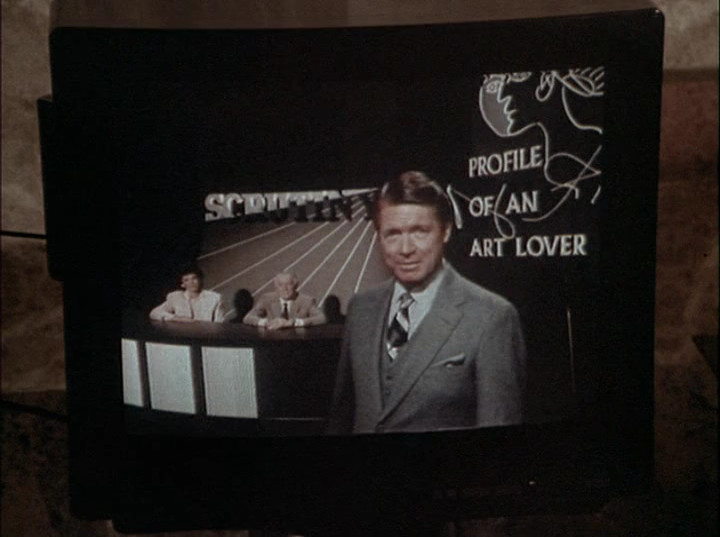
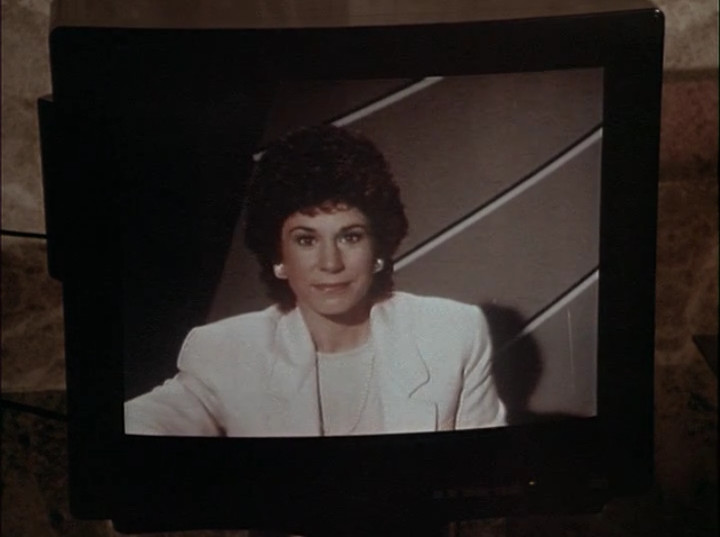
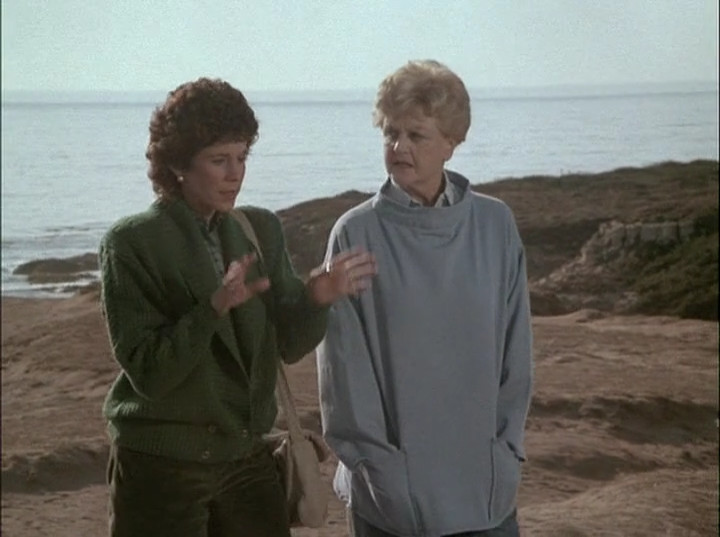


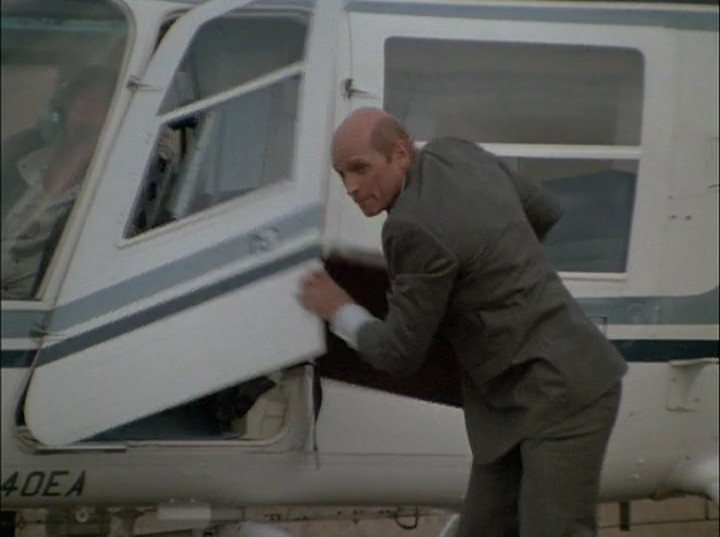
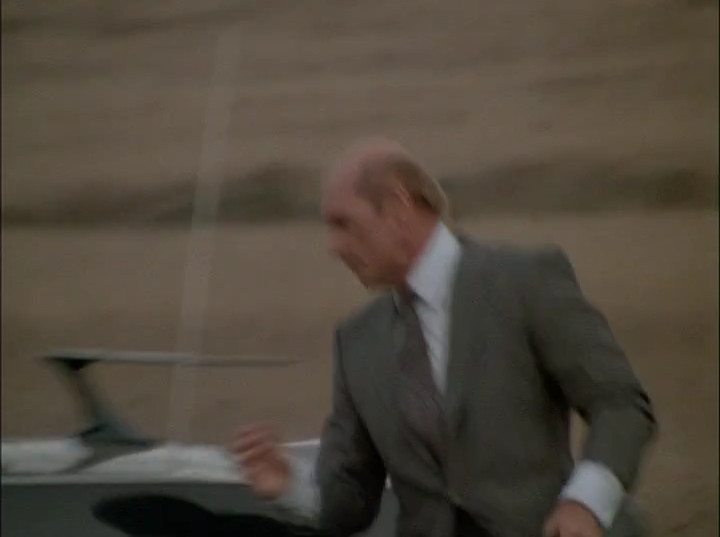
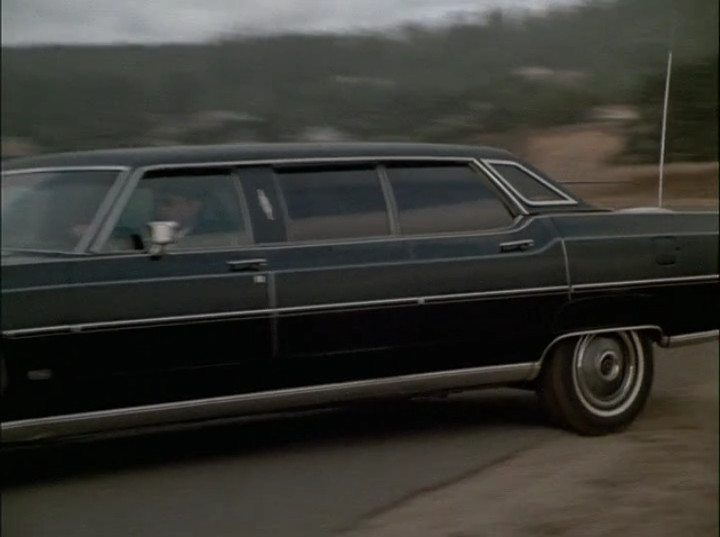
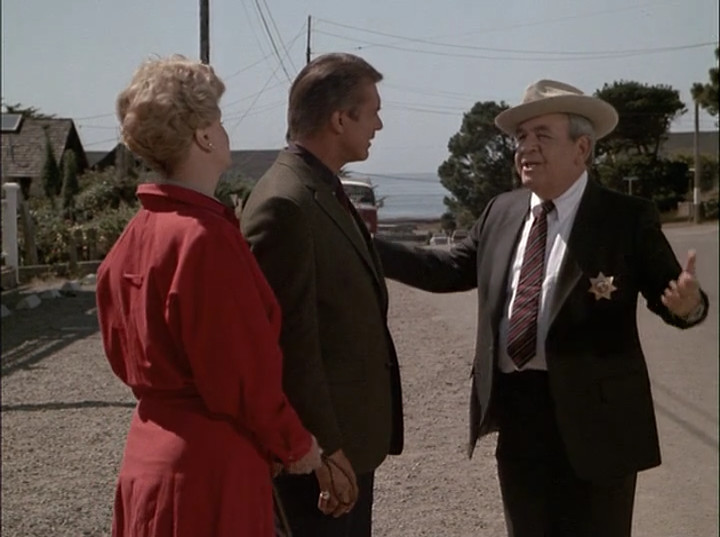
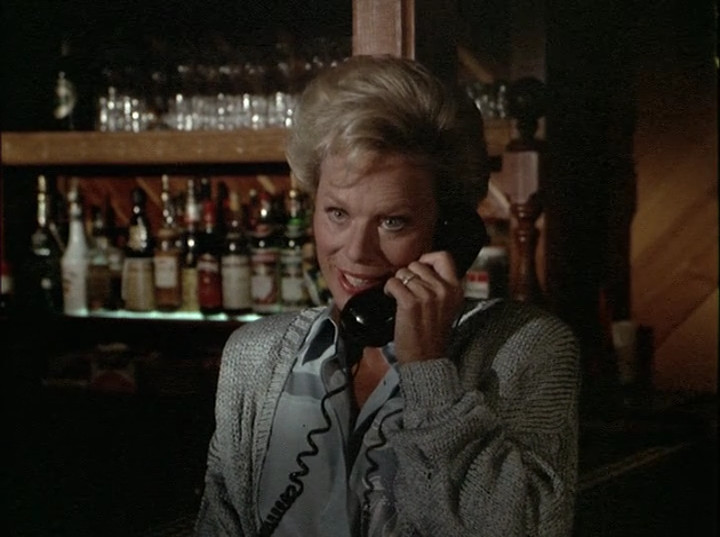


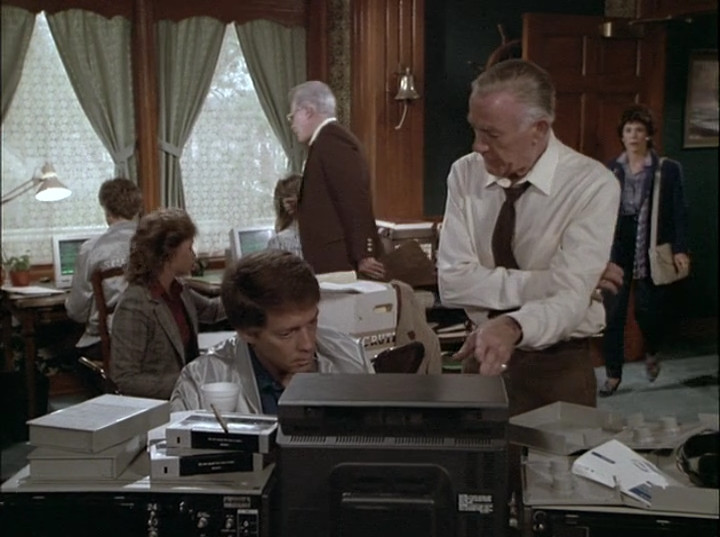

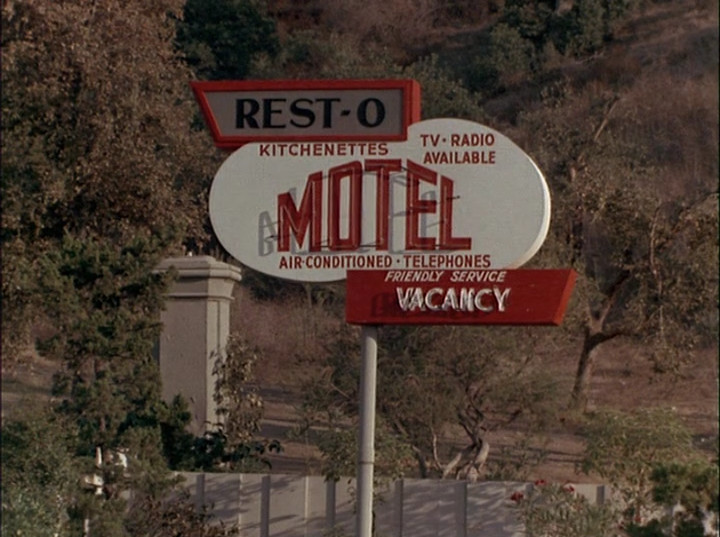

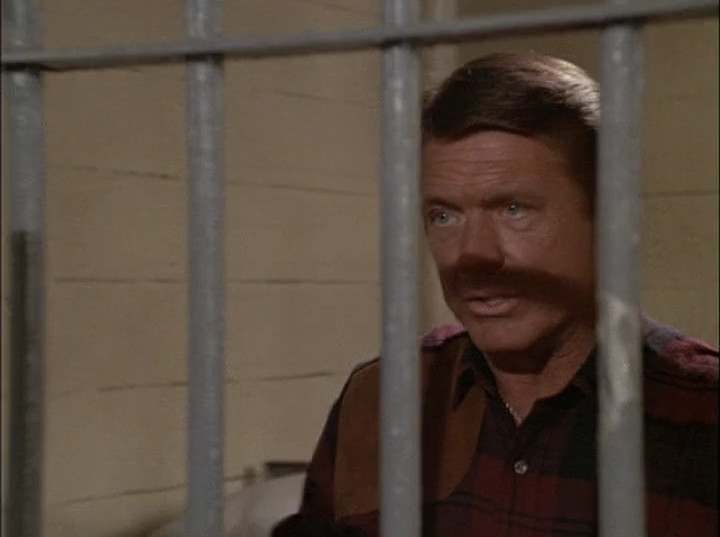


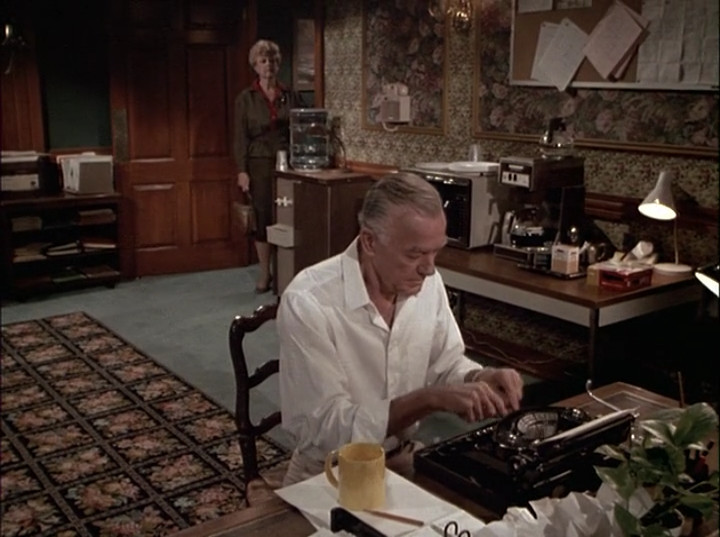


 Chris Lansdown
You must be logged in to post a comment.