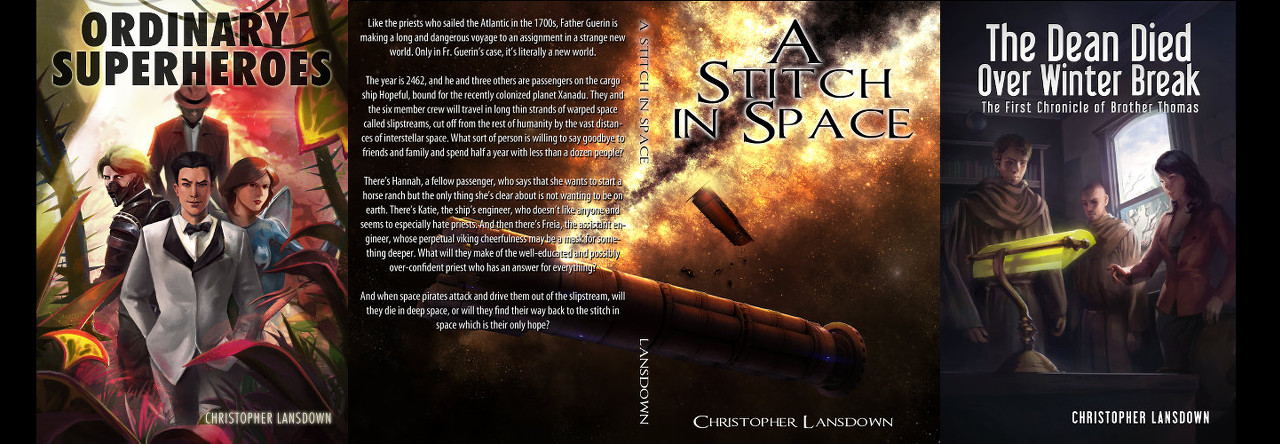
Author: Christopher Lansdown
Review: A Not So Friendly Guide to the Ghetto
In a sense this is a companion review to my review of How to Catch and Kill a Crackhead.(check it out for disclaimers/full disclosure). You can get Ed Latimore’s A Not So Friendly Guide to The Ghetto in a bundle with How to Catch and Kill a Crackhead for $9.97 (at the time of this writing) here.
A Not So Friendly Guide to the Ghetto is an interesting book. Of course, I suspect I would find anything Ed writes interesting, so that’s not really saying anything which distinguishes it from his other books. However, unlike Ed’s other books, I’m not sure how to review this one. It seems to be one part travel guide, one part ethnography, and eight parts social commentary. The social commentary is about a community I’m not now, nor have ever been, a part of, so I don’t really have anything to say about it. It’s interesting to read because Ed is a thoughtful guy, but that’s about it, for me specifically.
The travel guide aspect of the book can be summarized very briefly: don’t go there. That’s also nearly a direct quote.
The ethnography aspect of A Not So Friendly Guide to the Ghetto is probably the most interesting part to an outsider like me, or at the very least the most accessible part. And it does not paint a pretty picture. The most noticeable characteristics described in the ghetto is the presence of extremely violent people who make life difficult and dangerous for everyone else. They are violent on a very high level precisely because they don’t lead long-term sustainable lives. Ed mentions that many of these violent people have a life expectancy of about 23. He doesn’t say so explicitly, but one gets the sense it’s that long in part because such people spend most of their time after the age of about 16 in prison where they don’t get to shoot or stab each other (nearly so often).
This reminds me of the Coolio song, Gangsta’s Paradise. All of it is an interesting song, but I’m especially reminded of the lyric, “I’m 23 now will I live to see 24 the way things is going I don’t know.”
Where this hyper-violence comes from is an interesting question. Ed doesn’t give answers, but he seems to (implicitly) reject the cycle-of-violence answer which a lot of people like. I don’t mean that he suggests it’s causeless, but rather he doesn’t seem—and this is my read of him, not anything he said explicitly—to believe that the violence is an unavoidable trap that those trapped by it can do nothing to escape. Some of the social critique may be relevant here, and can be more broadly applicable than just to the specific community being directly discussed by considering what behaviors and trends in the reader’s community—whatever community that might be—might lead to similar encouragements to violence in the least stable members of that community.
And while the book is certainly an interesting one, it is not without flaws. In the copy I bought the typography changed in chapter 7 and from then on the chapters had two numbers, both their correct number and a number starting over from 1. I asked Ed and he said that he would probably fix this going forward. It also feels like chapter eight might have originally been meant as the first chapter, in that it reads like an introduction that was not re-written when it was moved. I found that a bit jarring. It is also a short book—distributed in PDF format it has 35 pages, and would have fewer if the last third wasn’t double-spaced. And while I’ve certainly read enough business books to be appreciative of an author not padding them out in order to justify a higher price, there were things I wish that Ed had covered. For example, he discussed in some detail how little money many of the bad-decision-makers he talks about come into possession of each year, but he never explains how they make it work. A person who takes in $5000 per year and has to pay $250 per month in rent has only $166 per month left over to afford food. If they make further bad decisions such as buying $2000 rims for their aged lexus, it’s unclear how they can survive since they now have $-0.67 per month for food and can’t photosynthesize. (Further, even if they could photosynthesize, the year-round uniform of sweatshirt, jeans, and timberland boots Ed describes would prevent sufficient light from reaching their skin.) Some explanation of how this actually works out in practice would have been very interesting.
Another fascinating question which gets no treatment here is why the normal human tendency in chaotic situations towards organization by a warlord doesn’t operate here. This of course is the problem with anarcho-capitalism, or really any form of anarchism. The moment you have anarchy, you will get government emerging in the form of weak people supporting the best warlord around, making him strong enough to subdue the other war-lords or keep them at bay so that the important parts of life which require stability (growing food, raising children) can happen. After a generation or two, the warlords will provide enough functions of government as to be indistinguishable from government. After a few more generations, they will simply be government.
The suggestion that no one in the hood has a job (which I take to be painting with a very broad brush) may account for not needing peace to grow food, but however critical Ed is of the parenting which goes on in the hood, parenting does go on, which means that a fair number of people have a huge incentive to support whoever will bring enough peace to let that parenting happen. So why doesn’t this work? Does the presence of police from outside the hood remove the preferable warlords inside the hood? Do the skills required to be such a warlord also enable one to just ditch the whole problem, leaving behind only those incapable of such organization? This last possibility has some resonance with Ed’s advice on how to deal with loud bad-decision-makers in a movie theater: go to a different movie theater. I think it would be grossly unfair to demand Ed have all the answers to why things are they way they are, but some speculation on the subject would have been very welcome since he’d probably have come at the problem from an interesting angle.
It would also have been interesting had there been a section on how people who don’t make exclusively bad decisions but who nevertheless grow up in the hood—people like Ed himself—navigate the violent environment they can’t escape from until later in their lives.
Before I conclude, the modern world being what it is, there is a warning I should probably give about A Not So Friendly Guide to the Ghetto. A good introduction to that warning is the disclaimer found at the beginning of the book:
Please note that the use of the term “nigga”, “nigger”, and other close synonyms are in reference to uneducated, unemployed, unmotivated, ignorant black individuals, not the African American race as a whole.
On the plus side, if this bothers you, I can report that according to my calculations the word “nigga” only makes up 2.5% of the words used (by contrast, 3.8% are “the”). That’s slightly misleading in that I didn’t count usages of variants such as “niggernomics” or “nig worth”, but it gives you a rough idea, I think. Basically, this is not a book for people with delicate eyes. (Nor delicate ears, if you tend to sound words out to yourself, I suppose, but in that case you could probably put your fingers in your ears when you see the words you dislike coming up.)
And all joking aside, it did make me uncomfortable. I’m not used to language like this and it is jarring to hear it used frequently. If you can’t guess, I’m a white guy who grew up in the suburbs where most everyone over the age of 14 got along with each other well enough that for the most part that the only thing the police did was give people traffic tickets. This fortunate circumstance does come with some limitations of experience, and in my relatively sheltered youth it would have been less shocking to hear someone declare their fealty to their lord Satan than it would have been to hear somebody sincerely use racial epithets as a criticism. However incomplete—or if you prefer, unrealistic—a view of the world this gave me as a child, it should speak to how weird it felt to me to read a book where at least 2.5% of the words were some variant of “nigger”. On the other hand I’m confident that Ed is not a racist and I was willing to trust him that there were good reasons for his choices. And having finished the book, I think that there were. I’d say it kept it real, but I don’t know if that would be using the phrase correctly. So instead let me quote the movie A Man for All Seasons, where Will Roper asked Sir Thomas More for permission to marry More’s daughter:
More: Roper, the answer is no and will be no as long as you’re a heretic.
Roper: Now that’s a word I don’t like, sir Thomas.
More: It’s not a likable word; it’s not a likable thing.
Ultimately, so long as people know what words mean, unlikable things will be described by unlikable words. So there’s some value in using unlikable words; it keeps one from getting too complacent in the mere sound of speech and forgetting what is really meant. Ed is describing the sort of people who have attacked him throughout his childhood and nearly killed him more than once. That’s not something one should be comfortable with. Plus, as Ed said later in his disclaimer:
Besides, I’m black. I think that means I can get away with it.
In summary, though it is a book with some production issues which is ultimately disappointing in its brevity, I recommend A Not So Friendly Guide to the Ghetto. Half of $9.97 is not much money to get a perspective on a part of America which (statistically) most of us have never experienced, written by someone who’s read Aristotle extensively. Unless you’re a superhero of thrift, you will probably have often spent more money to get less value. If you’re interested in following my advice and buying the bundle, instructions are here.
Review: How to Catch and Kill a Crackhead
Ed Latimore’s book How to Catch and Kill a Crackhead is an interesting book. Currently it’s only available as an ebook bundle with A Not So Friendly Guide to the Ghetto, which I haven’t read yet. (As of this writing the bundle costs $9.97, available at the link above.)
To give context to my review, like many people, I’ve become familiar with Ed through Twitter. He largely tweets about what you might call self-improvement, if you can get past the hackneyed phrase. But to put this in context, I once asked him if he had a favorite Greek philosopher and he replied that he’s only read Aristotle and Seneca extensively. In my reading of him, he’s about achieving excellence (ἀρετή) by dominating one’s passions through reason, not blowing sunshine up people’s asses in the form of “motivation.” I rather like that. Also, he did an interview with me about making wisdom intelligible. So, if you can’t guess, I’m a fan of his. If you want to call that a bias, I won’t object to the term. I am, in general, biased in favor of anyone with wisdom to share.
How to Catch and Kill a Crackhead is, if the title didn’t give it away, not a serious book. It is properly called farce, I believe. Certainly much of its humor is intentionally absurd, which I enjoyed because I delight in absurdity. Ed also delivers it in a deadpan style somewhat reminiscent of British comedy like Monty Python. I happen to be very fond of deadpan humor, as well, so I laughed out loud while reading it more than a few times. In fact he pulled this dead-pan tone off so well that it took me a little while to figure out that it wasn’t merely an attention-getting mechanism prior to getting down to the serious part. Once I figured that out I started thoroughly enjoying myself.
The basic conceit of the book (stated nearly on the first page) is that crackheads are not mere drug addicts, but in fact an alternative sort of vampire. He takes this premise completely seriously throughout the book, describing the crackhead’s powers of flight and sleeping upside-down by their feet, and how to deal with the problems that can cause when one is in areas they inhabit. The later part of the book is for aspiring vampire crackhead hunters, giving tips on required equipment as well as the ideal party to assemble for battling vampires crackheads.
There are amusing references to pop culture as well as role playing games, comic books, and literature, generally used to good effect, though I missed some of the pop culture references. A few of them are also dated; I asked Ed and he wrote his circa 2007. That also means that he wrote the book in his very early 20s, which does show occasionally in the humor. That is to say, the jokes are occasionally a little juvenile, though mostly I think in cases where Ed couldn’t resist the joke rather than as a crutch, which makes them less cringey since there’s a sort of innocence to them. (At he time of this writing I’m in my late thirties, so naturally I only have limited appreciation for jokes which speak most to late teenagers. We all have our weaknesses.) That said, this is a small minority of the jokes and I think the humor will appeal to most everyone with a sense of humor.
Some of the humor also seems to rely on some familiarity with what Ed calls—in this book—the ghetto. I can only say it seems that way since utterly lacking this familiarity I can only guess that such familiarity would help (that is, it would require knowledge I don’t have in order for me to know for sure). However, this is also a minority of the jokes, and though I sometimes felt like I was just missing something, the book was mostly accessible without this background. Certainly, it would be hard to speak English and have less familiarity than I do with “the hood,” so if you also lack such familiarity, I wouldn’t let it deter you from giving the book a read. It might be better for someone with such familiarity, but it was still quite good without it.
The times being what they are, I probably should mention that there are some jokes which reference what might be called statistical observations about ethno-linguistic groups of people (both people of color and people of transparency). If you use a sensible definition of racism like “regarding an individual not primarily as an individual but primarily as a member of a group”, then there is nothing racist in this book, because Ed is far too sensible a person to make that sort of stupid, elementary mistake. On the other hand, if you use a definition of racism which is basically anything that professional tut-tutters would tut-tut one for, this might not be the book for you. On the third hand, if you use a definition of racism which involves formulas, then the fact that Ed identifies as black might be significant in your calculations, which I will leave to you to work out.
In summary, this is a unique and funny book which I recommend giving a try if you like absurdist humor with the occasional nerdy reference delivered with a straight face that wouldn’t be out of place in a poker tournament.
Predictability vs. Recognizability
Something I didn’t talk about in my post on writing formulas and formulaic writing is that not all predictability is bad. In fact, there is a great deal of any story which one wants to be predictable. If we are reading a murder mystery, we will be irked if there is no murder, and doubly irked if there is no mystery. And if the mystery is not about who murdered the victim, we will be very hard to win over. I think that G.K. Chesterton summarized it when he said that as a boy, he would put down any book which didn’t mention a dead body on the first page. (And once again I can’t track this down. I need to get better at actually sourcing Chesterton quotes.)
Now, while these examples are obvious, they illustrate the point precisely because they are so obvious as to not normally be worth mentioning. When we complain of fiction being predictable, we don’t mean simply that we were able to predict elements of what was in the story. In most cases, that we are able to predict elements in a story is, in fact, a necessary prerequisite to being willing to read the story at all. It is good advice not to judge a book by its cover, in so far as that advice goes, but I think you will find that a book with a completely blank cover (that is, having neither words nor pictures upon it, so that there is no suggestion whatever of what is behind the cover) will not get read very often.
I do not bring this up to be pedantic, but because those cases where we do not say what we mean often conceal interesting truths. Certainly it has been my experience, anyway, that whenever a man says, “everyone knows what I mean” he is wrong. Usually the more certain he is that he is universally understood, the more wrong he is, because the only person who can be completely convinced that everyone understands him is a man who’s never found out what anyone else thought he meant. But, be that as it may, I think that this is a particular interesting topic because what we really mean reveals much about how we enjoy fiction. It also reveals the real reason why books should never be reviewed by people unfamiliar with their genre.
Chesterton once said that an artist is glad of his limitations:
You may, if you like, free a tiger from his bars; but do not free him from his stripes. Do not free a camel of the burden of his hump: you may be freeing him from being a camel. Do not go about as a demagogue, encouraging triangles to break out of the prison of their three sides. If a triangle breaks out of its three sides, its life comes to a lamentable end. Somebody wrote a work called “The Loves of the Triangles”; I never read it, but I am sure that if triangles ever were loved, they were loved for being triangular. This is certainly the case with all artistic creation, which is in some ways the most decisive example of pure will. The artist loves his limitations: they constitute the thing he is doing. The painter is glad that the canvas is flat. The sculptor is glad that the clay is colourless.
And so it is with fiction; the elements which we want to be predictable form what sort of story it is. And this can get very specific. Within murder mysteries, there is the sort of story which can be referred to as an armchair cozy, and within those, there is a yet more specific sort of story which can be referred to as a Christie. Armchair cozies tend to feature a very intelligent detective who uses his wits more than his fists, and Christies tend to have that intelligent detective, at the conclusion of the story, gather up all of the witnesses and suspects into a room and explain the facts as he found them and then set them into an orderly and coherent picture, while clearing away red herrings, lies, and mistaken inferences others had been making.
Now, there are those who criticized Agatha Christie’s work because it always ending with the detective gathering everyone together and summarizing the plot prior to revealing the solution as being predictable and formulaic. These are, in a sense, the mortal enemies of those who love the form of the Christie and feel the lack in the ending of the Maltese falcon, where the solution to the mystery is a mere afterthought. To those who take these plot elements to be part of the form of the story, a story which does not include them is defective. To someone who does not take these plot elements as part of the form of the story the stories are predictable and formulaic.
Which is to say, whether writing is predictable and formulaic is in no small part a matter of how one conceives of the story before one reads it. If one thinks of science fiction as just plain old literature, all of those space ships and other worlds become very predictable and formulaic. Thought of as romances, murder mysteries sure do use the same old device to bring the couple together—if they even remember to have a couple to bring together. And so forth; in a sense this is just remembering that a thing can only be good when thought of as what it is—hammers make terrible pillows, etc. But things like hammers and pillows are relatively clear in what they are while stories rarely fit perfectly into any genre and thus are always defining new sub-genres. Indeed, the fact that there is a type of murder mystery called a Christie testifies to that very fact since they are named for stories with plot elements like those found in many of Agatha Christie’s stories.
And there is a sense in which even thinking in terms of genres is a mistake with fiction because it implies a comparison; it is always a mistake to allow the goodness of one thing to eclipse the goodness of another thing. Perfect happiness cannot rest on infinite novelty since infinite novelty is not possible. (Perfect happiness must instead come from the ability to appreciate a good which has already been appreciated, whether in some greater good, or in the thing itself already experienced.) That said, in a world with imperfect creatures thinking within genres is unavoidable and so a clever (or charitable) author will help the reader to understand what sort of story he’s getting into and what he may expect, that he will know where to look for surprises. Because a large part of enjoying a story is knowing where to look for surprises in it.
(There is the obvious exception of books with “twists”, that is to say, books which signal that they are one sort of thing and then suddenly reveal that they are something else. Being more a re-reader than a reader of new things, my own opinion is that these are rarely good stories because the twist is typically a gimmick. Having managed one thing to startle the reader, the authors of twists often seem to not bother themselves with putting in anything else which is novel, and so there’s no value to re-reading them. There are exceptions to that, though, where the books are worth reading even if you know the twist, so I don’t mean to over-generalize.)
At this point I suspect that the relationship of this post to whether writing formulas encourage formulaic writing should be clear. If the reader is familiar with the formula and reads stories written according to it as if the formula defines a genre, then formulas will not encourage formulaic writing at all (except in so far as they elevate formulaic writing that otherwise would have been unreadable to the level of being readable, as I discussed in the post I linked above). On the other hand, if readers do not understand the formulas as a type of writing, there is a good chance that they will find fiction writing according to the formula to be formulaic because they will be looking for novelty in the wrong place.
This same phenomenon can be seen in music appreciation, by the way. A friend of mine who studied music in college pointed out that each type of music has its typical structures (allowable cords, cord progressions, repeats, and so on) inside of which musicians play around and differentiate themselves. Those familiar with these structures hear the music as music, while those who aren’t familiar with these structures will often hear the music simply as noise. This is why new genres often gain popularity with the young, who have not imprinted on already accepted musical structures and who can easily adapt to a new musical structure. Later, they spread as those who need more time to learn new music’s structures finally do.
There’s even something analogous in looking at the “long hair” of the Beetles. By modern standards, their hair is within norms for businesslike hair styles. In fact, on this album cover they almost look like modern bankers:

Not quite; bankers do have an extremely recognizable style that has shifted only very little with the times. But in their time, the Beetles were icons of rebellion. Today, outside of a few niches like banking, we barely have any standard hair styles for men—except possibly that mullets are bad—and so nothing violates those standards. (Again, except mullets, for some reason.) But the curious upshot of those lack of standards is that if anyone’s hairstyle is recognizable, it is therefore derivative and boring. There is, I think, a lesson to be learned there.
Glory to God in the highest.
Admitting One’s Weird
In an interesting essay I suggest reading, Ed Latimore gave, “5 Lessons From Growing Up in the Hood.” One of them in particular caught my eye:
1. Good manners go a long way.
I fought a lot as a kid. That’s just par for the course growing up in the hood. I would have fought a lot more if it wasn’t for one simple phrase: “My bad.” For those of you that don’t speak hood, “My bad” is the equivalent of saying “I’m sorry.”
You bump somebody in a crowd? ‘My bad’ goes a long way. Step on someone’s foot on a crowded bus? Dude might get mad, but you can cool it quick by just saying ‘My bad.’ Say something a little too offensive that gets guys in the mood to fight? Just say ‘My bad’ and dial it down. It’s amazing what an apology can do to cool tempers in the hood.
I didn’t grow up in the hood, nor even particularly close to it, but I found the same thing applies to situations with much lower stakes: being willing to admit error where one can truthfully do so goes a long way to smoothing out human interactions. And the curious thing is that where one is telling the truth in admitting error, most people are very willing to accept that and move on. People, by and large, don’t tolerate affronts to their dignity, but they are very willing to tolerate other people’s human imperfection where it is acknowledged as such and where a person is willing to put in the work to make things right afterwards.
This applies quite a lot in the context of business. If one makes a mistake in a professional setting, simply admitting it in a straight-forward way tends to turn such mistakes into a non-issue. Professionals are there to earn money, which they do by solving problems. Co-workers’ mistakes are just one more problem to solve. This can of course become excessive to the point where you are causing more problems than you are solving, but if that’s the case you’re probably a bad fit for your job and should move on for everyone’s sake. But where you are competent at your job, people just don’t really care deeply about the occasional mistake, and if you own up to it, there’s nothing left to talk about so people just move on.
And it’s that last part that I want to talk about in another context. Most people are weird but hide it; and most people are made very uncomfortable by other people being different (which is just another way of saying that they’re weird). At its root this comes from a tribal instinct; it is not good for man to be alone—and we know it. Differences make us fear rejection, though a little bit of life experience and sense teaches us which differences matter and which don’t. But sense is surprisingly uncommon and learning from life experiences is—for quite possibly related reasons—similarly rare. So a great many people fear whatever is different from them. This can be people who look different but I think it’s far more common to be afraid of people who act differently. And one thing people do when they’re uncomfortable is talk about it.
And this is where admitting that one is weird can be a very useful strategy. To give a concrete example, I shoot an 80# bow. (For a long time it was actually 82# but string creep eventually set it and for some reason they couldn’t get it back up.) That’s pretty uncommon, these days, especially for someone with a 30″ draw length. Most men shoot a bow somewhere in the range of 55#-70# (women tend to shoot in the 35#-50# range). You’d think that an 80# bow wouldn’t seem that odd to people shooting a 70# bow, but for reasons relating to how many reps you can do in weight-lighting being a function of how close you are to your one-rep max, it actually is a pretty big jump for a lot of people. They could draw the bow, but only a few times an hour. I’m not that strong, but I’m a relatively big guy (6′ tall, over 200lbs) and so I can comfortably shoot my bow for an hour or two at a stretch without losing more accuracy than if I was shooting a 70# or a 60# bow (really the main thing affecting accuracy is that your shoulders get tired of holding the bow up at arm’s length). So it’s a very reasonable thing for me, personally, to do, but it’s pretty odd among people at the archery shop I go to. And moreover it’s not really necessary. Where I live the only common big game is whitetail deer and you can reliably kill a whitetail with a 40# bow if you’ve got a good broadhead/arrow setup and are a good shot. I do it because I like it, and because it acts like insurance. With the double-edge single-bevel broadheads I use on top of 0.175″ deflection tapered carbon fiber arrows, the whole thing weighing 715 grains, shot from an 80# bow, if I make a bad shot and hit the large bones my arrow will most likely go right through and kill the animal anyway. And I could use the same setup for hunting moose or buffalo without modification, should I ever get the opportunity. (That would fill the freezer with meat in one shot!)
So, as you can see, from my perspective this is a reasonable thing to do. But from most everyone else’s perspective, it’s weird. And moreover, it’s more than most men at the archery shop I go to can do. Some people there can’t even draw my bow, and many who could would find the strain too much to do more than a few times. It would be easy for people to suspect that I look down on them as lesser because of it, and to reject me in self-defense. If someone you respect looks down on you, it’s painful. If someone you reject as mentally deranged looks down on you, it’s irrelevant.
So when people make jokes about me/my bow being atypical, I go along with it. I will cheerfully admit that I’m engaging is massive over-kill; I will joke along with them about the way deer are wearing bullet-proof vests these days. (My setup could probably go through a lighter bullet-proof vest since broadheads are razor sharp and can cut through kevlar. It has zero chance against the sort of vest with ceramic plates in it.) If someone characterizes me as crazy, I smile and say, “nuts, but I like it.” And in general the joking lasts for a minute then is forgotten about and things are normal. This is, I think, for two reasons:
- I have signaled that I know I am abnormal and am happy with the status of being abnormal. I am clearly indicating that I am not the standard against which others should be measured so I am no threat to anyone’s social standing or sense of self.
- It smothers the impulse to joke about me, in the sense of taking the air away from a flame. If you say that someone’s crazy and he smiles and says, “certifiable,” you just don’t have anywhere to go. Joking/teasing requires a difference of opinion. If someone agrees with you, there’s nothing left to say since a man looks like an ass if all he does is repeat himself.
Of course, this does depend on the content of what’s being said about me being something which I can agree with. In this example, “crazy” just means “abnormal,” which is quite true. If someone were to accuse me of being a criminal I would defend myself, not agree with them. The point is not to be a carpet for people to walk on but rather to learn how to pick one’s battles and only fight the ones that need to be fought. That’s a general principle of skill, by the way; skill consists in applying the right amount of force to the right place to generate the best results. A lack of skill wastes force first in applying it to the wrong place and so needing far more force to achieve the desired result, and then in needing to apply more force to correct the problems caused by having applied force to the wrong place. That’s as true of picking one’s battles as it is of swing dancing or balancing in ice skating. Or, for that matter, archery; missing the target in archery often means that you have to spend a lot of effort to pull your arrow out of a tree.
God’s Blessings on March 1, 2017
God’s blessings to you on this the first day of March in the year of our Lord’s incarnation 2017.
The popularity of videos is an interesting subject, especially for someone who runs a youtube channel. Here are my last few with their views, from most recent to oldest:
Christian Asceticism: 87
Thoughts about Bishop Barron prayer: 132
Believing the Incomprehensible: 248
Why I Don’t Debate Atheists: 948
Just for Fun: A Debate Challenge from Deconverted Man: 491
Channel Update & Thoughts on Disagreement: 171
The Value of Debate: 171
To Err is Human: 214
What the Burden of Proof is: 179
The Burden of Proof Isn’t a Logical Fallacy: 375
Good and Evil are Asymmetric: 249
Discussing Social Media w/ Russell Newquist: 142
Logic Lesson for Atheists: 528
Why Atheists Can’t Logic: Answering Deflated Atheism: 1,527
The Burden of Proof: A Few Quick Thoughts: 293
Sci-Fi Author Brian Niemeier, A Conversation: 139
Chesterton’s Post: 183
Occam’s Razor: 459
(I should note that the way that youtube works is that there is a big bump in views in the first day or two for a video as subscribers notice it and it goes through whatever recommendation process is used for recommending new videos, then things tend to settle down to a steady state of getting a few new views most days. Thus a video with the same number of views as one which came out before it is more popular.)
So as you can see, it’s all over the place. There are some definite themes; things which are explicitly about atheism tend to do better than things which aren’t. In particular I find it interesting that Why I Don’t Debate Atheists is about 5.5 times more popular than The Value of Debate, despite being more recent, and despite it being basically just an application of The Value of Debate. I actually suggest watching The Value of Debate instead for a more positive take on it in the description of Why I Don’t Debate Atheists.
Now, in fairness, there is a three minute section in the beginning of Why I Don’t Debate Atheists in which I sarcastically summarize it as:
- I’m too scared to. If I ever heard an atheist say, “where’s your evidence” or “that’s not evidence” my faith would shatter.
- I’m too arrogant to. I already know everything.
- This makes me a bad Christian because Christians should always treat public blasphemy with the utmost respect.
I think a lot of Christians have been accused of all this many times, so I suspect that my sarcastic “executive summary” in the beginning was cathartic for more than just myself. So it might have gotten shared or recommended more often. Still, it’s interesting to consider what relationship the subject matter and title have on viewership. And I hope it should be obvious that I don’t blame anybody for watching only what they think is likely to be of direct interest to them and their lives; we all have very limited time and a great deal of things clamoring for our attention. Anyhow, it’s interesting to observe and consider.
Glory to God in the highest.
God’s Blessings on February 27, 2017
God’s blessings on this the twenty seventh day of February in the year of our Lord’s incarnation 2017.
So, I’m clearly not very good at keeping up the daily blogging. I did get a video out over the weekend, though:
It’s some commentary on Bishop Barron’s video on prayer, which is much better:
Still, he didn’t say it, so it might be worth saying.
I also put up a few videos recently about a debate challenge which I got from Deconverted Man and why I don’t debate atheists. Both drew a fair number of comments from people who, shall we say, do not appear to be rocket surgeons. (I like mixing metaphors to spice things up.) The most noticeable sort are from people who can’t seem to get that I am not trying to debate anyone in those videos. The first is me making fun of a ridiculous debate challenge (which was absurdly specific about things which needed no specificity and absurdly under-specified in the things which did). Specifically, making fun of a debate challenge from a fellow who criticized a previous video of mine as being irrational. The other is an explanation of why I, personally, don’t debate atheists at this point in my life. Very explicitly so; I say that in the first minute. And yet I got comments from people critiquing it as if it were one side of a debate.
I also got a tweet from “Mr Oz Atheist” snarking,
Wouldn’t have thought it takes a video 32 minutes long to say ‘Because I have no valid arguments’
I’ve dealt with him before and he’s not exactly the sharpest light bulb in the picnic basket, if you know what I mean. But the really curious thing is that I then got a comment on my video:
Let me help you out and shorten your video. You don’t, because you can’t provide good evidence, just logical leaps and fallacies.
Now, I have no proof that he’s one of Mr. Oz Atheist’s followers, but the timing and the phrasing is suggestive. Which raises an interesting question, even if it didn’t happen in this particular case: why do people go to following links in order to leave comments on things they haven’t watched? Unless the comments are original thoughts derived from the title (and hence won’t be very original since most everyone sees the same possibilities in titles), they have to be just parroting whatever it was they read about the video. Why would a human being think that’s valuable? Is it that their Dear Leader’s thoughts are so wonderful they must be shared, and Dear Leader has too little time to leave comments on every video he comes across? Are they hoping that they’ll be noticed by Dear Leader and get praised? Is this purely a pack instinct to attack anything perceived as an enemy? There must be some explanation, but at present I’m at a loss to understand it.
Incidentally, what is this odd obsession atheists have with valid arguments? There are valid arguments for everything. They’re the easiest things in the world to construct. Just take modus ponens:
p→q
p
∴ q
Where q is the conclusion you want and put anything at all for p. Here, with p being 2+2=5 and q being God exists:
If 2+2 = 5, then God exists.
2+2 = 5
Therefore, God exists.
It’s perfectly valid, as an argument. If the premises are true, the conclusion certainly follows from them. What it’s not is a sound argument. (A sound argument is a valid argument with true premises.) More colloquially, what it is not is a good argument.
Sometimes I’m tempted to thank these atheists for making atheism look so bad. But the thing is, all this idiocy doesn’t make me angry, it makes me sad. These poor creatures should be taken care of by people more able to think than they are; the strong should protect the weak. But these poor people have fallen into the clutches of atheists who are typically only a little bit smarter than they are and not really any better educated (as opposed to schooled) and they’re suffering from it. Pray for them with me, if you will.
Glory to God in the highest.
God’s Blessings on February 22, 2017
God’s blessings to you on this the twenty second day of February in the year of our Lord’s incarnation 2017.
My recent video where I made fun of the debate challenge I was given sparked a lot of comments. In case you haven’t seen it, it’s here:
Now, straight up, that was not a nice thing to do. This is making fun of Deconverted Man. But, it should be noted, niceness is not a virtue. To put it bluntly, Deconverted Man is an idiot who presumes to lecture people about how they’re wrong when he clearly has no idea what he’s talking about. This is something he should be corrected on, and equally importantly, since his errors are proclaimed publicly, it is right that he should be corrected publicly. The public good is disturbed when ignorance is proclaimed as knowledge and that goes unchecked.
I suspect that what makes me (and at least a few other people) uncomfortable with this is that it’s ungentlemanly. A gentleman never draws attention to the failings of another. It is unpleasant, and in polite society unnecessary. When someone is acting intolerably that is best handled by avoiding to invite them to your parties. But polite society is a fiction created by wealth in order to be an ornament (at best). This sort of thing pretends to Christian virtue because it can seem like the idea of not judging others, but it in fact is not that. This sort of politeness has no problem at all judging others; it’s concerned entirely with the enforcement of that judgment.
Now, here’s the problem. Me making fun of Deconverted Man is a bit like a young man beating up an aged grandmother. It’s not a fair fight. But that doesn’t mean that I should therefore let Deconverted Man get away with publicly proclaiming falsehoods. And with thick-skulled idiots like him, gentle criticism from somebody who is an out-group member (since I’m a “theist” and he’s an atheist) will have precisely no effect. Moreover, his idiocy is public. Subtlety does not work for most people. It’s very commonly liked because it’s gentle and doesn’t lead to bad feelings, except that it often does lead to misunderstandings and bad feelings anyway. But subtlety is, I suspect, far more often an act of cowardice than it is an act of love.
And a lot of people really dislike “drama”. That is, they dislike unpleasant feelings. And being around people who are not getting along generates a lot of unpleasant feelings. Which is fair. Human beings are not meant to live in very large groups; we’re much better off with small groups of people we’ve known for many, many years. We work much better in that sort of environment. I suspect that they should be honest with themselves that they just can’t handle the truth, though (which is fine; we are fallen creatures in a fallen world, and can’t handle everything we should—I can’t either).
Glory to God in the highest.
God’s Blessings on February 21, 2017
God’s blessings to you on this the twenty first day of February in the year of our Lord’s incarnation 2017.
I missed something like four days in a row now. Argh.
I released a video at lunchtime today about a debate challenge I received. It was ridiculous and I think the British expression is that I took the piss out of it:
I laughed at it, in any event. I’ve got a video about prayer which is coming out soon so I’m looking forward to that.
And I’m going to try to get back to daily posts here.
Glory to God in the highest.
God’s Blessings on February 16, 2017
God’s blessings to you on this the seventeenth of February in the year of our Lord’s incarnation 2017.
Last night I did a hangout with Max of the Escaping Atheism project on YouTube, if you’re interested you can watch it here:
We spoke about the style of talking with Atheists (primarily what I call kakangelical atheists—atheists who want to spread the bad news), and how there are different styles and a place for Escaping Atheism’s blunt, combative style.
To give a brief summary of why, especially on the internet there are a lot of kakangelical atheists whose approach is to be very confident and very aggressive to believers, asserting in very forceful tones that they’re delusional idiots for believing in a magic sky fairy with no evidence! Etc. And I think that there is value to some people equally forcefully responding, “no, you’re the delusional idiot for thinking God is like a magic sky fairy, for asserting that there is no evidence in plain contradiction of simple fact, and for not having bothered to learn anything before spouting off about it.”
It’s not that this will convince anyone that they’re wrong, but curiously it will sometimes convince people to go do some studying, not because they are inspired to better themselves, but because having done no studying they have no reply, and so may go do some studying just to procure some better rhetorical weapons. Along the way, they may end up learning something. That said, the real important part of this is that it neutralizes what amounts to bullying. Powerfully presented confidence is intimidating; to see it on both sides reduces its effect, giving space for reason to operate. This is especially important for the young; as I mentioned in the video that forceful approach shook me a lot when I was a teenager. Now that I’m getting close to forty I tend to just reply with equal confidence and move on, occasionally amused at the names I get called for doing what the other guy just did (that is, asserting that I was right and the other guy wrong). I don’t think I’ll ever understand thin-skinned people who lead with insults. Thick-skinned people who open with insults make sense to me, but how have the thin-skinned ones not learned to moderate their approach in pure self-defense?
Now, it might be brought up that one catches far more flies with a tablespoon of honey than with a gallon of vinegar. It’s a great saying, and in certain situations very true. I’m not sure of the literal fact behind the metaphor, though; I’ve seen a lot of dead flies in a bowl of apple cider vinegar which was accidentally left open. That being said, if you want to find people who responded with mild language in the face of blasphemy, I suggest you read something other than the bible. As the meme goes:

Glory to God in the highest.
God’s Blessings on February 15, 2017
God’s blessings to you on this the fifteenth day of February in the year of our Lord’s incarnation 2017.
There are a lot of trials in being a parent, but I think that the hardest is sleep deprivation. At least for me, I find it very difficult to function when I’m underslept. There is an element, I think, in Christian psychology in the modern west where we expect that carrying our crosses will be glamorous. Well, not glamorous, exactly, but the sort of thing people would write stories about. We’re so soaked in fiction that we think about a great deal of life in terms of how it would be summarized in a story. And after all, Jesus carrying his cross was written about in a story. Surely, so our emotions sometimes go, our cross to carry will be similarly story-worthy.
But our crosses to bear are often things like, “sure, Child, I will walk you to the bathroom at 3am then tuck you back into bed; don’t worry, I’ll get back to sleep eventually” and dealing with the exhaustion and headaches the next day.
Some wag apparently said that there were enough putative fragments of the true cross of Christ to make a ship, whereas in reality there are something like four kilograms worth of fragments claimed to be from the true cross, but in any event one night of little rest is not like a splinter from one’s cross. For many of us, I think we carry our crosses one splinter at a time, and over the years they add up to a cross, so we don’t notice and it’s very easy to complain because we don’t think of them the right way.
Glory to God in the highest.
God’s Blessings on February 14, 2017
God’s blessings to you on this the fourteenth day of February in the year of our Lord’s incarnation 2017.
I’m not feeling much today in terms of a subject to write about, but here’s a video I did recently on the subject of to err is human:
I look at the side of to err is human which holds that making mistakes is part of being human, and why that can’t be true. (I don’t object to the idea that we should be realistic about how all men make mistakes, and should be understanding of them when they do, and I don’t address the sense of contrast in the original, “to err is human to forgive divine”.)
Glory to God in the highest.
God’s Blessings on February 13, 2017
God’s blessings to you on this the thirteenth day of February in the year of our Lord’s incarnation 2017.
There’s an interesting phenomena going on right now in the “skeptic community” which is very approximately the branch of the online atheist community who dislikes identity politics. An extremely brief summary of it is that some prominent members of the skeptic community gave paid endorsements to a company promoting an app/social media site called Candid. (I’m not being coy, by the way, I haven’t followed enough to know who they all are. I suspect it’s public knowledge, but it’s not relevant here.) A less prominent member of the community (going by the name Harmful Opinions) then called Candid into question as being, far from a dedicated to free speech, seeming to use an AI in order to police speech more stringently than it has been before. The truth of the accusations I don’t know; I’ve seen some evidence presented by Harmful Opinions in a video, but without tracking down original sources that’s not really different from ignorance. It’s not really relevant to me since I’ve never heard of the social media platform makes it sound like I’d never try it, so it’s just not relevant to my life.
What is relevant is that a rift in the skeptic community where prominent skeptics are being taken down a peg certainly seems like good news to those of us who are on the receiving end of their followers blind faith in the sufficiency of atheism as a worldview. And to be explicit, I believe that one part (not the whole) of the confidence that many slow-witted atheists have that atheism has all of the answers to life’s questions which are necessary to live a good life is because they see more intelligent, charismatic people like the prominent skeptics being (apparently) content living the atheist life and take their confidence from that.
So I think that there is a hopeful pleasure to be seen in this which can be distinguished from simple schadenfreude (“shameful joy”) at bad things happening one one’s enemies. I say to “one’s enemies” but they’re not really my enemies; if they’re anyone’s enemies they are the enemies of those they are leading astray. They’re not really doing anything to me. (Also I run far too small a channel for them to even know I exist, so none of them have ever mentioned me or anything like that.)
This is also something which touches on the issue of “atheists can be just as moral as Christians” which comes up less these days than it did decades ago, I think, but it still comes up because it is true that a given atheist can be personally better than a given Christian. Which is to say that the best atheist is better than the worst Christian. But as it becoming ever clearer, that’s mostly a theoretical statement. The rate at which atheists are degenerating is startling to the point of being scary. Of course, they are degenerating in the sense of coming to believe that if God is dead all things are permitted, not that if God is dead, you can get away with everything. Which is to say that they are considering worse and worse things to be perfectly moral. So if you want to murder your child in the womb after a three day cocaine bender/orgy with married people, that’s your own business and doesn’t make you any less moral than anyone else.
What’s going to be really bad is the people who are raised this way, by the way. People who were raised with morals but then overthrew them still have most of the inhibitions of their youth, at least for a few decades and often for the rest of their life. People who were raised with the idea that they can do anything they want so long as everyone consents—whatever that means given that they also don’t believe free will exists—will act very differently. It’s not likely to be pretty. Be that as it may, there may be some effect of this for the intermediate people who still have some scruples against lying (does anyone consent to be lied to? But being hung up on telling the truth is a Christian hang-up; I suppose the usual atheist approach is to not think about it). Seeing that many of the prominent atheists they look up to as living a good atheist life are in fact willing to lie and sell out their followers for money may shake some people’s confidence that atheism is in fact a viable path to a good life. So I think that greeting this scandal in the skeptic community with glee is defensible on this ground.
Though I think it’s important for Christians to be careful here; this sort of thing can very easily turn into gossiping. But that does not mean that tarnishing the good name of a villain is wrong; to uphold the reputation of a liar is to be complicit with his lies. So while great care is warranted, I do think that there is a legitimate way of receiving this news with mixed pleasure. Of course, no sin can properly be the occasion of pleasure, so it cannot be a pure pleasure in hearing this, but that truth may finally be revealed to those who have been in darkness is worth celebrating.
(And if anyone wants to draw a false equivalence between this and misdeeds by priests or pastors, the key distinction is this: no one can actually convict the atheists of having done anything wrong on atheist principles. About the most you can convict them of doing is possibly acting sub-optimally from a species-benefit perspective. Or possibly being incompetent in their self-interest. When a priest does something immoral, he can be convicted by the Christian morality he himself acknowledges. In short, the key difference is that if the prominent skeptics acted badly, they cannot be charged with being hypocrites. Which is a far greater condemnation of them.)
If you can, say a prayer for all of the members of the skeptic community, prominent and anonymous alike. They sure as hell need it.
Glory to God in the highest.
God’s Blessings on February 12, 2017
God’s blessings to you on this the twelfth day of February in the year of our Lord’s incarnation 2017.
I’m traveling right now and in the hotel I was staying in the bed was too soft and the pillow was too hard. I suppose that means that on average I was quite comfortable.
It’s an old joke, but for a reason. Not everything which can be measured tells you anything when you do. That, of course, is the role of wisdom. To (among other things) distinguish between the things one should apply statistics to and the things one shouldn’t. Not too long ago I saw a fun rant / tweet storm from Nicholas Nassim Taleb about how Nate Silver’s predictions in the presidential race were junk. He couched it in terms of any model with such a high variance approaches a coin flip, but I prefer to look at it as Mr. Silver modeling an alternate reality. I’m not sure which, but it’s one of:
- Outcome if nothing changes between now and the election
- Outcome if the election were held today.
They’re related, of course, but the first is obviously not our world, because things change constantly in our world, especially when two large groups are vying for a prize. The second is obviously not our world because our election has a different date.
And as we’ve seen, these things will have a similar outcome to our world only when they do, and not for any fixed, causal reason.
In fact, the only real purpose to such public polls and public models is entertainment. A 24 hour news cycle needs far more interesting events to happen than typically do in the real world, so news organizations are forced to do much if not most of their reporting about hypothetical worlds. The big difference is how discreetly they do it.
Glory to God in the highest.
No Post Today
I’m sorry I didn’t get to it today or yesterday. Things have been extra crazy. One interesting thing, though, is that my wife sprouted an avocado seed (pit) and put the root in a wine bottle filled with water. Curiously, it put the root out for several weeks before it started growing anything in the top. Seemed odd to me with all of the energy in the pit until I realized that no matter how much energy the plant has available, the leaves will need a lot of water or they will dessicate and die because leaves can’t help using water in sunlight. Hence the relatively large root system first.
Glory to God in the highest.
George Orwell on Penny Dreadfuls
Via a blog post by Brian Niemeier I found this essay by George Orwell. It’s mostly about the penny dreadfuls which are popular in England at the time of writing, which appears to be 1939. It’s a curious read for the snapshot of history it gives, but the whole thing is tinged with a bit of disapproval, which finally comes out in the end. It turns out that this essay was written during Orwell’s socialist phase, before he became disillusioned with socialism (I heard in the wake of the Spanish civil war). And his point in writing the whole thing was to note how conservative penny dreadfuls were, and since they were read primarily by children in the range of 10-16 years old, that his was probably very influential. So, he concluded, there should be penny dreadfuls written by socialists to promote socialism.
But there was a problem, which he noted and proposed a solution. First, the problem:
This raises the question, why is there no such thing as a left-wing boys’ paper? At first glance such an idea merely makes one slightly sick. It is so horribly easy to imagine what a left-wing boys’ paper would be like, if it existed. I remember in 1920 or 1921 some optimistic person handing round Communist tracts among a crowd of public-school boys. The tract I received was of the question-and-answer kind:
Q,. ‘Can a Boy Communist be a Boy Scout, Comrade?’
A. ‘No, Comrade.’
Q,. ‘Why, Comrade?’
A. ‘Because, Comrade, a Boy Scout must salute the Union Jack, which is the symbol of tyranny and oppression.’ Etc., etc.
Now suppose that at this moment somebody started a left-wing paper deliberately aimed at boys of twelve or fourteen. I do not suggest that the whole of its contents would be exactly like the tract I have quoted above, but does anyone doubt that they would be something like it? Inevitably such a paper would either consist of dreary up-lift or it would be under Communist influence and given over to adulation of Soviet Russia; in either case no normal boy would ever look at it.
I think that this is a fairly good description of the problem with socialists writing, well, anything. Their philosophy is so inhuman that it can’t be made appealing. But Mr. Orwell has a solution:
But it does not follow that it is impossible. There is no clear reason why every adventure story should necessarily be mixed up with snobbishness and gutter patriotism. For, after all, the stories in the Hotspur and the Modern Boy are not Conservative tracts; they are merely adventure stories with a Conservative bias. It is fairly easy to imagine the process being reversed. It is possible, for instance, to imagine a paper as thrilling and lively as the Hotspur, but with subject-matter and ‘ideology’ a little more up to date… If, for instance, a story described police pursuing anarchists through the mountains, it would be from the point of view of the anarchist and not of the police. An example nearer to hand is the Soviet film Chapaiev, which has been shown a number of times in London. Technically, by the standards of the time when it was made, Chapaiev is a first-rate film, but mentally, in spite of the unfamiliar Russian background, it is not so very remote from Hollywood… All the usual paraphernalia is there — heroic fight against odds, escape at the last moment, shots of galloping horses, love interest, comic relief. The film is in fact a fairly ordinary one, except that its tendency is ‘left’. In a Hollywood film of the Russian Civil War the Whites would probably be angels and the Reds demons. In the Russian version the Reds are angels and the Whites demons.
To put his solution more bluntly, he proposes lying. Since the philosophy of socialism is too inhuman to communicate to ordinary people, he suggests trying to make it more palatable by showing you the people who have been duped by it, who are still at least mostly human, and not the inhuman philosophy to which they have been duped. And moreover he’s talking about showing the dupes at the moment when they are least typical of the philosophy of their side. Anarchists being chased through the mountains by police are romantic because a group of people working together to avoid death in a harsh environment is romantic. But anarchy is not a group of people working together, it is at its most typical the strong preying upon the weak. (Until such time as a strong man starts protecting the weak in exchange for their supporting him, and government starts once again. To paraphrase Chesterton talking about paganism, if society ever dissolves into anarchy, it will end as all anarchy does. I do not mean it will end in death. I mean that it will end in society.)
And in fact Orwell does have some intuition of this, I think. Because the next sentence after the quote above is this:
That is also a lie, but, taking the long view, it is a less pernicious lie than the other.
This sort of lying in fiction is a phenomenon we are all familiar with, I think. I suspect most people are familiar with the leftist version of it, but I’ve seen quite a lot of it from atheists, as well, where they depict atheists doing all of the bold and daring things that men who believe in something greater than themselves do, except without the believing in anything greater. (I’m speaking of western materialist atheists, here.) Unlike Orwell, whose purpose was recruiting people into a cause, I suspect that atheists tell these lies primarily to themselves, as a form of comfort. They like to think about what they’ve given up, as if they haven’t given it up.
God’s Blessings on February 7, 2017
God’s blessings to you on this the seventh day of February in the year of our Lord’s incarnation 2017.
I got in a conversation about church hymns today. For anyone who doesn’t know, after the switch from Latin to the customary vernacular which happened in the 1960s, the Catholic Church in America was in great need of English language hymns, and the hymnal which was put together very quickly, well, sounds like it was. There are some really good songs in the hymnal—in the sense of both having beautiful music as well as having theological content in the words—but then there are also some songs whose inclusion is hard to understand apart from the poor judgment which goes along with desperation and lack of sleep. Or possibly very weird taste born of living in a very strange time, which the 1960s in America certainly seems to have been. I do think that people get too worked up over this; if the worst cross one has to bear is singing some bad hymns while getting to celebrate our salvation by eating the body and drinking the blood of God, one has very little to complain about. And I expect that better hymnals will be produced within a few decades; on the scale of a 2000 year old church that’s nearly the blink of an eye. Still, that’s not quite so fast by the standards of a human life, and while Marty Haugen wrote some competent melodies it seems that anything to which he wrote the words is a penance to sing. So, for anyone who’s suffered through the hymns of Marty Haugen and his similarly-talented contemporaries, take solace with me in this fun parody (no idea who to attribute it to):
Glory to God in the highest.
Time Chasers
One of my favorite episodes of Mystery Science Theater 3000 is Time Chasers. It’s not my favorite—that’s Overdrawn at the Memory Bank—but it’s up there. I was recently reminded of the scene where Bob Evil (actual name: J.K. Robertson; President of Gencorp) quotes a clause in the contract his company has with Nick Miller (the main character) saying that if anything in the time transport project is deemed of value or a threat to national safety, the government will appoint a project supervisor, and that supervisor will have total control overriding any previous agreements established within the contract. Bob evil then goes on to say, with impressive defensiveness, “That’s a government law, not a Gencorp one.” As opposed to all those other Gencorp laws, I assume. I don’t think that was intentional self-parody; I think it really was an impressively fiction-based understanding of reality. If you like MST3K and haven’t seen this episode, I highly recommend it, it’s a huge amount of fun.
God’s Blessings on February 7, 2017
God’s blessings to you on this the seventh day of February in the year of our Lord’s incarnation 2017.
I got the video about the asymmetry between good and evil up, if you’re interested:
And my friend Eve Keneinan mentioned an interesting approach to describing this sort of asymmetry, which is that of truth. Truths cannot contradict each other, but falsehoods can contradict both truth and other falsehoods. It’s not precisely the same relationship, but it does describe a similar asymmetry.
Towards the end of my video I mentioned that it has implications on writing. I do think that this is another source for the idea that flawed characters are essential to good writing. Flaws in characters can’t help but remind us of goodness by contrast, since flaws are in a sense the shadows cast by virtues; they are in any event a painful reminder of where virtues are supposed to be. And this is, I think, another reason why I dislike the flawed character dictum; it would be much better to call to mind virtue by actually calling it to mind, rather than by using shadows which remind us of virtue. Of course, it’s more work, which is why it’s done less often. Also, I’m thinking of changing the thumbnail on the video to this:

I’m curious whether it’s an improvement. It’s meant to be suggestive of the metaphor of evil like a shadow—a thing with a purely negative existence, not a positive existence. It’s by no means a perfect representation of the shadow metaphor since evil is the privation of good, not merely the absence of good. That is, it is the absence of good where there should be good. Hence why lying is evil, but staying silent when there is no need to talk is not evil. But, even though it’s definitely not perfect as an illustration, I do kind of like it aesthetically. And as a thumbnail rather than an illustration within the video, I think it wouldn’t be likely to confuse anyone. If you had a moment to tell me what you think in the comments, I’d be grateful for the feedback.
Glory to God in the highest.
God’s Blessings on February 5, 2017
God’s Blessings to you on this the fifth day of February in the year of our Lord’s incarnation 2017.
I recorded a video today which I hope to get up about the asymmetry between good and evil. It’s a curious thing which occurred to me recently because some people mistakenly say that we need evil in order to appreciate good. That’s not true, since evil is the privation of good (privation comes from the same root as deprivation; it means that evil is the absence of good where there should be good; evil is like a shadow—it looks like something, but that’s an illusion caused by the things that do exist around it). But there is, therefore, this asymmetry: you can consider good without thinking of evil, because good has a positive existence, but you can’t consider evil without thinking of good, because evil is defined only by where good should be, but isn’t.
Glory to God in the highest.
God’s Blessings on February 4, 2017
God’s Blessings to you on this the fourth day of February in the year of our Lord’s incarnation 2017. When I was young, there was a TV show I sometimes watched called Movie Magic. It was about special effects in particular, but it could have been a much more general title, because everything about movies has a certain magic to it.
As I write this, I’m watching the Mystery Science Theater 3000 episode for the movie The Dead Talk Back. According to Wikipedia, it was filmed in 1957 but never screened. It eventually was found in a warehouse and went direct-to-video in 1993, and appeared on MST3K a year later. I wouldn’t call it a good movie, but I sometimes put it on in the background while I’m programming because I find it works well for that. (I can only watch movies I’ve seen more than once before while programming or I find them distracting. I never do this with really good movies because I don’t want to ruin my appreciation of them.) It’s a murder mystery, which I love dearly, and all of the production elements were decent but not good. The acting was OK, the cameraman filmed it so the people were reasonably large in the shots, it was lit so that you could see what was being filmed, etc. The story itself is, while not great, at least coherent and the pacing isn’t bad. And I’ve found that this is what really makes for the best MST3K episodes; the underlying episode needs to be relatively watchable. (I say this as someone who owns more than 20 boxed DVD sets of MST3K.) I very rarely re-watch episodes where the underlying movie was unwatchable.
I’m going to write more about this in depth some day, but I think that the basic underlying reason for it is that MST3K is fundamentally most enjoyable to people who are—fundamentally—laughing at themselves by proxy. It’s great to people who intuitively understand the magic of movies, and would love to be a part of it in making a movie (or TV, etc.; same basic thing for my purpose here). Those of us who do understand just how willing we’d be to take short-cuts if it meant the difference between coming in under-budget with a movie, versus going over-budget and having to shut down production with nothing. Like is Plan 9 From Outer Space, if you have everything set up and need to get the shot now or give up because you don’t have the budget for another day’s shooting, who wouldn’t just shrug their shoulders at the wrinkle in the blue sheet used to represent the sky behind the colonel giving the orders to shoot? The set used to represent an airplane’s cockpit is absurd, but it does at least remind one, if only a little, of the cockpit of an airplane, and that’s a lot better than (1) nothing in the form of sitting at a desk in a cafeteria or (2) nothing in the form of no movie. B movies might have as their theme song repeating the phrase “don’t let the perfect become the enemy of the good” repeated like a mantra. But of course these aren’t good movies. And that’s unfortunate, but in a sense OK. And that’s why MST3K is so funny. Because it is pointing out these two truths which are hard to hold simultaneously: these aren’t good movies, and all being, as such, is good. Also, they’re not really bad movies. If you want truly bad movies, watch wretched things like The House on the Edge of the Park or Slave of the Cannibal God. I learned early that when you want to watch bad movies to make fun of them with your friends, you need to be very careful, because there’s another barrel buried deep in the ground underneath the barrel that Plan 9 From Outer Space at the bottom of.
Anyway, that juxtaposition of truths which are hard to hold at the same time is perhaps the easiest to notice in movies which aren’t good, but are close to good, hence movies like The Dead Talk Back. But I’ve noticed this in other contexts, too. If you want to make fun of things for humor, don’t look for the worst things there are, because no one can stand them even to laugh at them. Pick things that are nearly good but not quite.
And there are exceptions to the rule about B movies, by the way. Gunslinger was on an MST3K episode, and it was actually a good movie. Low budget, to be sure, but a plot worthy of a greek tragedy and with decent enough acting to make it believable. One of the later scenes involves a man and a woman who’ve fallen in love but are on opposite sides of the law professing their love for each other as they shoot at each other, and when the woman hits the man, she rushes over to cradle him in her arms as he dies (which he does). That’s the thing about fiction; no matter what signifiers of quality it comes with, you can never quite be sure what you’re going to find.
Glory to God in the highest.
God’s Blessings on February 3, 2017
God’s blessings to you on this the third day of February in the year of our Lord’s incarnation 2017.
Like a lot of people, I read about the violence used to shut down a talk by Milo Yiannopoulos. And like a lot of people, I’ve seen more than a few instances of left-wingers on twitter applauding this violence or defending the idea of punching people they designate as Nazis. It is upsetting, but I think it is upsetting in disproportion to how significant it really is. There is a great deal of human evil in the world, and while we should do what we can to prevent and counteract it, what we can actually do about almost all the evil in the world is, basically, nothing. This is just common sense; there is no way I can prevent the murder of people I don’t even know in a country I don’t live in; and so it goes for nearly everything.
Of course, newspapers and later TV news specialized in telling me about things I cannot control as if somehow, by knowing about them, I could in fact control them. This is obvious nonsense. In some vague theoretical sense, knowing about some problem in Australia means that I could give up my life in the United States and travel to Australia to right that wrong, except that (1) I probably can’t and (2) I would be committing a much graver injustice against my family by abandoning them than I have any real chance of doing good in Australia. (And apart from that, one may not do evil that good will result. So abandoning my family is right out.) I think that the usual dodge is that I can call my congressman and senators and tell them how important fixing whatever it is that’s going on in Australia is. Except, let us be honest, American congressmen and senators are not going to actually drop their pressing American concerns to—do what? They could declare war on Australia, I suppose. Establishing burdensome trade restrictions which mostly hurt innocent people would also be doable, I suppose. But even there, it would only work if more than one congressman and two senators were in favor of it, and I have even less influence over congress critters I don’t vote for. And what’s extraordinarily true of events in other countries is only marginally less true of events within my own country. Countries are big places, and the United States is one of the bigger countries.
And, in fact, when looked at realistically, my sphere of influence drops off to almost 100% uninfluential pretty rapidly; most of what’s in it are my family, friends, and co-workers. In fact, a cynical man might conclude that this is why Christ talked so much about neighbors and so little about society.
Anyway, there’s another phenomenon I’ve noticed, which is that if you talk with most liberals—or at least when I do, with the ones in my life—they don’t tend to know a lot about the extreme left wingers that I read about a lot. Now, you can call them useful idiots if you like, and there may even be an element of that going on, but at the same time I’m not very familiar with whoever the extremists on my side are supposed to be, such as David Duke, the Westboro Baptist Church, Sean Spencer, etc. It’s not that I literally have no idea who they are (since liberals bring them up all the time) but that I pay no attention to them because they’re minority idiots. And rightly or wrongly, that’s how the liberals in my life tend to view many of the worst leftists. There is an asymmetry, to be sure, because some awful leftists are quite mainstream to the point where it’s impolite to point out how awful they are, but none the less, when it comes to things like punching Nazis, that doesn’t appear to be a mainstream thing. And to be fair there was a bunch of rather shameful celebrating of the guy who punched Spencer—with ritual incantations of “I don’t condone violence” as if that makes celebrating it harmless.
So, yeah, I don’t know. I was going to say that both sides cherry-pick the worst of the other side, which gives both sides a skewed view of the other side, especially when it comes to the ordinary people who aren’t so involved, but I don’t know any more.
Hopefully I’m just having a bad day, but in any event it’s a damn good thing that God is in charge of the world and not people.
Glory to God in the highest.
Beauty and the Beholder
In a recent blog post, John C Wright discusses beauty and where it is located. Now, there is nothing wrong with what he says, but I do submit that he is somewhat taking the meaning of a person who says the words to be overly related to the words that they say. You can see a similar thing when people criticize doing evil that good may come of it with the words, “the ends don’t justify the means”. Taken literally, this is nonsense. Of course means are justified by ends, because nothing else can justify means. There is no such thing as a self-justifying means. Pushing a sharpened piece of steel into somebody’s bodies is justified or not entirely on the basis of why you’re doing it. Is it to shiv him in revenge for a minor transgression? Or are you a surgeon cutting out a cancer to save his life? Plunging the metal into him is merely a means, and as such must find its justification in the ends for which it is used. What people really mean, of course is one of “this end don’t justify those means” or more commonly, “remote ends do not justify proximate, intermediate ends”. But it’s less catchy, so you can see why people don’t say what they literally mean. Plus most people would have to look up what proximate means (in the proximity of; right next to, approximate meaning an estimate by way of analogy to not-right-next-to).
I submit that the same thing applies to the phrase, “beauty is in the eye of the beholder”. Taken literally, it is as Mr. Wright says a denial of beauty as a concept. But many if not most people do not mean it literally. (I’m on relatively safe ground here; when discussing anything less practical than passing the salt at dinner, people rarely mean what they say literally.) There is a real thing which is being described, which is that beauty is a direct perception of the goodness of God as reflected by the goodness in creation, and each person is given a different (if largely overlapping) perspective on the goodness of God, and hence what precise goodness each man is able to perceive does vary. Thus when beholding any particular beautiful thing, one man may see the goodness of God revealed clearly in it because it matches what he was made to see, while another may see it only dimly because he was given something else to see clearly. To generalize, there are those who like roller coasters and in them appreciate the power of God in velocity and turning; this is an aspect of God’s goodness I see only dimly, while I appreciate the stillness of a forest and the loudness if leaves falling to the ground in it quite a lot. Now, my inability to perceive God’s goodness in the rush of the roller coaster does not mean that it is not there, any more than a deaf man’s inability to hear the beauty in Mozart’s music does not mean that it is not beautiful.
It is quite wrong to say that beauty is in the eye of the beholder, but it is quite accurate to say that perceiving beauty depends on the eye of the beholder. But the second phrase is harder on the ear, and when it comes to expressing truths most people are far more traditionalists than they are philosophers, and those of us who are capable of saying what we mean should always look out in charity for those who are not. On the other hand, it is always good to give people who misuse common phrases a (metaphorical) hard slap upside the head to try to bring them to their senses, which I think is what Mr. Wright intends. So please take this post as an elaboration on the subject Mr. Wright is speaking about, and not a contention with Mr. Wright’s post.
God’s Blessings on February 2, 2017
God’s blessings to you on this the second day of February in the year of our Lord’s incarnation 2017.
I found an interesting referrer linking to my interview with the editor of Cirsova magazine. It’s a blog post by Rampant Coyote about how the covers on old pulps were often quite misleading. It’s an interesting post and I recommend reading the whole thing. I found this part especially interesting:
The covers … well… as much as I love them now, they aren’t great representations of the stories themselves. The Weird Tales cover here, for example… if you’ve actually read “Queen of the Black Coast,” the only thing about this image that resembles the story is the monster. Kind of, but it’s supposed to be more ape-like. The dude is not Conan, and the girl isn’t acting (or dressed like) like Bêlit. In the story… well, Conan pretty much meets his match in Bêlit. She is a bloodthirsty, avaricious, fearless pirate. She commands some men and slaughters others, and her name strikes fear in the heart of captain . As I recall, she’s the one who does the rescuing (if posthumously… it’s complicated. They borrowed that idea for the 1982 movie. Read the story, it’s awesome!)
This was in part an effect of the business model of the time, or more properly of the specialization involved in having a publishing house. The people who commissioned the art for the covers were people who had a keen sense of what sells books, which was their job, and not nearly so much of how to accurately represent a story in a picture, which was (in practice) no one’s job. This is one thing that always annoyed me as a reader and something I’ve fixed as a self-published author. Since I commission the cover art, I have the artist depict a scene from the book. Whether that negatively affects sales I don’t know, but I far prefer the honesty of it.
Anyway, I had gotten so used to the phrase “don’t judge a book by its cover” being used metaphorically, especially about judging a person’s moral character from his looks, that I had all but forgotten that it was also literal advice based on how much book covers might be outright lies.
There is another very interesting section later on in the post, about what the stories were actually like:
This is especially true in some recent efforts I’ve seen to deconstruct / subvert older stories… folks should know what they are trying to build on. If you are writing a “pulp-style” story and you think you are being bold and original because it’s about a female warrior / pirate who totally has to rescue a Conan-analog character… it’s been done. Magazine covers notwithstanding, Howard has already been there. Lots of the pulps have. They may not be what you think they are.
Which brings up an interesting fact about the pulps: there were a lot of them. Writers wrote many stories, and though there undoubtedly were formulaic stories (any industry which needs a lot of writing is going to publish a lot of bad writing, for the simple reason that bad writing is easier to come by than good writing) writers of successful stories needed to come up with new things so as not to become stale. People did not buy the pulps because the previous issue sufficed for the new one, and subverting expectations is a very old trick for surprising the reader and keeping his interest. It’s done much better by people who want to do it in order to make their stories interesting than by people who want to overthrow morality so that they have license to be bad, since the former will only subvert things which do no harm when subverted while the latter will subvert things which do a lot of harm, but the general concept of subverting expectations is not new at all. In fact, God even used that trick when he took on flesh, being born a helpless baby in an insignificant part of an insignificant country, in a stable for animals. As Chesterton said in The Everlasting Man, there is something very strange in picturing the hands that made the universe being too small to reach the enormous heads of the cattle.
Glory to God in the highest.
God’s Blessings on February 1, 2017
God’s blessings to you on this the first day of February in the year of our Lord’s incarnation 2017.
John C Wright has a fascinating review of ARMAGEDDON 2419 A.D., by Philip Francis Nowlan. The story is better known as the introduction of Buck Rogers, who Mr. Wright notes is not known for this story but rather for the comic strip, radio play, movies, and later TV show in which he was the main character.
It’s an interesting review which is very much worth reading, but the thing which particularly caught my attention was when Mr. Wright, after detailing the bad aspects of how the story is written, then talks about why the story had such an impact, or in other words what was good in it. And the main thing was, roughly, the setting. It was an imaginatively great setting, full of possibilities for adventure. To over-simplify, the basic idea of a man frozen in time and emerging into a world of marvels who becomes great because he is able to merge knowledge now-forgotten with new marvels really captures the imagination in a strong way. There are other very interesting aspects, relating to the specifics of the story, which Mr. Wright outlines as important; how people are living a life of low civilization in hiding because a more powerful group of people are hunting them, and how they have grown strong through suffering while the more powerful group has grown decadent and weak through comfort. (Which is an interestingly Christian theme, by the way.)
Now, the curious thing about the power of a good setting, which is essentially the power of a good idea, is that good ideas are not generally regarded as very important by writers. I don’t mean that writers think that bad ideas make for good stories, but rather that usually a good idea is not the hard part. The hard part is writing the story. Furthermore, the same basic story, written by two different writers, can come out very differently, including one coming out well and the other terribly. As I remarked once before, bad as well as good stories can be written with the basic plot and setting of Pride & Prejudice, and indeed many have been. If anyone has ever read fan fiction in high school written by friends, one will be familiar with how good plots can be made unreadable by poor execution. (Or by intermixing; one chap I knew gave himself the quickening from highlander while he was fighting the emperor from Star Wars. This did not turn out as well as mixing chocolate chips and butterscotch chips in cookies does.)
And there are plenty of examples of great works with completely unoriginal plots; I’ve heard it said that Shakespeare didn’t come up with a single original plot, and certainly at least his histories didn’t claim to be original. Further it is said that mediocrity borrows; genius steals.
And yet. It does seem like there are occasionally ideas which are just so good that they irresistibly capture people’s imaginations even if one can barely stand to read the stories they’re in. Light sabers were not the original energy swords, but aside from the flaming sword given to the angel guarding the garden of Eden, they are at this point the most iconic, and given how successful the prequels and now the whatever-you-want-to-call-them to Star Wars have been successful in spite of not always being very good, I think it reasonable to call the light saber a billion dollar idea. Though to be fair, they probably wouldn’t have been as successful without the Force. Be that as it may, this is an example of an idea which was extraordinarily successful in spite of sometimes bad execution. Like demonstrated in the video, The Totally Phantom Menace:
I don’t have any conclusions about such ideas; in one sense it seems counter-intuitive that they should even exist. And yet they seem to; there were well done lightsaber duels, but even a poorly executed lightsaber duel is fascinating to watch.
Glory to God in the highest.
God’s Blessings on January 31, 2017
God’s blessings to you on this the thirty first day of January, in the year of our Lord’s incarnation 2017.
Today is going to be exceedingly short because I’m crazy-busy today. First, I noticed an article by John C Wright about the history of Buck Rogers I’m really looking forward to reading.
Yesterday I read an article by Jasyn Jones about the disappearance of pulp SciFi, Star Wars Stole Pulp. It was an interesting article, but I was even more intrigued because of a comment which gave a counter-point. First, the point:
Post-WWII was the era of the Campbellian Silver Age, the era of “Men with Screwdrivers” SF. Action and adventure were childish and frankly embarrassing, as were purple prose and laser swords. Barsoom? Silly. Buck Rogers? Childish. Northwest Smith? A gunslinger, not a scientist. And this was the age of SCIENCE.
Science was the focus, technology the touchstone. Stories had to be cerebral, intellectual. They had to be REALISTIC. Real science, none of this fuzzy-headed soft science stuff. SF had to shake off the wooly-headed thinking of Fantasy, the embarrassing antics of Space Opera, the adolescent focus on Adventure and Action. SF was serious business. Real Literature. It was time to grow up.
Then the counter-point, by someone calling himself K-bob:
I grew up reading the pulps because I could get a stack of them for 75 cents. I loved them more than comics, and some even had a few great illustrations. But I was also a kid when the Mercury 7 program began.
To me, the screwdriver period was new and exciting. Maybe it’s because I lived on the Space Coast back then and got to see astronauts live a few times. So I shifted to the New Kids because of the general level of excitement for real space exploration and engineering.
It’s very interesting to see that perspective, and the point about how Big Men With Screwdrivers (which is, I believe, a Niemeierian phrase, if inspired by Mystery Science Theater 3000) would have been fresh when it came out and moreover something that was exciting because it tied into the zeitgeist of an age which expected nuclear-powered flying cars in a decade or two. Going by descriptions of people who lived through the early post-war period, real life was a bit like living in the preface to a SciFi book. Basically, people thought of this as the near future:

It didn’t work out that way, of course. But if you think that the Stanford Torus is realistic, it makes a lot more sense why realistic tales of engineering in the near future would be so fascinating. I know for a fact a friend of mine who is very interested in space travel (he watches rocket launches over the internet and has as a bucket list item seeing one in person—a bucket list item he checked off). One of the things he loved so much about Andy Weir’s The Martian was its realism; how it was set in a plausible near future. And my friend does not really like literature; his favorite entertainment is usually about giant robots. One of his favorite giant robot shows involved robots so giant that they could hurl galaxies like frisbees and punch holes in the fabric of reality in order to get at different dimensions.
I recommend reading the rest of K-bob’s comment, because he talked about how this fresh and exciting new trend grew stale, as most fresh and exciting things do. And I’ve no doubt that the cultural marxists and the snobs had a hand in making SciFi worse—it is in their (fallen) nature to do so. It’s a bit like expecting scorpions to sting. But when that is given proper weight, I think that K-bob is onto something; that Big Men With Screwdrivers was able to push aside older and better things in part because it was fresh and new and in part because it spoke to an age that lived in very unusual conditions. Most people these days think of nuclear power in terms of weapons and disasters; those who are familiar with nuclear power (I know a nuclear engineer) think of it in terms of cheaper electricity with no carbon footprint. But in the post-war period nuclear power was going to turn us into gods and propel us to the stars. Given how detached from reality those expectations were, it is perhaps understandable why they found realism to be fantastic.
Glory to God in the highest.
Conversation with Russell Newquist About Social Media
In case you’re interested, Russell Newquist and I recently had a long conversation about the state of social media up to the present, and the future of it. Plus other things, because no conversation I’m in is ever free from digressions. But at least they’re all interesting! 🙂
God’s Blessings on January 30, 2017
God’s blessings to you on this the thirtieth day of January in the year of our Lord’s incarnation 2017.
A life tip which is on my mind today for very practical reasons is that if one is out of sorts for whatever, but to take my example a lot of work to get done by a deadline which is not far off and a lack of sleep making it hard to get that work done. Now, one should always try to avoid making one’s problems someone else’s problems, and that extends very much to being out of sorts. If I’m having a bad day that should not mean that anyone else around me has a bad day because of it.
Alas, for people—like me—who are not perfect, keeping our troubles to ourselves doesn’t always happen, even though it should. (N.B. I’m not referring to keeping things bottled up, but rather keeping them from affecting one’s patience, tone of voice, charity, etc.) Because this sort of failure is something one can often predict, one should be on the lookout for it, and wherever it seems to be happening, it’s a good idea to tell the people affected about your stressors, so that they have context. I’m not talking about complaining at them, because that just makes their day worse. (Asterisk; if you know how to use self-deprecating humor to make complaining palatable, that can work, though it does take a lot of skill. That’s more something that should be plan B for if you catch yourself complaining that being plan A.) Rather, one should warn others not to take you too seriously right now because you are under stressors that make your actions and reactions atypical. Now, to be clear, this is not something that others owe one; it is asking for a specific type of charity. But it’s usually not a difficult charity to give, and if people are fore-warned they’re usually pretty indulgent if they don’t need to indulge you in this way too often. And one doesn’t have to be highly specific, something as general as, “I’m sorry, I’m just having a really bad day so please don’t take anything I say today too seriously? Thanks, and I’m sorry.” In my experience, people are very understanding of that sort of thing since we all have bad days where we could benefit from some charity applied to the things we say and how we say them.
Also very important on bad days: don’t forget to smile at people. Smiles which are unconscious reflexes are cute in babies, but really fairly private things in adults. Smiling at someone is primarily a form of communication, conveying:
- I mean you good, not harm
- I consider you a net positive in my life
- Things are, for the next few moments anyway, OK
Whether or not you feel these things to be true, if you know them to be true, you should smile at people to communicate those things to them. Feelings can be highly misleading, and in the same way that if the “gas tank is empty light” on your car has burned out you should still put fuel in the tank when the needle is on empty, you should communicate true things to people even if you don’t feel them. This will improve:
- their day
- everyone else’s day who comes in contact with them, including
- your day
- and at least as importantly, your honesty
Yes, your honesty. Honesty consists of giving people truth. There are lies of omission, and if your honesty is not “authentic” in the sense of being spontaneously done without thinking about it, all that means is that you need to build better habits. In the mean time, you’re supposed to use your rational control over yourself to act according to what you know to be true, and that includes what you communicate to other people. Because, unfortunately for our laziness, a neutral expression or an unhappy expression communicates things to, and often things which aren’t true. Being a social animal requires more work than being a hermit. That may be inconvenient, but it beats the alternative.
Glory to God in the highest.
God’s Blessings on January 29, 2017
God’s blessings to you on this the twenty ninth day of January in the year of our Lord’s incarnation 2017.
Today’s a super busy day so I don’t really have time to write much. So I wanted to share a fun quote with you:
Marriage, n: the state or condition of a community consisting of a master, a mistress, and two slaves, making in all, two. –Ambrose Bierce
Though I will say that my preferred metaphor for marriage is a two-person military unit. Two people bound together to accomplish great things under very harsh conditions. No metaphor is ever perfect, though.
Glory to God in the highest.
 Chris Lansdown
You must be logged in to post a comment.