Why Moderns Always Modernize Stories

Some friends of mine were discussing why it is that modern tellings of old stories (like Robin Hood) are always disappointing. One put forward the theory it’s because they can’t just tell the story, they have to modernize it. He’s right, but I think it’s important to realize why it is that modern storytellers have to modernize everything.

It’s because they’re Modern.

Before you click away because you think I’m joking, notice the capital “M”. I mean that they subconsciously believe in Modern Philosophy, which is the name of a particular school of philosophy which was born with Descartes, died with Immanuel Kant, and has wandered the halls of academia ever since like a zombie—eating brains but never getting any smarter for it.

The short, short version of this rather long and complicated story is that Modern Philosophy started with Descartes’ work Discourse on Method, though it was put forward better in Meditations on First Philosophy. In those works, Descartes began by doubting literally everything and seeing if he could trust anything. Thus he started with the one thing he found impossible to doubt—his own existence. It is from this that we get the famous cogito ergo sumI think, therefore I am.

The problem is that Descartes had to bring in God in order to guarantee that our senses are not always being confused by a powerful demon. In modern parlance we’d say that we’re not in The Matrix. They mean the same thing—that everything we perceive outside of our own mind is not real but being projected to us by some self-interested power. Descartes showed that from his own existence he can know that God exists, and from God’s existence he can know that he is not being continually fooled in this way.

The problem is that Descartes was in some sense cheating—he was not doubting that his own reason worked correctly. The problem is that this is doubtable, and once doubted, completely irrefutable. All refutations of doubting one’s intellect necessarily rely on the intellect being able to work correctly to follow the refutations. If that is itself in doubt, no refutation is possible, and we are left with radical doubt.

And there is only one thing which is certain, in the context of radical doubt: oneself.

To keep this short, without the senses being considered at least minimally reliable there is no object for the intellect to feed on, but the will can operate perfectly well on phantasms. So all that can be relied upon is will.

After Descartes and through Kant, Modern Philosophers worked to avoid this conclusion, but progressively failed. Kant killed off the last attempts to resist this conclusion, though it is a quirk of history that he could not himself accept the conclusion and so basically said that we can will to pretend that reason works.

Nietzsche pointed out how silly willing to pretend that reason works is, and Modern Philosophy has, for the most part, given up that attempt ever since. (Technically, with Nietzsche, we come to what is called “post-modernism”, but post-modernism is just modernism taken seriously and thought out to its logical conclusions.)

Now, modern people who are Modern have not read Descartes, Kant, or Nietzsche, of course, but these thinkers are in the water and the air—one must reject them to not breathe and drink them in. Modern people have not done that, so they hold these beliefs but for the most part don’t realize it and can’t articulate them. As Chesterton observed, if a man won’t think for himself, someone else will think for him. Actually, let me give the real quote, since it’s so good:

…a man who refuses to have his own philosophy will not even have the advantages of a brute beast, and be left to his own instincts. He will only have the used-up scraps of somebody else’s philosophy…

(From The Revival of Philosophy)

In the context of the year of our Lord’s Incarnation 2019, what Christians like my friends mean by “classic stories” are mostly stories of heroism. (Robin Hood was given as an example.) So we need to ask what heroism is.

There are varied definitions of what hero is which are useful; for the moment I will define a hero as somebody who gives of himself (in the sense of self-sacrifice) that someone else may have life, or have it more abundantly. Of course, stated like this it includes trivial things. I think that there simply is a difference of degree but not of kind between trivial self-gift and heroism; heroism is to some degree merely extraordinary self-gift.

If you look at the classic “hero’s journey” according to people like Joseph Campbell, but less insipidly as interpreted by George Lucas, the hero is an unknown and insignificant person who is called to do something very hard, which he has no special obligation to do, but who answers this call and does something great, then after his accomplishment, returns to his humble life. In this you see the self-sacrifice, for the hero has to abandon his humble life in order to do something very hard. You further see it as he does the hard thing; it costs him trouble and pain and may well get the odd limb chopped off along the way. Then, critically, he returns to normal life.

You can see elements of this in pagan heroes like Achilles, or to a lesser degree in Odysseus (who is only arguably a hero, even in the ancient Greek sense). They are what C.S. Lewis would call echoes of the true myth which had not yet been fulfilled.

You really see this in fulfillment in Christian heroes, who answer the call out of generosity, not out of obligation or desire for glory. They endure hardships willingly, even unto death, because they follow a master who endured death on a cross for their sake. And they return to a humble life because they are humble.

Now let’s look at this through the lens of Modern Philosophy.

The hero receives a call. That is, someone tries to impose their will on him. He does something hard. That is, it’s a continuation of that imposition of will. Then he returns, i.e. finally goes back to doing what he wants.

This doesn’t really make any sense as a story, after receiving the call. It’s basically the story of a guy being a slave when he could choose not to be. It is the story of a sucker. It’s certainly not a good story; it’s not a story in which a characters actions flow out of his character.

This is why we get the modern version, which is basically a guy deciding on whether he’s going to be completely worthless or just mostly worthless. This is necessarily the case because, for the story to make sense through the modern lens, the story has to be adapted into something where he wills what he does. For that to happen, and for him not to just be a doormat, he has to be given self-interested motivations for his actions. This is why the most characteristic scene in a modern heroic movie is the hero telling the people he benefited not to thank him. Gratitude robs him of his actions being his own will.

A Christian who does a good deed for someone may hide it (“do not let your left hand know what your right is doing”) or he may not (“no one puts a light under a bushel basket”), but if the recipient of his good deed knows about it, the Christian does not refuse gratitude. He may well refuse obligation; he may say “do not thank me, thank God”, or he may say “I thank God that I was able to help you,” but he will not deny the recipient the pleasure of gratitude. The pleasure of gratitude is the recognition of being loved, and the Christian values both love and truth.

A Modern hero cannot love, since to love is to will the good of the other as other. The problem is that the other cannot have any good beside his own will, since there is nothing besides his own will. To do someone good requires that they have a nature which you act according to. The Modern cannot recognize any such thing; the closest he can come is the other being able to accomplish what he wills, but that is in direct competition with the hero’s will. The same action cannot at the same time be the result of two competing wills. In a zero-sum game, it is impossible for more than one person to win.

Thus the modern can only tell a pathetic simulacrum of a hero who does what he does because he wants to, without reference to anyone else. It’s the only way that the story is a triumph and not the tragedy of the hero being a victim. Thus instead of the hero being tested, and having the courage and fortitude to push through his hardship and do what he was asked to do, we get the hero deciding whether or not he wants to help, and finding inside himself some need that helping will fulfill.

And in the end, instead of the hero happily returning to his humble life out of humility, we have the hero filled with a sense of emptiness because the past no longer exists and all that matters now is what he wills now, which no longer has anything to do with the adventure.

The hero has learned nothing because there is nothing to learn; the hero has received nothing because there is nothing to receive. He must push on because there is nothing else to do.

This is why Modern tellings of old stories suck, and must suck.

It’s because they’re Modern.
Meek is an Interesting Word

Somebody asked me to do a video on the beatitude about meekness, so I’ve been doing some research on the word “meek”. Even though I don’t speak from a place of authority, talking about the beatitudes still carries a lot of responsibility.

The first problem that we have with the word “meek” is that it is not really a modern English word. It’s very rarely used as a character description in novels, and outside of that, pretty much never. So we have to delve back into history and etymology.

The OED defines meek as “Gentle. Courteous. Kind.” It comes from a Scandinavian root. Various Scandinavian languages have an extremely similar word which means, generally, “soft” or “supple”.

Next, we turn to the original Greek:

μακάριοι οἱ πραεῖς, ὅτι αὐτοὶ κληρονομήσουσιν τὴν γῆν

To transliterate, for those who don’t read the Greek alphabet:

makarioi hoi praeis, hoti autoi kleronomesousin ten gen.

Much clearer, I’m sure. Bear with me, though, because I will explain. (I’m going to refer to the words in the English transliteration to make it easier to follow.)

The beatitudes generally have two halves. The first half says that someone is blessed, while the second half gives some explanation as to why. This beatitude has this form. Who is blessed is the first three words, “makarioi hoi praeis”. In the original the verb is left understood, but this is usually translated as “blessed are the meek”. The second half, “hoti autoi kleronomesousin ten gen” is commonly translated “for they shall inherit the earth”.

Let’s break the first half down a little more, because both major words in it are very interesting (“hoi” is just an article; basically it’s just “the”). The first word, “makarioi”, can actually be translated in English either as “blessed” or as “happy”, though it should be noted happy in a more full sense than just the pleasant sensation of having recently eaten on a sunny day with no work to do at the moment.

I’ve noticed that a lot of people, or at least a lot of my fellow Americans, want to take “blessed”, not as an adjective, but as a future conditional verb. Basically, they want to take Christ, not as describing what presently is, but as giving rules with rewards that are attached. This doesn’t work even in English, but it’s even more obvious in Greek where makarioi is declined to agree with the subject, “hoi praeis”. Christ it’s telling us what to do and offering rewards. He’s telling us that we’re looking at the world all wrong, and why.

The other part, “hoi praeis”, is what gets translated as “the meek”, though I’ve also seen “the gentle”. It is the noun form of an adjective, “praios” (“πρᾷος”), which (not surprisingly) tends to mean mild or gentle.

Now, to avoid a connotation which modern English has accrued over hundreds of years of character descriptions in novels, it does not mean week, timid, or mousy. The wiktionary entry for praios has some usage examples. If one peruses through them, they are things like asking a god to be gentle, or saying that a king is gentle with his people.

So translating the first half very loosely, we might render the beatitude:

Those who restrain their force have been blessed, for they will inherit the earth.

This expanded version of the beatitude puts it in the group of the beatitudes which refer to something under the control of the people described as “makarios” (blessed, happy). Consider the other groups of people, which are roughly half of beatitudes: “the poor in spirit,” “those who mourn”, “those who hunger and thirst for righteousness”, “those who are persecuted in the cause of righteousness,” and “you when people abuse you and persecute you and speak all kinds of calumny against you falsely on my account”.

I think that this really makes it clear that what is being described is a gift, though a hard-to-understand one. So what do we make of the other beatitudes, the ones under people’s control?

Just as a quick refresher, they are: “the meek”, “the merciful”, “the pure in heart”, and “the peacemakers”. They each have the superficial form of there being a reward for those who do well, but if we look closer, the reward is an intrinsic reward. That is, it is the natural outcome of the action.

So if we look closely at the second half of the meek beatitude, we see that indeed it is connected to the first half: “for they will inherit the earth”. This is often literally the case: those who fight when they don’t have to die when they don’t have to, and leave the world to those who survive them.

Now, I think too much can be made of “the original context”—our Lord was incarnate in a particular time and spoke to particular people, but they were human beings and he was also speaking to all of us. Still, I think it is worth looking at that original context, and how in the ancient world one of the surest paths to glory was conquest. Heroes were, generally, warriors. They were not, as a rule, gentle. Even in more modern contexts where war is mechanized and so individuals get less glory, there are still analogs where fortune favors the bold. We laud sports figures and political figures who crush their enemies in metaphorical, rather than literal, senses.

Even on a more simple level, we can only appreciate the power than a man has when he demonstrates it by using it.

And here Christ is saying that those are happy who do not use their power when they don’t have to. And why? Because they inherit the earth. Glory is fleeting, and in the end one can’t actually do very much with it. Those who attain glory by the display of power do not, in putting that power on display, use it to do anything useful. They waste their power for show, rather than using it to build. And having built nothing, they will end up with nothing.

You can see this demonstrated in microcosm in a sport I happen to like: power lifting. It is impressive to see people pick up enormous weights. But what do they do with them once they’ve picked them up? They just put them back down again.

Now, the fact that this is in microcosm means that there can be good justifications for it; building up strength by lifting useless weights can give one the strength to lift useful weights, such as children, furniture, someone else who has fallen down, etc. And weightlifting competitions do serve the useful role of inspiring people to develop their strength; a powerlifting meet is not the same thing as conquering a country. But there is, none the less, a great metaphor for it, if one were to extend the powerlifting competition to being all of life. Happy are those who do not.

Investigating Suicides

One of the popular plots in detective stories is the investigation of a murder which has been—so far—successfully disguised as a suicide. It’s a popular plot for a reason, offering some very interesting possibilities for stories. It does, however, come with some requirements on the stories containing it, which I’d like to discuss.

The first and most obvious requirement which faux-suicide poses is that of means. People tend to kill themselves in one of a limited number of ways, and in any event must kill themselves in a way that is plausible to do alone. A man cannot shoot himself in the back with a rifle from a great distance. Further complicating the faux suicide, the murder weapon must be plausibly accessible to the victim when the body is found. Dead men do not move murder weapons. The murderer must then have access to the body after the murder in order to plant the murder weapon in some fashion. This precludes, or at least makes very difficult, the locked room murder.

Of course, that’s really just a challenge to the writer, and there have been some clever solutions. I think my favorite is a room that had both a deadbolt and a latch; the murderer locked the dead bolt but left the latch unlocked then broke the door open, staged the suicide, then locked the latch. When the detectives broke in, they assumed that the deadbolt was broken then, and not already broken. That was quite clever. (This is the Death In Paradise episode at a nursing home.)

The limitations on the means of suicide are more strict, though. For example, any poisons used must be very fast acting. Poisons like arsenic which cause pain for days before death finally comes are simply not plausible as a means of suicide. Elaborate traps which catch the victim by surprise are also implausible. Simple drowning is right out.

Additionally, the means of murder have to be something one can force on a person without leaving bruising that will contradict the idea of suicide. It will not work to knock a man unconscious with a frying pan before staging his suicide with a gun. Sedatives are the easy way out, but they’re a gamble because a toxicology report will then prove that it was not murder. Another alternative is providing an explanation for bruising will also work, such as pre-mortem bruising, faking the victim changing his mind at the last minute, or damaging the body post-mortem such as by throwing it off of a cliff.

The second sort of requirement which faux-suicide imposes is on the conditions of the victim, pre-mortem. The victim must have some sort of plausible reason to have killed himself. This significantly limits the sort of victims one can have. It would be very difficult to disguise the murder of a successful man in good health as suicide, for example. It’s not impossible, of course, but the attempt will tend to involve faking a scandal which would ruin the man’s life. It’s doable—it’s certainly doable—it just introduces other problems which need to be solved in order to make it work.

The final requirement imposed by a faux-suicide is about the detective: why on earth is he investigating the crime? If it’s suicide, what is there to investigate? The perpetrator of the crime is already known.

Proximally, there’s only one reason: because someone thinks that the faux suicide was not suicide. In a sense this is just a sub-case of the more general case of there being someone who is widely accepted as guilty, but there is someone who does not accept their guilt. In both cases, there can even be a confession (a suicide note, in the case of the faux suicide). That said, I think that there are enough differences to consider the faux-suicide on its own, rather than just as a special case of the more general pattern.

The reasons for the detective investigating the faux-suicide seem to me to come in roughly two main classes:

  1. Some of the facts of the scene of the crime are inconsistent with the suicide theory.
  2. Someone who knows the victim does not believe they could have killed themselves.

There is a very good example of #1 in Death in Paradise. Detective Richard Poole does not believe that a woman could have killed herself because she had only drank half of her cup of extremely expensive tea. (He also thinks it unlikely she could have drowned herself by sheer force of will, and she drowned but had no bruising anywhere on her, nor any sedatives in her system.)

Another example of this is the death of Paul Alexis in Have His Carcass. His blood being liquid and there being only one set of footprints—his—up to the flatiron rock suggest suicide, but on the other hand it seems implausible for a man with a full beard to buy a cutthroat razor, then take a train (with a return ticket) and walk 5 miles to sit on a hot rock for several hours before cutting his own throat with the razor.

Have His Carcass also gives an example of the latter category—a wealthy widow who was engaged to Paul Alexis thinks it is impossible that he killed himself and begs Harriet Vane to find out who murdered her intended husband.

The first category is, I think, far more common than the second sort. I can’t, off hand, think of any examples in which a detective investigated a murder solely on the strength of someone thinking it impossible their friend committed suicide. The closest I can come to that may be Five Little Pigs, in which Poirot investigates an old murder because the convicted woman’s daughter is certain her mother is innocent. Her certainty comes from a letter from her mother assuring her daughter she is innocent. This, and that her mother always told the truth. In that story, though, Poirot did not accept the mother’s innocence and was explicit that he would tell her if his investigation made him think the mother did it.

It seems, then, that a faux suicide usually requires some amount of inconsistent facts in order to be a viable story. The question then becomes how to balance these facts such that the detective understands their meaning but the authorities do not. In a sense, this is just a sub-class of the problem of how to give clues the detective understands but others don’t; still, again, I think that it is worth looking into the specific case.

I think that, as a rule, the evidence in favor of suicide should be the main physical evidence, while the evidence against should be the more subtle psychological evidence. This is certainly the common pattern, at least, but I think it makes sense since small psychological inconsistencies are easier to brush away as explained by information not present. People occasionally do strange things, and suicide is almost definitionally the strangest. No one kills himself more than once in his life.

But, then, why does the detective—who knows better than anyone that life is sometimes just unaccountably strange—place such high value on the evidence which others dismiss?

One common answer is that the detective has a compulsion to make sure that everything is neat and orderly and makes sense and is explained. This is not very satisfying, though, since this trait must be selectively applied as life is very rarely neat and orderly, with everything having an explanation which makes sense.

Another approach, which is better but still not great, is that the detective has a hunch. It’s not really satisfying because it violates rule #6:

No accident must ever help the detective, nor must he ever have an unaccountable intuition which proves to be right.

That said, this is a fuzzy line. One man’s unaccountable hunch which proves right is another man’s feeling that he can’t articulate but bears further examination.

One variation of this which is not so much a hunch is giving the detective highly domain specific knowledge. “No deep sea diver would ever drink tea at this time of day”—that sort of thing. The problem is that unless one can prevent the authorities checking up on this, they will be immediately forced to conclude the suicide was not suicide. (This is sometimes dealt with by making the authorities very pig-headed or otherwise very budget-constrained, so that they will jump at the chance to classify every death as a suicide so as to avoid having to investigate it. It an be pulled off, of course.)

I think what probably works out the best is inconclusive evidence that the suicide is fake combined with someone other than the detective acting as the driving force. The detective may not have unaccountable hunches, but others may. This sets up the interplay that the other person is sure that it wasn’t suicide, while the detective can only see some evidence which supports this conclusion but at least does justify further investigation. By making the motive force a hunch, there does not need to be sufficient evidence to justify the hunch. This allows the faux suicide to be generally taken as suicide without all of the people involved being dimwits. Unless the murder mystery is also a comedy, it is preferable to populate the world with reasonably intelligent people.

Progress Report

In case anyone is interested in my progress on my Brother Thomas series, I’m currently editing the second chronicle of Brother Thomas, Wedding Flowers Will Do for a Funeral. The current draft is out to test readers, and I’ve already gotten some valuable feedback which I’ve begun to incorporate into my edits. I’m going to do another round or two of edits, which I hope to complete by the end of October, then have it off at the beginning of November to my publisher, Silver Empire, for final edits and publication.

It’s taken a lot longer than I’d hoped, but it’s happening.

Looking to the next Brother Thomas novel, I’ve started kicking around ideas. I’ve got a tentative setting of a family resort camp in the Adirondack mountains in upstate NY. It has a lot going for it:

  • a remote, isolated location which limits the suspect pool.
  • A picturesque place that would be nice to visit so would be pleasant to visit in a book
  • limited technology. there are real camps with no cell phone service, no wifi, and no electricity
  • the ability to bring together an interesting and eclectic group of suspects most of whom—supposedly—don’t know each other
  • a setting in which there are people with (relatively) stable lives, where for the most part the same people have been doing the same work for decades

I’m not entirely decided on it, yet. I’m still in the early stages of working out who the guests might be, who the victim and murderer is, and why the brothers would be called in. It’s only after that I can really come up with a title, though for some reason the title Thank God He Didn’t Drown in the Lake is kicking around in my mind. We’ll see.

For the Math Nerds

I was just thinking about the song Finite Simple Group (Of Order 2), and if you have studied graduate level math and haven’t heard it, you really should:

If you haven’t studied graduate level math, the many, many puns will not be funny—in many cases they get the meaning at least approximately correct in both senses, which is the ideal form for a pun. There is something interesting to contemplate without watching the video, though.

It is curious how context-dependent humor can be. This can, of course, become a problem. For about a year after I left grad school, I could barely make jokes which other people would understand. In fact, I often could barely make jokes because I was constantly interrupting them with, “oh, wait, that won’t make any sense to you.”

The problem was not that I couldn’t think of things to joke about that would be of general interest, but that all of the similes and analogies which sprang to mind were esoteric. Since the essence of wit is making suddenly obvious connections which are normally hidden, it proved disastrous because I couldn’t find the things which would make the connections obvious to others.

One of the things necessary for the skill of comedy, then, is to keep familiar with the things one’s audience will be familiar with, whatever those are. As can be seen by the laughter which Kleinfour (the a cappella group in the video) got, this can be esoteric if your audience happens to be made up of people who all share that esoteric knowledge.

Just a subset of the dictum, know your audience, I suppose.

Strength vs. Skill

Many years ago, I was studying judo from someone who had done judo since he was a kid and was teaching for fun. He was not a very large man, but he was a very skilled one. One time, he told a very interesting story.

He was in a match with a man who was a body builder or a power lifter or something of that ilk—an immensely, extraordinarily strong man. He got the strong man into an arm bar, which is a hold in which the elbow is braced against something and the arm is being pulled back at the wrist. Normally if a person is in a properly positioned arm bar, this is inescapable and the person holding it could break his arm if he wanted to; this (joint locks) is one of the typical ways of a judo match ending—the person in the joint lock taps out, admitting defeat.

The strong man did not tap out.

He just curled his way out of the arm bar.

That is, his arm—in a very weak position—was so much stronger than my judo teacher’s large core muscles that he was able to overpower them anyway.

Next, my judo teacher pinned him down. In western wrestling, one can win a match by pinning the opponent’s shoulders to the ground for 3 seconds. In judo it’s a little more complicated, but the point which is important to the moment is that you have to pin the opponent such that he can’t escape for 45 seconds. Once he had pinned the strong man, the strong man asked him, “you got me?” My teacher replied, “yeah, I got you.” The strong man asked, “are you sure about that?” “Yes, I’m sure,” my teacher replied.

The strong man then grabbed my teacher by the gi (the stout clothing worn in judo) and floor-pressed him into the air, then set him aside. (Floor pressing is like bench pressing, only the floor keeps your elbows from going low enough to generate maximum power.)

Clearly, this guy was simply far too strong to ever lose by joint locks or pinning. So my teacher won the match by throwing him to the ground (“ippon”).

The moral of the story is not that skill will always beat strength, because clearly it didn’t, two out of three times. The moral of the story is also not that strength will always beat skill, since it didn’t, that final time.

The moral of the story is to know your limits and always stay within them.

It cost 1 billion dollars to tape out 7nm chip

Making processors is getting very expensive. According to this report, the R&D to take a processor design and turn it into something that can be fabricated at the latest silicon mode is $1B.

https://www.fudzilla.com/news/49513-it-cost-1-billion-dollars-to-tape-out-7nm-chip

Each fabrication node (where the transistors shrink) has gotten more expensive. I suspect it’s likely that economics will play as big a role in killing off Moore’s Law as physics will. Eventually no one will be able to afford new nodes, even if they are physically possible to create.

This is what an s-curve looks like.

A Michaelmas Book Sale

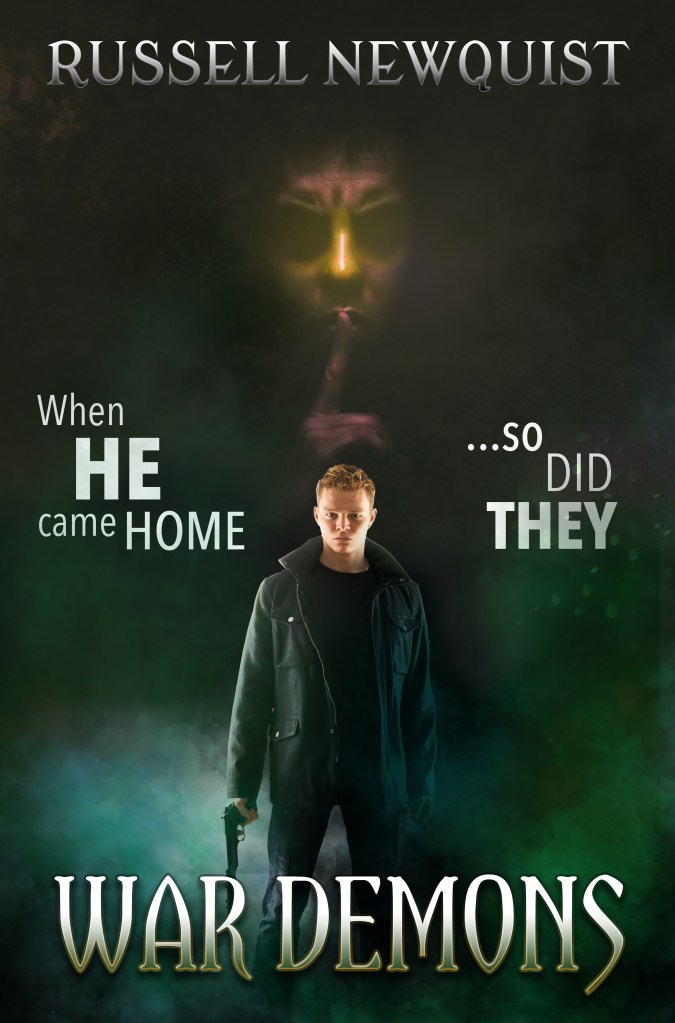
My friend and publisher, Russell Newquist, is having a Michaelmas sale this weekend on his books since they feature a modern day paladin who fights with the sword of Saint Michael (the archangel). If you’re in the mood for Catholic action-horror (Amazon calls it “Christian fantasy”) check out:

“Jim Butcher’s Harry Dresden collides with Larry Correia’s Monster Hunter
International in this supernatural thriller that goes straight to Hell!”

Also, the sequel:

“There’s a dragon in the church.”

I have to confess that these are still on my shelf waiting to be read, but I have read Russell’s short story Who’s Afraid of the Dark? (which is about a character who appears in War Demons and Vigil) and it was very good. So if you’re not busy writing murder mysteries and have time to read other people’s work, I strongly recommend checking them out.

This weekend the sale prices for War Demons are:
Ebook: $0.99
Paperback: $9.99
Hardcover: $19.99

The sale prices for Vigil are:
Ebook: $0.99
Paperback: $4.99

Bishop Barron on Giving and Receiving

In an interesting review of a book/movie called The Gold Finch, Bishop Barron talks about the subject of giving and receiving:

It’s a good video and I recommend watching it.

I’d like to add that people (not Bishop Barron) tend to view giving as if it is somehow the enemy of having, but it is, in reality, the receipt of something else. People too often take the idea that we are made in the image of God to be exclusively about how we are rational. It is, certainly, about that, but I think people too often neglect that, in the words of Saint James, God is love. Love being the willing of the good of the other for his own sake, this can also be translated that God is gift.

To be made in the image of God means not only that we can rationally understand the nature of creation, and not only that we have the intellect and will to choose good or evil, but that we partake in this divine nature of giving. In us, who are contingent creatures, we must first receive in order to give. But in giving away what we’ve been given, we are receiving the gift of taking part in the divine life of generosity.

Too often, people think of giving things away as reducing the self. As a noble self-sacrifice, it is true, but none the less as a form of self sacrifice. As if it is good to diminish ourselves. But this is not right; it is not good that we become less. The key is that in giving away, we become more, because giving is participation in the divine. It is a privilege to be able to give.

For us finite human beings it is complicated, of course, by the fact that we are surrounded by more recipients than we have ability to give to. This is probably magnified a thousand fold in modern life where we are surrounded by strangers and only a phone call away from a few billion people. Figuring out what it is given to us to give and what it is not given to us to give is an enormous challenge. In fact, much sin has at its root grasping at something we were not given to give.

Looking at life from the right perspective does not make it easy to get right, but it does at least make it possible to get right.

History Suffers From Academia

Academia has problems. This is an obvious statement, since it is an institution in a fallen world. It is worth looking at these problems in some depth, however, because they affect the various academic disciplines to varying degrees, and I think that History may be hit the hardest.

This occurred to me as I was reading the book A Catholic Introduction to the Bible: The Old Testament by Brant Pitre and John Bergsma. (It’s a massive tome that could be used to bludgeon a waterbuffalo to death, and I’m still in the introductory materials.) In the prefatory materials is an overview of biblical scholarship over the last two centuries, and this includes some theories which went from being novel, to being dominant, to mostly in the rubbish bin in recent times. And this got me thinking about the problems of academia and how they affect history.

The big problem of academia is that its currency is novelty. You can see this in the economic angle of publish or perish, to be sure, but even if publication didn’t affect people’s job prospects and salaries, it would still affect their reputations and standing as scholars. This selective pressure has a selective effect on scholars, very akin to what the same pressure has on scientists. Those who come up with novelty, for whatever reason, will tend to publish more, and will thus receive more academic status. This has generational effects, since new scholars learn from and have to work with old scholars. (For more on that, see Who Works for Bad Scientists?.)

While true and important, and as I say no one takes evolution seriously enough, it’s not what I want to focus on today. Rather, I want to focus on what limits there are inherent in the field to protect against novelty which is novel by being purely fictitious.

The prototypical example of a system which corrects against novelty-through-pure-fiction is science, but this is painting with an overly broad brush. It is not all sciences that do this, but rather experimental sciences. Theoretical physicists can spin theories about 11-dimensional string vibrations until the cows come home, and no one will ever notice that they don’t work because no one can run an experiment on the things.

The fiction-detecting aspect of experimental science only really works the way it’s advertised to in crowded fields of science. That is, it only works in fields of science where people will be doing the same experiments many times, or at least experiments who results depend upon previous results. This is quite true of experimental physics, especially of basic physics such as newtonian mechanics. It gets less true the less crowded the field is. The more low-hanging fruit there is to pick, the more people will spend their time picking it than looking in each other’s baskets.

Biology, and to the degree that it is a sub-field of that, medicine, are good examples of non-dense fields. There are far more questions to ask than there are researchers with funding to try to find answers. There are exceptions for particularly hot topics where at least several researchers will try to ask the same question, but you just don’t find much in the way of people duplicating each other’s experiments to find out if they get the same results.

Worse, in medicine certain types of answers become can make experiments unethical to try to replicate. If a drug shows a statistically significant result in a clinical trial, running such a clinical trial with a placebo group becomes unethical. All is not lost, since new drugs get run against “standard care” (i.e. the already approved drug) as a control group, so if the original drug is really just a placebo that got lucky, a real drug that comes along will prove better than it. There isn’t much of an ethical way of discovering that the drug is actually just a placebo (with side effects), though.

Chemistry may be the best field simply because chemistry is so closely tied to engineering, and the purpose of engineering is to replicate the heck out of whatever experiment was run. That is, engineering replicates findings by putting things into production on industrial scales, and a million LED lights shipped to Home Depot and Lowes and other such stores replicate the findings that Indiium, Gallium, and Nitrogen, when mixed correctly and an electric current is run through them, emit blue light. (Indium Nitride and Gallium Nitride are the semiconductors used in the blue LED.) But this is far and away the best case, and since it is industrial, it is definitionally not academic.

So what is it about the sciences, where there is some limit on fictitious novelty, that provides this limit? It’s that the test is not whether or not it seems plausible to another human being, but whether or not it actually works when one tries it.

This is, largely, not available in history. It is not entirely absent, as there are historical theories which can be disproved or confirmed by subsequent archaeological finds. These are, however, fairly rare. They are extremely rare in ancient history, such as biblical studies.

The particular theory which got me thinking about this was the Documentary Hypothesis, which more-or-less was a theory created by a liberal protestant in the 1800s that the traditional attribution of the Pentateuch to Moses was ahistorical.

What amazing new archaeological evidence was unearthed that gave rise to this theory? Why, none at all. The guy who came up with it looked at the text and spun his theory out of air. He decided to categorize the various lines and paragraphs and stories in the Pentateuch on the basis of which he thought similar and which he thought different, then took these groupings he thought similar and different from other groupings and attributed them to different authors, at different times.

Of course, being a liberal protestant, he decided that the religion started pure and simple and later got corrupted by law and liturgy. This appealed to his prejudices, and also gave him an interpretive framework to pull out of thin air approximate dates for the various authors he also pulled out of thin air.

And this was a huge hit in academia? Why? There are many threads which went into it, of course, but a significant one is that it was novel. It was new, and fresh, and exciting. It produced an enormous amount of work for scholars to do—someone had to go through the Pentateuch line by line and classify every line according to which theoretical author wrote it.

I think even more than being novel, this produced low-hanging fruit. That is, it made for relatively easy work.

One of the problems that a modern Christian who wants to write about scripture is up against is that he’s implicitly competing with twenty centuries of the most brilliant people in the world, because the brilliant people who had interesting things to say about scripture wrote them down, and Christians valued those writings and kept them and passed them on. There is, at present, an astonishing amount of excellent reading material, if one wants it, available from the saints and doctors of the church. What can one say, today, that has not already been said, and better?

Here, a new theory which overturns everything is the savior of the man in the bottom 99.99% of humanity (i.e. one who is not in the top 0.01%) by genius or talent, or whatever metric one wants to use. With everything overturned, there is new, fresh work to be done that most anyone can do, but not one has done before because no one could have done it before.

And who will bite the hand that feeds him? Certainly, the academic is not known for this counter-productive activity any more than any of his fellow men are.

So we get a century of people arguing over imaginary authors that they have not a shred of evidence for, mostly because it’s easier and more fun than real work.

From what I understand, a similar thing happened with Plato. At some point someone decided that most of the Socratic dialogues weren’t written by Plato because… they didn’t sound the same to him. Skip forward by about a century, and scholarly consensus once again becomes that Plato wrote the stuff commonly attributed to him. What did the intervening century have to show for it? A lot of sound and fury, signifying nothing.

Oh, and a lot of employed academics.

America’s Sweethearts

I’ve written before about the movie America’s Sweethearts. I would like to add to those thoughts, since I’ve watched it a few more times since then. (It’s one of a handful of movies I watch while debugging code because it helps to keep me from getting distracted while I wait for compiles, and because I know it so well it doesn’t distract me from doing the work because I always know what happens next.)

One of the very curious things about the movie America’s Sweethearts is that all of its characters are bad. (For those who are not familiar with it, America’s Sweethearts is a romantic comedy.) The show opens with the information that the titular couple of Eddie Thomas and Gwen Harrison has split. During the filming of their most recent and now last movie together, Time Over Time, Gwen took up with a Spanish actor and left Eddie. Eddie went crazy and tried to kill them, then retreated to a sort of faux-hindu wellness center and stayed there.

This is recapped fairly early on; the plot of America’s Sweethearts begins with the director of Time Over Time refusing to show the movie to the head of the studio until the press junket, when the press would see it at the same time as everyone else. This causes the head of the studio to panic and re-hire Lee, the studio’s publicist who he had fired as a cost-saving measure, to put together the junket because his talents really do match his salary. The only other major character is Kiki, Gwen’s sister (it’s unspecified who is older; they might even be fraternal twins, which would help to explain shared high school experiences). She’s a mousy creature whose life is mostly taken up pleasing the whims of her famous sister, but she’s played by Julia Roberts so you know that won’t last through the end of the movie.

We now have all of the major characters: an adulterer, a lunatic, an unscrupulous businessman, a wimpy woman who lets herself by tyrannized by her awful sister, a publicist who follows the line which Hercule Poirot’s friends said of him: he would never tell the truth if a lie would suffice.

And what’s really weird is that they’re a loveable cast, and it’s a really enjoyable movie, even though it is not a redemption arc for most of them.

I think that part of what makes it work—apart from the massive charisma of all of the actors, which cannot be understated as a causal element—is that the characters’ vices, while not repented of, are not excused, either.

The movie has something like a happy ending for about half of the characters in it, but it is very fitting because it’s a very small happy ending. The head of the studio gets a movie which has a lot of legal liabilities but which might make enough money to cover them. The publicist has what is probably going to be a successful movie. The adulterer is embarrassed, but she stays with her Spaniard for whatever that is worth. Eddie and Kiki wind up together, but shortly before they decide to give it a try, Kiki prognosticates that it’s never going to work, and she might well be right.

I think that ultimately what makes the movie work is the subconsciously stoic theme that vice is its own punishment, and so successful vice is still punished vice. America’s Sweethearts is all about people who do not deserve their natural virtues—beauty, fame, wealth, power—who are punished by getting to keep them. But—and this is an important but—the movie is so short that one is left with the hope that the punishment may serve its purpose and the people may in time learn to repent.

This may be the formula for all successful movies about vicious people (that is, people who practice vice). At least where they do not repent. Redemption stories are probably better. But if a story about vicious people is not going to be about their redemption, I think the story of how they are punished by success may be the only other option for a good story.

Because good stories need to be true to life.

Science Fiction vs. Fantasy

On a twitter thread, I proposed the idea that the main distinction between Science Fiction and fantasy is whether people prefer spandex uniforms or robes:

I did mean this in a tongue-in-cheek way. Obviously the only difference between Science Fiction and Fantasy is not the wardrobe. It is curiously harder to define than one would first suspect, though.

Before proceeding, I’d like to make a note that genres are not, or at least are not best considered as, normative things which dictate which books should be. Rather, they are descriptions of books for the sake of potential readers. The purpose of a genre is “if you like books that have X in it, you might like this book”. (The normative aspect comes primarily from the idea of not deceiving readers, but that runs into problems.)

Science Fiction is often described as extrapolating the present. The problem is that this is simply not true in almost all cases. It is very rare for Science Fiction to include only technology which is known to be workable within the laws of nature which we currently know. This is doable, and from what I’ve heard The Martian does an excellent job of this. At least by reputation, the only thing it projects into the future which is not presently known to be possible is funding. This is highly atypical, though.

The most obvious example is faster-than-light travel. This utterly breaks the laws of nature as we know them. Any Science Fiction story with faster-than-light travel is as realistic a projection of the future as is one in which people discover magic and the typical mode of transportation is flying unicorns.

I have seen attempts to characterize science fiction based on quantitative measures of how much of the science is fictional. This fails in general because fantasy typically requires only the addition of one extra energy field (a “mana” field, if you will) to presently known physics. And except for stories in which time travel is possible, the addition of a mana field is far more compatible with what we know of the laws of nature than faster-than-light travel is.

Now, one possibility (which I dislike) is that Science Fiction is inherently atheistic fantasy. This take, which I am not committed to, is that Science Fiction is fantasy without the numinous. Probably an alternative is Science Fiction is fantasy where there is no limit to the power which any random human being can acquire.

What I think might be the better distinction between Science Fiction and Fantasy is that Science Fiction is fantasy in which the author can convince the reader that the story is plausibly a possible future of the present. What matters is not whether, on strict examination, the possible future is actually possible. What matters is whether the reader doesn’t notice. And for a great many readers of Science Fiction, I suspect that they don’t want to notice.

In many ways, the work of a Science Fiction writer might be like that of an illusionist: to fool someone who wants to be fooled.

This puts Star Wars in a very curious place, I should note, since Star Wars is very explicitly not a possible future. But Star Wars has always been very dubiously Science Fiction. Yes, people who like Science Fiction often like Star Wars, but this doesn’t really run the other way. People who like Star Wars are not not highly likely to like other(?) science fiction. I personally know plenty of people who like space wizards with fire swords who do not, as a rule, read Science Fiction.

Anyway, even this is a tentative distinction between the two genres. It’s not an easy thing to get a handle on because it’s impossible to know hundreds of thousands of readers to identify the commonalities between their preferences. Even the classification of books into genres by publishers and books stores are only guesses as to what will get people to buy books, made by fallible people.

Murder For Revenge

In broad strokes, there are only a few reasons to murder someone:

  1. Gaining money or other forms of power
  2. To pave the way for love
  3. Revenge
  4. To gain status that properly belongs to the victim
  5. To protect one’s status

These correspond, roughly, to the deadly sins:

  1. Greed
  2. Lust
  3. Wrath
  4. Envy
  5. Vanity

Today I want to consider murder for revenge. It further subdivides into two possible situations:

  1. The murderer is fine with being destroyed in the process
  2. The murderer wishes to suffer no repercussions

The former can make an interesting story (such as the sub-plot in Chesterton’s The Sins of Prince Saradine), but it’s not easy for it to sustain a mystery. The main problem is that the murderer should, by hypothesis, confess. This can, however, be handled.

The first way to handle this is to have the murderer leave. This is hard to work unless he thinks the crime won’t be discovered and so no explanation is necessary. That can be done, though, especially for historical crimes being discovered and investigated only years later.

The second way to handle this is to have the murderer leave a confession before leaving but to have the confession intercepted by someone who wants to use the occasion to murder someone by framing him for murder. This is a very workable sort of plot, though it will be complicated.

The third major way is to kill the murderer before he can confess. This may be the most interesting option, especially if he is killed by the victim. Of course, if the murderer is murdered by his victim, this will not be mysterious unless at least one of them uses a scheme for which he does not need to be present, which is where the interesting part comes from. It is very hard to suspect a dead man of murder. If there is anyone one will leave off suspecting of a crime, it’s a dead man.

In a Cadfael story (Saint Peter’s Fair) Hugh Beringar remarks that babes and drunks are the world’s only innocents. But this is not an exhaustive list. Who is so incapable of harm as a man already dead?

What’s specially interesting about two people who have murdered each other is that with any conniving at all, the author can contrive to have everyone suspect them of being murdered by the same person, and this will be a very strange person indeed to have two enemies with so little in common. It also means that the murder will seem to have been done very craftily when it was in fact done very simply. Or at least one of them will be like that. There are absolutely wonderful possibilities for misdirection, here.

(I really want to write a story like this some day. I probably should first write a story with at least two victims at the start who were killed by the same person, so it’s not obvious, though.)

The other major option, and which is more common because it can far more easily sustain a mystery, is for the one seeking revenge to wish to avoid repercussions for his crime. This provides a simple reason for why he does not confess. It can sustain a mystery with little difficulty at all.

It can, of course, be made far more complex than the simple case. The variation that I suspect is most interesting, or at least that I personally find most interesting, is of introducing the complication of the passage of time. This can either be put between the original offense and the present, or between both the original offense and the revenge, and the present.

Of the two, my favorite is probably the ones where the revenge is recent but the offense in the past. This is probably most classically done with the child who grows up to avenge a parent, but this possibly should be avoided because it is common enough that, these days, the average reader might count the years since the crime in the past and guess the killer simply based on his age.

It comes to mind that an interesting way around that problem might be to give the murderer some scruple in his revenge, such as waiting for the 18th birthday of the vicitm’s youngest child, on the theory that his children should not be punished for the crime of their father. Something like that would throw a wrench into figuring out the culprit by simple calculations, at least.

There are more variations on murder for revenge, but this post is getting long enough that I think I’ll leave them for later. Enjoy writing your murder mysteries about revenge, and God bless you.

Pretty Good Advice

In this view, JP Sears gives some pretty good advice on how become depressed:

It should be noted that he concentrates on the things within one’s control. The death of loved ones, loss of a job, etc. would all work too, but they’re outside of one’s control.

Oddly, fixating on the possibility of them would probably help to get further depressed, then, but he forgets to give the advice of focusing only on what one cannot control.

No one’s perfect, I suppose.

(NOTE, SINCE INTERNET: this is all humor.)

Dragnet

Something I find interesting on occasion is to look up the history of television shows. Television is a very young medium. Though the device itself was invented in the 1930s, the Great Depression and the second World War and its attendant economic privations meant that televisions were not widely owned until the late 1940s. Without an audience, not much was made to broadcast to it. It was, therefore, really the early 1950s in which television got its start.

This makes it easy to research, but also makes the chain of influences fairly short.

Dragnet actually started as a radio drama, starring Jack Webb as Detective Joe Friday. In 1951, it became a television show, with much the same cast as the radio drama, though his partner had to be changed out part way through. This show lasted until 1959. It was later revived in 1967, this time in color. This is the version which I think most people are familiar with, that stars Harry Morgon as Detective Bill Gannon alongside Jack Webb reprising his role as Joe Friday. Certainly it’s the version I’m most familiar with. It lasted until 1970.

There were other versions made, but none with Jack Webb since he died in 1982 (at the age of 62). In 1987 there was a comedic movie starring Dan Ackroyd and Tom Hanks. It’s almost a parody of the original, though it is not a mean-spirited parody and I can testify that it is a lot of fun. In 1989 there was a short-lived series called The New Dragnet, and in 2003 there was an even shorter-lived revival series called LA Dragnet.

Though Dragnet was not able to survive in the modern world of police procedurals, or possibly just it was not able to outlive its star, Jack Webb, it did have an enormous impact on television. Counterfactuals are impossible to state with certainty, but it seems likely that police procedurals would not have the form they have today if Dragnet had never happened.

Episodes of Dragnet, which are (surprisingly) easily found on YouTube, are interesting to watch. The detectives are in the homicide division, so in a very technical sense the cases are murder mysteries. However, they are not detective stories in the sense of Poirot or Agatha Christie. The detectives do a lot of work, of course, but they don’t really do anything particularly clever. They just keep talking to people until they get enough facts to convict the murderer.

What I find curious—given that I’m a huge fan of detective fiction with genius detectives and write some of it myself—is that, bare-bones as Dragnet is, it still satisfies the impulse to see a mystery solved. This is true of modern police procedurals as well. In both cases, they feel somewhat like empty calories—enjoyable while watching but they don’t really have any substance which sticks with one.

This is not true of the great detective stories. Murder on the Orient Express, Have His Carcase, Saint Peter’s Fair—these stories really stick with one. There are interesting ideas in them to chew on long after one’s read them.

But it’s a testament to the human craving for the solving of mysteries that even Dragnet, which was told in an almost deliberately un-entertaining style, still makes you want to watch to the end to find out what happens, if you watch the beginning. This may partially be a testament to the power of charisma, though. I can watch Harry Morgan in just about anything.

Calories In vs. Calories Out

When it comes to the subject of losing weight—more specifically, reducing excess fat stores in the body—it’s fairly common to come across somebody who puts it like this:

It’s just calories in versus calories out. Thermodynamics says that if you take in more calories than you burn, you’ll store them as fat. If you take in fewer, you’ll burn fat. So weight loss is very simple: just burn more calories than you take in. That’s it. Anything else is just people trying to kid themselves that here’s a magic bullet.

This represents a confusion one sees in many fields: making no distinction between the cause of something and the mechanism of how the cause makes it happen. It is quite true that when somebody stores fat in their body they require energy to make the fat and they can’t also burn that energy and therefore the amount of energy they took in was higher than the amount of energy which they burned. No one, anywhere, disputes this. It’s also entirely uninteresting to the subject of fat gain or loss in people with excess fat.

(NOTE: when talking about healthy people—typically lean athletes—regulating what little fat they have, this simplification is probably accurate. This post is not talking about how a body builder can force his body to levels of fat which are dangerously low, or how an athlete can cut to a lower weight class. Those will almost certainly have to be achieved by simple calorie restriction because they are manipulating a healthy body into going outside of the homeostasis it wants to maintain for optimal health).

The question which is actually interesting to the subject of fat gain or loss is why the body stores energy as fat. And this is where the people who love to talk about calories-in-calories-out show their reductionist colors. Tthey will tell you that since fat cells are energy storage, if you take in more calories than you burn, you will necessarily store them as fat. But they give no reason for this, while there are excellent reasons to doubt it.

The reason to doubt that extra calories eaten can only go to fat is that the human metabolism is a highly variable thing. Though I should clarify what I mean here because by “metabolism” some people mean “resting metabolism”, while I mean “total metabolism”. Our bodies spend calories on a lot of things—walking, talking, maintaining our temperature, repairing our bodies, and other things. Very few of these things are fixed costs. One possible reaction to being in a cold environment is moving more or just burning energy for heat. Another is feeling cold and putting on a sweater. Those do not use the same number of calories over the course of an hour.

Let’s consider a very analogous system: finances.

If a person makes an additional $1000 per month, it is possible that his bank account will grow by $1000/month. It is also possible that he will start eating at expensive restaurants, and his bank account won’t change at all. On the flip side, a person whose income doesn’t change can decide to stop eating out and can grow his bank account with no additional income, merely by cutting expenses. And could do both: he could decide his bank account isn’t nearly large enough, work a second job to bring in an extra $1000, move to a tiny, unheated apartment, and eat nothing but porridge for his meals so that his bank account swells rapidly.

It’s that last part that’s most interesting to the moment, because it’s what seems to be the case in people who are, shall we say, famine resistant. Because there’s a really fascinating question about people carrying excess fat which is rarely asked: why do they get hungry?

Seriously, why is it that a person with excess fat feels hungry when he has plenty of energy at his ready disposal? That’s not how the body normally works. The human body, when working correctly, tries to maintain a homeostasis. Granted, it’s a homeostasis with more fat than a bodybuilder would like, but the body tends to regulate hunger on the basis of energy availability. Or in other words, normal people usually stop being hungry when their calories in is roughly equal to their calories out.

At this point, a word is necessary about what we might call the balloon theory of hunger. Basically, it is the model of hunger where the stomach is a balloon with pressure sensors and hunger is merely the pressure sensors detecting whether there’s still room in the stomach to fit something without literally bursting it.

There is some minor truth to this, in that the stomach does in fact have sensors in it which detect the degree to which it is stretched, but a few years of living as a human being should be sufficient to show this model as the rubbish that it is. Consider a few counter-examples:

  1. Desert. A person can eat until “they’re so stuffed they can’t eat another bite” then the moment desert comes out they can somehow fit enough additional food to fill a grapefruit.
  2. Exercise makes people hungry. Starting a new exercise routine can make one feel ravenously hungry for days. Exercise does not drastically increase the size of someone’s stomach in the first few days.
  3. Teenage boys can out-eat their parents combined. I did it often as a teenage boy. (I was on the rowing team in high school and relatively lean, too.) Teenage boys do not have stomachs which are larger than their mother’s and father’s stomach’s combined.
  4. Tests show that a stomach can stretch to around the size of an entire human torso before bursting from pressure. They’re incredibly expandable.
  5. People who win hot-dog eating contests do not ordinarily eat that much food to feel full.

In short, the theory that being hungry is entirely, or even primarily, about whether your stomach is full is nonsense.

There is also the always-hungry model, which tends to involve some pretend evolutionary biology about humans having evolved in circumstances of constant famine and so we are always hungry in order to pack on as much fat as possible for the next famine which we know is right around the corner.

The main problem with this is that it directly contradicts experience. Americans live in an environment with truly enormous food surpluses always available, and there are plenty of not-fat people who eat until they are not hungry and who nevertheless do not eat the 10,000+ calories that they easily could and this model predicts.

In short, a little bit of experience shows that human beings are not normally ravenous eating machines consuming every calorie that they can get their mouths on.

With these models of human hunger out of the way, the question then comes up and is very pressing: why do fat people get hungry?

It is not the purpose of this post to give the answer to this question. Chief among the reasons why is that there are almost certainly many answers to this question; people’s energy regulation can get screwed up for a variety of unrelated reasons. It is only the purpose to highlight how important finding an answer to this question is for a person who wants to lose excess fat.

(So as to not completely shirk the question, I think that one of the most common is excessive fructose consumption causing insulin insensitivity in the liver, which cascades into general insulin insensitivity, which then disrupts energy regulation, though even that is probably an over-simplification since in general nothing in biology involves just a single hormone. This model, however, at least corresponds well to my own experience of when I gain and lose weight.)

There’s a really good metaphor for the issue in Tom Naughton’s post Toilet Humor: The How vs. Why of Getting Fat. I’m going to give a variant of this metaphor to keep things more pleasant: the kitchen sink.

Suppose that your sink is clogged and filling up with water and about to overflow. It is entirely true that the problem, in an acute sense, is that there is more water going into the sink than coming out of it. If one applied the standard dietary advice to a clogged sink, you would just drastically reduce the flow of water into the sink until the sink was empty.

And it will work if you do that. Cut off the water, and the sink will eventually not be full of water. Evaporation, if nothing else, will see to that.

There’s just one problem: you have the sink for a reason, and that reason is not merely to keep it empty. You want the sink to do work. And the water-in-water-out approach of just cutting off the water in means that your sink can’t do its job. The correct solution to a clogged sink is not to stop washing your dishes. It’s to find out why it’s clogged and clear the clog. Maybe the drain strainer is full. Maybe the pipe is clogged later on. Fixing the problem depends on what the problem is, and there isn’t one problem. But whatever the obstruction in the drain, that’s what you need to fix so that the sink can do its job.

Similarly, a human being almost certainly has things to do besides sitting around not being fat. Many of us are parents. Some of us have jobs. A few of us have friends. Whatever it is, we have more to do than just sitting around not being fat. Just cutting off our food without fixing why we’re hungry when we’ve got excess fat is like just cutting off the water to the sink. Whatever you’ve got to get done in life, you’re going to do a bad job.

Further, people who are constantly hungry tend to be irritable, short-tempered, and lethargic. Even if they manage to fulfill their primary responsibilities well (and they’re probably only doing it passably), they’re going to make life less pleasant for everyone around them. I once had a housemate who was doing a calorie-restricted cut, and I was nearly at the point of begging him to stop because he was just so unpleasant to be around during it.

Interestingly, you can see the same sort of indifference-to-function in sports-medicine vs. regular medicine. If an athlete has a problem where something really hurts when he uses it, the conventional medicine approach is to just stop playing the sport and (I’m exaggerating) get months of bed rest. People into sports medicine know that this is hyper-focusing on a mechanism—in this case, rest—while ignoring that the person is a human being with a life. Sports medicine tries very hard to figure out how to restore athletes to normal function in the context of still living life as an athlete and not considering being wheelchair-bound-but-alive to be an equivalent outcome.

So, in conclusion, the real question when it comes to someone who wants to lose excess fat is not how to get rid of excess fat. It’s how to fix the fact that they’re hungry when they shouldn’t be. If you fix that, then the person will certainly lose excess fat—people who aren’t hungry don’t eat as many calories. But they’ll do it while still being a functional human being.

In short: one should treat the problem, not the symptom. To do that, one must first identify the problem.

The Best Laid Schemes O’ Mice an’ Men Gang Aft Agley

This weekmonthsummer has really not been going the way I hoped it would. I’m going to talk about why that’s OK, but first I want to quote the stanza from which the title comes, because the original poem, To a Mouse, on Turning Her Up in Her Nest With the Plough, November, 1785, is not quoted often enough:

But Mousie, thou art no thy-lane,
In proving foresight may be vain:
The best laid schemes o’ Mice an’ Men
          Gang aft agley,
An’ lea’e us nought but grief an’ pain,
          For promis’d joy!

So, the reason for the strike-through up above is that I began this post in, if my memory serves me, July, and I am now finishing it in August. Between various things, mostly family related, as well as an annual trip to visit my parents, and most things have gotten pushed to the side. About the only thing I’ve managed to do which is creative is work on the second chronicle of Brother Thomas, Wedding Flowers Will Do For a Funeral.

On the plus side, I’ve finished the first draft and, as of the time of this writing, have edited the first 100 pages (actually, 99¼, but the word processor is on page 100). It’s going slower than I would like, of course, but that’s something of a theme, lately.

And just to make life more crowded, I’m finally going back to the gym to lift weights 3 times a week. In the long run, it’s very good that I’m doing it, but it means even less time.

And that’s OK.

I’d really like to be a lot more productive on this blog and on my YouTube channel. I’ve got a notepad of videos to do which is up to about 10 items now. It’s a backlog. And I’ve got tons of blog posts to write. I want to finish reviewing the Lord Peter Wimsey novels, I want to review all of the Cadfael novels, and after that, probably the Poirot novels. I want to talk more about mystery writing, I’ve got lots of things to write about theology and philosophy, too.

And, God willing, some day I will.

But it’s that first part that’s really important to keep in mind. It’s our job to do our best; it’s God’s job to figure out whether—and how—we should succeed. Running the world is a big and complex task, and God doesn’t ask of us that we do it. All He asks of us is that we do our best to do what he’s given us to do in the moment.

So, the world frequently doesn’t turn out like we expect. But we can trust that it does turn out for the best.

That’s really all we can ever do: do our best and trust God.

The Two Kinds of Evidence in Murder Mysteries

In murder mysteries, there are two kinds of evidence: evidence which tells the detective what happened, and evidence which can get a practical result from society. The practical result is often a criminal conviction, but it need not be; a wedding being called off, the payment of an insurance policy, or the settling of a will all require similar sorts of evidence.

Of the two, it is the former type of evidence, not the latter type, which is of interest to the reader.

The main distinction between the two types of evidence is not really one of the strength of the evidence, that is, of the level of certainty which it conveys. In fact, one of the common features of murder mysteries is the early presence of highly convincing evidence which will convict an innocent person unless the detective uncovers the truth. No, the distinction is not in certainty. The distinction is, rather, what is required knowledge and understanding is required to apprehend the true meaning of the evidence.

Convenient names for the sorts of evidence of which we are speaking might be complex evidence and simple evidence. Complex evidence requires extensive background knowledge and understanding of human nature. Simple evidence does not; it tells its story plainly. (Using this terminology, we can say that it is common for murder mysteries to, early on, have complex evidence which appears to be simple evidence.)

In order to achieve societal action, such as convicting the murderer in a court of law or getting some other legal effect, one must have simple evidence. However, simple evidence is, in murder mysteries, hard to come by. This is, of course, a selective effect. In the case where the murderer’s fingerprints are on the murder weapon, and the murderer was seen killing the victim by multiple witnesses who know the murderer personally, and the murderer was caught immediately afterwards—these are not the stuff of murder mysteries.

Detective stories have the structure of story-within-a-story: the murder is the interior story while its detection is the outer story. Within the outer story, it is frequently the detective’s main purpose in his investigation to try to uncover simple evidence about the inner story. This makes it curious that his success or failure at achieving this goal is (almost) irrelevant to whether the story is a good story.

An excellent example of this is the Poirot story Five Little Pigs. In it, the daughter of a woman who was hanged for murdering her father, seventeen years ago, comes to Poirot asking him to uncover the truth. She just received a letter from her mother, written immediately prior to her execution but entrusted by lawyers to be delivered on her daughter’s 25th birthday, telling her that her mother was innocent.

Poirot undertakes the investigation and interviews all of the people principally concerned. At the end, he explains how all of the evidence which had pointed to the guilt of the woman’s mother actually pointed to the guilt of someone else. That person speaks alone with Poirot, afterwards, and asks him what he intends to do. Poirot says that he will give his conclusions to the authorities, but that it is unlikely that they will pursue it and very unlikely that they will get a conviction. And that’s fine. It’s a very satisfying ending to the story.

But why?

I suspect that the answer (which may be obvious) is that complex evidence is fun, while simple evidence is not fun. It takes brainwork to understand complex evidence, while simple evidence is too easy to be interesting. What matters in a murder mystery is being interesting, not achieving results. Achieving results is, really, the domain of an action story, or possibly a drama. This is why detectives tend to hand their cases off to the police at the end of the story. It’s best if the tedious work happens off-screen.

But there’s an interesting complication to this.

It is not a good story if the detective (and hence the reader) merely finds out what happens without anyone else learning it. Why this is so relates to the detective’s role within the story. As I’ve said before, the detective is Christ figure: the world has been corrupted by the misuse of reason, and the detective enters it in order to restore order to the world through the proper use of reason. So while society need not act, something must be put right. That is, someone beside the detective must learn the truth and be better off for it.

A good example of this is the Sherlock Holmes story The Blue Carbuncle*. It begins with a curious set of coincidences which place the key evidence in front of Sherlock Holmes, and with some investigation he discovers who it was who stole the gemtsone. He invites the man to his room, and he comes. After Holmes confronts him with the evidence, he falls apart and confesses, sobbing. I’ll quote just the last part:

“Get out!” said he.

“What, sir! Oh, Heaven bless you!”

“No more words. Get out!”

And no more words were needed. There was a rush, a clatter upon the stairs, the bang of a door, and the crisp rattle of running footfalls from the street.

“After all, Watson,” said Holmes, reaching up his hand for his clay pipe, “I am not retained by the police to supply their deficiencies. If Horner were in danger it would be another thing; but this fellow will not appear against him, and the case must collapse. I suppose that I am commuting a felony, but it is just possible that I am saving a soul. This fellow will not go wrong again; he is too terribly frightened. Send him to jail now, and you make him a jail-bird for life. Besides, it is the season of forgiveness. Chance has put in our way a most singular and whimsical problem, and its solution is its own reward. If you will have the goodness to touch the bell, Doctor, we will begin another investigation, in which, also a bird will be the chief feature.”

Here there are two aspects to the world which Sherlock Holmes has put right, even though he has produced no evidence for a jury. In the first, the man wrongly accused of the crime will not be convicted of it because the principle witness against him has fled. The second is less certain, but the true criminal may well repent of his crime since he’s seen what evil he’s capable of and still has a chance to make his way in society honestly.

This satisfies the role of the detective as Christ figure. In fact, it even has a curious echo (perhaps intentionally) of the story of Christ and the woman caught in adultery, and how he releases her from the punishment for her crime on the condition that she sins no more. Neither is, strictly speaking, a satisfying story, but they have something else to them—the idea that there is something better than justice. That’s a very tricky notion, because mercy should never be unjust—but at least in the story of the Blue Carbuncle, what was stolen is returned, and so justice is at least mostly satisfied in restitution.

Be that as it may, the primary point under discussion is satisfied. Holmes collects complex evidence which tells him (and thus the reader) the tale, and this is the interesting part. Achieving a practical effect from society is of minor concern.

(I suspect that part of the reason why The Adventure of the Blue Carbuncle ends as it does is that, though it predates Fr. Knox’s decalogue, it violates rule #6 (“no accident must ever help the detective, nor must he ever have an unaccountable intuition which proves to be right”). The Adventure of the Blue Carbuncle is predicated upon a series of accidents, all of which help the detective. If he achieved a practical societal effect, his reputation would benefit by pure chance. By letting the criminal go, he remains in anonymity and so the accidents which help him produce only an interesting set of circumstances.)


*A carbuncle is a red gemstone, most often a garnet, so a blue carbuncle is something of a contradiction in terms. The story suggests it is a blue diamond, though it could be a blue garnet or even a blue sapphire.

Interesting Video On Why Germany Lost World War II

In an interesting video, TIK talks about Germany’s access to oil and oil supplies and why these dictated its actions during World War II, and why they made its downfall all but certain:

It is said that when it comes to war, amateurs think in terms of tactics and professionals in terms of logistics. This is related to the saying that an army fights on its belly, that is, if it’s not fed, it doesn’t fight.

Feeding and watering an army—both men and horses—has been the concern of generals for thousands of years. (Horses were often relatively self-sustaining, since they eat grass, but they do better on grain if you want them to be constantly working.) Thus tactics like burning crop fields during retreat, so as to starve an invading army.

World War II was in many ways the first truly mechanized war, and thus the problem of logistics expanded into the economic sphere. Machines are produced only by a thriving economy, and machines run only on oil. In order to fight an effective mechanized war, one must have a strong economy and lots of fuel.

This, by the way, has strong social implications outside of war. In order to remain in peace, one must have the strength to defeat attackers. In order to do this in the modern context of mechanized warfare, one must have a high-production modern economy. One doesn’t need to be able to produce the weapons of war oneself, but one must be able to buy them. That requires a modern economy, which requires at least much of modern social organization.

Those who want to bring back the good parts of traditional social organization need to understand this well. Whatever form modern society takes, it must be one that powers a modern economy which can power a modern army. If it’s not, it will be short-lived.

Studies That Test Diets And Compliance

I’ve had good results from using an extremely low-carb (i.e. low carbohydrate) diet to lose weight, so I’m highly skeptical whenever a study shows that they don’t do that. There are studies that show that they do, too, in addition to my experience, so something is going on when one has highly conflicting studies. The only thing to do is to actually dig into the studies.

And the thing one finds with many of the “low carb” diets in such studies is that they are frequently quite high carb. “Low carb” will often be defined as less than 100 grams of carbohydrate per day. People who have success eat well under 50 and frequently less than 20 grams of carbohydrate per day. A diet with 5-10 times as much carbohydrate being tested as a “low carb” diet simply doesn’t tell anyone anything useful.

But another big problem one sees is studies which test compliance at the same time they test efficacy. That is, the study breaks people up into groups and tells them what to do, but then records what they do as part of the group that they were assigned to. So if someone in the low carb group eats nothing but pasta, his weight performance will count to the low carb diet average in that study.

There are legitimate reasons for this, but they’re all for medical practitioners. Basically, such studies are useful to know how likely, if you prescribe a diet to all of one’s patients, is one to see results. Great for doctors, useless for the rest of us.

The other problem is that we largely already know what compliance with any behavioral change is in human beings: very low. It doesn’t much matter what you’re talking about, people don’t, typically, change for the better.

Where this is really egregious is where people look at these studies and don’t distinguish between the efficacy of the behavioral change and the degree to which the study told us what we already know about human beings: they don’t comply.

Hell, the compliance rates on taking a single pill a day are far from perfect; just look at all the people one knows who forget the pill from time to time. The compliance rate on 2x, 3x, and 4x pills per day is progressively worse, just from simple observation. Who, who has been proscribed taking a pill 3x per day, actually manages to take it 3x per day for all the days of the prescription?

When this comes to bigger stuff like diet and exercise, a simple and only somewhat inaccurate model is that people don’t comply. So a study which measures compliance + some change will mostly show no effect. But that’s uninteresting for people who will actually change.

Consider other areas of life: lifting weights or running. If you did a study to find out if lifting weights makes you stronger in which you also measured compliance, you’d find out that lifting weights doesn’t make you stronger. If you did a studying measuring whether running makes you a better runner, which also measures compliance, you’d find out that running doesn’t make you better at running. Hell, as long as the study is also measuring compliance, you’d find out that practicing piano doesn’t make you play piano better and taking dance lessons doesn’t teach you how to dance. Because in all these studies, the fact that most people stopped lifting weights, running, practicing piano, and never went to the dance lessons would dominate the results.

Or to put it simply, doing something only has an effect if you actually do it. No kidding.

Which is why what we need are studies which also measure compliance and separate people into groups based on compliance. This does introduce problems. Probably the biggest problem is that it will cost a lot of money because it will require really large groups of people. With 90%+ of people non-complying, you need a ten times larger group of people to study, and that costs a lot of money.

The second problem is that this switches out measuring the efficacy of the diet (or whatever) together with compliance for measuring the efficacy of the diet together with whatever preconditions (genetics, preferences, etc) make one likely to actually stick with it.

However, this is clearly a much more useful thing for an individual to measure. If I’m considering lifting weights, I want to know how much stronger I might get if I can stick with it. If I find I can’t stick with it, I don’t really care what it would do, anyway. And I don’t much care why I can stick with it, either.

If it turns out that only 10% of the population can stick with some diet, then I will consider taking my chances on finding out if I’m in the lucky 10%. Weight lifting works that way, to a limited degree. Everyone can get somewhat stronger, but only a fraction of the population can get hugely strong.

But there’s another issue at play, which has to do with motivation: knowing that something will work if I stick to it makes it vastly more likely that I will stick to it. If I actually believe that there is a causal connection between an action and a benefit, it is much easier to keep doing the action until I get the benefit.

Which is yet another reason that studies which measure compliance as well as an effect are worthless: the study participants didn’t know whether sticking to the plan even had any potential benefit.

So, in short, when it comes to studies showing no benefit to something, always check to see whether it’s a study that’s just telling you that human beings rarely change. It’s not completely worthless, but it’s only telling you what you already know.

Phone vs. DSLR Competition

Over at Linus Tech Tips, they had an absolutely hilarious video where they gave Linus (who is a tech geek) a high end DSLR in a series of challenges, while they gave Brandon (who is a professional photographer and videographer) a pixel 3 phone. It was interesting to see how it turned out, but the main thing is that it was just hilarious all the way through:

The origin of this challenge was Brandon complaining about phone companies saying that one doesn’t need a DSLR any more because their phones are such excellent cameras. He was, apparently, the one who came up with the format of the challenge because of course someone who isn’t a good photographer with a phone will have inferior pictures to someone who is a professional photographer using high end equipment. But there’s another problem, which is people who want to become photographers buying high end cameras instead of learning the craft of photography. So swapping them tested both things at once!

Which is, of course, a horrible way to test things if you’re interested in a controlled experiment, but it is a fascinating way to test them if one is more broad-minded than that. (Having background knowledge of photography really helped to interpret the results.)

Anyway, I strongly recommend watching it if you can find the time, because it’s both enormously entertaining and quite interesting. I just wish that they had showed us more of the pictures taken.

Young Scientist, Old Scientist

There’s a very interesting Saturday Morning Breakfast Cereal webcomic about a scientist as a young woman and an old woman:

This is remarkably correct, and one sees it all the time. Science is, by its nature, the examination of things which is productive to examine in the way that science examines things.

Speaking broadly, this means that science is the study of things which are easily classified, or can easily be experimented upon in controlled experiments, or the relationships between things which can be measured in standardized units. By limiting inquiry to these things, the scientist can use a set of tools which has been developed over the centuries to analyze such things.

I meant that metaphorically, but it’s actually as often true literally as metaphorically. Scientists frequently use tools which were developed for other scientists; accurate scales, measurements of distance, radio trackers, microscopes, telescopes, etc.—all these things the modern scientist buys ready-made. (This is an oft neglected aspect of how what has been studied before determines what is studied now, but that’s a subject for another day.)

This limitation of investigation to such subjects as lend themselves to such investigation is very narrowing; most interesting questions in life do not lend themselves to being studied in this way. Most answers that scientists come up with are not interesting to most people. In fact, outside of science, the almost only people who study real science with any rigor are engineers. Even the degree to which they study the results of science can be exaggerated; the good old 80/20 rule applies where 80% of utility comes from 20% of science. But, still, it’s very limiting.

This is part of why scientists are so often stereotyped as hyper-focused nerds uninterested and incompetent at the ordinary business of living. The stereotype is actually quite often not true, but this is in no small part because science has become an institutional career in which the science itself is only one part of a scientist’s day-to-day life.

That said, the stereotype exists for a reason: science is just not normal.

There are two ways of dealing with this fact. One of them is to engage in the hyper-focus of science during the day and then to hang up one’s lab coat and focus on being a full human being at night. This is not really any different than a carpenter or a plumber putting away his tools at the end of the day and focusing on all the things in life which are not carpenting or plumbing.

The other way of dealing with this is to shrink the world until one’s narrow focus encompasses it. This is what the comic I linked to at the start of this article captures so very well.

The cobbler should stick to his last as an authority, but it is a tragedy of he sticks to his last as a man.

The Onion: Breaking News

Originally made almost ten years ago, this video of a generic news story still applies as if it were made today (note: rough language not suitable for young children):

It’s a spot-on parody of news stories and their utter vacuity. The basic problem with news as a business is that the world produces important news at whatever rate it feels like, while new publications must publish on whatever schedule they’ve chosen; these days often hourly.

It should be noted that this introduces selection pressures which cause evolutionary changes in the people who present news as a business.

Possibly more interesting, however, is surprise that a ten year old piece of humor should still apply today. Why wouldn’t it? It’s making fun of something human beings do, and human beings do not change very much. There is the minor technological dependency on the particular thing being done, in the firehose of news depends upon technology which permits instant publishing. True, several hundred years ago one couldn’t say “in a desperate attempt to fill 24 hours of programming”.

But even several hundred years ago newspapers had a regular publishing schedule because men become hungry on a regular schedule and must therefore have money with which to buy food on a regular schedule. And several hundred years ago, as today, the world produces important news on whatever schedule it wishes, without regard to the bellies of newspapermen.

To wit, this advice of Thomas Jefferson to a fellow about how to run a newspaper is as true today as it was in 1807, when it was written, and can be adapted with only the slightest changes to television and internet news:

To your request of my opinion of the manner in which a newspaper should be conducted, so as to be most useful, I should answer, “by restraining it to true facts & sound principles only.” Yet I fear such a paper would find few subscribers. It is a melancholy truth, that a suppression of the press could not more compleatly deprive the nation of it’s benefits, than is done by it’s abandoned prostitution to falsehood. Nothing can now be believed which is seen in a newspaper. Truth itself becomes suspicious by being put into that polluted vehicle. The real extent of this state of misinformation is known only to those who are in situations to confront facts within their knolege with the lies of the day. I really look with commiseration over the great body of my fellow citizens, who, reading newspapers, live & die in the belief, that they have known something of what has been passing in the world in their time; whereas the accounts they have read in newspapers are just as true a history of any other period of the world as of the present, except that the real names of the day are affixed to their fables. General facts may indeed be collected from them, such as that Europe is now at war, that Bonaparte has been a successful warrior, that he has subjected a great portion of Europe to his will, &c., &c.; but no details can be relied on. I will add, that the man who never looks into a newspaper is better informed than he who reads them; inasmuch as he who knows nothing is nearer to truth than he whose mind is filled with falsehoods & errors. He who reads nothing will still learn the great facts, and the details are all false.

Perhaps an editor might begin a reformation in some such way as this. Divide his paper into 4 chapters, heading the 1st, Truths. 2d, Probabilities. 3d, Possibilities. 4th, Lies. The first chapter would be very short, as it would contain little more than authentic papers, and information from such sources as the editor would be willing to risk his own reputation for their truth. The 2d would contain what, from a mature consideration of all circumstances, his judgment should conclude to be probably true. This, however, should rather contain too little than too much. The 3d & 4th should be professedly for those readers who would rather have lies for their money than the blank paper they would occupy.

14 June 1807 Works 10:417–18

Writing Murder Mystery Endings is Hard

There is no part of writing a story which is truly easy. That said, different sorts of stories have easier and harder endings. This comes from the nature of the story; in some stories the meat of the story is in the main part of the story—or, rather, the reader eats the meat during the main part of the story. Action stories are like this; the meat of the story is the action. When you come to the end, the reader is full and only needs a light desert to finish the meal. That is, one just needs a happy ending which fits.

Murder mysteries, by contrast, delay the meat of the story for the end. There is considerable variation in how murder mysteries are structured—not all of them collect clues in the beginning then gather the suspects together into the accusing parlor for the detective to explain the solution. Many mysteries—often my favorites—make deductions along the way. The mystery unfolds as the story progresses, though often with a final clue that solves the final piece of the puzzle in the end.

But even if the deductions are made throughout the story, they are provisional; what a clue means is rarely certain. All the more so because a clue can generally mean many things. That is, a single clue can be explained by many actions. That one has a plausible interpretation for a clue, considered in isolation, does not mean that it fits with the rest of the story.

It is possible to have various clues which require the murderer to be tall one moment and short the next, striking out in blind rage one moment and coldly calculating the next, trying to disguise the murder as a suicide one moment and trying to frame somebody else the next.

There is, therefore, the moment when all of the deductions, though made earlier, must be put together into one cohesive whole to see if the deductions are compatible with each other.

There’s a good example of this in the Lord Peter Wimsey story Have His Carcass, toward the end of the book. The story told by the clues assembled so far was that of a long-laid conspiracy which involved almost split second timing for the murderer to get from the moment one witness left him to ride hell-for-leather on a horse over the surf, leap upon a rock, slash a man’s throat, leap back upon the horse, and ride hell-for-leather back to his campground with only moments to spare before another witness he could never have predicted would see him. They had timed the actions and it would be, technically, possible. Any given supposition fit the facts immediately next to it, but when told from beginning to end, it simply made no sense. People don’t lay in intricate plots to have to madly dash about for no reason that they could have foreseen. (For those who haven’t read the story, this isn’t the end; there is a twist left to discover that reveals the real story, which does make sense. The detectives find it because they reject the story I just described as too implausible and keep searching.)

Every action is made up of complex parts and simple parts. A story—in this case, the story of the murder (that is revealed within the story of the detection)—can fail either by being complex where it should be simple, or by being simple where it should be complex. It is only by telling the story all the way through that we can see if it has the proper proportions.

Of course, one way this can be difficult in a murder mystery is for the solution to simply make no sense. This can be a problem for some authors, from what I’ve read, but simply can’t be for me because of the way I write murder mysteries. I start, not with the detective story, but with the story of the murder. I write that out as a simple prose story; the motivations, the plan (if there is one), what the murderer did write and what mistakes he made that left clues—all of this gets written out. (To give a sense of detail, so far it has tended to be between 5,000-10,000 words.) Since I start with the story of the murder as one that makes sense, when I finally re-tell it within the detective story it does hold together at least at the factual level and with regard to consistency of character motivations, skill level, height, strength, etc.

But though the way I write mysteries guarantees (as human affairs go) that the solution is free from plot holes, none the less it can still have imperfections as a story. A motive may be insufficient, a killer too cold blooded or not cold blooded enough, the risks taken might be too daring or too safe—my way guarantees that it is at least a coherent story, but it cannot guarantee that it is a good story. Nothing a human being can do in this world can guarantee that one writes a good story.

And here we come to why it is hard to write the endings to murder mysteries. One must, perforce, hold the story of the murder up for examination. But when any work of art is held up for examination, a gap between the perfect thing the author imagined far off and the real thing which he actually wrote becomes apparent. The gap can be bigger or smaller, but it cannot be entirely closed by a fallible human being. To finish a mystery is thus to face this gap, which is painful.

There is no cure for it, one must simply slog through it. As in all things, one must do one’s best and trust God. The only viable alternative is giving up.

(Though, as a note of explanation for many works of art, drugs and hubris can numb this pain enough for an artist to publish. They’re not as good as trusting God, of course, but in this limited respect they will get the job done. This explains why one sees so much of the one, the other, or both, on the part of artists.)

Two Kinds of Writing as Therapy

A friend of mine who is going through a hard time mentioned that he hoped to return to writing soon since writing is therapy for him. This led me to reflect on how there are two very distinct kinds of writing as therapy, one very good, the other very bad.

The kind my friend was talking about is writing as art, that is, as creation. There is something very wonderful about fiction; it can reach us in ways few arts can. This is probably because the world itself is a story, told by God; the world was spoken into existence. The writing of stories partakes in this act of creation, in some minor, reflective sense, and it is good work to make this for others. There are truths we can learn from stories we have an incredibly hard time learning any other way. To labor at this, to make something good so that one may give it to people to read, is therapeutic for one going through hard times because it is the incarnation of Saint Paul’s words that where sin abounds, grace abounds much more. Doing good work makes us feel better because it is a participation in what is better. This is the very good kind of therapy.

The other kind of writing as therapy is where the writer is trying to work out psychological issues which he has; in this style of writing-as-therapy the writing desk takes the place of the psychologist’s couch and the reader takes the place of the psychologist. There are some obvious attractions to this; for example, it is much cheaper to be paid to have people listen to you than to pay people to listen to you.

It is, however, a dangerous thing to do. Because stories communicate so much more powerfully than ordinary language does, the warped and twisted way of viewing the world which the writer is trying to work out through talking about it may infect the reader. Of course, in a traditional therapy situation, or even just a situation where one person is giving another advice, the person who is working out their problems may, in communicating them, harm the one listening. But the therapist or the wise older person volunteers because they are secure enough in the truth that they are not likely to be easily dislodged from it. To use a physical metaphor, they have lend the drowning person a hand because they themselves have a good hold of the boat, and will not be pulled down by the thrashing. This is not true of the readers of fiction. A writer does not know who will read his words.

This is why writing-as-therapy, in this second sense, is so bad to do. It is like shooting into a crowd. Sure, one might be lucky and hit the man wearing the bulletproof vest, but the odds don’t favor it.

And I think that there is a great deal of confusion that goes on, in the modern world, because it has heard of the first sort of writing-as-therapy but mostly only does the latter. The modern world has heard that great suffering can lead to great art. And so it can, because great suffering can create a need for the comfort of creating great art. That is, suffering, being a form of being cut off from goodness, can create a longing for goodness intense enough to find it in the loving act of creating something very good for others. The modern world, having no notion of the concept of generous love, in the manner of a person who only knows a few words of french trying to understand Frenchmen in Paris talking to each other, only notices the “suffering” and the “great art”.

Since suffering has no obvious causative connection to great art, for the modern, he supposes it is putting the suffering into the art which makes the art great. What else could it be? And now we have had many generations of artists in the modern world who, effectively, write about their (only sometimes diagnosed) mental illnesses on the assumption that this is the path to greatness.

This is approximately the worst conclusion moderns could have come to, of course, but moderns excel at coming to the worst possible conclusions. Mental illness is, essentially a lie. To suffer from a mental illness is to live within a lie. All mental illness is this, since it is, by definition, not perceiving the world correctly, but paranoia may perhaps be the clearest example: the paranoid man lives within the lie that other men are out to get him.

The problem with putting mental illnesses into fiction, in the sense of writing about them as if they are true—since, after all, to the mentally ill person they are true—is that they risk misleading people (especially young people) into thinking that these lies are truths. This will probably not result in the impressionable reader developing the full-blown mental illness, but it will hurt them.

Sherlock Holmes on Flowers

I like the Sherlock Holmes stories, though for some reason they’re almost never what I go back to re-read, while I do go back to Cadfael, Lord Peter, and Father Brown quite frequently. I think that part of it is that they are a bit intentionally antisceptic (moreso than most fans tend to admit). But there is in the story The Naval Treaty a part of which I am very fond and do very occasionally go back to:

“Thank you. I have no doubt I can get details from Forbes. The authorities are excellent at amassing facts, though they do not always use them to advantage. What a lovely thing a rose is!”

He walked past the couch to the open window, and held up the drooping stalk of a moss-rose, looking down at the dainty blend of crimson and green. It was a new phase of his character to me, for I had never before seen him show any keen interest in natural objects.

“There is nothing in which deduction is so necessary as in religion,” said he, leaning with his back against the shutters. “It can be built up as an exact science by the reasoner. Our highest assurance of the goodness of Providence seems to me to rest in the flowers. All other things, our powers, our desires, our food, are all really necessary for our existence in the first instance. But this rose is an extra. Its smell and its colour are an embellishment of life, not a condition of it. It is only goodness which gives extras, and so I say again that we have much to hope from the flowers.”

I like this scene, both for itself, and for the light it throws on the character of Holmes. He is so often, in the modern age, portrayed like a logic machine, except in the case of religion.

It is a great mistake that moderns make to think that logic is on the side of atheism. Indeed, atheism is, in a very real sense, little else but the denial of logic. Atheism is the denial that our reasoning actually works, when we look on creation and see the unmistakable hand of the creator. Atheism is the denial that we are capable of thinking logically, when it comes to explaining away our own minds as just sex robots that happened, by an odd coincidence, to fall under the delusion we could think.

There is another way to see this. If you look at the beginning of the gospel of John, you have:

ἐν ἀρχῇ ἦν ὁ λόγος, καὶ ὁ λόγος ἦν πρὸς τὸν θεόν, καὶ θεὸς ἦν ὁ λόγος. οὖτος ἦν ἐν ἀρχῇ πρὸς τὸν θεόν. πάντα δι᾽ αὐτοῦ ἐγένετο, καὶ χωρὶς αὐτοῦ ἐγένετο οὐδὲ ἕν.

In the beginning was the word, the word was with God, and the word was God. He was in the beginning. Through him all things came to be, and not one thing came to be but through him.

Now, the word translated as “word” is “λόγος” (“logos”), and it means an awful lot more than just “word”. If you look it up in an Ancient Greek-English dictionary, you’ll find it also means thought, argument, speech, rationality, and other, related things.

There is a very important relationship to the creation story in Genesis, where God spoke the world into existence. “God said, ‘Let there be light’, and there was light.” etc. That is, the world was created according to a rational idea. This is what makes the world rationally intelligible. This is why human reason works to know truth—because the world was created according to reason.

If the world was not created according to reason, but was merely a cosmic accident of unthinking [there’s no actual word that means the irrational being that has to go here in the sentence because words are intrinsically rational], then human reason is a phantasm that does not work.

Human beings reject logic not because they are hard-nosed logicians who want evidence, but because they are soft-headed people who do not think adequately or because they are hard-hearted people who prefer darkness to the light.

If you ever find a man who is ruthlessly logical, you will find a man who believes in God.

Useless Murders?

There’s an interesting episode of the TV show Death in Paradise where one of the characters tells detective Poole to remember the 5 “BRMs,” the “Basic Rules of Murder”:

  1. If it’s not about sex, it’s about money.
  2. If it’s not about money, it’s about sex.
  3. A wife is always most likely to kill a husband.
  4. A husband is always most likely to kill a wife.
  5. The last person you should discount should be the one you least suspect.

This is, obviously, an incomplete list; among other things it says nothing about revenge. It is surprisingly complete, though, for being such an incomplete list; especially the first two cover the vast majority of murders in mystery fiction. If one were to inquire into this it would be a chicken-and-egg problem, since seeming rational and being guessable are two criteria for the murders in murder mysteries.

It would be quite possible to have murders where someone picks names out of a phone book using dice, but these would be effectively unsolvable, and moreover, uninteresting. They are the domain of horror stories, not mystery stories.

This requirement for being rational and guessable does limit the scope for murder considerably, and hence why the first four BRMs are so widely applicable. So when considering other motives for murder besides sex and money, the murder mystery writer needs to consider whether they can be made to fit these criteria.

Revenge is obviously a possible motive that is both rational and guessable, but I’m wondering if it is possible to make a murder work that is, essentially, useless. Not purely random, of course, since that would satisfy neither criteria. But a murder where no one benefits.

The three ways that this has been worked, that I’ve seen, are:

  1. Where someone does benefit, but the benefit is secret.
  2. Where someone thought that they could benefit, but turned out to be wrong.
  3. Where someone benefits, but the benefit is not widely regarded as a benefit.
  4. Nobody actually dies.

An example of the first would be a Brother Cadfael story in which the murderer was the bastard son of the victim, but the manor was in Wales where bastards can inherit (provided the father acknowledges paternity). The location of the manner together with this quirk of Welsh law were not known to any single person (and hence to the reader) until the end of the book.

I’m having trouble thinking of a specific example for the second case, but I’ve seen several cases where the murderer expected to inherit from the death but turned out to not be in the will.

An example of the third would be the death of the American millionaire in The Secret Garden. Valentin killed him to keep him from putting large amounts of money into the promotion of the Church in Europe; that an atheist could care that deeply about the cause of atheism was not widely credited by those who were not Father Brown.

An example of the fourth would be a person killing off merely an identity of his, in order to take up a new identity elsewhere. Admittedly, this is often about money in the sense of escaping debts, but it can be done for other reasons. In one Sherlock Holmes story it was actually done as an attempt at murder, by framing the intended victim for the fake crime. This is also a way of making in a random murder intelligible, because the one faking his own death frequently supplies an unrecognizable corpse to make the story convincing.

The first of these methods is probably best classified as being about murder or sex, so I’m not sure, in the end, I should have included it. It is, however, important to keep around as a way of disguising the others.

The case of a person thinking that they will benefit from a murder, there does of course need to be some sort of rational reason why a person might have had this expectation. A mistress who was fed lies by a married man, a cult who thought that someone was more in their power than was, or even a wife who didn’t know about a mistress could all do it. That last, though, does illustrate a problem with the approach—the benefit has to be someone no one else would expect, or it’s irrelevant that the person didn’t actually benefit. A wife who was cut off without realizing it would be a normal suspect.

Someone who expected to benefit in a will is probably the most common example, but I think that there can be others. I know that there was an Agatha Christie story in which someone didn’t benefit from a murder because the actual mechanism was uncertain and so didn’t actually kill the victim until after the victim had written the murderer out of her will, and informed her of it.

The same can also work for a sexual motivation, of course. A person who kills a rival only to discover that the object of their affection won’t choose them even when free of their spouse.

Still, it seems that there must be some way to have another motive than expected sex or money. Power and prestige can work, I think. Though really this just gets us back to the beginning, in finding alternatives. But it’s worth pursuing. Bishop Barron noted that Saint Thomas identified four things a fallen human being can substitute for the love of God in this life:

  1. power
  2. pleasure
  3. wealth
  4. honor

Sex can, roughly, be identified with pleasure, in this list—though in some ways it’s more complicated than that. Wealth and murder for money are obviously connected. Power and Honor seem far less common than the other two.

The relative paucity of killing for the sake of power may be related to the commonality of democracy in the modern world, together with the way that people switch jobs so commonly in the modern economy that it would be hard to envision someone killing for one.

I do not think that this is an insuperable barrier, though; there are plenty of jobs at which a person only really has one shot in their life. Academic jobs are a good example; they are incredibly hard to come by, these days. At the same time, they are also hard to guarantee getting; it is not easy to have a guaranteed line of succession. That can play into the “falsely expected to benefit” angle.

Control of a business can work for this purpose; it may be enough to dilute a foe’s control by having his shares spread among his descendants. Even killing a competitor can be sufficient for this purpose. As soon as I say that, these do pop up more often, at least recently, as red herrings—theories which a bull-headed police detective clings to while the detective pursues the real theory.

And, to be fair to this approach, we live in a time when people’s lives are guided to an extraordinary degree by their crotches. In some sense, making all murders at the direction of people’s genitalia has a certain essential realism about it.

I don’t think that this realism is worth it, though. Mystery fiction is intrinsically unrealistic, and one of the legitimate purposes of reading fiction is to escape, for a time, to a better world than this one, where we can refresh ourselves to rejoin the fight in this world. I think that can apply to murders, too—to live, for a time, where people murder for better reasons than The Crotch Shall Not Be Denied.

With regard to honor, I have definitely seen this in the form of people killing blackmailers and whistle blowers. Gaining honor through murder is much rarer, from what I’ve seen. It’s nowhere near as easy to accomplish, which makes it a curious subject to think on. It may have the problem that gaining honor necessarily involves fame, which means that it cannot be quiet—and I prefer quiet mysteries to ones with high stakes. Still, both Conan Doyle and Agatha Christie managed to pull it off that the detective was quietly in the shadows, so this is not a fatal objection.

The Case For Jesus is a Good Book

On the recommendation of a friend, I recently picked up a copy of The Case For Jesus by Brant Pitre. I’m glad I got it on hardcover, because it’s the sort of book I’m going to make sure my children read when they’re older.

The main subject of the book is the historical evidence for the gospels and within them, Jesus’ claim to be divine. It is very easy to read, and covers a good amount of both modern nonsense and straightforward questions which even a non-modern might reasonably ask.

On the modernist front, it addresses subjects such as the gospels being anonymous compilations, assembled long after the witnesses were dead, which were folktales rather than history. It rips each of these to shreds, with copious endnotes.

On the more reasonable front, it asks and answers questions such as, who wrote the gospels? Did Jesus really claim to be divine in the synoptic gospels? Why did people think that Jesus was the Messiah? It answers these questions in a very satisfying way.

It’s the answers to the more reasonable questions which are what make the book great. Pitre’s main thesis is at looking at Jesus and early Christianity through first century Jewish eyes, and one of the more intriguing things he notes is that what really impressed the first Christians were not the modern arguments common today but the degree to which Jesus fulfilled the prophecies of scripture. This prompts an absolutely fascinating discussion of the prophecies in the book of Daniel, as well as drawing attention to what the sign of Jonah actually was.

So, in short, this book is absolutely worth it and I highly recommend it.