What people are really referring to is that Murder, She Wrote generally used very clichéd characters. Writers, businessmen, police detectives, lawyers, real-estate agents—these were all variants on the standard cliché of them. Businessmen did business and they cared about numbers and money, especially if the numbers represented money. Real estate agents were always desperate to make sales, no matter what. TV actors were always full of themselves and demanding. (When I say “always” what I really mean is “almost always.) There was a reason for this, though.
Once you subtract out the commercials, an episode of Murder, She Wrote were approximately 45 minutes long (once you subtract the coming attractions, intro sequence, and closing credits). That’s not a long time to tell a complicated story, and if—as I’ve done recently writing episode reviews—you pay close attention to how many plot elements there are in a typical episode, you’ll discover that they’re actually quite densely packed. Once I started describing and analyzing all of the plot elements, it started taking me about a week to review one. This comes from the need to establish why Jessica is present, to give several people plausible motives, to do some basic investigation to uncover clues, and to throw in a red herring or two. Once you consider how much needs to be done, it becomes clear that there just wasn’t much time for characterization.
The characters in Murder, She Wrote were not, in the main, clichés because the writers had no creativity. I don’t want to oversell this; the writers were TV writers. They churned product out on a tight schedule and were not, for the most part, brilliant people. However, they did tend to flavor their characters in creative ways, if sparingly. What they were really doing was using clichéd characters in order to save time. We’ve all seen the characters they’re referring to a hundred times, generally more developed in those other places. Even if not more developed in those other places, a hundred variants on the same idea fleshes it out in our imagination. This is shorthand.
Had Murder, She Wrote used really original characters in each episode, the episodes would have had to be two hours long. That is, they would have been movies.
This shorthand is also part of what makes Murder, She Wrote a kind of comfort food. We’re familiar with all of these characters; we’ve spent a long time with them and now we’re seeing them again. Sometimes even played by the same actors we’re used to watching play them in the old days. This isn’t really a coincidence, it’s part of the show’s theme that old things are still good.
I recently got a notification that Amazon’s “holiday,” Prime Day, is coming this summer. This amuses me on several levels.
The first is that Prime Day is actually two days long. So far as I know, this isn’t a sundown to sundown thing, either. Amazon just has their own special definition of “day.”
Also, for those who haven’t heard of it, Prime Day is basically Amazon trying to make up its own Black Friday which no one else celebrates. In theory is is a “day” on which there are all sorts of amazing deals, such as usually are only found on Black Friday.
At least based on previous prime days, there aren’t any amazing deals to be had, at least not on anything that anyone wants, or in comparison to what items normally sell for. There is a certain amount of removing all discounts in the days leading up to Prime Day so that re-applying the ordinary discounts can be claimed to be a sale, but that’s not exactly impressive. There are, of course, the occasional significant markdowns on overstocked items, but if one pays attention those always come up from time to time. If they’re still doing it, those are available year-round on Amazon’s “gold box”. I once got a very nice kitchen knife for $20 that way. (I think it may have been overstocked because the factory forgot to sharpen it and it couldn’t cut a paper towel out of the box. Since one has to periodically sharpen kitchen knives anyway, this wasn’t exactly a big deal to me.) A “day” dedicated to buying things at basically the same prices but with more fanfare than normal isn’t very exciting.
Which actually brings me to Black Friday. There was a short time when Black Friday sales really were a thing, large box stores offering exceptionally deep discounts on some items in order to lure people into the store, at which point they would start doing the rest of their Christmas shopping while they were there. As the saying goes, though, while you can fool all of the people some of the time, you can’t fool all of the people all of the time, and competition from other stores combined with awareness that it would be better to hold off on one’s other shopping until the crowds weren’t of quite such deadly sizes rendered the practice of huge discounts on attractive items economically untenable. And whatever can’t go on forever, won’t.
Black Friday is already passing into the sands of time. Cyber Monday never really became a thing. I find it quite funny that Amazon is trying to invent a pretend holiday which Amazon can own based on holidays already on their way out.
In my previous post about the taxonomy of atheists, I realized that I missed one: the atheist who hates human nature. This is probably more commonly known as the atheist who wants to be immoral, though they amount to the same thing. The example which comes to mind quickest is Bertrand Russell.
I wrote about Bertrand Russell a bit in my post about his famous teapot argument. The short version was after seeing how stupid his teapot argument was, and knowing that he was a well educated man, I knew he had to have an ulterior motive and so I knew that he was a bad man. And briefly looking up his biography turned up that he was a serial adulterer.
This sort of atheist is not limited to those who wish to contravene sexual morality, though that may be the most common form of it. People who wish to be something other than they are can also fall into this trap, since it amounts to hating God for giving them the nature that they have and not the nature that they want. People can hate God for giving them the wrong hair, or the wrong skin, or making them short instead of tall. It will, of course, be most common where people think that they can do something about it and God is standing in their way. That is why you see this more commonly with morality, since somebody who believes that he should be, by nature, a bigamist, will tend to think that if he simply practices bigamy he will be what he wishes to be. And, indeed, if our nature was our own creation, he would be right. If God exists, however, essence precedes existence and he is what God made him, regardless of what he’s futilely trying to remake himself into.
This, by the way, is why the life history of people trying to make themselves into something that they’re not is always extremely depressing. I’m currently reading the biography of a guy who was certain in his heart that he was a rock star—and he absolutely hated reality for disagreeing with him. The harder he pursued his delusion, the angrier he got at everyone around him. This is really what Sartre was talking about when he said, “hell is other people.” If you take the existentialist position seriously (that existence precedes essence), other people will be hell because, being just as real as you are, they will inevitably prove that the essence you’re trying to give yourself is a lie.
The argument for God’s existence from contingency and necessity is not very long, so there aren’t many ways to attack it. Mostly they consist of holding that reason doesn’t actually work. However, one of the more reasonable approaches is to question whether anything is contingent. The traditional approach looks at whether something exists at all points in time, but since time is so mysterious this can be questioned simply because anything regarding time can be, despite our direct perception of time. But we also dichotomy perceive our free will, and yet determinists exist, too. Perhaps a way of helping such people is to look at space rather than time. If a thing does not exist at all points in space simultaneously, it is clearly not necessary since there are places where it is not anything at all – the places where it isn’t. If a thing exists in one place and not another, it’s existence in the one place and not another must be contingent on something other than itself. If that thing is not necessary, then it must be contingent on something else. There cannot be an infinite chain that doesn’t terminate in something necessary, or else there would be nothing at all since no contingency would be fulfilled. That necessary thing all (reasonable) men call God.
I’m planning to do a video soon in which I present a taxonomy of atheists. I wanted to present my rough draft for it here in case anyone has feedback to give to help me improve it:
Philosophical Atheists — atheists who think about fundamental questions 1.a. Spiritual atheists — Nietzsche, etc. 1.b. Parasitic atheists — Modern Philosophers, the sort of people you find in academia where all they can do is deconstruct what others have done
Simple atheists — engineer types who don’t think about big things at all, ever
Cultural atheists — rabbits who just go with the herd and don’t think; the dominant culture is secular, so they are too; had it been religious they would be exactly that religious
Teenage rebels — raised religious, either in an irrational tradition or in a rational tradition but not taught it; when they started having questions their parents had no answers
Angry atheists — people with daddy issues, often a lack of father in their life, though a week father, a neglectful father, a drunkard, etc. can all produce this; they grew up too early and so think of themselves as the ultimate authority figure in their life, they need everything to make sense on their terms, etc.
Cult atheists — atheists who have found some measure of community and purpose in Atheism™ brand disbelief in God, and their actions reflect their attachment to this community and the purpose they find in it.
An individual atheist can be in multiple taxons at once, though mostly that’s true of taxon 6, while they start out in one of the other ones and then move into it.
In the video I will of course clarify that #6 doesn’t mean that there’s one big cult, rather rather there is a loose network of cults, primarily online, and less intense than the sort where everyone moves onto one compound and practice taking suicide cool-aid. There are similar relationships, though; a similar drive to find new members, a similar us-vs-them mentality, a similar view that their life isn’t lacking purpose and meaning.
In February in the year of our Lord 2016, I wrote a post titled Reductio ad Absurdum Isn’t Straw. The first paragraph does a fairly good job of describing what the post is about, since for once I didn’t wander around too much:
Reductio ab Absurdum is a criticism of a position which shows that it is false by demonstrating that absurd conclusions follow from it. A Straw Man is a fake position that sounds like someone’s real position which is constructed by an opponent because it’s easier to disprove than the person’s real position. (It is often the case that the straw man is accidentally constructed because the attacker has never understood his opponents real position.) These two are often confused for each other, which is a bit odd, and I think that a big part of the explanation for why is Kantian epistemology. (I wrote about Kant’s substitute for knowledge here, and this blog post won’t make much sense unless you read that first.)
I think it’s a useful explanation on its own, but it also serves as an example of how Kantian epistemology has practical effects. As they say, read the whole thing.
In honor of Bob Dylan’s eightieth birthday, Bishop Barron sung a verse from one of his favorite of Dylan’s songs in tribute:
He does a really good job. This is one hell of a birthday tribute.
As a side note, Bob Dylan is a curious figure—one of the most popular singers of all time, but not exactly gifted with a great voice. To be fair, he’s famous as a singer on the strength of his writing rather than his singing; there are many of his songs I haven’t heard, but the best versions of all of his songs I know of are covers. Heck, Bishop Barron sings the song better than Dylan did in the recording that I looked up of the original.
Just to pick an example at random, Jeff Healey did When the Night Comes Falling From the Sky sooo much better:
I think just about every cover of Blowin in the Wind was better than Bob Dylan’s. My favorite is Peter, Paul, and Mary’s:
That, by the way, doesn’t have the best audio—it clips sometimes. This version is a much cleaner recording:
I think you can make a decent case that even William Shatner’s version of Hey Mr. Tambourine Man is better than the original, but I don’t think that there’s much argument that the Byrd’s version is the best:
When it comes to The Times They Are a Changin’ I think that Dylan’s version is closer to some of the covers, but still Simon and Garfunkel did it way better:
To be fair, his voice works much better for Like a Rolling Stone:
If you compare it to the Rolling Stones’ version, I think it’s about a draw:
Anyway, here is the full version of the song which Bishop Barron sang a verse from (Every Grain of Sand):
The lyrics really are brilliant. Consider this verse, which comes shortly before what Bishop Barron sang:
I gaze into the doorway of temptation’s angry flame And every time I pass that way I always hear my name Then onward in my journey I come to understand That every hair is numbered like every grain of sand
It’s quite profound. Or again, this verse that comes right before it:
Oh, the flowers of indulgence and the weeds of yesteryear Like criminals, they have choked the breath of conscience and good cheer The sun beat down upon the steps of time to light the way To ease the pain of idleness and the memory of decay
Somehow these few words capture both the complexity and the simplicity of sin; and of the desperate need to escape it once you can see clearly enough to see it for what it is.
In January of the year of our Lord 2016, I wrote the post Kant’s Version of Knowledge. If you want to understand the modern world, it’s important to understand the substitute that Immanuel Kant came up with for knowledge, as it leads to many of the very strange things we observe today. The post begins:
For those who don’t know, there is a school of philosophy called, unfortunately enough given the passage of time, Modern Philosophy. It had several features, but the main one was that it denied that knowledge was really possible. It was rarely that explicit, and oddly enough started in the 1600s with René Descartes’ proof that knowledge is possible. It ended with Immanuel Kant’s work in the 1700s trying to come up with a workable substitute for knowledge.
I know that it’s my own post that I’m recommending, but nevertheless it’s worth reading the whole thing.
Back in 2016 I wrote a post called Analysis of Detective Fiction, which was both about how detective fiction tends to include analysis of detective fiction in it, and also where I give some of my own analysis of detective fiction.
To give a taste of the beginning:
Detective fiction is a curiously self-referential genre. Other genres may discuss themselves, for all I know, but this does seem to be a very common theme in detective stories. Sherlock Holmes talked about C. Auguste Dupin, Dorothy L. Sayers talked about the plot to one of the Father Brown stories in Busman’s Honeymoon, and both Agatha Christie and Sayers introduced successful female mystery writers as important characters into their stories.
In order to explain the dad joke of singing, “swinging in the rain,” to my eight year old son who was, the other day, swinging in the rain, I had to show him the most famous clip from the movie Singin’ in the Rain:
About a decade ago I took the time to actually watch the movie. It has an interesting premise—it’s about a bunch of actors right at the time of the switch from silent film to talkies. The lead man, played by Gene Kelley, had a pleasant voice and can make the switch, while the leading lady is beautiful but, unfortunately, has a voice for silent films.
There are also some funny parts where the studio that Gene Kelley’s character works for turns their latest silent film into a talkie by just recording the audio while they film. The dialog was written to be physically expressive, not to really make sense, and so it sounds stupid. (“I love you! I love you! I love you! I love you! I love you!”) There are also some amusing parts where they don’t have any experience with recording sound so the microphones are in bad places and the actors don’t face the mics so the mics don’t pick up their voices, too.
There’s also a really bizarre scene where someone is pitching a new kind of movie and then instead of hearing his description we see it—for about three minutes it’s a kaleidoscope of color and sound, mostly of dancing but with some singing, and then when it’s finally over about three minutes after it should have been, we get the joke, “I don’t know, I’d have to see it.”
At its core, it’s a love story. Gene Kelley’s character pursues a chorus girl he accidentally meets and fell in love with. Unusual for love stories, Kelly’s character is popular and well off, not struggling and unknown and yet to make his way in the world. He faces some struggles, it’s true, but it’s a very different dynamic. In fact, given that Kelly’s character uses his fame and influence to make his love interest’s career in films, it’s almost a Pygmalion story, though not nearly as much as, say, My Fair Lady.
It’s one of those movies where I really wonder if I’m going to show it to my children some day. On the one hand, it’s absolutely a classic. On the other hand, I’m not sure it’s worth the time, given how many other things there are to see. Especially when you can watch the best four and a half minutes of it on YouTube.
One of the very curious things about reading literature from the early 1900s is that people were extraordinarily impressed with the rate of technological change. World War I not withstanding, life was generally getting better in ways that would have seemed like magic to people’s grandparents. Walking and horses gave way to motor cars. Telephones allowed people to talk at a distance of hundreds of miles. Radio allowed people to get news from hundreds of miles away within seconds. Indoor plumbing and central heating produced comfort and convenience like never before.
As we come to the 1930s, cars were becoming much faster. Travel by aeroplane was becoming possible and even affordable for upper middle class people. Travel by sea was safe and comfortable thanks to large metal ships. In 1927 Charles Lindbergh had recently crossed the Atlantic ocean from New York to Paris, and who knew how much more would be possible soon?
Less often remarked upon but equally significant, astonishing advances in chemistry were underway. Synthetic rubber was invented in the 1920s which made pneumatic tires vastly more practical and affordable. Bakelite, the first plastic, was invented in 1907 and plastics would take off rapidly. (It would be some time before they came to be used to make cheap junk; at first their amazing insulating and other properties enabled the creation of all sorts of things, including many kinds of electrical inventions.) Steels were getting stronger and more corrosion resistant.
There were many other reasons why people thought about progress, and by no means did everyone think that the world really was getting better. All change comes with loss, even if it sometimes comes with greater gain, and there has never been a time when this wasn’t noticed. Still, the world was changing and even where it was changing for the worse, old ways of life would no longer apply. Women no longer wanted to be mothers; they wanted to get drunk and do drugs at wild parties and slave away at typewriters during the day—this may be a turn for the worse, but teaching girls motherhood was no longer preparing them for the life they would live. Etc. etc. etc.
This theme of change lasted a long time. The flappers who rejected their parents in the 1920s were rejected by their own children in the 1950s, and they were rejected by their children in the 1970s. Society was overthrown and then overthrown and then overthrown again; people who worried about being in advance of their age were always behind the next one when it came.
I grew up in the 1980s and I don’t recall the same level of expectation that I meet in literature earlier in the century. It’s the 1990s, though, that I really remember well since I was a teenager during them, and while there was an expectation of change, it was not at all the same sort of thing as, say, during the 1920s. I think that part of it was that the changes were more of quality than of type.
There really wasn’t anything like the bicycle before it was invented. The horseless carriage had a predecessor, of course, but it was an enormous change from it. There was nothing like an aeroplane before they were invented. Radio and telephone were remarkably unlike shouting very loudly.
By the 1990s, the only thing that was really utterly unlike what came before it was the computer, but there were primitive computers around as far back as I can remember. (If I could remember all the way back to when I was three or four there weren’t, at least in the home.) So while home computers were new in my lifetime, they were new so early on that they were barely noticeable.
There was also the internet, of course, but that was just an extension of how computers could call each other up on the phone—and people could already do that. E-mail was great, but it was just, well, electronic mail. We already had mail. This was just better mail. DVDs were just better VHS tapes. Internet video was just better television.
(Also, it should be noted, not everything even stayed the same. We put a man on the moon in 1969 and then (let’s ignore later apollo missions) never again. By the 1980s, we couldn’t if wanted to. Then the space shuttle started blowing up…)
Fast forward to 2021 and I don’t feel like life has changed all that much since I was a teenager. I will grant that, objectively, very little is exactly the same. People have smartphones and yell at each other on social media; all sorts of businesses are possible because of the internet; craig’s list has killed off newspapers and YouTube is killing off television. (That last one is kind of hard to separate from hollywood writers having become emancipated from decency and almost everything they write is shiny garbage.)
And yet, I don’t get the sense when talking to people my age and younger (or even a little older) that they feel like they’re living in an exciting era of wonderful new things with even more amazement to come. In fact, the idea that change is bad is, if anything, more pervasive now than it was when I was a kid. Organic foods, which to most people’s mind means food grown in older, more traditional ways, is phenomenally popular. Skepticism about vaccines, antibiotics, and most parts of modern medicine seems to be on the rise.
Even apart from that, with change having being constant our whole lives, change is normal. People who grew up in the last fifty years or so never expected the way we do things today to be like how we do them ten years from now, so when they’re not—it’s not amazing, it’s just work to get used to the new way of doing the same basic things. Now instead of emailing our friends, we DM them on discord or telegram or signal or, heaven help us, on Facebook (where we probably won’t have them as friends for long). To quote annoying teenagers from several years ago: amazeballs. (yes, that was actual slang in the late 2010s.)
I think that the era of technological excitement is well and truly over. Technological advancement continues, but it no longer produces a world that we don’t recognize, or discontinuities between the generations. No one suggests that because teenagers have cell phones adults have no right to tell them that they should be honest or that fornication is wrong. We have, of course, the results of decades of people claiming that fornication is, in fact good, but at least the thing is defended on its own merits (“I wanna!”) rather than on the absurdly irrelevant grounds that now the aeroplane exists and who knows whether tomorrow people will travel into space. It’s no longer a whole new world. It’s the same old world, except that instead of having to be patient with the village idiot from your village, you have to be patient with the village idiot from every village on the planet because they all have Facebook accounts. But at least we may start to have parents with the courage to tell their children that twice two is four, or at least if they leave it off it will probably be on the grounds that maybe one of the twos identifies as a three, rather than because radio now has pictures and who knows, perhaps in the future it will be in 3D.
This time, looking back, is the post Pascal’s Wager Is a Better Bet Than It Seems. In it I look at a number of common objections to pascal’s wager and discuss them. (note: I don’t endorse Pascal’s wager, I only look at how invalid the common objections to it are.)
I was recently looking through some of my old posts and I came across Intelligent Murder Mystery Suspects. In it I look at the ITV version of The Labours of Hercules (with David Suchet) and the problem which arises from having the murderer be a genius, in terms of how you can possibly hide your murderer among plausible suspects. (I also take a look at the issue of how a detective can solve a mystery with genuine and apparent coincidences in it.)
I recently came across this phrase in its modern meaning, which is that one should not let outward appearances that suggest the interior is bad deceive one into thinking that the interior is bad without looking. Sometimes it is used to mean that a humble exterior should not mislead one into thinking that the interior is not great; sometimes it means that a morally bad exterior shouldn’t mislead one into thinking that the interior is rotten. Curiously, these are all opposite to the original meaning, which is that one should not be mislead by an attractive cover into assuming that the interior is as good.
At least according to Wikipedia (which, admittedly, can only be trusted about as far as one can throw the entire server cluster its runs on in a single throw), the original of not being able to judge a book by its cover was from The Mill On the Floss by George Eliot.
‘The History of the Devil,’ by Daniel Defoe,—not quite the right book for a little girl,” said Mr Riley. “How came it among your books, Mr Tulliver?”
Maggie looked hurt and discouraged, while her father said,—
“Why, it’s one o’ the books I bought at Partridge’s sale. They was all bound alike,—it’s a good binding, you see,—and I thought they’d be all good books. There’s Jeremy Taylor’s ‘Holy Living and Dying’ among ’em. I read in it often of a Sunday” (Mr Tulliver felt somehow a familiarity with that great writer, because his name was Jeremy); “and there’s a lot more of ’em,—sermons mostly, I think,—but they’ve all got the same covers, and I thought they were all o’ one sample, as you may say. But it seems one mustn’t judge by th’ outside. This is a puzzlin’ world.”
I’ve never read George Eliot, and the little bit I’ve read here does not make me wish to remedy that. There is, however, a cute little bit that comes not long after the above:
“Here he is,” she said, running back to Mr Riley, “and Tom coloured him for me with his paints when he was at home last holidays,—the body all black, you know, and the eyes red, like fire, because he’s all fire inside, and it shines out at his eyes.”
“Go, go!” said Mr Tulliver, peremptorily, beginning to feel rather uncomfortable at these free remarks on the personal appearance of a being powerful enough to create lawyers; “shut up the book, and let’s hear no more o’ such talk. It is as I thought—the child ’ull learn more mischief nor good wi’ the books. Go, go and see after your mother.”
Mr. Tulliver is not, from what I gather, meant to be a learned man, nor an intelligent man, and moreover I presume given the time period (1830s) he was an English protestant. Still, to assign the power to create to the devil is… especially bad theology. It’s an amusing turn of phrase, though.
Incidentally, this also reminds me of a passage from G.K. Chesterton’s What’s Wrong With the World:
I am by no means sure that even in point of practical fact that elegant female [of Victorian times] would not have been more than a match for most of the inelegant females [of modern times]. I fancy Jane Austen was stronger, sharper and shrewder than Charlotte Bronte; I am quite certain she was stronger, sharper and shrewder than George Eliot. She could do one thing neither of them could do: she could coolly and sensibly describe a man.
From what very little I’ve seen of them, George Eliot’s male characters certainly seem to be caricatures.
Be that as it may, it is very curious that we’ve taken an idea which primarily referred to not being seduced by promising externalities and turned it into advice to avoid being cautious based on obvious warning signs. I can’t help but wonder whether it’s because these days vicious people so rarely bother even with the pretense of virtue, and they think it rude of people to notice.
(That said, I must of course note that there can be good books with covers that aren’t nearly as good. One can certainly find these among the many self-published books of our day. If it comes to that, many of the mystery books published by big publishers have very cheap covers that don’t look like much of anything. On one copy I have of the complete Father Brown mysteries, if you went by the cover you would assume the book contains a five year old’s scribblings, if, granted, a precocious five year old.)
I haven’t done a scripted video on my YouTube channel in years. That’s quite unfortunate because my scripted videos are much better than the videos where I just turn on my camera and talk on a subject for a while. The unscripted single-take videos are vastly less work, since they involve only the tiniest amount of editing—putting on an intro and closing card—so the unscripted videos have been very much an exercise in not letting the perfect be the enemy of the good and actually getting videos out. Still, it’s a pity that I haven’t been able to do better.
I think that the time has come, though, for me to do another scripted video. I’ve been talking about symbolism, recently, and that works well with doing a video that looks at a movie. Videos about movies also work much better with scripted videos since I can then cut in snippets to prove or illustrate points. And I’ve been meaning to do a video for a long time now where I explain how The Rocky Horror Picture Show is a morality play.
So, I’ve finally started the script for it.
It’s going to take a while. I’m on page 4 and Brad and Janet are only just about to meet Dr. Frank N. Furter. I don’t want to make the video so long that it defends itself from being watched, but on the other hand there’s a lot here to look at. Balance is not easy, alas.
Midway through the third season of Murder, She Wrote is the episode Corned Beef and Carnage. It features two Murder, She Wrote staples: one of Jessica’s many nieces and high flying corporate business.
The episode opens in Kinkaid advertising, where Larry Kinkaid and Jessica’s niece, Victoria Griffin, are giving a presentation to Grover Barth, owner of a large corned beef sandwich fast food franchise. I’ve got to say that I think that this is a really brilliant send-up of fast food places. Various fast food places get known for a certain kind of sandwich, but they’re not (usually) named for it, as if it’s the only thing they serve. Further, corned beef is a niche food, which makes it a funny thing to base a country-wide fast food empire on. Here’s Grover, owner of Corned Beef Castle:
The presentation starts out with a wonderfully generic advertising pitch:
We’re goosing up the 18-24 demographics by 17 million impressions. If we can squeeze the franchise holders another 2% of gross for advertising, we’re going to have Grover Barth’s corned beef sandwich over the billion served this year.
When Grover asks how much this is going to cost, Larry replies, “we’ve haven’t fine-tuned it yet, but, rough cut: $11 million.” (According to an inflation calculator, that would be $26.5 million in 2021 dollars.)
It’s very business-y language that sounds legit. Squeezing the franchise-holders for 2% of gross (i.e. revenue before expenses) is actually huge on thin-margin businesses like fast food (i.e. businesses where their prices are only slightly higher than their expenses, including rent and payroll). On the other hand, Larry Kinkaid is supposed to be a slimy character so talking about extracting a huge amount of money from the franchise holders as if it’s trivial may just be him being dishonest.
We then come to one of the driving forces of the episode: Corn Beef Castle is coming up for renewal of its contract with Kinkaid Advertising. Larry tries to get him to sign the renewal, but Grover says that he will look it over and get his wife’s input. Larry suggests that they all have lunch together. Grover then introduces one of the other driving forces of this episode:
“That’s a beautiful blouse, Victoria. Just kinda sets off that peaches and cream complexion.”
Despite that, it’s not Grover who gets murdered. (Larry, by the way, is the guy you can see between Grover and Victoria.)
Grover leaves and Larry panics. Grover didn’t like the presentation and he’s stalling on the renewal contract. The one thing he did like was Victoria. Larry wants her to sit next to Grover at lunch and be nice to him. Victoria says that she can’t make lunch because she’s going to be having lunch with her husband and aunt, but Larry tells her to forget it because they’re talking survival.
There is some dissonance, here, with the setup of the episode. Here is an overview of the advertising suite that Kinkaid advertising has:
It’s also revealed, shortly afterwards, that this is the penthouse suite that comes with a private elevator.
As Victoria’s husband, Howard (the man pressing the button, opposite from Jessica), puts it, “part of the privilege of overpaying for the penthouse suite: you get your own elevator.”
All of this is going to be expensive. Yet the cost for the advertising campaign that Larry was pitching was only eleven million dollars. One has to assume that the majority of that would go to the actual advertising—that is, to paying for television spots, pages in magazines, etc. If we assume that Kinkaid takes ten percent of the advertising campaign for itself, that’s only a little over a million dollars. I doubt that would even cover the rent on the penthouse suite, to say nothing of payroll. This could be fixed by changing the amount Larry quoted, though. Even if so, it’s not obvious what all of the people in the penthouse suite are doing if Corn Beef Castles is their only real account, but perhaps it’s a small advertising agency which is trying to grow past their one good client and is overspending in order to impress future clients. That would certainly be realistic, and in keeping with the character of Larry Kinkaid.
Next we meet Aubrey Thornton, “another one of Larry’s galley slaves”. He ran up, asking them to hold the elevator for him, but they didn’t realize until they were too far away and the door closed by the time they tried to hold it. They apologize and Aubrey says to nevermind.
This is a little odd as the whole point of a private elevator is that it will not be summoned to another floor. It would just be right there waiting for someone to push the button. They needed an excuse to introduce Aubrey, I suppose, but since he knows Howard and says hello to him, merely passing would have been sufficient anyway.
Howard introduces Aubrey and Jessica and Aubrey says that Victoria is great and has everything needed to do well in this business—brains, youth, and a high tolerance for humiliation. When Jessica asks if he’s the resident cynic, he says that he would be but he doesn’t have tenure. He then excuses himself to go to lunch before all of the best bar stools are taken.
Victoria comes out and greets Jessica but says that an emergency with a client has come up and she can’t have lunch. This is another detail that’s a bit odd since Larry explicitly said that he would make the reservation with Grover for 4pm, which is more like an early dinner, and Jessica was here in time for actual lunch. I think this was done to make room for some character building for the couple as Howard complains about this but Jessica says that she’ll stay over and they’ll have dinner. Victoria asks if it can be 9pm and Jessica says that’s perfect.
We next see the lunch. Polly, Grover’s wife, explains that Grover wasn’t impressed by the advertising campaign laid out earlier that day.
With her hair always around for comparison, I can’t imagine Grover would be impressed by anything else.
Grover clarifies that it’s the same thing they did last year, only with bigger budgets. Larry takes this well, saying he’s glad that Grover said this because he thinks it’s time for a whole new approach. A totally new concept. Larry rattles off some more buzzwords like “fresh” and “exciting.” He wants them to come in tomorrow and he’s going to show them a whole new advertising campaign that will blow them away.
Polly says to her husband that perhaps they will be able to renew with Kinkaid advertising after all. Larry says that he will drink to that and Grover says to Victoria, in as suggestive a voice as he can muster, that this means that they’ll be working closely together. Polly looks at Victoria then her husband, but the look doesn’t seem to convey anything and nothing ever comes of it.
The camera then moves to another table where a man and a woman are talking:
The man’s name is Leland Biddle and the woman’s name is Christine. She remarks that $50M in advertising isn’t chopped liver and he replies that another $50M in corned beef would look very good on the balance sheet. (I wonder who is wrong about how much money Corned Beef Castles is spending on advertising.)
Anyway, she says, in a sultry voice, that the account can be had. He offers her a $100,000 bonus if she brings it in. (Adjusting for inflation that would be roughly a quarter of a million dollars in 2021.) She asks if he’ll throw in a vice presidency and he agrees—if she brings in the account. They drink to her success and we go back to the table with the main characters.
As an introduction of these two new characters it was pretty good. It sets up intrigue, we can see future complications, and it seems plausible that they can cause trouble for our heroes (Jessica and her relatives, since we don’t want Victoria to lose her job). It’s a bit odd for them to be having lunch at a nearby table—they had no way of knowing that Kinkaid was going to take Barth out for dinner as it was a last-minute thing, but this may just be a convenient-for-TV thing.
Back the Barth-Kinkaid table Polly excuses herself saying that talking business makes her nose shiny. She gets up to go to the bathroom. Victoria says that’s a good idea and she’ll join Polly. Once they’re gone Grover sidles up to Larry and confidentially tells him that Polly is going to be out of town tonight and he wants to have dinner with Victoria. Grover makes a horse analogy explaining that Victoria excites him and says he thinks Larry can explain to Victoria how important the dinner is to her future on the account. Larry grins and says that he will ensure that she understands.
At this point I’m starting to wonder if we might be rooting for Christine to get the account. It would at least take Victoria out of harm’s way.
The next scene is of Jessica and Howard sitting on a park bench eating some street cart food and talking. Howard says that Victoria’s career is going well and, considering that she’s got an unemployed actor for a husband, she’s doing great. He barely sees her, though, as most nights she works late. He then switches to mentioning that Larry Kinkaid uses people and then throws them away. For all he knows one of these days Larry’s going to ask Victoria to put her body on the line for a client. Jessica replies that Victoria is “too level-headed for that sort of thing.” Howard then tearfully says that he loves Victoria and feels like she’s slipping away.
It’s an interesting b-plot for the story, since it’s romantic but the couple is already married. It’s a little silly since it’s obvious that Victoria isn’t slipping away and it quickly comes out that Victoria is working the job to allow Howard to be an actor. It’s got overtones of The Gift of the Magi (the sappy Christmas story by O. Henry about a woman who sells her hair to buy a watch chain for her husband, who sells his watch to buy her fancy combs), but at the same time it’s a bit of danger that misunderstanding will lead to worse that can be resolved within the confines of a day or two, which is all the time the episode has.
The next scene is back in Kinkaid advertising, where we meet Larry’s brother and the controller of the company, Myron, is telling him that the company is in serious financial trouble.
They’re spending more money than they take in, receivables are in arrears, and the major account, Corned Beef Castles—they’re holding almost $4M in media bills that Barth hasn’t paid yet.
This is interrupted by Victoria who comes in with a folder containing some new ideas for the Corned Beef Castles advertising campaign, which Larry tells her to put on his desk. That’s interrupted by Aubrey Thornton coming in and asking why he wasn’t notified about the Corned Beef Castles presentation this morning. Larry says that it’s because he’s no longer on the account. Aubrey protests that it’s his account. He brought it to Kinkaid three years ago. Kinkaid replies that when Aubrey brought it, it was a Mom & Pop delicatessen in Buffalo. “You were over your head then, you’re over the hill now.”
I don’t know how to square Corned Beef Castles being a Mom & Pop delicatessen three years ago and now (supposedly) being within striking distance of the billion served mark. It took McDonalds 8 years to go from 1 million served (in 1955) to 1 billion served (in 1963). That 1 million in 1955 was after the McDonald brothers opened their first McDonalds restaurant in 1940 and began franchising it out in 1953 (they started selling franchises in 1952, the first franchise opened in 1953). Copying an existing plan can go faster, of course, but this is doing in 4 years what it took McDonalds somewhere between ten and twenty years to do. That’s not impossible, but it hardly seems likely. Especially given the popularity of corned beef, though that part is as much a joke as anything else. It makes it even weirder for this to be the account that the company depends on for survival, though.
Victoria protests that Aubrey has a lot of good ideas, and Larry replies that she’s a smart kid but not an advertising genius and the only reason she’s on the Corned Beef Castles account is because Grover Barth has the hots for her. He then informs her that she’s going to have dinner with Grover tonight. She refuses. He threatens to fire her and she tells him off.
During the telling-off, she picks up the award on his desk as a prop (she refers to him accepting the fancy awards).
In her conclusion when she announces her resignation, she slams the award down dramatically.
Larry stands up defiantly and replies, “I don’t need you. I don’t need any of you. I am still the best advertising man on this street. I’m going to work here tonight—all night, if I have to—and tomorrow morning when Mr. and Mrs. Corn Beef Castle come marching in here I’m going to show them a new campaign that’s gonna knock their socks off. Now get out of here, all of you!”
He then sits down and starts looking through the folder of ideas which Victoria had put on his desk. As he starts to do that, some sexy saxophone music plays and Christine opens the door to his office.
She says in a sultry voice that his secretary seems to have wandered off, but they had a 4pm appointment.
Christine is an interesting counterpoint to Victoria. They’re both intelligent and pretty, but while Victoria has principles—we assume—Christine is purely ambitious. I think this serves to highlight Victoria by contrast.
In the next scene Aubrey and Victoria talk. Aubrey gives Victoria the advice not to quit before lining something up, but Victoria is adamant that enough is enough. Aubrey says that he intends to go home early, as usual.
The scene goes back to Christine talking to Larry. She seductively asks him for a job and he says that he probably has something for her. He suggests that they get dinner next week and he can look at her portfolio. She’s all smiles. He walks her out of the office saying he has to go put out some fires, then when he’d walked off she recollects she forgot her purse in his office and goes into the empty office to get it… and some other things.
(That’s the folder containing Victoria’s ideas.)
In the next scene Victoria gets home and no one is there. She listens to some answering machine messages. The first is from Howard saying his audition went well, the next from Jessica saying she’s tied up at her publisher’s, and last from someone from the audition calling Howard to let him know he didn’t get the part. Victoria is distraught, and decides to go back to the office, presumably to ask for her job back, though we’re not told.
As she signs in at the desk, the security guard asks if she’s working late again and she replies that there’s something she has to settle with Mr. Kinkaid. This is odd wording for asking for her job back, and the tone she uses sounds more like she intends to have a fight. That doesn’t make sense, though, since she came here out of desperation because Howard didn’t get the part.
She walks off to Mr. Kinkaid’s office and a few seconds later she screams. If you guessed that the victim was Kinkaid, in his office, with the advertising award, congratulations, you win.
Given that Kinkaid fell to the right, I wonder if it’s going to be a left handed killer. It would be really hard to strike a right-handed blow and have everything also end up on the right-hand side. The security guard rushes in and sees this, then looks at Victoria suspiciously and asks her what happened.
I’m not sure what his theory of the crime is—I can’t see how Victoria had the time to commit the murder. I counted based on frames and she was out of the security guard’s sight for seven seconds when she screamed (it’s a continuous shot of him at his desk). We’re never shown the layout of the building but when the security guard was running to her, we see where he started from the door here to when he got next to Victoria, and that took 3 seconds:
That three seconds was running, too, albeit slowly. If it takes only a single second to get from the corner past the security guard to the outer door to Larry’s office, that only leaves her three seconds to murder Larry. That would be enough time if she walked in and immediately picked up the award and whacked him with it, but that would only work if he never looked up. There’s no way to deal a deadly blow across a table with a small award to someone who has any amount of forewarning. All they’d have to do is to lean back and the person swinging the small blunt object would have to reach too much to put any power into the blow. Especially a small woman like Victoria. I looked it up and Genie Francis, the actress playing Victoria, is only 5’5″ tall. Also, 1980s shoulder pads not withstanding, she doesn’t exactly look like she makes a habit of lifting weights. An adult woman, even a small adult woman, certainly has the power to kill, especially if using tools, but not typically when using a poor tool in an extremely mechanically disadvantaged position. I suppose she could have walked around the desk to get a better shot at him but there’s no way he wouldn’t have noticed her and a small piece of metal isn’t such a force multiplier that it would overpower him holding his arms up to ward off the blow.
Then we get to the fact that there wasn’t, by any stretch of the imagination, enough time for the two to argue, which would mean that this was premeditated. When it comes to plans to murder someone, signing in, walking into his office, killing him, then screaming to attract the security guard is just implausibly stupid.
Don’t worry, though, this won’t stop the police from jumping to conclusions because her finger prints will be found on the murder weapon—remember the scene above where she held it up to make her point about how Larry takes credit for the work of others, right before she quit?
The next scene is of the police investigating the crime scene, of course. Here’s Lt. Spoletti:
(If you’ve watched Murder, She Wrote his face should be familiar. The actor was in seven episodes, mostly as Dennis Stanton’s boss.)
He reads the inscription, aloud, which says “Outstanding achievement in the field of advertising. Larry Kinkaid.” He then remarks that, like they say, this one had his name on it.
He then interviews Victoria and asks her why she screamed. “What did he do to you?”
This is a possibility that hadn’t occurred to me—that she hadn’t killed Kinkaid until after she screamed—but there was no time for Kinkaid to have done anything to her by the time she screamed, so this possibility doesn’t work, either.
He asks what she was doing in his office, whether it was business-business or personal business. Before she can answer, Howard pushes his way past a uniformed officer and Lt. Spoletti says that it’s OK. Jessica comes in with Howard. He then gives the uniformed officer instructions to call the coroner and say that he wants the report on his desk first thing in the morning, and also to call his wife and tell her that he won’t be able to make it tonight. I would have thought that the uniformed officer’s job would be to stand guard over the crime scene and keep people out (like he just didn’t). It’s also slightly odd that the uniformed officer would know Spoletti’s home phone number. I suppose they don’t have the budget for a partner for him, though, so this will have to do.
Howard asks Victoria why she came back to the office. Before she can answer, Spoletti asks Howard if she worked late a lot. He indignantly asks what that question is supposed to mean and before Spoletti can answer he notices Jessica looking at the desk. He asks her who she is and Victoria indignantly tells him that Jessica is her aunt, J.B. Fletcher the mystery writer.
This is the point where the detective either is impressed and thinks that Jessica can help or is dismissive and thinks that she’s an interfering amateur. In this case it’s the latter.
Jessica ignores this and says that the corned beef sandwich on the desk is curious.
It looks like an ordinary corned beef sandwich on rye, but the astute observer will notice that it is entirely intact. Not even a bite has been taken out of it. This raises the question of why didn’t he eat the sandwich? Perhaps because he was killed before he got the chance?
Spoletti proves that he’s a master of deduction by dismissing the corned beef sandwich because the victim was bludgeoned to death, not poisoned.
Jessica points out that if the sandwich wasn’t eaten… no, wait, she doesn’t. She says that if a sandwich was delivered, perhaps it can help to establish the time of death. Spilotti retorts that the body was still warm, which means that Kinkaid had to have been killed around the time that Victoria claims to have found it. Jessica says that it must have occurred to him that someone else had to have been there and suggests that the night watchman might have kept a record of who came in and out.
Apparently this didn’t occur to Spoletti because the next scene is of Jessica and Spoletti interrogating the night watchman. He was at his desk the whole time. Everyone but Kinkaid cleared out by 6:30. Grover Barth visited Kinkaid from 7:00-7:10. A “Mary Jones” signed in and out around 8:30. She’s the interior decorator. The delivery guy for the sandwich was there at about 8:00pm. Victoria came at 9:15, and the watchman mentions what she said about needing to settle something with Kinkaid.
The next scene takes place the following morning. Victoria is cleaning out her office when Aubrey and Myron walk in. Myron looked at the ideas that Victoria gave Larry and they’re very good. Aubrey concurs. As the only living relative Myron inherits the business and they’re planning to save the Corned Beef Castles account and thus the agency. Victoria agrees to stay on and give it a go.
As a side note, the importance of the Corned Beef Castles account is hard to square with the rest of what we’re presented in the episode. Even if we prefer Leland Biddle’s $50M estimate to the $11M that Larry had quoted to Grover, or even if we increase it, it’s very unclear how the agency can be so dependent on the corned beef castles account if it was just a mom-and-pop delicatessen three years before. It’s not impossible to square this, of course; the great success of Corned Beef Castles two years before can have led them to rapid expansion last year and now their obligations are too big to carry without Corned Beef Castles. On the other hand, there’s important evidence throughout the episode that they’ve been in this office for years and didn’t just move here.
Another possible explanation would be that the business has been going downhill for a while except for the Corned Beef Castles account. All anyone has mentioned is foolish expenditures, not lost customers, though. I suspect that the writers never bothered to figure this out, which is a pity, because it would have been good world-building. The scene ends with Aubrey giving Victoria a ten thousand dollar raise. ($23,316.64 in 2021 dollars.) How he has the authority to do this is not explained.
The next scene is of Jessica and Victoria eating dinner together. Victoria unburdens herself about her relationship troubles with Howard. Basically she has the same problems; she only works this high pressure job because it takes the financial pressure off so Howard can devote himself to his acting. Jessica asks if the two ever talk to each other and before she can answer, Christine from Biddle Advertising interrupts them. After a bit of schmoozing, she offers Victoria a job for whatever she’s making now plus ten thousand more. Victoria gratefully declines, saying that she feels she has a commitment to the Kinkaid agency. Christine says that Leland might be willing to go higher, gives Victoria her card, and says, “call me.” As she walks off Jessica looks at Christine’s card and recognizes her name from Larry Kinkaid’s appointment calendar. Victoria asks why she’d have had an appointment with Larry and before Jessica can answer, Lt. Spoletti walks up and arrests Victoria.
The next scene is, of course, in police headquarters where Jessica and Victoria are discussing the evidence that Lt. Spoletti has with while he sits at his desk.
The scene begins with Jessica saying, “this is preposterous.” Why she didn’t say this at the restaurant isn’t explained.
Actually, this was probably the way the episode went out to a commercial break. I’m watching on DVD so I can’t really tell but it has all of the hallmarks—a dramatic moment followed by a break to a scene that you don’t have to have seen what happened right before to follow what’s going on, plus a dramatic moment right before the end of a scene to make sure you come back after the commercial break.
Spoletti lays (or, I should say, shouts) out his air-tight case: the advertising award was definitely the murder weapon and Victoria’s fingerprints were the only fingerprints on it (other than Kinkaid’s).
To be fair, that’s not terrible evidence and Spoletti doesn’t seem to have taken the trouble of finding out how long she was with Kinkaid before the guard got there.
Victoria explains that she had picked up the award earlier in the day to make a point and there are witnesses to that. Jessica adds that if the killer wore gloves, that suggests premeditation. Jessica further suggests that the security guard might have been mistaken about who had come or gone.
Spoletti replies, “The rent-a-cop? the agency fired him. Probably figured that they weren’t getting their money’s worth.” This is useful to know, but not really an answer to what Jessica said. Fired or not, his memory might be fallible, and he’s still available for questioning. It’s not like he was a robot that was smelted for scrap metal.
There’s a bunch more back-and-forth that involves a lot of yelling which recaps evidence already presented. I wonder if this is for the benefit of people who had just tuned in. We’re at slightly over the halfway mark (25 minutes in with 22 minutes to go), which means that people might have just changed the channel after a half-hour show they were watching. This back-and-forth that reviews evidence already presented will help to catch people up who didn’t see the first half of the show. The pig-headedness of Lt. Spoletti may simply be an excuse to re-tread this ground without it being, “now, let’s review what’s happened so far.” (In the more recent show Death in Paradise, they make this more explicit by having a moment when the detectives are stuck and so review the case from the beginning to “come at it with fresh eyes”.)
Finally Jessica points out that the sandwich was delivered at 8:00. If Kinkaid died at 9:15, some explanation must exist for why the sandwich remained uneaten all that time. Spoletti finally admits Jessica might have a point. He gives Jessica twenty four hours to prove her niece didn’t do it. That’s some interesting police-work, but it does give us an excuse for the next ten or so minutes of the episode.
The first place Jessica goes is to Larry’s office, which apparently is no longer a crime scene. Myron is sitting at Larry’s desk and Aubrey is giving him a situation report when she walks in and says that she hopes she’s not interrupting anything important.
I can’t help but notice, again, how cavernous this office is. I suspect it’s the same basic set that was used as both offices in The Bottom Line is Murder, though decorated differently. That also had the strange ante-chamber to the office. It’s possible that it’s so large in order to suggest high-flying luxury, though possibly it’s really just to make it easy to fit all of the camera equipment in the room (it looks like it possible does in fact have four walls). The ante-chamber is especially curious. It served no purpose whatever in The Bottom Line Is Murder, but here is the location of the secretary’s desk. The only time I can remember her being there is when Christine went back to get her purse; every other time anyone went by they tended to mention that the secretary was away from her desk.
Jessica gives her condolences on Larry’s death and mentions that the place is so charming and she wonders why they would want to redecorate it. Myron angrily says that he never heard of Miss Jones, the interior decorator, and Larry just had the place redone last year. “We don’t throw money around for nothing!”
Jessica asks if it was Myron who fired the guard—to save money—and Aubrey replies that it was him. Letting the owner of the company get killed practically under your nose doesn’t speak highly of your qualifications as a security guard.
The next scene is really spectacular. It’s a grand eventually-opening ceremony for a new Corned Beef Castle.
It’s being held on an empty lot to commemorate how there will be a new Corned Beef Castle on this site a year from now. They unfurl a banner proclaiming this (with less specificity) while the band plays slightly medieval music.
Grover introduces the man who will be manager and co-owner of this Corned Beef Castle, and who “in the grand tradition of American free enterprise, will be investing $100,000 in this community.”
Polly then directs the band to play in further celebration. And what a band it is.
The ceremony concludes with a special treat: corned beef, on the house, for everybody!
The images above only hint at the true absurdity of this scene. There have been ceremonies for the intention to start doing something, but they are rare. I can’t imagine anyone spending time and money to announce that someone intends to open a fast food restaurant on a corner parking lot next to a dilapidated radio store. Even harder to imagine would be around two dozen people showing up to watch the ceremony.
There’s some foreshadowing, btw, when the ceremony is over and Polly discreetly asks Grover if the check is certified. He doesn’t get a chance to answer—people are interrupted a lot in this episode—because Jessica approaches them. Apparently they recognize her, though they’ve never met her before. Perhaps an earlier scene where they met was cut. I can’t imagine where it would have gone, but otherwise it’s a very strange oversight.
Jessica asks about Grover’s visit to Larry Kinkaid the night he died. Polly is surprised—Grover told her that he was going to the movies. She explains to Jessica that she was visiting her sister and Grover can’t stand her sister. Grover says that he did go to the movies, but he stopped by Larry’s office because he thought he left his extra pair of glasses there. It turns out, though, that they were in another suit. Polly then drags Grover off because she wants to get to the bank before it closes.
Next, Jessica goes to interview the security guard at his new job.
The scene begins with the guard telling Jessica that he always knew when Mr. Kinkaid was going to work late because he would order a sandwich at around 8pm. On the fateful night, the sandwich delivery guy came up, he phoned Mr. Kinkaid, then sent the sandwich guy in to deliver it—a security guard never leaves his post.
Jessica asks if he was sure it was Mr. Kinkaid’s voice on the line and the security guard thinks it was. He’d only talked with Mr. Kinkaid “two or three times,” but he does think it was his voice. Jessica asked if he could be sure, and he replied, “He only said, ‘OK’.” I’m not sure how to square the security guard always knowing when Mr. Kinkaid was going to work late with only having talked with him two or three times.
Jessica then asks about “Mary Jones.” After the security guard describes her, Jessica shows him Christine’s business card and he identifies her as Mary Jones.
As a side note, I don’t know if they actually used the actress’s head shot for the card or took their own picture, but it really looks like they just used one of her head shots. One convenient thing about actors is that they all have head shots that can be used whenever a photo of them is required. The security guard is surprised that the card says Christine Clifford, and supposes that Mary Jones is her professional name. A towering intellect, that one. Jessica condescendingly agrees, saying, “like a stage name.”
When Jessica gets back to Howard and Victoria’s apartment, Howard is rushing out the door because he’s got a tryout for a TV commercial. It’s with Biddle Advertising and he’s “supposed to see a Christine Clifford.” Jessica asks if she can tag along.
The tryout they give is an ad for Slumberland, which is a cemetary.
“Remember, when final repose arrives for your loved one, Mr. Slumberland is waiting.”
“One phone call makes all the arrangements. Slumber ceremonies are available that fit all budgets. Major credit cards accepted.”
Howard thinks he could have done it better but Jessica assures him that he was fine. Christine and Leland think that he’s terrific, but, to no one’s surprise but Howard’s, there’s a catch. He’s got to bring Victoria with him, and she has to bring the Corned Beef Castles account with her.
After Leland leaves, Jessica asks Christine whether she went back to see Larry Kinkaid. When she denies it, Jessica tells her that the security guard will identify her, and basically accuses her of the murder. Christine explains about stealing the folder with Victoria’s ideas in it. Actually, she just says she borrowed “something,” Jessica supplies what it was. I don’t recall Jessica ever having heard of the folder or what was in it; perhaps she saw it when she was leafing through Kinkaid’s desk, though. Or maybe it was in a scene that got cut, just like the first time that Jessica met the Barths.
The big reveal is that Larry Kinkaid was already dead when Christine got there.
The next scene is Christine in police headquarters telling Lt. Spoletti about it. Apparently Jessica talked her into this. It should be noted that Jessica gives absolutely terrible legal advice. PSA: If anyone suggests you voluntarily go to the police and tell them things they can use to try to convict you of a crime you didn’t commit, don’t. You should be especially suspicious of their advice if their niece has been arrested for the murder the police might try to pin on you. Anyway, back to the episode.
Some banter later, Spoletti dismisses Christine by telling a uniformed officer take her statement. Once she’s gone, Jessica pushes him and he admits that if Christine is telling the truth, they got the time of death wrong. (Even if she’s lying that she didn’t kill him, it’s very unlikely that the time of death of 9:15 was correct, since that would entail the death being at about 8:30, which isn’t 9:15.)
Leland Biddle walks into the office saying that he got a confused and hysterical call from Christine asking for his help, so he came to sort things out. When it is brought up that she stole something, he fires her on the spot (even though she’s not there). Then he says that they’re no longer interested in the Corned Beef Castles account. He did some digging and the Barths have filed for Chapter 11 bankruptcy.
Jessica points out that he didn’t know that at the time, though. He counters that he has an alibi. He was having dinner with Aubrey Thornton from 7pm untill well after 9pm. The police arrived just as they were leaving. Thornton will verify that he never left the table except for a few minutes to make a phone call, which the barman will verify.
The next scene is at Victoria and Howard’s apartment. Jessica breaks the news that Corned Beef Castles is bankrupt, which means that both of them are out of jobs. Howard says that he can go back to his old job at the insurance company, Victoria asks him what about this career, and he says that all he ever cared about was her. They start kissing and don’t stop for the rest of the scene. Jessica, after paying a very rude delivery boy for pizza that was completely wrong, looks at the couple who doesn’t notice her and says that she’s heading out for a while.
The only answer they give her is Howard picks Victoria up and carries her over to the bedroom. It’s kind of refreshing for the passionate implied coupling on a TV show to be between a husband and wife, for once.
This is the last we see of the couple and it’s a satisfying conclusion to the sub-plot of their marital problems. In fact, one of the great things about murder mysteries is that the murder creates a liminal space in which people can have conversations that they wouldn’t normally have. People can be pushed to extremes where we see their true colors. This is especially true of virtues like courage and self-sacrifice, which can only be legitimately displayed when the circumstances force them on a person. This is part of what makes murder mysteries so interesting.
In the next scene we see what Jessica is up to; she’s doing the police legwork of chasing down where the sandwich came from. I’ve been accused of having the police not do obvious stuff in my first murder mystery (The Dean Died Over Winter Break) but that made sense as it was a college town police department that’s used to dealing with theft and drunk and disorderly conduct. This episode is set in New York City during the 1980s—homicide was a daily affair. Be that as it may, Jessica finally finds the delicatessen the sandwich came from on her seventh try.
The gentleman behind the counter seems to think that Jessica is there about some sort of complaint, but he helpfully finds the ticket. No one delivered the sandwich, however, since the guy called and canceled the order.
The next scene is a bit odd. Jessica and Lt. Spoletti are talking to the night watchman in what I presume is an interrogation room. It’s kind of weird to arrest someone on suspicion of… a sandwich not being delivered.
Jessica asks him what the delivery man looked like. He couldn’t remember as all delivery men look alike to him. Jessica asks if the delivery man was wearing gloves. The guard thinks about it for a moment and yes, the guy was. Also a woolen hat, a mustache, and shades (sunglasses).
Jessica has an idea, and asks if Lt. Spoletti would be willing to try it. They bring Aubrey Thornton down to the police station and have him wait with the security guard. The security guard doesn’t recognize Aubrey, though. Jessica then asks if they can talk with Aubrey, as long as they brought him down to the police station.
They discuss the case with him. Jessica accuses him of the murder and talks about how he did it. He had Kinkaid’s habits down very well, knew where he ordered his food from, etc. So on the night he waited for one of Leland Biddle’s frequent phone calls then grabbed the cooler he had hidden somewhere on the ground floor with his disguise and the sandwich in it, and went up the private elevator. He put on the disguise as he was going up. The security guard was fairly new and Aubrey was careful to always leave early so that the guard would never have seen him before. He even took the precaution of having the guard fired the next day.
When she said that, Aubrey exclaims, “So that’s your little game, is it? You kept me cooling my heels out there in the hallway hoping that that security guard would recognize me. Well, it didn’t work, Lieutenant. That guard wouldn’t know me from Adam. He’s never seen me before in his life. You’ve got nothing.”
Jessica asks, “Guard? How did you know that that man sitting out there was the security guard, Mr. Thornton?”
It takes Spoletti a second or two to figure this out, but I love the grin on his face when he does:
Hey! That’s right! He wasn’t in uniform!
Thornton is crestfallen. He tries to bluff for a second, but then gives up. He describes how he did it. Kinkaid didn’t even look up, he just threw the money on the desk. Thornton really wanted Kinkaid to know it was him, though, so he held up the advertising award and took off his glasses. I really love the re-enactment.
There’s a very strange part of the reenactment, though. Kinkaid sees Thornton and the murder in his eyes and slowly starts to get up:
He gets up pretty far, then Aubrey begins the blow. To say that it was telegraphed is an understatement:
That’s a decently powerful position if he was striking right in front of him, but he’s striking at an object a yard or more away. He’s going to have to reach out to hit it. That’s weak position. Especially because Kinkaid was all but standing when Thorton started his strike, which would put his target at shoulder-height or higher. Also, with Kinkaid facing him, a downard blow from in front like this would hit the forehead, which is the thickest, toughest part of the human skull. To be fair, I wouldn’t want to let someone strike me in that position… but then that’s kind of the point. Kinkaid had to let Thornton hit him for Thornton to have any hope of actually hitting him. Further, the same thing I mentioned when Victoria was the suspect applies here: if Kinkaid held up his arms to ward off the blow, there’s no way that it would have been a lethal strike. Worse, Kinkaid was standing. All he had to do was to take a step back and Thornton couldn’t have reached him at all.
Oh well. Kinkaid merely froze, the blow landed, and Kinkaid died without saying anything, which was convenient. It would have been awkward had the guard walked into the office because he heard Kinkaid cry out.
Back at the police station, Aubrey adds that using the award wasn’t improvisation. That was part of the plan. He then, in an almost childlike way, asks, “Nice touch, don’t you think?”
Rather than give him his due that it was a nice touch from the artistic perspective, Jessica’s face falls a little because she will show sympathy to anyone but a murderer, and we go to credits.
Overall, this was a very fun episode whose plot is a bit all over the place. The setting—a high flying Manhattan ad agency with a private elevator—was a lot of fun but I don’t think it’s possible to resolve how big Corned Beef Castles was or how the Kinkaid agency came to be dependent on them. On the one hand Corned Beef Castles had to be huge, on the other hand it had to recently be small enough for Aubrey to have brought it but to no longer be in charge of it.
Lt. Spoletti is played with terrific energy but makes Amos Tupper look like the height of competence. Part of this can be chalked up to TV rhythms. Jessica didn’t point out the corned beef sandwich wasn’t eaten so that it could be pointed out later, so that Spoletti could arrest Victoria right before a commercial break only to let her go right afterwards. And so on.
There are also a lot of loose ends which are left by the end of the episode. Why did Victoria go back to the office and say that she had something to settle with Mr. Kinkaid in that aggressive way? We never do find out why she went back to the office. If it was to ask for her job back, as seems likely, why did she then pack up her stuff the next day rather than talking to Myron?
Why did Christine steal the Corned Beef Castles idea folder? There’s no obvious reason these things would be helpful in getting the Corned Beef Castles account. On the other hand, there’s no indication that she ever talked to Grover Barth, which would be the most obvious route to take. He certainly was… susceptible to a pretty face.
Speaking of Grover Barth, why did he come to the office to visit Larry for ten minutes? If it was to find out about dinner with Victoria, surely a phone call would have been much more natural. Even if it was to ask about dinner with Victoria, that would have taken about two minutes, three at most, since he’d have found out that she quit. Or perhaps Larry would have lied and told Barth that she wasn’t feeling well because he wasn’t exactly the man to give anyone bad news. Either way, that explains at the outside five out of the ten minutes that Barth was there. What was he actually doing?
Also, poor Myron. He wasn’t much of a character but he’s left with a worthless advertising agency and no one to run it. I guess he’ll close it down and move on, but it would have been nice to have some sort of closure on that character.
And then we come to the actual murder. Aubrey was given nothing to do for years but plot the murder of Larry Kinkaid, so I suppose it does make sense that it was elaborate. Given that it was planned so meticulously, though, it was oddly coincidental. His plan depended on:
Larry working late while
Aubrey was having a multi-hour dinner with someone who
would reliably take a several minute long phone call out of view of the table during
the few minute window between when Larry Kinkaid called in his order for a corn beef sandwich and when it would have been made and sent off to be delivered and
the maitre d’ was helping someone to a table both when Aubrey left the restaurant and when he came back so he wouldn’t have destroyed Aubrey’s alibi
I don’t know about you but if I spent months planning to murder someone, I would come up with a plan that didn’t need so many things to go right all at the same time.
Another issue that comes up is that there just aren’t many suspects. If we exclude Victoria on the grounds that Jessica’s niece never does it, and Howard on the grounds that no nephew-in-law of Jessica’s commits murder, then we’re left with the following list of named characters in the episode:
Aubrey Thornton
Myron Kinkaid
Mary, Larry’s secretary
Grover Barth
Polly Barth
Christine Clifford
Leland Biddle
The security guard
We can cross Mary off because she has zero lines of dialog and the murderer always has at least a line or two. We can cross off Polly Barth for having no opportunity. We can cross off Grover Barth for having absolutely zero motive. We can cross Leland off the list because he had no real motive and more importantly he was not the sort of man to do his own dirty work. We can cross the security guard off the list because he’s got absolutely zero motive and was so dim that he probably would have called the cops on himself if he did it.
We can cross off Christine Clifford for having no motive—the Corned Beef Castles account was no more achievable with Kinkaid dead since Victoria was the real brains in the operation and Christine knew it. That’s not quite 100% true, actually. Kinkaid could have caught Christine trying to return the folder and she killed him in order to avoid prosecution, but the body would have had to have been moved after death because she wouldn’t have just walked into his office with him at the desk, and there was no indication that the body had been moved.
So this only leaves us with Aubrey and Myron. Myron had no motive to kill Larry the night he was trying to save the agency, though. That’s not to say that Myron couldn’t have had a motive if the plot had been changed a little. If the agency had other business that Larry was neglecting in favor of Corned Beef Castles, who wasn’t worth it, he could have had a motive to kill his brother to save the business they built. That’s not this episode, though.
That only leaves us with Aubrey Thornton. He had motive and until moments before it’s revealed that he is the murderer, so far as we knew he didn’t have an alibi. The only thing that really mitigated against him was his forgetability. That, plus even apart from how he achieved his leaky alibi, intercepting a corned beef sandwich order would require somewhat implausible timing given that he had no way of knowing when the order was placed. The murder being implausible is not the best way to shield the murderer from suspicion.
There remains the question of why this episode was so much fun, then. I am inclined to attribute this to the combined effect of several things:
A fun setting — anything that few people have access to is fun to play with in one’s imagination
Intrigue — Biddle Advertising trying to steal the Corned Beef Castles account from Kinkaid Advertising is fun, since subterfuge always involves cleverness; plus it created red herrings
Howard and Victoria are a fun couple — their problems are contrived and sappy, but you root for them anyway
The first one is something I’m trying to work on in my own novels; I think I tend to underestimate how much a pleasant escape from ordinary life is a nice spice to add to a novel. I suspect one difficulty I have here is the hang-up of wanting the setting to be realistic but I don’t have experience of such places. The solution, I suspect, is to sufficiently make up such a place that there is nothing real to be unrealistic about. To make up an example to illustrate the point, perhaps I could do something like a Caribbean cruise on steroids: a connected set of barges that form a floating city. Such a thing would be sufficiently different from a real cruise ship that I don’t need to know how real cruise ships work, while at the same time it would be evocative of something real.
The second is only one legitimate style of murder mystery—having an active plot ongoing, especially during the investigation, can be a lot of fun and certainly is a good way of making red herrings for the detective. It’s possible to make red herrings from other things which aren’t so exciting, though, and this can be better if one wants to relax with a book rather than be excited by it. Since becoming a parent, I’ve often preferred calm books to pulse-pounding ones.
I think that there is a lot to be said for having romantic sub-plots going on during mysteries. One thing, especially, is that the promise of new life intrinsic to romance is a good counterpoint to the end of a life in the murder. It’s not necessary, but it can be used to very good effect.
On the other hand, I do wish that Jessica would show some sympathy toward the murderers she catches. This was something that Colombo did much better. I especially like the episode where the murderer tells Columbo that he couldn’t have caught him without using his subliminal techniques and Columbo agrees. “If there was a reward, I’d put you up for it.”
Winston Churchill once said, on the subject of formal declarations of war, “When you have to kill a man it costs nothing to be polite.” In like way, when you catch a murderer, it costs nothing to be magnanimous.
In this video I look at what symbolism isn’t—a secret code for a simple message that could have just been said in a sentence or two—and what it is—the structure of reality presented in a simplified form to make it easier to grasp. Symbolism isn’t a code or a cipher, it’s not about hiding a simple message where clever people will find it. Symbolism is about what makes stories good—it’s about reflecting the structure of reality.
Through a curious series of turns in a conversation, I ended up showing this old video of mine to my 11 year old (when he heard about it he asked if we could watch it):
It’s about a recruiting video for the Richard Dawkins Foundation For Reason and Science. The Richard Dawkins Foundation For Reason And Science is now defunct, sort of; in 2016 it merged into being a division of the Center For Inquiry. Back when it was an independent organization it put out a recruiting video that looked impressively cult-like, with the call-to-action, “if you are one of us, be one of us”. The recruiting video was quite unintentionally hilarious, and I did a video all about it, both making serious points but also laughing at how ridiculous the thing was. It was fun to watch it again, so in case you missed it and would enjoy it, here it is.
(Also, if you missed the first time I linked it years ago, I also recommend The Dawkins Delusion, which is quite funny. I’ve no idea who made it, and it’s a pity that he never made anything else like it, so far as I know.)
I’m working on another review of a Murder, She Wrote episode, and I wanted to pause to reflect on what it’s been like.
Each review that I write takes me on average about a week to write. I only review episodes that I’ve already seen (typically more than once) but I go through them again as I write in order to ensure that I’m not missing anything, as well as to provide screenshots that capture crucial detail to understanding the episode and the commentary I’m going to give on it. The first few didn’t take me so long, but as I settled into how I want to analyze the episodes, that’s what it ended up coming out to. It’s a lot of time, but I do enjoy the process of paying such close attention.
One thing that’s really jumped out at me as I’ve been re-watching Murder, She Wrote is the degree to which Jessica is not really a small-town retired school teacher. She is, to the last degree, a big-city celebrity who has a private home somewhere that the people don’t really bother her. About the only exception to this is her distaste for people selling recreational drugs, which I would expect a big-city celebrity to be more cool about. Other than that, all of her morays are ones that make sense in a big city—not asking about people’s background or character, not being bothered by things like adultery, fornication, divorce, theft, trespassing, or really anything that doesn’t affect her personally. Most of what she is indignant about is the implication that Cabot Cove lacks anything you can find in a big city. That’s precisely the sort of thing that someone from a big city who is hiding out in a small town would be indignant about. People who are actually from small towns are quite candid that they’re different from big cities—for worse and very much for better. Especially back in the 1980s, people from small towns were proud of the fact that they don’t have to lock their doors at night. Jessica never is.
Another thing that’s really stood out to me is the degree to which the plotting of the episodes was often sloppy. It’s not that, when I watched them as a kid, I thought that every episode was a masterpiece. Further, I understood then and understand now that with over two hundred episodes, they can’t all be winners. As the saying goes, fifty percent have to be in the bottom fifty percent. Still, they’re often unnecessarily sloppy. A flashback will include things that Jessica couldn’t possibly have seen. People will behave in odd ways that could be explained but no explanation is given. Murderers will reveal secrets they shouldn’t have known for no reason, saying things that no one would ever say as if it was normal, like explaining why the person they framed won’t like jail. Jessica will lure the murderer back to the crime scene at night by pretending that an earring is there, when the murderer could first check her jewelry box to see if she’s actually missing an earring.
Having realized this, my examinations of the episodes of Murder, She Wrote have ended up being a little different than the original intention. At first I wanted to look how they were constructed to learn from them. I should say that this is still possible in some cases. If the Frame Fits comes to mind as one of the very well constructed episodes. One White Rose for Death is another. Most of the time, though, the analysis is more about why the episode is interesting despite its plot holes and flaws. In some ways this may be more instructive yet.
When a plot is really excellent, it can be easy to miss all of the other things that go into making the episode good, such as characters, setting, dialog, etc. When the plot is not the strong part but the episode is enjoyable anyway, it forces one to notice the other parts more. The best stories will be well done in every aspect of the story, not merely the plot, so it is well to notice these other things, too.
Apparently again making the rounds is the story of a “real life lord of the flies.” Six boys were stranded on an island for over a year, but unlike Lord of the Flies they actually worked together and got along. Generally left out of the retelling of the story was that they were all Catholics and kept up a strict prayer life (it is sometimes mentioned in a more general way, such as one made a guitar and then would sing songs and prayers at night). Even neglecting that, these retellings always seem to miss the point, not only of the real-life version, but also of the original story.
(For reference, he’s the article in The Guardian that is the source for many recent retellings. Also, a disclaimer, I’ve never read Lord of the Flies and have no intention to, I’ve only read about it, but that’s quite sufficient.)
The general thrust I’ve seen of the retellings is “in Lord of the Flies, William Golding took a dark view of human nature, that without the restraint of civilization we’re brutal and nasty, but when this happened for real, the boys were wonderful and got along great!” There are some superficial issues this misses, as well as some deeper ones. I’ll deal with them in that order.
To get to the superficial differences, the novel and real life had significant age differences. The boys in Lord of the Flies were all older children or pre-adolescent. The Tongan boys who were stranded on an Island ranged from 13 to 16 years old. This is a significant difference, as a few years at that age makes an enormous difference in emotional stability, self-control, a sense of responsibility, how much civilization they’ve actually absorbed so far, etc. The boys in the novel were also merely schoolmates whereas the six Tongan boys stranded on an island were friends who set out on a boat together and got lost in a storm. The six Tongan boys were all Catholics who regularly prayed together while the boys in the novel, being British from the mid-1900s would have been mostly effectively atheist though nominally Christian; Britain had largely ceased to be a Christian nation by the early 1900s. There were only six Tongan boys while there were a far larger number of boys in the novel, which makes the interpersonal dynamics far more complicated and much more liable to factionalism. There are others, but I think this suffices.
The much more fundamental problem with the common analysis I’ve seen is that it utterly misses the point of the book. I gravely doubt that Lord of the Flies is a good book; I’ve never read it and have no intention of reading it. However, all it takes is a very slight acquaintance with the plot to see that it’s an anti-war book where what happens on the island is a metaphor for World War II. The culmination of the book is the rescue of the surviving children by British naval officers from a cruiser (i.e. a warship) who is disappointed that the boys put up such a bad show, then looked awkwardly at the warship he served on, the obvious point being that the adults are no better than the horrible pointless savagery of the feral boys.
Lord of the Flies is not about what human beings are like without civilization to improve them or rules to control them. Its entire point is that civilization is just as brutal as the wild, it only pretends to be better. Now, one can argue until the cows come home about what people will be like stuck on a desert island and the truth is that it’s going to depend on who, precisely, is stuck on the desert island and what choices they make. There’s no point in arguing that World War II didn’t happen.
Lord of the Flies is probably not a good book and its central message—that World War 2 proves that civilization is a lie and human beings are unredeemable savages—is not true. It was a popular lie shortly after World War II. You can see all sorts of variants of it in the “best” literature of the time (the early 1950s), such as A Streetcar Named Desire, A Long Day’s Journey Into Night, etc. The thing is, a small group of people who get along with each other on a desert island don’t prove this is a lie. Any number of people could get along on any number of desert islands and it wouldn’t prove this is a lie. After all, World War 2 happened.
What proves that human beings are redeemable is that God, in Christ, has redeemed them.
Early in the fourth season of Murder, She Wrote is the episode Witness For the Defense. It’s a courtroom drama, which is rare for the series. The action takes place mostly outside of the courtroom, it’s true, but that also tends to be true of courtroom dramas. Interestingly, it takes place in Canada where the court system is pleasingly British.
Jessica, by the way, is the eponymous witness for the defense. She’s been called up to Canada to be a witness in the murder trial of a friend of hers. The scene opens with Jessica being shown into the law office of Oliver Quayle. She meets, however, not Mr. Quayle but his assistant, Barnaby Friar.
Barnaby is an affable, likeable fellow who, it turns out, is much of the reason that people will deal with Oliver Quayle at all. That plus his amazing record at winning murder trials. Which brings us to the subject of why Jessica is there: she was asked to come as a witness in the trial of the Crown vs. James Harlan. Barnaby suggests letting the great man do the explanation. This, by the way, is the great man:
If you can imagine it, his speech is even more pompous than he looks. He’s also very busy; his tailor is fitting him for a new suit while he’s on the telephone. (The call was about a friend who wanted to borrow his jet for a few weeks.)
Instead of telling Jessica what the trial is all about, he has her narrate the events of the fateful night that Jim’s wife died. Jessica, for once, complies instead of demanding answers. I suppose exposition is more important than Jessica’s principles.
It was about six months ago, and Jim was about to publish his second novel, and he had invited her up to look at the galleys…
As a side note, it’s curious how many writers ask Jessica to read their book, regardless of what genre they’re writing in. I suppose her having been a high school English teacher comes in handy, here. Why they all invite Jessica over rather than sending her the manuscript I don’t know; it seems like an inefficient use of time. The writers do need to get Jessica out of Cabot Cove somehow, though, and (I suppose) this is as good an excuse as any. Even so, I can’t help but wonder how Jessica is on such close terms with people all over the world as to read their manuscripts and give them advice on their life’s work. Her myriad of nieces is more plausible.
Jessica explains by saying that she had shown him encouragement on his first book and they had become close. This reminds me of C.S. Lewis’s comments on saying that life started on earth because aliens planted it here: it’s just kicking the can down the road. If memory serves, his analogy was that it’s no answer to where did the ghost in the cemetery come from to say that it came from a neighboring cemetery. She was asked to give him advice on his second book because she had given him advice on his first book doesn’t really answer anything.
Still, I can be sympathetic to the problem of how you call your amateur detective in. It’s not easy, and the writers of Murder, She Wrote had to do it two hundred and sixty four times. With that many times of calling Jessica in, they can’t all be winners.
Here’s Jim worriedly asking what she thought of the book:
(If you recognize him, that’s because Christopher Allport, the actor playing Jim, had previously played Donald Granger in If The Frame Fits.)
After Jessica talks about how wonderful his book is, a car pulls up outside. Jim goes to the window and announces that Patricia is back. Patricia is his wife, and in the picture below is the one in blue. As she and a friend named Monica Blane walk out of her expensive sports car…
They look over at the gardener, who winks at Patricia.
She nods her head in acknowledgement, then goes into the house. How Jessica knew either about the winking or the nodding I have no idea, because Jessica was toward the back of the room with a curtain on the window and couldn’t possibly have seen either. (She’s in the same place in the room you can see in the picture of Jim asking her how she liked the book.)
There’s some schmoozing and Jim and Patricia seem genuinely affectionate. There are a few important points, though:
Monica has to leave on a 7:40pm flight
Patricia has a lovely brooch that is a gift from her husband on their first anniversary and
a family heirloom that belonged to his grandmother.
Patricia booked an appointment to have her hair done at 6pm so she asks Jim to run Monica to the airport for her.
Jim agrees and talks about stopping for some drinks with Monica on the way to the airport in a highly suggestive manner.
When this clue session is over, Jessica then skips the narration to that evening, when they gathered for dinner at precisely 8:30pm in the Harlan town house in the city. Jim’s mother, Judith, will let nothing interfere with her routine.
After a bit of chatter in which Judith seems to imply that Jim’s book isn’t any good, a servant comes in and tells her that there was a fire at the country house.
Jessica then returns to the present and tells Mr. Quayle that Jim was devastated when he learned that Patricia died in that fire. Mr. Quayle then goes on about what a great witness Jessica will make, with her national standing and Cabot Cove Maine down-home background. He asks if she has a straw hat with violets in it and says that Barnaby will get her one to complete the look. Jessica indignantly protests that she will not play a country bumpkin for him or for anyone else when he’s interrupted by a phone call from his ex-wife.
I find it difficult to take Jessica’s indignation seriously. She is not so scrupulously honest that she never lies during her investigations. In Night of the Headless Horseman she pretended to be Dorian Beecher’s mother. Mr. Quayle isn’t even asking her to lie—he’s just asking her to dress in a way that will be particularly sympathetic to the jury. This isn’t the sort of thing that anyone should be indignant about, let alone a woman who will lie and wear costumes during an investigation and who is never bothered adultery to say nothing of fornication.
As Quayle’s phone call with his ex-wife—which, oddly, contained an amount of affection which might have been excessive had it been his wife—concludes, Barnaby reminds him of his next appointment and he leaves a flustered Jessica without answers. The next scene goes to the Harlans’ town house at night where Jessica asks Jim why he’s been charged for murder. He explains that the authorities believe that the fire was arson. His mother then comes down and he goes up to bed. During the conversation with Judith, it comes out that Judith thought that Patricia was a bad woman. “Jim was such a serious, studious boy, that he really had no experience with that sort of person.”
In the next scene we go to the courtroom where the prosecutor for the crown (Miss Pirage, pronounced “peer-ahj”) asks a witness what he concluded after his laboratory investigations. I can’t tell what her accent is supposed to be; she pronounces laboratory “lah-bohr-a-tory” as the posh English do, but this is in Canada. Quebec, even, which makes it strange that the trial is conducted in English, and even more strange that the judge, learned counsel, etc all have quasi-English accents rather than French accents. C’est la vie, I suppose.
In his laboratory investigations, he discovered that a gas line in the hot water heater in the basement was disconnected, allowing gas to escape. A gas jet in the stove had been left on upstairs, causing a gas explosion. I’d have thought that all this would have been easier to determine in a crime-scene investigation than a laboratory investigation, but perhaps in Canada they have better lighting in their laboratories and no flashlights. It’s been a long time since I’ve been to Canada. I don’t remember what it’s like up there.
Mr. Quayle cross-examines in a pompous style that’s pretty funny. He begins by clarifying whether it’s Miss Pirage or Mrs. Pirage, and explains that he prefers to be precise and would hate to begin by giving her a husband she does not have. She quips back that if she decides she wants a husband, she’ll remember his generous offer. The actors pull it off, and it does come across as funny.
Mr Quayle then begins his cross-examination; he very theatrically elicits from the witness that all he found was an open valve on the stove which is the limits of his knowledge, and is merely surmising that it was left on and was the cause of the fire.
The next witness is the gardener, who testifies that on the day she died he heard Patricia and Jim yelling at each other. She wanted a divorce. Jim’s answer to this request was, “before I give you a divorce I’ll see you dead.”
Mr. Quayle’s cross-examination is basic character assassination; he brings up that the gardener passed a course in auto-repair from a penitentiary institution, and was fired for theft. He concludes, from the way that the gardener shouts that it was a lie, that he was going to ask if the (the gardener) bears the Harlan family ill-will, but the question is no longer necessary.
The next witness is a doctor who testifies that autopsy was very difficult because the fire had almost entirely destroyed the remains. They could only identify the body from the jewelry on it—a engagement ring and engraved wedding band. She does elicit from him—he’s prone to tangents—that what was left of the victim’s skull had a large fracture in the frontal lobe, and there’s no question about it, the victim died from the blow to the head.
We do not see Quayle’s cross-examination. Instead we go back to Mr. Quayle’s office where Jessica, Judith and Jim are sitting on a couch while Barnaby is pouring them tea and Mr. Quayle is asking Barnaby for a list of doctors they’ve used in the past. What they’re all doing here, I’ve no idea; I can’t see why Jessica and the Harlans would go back to their barrister’s office. Anyway, Jessica goes into Mr Quayle’s office as he’s doing research and informs him that it seems to her that Patricia was dead before the fire started. Mr. Quayle asks if she has some medical expertise and she replies that it’s just a matter of common sense—it must have taken some time for the gas to have gotten up to the top floor and if she were alive she would have smelled it.
Quayle replies that it’s up to the crown to prove that she didn’t die in the fire. Jessica answers that it’s not a matter of proof, it’s a matter of logic. I think this is supposed to come off as dishonest Quayle vs. honest Jessica, but she just seems a bit thick-headed to not realize that in a murder defense, ambiguity is on the side of justice if the defendant is innocent.
Quayle is interrupted by his secretary, who tells him that his ex is on the line. This turns out to be another ex-wife, who he addresses in terms equally affectionate as he addressed his previous ex-wife.
Jessica walks back into the waiting room and talks to Jim. She tells him that if Patricia did die prior to the fire, he may need to establish his whereabouts. He reminds her that he took Monica to the airport. How that’s supposed to help, I’m not sure. Her flight was at 7:40pm and even back then you didn’t drop someone off at 7:39 for a 7:40 flight. Unless these things are far apart he would have had plenty of time to get back, murder Patricia, and arrive on time for dinner. Jessica decides that it’s very important to track Monica Blane down. She goes and asks Mr. Quayle if he’s tried to track her down and he tells her that he has decided that her (Jessica’s) testimony will not be necessary, Barnaby will reimburse her for expenses, and he wishes her a pleasant trip back to Maine. (Judith slipped into Quayle’s office before this; it seems possible that she might have had something to do with it.)
Jessica and Jim then go for a walk past a Mounty to talk over the case.
Jessica then asks Jim about the gardener’s testimony. He says that Patricia had been going through a lot of money and refused to account for it. They both got upset and said things that they didn’t mean, but he didn’t threaten Patricia and never would have hurt her. Jessica says that the question is, then, why the gardener was lying.
Jessica then takes a cab to the gardener’s shack where he’s working on a vintage car.
Jessica pretends to be a country bumpkin who is hoping to get a story into the Cabot Cove Gazette. I suppose she won’t pretend to be a country bumpkin for Mr. Quayle or anyone else; she’ll only pretend to be a country bumpkin for herself. I believe that in modern parlance that sort of selfishness is supposed to be independence, or integrity, or something. Be that as it may, it’s things like this that make it very hard to take Jessica’s indignation seriously. And be that as it may, she does manage to pump the gardener for a little information. It turns out that he saw Patricia lying on the floor (presumably dead) through a window before the fire. He didn’t say anything about it because he doesn’t get involved with the police and he would deny what he told her if anyone else asked about it.
For some reason we now get back to the cross-examination of the crown’s medical witness by Mr. Quayle. He asks whether the skull could have been crushed by a falling beam during the fire, or if in fact it is not most probable that the skull was crushed in that fashion. The medical examiner admits that it is possible.
The crown next calls Nathan Klebber, whoever he is.
He turns out to be the owner and operator of the Blue Sky Motel on Aviation Boulevard near “the airport”. I find that last little imprecision amusing because it makes sense for television but is out of character. If the learned counsel is going to the trouble of specifying the Blue Sky Motel and the street it’s on, it would be natural to specify its distance from the airport and also which airport. I haven’t checked but it seems likely that there is more than one airport in Canada. That’s the sort of detail that screenwriters often leave out, in part because it’s (almost) certain you won’t get sued by a real person or business if you don’t actually name them. It’s a little odd not to make up a fake name for it, though.
The learned counsel for the crown asks if on May 14 “of last year” whether he rented a room to an attractive blond woman in her early thirties. He replies that he did; he punched “the card” at 6:53pm. He then leans forward and in his sleasiest voice says that with everyone travelling he sometimes rents by the hour. She gave the name “Monica Blane” on the registration card. She came into the office alone but there was a man with him, and he saw the man. He then identifies Jim Harlan.
This is a strange turn of events for several reasons. The one that stands out most in my mind is that the sleazy motel owner makes a remarkably confident identification for a man he saw out his office window and in a car, somewhere around a year ago.
Actually, this time frame is itself a problem because when Jessica gives her narration to Mr. Quayle in the beginning of the episode she says that the events she narrated took place “about six months ago”. Six months from May 14th would be in November of the same year. Even if one stretched eight months to be “about six months” that would only place the episode in early January. As I’ve previously noted, I’m not an expert on Canada. That said, it is my distinct impression that Canada, in January, tends to be cold. It’s not really the sort of place that a person would work on a car outdoors with rolled up sleeves. Moreover, the exterior scenes we’ve seen so far all showed the lush greens of late spring or summer. Jessica’s flashbacks, likewise, showed lush greens—the gardener was outside trimming bushes—so I don’t see any way for this trial to be less than about a year ago, despite Jessica’s putting it only six months ago.
So how valuable is the identification provided by one of the sleaziest witnesses ever to sit in the witness box of a man he saw a year ago, through his office window, sitting inside a car? Moreover, when there was absolutely no reason for the motel owner to have attached any significance to the event?
To be fair on that last point, it’s likely that the police, during their investigation, would have questioned him days or weeks after the event. Presumably he would have identified Jim from a photograph then and his testimony in court a year later is merely referencing his earlier identification. They don’t show that, but it’s more reasonable and plausible with what they’ve said. Even so, though, that identification would have been under the really terrible circumstances I described above. I also have to question why a motel owner who rents by the hour would even look at his guests enough to notice them. When you deal with the general public they tend to become a blur. Perhaps Jim stood out because Monica was so pretty and he was curious who was with her? That’s not absurd, but it would have been nice to establish.
However that goes, Mr. Quayle does not tear the motel owner to shreds but instead asks to cross-examine at a later time, which the judge grants. The crown then calls Jessica Fletcher to the stand!
Some very dramatic music plays. Mr. Quayle looks surprised then looks at Jessica as if she’s betrayed Jim. She looks around as if he might have been looking at someone else.
Or perhaps she was just looking away in shame.
The sum total of what she’s asked is all she would have testified had Mr. Quayle called her—that Jim and Monica left the country house just before six o’clock and dropped her off at the Harlan town house just after 6:30. He then left with Monica and the next she saw Jim was at 8:30 for dinner. The learned counsel for the crown dramatically asks if Jessica has no knowledge of Jim’s whereabouts between 6:30 and 8:30 and Jessica confusedly says that’s correct.
The learned counsel for the crown then states that these two hours were plenty of time for the defendant to go back to the country house, murder his wife, then get back to the city for dinner.
Perhaps so, but if it takes over half an hour to get from the country house to the city house, as the learned counsel for the crown just established, what on earth is her theory of the crime given that she was the one who called the witness to testify Jim was checking into a by-the-hour motel with Monica Blane at 6:53pm? I suppose that the airport could be right next to the country house, but unless that’s the case and we’re further to suppose that Jim and Monica didn’t actually do anything in the hotel room they rented, the learned counsel for the crown just established Jim’s alibi.
Instead of thanking the Queen’s Counsel for proving the innocence of his client, Mr. Quayle immediately cross-examines Jessica and engages in one of the most entertaining courtroom character-assassinations I’ve ever seen.
He begins by asking if she has ever used the alias “J.B. Fletcher,” and when she says that it’s the name she uses on her books, he asks, “So, you admit that you are a writer?” When she admits this, he asks, “And it was in the guise of a writer that you wheedled your way into the confidence of the Harlan family?” A moment later he asks, “Do you deny that the plot for your next book was stolen from an unpublished manuscript by James Harlan?” Quayle replies to her denial that it’s a matter that they will leave to the civil courts to decide. He then asks if she remembers being committed to the State of Maine Institute for the Criminally Insane in 1985.
The learned counsel for the crown objects and the judge sustains the objection, but Jessica answers anyway—she wasn’t committed, she entered the institution voluntarily. Mr Quayle asks if it was under the care of Dr. Sidney Buckman, a specialist in the field of criminal psychosis (whatever that is). Jessica says yes, she was researching a book. Mr. Quayle then commends it as a perfect subterfuge. Jessica replies that the book was called Sanitarium of Death and was dedicated to Dr. Buckman. Mr. Quayle surmises out of gratitude for the care which she received.
He proceeds to ask whether Jessica’s neice, Victoria Griffin, was arrested for murder last year. Jessica says yes. (This is referring to the third season episode Corn Beef & Carnage.) He also asks whether another neice, Tracy Magill, was also arrested for murder. (This is referring to the second season episode Dead Heat.) And that her nephew, Grady Fletcher, was arrested for murder not once but twice? (I forget which episodes this would be and there are too many with Grady to spend the time refreshing my memory of the plots of them all, unfortunately.) He concludes that “it seems that one of New England’s most respected families is a breeding ground for homicidal lunatics!”
Part of what I love about this character assassination is how completely pointless it is. Quayle had no interest in discrediting Jessica’s testimony—she gave Jim an alibi up to 6:30pm and placed him at the townhouse at 8:30pm, which was better than he was doing without her. Moreover, this testimony was in no way different than what he had previously said was a small but vital role for her to play in getting Jim off of the charge. In any event, it’s not like the jury is going to not believe Jessica about being dropped off at the townhouse at 6:30pm because she comes from a family that’s frequently arrested for murder. About the only possible reason that Mr. Quayle had for performing this pointless character assassination was to keep in practice.
It was a lot of fun to see an episode of Murder, She Wrote that actually acknowledges previous episodes, though. Further, the actor playing Mr. Quayle (Patrick McGoohan), plays him very over-the-top. It’s just delightful.
Quayle says that he has no further questions and Jessica, bewildered and appalled, gets up. The learned counsel for the crown buries her head in her hand as if something bad just happened for her case.
As I noted, I think that something bad did just happen for her case, but it was what the last two witnesses which she called testified to. Quayle did her a favor in discrediting Jessica, if indeed we are to assume that he succeeded in that. No one seems to notice this, however, so we move to the next scene in some sort of cafeteria, where Jessica, sits down with the Queen’s Counsel at her invitation.
The QC condoles with her, saying that it feels like being mugged. Jessica asks whether she really believes that Jim Harlan murdered his wife, and Miss Pirage (the QC) says that she intends to prove that Jim Harlan conspired with Monica Blane to kill Patricia.
Next we see Jessica and Jim driving in a car. Jessica asks Jim for the truth, and he agrees to tell her. He and Patricia tried to keep up appearances but their marriage was sinking fast. Patricia went through money like Jessica wouldn’t believe. Even on the day she died she took out twenty thousand dollars in cash. (It was never found.)
Jessica asks about Monica Blane and the motel. Jim admits that it’s true. He left at 8pm. Monica took a taxi to get to her flight. Given that her flight was at 7:40pm, that taxi must have driven awful fast for her to make it on time. Jim went straight back to the town house to it make it there for dinner. Jim says that he’s embarrassed by it, but Jessica points out that at least Monica Blane could give Jim an alibi. If she could be found.
That evening while Jessica is getting ready for bed, Judith knocks on her hotel room door and asks if she can come in. She apologizes for the vicious way that Mr. Quayle attacked her. After some conversation, it comes up that Judith found out that Patricia had spent a year in jail for embezzling funds from a previous employer and that she had been nothing more than a common Las Vegas showgirl when Jim had met her. Jessica surmises that Monica Blane was not an old schoolmate of Patricia’s but in fact had met her in prison, and was blackmailing Patricia. Judith had paid Monica a great deal of money to disappear through an intermediary—a private investigator.
The next day Jessica goes to Mr. Quayle’s office and talks to Barnaby where she gets him to show her a copy of the police report. It’s got a picture of the jewelry that Patricia’s body was identified with. Jessica asks where the diamond brooch is that Monica was wearing, and Barnaby tells her that there was no mention of a brooch.
Just then a private investigator walks in and announces that he’s there to see Mr. Quayle with information about the location of Monica Blane in exchange for “five large”.
Since Mr. Quayle isn’t around, Jessica goes to meet the private investigator instead. Then Mr. Quayle shows up. It doesn’t matter much because either way they get the location of Monica Blane.
The next day in court, before Mr. Quayle can call Monica Blane the Queen’s Counsel does instead. Monica testifies that she did spend time with Jim at the motel, but then she took a taxi to the airport because she had a 7:40 flight. When asked if it’s true that Jim did not drive her, she said that no, he said that he had to go to the country house to straighten some things out with his wife. Jim stands up and shouts that this is a lie and Mr. Quayle tells him to sit down.
At this point I don’t think that the timing works out no matter who you believe. The motel owner testifies that they booked the room at 6:53pm. Even back in 1987, arriving 47 minutes before an international flight was cutting it close. But she didn’t teleport to the airport, she spent time with Jim and then called a cab. Given the time it would take to call a cab, for a cab to arrive, then to drive Monica to the airport, it’s not very plausible that she spent any time with Jim and still made her flight.
More relevantly to the case, if we assume that the couple only spent ten minutes together… coupling, then Jim has an alibi until 7:03pm. Since it takes well over half an hour to get from the country house to the town house, where Jessica put him at 8:30, this gives him less than an hour to go from the motel by the airport to the country house to kill his wife and arrange the gas. I suppose that this depends on where the airport is, but my impression was that the town house was on the way to the airport, which would make the timing extremely close and pretty implausible. Outright impossible if the couple was together for twenty minutes and the airport was at least ten minutes further away from the country house than the town house was.
No one bothers to think about this, though. The next scene is at Mr. Quayle’s office, where Jessica and the Harlans are seated, talking. Jessica offers the suggestion that if Monica was blackmailing Patricia, perhaps she was trying to incriminate Jim in order to distract from her own crimes. This possibility really should have occurred to Jessica when she was spending so much effort to try to locate Monica to help Jim.
Mr Quayle arrives, yells at Jessica, then demands the Harlans come with him into his office. Mr. Quayle’s secretary comes in looking for an earing, which Jessica finds for her. She remarks that it’s not worth much but has a lot of sentimental value to her. Jessica then realizes who murdered Patricia.
The problem is how to prove it. Jessica talks to Barnaby and explains her idea. The gardener had told her that he went back to the house long after everyone had left. Perhaps he killed Patricia and stole the brooch. It would be stupid to sell the brooch so soon after the death, so if he took it he probably still has it hidden somewhere. Barnaby interrupts Mr. Quayle’s conference with the Harlans to propose this idea (Jessica thought Mr. Quayle would be more receptive if it came from Barnaby), and Mr. Quayle thinks he may be on to something. He instructs Barnaby to telephone a judge to get a search warrant. I guess in Canada private citizens can get search warrants? What a strange country.
Anyway, the next thing we see is a shadowy figure in a fancy car driving up to the gardener’s shack (where Jessica had interviewed him).
Oddly, for Murder, She Wrote, they didn’t disguise the figure very well, and in fact in the very next scene they show us that it’s Judith, wearing sunglasses and gloves but also distinctive jewelry and with her unusual hair on full display.
This strikes me as being about a 3% disguise. I suppose that there was no real point in trying to hold out the suspense of who the murderer was since the options were:
Jim
Judith
Monica Blane
The Gardener
Option 1 isn’t impossible, but it’s highly unlikely since Jim is a friend of Jessica’s and also a writer. I don’t think that they’re ever the murderer. Also, I can’t remember Murder, She Wrote ever pulling a bluff by having Jessica working to clear the murderer the whole episode while the dumb police officer turned out to be right.
Option 3 would be very difficult to believe, even given the sloppy way that this episode plays with time. Jim alibis Monica until some time after 7pm and at a motel near the airport. Wherever exactly the airport is, it’s clearly not in walking distance of the country house, so Monica would have had to take a cab or rent a car to get there, both of which would have been idiotic. Plus, Patricia was Monica’s cash cow. The blackmailer doesn’t kill the victim for the same reason that children are told the story of the goose that laid the golden eggs.
Option 4 is unlikely, too, since the gardener had no motive to kill Patricia and also didn’t use the time-delay given by the gas leak to try to establish an alibi for himself. It’s not outright impossible. If Jessica was wrong about the blackmail, the gardener could have seen the twenty thousand dollars in cash and tried to steal it, killing Patricia in the process. The only problem, there, is that he would have had no way to know that anyone was searching for the brooch so he couldn’t be caught moving it to a better hiding place and we could hardly expect him to sneak into his own shack to plant the brooch on himself to throw suspicion onto himself.
That just leaves Judith. Since we don’t have any options, I guess that there was no point in pretending that we did.
As a small point, I wonder how Judith knew or expected that the gardener would be away from his shack. It would be very awkward for him to have found her there. She does call to him several times to make sure he’s not there, but I can’t imagine what she would have done had he been there.
Be that as it may, Judith is caught planting the brooch…
…by Jessica and the Queen’s Counsel, Miss Pirage. Normally, I’d say that this was a strange choice for an authority figure since prosecutors never go on searches for evidence because if anything happens during the search, they will be unable to prosecute the case because they are now a witness in the case. Who else could do it, though? There is no police detective in the case and it’s too late to bring one in. Jim wouldn’t be a great choice and Mr. Quayle or Barnaby would be worse choices. The gardener would technically be a possibility, but I know I wouldn’t want to rely on his testimony. It’s kind of curious that he’s not there, though, since without his permission Jessica and Miss Pirage are trespassing. Perhaps that’s not illegal in Canada?
Judith asks Jessica how she knew, and Jessica says that she had to ask herself who would take an antique brooch and leave a five karat diamond. The answer is someone to whom it was a family heirloom. Judith says that her mother was very fond of it, and it was a gift from her father.
Judith decides to confess to everything. Patricia’s appointment was not with her hairdresser (what a shock!) but with Judith. She was going to confront Patricia with everything that the private investigator had found out about her background. She offered Patricia a lot of money to quietly divorce Jim, without scandal. Patricia was not only greedy but abusive; she hit Judith. Judith grabbed whatever was nearby—the poker in the fireplace—and struck her down. She’s the one who disconnected the gas. She calculated that she had enough time to get to the town house before the fire consumed Patricia’s body. She couldn’t bear to see her mother’s brooch destroyed so she removed it from the body.
I find it curious that the brooch was the only thing of sentimental value in the entire country house. It was fortunate, I guess, that all of Judith’s sentimental attachments were stored in the town house.
Miss Pirage leads Judith away as if she has some sort of authority to arrest her, and before leaving the shack Judith turns to Jessica and says, “I hope you realize that I never would have let Jim be convicted for something I had done.” Jessica nods.
The closing scene is of Jessica and Barnaby talking. Barnaby says that their ploy worked, so I guess he was in on it. Jessica replies that she hopes Mr. Quayle appreciates what Barnaby did for him, and Barnaby shows off his new title.
Jessica comments that it has a “good, solid sound.” Mr Quayle walks in and Jessica says goodbye to him. He corrects her that it’s not goodbye, but au revoir. He’ll see her again a few months for the trial. He’s going to defend Judith. “Even the guilty deserve their day in court. I’m going to get her off. I always get them off.” Jessica says that it’s a trial she would rather skip, and Mr. Quayle says that she can’t. He’s going to call her as a witness.
The episode ends on Jessica’s look of horror.
There are a few things which are not small points that this episode leaves unanswered. Why did the gardener testify that Patricia asked for a divorce and that Jim replied that he’d kill her first? I suppose we’re meant to assume that he lied about it to try to hurt the Harlans in revenge for having been fired, but this would have been nice to establish. It’s also a somewhat strange motive. Again, we have to assume that this is based on testimony he gave the police in the days or weeks after the crime; without knowing that the fire was started intentionally, it would be a somewhat odd lie to tell. On the other hand, if he was telling the truth about having seen Patricia’s body before the fire, perhaps he thought that Jim really did do it and was trying to help the police get him. Which would be out of character, since he doesn’t like to talk to the police. Come to think of it, why did he cooperate with the police enough to lie about the fight but not enough to tell the truth about having seen the body on the floor prior to the fire? I don’t see any way that this makes sense.
Another question that is left unanswered is what actually happened with Jim Harlan and Monica Blane? I don’t see any way that she actually made her 7:40pm flight, but if she didn’t, what happened to her? Why did she try to incriminate Jim in the death of Patricia if she wasn’t involved? It doesn’t help her to make an enemy of Mr. Quayle (even if she doesn’t know him by reputation). Having just testified that they spent time together then she took a cab to the airport would have been her safest bet.
Another weird point is how on earth the two ended up getting a room together. They were, so far as we can tell, barely in each other’s company prior to driving Jessica to the town house and in Jessica’s company from then until about twenty minutes before they got a motel room next to the airport. I realize that some people move quickly but this rivals how fast Pepe le Pew falls in love. Perhaps Monica Blane, with her criminal background, might be this impulsive. Jim Harlan, the studious and sensitive soul, would hardly be likely to jump into bed with Monica twenty minutes into what seems to be his first private conversation with her. Especially since he wanted his marriage to work out.
Another question that’s completely unanswered is what existed between Patricia and the gardener? If Monica Blane was blackmailing Patricia and Patricia was paying, that would mean that Patricia wanted to stay in her marriage. Why would she cheat with the gardener if she wanted to remain married to Jim? Was she even cheating with the gardener? The only real evidence we have is the gardener winking at her and her nodding back—all of which happened in Jessica’s retelling and which Jessica couldn’t have known.
Also, on the assumption that Patricia was paying Monica blackmail money, why was she? The things that Judith’s private investigator found out about were that Patricia had spent a year in prison for embezzling money and that she was a las vegas showgirl when Jim met her. Presumably Jim already knew she was a showgirl when he met her, so what harm was there in her past coming out. It would be embarrassing to have served prison time for a crime, but why would she wreck her marriage over keeping this secret?
These questions aside, I was really shocked when the completely unidentifiable corpse turned out to be who it was assumed to be on the basis of jewelry and not the person who has been missing ever since then. I had assumed that the corpse was actually that of Monica Blane until she was located. That the mystery was not so complicated was a kind of twist, but not the good kind. Nothing was made of it; none of the characters were misled by it. Nothing was covered up by it. It almost seems like it was just an accident that this was possible until it wasn’t anymore.
The unwritten rule of mysteries is that it only counts as a twist if the story turns out to be more clever than it seems.
Overall, this is a very curious episode. As a mystery, it isn’t very good. It’s overly simple. Absent Jessica’s interference, the learned counsel for the crown had probably proved Jim’s innocence herself. Failing that, the murderer would have revealed herself had the person Jessica was trying to save been convicted. Most of the ends were loose ends; very little was made to fit. On the other hand, as an episode of a TV show, it was extremely entertaining. The courtroom scenes were enjoyable, especially Oliver Quayle’s over-the-top pomposity. It was especially fun to see a nod toward the ridiculousness of all of the episodes when put together. The supporting characters were also fun, except for Judith who was kind of grating but she turned out to be the murderer so that was OK.
All things considered, Witness For the Defense is a good lesson in how strong characters can carry a weak story. It’s better to have strong characters in a strong story, of course, but strong characters are, clearly, worth an awful lot.
Over at Amatopia Alexander Hellene has an interesting post about repentance with the fascinating (if long) story of Saint Mary. It’s worth a read.
I must confess that the intellectual problem of repentance has never really bothered me; I can’t conceive of a sin being stronger than God’s ability to fix it. But, for that reason, I do really like stories of repentance, because they demonstrate the mighty power of God.
Back in the fall, as the weather was getting cold and plants were dying off I bought some flower bulbs and planted them in a newly open spot by my house. This spring, they’ve bloomed, justifying the effort involved. (Already done are some crocus, in the foreground, and not yet done is some weeding.)
I also planted some tulips next to some rhododendron bushes.
Back when I planted them things were cold and there was not much green to be seen. The bulbs I planted were brown and gave no visual hint of the flowers that would come forth from them. In order to get the tulips in spring, I needed to trust that the brown balls I was planting in the cold dirt were alive, and would stay alive, and would in fact put forth beautiful flowers come spring-time.
It is often under-appreciated how practical a virtue faith is. For some reason people talk as if the practical virtue of faith and the theological virtue of faith were somehow utterly unlike each other. In both cases they amount to trust in previously known evidence during the immediate absence of that evidence. We trust that God’s purposes are good because we know that His purposes are good because He is good, even though we can’t see that in the moment because all we can see is suffering or pain, such as weeds growing among the flowers or deer eating the leaves on one’s recently planted apple trees. This is not really different in kind from knowing that a brown ball is alive despite looking dead and when planted in the cold dirt will take root and put forth beautiful flowers when—despite the world growing colder and darker—it will one day be warm enough for flowers to bloom.
As we’re getting into Spring and COVID-19 vaccination is rolling out, it’s time to revisit the all-cause mortality data for the US. As a quick refresher, all-cause mortality data is important because (after a few hours) there’s no ambiguity to whether a person is dead or alive and so mortality numbers are comparable across time, medical systems, states, countries, etc. If a person with COPD and COVID-19 died, we can have legitimate arguments about whether they died from COPD or COVID-19; we will all agree that they’re dead. Thus we can look at trends in all-cause mortality to get a sense of what might be going on. It won’t tell us what is going on, but it’s a very important sanity check.
On caveat to this is necessary. While it is the case that all-cause mortality is reliable, it’s only reliable over time. At least in the United States, it takes up to two months for all deaths to be reported to the CDC. The CDC, therefore, estimates deaths for the most recent two months on the basis of how jurisdictions have historically updated their numbers over time. In the past, that has meant sometimes over-estimating deaths; in the last year or so that’s tended to under-estimate the deaths, so we have to assume that the most recent 6 bars on the graph will grow over time, though less the further in the past they are. That said, let’s look at the data:
To see the change over the last two months, let’s look at what the graph was back in February:
As you can see, the third wave did eventually turn out to be very slightly higher than the first wave, though it was considerably wider at that height than the first wave. On the other hand, the first wave was mostly just New York City, while the third wave was most of the country.
Unfortunately, the data being so unreliable for the most recent two months makes it very difficult to draw much in the way of conclusions. We haven’t seen so many recent weeks in a row so far under the excess-mortality line but we can’t really know if that’s just because the jurisdictions are now sitting on data even longer than normal before reporting it. The change in presidential administration is not likely to have made the various jurisdictions substantially worse at reporting deaths, but it cannot entirely be ruled out as impossible. (I have in mind less cascading incompetence and more a change in priorities making old priorities fall by the wayside.) I think that we can reasonably assume that the jurisdictions haven’t suddenly turned radically incompetent, though, so we can at least conclude that the third wave is over.
Past that there isn’t much to say. All of the interesting data is in the window that is too subject to revision to say much about it. It’s suggestive, but at this point we need more to refrain from conclusions than to even tentatively come to conclusions. I suspect in another six months, we’ll be in a good position to start doing historical analysis on the covid-19 contemporary analysis and reactions vs. what actually happened.
Several years ago, I did some research into the origins of the phrase The Butler Did It. This led to a series of posts on the subject, and I even tracked down and read some of the original source material. You can see the posts on the butler did it tag. One annoying thing about tags is that they have the newest post first, but this makes more sense to scroll to the bottom and start reading from there. It’s worth checking out as I came across some interesting and mostly forgotten history in mystery fiction. Nothing earth shattering, but interesting.
In this video I look at the song The Big Rock Candy Mountains and how it describes a dime-store heaven, and how you can see this same sort of thing in all sorts of bad political philosophies which don’t even take themselves seriously.
One downside to blogs is that older posts have a tendency to get lost to the passage of time. This isn’t so much of a problem for blogs which are about current events, but for those which aren’t, the options are largely either to repeat oneself or to remind people of the better ones. I’m going to try the latter approach. So, here’s a post I did on navel gazing.
To give you a sense of what it’s about, it begins:
It has always struck me as very strange that navel gazing has a bad reputation. The first thing that should occur to a person looking at his navel—other than perhaps gratitude to his mother—is that it is obvious that he did not create himself. From there, it should be obvious that his parents—having navels—didn’t create themselves either, and so on back until one comes to a necessary being. That is, something that is uncreated, utterly different from us, existing outside of time and space, and which was the sufficient condition for us. That is, gazing at one’s navel should lead pretty directly to contemplating God…
A fairly popular mantra on the subject of weight loss is that “it’s just calories in vs. calories out”. There’s a sense in which this is obviously true but uninteresting and also a sense in which it is obviously false but uninteresting. I’ll explain, then get to why this is so tiring.
Calories-in-vs-calories-out is obviously true in the sense that through mere chemical reactions matter is neither created nor destroyed, so if a person’s body is going to be made up of less matter, the matter no longer a part of them had to go somewhere. Since the human body is highly efficient, calories are a reasonable approximation of this. That is, since calories are precious to the human body it will not merely throw them away uselessly. Thus if one wants to get rid of fat matter without using a scalpel to cut it away, all of the options involve convincing the body to burn the calories for what it perceives as a useful purpose. This is quite true. It is uninteresting because it merely describes what goes on during fat loss. It says nothing whatever about how to convince one’s body that burning fat for energy is a good idea. That’s the thing we actually want to do and the part that’s not so easy to figure out how to do while still being a functioning member of society. (Observationally, the people who say that this is easy are unmarried and/or have no children.)
Calories-in-vs-calories-out is obviously false in the sense that this formula does not in fact compute fat loss. All it tells you is a uni-dimensional constraint on a complex system. It’s quite possible for your body to burn protein (harvested from muscles) in order to make up a caloric deficit while conserving fat. In fact, the body somewhat prefers to do this because it’s a much better strategy in a famine than conserving muscle and spending all of its fat. Plus, in extremes like starving to death, one will die before there is zero fat in the body (even excluding the brain). Very little fat, but more than zero. It’s entirely theoretically possible that if the body were to become disregulated, the body could think it’s got no fat to burn while it’s got tons. You can induce this with certain kinds of brain lesions in rodents, where they swell up to astonishing obesity on tiny amounts of food and you can starve them to death without them getting meaningfully thinner. Most of us, fortunately, are not in the unhappy position of lesion-induced-fatmice, but the point is that calories-in-vs-calories-out will only tell you that in a calorie deficit you will burn something. If your house is warmer in winter than the outdoors, we know you’re burning something. The problem is, it might be your furniture, or worse, your floor joists. This is uninteresting because you don’t even have a good way of measuring calories in and you barely have a terrible way of measuring calories out. Measuring food works to like +/- 10%. The sort of calorie deficits that people try to achieve are often in the 15-20% range. The other end is even worse, though. The only really reliable way of knowing how many calories you burn is to have a device which measures your CO2 output—this can be a thing strapped to your head or an airtight room. After that, guesses about how many calories you are burning might be accurate to +/-50%. (This is exascerbated by the fact that the body will, in a calorie deficit, down-regulate your metabolism.) This is why the advice from non-idiots for achieving a calorie deficit is to keep reducing food until you start losing weight, at which point you know you’re in a calorie deficit (assuming you’re not merely losing water weight).
The reason that all of this is so tiring is that it’s all an exercise in missing the point. It is true that there are laws which govern the human body, but we operate within all of them all the time. Merely picking one and ignoring the rest is not being insightful. Sometimes it’s not even getting that limited relationship correct.
To give an example, suppose you came across a strength coach who told you that f=ma. (That is, force is equal to mass times acceleration.) Thus if you want to get stronger, that is, to produce more force, you need to increase your acceleration. The more you accelerate the same mass, the stronger you will get. It’s basic science!
The problem is that this is treating an instantaneous relationship as if it was a causal relationship. f=ma is describing what happens in the moment when force is being applied to mass. It’s not training advice for the long term. It says nothing about what stimulates muscles to be able to apply more force.
In like manner, calories in vs calories out only describes what happens in the moment. The second law of thermodynamics only tells you the momentary relationship between various things. It’s not dieting advice.
If you want to know what to eat, you need to consider how the body behaves in response to various stimuli. Bodies do not all behave in the same way, otherwise there would be no such thing as diabetics. Moreover, you also need to consider how much exercise the body is getting; exercise induces all sorts of changes in the body such as increasing hunger, basal metabolism, insulin sensitivity, and many, many other things. All of this means that a person who has too much fat on their body and wants to get rid of some of it will have to do a lot of work to find out what works for them. A person with a particular dysregulation in their body will have an enormously difficult time losing fat until they figure out how to fix this dysregulation. For someone who dysregulates because of insulin problems, they will need to solve this differently than someone who is dysregulating because of thyroid problems.
To give an example, about 6 years ago I lost close to 40 pounds eating an extremely low-carb diet, eating when I was hungry until I was full. This diet clearly fixed a disregulation in my metabolism because after about a week on it I simply became a lot less hungry. I didn’t eat as much, or as often, and felt full and had plenty of energy. I wasn’t stressed, I just felt like everything was fine with less food. (I subsequently gained much of the weight back through some poor choices involving candy; I have discovered that I will significantly dis-regulate if I eat a lot of fructose. As long as I limit candy, cookies, etc. to Christmas and Easter, my weight is very stable while eating when I’m hungry until I’m full. I plan to go back to eating strictly low-carb to see if that will get rid of the weight again, but I need to get some things in my life in order before I do because of dealing with antagonistic family members.)
There’s an interesting saying, attributed to Bion of Borysthenes:
Though boys throw rocks at frogs in jest, the frogs die in earnest.
There is an interesting phenomenon in life that people can play entirely serious games. This is an oxymoron, of course, but the nature of a fallen world is that it will contradict itself without blushing.
There is a sense in which all sin is this sort of serious game. Fornication makes as good an example as any. The fornicator generally pretends at marriage when he engages in the marital act. He may even make children by doing it. He meant none of this; to him it was just a game.
It is a strange thing that we human beings can think that we can play at real life and it will obligingly not be real merely because we didn’t really mean it.
This is, I think, a key to understanding more than a few perplexing behaviors.
In this video I talk about my favorite proof for the existence of God — the argument from contingency and necessity — because of how much this proof for God tells us about God, such as that God is love, God created creation for the sake of creation, as an act of generosity, etc.


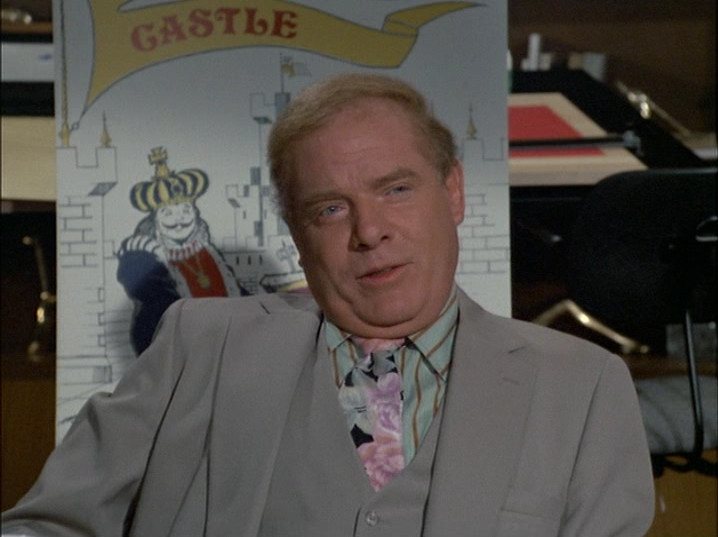
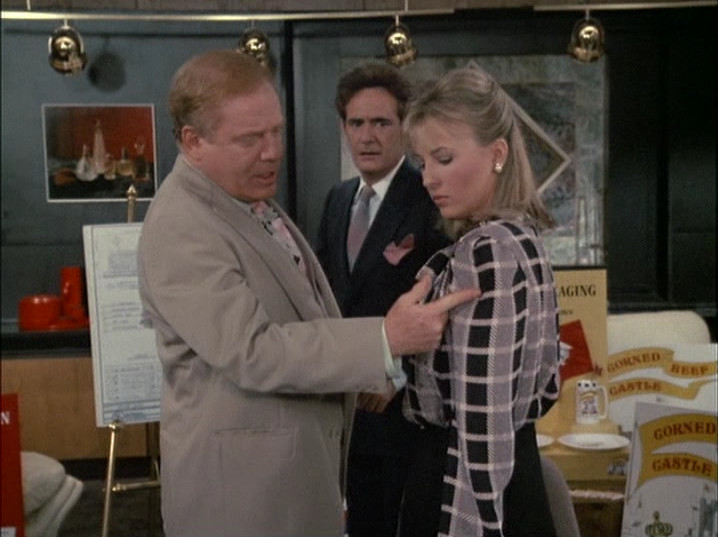
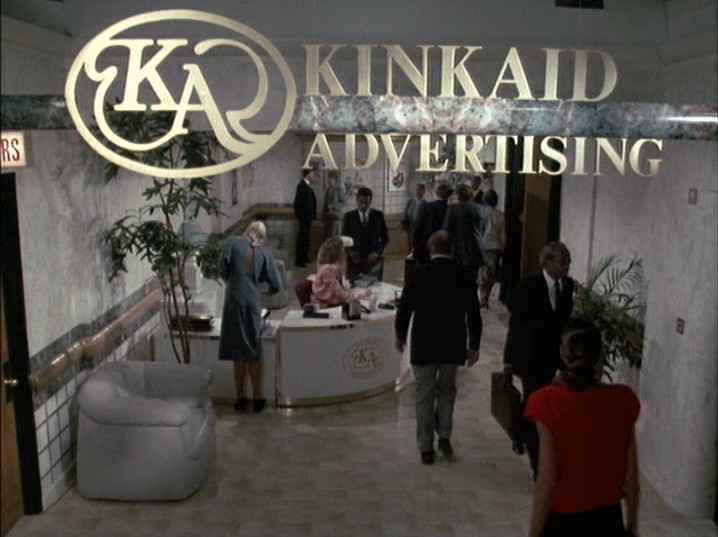
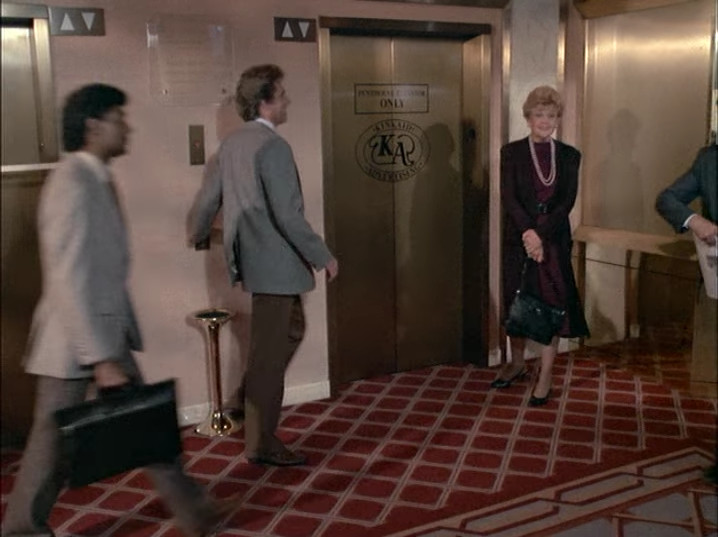
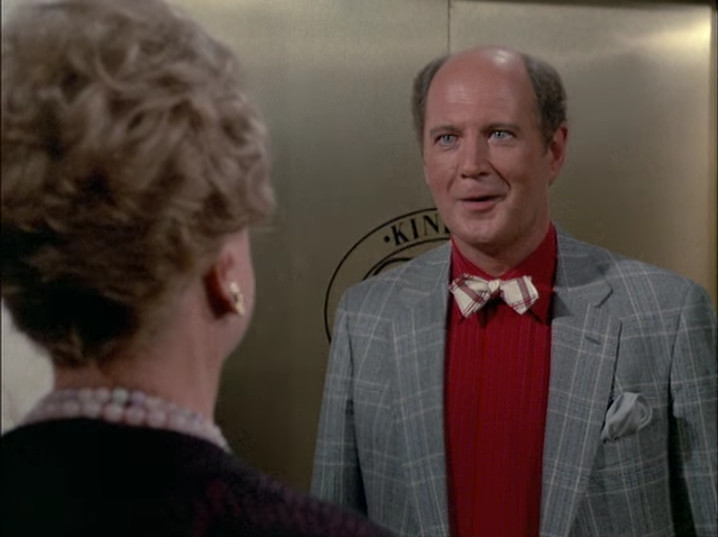
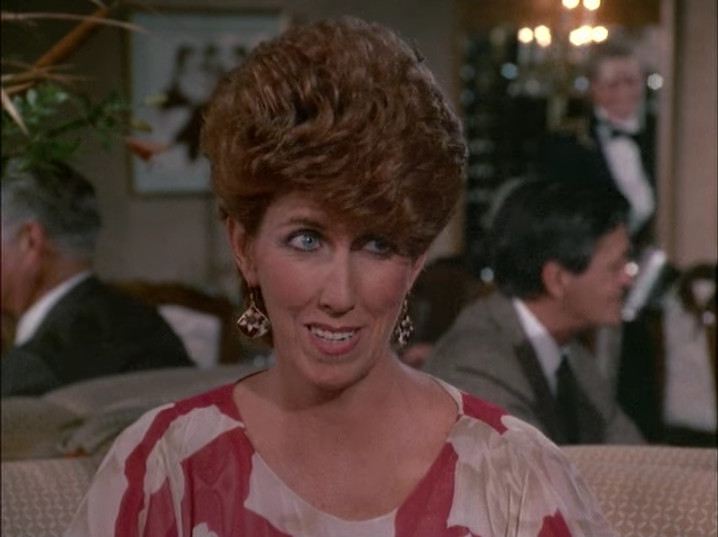


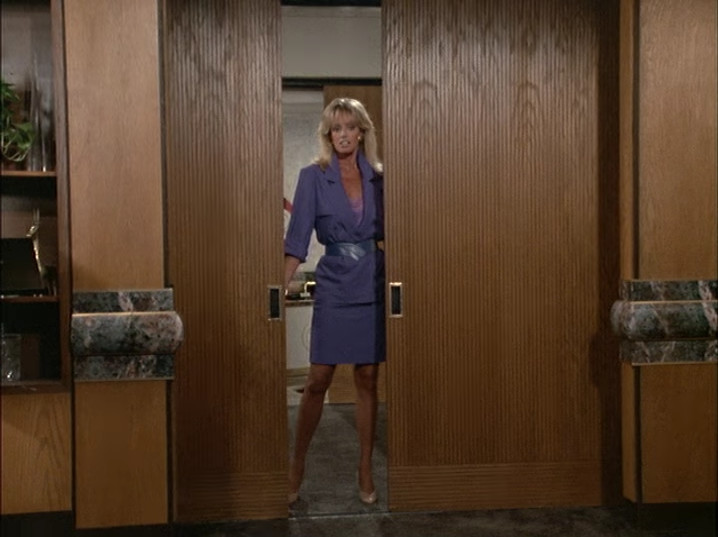

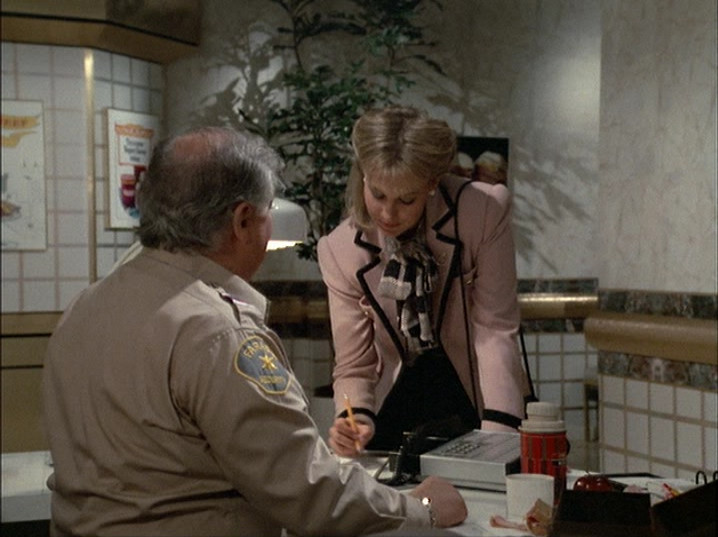


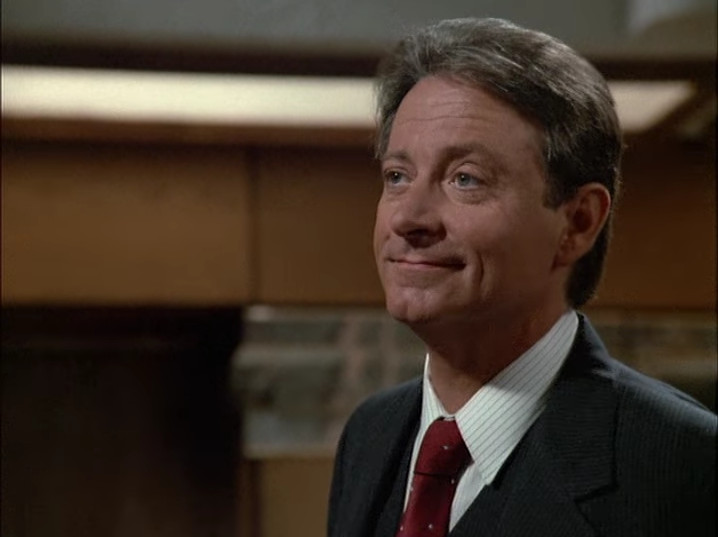
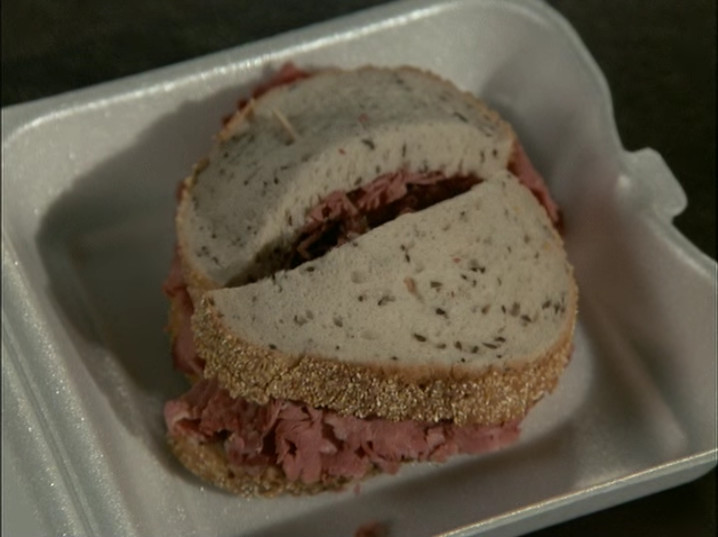
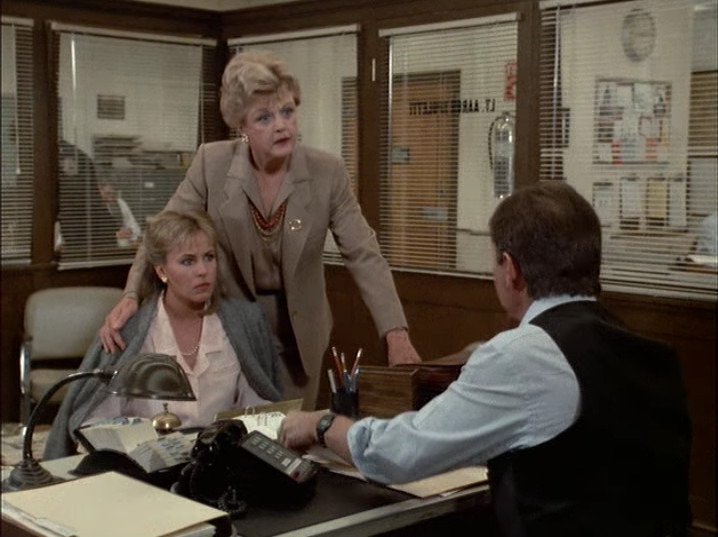
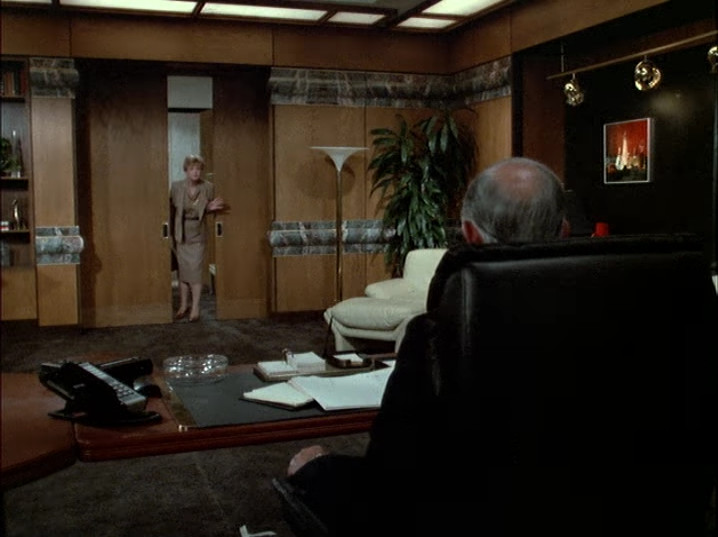


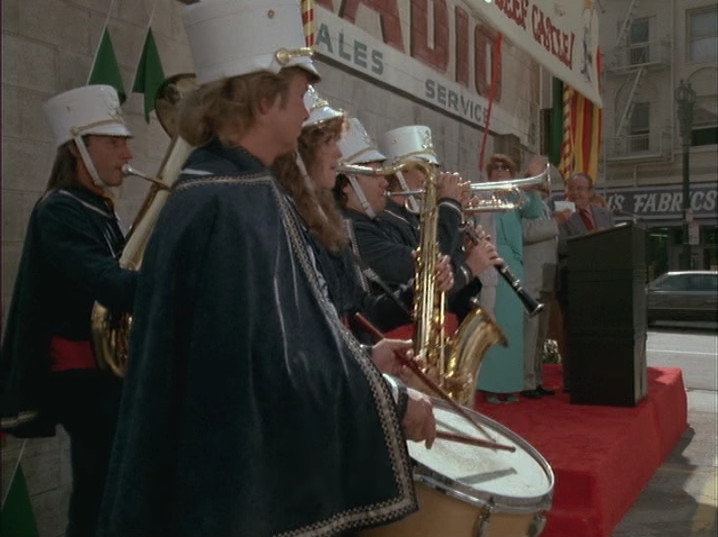

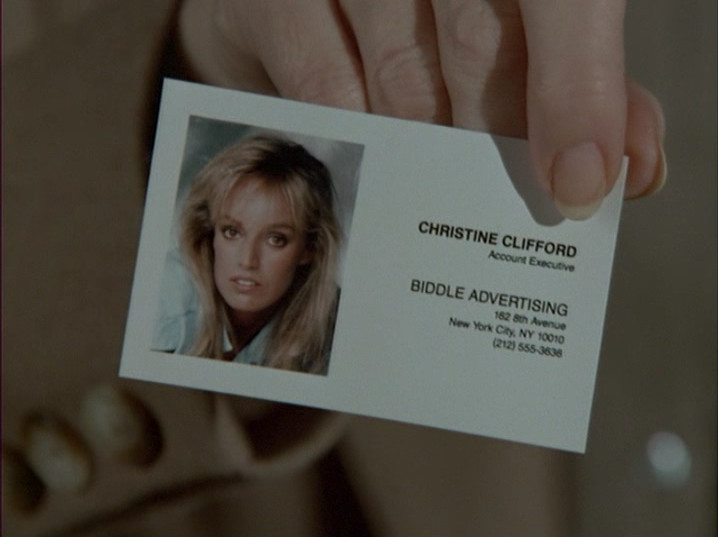
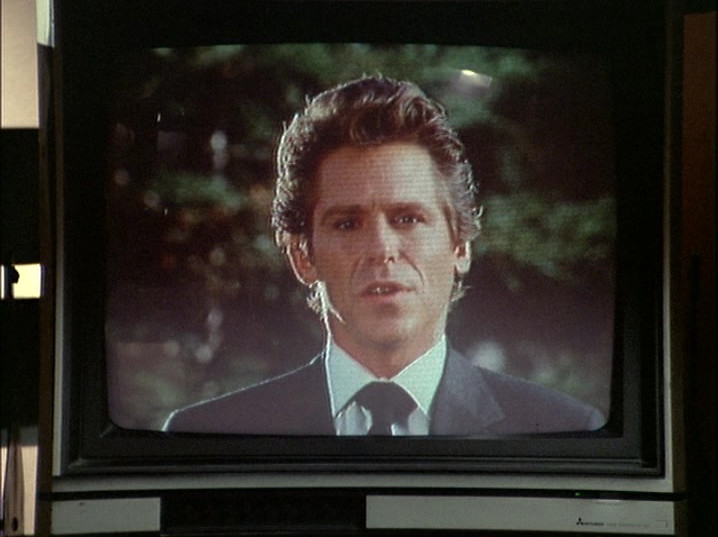
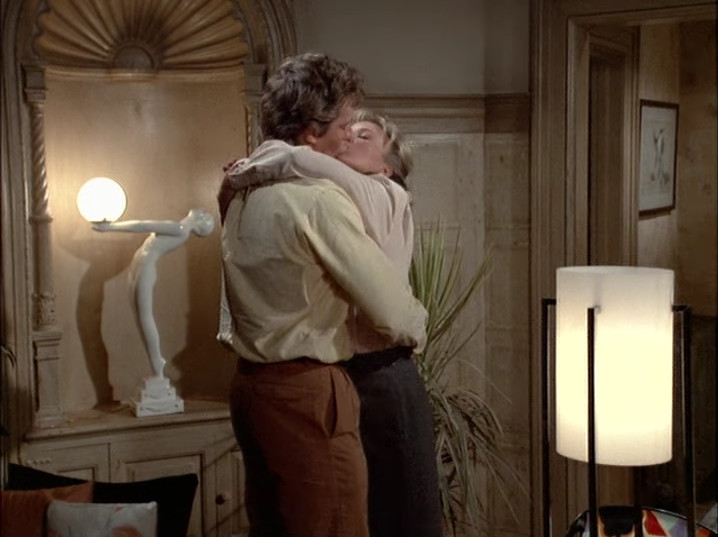
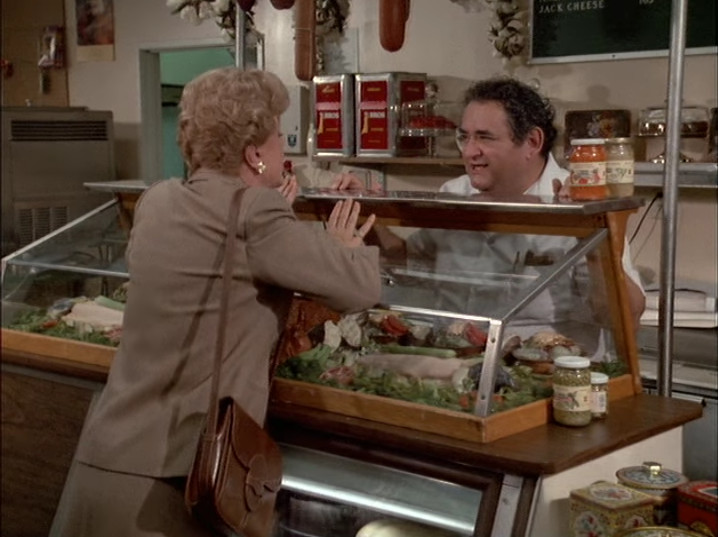
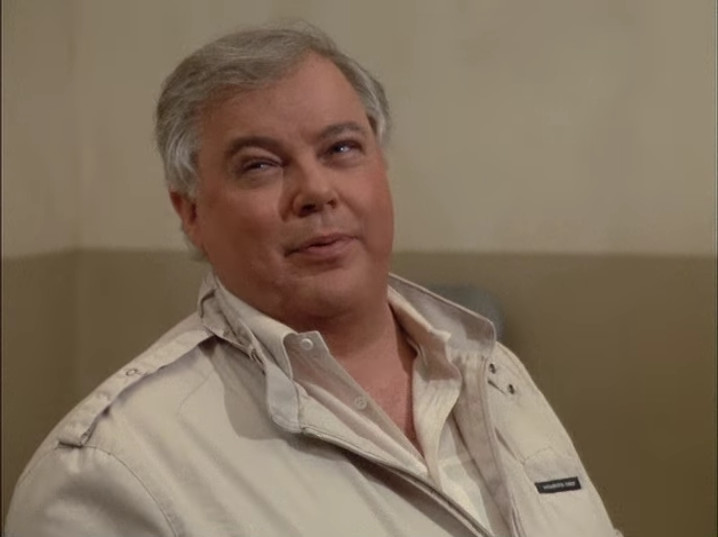


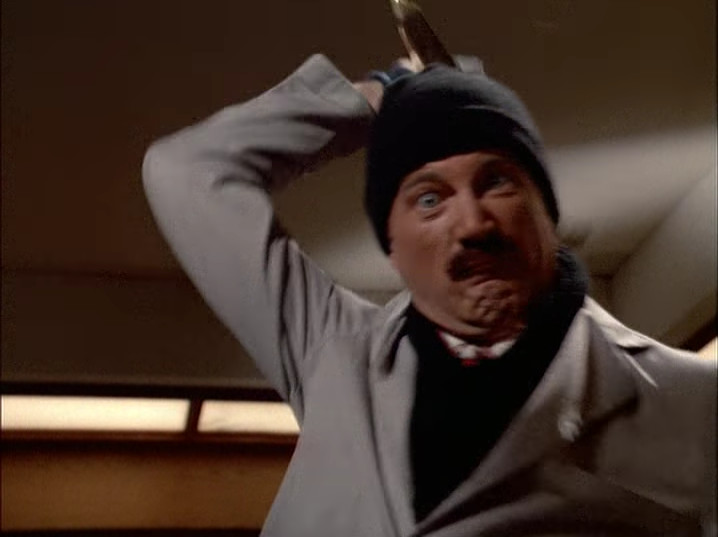


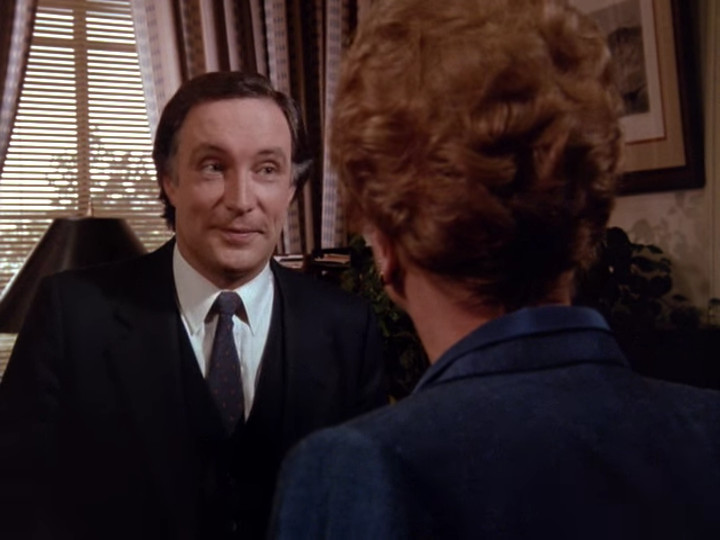


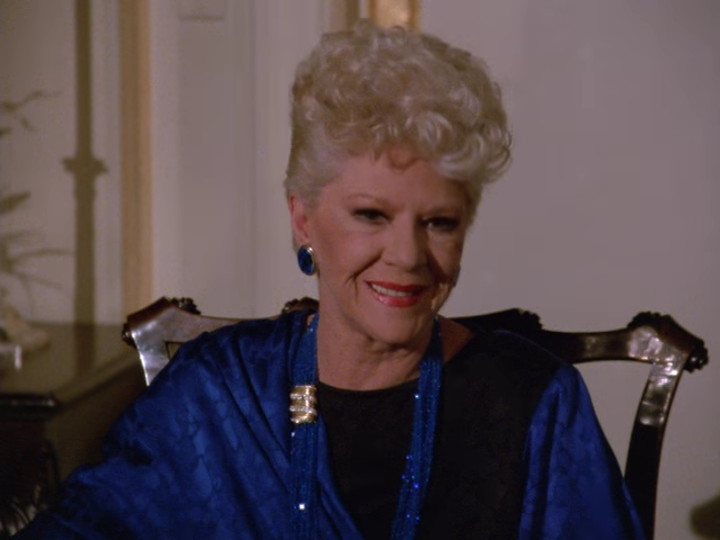


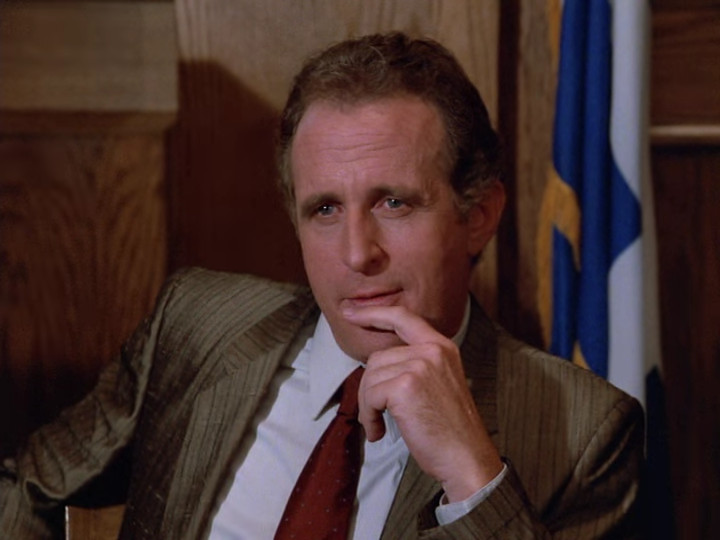


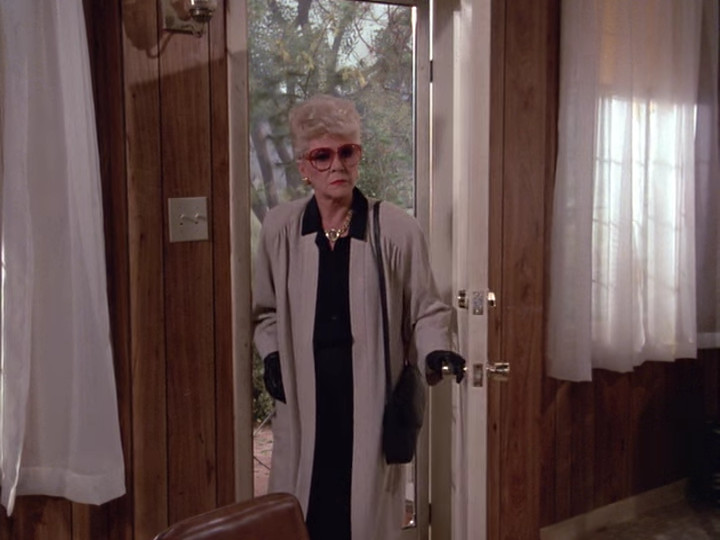

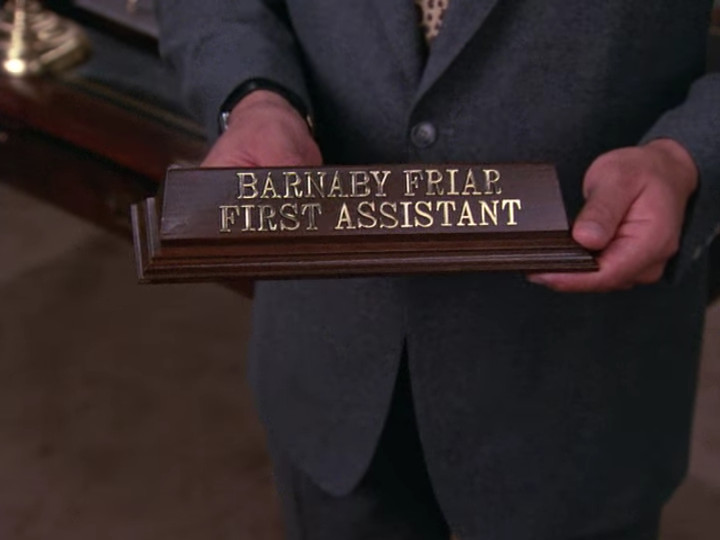







You must be logged in to post a comment.