Streaming television is better in every way than linear TV (by which I mean broadcast and cable TV, i.e. where a show is on when it is on and you can only choose the channel) and it seems possible that one of those improvements will hurts TV’s cultural prestige.
The improvement I have in mind is that streaming TV shows allow you to watch them whenever you want to. I remarked before (in Watching On-Demand TV) how being able to watch a show whenever you want decreases the urgency of watching it and also gets rid of the weekly rhythm that broadcast TV gave. It recently occurred to me that TV also accidentally gained cultural prestige as an accident of that delivery mechanism.
In the days of linear TV, if you wanted to watch a show you needed to organize your life so that you would be available at the time that the show aired. In the 1980s VCRs made it possible to tape a show when it was on to watch it later, but at first this required one to be around, so you were still organizing your life around the show’s schedule. Later on there were programmable VCRs which could tape a show while one wasn’t home, but it was often easier to be present than to figure out how to program the VCR.
Organizing one’s life around something signals that the thing is important. Here’s the critical part: it doesn’t just signal this to others. It signals this to oneself. Thus television shows gained a double-benefit from people organizing their lives around them. First, we knew that these were the sort of things that millions of people organized their life around, so they had to be important. Second, we organized our own lives around them, so we had to feel them important or we’d be fools for organizing our lives around them. When you and everyone around you acts as if something is important, that gives it prestige.
This was not the only source of prestige, of course. Back in the broadcast days when there were only three television channels, the fact that many millions of people were watching the same thing gave it prestige. The fact that it was common but one of few made it seem select. The fact that it was transmitted over public airwaves gave it the imprimatur of the government, which was more respected back then than it is now. Those things faded with the era of cable TV, when dozens of channels got rid of the exclusivity and the cable itself got rid of the government imprimatur. But the fact of organizing one’s life around the airing of one’s favorite shows persisted.
Even if streaming hadn’t come about, the advent of the Tivo and other digital video recorders which were aware of show schedules and were easy to program and never missed an episode would have mostly ended this aspect of the prestige of TV shows. Streaming has killed it more completely, though.
It will take some time for this to fully play out, of course, and a loss of prestige is usually not the sort of thing one notices, because things without prestige are intrinsically less noticeable. It’s also been going on for a while, so I think we’re already seeing the effects of it. It’s likely that the bigger effects are going to be generational; people (like my children) who grew up with TV not having this prestige will just naturally think of it differently.
On the thirteenth day of November in the year of our Lord 1988, the Murder, She Wrote episode Snow White, Blood Red aired. It was the fourth episode of the fifth season, and it’s one of my all-time favorites. (Last week’s episode was Mr. Penroy’s Vacation.)
Jessica has come to the mountains in order to enjoy a ski vacation with her nephew, Grady, who has not yet arrived. (This is merely a setup; Grady is not in this episode.)
The episode starts out on a foreboding note. A figure in a red ski jacket (who turns out to be Jessica) is skiing down the slopes as opening credits and ominous music play, then another skier in a white jacket begins to follow her.
At the bottom we discover that it was only a friend of hers named Johnny.
There’s something charming about a ski scene on an indoor set with a picture of mountains behind the fake trees…
They joke a bit about Jessica being out of practice. (Johnny said she skied rather well, and, indeed, the stunt double we watched ski down the slopes did look to be in good practice.) It then comes up that there’s a big snowstorm expected the next day which will prevent all skiing, which Jessica takes relief at as she expects to pay for her heightened activity today. It’s a decent working-in of the upcoming plot point of the storm, but I’m not sure it’s really necessary. Storms, as acts of God, do not require foreshadowing in a mystery story.
It comes out that Johnny, as well as many other people present, are hopefuls for the US world cup ski team. There is one person present who has already made it, a fellow by the name of Gunnar Tilstrom. Johnny then excuses himself to help a cute young woman having trouble attaching her boots to her skis and the scene shifts to inside the pro shop.
Shoulder pads under the sweater!
The woman on the left is Anne. The man is Mike. They’re married and own the place. Mike is reminding Anne that she has to keep track of the inventory and she angrily replies that she made a mistake and asks how long he’s going to keep berating her. It’s an overreaction to his gentle tone, which suggests that she’s over-sensitive for some reason.
Jessica then walks in and witnesses a bit of the fight. She’s there to pick up something she ordered, which came in about an hour ago. As Anne gets the box, Jessica notices the crossbow on the wall:
Jessica remarks on it and Anne jokes that they use it to shoot beginners who clog up the expert course.
Jessica’s order turns out to be a blue ski suit she’s bought for Grady as a present, and remarks that the entire vacation is a present to him as she hasn’t seen him for three months.
The phone rings and Anne acts about as guilty as humanly possible, saying it would be better if the caller called back later. Mike comes over and takes the phone and asks if it’s Gunnar, but the person on the other end hangs up. Jessica asks if the coat can be put on her bill and high-tails it out of there, while Anne asks Mike how he could humiliate her like that and he replies that he was about to ask her the same thing. I guess we’ve found out why she’s over-sensitive to criticism.
We then cut to the bar, where we see Gunnar returning a landline telephone he borrowed to make the call.
Isn’t that more of a golf sweater Gunnar is wearing?
We then cut over to a young woman named Pamela who is about to join Gunnar, having watched his disappointment as he handed back the telephone.
This sweater feels almost Nintendo-themed.
“Pitty, Gunnar. The old Swedish charm’s beginning to fail you,” she purrs in a delightful posh British accent.
There is some banter, but it turns out that she represents a ski product company which has an endorsement deal with Gunnar that she negotiated, and she remonstrates with him because she’s heard rumors that he won’t compete in the world cup. He explains that he’s won plenty of things before now and is pushing thirty years old and could end up crippled like Mike and have to spend the rest of his years running a ski resort like Mike. (Interestingly, the actor, Eric Allan Cramer, was 26 at the time the episode aired, making this a rare case of playing older. Fun fact: five years later Cramer would play Little John in the Mel Brooks movie Robin Hood: Men In Tights)
Meanwhile, Gunnar still has some skills, such as attracting women, and he sees himself marrying a rich widow who hasn’t been too ravished by the passage of time. Pamela counters that she heard he doesn’t confine himself to widows, and offers as evidence the rumor that a month ago he had an adventure in Tahoe was with the wife of a vindictive gangster.
Gunnar tells Pamela, basically, that he’s sorry for her that she was enough of a sucker to believe in him but that doesn’t alter his plans. Pamela leaves, disappointed, while Gunnar smiles.
Next, after an establishing shot of the ski slopes, we meet Gunnar’s coach, Karl.
This episode has a lot of great sweaters. This may be my favorite.
He just spoke to Pamela and is concerned that Gunnar isn’t going to enter the world cup. They’ve worked together for two years on this! Gunnar says that he hasn’t decided what he’s going to do, but whatever it is, it will be without Karl. Karl grabs Gunnar’s arm and says, “You need me!” Gunnar shoves him to the ground and replies, “I need no one, least of all, you.”
I think we’ve got a decent number of suspects planted, now.
We now shift to evening in the hotel restaurant. Pamela is talking to a young skier named Larry McIvor.
I had a swear in those colors, though not quite that design, in the 1980s.
He’d love to endorse her products, but he wonders what she needs him for since she has a contract with Gunnar. She likens the business world to a downhill course laced with rocks. He’s her insurance policy in case something goes wrong. He golly gosh sure could use the money ma’am, and proposes that they sleep on it. When Pamela raises her eyebrows, he’s deeply embarrassed and tries to assure her that’s not what he meant. Pamela smiles at his naive wholesomeness and says that he really is a delight, and offers her hand. They shake and the camera moves on to a new couple who Jessica runs into.
They’re husband and wife. His name is Ed McMasters, hers is Sylvia, and they’re from New York City. He invites Jessica to join them for dinner, “if you don’t mind eating with a cop.” She replies, “Not at all. They’re some of my favorite people.”
They talk over dinner for a bit, then at the end of the song that was playing the lead singer welcomes everyone to the Sable Mountain lodge and then calls out some of the world-class skiers present. “I don’t have to tell you, they stand to win a few gold medals at the next world-cup meet.” I wonder if they would have had to pay money to be able to say, “the winter Olympics.”
Anyway, they put the spotlight on the various people that he calls out for applause, and this results in everyone seeing who Gunnar was having dinner with.
Anne makes the best of this, then the camera gives a closeup of Anne picking up a highly distinctive gold lighter. These kind of closeups tell us that the thing in the center of the camera is important, so take a good look.
She looks around and here eye catches her husband staring at her from right behind Jessica, who looks and sees it. He walks off and the scene changes to outside, in the morning at first light. The storm has started and the snow is falling, but Gunnar is going for a ski.
As he’s going down on the slopes we see a crossbow raised. We then see the view through the crossbow’s scope and the crosshairs take aim at Gunnar. Right as he jumps a small rise the bolt finds its way home and Gunnar falls. He rolls to a stop, dead.
The camera fades to black and we go to our first commercial break.
When we come back from commercial break, Jessica is looking outside as a weather report says that the storm is looking to be far worse than feared and roads are becoming impassible. She walks down into the crowded lobby with her suitcases and meets Pamela, who says, “welcome to Bedlam. They say it’s going to be an hour but I suspect it’s going to be a lot longer than that.”
They’re not explicit but I suspect that everyone wants to leave because the storm has made skiing too dangerous. I’m not sure if that’s really a thing at mountain ski resorts, but it is at this one.
The van to drive people down the mountain and into town has temporarily broken, btw, and the scene shifts to Larry trying to help Mike with it. He pronounced the fuel line frozen and it is possible that the pump has gone bad too. (I’m a bit suspicious of this diagnosis since since the freezing point of gasoline is around -100F.) Mike asks Larry if he can fix it and Larry isn’t sure. Then Johnny walks in and brings the news that Gunnar has been found, dead, by some dumb teenagers who were skiing in the storm.
The scene shifts to the pro shop where the crossbow and all of its bolts is missing. The glass was shattered and a uniformed security guard reports that the back door was smashed in. Mike says that they need to get the cops up here but Anne walks in and says that there’s no way that’s going to happen. All of the roads are closed and will be until the storm lets up.
The scene shifts to Jessica’s room, where Mike and Anne ask her to investigate the death. People are beginning to panic and the appearance of something being done will help keep them calm. Jessica points out that they have a policeman staying with them—Lt. McMasters. Anne shakes her heard. The McMasters left early this morning, driving off before the storm hit.
Jessica doesn’t know what she can do but to the great relief of Mike and Anne, she agrees that whatever it is, she will do it.
The scene shifts to her taking a look at the body.
The man standing with her is a doctor. Dr. Lewis. He objects that he is a gynecologist, not a forensic pathologist, but Jessica merely answers that necessity creates strange bedfellows.
Ed McMasters then walks in through the curtain and explains that they ran into a snow bank “about the size of the Chrysler building” and turned around. He looks at the body and asks Jessica for her opinion. Jessica tries to turn the case over to him but he demurs and agrees only that he will help her. He leaves, then Dr. Lewis asks if he can go and Jessica gives him permission.
She then begins to look through Gunnar’s jacket. She finds a room key, specifically room 301. She ponders the meaning of this as a mournful clarinet considers the question with her.
The scene then shifts to Jessica coming into the main room from outside. One of the things that’s done very well in this episode is visually suggesting the strength of the storm.
Still images only partially convey how inhospitable it is outside. Part of it is the difficulty people have in opening doors and the speed with which they come in and get the door closed again. The episode does a good job of showing how much everyone is at the mercy of the storm.
Anne stops Jessica and gives her a clue. After he left a phone message came in for Gunnar. “Urgent. Call me. (702) 555-0980. Vicki.” Jessica recognizes 702 as a Nevada number. She goes to her room and calls the number. A tough-sounding male voice answers and says, “Tartaglia residence.” Jessica asks to speak to Vicki and the voice replies, “Mrs. Tartaglia isn’t here at the moment. Who’s calling?” The tough voice is insistent on asking the question, “Who is this?” when Jessica doesn’t answer. Instead, she just hangs up the phone and picks up the room key that had been in Gunnar’s pocket.
We then see Mike go into a dark room and begin looking for something.
Jessica walks out and shows him Anne’s golden cat lighter. Mike assures Jessica that Anne didn’t kill Gunnar. He left around 6am and Anne left around 7am. Mike knows because he was in an empty room at the end of the corridor watching.
These are the facts salient to the mystery; there is some interesting characterization where Mike explains that he and Ann were engaged prior to the accident which crippled him and while Anne went through with the marriage, he couldn’t bring himself to believe that she really loved him for him, rather than for the athlete he had been. This drove them apart, and you can see that he regrets it, giving some hope for the couple.
The scene shifts to a bunch of young men who are all, I assume, hopefuls for the world cup team who are drinking and sharing raucous memories of Gunnar. Larry gets up and excuses himself because he can’t drink and be merry with Gunnar dead.
Jessica walks up to Lt. McMasters, who watched the scene, and asks him what just happened (she saw Larry walking off looking upset). He replies, “I don’t know. I think it’s an Irish wake.”
Jessica then asks him if he’s made any progress on the murder weapon, but he hasn’t. Anne isn’t keen on a room-by-room search since everyone is already on edge. Neither of them point it out, but it would be a bit far-fetched for the crossbow to be in someone’s room, anyway. When you have the great outdoors to hide something in, it’s a far more sensible choice than storing it in a place which is tied to oneself.
Jessica then spies Pamela and joins her.
Pamela wastes little time in saying that she barely knew Gunnar and had no reason to kill him. Backing off from the abruptness, this turns into a conversation about Gunnar and how the list of people who wanted to kill him was long, though he could turn on the charm when he wanted to. She runs off a list of Gunnar’s flirtations with women that made the tabloids, including the one where he took up with the wife of a mobster and barely made it out of town with his life. This catches Jessica’s attention. She then asks Pamela why she sounds so bitter and Pamela admits that Gunnar was about to ruin the $3M endorsement contract with his womanizing.
Then scene then changes to a storage room where ominous music plays as gloved hands uncover the crossbow and pick up an arrow, showing it off to the camera.
Then we fade to black and go to the midpoint commercial break.
When we come back from commercial break, pamela is working out on an exercise bicycle while larry is doing overhead press on a weight machine. After a few seconds of introductory noises to let people hurry back from the bathroom, Larry says, “Maybe I’m just a dumb farm boy, but where I come from people have respect for the dead.”
Pamela tries to comfort him, saying that they didn’t mean harm and tragedy affects people differently. He’s in no mood for it, though, an accuses her of being there to make sure he will sign the contract. She denies it and he walks off to the locker room. Then Karl the trainer walks in and drunkenly accuses her of murdering Gunnar and threatens to kill her if he finds out he’s right.
After this threat session, Pamela goes to the woman’s locker room where, to her surprise, she hears the shower running. She sees clothes on the ground and, going to inspect them, finds them soaked with blood. She then goes into the shower room and finds Larry’s corpse, dripping blood, hung by the neck with a rope tied to the shower head, the water running over him. As you might imagine, the music is extremely tense. This is probably the most dramatically tense scene that’s been in a Murder, She Wrote episode. The tension is especially heightened by the fact that the murderer had to be close by since there wasn’t much time for the crime to be committed.
Pamela does the sensible thing and screams as loud as she possibly can. (That’s not a joke. This is a situation for attracting as much attention as humanly possible.)
The scene changes to her in her bedroom with Jessica. She is distraught, wondering who could possibly want to have killed such a nice kid. Lt. McMasters then walks in and says that, as near as they can figure—the gynecologist is a bit outside of his field of expertise—Larry was knocked unconscious in the men’s locker room, dragged to the women’s locker room, stabbed with an arrow, stripped, and hung up in the shower. Jessica says that this makes no sense and McMasters replies that (of course it makes no sense) they’re dealing with a luny, a certified hazel nut.
Anne comes into the room to say that there’s more bad news—the phone lines are down. They can keep up internal communications with their generator, but they are completely cut off from the civilized world.
Jessica asks if Sylvia (Lt McMasters’ wife) can stay with Pamela for the time being. She saw a vehicle with a CB radio in it—red, with a Massachusetts license plate—and she thinks that they should try very hard to get in touch with the police. Anne says that she’ll try to find out who owns it. McMasters says that he’s going to talk to the Norwegian ski coach, who seems not entirely right in the head.
In the next scene Jessica and Mike Lowry go to the red vehicle and call the Sheriff. They manage to report the second murder, but the Sheriff says that the roads are impossible and the helicopter can’t fly in this storm. They’ve got to hang on. Then everything goes to static for some reason which isn’t obvious but doies at least get us out of the conversation.
Mike and Jessica retreat to the pro shop, where Mike laments that this could destroy their business, into which they invested every cent they had.
Jessica then notices the photograph of the last US World Cup team and asks if it was Mike’s idea to invite everyone up. The people in the picture are Gunnar, Larry, Johnny, and Mike (before his accident). Now two of the men in the photograph are dead. Jessica doesn’t know what it means, but there must be some reason for these killings.
Then they hear a crash and begin to investigate. As they do, Johnny comes through the door, his left arm bleeding.
In the next scene Johnny is in bed, the gynecologist tending to his wound.
At first blush the wound looks a bit low, but it could possiby be an attempt to stab Jonny in the heart. Johnny says that he was grabbed from behind and stabbed. Lt. McMasters says that they found another arrow nearby on the floor. Johnny didn’t see who it was, not even a sleeve. He fell to the ground and passed out, then woke up when he heard Jessica and Mike.
In the hall the gynecologist remarks that he used to think his practice was dull and repetitive, but has never been so eager to get back to his dull, boring routine in his life. He then quickly walks off.
Lt. McMasters remarks that he can’t blame the good doctor. It’s not much of a vacation to have some screwball going around trying to knock off the next world cup ski team.
Jessica is not so sure. The doctor said that the wound was superficial. Perhaps Johnny stabbed himself to divert suspicion?
McMasters thinks it unlikely. Jessica has done some checking up and Johnny is good but not that good; with Gunnar and Larry out of the way he’s got a much better chance of making the team. McMasters says that it’s a flimsy motive for murder, but Jessica counters that she’s heard worse.
Jessica then says that there is a third possibility—that Gunnar was the only real target. The killer probably planned to hit and run but got stuck in the snowstorm and had to create a smoke screen. McMasters says that this third one is a hell of a theory. Jessica replies that theories are easy to come by, the truth is much harder. She then says that they better hope that the weather clears up so that the police can come in the morning and take the investigation over from them.
The storm, however, rages through the night.
A few hours later Jessica, in bed, receives a call from a panicked Sylvia McMasters. With the sound of sleigh bells jingling in the background she asks if Ed is there with Jessica. Jessica, who was nearly asleep, says that he isn’t. Ed got a call a few minutes ago and rushed out. She doesn’t know who the call was from, but Ed took his gun. Jessica tells her to stay calm and that she’ll try to find Ed.
Jessica puts on her coat and braves the storm, looking for Ed.
She checks the ski shop but it’s locked. As she does Ed pops out from behind the building with his gun pointed at her and tells her to freeze. After she identifies herself he explains that some guy with a muffled voice called him and said to meet him outside the ski shop because he had information about the case. It sounded like a trap to him so he hid himself and waited.
As they talk a crossbow aims at them from the car barn and then fires, but misses, hitting the wall behind them. As they try to spot where the shot came from, the sound of a motor roars and a ski-mobile drives out of the car barn. McMasters orders the driver to stop, then fires three shots at him. The driver runs up a snow bank and topples over. They rush up and it’s Karl, the ski instructor, dead. Beside him lays the crossbow with two arrows left in its quiver.
The scene fades to black and we go to the final commercial break.
When we come back, Jessica is examining Karl’s ski jacket while Ed is telling Mike and Anne that he got the feeling, when Gunnar was pushing Karl around, that something was going to snap in the big trainer.
Mike says that it’s hard to believe, since Karl was like a father to them.
A phone call comes in with the news that the phone lines are back in operation. Ed is delighted by the news and looks forward to going home to NY. He says he’s going back to the lodge and asks Jessica if she’s coiming, but she’s nowhere to be found.
Outside Jessica is standing with Karl’s coat as the gynecologist comes running up. He begs her to promise that this is the last time she will press him into service as an amateur coroner. She asks if he got “them”, and he replies that he did. While surgery on corpses is not his long suit, he does believe that he extracted the bullets with a minimum of damage. Jessica looks at the bag he handed her and proclaims them two .38 caliber bullets, but did they come from the same gun?
The gynecologist doesn’t understand. He thought it was known that Karl was shot by Lt. McMasters. Jessica replies, “yes, but was he also shot by someone else?” The gynecologist looks confused, then horrified, then says, “You know, I’m afraid that if I ask you what you mean by that, you’re liable to tell me.” Without giving her the opportunity to say anything, he then very politely wishers her a good day and leaves, saying that he’s giving up skiing for something less rigorous, such as needle-point.
Jessica smiles, then goes into the car-barn and looks around. She then notices the jingle-bells on the wall next ot the telephone by the door.
Jessica then catches Sylvia on her way to meet Ed, who is warming up the car. Jessica says that they need to talk. Jessica is surprised that Ed wants to go home so soon and Sylvia explains that she’s anxious to get back to her cat. Ed then walks up and says that they have a busted fuel line, so will be stuck for a while. Jessica then invites Ed to have a seat, saying that there’s been a development.
Jessica then reveals that Karl didn’t kill anyone, he was murdered like the rest. There were two bullets in Karl, but only one of them struck him when he was alive. (If you recall the picture of his jacket, there was only one bullet hole with blood on it. Jessica then shows a second bullet hole in the jacket which we couldn’t see earlier because there’s no blood on it.) When the police check the ballistics, they’re going to find that both bullets came from the same gun. Moreover, they’re going to find that there is no Ed McMasters who works for the NYPD. Also, it was Sylvia who fired the crossbow at them; Jessica heard the sleigh bells in the background of the telephone call and didn’t think about it until she saw the sleigh bells hanging up next to the phone in the barn, but they place Sylvia not in her room, but in the barn. Also, another question is why, having killed Gunnar, didn’t the killer leave? The only people who tried to leave were the McMasters, who only came back because the road was impassable.
Jessica surmises that he was hired by Tartaglia to take vengeance on Gunnar and got trapped by the snowstorm. The rest of the killings were a cover-up when they couldn’t get away.
As the McMasters indignantly rise to leave we can hear the sound of a helicopter overhead and two security guards come out and detain the McMasters at gunpoint. When they clearly give up trying to escape, Jessica turns to Anne, who had just announced that the police have arrived, and we go to credits.
As I said at the outset, this is one of my favorite episodes. It’s tightly plotted with good characters and an intriguing mystery. By means of a powerful act of nature we have a closed cast of characters. The ongoing murders adds tension and makes the threat of the killer being loose present, while it also creates new clues as well as new things for them to fit into, creating satisfying complexity.
That is not to say that this episode is perfect. Like all the works of man it does have mistakes. For example, we see Jessica packed and ready to leave before Grady even shows up. It’s also a bit weird that Vicki left a message for Gunnar asking him to call her at a phone number that could easily get her husband. I’m not sure what her alternative would be since this was long before cell phones and she probably didn’t have a private phone line, but it’s still a bit unlikely. Also… actually, that’s about the only mistakes which comes to mind, and the first one doesn’t even matter because the plot only needed her to be in the lobby, which required no excuse anyway, and the second one could have been a slightly different message and serve the same purpose. This may be one of the reasons I like this episode so much.
Getting back to what this episode does well, we have a good setup which introduces a large but manageable cast of characters. I think that part of what keeps the large cast manageable is that they fall into several categories. We have the owners, the adjuncts to the ski team (the business woman and trainer), and some fellow guests. This is not the only approach, of course. The best alternative I know of is to give every character a hook to make remembering them easy. That said, this is an excellent approach and gives us manageable complexity.
Another great point is the economy of the setup. We get introduced to everyone, but we also have our corpse before we go to the first commercial break. This balance maximizes the mystery involved. If we were introduced to fewer people, we would have no scope for speculation. If we waited too much longer, we would need some kind of story that would compete for time with the mystery. This point is probably specific to the short-story form (which TV resembles more than it does novels), but it’s worth bearing in mind.
Next on the list of great things about this episode is the snow storm. It is a wonderful complication in the story, both helping and hindering the murderer and the detective alike. It brings in the eternal theme of how man is subject to nature, for all of our technological mastery. It also removes the possibility for modern forensic evidence, turning the mystery into more of a classic and making it more accessible. We all have wits, we do not all have forensic tools.
The gynecologist who is brought in to do the medical work has a real function but also brings in a touch of comic relief which balances out the threat of a killer on the loose who is willing to kill again. This is part of the general excellent pacing, where moments of examination and detection alternate with moments of tension and the killer acting.
The murderer is also well done in this episode. “Ed McMasters” pretending to be a New York City cop is a good way to divert suspicion from himself, but if you pay attention he does play it in a way that’s cagey and not comfortable with the role. He will happily drop the name of recognizable places (like the Major Deegan Expressway), but he mostly refuses to actually do anything that would require the knowledge of how to do real policework. Even when he does, he makes his actions ineffective. Tasked with finding the crossbow, he proposes a room-to-room search which he knows that Anne and Mike will object to and which wouldn’t do any good anyway, while looking like he’s trying.
The one part where he really slipped up in a way that doesn’t make a lot of sense to have slipped up was in actually shooting Karl’s corpse on the snowmobile. There was no reason for him to actually aim at the corpse and he had to know that a bullet which didn’t cause any bleeding would have had to be suspicious. There are two reasonable ways to explain this, though. The first is that he had to be aiming at approximately the right place because Jessica was watching him and he got unlucky and hit the corpse when he meant to miss it. It is not easy to put your bullets where you mean to with a handgun, so this could simply have been, as the kids these days would say, a “skill issue.” The other explanation is that he thought that the most convincing thing to Jessica would be method acting—to actually try to do the thing he was pretending to do—and he expected to fool her long enough to drive away once the roads were clear and then “Ed McMasters” would disappear and it wouldn’t matter that the coroner would discover that Karl was shot after he was dead. And to be fair to this second possibility, the only reason he didn’t escape was because Jessica was quick witted enough to examine the corpse and figure out what it meant.
This episode was just great from start to finish.
In next week’s episode we’re off to the mountains of West Virginia for Coal Miner’s Slaughter.
I recently read Agatha Christie’s novel One, Two, Buckle My Shoe. It is the nineteenth novel to feature Hercule Poirot and was written during a very turbulent time. Published in November of 1940, it would have been written mostly during World War 2, or entirely if Christie had started it after the publication of Sad Cypress in early 1940.
It has some vivid, if not always pleasant characters, and among other things deals with the kind of revolutionary socialists who are the counterpart to the German ones who started the second world war. Her portrayals of human beings are at times almost painfully realistic and well done. I’m inclined to agree with the reviewer Maurice Richardson, who in his review in 1940 wrote:
The Queen of Crime’s scheming ingenuity has been so much praised that one is sometimes inclined to overlook the lightness of her touch. If Mrs Christie were to write about the murder of a telephone directory by a time-table the story would still be compellingly readable.
Agatha Christie’s style is so simple it might be easy to miss the subtlety of her observation of human nature in its varied forms.
All of that said, there does seem to be a pretty big plot hole in the story, which I find quite surprising because there are usually no plot holes in Agatha Christie’s work, not even small ones. (spoilers follow.)
I can’t see any way that Alistair Blunt could have arranged for a dentist appointment shortly before Mr. Amberiotis’ appointment which was right after Miss Sainsbury Seale’s appointment. And that’s assuming we were to grant the coincidence of the two men having the same dentist as Mabelle Sainsbury Seale, which seems difficult on its face since she was of a different social class than them. Oh, and also the same dentist as “Mrs. Chapman.” (Mabelle and “Mrs. Chapman” had to have the same dentist because the switching of dental records was an important plot point. [See the second update below for more.])
The coincidences are not insurmountable; coincidences do happen and when they merely shape the result rather than make it possible, it’s not disappointing.
But what I can’t for the life of me figure out is how Alistair Blunt (or “Mrs. Chapman”) ever found out about this coincidence. People—especially foreigners who are only visiting—don’t visit the dentist often enough that one would just call around to all of the dentists asking if they had an appointment for the victim. Even if this coincidence was known, how would Alistair Blunt then get an appointment for shortly before Mr. Amberiotis? Requesting it would be far too suspicious. Not to mention that setting up having been patients would take months, at least.
And there’s no way that the entire thing could be coincidence on the day of the murders, since the murders and switching of the dental records were planned ahead of time, as was the fake telegram getting the secretary out of the way.
I can’t help but wonder if there’s something I’m missing, because this is very unlike Agatha Christie.
UPDATE: A reader brought up the timing of Amberiotis’ making an appointment with the dentist. This, I think, was in advance of the day of his murder. I’m going to quote the section in full since it’s short.
At the Savoy Hotel Mr. Amberiotis was picking his teeth with a toothpick and grinning to himself.
Everything was going very nicely.
He had had his usual luck. Fancy those few kind words of his to that idiotic hen of a woman being so richly repaid. Oh! well—cast your bread upon the waters. He had always been a kindhearted man. And generous! In the future he would be able to be even more generous. Benevolent visions floated before his eyes. Little Dimitri… And the good Constantopolus struggling with his little restaurant… What pleasant surprises for them…
The toothpick probed ungaurdedly and Mr. Amberiotis winced. Rosy visions of the future faded and gave way to apprehensions of the immediate future. He explored tenderly with his tongue. He took out his notebook. Twelve o’clock. 58, Queen Charlotte Street.
He tried to recapture his former exultant mood. But in vain. The horizon had shrunk to six bare words.
“58, Queen Charlotte Street. Twelve o’clock.”
While the text is slightly ambiguous, I think the most natural interpretation of these words would be that Mr. Amberiotis already had an appointment with the dentist, which was why upon feeling the pain, he merely looked at his notebook and there was no mention of making a telephone call.
On the other hand, this text also makes it sound like Mr. Amberiotis had just had his conversation with the real Miss Sainsbury Seale but that had to have happened at least a week before, since that was the length of time that “Miss Chapman” pretended to be Miss Sainsbury Seale.
That said, if the goal is to figure out an interpretation of these words that resolves all plot issues, this section must describe Mr. Amberiotis merely considering the anticipated fruit of having been kind to Miss Sainsbury Seale over a week ago, and then suddenly, by poking the sore place in his mouth, recollecting the appointment he made a while ago with the dentist.
UPDATE: In checking up on something, I came across the fact that Mabelle Sainsbury Seale did, by coincidence, have the same dentist as Alistair Blunt and that’s how they met in London. Approximately three months before the murders, Mabelle was coming out of the dentist’s office as Alistair was going into it and she recognized him and said that she used to be a great friend of his wife’s. So that part was a coincidence which shaped how the murder later took place. Moreover, this coincidence was revealed less than halfway into the book. With the dentist of Miss Sainsbury Seale known three months before the murder, “Sylvia Chapman” had time to become a patient of the same dentist. So there’s no plot hole on how Sylvia and Mabelle had the same dentist in order to make the switch of the records possible.
One solution for how Mr. Amberiotis had the same dentist as Blunt and Sainsbury Seale would be what the ITV version of the story starring David Suchet did, which was to have Mabelle recommend her dentist to Mr. Amberiotis. I don’t remember this being in the novel, but neither was there anything which contradicted it.
This still does not explain how they found out about Mr. Amberiotis’ appointment in order for Alistair to get an appointment on the same day. The fake Mabelle’s appointment does not require an explanation since the dentist, himself, said that it was made the day before as an emergency appointment. But how on earth did they know for which day Mr. Amberiotis had an appointment?
It is a very old aphorism that one should not speak ill of the dead. According to Wikipedia, it dates back at least to Chilon of Sparta. To the degree that justification is given for it, it’s usually that the dead are not here to defend themselves from accusations. Like many aphorisms, it has some wisdom to it, but it can be taken too far.
The main thing to say for it is that, in the ordinary course of life, the wicked deeds of the dead are no longer relevant. The obvious practical exception are when the dead leave behind them some means to give restitution for their wickedness; if a man stole a horse and dies, the horse should be given back to its owner, and establishing this will necessarily entail some speaking of the fact that the horse was stolen. But, leaving aside this kind of restitution, whatever bad deeds a man did while alive, he no longer has the power to harm anyone, so there is no benefit to be gained.
Not often spoken about but also relevant is that anyone who valued something good about the dead man will have that tarnished by accusations against him. There is, generally, nothing gained by diminishing their ability to enjoy what good the dead man did.
The more common reason given—that a dead man is not around to defend himself—does also have some merit to it. The dead man would usually be in the position to give the strongest defense of himself, so any such accusations will have the suspicion attached to them that they could not have stood up to defense.
So much for it.
There is a place, however, where it is clearly inapplicable: when the dead man has published things which are still read/watched/have influence. A good example is Christopher Hitchens. He was an atheist popular among atheists in the first decade and a half of the third millenium. He is still often quoted, though like most people his influence has diminished after his dead. It has diminished, but it has not gone away. People still quote him, and find him inspirational in their rejection of religion. And the problem is that it his personality that attracts people, not the quality of his arguments. In fact, so far as I know, he never made arguments. All he ever made was impassioned rhetoric. (See my video, Christopher Hitchens Isn’t Serious: No, Heaven Is Not A Spiritual North Korea. In at least one place I break up his flow just to show that, absent his voice carrying one through, his conclusion in no way followed from what he said before it.)
Impassioned rhetoric is a kind of argument, though mostly an implicit argument. It rests upon the premise that the one who is impassioned has a reasonable cause for the passion in his rhetoric. That is, the man himself is one of the premises in his argument. This is not unreasonable, but it does mean that the man must be examinable if his argument is to be considered. Since Christopher Hitchens’ impassioned rhetoric had, as its premise, the correctness of his judgement, we must be free to examine whether his judgment actually was correct. And there we get to the fact that it was not. Hitchens was, in fact, a habitual drunkard who didn’t think that anything he talked about so passionately when drunk was worth bothering about when he was sober. That is, the passion in his rhetoric came not from his own good judgement, but from a bottle.
The reasons why one should not speak ill of the dead do not apply here, for several reasons. In the first case, the man is still doing damage, so it is relevant to work to end that damage. In the second case, this is counteracting the man’s bad work, which itself gets in the way of people privately remembering him for whatever virtues he might have had. In the third case, death is not a free pass to cause as much harm as one can, and in the special case of Christopher Hitchens he very candidly admitted to being a drunk, so there’s no question of defending himself anyway.
The inexpensive written word (since publishing, and especially since digital distribution) and even more so video have created a new context which requires some revision to this ancient heuristic.
I just ran across an interesting article where Nassim Nicholas Taleb writes about the problems with IQ. Like everything he writes it is hard to read because of his tone. I suspect that he would be far easier to have a conversation with while walking with him or eating a meal with him than he is to read in text. That said, he makes a really interesting point about IQ in this article which I haven’t seen before.
(Quick note: my own position on IQ is that it makes a great metaphor for talking about comparative intelligence and, in the real world, I’ve heard it’s among the best predictors there is for how people will do on IQ tests. That is to say, its only use is as a metaphor for certain specialized conversations.)
The point that Taleb makes is that IQ will always produce strong statistical correlations because it does strongly detect severe learning disabilities. Or, more simply, people who are bad at everything are also bad at taking IQ tests.
He gave a striking example which makes it very clear. Suppose that you have a test which you administer to 10,000 people, 2,000 of which are dead. Dead people have a 0 IQ and will also score 0 on any performance metric. If there is no correlation whatever among the living people, standard statistical methods will give the result that this total population has an IQ-to-performance correlation of 37.5%.
To the best of my knowledge, psychologists don’t give IQ tests to corpses, but the same thing holds for less severe impairments than death, which is why the psychologists keep getting strong statistical significance for the correlation of IQ tests with… anything else.
A lot of people are confused about whether money is real or imaginary because they don’t realize that it is a spiritual, rather than material, thing. Before I go on, I need to make clear that a thing is neither good nor bad for being spiritual rather than material. Food is material and revenge is spiritual; both angels and demons are pure spirit. I am only talking about what the thing is, in so doing I’m not saying that it’s either good or bad (except in the trivial Thomistic sense that being is good considered differently).
Another misconception I need to get out of the way before I can actually say what I mean is that “spirit” is not merely “a different kind of matter.” For various reasons, a lot of people seem to think that spirit is basically glowing matter that has the ability to move through ordinary matter. That’s not spirit, that’s a TV ghost. When I say that something is spiritual rather than physical, I’m saying that it is not any kind of matter.
OK, with those common misconceptions cleared out of the way, we can finally get down to business.
It is fairly straight-forward to see that money is spiritual instead of material; the easiest way is to consider what happens when you get rid of the matter.
Suppose I lend you ten dollars, in the form of a ten-dollar bill. Then when you repay me, you repay me in the form of ten one-dollar bills. You have given me back exactly what I lent you, but the matter is completely different. This is not possible with material things, it is only possible with spiritual things. The bills are merely physical signs which point to the spiritual thing.
This is true of any money, by the way, not merely of fiat currencies. Suppose I lend you a pound of (pure) gold. Suppose you return to me some other pound of (pure) gold. Despite the matter being completely different matter, you have perfectly repaid the debt. The thing lent was not specific gold, but merely a quantity of gold. The thing returned was the same quantity of gold. Yet the matter is completely different.
You can observe the difference if I lent you a gold statue. If you merely returned to me the same quantity of gold but in the form of coins you would not have repaid what you owed me, because what you owed me was the specific statue.
That money is spiritual rather than material is why so many disagreements arise about it. Because we are a hybrid of spirit and matter, we recognize the spiritual, but in general we do it through the intermediation of matter. That is, we see the effects of spirit on matter and infer the spirit. You can see this even with where spirit got its name from—breath. Aside from on very cold days when we can perceive condensation, we do not see people breathe. We see their chest move, we hear their voice—we perceive various things from which we infer the breath. Or again consider the wind in the trees. We see the tree move and infer the wind, we don’t see the wind itself. These things are analogous to how we perceive spirit by its effects.
Because of this, we create physical signs to point to the spiritual thing we call money, though if you want to get extremely accurate the thing we call money is the same concept as debt (in the moral sense). These physical signs can be anything, since they are not the thing but merely a thing which points to the thing. At one time they might be records on a clay tablet or a stick, at another quantities of metal, at another pieces of paper, and at another records in a computer.
Like all signs, it is possible to lie with signs. You can see this in forgery and also when governments inflate fiat currencies in order to pretend that they have more money than they really have. None of these things make money unreal, they only make the signs pointing to the money unreal.
Recognizing this solves a great many problems around money, such as in this tweet:
Quite frequently the quarrelsome atheists one runs into online are very poorly educated; in many cases they’re basically fundamentalist Christians who swapped the bible out for a biology textbook as the holy book that they don’t read. This seeming lack of knowing anything that would normally be learned by reading books lends itself to them coming up with some really weird creation myths for the existence of religion. Consider this recent one left in a comment to my post You Can’t “Believe In Science”:
Regarding experimentation, science requires observation, not experimentation as such. Paleontology is observational science, like astronomy. Simples. But anyway, the difference between science and religion is that scientific ideas are tested against observation while religious ones are not. Science rejects hypotheses which don’t agree with observation; religion keeps them and adds excuses. The Problem of Evil should have done away with the “everything was created by a perfectly good God” hypthesis, but religion has kept it and added excuses: Free will/God is impossible for puny humans understand/Best of all worlds/Etc. The flaw here is that adding excuses to a failed hypothesis doesn’t make it more likely, it makes it less likely.
While I’ve seen similar creation myths for religion from atheists, I’ve never seen this exact one. According to this myth, people first came to believe that God exists and created all that is, and reasoned out that He is perfectly good, then later discovered evil and invented the idea of free will and the concept of the world being too complicated for us to understand in detail in order to explain away this new discovery.
I doubt that the fellow who wrote this actually believes it; based on previous experience with him I doubt that he really believes anything at all; he seems to be a rhetorical thinker who just types stuff that happens to sound good at the moment. That’s pretty typical of the type, which is why I’m using it here for illustration. (Btw, rhetoric, on a technical level, is generally a micro-narrative or series of micro-narratives. Understanding this will make it easier for me to talk about it.)
You can see the basic flow of the rhetoric in the quoted paragraph. He started off with a story of how science is about observation. I wouldn’t be surprised if this was largely based off of pictures he’s seen of people looking through telescopes and microscopes. (It’s too much to go into here, but in many ways the “scientific revolution” was really the avalanche of knowledge gained when lens-making technology got good enough to make telescopes and microscopes, rather than any change in methodology.) From that mental image, now called Observation, he proceeds to try to distinguish Religion from Science using this. That is, he goes on to tell the story of how Science uses Observation. Since Science uses Observation, Religion must not use Observation. What story to tell?
Well, here he runs into a problem, since obviously in any normal sense of the word “observation” which isn’t code for “looking through a telescope or microscope” looking at a man heal a cripple or walk on water or feed 5000 people when there was only a few loaves of bread and a few fishes would be “observation.” So merely observing things can’t be the story of Observation he wants. However, with falsificationism being a popular idea among atheists, he brings it in as the backbone of the story he’s going to tell. So in Science, Observation allows you to falsify theories, which Scientists heroically do. This is in contrast to Religion, where Observation is not used to falsify theories. He doesn’t bother coming up with an example of scientists rejecting a theory based on observation, probably because this would be far more difficult than he consciously realizes. (It would be far easier to come up with examples of scientific theories being retained in the face of contrary observation. E.g. Newtonian mechanics, the inability of quantum mechanics and relativity to be reconciled, the Standard Model being kept despite observations indicating dark matter, etc. etc. etc.)
He then needs to tell a story of Religion ignoring observation. It would not work for his rhetorical purpose, however, to simply appeal to the fact that Religion (he really means Christianity; this is less true of non-Abramic religions) rests on testimony rather than observation. And this is not because virtually no one actually conducts scientific experiments for himself and relies on testimony. It’s because the narrative flow must be the ignoring of observation. So he comes up with the astonishing idea that there were people who were ignorant of evil that came to believe in God for unspecified reasons, then discovered the existence of evil and rather than rejecting their idea came up with a rationalization for it. It’s dumb as the proverbial solid waste from a dog, but it does have the correct narrative flow.
Now, while these micro-narratives have nothing to do with reality to an impressive degree, they do feature a common theme I’ve seen frequently from this kind of atheist: they get really offended when people don’t take their judgment to be the final word on a matter. They will identify something that they perceive to be a problem and get mad when people don’t instantly change their minds, but instead offer an explanation. This would be nonsensical unless the atheist were infallible, which I think gives some insight into the psychology behind it. Somehow or other (and I suspect there are many possible causes) they have come to be their own authority.
It is unpleasant for anyone to see an authority which they respect being disrespected.
A friend brought this tweet to my attention and part of what’s interesting about it is the large split in reactions to the video it contains between males and females:
(Since links break on the internet, it’s a video of a woman showing off her standing desk which has a large number of color-coordinates things on it, including jars of keycaps, miscellaneous cute charging gizmos, etc.)
A friend said it reminded him of how I’ve advanced the theory that women are more given to the direct ordering of the material world while men tend more toward helping women in this role; left to their own men tend to be interested more in the abstract such as tools and how things work while women, left to their own, get a lot of satisfaction out of imposing rational order upon spaces. (note: this is not the same thing as liking cleaning; very few people like cleaning, it’s more about how much stress one feels at things not being clean.)
This video—or, more specifically, the reactions to it—are really more about the practice of ornamenting spaces, though. Though a lot of people are inclined to interpret ornamentation (or decoration) as a purely aesthetic subject, like painting or sculpting, it actually serves a practical purpose. Ornamentation exists to indicate that a space has been rationally ordered according to a function.
For example, in a kitchen, neatly folded towels with decorations on them and a row of decorated jars for flower, sugar, etc. are indications that the kitchen is clean (oriented toward food safety) and organized (oriented toward efficiently making food). Similar things apply to a bathroom, where organized flat surfaces allow one to rapidly inspect for unhygienic contamination. Decorations such as a soap shepherdess or a porcelain figure of a child in a bath serve to exclude using these flat surfaces for things that would more readily hide unhygienic contamination. (If you haven’t lived with young children, you have little concept of all of the strange places that can become contaminated and require cleaning to ensure hygiene.) Small towels with pictures of waterfowl embroidered on them laid on top of the towels which can actually dry hands off will get disturbed with use and hence act a bit like the seal on a pill bottle to assure the user that the thing to be used is fresh and clean.
In healthy femininity, the ornamentation is subordinate to the function of the space whose ordering it signifies. In toxic femininity, the function of the space becomes subordinated to the ornamentation. In extreme examples of this kind of disorder, spaces can become effectively forbidden from use lest the ornamentation be disturbed.
In the context of the desk in the video I linked above, much of what people are objecting to is (I suspect) the ornamentation. The ornamentation is there to signal that the desk has been rationally ordered to its function of getting work done. The ornamentation is not, however, part of that function. Thus people can easily perceive the ornamentation as getting in the way of the function (and thus being toxic femininity).
This is going to especially be the case for people who do not understand ornamentation, which population will tend to skew heavily (but not exclusively) male. Not having an instinct toward ornamentation of spaces (as distinct from the ornamentation of tools), they will tend to assume that there must be some practical function to the ornamentation, which they don’t understand, and thus must either figure out or reject as a mistake. This confusion costs mental effort to resolve (whichever way it is resolved), and hence is perceived as getting in the way of the function of the space.
This is a specific case of the more general principle that people find anything that they wouldn’t do mentally taxing because they do not effortlessly understand why it was done.
This is why there is the commonality (with many exceptions) of males finding a mess harmless while women find it stressful. The males will simply memorize where all of the useful things are and ignore the rest, so long as it doesn’t require moving out of the way to get at the useful parts of the space. This memorization of where the useful things are means that the mess becomes almost literally invisible to the person who knows where all things are. The females, by contrast, will not see a rational ordering, nor will they see the markers of an ordering that they don’t (yet) understand, and so will be stressed by how the space is meant to be lived in but is not optimized for its function.
When you put these two things together, they are a big part of why most of humanity throughout time and space has found it expedient to have separate male-controlled and female-controlled spaces, and for each sex to stay out of the other space or else when entering it to treat it as a foreign country and to just observe the mysterious customs of these foreigners so as not to give offense. Hence, for example, the stereotype that the same woman whose scolding of how the kitchen was left when a male made a sandwich for itself is taken meekly will be chased out of the male’s tool shed when she has the temerity to say something about its organization. (This, by the way, also tends towards a division of labor, as it’s just easier for everyone if the person who understands the organization of the space is the one who uses it, as they will both be most efficient and also least disturb this organization and thus create the least amount of work for the person who imposes that organization.)
This separation of domains is a thing, by the way, that young couples often have to learn. Each assumes that the other has no organization and does things at random, and they gradually learn that they’re wrong as they see the other reliably accomplish things. It also takes a while for the male to learn that he can’t make the female not stress over mess, while it takes the female a while to learn that she can’t make the male appreciate the function of ornamentation.
Eventually they come to learn to compromise. Eventually the female will recognize that the space is rationally ordered if everyone knows where the important stuff is and the mess is confined to only some mostly harmless places and is periodically dealt with so that there becomes an equilibrium where it does not grow like a cancer to take over the space. Eventually the male learns to tolerate ornamentation as something which makes the female happy for some reason, and that’s good in itself because one of the many purposes of his life is to help her to be happy, and that it is not too much of a waste of time to beat back the mess even when not absolutely necessary.
Obviously I’m painting with a several-foot-wide brush, here, but for all that it is a very common human pattern. Young couples fight because they are different but don’t realize it; older couples (who are wise) get along because they are different and do realize it—and make allowances for it. But you can’t make allowances for things you don’t know exist.
Of course in practice no one gets this perfectly right and it is usually done to excess (on both sides). There are also plenty of exceptions to the generalizations above, with fastidious men and slovenly women. As always, treat each person as themselves and not merely a particular local instance of a generalization. Etc.
But, even with all of the necessary caveats, this is a common pattern of you know how to look for it.
I recently realized that I had only seen the Jeremy Brett version of The Hound of the Baskervilles but never actually read the story, so I remedied that immediately. I really enjoyed it. As often happens in Conan Doyle’s novels it drags a little in the middle, but not to nearly the degree of A Study in Scarlet or The Sign of Four, and for me it verged on a page-turner despite my already knowing the story. It’s also, by the way, a brilliant detective story.
Spoilers will follow, so if you haven’t already read it, go do so now.
(As an interesting aside, as I was explaining what sort of story it was to my thirteen year old son in order to try to interest him in it, he ended up asking if it was basically Scooby Doo for adults. After thinking about it for a bit, I came to the conclusion that he was fundamentally correct, though of course it would be more accurate to say that Scooby Doo was The Hound of the Baskervilles for kids.)
On the whole I think that there is a very good balancing in the story of the supernatural setup and the murder mystery. The story having been published in 1902 and set in 1889 meant that everyone took the supernatural rationally, which is to say, seriously but as one part of the world and therefore possibly an explanation and possibly not an explanation. This made the story so much more interesting than it would be in a typical modern story. None of the characters defiantly state their unwavering faith in materialism. You have none of that stuffy, “I am a man of science! I will not believe in the supernatural no matter how much evidence there is for it!” which makes so many modern stories which deal with the supernatural, boring. That everyone is open to the possibility of the supernatural explanation makes the story so much more interesting because they are actually considering the evidence that they have and their tentative judgment varies as fresh evidence comes in.
This is where the line I quoted in the title of this post comes in. In the first chapter Dr. Mortimer left his cane and Holmes took it as an occasion for a little competitive deducing with Watson, then the man arrived and there was a bit of comic relief. In the second chapter we start with a lengthy exposition of the family curse of the Baskervilles and how it started with the wicked Hugo Baskerville in the late seventeenth or early eighteenth century. (The short short version is that he raped a made and hunted her down with dogs when she escaped onto the moor, at which point he was killed next to her dead body by a giant hell-hound with glowing eyes, etc. and this beast continues to exact vengeance from Hugo’s descendants.)
We then get a reasonably detailed description of the recent death of Sir Charles Baskerville, the short short version being that he died of a heart attack while strolling on his property next to the moor. Finally, at the end of the chapter, Dr. Mortimer reveals that he had discovered a piece of evidence he did not give at the inquest, because he did not see what good it could do, but he would not withhold it from Sherlock Holmes. He found footprints by the gate to the moor. When Holmes asked whether they were a man’s or a woman’s, Dr. Mortimer replied, “Mr Holmes, they were the footprints of a gigantic hound.”
This is an excellent turn of events in the story because it introduces the first piece of evidence that there may be some truth to the legend. Centuries-old family stories are easy to dismiss. Direct evidence with no obvious explanation is very different.
At this point Dr. Mortimer is inclined to the supernatural explanation, but he is not committed to it. When Holmes asks why, the phrasing of Dr. Mortimer’s reply is interesting:
Since the tragedy, Mr. Holmes, there have come to my ears several incidents which are hard to reconcile with the settled order of Nature.
Chief among these is that several people saw a gigantic glowing hound upon the moor. They are all reasonable people and the testimony of independent witnesses which agrees is hard to ignore.
“Why should he not go to the home of his fathers?”
“It seems natural, does it not? And yet, consider that every Baskerville who goes there meets with an evil fate. I feel sure that if Sir Charles could have spoken with me before his death he would have warned me against bringing this, the last of the old race, and the heir to great wealth, to that deadly place. And yet it cannot be denied that the prosperity of the whole poor, bleak countryside depends upon his presence. All the good work which has been done by Sir Charles will crash to the ground if there is no tenant of the Hall. I fear lest I should be swayed too much by my own obvious interest in the matter, and that is why I bring the case before you and ask for your advice.”
Holmes considered for a little time.
“Put into plain words, the matter is this,” said he. “In your opinion there is a diabolical agency which makes Dartmoor an unsafe abode for a Baskerville—that is your opinion?”
“At least I might go the length of saying that there is some evidence that this may be so.”
“Exactly. But surely, if your supernatural theory be correct, it could work the young man evil in London as easily as in Devonshire. A devil with merely local powers like a parish vestry would be too inconceivable a thing.”
In The Adventure of the Naval Treaty, Holmes remarked that nowhere is deduction so necessary as in religion, and that it’s an exact science. Here Holmes is showing that this is sincere. He is setting theology against superstition. It’s a thing the Church has done for millenia; people get lazy and forget to think. This is, interestingly, a theme of the Homles story. He sees what other men sees, but he observes what they ignore.
After this, the mystery gets underway fairly quickly, with curious incidents happening to the new heir to the Baskerville title and estate as soon as he arrives from America. The story proceeds in a satisfyingly twisting way with the evidence mounting for both the natural and supernatural explanation. It’s extremely well done, though I think it would be hard to pull off in a modern story because so many people are so irrational about the supernatural.
Within the Sherlock Holmes stories, Watson has the invaluable role of being the chronicler of Holmes’ adventures. This does introduce a minor problem, though, which is that it’s utterly at odds with Holmes’ assurances of discretion to his clients.
This is not every case, of course; there are cases where Holmes has no duty of secrecy to anyone. A Study in Scarlet does not bring about this problem, and I doubt that The Sign of Four does either (the only person to whom Holmes might owe discretion, there, became Watson’s wife and was thus available to wave her rights to confidentiality). But as soon as The Adventures of Sherlock Holmes begin we run into a problem with A Scandal in Bohemia.
I know that the King said that in two years it wouldn’t matter who knew that he had had an affair with Irene Adler but it is none the less hard to imagine that he would take it kindly to his affair with Adler being made public for no reason other than the publicity of Sherlock Holmes. Mr. Jabez Wilson was, perhaps, not owed any great duty of discretion, so we can pass on the Red Headed League.
The Case of Identity was, I think, a bit cruel for Watson to have published, since it would have created much embarrassment for the woman who came to Holmes. This, however, could be dealt with by Watson changing the names. Few people would be over-likely to recognize the original in the story if her name, as well as the name of her stepfather, and also of the places and businesses were changed.
None of this will work for The Boscombe Valley Mystery. Here, Holmes promised a dying man that for the sake of his daughter he would not reveal the dying man’s former life as a highway robber and murderer. The whole point was to keep from his daughter what her father was. Even if the names had been changed there could be no mistaking who the story was about, especially since she was the one who had called Holmes into the case. There can be no excuse that the case happened many years before, as she was a young woman during the story and would still have been a young woman at the time of publication. (Further, since The Sign of Four took place before The Boscombe Valley Mystery (since it refers to Watson as a married man, and he married in The Sign of Four) the earliest the latter could have taken place would have been about 1887, and The Boscombe Valley Mystery was published in 1891.)
This was by no means the only such case. The Adventure of the Naval Treaty seems equally harmful to ever publish, even with names altered, as does The Adventure of the Second Stain. In both cases the preservation of someone’s reputation requires that no one ever find out what really happened, and the details are utterly unmistakable.
These are just the cases where Holmes either implicitly or explicitly promised to never reveal the damaging secrets to anyone, and Watson’s chronicling them is an inarguable breaking of that promise. Probably the majority of cases Watson chronicles would constitute a violation of privacy and trust to the people concerned.
Stranger still, more than a few people who come to Holmes have heard about his adventures as published by Watson and nevertheless come with a hope of discretion on the part of Holmes.
Ultimately, I don’t think that there’s any solution to this. Just pick up any book trying to reconcile the chronology of the Holmes stories and you’ll discover that Conan Doyle clearly didn’t worry about the details. When Watson’s wife—Mary Morstan—became inconvenient, Conan Doyle basically just forgot about her. (It’s more complicated than that, but not tremendously more complicated).
So, what are we to make of Watson’s chronicling of Holmes’ cases being a contradiction of Holmes’ duty to his clients?
I think that one clue to why this was the case can be found in the titles of most of the Holmes stories. The majority of the stories began with “The Adventure of.” These were not really detective stories in the sense of how the genre would evolve in the 1920s. Conan Doyle obviously thought that the science of deduction was interesting but he equally obviously didn’t think of it as something that the reader would be doing.
(I’m still not sure when the idea of the mystery story being a game between the reader and the author began or, more importantly, when it became commonplace. It was certainly well established by the time of Fr. Knox’s Decalogue, but that was published in 1929. You can see some of this in G.K. Chesterton’s advice on how to write a detective story, which was published in G.K.’s Weekly in October of 1925.)
Since these are adventure stories where the science of deduction is meant only to be interesting but not something where the reader is trying to solve the mystery before the author, I suspect that Conan Doyle did not expect the reader to pay attention to details in the same way that later mystery authors would expect that. I suspect that this is why he was not bothered by the conclusion of a story making it impossible for Watson to have published it.
(Incidentally, I think that the contradictory chronology is more an effect of the stories being written many years apart and Conan Doyle simply having forgotten what he wrote early. I’ve faced this problem in writing my own detective stories. The result is I started keeping a file for all of the miscellaneous facts such as birthday, height, weight, age, siblings, siblings’ age, etc. Annoyingly, I had to re-read my own books in many cases to find out whether I wrote down such details before, though now I mostly can write them into the file whenever I invent a new one. Conan Doyle wrote Holmes stories over the course of nearly forty years; if he was not making a conscious effort to be rigorous about details it would have been shocking for him to not mis-remember things he had written decades before.)
If you go to the right places you will see colorful signs that proclaim a creed which contains among its dogmas, “science is real.” Online, you will see many people arguing over “science” and “what science says.” It’s interesting that people proclaim their faith in, and debate about, something which they cannot define and which cannot be coherently defined.
The idea of “what is science” was debated throughout history, but very hotly in the late 1800s and early 1900s. It was called the “demarcation problem,” and it proved to be a failed endeavor. It is simply not possible to define “science” in a way that includes things that clearly are sciences and excludes things that clearly are not. (I will only give a brief sketch of why not, since it’s a big topic that justifies more than a little reading of books on the subject.)
First, we can dispense with the “scientific method” frequently taught in schools because (depending on how you interpret it) it either is generally not what scientists do or else describes what everyone does in all attempts to study the natural world. (See There Is No Scientific Method.) People who want to figure out how to read bird entrails1 make observations, form a hypothesis, and conduct experiments to test the hypothesis. Paleontologists who study bones don’t conduct experiments2.
As Lee Smolin put it in The Trouble With Physics, it can’t be that Science uses a method. Witch Doctors use a method. It can’t be that Science uses math, astrologers use math.
There have been many attempts at the demarcation problem, but I think that the two greatest efforts are Verificationism and Falsificationism. There have been various forms of these, but since this is a sketch I’m going to treat each as just one thing, since all of their forms have the same problem.
Verificationism defines science as those studies of the natural world whose theories can be verified. Falsificationism defines science as those studies of the natural world whose theories can be falsified.
The problem with both is that outside of some very simple investigations into the natural world which have already been done, you run into an infinite recursion problem in trying to decide what is a verification or what is a falsification of a theory. I’ll use another example from Lee Smolin’s book The Trouble With Physics, since it was so well chosen.
Suppose I have a block of marble and present the theory that there is a marble head trapped within it. I propose to test this theory by using a hammer and chisel to clear away the marble of the block from around the marble head. I do so, and lo and behold, there is a marble head. I made a prediction and then what I predicted came to pass. Did I verify my theory?
But suppose that I struck too hard with the hammer and the marble crumbled to dust. There is no marble head to be seen, only a pile of marble rubble on the floor. Has my theory been falsified?
(Another example of how falsificationism doesn’t work is the error in the orbit of Uranus. In theory, when Uranus wasn’t where it was supposed to be, Newtonian mechanics should have been falsified and the theory discarded. Except it wasn’t; if there was a Neptune-sized planet in Neptune’s orbit, that would also explain why predictions of Uranus orbit weren’t correct… and there turned out to be Neptune. So the falsification turned into an even better verification. The same thing with Neptune led to the discovery of Pluto, except that was by accident because the problem was actually with the estimates of Neptune’s mass, not the influence of another planet.)
Both verificationism and falsificationism fail, ultimately, because there is no way to instantly and certainly know that the verification or falsification means what one takes it to mean. There is always the possibility of experimental error, interpretational error, or some unknown factor which is influencing the experiments in unknown ways. Of the three, the unknown factor is the biggest theoretical problem, but I think that the issue of interpretation is the biggest problem in practice.
To see what I mean, consider things that used to be considered prestigious science which are now in disrepute. IQ studies that prove that white people are superior to everyone else, for example, or skull-measuring in order to classify races, or identifying criminals by the shape of their face. All of these considered themselves to be sciences. They all methodically measured things. They tested their theories and found their theories stood up to those tests. The problem, of course, is that they were grading their own tests.
But this is a problem everywhere. Physicists don’t call biologists in to decide whether their experiments legitimately give support to the theory they’re testing. Chemists don’t call in phrenologists to decide whether their experiments really show what they think they show. Biologists don’t ask electricians to judge their interpretation of fMRI data in brain activation. Physicists ask physicists, and phrenologists ask phrenologists, just as astrologers ask to be judged by other astrologers. This is what peer review means; it means that people who do not question the assumptions of a field judge particular ideas, experiments, observations, etc. under the lens of these shared assumptions. All peer review tells you is whether the work is, roughly, on par with the rest of the work in the field. It intrinsically can’t tell you whether the field is any good.
There are a great many people who are willing to grade their own tests and give themselves high marks; which of these people can we trust?
Well, that’s the problem. There’s no way to tell. All you can do is to look at their observations, experiments, interpretive framework, and judge for yourself. (Or you can find people you trust who will do this looking and judging, and have them tell you their conclusions. The number of people who do this out of the goodness of their hearts, rather than out of the desire for money or attention, which will bias their evaluations, is annoyingly small.)
So to come back to where this post started, it is simply not possible to hold that “science is real.” No one can say what the science is that might be real or fake. The word “science,” in that sentence, simply has no referent.
It would have been much better if the sign had simply said what it actually meant, which, IIRC, would have been, “anthropogenic climate change is real and is bad no matter what that change is because the climate is currently perfect.” That may be true or false, but at least it’s meaningful for those words to be put in that order.
1 I mean from scratch. Most bird-entrail readers, like most people who can administer a pH test to determine acidity, do so according to how they were taught by others with no attempts at observation or experimentation, but only following instructions that most couldn’t explain. But if someone wanted to resurrect the lost art of bird entrail reading, they’d begin by making observations—looking at bird entrails and also at what happened. Then they’d make guesses about what the bird entrails mean, then slaughter some more birds and see if these guesses were confirmed by fresh events. If they were, they’d gain confidence in their theories about what the bird entrails mean.
2 People will occasionally try to shoe-horn paleontology into this shoe by claiming that the “experiments” they do are predicting intermediate forms of animals then looking for them. The thing is, they don’t. They dig wherever there are bones and find what they find. Also, since the preservation of any given animal is overwhelmingly unlikely, the absence of anything in the fossil record is never taken to mean anything other than “we haven’t found it yet, if it’s there to be found.”
As a Christian and and a writer, what are your thoughts on depicting characters using the Lord’s name in vain? I’m curious because in Chesterton’s The Man Who Was Thursday someone exclaims “God blast it!”
Here was my reply:
The first thing is to get straight the meanings of taking the Lord’s name in vain. One major division:
Invoking God’s name to support a lie in court†
Invoking God’s name to support a lie elsewhere
Invoking God’s name irreverently
Invoking God’s name trivially
In court is generally the worst because of the effect that it has; it is using God’s name in order to support a lie to wreak injustice. This is not to say similar things can’t be achieved out of court, but usually court has the greater effect and thus is worst.
Invoking God’s name irreverantly, I’m hesitant to give an example of, but to sketch it out, attributing some sort of vice to God, such as, say, lust, would qualify. Bad, but not so bad as is using God’s name to convince people of a lie.
The example you gave is of the forth kind. The thing is, properly speaking, a prayer, but one that is not, in fact, meant. It’s invoking God trivially, since it’s done without thought. (The idea behind it, which is only being invoked by repetition and without intent, is that the “it” is some injustice, and so God is being petitioned to right this injustice.)
The morality of portraying this in fiction will depend very greatly on exactly how it’s done. If it’s portrayed in such a way as to portray it as good, that is, as something for the reader to aspire to, this would be to tempt people into sin and is bad.
If it is portrayed neutrally, it is likely to be harmless or so close to harmless that there are almost certainly bigger pieces of wood to worry about removing from one’s eye before the delicate operation of getting this mote out.
If it is portrayed in a negative way, e.g. as a habit of the villain or a moment of weakness in a hero, then it could even be positive, since there is benefit to be gained from error being shown to be wrong in fiction.
(The same basic analysis will apply to recognizable modifications, such as “gol-durn” or “dagnabbit,” skewing more toward harmless than in the originals.)
† This would consist of things like “I swear to God that I saw this man stab the victim,” or, “as God is my witness, I saw this man stab the victim” or “I saw this man stab the victim and may God strike me down if I’m lying,” where the man invoking God to support the truth of what he was saying was lying. In so doing he is making God a party to his lie, or at least trying to.
The best reason for a revival of philosophy is that unless a man has a philosophy certain horrible things will happen to him. He will be practical; he will be progressive; he will cultivate efficiency; he will trust in evolution; he will do the work that lies nearest; he will devote himself to deeds, not words. Thus struck down by blow after blow of blind stupidity and random fate, he will stagger on to a miserable death with no comfort but a series of catchwords; such as those which I have catalogued above. Those things are simply substitutes for thoughts. In some cases they are the tags and tail-ends of somebody else’s thinking. That means that a man who refuses to have his own philosophy will not even have the advantages of a brute beast, and be left to his own instincts. He will only have the used-up scraps of somebody else’s philosophy; which the beasts do not have to inherit; hence their happiness. Men have always one of two things: either a complete and conscious philosophy or the unconscious acceptance of the broken bits of some incomplete and shattered and often discredited philosophy. Such broken bits are the phrases I have quoted: efficiency and evolution and the rest. The idea of being “practical”, standing all by itself, is all that remains of a Pragmatism that cannot stand at all. It is impossible to be practical without a Pragma. And what would happen if you went up to the next practical man you met and said to the poor dear old duffer, “Where is your Pragma?” Doing the work that is nearest is obvious nonsense; yet it has been repeated in many albums. In nine cases out of ten it would mean doing the work that we are least fitted to do, such as cleaning the windows or clouting the policeman over the head. “Deeds, not words” is itself an excellent example of “Words, not thoughts”. It is a deed to throw a pebble into a pond and a word that sends a prisoner to the gallows. But there are certainly very futile words; and this sort of journalistic philosophy and popular science almost entirely consists of them.
Some people fear that philosophy will bore or bewilder them; because they think it is not only a string of long words, but a tangle of complicated notions. These people miss the whole point of the modern situation. These are exactly the evils that exist already; mostly for want of a philosophy. The politicians and the papers are always using long words. It is not a complete consolation that they use them wrong. The political and social relations are already hopelessly complicated. They are far more complicated than any page of medieval metaphysics; the only difference is that the medievalist could trace out the tangle and follow the complications; and the moderns cannot. The chief practical things of today, like finance and political corruption, are frightfully complicated. We are content to tolerate them because we are content to misunderstand them, not to understand them. The business world needs metaphysics — to simplify it. … Philosophy is merely thought that has been thought out. It is often a great bore. But man has no alternative, except between being influenced by thought that has been thought out and being influenced by thought that has not been thought out. The latter is what we commonly call culture and enlightenment today. But man is always influenced by thought of some kind, his own or somebody else’s; that of somebody he trusts or that of somebody he never heard of, thought at first, second or third hand; thought from exploded legends or unverified rumours; but always something with the shadow of a system of values and a reason for preference. A man does test everything by something. The question here is whether he has ever tested the test.
—G.K. Chesterton, The Common Man, The Revival of Philosophy—Why?
It is, indeed, a problem that so many people have never put so much as a few minutes thought into their idea of what the world that they live in is and what are the things that they find in it. One runs into this constantly.
It is not new, of course. It is merely more obvious at present. It’s more obvious because modern cultures do not have any dominant philosophy of life and so unthinking people do not have that accidental consistency which can give the misimpression that they believe consistent things. Each “used-up scrap of somebody else’s philosophy” comes, in modern times, from a different somebody else, which makes this lack of understanding of what he is saying far more obvious.
Which is not to say, of course, that there never was a time and place where it was more common for people to be taught to think and actually do a little bit of it. One of the effects of modern culture being a muddle of many different people’s philosophies is that it discourages a great many people from doing any thinking, just as a storm discourages a great many people from going outside.
It is worth noting, though, that human beings have tendend toward not thinking rigorously since the fall of man. Times and places vary with how much people actually bother to think, but they var far more with how obvious it is that they haven’t.
There are exceptions to the rule that one should not quote ancient writers on economics, I’m sure, but I couldn’t tell you what they are. To be clear, I don’t mean that one shouldn’t read them—one should. I just mean that they shouldn’t be quoted. The problem is that the context is so different that so much explanation is required that any value in the succinct expression of the quotation is completely lost in all of the necessary explanation if you don’t want modern audiences to completely misunderstand it.
This necessary explanation comes from several places, including the modern context of communism distorting all modern economic conversations. There are many economic ideas which are not communism and are in fact antithetical to communism that can very easily sound like things that communists would say. This is, in part, because communists are dishonest and are constantly trying to trick people into communism, but it remains that anything which might sound like a thing a communist would say must be distinguished from communism unless you can rely on your anti-communist bona fides with your audience. Since there are few places in the modern world with context, one can rarely rely on this.
For all of the inconveniences of the evil of Communism, a much bigger cause of the need to provide context is the wildly different economic context of the modern world from the ancient or even the medieval world. (I talk about this at length in Usury and Lending at Interest.) The short version is that there is unimaginably more scope for investment and the creation of goods and services than there used to be. Ancient and medieval writers could neglect things like investing in a business to create wealth because, while it existed, it was such a small fraction of the economic activity which went on that it made sense to omit discussion of it from general discussions. Another major issue was the extremely limited quantity of non-human energy which was available. If work was to be done and it wasn’t a man doing it, for the most part it was a beast of burden. There were some minor exceptions but work was done primarily by labor. In modern times we have portable fuels (such as gasoline) which can directly power engines as well as electricity. Enormous amounts of work are done not by men but by machines. This work creates an enormous amount of wealth but also requires a great deal of careful management and maintenance. All of this produces an incredibly complex interdependence of many suppliers, craftsmen, designers, and service jobs. We have unbelievably efficient transportation networks that can move not only goods but even food over vast distances. All of these things are made more affordable and also more available by carefully planned storage of goods and foods at different places.
The principles of economics have not changed since the ancient world, which is why it is worth reading ancient and medieval writers about economic principles. However, the specifics have changed to an almost unimaginable degree. The sorts of quotes people like to pull out from ancient writers are always about the application of principles to specifics. You can draw useful lessons from reading these, but only when you are sufficiently aware of the context of the original to extract the principle being illustrated and translate it.
In economics, one of the central questions is: what should goods and services be priced at? The answer that generally works is “God knows but since He isn’t telling us by divine revelation, supply and demand will sort this out better than human beings can.” A competing theory is the “labour theory of value.” Like most bad theories, there are two versions of it: the one that people use, and the technical definition they fall back on when people point out how stupid the version they use is. Sometimes called a “Motte and Bailey fallacy,” this sort of thing comes up a lot whenever people want a conclusion that they can’t defend.
The popular version of the labor theory of value is that a thing’s value is the amount of labor that went into making it. This is ridiculously stupid (“if I pay you to dig a hole, I won’t pay you more because you used a spoon”), so when it is challenged, it tends to get redefined to Marx’s “socially necessary labor time.” In theory this is something along the lines the average amount of time workers currently take to produce something, or some such. It’s specifically defined in such a way as to be not rigorously computable. Its only real function is to give the labor theory of value sufficient wiggle room to get out of simple examples of how stupid it is.
One of the problems with stupid ideas is that, when people advance them, there isn’t anything to take seriously. This can become something of a defense for the person who advances it, since the only open question when an obviously false idea is put forward is, “why would a person ask me to believe something that he obviously doesn’t?” He can then retort with how you should consider the argument, not resort to ad-hominem fallacies. The basic problem is that much of the norms of civil discourse assume that all parties are acting in good faith. When someone does not act in good faith but lies and says that he is, the norms of civil discourse have to way of handling this.
That’s actually not true; it’s only true of the norms of civil discourse in the modern context. The context for which the norms of civil discourse originated relied very heavily upon a man’s reputation, which would be gravely harmed by propounding nonsense. In modern contexts, people do not have reputations and it is often considered bad form to consider them even if a person does have them. This is simply not a workable system; no civilization will survive where people have the unlimited right to waste the time of others.
The solution to this, by the way, is not any kind of censorship. It’s the restoration of taking into account reputation into discourse. I don’t mean ignoring an argument in favor of considering a reputation, but rather that the benefit of doubt is given on the basis of a person’s reputation. If a man makes a coherent argument from premises I accept, then I should consider his argument on its merits, because it stands only on the premises. The problem comes in when—as often happens—he makes it on the basis of premises I don’t know the truth value of, or invokes sub-arguments I’ve never heard of or considered. In these cases I cannot consider the argument on its own, but must do my own research, which may cost me significant time and effort. In that case, reputation is a very useful guide as to whether this time and effort would be well-spent.
When it comes to something like the labour theory of value, when someone will not present you with the arguments themselves but assures you that Marx laid this all out well if only you’ll go and read his books, the best thing to do is to decline to do this work and to assume he is just another in a long line of liars. You will not convince the Marxist this way, of course, but you weren’t going to do that anyway. You can’t argue a con-man into honesty.
“Oh, it’s so terrible that you just dismiss his arguments without considering them!” cries the pearl-clutching classical liberal.
No, that’s not what I did. I showed how the argument he actually put forward was demonstrably false. What I dismissed without consideration are the arguments which he did not put forward but assured me he could if only he cared to, but instead instructed me to go research. Is it possible he does in fact know of arguments he will not present, but I would find compelling if I spent the many hours involved in researching them for myself? Yes. Well, no, actually.
The just price of a good or service is determined both by the good that it can bring and also by the difficulty in obtaining it. A few minutes spent thinking about the topic makes that clear. If a good or service does no one any good, it doesn’t matter how hard it is to obtain, its just price is not high. If a thing brings great value but is very easy to obtain, its just price is low. If two things are easy to obtain and one brings more good than another, its just price is higher. This is complicated by the fact that a good or service may bring different amounts of good to different people, and thus the just price for each of them may be different. (E.g. Piano lessons are worthless to a person who does not want to learn piano, but may be valuable to one who does.)
Now, someone can assure me that there is some sufficiently complicated version of the labor theory of value which does not contradict this, but this can be of, at most, academic interest because this complicated version can’t do anything that a communist wants it to do. Is it possible that I’ve made some mistake and there really is a complicated version of the labour theory of value which legitimately points to a different system? Yes. It’s also possible that we’re all mistaken and the world really is flat, too. This kind of universal defeater can’t consistently be used without wasting everyone’s time and the selective use of a universal defeater is unprincipled. So for me to trust him when he tells me that he’s got something really good but can’t reveal it right now, I’m going to need some sort of reason to trust him like, for example, people that I trust telling me that he’s trustworthy.
That is, if someone I don’t know is going to ask me to trust him, he better have a reputation to back that up.
P.S. The main reason people propound the labour theory of value is in order to claim that factory owners don’t provide any value but steal it all from the people who work for them. Since owning equipment is taking on risk (as well as the obligation to keep it in good repair) that most people don’t want to take on, this is false. This makes any attempt to justify some sort of double-complicated ultra-secret labor theory of value twice as presumptively a waste of time. There can’t be such a theory, and even if there was, it couldn’t do what they want.
There’s no reason to venture into the jungle to find a mythical train that doesn’t go anywhere.
I’ve said before that Science Fiction is “fantasy with spandex”, though more accurately it might be described as “fantasy with military uniforms that don’t have buttons.” Another viable definition might be “fantasy that doesn’t make atheists uncomfortable.”
That last one may be the most accurate of all, but I think it can be refined a little bit: Science Fiction is fantasy which does not suggest the immortality of the soul.
Some evidence I have for this: no one suggests that Star Trek isn’t Science Fiction because of Q, but they do suggest that Battlestar Galactica isn’t Science Fiction because a character died and came back as an angel.
It’s been a few years since I reviewed the Murder, She Wrote episode Murder In a Minor Key. I recently re-watched that episode and re-read my review and while I don’t take back a single thing I said in the review, I do think that I missed something, because in spite of all of the cheesiness and the plot holes, there is something captivating about that episode.
On reflection, I think that for all of its foibles (such as a tuning fork being used as a murder weapon) and plot holes (a woman carrying on an affair and saying that her lover wasn’t involved because her husband was “her problem” killing her husband in a moment of frustration because he neglected her), it did capture the sense of excitement and adventure that golden age mysteries had.
The first element of this is that it had a sense of something unusual breaking into the ordinary. This is often missing from Murder, She Wrote episodes because there are, generally, long-standing hatreds and rivalries established early on. Here, we have an apparently placid environment which suddenly breaks down. That’s much more of a golden-age feel, and also produces much more of a sense of mystery. “Which of the people who hated the victim finally got him?” is a fine question, but it’s not nearly so much a golden-age question.
Another major element of the golden-age mystery is the helplessness of the police, to the point of them barely investigating. This can be taken almost to the point of being silly, and this was remarked upon even during the Golden Age. Consider the opening of G.K. Chesterton’s short story The Mirror of the Magistrate, first published in 1925:
JAMES BAGSHAW and Wilfred Underhill were old friends, and were fond of rambling through the streets at night, talking interminably as they turned corner after corner in the silent and seemingly lifeless labyrinth of the large suburb in which they lived. The former, a big, dark, good-humoured man with a strip of black moustache, was a professional police detective; the latter, a sharp-faced, sensitive-looking gentleman with light hair, was an amateur interested in detection. It will come as a shock to the readers of the best scientific romance to learn that it was the policeman who was talking and the amateur who was listening, even with a certain respect.
“Ours is the only trade,” said Bagshaw, “in which the professional is always supposed to be wrong. After all, people don’t write stories in which hairdressers can’t cut hair and have to be helped by a customer; or in which a cabman can’t drive a cab until his fare explains to him the philosophy of cab-driving. For all that, I’d never deny that we often tend to get into a rut: or, in other words, have the disadvantages of going by a rule. Where the romancers are wrong is, that they don’t allow us even the advantages of going by a rule.”
“Surely,” said Underhill, “Sherlock Holmes would say that he went by a logical rule.”
“He may be right,” answered the other; “but I mean a collective rule. It’s like the staff work of an army. We pool our information.”
“And you don’t think detective stories allow for that?” asked his friend.
“Well, let’s take any imaginary case of Sherlock Holmes, and Lestrade, the official detective. Sherlock Holmes, let us say, can guess that a total stranger crossing the street is a foreigner, merely because he seems to look for the traffic to go to the right instead of the left. I’m quite ready to admit Holmes might guess that. I’m quite sure Lestrade wouldn’t guess anything of the kind. But what they leave out is the fact that the policeman, who couldn’t guess, might very probably know. Lestrade might know the man was a foreigner merely because his department has to keep an eye on all foreigners; some would say on all natives, too. As a policeman I’m glad the police know so much; for every man wants to do his own job well. But as a citizen, I sometimes wonder whether they don’t know too much.”
This would be taken into account in later detective stories; it became common for the amateur to work with the police and leave to the police the things that the police are good at, such as knocking on every door for three blocks and asking everyone if they saw something until they find someone who did, or asking every hardware store within a hundred miles if they recently sold a large crescent wrench to someone who did not look like a plumber. Indeed, Poirot would come to say that it is for the police to assemble the facts and for Poirot to figure out what they mean. This is eminently reasonable and in some sense an improvement in the genre, but that development did trade something for what it gained: anyone might go and investigate for himself; the police will only cooperate with a select few.
Murder in a Minor Key had that feeling of the main characters doing something that anyone could do. Chad and Jenny were just college students who happened to be friends with the composer who was accused of the crime. They had no official connections with anyone, no credentials, and until the end, no cooperation from anyone. (How they got cooperation for the re-enactment is not explained because I don’t think it could possibly have been justified. The police detective who is present says that he’s only there because the school asked him to cooperate, but why on earth did the school ask him to cooperate?)
This sort of setup is very hard to do well, but it is also very exciting, and that can make up for a lot.
When looking closely at the plots of many murder mysteries one can see where a great deal of time was lost in there being mistakes in interpretation of the evidence which were made toward the start of an investigation. They can be explicit, like thinking that a clue belongs to one person when it actually belongs to someone else, but it can also be much bigger in scope—mistaking a murder for gain as murder for revenge, for example. It’s possible for the detective to spend the first half a book (or more!) laboring under this kind of mistake. It can be a useful way to spend time, and can also be the setup for the big reveal at the end which shows the detective to be brilliant.
However, it can, especially upon close inspection, easily seem a bit far fetched for the brilliant detective to get locked into an incorrect interpretation. Often the reason why people begin with one interpretation is trivial—it can be as little as someone making an off-hand suggestion, or even just someone assuming it. And, to be fair, it is the job of the brilliant detective to question all of the things that ordinary people take for granted. That said, even brilliant detectives are human. Human beings need some sort of interpretive framework to operate within, even if only held provisionally, and that framework will dictate what is and what is not conceivable. As long as the current evidence keeps the current framework plausible, it is reasonable for even the most brilliant of detectives to work within it. That is, until it stops working. That’s what’s being described by the phrase, “once you eliminate the impossible whatever remains, however improbable, must be the case.”
The other issue that comes up with early mistakes in a murder mystery is that, if it’s not handled very well, it can easily diminish the re-reading value of the story. Now, I know that not everyone values re-reading as much as I do, but I tend to operate on the principle that if a book is not worth re-reading ten times, it’s not worth reading once. (Obviously, the only way to find out is to read it once, and there are plenty of exceptions.) So how do you make the first three quarters of a book a waste of the detective’s time without making it a waste of the re-reader’s time?
The answer, I think, is to make it not be a waste of the detective’s time, but that’s not obvious until you arrive at the full solution.
That is, during the early part of the book when the detective is laboring under a misinterpretation of the crime he must still be collecting clues that will help in the solution without understanding how they are. This is a very tricky balance; it can get frustrating when all of the clues point one way and the detective won’t even consider it because of one small mistake. It’s best, if at all possible, for most of the clues discovered early to work within the framework of the mistake but to work better within the framework of the truth. A really good example of this which comes to mind is in the Hercule Poirot novel Five Little Pigs (spoilers ahead).
There is a piece of evidence given which seems to fit in under the prevailing interpretation that Caroline murdered Amyas, but it works better under the theory that she didn’t. That is the wiping of the bottle. Until Poirot introduces the interpretation that Caroline was protecting her little sister, who she believed killed Amyas, her wiping of the bottle (as well as other actions) seem to indicate her guilt. Poirot’s collecting of this information did prove useful.
I think that this forms the ideal, though of course like most ideals it is difficult to achieve.
Incidentally, what we have said above would seem to suggest that red herrings are a problem for re-readability, and yet it is obvious that red herrings can work well in a detective story. Certainly, there is a place for red herrings, but I think that they must be used like a spice—too many of them can hurt a story. But how to use them?
I think that this principle we have laid out for early misconceptions in a detective story also points to the best way to handle red herrings. A red herring which is just a waste of time will not be satisfying on re-reading—unless it serves some other purpose. That, I think, is the key. The best red herrings will improve somebody’s life when they are cleared up. Lovers held apart can come together, a missing item of value can be restored to its owner, somebody in danger can be made safe—there are many options, the key thing that makes this a satisfying red herring is that it is a bonus. That in addition to solving the central mystery and putting things right that were put wrong through the misuse of reason, some other problem was set right too.
Hard to achieve, certainly, but I think worth striving for.
I only became aware of Andrew Tate about a year ago and having come across some of the things he’s said really make me wonder if his public persona is just performance art. Consider this one:
Most of you will never make your fathers proud.
Not truly.
Not deep in his heart.
Only victory in battle can do that. It’s evolutionary.
Your dad pretends he’s proud of your ecom store while wishing you were a champion.
Most of you will never make your fathers proud. Not truly. Not deep in his heart. Only victory in battle can do that. It’s evolutionary. Your dad pretends he’s proud of your ecom store while wishing you were a champion. You failed. Cowards.
The ridiculousness of this verges on well-crafted.
First, it’s just silly. Victory in battle doesn’t make fathers nearly as proud as building well-made things does. Just meet some fathers, or be one. But even on its face, being able to provide food to his family doesn’t make a man’s father proud? Seriously? It’s fine if they starve to death, all that matters is that he beat someone else in combat? Yeah. Right.
Evolution does not, in fact, favor the inability to keep yourself alive under normal circumstances†.
Also, I find it highly amusing that apparently a successful hunter counts for nothing, it’s only fighting other human beings that counts, according to evolution. Because it’s fine to starve to death because you can’t kill a deer, or to have your children killed by a jaguar that you can’t track down and kill, but if some other man beats you in battle and you have to pay taxes to him as a result, evolution just hates that.
Yeah. That’s plausible.
(There are a thousand ways to point out that this is wrong, I’m sticking to just a few that happen to occur to me first to save time.)
What’s also rich about this is that Andrew Tate has never, so far as I know, been in any battle. He’s played punching games for money under strict rules that prohibited the one guy (carefully selected for being no bigger than him) he was fighting from pulling out so much as a sharp stick, and which was actually surrounded by a metal cage to prevent the other guy’s friends from helping. But I can find nowhere in his biography that he was ever on a battlefield where people wanted to kill him and used every means at their disposal to try to do so.
The persona of Andrew Tate is almost perfectly pure bravado. He talks very, very big, but in ways that he obviously doesn’t measure up. According to him, he made is money being a digital pimp—running a camgirl business (i.e. basically, using internet video to do realtime pornography). But even more impressively, according to him the real money came from when he would have the naked woman handling the public chatroom while he pretended to be her in his DMs and then conned men into sending “her” their life savings, selling their house and giving “her” the proceeds, etc. That is, he made most of his money by flirting with men while pretending to be a woman.
This is the guy who lectures men on how fathers are evolutionarily programmed to only be proud of their sons if they cage fight.
It is possible, of course, that the man has this little an amount of self-awareness. But it’s starting to become more plausible that this is actually some elaborate piece of performance art.
†It would, technically, be more accurate to phrase this as: evolution does not place no value on the ability to stay alive under normal circumstances. That said, in the broader context, people who go looking for fights tend to suffer consequences and people who focus on one thing tend to neglect others, hence my original phrasing. It’s not wrong as a critique, it’s just not as accurate a summary of what I said immediately before.
Having recently heard a review that included a plot synopsis of the 2023 film Barbie, it’s a bit striking how much the film is genuinely misandristic. The thing I want to talk about is how genuine mysandrists also hate women, just as genuine misogynists also hate men.
(For those who don’t know, misandry is the masculine form of misogyny; andros coming from the Greek meaning “male” and gymnos from the Greek meaning “female.” Anthropos refers to all human beings and was the equivalent of the English “man” until we dropped “were.” “Were” was pronounced “vehr”, similar to the Latin “vir” from which we get words like “virile”. You can still see “were” it in the world “werewolf.”)
It is no accident that people who hate one sex will hate the other; it’s actually unavoidable. A person can start out only hating one sex but then they come up against the fact that whichever sex they start out not hating is complementary with the other sex. At this point they’re faced with a choice; they can either give up their hatred (which is unlikely) or they can start hating the other sex too. As a practical matter they will always hate only a large subset of whichever sex it is they just discovered needs its complement. In general they will find some unhealthy sub-set of their preferred sex and call that the real or true version of that sex and hate all of the members who are healthy. You can see this is man-hating feminists who also hate mothers, or red-pill misogynists who call fathers who marry the mother of their children fools (usually with more colorful slang). In both cases they may even hate the member of their own sex who violates their hatred more than they hate the opposite sex.
People whose lives tend to be defined by hatred tend to be alike. It is, I think, a natural consequence that a person who closes himself off to much of what is human cannot have much variety. Anyway, you will tend to observe in both mysandrists and misogynists the same tendency toward a deification of what they hate within their demonization of it. Misandrists hold that males have throughout all of history brutally oppressed women; misogynists tend to hold some version of women using men and spitting them out like the husks of sunflower seeds. Both varieties of this remind me of the reaction one has to an antisemite explaining how the Jews secretly rule everything—really, if they’re this much smarter, stronger, cleverer, cooperative and just generally better at winning than everyone else, they deserve to be in charge.
You can see what I mean, by the way, in the language that’s often used around power. It’s talked about as if power is something someone hands out to people, and it’s complained that it’s been handed out unfairly. This is to entirely miss the point of what power is: power is the ability to compel people to do things against their will.
Now, don’t get me wrong. Life is not about power, but about love. God pours being into us to the point of overflowing and we, in immitation of Him, pour this abundance into each other. That’s why we’re here in the same time and space and able to influence each other: in order to love each other. (Oversimplifying, of course.) If a person is worried about power, he’s missed the point and is guaranteed to be unhappy. (Again, overismplifying.)
But, that said, power is a coherent concept, and can be discussed on its own terms. And on its own terms, power is never something that can be shared. Power is force. It is strength. Someone can’t share their strength with you. You either have your own strength or you don’t. To complain that an enemy soldier who is trying to shoot you isn’t sharing his power with you is nonsense. Shooting you is his power.
You can coherently claim that women are as powerful as men, but for most of history wanted different things and so used their power to achieve different (possibly complementary) aims. That may be true or false, but it at least doesn’t contradict itself. You cannot claim that women are as powerful as men but men have always and everywhere oppressed women. If women were oppressed, by definition they were not as powerful. Similarly, you cannot claim that men are smarter than women and also that women constantly use males for their resources without the males realizing it. If women are always fooling men, it means that men aren’t as smart. (“Fool me once, shame on you. Fool me twice, shame on me.” Fool me a hundred million times…)
In a competition, a good competitor can have a bad day. He can even have a few bad days. What a good competitor cannot do is always lose. If he always loses, he’s a loser.
There are exceptions, but a huge number of haters are in this weird position of claiming that their preferred group are losers who deserve to win by some merit other than the ability to win, while simultaneously claiming that they’re also not losers. Usually (when pressed) this is by claiming that they’d win if the other side would forfeit. Which is true enough, but also completely pointless. The stronger will only help the weaker out of love and if you’re appealing to love, you’re in a completely different framework where complaining about power makes no sense.
Of course, it is not a surprise that people who are using a false framework end up incoherent. If you start from a lie, you will inevitably contradict yourself. Still, it’s curious how it happens, and how often it happens the same way.
In the second set of six Miss Marple short stories which (together with a special extra story) comprise The Thirteen Problems, we get introduced to the character of Jane Helier. She is a beautiful and intelligent, though vapid, actress. I should say, stage actress. The stories she was in were published in late 1929 and early 1930; talkies had only just started dominating movies in 1929 and the superior experience of seeing color and hearing sound in plays probably made them preferable over silent films for people who could easily afford to pay to see plays.
She’s an interesting character, especially because she is played mostly for laughs until the final story of the six, The Affair At the Bungalow. When I said that she is beautiful, I don’t mean merely that she is above average. She is described as having been argued as the most beautiful woman in England. She has that kind of beauty which makes all of the men around her gallant even where they have no romantic interest in her. I think Agatha Christie plays this part as much just for realism as for laughs. And I say this even though Jane Helier is mostly played for laughs, especially how much she doesn’t understand. That said, there is an interesting dynamic between her and Miss Marple—who, at the beginning of the evening, Jane doesn’t know from Eve.
Miss Marple was invited to dinner to round out the places at table. She was recommended by Sir Henry Clithering, former commissioner of Scotland Yard, because Dolly Bantry (the hostess) needed an extra guest to round out the dinner table and asked Sir Henry who she should invite. Sir Henry remembered Miss Marple vividly from the year before when he’d attended the dinner party of Miss Marple’s famous writer nephew, i.e. from the first run of six Miss Marple stories, in which each guest told a story of a crime they had learned about personally and the rest were to guess the solution. (Only Miss Marple could, for every story, of course). This second six stories features the same dinner game, though with different guests. Until the very end of the dinner party, Jane underestimates Miss Marple. Miss Marple, of course, does not underestimate Jane.
During the course of the evening, there were a great many things that Jane didn’t know, but she did have one insight which Miss Marple praised. That was in the second-to-last story, and it it we also learn that she has had grief in her life, related to being betrayed by a man. In the second-to-last story, she had somewhat more intelligent things to say about who might have been the murderer, though only Miss Marple figured it out. Then, finally, we come to Jane’s story.
I will have to discuss the solution to discuss the story, so if it is necessary: consider this, dear reader, your spoiler warning.
Jane begins by telling her story about “a friend” who happens to also be a famous actress. Everyone guesses—correctly—that this friend is really her, and in only a few sentences she trips up and says “I” instead of “she”, and a moment later quotes someone as saying “Miss Helier” instead of “Miss Helman.” She is embarassed and says that it’s so difficult to do it, and everyone is very sympathetic, so she goes on telling the story about herself.
It’s an elaborate story about a young man getting drugged at a bungalow and a theft being committed, and he identifies the woman who drugged him as Jane but she had an alibi. At the end of it, there are various solutions offered, except by Miss Marple, who says that it seems to have a personal element in it and a deliberate attempt to get the young man into trouble, though it’s not really a satisfactory explanation. A little later she remembers Mrs. Pebmarsh, who was a laundress that stole an opal pin from one woman and put it on the blouse of another woman. Instead of offering a solution, she says that she has none and that the real moral of the story is that in a crisis, women must stick together. Jane explains that she doesn’t know the solution and hoped that the people assembled would, since they’re so clever. They’re annoyed at her since this explicitly went against the rules, but there’s nothing anyone can do. The time is late and Miss Marple departs, but before she does she whispers something in Jane Helier’s ear which causes her to exclaim.
A little later, Dolly Bantry accompanies Jane Helier to her bedroom (she’s staying with them) and Jane asks if there are many people like Miss Marple, and Dolly says that she supposes every village has one. Jane is disappointed by this. It comes out that Miss Marple did in fact guess the real solution but wouldn’t say it in front of the men. Jane had, in fact, committed the crime in the story, with her understudy as her accomplice. She had played the parlor maid and her understudy played her.
Except that this never actually happened. Jane was planning to do it in a few months and was “trying it on the dog.” She was very encouraged that no one had come up with the solution except for Miss Marple, but was discouraged to hear that there probably was a Miss Marple in every village. And then there was the advice which Miss Marple whispered in her ear right before she left.
I shouldn’t do it if I were you, my dear. Never put yourself too much in another woman’s power, even if you do think she’s your friend at the moment.
What’s really interesting about the way that Jane Helier reveals that she was not as dumb as everyone thought:
Mrs. Bantry sat down and groaned.
“Oh! my poor head. And all the time—Jane Helier, you deceitful girl! Telling us that story the way you did!”
“I am a good actress,” said Jane complacently. “I always have been, whatever people choose to say. I didn’t give myself away once, did I?”
It’s an interesting twist on the character. She is still not brilliant, to be sure, but she is not nearly the airhead that she seemed to be. This is an interesting commentary on the nature of extreme beauty, especially when coupled with narcissism, or at least selfishness. She does not bother herself to be interested in things which do not grab her, which is why there are so many things she doesn’t catch. She doesn’t pay much attention to the people around her because she doesn’t need to—they will treat her well regardless of how she treats them. If she smiles and speaks nicely, people will assume her lack of interest and attention were inability, rather than self-absorption. Indeed, beauty will help out in this regard in another way, too, which is that people tend to assume that a beautiful face means a beautiful soul. That is, a face which shows little trace of the fall of man often fools people into thinking that the soul is as unfallen as the face, and so people are unlikely to suspect moral defects.
It is interesting that making her smarter than she seems also makes her worse than she seems, and indeed this is born out by the scheme of revenge which she was contemplating and testing out. It had none of the sweetness of her manner.
Agatha Christie is often given credit for the cleverness of her plots, but not often given credit for her understanding of human nature. I think she is not often given this credit because her writing is plain and not literary. It certainly was not nearly so literary as another of the Queens of Crime, Dorothy L. Sayers. Yet I think, in this, she is underrated. Her characters did not leap off the page. They did not dazzle the reader with their complex psychology. But the truth is that human psychology is almost never as complex as it likes to pretend it is when it is defending itself from realizing its own faults and Agatha Christie’s writing was far more concerned with the psychological truth than with peering into the veil of lies a person tells themselves.
Jane Helier is an interesting character study, if you pay attention.
On the sixth day of November in the year of our Lord 1988, the episode Mr. Penroy’s Vacation aired. It was the third episode of the fifth season of Murder, She Wrote. (Last week’s episode was A Little Night Work.)
Jessica is back in Cabot Cove.
The episode opens with the perpetually re-election-minded mayor of Cabot Cove, Sam Booth, walking his bulldog, Winston.
As he’s walking Winston along the coast he notices Mr. Penroy and strikes up a conversation with him. Not surprisingly, for those who know Sam, the subject of the conversation is about voting. Specifically, he couldn’t help but notice that Mr. Penroy hadn’t yet registered to vote.
Mr. Penroy thanks the mayor for reminding him, saying that a man needs to put down roots. Sam pretends to reluctance at running again, and Mr. Penroy is sufficiently complementary that Sam feels confident of Mr. Penroy’s vote, so he takes his leave.
Mr. Penroy only gets about thirty feet along the path when a young man named Daryl jumps over the short wall. They emphasize his thuggish nature by having him pull out a switch blade.
He then uses it to clean his fingernail, but the point, as it were, was made.
Evidently the two know each other; Daryl was not supposed to show up for another two days. There is some oblique reference to something valuable made which seems to be in Mr. Penroy’s safekeeping. Daryl showed up early to make sure that it was safe, though the subtext seems to be that he showed up early to make sure that Mr. Penroy wasn’t going to skip town with whatever the valuable thing is.
Darrel says something solicitous but insincere about Mr. Penroy’s health, then Mr. Penroy dismissively tells him to keep out of sight and walks off.
While this happens, some guy looks on.
The scene then shifts to Jessica’s house. She’s wrapping presents on her kitchen table when Seth Hazlitt knocks on the door. He’s there because Jessica said she would help him wrap his present for Morris Penroy’s birthday party.
Jessica asks where on earth Seth bought it and he replies that he didn’t buy it. Amos Tupper gave it to him last Christmas. This causes Jessica to start reminiscing about Amos, who has retired. He’s been gone for a month, and went back to Kentucky where his family is.
I’m not sure that we ever knew that Amos was from Kentucky. (It’s possible we did learn it in the episode where his family came to visit him but I don’t recall it being mentioned.) He seemed to me to be played much more as a Cabot Cove native. To be fair, he didn’t have a Maine accent, but then the accents on the show were all over the place. Sometimes it’s suggested that this is because many of the residents moved in decades ago but often times no explanation is given. About the only two (recurring) characters who had Maine accents were Seth Hazlitt and Sam Booth.
Be that as it may, this is an interesting way to introduce the fact that Tom Bosley left the show. (He left in order to take the starring role in Father Dowling Mysteries.) This is a problem that all long-running shows face and they deal with it in a variety of ways. I like that they sent the character off to a peaceful retirement rather than killing him off. They never brought him back, but it was nice that there was the possibility, and in any event it’s good that the character got a nice ending to his story. One becomes fond of characters. Amos never appeared in the fifth season; over the four seasons he did appear he showed up in nineteen episodes. That gives us a decent approximation of the number of Cabot Cove episodes: roughly five per season.
The conversation shifts to the new sheriff, Mort Metzger. He took early retirement from the police force of New York City. Jessica remarks that, paying what they do, they’re lucky to have gotten someone with police experience. Seth then brings up Mort’s wife, Adele. Adele will form something of a running joke in the series. She will never show up in an episode, with Mort often making excuses for her not being present, and other people being relieved because she is extremely talkative. (She is a retired Marine.) The joke is introduced, here, with Seth remarking that Adele was in to see him with a sore throat, which didn’t surprise Seth because he’d never heard someone talk so much before.
The scene then shifts to Mr. Penroy going home to the room he rents in the house of the Appletree sisters. Before he can get in the gate, he’s accosted by someone by the name of Cliff.
Whatever scheme Mr. Penroy and Darrel are in on, Cliff is in on it as well. Mr. Penroy is as short with Cliff as he was with Darrel, and tells him to make himself very scarce.
The scene changes to the center of the market district of Cabot Cove, where a bus stops. A woman gets off of it and a man who is waiting there asks her if he can help her with her bag.
She’s uninterested, so he says that he’s new in town but thought he could recommend a place to stay as he’s found a place which is inexpensive but clean. She tells him to go there, get a cold shower, then call his wife. She walks off without further words, and he looks after her pensively.
The scene shifts to later in the day when we finally meet the Appletree sisters.
Helen is on the left and Lilian is on the right. If they were in a marvel comic book, they would be described as living embodiments of spinsterhood. More accurately, though, they’re doing their best impression of Abby and Martha Brewster from the 1944 Cary Grant film, Arsenic and Old Lace.
As you can tell from the shovel in Helen’s hand, she’s digging and Lilian is bringing her some lemonade to refresh herself. They bicker and Lilian goes inside to make a cake. Later on, she’s almost done when Helen comes in. Lilian says that she’s frosting it with chocolate, which is Mr. Penroy’s favorite. Helen dismisses this, saying, “What difference does it make?” and asks Lilian to give her a hand. We find out with what in a moment:
The camera pans down and confirms that it is, in fact, Mr. Penroy’s body which they are dragging.
They put him in the shallow grave which Helen had dug during the day, then cover him with their best tablecloth which Helen embroidered herself, and bury him. Lilian excuses herself to bring up some cider for Mr. Penroy’s party the next day.
The scene shifts to the party the next day with Jessica and Seth arriving. There is small talk, and the Appletree sisters explain that Mr. Penroy isn’t present because he got a phone call for a sick friend in Peoria—Helen corrects Lilian that it was Phoenix—and had to rush off to be with him.
Amid small talk and Seth discussing the gossip about Mr. Penroy having romantic interest in one of the Appletree sisters and possibly having left because he got cold feet, the Mail Man arrives and delivers the mail to Helen, carefully announcing each piece of mail to everyone around, including the fact that her electric bill is a second notice. Handy for us the audience, but I would expect a postman to be more discrete than this.
As an interesting tidbit, Jessica thanks him for covering her postage due the other day—she was three cents short. The smallest coin she has on hand is a nickel, so he replies that he’ll put two cents into her mailbox the next day, with a receipt. Inflation certainly has had an effect—my recollection was that in the late 1980s a letter stamp cost $0.25 while at the time I’m writing this they cost $0.63. That said, it’s not that huge a jump. If we do a rough adjustment for inflation, it would be as if Jessica were short nine cents, gave him fifteen cents, and he promised to leave six cents in her mailbox with a receipt. To modern ears it’s weird that either of them are expending any energy over this trivial an amount of money, but I think it is a cultural thing—both characters would have grown up during the Great Depression and it was deeply ingrained in them to never waste anything, no matter how trivial.
Next Cliff shows up, but dressed as a clergyman.
This is just a disguise so I don’t expect accuracy, but I wonder what kind of minister he’s pretending to be. Lutheran, perhaps?
He introduces himself as Reverend Wilford Smythe, an old friend of Mr. Penroy, from Albany. He says that Mr. Penroy had written to him and invited him to stop by if ever he was in town. They explain, to his consternation, that Mr. Penroy has left to visit a sick friend and won’t be back for some time. He gives them a blessing and leaves.
That night the sisters are discussing their overdue bills and decide to endorse Mr. Penroy’s pension check over to themselves since he won’t be needing it. They then hear a rattle upstairs and decide to deal with it because they don’t trust the new Sheriff.
The scene cuts over to Sheriff Metzger paying a visit to Jessica. The last thing that Amos Tupper told her before he left was that if he ever needed help he should ask Jessica, so here he is. Amos left him the parking plans for the Founder’s Day picnic, but he can’t read Amos’ handwriting. Jessica admits that she was never very good at reading Amos’ handwriting either, but between the two of them they’ll try. They then fall to small talk in which we get some character building for Mort. His wife, Adele, who is very talkative, had spent two years in the Marine Corps and he is very happy to be away from New York City in which he was constantly worried about being caught in the middle of a gang war on his way home on the subway. His closing remark, in the scene, is that in a quiet little town like this he practically feels like he’s stealing his paycheck (i.e. that he has no work to do to earn it).
Back at the Appletree sisters’ house, Helen is digging another grave, this time for Cliff, who is lying dead on their lawn with a pitchfork stuck in his chest.
The scene shifts to the next day where the Appletree sisters are discussing the events of the night before. They agree that they did the right thing and couldn’t have turned to the new Sheriff. They then go inside the bank to cash Mr. Penroy’s pension check, and run into Jessica. They make some smalltalk, but mostly this scene exists to have Jessica witness them cashing Mr. Penroy’s pension check.
Right after the Appletree sisters leave, Jessica notices the guy who was hiding behind the tree at the beginning of the episode (he still doesn’t have a name) lurking in the bank, watching the Appletree sisters and her. When he notices her noticing him, he leaves.
Jessica then runs into Sam Booth who is trying to train his bulldog, Winston, to heel. When given the command, Winston runs off. Sam shrugs and says that they’re just getting started, then starts to ask Jessica to serve on the town council, but she’s already served three terms and with all of the traveling that she does, she doesn’t want to serve another term. Sam says that that’s what he wanted to discuss. He was thinking that Morris Penroy would be an ideal candidate. He’s only been here a year, but people like him and he’s retired so he has time to attend the meetings.
At this point Winston runs off to the Appletree sisters yard and digs up Mr. Penroy’s hand.
Finally, things can get started.
The scene shifts to later when the police have arrived and dug up the body. Doc Hazlitt estimates that Morris has been dead for about forty eight hours, but there are no obvious signs of the cause of death. He refuses to speculate as to the cause of death, saying that they’ll have to wait for the coroner’s report. He did, however, find a key on a thin chain hanging around Mr. Penroy’s neck.
Sheriff Metzger tells Doc Hazlitt that he wants the coroner’s report “code blue,” whatever that’s supposed to mean and for whatever reason he thinks that Doc Hazlitt will be involved in the coroner’s report coming to him.
Sheriff Metzger then interrogates the Appletree sisters, but they get upset and go to their house to get the Sheriff refreshment. After they leave, Jessica counsels the Sheriff to be more gentle and he gratefully accepts her advice, then wanders off to talk to someone (it’s unclear who). Jessica follows the Appletree sisters, but on her way notices the tablecloth that Penroy was buried in (it’s bagged as evidence, and sitting in plain sight).
Inside, Jessica gently interrogates the sisters. She’s more subtle than she usually is—she doesn’t make a single thinly veiled accusation—and the Sisters decide to confide in her.
Outside, Sheriff Metzger is talking to the Mayor, who advises him that if he has any difficulty in clearing up the murder that he should go to Jessica for help. Metzger remarks that he’s not the first person to say that. He then goes inside and starts bullying the Appletree sisters again despite having been grateful to Jessica for her advice to be more gentle.
His bullying of them is interrupted by Floyd coming in and announcing the discovery of the other body the Appletree sisters burried (Winston has been a busy little bulldog). The Sheriff looks at Jessica, Jessica looks at the Appletree sisters, the Appletree sisters look at each other, and we go to commercial break.
When we come back, Seth is on the phone. It’s with Sheriff Metzger, who is impatient for the coroner’s report, which apparently would go to Seth because… I don’t know. Doctors stick together?
Anyway, he’s got the Appletree sisters in his office and after putting down the phone, demands answers. They deny everything. Metzger confronts them with the fact that Penroy never took the bus and their house never received a long distance phone call all that week. Lilian says that if he’s going to raise his voice, they’re not interested in continuing the conversation and he has them locked up.
He then gives Jessica a lift somewhere and they drive there in glorious rear projection.
Jessica explains to Mort that she’s known the Appletree sisters since she was a young woman and she can’t believe that they just turned into a pair of serial killers, though she agrees that they are lying. She brings up their cashing of the pension check at the bank, which is suspicious given that the check was delivered yesterday during the party and Penroy was already dead by then. Metzger says that he will look into this right after they’re done searching the Appletree sisters’ house.
At the house they find Penroy’s luggage, which contradicts the Appletree sisters saying that Penroy had packed his bags. They wisely don’t dwell on this, though, because there’s no need to belabor the reasoning behind what the audience already knows because we were shown it.
Downstairs on the main floor, Jessica notices something suspicious in the fireplace.
I know I’m a bit of a stickler for details, but I’m really curious how the sisters managed to build a fire that entirely consumed the wooden handle of the pitchfork that was standing up but left two logs at the bottom unburnt and covered in ash. It must have been a roaring fire indeed to burn a stick several feet up in the air, and it’s curious to use fireproof logs at the base of it. (You do want something fireproof to keep the combustible material off of the ground so oxygen can more easily get to it, but that’s what the iron grate that the unburnt logs are on top of is for.) Also, my hat is off to them for building a fire that burnt so completely that everything (except the fireproof logs) burnt completely to ash and there are no charred bits of wood that fell off as the fire consumed the wood. When I build fires I always get little black cinders that burned incompletely and went out before turning to ash.
Sheriff Metzger recalls that Doc Hazlitt said that the corpse had four stab wounds in the chest, and says, “looks like we just found ourselves a murder weapon.” Jessica has an interesting reaction to that:
This feels a little out of character for Jessica. Normally when evidence surfaces against someone she likes, she is quick with indignation and alternate interpretations.
Someone knocks at the door and it’s the woman who got off of the bus and was given advice by the strange guy on a good motel to stay at. She asks if this is the residence of Morris Penroy, and when she’s told that he’s not at home she says that she’ll come in to wait for him.
She introduces herself as Marilee Penroy, Mr. Penroy’s wife. She says that they were married a little over a year ago, before he came to Cabot Cove. They then break the news that Morris is dead. She faints and Sheriff Metzger catches her.
Back in the Sheriff’s office, they discuss the pitchfork end a bit, then the guy who met Marilee at the bus stop and offered her advice on hotels comes in. He introduces himself as Bart Clapper, special investigator for the Boston & Western Railroad.
Apparently, five million dollars were stolen about a year ago. Three armed men overpowered the baggage clerk and took the money. Mr. Penroy was that clerk. Clapper knows who the three men were—he hands out photographs and gives their names. They were the three men who showed up to talk to Mr. Penroy the day before his party. Clapper figures that there must have been a falling out among thieves and they murdered Penroy and Cliff and burried them in Penroy’s back yard.
Seth interrupts this—he got the call from the Coroner’s office—and gives the news that it turns out that Penroy died of a massive heart attack and wasn’t murdered at all.
Jessica objects that many things don’t make sense, including why Mr. Penroy concealed that he was married. Clapper says that Penroy wasn’t married, and after receiving a description of “Mrs. Penroy” identifies her as Cliff’s wife. The Appletree sisters ask if they’re free to go, and the Sheriff says that they are. Jessica follows them.
At home they decide to tell Jessica the truth. Mr. Penroy came back from his walk in a good mood, told the sisters that he was expecting to come into some money, and asked Helen to marry him. She set him straight that her kindness had no romantic aspect—in the flashback she beat him with a hand towel when he grabbed her to kiss her—and that’s when he had the heart attack.
Jessica asked why they buried him in the back yard. It turns out that they got used to having the rent money, but after what happened, they didn’t want to rent to another bachelor. And it would have all turned out OK if that fake minister hand’t come poking around.
Jessica says that she shutters to ask what happened to the minister, but the Appletree sisters don’t really know. They heard someone bumbling around int he room upstairs and threatened him through the door that they would call the police. He went out the window, then they heard Cliff shout “Holy!” (Helen thinks it was calling out the name “Foley”.) When they found him outside, dead, with their pitchfork in his chest, they figured it would be better to cover it up.
When they straightened up the ransacked room, they did find that Mr. Penroy’s baggage claim check collection was missing. Jessica surmises it has something to do with the missing money, then says that she has to run along.
Sheriff Metzger finds Daryl Croft and Ole Korshack talking and arrests them. (They had a brief conversation before the arrest where each wondered if the other had the money.) Back at the police station, Jessica comes in and hears the news of the arrest. She doesn’t think that they know anything, and figures that he doesn’t have much to hold them on without the money. (It’s not obvious what they could be charged with even if Jessica and the police do find the money. Merely being in Cabot Cove is not a crime.)
Sheriff Metzger calls the railroad company and asks about a reward, and learns that they’re offering a 10% reward for the return of the money—half a million dollars. He also finds out that Bart Clapper doesn’t work for them anymore.
Jessica then notices the key that had been around Morris Penroy’s neck. “This may be a bit obvious, but, uh, you know, this key looks like one I have for an old trunk.” Metzger replies that it’s obvious, but worth checking out.
The scene shifts to the Appletree sisters’ house, where they’re looking in their basement for the old trunk which they had stored there for Mr. Penroy. They break it open and find the money. Their discussion of whether they need to mention it to Jessica is interrupted by Bart Clapper, who had been watching their house all afternoon. He has an interesting line when, after some discussion, Helen asks if he means that he’s going to steal the money: “It’s an imperfect world, Ladies. We all have our weaknesses.”
They try to dissuade him by saying that they’ll tell Sheriff Metzger, but he merely indicates he’s going to murder them to prevent that. As he threateningly approaches them Sheriff Metzger, standing at the top of the basement stairs, orders him, at gun point, to stop where he is.
The scene shifts to Jessica catching up with Marilee next to the bus stop. She gossips about the recent goings-on and in passing asks if it’s OK for her to call her “Lee.” Marilee says that all her friends call her “Lee.” Jessica says that as soon as Sheriff Metzger finds the checks which Cliff stole from Mr. Penroy’s room that will be the final evidence needed for a conviction. Marilee responds that she doubts that Sheriff Metzger will find the baggage claim checks, Clapper would probably have burned them.
Having thus revealed her guilt, Jessica pounces. She expects that Cliff had run out on Marilee and she followed him because she’d found out about the intended money split. It was her name he called out when he came down the stairs with the briefcase full of baggage claim checks. More specifically, he said, “Oh! Lee!” Jessica then observes that it must have taken a great deal of frustration and rage for Marilee to do what she did.
The red strap shows how big the shoulder pads are. Ah, the 80s.
“Being married to Cliff was like being on a burning roller coaster… He was always in trouble with the law and when he finally made his one big beautiful score, he left me. You understand, don’t you?”
Of course Jessica doesn’t. She only has unlimited understanding for sexual sins no matter how bad; she can never comprehend how someone could stoop so low as murder.
The final scene is back at her house, playing chess with Seth. Jessica tells him that they returned the money from Mr. Penroy’s pension check and the Sheriff was kind enough to not press charges. Seth remarks that it’s only saving the taxpayer money, as any good lawyer could have gotten them off due to diminished mental capacity. Jessica replies that she suspects that there’s not much wrong with the Appletree sisters’ mental capacity, and Seth answers that he was talking about Metzger.
And with that, we go to credits.
Like most gimmick episodes, this one wasn’t great as a mystery. The first half of the episode is either an homage to Arsenic and Old Lace or uses Arsenic and Old Lace as a huge red herring, or possibly both. (At the date of first airing, Arsenic and Old Lace was forty four years old, so similar to, in 2023, making reference to Alien, Moonraker, The Life of Brian, Rocky II or Star Trek: The Motion Picture.) The result is that we only get about half an episode to have a mystery in, and in fact we get less because we waste about ten minutes of it not knowing that Morris Penroy died of a heart attack.
Once we learn that Penroy died of a heart attack and shortly after that the Appletree sisters didn’t kill Cliff, the suspects that we’re left with are all barely characters. Daryl, Ole, Marilee, and Bart Clapper had about three minutes of screen time between them.
I think that—based on Marilee and Jessica’s conversation at the end—it’s supposed to be a red herring that Bart Clapper announced his intention to murder the Appletree sisters in order to steal the railroad money. If it was, I didn’t catch any indication that he was involved with any other murder. No one brought it up and he said nothing that would have suggested it. It’s not that it would be a plot hole if he did it—the story didn’t really point to anyone—but since Jessica in no way figured anything out that pointed at Clapper, it didn’t feel like the reveal in a Murder, She Wrote, and consequently felt like eliminating the character from suspicion. (Not that Jessica couldn’t have visited him in jail and showed the evidence that he committed the murder, but that would require a separate scene.)
You can do the same basic thing with some of the other possible suspects—idneitify some scene that contained a scrap of a hint that they were the murderer—but no one’s actions had any consistency to them. All of Mr. Penroy’s co-conspirators showed up two days before the distribution of the money because, ostensibly, they feared that Penroy would flee, taking all the money with him. But why on earth, if he was going to flee, would he wait for two days before the distribution? He even points this out himself when talking with Cliff. “If I was going to run out on you, I’d have done it months ago.”
This really applies to everything that the suspects did. How did Marilee know to come to Cabot Cove? No idea. Why did Burt Clapper offer to suggest a hotel to her? No idea. Why was the getaway driver (Daryl) aggressive while the muscle (Ole) was timid and fearful? No idea. Why did Cliff show up to the birthday party dressed as a minister when it was still a day before he was supposed to show up and Penroy had told him to make himself scarce? No idea. Why did Cliff search Mr. Penroy’s room when he believed Penroy had skipped town with the money? No idea. How did Marilee know to wait for Cliff at the bottom of the ladder outside the Appletree sisters’ house with a pitch fork? No idea. Why did she resolve to murder him but didn’t bring a weapon? No idea.
Also, while the pitch fork wasn’t quite as bad a murder weapon as the tuning fork in Murder in a Minor Key, it still seems more than a little unlikely that a small woman in her forties who looks like she’d need help to open a jar of peanut butter could plunge a pitchfork deep enough into a man’s chest to cause instant death. What I’ve been calling a pitchfork was actually, technically, a garden fork. Its tines are thicker, flatter, and more blunt than a pitchfork because it’s meant to be plunged into the ground and used to break up the soil. This is usually done by pushing with one’s foot, using one’s weight on top to drive the fork into the ground because it requires a lot of force. To do that standing, sideways, with just one’s arms, and through clothing and skin, would require quite a lot of power. There are women who have that size and power, but Marilee did not look like she would be one of them.
So, if this episode wasn’t much of a mystery, how was it as an homage to Arsenic and Old Lace? I don’t think that I can fairly judge that. I’ve only seen clips from Arsenic and Old Lace and I do not have the nostalgic attachment to it that many people watching this episode in 1988 would have had. Some episodes of Murder, She Wrote transcend their time period and some do not. I think that Mr. Penroy’s Vacation is firmly in the latter category.
As a detail, the title is wrong. Mr. Penroy never went on vacation, even according to the cover story from the Appletree sisters. Mr. Penroy’s Sudden Departure would have been a more accurate title, as well as being a better one because of the double-meaning.
Next week Jessica takes to the slopes in one of my favorite episodes: Snow White, Blood Red.
I’ve written before about how murder mysteries with a clever twist are less popular than they were during the golden age (see Ingenious Murders, Alibi By Recording, and Dorothy L. Sayers and Clever Murders.) There is a variant of the clever twist which I would like to consider more specifically: the trap. For the purposes of this blog post, I’ll consider traps any method of murder where the murderer does not need to be (immediately) present at the time of the murder.
The first thing to get out of the way is that there is one kind of trap which remains as popular as ever: poison. We don’t tend to think of poison as a trap because it doesn’t have any mechanical parts but it functions exactly in the same manner as a shotgun in a closet whose trigger was on a string to the door. It’s just smaller and you have to trick the victim into eating it, which is rarely necessary with a shotgun.
The main problem that traps have, from the perspective of the murderer, is that they make most alibis useless. Unless the time the trap was set up is very tightly constrained, it requires a very long alibi to ensure one could not have set it up. It’s difficult to both be a character in the story and to have an alibi for several days straight. (People can, of course, lie about when they arrived in the country, but it’s too easy to check the dates on their passport.)
There is a solution to this, though, which is to disguise the trap so that it appears that a murderer was present at the time of the death. One very popular method is for the murderer to be the first on the scene and remove critical evidence of the trap, e.g. to remove the shotgun and the string. This is very risky, though, since the police tend to take strong notice of the person who discovers the body, especially if he has any real connection to the victim.
This is a solvable problem, though. One approach to not having to be the first on the scene was done in the Sherlock Holmes story The Problem of Thor Bridge, where a simple machine hides the murder weapon. This approach has the downside of working best for disguising suicide, so it’s only available to a fairly small number of murderers.
Another solution to the problem of not having to be the first on the scene can be found in a Dr. Thorndyke story: the construction of a highly atypical weapon. In the story I’m thinking of, somebody fixed up a chassepot (a french rifle from the 1860s) to shoot a small dagger. The murderer then shot his victim from across the street. When the police looked for a man who entered the building to stab the victim—since knives or normally close-quarters weapons—various people in the building could swear that no one had entered the building since before the actual murderer was last seen in public, giving him a cast-iron alibi. This works, though its solution could easily be too technical to be widely enjoyed. The other problem with this kind of solution is that the murderer must either be very lucky and trust to his extreme luck, or else he’ll have to spend a lot of time, in private, perfecting his weapon for it to be reliable enough to be accurate at twenty or thirty yards. Accurately launching projectiles is simply not easy. If the first approach is taken, the story will lack plausibility. If the second is taken, the murderer will need access to a lot of private space for a decent amount of time, meaning he must have a fair amount of resources at his disposal. This reduces his possible motives for murder, since it can’t simply be money (it could still be money in a complex way) and whatever the motive, it must be a very long-lived one for him, not only to go to so much trouble, but to consider murder a viable solution to his problems for so long a period of time.
Of course, if all this seems too complicated to the murderer, a trap which is undisguised can be paired with framing someone else for setting the trap.
I suppose I should mention the other possibility, which is to attempt to hide the trap. This is viable so long as the trap causes death in a way that can look like something else. An example of this would be a trap that hits someone on the head at the top of the stairs, causing him to fall down the stairs. The blow to the head could easily look, post-mortem, like an injury sustained during the fall. The murderer will need to construct the trap very carefully to not be obvious, at least for a time. It’s a great risk to permanently leave the trap in place, but if it can pass without notice for a few days, that would give the murderer an opportunity to retrieve the incriminating bits later, after attention has faded from the murder scene. (Alternatively, the trap can be made with biodegradable pieces and put someplace that water or wind will eliminate the evidence.) This last part can be fun because the bits that don’t quickly pass away can catch the eye of the detective while looking like not much of anything to people with less imagination.
Considering it all, I think that, for all their difficulties, traps are still workable in a modern mystery. A fair amount of care will need to go into the construction of the murderer who employs a trap. It can easily seem unjustified. This is, to some degree, a result of murder mysteries being primarily novels rather than short stories; in short stories you can leave enough of the character up to the imagination of the reader that he can simply trust that the character’s backstory makes sense for doing murder with great self-control and resourcefulness. (This last part can be ameliorated somewhat by having the murderer copying something he read about rather than coming up with the idea himself.) Novels require greater consistency in their characters since there is more of the character in a novel than in a short story. Still, I think it can be done.
If God did not exist, it would have been necessary to invent him.
(This is often rendered a little more euphonically in English as “man would have invented him” or “man would have invented him anyway.”)
This is one of those statements which is often quoted as if it is profound, and not merely profoundly stupid. To show why, I will give a parallel”
If the Sun did not exist, it would have been necessary to invent it.
You see, if there was no sun, some explanation would be necessary for why there is light during the day, why you can get sunburned during the day but not the night, and as our understanding of astronomy increased, why the planets orbit around a central point as if there was some enormous mass there.
Of course, if the village atheist walked by he’d remark that if the Sun didn’t exist there wouldn’t be light during the day, you wouldn’t be able to get sunburned during the day rather than the night, the planets wouldn’t orbit around a central mass, and if he was especially clever, we wouldn’t even be here to “invent” the sun to explain these things that wouldn’t need an explanation because they wouldn’t happen.
And, if this hypothetical village atheist came by, he wouldn’t realize that he’s merely stated the point. Village atheists are strange people.
(He’s probably reply, “but I can see the Sun” and wouldn’t understand at all if you explained that this is why you chose that analogy, because in general they don’t understand analogies since analogies rely on the ability to apply logic. He will also completely misunderstand if you point out that he believes in the gravity of the Sun despite not being able to see (touch, taste, feel, etc) gravity. It would be utterly lost on him if you pointed out that you can’t actually see the Sun, you can only see the light coming from the Sun, and infer the Sun that produces this light.)
A problem that has come up recently in movies that are sequels to beloved movies, but also in more long-running books, is the problem of how to write the heroes now that they’re older and have already gone through a character arc. The standard Hollywood approach is to just reset the character so they can go through the same arc again, since (approximately) the only thing Hollywood writers know how to write is the coming-of-age story which is sometimes called the Hero’s Journey, loosely modeled after Joseph Campbell. This sort of mistake is not limited to Hollywood writers, though.
The problem that all of these writers have is that they don’t understand that human beings have life stages. (As an aside, this is also why they tend toward stupid political philosophies that would work great if everyone was born, lived, and died in their twenties.) The Hero’s Journey as it is usually described is by no means a universal story for heroes, but it is an archetypal story in that it is (very approximately) the adolescent maturation process. This is why the call to adventure has supernatural aid to overcome threshold guardians and find a mentor; people must be called to adulthood by someone other than their parents, who erect a barrier (a minor barrier, if they’re doing it right) to ensure that the child only starts when they’re ready. Once they cross this, they must then find a figure who can teach them how to be an adult (using the preparation which their parents gave them). The descent to the underworld/death & rebirth is something everyone does when they are finally acting like an adult and try and fail and pick themselves up and learn to deal with real failure. Etc.
All of this is proper to the maturation process of an adolescent. That is where it stops, though, because the point of it is that at the end of it the adolescent is now an adult. This makes any attempt to do this with an older hero fundamentally wrong. (The desire to do this also explains why so many older heroes are portrayed as broken and dispirited old men; it’s putting them in the position to go on this kind of maturation process again.)
This is not to say that an older hero can’t learn and improve. They can. What they learn and improve at are things appropriate to what they already know. There are several possible areas for this, but they all involve a focus on others. The short version is that an older hero can learn to be a leader, a mentor, or a parent. He is someone who has learned to achieve what he sets out to do; now he must pass this on and help other people become people who can achieve things worth achieving.
In all of these variations of passing on what one has learned there are two key features to development as a teacher. The first is what would properly be called condescension, from its etymological root of “coming down to be with”. That is, he must learn how little an inexperienced person knows. You can view this in high theological terms of being an image of God taking the form of a slave, if you like, but even if you don’t, it is a truism of teachers that they must learn to (imaginatively) put themselves in the position of someone who is ignorant. That is, to teach someone, they need to be able to squint and see the subject they have mastered only dimly, as through a mirror, darkly. That is, they need to be able to imagine being someone who knows so little that he needs to be taught, while still remembering what he knows about the subject so he can teach it. In some metaphorical sense, if he is to save his pupil from ignorance, he must unite two natures in one person: the lower nature able to reach the pupil, the higher nature able to lift him up.
The second key feature in a master becoming a teacher is that he must love his student. I mean love in the sense of ἀγάπη (agape; Latin: charitas)—willing the good of the other for his sake. Condescension is a challenge of skill that the master faces; loving is what makes him vulnerable, and thus interesting in the story. Loving his student is also what will make the relationship between master and student complex. Since the master wills the good of his student for his student’s sake, this necessarily means that his actions are beyond the student’s understanding. It is exactly his mastery of the thing he’s teaching which means that he can see goods his student cannot see, and so his actions must be mysterious to the student. This creates work for both sides; the master must win the trust of the student while the student must have faith in his teacher. The student must act in faith because his teacher must do some teaching as well as winning of his trust. (I’m using “faith” in the ordinary sense, that is, believing what one knows to be true when the evidence for it is no longer present.) If all the teacher ever did was win the pupil’s trust, the pupil wouldn’t learn anything†.
As I alluded to above, all of this holds whether the older hero is a leader, a mentor, or a parent. The exact responsibilities of each will vary, but all of them have these two overarching characteristics that will form the main points of interest in the story. A parent changing diapers is not interesting; neither is a mentor setting up the targets before the student practices aiming and neither is a leader doing paperwork so that everyone clearly knows what his orders are. Getting his child to be on time may well be the greatest challenge a parent faces, just as completing his paperwork done may be the lion’s share of labor for a leader. None the less, they are not interesting, and they are not interesting because they are easy for a human being to remember. It is the truths that we have difficulty holding onto that we enjoy being reminded of.
This, then, is how older heroes should be written. It is far more difficult to write than it is to write a coming-of-age story, for the simple reason that it is far more difficult to be a good teacher than it is to come of age. It’s not impossible, however, and if you want to write older characters well, it’s the only option‡. All of the other options consist of writing characters who never grew up. They’re not interesting, they’re just sad. And people don’t really want flawed characters.
†This, incidentally, is what makes parts of The Karate Kid so great. Is doing household chores actually a good way to learn how to fight? Of course not. But it is symbolically perfect. Daniel does things whose relationship to his goals are completely unintelligible to him—except for seeming to be selfishness on the part of his teacher—and it is only through acting in faith and patience that he receives the benefit of Mr. Miagi’s knowledge. It would have been far more realistic had Mr. Miagi made Daniel strong through having him lift and carry heavy things which Daniel didn’t see the point in, but it would not have been nearly as symbolically intelligible. And The Karate Kid was a movie, not an instructional manual. The job of movies is to teach big truths in a short time, not to teach a large number of small truths in a long time. If you want to know how to actually get good at fighting, you’ll need to hire a teacher and spend years.
‡ I am assuming that the character is too old to still be a hero in the more direct sense. If that is not the case and he can still best opponents in direct combat—or whatever version of that is appropriate to the kind of hero he is—then it is also quite viable to tell the simple story of one of his adventures. Indeed, this can be quite fun, especially with people assuming he can’t do what he is perfectly capable of doing. An excellent example of this is the Miss Marple stories. People assume, because of her age, that Miss Marple has no idea what’s going on. In reality her wits are still sharp and she’s a better detective than any of the younger people around her, and her constant besting of them is quite amusing. The same thing could easily work for a wizard who only comes out of retirement when younger mages can’t get the job done. You can probably stretch this for a sword master, but only up to a point. I would trust a fifty year old fencing master to carve up a thirty year old swordsman, and I don’t think it’s stretching credibility too much for an especially talented sixty year old master of the blade who has kept in practice to beat a thirty year old mere proficient. I think this begins to lose credibility once the old hero is pushing seventy. That said, it is widely reported that Jack Dempsey, at the age of 74, knocked down two young guys who tried to mug him as he was getting into a cab, so you never know.
I was recently watching some commentary on movies in which someone trotted out the complaint that none of the main characters in poorly written movies are flawed, and therefore they are boring. If I recall correctly, Rey from the Star Wars sequel trilogy was an example. I know I’ve heard this complaint many times about the main characters in Star Trek: The Next Generation, too. I’ve heard it about many boring movies and TV shows, and it’s wrong.
The first and most illustrative problem with this critique, though not the greatest problem, is that all of the characters invoked are flawed. On first meeting Finn, Rey chases him rather than trying to talk to him, hits him with a staff rather than using the minimal amount of force necessary to get him to stop fleeing, and consents to BB-8 electrically torturing Finn in order to get him to talk when he hadn’t even refused to talk. The TNG cast would be too detailed to go into, so just to use Picard as an example, the man was extraordinarily arrogant, treating a vastly superior being (Q) as a mere annoyance and trying to bully him into doing what Picard wanted. (This directly led to Q introducing Star Fleet to the Borg, and in consequence getting an extraordinary number of people killed when the Borg came to invade.)
These are not flawless characters. They’re deeply flawed characters.
What they are is uninvolved characters.
They don’t care about anything, they just do whatever is necessary in order to move the plot forward. This is to say, they are not vulnerable. Rey is a boring character because nothing is at stake for her. She will do whatever the plot requires because she’s just a puppet dancing on the writer’s strings. Picard and crew were, likewise, uninvolved, acting only for the sake of moving the plot along.
Oddly, but very interestingly, the one exception to that in TNG which I can think of is Lt. Commander Data. He did, occasionally, want things. The two examples which come to mind are The Ensigns of Command in which Data struggled to figure out how to convince primitive settlers to abandon an outpost before it was wiped out by advanced aliens in a few days, and Deja Q, where Q becomes human and Data tries to teach him how to exist as a human based on what Data has learned so far. These examples are important precisely because they are not vulnerabilities within Data, but in his love for others. (I use love, here, in the sense of the Greek ἀγάπη (agape)—willing the good of the other for his sake.) Data is not vulnerable because he will, personally, be diminished if he does not achieve his goals. He is vulnerable because the object of his love may be diminished if he does not succeed. This is also why Data is far and away the most interesting character on all of Star Trek: The Next Generation.
What was true in TNG is true elsewhere. Where you find boring characters, you don’t find flawless characters. If nothing else, writers who can’t write interesting characters sure as hell can’t write perfect ones. No, where you find boring characters, you find invulnerable characters. They are invulnerable because there is nothing that they want which they are not sure of getting. Mostly, all they want is to do whatever it is the writer needs them to do in order to move the plot forward, though there are some variants. For example, some characters only want whatever is necessary in order to set up the current joke.
In short, boring characters are boring because they are not, properly speaking, characters. They are lifeless puppets, a mere locus of dialog with a convenient label. They are boring because they have no will of their own. There is no breath of life in them. But it is important not to mistake this; having a will of one’s own does not mean being selfish. Indeed, the most interesting characters are those who love—who will the good of those who can receive good from them. They are the most interesting because they have the most at stake. Fools who are being selfish are not nearly so interesting because—painting with a broad brush—they would usually be better off if they don’t get what they want.
So can we please stop with this nonsense about flawed characters? We don’t want flawed characters. We want vulnerable characters.
I recently watched the David Suchet version of the Poirot story, The Clocks, and was reminded of a staple of golden-age† detective fiction: the overseas fortune as motive for murder. In some ways it’s not that different from any other fortune as a motive for murder, but it does have a few special features that I think are worth considering.
One of the great things about an overseas fortune that some character inherits is how mysterious the thing intrinsically is. The family structure and how people fit into it is something no one is very likely to know. This is a bit more true in golden age detective fiction when people in different countries rarely visited each other unless they were rich, long distance phone calls were either non-existent or prohibitively expensive (depending on exactly what year we’re talking about) and camera portraiture was was rare and special. Yet it is still true even in our age. For example, I have various (second, third, etc) cousins in Greece, one of whom I’ve even corresponded with on occasion and even seen pictures of on Facebook (years ago, before I stopped using it), but I could be fooled by nearly any Greek of the correct sex and age if they were to come over here. How much more true this is of my cousins I’ve never spoken to or seen pictures of!
The inheritance of overseas fortunes also, of necessity, involves execution of the will by people who only need to be fooled for a short time. Frequently this is done because the rich decedent had no (surviving) issue and so the will must be executed by lawyers as a final act for their client. This works well, but even if some cousin or nephew or some such were made executor of the will, they would have had little enough contact before the connection (the recently deceased relative) died, so they are likely to have even less afterwards. The decease of their relative and the naming of them as executor has placed a burden on them which has no compensatory convenience, so they will likely want to get it over with as quickly as possible. Common honesty will make them want some evidence that the person to whom they are giving the money is the correct person, but this is easily dealt with by an author since, after all, it doesn’t really make any difference to the executor exactly where the money which isn’t going to them goes.
This discussion of the execution of wills makes me wonder, now, what the mechanism of enforcement is for the executor. In the normal case, I believe that the principal beneficiary tends to be named the executor, and people who receive some portion can achieve enforcement through suing the executor. This does not really apply to the case of an overseas fortune, especially to someone who has no idea that they stand to inherit anything. The executor would take possession of the money or property or what-have-you, and there would not really be anyone who would know to object. Wills are relatively private things, after all. I need to research this further, but I suspect that there is some fertile ground for finding a motive for murder that consists of the executor of a will not bothering to find the overseas inheritor, and then coming across them and murdering them in order to avoid having to give up the inheritance (especially if a large portion of it that they could not repay is already gone).
There is another advantage which golden age mysteries had, which is the simplification of the laws of inheritance which has in some places happened after the golden age has limited the pool of suspects. I actually must confess that I have no idea how intestate inheritance works in the United States; the advice I’ve generally heard is that if you have anything to leave people, one should draw up a will. Neither, come to think of it, do I know how intestate inheritance works in the present-day United Kingdom. I do, however, know that in England the Administration of Estates Act of 1925 directed that aside from a few relatively close classes of relatives, the estate of someone who died intestate would go to the Crown (this formed a major plot point of the novel Unnatural Death). Still, it’s easy enough, I should think, to have some rich person write in their will that failing the main intention, all of their money should go to their closest living relative, and provide some funds for the finding of this relative.
The most obvious way to produce a motive for murder with overseas inheritance is for someone to pretend to be the inheritor; they will have a fairly good motive for killing anyone who would recognize the deceit. The other fairly obvious motive this can produce is a more distance relative whose relationship is unknown killing a closer relative, preferably before the knowledge of the inheritance comes in (potentially when the rich overseas relative is in his last months or on his death bed, rather than after his death). Something that can combine the two is killing the actual inheritor in order to pretend to be the person who will inherit. (This was done in Peril at End House, where the will only specified the inheritor by first name, and someone of the same first name killed the actual inheritor in order to pretend that she was the person named in the will. With the relationship having been kept secret, there was no one to say otherwise.)
Less obvious, but still viable, is a person committing murder in order to clear the way to marry the person who will inherit a fortune before it is known that they will. People are less on their guard against gold diggers when they believe they don’t have any gold.
If you’re willing to have the murderer be mistaken and kill without gain under the misapprehension that they would gain, then the overseas fortune is fertile ground for a thing. A person who believes a nearer relative to already be dead might kill the only remaining closer relative, only to be surprised that it was for nothing when the closer relative shows up alive. This can be great at disguising the motive since the person’s potential for inheritance will have been forgotten about, especially if all of this happened before the rich person actually died.
Speaking of the long-lost relative who is supposed to be dead, overseas fortunes are also great for this since if the family is already spread over two countries, spreading them over three or four is no great stretch of the imagination. Golden age mysteries also benefited from being written around the height of the British Empire, when it would be normal for people to go off to dangerous places to seek fortunes and never be heard from again, presumably dead. Still, this sort of thing is not too hard to do in modern times, especially if one only needs family members to think a relative dead and not to have an actual death certificate.
This possibility could also go in the interesting direction of a person lying and saying that a nearer relative died years ago in another country when they hadn’t, only for the nearer relative to turn up years later. There certainly would be motive to kill this nearer relative when they show up, before anyone can find out that the wrong person inherited. Years later, few people would think of a connection between the money and the dead man.
The details of finance are boring to most people, which is a huge boon to murder mystery writers.
† I should explain that I include The Clocks as a golden-age story despite it being published in 1963 both because I think we can grandmother Agatha Christie’s later stories into the golden age and also because the Davis Suchet version re-set the story into the 1930s and it worked very well.
It is surprisingly hard to get children to believe that the ice cream rhyme is:
I speak softly. You speak softly. We all speak softly For ice cream.
If you are ever inclined to believe the rumors that children are gullible or trusting, just try to get them to believe that this is the rhyme. You’ll soon discover that they can make donkeys seem tractable and compliant by comparison.
A Mighty Wind, directed by Christopher Guest and written by Christopher Guest and Eugene Levy, is an interesting movie. Generally described as a “mockumentary” and in some days a direct descendant of This is Spin̈al Tap, it’s a fun and light-hearted movie which lovingly pokes fun at folk music.
I say lovingly because, while many of the songs are intentionally bad, they’re bad primarily in an over-the-top way and include a lot of good elements that make them fun. And there are actually some genuinely good songs, too. (When You’re Next To Me being my favorite.)
If you haven’t seen it, the basic plot is that in tribute to the death of a man who had been a major producer of folk music back in the day, his children decide to put on a tribute concert featuring three of the major bands which he had produced. Those three bands are The Folksmen, The Main Street Singers, and Mitch & Mickey. The Main Street Singers are made up of nine people and aren’t available anymore, but there is a group called The New Main Street Singers which currently plays (primarily on cruises and similar small venues) and is only too willing to take the place of their predecessors. The Folksmen happily re-form, not having seen each other in decades, but have little trouble getting back together. And then there’s Mitch & Mickey, whose relationship became explosive and eventually separated acrimoniously. Somehow they are talked into re-forming for the performance, and do. (Mitch & Mickey have the best songs of the three groups, btw.)
The concert goes off, and is fun, though there are all sorts of back-stage issues which are the material for a lot of gags. This culminates in all three groups, after the main performance is over, taking the stage and singing what is obviously an old standard, A Mighty Wind.
The people and groups are not simple copies of any real folk singers, though you can certainly see elements of this or that group in them. For example, Mitch & Mickey certainly have some elements of Simon & Garfunkel, for example, but they’re also very much their own thing, both in having had a romantic past and also in singing mostly in counterpoint rather than in harmony.
The songs, also, though strongly representative of their genres, are not merely versions of some other songs. For example, the song A Mighty Wind seems to occupy the space of Blowin’ In the Wind, but it’s a very different sort of song. While Blowin’ In the Wind was a lament, if sometimes sung as a partially hopeful lament, A Mighty Wind is triumphant.
It is interesting how much the movie is about one brief, unsustainable moment. All performances are temporary, of course, but this one is even more temporary since it can never be again: it is a tribute to a past which has gone. The musicians work hard for it—most of them even care deeply about it, because these sorts of moments were what their lives were once about and they’re desperate for one last taste of that feeling. And yet, somewhat ironically, it is all blowing in the wind.
That the world is temporary is in many ways the primary philosophical problem faced by humanity. If everything is temporary, how can anything be real? There are only a few solutions to that question, and the ones that answer it positively generally look like either Platonism, Christianity, or Hinduism. However, even people who do not know the answer to the question can experience the fact that things are real, even if it is a mystery how they are real in spite of their temporary nature. This is what the climax of A Might Wind is about. Within the pretend world of the movie, the people are genuinely happy for a few moments, even if they soon won’t be, again, and in spite of all rational calculation, that happiness is real.
(I probably don’t need to add this, but it would be a disaster for any of the people involved to try to cling to that reality as the source of reality; to try to live in it or for it. This is the sort of mistake a great many people make. If one is wandering in the desert and finds a canteen filled with water it is an amazing gift to be given, but if one then sets up camp and tries to live off of the canteen forever, one will surely die, and quickly.)
A type of evidence which came up, not infrequently, in murder mysteries from the golden age of detective fiction was the identification of typed notes to the typewriter they came from. Sometimes this was unimportant and often it was misleading, but the evidence was always strong and, moreover, was the sort of evidence which could link things that would have been hard, otherwise, to link. The advent of printers (which could not be identified in this way) was a real blow to detective stories.
That said, I do not know how uniquely identifiable typewriters actually were. It was stated in books from more than one author that each typewriter’s writing was as unique as a fingerprint, and though on one level it makes sense, it does also seem a bit implausible. On the other hand, manufacturing standards were not as strict and the output not as uniform in the early 1900s as they are today. It is plausible that there was a fair amount of variety in the exact shape of the letters, and with fifty two of them (including capitals) and ten numbers, there was a reasonable scope for individual variation.
That said, manufacturing standards weren’t abysmal, and there were an awful lot of typewriters sold. This may be why authors would sometimes give typewriters some more uniquely identifying characteristics, such as a character consistently out of alignment or another which was chipped. Chips, like scars, are fairly unique.
Be that as it may, the thing was certainly accepted in detective stories from the golden age and served their authors well. It could be very handy indeed to find out that a document could not have existed before a certain date because that’s when the typewriter which wrote it was purchased; it could be even more handy to find out that a threatening note was typed on the machine in a particular office to which—in theory—only a few people had access. It’s much harder to do that, these days.
Having said that, it does just occur to me that printers do occasionally leave unique imperfections in the documents that they print. It’s not common, but sometimes when they are failing they will start leaving streaks of various kinds that look the same on every page. I doubt I’d be likely to use this in any of my stories, though, since it’s far more obvious to the person writing the incriminating note than the minor variations used to identify typewriters. Still, it’s worth keeping in one’s back pocket.
If you’ve never seen the movie Clue (based on the board game of the same name), stop reading this post and go watch it. It’s a great comedy and a beautiful visual portrayal of a classic murder mystery setting.
Just as in the board game, there are six guests at a dinner party: Mr. Green, Miss Scarlet, Professor Plum, Mrs. Peacock, Colonel Mustard, and Mrs. White. Before long, Mr. Body is killed and the guests need to figure out who killed him.
While that’s enough for a board game, the movie does have a bit more setup and that’s what I’d like to discuss.
The movie is set in New England in 1954, and introduces several new characters. There is Wadsworth the butler, Yvette the maid, a cook, a motorist, a policeman, and a singing telegram girl. All of these except for Wadsworth eventually end up murdered as well.
While the board game doesn’t need to specify why the dinner party is happening or how well the guests know each other, the movie can’t be so threadbare. The guests are all strangers to each other and were invited to the dinner party because they were all being blackmailed by Mr. Body.
This setup solves several problems caused by the decision to make the guests strangers to each other. The first is why they’re all here; it is very rare to give a dinner party to complete strangers. True, it is also not the most common for everyone at a dinner party to know each other, but the reverse is even more unusual. Furthermore, if all of the people are strangers they will probably have some connection such as all being in the same profession, or all physicists working on the same problem, or something like that.
The other problem it solves brought up by everyone being strangers is that it provides a motive for murder. Strangers do not, as a rule, have a reason for murdering each other. Blackmail victims have, almost by definition, a compelling reason for murder.
The movie does not manage to incorporate the element of the board game of determining the room and murder weapon. While the former could be a bit defensible, so long as you have the body it would be almost impossible to not be able to tell whether someone was shot, stabbed, strangled, or hit by a blunt instrument. (It could be possible to be in some doubt as to whether the blunt instrument was a wrench, a candlestick, or a lead pipe.) The location of the murder is a bit more workable as an unknown, though even that requires a fair amount of creativity. Unfortunately, the movie setup, which keeps all of the suspects together until Mr. Body is found (definitely) dead, doesn’t really permit this ambiguity. A setup in which the guests mingled in different rooms and moved about would have lent itself far better to making it a question of in which room Mr. Body was killed.
All this taken into account, Clue did an admirable job of making a go of a premise that was designed for a board game. It’s silly, of course, but it leans into this silliness to make a movie which is a great deal of fun, while putting in a decent amount of effort to come as close as possible to taking its premise seriously. It has plot holes, to be sure, but they’re not gaping plot holes. And that’s a lot better than most attempts at this movie would have come.
This weekend I took part in my first Weightlifting competition. More commonly known as “Olympic Weightlifting,” it’s the sport which is comprised of the snatch and the clean-and-jerk. I made all six of my attempts, below are my best snatch, then clean-and-jerk:
The obvious question to ask is how did I do, and that’s a rather interesting question because there are so many different ways of taking it.
One question to ask is how I did relative to other people, but even that requires clarification. How did I do relative to other people in my weight class? I was in the 109kg weight class (it’s from 102-109), and I totaled more than 100kg behind the next 109 and less than half of what the top 109 lifted. That said, I’ve only been doing Olympic Weightlifting for about two months while they’ve almost certainly been doing it quite a bit longer, so that’s not a very interesting comparison.
I lifted more than the other people in my session (the sessions are broken up by entry total, the session I was in being the one for people with small totals), but that mostly means that I lifted more than some children and a 64 year old man who weighed about three fourths of what I did.
How did I do for someone my size and age who has only been Olympic Weightlifting for two months? I don’t know. I haven’t seen any statistics on weightlifters in the 109kg, 40-45 age group who have only been lifting for two months. And I’ve done powerlifting for years, so I started with a decent (but not amazing) strength base. Are there any statistics for males in my exact situation, or even one similar? Who knows? Who cares?
The problem with trying to answer this question is that when you really dig into it, it either doesn’t matter, or matters but is known to God alone. (That latter one being the moral question of did I apply myself appropriately, given the gifts I have and the relative importance of this task compared to other tasks I’ve been given.)
Some people deal with this issue by saying that in a weightlifting meet like this, when you’re not one of the people who (speaking realistically) might win the cash prize1, you are just competing against yourself. In which case I established a baseline, which is all that I could have done. So, on this metric, I did as well as I could have.
That doesn’t seem quite right to me, though.
It does seem to me that those of us who were never going to win the cash prize were still competing, but not against other people or ourselves. The feeling I got at the meet was that we were all on the same team competing against the weights. When a lifter made a lift, he scored a victory against our common foe.
We didn’t merely cheer for each other and try to encourage each other; that might be mere good sportsmanship. When someone made an attempt, we knew what he was going through and it felt good when he made it, and bad when he missed. The weights he is struggling against are the same weights we struggled against, or would soon struggle against.
We were competing, but it was against the weights. Our opponents were not flesh and blood, but rubber and steel.
There actually was a cash prize in this meet, btw, computed on the basis of Sinclair Score, which is the weightlifting equivalent of the Wilks Coefficient.

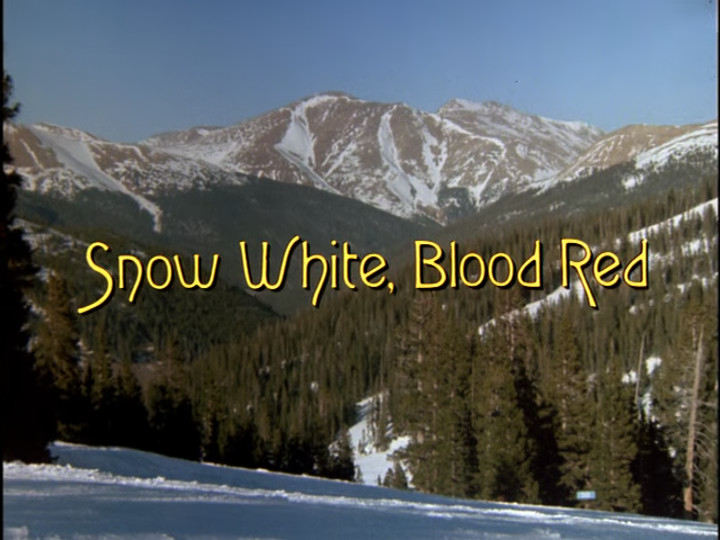

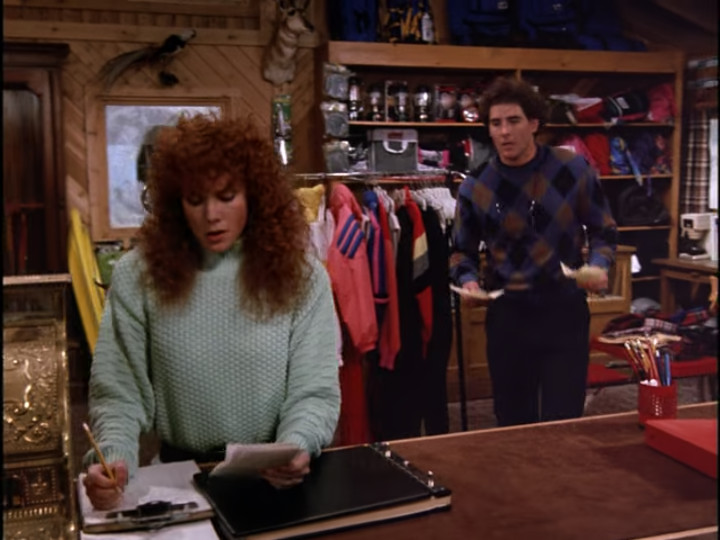

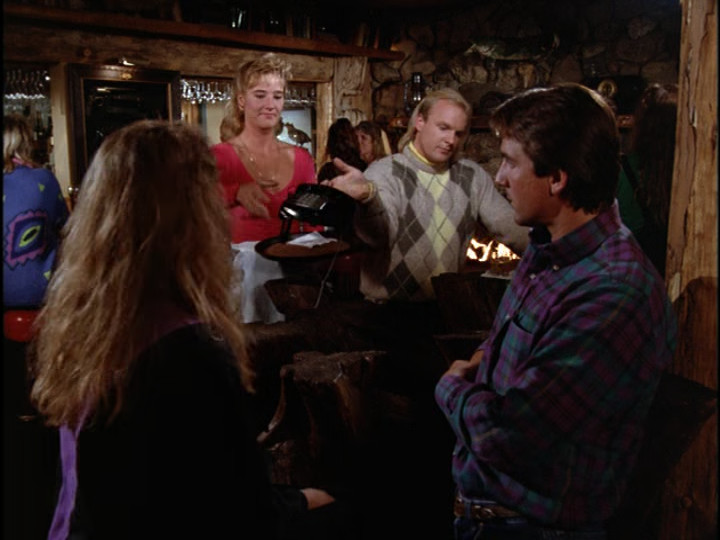


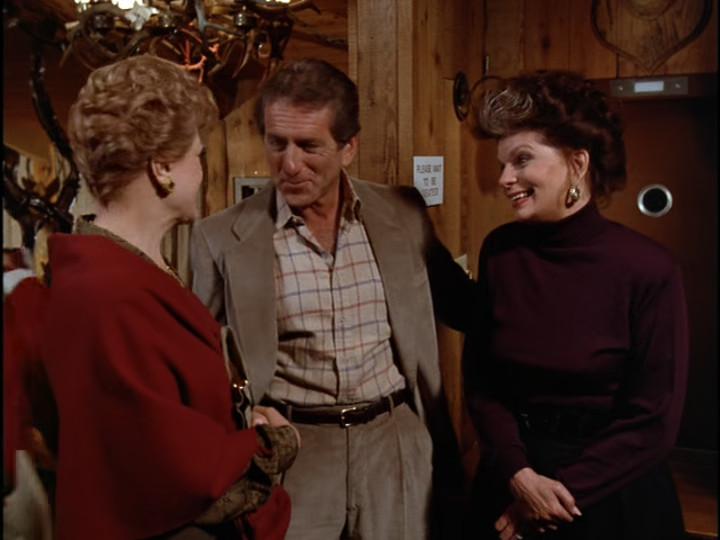
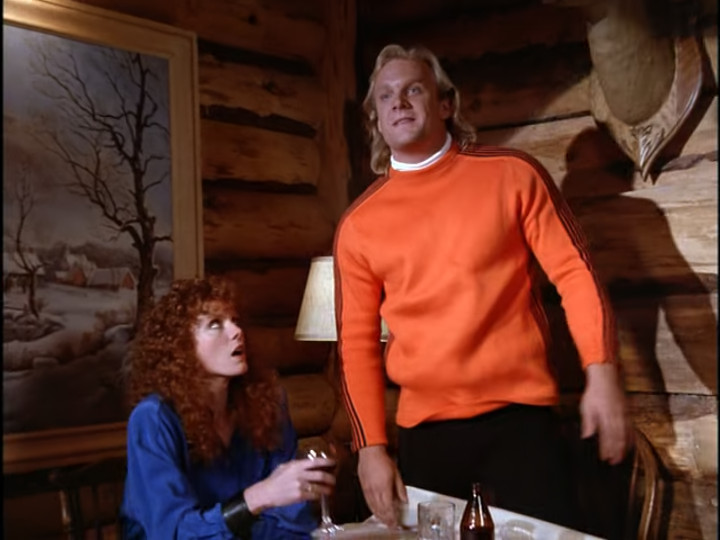


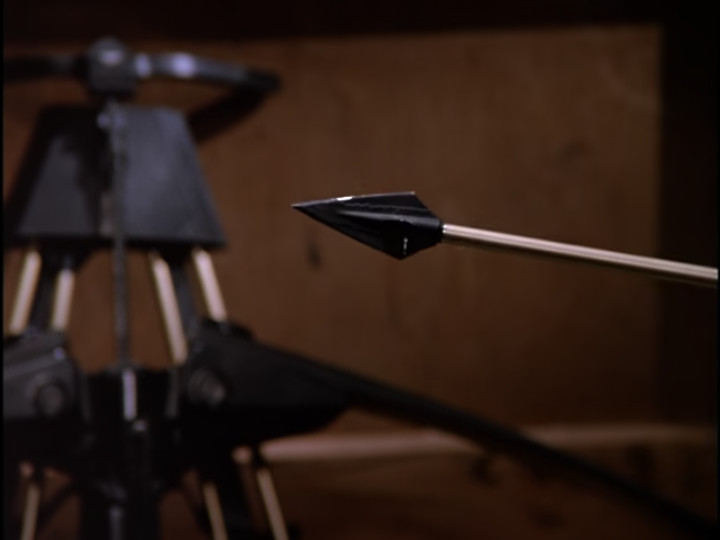


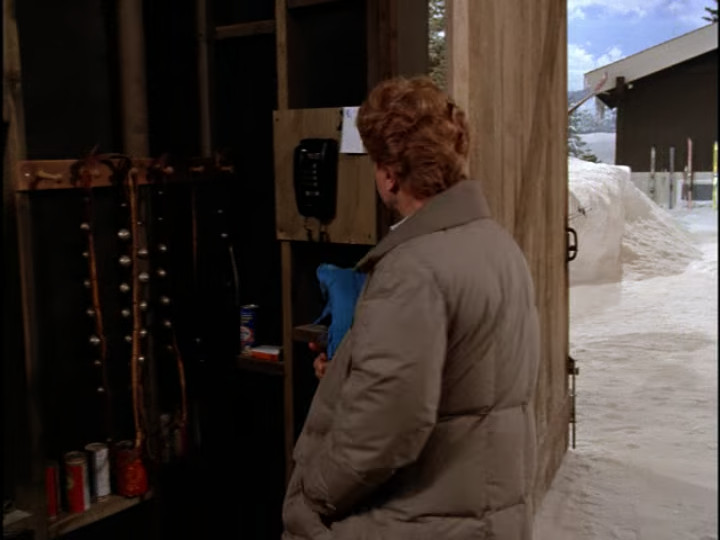



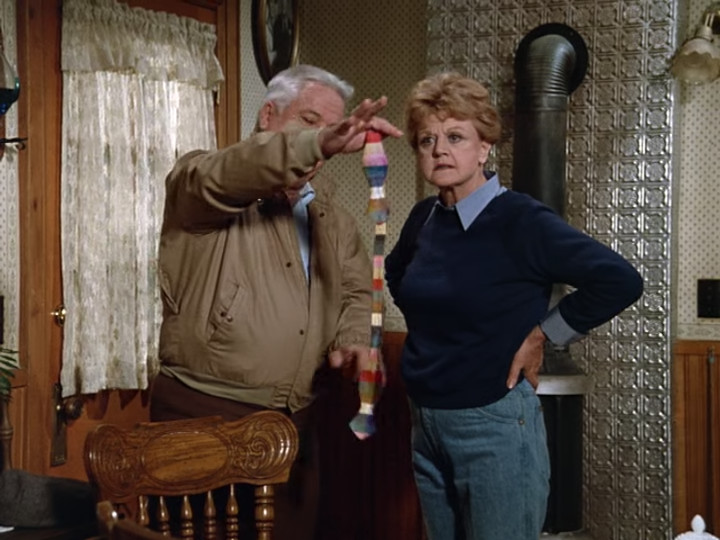

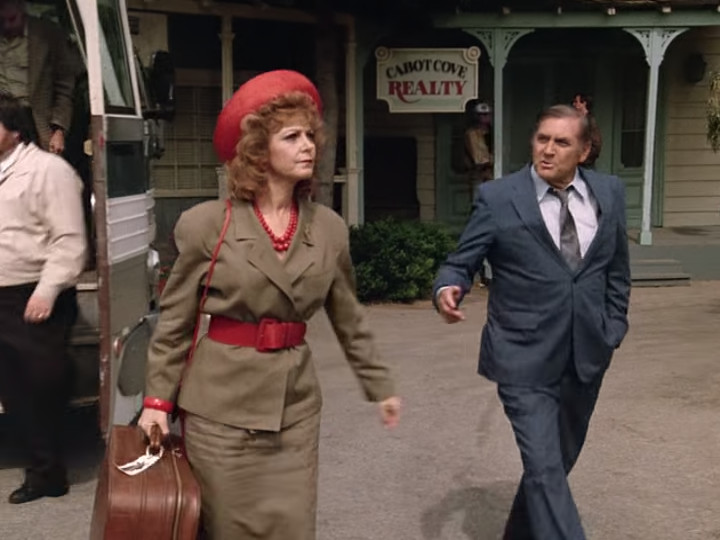



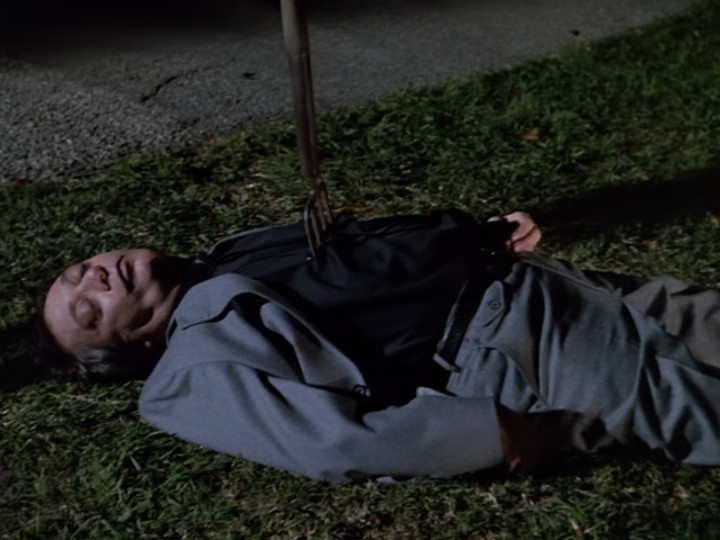
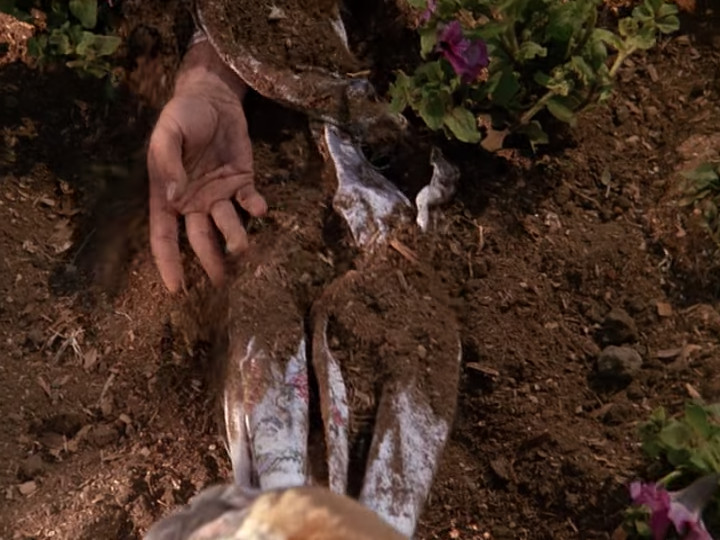


 Chris Lansdown
You must be logged in to post a comment.