Dietary saturated fat has been blamed for all manner of health problems, but the evidence for this ranges from low quality to complete garbage. That the evidence quality is low is not surprising, since there are good reasons to believe that saturated fat is healthy for humans.
The first and most important reason is that saturated fat is the kind of fat that humans make if they have extra carbohydrates or proteins around and need to store the energy. And that’s going to be a large fraction of the carbs we eat. And when I say a large fraction, I do mean large. A 200 pound athlete would be able to store about 500 grams of glycogen in his muscles and another 100 grams in his liver. (And less than 10g of glucose in his bloodstream, which tends to be nearly constant anyway, so we can ignore this.) But the thing is: these are very rarely empty, especially if one regularly eats carbs. And if you’re following any kind of normal American diet, you’re eating a lot of carbs. If you follow the USDA food pyramid and eat a 2000 Calorie diet (which is the Calorie requirements of a small person who isn’t very active) you’re probably eating at least 250 grams of carbohydrate per day. So your glycogen stores will start off mostly full, and while your body will try to get rid of the glucose by using it in muscles, in your brain, etc., it can’t do that very quickly and needs to get rid of the glucose very quickly, so the overwhelming majority of it will get converted to fat. (This is less true for people who spend most of the day moving, such as people who work some kinds of manual labor jobs, but that’s not typical. And humans love to rest after eating.)
(Whether a large fraction of the protein one eats gets converted to fat depends on whether one gets an unusually high amount of protein in one’s diet. Most people can’t use more than about 1 gram of protein per pound of lean bodymass per day, but most people also eat less than that in protein.)
Oh, I should mention that it’s actually very normal for the human body to use fat as fuel. When insulin isn’t high to try to make cells take up glucose, and in that process suppressing the fat cells from putting fatty acids into the blood, our fat cells regularly break fat (which is insoluble in water) down into fatty acids (which are soluble in water) and put them in our bloodstream so we have a constant, dependable supply of energy. Like anything which can be said about biology in human language this is a massive oversimplification, but at its level of generality it’s correct and important.
Anyway, the primary output of denovo lipogenesis (making fat from scratch) is palmitic acid, which is a saturated fatty acid. This can be converted into other fatty acids such as stearic acid (another saturated fat) and oleic acid (an omega-9 unsaturated fat) and many others, but human beings—and mammals in general—tend to leave it as palmitic acid, then take three of them and attach them to a glycerin spine, making them fat. We do this because it allows them to store very compactly without needing any water around them, which is extremely weight-efficient. This is important for animals because moving weight requires energy, so the lighter we can store the energy the more efficient it is. Saturated fats pack together especially well, which is why animals with very high energy needs like mammals prefer them.
So believing that saturated fat is bad for us requires believing that our bodies turn most of the carbohydrates we take in into something that’s bad for us.
Incidentally, this all happens in the liver. Since fats are insoluble in water (they don’t form a solution; this is why oil floats at the top of water rather than dissolving in it like salt), the liver can’t get these fats to the rest of the body by just sticking them in the bloodstream. That would be a disaster. So it creates transport crates for the fats called “lipoproteins”. These start out as VLDL—Very Low Density Lipoprotein. They’re very low density because they’re crammed full of fats, which is less dense than water. These transport crates are then dumped into the bloodstream where the proteins on the outside enable it to interact nicely with the water in our blood and move about without causing problems. These transport crates do something which can be analogized to docking at cells and then the cells take some of the fats inside. As this process happens the lipoproteins shrink and their density goes up. Thus they eventually turn into plain old “LDL” (low density lipoprotein). Interestingly, High Density Lipoprotein (HDL) is not caused by them becoming depleted; instead HDL is made empty in the liver and sent out to collect cholesterol and related molecules.
Interestingly, dietary fats get transported by a different system. The intestines create a similar but larger kind of lipoprotein transport crate called a chylomicron. These shuttle dietary fats from the intestines through the blood to our cells.
In both cases, you can see that idea that “saturated fat congeals and clogs your arteries” is nonsense, even apart from saturated fat congealing at room temperature, not body temperature. The most liquid fat in the world would be terrible to have in one’s blood since it doesn’t mix with water, and the human body doesn’t do that. The fats don’t matter at all as they’re being transported.
Where they can matter is once they’ve been added to fat cells and the fat cells break them down into fatty acids and put those into the blood. (This is a tightly regulated process to make sure that energy is available at all time.) That’s because these fatty acids, in addition to being an energy source, also are precursors for hormones and also can interact with various receptors. (This is where things like omega-3 versus omega-6 come in.)
This is also why you see claims that eating large amounts of saturated fat induces insulin resistance in rats. Now, before we proceed, I do want to mention that it’s important to remember that, while animal models can be useful, rats aren’t humans and their exact dietary requirements are a bad guide for the ideal diet for human beings. You shouldn’t feed bears, pigs, dogs, or cats like rats for optimal health, and there’s no reason to believe should feed us like rats (or bears, pigs, dogs, or cats), either. (You can’t feed us like cows—we’re not build to get a meaningful number of Calories from fibrous plant matter.) So these studies on rats are, at best, interesting. That very large grain of salt taken, what the studies find is that various kinds of fats which are pro-inflammatory, when taken in large quantities, promote inflammation which can induce insulin resistance. The study I linked to found that the effect went away for saturated fat if the rats were fed about 10% of their fat as fish oil, which is rich in omega-3 fatty acids like DHA and EPA, which are anti-inflammatory. That is, it’s all about the net effect of the entire diet, not one particular component and not about the fact that the fats are fats. (Again, in rats; how pro- or anti-inflammatory the various fatty acids are in humans may be similar or very different, on a per-molecule basis. And there’s probably significant individual variation, too.)
Inflammation, by the way, is not at all bad. Inflammation is a very useful reaction; it’s how our bodies deal with damage such as clotting in a cut, immune responses to foreign invaders, muscle damage from exercise, and so forth. The problem is when pro-inflammation factors dominate to produce more inflammation than is necessary for the circumstances. Quite a few problems happen when a balanced system becomes imbalanced.
Incidentally, while palmitic acid (the dominant fatty acid in mammal-produced fat) seems to be mildly pro-inflammatory, omega-6 fatty acids may be significantly more pro-inflammatory. And they’ve been making up a much larger proportion of western diets—especially of American diets—since the introduction of corn oil and other heavily processed seed oils.
On the third day of March in the year of our Lord 1985, the sixteenth episode of the first season of Murder, She Wrote aired. Set someplace that isn’t Cabot Cove—they don’t specify where—it’s titled Sudden Death. (Last week’s episode was Tough Guys Don’t Die.)
The episode actually starts, not at the football stadium, but at a funeral home, where a bunch of people, mostly elderly, file out as mournful music plays.
I love the name “Home of Eternal Rest.” I don’t know if anyone ever named their funeral homes like this; certainly all the ones I ever saw had less on-the-nose names. Most were just a family name; undertaking, as a profession, descended from carpenters, which had mostly been a family business.
Anyway, Jessica is among the mourners, and the funeral turns out to be for her Uncle Cyrus. As she walks out, she’s approached by a man by the name of Bradford Lockwood.
It turns out that Uncle Cyrus left Jessica some shares in a local football team called the Leopards. He tries to get Jessica to sign them away, but she wants to know what she’s selling before she’ll make any decisions, so she goes to see this team she is now part-owner of.
Which is when we get to the title screen.
The stadium in this episode is interesting. At a guess, it’s actually a high school football stadium; that would be much cheaper to film at than renting an actual NFL stadium would be. To compare, here’s Jessica in the bleachers of this stadium:
And here’s a picture of Sullivan Stadium, from about the same time, which was the stadium at which the New England Patriots (the closest team to Maine) played:
As you can see, there’s a bit of a size difference, there. Now, to be fair, NFL teams usually practice somewhere other than their home stadium, but (my understanding is that) those places don’t have bleechers. And like football stadiums, their grass isn’t mostly brown and patchy.
After various shots of people practicing football while peppy football music plays, Jessica is nearly run over by an oversided helmet on wheels.
The passenger gets out and, after asking Jessica if she’s OK, introduces himself. He’s Zak Farrell.
He introduces his daughter, Jill, who was the one driving the helmet:
She’s deaf. She reads lips very well, and only speaks in sign language. A few bits of conversation later, Zak’s wife, Cathy, shows up:
I’ve got no idea who these people are or why we’re meeting them, but Murder, She Wrote never spends this much time on introducing people unless they’re important in the episode. Usually character introductions are a bit less random than this, though.
The scene then changes to inside of an office, possibly at the football stadium:
The man’s name is Phil Kreuger and he’s demanding to know from Lockwood (whose back is to us) where the proxies are. He replies that it was awkward at the funeral but he can promise them to Phil by the next morning. Phil threatens to terminate Lockwood’s “fat retainer” if he doesn’t make good on that.
Phil then goes on to berate Pat Patillo, who is the coach (they seem to have only one).
When the berating fails to have the desired effect, Phil threatens to fire Patillo if there’s one more loss.
We then meet Grover Dillon, who is in charge of equipment.
He comments that morale is pretty low on the team. Phil is unmoved by this, possibly because he likes morale to be low for some reason. It certainly seems to be his management style.
Then Tank Mason, the defensive captain, chimes in.
He has to speak up for the guys; there’s a lot of talk of the team leaving town, which “the commissioner” says can’t happen. Phil chews Tank out in an unpleasant manner, and is interrupted by Jessica coming in.
Before I continue, though, I just want to take a moment to note that Tank is played by Dick Butkus, who was a famous linebacker in the 1970s and at the time of this episode a sports commentator and sometimes actor. Which means that this episode has an actual former professional football player in it.
Anyway, Jessica asks if there’s a “Mr. Kreuger” here and he yells at her to get out. Then Lockwood identifies Jessica and Phil apologizes and starts being nice to her.
I really hope Phil is the one who gets murdered.
He concludes the meeting then takes Jessica on a tour.
The shot has the team practicing in the background on the field, which makes me even more suspicious that this is a high school stadium:
Even back in the 1980s, professional stadiums had bleachers on both sides of the field. (Also, they didn’t tend to have a running track around the field, which we’ve seen in other shots.)
Anyway, he invites her to a party for the team that evening as his guest and Jessica accepts. Also, he offers to buy her out. Jessica doesn’t have any idea what her shares are worth and he says that they last time any of the stock traded it was at $6 per share, so with 4,000 shares it would be $24,000 so he’ll offer her $30,000. Jessica says that she’ll think it over.
This is, of course, suspicious. Why does he want to buy her out? It’s a bit odd to give no motive, which suggests his motive isn’t great. Also that he’s potentially lowballing his offer.
Anyway, Jessica leaves and the scene shifts to the Farrell home, where Cathy is taking an anonymous phone call from a male voice saying that it’s not a threat, just friendly advice, that her husband should quit the team before “it comes out about your little girl,” whatever that might mean. She tells him that she’s going to call the police if he doesn’t stop calling.
Zak and Jill come in and in the small talk it comes out that he’s recovering from a shoulder injury, which he believes is a career-ending injury. He also asks who called and when she doesn’t want to say, he concludes it was another anonymous phone call. He believes that Phil is behind them, but Cathy says that they don’t know it for sure. Zak says that he’s going to put an end to it.
Back at Jessica’s hotel, Coach Pattillo is waiting for Jessica in the lobby and asks if he can talk to her. He wants to buy her out, and offers her $60,000. Jessica asks why everyone’s so eager to get her shares. He explains that Kreuger owns 48% and a rival group of investors owns 48% and her uncle Cyrus owned the other 4%. Lockwood had voting proxies for her Uncle Cyrus and threw the balance of power towards Kreuger. He wants to buy her shares so he can move it the other way, since Kreuger wants to move the team to a bigger city, while he wants to keep it here since it’s his home.
At the party Kreuger and Jessica negotiate in his car. When he learns that she’s been offered more than $40,000, his final offer is $150,000. He adds a threat, saying that football is a dangerous game and sometimes people get hurt.
Then they go in to the party where Phil introduces Jessica to Webb:
He introduces him as “he collects Leopards,” which I suppose makes him a recruiter—which I believe are called “talent scouts” in the NFL.
After saying that he’s going home to make some phone calls, Phil spots the commissioner across the room:
The commissioner’s name is Talmadge. After expressing his disdain for Talmadge, Phil leaves. Webb tells Jessica that Phil will be back, as he only lives a block away. Which makes me think that Phil is going to be the murder victim because this puts quite a few suspects in easy walking distance of where Phil will probably be killed.
Later that evening, after some raucous partying, Zak shows up, angry, looking for Kreuger. When he finds out Kreuger isn’t there he uses a phone at the bar to call Kreuger at his house and tell him that he wants to talk to him now and he’s going to settle this tonight. Kreuger says something and Zak responds that he’ll see Kreuger at 9:00.
If you look at the clock behind Zak, you can see that it’s currently 8:15.
Later, Jessica runs into Talmadge, who introduces himself because, since she’s now an owner, they have things to talk about. He lets her know that he’s not going to let Kreuger move the team. Jessica is anxious to get out of this conversation, which is strange because he can probably provide her a lot of valuable information.
That said, she gets out of it pretty quickly and tries to find Zak. She finds out from one of the waiters that he just left, and the camera zooms in on the clock on the wall.
Over at Kreuger’s place Zak shows up at the door while very tense music plays. He bangs on the front door to no avail, but then finds a note taped to it, which he rips off the door.
We then get an establishing shot of the house, which is quite impressive:
Zak walks off, and back at the party, at 9:05, Jessica is Dancing with Tank…
…when Webb cuts in. Jessica says that it’s a wonderful party, which is mildly surprising because it doesn’t much seem her style. Tank then talks about what a great party it is and asks where Kreuger is because he’s missing a great party. He says he will go over and get him, and Webb says that he will go with him, though he doesn’t give a reason why. Jessica runs into Mr. Dillon, who is just leaving because he has work to do in the morning.
After Jessica remarks that it’s a wonderful party and Dillon unenthusiastically agrees, the scene fades to the foodball stadium in the morning where Dillon comes in to do that work. He hears some running water, though, and goes to investage, where he finds Phil dead in some kind of pool:
The scene fades to black and we cut to commercial break.
Had you been watching in 1985, you might have seen a commercial like this:
When we get back, we meet the detective in charge of the case:
Lt. Clyde Pace is a bit of an odd homicide detective, as Murder, She Wrote goes. He’s tough, but very willing to work with Jessica and also quite into sports gambling. We actually meet him on the phone, talking to his bookie, and saying to give him $500 against the Leopards winning the upcoming game on Sunday.
He calls in a security guard who says that he didn’t see Phil come in the night before because he’s in the front while Mr. Kreuger has his own private entrance with his own key. He did see Zak Farrell coming around, angry and looking for Phil.
Jessica wanders over and looks at the pool in which Phil was found and notices something. When she calls the Lt. he says that she shouldn’t be there, but she responds that it’s OK, she’s one of the owners. Lt. Pace warms up to her instantly and comes to her summons. She points out something in the tank and he takes off his jacket and rolls up his sleeve and reaches in and gets it. It’s a watch with a smashed crystal, the time stopped at 9:04, and it’s engraved on the back with Zak Farrell’s name. Jessica doesn’t believe Zak could be a killer, but Lt. Pace is less sure. He gives instructions to have Zak picked up on suspicion of first degree murder.
The scene then shifts to the police station. I always love Murder, She Wrote‘s establishing shots, and this is no exception:
I still have no idea where in the country we are supposed to be, but this gives a small-city feel to it, which goes with the general idea that Phil Kreuger wanted to move to a bigger city.
Inside, Lt. Pace says that they may be able to reduce the charger to second degree murder, but Zak says that he didn’t do it. Lt. Pace then explains that he figures that it’s OK for Jessica to be at this interrogation because she’s one of the owners of the football team and seems to think that he didn’t do it. Zak doesn’t question this bonkers logic and the interrogation proceeds. Jessica asks him what happened after the party and, basically, he found a typed note on Kreuger’s door saying to meet him at the stadium. Zak went to the stadium but Kreuger wasn’t there, so he went home and got drunk. Zak adds that it’s lucky Kreuger wasn’t there or he might have killed him. Also, he last saw the watch days ago—he left it in his locker.
(The typewritten note is a pretty clear indication that Kreuger was already dead when Zak got there. So much so that Jessica confirms with Zak that it was typewritten.)
There’s also a bit where Jessica asks what he was trying to have out with Kreuger and the Lt. says that Zak had a no-cut contract that Kreuger was trying to break. Zak denies that was the reason, saying only that it was personal. (We were shown him talking with his wife about the anonymous calls concerning their daughter so I’m not sure why the writers are playing this like it’s a mystery.)
The scene shifts to Las Vegas where Phil Kreuger’s widow is on the phone with Bradford Lockwood (the team lawyer) who’s telling her that she might inherit everything from Phil because he died intestate and their divorce wasn’t finalized.
She is going to catch the first plane in to wherever this episode is set.
Back at Jessica’s hotel she runs into Cathy (Zak’s wife). Cathy asks her to help Zak—it would destroy Jill if Zak were sent to prison for something he didn’t do—and Jessica says that she’ll try. I’m not sure what the purpose of this scene is. Perhaps it’s to introduce the information that Jessica has been known to help solve crimes before? We’re still in the first season, so the writers might expect people to still be giving the show a try for the first time.
Jessica then visits the football stadium and there’s a wacky scene where she distracts Tank during a play and he gets injured. She and the coach then step over Tank lying on the ground and move off so they can talk. He asks if she’s going to sell her shares to him and she says she hasn’t decided. She’s here to find out what a no-cut contract is. It turns out to be a contract where he can’t be cut. (That is, he gets paid whether he plays or not, and he’s currently not playing because of his injured shoulder. But he’ll be in breach of contract if he’s in prison for murder.)
Jessica then goes into the locker room and talks with Grover Dillon.
She thinks she saw him at the funeral for Uncle Cyrus and he said that he was there—he and Cyrus go a long way back. Then there’s a comedic bit where he tells her that she’s not supposed to be in the men’s locker room right after practice but he phrases it too generally and she doesn’t understand, saying that’s fine that she’s here because she’s one of the owners.
They sit down together and Grover gives some backstory. A long time ago, Cyrus was equipment manager and Grover was a player. Times were lean, then, and sometimes they paid people in stock rather than money. Grover sold his stock to Kreuger ten years ago for $500. Cyrus was simply too ornery to sell.
I’d like to point out that if you’re giving away stock rather than money, at 4% ownership per person you could afford to pay at most 25 people if you were willing to give away 100% of the company. It’s a good attempt at backstory, but the numbers don’t add up. It would be easily fixed by making Cyrus special in some way, like being one of the few people who accepted stock in lieu of pay.
Jessica then accidentally accuses Grover of having stolen Zak’s watch and Grover angrily replies that in twenty years he’s never been accused of theft and any fool could open one of these lockers with a coat hanger (coat hangers were frequently made of metal wire, back then, and could be bent into shapes useful for other purposes).
Then the naked men walk in from the showers and Jessica is oblivious for far longer than makes any sense.
“Are you sure you’re alright? You’ve got a strange expression on your face.”
When Tank finally makes this clear to her, Jessica says, embarrassed, “Oh, would you look at the time, I have to get going.”
And on that we fade to black and go to commercial.
When we come back from commercial we’re on Web’s estate, where he, the police lieutenant, and the football commisioner are shooting skeet:
Murder, She Wrote absolutely loved trap shooting as a rich man’s activity. In real life it requires many acres of land to be able to safely fire shotguns into the air. On a TV set, where blanks will do just fine for the actors and you don’t need to actually load the clay pigeon thrower because the camera won’t capture the clay pigeon anyway, it’s far less demanding and the requirements for props are quite modest.
Jessica shows up and interrupts them. She asks the Lt. about the medical report and we find out that the time of death was around 9pm and there was a small bruise on the forehead but the cause of death was definitely drowning. The Lt. mentions that Web posted bail for him this afternoon and Web explains that Zak is a good man—innocent until proven otherwise.
There’s a bit of discussion about why Mrs. Fletcher doubts that Zak did it and it comes up that there was only one key made to the back door and it was in Kreuger’s pocket. This is an extraordinarily weak objection since the killer could easily have taken the key out of Kreuger’s pocket to unlock the back door, dragged the body in, then put the key back. But for some reason they seem to be assuming that Kreuger was killed in the office, in the pool he was found in. (While it’s not impossible that he was killed in the office, it makes more sense for him to have been killed elsewhere and moved to the office late at night when there was no chance of being seen.)
Jessica then leaves and Web remarks on the commissioner leaving the party early. This is probably meant to spread suspicion around but I refuse to believe the commissioner is any kind of suspect—as commissioner he has autocratic power over the teams, which means he can have no possible motive.
We then get an establishing shot of the stadium at night.
Jessica is wandering around inside. She makes sure that it’s possible to sneak past the security guard, which it is, then she wanders around the locker room. She tests how easy it is to pull open Zak’s locker and it’s ridiculously easy, to the point where I wonder why they bothered with locks. She hears a noise and decides to hide in the steam room.
Well, I say “steam room” but here’s the exterior:
And here’s the interior:
This looks like more of a door into a hallway to me. Anyway, while she’s exploring the steam room, someone locks her in:
I’ve got no idea what the other side of that bar is resting on. Perhaps the water fountain? The length doesn’t look right, but maybe it’s long enough.
Anyway, the figure in black then adjusts the temperature on the steam room control:
I really love this control, including its placement outside the steam room for convenient access for murderers. The figure in black turns the nob on the lower right, which immediately moves the needle on the temperature gauge. The figure turns it all the way, so that the needle on the temperature gauges maxes out the danger setting. I can’t make out the label on point between normal and danger, but looking closely the separation between normal and cold seems to be 120 and the top end of danger is 200. I wonder what the guy who designed the steam room thought the value of having a danger zone as large as the normal zone was. (A large danger zone would make sense if this were just a temperature gauge, but it’s a thermostat control—it moves synchronously with the nob the figure in black turns and before steam starts coming out of the vents.)
Anyway, the figure leaves and Jessica bangs on the door for a bit until Grover Dillon shows up and lets her out. On the way home (he gives her a ride) Grover cautions her that football can be dangerous off the field as well as on. She thinks that someone is just trying to scare her off—which she takes as a positive sign that she’s on the right track.
She also asks about his limp, and it turns out that it started as a football injury. At the time, Kreuger was the coach of the team and put Grover back in before it was healed. He’s lucky he can still walk. When Jessica notes that he didn’t like Kreuger very much, he points out that her stock is worth more if Zak Farrell is convicted of the murder since he’s the highest paid man on the team and is just dead weight right now.
The next morning Jessica talks with Tank on the field at the stadium. I find it amusing to note that there are only eleven people total on the field, including Tank, who is stretching off to the side. This is just the wrong scale for a football team. I understand that actors cost money, but would it have been that expensive to have two dozen extras in football-looking clothes off on the other end of the field?
Anyway, Jessica learns that something is up at Zak’s home, probably involving his child. (Tank is a friend of Zak’s.)
Jessica then goes to Zak’s home and after some bits of learning sign language with Jill which are supposed to be cute but I find more cringe-inducing, she runs off to play and Zak explains what the deal is. Jill was adopted. It was a private adoption, arranged by an attorney. They paid the mother a lot of money and the transaction may not have been entirely legal. Zak also explains about the anonymous phone calls and that he believes they were Kreuger.
Jessica asks if the attorney was, by any chance, Brad Lockwood. Zak, surprised, says that it was and wondered how she knew.
Bradford Lockwood is a weird character, since he seems to have been the attorney for everyone in the area and also on the side of anyone who wanted to do something underhanded.
Back at her hotel, at night, Jessica is on the phone with Amos. (This is a neat device to help connect Jessica to Cabot Cove without having to set anything there or even have Tom Bosley in the episode.) She then hears that the bathtub is almost full and says goodbye to him to run and turn the water off before it overflows. While bending over the tub to reach the handles, she notices something:
She notices an earring at the bottom of the tub. She had been wondering where it went. Right as she pulls it out, she hears a knock on her door. When she answers it, it turns out to bet the football commissioner. He called but the line was busy, and since he was flying to New York the next day, he dropped by. As commissioner, it’s part of his job to get to know the owners.
He then discusses her willingness to sell her stock—he knows of an investor who wants to keep the club where it is. Jessica asks if that’s Web McCord, but the commissioner is unwilling to say. Why, he doesn’t explain, because there’s no reason for it to be secret. There’s then some discussion about Kreuger, the commissioner says that Zak Farrel was the only one who could have killed him because it’s 45 minutes to the stadium and back, but Jessica points out that the commissioner left early. I don’t get why this matters to anyone, since he’s clearly not a real suspect. Jessica then asks him to leave so she can take her bath and he mentions, apropos of nothing, that Mrs. Kreuger is going to inherit Phil’s shares, letting Jessica know that there is a Mrs. Kreuger.
Jessica then goes and investigates Kreuger’s house. The front door is ajar and no one answers to Jessica’s calls, so she enters and walks upstairs to investigate the master bathroom. There she discovers that the floor is wet next to the bathtub. Then the camera pans up we see the shadow of someone holding a gun by the open door…
…and we fade to black and go to commercial.
When we get back, the shadow advances and turns out to be Phil Kreuger’s widow. Wearing clothes, this time:
This is an interesting mourning outfit but I suppose it’s the best she could come up with on short notice.
After a bit of chit-chat, Mrs. Kreuger says that she’s going to call the police and Jessica encourages her to do so, and to request Lt. Pace.
When Pace arrives, Jessica shows him the wet floor. He doesn’t connect this with the murder, so Jessica spells it out for him: Kreuger was probably murdered here and then brought to the stadium and put in the whirlpool later. Pace says that it’s an interesting theory and it opens up the field. But who did it? Jessica replies that part may be hard to prove.
The scene then shifts to the football stadium. Inside the lockerroom, the coach gives a speech with rousing football music playing in the background (for us, not diagetically).
Alright you guys. Listen up. I’m gonna make this short. You all know what happened this week but that doesn’t mean a damn things once we get on that field. Everybody’s figuring us for a bunch of losers and maybe we are. You guys are gonna have to decide that for yourselves. That’s all I got to say.
The music then changes to a funeral march and the players start walking out to the field. Lt Pace calls his bookie and says to put him down for his limit. On his way out, Tank tells Mrs. Fletcher that they’re going to win this one for her.
After the players leave, Jessica looks at a board full of photos that Tank took at the party the night Phil was killed. She then pulls two down and compared them:
The problem is that they’ve under-exposed the photographs and so we can’t really see anything here. I’ve tried to enhance this by upping the exposure, but there’s just no detail in the darks:
It looks like Web McCord is wearing a tie with dots on it in the photo on the left and a solid tie in the photo on the right, though that could just be lighting. Presumably this is meant to show that he changed clothing between the two photographs, indicating that he is the killer.
Up in a private box, Web and the commissioner a bunch of other people are watching the game. During the rare times they cut to the game, they use footage from a real football game, btw:
Web gets a phone call from “Sylvia down at the cleaners” who is clearly Jessica slightly disguising her voice. She says that the jacket he brought in has one brass button missing. She wants to make sure he knows that they didn’t lose it; it was in that condition when he brought it in.
Web thanks her for the call, then goes to the crime scene to see if he lost it in the drain of the bathtub where he drowned Kreuger. (He’s fishing down the drain with the kind of tool has extensible claws inside of a coiled spring wrapper that’s good at picking things up in places too tight to get hands in.)
Jessica interrupts him and explains how she tricked him. In turn, he explains why he did it. He had quietly bought up the other 48% of the club but Kreuger wouldn’t sell, so he killed him to take over the club. He goes into a bit of detail; he had originally planned to kill Kreuger after the party but when Kreuger went home early he moved his plan up. Which was actually to his benefit, as it left him with a tighter alibi. “You have to take advantage of the turnovers.” He also mentions that he had to type the note he left for Zak twice since the first one got wet.
He asks how Jessica figured it out and she explains that she figured you couldn’t drown someone in a bathtub without getting wet and Web changed his blazer. She says that he was wearing a single-breasted blazer earlier in the night and a double-breasted blazer later on. Perhaps this is true; I can’t see it in the photos and they don’t really show it in the episode, either. His blazers always just look black when they’re buttoned, and mostly we can’t see the bottom half (which is where single-vs-double breasted blazers differ).
After a brief discussion of how Web plans to get rid of Jessica’s body, Lt. Pace comes in and arrests Web. After Web is taken off by a uniformed officer, Pace complains that Jessica yapped for far longer than necessary and they’ve missed most of the game. He turns on the TV in the room to watch the end of the game but it’s already over; the Leopards managed to pull victory from the jaws of defeat in the last two minutes, coming back from being down 21-7. Jessica is delighted while Pace can think only of how much money he just lost.
There’s a final scene with Jessica and Zak and family where he says that he’s throwing in with Patillo to buy Mrs. Kreuger’s stock and Jessica reveals that she’s putting her stock in trust for Jill. Jessica explains this to Jill, who hugs Jessica and we go to credits.
This was a very silly episode. Murder, She Wrote rarely gets anything right when it comes to settings like business or sports but it at least often limits itself to superficially plausible errors that you need to know something about the subject to realize are wrong. Here it gets a ton wrong about football and I barely know anything at all about football! It’s especially a problem that the things it gets wrong are so dissonant. The Leopards are a failing team, but there’s a lot of money involved.
Speaking of money, if we throw the $150,000 Jessica was offered into an inflation calculator, that comes out to $447,204.93 in 2025 dollars. That’s an offer for 4% of the outstanding shares so that would make the entire team worth $3,750,000 ($11,180,123.25 in 2025 dollars). This seems a bit off; a bit of quick searching turned up the New England Patriots being sold for $70,000,000 in 1985. (It is true that Donald Trump bought a USFL team in 1985 for $9M, but the USFL was a much less successful startup competitor to the NFL that only began in 1983, so the Leopards couldn’t have been a USFL team.)
And yet, in spite of the numbers being way too low, they’re also far too high—for the team’s training grounds to be a high school, to have a single coach, a single janitor, and only eleven people on the team in total.
The murder also hinges on an extremely improbable event: Zak barging in to the party demanding to talk to Kreuger now, this very moment, then happily accepting an appointment for forty five minutes later and hanging around at the party for half an hour. This may be why they emphasize this so little that I originally thought that Zak immediately left for Kreuger’s house and concluded that there wasn’t time for anyone to kill Kreuger first. (I only realized that Zak hung around at the party for half an hour when I was re-watching the scene to see if I could spot where Web changed his clothes.)
Speaking of improbable: I know that the motives in Murder, She Wrote are usually a bit thin, which is fine because this is all for fun and people do occasionally do murder in real life for reasons which are no better. But even so, Web’s motive for killing Kreuger would be fine if it weren’t for the central premise of the episode—that Jessica owns a controlling share of the Leopards which she is willing to sell. Even worse for Web’s motive, Jessica would almost certainly have preferred him to Kreuger and been willing to sell him her shares, which would have given him a controlling interest in the team. This could have been mitigated somewhat by Web not knowing about Jessica since she had only shown up that day and no one had a motive to tell Web about Jessica, but he must have known that Cyrus owned shares in the Leopards and that he died recently and so the shares might well be available for purchase.
Incidentally, it’s kind of strange that Web got his blazer wet in the murder. The normal thing to do, when doing any kind of strenuous work at all, is to take your jacket off. This part doesn’t bother me very much, though, since it could easily have been Web’s tie that got wet, and it would not be as normal to take a tie off. (And even if he had, it could potentially be seen to be re-tied in the photograph.) That said, I do wonder about why drowning Kreuger was so messy. Surely he had been knocked unconscious before being drowned, and an unconscious man would not cause any great mess. A conscious man would be nearly impossible to drown in a bathtub, at least for a single man of roughly similar size.
I think part of my problem is that most of the characters didn’t land for me. I think that Jill was supposed to be a major center of sympathy within the episode but about the sum total of her personality was being deaf. I think this was more special at the time because it was extremely rare to have deaf people on TV—and it probably still is—but 1980s virtue signaling isn’t more interesting than 2020s virtue signaling. Any emotional resonance which Zak and his wife have are derived from being Jill’s parents, and we find out that they might be her parents by having illegal bought her because they were impatient, which isn’t a great basis for sympathy. Tank and Grover Dillon are the only other two major characters. Tank is likable, but mostly untouched by anything that happens in the episode. Grover is also likable, but a bit under-used and not much more affected than Tank. Oh, and there’s coach Padillo. He’s not very likable and for some reason was never much of a suspect. Truth to tell, I found him a bit forgettable. Oh, there was also Talmadge, the commissioner. He simply made no sense, since he was treated like a suspect but couldn’t have been. And Jessica had an antipathy to him which made no sense, especially given her general love for authority figures. And I suppose that there was Lt. Pace, but he was almost a comic relief character.
The only other major character in the story was Web McCord. They actually did a good job of making him always present but never noticed, which is a great characteristic for a murderer to have. So much so that I want to quote an important section from an essay G.K. Chesterton (who wrote the popular Father Brown mysteries) wrote about the subject:
The criminal should be in the foreground, not in the capacity of criminal, but in some other capacity which nevertheless gives him a natural right to be in the foreground. I will take as a convenient case the one I have already quoted; the story of Silver Blaze. Sherlock Holmes is as familiar as Shakespeare; so there is no injustice by this time in letting out the secret of one of the first of these famous tales. News is brought to Sherlock Holmes that a valuable race-horse has been stolen, and the trainer guarding him murdered by the thief. Various people, of course, are plausibly suspected of the theft and murder; and everybody concentrates on the serious police problem of who can have killed the trainer. The simple truth is that the horse killed him. Now I take that as a model because the truth is so very simple. The truth really is so very obvious.
At any rate, the point is that the horse is very obvious. The story is named after the horse; it is all about the horse; the horse is in the foreground all the time, but always in another capacity. As a thing of great value he remains for the reader the Favourite; it is only as a criminal that he is a dark horse. It is a story of theft in which the horse plays the part of the jewel until we forget that the jewel can also play the part of the weapon. That is one of the first rules I would suggest, if I had to make rules for this form of composition. Generally speaking, the agent should be a familiar figure in an unfamiliar function. The thing that we realize must be a thing that we recognize; that is it must be something previously known, and it ought to be something prominently displayed. Otherwise there is no surprise in mere novelty. It is useless for a thing to be unexpected if it was not worth expecting. But it should be prominent for one reason and responsible for another. A great part of the craft or trick of writing mystery stories consists in finding a convincing but misleading reason for the prominence of the criminal, over and above his legitimate business of committing the crime. Many mysteries fail merely by leaving him at loose ends in the story, with apparently nothing to do except to commit the crime. He is generally well off, or our just and equal law would probably have him arrested as a vagrant long before he was arrested as a murderer. We reach the stage of suspecting such a character by a very rapid if unconscious process of elimination. Generally we suspect him merely because he has not been suspected. The art of narrative consists in convincing the reader for a time, not only that the character might have come on the premises with no intention to commit a felony, but that the author has put him there with some intention that is not felonious. For the detective story is only a game; and in that game the reader is not really wrestling with the criminal but with the author.
What the writer has to remember, in this sort of game, is that the reader will not say, as he sometimes might of a serious or realistic study: “Why did the surveyor in green spectacles climb the tree to look into the lady doctor’s back garden?” He will insensibly and inevitably say, “Why did the author make the surveyor climb a tree, or introduce any surveyor at all?” The reader may admit that the town would in any case need a surveyor, without admitting that the tale would in any case need one. It is necessary to explain his presence in the tale (and the tree) not only by suggesting why the town council put him there, but why the author put him there. Over and above any little crimes he may intend to indulge in, in the inner chamber of the story, he must have already some other justification as a character in a story and not only as a mere miserable material person in real life. The instinct of the reader, playing hide-and-seek with the writer, who is his real enemy, is always to say with suspicion, Yes, I know a surveyor might climb a tree; I am quite aware that there are trees and that there are surveyors, but what are you doing with them? Why did you make this particular surveyor climb this particular tree in this particular tale, you cunning and evil-minded man?”
This I should call the fourth principle to be remembered, as in the other cases, people probably will not realize that it is practical, because the principles on which it rests sound theoretical. It rests on the fact that in the classification of the arts, mysterious murders belong to the grand and joyful company of the things called jokes. The story is a fancy; an avowedly fictitious fiction. We may say if we like that it is a very artificial form of art. I should prefer to say that it is professedly a toy, a thing that children ‘pretend’ wish. From this it follows that the reader, who is a simple child and therefore very wide awake, is conscious not only of the toy but of the invisible playmate who is the maker of the toy, and the author of the trick. The innocent child is very sharp and not a little suspicious. And one of the first rules I repeat, for the maker of a tale that shall be a trick, is to remember that the masked murderer must have an artistic right to be on the scene and not merely a realistic right to be in the world. He must not only come to the house on business, but on the business of the story; it is not only a question of the motive of the visitor but of the motive of the author. The ideal mystery story is one in which he is such a character as the author would have created for his own sake, or for the sake of making the story move in other necessary matters, and then be found to be present there, not for the obvious and sufficient reason, but for a second and a secret one.
I think that the writers did an excellent job of this with Web McCord. In every scene he was in, he was there for a very practical reason, so much so that you never really noticed him. The only problem is that never really noticing him makes him an uninteresting character—at least until the reveal. Which would have been fine if there were some other interesting characters in the story before the reveal.
Kanye West (now going by “Ye,” I believe) recently came out with a song called “Nigga Heil Hitler” which has that as a refrain in it. Jonathan Pageau has a very interesting video where he talks about it in the context of the breakdown of the post-WW2 concensus:
It’s very worth watching, but the basic point is that all foundational narratives made by men contain a contradiction in them and the post-WW2 narrative of good-vs-evil necessarily exculpated Stalin, who was in reality just as bad as Hitler, in order to make the WW2 narrative good-vs-evil.
He doesn’t focus on this aspect of it in the video because he’s more concerned with other things, but this very much explains why it was that the socialism of the National Socialist German Worker’s Party is ignored by most people. This is why people pretend that they weren’t real socialists or they maybe started out as real socialists but then abandoned it once they gained power, etc. etc. They needed to explain the Nazis as a unique evil different from the evil of anyone on the Allies’ side. And since there’s not actually very much that distinguishes the Nazis from the Communists—in the 1930s people would flip flop between them to the point where the Nazis had an insult “beefsteak Nazi” meaning someone brown on the outside but red on the inside—what people came up with was the Nazis being racist. Well, that and nationalist. Sort of.
Regarding the racism, it’s not like the communists weren’t racists—they were—but racism wasn’t central to their socialism while it was central to the socialism of the National Socialist German Worker’s Party. So this one is at least a difference. And while you could find plenty of racism in 1930s/1940s America, it was, at least, a different kind of racism. And especially after the civil rights movement of the 1950s, this ceased to be such a problem.
The nationalism of the Nazis is a curious issue because it is true it’s a major distinction between the Nazis and the Communists. The Nazis were national socialists while the communists were international socialists. But that meant, in practice, that Hitler only wanted to conquer most of Europe while Stalin wanted to conquer the world. That’s not really the kind of distinction that was desired, though, so people tended to pretend that Hitler wanted to conquer the world. Certainly that was what I was taught when I was a child.
This is a very interesting point and explains a lot of the modern world.
The Internet loves its silly memes and in the last few weeks one that’s been going around is the question: could 100 men beat a gorilla in a fight?
This hypothetical is, of course, badly under-specified. The answer would become quite obvious if the conditions were laid out. If the men (and the gorilla) all have guns or even spears, then of course the 100 men will win. It’s not even a question. Heck, even the ability to pick up sticks and rocks would guarantee a victory for the 100 men. Though there’s also the question: why are they fighting? There doesn’t seem to be anything in it for either of them and most people—and animals—prefer to avoid physical danger with no upside. And while you may be able to pay men to fight, you can’t pay a gorilla to fight. I suppose we just need to leave that question aside, even though it will be directly relevant to how hard each group will fight and how likely they are to just run away.
So what context would make the outcome less certain?
A featureless plain with a smooth, un-climable wall around it, I suppose.
So, if we assume that 100 men and a gorilla are fighting each other for no obvious reason but both are dedicated to the fight for some reason, and that they’re doing it in a featureless arena, somehow, it’s actually quite likely that the 100 men would win, though not as many people seem to imagine it.
For some reason, many people seem to think that the men would just all pile on top of the gorilla, will then be collectively overpowered or else smothered under their weight. And while this is not physically impossible, it’s not how social animals fight.
What would actually happen is that the men would form a circle around the gorilla, keeping their distance, and periodically one of the men behind the gorilla would run up, hit it in the back, then run away. Gorillas are powerful, but they’re not as agile as humans, especially on featureless terrain. The gorilla would, of course, turn around, and might give chase, but it probably wouldn’t give chase into the big group, since large groups are intimidating even if you’re individually more powerful. And even if the gorilla did, gorillas can’t outrun human beings who are running away—they’re not meaningfully faster and they’re not built for distance.
There’s another major advantage which the 100 men have, which is that they make for many potential threats for the gorilla to keep track of. Too many threats tends to paralyze the decision making process of animals—including humans. It’s why the best practice for rushing a gunman is for two people to do it at once. A single person rushing a gunman is fairly likely to get shot. Two people may well escape unscathed as the gunman gets paralyzed by trying to decide who to shoot first. This is why lion tamers famously held a chair up in front of the lion—the four legs of the chair were too many things which might possibly poke the lion for the lion to keep track of, and it would be paralyzed by indecision. This will make it far less likely the gorilla will successfully charge into the men and catch one.
Eventually, the gorilla will become tired and slow down. Then men will tire far less quickly, especially as they can rotate the tired people out to rest further away while the fresher ones harass the gorilla. At some point, probably hours into the combat, the gorilla will become so tired it will barely be able to move. Adrenaline only lasts so long. Eventually the men will overpower the completely exhausted gorilla and the combat will come to a very inglorious end, proving nothing of any practical value.
If you haven’t seen any of the videos, humanoid robots are getting impressive:
That was Atlas 2 (by Boston Dynamics). Here’s the previous version showing off:
On a lark I asked Grok what the maximum lifting capacity of Atlas is, and though the information isn’t public, it guessed it could dead lift around 80 pounds. It suggested that the all-electric version, the Atlas 2, is stronger, and might be able to dead lift perhaps 100 pounds. (To be clear, Grok, being a large language model, is just producing text which is the most likely thing the people in its training data would have written, which works as a reasonable-enough summary of what actual people have written on the subject as long as nothing important depends on the accuracy of the facts. But since we’re discussing humanoid robots, I’m fine with just using Grok’s “guesses”.)
Also on a whim, I asked how far it can walk and Grok’s best guess is around three miles, perhaps a little more, before running out of power. On flat ground without obstacles.
The Atlas and Atlas 2 are generally the best bipedal robots available, at least as far as mobility goes. There is also Tesla’s Optimus robot, which is more designed around dexterously performing repetitive tasks than raw performance, but interestingly Grok guesstimated that it might be able to walk for 5-15 miles, with a lot of it-depends and caveats.
Actually, there are a lot of it-depends and caveats on both, because neither company has released official specifications. So in both cases, these might well be over-estimates.
To put this into perspective, my fifteen year old son has deadlifted 135 pounds and my best deadlift is 440 pounds.
I find the weakness of these robots a bit amusing because science fiction has tended to portray humanoid robots as effortlessly stronger than human beings to the point where we might as well be insects compared to them. Granted, the Boston Dynamics and Tesla robots are still relatively early on in technological development, but they are being developed in the early twenty first century, not the late eighteenth. These are already the beneficiaries of enormous technological progress in motors, pistons, advanced materials, and batteries. These things will all get better, but it’s going to take a long time and will probably cost even more. And I’m not sure how much greater efficiency there is to eek out of electric motors; they’re already quite efficient and there’s only one permanent magnet material known which is stronger than the neodymium-based magnets used in the best motors of today. That’s iron nitride, and at it’s strongest it’s only about twice as strong a magnet as neodymium. Which would only result in motors that are a few percent more energy efficient; the main benefit is that they can be smaller and lighter. And right now it’s unclear that iron nitride can be gotten to work in quantities large enough to see with the naked eye. Don’t get me wrong, humanoid robots will continue to improve and they may well get quite a lot stronger.
But they can get four times stronger and still be only about as strong as me. And there are a great many people much stronger than I am.
I saw a bunch of commentary, back and forth, on a poll asking men and women whether Olly Murs (a British celebrity) looked better before or after he dieted down to very low bodyfat levels:
Twitter polls are hardly wonderful, but if we assume honesty, men voted 2:1 that he looked better after the transformation and women voted 3.8:1 that he looked better before the transformation. To be fair, neither is a wonderful picture of Mr. Murs; both could be done with more flattering lighting and posture.
The big problem is that neither of these photos is really the ideal body composition in the world in which we actually live. The body composition on the right shows off his musculature better, but he’s into levels of leanness which are sub-ideal for actual living. On the left, he is carrying a bit of fat more than the ideal. That said, I think he looks far more likely to be a good husband and father on the left, and I suspect that this is the question most women were answering (who would ask which photo looks better for selling underwear, or some other purpose?), and the reasons for this are interesting.
The first thing we need to consider is that the general preference people have for leanness in modern America (perhaps in the West more generally) is actually contextual. We live in a time of abundance and there are various types of being unhealthy that cause people to become fat, so not being fat is an excellent marker for generally good health (including a reasonable mental understanding of health and a general pattern of decent-enough food and exercise choices). However, in places where food is scarce, people tend to find bodyfat more attractive than leanness, and rightly so, because in a food-scarce context, bodyfat shows a lot of very good things about your health and ability to take care of a human being (you). In some studies in such cultures, men rate women with a BMI that technically makes them obese above women with a bodyfat level that we in modern America would call healthy.
So taking this into account, what does the extremely lean body composition on the right tell us in this context? Well, it’s hard to achieve and has no real benefits (unless you’re a rock climber or similar kind of athlete). Further, it’s bordering on (if not beyond) the level of leanness where health is severely impacted; it would not be surprising if his testosterone levels are depressed, for example. (If they aren’t, they will be if he gets a little leaner.) His body probably won’t like being this lean at his age, which means he’ll probably have a harder time dealing with stress and being cheerful. Also, he’s probably stronger in the photo on the left. It’s not understood why, but the typical experience of people who started out less than completely obese and lose fat is that they get weaker. I can speak to this from personal experience—I once trashed my performance at a powerlifting meet by losing around 20 pounds in 5 months (the meet was right after), and I wasn’t even lean at the end of that. The human body just really dislikes caloric deficits and really dislikes not having sufficient fat reserves. And since we are our bodies and aren’t a ghost in a machine, that affects our psyche, too.
There’s also the issue that human beings simply have limited time, effort, and willpower. We’re finite creatures. So if a man is spending a lot of his effort and willpower being extremely lean, he’ll have less left over for other things, like social interactions.
Plus there’s the issue that concern for appearance simply has different connotations in men and women. It can be taken to the point of vanity in either sex, but it takes a greater amount of concern in women to reach the level where it is the sin of vanity. There are complex reasons for this, but the easiest to understand is that since a woman directly uses her body in very intensive ways to care for her young children (especially when they’re inside of her), she needs to put more effort into ensuring that her body is in good condition. And care for appearance is a way of signaling this, including to herself. We human beings do not know ourselves perfectly and so having habits that require spare energy to do are useful signposts to ourselves that we’re taking care of all of the important stuff. If we let those things go, it might well be because there are bigger problems, warranting investigation. This is instinctual, of course, not conscious, but it’s none the less practical.
Males use their bodies to care for their wife and children too, of course, but less directly, which means that far more workarounds are possible (e.g. you can grow crops even if you have to hobble around on a wooden leg by making up for it with extra strength in your arms and cleverness in making tools). And we tend to use our bodies in fewer ways, meaning we can concentrate more energy and effort into those ways. This specialization and indirection mean that we can be tougher and also, within limits, substitute skill for health. And so we need to take less care of ourselves (not none), and consequently need to sign-post it less. Thus it takes less for males to cross the line into vanity.
Now, none of this is to say that Mr. Murs was at the peak of attractiveness in the “before” picture. In it, he’s carrying a little extra fat beyond the minimum necessary for optimal health. If he’d lost only about fifteen pounds, almost everyone would agree he looked better. But with the two options we have, he looks happy in the picture on the left and unhappy in the picture on the right. And that counts for a lot.
I think part of how to get at this is to ask the question: which guy looks like you would want him as a friend? I know that for myself, the guy on the left looks like he’d be a lot more fun to hang out with.
I ran across an interesting TikTok on Twitter which I think is a useful jumping-off point to some practical aspects of how to interpret low-context things on the internet:
I am not alone in this experience. Many women have been in this exact same position. The work required to manage a home and a family is not something that one person should ever have to carry alone. It is possible to change these dynamics. It is hard but with the right tools and support it’s possible and it’s so much better on the other side. #marriageadvice#mentalload#mentalloadofmotherhood#divorced#divorcedmom#parentingadvice#default
The first question you need to ask about anyone making almost any kind of argument is who are they and why are they making this argument. In theory this shouldn’t be necessary because arguments are supposed to stand on their own. And some in fact do. It doesn’t matter who is making the argument for God from contingency and necessity because that argument actually does stand on its own. You can simply examine its premises and the logical links in it and that’s sufficient. But for most arguments that people make, when you examine the argument, you will see that people use themselves as an authority in their argument. In technical language, their argument uses premises whose truth value can only be known by themselves, so you can only know it by trusting them when they vouch for it. The TikTok above is exactly such a thing; the premises in her argument are very much things no viewer can evaluate apart from her trustworthiness.
So the first question is: who is this woman? Of course, I’ve no idea who this particular woman is, but we do know a few things about her just from the video. First, we know that she is publicly complaining about her spouse, so we know that she has bad judgement. Second, if you’re familiar with human beings, you don’t even need the sound on to see that she is neurotic, but if you do turn the sound on, you can tell with near-certainty that she is highly neurotic. (You can also tell from how she’s dressed and the house that she filmed this in that she’s upper middle class and very concerned with status.) All of which means that she is not to be trusted on any premises she offers which require good judgement, stability, courage, or humility to be correct about.
She begins by talking about how she does all of the household work, and while I don’t necessarily doubt that she does almost all of the work that she notices, what I don’t trust her in the slightest about is that most of this work needs to be done.
Don’t get me wrong, kids are a lot of work. I’ve got three so I’m quite familiar with this. What I’m also quite familiar with is that it’s easy to multiply the work that needs to be done if you set up rules for yourself that don’t match reality. And this is where her bad judgement and neuroticism come in. It is not even a little plausible that her workflow is streamlined and matches reality. Indeed, her evident desire for status and suspiciously immaculate kitchen very strongly suggest that much of her workload in the morning is about conforming to rules that, in her mind, gives her the status she craves.
A very strong indication that what she wants is not, in fact, help with the labor is the that she complains that, when she told her husband she was overwhelmed, that he asked her what she wanted him to do (i.e. how he could help). If her actual problem was more work than she can do, the last thing in the world she would want would be someone just starting to do things without coordinating with her. No rational person wants someone to take over randomly selected jobs from them without coordinating first. Equally, no rational person thinks that another person magically knows, without communication, everything he does and how he does it and how all of the details fit into each other. Moreover, any even slightly competent adult who is overwhelmed by work and who wants help will identify which tasks they can offload with less work than doing them themselves and directly ask for help with those. The woman in this video may be unpleasant, but she’s clearly an adult and not a complete idiot, so the obvious conclusion is that what she wants is not, in fact, help with some of the household work.
(Some additional evidence of this is the particular example she cites of when she considered divorcing her husband: a particular time he didn’t take out the trash in the morning because he was running late and so she took it out and ended up being late to work as a result. Now, the odds that she was late to work because she took out the trash are, in themselves, tiny, unless their garbage cans are a quarter mile hike over difficult terrain away. But even more to the point is that she can’t possibly have needed to take out the trash in order to do anything necessary in the morning. In a reasonable worst-case scenario if she needed to throw something out that couldn’t just be left on a counter she could have just pulled out another garbage bag and left it on the floor. If they didn’t have a spare garbage bag, she could have put it in a spare plastic grocery bag. Or in a ziplock bag. Nothing irreparable or unsanitary will happen to garbage left in a bag on the floor of an empty house for eight hours. She can only have been forced to take out the trash and therefore be late to work by some unnecessary rule she has imposed on herself.)
Given that she’s got bad judgement and is almost certainly neurotic and status-seeking, what she almost certainly actually wants is someone to force her to calm down. That is, she wants someone to override her worrying so she doesn’t worry so much.
In theory this could be her husband, if he’s sufficiently manly and confident and she’s willing to trust him. Far more likely to be successful, though, is another woman that she respects. A good friend might work, but an older female relative that she respects would probably be the most effective at it. She needs to feel like she has permission from the society whose status she craves to not do these things, such that she won’t lose status for doing them. So it needs to be someone who, in her mind, can grant her that permission.
There are, of course, almost certainly some other things going on too. She’s going to want to feel valued and appreciated, but she probably can’t feel those things as long as her life and her interactions with others are dominated by status-seeking unnecessary work because very few people are any good at thanking somebody for them wasting their time, in theory on your behalf but in reality for their own sake. But this is only probable based on how human beings behave; it is less in evidence from the video.
But, to bring it back to the general: when you’re not dealing with someone wise, the problem is almost never the stated problem. As a Lindy Hop instructor of mine once put it: when you see something go wrong, the problem is usually two steps earlier.
On the twenty fourth day of Feburary in the year of our Lord 1985, the fifteenth episode of the first season of Murder, She Wrote aired. Titled Tough Guys Don’t Die, set in Boston. Mostly. It was also Murder, She Wrote‘s first foray into the hard-boiled American detective genre. (Last week’s episode was Paint Me a Murder.)
The scene opens with a hard-boiled private detective named Archie Miles talking on the phone. He’s telling someone about a doctor.
He’s interrupted by Alma, the agency’s secretary.
She tells him that she has to leave because she’s got a date and she’ll see him tomorrow.
He goes back to giving facts, including about a hospital administrator and a cop who worked a case. We then see who’s on the other end of the phone call: Jessica.
Unfortunately, it’s a very cold case. Archie tells her that the “Danbury Scalpel Murder” is a fine idea for a book, but the case was 25 years ago and there just isn’t much information. The only possible lead is a nurse, Martha Clay, who was on duty “that night.” The only thing is that it means driving to a small town in Vermont and he’s got two other cases. Jessica says that anything he can do would be greatly appreciated and Archie says that if it’s that important to her, he’ll do it.
I don’t know if the cold case is going to be relevant to the murder—someone killing the victim in order to stop the investigation—but if it is, this is a cool setup for that. It doesn’t make much sense for it to be Jessica’s investigation, though. She’s a fiction writer. What would she do with the details of a real case? First off, for excellent reasons of liability, all fictional works start off with a short notice saying something to the effect of “this work is fictional and any coincidence to persons living or dead is entirely coincidental.” If you base your work on the real life of recognizable people who are still alive, you open yourself up to all manner of liability. Not to mention that by potentially harming innocent people’s reputations, you’d be quite irresponsible.
On top of that, real life is almost never as entertaining as fiction. That is, after all, why we like to read fiction. The actual details of a real murder are going to be messy, with most of them not meaning anything interesting. Trying to stick overly closely to the events of real life would really hobble a good mystery writer. (True Crime, while it does exist, is a very different genre, and frankly Jessica, for all her faults, is probably too honest to write in it.)
They hang up and Archie starts dictating into a recording device about what he was doing (presumably for billing, later). He pauses when he hears the sound of keys at the door. Archie calls out to ask who’s there but gets no answer. When he goes to investigate, whoever it was shoots him twice.
After some credits, we then got an establishing shot of a construction site with a sign saying “This Building Under Construction By Santini Developers” and then the camera pans over to a small booth where Santini himself picks up a phone call. (In TV fashion, he answers a phone call with his own name rather than “hello.” While not realistic, this is very helpful to the audience.)
On the advice of the person on the other end of the phone line, Santini picks up his newspaper and thumbs through several pages to find the one he was told to look at:
He tells the person on the phone, “I think this was the guy who was following me. Whadaya know? Guess we don’t have to worry about him anymore, huh?”
The scene then cuts to a plane landing.
It’s not just any plane, it’s a Concorde. They were the first super-sonic passenger liner. They stopped being flown back in 2003, but they didn’t have a terrible run, their first commercial flight being in 1976. In 1985 they looked like they were going strong and were quite a status symbol—a ticket on a Concorde might cost two to three times as much as a first class ticket on a sub-sonic airplane. Whoever just got off of this thing is very important.
Moments later, we find out who is so important.
The woman on the right is Priscilla, and she’s the one who just got off the Concorde. She just arrived from Paris, where she made a deal for the Duvalier group to publish a French edition of her magazine, Femininity. The woman on the left is Erin Carey. She’s the magazine’s designer.
A man walks up and greets Priscilla.
His name is Gavin and Priscilla acts like he’s even more important than she is. She introduces him to Erin.
Gavin says that they need to talk. Erin goes off to wait in the limo. Gavin then explains that, a week ago, a private detective came around the university asking questions about him, her, and their marriage. He then shows her a clipping from “yesterday’s newspaper” which is the same story that the construction guy read.
He says that they need to do something—he doesn’t want all that dredged up—and she asks what? He’s got no idea since there’s nothing obvious to do, and she suggests that they just wait and see, then invites him to dinner. For old time’s sake?
He declines, saying he has to get back for a faculty meeting, but perhaps next time.
Back in Cabot Cove, Jessica spots a car conspicuously parked opposite her house with Jerry Orbach parked in it.
I’m sure we’ll learn the character’s name soon enough.
Jessica decides to go for a bike ride and slowly rides past the car. He holds his newspaper up to his face to hide it. Once she’s sufficiently gone he gets out of the car and walks into her house and starts looking around.
Jessica then asks him from another room if he’s looking for anything special.
He sighs and identifies himself as Harry McGraw, and that she’s one of his clients.
Harry fills her in on Archie’s death. He doesn’t think that Jessica killed Archie, but someone involved in her case might have. (Archie was “bird dogging” three cases.)
Harry McGraw talks in a staccato style; he’s every bit the American hard boiled detective of the kind that’s been parodied a thousand times, perhaps best by Calvin of Calvin & Hobbes:
“I’ve got eight slugs in me, one’s head and the rest are bourbon” is one of the all-time great hard-boiled detective lines. Of course, another is “dead men are heavier than broken hearts” and it’s not much of a line, so the competition isn’t very fierce.
Anyway, Jessica objects that if he wanted information from her, all he had to do was to call her and ask. He replies that that’s not his style.
There’s a bunch more to the conversation and Harry is tough and blunt and staccato, but it doesn’t add much besides the fact that Harry plans to get even with whoever killed his partner, which we could already assume from his presence. That’s one of the things I don’t like about American hard-boiled detective stories—it’s mostly atmosphere without substance.
Jessica then visits Archie’s widow, wherever in the world she is. (I assume a suburb of Boston, but they don’t say.)
She doesn’t want to talk to Jessica when Jessica expresses her condolences, to the point of rudeness. Did she murder her husband, perhaps?
We then meet another character, who’s performing surveillance on the construction site:
His name is Ray and he works for Harry, who just pulled up behind him,. Ray gets out and walks over to Harry’s car. They make some smalltalk about Santini (who is still in his tiny little office). We’re never given a shot with both the car and Santini’s shack, but when we’re shown Santini’s office from Harry’s perspective its oddly close, making me question how competent these guys are at surveillance.
Right after Ray drives off, Santini leaves his office and gets into his car. Harry follows him oddly close. He turns into an alley and Harry follows him with about three car-lengths between them into what seems exceedingly likely to be a trap.
And what turns out to be a trap, moments later. After several cars box him, construction workers (they’re wearing hard hats) pull Harry out of his car and beat him up.
The next morning Harry goes to his office where Jessica is waiting for him with all of the files on the Danbury Scalpel murder case. She wants to go through them with Harry but he’s not interested. The chit-chat does give us a little bit of backstory as to what the Danbury Scalpel murder case was: “Rich lawyer acquitted of hospital murder by sharp lawyer. Was he really innocent?” Harry answers his own question with “Who cares?” The doctor in question died nine years ago.
They also go through the other cases. Harry thinks that Santini is high on the suspect list but Jessica doesn’t buy it. Had Santini shot Archie, he’d hardly have stopped at only punching Harry.
The other case is a background investigation of Priscilla Daniels. Jessica recognizes the name because, for the past two years, she’s been asking Jessica to write an article for her magazine.
The scene then shifts to someplace that’s supposed to be a police station but vaguely reminds me of a living room in an upscale trailer park.
Jessica listens to the tape of Archie’s recording that he made when he died. We already heard this live, so there’s nothing new for us.
Lt. Starkey is the one who played the tape for her.
Jessica asks why the police investigation isn’t going more actively if Archie was as beloved as she’s been led to believe (he used to be a cop and taught at the police academy). Lt. Starkey closes the door and tells her, in words he will deny if she repeats, that everyone loved Archie and that’s precisely why they’re going to stay out of Harry McGraw’s way.
And on that bombshell we fade to black and go to commercial.
Had you been watching back in 1985, you might have seen a commercial like this:
When we come back from commercial, we get an establishing shot of a big city that zooms in on one of the top floors of a skyscraper, then we cut to Harry McGraw coming out of an elevator disguised as a Texan:
He puts on some sunglasses to hide the large bruise around his eye then walks up to a secretary. In a Texan accent he claims to be a business magnate from Texas with an appointment to see Priscilla. The secretary says that an underling will meet with him because Priscilla is tied up in an important meeting.
That important meeting turns out to be with Jessica. Priscilla is delighted that she’s finally accepted the idea of an article, which she says will be “a major coup.” I assume that this is against her rival magazines; I don’t know how much an article by J.B. Fletcher would really appeal to the sort of people who read a magazine called Femininity, but I suspect that the more important part of this is that it burnishes Jessica’s credentials in our eyes. (On the other hand, it might be such a coup. Women seem to be generally interested in other women just for being women in a way that males aren’t interested in other males.)
Priscilla then launches into a pitch for the article she wants Jessica to write. But before I describe that, I just want to mention that I love Priscilla’s office.
I don’t mean that I want this office for myself. Rather, it’s fascinating as a piece of characterization. It’s so big that it has two large oriental area rugs on top of its wall-to-wall carpet. You could subdivide it into two offices and they would both be luxuriously large. Her desk is an old fashioned writing desk with no computer on it but plenty of stationary. She has an enormous potted plant that looks lush and tropical and exotic. The other half of her cavernous room has a right-angle sofa and an armchair around an antique-looking coffee table. The large painting above the sofa seems to be abstract, and there are floor-length paintings or painted screens against one wall. The main part of the room has at least ten-foot ceilings. This is quite the room to have at the top of a skyscraper. They’re certainly laying on Priscilla’s status and success—and her desire to show it off—quite thick.
Anyway, the piece that Priscilla wants is a major piece about how a woman past forty can fend of the sharks infesting the literary waters, relying solely on her guts and her sense of identity as a woman. (I think that this is meant to be parody.)
Jessica replies that that sounds very colorful, but what she had in mind was a remembrance of her marriage. Jessica then goes on about how great Frank was. It will be interesting to find out what Jessica’s angle is, because a blind man could see this article makes no sense for the magazine she’s pitching it to.
Priscilla is, as you might imagine, unenthusiastic about Jessica’s idea for the piece. “Fem is a now magazine aimed at the now woman trying to cope in a man’s world.”
Jessica apologizes for wasting Priscilla’s time and Priscilla folds and accepts the article Jessica wants. Perhaps Jessica just wanted the article to be one she would enjoy writing, if she had to write it in order to conduct the investigation. It being such a terrible fit doesn’t seem to have had any practical consequence.
The meeting is interrupted by Priscilla’s secretary, who buzzes in and says that “Davis Randolph” is on the line and says that it’s urgent. Priscilla looks confused for a moment, then says she’ll call him back. (I’m not sure who Davis Randolph is, but I assume we’ll find out, since the only reason to have this call in the scene is to let Jessica know about him.)
Priscilla then invites Jessica to the fifth anniversary celebration the next day and she accepts.
On the way out to the elevator (Priscilla walks her) they run into Harry in his Texan disguise walking with the underling he was foisted off on. Jessica recognizes him, of course, but goes along with the act and takes her leave. This scene is a comedy bit, I believe. Pricilla asks about his black eye and he replies, “Oh, just a minor disagreement about my parentage, ma’am. Nothin’ serious.”
When Jessica gets back to her hotel room that night, Harry is waiting for her in the dark.
Jessica just switched the lights on.
When Jessica asks how he got in, he replies that a two year old with a paperclip could jimmy the lock on her door. Jessica takes this in stride, remarking that breaking in is a very bad habit of his.
This is some curious characterization—somewhat at odds with Jessica’s normal dislike of people entering her private spaces without permission—but I think it’s mostly to set the tone as American Hard Boiled.
Anyway, they then have a (verbal) fight where Harry demands that Jessica stop investigating the case because she is getting in his way. How she’s getting in his way is unspecified, because she isn’t, but I guess American Hard Boiled stories need lots of shouting and disagreement.
Anyway, the upshot is that Jessica stands up to him enough that he invites her to come over to the office the next day and they’ll look over the files together.
The next day in the office, Jessica remarks that there’s nothing in the file to say who the client is that paid for them to investigate Priscilla. Harry says that’s because they don’t know who the client is. Archie accepted a $1000 retainer in cash and all the rest of them know is that the client’s initials were “EPF”.
Jessica then mentions the call from Davis Randolph. Harry identifies him as a “political finance chairman.” (This would be somebody in charge of raising money for political campaigns.) Jessica then recalls some rumors she’s heard about Priscilla considering running for a senate seat which is coming free next year. Harry suggests that the “EPF” hired them to scrape up dirt to head off her potential senate run.
(Of course, the most probable thing is that Priscilla hired them to see what could be found out about her in order to make sure that there was a point into going to the trouble and expense of running. If the private detectives could find whatever her dark secret is, then surely the opposition could, too. If not, then she might be able to run safely.)
Ray then comes into the office and Harry introduces him to Jessica. Ray gives some info on Santini’s bank accounts and then says that they need to get another guy because they haven’t been able to run down Santini’s girl and he and Harry need some sleep.
The scene then shifts to nighttime, at the fifth anniversary party for Femininity magazine. There, Jessica is talking with Gavin, who says that he’s still in love with Priscilla and always has been, which is why they’ve enjoyed such a marvelous divorce. The problem is that he’s wedded to the halls of academia and she’s totally committed to the magazine. Jessica says she heard a rumor that Priscilla was considering running for public office and this is the first that Gavin’s heard of it.
The camera pans over to Priscilla, who was standing oddly close to this conversation, when a Judge Carter Lambert comes over and greets Priscilla.
She must know him well because she refers to him as “Carter, you old fox.”
She then introduces Judge Lambert to Jessica, and he turns cold. “Oh yes, the writer.” Jessica replies, enthusiastically, “You can’t imagine how much I’ve wanted to meet you, Judge Lambert.” It turns out that he was the defense attorney in the Danbury Scalpel murder trial. He’s got zero interest in discussing the case. She says that it was one of the highlights of his career, securing the aquittal of a prominent physician, but he replies, “while the world whispered about perjured testimony and manufactured evidence.” Which explains why he’s uninterested in discussing it. He adds, “if you go ahead with this book of yours, be sure you clearly understand our libel laws.”
I can’t help but note that this is still rather strange since Jessica is a fiction writer, not a historian. Is she going to write a fictionalization of it with some of the people still living? That sounds irresponsible, to say nothing of being legally dangerous. Is she venturing out of her normal genre to write history? Either way, I can’t help but think that this is just a red herring. His response is perfectly reasonable—who doesn’t have entirely innocent episodes in their life that they’d rather forget—and with everyone else dead, it’s hard to believe that there’s a motive. Plus, it just feels off. Jessica is spending too much time on it, and Murder, She Wrote prefers twists.
Priscilla notices the way that Judge Lambert walked off and asks what it was about. Jessica explains, then tells Priscilla about the detective and asks if he might have been hired by someone who wanted to thwart her political ambitions. Priscilla replies that she doesn’t know anything about the murdered detective. Jessica points out that she didn’t say that the detective was murdered and on that bombshell we go to commercial.
When we come back, we’re at Harry’s office. Jessica tells Harry that she knows who hired him to investigate Priscilla: Priscilla did. Jessica explains that she clearly new Archie and that EPF probably stands for “Editor and Publisher of Femininity.” Harry thinks this is plausible, since it clearly is. Well, except that “EPF” business. That would be a ridiculous way to make an acronym. Harry suggests that Jessica follow the lead on the Danbury Scalpel murder while he retraces Archie’s footsteps in the college town.
In the next scene Jessica is helping Archie’s widow to move boxes of stuff—she’s going to stay with her sister for a while until she gets her bearings—but is in a better mood and shows Jessica a note that Archie had in his jacket.
The scene then shifts to Jessica arriving by bus in Vermont to follow up on the lead. She meets a woman named Miss Cargill in an office right next to the bus stop.
Jessica asks if she ever knew Martha Clay (the nurse that Archie mentioned). At the name, Miss Cargill becomes agitated and says that she never heard the name. Jessica says that she’d be about sixty and Miss Cargill shouts that she said she doesn’t know her and wants to be left alone. She then runs off. A man comes out and asks what’s wrong.
He’s Milt Sudberry. He says that Leora (Miss Cargill) just lost both of her parents a month ago and is still grieving. They both died in a fire—they ran a nursing home. They died trying to save the others. Jessica asks if the Mrs. Cargill who died was named Martha, and she was.
When she leaves the building she runs into Judge Lambert.
Since she won’t let sleeping dogs lie, he offers to drive her back to Boston and explain the case to her. Tom Cargill was the real killer in the Danbury Scalpel murder.
When they pull up to Harry’s office in Boston, Judge Lambert asks if he’s going to see this story on the best seller list and Jessica replies that the writer in her wants to say yes, but it’s probably best if it remains an unresolved mystery. Judge Lambert takes her hand and gently says, “you’re quite a lady.”
In the office, Jessica tells Harry about the Danbury Scalpel murder and why they can cross it off. Tom Cargill was in the hospital visiting his girlfriend and recognized the victim as the man who’d rape his sister the year before but was acquitted on a technicality. The sister committed suicide a few months later. When Cargill saw the rapist he snapped and stabbed the rapist. Circumstantial evidence pointed to the physician, who was innocent. Tom Cargill had told then-just-a-lawyer Lambert, who was in a quandry because, during the War, Tom had saved his life. Which is why he faked the evidence to get the physician aquitted. Harry asks if, abbreviating the saying, “all’s fair” and Jessica replies, “Well, in this case, perhaps so.”
I’d say that this is out of character for Jessica, but since Tom Cargill is dead, I think Jessica is enough of a consequentialist that her Kantian categorical-imperative leanings can overlook something as relatively minor as faking evidence to get a definitely innocent man acquitted. And while she would probably insist that Tom Cargill turn himself into the authorities and throw himself on the mercy of the court, he’s dead so it’s a moot point.
Harry actually brings this up, asking why it’s fine for Tom Cargill to kill the rapist but not for him to kill the guy who murdered Archie. Jessica answers that Tom Cargill is now dead and beyond punishment, so it’s a moot point. So my guess was right.
After Harry mentions that Priscilla held a press conference at 6pm to deny all rumors that she’s running for political office, he gets a phone call from Ray to say that someone tried to shoot him while he was doing surveillance on Santini.
And on that bombshell we fade to black and go to commercial.
When we get back from commercial, Harry and Jessica meet up with Ray at Lt. Starkey’s office.
There’s some quick back-and-forths but the upshot is that a car pulled up, a guy got out who Ray didn’t see because he was blinded by the headlights, and he ducked just in time when he saw the guy’s arm come up in a threatening way. He thought Santini was in his office but there was a window in the back of the shed which was wide open, so Santini could have gotten out at any time. (That said, Santini doesn’t seem like the kind of guy to do his own dirty work.) Ballistics on the slugs match the ones that killed Archie.
When Harry leaves, Starkey tells him to not do anything stupid. Harry asks if that’s official or just friendly advice. Starkey replies, “both.”
Harry answers, “You know me, Starkey. I never shot a rattlesnake that didn’t bite me first,” and leaves.
Something bothers Jessica and she has Ray take her back to the office. He calls Alma, but when they get to the office she’s not there, so Ray takes his keys out and opens the door. They jangle rather conspicuously as he finds the right key.
As she asks for all three files, Alma comes in. Ray leaves to catch up with Harry as Alma offers to put on some coffee, which Jessica gratefully accepts.
As Jessica is looking through one of the files she notices something strange.
Jessica runs over to Priscilla’s apartment. Jessica asks her why she decided against seeking political office and she denies everything. When Jessica asks if she’d received a blackmail threat within the last twenty four hours, Gavin walks down the stairs and answers yes.
Priscilla’s apartment is even more remarkable than her office, by the way.
I can’t even begin to imagine living somewhere like this. I can only assume the set designers laughed the entire time they built this stage.
Gavin explains the story. Seventeen years ago Priscilla became pregnant with his child while she was a grad student and he was a young professor married to someone else. Priscilla had an abortion. The timing would place this in 1968, when abortion was still illegal in Massachusetts (and many of the surrounding states). Later, after his divorce, they were married, but complications associated with the abortion made her sterile, so they couldn’t have any more children together.
Archie did find this out and this morning a man who didn’t identify himself called her saying he had a copy of the hospital records and wanted a quarter of a million dollars to keep quiet. So she decided to not run.
Jessica goes to the police station where she runs into Lt. Starkey. Just as he’s asking if it can wait because he’s tired, Santini drives up, pulls a barely-conscious Harry out of his back seat, pushes him towards Starkey, and says “I’m pressing assault charges against this gum ball.”
In Lt. Starkey’s office, Santini explains that he just found out that his wife hired the detective agency because she worries about everything—she worries if the morning newspaper is late. He explains why he’s been disappearing a lot. Three years ago they had a sailboat down at the marina. It got destroyed in a storm. He’s been working with a boat guy to build a duplicate to surprise her with for their twentieth wedding anniversary.
When Santini leaves, Starkey notes that they just lost their best suspect in Archie’s murder. Jessica says that actually, she has an idea. Jessica borrows Harry’s keys to go back to the office and says that she’ll need some help to prove it.
Back at the office, Jessica is reading files when Ray comes in. She locked the door, forcing him to unlock it, causing the same key jangling as before. After a bit of discussion of the events with Mr. Santini, Jessica accuses him of killing Archie. He killed Archie in order to use the material in Priscilla’s file for blackmail, which Archie would never have gone along with.
When he asks if Jessica can prove it, she plays the tape of Ray coming in just now, and also the tape of Archie being killed. The sound of the keys jangling before the door is unlocked is identical. Jessica points out that Alma locked the door after leaving, as she always did, meaning that the killer had to be someone with a key.
Ray replies, “You’re a clever lady, but you’re also pretty dumb,” and pulls his gun on her.
From off-screen Harry replies, “You’re not so smart yourself, Ray.”
Ray lays down his gun and Harry says, “You better pray you get convicted, Ray, because that’s the only way you’re going to see your next birthday.”
In the final scene Harry offers to drive Jessica home to Cabot Cove rather than let her take the bus. He also suggests that she give up writing books and take up being a private detective. “McGraw & Fletcher. Your brains, my knuckles.”
Jessica says that it sounds nice, but she declines anyway. Harry then says that it’s 124 miles to Cabot Cove and he can be very persuasive. Jessica laughs and we go to credits.
I have a very hard time being objective about this episode because I really don’t like the American hard-boiled detective genre, except in brief parodies like the Calvin & Hobbes strip I quoted above. Even Dead Men Don’t Wear Plaid was a bit much for me, funny as it was. The Maltese Falcon was my favorite in the genre (the book; I haven’t seen the movie except for clips) but even that I didn’t love and this episode is far more in the style of Raymond Chandler than Dashiell Hammett. It’s all atmosphere without substance.
Take Raymond Chandler’s most famous line, “dead men are heavier than broken hearts.” (They even put it on his tombstone.) It sounds good but in context it’s just an argument for why someone had to have a good reason to move a corpse. But obviously someone has to have a good reason to move a corpse; it’s not the kind of thing you do for fun. More important than the physical exertion is the fact that you might leave traces of yourself on the corpse or get traces of the corpse on yourself and even without that it will be more than a little awkward if anyone walks in on you while you’re moving the corpse. So, yes, it does require a bit of physical exertion to move corpses around, but that’s hardly the most important observation to make about moving corpses. It’s all style without substance.
Style without substance does describe the episode, too. Take the plotline about Jessica researching a twenty five year old murder: this kind of thing can be an interesting premise for why murders are happening in the present. But Jessica researching a book makes no sense. Obscure details of the case would be useless for a work of fiction based on the real events, not the least of which reason being that they’re probably boring. The “True Crime” genre mostly deals with this by sprucing details up with interesting speculation but a work of fiction is composed of a sequence of events, not a bunch of speculation. (I don’t mean that true crime presents a single narrative as speculatively true, I mean that it indulges in a great deal of “here’s this thing where we don’t know what it means, but maybe it means X. Could it be that Y?” etc. The speculative nature is what makes it interesting.)
It’s worth noting that this is not the case because real life is boring. Real life is not boring at all. What real life is, is extremely complex. Murder mysteries, for all that their plots are complex in comparison to simpler forms of fiction like drama and comedy, are enormously simplified in comparison to everyday life. This is nowhere so evident as in how, aside from a few red herrings, most of the evidence relates in some way to the actual crime. Real life is far more complicated than that; people who single-mindedly pursue a task do a hundred unrelated things a day because no one actually pursues a single goal. They have breakfast because they’re hungry. They blow their nose because it’s stuffed. They scratch an itch because it is itchy. The multiplicity of our actions are related to the multitude of our goals.
Anyway, it’s in keeping with style-over-substance that the episode never gives the slightest consideration to Jessica being a fiction writer and this plotline making no sense.
There’s also the curious issue of Ray murdering Archie in order to blackmail Priscilla then blackmailing her at the worst possible time (from his perspective). The correct time to blackmail Priscilla would be when she’s declared her candidacy and is deeply committed and close to winning the election. When she hasn’t even announced her candidacy makes it far cheaper and easier for her to decide that politics isn’t for her and just never declare rather than pay the blackmail. (Which, in fact, she did.) And they didn’t even use this to give Ray a minute to lament that he did it all for nothing, since the blackmail didn’t even work.
Next week we’re some undisclosed not-Cabot-Cove location where Jessica inherits shares of a football team, in Sudden Death.
I came across an interesting article which gave evidence for the proposition that Modern Art is a CIA “psyop”. The short-short version is that, during the cold war, the CIA funded modern art to show off how free the west is because communist countries wouldn’t let artists make anything that ugly. I am not really in a position to evaluate the evidence cited by the article, but this is a very interesting explanation because it’s more plausible than anything else I’ve heard.
The basic thing that needs to be explained is how such bad art ever came to be popular. There are various partial explanations, most having to do with the trauma of the two world wars and the influence of recreational drugs interacting with rich snobs who wanted to distinguish themselves from the unwashed masses who recently gained access to art through technology which made reasonably faithful reproductions inexpensive. These explanations never really satisfied me, though. It just didn’t feel like enough of a motivation.
The CIA promoting this art feels more plausible. It gives the right kind of perverse motivation—an outright competitive motivation completely decoupled with having to live with the consequences of one’s decision. If a real art collector pays a million dollars for a bad painting he’s going to have to keep looking at the awful thing. If a CIA operative pays a million dollars for a painting, he never has to look at it again. Plus, it’s not his money.
The basic approach will work, too. If you have tens of millions of dollars per year to burn plus patience and some basic understanding of human nature, you can make a style of art prestigious. You can’t make it popular, but that’s not at all the same thing. To be prestigious means to convey status to that small subgroup who is obsessed with status and will do anything to get it. You can make galleries, you can put on gatherings with good food and nice amenities, you can pay select artists.
It’s also plausible because it doesn’t take that much money to get a largish number of people to do something as long as you’re careful to make everyone in the large group think that they have a chance of being one of the lucky few. Reality TV shows demonstrated that the right kind of person will do a huge amount of work for the chance at not all that much money.
And such things inevitable take on a life of their own. Once people think that there’s money in something, some people will add their own money in the hope of making more. Speculation can drive prices up, for example. Some people who want to purchase status will jump on the bandwagon.
And then there’s the interesting question of how much of the current art market is just money laundering. Bad art is very easy to produce. If I want to pay you money for something illegal in a way that looks legitimate (since governments pay attention to large transfers of money), buying the illegal thing plus a bad painting and claiming that all of the money was for the bad painting works well for laundering. I even came up with this idea on my own for a story about an assassin, where to launder the payments he would see a modern art painting to the people paying for the hit. (This also enabled him to report the money to the IRS.) How much of the current market for modern art this is I am in no position to say, but I’ll happily believe north of 99% of it.
I recently came across a very interesting video where a woman named Susan Kare demonstrates the 1984 Mac user interface:
The show was called Computer Chronicles. It was a half-hour show that ran from 1984-2002 on PBS.
I find the hosts quite interesting:
Much of the discussion is about how the Mac, being graphical, makes it easy to learn. Karen explains terms like “window” and “menu” to the hosts. It’s all extremely formal, too, with everyone taking this very seriously.
It’s also funny to hear about things being modernized described as “bring it into the 1980s.”
There’s a curious phenomenon in movies where movies which are spoofs of a genre can be some of the greatest entries in the genre and even epitomize it. Examples aren’t hard to come by: Galaxy Quest is one of the best Star Trek movies ever made. True Lies is an excellent James Bond movie. Last Action Hero is one of the great 80s action flicks. Support Your Local Sheriff is a fantastic western. Hogan’s Heroes (admittedly, TV series) is a great entry in WW2 storytelling.
Not all spoofs are good entries in their genre, though. The example which leaps to mind is Scary Movie, which wasn’t a good horror film (though this might be related to it not being all that good of a movie). Perhaps more relevant, since it was a good movie, is Spaceballs. Though a great Mel Brooks movie, it was not a good space opera movie11.
So what is the difference? Or, to shift the emphasis a bit: what is it that makes a spoof the epitome of its genre?
Truth to tell, I’m not entirely sure, but I think that the key ingredient is that the spoof must take its jokes seriously. To use Galaxy quest as an example: the central joke is that aliens watched episodes of an old Star Trek style show, thought it was real, built a copy of the ship they saw from the “documentaries”, and then found the “crew” in order to operate it in order to defeat the bad guy trying to conquer them. The hilarious absurdities in the show generally all follow from taking this premise seriously; a collection of actors tries to learn how to do what they had pretended to do in order to not be killed by the entirely serious evil alien who wants to conquer them. The movie is filled with jokes, but they always work with the story being told. For example, when the characters have to go through a hallway which has periodic jets of flame and large stomping… things… that require one to run and pause with a particular sequence, it’s absurd and the actors curse the writer who added this to an episode, but they are cursing the writer precisely because they have to now do it for real or get burned to death or stomped to death. Thus when the actors get through (with the help of a phone call to some obsessed teenage fans who have every episode on tape and walk them through the sequence), it’s genuinely exciting and means something to the characters who are now not dead but who could easily have just been dead (within the pretend of the movie, of course). While the scene is hilarious, it is also satisfying as space opera where people who are unprepared have to survive technology far outside of their normal experience.
Contrast this with the scene in Space Balls where the heroes are running away, dive through a closing door, and get captured in a nearby room. As the captain is telling them that it was a nice stunt but all for naught and they can never win, they turn around and are clearly not the main characters. He he stops mid-speech, then shouts at the guards, “these are not them, you idiots, you’ve captured their stunt doubles! Search the area!” In context, it’s extremely funny, but it is in no way satisfying as space opera. Stunt doubles are explicitly a reference to the fact that this is a movie, shattering the suspension of disbelief. Even apart from that, capturing a group of people while thinking that they’re another group of people is neither common in space opera nor related to the central theme of fantastic yet relatable worlds. Again, just to be clear, this doesn’t make it bad. It only makes it not-in-the-genre.
I think, then, that when a spoof takes its premise completely seriously and derives the humor primarily through exaggeration, often from a highly exaggerated premise, it can epitomize the genre precisely because, being a spoof, it tries to cram in as much as it can of what is common to movies in the genre. This will tend to bring in the essence of the genre.
Which is almost the opposite of what normal movies in a genre try to do.
Each real movie in a genre is trying to distinguish itself from the others in the genre. It seeks to explore something not yet explored, or to look at the genre from a new perspective. Each movie justifies its existence by being a little different. One might be tempted, therefore, to look to the first movie in a genre, but it frequently does not realize that it’s in its own genre. More rare, still, is that initial movie understanding all of the implications of its genre.
Consider Star Wars: A New Hope. Is it the first of its genre? It’s the first of a sub-genre, perhaps. It was meant by George Lucas as a throwback (or homage, if you prefer) to older science fiction stories, like Buck Rogers and Flash Gordon. But if you watch the original Buck Rogers—or go back further to the original comic strips—you’ll find that it’s not what you think of us as typical Science Fiction. There is, after all, a reason why it’s not commonly watched anymore.
Which yields the curious conclusion that if anything is going to be the epitome of a genre, the most likely movie to be the epitome of a genre is a spoof.
I love Spaceballs and have watched it many times; it’s not a criticism of the film to say it wasn’t good space opera since it wasn’t trying to be. ↩︎
The parable of the Good Samaritan is well known, but I think that it is common, these days, to miss a large fraction of what it’s about. The most common interpretation, in my experience, focuses entirely on the aspect of seeing people outside of one’s group as human. In particular, that the “good guy” in the story is a Samaritan, which is the last person a Jew in Jesus time would expect to be the “good guy.” This is certainly true, and no true interpretation of scripture is invalid because every true interpretation of scripture was intended, since God, in His eternity, as he inspires it sees every moment of everyone interpreting scripture simultaneously with the moment of its writing. But there’s a great deal more to it than just that (now trite) truth, and I want to present a more modern retelling which I think will help us to notice some of these other truths in it.
Just to make sure we’re all on the same page, let’s start with the original (including the context of why it was told).
And behold, a lawyer stood up to put him to the test, saying, “Teacher, what shall I do to inherit eternal life?” He said to him, “What is written in the law? How do you read?” And he answered, “You shall love the Lord your God with all your heart, and with all your soul, and with all your strength, and with all your mind; and your neighbor as yourself.” And he said to him, “You have answered right; do this, and you will live.”
But he, desiring to justify himself, said to Jesus, “And who is my neighbor?” Jesus replied, “A man was going down from Jerusalem to Jericho, and he fell among robbers, who stripped him and beat him, and departed, leaving him half dead. Now by chance a priest was going down that road; and when he saw him he passed by on the other side. So likewise a Levite, when he came to the place and saw him, passed by on the other side. But a Samaritan, as he journeyed, came to where he was; and when he saw him, he had compassion, and went to him and bound up his wounds, pouring on oil and wine; then he set him on his own beast and brought him to an inn, and took care of him. And the next day he took out two denarii and gave them to the innkeeper, saying, ‘Take care of him; and whatever more you spend, I will repay you when I come back.’ Which of these three, do you think, proved neighbor to the man who fell among the robbers?” He said, “The one who showed mercy on him.” And Jesus said to him, “Go and do likewise.”
The key word, neighbor, in the original Greek.
The first problem most of us encounter is: what on earth is a Samaritan? Most of the time we’re only told that they are people that the Jews looked down on, but we’re never told why. The thing is, it was for a good reason: the Samaritans were descendants of Abraham, Isaac, and Jacob who intermarried with pagans and took up the worship of pagan gods alongside the God of Israel. They weren’t just a different ethnicity—in fact, they weren’t really a different ethnicity. They were idolaters who flagrantly broke God’s commandment to have no other gods before him and taught their children to do so. And the pagans of the time had some pretty awful practices—this was not all theoretical.
Also important to know is that the Samaritans were not an oppressed minority. Samaria was, for many hundreds of years, a separate kingdom from Judea and the two often warred with each other. By the time of Jesus the two had only recently been both brought under a unified rule, but (oversimplifying) this was only because of Roman domination, not because of any unity between the two. They were still separate places, with Jews rarely going to Samaria and Samaritans rarely going to Judea. Yes, the Jews didn’t like the Samaritans, but equally importantly, the Samaritans didn’t like the Jews.
In not mentioning that last part, we miss a great deal of what this parable is about.
So I’d like to offer a modern retelling, which captures the relationships as first centuries Jews would have understood them when listening to this parable:
Back in the 1960s, in Michigan, a black man was walking in a bad part of Detroit when some robbers caught him, beat him, and took everything he had, leaving him half dead in the street. By chance, a civil rights leader walked by and, seeing the man, moved to the other side of the road and walked by. Similarly, a baptist minister happened to be there and saw the man, switched to the other side of the road and walked past. But a KKK member who was driving by saw the man and was deeply moved. He pulled his car over, treated the man as best he could with the first aid kit he had, gently moved him into his car and drove him to the hospital. At the hospital he told them that if the man didn’t have insurance he himself would pay the bill.
Who, of the three, was the neighbor of the beaten man? If you answer, the one who took him to the hospital and paid his bills, go and do likewise.
The way Jesus’ question is often translated, “who proved neighbor” or “who was neighbor” doesn’t, it seems to me, capture all of the meaning of the Greek verb which is used. It’s more literally “who came to be neighbor”—the verb is the same verb used in the prologue of the Gospel of John where it says “all things came to be through him and not one thing came to be except through him.”
This also seems related to how the context is often forgotten about. The context is the lawyer saying that the way to eternal life is (secondarily) to love his neighbor as himself, and asking the clarificational question, “who is my neighbor?” That is, he’s asking who it is that he should love in the same manner that he loves himself. And I think it’s important to take note of the fact that Jesus never (directly) answers this question.
If you examine the parable with an eye towards the question of who had the obligation to love another in the manner he loved himself, the most direct answer that you get is that the man who was beaten by the robbers—the Samaritan became his neighbor. But that’s not what Jesus says; he does not say who anyone owes anything to. He only says to go and do like the Samaritan did.
There’s an interesting aspect to this if you look at the original Greek. The word always translated as “neighbor” is “plesion” which is actually an adverb being used as a noun. As an adverb, it means “near” or “close.” In the parable, the priest and the Levite both stayed away from the man who was beaten. Upon seeing him, they walked on the other side of the road. Only the Samaritan, upon seeing him, came close enough to touch him.
And a final thing about the parable worth considering when this happened: why was the Samaritan there? It’s actually quite strange, since Jerusalem, Jericho, and the path between them are all in Judea and not close to Samaria. The Samaritans worshiped on their own mountain, they didn’t go to Jerusalem. So it’s really rather strange that he was there. All we are told was that he was journeying—he was on his way to somewhere. That is, he was going about his own business. He was not a do-gooder who scoured the countryside looking for Jews who had been beaten up. He also wasn’t at home with a sign up that any beaten Jews should stop by. And, furthermore, he also kept going about his own business, whatever that was. He didn’t give up his journey, he only gave the innkeeper money and told him that he would repay him any further expenses on his return.
A final thought about the passage worth considering is Jesus’ final instruction: go and do likewise. He didn’t say that the Samaritan was righteous, or that the Samaritan’s idolatry was less important than his good works, or even that the Samaritan did a single other decent thing in his entire life. All Jesus said was that the lawyer should do as the Samaritan did in this particular case.
That is, he told him: show mercy to someone in your path who needs it.
On the seventeenth day of February in the year of our Lord 1985, the fourteenth episode of Murder, She Wrote aired. Titled Paint Me A Murder, it’s set on an isolated island in the Mediterranean. (Last week’s episode was My Johnny Lies Over the Ocean.)
After an establishing shot of a large house, we get a closeup of a stone urn on a railing on a balcony. A gloved figure in black uses a hammer and chisel to loosen the urn from its base, then we fade to the next day.
Famed painter Diego Santana, played by Caesar Romero—who most of us know as the Joker from the 1960s Batman TV series—is teaching an art class to a group of children.
We then meet two of his friends, Willard and Elaine, who are watching from a distance.
Willard is a washed-up playwrite. This is by his own account; in response to his scoffing at Diego “wasting his time” Elaine replies that it’s called “sharing your gift with others” and Willard should give it a try. He replies that his gift has been buried in the sands of time; it’s been more than a decade since his last hit.
Elaine is an innocent do-gooder who spends most of her time helping “under-privileged” children in Africa.
We then meet Diego’s ex-wife, Belle.
We also get the backstory that they are all on his island to celebrate his sixtieth birthday, which is in a few days.
The idea that this is his sixtieth birthday party is a bit hard to take; Caesar Romero was seventy eight at the time this episode was filmed and while he looked a very hale and hearty seventy eight, he did very much look seventy eight.
Anyway, we then meet two more characters.
Margo, Diego’s current wife, is bringing snacks for the little children.
The man she’s talking to is Inspector Henry Kyle. Margo asks him to break up the fight between Willard and the other two women; Inspector Kyle remarks that Diego’s taste in old friends is so ecumenical it’s a wonder that any of them speak the same language.
This is an interesting way of hanging a lampshade on the issue of having friends who got together for a birthday party not get along with each other. I don’t mean that it’s unrealistic—it is the case that not all of a man’s friends will enjoy each other’s company—but it is a bit weird for them to actively hate each other and for him to invite them all together for a few days and for them to accept. By saying that Diego’s taste in friends is out of the ordinary, we get a sufficient explanation at the cost of making him a certain kind of person. But the episode wants him to be that kind of person, so it works out well.
When Inspector Kyle comes over to the group, Belle asks him if it’s true he owns a painting by Diego. Kyle replies that it’s a pencil sketch, but he prizes it dearly. Belle says that makes three of them who own an original Diego Santana. The other two are her and Willard. Willard asks what makes her think he owns one, and she heard from her friends that he just bought the “Gold Madonna” from them.
Elaine remarks that this leaves her the odd one out. “What I wouldn’t give to own an original Santana,” she says wistfully. However, when asked what she would do with it, she says that she would “sell it to help feed and clothe a lot of neglected children.” We’re clearly meant to think of her as extremely virtuous, but I can’t help noticing that she doesn’t actually want a Diego Santana painting, she just wants money.
We then meet Diego’s son, Miguel, who is talking on a radio-phone to “Maria” who is on an unspecified mainland nearby. Possibly Spain, since the people with the children, earlier, spoke Spanish. Anyway, Miguel tells Maria that he can’t leave without arousing his father’s suspicions, but he’ll try to think of something.
We then see the children leaving. A man apologizes to Diego saying that he’s sorry that they’re leaving so soon but they must sail before the tide turns. Unfortunately, the island is in the Mediterranean so this doesn’t work. The difference between high tide and low tide in the Mediterranean is only about a foot. A woman who was with the children asks Diego (in Spanish) if it’s true that J. B. Fletcher is coming and when Diego answers (in Spanish) that she will be there the next day, she leaves him a copy of one of Jessica’s books and asks if he’ll have her sign it, which he agrees to do.
We then go to a studio located on the island where a sculptor Diego is housing, Stefan, unveils a sculpture he made for Diego to show Margo.
Margo is thrilled, though I can’t say that it looks that much like the Maestro (a title various characters use for Diego). She calls it an act of love and he corrects her that it was an act of respect and gratitude for his patronage. In fact, he loves her. To illustrate, he kisses her. After a moment she pulls back and says no, and Stefan is offended. She says that Diego loves her but won’t answer when Stefan asks if she loves Diego.
That night, at dinner, Diego proposes a toast in which he mentions that Jessica and another friend are coming, and also that Miguel has overcome his drug problem. Toasts are always a convenient way to work in exposition.
The room is interesting, by the way:
Whenever I hear about remote places I can never help myself and wonder how much it cost to bring all of the stuff there. It is not so easy to transport fancy fireplaces and large windows and a huge fancy table, etc. etc. etc. to the top of a cliff on a remote island. All of this would suggest that Diego was rich even if his remote island was not in such a desirable location.
Anyway, Diego then says he has a gift to unveil. He has always admired how Elaine has dedicated most of her adult life to helping underpriveleged children throughout Africa, but it’s time he gave her a more tangible token of his admiration. He then unveils a painting.
Words fail most of the guests, except for Inspector Kyle, who pronounces it magnificent. Willard closes his eyes because the greatness of the painting is too much to look at.
I can’t say that this seems like a masterpiece to me, or even particularly good, or even good, but I suppose it’s true that there is no use in arguing over matters of taste. That said, it is interesting to take note that they don’t show us the actual painting for very long. By my count, we see any substantial portion of it for about 52 frames (out of sixty per second). To put that into context, we get a reaction shot from Willard where he is overcome with the greatness of the painting for about thirty frames:
We spend a similar amount of time on Inspector Kyle pronouncing it magnificent, and again a similar amount of time on Belle gazing with admiration at it. All told, we see the reactions for more than twice as long as we see the painting itself. There’s something to learn, here; the viewer (or reader) can more easily be persuaded of something by other people’s reactions than by their own judgement. The rule we’ve all heard is “show, don’t tell,” but that’s inaccurate. There are many things you can’t actually show because you’re not good enough. To show the reader a breathtaking sonnet, you must be able to write a breathtaking sonnet. And even if you can, many readers won’t appreciate it.
So the real rule is more like: if you can show, do. But if you can’t show, tell, but have characters tell the reader (or the viewer).
Anyway, Elaine says that she doesn’t know what to say and Diego replies, “Say nothing. God has been good to me. I only wish to share his bounty.” I like this bit of characterization.
Later that night, we see a dark figure by the statue that was chiseled in the opening scene light a cigarette. In the distance we hear someone strumming on a guitar. At the sound the figure drops his matchbook and look over the balcony. Below is Diego, playing the guitar we heard.
The dark figure throws down his cigarette and gets ready by the statue. Diego stands still strumming in a way that barely counts as music but Caesar Romero has such confidence and presence that he sells it. Margo then comes to the door and calls to Diego, having a drink for him.
As he walks to her to get it, the figure pushes the statue off of the pedestal right as Diego is about to be under it. Diego hears the stone scraping, look ups and sees the urn falling…
…and jumps out of the way, unharmed.
Margo screams after the urn harmlessly crashes on the ground and runs to Diego. He comforts her, saying that it was just an accident and the old place needs repairs. They’ll get to them first thing after their guests leave.
But when she’s not looking at him, he looks back up at where the urn had been.
The next day, Willard and Elaine are fishing as the rest of the party come to the beach to meet the new arrivals and the helicopter bearing them shows up. This sort of timing is highly unlikely, but this is the kind of unlikely that doesn’t matter. There’s nothing much to be gained, by the viewer, in the characters having to be shown to be waiting around.
Out of the helicopter come Jessica and Sir John, who is a friend of Diego’s who runs an art gallery.
Jessica mentions that she met Sir John at Heathrow, which does at least confirm that we’re somewhere near Europe. He says that it was quite by chance and that Diego should have warned him that he was going to “be joined by this colonial enchantress.”
This is an interesting move because it helps to build Jessica up to the audience. Like with the painting, so much is done with reactions. It reminds me of the thing said of Fred Astaire and Ginger Rogers: “he gave her class and she gave him sex appeal.” That is, he acted like she was classy, so we bought it, and she acted like he had sex appeal, so we bought that. It’s not that uncommon to have dashing older men comment on how beautiful Jessica is, and I think that serves a similar purpose.
Diego introduces everyone to Jessica and Belle says that she’s delighted with Jessica’s books. “And you fool me every time.” Jessica replies, “Well, that is the idea” which is a bizarre response. Of course it’s the idea—that’s why Belle said it as praise. Jessica is usually better at taking a compliment than this and small town people generally have decent manners when it comes to taking compliments. Nothing comes of this, though, so I suspect it was just the writers flubbing a bit of smalltalk.
Inspector Kyle, by contrast, is a stranger to her books. He follows up with, “My loss, I’m sure.” Much better manners, that.
After this Willard staggers off into the surf while Elaine calls after him. He then falls face-first into the water. The guests rush over and pull him out and we fade to black and go to commercial.
Had you been watching back in 1985, you might have seen a commercial like this:
When we come back from commercial, Willard is being loaded into the helicopter. Miguel runs up and asks what happened, and after Diego explains, he says that he’s going back to the mainland to make sure Willard is OK. Miguel objects, saying that he must stay with his other guests, and that he (Miguel) will go with Willard.
Not having been privy to the phone call between Miguel and Maria, Diego gratefully accepts and Miguel gets into the helicopter, which departs.
They all start off back to the villa, but Diego pulls Jessica aside and says that after she’s settled, they’ll go for a walk. We then cut to that walk.
Diego says that after Liana, Miguel’s mother and Diego’s first wife, died, he vowed that one day he would find an island sanctuary. A place where he could work and commune with his God. Jessica replies that he’s created a paradise here in the Mediterranean. This is a bit of a strange vow to make, and Diego certainly seems to have taken his time with it because he got married twice and somehow got to know Jessica, too.
Anyway, Diego tells Jessica about the attempt on his life and asks her to investigate. Jessica protests that he should notify the police—I find it curious how Jessica has an iron-clad faith that no matter where she is, there are police who can be called in at a moment’s notice and that this is always the right and good thing to do. In spite of her many experiences with the police not taking attempted murder seriously and/or arresting the wrong person.
Anyway, she asks why he wants her to investigate and he replies that her talents as a detective are well known. I find it interesting that even in the first season we’ve moved away from “your experience as a mystery writer” to “your experience as a detective.” If we include the pilot episode, she’s solved fourteen murders up to this point (actually fifteen, but two were by the same murderer). She downplays this, saying that inspector Kyle is a real detective, but Diego points out that unlike her (and Sir John), Inspector Kyle was on the island the night the attempt on his life was made. The beach is overlooked by the villa, and up the island a bit there’s a small and treacherous bit of beach where a boat might be landed, but other than that the island is inaccessible, so the assassin must be one of his guests who was there the night before.
I’m not sure that this is ironclad, since it’s hardly likely that they keep a continuous watch on the beach from the villa—especially at night—but it’s good enough for TV. Besides, Diego could easily have said that he looked and the sand was undisturbed. And, of course, the writers might just want to leave the possibility of a boat landing undetected as a red herring.
Inside the villa, Belle is playing at the piano. It’s not much, but after a few moments she plays a bunch of wrong notes and stops. She clutches her fingers and, despite Elaine’s protests, says that she will play no more this night. Sir John walks in after she leaves and says that it’s a pity—she had been a very promising pianist in her day. He then congratulates Elaine on the painting Diego gave her and offers to auction it off at this gallery, forgoing his usual fees and commissions, of course.
Outside, on the balcony, Jessica is examining the area next to where the urn fell for clues. She discovers a cigarette butt. Then she discovers a matchbook which she quickly pockets when she hears her name. She turns to see Inspector Kyle coming out to meet her.
He asks if she’s found a clue. Jessica plays innocent, but Inspector Kyle cuts through it immediately, saying that everyone has heard about Diego’s so-called accident and he’s already investigated. He points out the chisel-marks on the base of the urn. Jessica admits that she noticed them too.
When Kyle asks Jessica if she is investigating on her own or if Diego confided something in her, she says that she’d rather not say, which of course is admitting that Diego did ask her. Kyle says that there’s no need to be circumspect because he fully realizes that he’s one of the suspects. Kyle begins discussing the other suspects, and says that they can rule out Belle because she’s far too fragile to handle the urn. (Which is probably fair enough.) Jessica says that Elaine isn’t too fragile, which Kyle admits is probably true, though he doesn’t seem very keen on the idea, but then Jessica says it wasn’t Elaine. She (Jessica) found cigarette butts on the ground, on top of the chips.
Inspector Kyle finishes, saying that it showed that the person smoked while they waited for Diego to make his nightly round strumming on his guitar, and finishes with, “Oh very clever, Mrs. Fletcher.”
This seems more elementary than clever; again the writers use the characters’ reaction to Jessica in order to build her up without having to do the harder work of making her be actually brilliant.
Anyway, Jessica remarks that she’s surprised that Inspector Kyle didn’t find these clues and he replies that she beat him to them; this is the first time he’s been up here. He adds that the clues don’t exculpate Elaine, though, because she’s a heavy smoker. Ah, the 1980s.
Jessica adds that she found a pack of matches with the matches were torn from the left side, indicating that the smoker is left-handed. Which narrows the list down to one: Willard.
It is a bit odd how often left-handed people commit crimes in detective stories and do so in ways that leave tell-tale signs of their being left-handed. Unlike identifying the culprit by his unique brand of cigarette, this one seems to have outlived the early 1900s.
Anyway, Jessica remarks that Willard’s heart-attack was, perhaps, rather conveniently timed. Inspector Kyle asks if she means that Willard faked the heart attack, because he didn’t think so when he looked at Willard. Jessica points out that he’s not a doctor, though. Which Inspector Kyle is quite willing to admit.
Jessica then starts to ask Inspector Kyle about the sculptor, Stefan Conrad, when they hear Diego and Stefan shouting at each other. Diego yells that his hospitality does not extend to his wife. Stefan takes offense at this, saying “You insult me, Maestro! And you insult Margo as well!” This clearly demonstrates that Stefan is a liar, and when Diego says that he is warning Stefan, Stefan shouts not to warn him, he is warning Diego, then we cut back to Jessica and Inspector Kyle, who notes that the sculptor appears right-handed (he poked Diego in the chest with his right hand).
Jessica then takes her leave and as the two move away we’re shown Elaine standing there, probably having heard much of their conversation, especially as it concerned her.
I think that this is meant to make her look suspicious, but I don’t think it does that. Anyone who hears themselves being discussed as a suspect in an attempted murder is likely to listen in, regardless of whether they did it, even if they weren’t inclined to listen in just because it’s interesting. After all, the conversation was interesting enough for us, the viewers, to listen to.
We then cut to Jessica and Inspector Kyle talking to a Doctor on the mainland on the radio phone. Inspector Kyle asks to talk to Miguel, but Miguel disappeared right after they arrived at the hospital. Anyway, Willard’s condition seems to be genuine. They found elevated respiration levels and rapid, irregular heartbeats. (I guess Spanish doctors in the 1980s would discuss the medical details of their patients with anyone who asked.)
Jessica says that they should talk to Diego. We cut to his reaction shot, where he can’t believe that Willard tried to kill him. This is not the reaction I expected; which of his guests could he believe that of? And yet he’s the one who was first who said that it had to have been one of his guests.
He asks why would Willard do such a thing and Margo says that Willard was always jealous of Diego’s success. He replies that he finds it hard to recognize the darker side of his fellow man, especially in those who are close to him. He looks at her in a way that conveys he knows of her infidelity with Stefan, and she looks away.
We then cut to later that night, where Diego is showing off his crossbow to Sir John.
He says that as a hunting weapon, it is unequaled. Swift, silent, accurate, powerful—it can drive a bolt clear through a pheasant at fifty yards.
Speaking as an archer, this is a bit silly. First, crossbows are about the second slowest handheld projectile launcher I can think of (muzzle loading rifles being the slowest). Second, crossbows are by no means silent—even bows aren’t silent, and crossbows are much louder. Third, they’re less accurate than bows at distance because the bolts are lighter than arrows (they’re often not fletched to provide as much spin-stabilization, either). Finally, that is not a powerful crossbow. The easy way to tell is that it has no windlass or stirrup to help cock it. I’d be surprised if that’s more than a 150 pound draw weight crossbow. That might sound like a lot, but it has such a short power stroke—about eight inches, from the looks of it—that it’s likely to be the equivalent power of around a thirty pound draw weight bow. Which is not terrible—you can hunt whitetail deer with a thirty pound draw weight bow, provided you have a good hunting arrow. But that’s the absolute minimum it would make sense to hunt deer with. It’s certainly nothing to brag about.
Also, putting a bolt through a small bird at fifty yards isn’t impressive at all. I can’t imagine the hunting bow which is incapable of that.
Anyway, Belle comes in and makes fun of Diego for showing off “his toy.” Diego demurs, saying that Miguel is the real expert at it. Belle says that he’s right on Miguel’s heels and the little boy in him dies hard. Diego laughs and says that Belle always knew him the best.
Sir John asks how it all works—husband, wife, and ex-wife. How do you pull it off, he asks Diego. Diego replies, “Love, Sir John. Try it. It’s contagious.” I don’t know what this is supposed to mean since if he loved Belle, why is she not still his wife?
Elaine interrupts by asking Belle to play something at the piano, and after some refusing she finally relents. Inspector Kyle motions Jessica to come over. He just spoke to “the- some very reliable friends in London” and for the past several months Willard has been buying up Diego’s paintings. Jessica points out that Willard is supposed to be dead broke—she doesn’t explain how she knows that because I don’t think there’s any good way for her to. We accept it because we know it. (Audiences rarely ask how a main character could know what the audience knows.) Inspector Kyle says that Willard is broke, which raises two questions:
Where did he get the money?
Why is he buying up Diego Santana paintings?
Jessica says that the why is obvious: a painting by a living artist is one thing, but the same painting by a dead artist is worth quite a bit more.
This is interrupted by Belle slamming some keys on the piano, getting up, and walking off. Sir John asks her what’s the matter but Elaine asks him to let her go after Belle. Jessica takes the opportunity to ask Sir John if he knew that Willard was buying up Diego’s paintings. She figured if anyone would know, it would be Sir John. He says that he doesn’t know because he hasn’t seen Willard since Derby at Epsom in April, where Willard was having trouble raising enough money to make a decent bet. He then wishes Jessica a good night and goes off to his room.
Outside, Elaine is apologizing to Belle for making her play and commiserating about her hands, but Belle sadly tells her that it wasn’t her hands. She looked over at Margo and saw how she was looking at Diego—just the way that Belle used to look at Diego—and couldn’t take it. For the past three days she’s been trying very hard, but she’s not sophisticated enough to play this charade. So much for Diego’s love.
The scene fades to late at night. A mysterious figure sneaks into the hall and takes the crossbow and some bolts. Then we fade to black and go to commercial.
When we come back it’s early the next morning and Diego is out for a walk with his dog. Jessica is also out for a run, but she comes to the beach and sees a boat. She remarks how odd this is and turns around.
We then see a mysterious figure holding the crossbow high on a hill overlooking where Diego is walking with his dog. We then cut from a closeup of Diego to the figure. The crossbow is now cocked and the figure fits a bolt to it. As the figure takes aim, the camera focuses on Diego off in the distance.
That is quite considerably more than fifty yards. At a guess that’s more like 150 yards. I hope the killer put in several hours of practice with the crossbow, at least, because that’s a difficult shot when standing, unsupported, and that crossbow only has an iron sight. And Diego is a moving target and the arrow’s flight time will probably be more than a second, given the distance. The killer is going to have to be one heck of a marksman.
Jessica runs into Inspector Kyle, for some reason. He’s out of breath because he’s been hurrying—he’s been looking for her since he discovered she was missing at the villa. He asks her what’s up but he won’t say. She simply must get back to the villa. Their conversation is interrupted by Elaine screaming. We then cut to her, next to Diego.
I guess the killer did practice. She gets up and screams some more, and just then Jessica and Inspector Kyle come over the hill.
The camera then cuts to the reverse view, from where the killer was. We see Jessica and Inspector Kyle hurrying down to Elaine. This gives us a pretty good view of how far it was:
That was a seriously impressive shot with the crossbow.
Anyway, the camera continues panning and we see the crossbow on the ground with someone standing next to it. The camera pans up and we see Stefan (the sculptor) looking on:
I think that this is meant to make us think that perhaps Stefan did it, but in Murder, She Wrote it basically guarantees us that he didn’t. If you’re at all used to Murder, She Wrote, this is stronger than an airtight alibi.
They carry Diego’s body back to the house on a make-shift stretcher where there is wailing and gnashing of teeth at the sight of it.
When Sir John goes off to call the mainland, he comes back to report that the radio has been smashed and they are completely isolated. This is not greeted warmly, since it’s obvious that one of them is the killer, and people in large houses with many places to hide do not like being trapped with a murderer. Inspector Kyle points out that Miguel may come back and, failing that, they only have to wait for the following morning when the helicopter returns to bring them to the mainland.
Sir John says that he will be much happier if they can find the missing crossbow and Stefan volunteers to help him look. Inspector Kyle stays back with Jessica. When they’re alone, she tells him that she doesn’t know if she can trust him but has no choice, so she informs him of the boat she saw in the morning.
They go down and see the boat—and someone who is trying to take it out to sea. Inspector Kyle shouts and gives chase, and the man trying to launch the boat hurries too much in trying to get in and the boat capsizes, knocking him unconscious. They rescue him and a package he was carrying. The man turns out to be Miguel.
Back at the villa, they open the package and find that it contained several Diego Santana paintings. Margo comes in and angrily accuses Miguel of the murder, which he denies. He only came back to steal the paintings because there’s a warrant for Maria’s arrest and she needed money for her lawyer to bribe some important officials. He swears to the Holy Mother that he didn’t kill his father.
Sir John walks in the room holding the crossbow and says that he finds Miguel’s protests hard to believe. “Here is the murder weapon and there is the marksman,” he proclaims.
Miguel continues his protestations and Jessica suggests that if Miguel were guilty, wouldn’t he have taken the weapon to the boat rather than leave it to be found? She doesn’t elaborate on why and I can’t really imagine her line of reasoning. With the crossbow gone from the main hall, and moreover with a crossbow bolt lodged in Diego’s back, there isn’t really any question of what the murder weapon was so I can see no point in trying to hide it. And even if Miguel was the murderer and did want to hide it, throwing it into the sea would have been more practical, especially off of anyplace that one can’t reasonably get a boat to, which we’ve established is most of the island. Besides, why would Miguel (if he is the murderer) want to hide it any more than anyone else who murdered Diego?
I don’t think the point of this is the actual objection that Jessica had, though. Jessica is skeptical, which is about 95% accurate in Murder, She Wrote to signal that the person is innocent. I suspect that’s just the point; to let us know that the solution has not just been presented to us.
Inspector Kyle noncommittally says, “perhaps.”
Miguel defends himself, pointing out that he only loses by his father’s death, whereas Margo gets everything and considering how many paintings are in Diego’s workshop… And she’s not the only one who had more to gain than he did. Sir John, for example, probably has a dozen Diego Santana paintings in his gallery, now worth at least triple what they were the day before.
Sir John punches Miguel and Margo prevents Miguel from punching Sir John back. Which is really for the best, because punching a seventy year old man would be bad form. (I don’t know how old Sir John is supposed to be; Stewart Granger, the actor who played Sir John, was seventy-two at the time.)
After some grave looking reaction shots, we cut to Jessica on the beach, raking the sand.
In response to Inspector Kyle asking Jessica what on earth she’s doing, Jessica says that she’s looking for a broken ampule of amyl nitrate, which she finds a moment later. I suspect she actually means amyl nitrite, because that’s the drug which can cause, according to Wikipedia, “nausea, vomiting, hypotension, hypoventilation, shortness of breath, and fainting.” Amyl nitrate, by contrast, is an additive to diesel fuel as an ignition improver. (Which, of course, doesn’t mean it has no effect if you drink it, but I suspect Jessica would know a lot more about amyl nitrite since it is, or at least was, used as a medicine.)
Sir John comes up and says that Stefan still hasn’t returned from the search and Margo says that Stefan has a small boat behind his cottage which he sometimes uses for fishing. Inspector Kyle says that they better go look. When Jessica offers to come with them, Inspector Kyle tells her that it might be dangerous and she should go look after Margo instead.
A search turns up Stefan’s cottage empty and his boat missing.
That night, after some establishing shots of the sea at night and the moon, Jessica wakes up to the sound of fire. After looking out the window and confirming it, Jessica calls the alarm of fire as she puts on her nightgown and we fade to black and go to commercial.
When we come back, we start with an establishing shot of Diego’s workshop on fire.
Jessica and Inspector Kyle run up. Inspector Kyle calls out to Miguel to get the hose, then pushes the door open and sees that a woman is on the floor inside. He runs in and picks her up then carries her outside. It’s Margo.
Miguel comes up with the hose and begins to spray the fire with it.
Inside the house, Margo wakes up. She doesn’t remember what happened. She couldn’t sleep so she went out for a walk. She thought she heard someone in the “shed.” (That’s quite the shed!) The door was open and the lock was smashed. She saw that a small fire had been started in the corner and she started inside towards it. Then someone grabbed her from behind and she doesn’t remember anything more.
Jessica asks if it was a man’s arm or a woman’s arm. Margo says she thinks it was a man’s arm—it was very strong.
Jessica then performs an experiment (with Margo’s permission) where she grabs Margo from behind first with her left arm, then with her right. It was the latter that’s how Margo remembers it happening. Jessica says this shows that the assailant was right-handed. When Elaine asks, “is that so unusual?” Jessica replies that it isn’t, it’s just unexpected.
The men come in and Inspector Kyle announces that it’s too dark to find anyone, they’ll have to search in the morning. Sir John adds that by that time, Stefan will have made his real escape from the island.
Margo does not believe this; she declares that Stefan is no killer. She then tells them his backstory; he’s a refugee from Bulgaria. He’s a scientist who defected over ten years ago. He changed his identity and went into hiding, but the Bulgarian secret police are still looking for him—he’s on their death list.
A little while later, Miguel and Sir John come in from having looked over the burned out studio. It was a total loss—everything was destroyed. Jessica and Sir John commiserate about what an awful tragedy the loss of the paintings is. Sir John remarks that for all they know there might have been another Gold Madonna in the studio. Sir John adds, “though, selfishly, of course, I shouldn’t complain. I was thinking of selling it, but now… Now I’ll keep it in remembrance of a good friend.”
Miguel says something biting about how the value of the painting will only increase with time and Sir John returns the favor by pointing out that Miguel no longer needs to live in the shadow of a true genius.
After the two men leave, Inspector Kyle comes up. He makes a remark about how Jessica ought to get some sleep, I think more to indicate how late it is than for any practical purpose, because Jessica just ignores it. She tells him that they were wrong about Willard. That is, he didn’t sneak back on the island to shoot Diego. (Inspector Kyle wryly remarks that theory was always unlikely.) It also wasn’t Stefan. She can say this because she knows who did kill Diego. She then asks what time the helicopter is coming and they make plans.
The next morning, Sir John comes down the stairs and the house appears to be empty. Then he runs into Jessica, sitting alone on one of the couches. If you’ve been watching Murder, She Wrote for any length of time, you know that this means that there’s a 99% chance that Sir John is the killer. That is, if you didn’t catch his odd volunteering that he owned the Gold Madonna, which it was established early in the episode that Willard bought it a few days ago.
Jessica accuses him and he laughs at this, pointing out that he wasn’t on the island when the killer made the first attempt with the urn. Jessica explains that the first attempt was made by Willard, who faked a heart attack with amyl nitrite when it failed.
Sir John and Willard had been working together for quite some time; that’s how Willard was able to buy up so many of Diego’s paintings. Willard certainly didn’t have the money so he had to be acting on someone else’s behalf. Which is what he was doing when he tried to kill Diego—he was acting on Sir John’s orders. Unable to face Sir John after his failure, he faked a heart attack to get off the island without having to talk to him.
When Sir John protests his innocence, Belle walks in and says that she heard Willard admit he had bought the Gold Madonna from some of her friends. Elaine walks in from a different door and confirms Belle’s account. Sir John says that Willard must have been lying. Jessica replies that it will be easy enough to check.
Then Inspector Kyle comes in through yet another door and points out that last night Sir John said that he owned it.
Sir John hesitates only a moment then says that he bought it from Willard right before Willard came to the island. Jessica points out that, according to Sir John, the last time he’d seen Willard was the derby at Epsom, many months ago.
Inspector Kyle says that the game is up; he used the radio in the helicopter to contact the authorities. When Sir John replies that he welcomes any interrogation, Miguel and Margo walk in through the same door Elaine came in earlier and Miguel says that they won’t be asking Sir John the questions. They’re on their way to interrogate Willard.
Jessica says that Willard will not remain silent for long, certainly not if he’s going to save his own skin.
Sir John draws breath, then says, “Well now… is this where I draw the gun and say ‘You’re never gonna take me alive?'” He looks around, then says, “It would be rather futile, wouldn’t it?”
Margo walks up to him and asks why. “He was your friend. He loved you.”
Sir John replies, “But I loved him too, Margo. But you see… Willard was not the only one who was broke. The art business is very volatile. Subject to the whims of a tasteless public. I was in grave danger of losing everything. Everything. You do see my problem, don’t you? Hmm?”
He looks around the room…
…but no one sees his problem.
The scene fades to everyone getting on the helicopter. Everyone except Jessica, who is remaining for a few days to keep Margo company. Inspector Kyle says that leaving without her is a dreary prospect and he has greatly enjoyed their acquaintance. Jessica replies that she was planning to stop over in London on her way home to visit a cousin. He promises to be at the airport to greet her, flowers in hand.
He adds, “and perhaps a murder to solve?”
Jessica laughs and says, “Oh please, no.”
Inspector Kyle replies, “Well, in our business, you never know.”
Jessica laughs and we go to credits.
I really enjoyed this episode. It had a bunch of truly classic murder mystery elements which were combined well. First and foremost was the mansion on a remote island. This has all the benefits of a dinner party in a manor house, but taken to the next level in terms of isolation creating a closed set of suspects. The collection of friends—another aspect of the classic manor house dinner party—also gives us an excellent kind of small and unique society for the murder to take place within.
As I’ve mentioned, a detective is a kind of Christ figure, who comes into a world that has been thrown into chaos through the misuse of reason (the murder) and then, through the right use of reason, restores this world to right order. The circle of friends makes for a very interesting society to be the subject of a mystery, because it has some deep connections and some very shallow ones and we don’t have a good way, at the outset, of knowing which are which. In this case, Willard looked like he had a decent connection to Belle and Elaine, while there was no reason to think there was much of a connection to Sir Henry. Henry didn’t really know anyone. Stefan’s relationships were ambiguous. This allows for a great deal of interest as well as exploration.
The setting was also a ton of fun. Who wouldn’t want to spend a few days in a mansion on a remote Mediterranean island?
It was also fun that in the climax, when Jessica is accusing Sir John of the murder, character after character keeps making a dramatic entrance, almost each through a different door, at a well-timed moment in the series of accusations. I wonder how Jessica convinced them to wait in the wings in the way they did, primed with their bit to say, but it was certainly done to great effect. With each new person accusing him, Sir John’s confidence was chipped away, until the final blow caused him to crumble and confess.
The plot was also quite tight, but Murder, She Wrote standards. There were no major plot holes and I’m not sure that there were even any minor ones. There were a few elements of the backstory that would be hard to explain, but that’s about the extent of the issues.
The main thing that would be hard to explain is how on earth Jessica got invited here. Jessica was just a school teacher in a small town in Maine who, after the death of her husband Frank, took up writing murder mysteries as a passtime. Her first book, The Corpse Danced at Midnight, became a bestseller and she became famous which led to international travel and meeting all sorts of interesting people, but how did she become a close enough friend of a famous Spanish painter to get invited to spend several days on his private island for his sixtieth birthday party? A similar question does arise for the rest of the guests with the exception of Belle and, perhaps, Sir John. Though I think that this is where we get into the aspect of Murder, She Wrote episodes being more sketches of mysteries than complete stories. This would be a solvable problem, in their various cases, to create actual backstory. Part of why this is a question is that we never see any of the guests, other than Belle, actually being friends with Diego. None of them do anything with him, or even talk with him. At the one event that they’re at, all we see are formal speeches that could be made to a room full of strangers. But this is not a flaw, in the sense of something done badly; this is a lack of detail in a sketch. And as for Jessica’s connection—I think that this could be worked out without too much trouble if they had more time. Margo, for example, could have been a big fan, and Diego could have invited Jessica as a favor to her, the invitation being delivered through her publisher. Famous people may take advantage of their fame in this way, and even if they don’t often do it, it’s certainly quite plausible that one might.
The only other thing, which wouldn’t be as hard to explain, are Willard’s actions. I don’t mean that he tried to kill Diego. That’s explained by money trouble and few scruples. I mean how he went about it. If you’re trying to make a death look like an accident, chiseling a stone urn loose than pushing it over a ledge isn’t a great plan. Apart from squirrels or birds not usually chiseling stone urns lose, stone urns don’t usually fall sideways, so how could this possibly have looked like an accident? Poison that looks like a heart attack would be, far and away, the most obvious approach. Failing that, a stone becoming dislodged on the ledge by the beach would have also made far more sense. Or a faked suicide. Who wouldn’t believe an artist killed himself? Be that as it may be, I also wonder how it was that Willard had an ampule of amyl nitrite handy. It’s not the sort of thing one normally carries about, which suggests that he expected to fail, or at least thought it sufficiently likely as to have a plan B handy in case he did.
This episode certainly has some interesting characters. Sir John had such suave manners and was so jolly. Inspector Kyle was enjoyable as a realist detective with experience, though he did end up having to play Watson to Jessica’s Sherlock. Belle was intriguing as a faded beauty whose talent on the piano had been crippled by her arthritis—was this why Diego abandoned her? Even Willard, the talented playwright who’d fallen on hard times—there was potential there. None of these were fleshed out characters, of course; I’m not saying that they were interesting as they were depicted. They were interesting as they were hinted at. The main exception is Elaine, who was victim to the Hollywood writer’s problem that they can’t conceive of do-gooders as having any personality because they (mistakenly) think of personality only in terms of flaws.
And, of course, there was Diego. I’m really not sure what we’re supposed to make of Diego. He had a great deal of joie de vivre (joy of living), but then he was a rich and famous artist with his own private island in the Mediterranean and who in his fifties while looking seventy eight could get a beautiful young wife to replace his aging wife that had replaced his dead wife. One would expect him to enjoy his life quite a bit. But he had his good side, too. He provided shelter to Stefan, who was hiding for his life. Perhaps Belle did know him best and he was just a boy who was doing his best to enjoy being extraordinarily fortunate.
Retriculated pythons—especially the dwarf varieties—make very interesting pets. In addition to their fun personality, their yawns are really something to see. Below is a picture of my pet 50% superdwarf retic, Aristotle, yawning:
This yawn lasted several seconds, which is what enabled me to grab my camera. This isn’t nearly as wide as he can yawn, too. I’ve seen him actually extend his jaws slightly past 180 degrees, though he usually doesn’t hold that.
This isn’t a perfect picture—unfortunately it was handheld, and I don’t have the steadiest hands—but even so you can see a lot of the physiology of his mouth. For example, you can see how distinct the muscles which pull his jaws closed at the top are from the ones that pull the lower jaws closed. Further, you can see how, like all squamates (this includes lizards), he has two distinct sets of upper jaws (the outer upper jaws are larger than the inner upper jaws), though only one set of lower jaws. You can also quite clearly see that none of his jaws are fused with their corresponding jaws on the other side, as ours are. Snake heads are, as Clint from Clint’s Reptiles describes them, very kinetic. Most of the bones in our skulls have fused together at their various joints, the joints of where our lower jaws connect to our skull being the only obvious joints in our skull. (That’s not to say that there aren’t actually others, just that we don’t notice them. Also, fun fact: this is more true of adults than babies. Neonates have many of the joints in their skull still as flexible joints, which aids in being born; they fuse together over the next several years.)
Another fun fact about snake biology, though you can only barely see it in this photo: their trachea extends all the way into their mouths. It’s the pink, bulbous thing that you might be mistaking for his tongue (his actual tongue is dark and hidden by his lower teeth). It can close, just as ours can, to avoid liquid and solids going into their lungs, but they can actually extend it quite far forward if they want to in order to be able to breath during the middle of swallowing food.
Also on display is that their teeth, which are actually fairly needle-like, are contained within a fleshy sheath. I have no idea why it is, but it’s a feature of many pythons and I believe of many other snakes as well.
It is much commented on that there is far more anger, acrimony, and ascerbic speech online than in real life. There is, of course, more than one reason for this. Anonymity reducing people’s normal inhibitions is a commonly cited one, and there is, no doubt, some truth to it. Sometimes a lot of truth. But I think that an often under-appreciated aspect to this is the non-interactive nature of online interaction. The people we interact with online don’t react like we’re build to expect them to, and that screws with our social instincts.
In normal human interaction, that is, interactions that take place face-to-face with people in the same place, the person listening reacts to what the other person is saying through body language. But they don’t wait to react; they react while the other person is speaking. And we look for this while we’re speaking. In the normal course of events, the other person’s reactions as we’re talking may well change how we finish our sentences, to say nothing of what the next sentences are. If we are saying something important to us, we look to see that the other person is giving us their full attention—a sign that they understand the importance of what we’re saying. And here’s the crucial part: if we don’t see that they get how important this is, we amplify our intensity.
That might mean using greater volume, or it might mean using intensifiers like “dirty words”, or it might mean intensifying the thing being said. A person might go from “there’s a problem” to “There’s a !@#$ problem” or they might go to “This is a catastrophe.”
If that doesn’t work, the next intensifier available is to indicate that the relationship between the speaker and the person listening is threatened. This will tend to take the form of insults, because a person is only willing to insult someone that they are willing to do without. This is true in theory much more than in practice, of course; a great deal of insulting is really an attempt to signal where things are headed rather than to indicate where they currently are.
If we consider the nature of online interactions, it should immediately jump out that they all lack real-time feedback. But unlike previous technologically-intermediated means of communication, such as books and letters, the online ones feel far more immediate. When you write a book or a letter, you know that, if you get a response, it will be days or weeks in the future. Online, you might receive a reply in the time it takes someone to type a sentence. This can kick our processing of what they say into real-time processing, as we prepare to immediately respond to them. But our real-time processing relies very heavily on the many aspects of communication apart from the words being spoken and it’s easy to forget how much of the person’s response we actually lack.
We lack it first because most of the time we’re using text so there is neither tone nor cadence nor facial expression nor volume conveyed, all of which are very important to understanding how to interpret the words. The other problem is that the space limitations of text mean that we have to pick and choose what we respond to in what the other person said. But this act of picking and choosing, coupled with the lack of facial expressions/body language as they were speaking, means that they got precisely zero feedback on everything else they said.
It is extremely easy, under these circumstances, for people who have shifted into real-time processing to take this as complete indifference to their attempts to communicate the importance of what they were saying. When this happens, their instinct is to do what they would do in person—amplify and exaggerate.
The instinct to exaggerate, here, is really about accuracy within a context. If a person who is hard of hearing doesn’t hear you, the polite thing to do is to repeat yourself. If you’ve ever had a loved one who suffered from hearing loss in the age before ubiquitous hearing aids, this might get to the point of almost shouting into the person’s ear so they can hear you. In like manner, if you say that a problem is a problem and the other person pays no attention, and you say it’s a catastrophe and they pay no attention, and finally you say that the world is about to end and they finally rouse themselves to listen to you, the intention is to clearly communicate that there is a problem, not to stimulate them into a panicked rush. (This is distinct from people who use exaggeration in order to achieve disproportionate effects, but these people usually start off exaggerating, they don’t start off reasonable. And even the approach meant to accurately calibrate to the insensitivity of the other is fraught with problems, and I’m only trying to describe it, not defend it.)
The other thing that people may do when they perceive that the importance of what they’re saying isn’t being appreciated, you will recall, is to start indicating that the relationship is in danger of being breached. That is, they may start insulting the other person to get their attention.
I suspect that this explains more than a little bit of the acrimony that we see online.
There are a lot of young men who are hurting and social media is full of people trying to take advantage of them by offering pretend sympathy through parasocial relationships which will only make things worse. Instead, young men need to find older male friends who will stick with them and give them real sympathy.
A while back I started playing the MMORPG1 Hypixel Skyblock so that I could play it with my sons. It’s an interesting game because it has a functional economy and (accidentally) teaches some important economics lessons in a way even older children can understand. We ended up dividing the labor, with me specializing in mining in order to earn (pretend) money to buy equipment for dungeon runs we’d go on, and I noticed something very interesting about other players who were earning (pretend) money in the game: they had optimized all the fun out of it.
The game was set up such that there was quite a lot of (pretend) money to earn in order to buy the tip-top best stuff, taking potentially a thousand hours of game play or more. Many people wanted to minimize the time they spent earning the (pretend) money, so they figured out how to absolutely maximize the (pretend) money they earned per hour. The problem with that is that fun comes from making decisions, even if very small decisions such as aiming, and decisions take time. The efficiency-maxers worked hard to eliminate every possible decision point so that every second could be spent earning money. That is, they inadvertently optimized the fun out of the game.
And they complained about how the game was no fun. Quite a lot. It was, perhaps, the most popular subject in the in-game chat in the mining areas.
I took a more laid-back approach, aiming to get to about 90% of the maximum amount of (pretend) money I could earn per hour, while doing a bit of exploring and mining whatever I found, and for me mining was a pleasant and relaxing activity. It wasn’t nearly as fun as playing in the dungeons with my sons, but I enjoyed doing it for what was probably a few hundred hours over the more-than-a-year I did it, while many others burned out.
On the tenth day of February in the year of our Lord 1985, the thirteenth episode of Murder, She Wrote aired. Titled My Johnny Lies Over the Ocean, it’s set on an ocean cruise. (Last week’s episode was Murder to a Jazz Beat.) Unusually, the episode begins with a kind of dream sequence.
Pictured in the title sequence and with blurring around the edges because this is a dream, Pamela Crane, one of Jessica’s nieces goes for a swim in a pool. She doesn’t spend long in it, gets out, then walks into her house and finds her husband dead, with a gun in his hand.
She then wakes up in a mental hospital. The dream sequence turns out to be a nightmare of something that happened months ago. A nurse calms her down and she goes back to sleep.
The scene then shifts to the next day, where her father, Dr. McGill, is talking with the doctor in charge of Pamela’s case.
He’s releasing Pamela, and Dr. MacGill has his doubts, but he’s a surgeon, not a psychiatrist, so he’s willing to trust the unnamed doctor who’s releasing Pamela. The doctor goes on to say that the boat cruise that Dr. MacGill is sending Pamela on is just what she needs—sun, fresh air, and the companionship of her favorite aunt.
That favorite aunt is, of course, Jessica. Dr. MacGill is her brother, which means we’ve finally met an actual blood-relative of Jessica’s.
As they are discussing this they walk up to a place where Pam is waiting by a car. It’s a bit counter-intuitive that this discussion would happen after Pam is already waiting outside, but also curious is the palatial nature of this mental hospital:
I don’t think it is meant to convey much, past, perhaps, that Dr. MacGill is a successful surgeon. It may just be part of the general rule that if the setting doesn’t matter much to the plot, pick a visually interesting setting.
Dr. MacGill and his daughter greet each other and hug, and the scene shifts to the cruise ship.
Man, cruise ships were so much smaller in the 1980s. This is probably an exaggeration, but you might be able to fit this cruise ship in the on-deck pool of modern cruise ships.
(The limo isn’t for Dr. MacGill and Pamela, it’s for another set of passengers.)
Those passengers are Andrea:
And her husband, George:
Looking at the ship, she tells him, with a smile, that she’s almost glad that the talked her into this. Breaking stereotypes, she goes off to make one final call to the office before the trip to make sure that there are no emergencies. (In the 1980s, the character trait of being a work-addict who has to constantly check in at the office and can’t enjoy himself because Business is all he can think about was usually given to the husband.)
On her wait to make this call, she runs into Marshall (Dr. MacGill), Pam, and Jessica. Marshall is taking pictures of his sister and daughter:
It’s a little odd to have bothered to attach the flash to the camera for taking outdoor pictures during the day (it would normally be removed when the camera is put into the camera bag for transport), but I suppose it makes the camera look more imposing, and possibly on 1980s-era TVs, more like a camera even if there’s static.
Marshall than says he wishes he could get a picture of the three of them just as Andrea is walking by. He stops her and asks her to take the picture, which she does, but says she has no idea how to work a camera. It’s easy, though, you just aim and press the button, as Marshall assures her, and she does.
Marshall then gives Pam the camera and tells her that there are several more rolls of film in her bag. He also mentions that they’ve got developing facilities onboard the ship, I think the implication being that they should periodically send him pictures at the various ports the ship puts into.
As he’s wishing his sister and daughter a fond goodbye, two more characters come up in a taxi which pulls in hastily, tires screeching.
If you didn’t recognize the two comediennes, you would be able to tell that they’re the comic relief from the way that they bicker. (One of them thinks the boat is leaving without them and calls to it to wait for them.)
Later, as the ship is under way, Jessica and Pam are walking on deck and a young man bumps into Pam.
His name is Russell Tompkins, though we won’t learn that for a while. He apologizes and is obviously quite taken with Pam but can’t think of anything to say, so after awkwardly trying to think of something for a few moments, he excuses himself.
Pam goes off to get film developed while Jessica goes to cash some traveler’s checks. I mention this mostly because I find it interesting that it is now a historical curiosity but at the time was a commonplace activity.
For those who don’t know: traveler’s checks (or traveller’s cheques, if you prefer that spelling) were a means of bringing money while travelling to foreign places which were used before the use of international credit and debit cards became easy. The traveller would, for a fee, deposit money with a bank that would issue the checks. The checks had two lines for signatures on them, one to be signed at the time of issuance and one at the time of use. The bank guaranteed that if the signatures matched, the check would be paid, even if they were stolen. The double-signature offered some protection against theft, since the checks would be worthless unless the thief couldn’t successfully forge a signature to match, possibly in front of the merchant who would be accepting them. They could be cashed in the local currency, rather than the issuing currency, which is why foreign merchants would accept them. They were also a slightly safer way to carry cash than actual cash, because of the double-signature involved was a little more protection than cash would be. It was also the case that for higher values, traveler’s checks were less bulky can cash.
As Jessica hands the check to the purser to cash, she mentions that she hopes that she didn’t cause inconvenience—she’s sure her publisher used its influence to get her on the cruise at the last minute. The purser reassures her that she didn’t cut ahead in line—the cruise is only 90% booked.
The purser further explains that the ship is old and has just been refurbished, and this is a “shakedown” cruise which was only added to the schedule a month ago. They were taking last-minute bookings through yesterday.
When Jessica returns to her room, she finds Pam crying. She had been reading her husband’s last letter to her, which was a kind of extended suicide note. As Jessica comforts Pam we get some backstory. Johnny had financial trouble, and had always been secretive. He was adopted and was ashamed that his birth mother had been an unwed teenager—Pam had only found that out four months after their wedding.
Pam asks Jessica to read the letter—she hasn’t shared it with anyone else, yet—but after handing it to Jessica they’re interrupted by room service, who brings them a bottle of champagne. The crewman, who is a living Italian stereotype named Ramon provides a bit of comic relief for a minute, then leaves. When he’s gone Pam reads the card that came with the champagne and is trouble. It says, “Bon voyage, Pepper. Have a lovely trip.”
“Pepper” was a pet name that Pam’s deceased husband had for her—he was the only one who called her that.
One grave look and a quick establishing shot of the ship under way at sea at night later, the scene shifts to the dining room. The two comedy relief ladies walk in and see the Maitre d’, who tells them their table number.
Carla, the one in red, spots a wealthy man (“An Oklahoma Cattle King”) and bribes the Maitre d’ to assign them to his table. He complies, though it’s unclear whether he’s actually doing it because of the bribe or if it’s generally acceptable to make seating requests. Since most people on a cruise don’t know each other, it’s hard to imagine it can make much difference which table people are seated at or, for that matter, that the cruise has any way to assign people to tables other than randomly.
As they’re shown off to their table, George Reed spots Jessica and wants to meet her and introduce Andrea to her. Andrea is a little shy but goes along with it. When they get to Jessica’s table, George professes to be a big fan. He introduces Andrea, but Jessica says that they’ve already met and Andrea then recalls the photo she took for them by the dockside.
A small amount of chitchat later, Jessica invites them to join her and Pam for dinner, but George declines as he doesn’t want to intrude. As they walk off, Jessica notices that the nice young man who bumped into them earlier is eating alone and suggested inviting him to join them. Pam admonishes Jessica to not try to set her up and Jessica unconvincingly professes that the thought never entered her mind.
As they start looking at their menus, Pam notices a special, paper-clipped to her menu.
This was Johnny’s favorite meal; Pam made it up and never shared the recipe with anyone. She’s shaken and gets up, scattering silverware and knocking over a glass, drawing attention. After she runs off the Maitre d’ comes over and asks what’s wrong. Jessica asks whose idea the special was (it was clipped to her menu, too). The Maire d’ says that it was no one’s idea as it’s not on their menu and must be someone’s idea of a joke. Strangely, he seems angry at Jessica for having had the temerity to have this joke played on her, and after ripping up the card he walks off.
As much as this is an interesting part of the mystery, I do have to say that the recipe is not very complex. Stuffing chicken is a common enough idea and while cheese is probably more common than nuts, nuts aren’t too far behind. And mushrooms are well known for going well with chicken, at least if you’ve sauteed them in wine first.
Anyway, Jessica looks baffled by the news that this item was not on the menu, so much so that she takes off her glasses, then we fade to black and go to commercial.
Had you been watching back in 1985, you might have seen a commercial like this:
When we come back from commercial, after an establishing shot of the ship underway at night, Jessica is in the purser’s office, asking the purser if it’s possible to find out who sent the anonymous champagne.
The purser looks it up in her filing cabinet and it turns out that it was an unsigned note with cash enclosed. (Enclosing cash was far more common in the 1980s than it is now; it’s not odd that the purser didn’t think that suspicious.) They give us a closeup of the note:
Jessica pulls out Johnny’s suicide note and the handwriting matches. Or, I should say, seems to match. The way that Johnny was found dead, by Pam, in the opening sequence, leaves no doubt that he is genuinely dead. Jessica says that she’s going to keep the note requesting the champagne and walks off.
Later that night Pamela is walking alone on the deck when she hears the name “Pepper” whispered in what sounds like a man’s voice. We cut between eerie moments of Pam trying to find the voice and Jessica back in the cabin trying the champagne that was sent. Why, I’m not entirely sure, since if it was purchased with cash and an anonymous note, it would have been selected and delivered by the ship’s staff and couldn’t possibly be tampered with. Of course, enough strange things are happening that it may be wisest to take nothing for granted, even the seemingly impossible.
After a little bit of comic relief on deck with one of the comediennes who is walking with the “Oklahoma Cattle King,” Jessica comes up and asks if they’ve seen Pam. Jessica describes Pam as “very pretty, blonde.” I find this description interesting. Maybe I’m just being put off by the giant 1980s hair and overly red makeup, but in any event, with opinions of beauty varying so much I would have used a more objective description, such as mentioning her height and hair style. Which suggests to me that this might be a way to play up the character for the audience. Be that as it may, they’re interrupted by the sound of a woman screaming.
It turns out to be the other comedienne, who is frightened at the sight of Pam lying unconscious on the ground. I’m not sure why she screamed at this—screaming is usually a fear reaction—but it was dramatically useful. Jessica and the young man who admired Pam, Russell Tompkins, rush up and the Russell, after ascertaining that she’s alive, called out to get the ship’s doctor.
The scene then shifts into the ship’s infirmary where the doctor finishes applying a bandage to Pam’s forehead, remarking that it was a bad fall but could have been worse. As he walks off the Captain, played by Leslie Nielson, questions Pam.
At the Captain’s request Pam tells the story; the only part we didn’t see for ourselves was that she was pushed down the stairs. That said, since we just got back from commercial break this is a good way to catch up anybody who just flipped to this channel.
Jessica asks that Pam spend the night in the infirmary. The ship’s doctor says that it would be best since she lost some blood. This is convenient to the plot but a little silly—how much blood can she have possibly lost through a cut on her forehead? Anyway, the captain agrees and Jessica asks that a constant guard be posted, to which the captain reluctantly agrees. Jessica then asks if she can speak with the Captain privately.
Back in his office, Jessica shows him the notes. The Captain agrees that the handwriting on the notes is identical, though Jessica suggests it might also be an excellent forgery. Since Johnny was known to be quite unambiguously dead, that really is the only option, but Jessica doesn’t mention this. Jessica suggests that the champagne be “tested” but the Captain incredulously points out that they don’t have the kind of facility that would test for “poison” aboard. (Given that there are thousands of poisons, even if they had a forensic laboratory on board, it would be far more productive to feed some to a mouse and see if it dies. It’s one thing to test for specific poisons based on symptoms, it’s quite another to test for every possible poison.)
Anyway, the Captain is a bit taken aback by the scope of the problem. There are 680 people aboard the ship. Jessica suggests that they can narrow the suspect list down considerably. Whoever is after Pam must have booked after Jessica did, and since Jessica booked only four days ago, there can’t be that many people who did that.
The Captain looks at the records and only about a dozen people booked after Jessica did. He shows her the list, remarking that it’s amazing what computers can do, nowadays. Jessica also requests 24 hour protection for Pamela and the Captain agrees.
The next morning she runs across George and Andrea. Andrea asks after Pam and Jessica tells her that it was just an accident. Pam was climbing the stairs and just slipped. I’m not sure why Jessica is lying, but I suppose it’s less awkward than admitting the truth. Or perhaps the idea is to put the killer off his guard.
In the next scene Jessica and Pam are walking along the deck discussing the case. There’s a moment of humor about the bodyguard who’s following them—for some reason Pam wasn’t told about this—but we do get a bit of backstory. Johnny’s adoptive parents died in a car crash several years ago. There is a bit of a lead with his adoptive mother, though—several months before he died she contacted him. She wrote a note and asked to meet, but she never showed up.
Shortly after this comes out, Russell Tompkins shows up and asks Pamela how she’s feeling. Jessica invites him to join them on their walk, pressures him into accepting, then immediately remembers she has an appointment for which she is late and runs off. This is close to the least subtle I’ve seen Jessica be.
This does segue us into Jessica using the ship’s radio phone to call her brother Marshall and ask him to do some digging into Johnny’s birth mother. She suggests contacting Marshall’s drinking buddy Judge Willis and getting him to help in view of the extraordinary situation. Marshall agrees, and tells Jessica that, though it doesn’t seem to mean anything, Pam’s house was broken into a couple days ago and nothing seems to be missing.
After the phone call she and the Captain discuss the situation. If the person terrorizing Pam is Johnny’s biological mother, that narrows the list down from the original twelve who booked after Jessica to women in their 40s who booked after Jessica, which are the two comic relief women and Mrs. Andrea Reed. The Captain won’t believe that Andrea is terrorizing Pam. He’s known her for years and the Reeds even honeymooned about his ship last year. “If she’s insane then I am too,” he declares. To which Jessica responds, “That’s precisely what the Bordens said about their daughter Lizzie.”
For those who don’t know, Lizzie Borden was accused (and acquitted) of the murder of her parents, and about whom the poem was written:
Lizzie Borden took an axe and gave her mother forty whacks. When she saw what she had done, she gave her father forty-one.
As Jessica prepares to leave, the Captain tells her that there is a fourth candidate: the purser, Miss Shelley. She’s forty three years old and three days ago the scheduled purser took ill and Miss Shelley volunteered to replace him and was quite insistent about it.
And on that bombshell the scene fades to black and we go to commercial.
As Pam and Russel Tompkins get acquainted, Jessica, elsewhere on the ship, receives the developed pictures Pam had put in the day before. Then the PA system pages “Passenger Pepper Crane” and directs her to the purser’s office. Pam runs off, and Jessica, hearing it, runs to the purser’s office.
In the purser’s office, the purser is confused as to why Pam is yelling at her about a practical joke, but upon hearing her name she says that she doesn’t know about any joke but they did receive a telex for her.
It says REMEMBER DARLING, UNTIL DEATH DO US PART, “JOHNNY”
Upon reading it, Pamela faints.
I’m a bit unclear as to why they paged “Pepper Crane” when the telegram is addressed to “Pamela Crane,” and it doesn’t seem like we’re going to get an explanation Perhaps this is just be a mistake that the prop department made. The scene shifts to sick bay where the Captain orders that no one is to come in or out unless it’s an emergency. Jessica then suggests that they have a talk with Miss Shelley.
Miss Shelley explains that she took the assignment because she needed an escape from a difficult relationship. The man’s name is Geoffrey Windom, but don’t call his house because his wife will answer. She also looked into the “telex” and it was placed several days ago with orders to delay transmission until today. The sender remained anonymous.
Jessica then goes off to find the two comedy relief comediennes to interrogate them in her inimitable, subtle style. By which I mean that Jessica pretends to be dim-witted and superstitious. After a bit of small-talk she tells the women that they were able to get on the ship at the last minute because it’s a “jinx ship,” which explains how many things have been going wrong for her. A mention of their travel agent prompts them to explain their backstory—they had been planning a longer vacation the following year but then the company policy changed and they couldn’t save vacation, so they had to use it or lose it. This ship was the only one they could book on such short notice.
As George Reed passes, Jessica excuses herself to talk to him. She says that it’s urgent that she talk to his wife, and he says that Andrea has been sleeping in the cabin. That alarms Jessica, since a little bit ago one of the stewards had been sent to find all of the suspects and he checked Andrea’s cabin and couldn’t find her.
They rush off to her cabin and discover that she’s dead.
We then get a closeup of the items on the floor by her hand:
Jessica takes George back to her cabin. When the Captain comes in, they’re looking through photographs. They show the Captain the paper that was clutched in Andrea’s hand. It was a photograph of Pam with Johnny:
There were a lot of other photos, all taken with a telephoto lens, in her luggage. There was also a copy of Johnny’s birth certificate and a sample of Johnny’s handwriting.
George then narrates the events of the last few hours. They were sunning themselves on the deck when they heard the page asking her and two other women to come to the Captain’s office. She suddenly became agitated and said that she didn’t want to talk to anyone, especially to the Captain. She said she was going to their cabin to lie down. He offered to go with her but she refused.
This is interrupted by Jessica getting a phone call on the radio phone in the Captain’s office. It’ turns out to be’s from Jessica’s brother Marshall with the information Jessica had requested. Johnny Crane had been born to a seventeen year old high school student named Andrea Jeffries.
George confirms that Jeffries was Andrea’s maiden name.
The Captain concludes the case is over, which Jessica seems to accept. She walks with George Reed out of the office. He remarks that she’s been very understanding, given all that Andrea put her niece through. Jessica comforts him, saying that once the authorities find the private detective who took the photos, the case will be closed. George is surprised at this and says that he’s certain that Andrea took the photos herself since she was an expert photographer. As he walks off, Jessica looks concerned.
Jessica meets Pam in the infirmary. When Pam remarks she feels bad for Andrea, to be so unhappy as to do that kind of thing, Jessica replies that Andrea wasn’t unhappy at all. She was a bright, hard-working woman who made a mistake early in her life, but she didn’t deserve to be murdered. When Pam asks by whom Andrea was murdered, Jessica says that it was by her husband, but she’s just not sure how to prove it.
And on that bombshell we fade to black and go to commercial.
When we come back from commercial Jessica tries to talk the Captain into detaining George Reed, which the Captain flatly refuses to do simply upon Jessica’s say-so. I’m really not sure why Jessica was asking for George Reed to be detained, since it was hardly likely that he would jump overboard and escape by swimming, especially when he didn’t think that anyone suspected him.
We then cut to George Reed in his cabin, pouring himself a drink and talking to a photo of his dead wife. He toasts to love and fortune, and elaborates on the fortune part, looking forward to having all the money himself. Then there’s a knock at the door and Jessica calls out to him.
When he opens the door, we see Jessica pretending to be drunk.
Angela Lansbury is a talented actress, so it’s a decent impression of someone pretending to be drunk in an over-the-top way. She accuses George of murdering Andrea, and shows him the evidence—the photo she took of Jessica, Pam, and Marshall right before the trip.
This contradicts Andrea being an expert photographer, as George said, proving that he killed her.
George says that there’s a reasonable explanation and invites her in, but she refuses. She staggers off and George grabs a bright red jacket then follows her. The chase takes surprisingly long for how slowly a pretend-drunk woman staggers, and then George finally catches up with Jessica and tries to kill her, throwing an arm around her neck. Jessica then throws him over her shoulder and Pam and Jessica step out of a nearby doorway, and Pam takes a picture of him on the ground. He looks up and the “Jessica” he tried to murder turns out to be Russell Tompkins in a blond wig and the same coat and hat Jessica had been wearing.
The next day the ship’s crew delivers George Reed to the local authorities.
I’m not sure where the cruise could have made it to where the authorities where panama hats, shorts, and knee-high socks that’s one day away from where the cruise departed, but then it’s also slightly strange that they’re handing George Reed over to the local authorities. The murder was committed, so far as we can tell, in international waters and so far as we know the ship was flying a US flag so it is the responsibility of the United States to prosecute the crime.
The Captain then greets Mrs. Fletcher. He informs her that George Reed made a full confession. Jessica says that she can’t help but think that Andrea would still be alive if they had only come to the truth sooner. The Captain doubts it; George had been planning this for months. His original plan had been to terrorize Johnny but Johnny died too soon for that. By the time he realized the plan would work just as well on Pam, Pam had entered the sanitarium, so he had to wait for her to come out.
The Captain then says he owes Jessica an apology and offers to take her to dinner. She makes a joke about one something the comic relief Italian Stewards, Ramone, had said, they both laugh, and we go to credits.
I think that this is a very clever episode. I have to admit that I thought that the culprit was the purser, and I really didn’t see it coming that George Reed was going to murder his wife. It’s actually quite rare for a Murder, She Wrote to put the first murder after the second commercial break, but even apart from that, it had me convinced that the mystery was primarily about who was tormenting Pam. It built it up well, laying in clues and keeping the suspense going.
That’s not to say that the plot was flawless. A lot of the plot hinged on the person tormenting Pam having followed them to the cruise, but how could George have done that? He could hardly have kept a twenty four hour watch on the sanitarium in order to know that she made plans with Jessica for a cruise. Are we supposed to assume that he bugged her telephone? I don’t see how he could have. Or did he bribe the psychiatrist handling Pam’s case to tell him of any travel plans Pam might make? That hardly seems likely. But that just about runs the gamut of ways he could have known about Pam’s plans. This seems especially hard to justify because he would have had no reason to assume that Pam was going to go on a cruise at all. The most natural thing would be to expect Pam to go home after her stay in the sanitarium.
Which actually brings up a curious question: why did he follow Pam onto the cruise? If we assume he somehow got the knowledge that it doesn’t seem possible for him to have had, why didn’t he just wait until Pam was back? He wasn’t in a particular rush.
That said, the cruise probably would have been better than killing his wife randomly, had Jessica not been aboard. Well, I’m not sure. On the one hand, the cruise gives a much better chance of Andrea being “caught” which really helps to explain her “suicide,” but without Jessica I’m not so sure that would have happened. It seems equally possible that without Jessica, Andrea being the one terrorizing Pam wouldn’t have been discovered, and her suicide is hard to explain apart from her being caught. That said, it might still have worked since he could present all of the evidence of her having been obsessed with Pam and on the cruise, recognizing Pam would be fairly easy since she made herself conspicuous on several occasions. On balance, if we ignore the impossibility of George knowing that Pam was going on this cruise, I think it does make sense that he followed her.
That said, I do wonder how he dealt with Andrea being paged. She would have no reason to not immediately obey the summons, since she had no idea she was implicated, and it would be difficult for George to persuade her to go to her room and have a poisoned drink first. I suppose the best explanation is that he happened to have killed her right before the summons, and was just making the most of the coincidence when he was telling Jessica and the Captain the story.
So, overall, I think the plot held together quite well except for the part where George knew that Pam was going on this cruise at the last minute. And unfortunately the entire plot depended on that. They did, at least, bury this plot hole pretty well. About the only way to have made this work that I can think of would have been to have George have taken steps to forge some kind of connection or acquaintance with Johnny and Pamela Crane, which would entail the setup having been longer. That would provide a way for them to have been notified, though it possibly could have made them more direct suspects and reduced the degree to which “it was somebody who booked after us.” On the other hand, that was only ever the assumption because they had nothing else to go on, and it could have been worked such that they still assumed that.
Leaving that aside, I think they did a great job of leading us to believe that the culprit was the purser. She always had an explanation, but also always seemed to be at the center of what was going on. It was some top-notch misdirection.
The unbelievable coincidences were also kept to a minimum. In fact, the only one I can think of was that Jessica and Pam just happened to pick, at the last minute, a cruise captained by a man that had captained many cruises that Andrea had taken, including her honeymoon cruise. That seems too much of a coincidence to be believed, but it also was kind of a throwaway line that didn’t affect the plot in any way.
Speaking of the Captain, he was an interesting character. I can’t really convey it in my description of the episode but Leslie Nielsen has tremendous charisma which he brought to the role of the Captain. So much so that it’s hard to separate out the character as written from Leslie’s portrayal of him. As the primary authority figure with which Jessica interacted, he was somewhere in between the typical two extremes of asking Jessica to investigate and asking her to keep her nose all the way out of the investigation. I can’t help but think that apart from Leslie’s charisma he wouldn’t have been very interesting. There’s a lesson, there, I think, about improving merely functional characters with interesting characterization. I think that can be overdone, though. For example, Ramone, the Italian stereotype was certainly given traits beyond what were necessary for his very minor function of delivering champagne and searching for the suspects, but it was mostly just annoying. I think that the important thing is that the characterization must be related to their function in the story. The Captain was concerned both with the individual passenger (Pam) as well as with his hundreds of other passengers, as well as his responsibility to the cruise liner. Ramone being an Italian stereotype was as relevant as having a dancing bear on stage.
I think it worth noticing, too, what the setting of the ship contributed: it gave a closed circle of suspects like you get in the classic mystery setting of the remote mansion. That always makes mysteries interesting; it reminds me of Chesterton’s dictum that the limits of an artistic work make it interesting; the frame is part of the painting. This kind of closed environment gives us something of a tight frame around the painting. It draws our attention closer to the details. Which made it especially interesting that the episode had such an element of misdirection to it as to who the victim of the episode was.
Overall, I think that this was a good episode and a very interesting one.
Next week we’re on a private Mediterranean island for Paint Me a Murder.
There seems to be a kind of person who really, really wants a job which consists of conducting rituals rather than doing something where the outcome matters. That’s not illegitimate. Rituals matter to community. But I think we’ve made way too many secular priests.
Perhaps the chief example I’ve seen of secular priests are academics. Not all, of course. Hence why some people like to focus on STEM1. But a lot of them. And a big part of the problem with these secular priests is that the rituals they do are hidden away. They’ve become untethered from the community they (theoretically) serve.
This is a partial explanation for why people are getting PhDs with dissertations that argue that complaining about smells associated with the transmission of disease is racist. I’m sure the academic who wrote that convinced herself it’s true, but that wasn’t the point. The point was writing a dissertation. If it wasn’t this topic, it was going to be something. The point wasn’t the contents of the book, but the book itself. The point wasn’t what was said in the viva voces (aka thesis defense), the point was that things were said in from of a thesis committee. The point was the performance of the ritual.
In itself, the point being the performance of the ritual is not necessarily a problem. Rituals, by their nature, exist because doing them has some benefit apart from the things they effect. In this case, though, the ritual is completely divorced from the community that the ritual is supposed to unify. The result is that the ritual has become weird.
I started out by saying that the people who want to be secular priests want jobs where outcome doesn’t matter, but that’s not actually an accurate description of what priests do. If you look at any religion which has existed for centuries, you will see that its rituals change over time.
Sometimes more, sometimes less, but they change.
This is because the authorities responsible for the rituals are in touch with the people and look at the effect that the rituals have, and modify them. Sometimes it’s explicit, as in the case of the Catholic Dicastery for Divine Worship and the Discipline of the Sacraments, which publishes authoritative manuals on how rituals are to be performed within the Catholic Church. Sometimes it’s just that some rituals are more popular than others and the popular ones survive while the unpopular ones wither away. But whatever the mechanism, the rituals change over time in response to changes in the people and how existing rituals affect them.
In Academia, which is a secular religion that’s been around for perhaps a hundred years or so, we’ve managed to create a secular class of priests who conduct all of the rituals behind closed doors. Which means that there’s no feedback loop on what effect the rituals are having on the community, which means that the only feedback loop is on what effect the rituals are having on the secular priests. This has the effect of being an unchecked amplification loop, as each new generation of academics tries to outdo the previous one, and doesn’t really try to do anything else.
And I don’t think that it has entirely escape the notice of the academics that their rituals aren’t doing anyone any good. In fact, I suspect that’s one reason why insane2 social justice movements have become popular with them. They must be insane, because otherwise they would just be ordinary work where the outcome matters. But they are about social justice because this has a (theoretical) relationship to the community to whose benefit the rituals are done.
On some level, they know that they’re supposed to be doing someone some good.
1. “Science Technology Engineering and Math”
2. I mean that the means have no rational relationship to the goals and no reasonable person would think that the proposed means would achieve the stated goals.
Incredibly popular in movies and other media are fights where one good guy takes on several bad guys and wins. Not quite as popular, but still popular, is explaining how unrealistic this is. And, to be fair, it is unrealistic. But it’s not as unrealistic as the critics make it out to be. After all, the entire social order of the middle ages was built around the fact that one guy, if he’s big and strong and well trained and armored and well-armed, can take on several less well-armed, less well-trained men and beat them (almost) every time.
We have, of course, all seen the classic triumph of cool-over-realistic which is a single good guy taking on a mass of bad guys in a featureless room where at least the good guy is unarmed and the bad guys helpfully wait their turn to fight the good guy one-on-one and be immediately dispatched with a single punch, not even necessarily to a vulnerable spot. And yes, this is nonsense. It mostly exists in reference to previous things, where they’ve taken what was cool about a more realistic fight and turned it up to eleven. It’s the fight-choreography equivalent of someone falling out of a building and we see them at least five feet away before we cut to commercial and when we come back someone manages to grab their arm and save them. It’s unrealistic, but it was intentionally unrealistic as a means of being more-cool-than-real. It’s cheating, basically. But this exaggeration no more means that every one-on-several fight is unrealistic than the exaggeration about falling means that people can’t stay on buildings.
An interesting example of this is from the movie Reacher:
When the head tough says that it’s five against one, Reacher (played by Tom Cruise) replies that it’s three against one. He’ll need to contend with the leader and two wingmen. The last two always run. And there’s a lot of truth here.
Before getting to the true parts, I do need to say that there is a problem with the casting of Tom Cruise as Reacher. While he’s a fantastic actor, he’s just way too physically small for the part. Tom Cruise is 5’7″ and about 150 pounds (that’s 170cm and 68kg in tyranny units). Reacher is supposed to be 6’5″ and 250 pounds (195cm and 113kg). When it comes to unarmed combat, that’s night-and-day. The amount of damage a muscular 6’5″ man can do in a single punch is so much greater. Plus all of the street toughs here look to be under six feet tall; a 6’5″ man would be able to hit them at distances they can’t hit him (the name “Reacher” actually comes from frequently being asked to reach things for people because of his heigth). He’ll also have an absurd advantage in any kind of grappling because of his substantial mass advantage. If you imagine this scene with a 6’5″ tall guy instead of Tom Cruise, as it was written to be, it will feel a lot less unrealistic.
But even with Tom Cruise, the basic psychology is correct. A lot of fight analysis and even fight choreography assumes that people in a fight are like video game enemies—all willing to fight to the death no matter how much damage they’ve taken. In reality, most human beings dislike pain and try to avoid it. Moreover, most people who become criminal toughs don’t do it because they’re hard working, disciplined, clever, capable, and adaptable and choose to not go into legitimate business because Evil is their passion. A great many people are happy to kick a man when he’s on the ground but would prefer to wait until he’s on the ground to engage. Cowardice—which is quite common—will have a very similar effect to people waiting their turn.
This aversion to getting seriously hurt will also influence the actual attacks people make. They’re going to be far more likely to only get a little close to the good guy. The downside is that they won’t be able to do much damage if they do hit him, but the huge upside—as far as they’re concerned—is that he won’t be able to do much to them. But they’ll still look like they’re doing their part.
A similar sort of thing will also explain the good guy taking bad guys out with a single punch. Now, a size, strength, and technique advantage will tend to make his punches far more effective than theirs, but the bad guys being cowards will also do a lot of that work—after getting hit, they’re going to be far more likely to exaggerate how much they were hurt. After all, they probably don’t care very much about the objectives of the evil organization for whom they work. As bullies, they’re happy to hurt people who are weaker than themselves but when it comes to fighting someone who is stronger, their chief aim is to protect themselves. This will be as much to protect themselves from the evil organization as from the good guy; if they just run away the evil organization might shoot them as a deserter. But if they fight a little bit and get a minor injury then play it up for all its worth, well, they probably won’t have done any worse than anyone else on their team. If you get hit in the head and it only hurts but you lie on the ground until the fighting is over, who is to know that you weren’t really knocked unconscious for a few minutes? Or if the good guys hits a bag guy in the stomach, will Team Evil really administer medical tests to find out if it was a genuine liver shot or if he was just lying down because it was much safer?
I know that in the movies Team Evil will capriciously shoot anyone who survived who doesn’t tell his story convincingly enough, but in real life foot soldiers aren’t unlimited and while there are certain advantages to having the people on your side believe that you’ll shoot them if they fail so they will consider fighting to the death, this has the unfortunate side-effect of encouraging desertion and never noticing the opponent because if you never start a fight you won’t get shot for not finishing it.
Also, soldiers who all fight to the death die a lot, and there are a lot of circumstances where a tactical retreat is far superior. (People who won’t retreat are very vulnerable to being picked off a few at a time because they won’t retreat to where there are superior numbers.)
Of course, the unarmed one-on-several fight is the most extreme possible example. In real life people often carry weapons and don’t tend to fight in large arenas. Somebody, like the good guy, who routinely gets into fights might well wear at least some level of body armor. Especially with modern materials, it doesn’t take a lot to get a pretty high level of protection from fists and knives. Body armor that protects against rifles is cumbersome enough that it’s questionably worth it, but armor that protects against handguns is significantly more practical. (And it works to add decorative abs and pectoral muscle bulges to body armor.) Add in a complex environment that a clever person who has practiced can take advantage of and the one-on-several fights become quite a bit more realistic.
Of course, any kind of fight is extremely dangerous and a one-on-several fight is particularly dangerous because it’s so much more likely that a mistake may get exploited. I’m just saying that they’re not laugh-out-loud implausible if written correctly.
Sometimes in murder mysteries, the plot will involve the murderer making a bad choice. Sometimes this is picking a bad time to put their plan into action. Sometimes this is thinking that something would work that wouldn’t, or predicting that someone would react to their plan in a way that they didn’t. Sometimes this is just coming up with a bad plan. So, what are we to make of this? Are any of them legitimate or are they all bad storytelling?
With the exception of a completely bad plan, I think that they can be legitimate, but I do want to elaborate on the counter-argument first. The most fundamental problem with the murderer making a bad choice is that it spoils the denouement. In the denouement, the detective takes the tangled mess woven by the intelligence of the murderer and sets it out, rationally, so that things now make sense. This is spoiled by the murderer making a bad choice because it is intrinsically impossible to give a good explanation for a bad decision. It is possible, of course, to give a good explanation for a good decision made upon mistaken premises which works out badly because the mismatch with reality has consequences, but that’s not a bad decision.
Against this, the writer of detective fiction must balance that every clue for the detective to find is, by definition, a mistake on the part of the murderer who does not want to be caught. The weakness of all detectives is the perfect murder—a murder in which no clues are left. The heart of detective fiction is that the perfect murder is not really possible since murder is wrong. Someone who uses murder as a tool is a fallen creature and fallen creatures do not commit only a single sin, since sin warps and deforms the soul. Very commonly this takes the form of the murderer assuming that he can control all circumstances so as to leave no clues and the world being out of his control intrudes and causes clues to be left, in effect punishing him for his hubris.
And here we see, I think, why it can be legitimate for the murderer to have simply made a bad decision: the murderer already made a bad decision in making the decision to murder someone, even apart from the morality of it, because the murderer should have known his limitations and that it is not possible to fully control the circumstances as he needs to in order to get away with it.
But not all bad decisions are created equally. A bad decision may be legitimate as far as the structure of the art form goes, but yet not be artistically interesting. The problem with a fundamentally bad plan is that it is irrational at approximately every level, and so there is nothing for the detective to explain. “And then he put hot sauce in the coffee because he thought it was poisonous. When that didn’t work, he bought his father another hat in the hope that two hats would cause his father to die of a broken heart. When that didn’t work, he tried dying the new hat green to give his father a heart attack by freight, even though his father was blind…” You could, perhaps, make this work in a slapstick comedy like the movie Murder By Death, but then Murder By Death was only sometimes funny.
I suspect that the line which demarcates artistically acceptable bad choices from artistically unacceptable bad choices is how commonly that kind of bad choice is made. Picking a sub-optimal time, under stress, to put a reasonable plan into motion is the kind of bad choice that anyone might make. Trying to use hot sauce to poison someone isn’t. The examination of partial mental breakdown is far more artistically interesting, because we all live among that, than is the examination of near-complete mental breakdown.
I recently saw someone try to support the idea of “test driving” a potential marriage partner prior to getting married in order to ensure that they are “sexually compatible”, and then in the ensuing discussion I was told to look up the research on “the wide variability in female sexual responsiveness due to both psychological and anatomical reasons”. My understanding is that what research in this “field” exists doesn’t support the importance of “test driving” a potential marriage partner, but that’s irrelevant because there simply can’t be any good science on this subject. We can tell that by the simple expedient of asking what kinds of experiments could get us the data we want, and discovering that it’s not possible to do them.
So, what kind of experiment would show us that “there’s a wide variability in female sexual responsiveness due to both psychological and anatomical reasons”? Clearly, we’ll need to have a large number of females copulate with a wide variety of partners and measure their responsiveness during each copulation, then compare the things to which each female maximally responded to in order to see how big the range is. You can’t leave off any of these things; if you only study a few women, you won’t have the statistical power to conclude anything. If you leave off the wide variety of partners, then you can’t differentiate between there being a wide variety in what women respond to versus there simply being a wide variety in the degree to which women respond at all. If you leave off measuring, instead relying on surveys, you can’t differentiate between there being a wide variety in what women respond to and there being a wide variety in how women describe their response.
This experiment is both impractical and impossible; let’s discuss the impracticality of it first. One obvious problem is recruitment: there are very few people willing to copulate with a large number of strangers in a laboratory, covered in probes to measure responsiveness, and observed by experts, on command. Also, since you will have to pay the participants and this amounts to prostitution, there are relatively few places you can legally conduct this experiment, especially since bringing in the variety of women you want may well count as sex trafficking, doubly so because of the use of blindfolds to eliminate attractiveness as a confounding factor when measuring the effect of physical variations of anatomy. Moreover, getting this approved by an IRB (ethics committee) is pretty dicey. Never say never, of course.
But supposing one were to manage to work all of these practicalities out and conduct the experiment, it would not produce any data relevant to real life because people’s enjoyment and satisfaction in copulation is largely determined by their relationship to the person with whom they are copulating. Married people frequently report greater enjoyment of sex after five or ten years of marriage than right at the beginning, and it is impossible to have your experimental subjects form real relationships for years to each of the many subjects with whom they will be paired. If nothing else human beings don’t live that long, but repeated pair bonding is also well known to weaken subsequent bonds, especially without time between them. Plus people don’t form real bonds on command.
It is thus impossible, even in theory, to scientifically study the kinds of things which might support the idiotic idea of “test driving” a potential spouse. And bad science is worse than no science.
I should probably mention that the idea of test driving a spouse, in addition to being immoral, is also idiotic because it’s predicated on two premises, both of which are false:
people can’t learn
people don’t change
Young people are told to not pay too much attention to the looks of a potential husband or wife because looks are only skin deep and virtue, character, and personality matter far more. This is all quite true, but it’s also the case that selecting a husband or wife based on their looks is futile anyway because their looks will change as they age. You can find this with any celebrity who is in their sixties—just look at pictures of them from the various decades and while they are recognizable, they will be quite different. And celebrities tend to be selected for being people who change the least as they age.
In the same way, people’s tastes and preferences change. Women’s bodies change after pregnancy and childbirth. Quite apart from the immorality of the thing, the idea that finding who people who happen to match each other in their sexual enjoyments will be conducive to lasting happiness is simply unrelated to reality. Everyone must learn and adapt. There are no exceptions to that in this world.
A friend recently told me about Angela Lansbury’s exercise video. It’s really quite fascinating:
I’m not entirely sure that “exercise video” is really the right word to describe it. The actual title is Angela Lansbury’s Positive Moves. It’s subtitled, A Personal Plan for Fitness and Well-Being At Any Age. It reminds me of some of the videos I’ve seen of old people doing Tai Chi in public parks in China—mostly slow, deliberate movements through a fairly large range of motion.
Given the popularity, today, of moving quickly and lifting heavy things (or even of lifting heavy things quickly) it’s easy to look at a video like this and scoff. Is it even an exercise video? At the time (1988) it was possible to cover oneself neck to foot in spandex, throw on some leg warmers, and move with a great deal more vigor to Jane Fonda’s workout tape. Or you could sweat to the oldies with Richard Simmons. And if you didn’t have the spandex and leg warmers, you could do the same thing to Jack Lalanne’s TV show—and you could even buy one of his “glamour bands,” which was basically a modern resistance band before they were popular. (If you could get reruns; his TV show ended its long run in 1985.)
So why get Angela Lansbury’s tape where, by modern standards, she barely does anything?
The thing is, there’s a lot embedded within those modern standards. It’s not just what we do, such as pumping iron. It’s also what we want. Those of us who grew up in the 80s, 90s, and beyond have different goals for our bodies than people who grew up in the 1930s and 40s did. Even those of us who don’t work out want to be muscular and strong. That was not nearly so much a goal of people who grew up in the 1930s and 40s. Especially by the time they were in their fifties and sixties in the 1980s (by “grew up” I’m referring to when they were old enough to remember cultural influences). Not all of them, of course. Charles Atlas and other strong men had a market back in the 1930s. But for a lot of people, and especially women at the time, they had no great interest in being strong and muscular; mostly what they wanted, if they had aspirations of fitness at all, was to not fall apart. You have to remember that they grew up at a time when medical advice often featured the health-promoting benefits of rest. Women might be prescribed weeks of bed-rest after giving birth; there’s a family story of my grandmother finally being allowed to dangle her legs over the side of the bed several days after giving birth to my mother (or one of her sisters; I can’t remember which).
Angela Lansbury’s exercise video makes a great deal more sense for that kind of goal. Moreover, if that’s a person’s goal, they might already have weakened to the point where Positive Moves is actually challenging. There are various points at which Angela gives alternatives for if the movement she’s doing is too strenuous or the viewer otherwise can’t do it. And thinking back, they were movements it seems possible that both of my grandmothers in the 1980s might have found challenging. It’s something to consider that there are people who haven’t sat down on the ground and gotten up from it in years.
If a movement is too hard to do, and by doing a modification you’re able to work up to it—that is, by definition, building strength. It can be misleading, to us, that the maximum amount of strength that someone wants to build is so far below the maximum that they’re capable of, but I think it’s interesting to try to imaginatively enter into this kind of mindset. The more difficult it is to imagine, the greater the benefit to our ability to see things from another’s perspective in trying. I’m not going to stop squatting with a barbell loaded to hundreds of pounds on my shoulders in favor of doing Angela Lansbury’s positive moves, but I think it is useful as a workout video for one’s imagination.
The parable of the dishonest steward appears in the Gospel of Luke, and is very interesting:
Then he also said to his disciples, “A rich man had a steward who was reported to him for squandering his property. He summoned him and said, ‘What is this I hear about you? Prepare a full account of your stewardship, because you can no longer be my steward.’ The steward said to himself, ‘What shall I do, now that my master is taking the position of steward away from me? I am not strong enough to dig and I am ashamed to beg. I know what I shall do so that, when I am removed from the stewardship, they may welcome me into their homes.’ He called in his master’s debtors one by one. To the first he said, ‘How much do you owe my master?’ He replied, ‘One hundred measures of olive oil.’ He said to him, ‘Here is your promissory note. Sit down and quickly write one for fifty.’ Then to another he said, ‘And you, how much do you owe?’ He replied, ‘One hundred kors of wheat.’ He said to him, ‘Here is your promissory note; write one for eighty.’ And the master commended that dishonest steward for acting prudently. “For the children of this world are more prudent in dealing with their own generation than are the children of light. I tell you, make friends for yourselves with dishonest wealth, so that when it fails, you will be welcomed into eternal dwellings.”
This is a perplexing parable because Jesus is drawing a lesson from a dishonest man, which presents the difficulty of figuring out which parts we’re supposed to copy and which parts we’re not. And other questions like, “why did the master praise the dishonest steward for giving away his property?” To figure this out, we need to look at what actually happened: yes, the dishonest steward gave away some of his master’s property by canceling some of the debt, but he didn’t give it all away. And he could have.
In modern times, when a person is fired, the usual procedure is to lock them out of all of the computer systems of a business before telling them that they’re fired, so they can’t do anything bad on their way out. But the master doesn’t do this with the dishonest Steward. Instead, he leaves him Steward until he has drawn up a full account of his stewardship. Why?
Because the master didn’t know what he had.
In order to know what was his, he needed the dishonest steward to tell him. The dishonest steward was thus in a position to give away everything. If he told his master, “I’m sorry, but you’re broke” the master did not know better.
Further, since he was still steward, he was within his rights to entirely cancel the debts of the people whose debts he partially forgave. It was not honest, but it was his right. So why didn’t he entirely cancel out the debt of those debtors?
We’re not told, of course, but there is a strong hint in the fact that he did not forgive the same amount to both debtors. He forgave one half his debt and the other a fifth of his debt. Since he was praised for being prudent, we must assume that he forgave different amounts because of reasons specific to each, that is, because it was prudent. Perhaps the one could only repay half anyway, and the other could repay four fifths. Perhaps the one who was forgiven half had done something for the master earlier while the one who was forgiven a fifth hadn’t. We don’t know, but we must presume that the actions made sense in context.
And what about this from the master’s perspective, when he hears about it? Had the Steward canceled the entire debt, he would be very angry at the dishonest steward. But he was left with two thirds of what he was owed, which was far better off than he might have been. It’s not optimal, but if the master was realistic—and he seems to have been realistic—he got rid of the steward far more cheaply than he might realistically have and better than many have. (Just look up the history of how many sports figures were left penniless by dishonest business managers.) Moreover, he might even have received some small benefits from the forgiveness of the debt in addition to the money he got back. If the one who was forgiven half of his debt had done something for the master, that debt is now paid. If the debtor was only able to pay half, he might now get the half promptly. If nothing else, in not making a fuss over the canceled portion of the debt, he might at least receive good will from the debtor in case the situation is ever reversed and the master is the one who owes. It’s possible that he got rid of the dishonest steward even more cheaply than we know.
This also shows a great deal of understanding of human nature on the part of the dishonest steward, because consider what happens next: he’s going to ask the people whose debts he reduced for a job. That’s a delicate thing to do when he was just fired for dishonesty. Sure, they have reason to like him, but at the same time a job for many years can easily cost a lot more than twenty kors of wheat, especially if the guy is dishonest. Critically, he shows that while he’s dishonest, he’s not too dishonest. If the debtors are at all reasonable, they know that it’s very hard to find a completely honest man—consider how long Diogenese looked without finding one—so one who is only a bit dishonest is a reasonable choice. And he proved himself to be only somewhat dishonest by his actions when the metaphorical fecal matter had hit the artificial wind generator, i.e. when he was deeply stressed and might have been desperate or resentful.
Putting this all together, we can see what Christ referred to when he said that the children of his world are more prudent in dealing with this generation. The dishonest steward knew how people thought and acted, and acted accordingly. In modern terms, his psychology was good, even if his morals were not. He knew how to effectively manipulate people; he manipulated them with the truth. The great advantage of manipulating people with the truth is that, when they find out, they are not angry with you.
And here we come to the part to imitate: the common name for manipulating a person to his own benefit is “supporting” him. We, each of us, have an influence on the people we meet in this life, and if we will their good, we should support them. To do that, we must be able to understand things from their perspective, and how we and they and the things under our control relate, and then use the truth to manipulate them to their benefit. That is, to effectively support them.
I think that this also sheds some light on what Jesus says after—to use dishonest wealth to make friends so we will be welcomed into eternal dwellings. All wealth—all possessions—always have some dishonesty about them because we never do a perfect job. Everything we make, or deliver, or do for another is always, because of our human weakness, at least slightly less than it should be. But this does not completely invalidate it; there is still good that we can do with it and if we use it well—that is, prudently—it can make people better off and it’s worth doing this. And it’s not easy to do this and it’s worth putting the effort into doing it well.
This stands against the mistake of being “so good that you’re good for nothing,” that is, so fixated on purity that you never accomplish anything good. That’s not to say that one should choose to be dishonest; heaven forbid. But it does mean that there are limits to how much one should allow the fear of what is technically called “remote material cooperation” to prevent one from ever doing anything.
I was recently reminded of how much of western culture, in the 1970s, was about World War 2. In that period, the second world war was only thirty years before and the people of responsible age (that is, those in their forties through their sixties) had spent many of their formative years in it. And World War 2, which was in many ways only the second great industrial war, had been a total war in a way the world had not really seen before. And I think that this total war had the effect, as few other things besides Communism have had, of turning the state into a religion. And I think that this may have had some strange effects afterwards.
When I say that the second World War turned the state into a religion, I mean that the war, and by extension the state, became the primary purpose of its citizens’ lives. (I’m going to confine my remarks to America, since I know its history best, but from what I’ve read this was largely true of many other countries as well.) This was not absolute, of course, and individuals might have maintained a better set of priorities. Still, the state tried very hard to make itself the purpose of its citizens lives. You can see this in the way that people were encouraged to do everything “for the war effort”. You can find all sorts of examples of magazine ads by companies who aren’t selling products because their factories are now making weapons, but that they will one day resume, so don’t forget them! There was also an enormous amount of propaganda produced, which covered almost everything, since the war touched on almost everything. There were ads which encouraged people to accept rationing of food. There were ads encouraging people to put all their spare money into government bonds rather than buy things for themselves. There were ads that encouraged young women to get a job in the war effort to help bring their sweethearts and husbands home sooner. And from what I recall talking to relatives to had lived through it, much of it worked. As much as people might grumble and there was a thriving black market, people did take up the spirit of the thing and often think about the war effort whose nearest land battles were many thousands of miles away.
And the thing is, while all this can be done as a matter of secondary loyalty, fallen human beings are weak and this kind of total subservience to the state had the effect, I am beginning to suspect, of supplanting God with the state in the hearts of many people. I’ve heard the explanation that many people fell away from Christianity after WW2 because Christian churches were too compliant with the governments that brought us to such an awful war. The horrors of World War 2 broke people. Christianity’s old tired answers were no longer good enough. I’ve heard many such things. And, truth be told, they’ve never sounded very convincing. Christianity made sense under the horrors of the Roman empire and Germanic barbarism but didn’t make sense after the horrors of World War 2? The secular governments of the world plunged people into war and starvation, and Christianity didn’t stand against them enough, so let’s abandon Christianity and become completely secular? These aren’t serious explanations.
The explanation that the people started worshiping an idol—the State—and as idol worship does, this caused the people to turn away from God? That does, at least, explain.
I don’t want to overstate this idea. I’m just beginning to turn it over in my mind. But it does explain a bunch of things which had always not-quite-fit.
Starting in the mid 1970s, there was a British TV series called Rumpole of the Bailey, which was about a barrister named Rumpole. It was a bit of a courtroom drama and a bit of a comedy. Rumpole was a highly skilled barrister who had a tendency to quote the poetry of Wadsworth and to wax occasionally philosophical. My father used to watch it, when I was a child, and I recently had a hankering for it.
Here’s the first episode ever made:
The actor, Leo McKern, did a fantastic job. He really sold the character, and gave him an outsized amount of vivacity. It’s easy to be quite taken with Rumpole.
Until you watch a full episode or two.
Rumpole is not a good man. The writer, John Mortimer, who was a barrister and from his biography on Wikipedia not a good man either, plays a trick that I’ve seen a fair amount in nihilistic works: putting in little tidbits that suggest that Rumpole is a good man in order to keep the audience going.
To give an example: in the third episode, Rumpole has successfully defended a woman on a major drug charge by impugning the evidence against her, but the case adjourns for lunch before the charge can be dismissed and during that adjournment she tells Rumpole that she did in fact buy the drugs. Once she has told him that she is guilty, he can no longer defend her and only advise her to enter a guilty plea. There’s a scene where he explains this to her, but rather than saying that he is morally obligated to be truthful, he says that the book containing the barrister code of ethics is his religion.
I’ve grown to rather despise this kind of trick, of suggesting that the character has principles only to pull the rug out and have him say that he doesn’t, but always in a way that it’s just possible to doubt. Except that there is also the clear evidence that he doesn’t really have principles. In the first episode, there’s the issue of his son who he has raised spectacularly badly. So badly, it’s clear that he never tried—a point his son makes by pointing out that at age seven he was sent away from home to various boarding schools and never really knew his parents after. In the third episode, Rumpole (a married man) more-or-less accepts sexual bribery from his client in order to stay on the case when he wants to leave after she confessed to the crime.
I was strung along for about four seasons of the show House by this same basic trick, until I finally figured out that Dr. House was, in fact, the villain of the show.
It’s a great pity because Rumpole could easily have been a really good show. It did not depend on the poor character of Horace Rumpole for anything that made it good.
Mary Harrington wrote about our modern day Messalina, Lily Phillips, who recently and famously fornicated with 100 men in a day as a PR stunt for her pornographic OnlyFans channel. This event would be fairly unremarkable, given what society is presently like, except that a documentary film was being made of it and her immediate reaction upon finishing was deep distress, which has spawned a great deal of commentary. In the face of most people arguing about individual responsibility vs. responsibility to others, Ms. Harrington’s piece suggests an unusual framing: that of possession. (Demonic if you are tough enough for solid food, symbolic if you haven’t yet been weaned, though of course she doesn’t put it that way and for all I know doesn’t think of it that way.) This is a very interesting framing, and I’d like to explore it a bit.
Before I get into the main part, I do want to make some notes about demons, possession, and demonic influence which I think will be helpful to ensure that we’re all on the same page because popular culture tends to depict demons in egregiously stupid ways.
The first thing that I want to note is that within Catholic philosophy, the symbolic interpretation of things like demonic possession is not exclusive of the literal interpretation of them. They can be both at the same time, just in the way that a father can feed his child when the child is hungry as a simple physical act but, at the same time, this also archetypally represents all manner of things from God’s act of creation to a teacher teaching a student. None of these is wrong or one real while the others are fake. They’re different, but all legitimate as themselves.
The second thing is that full-on possession2 is not the same thing as a person being influenced by a demon; demons are capable of subtlety. Demons are simply angels who reject the good; they are beings of pure spirit and greater intelligence than humans, so they’re capable of more subtlety and cunning than human beings are. They can make bad ideas seem good and let us do the rest. If you are taking the symbolic interpretation alone, the complexities of social interactions are more complex than an individual, and can mislead us without completely overwhelming us.
The third thing to note is that demonic possession is not necessarily adversarial with the person possessed. A human being is capable of cooperating with a demon, in whole or in part. Demons make promises, which are usually empty, and people may well cooperate with the demon because of them. In the purely symbolic interpretation, you can see this in something like a person who takes foolish risks or a reality show contestant.
The fourth and perhaps most important thing to note is that demonic possession is not exclusive of things like psychological or social pressures. A person can be possessed by a demon and also worry about what his neighbor will think of him and be anxious about how to pay his bills.
OK, so that common ground established, I’d like to consider Ms. Harrington’s framing of Lily Phillips’ stunt as possession, or the alternative phrase she offers, an “egregore”. (An egregore is “a concept in Western esotericism of a non-physical entity or thoughtform that arises from the collective thoughts and emotions of a distinct group of individuals”.) Put very abstractly, the question which arises when one hears of Lily Phillips’ stunt and how predictably bad she felt afterwards is: how could anyone choose to do something so foolish? And the answer of possession or an egregore is, basically, that she didn’t choose this, she is a slave to a wicked master, and that master chose it for her.
To modern ears this can sound like trying to shift blame. And indeed, some people are trying to do that; to some degree that’s what Louise Perry’s article, The Myth of Female Agency, is about (though it is more complex than that). Properly understood, though, demonic possession is not about shifting blame. It’s about understanding that we are not gods. We must serve something; the most important choice in our lives is who or what we will serve.
Ms. Harrington quotes the story from the gospel of Luke where Jesus asks a demon its name and it replies, “My name is Legion, for we are many.” More illustrative is when Jesus describes what happens when an unclean spirit is driven out:
When an unclean spirit goes out of someone it wanders through waterless country looking for a place to rest, and not finding one it says, “I will go back to the home I came from.” But on arrival, finding it wept and tidied, it then goes off and brings seven other spirits more wicked than itself, and they go in and set up house there, and so that person ends up worse off than before.
If you merely reject a spirit because you don’t like it—even if you just want to think of it as the zeitgeist or spirit of the age or an egregore—if you do not replace it with something, you will remain empty until it comes back. But nature abhors a vacuum, and your emptiness will pull in more than just what you drove off, because you will take in several things hoping they’ll fill the emptiness. You’ll probably think that you’re just trying them or considering them, but you’ll take them in.
On a technical level, this is because your life must have some kind of purpose for you to do anything at all. People who have merely absorbed their purpose from the zeitgeist will often doubt this because they’ve never paused to consider what the purpose of their life is and so can foolishly believe they don’t have a purpose, but they eventually tend to notice this as they get older and especially if they’re successful at the purpose they absorbed. “I’ve gone to school and gotten a job and paid for therapy so I can be better at my job so I can afford more therapy so I can be better at my job—but what’s it all for? Is this it?”
The only people who make their own purpose are madmen—this is necessarily so on the technical level since people who make their own purpose cannot work toward the same goals as others except accidentally and cannot be intelligible to others who do not share their purpose. Moreover, we find ourselves in a physical world we did not create with physical properties we did not create that requires us to do things we do not choose in order to stay alive. Whatever purpose we create for ourselves must necessarily include these things that we did not choose, which is a simple contradiction. You can’t create something you didn’t choose. If you are to survive, you must discover a purpose, not create it. And our purpose is just another way of saying who or what we serve. Which brings us back to Lily Phillips and possession.
Lily claimed, in the weeks leading up to her stunt, that she was serving herself. She wanted to bang 100 men in a day, was excited for it and looking forward to it, etc. etc. etc. Then when it happened, she was devastated. There’s a good reason why my favorite part of the Catholic baptismal promises are “Do you reject Satan? And all his empty promises?” Lilly Phillips was not serving herself, since that’s not really possible, and, critically, she was not serving anyone she held to be worth serving. Feminism told women that it was there for them, that if they just gave it their souls, they would not die, but would be gods. It turns out that’s an old story. Truly, there is nothing new under the sun3.
So, ultimately, I think that Ms. Harrington is right to frame this in terms of possession, though it is important to understand that this is a voluntary possession. Lily became an OnlyFans prostitute because of the spirit of the age meeting her particular circumstances; she came up with this stunt for some reason then felt an obligation to her fans to go through with it and to not let them down—she served many masters, and none of them were good. And there is only one outcome to serving a bad master.
1 . Wife of Emperor Claudius, who famously held a contest with a prostitute to see who could copulate with the largest number of men in a day. (Messalina won.)
2. Technically, there is a form of possession where there is no cooperation and the demon literally possesses the body of the person against their will. Philosophically speaking, this is very akin to a viral infection and, from reports by exorcists, is incredibly rare and far more akin to the kind of thing you see in a movie like The Exorcist. An unfortunate person in this state may be confusable with someone in the throws of deep mental illness, but not with a normal person making bad choices, so this kind of thing is irrelevant. I will be using the term “possession” in the sense of persistent influence or cooperative possession, rather than this sense, because Ms. Harrington does and because this sense is so sui generis that no reasonable person will mistake the two.
3. Except Christianity. True or false, before Christianity no one had the idea of God taking on flesh and becoming his own creature in order to offer himself as an innocent blood sacrifice to atone for the sins of his creatures and so make them fit to become incorporated into the divine life.
Several years ago, a British feminist by the name of Louise Perry wrote a book called The Case Against the Sexual Revolution. I haven’t read the book, but I’ve read a bunch of things Ms. Perry has written, including her own description of the book. She is careful to explain that she does not want to return to the sexual morality of before the sexual revolution, just to avoid the excesses of the sexual revolution. And I recently read an essay (originally published in 2022) which discusses the book, by libertine writer Bridget Phetasy, titled I Regret Being a Slut. She, too, does not want to return to traditional sexual morality, she just doesn’t like the results of the sexual revolution either. And neither of these women is at all unique.
In both cases, their writing is a bit like a man who talks about how it’s exhilarating to jump off a building, but not to hit the ground, so it’s best to continually fall past the seventh floor. That might be the point in one’s fall which is the most fun, but that doesn’t mean it’s sustainable.
The problem with this kind of thinking—it applies to all libertines who want the benefits of self-control without the downsides of self-control—is that it is, at its core, utilitarianism. There are many problems with utilitarianism (see Why Consequentialism Doesn’t Work), but the relevant problem is that it has no power to motivate people. Forgoing certain short-term benefit for the sake of uncertain long-term gain is very tricky to justify. And even if you can, a justification which is best done in a complicated Excel spreadsheet will, at best, be lifeless and dull, even if it does manage to convince someone in the abstract. And that’s ignoring the problem that, since we can’t know the probabilities with any certainty, you can always doubt the conclusion by quibbling with some of the numbers.
To put it more concretely, forgoing certain short-term benefit for uncertain long-term benefit only makes sense under one of two conditions:
Extreme optimism
A principle which says that you should even if it doesn’t benefit you
Very few people are extremely optimistic, for the simple reason that, in a secular sense, it’s stupid to be that optimistic. Lots of people are unlucky. And there’s a further problem: if you’re this optimistic, you might just as easily be optimistic that you can have both the short-term and long-term benefits.
That only leaves option #2: principle. But principles are exactly the thing that the libertines don’t want.
To take it back to the example from which this started: the libertine feminist advocating for sexual restraint is in the awkward position of saying that people should be free to have as much sex as they want before marriage, if they even want to get married, but they shouldn’t want sex before marriage and should want to get married because that works out better in the long run. The problem is that, if something actually does work out better in the long run, it means that you’re wise to do it and foolish to not do it. And it’s bad to be foolish.
That’s the thing which always sabotages this kind of quasi-libertine in the end: they want people to make good decisions about everything except for who to associate with. Because the only people who willingly associate with fools are other fools1. Deciding who we depend on is very nearly the most important decision we can make; asking people to exercise good judgement except for in their associations is nonsensical. Doubly so when it’s a particular kind of association that you want them to exercise good judgement on.
If a person has been sexually promiscuous, and it is accepted that sexual promiscuity is bad judgement, it means that the person has bad judgement. This is, by the way, as true of men as of women. If you read old literature instead of modern pornography set in older times, you will find that a male being sexually continent was praiseworthy and expected, while being sexually promiscuous was something he was quite desirous of hiding. The only difference was that a male was, typically, not dependent on forming a marriage to pay for his upkeep because there was a great deal of difficult work to be done in the world (soldiering, sailing, and the like) and so even as an outcast from polite society he could at least feed himself on his own. Also, people just didn’t care as much what happened to males. (You can find stories where a male who does need to make a good marriage will go to great lengths to hide his promiscuity, such as the King of Bohemia in the Sherlock Holmes story, A Scandal in Bohemia.)
Anyway, the point is that you can’t have a society in which it is accepted that only fools with poor self control are sexually promiscuous and it’s also considered just fine to be sexually promiscuous if a person wants to be. You can see this exact problem with alcohol. No one wants to associate with a drunkard (except for other drunkards2) and anyone considering marriage with a drunkard will be warned off of it by all of their friends and family. The same is true of gambling addictions, or narcotic addictions. In fact, you will be very hard pressed to find any behavior that is generally regarded as extremely foolish where only low-self-control people engage in it that people would not try to dissuade someone from marrying into.
Which is why a libertine cannot make an effective case for self-control. If they manage to make it, the world will cease to be one in which people can freely do whatever the libertine is trying to discourage.
I don’t have much patience for people who discuss sex and marriage without relation to children and child-rearing, but there is something especially tiresome about people trying to do so in order to promote things which are much better argued in reference to children and child-rearing. Perhaps this is done in order to soothe the reader; to lull her into a false sense of security so she’ll actually hear the authoress out. I have my doubts that any such deception will work, and I gravely doubt that it will work in the long-term, because it will damage the trust placed in the authoress.
Though perhaps, for the intended audience, this is one of those “white lies” like the stereotypical answer to the stereotypical woman asking her stereotypical husband whether a stereotypical hideous dress she is going to wear anyway looks good. Perhaps no one believes it, so no one will be deceived, but the willingness to tell the superficial lie signifies that the person is on the other’s side. “I’m only telling you to exercise a bit of self control. I’m not telling you that you have to believe in God or listen to your grandma or do anything for anyone else.”
Well, there are a lot of very weak and timid people in the world.
1. And saints who are trying to help them. But there aren’t many saints to go around, and they don’t associate in the same way anyway. A saint may well take on the company of a young fool and advise them, but the saint doesn’t marry the young fool or depend on them in any other way.
In America, Thanksgiving and Christmas tend to be occasions for family gatherings with a large meal. People often talk while they eat, and when people are done eating and only talking, it is extremely common to see the women of the family get up and start clearing the plates away while the males continue to talk. Around this time, a few unpleasant women who don’t understand human beings very well will write articles complaining about this. So for the sake of young people who might be taken in by one of those articles, I will explain what’s going on.
Unless you’re really into cooking, making thanksgiving dinner isn’t actually a lot of work. It takes perhaps fifteen minutes to put the turkey on a tray, season the skin, and put it in the oven at 325F for 3-5 hours (depending on size). Mashed potatoes or if you have better taste mashed sweet potatoes are another fifteen minutes of work. Bread, you can easily just buy at the store. If you’re not making it from scratch, add another fifteen minutes for the stuffing. Putting that all together, it’s an hour of work for a single person. That’s not trivial, but it’s not that much work. I’ve done significantly more work than that for minor dinner parties, and it’s not more work than one might do barbecuing food at a cookout. Cleaning up a dozen plates from a table is, if you’re doing it yourself, perhaps five minutes. If you have a dishwasher (as everyone who writes articles complaining that men talk instead of helping does), add another five minutes for scraping food off of plates and loading them into the dishwasher. If this is a major amount of work for you which might break you unless you get help, as the kids would say, you’re NGMI (not gonna make it).
Of course, that’s not what’s going on. Except for the occasional host with significant health problems—and the family member with significant health problems almost never hosts family gatherings—the host of family gatherings is not overwhelmed by the work involved and doesn’t need help. The reason why all the women help is because this is an expression of female social bonding. Identifying ways to help each other and helping unasked is a way that women reinforce their social bonds. When there’s nothing to do, asking, “what can I do to help” is a next best thing, which is why you will see it asked even when there’s obviously nothing to do to help. The point isn’t the actual work, but the affirmation of the social bond in the offer. This is also why the typical response is, “there’s nothing right now,” followed by a list of what’s going on. The point of this is not the actual inventory, but the affirmation of the bond by sharing concerns and implicitly inviting the other woman to help monitor them. (There’s actually a bit of an art to this because a woman can give offense by usurping some decision-making in her effort to help; young women generally watch their elders navigate this and learn the art by the time they’re old enough to take part as adults.) This is why when one woman gets up and starts to collect plates, the rest of the women jump up and start collecting plates too—they are affirming their social bonds by all working together.
This type of social bonding is markedly different from male social bonding, which can be readily observed at a cookout, where it’s traditionally the males who do most of the work. Males can, without giving offense, make a perfunctory offer of assistance to the male host, but mostly they don’t because assuming that another man can handle everything is a sign of respect. Further letting the male host do whatever grilling and other work is involved in hosting without interference is also an implicit sign of respect. Males will, however, make a point of hanging out with and talking to the host, because conversation about interesting subjects is a primary way adult males affirm social bonds.
So at the big family meal, when the women clean the plates together and the males keep talking, both are engaging in their sex’s typical form of social bonding. The two groups bond with each other by the men showing appreciation for the (in truth, quite small) labor of the women, and the women bond with the males by enabling the conversation which is maintained. The males can be rude by taking the generosity of the women for granted, the women can be rude by interrupting the conversation with work that can easily be left for after people are done talking.
The unpleasant women who write articles complaining about this dynamic at social gatherings are people with poorly developed social skills that don’t know how male social dynamics work and who assume that female social dynamics are the only social dynamics and so regard males as dysfunctional women. So they’re trying to guilt them into being functional women. (They’re also trying to parasocially bond with other women with poor social skills who don’t understand the full range of social dynamics by communal complaining.)
There’s a great meme that goes around on occasion, which is a motivational poster of some kind with the words:
We do these things not because they are easy, but because we thought they would be easy.
If you’re not familiar, it’s a reference to a line from JFK’s famous speech, justifying the moon program:
We choose to go to the Moon in this decade and do the other things, not because they are easy, but because they are hard; because that goal will serve to organize and measure the best of our energies and skills, because that challenge is one that we are willing to accept, one we are unwilling to postpone, and one we intend to win, and the others, too.
There is truth in Kennedy’s approach—it is the basic foundation of how we teach children—but it is extremely rarely done by adults for the simple reason that adults usually have better things to do. The truth is that the moon shot program wasn’t really about human advancement. It was a massive game of capture-the-flag played with the Soviets as a PR stunt, which is why we and they both stopped shortly after the US captured the flag (by which I mean, planted a flag on the moon).
Which gets us back to the original quote: there are a lot of times when somebody does something useful because he thought it was going to be a lot easier than it turned out to be, but by the time he put a lot of time into it he found that the harder version was actually worth doing, especially because he was now in a place to do it with a lot less work than if he was starting from scratch. And this is an example of what I would call a useful mistake. Another example would be what Larry Wall, inventor of the Perl programming language, famously called the three principle virtues of a Perl programmer.
Those virtues were: laziness, impatience, and hubris. These are, of course, rhetorical, since laziness, impatience, and hubris are actually vices. What Larry meant (and explained in his own words) was that there are things that look like these things, but are actually good habits. What he called laziness is really foresight; good design so as to avoid having to do excess work in the future. What he called impatience is really ambition, or the desire to solve problems—to not be willing to sit through endless drudge-work when it was possible to write a program to do the drudge-work instead. And what he called hubris was really faith—the faith that one could see the task through to its conclusion. “I can do this,” in spite of not (yet) being able to point to conclusive evidence that you can.
The ideal would be, of course, to have a perfectly accurate estimation of both the amount and difficulty of the work to be done, and also of one’s ability to get it done. We very rarely achieve perfection, though, and so choosing the kind of failure mode we want is important. Would we prefer to fail at our estimations in a way that makes us start more projects, or start fewer projects? That is, is it better to waste time when we make imperfect estimations of difficulty and our ability, or to leave undone things we could have accomplished? I think that there is much to be said for the former, because we can always give up when it turns out that something was too difficult for us, and this will help to refine our skill at estimating difficulty. If we bias our failures towards leaving things undone, there’s no reason we’d ever decide to start up, and there will be nothing giving us feedback about our accuracy of estimating difficulty.
So I think that there’s a lot to be said for slightly under-estimating how hard things will be; your life will tend to be better off for it. And to counter-balance people saying that you should be humble about your abilities, this is just being humble about your ability to estimate how difficult something is. Ultimately, when it comes to worthwhile things, we never know what we’re getting ourselves into, so we have to live by the faith that something good will come of our efforts. This is really just making the decision to have some faith.
J.D. Vance once made the observation that the real danger of social media isn’t living in an echo chamber, it’s only being exposed to the most extreme versions of the positions of people who disagree with us. I think that this is an important insight, and speaks to how it is important to seek out the reasonable version of extreme views that we see made fun of. That said, there are two kinds of extremists, and the more reasonable version is only important for one of them.
Let’s start with that kind: the extremist who is a monomaniac. This kind of extremist is extreme because he has abandoned most kinds of good in life and cares only about one kind of good. To make up an example so as to not be accidentally controversial, let us suppose that there is a man who loves the color blue. If he merely loves blue, but loves other things as well, he may well have many blue things in his house but he will not seek to paint the whole world blue, because he knows that trees and grass need to be green, and have their own value. If he was a monomaniac in his love for blue, he would not recognize the good of grass and trees and so would not care that they need to be green to achieve it (I’m speaking of photosynthesis, not of their aesthetics), and so he would seek to pain the grass and trees green, and would kill them. This kind of extremist, though highly concentrated online, is rare in real life. Most people love more than one kind of goodness, and so no matter how much free reign they are given to realize their ideal world, they will balance out competing goods and not wreck the world. These kinds of reasonable people are important to seek out. (I should also note that this highly simplified form of extremist is not what one typically meets online; I need to explain the other kind before I can clarify further.)
The other kind of extremist is a man who is dedicated to a philosophy of life and is not afraid of the opinions of his fellow man, but takes his philosophy to its logical conclusion. This is the Catholic saint, the Protestant Puritan, the Buddhist ascetic, and the Soviet dictator. People who are not extremists of this kind are not people who balance out goods, but merely people who lack the courage of their convictions. They do not live out their philosophy of life, not because they think it lacks something, but because they lack something. Most of the time, it’s social sanction that they lack. That’s why, for this kind of extremist, it is precisely the extremists you should pay the most attention to. If society were ever to adopt their beliefs, it would become more like them.
Now that I’ve explained the second kind of extremist, I can describe where you are actually most likely to meet the first kind of extremist: as someone posing as the second kind of extremist. The technical term for this is a heretic, though it’s an unpopular word with baggage, so let’s stick to “monomaniacal extremist.” For that same reason I will avoid religious examples, so let’s take a secular one: environmentalism. There are plenty of people who want to take care of the planet on which we live in a balanced way. They consider measures to ensure that we don’t poison our water supply, but also consider other goods like industrial production, nice housing, having pets, growing food, and a myriad of other goods that need to balance each other out. Then you have the monomaniac who only loves nature where it has not been affected by human beings, and so champions anything that removes human influence, at the fullness of expression being the human self-extinction project.
This example also shows the importance of distinguishing the two types of extremist. On the one hand, it is important to figure out that the monomaniacal environmentalist merely hates people, he doesn’t love the environment as one good among many, and so he does not represent the views or policies or much of anything of the people who merely consider clean air and water and an interesting variety of wildlife to be goods to balance out among other goods. On the other hand, the people who are members of the human self-extinction project are merely the monomaniacal environmentalists with the courage of their convictions. One should not ignore the human self-extinction people and seek out the more moderate “strangle the economy with regulation” environmentalists because those are only distinguished from the human self-extinction people by being unwilling to say what they really mean.

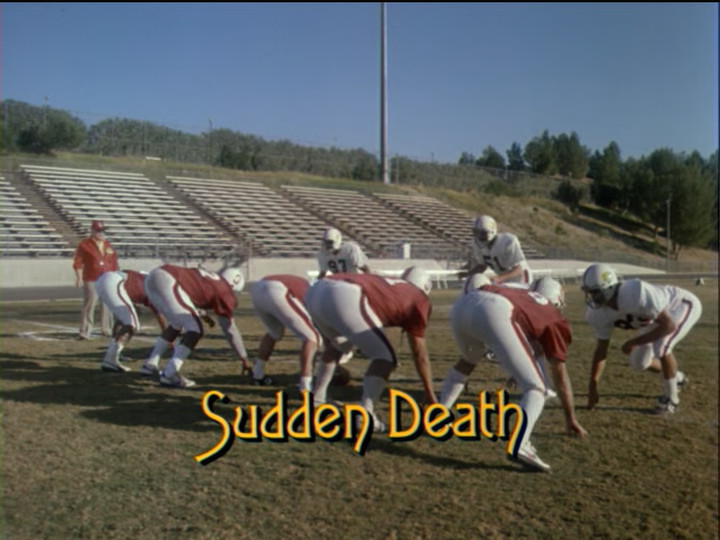
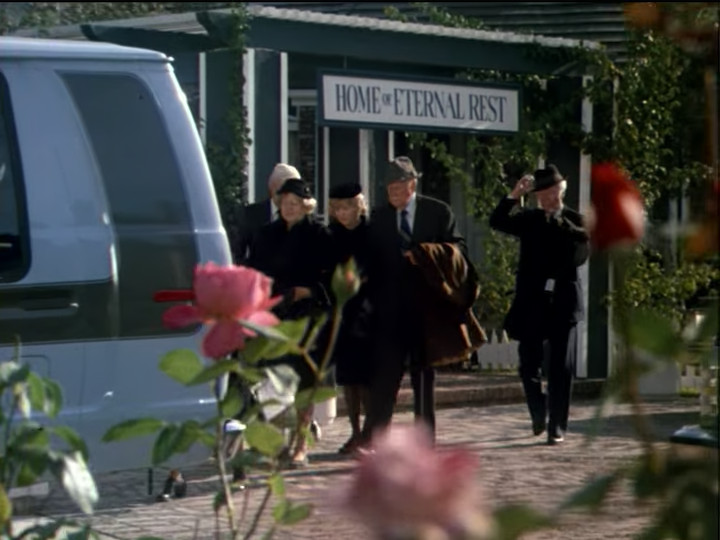





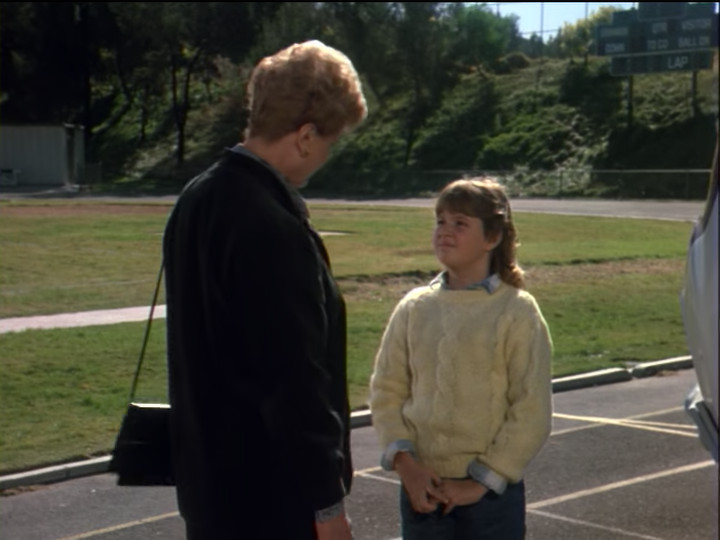

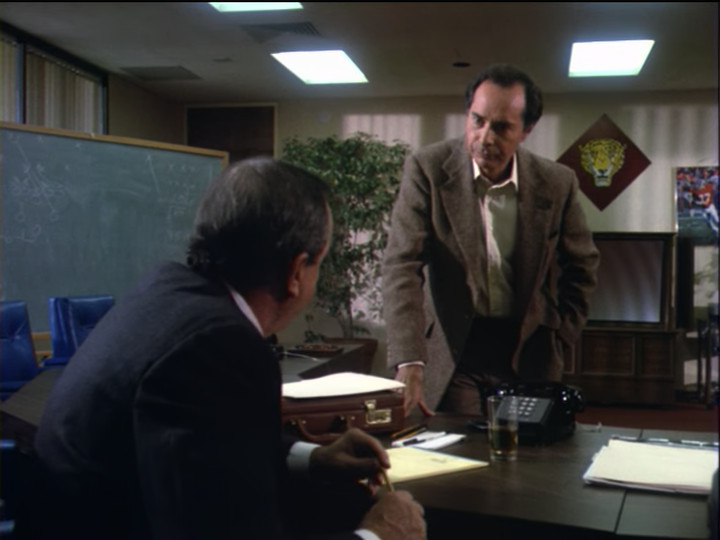


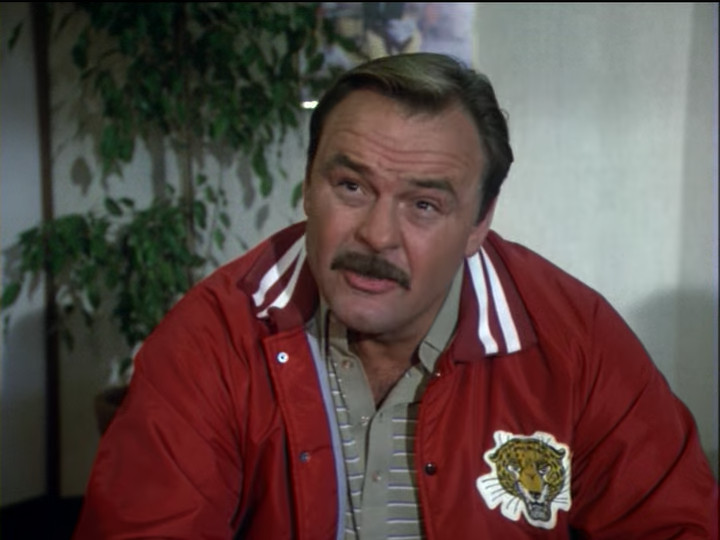
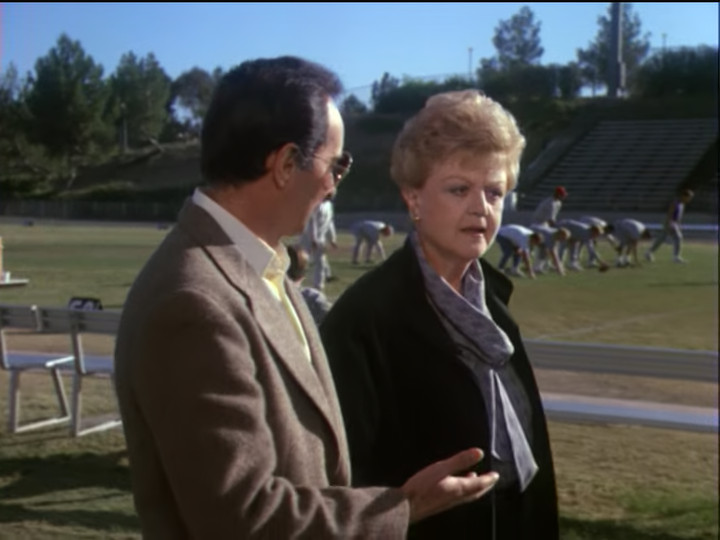
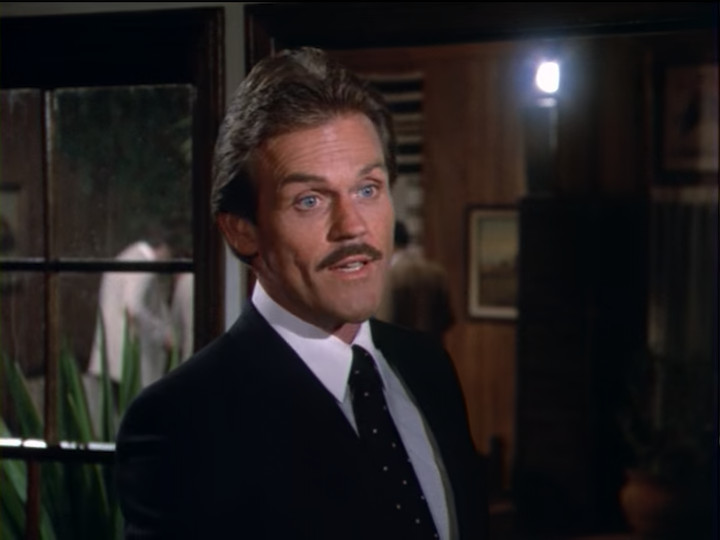
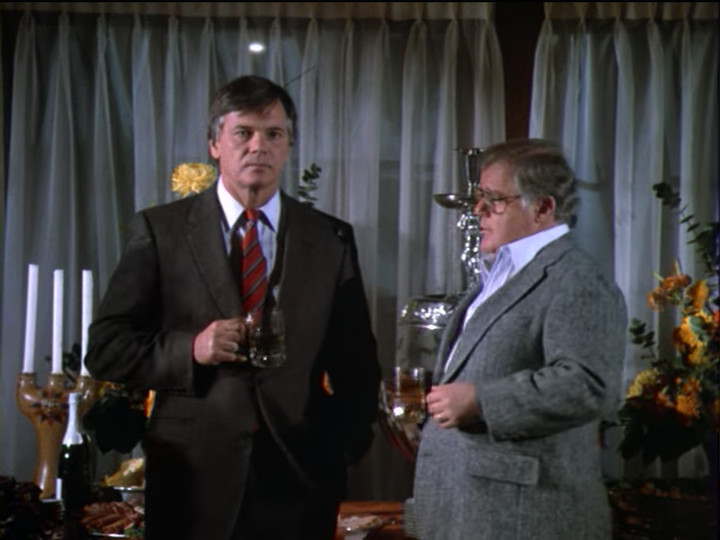
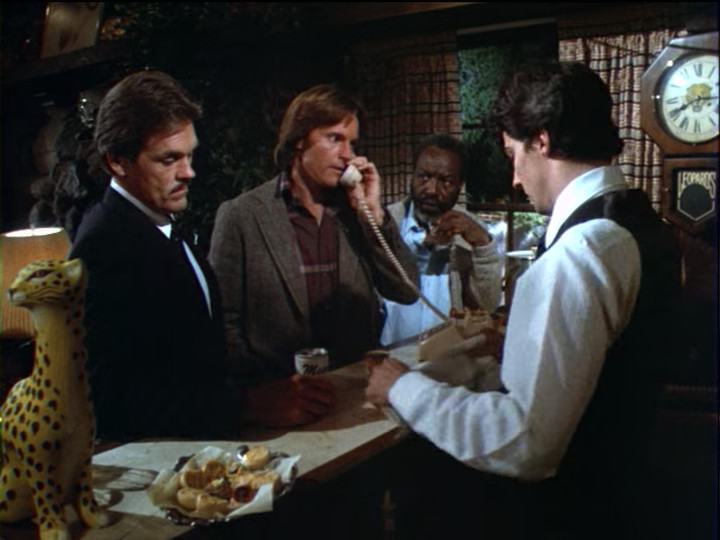


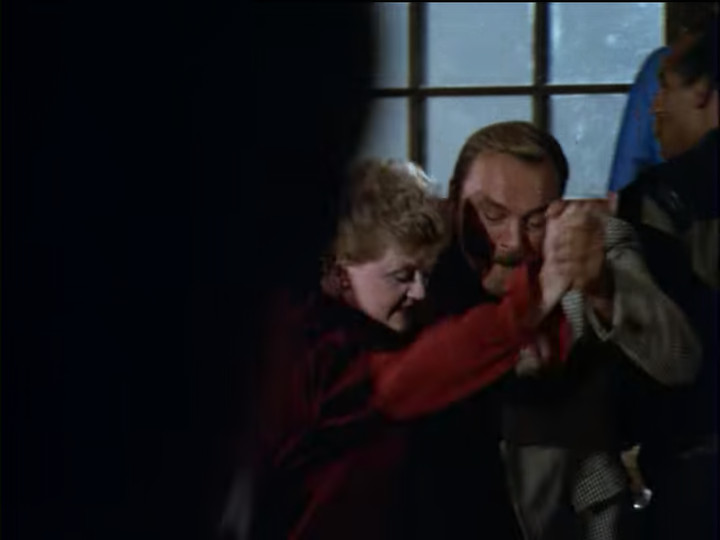


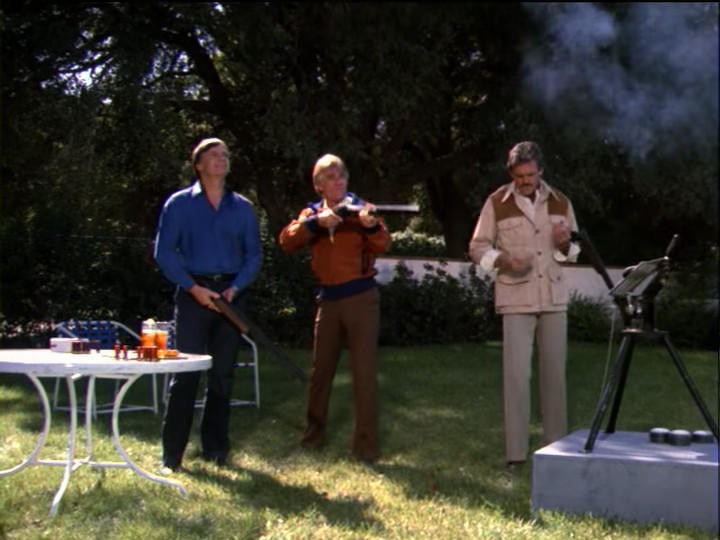


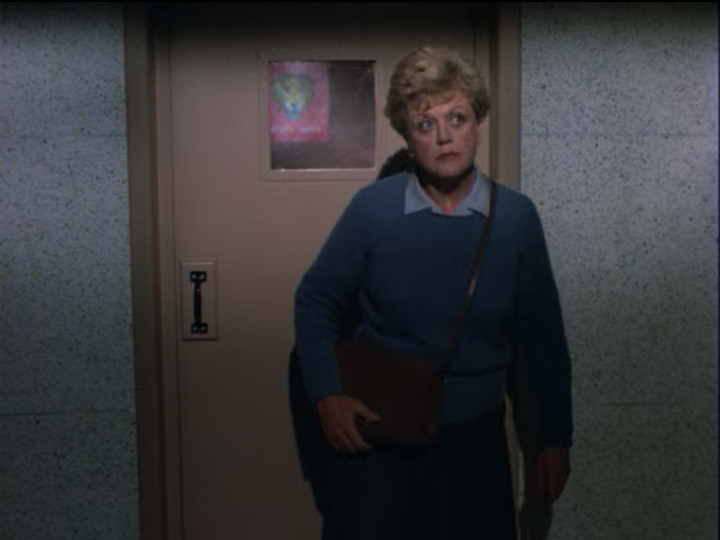

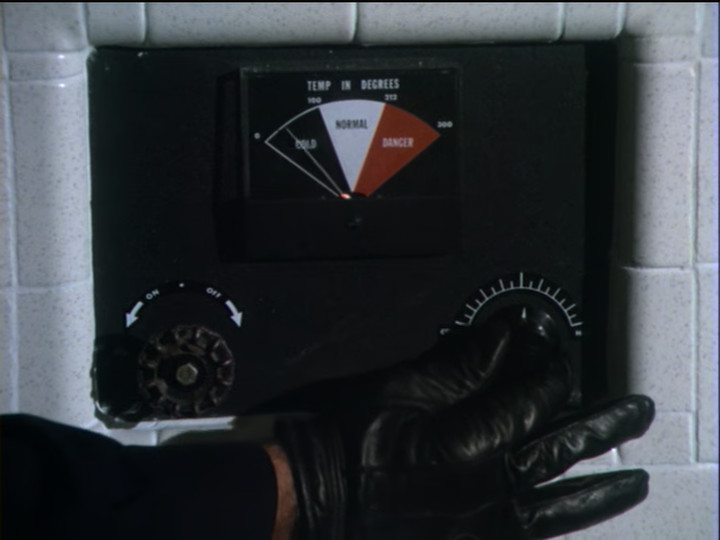

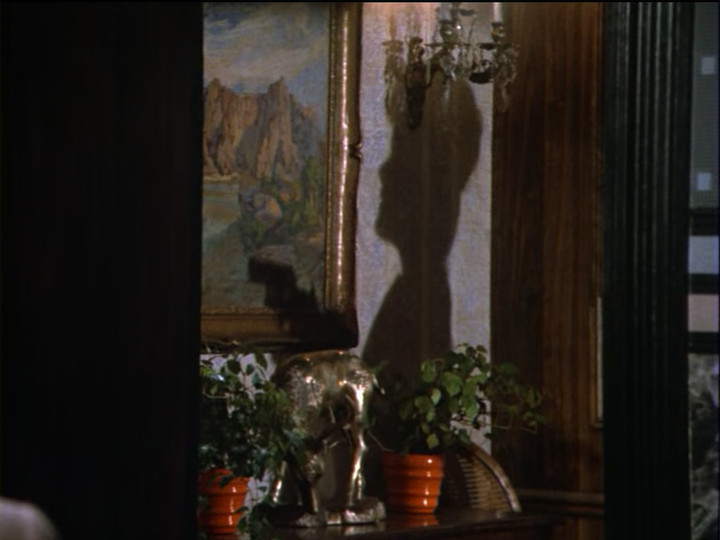


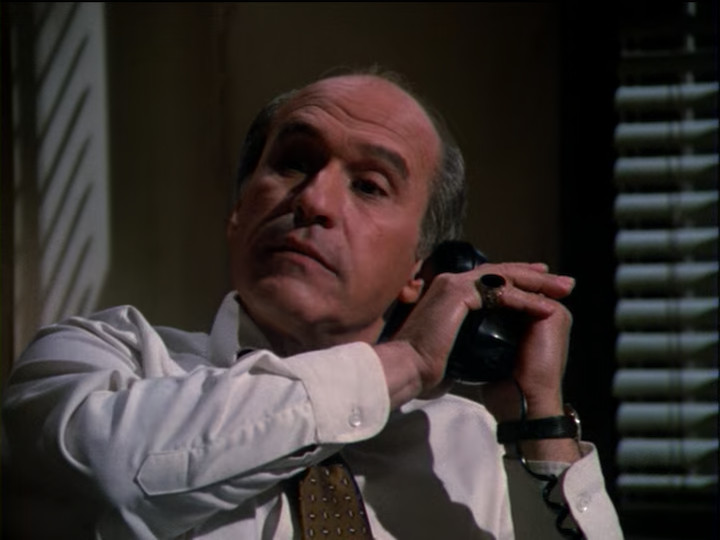
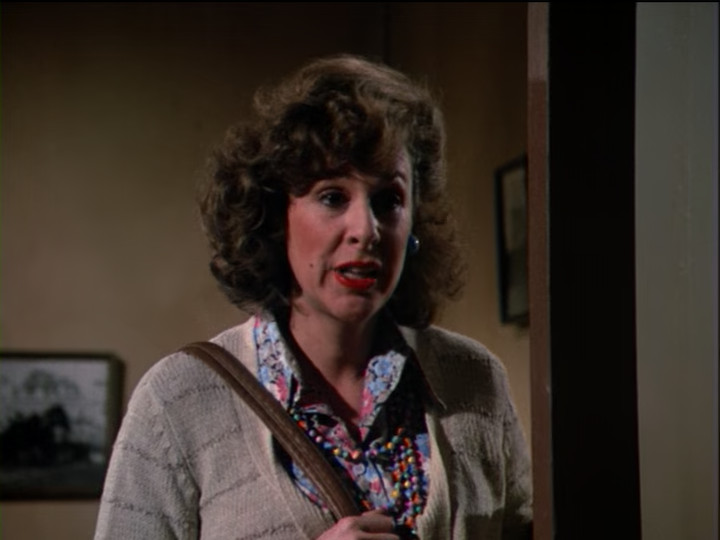
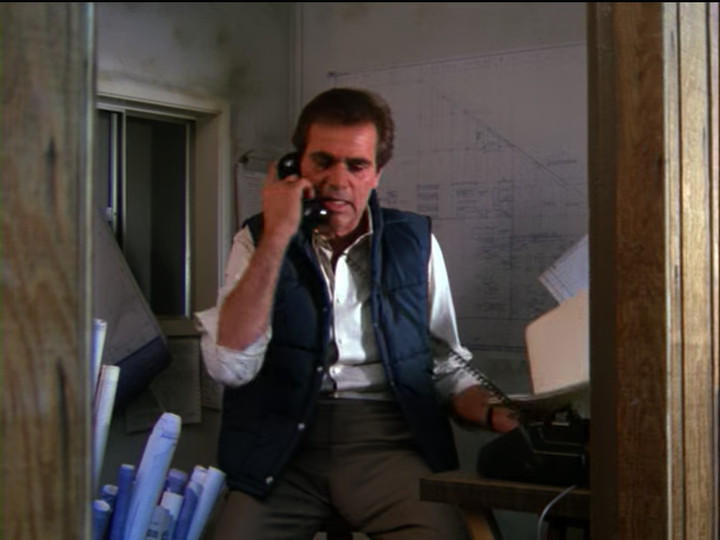
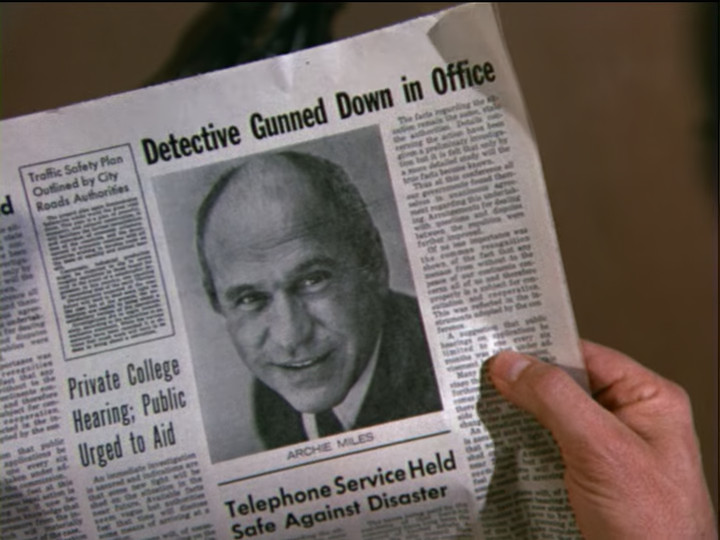

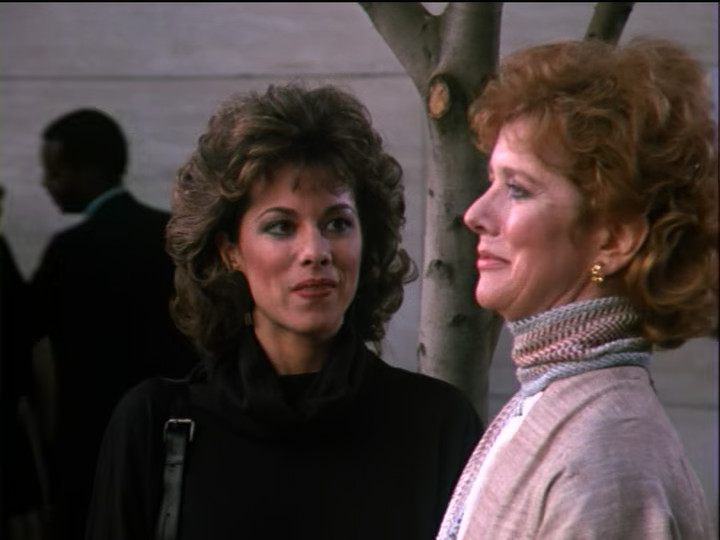


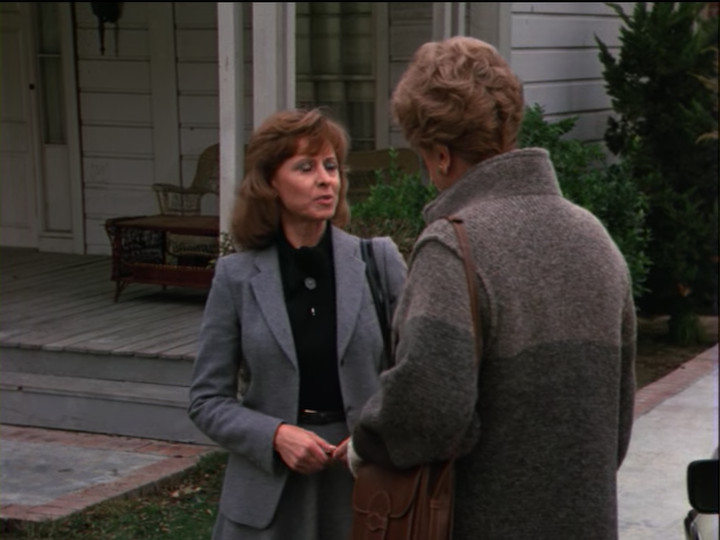

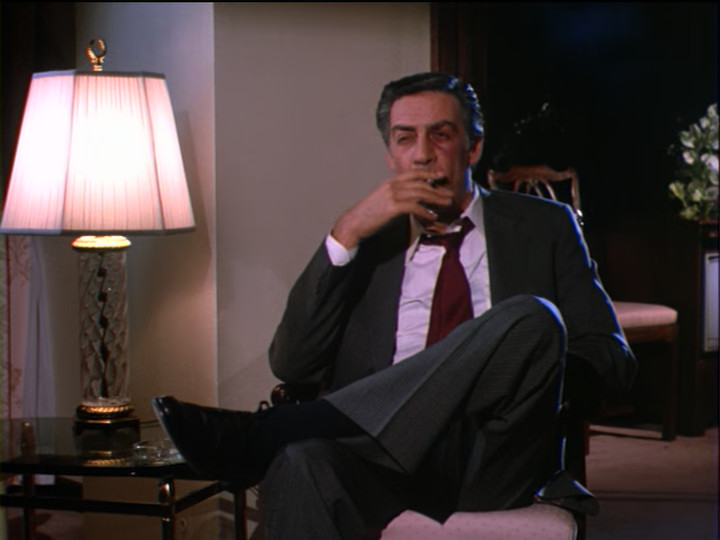

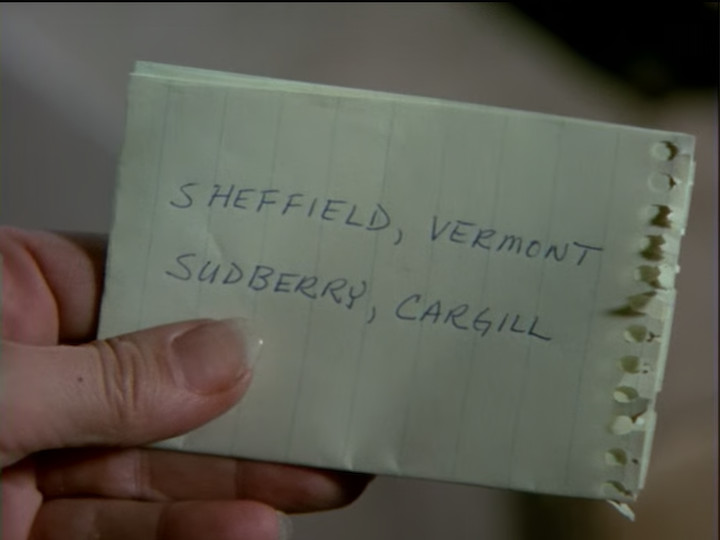
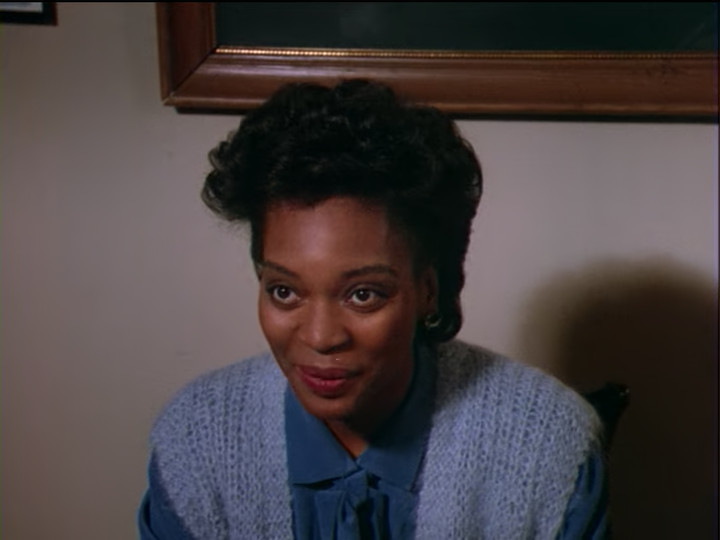
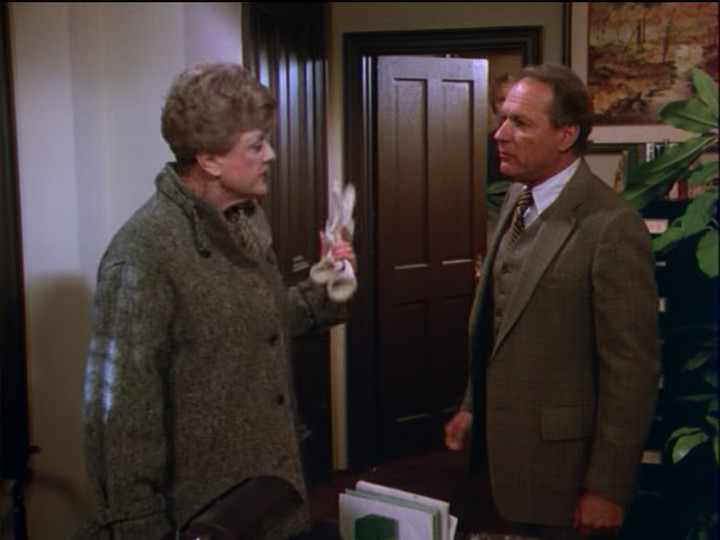

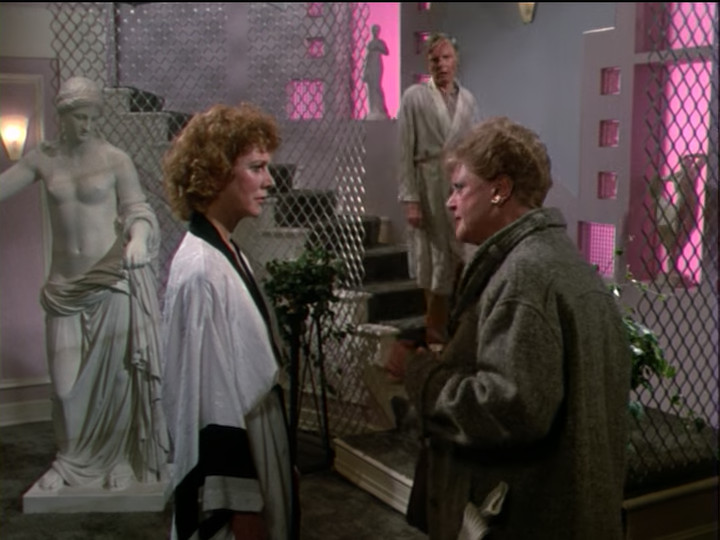




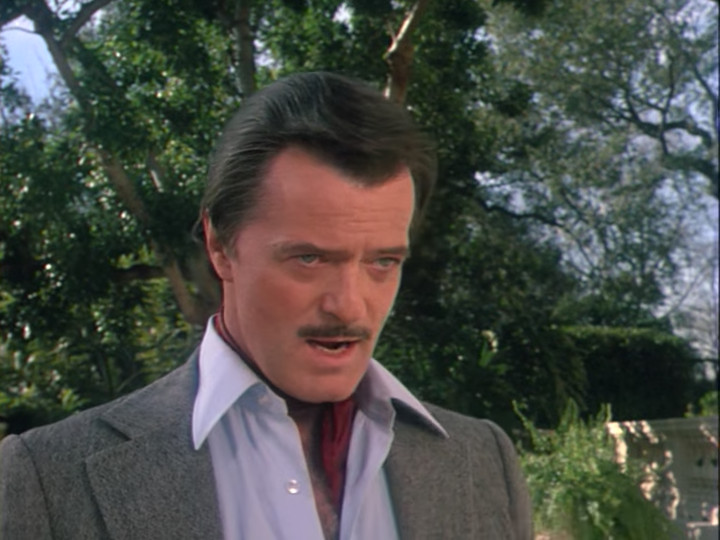


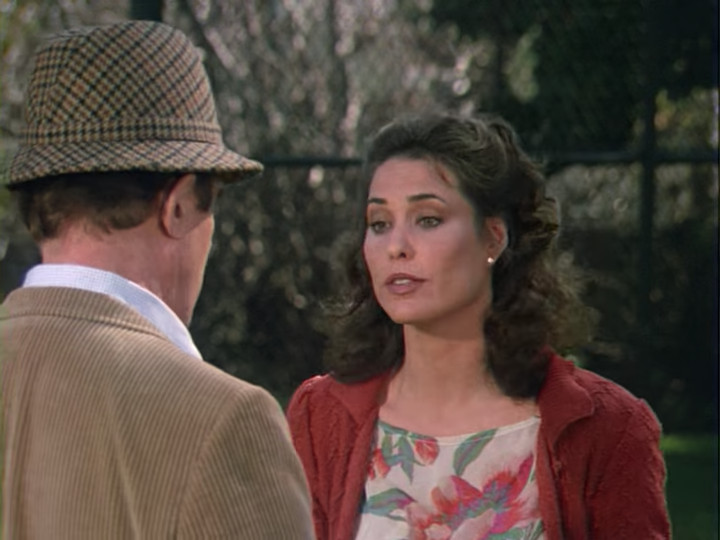
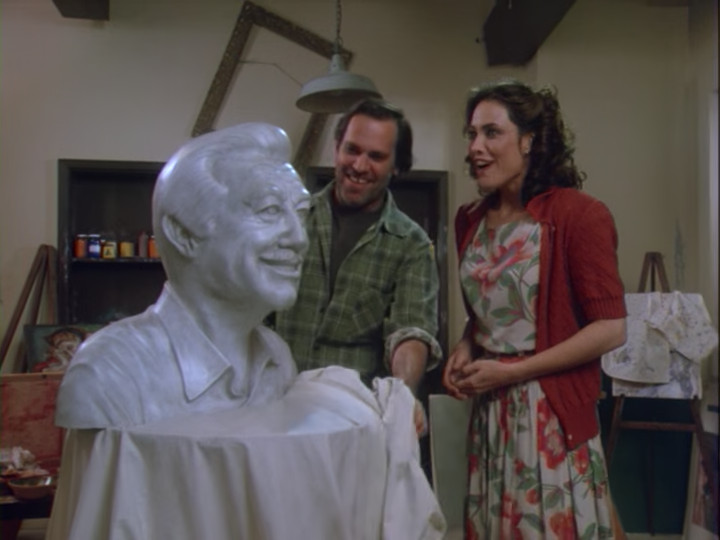









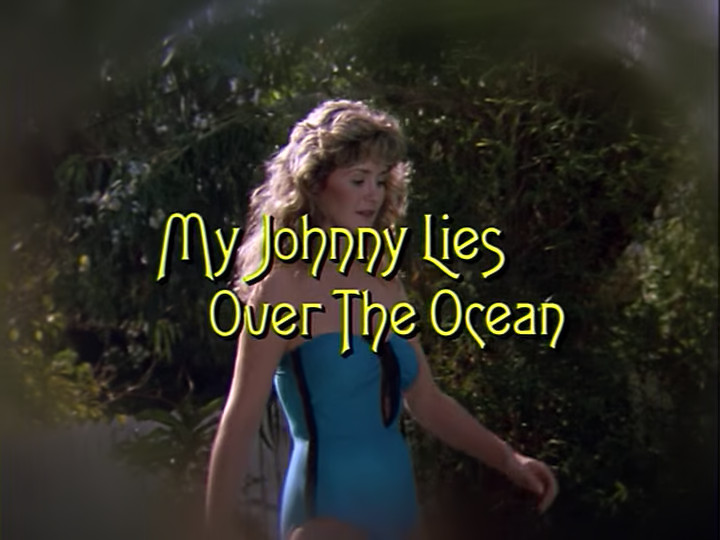




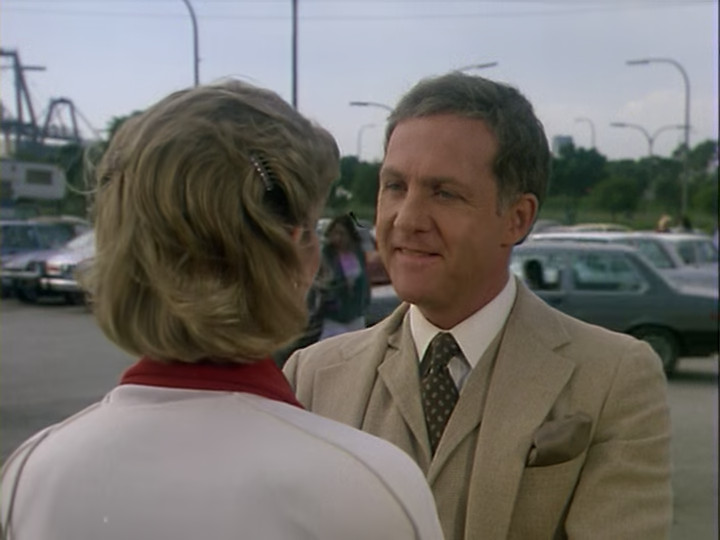

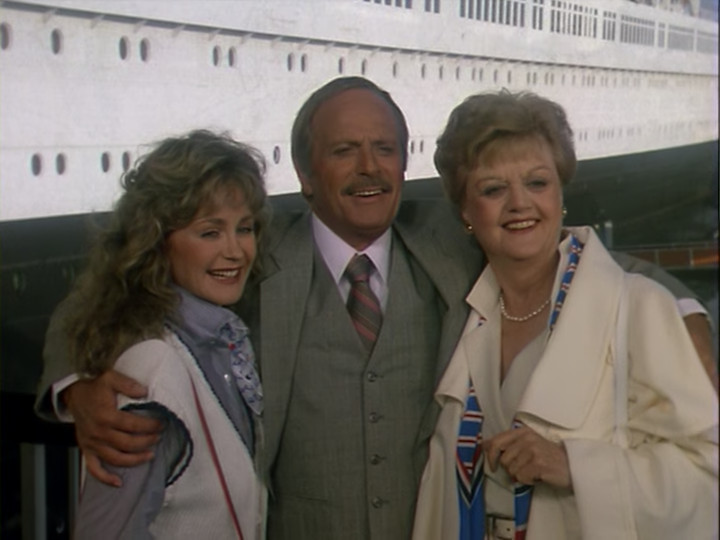





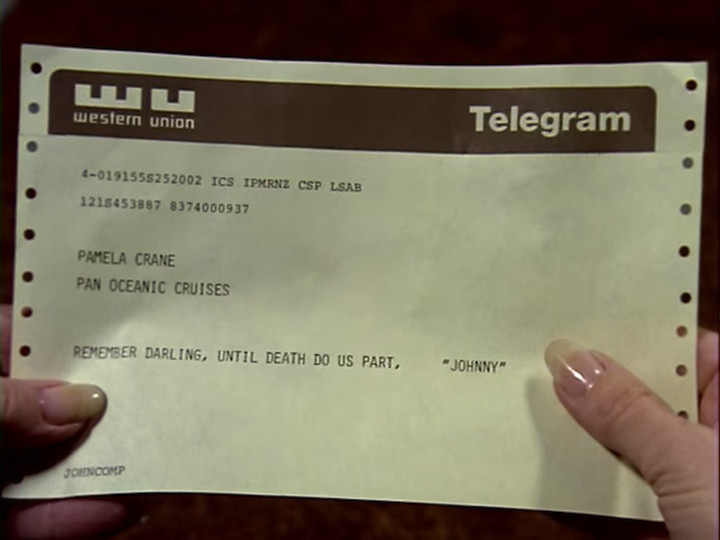

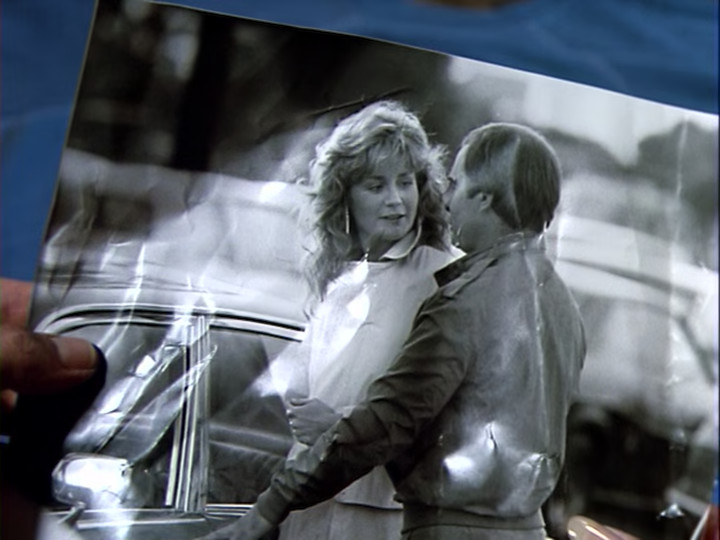
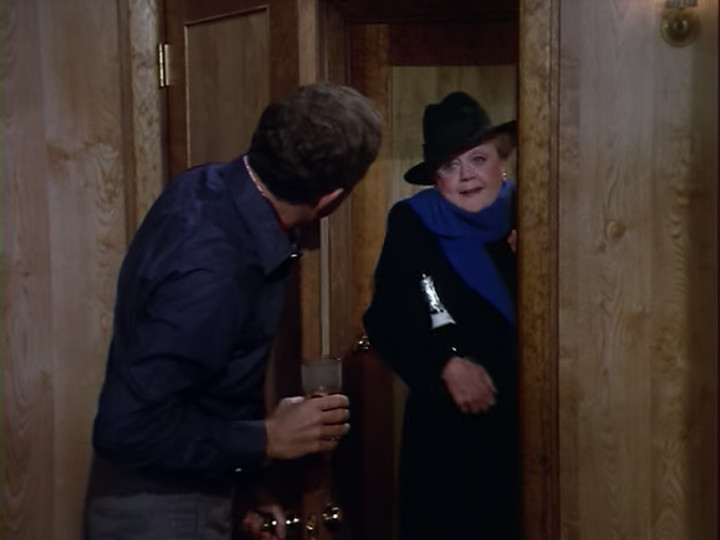




You must be logged in to post a comment.