I’ve finally started reading Miguel de Cervantes’ famous novel, The Ingenious Gentleman Don Quixote of La Mancha. I’m reading it in translation because my Spanish is nowhere near up to the task, but from the little I was able to compare (reading the dictionary more than the Spanish version), the translation I got from Penguin Classics is very good. (Amazon link.) I’m only a few chapters in but there’s something very interesting right in the first few chapters. Though before getting into it, I want to mention that, at least so far, it is absolutely hilarious. The humor is just amazing. Cervantes really is a master.
In case, dear reader, you are like me some weeks ago and have read none of Don Quixote, I’ll just give an extremely brief summary of the plot so far: Alonso Quixano (Quixano is pronounced “key hano”) is a gentleman with a small farm who spends almost all of his money to buy books of chivalry and almost all of his time reading them. The books become his life to the point where he confuses them for reality. He then decides that he will live out the books for himself and become a knight errant, winning glory for himself and improving the world through his mighty deeds. He pulls out an antique suit of armor still in his family’s possession, renames himself to Don Quixote de La Mancha (La Mancha is the area where he lives), and sallies forth into the world riding his farm horse who he renamed Rocinante and who he has convinced himself is a mighty war-horse.
In his first real adventure (after he has been knighted by an inn-keeper) he comes across a farmer who is beating a boy who works for him. Don Quixote intervenes and the boy says that he is not so negligent as the farmer claims and that, moreover, the farmer owes him money. Don Quixote takes the side of the boy and demands of the farmer that he stop beating the boy and moreover that he pay the boy what he owes him. The farmer, intimidated by Don Quixote’s armor and lance, promises that he will. Don Quixote accepts this promise in spite of the boy’s protestations that the farmer will just go back to beating him as soon as Don Quixote is out of sight, assures the boy that everything will be fine, and rides off. As he rides off, Don Quixote thinks no more of the boy but only about the great deed which he just performed. And just as the boy predicted, as soon as Don Quixote was out of sight and earshot, the farmer goes back to beating the him.
Alonso Quixano’s goal of helping people is a noble one but his method is all too common among people who are trying to be good: they do easy things that they think should help rather than hard things that actually will help. What this amounts to is that they want to be good on their own terms. But being good is something that we cannot do on our own terms, because being good means conforming ourselves to reality.
Don Quixote takes this to an absurd extreme, of course, because this is a comedy, but it’s a thing that can be seen all the time in real life. For example: consider nagging. Nagging consists of asking a person to do something many times, the goal being that they will eventually do the thing out of irritation so that they will no longer have to suffer being asked. Of course, if the goal is only to achieve the result for one’s own sake, this may simply be a safer means than hitting the person until they do the thing desired, but no one considers this to be a good deed. The kind of nagging people consider to be a good deed is usually when the thing is to the other person’s benefit. And, again, if the only thing that’s required is that the person do something once, then nagging may possibly be a reasonably way to achieve it. If someone really needs to get around to repairing the leak in the gas pipe in their basement, almost any means of making them do it is probably justifiable. But very few things in life are like this; most things that a person needs to do that someone might nag them about are things they will need to do well, or else will need to do again in the future when the nagger isn’t around. Both of those require a person to see the good of what they’re doing and will to do that good. Nagging a person will not encourage them to do that; if anything, it tends to discourage it since their attention is focused on eliminating the irritation. Nagging, in this case, is a way for a person to feel like they’re making the world a better place while actually making the world a worse place.
It’s not hard to find other examples of this kind of thing. Consider people who give unsolicited advice. It’s very easy to tell someone what to do; the less you know of their circumstances the easier it is. It’s also the case that the less you know of their circumstances, the less useful the advice will be (except by accident, of course). Giving them unsolicited advice can thus seem like doing a good deed, but it’s very unlikely to do any good. This is, incidentally, related to how it’s very unlikely to be taken; the person receiving the unsolicited advice is very likely to see the mismatch between the advice and their circumstances—the mismatch the person giving it hasn’t taken the trouble to find out about. For very little investment of effort and only a little investment of imagination, a person giving unsolicited advice can feel very virtuous while doing no one any good.
We’re each given a great deal of good to do in the world but we often find it unsatisfying because the good that we’re given to do is only a part of what produces a visible result. There’s a common expression when trying to help someone that perhaps one at least planted a seed, but “planting a seed” is, often, far closer to a visible effect that what we’re actually given to do. Sometimes we’re given to till the soil so that someone else will be able to plant the seed. Sometimes our job is to remove rocks so that someone else may till the soil so that a third person can plant the seed. Probably more often, what we’re given to do is to remove two or three of the rocks, and the rest are given to others to remove, so that, later, several people can each till part of the soil.
Doing only the part we’ve been given to do requires trusting God that once we’ve done what we can, that’s enough, for whatever the overarching purposes that we can’t even know, is. The common mistake, which Don Quixote so humorously exemplifies, is to not be content with trusting, and to try to pretend that we’ve actually been given the whole thing. To do the good we’re given to do requires becoming familiar with reality as far as we can, and the more we learn the more we become aware of how limited our role is. This is why, to really do good, we must give up trying to get the glory from it. This is why there is the extremely practical, if mildly hyperbolic, saying: there’s no limit to what a man can achieve so long as he doesn’t care who gets the credit for it.
In order fully to understand this, it is necessary to realise, genuinely and thoroughly, that there is such a thing as an international difference in humour. If we take the crudest joke in the world—the joke, let us say, of a man sitting down on his hat—we shall yet find that all the nations would differ in their way of treating it humourously, and that if American humour treated it at all, it would be in a purely American manner. For example, there was a case of an orator in the House of Commons, who, after denouncing all the public abuses he could think of, did sit down on his hat. An Irishman immediately rose, full of the whole wealth of Irish humour, and said, “Should I be in order, Sir, in congratulating the honourable gentleman on the fact that when he sat down on his hat his head was not in it?” Here is a glorious example of Irish humour—the bull not unconscious, not entirely conscious, but rather an idea so absurd that even the utterer of it can hardly realise how abysmally absurd it is. But every other nation would have treated the idea in a manner slightly different. The Frenchman’s humour would have been logical: he would have said, “The orator denounces modern abuses and destroys to himself the top-hat: behold a good example!” What the Scotchman’s humour would have said I am not so certain, but it would probably have dealt with the serious advisability of making such speeches on top of someone else’s hat. But American humour on such a general theme would be the humour of exaggeration. The American humourist would say that the English politicians so often sat down on their hats that the noise of the House of Commons was one crackle of silk. He would say that when an important orator rose to speak in the House of Commons, long rows of hatters waited outside the House with note-books to take down orders from the participants in the debate. He would say that the whole hat trade of London was disorganised by the news that a clever remark had been made by a young M. P. on the subject of the imports of Jamaica. In short, American humour, neither unfathomably absurd like the Irish, nor transfiguringly lucid and appropriate like the French, nor sharp and sensible and full of realities of life like the Scotch, is simply the humour of imagination. It consists in piling towers on towers and mountains on mountains; of heaping a joke up to the stars and extending it to the end of the world.
This is from Chesterton’s essay on Bret Harte, in Varied Types.
There are a great many young men who feel lost and hopeless in the modern world and many of them spend a lot of time on the internet complaining about it. This tends to rub older, moderately successful men wrong—very, very wrong. (Very roughly: men in their mid-thirties or older who have a wife and at least one child.) I’ve wondered about this for a while because I find this reaction in myself—I start out sympathetic but I verge on angry most times I try to interact with such men. I think I’ve finally figured it out: it has to do with the traditional role of adult men in raising other people’s young men into manhood.
Good parents love their children unconditionally and this is incredibly important to children and their healthy development. However, as children make their way to being adults, they are going to have to face other environments than the environment of home; they will have to face indifferent and even adverse environments. For most of human history (and much of the present, outside of some atypical but decreasingly atypical situations), this was especially true of boys. Somebody had to fight the wild animals who wanted to eat one’s children; somebody had to fight the other human beings who wanted to kill one and take one’s things. Defending against these and many other threats were usually best done in groups, often of people near in age, and that means working with people who were not one’s parents and who love one only conditionally. Preparing a boy for these environments is usually best done not by the boy’s father, but by friends of the boy’s father, or at least other adults males of good will. These are mentors.
Mentors do not love the boy unconditionally, as his father does (in the ideal, at least), but are willing to be more generous to the boy than the boy is yet capable of deserving. This mentorship forms a bridge for the boy to become a man. When a mentor demands more independence of the boy, this does not prevent the boy going to his father for unconditional love; by giving the role of being generously and patiently harsh to another man, the father can be a source of support for his son when that is too difficult, restoring the son’s strength, and enabling the son to go back to his difficult work of becoming a man.
This role of mentor is a bit tricky, since it does involve carefully gauging what the boy is currently capable of and only asking of him what he can do—as opposed to asking of the boy what would most benefit the mentor, as one does with, for example, a plumber1. But it does involve challenging the boy and pushing him to be able to deal with circumstances in which he has no support right now, to get him to use his “emotional muscles” to self-regulate and be able to deal with difficult circumstances, so that those “emotional muscles” grow. Because the time is coming when it will not matter how the now-boy feels, it only matters how he will fight in a battle and protect his fellow soldiers, or chase away the wolves, or do the unpleasant work before bad things happen because the work is not done.
Older men who are at least moderately successful (I mean in absolute terms, not as a euphemism for being rich) have the instinct that they should look for older boys and young men who need this kind of mentorship to transition into being fully independent men, and to provide this kind of supportive-challenging environment to help them to grow.
But the thing is, this relationship is very much a mutual one. The boy has to enter into it wanting to become a man. He has to want to be challenged. He has to want to rise to that challenge. All students must, in the end, learn for themselves; a teacher can only give the student what he needs in order to learn.
When you put all this together, I believe this explains why young men complaining about how unfair society is in its current configuration rubs us older men so wrong. This may all be true, but it’s not helpful in learning how to become a man. And a boy is better off becoming a man even in a bad society—there is no society where boys are better off staying permanently childish. Coming to us rubs us so wrong because we’re not the ones that young men should come to for this kind of sympathy. In fact, it would (often) be actively harmful to them to if we gave it to them, because it would discourage them from finishing growing up.
We all have our roles in society according to our station in life. For older men, our role is to act as mentors like this to young men. When young men come to us for sympathy, it feels a bit like coming to us for what they’re supposed to—mentorship—but then they reject attempts at mentorship, which confuses and frustrates us. Young men aren’t supposed to look to mentors for sympathy—they’re supposed to look elsewhere for that. It may be entirely legitimate that they are looking for sympathy everywhere because they can’t find it anywhere, but it’s a problem that this actively gets in the way of us fulfilling our proper role of mentor.
I don’t know what the solution to this is. I doubt it’s for us older men to just to give up on mentorship and become surrogate fathers to younger men, because that would still leave them stunted in their development and unable to fulfill their potential. God knows the answer; I don’t. At least, not yet. But identifying a problem is the first step towards solving it, and I think that this is, at least, a correct identification of the problem.
This is perfectly fair with tradesmen because the tradesman is a full adult who trades what is best for the customer in exchange for money, which the tradesman needs more than whatever minor comfort he gives up in doing the work he is skilled at. ↩︎
On the twenty first day of April in the year of our Lord 1985, the twenty first episode of the first season of Murder, She Wrote aired. Also the last episode of the first season in was set in Wyoming and titled Funeral at Fifty Mile. (Last week’s episode was Murder At the Oasis.)
As the title screen establishes, Wyoming is a beautiful place. This helps to establish a bit of a golden-age mystery feel, since the beauty of the land will contrast with the ugliness of murder.
Right after the first establishing shot we we get another:
On the left we have an ancient Chevy truck driving by, which gives us the sense of a land where things move more slowly. On the right we have a sign that tells us we’re in a small town in Wyoming. A town so small, in fact, that they publish the population down to the individual. Not only are there not that many people, but the number doesn’t change so often that it’s expensive to change it when it does. (Though sometimes such signs simply reflect the population at the last census.)
After this we fade to a funeral where the preacher gives some useful introductions in his closing remarks. First is the deceased’s beloved daughter, Mary Carver:
Standing next to her is her fiance, Art Merrick.
Also is the deceased’s younger brother:
His name is Timothy Carver.
Also mentioned are Jack’s close and inseparable friends.
Doc Wallace:
Sam Breen:
and Bill Carmody:
(If you recognize William Windom, the actor playing Sam Breen, you probably know him as Jessica’s friend Doc Hazlett. That starts in the second season of Murder, She Wrote. Right now her close friend is Captain Ethan Craig, though we haven’t seen him in a while.)
After these closing remarks we find out that the deceased’s name is John Carver, and he was apparently in the military because his coffin has an American flag draped on it. There’s a brief prayer mentioning ashes to ashes and dust to dust, then a bugle plays a mournful tune.
As the bugle plays, a strange couple drives up in a large RV. They get out and walk up to be relatively near the casket:
We get a little bit of military ceremony—a five gun salute and the flag gets folded and given to Mary—then people begin to disband. The strange man asks Carmody if he’s coming after him with that gun and Carmody replies, sourly, that it would be futile since it’s loaded with blanks. We find out that the man’s name is Carl Mestin and the woman, whose name is Sally, is Carl’s wife.
Shortly after, Jessica is walking with Mary and Art and Mary remarks that it’s strange for Carl Mestin to show up since her father never did business with him and no one around these parts can stand him.
During the conversation it comes up that Jessica is, apparently, an old friend, since she can remember when Mary was born. Well, not the actual birth, but having heard that her mother died in childbirth. “We” were so worried, she says, wondering how jack was going to manage all alone, but he did just fine. In addition to this being awkward exposition, it leaves out the really important part—how was a school teacher in Maine friends with a woman who died in childbirth in Wyoming in the 1950s (or perhaps the early 1960s)?
The scene then fades to the Carver ranch, which we can tell by the establishing shot:
A storm is moving in—we hear the sound of thunder and it forms the subject of conversation inside.
We then meet “Marshall” (actually Sheriff) Ed Potts:
He’s read one of her books: it’s not up there with Mickey Spillane, but darn good for a woman.
I’ve never enjoyed Murder, She Wrote‘s attempts at making fun of sexist police officers and this one makes particularly little sense. While it’s true that Sir Arthur Conan Doyle (basically) created the genre of detective story with Sherlock Holmes, many of the biggest figures in the genre were women. Agatha Christie, Dorothy L. Sayers, and Ngaio Marsh were known as the “Queens of Crime.” Recent reprints of Agatha Christie’s novels often mention that she’s only been outsold by the Bible and Shakespeare. Detective fiction is, as fiction goes, probably the most 50/50 genre you can find. The only way to think that the best detective fiction is all written by males is by knowing nothing about detective fiction. (I suppose if you only like American hard-boiled detective fiction—a genre I dislike and am not sure should even count as detective fiction—this would be more defensible. And he did cite a hard-boiled detective writer. But even so. This is just annoying and dumb.)
In case you’re not familiar with Mickey Spillane—as I wasn’t until I looked him up—he wrote a series of hard-boiled detective novels featuring the detective Mike Hammer. From reading the plot synopsis of his first novel, I, The Jury, the name Mike Hammer is a bit on-the-nose as far as the kind of story it was, so just imagine the kind of story featuring a hard-boiled detective named “Mike Hammer” and you’re probably close enough, especially if you consider the various things “hammer” can be a euphemism for and go with all of them.
Jessica smiles and replies, “Yes, we all struggle under Mickey’s shadow, I suppose.”
The contrast is there for the joke they’re making, but it is very confusing with regard to the character of Marshall Potts. How on earth is a Sheriff who prefers to be called Marshall a fan of Mike Hammer stories? That said, he does immediately afterwards say that he doesn’t really read detective fiction, it’s westerns that have his heart. Like “Coop” in High Noon. (This would be a reference to the actor Gary Cooper in the movie High Noon, where Cooper plays a sheriff who stands alone against a gang of criminals.)
Jessica then says she notices that he wears his holster tied down and asks if this is for quickly drawing his gun. He replies that it is, and that he practices for half an hour every day. There’s a bit more banter where he says that he’s ready for someone to “make my day,” which is a line from the Clint Eastwood movie Sudden Impact, which came out in 1983, only two years before this episode. It’s a strange line to quote for someone who loves westerns, but I guess the point is to portray him as trigger-happy.
There’s also a minor point that Tim (Mary’s uncle) calls his own ranch, which neighbors this one, to make sure that everything is OK—that the ranch hands have everything battened down for the storm, which seems to be there already. That done, Tim brings up to Mary and Sam that he had promised to buy the ranch from Mary after John died, to make her comfortable for the rest of her life. Sam says that he doesn’t doubt that they discussed it, but the fact of the matter is that there is no will. Mary, being his only child, will inherit, but it will take longer to run it through probate than it would have been if there was a will.
This discussion is cut short by a loud honking from outside. Looking out the window, it turns out to be Carl Mestin and his wife. Mary tries to throw him out, but he produces what he claims is a copy of John Carver’s will, leaving everything to him except for a little money for Mary. This does not make Mestin’s reception any friendlier and he antagonizes people until Art Merrick has to be held back from punching him.
Mary asks Jessica why her uncle Tim and the others seem to be afraid of Mestin. Jessica doesn’t have an answer, then the Marshall comes over, warns Art that starting a fight isn’t going to help anything, then gives his condolences to Mary and takes his leave. (This is a very strange thing to do without apology, since an incendiary situation would benefit from his presence to keep things from getting out of hand.)
Jessica then talks to Mestin and remarks that Wyoming is very different than Maine. Back in Maine, she couldn’t imagine a father disinheriting his only daughter. Mestin replies that it probably has something to do with having saved John’s life back in Korea at the Inchon landing. Jessica is surprised at this and asks if he knows her husband, Tom Fletcher. He was Jack’s commanding officer. (She clearly doesn’t believe him and is testing him, since her husband’s name was Frank.)
Mestin thinks and remarks, “Oh yeah, Lt. Fetcher. He’s quite a guy. He’s a good guy.”
He then excuses himself. (In addition to not flinching at the name, Frank Fletcher was a captain, though we won’t learn that for a few more seasons.)
I should note, since I complained about it before, that we do, finally, have an explanation for how Jessica knows any of these people who never seem to have left Wyoming—Jessica’s husband and the deceased had served together in the Air Force.
Later in the afternoon, though it looks like night, after Mary is asleep courtesy of a sedative the doc gave her, her father’s friends are putting on rain coats to help batten the place down in the storm. Carl and his wife are arguing over drinking, with her calling him a lightweight and him saying that he’s not getting into a drinking contest with her. She then brags about having beaten him at an arm wrestling contest and he claims that he let her win. She bets him $500 ($1,505.46 in 2025 dollars) that she can beat him right now. She goads him into the match by accusing him of being too cheap or too chicken to do it, and he accepts. The people who were getting ready to help with tying things down in the storm stop their preparations and watch.
She beats him easily.
I don’t know if this will come up later, but it’s curious that they are arm wrestling left handed. It may come to nothing, of course, but it’s hard to not notice left-handed people in murder mysteries.
It should also be noted that this is very strange behavior of a woman who is supposedly his wife. It seems likely that her being is wife is another of Mestin’s lies. Anyway, he pays up, then goes and joins the people getting things prepared for the storm. As he joins them he asks whether a particular door still needs to be tied down in the wind, suggesting he knows the place.
Later in the day, after the storm has passed, Art comes back to the house having been given a ride by one of the employees named Jesús. Art greets the people inside—everyone from the funeral is still here. They ask where he was and he says that he got the pickup truck stuck in the mud on the way back. After two hours of trying to dig it out he gave up and started walking back. Jesús passed him on the road and picked him up. As Art goes to check on Mary, Jesús finds something that scares him in the barn. In a panic fetches the people from the house and they come. Then we see that the thing that terrified him was the body of Carl Mestin, hanged.
We then fade to black and go to commercial.
Had you been watching in 1985, you might have seen a commercial like this:
When we get back, the Marshall shows up. He doesn’t much know what he’s doing with a murder investigation and Jessica “subtly” helps him out. She points out that a hay bale was dragged near the body, as if to suggest suicide, but the killer seems to have changed his mind or been scared off.
Jessica also mentions that there looks to be a blood smear above his left ear, as if he was hit by something before he was hanged. (Doc checks out the body and confirms this, saying that Jessica has sharp eyes.) Jessica also notes that the rope on the beam had been splintered, suggesting that it was holding Mestin’s weight when it was pulled over.
Jessica asks Doc how long the body had been dead for and he answers 4-5 hours. Which is rather odd precision to give, even apart from not having taken the temperature of the corpse and run the relevant calculations. Anyway, the Sheriff does the math and says that it was around 3pm, when everyone has battening down the ranch.
That evening, Jessica talks with Mary. She asks Mary what she meant by Mestin shortening her father’s life. Mary explains that she was there on her daily visit and saw Mestin coming out of her father’s room. Mestin didn’t say anything to her and just looked smug. Her father was so upset he couldn’t even talk. He was never the same after that and two days later he died.
Jessica points out that the witnesses on the will were nurses. She suggests that Mestin arrived with the will prepared and pressured her father into signing it. Jessica mentions Mestin’s story about having saved her father’s life during the war, but that’s nonsense. She tripped him up with asking about knowing her husband, which he clearly didn’t. Whatever made Mary’s father sign the will, it wasn’t gratitude.
Bill Carmody then comes out and says that the Sheriff wants them assembled for questioning. Mary asks if Mestin might have been holding something over her father and Bill says he doesn’t know and didn’t know Mestin well. Mary asks about a business venture that they were in together and Carmody explains that Mestin talked into buying grain in order to open up a feed store. Bill bought the grain, then Mestin pulled out and left Bill holding the bag, causing bill to lose a lot of money.
Mary then asks why Bill did business with Mestin, since everyone she knew seemed to hate him. Bill replies that he didn’t have much choice, then says that they had better get inside.
Inside the Sheriff asks everyone where they were at the time that Mestin was killed. Doc, Uncle Tim, Sam Breen, and Bill Carmody were all working around the barn and saw each other. Mary was sleeping after Doc gave her some sleeping pills. This woman, who I presume is an employee, never left the house:
Carl’s wife was in her RV “sleeping it off.” Jessica was in her room “getting rid of jet lag.”
Jessica notes that the women are the only ones who can’t corroborate their alibis, but that don’t make no nevermind to this here Sheriff, as he doesn’t think a woman could have done Mestin in the way he was done did in. In his mind, the only possible suspect not accounted for is Art Merrick, which is good enough for him—he concludes with certainty that Art did it. Jessica shakes her head at him, and he replies, “I thought that you were smarter than that, Ma’am. There ain’t anybody else. Process of elimination.”
And on that we fade to black and go to commercial.
The Sheriff then goes over to where Art is getting his truck out of the mud. He points out that there was solid ground on either side of the mud hole, so Art clearly got himself stuck on purpose (Art says that it was raining so hard he didn’t see the hole until he was in it). The Sheriff then accuses him of the murder and arrests him.
The next day, in the morning, Mary drives Jessica over to the Sheriff’s station:
I find the interior quite interesting:
The most interesting part to me is that while the matte painting behind the set is quite good—it is appropriately out of focus for the foreground, for example, and thus looks fairly convincing—it’s entirely wrong for the environment and the external shot. (We can see based on how Jessica and Mary walk in that the door behind Jessica, here, is between the building and the hill in the exterior shot. But look more closely at what we can see through the window:
(I upped the exposure and size a bit to make the background clearer)
The hill is missing. Also, that looks like a fairly populous town across an empty plain.
Anyway, Jessica tries to talk some sense into the Sheriff. Mestin was struck from behind on the left side of the head, suggesting a left-handed killer, while Art is right-handed. Also, he didn’t have a motive. The only one who benefited from Mestin’s death is Sally Mestin.
The Sheriff then storms out and Sam Breen tells Jessica that bail is already in the works up at the county seat. Also, he and the boys talked and figure that they should stay close to Mary until things are settled.
He leaves and Jessica goes to Mary and Art, where Art relays what he overheard from a call that the Sheriff got from the coroner. This was more substantive than you might expect because it shook the Sheriff up enough he repeated everything the coroner said. The important part of which is that Mestin died of hanging and the blow to the head came afterward. Jessica wonders why Doc was so sure that it was the other way around, and Mary suggests Jessica ask him since his place is just down the street.
Doc’s house is interesting, partially because the shot is so close-cropped. I wonder where this really was.
Anyway, Doc isn’t in, but his nurse/receptionist/housekeeper is in.
She recognizes Jessica because she’s also the local phone operator and nothing goes on in Fifty-Mile that she doesn’t know about. Doc’s on a house call and will be back in about an hour. Jessica can’t wait and wonders if Doc made any notes about the examination he made the night before and wonders if Doc would mind if Jessica peeked in his files to see. The nurse replies that he’d skin her alive if she let Jessica look through his files—the only time Doc ever lost his temper was when he caught someone poking his nose in the Doc’s files. He threw the man out, using words that would “shame Lucifer himself,” and told him that if he ever breathed a word of what he found out it would be the last words he ever spoke.
Jessica asks if the man was a stranger, but it turns out to be Carl Mestin.
The nurse then says that, in her opinion, a man like Carl Mestin was born to hang. Jessica doesn’t agree, but also doesn’t demur.
Back at the house Jessica and Mary run into the housekeeper, who says that Mrs. Mestin requested a lot of coffee and has been on the phone all morning making calls, mostly long distance. Mary then confronts Sally and demands that she leave. Sally refuses and suggests that Mary leave, instead. Mary asks what Carl had on her dad that got him to sign the will and Sally replies that Carl never told her, but whatever it was it must have been very “juicy” because it was very profitable.
A little while later the Sheriff arrives with Art Merrick. He’s dropped the murder charge after he had a chance to think about Jessica’s arguments. Jessica tells him that it takes a strong man to admit his mistakes. The Sheriff replies that Art is still his best suspect… so if he didn’t do it, who did?
Jessica suggests that the Sheriff challenge Sally Mestin to an arm wrestling contest. He might find it illuminating.
Interestingly, he does.
In the preparation for the match, Jessica drops in and says that she wants to observe Sally’s technique. Sally replies that it’s all in the timing and body English. The women’s North American champion is just a little bitty thing, much smaller than Sally. (Sally is significantly overstating this; while technique does certainly matter in arm wrestling, as in all kinds of wrestling, there are significant limits to the strength difference it can overcome.)
They begin and at first not much happens except for the Sheriff grunting. But right before Sally wins, we get a closeup of her hand:
and then her arm:
They did this pretty quickly in the episode, so I’m not sure that it’s reasonable for them to have expected us to notice, but you can see that Sally has a tan line from her bracelet but not from her wedding ring (she’s wrestling with her left arm, so this is her left hand). So she clearly hasn’t been wearing the ring long.
Anyway, after Sally wins, the Sheriff remarks to Jessica that he never thought a woman would be strong enough to do in Mestin, but Sally is sure strong enough and she’s left-handed to boot.
Sally doesn’t take kindly to this and storms off.
That night, while Jessica is in bed, she hears some tapping on her window. She goes over and looks out the window and sees a noose hanging outside.
Jessica looks thoughtful and says, out loud, “I do believe I’m making someone nervous.”
And on that we fade to black and go to commercial.
When we come back from commercial, Sally leaves her trailer and barges in on everyone having breakfast. She’s brash and provocative, and comes on pretty strong to Art Merrick, clearly to antagonize Mary.
Right after she’s served breakfast, though, Sheriff Potts comes in and informs Sally that he has a warrant for her arrest for the murder of her husband. She complains a bunch, then when Sheriff Potts holds up a pair of handcuffs Jessica asks Sally if now isn’t the time to play her trump card, before she winds up on trial for murder.
Sally says that she doesn’t know what Jessica is talking about, but Jessica replies that she does. Her supposed motive for killing Carl is to get ownership of the ranch as his widow, but she’s not, in fact, his widow. She and Carl were never married. Jessica checked on all of the long distance phone calls and they were to quickie wedding chapels in Nevada. She figures that Sally was looking for one that would sell her a forged wedding certificate, and since Sally got so much bolder after those phone calls, she probably found one that would. Jessica suggests that the proof is that the skin under her wedding ring is as tan as everywhere else; only the skin under her bracelet has a tan line. Clearly, the wedding ring was a prop.
Sally sinks down in her chair. She sighs and says that Carl said that people around here are old-fashioned. If they pretended to be married, it wouldn’t make waves. She then gets up and says that if she’s not under arrest she’d like to leave. The Sheriff replies that there are some nice places on the edge of town where she can park the RV, but he recommends not going any further than that from town.
After she leaves, Potts sits down and expresses his frustration. Now he’s back to the beginning.
Jessica says that she can give a description of the murderer. He’s a tall, strong, ambidextrous man who had number of reasons to hate Carl Mestin but only one reason strong enough to kill him.
The Sheriff replies that there ain’t anybody like that around here, and Jessica sadly nods her head and says, “Yes. I know.”
A few minutes later Art, Mary, and Jessica are standing on the porch as Sally drives off. Art says that he can’t say that he’s sorry to wave goodbye to her and Mary replies that in a funny kind of way she feels sorry for Sally. Art then points out that now is a good time to get his truck and Mary volunteers to drive him over. She invites Jessica to come with her for some reason but Jessica declines.
When Jessica comes in, only Doc is at the table, peeling an apple. Jessica notes that he’s left-handed. He replies that he’s very left handed, but not ambidextrous. He asks her why she says the killer is ambidextrous and she replies that Mestin was struck from behind on the left, but the hangman’s noose outside her window was tied by a right-handed person. Hence, ambidextrous.
He asks Jessica if she really knows what she’s saying and Jessica replies that, unfortunately, she does. She then says that she’s going to take a walk, perhaps go down to the barn and look around.
The Doc follows her and asks her to not meddle in things she doesn’t understand. Someone could get hurt. Jessica replies that he’s not talking about her, he’s talking about Mary, isn’t he? It seems to her that Carl Mestin was killed to protect Mary from some terrible secret that’s worse than the loss of her birthright. Could any secret be worse than that?
Doc replies that one could and asks her to drop it.
When she gets to the barn Uncle Tim, Sam Breen, and Bill Carmody are waiting there.
Jessica then says that they’re four men who added up to one tall, strong, ambidextrous killer. After revealing a bunch of what she knows, she then asks about what she doesn’t. Who was Carl Mestin? He knew about the haymow door needing bracing in the wind, so he seems to have worked here in the past, but a long time ago since it was before Mary was old enough remember.
It’s Uncle Tim who finally speaks. Carl—which wasn’t actually his real name—was a randy young ranch hand at Carver ranch. He tried every way he knew to seduce Jack’s wife, but it didn’t work. One day he found her alone and raped her. Then he ran and the five of them—including John Carver—chased him down and caught him. They strung him up and were going to hang him but John said no and talked them out of it. Because he asked it, they instead turned him over to the law. Only Carl escaped and got clean away. And Ruth—John’s wife—turned out to be pregnant with Mary. She seemed to believe that the child was John’s and Doc let her believe it. After Ruth died in childbirth, John raised Mary as if she was his own. He loved her and doted on her, and his one great fear was that she would find out the truth about her parentage.
Jessica asks how Carl figured it out. Sam Breen replies that as near as they can figure out, he changed his name, stayed around near Fifty-Mile but out of their sight, and read about the birth in the paper and did the math. But he needed a clincher, so he broke into Doc’s files. Not Mary’s, but John’s. John was sterile and could never father a child of his own.
The night of the funeral, they saw the horse run into the barn where Carl was and the idea seemed to hit them all at once. They put a noose around his neck and put him up on the horse in order to scare him, but he was cocky and mocked them, saying that they didn’t have the guts. Then there was an enormous lighting flash and the horse spooked and bolted. The fall off the horse broke Carl’s neck when he finally fell to the end of the slack in the rope. It felt like divine providence. After that they knew that one man couldn’t have lynched him, so they took him down, Doc hit him because he knew where and how hard, then they strung him back up, so it could look like the work of one man. It never occurred to them that Art would be blamed. They’d had stepped in if Jessica hadn’t cleared him.
Jessica then asks, “So what happens next?”
Sam stands up and says, “Alright. We’ll go to the Sheriff. Tell him what happened. Stand trial. I don’t know what a jury will say. We’ll even go to jail if it comes to that. But there’s no way on God’s green earth Mary will ever know the reason why. Not from any of us.”
Jessica replies, “Nor from me, Sam. She’s been hurt enough already.”
Sam then takes off his hat, offers Jessica his arm, and they all walk back to the house.
I have very mixed feelings about this episode. On the one hand, parts of it are well done. We get a good sense of the loneliness of the Carver ranch and the close-knit nature of the sort of community which is necessary to thrive where there are so few people. On the other hand, I really don’t like the ending.
The ending violates the ideal structure of a murder mystery. In an ideal murder mystery, the murder—that is, the intentional, unjustified killing—causes a disorder in the community through the misuse of reason. The detective then enters the world, temporarily becoming a part of it, and through the right use of reason restores order to the community. Plenty of mysteries don’t have this structure; however, though it’s not universal, it is common and, more importantly, it’s the structure that the best mysteries have.
The first major violation of this structure in this episode is that the killing isn’t even murder. It is more properly manslaughter, since they did not intend to kill but nevertheless did kill during the commission of a crime (assault).
The second major violation of this structure is that the death didn’t cause a rupture in the community. In fact, Carl Mestin’s presence caused the rupture in the community and his death fixed it. It didn’t perfectly fix it, but everyone was better off with Carl Mestin dead.
Worse, the part that Carl Mestin’s death didn’t fix wasn’t fixed any other way, too: Carl’s inheritance of the ranch. With Carl’s death it doesn’t go to his widow, since he wasn’t actually married, but if he doesn’t have any near relatives, it would go, not to Mary, but to the state of Wyoming. About the best case for Mary would be that, with Mestin dead, no one who will speak up on Mestin’s behalf will mention the existence of this will and consequently Mary can inherit under the rules of intestacy. If things turned out that way it would just bring us back to Carl Mestin’s death being the thing which fixed the problems that his life caused. (It would actually work for Mary to inherit as his daughter, presuming Mestin died intestate, but that just causes other problems.)
Which means that Jessica’s solving of the crime did no one any good.
And the thing is, I mean literally no one. Not even the Sheriff. Contrast this with Agatha Christie’s classic murder mystery, Murder On the Orient Express. (spoilers ahead, but, dear reader, as you’d have to be 92 years old at the time of my writing this to not have had your entire life to read it, I think you’ve had enough time and I can discuss the plot with a clear conscience.)
Murder On the Orient Express, like Funeral At Fifty Mile, has the solution that almost everyone did it together. And, further, it has the property that the victim really had it coming, and his departure from the world fixed problems caused by his wickedness while it did not introduce any new problems, except for the responsibilities given to the authorities. Which brings us to the key difference: in Murder on the Orient Express, the authorities had a real problem caused by the death. Specifically the director of the Wagon-Lit company had a murder on his train and for which he was responsible to his passengers because passengers really dislike trains on which people get murdered. And owners of companies do not like it when their customers get murdered while being customers. Poirot solved these problems for him without creating more problems. He laid out two possible solutions: an uncatchable fake assassin who crept away in the snow but who was specifically after the victim and who might have killed him anywhere, and the real solution. He laid out the assassin theory first and the director of the Wagon-Lit company at first dismissed it, but Poirot admonished him to not be so quick to dismiss it because he may come to like it after hearing the second solution. And, indeed, he did. After Poirot carefully laid out the real solution, the director said that clearly he had spoken too hastily and obviously the first solution was correct. That is, Poirot gave him a way to fulfill his duty to the rest of society and also to act justly in this case, and left the decision with him.
By contrast, Sheriff Ed Potts didn’t really have any obligation to the community to solve the killing of Carl Mestin because the general opinion in Fifty Mile was that Mestin was born to hang and the world was clearly better off without him in it. And these are the people who employ Sheriff Potts and the only people to whom he answers. Unlike the director of the Wagon-Lit, if he just left well enough alone, everyone would be happy. And it is in this context that Jessica demanded that the four friends not let the Sheriff leave well enough alone.
This brings us to one of the strange things about Jessica Fletcher as a person: her greatest faith is in civic authority. She is, perhaps, best described as a devoted believer in the American Civic Religion. (It’s an amorphous, hard to nail down religion which is vaguely deist and holds America to be something sacred and thus all its institutions are sacred.) She has notions of justice, but her devotion to the American institution of the courts is greater. Poirot, being Catholic, could hold that human institutions are fallible and not always to be trusted with the difficult cases. Jessica cannot; she must see the law carried out no matter what.
Which means that Murder, She Wrote does better when it sticks to actual murder and leaves things like manslaughter, justified homicide, etc. alone. Les Miserables would not be improved by having Javert as the protagonist.
Moving on from the ending, the characters in this episode were mostly pretty good. None of them were well fleshed out but they at least all had a few hints of a personality and the actors did a lot with those hints. William Windon as Sam Breen, in particular, was a ton of fun. This may be why he replaced Claude Akins as Jessica’s close Cabot Cove friend starting in the second season.
The main exception was Sheriff Potts. He was a caricature from the beginning, which can be a fun start if the caricature becomes a character; that is, if he gets turned into a real person who simply has some interesting quirks. That often reflects how we meet people, after all. At first we notice their unusual characteristics, then we get to know them. The problem with Ed Potts is that he never became a character. The closest they came was having him drive Art back home after dropping the charges, as that did require some sense of responsibility. But on the whole I found him annoying without any compensation for that annoyance.
The setting was also enjoyable: Fifty-Mile, Wyoming, was a nice place to visit.
Another point in this episode’s favor is that it does actually establish how Jessica is connected to the place. Over the seasons, Jessica has an oddly large number of old friends who are never really explained and are often not very plausible; attending the funeral of someone her late husband served with in the Air Force is a nice way to explain this that is plausible.
As far as plot holes go, this episode did pretty well. I think one plot hole was that the people were a bit over-concerned that Mary never find out that she was Mestin’s daughter. It would be pretty unpleasant to find out that the man you thought was your father was merely a man who loved you and raised you as his own, but your real father is a scumbag rapist. On the other hand, it’s not like anyone gets to pick his parents and having someone raise you lovingly because you’re the daughter of a good woman he loved would help her to deal with it, and it’s not like anybody in the area believes in a tainted bloodline, so she wouldn’t face any practical consequences. I don’t want to overstate that; I completely understanding not wanting to burden her with the truth, but that can easily be taken too far. Very few good things come from running from the truth. And I very much doubt it would be worth disinheriting Mary rather than telling her the truth. Especially now that she’s an adult. As a child she might worry that she will take after her real father, but as an adult she knows who she is, regardless of who her father was.
The only other real plot hole I can think of is the noose outside of Jessica’s window. That really came from nowhere and went nowhere and didn’t fit the character of any of the four conspirators. They really just did it so that they could go to commercial break on a dramatic note and couldn’t come up with anything. But at the same time it only takes a few seconds and could easily be excised from the episode without anything else having to be changed. Well, that’s not quite true. Instead of Jessica saying that the noose outside her window was tied by a right-handed man, she’d have had to say that the noose around Mestin’s neck was tied by a right-handed man. Half a line isn’t much of an impact.
Actually, there’s one more plot hole I can think of: I’m not sure that Sally not having a tan line under her wedding ring is actually proof that she wasn’t really married. Sally would, in any event, have been pretending that she and Carl got married recently, which means that even if it were true she’d have had no time to get a tan line from her wedding ring.
Well, that’s the end of the first season of Murder, She Wrote. Back in 1985 it was almost five months until Season 2 would begin with Widow, Weep For Me.
On the seventh day of April in the year of our Lord 1985, the twentieth episode of Murder, She Wrote aired. Set in the fictional city of Desert Palms, California, it was titled Murder At The Oasis. (Last week’s episode was Armed Response.)
While we hear someone tinkering on a piano we get some establishing shots of a very fancy house with a gate and a security guard house next to the gate on the driveway. Then we then see who is tinkering on the piano and meet one of our main characters:
His name is Johnny Shannon and the various gold records framed on the wall suggest that he is connected to the music business and is quite successful. (Why he’s wearing his coat like a German officer is not explained.)
We also very quickly establish that he’s extremely unlikeable. He calls in his son, Mickey…
…and then berates him for composing such a terrible piece of music. We get the impression that this is a common occurrence because Mickey is only mildly disappointed and calmly tells his father to just play it at the right tempo, which he proceeds to demonstrate.
While Mickey is playing it, Johnny summons his assistant, Buster:
Buster makes Johnny wait a moment, though, so he can tell Mickey that he likes the piece and it’s good work.
Johnny, disappointed by this reaction, orders his car to be prepared because he has a lunch date at a tennis club. On the way there, they receive a phone call on the car phone from a major mob boss, but Johnny refuses to take the call because he’s now “protected.” He clarifies to Buster that he has “a special kind of insurance,” but then says no more about it.
At the tennis club, we actually see Jessica and her old friend Peggy, who is Johnny’s ex-wife.
From some casual conversation we find out that they’re expecting Johnny to join them for lunch.
Which he eventually does. There’s a bit of small talk where it turns out that she recently leased a house in the area so she could visit her children since they rarely visit her anymore. Mickey is one of those children and then we meet the other: Terry.
Terry then excuses herself because she has to meet a friend and Johnny expresses concern that it’s not “that tennis bum”. Her refusal to respond suggests that it is and this is confirmed by the tennis bum coming up to her table a minute later and kissing her for an extended period of time.
Johnny gets up to intervene and Peggy lays a restraining hand on his arm, saying that Terry is old enough to choose her own friends. Johnny replies that she told him this before and she was wrong, then, too.
His interfering goes about as well as one can expect it to; the tennis bum shoves Johnny and then several people whom Johnny employs comes to his aid, restraining the tennis bum.
Curiously, this is interrupted by a man who introduces himself as Sergeant Barnes of the police and asks what the trouble is. When Johnny tells Barnes that he doesn’t want the tennis bum around his daughter, Barnes replies that he doesn’t work for Johnny. Johnny then replies, “You must be new. Ask around. Somebody’ll set you straight.”
He then escorts Terry home.
With Johnny and his entourage gone, Peggy tells Jessica the backstory: when Terry was seventeen she eloped with a boy that Johnny didn’t like. Johnny sent some men after them who roughed up the boy then gave him a one-way airline ticket out of the country. Johnny had the marriage annulled and Terry never forgave him. She still lives in her father’s house to get back at him—to torment him with behavior like this.
Later that night, at Johnny’s house, Buster brings Johnny a glass of milk only to find the door locked. He knocks loudly, then even louder, but no matter his volume he gets no response. In desperation he calls Lou, Johnny’s bodyguard. Mickey, hearing the commotion, knocks on Terry’s door, finding her with the tennis bum.
Back at the door the bodyguard has arrived and breaks the door down. They go inside and find Johnny, dead.
And on that bombshell we fade to black and go to commercial.
Had you been watching back in 1985, you might have seen an ad like this:
When we come back from commercial, Jessica and Peggy are driving along. After Jessica observes that Peggy is driving too fast, Jessica offers her condolences. Peggy replies that at least Jessica had a happy marriage with Frank; Peggy isn’t even a widow. She apologizes then thanks Jessica for going to the house with her because she can’t face it alone.
The scene then shifts to the men’s locker room at the… I’m not sure what this place is. Perhaps a tennis club? Anyway, she goes into the men’s lockerroom and finds the tennis bum she had been with and tells him that her brother is sure to tell the police that he was in the house the night before. She gives him money and tells him to flee the country if he doesn’t want to be part of a murder investigation. She adds that he should not try to contact her.
When the tennis bum asks, “what about us?” She scoffs and tells him to not be stupid. Now that her father is dead, she doesn’t need to play “let’s pretend” anymore. She adds that the truth is that she doesn’t even like him. (He doesn’t take this well, but nothing comes of it.)
Jessica and Peggy then arrive at the house. Oddly enough, she still goes by “Mrs. Shannon” despite being divorced from Johnny Shannon for years.
Inside the house, Mickey is glad to see his mother. He’s also glad to see Jessica, because they can use a good detective. Jessica objects that her exploits have been greatly exaggerated, but Sergeant Barnes walks into the room and answers her that he’s heard differently.
He’s the new police officer from earlier, and he explains that he’s been assigned to the case because in Desert Palms they don’t have a homicide division. He was on duty when the call came in so it’s his case.
Peggy, Mickey, and Sergeant Barnes press her to help on the case, but Jessica is reluctant. I always find this strange because if the police detective doesn’t want her on the case, she can’t be kept out. I wish that she was a bit more consistent as a character. Anyway, Barnes eventually gets her to help by telling her that she’s covered the subject of murder well in her books, even if she’s not always accurate. This piques Jessica’s interest, and she asks why he says this. When he says that he’ll explain on the way to the crime scene, she accepts. As they walk to the other room, he tells her, “You’re a little shaky on police procedure. And you always make your killers more interesting than your cops. You see, most killers are very dull people.”
They then leave the room and Mickey and Peggy discuss Terry in terms meant to make us suspect her, which, in Murder, She Wrote, means that she’s definitely innocent. It’s more reliable than a solid alibi.
In the room where Johnny was killed, Jessica notes that the door had a spring lock, so the killer must have pulled it shut on the way out.
They discuss the room as characterizing the victim:
Barnes says that Johnny was found in his favorite chair. He was shot in the back of the head and probably didn’t know he was about to be killed. Jessica wonders why he was sitting in a chair opposite to a blank TV when there was a perfectly good couch to sleep on, if that’s all he was doing.
Barnes agrees that this is puzzling. He adds another puzzling thing: no one heard a shot. The walls are thick but if you walk past the room in the hallways with the door closed, you can hear if a piano is being played, so they should have heard a gun, which is much louder than a piano.
Jessica says that she’s never seen a silencer herself, but mystery writers are addicted to them. (I think that this was true only of a certain era; but certainly this was part of that era.) Barnes objects that “mufflers” would be a better name for silencers; you can’t actually silence a gun and there’s always some noise.
Interestingly, that’s not quite true. The British developed an effectively silent gun called the Welrod.
It uses a series of solid rubber wipes in addition to many baffles in order to suppress the sound down to the point where it’s quieter than people speaking conversationally. The trade off is that you can only fire a dozen or so shots from it before the wipes are too degraded to suppress the sound that effectively. Also, it fires sub-sonic ammunition. This part is critical because it doesn’t matter how well you suppress the explosion which propelled the bullet if the bullet itself creates a supersonic boom. As a result, it has an incredibly short range—measured in tens of feet. On the other hand, its purpose is incredibly close-range assassination, and it actually has a concave front to allow it to be effective when pressed up against a person, so this isn’t too much of a limitation.
That said, it’s very unlikely that a killer in California in 1985 would be using a World War 2 British special services assassination pistol. There were a few similar guns made over the years but they’re exceedingly rare because there’s basically no market for them. So, in practice, Sergeant Barnes is right.
Jessica says that if the sound was muffled and not recognizably a gunshot, it might have gone unnoticed, confused with ordinary household sounds such as radio, television, etc. Barnes agrees that might be the case, but asks how on earth the killer got through the security system. There are guards on duty 24 hours per day at the front gate and the service entrance, at the back of the house, is protected by a tall fence and a sophisticated alarm system with TV cameras. The gate is opened remotely by the guard at the front gate after confirming the identity of the service person over the camera and through an intercom for voice verification. Nobody pushed the buzzer on the back gate last night and nobody could have gotten over the gate or wall without the alarm going off.
Jessica states the obvious conclusion: the murderer came from inside the house. (This was not lost on Barnes, who had already come to that conclusion.)
Having said that, I’m not sure it’s right. It’s unlikely that the tennis bum got in through the front gate by being on the invitation list—Johnny would almost certainly have told the guards to forbid him entrance—so his presence demonstrated it is possible to get in.
The scene then shifts to Terry pulling up in a fancy car as tense music plays. I’ve no idea why this might be important since we’ve already established that Terry is definitely innocent, but it’s a good excuse to show the front gate:
Terry goes into the house and demands to know what Mickey told the cops before she realizes that her mother is there. She then switches to condoling with her mother, which Mickey doesn’t take very well. Some hot words pass and Terry runs off.
Back in the murder room, Jessica and Barnes are discussing motive. Barnes suggests the standard: someone who stood to inherit. It was the servants’ night off, so other than family only the bodyguard and Johnny’s assistant were there.
When Jessica asks if the motive could have been robbery, Barnes shows her a hidden wall safe in the room which Mickey told him about:
Barnes doesn’t think this is the motive, though, since the killer wouldn’t have shot Johnny before making him open the safe in that case. Unless, as Jessica points out, the killer already knew the combination. Barnes admits this possibility, but while the safe contains valuable things, members of the household confirm that nothing is missing. Jessica then points out that her theory is unlikely since someone who knew the combination wouldn’t need to kill Johnny to steal it, they’d only need to wait for him to be out of the room.
Jessica then wonders if the motive might have been something else. There’s an obvious spot on the wall where something that was framed was missing. Barnes says that it wasn’t anything, though—just an old picture of Johnny and his kids.
This is interrupted by Buster, who asks the Sergeant to come quickly because the bodyguard is convinced that Mickey killed his dad and is busy assaulting him by the pool.
They get there in time and Barnes knocks the bodyguard into the pool. Mickey isn’t feel great from all of the strangulation he just experienced, but he’s otherwise OK.
The bodyguard insists that Mickey needs to be arrested, and when questioned, explains that he finally remembered that he wasn’t the last one to see Johnny alive—he saw Mickey go into the den after he left it.
And on that bombshell we fade to black and go to commercial.
When we come back from commercial Sergeant Barnes asks Mickey what’s up. Mickey says that Lou (the bodyguard) had it all wrong. He did go down to the den to show his father some changes on the arrangement he was working on but his father didn’t want to see it until the arrangement was finished. So he immediately went back upstairs. He wasn’t in the den for more than a minute. (I’m not sure how the short duration is important because it takes only a few seconds to shoot someone in the back of the head. Perhaps Mickey is still groggy from being strangled.)
Mickey then goes on to say that he didn’t always get along with his father and there were times when he hated him, but when he was angry at his father he’d always think of the good times, before they moved out to the desert.
This is interrupted by Terry, who walks up with Peggy. Terry says that Mickey didn’t kill her father, there was someone else in the house—the tennis bum. She let him in at the rear service entrance. She used the master switch to turn off the alarm long enough for the tennis bum to get in and make it to the house. The guard would only notice that the system was switched off if he was paying close attention because the only indication is a tiny red light. The night man reads a lot and doesn’t check the panels often. The TV monitors are always off unless the alarm is tripped.
When Barnes remarks that she knows a lot about the security system, she replies that this isn’t the first time she’s let a man into the house.
When Terry mentions that she sent the tennis bum away and doesn’t know where he is, Barnes borrows the telephone and calls in an APB on the tennis bum.
As he’s doing this, Jessica asks where Lou (the bodyguard) was when Mickey came out of the den, that Mickey didn’t see him. He went to his room because Johnny told him to get lost. Buster says this means that he was expecting a “broad” (a woman). He always sent Lou away when he was expecting a female visitor.
Lou doesn’t think this is plausible, though, because he wasn’t given a name to call down to the front gate. Jessica mentions that perhaps the guard knew this woman on sight. When Lou said that Johnny’s rule was female guests always had to be specifically called down, Jessica looks at Peggy and says, “there are exceptions to every rule.”
Jessica and Peggy talk privately; Peggy confirms that it was her and that she wanted to talk to Johnny about Terry, but she found him in a mellow and affectionate mood and for the first time since she left him, they made love. She then discusses how Johnny always had a way with women—which was why she ended up leaving him. He was always using women and seemed genuinely surprised that Peggy cared. He even once took a girl away from Buster, who was heartbroken over it until he made a joke of it.
A bit of talk later, Jessica asks if Johnny had any enemies and Peggy said that last night Johnny was bragging about “putting one over” on a mobster named Milo Valentine (this would be the mobster who called him on his car phone, that he said he had protection against). Milo started Johnny in show business, but their relationship turned sour. Last night, Johnny said that he felt like he could nail Valentine to the wall, but didn’t explain what he meant by that.
Jessica then goes to Sergeant Barnes at the police station to give him her latest theory that Johnny was killed by a hitman. She remembers reading that shooting someone in the back of the head was part of the mob’s execution ritual. Which sounds rather inconvenient and also at odds with the mark of a professional killer being to shoot someone twice—once in the heart and once in the head. But, what do I know?
Barnes isn’t overly impressed by the idea that Johnny was killed by a hit man but he doesn’t dismiss it. When he worked in Chicago before he came here, he remembers hearing rumors that Johnny had a mob connection.
Jessica thinks that this would put the kabosh on the tennis bum theory, but Barnes disagrees. Hitmen don’t wear a t-shirt that says “professional killer”—they have some kind of cover. Tennis seems good for this, allowing him to move around. He’d have started an affair with Terry to gain access.
Back at the Shannon residence, Buster is out by the pool making a phone call to Milo Valentine, saying that he has an urgent matter to discuss. When he hears Terry draw breath in surprise (she’s listening on another phone, inside the house), he realizes the conversation is being overheard and asks who’s on the line, to no avail.
Jessica then comes up to the house in a taxi, and after questioning the security guard offscreen, she goes inside and talks with Terry, who is sitting in her father’s favorite chair and watching tapes.
She comments on the tape that she was watching. “That Vegas showgirl nearly became my stepmother. But so did a lot of others.”
During the conversation, it comes up that Terry took the family photo that’s missing from the wall up to her room. She took it right after they found her father because she needed something of him to hold onto. The guy on the tapes is a stranger; her daddy was the man in the photo.
Jessica asks about the tennis bum and how they met. Terry says that he was the loudest, most obnoxious player in the bar at the tennis club so, knowing that her father would hate him, she picked him up. She’s fairly certain he didn’t kill her father, though, since when she told him that her father was in the den, the tennis bum was too scared to leave her room.
Terry also ends up telling Jessica about Buster’s phone call to Milo Valentine. Jessica also gets some further information about the VHS tapes above the television. Most are of Johnny’s TV shows, but a bunch are of his pool games. He had a camera installed to record the pool table so he could watch his games and figure out how to improve.
Jessica says that it’s hard to see in the dark corner where it is.
The scene then shifts to a few miles north of the Mexican border, where some police catch up with the tennis bum and arrest him. As he’s being led to the police car, he says that he didn’t kill Johnny Shannon, Terry did.
And on that bombshell, we fade to black and go to commercial.
(You’d only have seen this particular ad if you lived within a few hundred miles of the Pocono mountains.)
When we come back from commercial we’re at police headquarters where the tennis bum is interrogated in front of Jessica and Johnny’s relatives.
It’s strange enough when Jessica is at police interrogations; I’ve got no idea why almost everyone is here.
The upshot of the interrogation is that the tennis bum believes that Terry killed her father and used him as a patsy, which is why she paid him to leave.
Interestingly, Jessica actually tells the tennis bum to reconsider not having an attorney present, which is out of character for her. Out of character for him, he takes this advice and says that he wants a lawyer, which ends this interrogation.
Once the tennis bum is escorted out to make a telephone call, Jessica remarks to Sergeant Barnes that it seems unlikely a professional killer would have no better escape route than an unreliable van on a back road to Mexico. (She doesn’t add that it’s even stranger for him to hang around and wait to make his escape, rather than starting that night.)
Barnes replies that perhaps he’s new at it, or perhaps he’s not a pro and perhaps he’s telling the truth about Terry. Some bickering later, the Shannons leave for their home and Jessica joins them because she has something she wants to look into. Barnes asks if she’s going to let him in on it and she replies that she will once she’s sure—she’d hate to look foolish in front of the police.
Back at the house, Jessica talks to Buster, who explains that the phone call was only because he was worried that Valentine might have a contract out on Buster as well as Johnny. He also explains what the cause of the split was—Valentine got Johnny started, which gave him control over Johnny, which Johnny resented when he made it big. Johnny chafed under this and eventually started making his own moves. When Johnny failed to make an appearance at a political rally for one of Valentine’s payroll politicians, Valentine flew over and had a meeting with Johnny in the den. Buster wasn’t in the room but did hear the sounds of pool being played.
Jessica puts two and two together and concludes that Johnny taped the game with Valentine and then threatened him with the tape. The killer must have had a double mission: to kill Johnny and to retrieve the tape.
When Jessica tells him not to worry about a contract being out on him—had there been one, he’d already be dead—he tells her to say no more, he gets the picture. She asks him to repeat “I get the picture” then she announces that she knows who the killer is. She calls Sergeant Barnes to let him know that she’s solved it.
When he arrives, she begins by explaining how the killer got in. He kept a close eye on the tennis bum, figuring that he’d be brought into the house sooner or later. That night, he got lucky and followed the tennis bum in. He knew where the den was because Milo Valentine had been in the house and described the layout for him. He figured that Johnny wouldn’t help him find the tape, so he shot Johnny immediately. He then locked the door and searched through the tapes. Jessica experimented and all of the tapes up to the missing tape were played for a short time, while all of the ones after the missing tape were at the very beginning. The killer then turned off the VCR and TV, then waited. While Lou was breaking down the door, Terry turned off the alarm to let the tennis bum out. The killer went out behind him.
Barnes says that this makes sense but leaves them with the problem that they can prove that the tennis bum was in the house and can’t prove that anyone else was. Jessica demurs. The morning after the murder, Sergeant Barnes told Jessica it was his first time in the house, but he knew what was in the picture missing from the wall, despite Terry having taken it to her room right after her father was found dead.
Barnes replies, in surprise, that Jessica is good. He then takes out his gun and puts a silencer on it. He says that he never kills unless he is well paid for it, and it hurts him to make an exception in her case.
Jessica then calls to the waiting people, who come in.
She then tells Sergeant Barnes that he would be well advised to not make any sudden moves. Lou took Johnny’s death very hard.
He thinks for a moment, then smiles and hands Jessica his gun. She thanks him, saying that it means a great deal to her. He asks if she means as a trophy, and she replies no, as the only real evidence that he killed Johnny Shannon. “Ballistics will prove that the bullet came from your gun.”
After a moment, she adds, in reference to their first conversation, “That’s police procedure.”
This was a very interesting episode. It’s most notable quality, of course, is that the police detective was the murderer. This was extremely rare for Murder, She Wrote—as it should be. But I think they did a good job of pulling it off.
The main danger of having the police detective be the murderer is that he is, with regard to the investigation and often with regard to the crime itself, super-powered. That is, the extra powers which the police are given in order to fight crime put them at a tremendous advantage for committing it. The result is that it really should be impossible to catch them, and catching them requires the writer to make them do something very dumb in order to get caught.
I think that they avoid that in this episode. Barnes knowing what was in the picture was, perhaps, not maximally convincing—I’m not sure why he ever looked at that part of room—but it wasn’t dumb. He had been in the middle of discussing the case with Jessica and he had to act the part of the police detective trying to solve the case. He had to discuss it for real in order to be convincing, and he had to reveal to her all sorts of things he learned from the family. It is plausible that he had lost track of what he knew because he was the killer and what he had learned as the police detective, even if the particular execution could, perhaps, have been improved upon.
The other golden age rule this episode broke was having a hitman as the murderer. A professional killer with no connection to the victim and no personal interest in the victim’s death is simply outside of the mystery genre. That said, this episode introduced the mobster right at the beginning and introduced the character of Sergeant Barnes before he was investigating the crime. Barnes remained a significant character throughout. The episode also introduced the idea of the hitman very early, even apart from it being implicit in a mobster being involved. Further, Jessica took the option of the hitman as a live option as soon as it was mentioned. So while it broke the rules, I think that they pulled it off.
I think it was for the best that they had a hitman be the murderer very infrequently. Having said that, I have to admit that it was the case in one of my favorite episodes (Snow White, Blood Red), so when they did it, they tended to do it well.
Another good thing about this episode was the characters. They kept the cast relatively small, which enabled them to have some character development for most of them, which they took advantage of. To be clear, the character development is mostly us learning about the characters rather than the characters having an arc; that’s simply appropriate to the format. But we get complexity on several of the characters. The character of Terry is probably the most obvious, from this perspective: she starts off seeming to be a hedonistic spoiled brat who is coolly distant from her father because he represents restraint, but we find out that she was angry at him and unable to form a real relationship with him. The moment when she tells Jessica that the showgirl in the video almost became her stepmother, but then so did a lot of other showgirls, too, reveals a lot. The moment when she said that the guy on TV wasn’t really her father, her real father is the guy in the picture of happier times was quite poignant. There’s a sense in which it’s true, but also a sense in which it isn’t. Each action that we take does shape us and is part of who we are, but it is also true that some of the actions that we take are unnatural to us—they may warp and twist us, but they are never really part of us. Which is not to say that we can’t cling to them until the original isn’t left, but the distinction remains true even if we turn it into a theoretical, rather than practical, distinction. And underneath the glitzy jewelry and promiscuous behavior, there was a little girl who wanted her father back.
Mickey is another interesting character. At first it seems like he might just be a stereotype of a son who was never good enough for his successful father, but he has real depth. Even right at the beginning, he simply doesn’t respond to his father’s bluster. I didn’t describe it in the plot summary, but Johnny even tells Mickey to let him have it, saying that he (Johnny) told his own father off more than once, but this doesn’t phase Mickey. It’s not that he’s putting up with it; he just doesn’t care. But what gives it depth is that they make it clear that he’s not intimidated. He has his own goals and is pursuing them, and even still has some affection for him. He points out that his father might be wrong because this would actually be beneficial for his father to consider. This gets reinforced later, when he says that he was deeply frustrated with his father but when he gets mad he thinks of the good times.
Peggy is probably the best fleshed out of the characters. She’s divorced from Johnny but clearly doesn’t want to be. The part where she tells Jessica that she’s not even a widow is particularly poignant. She feels a widow’s loss, but does not have the support of the community a widow would have. They do not go any deeper into it than this but it points very strongly to some of the costs of divorce and even more of society having moved to being so accepting of divorce. Worse for the character, she’s one of the people who accepts divorce and thus has no framework to make sense of her grief. She eventually fades out of the story after her reunion with Johnny is revealed in order to clear up a red herring, but had there been more time there would have been very interesting places to go with her.
Even the character of Sergeant Barnes is interesting, in this episode. On the one hand, he’s keeping an eye on Jessica because he doesn’t trust her and wants to mislead her; on the other hand he is a bit hubristic and assumes that he did such a good job that she can’t possibly catch him. This raises the question of whether he was sincere when he told Jessica that she goes wrong by making her killers too interesting while in reality most killers are very dull people. One possibility is that he’s sincere but holds himself to be far more interesting than the average killer. Another possibility is that he’s insincere and thinks that the killers are actually more interesting, and this is misdirection. Yet another possibility is that he doesn’t think of himself as interesting, for as G.K. Chesterton once observed, every man is normal to himself. Or, to quote Chesterton:
To the insane man his insanity is quite prosaic, because it is quite true. A man who thinks himself a chicken is to himself as ordinary as a chicken. A man who thinks he is a bit of glass is to himself as dull as a bit of glass. It is the homogeneity of his mind which makes him dull, and which makes him mad. It is only because we see the irony of his idea that we think him even amusing; it is only because he does not see the irony of his idea that he is put in Hanwell at all. In short, oddities only strike ordinary people. Oddities do not strike odd people. This is why ordinary people have a much more exciting time; while odd people are always complaining of the dulness of life.
Another unusual aspect of this episode is that I can’t think of any major plot holes. The one question I have is how Barnes knew what the missing photo was, since his business would not (obviously) have taken him to that wall of the room, and it was a very large room with many things on the wall. On the other hand, this could be explained by Barnes making a general search of the room before concluding that the only relevant thing was the VHS tapes. He might even have been looking for the safe in the wall and perhaps tried to get in before concluding that wasn’t a way forward. And, really, that’s it. You can ask questions about how Barnes managed to conclude his business with relatively tight timing, except that I don’t think that the timing was all that tight. Mickey was, supposedly, the last one to see Johnny alive, but Johnny had time to have Peggy over and for them to make love and her to leave; presumably after this he got dressed and, feeling wistful, went to watch some tapes of his glory days, when Peggy was still his wife, where he got shot by Barnes. There is, perhaps, a bit of explanation that would be helpful for why Buster brought Johnny a glass of milk at what must have been one or two in the morning without it having been request immediately before but something could easily have been worked out. As Murder, She Wrote goes, this is airtight.
I came across another very interesting post by Caroline Furlong which can probably best be described as explaining to women why men’s fiction has so much action and so little emotional talk, but there’s quite a lot more in it—including some interesting discussion of people being trustworthy vs. people who abuse trust, for example—and I recommend reading it in full:
Something I think worth mentioning is that people (I do not mean Ms. Furlong) often confuse what takes up most of the words of a story with what the story is about. I think that there’s a very useful analogy to be had, here, from a physical lens: a lens is a large piece of glass whose purpose is to focus a large quantity of light down to a small point. Similarly, a story is very often a large quantity of words whose focus is a scene or two. But the whole point of all of those words is to earn that scene.
This can easily be shown by taking any truly great scene and showing it to someone who doesn’t know the story. It will, invariably, mean nothing to them. Or you can even see this in jokes: if you tell someone the punchline of a joke without its setup, it’s not funny.
The emotional scenes in men’s fiction are much like this: the extremely rare times when manly men talk about their feelings with each other are incredibly important, but only if you earn them by properly setting up the extremely rare circumstances where this is natural and healthy and manly. A really great example of this is the ending of Casablanca. The speech that Rick gives Victor Laszlo is an example of it; in it he tells him how he feels about Ilsa. It’s also subtle but you can see Victor Laszlo tell Rick how he feels; his almost-smile as he accepts what Rick tells him without believing it, and the way he welcomes Rick back to the fight. Much of the ensuing dialog between Rick and Captain Renault conveys how they feel, even if you have to read between the lines see it. But then you get the magnificent final line, “Louis, I think this is the beginning of a beautiful friendship.” It is magnificent precisely because it is earned by the entirety of the movie that led up to it.
You can also see this in well-written male characters which are written by women, by the way. Consider Mr. Darcy from Pride & Prejudice. It is precisely his reserve that makes it so striking that he says to Elizabeth, “I must tell you how ardently I admire and love you.” It is this reserve that makes the letter he wrote to Elizabeth so meaningful. It’s what makes this line so powerful:
“If you will thank me,” he replied, “let it be for yourself alone. That the wish of giving happiness to you, might add force to the other inducements which led me on, I shall not attempt to deny. But your family owe me nothing. Much as I respect them, I believe, I thought only of you.”
More properly, it’s his reserve combined with all the rest of what he’s done and what happened, that all of these things are earned and we learn of his feelings in conditions that make it reasonable and manly of him to communicate them in those very unusual moments.
All of this stands in contrast to that women’s fiction which is mostly “fluff.” That’s Ms. Furlong’s term for it, but I think it’s well chosen, because the emotions are mostly very transient—like the lilies of the field, they are here today and tomorrow thrown into the fire. This reflects the feminine orientation toward maintaining a household, which involves keeping track of many people and their current relationships to each other. Speaking as someone who does a lot of this himself because he has three children, you need to keep track of how everyone’s doing because the day-to-day changes in people are significant. When someone is suddenly quieter, there’s a good chance that they’re sick—or have some other problem that they need help with. If they’re suddenly louder, they might have a problem they need help with or they might be getting more caffeine than they realize. If they feel lousy and are lethargic about things that they want to do, they’re probably sick, whereas when they just feel lousy they might be having a stress reaction to something they don’t want to do. Similarly, some problems between kids they need to work out on their own, but some you need to step in and guide them to work out because they’re not doing it on their own and you don’t want to let problems fester. Letting problems fester leads to less well-developed social skills than when you step in and fix the problems they can’t, because people will mal-adapt to bad circumstances. Those women who have a facility for this—and it’s probably most of them—find the application of this facility to fiction satisfying, in a very analogous way to how many men find carving, or woodworking, or beating a video game very satisfying to their facility for problem solving. Thus the fluff—tons of transient emotions on display—gives lots of scope for refining one’s reading of people based on their trivial actions and comparing to the feelings that they express. (This is, of course, an oversimplification of what’s appealing about it to the people to whom it appeals.)
I came across this very interesting post by Caroline Furlong when I noticed that she had linked to my post Women Want Men To Show Emotion. I recommend reading her post in full, it’s very interesting:
The one thing I would note about her description of how men deal with anger is that—for very understandable reasons, given that her primary focus is writing fiction—she is mostly describing how young men deal with anger. (Oversimplifying: finding a legitimate target for aggression like a punching bad or wood that needs to be chopped.)
Turning into an adult greatly amplifies the intensity of the feelings one experiences (this is one reason why it’s so hard to be a teenager) and young men aren’t used to this yet. Also, if they’ve been raised at all well they’ve been taught self control, but it’s still a relatively new skill. So finding a legitimate target for aggression serves a purpose they mostly don’t realize it does: physical exhaustion. When an angry man hits a legitimate target over and over until he’s exhausted, this doesn’t directly help him to process the emotions. What it does is physically exhaust him. This counteracts the physical arousal that comes with anger, giving him the ability to think clearly—at least until he recovers his energy. Which is why it’s so important for him to actually do some thinking once he’s tired. This is also why this is where you usually see the older man come talk to him and he’s somewhat receptive. Once he’s tired, he can think, and the older man gets him to do it. Then he leaves and gives the young man time to think about what was just said. But very frequently the scene ends with the young man, who is now somewhat physically recovered, hitting things again. That’s because the physical arousal that returns as his exhaustion dissipates is clouding his ability to think again.
As men get older and more experienced, the physical arousal diminishes slightly but more importantly it’s familiar. In the same way that older men tolerate pain better than younger men do because it doesn’t scare them, older men deal with anger better because it doesn’t distract them so much. This allows them to get to the part that actually helps with the feelings more directly: thinking about the problem. Thinking it through, thinking about whether it was perceived correctly, thinking about how to handle it, thinking about how to handle all of the possible outcomes, etc. This is what actually helps a man deal with the emotion of anger: understanding what caused it and how to deal with it; having a plan for dealing with it.
It is possible that there’s too much to think through for a short time, of course, in which case one needs to think about it in the back of one’s mind while doing other things. When this is the case, thinking about it in the foreground of one’s thoughts is helpful occasionally—almost to check in on one’s progress in figuring it out—but it’s unhelpful or even counter-productive most of the time. In these cases a man will need to distract himself, and will usually do so with some kind of problem solving. Preferably, by doing something useful, but things like video games can also work. The critical thing to understand about this is that it’s not the man refusing to deal with his problems. It is, in fact, the man dealing with this problems. It’s just him dealing with the problems slowly, because that’s the only way that will work. It’s a bit like sleeping on a big decision like buying a house or a car. It’s not that your internal monologue is all about the purchase, but you are none the less doing something useful; if no objections occur to you in that time period it is much more likely to be a good decision. In like manner, when there’s some really big problem making a man angry, shoving it to the back of his consciousness and focusing on other things helps his mind to sort it out. Sometimes what you need are to make connections to things you don’t remember, but over time will think of and then see the connection. But the critical thing to realize is that this is actually quite constructive. If you force to him only think in the foreground of his mind about the thing making him angry, he won’t be able to pull together the various threads of his knowledge and thoughts necessary to really understand his problem and formulate a plan to deal with it. And he will feel awful until he does that. This is why a man talking about his feelings is often not just unhelpful but outright counter-productive. It’s getting in the way of doing the thing that will make him feel better, and emphasizing all of the stuff that makes him feel bad.
Anyway, that’s just an addendum to what Ms. Furlong said. Go read the post, it’s very much worth the time.
A few days ago a tweet went viral about men showing emotion:
wish men understood how attractive it is when they can feel & openly show their emotions instead of acting like a sociopathic brick wall
A great many people objected to this because, if a man follows this simply as described, the results are pretty much always a disaster. That’s because there’s a communication gap going on. What she wants is not, in fact, men “openly showing their emotions.” Men have very big emotions and many of them women would find terrifying if exposed to the full force of them. Also, if you’re speaking in the context of people who are merely dating, a man blubbering, out of control, will probably kill any attraction that the woman felt to him.
What she’s actually talking about but not saying clearly is that she wants communication. There’s an old saying in writing fiction that when people give feedback about your story, they’re usually right in what the problem is and wrong about what the solution is. This is a good example of that. If you ignore the suggested solution and focus on the problem, you can see that it’s a real problem.
instead of acting like a sociopathic brick wall
If you focus on this part, you can see that this is a legitimate problem. If a man does not communicate anything about his emotional state, at any time, to any degree, his wife will have no idea what’s going on, where he stands, where they stand, whether she can support him, whether it’s a good time to ask for things that eventually need to be done, etc. etc. etc.
And bear in mind that when I talk about her supporting him, I’m not primarily talking about giving him a shoulder to cry on so he can “get it out.” Men mostly don’t work that way. We don’t “get it out.” Talking about feelings does not exhaust them, or reduce them, or put them in perspective. If anything, it amplifies them and makes them harder to deal with. But within a marriage, there are many things each spouse does to support the other. This can range from things like getting the other one a food they particularly like to spending time with them in a way that’s relaxing or fun to letting them know that you’re fine with any outcome. (“Even if it doesn’t work out, we’ll be fine” can take a lot of stress out of many situations.)
For this and other reasons, reliable communication about how the man is doing, emotionally, is extremely helpful to his wife. (I’m talking about wives; all of this is merely prospective when it’s about a girlfriend because she is subconsciously evaluating what life will be like as a wife.) But the key things about this communication is that it is reliable and intelligible. None of this requires it to be performative. You do not need to cry to tell a woman that you’re feeling sad. You do not need to shout to tell her that you’re angry or laugh giddily to tell her that you’re happy. There is substantial individual variation, of course, but it is, in general, quite sufficient to simply describe your feelings in kind and magnitude. Things such as, “I’m not looking forward to work today. Nothing’s wrong, I’m just tired and I haven’t had a break in a while,” and “This problem at work is really stressing me. We’re going to be fine, but the customer is losing $1000 a day and calls us like every hour to see how it’s going” are usually quite sufficient, so long as they’re said with an intonation consonant with the meaning. (All bets are off if you sound like an android when you speak.)
This communicates what she needs to know in order to be a loving wife who works with you to try to make a happy household in which you are raising happy children. However much you deal with your own problems, doing so will inevitably use some of the resources you have for dealing with other problems such as family members making mistakes and being annoying or hurtful or whatever; when they know that you’re dealing with something big they can take extra trouble to not bother you and be extra tolerant if you snap. This is exactly the same as how you treat a person who has a headache or a cold with extra care and are more tolerant—which is why it’s important to tell people when you have a headache or a cold.
But that’s the thing—you want to tell them. The goal is not to simply give up all control and show people exactly how you’re feeling. You want to communicate like a rational human being who trusts the people to whom he is communicating.
And, indeed, this is attractive to women. If you communicate in a controlled way, she will feel that she is able to actually bond with you and form a relationship with you but will not feel that you are weak. Indeed; by letting her know how you feel, she is better able to gauge your strength. Weak people need to conceal their weakness for fear that it will be exploited, just as injured animals like to curl up in a place where no one can get at them and snarl viciously at anything that comes near so it doesn’t get closer. If you do not communicate at all, that can come across as being afraid of her getting close to you, which is weakness. Which is fair, because it often is. It is only strong people who are willing to be vulnerable. The key to the whole thing is: vulnerable in a rational, self-controlled way. What women want is communication, not emotional incontinence.
The Red-Headed League is, justly, one of the most famous Sherlock Holmes stories. But while it is mostly known for the cleverness of the plot, I really appreciate that its structure shows how thieves are often their own worst enemies.
The most notable quality of a thief is that they are not willing to do the just work to get what they want. Outside of a highly developed economy this mostly means that they are not willing to build, or husband animals, or plant crops, or spin or weave or whatever it takes to get what they want. Within a developed economy this means that they’re not willing to pay for what they want with money that they have earned. And while most of the time this means that they take money from others, it also means that they are not above getting people to do work and then not paying them. And this was the downfall of the Red-Headed League.
The reason that Sherlock Holmes foiled the bank robbery for which the Red-Headed League was set up is that Mr. Jabez Wilson came to him to find out what the Red-Headed League was about. The reason that Mr. Jabez Wilson came to Sherlock Holmes was because the Red-Headed League was summarily dissolved and all efforts to try to contact the representative of the Red-Headed League showed that something underhanded had taken place. The reason that the Red-Headed League was dissolved was because the tunnel that they were digging into the bank had been completed. They no longer needed Mr. Wilson out of the way so they invested no more time or money in him. I think it is not coincidence that this took place on the day that Mr. Wilson was to be paid for the previous week’s work. Had Mr “Duncan Ross” of the Red-Headed League showed up and paid Mr. Jabez Wilson the four pounds, Mr. Wilson would have gone home happy that Saturday and not contacted Holmes.
Saving four pounds cost the thieves £30,000.
On its face this might sound stupid but the brilliant part of the story is that it is stupid in exactly the sort of way that thieves often are. It’s not that they didn’t think of this at all; they did and just thought it sufficient for Vincent Spaulding to tell Mr. Wilson to wait for a letter in the mail. That is, they trusted that instead of spending money (and thereby doing work) they could instead trick Mr. Wilson into doing what they wanted.
This is excellent symbolic structure in the story because the fundamental problem with stealing is that it does not actually work; stealing is killing the goose that lays the golden eggs. If only the criminals had been a bit more diligent, they would have gotten away with it… means, in the end, that they would have succeeded if they were not the sort of people who are thieves.
(There are always exceptions; the world is only ever partially fallen because, to be completely fallen, it would have to not exist. You will occasionally find people who are oddly virtuous in pursuit of some vice, but it is always a temporary thing. Vice is a degenerative disease because virtue is only ever maintained through constant renewal, and the renewal comes from aiming at something higher. When someone gives up on the higher aim to the point of becoming a career criminal, they have abandoned the source of renewal that will maintain their virtue. And so they will degenerate.)
On the seventeenth day of March in the year of our Lord 1985 the eighteenth episode of the first season of Murder, She Wrote aired. Set just outside of Cabot Cove, it was titled Murder Takes the Bus. (Last week’s episode was Footnote to Murder.)
The episode actually begins with Jessica and Amos discussing their travel plans to some kind of meeting of the Maine Sheriff’s Association. Since the car isn’t working and they’ll have to take the bus, they’re likely to miss the hors d’oeuvres, which disappoints Amos greatly.
But they should be there in time for the drawing—they’re giving away a big screen TV—and Amos feels that it’s his lucky night. (At the time, a “big screen TV” would have been a large, heavy cathode ray tube TV whose screen measured around thirty inches, or perhaps a little bigger. There were projection televisions of the time that might measure up to sixty inches, but they were extremely uncommon, especially because they had pretty poor picture quality, even by the standards of the day.)
At the bus stop we meet a few characters. Here’s Cyrus Leffingwell. He’s got a thick Maine accent and likes local busses because you can sit back and enjoy yourself.
Also, from the smell of the air (and the occasional bit of thunder that we can hear) he predicts that it will be raining in twenty minutes.
A moment later the bus comes and people begin to board. Jessica is surprised to see a new bus driver, as a fellow named Andy Reardon normally runs this route. The bus driver explains that Andy has the flu.
There are not a great many people on the bus, but we get a look at a few of them.
This is Kent and Miriam Radford. Kent is a professor. Miriam recognizes Jessica—she’s a fan.
Sure enough, the storm overtakes the bus and it begins to rain hard before long.
Also, probably not entirely by coincidence, but unusual for Murder, She Wrote, the first shot we get of the bus driver’s face coincides with the guest star credit for the actor playing him.
As the bus makes its way through the stormy night, it comes up to the state prison, where a man who has been standing in the rain hails the bus. We know it’s the state prison because of an establishing shot of a helpful sign:
The man gets on looks around, noticing something that gives him pause.
He’s going to Portland and doesn’t have a ticket, but apparently on this bus line you can pay the fair in cash. Which he does. After receiving his change, he silently walks to an available seat and sits down.
Jessica notices the book he’s holding.
The original shot was very dark and I could barely make out the title, so I edited it to increase the exposure. It’s a well-worn copy of The Night the Hangman Sang. (So far as I can tell, that’s not a real book.)
A bit later, they run into an obstruction. A man in a yellow raincoat boards the bus for a moment to explain that powerlines are down and while they can get through, they need to be very careful. There is also a fair amount of flooding. The road is open, but the guy doesn’t know for how long it will remain so.
Quite unusually for Murder, She Wrote, we’re about five minutes into the episode and still getting the occasional credit. This is quite the slow opening, though the suspensful music helps by letting us know that it is going somewhere.
After a while of the bus continuing on its journey, Miriam gets up from her seat and sits in one behind Jessica and introduces herself. She’s a huge fan and tells Jessica that she’s in Miriam’s top ten most stolen list—Miriam is a librarian. They’ve had to replace Jessica’s books dozens of times over the years.
Some time later, a man who just got out of a broken-down car hails the bus. He gets on and inquires the fair to Portland.
The bus driver asks if he was the one following the bus for quite some time and he replies that he was—he thought it would be safer with the bus taking the brunt of the storm. He adds that he’s now sorry that he passed the bus and finds a seat.
As he puts his coat into the overhead compartment, he inadvertently reveals that he’s carrying a gun.
Jessica notices, and some sinister music plays.
Some time later, the bus pulls up to a diner. The bus driver calls back to the passengers that they seem to be having some engine trouble. They’re welcome to get out and stretch their legs while he checks it out.
As the passengers shuffle off the bus, Jessica notices the name of the bus driver.
Inside the diner, as the people from the bus file in, we get some characterization. The owner of the diner is surprised to see them—he heard on the radio that the road was closed—but friendly. The professor (Kent) says some extremely nerdy things which confirm his professorhood. There’s also a little bit of bickering, which helps to establish how much people would rather get to their destination than be inconvenienced.
When Amos gets up to look at the menu, Jessica notices something in the bus out the window.
I’ve upped the brightness in the dark areas a bit, but even so, you can’t really tell who those people are. They do seem to be having a bit of an argument, though—there are some angry gestures.
A while later, after Jessica and Amos finished the pie that they ordered shortly after coming in, the bus driver comes in and says that they’re not leaving soon, he just needs to rest for a bit. Amos goes to a payphone outside to call Portland and let them know what’s up—it turns out Jessica is supposed to give a speech at the event—and Jessica goes out to the bus to get the book she was reading and forgot to bring in with her.
On the bus there is only the man who was picked up just outside of the prison, apparently asleep. When Jessica tries to wake him for some reason, his head lolls over and it turns out that he’s dead.
And on that bombshell, we fade to black and go to commercial.
Had you been watching in 1985, you might have seen a commercial like this:
When we come back from commercial break, Jessica has brought Amos and they’re examining the body. He suggests notifying the bus driver and not moving anything until the coroner arrives. Jessica convinces Amos to at least do a little investigating, even though he’s out of his jurisdiction, because the killer had to be one of the people on the bus and it will be some time until the authorities arrive.
Amos consents and checks the corpse’s pockets, but there’s nothing in them.
Jessica remarks that it’s ironic that the man should be killed the very day he’s released from prison. I don’t see how it’s ironic in any way, but they had to work in that he was recently released from prison somehow. Anyway, Amos objects that he could have been a visitor or a weekend guard. Jessica doubts it, though. He’s wearing a new suit, he has on new shoes, and paid for his bus fair with crisp new bills.
Looking around, they find his wallet on the floor. It contains the man’s release paper—his name turns out to be Gilbert Stoner—some money, an out-of-date driver’s license, and a photograph. Jessica concludes that someone was looking for something. Then she notices that Gilbert’s suitcase is missing.
She then looks down at the body and in a flash of lightning she notices some smudge marks on his neck and on the collar of his shirt.
Just then Miriam comes onto the bus to get a book. She then sees the corpse, screams, and nearly faints.
The scene then shifts to some time later with Kent comforting his wife and her crying about how awful it was. Cyrus then walks in and says that he tried to call the police but the phone line appears to be dead.
The owner of the store brings out some coffee for everyone and tells them that it’s on the house (an expression meaning that the store is paying for and there’s no charge to the people receiving it).
Amos then gets up and introduces himself. While he has no jurisdiction here, he has an obligation to assume authority until the local police arrive, and he hopes that they will cooperate.
Jessica then remembers where she heard the name “Gilbert Stoner” before. It was during some research she did for a book. He was involved in a robbery in a bank in Augusta. (Augusta is a town in Maine, about fifty miles north-east of Portland.) This rings a bell for Amos—the Danvers Trust Company.
The owner of the diner speaks up, saying that he remembers that being all over the TV for weeks…
…about fifteen years ago.
Kent then rattles off some information about it. Three men pulled it off but were apprehended. Cyrus concurs, though he says, “at least one of them was.”
At Jessica’s prompting, Amos then asks for everyone’s names, why they were on the bus, and where they were at the time of the killing. There is some grumbling at this and someone remarks that, “Obviously, he thinks that one of us killed him.”
Amos replies, “I think ‘obvious’ is the right word, sir. Unless, of course, this Stoner fellow somehow managed to reach up behind his head and stab himself in the back of the neck with a 10-inch screwdriver.”
Amos sometimes has a way with words.
Kent and Miriam introduce themselves—he’s an associate professor of Mathematics and she’s a college librarian (the head librarian, she points out). They’re on their way to Boston to do some research. Kent says that he was in the “video alcove” playing “Road Hog.”
Cyrus says that Kent is telling the truth—he heard Kent playing the game while he (Cyrus) was in the gift shop. Why a diner would have a gift shop, no one says. Cyrus mentions that he’s from Woonsocket, Rhode Island, is a retired mailman, and has no idea who the poor dead fellow is.
We then meet a young couple who have been on the bus and occasionally bickered in terms sufficiently suspicious-sounding that I was immediately convinced that they’re red herrings.
He’s Steve Pascal and the woman is his wife. Her name is Jane. He’s a computer engineer and they’re on their way to Portland. She was inside the whole time and he was outside trying to use the public phone. He couldn’t get through and eventually the line went dead.
Jessica interrupts to say that she saw him through the window having a heated discussion with Stoner on the bus. Pascal replies that it wasn’t heated at all—they just exchanged a few words, no more.
We then meet Joe Downing.
He’s captain of the fishing trawler MarySue, out of Gloucester. (Somebody had fun with the names, here.) He’s going back to his boat after having visited family, and like Cyrus, had never heard of Stoner before. He was in the bar, having a drink. (Earlier, he asked the owner of the diner if it was possible to get a drink and the diner owner said yes, but he’d need a few minutes to open the bar. This diner has a remarkable number of amenities.)
We then meet the guy who got on the bus after his car broke down. His name is Carey Drayson. He was in the men’s room drying off his clothes on the radiator. He adds that if his car hadn’t skidded off of the road, he wouldn’t have been there.
Jessica asks why he’s carrying a gun and in response he shows Amos his permit to carry a concealed weapon. He’s a jewelry salesman and needs to protect himself since he carries valuable jewels in the case he keeps with him.
The Sheriff then asks the bus driver about the screwdriver. He replies that he left the toolbox open in the front of the bus and anybody could have taken the screwdriver out. He was working on the engine the entire time so he wouldn’t have seen. He thought he heard some people get on and off the bus, and he heard some raised voices, but he didn’t pay attention.
Jessica then questions Steve Pascal. She says that he was lying about his conversation with the victim being peaceful. She further says that his resemblance to one of the people in the photograph that the victim was carrying is probably more than coincidental.
Without saying anything Steve gets up and takes a look at the photo.
I can’t say that I see the resemblance.
He looks for a bit, then says that he doesn’t have to answer Jessica’s questions, or anybody else’s either and walks off.
Jane (his wife) comes and looks at the photo. She protests that she knows that Steve didn’t kill Stoner. Amos asks who the man in the photograph is—he doesn’t specify which of the three he means—and she replies that “he” was Steve’s father. He was killed in the Danvers robbery along with an innocent bystander. The innocent bystander was a woman, but she doesn’t know more than that. Stoner and the other man got away, but they caught stoner three days later. They never caught the other man and never recovered the money from the robbery.
Jessica goes to investigate and we get some shots of various parts of the diner.
Jessica ascertains that the Road Hog video game makes plenty of noises as if one is playing even while no one is there—that was fairly common for arcade games of the time.
We also see a bit of what I assume is the gift shop:
Down at the end of the hallway is a door leading to the outside:
Amos counts it up and nearly every area anyone was in at the time of the killing has a door to the outside (the bar and kitchen do as well). Which means that anyone could have done it. They then decide to check outside.
In the bus, Amos notices a light on that concerns him. It suggests that a “damper switch” is on. (Amos mentions that he worked as a bus driver for a summer before he joined the police force.) Jessica then goes around checking the doors and finds that the door to the kitchen is unlocked. She checks the next door (the one to the hallway) but before she can open it she notices some clothing on the ground. As she investigates the door open and Steve is there, glaring at her and looking as ominous and menacing as humanly possible.
And on that bombshell, we fade to black and go to commercial.
When we get back from commercial Steve says that he wanted to talk to Jessica and she replies that she thought he might. He apologizes for losing his temper but he didn’t kill Stoner. She doesn’t acknowledge this but instead asks him to help her get the suitcase inside—it is Stoner’s, and getting wetter by the minute.
Inside, she and Amos inspect the clothing while Steve and his wife watch. After they don’t find anything, Jessica asks what the argument was about.
Steve said that the bank robbery ruined his life—he was in junior high when his father died and from that moment on he was the son of a thief—and he took the bus because he wanted to meet Stoner and demand his father’s share of the money. But when he met Stoner, he found that he was a wreck of a man. The robbery destroyed Stoner’s life as it had Steve’s father’s, and he (Steve) decided then and there that he wasn’t going to let it destroy his, so he just walked away.
Jessica asks how Steve knew that Stoner would be released today. In reply, Steve pulls out the newspaper clipping that announced it. Amos reads the clipping aloud, as it gives some more details. The innocent bystander who was killed was Julie Gibbons, who was 16.
The coincidence of the girl’s last name and the bus driver’s last name is not lost on anyone. And Amos tells Jessica that he had figured out who did it half an hour ago—presumably a reference to what he found out when he investigated the bus.
Back in the main part of the diner, Amos makes a citizen’s arrest of Ben Gibbons. He explains that he noticed that the damper switch was thrown—and explains that the damper switch is to be used only in an emergency of the engine running away. Once it is thrown, the engine cannot be restarted until the damper switch is reset by hand. The damper switch reset is way in the back of the bus and cannot be reached except by some kind of tool like a very long screwdriver. Which Amos takes to mean that the bus driver needed to take the screwdriver out himself and so no one else took it because he had it the whole time.
There are some flaws in this logic. While the damper switch being thrown does suggest that Ben threw it in order to waylay the bus, if the damper switch had not yet been reset by the time Amos inspected it, that means that Ben did not reset the damper switch and so there was no reason to conclude that he must have had the screwdriver. Also, Ben wearing a rain coat suggests that he was working outside the bus, and Amos seemed to go outside when he saw the damper switch light and excused himself to go look at something. So to murder Stoner inside the bus, Ben would have had to take out the long screwdriver then go inside the bus to murder Stoner then leave the screwdriver there for some reason. All quite possible, but none of that is an obvious conclusion from Ben having sabotaged the bus.
Anyway, Jessica interrupts to ask Ben a question about the Danvers case—she points out the last name of the girl who was killed. He admits that Julie Gibbons was his daughter. He dreamed about revenge every day since she died. When he heard about Stoner’s release he switched routes with the regular bus driver and did fake the breakdown. He worked on the damper until Stoner was alone. Then when he went back in the bus, Stoner was sleeping like a baby. This enraged him so much that he stabbed Stoner in the neck with the screwdriver.
When Cyrus says thanks God that this ordeal is over, Jessica gives him the bad news that it isn’t. Ben may be convinced that he killed Stoner, but Stoner wasn’t sleeping when Ben stabbed him. He was already dead. There was very little blood on the screwdriver and around the wound because he had been dead at least fifteen or twenty minutes already and the blood had begun to settle in the lower parts of the body. She’s convinced that the coroner’s report will show that Stoner died of strangulation.
After Amos goes outside to try the pay phone again (the line is still out) the Diner owner remembers that his son has a CB radio in the back room. He has no idea how to use it but if anyone here does, they’re welcome to try. Carey Drayson, the jewel seller, says that he knows. He, Amos, and the owner of the diner go off to try. Jessica notices that Carey left his briefcase on the table.
Some time later, when Carey is alone in the room trying to hale someone on the CB, Jessica comes in and remarks that he’s awfully careless with his jewels, if indeed there are any in his briefcase, which she doubts. When she asks if Sheriff Tupper can take a look in it, he says not to bother and hands her his real business card.
This diner has an amazing variety of rooms in it.
He’s an investigator for the company which insured the Danvers Trust robbery. He was assigned to follow Stoner in the hopes of being led to the money. That’s been made more difficult, but he holds out hope that if they find the killer it might lead to the money. Jessica, however, isn’t so sure that it’s that simple.
Back in the main room Jessica and Amos discuss the case over coffee. Clearly, somebody was looking for something in Stoner’s briefcase, but did they find it? And where was the overcoat and the book? Why weren’t they with the suitcase?
On a hunch, Jessica says that they need to go back to the bus. There, Jessica realizes that Stoner’s body isn’t in the seat he was sitting in on the trip. He had been sitting several rows back. In that seat, Jessica finds the overcoat and the book.
Back inside, Jessica examines the book. She finds it very strange that while the dust jacket is in tatters, some of the pages aren’t even cut. (Books printed in print runs, as all of the books back in the 1980s were, use extremely large sheets of paper that are then folded up into signatures and cut. This cutting process is occasionally imprecise and leaves a folded edge intact, requiring the reader to cut it himself. By the 1980s this kind of manufacturing defect was rare, but not unheard of. I can recall having to cut a page, once.)
The power then fails. The owner of the diner tells everyone to not worry—he has a generator out back. He and Amos go together to get it started. In the dark, someone leaves the room but we can’t see who. Moments later, a shot rings out and Jessica says that it came from the office where Mr. Drayson is. The power comes back on as she gets to the office. As Amos arrives, we see Jessica examining a wound in Mr. Drayson’s arm.
This has to be the most spacious storage closet a diner has ever had.
As others come in, the diner owner notices that someone smashed up the CB radio.
Jessica adds that whoever it is now has the gun. And on that bombshell, we fade to black and go to commercial.
When we come back, Amos searches each person but no one has the gun.
As Jessica is bandaging up Casey, Captain Downing takes over the work when Casey complains of pain, explaining that a sailor needs to know how to care for himself and his mates, since when you’re at sea you’re an island unto yourself, so to speak. Jessica admires his work. I can’t help but think that this means that he’s the culprit and gave himself away by tying a landlubber’s knot rather than a seaman’s knot, or something like that, but Jessica doesn’t say.
She then notices that Stoner’s book has disappeared. After a bit of discussion, Jessica accuses Miriam of stealing it because it was rare and she knew its value. (Miriam has made small talk more than once about how little money she and her husband have.) Insulted, Kent dumps Miriam’s knitting bag out on the table to prove Jessica wrong, only to prove her right.
Miriam took it because it’s extremely rare and worth nearly $2,000. It would be worth more but the dust jacket and binding are in terrible condition.
Jessica finds the part about the binding interesting because Stoner clearly didn’t buy the book to read it. She examines the binding and finds that a safe deposit key had been stashed in it.
Jessica then asks Captain Downing if that’s what he had been looking for. She then adds, “Or should I say Mr. Downing, or whatever your name really is. I think you can drop the pretense of being a sailor. A real sailor would have tied a square not, not a granny, as you did.”
(Square knots and granny knots are very similar, but the square knot reverses the direction of the second wrap-over from the first and results in a more secure knot.)
Captain Downing then pulls the gun out of Amos’ overcoat—Amos exclaims at this and Captain Downing replies that he figured Amos wouldn’t look in his own pocket. A gust of wind blows open the door, distracting Downing, and Amos and Steve, working together, manage to overpower him.
When the situation is resolved, Downing exclaims that they won’t be able to pin Stoner’s murder on him. Stoner was already dead when he searched his things for the key. He admits to being the third partner, but Stoner double-crossed him and hid the money. He protests that it is absurd to think that he killed Stoner under these circumstances, though, when he’s stuck here like a rat in a cage. All the authorities needed to do was find out who he was and his motive would put him away.
Jessica then figures it out. She says that Downing is telling the truth and Amos was right all along. It was Ben Gibbons who killed Stoner. She thinks he didn’t mean to kill Stoner, but it can be proved. There were grease marks on Stoner’s collar—which never would have been there if Ben had merely stabbed Stoner, as he said.
Ben sits down and confesses. He hadn’t originally meant to kill Stoner. He just wanted him to know how much hurt he had caused. But Stoner was cold. He said he didn’t care about some dumb kid that got in the way and he’d done his time and there was nothing anybody could do. This enraged Ben so much he grabbed Stoner by the neck and didn’t let go until Stoner was dead. When the rage passed he realized what he had done and that he was no better than Stoner had been. When he saw the Captain get on the bus he figured he was a goner, but to his amazement the captain only rifled through Stoner’s things and stole his suitcase. After a few minutes of wondering what to do, he realized that he needed to stab Stoner with the screwdriver. The coroner would figure out that wasn’t how Stoner died, so that was the only way to escape, since the police would surely look into people’s backgrounds and prior relationships.
The next day, in better weather, the local police take Ben into custody. Cyrus Leffingwell remarks to Jessica that he feels sorry for Ben. Jessica concurs, saying that a good lawyer may be able to make the case of temporary insanity, and that perhaps it would be justified. Leffingwell asks if she and Sheriff Tupper will be joining them on the bus but she informs him that they’re going back to Cabot Cove so he bids her a fond farewell and she says that the pleasure of their acquaintance was all hers.
Amos then comes up and fills her in on what they missed in Portland. When Jessica didn’t show up one of the Sheirffs who loves the sound of his own voice ad-libbed a speech for over an hour. And he knew that they should have been there for the drawing for the big-screen TV. When Jessica tells him that she’s sorry for him, but he’ll survive without it, he replies that it wasn’t his name which came up, it was hers.
And on Jessica’s reaction to that we go to credits.
I really liked this episode. I mean, how do you not love a mystery set on a dark and stormy night?
Actually, it’s not that hard, given that plenty of bad mysteries have been set on dark and stormy nights, but none the less it is a great element to a story. And the broken down bus at the diner really cements the isolation and gives us the fun of a very limited cast of characters and short windows of opportunity. It even has a minor flavor of Murder on the Orient Express to it, in how many characters turn out to be related to the dead man.
The downside to the great setting with the tight constraints that really increase the intrigue is that it makes the writer’s job much harder, and they were at the limits of their ability. For example, why did the bus driver wait until Stoner was alone? There was no great likelihood of him ever being alone. It was established that Stoner was afraid of his former partner and the best way to avoid being alone with his former partner was to avoid being alone. Now, there was no way for the bus driver to know that Stoner’s former partner would be on the bus, but people in storms don’t usually try to isolate themselves.
I do think that this can be worked out, though. If the bus driver had done research and found out that this diner was the world’s largest diner with a maze of rooms, after enough hours waiting it would have been reasonable for him to take breaks from working on the engine and people will eventually find some way to entertain themselves, so he could probably have eventually found a way to get at Stoner that at least wasn’t too likely to be overheard, even if just because everyone had drifted to different places and nowhere had more than a few people in it. Which should have been sufficient for his purposes, if he really only wanted to tell Stoner how much pain he had caused and wasn’t originally planning to kill him.
But why did Stoner remain alone on the bus? He had no reason to and significant motivation to not do that. Speaking of people who probably shouldn’t have been on the bus, why did Steve bring his heavily pregnant wife on the bus to confront Stoner? Also, why did he wait until the bus broke down? He’d have had no way to know that the bus would brake down and it would be far more natural to go sit next to Stoner shortly after he got on the bus. That would have prevented Stoner from getting away, while waiting for a bus station would have made it easy for Stoner to refuse to talk to Steve.
The safe deposit box key is also a problem. Safe deposit boxes require the regular payment of a fee to maintain them. There are grace periods and such, but there’s no way that Stoner was able to pay them from prison for fifteen years. Among other things, if he tried, the authorities would have found out about the safe deposit box and issued a warrant for it. And while there are grace periods for abandoned safe deposit boxes, after fifteen years the contents of the box would have been long-ago escheated to the state. Even before that, the bank would have opened and inventoried the abandoned safe deposit box. Since that would have been only a year or so after a notorious bank robbery, there’s a good chance they’d take a look for obvious things like consecutive serial numbers and contacted the police to check. Banks are required to report transactions over $10,000, so the discovery of $500,000 in cash would certainly raise a few eyebrows. This last part is pretty fixable, though—instead of a key to a safe deposit box Jessica could have found a map to where the money was wrapped in several layers of sealed plastic bags and buried in a chest. That would have been a lot more fun, too.
Which brings me to the question of who killed Stoner. I think that it was a pity that it turned out that the bus driver actually killed Stoner. It would have been more fun if it had been the Captain. A simple revenge killing isn’t properly the subject of a murder mystery. A proper murder mystery is based on the misuse of reason towards some end that should be thwarted. (Revenge for a killing that the criminal justice system will never address is enough of a grey area to make it less fun.) Had the captain been the murderer, it would have been more fitting in this regard. And despite the captain’s protestations, it would not have been stupid to have killed Stoner at the diner. No one knew that there was any connection between them—that’s the whole reason that the captain was never caught. He could also have had a double-motive: he could have been reasonably prosperous and afraid of Stoner blackmailing him. The statute of limitations would have been up but it coming out that he had been part of a bank robbery gang that got an innocent girl killed would have cost him quite a lot—respectable people would have wanted nothing to do with him. Some people will do a lot to avoid losing social status.
One final nit I have to pick is the question of how did everyone know that Stoner would take this bus? They established that it was made public when Stoner would be released, but in 1985 it would not have been easy to find out that the only thing someone released from that prison can do is to take the bus and that there’s only one bus which comes through in the evening. Which is, itself, a bit odd, since prison releases usually happen in the morning and one could reasonably expect some kind of regular transportation to and from the prison for staff and visitors. Those would mostly be local busses, of course, so this could probably be fixed by having people in the know aware that Stoner needed to get to Portland as fast as possible and so would wait for the one bus coming through that would take him there. I do understand why, for brevity, they didn’t address this—I like to describe Murder, She Wrote as a sketch of a murder mystery—but even under the best of conditions it is a bit of a problem.
Speaking of it being a sketch of a murder mystery, they never explained Stoner’s relationship to Julie Gibbons’ death. Jane describes it as, “[Steve’s father] was killed during the Danvers robbery. Along with an innocent bystander. A woman.” The newspaper article that talks about Stoner’s release says, “During the thieves’ escape attempt, an innocent bystander, Julie Gibbons, 16, was killed, along with one of the criminals, Everett Pascal.” They’re both rather conspicuously in the passive voice, but it sounds more like Julie was shot by the police when they were shooting at the robbers, not like the robbers killed her. Which would still make the robbers morally responsible for her death, but probably wouldn’t make them responsible for it in their eyes, making Stoner’s provocative response unlikely. “Hey, I’m sorry about your daughter’s death, but I wasn’t the one who shot her—the people who shot her were shooting at me, and I really wish she hadn’t been near us. She seemed like a good kid.” That kind of thing can go a long way to making an angry father less dangerous, and Stoner certainly gave the impression of a coward. Plus, had he actually directly killed the girl during an armed bank robbery, he probably would not have gotten out of prison after just fifteen years.
Setting the plot aside, there were a number of good characters in this episode. Cyrus Leffingwell was a lot of fun. It’s always nice to have an imperturbable character with sense in a murder mystery (other than the detective). Steve was played a bit too angry for my taste, but I very much liked his character arc. Carey Drayson had the beginnings of a good character, though after establishing him the episode mostly just uses him as a plot point and nothing more. The characters of Kent and Miriam were also interesting—they were big characters full of personality, but who had nothing to do with the murder. It’s helpful to have some counterpoint characters in a story. It’s both good for the story and also serves the practical point of not making the murderer obvious by being the only character. Of course, the temptation for the writer is often in the opposite direction—of making the murderer barely a character at all. Which is closer to what we got here—Ben Gibbons didn’t have much of a personality, though Michael Constantine did convey a lot of anguish non-verbally.
On the tenth day of March in the year of our Lord 1985, the seventeenth episode of Murder, She Wrote aired. Set in New York City, it was titled Footnote to Murder. (Last week’s episode was Sudden Death.)
After some establishing shots of New York City while wistful piano music plays, we then come to a small diner where a poet is composing a poem:
Why go on alone, rejected… with Cupid’s turgid rights neglected?
He then pulls out a gun and Jessica, walking in, says, “You’re going to kill yourself, Horace. Those cigarettes will be the death of you.” (The gun is revealed to be a souvenir lighter.)
It turns out that they’ve both been nominated for literary awards (Horace for poetry, Jessica for mystery), which is why they’re in town. He also asks after some women and Jessica replies that he left Cabot Cove strewn with broken hearts last summer.
After a bit of establishing that he’s got no money, they head off to the award ceremony.
Before we get there, though, we get an scene of a blue collar schlub who just came home…
…and sees something in the newspaper which upsets him. (To set the mood, the establishing shot was from outside, through his rain-covered window.) He puts the newspaper down, visibly angry, and grabs his keys. As he’s leaving, the camera zooms in on the newspaper article which so upset him:
If you look very closely, you can see that under the picture of the man are the words “Hemsley Post” and “Master of Ceremonies”. We can’t make anything else out, so that must be what upset him. That said, I don’t think that anyone would have been able to read this on broadcast television during the moment it was on the screen, so it couldn’t be too important.
We then meet another character, who is doing pushups. Or rather, half-pushups. (He doesn’t get lower than his elbows.) He manages seven before a knock on his door interrupts him. The camera then switches to an establishing shot through his window, and we hear thunder.
They are establishing the heck out of the rain. Perhaps someone’s umbrella is going to be significant in the episode?
The person at the door turns out to be Tiffany Harrow, the assistant awards coordinator.
Stills don’t do justice to how happy she is to meet him.
His name, by the way, is Hemsley Post. The picture of him in the newspaper must be several years old.
You can see him admiring her shoulder pads
In addition to the detail that, upon hearing the knock at the door he skipped from seven to twenty in his count (and raised the volume at which he said “twenty”), we get a sense of his character from the enthusiastic way he helps her out of her coat, unasked.
She thanks him for being the master of ceremonies and remarks that it’s a pity that he’s not up for an award himself. He replies that even the mighty oak must let a little light fall on the saplings. (This is probably the writers’ way of letting us know that he’s a washed-up literary titan who hasn’t written anything of importance for years.)
After he offers her a drink and she declines, her gaze falls on something that might well be the manuscript to a novel. We get a closeup of it, so we know it’s important:
These closeups are always interesting, but a bit conflicting. On the one hand, they mark the important clues out with no subtlety. On the other hand, they are careful to try to give us no context, so there is still something to figure out. It was necessary, given what broadcast TV was like. Don’t get me wrong; the quality of the image of broadcast TV was often pretty good, given the low resolution of TVs of the day. But it could also be fairly bad, especially if weather was unfavorable and the viewer had an cheap, old, or especially a cheap and old TV.
I tried to re-create an example of how bad it could get, going from memory:
Sometimes it wasn’t this good.
She then remarks that everyone is talking about his new, unpublished novel. He replies that it’s quite the best thing he’s ever done. It’s the definitive novel on the Vietnam war. (He puts it back in the briefcase and closes the briefcase as he says this.) When she says that she’d love to read it, he replies that no one has read it, not even his publisher. This is, in fact, the only copy.
But then his tone changes and tender music starts playing and he says that perhaps if she came back tonight, after the party, he could read some of it to her. She replies, in a seductive voice, that she finds great literature stimulating.
Then his wife knocks at the door.
He greets her by saying, “Alexis, my darling. I wasn’t expecting you.”
To which she cooly replies, “Obviously not.”
Tiffany is delighted to meet her, then leaves. Alexis doesn’t seem to care but gets straight to the point: she heard that he got a six figure advance on his new book and she’d like to discuss the $264,000 she’s lent him over the last six years. (She wants it immediately; her lawyers have drawn up a contract.)
They reminisce a bit about old times—he brings up a safari in Kenya—but she rebuffs his invitation to come back for a drink, and leaves on a threat to have her lawyers eviscerate him in court if he doesn’t sign the contract.
The scene then shifts to the lobby of a hotel, where we meet Adrian Winslow, though only after another establishing shot of the pouring rain outside.
That’s not academic garb, it’s just a flashy scarf and a dark overcoat.
He’s being interviewed by a reporter asking whether his latest book, Pericles at Parnasses, is a metaphor for the communist “witch hunts” of the 1950s. (To be fair to them, before the fall of the Soviet Union in 1991, the number and extent of communist spies in the USA, particularly in the 1930s through 1950s, was not well known in the USA.) Anyway, he rebuffs this idea, having already stated that “history as literature” is a challenge suitable for his talents. A young woman comes up and asks for his autograph then asks if he’d read a short story of hers, but he declines, saying that his attorney will not let him read unsolicited manuscripts.
As a fun fact, Adrian is played by Robert Reed, who is best known for playing Mr. Brady on the show The Brady Bunch (which ran from 1969 through 1974). The way Mr. Reed plays Adrian is quite interesting. It’s hard to convey in words, but take the most pompous, full-of-himself person you know, at 50% more pomposity, and you’ll possibly imagine Adrian in his more modest moments.
The scene then shifts to the men’s room, where Hemsley is combing his hair in the bathroom mirror. The blue collar schlub from earlier walks in and tells Hemsley that he wants to speak with him. Hemsley is contemptuous until the sclub mentions that his name is Frank Lapinski. There’s a bit of a physical altercation where Lapinski proves to be far more adept at hand-to-hand combat than Hemsley is.
As he’s holding Hemsley in a painful arm-lock and reciting his complaint—that he’s waited four months for some kind of answer then suddenly reads that Hemsley has a new novel and should probably kill Hemsley and likely will if he can prove that Hemsley stole his book—a stranger walks in to the men’s room. Hemsley calls out to get security because he’s being robbed. Lapinski gets in one more threat, deftly deals with the security guard who walks in, then makes his getaway. (As an interesting detail, Hemsley detains the security guard from giving chase, explaining that he’s fine and the guy didn’t get anything. Ostensibly, it’s not worth the security guard risking his safety, though clearly Hemsley doesn’t want the guy caught.)
The scene shifts to Horace and Jessica walking in the lobby of the hotel where the conference is going on (the same lobby we saw Adrian in). The same woman who asked Adrian for his autograph approaches them, recognizes Jessica, and asks for her autograph, too.
She also asks Jessica to read her short story. Jessica is a little reluctant, but accepts. She gives Jessica the manuscript—her name and address are on the cover. Jessica reads her name, Debbie Delancy, and says that it has a certain ring to it. She replies that she thought it sounded literary when she made it up.
Jessica and Horace then make their way to a reception for the authors before the main event, and we start off seeing this through a rain-covered window, too.
There is thunder, as well. While in other shows it might just be cool atmosphere—storms are perfect for murder mysteries because they tend to isolate people—Murder, She Wrote usually doesn’t usually waste something like atmosphere when it comes to clues. The storm must be a clue.
That said, it is interesting atmosphere, too.
Anyway, we get the dialog from Adrian with the woman he’s talking to. He is congratulating her on her tenth week on the best seller list.
Her name is Lucinda Lark. We also learn that the name of her book is Woman Unleashed and it’s apparently a (somewhat) high-brow romance novel. Adrian can’t keep the politeness up for long, though, and when she says that her next book is going to be more literary, he scoffs and she, offended, excuses herself.
We then see Jessica and Horace run into Tiffany Harrow. Horace offers her a drink, calling it an offering on the altar of beauty, and she accepts it. When Jessica says that it’s nice for writers to get to meet each other like this, she explains that she’s not a writer—writers mostly starve, while the real power is in publishing. She correctly identifies Jessica as being in mystery and Horace as being in poetry, then excuses herself, handing the drink back to Horace.
We then see Hemsley, saying that the greatest novels have always been about war.
Those are amazingly gothic windows.
I find it interesting how much taller he is than everyone else. I don’t know that it means anything, but at the same time they chose their camera angle to emphasize it.
Anyway, Adrian hears him talking and comes over, asking him what the new book is about. When Hemsley says that it’s the definitive novel on the Vietnamese war, Adrian replies that this is remarkable since Hemsley only spent a week in Vietnam as a correspondent for Playboy. (Playboy was a pornographic magazine which was either widely regarded for its articles or else many people were willing to pretend that its articles were great in order to explain why they purchased it. I cannot say which it was from my own knowledge, but for whatever it is worth, I did not hear this claim made about other pornographic magazines of the time.)
Anyway, Hemsley is not one to take this lightly. He replies, “At least it’s not that prissy drivel you write, Adrian. Greek boys, mincing about.”
After a few more barbs traded, Hemsley tells Adrian that he gave him a good trashing ten years ago and is willing to do it again. Adrian replies that ten years ago he (Adrian) didn’t have a black belt. Presumably he means the rank of black belt in Karate, rather than owning an item-of-clothing belt which is black, since most dress belts at the time were black and this minor bit of fashion trivia would not have been interesting.
After a bit of protracted staring, Hemsley merely says “Hmph” and walks away.
He walks over to the bar, where Horace is making up poetry for Lucinda, who seems enraptured.
Is her dress made from window curtains? And where are the shoulder pads?
When she asks what it means, Horace replies that he has no idea.
To be fair, that accurately represents a lot of poetry from the 1900s.
Hemsley then interrupts and tries to engage Lucinda in conversation, which Horace doesn’t take well. He insults Hemsley’s most recent (published) novel as having bad grammar, so Hemsley punches Horace. After another visual gag of Horace lighting a cigarette with his novelty lighter than looks like a handgun and Hemsley fearing for his life, only to become more angry when he realizes the gun isn’t real, Jessica scolds Horace and Hemsley until they stop fighting.
The scene then transitions to the next day with a vertical wipe, and after an establishing shot of the hotel, we see Jessica walk up to a door carrying an umbrella and knock. The person who opens the door doesn’t seem too happy to see her.
Jessica apologizes saying that she thought that this was Mr. Post’s room. The man says that it is, and Jessica explains that she thinks she picked up Mr. Post’s umbrella the previous night, after the party. She was hoping that he had her umbrella. I guess this is why they established the heck out of it being raining the night before.
The man says that perhaps he does, and invites her to come in.
That’s when we discover that Hemsley Post is no more.
We then get a close-up shot of the murder weapon:
I could be mistaken, but that looks like a sword-handle to an umbrella. I wonder if one of the suspects—perhaps Horace—had a sword-umbrella.
Then after a reaction shot from Jessica, we fade to black and go to commercial.
Had you been watching in 1985, you might have seen a commercial like this:
When we come back, we get another establishing shot of the building:
These establishing shots are quite interesting. They gave viewers time to run back from whatever they were doing during the commercial break, of course, but they also give a lot of feel for the location. Most episodes set in New York City could really have been set anywhere, and it’s mostly in establishing shots that we get the sense that we’re in New York City. (That and whatever actors do a New York accent—Murder, She Wrote was rarely consistent with accents.)
Anyway, the man who opened the door turns out to be Melvin Comstock, an assistant district attorney. He asks Jessica if the sword stuck in the victim is her umbrella. She tells him, sourly, that it isn’t. Anyway, he’s taking personal charge of the case, but he introduces the homicide detective who would otherwise have been in charge.
Here, his name is Lt. Meyer. Of course, if you ever watched Murder, She Wrote after the fourth season, you’ll recognize him as Sheriff Metzger, who replaced Amos after Amos retired. Given that Metzger was a cop in New York City before coming to Cabot Cove, I wonder why they didn’t just keep the character he already played. Perhaps “Meyer” didn’t have the right sound to it.
Jessica asks about the manuscript to Post’s latest novel, but it’s not in the room. In looking for it, Lt. Meyer does find a key, however. It’s to room 2441, which is in some other hotel because there’s no twenty fourth floor in this one. Jessica also notices a smudge of lipstick on the pillow on the bed, and a copy of Woman Unleashed, signed by the author, on the nightstand. (The message, “To the old master from his humble disciple, Lucinda Lark” was dated the day before, that is, the day of the awards ceremony and, presumably, the day of the murder. I don’t think that dating inscriptions is at all a common practice and Lucinda certainly didn’t seem to be the type to know what the date even was, but I doubt that this really matters.)
Jessica then finds a pair of glasses in the bed, saying that she wondered what Hemsley was reading, since there was no book in evidence. Comstock is spending most of his time on the phone arranging publicity and is uninterested in this discovery. He’s equally uninterested in the threatening letter on Hemsley’s desk from Frank Lapinski. Keeping this letter is a bit of an odd thing to do and bringing it with him on this trip—Lapinski couldn’t possibly have known the hotel that Hemsley was staying at to send it to him at the hotel—was even stranger. I can’t imagine Hemsley intended to write back, and the other possible motives for bringing this letter are even less plausible. I suppose he brought it because murder mysteries need clues, which was uncharacteristically selfless of him.
Anyway, Comstock gets tired of Jessica being around and collects her things—inadvertently putting the glasses Jessica found into her purse—and shoves her out the door. The scene then changes to Horace being interrogate in Comstock’s office. The odd thing is that we get an establishing shot of a building that I really doubt that Comstock’s office is in:
For reference, here’s the google maps view of One Hogan Plaza, which is where the NYC district attorney’s office is:
You’ll notice that it’s a wide building, with no more than five or six floors, not a skyscraper with forty or fifty floors. I suppose that there was no stock footage available of this building.
Anyway, it turns out that the sword umbrella belonged to Horace—he bought it at an antique store on second avenue because it was raining. His accounting for his whereabouts is a bit vague—he went to the hotel bar after the ceremony and then everything was blank until he woke up at noon.
Jessica then tells Comstock that it’s obvious that someone took Horace’s umbrella by mistake.
After some haranguing by Jessica, Comstock asks Meyer whose room the key was to and it turns out to be Tiffany Harrow. She’s waiting outside, so they bring her in. She gave Hemsley the key so he’d remember her room number—he’d offered to show her the manuscript and she didn’t want to go to his room. He never showed up, though. She waited, then ended up going to dinner with Adrian Winslow.
After she leaves, Comstock grills Horace and asks him whether he did or did not kill Hemsley Post. Horace replies that, to be strictly honest, he doesn’t remember. Comstock says that’s good enough for him and has Meyer book Horace on Murder One (that is, murder in the first degree).
After insulting Comstock a bit and vowing to find the real killer, Jessica follows Meyer and Horace out to the elevator and discusses the case. Meyer tells her that everyone knows that Comstock is a real jerk but he is in charge. Unfortunately, Horace had gotten into the elevator and Meyer didn’t, and the elevator closes. Meyer then notices this and runs for the stairs.
And on that bombshell, we go to commercial.
When we come back, Horace wanders out of the elevator and sees a uniformed officer, who he tells that he’s not sure he belongs here. The officer tells him to tell it to the judge and to get back in line—a line that turns out to be for some kind of prostitution bust, but they drew a judge who doesn’t want the customers, only the prostitutes. So the men are dismissed and this includes Horace—over his protests. But the officer tells him to go, so he goes.
In the next scene Jessica is in a phone booth at her hotel, leaving a message for Horace at his hotel, then she spies Tiffany Harrow. Jessica manages to get Tiffany to tell her about we saw in the opening scenes with Tiffany, Hemsley, and Hemsley’s wife (mostly off camera, but not entirely, since TV shows in their second half hour need to recap for people who were watching something else during the first half hour).
Jessica then goes to visit Hemsley’s wife. This is one of those cases where Jessica is oddly confrontational and accusatory. It’s especially odd as her intelligence of Mrs. Post visiting her husband was that she visited him before the ceremony—and he was obviously quite alive at the ceremony. Anyway, Jessica asks if she was the woman whose intimate company Hemsley had shortly before his death and she replies that writing wasn’t the only thing that Hemsley couldn’t do lately, though it didn’t stop him from trying.
Back at her hotel Jessica runs into Horace in the revolving door and there’s a comedy bit where they both revolve several times before finally ending up in the same place. He tells her that they let him go and Jessica pays no attention, saying that he’s got to go turn himself in right away.
At Mr. Comstock’s office, he’s interviewing Lucinda Lark. Jessica and Horace walk in on Comstock asking Lucinda to sign his copy of Woman Unleashed. After clearing up that Horace didn’t escape, he was lost, Jessica begins haranguing Comstock about beginning a real investigation. For example, what about the inscription in Lucinda’s book?
Lucinda explains that this was a mistake. She had signed it before and just wrote the wrong date—she’s not very good with numbers. She then adds that, while she’s sure no one would suspect her, in any event she has an alibi—she spent the evening and the entire night with Horace.
In the hallway, as Jessica and Horace are leaving, after Horace laments having spent the night with Lucinda and not being able to remember, Jessica tells Horace that Lucinda might have made up their tryst just to give herself an alibi. If so, it’s not much of an alibi since he doesn’t remember it. But it does serve to give Horace an alibi. Anyway, Jessica is off to Brooklyn.
In Brooklyn, she tracks down Frank Lapinski. After some chitchat in which he denies knowing Hemsley Post, Jessica asks him why, if he never knew Post, he was sending him threatening letters. Frank says that she has him mixed up with someone else and excuses himself.
Jessica then runs into someone who asks her if she needs help and he turns out to be an acquaintance of Frank’s. From him, Jessica learns that Frank wrote a book about Vietnam. She then asks if she can get a cab around here and the man laughs. He directs her to a phone booth. Jessica thanks him and goes to the phone book as ominous music plays.
Superman would have found this telephone booth useless.
As she looks for some coins in her purse with which to place a phone call, she notices the pair of glasses that Comstock shoved into her purse that morning and remarks that they’re not hers.
Anyway, her first phone call is to Comstock, who isn’t very impressed, but listens. The scene then shifts to Jessica walking into a bookstore and the music shifts from ominous to cheerful, with nothing having happened. We then see why Jessica went to this bookstore:
I love the headshot of Robert Reed back in the 1970s.
This is an interesting way of conveying that his books are not very popular.
She doesn’t even bother to buy his book; she just asks where he had dinner and confirms that it was not with Tiffany Harrow. (He explained that he had dinner at the Four Seasons and the young man with him was a newspaper reporter.) When he deduces that she’s trying to solve the case herself, he begins discussing it with her and says that Alexis Post is a much better suspect than Horace. Contrary to what she says, Hemsley dumped her, not the other way around. Which is why she gave him so much money.
It also comes up that Adrian used to be Hemsley’s private secretary. He’s then called away by someone who actually wants to buy a book and the scene ends.
Back her hotel Jessica runs into Debbie Delancy. She asks what Jessica thought of her story.
That’s a nice sweater.
Jessica apologizes, saying that she’s been frightfully busy, and besides Debbie only gave it to her yesterday. She promises that she will read it, though.
Jessica then goes to see Tiffany Harrow, who’s reading a manuscript in her room. Jessica pushes in, past Tiffany’s protests, and asks if she has Jessica’s umbrella. Interestingly, while she doesn’t, she does have someone else’s umbrella. Jessica then confronts Tiffany with Adrian’s denial of having dinner together. Oddly, Tiffany says that she was worried about her key being found at the murder scene and that Adrian said he would tell everyone that they would have dinner together. This seems unlikely, since Adrian was surprised that Tiffany said she’d had dinner with him, but Jessica lets it go and instead asks about the manuscript she was reading.
Tiffany then shows it to her. It’s an autobiography of an old movie star. (Tiffany is considering going out on her own and representing it herself.)
Jessica then asks what Tiffany was actually doing the night before and Tiffany said that when Hemsley didn’t show up, she took some sleeping pills and went to bed. “Life in the fast lane can be a little lonely.”
The scene then shifts to Frank Lapinski’s apartment, where Comstock and Lt. Meyer show up with a search warrant. Lapinkski slams the door in their face, grabs a briefcase, then goes out the fire escape. He doesn’t make it far, though, as uniformed police offers box him in and arrest him. The briefcase contains Hemsley’s manuscript and Lapinski confesses to killing Post.
And on that bombshell, we fade to black and go to commercial.
When we come back from commercial we get an establishing shot of the New York city streets, we follow one car, then cut to rear projection of Jessica and Horace in a driverless cab.
Maybe the Cabbie is just missing the right half of his body.
Horace is saying that stealing someone’s novel is a dastardly thing to do and he doesn’t blame Lapinski one bit. Jessica says that, despite Lapinski’s confession, something is wrong. There are too many other people with motives covering their tracks.
Horace then asks about the manuscript that “that girl” (Debbie Delancie) gave Jessica. Is it any good, or should he not ask?
Jessica replies that it’s not bad. It’s a beginner’s story about a teenage girl remembering how she felt about her brother going off to the war. (That doesn’t sound like much of a plot, but it’s really here to draw our attention to the brother going off to war—since a novel about Vietnam has been central to much of what has happened.)
Jessica then notices the glasses that are still in her purse. She remarks that she can’t imagine how they got into her bag, but she should give them back to Mr. Comstock. She suspects that they belonged to Hemsley.
Horace takes them and looks at them, then says he doubts that. He then puts them on…
Horace is right. These are quite girly.
And says that if Hemsley Post had bought glasses, he would expect him to buy something more macho.
Jessica then realizes what she wasn’t able to put her finger on and asks the cabbie to stop the car. She gets out, gives Horace cab money, then goes to see an optometrist.
After some minor humor about her previous optometrist learning his craft at the Braille Institute—Jessica is pretending that the glasses are hers—Jessica asks him to mount the lenses in new frames. She then hurries off.
We then see who she went to meet—this late in the episode, there’s a 98% chance that it’s the killer—and it turns out to be Debbie Delancie. There’s a contrivance where Jessica swaps the glasses in the new frame for Debbie’s glasses and she doesn’t notice at all, confirming that the glasses at Post’s room were Debbie’s.
Jessica then confronts Debbie with the fact that Frank was arrested the night before for killing Hemsley Post—Debbie had been at a Cabin the day before and hadn’t seen any newspapers since she got back—and Debbie becomes distraught. Frank Lapinski is her brother—the brother the story is about. After Jessica reveals the deception about the glasses, Debbie tells her what happened.
She didn’t mean to kill Post. He had seen her approaching other writers about his story and so he approached her. He asked her up to his hotel room after the party. She knew what he had in mind; she wasn’t sure what she was going to do—talk to him, or just grab the manuscript and run—but she wasn’t prepared for the way that he just jumped on her like an animal. He apparently took Horace’s sword-umbrella by mistake. In the scuffle she grabbed it and tried to use it to defend herself, but when he tried to pull it away from her all he got was the umbrella part, thus unsheathing the blade. She fell back on the couch, holding it in front of her…
If you look very closely you can kind of see the sword.
…then he walked forward and impaled himself on it.
After he fell over, dead, she took the manuscript and gave it to Frank. Hemsley had stolen the novel almost word-for-word.
She then says that she has to go to the police—she can’t let Frank lie for her. Jessica replies that she should tell them everything that happened and that Jessica thinks that she has a strong case for self-defense.
Jessica takes Debbie’s hand to comfort her, then the scene shifts to the awards ceremony—which I thought must have already happened since they had the pre-ceremony reception the day before—and Horace and Jessica leave the room together, both having won in their categories. Horace laments that the award is brass and wood, making it unhockable (that is, unsellable at a pawn shop).
They then go to a concession stand and Horace pulls out his souvenir pistol lighter to light his cigarette and the woman at the concession stand screams, ducks, and presses an alarm button. Jessica tells Horace that he should probably give up smoking and we go to credits.
This was a fun episode. Not only was there a lot of comedy, but most of it landed. They took the idea of a gathering of literary gods on publishing’s Mount Olympus and had fun with it. I do suspect that when I first saw this episode as a young child I took all of this seriously, as an adult I can see that they leaned into the absurdity.
To be fair, while the literary world was never as much like the golden age of Hollywood stars as it is made out to be, there was a lot more money and prestige in it back in the 1980s—and in the decades preceding it, which many viewers of Murder, She Wrote in the 1980s would remember. When Hemsley said that his new novel was going to be the definitive novel on the Vietnam war, he was referring to something real. There is a sense in which Catch-22 was the definitive novel on the Vietnam war (in spite of the fact that it was set in World War 2 and published before the USA became involved in Vietnam). It shaped how people thought about the Vietnam war and gave people a language to talk about the Vietnam war through references to it.
To be fair, there aren’t really definitive novels of things as complex as wars, but there are sometimes novels that are influential enough that one might at least talk about them in this way without being ridiculous. All Quiet on the Western Front, for example, constitutes much of what many people know about the first World War—even if they haven’t actually read it and only saw parts of the movie.
And this is the sort of thing that Footnote to Murder alludes to. It’s especially interesting in this context because it has many of the hallmarks of the classic great house dinner party mystery. We have a number of important people who are mostly strangers to each other who have temporarily gathered. There is money there, though in this case it comes from whatever publisher or trade association is hosting the event. And we even get a storm, though its only purpose seems to be to establish a reason for everyone to have an umbrella.
As far as the mystery goes, I think that the choice of Debbie Delancy as the killer was interesting. On the one hand, they did a good job of making her present and unobtrusive—always there, but you don’t really think of her as a suspect. But the problem is that they didn’t connect her to the story other than by being there. Nothing happens where she knows more than she should about something related to her motivation. She never shows up to something that wouldn’t be strictly necessary for her cover story but is for her real purpose. There was never anything more to her than met the eye. To be fair, her glasses do change on the second day, but that’s a clue, not a connection.
Her actual motivation was solid. It makes sense that, Post having stolen her brother’s novel, she thought that she might have a better chance of getting it back than he did. Even if she was wrong, she could easily have believed herself more clever than him and also more capable of deceiving Hemsley Post with her feminine wiles.
While the overall story and the characters were reasonably solid, the details weren’t. About the only clue that actually makes sense were Debbie’s glasses, which Jessica found in Hemsley’s bed with no reading material around. I’ve already mentioned that it doesn’t make sense for Hemsley to have carried Frank Lapinski’s threatening letter with him and it there’s no plausible way for it to have been delivered to Hemsley’s hotel room—and a man with creditors and no income is not overly likely to have his mail forwarded to him. This is more than a little problem since without the letter, there would have been no way to find out about Frank Lapinski.
The umbrella is another problem with the story. I know that they established the heck out of it raining that night, justifying why everyone at the reception had an umbrella. So far, so good. Except for Horace’s umbrella. According to his story he bought the umbrella from an antique shop because it was raining. While this would not be impossible, and Horace is quite impulsive, he’s not the sort of person to be shopping in an antique shop and notice that it’s raining, and he’s also not the kind of person who could afford an umbrella in an antique store anyway. They were careful to establish that he had no money—he said he’d buy Jessica a cup of coffee but couldn’t afford to. Later in the episode there’s a gag where Jessica gives Horace money for cab fare and he uses it to stop at a liquor store rather than go to his destination.
There were also a number of threads which were simply never addressed, one way or another. For one thing, it seems that no one took their own umbrella home the night of the reception but no one’s umbrella was ever returned to them. That’s not critical, obviously, but it would have been nice for at least someone to get their umbrella back, or at the very least find out where it went, since it was so pivotal to the plot.
It’s also an issue that the solution to the case did nothing to satisfy Jessica’s problem with accepting Frank Lapinski’s confession. She said that it bothered her that there were so many other people with motives to kill Hemsley Post who are covering their tracks. Which is fair enough, though unless the solution was a Murder On the Orient Express style conspiracy, that objection would still apply to everyone except the killer. But with Debbie as the killer, it applies with full force—all of the people with motives who were covering their tracks had nothing to do with the death of Hemsley Post. That is a flaw with this episode in microcosm: there were a lot of threads, but they were only next to each other, not connected.
Having said that, this episode was a lot of fun to watch. It had good characters in an enjoyable setting. The premise supported the cast of interesting characters. There were also a lot of jokes, many of which landed. It wasn’t perfect, but I’d definitely put it in the top 20% of episodes.
Women commonly say that confidence is very attractive in a man and young men frequently misunderstand this because they think by “confidence” the women mean “believing that there is a high probability of success at what one is currently attempting.” Starting from this mistaken premise, they go on to notice that the people who most believe that their current endeavors are certain to succeed are swaggering fools. From this they they either conclude that women are self-destructive idiots, or are just completely confused. The problem, of course, is that this is not at all what the women mean. (There’s also a secondary problem that damaged women who were raised very badly tend to be attracted to men who were raised badly, and these cases supply evidence that this mistaken interpretation is correct. I’m not going to address that further, though.)
What women actually mean when they say that confidence is attractive in a man is that it is attractive when a man is rationally pursuing good goals, and both halves of that are intelligible to the woman. That requires some explanation, though, because the word “rationally” is doing a lot of heavy lifting in that sentence. That’s for a good reason—wisdom and virtue are not easy in this fallen world. But it is, none the less, in need of elaboration.
The first and easiest thing to distinguish the rational pursuit of good goals from something that is obviously not confidence—desperation. Or, as Adam Lane Smith likes to put it, trying to get adopted like a puppy at the pound. There are different ways at arriving at this error, but they broadly fall into not having a good goal—usually, merely wanting someone to like you—or having a good goal but not rationally pursuing it: wanting a wife with whom to raise a family but snatching at any opportunity without regard to whether the woman would be a good wife, and not giving her any opportunity to find out if one would be a good father. I don’t think it needs much explanation why desperation does not come off as confident, but it will be helpful to look at the reverse: why does rationally pursuing the goal of finding a wife come off as confident?
Consider what the rational pursuit of that goal entails: the man needs to get to know the woman and to assess things like her wisdom, prudence, temperance, fortitude, patience, etc. At the same time, she will need to evaluate the same of him, and so he should be helping her to do that accurately. This will necessarily entail holding off from prematurely forming emotional bonds—it would be imprudent to become attached to a woman he may want to separate himself from, and it would be uncharitable to encourage her to become attached to him when he may wish to separate himself. Actually doing this requires willpower, but even more importantly, it requires conviction that the world is organized in such a way that the rational pursuit of these goals can actually lead to success. If the man is a Nihilist and believes that the world is merely chaotic randomness, it would not make sense to follow such a plan. But neither would it make sense to follow any other plan; if the world is unintelligible to human beings, if we are merely the playthings of evil gods, then following through on such a plan of action, with the restraint it entails, makes no sense. But here’s the thing: whether we are merely the playthings of evil gods in an unintelligible world or whether God is in his heaven and though his mills grind slowly yet they grind exceeding small, the only people who ever have long-term success are the people who follow rational plans. The people who treat the world like an unintelligible chaos always flame out after a while and usually flame out immediately. So if you want a life-partner and co-ancestor for your descendants to raise them with you, you really want someone who acts according to the conviction that rational plans are worth following. This is confidence.
Of course, confidence is evaluated according to many more pursuits of many more goals than just the pursuit of the woman herself, but especially in the beginning, that is probably the most obvious one to the woman. However, she will pretty quickly discover what other goals the man she’s evaluating as a potential husband is pursuing, and in what manner he’s pursuing them.
For example, how does he earn his living? While it is possible to approach that question in a mercenary way, it is a highly relevant question even to an ascetic who owns only two saris, as the nuns in Mother Theresa’s order do (two so that she can be clothed while she washes the other). Feeding and clothing oneself is not the highest good, but it is an important good and a noble and dignified pursuit, and one very much worth doing well. Even if a man is just a subsistence farmer, does he care for his fields or does he let them go to ruin? The answer to that question tells you quite a bit about the man and his convictions.
Does the man find anything in the world interesting in a manner worthy of an adult? To find something interesting takes work. This is related to an aphorism by G.K. Chesterton:
There is no such thing on earth as an uninteresting subject; the only thing that can exist is an uninterested person.
If a man finds nothing interesting besides games—which were made to interest him without effort on his part—it means that he has not taken the trouble to find interesting anything which was made for a reason other than to please him. Such a man will be a very dull conversationalist, and even more important, what kind of father can he be? If he has taken no trouble to learn about anything which exists for its own sake, how can he possibly know anything worth teaching to his children? How much will he even take the trouble to learn about his children?
I would not have the space to explain all of the possible things to learn about a man even if I were writing a book and not a blog post, but I hope that this has at least sketched out what is meant when (healthy) women say that confidence is appealing in a man.
Incredibly popular in movies and other media are fights where one good guy takes on several bad guys and wins. Not quite as popular, but still popular, is explaining how unrealistic this is. And, to be fair, it is unrealistic. But it’s not as unrealistic as the critics make it out to be. After all, the entire social order of the middle ages was built around the fact that one guy, if he’s big and strong and well trained and armored and well-armed, can take on several less well-armed, less well-trained men and beat them (almost) every time.
We have, of course, all seen the classic triumph of cool-over-realistic which is a single good guy taking on a mass of bad guys in a featureless room where at least the good guy is unarmed and the bad guys helpfully wait their turn to fight the good guy one-on-one and be immediately dispatched with a single punch, not even necessarily to a vulnerable spot. And yes, this is nonsense. It mostly exists in reference to previous things, where they’ve taken what was cool about a more realistic fight and turned it up to eleven. It’s the fight-choreography equivalent of someone falling out of a building and we see them at least five feet away before we cut to commercial and when we come back someone manages to grab their arm and save them. It’s unrealistic, but it was intentionally unrealistic as a means of being more-cool-than-real. It’s cheating, basically. But this exaggeration no more means that every one-on-several fight is unrealistic than the exaggeration about falling means that people can’t stay on buildings.
An interesting example of this is from the movie Reacher:
When the head tough says that it’s five against one, Reacher (played by Tom Cruise) replies that it’s three against one. He’ll need to contend with the leader and two wingmen. The last two always run. And there’s a lot of truth here.
Before getting to the true parts, I do need to say that there is a problem with the casting of Tom Cruise as Reacher. While he’s a fantastic actor, he’s just way too physically small for the part. Tom Cruise is 5’7″ and about 150 pounds (that’s 170cm and 68kg in tyranny units). Reacher is supposed to be 6’5″ and 250 pounds (195cm and 113kg). When it comes to unarmed combat, that’s night-and-day. The amount of damage a muscular 6’5″ man can do in a single punch is so much greater. Plus all of the street toughs here look to be under six feet tall; a 6’5″ man would be able to hit them at distances they can’t hit him (the name “Reacher” actually comes from frequently being asked to reach things for people because of his heigth). He’ll also have an absurd advantage in any kind of grappling because of his substantial mass advantage. If you imagine this scene with a 6’5″ tall guy instead of Tom Cruise, as it was written to be, it will feel a lot less unrealistic.
But even with Tom Cruise, the basic psychology is correct. A lot of fight analysis and even fight choreography assumes that people in a fight are like video game enemies—all willing to fight to the death no matter how much damage they’ve taken. In reality, most human beings dislike pain and try to avoid it. Moreover, most people who become criminal toughs don’t do it because they’re hard working, disciplined, clever, capable, and adaptable and choose to not go into legitimate business because Evil is their passion. A great many people are happy to kick a man when he’s on the ground but would prefer to wait until he’s on the ground to engage. Cowardice—which is quite common—will have a very similar effect to people waiting their turn.
This aversion to getting seriously hurt will also influence the actual attacks people make. They’re going to be far more likely to only get a little close to the good guy. The downside is that they won’t be able to do much damage if they do hit him, but the huge upside—as far as they’re concerned—is that he won’t be able to do much to them. But they’ll still look like they’re doing their part.
A similar sort of thing will also explain the good guy taking bad guys out with a single punch. Now, a size, strength, and technique advantage will tend to make his punches far more effective than theirs, but the bad guys being cowards will also do a lot of that work—after getting hit, they’re going to be far more likely to exaggerate how much they were hurt. After all, they probably don’t care very much about the objectives of the evil organization for whom they work. As bullies, they’re happy to hurt people who are weaker than themselves but when it comes to fighting someone who is stronger, their chief aim is to protect themselves. This will be as much to protect themselves from the evil organization as from the good guy; if they just run away the evil organization might shoot them as a deserter. But if they fight a little bit and get a minor injury then play it up for all its worth, well, they probably won’t have done any worse than anyone else on their team. If you get hit in the head and it only hurts but you lie on the ground until the fighting is over, who is to know that you weren’t really knocked unconscious for a few minutes? Or if the good guys hits a bag guy in the stomach, will Team Evil really administer medical tests to find out if it was a genuine liver shot or if he was just lying down because it was much safer?
I know that in the movies Team Evil will capriciously shoot anyone who survived who doesn’t tell his story convincingly enough, but in real life foot soldiers aren’t unlimited and while there are certain advantages to having the people on your side believe that you’ll shoot them if they fail so they will consider fighting to the death, this has the unfortunate side-effect of encouraging desertion and never noticing the opponent because if you never start a fight you won’t get shot for not finishing it.
Also, soldiers who all fight to the death die a lot, and there are a lot of circumstances where a tactical retreat is far superior. (People who won’t retreat are very vulnerable to being picked off a few at a time because they won’t retreat to where there are superior numbers.)
Of course, the unarmed one-on-several fight is the most extreme possible example. In real life people often carry weapons and don’t tend to fight in large arenas. Somebody, like the good guy, who routinely gets into fights might well wear at least some level of body armor. Especially with modern materials, it doesn’t take a lot to get a pretty high level of protection from fists and knives. Body armor that protects against rifles is cumbersome enough that it’s questionably worth it, but armor that protects against handguns is significantly more practical. (And it works to add decorative abs and pectoral muscle bulges to body armor.) Add in a complex environment that a clever person who has practiced can take advantage of and the one-on-several fights become quite a bit more realistic.
Of course, any kind of fight is extremely dangerous and a one-on-several fight is particularly dangerous because it’s so much more likely that a mistake may get exploited. I’m just saying that they’re not laugh-out-loud implausible if written correctly.
It’s easy to not notice when people exercise self control and don’t say things, especially critical things.
It’s healthy for your relationships to develop the skill of noticing anyway and appreciating them for it.
Then, out of curiosity, I asked my friend Ed Latimore (who, at the time of this writing, has over 200,000 Twitter followers) how he’d have written that tweet. Here’s his response (published with permission, obviously):
It’s important to notice what people *don’t* say…
Especially when tempers run high and it’d be understandable if they said anything wild.
I found the differences to be quite interesting, which is why I’m sharing it.
One obvious difference, of course, is that Ed’s version is more streamlined and easier to read. That’s partially because it’s a skill he’s worked hard at becoming good at and partially because complicated grammar is a weakness of mine. My first sentence involved a double-negative, while Ed rephrased to a single negative, which has an easier flow. The second sentence does flow more easily than the second sentence of mine, but more interesting is how much it diverges. In mine I had in mind the fairly tame, if quite common, case of people complaining or criticizing.
Ed went for the more vivid case of people being angry. The tradeoff is that this is less common—for most of us, anyway—but this makes sense to me as something that will grab attention better, which is important on Twitter since the dominant mode of reading is doomscrolling—or whatever the term for addictively scrolling while skimming to find things to interest one is. There is also an element of Ed’s brand on Twitter, which involves having grown up in the “hood” and in rough circumstances. I suspect that’s less that, though, and more about catching people’s attention.
There is still very much the same idea of noticing what a person prevents themselves from saying; one thing about the context of tempers running high is that it intrinsically suggests people doing what Dale Carnegie famously said most fools do (criticize, condemn, and complain). This does give the benefit of economy of speech, since in Ed’s version there’s no need to spend extra words. The use of “it’d be understandable if they said anything wild” also interests me because it requires imagination on the part of the reader. Exercising that imagination will predispose the reader to sympathy with the other (hypothetical) person. That’s something which was lacking in my version.
Ed’s version also makes greater use of cadence. There’s the emphasis on the word “don’t” followed by an ellipsis, indicating that the reader should take a moment to think about the implication of the sentence. Then there is the specific example; beginning it with the word “especially” serves to emphasize the first sentence as well as shape the the thoughts that the reader had on the first sentence. I can see how that would create greater sympathy between the reader and Ed, as well as making the reader feel greater ownership over the specifics that Ed then gives.
Chemistry between actors—specifically romantic chemistry between a male and female actor—is a complex thing and for that reason often taken to be undefinable. While it is certainly too complex to put into precise words, this doesn’t mean that nothing profitable can be said about how to achieve “chemistry.” And we can do that by looking at the term we all use to describe it, “Chemistry,” because, as G.K. Chesterton once said
The phrases of the street are not only forcible but subtle: for a figure of speech can often get into a crack too small for a definition.
Chemistry is the study of how chemicals interact with each other, that is, how they react to each other. Some reactions are not that subtle, but most of the ones studied by chemists are. And this is the essence of “chemistry” between actors. It’s all about how they react to each other’s subtleties.
The art of chemistry, which is just faking attraction—the art of acting is, at its core, faking sincerity—consists of doing the things that people who are attracted to each other actually do. This is subtle, and is divisible into three main parts:
Being extremely attentive to slight signals from the other
Being very attentive to what slight signals one is giving to the other
Being around the other person is just positive in its own right
Taking these in turn, the first of them consists of watching the other carefully. That’s not enough in acting, though, since we (the audience) can’t tell what’s going on in the character’s head. Which isn’t even what’s going on in the actor’s head, so even if we were telepathic it wouldn’t work. What the actor needs to do is to signal that he’s paying careful attention. That is done through reactions—mostly subtle—to the signals the other is giving. The reactions can be fake, but the paying attention can’t be. The actor needs to actually watch the other like a hawk and improvise appropriate sorts of minor reactions. A slight sign of interest should result in a slight indication of excitement or happiness. A slight sign of annoyance or frustration should result in a small sign of concern.
Of course, reactions are not necessarily linear. If the man is in a mood to flirt, the woman showing slight frustration might result in the man doubling-down on the frustrating behavior. The point isn’t the particular reaction, but that there is a reaction. (Some of this will be contained in the dialog, which is the job of the screenwriter, not the actors, but a great deal can be done with stance, facial expression, where the actor looks, etc.)
Another important part of this is that the actors do actually have to look at each other. You can’t be attentive to what is the focus of your attention without looking at it. This can be long, lingering looks; it can be sly, furtive looks stolen when there’s the least chance of them being observed. There’s a wide variety in how to do it, but it must actually get done, and it needs to be connected to the actions which follow it.
The second item—being very attentive to what slight signals one is giving the other—will typically manifest itself in a certain amount of awkwardness, though that’s by no means the only possible approach. It’s somewhat inevitable that people who are preoccupied will take very slightly longer to respond to everything. The feeling of extra care being taken in phrasing, at least some of the time is very helpful to communicate this, too. It will get more subtle the older the characters are, of course, since experience simply helps one execute better. Teenagers can stumble over their words; people in their thirties should have only slight delays if we’re to think of them as adults and not old children.
The third item—being around the other person is positive in its own right—needs to manifest in at least a slight uplift in all reactions to everything. If you’ve got a pitbull clamped onto your leg, it’s still better to have a pitbull clamped onto your leg with the love of your life around than when he’s not there. It’s not that people ignore everything—again, you can at best kind of get away with that in teenage puppy love—but that there is some improvement needs to be evident. This is going to be particularly hard to pull off because it means remembering to (slightly) lower the reactions in all scenes without the love interest, but without that the effect won’t be communicated to the audience.
These three things, if done, will go a long way to giving two actors “chemistry”. It’s not easy, but then there is a reason why people are impressed with good actors.
I first saw Robin Hood: Prince of Thieves when I was not yet a teenager and it made a deep impression on me. For some reason I was thinking about the movie recently and I realized that it’s a strange movie.
Part of this is that, these days, I tend to look at movies through the lens of “do I want to show this to my children?” It’s a question that brings a lot of things into focus. Children grow up (relatively) quickly and we only have so much time with them; how one wants to spend it is an important question. Some movies are absolutely worth it. The Errol Flynn movie The Adventures of Robin Hood is an unquestionable yes (already have with the oldest).
Robin Hood: Prince of Thieves is a modern twist on an ancient tale. To paraphrase Nietzsche: that is to say, it’s a bad twist. The basic premise is that Robin Hood was a spoiled rich kid who got captured in the crusades and was forced to grow up while in prison, escaped, made his way back to England, and then assembled a ragtag band of misfits to overthrow the tyranny which had taken over England. It’s a joyless retelling, where everyone is dirty and unhappy. No one has faith in what they’re doing, they’re just desperate and have no other real options. Maid Marrion is pretty in a technical sense, but completely unappealing, while Kevin Costner’s Robin Hood was heavy and plodding. The two had a sort of anti-chemistry where it made no sense for them to be together.
I know a lot of bad movies get made in Hollywood, including a lot of big budget bad movies. It remains perplexing every time why people would make such obviously bad choices. (I don’t mean all of the bad choices; some things—both good and bad—only become obvious in final cuts, after all of the color-correction and with the music.)
One good thing did come from this movie, though. Because of Robin Hood: Prince of Thieves, Mel Brooks made Robin Hood: Men In Tights. Despite being a Mel Brooks slapstick parody, it’s actually a better Robin Hood movie than Prince of Thieves and even a better adventure movie. Plus, this was the only time that Carry Elwes played Robin Hood, which was a role he was clearly born to play.
Second, yesterday and the day before, I talked about character growth. To continue with that idea, I think that the most interesting character arcs to see in adult characters is character revelation, not character growth. That is, we don’t want the character himself to change, we want circumstances to reveal what his character actually is. There are two ways this can happen; one is through action and the other through conversation.
Action is fairly straightforward. Talk is cheap, and many virtues are simply never tried by real life. Thus it is interesting to see circumstances where a character is put in a situation which requires a virtue and he has it. Far more interesting, though, is when a character is put in a situation which requires a balance of virtues, and he has them in a reasonable balance. Merely showing one virtue is what results in flat characters. Thus the hero needs to be brave, and is, and no one much cares. Well, outside of fiction for children. They’re thrilled by simple things, as Chesterton noted. But unfortunately the reaction to adults finding this uninteresting has been to try to make it interesting by having the adult fail at the virtue. Usually not completely, or rather not consistently; it seems like about half the time the hero who failed at first gets a second try and succeeds then. Yay. The other half the time, he fails but the writer is with him and circumstances make him magically succeed anyway. Yay. Of course part of what I don’t like is that these approaches have been done to death, but what I dislike far more is that they all involve the hero failing through a lack of virtue. Moral virtue, I mean. 80s action movies consisted almost entirely of heroes who failed through lack of natural virtue but who then acquired natural virtue. Usually the ability to punch quickly, hard, and in the correct spot. The Karate Kid is perhaps one of the best examples of this, where Daniel gets beaten up, then trains at Karate and manages to win. Though of course there is that kid part. Mr. Miagi is revealed over time, but he doesn’t really grow; it is his having already grown which is what allows Daniel to grow.
In terms of adults acquiring natural virtue, that is in part what the Christopher Nolan movie Batman Begins is about. Of course it does—sort of—have moral growth on the part of Bruce Wane too, but most of that is in the first few minutes. Mostly Bruce Wayne knows that he wants to use his wealth to defeat crime, but he lacks the ability to do so and his transformation is gaining that ability. The Batman comic series which came after Knightfall—oh, right, Knightquest—is about Batman, his spine having been broken by Bane, going on a quest to regain his ability to walk. He isn’t acquiring moral virtue, he’s acquiring physical virtue. Virtually every episode of Macguyver was about Macguyver acquiring the power necessary to defeat the villains through knowledge, ingenuity, and courage.
The problem with requiring only one virtue of the hero is that a single virtue isn’t all that hard. Don’t get me wrong—in real life many people fail to be virtuous in situations which require only a single virtue. But that’s between them and God. There’s no intellectual problem to be solved, and therefore nothing to interest anyone who isn’t that person or God. The thing that’s really interesting is when virtues must be balanced against each other. When courage must be balanced against compassion, or compassion against justice, or truth against justice; these are always interesting stories, though they often have disappointing endings if the writers are not wise. That’s the problem with writing really good stories: only good men can do it. There’s an interesting section in the, I think second, preface to The Screwtape Letters, where C.S. Lewis says that the Letters are only half of the book, the other half being the letters from an archangel to the guardian angel of Wormwood’s “patient”. But, Lewis said, he couldn’t possibly write them. The letters of a fallen creature like a devil can admit of faults, but the letters of a perfect creature would have to be faultless, and even if they contained no errors, the beauty of their style would be as integral to their perfect as would the wisdom of the words. A fallen man can reasonably presume put words into the mouth of a devil, but not into the mouth of an angel. (One reason there’s never been a successful novel with Jesus as a character.)
Telling the tale of a good but fallen man is accessible to other fallen men, but while you can fake virtue, you cannot fake knowledge. What is the right balance between two virtues which both have a legitimate claim requires quite a bit of that knowledge we call wisdom. There’s really no way around this, and I don’t think that the right solution is for fools to use crutches like making the hero vicious; I think the right solution is for writers to do their damndest to become wise. It will have more benefits besides making their writing better.
And before I go, here’s Camille and Kennerly playing Pahcabel’s Canon in D:
By an unimportant series of coincidences, I was looking up the origins of the phrase “The butler did it.” The top two relevant results I got were for a trope on tvtropes.com and an article on Mental Floss. The tvtropes article links a Straight Dope on the same subject. All three note that examples of a murder mystery in which the butler was the murderer are rare, but what’s curious is that all three mention a list of rules for murder fiction which SS Van Dine (the pen name of the author who wrote the Philo Vance mysteries) wrote for American Magazine. Though I do have a sneaking suspicion that the two more recent ones may be based on the Straight Dope answer, it is odd that all three cite these rules of detective fiction as if they are authoritative either to what makes a good detective story or to what common tastes were.
Murder Mysteries have been popular for more than a hundred years now, and the idea that there are rules that everyone follows, or that all fans of the genre follows, is absurd. There have been commonalities to detective fiction, to be sure. Giving the readers enough clues to figure out who did it is very common, and very popular, but by no means universal among enjoyable detective fiction. Paranormal, supernatural, and other sorts of detective fiction have been popular. Solutions which could not possibly have been guessed by the reader can be enjoyable as the gradual revealing of an answer. I don’t tend to go for those myself, but pretending that one author’s preference in the 1920s is somehow normative doesn’t accomplish anything.
Within the context of mysteries which aim to be solvable by the reader, most rules (such as Knox’s 10 commandments) aim to give guidance to mystery writers for thinking about the construction of their mysteries. The rules are not meant in an absolute sense, but rather to give sign posts where extra thought is probably required. If the butler, rather than one of the guests, is the murderer, the writer will need to include him as a character enough that the reader thinks that it’s within the spirit of the story to consider the butler.
Now, some might object that it is snobbish to think that the butler is not a possible suspect because he’s just a servant, and indeed it would be, but all problems come with unstated rules, and solving them relies on knowing what these unstated rules are. Consider the classic illustration for teaching people to think outside of the box: Four dots, arranged like the corners of a square, with the instructions to “connect these four dots using only three straight lines without lifting your pen, ending where you started”. The classic solution is to use three lines forming a right triangle where one side goes through two vertices and the other two sides go through one vertex each. This is supposed to surprise people and teach them to “think outside the box” because the rules never said that the end of the lines have to be on one of the four dots. “Don’t limit yourself!” The self-help guru says cheerfully.
The problem with this conclusion is that these sorts of problems are trivial if we’re not helping the person who stated the problem by figuring out what the rules they didn’t state are. No thought would be involved if I just picked up a paint brush and connected all four lines with one thick line. I could even hold my pen against the paper the whole time. Some versions of this mention to not fold the paper; but I haven’t see any rules against cutting and taping the paper. The rules never specified a euclidean geometry; one could easily draw a square then define a geometry in which there were only three straight lines. One could draw new dots and point out that the rules did specify which four dots were the four it was talking about. I could draw three unconnected lines with a pencil while never lifting a pen. etc.
The people who hold this question up as a major revelation are actually practicing a cheap parlor trick. They are really just asking you to try to read their mind and magically know which implied rule they are suspending without telling you. If you were to draw three straight lines plus one curved line, they would balk, rather than applauding you for your willingness to think outside the box in the way that they wanted you to.
The same problem can apply to the butler as the culprit. It would be too easy to assume that the servants are off limits as suspects simply because they all have the opportunity to commit the murder without being noticed, and since detective fiction so often focuses so heavily on alibis, figuring out who had the opportunity is often a large part of the puzzle. Hence this complaint in the tvtropes article:
The butler is the avatar of the most unlikely suspect that, of course, turns out to be guilty because the author wasn’t creative enough to come up with a better way to surprise the reader.
This is a problem only if the butler is the least likely suspect because no time was spent on the butler. Authors who don’t figure out the mystery ahead of the detective, and so who come to the reveal and then have to solve the puzzle for themselves, as it was written so far in order to come up with the ending can run into this. The butler is a good candidate both because he would be surprising since he wasn’t a real character up to this point, and because the servants all have means and opportunity for murder in a great house. This is cheating according to the rules the author implied; to do a good job making the butler the culprit, the author would have had to include the butler as a character in a way that made it clear he wasn’t off limits.
I suspect that this is primarily a problem in mysteries where the author doesn’t know who the culprit is, because it’s all too easy as the evidence is being discovered and alibis are being produced to have accidentally ruled out all of the actual suspects by the end. If that happens, the author will need to introduce a previous non-character who hasn’t been ruled out simply because the author hadn’t thought of the character as a suspect before. I can’t see how such a story can be well crafted; if the author doesn’t know what’s going on, it seems far too likely the story will be inconsistent and not hang together well, though for any technique there is probably someone who can pull it off decently.
But for an example of art criticism which simply wants there to be rules in order to make the task of art criticism easier, consider this from the Mental Floss article:
While The Door was a hit for Rinehart and her sons, who released it through a publishing house they’d just started up, her pinning the crime on the butler has gone down in history as a serious misstep…That The Door was a commercial success while flaunting a hallmark of what some considered lousy mystery writing made it an easy target for jokes. Stories and books like “What, No Butler?” and The Butler Did It soon turned murderous manservants into shorthand for a cheap ending.
Of course this attempt to invoke normative rules of fiction makes heavy use of the passive voice. “Has gone down in history as a serious misstep,” and “flaunting a hallmark of what some considered lousy mystery writing” buys authority with anonymity. There are indeed things which do not need to be attributed—that people will talk about the weather in default of another topic in common does not need to be established with evidence—but common opinion of literary techniques certainly doesn’t fall into that category.
This attempt to have rules of fiction, or more properly rules of art criticism, is not really about the fiction. It is about the desire for stability and intelligibility by a person not willing to do the work of understanding, or without the courage of owning up to their own prejudices and so attempting to displace those preferences onto everyone else.
Incidentally, I looked up the two works cited. “What, No Butler?” seems to be a short story by Damon Runyon. I can’t find much information about it; according to Wikipedia it was in a book called Runyon on Broadway. It was performed on radio in 1946 and that performance is available on youtube. I don’t know when it was originally published. The story does have humor in it, but to call it satire seems like quite a stretch. Early in the story, the character Broadway (who I believe is a theater critic) says authoritatively upon finding out that a man was murdered that the butler did it. When he’s told that the victim didn’t have a butler, he insists that they have to find the butler, because in every play he sees with a murder in it, the butler did it. No one pays attention and he is dismissed because this is stupid advice. In the end we learn that the murderer was a neighbor of the victim, who heard that the victim was rich and so he broke in to the apartment with a duplicated key and killed the victim when he was caught in the act. When asked why he would stoop to robbery, he explained that he was out of work and wasn’t likely to get it again soon. He had served some of the best families in New York, and couldn’t accept just any old employer, because he was an excellent butler. Very clearly, in context, this was not a criticism of the butler as a culprit, but playing with the audience’s expectations to set up a joke.
In 1957 P.G. Wodehouse published a book called Something Fishy. When Simon & Schuster published it in America they used the title, The Butler Did It. Wikipedia gave this plot summary:
The plot concerns a tontine formed by a group of wealthy men weeks before the 1929 stock market crash, and a butler named Keggs who, having overheard the planning of the scheme, years later decides to try to make money out of his knowledge.
(Tontines are in themselves an interesting read. It’s easy to see why they would show up frequently in older detective literature.)
According to the further description of the plot, Keggs is long retired by the time the book takes place. His being a butler is incidental to the story, so far as I can tell, and doesn’t seem like it can be taken as any sort of criticism of detective fiction where the butler is the murderer. This seems doubly true given that The Butler Did It was not the original title, and was only changed because it would resonate better with Americans.
And now that I mention that, it occurs to me that all of the discussion of butlers, from Rhinehart’s story to the supposed criticism of it is all American. Aside from Poe’s character of Dupin starting the genre of detective fiction, much of the most influential detective fiction is British. Now I wonder whether “the butler did it” is a primarily American phenomenon. In any event it does seem to be a very curious example of a saying without much basis, used at least as often to joke about the saying as even to say anything about detective stories.
If I had to guess, I suspect that it originated with someone who was complaining that detective fiction is very formulaic. If so, it is ironic that they picked to exemplify this putative formula a feature which is extremely uncommon in detective fiction.
Having said that, it occurs to me that this idea could even have originated to mean nearly the opposite. It could have started as a parody of the sort of person who doesn’t know how detective fiction goes, and who leaps to the butler as the obvious suspect because he had the means an opportunity for the murder. It would make a more effective criticism of a naive reader than of murder mysteries. “Pffh. He’s the sort of guy who decides ten pages in that the butler did it!” As it stands, I see no more evidence for any other theory of where the phrase came from.


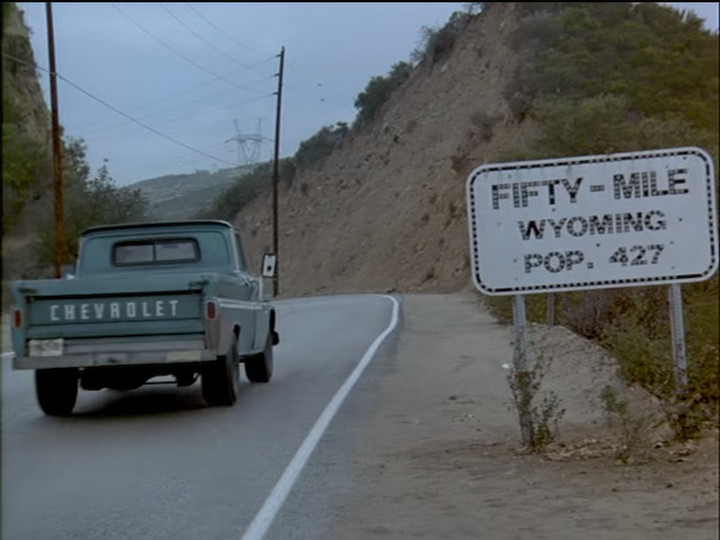


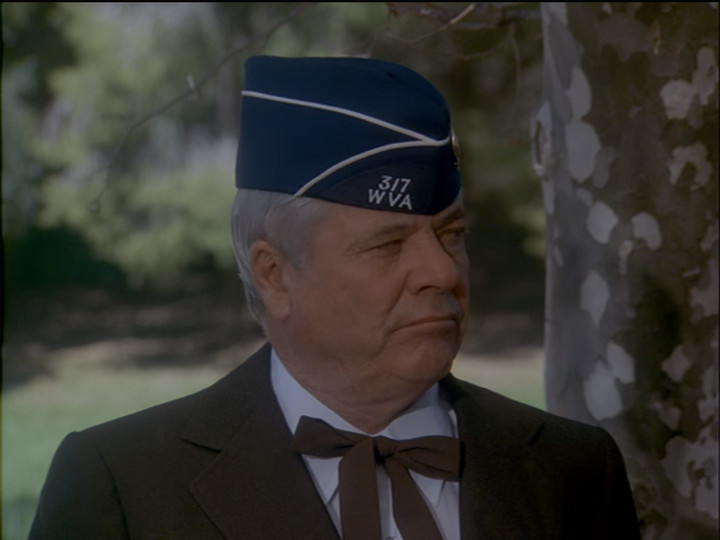


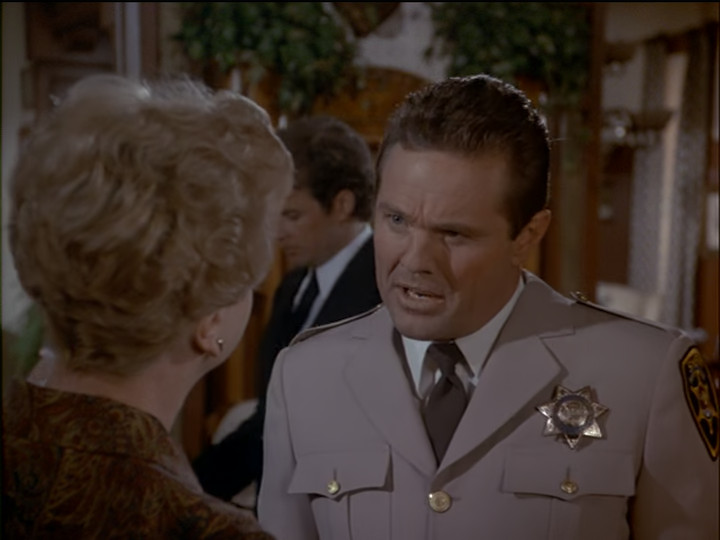


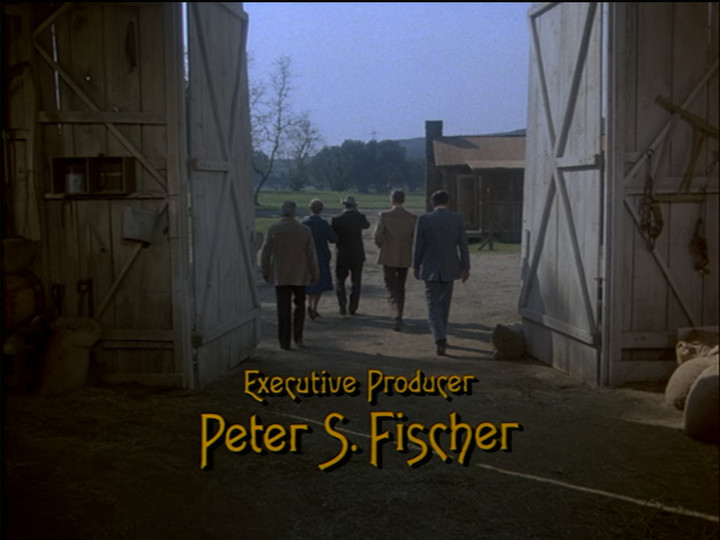

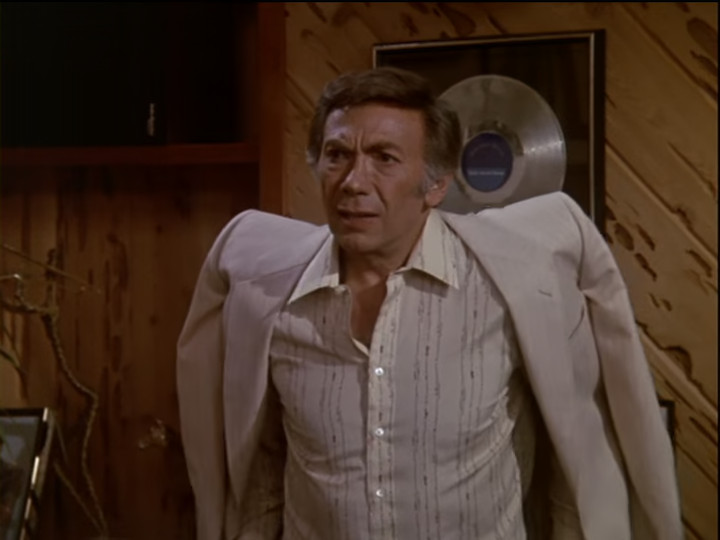

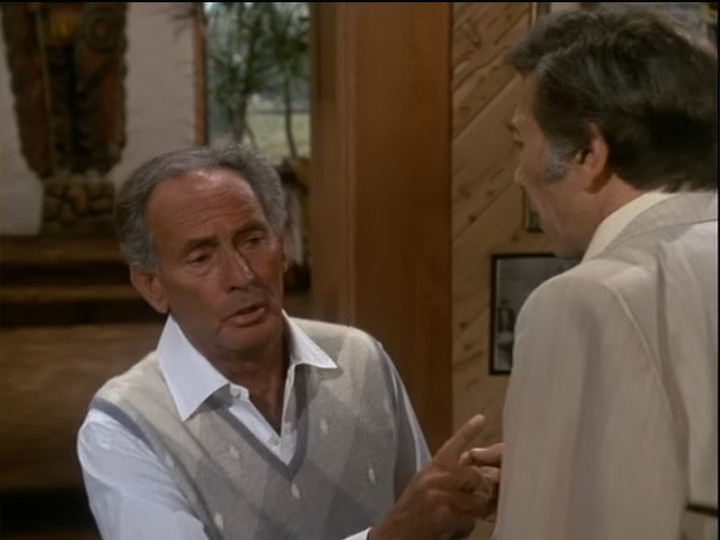



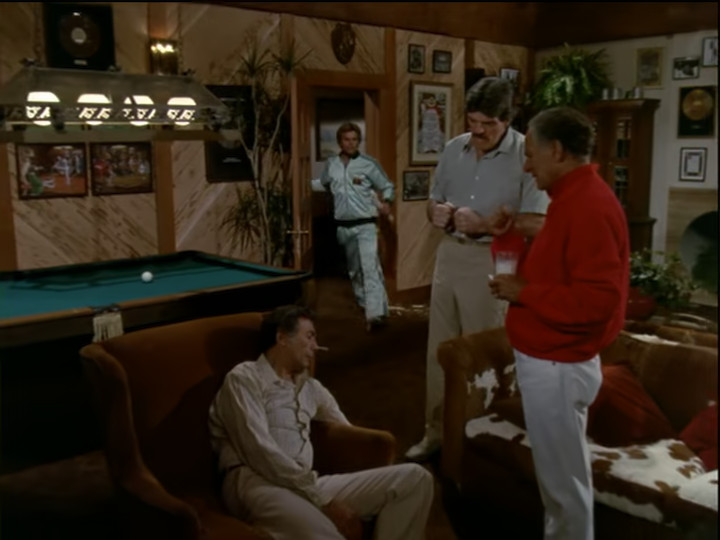
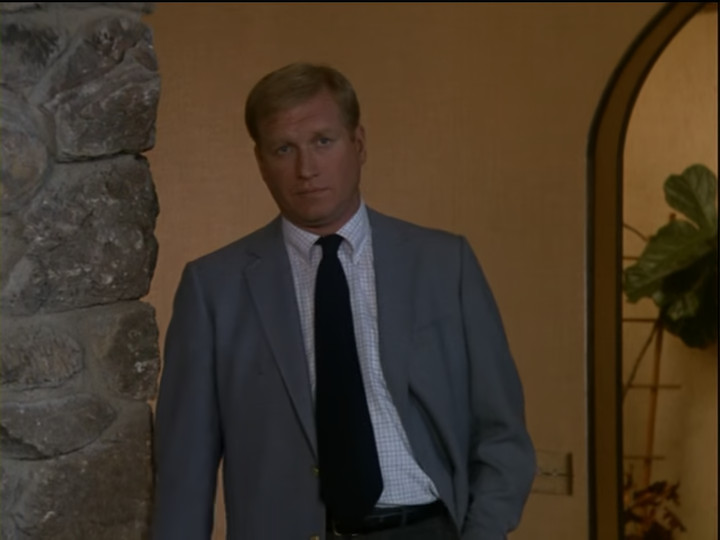

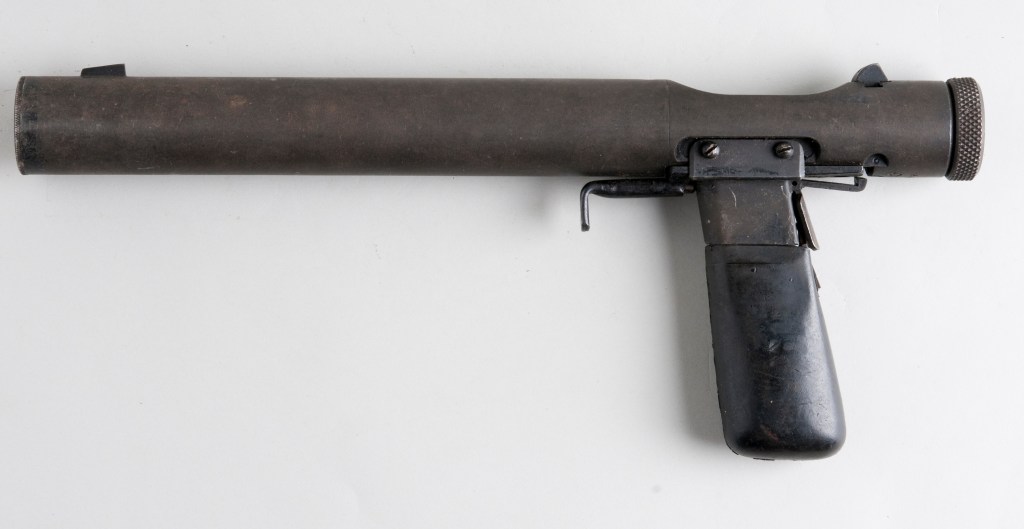


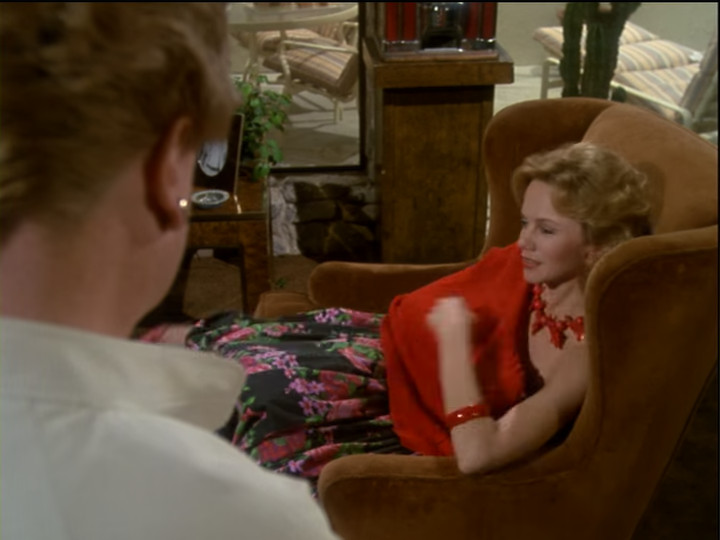


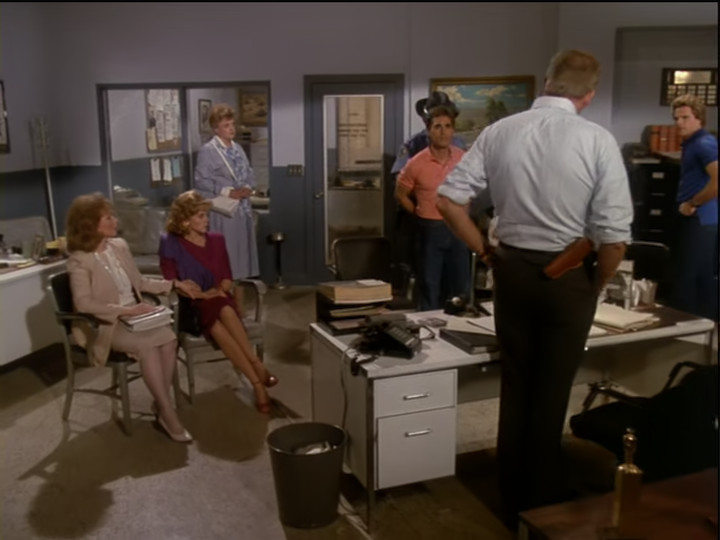
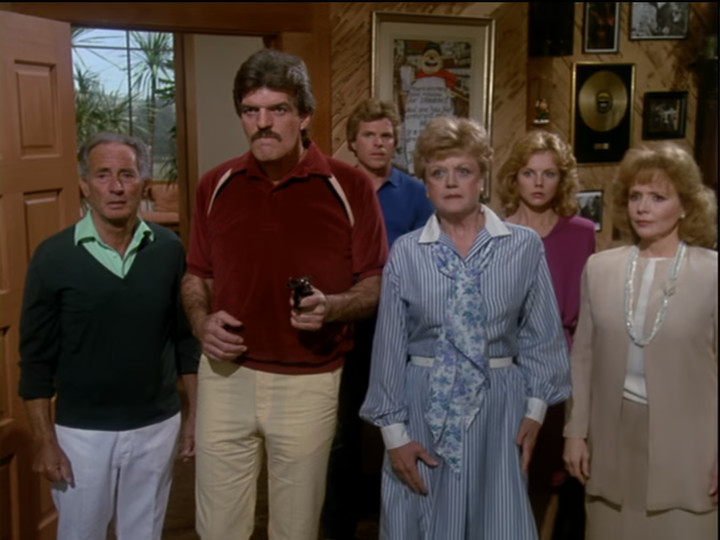
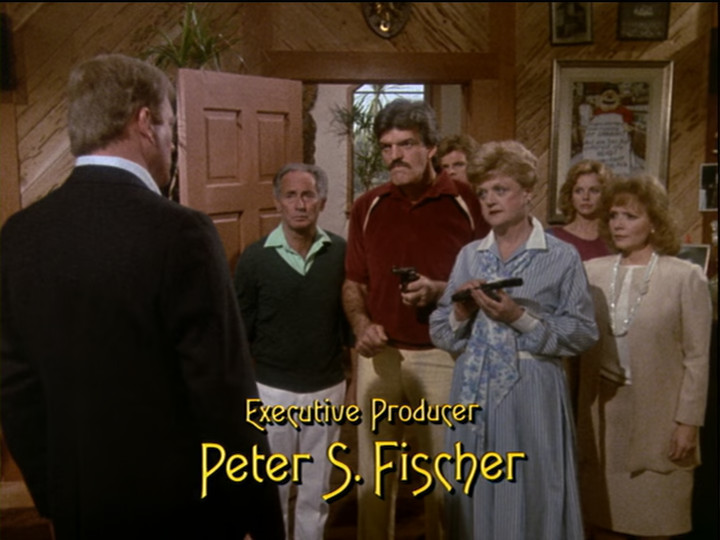

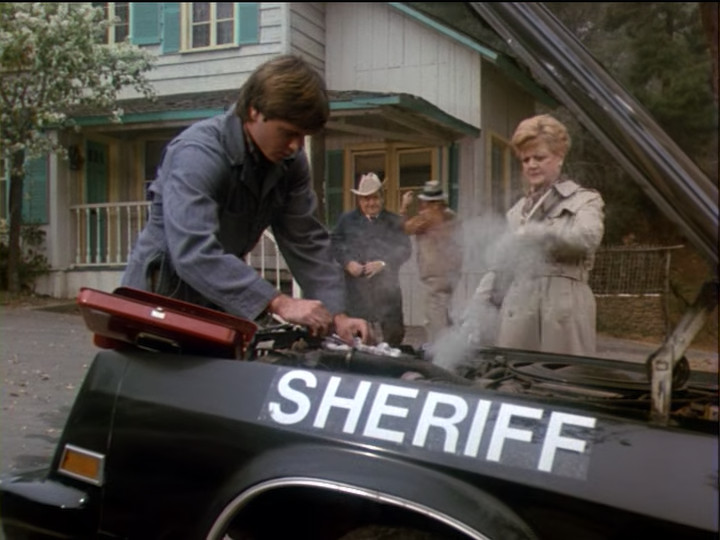
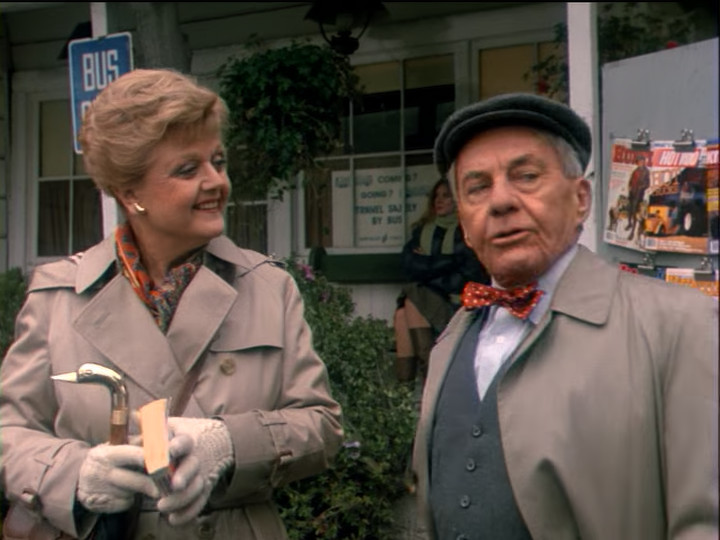







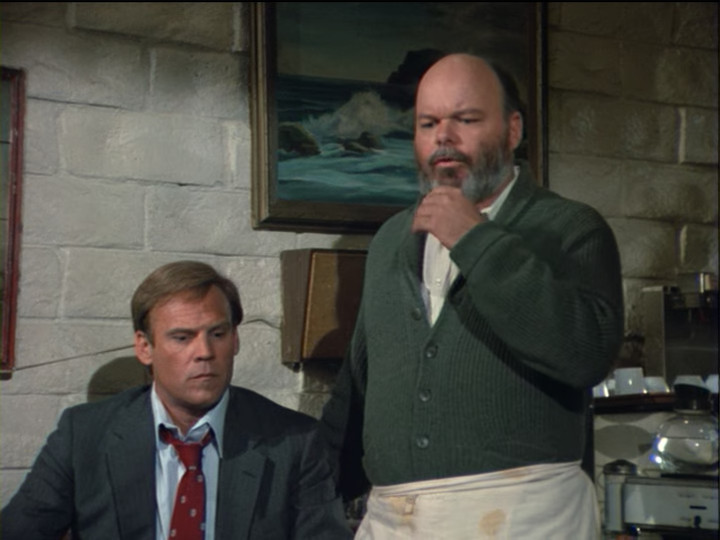
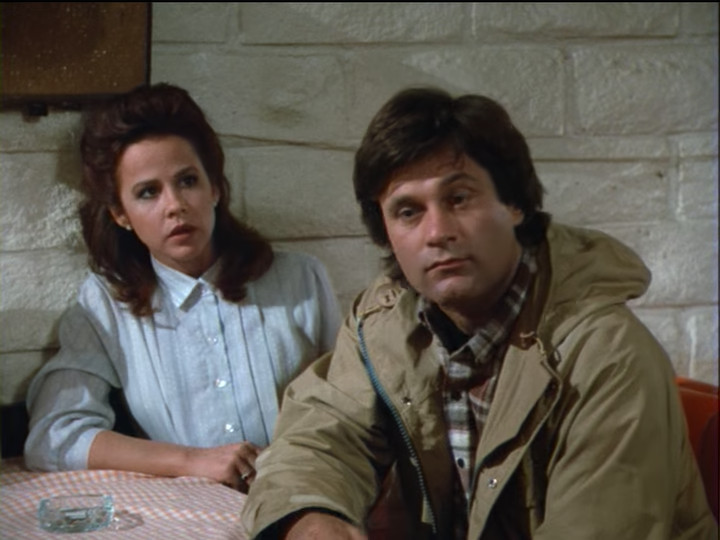

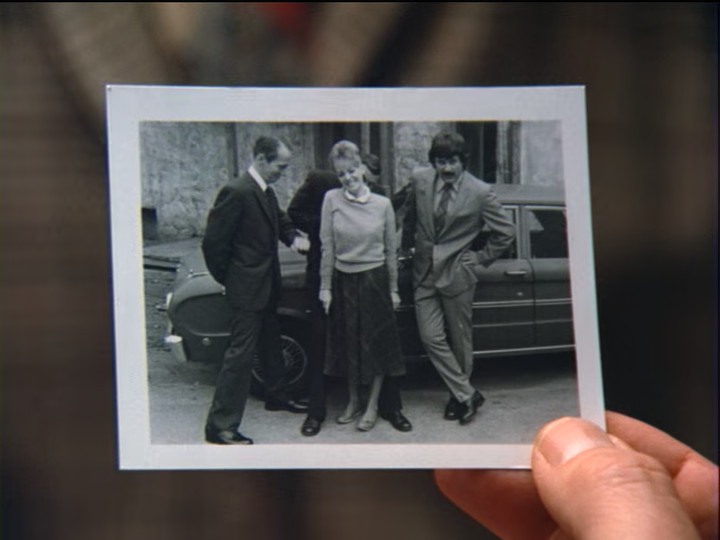
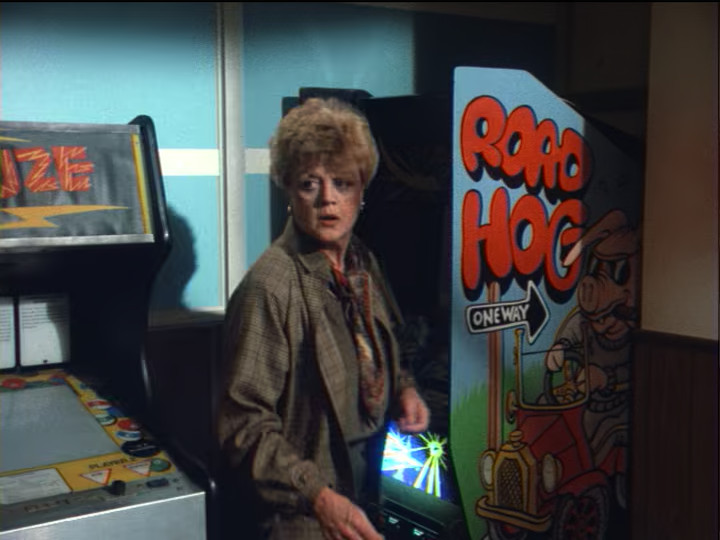
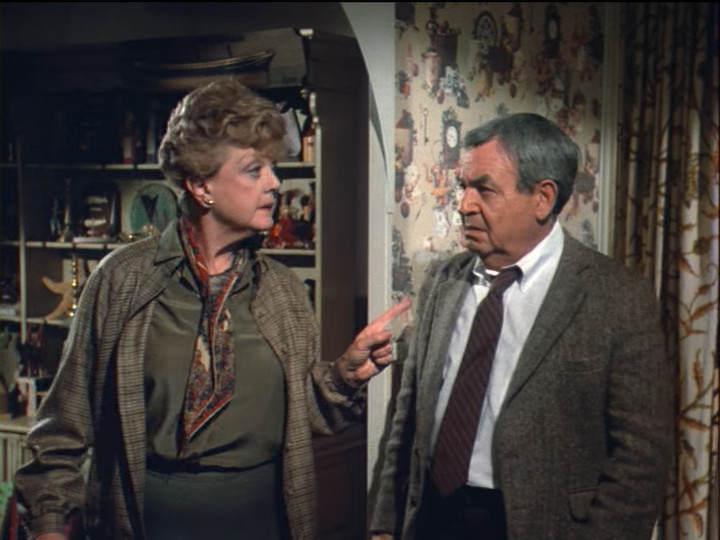
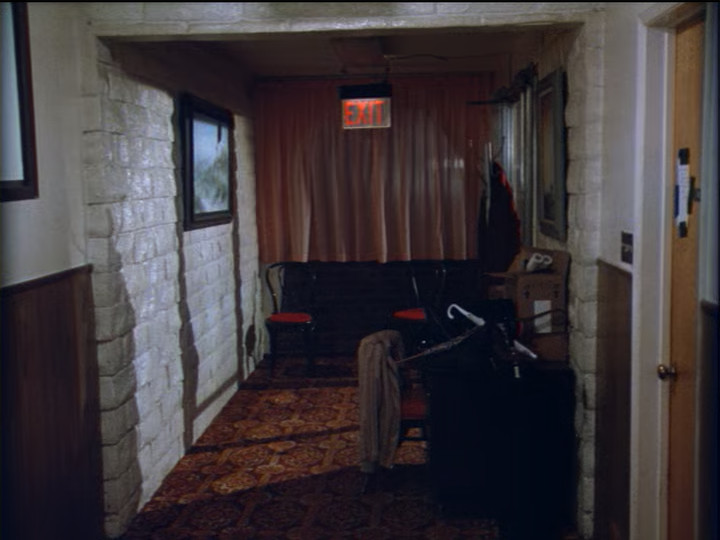
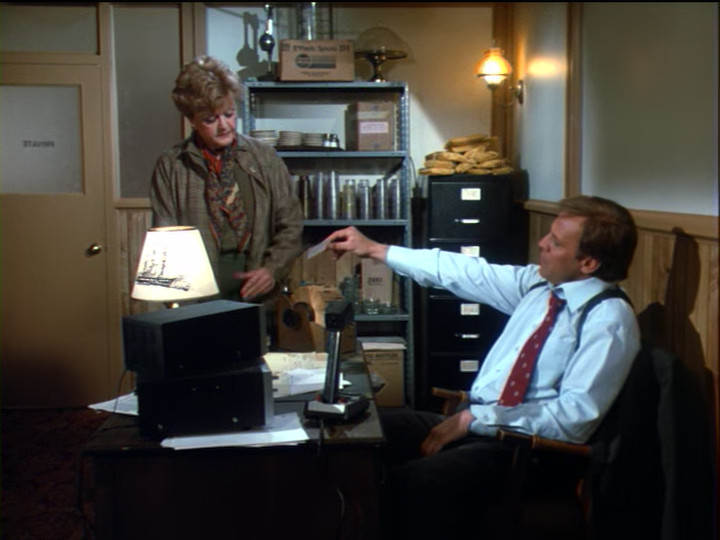


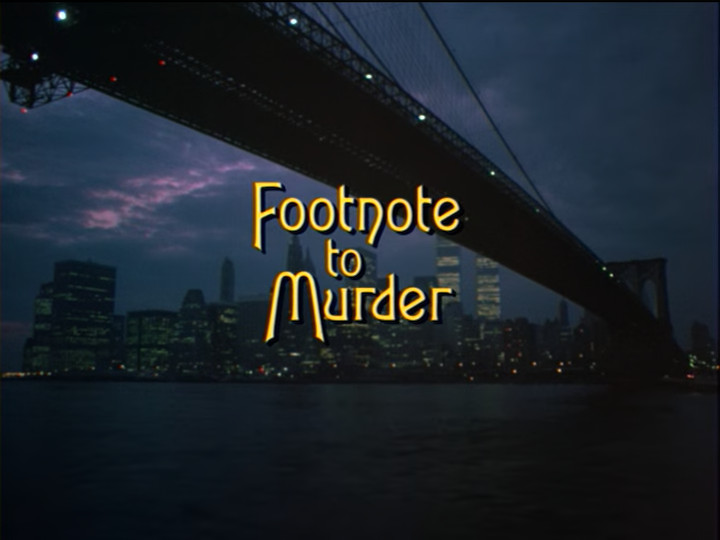

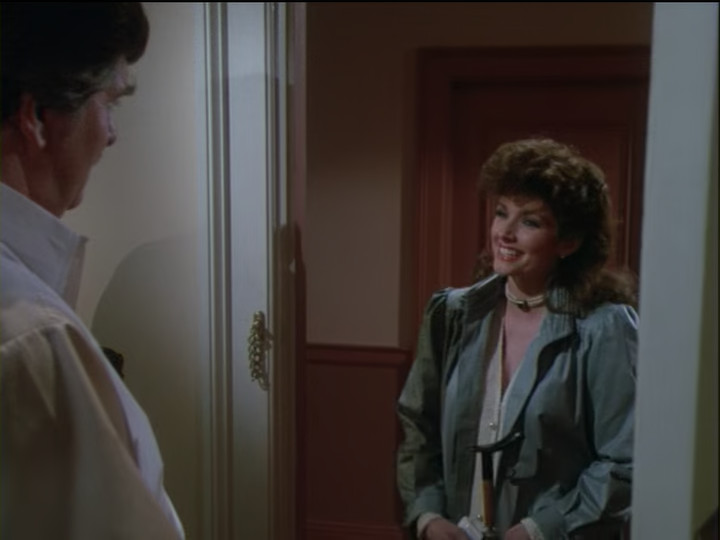


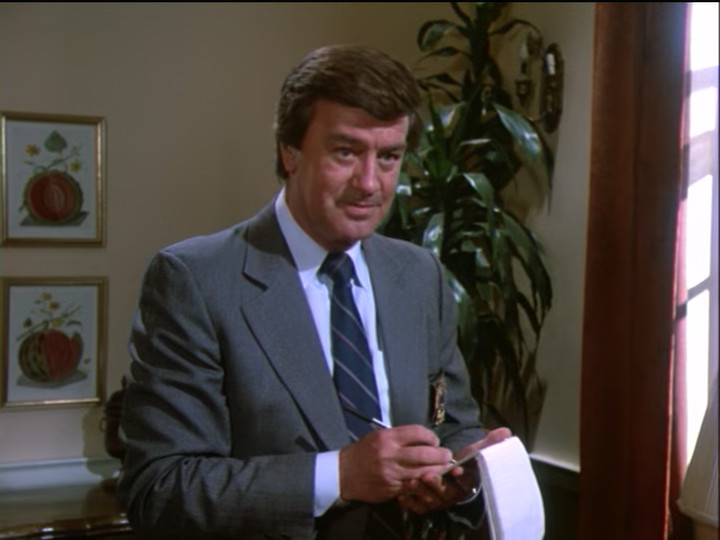



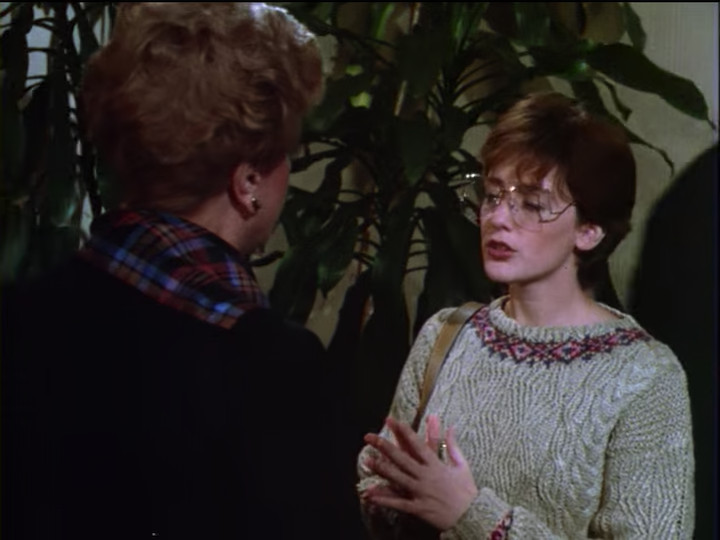

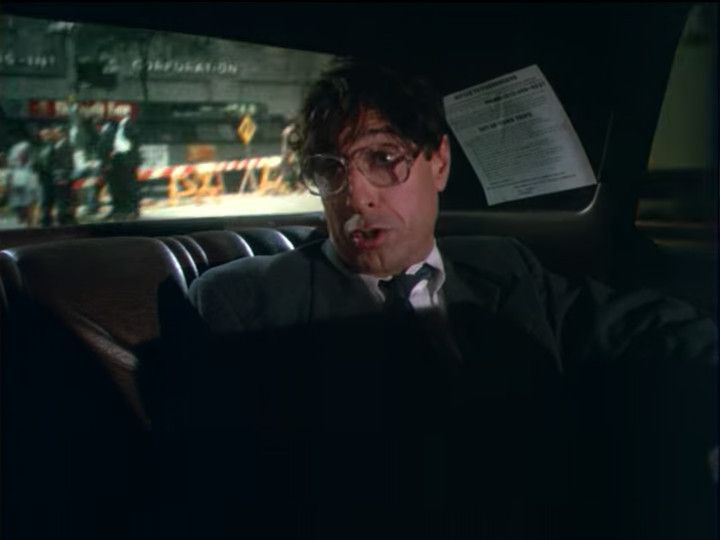

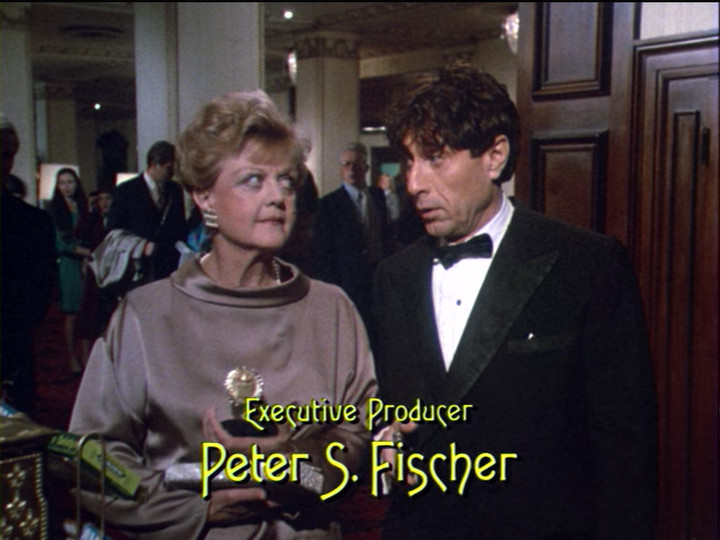
 Chris Lansdown
You must be logged in to post a comment.