G.K. Chesterton on International Differences in Humor

In order fully to understand this, it is necessary to realise, genuinely and thoroughly, that there is such a thing as an international difference in humour. If we take the crudest joke in the world—the joke, let us say, of a man sitting down on his hat—we shall yet find that all the nations would differ in their way of treating it humourously, and that if American humour treated it at all, it would be in a purely American manner. For example, there was a case of an orator in the House of Commons, who, after denouncing all the public abuses he could think of, did sit down on his hat. An Irishman immediately rose, full of the whole wealth of Irish humour, and said, “Should I be in order, Sir, in congratulating the honourable gentleman on the fact that when he sat down on his hat his head was not in it?” Here is a glorious example of Irish humour—the bull not unconscious, not entirely conscious, but rather an idea so absurd that even the utterer of it can hardly realise how abysmally absurd it is. But every other nation would have treated the idea in a manner slightly different. The Frenchman’s humour would have been logical: he would have said, “The orator denounces modern abuses and destroys to himself the top-hat: behold a good example!” What the Scotchman’s humour would have said I am not so certain, but it would probably have dealt with the serious advisability of making such speeches on top of someone else’s hat. But American humour on such a general theme would be the humour of exaggeration. The American humourist would say that the English politicians so often sat down on their hats that the noise of the House of Commons was one crackle of silk. He would say that when an important orator rose to speak in the House of Commons, long rows of hatters waited outside the House with note-books to take down orders from the participants in the debate. He would say that the whole hat trade of London was disorganised by the news that a clever remark had been made by a young M. P. on the subject of the imports of Jamaica. In short, American humour, neither unfathomably absurd like the Irish, nor transfiguringly lucid and appropriate like the French, nor sharp and sensible and full of realities of life like the Scotch, is simply the humour of imagination. It consists in piling towers on towers and mountains on mountains; of heaping a joke up to the stars and extending it to the end of the world.

This is from Chesterton’s essay on Bret Harte, in Varied Types.

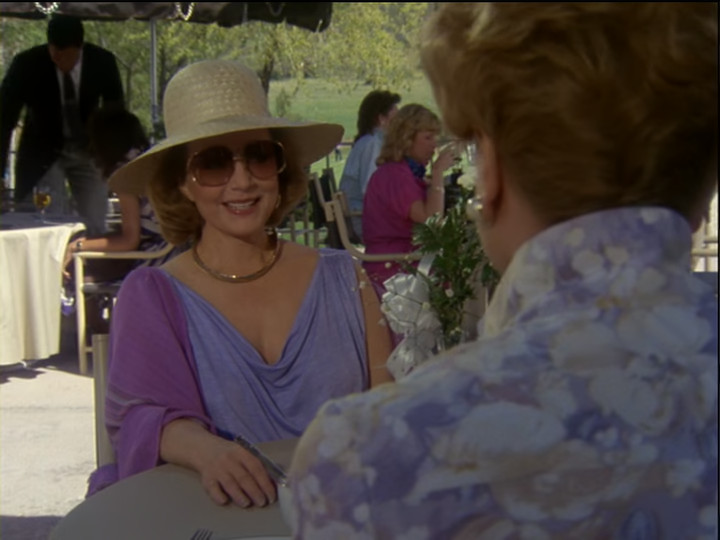
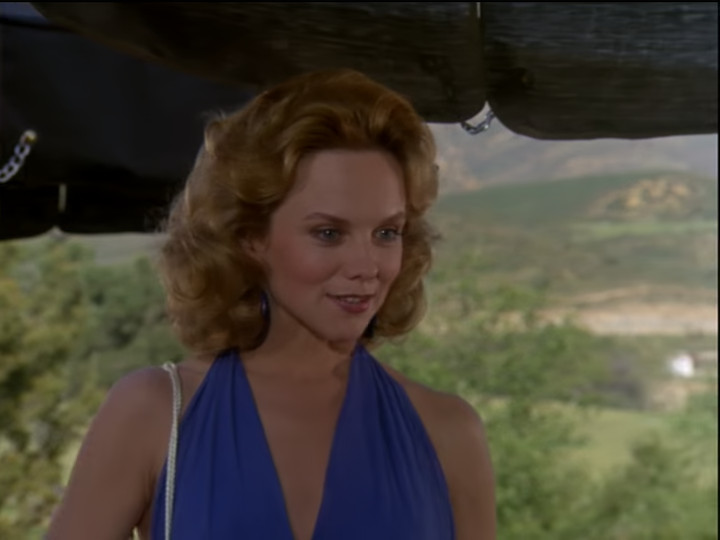
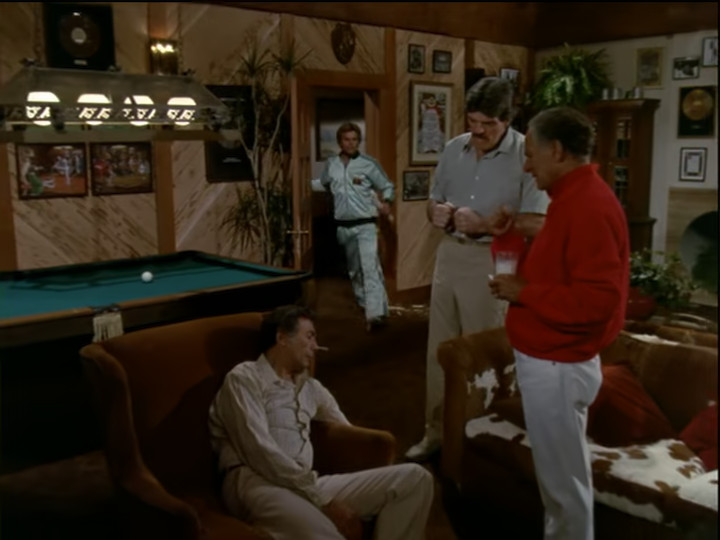
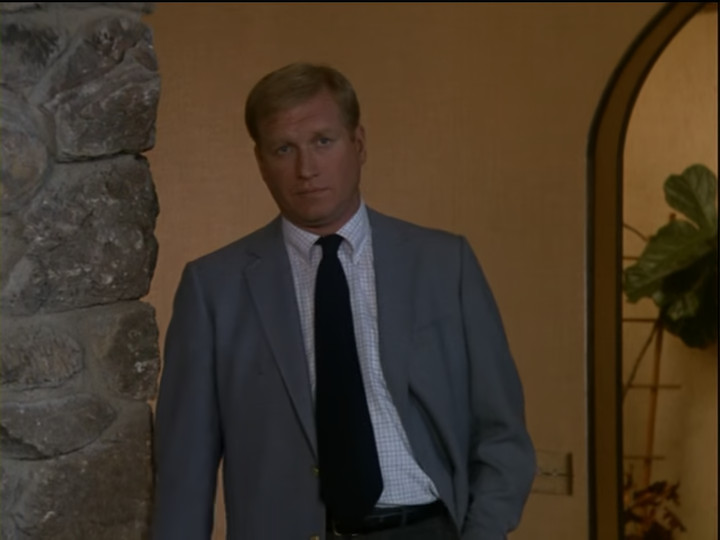
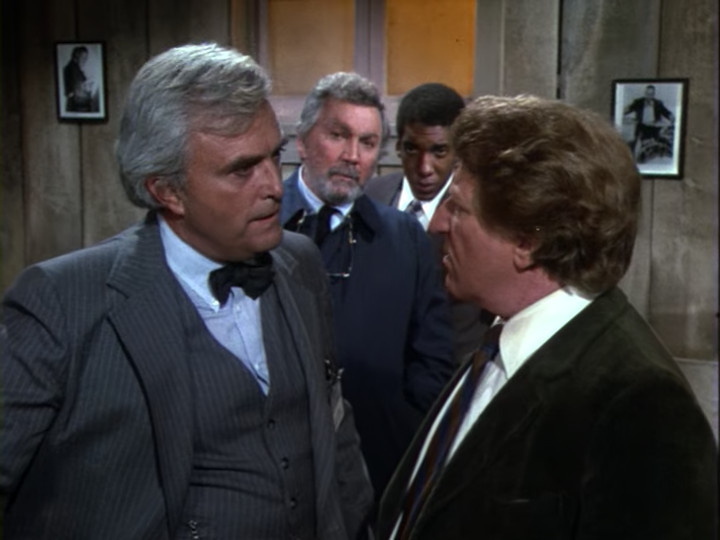
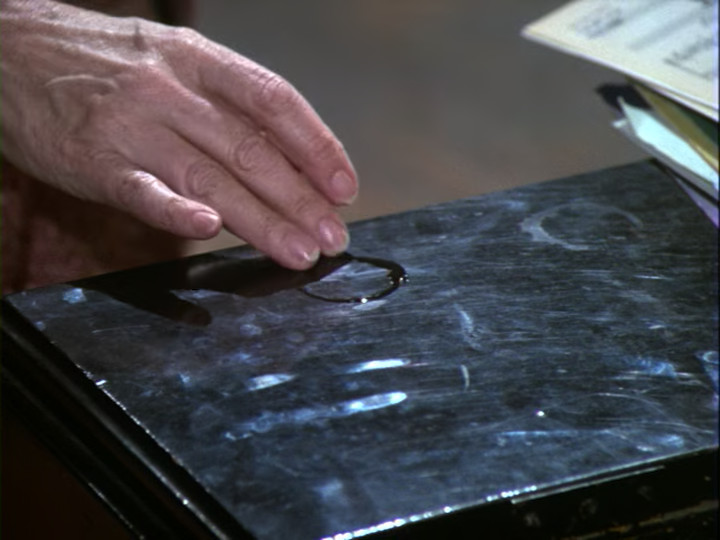
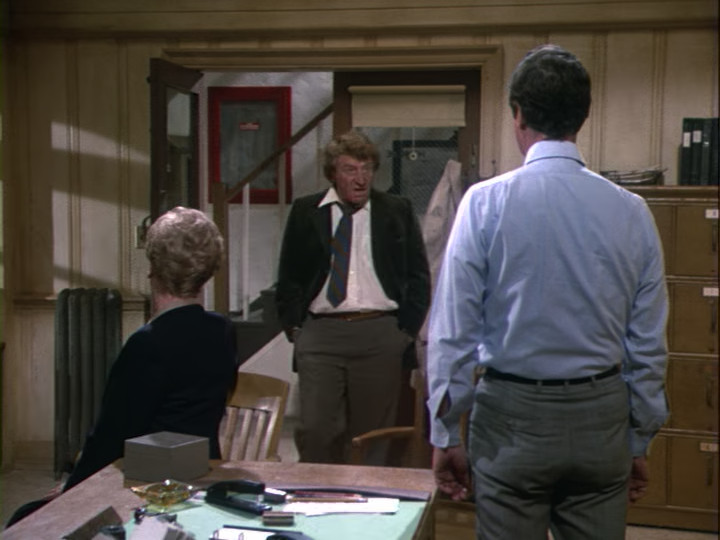
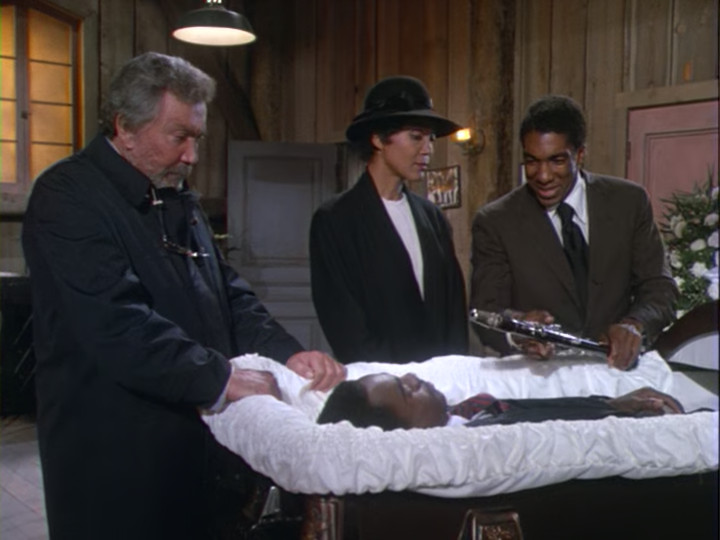
Murder She Wrote: Joshua Peabody Died Here… Possibly

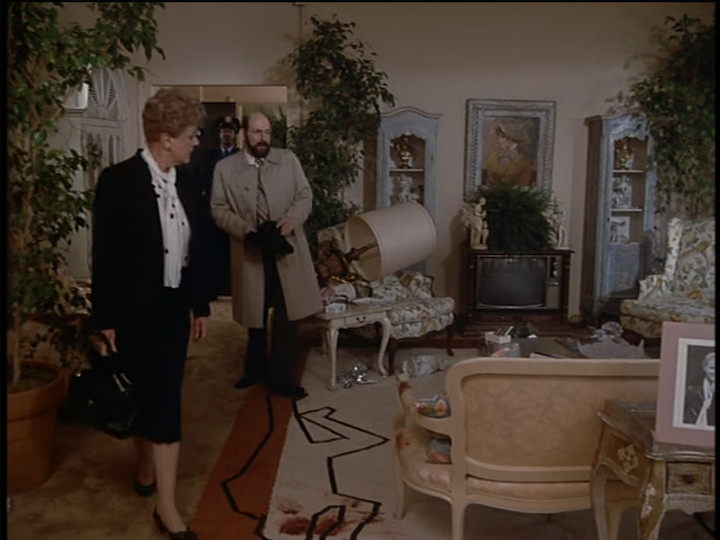
On the sixth day of October in the year of our Lord 1985, the second episode of the second season of Murder, She Wrote aired. Titled Joshua Peabody Died Here… Possibly, it is set in Cabot Cove. (Last week’s episode was Widow, Weep For Me.)

The scene opens on a construction site:

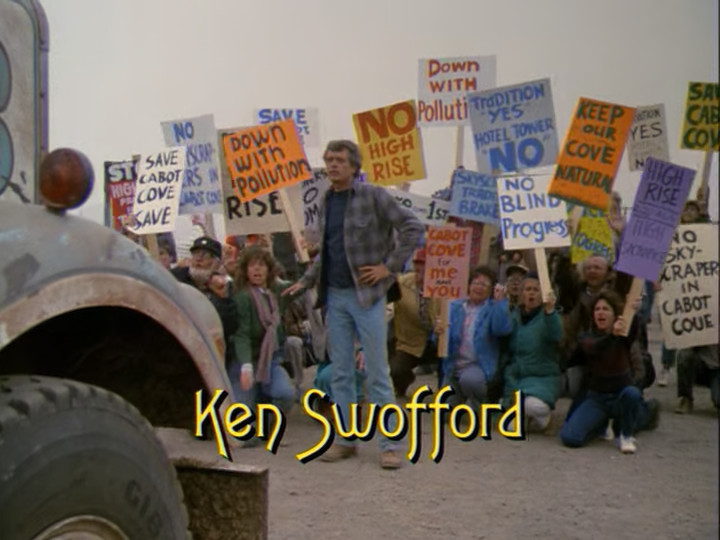
But all is not well here, as there’s a great deal of noise from the many people who are protesting it. After some general milling about and shouting, we meet one of the characters who is organizing the protest:

His name is David. We see him here leading everyone to sit down in front of the truck driving into the construction site.

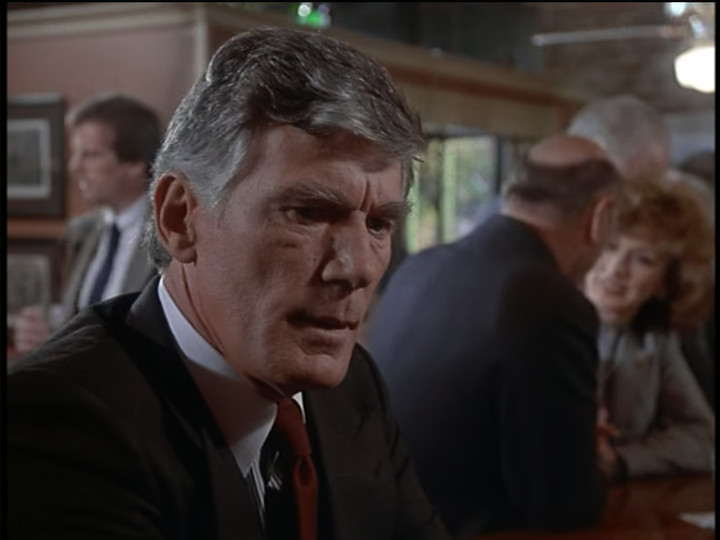
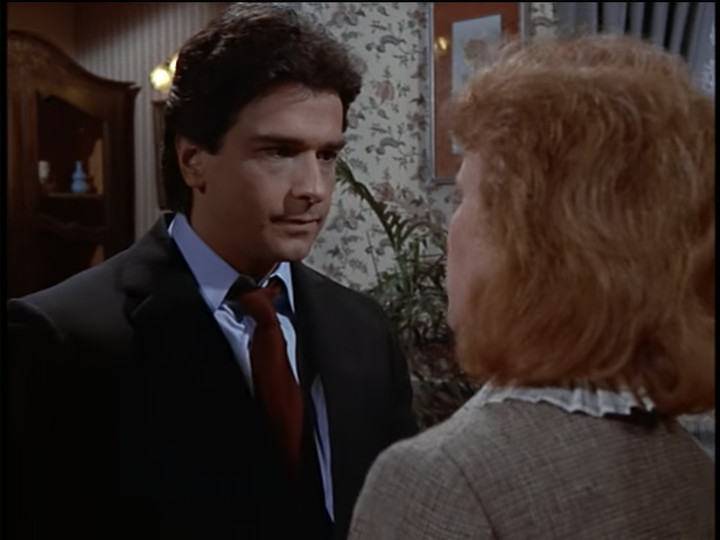
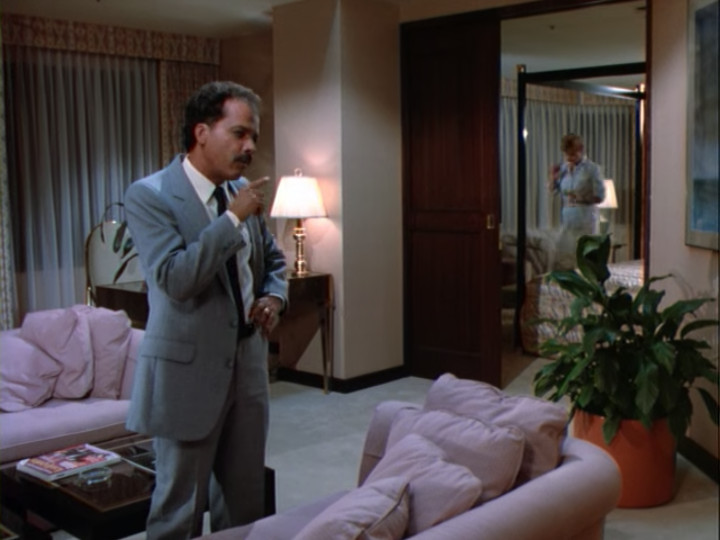
We also meet Kowalski, who is in charge of the construction, and Harry Pierce, who is a real estate agent but is generally involved in promoting the sale and development of real estate as the plot of an episode may require and is an agent of the developer in some vague, unspecified way.

Harry Pierce is played by John Astin, by the way, who is best known for playing Gomez Adams on the TV show The Addams Family. (The Addams Family ran from 1964-1966, so by the time of this episode it had been almost twenty years since Astin had played the character.)

Harry goes over and talks to David. We establish that Harry thinks that this will be great for Cabot Cove because of all of the tourists it will bring in, though not why on earth he thinks that a twenty story luxury hotel will bring tourists in. Hotels are not usually destinations in themselves and Cabot Cove hardly seems like the kind of place to bring in more guests then residents given how little there is to do here.

David claims that Harry snuck the hotel by the zoning board when half the members were out of town. Harry takes exception to this, pointing out that they had a qorum. Which is a pretty reasonable point—quorums exist for a reason.

Sheriff Amos Tupper then arrives to deal with the uproar.

There isn’t time for a discussion, though, before somebody calls out, “Hey look! Down there!” and everyone runs to look down there.

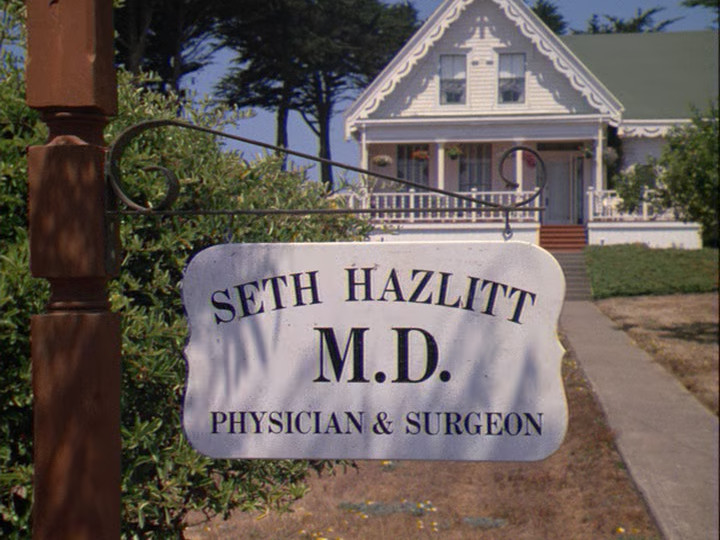
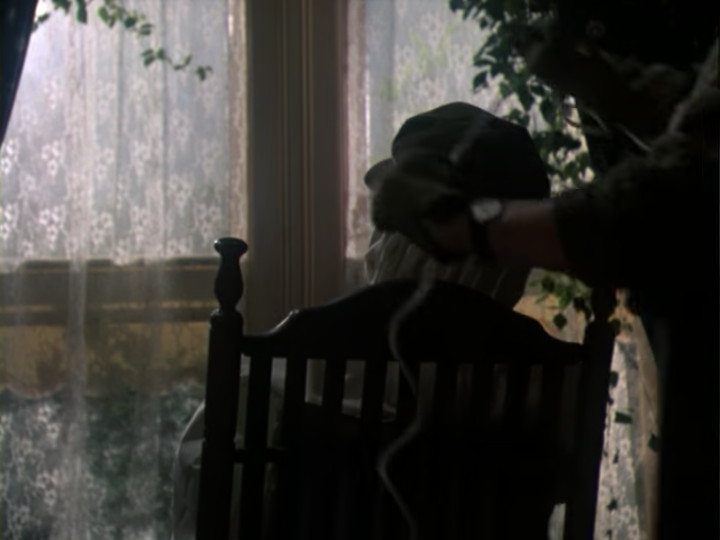
Presumably it wasn’t the camera that they were looking at, but we don’t find out because the scene then shifts to Seth’s house:

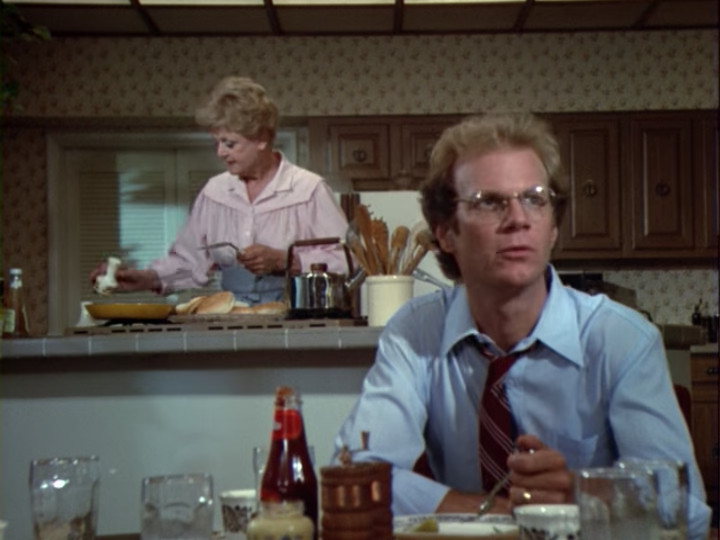
I love the “& Surgeon” as if you might be walking along the road needing an organ removed but not know where to go.

Seth replaces Captain Ethan Cragg as Jessica’s close friend for Cabot Cove episodes. Supposedly this was due in part to Angela Lansbury pushing for it because she didn’t think Jessica had anything in common with the uneducated and taciturn fisherman who often took care of her plumbing, but the town doctor does make a certain amount more sense than a fishing captain since the doctor can be called in to check out the episode’s corpse and thus is a natural part of the episode rather than a fifth wheel merely there for comic relief.

Anyway, we’re introduced to their relationship by Jessica being there looking like she’s a patient:

But despite her back pain, she’s actually here for sympathy because she’s having trouble with her book.

Arthur is trapped in the belfry. His brother Charles is on his way to the minister. Alice is in the shower. And the killer is climbing up the stairs…

Seth interrupts to ask Jessica, “Exactly how long have you had these symptoms?”

Jessica doesn’t get to respond because Amos barges in and interrupts, saying, “Listen, Seth. If you can tear yourself loose from killing off your patients you gotta get over to Main Street quick, and bring your bag.”

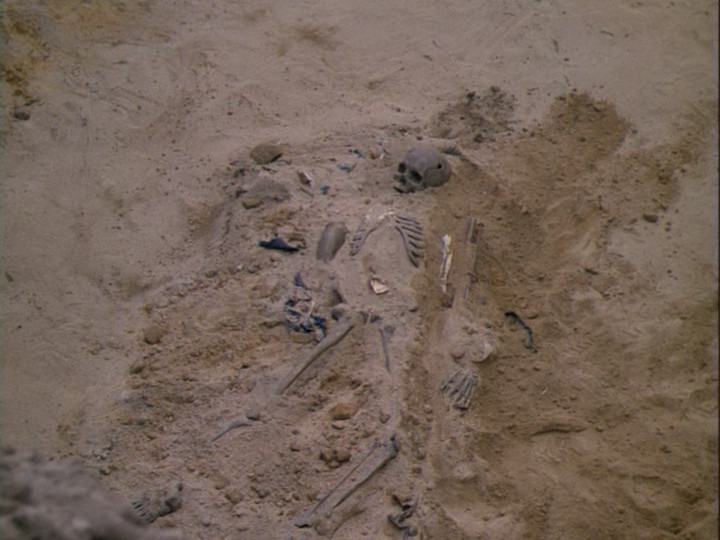
I’m not sure how this construction site, which doesn’t seem to be next to anything, is on “main street,” but in any event Amos drives Seth and Jessica to the construction site, where we finally find out what everyone was looking at in the hole that is, presumably, where the foundation for the hotel will one day be laid, once they dig past the loose dirt and hit rock.

Amos figures that this has to be the remains of Joshua Peabody (Cabot Cove’s most famous revolutionary war hero—though whether he existed at all is the subject of debate, with Amos being strongly on the pro- side while Seth is partisan to the con- side).

When Harry tries to hurry things up, Jessica points out that, while it could be Joshua Peabody, it could also be a murder victim and this the site of a murder. (The skull has a large hole in it.) Amos decides that she’s right as soon as he realizes that this means that he can make the construction crew refrain from disturbing the bones.

David then goes home and we get some family life—his kid got in a fight with another kid in the gym because the other kid was making fun of David. His wife wishes David could have stayed out of these kinds of protests just once. Etc. He then gets a call from Jessica because he’s an antiques dealer. She’s examining a long rifle and reads him the inscription, “Phelps and Handley, Liverpool.” David tells her that it was issued to the British army starting in 1762. (Amos seems to regard this as evidence in favor of his Joshua Peabody theory, though why a revolutionary war soldier would have a rifle used by the British is never considered.)

The scene shifts to the other end of the call, where Jessica, Seth, Amos, and Harry are in Seth’s office as Seth takes measurements of the bones. There’s a bunch of arguing and yelling—I’m not sure why TV writers think that yelling makes for good TV—but the important part is that Jessica suggests that the corpse might be quite a lot more recent than Joshua Peabody. She suggests one of the militiamen from the recreations of the battle of Cabot Cove that used to be held until twelve years ago.

We then get a scene with Harry, Kowalski, and Henderson Wheatley (who is the developer putting up the money for the construction of the hotel). There’s some bickering amongst them which is unpleasant to watch, then finally they’re interrupted.

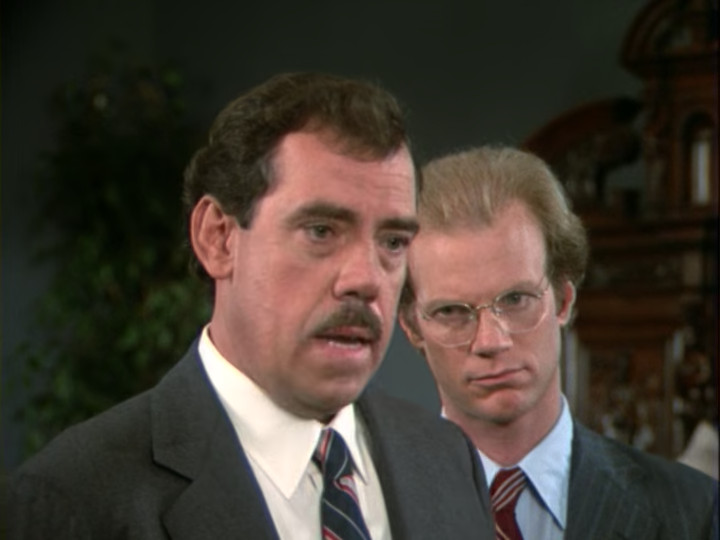
Wheatley is in the center while his laywer is on the left.

It turns out that they’re having this meeting in the hotel lobby, because we meet some more characters (they were the interruption) as they walk in to check into their rooms:

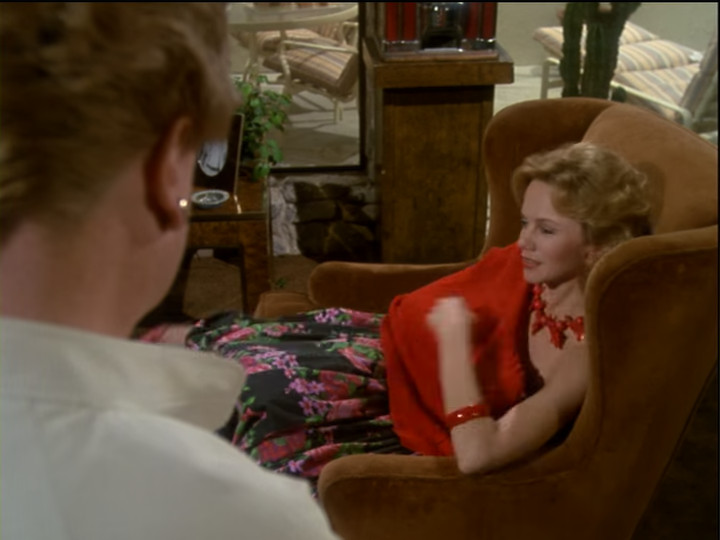
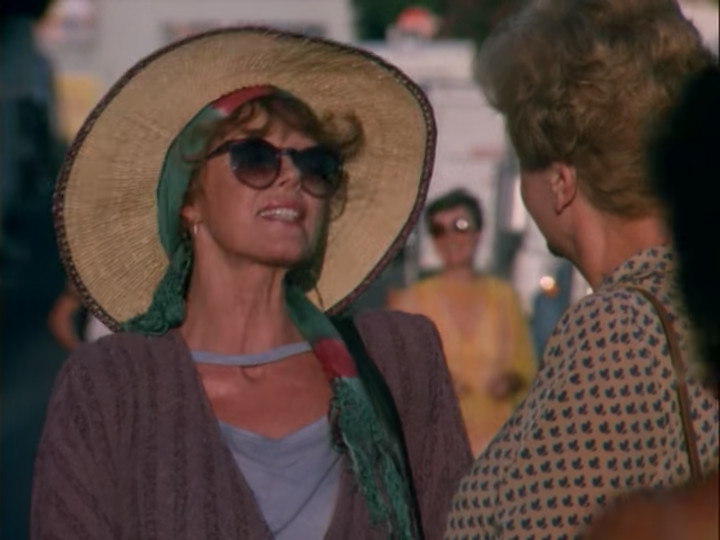
Her name is Del Scott, and she’s some kind of reporter. A hard-boiled one, specifically, who casually insults the subjects of her reporting (she repeatedly calls Wheatley a crook). The two men behind her are nameless and we never see them again.

We then get a scene of Wheatley, outside, ordering his lawyer around a bit, culminating in telling him to, by noon, get a court order to resume work immediately.

And on that bombshell, we go to commercial. Had you been watching back in 1985, you might have seen a commercial like this:

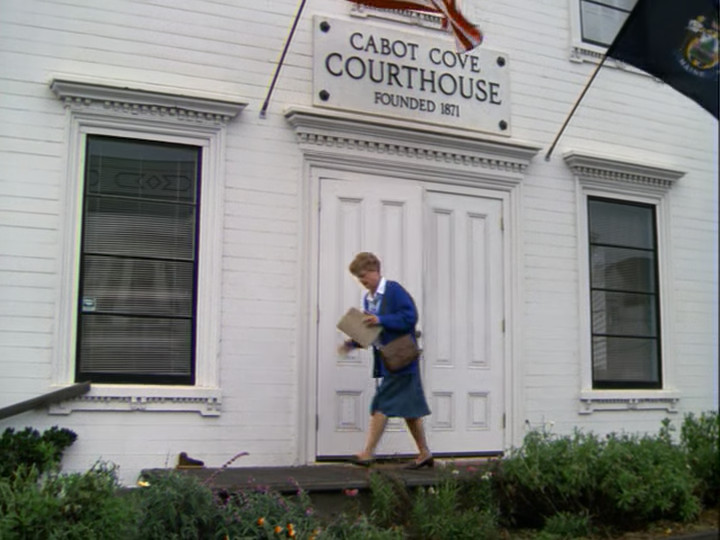
When we come back, we see Jessica coming out of the Cabot Cove courthouse for some reason.

As she leaves, Del Scott stops her on the street and asks her opinion, as Cabot Cove’s most famous citizen, on Henderson Wheatley’s latest construction project. Jessica replies that she’s famous for her books, not for her opinions and, in any event, this is a town matter, not one of national interest.

As they walk, Del tells Jessica about how she’s hated Wheatley for his sub-standard construction ever since she was covering the weather in Pittsburgh (that seems like the kind of detail that often comes up later—especially because as someone covering the weather in Pittsburgh she’d only have reason to hate Wheatley if a relative was killed in one of his buildings or something like that). Jessica suggests Del talk to someone like David Marsh, who would be far more eloquent on the subject than Jessica. She already tried, though, and Marsh declined. He even requested that they not film him at the construction site, though his request was too late. (This suggests that Marsh doesn’t want to be seen on national TV, perhaps because he’s a wanted fugitive who’s living under a false identity. Alternatively, that he’s someone in the witness protection program.)

The scene then shifts to a couple of hayseeds who are telling Amos that the bones don’t belong to Joshua Peabody, but to Uriah Pickett.

When Amos asks who they’re talking about, the man says that Uriah was a farmer from over “at the Blue Hill.” He disappeared fourteen years ago come April, same time as the fighting, as she recalls. Amos then replies that Uriah didn’t disappear, he ran away to Portland with a red-haired manicurist who used to work for Thelma Hatcher. (How he knows this so clearly when a moment ago he didn’t know who Uriah was, he does not say.)

This meeting is then interrupted by Ellsworth Buffum from Kennebunkport.

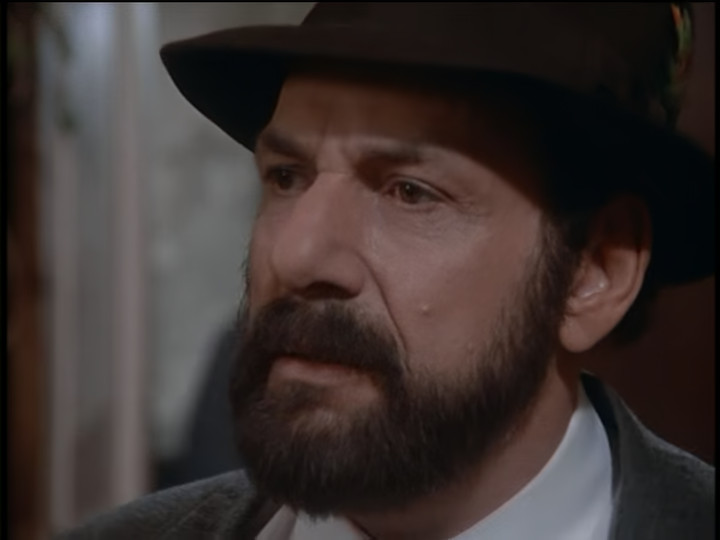
He’s the vice-president of the Joshua Peabody Society. He’s hear to take charge of the last remains of Joshua Peabody.

Amos is interrupted before he can respond by an important phone call and has to leave in a hurry.

The emergency turns out to be fighting down on the construction site. Or, rather, protesters standing in the way of heavy equipment and people shouting at each other. When Amos arrives the lawyer hands him the court order that construction should resume immediately. Ellseworth Buffum then calls attention to an injunction which he has from another court stopping all work until a historical examination is completed.

Later, at dinner in Jessica’s house, Seth and Jessica discuss the dinner Seth made (Jessica says it has too much basil while Seth says that there’s no basil in it) and also the corkscrew Jessica has, which Seth dislikes and Jessica says works perfectly well if you know how to use it. Also, Jessica couldn’t find anything in historical records to prove that Joshua Peabody actually existed and Seth says that the skeleton was of a man with a bad back—a problem with his fourth and fifth vertebrae.

Also, David Marsh gave Seth a scrap that was pried loose from what was left of the guy’s uniform:

The idea that something this old and buried for hundreds of years would be just kept in someone’s pocket and handed around like this is absurd, but I suppose we can take this to just be the prop department saving on making some kind of realistic case for it. And, of course, what possible full sheet of paper could this have been a scrap of?

When Seth presents Jessica with a seven-layer cake that they’re going to have for desert, Jessica then gets the inspiration to dig underneath where the skeleton was found for other artifacts. How no one else came up with this idea, I can’t imagine. But it doesn’t much matter, because the actual reason that Jessica and Amos go to the site of the body is to find the murder that this episode is really about:

And on this bombshell, we fade to black and go to commercial.

When we get back from commercial, Seth is giving Amos the results of examining the fresh corpse. Wheatley probably died between 4am and 5am, having been shot at close range. (Also, it came up before the commercial break, but it started raining at 2am, at which point Amos came over and put the tarp over the place where the skeleton had been found and under which Wheatley had been found, to preserve evidence from the skeleton. They made a point of establishing it, so presumably someone is going to know something they shouldn’t about it.)

Amos also notes that Wheatley’s car is here and Kowalski sleeps in a motor home on the premises, so he’ll need to interview him.

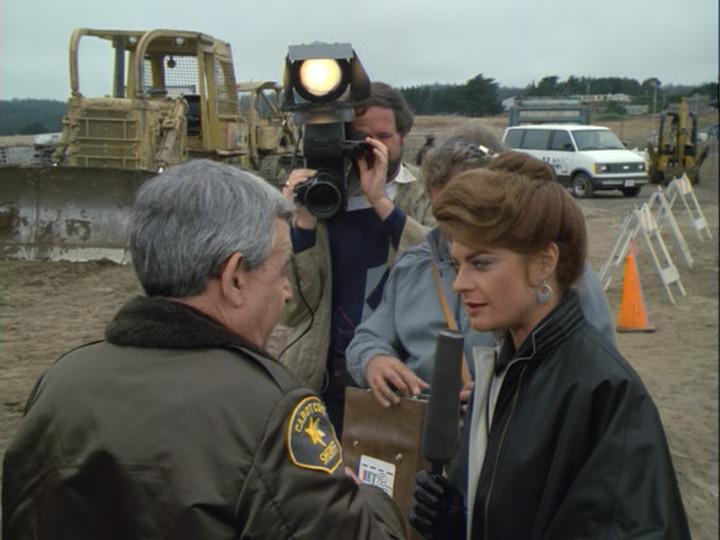
Amos is prevented in finding Kowalski by Del Scott coming up and interviewing him.

I’d ask why on earth this is in the episode except that her first question explains it:

Would you describe your feelings when you removed the tarp and discovered Mr. Wheatley’s body?

Unless she was the one who put Wheatley under the tarp, she’d have had no way of knowing that it had been under a tarp. It was clearly established that the tarp only showed up a few hours prior to the murder and Jessica and Amos thoroughly uncovered the body when they discovered it, long before Del and her film crew showed up.

In the next scene Jessica ovearhears the lawyer and Kowalski arguing in Kowalski’s trailer with the door open. The lawyer shouts:

You knew what was going on here. You knew the whole scam. Now, I’m the attorney on this corporation. You’ll get not one dime from me.

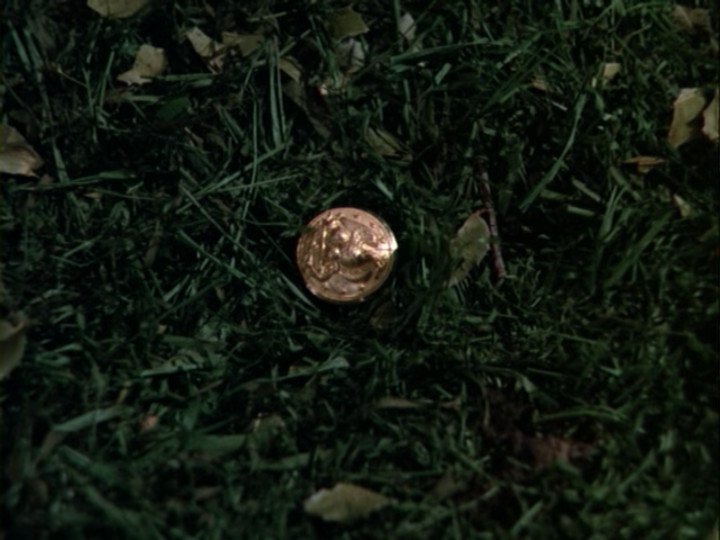
Jessica then discovers Wheatley’s tie clip, close to Kowalski’s trailer. When Amos comes up and asks what she thinks it’s doing here, her guess is that it fell off when Wheatley’s corpse was carried to the excavation. (Jessica thinks he was shot elsewhere and brought to the construction site.)

Later in the day, Jessica goes and examines the construction site and finds that one one the bulldozers has a busted tread, the wheelbarrow next to Kowalski’s trailer has a dirty handle, and Kowalski has a cut on his hand. He then tells her that she’s trespassing and she does an innocent old woman routine, then leaves.

When Jessica gets to town she’s in time to break up some fighting between David Marsh’s son and another kid. Then, as there’s general bickering, FBI Special Agent Fred Keller shows up…

…and arrests David Marsh, noting that his name is actually Daniel Martin. They’ve been after him for seventeen years.

Harry recognizes the name Daniel Martin as a “nutcase Vietnam protester”. Fred explains that, fourteen years ago, Martin bombed a federal courthouse. Amos shows up and tells Agent Keller that David is actually his prisoner, as he’s arresting him for the murder of Henderson Wheatley.

Amos explains his case—he found a note in Wheatley’s office that Wheatley discovered that David had planted the skeleton to slow down construction. David was also seen in the vicinity of the hotel at the same time that the night clerk at the hotel saw Wheatley leave the hotel. He takes David into custody, which Agent Keller isn’t too happy about, but does not stop.

The scene then shifts to Jessica and Seth in Seth’s office when Agent Keller comes in (he had an appointment with Seth). He explains that they didn’t get a chance to fingerprint Daniel Martin, but they were able to obtain his early medical records and he’s hoping that Seth can compare them with his records of David Marsh to make a positive identification. Seth looks at the medical records, but refuses to give Agent Keller a copy of David Marsh’s medical records. Keller is frustrated but assures them that he will get his man, with or without their cooperation.

After he leaves, Seth hints to Jessica that David really is Daniel Martin, and on that bombshell we go to commercial.

When we come back, Jessica is talking with David in jail, where he admits to her that he is Daniel Martin, though he denies being involved in the courthouse bombing. (The day of the courthouse bombing, he was living in Cabot Cove.)

Jessica then goes and finds Kowalski, who has moved his mobile home to a scenic overlook for some reason. Jessica brought him a salve for the cut on his hand and she insists on applying it for him, which for some reason he agrees to.

As they talk, Jessica says that she couldn’t help but notice the shabby state of the construction equipment and that it must have been difficult working for a man with so little regard for his employees.

Kowalski said that it was. Wheatley’s poorly maintained equipment got several friends of his killed. He names two examples: Bobby Scotto in Pittsburgh and Harry Pateki in Detroit (an elevator cable rusted through and dropped him 32 floors).

Of course, it’s hard to not notice that “Scott” and “Scotto” are very similar last names.

Oh, and Wheatley never paid any of the construction workers on this job; unlike before, money now seems to have been in short supply.

Over at the Sheriff’s office, Amos hands Jessica a paper that came over what sounds like a teletype machine and says that Wheatley owed money all over town. Apparently, Amos believes that the lawyer might be responsible, but Jessica doesn’t buy it. Even if the lawyer had a motive, he had no reason to hide the body on the excavation site. Hiding it there felt almost like a symbolic gesture to her.

Amos then reflects on the case and says that it goes to show that if you have something in your past, eventually it will come out. It just doesn’t pay to try and change your name.

At the words, “change your name” Jessica perks up and, presumably, realizes that it might pay to change your name if you’re changing it to sound better as the weather girl on a Pittsburgh TV station. However, Jessica only asks Amos to stop Kowalski from leaving town and to bring him back if he’s already left.

Jessica stops by the library to get some photocopies of news stories (I assume to prove that Daniel Martin alias David Marsh had an alibi for the courthouse bombing). She then calls the hotel and asks for Del Scott’s room. She gets Del and says that she’ll make a statement on Del’s news program. She’ll meet her at the construction site in an hour.

In the interview, she ambushes Del with her relation to Robert Scotto who was killed in Pittsburgh, where Del came from. Del cuts the interview short saying that it has no news value but Jessica keeps going. Jessica phoned the Pittsburgh hall of records and Robert Scotto had a younger sister, named Della Scotto. She then tells Del what happened: at 4am she called Wheatley saying that she had evidence that David Marsh had planted the skeleton. When he let her into his room so she could show him the evidence, she shot him. (How the hotel clerk saw Wheatley leave at 4am if Del killed him in his room, Jessica doesn’t say.)

Del breaks down and says that it is true that her brother died because Wheatley was too cheap to keep his crane in good repair. It broke and dropped four tons of I-beams on her brother. She admits hating him but denies having killed him. Jessica, however, insists that she did. And that after she killed him she put him in the construction site because it seemed symbolic—a grave that he dug for himself.

When the subject of evidence comes up, Jessica points out that Del knew about the tarp despite it being placed on the grave site at 2am and having been removed before her crew got there.

Del then, through tears, says that she tried for years to prove Wheatley’s guilt honestly but every time she got close he bribed witnesses and suppliers. He bought off the people he needed to so that she could never get him. She finishes with, “I’m not proud of what I did, Mrs. Fletcher, but don’t ask me to be sorry.”

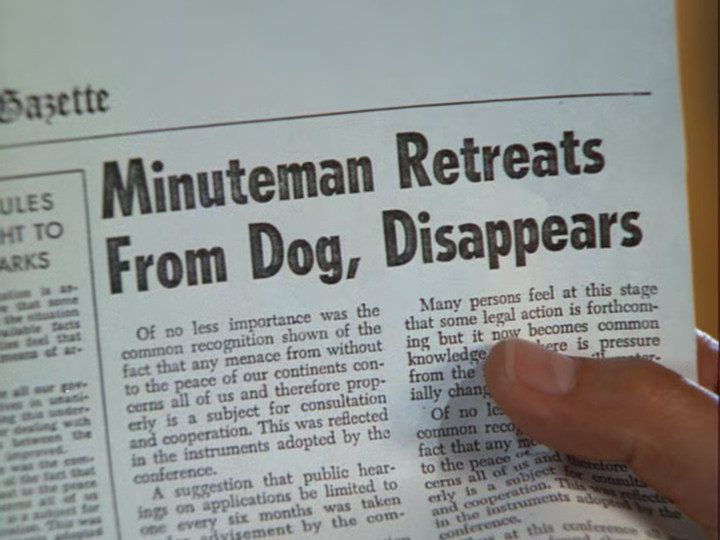
In the next scene Jessica and Seth go to the antique shop, where Agent Keller is arresting the now-free Daniel Martin/David Marsh. Jessica shows Keller a newspaper clipping that places David in Cabot Cove the day before the bombing. Jessica then shows him another clipping about a “Joey Fawcett.”

(It’s interesting that the props people didn’t bother to change the text of the newspaper that they used for this but only made up the headline.)

Jessica says that, clearly, the guy must have fallen and hit his head and died, and at least ten dozen people will swear that Joey Fawcett was actually Daniel Martin.

Agent Keller asks what happened next—the good citizens of Cabot Cove shoveled dirt over him?

Seth replies that there’s no accounting for what folks are here are libel to do.

Seth then hands Keller the fractured femur of the skeleton from the dig and invites Keller to compare it with his x-rays of Daniel Martin. Keller does so and it doesn’t match, which Seth tries to explain as the x-rays of Daniel Martin being from before he was fully grown.

Keller then says:

You know, a man must be very special to have people willing to stand up before an agent of the United States Department of Justice and each of them willing to risk charges of perjury, obstruction of justice and harboring a fugitive. Not many men have friends like that.

He then tells David that he (Keller) was wrong and has been pursuing a dead man, and leaves. Before Keller fully gets into his car, he tells Seth that he might want to brush up on his anatomy. The bone he showed Keller was an arm bone, not a leg bone.

After he drives off, Seth remarks that he didn’t think that Keller was that smart.

Seth then says that one good thing has come of this, though. Now that they’ve proved that the bones belong to Daniel Martin, they can put the Joshua Peabody nonsense to rest.

Jessica tells Seth that’s going too far and they laugh and we go to credits.

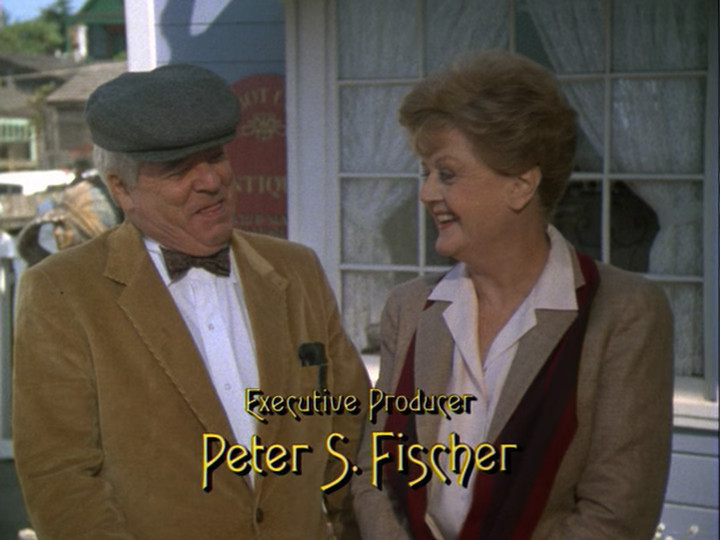
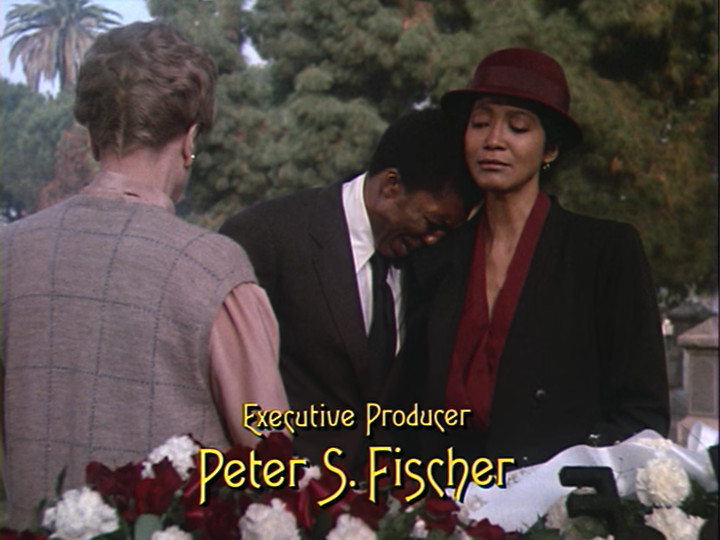
It was definitely good to be back in Cabot Cove again. Even though it’s a minority of episodes, Cabot Cove keeps Murder, She Wrote grounded. And it’s nice to meet Seth. As much as I did like Claude Akins as Captain Ethan Cragg, Seth is better. And as the town doctor he fits better with murder mysteries, too. This is discussed a bit in a New York Times article from October 27, 1985 which gives a bit of insight into this change:

The weekly arguments between Mr. Fischer and Miss Lansbury come because she wants to expand the character. When the series began, Jessica Fletcher was a substitute schoolteacher riding her bicycle in Cabot Cove, Me., who had written one detective novel. Now, as the famous author of a half-dozen best-sellers, ”She must avoid at all costs being sophisticated or jaded or superior,” says Mr. Fischer.

”She must consort with people of a certain intellectual level,” says Miss Lansbury, who fought ”tooth and nail” against Jessica’s relationship with the owner of a Cabot Cove fishing boat who also served as her handyman, a recurring character last season. ”There’s something wrong with Jessica if she enjoys spending more than 15 minutes a week with that man,” says Miss Lansbury.

The character has been dropped and replaced by a doctor (played by William Windom) with whom Jessica plays chess. Miss Lansbury has also ”fought and won a battle” against the network, which wanted to supply her with a sidekick. ”The whole basis of the show is that Jessica is a middle-aged woman alone,” says Miss Lansbury, ”and the network wanted to have a character joined at the hip who drove a car for me.” She has also resisted a serious romance, though, for a while last season, it seemed as though a different murderer was falling in love with her every week. ”I said no to those slight romantic liaisons. It makes her seem as though she has round heels,” says Miss Lansbury, using a British expression that decribes a woman who tumbles quickly into bed.

Seth being a good change is about the only positive thing I can say for this episode. The problem that most galls me is that it had far more loose ends than tied up ends. The biggest loose end, of course, being how on earth the skeleton—whoever it is—became buried under eight feet of ground on a cliff by the shore. The only way for it to have happened would have been for someone to have buried him quite remarkably deep for a grave, because dirt does not accumulate at anything like the rate of four feet per century, to say nothing of half a foot per year if this really was from a reenactor. You can easily tell this by going to a cemetery with two hundred year old tombstones and noting that they’re not buried under six feet of dirt.

And how on earth was this skeleton uncovered in a way that anyone noticed? A large, deep cut like this would be done with earth moving equipment. That doesn’t lend itself to noticing dirt-colored bones, even if by pure luck you happened to excavate right above the skeleton, exposing it, rather than picking it up in the excavator’s scoop.

And then there’s the way that the identity of the skeleton is never decided and, in fact, just dropped. The skeleton is hugely important to the episode; it drives most of what happens. And, after a few initial snippets about a British musket near to it and a scrap of paper that is oddly durable, we get nothing more. Everyone just stops caring about it.

I also don’t know why David Marsh/Daniel Martin is supposed to be a sympathetic character. All we know about him is that he’s against an absurdly large hotel in a place that would have great trouble filling it to a quarter capacity, leads a protest that Jessica is sympathetic to though it’s not clear why she should be, is always causing trouble in Cabot Cove, and fifteen years ago he did a bunch of “nutty” Vietnam war protest stuff. Oh, and his son gets into an awful lot of fights. I’m not seeing what we’re supposed to like about this guy. Are we even sure he didn’t plant the skeleton? He certainly was the person in Cabot Cove with the most access to things that can be planted to lend credibility to the “find” and we’ve established that he isn’t scrupulously honest. (Just as a side note: how would tiny little Cabot Cove support an antiques dealership?)

We also get a villain in the episode with all of the sophistication and nuance of Luten Plunder from Captain Planet. So far as I can tell, Henderson Wheatley cheats because he would rather be corrupt than honest. Are we really to believe that it costs more to settle a worker’s death, repair a broken crane, clean up dropped I-beams, suffer delays during which people get paid but work doesn’t get done, and bribe all manner of people to cover it up than it would be to just repair the crane’s cable before it breaks? People do skimp on necessary maintenance when they’re short of money and, instead of doing the things that will reliably make them more money, hope that things will work out until they have the money to cover the repairs. People don’t skimp on necessary when they’re rich because paying for maintenance is much cheaper than paying for repairs. An ounce of prevention is worth a pound of cure to the rich as well as to the poor. In fact, one of the ironic things about poverty is that it’s more expensive to be poor because the rich can avoid all sorts of major expenses by paying much smaller ones to prevent the big expenses from being necessary. All of which makes the character of Wheatley being so rich he can get away with anything not make any sense in the episode.

Especially because it’s actually a plot point that he isn’t so rich. They very clearly established that money was in short supply on this job. They even went so far as to have the lawyer angrily yell at Kowalski that he (Kowalski) knew what the scam was when he started the job. But once Kowalski shares the useful information of “Robert Scotto” having been killed through Wheatley’s negligence, this is entirely dropped.

Overall, this episode is a mess. We don’t get our body until right before the mid-point commercial break, the victim is a cardboard cutout of evil, the supposedly sympathetic characters aren’t sympathetic, and most of the interesting plot threads are dropped for no reason. Heck, we even get unambiguous evidence of who the killer is less than a minute and thirty seconds (not counting the commercial break) from finding the body, making the rest of the investigation obviously pointless.

Oh well. Next week we’re in New York City for Murder in the Afternoon.

Murder She Wrote: Murder At The Oasis

On the seventh day of April in the year of our Lord 1985, the twentieth episode of Murder, She Wrote aired. Set in the fictional city of Desert Palms, California, it was titled Murder At The Oasis. (Last week’s episode was Armed Response.)

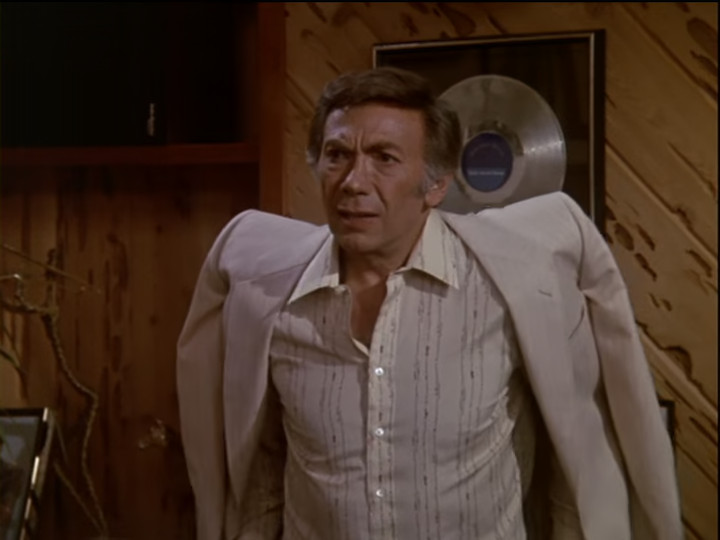
While we hear someone tinkering on a piano we get some establishing shots of a very fancy house with a gate and a security guard house next to the gate on the driveway. Then we then see who is tinkering on the piano and meet one of our main characters:

His name is Johnny Shannon and the various gold records framed on the wall suggest that he is connected to the music business and is quite successful. (Why he’s wearing his coat like a German officer is not explained.)

We also very quickly establish that he’s extremely unlikeable. He calls in his son, Mickey…

…and then berates him for composing such a terrible piece of music. We get the impression that this is a common occurrence because Mickey is only mildly disappointed and calmly tells his father to just play it at the right tempo, which he proceeds to demonstrate.

While Mickey is playing it, Johnny summons his assistant, Buster:

Buster makes Johnny wait a moment, though, so he can tell Mickey that he likes the piece and it’s good work.

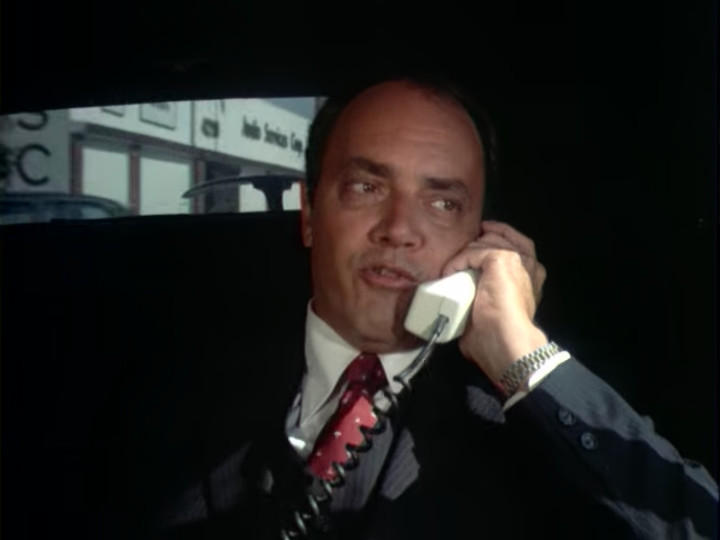
Johnny, disappointed by this reaction, orders his car to be prepared because he has a lunch date at a tennis club. On the way there, they receive a phone call on the car phone from a major mob boss, but Johnny refuses to take the call because he’s now “protected.” He clarifies to Buster that he has “a special kind of insurance,” but then says no more about it.

At the tennis club, we actually see Jessica and her old friend Peggy, who is Johnny’s ex-wife.

From some casual conversation we find out that they’re expecting Johnny to join them for lunch.

Which he eventually does. There’s a bit of small talk where it turns out that she recently leased a house in the area so she could visit her children since they rarely visit her anymore. Mickey is one of those children and then we meet the other: Terry.

Terry then excuses herself because she has to meet a friend and Johnny expresses concern that it’s not “that tennis bum”. Her refusal to respond suggests that it is and this is confirmed by the tennis bum coming up to her table a minute later and kissing her for an extended period of time.

Johnny gets up to intervene and Peggy lays a restraining hand on his arm, saying that Terry is old enough to choose her own friends. Johnny replies that she told him this before and she was wrong, then, too.

His interfering goes about as well as one can expect it to; the tennis bum shoves Johnny and then several people whom Johnny employs comes to his aid, restraining the tennis bum.

Curiously, this is interrupted by a man who introduces himself as Sergeant Barnes of the police and asks what the trouble is. When Johnny tells Barnes that he doesn’t want the tennis bum around his daughter, Barnes replies that he doesn’t work for Johnny. Johnny then replies, “You must be new. Ask around. Somebody’ll set you straight.”

He then escorts Terry home.

With Johnny and his entourage gone, Peggy tells Jessica the backstory: when Terry was seventeen she eloped with a boy that Johnny didn’t like. Johnny sent some men after them who roughed up the boy then gave him a one-way airline ticket out of the country. Johnny had the marriage annulled and Terry never forgave him. She still lives in her father’s house to get back at him—to torment him with behavior like this.

Later that night, at Johnny’s house, Buster brings Johnny a glass of milk only to find the door locked. He knocks loudly, then even louder, but no matter his volume he gets no response. In desperation he calls Lou, Johnny’s bodyguard. Mickey, hearing the commotion, knocks on Terry’s door, finding her with the tennis bum.

Back at the door the bodyguard has arrived and breaks the door down. They go inside and find Johnny, dead.

And on that bombshell we fade to black and go to commercial.

Had you been watching back in 1985, you might have seen an ad like this:

When we come back from commercial, Jessica and Peggy are driving along. After Jessica observes that Peggy is driving too fast, Jessica offers her condolences. Peggy replies that at least Jessica had a happy marriage with Frank; Peggy isn’t even a widow. She apologizes then thanks Jessica for going to the house with her because she can’t face it alone.

The scene then shifts to the men’s locker room at the… I’m not sure what this place is. Perhaps a tennis club? Anyway, she goes into the men’s lockerroom and finds the tennis bum she had been with and tells him that her brother is sure to tell the police that he was in the house the night before. She gives him money and tells him to flee the country if he doesn’t want to be part of a murder investigation. She adds that he should not try to contact her.

When the tennis bum asks, “what about us?” She scoffs and tells him to not be stupid. Now that her father is dead, she doesn’t need to play “let’s pretend” anymore. She adds that the truth is that she doesn’t even like him. (He doesn’t take this well, but nothing comes of it.)

Jessica and Peggy then arrive at the house. Oddly enough, she still goes by “Mrs. Shannon” despite being divorced from Johnny Shannon for years.

Inside the house, Mickey is glad to see his mother. He’s also glad to see Jessica, because they can use a good detective. Jessica objects that her exploits have been greatly exaggerated, but Sergeant Barnes walks into the room and answers her that he’s heard differently.

He’s the new police officer from earlier, and he explains that he’s been assigned to the case because in Desert Palms they don’t have a homicide division. He was on duty when the call came in so it’s his case.

Peggy, Mickey, and Sergeant Barnes press her to help on the case, but Jessica is reluctant. I always find this strange because if the police detective doesn’t want her on the case, she can’t be kept out. I wish that she was a bit more consistent as a character. Anyway, Barnes eventually gets her to help by telling her that she’s covered the subject of murder well in her books, even if she’s not always accurate. This piques Jessica’s interest, and she asks why he says this. When he says that he’ll explain on the way to the crime scene, she accepts. As they walk to the other room, he tells her, “You’re a little shaky on police procedure. And you always make your killers more interesting than your cops. You see, most killers are very dull people.”

They then leave the room and Mickey and Peggy discuss Terry in terms meant to make us suspect her, which, in Murder, She Wrote, means that she’s definitely innocent. It’s more reliable than a solid alibi.

In the room where Johnny was killed, Jessica notes that the door had a spring lock, so the killer must have pulled it shut on the way out.

They discuss the room as characterizing the victim:

Barnes says that Johnny was found in his favorite chair. He was shot in the back of the head and probably didn’t know he was about to be killed. Jessica wonders why he was sitting in a chair opposite to a blank TV when there was a perfectly good couch to sleep on, if that’s all he was doing.

Barnes agrees that this is puzzling. He adds another puzzling thing: no one heard a shot. The walls are thick but if you walk past the room in the hallways with the door closed, you can hear if a piano is being played, so they should have heard a gun, which is much louder than a piano.

Jessica says that she’s never seen a silencer herself, but mystery writers are addicted to them. (I think that this was true only of a certain era; but certainly this was part of that era.) Barnes objects that “mufflers” would be a better name for silencers; you can’t actually silence a gun and there’s always some noise.

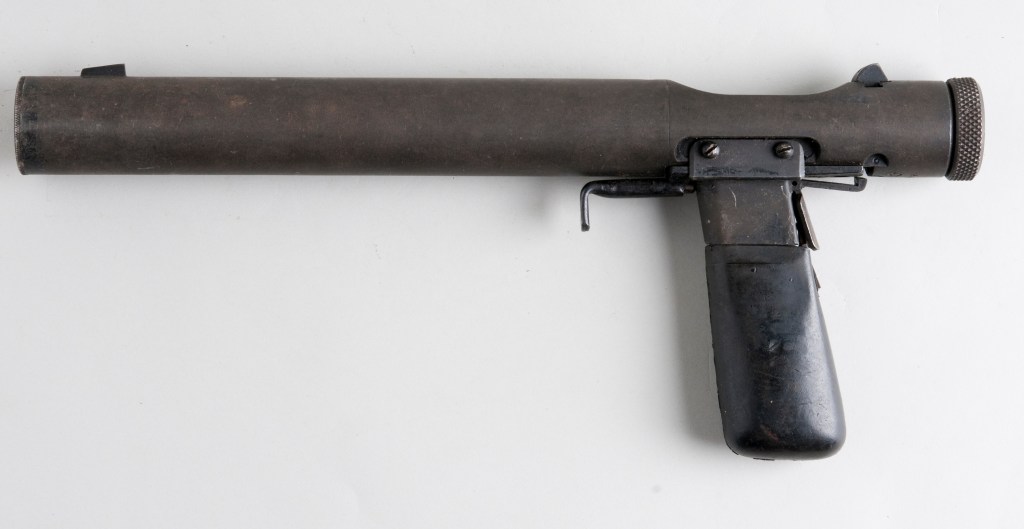
Interestingly, that’s not quite true. The British developed an effectively silent gun called the Welrod.

By Askild Antonsen – Welrod Mk II, CC BY 2.0, https://commons.wikimedia.org/w/index.php?curid=56166106

It uses a series of solid rubber wipes in addition to many baffles in order to suppress the sound down to the point where it’s quieter than people speaking conversationally. The trade off is that you can only fire a dozen or so shots from it before the wipes are too degraded to suppress the sound that effectively. Also, it fires sub-sonic ammunition. This part is critical because it doesn’t matter how well you suppress the explosion which propelled the bullet if the bullet itself creates a supersonic boom. As a result, it has an incredibly short range—measured in tens of feet. On the other hand, its purpose is incredibly close-range assassination, and it actually has a concave front to allow it to be effective when pressed up against a person, so this isn’t too much of a limitation.

That said, it’s very unlikely that a killer in California in 1985 would be using a World War 2 British special services assassination pistol. There were a few similar guns made over the years but they’re exceedingly rare because there’s basically no market for them. So, in practice, Sergeant Barnes is right.

Jessica says that if the sound was muffled and not recognizably a gunshot, it might have gone unnoticed, confused with ordinary household sounds such as radio, television, etc. Barnes agrees that might be the case, but asks how on earth the killer got through the security system. There are guards on duty 24 hours per day at the front gate and the service entrance, at the back of the house, is protected by a tall fence and a sophisticated alarm system with TV cameras. The gate is opened remotely by the guard at the front gate after confirming the identity of the service person over the camera and through an intercom for voice verification. Nobody pushed the buzzer on the back gate last night and nobody could have gotten over the gate or wall without the alarm going off.

Jessica states the obvious conclusion: the murderer came from inside the house. (This was not lost on Barnes, who had already come to that conclusion.)

Having said that, I’m not sure it’s right. It’s unlikely that the tennis bum got in through the front gate by being on the invitation list—Johnny would almost certainly have told the guards to forbid him entrance—so his presence demonstrated it is possible to get in.

The scene then shifts to Terry pulling up in a fancy car as tense music plays. I’ve no idea why this might be important since we’ve already established that Terry is definitely innocent, but it’s a good excuse to show the front gate:

Terry goes into the house and demands to know what Mickey told the cops before she realizes that her mother is there. She then switches to condoling with her mother, which Mickey doesn’t take very well. Some hot words pass and Terry runs off.

Back in the murder room, Jessica and Barnes are discussing motive. Barnes suggests the standard: someone who stood to inherit. It was the servants’ night off, so other than family only the bodyguard and Johnny’s assistant were there.

When Jessica asks if the motive could have been robbery, Barnes shows her a hidden wall safe in the room which Mickey told him about:

Barnes doesn’t think this is the motive, though, since the killer wouldn’t have shot Johnny before making him open the safe in that case. Unless, as Jessica points out, the killer already knew the combination. Barnes admits this possibility, but while the safe contains valuable things, members of the household confirm that nothing is missing. Jessica then points out that her theory is unlikely since someone who knew the combination wouldn’t need to kill Johnny to steal it, they’d only need to wait for him to be out of the room.

Jessica then wonders if the motive might have been something else. There’s an obvious spot on the wall where something that was framed was missing. Barnes says that it wasn’t anything, though—just an old picture of Johnny and his kids.

This is interrupted by Buster, who asks the Sergeant to come quickly because the bodyguard is convinced that Mickey killed his dad and is busy assaulting him by the pool.

They get there in time and Barnes knocks the bodyguard into the pool. Mickey isn’t feel great from all of the strangulation he just experienced, but he’s otherwise OK.

The bodyguard insists that Mickey needs to be arrested, and when questioned, explains that he finally remembered that he wasn’t the last one to see Johnny alive—he saw Mickey go into the den after he left it.

And on that bombshell we fade to black and go to commercial.

When we come back from commercial Sergeant Barnes asks Mickey what’s up. Mickey says that Lou (the bodyguard) had it all wrong. He did go down to the den to show his father some changes on the arrangement he was working on but his father didn’t want to see it until the arrangement was finished. So he immediately went back upstairs. He wasn’t in the den for more than a minute. (I’m not sure how the short duration is important because it takes only a few seconds to shoot someone in the back of the head. Perhaps Mickey is still groggy from being strangled.)

Mickey then goes on to say that he didn’t always get along with his father and there were times when he hated him, but when he was angry at his father he’d always think of the good times, before they moved out to the desert.

This is interrupted by Terry, who walks up with Peggy. Terry says that Mickey didn’t kill her father, there was someone else in the house—the tennis bum. She let him in at the rear service entrance. She used the master switch to turn off the alarm long enough for the tennis bum to get in and make it to the house. The guard would only notice that the system was switched off if he was paying close attention because the only indication is a tiny red light. The night man reads a lot and doesn’t check the panels often. The TV monitors are always off unless the alarm is tripped.

When Barnes remarks that she knows a lot about the security system, she replies that this isn’t the first time she’s let a man into the house.

When Terry mentions that she sent the tennis bum away and doesn’t know where he is, Barnes borrows the telephone and calls in an APB on the tennis bum.

As he’s doing this, Jessica asks where Lou (the bodyguard) was when Mickey came out of the den, that Mickey didn’t see him. He went to his room because Johnny told him to get lost. Buster says this means that he was expecting a “broad” (a woman). He always sent Lou away when he was expecting a female visitor.

Lou doesn’t think this is plausible, though, because he wasn’t given a name to call down to the front gate. Jessica mentions that perhaps the guard knew this woman on sight. When Lou said that Johnny’s rule was female guests always had to be specifically called down, Jessica looks at Peggy and says, “there are exceptions to every rule.”

Jessica and Peggy talk privately; Peggy confirms that it was her and that she wanted to talk to Johnny about Terry, but she found him in a mellow and affectionate mood and for the first time since she left him, they made love. She then discusses how Johnny always had a way with women—which was why she ended up leaving him. He was always using women and seemed genuinely surprised that Peggy cared. He even once took a girl away from Buster, who was heartbroken over it until he made a joke of it.

A bit of talk later, Jessica asks if Johnny had any enemies and Peggy said that last night Johnny was bragging about “putting one over” on a mobster named Milo Valentine (this would be the mobster who called him on his car phone, that he said he had protection against). Milo started Johnny in show business, but their relationship turned sour. Last night, Johnny said that he felt like he could nail Valentine to the wall, but didn’t explain what he meant by that.

Jessica then goes to Sergeant Barnes at the police station to give him her latest theory that Johnny was killed by a hitman. She remembers reading that shooting someone in the back of the head was part of the mob’s execution ritual. Which sounds rather inconvenient and also at odds with the mark of a professional killer being to shoot someone twice—once in the heart and once in the head. But, what do I know?

Barnes isn’t overly impressed by the idea that Johnny was killed by a hit man but he doesn’t dismiss it. When he worked in Chicago before he came here, he remembers hearing rumors that Johnny had a mob connection.

Jessica thinks that this would put the kabosh on the tennis bum theory, but Barnes disagrees. Hitmen don’t wear a t-shirt that says “professional killer”—they have some kind of cover. Tennis seems good for this, allowing him to move around. He’d have started an affair with Terry to gain access.

Back at the Shannon residence, Buster is out by the pool making a phone call to Milo Valentine, saying that he has an urgent matter to discuss. When he hears Terry draw breath in surprise (she’s listening on another phone, inside the house), he realizes the conversation is being overheard and asks who’s on the line, to no avail.

Jessica then comes up to the house in a taxi, and after questioning the security guard offscreen, she goes inside and talks with Terry, who is sitting in her father’s favorite chair and watching tapes.

She comments on the tape that she was watching. “That Vegas showgirl nearly became my stepmother. But so did a lot of others.”

During the conversation, it comes up that Terry took the family photo that’s missing from the wall up to her room. She took it right after they found her father because she needed something of him to hold onto. The guy on the tapes is a stranger; her daddy was the man in the photo.

Jessica asks about the tennis bum and how they met. Terry says that he was the loudest, most obnoxious player in the bar at the tennis club so, knowing that her father would hate him, she picked him up. She’s fairly certain he didn’t kill her father, though, since when she told him that her father was in the den, the tennis bum was too scared to leave her room.

Terry also ends up telling Jessica about Buster’s phone call to Milo Valentine. Jessica also gets some further information about the VHS tapes above the television. Most are of Johnny’s TV shows, but a bunch are of his pool games. He had a camera installed to record the pool table so he could watch his games and figure out how to improve.

Jessica says that it’s hard to see in the dark corner where it is.

The scene then shifts to a few miles north of the Mexican border, where some police catch up with the tennis bum and arrest him. As he’s being led to the police car, he says that he didn’t kill Johnny Shannon, Terry did.

And on that bombshell, we fade to black and go to commercial.

(You’d only have seen this particular ad if you lived within a few hundred miles of the Pocono mountains.)

When we come back from commercial we’re at police headquarters where the tennis bum is interrogated in front of Jessica and Johnny’s relatives.

It’s strange enough when Jessica is at police interrogations; I’ve got no idea why almost everyone is here.

The upshot of the interrogation is that the tennis bum believes that Terry killed her father and used him as a patsy, which is why she paid him to leave.

Interestingly, Jessica actually tells the tennis bum to reconsider not having an attorney present, which is out of character for her. Out of character for him, he takes this advice and says that he wants a lawyer, which ends this interrogation.

Once the tennis bum is escorted out to make a telephone call, Jessica remarks to Sergeant Barnes that it seems unlikely a professional killer would have no better escape route than an unreliable van on a back road to Mexico. (She doesn’t add that it’s even stranger for him to hang around and wait to make his escape, rather than starting that night.)

Barnes replies that perhaps he’s new at it, or perhaps he’s not a pro and perhaps he’s telling the truth about Terry. Some bickering later, the Shannons leave for their home and Jessica joins them because she has something she wants to look into. Barnes asks if she’s going to let him in on it and she replies that she will once she’s sure—she’d hate to look foolish in front of the police.

Back at the house, Jessica talks to Buster, who explains that the phone call was only because he was worried that Valentine might have a contract out on Buster as well as Johnny. He also explains what the cause of the split was—Valentine got Johnny started, which gave him control over Johnny, which Johnny resented when he made it big. Johnny chafed under this and eventually started making his own moves. When Johnny failed to make an appearance at a political rally for one of Valentine’s payroll politicians, Valentine flew over and had a meeting with Johnny in the den. Buster wasn’t in the room but did hear the sounds of pool being played.

Jessica puts two and two together and concludes that Johnny taped the game with Valentine and then threatened him with the tape. The killer must have had a double mission: to kill Johnny and to retrieve the tape.

When Jessica tells him not to worry about a contract being out on him—had there been one, he’d already be dead—he tells her to say no more, he gets the picture. She asks him to repeat “I get the picture” then she announces that she knows who the killer is. She calls Sergeant Barnes to let him know that she’s solved it.

When he arrives, she begins by explaining how the killer got in. He kept a close eye on the tennis bum, figuring that he’d be brought into the house sooner or later. That night, he got lucky and followed the tennis bum in. He knew where the den was because Milo Valentine had been in the house and described the layout for him. He figured that Johnny wouldn’t help him find the tape, so he shot Johnny immediately. He then locked the door and searched through the tapes. Jessica experimented and all of the tapes up to the missing tape were played for a short time, while all of the ones after the missing tape were at the very beginning. The killer then turned off the VCR and TV, then waited. While Lou was breaking down the door, Terry turned off the alarm to let the tennis bum out. The killer went out behind him.

Barnes says that this makes sense but leaves them with the problem that they can prove that the tennis bum was in the house and can’t prove that anyone else was. Jessica demurs. The morning after the murder, Sergeant Barnes told Jessica it was his first time in the house, but he knew what was in the picture missing from the wall, despite Terry having taken it to her room right after her father was found dead.

Barnes replies, in surprise, that Jessica is good. He then takes out his gun and puts a silencer on it. He says that he never kills unless he is well paid for it, and it hurts him to make an exception in her case.

Jessica then calls to the waiting people, who come in.

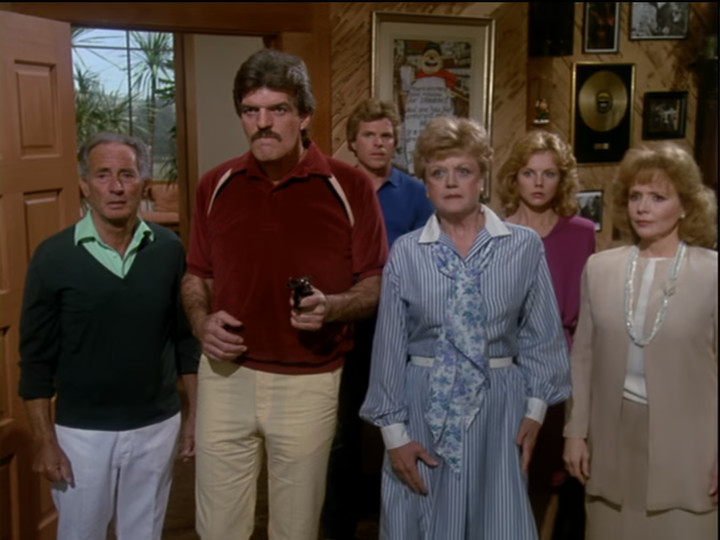
She then tells Sergeant Barnes that he would be well advised to not make any sudden moves. Lou took Johnny’s death very hard.

He thinks for a moment, then smiles and hands Jessica his gun. She thanks him, saying that it means a great deal to her. He asks if she means as a trophy, and she replies no, as the only real evidence that he killed Johnny Shannon. “Ballistics will prove that the bullet came from your gun.”

After a moment, she adds, in reference to their first conversation, “That’s police procedure.”

This was a very interesting episode. It’s most notable quality, of course, is that the police detective was the murderer. This was extremely rare for Murder, She Wrote—as it should be. But I think they did a good job of pulling it off.

The main danger of having the police detective be the murderer is that he is, with regard to the investigation and often with regard to the crime itself, super-powered. That is, the extra powers which the police are given in order to fight crime put them at a tremendous advantage for committing it. The result is that it really should be impossible to catch them, and catching them requires the writer to make them do something very dumb in order to get caught.

I think that they avoid that in this episode. Barnes knowing what was in the picture was, perhaps, not maximally convincing—I’m not sure why he ever looked at that part of room—but it wasn’t dumb. He had been in the middle of discussing the case with Jessica and he had to act the part of the police detective trying to solve the case. He had to discuss it for real in order to be convincing, and he had to reveal to her all sorts of things he learned from the family. It is plausible that he had lost track of what he knew because he was the killer and what he had learned as the police detective, even if the particular execution could, perhaps, have been improved upon.

The other golden age rule this episode broke was having a hitman as the murderer. A professional killer with no connection to the victim and no personal interest in the victim’s death is simply outside of the mystery genre. That said, this episode introduced the mobster right at the beginning and introduced the character of Sergeant Barnes before he was investigating the crime. Barnes remained a significant character throughout. The episode also introduced the idea of the hitman very early, even apart from it being implicit in a mobster being involved. Further, Jessica took the option of the hitman as a live option as soon as it was mentioned. So while it broke the rules, I think that they pulled it off.

I think it was for the best that they had a hitman be the murderer very infrequently. Having said that, I have to admit that it was the case in one of my favorite episodes (Snow White, Blood Red), so when they did it, they tended to do it well.

Another good thing about this episode was the characters. They kept the cast relatively small, which enabled them to have some character development for most of them, which they took advantage of. To be clear, the character development is mostly us learning about the characters rather than the characters having an arc; that’s simply appropriate to the format. But we get complexity on several of the characters. The character of Terry is probably the most obvious, from this perspective: she starts off seeming to be a hedonistic spoiled brat who is coolly distant from her father because he represents restraint, but we find out that she was angry at him and unable to form a real relationship with him. The moment when she tells Jessica that the showgirl in the video almost became her stepmother, but then so did a lot of other showgirls, too, reveals a lot. The moment when she said that the guy on TV wasn’t really her father, her real father is the guy in the picture of happier times was quite poignant. There’s a sense in which it’s true, but also a sense in which it isn’t. Each action that we take does shape us and is part of who we are, but it is also true that some of the actions that we take are unnatural to us—they may warp and twist us, but they are never really part of us. Which is not to say that we can’t cling to them until the original isn’t left, but the distinction remains true even if we turn it into a theoretical, rather than practical, distinction. And underneath the glitzy jewelry and promiscuous behavior, there was a little girl who wanted her father back.

Mickey is another interesting character. At first it seems like he might just be a stereotype of a son who was never good enough for his successful father, but he has real depth. Even right at the beginning, he simply doesn’t respond to his father’s bluster. I didn’t describe it in the plot summary, but Johnny even tells Mickey to let him have it, saying that he (Johnny) told his own father off more than once, but this doesn’t phase Mickey. It’s not that he’s putting up with it; he just doesn’t care. But what gives it depth is that they make it clear that he’s not intimidated. He has his own goals and is pursuing them, and even still has some affection for him. He points out that his father might be wrong because this would actually be beneficial for his father to consider. This gets reinforced later, when he says that he was deeply frustrated with his father but when he gets mad he thinks of the good times.

Peggy is probably the best fleshed out of the characters. She’s divorced from Johnny but clearly doesn’t want to be. The part where she tells Jessica that she’s not even a widow is particularly poignant. She feels a widow’s loss, but does not have the support of the community a widow would have. They do not go any deeper into it than this but it points very strongly to some of the costs of divorce and even more of society having moved to being so accepting of divorce. Worse for the character, she’s one of the people who accepts divorce and thus has no framework to make sense of her grief. She eventually fades out of the story after her reunion with Johnny is revealed in order to clear up a red herring, but had there been more time there would have been very interesting places to go with her.

Even the character of Sergeant Barnes is interesting, in this episode. On the one hand, he’s keeping an eye on Jessica because he doesn’t trust her and wants to mislead her; on the other hand he is a bit hubristic and assumes that he did such a good job that she can’t possibly catch him. This raises the question of whether he was sincere when he told Jessica that she goes wrong by making her killers too interesting while in reality most killers are very dull people. One possibility is that he’s sincere but holds himself to be far more interesting than the average killer. Another possibility is that he’s insincere and thinks that the killers are actually more interesting, and this is misdirection. Yet another possibility is that he doesn’t think of himself as interesting, for as G.K. Chesterton once observed, every man is normal to himself. Or, to quote Chesterton:

To the insane man his insanity is quite prosaic, because it is quite true. A man who thinks himself a chicken is to himself as ordinary as a chicken. A man who thinks he is a bit of glass is to himself as dull as a bit of glass. It is the homogeneity of his mind which makes him dull, and which makes him mad. It is only because we see the irony of his idea that we think him even amusing; it is only because he does not see the irony of his idea that he is put in Hanwell at all. In short, oddities only strike ordinary people. Oddities do not strike odd people. This is why ordinary people have a much more exciting time; while odd people are always complaining of the dulness of life.

Another unusual aspect of this episode is that I can’t think of any major plot holes. The one question I have is how Barnes knew what the missing photo was, since his business would not (obviously) have taken him to that wall of the room, and it was a very large room with many things on the wall. On the other hand, this could be explained by Barnes making a general search of the room before concluding that the only relevant thing was the VHS tapes. He might even have been looking for the safe in the wall and perhaps tried to get in before concluding that wasn’t a way forward. And, really, that’s it. You can ask questions about how Barnes managed to conclude his business with relatively tight timing, except that I don’t think that the timing was all that tight. Mickey was, supposedly, the last one to see Johnny alive, but Johnny had time to have Peggy over and for them to make love and her to leave; presumably after this he got dressed and, feeling wistful, went to watch some tapes of his glory days, when Peggy was still his wife, where he got shot by Barnes. There is, perhaps, a bit of explanation that would be helpful for why Buster brought Johnny a glass of milk at what must have been one or two in the morning without it having been request immediately before but something could easily have been worked out. As Murder, She Wrote goes, this is airtight.

Next week we’re in Wyoming for the last episode of Season 1, Funeral At Fifty Mile.

The Red-Headed League Shows How Evil Contains the Seeds of Its Own Destruction

The Red-Headed League is, justly, one of the most famous Sherlock Holmes stories. But while it is mostly known for the cleverness of the plot, I really appreciate that its structure shows how thieves are often their own worst enemies.

The most notable quality of a thief is that they are not willing to do the just work to get what they want. Outside of a highly developed economy this mostly means that they are not willing to build, or husband animals, or plant crops, or spin or weave or whatever it takes to get what they want. Within a developed economy this means that they’re not willing to pay for what they want with money that they have earned. And while most of the time this means that they take money from others, it also means that they are not above getting people to do work and then not paying them. And this was the downfall of the Red-Headed League.

The reason that Sherlock Holmes foiled the bank robbery for which the Red-Headed League was set up is that Mr. Jabez Wilson came to him to find out what the Red-Headed League was about. The reason that Mr. Jabez Wilson came to Sherlock Holmes was because the Red-Headed League was summarily dissolved and all efforts to try to contact the representative of the Red-Headed League showed that something underhanded had taken place. The reason that the Red-Headed League was dissolved was because the tunnel that they were digging into the bank had been completed. They no longer needed Mr. Wilson out of the way so they invested no more time or money in him. I think it is not coincidence that this took place on the day that Mr. Wilson was to be paid for the previous week’s work. Had Mr “Duncan Ross” of the Red-Headed League showed up and paid Mr. Jabez Wilson the four pounds, Mr. Wilson would have gone home happy that Saturday and not contacted Holmes.

Saving four pounds cost the thieves £30,000.

On its face this might sound stupid but the brilliant part of the story is that it is stupid in exactly the sort of way that thieves often are. It’s not that they didn’t think of this at all; they did and just thought it sufficient for Vincent Spaulding to tell Mr. Wilson to wait for a letter in the mail. That is, they trusted that instead of spending money (and thereby doing work) they could instead trick Mr. Wilson into doing what they wanted.

This is excellent symbolic structure in the story because the fundamental problem with stealing is that it does not actually work; stealing is killing the goose that lays the golden eggs. If only the criminals had been a bit more diligent, they would have gotten away with it… means, in the end, that they would have succeeded if they were not the sort of people who are thieves.


(There are always exceptions; the world is only ever partially fallen because, to be completely fallen, it would have to not exist. You will occasionally find people who are oddly virtuous in pursuit of some vice, but it is always a temporary thing. Vice is a degenerative disease because virtue is only ever maintained through constant renewal, and the renewal comes from aiming at something higher. When someone gives up on the higher aim to the point of becoming a career criminal, they have abandoned the source of renewal that will maintain their virtue. And so they will degenerate.)

Murder She Wrote: Murder To A Jazz Beat

On the third day of February in the year of our Lord 1985, the twelfth episode of Murder, She Wrote aired. Titled Murder to a Jazz Beat, it’s set in New Orleans. (Last week’s episode was Broadway Malady.)

The opening shot was actually a closer-in shot of the paddle boat behind the bridge. Even in the 1980s paddle boats were antiquated; screw-driven propellers are more efficient and less bulky. The paddle boat was iconic of the Mississippi river, though, so it makes perfect sense that our establishing shots have one. Mysteries frequently make use of iconography. There is something very fitting about suggestive imagery in a genre that’s all about interpreting clues. Murder, She Wrote, in particular, also made heavy use of types and archetypes to convey more in the relatively short time that it had. (Upbeat Jazz music plays over these images, solidifying the New Orleans feel.)

The episode begins with Jessica in a cab.

The cabbie, Lafayette, is explaining that the secret to good gumbo is using stale beer to make the fish stock, because that makes for an excellent roux. Jessica is polite, but not super interested. She does like his outlook on life, though, which is that if you spend your time with good food, good friends, good music, and good conversation, a man can’t die no ways but happy.

When Jessica observes that he’s a philosopher, he offers to take her on a tour of the city (off the meter) so they can keep talking and there isn’t a man alive who knows New Orleans better than he does. Jessica is tempted, but has her obligations. Specifically, she needs to be at the TV station to tape a segment for New Orleans Today. When Lafayette asks if she’s a celebrity, she replies “I sincerely hope not. But, uh, the taping starts in six minutes.” Lafayette asks her why she didn’t say so before, then takes a shortcut (which starts by going the wrong way down a one-way street).

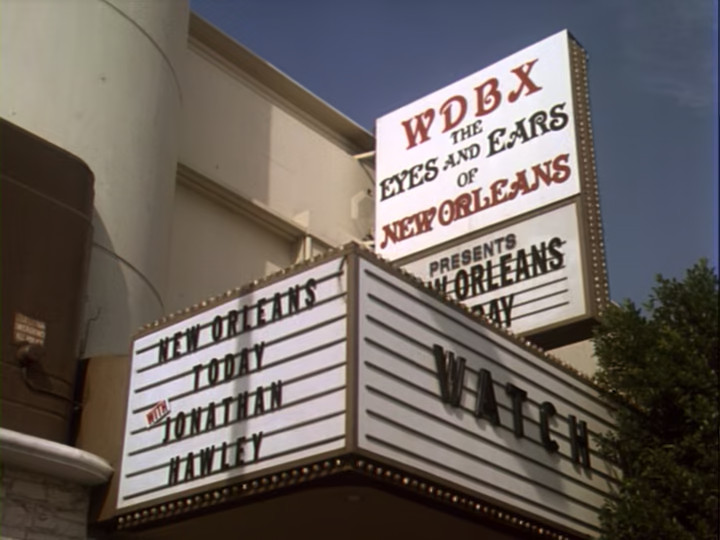
The establishing shots in Murder, She Wrote are interesting because they do so much of the heavy lifting for the set decoration, and this one is no exception:

Lafayette screeches up with two minutes to spare. He tells Jessica that he’ll drop her luggage off at her hotel, and they’ll meet up later for sightseeing.

When Jessica gets inside, she goes to the stage, which is empty. The stage, by the way, is quite interesting from the perspective they show it:

This angle does a very good job of highlighting how fake the stage is; it’s a tiny oasis of New Orleans themed decoration in a larger sea of functional production that could be anywhere.

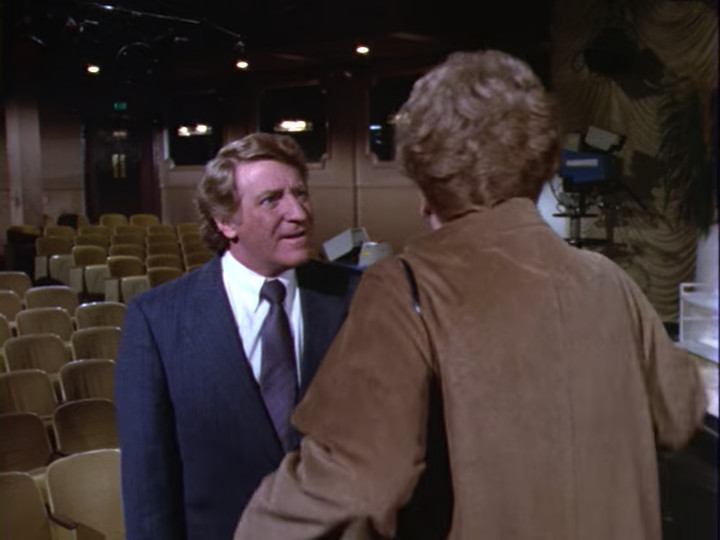
We then meet Jonathan, the man who is going to interview her.

He’s surprised to see her, because the taping is in two days. Jessica checks her pocket calendar and it turns out she’s transposed the dates of two engagements. At the moment, she’s supposed to be forty minutes into dedicating a new school library.

Jonathan is excited for the opportunity to show Jessica New Orleans and all it has to offer in terms of food and entertainment, since she’s clearly going to be in town for a few extra days. Which he does.

We then meet some Jazz musicians. Here’s Eddie Walters:

He appears to be a personal assistant to “Ben.” He’s got to get the coffee he’s holding to Ben while it’s still hot. Ben doesn’t like it when it’s not hot. (Eddie speaks in a halting and inarticulate way that suggests he’s got some kind of intellectual impairment.)

And then we meet Ben (Coleman), who’s giving an interview:

He’s in the middle of saying that there’s no denying that luck played a big part in his move to Vegas, but so did a lot of hard work. The woman sitting next to him is Lisa.

We then meet Dr. Aaron Kramer:

He’s Ben’s manager. And not too happy with something, though it’s not made clear what. If Lisa turns out to not be Ben’s wife, then it might be her.

Shortly after this, Jonathan comes up to the table and introduces Jessica to Ben and Aaron. There is small talk and the topic of the upcoming move to Las Vegas comes up. At the mention of this, two of Ben’s band-mates come up and angrily bring up the subject of whether they’re coming with him.

The guy on the right is named Eubie, the one on the left is Jimmy. Ben and Aaron try to avoid the subject, but eventually admit that they and another musician (Hec) are being dropped from the group in Vegas. Eubie feels betrayed. He spent sixteen years helping Ben and feels he’s owed gratitude. Instead, Ben insults him. When Eubie says that he aught to kill Ben, Ben insults him further, saying that he doesn’t even have the guts to do it.

I think we can tell who’s going to die in this episode.

Aaron promises the guys that he will take care of them—he’s got other groups. They leave, disappointed, but partially consoled.

Jonathan asks Aaron if this will interfere with the taping that night and Aaron assures them that it won’t—they’re all professionals and will fulfill their duties, whatever their private disappointments. He then invites Jessica to attend and Jonathan assures Aaron that she will.

Back stage, at the venue for the evening, if you can call it “that”back stage”, since the venue is a barn, we meet Callie.

She’s Ben’s wife. So it’s likely Aaron was indeed unhappy because Ben was fooling around with Lisa at the table earlier. Anyway, Eddie, Ben’s factotum, gives her a flower. Eddie, incidentally, speaks haltingly, and like he has some kind of mild mental impairment.

They discuss the latest news—she heard it from Eubie. Eddie is upset about Ben cheating on Callie.

Callie takes it more in stride, though. “Ben’s latest? She won’t last longer than any of the others.”

Eddie says that sometimes he doesn’t like Ben much, and Callie says that sometimes she doesn’t either. But then adds, “but we can’t help loving him, can we?”

Jessica and Jonathan have come early and go backstage to visit Ben and Aaron. On their way, they hear the two men shouting at each other in an office. (The barn has been sub-divided to provide a few rooms.) Aaron leaves and runs into them, embarrassed. After some minor talk about this, Aaron shows them to their seats.

After they’re gone, Ben comes out of the office and runs into Callie. They have some ambiguous dialog where Callie tells Ben if he wants to be free all he has to do is say so and he says that it’s not that simple and she knows why. So, yeah, Ben is definitely not long for this episode.

We then get a minute or two of the concert itself, then, at the end, there’s a special song, where Ben plays a song from his famous mentor, “Sweetman” Buddy Brunson, using Brunson’s famous clarinet. (Until this point, Ben had been playing a saxophone.) A minute or so into this song, Ben collapses. A doctor who was in the audience rushes up and, after taking his pulse, pronounces him dead.

After a few reaction shots in which everyone expresses surprise and dismay, we fade to black and go to credits.

Had you been watching back in 1985, you might have seen a commercial like this:

When we come back from commercial, Jonathan tells Jessica, “it’s like something out of one of your books.” Jessica gravely replies, “As a matter of fact, it is.”

The doctor who pronounced him dead remarks that it’s a pity for someone so young to die of a “coronary,” but Jessica is having none of it. The drained color around his lips and feint blue on the moons of his fingers suggests that it was poison, which she’s sure an autopsy will show.

When the doctor says that he’s not conversant with poisons, Jessica says that it’s unlikely that he would be with this one—it’s a very deadly, fast acting, and rare poison. Jonathan recognizes the book of hers this featured in. It’s called, “Murder on the Amazon.”

When Callie hears the word “poison,” she slips the coffee cup that Ben drank from right before he started playing into her purse. A moment afterwards, the police arrive.

They’re led by Detective Lieutenant Simeon Kershaw.

He asks who called them in and the doctor introduces himself. It doesn’t really make sense for the doctor to have called the police since he would have been with the body and wouldn’t have known where the telephone was, but I suspect that this is just TV economy—saving the money of hiring another actor to be the person who called the police. The doctor mentions Jessica’s theory, and Lt. Kershaw is extremely offended that she offered an opinion without being a medical pathologist.

In the ensuing conversation, we find out that the poison is an obscure curare derivative. This is curious because curares (curare is a family of plant alkaloids) are ineffective orally and must be introduced intravenously. Hence their popularity for being used to tip arrows and blowgun darts for hunting. (It does you no good to kill your food with a poison that will kill you when you eat it.)

Anyway, he suspects Jessica of a publicity stunt and says that an autopsy costs time and money, and if the coroner doesn’t find anything, he’s going to charge her and Jonathan with obstructing a police investigation. “Do you still say poison?”

Jessica starts to reply, “In chapter 18…” but he cuts her off and says, “Ten O’Clock tomorrow. My office.” He then walks out of the barn. It’s a dramatic exit, but more than a little strange that he evinces no interest in investigating anything at the scene of the death.

An older man, named Carl Turnbull, then walks in and talks with Jonathan.

He demands to know why he had to get a call from the cameraman instead of Jonathan. They have less than an hour to get the tape edited for the 11:00 news. Jonathan will have none of showing the footage of Ben dying on the news and they agree to see the station manager to settle the dispute. Aaron offers to drive Jessica to her hotel while the two men hurriedly walk off.

We then cut to Jessica investigating where the cup had been.

Aaron gives Jessica a ride, but they stop to have a “nightcap” since “sleep won’t come easily.”

At some restaurant they talk for a bit and Aaron explains that he wishes he could make music but can’t, all he can do is appreciate it, so he tries to help the various starving musicians make a little money, which is difficult because there are so many talented musicians in New Orleans. Many of his groups tour, as well as play locally. He lists them, and Jessica notes that Ben’s group just got back from playing in South America.

The next morning Jessica is in the Lt’s office where he plays her a tape of the 11 O’Clock news from last night where they showed the footage of Ben Coleman dying. The Lt. blames Jonathan for it, but he comes in and tells the Lt. that he (the Lieutenant) would have done well in the old west, being quick on the draw but none too bright. The station manager sided with Turnbull, so Jonathan quit.

He doesn’t seem to have gotten much sleep last night either, and looks the worse for wear.

Lt. Kershaw apologizes to him. When Jonathan tells him that he’ll be making another mistake if he doesn’t listen to Jessica, Kershaw tells him to stuff it, as he had a long night too. He pulls out a copy of Murder on the Amazon and tosses it on his desk, explaining that he roused a bookstore owner from sleep to get it. He tells Jessica that it’s not half bad. And this morning when the coroner called to say “heart attack,” he told him to check the “inner lining of the liver” and, sure enough, it was just like in her book.

Jessica graciously accepts his apology.

Oddly, no mention is made of the fact that curare paralyzes the voluntary muscles, not the involuntary muscles, so victims die of asphyxiation, not heart failure. I guess this is a very derived derivative of curare.

Lt. Kershaw also mentions that Ben had traces of narcotics in his system. The Lt. isn’t surprised; when he first met Ben, Ben was a “two bit street punk.” He adds that they were tipped that one or two of the band members might have been doing some smuggling, but they could never catch them.

Lt. Kershaw also recounts the story of how, fourteen years ago when he was just a beat cop, he had Ben and his brother dead to rights in a liquor store holdup where the clerk was killed, but they couldn’t obtain a conviction because Callie—then Ben’s girlfriend—swore that they were with her at the time. He muses that the brother died in a street fight a couple years later, and now Ben got his.

Jessica wonders how the poison was introduced. She asks if any marks were found on the body and Lt. Kershaw ridicules the idea of a poisoned dart blown from a trumpet. Jonathan asks if it could have been in his coffee. Kershaw says that he thought of that but the cup is missing. Jessica then points out that three cameras were rolling, so perhaps the killer was caught on tape.

This leads us to the next scene, at the TV station, where Jessica, Lt. Kershaw, and Jonathan (plus an extra playing the equipment operator) review the tapes. As they go over it repeatedly, Jessica notices something.

During the clarinet performance, Callie takes a drink from Ben’s cup. Which clearly proves that the coffee couldn’t have been poisoned.

And on that bombshell, we fade to black and go to commercial.

When we come back, Jonathan suggests that maybe Callie didn’t actually drink the coffee, but was just faking it. Lt. Kershaw suggests that perhaps the poison was elsewhere. But if that was the case, Jessica asks, why did the coffee cup disappear?

At this point Turnbull shows up and asks what they’re doing there since Jonathan isn’t an employee of the station anymore. Then he notices Lt. Kershaw and changes his tune. Jessica then says that she was going to make public a theory she had about Ben Coleman’s death on Jonathan’s show, but since he doesn’t have a show anymore, she’ll have to go to a competing station.

Turnbull is alarmed at this and says that shouldn’t be necessary. He’s sure that Jonathan’s program can be easily reinstated. Jessica then wishes him a good day.

This is a very strange turn of events, given that Jonathan wasn’t fired, he quit out of principle. Jessica getting him his show back suggests that his principle of not being willing to work with people who would air the footage of Ben Coleman dying on camera no longer applies. If so, Jonathan has very short-lived principles and it’s doubly weird that Jessica initiated this move which relies on his principles being so short-lived.

Jessica then walks out as Turnbull assures her that it can be straightened out and begs her to not leave. On their way out, Kershaw asks Jessica what her theory is, and Jessica replies that she’s still working on the theory, but she found Turnbull so insufferable that she just had to say something.

Later that day, Jonathan calls her from a payphone to relay the latest news on the investigation. Kershaw is checking all the chewing gum he can find at the barn. He believes Callie poisoned Ben because Ben only bought three tickets for Las Vegas. One for himself, one for Eddie, and one for his new girlfriend. Kershaw believes that Callie was going to be dumped like the rest, found out, and killed Ben in revenge. Jessica is dubious, though. You can’t get rid of a woman who saved you from a murder charge in the same way you can get rid of a trumpet player.

Jonathan invites Jessica to go have lunch to celebrate his show being back on the air, which confirms that this wasn’t just a thing to tweak Turnbull, Jonathan’s principles really didn’t last a full day.

Jessica declines, though, because she needs to make good her boast to Turnbull about having a theory to make public. Accordingly, she goes and finds Lafayette the cab driver. She asks if he knows where Eubie, Jimmy, and Hec are. Lafayette, making good his boast about knowing New Orleans better than any man living, takes her right to them. They’re in a restaurant auditioning for a spot as the restaurant’s entertainment.

They’re none too happy to talk to Jessica, and when the subject of Aaron saying that he’d get them work comes up, they explain that Aaron is a terrible businessman and can’t really get anyone work. When Jessica says that he must have something going for him, since he managed to keep on going, Eubie suggests she keep that kind of talk to herself. She might get someone in trouble with it.

Jessica then runs into Aaron outside and relays the news that the audition didn’t go wonderfully. He offers to give Jessica a lift, but Lafayette butts in. When he refers to Aaron as “Mr Kramer,” Aaron asks, “Do I know you?” Lafayette responds that there’s no reason he should, but he knows all about Aaron. Jessica tells Lafayette it’s OK and accepts the ride from Aaron.

In the car, Jessica accuses Aaron of smuggling, and he confesses to it. He’s not much of a business manager, and smuggling was a way to keep things going during lean times—to put a few dollars into the pockets of musicians when they weren’t working. Jessica says that there is no excuse for smuggling drugs, but Aaron exclaims that it wasn’t drugs—drugs are what customs always looks for. His fight with Ben Coleman was actually about drugs; Ben brought some in on almost every trip and if he’d gotten caught, it would have ruined everything.

But he didn’t kill Ben. There was no point. It wasn’t going to last anyway; the way Ben was going he was probably going to burn out in less than a year.

Aaron is also certain that Callie didn’t kill Ben. She loved him and would have gone through hell for him. In fact, that’s what she’s been doing for the last sixteen years.

That night, at a wake for Ben (which is being held at the barn where he died—I assume because it saved on set costs), Eddie puts the clarinet in the casket with Ben.

After he does this, Callie tells Eddie that it’s time to go, but Eddie doesn’t want to. Moments later, the police arrive and Aaron is arrested for smuggling. After Aaron is led away, Kershaw says that he figures Aaron killed Ben, too. He had motive and opportunity, and did it with the clarinet.

When he picks up the clarinet to collect it as evidence, Eddie gets deeply upset. He says that Ben told him to never let anyone touch it, and that Kershaw must put it back. Callie tries to calm him down but it doesn’t work; he’s inconsolable and uniformed officers are forced to restrain him.

When they drag Ben outside, Kershaw explains to Jessica and Jonathan.

It couldn’t have been the coffee, and they tested every spec of gum they could find and the poison wasn’t there, so there was only one other place it could have been: on the reed of the clarinet.

And on that bombshell, we fade to black and go to commercial.

When we come back from commercial, Jessica, Jonathan, and Lt. Kershaw are in Kershaw’s office. He lays out the case of Aaron being a smuggler, which Jessica doesn’t argue with since she knows that he is. But she still doesn’t see how that makes him a murder suspect.

Kershaw says that Aaron had a contract with Ben and Ben threatened to tell the authorities about the smuggling if Aaron didn’t let him out of it. When asked, Jonathan says that the Buddy Brunson tribute song (the one for which Ben switched to the clarinet) was Aaron’s idea.

Jessica counters that it wasn’t Aaron who smuggled in the poison, since at the time he didn’t know that he was going to be blackmailed. Her guess is that Ben Coleman was the one who smuggled in the poison. (Presumably to kill Callie, since he was planning to drop her but couldn’t leave her alive to take revenge by recanting Ben’s alibi for the convenience store murder.)

Then Kershaw gets a call from the lab. There was no trace of poison on the reed. There was nothing at all; it was absolutely clean. Kershaw is perplexed by this, as is Jessica. Why the lack of saliva doesn’t immediately indicate to them that the reed was changed out, I don’t know. Possibly because there’s still five minutes left in the episode, so it can’t end now.

The next scene is at the station where Jessica and Jonathan are going to tape the show. Turnbull shows up and says that the show is going to be aired live and he hopes Jessica is ready to deliver on her promise. I guess Turnbull has been repurposed as the station manager because that’s cheaper than hiring a another actor to play the station manager. Anyway, while Jonathan argues with Turnbull, Jessica watches a denture cleanser commercial being filmed.

(They’re showing off removing blueberry stains from dentures.)

Somehow, this commercial gives Jessica the crucial insight into how Ben was murdered. She then runs off and calls for a taxi. By coincidence, the taxi she hails is driven by Lafayette. When he asks where she wants to go, she says “Saint Charles Cemetery.”

At the cemetery the funeral is going on in New Orleans style.

The band is playing a lively version of When the Saints Go Marching In. They start marching off, and lead all of the mourners away except for Callie and Eddie.

Eddie is upset that Aaron let the police take the clarinet, and Jessica explains that Lt. Kershaw was only doing his duty. He thought that Aaron had killed Ben by poisoning the clarinet reed. Eddie says that he couldn’t have; only he and Ben were allowed to touch the clarinet. Jessica says that she knows.

Callie tries to get Eddie to leave, but Jessica tells her that she knows who killed Ben. Callie denies this, but Jessica doesn’t care and just explains. Callie took the coffee cup off of the piano. She did this, not because it was poisoned, but because it wasn’t. He was poisoned via the clarinet reed, but via the reed that was on the instrument when Ben played it, not the fresh reed that was replaced on the clarinet after the murder. (Jessica points out that Ben drank black coffee right before he played, so the reed should have been stained, but it wasn’t, proving the reed had been replaced.)

When Jessica gently tells Eddie that he replaced the reed to hide the poison, he confesses. Ben had always been a good friend to him. Ben wasn’t nice to many people, but he was never not-nice to Eddie. A long time ago, Ben, Eddie, and Ben’s brother did a real bad thing, and Callie told the police that they were with her. He and Ben loved her for it. But then Ben didn’t love her anymore. He wanted to leave Callie behind, but thought she would tell the police that she’d lied. He got the poison in South America to kill Callie so he could leave her without going to jail, and told Eddie about this plan. Eddie couldn’t let him do that to Callie. He told Ben Callie would never hurt them, but Ben wouldn’t believe him. When he told Callie about Ben’s plan, Callie didn’t believe him. So he didn’t see any other way to keep Ben from killing Callie except to kill Ben. He then says that Ben didn’t love Callie anymore, but he still did. He repeats the last part several times as he breaks down crying and puts his head on Callie’s shoulder.

And on that sad note, we go to credits.

This is an interesting episode which has a lot of strong points. The mystery features the always-fun plot element of the victim having been caught in his own trap, or at least killed because of his own plan to murder someone else. And it’s done well. Additionally, this episode has an interesting setting (mostly in terms of music) and several vivid characters.

One big issue to consider in this episode is the poison: as a rare south-American poison, it is allowed to have any properties that the author wants it to. This can be easily abused if the properties of the poison are revealed toward the end of the story, but it has no major fair-play implications if all of the properties of the poison are immediately identified, as they were in this episode. The only major consideration is that it turns the episode into fantasy, just as much as if the killer had used a ray-gun or a magic want to kill the victim. (Just as much, but far more plausibly, since there are, undoubtedly, a great many poisons that we don’t know about.) It’s also a bit annoying that the writers got the properties of curare wrong, though this could be worked around by having Eddie have known Ben had a cut in his mouth.

That said, the identification of the poison was a bit fraught. It’s extremely implausible that a poison which kills within a minute would have time to do anything detectable to the lining of the liver, since blood circulation stops at death. Also, what lining of the liver? The liver is a dense organ that processes the blood. It’s not a pouch that stores stuff on the inside that it would have a lining, like the stomach or intestines.

In any event, the major effect of the poison being an obscure South American poison is that it effectively limited the circle of suspects to the band plus Aaron, which was useful. It’s a little unfortunate that it just happens to be the same poison that Jessica wrote about in one of her books but the killer didn’t know this. It would have been more interesting if the killer had gotten the idea from Jessica.

There are several characters in this episode which are worth considering. Let’s start with Jonathan, who’s a very vivacious character but also a bit strange within the episode. He serves two main functions: on a technical level he’s the primary connector between Jessica and the mystery. That doesn’t, in itself, make him a compelling character, but his broad range of connections that enables this is played up; people who know everyone are often interesting because they’re rare and this form of social connection is a kind of power. He also adds energy because of his boundless enthusiasm for all of the culture of New Orleans. Much of a setting being powerful is about how the characters react to it; this is a bit like how it was said of Fred Astair and Ginger Rogers that she gave him sex appeal and he gave her class.

Lafayette is another fascinating character. He’s a character with far more ability than is required for the job he performs. The thing about that is that it’s very rare in efficient economies with a lot of job mobility as has existed in the United States to a great degree after the second world war. It’s not universal, so it’s possible to find someone who’s just hard up on his luck, but in post-war America while it’s not completely unbelievable it just doesn’t ring true. What you can have, though, is someone who is simply content with what he has and who works a job he doesn’t find stressful in order to pay the bills and give him as much time to spend in a way he enjoys as he likes. The actual economics of driving a cab are a bit iffy, here, but he is portrayed as someone who enjoys meeting people, so I think it works. And they do lean into this with his character; he has an easy-going manner and a marked enthusiasm for enjoying the simple pleasures of life.

Lt. Kershaw is a striking character. Police lieutenants are often one-note characters in Murder, She Wrote and he’s got far more depth than most. He takes Jessica seriously and is willing to admit when he’s wrong. He is not passive, though, and does real investigation for himself. While he certainly doesn’t carry the episode, giving the police character some depth gives the whole story far more depth. Several real characters playing against each other makes for a far richer story because it creates a lot of possibilities.

Aaron Kramer is also a curious character. I’m not sure exactly how far we’re supposed to take the things he says as reliable, but he at least portrays himself as a lover of Jazz music who will do almost anything to help out the artists he can’t help by being competent as a manager. That kind of love is interesting. They keep it from getting too dark by having him smuggle things to avoid taxes rather than smuggling harmful things such as drugs, and tax evasion is, certainly, a much nobler way to make money than are highly addictive drugs, but at the same time struggling musicians are, perhaps, a dubious cause. It is interesting that he ends up paying for this approach to supporting the music that he loves with what is likely to be a lengthy prison sentence.

Callie isn’t a major character in this story, but she is still interesting. We’re left wondering why she has such a profound devotion to Ben Coleman. We certainly didn’t see him as having any redeeming qualities. But we didn’t see a lot of him, which is why this works. Her devotion raises a question which his relatively little screen time leaves possible there’s an answer to.

Having described the many interesting characters, one unfortunate thing about this episode is that none of them get closure. We last saw Jonathan when Jessica left him right before his newly reinstated show was going to air live. We last saw Lt. Kershaw when he was arresting the wrong man. We last saw Aaron when he was arrested for smuggling and was falsely accused of murdering Ben. We last saw Lafayette when he drove Jessica to the cemetery and was still hopeful he’d get to give her a tour of New Orleans. In none of the cases does the last time we see the character feel like the last time. That’s not the end of the world, and it’s particularly forgivable in a Murder, She Wrote episode which crams quite a lot into 48 minutes of screen time.

I’m in two minds about Eddie being the murderer. I didn’t really like the character, since he had the kind of hollywood intellectual impairment which feels extremely fake. Like with Forest Gump, it’s a kind of affectation of speech rather than an actual intellectual state. Eddie’s limitations are whatever the authors want them to be in the moment. On the other hand, having the murderer be the victim’s devoted friend is very interesting when it’s done well, and it’s done reasonably well, here. Eddie’s devotion is given an explanation—Ben was never not nice to him, which might well count for a lot to someone who was often picked on because of his intellectual disability—as is his being willing to murder his friend. He just couldn’t let Ben murder Callie. And I do like the touch that they hinted at this when Jessica said she guessed that it was Ben who bought the poison.

Next week we’re going to the sea for My Johnny Lies Over the Ocean.

The Taming of the Shrew is Very Strange

I must begin by confessing that I’ve never seen The Taming of the Shrew and only have read most of it. What I have seen performed is the 1953 movie Kiss Me Kate. It’s very funny and I highly recommend it, by the way. Anyway, it motivated me to look into the actual play by Shakespeare, and it’s a rather extraordinary one. It’s very hard to know what to make of it.

The first thing to note about the play is that it’s a comedy. But it’s not merely a comedy, it’s an utterly absurd comedy. So it’s not necessarily the case that it is possible to make anything of it; part of the comedy may be that it is nonsensical.

The play begins with a very strange framing story, where a tinker by the name of Christopher Sly is drunk and a Lord notices him and has his servants play a practical joke on Sly that he is, in fact, a lord who for the last seven years has been affected by a madness, thinking he is a tinker. Then a troupe of players happens by the lord has the troupe of players put on the main play for him. We never heard of Christopher Sly or the lord again. The framing story is simply dropped after the introduction.

There is a main plot and a sub-plot in the play-within-a-play (which I will henceforth just refer to as the play, since that’s what it really is). The main plot is about Petruchio and Katherine (the titular Shrew). The sub-plot is about Katherine’s younger sister Bianca and her suitors. I say main plot and sub-plot, but the latter takes up about as much time as the former. It also involves various suitors pretending to be tutors and a servant pretending to be a suitor and, frankly, it’s so absurd I have a hard time keeping track of it.

All of this is the context for the taming of the shrew to which the title refers. It seems unlikely that we’re meant to take it seriously. For all that, though, there does seem to be a mildly realistic foundation to the absurdity.

When Katherine is called a shrew, this has nothing to do with different time periods having different ideas of decorum or it being considered, in Shakespeare’s time, immodest for a woman to speak her mind. Kate is an outright bully. She ties up and beats her younger sister out of jealousy (she claims that as her motivation) and physically attacks her music teacher for daring to try to correct her fingering on the lute. She is sharp-tongued in the sense of gratuitously insulting people. Her behavior would not be acceptable in any culture, in any time period. (Imagine a stereotypical Marines drill instructor, except with everyone, not just recruits.)

Petruchio is not a virtuous character, but he is, at least, polite to his social equals. And he is cunning. Moreover, he takes a liking to Katherine precisely because she has a powerful personality. The “taming” of Katherine is, perhaps, an apt metaphor, because her behavior is outright antisocial (in modern times it would be criminal). What it consists of is where there seems to be a minor element of truth underlying the absurd humor: Kate becomes content when she finally finds a man who she can’t intimidate. It is true that women do not, as a rule, like a husband who they can easily overpower. (For those who are young: that’s not because marriage is a Nietzschean power struggle, it’s because life is difficult and a man who can be easily overpowered can be easily hurt by accident when a woman is concentrating on other things, such as caring for young children, and feminine instincts don’t protect against this. The reverse is not nearly so important, since masculine instincts do include being gentle to the mother of his children, though even there, only so much; males do not usually want a wife so delicate relative to their force of personality that they can easily hurt her by accident, either.)

It is often said that when it comes to husbands and wives, opposites attract. This is true of many qualities, but certainly not of all qualities. You tend to find “assortive mating” (i.e. similarities attracting) in things like education, social status, and intelligence. A truth underlying the absurd humor of The Taming of the Shrew is that you also find assortive mating with force of personality. People with big, forceful personalities tend to get along better with a husband or wife who also has a big, forceful personality. When it comes to what two human beings get along well, there are no absolutes. But this is a trend you readily see.

The Taming of the Shrew seems to take this then turn it up to eleven.

But it should be remembered that it is an absurd play, and should not be taken too seriously.

Murder She Wrote: Capitol Offense

On the sixth day of January in the year of our Lord 1985, the ninth episode of the first season of Murder, She Wrote aired. Called Capitol Offense, it takes place in the swamps of Washington, D.C. (Last week’s episode was Death Casts a Spell.)

It opens with a congressman talking with some lobbyists in a richly furnished room. We’ll find out later that the taller one is Roy Dixon and the shorter one (mostly obscured in the picture below) is Harry Parmel. The congressman (getting a drink) is Dan Keppner.

For some reason the woman serving drinks has a camera in her lighter, which she uses to take pictures of the congressman doing nothing incriminating. He’s drunk, but that won’t show up in photographs, especially photographs from tiny cameras using 1980s technology.

A few moments later Congressman Joyner shows up and tries to take Dan “home.” The lobbyists try to get him to stay and Joyner unloads into them, calling them rattlesnakes and saying that the next day he will make a full complaint to the house ethics committee. For what, I cannot imagine and he does not say because he immediately has a heart-attack and dies. (As the scene closes, someone says to call an ambulance and someone else replies, “No. No ambulance.” The waitress then takes a picture of them over the body with her cigarette lighter.)

The scene then shifts to Cabot Cove, where Jessica answers her door to an aid from the governor. Congressman Joyner was found by his housekeeper dead in his bed this morning. Why on earth the other congressman and the lobbyists moved the body will, I presume, be something Jessica has to figure out, but it seems quite absurd on its face.

Anyway, the long and short of the rest of the conversation is that Jessica is named as Joyner’s replacement on an interim basis, until an upcoming primary takes place, so Jessica is off to Washington, D.C.

Before Jessica shows up, we see her soon-to-be-secretary, Diana Simms, answering the phone:

For once, I can actually believe the set decoration.

We then see Jessica arriving in town. She’s been picked up from the airport by Joe Blinn, the Media Liaison Officer.

Joe’s job is to get her name in the papers, or to keep it out, whichever she prefers.

On the way in to her office in the capitol building, she meets congressman Keppner. He asks to stop by later to discuss the Maine cannery bill and others.

Inside her office she meets Diana. Diana tells her that her resignation is already on Jessica’s desk but she’s prepared to work closely with Jessica’s incoming staff. Jessica retains Diana, however, for pretty obvious reasons. This is portrayed as Jessica being pure and honest, but it’s a little absurd to expect a mystery writer from Maine who is only serving for a few weeks to hire her own staff.

Right after Jessica crumples up Diana’s resignation letter and throws it in the trash next to her desk, Harry Parmel comes in and introduces himself.

He tries to invite Jessica to lunch, but Diana signals to not accept. After he leaves, she tells Jessica, “Most lobbyists are good people. They know the rules. Harry not only breaks the rules, he’s never heard of them.”

Later that night, Dan Keppner calls Jessica from a payphone in a bar. He’s sorry if he woke her, but there’s something he really needs to talk to her about. Jessica asks if it can be in the morning and he says sure, and makes an appointment to have breakfast.

He goes outside the bar and runs into Marta Craig. She was the bartender with the camera-lighter.

She tells him that she’s scared about the other night and moving the body. She then hands him a photograph of Keppner and the lobbyists crouched over Joyner’s body.

We then fade to some guy.

He kind of looks like he’s following Jessica, except that he loses her and she turns up behind him. When she asks who he is, he flashes his badge and introduced himself as Detective Lieutenant Avery Mendelsohn. He tells Jessica that he’s following her in the hopes of finding out who killed Congressman Joyner. And on that bombshell, we fade to black go to commercial.

Here’s a Northwestern Mutual life insurance commercial you might have seen, had you been watching on that fateful night in January of 1985:

When we come back the Detective Lieutenant is massaging his foot while talking to Jessica in the lobby. He says that maybe Joyner wasn’t murdered, but somebody moved the body. When people move a body, he asks himself why. After a bit of a comedic routine about taking pain medicine for his bad back, his stomach gurgles, and he says that perhaps he’s making something out of nothing, but when his stomach starts to growl, it’s a sure sign there’s a fox loose in the china shop. He then pauses in perplexity as his own metaphor and takes his leave.

It’s unlike Murder, She Wrote to run an investigation of a crime we saw in the beginning of the episode, Columbo-style. I guess we’re still in early-first-season experimentation.

Later that morning congressman Keppner wakes up in an alley with a bum going through his pockets:

He chases the bum away then runs after the bum and a passing police car notices him and picks him up. They have a photo of him for some reason.

At the police station Detective Lieutenant Mendelsohn is interviewing the congressman. Apparently, Marta Craig is dead. She was beaten to death in her apartment some time the night before. His jacket was found in her apartment and his hands have blood on them, so he’s got some questions to answer.

Back at Capitol Hill, Jessica is talking with Diana about the cannery bill, which would permit the building of a fish cannery on McHenry’s Point, which is only a few miles from Cabot Cove. It’s a classic case of business interests vs. the environmentalists. (Given that this is 1985, the business interests are supposed to be the bad guys.) Congressman Joyner was going to vote against the measure. Jessica says that she may also vote against it, after she’s shifted through the testimony herself and had a chance to make up her own mind. No mention is made of the opinion of the people from the congressional district she is representing.

Jessica then asks Diana where Joyner was the night before his body was found and there was nothing on his schedule but Diana remembers that Harry Parmel invited him to a party that evening but Joyner turned him down.

There’s then a bit of congress-related stuff where Jessica attends a committee meeting where testimony is heard from one of the lobbyists. This involves some digs at how things are done in Washington, including people reading out their prepared testimony. This was very much in the style of a kind of quasi-populism that was popular in the 80s and early 90s. The post-war consensus was breaking down and people who grew up with it didn’t know what to make of what government looks like when not everyone agrees, and one popular explanation was that there was just some imperfection in the system, and if common folks with common sense were put in charge, everything would be fine.

It was certainly a seductive idea at the time, but it’s absurd if you think about it for more than a few seconds. If common folks with common sense would do such a great job, and the populace was not to blame for the failures of democracy, then why does the populace not elect these common folks with common sense?

Anyway, back in Jessica’s office, Joe Blinn is remonstrating with Jessica for not having lunch with Kaye Sheppard, who is “the empress of Washington gossip, syndicated in 98 papers.” After this bit, the Lieutenant is waiting in Jessica’s office. He asks about her breakfast date with Keppner. Jessica says that she overslept and he never showed up. It’s not like Jessica to oversleep; she’s normally a very early riser. Frankly, I’m a bit surprised that we didn’t get any shots of Jessica jogging around D.C. in her sweat suit. Anyway, he tells her that they’re holding Keppner for the murder of Marta Craig. His feet hurt, which is a sign that something isn’t exactly kosher, so he asks if she can spare him a minute.

In the next scene Jessica is talking with Keppner in the Lieutenant’s office, explaining that it was dumb to move Joyner’s body but he was too drunk to think straight. No explanation is offered for why it seemed like a good idea to him drunk, because I don’t think that there can be one. Anyway, he explains that Marta was at the party where Joyner died and last night met him at the bar he called Jessica from (he doesn’t remember which) and showed him a photograph of him over Joyner’s body. He went with her to her apartment and had a drink—ginger ale. That’s the last thing he remembers.

He says that the key to her apartment was planted on his jacket and the Lieutenant says that doesn’t explain the blood and makeup found on his shirt. He says that he doesn’t understand it but he’s not a killer. He turns to Jessica and begs her to believe him. And on that bombshell, we fade to black and go to commercial.

When we come back from commercial break, Jessica views the body. After being suitably disgusted and the Lt. saying that he told her it wasn’t pretty, Jessica says that Keppner certainly didn’t kill Marta. While there was blood and makeup on his shirt, there wasn’t that much, and there was only blood on his hands—no makeup. Had he beaten her as severely as she was beaten, he’d have had both blood and makeup on his hands.

Jessica has the Lt. take off his coat then demonstrates how the killer—who had blood and makeup on his hands—would have moved the unconscious body of congressman Keppner.

Thus explaining the blood and makeup found on Keppner’s shirt. The Lt. is impressed and says, “maybe you should have been a cop.” She replies, “I am a cop, when I’m at a typewriter.” He replies, “you’re not at a typewriter now.”

In the next scene we’re back at Jessica’s office and Diana is giving us some backstory on Keppner, with Joe filling some details in. He used to be an alcoholic, then recovered about 6 years ago—attended meetings, etc. Then a few months ago his wife left him, took the kids, and went to New York. Keppner started drinking again. Jessica then tells Diana and Joe that Keppner was framed, very clumsily, and assigns Joe to dig up everything possible on Marta Craig since he’s an expert in this town. Joe protests that he’s not a detective, but promises to do his best.

The next scene is at a restaurant where Roy Dixon (the lobbyist from the first scene) is waiting for a senator to show up and Harry Parmel comes in and tells him that his job doesn’t include covering up murders, before, during, or after the fact, and at the first sign of trouble, he covers his own rear end, not anyone else’s. This is clearly meant to implicate Dixon, who then tries to look guilty for the camera.

Which, of course, means that he definitely didn’t do it. The murderer never tries to look guilty for the camera.

In the next scene Diana gets home and is started to see a man standing there. But only for a moment, then she recognizes him. He’s a lobbyist we only saw for a few seconds who Diana directed Jessica to treat rudely. His name is Thor, and he comforts Diana about the news about Marta.

After embracing her, he tells her that some photos came in the mail. He shows her one.

She says that he showed her these photos a week ago and said that they were faked and she believed him. He then says that they came with a note.

The music then turns dramatic and we get a dramatic closeup of Diana. I don’t know what that’s supposed to mean. Possibly nothing more than this is supposed to be important. We still have almost twenty minutes to go in this episode so perhaps they will pay this off.

The scene then shifts to Marta Craig’s apartment.

Jessica observes that Marta lived very well for a secretary. Jessica says that she didn’t know the woman—all she knew was what was on the police report, which wasn’t very much.

The Lt. incredulously asks, “you call two charges of extortion and blackmail, ‘not very much?'”

While the Lt. makes small talk about how he should have been a doctor, Jessica finds a picture in a frame which has Diana in it.

Jessica has then seen enough and they leave. She asks the Lt. to drop her off at the library of congress, though the next scene is at a restaurant called Sans Souci. Apparently she accepted Kaye Sheppard’s invitation after all.

(This was in the era before people called their pets emotional support animals to bring them to places where animals weren’t allowed, so her having a cat in a restaurant (which is a health code violation) is a sign of her enormous importance.)

It turns out that Jessica is there because Kaye sent her a note saying that she has information that might help Jessica about Marta Craig’s murder. She does have a price for her information, though. When Jessica solves the case, she wants an exclusive.

Kaye’s sources tell her that Marta was playing both sides of the aisle. Also, three nights ago, Marta came running out of the Watergate hotel and Roy Dixon came running after her and looked mad enough to kill.

Back at Jessica’s office, Joe comes in and reports what he learned about Marta. She had six jobs in the last four years and did the party circuit 5-6 nights per week. That’s all he learned. Also, Diana called in sick after lunch.

After Joe leaves for a “hot date,” congressman Keppner comes in. He thanks Jessica for all she did for him but asks her to not go to any more trouble. He’s decided that he’s not going to seek reelection. He’s got a phone call into someone or other to make that official. Jessica talks him out of it, and to instead go back to New York and to see his wife and talk to her and find out what she thinks about whether he should seek reelection. “She might surprise you. Women in love do that.” Keppner hugs her and tells her that this is the first time in 8 weeks he’s felt good about himself. He then says that he’s going to cancel his call, but he will stay around an extra day to vote against whatever Ray Dixon (the lobbyist) wants him to vote for.

That night, Jessica visits Diana at home. Diana doesn’t want to let Jessica in, but Jessica politely forces herself in, saying she has some important questions about the cannery bill. She then says that perhaps they can ask Thor to help. Jessica suggests asking him to come out of the bedroom. (She points out the heavily used ashtray and the no smoking sign on the desk in Diana’s office.)

Thor asks how she knew it was him. Jessica explains that she noticed a Lion’s head tie pin Thor was wearing during the moment she met him in the hall when Diana was rude to him, then she noticed it was the same as on the cheerleading costume that Diana and Marta wore in the picture in Marta’s apartment, and went to the library of congress and dug up an old yearbook and found that the three had gone to school together.

We then get a bit of backstory: they used to be good friends with Marta, but then Marta started hanging out with the wrong crowd. She worked with Harry Parmel and men like him, working the “party circuit”. They didn’t say anything because they were scared. Thor figured he’d be at the top of the suspect list. And on that rather tepid bombshell, we fade to black and go to credits.

When we come back, Thor is showing the photos to the Lt. in his office. He points out that they’re faked, which you can tell because he’s clearly unconscious in the photo. Marta had asked him up to her place and he had one drink—she must have drugged him. Diana says that Thor wanted to show the police the photos but she stopped him since it would cost him his lobbying job at the ecological foundation at which he works since they’re very publicity-shy.

The Lt. says that they can go. But, of course, don’t leave town.

After they’re gone, he remarks that the case is very complicated, but it seems to him that with all of the bad stuff that Marta was into, it’s likely that the guy she worked for is the one who beat her to death. Jessica asks why she says “guy,” since it could just as easily have been a woman.

In the next scene Joe is driving Jessica around and gives her a bit more information on Marta. At 6:30 she had lunch with a married mid-level man from the state department. They left separately, and she picked up Keppner at around 9:30 outside the Stockman’s bar. She had no close friends and had no known associates.

In the hall of congress Dixon runs into Jessica. She presses him on Marta, he denies knowing her, Jessica says that he’s very good at lying—it’s a difficult skill—and he says that they play a game in this town. Those good at it get things done. It’s the amateurs who get hurt.

Back in her office, Jessica finds out that the vote starts in less than two hours, then says she has to go out and to not let them start the vote without her.

Some time later, when the committee meeting started, Jessica finds Joe and brings him into her office and tells him that she got a great lead from Kaye Sheppard. It seems a jilted boyfriend of Marta’s was hanging around her apartment when she brought Dan home with her. A few minutes later the boyfriend saw another man go inside. He didn’t get a good look, but Jessica says that it had to be Ray Dixon. He must have the photos that Marta took of Joyner. They need to get into his penthouse. Right now she needs to go to the committee meeting, but she wants him to meet her afterwards. They’ll talk to the Lt. and get a court order.

Jessica arrives at the committee meeting and has some brilliant idea that solves all problems (including jobs for her community) while still sticking it to Ray Dixon. And everyone claps when she’s done talking because her common-sense speech was so common-sensical and brilliant and moral and good.

Over at Ray Dixon’s penthouse, Joe breaks in to plant the photographs Jessica expects to find. Unfortunately for him, Jessica and the Lt. are waiting for him. The Lt. isn’t impressed with the hiding spot that Joe had chosen and remarks, “Give us cops a little credit. Ray Dixon would have been smarter than that.”

Jessica admits that she was baffled until this morning. She asks Joe what happened—did Marta get greedy? He still protests his innocence, so Jessica asks Joe what happened to the fancy driving gloves he had been wearing the first time she met him. He stopped wearing them after Marta was killed. Clearly that’s because he wore them when he beat Marta to death. It’s almost impossible to get blood and makeup out of suede, so he had to get rid of them.

That’s only part of it, though. He slipped up badly when he said the name of the bar that Marta picked up Keppner from. It wasn’t in the police report and Keppner didn’t remember it. They checked with the bartender and the waitress who worked at Stockman’s Bar that night and neither remember Keppner, so the only person Joe could have learned it from was Marta herself.

Joe is done in by this. His confession starts out interestingly

I’m no different than anyone else in this town, Mrs. Fletcher. You buy and you sell. People. Legislation. Influence. There’s a price tag on everything and everyone. And I was doing real well, too. Until Marta got just a little bit too big for her pantyhose.

When he’s done, Jessica asks him if he thought that he was the only one allowed to buy and sell. After he’s led away by the uniformed officer present, the Lt. asks Jessica if he can take her out to lunch. There’s a deli run by a friend of his cousin Sadie and they make a lox and cream cheese platter you could die from…

And with that, we freeze frame and go to credits.

Well, this episode definitely doesn’t make my top ten favorites list. Hollywood is never good when it touches politics, and Murder, She Wrote was no exception. It’s not that was unrealistic. It was, but TV was generally unrealistic about everything. It’s how smugly self-satisfied Hollywood always is. Hollywood is generally populated by the worst people, and they’re convinced that they’re the best, and their self-congratulations are quite grating. For example, after Jessica’s speech about re-using canneries that have closed down even if it’s less profitable and the round of applause from everyone, the committee unanimously voted against the bill. It’s really unpleasant to watch narcissists convinced that everyone loves them taking a victory lap in their own imaginations.

About the only thing to learn from this episode is: don’t do this.

The one decent thing in this episode is the character of Detective Lieutenant Avery Mendelsohn. This is as much the actor who plays him as the character, but he was quite likable. It’s also the case that non-stupid detectives who work with Jessica tend to be more fun.

As far as the plot goes, there are fewer plot holes (in a strict sense) because the episode doesn’t explain much. Why did they move Joyner’s body? The closest thing to an explanation which we’re given is, “I was too drunk to think straight.” There’s some vague hints that Keppner shouldn’t have been at the party, but there’s no obvious reason why that would have been compromising. And even if there was, all that would have to happen would be for Keppner to leave before the ambulance arrived.

We’re never given any kind of explanation for why Dan Keppner has puppydog-like faith in Jessica. It’s so strong that despite having spoken only a half dozen words with her, he drunkenly calls her up at her hotel—how on earth did he get the number and memorize it?—and plans to confess to moving Joyner’s body to her the next morning.

And why did Marta bring Keppner to her apartment and drug him? She drugged Thor to take incriminating pictures of him in bed with her. She didn’t need incriminating pictures of Keppner in bed with her since she already had incriminating pictures of him over Joyner’s dead body at, presumably, a place he shouldn’t have been.

It’s a huge coincidence that Diana and Thor happened to be friends with Marta Craig, though on the other hand nothing came of this coincidence, so it doesn’t matter much. Much more important to the plot is the enormous coincidence that Marta happened to be working for congressman Joyner’s media liaison officer. That’s part of why Joe is such a surprise murderer at the end—there was no on-screen connection to the victim other than living in the same large city. We do get on-screen clues that Joe was the murderer, though as clues go not wearing driving gloves in a later scene isn’t a great one. Especially since driving gloves weren’t really a thing in the 1980s. Cars had had steering wheels that were comfortable in bare hands for enough decades that the practice had long since died out (outside of racing).

We’re also given no explanation as to why Joe picked the night he did to kill Marta. Normally, someone getting “too big for her pantyhose” is not an urgent matter, and he didn’t pick a great time for it. (To be fair to him, we’re only on episode 9, but I’d have waited until the mystery writer who’d solved at least 8 real life murders prior to this had gone home.)

Also given no explanation is why Joe tried to frame Keppner and why, if he did frame Keppner, he dragged him out to an alley to do it. Leaving Keppner at the scene of the crime would have more directly connected him to the crime, and also would have been less risky since Joe wouldn’t risk being seen dragging an unconscious body outside.

Another loose end in the story is the threatening note that Thor got with a second copy of the picture of him with Marta. Who was supposed to have sent that? So far as I can see, the only person who had any motive was Roy Dixon (or Harry Parmel), but the only person with opportunity was Joe Blinn. And they made a big deal out of this. It was so important they showed us a closeup.

Oh, well. It must be said, one consequence of being given no explanations for anything is that none of the explanations we didn’t get contradict anything that happened—or each other. It’s not a great way to avoid plot holes, but it does, technically, work.

Next week we’re in New York City for Broadway Malady.

Murder She Wrote: We’re Off to Kill the Wizard

On the ninth day of December in the year of our Lord 1984, the seventh episode of Murder, She Wrote aired. It was called We’re Off to Kill the Wizard. (Last week’s episode was Hit, Run, and Homicide.)

There’s a man inside the car who is on a car phone talking to someone named Horatio.

For those who weren’t alive in the 1980s, a car phone was a cell phone actually build into the car. This worked better than hand-held cell phones for several reasons, but the primary one was that it had a better antenna and could be powered by the car’s generator. Cell phones in this era were analog devices, and not very different than talking over a radio only with private channels. They were also extremely expensive and pretty rare. This means that this guy is rich and important.

Anyway, the guy promises Horatio that he will do whatever it takes to bring Mrs. Fletcher back with him.

The scene then shifts to Jessica working on a bicycle while two kids look on.

The boy’s name is Billy. The girl’s name is Cindy. You can just see their mother in the background. She walks up a moment later, after Billy rides off on the repaired bicycle. (Apparently their father couldn’t figure out how to fix it and was ready to junk it. Jessica has one just like it back home in Maine. Given that this is a BMX-style children’s bicycle, I assume that the similarity is that her bicycle also has two wheels.)

Her name is Carol Donovan and she’s Jessica’s niece (her children share her last name). She says that Jessica’s flight to Kansas City has been confirmed, but won’t she consider staying longer?

Jessica replies that she won’t because a good guest is like Haley’s comet: seen and enjoyed seldom and briefly. Right after her lecture, she goes straight home.

This is interrupted by the car pulling up and the guy on the car phone stepping out of it. His name is Michael Gardner and he’s an ardent admirer of Jessica and her work. His employer, whose name is Horatio Baldwin, who goes by the stage name Horrible Horatio, desperately wants to meet her. Little billy is excited at the mention of Horrible Horatio. He runs theme parks throughout the country and today he’s got an opening of a new venture, Horatio’s House of Horrible Horrors (or words to that effect). Little Billy and his sister are so desperate to go that Jessica relents and accepts, despite obviously hating the idea.

It’s apparently medieval themed.

The scene opens with a monk in a cart being led to a gallows. The monk is Horatio Baldwin, and he protests that it’s all a big mistake. He keeps protesting as he’s led onto the gibbet and the noose is fitted round his neck. His cries for help are eventually answered by a robin-hood like figure standing on the wall.

He swings in on that rope and wrestles with the executioner. Unfortunately for Horatio, in their tussle they knock into the lever which operates the trap door, and Horatio falls. The crowd is aghast, but then Horatio appears, laughing, at the top of the castle and assures everyone that he’s fine. The crowd applauds.

Michael Gardner approaches Jessica and her niece and grand-niece and grand-nephew and asks how they enjoyed the show. Jessica says that she found it appalling, I think because she’s morally opposed to fun. Or perhaps it pains her to see children enjoying themselves at something other than a founder’s day picnic. Anyway, Michael says that Horatio is ready to meet her and he’ll arrange for the rest of the family to tour the park.

Horatio meets her in an underground office.

He looked better in the robes, but then most people do. He also has a kind of British accent, which is never explained. He tells her that it was good of her to come and she replies, “How could I not? I had two loaded children pointed at my head.” She says that she doesn’t want to be rude but wants to get away as soon as possible.

When he says that it must seem odd to have an office complex beneath the park, she says, “perhaps you have an aversion to sunshine.”

Jessica isn’t usually this rude and I don’t know why she’s so desperate to get away from her niece, Horatio, and the entire city. It’s an odd choice for the writers because it’s just unpleasant without adding anything. I think this may be because of the idea many screenwriters had that there must be “conflict” which they took to mean everyone hating each other, rather than somebody having some goal that they can’t easily achieve.

Horatio is then accosted by Nils Highlander.

He doesn’t care that Baldwin is busy; he’s been busy for weeks but won’t be so busy if the city shuts him down for safety violations. This upsets Nils because it’s his name on the building permits and his reputation that’s at stake. I’m pretty sure that’s not how it works unless Nils is in charge of the safety situation and directly responsible for it, making the safety violations his fault. I suppose that they’re trying to set it up that Horatio personally intervened and forced the people who report to Nils to introduce safety violations in the rides in spite of what their boss was telling them. You know, like highly successful businessmen do. Because that benefits them somehow. They enjoy micromanaging operations in order to create fodder for lawsuits.

Horatio yells at Nils and he leaves. Horatio then directs Jessica to his office and she pauses and asks if he’s lured her here in order to offer her some kind of job. Why she thinks this I can’t image unless it’s because she’s read the script. Anyway, Horatio responds, “Mrs. Fletcher. Please allow me the seduction before you cry rape.” Jessica smiles at this and they walk off to his office.

Somebody sticks his head out of the door this was said next to.

The name on the door is “Arnold Megrim” so perhaps that’s this character’s name. I’m sure we’re going to see more of him later.

The way to Horatio’s office is through an antechamber with Horatio’s secretary.

Her name is Laurie Bascomb. Horatio instructs her to see that they’re not interrupted, though before they go into Horatio’s office she mentions that he had an important call from “Mr. Carlson”.

He replies, “I’ll be the judge of which calls are important, Miss Bascomb.”

The dialog isn’t realistic, of course; the goal is to paint the characters as efficiently as possible, not to scenes in which it’s possible to suspend disbelief. That’s a pity because it’s possible to do both and many Murder, She Wrote episodes do, but at least we’ve learned that Horatio is the scum of the earth.

Before they go in, Jessica spots one of her books on Laurie’s desk and offers to sign it for her. Laurie says she’d be honored if Jessica did and mentions that she’s trying to write a book herself. Horatio is impatient at this, of course, because his success up til now has been achieved by alienating everyone he wants something from. Or because we’re supposed to hate him. One of those two. Probably the first one.

The scene then shifts to a different office where we meet another character.

His name is Phil Carlson. Arnold (the guy who stuck his head into the hallway before) comes in and says that J.B. Fletcher actually came, but Phil is unimpressed. Arnold turns out to be worried, not impressed. This means another park, more red ink, and more falsified accounts. Phil tells him that if he doesn’t like the job, he should quit. Arnold says that he can’t quit, anymore than Phil can. Phil says that he doesn’t want to quit, though, since he’s going to be made a vice president tomorrow. Arnold replies that he was promised a vice presidency two years ago, before Horatio snatched it away.

This is definitely how businesses work, especially successful businesses.

To be fair, people do sometimes cheat and do illegal things, and murder mysteries will, by their nature, tend to focus on those cases because it provides more suspects (as the above was meant to do) and more intrigue. That said, the hurried pace and frank discussions where people are entirely open about doing illegal things feels cartoonish.

Anyway, as Arnold leaves he says, “he’ll do the same to you, Phil, just watch.” Given that Phil will find this out tomorrow, this seems unnecessary. Phil will certainly find out soon enough, one way or another. Phil considers this after Arnold leaves, though, and then we go back to Jessica in Horatio’s office.

Horatio’s idea is “Horatio Baldwin Presents: J.B. Fletcher’s Mansion of Murder and Mayhem.” He promises her a panoply of blood and gore, chills and thrills. The kids will love it!

Obviously, Jessica hates this because she’s a schoolmarm scold whenever it comes to physical violence, but I find this weird because it’s a complete misunderstanding of the murder mystery genre. Jessica may be a literary titan who’s work is known to three quarters of humanity and is to (almost) everyone’s taste, but the among the one quarter who doesn’t know her work is the majority of people who want to go to haunted houses for fake gore and jump scares. It just makes no sense at all to try to base a haunted house theme park on a mystery writer’s books. Horatio should be even more against this idea than Jessica is, since he has better reason.

There’s an interesting bit of conversation in which Horatio says that violence is money in the bank and Jessica is appalled. He asks her where she gets her moral outrage from. He’s read her books and they’re in the same business. She replies that she writes her books for people who read, while he stages his bloodbaths for tots who have not yet learned to differentiate his sordid charades from the real world.

This is idiotic, of course, but I’ve finally remembered that back in the 1980s there was a kind of woman (whom Jessica is meant to portray) that was deeply upset by portrayals of violence in the media, thinking that it would destroy civilization and debase everyone into barbarians. Tipper Gore comes to mind as one of the champions of this line of thinking. They were wrong, especially in their expectation that graphic violence would become pervasive. Graphic violence is not interesting to most people; even to the people who find it interesting it doesn’t tap into any strong instincts in the way that explicitly sexual content does. And that’s where I have a real antipathy to the people who were only against graphic violence. A particularly stupid catchphrase for this kind of idiocy was, “I’d rather a child watch two people making love than two people trying to kill each other.” Jessica never said it, but she might have; this is one of those aspects of Jessica’s character which I didn’t notice when I was a child but notice all too well now—Jessica wasn’t a good woman. She was a shrewish scold with no real principles except for a strong dislike of unpleasantness. It’s a real pity, but on the plus side it only ruins the occasional episode.

Anyway, this speech by Jessica is idiotic, in particular, because children so young they can’t tell that fake blood is fake don’t buy tickets to parks. In fact, Horatio’s parks almost guaranteedly have a minimum age for admission without a parent for simple practical reasons. He’s running amusement parks, not daycares.

This stupid exchange goes on for a bit longer, giving us an excuse to find out that Horatio has a button on his desk that locks his door. He had it installed to keep people out but uses it to lock Jessica in when she tries to storm off, but relents when she threatens legal action. This is obviously only here in order to establish its existence for later. I really wish that the writer for this episode, Peter S. Fisher, had tried on this one. He wrote Lovers and Other Killers and (aside from the scene with Jessica, the baby, and the nuns) it was much better written.

After he unlocks the door Jessica leaves and Horatio calls someone by the name of “Mickey” on the phone, telling him that they’re going to need his special brand of research in order to convince Jessica to agree to the mystery-novel-blood-and-gore theme park. This is so dumb I had trouble typing it.

Fortunately things pick up in the next scene, which is that night. A security guard at the park hears a gunshot and runs off to investigate. He’s joined by another security guard and they go into the anteroom to Horatio’s office. They wonder what Horatio is doing there this late at night and where Laurie Bascomb is because she never leaves until he does.

They check the door and Horatio has it bolted from the inside. They knock, but no one answers. The security guards wonder what to do and one recalls that (Phil) Carlson is still here and so they give him a call on the phone in Laurie’s office. Why they’re consulting the architect, I don’t know, but he directs them to break down the door, using the fire ax if necessary, and he’s on his way.

The guard does as he is bid and breaks down the door with the fire ax, then enters through it.

They don’t enter very far, though, when they see Horatio.

The camera zooms in so we can see the gun in his hand. The guards then walk up and take a look.

The one asks the other if he’s dead, and the other simply replies, “I don’t know.”

As they start to lean in to take a pulse, Phil calls to them from the door.

Phil walks in, looks at Horatio, then we fade to black and go to commercial.

When we come back from commercial break, little Billy is talking to his father about how great a day he had at Horrible Horatio’s Medieval House of Horrible Horrors. He’s telling his father about how everyone thought that the guy really got hung when Jessica interrupts to correct Billy that the correct word is “hanged.” Drapes are hung, people are hanged.

(The father’s name is Bert, btw.) This important lesson over, the phone rings and it’s for Bert. Apparently he’s been assigned to the investigation of Horrible Horatio’s Suspicious Suicide. Also, the Captain wants to talk to Jessica. Jessica expresses her conviction that it’s not a suicide since Horatio was not the kind of man to kill himself, and they’re off.

When we get to the scene of the crime we meet the Captain.

Played by delightful character actor John Shuck, the character’s full name is Captain Davis (he never gets a first name).

Anyway, while the physical evidence rules out murder, Horrible Horatio took a blow to the back of the head which was the cause of death, not the gunshot. So we’ve got ourselves a locked room mystery!

The Captain wants Jessica’s opinion on it because she creates such ingenious plots in her books. She has a way of creating “impossible” murders that are not really impossible. So he’s hoping that creativity will help here.

I don’t know why, but Jessica always responds negatively to this kind of request for help. Approximately as negatively as she does to police detectives who don’t want her to stick her nose in when she offers help unasked. I don’t know why the writers thought that this was a good idea, because it was a bad idea.

In this case Jessica isn’t as bad as she was in Hooray for Homicide; all she says is, “I’m sorry to disappoint you but I don’t have a clue.” No offers of help or anything, or even an expression of interest.

The next morning as Jessica comes back from her morning run in a full body sweat suit she finds the newspaper at the door and looks at it.

(The full headline is “Mystery Surrounds Baldwin Death.” I can’t really make out the text of the article but from the words I can make out it’s clearly got nothing to do with the episode. Presumably this was just stuff pasted over a real newspaper. Also, it’s curious that they used the actress’s head shot rather than taking a picture of her with the haircut she had in this episode.)

As an amusing bit of scenery inspection, here’s the front of the house as Jessica runs up to it:

Now, here’s what we can see out the door when Jessica walks in:

Let’s do that computer-enhance stuff of what’s over Jessica’s shoulder:

Not as good as in the movies, but it will do. We can clearly see that the interior, if it’s not just a sound stage, is very much not of the building that the exterior was of. If this is a sound stage, I’m impressed with how much they were able to make it look like there’s a real outdoors outside that door.

Anyway, when Jessica comes in, she immediately picks up the phone and calls the airport reschedule her airplane flight to a later one and then get a flight returning in the evening.

We then cut to the inside of one of Horrible Horatio’s rides.

The lips move a bit as a recording of Horrible Horatio’s voice plays, telling guests that they’ll have some moments of panic but they were warned. I’m not sure whether it’s Horrible Horatio’s face and voice because he was that much of a megalomaniac/celebrity or because it saves money on casting. Maybe a bit of both.

After a few lines, it begins to slow down and eventually stops. Phil and Nils come up to it and Nils says that it’s not the relays, he’s already checked that on another machine. They open it and begin to look into its guts when Jessica walks up looking for Phil.

Jessica asks Nils if he got his problem from yesterday solved and he sourly replies that he’s got no problems, he just does his job the best he can. A phone rings and he excuses himself, explaining that he programmed his phone to forward his calls here.

Jessica talks with Phil a bit and they discuss how literally everyone who’d ever met Horatio is a suspect, at least as far as motive goes. Phil concludes by saying that, personally, he thinks that Horatio did the world a big favor, but if not, let him know who to thank. He then excuses himself as having work to do.

Jessica then goes to the airport, where Michael Gardner intercepts Jessica. He’s armed and shows her his gun by way of persuading her to come with him. Jessica does, though she protests it’s not because of the gun but because her curiosity was piqued. This is weird because she says it insincerely, but it’s completely implausible that Gardner would actually shoot Jessica in front of dozens of witnesses, so it kind of has to be true.

They board a private airplane, where Jessica meets Horatio’s widow, Erica Baldwin.

There’s some small talk in which Jessica mentions that Erica has buried four husbands so far, according to her nephew, Bert. It also comes up that she used to be a showgirl. There’s also a bit where she asks if it would surprise Jessica if she said that she loved Horatio very much, and when Jessica assures her that it would, she replies, “then I won’t say it.”

Jessica asks about Michael’s attachment to her and she explains, “for the past two years, Horatio chose a celibate life. With Michael’s cooperation, I didn’t.”

Technically “celibate” means unmarried. What she actually meant was “continent” or “abstinent.” For some reason Jessica doesn’t correct her on this point of English.

Anyway, the conversation turns to the police suspecting murder and Jessica says that she’s concerned for Laurie Bascomb, and they’re very mistaken if they think that they can get her to stop investigating. On the contrary, though, Erica so much doesn’t want her to stop that she’s prepared to offer Jessica $100k ($297,766.38 in 2024 dollars) if she can prove that Horatio didn’t commit suicide. Eleven months ago he took out a life insurance policy worth two million dollars. This won’t pay if it’s suicide. He hardly seems the kind to have paid money which would only benefit other people, but life insurance policies are necessary to murder mysteries, so it’s fine.

Oh, and when Jessica says that she neither needs nor wants Erica’s money, Erica replies, “then give it to the starving orphans. They do.”

As everyone buckles up for takeoff, Jessica says that she doesn’t have the faintest idea how she can prove Horatio didn’t kill himself.

In the next scene Jessica returns to her Niece’s house via a taxi. After some apologies about them being worried and Jessica saying she tried to call the house which explains nothing that we saw, it turns out that they have company—Laurie Bascomb. She comes up to Jessica and says that she wanted to call her and doesn’t know what to do. Jessica tells her that it’s alright, but Laurie says that it’s not alright. “Horatio Baldwin is dead and I killed him.”

And on that bombshell we fade to black and go to commercial break.

When we get back, Jessica is pouring coffee for Laurie as we clear up that it’s not actually true that she killed Horatio Baldwin, she just feels responsible because she left her desk early. This absurd justification for the cliffhanger before commercial break feebly explained, we then get a flashback as to what happened.

Laurie wanted to quit because she couldn’t stand how Horatio used people, but he threatened her. He would reveal certain things about her past if she quit. She followed him into his office, then ran out back into hers and he followed her. He told her that she’d never work again but she didn’t care, she just wanted to get away. He laughed at her and went back into his office, shutting the door behind him. She heard the bolt slam into place at a quarter to seven.

Bert picks up on the blackmail and Jessica points out that if he was blackmailing her, he might have been blackmailing others. Laurie says that he had files on Phil, Arnold, Nils—all his key people. Laurie didn’t know where they were kept, though.

Jessica suggests in his office, given all of his security precautions. This is ridiculous, of course, since he has theme parks and consequently offices throughout the country—this one is only his latest—and that doesn’t even matter because the best place to keep something like incriminating evidence you probably won’t have to use would be in a safe deposit box in a bank, not in the office of your latest theme park. That’s not very convenient for a TV episode, though, so he will have kept it here as a character quirk.

Bert and Jessica go to Horatio’s office to search for a secret compartment for the blackmail files. Captain Davis comes in and asks why Bert didn’t arrest Laurie Bascomb. Before Bert can answer, Phil comes in and asks what’s going on.

The blocking of this is kind of interesting. I’m not sure why they’d arrange these people like this, especially with Phil coming between Bert and the Captain. It feels like it suggests something, but I’m not sure what.

Anyway, Bert answers and says that they’re searching for a hiding place. Phil says that no one could have hidden in here, but Bert says that they’re searching for files. The Captain asks what files and Bert explains about the blackmail. While this is going on, Jessica examines Horatio’s desk and finds the hiding place.

Well, not quite, but she’s on the trail. She wonders why Horatio has a builtin thermostat on his desk. She then notices that it is covered in soot. Jessica then strikes a match on the strange match-holder on Horatio’s desk right next to the thermometer…

…and holds it up next to the thermostat. When the thermostat reads hot enough, his desk slides open, revealing an empty compartment. Horatio was an inveterate gadgeteer, so this is in character! Also, the compartment is empty and the files are gone!

Phil is deeply skeptical of the murder theory, then excuses himself. No one asked him to be there so there was no need to excuse himself, of course.

When he’s gone, Jessica remarks, “for a man whose career has been steeped in illusion, Mr. Carlson has a very closed mind.” Jessica then suggests that they should find whoever did the research for Horatio, since Horatio was unlikely to do his own dirty work.

The scene then shifts to the airport where Arnold Migram is trying to board a flight to Mexico City. There is apparently a sting operation to catch him, for some reason, as the woman at the desk presses a special button to signal the guards that Arnold is there. The guards then apprehend Arnold, though not without a minor chase. As part of that chase, Arnold trips and his briefcase falls, opens, and an enormous number of bills pop out and start blowing in the wind. Some onlookers come to help, but Arnold rushes to it and starts scooping up bills, saying, “This is my money!” over and over again.

Back at police headquarters he swears at the money is his because Horatio owed it to him for ten years of servitude. In the briefcase there’s also the blackmail documentation of him embezzling money, though he says he never took it, it was his associate, Wanda Perlstein. Also, he has no idea how the blackmail documentation got there.

Jessica asks why he ran. He ran because he received a phone call saying that the police had Horatio’s files on him and would be around to pick him up. Bert notes that it was also a phone call that alerted airport security to pick Arnold up. He says this as if it being a phone call suggests it’s the same person, since normally you’d expect the airport to be told by a registered letter or by someone having rented an airplane that does skywriting. This, at least, explains the sting operation to get Migram, at least if we’re willing to believe that airports in the 1980s arrested people on the say-so of anonymous phone calls.

Migram asks if he can go because he’s worried about his cat, and Bert says that’s fine but he shouldn’t go anywhere they can’t find him. You know, like he just tried to do. But Migram says that he can’t anymore because they have all of his money.

After Migram leaves, Jessica looks through the blackmail documentation and wonders if it’s accurate. For example, the dirt on Phil is that he fled to Canada during the Vietnam Crisis, which is hardly a devastating revelation. Also, there’s one person who’s conspicuously absent—Michael Gardner, the business manager.

That night Michael Gardner, wearing a bright red robe over his pajamas, in hotel room on a high floor, hears a cat mewing from his balcony and goes to investigate. When he finds that it’s a tape recorder a figure dressed in black grabs him from behind and throws him off the balcony.

The figure then retrieves the tape recorder and leaves. We fade to black and go to commercial.

The next day Bert talks it over with Carol. As a curious bit of character development, they begin their conversation with him saying that she’s sexy in the morning and her saying that he’s finally noticed. She asks whether Michael Gardner really killed himself and Bert says that there’s no way to know. Interestingly (to Bert), his real name was Mickey Baumgardner, and he was a former private investigator who worked for Horatio digging up dirt. (I’d always thought that “Mickey” was a nickname for Michael, making this not much of an alias.) Also, he was apparently trying to dig up dirt on Jessica, which amuses Carol to no end. Bert asks where Jessica is and Carol says she went over to the house of horrors.

He wants to talk to Jessica so he’s sorry to miss her. There’s a private line into the office so he calls it. It actually goes to Laurie’s desk, and the security guard who had stopped in picks it up and transfers the line in to Horatio’s office where Jessica is.

After Jessica is done with the call she’s about to leave but then gets an idea and picks up the phone, takes off the back cover, and looks at it.

One of the red wires has been cut. Jessica then gets an idea. Talking with the security guard, she establishes that there are two lines, 1998 and 1999, and if 1998 is busy, the call is automatically kicked over to 1999. Like if you use 1998 to call 1999. She demonstrates, and on Laurie’s phone 1998 doesn’t light up and in Horatio’s office the phone doesn’t ring for 1999.

Ned (the security guard) asks what this is all about and Jessica says that she just figured out who killed Horatio and how it was done.

Ned then goes and visits Phil, giving him a note saying that Mrs. Fletcher stopped by and wants him to call her at her Niece’s house. He obligingly does so. She tells him that Michael Gardner had some microfilm that he had hidden. Her nephew thinks she’s bonkers but she knows exactly where it is and so does he—in the attraction that’s not quite working right. She asks if they can meet in forty minutes with the blueprints? It will take that long to get across town. Phil says sure.

This is silly, but since it’s clearly just a setup, it’s fine.

Phil then immediately goes to the ghoulish head of Horatio and turns it on for atmosphere, because when you’re trying to find hidden microfilm you want all of the circuits to be live. Anyway, he finds something he takes to be microfilm and as he does, Jessica, off to the side, says, “How wonderful, Mr. Carlson. You’ve found our prize.”

Jessica then explains that Phil killed Horatio because Horatio didn’t make him a vice president and also had some sort of really bad dirt on him which he replaced before planting the blackmail files in Arnold Migram’s briefcase. He used call forwarding to make it seem like Horatio was killed in a locked room, as Jessica had to seem forty minutes away. That and some misdirection.

Phil says that she’s clever and pulls out a gun. Jessica tells him that he can’t expect to get away with murder and he replies, “But I already have.”

He then shoots and a sheet of glass shatters. It turns out that it was just a mirror and Jessica was safely out of harm’s way. Bert, after cocking his pistol, tells Carlson to freeze and drop the gun. There’s an entire crowd who was watching, apparently, including armed backup.

Phil complies.

Jessica walks up and, after thanking Nils because the illusion was perfect, Phil says that she got lucky that he didn’t know about the microfilm. Jessica takes it from him and says, “Oh, this? No, this is just a roll of negatives from my trip last year to Spain.”

Back in Horatio’s office, Bert explains Jessica’s theory (he gives her credit).

After Laurie left, Phil came to Horatio’s office and Horatio and he quarreled because Horatio reneged on the promotion. Somehow Horatio was struck on the head, possibly when he fell. Carlson thought quickly. He got the gun he kept in his own office, then forwarded his phone to Horatio’s office. He disconnected the light under the line in Laurie’s office. He went into the office and bolted the door. He also disconnected the bell on Horatio’s phone. He then put the gun in Horatio’s hand and shot him in the head.

When the security guards called Phil, the call was forwarded to Horatio’s office where Phil took it. He then moved to the shadows next to the bolted door (there’s a cabinet there which is quite concealing) and pulled the black turtleneck sweater he had been wearing up over his head. There isn’t a great picture of this area of the room; the best one I can find is actually from a flashback when Laurie is telling the story of her fight with Horatio when she quit:

The cabinet is big enough and that corner of the room dark enough to make concealment plausible. When the guards broke in they were focused on Horatio. After they walked up to the desk and while their attention was on Horatio he quietly left the room behind them. In the corridor he got rid of his sweater (for some reason) and rushed back towards the office, calling as he did so.

Jessica remarks that it might have worked, had it not been for their medical examiner.

Later at the airport Bert and Laurie are dropping off Jessica. (Apparently, Jessica forbade Bert from bringing Carol and the kids to say goodbye to Jessica because she hates public goodbyes.)

Laurie tries to thank her and Jessica says that the best way to do that is to start writing that book she’s wanted to write. Laurie says that unfortunately she needs to find a job, and Jessica gives her the check that Erica Baldwin gave her for proving her husband’s death wasn’t suicide. Jessica has already endorsed it over to Laurie.

Jessica then tells Bert, “see you next year” and walks off to her flight.

There’s then a very weird scene where Laurie opens the check as Jessica leaves and is overwhelmed. She hugs Bert for some reason, and mouths “thank you” to Jessica, who is a bit far away to shout to. Jessica smiles and waves back, and we go to credits.

The mystery in this episode was pretty neat. Locked room mysteries only ever have so many solutions, of course—either the room wasn’t really locked, the victim wasn’t dead until after people broke in, or the murderer hid out and left after people broke in. Each of these has variants, though, and it’s in these variations that people can be clever, which this episode was.

It did play a little unfairly with us by not really showing the part of the room that could hide the murderer until late in the episode, but it did show us the guards being focused on the body in a way that might have let someone slip out behind them, so I wouldn’t go so far as to say that it cheated.

In terms of locked-room solutions, I would say that this one is decent, though not brilliant. They do a fairly good job of piling on the evidence that Horatio was alone, or at least that Phil wasn’t in the room. In general they don’t stretch plausibility too much to do it. Phil’s hiding place was pretty concealing and if he chose his time well, he probably could have snuck out behind the guards. He was taking a big risk that they both came in but he didn’t have many options since he had never intended to kill Horatio. Probably the biggest risk was in firing the shot with no clear indication of where it came from. In an underground complex with neither of the guards nearby they’d have no way of knowing which office it came from and with Phil being the only person known to be working late one would expect them to check on him first. Him not being in his office would certainly be a problem. (And you can’t solve this by having the guards nearby since then you’d have expected them to hear Horatio and Phil fighting.) That said, since this wasn’t planned it works for him to take his best chance and the only reason that there’s a mystery is because it happened to work out. It’s fine for the murderer to be audacious and lucky… at first.

It’s also interesting that we’re seven episodes into Murder, She Wrote and have met two nieces and a (female, niece-aged) cousin of Jessica’s. (I didn’t start with the pilot, but that has Jessica’s favorite nephew, Grady, so we can bring the relatives up to four at the expense of considering this the eighth episode.) Throughout the twelve seasons of the show we would only get about twenty relatives of Jessica’s, which is an average of 1.67 relatives per season. We’re currently averaging just under one relative per two episodes. I think that this may have contributed to the perception that Jessica had hundreds of nephews and nieces, since with (around) 260 episodes, the current rate would give us almost 110 relatives. Obviously, the rate of new relatives will go down pretty quickly.

There are a few odd choices in this episode, such as having Horatio’s widow offer Jessica one hundred large to do what she was going to do anyway. It didn’t make her a suspect and I don’t know that else it was supposed to add to the story otherwise.

There’s also the ridiculous business stuff. I really don’t know what to make of it; it’s so absurd that it’s tempting to think it was meant as comedy, except that the serious part of the plot depends on it. A businessman who runs his business by hiring key people at reduced salaries because he’s blackmailing them is not, strictly speaking, impossible. But how much money could he save this way? If he pays his top people $50k instead of $100k, this isn’t much of a savings when you take into account the fifty people making $10k each for each person at the top. Amusement parks are labor-intensive, especially when you include maintenance, security guards, etc. And what sort of quality of employee will you get if you only hire people who’ve done blackmail-worthy things in their life? It would be one thing if Horatio took over a business he didn’t know how to run and was basically managing its decline, but that’s not what’s portrayed. Horrible Horatio is a celebrity who built an empire. Again, anyone can do any evil, but this is just not in character. Someone making money hand-over-fist on his way up would very believably over-extend himself then be desperate to try to cover things, but that’s not what was depicted. Horatio, as we saw him, was still on his way up.

Also, if Horrible Horatio was in financial trouble to the point of cutting corners on safety for his slow-moving flat rides past barely-moving animatronics, why did he go to the expense of building an underground office complex? Excavating enough ground to fit a dozen large offices and then putting a roof on top of it which can hold an uncovered dirt floor (that gets really heavy in the rain) and multi-story buildings would cost a fortune.

And getting back to the issue of character consistency, Horatio was simultaneously charming and went out of his way to pointlessly antagonize people. It is generally good advice to “never make enemies for free” and Horatio gave out being his enemy like he was Santa Claus, if you’ll pardon me mixing my metaphors. It was helpful in establishing suspects, but it felt very much at odds with the charming bits.

This episode was a bit rushed and a bit silly, but at least it was not wacky, so I think that we’re starting to see Murder, She Wrote settle in to what it would be for the main part of its run. It was common for TV shows to need a half dozen episodes or so to find its footing, so we’re not doing too bad.

Next week we’re in both Boston and Cabot Cove for Death Takes a Curtain Call.

Star Trek: Discovery Has Some Bad Writing

A friend of mine gave me this link for the first episode of the current (and final) season of Star Trek: Discovery. It starts partway into the episode, but I don’t think that matters. It’s also almost irrelevant who all of the characters are to the plot, which you can take as a bad sign but can also be a criteria of writing that an episode allows new viewers to come on without having to do a lot of reading first.

What really struck me about the episode was the degree to which the writers made decisions which moved the plot forward right before they needed it. Very little was set up beforehand, so everything felt contrived. And stupid.

The episode is mostly a chase for a McGuffin and so the bad guys need to get away a lot. I mean, they don’t need to, per say, but the episode wanted to go with the high-tension constant-near-miss type of chase, so the bad guys had to be always within sight so we could have chases and fast-moving CGI on screen. This meant that the bad guys had to get away a lot, and this was never accomplished through good planning on the bad guy’s part, or superior skill on the bad guy’s part, or really much of anything that the bad guys did right or the good guys did wrong. It was always just a random plot contrivance.

When the bad guys roll some kind of explosive at Captain Burnham, does she move? No. Does she have the ship transport her somewhere else (they have instant teleportation since this is set 800 years later than TNG)? No. She just watches until it cuts a hole in the ship straight through to outer space and sucks Burnham out. Which isn’t a problem because her CGI space suit instantly deploys from her uniform. She then rockets over to the bad guys’ ship (it’s small and nearby, there are only two of them), then magnetizes her boots onto the ship’s hull and stands on it as it goes to warp. She calmly starts using her hand phaser to disable the ship’s engines, which are on the outside for some reason, though nothing ever comes of this because another star trek vessel (who was sent to go on the mission with Burnham’s ship) shows up and puts the ship in a tractor beam. While both are at warp speed.

Which is fine, but apparently the warp bubble is in danger of collapsing for some reason and so Burnham spends a minute or so yelling at the captain of the other ship to disengage while she continues to phaser random stuff on the hull of the bad guys’ ship to no discernable effect.

Then she finally yells at the other captain enough and he terminates the tractor beam and everyone comes out of warp for some reason and Captain Burnham gets off of the bad guys’ ship for some reason and the bad guys deploy warp decoys and warp out, and now it will take too long to track them all down so Captain Burnham has to bring in an old smuggler friend because it takes a thief to catch a thief. Fair enough, though it loses some of the punch when he picks out the correct warp signature in about five seconds.

Then they go to Tatoine where they get to have a speeder bike chase with the bad guys who they narrowly missed (by actually plausible timing) and then somehow the bad guys are on their ship which is flying through the atmosphere and the speeder bikes are keeping up. The bad guys are headed for a tunnel system which will allow them to come out someplace else and then they can go to space and warp out without being detected because the star fleet ships (the same two as before) can only track a ship which is in visual range of the camera, I guess. They say it breathlessly so we’re supposed to not notice. Why no more ships have been assigned to this super important mission (which is revealed to be hundreds of years old) is also not explained.

Then someone identifies the tunnel that they’re going to use because there’s an explosive charge on it and Captain Burnham is against shooting it because there’s a 30% chance of it causing an avalanche which would kill lots of innocent people somewhere and the other Captain thinks it’s the only way and orders his ship to do it and things are fine but then the bad guys use a photon torpedo to trigger an avalanche and Burnham blames the other captain, saying, “you gave them an idea” as if the bad guys aren’t the ones who planted an explosive charge on the tunnel.

Then the avalanche happens and for minutes heads over across a flat plain towards the Tatoine settlement that they had been speeder biking away from for the last several minutes and now are speeder biking towards and all of these innocent people will be killed unless both star ships shove their noses into the ground and merge their shields and oh man is it really stupid.

I can’t say for sure whether there’s some possible way for an avalanche (of rocks and dust, not snow) to travel at full speed along a plain to a place so far away that the mountains look small, but it certainly isn’t plausible. Moreover, with the absurdly advanced technology of Burnham’s ship, it’s a bit ridiculous that putting both ships in the way is the only possible way to save the settlement. They don’t even try phasering the avalanche, they just state it won’t work. But, dramatically, it really should work. It really just feels like they need something to happen so damn it, this is the way things work this minute.

And then, after this ridiculous maneuver where both ships slam their noses into the ground for no obvious reason and the merged shields hold and the settlement is saved, as the dust settles the bad guys warp out and oh well, the ships couldn’t track them because… we’re not told.

And then Captain Burnham and her smuggler friend just sit around for a while and talk about old times as if the episode is over and we’re in a post-credits sequence. It makes no sense why there’s zero urgency to do anything about the McGuffin anymore. Including from the guy in charge of the centuries-old super-secret code double-red mission who’s been laser-focused on the galaxy-shattering consequences of getting the McGuffin before the bad guys do and who has emphasized that lethal force is authorized because it’s this damn important.

Characters’ motivations last only as long as the scene they’re in requires, technology only works whenever the plot wants it to, Bad Guys who will blithely kill (or at least endanger) thousands of innocent people set their weapons to stun when shooting our heroes, Captain Burnham has the priorities of a 1980s Sunday morning cartoon super hero, which wouldn’t be bad if it wasn’t done with no humility and everyone likes her anyway despite her being basically an anti-social narcissistic egomaniac. And also being a soldier on a mission.

The thing is, 1980s cartoon superheroes had the priorities they did because they were essentially reactive. Life was going on and then a super-villain endangered innocent people and so they went and protected those innocent people. That’s good and morally coherent.

This can be complicated by introducing other factors, like a much bigger threat to far more people that the superhero needs to stop, and so he may not have time to rescue just one person. That can make for painful dilemmas where the hero needs the maturity to recognize that no everything is given to everyone and maybe saving that one person wasn’t given to you even though, if you forsook what was actually given to you, you could have done it. Captain Burnham just ignores the bigger issues whenever she doesn’t feel like paying attention to them, which is extremely immature and irresponsible.

It’s good to stop and smell the flowers, but not when you’re rushing a transplant organ to a recipient and it needs to get there within the hour or the organ will die and then the recipient will too.

It’s weird to me how utterly bad this writing is. It would not have been hard to make the script a thousand fold tighter than the plot-hole-ridden contrived mess it was.

Also, and this is related to the entire series, they’ve cranked the technology level up so high that location barely matters anymore. People hold conversations with other people around the universe in realtime, people can find and bring aboard people from far-off planets in minutes—basically, location barely imposes any restraints anymore. And the result is that nothing feel real. It takes on an almost dreamlike quality to it which is not pleasant. (It’s also responsible for the plot being lace, since without limitations it’s impossible to have logically consistent problems.)

It’s really cool for people to be able to teleport around like Q, but the problem with the rule of cool is that you have to be careful with it or you’ll get frostbite.

Murder, She Wrote: Hooray for Homicide

On the twenty eighth day in October of the year of our Lord 1984, the third episode of Murder, She Wrote aired. Titled Hooray for Homicide, it is mostly set in Los Angeles but begins in Cabot Cove. (Last week’s episode was Birds of a Feather.)

mpv-shot0001

After a few scenes of waves breaking on the rocks and an establishing shot of Jessica’s house, we then see a figure rocking in a rocking chair, looking out the window. A stealthy figure holding a rope in its hands creeps up behind the rocking chair and the music turns ominous.

mpv-shot0002

Suddenly, the figure throws the rope around the neck of the figure and begins to strangle it. The music hits hard and then the camera angle shifts so we can see who the murder is, and it’s Jessica! The figure is only a few pillows, a sheet, and a hat.

mpv-shot0003

She considers for a moment, then is disappointed and shake’s her head. Walking back to her kitchen, she calls out that she’s decided to go back to the bayonet because it’s cleaner. The camera pans enough and reveals Ethan working on the pipes under Jessica’s sink. Jessica then sits down at her table and types on her typewriter. She’s not at it long before the phone rings. It’s someone named Agnes, who tells her that one of her books is being talked about on television. Jessica, accordingly, turns the TV on and watches. A producer is being interviewed about his newest movie, a film adaptation of Jessica’s book The Corpse Danced at Midnight. When asked if this will be another hit, the producer says that the movie will have everything that young audiences want: music, sex, and violence. When asked if it’s too much violence—he names a scene where a psychotic killer uses a flame thrower on a group of brake dancers—Jessica can take no more and rushes to the phone to call her publisher, saying that she’s going to put a stop to this nonsense even if she has to fly out to Hollywood. We jump cut, of course, to an airplane landing on a runway.

This is an interesting approach to starting the episode. It takes about three minutes and gives us a bit of Jessica in Cabot Cove and also Jessica as a mystery writer. We didn’t get any of that in last week’s episode, so it’s nice to refresh it, even though we’re going to spend the remaining 44 minutes in Hollywood. I also suspect it was necessary because the main thrust of the episode is Jessica’s old fashioned small-town values vs. the modern world. It’s a nice theme, even if in most episodes Jessica doesn’t have old fashioned or small-town values.

Jessica’s first stop in Hollywood is at her lawyer’s office. They are Carr, Strindberg & Roth. The lawyer to whom she’s speaking is Mr. Strindberg and he tells her that the film is box office magic.

mpv-shot0004

It’s a combination of Porky’s, Halloween, and Flashdance. His advice is that she should follow it up quickly. She’s not very receptive to this advice and just wants to know what her legal rights to stop the producer are. He’s got no idea because he only makes deals, he doesn’t remember what deals he made in the past, so he’ll assign someone to dig up her contract and they’ll be in touch.

I love the idea that their filing system is so bad that they cannot readily find active contracts.

Jessica accepts this flimsy excuse to move the plot along and goes to the movie studio itself. As she’s arguing with the guard at the gate who won’t let her in without a pass, a Miss Marta Quintessa, who is coming into the lot, overhears the argument and tells the guard to put Mrs. Fletcher down as her guest. Amidst Jessica’s thanks we find out that Marta is the costume designer for The Corpse Danced at Midnight.

The scene then shifts to the dressing room of the lead actress.

mpv-shot0008

Her name is Eve Crystal. The producer, Jerry Lydecker, is there to confront her about lying to him and not telling him that she canceled her lessons with her drama coach. She meant to tell him, honest. He tells her that he knows that she’s seeing some guy, and he wants her to stop. He lays great emphasis on how important he is to her career and how she’ll have no time for anyone else when she’s a big star.

Then we go to Marta Quintessa telling Jessica how much she loved her book…

Marta Quintessa

…and how little she loved the screenplay. When Jessica said that she never saw it, Marta gives her a spare copy which she has in her large purse.

Then the scene shifts to introduce the screenwriter.

I don't return anyone's calls

He asks why Jerry doesn’t return his calls and Jerry replies that it’s nothing personal, he doesn’t return anyone’s calls. After appreciating that line, the screenwriter gets to why he’s there: the contract came through and the points that he was supposed to get for writing the screenplay on the cheap weren’t in it. (Points are a percentage of profits.) What happened?

Lydecker explains how he wasn’t worth the points because of his backstory: he had an oscar nomination when he was twenty five but is an aging wunderkind who burned out on booze and pills by the time he was thirty. The screenwriter admits to being a recovering alcoholic, but he’s also a damn good screenwriter. Lydecker counters that he had to do a page-one rewrite, and the screenwriter counters that it was to remove every line that required acting talent so he could cast his playmate as the star. At this, Lydecker tells him to get off studio grounds. As he leaves, the screenwriter tells him “Remember: the picture’s not over till the credits roll.”

At this point I think that we can tell that Lydecker is going to get killed as we’ve already got two potential suspects set up. The scene with the screenwriter is a bit… weird. Normally, a screenwriter doesn’t write a screenplay before he has a contract. It is possible to write a spec script, of course—”spec” is short for “speculation” and means that the screenwriter writes it and then tries to sell it. But the key part, there, is that they sell it. Before the movie company does anything with it. A movie company never starts filming before they have a contract which secures the right to use a screenplay. They need this to protect themselves. It would not be hard for a screenwriter to find a lawyer to take on the copyright infringement lawsuit that would result from filming a movie based on someone’s screenplay without an agreement to let them do it. It would be trivial to register the copyright ahead of time, too, in which case there are presumptive triple damages. Trying to use copyrighted material without an agreement which permits this is so dumb no one in Hollywood even considers trying to do it. So yeah, the screenwriter has a grievance, but it makes no sense. And it’s not like it would have been hard to come up with a real grievance. People get shafted all the time in Hollywood.

Anyway, Marta and Jessica walk onto the tail end of the scene and after some painfully insincere pleasantries from Marta to Lydecker, she introduces Jessica. Jessica asks to talk to him and they make an appointment for after lunch.

Jessica then sneaks into the sound stage where filming is going to happen and sees the director coaching Eve about the scene they’re about to do.

Director

She’s not sure why her character’s boyfriend wants to have sex in a cemetery. The director explains that it’s an act of defiance. His friends have just been brutally murdered and he wants to defy death with an act of joy. As far as people pretending that smut is art goes, that’s top notch.

Also, yes, that is John Astin who played Gomez in The Adams Family.

The male lead comes in, also in a bathrobe. Unlike Eve, he has no questions so they clear the set for the nude scene and start filming.

Jessica leaves, incredulous, and we go to her meeting with Lydecker, who is arguing that nudity is necessary for the story. It reveals Jenny’s character. Jessica objects that in her story, “Jenny” was “Johnny,” the ten year old son of a Presbyterian minister.

Some arguing later, Lydecker reveals that he bought the rights to the book, not for the book itself or because it was a best-seller, but just for the title. To be fair to him, it’s a great title. A much better title to a murder mystery than to a horror film, I think it needs to be said, but a great title. Anyway, Lydecker points out that he bought all of the rights and can do whatever he wants. Jessica then tells him she’ll do whatever she has to do in order to stop the picture from being made, though of course her phrasing is such that the police will take it to have been a threat to kill him.

Incidentally, Jessica uses an interesting phrase to say that she doesn’t accept the situation: “Just because the Almighty gave people a taste for lobsters doesn’t mean that He gave lobsters a taste for being boiled alive.” It almost sounds like an old Downeast (a slang term for Maine) saying, but it’s just too wordy. Angela Lansbury does yeoman’s work making it sound natural, but let’s just say that when you google this phrase, the only things which turn up are quotations from this episode.

In the next scene, the low-level person from Carr, Strindberg & Roth shows up.

Norman

He’s Norman Lester, a junior member with the firm. He’s brought a copy of the contract with the publisher. Jessica reads it, in spite of Norman’s protests that it’s in legalese, and is chagrined to learn that Mr. Lydecker was right and she signed away all rights to interfere with the film. Jessica concludes that there’s nothing to do but to give Lydecker an apology.

There’s no explanation given as to why Jessica signed this contract. All they do is hang a lampshade on it by having Jessica say, “I can’t believe I signed this.” Yeah, that makes two of us. I suppose that’s the screenwriter asking us for a gimme, and what else are we going to do?

So Jessica goes to see Mr. Lydecker, but he’s not in. The secretary tells her to call Lydecker tomorrow, but Jessica replies, ominously, “What I must do cannot be done on the telephone.” I wonder who they’re going to suspect when Lydecker turns up dead?

Jessica goes looking for Lydecker on the sound stage and it looks interesting.

mpv-shot0013

Other than light through a blue filter I don’t know what could be casting that blue light in and the ominous fog is just as unlikely. Also, I’m unclear on why she’s continuing to look around here since it’s obviously deserted. She wasn’t told that Lydecker was here and normally when you’re looking for a live person and come into a place that obviously doesn’t contain a living soul you look elsewhere rather than investigate every nook and cranny.

Fortunately for the plot, though, Jessica looks around to see if Lydecker is hiding.

When she gets near the “cemetery,” she finds him:

TK insert picture

And we go to commercial break.

When we get back, Jessica spots a clue…

mpv-shot0015

…then runs into a security guard as she’s going for help. Literally. She bounces off a bit. He then asks her what she’s doing and she says, in the most guiltily unconvincing voice possible, that she was going to try to find the police because there’s been a dreadful accident on the stage.

The security guard, understandably, doesn’t believe her—I think he suspects her of being a thief—and brings her by the arm to go investigate the accident. Jessica points out Lydecker’s body and tells the guard that she thinks Lydecker was hit on the head with a heavy urn right next to him. The security guard uses his radio to call in the murder, then grabs Jessica and adds that he thinks he’s got the killer.

In the next scene police Lt. Mike Hernandez is examining the body. I guess the guard let her go when the police arrived without actually putting her in their custody, because after a few moments Jessica walks in and begins examining the crime scene.

mpv-shot0016

The music is appropriately comedic. Lt Hernandez asks her whether she’s lost something and she tells him about the gold button. It’s not there now, though. Jessica doesn’t understand it because she was only gone for thirty seconds. She speculates that the killer was hiding behind the set, saw her find it, then retrieved it while she was going for help.

When Lt Hernandez asks who she is and she introduces herself, he recognized her name from the book the movie is based on, though he had mistakenly thought that J.B. Fletcher was a man. Jessica explains that the ‘B’ is for ‘Beatrice.’

Just as an aside, while male authors sometimes don’t like their first names and use initials, such as Clive Staples Lewis or Gilbert Keith Chesterton, when it comes to murder mysteries I’ve gotten the impression that women are more likely to go with initials than men are. In her autobiography, Agatha Christie mentions that she wanted to do that (or use a pseudonym, I forget which) because she didn’t think the books would sell with a woman’s name on them. Her publisher (A) thought that they would and (B) thought that “Agatha Christie” was a great name for an author. In retrospect, she admitted that the publisher was right and she was wrong.

Anyway, it turns out that Lt. Hernandez is thrilled to meet her—he’s a writer himself, though he hasn’t sold anything yet, but there is interest in his screenplay for a TV movie—and he asks her if she has any theories. Jessica then says that she leaves theories to the experts and she’s only a mystery writer, not a detective.

This is basically a bald-faced lie that she contradicted with looking for the button and will soon be contradicting again, so I’ve no idea why she said it. I guess the idea is to try to reluctantly draw her into the investigation, but that’s a bit silly after the previous two episodes we’ve seen. I’d say that it might be early days and they haven’t figured the character out, but they will occasionally, if rarely, do this throughout the rest of the show.

Anyway, Marta and the director come in. They had been in the women’s wardrobe discussing costumes and don’t know what happened—which they find out fairly directly. Marta is very affected and nearly faints. When Lt. Hernandez asks if either of them would know of someone with a motive to kill Lydecker, the director replies, “Anyone? Try everyone. Would the suspects please form a double line.”

The director then asks whether Eve shouldn’t be told. She left right after filming wrapped. He’d tell her but he has to talk to the studio executives. Marta says that there was no love lost between her and Eve, so it would probably be worse if she told Eve. Lt. Hernandez assigns the task to Jessica, which seems ludicrous, but she agrees.

Eve lives at Jerry’s beach house and the police give Jessica a ride there.

When she gets there, Jessica finds Eve drunk. After Jessica explains who she is and turns down several offers of alcohol and various kinds of recreational drugs, she asks where Jerry is and Jessica almost breaks the news to her but then decides that Eve needs to sober up first so she’ll understand. So she gives Eve a cold shower and some coffee, then breaks the news of Lydecker’s death. Eve is reluctant to believe it and takes it hard. She finally asks what happened, an accident or what, and Jessica tells her that somebody killed him. She’s devastated and hugs Jessica, who holds her as we fade to commercial break.

When we come back, Jessica is mobbed by reporters as she’s going back to her hotel room. Lt. Hernandez is with her and comes into her hotel room. He remarks on how nice it is, and she concurs.

mpv-shot0017

As well she should; this is palatial. That said, I think it’s best to let this one go because small sets are very difficult to light without casting harsh shadows. It’s doable, but it requires effort, which is expensive. It’s the sort of thing that’s more worth it on movies.

He has some questions, one of which is whether she touched the urn. Someone went to the trouble of wiping the finger prints off of it, which an ordinary killer in a hurry wouldn’t think to do, but a mystery writer might. This isn’t his idea, mind. His Captain doesn’t have his writer’s mind and keen insight. He just sees that she had motive, means, and was caught leaving the scene of the crime. Jessica admits that when it’s put this way, she does sound like a suspect. He tells her that if she has any ideas, now is the time to share them.

She tells him, quite firmly, that she has no intention of trying to help him solve this murder. Quite a tone change from the previous two episodes, and again, this is basically a bald-faced lie. I don’t see how she expects him to believe it since she met Lt. Hernandez while she was trying to help solve the murder by finding an important clue (the button). Anyway, she is leaving tomorrow on the noon flight, unless that’s no longer an option.

Lt. Hernandez doesn’t directly answer that but instead said that he thought she’d want to stick around to see what Ross (the director, now also the new producer) does with the movie. That plus a look with a lot of subtext convinces Jessica to stick around.

The next day she is on the studio lot and meets the writer. He loved her book and is sorry he couldn’t have put more of it into his screenplay. (Ross invited the writer back, which is why he’s here.) The writer dishes on Ross; he’d spent a long time with no project until this one and he was originally the producer. Then Lydecker horned in, installed Eve, and forced Ross to withdraw as producer.

Lydecker’s death was a stroke of good luck for everyone. With this movie, they can now make it big. He takes her into the sound stage to show her.

mpv-shot0018

Oh my. (Some pop/rock and roll music is playing, and there’s dancing.)

I looked it up and the music video to Michael Jackson’s Thriller was shown for the first time on MTV in December of 1983, less than a year before this episode aired. It seems a stretch to suggest it, I know, but it might have been an influence.

If you’ve never seen it, btw, it’s a bit long but definitely part of the cultural landscape which influenced this episode:

Anyway, Jessica runs into Marta, who remarks that Jessica looks bewildered. Jessica merely remarks that she thought that there was supposed to be a high school marching band parade and Marta says that the schedule has been changed since Eve said that her costume wasn’t ready. There was nothing actually wrong with it, though, she just likes to make Marta’s life difficult. The implication is that Eve is a prima donna, though it is also possible that the real reason she complained was that her uniform was missing a gold button. They are the sort of thing you find on high school marching band uniforms.

Jessica remarks that Marta said that there was no love lost between Marta and Eve, and Eve starts to give examples. On the first day of shooting, in a scene in which she was supposed to be drinking, someone put real vodka into her glass. Eve turned bright red and accused Marta of doing it. Why her? Because, before Eve wiggled her way into Lydecker’s heart, Marta used to live at Lydecker’s beach house. Jessica is enlightened.

Lt. Hernandez then comes in with Lydecker’s secretary and asks her to point out who threatened Lydecker in front of her and she identifies Jessica. She then repeats both of Jessica’s incriminating lines (about doing whatever needs to be done, and how what she needs to do cannot be done over the telephone). Lt. Hernandez then arrests Jessica, who is very surprised.

At the station he reveals that he isn’t actually arresting her, this was just a charade to throw off the real killer and give Jessica a chance to “do her thing.” Well, not a charade, exactly. On the secretary’s testimony she’s been upgraded to the prime suspect by the DA, but Lt. Hernandez still has faith that she’ll find the real killer and clear herself. This finally convinces Jessica to start solving the murder.

In the next scene, Norman the lawyer shows up at Jessica’s hotel and she puts him to work doing research on Eve’s medical history, the screenwriter’s alcoholism, the director’s financial status, and Marta’s relationship with Jerry Lydecker. While he does that research, Jessica has some stuff to do at the studio.

Since Norman mentioned that she’s been banned from the studio lot as a disruptive influence, she sneaks in on a tour bus, wearing a big hat. She finds Norman’s uncle who happens to be a camera operator in one of the small private theaters on the studio (people do have odd connections all over the place in Hollywood) and she watches what Mr. Lydecker was watching shortly before he was killed. It contains a scene with Eve in it where she is making out the lead actor. The scene is called (for some reason, with a snap board, which is only used for sound synchronization) and they continue to make out. Even after someone walks up asking them to stop because they need to move on.

mpv-shot0019

Jessica has what she needs and leaves. She finds the male lead on the movie, which I think may be the same guy that Eve was making out with in the footage that Jessica just watched. Jessica tells him that she was just watching some rushes and he was wonderful. The buttering up works wonderfully and he offers to give Jessica a signed picture of himself to take back to Vermont with her. Jessica gratefully accepts. She then probes and finds out that he and Eve are, indeed, an item.

Jessica then goes to the wardrobe department.

She runs into a plump middle-aged woman named Eleanor, who is working on a costume. A little gossip later, she finds out that Marta and the director left the wardrobe department, on the day of the murder, before the police sirens. Also, Marta left first, they didn’t leave together. Jessica then gets a look at the old costumes and notes that there’s no drum majorette’s costume. Eleanor knows who took it and didn’t bring it back. (She may tell Jessica but if so it’s not on camera.)

We next see Jessica investigating Eve’s trailer when her repeated knock doesn’t bring anyone to the door. As she’s snooping around, the director bursts out of some of the clothes, knocks Jessica down as he rushes past her, and runs away. As Jessica gets out of the trailer and calls out, “Stop that man!” we go to commercial.

When we get back, Norman happens to round a corner in front of the director, hears Jessica’s call, and tackles him. Lt. Hernandez and another police officer arrive on the scene. They search the director and find the gold button in the director’s pocket. Lt. Hernandez takes this to mean that Ross was planting the gold button in Eve’s trailer. He arrests Ross and takes him away.

Norman congratulates Jessica on finding the real killer and clearing herself, but she still wants the information she sent him to find. He did find it, so he gives it to her. Ross was over-extended including a mortgage on his house. The screenwriter successfully kicked drugs but still has an alcohol problem. Eve has diabetis mellitus and takes oral medication. Marta used to be Lydecker’s mistress and once threatened to turn him into shish kabob for fooling around with younger women.

Norman suggests that they have a party for her solving the case and Jessica says that a party is a great idea. The next scene is at the beach house with all of the suspects (except for Ross, of course, who is in police custody).

mpv-shot0020

I can’t imagine how they’d all agree to come to this party, so it’s probably a good thing that they didn’t try to explain. Various people propose toasts, and Jessica’s toast is to Ross, who was wrongfully accused of murder. Marta and the screenwriter then excuse themselves. Next Scott (the male lead) makes his excuses and leaves, insincerely saying that he’ll call her.

That leaves just Jessica and Eve.

Jessica tells her that (according to his confession) while Jessica was busy with the guard, Ross came onto the scene by another entrance, knew at once who killed Lydecker, took the button, polished the urn, and left as he came in.

Jessica tells Eve that there’s still time to tell her story to Lt Hernandez. Lydecker caught on that she was having an affair with her co-star, right before he went to the set to discuss the costumes she didn’t like, which was why she was wearing the drum majorette costume at the time.

Eve starts talking.

Lydecker wanted to drop Scott from the movie. Moreover, he was going to try to ruin Scott’s career by spreading it around that he was fired for not learning his lines, not showing up on time, etc. So she had to do something; she hit him with the urn. She didn’t know she’d lost a button, she drove to the beach house in the costume.

Jessica says that this was why Ross couldn’t find the costume in her dressing room. He was trying to put the button back on it when Jessica walked in on him. It wasn’t to protect Eve so much as to protect the picture. He desperately needed a success and couldn’t afford to have his star arrested for murder.

Jessica admits that Eve’s pretending to be drunk fooled Jessica. She adds that people don’t give Eve enough credit as an actress. She only thought about it later and realized that real drinkers don’t mix scotch whiskey with diet cola. And then there was the story about her turning red from vodka—there’s a diabetic medication which will do that. Jessica realized Eve was just faking being drunk to give herself an alibi.

When Jessica asks if Eve wants to make the phone call to the police or wants Jessica to do it, Eve gets pensive and replies, “It’s funny. I never wanted to be a movie star. That was Jerry’s idea. I’d have done anything for him. Jerry. Scott. I sure know how to pick ’em, don’t I, Mrs. Fletcher?”

And with that, we go to credits.

mpv-shot0021

It’s often the case that the writers of a TV show don’t really know what the show wants to be at first and Murder, She Wrote certainly seems to be no exception to that. This episode is quite at odds with the previous two as far as Jessica wanting to investigate the murder. Frankly, I can’t imagine why the writers ever thought it would be interesting to have the main character keep wanting to not do what we want to see her do. It’s not like in an action film where there are moral reasons for the hero to try everything else before using violence.

The episode is also quite comedic in nature, almost to the point where you can’t take it seriously. Approximately everything about the movie is satire that pushes well past the point of plausibility. In the 1980s, slasher films were low budget films. They could be popular enough and certainly could be profitable—Halloween grossed $70M on a budget of $300K—but they weren’t prestigious and generally weren’t shot on sound stages or had hundreds of custom-made costumes by workers in a costume department. (In Halloween, many of the actors wore their own clothes.)

I’m not sure how much the things the episode gets wrong about movies would impact its satire/plausible balance among the average viewer. For example, the interview with Lydecker that gets Jessica onto a plane makes no sense. The interviewer asks Lydecker about the scene in which the psychopath uses a flame thrower on a gang of break dancers. There was no way for him to know that since it wasn’t in the book and movies don’t hand their scripts out to the public and B-movie producers don’t give national TV interviews about specific scenes in a movie which is only partway through principal photography. The scene is funny, but so detached from reality that to me it only registers as parody.

Now, it may well have been meant as parody. I kind of think that it was. But that’s a bit strange coming after the previous two episodes, which certainly had moments of humor but were serious. And then, given how much of this episode was a parody, it ended on a serious note rather than with a joke.

It’s also curious to see that when we get to something that the writers (presumably) know a lot about—Hollywood—the episode is no more realistic than it’s about things that they almost certainly know nothing about. Big business, for example. And it’s not just a case of sacrificing realism for the demands of the plot. They just don’t care. There are all sorts of things which would have been no harder to make realistic. To give an example: Lydecker could have broken promises he assured the screenwriter didn’t need to be in the contract, rather than a contract coming through after principle photography already started and it being talked about as if the screenwriter had no choice about whether to accept it.

The mystery was also a little bit thin in this episode. There was a single clue—the button—and it was never explained how this clue got where it was. Yes, they established it was from the costume that Eve was wearing, but how did it come off? There was no struggle and Eve just hit Lydecker with the nearest object to hand and he went down immediately. Nothing there would have ripped a button off of her costume. And the thing is, a clue like a button should have some relationship to the crime. This is just an artistic thing—buttons do sometimes randomly fall off for no observable reason—but random events are far less satisfying. A button randomly falling off is better than the murderer accidentally leaving his wallet at the scene of the crime, but they’re both towards the bottom of the barrel.

Actually, I’m being a bit unfair when I say that was the only clue—there was also the clue that Eve never drunk alcohol. And, I suppose, there was the clue that Eve was having an affair with her co-star. That last one came quite late, though.

I’m not sure what to make of Norman reporting that Eve has diabetes. On the one hand, diabetics shouldn’t drink a lot of alcohol, but on the other hand plenty of diabetics do things which aren’t great for their health. And either way, how on earth did Norman find this out? Even in the 1980s doctors didn’t just give out medical information on their patients to random strangers. And how was he supposed to get that information? Call up every doctor in the county and ask if she’s their patient? This isn’t an insuperable problem, but it does feel more than a little far-fetched.

Eve’s character is a bit weird in this episode, too. She seems to want to be a good actress, but then at the end she says that she never wanted to be an actress—that was Lydecker’s idea. She would have done anything for him. Except for not publicly cheat on him with her co-star, apparently. Be that last part as it may, why on earth did Lydecker take a non-actress girlfriend and turn her into an actress? And in films with sex scenes? For a jealous man, this is an obviously counter-productive thing to do. I find his speech about how, when she’s a big star, she won’t have time for anyone but him. Why did he get her into acting? Had she just been his wife, she’d have had a lot more time to be around him and be put into the arms of younger men quite a bit less.

I also can’t help but comment on her motive for murder. I usually don’t do this in Murder, She Wrote because limiting murder mysteries to to realistic motives for murder would tend to make them monotonous and predictable (at least if by “realistic” we mean “common”). However, hearing that her lover intended to ruin the career of her other lover has a much safer solution than murder: she could have threatened to leave Lydecker if he spread rumors about Scott. On any realistic appraisal, being fired from a low budget slasher film wouldn’t hurt anyone’s career if Lydecker left it at that. Which makes me wonder why they didn’t have Lydecker attack her in a rage and she strike him in fear. That would be more common for later Murder, She Wrote episodes and would explain the button better.

Oh well.

Looking at things that worked, I do think that the humor worked as humor, if not always as the setup for a murder mystery.

I enjoyed the character of Lt. Hernandez. I’m conflicted over whether he was a simple character or a Colombo-style clever man pretending to be simple. I’d far prefer him to be the latter, though the way that he needed Jessica to point out his grounds for searching the director makes me fear it might be the former. All the talk about what his Captain and the DA think would have worked very well as a Colombo-style ruse. The way he answered Jessica asking if she was free to go home with his sly answer of thinking she’d want to see what was going on which worked some intriguing clues into his reasoning felt Colombo-like. The problem with my preferred theory was that it had no payoff—no moment where the mask was dropped. I think that’s a real pity.

It might be objected that if the police are smart there’s nothing for Jessica to do and it’s Murder, She Wrote not Murder, Somebody Else Solved. While the point about the titles is correct, it’s not actually a problem to have an intelligent police officer as long as Jessica has access to some clues which he doesn’t have. It would also give Jessica an opportunity to have an intelligent conversation with someone, which would be a nice change of pace.

Another strong point of the episode are the characters of Marta Quintessa and the screenwriter. They were both likable. They had personalities which felt real. I appreciated that they got good send-offs which made them feel like characters with a future.

I also liked the beginning of the episode. It was nice to have Jessica start out at home. I appreciate the grounding that provides. I also appreciated the episode showing her working on the plot to one of her books. A big part of the fun of murder mysteries is thinking about them and it was nice to see Jessica thinking about her plot and not merely typing away at her typewriter.

Next week’s episode brings us to the south for It’s a Dog’s Life.

Tzvi Reading The Lantern Bearers

My friend Tzvi put up a video in which he gave a reading of the Robert Louis Stevenson essay, The Lantern Bearers. You can watch it on his substack.

It’s an interesting essay and Tzvi reads it well. I especially like the part where Stevenson discusses the interior life of the miser, though it’s only next to the main point of the essay. The main point, or at least what I take to be the main point, is that the makers of art are too apt to think themselves full, because they know themselves, and to think other men empty because they do not know them. (Admittedly, Part 1 of the essay is a little slow, though it was appropriate to the style of the day, which was necessary to make the point it made in the time in which it was written. It very much rewards bearing with it.)

This is a bit of a tangent, but the essay calls to mind this section out of G.K. Chesterton’s book The Well and the Shallows:

It is not an idle contradiction to say that Mr. Shaw is flippant because he is serious.  A man like Mr. Shaw has the deliberate intention of getting people to listen to what he has to say; and therefore he must be amusing.  A man who is only amusing himself need not be amusing.  Generally, when he is a perfect and polished stylist, he is not.  And there is a good deal of misunderstanding about the relative moral attitude of the two types; especially in connection with the old morality of modesty.  Most persons, listening to these loud flippancies would say that Mr. Bernard Shaw is egotistical.  Mr. Bernard Shaw himself would emphatically and violently assert that he is egotistical; and I should emphatically and violently assert that he is not.  It is not the first time we have somewhat tartly disagreed.  And perhaps I could not more effectively perform the just and necessary public duty of annoying Mr. Shaw than by saying (as I do say) that in this matter he really inherits an unconscious tradition of Christian humility.  The preaching friar puts his sermon into popular language, the missionary fills his sermon with anecdotes and even jokes, because he is thinking of his mission and not of himself It does not matter that Mr. Shaw’s sentences so often begin with the pronoun “I.” The Apostles Creed begins with the pronoun “I”; but it goes on to rather more important nouns and names.

Father Ronald Knox, in his satire on Modernism, has described the courteous vagueness of the Oxford manner which

….  tempering pious zeal
Corrected, “I believe” to “One does feel.”

And though I have much of such courtesy to be thankful for, both in conversation and criticism, I must do justice to the more dogmatic type, where I feel it to be right.  And I will say firmly that it is the author who says, “One does feel,” who is really an egoist; and the author who says, “I believe,” who is not an egoist.  We all know what is meant by a truly beautiful essay; and how it is generally written in the light or delicate tone of, “One does feel.” I am perfectly well aware that all my articles are articles, and that none of my articles are essays.  An essay is often written in a really graceful and exquisitely balanced style, which I doubt if I could imitate, though I might try.  Anyhow, it generally deals with experiences of a certain unprovocative sort in a certain unattached fashion; it begins with something like.  .  .  .

“The pond in my garden shows, under the change of morning, an apprehension of the moving air, hardly to be called a wave; and so little clouding its lucidity as to seem rather vacuity in motion.  Here at least is nothing to stain the bright negation of water; none of those suburban gold-fish that look like carrots and do but nose after their tails in a circle of frustration, to give some sulky gardener cause to cry ‘stinking fish’.  The mind is altogether carried away upon the faint curve of wind over water; the movement is something less solid than anything that we can call liquid; the smoke of my light Virginian cigarette does not mount more unsubstantially towards the sky.  Nor indeed inaptly:  it needs some such haven of patriarchal mildness to accent sharply the tang of mild tobacco; alone perhaps, of all the attributes of Raleigh’s red-haired mistress, rightly to be called virginal.”

I think I might learn to do it some day; though not by a commercial correspondence course; but the truth is that I am very much occupied.  I confess to thinking that the things which occupy me are more important; but I am disposed to deny that the thing I think important is myself.  And in justice not only to myself but to Mr. Shaw and Mr. Belloc and Mr. Mencken and many another man in the same line of business, I am moved to protest that the other literary method, the method of, “One does feel,” is much more really arrogant than ours.  The man in Mr. Shaw’s play remarks that who says artist says duellist.  Perhaps, nevertheless, Mr. Shaw is too much of a duellist to be quite an artist.  But anyhow, I will affirm, on the same model, that who says essayist says egoist.  I am sorry if it is an alliteration, almost a rhyme and something approaching to a pun.  Like a great many such things, it is also a fact.

Even in the fancy example I have given, and in a hundred far better and more beautiful extracts from the real essayists, the point could be shown.  If I go out of my way to tell the reader that I smoke Virginian cigarettes, it can only be because I assume the reader to be interested in me.  Nobody can be interested in Virginian cigarettes.  But if I shout at the reader that I believe in the Virginian cause in the American Civil War, as does the author of The American Heresy, if I thunder as he does that all America is now a ruin and an anarchy because in that great battle the good cause went down — then I am not an egoist.  I am only a dogmatist; which seems to be much more generally disliked.  The fact that I believe in God may be, in all modesty, of some human interest; because any man believing in God may affect any other man believing in God.  But the fact that I do not believe in gold-fish, as ornaments in a garden pond, cannot be of the slightest interest to anybody on earth, unless I assume that some people are interested in anything whatever that is connected with me.  And that is exactly what the true elegant essayist does assume.  I do not say he is wrong; I do not deny that he also in another way represents humanity and uses a sort of artistic fiction or symbol in order to do so.  I only say that, if it comes to a quarrel about being conceited, he is far the more conceited of the two.  The one sort of man deals with big things noisily and the other with small things quietly.  But there is much more of the note of superiority in the man who always treats of things smaller than himself than the man who always treats of things greater than himself.

Dogmatists, being fallen creatures, have faults. But I think it worth saying that among their faults, one does not find that they assume other men’s interior lives to be empty merely because they do not know them. Dogmatists are the great democrats of life, in the Chestertonian sense of the word “democrat”—they believe all men equal before the Law. Quite annoyingly to their neighbors, they also have a tendency to believe that all men are equally interested in the law. This may annoy their neighbors, but at least it does not insult them.

Murder She Wrote: Birds of a Feather

On the fourteenth day of October in the year of our Lord 1984 the second episode of Murder, She Wrote aired. Titled Birds of a Feather, it features one of Jessica’s nieces and takes place in San Francisco. (Last week’s episode was Deadly Lady.)

mpv-shot0001

We open with a man in an ugly track suit jogging on a road next to the sea. A man in a white suit gets out of his small car and starts jogging next to the man in the track suit, saying that they need to talk.
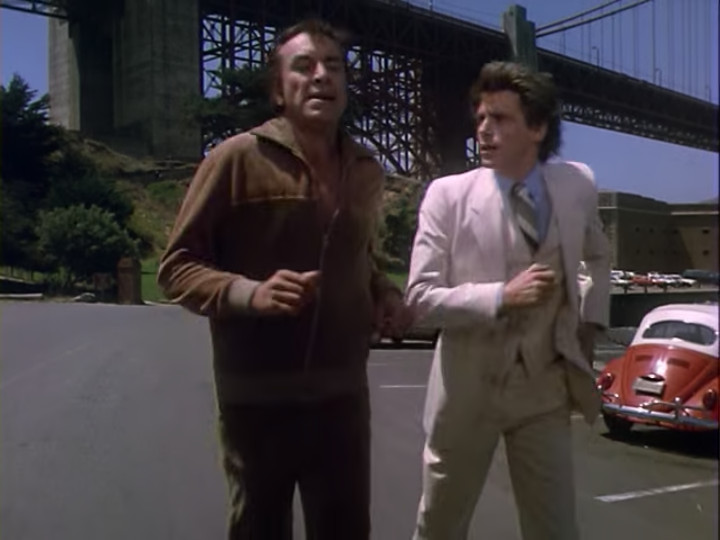
mpv-shot0002

The man in the white suit needs his money, and the man in the track suit says that the man in the white suit will get it when he’s finished. We learn that the man in the white suit is named Howard, and that he won’t get a time unless he is “there” tonight. Howard is unhappy but accepts this answer and the man in the track suit runs off.

When he gets to his car, it turns out that another man in a white suit is waiting for him.
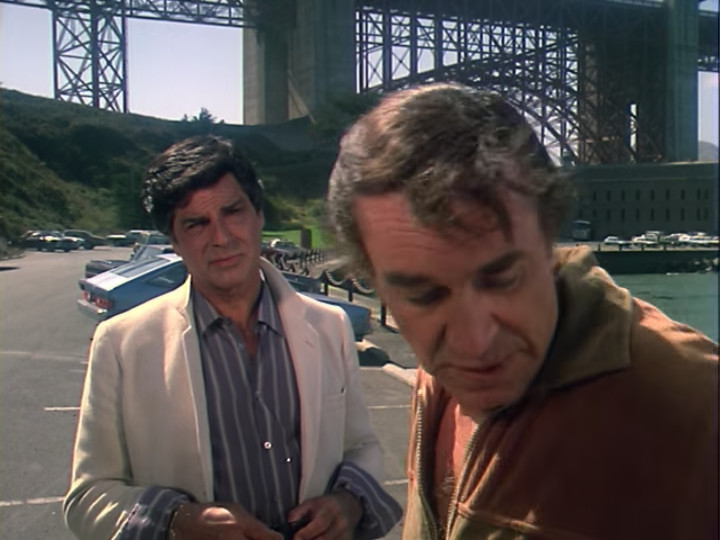
mpv-shot0003

Well, a man in a white jacket, at least. His name is Mike. He calls the guy in the brown track suit Al. Mike thought that they had a deal, and Al says that they do, Mike just needs to be patient. Mike says that he’s been patient for six months and he thinks that Al is just pulling his chain. Al asks if he got the money, and Mike replies that that’s his problem. Al then tells him to be careful. Things have been going real good, but he can live without Mike. Mike pokes Al in the chest for emphasis as he replies that anybody can live without anybody. Mike then leaves.

The dialog is intentionally vague to stir up the audience’s curiosity. If we want to learn what this is all about we won’t change the channel or go to bed early. Ironically, though, it’s actually far more realistic than the exposition one normally finds at the beginning of episodes. A typical show might begin with, “Well, if it isn’t Al Drake, manager of my favorite night club.” “Hi there Mike Dupont. Still hoping to buy out the contract of my lead act?” No one actually talks like that, though through exposure we come to accept it. I find it amusing that the realism is an accidental byproduct.

The scene then cuts to a young woman named Victoria who’s talking to a priest about her upcoming wedding.
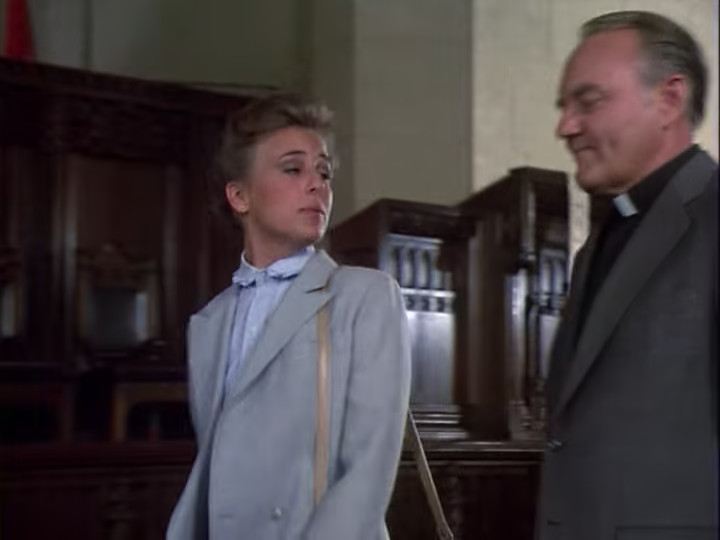
mpv-shot0004

It’s going to be a very simple wedding. Intimate. The priest says that they can still make it festive, with flowers on both sides of the alter, but Victoria says that she’s allergic to flowers.

When the priest asks exactly how intimate this wedding will be, she says that she just arrived from NY, her Aunt just arrived from Maine, and then just Howard and maybe a few of his friends.

Yes. That Howard.

He comes in a minute later and apologizes for being late, saying that traffic was terrible when he came from the office. Victoria tells him about dinner reservations she made and a minor fight ensues as he says that he can’t make it. In the fight we get a little backstory that he’s been busy every night for the last five nights.

The scene then shifts to Victoria and Jessica at the restaurant, where a small joke about the lobsters being Maine lobsters is made before they’re shown to their table. (The lobsters aren’t active; when Jessica asks if he’s sure that they’re Maine lobsters he says that they’re flown in fresh every day. Jessica says that perhaps the lobsters have jet lag.)

It’s an interesting restaurant.
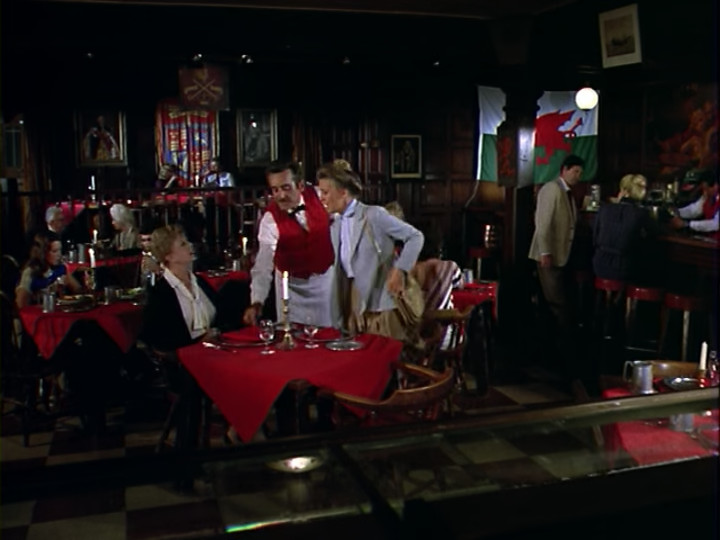
mpv-shot0005

Not very crowded, despite this being, in theory, a dinner engagement. That’s cheaper to film, of course. It’s very fancy in a dimly lit, hard-to-see-the-details kind of way. There were real restaurants like that back in the 1980s and for all I know, still are. It’s cheaper to look fancy if people can’t look to closely at the fancy stuff, both in TV and in real life.

Over dinner, Victoria tells Jessica about her history with Howard—she met him about a year ago in New York City. He was acting in an off-broadway show. He works in insurance (as his latest job—he had been a cab driver in New York), but aspires to be an actor. Then she breaks down and tells Jessica about her worries. She’s been in town five days but they haven’t gone out at night even once. And she went to Howard’s office the day before to surprise him and they told her that Howard hadn’t worked there for a month. Jessica says, knowingly, “Oh,” and takes a drink of wine.
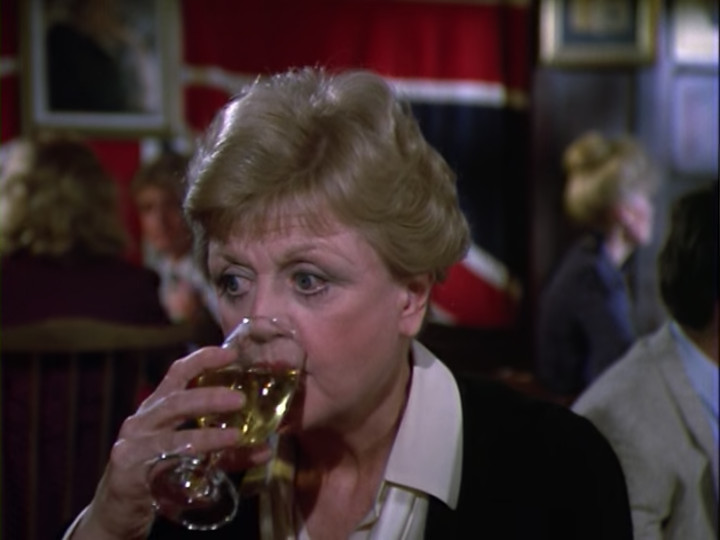
mpv-shot0006

She drinks it as if she wants the alcohol in it. I know I’m skipping ahead a bit, but this is very unusual for Jessica. (She rarely drinks except to comment on how fine the extremely rare wine which requires a refined palate to enjoy is.) I guess they’re still feeling the character out at this point.

Anyway, yesterday, Howard had circles under his eyes and smelled like perfume. And today he lent her a handkerchief and the lipstick on it was not her shade. And matches from a nightclub were all over his apartment. She’s considered going to the nightclub, but if she loves Howard, how can she justify spying on him?

Jessica replies, “For your own peace of mind, I think you have to.” Her tone suggests that this is sage advice, but it really isn’t. She could have said, “You can do it for Howard’s sake. If there’s something he’s afraid to tell you about, you can have the courage for him.” Or, “For the sake of the children you may have with Howard, you owe it to them to make sure you can both go through with the marriage.” Or “marriage shouldn’t be entered into with secrets and if he’s not strong enough to tell you his secrets, you should do it for him in case it’s something you can accept.” All of these actually address Victoria’s concern. Jessica’s reply that Victoria just needs to be more selfish is… bad advice.

The scene cuts to the night club, which is a relatively classy place.

mpv-shot0007

Before long the camera goes to Al, who is filling in for the host, and a well-dressed man named Patterson walks in.
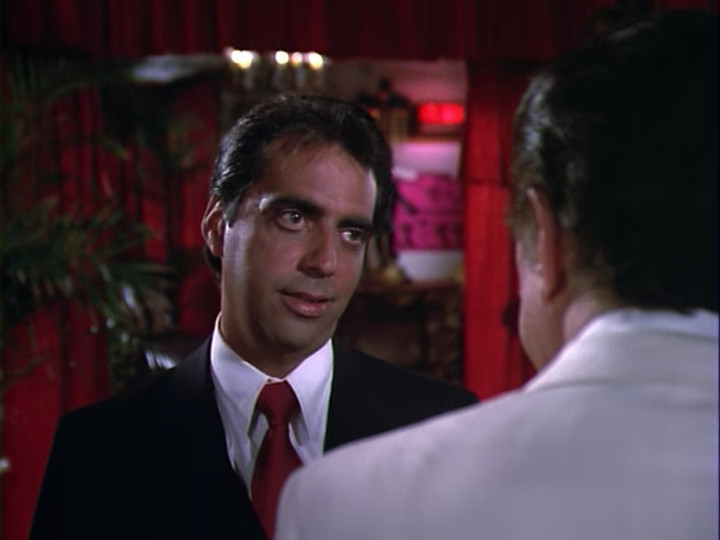
mpv-shot0008

It turns out that he’s the agent for Freddy, a comedian with a four-year contract at the club. Al’s interpretation of their contract is that Freddy can’t do anything else, while Patterson’s interpretation is that Freddy is free to do other stuff on the side. Patterson recently got Freddy on a talk show and now he’s hot. Al, however, is unmoved, except in the sense that he says “this is what we have courts for” and walks off.

Jessica and Victoria come in. They ask for a table for two but the host says that he can seat them next Thursday. Victoria then identifies Al as being in charge from some posters on the wall and walks up to him, explains that she and her Aunt want a table, and then explains how famous Jessica is. Al sees to it that they’re seated immediately.

I’d like to pause to take note of what she actually says. Assuming that she’s telling the truth—and I suspect that she is—Jessica has six best-seller books, was on a talk show this morning, and will meet the mayor the next day. Since the pilot episode depicts Jessica’s first book being published, obviously a lot of time has passed between the pilot and the main series.

The first act we see is Freddy York, the performer whose agent showed up and talked with Al a few minutes ago.
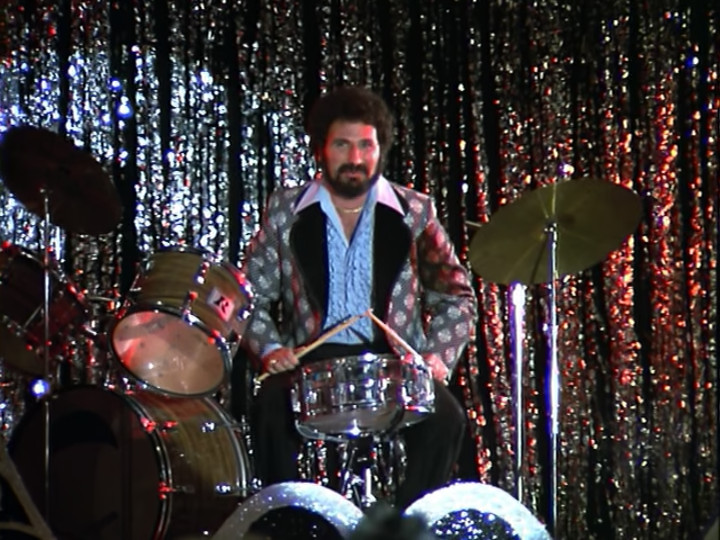
mpv-shot0009

His shtick is that he plays the drums as his own backup and does the rim-shots for his own jokes. His outfit is really amazing; I believe it’s intended to be sincere. The episode was shot in 1984, which was only four years after the 1970s when collars like this were hot stuff. I suspect it’s meant to indicate that he’s a little stuck in the past, but not very much. His jokes, incidentally, aren’t terrible, though they are neither very witty nor very classy. After a few of them, we cut to a glamorous older woman walking in.

mpv-shot0010

It turns out that this is Al’s wife. Since Al’s last name is Drake, she’s Mrs. Drake. The host greets her very politely, but there’s a bit of ice in the air. When he asks if Al is expecting her, she replies she very much doubts it. She’s shown to her table immediately, of course. Once she’s on her way to her table, the host grabs a bus boy and tells him to go find Al and tell him that his wife is here.

As the busboy is looking for Al back stage, he runs into a woman who asks him what he’s doing back stage.

mpv-shot0011

We actually saw her before and it seemed so minor an interaction I didn’t think it worth mentioning. She had some banter with Al before Freddy’s agent came in. Since she may play a bigger role than I anticipated: her name is Barbara. Anyway, she tells the busboy to go back to the front and she’ll tell Al.

The moderately funny comedian who does his own rim shots tells a final joke—which Mrs. Drake applauds vigorously—then he profusely tells the crowd that they’re beautiful, wonderful, and every good thing, then takes his leave. Jessica then asks Victoria if she’s noticed that there’s something a little off about this club. Victoria doesn’t know what Jessica means. Frankly, neither do I.

Somebody in a silver dinner jacket then introduced the “chanteuse” they’ve all been waiting for.

mpv-shot0012

After a few introductory bars and the length of time it takes to sing “There’s a somebody I’m longin’ to see. I hope that he turns out—” we hear a scream. Then a female figure in a fancy dress runs off the stage and through the crowd, towards the front door. Right behind it, Barbara runs onto the stage and calls out, “Stop him! He’s a murderer!”

mpv-shot0013

A police officer shows up at the front door cutting off that exit, so the figure then tries several other avenues of escape before crashing into Jessica and Victoria’s table. His wig falls off and we get to see who it is.
mpv-shot0014

It’s a surprise, though it shouldn’t be. This is exactly the kind of twist that TV shows of the 1980s loved, all the more, right before a commercial break. Which is what happens after some shocked recognition between Howard and Victoria and Jessica being surprised that this is Howard.

We come in from commercial to an establishing shot of a police car driving with its sirens on, followed by an interior of the club in confusion. Amidst the confusion we do learn that Al was shot.

Howard is being kept locked in a room with a security guard keeping watch on the door. Victoria comes up and persuades the guard to let her in. She’s so happy that it turns out the thing he was hiding was just a job that most of what they do is kiss until Lt. Novak shows up and is surprised to see them passionately embracing. He takes it in stride, however, and merely asks the security guard which one is the suspect (“the tall one”) then directs that he be taken down to the station and booked.

The scene then shifts to the scene of the murder, with Lt. Novak entering and taking charge.

mpv-shot0015

His manner is very matter-of-fact. Interviewing the assembled crowd of people, he asks who saw the murder and Barbara answers that she did, or, rather, she walked past the open door and saw Howard standing over Al holding the gun. The Lt. looks at the ground and sees a gun. Picking it up with a pencil he remarks that, having a smooth grip, they may get some fingerprints from it.

This musing is interrupted by the sound of a bird—a white cockatoo—cawing and then Jessica interrupts to ask if Lt. Novak noticed a small white feather on Al’s jacket. Instead of answering, the Lt. asks her to leave. The manner is curious; he asks if she’ll do him a big favor and she eagerly replies that she’ll do anything at all to help. He then asks her to get out of here and she is crestfallen. Apparently, by now, Jessica is used to joining the police on murder investigations.

The scene changes to the next day, at the police station, in Lt. Novak’s office, with Lt. Novak finishing interviewing Freddy York (in the same clothes as he was wearing on the night before). After signing his statement, Freddy express his lack of sympathy and leaves. Right after, Jessica knocks on the door and enters. Novak doesn’t want to talk with her but she uses her clout and fame to bully him into cooperating.

He relents and gives her a brief infodump. The suspect was seen standing over the body holding the gun. The only fingerprints on the gun belong to the suspect. It was common knowledge that he’d been arguing with Al Drake about money. The gun was stolen from a pawn shop about six months ago, in New York city, where Howard lived at the time.

She asks if he conducted a nitric acid test to determine whether Howard fired the gun. He replies that they haven’t gotten to it yet, and she tells him that he’d better get to it soon because after a few hours the test is meaningless. (According to Wikipedia, this is accurate. Gunshot residue tends to only last on living hands for 4-6 hours since it is easily wiped off by incidental contact with objects.) Since the murder took place the previous night and it is now past sunrise, the crucial window has already expired, so it’s a bit weird that Jessica is telling the Lt. to get to the gunshot residue test soon. (A nitric acid solution is used to swab the area to be tested as the first step, which is, I believe, why she’s referring to it as a nitric acid test.)

She then demands to see Howard and doesn’t take ‘no’ for an answer.

Howard is brought to the Lt.’s office, who gives them privacy for some reason. Howard is confused since he’s never met Jessica before, but she takes charge. Jessica directly asks him if he killed Al Drake and he says he did not, Al was dead when he walked into the room. He had just finished his act and went into Al’s office to get his money and quit. This is a bit odd because we saw the act right before Al was found dead and it was Freddy’s comedy routine. (I suspect that this is just a plot hole and not a hole in his story.) We get a flashback which seems plausible enough with Howard having a one-sided conversation with Al for a bit, since Al was facing the wall, and he only realized that Al was dead when he turned Al’s chair around to make him talk to him. Since this may be important later (someone may have thought Al was alive when he was actually dead), let’s look at how the chair was when Howard entered the room:

mpv-shot0016

You can’t see anything that indicates that Al is dead, but on the other hand this is a very weird thing for a living man to do. If you came into a room and saw a man sitting in a chair motionless staring at a dark wall, I think you’d be a lot more likely to check on him than to just assume he’s lost in thought. That said, there’s a good chance that this indicates a significantly earlier time of death.

Anyway, after finally turning the chair around when he got tired of Mr. Blake “ignoring” him, he staggers around in shock for a bit, notices it’s incriminating that he’s holding the gun that probably shot Mr. Blake, then Barbara comes in the door, sees the scene, and screams, at which point Howard panics and bolts.

Jessica says that she’s quite relieved because there’s only been one killer in the family, in 1777, and the red coat shot first. She then pivots to wondering what Barbara was doing in the office and Howard bowdlerizes to “Everyone knew that she and Mr. Drake worked late. A lot. Together.”

Jessica knowingly says, “I get the idea.”

She then says that she’s got the name of a very good lawyer and asks if there’s anything else he needs, to which he sheepishly replies, “pants.”

The scene then shifts to Jessica on the phone with Lt. Novak, presumably some time later. He lets her know that they’ve narrowed the time of the murder down to between 9:50 and 10:05. Jessica asks if that isn’t a bit precise for a medical examiner and he replies that it didn’t come from the medical examiner, it’s when York was performing and the banging of his drums covered the sound of the shot.

There’s an interesting exchange which follows the end of their conversation. Lt. Novak asks his assistant, “What is it about that woman that makes me nervous?” The assistant replies, “I think she’s kind of cute.”

mpv-shot0017

I find it interesting because it’s explicitly framing Jessica’s investigations. The police are officially not thrilled with Jessica investigating, but we—the audience—know that this is a mistake on their part. The assistant thus provides some ambiguity here. It certainly makes more sense than Amos Tupper taking both roles, as he did in Deadly Lady.

The scene changes to Jessica at the club during the day. She runs into Freddy’s agent for some reason. He asks if she has an agent on the west coast, but she does. He directs her to where she can find Barbara (she asked), and then takes a moment to look suspicious for the camera.

mpv-shot0018

I think that the equivalent of this, in a novel, is to give us a glimpse into the characters thoughts which is highly misleading if taken out of context, which is how we get it. “‘I hope she doesn’t find out,’ he thought.” Then later we discover it was a different ‘she’ and the thing to not find out was something completely unrelated—if the book is halfway decently constructed, a red herring that the detective uncovers and this explains “why you were acting so funny when I spoke about [name].” It’s a bit of a cheap trick, but it does make the viewer/reader feel like they need to keep on their toes, which they want to feel like.

We then see Mrs. Blake talking to two men—the host and someone I don’t recognize. The upshot is that she’s intending to run things now that Al is gone. She also picks a fight with their leading female impersonator, who storms off to his dressing room. She yells at him to never turn his back on her and follows. Once they’re in his dressing room and close the door their manner changes entirely, they embrace, and passionately kiss. And on that bombshell, we go to commercial break.

When we get back, Jessica walks into Freddy’s dressing room by mistake, where he’s sitting at his mirror for some reason. He says that it’s too bad about Howard, the kid’s got talent and not just at wearing dresses. He makes some jokes about how his own talent is wasted in a dump like this; in Las Vegas a llama who’s part of an act has a better dressing room that he does. Jessica says that it’s not so bad and at least he’s got a window with a great view. He jokes that it’s his manager, Patterson: he couldn’t get Freddy any more money so he got him a window. When he asks if Jessica wanted to see him about something she excuses herself for intruding and leaves.

When Jessica finally finds Barbara, Mrs. Drake is firing her.

Jessica catches her carrying a box full of her stuff out of the office and offers to give her a lift in the taxi she’s in. Barbara accepts.

Jessica reads Barbara as a gossipy sort of woman and so plays a gossip herself. She shares the news that Al was already dead when Howard got there and Barbara accepts it without question. She goes on to say that she wouldn’t be surprised if Mrs. Drake did it. She also is aware of the affair she’s having with the female impersonator (his name is Mike). He was actually trying to buy the club. She also could believe that Mr. Patterson killed him because Freddy was under a seven year contract.

She gets out at her apartment and the scene shifts to Mike waiting near the ocean for Mrs. Drake. I’ve just realized that Mike was the second guy who talked to Al at the very beginning of the episode. Asking Mike if he raised the money was probably a reference to buying the club.

Anyway, he complains that Mrs. Drake kept him waiting and asks if this is a sign of things to come. She’s apologetic and gets to the point: she wants to know if he killed Al (which, she professes, wouldn’t make any difference to her if he did). Funnily enough, he had the same question for her, and it also wouldn’t make any difference to him if she did. After some closeups in which the actors try to look as suspicious as humanly possible, the scene ends.

This sort of scene will become a staple of Murder, She Wrote episodes, especially towards the middle. Once you notice them it becomes way easier to figure out who the murderer is: whoever doesn’t get a closeup of them looking suspicious.

In the next scene Jessica catches up with Lt. Novak at the club. She inquires about the nitric acid test and it came back negative. The Lt. says that Howard could have been wearing gloves when he shot Al and Jessica points out that if he was, there wouldn’t have been finger prints all over the gun and he can’t have it both ways.

Jessica then questions Lt. Novak’s theory about the gunshot being masked by Freddy’s drum act, so they do some experimentation with the assistant firing a gun in the murder room and Jessica and Lt. Novak in front of the stage with various amounts of noise being produced, and no matter how much noise, they still hear the shot. Lt. Novak takes that to mean that the only possible explanation is it being covered by the sound of Freddy’s drums. Why they tested every other source of noise except for Freddy’s drums isn’t explained.

Anyway, Freddy comes out and demands to know what’s going on—is Mrs. Fletcher suggesting that one of them killed Al? At that moment a string of heavy stage lights falls down almost killing Jessica and Freddy.
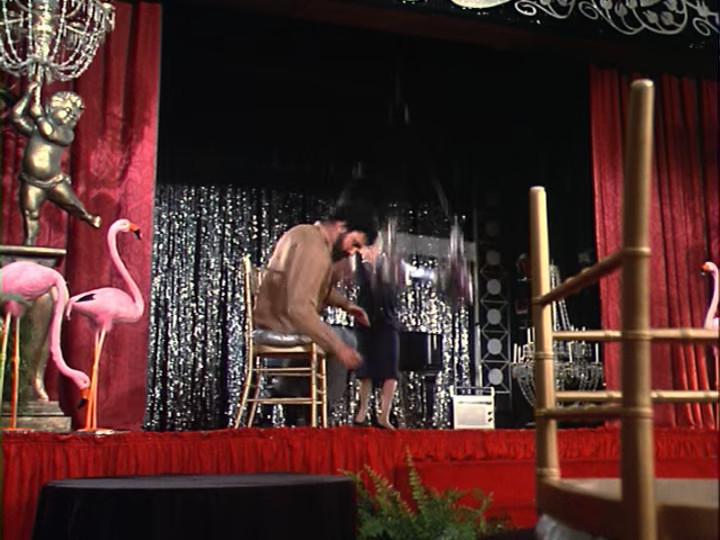
mpv-shot0019

Freddy dives in front of the lights, Jessica steps back to avoid them. When the camera finds Freddy he’s on the ground holding his neck in great pain, probably from the dive and landing on the ground.

The scene then shifts to Jessica knocking on the door of Lt. Novak’s apartment the next morning. She woke him up but is only very slightly concerned at this given that Lt. Novak has been working all night again. She needs to talk to him about Howard.

He’s friendlier than normal, explaining that his hates-everyone approach is just his office persona. They go over the list of possible suspects, but for some reason he’s convinced that Howard is guilty. I don’t really get this because it’s at odds with his theory that the drums covered the sound of the gun—unless he’s willing to postulate that, after shooting Al, Howard just stood around holding the gun for up to a quarter of an hour.

Anyway, after Jessica goes over some facts which incriminate other suspects including the affair between Mrs. Drake and Mike—which Lt. Novak didn’t know—he tells her that she’d have made a great cop but asks her to leave the policing to the police. She responds that she wouldn’t dream of interfering, which is odd because she’s very clearly happy to interfere, for example demanding that Lt. Novak do a nitric acid test and demanding that he take time out of the investigation to talk to her or she’ll badmouth him on television.

Anyway, he clarifies that her interfering isn’t what he’s worried about. Lab results indicate that the lights falling wasn’t an accident. The rope was eaten through with acid. Jessica’s interpretation was that someone was trying to kill Freddy York. Lt. Novak’s interpretation was that she was the target. We get a wide-eyed reaction shot from Jessica then switch scenes to a courtroom where Howard is bailed out. Jessica apparently posted bail for him, since she tells him that if he jumps bail the state of California has an option on her next four books.

In the hallway as they are leaving, Jessica asks Howard if he saw Mrs. Drake backstage during Freddy’s performance and he’s sure that he didn’t, but he did see her come in the stage door just before he went on. This isn’t very helpful to us because we never saw him on stage and there wasn’t really a time for him to have been on stage, but it helps Jessica because she isn’t deterred by plot holes in the same way that the audience is.

Accordingly, she goes and visits Mrs. Drake, who is playing golf. In between insincere condolences Jessica asks if Mrs. Drake saw her husband shortly before he died and she said that she didn’t, she came in during Freddy’s set. Jessica replies that it’s strange, then, that someone said they saw her come in before Freddy’s set. Mrs. Drake takes offense at this and says that she didn’t kill her husband, and if Jessica insists on sticking her nose where it doesn’t belong, she should look into Freddy York. His contract was a personal services contract with Al, not with the club, and when she brought Freddy flowers in the hospital, Freddy gave her notice that he was quitting.

I do need to partially take back what I said about us never seeing Howard on stage. Just in case I missed something I went back and it looks like Howard actually was on stage a little before Jessica and Victoria came in. If you look closely during the opening shot at the club, you can see Howard on the stage:

mpv-shot0021

You never see him clearly and almost immediately the camera pulls back and focuses on other things. And we’re looking at this in DVD quality. In broadcast quality back in 1984, it would have been extremely hard to make that out as Howard. Anyway, this introduces a timing problem. Howard confronted Al Drake after Freddy York’s set was over, but according to Howard, also, “I finished my act, then I went back to his office to quit and get my money.” In the flashback he was wearing his stage costume. This means he spent the entire length of Freddy’s performance doing nothing before he went to confront Al.

Anyway, Jessica takes Mrs. Drake’s story about visiting Freddy in the hospital to mean that Freddy is well enough to receive visitors and decides to pay a visit to Freddy herself. Accordingly, the scene shifts to the hospital, where Freddy and his agent are drinking champagne and celebrating all of the great things they’re going to do now that Freddy is free. Jessica walks in and Bill Paterson (the agent) basically yells at her to stop investigating, since neither he nor Freddy killed Al, and Freddy was not only on stage when it happened, someone later tried to kill him with the lights. Jessica replies that that’s a bit of a puzzler, since Mike thinks the lights were an attempt to kill him, Lt. Novak thinks that they were an attempt to kill Jessica, and Bill thinks that they were an attempt to kill Freddy. And on that… bang snap… we go to commercial break.

When we get back, Jessica is walking to her hotel room while Howard and Vicki argue over whether they should postpone the wedding (Howard says yes until he’s cleared, Vicki says no, they should get married right away). They ask Jessica what she thinks and what she thinks is that she needs a nap. Vicki asks if the builders working away in the room next to Jessica’s won’t keep her awake.
mpv-shot0022

Jessica replies that right now she could sleep through Armageddon. She then tells them that she promises that they will get to the bottom of this. She’s sure she’s overlooking something, and it will come to her if she get some sleep.

Jessica goes and lies down, but contrary to her imagined ability to sleep through Armageddon, all of the power tools do keep her up. She then holds the pillow over her ears…

mpv-shot0023

…and comes to a realization of what she had been overlooking.

She then shows up in Lt. Novak’s apartment. What she had forgot was the small white feather on Al Drake. Drake wasn’t shot during Freddy’s performance because the killer used a silencer! When Lt. Novak objects that they don’t make a silencer for that kind of gun, Jessica says that it wasn’t a metal silencer. It was a pillow. That explains the small white feather, which didn’t come from the cockatoo in Drake’s office. (It was an office pet.)

They then go to the scene of the murder and Lt. Novak picks up the pillow in the office and it has no bullet hole. But, Jessica points out, the pillow wasn’t there on the night of the murder. Don’t take her word for it, look at these police photos. When asked how she got police photos, Jessica says that his assistant, Charlie, gave them to her. He really is a very nice man.

Anyway, this shows that the pillow that’s there now was placed there after the investigation, presumably because the one that was there had to be removed because it was damaged when it was used to muffle the sound of the shot.

Jessica then asks Lt. Novak to take part in an experiment. They go to the stage and she has Lt. Novak stand in a precise location on the stage, then goes backstage and drops some sandbags on him. Or would have, had Lt. Novak not stepped out of the way when he heard the sandbags descending. She points out that he heard it, and he replies that of course he did, he’s not deaf. Jessica replies, “and neither was Freddy York.”

At this, Freddy steps out from back stage, applauding. He tells Jessica that she’s quite a performer. She says that it was quite a performance that he put on, diving off the stage when he didn’t have to.

Freddy counters that all she’s proved is that he could have staged the falling lights.

I’m not sure how she’s supposed to have proved that. All she proved—to the degree that she proved anything—was that Freddy was able to get out of the way of the lights because he would have heard them. But that was never at issue. He did get out of the way of the lights, so he got out of the way somehow, and hearing them just as Lt. Novak did is as good a way as anything else. Weirdly, though, it required no proof that he could have staged the lights because the rope was eaten through with acid, which he could have put on the rope before coming out on stage, because anybody could have put the acid on the rope before Freddy came out on stage.

Anyway, he goes on to say that this doesn’t prove that he had anything to do with what happened to Al Drake and while Freddy would love to stick around, he’s got to fly to Vegas—he hopes his arms don’t get tired. He then tells them that they’re beautiful and leaves.

Jessica motions to Lt. Novak to follow, and they do.

In Freddy’s dressing room Jessica points out that the pillow which was used to replace Al’s pillow was from Freddy’s dressing room because it is sun-faded, just like his settee, and it’s the only one that is because Freddy’s is the only dressing room in the building with a window. (The pillow does have a lighter side, though until Jessica said that it was sun-faded I thought it was just two-toned.)

Somehow it being the pillow from Freddy’s dressing room which was used to replace Al Drake’s pillow  in the days following the murder means, conclusively, that Freddy is the murderer. Luckily for Jessica Freddy can’t see any way out of this logic and admits it. “It’s my luck. It’s my dumb luck. Half the people in this club wanted Drake dead, and your niece’s boyfriend’s gotta get tagged for it. I knew you were trouble as soon as I saw you. What was I gonna do? Spend the rest of my life working in this rinky-dink club? You ever try to tell jokes when someone’s got their hand on your throat?”

Jessica shakes her head and says, “Surely, murder isn’t the answer.”

This prompts Freddy into a monologue.

You call it murder. I call it a career move. Look at me. What do you see? I’m not just another comedian. I’m Freddy York. I’m the first guy who did his own rim shots. I’m like the Edison of Comedy. I’m Robert Fulton on the drums. So Al Drake sees me one Sunday night. He says, “Kid, you’re good. Here’s a long-term contract. It’s your shot. Your big break.” He broke my spirit. That man broke my heart. I couldn’t let him do that. I’m a creative genius. Fair is fair. He gave me a shot. I gave him a shot. Ba dum bum. Should’ve shoved you under that stage light.

When Lt. Novak asks him why he rigged the lights, he merely replies that Novak should ask Jessica. She says the obvious, that he thought the charges against Howard would get dropped and a murder attempt on him would point suspicion elsewhere. Freddy then says, “Boy, you are good. I mean, you are really, really good. You ever think of taking your act on the road? You should play Vegas. That reminds me, I better cancel my tickets. Doesn’t look like I’m going. It’s too bad. I could’ve knocked ’em dead.”

Jessica nods and says, gently, “I’m sure you would have.”

We then cut to the wedding ceremony for Howard and Victoria. There are a few curious things about it; one is that we come in on “by the power vested in me by the state of California, I now pronounce you man and wife.” But this is in a church and it’s a priest who’s performing the ceremony. Those are the words spoken by a justice of the peace at a state ceremony. It’s interesting that here in 1984 they’re so hard-core secular.

The other interesting thing is the guest list:

mpv-shot0024

It’s just the people from the episode, none of whom had a connection to Howard or Victoria. A cynical man might think that this was mostly done just to save money on casting.

I might be that man.

Anyway, after the vows are over and the guests congratulate the couple, Bill Patterson comes up the isle and tells Howard that he’s been on the phone for an hour and got him a job on a soap opera for two days a week. It starts on Monday.

Victoria is all for it but Howard is ambivalent because it means canceling the honeymoon in Hawaii which Jessica had given them as a wedding present. Howard asks Jessica what they should do and she replies that she usually doesn’t give advice (which causes Lt. Novak to shake his head in disbelief behind her), but she thinks they should go for it.

Then everyone cheers and we go to credits.
mpv-shot0026

This was a very interesting episode. Quite different from Deadly Lady. It was far less of a classic mystery and perhaps a bit closer to a typical Murder, She Wrote episode. Jessica is nosy more than clever, most of the investigation was of red herrings, and Jessica solves it at the end in a moment of inspiration which gives the audience time to figure it out first.

It also had some really big plot holes. Bigger than I’m used to seeing on Murder, She Wrote.

Right at the very beginning, the intended wedding between Victoria and Howard makes no sense. Somehow Victoria and Howard are getting married in a day or two and she’s discussing basic initial planning with the priest. He’s literally never met the groom and doesn’t care; his only concern is interior decoration and some brief rehearsal. Very brief, in fact, because he has to get to chorus rehearsal in five minutes. There is literally only one person from her side of the family coming, and that’s Jessica. No parents, siblings, cousins, aunts, uncles, or friends—just Jessica. Howard also has no family, though for all she knows he could have a few friends he’s made in the last six months. None of this bothers Victoria because she’s head-over-heels in love with Howard and would do anything, absolutely anything, for him. Howard’s lying to her about his job and having various indications that he’s having an affair with another woman only very slightly ruffles her, though it in no way deters her from going through with the wedding.

And somehow, this doesn’t bother Jessica in the slightest.

The timing of Howard’s performance is basically irreconcilable with the presented facts. He seems to have waited around, in the dress he didn’t like wearing, for the entire length of Freddy York’s performance doing absolutely nothing before he angrily went into Al Drake’s office to demand his money and quit.

Howard’s certainty at seeing Mrs. Drake come in right before his performance also goes nowhere, which is probably because it couldn’t have gone anywhere. What could Mrs. Drake have done, back stage, for however long it took Howard to perform, before leaving and re-entering through the front door? If we’re to believe that Howard was right, then presumably it was to visit Mike. Which seems more than a little far-fetched. She could hardly have hoped to be unobserved during such a busy time. And since this is a night club, they had plenty of time for hanky panky during the day.

Speaking of timing, there’s kind of a plot hole with how they filmed the episode. Al is alive and well in front of the club when he directs the host to give Victoria and Jessica a table. They walk directly to their table and Freddy York is introduced and starts his act within ten seconds of them sitting down (in a continuous shot). Al would have had to have sprinted to his office in time for Freddy to shoot him, and then Freddy would have had to sprint on stage, and I doubt that even that would have worked. Timing it, it’s twenty four seconds from when we last saw Al alive to when the curtain parted as the announcer came out to introduce Freddy and we catch a glimpse of Freddy behind the curtain. (The announcer would have seen if Freddy was absent and wouldn’t have announced him if he didn’t see him before stepping out through the curtain, but seeing Freddy is even more certain.) Granted, there were two cuts, but they were very clearly meant to cover continuous time. Twenty four seconds is not much time to sprint to his office in order to get murdered in his chair. (There was even less time for Freddy to have murdered Al after his set, though it’s clearly established that’s not what he did.) So there’s no way that Freddy could have done it. Which is great. I don’t think that there can be a bigger plot hole than “the murderer couldn’t have done it.”

Oh well.

Moving on, what was the whole thing about Barbara telling Mr. Blake that his wife is at the club, then not doing that? I suppose she’s meant to and this is the reason why she went to his office, but it was over a minute of screen time between when that happened and when we hear the scream. Also—and I had to go back and double check to remember this—she isn’t in a hurry to go find Al. In fact, she watches the bus boy leave then peers to make sure that he’s gone.
mpv-shot0027

I can think of no reason whatever that she could want to get rid of the bus boy. Yet she was more concerned with that than with telling Al his wife was here. What was that about? I doubt that the writers knew, either. And the whole thing where Jessica wanted to find out why Barbara was at Al’s office and so saw Howard with the gun? Completely dropped. Jessica never found out that Barbara was carrying a message for the bus boy.

When Jessica meets Lt. Novak, her manner suggests that she expects him to know who she is and to want her help. It’s meant to set up her being disappointed when Lt. Novak tells her to get lost, but it feels weird. She’s old enough to know that it requires some introduction to put yourself into someone else’s business, and that the police don’t do murder investigations for fun.

It’s not a plot hole, just a bit of sloppy writing, but nothing ever comes of Al’s corpse having been facing the wall. He couldn’t have been shot in that position. Freddy had to have turned him around after shooting him. The only reason to have turned him around was to make it look like he was alive when he was already dead. Yet absolutely nothing comes of it. (This is the sort of thing I mean when I say that Jessica isn’t as clever as in Deadly Lady. An observation like that would have been an obvious point in her favor with Lt. Novak.)

Then there’s the “scientific testing” of the hypothesis that the sound of the gun shot was masked by Freddy’s drum playing, which didn’t involve testing that hypothesis. I suppose that they were testing the related hypothesis that other things could have covered the sound, but why did they never test whether Freddy’s playing would have covered it? Especially for the people back stage, where the gun would have been closer to them than Freddy’s drums? Guns are very, very loud. Far louder than drums.

I guess it was OK that Freddy staged the thing with the lights nearly falling on him and Jessica, but why on earth did Lt. Novak remain convinced that Howard did it after that? Howard was in police custody at the time. Why did Jessica not point this out?

And why was the stuff with the pillow supposed to be remotely convincing? The pillow being sun-faded in a way that exactly matches the settee in Freddy’s dressing room and in no other room works to prove that the pillow came from Freddy’s dressing room, but how on earth does that prove that Freddy murdered Al Drake? The pillow was placed there after the police investigation was over, which means that anyone could have done it. You can make an argument that the murderer would have had to use his own pillow in some sort of exigent circumstance, but not when the murderer was replacing a pillow at his leisure. The murderer would have had to be an idiot to use his own dressing room’s pillow. (Unless he was going for a double-bluff by trying to make it look like someone was trying to frame him.) If I were making a list of the top ten airtight cases, I doubt that I would include: “Somehow, long after the victim was dead, your office pillow wound up on the victim’s couch. How do you explain that, if you didn’t kill him!”

This is an especially big problem when you consider what they don’t have: a pillow with a bullet hole in it. They don’t even have anyone testifying that Al’s settee definitely had a pillow on it shortly before he was killed. In short, there’s no evidence that a pillow was involved in the murder.

And this is leaving out the fact that a pillow only makes a gun very slightly quieter. I’ve seen people test it and a gun with a pillow in front of it is is perceptibly less loud. You could definitely pick it out in blinded A/B testing. But that’s about it. It’s still around the threshold for causing hearing damage. But this is just a subset of TV silencers, which work about 1000 times better than real silencers—part of why people who know what they’re talking about tend to call them “sound suppressors” rather than “silencers”. To get an actually quiet gun which only goes “ffft” you need a specially designed silencers with multiple rubber wipers the bullet shoots through (making it require replacement after a few shots). And that only works if you use specially loaded sub-sonic bullets. Ordinary bullets, which travel much faster than the speed of sound, make a loud bang because all hypersonic objects do. Only sub-sonic bullets have the possibility of being quiet and the trade-off is that they have far less power in them. That is, they’re less likely to be lethal. This is just part of TV fantasy, though, so there really isn’t a point in complaining that TV silencers are magic, and if we’re allowing TV silencers, I suppose we need to be forgiving of TV pillows, too.

It’s really lucky that Al didn’t think of any of this and just confessed.

The importance of that confession in Murder, She Wrote is often overlooked, I think. It’s nice when the evidence is clear, but it’s absolutely crucial when it’s not. When the evidence is as flimsy as it often is, the only thing that makes Jessica look smart is the proof that she’s right which a confession offers. Otherwise she’d seem over-confident in wild guesses.

Incidentally, this is one major reason it bugs me so much when people suggest, as if it’s clever, that Jessica was wrong about who did it or committed the murders herself. The murder always confesses. Always. This is like suggesting the clever twist in Harry Potter that Harry was deathly afraid of brooms which is why you never saw him touch one! It’s brilliant! Except for the part where he did touch them, prominently, so this is stupid. Or imagine this wonderful idea where in Star Trek Kirk is really Spock, in disguise. That’s why you never see them in the same room together! Except that you see them together in the same room in every episode.

It’s really easy to be clever if you don’t let facts get in the way.

Anyway, with all that said, and not taking any of it back: it was still fun to watch this episode. A lot of that comes down to the acting. Some of it is the pacing, though. Even when not much is happening, you always feel like something is about to happen, which keeps your interest. And I think it does a decent job of making you forget all of the stuff that was never paid off or flat-out contradicted the conclusion. I also suspect that ending on a happy note for Howard and Victoria helps that. A murder investigation produces a liminal space in which normal life can’t happen. That liminal state also allows us to look into things we normally would not be able to see, which is where most of the fun of a murder mystery comes from. The resumption of normal life with something like a wedding definitively closes that liminal state—it brings us over the threshold and back into normality. It’s not required, but I suspect that it greatly helps the story to feel satisfactory. Even when it shouldn’t.

Next week we move south along the coast to Los Angeles in Hooray for Homicide.

Don’t Optimize the Fun Out of Life

There’s a very interesting game called Hypixel Skyblock. It’s a Massive Multiplayer Online Role Playing Game (MMORPG) built on top of the game Minecraft, which is a block-based building and slightly RPG game which is as much a game engine as an actual game itself. MMORPGs, if you don’t know, are games where tens of thousands of people play in the same virtual world and can interact with each other. The ability for players to trade items and in-game currency means that virtual economies will arise, and Hypixel has leaned into this hard with Skyblock.

In addition to the usual NPCs who will buy and sell items, Skyblock features two marketplaces that intermediate transactions between players. The first is the bazaar, which is a commodities marketplace where people put up buy and sell offers (with money or items in escrow, as appropriate) and the ability to immediately sell or buy by fulfilling these standing offers (automatically taking advantage of the most advantageous offers). Supply and demand work themselves out in realtime as the prices fluctuate based on how many sell offers are put up vs. how many of them are fulfilled; if offers exceed purchases then sellers drive down the price in an attempt to get their items sold first. If demand exceeds supply, then the cheap sell offers get used up and prices go up as buyers move on to more expensive sell-offers. (It also works in reverse for sellers who want quick cash and will take less money for it.) The bazaar allows large amounts of trading, so one way that players can make money is by taking advantage of price fluctuations to buy low and sell high. This can make and lose people a lot of money, and as in the real world, it adds liquidity to the market.

The other major marketplace is basically a clone of Ebay called, simply enough, The Auction House. It allows ebay-style non-realtime auctions, as well as ebay-style buy-it-now offers. Prices fluctuate here, too, based on supply and demand, though it is often complicated by the items themselves. Armor with good enchantments on it will sell for more money than the same armor with no enchantments, but it scales with how difficult the relevant enchantments are to get and apply.
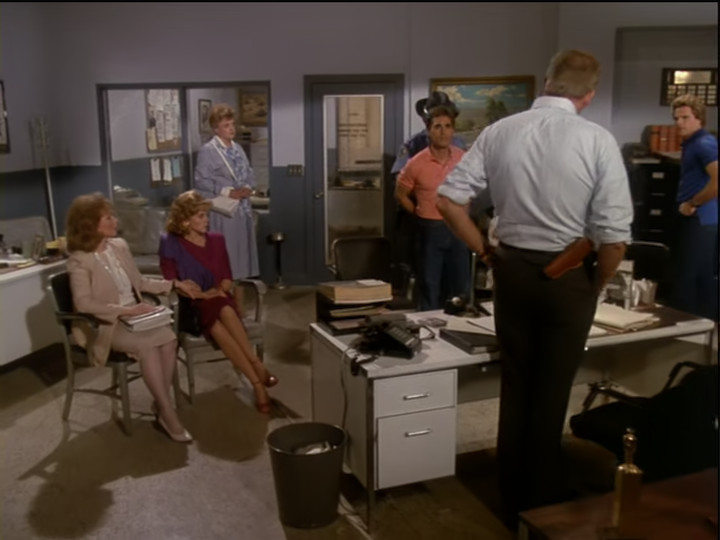
It’s a topic for another day, but my children learned some extremely valuable macro-economics lessons from playing skyblock, including the nature of price being governed by supply-and-demand, the time-value of money (e.g. it can be worth it to take a lower price for something because you want the money now), the fact that a lot of people really want to cheat you if you will let them, that day-trading is highly volatile and you can lose a lot of money on it as well as make money, that in order to sell something you need people who actually want to buy it; the list could go on. Playing skyblock, for people who pay attention, would be a pretty reasonable Economics 101 course. That’s not the point of this post, though.
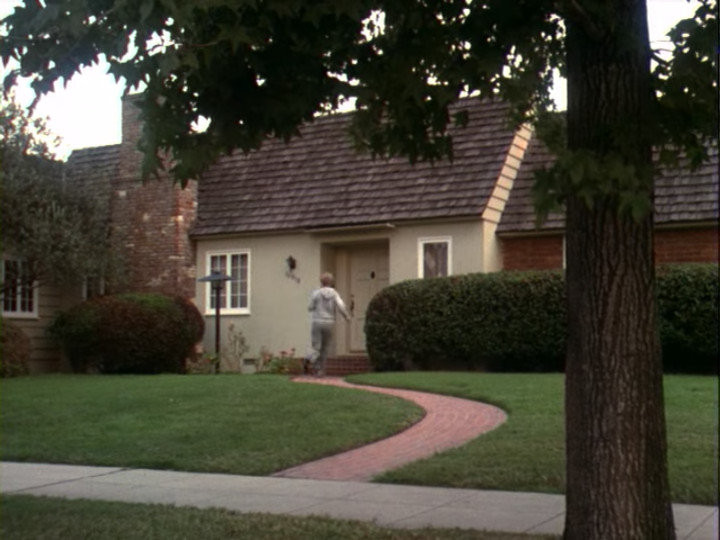
The other half of the economy of Skyblock is the activities which actually fuel the economy—the acquisition of items. Skyblock has a variety of ways of doing this. The main ones are fighting monsters in dungeons, fishing, forestry, farming, mining, and to a limited extent running factories. (The factories are called “minions.” They’re upgradable enchanted automatons who slowly produce resources. This method of producing resources is fairly limited, though, as you can have a maximum of 35 minions. While their effect on an individual player is limited, they add up over the scale of the entire economy, though.) My children’s preference is doing dungeons, and they got me involved in the game because they needed an extra player but also, later on, because, as they discovered, I’ve got a lot more patience for making money in skyblock than they do.

Part of this is just being at a different stage of life. I’ve got a full time job and three children; I don’t long for adventure anymore because I have it. Granted, being a programmer and a father isn’t the kind of adventure they put in movies, but real things ride on my performance and there are constant challenges coming my way, so I sure don’t need to fantasize about having even bigger problems or more stress. What I want in a game is relaxation, and mining in Skyblock provides that. There are very few split-second decisions in mining, but there are plenty of small decision points as you decide which way you’re going to mine. The pretend accomplishments come quickly, helping me to remember the real-life connection between effort and effect. (This is one of the great uses of video games—in real life it’s a three hour project to put a carpet in your daughter’s bedroom, and that only if you spent hours preparing first. In a video game, you can build things in a few seconds, and it reminds you that there does come a payoff at the end of work.) So I progressed in mining and now can make, in terms of in-game currency, ten or twenty times, per hour, what my children can make. So I end up buying them swords and armor to use in the dungeons. It’s satisfying and also a lot cheaper than buying them real swords and I don’t even know where to find real zombies for them to really kill. Or, er, re-kill.)

But as I’ve done this, I’ve noticed discussions people have about making money in Skyblock (people put up a lot of guides, talk to each other in the game, and there are a lot of forums) and there’s a very common theme: people complaining that Skyblock is not fun. I’ve looked into it, and I’ve discovered that they’ve pulled a reverse Mary Poppins: they’ve turned the game into a job. In their quest to make the most money per hour it’s possible to make, they’ve optimized out the fun. This is structurally necessary in the question to maximize coin-per-hour. Fun—when you’re not talking about the pleasure of movement in sports-type games—comes from making decisions. Decisions, however, take time, and time in which you’re not doing the thing you’re deciding to do. That is, the decisions from which the fun comes don’t make you money, and if maximizing the amount of money you make is all that matters, the decisions which produce the fun need to go.

This is almost certainly the wrong way to play a game, since the purpose of the game is to have fun. This is far more defensible in a job, since you do a job because things like feeding your family and putting a roof over their heads is far more satisfying than the fun you’re missing out on by being more efficient.

But.

Even in a job, no one is ever 100% efficient. Often the biggest gains in efficiency don’t even come at the expense of what fun there is to be found in them. When I was making bowstrings (admittedly, as a hobby) I massively improved my productivity by making a small tool out of a dowel to hold the two halves of the string far enough apart that I could wrap serving much faster. This actually improved my enjoyment of making bowstrings because pulling the strings apart over and over was just annoying. This will not always be the case, but it is often enough that it’s worth taking a look at the parts of a job one wants to optimize and seeing if it’s getting rid of what fun there is in the job, and if it is, seeing if there’s someplace else to optimize. Every job requires periods of rest within it, both short periods of rest more frequently and longer ones less frequently. It is often the case that small but fun decisions which are not 100% efficient can be used as the short periods of rest.

The same thing can apply to chores around the house, like sweeping or doing dishes. Mary Poppins’ “You find the fun and snap! The job’s a game” is an exaggeration, but it does have an element of truth to it. While it is possible to throw everything into the trash as if it were a basketball game, I suspect that would actually get tedious quickly because it’s nowhere near as good as real basketball and makes the job takes many times how long it would take normally. The basketball laundry hampers—if they still make them—are probably more on the mark, since it adds very little time to the chore of putting dirty clothes into the laundry basket. At least for people with good aim. Less gimmicky, though, is looking for the decision points which are actually within the task at hand. To take the example of sweeping, each time you place the broom involves the act of aiming, and how you choose to divide the area up into strokes of the broom can be done with creativity so as to minimize the number of strokes. Or to maximize the effectiveness of each stroke. Or to make the dirt collected uniform. These variations may make the job very slightly less efficient, but not much less efficient, and by creating decision points—or just paying attention to the decision points that exist and making them consciously—they do introduce an element of fun. Not great fun, of course, but chores don’t need to be great fun. Making them just a little fun can make them far more endurable.

If you’re in something for the long run, there will always be periods of rest and inactivity. Judiciously and thoughtfully spreading a little bit of them into the practical labor to be done can turn drudgery into simple work.

In conclusion: by all means optimize the work that you’re doing, but don’t do it so much that you optimize the fun out.

Robin Hood: Prince of Thieves Was a Strange Movie

I first saw Robin Hood: Prince of Thieves when I was not yet a teenager and it made a deep impression on me. For some reason I was thinking about the movie recently and I realized that it’s a strange movie.

Part of this is that, these days, I tend to look at movies through the lens of “do I want to show this to my children?” It’s a question that brings a lot of things into focus. Children grow up (relatively) quickly and we only have so much time with them; how one wants to spend it is an important question. Some movies are absolutely worth it. The Errol Flynn movie The Adventures of Robin Hood is an unquestionable yes (already have with the oldest).

Robin Hood: Prince of Thieves is a modern twist on an ancient tale. To paraphrase Nietzsche: that is to say, it’s a bad twist. The basic premise is that Robin Hood was a spoiled rich kid who got captured in the crusades and was forced to grow up while in prison, escaped, made his way back to England, and then assembled a ragtag band of misfits to overthrow the tyranny which had taken over England. It’s a joyless retelling, where everyone is dirty and unhappy. No one has faith in what they’re doing, they’re just desperate and have no other real options. Maid Marrion is pretty in a technical sense, but completely unappealing, while Kevin Costner’s Robin Hood was heavy and plodding. The two had a sort of anti-chemistry where it made no sense for them to be together.

I know a lot of bad movies get made in Hollywood, including a lot of big budget bad movies. It remains perplexing every time why people would make such obviously bad choices. (I don’t mean all of the bad choices; some things—both good and bad—only become obvious in final cuts, after all of the color-correction and with the music.)

One good thing did come from this movie, though. Because of Robin Hood: Prince of Thieves, Mel Brooks made Robin Hood: Men In Tights. Despite being a Mel Brooks slapstick parody, it’s actually a better Robin Hood movie than Prince of Thieves and even a better adventure movie. Plus, this was the only time that Carry Elwes played Robin Hood, which was a role he was clearly born to play.

A Lot of Classics Aren’t Classics

As my children grow older and I continue to consider what books, movies, and TV shows to recommend, I’m increasingly coming to the realization that a great deal of what made up the “classics”—stuff from the 1930s through the 1970s—actually aren’t classics. They spoke to the generation they were written for, and a little bit after that, but they don’t speak to the universal human condition. It only felt universal at the time because it was the dominant lens through which everything was viewed.

Take classic Science Fiction: it’s not all garbage, but a shockingly large amount of it actually was. It’s not its fault, precisely; the problem is that it reflected the societal chaos of the inter-war and post-ww2 periods. Unmoored from any sense of human nature, it expresses nothing of any value to people who haven’t grown up in a similar cultural maelstrom.

Even a lot of Englightenment and post-Enlightenment era classics suffer from a similar sort of limitation. Take one of the great romantic-era poems, The Tyger, by William Blake. That’s the one that begins:

Tyger Tyger, burning bright,
In the forests of the night;
What immortal hand or eye,
Could frame thy fearful symmetry?

It’s a very well constructed poem, but when we come to one of its best verses:

When the stars threw down their spears
And water’d heaven with their tears:
Did he smile his work to see?
Did he who made the Lamb make thee?

The problem is: the answer is yes. Any well-educated child knows that. God looked on all he made and saw that it was very good.

Don’t get me wrong, it’s a good poem. But it loses a lot of its power when you’ve received an even mildly decent education.

A lot of classic science fiction boils down to, “maybe we can fornicate a lot on other worlds.” Maybe you can, but it will still be wrong. It will still be lying to yourself about what you’re actually doing. On a lonely planet with no sun, warmed only by volcanic activity where every man who visits automatically gets twenty concubines with ten breasts each, fornication will still just pretending that one can have the happiness of having children without any of the work of having them. (At its best; at its worst, it will still just be drug addiction to endogenously produced drugs.) A story in which unhappy people pretend that they’re happy and then that’s it, that’s the end, the author is pretending the guy is happy too—that isn’t a good story even if you set it on Mars.

All of this stuff was new and exciting when desperately unhappy people who still had the optimism of youth thought that perhaps technology offered a way to escape and then told each other fantasies of that working out. That’s really what a shockingly large amount of classic science fiction really was.

Movies, oddly, tended to be better, in that they tended to be morality plays. They were mostly variations on men whose reach exceeded their grasp trying to take the power of gods and then being smashed by the natural consequences of their inability to control the power they put their hands on. In some ways the greatest of these, or at least the most explicit, is Forbidden Planet.

I don’t have any grand conclusions to this. There is good stuff among these “classics.” It’s just so much fewer and farther between than I had realized when I was a kid, and I’m realizing this is quite a surprise to me.

You Have the Right to Remain Innocent

I recently saw the news that the defense attorney / law professor who made the videos Don’t Talk to Cops (part 1, part 2) wrote a book on the subject. It’s called You Have the Right to Remain Innocent, and it’s a short and easy to read book which covers much of the same material, but in greater depth, with updates for recent caselaw, and without the speed-talking.

Since the basic thesis of the book is stated in its title, which is also a reasonably summary of the book’s actionable advice, it is reasonable to ask what is in the book which justifies opening the book to look at its pages. There’s actually a lot.

The book does starts with some caveats, perhaps most notably that he clarifies he’s talking about speaking with the police when they come to you, unsolicited, to ask you questions about the past. It is both a legal requirement and good sense to readily comply with the request to identify yourself and explain what you are doing in the moment, where you currently are. One of his examples is if you are breaking into your own house because you locked yourself out and a policeman asks you what you are doing, do tell him that this is your house and you don’t have your key. He mentions some other cases when you must talk with the police.

The other very notable caveat is that he takes some pains to point out that every member of society owes a great debt to the men and women who serve as police, who take personal risk to do a difficult job that keeps us safe. Throughout the book, he makes it clear that he isn’t talking about bad people, but (in the main) good people in a bad situation, which is the present criminal legal system in the United States. It is a system which sometimes convicts innocent people along with guilty people, and for reasons he makes clear throughout the book, his primary concern is giving innocent people the tools needed to avoid the pitfalls of this dangerous system. Good people make mistakes, and the mistake of a police officer or a prosecutor or a judge can cost an innocent person decades in prison. (He uses more than a few cases where the person convicted was later conclusively proved innocent by DNA evidence (often decades later) to show how wrong things can go for innocent people.)

The book has more than a few interesting insights into problems with the criminal justice system—perhaps most notably being the way that no living person has any idea even how many crimes are defined by the law, let alone what they all are—but I think its greatest value lies in the examination of particular cases where he goes on to show how even very trivial statements, which are true, can become damning evidence in light of other things which a person may not know and has no control over. The case where a man admitted to having dated a woman some time before the crime he was convicted of happened, in the neighborhood where that crime happened, helped to send a man later exonerated by DNA evidence to prison. Coincidences happen, but not all juries believe that they do.

And it is this sort of thing which is the main value of reading the entire book, I think. It is so very easy to slip into the mindset of wanting to give into the urge to cooperate, to be helpful, to be willing to answer any question which is not directly incriminating (and if I’m innocent, how could any question be directly incriminating?) which takes more than a little beating down by seeing over and over again how even minor admissions of completely true and innocent things can be disastrous. The book presents information, but I think equally reading it constitutes training. If one were ever to face a police interview it would be a very stressful situation, and when stressed we tend to forget what we know and fall back on our habitual reactions. Only through training ourselves by seeing many situations we could all too easily be in is it likely that we will remember to do what we should.

The final two chapters of the book, which are much shorter than the first, deal with the specifics of how to go about exercising one’s right to remain innocent in a practical sense. He covers many instances of how people have accidentally incriminated themselves when invoking their fifth amendment right, as well as how people have accidentally failed at refusing to talk to the police and asking for a lawyer. And again, it’s not so much knowing what to do that’s the real benefit of reading this book, but learning what not to do, and why not to do it.

The book is a short, easy read which is well written, and I think valuable for anyone living in America. I found it a valuable read even after watching the videos I linked above, and strongly recommend it.

Review: The Benson Murder Case

Having become interested in American writers during the Golden Age of Detective Fiction (primarily because of research into the phrase The Butler Did It), I came across S. S. Van Dine and his detective Philo Vance. Since Philo Vance had been described as one of the most popular American detectives of the 1920s and 1930s, I bought a copy of The Benson Murder Case. Though I thought that it was merely OK as a story, it was certainly historically interesting.

The first thing which struck me about Philo Vance was how very reminiscent of Lord Peter Wimsey he is (Whose Body was published three years before The Benson Murder Case). Vance was educated at Oxford, at around the same time as Lord Peter, and has many of the same mannerisms, such as ending a declarative sentence with the question, “what?” Vance also uses a monocle, though he doesn’t wear it constantly as Lord Peter does. He is fashionable, wealthy, travels in high society, and dresses extremely well, just like Lord Peter. Whereas Lord Peter is knowledgeable about art and his real passion is music, Vance is knowledgeable about music and his real passion is art. Both like to quote classic literature while investigating cases. If so far the main difference between them seems to be their name, that is misleading. There is a significant, though subtle, difference, and I think that it traces back to their authors.

Willard Huntington Wright (S.S. Van Dine was a pen name) was a Nietzsche scholar. Dorothy L. Sayers was a devout Anglican, and even published some theology. Both detectives seem to lack any belief in God, and Sayers even went so far as to say, in private correspondence, that she thought Lord Peter would think it an impertinence to believe that he had a soul. Yet there is something religious in the character of Lord Peter. He did not believe in God, but he did believe in beauty. He might have been a worldling, but he knew somewhere in the back of his mind that it wasn’t true that the world is enough, and it saddened him because the better thing which beauty hinted at seemed unattainable. By contrast, Philo Vance might have been a celebrated art critic and collector, but he gave no indication that he actually saw any beauty in the world. The proof of it was that there was no sadness in his character. Lord Peter had suffered; Lord Peter’s heart had been broken, not just serving in World War I, but in other parts of life, as well. Philo Vance, by contrast, seemed to have an intact but very small heart. He does not seem to have suffered anything besides boredom, and as Rabbi Abraham Heschel said, “The man who has not suffered, what can he possibly know, anyway?” Joy is a greater wisdom than sadness, but there is no wisdom at all in being bored. As Chesterton put it:

There is no such thing on earth as an uninteresting subject; the only thing that can exist is an uninterested person.

There is also the curious element in the story of how Philo Vance lectures his friend, the district attorney, on the nature of investigation. This was a common feature of early detective fiction, especially contrasting proper investigation with how the police went about investigating. It started with Poe’s explantion of C. Auguste Dupin’s ratiocination in Murders in the Rue Morgue,  was a common feature of Sherlock Holmes stories, and featured in a great many others of the time, too. So much so that Chesterton wrote a very interesting conversation about the very phenomenon in The Mirror of the Magistrate, published in The Secret of Father Brown:

“Ours is the only trade,” said Bagshaw, “in which the professional is always supposed to be wrong. After all, people don’t write stories in which hairdressers can’t cut hair and have to be helped by a customer; or in which a cabman can’t drive a cab until his fare explains to him the philosophy of cab-driving. For all that, I’d never deny that we often tend to get into a rut: or, in other words, have the disadvantages of going by a rule. Where the romancers are wrong is, that they don’t allow us even the advantages of going by a rule.”

“Surely,” said Underhill, “Sherlock Holmes would say that he went by a logical rule.”

“He may be right,” answered the other; “but I mean a collective rule. It’s like the staff work of an army. We pool our information.”

“And you don’t think detective stories allow for that?” asked his friend.

“Well, let’s take any imaginary case of Sherlock Holmes, and Lestrade, the official detective. Sherlock Holmes, let us say, can guess that a total stranger crossing the street is a foreigner, merely because he seems to look for the traffic to go to the right instead of the left. I’m quite ready to admit Holmes might guess that. I’m quite sure Lestrade wouldn’t guess anything of the kind. But what they leave out is the fact that the policeman, who couldn’t guess, might very probably know. Lestrade might know the man was a foreigner merely because his department has to keep an eye on all foreigners…”

Philo Vance takes it one step further than this, claiming that the police methods are not just ineffective, but counter-productive. It’s a theme which Vance hits upon so often as to come across as supercilious. Typical murders are not fiendishly cunning, and forensic evidence, though circumstantial, is actually useful. (I’m going to get into spoilers at this point, so if you want to read the novel for yourself without knowing who did it, I suggest you go read it now.)

Much of Vance’s point is made by the police being rather unbelievably thick-headed. Their first suspect is a woman whose handbag and gloves were found at the scene of the crime, and who chucked two cigarette buts into the fireplace. The victim, Benson, was known to have gone out with some woman the night he was killed (he was killed shortly past midnight), and that’s the sum total of evidence which the police have upon which they conclude she must have murdered him. That plus she got home at around 1am, might possibly have gotten the murder weapon from her fiancé, who presumably owned a military colt automatic pistol because he had been in the Great War.  Oh, and Benson was known to make inappropriate advances to women. Somehow this added up to her cold-bloodedly shooting him in the forehead from six feet away while he was seated. Had he been killed defensively, this might have been plausible, but why a woman who went to dinner with him would execute him in this fashion is never so much as broached.

There is also the evidence of who the real killer is, which is rather conclusive. Benson normally wore a toupee and was never seen without it; ditto his false front teeth. Both were on his nightstand, and he was wearing his comfortable slippers and an old smoking jacket on top of his evening clothes without a collar. (In clothing of the time, collars were separate items from the shirts, and would attach by a button. It was therefore possible to take the collar off, and in fact when someone was at leisure and didn’t need to be presentable, they would often do that very thing for comfort’s sake.) The housekeeper is positive that the door was locked, for it automatically locked, and moreover that the doorbell was never rung. The windows were barred against break-in. Despite all of this evidence that the victim was on intimate terms with his murderer—he let the murderer in himself while in a state of comparative undress, without bothering to put his toupee and false teeth back on and was sitting down and even reading a book when he was shot—the police never ask what any of this evidence means, even when Vance more-or-less points it out to them. No explanation for this incredible thickness on the part of the police is given, except when Vance mentions that there are height and weight requirements to joint the police force, but no intelligence requirement.

This also basically gives away who the murderer is. This goes doubly so because of the form of the fiction. Vance is a genius who is always right, and Vance declares he knows who the murderer is five minutes after looking at the crime scene. Granted, it is revealed later on that Vance knew the murderer for many years, and thus knew his personality—which I would normally call cheating—but the evidence which points to the murderer is so clear apart from odd psychological theories that this foreknowledge on the part of Vance is fairly irrelevant. As of chapter 2 or 3, I forget which, there is only one suspect, and all that remains for the rest of the book is to watch Vance disprove the red herrings for the district attorney. In general it would be possible for some other character to be introduced who also knew the victim on such intimate terms, but since Vance was always right, and Vance knew who the murderer was, that possibility was foreclosed.

It is especially interesting to consider this in light of Van Dine’s Twenty Rule for Writing Detective Stories, published in 1928 (two years after The Benson Murder Case). You can argue that he violated #3 (no love interest) because there was an affianced couple who would have not been able to marry had either of them been executed for the murder. He borders on violating #4 (none of the official investigators should be the culprit), since the old friend who asked the district attorney to personally investigate turned out to be the murderer. He violates #16 (no literary dallying with side-issues) a few times blathering on about his theories on art at such a length I skimmed the section. Also curious is that his adherence to rule #15 (the clever reader should be able to finger the culprit as soon as the detective does) made the book rather anti-climactic. In essence he took a short-story murder mystery and then inserted an entire book’s worth of padding in between the investigation and the revelation of the murderer.

As an addendum, as I was googling around to see whether anyone else talked about the similarity between Vance and Lord Peter, I found this blog post about S.S. Van Dine and his sleuth Philo Vance, which is a different take than mine, to be sure, and has some interesting historical information in it.