Clue, which goes by the name Cluedo in Britain, is a very fun game that has had an enormous number of versions and a very enjoyable, if quite odd, movie based on it.
If you don’t know, the presmise of Clue is that Mr. Boddy has been murdered in a mansion by one of the six guests: Mrs. White, Mr. Green, Mrs. Peacock, Professor Plum, Colonel Mustard, and Miss Scarlet. (The characters in the screenshot are in that order, left-to-right.) Each player (the game works for three to six players) plays one of the suspects and goes around the board collecting clues, and trying to figure out who killed Mr. Boddy, in which room they killed him, and with what weapon.
This may make a little more sense if you look at the board:
When you consider the problem of trying to make a murder mystery board game that remains interesting when played more than once, the game mechanic is rather brilliant. Each suspect, room, and weapon has a card. You group each kind of card together and shuffle them, then you randomly pick one of each kind and, without looking, put it in the solution envelope (placed in the center of the board). You then, to the best of your ability, evenly distribute the rest of the cards (now combined and reshuffled) among the players. They then take turns rolling a die and moving that many squares, going to the various rooms of the mansion. From a room you can guess that room and any player or weapon that you like (officially, you “suggest” them); you then go counter-clockwise and the first player that has one of the three shows one of the cards that matches the guess to the guesser (without revealing it to the other players). Who answered the query gives limited information to the other players, depending on what they already know and what cards they have, giving material for logical deductions. When a player thinks they know the solution they state it as an accusation, then (without showing them to the other players) look at the cards in the solution envelope. If they’re right, they win. If they’re wrong, they’re now out of the game except for answering the suggestions of other players. If everyone understands the rules and pays attention, the game moves quickly and is a lot of fun, since you stand to learn something on every person’s turn. Indeed, if you’re good, you learn more from the rest of the players’ turns (taken together) than from your own.
The game was developed by Anthony E. Pratt in 1943 while he worked in a tank factory during the second world war. He was inspired by a game called “Murder” that he and friends would play during the inter-war years where people would sneak around rooms and the murderer would sneak up behind them and “kill” them. That and the great popularity of detective fiction at the time.
It would take a number of years before it was actually published, though. He brought it to Waddingtons, a British maker of card and board games founded in 1904 as a general printer that got into games in 1922. It was eventually bought out by Hasbro in 1994. Waddingtons made a number of changes to the initial concept, most of them being to simplify it a bit (such as reducing the number of characters down to six). Something I find very interesting is that its initial marketing focused on the detective aspect, to the point where they even licensed Sherlock Holmes’ likeness from the estate of Sir Arthur Conan Doyle:
Another change by Waddingtons was the name. Pratt had simply called his game “Murder,” after the house party game that he and his friends used to play during the inter-war period. The name Cluedo was a portmanteau of Clue and Ludo, the later being the popular name in England of a board game Americans tend to know better as Pachisi. (Ludo is Latin and means, “I play.”) Since Ludo was not well known in America—the game was licensed to Parker Brothers for distribution in the US—the name was shortened to Clue for the American version.
There have been many editions of Clue since the original, many of them updated and more modern. The one that I own (pictured earlier) is a “classic” edition which comes in a wooden fake book. (It was a gimmick used for a variety of classic board games but works particularly well for Clue.) There’s a great deal to be said for the classic version because the game is so suggestive of the golded-age detective stories which inspired it and upon which it is (ever so loosely) based. The dinner party in a mansion is rather tied to this time period because people don’t really have dinner parties anymore. There’s so much more to do, these days.
This was actually an interesting needle that the movie needed to thread. Why would there be a dinner party with such different people in a large house? The movie partially solved this by using an earlier time period—the mid 1950s (it was specifically set in 1954). The other thing it did (spoilers ahead) was to make them all blackmail victims who were meeting each other for the first time. This was an interesting approach to giving everyone a motive for killing Mr. Boddy.
The other problem that the movie had, and only partially solved, was how on earth can it be a mystery whether a man was shot, stabbed, strangled, or bludgeoned to death? This is a place where, I think, the movie could have done a little better. It is a solvable problem, at least in the context of trying to solve the crime before the police arrive. (The solution would be to have people trying to frame others and so attack the fresh corpse with someone else’s weapon.)
The movie is rather interesting for another reason, though: it has a nod towards the replayability of the board game. Instead of having a single ending, it actually has three endings. As a gimmick during release, each movie theater was sent one of the endings at random. Fortunately for the recorded version, it was released on VHS long before DVDs were a thing and so they had to figure out something to do for the VHS version. What they came up with was to present one ending, then put in a silent-movie style text cards saying:
And then, after the second ending, we get:
I really like this version. It has style, it’s cool, and it also is an interesting way of poking fun at how mysteries are often indeterminate until some clinching evidence at the reveal. But it also is a great nod to how the board game doesn’t have a single solution.
I don’t know how much the movie led to interest in the board game—I can say that it did for me, but I don’t know many other people for whom it did. But I do know that there were versions of the board game which used art from and based on the movie. And in the 1980s it was kind of a big deal to have a feature film based on your thing—not many things did.
And that does point, too, to the answer to what got me looking into this in the first place: the game changed its art and style fairly often throughout its history. There were, in the last few decades, a rash of various brands trying to distance themselves from their history and from the past, but Clue was not, so far as I can tell, meaningfully caught up in that. It started with an aesthetic that was, at the time it was developed, relatively modern (except for the Sherlock-Holmes-alike, but that was a specific character rather than meant to be referencing a time period) and it changed throughout its history in ways that were contemporary. It also had a variety of tie-in versions, perhaps the most obvious being the Scooby-Doo version (still for sale on Amazon as of the time of this writing):
Having said that, I’ll take the classic version any day.
Through a series of coincidences, some of which I will discuss soon because they come from beginning to read the compilation Rivals of Sherlock Holmes, which contains a number of detective stories from, roughly, 1892 through 1910, I discovered the existence of the novel Disappeared From Her Home by C.L. Pirkis. Published in 1877, it has been called a detective story, and though it is not a detective story in the modern sense of the term, it is not unreasonable that it is described that way. I find that very interesting.
If I had to summarize the plot to Disappeared From her Home in a sentence despite having only skimmed a half dozen chapters from it, I would say (spoilers ahead): a young woman out for her morning walk disappears and later seems to turn up dead while one of her two suitors figures out what actually happened to her, including finding her alive in France.
This makes it sound more like a modern mystery than it really is; it’s roughly equal parts melodrama and adventure story, at least as far as I can tell from the bits I’ve read. Unfortunately, I’m not really very interested in reading the whole thing because the style is so overwrought. (A metaphor I take from wrought iron that has been wrought far beyond what is necessary for beauty.) I’m far from an expert, or even knowledgeable, about Victorian melodrama, but as far as I can tell from various bits of it that I’ve read, it seems like some time after the ascension of Queen Victoria to the throne of England, English people developed a great passion for huge emotions described in complicated and somewhat understated language. This certainly wasn’t the case in the early 1800s, at the time of Jane Austen. (Pride & Prejudice was written around 1796 and published in 1813.)
It also doesn’t seem to have been an overly long-lasting style; Conan Doyle didn’t write in it, for example, so it was on the wane in the final decades of Queen Victoria’s reign. (I should note that R. Austin Freeman, writing in the first decade of the twentieth century, did write in a Victorian melodramatic style, so it didn’t entirely disappear by this time.) Another data point is that Father Brown, written in 1910, was not written in this style at all. That said, it occurs to me that the Father Brown stories were all short stories, and perhaps Victorian Melodrama was more a style of novels than of short stories. The short stories that C.L. Pirkis wrote, starting in 1893, about “Loveday Brooke, Lady Detective,” were not in a melodramatic style, or at least nowhere near to the degree that Disappeared From Her Home was.
Anyway, it’s very interesting to find a mystery story almost midway between Poe’s Murder on the Rue Morgue and Conan Doyle’s A Study in Scarlet, but while it does certainly center on a mystery, it’s not a detective story, and I have my doubts that it was part of the development of the detective story as we know it today.
An interesting feature of it, by the way, is that it did, in fact, have a detective in it. The father of the missing girl hired a detective who interviewed people and tracked down clues. This makes sense, historically, since the famous Pinkerton detective agency was founded in 1850, and though it was American, it would make sense if there were people doing similar work in England. The detective is not very important to the story, though. It is not the detective to finds the girl; in the parts I skimmed it’s not even necessarily the case that the information he found was all that useful to the suitor who actually found the girl.
The other thing that really distinguishes it from a proper detective story, in my view, is that it doesn’t seem to have anyone who is really trying to deceive the world. The daughter is convinced to go to France, but this simple, and there is a mystery about it primarily because she is convinced to not tell her father so that he doesn’t stop her. There is no effort at concealment past not bothering to send him a telegram or a letter, so far as I saw, and the suitor who solved the case did not match wits with anyone who was trying to prevent its solution. (To be fair, plenty of golden age mysteries were investigating accidents or other mysteries where there was no attempt at concealment, but these were, in general, not the best of the golden age stories.)
I do not know if I will look into Disappeared From Her Home or other such Victorian mystery stories. (It seems to be the case that a person going missing leading to the revelation of dark family secrets was a popular kind of story for a while.) Mostly, because I doubt that they actually are in the lineage of detective stories. But it is very interesting to have learned that they exist.
Dr. John Watson, the celebrated friend and biographer of Sherlock Holmes, has been portrayed and regarded in many ways, though rarely have they been flattering. The attitude may, perhaps, have been best summed up in one of Fr. Ronald Knox’s ten commandments for detective fiction:
The stupid friend of the detective, the Watson, must not conceal any thoughts which pass through his mind; his intelligence must be slightly, but very slightly, below that of the average reader.
This conception of Watson as a “stupid friend” may have reached its climax in the portrayal of Dr. Watson by Nigel Bruce, who played the character opposite to Basil Rathbone’s Sherlock Holmes.
This description by Loren Estleman of Nigel Bruce’s Watson, which I saw quoted on Wikipedia, is an exaggeration, but not a great exaggeration:
If a mop bucket appeared in a scene, his foot would be inside it, and if by some sardonic twist of fate and the whim of director Roy William Neill he managed to stumble upon an important clue, he could be depended upon to blow his nose on it and throw it away.
But neither of these are really true to the character of Watson. This can be seen most clearly, I think, in The Hound of the Baskervilles, which shows Watson at his finest. Watson actively investigates, in Holmes’ absence, with intelligence and confidence. He finds useful clues. All of which makes sense, because Watson is a doctor.
If you consider what a doctor does, you will quickly see that it is very similar to what a detective does. People come to the doctor with their problems. They have a few clues as to what has gone wrong, though these are normally called by the medical jargon, “symptoms.” The doctor will then interrogate the patient about things things which have happened—things which may seem to the patient irrelevant or unimportant. He may probe the patient’s body to gain further evidence. He then uses his imagination to think of what might be wrong that caused these symptoms and gather further, more directed evidence, to prove or disprove this hypothesis. Once he is confident, he or the patient or both will act on this and—if he was right—bring a resolution to the problem, or at least as much of a resolution as the situation allows. This is also a description of what a consulting detective does.
Holmes is more intelligent than Watson; he has also developed quite a good deal more specialized knowledge than Watson, and for these reasons can solve problems which are impenetrable to Watson. But he is not completely unlike Watson. Indeed, it is this similarity, though in different fields of application, which allows Watson to appreciate Holmes’ genius. Most people were irritated by Holmes, but Watson could follow Holmes’ explanations, once he gave them, and appreciate how he could have done it if he had only done a better job. That is to say, the thing which allowed Watson to appreciate Holmes was the fact that Watson was, himself, a detective of middle-rate skill. Which is no small thing.
The modern world is so accustomed, because of the cheapness of digital reproduction, to having the best that we have lost sight of the value of anything but the best. This has gotten so bad we often turn our nose up at the second-best and treat third-best as if it meant third-rate. When we look at the Olympics we care who won the gold medal and sometimes give a thought to who won the silver medal, but often look at the bronze medal as if it was a consolation prize or participation trophy. And yet, for most groups of Olympic medalists, if you were to re-run the event ten times on ten different days, all three of the competitors would probably win gold at least once and all three would take bronze at least once. No one is so outstanding that he does not have a bad day and everyone near the top occasionally has good days. And, more to the point, the bronze medalist would, on any normal day, be able to beat virtually anyone you put him up against. That is to say, he may have taken third place, but he’s still first-rate.
This is where people go wrong with Watson, I think. Watson was not Holmes’ stupid friend. Watson was Holmes’ intelligent friend. So much so that in Watson’s area of specialization—medicine—Holmes always deferred to Watson’s judgement. Watson did not come close to the heights that Holmes could reach, within Holmes’ area of specialization, but there is a very good reason why Holmes confided in Watson and not in other men. Watson was intelligent enough, and enough of a detective, that he could appreciate Holmes.
Indeed, this is what made Watson such an excellent biographer of Sherlock Holmes. He was low enough that he could make Holmes relatable to the common man but high enough that he could understand Holmes when he explained himself—unlike the common man. Watson does not appear in a good light when standing next to Holmes, but when he was on his own many people came to Watson with their troubles and through his own intelligence and knowledge he helped them.
Sometimes in murder mysteries, the plot will involve the murderer making a bad choice. Sometimes this is picking a bad time to put their plan into action. Sometimes this is thinking that something would work that wouldn’t, or predicting that someone would react to their plan in a way that they didn’t. Sometimes this is just coming up with a bad plan. So, what are we to make of this? Are any of them legitimate or are they all bad storytelling?
With the exception of a completely bad plan, I think that they can be legitimate, but I do want to elaborate on the counter-argument first. The most fundamental problem with the murderer making a bad choice is that it spoils the denouement. In the denouement, the detective takes the tangled mess woven by the intelligence of the murderer and sets it out, rationally, so that things now make sense. This is spoiled by the murderer making a bad choice because it is intrinsically impossible to give a good explanation for a bad decision. It is possible, of course, to give a good explanation for a good decision made upon mistaken premises which works out badly because the mismatch with reality has consequences, but that’s not a bad decision.
Against this, the writer of detective fiction must balance that every clue for the detective to find is, by definition, a mistake on the part of the murderer who does not want to be caught. The weakness of all detectives is the perfect murder—a murder in which no clues are left. The heart of detective fiction is that the perfect murder is not really possible since murder is wrong. Someone who uses murder as a tool is a fallen creature and fallen creatures do not commit only a single sin, since sin warps and deforms the soul. Very commonly this takes the form of the murderer assuming that he can control all circumstances so as to leave no clues and the world being out of his control intrudes and causes clues to be left, in effect punishing him for his hubris.
And here we see, I think, why it can be legitimate for the murderer to have simply made a bad decision: the murderer already made a bad decision in making the decision to murder someone, even apart from the morality of it, because the murderer should have known his limitations and that it is not possible to fully control the circumstances as he needs to in order to get away with it.
But not all bad decisions are created equally. A bad decision may be legitimate as far as the structure of the art form goes, but yet not be artistically interesting. The problem with a fundamentally bad plan is that it is irrational at approximately every level, and so there is nothing for the detective to explain. “And then he put hot sauce in the coffee because he thought it was poisonous. When that didn’t work, he bought his father another hat in the hope that two hats would cause his father to die of a broken heart. When that didn’t work, he tried dying the new hat green to give his father a heart attack by freight, even though his father was blind…” You could, perhaps, make this work in a slapstick comedy like the movie Murder By Death, but then Murder By Death was only sometimes funny.
I suspect that the line which demarcates artistically acceptable bad choices from artistically unacceptable bad choices is how commonly that kind of bad choice is made. Picking a sub-optimal time, under stress, to put a reasonable plan into motion is the kind of bad choice that anyone might make. Trying to use hot sauce to poison someone isn’t. The examination of partial mental breakdown is far more artistically interesting, because we all live among that, than is the examination of near-complete mental breakdown.
On the sixteenth day of December in the year of our Lord 1984, the eighth episode of Murder, She Wrote aired. Titled Death Takes a Curtain Call it’s set in both Boston and Cabot Cove. (Last week’s episode was We’re Off to Kill the Wizard.)
Unusually, the title card above is from a minute or so into the episode. The episode actually begins with an establishing shot of Jessica’s house:
(The exterior of Jessica’s house was played by the Blair House Inn in Mendocino, California, as was the coastline and many other exterior shots since shooting in rural Maine was too expensive.)
Inside the house Jessica and Ethan are listening to the news on Jessica’s kitchen television as Ethan tries a slice of apple pie which Jessica just baked.
The news reporter says that police tangled with anti-communist protesters outside the venue where the Rostov Ballet was going to give a preview performance this afternoon. Ethan asks about the slice of pie with urgency but Jessica waves him away as she gets closer and concentrates on the TV. The news then shows a woman shouting that it’s the USA, not communist Russia, and they have a right to be heard saying that the ballet should be banned. Oddly she’s named, though she isn’t shown clearly. (Her name is Velma Rodecker, and she’s called one of the protest leaders.)
After she cries out that the ballet should be banned because we don’t want red culture here, Ethan remarks that it’s enough to spoil a man’s appetite. I never took Ethan for a communist sympathizer, but you never did know about people back then.
Anyway, it comes out that Jessica is going to that performance because someone by the name of Leo Peterson invited her. After a bit of small talk of her asking how the pie is and him saying, “delicious, as always. I’d have told you if it wasn’t” and Jessica saying that she’s sure that he would, we then cut to the Boston and the title card.
Jessica and a man we presume to be Leo Peterson walk into the ballet house and as Leo presents his tickets, his gaze is caught by a gruff looking man who is watching everyone. His name will turn out to be Major Anatole Karzof.
Leo looks troubled, and the man politely tips his hat.
Inside, they meet a young man by the name of Mr. Eddington who is both the president of the arts council and also handing out programs. Jessica met him a while ago and he’s delighted to see her again. She introduces Leo, who compliments him on the choice of the Rostov ballet.
After a little small talk he hands Jessica a program and then hands Leo a program from the bottom of the deck.
It’s not subtle, but they couldn’t have been subtle back then, given television quality. I can’t help but wonder how subtle they would be if they were shooting it now, with modern high definition and no static from radio broadcasts.
Anyway, Jessica notices this completely unsubtle gesture and they walk off.
We then meet a character backstage who tells somebody how to tie a rope, then goes and hits on one of the ballerinas.
He asks her to come with him, and about ten feet over from where she was, he asks her name.
It’s Irina.
Anyway, he hits on her in an absurdly clumsy way, including pawing her to her obvious discomfort, when he’s grabbed from behind by someone his own size.
Obviously a member of the KGB sent to guard the dancers, his name is Sergei Berensky and he warns the guy to not associate with members of the company. The jerk in the argyle sweater isn’t impressed, though, and walks off.
Irina then goes into the dressing room of the star ballerina and ballerino, Natalia and Alexander Masurov (husband and wife). She embraces Natalia and asks if she’s nervous.
She is because she and her husband are going to defect to America. Irina tells her not to be afraid and Natalia thanks her for being such a good friend and that their good wishes will be with her always. They both kiss her on the cheek and wish her well in the future.
Irina seems a little embarassed by Alexander’s kiss on her cheek, but this might just be fear of the KGB because she’s already been there for like thirty seconds. At the backstage call of “three minutes” she excuses herself and runs off.
In the audience Jessica asks Leo if he’s seen the Rustov ballet before and he says yes, many years ago. She asks if this was why he was favored with a special invitation to this performance and he replies, guardedly, “perhaps.” Jessica then notices something written in his program.
I’m not sure why the single number nineteen would be written down in a program when it could be easily worked into conversation, but in any event, the plot thickens. Something is clearly up.
Jessica sees it and tries to ask him about it but he hushes her because the ballet is starting. As the curtain opens we see Alexander and Natalia, so they’re clearly not defecting quite yet.
Backstage, Sergei warns the guy in the argyle sweater to stay away from Irina again, and again to no avail.
A bit later Jessica notices the arts director wandering off and Leo notices too.
Outside, Velma Rodecker, the anti-communist protestor, bangs on a door in an alleyway and demands entry. Presumably no one is actually hearing her.
In my extremely limited experience of theaters, it’s fairly rare to have back entrances manned during a performance, since they’re really only convenient ways of making certain kinds of deliveries. Though down this large a flight of stairs, it’s probably more of a fire escape than anything else.
Anyway, after a while she concludes that this won’t work and starts to leave, but on her way out notices a second floor window being opened.
Inside, this seems to have been done by the arts director, who may have been seen by Sergei.
A moment later, Leo excuses himself to Jessica, saying that he’ll be right back.
He’s still gone when the triumphant finale comes and the lights go down and the curtains close. When they come back up a moment later, as everyone is giving them a standing ovation, the ballerinas are in a line and bow.
Then the ballerinos come out and bow.
The older KGB agent (the one with the silver beard) speaks into a walkie talkie saying that Alexander and Natalia are not on stage, and to check on their dressing room. Sergei answers in the affirmative and goes off to do it.
Just then, Velma runs on stage, calling on the people to wake up because the Russian tour is only an excuse!
An excuse for what? To bring more communists into our midst. I’m not sure, but I think that this is meant to be amusing because, at that very moment, the communists are working hard to not permit two communists to leave and go into America’s midst.
Security guards then rush on stage and drag her off.
Leo then comes in and tells Jessica that they must leave and now. He rushes Jessica off. In the lobby she protests that the parking exit is not the way that they’re going, but he tells her to nevermind.
There’s then a scene of major Karzof looking down, as if having seen them, but he doesn’t look like he’s somewhere he could have seen them. Anyway, another KGB agent rushes in and asks what happened. He tells him to clover the exits and close down the theater, because Alexander and Natalia are missing. They walk off.
The argyle sweater guy then walks in and looks at where Major Karzof was looking and the camera pans out to show us what he was looking at.
Sergei is dead!
Oddly, we don’t fade to black. Instead, we cut to Peter and Jessica rushing off in a hurry to a car.
Somehow, Jessica manages to recognize their chauffeur, despite only having seem him on stage from a distance.
When she gets into the back seat, Natalia is there. Alexander starts the car and drives off, and we fade to black and go to commercial.
When we come back, after an establishing shot of Chicago, the scene is of the car driving along is Boston in glorious rear projection:
Natalia is reaching across Jessica and saying, “it is wonderful to finally meet you, dear Uncle.” He kisses her hand and replies something in Russian.
Leo asks Jessica to forgive him for involving her; he thought that a single man—with an accent, no less!—at a ballet would arouse too much suspicion, so he invited her. Natalia thanks her, as they’ve been planning this escape since she was a little girl.
After Leo says that they must go to federal authorities to seek asylum for Alexander and Natalia, Jessica says that by now their absence must have been noticed and there might be news, so they have Alexander turn on the radio. Fortunately it’s tuned to a news station which is broadcasting the news of Sergei Berensky’s death (from stabbing) in Natalia and Alexander’s dressing room. They are being sought by federal authorities.
There’s some discussion, including Natalia translating the news into Russian for Alexander (who apparently speaks no English), and Natalia assures Leo and Jessica that they had no part in Sergei’s death. They never even went to their dressing room and never saw Berensky.
Jessica says that they should go to the police right now because if Natalia and Alexander are innocent, they have nothing to fear. For a bright, worldly woman, sometimes Jessica can be a complete idiot.
Leo points out how this is madness and if the KGB gets their hands on Natalia and Alexander they will drag them back to Russia and there is no such thing as a fair trial there.
Jessica says that if it’s a matter of delaying their surrender, she’s willing to be an accomplice to that, and says to take them back to Cabot Cove. She’ll telephone Ethan and explain the situation, then stay here and try to solve the murder (technically, she says, “find out what I can”).
Back at the theater, an FBI agent and Major Karzof are interviewing Argyle Sweater Guy when Jessica comes up and asks who’s in charge and the FBI agent and Major Karzof both reply, “I am.” The FBI guy tells Argyle Sweater Guy that they’ll talk to him later and he leaves.
The FBI guy walks up to Jessica and introduces himself. Chief Agent O’Farell of the FBI.
When he asks what he can do for her, she begins to explain that she was in the audience, and Major Karzof notes that she was with a distinguished gentleman. Anyway, it comes up that she’s J.B. Fletcher the mystery writer and Major Karzof is a huge fan. He’s delighted to meet her and introduces himself in full, Major Anatol Karzof, Committee for State Security. She corrects this to “KGB”, to which he replies “Well, if you prefer.” KGB was just an acronym for the Russian name, Комитет государственной безопасности, which is romanized to Komitet gosudarstvennoy bezopasnosti (note the initial letters in the romanized version), so he was just introducing himself in English.
Anyway, O’Farrell interrupts to say that unless she has some relevant knowledge about what happened, he’s going to have to ask her to leave. Fortunately for Jessica Major Karzof is a huge fan and says that he would welcome her observations in the matter as she has remarkable powers of deduction.
O’Farrell is not pleased by this and says, hotly, that he wouldn’t welcome them and this is his turf. Karzof begins to shout back, “I would—” but then catches himself, moderates his tone, and finishes his sentence, “hope, in the spirit of cooperation, in this instance you might defer to my request, eh?” By the end of the sentence he’s quite friendly and charming.
O’Farrell gives in, says, “suit yourself, major,” and walks off.
This places Jessica in a very interesting position since she clearly doesn’t like the KGB but on the other hand is indebted to Major Karzof for being allowed to investigate. Karzof says to her, “I feel as if I already know you from the many hours I have spent absorbed with your books.”
Jessica says that he’s very kind, but it is unfortunate that Russia doesn’t see fit to pay authors royalties. Karzof laughs and replies, “that is a capitalist invention. Come, shall we investigate the scene of the crime?”
Karzof was the first to find Berensky. He was face down, with a jeweled dagger in his back. The dagger was part of Alexander Mazarov’s costume. He sent Berensky to find Natalia and Alexander, and apparently he found them. There was a struggle with Natalia and Alexander stabbed him. He knows that there was a struggle because there were nail marks on Berensky’s face.
Jessica then says that while that is sound, surely there must be other suspects. The major, for instance. Realizing that the dancers slipped away and nothing short of murder could prevent it, he might have killed his own man to prevent their seeking asylum.
Karzof is deeply amused. It’s wrong, but brilliant, he says. He then asks if she’s staying in the city and she says that she hand’t planned to, but under the circumstances she thinks that she will. He then recommends the hotel where he’s staying, and leads the way out.
In her hotel room, Jessica pleads with Ethan, over the phone, for Ethan to take the young Russians in. Despite having been established as a communist sympathizer—or perhaps, because of it—he’s reluctant, but he never really had a chance of having it his way, and eventually agrees. (Oddly, Ethan is taking this call from a payphone.)
Jessica says goodbye as she hears someone knocking on her door. The knocking is very loud and insistent. When she opens it it’s major Karzof, who apologizes for knocking so loudly and explains it’s an old habit from his days in the militia. Some people were reluctant to answer the buzzer. Jessica replies that she’s glad she opened the door before he kicked it down. He chuckles and this and tells her that the lab reports are in he thought she might like to come with him to police headquarters. Which she would.
At police headquarters, someone dumps out the stuff which Berensky had in his pockets and Major Karzof remarks, pensively, “Isn’t it sad how a man’s whole life can be reduced to a pile of trinkets?” No one replies, but Jessica, looking through the police report, says to him, “Now here’s something interesting, Major. The victim’s handkerchief was found in his pocket, stained with his own blood.”
Jessica notes that this disproves the Major’s theory that Berensky was scratched while struggling with Natalia as Alexander stabbed him in the back. Chief Agent O’Farrell isn’t impressed, but Karzof agrees with Jessica that it’s absurd that Berensky wiped his face with his handkerchief after having been fatally stabbed, so the face scratching must have happened earlier.
Chief Agent O’Farrell does not contradict this, and instead asks if the report mentions green fibers, as from a sweater, caught on the watch band. Jessica points out that Velma Rodecker was wearing a green sweater. She’s currently locked up “upstairs” and so a sergeant is dispatched to see if the fibers caught on the watch that the Chief Agent was inspecting match her sweater. Jessica adds, sotto voce, that the sergeant might as well check under Velma’s fingernails while he’s at it. Major Karzof chuckles approvingly at this.
The scene then shifts to the hotel where Jessica and the Major are staying. While they’re in the elevator, the Major asks Jessica if this will be valuable material for a new novel. Jessica, I think aware that this research is her cover story, says that it certainly has the right ingredients. A murdered Soviet agent and the disappearnce of two world-famous ballet stars. Karzof asks her, smiling and laughing, to not forget the wise and venerable chief of state security who solves the murder and brings to justice the misguided betrayers of the homeland. The elevator stops at his floor and he asks her if she would like a nightcap. Jessica says that she’s had a very long day and needs to get to sleep, but she would like to take a rain-check. Karzof, ever-genial, replies, “You have a rain-check,” and walks off.
Jessica doesn’t go to her room, though; she instead visits Mr Eddington, the president of the arts counsel (the man who handed Leo the brochure from the bottom of the deck).
Jessica tells him about how she saw him deal with the program from the bottom of the deck, and he explains the importance of it not getting out that he was involved in the defection or the Soviets will never cooperate with the arts counsel again. Given her assurance of confidentiality, he explains that his father was the American officer who arranged for Leo’s defection from the Soviet army during the fall of Berlin in World War 2. He was, then, Leonid Petrovich, a dancer with a burgeoning reputation that was cut short by the tragic accident which gave him his limp.
This backstory doesn’t really have anything to do with the mystery, but it’s nice world-building. This kind of thing really helps to flesh out the world and make it feel more real, which helps the mystery to feel important.
His participation in the defection (which is relevant to the mystery) was relatively minor. He opened a window in the musician’s room and Leo was to bring a change of clothes for Natalia and Alexander and leave them in a locker—locker number 19, which was the significance of the number scribbled on Leo’s program. There was one small hitch—when he left the musician’s room, Berensky saw him from the far wing. He remembers because Berensky was holding a handkerchief to his face for some reason.
Jessica bids him adieu and, declining his offer of a lift, walks back to her bus. She’s followed, which she notices, and ducks into a doorway and catches up to the man following her. When he turns around she asks if he’s looking for someone, Major Karzof drives up and tells the agent to leave. He hopes she was not startled, and she replies she wasn’t and thanks him for the bodyguard. She wouldn’t have dared to walk the streets alone if she didn’t know that Mr. Nagy was following her. Karzof then tells her that it was a waste of time to interview Mr. Eddington. The fibers in his watch match those of Velma Rodecker’s sweater and traces of his skin were found under her fingernails, as Mrs. Fletcher suggested.
I don’t know how they could have confirmed it was Berensky’s skin under her fingernails, back in 1984—they didn’t have DNA analysis then. About the best they could say was that the blood types matched, but unless they gave Berensky an extremely rare blood type such as O-, that wouldn’t mean much. This may just be a matter of the writer assuring us of facts to save time over proving them, since he’s only got 48 minutes to work with.
Jessica asks if Velma has been arrested for the murder and Karzof says that she has. He adds that, while he has no sympathy for a neurotic anti-communist, he regards it as a most depressing development.
And on that bombshell, we fade to black and go to commercial.
When we come back from commercial we’re in Cabot Cove.
Amos walks over to Alexander, who is in disguise. He asks if Ethan is around, and, after pausing for a moment in obvious panic because he speaks no English, Alexander says, “Ah, yup.”
Amos then introduces himself, and Alexander guardedly answers everything with “yup.” At that moment Ethan spots this and interrupts, explaining that this is his new deck hand, since the cod are biting so well. Ethan navigates the conversation, hinting to Al whether to say “nope” or “yup” for a bit until he’s able to maneuver Amos away by offering him a cup of coffee. There’s a cute bit where Amos remarks that “Al” seems like a nice sort, and Ethan replies, “a might too gabby for my taste.” This is a fun use of the stereotype of Maine fisherman as being very reserved with people they don’t know. Amos also asks if Ethan’s seen any suspicious characters around, and explains about the “Rusky toe dancers” who’ve defected but there’s a warrant on them because they murdered someone. Ethan keeps his reply to saying that he doesn’t know if he’d know a Russian if he saw one. Amos also spots Natalia, who’s helping someone elsewhere at the docks, and gives her a cover story of her being Niels Larsen’s cousin.
I sure hope that Niels is in on this, because in a small town like Cabot Cove news would get around fast if he’s not.
The scene then shifts back to Boston where Jessica is having breakfast with Major Karzof. He jovially reports that Velma Rodecker is deriving intense pleasure from her newfound notoriety. He does think that she is guilty, though. Jessica isn’t so sure—she has reservations about how Velma got the dagger. Karzof explains she had the opportunity because the dagger—part of Alexander’s costume—is not worn in the final scene, so it would have remained in the dressing room.
Jessica notices Irina, who is at a table with some of the other ballerinas, and the Major offers to introduce them. Jessica would like that, so he politely calls her over and she comes very sheepishly—which is, I assume, how most people come when the KGB calls them. She’s very sad about Natalia and Alexander, as well, and Jessica expresses her condolences because she, too, knows what it is to lose a friend. Major Karzof thanks Irina, and she meekly leaves. Jessica then says that, with the crime solved, it’s time for her to head home. Major Karzof says that it is farewell only, not goodbye. After Jessica walks off, a KGB agent comes to Karzof and tells him that Velma Rodecker has decided to talk.
Back in Cabot Cove, Amos meets Jessica at the bus and she gives him the news about Velma. She asks about Ethan and Amos says that he’s showing his new hand the ropes. Amos says that he’s a friendly fellow, who sounds like he’s from around Bangor. (While Cabot Cove’s location was never given, it’s generally depicted as being in the south-west of Maine and certainly on the coast. Bangor is about twenty miles inland in the north-east of Maine.)
Jessica rushes off to find Ethan and after bickering with him about how he hid the Mazurovs—Amos thinks that Natalia is a Swede from Minnesota—she discusses how they have to make new arrangements because The police, the FBI, and the KGB might descend on the town at any moment, since Velma certainly isn’t the killer.
That night at dinner they’re interrupted by a young man who knocked on the door. He was looking for Ethan, as he’d just put into the harbor with a blown gasket and heard that Ethan might have one to sell him.
Ethan doesn’t and suggests that he try Gus Harker over at Rockwater Bay. The young man is disappointed and asks if he can use Jessica’s phone to call over there to make sure that they have one before he starts hitchin’ in that direction. Interestingly, he’s got a Maine accent, unlike about 90% of the inhabitants of Cabot Cove.
He notices the places at table and asks if she’s expecting company. Jessica replies that they are a bit late—you know what babies can be. She points him to the telephone and asks if he’s from Down East. He replies that no, Ma’am, he’s born and bred in Maine, up near Bar Harbor. (Not that it matters, but Bar Harbor is, as the name suggests, on the coast, a little further north-east than Bangor.)
He makes his phone call while Jessica comes out and watches the TV with Ethan. It’s a news program which reviews what we already know, and shows a clip of the curtain call of the ballet where Natalia and Alexander failed to appear. They’ve shown us this clip of the ballerinas taking their bow after the curtain more than once, so it must be important:
I showed that clip before when it was from the audience’s perspective, but it’s interesting to look at it now, as shown on a TV. If you look, you can see how round the screen was. The screen curvature was a function of the distance of the screen from the electron gun in the cathode tube since it was helpful to have every point on the screen equidistant from the electron gun. That said, it distorted things as they were viewed, which you can see pretty well here. It helps to explain the closeups on clues.
A moment later the male dancers come out, but not a single male dancer other than Alexander is a character so it must be the female dancers that hold the clue. Since about the only thing we can see in this clip is the number of dancers, there’s a good chance that that’s the clue. Let’s compare to how many dancers there were at the beginning of the ballet:
It’s not super clear, here, but there aren’t many shots where it is. There are certainly six of them, though, meaning that not every ballerina in white was on stage during the curtain call.
Anyway, the young man comes out, saying that Gus does have the seal, so he better get headed on over there now. Jessica bids him farewell and Leo comes out as soon as the door is closed because this is television and we can’t spend the time to wait a realistic amount of time for him to no longer be within earshot. I think we should assume that, had this been a book, Leo would have waited for Jessica to give a signal that all was clear.
In response to Leo’s question if he’s gone, Jessica says yes, but not to Gus Harker’s. Down East is slang for Maine (or, more specifically, the coast of Maine, at least according to Wikipedia), and someone born and bred in Maine would certainly know that. He’s not who he says he is, so who, then, is he? Jessica says that we’ll soon find out, and she’s got a strong suspicion that he’s done something to her telephone.
And on that bombshell we fade to black and go to commercial.
When we come back it’s the next day and Jessica is on the phone talking to Letitia (the local operator), saying that she needs to make a call to Boston. She’s interrupted by a heavy knocking at her door. When she opens it, it’s Amos, Major Karzof, and someone else.
(I’m sure it would be more obvious in the blu-ray if they ever make one, but even in the DVD version you can see that the backdrop is a painting. The interior of Jessica’s house is, of course, in a sound stage, so it must be this way, but I don’t think we’d have noticed in broadcast quality.) Amos mentions that it wasn’t him doing the knocking, but I think we all knew that. Major Karzof is not so jovial this time; he and his associate have a warrant to search her house.
While Amos and the KGB agent go on their fruitless search, Karzof explains why he’s searching here. Velma Rodecker had an interesting story to tell. After she struggled with Berensky he threw her out of the theater. She then discovered an open window in the musician’s room. She then saw Leo (though she didn’t know his name) slip in through the window with a viola case and take out of it two costumes which he put into a locker. He matched the description of “Mr Peterson” and a quick check with the soviet embassy revealed Leo Peterson’s real name, history, and relationship to Natalia.
Amos and the KGB agent come back to report that there is no sign of the Mazurovs and Major Karzof asks Jessica to give the Mazurovs a message, should she meet them, unlikely as that may be, that if they turn themselves in the Soviet government will give them a fair and just trial. Leo Peterson walks in at this point and finishes the sentence, saying, “after which they will be executed.” He then announces that he’s prepared to give himself up and make a full confession. He then says that he killed Berensky so that his niece and nephew would have time to escape.
Jessica tells the Major to not listen to him. It’s a noble gesture, but it’s not true. Major Karzof dryly replies, “Obviously. Arrest him anyway, Sheriff. He is guilty of obstructing justice.”
As he goes to leave (he is the last one out the door) Jessica asks him if that was really necessary. He replies, gravely, “Ours is a war of attrition, Mrs. Fletcher. That was a warning shot across your bow. Don’t be deceived by my gentle manner. I beg of you.”
Jessica, alone in the house, then makes her call to Boston, which goes to the argyle sweater guy, now wearing a pink short-sleeve button-down shirt.
Ah, the 1980s. Still not as bad as the 1970s, fashion-wise, but it certainly had its weird choices. He answers the phone, “stage manager,” which is about as close as we’ve gotten to his name. We don’t hear what Jessica says, then he merely answers, “yeah” and calls Irina, who is at the theater for some reason.
We hear the telephone call as an overlay to the young man with the Maine accent who didn’t know that “Down East” was a nickname for Maine in his boat is listening in to it over radio equipment.
This is some fairly sophisticated equipment, by the standards of 1984. Radio was quite advanced by this time, but an easily concealed transmitter powered off of a battery would require fairly sensitive equipment to pick up. Unless they’re meant to be using Soviet super-technology. In 1984 the Cold War was was still almost seven years from over and we had a tendency to over-estimate the state of Soviet technological prowess.
Anyway, Jessica tells her that Natalia asked her to call Irina and tell her that they’re safe. She adds that Alexander also sends a message (in Russian, of course, since Alexander speaks no English). She then tries to pronounce the Russian and adds she hopes that she said it correctly, she doesn’t know what it means. At this Irina perks up quite a bit. She says, “if only I could be there.” Jessica suggests that “Mr Flemming” might be able to be of some assistance. That might possibly be argyle sweater guy, though how Jessica would know his name I do not know.
The next day we get some ominous music as Jessica’s morning run is spied on.
He goes off to report to Major Karzof, who is at the Sheriff’s office becoming increasingly frustrated with, and disappointed in, Amos. Karzof then gets a phone call that Irina has gone missing, to his greater frustration.
That night we get a scene of Irina and Argyle sweater guy in a car. (They save on rear projection by having it be completely dark.) She calls him Mr. Flemming to his face, so that must be what his name is. When they get to Jessica’s house Irina gets out and goes to the door and Mr. Flemming follows. Irina declares that Natalia’s bravery has inspired her and she wants to joint Natalia and Alexander in living in freedom. Jessica says that this is great and that she needs to go make a phone call. Argyle sweater guy (I can’t get used to “Mr. Flemming”) asks what’s wrong with the phone in this room and Jessica answers, “Well, that phone isn’t bugged.”
This phone call is to Ethan. Jessica tells him to take Alexander and Natalia to his boat.
The pretend-Mainer radios to Chief Agent O’Farrell with the opening, “Flotsam to Sand Castle.” So I guess he’s American, not Russian, and the stuff I said about Soviet super-technology doesn’t apply. I guess it was FBI super-technology. (If this was the FBI, I wonder why they didn’t tap her phone at the phone office, since they would have the jurisdiction to do that and it would be easier and cleaner.)
Anyway, as Jessica is setting the table for Irina and Argyle Sweater Guy, the doorbell rings. It turns out to be Amos and Major Karzof. Jessica asks if they forgot to search her fruit cellar and Karzof cuts off Amos who was in the middle of saying “come to think of it—”. He briefly says that he was informed she has visitors from Boston, and goes to talk to Irina.
He asks her what she’s doing here and if she knows what the penalty for shielding a murderer is. Irina protests that Alexander didn’t kill anyone and tries to pin the blame on Argyle Sweater Guy. He killed Berensky out of jealousy because he wanted Irina for himself.
Jessica, however, isn’t buying it. Argyle Sweater Guy had nothing to fear from Berensky because Irina was in love with Alexander Mazurov. Major Karzof says that this is incorrect and that Alexander’s affair with Irina ended when he took up with Natalia. But Irina protests that this is wrong and Alexander still loves her. She then asks Jessica to tell him the message which Alexander gave her. Oddly, she doesn’t give Jessica a chance. She immediately repeats it in Russian, then translates to English. “I will love you always.”
Jessica then apologizes for lying. Alexander didn’t send that message. She only said he did. Leo gave her the words, so she could trick Irina into revealing her true feelings for Alexander.
As you might imagine, Irina is disappointed.
When Major Karzof asks why, Jessica explains that it was her motive for killing Berensky. This dawned on her when she finally realized what was wrong with the curtain call—it was asymmetrical because a ballerina was missing. She sensed that they were going to defect and when she saw them leave the stage, she ran after them. More specifically, she hoped to stop the man she loved from running out of her life. But she found their dressing room empty. Berensky came in shortly after her and told her that they were gone. There was still one way to prevent their escape. In her desperation she picked up Alexander’s dagger and—
“Stop!” cries Irina. “Stop. Please stop.” Through sobs she says that she just wanted Alexander back. She didn’t think and didn’t know what she was doing.
After crying a bit, she composes herself and says, resignedly, that it makes no difference anymore. She then looks at Major Karzof and says, “Take me back.” He merely looks at her, and Jessica says, “Child, he has no jurisdiction here.” She then asks Amos to be gentle with her. Amos gently replies, “Yes Ma’am. I sure will.” He escorts Irina out.
After a moment, Argyle Sweater Guy says, “Well, if no one objects, I’ll just get the hell out of here.” Jessica tartly replies, “I was about to suggest the same thing, Mr. Fleming. Goodnight.”
Major Karzof, who stayed behind, says, “So, J.B. Fletcher has wrapped up another mystery. Rather neatly done, I might say.”
Jessica demurs, since she did leave poor Mr. O’Farrell on an empty boat. But then, he shouldn’t have tapped her phone. Major Karzof laughs at this. And what of Natalia and Alexander Mazurov?
Jessica replies that they’re on their way to Portland to turn themselves in as defectors seeking sanctuary.
Karzof replies, “I thought as much.”
“You could have tried to stop them,” Jessica observes.
Karzof smiles and holds up his hands helplessly. “Well… I did what I could.” He chuckles then adds, “let them live in peace.”
Jessica asks, “and what about you, Major? Have you ever thought of living in peace?”
He looks grim and replies, “As a loyal citizen of the Soviet Union, I will pretend that I did not hear that.”
He then lightens his tone and asks, “Tell me, how is the fishing around here?” Jessica tells him that it’s marvelous and asks if he fishes. Of course he does, every chance he gets. Jessica suggests, enthusiastically, that perhaps he could stick around for a few days.
Karzof chuckles at this. “Hm. A few days.” He smiles, then sighs and says, sadly, “Unfortunately, days have a way of growing into years.”
He bids her farewell and says that he’s looking forward to her next novel. She says that she’d like to send him a signed copy, if it won’t compromise him in the Kremlin.
He laughs and says, “Sometimes, a man likes to be compromised. Eh?”
He then kisses her hand and we go to credits.
This was one of the great Murder, She Wrote episodes. A big part of that was William Conrad’s performance as Major Karzof. Conrad has a beautiful, rich, sonorous voice and if his Russian accent isn’t perfect, it’s plenty good enough for 1980s television. His performance is magnificent and he imbues the character with real depth. That said, the writers gave him a good character to play, which should not be overlooked.
Major Karzof is an ambiguous figure in a difficult position. On the one hand, you don’t become a major in the KGB entrusted with guarding performing artists in America without a decent record of being trustworthy. On the other hand, (if you’re not a fool) you don’t become a man in his sixties without developing a certain amount of cynicism of politics and human institutions. And in any event, but especially in the latter case, you don’t last into your sixties in the KGB in the Soviet Union without a reasonable amount of cunning. But, of course, you also can’t be too idealistic.
Major Karzof threads this needle well. His words, especially anywhere they can be overheard, are very officially correct. His manner is very genial, but he is also clear that this is a facade. Well, not precisely a facade. He certainly wants to be pleasant, but will not let that get in the way of doing his duty, however unpleasant that is. This reminds me a bit of Winston Churchill’s famous comment defending his politeness in the declaration of war against Japan he gave to the Japanese ambassador, that if you have to kill a man it costs nothing to be polite.
The mystery is good, though not perfect. A dagger is a weapon that can kill a man, and Irina is an athlete, not a sedentary older woman. Ballerinas, though thin, tend to be surprisingly strong for their size, and it’s quite plausible that Irina could actually kill a man with a dagger, provided of course that it was sharp. American prop weapons tend to not be sharp but it’s believable that Soviet props would be sharp. Irina’s motivation is a bit thin, of course—striking out in a moment of blind desperation to keep the man she loved in her life is unlikely, but of course murder is always unlikely. If you exclude organized crime and gang violence, murder is just extremely rare. But it does happen, unfortunately, and so all murder mysteries will be unlikely because they describe very rare events. Incidentally, that’s one reason mystery writers need to move their detectives around a lot. If you want someone to encounter a bunch of rare events, moving him around helps to make it more believable, since these rare events are still rare locally.
The solving of the mystery is done quite well, especially with the interleaving of the solving of the mystery with the hiding of the defectors. Making Major Karzof a fan of Jessica’s worked well, especially because he had his reasons to play this up in order to keep Jessica close in order to keep an eye on her, since he clearly has his suspicions of her friend. You never quite knew where you stood with Major Karzof, and he certainly liked to keep it that way. And so the mystery started off with the Mazurovs as the chief suspects, as it had to. (It’s a nice touch that it had to both because of the needs of the story but also because of the intention of the murderer, even if the intention was confused and panicked.)
Then Jessica visits the director of the arts counsel and gets evidence which she cannot share with anyone. That sets Jessica up in an interesting position because she cannot cooperate with anyone on the official investigation. Of course, at the time she doesn’t really want to, so this is no major inconvenience. But it also sets up the plot to come.
Then Major Karzof tells Jessica about the evidence pointing towards Velma Rodecker, which gives a big twist. But of course we know it can’t be Velma both because it’s way too early in the episode and because of the evidence given to Jessica by the arts counsel director. Jessica clearly knows this, but it makes a perfect excuse for her to go to Cabot Cove without looking suspicious. This is probably partially wasted because Major Karzof is habitually suspicious of everyone, but it still works very nicely.
And it gives Jessica time to prepare for when Major Karzof and his crew descend on Cabot Cove the next day.
When Major Karzof comes to Cabot Cove, we get a very interesting development of his character, and of his relationship with Jessica. Before, he had been purely genial and almost fawning on Jessica. Now, he acknowledges her as an adversary. To be fair, we got a hint of that with Karzof having an agent following Jessica and showing up himself when he said that he was going to bed. Here he becomes explicit, though he always preserves proprieties. I love, for example, his preface of the message he asked Jessica to give to the Mazurovs: “If you should, by some chance, happen to encounter the Mazurovs, as unlikely as that may be,” Of course, he knows full well that she’s taking part in hiding them. Moreover, she knows that he knows, and he’s well aware of that, too.
I also love the warning he gives her a few moments later, when she asks if having Leo arrested was really necessary: “Don’t be deceived by my gentle manner. I beg of you.”
He is a KGB agent who does not like to be cruel. But that does not mean that he will refuse to be cruel if it’s necessary. You don’t become a KGB major by being shy.
It raises the interesting question of why he brought Jessica on, and why he’s treating her as he is. They don’t spell it out—it would not be in the Major’s character to be unambiguous on the point—but my favorite theory is that solving the murder is his primary concern and he knows that he’s at a significant disadvantage in solving it here in America where the KGB is openly hated. Recognizing that Jessica is at least tied to the people hiding the Mazurovs, he knows that she’s in a position to solve the murder and that putting pressure on her about the Mazurovs will motivate her to get the job done.
Another aspect of this episode which interests me is how cruel Jessica is to Irina. Lying to her that Alexander said he still loves her in order to trick her into running to Cabot Cove so she could set her up and confront her. And whether it was her original intent or not, it was crushing Irina with the knowledge that Jessica lied and Alexander didn’t say this that got Irina to confess. She is as hard and willing to be cruel as Major Karzof. Yes, afterwards, she takes a comforting manner to Irina and asks Amos to be gentle with her, but how is this different than the gentle manner of Major Karzof? The two have more in common than Jessica would like to admit. And another point to Major Karzof as a great character, I think he knows it.
Though Jessica might know it; there’s a hint of it in her line, after she said that the Mazurovs are on their way to Portland to turn themselves in as defectors seeking sanctuary and Karzof replied, “I thought as much.” She says, “You could have tried to stop them.” There’s almost a hint of reproach in her voice.
And after this, and after he drops the mask for a moment and says, candidly, “let them live in peace,” she is genuinely affectionate towards the Major. So perhaps she does recognize having more in common with him than she’d care to admit.
Still, I think the best line is right before the end, when Jessica invites him to stay for a few days to enjoy the fishing and he is at first excited, then sadly sighs and says, “Unfortunately, days have a way of growing into years.” He does elaborate, but he has a family back home. He has friends and responsibilities back home. They would all suffer if he chose to stay. It gives Major Karzof an element of nobility and a great deal of depth.
The cover art for mystery novels is interesting. Unlike many other popular genres, whose covers feature images depicting the characters in the book doing something which might possibly happen in the book (that part is, admittedly, less common), the covers of mystery novels are frequently iconography. Consider the cover to this Barnes & Noble complete Sherlock Holmes (bought twenty some-odd years ago):
The most prominent is Holmes himself, of course, in his iconic deerstalker cap, inverness coat, and with the curved pipe made iconic for him by William Gillette.
There is also London Bridge, which so far as I know never featured in a Holmes story. Well, not the London Bridge, but a London bridge. That’s actually Tower Bridge. It’s a newer bridge, downstream of London Bridge. It still never featured in a Holmes story, so far as I know, but it is very iconic of London.
There are the buildings of late Victorian London with the smoke coming out of their chimneys and also a street lamp. Also the great Clock Tower (renamed in 2012 to Elizabeth Tower), with the clock popularly known as Big Ben. I don’t believe that it ever featured in a Sherlock Holmes story, either. Like Tower Bridge, though, it is symbolic of London, and Holmes is inextricably bound up with London.
There are also a few symbols of Holmes himself—the curved pipe above the tea pot and the violin. These are quite straight forward.
Then there are symbols of some of the mysteries, or at least of mysteries in general. Starting in the lower left we have an old fashioned key. Certainly keys have fit into Sherlock Holmes stories, though they also work as symbols of detective fiction in general—the detective is always seeking the clue which is the key to the mystery. On the lower right we have a diamond, presumably the blue carbuncle, though it might be a more generic diamond symbolizing the wealth for which people commit crimes.
A little higher we have a silver tea pot—certainly the British in Sherlock Holmes’ time drank a lot of tea. I don’t recall a tea pot being crucial in a Holmes story, though I feel like I might just be forgetful, here. They can easily fit into issues of poisoning, though.
Then we have a smoking gun. What could be more iconic of a murder mystery than a smoking gun? Well, a knife dripping blood, perhaps, but it’s close. There were many Holmes stories featuring guns, though of course the Problem of Thor Bridge comes to mind.
In the top left we have footprints—oh, what can be more iconic of a golden age mystery than footprints? Holmes certainly identified more than his fair share of footprints in the stories.
And then, in the top right, we have Holmes’ powerful magnifying lens. Or, more colloquially, his magnifying glass. What an icon of Sherlock Holmes!
He used a powerful magnifying lens a few times in the stories, of course. Even if he didn’t, it would be such a great symbol, though. A magnifying glass represents sight, as well as focus. One of the great themes of Holmes instructing Watson in his methods is, “you saw, but you did not observe.” There was something similar in a Poirot story, though I can’t find it at the moment. Poirot was remarking that it is not enough to see the facts, you must understand them, or else the pigeons would be the greatest detectives since they see everything that goes on.
The magnifying glass does also symbolize powerful vision, since it makes details greater, but I think that the focus is of greater symbolic importance since the intrinsic tradeoff of the magnifying glass is that you see some things more clearly at the expense of seeing other things not at all. When you look through a magnifying glass, you have a very narrow field of view. It is thus imperative that you look at the right things. And it is that quality of judgement which is really the epitome of the detective, or at least of the most interesting kind of detective. There are the Dr. Thorndykes of the world who do their chemical analyses and present the findings, or even the Encyclopedia Browns of the world who just know an enormous number of facts which occasionally come in handy. But the greatest detectives are those who can see what other men see and understand it where they don’t. And few things represent that as well as does a magnifying glass, since any man can use it, but few know where to look with it.
On the twenty eighth day in October of the year of our Lord 1984, the third episode of Murder, She Wrote aired. Titled Hooray for Homicide, it is mostly set in Los Angeles but begins in Cabot Cove. (Last week’s episode was Birds of a Feather.)
After a few scenes of waves breaking on the rocks and an establishing shot of Jessica’s house, we then see a figure rocking in a rocking chair, looking out the window. A stealthy figure holding a rope in its hands creeps up behind the rocking chair and the music turns ominous.
Suddenly, the figure throws the rope around the neck of the figure and begins to strangle it. The music hits hard and then the camera angle shifts so we can see who the murder is, and it’s Jessica! The figure is only a few pillows, a sheet, and a hat.
She considers for a moment, then is disappointed and shake’s her head. Walking back to her kitchen, she calls out that she’s decided to go back to the bayonet because it’s cleaner. The camera pans enough and reveals Ethan working on the pipes under Jessica’s sink. Jessica then sits down at her table and types on her typewriter. She’s not at it long before the phone rings. It’s someone named Agnes, who tells her that one of her books is being talked about on television. Jessica, accordingly, turns the TV on and watches. A producer is being interviewed about his newest movie, a film adaptation of Jessica’s book The Corpse Danced at Midnight. When asked if this will be another hit, the producer says that the movie will have everything that young audiences want: music, sex, and violence. When asked if it’s too much violence—he names a scene where a psychotic killer uses a flame thrower on a group of brake dancers—Jessica can take no more and rushes to the phone to call her publisher, saying that she’s going to put a stop to this nonsense even if she has to fly out to Hollywood. We jump cut, of course, to an airplane landing on a runway.
This is an interesting approach to starting the episode. It takes about three minutes and gives us a bit of Jessica in Cabot Cove and also Jessica as a mystery writer. We didn’t get any of that in last week’s episode, so it’s nice to refresh it, even though we’re going to spend the remaining 44 minutes in Hollywood. I also suspect it was necessary because the main thrust of the episode is Jessica’s old fashioned small-town values vs. the modern world. It’s a nice theme, even if in most episodes Jessica doesn’t have old fashioned or small-town values.
Jessica’s first stop in Hollywood is at her lawyer’s office. They are Carr, Strindberg & Roth. The lawyer to whom she’s speaking is Mr. Strindberg and he tells her that the film is box office magic.
It’s a combination of Porky’s, Halloween, and Flashdance. His advice is that she should follow it up quickly. She’s not very receptive to this advice and just wants to know what her legal rights to stop the producer are. He’s got no idea because he only makes deals, he doesn’t remember what deals he made in the past, so he’ll assign someone to dig up her contract and they’ll be in touch.
I love the idea that their filing system is so bad that they cannot readily find active contracts.
Jessica accepts this flimsy excuse to move the plot along and goes to the movie studio itself. As she’s arguing with the guard at the gate who won’t let her in without a pass, a Miss Marta Quintessa, who is coming into the lot, overhears the argument and tells the guard to put Mrs. Fletcher down as her guest. Amidst Jessica’s thanks we find out that Marta is the costume designer for The Corpse Danced at Midnight.
The scene then shifts to the dressing room of the lead actress.
Her name is Eve Crystal. The producer, Jerry Lydecker, is there to confront her about lying to him and not telling him that she canceled her lessons with her drama coach. She meant to tell him, honest. He tells her that he knows that she’s seeing some guy, and he wants her to stop. He lays great emphasis on how important he is to her career and how she’ll have no time for anyone else when she’s a big star.
Then we go to Marta Quintessa telling Jessica how much she loved her book…
…and how little she loved the screenplay. When Jessica said that she never saw it, Marta gives her a spare copy which she has in her large purse.
Then the scene shifts to introduce the screenwriter.
He asks why Jerry doesn’t return his calls and Jerry replies that it’s nothing personal, he doesn’t return anyone’s calls. After appreciating that line, the screenwriter gets to why he’s there: the contract came through and the points that he was supposed to get for writing the screenplay on the cheap weren’t in it. (Points are a percentage of profits.) What happened?
Lydecker explains how he wasn’t worth the points because of his backstory: he had an oscar nomination when he was twenty five but is an aging wunderkind who burned out on booze and pills by the time he was thirty. The screenwriter admits to being a recovering alcoholic, but he’s also a damn good screenwriter. Lydecker counters that he had to do a page-one rewrite, and the screenwriter counters that it was to remove every line that required acting talent so he could cast his playmate as the star. At this, Lydecker tells him to get off studio grounds. As he leaves, the screenwriter tells him “Remember: the picture’s not over till the credits roll.”
At this point I think that we can tell that Lydecker is going to get killed as we’ve already got two potential suspects set up. The scene with the screenwriter is a bit… weird. Normally, a screenwriter doesn’t write a screenplay before he has a contract. It is possible to write a spec script, of course—”spec” is short for “speculation” and means that the screenwriter writes it and then tries to sell it. But the key part, there, is that they sell it. Before the movie company does anything with it. A movie company never starts filming before they have a contract which secures the right to use a screenplay. They need this to protect themselves. It would not be hard for a screenwriter to find a lawyer to take on the copyright infringement lawsuit that would result from filming a movie based on someone’s screenplay without an agreement to let them do it. It would be trivial to register the copyright ahead of time, too, in which case there are presumptive triple damages. Trying to use copyrighted material without an agreement which permits this is so dumb no one in Hollywood even considers trying to do it. So yeah, the screenwriter has a grievance, but it makes no sense. And it’s not like it would have been hard to come up with a real grievance. People get shafted all the time in Hollywood.
Anyway, Marta and Jessica walk onto the tail end of the scene and after some painfully insincere pleasantries from Marta to Lydecker, she introduces Jessica. Jessica asks to talk to him and they make an appointment for after lunch.
Jessica then sneaks into the sound stage where filming is going to happen and sees the director coaching Eve about the scene they’re about to do.
She’s not sure why her character’s boyfriend wants to have sex in a cemetery. The director explains that it’s an act of defiance. His friends have just been brutally murdered and he wants to defy death with an act of joy. As far as people pretending that smut is art goes, that’s top notch.
Also, yes, that is John Astin who played Gomez in The Adams Family.
The male lead comes in, also in a bathrobe. Unlike Eve, he has no questions so they clear the set for the nude scene and start filming.
Jessica leaves, incredulous, and we go to her meeting with Lydecker, who is arguing that nudity is necessary for the story. It reveals Jenny’s character. Jessica objects that in her story, “Jenny” was “Johnny,” the ten year old son of a Presbyterian minister.
Some arguing later, Lydecker reveals that he bought the rights to the book, not for the book itself or because it was a best-seller, but just for the title. To be fair to him, it’s a great title. A much better title to a murder mystery than to a horror film, I think it needs to be said, but a great title. Anyway, Lydecker points out that he bought all of the rights and can do whatever he wants. Jessica then tells him she’ll do whatever she has to do in order to stop the picture from being made, though of course her phrasing is such that the police will take it to have been a threat to kill him.
Incidentally, Jessica uses an interesting phrase to say that she doesn’t accept the situation: “Just because the Almighty gave people a taste for lobsters doesn’t mean that He gave lobsters a taste for being boiled alive.” It almost sounds like an old Downeast (a slang term for Maine) saying, but it’s just too wordy. Angela Lansbury does yeoman’s work making it sound natural, but let’s just say that when you google this phrase, the only things which turn up are quotations from this episode.
In the next scene, the low-level person from Carr, Strindberg & Roth shows up.
He’s Norman Lester, a junior member with the firm. He’s brought a copy of the contract with the publisher. Jessica reads it, in spite of Norman’s protests that it’s in legalese, and is chagrined to learn that Mr. Lydecker was right and she signed away all rights to interfere with the film. Jessica concludes that there’s nothing to do but to give Lydecker an apology.
There’s no explanation given as to why Jessica signed this contract. All they do is hang a lampshade on it by having Jessica say, “I can’t believe I signed this.” Yeah, that makes two of us. I suppose that’s the screenwriter asking us for a gimme, and what else are we going to do?
So Jessica goes to see Mr. Lydecker, but he’s not in. The secretary tells her to call Lydecker tomorrow, but Jessica replies, ominously, “What I must do cannot be done on the telephone.” I wonder who they’re going to suspect when Lydecker turns up dead?
Jessica goes looking for Lydecker on the sound stage and it looks interesting.
Other than light through a blue filter I don’t know what could be casting that blue light in and the ominous fog is just as unlikely. Also, I’m unclear on why she’s continuing to look around here since it’s obviously deserted. She wasn’t told that Lydecker was here and normally when you’re looking for a live person and come into a place that obviously doesn’t contain a living soul you look elsewhere rather than investigate every nook and cranny.
Fortunately for the plot, though, Jessica looks around to see if Lydecker is hiding.
When she gets near the “cemetery,” she finds him:
TK insert picture
And we go to commercial break.
When we get back, Jessica spots a clue…
…then runs into a security guard as she’s going for help. Literally. She bounces off a bit. He then asks her what she’s doing and she says, in the most guiltily unconvincing voice possible, that she was going to try to find the police because there’s been a dreadful accident on the stage.
The security guard, understandably, doesn’t believe her—I think he suspects her of being a thief—and brings her by the arm to go investigate the accident. Jessica points out Lydecker’s body and tells the guard that she thinks Lydecker was hit on the head with a heavy urn right next to him. The security guard uses his radio to call in the murder, then grabs Jessica and adds that he thinks he’s got the killer.
In the next scene police Lt. Mike Hernandez is examining the body. I guess the guard let her go when the police arrived without actually putting her in their custody, because after a few moments Jessica walks in and begins examining the crime scene.
The music is appropriately comedic. Lt Hernandez asks her whether she’s lost something and she tells him about the gold button. It’s not there now, though. Jessica doesn’t understand it because she was only gone for thirty seconds. She speculates that the killer was hiding behind the set, saw her find it, then retrieved it while she was going for help.
When Lt Hernandez asks who she is and she introduces herself, he recognized her name from the book the movie is based on, though he had mistakenly thought that J.B. Fletcher was a man. Jessica explains that the ‘B’ is for ‘Beatrice.’
Just as an aside, while male authors sometimes don’t like their first names and use initials, such as Clive Staples Lewis or Gilbert Keith Chesterton, when it comes to murder mysteries I’ve gotten the impression that women are more likely to go with initials than men are. In her autobiography, Agatha Christie mentions that she wanted to do that (or use a pseudonym, I forget which) because she didn’t think the books would sell with a woman’s name on them. Her publisher (A) thought that they would and (B) thought that “Agatha Christie” was a great name for an author. In retrospect, she admitted that the publisher was right and she was wrong.
Anyway, it turns out that Lt. Hernandez is thrilled to meet her—he’s a writer himself, though he hasn’t sold anything yet, but there is interest in his screenplay for a TV movie—and he asks her if she has any theories. Jessica then says that she leaves theories to the experts and she’s only a mystery writer, not a detective.
This is basically a bald-faced lie that she contradicted with looking for the button and will soon be contradicting again, so I’ve no idea why she said it. I guess the idea is to try to reluctantly draw her into the investigation, but that’s a bit silly after the previous two episodes we’ve seen. I’d say that it might be early days and they haven’t figured the character out, but they will occasionally, if rarely, do this throughout the rest of the show.
Anyway, Marta and the director come in. They had been in the women’s wardrobe discussing costumes and don’t know what happened—which they find out fairly directly. Marta is very affected and nearly faints. When Lt. Hernandez asks if either of them would know of someone with a motive to kill Lydecker, the director replies, “Anyone? Try everyone. Would the suspects please form a double line.”
The director then asks whether Eve shouldn’t be told. She left right after filming wrapped. He’d tell her but he has to talk to the studio executives. Marta says that there was no love lost between her and Eve, so it would probably be worse if she told Eve. Lt. Hernandez assigns the task to Jessica, which seems ludicrous, but she agrees.
Eve lives at Jerry’s beach house and the police give Jessica a ride there.
When she gets there, Jessica finds Eve drunk. After Jessica explains who she is and turns down several offers of alcohol and various kinds of recreational drugs, she asks where Jerry is and Jessica almost breaks the news to her but then decides that Eve needs to sober up first so she’ll understand. So she gives Eve a cold shower and some coffee, then breaks the news of Lydecker’s death. Eve is reluctant to believe it and takes it hard. She finally asks what happened, an accident or what, and Jessica tells her that somebody killed him. She’s devastated and hugs Jessica, who holds her as we fade to commercial break.
When we come back, Jessica is mobbed by reporters as she’s going back to her hotel room. Lt. Hernandez is with her and comes into her hotel room. He remarks on how nice it is, and she concurs.
As well she should; this is palatial. That said, I think it’s best to let this one go because small sets are very difficult to light without casting harsh shadows. It’s doable, but it requires effort, which is expensive. It’s the sort of thing that’s more worth it on movies.
He has some questions, one of which is whether she touched the urn. Someone went to the trouble of wiping the finger prints off of it, which an ordinary killer in a hurry wouldn’t think to do, but a mystery writer might. This isn’t his idea, mind. His Captain doesn’t have his writer’s mind and keen insight. He just sees that she had motive, means, and was caught leaving the scene of the crime. Jessica admits that when it’s put this way, she does sound like a suspect. He tells her that if she has any ideas, now is the time to share them.
She tells him, quite firmly, that she has no intention of trying to help him solve this murder. Quite a tone change from the previous two episodes, and again, this is basically a bald-faced lie. I don’t see how she expects him to believe it since she met Lt. Hernandez while she was trying to help solve the murder by finding an important clue (the button). Anyway, she is leaving tomorrow on the noon flight, unless that’s no longer an option.
Lt. Hernandez doesn’t directly answer that but instead said that he thought she’d want to stick around to see what Ross (the director, now also the new producer) does with the movie. That plus a look with a lot of subtext convinces Jessica to stick around.
The next day she is on the studio lot and meets the writer. He loved her book and is sorry he couldn’t have put more of it into his screenplay. (Ross invited the writer back, which is why he’s here.) The writer dishes on Ross; he’d spent a long time with no project until this one and he was originally the producer. Then Lydecker horned in, installed Eve, and forced Ross to withdraw as producer.
Lydecker’s death was a stroke of good luck for everyone. With this movie, they can now make it big. He takes her into the sound stage to show her.
Oh my. (Some pop/rock and roll music is playing, and there’s dancing.)
I looked it up and the music video to Michael Jackson’s Thriller was shown for the first time on MTV in December of 1983, less than a year before this episode aired. It seems a stretch to suggest it, I know, but it might have been an influence.
If you’ve never seen it, btw, it’s a bit long but definitely part of the cultural landscape which influenced this episode:
Anyway, Jessica runs into Marta, who remarks that Jessica looks bewildered. Jessica merely remarks that she thought that there was supposed to be a high school marching band parade and Marta says that the schedule has been changed since Eve said that her costume wasn’t ready. There was nothing actually wrong with it, though, she just likes to make Marta’s life difficult. The implication is that Eve is a prima donna, though it is also possible that the real reason she complained was that her uniform was missing a gold button. They are the sort of thing you find on high school marching band uniforms.
Jessica remarks that Marta said that there was no love lost between Marta and Eve, and Eve starts to give examples. On the first day of shooting, in a scene in which she was supposed to be drinking, someone put real vodka into her glass. Eve turned bright red and accused Marta of doing it. Why her? Because, before Eve wiggled her way into Lydecker’s heart, Marta used to live at Lydecker’s beach house. Jessica is enlightened.
Lt. Hernandez then comes in with Lydecker’s secretary and asks her to point out who threatened Lydecker in front of her and she identifies Jessica. She then repeats both of Jessica’s incriminating lines (about doing whatever needs to be done, and how what she needs to do cannot be done over the telephone). Lt. Hernandez then arrests Jessica, who is very surprised.
At the station he reveals that he isn’t actually arresting her, this was just a charade to throw off the real killer and give Jessica a chance to “do her thing.” Well, not a charade, exactly. On the secretary’s testimony she’s been upgraded to the prime suspect by the DA, but Lt. Hernandez still has faith that she’ll find the real killer and clear herself. This finally convinces Jessica to start solving the murder.
In the next scene, Norman the lawyer shows up at Jessica’s hotel and she puts him to work doing research on Eve’s medical history, the screenwriter’s alcoholism, the director’s financial status, and Marta’s relationship with Jerry Lydecker. While he does that research, Jessica has some stuff to do at the studio.
Since Norman mentioned that she’s been banned from the studio lot as a disruptive influence, she sneaks in on a tour bus, wearing a big hat. She finds Norman’s uncle who happens to be a camera operator in one of the small private theaters on the studio (people do have odd connections all over the place in Hollywood) and she watches what Mr. Lydecker was watching shortly before he was killed. It contains a scene with Eve in it where she is making out the lead actor. The scene is called (for some reason, with a snap board, which is only used for sound synchronization) and they continue to make out. Even after someone walks up asking them to stop because they need to move on.
Jessica has what she needs and leaves. She finds the male lead on the movie, which I think may be the same guy that Eve was making out with in the footage that Jessica just watched. Jessica tells him that she was just watching some rushes and he was wonderful. The buttering up works wonderfully and he offers to give Jessica a signed picture of himself to take back to Vermont with her. Jessica gratefully accepts. She then probes and finds out that he and Eve are, indeed, an item.
Jessica then goes to the wardrobe department.
She runs into a plump middle-aged woman named Eleanor, who is working on a costume. A little gossip later, she finds out that Marta and the director left the wardrobe department, on the day of the murder, before the police sirens. Also, Marta left first, they didn’t leave together. Jessica then gets a look at the old costumes and notes that there’s no drum majorette’s costume. Eleanor knows who took it and didn’t bring it back. (She may tell Jessica but if so it’s not on camera.)
We next see Jessica investigating Eve’s trailer when her repeated knock doesn’t bring anyone to the door. As she’s snooping around, the director bursts out of some of the clothes, knocks Jessica down as he rushes past her, and runs away. As Jessica gets out of the trailer and calls out, “Stop that man!” we go to commercial.
When we get back, Norman happens to round a corner in front of the director, hears Jessica’s call, and tackles him. Lt. Hernandez and another police officer arrive on the scene. They search the director and find the gold button in the director’s pocket. Lt. Hernandez takes this to mean that Ross was planting the gold button in Eve’s trailer. He arrests Ross and takes him away.
Norman congratulates Jessica on finding the real killer and clearing herself, but she still wants the information she sent him to find. He did find it, so he gives it to her. Ross was over-extended including a mortgage on his house. The screenwriter successfully kicked drugs but still has an alcohol problem. Eve has diabetis mellitus and takes oral medication. Marta used to be Lydecker’s mistress and once threatened to turn him into shish kabob for fooling around with younger women.
Norman suggests that they have a party for her solving the case and Jessica says that a party is a great idea. The next scene is at the beach house with all of the suspects (except for Ross, of course, who is in police custody).
I can’t imagine how they’d all agree to come to this party, so it’s probably a good thing that they didn’t try to explain. Various people propose toasts, and Jessica’s toast is to Ross, who was wrongfully accused of murder. Marta and the screenwriter then excuse themselves. Next Scott (the male lead) makes his excuses and leaves, insincerely saying that he’ll call her.
That leaves just Jessica and Eve.
Jessica tells her that (according to his confession) while Jessica was busy with the guard, Ross came onto the scene by another entrance, knew at once who killed Lydecker, took the button, polished the urn, and left as he came in.
Jessica tells Eve that there’s still time to tell her story to Lt Hernandez. Lydecker caught on that she was having an affair with her co-star, right before he went to the set to discuss the costumes she didn’t like, which was why she was wearing the drum majorette costume at the time.
Eve starts talking.
Lydecker wanted to drop Scott from the movie. Moreover, he was going to try to ruin Scott’s career by spreading it around that he was fired for not learning his lines, not showing up on time, etc. So she had to do something; she hit him with the urn. She didn’t know she’d lost a button, she drove to the beach house in the costume.
Jessica says that this was why Ross couldn’t find the costume in her dressing room. He was trying to put the button back on it when Jessica walked in on him. It wasn’t to protect Eve so much as to protect the picture. He desperately needed a success and couldn’t afford to have his star arrested for murder.
Jessica admits that Eve’s pretending to be drunk fooled Jessica. She adds that people don’t give Eve enough credit as an actress. She only thought about it later and realized that real drinkers don’t mix scotch whiskey with diet cola. And then there was the story about her turning red from vodka—there’s a diabetic medication which will do that. Jessica realized Eve was just faking being drunk to give herself an alibi.
When Jessica asks if Eve wants to make the phone call to the police or wants Jessica to do it, Eve gets pensive and replies, “It’s funny. I never wanted to be a movie star. That was Jerry’s idea. I’d have done anything for him. Jerry. Scott. I sure know how to pick ’em, don’t I, Mrs. Fletcher?”
And with that, we go to credits.
It’s often the case that the writers of a TV show don’t really know what the show wants to be at first and Murder, She Wrote certainly seems to be no exception to that. This episode is quite at odds with the previous two as far as Jessica wanting to investigate the murder. Frankly, I can’t imagine why the writers ever thought it would be interesting to have the main character keep wanting to not do what we want to see her do. It’s not like in an action film where there are moral reasons for the hero to try everything else before using violence.
The episode is also quite comedic in nature, almost to the point where you can’t take it seriously. Approximately everything about the movie is satire that pushes well past the point of plausibility. In the 1980s, slasher films were low budget films. They could be popular enough and certainly could be profitable—Halloween grossed $70M on a budget of $300K—but they weren’t prestigious and generally weren’t shot on sound stages or had hundreds of custom-made costumes by workers in a costume department. (In Halloween, many of the actors wore their own clothes.)
I’m not sure how much the things the episode gets wrong about movies would impact its satire/plausible balance among the average viewer. For example, the interview with Lydecker that gets Jessica onto a plane makes no sense. The interviewer asks Lydecker about the scene in which the psychopath uses a flame thrower on a gang of break dancers. There was no way for him to know that since it wasn’t in the book and movies don’t hand their scripts out to the public and B-movie producers don’t give national TV interviews about specific scenes in a movie which is only partway through principal photography. The scene is funny, but so detached from reality that to me it only registers as parody.
Now, it may well have been meant as parody. I kind of think that it was. But that’s a bit strange coming after the previous two episodes, which certainly had moments of humor but were serious. And then, given how much of this episode was a parody, it ended on a serious note rather than with a joke.
It’s also curious to see that when we get to something that the writers (presumably) know a lot about—Hollywood—the episode is no more realistic than it’s about things that they almost certainly know nothing about. Big business, for example. And it’s not just a case of sacrificing realism for the demands of the plot. They just don’t care. There are all sorts of things which would have been no harder to make realistic. To give an example: Lydecker could have broken promises he assured the screenwriter didn’t need to be in the contract, rather than a contract coming through after principle photography already started and it being talked about as if the screenwriter had no choice about whether to accept it.
The mystery was also a little bit thin in this episode. There was a single clue—the button—and it was never explained how this clue got where it was. Yes, they established it was from the costume that Eve was wearing, but how did it come off? There was no struggle and Eve just hit Lydecker with the nearest object to hand and he went down immediately. Nothing there would have ripped a button off of her costume. And the thing is, a clue like a button should have some relationship to the crime. This is just an artistic thing—buttons do sometimes randomly fall off for no observable reason—but random events are far less satisfying. A button randomly falling off is better than the murderer accidentally leaving his wallet at the scene of the crime, but they’re both towards the bottom of the barrel.
Actually, I’m being a bit unfair when I say that was the only clue—there was also the clue that Eve never drunk alcohol. And, I suppose, there was the clue that Eve was having an affair with her co-star. That last one came quite late, though.
I’m not sure what to make of Norman reporting that Eve has diabetes. On the one hand, diabetics shouldn’t drink a lot of alcohol, but on the other hand plenty of diabetics do things which aren’t great for their health. And either way, how on earth did Norman find this out? Even in the 1980s doctors didn’t just give out medical information on their patients to random strangers. And how was he supposed to get that information? Call up every doctor in the county and ask if she’s their patient? This isn’t an insuperable problem, but it does feel more than a little far-fetched.
Eve’s character is a bit weird in this episode, too. She seems to want to be a good actress, but then at the end she says that she never wanted to be an actress—that was Lydecker’s idea. She would have done anything for him. Except for not publicly cheat on him with her co-star, apparently. Be that last part as it may, why on earth did Lydecker take a non-actress girlfriend and turn her into an actress? And in films with sex scenes? For a jealous man, this is an obviously counter-productive thing to do. I find his speech about how, when she’s a big star, she won’t have time for anyone but him. Why did he get her into acting? Had she just been his wife, she’d have had a lot more time to be around him and be put into the arms of younger men quite a bit less.
I also can’t help but comment on her motive for murder. I usually don’t do this in Murder, She Wrote because limiting murder mysteries to to realistic motives for murder would tend to make them monotonous and predictable (at least if by “realistic” we mean “common”). However, hearing that her lover intended to ruin the career of her other lover has a much safer solution than murder: she could have threatened to leave Lydecker if he spread rumors about Scott. On any realistic appraisal, being fired from a low budget slasher film wouldn’t hurt anyone’s career if Lydecker left it at that. Which makes me wonder why they didn’t have Lydecker attack her in a rage and she strike him in fear. That would be more common for later Murder, She Wrote episodes and would explain the button better.
Oh well.
Looking at things that worked, I do think that the humor worked as humor, if not always as the setup for a murder mystery.
I enjoyed the character of Lt. Hernandez. I’m conflicted over whether he was a simple character or a Colombo-style clever man pretending to be simple. I’d far prefer him to be the latter, though the way that he needed Jessica to point out his grounds for searching the director makes me fear it might be the former. All the talk about what his Captain and the DA think would have worked very well as a Colombo-style ruse. The way he answered Jessica asking if she was free to go home with his sly answer of thinking she’d want to see what was going on which worked some intriguing clues into his reasoning felt Colombo-like. The problem with my preferred theory was that it had no payoff—no moment where the mask was dropped. I think that’s a real pity.
It might be objected that if the police are smart there’s nothing for Jessica to do and it’s Murder, She Wrote not Murder, Somebody Else Solved. While the point about the titles is correct, it’s not actually a problem to have an intelligent police officer as long as Jessica has access to some clues which he doesn’t have. It would also give Jessica an opportunity to have an intelligent conversation with someone, which would be a nice change of pace.
Another strong point of the episode are the characters of Marta Quintessa and the screenwriter. They were both likable. They had personalities which felt real. I appreciated that they got good send-offs which made them feel like characters with a future.
I also liked the beginning of the episode. It was nice to have Jessica start out at home. I appreciate the grounding that provides. I also appreciated the episode showing her working on the plot to one of her books. A big part of the fun of murder mysteries is thinking about them and it was nice to see Jessica thinking about her plot and not merely typing away at her typewriter.
After a bit of googling, I found an interesting post on a blog called Murder, She Watched. (As a side note: female fans of Murder, She Wrote have a definite leg up when it comes to naming their writing about it.) It contains Jessica’s family tree as portrayed on all the episodes.
(Out of respect, I’m only posting a thumbnail. You have to go to her blog for a legible version, which she clearly put a lot of work into.)
Some of the notes on it confirm a suspicion I have about this project: a lot of the episodes are very vague about Jessica’s connection to her relatives. Many of them we don’t get last names or maiden names on, so there are a lot of possible family trees which would match.
Another interesting thing which I learned from the chart and should have known but never thought of is that Grady Fletcher, Jessica’s favorite nephew and far-and-away most often shown relative, is actually Frank’s nephew and only related to Jessica by marriage.
One other thought on this is that Jessica actually had a lot fewer nieces than one gets the impression she has. Murder, She Watched counted twenty relatives seen on screen, of whom only eleven are adult nieces or nephews (I’m not counting the two young children of one of Jessica’s nieces). That’s actually less than one per season.
A topic I keep coming back to is the changing focus of detective fiction. Murders on the Rue Morgue (generally held to be the start of the genre) was, in the original sense of the term, empirical. That is, Dupin reasoned to the solution only from the direct evidence of his senses. By the time of Sherlock Holmes, though, when the genre really comes alive, Holmes uses all manner of scientific investigation to supplement the evidence of his senses.
Starting only fifteen years later and still very much in the early days of the golden age of detective stories, Dr. Thorndyke barely looks at things except through a microscope or camera. Most of his analyses are chemical analyses. He was wildly popular and his whole shtick was being on the cutting edge of technology.
Even where this was pushed back against, as it would start to be in the 1910s, the alternatives were still presented as something new. Father Brown did not use a microscope, but he used human psychology in a way no one had before. Poirot did not get down on all fours with a magnifying glass, but he emphasized order and method as no one had yet done.
I’ve heard the claim often enough I’m willing to believe it that part of the detective craze of the late 1800s was a series of highly publicized failures by the police in the early and mid-1800s. Scotland Yard was founded in 1829. (More accurately, the Metropolitan Police were; they only expanded their buildings to address on Scotland Yard and thus gained the name later on.) While they, like the Sûreté they were based on, reduced crime, they far from got rid of it. Being organized for that purpose, their failures would be all the more noticeable. Another possible factor is the rise of newspapers. Already popular in the 1700s, in the 1800s technological progress made them cheaper and easier to run than ever, as well as cheaper to distribute. I don’t have hard facts, so take this with a grain of salt, but I believe that newspapers proliferated and became more popular throughout the 1800s. Newspapers hungered for news, the more sensational the better, and were not shy of publicizing police failures.
A history of prominent police failure produced an appetite for stories of people with greater abilities. This worked together with the improvements of technology (in which I include greater availability) such as magnifying lenses and refined chemicals for chemical analysis to produce a hope for improvements.
In this environment, detective stories emerged with fictional accounts of people who used new methods of logic and deduction as well as the latest advances in forensic science. This makes sense; it also makes sense of how little interest there seems to be at present for fictional depictions of people using the latest technology to catch criminals. Thrill as the police detective sends a sample off to the lab for the latest and most advanced test and waits for a month for the results to come back!
I do not know who could thrill to that.
Which puts us, now, in the curious position of the art of detection being something of a throwback, or even an anti-technological genre. In the twenty first century, what is interesting about detection is what anyone can do with the resources of an ordinary person. This does not exclude technology, but if a modern detective takes a photograph and zooms in on it to show a detail, the interesting part is the detail that they noticed, not the photograph itself. In the days of Dr. Thorndyke, the photograph fascinated readers and the loving care with which he set up the apparatus and took the photographs was the focus of the tale. In court, he provided transparent photographs of footprints to be super-imposed over each other to show that they could not match; this was described in detail. He then mentioned off-handedly that the number of nails in the two footprints was different, though the patterns of the nail was indeed similar. In a modern detective story, this kind of attention to detail is far more interesting than the fact of photographs.
I don’t think that this is primarily about relatability, though. The most interesting part of the detective story is not the clues, but the investigation. A detective solving a puzzle in complete isolation would really just be the story of a lab technician doing his job, even if he does it creatively. The investigation involves the people principally concerned in the crime. For these people, the crime, until it is solved, creates a strange, liminal state. The investigation takes advantage of this liminal state and exposes it, allowing the revelation of character and human nature that would stay veiled under normal circumstances. Modern technology can be used to create this, though only by its conclusions. It is not interesting to discuss a detective taking dozens of samples with q-tips and carefully putting them into sterile plastic bags. It is not interesting to discuss a lab technician unsealing the plastic bags and swirling the q-tip in a solvent, adding reagents, then putting it on a shelf with a label for the next day to look at it, or placing it in a PCR machine and hitting the “start” button. But it is interesting when the results come back and it shows that the DNA of someone descended from the victim was found at the scene of the crime. (As long as there’s more than one person descended from the victim, or the only person who is has an unbreakable alibi, or the detective is convinced that the only person known to be descended from the victim is innocent.) They’re interesting because they create a liminal space where things can’t go on as they had (someone is going to get hanged or go to jail) but we don’t know what’s on the other side of that threshold and it’s important to find out.
There is, however, a genre, or perhaps a sub-genre, or perhaps it would be better to say a thread, of detective fiction which is definitely anti-technological. I think that this is mostly accidental, but one of the great sins of modern technology, or more accurately modern man’s use of modern technology, is hubris. Modern forensic technology is claimed to be infallible, or at least is generally regarded as infallible. Modern science is often spelled with a capital ‘S’ and claims unquestioning authority. More often, people who are not scientists and who are doing no science spell it with the capital ‘S’, say that it must be unquestioningly believed, and also state firmly that it says whatever it is they want it to say. Against this hubris, sane people have an instinct to rebel and one such outlet is in detective stories. Teams of experts come in with their fancy machines and high tech laboratories an a human being using nothing but the eyes and wits God gave him is able to figure out what they missed. It’s only one kind of detective story, but if you want to see the proud humbled, detective fiction is eminently fit for the purpose.
(This is a follow-up to a series of blog posts on the subject, the most recent being here.) As I was reading another article on the origin of the phrase, “the butler did it,” my attention was drawn to the story The Strange Case of Mr. Challoner, by Herbert Jenkins. Published in 1921, it preceded The Door by nine years. (Interestingly, Herbert Jenkins owned the publishing house which published P.G. Wodehouse’s books, most famously the stories of Jeeves and Wooster.) I tracked down a copy and read it. (There’s a free ebook version of the book Malcolm Sage, Detective on kindle, which collects all of Jenkins detective stories—if you want to read it I suggest you do it now because there will be spoilers below).
Jenkins’ detective was Malcolm Sage, who was at least vaguely in the mold of Sherlock Holmes and Hercule Poirot, by which I mean that he was both very observant of physical details and very eccentric. All of the stories about Malcolm Sage were short stories, which is very significant to understanding the relationship of this story to the phrase, “the butler did it”.
Novels and short stories are very different things in any genre, but this is especially true of murder mysteries. Novels tend to focus on the unraveling of intertwining mysteries, which is to say the elimination of red herrings. This is somewhat necessitated by the length of a novel; each red herring forms a sort of sub-mystery, which allows one to enjoy the solving of mysteries over and over throughout the course of a novel. There are exceptions, of course. It is possible to combine a mystery with some other genre where the other genre takes up most of the page count. Adventure is the obvious example; a mystery/adventure works well where each clue is the reward at the end of an adventure. To some degree the Hardy Boys books were like this, and to a lesser extent this is often true of the Cadfael stories. The Virgin in the Ice and The Summer of the Danes are both great examples of where the adventure takes up more pages than the mystery. (Both are excellent novels.)
For related reasons—though there are notable exceptions—murder mystery novels don’t tend to focus on figuring out a single ingenious mechanism for concealing the murder(er) for which the evidence was present at the crime scene. By contrast, this is extremely common in short stories. Among other things, they don’t have the space for disentangling red herrings. Short stories which were printed in magazines tended to be extremely short, sometimes only a few thousand words. It also is simply the right size for that sort of game.
The Strange Case of Mr. Challoner is a locked-room mystery. There is one obvious suspect: a nephew of whose impending marriage the deceased disapproves and who will be disinherited on the morrow. The butler was the last to see the deceased alive, and the body was discovered in the library, with all of the doors and windows locked from within. The deceased was staged to look like suicide, and the local police take it at face value. Malcolm Sage makes numerous measurements and observations, and also directs that the photographer attached to his detective agency take a number of photographs. Malcolm Sage is so fond of photographs as evidence that he gives a lecture on their importance to the local police detective inspector. Eventually he reveals that the butler, who had only been working in his position for six months and was highly praised for the excellence of his work, is the culprit. Sage had taken supposedly exclusionary fingerprints from everyone, and used those to find out that the butler had a criminal record and was still wanted. Further, he explained that the butler had put a small metal rod through the hole in the key’s handle and using a string attached to it turned the lock by pulling on the string with the door closed. Once the key turned far enough, the metal rod fell out of the hole in the key’s handle, and he used the string to pull the rod under the door and retrieve it.
Unlike the butler in The Door, this time at least the butler was actually taking advantage of his role as butler in committing the murder. His master didn’t think anything about his coming from behind because it’s the sort of thing that butlers do, and moreover he had an excuse for being in the house after the rest of the household had gone to sleep because he lived there. So at least in this case butling was relevant to the butler’s commission of the crime.
None of the articles I’ve seen so far have cited The Strange Case of Mr. Challoner as having had any influence on the phrase, but then again none of them have cited any evidence for why The Door did have influence, either. It leaves me wondering whether any of this is actually relevant to the phrase I’ve been considering. It might well not be. With murder mysteries having been quite popular ever since Sherlock Holmes first studied scarlet, I assume that there were a great many short stories in the weekly and monthly publications of the early 1900s which have largely been lost to the sands of time. In the days before television and even before radio plays were particularly popular, theatrical plays were quite popular. Wherever there is a maw gaping for novelty, there will be people trying to fill it. Certainly this is the source that the character Broadway cited as his authority that all murders were committed by butlers in the 1933 short story, What, No Butler? I’m disinclined to think that much of the source was movies, though I don’t have any hard evidence for that. Murder mysteries don’t lend themselves well to silent films, though I have no doubt that somebody tried it at least once. The Jazz Singer was the first talkie, in 1927. Talkies took over quite quickly, as I gather, dominating film no later than the mid-1930s and probably in the early 1930s, but that’s rather close to when What, No Butler? was written to have embedded itself in the culture as a common trope by then.
I’m left where I was before, wondering where this trope came from. Perhaps I’ll be successful in tracking down contemporary reviews of The Door, which might be illuminating, but unfortunately a quick google search didn’t turn up anything. I might have to resort to going to the library!
I’ve been reading Mary Roberts Rinehart’s murder mystery The Door, which I talked about here and here, at five and twenty two chapters in, respectively. This was started off by my wondering about the phrase, “the butler did it”. I’ve finally finished the book, so this post will finish off my review of The Door, and also discuss the idea of the butler being the murderer. I’d warn you about spoilers, but, well, I think that you already know that the butler did it. I might spoil a few side-mysteries too, though, so caveat lector.
The book was in its entirety written in the style of the memoirs of someone who observed a very strange situation. I am used to murder mysteries and detective fiction being, roughly, synonyms, but The Door is very clearly a murder mystery while it is not at all detective fiction. There is a police detective—who does solve the case—but almost entirely outside of the narrative. Several members of the family play at a little detecting, but only occasionally. Only one of them does anything which does not simply anticipate a later discovery, and that was to effect a useful introduction, rather than any actual detection.
The story also maintains the style of foreshadowing hints until the end, abandoning it only as the police detective explains the solution, which is the last thing that happens in the book. I’ve concluded that I don’t like this style. It feels at best overwrought, and at worst like an attempt to spice up a dull narrative with chopped up bits of other parts of the same narrative. I don’t mean that all foreshadowing is bad, of course, but The Door seemed to use foreshadowing in place of a compelling plot.
There is also the very strange question of the narrator, Elizabeth Jane Bell, who narrates the story in a very personal way. Throughout the story alternately laments the tragedy, investigates it, and destroys evidence to try to protect the family. It’s that last part which is especially hard to reconcile with the narration; why on earth would she be narrating all of these scandalous details in a memoir when the character of herself within the memoirs would want all such scandal wiped out? Whether you take the inconsistency between herself in the story and herself as narrator to be a problem with the character or a problem with the narrator (I took it as the former), it is still an unsettling problem.
There is also the problem of the family which Elizabeth Jane was trying to protect. Her niece Judy was never really under any suspicion having, as I recall, an alibi from the beginning. She was the only really sympathetic member of the whole family other than Elizabeth Jane herself, and she mostly from a general pleasantness which seemed to be a combination of decent manners, comfortable circumstances, and little ambition. The rest were detestable. Towards the end I was hoping that the murder would be solved after the good-for-nothing Jim was executed, just so the wretch would be out of the story. The other characters were similarly unpleasant, which left me very unsympathetic to the family’s desire to avoid scandal, which was to a fair degree their only major motivation in anything that they did. But this brings up an interesting point in murder mysteries in general: it’s hard for likable characters to be suspects.
The mystery in a murder mystery obviously depends on there being more than one suspect. More properly, on there being more than one credible suspect. The problem is that a character can fail to be credible as a suspect by being too likable. It’s very difficult to write an enjoyable story about a good person who stoops to murder but then cheerfully covers it up. It’s that much harder to write several characters who are all credible in that way; to pull it off one must write good characters with depth, rather than the common approach of paper-thin automatons who are good merely because they’re not tempted by ordinary temptations. It’s much easier to make suspects credible by simply making there be nothing to which they won’t do for gain.
Another important distinction between suspects in a mystery is between those with an obvious motive and those without an obvious motive. Very often this does not line up well with the moral probity of the characters. In order to put an innocent person in peril (to heighten the tension) a morally upright person will get an obvious motive, while a moral degenerate will get none. This helps to spread the doubtfulness around, to be sure, but because both of these suspects have something obviously going for them as suspects, it is especially common to make the culprit someone who is not very morally offensive (apart from their murders) who has a hidden motive. Which brings us to the butler.
How much was the butler a character and therefore a potential suspect? It’s hard for me to say fairly because I already knew that he did it, of course, but doing my best to be fair, I would say somewhat, but not much. Joseph (the butler) gets progressively more tired, worn out, and on edge as the story progresses, which certainly was a clue (that he was running around doing things while everyone else was asleep). He had originally come from one of the victim’s household’s, which should have been a clue but actually wasn’t—his prior connection to the rich victim had no significance as far that was revealed in the story. Nothing was ever made of him having the opportunity for the murders, because they happened at times when everyone had opportunity, and the house was small enough that a butler’s ability to be unnoticed had no significance. In fact, all three murders happened outside of the house, so his position as butler was—if anything—a disadvantage. He had to sneak off to commit them, or commit them while he was off-duty. The one time his being a butler was an advantage was when he answered the door when one of the victims came to see Elizabeth Jane but he turned her away because Elizabeth Jane was sleeping. Any butler might have turned her away, and any murderer might have learned of her coming and consequently resolved to kill her before she could tell what she knew.
On balance, the disadvantages of Joseph’s being a butler far outweighing the advantages makes Joseph’s being a butler fairly irrelevant to his being a murderer. It’s really just his profession. Most murderers have a day-job and there’s no particular reason it shouldn’t be butling. In this case his being the butler of the narrator was something of a camouflage; it meant that she didn’t notice him. Also his many years of loyal service made her affectionate of him, and this combined with the murders happening nowhere he was supposed to be and her always thinking of him as having no existence past being her butler disguised him as a suspect. But it didn’t disguise him totally. One of the themes of the book is how little one really knows of the people one thinks one knows, and the fact that Joseph had a wife somewhere but Elizabeth Jane had no idea where does actually highlight this blindness in a way that makes it fair game for the reader to not be so blind. In fact, I would argue that line by Jane Elizabeth is a well crafted notice to the reader that Joseph is a potential suspect.
Further, if the test of victory in the contest between the reader and the writer of a murder mystery is that the writer wins if the reader doesn’t guess who the murderer is but blames himself rather than the writer for it, then I believe that The Door has the potential for victory. Reading it through while knowing what to look for, I think that Rinehart did play fair with the reader. Certainly it seems possible she knew who the murderer was from the first, and did not merely cast about for someone she hadn’t already ruled out when she came to the ending. So I don’t think that there’s any cogent criticism to be made of her choice of murderer. (Except, perhaps, that it’s a little odd for someone who engages in fraud, forgery, and conspiracy—which eventually leads to multiple murders to cover those up—to have no criminal history, but instead a long and unmarred career in positions of significant trust.)
So when we come to the question of whether it is legitimate that, as Wikipedia puts it (as of the time of this writing), “Rinehart is considered the source of the phrase “The butler did it” from her novel The Door (1930), although the novel does not use the exact phrase.” Not only does the novel not use that exact phrase, it doesn’t use any even somewhat similar phrase. I’m going to quote the reveal in the novel, but I need to mention a little context first. Joseph had been mysteriously shot in the collar bone about a week before, but he was not killed and recovered enough to come back to his duties, though with his arm in a sling. Elizabeth Jane had, therefore, given him leave to go on holiday to recover. We have not learned up to this point who Joseph’s wife is, but we can mostly guess it was a woman who figured into the plot somewhere else, who we knew to be dying of inoperable cancer. We’re picking up with the tail-end of the explanation given privately to Elizabeth Jane by the police detective. During the explanation he had been calling the murderer “James C. Norton”, which he told her was the pseudonym the murderer had used to procure a safe deposit box. So, with that said, here is the reveal in the novel:
“So we got him. We’d had his house surrounded, and he hadn’t a chance. He walked out of that house tonight in a driving storm, and got into a car, the same car he had been using all along; the car he used to visit Howard Somers and the car in which he had carried Florence Gunther to her death, under pretext of bringing her here to you.
“But he was too quick for us, Miss Bell. That’s why I say I bungled the job. He had some cyanide ready. He looked at the car, saw the men in and around it, said, “Well Gentlemen, I see I am not to have my holiday—”
“Holiday! You’re not telling me—”
“Quietly, Miss Bell! Why should you be grieved or shocked? What pity have you for this monster, whose very wife crawled out of her deathbed to end his wickedness?”
“He is dead?”
“Yes,” he said, “Joseph Holmes is dead.”
And with that I believe that I fainted. [that’s the last line in the book]
There is nothing there remotely similar to the exact phrase, “the butler did it.” As you can see, there was nothing there even related to him being a butler. There were a few things which happened in the house that his living in the house enabled, but much of the criminal activity actually in the house was not in fact Joseph’s doing. The door referred to in the title was a hotel door where a fraud was performed, and was not in the house in which Joseph was a butler. It was not even in the same city as the house in which Joseph buttled. Except possibly as a violation of the tacit convention that the butler is the one person who never, ever commits the murder(s) in a murder mystery, his being a butler is utterly irrelevant either to the murders or to whether one suspects him of those murders.
After a bit of research, I found what seems like evidence that Damon Runyon’s What, No Butler? was first published in Collier’s Weekly, August 5th, 1933. That is not so early that the joke that the butler always does it was necessarily common by the time that The Door was published, three years earlier, but I think it does suggest it. Given what the book actually is, and the timing of it relative to jokes about the butler always being the culprit, I really doubt that The Door was in any way the origin of the phrase. It’s not impossible, but I’d really like to see better evidence for it besides this being the first (and nearly only) book which anyone can find in which a butler actually did it.
By an unimportant series of coincidences, I was looking up the origins of the phrase “The butler did it.” The top two relevant results I got were for a trope on tvtropes.com and an article on Mental Floss. The tvtropes article links a Straight Dope on the same subject. All three note that examples of a murder mystery in which the butler was the murderer are rare, but what’s curious is that all three mention a list of rules for murder fiction which SS Van Dine (the pen name of the author who wrote the Philo Vance mysteries) wrote for American Magazine. Though I do have a sneaking suspicion that the two more recent ones may be based on the Straight Dope answer, it is odd that all three cite these rules of detective fiction as if they are authoritative either to what makes a good detective story or to what common tastes were.
Murder Mysteries have been popular for more than a hundred years now, and the idea that there are rules that everyone follows, or that all fans of the genre follows, is absurd. There have been commonalities to detective fiction, to be sure. Giving the readers enough clues to figure out who did it is very common, and very popular, but by no means universal among enjoyable detective fiction. Paranormal, supernatural, and other sorts of detective fiction have been popular. Solutions which could not possibly have been guessed by the reader can be enjoyable as the gradual revealing of an answer. I don’t tend to go for those myself, but pretending that one author’s preference in the 1920s is somehow normative doesn’t accomplish anything.
Within the context of mysteries which aim to be solvable by the reader, most rules (such as Knox’s 10 commandments) aim to give guidance to mystery writers for thinking about the construction of their mysteries. The rules are not meant in an absolute sense, but rather to give sign posts where extra thought is probably required. If the butler, rather than one of the guests, is the murderer, the writer will need to include him as a character enough that the reader thinks that it’s within the spirit of the story to consider the butler.
Now, some might object that it is snobbish to think that the butler is not a possible suspect because he’s just a servant, and indeed it would be, but all problems come with unstated rules, and solving them relies on knowing what these unstated rules are. Consider the classic illustration for teaching people to think outside of the box: Four dots, arranged like the corners of a square, with the instructions to “connect these four dots using only three straight lines without lifting your pen, ending where you started”. The classic solution is to use three lines forming a right triangle where one side goes through two vertices and the other two sides go through one vertex each. This is supposed to surprise people and teach them to “think outside the box” because the rules never said that the end of the lines have to be on one of the four dots. “Don’t limit yourself!” The self-help guru says cheerfully.
The problem with this conclusion is that these sorts of problems are trivial if we’re not helping the person who stated the problem by figuring out what the rules they didn’t state are. No thought would be involved if I just picked up a paint brush and connected all four lines with one thick line. I could even hold my pen against the paper the whole time. Some versions of this mention to not fold the paper; but I haven’t see any rules against cutting and taping the paper. The rules never specified a euclidean geometry; one could easily draw a square then define a geometry in which there were only three straight lines. One could draw new dots and point out that the rules did specify which four dots were the four it was talking about. I could draw three unconnected lines with a pencil while never lifting a pen. etc.
The people who hold this question up as a major revelation are actually practicing a cheap parlor trick. They are really just asking you to try to read their mind and magically know which implied rule they are suspending without telling you. If you were to draw three straight lines plus one curved line, they would balk, rather than applauding you for your willingness to think outside the box in the way that they wanted you to.
The same problem can apply to the butler as the culprit. It would be too easy to assume that the servants are off limits as suspects simply because they all have the opportunity to commit the murder without being noticed, and since detective fiction so often focuses so heavily on alibis, figuring out who had the opportunity is often a large part of the puzzle. Hence this complaint in the tvtropes article:
The butler is the avatar of the most unlikely suspect that, of course, turns out to be guilty because the author wasn’t creative enough to come up with a better way to surprise the reader.
This is a problem only if the butler is the least likely suspect because no time was spent on the butler. Authors who don’t figure out the mystery ahead of the detective, and so who come to the reveal and then have to solve the puzzle for themselves, as it was written so far in order to come up with the ending can run into this. The butler is a good candidate both because he would be surprising since he wasn’t a real character up to this point, and because the servants all have means and opportunity for murder in a great house. This is cheating according to the rules the author implied; to do a good job making the butler the culprit, the author would have had to include the butler as a character in a way that made it clear he wasn’t off limits.
I suspect that this is primarily a problem in mysteries where the author doesn’t know who the culprit is, because it’s all too easy as the evidence is being discovered and alibis are being produced to have accidentally ruled out all of the actual suspects by the end. If that happens, the author will need to introduce a previous non-character who hasn’t been ruled out simply because the author hadn’t thought of the character as a suspect before. I can’t see how such a story can be well crafted; if the author doesn’t know what’s going on, it seems far too likely the story will be inconsistent and not hang together well, though for any technique there is probably someone who can pull it off decently.
But for an example of art criticism which simply wants there to be rules in order to make the task of art criticism easier, consider this from the Mental Floss article:
While The Door was a hit for Rinehart and her sons, who released it through a publishing house they’d just started up, her pinning the crime on the butler has gone down in history as a serious misstep…That The Door was a commercial success while flaunting a hallmark of what some considered lousy mystery writing made it an easy target for jokes. Stories and books like “What, No Butler?” and The Butler Did It soon turned murderous manservants into shorthand for a cheap ending.
Of course this attempt to invoke normative rules of fiction makes heavy use of the passive voice. “Has gone down in history as a serious misstep,” and “flaunting a hallmark of what some considered lousy mystery writing” buys authority with anonymity. There are indeed things which do not need to be attributed—that people will talk about the weather in default of another topic in common does not need to be established with evidence—but common opinion of literary techniques certainly doesn’t fall into that category.
This attempt to have rules of fiction, or more properly rules of art criticism, is not really about the fiction. It is about the desire for stability and intelligibility by a person not willing to do the work of understanding, or without the courage of owning up to their own prejudices and so attempting to displace those preferences onto everyone else.
Incidentally, I looked up the two works cited. “What, No Butler?” seems to be a short story by Damon Runyon. I can’t find much information about it; according to Wikipedia it was in a book called Runyon on Broadway. It was performed on radio in 1946 and that performance is available on youtube. I don’t know when it was originally published. The story does have humor in it, but to call it satire seems like quite a stretch. Early in the story, the character Broadway (who I believe is a theater critic) says authoritatively upon finding out that a man was murdered that the butler did it. When he’s told that the victim didn’t have a butler, he insists that they have to find the butler, because in every play he sees with a murder in it, the butler did it. No one pays attention and he is dismissed because this is stupid advice. In the end we learn that the murderer was a neighbor of the victim, who heard that the victim was rich and so he broke in to the apartment with a duplicated key and killed the victim when he was caught in the act. When asked why he would stoop to robbery, he explained that he was out of work and wasn’t likely to get it again soon. He had served some of the best families in New York, and couldn’t accept just any old employer, because he was an excellent butler. Very clearly, in context, this was not a criticism of the butler as a culprit, but playing with the audience’s expectations to set up a joke.
In 1957 P.G. Wodehouse published a book called Something Fishy. When Simon & Schuster published it in America they used the title, The Butler Did It. Wikipedia gave this plot summary:
The plot concerns a tontine formed by a group of wealthy men weeks before the 1929 stock market crash, and a butler named Keggs who, having overheard the planning of the scheme, years later decides to try to make money out of his knowledge.
(Tontines are in themselves an interesting read. It’s easy to see why they would show up frequently in older detective literature.)
According to the further description of the plot, Keggs is long retired by the time the book takes place. His being a butler is incidental to the story, so far as I can tell, and doesn’t seem like it can be taken as any sort of criticism of detective fiction where the butler is the murderer. This seems doubly true given that The Butler Did It was not the original title, and was only changed because it would resonate better with Americans.
And now that I mention that, it occurs to me that all of the discussion of butlers, from Rhinehart’s story to the supposed criticism of it is all American. Aside from Poe’s character of Dupin starting the genre of detective fiction, much of the most influential detective fiction is British. Now I wonder whether “the butler did it” is a primarily American phenomenon. In any event it does seem to be a very curious example of a saying without much basis, used at least as often to joke about the saying as even to say anything about detective stories.
If I had to guess, I suspect that it originated with someone who was complaining that detective fiction is very formulaic. If so, it is ironic that they picked to exemplify this putative formula a feature which is extremely uncommon in detective fiction.
Having said that, it occurs to me that this idea could even have originated to mean nearly the opposite. It could have started as a parody of the sort of person who doesn’t know how detective fiction goes, and who leaps to the butler as the obvious suspect because he had the means an opportunity for the murder. It would make a more effective criticism of a naive reader than of murder mysteries. “Pffh. He’s the sort of guy who decides ten pages in that the butler did it!” As it stands, I see no more evidence for any other theory of where the phrase came from.
I’ve recently watched the episodes in the thirteenth and final series of Agatha Christie’s Poirot, starring David Suchet. It included Curtain, which of course must be the last episode, but it had several episodes which differed very greatly from their source material. In particular, The Big Four and The Labours of Hercules.
The former was described by the screenwriter as an unadaptable mess, which it certainly seems to be looking at the plot summary. It is basically a spy thriller with dozens of characters set throughout Europe, which is not very viable for a TV show, even if it is nearly two hours long. The one which really interests me, though, is The Labours of Hercules. The original is a collection of twelve unrelated short stories, which the screenwriter turned into a single long-form mystery by taking one of the stories as the central one and using several of the other stories as the red herrings which one expects in a Christie novel. At this point, I should warn you that this post will include spoilers. You have been warned.
Given what a challenging prospect that is, the writer did a good job, but there were problems in the story which I do not think were avoidable for structural reasons. As everyone knows, a murder mystery must have suspects, with the plural being imperative. Every man having free will, anyone who was anywhere near the victim is a suspect, which is why an isolated setting—a mansion, a private island, etc.—is so interesting. Unless the author is cheating, the suspect list is known at the outset. When doing this, the author must be very careful to make all of the suspects believable suspects. That’s a universal criteria, but a murder in the middle of a city means that we see a great deal less of the suspects, so each one has far greater scope for unseen action, including accomplices we don’t know about yet, than people in an isolated setting.
The episode, The Labours of Hercules, was set in a hotel on the top of a mountain in Switzerland, with the funicular train that is their only link to the outside world having been shut down by an avalanche. Short of a ship in the middle of the Atlantic ocean or an aeroplane in the sky, it’s about as isolated as it is possible to get.
The central mystery, though Poirot stumbles onto it almost by accident, is the identity of a psychopathic killer and thief called Marrascaud. The mystery was set up in the beginning where Marrascaud managed to kill several people and steal several valuable items—one of them a large painting—from a crowded building, with disguised policemen and Poirot himself protecting them. From this we know that Marrascaud is a genius on a level with Poirot, and this forms the central problem once we get to the hotel.
As has been observed in countless murder mysteries, the best place to hide a leaf is in a forest; to hide a genius one must really put them amongst other geniuses, but the characters at the hotel were taken from other stories and thus had qualities appropriate to those stories, none of which involved unique genius. In this case, the beautiful daughter of Poirot’s former love interest who is fascinated with criminology stands out almost like a sore thumb; the only other person who comes close is the Countess Rossakoff, her mother, but it was very clearly established in the previous episode where we met the Countess that the character is not a murderer. Marrascaud kills for the pleasure of it, brutally, which is not something one degenerates to in old age. It is true that one can be cruel vicariously, through underlings, in old age, but it does not make sense as a personality change to go from an honorable thief to a psychopath who delights in killing.
An interest in criminology is also something of a red flag in a suspect. Though everything has by this time been used as a false flag in detective fiction, none the less the similarity of the violent nature of both crime and law enforcement is unavoidable. As the saying goes, the main thing which distinguishes a sheep dog from a wolf is who it bites. None of the other guests seemed sufficiently… canine.
I think that this is the reason why Conan Doyle put Moriarty as the mastermind, behind the scenes. The proxy of an evil genius need only be of ordinary intelligence, which makes it far easier for him to blend in. Indeed, executing a plan which requires greater intelligence than he himself possesses serves as a form of camouflage for the immediate villain. Still, as bumbling accomplices have long shown, it is best to choose someone intelligent enough to understand the plan once it has been created; an accomplice who can understand only his part and not what it fits into will make mistakes that will prove the undoing of both.
I think that fact is why some villains have tried to manipulate their accomplice into helping without realizing it; if done well the mistakes of the unwitting accomplice actually hide the involvement of the mastermind. I suspect that this is the ideal strategy for the criminal mastermind; it is the safest type of plan if a brilliant detective shows up. If done extremely skillfully, it is possible to conceal that there even is a brilliant plan at work; the brilliance can be disguised as coincidence.
Of course, mysteries can go the other way—the more realistic way—where the detective must make sense of genuine coincidences. The problem with writing this sort of mystery is that it is extremely difficult to pull off without the detective himself getting lucky. And while a comedic detective—Inspector Clouseau, for example, or taking the idea of a detective very loosely, Maxwell Smart—can stumble onto all of his solutions, it’s not entertaining if a serious detective does that. Though, I should mention that this is why Jessica Fletcher almost invariably figures out the solution of most episodes by chance. In order to make Murder, She Wrote accessible to a general audience, the writers would tend to throw in enough clues that one should be able to figure out the solution before Jessica does. Since Jessica does have to figure out the mystery, something must make her realize the solution, and because we the audience are supposed to already get it, it can’t be the last piece of critical evidence, but nor can it be slam-dunk evidence, because then you couldn’t feel smart during the reveal. So it’s usually something silly somebody says, and then Jessica says, “Wait, say that again? Of course! That’s it!” That’s not literally every episode, but it is basically a structural requirement imposed by the show’s relationship with its audience.
The solution to the mystery depending on figuring out coincidence without the detective merely getting lucky is typically easiest to pull off through exhaustive leg-work—checking every chemist’s shop in a 30 mile radius, that sort of thing. This is why that sort of mystery is most common when the detective is a public detective (i.e. a member of the police) rather than a private detective, or at least when the police and the detective are working together, rather than separately. And even then, Sherlock Holmes had his Baker Street irregulars.
The other approach, which is a compromise that keeps things closer to a detective the reader can relate to, is for the detective to have something to go upon which through intelligence, knowledge, and wisdom allows him to rank coincidental possibilities according to an order they are likely to have happened, and to be right according to a Poisson distribution (basically, they usually get an answer by their third try to verify a coincidence, sometimes it takes a lot of tries, and because no one has infinite effort to give, sometimes they don’t get an answer). Fundamentally this is still the detective getting lucky, but it is a way for the detective to earn his luck. Since the detective doesn’t create the clues but only discovers them, that’s the best he can do in any case.


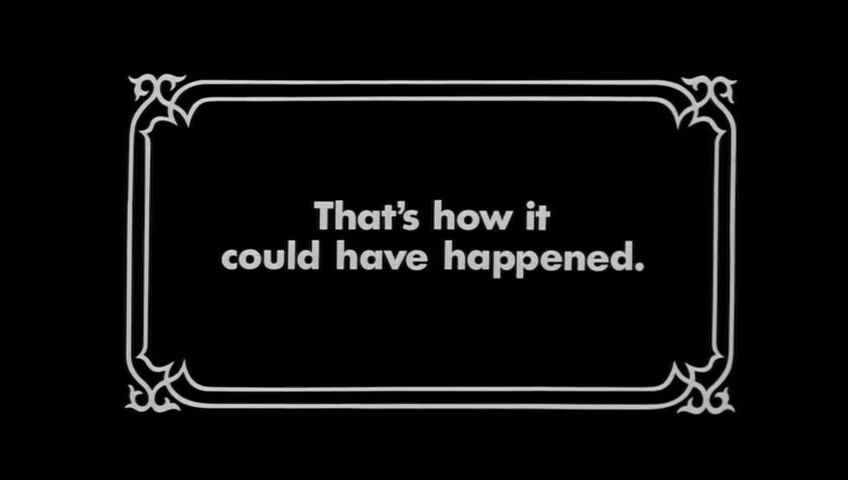
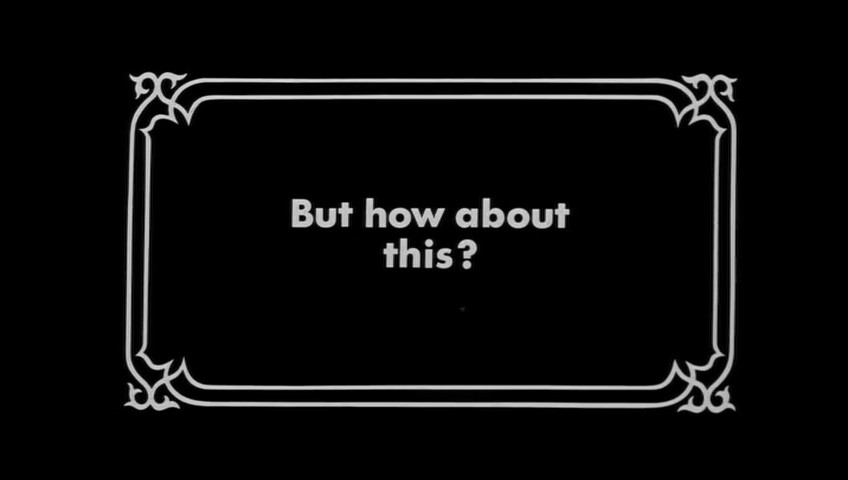
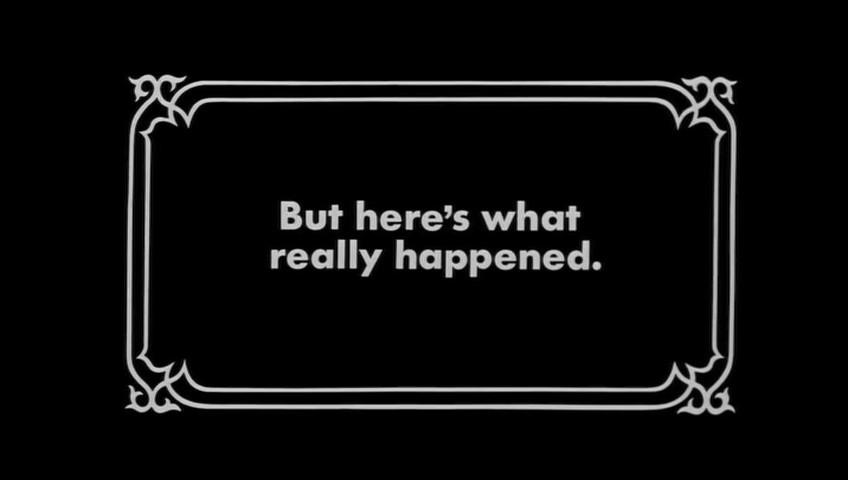
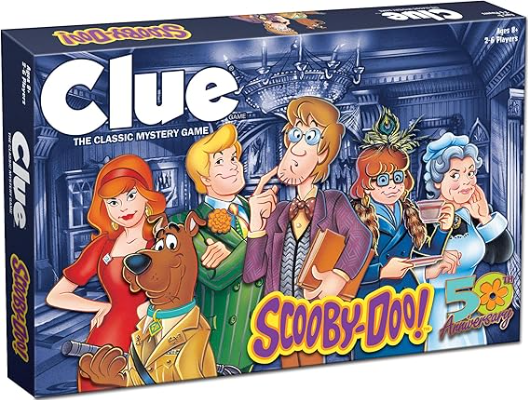
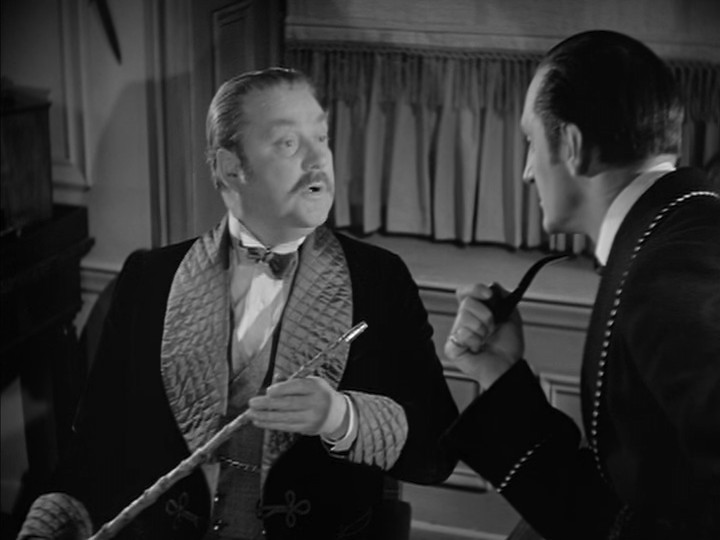
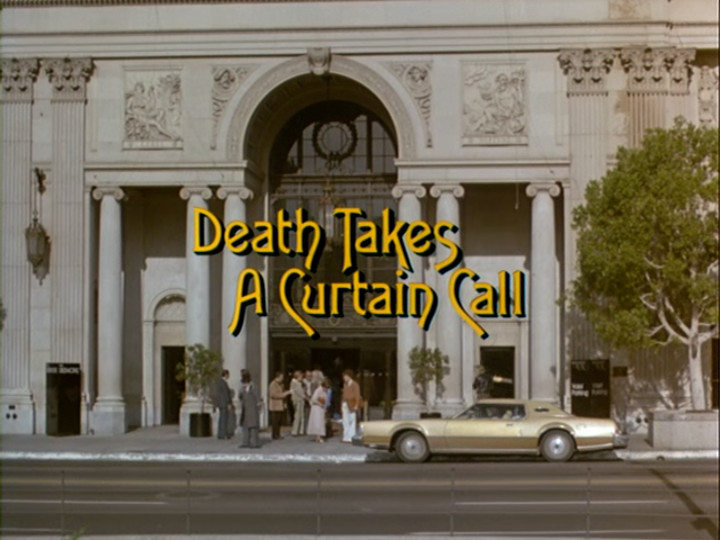

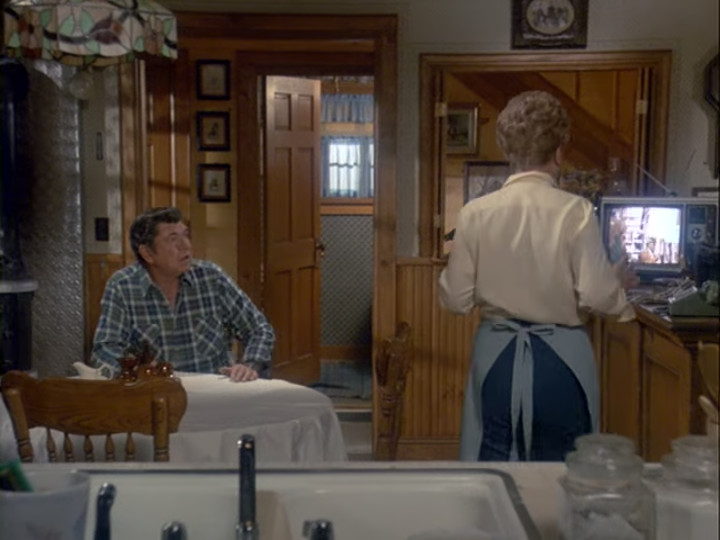
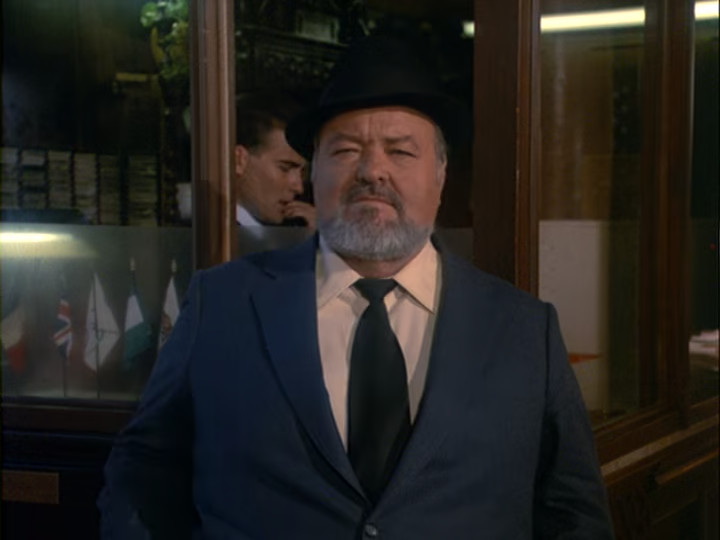


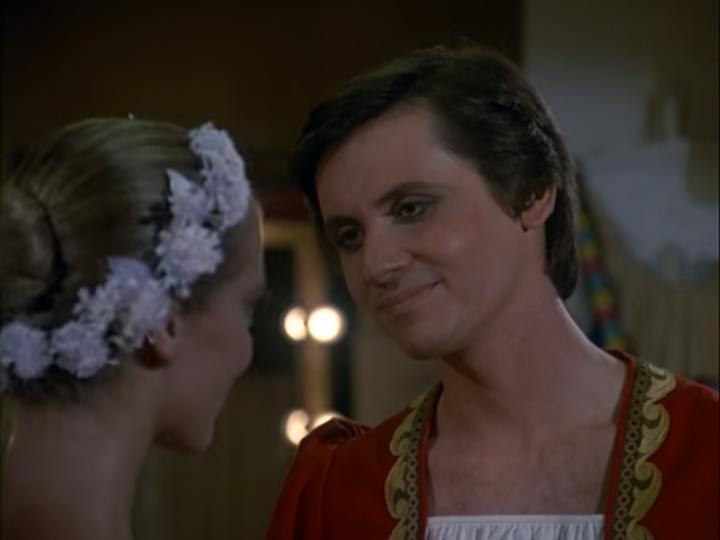


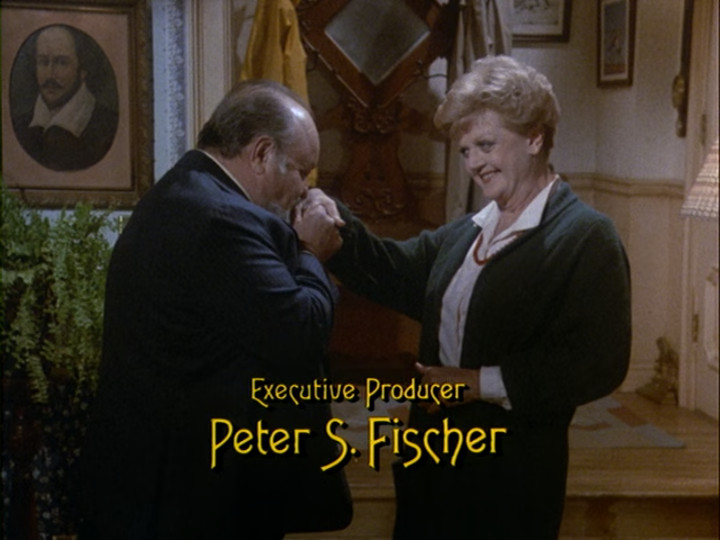
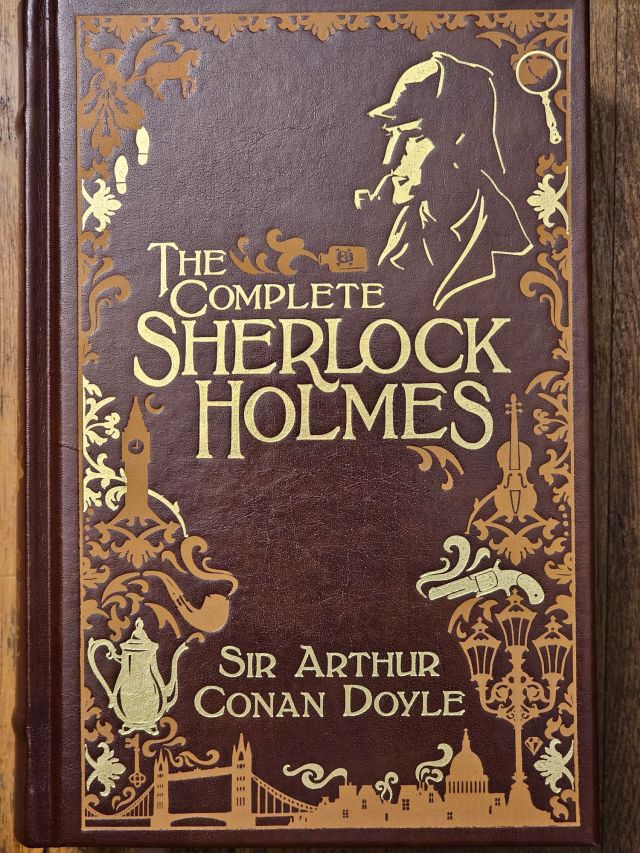

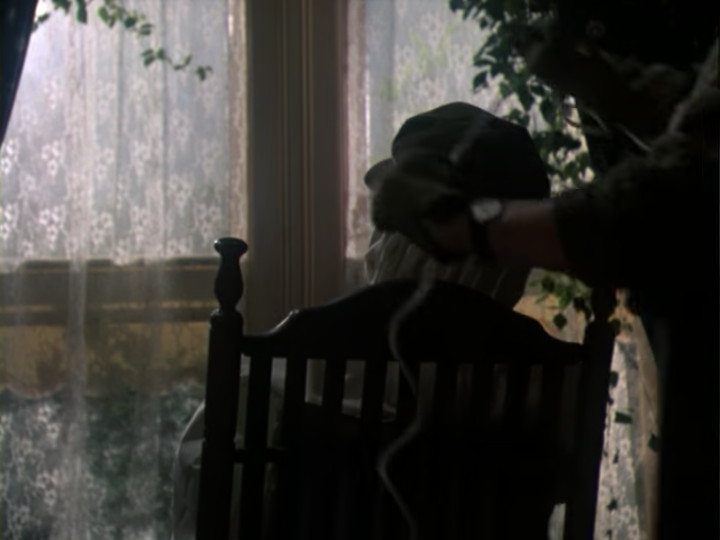




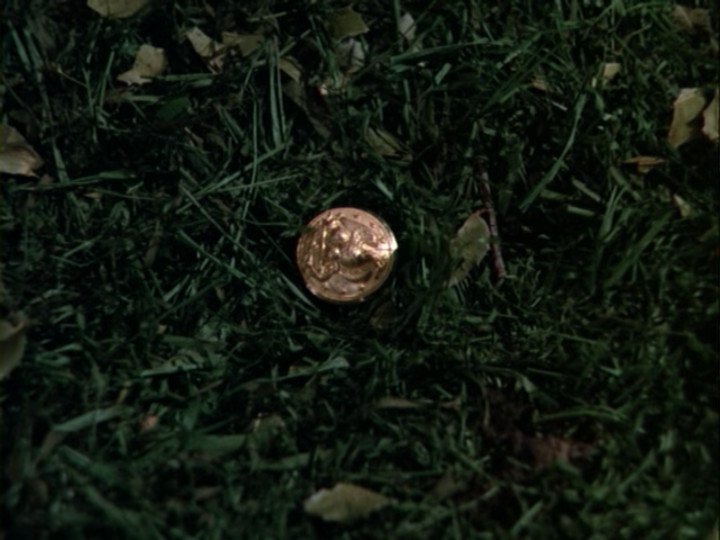




 Chris Lansdown
You must be logged in to post a comment.