I’ve finally started reading Miguel de Cervantes’ famous novel, The Ingenious Gentleman Don Quixote of La Mancha. I’m reading it in translation because my Spanish is nowhere near up to the task, but from the little I was able to compare (reading the dictionary more than the Spanish version), the translation I got from Penguin Classics is very good. (Amazon link.) I’m only a few chapters in but there’s something very interesting right in the first few chapters. Though before getting into it, I want to mention that, at least so far, it is absolutely hilarious. The humor is just amazing. Cervantes really is a master.
In case, dear reader, you are like me some weeks ago and have read none of Don Quixote, I’ll just give an extremely brief summary of the plot so far: Alonso Quixano (Quixano is pronounced “key hano”) is a gentleman with a small farm who spends almost all of his money to buy books of chivalry and almost all of his time reading them. The books become his life to the point where he confuses them for reality. He then decides that he will live out the books for himself and become a knight errant, winning glory for himself and improving the world through his mighty deeds. He pulls out an antique suit of armor still in his family’s possession, renames himself to Don Quixote de La Mancha (La Mancha is the area where he lives), and sallies forth into the world riding his farm horse who he renamed Rocinante and who he has convinced himself is a mighty war-horse.
In his first real adventure (after he has been knighted by an inn-keeper) he comes across a farmer who is beating a boy who works for him. Don Quixote intervenes and the boy says that he is not so negligent as the farmer claims and that, moreover, the farmer owes him money. Don Quixote takes the side of the boy and demands of the farmer that he stop beating the boy and moreover that he pay the boy what he owes him. The farmer, intimidated by Don Quixote’s armor and lance, promises that he will. Don Quixote accepts this promise in spite of the boy’s protestations that the farmer will just go back to beating him as soon as Don Quixote is out of sight, assures the boy that everything will be fine, and rides off. As he rides off, Don Quixote thinks no more of the boy but only about the great deed which he just performed. And just as the boy predicted, as soon as Don Quixote was out of sight and earshot, the farmer goes back to beating the him.
Alonso Quixano’s goal of helping people is a noble one but his method is all too common among people who are trying to be good: they do easy things that they think should help rather than hard things that actually will help. What this amounts to is that they want to be good on their own terms. But being good is something that we cannot do on our own terms, because being good means conforming ourselves to reality.
Don Quixote takes this to an absurd extreme, of course, because this is a comedy, but it’s a thing that can be seen all the time in real life. For example: consider nagging. Nagging consists of asking a person to do something many times, the goal being that they will eventually do the thing out of irritation so that they will no longer have to suffer being asked. Of course, if the goal is only to achieve the result for one’s own sake, this may simply be a safer means than hitting the person until they do the thing desired, but no one considers this to be a good deed. The kind of nagging people consider to be a good deed is usually when the thing is to the other person’s benefit. And, again, if the only thing that’s required is that the person do something once, then nagging may possibly be a reasonably way to achieve it. If someone really needs to get around to repairing the leak in the gas pipe in their basement, almost any means of making them do it is probably justifiable. But very few things in life are like this; most things that a person needs to do that someone might nag them about are things they will need to do well, or else will need to do again in the future when the nagger isn’t around. Both of those require a person to see the good of what they’re doing and will to do that good. Nagging a person will not encourage them to do that; if anything, it tends to discourage it since their attention is focused on eliminating the irritation. Nagging, in this case, is a way for a person to feel like they’re making the world a better place while actually making the world a worse place.
It’s not hard to find other examples of this kind of thing. Consider people who give unsolicited advice. It’s very easy to tell someone what to do; the less you know of their circumstances the easier it is. It’s also the case that the less you know of their circumstances, the less useful the advice will be (except by accident, of course). Giving them unsolicited advice can thus seem like doing a good deed, but it’s very unlikely to do any good. This is, incidentally, related to how it’s very unlikely to be taken; the person receiving the unsolicited advice is very likely to see the mismatch between the advice and their circumstances—the mismatch the person giving it hasn’t taken the trouble to find out about. For very little investment of effort and only a little investment of imagination, a person giving unsolicited advice can feel very virtuous while doing no one any good.
We’re each given a great deal of good to do in the world but we often find it unsatisfying because the good that we’re given to do is only a part of what produces a visible result. There’s a common expression when trying to help someone that perhaps one at least planted a seed, but “planting a seed” is, often, far closer to a visible effect that what we’re actually given to do. Sometimes we’re given to till the soil so that someone else will be able to plant the seed. Sometimes our job is to remove rocks so that someone else may till the soil so that a third person can plant the seed. Probably more often, what we’re given to do is to remove two or three of the rocks, and the rest are given to others to remove, so that, later, several people can each till part of the soil.
Doing only the part we’ve been given to do requires trusting God that once we’ve done what we can, that’s enough, for whatever the overarching purposes that we can’t even know, is. The common mistake, which Don Quixote so humorously exemplifies, is to not be content with trusting, and to try to pretend that we’ve actually been given the whole thing. To do the good we’re given to do requires becoming familiar with reality as far as we can, and the more we learn the more we become aware of how limited our role is. This is why, to really do good, we must give up trying to get the glory from it. This is why there is the extremely practical, if mildly hyperbolic, saying: there’s no limit to what a man can achieve so long as he doesn’t care who gets the credit for it.
There are a great many young men who feel lost and hopeless in the modern world and many of them spend a lot of time on the internet complaining about it. This tends to rub older, moderately successful men wrong—very, very wrong. (Very roughly: men in their mid-thirties or older who have a wife and at least one child.) I’ve wondered about this for a while because I find this reaction in myself—I start out sympathetic but I verge on angry most times I try to interact with such men. I think I’ve finally figured it out: it has to do with the traditional role of adult men in raising other people’s young men into manhood.
Good parents love their children unconditionally and this is incredibly important to children and their healthy development. However, as children make their way to being adults, they are going to have to face other environments than the environment of home; they will have to face indifferent and even adverse environments. For most of human history (and much of the present, outside of some atypical but decreasingly atypical situations), this was especially true of boys. Somebody had to fight the wild animals who wanted to eat one’s children; somebody had to fight the other human beings who wanted to kill one and take one’s things. Defending against these and many other threats were usually best done in groups, often of people near in age, and that means working with people who were not one’s parents and who love one only conditionally. Preparing a boy for these environments is usually best done not by the boy’s father, but by friends of the boy’s father, or at least other adults males of good will. These are mentors.
Mentors do not love the boy unconditionally, as his father does (in the ideal, at least), but are willing to be more generous to the boy than the boy is yet capable of deserving. This mentorship forms a bridge for the boy to become a man. When a mentor demands more independence of the boy, this does not prevent the boy going to his father for unconditional love; by giving the role of being generously and patiently harsh to another man, the father can be a source of support for his son when that is too difficult, restoring the son’s strength, and enabling the son to go back to his difficult work of becoming a man.
This role of mentor is a bit tricky, since it does involve carefully gauging what the boy is currently capable of and only asking of him what he can do—as opposed to asking of the boy what would most benefit the mentor, as one does with, for example, a plumber1. But it does involve challenging the boy and pushing him to be able to deal with circumstances in which he has no support right now, to get him to use his “emotional muscles” to self-regulate and be able to deal with difficult circumstances, so that those “emotional muscles” grow. Because the time is coming when it will not matter how the now-boy feels, it only matters how he will fight in a battle and protect his fellow soldiers, or chase away the wolves, or do the unpleasant work before bad things happen because the work is not done.
Older men who are at least moderately successful (I mean in absolute terms, not as a euphemism for being rich) have the instinct that they should look for older boys and young men who need this kind of mentorship to transition into being fully independent men, and to provide this kind of supportive-challenging environment to help them to grow.
But the thing is, this relationship is very much a mutual one. The boy has to enter into it wanting to become a man. He has to want to be challenged. He has to want to rise to that challenge. All students must, in the end, learn for themselves; a teacher can only give the student what he needs in order to learn.
When you put all this together, I believe this explains why young men complaining about how unfair society is in its current configuration rubs us older men so wrong. This may all be true, but it’s not helpful in learning how to become a man. And a boy is better off becoming a man even in a bad society—there is no society where boys are better off staying permanently childish. Coming to us rubs us so wrong because we’re not the ones that young men should come to for this kind of sympathy. In fact, it would (often) be actively harmful to them to if we gave it to them, because it would discourage them from finishing growing up.
We all have our roles in society according to our station in life. For older men, our role is to act as mentors like this to young men. When young men come to us for sympathy, it feels a bit like coming to us for what they’re supposed to—mentorship—but then they reject attempts at mentorship, which confuses and frustrates us. Young men aren’t supposed to look to mentors for sympathy—they’re supposed to look elsewhere for that. It may be entirely legitimate that they are looking for sympathy everywhere because they can’t find it anywhere, but it’s a problem that this actively gets in the way of us fulfilling our proper role of mentor.
I don’t know what the solution to this is. I doubt it’s for us older men to just to give up on mentorship and become surrogate fathers to younger men, because that would still leave them stunted in their development and unable to fulfill their potential. God knows the answer; I don’t. At least, not yet. But identifying a problem is the first step towards solving it, and I think that this is, at least, a correct identification of the problem.
This is perfectly fair with tradesmen because the tradesman is a full adult who trades what is best for the customer in exchange for money, which the tradesman needs more than whatever minor comfort he gives up in doing the work he is skilled at. ↩︎
Through a series of coincidences, some of which I will discuss soon because they come from beginning to read the compilation Rivals of Sherlock Holmes, which contains a number of detective stories from, roughly, 1892 through 1910, I discovered the existence of the novel Disappeared From Her Home by C.L. Pirkis. Published in 1877, it has been called a detective story, and though it is not a detective story in the modern sense of the term, it is not unreasonable that it is described that way. I find that very interesting.
If I had to summarize the plot to Disappeared From her Home in a sentence despite having only skimmed a half dozen chapters from it, I would say (spoilers ahead): a young woman out for her morning walk disappears and later seems to turn up dead while one of her two suitors figures out what actually happened to her, including finding her alive in France.
This makes it sound more like a modern mystery than it really is; it’s roughly equal parts melodrama and adventure story, at least as far as I can tell from the bits I’ve read. Unfortunately, I’m not really very interested in reading the whole thing because the style is so overwrought. (A metaphor I take from wrought iron that has been wrought far beyond what is necessary for beauty.) I’m far from an expert, or even knowledgeable, about Victorian melodrama, but as far as I can tell from various bits of it that I’ve read, it seems like some time after the ascension of Queen Victoria to the throne of England, English people developed a great passion for huge emotions described in complicated and somewhat understated language. This certainly wasn’t the case in the early 1800s, at the time of Jane Austen. (Pride & Prejudice was written around 1796 and published in 1813.)
It also doesn’t seem to have been an overly long-lasting style; Conan Doyle didn’t write in it, for example, so it was on the wane in the final decades of Queen Victoria’s reign. (I should note that R. Austin Freeman, writing in the first decade of the twentieth century, did write in a Victorian melodramatic style, so it didn’t entirely disappear by this time.) Another data point is that Father Brown, written in 1910, was not written in this style at all. That said, it occurs to me that the Father Brown stories were all short stories, and perhaps Victorian Melodrama was more a style of novels than of short stories. The short stories that C.L. Pirkis wrote, starting in 1893, about “Loveday Brooke, Lady Detective,” were not in a melodramatic style, or at least nowhere near to the degree that Disappeared From Her Home was.
Anyway, it’s very interesting to find a mystery story almost midway between Poe’s Murder on the Rue Morgue and Conan Doyle’s A Study in Scarlet, but while it does certainly center on a mystery, it’s not a detective story, and I have my doubts that it was part of the development of the detective story as we know it today.
An interesting feature of it, by the way, is that it did, in fact, have a detective in it. The father of the missing girl hired a detective who interviewed people and tracked down clues. This makes sense, historically, since the famous Pinkerton detective agency was founded in 1850, and though it was American, it would make sense if there were people doing similar work in England. The detective is not very important to the story, though. It is not the detective to finds the girl; in the parts I skimmed it’s not even necessarily the case that the information he found was all that useful to the suitor who actually found the girl.
The other thing that really distinguishes it from a proper detective story, in my view, is that it doesn’t seem to have anyone who is really trying to deceive the world. The daughter is convinced to go to France, but this simple, and there is a mystery about it primarily because she is convinced to not tell her father so that he doesn’t stop her. There is no effort at concealment past not bothering to send him a telegram or a letter, so far as I saw, and the suitor who solved the case did not match wits with anyone who was trying to prevent its solution. (To be fair, plenty of golden age mysteries were investigating accidents or other mysteries where there was no attempt at concealment, but these were, in general, not the best of the golden age stories.)
I do not know if I will look into Disappeared From Her Home or other such Victorian mystery stories. (It seems to be the case that a person going missing leading to the revelation of dark family secrets was a popular kind of story for a while.) Mostly, because I doubt that they actually are in the lineage of detective stories. But it is very interesting to have learned that they exist.
On the seventh day of April in the year of our Lord 1985, the twentieth episode of Murder, She Wrote aired. Set in the fictional city of Desert Palms, California, it was titled Murder At The Oasis. (Last week’s episode was Armed Response.)
While we hear someone tinkering on a piano we get some establishing shots of a very fancy house with a gate and a security guard house next to the gate on the driveway. Then we then see who is tinkering on the piano and meet one of our main characters:
His name is Johnny Shannon and the various gold records framed on the wall suggest that he is connected to the music business and is quite successful. (Why he’s wearing his coat like a German officer is not explained.)
We also very quickly establish that he’s extremely unlikeable. He calls in his son, Mickey…
…and then berates him for composing such a terrible piece of music. We get the impression that this is a common occurrence because Mickey is only mildly disappointed and calmly tells his father to just play it at the right tempo, which he proceeds to demonstrate.
While Mickey is playing it, Johnny summons his assistant, Buster:
Buster makes Johnny wait a moment, though, so he can tell Mickey that he likes the piece and it’s good work.
Johnny, disappointed by this reaction, orders his car to be prepared because he has a lunch date at a tennis club. On the way there, they receive a phone call on the car phone from a major mob boss, but Johnny refuses to take the call because he’s now “protected.” He clarifies to Buster that he has “a special kind of insurance,” but then says no more about it.
At the tennis club, we actually see Jessica and her old friend Peggy, who is Johnny’s ex-wife.
From some casual conversation we find out that they’re expecting Johnny to join them for lunch.
Which he eventually does. There’s a bit of small talk where it turns out that she recently leased a house in the area so she could visit her children since they rarely visit her anymore. Mickey is one of those children and then we meet the other: Terry.
Terry then excuses herself because she has to meet a friend and Johnny expresses concern that it’s not “that tennis bum”. Her refusal to respond suggests that it is and this is confirmed by the tennis bum coming up to her table a minute later and kissing her for an extended period of time.
Johnny gets up to intervene and Peggy lays a restraining hand on his arm, saying that Terry is old enough to choose her own friends. Johnny replies that she told him this before and she was wrong, then, too.
His interfering goes about as well as one can expect it to; the tennis bum shoves Johnny and then several people whom Johnny employs comes to his aid, restraining the tennis bum.
Curiously, this is interrupted by a man who introduces himself as Sergeant Barnes of the police and asks what the trouble is. When Johnny tells Barnes that he doesn’t want the tennis bum around his daughter, Barnes replies that he doesn’t work for Johnny. Johnny then replies, “You must be new. Ask around. Somebody’ll set you straight.”
He then escorts Terry home.
With Johnny and his entourage gone, Peggy tells Jessica the backstory: when Terry was seventeen she eloped with a boy that Johnny didn’t like. Johnny sent some men after them who roughed up the boy then gave him a one-way airline ticket out of the country. Johnny had the marriage annulled and Terry never forgave him. She still lives in her father’s house to get back at him—to torment him with behavior like this.
Later that night, at Johnny’s house, Buster brings Johnny a glass of milk only to find the door locked. He knocks loudly, then even louder, but no matter his volume he gets no response. In desperation he calls Lou, Johnny’s bodyguard. Mickey, hearing the commotion, knocks on Terry’s door, finding her with the tennis bum.
Back at the door the bodyguard has arrived and breaks the door down. They go inside and find Johnny, dead.
And on that bombshell we fade to black and go to commercial.
Had you been watching back in 1985, you might have seen an ad like this:
When we come back from commercial, Jessica and Peggy are driving along. After Jessica observes that Peggy is driving too fast, Jessica offers her condolences. Peggy replies that at least Jessica had a happy marriage with Frank; Peggy isn’t even a widow. She apologizes then thanks Jessica for going to the house with her because she can’t face it alone.
The scene then shifts to the men’s locker room at the… I’m not sure what this place is. Perhaps a tennis club? Anyway, she goes into the men’s lockerroom and finds the tennis bum she had been with and tells him that her brother is sure to tell the police that he was in the house the night before. She gives him money and tells him to flee the country if he doesn’t want to be part of a murder investigation. She adds that he should not try to contact her.
When the tennis bum asks, “what about us?” She scoffs and tells him to not be stupid. Now that her father is dead, she doesn’t need to play “let’s pretend” anymore. She adds that the truth is that she doesn’t even like him. (He doesn’t take this well, but nothing comes of it.)
Jessica and Peggy then arrive at the house. Oddly enough, she still goes by “Mrs. Shannon” despite being divorced from Johnny Shannon for years.
Inside the house, Mickey is glad to see his mother. He’s also glad to see Jessica, because they can use a good detective. Jessica objects that her exploits have been greatly exaggerated, but Sergeant Barnes walks into the room and answers her that he’s heard differently.
He’s the new police officer from earlier, and he explains that he’s been assigned to the case because in Desert Palms they don’t have a homicide division. He was on duty when the call came in so it’s his case.
Peggy, Mickey, and Sergeant Barnes press her to help on the case, but Jessica is reluctant. I always find this strange because if the police detective doesn’t want her on the case, she can’t be kept out. I wish that she was a bit more consistent as a character. Anyway, Barnes eventually gets her to help by telling her that she’s covered the subject of murder well in her books, even if she’s not always accurate. This piques Jessica’s interest, and she asks why he says this. When he says that he’ll explain on the way to the crime scene, she accepts. As they walk to the other room, he tells her, “You’re a little shaky on police procedure. And you always make your killers more interesting than your cops. You see, most killers are very dull people.”
They then leave the room and Mickey and Peggy discuss Terry in terms meant to make us suspect her, which, in Murder, She Wrote, means that she’s definitely innocent. It’s more reliable than a solid alibi.
In the room where Johnny was killed, Jessica notes that the door had a spring lock, so the killer must have pulled it shut on the way out.
They discuss the room as characterizing the victim:
Barnes says that Johnny was found in his favorite chair. He was shot in the back of the head and probably didn’t know he was about to be killed. Jessica wonders why he was sitting in a chair opposite to a blank TV when there was a perfectly good couch to sleep on, if that’s all he was doing.
Barnes agrees that this is puzzling. He adds another puzzling thing: no one heard a shot. The walls are thick but if you walk past the room in the hallways with the door closed, you can hear if a piano is being played, so they should have heard a gun, which is much louder than a piano.
Jessica says that she’s never seen a silencer herself, but mystery writers are addicted to them. (I think that this was true only of a certain era; but certainly this was part of that era.) Barnes objects that “mufflers” would be a better name for silencers; you can’t actually silence a gun and there’s always some noise.
Interestingly, that’s not quite true. The British developed an effectively silent gun called the Welrod.
It uses a series of solid rubber wipes in addition to many baffles in order to suppress the sound down to the point where it’s quieter than people speaking conversationally. The trade off is that you can only fire a dozen or so shots from it before the wipes are too degraded to suppress the sound that effectively. Also, it fires sub-sonic ammunition. This part is critical because it doesn’t matter how well you suppress the explosion which propelled the bullet if the bullet itself creates a supersonic boom. As a result, it has an incredibly short range—measured in tens of feet. On the other hand, its purpose is incredibly close-range assassination, and it actually has a concave front to allow it to be effective when pressed up against a person, so this isn’t too much of a limitation.
That said, it’s very unlikely that a killer in California in 1985 would be using a World War 2 British special services assassination pistol. There were a few similar guns made over the years but they’re exceedingly rare because there’s basically no market for them. So, in practice, Sergeant Barnes is right.
Jessica says that if the sound was muffled and not recognizably a gunshot, it might have gone unnoticed, confused with ordinary household sounds such as radio, television, etc. Barnes agrees that might be the case, but asks how on earth the killer got through the security system. There are guards on duty 24 hours per day at the front gate and the service entrance, at the back of the house, is protected by a tall fence and a sophisticated alarm system with TV cameras. The gate is opened remotely by the guard at the front gate after confirming the identity of the service person over the camera and through an intercom for voice verification. Nobody pushed the buzzer on the back gate last night and nobody could have gotten over the gate or wall without the alarm going off.
Jessica states the obvious conclusion: the murderer came from inside the house. (This was not lost on Barnes, who had already come to that conclusion.)
Having said that, I’m not sure it’s right. It’s unlikely that the tennis bum got in through the front gate by being on the invitation list—Johnny would almost certainly have told the guards to forbid him entrance—so his presence demonstrated it is possible to get in.
The scene then shifts to Terry pulling up in a fancy car as tense music plays. I’ve no idea why this might be important since we’ve already established that Terry is definitely innocent, but it’s a good excuse to show the front gate:
Terry goes into the house and demands to know what Mickey told the cops before she realizes that her mother is there. She then switches to condoling with her mother, which Mickey doesn’t take very well. Some hot words pass and Terry runs off.
Back in the murder room, Jessica and Barnes are discussing motive. Barnes suggests the standard: someone who stood to inherit. It was the servants’ night off, so other than family only the bodyguard and Johnny’s assistant were there.
When Jessica asks if the motive could have been robbery, Barnes shows her a hidden wall safe in the room which Mickey told him about:
Barnes doesn’t think this is the motive, though, since the killer wouldn’t have shot Johnny before making him open the safe in that case. Unless, as Jessica points out, the killer already knew the combination. Barnes admits this possibility, but while the safe contains valuable things, members of the household confirm that nothing is missing. Jessica then points out that her theory is unlikely since someone who knew the combination wouldn’t need to kill Johnny to steal it, they’d only need to wait for him to be out of the room.
Jessica then wonders if the motive might have been something else. There’s an obvious spot on the wall where something that was framed was missing. Barnes says that it wasn’t anything, though—just an old picture of Johnny and his kids.
This is interrupted by Buster, who asks the Sergeant to come quickly because the bodyguard is convinced that Mickey killed his dad and is busy assaulting him by the pool.
They get there in time and Barnes knocks the bodyguard into the pool. Mickey isn’t feel great from all of the strangulation he just experienced, but he’s otherwise OK.
The bodyguard insists that Mickey needs to be arrested, and when questioned, explains that he finally remembered that he wasn’t the last one to see Johnny alive—he saw Mickey go into the den after he left it.
And on that bombshell we fade to black and go to commercial.
When we come back from commercial Sergeant Barnes asks Mickey what’s up. Mickey says that Lou (the bodyguard) had it all wrong. He did go down to the den to show his father some changes on the arrangement he was working on but his father didn’t want to see it until the arrangement was finished. So he immediately went back upstairs. He wasn’t in the den for more than a minute. (I’m not sure how the short duration is important because it takes only a few seconds to shoot someone in the back of the head. Perhaps Mickey is still groggy from being strangled.)
Mickey then goes on to say that he didn’t always get along with his father and there were times when he hated him, but when he was angry at his father he’d always think of the good times, before they moved out to the desert.
This is interrupted by Terry, who walks up with Peggy. Terry says that Mickey didn’t kill her father, there was someone else in the house—the tennis bum. She let him in at the rear service entrance. She used the master switch to turn off the alarm long enough for the tennis bum to get in and make it to the house. The guard would only notice that the system was switched off if he was paying close attention because the only indication is a tiny red light. The night man reads a lot and doesn’t check the panels often. The TV monitors are always off unless the alarm is tripped.
When Barnes remarks that she knows a lot about the security system, she replies that this isn’t the first time she’s let a man into the house.
When Terry mentions that she sent the tennis bum away and doesn’t know where he is, Barnes borrows the telephone and calls in an APB on the tennis bum.
As he’s doing this, Jessica asks where Lou (the bodyguard) was when Mickey came out of the den, that Mickey didn’t see him. He went to his room because Johnny told him to get lost. Buster says this means that he was expecting a “broad” (a woman). He always sent Lou away when he was expecting a female visitor.
Lou doesn’t think this is plausible, though, because he wasn’t given a name to call down to the front gate. Jessica mentions that perhaps the guard knew this woman on sight. When Lou said that Johnny’s rule was female guests always had to be specifically called down, Jessica looks at Peggy and says, “there are exceptions to every rule.”
Jessica and Peggy talk privately; Peggy confirms that it was her and that she wanted to talk to Johnny about Terry, but she found him in a mellow and affectionate mood and for the first time since she left him, they made love. She then discusses how Johnny always had a way with women—which was why she ended up leaving him. He was always using women and seemed genuinely surprised that Peggy cared. He even once took a girl away from Buster, who was heartbroken over it until he made a joke of it.
A bit of talk later, Jessica asks if Johnny had any enemies and Peggy said that last night Johnny was bragging about “putting one over” on a mobster named Milo Valentine (this would be the mobster who called him on his car phone, that he said he had protection against). Milo started Johnny in show business, but their relationship turned sour. Last night, Johnny said that he felt like he could nail Valentine to the wall, but didn’t explain what he meant by that.
Jessica then goes to Sergeant Barnes at the police station to give him her latest theory that Johnny was killed by a hitman. She remembers reading that shooting someone in the back of the head was part of the mob’s execution ritual. Which sounds rather inconvenient and also at odds with the mark of a professional killer being to shoot someone twice—once in the heart and once in the head. But, what do I know?
Barnes isn’t overly impressed by the idea that Johnny was killed by a hit man but he doesn’t dismiss it. When he worked in Chicago before he came here, he remembers hearing rumors that Johnny had a mob connection.
Jessica thinks that this would put the kabosh on the tennis bum theory, but Barnes disagrees. Hitmen don’t wear a t-shirt that says “professional killer”—they have some kind of cover. Tennis seems good for this, allowing him to move around. He’d have started an affair with Terry to gain access.
Back at the Shannon residence, Buster is out by the pool making a phone call to Milo Valentine, saying that he has an urgent matter to discuss. When he hears Terry draw breath in surprise (she’s listening on another phone, inside the house), he realizes the conversation is being overheard and asks who’s on the line, to no avail.
Jessica then comes up to the house in a taxi, and after questioning the security guard offscreen, she goes inside and talks with Terry, who is sitting in her father’s favorite chair and watching tapes.
She comments on the tape that she was watching. “That Vegas showgirl nearly became my stepmother. But so did a lot of others.”
During the conversation, it comes up that Terry took the family photo that’s missing from the wall up to her room. She took it right after they found her father because she needed something of him to hold onto. The guy on the tapes is a stranger; her daddy was the man in the photo.
Jessica asks about the tennis bum and how they met. Terry says that he was the loudest, most obnoxious player in the bar at the tennis club so, knowing that her father would hate him, she picked him up. She’s fairly certain he didn’t kill her father, though, since when she told him that her father was in the den, the tennis bum was too scared to leave her room.
Terry also ends up telling Jessica about Buster’s phone call to Milo Valentine. Jessica also gets some further information about the VHS tapes above the television. Most are of Johnny’s TV shows, but a bunch are of his pool games. He had a camera installed to record the pool table so he could watch his games and figure out how to improve.
Jessica says that it’s hard to see in the dark corner where it is.
The scene then shifts to a few miles north of the Mexican border, where some police catch up with the tennis bum and arrest him. As he’s being led to the police car, he says that he didn’t kill Johnny Shannon, Terry did.
And on that bombshell, we fade to black and go to commercial.
(You’d only have seen this particular ad if you lived within a few hundred miles of the Pocono mountains.)
When we come back from commercial we’re at police headquarters where the tennis bum is interrogated in front of Jessica and Johnny’s relatives.
It’s strange enough when Jessica is at police interrogations; I’ve got no idea why almost everyone is here.
The upshot of the interrogation is that the tennis bum believes that Terry killed her father and used him as a patsy, which is why she paid him to leave.
Interestingly, Jessica actually tells the tennis bum to reconsider not having an attorney present, which is out of character for her. Out of character for him, he takes this advice and says that he wants a lawyer, which ends this interrogation.
Once the tennis bum is escorted out to make a telephone call, Jessica remarks to Sergeant Barnes that it seems unlikely a professional killer would have no better escape route than an unreliable van on a back road to Mexico. (She doesn’t add that it’s even stranger for him to hang around and wait to make his escape, rather than starting that night.)
Barnes replies that perhaps he’s new at it, or perhaps he’s not a pro and perhaps he’s telling the truth about Terry. Some bickering later, the Shannons leave for their home and Jessica joins them because she has something she wants to look into. Barnes asks if she’s going to let him in on it and she replies that she will once she’s sure—she’d hate to look foolish in front of the police.
Back at the house, Jessica talks to Buster, who explains that the phone call was only because he was worried that Valentine might have a contract out on Buster as well as Johnny. He also explains what the cause of the split was—Valentine got Johnny started, which gave him control over Johnny, which Johnny resented when he made it big. Johnny chafed under this and eventually started making his own moves. When Johnny failed to make an appearance at a political rally for one of Valentine’s payroll politicians, Valentine flew over and had a meeting with Johnny in the den. Buster wasn’t in the room but did hear the sounds of pool being played.
Jessica puts two and two together and concludes that Johnny taped the game with Valentine and then threatened him with the tape. The killer must have had a double mission: to kill Johnny and to retrieve the tape.
When Jessica tells him not to worry about a contract being out on him—had there been one, he’d already be dead—he tells her to say no more, he gets the picture. She asks him to repeat “I get the picture” then she announces that she knows who the killer is. She calls Sergeant Barnes to let him know that she’s solved it.
When he arrives, she begins by explaining how the killer got in. He kept a close eye on the tennis bum, figuring that he’d be brought into the house sooner or later. That night, he got lucky and followed the tennis bum in. He knew where the den was because Milo Valentine had been in the house and described the layout for him. He figured that Johnny wouldn’t help him find the tape, so he shot Johnny immediately. He then locked the door and searched through the tapes. Jessica experimented and all of the tapes up to the missing tape were played for a short time, while all of the ones after the missing tape were at the very beginning. The killer then turned off the VCR and TV, then waited. While Lou was breaking down the door, Terry turned off the alarm to let the tennis bum out. The killer went out behind him.
Barnes says that this makes sense but leaves them with the problem that they can prove that the tennis bum was in the house and can’t prove that anyone else was. Jessica demurs. The morning after the murder, Sergeant Barnes told Jessica it was his first time in the house, but he knew what was in the picture missing from the wall, despite Terry having taken it to her room right after her father was found dead.
Barnes replies, in surprise, that Jessica is good. He then takes out his gun and puts a silencer on it. He says that he never kills unless he is well paid for it, and it hurts him to make an exception in her case.
Jessica then calls to the waiting people, who come in.
She then tells Sergeant Barnes that he would be well advised to not make any sudden moves. Lou took Johnny’s death very hard.
He thinks for a moment, then smiles and hands Jessica his gun. She thanks him, saying that it means a great deal to her. He asks if she means as a trophy, and she replies no, as the only real evidence that he killed Johnny Shannon. “Ballistics will prove that the bullet came from your gun.”
After a moment, she adds, in reference to their first conversation, “That’s police procedure.”
This was a very interesting episode. It’s most notable quality, of course, is that the police detective was the murderer. This was extremely rare for Murder, She Wrote—as it should be. But I think they did a good job of pulling it off.
The main danger of having the police detective be the murderer is that he is, with regard to the investigation and often with regard to the crime itself, super-powered. That is, the extra powers which the police are given in order to fight crime put them at a tremendous advantage for committing it. The result is that it really should be impossible to catch them, and catching them requires the writer to make them do something very dumb in order to get caught.
I think that they avoid that in this episode. Barnes knowing what was in the picture was, perhaps, not maximally convincing—I’m not sure why he ever looked at that part of room—but it wasn’t dumb. He had been in the middle of discussing the case with Jessica and he had to act the part of the police detective trying to solve the case. He had to discuss it for real in order to be convincing, and he had to reveal to her all sorts of things he learned from the family. It is plausible that he had lost track of what he knew because he was the killer and what he had learned as the police detective, even if the particular execution could, perhaps, have been improved upon.
The other golden age rule this episode broke was having a hitman as the murderer. A professional killer with no connection to the victim and no personal interest in the victim’s death is simply outside of the mystery genre. That said, this episode introduced the mobster right at the beginning and introduced the character of Sergeant Barnes before he was investigating the crime. Barnes remained a significant character throughout. The episode also introduced the idea of the hitman very early, even apart from it being implicit in a mobster being involved. Further, Jessica took the option of the hitman as a live option as soon as it was mentioned. So while it broke the rules, I think that they pulled it off.
I think it was for the best that they had a hitman be the murderer very infrequently. Having said that, I have to admit that it was the case in one of my favorite episodes (Snow White, Blood Red), so when they did it, they tended to do it well.
Another good thing about this episode was the characters. They kept the cast relatively small, which enabled them to have some character development for most of them, which they took advantage of. To be clear, the character development is mostly us learning about the characters rather than the characters having an arc; that’s simply appropriate to the format. But we get complexity on several of the characters. The character of Terry is probably the most obvious, from this perspective: she starts off seeming to be a hedonistic spoiled brat who is coolly distant from her father because he represents restraint, but we find out that she was angry at him and unable to form a real relationship with him. The moment when she tells Jessica that the showgirl in the video almost became her stepmother, but then so did a lot of other showgirls, too, reveals a lot. The moment when she said that the guy on TV wasn’t really her father, her real father is the guy in the picture of happier times was quite poignant. There’s a sense in which it’s true, but also a sense in which it isn’t. Each action that we take does shape us and is part of who we are, but it is also true that some of the actions that we take are unnatural to us—they may warp and twist us, but they are never really part of us. Which is not to say that we can’t cling to them until the original isn’t left, but the distinction remains true even if we turn it into a theoretical, rather than practical, distinction. And underneath the glitzy jewelry and promiscuous behavior, there was a little girl who wanted her father back.
Mickey is another interesting character. At first it seems like he might just be a stereotype of a son who was never good enough for his successful father, but he has real depth. Even right at the beginning, he simply doesn’t respond to his father’s bluster. I didn’t describe it in the plot summary, but Johnny even tells Mickey to let him have it, saying that he (Johnny) told his own father off more than once, but this doesn’t phase Mickey. It’s not that he’s putting up with it; he just doesn’t care. But what gives it depth is that they make it clear that he’s not intimidated. He has his own goals and is pursuing them, and even still has some affection for him. He points out that his father might be wrong because this would actually be beneficial for his father to consider. This gets reinforced later, when he says that he was deeply frustrated with his father but when he gets mad he thinks of the good times.
Peggy is probably the best fleshed out of the characters. She’s divorced from Johnny but clearly doesn’t want to be. The part where she tells Jessica that she’s not even a widow is particularly poignant. She feels a widow’s loss, but does not have the support of the community a widow would have. They do not go any deeper into it than this but it points very strongly to some of the costs of divorce and even more of society having moved to being so accepting of divorce. Worse for the character, she’s one of the people who accepts divorce and thus has no framework to make sense of her grief. She eventually fades out of the story after her reunion with Johnny is revealed in order to clear up a red herring, but had there been more time there would have been very interesting places to go with her.
Even the character of Sergeant Barnes is interesting, in this episode. On the one hand, he’s keeping an eye on Jessica because he doesn’t trust her and wants to mislead her; on the other hand he is a bit hubristic and assumes that he did such a good job that she can’t possibly catch him. This raises the question of whether he was sincere when he told Jessica that she goes wrong by making her killers too interesting while in reality most killers are very dull people. One possibility is that he’s sincere but holds himself to be far more interesting than the average killer. Another possibility is that he’s insincere and thinks that the killers are actually more interesting, and this is misdirection. Yet another possibility is that he doesn’t think of himself as interesting, for as G.K. Chesterton once observed, every man is normal to himself. Or, to quote Chesterton:
To the insane man his insanity is quite prosaic, because it is quite true. A man who thinks himself a chicken is to himself as ordinary as a chicken. A man who thinks he is a bit of glass is to himself as dull as a bit of glass. It is the homogeneity of his mind which makes him dull, and which makes him mad. It is only because we see the irony of his idea that we think him even amusing; it is only because he does not see the irony of his idea that he is put in Hanwell at all. In short, oddities only strike ordinary people. Oddities do not strike odd people. This is why ordinary people have a much more exciting time; while odd people are always complaining of the dulness of life.
Another unusual aspect of this episode is that I can’t think of any major plot holes. The one question I have is how Barnes knew what the missing photo was, since his business would not (obviously) have taken him to that wall of the room, and it was a very large room with many things on the wall. On the other hand, this could be explained by Barnes making a general search of the room before concluding that the only relevant thing was the VHS tapes. He might even have been looking for the safe in the wall and perhaps tried to get in before concluding that wasn’t a way forward. And, really, that’s it. You can ask questions about how Barnes managed to conclude his business with relatively tight timing, except that I don’t think that the timing was all that tight. Mickey was, supposedly, the last one to see Johnny alive, but Johnny had time to have Peggy over and for them to make love and her to leave; presumably after this he got dressed and, feeling wistful, went to watch some tapes of his glory days, when Peggy was still his wife, where he got shot by Barnes. There is, perhaps, a bit of explanation that would be helpful for why Buster brought Johnny a glass of milk at what must have been one or two in the morning without it having been request immediately before but something could easily have been worked out. As Murder, She Wrote goes, this is airtight.
I came across another very interesting post by Caroline Furlong which can probably best be described as explaining to women why men’s fiction has so much action and so little emotional talk, but there’s quite a lot more in it—including some interesting discussion of people being trustworthy vs. people who abuse trust, for example—and I recommend reading it in full:
Something I think worth mentioning is that people (I do not mean Ms. Furlong) often confuse what takes up most of the words of a story with what the story is about. I think that there’s a very useful analogy to be had, here, from a physical lens: a lens is a large piece of glass whose purpose is to focus a large quantity of light down to a small point. Similarly, a story is very often a large quantity of words whose focus is a scene or two. But the whole point of all of those words is to earn that scene.
This can easily be shown by taking any truly great scene and showing it to someone who doesn’t know the story. It will, invariably, mean nothing to them. Or you can even see this in jokes: if you tell someone the punchline of a joke without its setup, it’s not funny.
The emotional scenes in men’s fiction are much like this: the extremely rare times when manly men talk about their feelings with each other are incredibly important, but only if you earn them by properly setting up the extremely rare circumstances where this is natural and healthy and manly. A really great example of this is the ending of Casablanca. The speech that Rick gives Victor Laszlo is an example of it; in it he tells him how he feels about Ilsa. It’s also subtle but you can see Victor Laszlo tell Rick how he feels; his almost-smile as he accepts what Rick tells him without believing it, and the way he welcomes Rick back to the fight. Much of the ensuing dialog between Rick and Captain Renault conveys how they feel, even if you have to read between the lines see it. But then you get the magnificent final line, “Louis, I think this is the beginning of a beautiful friendship.” It is magnificent precisely because it is earned by the entirety of the movie that led up to it.
You can also see this in well-written male characters which are written by women, by the way. Consider Mr. Darcy from Pride & Prejudice. It is precisely his reserve that makes it so striking that he says to Elizabeth, “I must tell you how ardently I admire and love you.” It is this reserve that makes the letter he wrote to Elizabeth so meaningful. It’s what makes this line so powerful:
“If you will thank me,” he replied, “let it be for yourself alone. That the wish of giving happiness to you, might add force to the other inducements which led me on, I shall not attempt to deny. But your family owe me nothing. Much as I respect them, I believe, I thought only of you.”
More properly, it’s his reserve combined with all the rest of what he’s done and what happened, that all of these things are earned and we learn of his feelings in conditions that make it reasonable and manly of him to communicate them in those very unusual moments.
All of this stands in contrast to that women’s fiction which is mostly “fluff.” That’s Ms. Furlong’s term for it, but I think it’s well chosen, because the emotions are mostly very transient—like the lilies of the field, they are here today and tomorrow thrown into the fire. This reflects the feminine orientation toward maintaining a household, which involves keeping track of many people and their current relationships to each other. Speaking as someone who does a lot of this himself because he has three children, you need to keep track of how everyone’s doing because the day-to-day changes in people are significant. When someone is suddenly quieter, there’s a good chance that they’re sick—or have some other problem that they need help with. If they’re suddenly louder, they might have a problem they need help with or they might be getting more caffeine than they realize. If they feel lousy and are lethargic about things that they want to do, they’re probably sick, whereas when they just feel lousy they might be having a stress reaction to something they don’t want to do. Similarly, some problems between kids they need to work out on their own, but some you need to step in and guide them to work out because they’re not doing it on their own and you don’t want to let problems fester. Letting problems fester leads to less well-developed social skills than when you step in and fix the problems they can’t, because people will mal-adapt to bad circumstances. Those women who have a facility for this—and it’s probably most of them—find the application of this facility to fiction satisfying, in a very analogous way to how many men find carving, or woodworking, or beating a video game very satisfying to their facility for problem solving. Thus the fluff—tons of transient emotions on display—gives lots of scope for refining one’s reading of people based on their trivial actions and comparing to the feelings that they express. (This is, of course, an oversimplification of what’s appealing about it to the people to whom it appeals.)
The Red-Headed League is, justly, one of the most famous Sherlock Holmes stories. But while it is mostly known for the cleverness of the plot, I really appreciate that its structure shows how thieves are often their own worst enemies.
The most notable quality of a thief is that they are not willing to do the just work to get what they want. Outside of a highly developed economy this mostly means that they are not willing to build, or husband animals, or plant crops, or spin or weave or whatever it takes to get what they want. Within a developed economy this means that they’re not willing to pay for what they want with money that they have earned. And while most of the time this means that they take money from others, it also means that they are not above getting people to do work and then not paying them. And this was the downfall of the Red-Headed League.
The reason that Sherlock Holmes foiled the bank robbery for which the Red-Headed League was set up is that Mr. Jabez Wilson came to him to find out what the Red-Headed League was about. The reason that Mr. Jabez Wilson came to Sherlock Holmes was because the Red-Headed League was summarily dissolved and all efforts to try to contact the representative of the Red-Headed League showed that something underhanded had taken place. The reason that the Red-Headed League was dissolved was because the tunnel that they were digging into the bank had been completed. They no longer needed Mr. Wilson out of the way so they invested no more time or money in him. I think it is not coincidence that this took place on the day that Mr. Wilson was to be paid for the previous week’s work. Had Mr “Duncan Ross” of the Red-Headed League showed up and paid Mr. Jabez Wilson the four pounds, Mr. Wilson would have gone home happy that Saturday and not contacted Holmes.
Saving four pounds cost the thieves £30,000.
On its face this might sound stupid but the brilliant part of the story is that it is stupid in exactly the sort of way that thieves often are. It’s not that they didn’t think of this at all; they did and just thought it sufficient for Vincent Spaulding to tell Mr. Wilson to wait for a letter in the mail. That is, they trusted that instead of spending money (and thereby doing work) they could instead trick Mr. Wilson into doing what they wanted.
This is excellent symbolic structure in the story because the fundamental problem with stealing is that it does not actually work; stealing is killing the goose that lays the golden eggs. If only the criminals had been a bit more diligent, they would have gotten away with it… means, in the end, that they would have succeeded if they were not the sort of people who are thieves.
(There are always exceptions; the world is only ever partially fallen because, to be completely fallen, it would have to not exist. You will occasionally find people who are oddly virtuous in pursuit of some vice, but it is always a temporary thing. Vice is a degenerative disease because virtue is only ever maintained through constant renewal, and the renewal comes from aiming at something higher. When someone gives up on the higher aim to the point of becoming a career criminal, they have abandoned the source of renewal that will maintain their virtue. And so they will degenerate.)
Dr. John Watson, the celebrated friend and biographer of Sherlock Holmes, has been portrayed and regarded in many ways, though rarely have they been flattering. The attitude may, perhaps, have been best summed up in one of Fr. Ronald Knox’s ten commandments for detective fiction:
The stupid friend of the detective, the Watson, must not conceal any thoughts which pass through his mind; his intelligence must be slightly, but very slightly, below that of the average reader.
This conception of Watson as a “stupid friend” may have reached its climax in the portrayal of Dr. Watson by Nigel Bruce, who played the character opposite to Basil Rathbone’s Sherlock Holmes.
This description by Loren Estleman of Nigel Bruce’s Watson, which I saw quoted on Wikipedia, is an exaggeration, but not a great exaggeration:
If a mop bucket appeared in a scene, his foot would be inside it, and if by some sardonic twist of fate and the whim of director Roy William Neill he managed to stumble upon an important clue, he could be depended upon to blow his nose on it and throw it away.
But neither of these are really true to the character of Watson. This can be seen most clearly, I think, in The Hound of the Baskervilles, which shows Watson at his finest. Watson actively investigates, in Holmes’ absence, with intelligence and confidence. He finds useful clues. All of which makes sense, because Watson is a doctor.
If you consider what a doctor does, you will quickly see that it is very similar to what a detective does. People come to the doctor with their problems. They have a few clues as to what has gone wrong, though these are normally called by the medical jargon, “symptoms.” The doctor will then interrogate the patient about things things which have happened—things which may seem to the patient irrelevant or unimportant. He may probe the patient’s body to gain further evidence. He then uses his imagination to think of what might be wrong that caused these symptoms and gather further, more directed evidence, to prove or disprove this hypothesis. Once he is confident, he or the patient or both will act on this and—if he was right—bring a resolution to the problem, or at least as much of a resolution as the situation allows. This is also a description of what a consulting detective does.
Holmes is more intelligent than Watson; he has also developed quite a good deal more specialized knowledge than Watson, and for these reasons can solve problems which are impenetrable to Watson. But he is not completely unlike Watson. Indeed, it is this similarity, though in different fields of application, which allows Watson to appreciate Holmes’ genius. Most people were irritated by Holmes, but Watson could follow Holmes’ explanations, once he gave them, and appreciate how he could have done it if he had only done a better job. That is to say, the thing which allowed Watson to appreciate Holmes was the fact that Watson was, himself, a detective of middle-rate skill. Which is no small thing.
The modern world is so accustomed, because of the cheapness of digital reproduction, to having the best that we have lost sight of the value of anything but the best. This has gotten so bad we often turn our nose up at the second-best and treat third-best as if it meant third-rate. When we look at the Olympics we care who won the gold medal and sometimes give a thought to who won the silver medal, but often look at the bronze medal as if it was a consolation prize or participation trophy. And yet, for most groups of Olympic medalists, if you were to re-run the event ten times on ten different days, all three of the competitors would probably win gold at least once and all three would take bronze at least once. No one is so outstanding that he does not have a bad day and everyone near the top occasionally has good days. And, more to the point, the bronze medalist would, on any normal day, be able to beat virtually anyone you put him up against. That is to say, he may have taken third place, but he’s still first-rate.
This is where people go wrong with Watson, I think. Watson was not Holmes’ stupid friend. Watson was Holmes’ intelligent friend. So much so that in Watson’s area of specialization—medicine—Holmes always deferred to Watson’s judgement. Watson did not come close to the heights that Holmes could reach, within Holmes’ area of specialization, but there is a very good reason why Holmes confided in Watson and not in other men. Watson was intelligent enough, and enough of a detective, that he could appreciate Holmes.
Indeed, this is what made Watson such an excellent biographer of Sherlock Holmes. He was low enough that he could make Holmes relatable to the common man but high enough that he could understand Holmes when he explained himself—unlike the common man. Watson does not appear in a good light when standing next to Holmes, but when he was on his own many people came to Watson with their troubles and through his own intelligence and knowledge he helped them.
On the tenth day of March in the year of our Lord 1985, the seventeenth episode of Murder, She Wrote aired. Set in New York City, it was titled Footnote to Murder. (Last week’s episode was Sudden Death.)
After some establishing shots of New York City while wistful piano music plays, we then come to a small diner where a poet is composing a poem:
Why go on alone, rejected… with Cupid’s turgid rights neglected?
He then pulls out a gun and Jessica, walking in, says, “You’re going to kill yourself, Horace. Those cigarettes will be the death of you.” (The gun is revealed to be a souvenir lighter.)
It turns out that they’ve both been nominated for literary awards (Horace for poetry, Jessica for mystery), which is why they’re in town. He also asks after some women and Jessica replies that he left Cabot Cove strewn with broken hearts last summer.
After a bit of establishing that he’s got no money, they head off to the award ceremony.
Before we get there, though, we get an scene of a blue collar schlub who just came home…
…and sees something in the newspaper which upsets him. (To set the mood, the establishing shot was from outside, through his rain-covered window.) He puts the newspaper down, visibly angry, and grabs his keys. As he’s leaving, the camera zooms in on the newspaper article which so upset him:
If you look very closely, you can see that under the picture of the man are the words “Hemsley Post” and “Master of Ceremonies”. We can’t make anything else out, so that must be what upset him. That said, I don’t think that anyone would have been able to read this on broadcast television during the moment it was on the screen, so it couldn’t be too important.
We then meet another character, who is doing pushups. Or rather, half-pushups. (He doesn’t get lower than his elbows.) He manages seven before a knock on his door interrupts him. The camera then switches to an establishing shot through his window, and we hear thunder.
They are establishing the heck out of the rain. Perhaps someone’s umbrella is going to be significant in the episode?
The person at the door turns out to be Tiffany Harrow, the assistant awards coordinator.
Stills don’t do justice to how happy she is to meet him.
His name, by the way, is Hemsley Post. The picture of him in the newspaper must be several years old.
You can see him admiring her shoulder pads
In addition to the detail that, upon hearing the knock at the door he skipped from seven to twenty in his count (and raised the volume at which he said “twenty”), we get a sense of his character from the enthusiastic way he helps her out of her coat, unasked.
She thanks him for being the master of ceremonies and remarks that it’s a pity that he’s not up for an award himself. He replies that even the mighty oak must let a little light fall on the saplings. (This is probably the writers’ way of letting us know that he’s a washed-up literary titan who hasn’t written anything of importance for years.)
After he offers her a drink and she declines, her gaze falls on something that might well be the manuscript to a novel. We get a closeup of it, so we know it’s important:
These closeups are always interesting, but a bit conflicting. On the one hand, they mark the important clues out with no subtlety. On the other hand, they are careful to try to give us no context, so there is still something to figure out. It was necessary, given what broadcast TV was like. Don’t get me wrong; the quality of the image of broadcast TV was often pretty good, given the low resolution of TVs of the day. But it could also be fairly bad, especially if weather was unfavorable and the viewer had an cheap, old, or especially a cheap and old TV.
I tried to re-create an example of how bad it could get, going from memory:
Sometimes it wasn’t this good.
She then remarks that everyone is talking about his new, unpublished novel. He replies that it’s quite the best thing he’s ever done. It’s the definitive novel on the Vietnam war. (He puts it back in the briefcase and closes the briefcase as he says this.) When she says that she’d love to read it, he replies that no one has read it, not even his publisher. This is, in fact, the only copy.
But then his tone changes and tender music starts playing and he says that perhaps if she came back tonight, after the party, he could read some of it to her. She replies, in a seductive voice, that she finds great literature stimulating.
Then his wife knocks at the door.
He greets her by saying, “Alexis, my darling. I wasn’t expecting you.”
To which she cooly replies, “Obviously not.”
Tiffany is delighted to meet her, then leaves. Alexis doesn’t seem to care but gets straight to the point: she heard that he got a six figure advance on his new book and she’d like to discuss the $264,000 she’s lent him over the last six years. (She wants it immediately; her lawyers have drawn up a contract.)
They reminisce a bit about old times—he brings up a safari in Kenya—but she rebuffs his invitation to come back for a drink, and leaves on a threat to have her lawyers eviscerate him in court if he doesn’t sign the contract.
The scene then shifts to the lobby of a hotel, where we meet Adrian Winslow, though only after another establishing shot of the pouring rain outside.
That’s not academic garb, it’s just a flashy scarf and a dark overcoat.
He’s being interviewed by a reporter asking whether his latest book, Pericles at Parnasses, is a metaphor for the communist “witch hunts” of the 1950s. (To be fair to them, before the fall of the Soviet Union in 1991, the number and extent of communist spies in the USA, particularly in the 1930s through 1950s, was not well known in the USA.) Anyway, he rebuffs this idea, having already stated that “history as literature” is a challenge suitable for his talents. A young woman comes up and asks for his autograph then asks if he’d read a short story of hers, but he declines, saying that his attorney will not let him read unsolicited manuscripts.
As a fun fact, Adrian is played by Robert Reed, who is best known for playing Mr. Brady on the show The Brady Bunch (which ran from 1969 through 1974). The way Mr. Reed plays Adrian is quite interesting. It’s hard to convey in words, but take the most pompous, full-of-himself person you know, at 50% more pomposity, and you’ll possibly imagine Adrian in his more modest moments.
The scene then shifts to the men’s room, where Hemsley is combing his hair in the bathroom mirror. The blue collar schlub from earlier walks in and tells Hemsley that he wants to speak with him. Hemsley is contemptuous until the sclub mentions that his name is Frank Lapinski. There’s a bit of a physical altercation where Lapinski proves to be far more adept at hand-to-hand combat than Hemsley is.
As he’s holding Hemsley in a painful arm-lock and reciting his complaint—that he’s waited four months for some kind of answer then suddenly reads that Hemsley has a new novel and should probably kill Hemsley and likely will if he can prove that Hemsley stole his book—a stranger walks in to the men’s room. Hemsley calls out to get security because he’s being robbed. Lapinski gets in one more threat, deftly deals with the security guard who walks in, then makes his getaway. (As an interesting detail, Hemsley detains the security guard from giving chase, explaining that he’s fine and the guy didn’t get anything. Ostensibly, it’s not worth the security guard risking his safety, though clearly Hemsley doesn’t want the guy caught.)
The scene shifts to Horace and Jessica walking in the lobby of the hotel where the conference is going on (the same lobby we saw Adrian in). The same woman who asked Adrian for his autograph approaches them, recognizes Jessica, and asks for her autograph, too.
She also asks Jessica to read her short story. Jessica is a little reluctant, but accepts. She gives Jessica the manuscript—her name and address are on the cover. Jessica reads her name, Debbie Delancy, and says that it has a certain ring to it. She replies that she thought it sounded literary when she made it up.
Jessica and Horace then make their way to a reception for the authors before the main event, and we start off seeing this through a rain-covered window, too.
There is thunder, as well. While in other shows it might just be cool atmosphere—storms are perfect for murder mysteries because they tend to isolate people—Murder, She Wrote usually doesn’t usually waste something like atmosphere when it comes to clues. The storm must be a clue.
That said, it is interesting atmosphere, too.
Anyway, we get the dialog from Adrian with the woman he’s talking to. He is congratulating her on her tenth week on the best seller list.
Her name is Lucinda Lark. We also learn that the name of her book is Woman Unleashed and it’s apparently a (somewhat) high-brow romance novel. Adrian can’t keep the politeness up for long, though, and when she says that her next book is going to be more literary, he scoffs and she, offended, excuses herself.
We then see Jessica and Horace run into Tiffany Harrow. Horace offers her a drink, calling it an offering on the altar of beauty, and she accepts it. When Jessica says that it’s nice for writers to get to meet each other like this, she explains that she’s not a writer—writers mostly starve, while the real power is in publishing. She correctly identifies Jessica as being in mystery and Horace as being in poetry, then excuses herself, handing the drink back to Horace.
We then see Hemsley, saying that the greatest novels have always been about war.
Those are amazingly gothic windows.
I find it interesting how much taller he is than everyone else. I don’t know that it means anything, but at the same time they chose their camera angle to emphasize it.
Anyway, Adrian hears him talking and comes over, asking him what the new book is about. When Hemsley says that it’s the definitive novel on the Vietnamese war, Adrian replies that this is remarkable since Hemsley only spent a week in Vietnam as a correspondent for Playboy. (Playboy was a pornographic magazine which was either widely regarded for its articles or else many people were willing to pretend that its articles were great in order to explain why they purchased it. I cannot say which it was from my own knowledge, but for whatever it is worth, I did not hear this claim made about other pornographic magazines of the time.)
Anyway, Hemsley is not one to take this lightly. He replies, “At least it’s not that prissy drivel you write, Adrian. Greek boys, mincing about.”
After a few more barbs traded, Hemsley tells Adrian that he gave him a good trashing ten years ago and is willing to do it again. Adrian replies that ten years ago he (Adrian) didn’t have a black belt. Presumably he means the rank of black belt in Karate, rather than owning an item-of-clothing belt which is black, since most dress belts at the time were black and this minor bit of fashion trivia would not have been interesting.
After a bit of protracted staring, Hemsley merely says “Hmph” and walks away.
He walks over to the bar, where Horace is making up poetry for Lucinda, who seems enraptured.
Is her dress made from window curtains? And where are the shoulder pads?
When she asks what it means, Horace replies that he has no idea.
To be fair, that accurately represents a lot of poetry from the 1900s.
Hemsley then interrupts and tries to engage Lucinda in conversation, which Horace doesn’t take well. He insults Hemsley’s most recent (published) novel as having bad grammar, so Hemsley punches Horace. After another visual gag of Horace lighting a cigarette with his novelty lighter than looks like a handgun and Hemsley fearing for his life, only to become more angry when he realizes the gun isn’t real, Jessica scolds Horace and Hemsley until they stop fighting.
The scene then transitions to the next day with a vertical wipe, and after an establishing shot of the hotel, we see Jessica walk up to a door carrying an umbrella and knock. The person who opens the door doesn’t seem too happy to see her.
Jessica apologizes saying that she thought that this was Mr. Post’s room. The man says that it is, and Jessica explains that she thinks she picked up Mr. Post’s umbrella the previous night, after the party. She was hoping that he had her umbrella. I guess this is why they established the heck out of it being raining the night before.
The man says that perhaps he does, and invites her to come in.
That’s when we discover that Hemsley Post is no more.
We then get a close-up shot of the murder weapon:
I could be mistaken, but that looks like a sword-handle to an umbrella. I wonder if one of the suspects—perhaps Horace—had a sword-umbrella.
Then after a reaction shot from Jessica, we fade to black and go to commercial.
Had you been watching in 1985, you might have seen a commercial like this:
When we come back, we get another establishing shot of the building:
These establishing shots are quite interesting. They gave viewers time to run back from whatever they were doing during the commercial break, of course, but they also give a lot of feel for the location. Most episodes set in New York City could really have been set anywhere, and it’s mostly in establishing shots that we get the sense that we’re in New York City. (That and whatever actors do a New York accent—Murder, She Wrote was rarely consistent with accents.)
Anyway, the man who opened the door turns out to be Melvin Comstock, an assistant district attorney. He asks Jessica if the sword stuck in the victim is her umbrella. She tells him, sourly, that it isn’t. Anyway, he’s taking personal charge of the case, but he introduces the homicide detective who would otherwise have been in charge.
Here, his name is Lt. Meyer. Of course, if you ever watched Murder, She Wrote after the fourth season, you’ll recognize him as Sheriff Metzger, who replaced Amos after Amos retired. Given that Metzger was a cop in New York City before coming to Cabot Cove, I wonder why they didn’t just keep the character he already played. Perhaps “Meyer” didn’t have the right sound to it.
Jessica asks about the manuscript to Post’s latest novel, but it’s not in the room. In looking for it, Lt. Meyer does find a key, however. It’s to room 2441, which is in some other hotel because there’s no twenty fourth floor in this one. Jessica also notices a smudge of lipstick on the pillow on the bed, and a copy of Woman Unleashed, signed by the author, on the nightstand. (The message, “To the old master from his humble disciple, Lucinda Lark” was dated the day before, that is, the day of the awards ceremony and, presumably, the day of the murder. I don’t think that dating inscriptions is at all a common practice and Lucinda certainly didn’t seem to be the type to know what the date even was, but I doubt that this really matters.)
Jessica then finds a pair of glasses in the bed, saying that she wondered what Hemsley was reading, since there was no book in evidence. Comstock is spending most of his time on the phone arranging publicity and is uninterested in this discovery. He’s equally uninterested in the threatening letter on Hemsley’s desk from Frank Lapinski. Keeping this letter is a bit of an odd thing to do and bringing it with him on this trip—Lapinski couldn’t possibly have known the hotel that Hemsley was staying at to send it to him at the hotel—was even stranger. I can’t imagine Hemsley intended to write back, and the other possible motives for bringing this letter are even less plausible. I suppose he brought it because murder mysteries need clues, which was uncharacteristically selfless of him.
Anyway, Comstock gets tired of Jessica being around and collects her things—inadvertently putting the glasses Jessica found into her purse—and shoves her out the door. The scene then changes to Horace being interrogate in Comstock’s office. The odd thing is that we get an establishing shot of a building that I really doubt that Comstock’s office is in:
For reference, here’s the google maps view of One Hogan Plaza, which is where the NYC district attorney’s office is:
You’ll notice that it’s a wide building, with no more than five or six floors, not a skyscraper with forty or fifty floors. I suppose that there was no stock footage available of this building.
Anyway, it turns out that the sword umbrella belonged to Horace—he bought it at an antique store on second avenue because it was raining. His accounting for his whereabouts is a bit vague—he went to the hotel bar after the ceremony and then everything was blank until he woke up at noon.
Jessica then tells Comstock that it’s obvious that someone took Horace’s umbrella by mistake.
After some haranguing by Jessica, Comstock asks Meyer whose room the key was to and it turns out to be Tiffany Harrow. She’s waiting outside, so they bring her in. She gave Hemsley the key so he’d remember her room number—he’d offered to show her the manuscript and she didn’t want to go to his room. He never showed up, though. She waited, then ended up going to dinner with Adrian Winslow.
After she leaves, Comstock grills Horace and asks him whether he did or did not kill Hemsley Post. Horace replies that, to be strictly honest, he doesn’t remember. Comstock says that’s good enough for him and has Meyer book Horace on Murder One (that is, murder in the first degree).
After insulting Comstock a bit and vowing to find the real killer, Jessica follows Meyer and Horace out to the elevator and discusses the case. Meyer tells her that everyone knows that Comstock is a real jerk but he is in charge. Unfortunately, Horace had gotten into the elevator and Meyer didn’t, and the elevator closes. Meyer then notices this and runs for the stairs.
And on that bombshell, we go to commercial.
When we come back, Horace wanders out of the elevator and sees a uniformed officer, who he tells that he’s not sure he belongs here. The officer tells him to tell it to the judge and to get back in line—a line that turns out to be for some kind of prostitution bust, but they drew a judge who doesn’t want the customers, only the prostitutes. So the men are dismissed and this includes Horace—over his protests. But the officer tells him to go, so he goes.
In the next scene Jessica is in a phone booth at her hotel, leaving a message for Horace at his hotel, then she spies Tiffany Harrow. Jessica manages to get Tiffany to tell her about we saw in the opening scenes with Tiffany, Hemsley, and Hemsley’s wife (mostly off camera, but not entirely, since TV shows in their second half hour need to recap for people who were watching something else during the first half hour).
Jessica then goes to visit Hemsley’s wife. This is one of those cases where Jessica is oddly confrontational and accusatory. It’s especially odd as her intelligence of Mrs. Post visiting her husband was that she visited him before the ceremony—and he was obviously quite alive at the ceremony. Anyway, Jessica asks if she was the woman whose intimate company Hemsley had shortly before his death and she replies that writing wasn’t the only thing that Hemsley couldn’t do lately, though it didn’t stop him from trying.
Back at her hotel Jessica runs into Horace in the revolving door and there’s a comedy bit where they both revolve several times before finally ending up in the same place. He tells her that they let him go and Jessica pays no attention, saying that he’s got to go turn himself in right away.
At Mr. Comstock’s office, he’s interviewing Lucinda Lark. Jessica and Horace walk in on Comstock asking Lucinda to sign his copy of Woman Unleashed. After clearing up that Horace didn’t escape, he was lost, Jessica begins haranguing Comstock about beginning a real investigation. For example, what about the inscription in Lucinda’s book?
Lucinda explains that this was a mistake. She had signed it before and just wrote the wrong date—she’s not very good with numbers. She then adds that, while she’s sure no one would suspect her, in any event she has an alibi—she spent the evening and the entire night with Horace.
In the hallway, as Jessica and Horace are leaving, after Horace laments having spent the night with Lucinda and not being able to remember, Jessica tells Horace that Lucinda might have made up their tryst just to give herself an alibi. If so, it’s not much of an alibi since he doesn’t remember it. But it does serve to give Horace an alibi. Anyway, Jessica is off to Brooklyn.
In Brooklyn, she tracks down Frank Lapinski. After some chitchat in which he denies knowing Hemsley Post, Jessica asks him why, if he never knew Post, he was sending him threatening letters. Frank says that she has him mixed up with someone else and excuses himself.
Jessica then runs into someone who asks her if she needs help and he turns out to be an acquaintance of Frank’s. From him, Jessica learns that Frank wrote a book about Vietnam. She then asks if she can get a cab around here and the man laughs. He directs her to a phone booth. Jessica thanks him and goes to the phone book as ominous music plays.
Superman would have found this telephone booth useless.
As she looks for some coins in her purse with which to place a phone call, she notices the pair of glasses that Comstock shoved into her purse that morning and remarks that they’re not hers.
Anyway, her first phone call is to Comstock, who isn’t very impressed, but listens. The scene then shifts to Jessica walking into a bookstore and the music shifts from ominous to cheerful, with nothing having happened. We then see why Jessica went to this bookstore:
I love the headshot of Robert Reed back in the 1970s.
This is an interesting way of conveying that his books are not very popular.
She doesn’t even bother to buy his book; she just asks where he had dinner and confirms that it was not with Tiffany Harrow. (He explained that he had dinner at the Four Seasons and the young man with him was a newspaper reporter.) When he deduces that she’s trying to solve the case herself, he begins discussing it with her and says that Alexis Post is a much better suspect than Horace. Contrary to what she says, Hemsley dumped her, not the other way around. Which is why she gave him so much money.
It also comes up that Adrian used to be Hemsley’s private secretary. He’s then called away by someone who actually wants to buy a book and the scene ends.
Back her hotel Jessica runs into Debbie Delancy. She asks what Jessica thought of her story.
That’s a nice sweater.
Jessica apologizes, saying that she’s been frightfully busy, and besides Debbie only gave it to her yesterday. She promises that she will read it, though.
Jessica then goes to see Tiffany Harrow, who’s reading a manuscript in her room. Jessica pushes in, past Tiffany’s protests, and asks if she has Jessica’s umbrella. Interestingly, while she doesn’t, she does have someone else’s umbrella. Jessica then confronts Tiffany with Adrian’s denial of having dinner together. Oddly, Tiffany says that she was worried about her key being found at the murder scene and that Adrian said he would tell everyone that they would have dinner together. This seems unlikely, since Adrian was surprised that Tiffany said she’d had dinner with him, but Jessica lets it go and instead asks about the manuscript she was reading.
Tiffany then shows it to her. It’s an autobiography of an old movie star. (Tiffany is considering going out on her own and representing it herself.)
Jessica then asks what Tiffany was actually doing the night before and Tiffany said that when Hemsley didn’t show up, she took some sleeping pills and went to bed. “Life in the fast lane can be a little lonely.”
The scene then shifts to Frank Lapinski’s apartment, where Comstock and Lt. Meyer show up with a search warrant. Lapinkski slams the door in their face, grabs a briefcase, then goes out the fire escape. He doesn’t make it far, though, as uniformed police offers box him in and arrest him. The briefcase contains Hemsley’s manuscript and Lapinski confesses to killing Post.
And on that bombshell, we fade to black and go to commercial.
When we come back from commercial we get an establishing shot of the New York city streets, we follow one car, then cut to rear projection of Jessica and Horace in a driverless cab.
Maybe the Cabbie is just missing the right half of his body.
Horace is saying that stealing someone’s novel is a dastardly thing to do and he doesn’t blame Lapinski one bit. Jessica says that, despite Lapinski’s confession, something is wrong. There are too many other people with motives covering their tracks.
Horace then asks about the manuscript that “that girl” (Debbie Delancie) gave Jessica. Is it any good, or should he not ask?
Jessica replies that it’s not bad. It’s a beginner’s story about a teenage girl remembering how she felt about her brother going off to the war. (That doesn’t sound like much of a plot, but it’s really here to draw our attention to the brother going off to war—since a novel about Vietnam has been central to much of what has happened.)
Jessica then notices the glasses that are still in her purse. She remarks that she can’t imagine how they got into her bag, but she should give them back to Mr. Comstock. She suspects that they belonged to Hemsley.
Horace takes them and looks at them, then says he doubts that. He then puts them on…
Horace is right. These are quite girly.
And says that if Hemsley Post had bought glasses, he would expect him to buy something more macho.
Jessica then realizes what she wasn’t able to put her finger on and asks the cabbie to stop the car. She gets out, gives Horace cab money, then goes to see an optometrist.
After some minor humor about her previous optometrist learning his craft at the Braille Institute—Jessica is pretending that the glasses are hers—Jessica asks him to mount the lenses in new frames. She then hurries off.
We then see who she went to meet—this late in the episode, there’s a 98% chance that it’s the killer—and it turns out to be Debbie Delancie. There’s a contrivance where Jessica swaps the glasses in the new frame for Debbie’s glasses and she doesn’t notice at all, confirming that the glasses at Post’s room were Debbie’s.
Jessica then confronts Debbie with the fact that Frank was arrested the night before for killing Hemsley Post—Debbie had been at a Cabin the day before and hadn’t seen any newspapers since she got back—and Debbie becomes distraught. Frank Lapinski is her brother—the brother the story is about. After Jessica reveals the deception about the glasses, Debbie tells her what happened.
She didn’t mean to kill Post. He had seen her approaching other writers about his story and so he approached her. He asked her up to his hotel room after the party. She knew what he had in mind; she wasn’t sure what she was going to do—talk to him, or just grab the manuscript and run—but she wasn’t prepared for the way that he just jumped on her like an animal. He apparently took Horace’s sword-umbrella by mistake. In the scuffle she grabbed it and tried to use it to defend herself, but when he tried to pull it away from her all he got was the umbrella part, thus unsheathing the blade. She fell back on the couch, holding it in front of her…
If you look very closely you can kind of see the sword.
…then he walked forward and impaled himself on it.
After he fell over, dead, she took the manuscript and gave it to Frank. Hemsley had stolen the novel almost word-for-word.
She then says that she has to go to the police—she can’t let Frank lie for her. Jessica replies that she should tell them everything that happened and that Jessica thinks that she has a strong case for self-defense.
Jessica takes Debbie’s hand to comfort her, then the scene shifts to the awards ceremony—which I thought must have already happened since they had the pre-ceremony reception the day before—and Horace and Jessica leave the room together, both having won in their categories. Horace laments that the award is brass and wood, making it unhockable (that is, unsellable at a pawn shop).
They then go to a concession stand and Horace pulls out his souvenir pistol lighter to light his cigarette and the woman at the concession stand screams, ducks, and presses an alarm button. Jessica tells Horace that he should probably give up smoking and we go to credits.
This was a fun episode. Not only was there a lot of comedy, but most of it landed. They took the idea of a gathering of literary gods on publishing’s Mount Olympus and had fun with it. I do suspect that when I first saw this episode as a young child I took all of this seriously, as an adult I can see that they leaned into the absurdity.
To be fair, while the literary world was never as much like the golden age of Hollywood stars as it is made out to be, there was a lot more money and prestige in it back in the 1980s—and in the decades preceding it, which many viewers of Murder, She Wrote in the 1980s would remember. When Hemsley said that his new novel was going to be the definitive novel on the Vietnam war, he was referring to something real. There is a sense in which Catch-22 was the definitive novel on the Vietnam war (in spite of the fact that it was set in World War 2 and published before the USA became involved in Vietnam). It shaped how people thought about the Vietnam war and gave people a language to talk about the Vietnam war through references to it.
To be fair, there aren’t really definitive novels of things as complex as wars, but there are sometimes novels that are influential enough that one might at least talk about them in this way without being ridiculous. All Quiet on the Western Front, for example, constitutes much of what many people know about the first World War—even if they haven’t actually read it and only saw parts of the movie.
And this is the sort of thing that Footnote to Murder alludes to. It’s especially interesting in this context because it has many of the hallmarks of the classic great house dinner party mystery. We have a number of important people who are mostly strangers to each other who have temporarily gathered. There is money there, though in this case it comes from whatever publisher or trade association is hosting the event. And we even get a storm, though its only purpose seems to be to establish a reason for everyone to have an umbrella.
As far as the mystery goes, I think that the choice of Debbie Delancy as the killer was interesting. On the one hand, they did a good job of making her present and unobtrusive—always there, but you don’t really think of her as a suspect. But the problem is that they didn’t connect her to the story other than by being there. Nothing happens where she knows more than she should about something related to her motivation. She never shows up to something that wouldn’t be strictly necessary for her cover story but is for her real purpose. There was never anything more to her than met the eye. To be fair, her glasses do change on the second day, but that’s a clue, not a connection.
Her actual motivation was solid. It makes sense that, Post having stolen her brother’s novel, she thought that she might have a better chance of getting it back than he did. Even if she was wrong, she could easily have believed herself more clever than him and also more capable of deceiving Hemsley Post with her feminine wiles.
While the overall story and the characters were reasonably solid, the details weren’t. About the only clue that actually makes sense were Debbie’s glasses, which Jessica found in Hemsley’s bed with no reading material around. I’ve already mentioned that it doesn’t make sense for Hemsley to have carried Frank Lapinski’s threatening letter with him and it there’s no plausible way for it to have been delivered to Hemsley’s hotel room—and a man with creditors and no income is not overly likely to have his mail forwarded to him. This is more than a little problem since without the letter, there would have been no way to find out about Frank Lapinski.
The umbrella is another problem with the story. I know that they established the heck out of it raining that night, justifying why everyone at the reception had an umbrella. So far, so good. Except for Horace’s umbrella. According to his story he bought the umbrella from an antique shop because it was raining. While this would not be impossible, and Horace is quite impulsive, he’s not the sort of person to be shopping in an antique shop and notice that it’s raining, and he’s also not the kind of person who could afford an umbrella in an antique store anyway. They were careful to establish that he had no money—he said he’d buy Jessica a cup of coffee but couldn’t afford to. Later in the episode there’s a gag where Jessica gives Horace money for cab fare and he uses it to stop at a liquor store rather than go to his destination.
There were also a number of threads which were simply never addressed, one way or another. For one thing, it seems that no one took their own umbrella home the night of the reception but no one’s umbrella was ever returned to them. That’s not critical, obviously, but it would have been nice for at least someone to get their umbrella back, or at the very least find out where it went, since it was so pivotal to the plot.
It’s also an issue that the solution to the case did nothing to satisfy Jessica’s problem with accepting Frank Lapinski’s confession. She said that it bothered her that there were so many other people with motives to kill Hemsley Post who are covering their tracks. Which is fair enough, though unless the solution was a Murder On the Orient Express style conspiracy, that objection would still apply to everyone except the killer. But with Debbie as the killer, it applies with full force—all of the people with motives who were covering their tracks had nothing to do with the death of Hemsley Post. That is a flaw with this episode in microcosm: there were a lot of threads, but they were only next to each other, not connected.
Having said that, this episode was a lot of fun to watch. It had good characters in an enjoyable setting. The premise supported the cast of interesting characters. There were also a lot of jokes, many of which landed. It wasn’t perfect, but I’d definitely put it in the top 20% of episodes.
Sometimes in murder mysteries, the plot will involve the murderer making a bad choice. Sometimes this is picking a bad time to put their plan into action. Sometimes this is thinking that something would work that wouldn’t, or predicting that someone would react to their plan in a way that they didn’t. Sometimes this is just coming up with a bad plan. So, what are we to make of this? Are any of them legitimate or are they all bad storytelling?
With the exception of a completely bad plan, I think that they can be legitimate, but I do want to elaborate on the counter-argument first. The most fundamental problem with the murderer making a bad choice is that it spoils the denouement. In the denouement, the detective takes the tangled mess woven by the intelligence of the murderer and sets it out, rationally, so that things now make sense. This is spoiled by the murderer making a bad choice because it is intrinsically impossible to give a good explanation for a bad decision. It is possible, of course, to give a good explanation for a good decision made upon mistaken premises which works out badly because the mismatch with reality has consequences, but that’s not a bad decision.
Against this, the writer of detective fiction must balance that every clue for the detective to find is, by definition, a mistake on the part of the murderer who does not want to be caught. The weakness of all detectives is the perfect murder—a murder in which no clues are left. The heart of detective fiction is that the perfect murder is not really possible since murder is wrong. Someone who uses murder as a tool is a fallen creature and fallen creatures do not commit only a single sin, since sin warps and deforms the soul. Very commonly this takes the form of the murderer assuming that he can control all circumstances so as to leave no clues and the world being out of his control intrudes and causes clues to be left, in effect punishing him for his hubris.
And here we see, I think, why it can be legitimate for the murderer to have simply made a bad decision: the murderer already made a bad decision in making the decision to murder someone, even apart from the morality of it, because the murderer should have known his limitations and that it is not possible to fully control the circumstances as he needs to in order to get away with it.
But not all bad decisions are created equally. A bad decision may be legitimate as far as the structure of the art form goes, but yet not be artistically interesting. The problem with a fundamentally bad plan is that it is irrational at approximately every level, and so there is nothing for the detective to explain. “And then he put hot sauce in the coffee because he thought it was poisonous. When that didn’t work, he bought his father another hat in the hope that two hats would cause his father to die of a broken heart. When that didn’t work, he tried dying the new hat green to give his father a heart attack by freight, even though his father was blind…” You could, perhaps, make this work in a slapstick comedy like the movie Murder By Death, but then Murder By Death was only sometimes funny.
I suspect that the line which demarcates artistically acceptable bad choices from artistically unacceptable bad choices is how commonly that kind of bad choice is made. Picking a sub-optimal time, under stress, to put a reasonable plan into motion is the kind of bad choice that anyone might make. Trying to use hot sauce to poison someone isn’t. The examination of partial mental breakdown is far more artistically interesting, because we all live among that, than is the examination of near-complete mental breakdown.
A friend recently told me about Angela Lansbury’s exercise video. It’s really quite fascinating:
I’m not entirely sure that “exercise video” is really the right word to describe it. The actual title is Angela Lansbury’s Positive Moves. It’s subtitled, A Personal Plan for Fitness and Well-Being At Any Age. It reminds me of some of the videos I’ve seen of old people doing Tai Chi in public parks in China—mostly slow, deliberate movements through a fairly large range of motion.
Given the popularity, today, of moving quickly and lifting heavy things (or even of lifting heavy things quickly) it’s easy to look at a video like this and scoff. Is it even an exercise video? At the time (1988) it was possible to cover oneself neck to foot in spandex, throw on some leg warmers, and move with a great deal more vigor to Jane Fonda’s workout tape. Or you could sweat to the oldies with Richard Simmons. And if you didn’t have the spandex and leg warmers, you could do the same thing to Jack Lalanne’s TV show—and you could even buy one of his “glamour bands,” which was basically a modern resistance band before they were popular. (If you could get reruns; his TV show ended its long run in 1985.)
So why get Angela Lansbury’s tape where, by modern standards, she barely does anything?
The thing is, there’s a lot embedded within those modern standards. It’s not just what we do, such as pumping iron. It’s also what we want. Those of us who grew up in the 80s, 90s, and beyond have different goals for our bodies than people who grew up in the 1930s and 40s did. Even those of us who don’t work out want to be muscular and strong. That was not nearly so much a goal of people who grew up in the 1930s and 40s. Especially by the time they were in their fifties and sixties in the 1980s (by “grew up” I’m referring to when they were old enough to remember cultural influences). Not all of them, of course. Charles Atlas and other strong men had a market back in the 1930s. But for a lot of people, and especially women at the time, they had no great interest in being strong and muscular; mostly what they wanted, if they had aspirations of fitness at all, was to not fall apart. You have to remember that they grew up at a time when medical advice often featured the health-promoting benefits of rest. Women might be prescribed weeks of bed-rest after giving birth; there’s a family story of my grandmother finally being allowed to dangle her legs over the side of the bed several days after giving birth to my mother (or one of her sisters; I can’t remember which).
Angela Lansbury’s exercise video makes a great deal more sense for that kind of goal. Moreover, if that’s a person’s goal, they might already have weakened to the point where Positive Moves is actually challenging. There are various points at which Angela gives alternatives for if the movement she’s doing is too strenuous or the viewer otherwise can’t do it. And thinking back, they were movements it seems possible that both of my grandmothers in the 1980s might have found challenging. It’s something to consider that there are people who haven’t sat down on the ground and gotten up from it in years.
If a movement is too hard to do, and by doing a modification you’re able to work up to it—that is, by definition, building strength. It can be misleading, to us, that the maximum amount of strength that someone wants to build is so far below the maximum that they’re capable of, but I think it’s interesting to try to imaginatively enter into this kind of mindset. The more difficult it is to imagine, the greater the benefit to our ability to see things from another’s perspective in trying. I’m not going to stop squatting with a barbell loaded to hundreds of pounds on my shoulders in favor of doing Angela Lansbury’s positive moves, but I think it is useful as a workout video for one’s imagination.
I’m hoping that enough time has passed that I can talk about Kamala Harris’s video that she sent to the Al Smith dinner in lieu of attending without it being political. Whatever you think of her or Donald Trump, or her policies or his policies, all but a few people recognize that she ran a terrible campaign. And though which was the most incompetent part of it is debatable, I think it was her video submission to the Al Smith dinner, and I think it’s interesting to look at how incompetent it was, because it was a level of incompetence we rarely see from adults. But I’ve waited until now because I want to talk about the incompetence, not the politics, of it.
For those who don’t know, the Al Smith dinner is a charity dinner hosted by the Catholic diocese of New York City which happens every four years to raise money for Catholic charities in New York. Since the 1950s, it has been a tradition for both major nominees for President to attend and for them to make jokes, both about themselves and the other candidate. Only two candidates have ever not attended. The first was Walter Mondale, who lost the election in a landslide to Ronald Reagan. (Mondale received only 40.6% of the popular vote and won only the electors of Washington D.C. and Minnesota.) The second was Kamala Harris, who sent a short, theoretically comedic, video in lieu of attending. This is the video that I want to discuss.
And to explain the point of view from which I want to talk about it: back in college, I was a writer and actor in one of our small university’s two competing sketch comedy shows (we would put on three or four shows a semester). What I want to look at is the creative decisions which went into this from the perspective of comedy and effective communication.
To begin at the meta level: the very act of sending a video instead of attending was a strange thing to do, but though it was taken as an insult by attendees of the dinner, it probably could be a defensible choice. If so, it was the last defensible choice.
The video begins with Harris saying “Your Eminence, and distinguished guests, the Al Smith dinner…” when a sixty year old woman in a Catholic schoolgirl outfit runs behind her. As Harris continues to say, “…provides a rare opportunity to set aside partisanship…” when the figure walks behind her again and says, “so cool.” At this, Harris notices and asks what’s going on and who that was. The woman runs up, shakes Kamala’s hand, and introduces herself multiple times out of excitement. She’s Mary Katherine Gallagher.
For those who don’t know—and I didn’t until looking it up—this was a character invented in 1995 for the long-running comedic TV show Saturday Night Live. The character was used until 2001, and was the star of the 1999 movie Superstar (“superstar” was a catchphrase of the character). Superstar made $30.6M on a $14M budget, which wasn’t bad, but was hardly a big hit.
So, right off the bat, we have the bizarre decision to bring in a pinch hitter. That will, necessarily, make Harris look weak, no matter how good the pinch hitter is. This is a counter-intuitive choice, given that she’s running for chief executive of the United States; a role for which virtually everyone agrees strength is a virtue. Then there’s the aspect of the pinch hitter being a long-forgotten character from SNL—a comedic show famous for going years at a stretch without being funny. Comedy rarely ages well and SNL’s brand of comedy tends to age especially badly. And it had been 23 years since the character was last a regular on SNL.
Then there’s the issue of this being a character designed to make fun of Catholics to a secular audience being used at a Catholic charity dinner. That is such an extraordinarily bad choice; it’s only a notch or two better than telling the archbishop to go “f” himself.
Then there’s the ancillary issue brought on by it being more than a quarter century since the character was introduced: this parody of a Catholic schoolgirl is being played by a sixty year old woman. Yes, she has professional makeup, but even professional makeup artists can’t make a sixty year old look like a sixteen year old. And there is very little that’s more pathetic than watching someone old enough to be a grandparent sincerely pretend to be a teenager. I mean, just look at this:
Having said that, I looked up some clips of the character twenty five years ago, and frankly she wasn’t convincing back then, either:
To be clear: there’s nothing in the world wrong with being a sixty year old woman. Which is why sixty year old women shouldn’t pretend to be sixteen.
Anyway, Mary Katherine is incredibly excited to meet Kamala; she can barely speak for the excitement. More collected, Kamala responds that it’s very nice to meet Mary Katherine, but right now she’s trying to record her speech for tonight’s dinner. Mary Katherine replies that she knows, she’s Catholic, and tonight is one of the biggest dinners next to the last supper.
I suspect that this was supposed to be a laugh line but there’s no actual joke there. Perhaps the joke is that she’s comparing a mere charity dinner to one of the most important events within Christianity, but then the joke is that Mary Katherine is an impious idiot. Since she shouldn’t even be here (whether you’re talking about in-story or in-reality), that’s not a joke. That’s just character development of a character meant to insult Catholics.
Kamala replies that it’s an important dinner and an important tradition that she’s so proud to be a part of.
Mary Katherine then says that sometimes when she gets nervous she sticks her fingers in her armpits, squeezes them, then smells her fingers. She suits the action to the words and Kamala looks on with a faint air of disgust. Mary Katherine then says, “but that’s gross.” Yes, in fact, it is. Which is entirely inappropriate to the entertainment of a dinner. I mean, having looked up vintage clips, it was never a good joke. But it’s a particularly bad joke now.
Kamala then says, “So tell me something. Um. I’m giving a speech. Do you have some thoughts about what I might say tonight?”
This is an awful transition into the main part of the sketch. Comedy is not supposed to be realistic, but the parts that aren’t jokes are supposed to have some kind of internal logic that the jokes get to play off of. Here the premise is that Kamala had so little idea of what to say—despite having started recording—that she’s asking a random idiot for advice merely because this random idiot happens to be Catholic. This implies that this random idiot is literally the first Catholic Kamala has been able to find. Given that about 20% of Americans identify as Catholic, the best case is that Kamala is portraying herself as hopelessly out of touch. She’s also portraying herself as recklessly unprepared. That could be a funny setup for jokes at her own expense, but that’s not at all what she’s trying to set up. “Are you here to give me advice on what I should say?” would have been way better. It would imply an appropriate level of annoyance, it would not imply she was unprepared or knows no Catholics, and it makes a certain amount of sense as possibly the fastest way to get rid of the person in front of her, which also implies superiority, not being a subordinate. And that took me two seconds to come up with. I may have some skills as a comedy writer, but there are a lot of people who are far, far better at it than I am.
And this awful transition is so unnecessary. The framing story of Mary Katherine running around and interrupting the recording was stupid. They could easily have had Mary Katherine being brought in as an expert on Catholicism and Kamala being skeptical. That would have been a massively better framing story, both for how Kamala would want to portray herself as a presidential candidate (competent) and as a setup for jokes.
Anyway, Mary Katherine replies in a rapid-fire monotone, “My feelings on what you should say tonight would be best expressed in a monologue from one of my favorite made-for-TV series.”
This is Mary Katherine’s face while she delivers the monologue:
Kamala then says, “OK, let’s hear it.” We then get the monologue:
Don’t you see, man? We need a woman to represent us. A woman brings more heart. More compassion. And think how smart she must be to become a top contender in a field dominated by men. It’s time for a woman, bro. And with this woman, we can fly.
Wow, that’s a real thigh-slapper alright. It’s a good thing they brought a comedian on as a pinch hitter to deliver jokes like that.
Kamala asks what series that’s from and Mary Katherine replies that it’s from “House of Dragons, now streaming on HBO Max”. So we get product placement in a recorded video message for a charity dinner. How can a human being have judgement that bad? Did HBO sponsor this video?
Kamala then transitions to the next joke, asking, “is there anything that you think that maybe I shouldn’t bring up tonight?”
Speaking as someone who wrote sketch comedy: transitions to different topics for jokes are not easy, so I’m not unsympathetic. At the same time, they’re important, and I don’t understand why the writer put no effort into this transition. “Is there anything I should avoid saying?” is an unnatural question, except perhaps when you’re prepping for an intimate dinner with someone and you’re expecting a wide range of subjects. Unnatural transitions ruin the suspension of disbelief that helps to make the jokes funny. A much better transition to things to not say would be to bring up something and have her say “oh no, don’t say that.” You’d want it to not be insulting, so maybe something like, “I was thinking of complementing the cardinal on his dress,” to which Mary Katherine could reply, “Oh no, don’t call them dresses, they don’t like that,” at which point the question, “is there anything else I should avoid” would be natural.
Anyway, after the unnatural transition, Mary Katherine gives a terrible setup for Kamala to make a joke. She says, “Um, well, don’t lie. Thou shalt not bear false witness to thy neighbor.”
As she misquotes the ten commandments, she folds her hands as if in prayer.
In both versions of the commandment she’s trying to quote (the Ten Commandments appear both in Exodus and Deuteronomy, slightly differently), the actual commandment is to not bear false witness against your neighbor. If you’re going to quote someone’s holy texts, it’s insulting to lazily get it wrong. And this was recorded. They could have done another take if the actress flubbed her line.
Kamala then responds, “Indeed. Especially thy neighbor’s election results.”
So we’ve gotten to the first real joke in this sketch, and it is, at least, funny. The humor is marred by the delivery not making any grammatical sense, though. I don’t mean that people listening will be picking apart the grammar; that’s not how people listen to things. But grammar that actually works makes it easy to immediately understand what’s being said, and sudden reveals are important to humor. Slowing the listener’s comprehension down with nonsensical grammar makes the reveal slower and thus less funny. There’s a reason why “wits” refers both to people who are funny and to quick thinking. And again: this is a recorded skit with multiple camera angles they cut between. If an actor flubbed her line, they could just do another take. When you are presenting something edited, the bar is higher because it’s so much easier to get everything right since you only need to get each individual part right once out of maybe twenty tries.
If you care enough to try more than once, that is.
Also, and this is a general thing: it’s an absolutely terrible idea to say that you won’t lie because to bring up the subject at all is to imply that you would lie if you thought you could get away with it. There is no way to have Mary Katherine tell Kamala to not lie that doesn’t sound like she thinks Kamala might lie. Which brings up the question: why does she think Kamala might lie?
This is especially the case given that she points her finger at Kamala accusingly when she says, “don’t lie.”
When this joke is over, Mary Katherine hastily adds, “just so you know, there will be a fact checker there, tonight.” Kamala says, “Oh, that’s great. Who?” Mary Katherine says, solemnly, “Jesus.” Kamala nods and smiles… well, look for yourself:
She doesn’t agree, or point out that Jesus is always watching, or… do anything. She just smiles awkwardly as if she doesn’t believe it and wants to move on. About the only way for this to be a joke is if the punchline is that Mary Katherine believes that Christianity is true. That my work at an atheist charity dinner, but it’s a terrible joke to try to pull off at a Catholic charity dinner.
Mary Katherine then hastily adds, “and maybe don’t say anything negative about Catholics.”
Again, this implies that, but for this advice, Kamala would say negative things about Catholics. That may well be true, but why advertise the fact to Catholics? She’s already skating on thin ice by not even showing up; suggesting that she would lie and disrespect Catholics by unnecessarily denying that she would do either is a bad idea and pointless because it’s not even part of a (funny) joke. While only a fool would shop for a vehicle at Honest Bob’s Reliable Used Cars That Definitely All Work, at least it makes for an interesting logo because there are enough words to do something with, graphic-design wise. Plus, Honest Bob only needs enough fools to pay the bills, and there’s no shortage of fools in the world. He doesn’t need the majority of the population to come buy a car from him.
Kamala then replies, “I would never do that no matter where I was.” So far, fine, though it was a bad idea to bring it up in the first place. But then it turns out that this is the setup to a joke, or at least to what I’m pretty sure someone thought was a joke:
“That would be like criticizing Detroit, in Detroit.”
This is a reference to a remark Donald Trump made in a speech to the Detroit Economic Club, where he said, “The whole country will be like — you want to know the truth? It’ll be like Detroit. Our whole country will end up being like Detroit if she’s your president.”
It’s a reference to what Trump said, but it’s not a joke about it. There’s no contrast, no twist, no juxtaposition of anything. There’s no wit. It just mentions it.
Worse, it contradicts what she just said about never insulting Catholics no matter where she was. Criticizing Detroit in Detroit is not like criticizing Catholics anywhere. If anything Kamala might do was like criticizing Detroit in Detroit, it means she will insult Catholics, just not here.
They then move on to the next bit without attempting a transition. Mary Katherine asks, “Does it bother you that that Trump guy insults you all the time? Because it really bothers my friends and me.”
This is dumb on several levels. For one thing, the character of Mary Katherine Gallagher, so far as I’ve been able to tell, doesn’t have friends. She’s a socially awkward teenager who does things like smell her armpits when she’s nervous. Further, she’s a Catholic schoolgirl. Is she really supposed to be following politics so closely that she knows what Trump says about Kamala? And at the same time, it’s ridiculously partisan; you have to have your head pretty far up the democratic party’s backside to think that Kamala doesn’t constantly insult Donald Trump. That’s not compatible with the level of naiveté involved in this question. The point of all of this is not to say that the character is unrealistic—comedy is not supposed to be realistic—but that it doesn’t have any kind of internal consistency. Now, you can violate internal consistency to make a joke, such as an when illiterate character who never wrote a book suddenly extensively quotes Aristotle, but violating internal consistency in your setup undermines your jokes.
Kamala replies, “Oh Mary Katherine, it’s very important to always remember: you should never let anyone tell you who you are. You tell them who you are.”
I mean, OK. That’s not the worst advice in the world, though taken literally it means never listening to feedback and even when not taken literally it suggests never being open to the idea that you’re wrong or should change, but it’s not good advice, and it’s not a joke.
Mary Katherine then quotes a Taylor Swift song, saying “haters gonna hate hate hate hate hate; shake it off.”
Kamala replies with the next line from the song: “Shake it off.”
After another round of each saying “shake it off,” an assistant walks on and starts to drag Mary Katherine off.
As she pulls on Mary Katherine, the assistant says, “Madam Vice President, they’re ready.”
They’re ready? “They” haven’t been ready the whole time? I guess the writers forgot that the skit started with Kamala beginning her address and being interrupted by Mary Katherine. And are we really to suppose that someone only just noticed that Mary Katherine was here? Why would Kamala want to pretend that she’s surrounded by incompetents?
And what is the story supposed to be? Were “they” not ready when Kamala started the first time? If so, why was she giving the address to people who weren’t ready? Or are we supposed to pretend that the address she’s about to give will be a live video call? But we’ve been watching this and Kamala told Mary Katherine that she was trying to record her speech “for tonight’s dinner.” So who is now ready? There’s no way that “Madam Vice President, they’re ready,” makes any sense. And that’s on top of the absurdity that Kamala was recording her speech without someone operating the camera and teleprompter, or that if there were, they weren’t ready during the ongoing recording, or that they had no reaction of any kind to Mary Katherine.
Anyway, Mary Katherine then pulls away from the assistant and says, “one more thing: don’t worry if you make a mistake because Catholic people are very forgiving.”
We all make mistakes, but that (literally) goes without saying. Bringing it up suggests that the normal level of “we all make mistakes” is insufficient. That’s not the kind of thing you want to suggest when you’re trying to impress people. Especially when you’ve already got one strike against you because you brought in a pinch hitter to help you with something that should be easy to do on your own.
Perhaps this was meant to try to encourage the Catholics at the Al Smith dinner to forgive her for not showing up?
Anyway, Mary Katherine then adds another one more thing: “don’t forget to say Supahhstaaaaaaaa!”
This is apparently a callback to the character’s catchphrase (“superstar”) which was also, you will recall, the title of the movie she featured in. I can’t imagine who fondly recalls this character from twenty five years ago, but Kamala’s reaction suggests that she does. Does she really expect anyone at the Al Smith dinner to remember this character fondly, such that her out-of-context catchphrase will bring the happiness of recalling good times?
Kamala then thanks Mary Katherine, who replies, “Thank you, Momala!” as she finally leaves. Who thought that calling Kamala “Momala” in this context was a good idea? It’s not funny, and Kamala Harris was running to be the commander in chief of the armed forces of the United States. One of her campaign planks was making the armed forces the most lethal fighting force in the world. Projecting a “mom” image is directly counter to this. (Not necessarily so a “mother” image. “Mom” is specifically about the tenderness between a mother and her children. “Mom” does not encompass the entirety of motherhood and has no suggestion of a mother willing to defend her children. “Mother” can be very different depending on context; “mom” specifies a context. If Kamala is “mom” to the whole country, this means that she’s tender and indulgent to rapists, murderers, and home-grown terrorists. It’s a political question whether she would have been indulgent to them, and I’m not here considering that political question. It’s simply a question of messaging that she was not trying to project that image in her campaigning and so projecting it here is mixed messaging.)
After Mary Katherine finally leaves, Kamala then goes up to the main camera where the sketch started and begins again, “Your Eminence, and distinguished guests, the Al smith dinner provides a rare opportunity to set aside partisanship…”
I don’t get why she’s repeating this part, as if all of this really happened and she’s now actually recording what will be played from the start. This certainly is not funny, and it’s annoying to anyone with a functioning memory.
Her serious remarks, which, including the repeated opening, last 1 minute and 13 seconds, are anodyne remarks about how the Catholic Church does good work for the poor and needy, concluding with “God bless you and may God bless America.” This part was fine. Better, in fact—no less funny and far less cringey.
I am a deeply cynical man and I still can’t believe that this video got made. How did it even get past the proposal stage? When Kamala decided to skip the Al Smith dinner but not entirely skip it, and to do this by sending a video, why didn’t she just get a scriptwriter who can do humor, or else a comedian, to just write a five minute monologue? Who on earth proposed, “let’s bring back a quarter-century old SNL parody of Catholic schoolgirls as a pinch hitter” and why wasn’t she laughed out of the room? I mean, I obviously she wasn’t laughed out of the room because no one on Kamala’s staff has a sense of humor. But why wasn’t this proposal just immediately dismissed? How can it have possibly sounded like a good idea? Is Kamala Harris so incredibly insecure that she’d rather show up next to a sixty year old woman sincerely playing a sixteen year old girl than stand in front of a camera on her own and read a few jokes? Or did someone think that getting an aged comedian with a reasonably successful career to reprise a an ancient SNL character was some kind of tour de force? Look at how socially powerful Kamala is because of who will show up to help her?
And once this got made, no one looked at the result and thought, “this is awful, let’s try again?”
What I really find astonishing is that this awful, nonsensical almost joke-free farce was considerably more work than a bland, unremarkable monologue would have been. People tend to use the term “mediocre” as a criticism, but being mediocre is, in fact, greatly superior to being abysmal.
On the sixteenth day of December in the year of our Lord 1984, the eighth episode of Murder, She Wrote aired. Titled Death Takes a Curtain Call it’s set in both Boston and Cabot Cove. (Last week’s episode was We’re Off to Kill the Wizard.)
Unusually, the title card above is from a minute or so into the episode. The episode actually begins with an establishing shot of Jessica’s house:
(The exterior of Jessica’s house was played by the Blair House Inn in Mendocino, California, as was the coastline and many other exterior shots since shooting in rural Maine was too expensive.)
Inside the house Jessica and Ethan are listening to the news on Jessica’s kitchen television as Ethan tries a slice of apple pie which Jessica just baked.
The news reporter says that police tangled with anti-communist protesters outside the venue where the Rostov Ballet was going to give a preview performance this afternoon. Ethan asks about the slice of pie with urgency but Jessica waves him away as she gets closer and concentrates on the TV. The news then shows a woman shouting that it’s the USA, not communist Russia, and they have a right to be heard saying that the ballet should be banned. Oddly she’s named, though she isn’t shown clearly. (Her name is Velma Rodecker, and she’s called one of the protest leaders.)
After she cries out that the ballet should be banned because we don’t want red culture here, Ethan remarks that it’s enough to spoil a man’s appetite. I never took Ethan for a communist sympathizer, but you never did know about people back then.
Anyway, it comes out that Jessica is going to that performance because someone by the name of Leo Peterson invited her. After a bit of small talk of her asking how the pie is and him saying, “delicious, as always. I’d have told you if it wasn’t” and Jessica saying that she’s sure that he would, we then cut to the Boston and the title card.
Jessica and a man we presume to be Leo Peterson walk into the ballet house and as Leo presents his tickets, his gaze is caught by a gruff looking man who is watching everyone. His name will turn out to be Major Anatole Karzof.
Leo looks troubled, and the man politely tips his hat.
Inside, they meet a young man by the name of Mr. Eddington who is both the president of the arts council and also handing out programs. Jessica met him a while ago and he’s delighted to see her again. She introduces Leo, who compliments him on the choice of the Rostov ballet.
After a little small talk he hands Jessica a program and then hands Leo a program from the bottom of the deck.
It’s not subtle, but they couldn’t have been subtle back then, given television quality. I can’t help but wonder how subtle they would be if they were shooting it now, with modern high definition and no static from radio broadcasts.
Anyway, Jessica notices this completely unsubtle gesture and they walk off.
We then meet a character backstage who tells somebody how to tie a rope, then goes and hits on one of the ballerinas.
He asks her to come with him, and about ten feet over from where she was, he asks her name.
It’s Irina.
Anyway, he hits on her in an absurdly clumsy way, including pawing her to her obvious discomfort, when he’s grabbed from behind by someone his own size.
Obviously a member of the KGB sent to guard the dancers, his name is Sergei Berensky and he warns the guy to not associate with members of the company. The jerk in the argyle sweater isn’t impressed, though, and walks off.
Irina then goes into the dressing room of the star ballerina and ballerino, Natalia and Alexander Masurov (husband and wife). She embraces Natalia and asks if she’s nervous.
She is because she and her husband are going to defect to America. Irina tells her not to be afraid and Natalia thanks her for being such a good friend and that their good wishes will be with her always. They both kiss her on the cheek and wish her well in the future.
Irina seems a little embarassed by Alexander’s kiss on her cheek, but this might just be fear of the KGB because she’s already been there for like thirty seconds. At the backstage call of “three minutes” she excuses herself and runs off.
In the audience Jessica asks Leo if he’s seen the Rustov ballet before and he says yes, many years ago. She asks if this was why he was favored with a special invitation to this performance and he replies, guardedly, “perhaps.” Jessica then notices something written in his program.
I’m not sure why the single number nineteen would be written down in a program when it could be easily worked into conversation, but in any event, the plot thickens. Something is clearly up.
Jessica sees it and tries to ask him about it but he hushes her because the ballet is starting. As the curtain opens we see Alexander and Natalia, so they’re clearly not defecting quite yet.
Backstage, Sergei warns the guy in the argyle sweater to stay away from Irina again, and again to no avail.
A bit later Jessica notices the arts director wandering off and Leo notices too.
Outside, Velma Rodecker, the anti-communist protestor, bangs on a door in an alleyway and demands entry. Presumably no one is actually hearing her.
In my extremely limited experience of theaters, it’s fairly rare to have back entrances manned during a performance, since they’re really only convenient ways of making certain kinds of deliveries. Though down this large a flight of stairs, it’s probably more of a fire escape than anything else.
Anyway, after a while she concludes that this won’t work and starts to leave, but on her way out notices a second floor window being opened.
Inside, this seems to have been done by the arts director, who may have been seen by Sergei.
A moment later, Leo excuses himself to Jessica, saying that he’ll be right back.
He’s still gone when the triumphant finale comes and the lights go down and the curtains close. When they come back up a moment later, as everyone is giving them a standing ovation, the ballerinas are in a line and bow.
Then the ballerinos come out and bow.
The older KGB agent (the one with the silver beard) speaks into a walkie talkie saying that Alexander and Natalia are not on stage, and to check on their dressing room. Sergei answers in the affirmative and goes off to do it.
Just then, Velma runs on stage, calling on the people to wake up because the Russian tour is only an excuse!
An excuse for what? To bring more communists into our midst. I’m not sure, but I think that this is meant to be amusing because, at that very moment, the communists are working hard to not permit two communists to leave and go into America’s midst.
Security guards then rush on stage and drag her off.
Leo then comes in and tells Jessica that they must leave and now. He rushes Jessica off. In the lobby she protests that the parking exit is not the way that they’re going, but he tells her to nevermind.
There’s then a scene of major Karzof looking down, as if having seen them, but he doesn’t look like he’s somewhere he could have seen them. Anyway, another KGB agent rushes in and asks what happened. He tells him to clover the exits and close down the theater, because Alexander and Natalia are missing. They walk off.
The argyle sweater guy then walks in and looks at where Major Karzof was looking and the camera pans out to show us what he was looking at.
Sergei is dead!
Oddly, we don’t fade to black. Instead, we cut to Peter and Jessica rushing off in a hurry to a car.
Somehow, Jessica manages to recognize their chauffeur, despite only having seem him on stage from a distance.
When she gets into the back seat, Natalia is there. Alexander starts the car and drives off, and we fade to black and go to commercial.
When we come back, after an establishing shot of Chicago, the scene is of the car driving along is Boston in glorious rear projection:
Natalia is reaching across Jessica and saying, “it is wonderful to finally meet you, dear Uncle.” He kisses her hand and replies something in Russian.
Leo asks Jessica to forgive him for involving her; he thought that a single man—with an accent, no less!—at a ballet would arouse too much suspicion, so he invited her. Natalia thanks her, as they’ve been planning this escape since she was a little girl.
After Leo says that they must go to federal authorities to seek asylum for Alexander and Natalia, Jessica says that by now their absence must have been noticed and there might be news, so they have Alexander turn on the radio. Fortunately it’s tuned to a news station which is broadcasting the news of Sergei Berensky’s death (from stabbing) in Natalia and Alexander’s dressing room. They are being sought by federal authorities.
There’s some discussion, including Natalia translating the news into Russian for Alexander (who apparently speaks no English), and Natalia assures Leo and Jessica that they had no part in Sergei’s death. They never even went to their dressing room and never saw Berensky.
Jessica says that they should go to the police right now because if Natalia and Alexander are innocent, they have nothing to fear. For a bright, worldly woman, sometimes Jessica can be a complete idiot.
Leo points out how this is madness and if the KGB gets their hands on Natalia and Alexander they will drag them back to Russia and there is no such thing as a fair trial there.
Jessica says that if it’s a matter of delaying their surrender, she’s willing to be an accomplice to that, and says to take them back to Cabot Cove. She’ll telephone Ethan and explain the situation, then stay here and try to solve the murder (technically, she says, “find out what I can”).
Back at the theater, an FBI agent and Major Karzof are interviewing Argyle Sweater Guy when Jessica comes up and asks who’s in charge and the FBI agent and Major Karzof both reply, “I am.” The FBI guy tells Argyle Sweater Guy that they’ll talk to him later and he leaves.
The FBI guy walks up to Jessica and introduces himself. Chief Agent O’Farell of the FBI.
When he asks what he can do for her, she begins to explain that she was in the audience, and Major Karzof notes that she was with a distinguished gentleman. Anyway, it comes up that she’s J.B. Fletcher the mystery writer and Major Karzof is a huge fan. He’s delighted to meet her and introduces himself in full, Major Anatol Karzof, Committee for State Security. She corrects this to “KGB”, to which he replies “Well, if you prefer.” KGB was just an acronym for the Russian name, Комитет государственной безопасности, which is romanized to Komitet gosudarstvennoy bezopasnosti (note the initial letters in the romanized version), so he was just introducing himself in English.
Anyway, O’Farrell interrupts to say that unless she has some relevant knowledge about what happened, he’s going to have to ask her to leave. Fortunately for Jessica Major Karzof is a huge fan and says that he would welcome her observations in the matter as she has remarkable powers of deduction.
O’Farrell is not pleased by this and says, hotly, that he wouldn’t welcome them and this is his turf. Karzof begins to shout back, “I would—” but then catches himself, moderates his tone, and finishes his sentence, “hope, in the spirit of cooperation, in this instance you might defer to my request, eh?” By the end of the sentence he’s quite friendly and charming.
O’Farrell gives in, says, “suit yourself, major,” and walks off.
This places Jessica in a very interesting position since she clearly doesn’t like the KGB but on the other hand is indebted to Major Karzof for being allowed to investigate. Karzof says to her, “I feel as if I already know you from the many hours I have spent absorbed with your books.”
Jessica says that he’s very kind, but it is unfortunate that Russia doesn’t see fit to pay authors royalties. Karzof laughs and replies, “that is a capitalist invention. Come, shall we investigate the scene of the crime?”
Karzof was the first to find Berensky. He was face down, with a jeweled dagger in his back. The dagger was part of Alexander Mazarov’s costume. He sent Berensky to find Natalia and Alexander, and apparently he found them. There was a struggle with Natalia and Alexander stabbed him. He knows that there was a struggle because there were nail marks on Berensky’s face.
Jessica then says that while that is sound, surely there must be other suspects. The major, for instance. Realizing that the dancers slipped away and nothing short of murder could prevent it, he might have killed his own man to prevent their seeking asylum.
Karzof is deeply amused. It’s wrong, but brilliant, he says. He then asks if she’s staying in the city and she says that she hand’t planned to, but under the circumstances she thinks that she will. He then recommends the hotel where he’s staying, and leads the way out.
In her hotel room, Jessica pleads with Ethan, over the phone, for Ethan to take the young Russians in. Despite having been established as a communist sympathizer—or perhaps, because of it—he’s reluctant, but he never really had a chance of having it his way, and eventually agrees. (Oddly, Ethan is taking this call from a payphone.)
Jessica says goodbye as she hears someone knocking on her door. The knocking is very loud and insistent. When she opens it it’s major Karzof, who apologizes for knocking so loudly and explains it’s an old habit from his days in the militia. Some people were reluctant to answer the buzzer. Jessica replies that she’s glad she opened the door before he kicked it down. He chuckles and this and tells her that the lab reports are in he thought she might like to come with him to police headquarters. Which she would.
At police headquarters, someone dumps out the stuff which Berensky had in his pockets and Major Karzof remarks, pensively, “Isn’t it sad how a man’s whole life can be reduced to a pile of trinkets?” No one replies, but Jessica, looking through the police report, says to him, “Now here’s something interesting, Major. The victim’s handkerchief was found in his pocket, stained with his own blood.”
Jessica notes that this disproves the Major’s theory that Berensky was scratched while struggling with Natalia as Alexander stabbed him in the back. Chief Agent O’Farrell isn’t impressed, but Karzof agrees with Jessica that it’s absurd that Berensky wiped his face with his handkerchief after having been fatally stabbed, so the face scratching must have happened earlier.
Chief Agent O’Farrell does not contradict this, and instead asks if the report mentions green fibers, as from a sweater, caught on the watch band. Jessica points out that Velma Rodecker was wearing a green sweater. She’s currently locked up “upstairs” and so a sergeant is dispatched to see if the fibers caught on the watch that the Chief Agent was inspecting match her sweater. Jessica adds, sotto voce, that the sergeant might as well check under Velma’s fingernails while he’s at it. Major Karzof chuckles approvingly at this.
The scene then shifts to the hotel where Jessica and the Major are staying. While they’re in the elevator, the Major asks Jessica if this will be valuable material for a new novel. Jessica, I think aware that this research is her cover story, says that it certainly has the right ingredients. A murdered Soviet agent and the disappearnce of two world-famous ballet stars. Karzof asks her, smiling and laughing, to not forget the wise and venerable chief of state security who solves the murder and brings to justice the misguided betrayers of the homeland. The elevator stops at his floor and he asks her if she would like a nightcap. Jessica says that she’s had a very long day and needs to get to sleep, but she would like to take a rain-check. Karzof, ever-genial, replies, “You have a rain-check,” and walks off.
Jessica doesn’t go to her room, though; she instead visits Mr Eddington, the president of the arts counsel (the man who handed Leo the brochure from the bottom of the deck).
Jessica tells him about how she saw him deal with the program from the bottom of the deck, and he explains the importance of it not getting out that he was involved in the defection or the Soviets will never cooperate with the arts counsel again. Given her assurance of confidentiality, he explains that his father was the American officer who arranged for Leo’s defection from the Soviet army during the fall of Berlin in World War 2. He was, then, Leonid Petrovich, a dancer with a burgeoning reputation that was cut short by the tragic accident which gave him his limp.
This backstory doesn’t really have anything to do with the mystery, but it’s nice world-building. This kind of thing really helps to flesh out the world and make it feel more real, which helps the mystery to feel important.
His participation in the defection (which is relevant to the mystery) was relatively minor. He opened a window in the musician’s room and Leo was to bring a change of clothes for Natalia and Alexander and leave them in a locker—locker number 19, which was the significance of the number scribbled on Leo’s program. There was one small hitch—when he left the musician’s room, Berensky saw him from the far wing. He remembers because Berensky was holding a handkerchief to his face for some reason.
Jessica bids him adieu and, declining his offer of a lift, walks back to her bus. She’s followed, which she notices, and ducks into a doorway and catches up to the man following her. When he turns around she asks if he’s looking for someone, Major Karzof drives up and tells the agent to leave. He hopes she was not startled, and she replies she wasn’t and thanks him for the bodyguard. She wouldn’t have dared to walk the streets alone if she didn’t know that Mr. Nagy was following her. Karzof then tells her that it was a waste of time to interview Mr. Eddington. The fibers in his watch match those of Velma Rodecker’s sweater and traces of his skin were found under her fingernails, as Mrs. Fletcher suggested.
I don’t know how they could have confirmed it was Berensky’s skin under her fingernails, back in 1984—they didn’t have DNA analysis then. About the best they could say was that the blood types matched, but unless they gave Berensky an extremely rare blood type such as O-, that wouldn’t mean much. This may just be a matter of the writer assuring us of facts to save time over proving them, since he’s only got 48 minutes to work with.
Jessica asks if Velma has been arrested for the murder and Karzof says that she has. He adds that, while he has no sympathy for a neurotic anti-communist, he regards it as a most depressing development.
And on that bombshell, we fade to black and go to commercial.
When we come back from commercial we’re in Cabot Cove.
Amos walks over to Alexander, who is in disguise. He asks if Ethan is around, and, after pausing for a moment in obvious panic because he speaks no English, Alexander says, “Ah, yup.”
Amos then introduces himself, and Alexander guardedly answers everything with “yup.” At that moment Ethan spots this and interrupts, explaining that this is his new deck hand, since the cod are biting so well. Ethan navigates the conversation, hinting to Al whether to say “nope” or “yup” for a bit until he’s able to maneuver Amos away by offering him a cup of coffee. There’s a cute bit where Amos remarks that “Al” seems like a nice sort, and Ethan replies, “a might too gabby for my taste.” This is a fun use of the stereotype of Maine fisherman as being very reserved with people they don’t know. Amos also asks if Ethan’s seen any suspicious characters around, and explains about the “Rusky toe dancers” who’ve defected but there’s a warrant on them because they murdered someone. Ethan keeps his reply to saying that he doesn’t know if he’d know a Russian if he saw one. Amos also spots Natalia, who’s helping someone elsewhere at the docks, and gives her a cover story of her being Niels Larsen’s cousin.
I sure hope that Niels is in on this, because in a small town like Cabot Cove news would get around fast if he’s not.
The scene then shifts back to Boston where Jessica is having breakfast with Major Karzof. He jovially reports that Velma Rodecker is deriving intense pleasure from her newfound notoriety. He does think that she is guilty, though. Jessica isn’t so sure—she has reservations about how Velma got the dagger. Karzof explains she had the opportunity because the dagger—part of Alexander’s costume—is not worn in the final scene, so it would have remained in the dressing room.
Jessica notices Irina, who is at a table with some of the other ballerinas, and the Major offers to introduce them. Jessica would like that, so he politely calls her over and she comes very sheepishly—which is, I assume, how most people come when the KGB calls them. She’s very sad about Natalia and Alexander, as well, and Jessica expresses her condolences because she, too, knows what it is to lose a friend. Major Karzof thanks Irina, and she meekly leaves. Jessica then says that, with the crime solved, it’s time for her to head home. Major Karzof says that it is farewell only, not goodbye. After Jessica walks off, a KGB agent comes to Karzof and tells him that Velma Rodecker has decided to talk.
Back in Cabot Cove, Amos meets Jessica at the bus and she gives him the news about Velma. She asks about Ethan and Amos says that he’s showing his new hand the ropes. Amos says that he’s a friendly fellow, who sounds like he’s from around Bangor. (While Cabot Cove’s location was never given, it’s generally depicted as being in the south-west of Maine and certainly on the coast. Bangor is about twenty miles inland in the north-east of Maine.)
Jessica rushes off to find Ethan and after bickering with him about how he hid the Mazurovs—Amos thinks that Natalia is a Swede from Minnesota—she discusses how they have to make new arrangements because The police, the FBI, and the KGB might descend on the town at any moment, since Velma certainly isn’t the killer.
That night at dinner they’re interrupted by a young man who knocked on the door. He was looking for Ethan, as he’d just put into the harbor with a blown gasket and heard that Ethan might have one to sell him.
Ethan doesn’t and suggests that he try Gus Harker over at Rockwater Bay. The young man is disappointed and asks if he can use Jessica’s phone to call over there to make sure that they have one before he starts hitchin’ in that direction. Interestingly, he’s got a Maine accent, unlike about 90% of the inhabitants of Cabot Cove.
He notices the places at table and asks if she’s expecting company. Jessica replies that they are a bit late—you know what babies can be. She points him to the telephone and asks if he’s from Down East. He replies that no, Ma’am, he’s born and bred in Maine, up near Bar Harbor. (Not that it matters, but Bar Harbor is, as the name suggests, on the coast, a little further north-east than Bangor.)
He makes his phone call while Jessica comes out and watches the TV with Ethan. It’s a news program which reviews what we already know, and shows a clip of the curtain call of the ballet where Natalia and Alexander failed to appear. They’ve shown us this clip of the ballerinas taking their bow after the curtain more than once, so it must be important:
I showed that clip before when it was from the audience’s perspective, but it’s interesting to look at it now, as shown on a TV. If you look, you can see how round the screen was. The screen curvature was a function of the distance of the screen from the electron gun in the cathode tube since it was helpful to have every point on the screen equidistant from the electron gun. That said, it distorted things as they were viewed, which you can see pretty well here. It helps to explain the closeups on clues.
A moment later the male dancers come out, but not a single male dancer other than Alexander is a character so it must be the female dancers that hold the clue. Since about the only thing we can see in this clip is the number of dancers, there’s a good chance that that’s the clue. Let’s compare to how many dancers there were at the beginning of the ballet:
It’s not super clear, here, but there aren’t many shots where it is. There are certainly six of them, though, meaning that not every ballerina in white was on stage during the curtain call.
Anyway, the young man comes out, saying that Gus does have the seal, so he better get headed on over there now. Jessica bids him farewell and Leo comes out as soon as the door is closed because this is television and we can’t spend the time to wait a realistic amount of time for him to no longer be within earshot. I think we should assume that, had this been a book, Leo would have waited for Jessica to give a signal that all was clear.
In response to Leo’s question if he’s gone, Jessica says yes, but not to Gus Harker’s. Down East is slang for Maine (or, more specifically, the coast of Maine, at least according to Wikipedia), and someone born and bred in Maine would certainly know that. He’s not who he says he is, so who, then, is he? Jessica says that we’ll soon find out, and she’s got a strong suspicion that he’s done something to her telephone.
And on that bombshell we fade to black and go to commercial.
When we come back it’s the next day and Jessica is on the phone talking to Letitia (the local operator), saying that she needs to make a call to Boston. She’s interrupted by a heavy knocking at her door. When she opens it, it’s Amos, Major Karzof, and someone else.
(I’m sure it would be more obvious in the blu-ray if they ever make one, but even in the DVD version you can see that the backdrop is a painting. The interior of Jessica’s house is, of course, in a sound stage, so it must be this way, but I don’t think we’d have noticed in broadcast quality.) Amos mentions that it wasn’t him doing the knocking, but I think we all knew that. Major Karzof is not so jovial this time; he and his associate have a warrant to search her house.
While Amos and the KGB agent go on their fruitless search, Karzof explains why he’s searching here. Velma Rodecker had an interesting story to tell. After she struggled with Berensky he threw her out of the theater. She then discovered an open window in the musician’s room. She then saw Leo (though she didn’t know his name) slip in through the window with a viola case and take out of it two costumes which he put into a locker. He matched the description of “Mr Peterson” and a quick check with the soviet embassy revealed Leo Peterson’s real name, history, and relationship to Natalia.
Amos and the KGB agent come back to report that there is no sign of the Mazurovs and Major Karzof asks Jessica to give the Mazurovs a message, should she meet them, unlikely as that may be, that if they turn themselves in the Soviet government will give them a fair and just trial. Leo Peterson walks in at this point and finishes the sentence, saying, “after which they will be executed.” He then announces that he’s prepared to give himself up and make a full confession. He then says that he killed Berensky so that his niece and nephew would have time to escape.
Jessica tells the Major to not listen to him. It’s a noble gesture, but it’s not true. Major Karzof dryly replies, “Obviously. Arrest him anyway, Sheriff. He is guilty of obstructing justice.”
As he goes to leave (he is the last one out the door) Jessica asks him if that was really necessary. He replies, gravely, “Ours is a war of attrition, Mrs. Fletcher. That was a warning shot across your bow. Don’t be deceived by my gentle manner. I beg of you.”
Jessica, alone in the house, then makes her call to Boston, which goes to the argyle sweater guy, now wearing a pink short-sleeve button-down shirt.
Ah, the 1980s. Still not as bad as the 1970s, fashion-wise, but it certainly had its weird choices. He answers the phone, “stage manager,” which is about as close as we’ve gotten to his name. We don’t hear what Jessica says, then he merely answers, “yeah” and calls Irina, who is at the theater for some reason.
We hear the telephone call as an overlay to the young man with the Maine accent who didn’t know that “Down East” was a nickname for Maine in his boat is listening in to it over radio equipment.
This is some fairly sophisticated equipment, by the standards of 1984. Radio was quite advanced by this time, but an easily concealed transmitter powered off of a battery would require fairly sensitive equipment to pick up. Unless they’re meant to be using Soviet super-technology. In 1984 the Cold War was was still almost seven years from over and we had a tendency to over-estimate the state of Soviet technological prowess.
Anyway, Jessica tells her that Natalia asked her to call Irina and tell her that they’re safe. She adds that Alexander also sends a message (in Russian, of course, since Alexander speaks no English). She then tries to pronounce the Russian and adds she hopes that she said it correctly, she doesn’t know what it means. At this Irina perks up quite a bit. She says, “if only I could be there.” Jessica suggests that “Mr Flemming” might be able to be of some assistance. That might possibly be argyle sweater guy, though how Jessica would know his name I do not know.
The next day we get some ominous music as Jessica’s morning run is spied on.
He goes off to report to Major Karzof, who is at the Sheriff’s office becoming increasingly frustrated with, and disappointed in, Amos. Karzof then gets a phone call that Irina has gone missing, to his greater frustration.
That night we get a scene of Irina and Argyle sweater guy in a car. (They save on rear projection by having it be completely dark.) She calls him Mr. Flemming to his face, so that must be what his name is. When they get to Jessica’s house Irina gets out and goes to the door and Mr. Flemming follows. Irina declares that Natalia’s bravery has inspired her and she wants to joint Natalia and Alexander in living in freedom. Jessica says that this is great and that she needs to go make a phone call. Argyle sweater guy (I can’t get used to “Mr. Flemming”) asks what’s wrong with the phone in this room and Jessica answers, “Well, that phone isn’t bugged.”
This phone call is to Ethan. Jessica tells him to take Alexander and Natalia to his boat.
The pretend-Mainer radios to Chief Agent O’Farrell with the opening, “Flotsam to Sand Castle.” So I guess he’s American, not Russian, and the stuff I said about Soviet super-technology doesn’t apply. I guess it was FBI super-technology. (If this was the FBI, I wonder why they didn’t tap her phone at the phone office, since they would have the jurisdiction to do that and it would be easier and cleaner.)
Anyway, as Jessica is setting the table for Irina and Argyle Sweater Guy, the doorbell rings. It turns out to be Amos and Major Karzof. Jessica asks if they forgot to search her fruit cellar and Karzof cuts off Amos who was in the middle of saying “come to think of it—”. He briefly says that he was informed she has visitors from Boston, and goes to talk to Irina.
He asks her what she’s doing here and if she knows what the penalty for shielding a murderer is. Irina protests that Alexander didn’t kill anyone and tries to pin the blame on Argyle Sweater Guy. He killed Berensky out of jealousy because he wanted Irina for himself.
Jessica, however, isn’t buying it. Argyle Sweater Guy had nothing to fear from Berensky because Irina was in love with Alexander Mazurov. Major Karzof says that this is incorrect and that Alexander’s affair with Irina ended when he took up with Natalia. But Irina protests that this is wrong and Alexander still loves her. She then asks Jessica to tell him the message which Alexander gave her. Oddly, she doesn’t give Jessica a chance. She immediately repeats it in Russian, then translates to English. “I will love you always.”
Jessica then apologizes for lying. Alexander didn’t send that message. She only said he did. Leo gave her the words, so she could trick Irina into revealing her true feelings for Alexander.
As you might imagine, Irina is disappointed.
When Major Karzof asks why, Jessica explains that it was her motive for killing Berensky. This dawned on her when she finally realized what was wrong with the curtain call—it was asymmetrical because a ballerina was missing. She sensed that they were going to defect and when she saw them leave the stage, she ran after them. More specifically, she hoped to stop the man she loved from running out of her life. But she found their dressing room empty. Berensky came in shortly after her and told her that they were gone. There was still one way to prevent their escape. In her desperation she picked up Alexander’s dagger and—
“Stop!” cries Irina. “Stop. Please stop.” Through sobs she says that she just wanted Alexander back. She didn’t think and didn’t know what she was doing.
After crying a bit, she composes herself and says, resignedly, that it makes no difference anymore. She then looks at Major Karzof and says, “Take me back.” He merely looks at her, and Jessica says, “Child, he has no jurisdiction here.” She then asks Amos to be gentle with her. Amos gently replies, “Yes Ma’am. I sure will.” He escorts Irina out.
After a moment, Argyle Sweater Guy says, “Well, if no one objects, I’ll just get the hell out of here.” Jessica tartly replies, “I was about to suggest the same thing, Mr. Fleming. Goodnight.”
Major Karzof, who stayed behind, says, “So, J.B. Fletcher has wrapped up another mystery. Rather neatly done, I might say.”
Jessica demurs, since she did leave poor Mr. O’Farrell on an empty boat. But then, he shouldn’t have tapped her phone. Major Karzof laughs at this. And what of Natalia and Alexander Mazurov?
Jessica replies that they’re on their way to Portland to turn themselves in as defectors seeking sanctuary.
Karzof replies, “I thought as much.”
“You could have tried to stop them,” Jessica observes.
Karzof smiles and holds up his hands helplessly. “Well… I did what I could.” He chuckles then adds, “let them live in peace.”
Jessica asks, “and what about you, Major? Have you ever thought of living in peace?”
He looks grim and replies, “As a loyal citizen of the Soviet Union, I will pretend that I did not hear that.”
He then lightens his tone and asks, “Tell me, how is the fishing around here?” Jessica tells him that it’s marvelous and asks if he fishes. Of course he does, every chance he gets. Jessica suggests, enthusiastically, that perhaps he could stick around for a few days.
Karzof chuckles at this. “Hm. A few days.” He smiles, then sighs and says, sadly, “Unfortunately, days have a way of growing into years.”
He bids her farewell and says that he’s looking forward to her next novel. She says that she’d like to send him a signed copy, if it won’t compromise him in the Kremlin.
He laughs and says, “Sometimes, a man likes to be compromised. Eh?”
He then kisses her hand and we go to credits.
This was one of the great Murder, She Wrote episodes. A big part of that was William Conrad’s performance as Major Karzof. Conrad has a beautiful, rich, sonorous voice and if his Russian accent isn’t perfect, it’s plenty good enough for 1980s television. His performance is magnificent and he imbues the character with real depth. That said, the writers gave him a good character to play, which should not be overlooked.
Major Karzof is an ambiguous figure in a difficult position. On the one hand, you don’t become a major in the KGB entrusted with guarding performing artists in America without a decent record of being trustworthy. On the other hand, (if you’re not a fool) you don’t become a man in his sixties without developing a certain amount of cynicism of politics and human institutions. And in any event, but especially in the latter case, you don’t last into your sixties in the KGB in the Soviet Union without a reasonable amount of cunning. But, of course, you also can’t be too idealistic.
Major Karzof threads this needle well. His words, especially anywhere they can be overheard, are very officially correct. His manner is very genial, but he is also clear that this is a facade. Well, not precisely a facade. He certainly wants to be pleasant, but will not let that get in the way of doing his duty, however unpleasant that is. This reminds me a bit of Winston Churchill’s famous comment defending his politeness in the declaration of war against Japan he gave to the Japanese ambassador, that if you have to kill a man it costs nothing to be polite.
The mystery is good, though not perfect. A dagger is a weapon that can kill a man, and Irina is an athlete, not a sedentary older woman. Ballerinas, though thin, tend to be surprisingly strong for their size, and it’s quite plausible that Irina could actually kill a man with a dagger, provided of course that it was sharp. American prop weapons tend to not be sharp but it’s believable that Soviet props would be sharp. Irina’s motivation is a bit thin, of course—striking out in a moment of blind desperation to keep the man she loved in her life is unlikely, but of course murder is always unlikely. If you exclude organized crime and gang violence, murder is just extremely rare. But it does happen, unfortunately, and so all murder mysteries will be unlikely because they describe very rare events. Incidentally, that’s one reason mystery writers need to move their detectives around a lot. If you want someone to encounter a bunch of rare events, moving him around helps to make it more believable, since these rare events are still rare locally.
The solving of the mystery is done quite well, especially with the interleaving of the solving of the mystery with the hiding of the defectors. Making Major Karzof a fan of Jessica’s worked well, especially because he had his reasons to play this up in order to keep Jessica close in order to keep an eye on her, since he clearly has his suspicions of her friend. You never quite knew where you stood with Major Karzof, and he certainly liked to keep it that way. And so the mystery started off with the Mazurovs as the chief suspects, as it had to. (It’s a nice touch that it had to both because of the needs of the story but also because of the intention of the murderer, even if the intention was confused and panicked.)
Then Jessica visits the director of the arts counsel and gets evidence which she cannot share with anyone. That sets Jessica up in an interesting position because she cannot cooperate with anyone on the official investigation. Of course, at the time she doesn’t really want to, so this is no major inconvenience. But it also sets up the plot to come.
Then Major Karzof tells Jessica about the evidence pointing towards Velma Rodecker, which gives a big twist. But of course we know it can’t be Velma both because it’s way too early in the episode and because of the evidence given to Jessica by the arts counsel director. Jessica clearly knows this, but it makes a perfect excuse for her to go to Cabot Cove without looking suspicious. This is probably partially wasted because Major Karzof is habitually suspicious of everyone, but it still works very nicely.
And it gives Jessica time to prepare for when Major Karzof and his crew descend on Cabot Cove the next day.
When Major Karzof comes to Cabot Cove, we get a very interesting development of his character, and of his relationship with Jessica. Before, he had been purely genial and almost fawning on Jessica. Now, he acknowledges her as an adversary. To be fair, we got a hint of that with Karzof having an agent following Jessica and showing up himself when he said that he was going to bed. Here he becomes explicit, though he always preserves proprieties. I love, for example, his preface of the message he asked Jessica to give to the Mazurovs: “If you should, by some chance, happen to encounter the Mazurovs, as unlikely as that may be,” Of course, he knows full well that she’s taking part in hiding them. Moreover, she knows that he knows, and he’s well aware of that, too.
I also love the warning he gives her a few moments later, when she asks if having Leo arrested was really necessary: “Don’t be deceived by my gentle manner. I beg of you.”
He is a KGB agent who does not like to be cruel. But that does not mean that he will refuse to be cruel if it’s necessary. You don’t become a KGB major by being shy.
It raises the interesting question of why he brought Jessica on, and why he’s treating her as he is. They don’t spell it out—it would not be in the Major’s character to be unambiguous on the point—but my favorite theory is that solving the murder is his primary concern and he knows that he’s at a significant disadvantage in solving it here in America where the KGB is openly hated. Recognizing that Jessica is at least tied to the people hiding the Mazurovs, he knows that she’s in a position to solve the murder and that putting pressure on her about the Mazurovs will motivate her to get the job done.
Another aspect of this episode which interests me is how cruel Jessica is to Irina. Lying to her that Alexander said he still loves her in order to trick her into running to Cabot Cove so she could set her up and confront her. And whether it was her original intent or not, it was crushing Irina with the knowledge that Jessica lied and Alexander didn’t say this that got Irina to confess. She is as hard and willing to be cruel as Major Karzof. Yes, afterwards, she takes a comforting manner to Irina and asks Amos to be gentle with her, but how is this different than the gentle manner of Major Karzof? The two have more in common than Jessica would like to admit. And another point to Major Karzof as a great character, I think he knows it.
Though Jessica might know it; there’s a hint of it in her line, after she said that the Mazurovs are on their way to Portland to turn themselves in as defectors seeking sanctuary and Karzof replied, “I thought as much.” She says, “You could have tried to stop them.” There’s almost a hint of reproach in her voice.
And after this, and after he drops the mask for a moment and says, candidly, “let them live in peace,” she is genuinely affectionate towards the Major. So perhaps she does recognize having more in common with him than she’d care to admit.
Still, I think the best line is right before the end, when Jessica invites him to stay for a few days to enjoy the fishing and he is at first excited, then sadly sighs and says, “Unfortunately, days have a way of growing into years.” He does elaborate, but he has a family back home. He has friends and responsibilities back home. They would all suffer if he chose to stay. It gives Major Karzof an element of nobility and a great deal of depth.
The cover art for mystery novels is interesting. Unlike many other popular genres, whose covers feature images depicting the characters in the book doing something which might possibly happen in the book (that part is, admittedly, less common), the covers of mystery novels are frequently iconography. Consider the cover to this Barnes & Noble complete Sherlock Holmes (bought twenty some-odd years ago):
The most prominent is Holmes himself, of course, in his iconic deerstalker cap, inverness coat, and with the curved pipe made iconic for him by William Gillette.
There is also London Bridge, which so far as I know never featured in a Holmes story. Well, not the London Bridge, but a London bridge. That’s actually Tower Bridge. It’s a newer bridge, downstream of London Bridge. It still never featured in a Holmes story, so far as I know, but it is very iconic of London.
There are the buildings of late Victorian London with the smoke coming out of their chimneys and also a street lamp. Also the great Clock Tower (renamed in 2012 to Elizabeth Tower), with the clock popularly known as Big Ben. I don’t believe that it ever featured in a Sherlock Holmes story, either. Like Tower Bridge, though, it is symbolic of London, and Holmes is inextricably bound up with London.
There are also a few symbols of Holmes himself—the curved pipe above the tea pot and the violin. These are quite straight forward.
Then there are symbols of some of the mysteries, or at least of mysteries in general. Starting in the lower left we have an old fashioned key. Certainly keys have fit into Sherlock Holmes stories, though they also work as symbols of detective fiction in general—the detective is always seeking the clue which is the key to the mystery. On the lower right we have a diamond, presumably the blue carbuncle, though it might be a more generic diamond symbolizing the wealth for which people commit crimes.
A little higher we have a silver tea pot—certainly the British in Sherlock Holmes’ time drank a lot of tea. I don’t recall a tea pot being crucial in a Holmes story, though I feel like I might just be forgetful, here. They can easily fit into issues of poisoning, though.
Then we have a smoking gun. What could be more iconic of a murder mystery than a smoking gun? Well, a knife dripping blood, perhaps, but it’s close. There were many Holmes stories featuring guns, though of course the Problem of Thor Bridge comes to mind.
In the top left we have footprints—oh, what can be more iconic of a golden age mystery than footprints? Holmes certainly identified more than his fair share of footprints in the stories.
And then, in the top right, we have Holmes’ powerful magnifying lens. Or, more colloquially, his magnifying glass. What an icon of Sherlock Holmes!
He used a powerful magnifying lens a few times in the stories, of course. Even if he didn’t, it would be such a great symbol, though. A magnifying glass represents sight, as well as focus. One of the great themes of Holmes instructing Watson in his methods is, “you saw, but you did not observe.” There was something similar in a Poirot story, though I can’t find it at the moment. Poirot was remarking that it is not enough to see the facts, you must understand them, or else the pigeons would be the greatest detectives since they see everything that goes on.
The magnifying glass does also symbolize powerful vision, since it makes details greater, but I think that the focus is of greater symbolic importance since the intrinsic tradeoff of the magnifying glass is that you see some things more clearly at the expense of seeing other things not at all. When you look through a magnifying glass, you have a very narrow field of view. It is thus imperative that you look at the right things. And it is that quality of judgement which is really the epitome of the detective, or at least of the most interesting kind of detective. There are the Dr. Thorndykes of the world who do their chemical analyses and present the findings, or even the Encyclopedia Browns of the world who just know an enormous number of facts which occasionally come in handy. But the greatest detectives are those who can see what other men see and understand it where they don’t. And few things represent that as well as does a magnifying glass, since any man can use it, but few know where to look with it.
My friend Tzvi put up a video in which he gave a reading of the Robert Louis Stevenson essay, The Lantern Bearers. You can watch it on his substack.
It’s an interesting essay and Tzvi reads it well. I especially like the part where Stevenson discusses the interior life of the miser, though it’s only next to the main point of the essay. The main point, or at least what I take to be the main point, is that the makers of art are too apt to think themselves full, because they know themselves, and to think other men empty because they do not know them. (Admittedly, Part 1 of the essay is a little slow, though it was appropriate to the style of the day, which was necessary to make the point it made in the time in which it was written. It very much rewards bearing with it.)
This is a bit of a tangent, but the essay calls to mind this section out of G.K. Chesterton’s book The Well and the Shallows:
It is not an idle contradiction to say that Mr. Shaw is flippant because he is serious. A man like Mr. Shaw has the deliberate intention of getting people to listen to what he has to say; and therefore he must be amusing. A man who is only amusing himself need not be amusing. Generally, when he is a perfect and polished stylist, he is not. And there is a good deal of misunderstanding about the relative moral attitude of the two types; especially in connection with the old morality of modesty. Most persons, listening to these loud flippancies would say that Mr. Bernard Shaw is egotistical. Mr. Bernard Shaw himself would emphatically and violently assert that he is egotistical; and I should emphatically and violently assert that he is not. It is not the first time we have somewhat tartly disagreed. And perhaps I could not more effectively perform the just and necessary public duty of annoying Mr. Shaw than by saying (as I do say) that in this matter he really inherits an unconscious tradition of Christian humility. The preaching friar puts his sermon into popular language, the missionary fills his sermon with anecdotes and even jokes, because he is thinking of his mission and not of himself It does not matter that Mr. Shaw’s sentences so often begin with the pronoun “I.” The Apostles Creed begins with the pronoun “I”; but it goes on to rather more important nouns and names.
Father Ronald Knox, in his satire on Modernism, has described the courteous vagueness of the Oxford manner which
…. tempering pious zeal Corrected, “I believe” to “One does feel.”
And though I have much of such courtesy to be thankful for, both in conversation and criticism, I must do justice to the more dogmatic type, where I feel it to be right. And I will say firmly that it is the author who says, “One does feel,” who is really an egoist; and the author who says, “I believe,” who is not an egoist. We all know what is meant by a truly beautiful essay; and how it is generally written in the light or delicate tone of, “One does feel.” I am perfectly well aware that all my articles are articles, and that none of my articles are essays. An essay is often written in a really graceful and exquisitely balanced style, which I doubt if I could imitate, though I might try. Anyhow, it generally deals with experiences of a certain unprovocative sort in a certain unattached fashion; it begins with something like. . . .
“The pond in my garden shows, under the change of morning, an apprehension of the moving air, hardly to be called a wave; and so little clouding its lucidity as to seem rather vacuity in motion. Here at least is nothing to stain the bright negation of water; none of those suburban gold-fish that look like carrots and do but nose after their tails in a circle of frustration, to give some sulky gardener cause to cry ‘stinking fish’. The mind is altogether carried away upon the faint curve of wind over water; the movement is something less solid than anything that we can call liquid; the smoke of my light Virginian cigarette does not mount more unsubstantially towards the sky. Nor indeed inaptly: it needs some such haven of patriarchal mildness to accent sharply the tang of mild tobacco; alone perhaps, of all the attributes of Raleigh’s red-haired mistress, rightly to be called virginal.”
I think I might learn to do it some day; though not by a commercial correspondence course; but the truth is that I am very much occupied. I confess to thinking that the things which occupy me are more important; but I am disposed to deny that the thing I think important is myself. And in justice not only to myself but to Mr. Shaw and Mr. Belloc and Mr. Mencken and many another man in the same line of business, I am moved to protest that the other literary method, the method of, “One does feel,” is much more really arrogant than ours. The man in Mr. Shaw’s play remarks that who says artist says duellist. Perhaps, nevertheless, Mr. Shaw is too much of a duellist to be quite an artist. But anyhow, I will affirm, on the same model, that who says essayist says egoist. I am sorry if it is an alliteration, almost a rhyme and something approaching to a pun. Like a great many such things, it is also a fact.
Even in the fancy example I have given, and in a hundred far better and more beautiful extracts from the real essayists, the point could be shown. If I go out of my way to tell the reader that I smoke Virginian cigarettes, it can only be because I assume the reader to be interested in me. Nobody can be interested in Virginian cigarettes. But if I shout at the reader that I believe in the Virginian cause in the American Civil War, as does the author of The American Heresy, if I thunder as he does that all America is now a ruin and an anarchy because in that great battle the good cause went down — then I am not an egoist. I am only a dogmatist; which seems to be much more generally disliked. The fact that I believe in God may be, in all modesty, of some human interest; because any man believing in God may affect any other man believing in God. But the fact that I do not believe in gold-fish, as ornaments in a garden pond, cannot be of the slightest interest to anybody on earth, unless I assume that some people are interested in anything whatever that is connected with me. And that is exactly what the true elegant essayist does assume. I do not say he is wrong; I do not deny that he also in another way represents humanity and uses a sort of artistic fiction or symbol in order to do so. I only say that, if it comes to a quarrel about being conceited, he is far the more conceited of the two. The one sort of man deals with big things noisily and the other with small things quietly. But there is much more of the note of superiority in the man who always treats of things smaller than himself than the man who always treats of things greater than himself.
Dogmatists, being fallen creatures, have faults. But I think it worth saying that among their faults, one does not find that they assume other men’s interior lives to be empty merely because they do not know them. Dogmatists are the great democrats of life, in the Chestertonian sense of the word “democrat”—they believe all men equal before the Law. Quite annoyingly to their neighbors, they also have a tendency to believe that all men are equally interested in the law. This may annoy their neighbors, but at least it does not insult them.
A topic I keep coming back to is the changing focus of detective fiction. Murders on the Rue Morgue (generally held to be the start of the genre) was, in the original sense of the term, empirical. That is, Dupin reasoned to the solution only from the direct evidence of his senses. By the time of Sherlock Holmes, though, when the genre really comes alive, Holmes uses all manner of scientific investigation to supplement the evidence of his senses.
Starting only fifteen years later and still very much in the early days of the golden age of detective stories, Dr. Thorndyke barely looks at things except through a microscope or camera. Most of his analyses are chemical analyses. He was wildly popular and his whole shtick was being on the cutting edge of technology.
Even where this was pushed back against, as it would start to be in the 1910s, the alternatives were still presented as something new. Father Brown did not use a microscope, but he used human psychology in a way no one had before. Poirot did not get down on all fours with a magnifying glass, but he emphasized order and method as no one had yet done.
I’ve heard the claim often enough I’m willing to believe it that part of the detective craze of the late 1800s was a series of highly publicized failures by the police in the early and mid-1800s. Scotland Yard was founded in 1829. (More accurately, the Metropolitan Police were; they only expanded their buildings to address on Scotland Yard and thus gained the name later on.) While they, like the Sûreté they were based on, reduced crime, they far from got rid of it. Being organized for that purpose, their failures would be all the more noticeable. Another possible factor is the rise of newspapers. Already popular in the 1700s, in the 1800s technological progress made them cheaper and easier to run than ever, as well as cheaper to distribute. I don’t have hard facts, so take this with a grain of salt, but I believe that newspapers proliferated and became more popular throughout the 1800s. Newspapers hungered for news, the more sensational the better, and were not shy of publicizing police failures.
A history of prominent police failure produced an appetite for stories of people with greater abilities. This worked together with the improvements of technology (in which I include greater availability) such as magnifying lenses and refined chemicals for chemical analysis to produce a hope for improvements.
In this environment, detective stories emerged with fictional accounts of people who used new methods of logic and deduction as well as the latest advances in forensic science. This makes sense; it also makes sense of how little interest there seems to be at present for fictional depictions of people using the latest technology to catch criminals. Thrill as the police detective sends a sample off to the lab for the latest and most advanced test and waits for a month for the results to come back!
I do not know who could thrill to that.
Which puts us, now, in the curious position of the art of detection being something of a throwback, or even an anti-technological genre. In the twenty first century, what is interesting about detection is what anyone can do with the resources of an ordinary person. This does not exclude technology, but if a modern detective takes a photograph and zooms in on it to show a detail, the interesting part is the detail that they noticed, not the photograph itself. In the days of Dr. Thorndyke, the photograph fascinated readers and the loving care with which he set up the apparatus and took the photographs was the focus of the tale. In court, he provided transparent photographs of footprints to be super-imposed over each other to show that they could not match; this was described in detail. He then mentioned off-handedly that the number of nails in the two footprints was different, though the patterns of the nail was indeed similar. In a modern detective story, this kind of attention to detail is far more interesting than the fact of photographs.
I don’t think that this is primarily about relatability, though. The most interesting part of the detective story is not the clues, but the investigation. A detective solving a puzzle in complete isolation would really just be the story of a lab technician doing his job, even if he does it creatively. The investigation involves the people principally concerned in the crime. For these people, the crime, until it is solved, creates a strange, liminal state. The investigation takes advantage of this liminal state and exposes it, allowing the revelation of character and human nature that would stay veiled under normal circumstances. Modern technology can be used to create this, though only by its conclusions. It is not interesting to discuss a detective taking dozens of samples with q-tips and carefully putting them into sterile plastic bags. It is not interesting to discuss a lab technician unsealing the plastic bags and swirling the q-tip in a solvent, adding reagents, then putting it on a shelf with a label for the next day to look at it, or placing it in a PCR machine and hitting the “start” button. But it is interesting when the results come back and it shows that the DNA of someone descended from the victim was found at the scene of the crime. (As long as there’s more than one person descended from the victim, or the only person who is has an unbreakable alibi, or the detective is convinced that the only person known to be descended from the victim is innocent.) They’re interesting because they create a liminal space where things can’t go on as they had (someone is going to get hanged or go to jail) but we don’t know what’s on the other side of that threshold and it’s important to find out.
There is, however, a genre, or perhaps a sub-genre, or perhaps it would be better to say a thread, of detective fiction which is definitely anti-technological. I think that this is mostly accidental, but one of the great sins of modern technology, or more accurately modern man’s use of modern technology, is hubris. Modern forensic technology is claimed to be infallible, or at least is generally regarded as infallible. Modern science is often spelled with a capital ‘S’ and claims unquestioning authority. More often, people who are not scientists and who are doing no science spell it with the capital ‘S’, say that it must be unquestioningly believed, and also state firmly that it says whatever it is they want it to say. Against this hubris, sane people have an instinct to rebel and one such outlet is in detective stories. Teams of experts come in with their fancy machines and high tech laboratories an a human being using nothing but the eyes and wits God gave him is able to figure out what they missed. It’s only one kind of detective story, but if you want to see the proud humbled, detective fiction is eminently fit for the purpose.
As my children grow older and I continue to consider what books, movies, and TV shows to recommend, I’m increasingly coming to the realization that a great deal of what made up the “classics”—stuff from the 1930s through the 1970s—actually aren’t classics. They spoke to the generation they were written for, and a little bit after that, but they don’t speak to the universal human condition. It only felt universal at the time because it was the dominant lens through which everything was viewed.
Take classic Science Fiction: it’s not all garbage, but a shockingly large amount of it actually was. It’s not its fault, precisely; the problem is that it reflected the societal chaos of the inter-war and post-ww2 periods. Unmoored from any sense of human nature, it expresses nothing of any value to people who haven’t grown up in a similar cultural maelstrom.
Even a lot of Englightenment and post-Enlightenment era classics suffer from a similar sort of limitation. Take one of the great romantic-era poems, The Tyger, by William Blake. That’s the one that begins:
Tyger Tyger, burning bright, In the forests of the night; What immortal hand or eye, Could frame thy fearful symmetry?
It’s a very well constructed poem, but when we come to one of its best verses:
When the stars threw down their spears And water’d heaven with their tears: Did he smile his work to see? Did he who made the Lamb make thee?
The problem is: the answer is yes. Any well-educated child knows that. God looked on all he made and saw that it was very good.
Don’t get me wrong, it’s a good poem. But it loses a lot of its power when you’ve received an even mildly decent education.
A lot of classic science fiction boils down to, “maybe we can fornicate a lot on other worlds.” Maybe you can, but it will still be wrong. It will still be lying to yourself about what you’re actually doing. On a lonely planet with no sun, warmed only by volcanic activity where every man who visits automatically gets twenty concubines with ten breasts each, fornication will still just pretending that one can have the happiness of having children without any of the work of having them. (At its best; at its worst, it will still just be drug addiction to endogenously produced drugs.) A story in which unhappy people pretend that they’re happy and then that’s it, that’s the end, the author is pretending the guy is happy too—that isn’t a good story even if you set it on Mars.
All of this stuff was new and exciting when desperately unhappy people who still had the optimism of youth thought that perhaps technology offered a way to escape and then told each other fantasies of that working out. That’s really what a shockingly large amount of classic science fiction really was.
Movies, oddly, tended to be better, in that they tended to be morality plays. They were mostly variations on men whose reach exceeded their grasp trying to take the power of gods and then being smashed by the natural consequences of their inability to control the power they put their hands on. In some ways the greatest of these, or at least the most explicit, is Forbidden Planet.
I don’t have any grand conclusions to this. There is good stuff among these “classics.” It’s just so much fewer and farther between than I had realized when I was a kid, and I’m realizing this is quite a surprise to me.


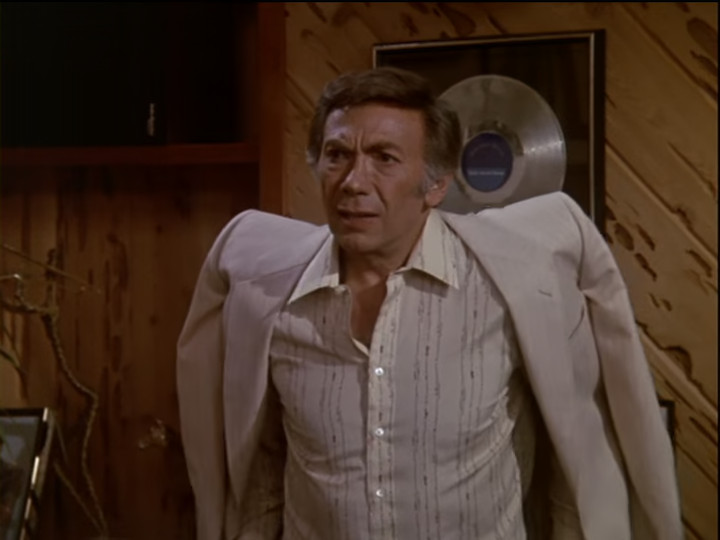

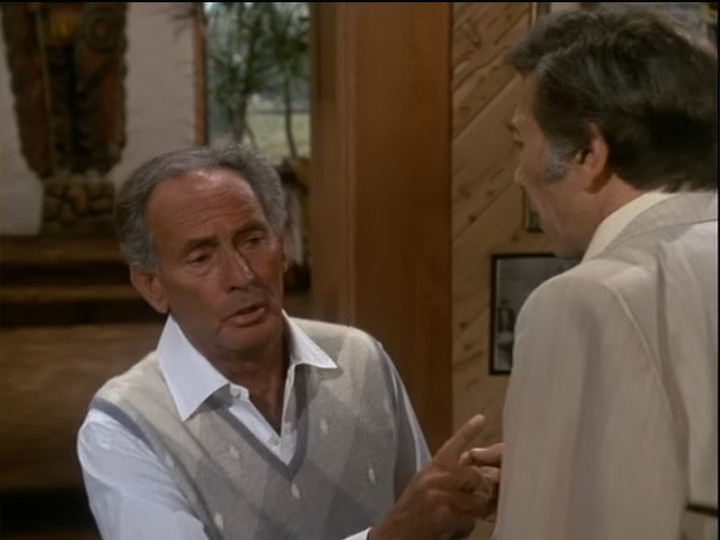



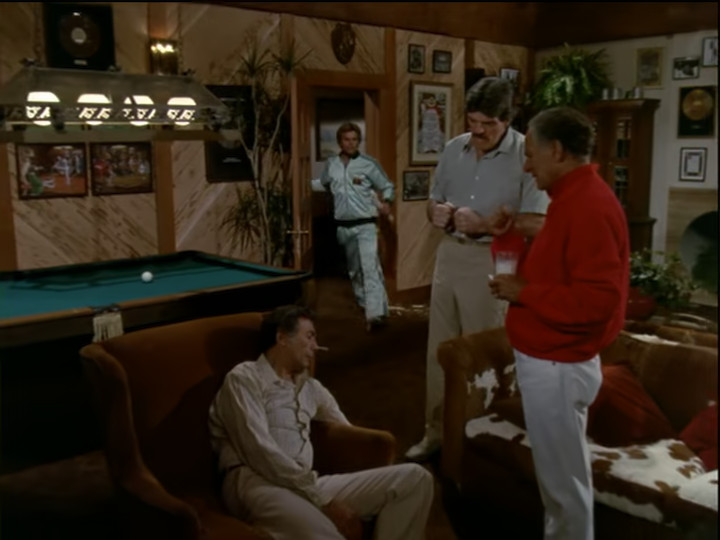
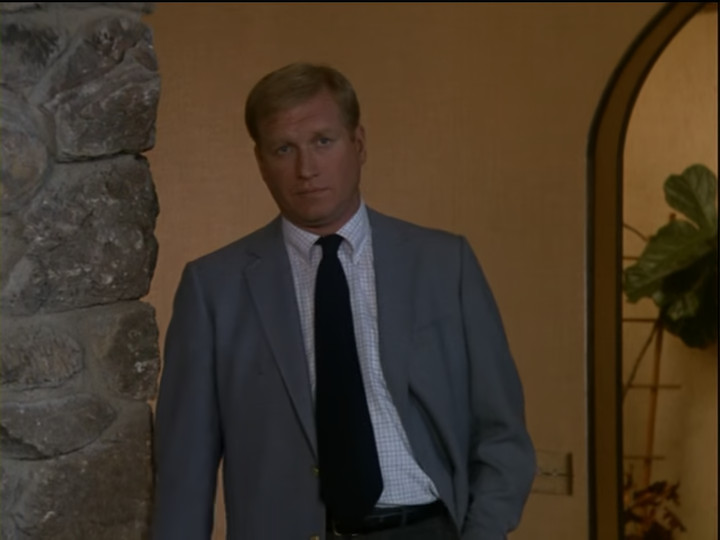

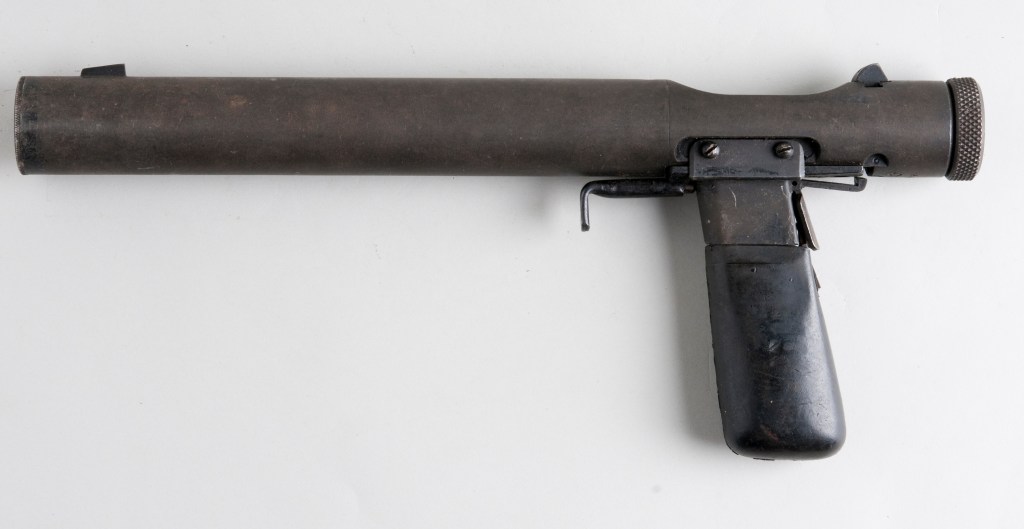


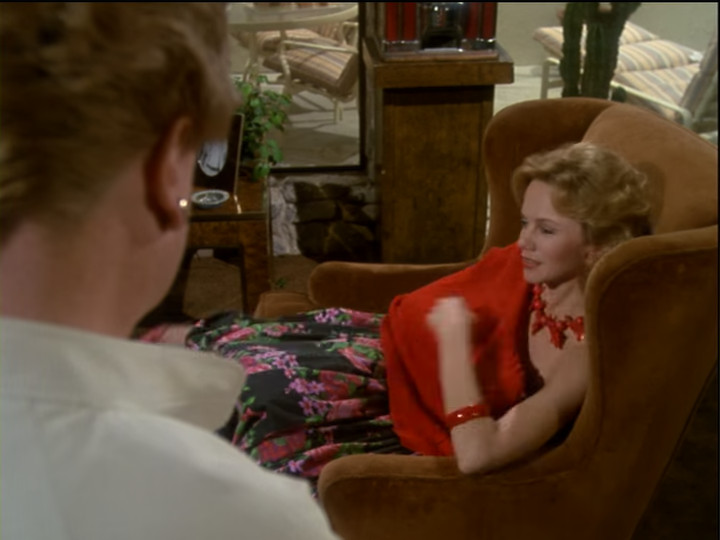


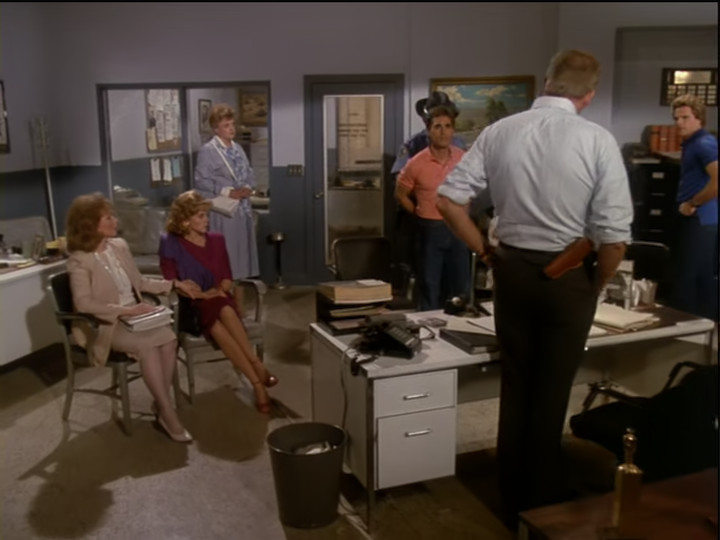
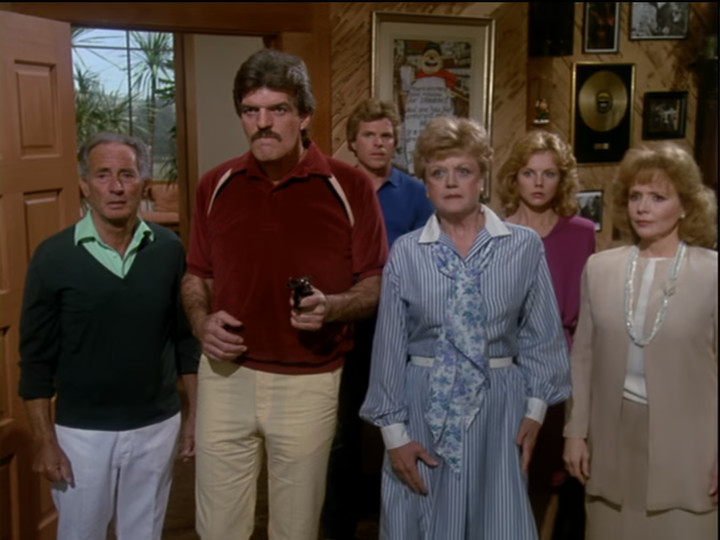
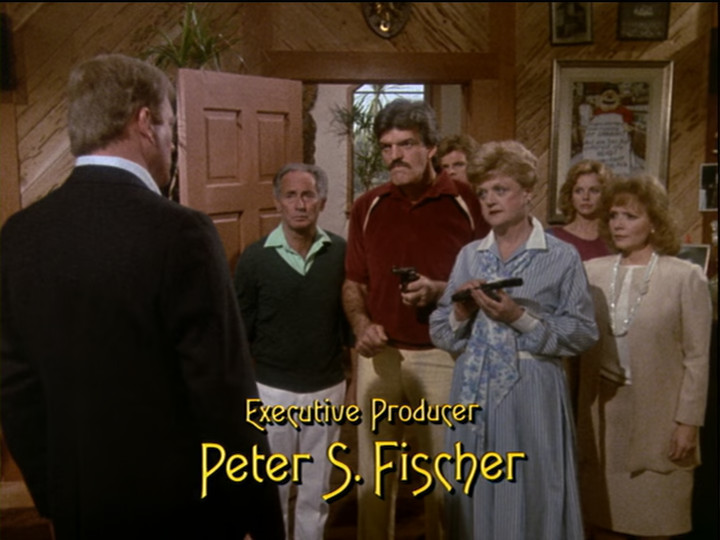
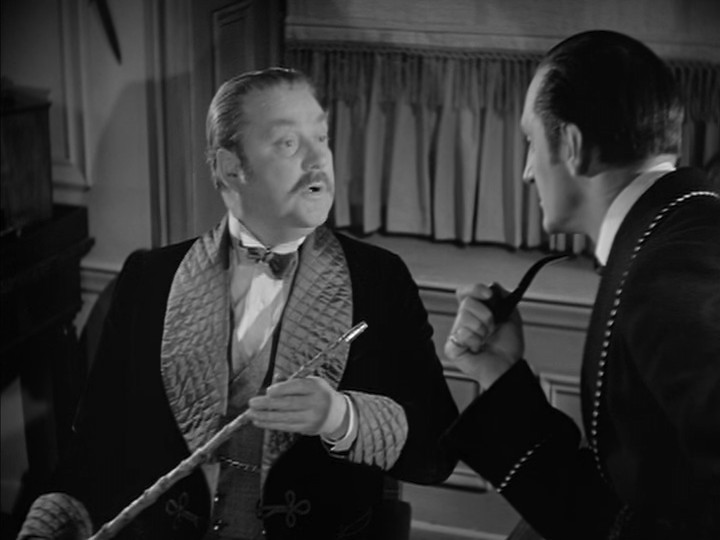

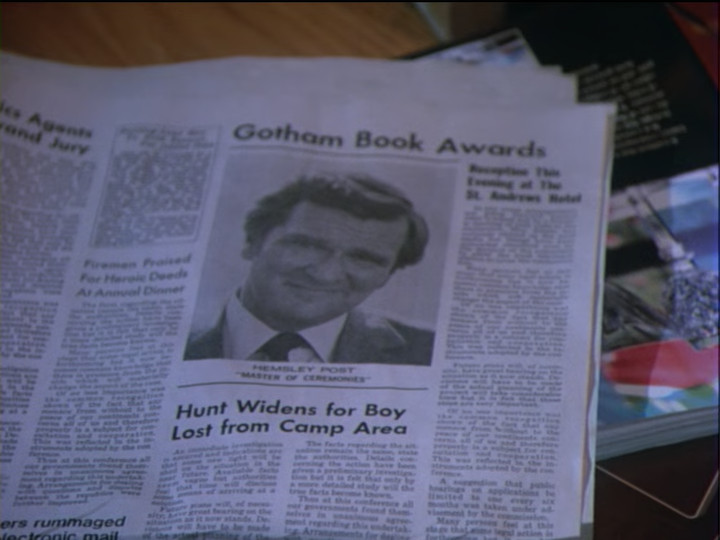
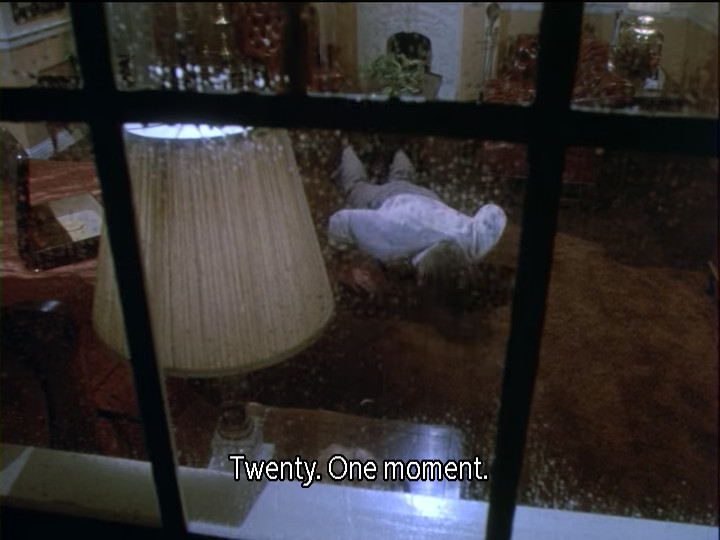
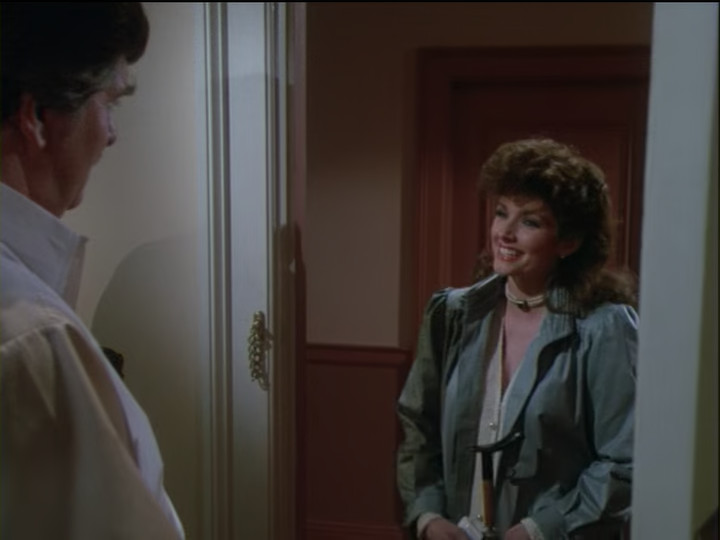


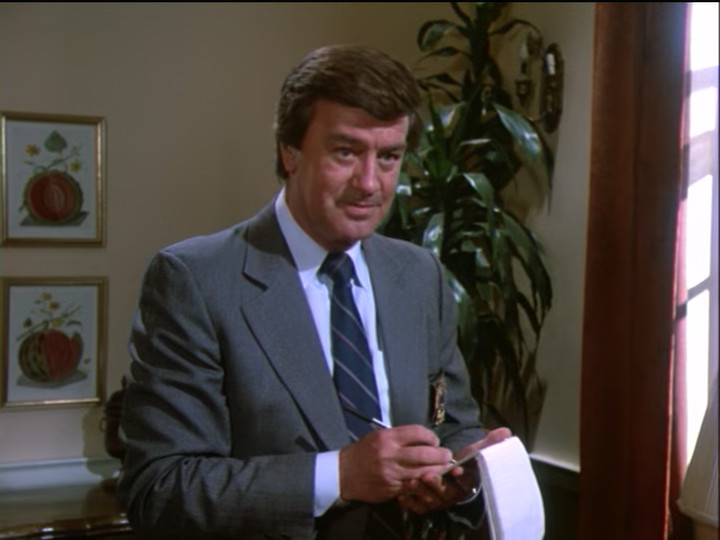




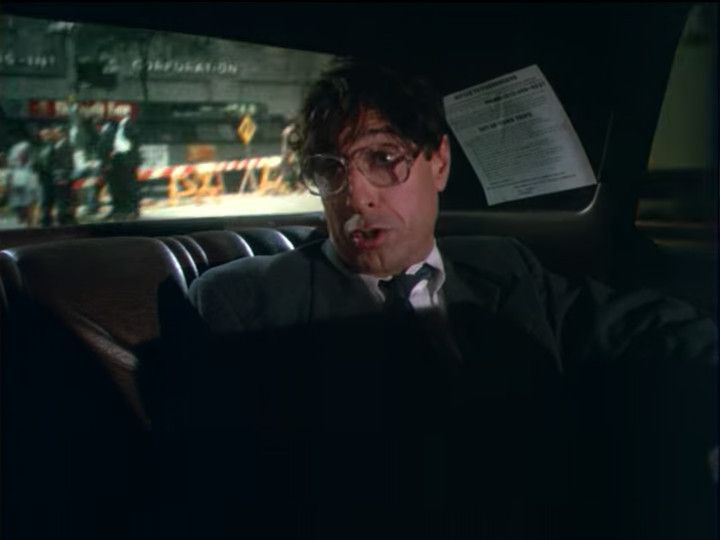

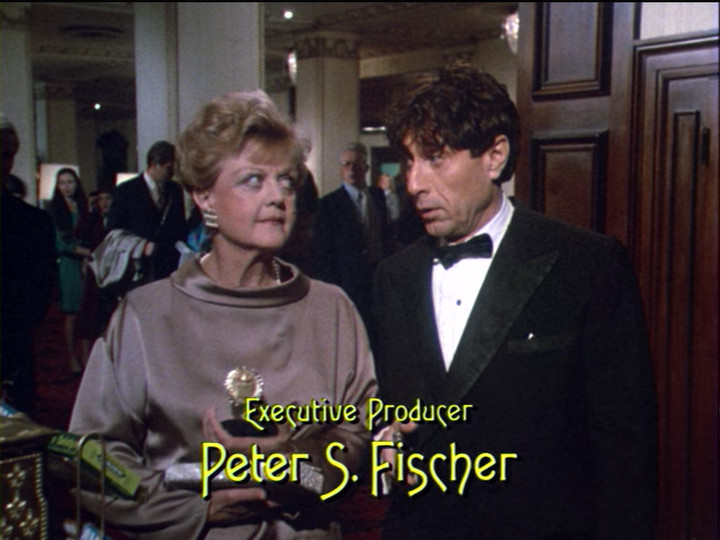









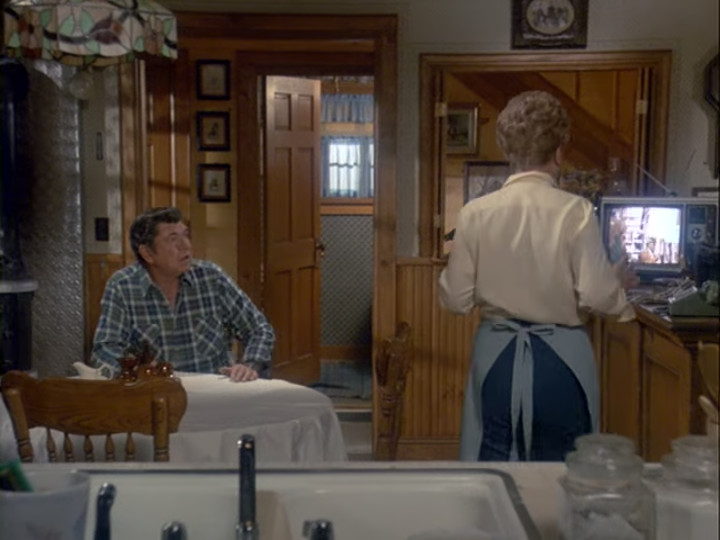
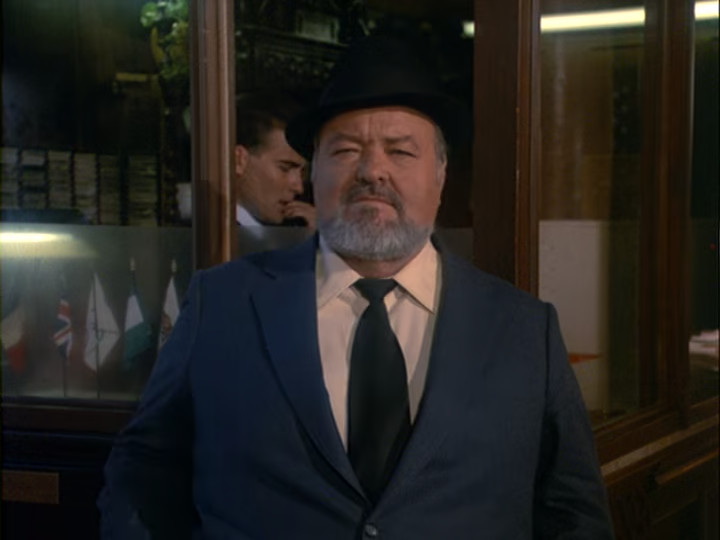


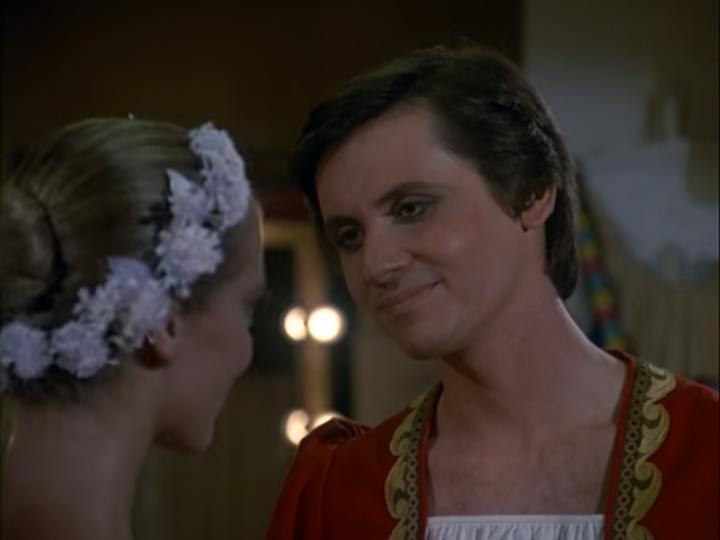


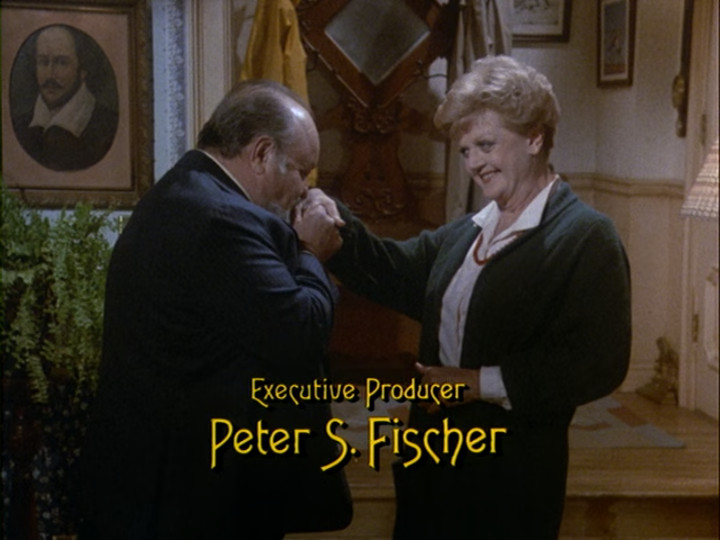
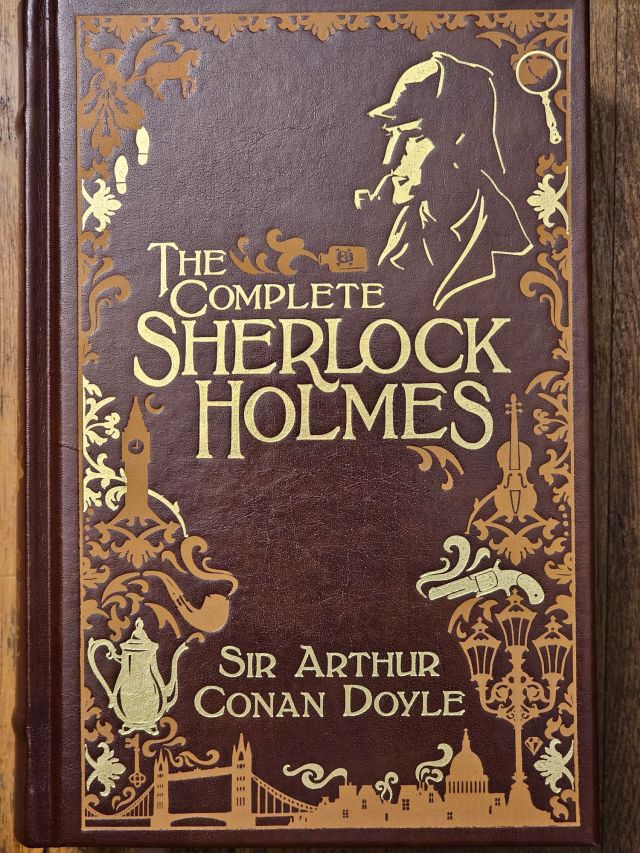
 Chris Lansdown
You must be logged in to post a comment.