I was recently talking with a friend about the Star Trek: The Next Generation episode Sub Rosa and how, while it was bad, it had some cool ideas. (I explained why it was bad in this post.) Specifically, it was interesting how it suggested, though it did not explore, what life might be like for people who had no interest in Starfleet.
In the episode, Beverly Crusher’s grandmother died and Beverly goes and visits the settlement where her grandmother had lived in order to organize her things. While there, she meets an “anaphasic entity” which behaves much like a ghost, and there are elements of gothic horror in the story, which mostly turns stupid toward the end. But before it turns stupid, the community is quite interesting, or at least hints at being quite interesting.
On the Enterprise, everyone is a member of Starfleet and shares Starfleet’s three primary values of exploration, technology, and bureaucracy. But on this small colony on a completely unimportant world that no one else cares about, there’s no great reason for them to care about any of these things, the valuing technology being the most interesting of the three. People need to do something during their day, and Starfleet officers occupy their time by using advanced technology, following orders, and filling out reports. But there’s no need, in the 24th century of The Next Generation to use advanced technology wherever possible. It’s entirely possible to only use it for the things you don’t enjoy doing the old fashioned way, while doing things the old fashioned way that you enjoy doing the old fashioned way.
Indeed, if you look around at people’s hobbies today you can see this all over the place. There are people who knit by hand rather than using knitting machines, though knitting machines certainly exist. There are people who hunt with a bow and arrow rather than with a gun. There are people who sew their own clothes and do some of the seams with a needle and thread rather than with a serger or more primitive sewing machine. Why? Because for the people who do them, these things are rewarding and enjoyable.
In the 24th century, it’s quite possible that people who live someplace where no great empire cares that they’re there would spend their time farming, weaving, making clothes, cooking, and similar things, only using replicators as a back-stop in case something didn’t go well.
Ultimately, these are the people that explorers find interesting, anyway. Explorers are not, generally, satisfied to go someplace else only to find people who don’t want to be there either and are spending all their time looking for something; they like to find new worlds and new civilizations. That is, they want to find new groups of people who actually want to be where they are.
I can see why most Hollywood writers would be terrible at writing this—they’re not happy where they are—but it would certainly be quite interesting to see it done well. Sub Rosa was never going to live up to this promise, but it would be quite interesting if some story did.
And given how much Science Fiction has been written to date, somebody probably already has and I just don’t know it.
Incredibly popular in movies and other media are fights where one good guy takes on several bad guys and wins. Not quite as popular, but still popular, is explaining how unrealistic this is. And, to be fair, it is unrealistic. But it’s not as unrealistic as the critics make it out to be. After all, the entire social order of the middle ages was built around the fact that one guy, if he’s big and strong and well trained and armored and well-armed, can take on several less well-armed, less well-trained men and beat them (almost) every time.
We have, of course, all seen the classic triumph of cool-over-realistic which is a single good guy taking on a mass of bad guys in a featureless room where at least the good guy is unarmed and the bad guys helpfully wait their turn to fight the good guy one-on-one and be immediately dispatched with a single punch, not even necessarily to a vulnerable spot. And yes, this is nonsense. It mostly exists in reference to previous things, where they’ve taken what was cool about a more realistic fight and turned it up to eleven. It’s the fight-choreography equivalent of someone falling out of a building and we see them at least five feet away before we cut to commercial and when we come back someone manages to grab their arm and save them. It’s unrealistic, but it was intentionally unrealistic as a means of being more-cool-than-real. It’s cheating, basically. But this exaggeration no more means that every one-on-several fight is unrealistic than the exaggeration about falling means that people can’t stay on buildings.
An interesting example of this is from the movie Reacher:
When the head tough says that it’s five against one, Reacher (played by Tom Cruise) replies that it’s three against one. He’ll need to contend with the leader and two wingmen. The last two always run. And there’s a lot of truth here.
Before getting to the true parts, I do need to say that there is a problem with the casting of Tom Cruise as Reacher. While he’s a fantastic actor, he’s just way too physically small for the part. Tom Cruise is 5’7″ and about 150 pounds (that’s 170cm and 68kg in tyranny units). Reacher is supposed to be 6’5″ and 250 pounds (195cm and 113kg). When it comes to unarmed combat, that’s night-and-day. The amount of damage a muscular 6’5″ man can do in a single punch is so much greater. Plus all of the street toughs here look to be under six feet tall; a 6’5″ man would be able to hit them at distances they can’t hit him (the name “Reacher” actually comes from frequently being asked to reach things for people because of his heigth). He’ll also have an absurd advantage in any kind of grappling because of his substantial mass advantage. If you imagine this scene with a 6’5″ tall guy instead of Tom Cruise, as it was written to be, it will feel a lot less unrealistic.
But even with Tom Cruise, the basic psychology is correct. A lot of fight analysis and even fight choreography assumes that people in a fight are like video game enemies—all willing to fight to the death no matter how much damage they’ve taken. In reality, most human beings dislike pain and try to avoid it. Moreover, most people who become criminal toughs don’t do it because they’re hard working, disciplined, clever, capable, and adaptable and choose to not go into legitimate business because Evil is their passion. A great many people are happy to kick a man when he’s on the ground but would prefer to wait until he’s on the ground to engage. Cowardice—which is quite common—will have a very similar effect to people waiting their turn.
This aversion to getting seriously hurt will also influence the actual attacks people make. They’re going to be far more likely to only get a little close to the good guy. The downside is that they won’t be able to do much damage if they do hit him, but the huge upside—as far as they’re concerned—is that he won’t be able to do much to them. But they’ll still look like they’re doing their part.
A similar sort of thing will also explain the good guy taking bad guys out with a single punch. Now, a size, strength, and technique advantage will tend to make his punches far more effective than theirs, but the bad guys being cowards will also do a lot of that work—after getting hit, they’re going to be far more likely to exaggerate how much they were hurt. After all, they probably don’t care very much about the objectives of the evil organization for whom they work. As bullies, they’re happy to hurt people who are weaker than themselves but when it comes to fighting someone who is stronger, their chief aim is to protect themselves. This will be as much to protect themselves from the evil organization as from the good guy; if they just run away the evil organization might shoot them as a deserter. But if they fight a little bit and get a minor injury then play it up for all its worth, well, they probably won’t have done any worse than anyone else on their team. If you get hit in the head and it only hurts but you lie on the ground until the fighting is over, who is to know that you weren’t really knocked unconscious for a few minutes? Or if the good guys hits a bag guy in the stomach, will Team Evil really administer medical tests to find out if it was a genuine liver shot or if he was just lying down because it was much safer?
I know that in the movies Team Evil will capriciously shoot anyone who survived who doesn’t tell his story convincingly enough, but in real life foot soldiers aren’t unlimited and while there are certain advantages to having the people on your side believe that you’ll shoot them if they fail so they will consider fighting to the death, this has the unfortunate side-effect of encouraging desertion and never noticing the opponent because if you never start a fight you won’t get shot for not finishing it.
Also, soldiers who all fight to the death die a lot, and there are a lot of circumstances where a tactical retreat is far superior. (People who won’t retreat are very vulnerable to being picked off a few at a time because they won’t retreat to where there are superior numbers.)
Of course, the unarmed one-on-several fight is the most extreme possible example. In real life people often carry weapons and don’t tend to fight in large arenas. Somebody, like the good guy, who routinely gets into fights might well wear at least some level of body armor. Especially with modern materials, it doesn’t take a lot to get a pretty high level of protection from fists and knives. Body armor that protects against rifles is cumbersome enough that it’s questionably worth it, but armor that protects against handguns is significantly more practical. (And it works to add decorative abs and pectoral muscle bulges to body armor.) Add in a complex environment that a clever person who has practiced can take advantage of and the one-on-several fights become quite a bit more realistic.
Of course, any kind of fight is extremely dangerous and a one-on-several fight is particularly dangerous because it’s so much more likely that a mistake may get exploited. I’m just saying that they’re not laugh-out-loud implausible if written correctly.
Sometimes in murder mysteries, the plot will involve the murderer making a bad choice. Sometimes this is picking a bad time to put their plan into action. Sometimes this is thinking that something would work that wouldn’t, or predicting that someone would react to their plan in a way that they didn’t. Sometimes this is just coming up with a bad plan. So, what are we to make of this? Are any of them legitimate or are they all bad storytelling?
With the exception of a completely bad plan, I think that they can be legitimate, but I do want to elaborate on the counter-argument first. The most fundamental problem with the murderer making a bad choice is that it spoils the denouement. In the denouement, the detective takes the tangled mess woven by the intelligence of the murderer and sets it out, rationally, so that things now make sense. This is spoiled by the murderer making a bad choice because it is intrinsically impossible to give a good explanation for a bad decision. It is possible, of course, to give a good explanation for a good decision made upon mistaken premises which works out badly because the mismatch with reality has consequences, but that’s not a bad decision.
Against this, the writer of detective fiction must balance that every clue for the detective to find is, by definition, a mistake on the part of the murderer who does not want to be caught. The weakness of all detectives is the perfect murder—a murder in which no clues are left. The heart of detective fiction is that the perfect murder is not really possible since murder is wrong. Someone who uses murder as a tool is a fallen creature and fallen creatures do not commit only a single sin, since sin warps and deforms the soul. Very commonly this takes the form of the murderer assuming that he can control all circumstances so as to leave no clues and the world being out of his control intrudes and causes clues to be left, in effect punishing him for his hubris.
And here we see, I think, why it can be legitimate for the murderer to have simply made a bad decision: the murderer already made a bad decision in making the decision to murder someone, even apart from the morality of it, because the murderer should have known his limitations and that it is not possible to fully control the circumstances as he needs to in order to get away with it.
But not all bad decisions are created equally. A bad decision may be legitimate as far as the structure of the art form goes, but yet not be artistically interesting. The problem with a fundamentally bad plan is that it is irrational at approximately every level, and so there is nothing for the detective to explain. “And then he put hot sauce in the coffee because he thought it was poisonous. When that didn’t work, he bought his father another hat in the hope that two hats would cause his father to die of a broken heart. When that didn’t work, he tried dying the new hat green to give his father a heart attack by freight, even though his father was blind…” You could, perhaps, make this work in a slapstick comedy like the movie Murder By Death, but then Murder By Death was only sometimes funny.
I suspect that the line which demarcates artistically acceptable bad choices from artistically unacceptable bad choices is how commonly that kind of bad choice is made. Picking a sub-optimal time, under stress, to put a reasonable plan into motion is the kind of bad choice that anyone might make. Trying to use hot sauce to poison someone isn’t. The examination of partial mental breakdown is far more artistically interesting, because we all live among that, than is the examination of near-complete mental breakdown.
In artistic works, I’ve heard, throughout my life, on the subject of how it’s not a good ideal to try to be totally original, “mediocrity borrows, genius steals.” For most of my life I had one interpretation of this, then recently realized another which was probably more in the spirit in which the phrase was intended. I’d like to share both because I think both interpretations have an aspect of the truth in them.
The interpretation of the maxim which I first took was that mediocre authors are overly worried about originality and so only take a little bit of an idea from an earlier work. This can pose a few problems. The most obvious is that they put the originality that they do have in the wrong place, such as where they’re not good at it. Suppose a man is good at writing dialog and characterization but not plot; if he takes the plot of a classic story and adds in characters that make sense to it in a different setting, he might write a story well worth reading. If he instead tries to come up with most of the plot it will probably be filled with plot holes and not be the sort of thing any good characters can be written within.
Another problem that this can have is that by not taking enough of the original idea, you may not have a viable idea. Imagine borrowing only Romeo from Romeo and Juliet, or Van Helsing but not Dracula. It would be comical to borrow Inigo Montoya from The Princess Bride but for there to be no six-fingered man and for his father to be alive and well.
The moral of this interpretation is that if you’re going to take something from another story: commit. Take as much as makes for a good story in your story, then add what you’ve got to contribute. And this is quite reasonable. Human beings are not so greatly different from each other that no one ever does similar things, or similar circumstances never arise.
The interpretation of this maxim which occurred to me recently is very different, and is primarily about the effect of taking story elements from another story. When a mediocre story takes elements from an earlier story, it is said to borrow them because people primarily associate them with the earlier story and note the similarity as the later one being similar to the original. When the story which takes elements from an earlier story is genius, these elements come to be regarded as belonging to the later story. There are tons of examples of this in songs—whenever anyone things of the song Respect, they think of Aretha Franklin, not Otis Redding. When they think of I Will Always Love You they think of Whitney Huston, not Dolly Parton. You can see this in stories, too. There are all sorts of things historians attest William Shakespeare based many of his plays on and aside from those specialists who dig through ancient manuscripts, no one knows what they were, because it doesn’t matter.
Mark Twain once had one of his characters give the advice, “endeavor so to live that when you come to die, even the undertaker will be sorry.” In a similar vein, if you’re going to take story elements from another story, do such a good job with them that everyone is glad you did and the original author, if he’s still alive, is proud to have helped.
In this video I look at Mary Sue characters in action and science fiction stories and look at how they don’t have to be bad characters (though, of course, they mostly are).
I recently read Agatha Christie’s novel Appointment With Death. Published in 1938, it was the sixteenth novel featuring Hercule Poirot. Despite it being very well done, I find it a strangely unsatisfying book. Curiously, I’m inclined to say that I find it unsatisfying because it does such an excellent job of following play fair rules, and even of following G.K. Chesterton’s (good) advice on writing mysteries. That is, I think it does such a good job as a puzzle that it suffers as a novel. (note: spoilers follow.)
There is the issue that the subject is somewhat intrinsically a downer. A family is tormented by their cruel mother who holds the purse strings and was so heavily manipulated that none of them decided that there are more important things than money and struck off on their own. (To be fair, as one of the characters pointed out, they had no skills and it was during the Great Depression, which was a particularly difficult time to find employment as an unskilled laborer.)
I think that the thing which really made the solution unsatisfying was that it was—basically—unrelated to the main plot. Most of the book was taken up with Sarah King and the Boyntons and their obsession with getting free of Mrs. Boynton. Now, to be fair, this is practically the ideal when it comes to detective-novel-as-puzzle stories. That it turns out that the murder was really about something that was in front of our face but we didn’t notice would be how many people would describe the goal of a detective story, or at least a classic, golden-age detective story. The problem comes down to an unwritten rule of this type of detective story: if a red herring is completely unrelated to the solution, it must be a minor part of the story.
The connection between the red herring and the solution does not need to very strong. It suffices, for example, that the red herring helped to give the murderer opportunity. Another possible connection is that the murderer used the red herring as cover. In extremis, the murderer can even use the red herring as a red herring (the original red herrings were smoked fish dragged across a scent trail to try to fool hounds). This would consist of bringing the red herring to the attention of the detective when he should know that it isn’t related, which would then be evidence that he has some motive, leading the detective to him.
What I find disappointing about Appointment With Death is that most of the book is an unrelated red herring. Nothing that any of the suspects did was in any way related to the murder, which had taken place before all of their actions anyway. Indeed, the victim had specifically gotten them out of the way.
Now, there was a great deal of interesting detection in getting all of the Boynton family out of the way; I very much enjoyed how this culminated in Poirot pointing out how strange it was that a servant went to fetch Mrs. Boynton because none of her family did, suggesting that they all knew that she was already dead and didn’t want to be the one to have to officially find out. It was also a well-crafted inter-relationship of everyone suspecting each other, motivating these actions. This part was all great, but it was really a different book from figuring out who killed Mrs. Boynton. Once it was all cleared away, Poirot them brings out the evidence of who killed her. This, I think, is really my objection. There was no need, story wise, to clear everything else up before bringing out this evidence. So much so, the revelation of all of the evidence related to the killing of Mrs. Boynton was in its own chapter.
This evidence that Lady Westholme was the murderer stood on its own and didn’t need any of the family’s muddling to be cleared away first. It would have worked equally well to have shown the evidence that it was Lady Westholme who killed Mrs. Boynton, then afterwards to explain why everyone lied in giving the wrong time of death. It would have been far more satisfying, I think, if it would not have worked equally well in that order.
In a sense, this gets at the same problem as I discussed in my post about a Star Trek: Deep Space Nine scene. In the scene, one character asks another about what was true in all the things he said. The other replies that it was all true. “Even the lies?”
“Especially the lies.”
Now, Deep Space Nine never paid that line off, but this is a decent way of describing the ideal in a mystery. The evidence should be available and everyone but the brilliant detective should misunderstand it. But they should not completely misunderstand it. The pinnacle of achievement in a mystery story is for the author to come up with a way in which even the lies are true. That, I think, is what makes it a truly human drama and not merely a puzzle.
The way that Appointment With Death was written, it was really two stories that interleaved with each other but did not relate to each other. One is a novel about an unhappy family, the other is a short story about the correct interpretation of an ambiguous statement.
There’s also a curious aspect to reading this story now, in the year of our Lord 2023, with it having been published in 1938. Agatha Christie couldn’t have known this but the book was published very shortly before World War 2. It contains an epilogue set five years later, which would place it in the heart of the war. Yet in the epilogue everyone is happy. This could work if the main story was set several years before, say, in 1934. With the Boyntons being Americans, the care-free atmosphere could make sense in 1939 since America was not to (officially) join the war until December of 1941. This would not be unreasonable. And there is precedent for the books being set out of their publication order. In an afterword in Murder in Mesopotamia, published in 1936, which explicitly sets it right before Murder on the Orient Express, which was published in 1934.
Anyway, This is no fault of the construction of the book, of course, but it still makes it a little bit of a weird experience to read it.
When looking closely at the plots of many murder mysteries one can see where a great deal of time was lost in there being mistakes in interpretation of the evidence which were made toward the start of an investigation. They can be explicit, like thinking that a clue belongs to one person when it actually belongs to someone else, but it can also be much bigger in scope—mistaking a murder for gain as murder for revenge, for example. It’s possible for the detective to spend the first half a book (or more!) laboring under this kind of mistake. It can be a useful way to spend time, and can also be the setup for the big reveal at the end which shows the detective to be brilliant.
However, it can, especially upon close inspection, easily seem a bit far fetched for the brilliant detective to get locked into an incorrect interpretation. Often the reason why people begin with one interpretation is trivial—it can be as little as someone making an off-hand suggestion, or even just someone assuming it. And, to be fair, it is the job of the brilliant detective to question all of the things that ordinary people take for granted. That said, even brilliant detectives are human. Human beings need some sort of interpretive framework to operate within, even if only held provisionally, and that framework will dictate what is and what is not conceivable. As long as the current evidence keeps the current framework plausible, it is reasonable for even the most brilliant of detectives to work within it. That is, until it stops working. That’s what’s being described by the phrase, “once you eliminate the impossible whatever remains, however improbable, must be the case.”
The other issue that comes up with early mistakes in a murder mystery is that, if it’s not handled very well, it can easily diminish the re-reading value of the story. Now, I know that not everyone values re-reading as much as I do, but I tend to operate on the principle that if a book is not worth re-reading ten times, it’s not worth reading once. (Obviously, the only way to find out is to read it once, and there are plenty of exceptions.) So how do you make the first three quarters of a book a waste of the detective’s time without making it a waste of the re-reader’s time?
The answer, I think, is to make it not be a waste of the detective’s time, but that’s not obvious until you arrive at the full solution.
That is, during the early part of the book when the detective is laboring under a misinterpretation of the crime he must still be collecting clues that will help in the solution without understanding how they are. This is a very tricky balance; it can get frustrating when all of the clues point one way and the detective won’t even consider it because of one small mistake. It’s best, if at all possible, for most of the clues discovered early to work within the framework of the mistake but to work better within the framework of the truth. A really good example of this which comes to mind is in the Hercule Poirot novel Five Little Pigs (spoilers ahead).
There is a piece of evidence given which seems to fit in under the prevailing interpretation that Caroline murdered Amyas, but it works better under the theory that she didn’t. That is the wiping of the bottle. Until Poirot introduces the interpretation that Caroline was protecting her little sister, who she believed killed Amyas, her wiping of the bottle (as well as other actions) seem to indicate her guilt. Poirot’s collecting of this information did prove useful.
I think that this forms the ideal, though of course like most ideals it is difficult to achieve.
Incidentally, what we have said above would seem to suggest that red herrings are a problem for re-readability, and yet it is obvious that red herrings can work well in a detective story. Certainly, there is a place for red herrings, but I think that they must be used like a spice—too many of them can hurt a story. But how to use them?
I think that this principle we have laid out for early misconceptions in a detective story also points to the best way to handle red herrings. A red herring which is just a waste of time will not be satisfying on re-reading—unless it serves some other purpose. That, I think, is the key. The best red herrings will improve somebody’s life when they are cleared up. Lovers held apart can come together, a missing item of value can be restored to its owner, somebody in danger can be made safe—there are many options, the key thing that makes this a satisfying red herring is that it is a bonus. That in addition to solving the central mystery and putting things right that were put wrong through the misuse of reason, some other problem was set right too.
Hard to achieve, certainly, but I think worth striving for.
In the second set of six Miss Marple short stories which (together with a special extra story) comprise The Thirteen Problems, we get introduced to the character of Jane Helier. She is a beautiful and intelligent, though vapid, actress. I should say, stage actress. The stories she was in were published in late 1929 and early 1930; talkies had only just started dominating movies in 1929 and the superior experience of seeing color and hearing sound in plays probably made them preferable over silent films for people who could easily afford to pay to see plays.
She’s an interesting character, especially because she is played mostly for laughs until the final story of the six, The Affair At the Bungalow. When I said that she is beautiful, I don’t mean merely that she is above average. She is described as having been argued as the most beautiful woman in England. She has that kind of beauty which makes all of the men around her gallant even where they have no romantic interest in her. I think Agatha Christie plays this part as much just for realism as for laughs. And I say this even though Jane Helier is mostly played for laughs, especially how much she doesn’t understand. That said, there is an interesting dynamic between her and Miss Marple—who, at the beginning of the evening, Jane doesn’t know from Eve.
Miss Marple was invited to dinner to round out the places at table. She was recommended by Sir Henry Clithering, former commissioner of Scotland Yard, because Dolly Bantry (the hostess) needed an extra guest to round out the dinner table and asked Sir Henry who she should invite. Sir Henry remembered Miss Marple vividly from the year before when he’d attended the dinner party of Miss Marple’s famous writer nephew, i.e. from the first run of six Miss Marple stories, in which each guest told a story of a crime they had learned about personally and the rest were to guess the solution. (Only Miss Marple could, for every story, of course). This second six stories features the same dinner game, though with different guests. Until the very end of the dinner party, Jane underestimates Miss Marple. Miss Marple, of course, does not underestimate Jane.
During the course of the evening, there were a great many things that Jane didn’t know, but she did have one insight which Miss Marple praised. That was in the second-to-last story, and it it we also learn that she has had grief in her life, related to being betrayed by a man. In the second-to-last story, she had somewhat more intelligent things to say about who might have been the murderer, though only Miss Marple figured it out. Then, finally, we come to Jane’s story.
I will have to discuss the solution to discuss the story, so if it is necessary: consider this, dear reader, your spoiler warning.
Jane begins by telling her story about “a friend” who happens to also be a famous actress. Everyone guesses—correctly—that this friend is really her, and in only a few sentences she trips up and says “I” instead of “she”, and a moment later quotes someone as saying “Miss Helier” instead of “Miss Helman.” She is embarassed and says that it’s so difficult to do it, and everyone is very sympathetic, so she goes on telling the story about herself.
It’s an elaborate story about a young man getting drugged at a bungalow and a theft being committed, and he identifies the woman who drugged him as Jane but she had an alibi. At the end of it, there are various solutions offered, except by Miss Marple, who says that it seems to have a personal element in it and a deliberate attempt to get the young man into trouble, though it’s not really a satisfactory explanation. A little later she remembers Mrs. Pebmarsh, who was a laundress that stole an opal pin from one woman and put it on the blouse of another woman. Instead of offering a solution, she says that she has none and that the real moral of the story is that in a crisis, women must stick together. Jane explains that she doesn’t know the solution and hoped that the people assembled would, since they’re so clever. They’re annoyed at her since this explicitly went against the rules, but there’s nothing anyone can do. The time is late and Miss Marple departs, but before she does she whispers something in Jane Helier’s ear which causes her to exclaim.
A little later, Dolly Bantry accompanies Jane Helier to her bedroom (she’s staying with them) and Jane asks if there are many people like Miss Marple, and Dolly says that she supposes every village has one. Jane is disappointed by this. It comes out that Miss Marple did in fact guess the real solution but wouldn’t say it in front of the men. Jane had, in fact, committed the crime in the story, with her understudy as her accomplice. She had played the parlor maid and her understudy played her.
Except that this never actually happened. Jane was planning to do it in a few months and was “trying it on the dog.” She was very encouraged that no one had come up with the solution except for Miss Marple, but was discouraged to hear that there probably was a Miss Marple in every village. And then there was the advice which Miss Marple whispered in her ear right before she left.
I shouldn’t do it if I were you, my dear. Never put yourself too much in another woman’s power, even if you do think she’s your friend at the moment.
What’s really interesting about the way that Jane Helier reveals that she was not as dumb as everyone thought:
Mrs. Bantry sat down and groaned.
“Oh! my poor head. And all the time—Jane Helier, you deceitful girl! Telling us that story the way you did!”
“I am a good actress,” said Jane complacently. “I always have been, whatever people choose to say. I didn’t give myself away once, did I?”
It’s an interesting twist on the character. She is still not brilliant, to be sure, but she is not nearly the airhead that she seemed to be. This is an interesting commentary on the nature of extreme beauty, especially when coupled with narcissism, or at least selfishness. She does not bother herself to be interested in things which do not grab her, which is why there are so many things she doesn’t catch. She doesn’t pay much attention to the people around her because she doesn’t need to—they will treat her well regardless of how she treats them. If she smiles and speaks nicely, people will assume her lack of interest and attention were inability, rather than self-absorption. Indeed, beauty will help out in this regard in another way, too, which is that people tend to assume that a beautiful face means a beautiful soul. That is, a face which shows little trace of the fall of man often fools people into thinking that the soul is as unfallen as the face, and so people are unlikely to suspect moral defects.
It is interesting that making her smarter than she seems also makes her worse than she seems, and indeed this is born out by the scheme of revenge which she was contemplating and testing out. It had none of the sweetness of her manner.
Agatha Christie is often given credit for the cleverness of her plots, but not often given credit for her understanding of human nature. I think she is not often given this credit because her writing is plain and not literary. It certainly was not nearly so literary as another of the Queens of Crime, Dorothy L. Sayers. Yet I think, in this, she is underrated. Her characters did not leap off the page. They did not dazzle the reader with their complex psychology. But the truth is that human psychology is almost never as complex as it likes to pretend it is when it is defending itself from realizing its own faults and Agatha Christie’s writing was far more concerned with the psychological truth than with peering into the veil of lies a person tells themselves.
Jane Helier is an interesting character study, if you pay attention.
I’ve written before about how murder mysteries with a clever twist are less popular than they were during the golden age (see Ingenious Murders, Alibi By Recording, and Dorothy L. Sayers and Clever Murders.) There is a variant of the clever twist which I would like to consider more specifically: the trap. For the purposes of this blog post, I’ll consider traps any method of murder where the murderer does not need to be (immediately) present at the time of the murder.
The first thing to get out of the way is that there is one kind of trap which remains as popular as ever: poison. We don’t tend to think of poison as a trap because it doesn’t have any mechanical parts but it functions exactly in the same manner as a shotgun in a closet whose trigger was on a string to the door. It’s just smaller and you have to trick the victim into eating it, which is rarely necessary with a shotgun.
The main problem that traps have, from the perspective of the murderer, is that they make most alibis useless. Unless the time the trap was set up is very tightly constrained, it requires a very long alibi to ensure one could not have set it up. It’s difficult to both be a character in the story and to have an alibi for several days straight. (People can, of course, lie about when they arrived in the country, but it’s too easy to check the dates on their passport.)
There is a solution to this, though, which is to disguise the trap so that it appears that a murderer was present at the time of the death. One very popular method is for the murderer to be the first on the scene and remove critical evidence of the trap, e.g. to remove the shotgun and the string. This is very risky, though, since the police tend to take strong notice of the person who discovers the body, especially if he has any real connection to the victim.
This is a solvable problem, though. One approach to not having to be the first on the scene was done in the Sherlock Holmes story The Problem of Thor Bridge, where a simple machine hides the murder weapon. This approach has the downside of working best for disguising suicide, so it’s only available to a fairly small number of murderers.
Another solution to the problem of not having to be the first on the scene can be found in a Dr. Thorndyke story: the construction of a highly atypical weapon. In the story I’m thinking of, somebody fixed up a chassepot (a french rifle from the 1860s) to shoot a small dagger. The murderer then shot his victim from across the street. When the police looked for a man who entered the building to stab the victim—since knives or normally close-quarters weapons—various people in the building could swear that no one had entered the building since before the actual murderer was last seen in public, giving him a cast-iron alibi. This works, though its solution could easily be too technical to be widely enjoyed. The other problem with this kind of solution is that the murderer must either be very lucky and trust to his extreme luck, or else he’ll have to spend a lot of time, in private, perfecting his weapon for it to be reliable enough to be accurate at twenty or thirty yards. Accurately launching projectiles is simply not easy. If the first approach is taken, the story will lack plausibility. If the second is taken, the murderer will need access to a lot of private space for a decent amount of time, meaning he must have a fair amount of resources at his disposal. This reduces his possible motives for murder, since it can’t simply be money (it could still be money in a complex way) and whatever the motive, it must be a very long-lived one for him, not only to go to so much trouble, but to consider murder a viable solution to his problems for so long a period of time.
Of course, if all this seems too complicated to the murderer, a trap which is undisguised can be paired with framing someone else for setting the trap.
I suppose I should mention the other possibility, which is to attempt to hide the trap. This is viable so long as the trap causes death in a way that can look like something else. An example of this would be a trap that hits someone on the head at the top of the stairs, causing him to fall down the stairs. The blow to the head could easily look, post-mortem, like an injury sustained during the fall. The murderer will need to construct the trap very carefully to not be obvious, at least for a time. It’s a great risk to permanently leave the trap in place, but if it can pass without notice for a few days, that would give the murderer an opportunity to retrieve the incriminating bits later, after attention has faded from the murder scene. (Alternatively, the trap can be made with biodegradable pieces and put someplace that water or wind will eliminate the evidence.) This last part can be fun because the bits that don’t quickly pass away can catch the eye of the detective while looking like not much of anything to people with less imagination.
Considering it all, I think that, for all their difficulties, traps are still workable in a modern mystery. A fair amount of care will need to go into the construction of the murderer who employs a trap. It can easily seem unjustified. This is, to some degree, a result of murder mysteries being primarily novels rather than short stories; in short stories you can leave enough of the character up to the imagination of the reader that he can simply trust that the character’s backstory makes sense for doing murder with great self-control and resourcefulness. (This last part can be ameliorated somewhat by having the murderer copying something he read about rather than coming up with the idea himself.) Novels require greater consistency in their characters since there is more of the character in a novel than in a short story. Still, I think it can be done.
A problem that has come up recently in movies that are sequels to beloved movies, but also in more long-running books, is the problem of how to write the heroes now that they’re older and have already gone through a character arc. The standard Hollywood approach is to just reset the character so they can go through the same arc again, since (approximately) the only thing Hollywood writers know how to write is the coming-of-age story which is sometimes called the Hero’s Journey, loosely modeled after Joseph Campbell. This sort of mistake is not limited to Hollywood writers, though.
The problem that all of these writers have is that they don’t understand that human beings have life stages. (As an aside, this is also why they tend toward stupid political philosophies that would work great if everyone was born, lived, and died in their twenties.) The Hero’s Journey as it is usually described is by no means a universal story for heroes, but it is an archetypal story in that it is (very approximately) the adolescent maturation process. This is why the call to adventure has supernatural aid to overcome threshold guardians and find a mentor; people must be called to adulthood by someone other than their parents, who erect a barrier (a minor barrier, if they’re doing it right) to ensure that the child only starts when they’re ready. Once they cross this, they must then find a figure who can teach them how to be an adult (using the preparation which their parents gave them). The descent to the underworld/death & rebirth is something everyone does when they are finally acting like an adult and try and fail and pick themselves up and learn to deal with real failure. Etc.
All of this is proper to the maturation process of an adolescent. That is where it stops, though, because the point of it is that at the end of it the adolescent is now an adult. This makes any attempt to do this with an older hero fundamentally wrong. (The desire to do this also explains why so many older heroes are portrayed as broken and dispirited old men; it’s putting them in the position to go on this kind of maturation process again.)
This is not to say that an older hero can’t learn and improve. They can. What they learn and improve at are things appropriate to what they already know. There are several possible areas for this, but they all involve a focus on others. The short version is that an older hero can learn to be a leader, a mentor, or a parent. He is someone who has learned to achieve what he sets out to do; now he must pass this on and help other people become people who can achieve things worth achieving.
In all of these variations of passing on what one has learned there are two key features to development as a teacher. The first is what would properly be called condescension, from its etymological root of “coming down to be with”. That is, he must learn how little an inexperienced person knows. You can view this in high theological terms of being an image of God taking the form of a slave, if you like, but even if you don’t, it is a truism of teachers that they must learn to (imaginatively) put themselves in the position of someone who is ignorant. That is, to teach someone, they need to be able to squint and see the subject they have mastered only dimly, as through a mirror, darkly. That is, they need to be able to imagine being someone who knows so little that he needs to be taught, while still remembering what he knows about the subject so he can teach it. In some metaphorical sense, if he is to save his pupil from ignorance, he must unite two natures in one person: the lower nature able to reach the pupil, the higher nature able to lift him up.
The second key feature in a master becoming a teacher is that he must love his student. I mean love in the sense of ἀγάπη (agape; Latin: charitas)—willing the good of the other for his sake. Condescension is a challenge of skill that the master faces; loving is what makes him vulnerable, and thus interesting in the story. Loving his student is also what will make the relationship between master and student complex. Since the master wills the good of his student for his student’s sake, this necessarily means that his actions are beyond the student’s understanding. It is exactly his mastery of the thing he’s teaching which means that he can see goods his student cannot see, and so his actions must be mysterious to the student. This creates work for both sides; the master must win the trust of the student while the student must have faith in his teacher. The student must act in faith because his teacher must do some teaching as well as winning of his trust. (I’m using “faith” in the ordinary sense, that is, believing what one knows to be true when the evidence for it is no longer present.) If all the teacher ever did was win the pupil’s trust, the pupil wouldn’t learn anything†.
As I alluded to above, all of this holds whether the older hero is a leader, a mentor, or a parent. The exact responsibilities of each will vary, but all of them have these two overarching characteristics that will form the main points of interest in the story. A parent changing diapers is not interesting; neither is a mentor setting up the targets before the student practices aiming and neither is a leader doing paperwork so that everyone clearly knows what his orders are. Getting his child to be on time may well be the greatest challenge a parent faces, just as completing his paperwork done may be the lion’s share of labor for a leader. None the less, they are not interesting, and they are not interesting because they are easy for a human being to remember. It is the truths that we have difficulty holding onto that we enjoy being reminded of.
This, then, is how older heroes should be written. It is far more difficult to write than it is to write a coming-of-age story, for the simple reason that it is far more difficult to be a good teacher than it is to come of age. It’s not impossible, however, and if you want to write older characters well, it’s the only option‡. All of the other options consist of writing characters who never grew up. They’re not interesting, they’re just sad. And people don’t really want flawed characters.
†This, incidentally, is what makes parts of The Karate Kid so great. Is doing household chores actually a good way to learn how to fight? Of course not. But it is symbolically perfect. Daniel does things whose relationship to his goals are completely unintelligible to him—except for seeming to be selfishness on the part of his teacher—and it is only through acting in faith and patience that he receives the benefit of Mr. Miagi’s knowledge. It would have been far more realistic had Mr. Miagi made Daniel strong through having him lift and carry heavy things which Daniel didn’t see the point in, but it would not have been nearly as symbolically intelligible. And The Karate Kid was a movie, not an instructional manual. The job of movies is to teach big truths in a short time, not to teach a large number of small truths in a long time. If you want to know how to actually get good at fighting, you’ll need to hire a teacher and spend years.
‡ I am assuming that the character is too old to still be a hero in the more direct sense. If that is not the case and he can still best opponents in direct combat—or whatever version of that is appropriate to the kind of hero he is—then it is also quite viable to tell the simple story of one of his adventures. Indeed, this can be quite fun, especially with people assuming he can’t do what he is perfectly capable of doing. An excellent example of this is the Miss Marple stories. People assume, because of her age, that Miss Marple has no idea what’s going on. In reality her wits are still sharp and she’s a better detective than any of the younger people around her, and her constant besting of them is quite amusing. The same thing could easily work for a wizard who only comes out of retirement when younger mages can’t get the job done. You can probably stretch this for a sword master, but only up to a point. I would trust a fifty year old fencing master to carve up a thirty year old swordsman, and I don’t think it’s stretching credibility too much for an especially talented sixty year old master of the blade who has kept in practice to beat a thirty year old mere proficient. I think this begins to lose credibility once the old hero is pushing seventy. That said, it is widely reported that Jack Dempsey, at the age of 74, knocked down two young guys who tried to mug him as he was getting into a cab, so you never know.
I was recently watching some commentary on movies in which someone trotted out the complaint that none of the main characters in poorly written movies are flawed, and therefore they are boring. If I recall correctly, Rey from the Star Wars sequel trilogy was an example. I know I’ve heard this complaint many times about the main characters in Star Trek: The Next Generation, too. I’ve heard it about many boring movies and TV shows, and it’s wrong.
The first and most illustrative problem with this critique, though not the greatest problem, is that all of the characters invoked are flawed. On first meeting Finn, Rey chases him rather than trying to talk to him, hits him with a staff rather than using the minimal amount of force necessary to get him to stop fleeing, and consents to BB-8 electrically torturing Finn in order to get him to talk when he hadn’t even refused to talk. The TNG cast would be too detailed to go into, so just to use Picard as an example, the man was extraordinarily arrogant, treating a vastly superior being (Q) as a mere annoyance and trying to bully him into doing what Picard wanted. (This directly led to Q introducing Star Fleet to the Borg, and in consequence getting an extraordinary number of people killed when the Borg came to invade.)
These are not flawless characters. They’re deeply flawed characters.
What they are is uninvolved characters.
They don’t care about anything, they just do whatever is necessary in order to move the plot forward. This is to say, they are not vulnerable. Rey is a boring character because nothing is at stake for her. She will do whatever the plot requires because she’s just a puppet dancing on the writer’s strings. Picard and crew were, likewise, uninvolved, acting only for the sake of moving the plot along.
Oddly, but very interestingly, the one exception to that in TNG which I can think of is Lt. Commander Data. He did, occasionally, want things. The two examples which come to mind are The Ensigns of Command in which Data struggled to figure out how to convince primitive settlers to abandon an outpost before it was wiped out by advanced aliens in a few days, and Deja Q, where Q becomes human and Data tries to teach him how to exist as a human based on what Data has learned so far. These examples are important precisely because they are not vulnerabilities within Data, but in his love for others. (I use love, here, in the sense of the Greek ἀγάπη (agape)—willing the good of the other for his sake.) Data is not vulnerable because he will, personally, be diminished if he does not achieve his goals. He is vulnerable because the object of his love may be diminished if he does not succeed. This is also why Data is far and away the most interesting character on all of Star Trek: The Next Generation.
What was true in TNG is true elsewhere. Where you find boring characters, you don’t find flawless characters. If nothing else, writers who can’t write interesting characters sure as hell can’t write perfect ones. No, where you find boring characters, you find invulnerable characters. They are invulnerable because there is nothing that they want which they are not sure of getting. Mostly, all they want is to do whatever it is the writer needs them to do in order to move the plot forward, though there are some variants. For example, some characters only want whatever is necessary in order to set up the current joke.
In short, boring characters are boring because they are not, properly speaking, characters. They are lifeless puppets, a mere locus of dialog with a convenient label. They are boring because they have no will of their own. There is no breath of life in them. But it is important not to mistake this; having a will of one’s own does not mean being selfish. Indeed, the most interesting characters are those who love—who will the good of those who can receive good from them. They are the most interesting because they have the most at stake. Fools who are being selfish are not nearly so interesting because—painting with a broad brush—they would usually be better off if they don’t get what they want.
So can we please stop with this nonsense about flawed characters? We don’t want flawed characters. We want vulnerable characters.
I recently watched the David Suchet version of the Poirot story, The Clocks, and was reminded of a staple of golden-age† detective fiction: the overseas fortune as motive for murder. In some ways it’s not that different from any other fortune as a motive for murder, but it does have a few special features that I think are worth considering.
One of the great things about an overseas fortune that some character inherits is how mysterious the thing intrinsically is. The family structure and how people fit into it is something no one is very likely to know. This is a bit more true in golden age detective fiction when people in different countries rarely visited each other unless they were rich, long distance phone calls were either non-existent or prohibitively expensive (depending on exactly what year we’re talking about) and camera portraiture was was rare and special. Yet it is still true even in our age. For example, I have various (second, third, etc) cousins in Greece, one of whom I’ve even corresponded with on occasion and even seen pictures of on Facebook (years ago, before I stopped using it), but I could be fooled by nearly any Greek of the correct sex and age if they were to come over here. How much more true this is of my cousins I’ve never spoken to or seen pictures of!
The inheritance of overseas fortunes also, of necessity, involves execution of the will by people who only need to be fooled for a short time. Frequently this is done because the rich decedent had no (surviving) issue and so the will must be executed by lawyers as a final act for their client. This works well, but even if some cousin or nephew or some such were made executor of the will, they would have had little enough contact before the connection (the recently deceased relative) died, so they are likely to have even less afterwards. The decease of their relative and the naming of them as executor has placed a burden on them which has no compensatory convenience, so they will likely want to get it over with as quickly as possible. Common honesty will make them want some evidence that the person to whom they are giving the money is the correct person, but this is easily dealt with by an author since, after all, it doesn’t really make any difference to the executor exactly where the money which isn’t going to them goes.
This discussion of the execution of wills makes me wonder, now, what the mechanism of enforcement is for the executor. In the normal case, I believe that the principal beneficiary tends to be named the executor, and people who receive some portion can achieve enforcement through suing the executor. This does not really apply to the case of an overseas fortune, especially to someone who has no idea that they stand to inherit anything. The executor would take possession of the money or property or what-have-you, and there would not really be anyone who would know to object. Wills are relatively private things, after all. I need to research this further, but I suspect that there is some fertile ground for finding a motive for murder that consists of the executor of a will not bothering to find the overseas inheritor, and then coming across them and murdering them in order to avoid having to give up the inheritance (especially if a large portion of it that they could not repay is already gone).
There is another advantage which golden age mysteries had, which is the simplification of the laws of inheritance which has in some places happened after the golden age has limited the pool of suspects. I actually must confess that I have no idea how intestate inheritance works in the United States; the advice I’ve generally heard is that if you have anything to leave people, one should draw up a will. Neither, come to think of it, do I know how intestate inheritance works in the present-day United Kingdom. I do, however, know that in England the Administration of Estates Act of 1925 directed that aside from a few relatively close classes of relatives, the estate of someone who died intestate would go to the Crown (this formed a major plot point of the novel Unnatural Death). Still, it’s easy enough, I should think, to have some rich person write in their will that failing the main intention, all of their money should go to their closest living relative, and provide some funds for the finding of this relative.
The most obvious way to produce a motive for murder with overseas inheritance is for someone to pretend to be the inheritor; they will have a fairly good motive for killing anyone who would recognize the deceit. The other fairly obvious motive this can produce is a more distance relative whose relationship is unknown killing a closer relative, preferably before the knowledge of the inheritance comes in (potentially when the rich overseas relative is in his last months or on his death bed, rather than after his death). Something that can combine the two is killing the actual inheritor in order to pretend to be the person who will inherit. (This was done in Peril at End House, where the will only specified the inheritor by first name, and someone of the same first name killed the actual inheritor in order to pretend that she was the person named in the will. With the relationship having been kept secret, there was no one to say otherwise.)
Less obvious, but still viable, is a person committing murder in order to clear the way to marry the person who will inherit a fortune before it is known that they will. People are less on their guard against gold diggers when they believe they don’t have any gold.
If you’re willing to have the murderer be mistaken and kill without gain under the misapprehension that they would gain, then the overseas fortune is fertile ground for a thing. A person who believes a nearer relative to already be dead might kill the only remaining closer relative, only to be surprised that it was for nothing when the closer relative shows up alive. This can be great at disguising the motive since the person’s potential for inheritance will have been forgotten about, especially if all of this happened before the rich person actually died.
Speaking of the long-lost relative who is supposed to be dead, overseas fortunes are also great for this since if the family is already spread over two countries, spreading them over three or four is no great stretch of the imagination. Golden age mysteries also benefited from being written around the height of the British Empire, when it would be normal for people to go off to dangerous places to seek fortunes and never be heard from again, presumably dead. Still, this sort of thing is not too hard to do in modern times, especially if one only needs family members to think a relative dead and not to have an actual death certificate.
This possibility could also go in the interesting direction of a person lying and saying that a nearer relative died years ago in another country when they hadn’t, only for the nearer relative to turn up years later. There certainly would be motive to kill this nearer relative when they show up, before anyone can find out that the wrong person inherited. Years later, few people would think of a connection between the money and the dead man.
The details of finance are boring to most people, which is a huge boon to murder mystery writers.
† I should explain that I include The Clocks as a golden-age story despite it being published in 1963 both because I think we can grandmother Agatha Christie’s later stories into the golden age and also because the Davis Suchet version re-set the story into the 1930s and it worked very well.
Something curious about the ITV version of Poirot is that (with the exception of The Mysterious Affair at Styles) all of its episodes were set in the 1920s. Not literally the 1920s, per se; I’m sure that plenty of the technology or fashions were from the 1930s, but neither the Great Depression nor the looming war due to the military buildup of Germany ever feature.
This is not true at all of the novels.
The Poirot novels are always set contemporaneously to when they were written and current events, or at least current conditions, play into the plot. The only anachronism is Poirot himself; when Agatha Christie first wrote him, she presented him as being at least in his sixties. In her autobiography she mentioned that this was an unfortunate choice on her part, but she had no idea how popular he would be or how long he would last, and as of the time of her writing about it he had to have been over 100 by then. She simply ignored this problem and made Poirot always an old man of unspecified age.
When ITV made its version of the stories with David Suchet, they chose to set all of the stories in the same few years, though rarely with anything that would date them. There were practical reasons for this, of course. For example, it would be difficult to age the actors appropriately by decades in order to follow the real stories. Wardrobe and set decoration would be far more difficult if they kept track of the changing styles. Moreover, a series of episodes (or short movies) would be far more jarring if they skipped forward by years every few weeks or months, while the books always skipped ahead by however long it had been since the last one.
However many practical reasons to set Poirot in the span of a few years, though, I suspect that the biggest reason was that the 1920s are simply far more interesting, and far prettier, than later decades. This isn’t the totality of the 1920s, of course. Poirot was a celebrity and tended to deal with clients of means. Accordingly, the stories are set largely among the prettier parts of the 1920s. This is as it should be. Detective stories are stories for the common man, and so they should deal with things that he will not normally come across. Fiction about the lower classes is the domain of the upper classes, who need to read about drudgery and difficulty to find variety from their lives.
There are complex reasons why this should be, but the one thing I think it isn’t is rose-colored glasses from anyone’s past. By the 1990s when ITV was making the Agatha Christie’s Poirot series, the 1920s were seventy years before. No one remembered them. Instead, if we look to the specifics, we will find a decent answer. The 1930s were an interesting time but heavily influenced by the world-wide Great Depression and in the later portion by the looming war on the European continent. The 1940s were dominated by the second World War, to the point where no one ever talks about the events of 1946-1950. The 1950s had a primarily industrial aesthetic, as people took refuge in the post-war plenty which was so different from the great depression and the war years. In more rarified circles, architects and designers were greatly attracted to anything which was not beautiful. This was the era of the Helvetica font and the beginning of the era of buildings which no one likes. The 1960s spiraled off into kaleidescopic colors that meant nothing but were fun and new. The 1970s were, of course, varied, but let us leave it with two words: shag carpet. That takes us to the end of when Poirot stories were written, but for completeness: the 1980s were the era of big shoulder pads and bigger hair with leather jackets and denim jackets, while the 1990s… I wonder what the style of the 1990s even was? T-shirts and jeans or shorts? It’s been thirty years since 1993, and has anyone figured out anything to be nostalgic for? Classic video games are the only thing that I can think of.
Anyway, I think that I’ve made the point. The 1920s are an era with a fascinating aesthetic that’s pleasing to look at, and it was the last time to have that for quite some time. (Portions of the 1930s were more-or-less continuous with the 1920s, but I’m counting them as part of it since they were, aesthetically, a continuation of them.) There will be others, of course. At some point our fascination with trying to see how little clothing people can wear will be over, and people will try to make their clothing interesting rather than revealing, again.
This is not the same thing as nostalgia for the 1920s, by the way. I don’t think that it being fun for Poirot to be set in the 1920s is nearly the same thing as wishing to live in the 1920s. It’s merely a recognition that the interesting parts of the 1920s were very interesting, while the interesting parts of later decades weren’t nearly so interesting.
There is also the argument to be made that the 1920s (and 30s) were the last real era of the private detective. After World War 2 we live much more in the era of the spy thriller. In the spy thriller people kill and are killed for governments and large organizations; we don’t care nearly so much for the concerns of the individual. There may be some truth to this, though for all that people still go on murdering people for their own reasons even in the 2020s, and people even still care when people are murdered. It may be fewer than in former times, but detective stories were always about unusual people.
During the golden age of mysteries, a great many of the stories were (of necessity) set against the backdrop of drastic changes in society. These changes often provided motives as well as opportunities for the murders. Motives would often be the desire for money to be used on something other than maintaining the vestiges of an old way of life that the new generation is not interested in. The opportunity provided is often along the lines of a large house with few people in them. It’s that latter part that really interests me at the moment.
Large, derelict houses make great settings for mysteries, and I think that this is especially the case in mysteries for children. Scooby Doo was very frequently set in large houses with few people in them, isolated from their neighbors by large plots of land. These are things that most easily happen when societal changes make things that had been popular, or at least populous, less so. When things get abandoned, or even just partially abandoned, there become the remnants of things that people used to do without there being the people around to explain what they were. This makes such a setting is intrinsically mysterious. Whatever crimes a villain is currently committing, there are many things that need an explanation but without the people present who know what they are to give the explanation. Figuring them out, then figuring out which of these is innocuous and which nefarious can provide a wealth of things for the detective to use his intellect on.
This scope for investigation provided by the former scene of a bustling community now in some state of abandonment can be amplified by the intertwining of the current mystery with previous events. This can take the form of treasure which can be discovered or inherited, but it can also take the form of the deeds or misdeeds of the past influencing revenge in the present. It can take the form of both, separately or intertwining.
So how do we make use of this in contemporary murder mysteries? (I mean, murder mysteries set in at least approximately the time of their writing, as opposed to historical murder mysteries.) Many of the social changes which formed fertile ground for Golden Age murder mysteries are, in the twenty first century, over. The remnants of the medieval system are now pretty much entirely gone in England and, to the degree that the southern plantations and robber barons of the United States formed some counterpart, they’re gone too. We still have billionaires, of course, but for a variety of reasons they have fewer servants. (Part of this is technology, part of it is a more efficient economic system where things like cleaning and landscaping are more efficiently done by companies with specialized equipment who service multiple clients.) Even where a billionaire has something potentially interesting like a hundred million dollar yacht, the things are all new. An American billionaire’s household was assembled fairly recently. The odds are pretty good that his house was built fairly recently. The odds of a billionaire’s parents being billionaires is… not high. There are wealthy families, of course, and some of them even have history. I think these can work for this kind of murder mystery—the wealth of wealthy families tends to substantially diminish with each generation. There are exceptions, of course, but children are so frequently different from their parents that it’s rare for the grandchildren of someone who built up a fortune to have even a quarter of their grandfather’s talent for making money, and even less of his being in the right place at the right time to take advantage of that talent.
I suspect that there is more, in the contemporary United States, that can be made of institutions falling on hard times. That happens in all ages, but especially in our contemporary industrial times. Businesses, schools, hospitals, and more go out of business all the time; plenty come close to it or shrink before they’re bought out by competitors. Not every business would be ripe for this kind of setting, but I suspect a lot would. If one couples this with the advisability of Fun Settings for a Murder Mystery, there’s a lot of fertile ground, here.
Over on his blog Mr. John C. Wright has an interesting post, Campbell’s Hero’s Journey is Bunk. As always, Mr. Wright writes well, and the post is worth reading. That said, it struck me that the moment one hears about Campbell’s theory that all stories are some form of a primordial mono-myth it’s obviously bunk. This gets especially obvious when some fool tries to describe both Christianity and the Odyssey as at some fundamental level the same story. Obviously, this can be done if one is willing to make the mono-myth “stuff happened,” but at any meaningful level of detail this is idiotic. Not all ideas are the same and not everyone agrees on what life is, so they cannot all, even in principle, tell the same stories. Further, even within a single worldview there is more than one story it’s possible to tell, and even more than one story that people can think it important to tell.
This gets even worse if you just look at what the Hero’s Journey, the one tale that everyone tells, is supposed to be:
I’m sure that there’s some story that this describes, but if you actually know any stories, it’s just obvious that there’s many that don’t fit this pattern unless you’re willing to use interpretations so tortured that they’re probably banned by the Geneva conventions.
So, is this thing worthless? It clearly is worthless in the field of comparative religion. However, Campbell’s myth of the mono-myth influenced George Lucas when he was writing Star Wars, and given what the prequels were like, we can only assume for the better. There must, therefore, be something in it which can help someone.
It strikes me that the fundamental thing which Campbell does get right, which a great many people—secular people, that is—miss, is the value of domesticity. In the cycle above, the call to adventure and the return both reference the domestic life. What the cycle does not explicitly show, but what is none the less referenced by it, is that all of the other stuff in the cycle exists for the sake of the domestic. The point of the adventure is not the adventure, but in protecting or restoring or supporting the domestic that the hero left.
The main work of life consists in the details. This is related to how God loves beetles. Most of creation are moments we would not write books about; it is good to remember that the stuff that we do write books about are only really interesting because of how they affect (or would affect) the more important stuff we don’t write books about.
(As a side note, this is why gender-swapped female heroes always ring false—as distinct from heroes which were written as female, which ring true according to the skill of the author. It’s not merely that males and females tend to relate to other people differently. When it comes to exigent circumstances like an adventure, this tends to be more in the details than in the main actions (assuming the same abilities; characters with different abilities will naturally meet challenges differently). A big problem with gender-swapped heroes is that the domesticity to which they will return is not the same for males and females. Some aspects of domesticity are the same, some are complementary, some are just different—but the whole thing is not identical. The same adventure will tend to impact the characters differently because of how it impacts their ability to return to domesticity at the end of it. Becoming the greatest sword fighter in the land, who has killed dozens of other warriors in hand-to-hand combat, will affect things like marriage prospects differently for a male and a female. Adventures which don’t involve combat at all will still have different impacts because males and females will return differently, since they’re returning to different things. An adventure to return a magic item somewhere, which is done all by cunning and making alliances, may well be more satisfying for a female character because she was important and rose to the occasion, while it might be disappointing to a male character because it didn’t prove a damn thing about his worth as a warrior. He might need to learn lessons about service having to be what is needed, not what you want to do, that she probably wouldn’t. Both are only probable, of course; you can write approximately any story about a male or a female, the issue is that you have to write it for them, you can’t just write an androgynous story then pick the character afterwards, or worse, write it for the one then swap to the other without changing anything else. For a story to ring true, it needs to be written for the actual characters who are in it.)
If a person can get the importance of the domestic out of Campbell’s mythology, he will write a vastly better story than a person who does not realize that the adventure is in service of the mundane, not the other way around. Even if he only gets it at a subconscious level.
This is why, by the way, the scene of Luke Skywalker before the funeral pyre of Darth Vader was, perhaps, the best scene of the whole trilogy:
The two great domestic activities of life are birth and death. Birth brings us into this temporary world, and death brings us out of it. People on an adventure do not have time to do either properly, but they’re especially well known for not having time to ceremoniously bury their dead. Here, Luke has finished his adventure and has returned to the domestic. He is performing the ultimate domestic duty for his father: he is burying him. The death of the Emperor and the destruction of the Empire have wider ranging consequences than this, but this stands symbolically for them. It would never have been possible if the emperor had still lived. It’s also quite important to the emotional impact of the scene that Luke is alone while he does it. Families are small things and the domestic is most naturally private. Domestic things are worth doing even if no one knows about them.
That’s how you know that they’re more important than the stuff we write about.
A while ago I wrote about the problem of how to put characters above suspicion in a murder mystery so that readers could become fond of them. The problem, as I mentioned, is that golden age mysteries loved to try to put the murderer as far above suspicion as possible. However, we need some characters to be actually above suspicion so that we can have an enjoyable story. So, how do we put them above suspicion in a way that the reader can believe? I gave one answer before, but another recently occurred to me.
A reliable way to put a character above suspicion, for the reader, is to tell the reader the character’s thoughts. Obviously this relies on the story seeming to adhere to the spirit of Fr. Knox’s detective decalogue, or otherwise just that the author is honest. An author who would purport to tell us what a character is thinking but leave out the most important things that they’re thinking is just being dishonest, even if they don’t outright lie. So as long as you have the reader’s trust, telling them a character’s thoughts, which are not about the murder at a time when they would be about the murder if the character was the murderer, will enable the reader to trust the character.
This doesn’t need to be done in such a way as to turn the character into a main character, either. Perhaps an extreme example of this might be Caroline Bingley in Pride and Prejudice.
Persuaded as Miss Bingley was that Darcy admired Elizabeth, this was not the best method of recommending herself; but angry people are not always wise; and in seeing him at last look somewhat nettled, she had all the success she expected.
We are not, that I can recall, ever told Caroline’s thoughts before or after (except in the final chapter, which gives a summary of the next few years).
Like all techniques it must be used judiciously, but I think that it could be used well.
My recent musings on the coincidences that went into Mystery Science Theater 3000 being a success got to me to thinking about coincidences in murder mysteries. The general rule is, of course, that coincidences may not help the hero of a story, and this was codified in Fr. Knox’s decalogue in rule number six. It would be a fool’s errand to try to count up which rule was most often broken, but I suspect it might be this one.
I should clarify that I mean broken but not to the benefit of the story. Agatha Christie managed to break several of the rules in ways that produced a good story, but not this one. (There are two examples I can think of in Agatha Christie’s work that involve coincidences, one in Poirot and one in Miss Marple. In the case of Poirot, she even went to the trouble of saying that Poirot considered the case a failure because he would not have solved it except for the coincidence.)
Having said that, I don’t think it’s impossible to use coincidences in mystery stories. One tolerable example of this is a coincidence which brings the detective in to the case. A good example of this is the Lord Peter Wimsey novel Unnatural Death. Lord Peter learns of the case by the accident of being seated in a restaurant next to someone who was telling a friend about it. He then weedles his way into an acquaintance with the man who told the story and sneakily gets enough information about it out of the man that he can begin investigating. Thus even in this coincidence Lord Peter has to do work to really get started.
This kind of coincidence is tolerable, I suspect, because it’s just a somewhat exaggerated form of the sorts of coincidences which are necessary for the detective to be involved at all. If Sherlock Holmes is to be called into a case, the murder must take place in London, or at least in England. If a man murdered another in the central African jungle in the cleverest possible way, Sherlock Holmes would never hear of it. This is even clearer in terms of time; if a man in the 1980s murders another, Sherlock Holmes could not possible have heard of it, at least Holmes as written by Conan Doyle. Nor would a fiendish plot ever come to the attention of Holmes which happened upon a whaling ship at sea which was lost in a storm before it ever reached port, with all hands dying. For a detective to embark upon a case, many things need to be coincident with his location in time and space. To add on top of this someone happening to talk about the mystery at lunch with a friend at a table next to the detective is just more of the same.
So what are we to make of the sort of coincidences which are more than this but less than just giving the detective the solution?
One of the more difficult ones are coincidences which look like they help the detective but are actually misleading. Probably the best example I can think of, here, is in the story Have His Carcass. Harriet finding the fresh blood seems to be helpful in pinning down the time of the murder with unusual precision but actually confounds the investigation almost until the end of the story. It definitely was quite interesting in that story, though I think it would be difficult to pull off well.
Then there are the coincidences which only seem to be clues, but actually aren’t.
These are often quite interesting when they happen prior to the detective getting on the scene. Red herrings are probably the most obvious example of this. Finding out that the maid’s earring was in the parlor where the body was found because the butler had been stealing jewelry and secretly hiding it in the chandelier above the door (which was never used) is, properly speaking, untangling a coincidence from the main problem.
Red Herrings are not the only such coincidence, of course. Sometimes things look weird for the murderer to have done because the murderer did not do them, but at the same time the person who did is not available. There might be a book missing from the library because someone—perhaps a neighbor—borrowed it a week ago and no one (still alive) knew that or noticed it then. It’s possible that someone was mistaken about which book is missing, and the person who borrowed it didn’t say anything because they were asked about the wrong book and weren’t told why they were asked, so couldn’t tell that there might be a mistake. Perhaps the police are withholding the evidence that the book is missing because they don’t want to tip off the murderer that they know, and so the person who could have easily told them didn’t know to come forward. All of these would work well in a story.
Then we come to the cases of coincidences that do actually help the detective, though they are not merely handing him the solution. Can these work?
I want to say that they can—the safe answer is to never say never—but it’s hard to think of how it can be done. One obvious answer is for the help to be trivial. The problem with that solution is: then why bother at all?
I suspect that the answer has to be something that preserves the detective working hard and being the only person who could solve the crime even with the luck. I suspect that the best way for this to work would be for the detective to manufacture his luck. That is, it is only through his knowledge and effort that he was in the place to receive the luck at all.
A good example of this would be reasoning that if there was evidence to prove who did it, it would be of a particular kind that would then have fallen in a particular place. Since it is not there to be found, if it ever was there it must have been picked up by a particular kind of person and so if he circulates word among these people—or interviews them, or some such—the evidence will fall into his lap. I have a memory that Sherlock Holmes did this, perhaps more than once. I can’t place the story, but I have a memory of more than one person coming, hat in hand, saying that he heard that Mr. Holmes was looking for someone who saw something-or-other, and he did, and getting rewarded for it.
The other, I suspect inferior, kind of luck would be something coming completely out of the blue, but only the detective understands its true significance. An example which comes to mind, though it is a very imperfect example, since it wasn’t discovered by luck, would be the evidence given by the nanny in the Poirot story Five Little Pigs. The nanny thinks that the evidence she has proves the guilt of Caroline Crale (which is why she withheld it), when Poirot knows that it proves Caroline’s innocence. If that kind of evidence were to come to the detective, even by accident, I think it would still work.
To bring this back to where I started: I think that coincidences are acceptable only when something unusual and special went into taking advantage of them. This is very much true of Mystery Science Theater 3000. Yes, a lot of unusual circumstances came together to make it possible, but it was a special group of people who took advantage of those circumstances and made it happen. Most people would not have made something great in the same circumstances.
Having read a fair number of Agatha Christie mysteries lately, and especially thinking about her earlier mysteries, has led me to think about ingenious murders and the related subject of ingenious plots of murder mysteries. Agatha Christie was, I think, the queen of outwitting the reader. Certainly, she broke more of Fr. Knox’s rules in a way that forced him to amend the rules than anyone else I know of. This was a trait that was much appreciated in her day, and I think still is, though I suspect less so now. Which leads me to ask how important it really is.
The main thing, it seems to me, that a really ingenious murder gives a story is the ability to present all of the evidence up front and maintain an air of mystification among the characters while keeping them reasonably intelligent. It also, of course, makes for a very satisfying reveal at the end of the story.
Of course, if this is not done well—if, for example, the solution is obvious—it makes for a particularly uninteresting murder mystery in which all of the characters seem to be idiots. The best example I can think of this is The Benson Murder Case by S. S. Van Dine. It was extremely obvious that the brother of the victim had killed him, and the entire rest of the novel until the last chapter was uninteresting filler because it obviously bore no relationship to the characters figuring out whodunnit. Worse, Philo Vance (the detective) already knew that it was the brother, too, so he was fairly explicit that he was wasting everyone’s time. The Benson Murder Case is a book that I cannot recommend too little. If you ever have the opportunity to not read it, I strongly suggest you take it.
The downside to the clever murder with the facts set out early—when it’s done well—is that re-reads have a very hard time being satisfying. This is not necessarily a problem for most people, but I prefer to read, as far as possible, only books that are worth re-reading. On this score, murder mysteries were the detective must find evidence, which leads him to the next evidence to find, etc. tend to have significant advantages.
This can be ameliorated, however, by the introduction of red herrings which require additional evidence to eliminate. If done well, the red herrings, prior to elimination, make the solution possible but improbable. Once the red herrings are gone, we get to Sherlock Holmes’ famous dictum that once you have eliminated the impossible, whatever remains, however improbable, must be the case. This, I think, tends to be far more satisfying on re-reading because the work is necessary and not merely killing time until the detective realizes the true solution.
Perhaps the best example I can think of this is my favorite Cadfael novel, Saint Peter’s Fair. (spoilers ahead.)
Once the killer of Ewan of Shotwick is found out to be Euald, on top of Turstan Fowler having given evidence against Philip Corviser and having been found by Ivo, drunk but suspiciously recovered in the morning—it is possible to guess that Ivo was responsible and Euald and Turstan were acting under his orders, but it was by no means probable. It took more evidence for Cadfael and Hugh Beringar to see Ivo’s evil as really possible. The getting of this evidence by Philip, which foreclosed other possibilities, was very helpful, and in consequence it’s one of the great things to re-read in the novel each time I do.
Detectives in the golden age of mysteries were frequently described as ugly in one way or another. Sherlock Holmes was pictured with a hawk-like face and a large, hatchet nose, and Conan Doyle was disappointed when Holmes began to be drawn as a good looking man in illustrations. Lord Peter was described with his face looking “as if it had generated spontaneously from his top hat, as white maggots breed from Gorgonzola”. Poirot was short, had preposterous military mustaches, and an egg-shaped head. (The main exception to this trend which comes to mind is Dr. Thorndyke.)
I’ve had occasion more than once to wonder why this is. One possible explanation, of course, is that it was true of Sherlock Holmes for whatever reason Conan Doyle chose to do it and everyone else merely copied him. They certainly did copy him in a great many ways, typically quite consciously, so this can’t be entirely ruled out.
If it is the case, then Conan Doyle’s reason for making Holmes ugly is worth considering. Unfortunately, I don’t know that he ever gave it. Certainly, he was trying to convey intensity, for intensity is the chief mark of the descriptions of Holmes. Holmes was unusual, and I think that the degree to which he was an unusual man was meant to be stamped on his features. Beyond that, I don’t know. His physical description was not of primary importance to Conan Doyle, since we got none in the chapter in which Holmes was introduced.
Detectives being ugly may not have been merely in imitation of Holmes, however. The main exception that I alluded to above—Dr. Thorndyke was quite handsome—may be brought to bear in support of this, because Thorndyke was remarkably a copy of Holmes in most other respects. Thorndyke had a not-very-bright doctor friend who ended up sharing rooms with him and chronicling his cases. Thorndyke was a coldly logical calculating machine with little regard for the bumblers on the professional police force. Thorndyke was austere in manner and uninterested in women. If you read the stories (such as The Red Thumb Mark or The Eye of Osiris), you will see even more how much Thorndyke was a copy of Holmes. And yet Thorndyke was not ugly. Perhaps, then, this was not regarded as an integral feature of Holmes.
So why, then, was it so common? Even if it was in part an imitation, why was it so frequently imitated when other things—for example, Holmes’ drug use—was not.
I’m inclined to think that it was about balance. Writers feared making their detectives too great, and so sought to give them some flaws. The problem with giving your characters flaws is that flaws tend to be unpleasant to others. One must pick the flaws of one’s main character very carefully. It’s all to easy to make a story unreadable by having a main character who one wants to throttle, not read about.
Flaws of appearance are well suited to written stories, since they will not be frequently felt by the reader. This also explains, I think, why they do not tend to survive to plays and movie versions—an ugly leading man will be felt quite a lot by the viewer.
Having said that, these flaws frequently do not survive long even in print. They’re not interesting. Moreover, we grow to like the detective and we do not like picturing our friends as ugly.
I believe that for the most part writers in the second century of detective fiction don’t bother with ever having their detectives be ugly. This shows better sense, I think (in this very limited way), but I wonder if it may be in part that brilliant detectives are so well accepted that we no longer feel a need to try to counterbalance their brilliance so that readers will accept them.
I was recently re-reading a section of Agatha Christie’s first novel, The Mysterious Affair At Styles, and was reminded that the character of Evelyn Howard spoke in a strange way. Her sentences were short and clipped, almost in the style of telegram messages. (Telegram messages tended to omit whatever words they could because one paid for a telegram by the letter. “MOTHER ILL. SURGERY TOMORROW. COME EARLIEST.”)
Evie’s strange style of speaking was not always easy to read, but it did certainly have the effect of making her speech highly distinct, when reading, which is a great advantage to the reader. It’s a problem somewhat unique to novels that character voices are extremely helpful in telling the characters apart; in a play or movie—presuming the actors don’t all look and sound alike, which was occasionally a problem when casting trends were too pronounced—you don’t need the characters to speak in markedly different ways because different people are saying the lines, each with his own (literal) voice, with his own face, and when two people are speaking two each other, from two different places. That said, the latter isn’t always helpful; when I watch movies with my wife I’m always having to remind her who most of the characters are. Be that as it may, it is important in novels to help the reader to keep track of who is actually talking.
Tagging the dialog with who is saying it is normal, and does help tremendously. That said, it only goes so far. The best way to give characters different voices is to have them say things that only they would say. Unfortunately for authors (and readers), people are not nearly as unique as this would imply. Most of us, in the same circumstances, will say much the same thing, at least when there is any sort of practical necessity guiding our speech. If a pan is hot and someone doesn’t know it, most people will warm them and a few won’t. Those are the only real options as to content.
The next distinguishing feature is how the thing is said, and there is a lot of variety to be found here. Some people speak very simply—”Pan’s hot!”. Others speak in a more flowry way—”Take care lest you burn yourself, for the pan you are about to grasp is hot”. Some prefer latin vocabulary to germanic, or at least longer words to shorter ones—”Exercise caution, the temperature of the cookware is greatly elevated”. Some people prefer to speak in double-negatives instead of positives—”Be careful: if you’re not in the mood to burn yourself you might want to avoid holding that pot without a potholder”. Some people use allusions whenever possible—”If you grab that pan barehanded the pot will will have company in being a tad unreflective in calling the kettle black.” Others prefer to curse and swear a lot—”Get a fudgin’ potholder you dingleberry or by gum you’ll burn your effin fingers, or my name isn’t Dufflestuff McGumblethorp.” And on and on.
This is the category into which Evelyn Howard’s speech falls, and it illustrates a problem with leaning too heavily on unusual ways of speaking: it can be annoying. Worse, it tends to get annoying precisely in proportion to how unusual it is because processing speech is itself a skill that depends on familiarity. There are two main ways to deal with this, but they amount to much the same thing.
Make the unusual speech more subtle.
Have the character use it sparingly.
That is, they both amount to making the reader read very little of the weird stuff.
I should mention that there really is a third option, though, and Poirot, himself, embodies it: make the unusual speech fun. Poirot has a manner of speech that is unique, to be sure, but it is also of a nature most charming. Whether it is actually French or no, that I cannot say. It is unusual, that one, most unusual. When he speaks, you know it is him and no other. But, mon ami, it is also of the fun most great.
A question that comes up in mystery stories is having characters who are above suspicion. In golden age mysteries it was extremely popular to make precisely these people the murderer. Sometimes it was even a game to try to make the murderer as far above suspicion as possible. I am coming to think that this is a mistake, though, or at least that it can be.
Casting my eye over my favorite mysteries, the most interesting characters are usually the ones who are above suspicion. These are the people who are affected by the mystery but are not part of it; they’re the most interesting because we can take them seriously. People who are under suspicion are part of the mystery and thus everything that they do, say, and (appear to) think is all suspect.
To be fair, this is at least partially remedied upon re-reading. Knowing who is and who is not false lets us take the true characters seriously. However, this is only a partial remedy because the other characters in the story cannot trust the suspected characters and thus cannot form meaningful relationships with them.
Now, it is necessary in a mystery story to have suspects, and the plural is important. I’m not trying to suggest that one should do without them. Worse, if one had no suspects then everyone would be a suspect. The key, I think, is the distinction between suspect and non-suspect. Some people must be seen to be under suspicion, and others must be clearly elevated above it in an authentic way. But how to do that, especially when the game in golden-age mysteries was to elevate the murderer above suspicion as much as possible?
Obviously recurring characters help a great deal in this. No one suspects Amos Tupper or Seth in Murder, She Wrote since we know that they’ll be back in future episodes and that Cabot Cove wouldn’t be the same without them. It is also typical that people who were called into the mystery after the crime was committed are above suspicion, hence the police and the detective usually are. This is not always so, though; occasionally people who show up later were there before, secretly. Newcomers are actually above suspicion when they have what makes anyone above suspicion: an alibi.
Of course, in mysteries, alibis are made to be broken. The more cast-iron the alibi, the greater the glory in breaking it.
Some alibis simply stand, though. Being seen continuously in front of unimpeachable witnesses from before the last time someone was seen alive until after they were found dead is, in fact, unbreakable. As long as it wasn’t murder by poison, booby-trap, or anything else that doesn’t require the murderer to be present.
And it doesn’t rule out accomplices.
So, other than a character being a recurring character, is there a way to make someone above suspicion so that the reader can take them seriously and the characters can form meaningful relationships with them?
I think that there is, at least sufficient for our purposes: the author can treat the character as above suspicion. That is, not only is the character established to have a good alibi, but the author proceeds on that basis. The character is given development and other characters form meaningful relationships with them. The possibility of their alibi being breakable, for the wrong time, or irrelevant because of an accomplice is simply never brought up. In effect, the author gives the detective confidence in the character and this allows the desirable consequences.
The example of this which comes to mind most readily is the character of Dean Letitia Martin in Gaudy Night. Harriet tells the dean that she simply refuses to consider her a suspect because the dean is too level-headed. Dean Martin objects that this isn’t really valid, but doesn’t otherwise object since she knows herself to be innocent. And the story proceeds with Dean Martin being an interesting character.
(What brings this to mind is that the character of Rhodri Ap Huw, in my favorite Cadfael story, Saint Peter’s Fair, was partially wasted because Ellis Peters held him out as a suspect.)
In this video Ian of Forgotten Weapons describes the Welrod Mk IIA covert assassination pistol developed during World War 2 by British Special Operations Executive (S.O.E.) to outfit special operations units as well as resistance units in German-occupied countries.
Its strange appearance is partially intentional, because without the magazine (which doubles as the grip) it looks somewhat like a bicycle pump and, more importantly, not like a gun. As Ian says in the video, if you’re stopped by German soldiers, you really don’t want them realizing that you have in your possession an assassination pistol.
Possibly the most interesting thing about it, from a mystery writer’s perspective, is that it actually achieves the sort of quietness that one sees in Hollywood depictions of silencers. (Normal sound suppressors, aka “silencers,” only reduce the unimaginably loud bang of the gun to an imaginably but very loud bang that, however, is not going to cause instant hearing damage.)
Ian says that about 14,000 were made. Further, they are still in occasional use by special forces, though special forces don’t particularly admit to it so this is slightly speculative. From the perspective of someone wanting to use a silenced gun in a murder mystery, these are sufficient numbers that one could reasonably find itself into the hands of an ordinary person.
Something else I find curious is that the manual for them says that their effective range is about 25 yards during the day and 7-8 yards at night. This is partially explained by the poor ergonomics and partially by having to use a slow bullet—a bullet traveling faster than the speed of sound will produce a supersonic boom when it hits the air and there’s nothing a silencer can do about that.
Now, nighttime shooting without special optics is always difficult, but I find it curious that in the daytime 25 yards is an easy shot with a bow and arrow, especially for a modern compound bow with carbon fiber arrows. A pistol is, of course, far easier to conceal than a bow and arrows are—to say nothing of being easier to carry—so I’m not trying to suggest that a bow and arrows would be better for the purpose than this gun. I merely find it interesting.
In the latter half of the fourth season of Murder, She Wrote is the episode Curse of the Daanav. This episode is set in the mansion of Seth Hazlitt’s estranged brother, Robert. As settings go, mansions are one of the best.
The episode actually begins in India, though, some unspecified amount of time before the episode begins. It begins, specifically, with two guys in a cave using an oil lamp.
The non-Indian guy looks like he’s wearing a suspiciously modern style of clothing, but the oil lamp makes this likely to be quite some time ago. Flashlights with tungsten filament bulbs were invented in 1904 and had sold millions by 1922 in the United States. They are here to steal a ruby from a golden cobra.
A golden cobra statue, I mean.
The non-Indian guy tries to lift the statue, but it’s too heavy, so instead he uses a knfie to pry the gem loose. The camera goes wonky, the Indian guy screams and collapses, and then the non-Indian guy grabs at his throat and collapses. Then the Indian guy wakes up in a bed, screaming.
So perhaps it was all a dream? Or perhaps he was just remembering something that happened. Given that he seems to be in the present day, I assume it’s just a dream because the guy hasn’t aged at all from when he was in the cave with the oil lamp.
We then cut to Seth’s brother, Richard, giving the ruby to his young wife, Alice.
He says that it’s not half as beautiful as the woman wearing, but that it will turn a few eyes at the party tonight. Alice is distressed by this. She says that his friends will take one look at it and think that she married him for his money. Also, it puts the gift she gave him to shame. He laughs this off, but she protests that being swept off her feet and honeymooning all over Europe, and the jewels and the parties are nice and all, but they’re also overwhelming.
He tells her that she’ll get used to it.
They’re interrupted by Richard’s daughter from his first marriage, Carolyn:
She comes in with the cattiness turned up to 11. About the necklace, she remarks, “It doesn’t surprise me at all. But then he’s always been very generous. Haven’t you, Daddy?”
He replies, “To a fault, in some cases.”
She then says, “Aww, come now, Daddy. What’s the point of having money if you don’t spend it? Besides, all I want is a measily thou. You can call it an advance on my inheritance.”
Richard sighs and, as he picks up his checkbook, says, “Carolyn, honey. These advances are becoming an all-out major assault.”
He tells her that money is not unlimited and he works hard for it. He then says that she has to learn that she can’t buy everything she wants.
She asks, “Why not? You have.”
She grabs the check from him and leaves. He remarks, “that’s a chip off the old block.”
That last part is interesting, because it acknowledges that her patterns of behavior had to come from somewhere, and that’s probably mostly her parents. You usually don’t see that in murder mysteries; spoiled children are typically treated as if they sprang fully formed from their parents and went wholly wrong entirely on their own.
Which is not to say that people do not have free will and do not make their own choices. They do. Bad people can make themselves that way despite being raised well, just as saints can overcome having been raised badly. These are not the norm, though. It’s far more common that if people don’t have principles, it’s because they were raised without them. And this makes the rich old man with the awful children not nearly so much an object of pity as he’s typically made out to be. There is something sad about a man reaping what he has sewn, but that is tempered by the fact that it’s only justice.
We then meet the spoiled brat’s brother, Mark:
She’s walking down the stairs quickly and he asks her what the rush is—is she afraid that some trendy new fashion will start without her?
I get that Murder, She Wrote needs to be time-efficient in its characterizations, but this level of casual antagonism is dysfunctional. I suppose it’s meant to help make him a suspect—Carolyn suggests that if their father and her young wife have a son together, Alice will ensure that her own issue takes over the bank when their father dies, not Mark.
This is basically just taking aristocratic primogeniture from golden-age detective mysteries and pretending that it applies to American businessmen. Even there, Mark would have to be a nephew with Richard having no male issue, so far. As the oldest son, his position under primogeniture would be assured.
In the actual circumstance, this is absurd. Richard Bradford, the actor who plays Richard Hazlitt, was born in 1934 and was thus 54 years old in 1988 when this episode aired. I suspect he was playing older, though, since his children are clearly in their thirties and Richard Hazlitt was unlikely to have fathered them in his early twenties. But heck, let’s suppose the character was supposed to be the same as as the actor—and it’s weird for a thirty year old to talk of a fifty year old as being “old”—this means that in twenty years he’ll be 74. Even if he survived this long, he’ll probably retire, and the oldest his son with his new wife could be is nineteen years old. Are we really to expect a bank to be run by a nineteen year old with no experience in preference to a fifty year old who’s worked in the bank for the last thirty years? Primogeniture will pass a title and estate to a child. American corporations don’t work that way.
This is one weakness that Murder, She Wrote sometimes runs into when it tries to pay tribute to golden age mysteries—some of them simply don’t work in modern America. (See The Lady in the Lake.)
In the next scene Seth and Jessica are in a car with glorious rear-projection of Washington DC behind them.
I can’t help but wonder what it was like shooting rear-projection scenes. Did they feel as silly as they looked, or was it just a part of the business? My mother likes to say that people were more innocent and accepting back then, but I have dim childhood memories of my father making fun of rear projection even back then.
They were in Washington D.C. to confer with their congressman, and that done, Jessica is trying to talk Seth into accepting an invitation to a polo match from his estranged brother (Richard). With effort, she talks him into it, but he makes it conditional on Jessica coming with him, which she reluctantly agrees to.
The scene shifts to the polo match. Richard and Alice are watching, while Mark is playing. The game ends moments after red team (Mark is on blue team) scores a winning point. Richard upbraids Mark for bad playing.
I find it interesting that Richard is not a sympathetic character. Earlier, it was a bit more ambiguous, where he was pulling in the reigns on a spoiled child; it’s possible to not notice who it must have been who spoiled the child. Here, he’s just being pointlessly critical and cruel. I wonder if this is to help make Seth more sympathetic for being estranged from his brother for so many years.
Mark asks his father why he doesn’t get off his (Mark’s) back, and Richard asks Mark why the hell he doesn’t learn to play the game. He then says, “and there’s someone who could teach you,” and calls out to Vikram Singh, and congratulates him on a good match.
It’s the same guy as in the dream!
Jessica and Seth come up and Jessica observes that they seem to have missed the entire match. “So much for that driver’s short-cuts.” This is a cute way to get them there at the right time, story-wise. It’s not a big deal, but saves a bit of time.
We then meet Alice’s father as the two of them walk up to Jessica and Seth.
Seth guesses that she’s Caroline, but she clarifies that she’s Richard’s wife. She introduces her father, whose name is Burt Davis
Richard then notices Seth, and the two of them stare at each other warily.
It then comes up that Richard was not the one who invited Seth, it was Alice who took the liberty. She then tells Seth and Jessica to come stay at the house, and Richard can’t say no to her so it is arranged. She has a forceful personality, but also means well, which is unusual in a murder mystery.
The scene shifts to the party that evening, where we see Burt eating and drinking off of the plates that servants (or catering staff) are carrying. I think this may be meant to establish his character as low class and unused to the events, or else just someone who really enjoys eating and drinking. He wanders into Seth, and then Jessica walks up with Vikram Singh, and it turns out that they’re standing next to Caroline and Mark.
The children complain, as is their habit. Jessica tells them that she was just saying to Singh that she was sorry they missed the polo match. Mark says that she didn’t miss anything but Vikram begs to differ; prior to his fall Mark scored three goals, which Singh considers most impressive.
Richard and Alice join the group, and Vikram Singh notices the ruby she’s wearing (the one from the dream which Richard gave to Alice at the beginning of the episode). Singh identifies it as “The Eye of the Daanav” and tells them about its curse. The ruby, he explains, is the all-seeing eye of a powerful demon called “The Daanav”. It’s a golden-headed cobra which controls all that is dark and evil in this world.
I’m kind of curious what religion this legend is from, because it doesn’t really match up with Hinduism, Buddhism, or Islam, the three major religions you’ll find in India. (I wonder if this is like the episode where there was a Sheik with thirty six wives.) Anyway, the Daanav was angered by the theft of its all-seeing eye (more than a century ago), and laid a curse on it that would rob the breath of life itself from one whose heart is less than pure, killing them most horribly.
Richard thinks that this is merely a scare tactic, though, as Singh has already, on behalf of his government, offered Richard twice what he paid for the jewel. Richard, however, is adamant that he won’t sell it. Why, is not stated. It’s hard to see how he could have a strong attachment to it, but as we will see the plot requires him to not be willing to give it up. Perhaps this is why he was shown to be such a selfish, inconsiderate bastard earlier.
At this awkward juncture Alice excuses herself as having a ton of people to meet, then remembers that she hasn’t given Richard his gift yet and tells him to wait in the study while she goes to get it. It turns out that she left it in her car in the garage. When she gets there an engine is running. She leaves the door slightly ajar and goes to investigate, but the car’s doors are locked. Then the door she left ajar is slowly and quietly closed. She bangs against the door, calling for help, as she coughs from the carbon monoxide. She eventually falls to the ground, unconscious and we fade to commercial.
When we come back from commercial, Burt and Mark are walking to the garage because Burt had thought he’d lost his pipe then remembered he’d left it in the car in the afternoon. Mark tries the door to the garage and remarks that it’s locked, which is unusual. He thinks he’s left his keys “upstairs” (this is a detached garage so “back in the house” would have been more accurate, but Mark appears to be drunk). Burt holds up the key to the garage and asks, “what’s this?” Mark replies, “Oh, what do you know?” They then hear the sound of the car engine and rush in to investigate and find Alice.
They rush her back into the house, Mark carrying her, and Seth takes charge while he instructs Richard to call the paramedics. This done, Richard comes to tell Seth that the paramedics are on their way and he tells her that it’s OK, Alice is coming around. Burt then insists on calling the police as he thinks that someone tried to kill Alice. Richard thinks this is ridiculous, but the next scene shows a police car so someone called the police.
Jessica meets Lt. Ames in the garage, looking at the scene of the crime.
Lt. Ames is played by Larry Linville, best known for playing Frank Burns in M*A*S*H.
Lt. Ames tells Jessica that this is probably a failed suicide attempt. Jessica finds this ridiculous because who commits suicide by turning on a car and closing the garage door so the garage will fill up with fumes and then going off to a party only to leave in the middle to kill themselves, since it must have taken longer than the fifteen minutes that Alice was gone for the garage to have filled up with fumes (It’s an enormous, many-car garage).
Larry looks at her with new interest, closes the door, and asks who she is. She lets it slip that she had been in Washington to meet with Congressman Hale. Ames recognizes the name; Hale is the head of the House Committee on Secret Intelligence. He concludes that Jessica is some sort of secret agent who cannot reveal her identity. He then gives Jessica all of the evidence he has.
The entirety of his evidence amounts to Alice’s key having been in the ignition of the car with the doors locked. Alice admits that it’s her key, but protests that she always kept it on a hook in the garage and anyone could have taken it. Under questioning, she said that she pushed the button that should have opened the garage a few times and it didn’t work, then she tried to go out the side door but found it locked.
Ames notes that when he tried the electric garage door opener, it worked fine. Seth interrupts and suggests that she might have been confused. Inhaling that much carbon dioxide was bound to cause a certain amount of confusion.
Alice then interjects that the paramedics said it could have caused far worse than that, had Seth not been there. Seth acknowledges this with an smug nod.
This is a thing that the writers try to develop during the episode—Seth’s medical prowess. The only real problem is that so far as I can see, he didn’t do anything at all. The only thing we know he did was listen to some part of her with a stethoscope and say that it was going to be OK because she was coming round. He didn’t even do as much as Dr. Watson often did (give the patient brandy). Nor do I see what he could have done, given that he didn’t have an oxygen canister on hand to administer oxygen with—the main treatment of carbon monoxide poisoning. There isn’t really a way to administer higher levels of oxygen without an O2 tank (that I’m ware of), and some searching that I did didn’t turn up anything besides administering O2 that will help (in the short term).
A bit of debate happens in which Richard suggests that the carbon monoxide confused Alice and she locked the door herself, while Jessica points out that carbon monoxide confusion still doesn’t explain who started the car. Richard declares that it was an accident, and Lt. Ames accepts that and leaves.
On his way out Lt. Ames tells Jessica, sotto voce, that if she needs his help on this she has it, on the record or not.
Alice goes back to her room and Jessica comes with her and helps her undo her hairdo. As she does so, Alice tells Jessica that she’s confident that she didn’t lock the door herself. Jessica asks who knew where the gift was and Alice says that Caroline was the one who suggested the garage. Burt, who was getting Alice an aspirin, reminds her that Mark knew as well, since he drove up just as Burt and Alice were hiding the present.
After this Jessica and Richard are talking and Richard said that it had to be an accident and it was just luck that Alice wasn’t killed. Jessica replies, “Luck, and your brother.” Richard admits that Seth was impressive and he didn’t realize that Seth had it in him to be so cool under pressure.
Again, I don’t get what Seth is supposed to have done. He didn’t have oxygen or any medicines with him. Is he supposed to have elevated her head in a way that made her breath twice as well, or something? There is an experimental technique where administering a small amount of carbon dioxide can speed the person’s breathing and help them to expel the carbon monoxide faster. He didn’t have any canisters of carbon dioxide on hand either, though.
Structurally speaking, it makes a lot of sense that the writers want Seth to have shown off his medical prowess and to have saved his estranged brother’s beloved wife, but I don’t see any legitimate way to have that here. Had there been an older person on oxygen whose tank could have been borrowed for a few minutes at a critical moment, this could have made sense. As it was, though, how impressive is it supposed to be that he laid her down on a couch and then listened to her lungs? I think that the lack of doing anything really hurt the emotional effect, because all of this talk about Seth saving Alice has the effect, not of drawing one’s attention to the brothers, but of making the viewer wonder what the heck Seth was supposed to have done.
This might not be an issue in a romantic comedy, but this is a mystery show. The viewers are self-selected for being interested in poisons, medical details, and exactly what happened. This is the worst genre to hand-wave away crucial details.
They then run into Vikram Singh, who is still in the house for some reason. He expresses his personal condolences. Richard thanks Singh then excuses himself. Singh interrupts him leaving, though, and says, “Mr. Hazlitt, but for the grace of a god we cannot hope to understand, your wife could very well be dead. Now will you trust that the curse of the ruby is true?”
Richard responds to this about as well as can be expected, but he catches himself at “Listen, you son of a-” and then moderates his language because a lady (Jessica) is present. He informs Singh that the ruby is not for sale, now or ever.
Again, why he has such an attachment to the ruby is never explained or even hinted at. It’s a bit hard to imagine why; so far as we know it’s just a pretty stone he bought as a present for his wife on a lark.
He adds that if he finds out that Singh was responsible for Alice’s almost dying, he will kill him. Singh finally departs.
Richard puts the ruby away in the safe in his study and runs into Seth, who was sitting in a chair in the study. Richard invites him to share a drink and Seth accepts. They begin reminiscing, then talk over what drove them apart—a woman named Molly. It seems that Seth was romantically involved with her, or at least interested in her, but she and Richard eloped. When they got back Seth had already left for Portland, and Richard couldn’t find the words. Then his business took off, and the kids came, and then Molly got sick and died very quickly.
Richard apologize, but Seth says that he should be the one to apologize, since his blindness was what drove Richard and Molly to have to run away. Then Seth did his own running away, and even after he married Ruth he couldn’t bring himself to make the first move toward reconciliation. “And now, Ruth’s gone too. And here we sit. Two of the biggest fools that ever drew breath.” (They then formally reconcile.)
It’s a very well done scene. I think it lacks a little punch because as a TV show it’s hard to take seriously since Seth is an ongoing character and Richard didn’t exist in anyone’s imagination before this episode and won’t exist in anyone’s imagination after it, either, not even in impact on Seth’s character. If this were a one-off story such that both characters existed equally, I’d say it was a superb scene. Both actors are really excellent, though that’s a thing specific to television and not really generalizable to writing mysteries in print form. I think that there’s a lesson, here, though: scenes of large emotional impact should generally be between equal characters.
Actually, a second lesson is that if you’re writing anything episodic or otherwise can’t live with the consequences, make sure to have the big stuff happen to non-major characters who will not be around in the future. We can then give them, in our imaginations, the consequences of their actions and the character changes of their significant improvements. Giving it to characters you will have to take it away from is simply wasting the character development.
General lessons aside, there is another problem, which is that it’s not entirely in character for Seth. He’s a cranky curmudgeon who never thinks deep thoughts. Also, what he said was too eloquent for him. I wouldn’t normally complain about improvements, but this gets back to the part about knowing that it won’t last.
Shortly after they reconcile.
A few hours later we see Alice in a nightgown coming down the stairs and looking for Richard. She seems to believe that he’s in the study. She knocks increasingly loudly and calls to him, but the door is locked. This brings Jessica and Caroline to the top of the stairs.
Jessica asks if something is wrong and Alice says that she thinks Richard must be hurt. This general commotion brings the rest of the house out of bed. Seth says that he left Richard in the study not half an hour ago. Unfortunately there is no key; the latch is an old-fashioned hinge-latch that can only be opened from the inside.
They break the door down and find Richard on the floor, dead.
Caroline then says, “Oh my God. The ruby. It’s gone.” And we get a closeup of Richard.
I think that this is supposed to illustrate that the ruby is gone. Since the ruby was never on any part of Richard that we can see, I’m not sure how it does that. So far as anyone knew, he had put it in the safe. (In fact, he hadn’t, since he was interrupted in that by Seth, but no one else could have known this, and we’ve no reason to suppose he didn’t put the ruby back after his conversation with Seth was over.) The scene then fades to black; I suspect that this would be to the mid-point commercial break. We come back to someone from the police pulling a sheet over the corpse.
Jessica talks to Seth and he tells her about the reconciliation, then goes to get fresh air. Lt. Ames is talking to the rest of the family, asking about secret passages, but Mark assures him that the only way in or out was through the door or windows, all of which were locked.
So, we have a locked room mystery.
I really should be more excited about them than I am but my experience with locked room mysteries is that they’re always disappointing. I’m beginning to think that they have to be. The problem is that a murderer can only get out of a locked room by some trick, and tricks are not very satisfying. Latches can be lowered after a door is closed, for example. In The Mirror Cracked From Side to Side, for example, the latch on the door would close if it was propped up and the door banged shut. A lot of play has been made about the breaking down of the door removing the evidence of how it was locked, too. So, for example, the deadbolt can be broken open and only the catch used to lock the door, and when the innocent people break the door open they will see both the deadbolt and catch broken and so assume that they broke both. (Another approach which I associate more with pre-1930s mysteries, though examples can be found afterwards, are the use of devices to kill the victim such that they were actually killed in a locked room, and the device is disguised or removed later.)
The other issue here is that locked rooms only matter in a mystery when there is the suspicion of suicide that the locked room strengthens. Oddly, we’re never told what the cause of death was, but there is no suspicion of suicide ever brought up.
Pausing for a moment to talk about the cause of death, since it’s very strange that we’re not told: in the establishing shot there was no knife sticking out of the corpse and in the shot above we can see no ligature marks on the neck. There are also no pools of blood, so we can rule out stabbing and strangulation, but beyond this we’re given no information about how he came to be an ex-Richard. We’re not even given the proximate cause of death, such as heart failure, stroke, asphyxiation, etc. My guess is that he was struck from behind on the head with a blunt instrument. The half-hour window since Seth left him until when he was found dead leaves very little time for poisoning and the body wasn’t contorted, the lips not blue, etc. There is also the possibility of being shot since the dark clothes might not show a small bloodstain and if he was shot in the chest and fell backwards, and if the bullet didn’t exit the body (as they frequently don’t), there would not be obvious blood. Still, my money is on a blow to the head from behind.
Assuming, of course, the writers ever figured out a cause of death. I actually suspect that they didn’t.
The one thing we do know is that Lt. Ames treats this as a murder investigation from the beginning and everyone seems to agree with that. So this brings up the question of the locked room: what purpose did it serve? If everyone agrees that Richard was murdered, figuring out how the murderer locked the room after leaving is just a detail. The room being locked from inside only helps the murderer if there is some plausible alternative to “well, you must have done it somehow, as clearly somebody did it somehow”.
Anyway, at this point Caroline brings up the curse of the ruby . This brings Vikram Singh to Lt. Ames’ attention. It’s interesting, btw, how the writers dance around him being Indian. When Ames asks who Singh is, Jessica replies, “He’s the cultural attaché at his country’s embassy in Washington.” Also curious is that Ames tells one of the police extras to check on Singh and see if he was connected to the muslim protests a few weeks ago. Jessica tells Ames that Singh said he had attended a Divali festival last year, which would make him Hindu, not Muslim. Also possible is that he’s in some wierd made-up-for-TV Indian religion and happened to go to a Divali. (Divali is a festival of lights that is celebrated by Hindus, Jains, and Sikhs; it thus seems to be largely a secular festival to which people attach various religious meanings as they care to.) This impresses Ames, anyway.
It’s getting late so Jessica suggests that Ames wrap up and he does so. He then asks her which federal service she’s with, but Jessica again protests she’s just a mystery writer from Cabot Cove, Maine. Ames takes this to mean that she’ll reveal her real identity when he needs to know and not before then, which he is content with.
This running joke serves the larger purpose of securing police cooperation for Jessica, and is an enjoyable way to do it. Every Murder, She Wrote episode needs to handle the question of how Jessica relates to the police; the episodes run the gambit from complete hostility to fawning admiration. This one is more on the fawning admiration side, but does so with a touch of dignity. Just a touch, but at least he’s clever about his mistake.
The next morning Ames runs into Jessica examining the outside of the room. After some further protestations that she isn’t a government agent, to which Ames enthusiastically (though insincerely) agrees, he asks what she has for him and she replies, “unfortunately, nothing.” The windows were not tampered with and except for their own footprints there are no marks in the flower beds outside the windows. Jessica concludes that the murderer wants them to believe in the curse.
They walk on and the camera pans up to Caroline, who had been watching them from a second floor window.
I believe that this is supposed to make us think Caroline is a suspect. She was the one who drew everyone’s attention to the ruby being missing. She was the one who told Lt. Ames about the curse. Of course, in a Murder, She Wrote, a suspicious close-up like this rules her out as a suspect.
The next scene of Mark, Mark is on the phone with, presumably, the family lawyer and angrily demands a copy of his father’s will today. Ames walks in on the tail end of this and finds it suspicious. There is some interesting word-play, though. “In a pretty big rush to see the will, aren’t you, considering your father is lardy cold?” He replies, “Lieutenant, my father was never anything but cold.”
In the ensuing conversation Seth protests and Mark points out that Seth is in no position to say what Richard was like. The long estrangement makes Ames suspicious until Jessica tells him that Seth can be trusted, which Ames takes to mean that Seth is also a government agent.
Jessica and Ames then go to investigate the study. Jessica figured out how the locked room was accomplished—a lit cigarette that propped up the latch while the door was closed.
As I said, it’s always some sort of trick. Oddly, no one raises the question of what the purpose of this trick was. Ames asks who would go to all this trouble for a ruby, and the scene cuts to interrogating Vikram Singh in the lounge. When Jessica says that Seth was killed by a man, not a curse, Singh leaves. As he goes he puts on black leather gloves, but then pauses as he puts the second one on, then takes it off again, looking quizzically at the glove.
Jessica, eagle-eyed as ever, spots his perplexity about what’s inside his glove. She calls him on it and it turns out to be the Eye of the Daanav.
Back at police headquarters, Jessica doubts that Singh is guilty. For one thing, he couldn’t have known that Alice was going to get Richard’s present from the garage, making it very hard for him to have tried to kill her that way. Also, he’s far too intelligent to have brought the ruby he stole the night before back to the victim’s house to hide it in his own glove without knowing it and then all but show it to Jessica and Lt. Ames. OK, Jessica only says, “Well, frankly, I doubt that an intelligent man like Mr. Singh would have deliberately hidden the ruby in the glove and then put it on in front of us.” She forgets to mention that this is the next day and Mr. Singh did not sleep at the house—it’s never explained why he was questioned there—and so he would have had to bring the ruby back to the house after stealing it the night before in order for it to be at the house.
I think that the writers wanted to write an isolated English country house murder with its closed set of suspects, but forgot that they didn’t actually do that. There’s kind of a lot of stuff that they forgot to do, when you get down to it.
Caroline is summoned to Lt. Ames’ office and questioned about her spending habits. She denies murdering her father for money—he had refused to pay her debts to a collection agency a few weeks ago. She suggests that if they want a financial motive, they should look to Alice, who will receive millions because of an outrageous insurance policy which she forced Richard to take out during their honeymoon.
In the denouement, Lt. Ames, Jessica, Seth, Alice, and Burt are in the accusing parler. They accuse Alice of murdering her husband (and faking the attempt on her own life), but it turns out to be a ruse to force Burt to confess. Well, not so much to confess as to make a slip. Lt. Ames suggests that Alice used one of her cigarettes in the latch and Burt points out that she smokes English cigarettes, not Turkish. Of course, he could only have known that it was a Turkish cigarette used to prop up the latch if he was the murderer.
Burt asks if Jessica is accusing him of trying to kill his own daughter and she says no, it was not meant to be fatal and only meant to raise the specter of the curse.
There’s a problem, here. People—and especially Burt—only learn about the curse moments before Alice goes to the garage to get her present to Richard. As Jessica established, the car had to have been running for a while before this. If Singh couldn’t have known that Alice was going to go to the garage to get her present to Richard, Burt couldn’t have known about the curse in order to make it look like Alice was nearly a victim to it. I think that this is just a plot hole.
Jessica tells Burt she had wondered at how lucky it was that Burt “just happened” to go to the garage and find Alice. When he protests that he had forgotten his pipe in the garage, Jessica reminds him that he had his pipe at the party and put it in his pocket in order to shake hands. There’s also a bit earlier where Burt had told Alice that the ruby was found in Singh’s glove, when Burt couldn’t have known that if he didn’t plant it there himself.
Any one of these is sufficient (in a Murder, She Wrote) to prove Burt is the murderer on its own, so all three together clinches it. Alice is astonished and asks her father why he locked her in the garage—he nearly killed her. He tells her that he had it planned down to the second. He had the key in his pocket and if Mark hadn’t found his key, Burt would have blown it there and then and opened the door and got her out.
He then explains why he killed Richard—he saw the kind of man Richard was: cold, possessive, king of the bloody world. And now he owned Alice, and would show her off to make people think more of him. What kind of a life could she have with a man like that?
Then we get to the real reason: But without Richard, she’d inherit. Oh, they could have been so happy, Burt and Alice. Going first class, never needing a by-your-leave from anybody. It would have been grand.
When this fails to get the reaction he was hoping for, he asks Alice, “You do see, don’t you? I was thinking of you.”
Since he very obviously wasn’t and she may be innocent but she’s not an idiot, she doesn’t say anything and tearfully hugs him. The scene ends and that’s all we get of her character.
The final scene is of Lt. Ames helping Jessica and Seth with their bags. He tells Jessica that it was a privilege to work with someone of her security clearance. She tries one last time to convince him that she’s not a secret agent by showing him her social security card, library card, and voter’s registration card. (Why she’s carrying the social security card and voter’s registration card in her wallet, she does not say.) He looks at them but then Seth calls to Jessica, “You’d better hurry if you want to meet with that agent before he goes to Moscow.”
This is a callback to a line from the scene in the car where Jessica is trying to talk Seth into accepting his brother’s invitation and he’s trying not to: “You’ve got to see that real estate agent about your vacant lot before he runs off to that family reunion of his up in Moscow, Idaho.” Without that context, which of course he doesn’t know, Ames takes it to have its more plain meaning. He looks at her cards again and remarks, “Best phony ID I’ve ever seen.”
Jessica only stares in disbelief, and we go to closing credits.
Overall, it was a very enjoyable episode. It was clearly inspired by the classic English manor house murder, which is always very fun. The theme of the reunion of brothers was well done and well acted, even if Seth was the wrong choice for the part. Alice, the young wife, was also a real asset to the episode. Her innocence and universal good will was really touching.
This was not an episode that stands up to scrutiny, though. You can see the amount that the writers paid attention to detail in things like the cause of death never being mentioned. For that matter, how was the murder supposed to have happened? Did Burt wait up until Seth left the study to creep in and kill Richard? Did he sneak in without Richard noticing him, or did he talk with Richard and wait for him to be standing there with his back turned?
However he did that—and neither options seems very practical—why steal the ruby if the idea was to try to blame the curse? If the ruby could steal itself, presumably it would have done so a long time ago and be back in the golden cobra’s head. If, on the other hand, the idea was to frame Vikram Singh, why wait for a time when Singh almost certainly couldn’t have been in the house? And what was the purpose of the locked room except to use a Turkish cigarette to frame Singh? But why bother using it to lock the door? It would have done as well to leave it in an ash tray.
Less of a fundamental problem, but still showing how little detail mattered, is the way that Burt started the car for the plot to pretend to have the curse try to kill Alice before he learned about the curse. To be fair, this would not have been easy to fix, since the episode started on the day of the party and Murder, She Wrote is generally so packed that the episodes are on a tight deadline. Even so, it’s still a mistake.
I’m also not sure what to make of Richard having been a lousy man and a terrible father to his Children. They did touch on the interesting theme of Alice’s goodness, with the aid of her beauty, reforming him. I wish that they could have done more with it but having the victim alive until the halfway mark is already pushing it in a murder mystery.
Which brings me to the abrupt ending.
One flaw in Murder, She Wrote is that the amount that they cram into less than 47 minutes doesn’t permit them to give characters a real farewell. They tend to just disappear. We never see Mark again after his telephone conversation with his lawyer. We never see Vikram Singh again after he’s arrested for having the ruby in his glove. We last see Caroline in the police station where she tells the police about Alice’s large inheritance. These aren’t well developed characters, though, so it’s not much of a loss to see them go without any closure. It’s far more of a pity that we don’t learn about what Alice will do. If this weren’t an episodic TV show where nothing that happens in it will affect future episodes, she might even lean on Seth for support which he would provide in his recently reconciled dead brother’s stead. Your father murdering your husband and your step children (who are older than you) hating you is a position in which you will want a friend, wealth or no. Alice would be a very interesting character to meet again, though unfortunately that won’t happen. They could at least have cut the opening sequence with the dollar-store Indiana Jones stealing the ruby in exchange for an extra minute in which to give Alice some closure.
The relationship between Jessica and Lt. Ames was also an interesting part of this episode. As I said, Murder, She Wrote has to establish some kind of relationship between Jessica and the police, and if they’re friendly, some sort of reason for them to be friendly. The more usual reason for them to be friendly is that they’ve been impressed by Jessica’s books. Mistaking Jessica for a high ranking secret agent accomplished this in a more fun manner. It’s also nice that while Ames wasn’t brilliant, he wasn’t an idiot, either. He merely had a mistaken premise that he stuck to. It also played, to some degree, on the fact that as the main character in the show Jessica was, in fact, as special as Ames assumed, just in a different way. It’s interesting as an example of how far one can go with taking a bit of comedy seriously without damaging the seriousness. It would have hurt had Jessica required Ames’ belief in order to succeed, but he was initially friendly anyway, so it remains plausible that Jessica could have secured his cooperation without the mistake, and this permits us to enjoy it.
Overall I would rate this in the top half of Murder, She Wrote episodes. It has many flaws but I think that they’re all forgivable in light of its good qualities.
Next week’s episode is Mourning Among the Wisteries. Jessica is off to the south to visit a playwrite friend of hers.
I recently read the Dr. Thorndyke short story A Message From the Deep Sea. I’m not sure when it was first published, but it was collected in John Thorndyke’s Cases, the first short story collection of Thorndyke short stories, published in 1909. It’s a good example of the scientific wizardry that Thorndyke typified—you can loosely describe Dr. Thorndyke as “Sherlock Holmes with all of the humanity removed”. The police detective and police surgeon come to the wrong conclusion in a case where the murderer was trying to frame someone. Only Thorndyke, through his very careful examination and encyclopedia knowledge of everything, was able to see through it. The case, by the way, was that a single woman in her twenties—a German immigrant lodging in England for several years now, generally liked—was murdered in the middle of the night by having her throat slashed while she slept. In one of her hands she held a few strands of long red hair, pointing to the daughter of the landlord as the murderer because the victim stole the other woman’s fiancé from her.
I find it interesting that Thorndyke was able to see through the framing because of a setup designed to allow him to do it. In some sense, of course, this always has to be true in fiction because nothing happens without the story being written to allow it to happen. Somewhat analogous to God, nothing can happen in a story without being in at least the permissive will of the author. In this case, though, the story was really designed around Thorndyke seeing through it. That is, he required a lot of the story to be unusual in order for his scientific wizardry to work.
The titular message from the deep sea was a sand on the murdered woman’s pillow that turned out to be, under the microscrope, deep sea sand from the Mediterranean ocean. In fact, among the micro-shells of the Foraminifera in the sand, was a species that only lives near the Levant, making it possible to identify where in the Mediterranean the sand came from.
At first it seems very strange that sand from the bottom of the Mediterranean sea should show up on the pillow of a dead woman, but it turns out that the man who murdered her—her former boyfriend who she threw off for the fiancé of the landlord’s daughter—worked in a factory that imported and processed turkish sponges. In the early 1900s these would have been literal sponges from the sea floor, rather than the synthetic replicas we use today, so the collection of them would have involved copious quantities of sand being brought up along with them. And, it turned out, the murderer was a laborer in a factory that imported and processed the sponges. Since such sand is everywhere in these factories—the floors are often covered in it ankle-deep, and the men who work there get thoroughly dusted in it. If such a man were to bend over, some would naturally spill out of his pockets and the various folds of his clothing.
There were also some details about damp footprints which could only have been caused by the rain which happened for about an hour before the victim was murdered, with no rain having fallen for the preceding fortnight. Also, there were some candle-grease marks that were left and a bit of candle in a common candle-box which bore the octagonal mark of an unusual candle-holder in the victim’s room.
Oh, also, a tiny bit of the knife used to kill the victim was chipped off on one of her neck vertebrae (which Thorndyke found but the police surgeon missed) which corresponded exactly to a chip in the blade of the knife which the ex-boyfriend used to try to kill Thorndyke at the inquest once Thorndyke had proved him guilty.
Actually, I forgot to mention the part where Thorndyke explained that the victim’s hand wasn’t holding the hairs in a death-grip but only had them placed there afterwards, and also the hairs were clearly taken from a brush because there were hair bulbs on both ends, not all on the same end, and furthermore the hairs had clearly fallen out naturally because they didn’t have the surrounding part of the follicle which comes out when live hair is ripped out but doesn’t come out when it naturally sheds.
The explanation of all of the evidence which Thorndyke collected, which took several pages of slow and exacting explanation occasionally interrupted by questions from the coroner, does make Thorndyke look something like a wizard, especially when other experts in the room missed it all. I can see why it was popular at the time, especially since forensic science was quite new in 1909. Looking at stuff under a microscope to prove what it was was hot stuff at the time. Having an encyclopedia knowledge of anything is always impressive.
The thing is, these are all very strange coincidences. How often is someone murdered by a person who works in a factory that coats them with extremely distinctive powder? (One might object that they don’t change out of their work clothes, but in the early 1900s people had far less clothing and a bachelor might well not change his clothes after coming home from work.) How often is a murder committed during the one hour it rained in the last two weeks? (Something I’m less familiar with—how often does it go two weeks without rain in England?)
The knife getting chipped is not wildly out of the ordinary. (I’ve seen this fairly often with broadheads going through deer.) Without the murderer having been identified, though, it would not have been useful as evidence, except perhaps to exculpate the accused woman because her knife had no chip in it.
The hair with roots on both side struck me as the only really solid evidence of the case that was not put there merely to make Thorndyke look good. A person trying to frame someone with unusual hair might well try to plant their hair at the scene of the crime. Closing the victim’s hand on the hair but not being able to turn it into a death-grip is a mistake any murderer might make. The roots of the hair showing that they were shed and not ripped out would happen from hair that was taken from a brush, and the roots being on both sides would probably show up as well. How many murderers would take the time to orient the hairs with all of their roots on the same side?
One other curious thing about this case is that Thorndyke uses fingerprints as evidence. He found fingerprints in the discarded candle, and then matched them to fingerprints he stealthily took from the former boyfriend on a pretended chance encounter. (He gave the former boyfriend a picture to hold to help him identify, then dusted it for fingerprints.) Using fingerprints is quite unusual in detective fiction, in my experience. Indeed, Thorndyke make his first appearance in the novel The Red Thumb Mark, in which Thorndyke revealed his scientific wizardry in proving that the fingerprint in blood which was the chief evidence against Thorndyke’s client had been forged. The fingerprint is not very strong evidence, though, since it was taken from a candle in a common box, and the former boyfriend had been until very recently a lodger in the house. It wasn’t nothing, but it certainly wasn’t the main evidence used.
Incidentally, this reminds me of S.S. Van Dine’s rule of detective fiction number 20A: “[Do not use, because it has been over-used] determining the identity of the culprit by comparing the butt of a cigarette left at the scene of the crime with the brand smoked by a suspect.”
Murderers smoking exotic brands of cigarettes was common, for a while. Thorndyke, you must recall, solved the crime of the sea-sand twenty years before Van Dine wrote this list. That said, even Sherlock Holmes did not consider the butt-ends of cigarettes very often; he had trained himself in the much more difficult identification of cigar ash.
All in all, this case is entertaining, though only just. Back in 1908, when read in a magazine or newspaper, much in the same way we might watch an episode of a TV show, it would have been more entertaining. Thorndyke reminds me a bit, though, of the superhero Aquaman. Since his powers depended on water, the writers were forced to always work water into the scene of Aquaman’s fight with the bad guys. Thorndyke’s super-powers depend upon the microscopic traces of unusual conditions, so the writer must always work very unusual circumstances into his stories.
I’ve really come to appreciate Poirot’s line, in Murder on the Links, “Mon ami, a clue of two feet long is every bit as valuable as one measuring two millimetres!” He elaborates a bit later:
“One thing more, Poirot, what about the piece of lead piping?”
“You do not see? To disfigure the victim’s face so that it would be unrecognizable. It was that which first set me on the right track. And that imbecile of a Giraud, swarming all over it to look for match ends! Did I not tell you that a clue of two feet long was quite as good as a clue of two inches?”
Ultimately, I think that the clues that are two feet long have tended to win out over the clues that are two millimetres long. The clues which require a microscrope are now the domain of technicians who one hires at an hourly wage to examine crime scenes. We like to read about the people who analyze the clues, not the people who gather them up with specialized equipment.
At the end of the day, I am not surprised that I only discovered that Dr. Thorndyke ever existed from an off-hand line in a Lord Peter Wimsey story. It’s still interesting to see what’s been forgotten, though. And also interesting to see what readers will forgive when a genre is new.
An interesting plot element in a detective story is having multiple murderers. This can really complicate the life of the detective because each murderer may have a truly unbreakable alibi for the murder he didn’t commit. While the detective (and everyone else) labors under the assumption that one person committed both murders, the only viable suspects will probably have no motive.
As I think I’ve mentioned before, one of the really interesting ways of doing this is to have the two murderers murder each other, though one with some sort of time-delay mechanism such that he’s already dead by the time it goes off and kills the other fellow. (Poison is an excellent murder weapon for this case.)
Another scenario for multiple murderers occurred to me: a primary murderer and an after-the-fact accomplice who kills the original murderer to hide his after-the-fact involvement in the first murder. For convenience, let’s name our murderers: John and Steve.
John murders someone, let’s say his wife, Alice. John didn’t plan it out, though, and needs help disposing of the body and erasing the evidence, so he goes to his friend, Steve. Steve reluctantly helps John because he doesn’t want to turn him away, but on the other hand really wishes that John had left him out of it.
The detective begins to investigate and starts coming up with clues that point to John, but also to John having an accomplice, at least after the fact. This alarms Steve, who never wanted to be involved, who got nothing out of the murder, and who doesn’t want to see his life go up in smoke because of John’s bad decisions. Steve begins to think of how to get out of this, and the one solution he comes up with is murdering John. Only John knows it was Steve who helped him, and Steve does have an excellent alibi for when Alice was murdered. If Steve can make it look like John was killed by the same person who killed Alice, he’ll be home free.
This would make for a good mystery, I think, because the detective would first have to disentangle the two murders as not done by the same person, then figure out what happened in the first murder, and from there figure out who the second murderer was. It gives a nice progression of realizations and reveals without everything coming at once, which is the key to a really good mystery novel. (Short stories do better with a single denouement.)
There is a tension which authors face in writing their stories. On the one hand, they wish to make their stories original—why bother to write the story at all if someone else already wrote it just with different names? On the other hand, stories with familiar elements greatly help readers to understand the stories. This can be fairly extreme—when an individual work defines a new genre, quite a few elements of the original may be necessary in order to seem to the reader to be in that genre and they can feel lost, or worse, disinterested, if it strays to far from those elements. Something that may help authors to feel better about this is that derivative origins of a character can easily be lost over with the readers being accepting of this and possibly even forgetting that the beginnings of the characters were clichéd when the many other copies of the work disappear under the sands of time. This will get to an interesting question that I will save for the end. First, I want to give a few examples from my own genre, mystery.
Hercule Poirot had a remarkably derivative beginning as a detective but is now one of the most celebrated fictional detectives of all time and thought of only for his original qualities. For a more highbrow example, Lord Peter Wimsey is a fiercely beloved character so original and lifelike he feels real to a great many of his readers. And yet, to quote Ms. Sayers herself:
When in a light-hearted manner I set out, fifteen years ago, to write the first “Lord Peter” book, it was with the avowed intention of producing something “less like a conventional detective story and more like a novel.” Re-reading Whose body? at this distance of time I observe, with regret, that it is conventional to the last degree, and no more like a novel than I to Hercules.
Gaudy Night, Titles to Fame
In order to explain how they began so conventional and in Poirot’s case outright derivative, I need to go over a (very) brief history of the detective genre. This won’t take long as it only existed for about thirty years by the time these detectives came on the scene.
The origin of the modern murder mystery is Edgar Allen Poe’s Murders in the Rue Morgue. Published in 1841, it is told by an unnamed narrator who is a friend of C. Auguste Dupin. Dupin is a brilliant and logical thinker who solves the murders for which the story is named. Poe wrote two other “tales of ratiocination”, but neither is remembered in anything like the same way for various reasons that aren’t pertinent to the moment.
There are a few things published over the next forty six years that people occasionally try to argue are murder mysteries, but the next unambiguous murder mystery is Sir Arthur Conan Doyle’s A Study in Scarlet, which introduced to the world Sherlock Holmes. It was the Sherlock Holmes short stories, however, first published in 1891, that became wildly popular and created the mystery genre.
Even Holmes was not an altogether original conception, as we can see elements of Dupin. Holmes, like Dupin, is a brilliant and logical thinker who goes so much father than others because of his orderly thinking and his methods of the science of deduction. Watson, like Dupin’s unnamed narrator, learns of Sherlock’s brilliance and science of deduction and moreover the adventures that he narrates after becoming his roommate because neither has much money. There are differences of detail, to be sure, but there is an unmistakable inspiration. Heck, there is even a Holmes short story (The Resident Patient) of Holmes imitating a trick of Dupin’s of predicting what someone was thinking about based on what his last conversation was some minutes ago—and Holmes explicitly said that he did so in order to prove that Dupin might have done so as well.
Conan Doyle did not write Holmes for long, however. In 1893 he killed Holmes off. Feeling some financial pressure, he wrote The Hound of the Baskervilles in 1901 and its financial success prompted Conan Doyle to bring Holmes back, which he did in the short story The Adventure of the Empty House in 1903. He wrote twelve more stories through 1904, then nothing again until 1908.
This dearth of an extraordinarily popular character created a vacuum that pulled a great many people into the mystery genre. Most of these short stories are lost to the sands of time, or at least require more than a little digging to find them. It was not too long before these stories would start to broaden the genre out, but I suspect with new Holmes stories occasionally coming out until 1927, the pull of the Holmes premise was strong. Moreover, examples in the genre that I’ve researched from the early 1900s and 1910s have tended to stick close to the Homles-Dupin formula.
Certainly we can see it in Hercule Poirot. His story is narrated by Captain Arthur Hastings, who was invalided out of the army in The Great War and now lived on his pension. (You may recall that Doctor Watson was invalided out of the army after Afghanistan and lived on his pension.) Hastings had met Poirot in Belgium before Poirot was forced by the war to flee to England, but after being reunited by the events in the first Poirot story, The Mysterious Affair at Styles, the two became roommates and Hastings, like Watson, helped Poirot to solve crimes as a private consulting detective. Indeed, Poirot even told Hastings, as Holmes told Watson, that his instincts for deduction were almost perfectly wrong; the great detective found them invaluable for knowing where not to look.
The case of Hastings is curious, as Agatha Christie married him off and sent him to live in Argentina in her second Poirot novel but she then spent the next ten years frequently bringing him back for story after story, and he was in almost all of the short stories.
For all that he started out as an obvious Watson character, Hastings would bloom into his own man. More importantly, Poirot very quickly became his own detective. His talk of his little grey cells, his fastidious manner, his selectively broken English, his French immodesty, his self awareness, his Catholic faith, and his habit of gathering everyone together and telling the story first as it is known and then as it really happened created a genuinely interesting character. One reads Poirot for Poirot, not because one cannot get enough Sherlock Holmes, but because one wants Poirot.
Heck, even his name was not original in its day. According to Wikipedia, “Poirot’s name was derived from two other fictional detectives of the time: Marie Belloc Lowndes’ Hercule Popeau and Frank Howel Evans’ Monsieur Poiret, a retired Belgian police officer living in London.” Yet as the best fleshed out character with the most interesting mysteries, Hercule Poirot is remembered and the others are not.
Lord Peter Wimsey was not quite so obviously a direct rip-off of Sherlock Holmes. His books were not narrated by his Watson, who was a police detective and who did not live with Wimsey. Wimsey, being rich, needed no roommates, and did his detecting for fun. Wimsey was himself invalided out of the Great War, by the way, while Charles Parker—his Watson, at first—was never, that we knew, in it. Wimsey had, however, his tricks of the trade just as Holmes did. He had a magnifying monocle that could be used much as Holmes’ famous magnifying glass. He picked the hairs out of a hat to identify just as Holmes concentrated on such trivia that turned out to be important. (In 1923, when Whose Body? was published, R. Austin Freeman’s Dr. Thorndyke was extremely popular and made even more out of even smaller clues, so this may as much be copying him as Holmes.) Even Wimsey’s comic manner feels like it almost certainly owes something to P.G. Wodehouse’s Bertram Wooster, as Lord Peter’s valet, Bunter, almost certainly owes something to Wooster’s valet, Jeeves. Jeeves & Wooster never investigated a crime, that I’ve heard of, so I suppose we can accuse Ms. Sayers of having stolen from two genres. Indeed, one might almost hear the Hollywood pitch meeting phrasing, “What if Bertie Wooster was actually brilliant and used being a fop as a cover to let him solve crimes?”
And yet Lord Peter becomes one of the most memorable characters of all of detective fiction, and consequently of all time. He continued, it must be admitted, a somewhat two dimensional character until Ms. Sayers got tired of him and tried to marry him off to an honorable retirement—she had learned from Sherlock Holmes’ ignominious climb up the Reichenbach Falls not to actually kill one’s detective off. The problem was that she made the girl he was to marry a real character, and she wouldn’t marry him in the sorry two-dimensional state that he was in. (This was in Strong Poison.) Sayers then decided that she had to make him a real character.
If the story was to go on, Peter had got to become a complete human being, with a past and a future, with a consistent family and social history, with a complicated psychology and even the rudiments of a religious outlook. And all this would have to be squared somehow or other with such random attributes as I had bestowed upon him over a series of years in accordance with the requirements of various detective plots.
Gaudy Night, Titles To Fame
The result was magnificent, though. Lord Peter and Harriet Vane (the aforementioned girl who wouldn’t marry him) investigated a murder together in Have His Carcase, and it is one of the best murder mysteries ever written. Lord Peter becomes a really interesting character who is quite unique within detective fiction. He really comes into his own in Gaudy Night, widely considered Sayers’ best novel, becoming an extraordinarily rich character with a character arc that rings very true to human nature. Harriet also blossoms in Gaudy Night, and the whole thing is a truly excellent study of human nature. (The excerpts I quoted, by the way, are from her essay in the collection Titles To Fame.)
So, what is the author to make of all of this? Especially when faced with the question of how to get people to read a story when people really like what is familiar? If I had the answer I’d be a rich man, or at least a richer man than I am. I can say, though, that it certainly seems that it is not, in the end, who did it first that really matters. It’s who did it best. This is perhaps the true meaning of the saying, “mediocrity borrows, genius steals.” When the genius borrows, he makes the thing his own, and it is his version that is remembered, even if he was twenty years late to the party.
I’m working on another review of a Murder, She Wrote episode, and I wanted to pause to reflect on what it’s been like.
Each review that I write takes me on average about a week to write. I only review episodes that I’ve already seen (typically more than once) but I go through them again as I write in order to ensure that I’m not missing anything, as well as to provide screenshots that capture crucial detail to understanding the episode and the commentary I’m going to give on it. The first few didn’t take me so long, but as I settled into how I want to analyze the episodes, that’s what it ended up coming out to. It’s a lot of time, but I do enjoy the process of paying such close attention.
One thing that’s really jumped out at me as I’ve been re-watching Murder, She Wrote is the degree to which Jessica is not really a small-town retired school teacher. She is, to the last degree, a big-city celebrity who has a private home somewhere that the people don’t really bother her. About the only exception to this is her distaste for people selling recreational drugs, which I would expect a big-city celebrity to be more cool about. Other than that, all of her morays are ones that make sense in a big city—not asking about people’s background or character, not being bothered by things like adultery, fornication, divorce, theft, trespassing, or really anything that doesn’t affect her personally. Most of what she is indignant about is the implication that Cabot Cove lacks anything you can find in a big city. That’s precisely the sort of thing that someone from a big city who is hiding out in a small town would be indignant about. People who are actually from small towns are quite candid that they’re different from big cities—for worse and very much for better. Especially back in the 1980s, people from small towns were proud of the fact that they don’t have to lock their doors at night. Jessica never is.
Another thing that’s really stood out to me is the degree to which the plotting of the episodes was often sloppy. It’s not that, when I watched them as a kid, I thought that every episode was a masterpiece. Further, I understood then and understand now that with over two hundred episodes, they can’t all be winners. As the saying goes, fifty percent have to be in the bottom fifty percent. Still, they’re often unnecessarily sloppy. A flashback will include things that Jessica couldn’t possibly have seen. People will behave in odd ways that could be explained but no explanation is given. Murderers will reveal secrets they shouldn’t have known for no reason, saying things that no one would ever say as if it was normal, like explaining why the person they framed won’t like jail. Jessica will lure the murderer back to the crime scene at night by pretending that an earring is there, when the murderer could first check her jewelry box to see if she’s actually missing an earring.
Having realized this, my examinations of the episodes of Murder, She Wrote have ended up being a little different than the original intention. At first I wanted to look how they were constructed to learn from them. I should say that this is still possible in some cases. If the Frame Fits comes to mind as one of the very well constructed episodes. One White Rose for Death is another. Most of the time, though, the analysis is more about why the episode is interesting despite its plot holes and flaws. In some ways this may be more instructive yet.
When a plot is really excellent, it can be easy to miss all of the other things that go into making the episode good, such as characters, setting, dialog, etc. When the plot is not the strong part but the episode is enjoyable anyway, it forces one to notice the other parts more. The best stories will be well done in every aspect of the story, not merely the plot, so it is well to notice these other things, too.
Over at her blog, Mary wrote an interesting post (which I’m quoting with permission):
Typing innocently along and abruptly realizing: there will be math.
Given that our heroine is a member of a class of five students — admittedly, the girls’ class, and a specialized course of study, and I can make make it a small one, but not astoundingly so — how large is the town they are in?
If this much of the population does the work that this course trains them for, and they are half of one year, the percentage should be feasible to work out. Though I might consider having more than one school in the town. And I still have to work out how many do it. (Not enough to make it easy!)
And then I have to break it down because the town also is divided in several populations, which I have already shown as rather large. Or perhaps they were supplemented by visitors? Still, a non-trivial number must live in the town. . . .
I’ve run into similar things, especially in writing mysteries. What may seem like a simple choice has all sorts of implications to it which you need to think out in order to avoid plot holes. I also hit this sort of thing all the time when I was designing the space ship for A Stitch in Space.
Part of what caught my eye about Mary’s post is that typically when people say “there will not be math” they mean “this won’t be hard” which is partly about math being exacting and partly about math generally being taught badly. I have a background in Math—I got a master’s degree in mathematics for fun—so I tend to think of “there will be math” differently than most do, but in this case I think that the symbolism is actually quite helpful.
The case that Mary is considering involves math because the relationships involved are well defined. A child has two parents. That simple fact imposes a great many restrictions on a storyteller. The moment you have a character you have two parents and (unless they’re very inbred) four grandparents and eight great-grandparents. The novel writer can kill or otherwise get rid of as many of these off as he pleases, of course, but on some level the mere presence of a single character obliges him to do something with this much larger cast. Even in Young Adult fiction where the parents are nowhere to be seen, achieving that limits the possible settings. You can’t set a ten year old and an eleven year old as neighbors in London each owning his own house. You can’t have two eight-year-olds with adjoining estates in the country. You can do either, of course, if you permit the parents to be present, even if you get them out of the way by being very busy. Within society, somebody must be in loco parentis. (You can, of course, come up with nearly anything you want if the children are the last survivors of a doomed ship on a desert island. But then, you are stuck with the ship and the island.)
Mary’s example shows these restrictions on the author even further. If there are parents and this isn’t Little House on the Prairie, there will probably be a butcher and a baker and possibly even a candlestick maker. Somebody will do the carpentry and somebody will have to sell the carpenter the lumber to do it with. People will have to have some way to earn money in order to pay for whatever they can’t pick up locally, too.
Of course, to do this properly one would have to be God. The best a human author can do is some believable approximations. That said, I find it very helpful to figure this stuff out ahead of time. Having thought it through, at least once, tends to make one’s later decisions much easier to reconcile with one’s earlier decisions, which cuts down quite considerably on plot holes.
The other thing—which I’ve learned the hard way—is that after you do this sort of planning, write it down. I can say from experience it’s really annoying to have to reread your earlier books to find out how tall a character is, or in what year he joined your order of consulting detectives, or such-like. Because Mary is quite right. If you’re not writing stand-alone short stories, there will be math ahead. The only open question is whether you’re going to take the trouble to do the math (as Mary is), or whether you’re going to get it wrong by making up the answers as you go.
A lot of people go the make-it-up-as-you-go route, but this isn’t being fair to your readers, since it amounts to asking them to forget what you wrote in previous books. Forgetting a book is the opposite of deriving benefit from it. If you’re going to do that, why ask them to read it in the first place?
We’ll all make mistakes, of course. One of the unfortunate things about being a fallen creature is that we will all hurt those we love—I assume all writers love their readers, otherwise, why write at all?—and must act anyway because curling up into a ball and softly weeping for four score and ten years won’t do anyone any good at all. My point in all this is merely that it’s good to be aware of the crosses that you’re going to have to take up before you get to them. When they’re not a surprise, you can settle them on your shoulder better to distribute the weight. They’re still crosses, of course, but this way you have a better chance of carrying them the distance.
Our hero is returning in triumph from his quest and going from success to success —
No.
He’s going success to nerve-wracking attempt to success.
This is fundamentally correct, of course—it’s not very interesting to read about someone who is merely doing chores. When sweeping the floor (in the ordinary course of things) every stroke is an unchallenged triumph of debris-moving. Even someone who could not sweep, such as a man with no arms, would probably not find the blow-by-blow of someone sweeping spilled cheerios off of the floor attention-grabbing.
The one major exception to this, which G.K. Chesterton has noted, are very young children.
…a child of seven is excited by being told that Tommy opened a door and saw a dragon. But a child of three is excited by being told that Tommy opened a door. Boys like romantic tales; but babies like realistic tales—because they find them romantic. In fact, a baby is about the only person, I should think, to whom a modern realistic novel could be read without boring him.
(Orthodoxy, Chapter 4: The Ethics of Efland)
The one thing I take issue with in Mary’s formulation is the “nerve-wracking” part. This is a common feature of entertainment, but it is not a necessary feature of entertainment. I know this from experience. Since having young children, I don’t like nerve-wracking challenges anymore. I want calm challenges. My children wrack my nerves from when they wake up until they are asleep. My nerves can’t really take more wracking. (I do suspect that this will change when my youngest child is old enough.)
To some degree this is a matter of sensitivity, just as one must shout in the ear of a person who is hard of hearing and speak very softly to someone who is hung over. To some degree, though, I think that the amount of entertainment which can be gotten out of low-stakes challenges calmly dealt with is underrated.
Or perhaps, now that I say that, it’s not. My favorite genre, mystery, frequently is a calm investigation without huge stakes on the line. It is full of challenges, of course; they just tickle the brain without torturing the nerves.
It’s not a big point, of course. I just want to highlight, perhaps from self-interest, that the size of the challenge is not at all the same thing as how dire the consequences of failure are, nor how close to those consequences one comes prior to solving the problems.
Working on my third Brother Thomas mystery, I learned how to use the vector graphics program inkscape and have made a map of the resort camp where the novel takes place! I’m not sure it’s finished, but it’s close:
I think I’m going to add a legend to it. Some of the detail work is hard to see, so I might have to include a zoomed in section to spare people having to use a magnifying glass. Still, I think it’s come out pretty well.
(I might also add some trees to indicate where there is forest, but that’s most places, so it might make it too crowded.)
So, I’ve finally begun work on the text of the third chronicle of Brother Thomas. Up til now, I’ve been working on what really happened, developing characters, working out plot elements, etc. Now, I’ve finally begun work on the part that people will actually read (God willing). My working title for it had been He Didn’t Drown in the Lake, but I’m now leaning more towards The Corpse in Crystal Lake. Both are tentative titles, so we’ll see what I decide on when I’m done with the novel. Here’s the first paragraph:
It began, as so many things do for small businesses, with a referral, made on the morning of the thirtieth day of June, in the year of our Lord 2015. Properly speaking, the Franciscan Brothers of Investigation did not a run a business, for they did not charge their clients, but then it was no ordinary referral, either. It would be some time before Brother Thomas would learn of the referral, but the effects of it he learned within the hour.
This is, of course, a first draft, and everything is subject to change.
By the way, if anyone is interested in being a test reader for me and reading chapters as I finish the first draft of them, let me know. (Having read my previous Brother Thomas novels is not a requirement for this.)
It’s been a difficult year for getting writing work done. Overall I’ve been doing extremely well, considering. My family is in good health and my job hasn’t been affected by COVID. The big problem is really that my children haven’t been able to go anywhere, so they’ve needed me quite a lot. Perhaps it’s ironic, but I’m an introvert who has had almost no time alone since COVID-19 hit. Things could be wildly worse, but it’s been very hard to muster up creative energy, or perhaps it’s creative focus I’ve found difficult. Anyway, between things stabilizing out a bit and I’ve been figuring out how to get my ideas in order on shorter notice and with less contiguous writing time available. This has the potential to mean that more editing time will be needed, but I’m trying to help that with more careful planning before I start. Now I’ve got so many files with notes in them that flipping between them is starting to take time!
I’ve recently been reading the Poirot short stories and one of the things which has struck me about the early Poirot short stories is how Captain Hastings figures into them. He is far more of a Watson character than I had expected.
Agatha Christie would publish Poirot short stories of Poirot throughout her career, but of particular interest to me are the first ones, a series of twenty five that were published in the weekly magazine The Sketch in the year 1923, starting on the seventh of March. This places them, in terms of publication, right after the first two Poirot novels, The Mysterious Affair at Styles published in October of 1920 and The Murder on the Links published in March of 1923. Both of those would involve Captain Hastings, though not many of the subsequent novels would. (He is given a wife at the end of The Murder on the Links and packed off to Argentina.) Christie’s eagerness to get rid of Captain Hastings is interesting, but I will return to that later. What I really find interesting is how Hastings was portrayed in those 1923 stories.
To begin with, the Poirot short stories are reminiscences written by Captain Hastings of his friend Poirot. They read, in this way, much like the stories of Doctor Watson of his friend Holmes. Captain Hastings is, like Dr. Watson, an army man who was invalided out of the service. Further, he was, in these short stories, a roommate of Poirot. Like Watson in the later stories, he routinely accompanied Poirot on his investigations. There is even in the stories a housekeeper who lets clients in, though she is not named. Within the stories Hastings frequently makes guesses—not infrequently invited by the detective—which Poirot frequently insults for their lack of imagination and deplorable lack of method.
In short, at first Captain Hastings lacks only Watson’s medical degree and name. He is, in all other respects, basically Dr. Watson. Of course, I knew that he was “a Watson”, in the sense of Fr. Ronald Knox’s ninth commandment in his decalogue. (“The stupid friend of the detective, the Watson, must not conceal any thoughts which pass through his mind; his intelligence must be slightly, but very slightly, below that of the average reader.”) How extremely like Watson he was in detail, though, I hadn’t realized.
I gained my first familiarity with Poirot from the excellent television adaptations of the Poirot stories starring David Suchet. In those, the character of Captain Hastings is softened a bit, and Hugh Frasier’s excellent portrayal of him is so different from the typical portrayal of Watson that I did not originally catch the similarities. (The adaptations also introduce Miss Lemon from the beginning and do not feature Hastings and Poirot as roommates.)
I find this start so interesting because Agatha Christie is known for the brilliant originality of her plots. She is justifiably known for them. And yet, here we are with Captain Hastings being unmistakably Dr. Watson with the minor change that doesn’t give anyone brandy as medicine.
I’ve previously written about the Holmes/Watson similarities one can see in Dr. Thorndyke and his chronicler, Dr. Christopher Jervis. Seeing the same thing in Poirot and Hastings makes me wonder if, through the early 1920s, this setup was simply considered to be part of the genre. (For more on this distinction, see my post Predictability vs. Recognizability.) From the perspective of a century later, with a wide variety in detectives, it does not feel to us like a Watson character is necessary even in the Knox Decalogue sense. We do not need a stupid character to constantly demand explanations and still less do we need a chronicler whose thoughts we are told. We don’t even need someone to constantly admire the detective. In the early 1920s, though, They did not have such a wide variety of detectives.
Some prior art such as Poe’s Murders of the Rue Morgue notwithstanding, Sir Arthur Conan Doyle basically invented the genre of the detective story in 1891 (in the Holmes short stories). The Poirot short stories come a scant thirty two years later. Conan Doyle was not even done with writing Holmes stories at this point (the last Holmes Story Conan Doyle would write was The Adventure of Shoscombe Old Place, published in March of 1927). To be fair, though, the first Lord Peter Wimsey story, Whose Body?, was also published in 1923, and did not involve a Watson character, unless you want to class Charles Parker as one, but he was neither the chronicler nor a stupid friend. There was also G.K. Chesterton’s Father Brown, of course, which only occasionally had Flambeau as a companion, but he was very clearly no Watson. And as Dorothy L. Sayers said in a slightly different context, G.K. Chesterton was an acknowledged genius, renowned for fantastical paradox. Writing a detective story with no Watson in it, in 1910, might simply have been, to use Ms. Sayers words, “just one paradox more to his credit.”
Another possibility is that Agatha Christie originally included Captain Hastings as merely a feature of the genre, but then decided that he was not really a necessary part of it. It might be for this reason she wanted to marry him off of her hands and pension him off to a happy married life in the safe removes of Argentina. If so, though, it’s curious that she kept him around for twenty five short stories after giving him the wife. It was actually more than that; in 1924 she published half has many short stories in The Sketch which would, in 1927, become the novel The Big Four. These were set eighteen months after The Murder on the Links and featured Captain Hastings returning from Argentina to visit his old friend. Her first story without Captain Hastings was The Murder of Roger Ackroyd, published in 1926. Her next novel, The Mystery of the Blue Train, published in 1928, did not feature Captain Hastings, and even more curiously it was adapted from a previous short story (The Plymouth Express) which did feature him. This run did not last long, however. Her next novel, Peril at End House (1932), featured the good Captain. He also features in Christie’s next novel, Lord Edgeware Dies (1933). The next three novels did not have him, and he would return in The A.B.C. Murders in 1936. This is a sufficient recounting of the history, I think; Captain Hasting was still appearing thirteen years after Christie had given him a wife and sent him to Argentina.
What are we to make of this? Frankly, I don’t really know. Hastings would not show up much more in the Poirot stories, but a run of at least thirteen years after he was done away with is pretty good. After The Murder on the Links, until 1936, there were five stories with Captain Hastings and five without him. She clearly didn’t need him, but also seemed to want him. Perhaps most curious in this is that the final Poirot story, Curtain, features Captain Hastings very prominently. Written in the early 1940s and put in a vault until its publication in 1975, it was the first time that Hastings appeared in a Poirot novel in more than thirty years. Evidently she considered him important, in some way. Perhaps with Curtain it was just that the man who was there at the beginning of Poirot’s career should also be there at the end of it. Whatever it was, Hastings did come to have significance past being a mere literary requirement.
Ultimately, I don’t know what to make of Captain Hastings. He was certainly a good character, though perhaps not one of the great characters in literature. I suppose at least he does go to show that it is not a character’s beginning that defines him but his ending.











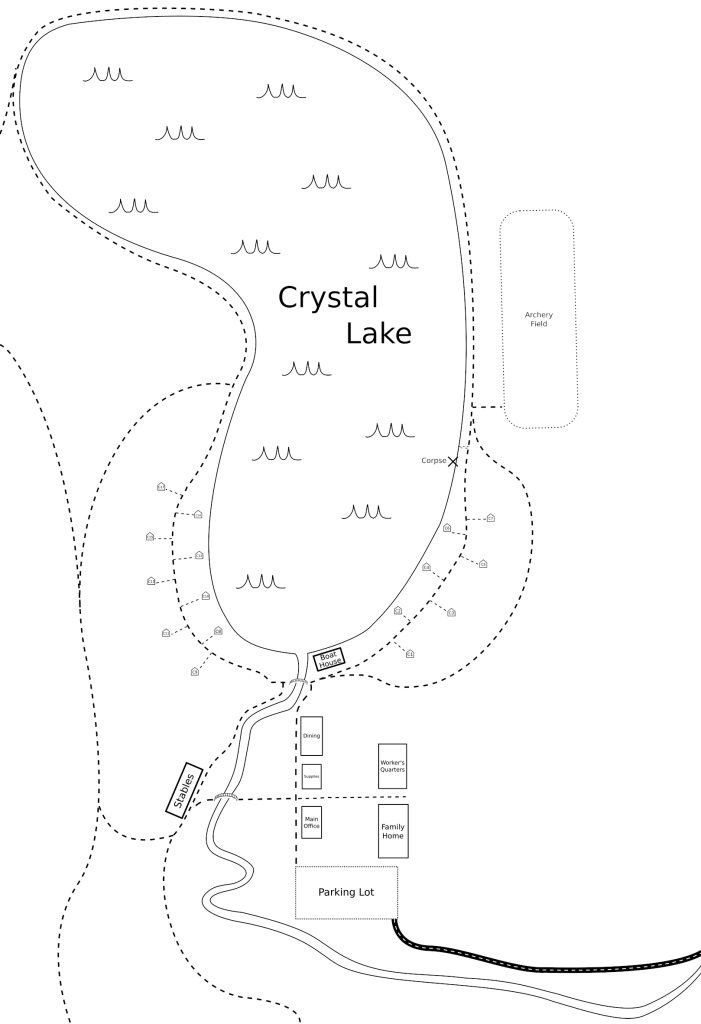
 Chris Lansdown
You must be logged in to post a comment.