As I’ve been reading the Poirot short stories and novels, it’s struck me that it’s not just once or twice that it was the murderer who called Poirot into the case. I don’t want to go into a list, since merely to name them would consist of spoilers, but off the top of my head I can think of at least four novels and a short story in which the murderer called Poirot into the case and two more short stories about robbery rather than murder in which the thief called Poirot in. I’m confident that this is not an exhaustive list. I’m really not sure what to make of this.
If it happened merely once, it would be an interesting twist. Happening so often, it feels like something else. What, I’m not entirely sure. A few possibilities recommend themselves.
One possibility is that by frequently having the person who called Poirot in be the criminal it keeps the reader more on his toes. I’m not sure this really works, though; there’s a certain foolishness in calling in the world’s greatest detective to investigate your crime. It becomes more foolish still after reading about his cases in the newspaper (or in Captain Hastings’ records of them) and seeing how often he’s willing to accuse the person who hired him. If I murdered someone in the 1930s and I was determined to call a detective in to investigate the case, I would far rather call in Giraud than Poirot.
Another possibility is that this was merely a solution to the problem that all mystery writers face of how on earth you get your detective in on the case. It is, of course, possible to go the Jessica Fletcher route and simply have the astonishing coincidence that the detective just happens to be around murders ten to twenty times per year. Those who want a little more realism need to be more creative. The problem with calling a detective in before the crime is committed is that, in general, there is only one person who knows that the crime will be committed—the criminal. The major alternative I can think of is a person who suspects that attempts have been made before against his life calling in the detective. This works, but requires either a remarkably incompetent murderer or slow poisoning. The murderer calling in Poirot does open the field a bit.
The tradeoff is that it is mostly not in the murderer’s interest to call the world’s greatest detective in, which makes it very hard to make this plausible. Of all the times that it happened with Poirot, I’m inclined to say that the A.B.C. Murders was probably the most plausible. The murderer had a legitimate (from his perspective) reason for it to be Poirot and not someone less well known. The murderer also produced a very clever series of murders, complete with a scapegoat who believed that he did it, so it was plausible that Poirot might have been fooled, or else that he would have been overruled by the police.
As for the other times, the criminal calling in Poirot seems far less excusable. It was mostly pretty gratuitous. Granted, Poirot tries to be underestimated by criminals, but it seems odd for so many criminals to take such an unnecessary risk. Especially because it’s usually with very little gained by bringing him in.
Which leads me to suspect that it really is done merely as a way of bringing Poirot into the story. I’m hesitant to believe that’s the case, though, since Agatha Christie is such a master of plotting. Overall, I’m not sure what to make of it. All I’m sure of is that it’s strange.
Having recently finished reading The A.B.C. Murders (and I must remark, in passing, that the David Suchet adaptation was remarkably faithful to the book, in this case) I find myself confused by the character of Captain Hastings. As I mentioned before, he started out as a near-clone of Dr. Watson. In only the second Poirot novel, Agatha Christie gave him a wife and sent him off to Argentina. She then used him in more than twenty short stories and another dozen short stories that would become the novel The Big Four. He then periodically showed up in the novels a few more times, the second-to-last of which was The A.B.C. Murders. He’s an odd character, there.
Captain Hastings is an odd character in The A.B.C. Murders for two reasons:
He’s changed in ways that don’t quite make sense.
He’s stayed the same in ways that make no sense at all.
To give an example of the second one first, Captain Hastings still hankers after beautiful women. It’s natural enough that he would notice them, or even to be a bit weak-minded about them. What isn’t natural is the way he does so exactly as if he was still twenty years old and unmarried. He never mentions his wife. He openly wants to escort the young and pretty Miss Thora Grey when he should, in fact, be actively avoiding her. Now, it’s no good to say that Hastings was always weak for a pretty face, because he was so in the context of being a completely decent and honorable man. That’s what made it charming. Moreover, that’s what drew Poirot to Hastings. Hastings had a beautiful nature which Poirot admired. He really should have been on the point of refusing to accompany Miss Grey.
Further, he really should have mentioned his wife when Poirot was teasing him about being weak-headed to Miss Grey’s pretty face. “I’m off the market, old chap” or some such line really should have come to his lips. So, for that matter, should some talk about how wonderful his wife is and how happy they are together. That’s just the sort of man that Hastings was.
Similarly, Hastings has learned next to nothing in all of his years with Poirot. That’s not quite 100% true, as he does mention on some of Poirot’s more strange actions that he’d learned that when Poirot was least explicable was when Poirot was hunting down an especially important clue. Still, you’d think that after so many years following the great detective around, he would have learned a little bit. He might have occasionally made a prosaic guess just because Poirot had so frequently told him that he went wrong by being too romantic in his imagination. It’s hard to take the age of their relationship entirely seriously when it seems to have had no effect whatever on Hastings.
The changes that don’t quite make sense are, perhaps, stranger. In some sense they are related to Hastings not changing with his changing circumstances, but he no longer has that beautiful nature which Poirot so admired in Hastings’ youth. His instincts are no longer pure, if for that reason frequently misleading. To some degree I suppose Hastings is merely out of his element. The murderer being presumed to be a madman, the inordinately sane Hastings has nothing really to say. But that brings me to my main question: why on earth did Agatha Christie bring Captain Hastings back for this story? He doesn’t really seem to have a place in it.
The thing that Captain Hastings has to contribute to a story that he’s in is common humanity. He’s a thoroughly decent man. He’s honest, honorable, and generous. He is also romantic. To Poirot, he gives two things. The first is that, never being cynical, he counterbalanced Poirot’s own cynicism. Poirot sees through everything; Hastings sees through nothing. Hastings, therefore, reminds Poirot of the value of the surface. This is related to the second thing he offers Poirot: the perspective of an ordinary person. It is something that Poirot, in his brilliance, is apt to miss on the rare occasions when he forgets to take it into account.
We do get a little bit of that in The A.B.C. Murders. It is Hastings who wonders whether the third note might have had the wrong address written on it intentionally. It’s not much, though, and the story seems to barely notice it.
Overall, I don’t know what to make of it. There was no need to bring Hastings back from Argentina for this story, but little use seems to have been made of him. The problem seems to me that anything which explains the second part will run aground of the first. If there was some reason not to make use of Hastings, why not just leave in him Argentina? He was made much better use of in Peril at End House, and that was written before The A.B.C. Muders. Perhaps Mrs. Christie was so preoccupied with the clever plot that she forgot the good captain. In favor of this hypothesis, she didn’t seem to pay that much attention to the other characters, either.
A feature I’ve commented on in Golden Age detective stories is how often the detectives condone or even approve of suicide. To some degree I find this strange because of how un-Christian it is, in spite of the fact that England in the early 1900s was not really a Christian country anymore. Yet you even find this in Poirot, who is a bon catholique. To some degree, I suppose that it was simply part of the culture. That said, another idea has occurred to me.
It is often the case that in order to make the murder difficult to solve, the evidence which the detective uses to solve the is often… thin. At least in the legal sense. There is a tangle of evidence which the detective’s story explains very nicely so that it all makes beautiful sense. It is satisfying. What it often isn’t, though, is sufficient legal proof to obtain a conviction. One solution to this problem is to have the villain confess in front of witnesses. This can be hard to pull off convincingly, though. Why go to all the trouble of trying to frame someone else for the murder in order to get away with it, only to confess in the face of legally flimsy evidence? There is a second solution, though. If the villain kills himself it obviates the need for legal evidence of any kind, and killing himself is not the same action as confessing. To confess is to guarantee that one will be convicted and hanged with all of the social shame and anxiety that entails. To kill oneself can be portrayed as the murderer hedging his bets. It’s easier to pull off, I think, when the murderer’s social status would be destroyed by the detective spreading the word that he did it, even if no criminal conviction could be obtained, and the murder having been committed in order to gain social status. It can be done “offscreen,” too, which means that the reader will probably not examine it as closely.
I should note that there is a humorous Mitchell & Webb sketch which contains this idea. I had seen it many years ago and remembered it after I thought of this the other day:
Murder On The Links is the second novel featuring the detective Hercule Poirot. Published in March of 1923, it came very slighty after the first few Poirot short stories published in The Sketch magazine. However, publishing schedules being what they are, it was probably written before they were. It’s a very interesting story both in its own right and for its place within the history of detective stories. (If you haven’t read it yet and dislike spoilers, go read it now.)
One of the very curious elements of the story is the rivalry between Poirot and Giraud, the famous detective from the Sureté of Paris. Giraud focuses with single-minded determination on finding minute clues, like remnants of footprints and a match discarded in the grass. He painstakingly combs every inch of every crime scene on his hands and knees, looking closely at every surface. This is in strong distinction to Poirot, who lets others find the small clues while he remains standing and contents himself with figuring out what the clues mean. There is a wonderful section of dialog with Hastings in which Poirot defends his method (Hastings, who narrates the story, begins):
“But surely the study of finger-prints and footprints, cigarette ash, different kinds of mud, and other clues that comprise the minute observation of details—all these are of vital importance?”
“But certainly. I have never said otherwise. The trained observer, the expert, without doubt he is useful! But the others, the Hercules Poirots, they are above the experts! To them the experts bring the facts, their business is the method of the crime, its logical deduction, the proper sequence and order of the facts; above all, the true psychology of the case. You have hunted the fox, yes?”
“I have hunted a bit, now and again,” I said, rather bewildered by this abrupt change of subject. “Why?”
“Eh bien, this hunting of the fox, you need the dogs, no?”
“Hounds,” I corrected gently. “Yes, of course.”
“But yet,” Poirot wagged his finger at me. “You did not descend from your horse and run along the ground smelling with your nose and uttering loud Ow Ows?”
There is another section, in which Giraud discounted a two foot section of lead pipe because it did not fit into his theory of the case, but scoured the ground for other clues such as an unburnt match. Poirot remarks:
Mon ami, a clue of two feet long is every bit as valuable as one measuring two millimetres! But it is the romantic idea that all important clues must be infinitesimal!
You also see this in the much later Five Little Pigs, where the client uses this very fact that Poirot does not crawl on his knees in the dirt for clues to persuade him to take a seventeen year old case. He objected that after so much time there would be no clues to find, and she pointed out that he doesn’t use those clues anyway. (He had just boasted of that when she was taken aback by how old Poirot was.)
The context of all of this disparagement of physical clues is interesting to consider. Sherlock Holmes started the detective crazy in 1891 and was known for his magnifying glass, chemical analyses, and sharp eye for detail. He was, perhaps, more known for it than was entirely fair; he certainly did consider psychology, at least on occasion. That said, he was famous for his monograph on cigar ash, for being able to distinguish the tread of every make of bicycle tire, etc. And in 1923 the Holmes stories were by no means complete. Holmes Short stories were published in the 1920s until the last one was published in 1927.
There is also the at-the-time popular detective Dr. Thorndyke, whose entire stock-and-trade was careful observation, extensive medical knowledge, and for-the-time high tech experiments. (The for-the-time high tech may in part explain why he was enormously popular in his day and has had very little staying power after it.) He was relatively early on in his career at this point, having started in 1909 and appearing in five novels by the end of 1922.
I should also mention that from things I’ve read in the time period, there was something of a flood of works that have not generally been remembered but which imitated Sherlock Holmes to greater or lesser extents (often greater). These often, I get the impression, focused on physical evidence to seem clever. Imitation frequently involves exaggeration, especially when it is imitation by writers who are not extraordinary.
Standing against this context, however, is G.K. Chesterton’s Father Brown. Father Brown did not crawl about with a magnifying glass any more than Poirot did, and he started solving cases in 1910. Father Brown was immensely popular in his day (and is still beloved at least by fans of Chesterton). I am not certain of the history but I believe that Father Brown formed the other end of the spectrum from Sherlock Holmes, being primarily a psychological sleuth.
What, then, should we make of Poirot’s looking down on the gathering of minute physical evidence? I think it is probably best classed as a preference among the existing spectrum of detective stories, rather than as anything new, even though it is presented as something of a novelty to the people in the story. Detective stories have something of a tradition of commenting on detective stories as a genre. Especially during the golden age, it is common for detectives to do this by discussing their “theory of detection”. Another common approach was what we see here—for some character to have a rival theory of detection. I think it was most often the Watson character, but police detectives also commonly would clash with the brilliant detective over the right way to go about solving a case.
This commentary had two main purposes, but I think that the second was far more important than the first. The less important purpose was as a commentary on the genre. The more important purpose was to make the brilliant detective seem brilliant. He could not, after all, be all that brilliant if he went about things in the same manner as everyone around him but was merely luckier. Or to put it another way: in order to achieve magical results, one must have some magic. The detective’s commentary on the theory of detection provides this magic; it is his unique theory of detection which is the key to his success.
I think, therefore, the rivalry between Poirot in Giraud should be taken primarily in this light. Instead of as commentary on other fictional detectives, it is meant primarily to be a humorous way to make the brilliance of Hercule Poirot shine. It just happens to be funny, too.
Towards the end of the third season of Murder, She Wrote is the episode, The Days Dwindle Down. It’s one of my favorite kinds of mystery stories—a historical mystery. Jessica is asked to investigate a killing which took place thirty years ago.
Very unusually for a Murder, She Wrote title screen, it features Jessica in it. She’s talking with a publicist, who wants to use the real-life murders she’s solved in order to sell books. I’m not clear on what his actual plan is, but it doesn’t matter because he’s not really a character in this story. He’s only here to introduce the information that Jessica solves real-life crimes to one of the real characters:
This is Georgia Wilson. She’s the one who asks Jessica to solve the thirty year old mystery. It happens not long after the breakfast meeting. She shows up at Jessica’s room and asks if she can come in because she could be fired if anyone sees her bothering Jessica. It turns out that her husband just got out of prison for a murder he didn’t commit, and she wants Jessica to… actually, she never really says. He’s a broken man and she wants him to be repaired so they can enjoy whatever years they have left, but she doesn’t say what Jessica can do to bring this about. She does ask Jessica to come and listen to his story, though, which is at least actionable.
When Jessica arrives, Sam is sitting in his chair, staring out of the window.
After a minute or so in which Sam is grumpy, he agrees to tell the story of what happened. And here we come to something fascinating about this episode: it is actually based on a movie. The movie is called Strange Bargain and was released in 1949. Since this episode first aired in 1987, the events depicted really took place thirty eight years before. Everyone in Hollywood always plays younger, even the movies themselves, it turns out. It works, though, and the flashbacks are done using footage from the movie.
Sam’s story starts out with Gloria talking Sam into asking his boss, Mr. Jarvis, for a raise. He makes an appointment and manages to get past Mr. Jarvis’s personal secretary, who was an intimidating character in her own right.
He did get past her, though, and saw Mr. Jarvis. Unfortunately, after he asked for the raise, Mr. Jarvis told him that he was fired because the company is in financial trouble and they have to cut costs.
He, himself, had sunk all of his money into the firm except for about $10,000 dollars. (That would have been worth in the neighborhood of $50,000 in 1987 dollars and $109,000 in 2020 dollars.) Later that day, Mr. Jarvis took Sam out for a drink and offered a, well, a strange bargain. He had recently increased his life insurance policy to $250,000 (about $2.7M in 2020), and was planning to kill himself so that his wife and child would get the money. He would give Sam the $10,000 he had left if Sam would clean up the crime scene to make it look like murder instead of suicide so that his family would get the insurance money.
Sam at first refused, but Jarvis called him at home and told him that he was going through with it earlier than he originally planned and begged Sam to help him. Sam drove there to talk him out of it but by the time he got there Mr. Jarvis was already dead. The envelope with the money was there, and Jarvis had already done it, so Sam took the money and did as Jarvis had asked him to do. He forgot to fire the shots when he was in the library, though, so he fired them through the library window. Before going home he drove to the Santa Monica peer and threw the gun away underneath the pier.
Unfortunately, after he washed the blood off of his hands he forgot to wash the blood off of the steering wheel in his car. Also, the next day, when they went to pay their respects to the widow, Lieutenant Webb was there and told them that though the gun hasn’t been found the three bullets matched—the one in the body and two that were fired into the wall. When Webb said this, Sam looked at where he fired the shots into the wall. Webb was looking for it.
“Ah, yes, Mr. Wilson. Right there.” From this point on, Webb was convinced that Sam did it and was out to get him, at least according to Gloria. She also had a complaint that Sam had done everything he could to help Mr. Jarvis but Mrs. Jarvis and Sidney (Jarvis’s son) didn’t lift a finger to help him.
Sam telling Gloria that the Jarvis’s couldn’t have known about Jarvis’ plan is interrupted by Sam and Gloria’s son Rod and his very pregnant wife Terry coming in.
Jessica said she would like to meet Lieutenant Webb, but Rod wishes her luck. He tried, himself, but was told that Webb was retired and “unavailable”.
Rod gives Jessica a lift back to her hotel, where he fills her in on a few more details. He became a police officer in order to try to clear his father. The police file on the Jarvis case was missing, so he assembled his own file on the case full of newspaper clippings, court depositions—every scrap of evidence and information he could get his hands on. He lends this to Jessica. Jessica speculates that the reason why it wasn’t possible to prove suicide is that perhaps there’s a possibility that no one had yet considered: what if someone else had murdered Jarvis and only made it look like suicide when Sam found the body?
While this is an intriguing possibility, I’m not sure that it’s really justified. It would be different if there should have been evidence of the suicide which wasn’t there, but in fact the evidence was there, where you would have expected it. Furthermore, its disappearance is adequately accounted for. The reason that there is no evidence to prove suicide is that Sam destroyed it all. Speculating that someone actually murdered Mr. Jarvis doesn’t account for anything. Jessica seems to really like this idea, though, and takes it as a working hypothesis.
The next day they go to the house where Mr. Jarvis died.
This is one of those cases where it’s unfortunate that Murder, She Wrote wasn’t filmed in widescreen, because the house was so big that a 4:3 image can’t capture it all (at this distance away). It’s a big house. So big, in fact, that I wonder how on earth the family paid for it. If we use 2020 money throughout, $2.7M over thirty years is only $90k/year. Granted, it probably would have been smarter to invest the money and live off of interest or dividends or what-have-you, but if you assume that they were able to get 5% above inflation, that would still only amount for $135k/year. Comfortable, yes, but hardly wealthy. It wouldn’t surprise me if the property taxes on this palace consumed half of that. The gardening and maintenance bills would eat into a decent chunk of it, too. This isn’t a big problem; had it been about four to eight times bigger the results would have been far more in keeping with what we’re shown here. (An alternative would have been for Mrs. Jarvis or Sidney to have invested the money in some business which succeeded, but that clearly didn’t happen.)
On the way there, Jessica speculates that the killer might have forced Mr. Jarvis to call Sam. That would explain why Jarvis said that the plan was going ahead sooner than expected. Rod raises the excellent question of, why? Why kill someone you knew was intending to commit suicide? Jessica gives the only possible answer: perhaps the killer thought that Jarvis wouldn’t go through with it.
They go up to the doors of the house and Sidney opens them before anyone can ring the doorbell.
They explain that Jessica is here looking into the case, and Sidney dislikes the whole thing. In the discussion, it comes up that Jarvis’s business partner, Mr. Hearst, had lied about not visiting the home shortly before Jarvis was killed. Eventually Jessica persuades Sidney by pointing out that now that his prison sentence is over, Sam has nothing to gain by stirring up the past. Sidney relents. Jessica asks to talk to his mother, but unfortunately his mother is dead. Sidney then shows them to the library.
On the way, Jessica notices a clue. On the sideboard, there’s a letter written to Mrs. Jarvis in the mail.
They do not want us to miss this clue. Fair enough. Obviously this means that Sidney is lying about his mother being dead, though in reality it’s not uncommon to get mail addressed to someone who is dead for years afterwards. Anyway, why is Sidney lying about his mother being dead? We’ll find out.
Not right now, though. We don’t see the examination of the library, possibly because it would be too much work to come up with a set that closely matches the set from the movie. Instead, we cut to Jessica having an appointment with a “Mrs Davis”.
Mrs. Davis is the granddaughter of Mr. Jervis’ business partner, Mr. Herne. (He’s the one who wanted Jervis out of the business and lied to the police about not visiting Jervis at his house the day of the murder.) Susan Strasberg, the actress who plays Mrs. Davis, looks tiny compared to Jessica. I looked it up and she’s just a hair over 5′ tall. This made me wonder how tall Angela Lansbury is, since she towers over Ms. Strasberg, but normally looks small herself. It turns out that she’s 5’8″, which makes me think that they make a point of surrounding her with taller actors. That is, at least, one explanation for me never having noticed this before.
Be that as it may, Jessica pumps Mrs. Davis for information in a surprisingly clumsy way. She offends Mrs. Davis, who had been misled into thinking that Jessica was there to look for investment advice. In the course of the heated conversation which follows, Mrs. Davis said that Jervis had been in the process of completing a deal for her grandfather to take over the firm. This contradicts what Mrs. Jarvis said, that Herne took over the firm after Jarvis’s death. She accuses Mrs. Jarvis of lying, and says that Mrs. Jarvis lied doesn’t surprise her, though not why it doesn’t.
The sub-plot with the granddaughter is hard for me to figure out. The actress who played her was 49 at the time of this episode, so if we go with the Hollywood standard that actors play characters 10 years younger than they are, the character would be 39. That would make her about 9 years old at the time of the murder, which generally fits. She wouldn’t have known anything about it and what she did know would have all been second or third hand, learned much later. She can’t have inherited the firm more than about ten years ago, so her knowledge of the state of it twenty years before that would be minimal at best.
The attempt to set Herne up as a suspect in Jarvis’ murder seems to me a bit clumsy. There’s extremely little evidence given. Herne wanted the firm without Jarvis, and since Herne had money and Jarvis didn’t, and since the firm was going under, it seems quite superfluous to murder Jarvis to get the firm. This could be worked in such a way as to give him a motive—Jarvis was going to run the firm into the ground before giving it up—but Jessica never tries to establish this or anything like it.
I also don’t understand why Jessica is so aggressive with Mrs. Davis. I am inclined to suspect that the hostility created was meant to take the place of evidence that makes Herne a suspect. Be that as it may, on her way out Jessica talks to an older woman in a nearby office and finds out the address of Thelma Vante, Mr. Jarvis’s personal secretary. She then goes to visit her.
Thelma is delighted to meet Jessica. “Wait till I tell the girls. Me, in a book by J.B. Fletcher.” She shows Jessica an old photo book, and also relates a little personal history. Her ex-husband was beautiful but never worked a day in his life. Also, they had a beautiful home. Jessica doesn’t come out and say it but you can see that she’s wondering where the money came from for that beautiful home. Jessica also brings up the idea of Mrs. Jarvis having killed her husband—she didn’t get to the beach house until well after Mr. Jarvis was dead. Thelma poo-poos the idea because Mrs. Jarvis didn’t have the guts to murder anyone.
As soon as Jessica drives off in a cab, Thelma goes inside and places a phone call. She says that “there seems to be some new interest in our problem.” I suppose this isn’t giving away too much because she was awfully suspicious when Jessica interviewed her, especially with the evidence of her nice house, workless husband, and complaints that she didn’t get anything when Jarvis died.
Over a family dinner at the Wilson house, Jessica discusses the case with them. Sam Wilson thinks that Mrs. Davis is lying about when her grandfather took over the firm. His recollection is that even after Mr. Jarvis’ death, Mr. Herne (Mrs. Davis’ grandfather) didn’t know if he’d be able to take over the firm. Jessica thinks that Mrs. Davis was lying to protect her grandfather’s reputation, or the reputation of the firm. Rod comes in and delivers the news that Mrs. Jarvis is not dead, she’s living at a rest home. Jessica and Georgia Wilson decide to pay her a visit in the morning.
Before they can do that, someone comes to Jessica’s hotel room, points a gun in her direction while she’s sleeping, and fires.
If you ask me, this is playing a little unfair with the audience. We know that Jessica is not going to be killed in an episode, but here the gun is actually pointing at her. The camera does move to showing only the gun, from the side, when it fires, though. The next scene (which I suspect is after a commercial break, in the original airing) has Rod coming over to check on Jessica.
The guy in blue who is kneeling is extracting the bullet from the cushion of that chair. Now, granted, the gun is not in focus in the earlier frame, but it really looks like it’s pointing directly at Jessica and nowhere near the chair. The bullet is from a .38 pistol and hasn’t been made in twenty years, btw. Jessica asks the police detective (the guy in the blue suit who pulled the bullet from the cushion) to humor her and compare the ballistics of the bullet to the one from the Jarvis case.
The next morning, Jessica and Georgia follow through on their plan to visit Mrs. Jarvis.
Unfortunately, it turns out that she has dementia and doesn’t even know that her husband is dead. Sydney walks in on them after Mrs. Jarvis tells them about the roses that her husband grows and they question him a bit more. He claims that Mrs. Davis is lying about when her grandfather took over the firm and it happened in a “proxy fight”, which was a matter of public record. This implies that the company was publicly traded, because proxy voting of shareholders is only a thing in publicly traded companies. That’s not of great significance, except that if it is a publicly traded company, stock purchases that give somebody more than 5% ownership of the company are public record, which Jessica should know. That said, proxy fights are about getting the shareholders to vote for somebody (or some bodies) for the board of directors of the corporation, they’re not about ownership. I think we need to chalk this one up to Hollywood writers having no idea how corporations actually work.
After saying goodbye to Sydney, Jessica and Georgia take a minute to discuss the shot fired into her hotel room chair. Whoever it was, Jessica points out, it certainly wasn’t Mrs. Jarvis. Further, it clearly wasn’t an attempt on her life. The shooter had all the time in the world to aim carefully, or even to fire a second or third shot, if he really wanted Jessica dead. Jessica then asks for a lift to back to Herne and Jarvis (the firm).
At first Mrs. Davis is reluctant to see her but, through an intercomm trick, Jessica gains entry. They talk for a bit, but nothing really comes of it. After Mrs. Davis angrily tells Jessica to leave, Jessica replies, “If you’ll forgive me, Mrs. Davis, it appears to me that you suspect your grandfather more than anyone.” As far as I can tell, that includes the audience. This is the last we see of Mrs. Davis, and we’ve still got fifteen minutes to go.
I still don’t understand why she was here. I suppose it’s supposed to be a red herring but at best it’s a pink herring. Mrs. Davis is angry and defensive but we’re never given any reason why she’s angry and defensive. Or if Jessica is right that Mrs. Davis suspects her grandfather, there’s no reason why she suspects him—at least none that we’re given—so her defensiveness doesn’t feel like it comes from anywhere.
Later on, in her hotel lobby, Jessica tells Sam and Georgia that unfortunately the ballistics report on the Jarvis case went missing with the rest of the case file. After they leave she gets a telephone call from someone claiming to have information on the Jarvis case but she has to come alone. He won’t give his name but Jessica goes anyway. She takes a taxi.
It turns out that it’s Colonel Potter in a wheelchair. Recognizing the actor by his most famous role aside, it’s actually Lieutenant Webb, who had been in charge of the case thirty years ago. He apologizes for all of the intrigue but it had to be strictly unofficial. How waiting until Jessica got to his house to admit to his name makes it any less official than telling her his name over the telephone, he doesn’t explain. He also couldn’t face the Wilsons, because he always had the feeling that Sam Wilson was innocent. He couldn’t do anything, though, because the DA told him to wrap up the case quickly and that his job was to collect evidence, not to judge the case. This bit of backstory out of the way, he gets to the reason he asked her to come—he’s got the old case files, including the ballistics report from the Jarvis case.
The bullets match.
They discuss the case for a while, which is fun because Harry Morgan is a wonderfully charismatic actor. They don’t really add anything to the case, though. Jessica suggests that perhaps the killer thought that he would benefit, but was wrong. Webb said that he entertained that theory, in particular that Thelma Vantay, the secretary, might have been having an affair with Jarvis and thought she would benefit, but they checked it out and Jarvis seemed to be faithful to his wife. He wishes Jessica well on her investigation of the case, and she leaves to go see Thelma again.
Thelma is initially reluctant to talk but Jessica points out that the statute of limitations for blackmail has passed. Once she understands the significance of this, Thelma opens up, though curiously she mostly just confirms what Jessica guesses. She knew about the life insurance policy increase and she had heard Jarvis talk about suicide a few times, so when he ended up dead, she figured out what happened and blackmailed the Jarvises. In particular, she blackmailed Sydney. What, exactly, she blackmailed him with is not entirely obvious, though. She didn’t know anything that the police didn’t know—certainly they knew about the life insurance policy. I suppose she could have told them that Jarvis had talked about suicide before, which might corroborate Sam’s story, but it’s thin material to blackmail someone with.
Jessica and Rod get to talking about it. He thinks that they can now prove suicide but Jessica is bothered by the gun being used to shoot near her. Why? It doesn’t really make any sense to attract this sort of attention to the case so unnecessarily.
Jessica then has an epiphany.
They go to the Jarvis house and press Sydney until he makes a slip and says that the gun was thrown under the Santa Monica pier. This wasn’t public knowledge; all that the public was told was that the gun was disposed of. Sydney admits to following Sam to the pier and retrieving the gun, because, he says, he killed his father. Jessica asks if he isn’t covering for his mother, instead. The Wilsons point out that Mrs. Jarvis couldn’t have fired the gun near Jessica the other night and she agrees—it was a mistake to think that the same person who killed Jarvis fired the gun near Jessica. Sydney did it to direct attention away from his mother, who had the perfect alibi for the second crime.
Sydney admits to it all. His mother didn’t mean to kill his father. She came back to the library to retrieve a book and came across him when he was in the process of trying to commit suicide. She grappled with him, but in the struggle the gun went off and he was killed. It was an accident but with the insurance money no one would believe that. So Sydney tried to cover it up. He even tried to protect Sam by putting pressure on the DA to close the case quickly, except that backfired when Thelma figured out what was going on and blackmailed him. He had to choose between Sam and his mother, and chose his mother.
The Wilsons and Jessica leave. On the way out Rod says that he will call the DA but Sam tells him not to. He has the closure he wanted—it would be absurd to prosecute Mrs. Jarvis, who didn’t really commit a crime, and Sydney was only trying to protect his mother. They know what happened, which is enough for him. Rod appeals to Jessica, who says that justice is imperfect and that sometimes there’s a difference between serving the ideal of justice and doing what’s best. Sam and Georgia kiss and the episode ends with Jessica smiling on them.
Before I get into further analysis of the story and it’s ending, I have to say that it’s frustrating how utterly incompetent Hollywood writers are at moral philosophy. Justice is not always imperfect. Human attempts to achieve justice are always imperfect. Worse still is the consequentialist conclusion that when a principle doesn’t produce the consequences you want, to hell with the principle. What they really want to get at is the perfectly legitimate conclusion that they do not have it within their power to achieve justice and invoking the criminal justice system, which is a blunt instrument wielded by flawed human beings, is not permissible because it will not achieve the end for which it will be invoked.
That said, it seems likely that the statue of limitations on withholding exculpatory evidence for a charge for a crime that was not committed has probably run out quite a while ago, so the whole thing is almost certainly moot. If the DA could not bring any charges calling him doesn’t matter, one way or the other.
That out of the way, it is curious that this episode has a different ending than the movie it used as a source did. In Strange Bargain, it turned out that Mrs. Jarvis actually did kill her husband and set the murder scene to look like suicide. The movie ends with her admitting this to Sam before she kills him; Lieutenant Webb arrives just in time to save Sam.
Obviously, they did have to change the ending to the movie in order to justify the episode and I think that on the whole they did change it in a way that at least made sense. They could have done a better job than an accidental death that basically was a suicide, just with someone else trying to claw the gun away when the suicide was committed. It really having been the business partner, for example, would have been a more interesting reveal, though they couldn’t have the weird sub-plot where the same gun was used to shoot at Jessica had they done that. The other odd thing about this ending is that it doesn’t really change anything for the characters in the story. Jarvis did really kill himself and the only people who have learned that are people who already believed it. Why Sam was brooding when the episode started and now is willing to forgo public exoneration is not really explained. Such character development is possible, of course, it just didn’t happen in this episode.
On the other hand, TV shows are, structurally, short stories. Short stories are about sketching out stories, not about painting them in full. We could certainly imagine a story in which a man who was wrongfully convicted of murder at first broods but then in the course of helping a sleuth investigate what really happened comes out of his shell and, though he can’t prove the truth, has spent enough time focusing on something that is not himself that he no longer needs to prove it to anyone.
Though it is not a conventional detective story, it is possible to tell a detective story in which the detective uncovers the truth but it doesn’t do anyone any good. To some degree the Poirot story Five Little Pigs is that. Poirot uncovers the truth but the only person he helps by doing so believed it, or at least part of it, already. (She believed that the person convicted was innocent; she did not know who was guilty.) A few other people who didn’t know it now do, but that’s it. Yet, it is profoundly satisfying because the mystery was such a tangle and everything about it makes so much more sense when it is untangled. It is not merely satisfying to see a puzzle unraveled; it also gives insight into how possible it is to misunderstand fragmentary facts. It’s an extremely good story and I think that The Days Dwindle Down is an enjoyable episode in part because there are fuller versions of it like Five Little Pigs.
Overall, I think that The Days Dwindle Down could have been, realistically, better than it was. Probably the better outcome would be to have revealed someone else as the murderer. Failing that, it would still have been better to come up with some sort of exculpatory evidence which did actually prove suicide. It’s hard to think what that could have been since the premise was that Sam had destroyed it all; some sort of witness is about all that could be done. To be fair, that’s actually what they did, except that the witness still refused to talk publicly. I think that the best way out, here, would have been the route of Five Little Pigs—a witness who misunderstood what he saw all these years. This would have been easier if there had been something else in Strange Bargain such as a bump on the head that could have been caused in a previous struggle. Unfortunately, that movie had a different purpose in mind, so it didn’t provide these things. With what we’re given, I’d say that it would have made more sense for Herne to have brought his granddaughter in the car, somehow, perhaps after the death but before Sam arrived, and she got bored and came out and saw her grandfather in the room with the corpse, and thought that he did it. Unfortunately, we couldn’t have a flashback for any of this, since it wasn’t in Strange Bargain, but a flashback isn’t a strict requirement here. The flashback that they had was very incomplete, as it was.
If a flashback was an absolute requirement then I think it would have been better to go through with how Strange Bargain actually ended, with Mrs. Jarvis having murdered her husband because he wouldn’t go through with it. Sydney could have protected his mother. That would make him an accessory after the fact, though, so he still wouldn’t be able to come forward (depending on the jurisdiction). If they had gotten rid of the shooting at Jessica, he could have been merely a witness who didn’t come forward, though, which wouldn’t have been so bad. They could have changed the ending around so he would have been willing to publicly exonerate Sam, now that his mother has dementia (or she could have recently died). That would have been better, and still allowed the use of flashbacks from the movie in the denouement. Not as good as the other options, but still an improvement over an accidental death.
All told, yes, it could certainly have been a better episode, but The Days Dwindle Down was a good episode and the idea of using flashbacks from a 38 year old movie was a lot of fun.
In this video I talk about the detective as a Christ figure in mystery stories. (I also talk about what Christ figures really are and how they’re not the absurd where’s waldo game sometimes played in high school English classes..)
A few weeks ago I bought a book of the complete Poirot short stories. I’m not through it; there are a lot of them. I’ve made a lot of progress, though.
Interestingly, the short stories are in three major groups. The first is a series of short stories written for The Sketch magazine. This comprises possibly the majority of short stories, by number, since it was a weekly magazine. The next grouping consists of various short stories that came out as one-offs. A good example of this is the short story How Does Your Garden Grow, which was originally published in Ladies’ Home Journal, and was, so far as I know, the only Poirot story ever published there. (To be fair, that was in America; it was published in Strand magazine in the UK a few months later.) Finally there was the collection of twelve short stories which made up the collection The Labours of Hercules. Each of these bore a tenuous relationship to one of the twelve labors of Hercules from Greek mythology.
(There was a series of short stories right after the ones in The Sketch magazine which then formed the novel The Big Four, but they’re a connected series of short stories rather than traditional, independent, short stories, so I’m not counting them. They’re closer to a novel first being published in serialized form than true short stories.)
One of the things I’ve found interesting about the Poirot short stories is how often they are not fair play mysteries; in many cases they’re not even so much mysteries as they are tales of something interesting. They are told in a mystery format. In The Nemean Lion, for example, (spoiler alert) the reader has no real way to guess that one of the lady’s companions has a trained Pekingese dog which gets substituted for the real one and is trained, once its leash is cut, to run home. Frankly, there was no need for such a solution; if the Lady’s Companion was in on it, a confederate to walk the Pekingese home would have worked just as well. Further, that Poirot’s client was poisoning his wife in order to be able to marry his secretary was justified by what was said, but was a shot in the dark even for Poirot. It was an entertaining story to read, but mostly because of the revelations and not because of any sort of detection. It was interesting to find out the unusual criminal enterprise and the revelation that the apparently dumb Lady’s companion—who herself complained about being untrained and unskilled—was an organizational criminal genius.
I find this sort of short story curious because I had been used to thinking of short stories as being primarily about setting up complex puzzles with ingenious solutions. On the other hand, The Labours of Hercules dates from 1939 through 1947 (though most were published in 1940), and short stories were probably changing by then. It would be a while before the market for short stories fell out, but tastes were undoubtedly changing, especially as we’re getting into early World War II, here.
To some degree this is just a historical curiosity. I think that the market for short stories is never coming back. It’s moved into television and the streaming that is replacing television. It’s interesting to look at short stories, though, since they were so influential in the early development of the mystery genre.
So, I’ve finally begun work on the text of the third chronicle of Brother Thomas. Up til now, I’ve been working on what really happened, developing characters, working out plot elements, etc. Now, I’ve finally begun work on the part that people will actually read (God willing). My working title for it had been He Didn’t Drown in the Lake, but I’m now leaning more towards The Corpse in Crystal Lake. Both are tentative titles, so we’ll see what I decide on when I’m done with the novel. Here’s the first paragraph:
It began, as so many things do for small businesses, with a referral, made on the morning of the thirtieth day of June, in the year of our Lord 2015. Properly speaking, the Franciscan Brothers of Investigation did not a run a business, for they did not charge their clients, but then it was no ordinary referral, either. It would be some time before Brother Thomas would learn of the referral, but the effects of it he learned within the hour.
This is, of course, a first draft, and everything is subject to change.
By the way, if anyone is interested in being a test reader for me and reading chapters as I finish the first draft of them, let me know. (Having read my previous Brother Thomas novels is not a requirement for this.)
It’s been a difficult year for getting writing work done. Overall I’ve been doing extremely well, considering. My family is in good health and my job hasn’t been affected by COVID. The big problem is really that my children haven’t been able to go anywhere, so they’ve needed me quite a lot. Perhaps it’s ironic, but I’m an introvert who has had almost no time alone since COVID-19 hit. Things could be wildly worse, but it’s been very hard to muster up creative energy, or perhaps it’s creative focus I’ve found difficult. Anyway, between things stabilizing out a bit and I’ve been figuring out how to get my ideas in order on shorter notice and with less contiguous writing time available. This has the potential to mean that more editing time will be needed, but I’m trying to help that with more careful planning before I start. Now I’ve got so many files with notes in them that flipping between them is starting to take time!
In her essay about Gaudy Night in the book Titles To Fame, Dorothy L. Sayers talks about how Harriet had to come to Lord Peter in the fullness of understanding an not under any misapprehension. She says “he must prevent her from committing ‘the greatest treason: to do the right deed for the wrong reason'”. This is an interesting idea which is explored in Gaudy Night. But is it true?
(It is worth noting that Ms. Sayers is intentionally misquoting T.S. Eliot from whose Murder in the Cathedral this is drawn. In that play, the character of Thomas of Beckett is visited by four tempters, and he is not talking about all possible temptations, but only the four temptations which were presented him, when he called the fourth “the greatest treason”. Thus I am addressing Ms. Sayers’ idea, not T.S. Eliot’s.)
The short answer to this is, “no.” There cannot be a right reason to do the wrong thing, so if we leave off the possibility of doing the right thing for the right reason, only two options remain:
To do the right thing for the wrong reason.
To do the wrong thing for the wrong reason.
Pretty clearly, option 1 is better than option 2. Either one harms the man doing them, but at least option 1 does not involve harming others, too.
There is the interesting question of what becomes of the man who has taken option #1? He can repent, but he cannot make amends, for there is no harm he has caused to repair. This leaves him in the curious position of not being able to take any actions which proves his repentance.
Or does it?
The case that Ms. Sayers had in mind, of Harriet Vane marrying Lord Peter under a misapprehension, does give some scope for active repentance—she can be a good wife.
Modern people do not understand decisions. Perhaps because of the pernicious influence of Martin Luther, moderns think of decisions solely as the work of a moment—their substance being that moment in which a resolution is formed and a word may be spoken which conveys that resolution. This is not the substance of a decision. That is merely a moment of resolution. The true substance of a decision is the action over time which is in accordance with this decision. Thus a person makes a vow in a moment to love, honor, and cherish a husband or a wife, but the actual act of this decision takes place during the entirety of the marriage. The words that take but a moment bind a person, but it is the action over the course of the marriage which is the substance of the bond. (This is, really, the same thing as good works being the substance of faith, and not something separate from faith, which is why I suspect Martin Luther.) If Harriet had married Lord Peter for the right reason, she could still fix this, over time, turning her marriage into what it should be by fixing her actions to one suited to the truth of her marriage and not to the misapprehension under which she bound herself to it.
Far from dooming a marriage, one or both of the people entering into it because of a mistake gives scope for the growth of fixing themselves and the marriage. Indeed, something like this is what in fact happened with Harriet and Lord Peter, and the fixing of this mistake is no small part of the substance of the final Lord Peter novel, Busman’s Honeymoon. This may also be why Busman’s Honeymoon is one of the few successful novels about a marriage. It’s certainly not perfect, but it works and isn’t merely using some form of reset to try to tell the story of people falling in love all over again.
Now, none of this means that it is not better for characters to do the right thing for the right reason, and Ms. Sayers certainly had the best idea in trying to have her characters avoid the mistake of coming together for the wrong reasons. I’m merely noting that there are worse things than doing the right thing for the wrong reason.
I’ve recently been reading the Poirot short stories and one of the things which has struck me about the early Poirot short stories is how Captain Hastings figures into them. He is far more of a Watson character than I had expected.
Agatha Christie would publish Poirot short stories of Poirot throughout her career, but of particular interest to me are the first ones, a series of twenty five that were published in the weekly magazine The Sketch in the year 1923, starting on the seventh of March. This places them, in terms of publication, right after the first two Poirot novels, The Mysterious Affair at Styles published in October of 1920 and The Murder on the Links published in March of 1923. Both of those would involve Captain Hastings, though not many of the subsequent novels would. (He is given a wife at the end of The Murder on the Links and packed off to Argentina.) Christie’s eagerness to get rid of Captain Hastings is interesting, but I will return to that later. What I really find interesting is how Hastings was portrayed in those 1923 stories.
To begin with, the Poirot short stories are reminiscences written by Captain Hastings of his friend Poirot. They read, in this way, much like the stories of Doctor Watson of his friend Holmes. Captain Hastings is, like Dr. Watson, an army man who was invalided out of the service. Further, he was, in these short stories, a roommate of Poirot. Like Watson in the later stories, he routinely accompanied Poirot on his investigations. There is even in the stories a housekeeper who lets clients in, though she is not named. Within the stories Hastings frequently makes guesses—not infrequently invited by the detective—which Poirot frequently insults for their lack of imagination and deplorable lack of method.
In short, at first Captain Hastings lacks only Watson’s medical degree and name. He is, in all other respects, basically Dr. Watson. Of course, I knew that he was “a Watson”, in the sense of Fr. Ronald Knox’s ninth commandment in his decalogue. (“The stupid friend of the detective, the Watson, must not conceal any thoughts which pass through his mind; his intelligence must be slightly, but very slightly, below that of the average reader.”) How extremely like Watson he was in detail, though, I hadn’t realized.
I gained my first familiarity with Poirot from the excellent television adaptations of the Poirot stories starring David Suchet. In those, the character of Captain Hastings is softened a bit, and Hugh Frasier’s excellent portrayal of him is so different from the typical portrayal of Watson that I did not originally catch the similarities. (The adaptations also introduce Miss Lemon from the beginning and do not feature Hastings and Poirot as roommates.)
I find this start so interesting because Agatha Christie is known for the brilliant originality of her plots. She is justifiably known for them. And yet, here we are with Captain Hastings being unmistakably Dr. Watson with the minor change that doesn’t give anyone brandy as medicine.
I’ve previously written about the Holmes/Watson similarities one can see in Dr. Thorndyke and his chronicler, Dr. Christopher Jervis. Seeing the same thing in Poirot and Hastings makes me wonder if, through the early 1920s, this setup was simply considered to be part of the genre. (For more on this distinction, see my post Predictability vs. Recognizability.) From the perspective of a century later, with a wide variety in detectives, it does not feel to us like a Watson character is necessary even in the Knox Decalogue sense. We do not need a stupid character to constantly demand explanations and still less do we need a chronicler whose thoughts we are told. We don’t even need someone to constantly admire the detective. In the early 1920s, though, They did not have such a wide variety of detectives.
Some prior art such as Poe’s Murders of the Rue Morgue notwithstanding, Sir Arthur Conan Doyle basically invented the genre of the detective story in 1891 (in the Holmes short stories). The Poirot short stories come a scant thirty two years later. Conan Doyle was not even done with writing Holmes stories at this point (the last Holmes Story Conan Doyle would write was The Adventure of Shoscombe Old Place, published in March of 1927). To be fair, though, the first Lord Peter Wimsey story, Whose Body?, was also published in 1923, and did not involve a Watson character, unless you want to class Charles Parker as one, but he was neither the chronicler nor a stupid friend. There was also G.K. Chesterton’s Father Brown, of course, which only occasionally had Flambeau as a companion, but he was very clearly no Watson. And as Dorothy L. Sayers said in a slightly different context, G.K. Chesterton was an acknowledged genius, renowned for fantastical paradox. Writing a detective story with no Watson in it, in 1910, might simply have been, to use Ms. Sayers words, “just one paradox more to his credit.”
Another possibility is that Agatha Christie originally included Captain Hastings as merely a feature of the genre, but then decided that he was not really a necessary part of it. It might be for this reason she wanted to marry him off of her hands and pension him off to a happy married life in the safe removes of Argentina. If so, though, it’s curious that she kept him around for twenty five short stories after giving him the wife. It was actually more than that; in 1924 she published half has many short stories in The Sketch which would, in 1927, become the novel The Big Four. These were set eighteen months after The Murder on the Links and featured Captain Hastings returning from Argentina to visit his old friend. Her first story without Captain Hastings was The Murder of Roger Ackroyd, published in 1926. Her next novel, The Mystery of the Blue Train, published in 1928, did not feature Captain Hastings, and even more curiously it was adapted from a previous short story (The Plymouth Express) which did feature him. This run did not last long, however. Her next novel, Peril at End House (1932), featured the good Captain. He also features in Christie’s next novel, Lord Edgeware Dies (1933). The next three novels did not have him, and he would return in The A.B.C. Murders in 1936. This is a sufficient recounting of the history, I think; Captain Hasting was still appearing thirteen years after Christie had given him a wife and sent him to Argentina.
What are we to make of this? Frankly, I don’t really know. Hastings would not show up much more in the Poirot stories, but a run of at least thirteen years after he was done away with is pretty good. After The Murder on the Links, until 1936, there were five stories with Captain Hastings and five without him. She clearly didn’t need him, but also seemed to want him. Perhaps most curious in this is that the final Poirot story, Curtain, features Captain Hastings very prominently. Written in the early 1940s and put in a vault until its publication in 1975, it was the first time that Hastings appeared in a Poirot novel in more than thirty years. Evidently she considered him important, in some way. Perhaps with Curtain it was just that the man who was there at the beginning of Poirot’s career should also be there at the end of it. Whatever it was, Hastings did come to have significance past being a mere literary requirement.
Ultimately, I don’t know what to make of Captain Hastings. He was certainly a good character, though perhaps not one of the great characters in literature. I suppose at least he does go to show that it is not a character’s beginning that defines him but his ending.
The final episode of Season 2 in Murder, She Wrote is titled If The Frame Fits. It’s a really good episode. It’s got good structure, good dialog, good acting, good settings—it’s very well done. Other than not being set in Cabot Cove, it’s the sort of episode that’s why one falls in love with Murder, She Wrote.
The opening is dramatic. We go from the establishing shot of a grand house (used in the title screen) right to a burglar breaking in.
Shortly after, Jessica and her friend Llyod Marcus come driving up. It turns out that this is Llyod’s house.
They came home early from a party because Llyod wanted to discuss a manuscript with Jessica. A “friend” wrote a draft of a murder mystery, and he wants Jessica’s thoughts on it. They go inside and he calls for his valet, but then remembers that it’s the valet’s day off. Jessica then recognizes one of the paintings. “That’s a Desmond DeVries, isn’t it?” “I wouldn’t know,” Llyod responds. “One of those splatter paintings is the same as the next, to me.”
It turns out that it was his late wife who was the collector. In turn, Jessica reminisces about Frank’s model car collection, until Llyod reminds her that they are there to discus his “friend’s” manuscript. Jessica fetches her copy from the library and we get an ominous shot of the thief hiding behind a curtain, his boxcutter knife held in a vaguely threatening way. Jessica doesn’t notice, though, and returns to Llyod. She tells him it might be better if she spoke directly with the author, and Llyod says that would be impossible because he lives in Tibet. Then they hear a sound from the library. When they examine the library, a painting which was there a minute ago is now missing.
Soon thereafter, we meet the police chief, named Cooper, and, so far as we know, the only policeman in the community. He was originally from New York, as we could tell by his accent if he didn’t mention it in his backstory. Also, his wife wants him to be a plumber, since it pays better. This is a recurring theme in his conversation.
To be fair, he looks more like a plumber than a police chief. He also doesn’t seem to be very good at the police stuff. Later on, Jessica has to stop him from handling evidence with his bare hands.
Anyway, it comes out that this is but the latest in a rash of burglaries in Cedar Heights. There’s been one approximately every three months. The thief leaves no clues and none of the paintings have been recovered. This conversation is cut short by the appearance of Llyod’s valet. He’s in his late fifties or early sixties and has a very English accent, which feels a little out of place. The episode tries to make him a character in the story, but not very hard, so I’m not going to bother with the extremely minor sub-plot that involves him. His entrance through the kitchen door did give Jessica the opportunity to examine the door, though, and she finds that there was a piece of tape on it. The piece of tape that’s left isn’t in a place to do anything useful, but it does suggest that the thief had taped the latch to prevent it from engaging and locking the door.
The next day, at some sort of country club, we meet the mayor and his wife, Mr. and Mrs. Tilley.
Apparently being the mayor is a side-hustle for him; he makes his living selling insurance. In fact, he’d insured all four huge art claims this year. He’s worried he’s going to be fired for… insuring paintings that art thieves like to steal? Would they have preferred that he not sell policies to people? Would replacing him with a different insurance salesman be at all likely to result in only selling insurance to people who buy paintings that art thieves don’t want? I’m unclear what he’s nervous about. Now, if he worked for a small insurance company, or better yet owned a small insurance company (not that small insurance companies can really exist anymore, but that’s a more esoteric detail), it would make sense for him to worry about it going out of business because of all of the claims. Alternatively, it would make sense for him to worry that with premiums going up so much because of all of the thefts, no one will buy insurance anymore and all of his commissions will disappear.
Be that as it may, we’re introduced to the next character—Lloyd’s oldest daughter, Julia.
You may not be able to tell from the picture of her, but she is a deeply unpleasant woman. Within all of her complaining, we learn that her father doesn’t approve of her marriage, and we get the idea that she blames his disapproval for her marriage not being what she wanted it to be.
Julia takes Jessica for a walk, to show her “how the leisured class lives”. Somehow or other this ends up at a golf course, and we meet another of the important characters in our story: Binky Holburn. He’s played by the inimitable John DeLancie (if you know him, there’s a good chance that it’s as Q from Star Trek: The Next Generation).
With him is Ellen Davis. She’s… somehow attached to the country club. I’ve no idea how; she seems to be simultaneous a golf instructor, bill collector, and manager.
Binky is delighted to meet Jessica. So much so that Llyod remarks, “Binky was so anxious to meet you he came by my house yesterday before I’d even left to meet your plane.”
Murder, She Wrote needs to strike a balance between disguising the clues so that one needs to be watching out for them and also obvious enough that many if not most people will catch them. Indeed, this is a needle that all mystery writers must thread, though in a novel one has a much larger amount of hey in which to hide the needle, if you’ll pardon me for switching metaphors mid-stream. A TV show—even an hour-long one—doesn’t have nearly as much time and so disguising the clues is much harder.
Binky then brings up the subject of the art thief, remarking on Jessica nearly meeting him. He mentions that one of his was the first painting stolen, and advances the theory that it’s a drug addict, since he only takes mediocre paintings and leaves the masterpieces.
Binky then invites everyone to a dinner party in Jessica’s honor. Ellen declines because of too much paperwork to catch up with. Julia declines saying that she planned a very quiet evening because she and Donald, her husband, so rarely get to spend time together.
In the next scene, Jessica, Llyod, and Julia are having lunch. After Julia is monstrously unpleasant for a bit (can you guess by now who is going to get murdered?), her husband and younger sister, Sabrina, walk in to join the lunch. There’s a curious tension about this, like there’s more to it than a brother-in-law merely helping out his sister-in-law.
This completes the cast of major characters in the episode. It’s an interesting collection of characters; there are many relationships and many possible relationships, though still a small enough group to keep track of. Not much happens at lunch before the scene is over. Jessica is introduced to Donald and Julia gets the double martini she had ordered. She and Donald are a little cold, though they don’t say much past the minor discussion of why he’s late.
The next scene is Binky’s dinner party with Jessica and Llyod. Binky finishes up a story about his favorite cafe in Paris, laments that Donald has a business meeting and Sabrina a headache, then remembers Llyod’s book. Jessica (who signals to Binky that she doesn’t want to read it) says that she left her manuscript back at the house. Binky suggests to Llyod that he go get it. Llyod delightedly jumps up and says that he won’t be ten minutes.
On the car ride home, Llyod looks crestfallen, while Jessica tells him that his friend would be far better off writing about something closer to his personal experience.
Llyod dejectedly says, “That’s allright, Jessica, your comments were very helpful.” He then pulls up in front of his daughter’s house (it was established that they live “practically nextdoor”) and peers out of the window. Then he says, “That’s odd. Julia’s front door is open.” Llyod cranes his neck to look out of the windshield, and they show us what he’s looking at:
If you look very carefully, you can see that the front door is in fact open, but Llyod couldn’t have seen this when he started to slow down. In fact, he comes to a stop before he looks closely at the door. It’s pretty clear that he knows something is up.
They go to investigate, and if your money was on Julia as the corpse, congratulations, you win. They find her crumpled on the floor with a rope around her neck.
I’m guessing that there’s a commercial break here, because we cut to the chief of police crouching over the dead body, saying that the situation is under control. What situation he’s referring to is unclear. It seems unlikely that anyone is worried about Julia reanimating as a zombie or a vampire—other than that, I’m not sure what control there is to worry about. He doesn’t seem to have done any investigating yet past having removed the cord from around the victim’s neck.
Jessica offers to take Llyod home and he refuses since he might have things that he can tell. Jessica relents and starts investigating. It’s unlike her to have waited for the police chief to have arrived. Normally she’d have investigated than said to the police chief, “surely you’ve noticed…” after he arrived. This way plays a little better, though, so I suppose we just have to forgive it.
Jessica asks how long the clock on the mantle had been broken, and Llyod says that it was perfectly fine the day before. The police chief concludes that it was “broke in the struggle” and provides a time of death. Jessica, very sensibly, asks what struggle it was supposed to have been broken in. Everything else on the mantle is in good condition, nothing is in disarray, and the body is nowhere near the clock. Jessica recommends that he takes the clock in for lab analysis and he starts to grab it. She reminds him, “including for fingerprints” and he then thinks to pull out a handkerchief to use to pick it up. I generally like it when the police invite Jessica’s help, but it’s stretching credulity a little far that he wouldn’t think to look for fingerprints. In fact, the more incompetent an investigator the more I would expect him to want to lean on easy evidence like fingerprints.
Jessica then looks at Julia’s neck, now that the cord has been removed, and there’s a thin cut along it. The cut is the sort of thing that would be made of she were strangled with wire, not with a thick rope like was around around her neck. The clues are beginning to add up that we are not looking at a pristine crime scene. Clearly, what we found was staged. But by whom, and why?
Jessica notices a button clasped in Julia’s left hand.
Victims ripping buttons off of their murderer’s clothes is a somewhat overdone trope since grabbing your attacker’s buttons and yanking is neither useful nor instinctive. Even grabbing one’s murderer’s buttons and hanging on until you’re dead so that the murderer must yank his sports jacket away from your corpse’s steel grip isn’t exactly a strong instinct in our species. Moreover, even if one were to rip a button off of one’s murderer’s coat, it would be incredibly hard to do it between the thumb and palm, as it’s shown in the picture above. All that said, for reasons we’ll get to soon, the button being where it is actually fits in this case.
The button turns out to have the initials “DG” on it. Llyod proposes that they stand for “Donald Granger,” as he recognizes the button from a suit Donald had made in Saville Row on his honeymoon. I guess we’re supposed to believe that he put on his honeymoon blazer to murder his wife out of sentiment?
Just as Llyod is explaining his theory as to why Donald did it, Donald walks in and says hello, then notices the chief of police and the corpse on the floor. Llyod rushes over, shouting about how Donald killed his daughter. Then they go to Donald’s wardrobe and match the button to the blazer. When it matches, Donald says, “Stop it! Everything is all wrong. This is insane. I didn’t kill her.” Jessica ignores this and asks Donald where he was. Llyod interjects that no business dinner lasts until one (presumably, AM). He must, therefore, have been cavorting with a floozie. He movies to attack Donald once more, but Jessica restrains him.
The next day Llyod is pacing the floor, having refused food as well as not sleeping, apparently waiting for a telephone call. It arrives just as Jessica walks in the room. The police chief called to let Lloyd know that he has formally charged Donald with the murder of Julia. After Sabrina says that Donald couldn’t have done it and Lloyd explodes at her the evidence is clear, then storms off, Sabrina tells Jessica that Donald wasn’t a fortune hunter—at Lloyd’s insistence he signed a prenuptial agreement which means that he wouldn’t get a penny of Julia’s estate. This clue duly delivered, Sabrina leaves to get Donald a lawyer. I’m kidding, slightly. She said it in Donald’s defense because her father had just called Donald a fortune hunter. It works the information in naturally. The problem is just that the information stands out so much that we can’t help noticing it. And if somehow you did miss it, Jessica pauses and looks thoughtful to make sure you know that something important just happened.
If I were inclined to be flippant, I might call this “clue face”.
Mrs Fletcher then goes to see the police chief. The police station is interesting, by the way:
Cedar Heights is generally discussed as if it’s a secluded enclave for rich people an hour or more outside of New York City. The chief of police does his own plumbing and doesn’t have so much as a single deputy that we’ve ever seen. And yet, to go by this establishing shot, it’s got multi-story buildings and elevated train tracks. Also, the sign says “Police Station 15”. That’s an awful lot of police stations to have with a single policeman in town.
Anyway, as he’s trying to fix the pipes in the sink in the office attached to his bathroom, the police chief says that Donald Granger’s story doesn’t hold water any more than the pipes do. His business meeting had been canceled earlier in the day. His story is that he went to the seafood shanty, met a friend, and had a late supper. However, the police chief says, no body drops in to the seafood shanty. It’s way out near the beach somewheres. The kind of place people go where they don’t want to be seen. He won’t name the friend, either. The chief’s analysis is that for someone who is supposed to be bright, Granger committed one hell of a stupid murder. Jessica emphatically agrees. Granger’s lawyer then shoes up to bail him out.
We now move to the country club, where Ellen Davis hand-delivers a bill to the mayor’s wife.
Mrs. Tilley makes an impressively catty comment. After complementing Ellen on her outfit, she observes that if you’re going fishing, it pays to have attractive bait. Ellen smiles, and attributes not receiving a payment from the Tilleys in several months to the mail being dreadful, lately. It’s a decent disguising of information, but I, suspect that the writers actually wanted to draw attention to it and so didn’t disguise it too carefully. Jessica isn’t around to draw our attention to it with clue-face, so they can’t afford to be as subtle, I suppose.
Ellen smiles and walks off. I still wonder what her job is supposed to be at this country club, but we never do find out. The mayor’s wife then walks into Jessica, who is at the country club for some reason. She invites Jessica to a dinner party, but Jessica declines because she can’t make any plans under the circumstances. Mrs. Tilley interprets that to be about investigating the case, and starts talking with her about it. It’s hard to tell whether she’s interested in the case as a mystery or just loves nothing so much as gossip. Either way, she’s got information to share, and is eager to do it sotto voce.
She tells Jessica to cherchez la femme, in this case, the younger sister, Sabrina. It turns out that Donald had originally been with Sabrina, but then she introduced him to her sister and he switched to the older sister. However, Donald has had lots of late-night business meetings in Manhattan… need she say more? Jessica replies that she’s said quite enough enough already. Why Jessica disapproves of gossip now, when it helps her investigation, I don’t know. She’s normally happy to smile at any sexual impropriety, and in fact will again later in this episode. Mrs. Tilley goes on to say that it would be convenient if the murderer were Donald, though, since it would mean that her husband’s firm wouldn’t have to pay up on the million dollar life insurance policy that her husband sold them the day after they were married. I guess they must have waited to take their honeymoon. That one warrants clue-face with eyebrows.
Jessica goes off to see the police chief. For some reason, she runs into him at the scene of the crime. She tells him about the life insurance motive that Donald Granger has, but he gets a phone call from someone confirming that Donald Granger was, in fact, at the Seafood Shanty at the time of the murder. They didn’t recognize who he was with; she was a brunette and a “real looker”. Chief Granger remarks that none of it makes any sense, and Jessica agrees. She goes through the list of contradictory evidence.
Supposedly Julia tore the button off of the tailored blazer, but her carefully manicured nails suffered no damage. The cuts on the neck were unlikely to be made by a thick rope. Then Jessica notices the painting on the wall. The chief of police looks at it too, and remarks that they all look alike to him.
Eagle-eyed viewers will notice that this is Lloyd’s Desmond Devries splatter painting.
Jessica goes to Lloyd’s house and confronts him. The other day, on the drive home, she thought he was preoccupied because of her comments on his manuscript, but now she thinks otherwise. As much as he believes that all splatter paintings look alike, they don’t, she recognizes that the painting now hanging over Julia’s fireplace was in Lloyd’s library the day before. Further, she has to wonder about his having been gone fetching the manuscript for forty minutes when he said he’d back in less than ten minutes. This last part isn’t playing fair with the audience as the length of time he was gone was never mentioned. For all we knew until now, he had indeed returned in less than ten minutes.
That bit of hiding evidence from the audience aside, the revelation that Lloyd had found Julia dead on his way to pick up the manuscript and rearranged the scene of the crime to frame Donald does certainly make sense of many of the things we saw that night. Lloyd was excessively preoccupied, and stopped by Julia’s house before he could have seen the front door was open. His having already known that Julia was dead makes more sense of what we saw, so I do think this twist is entirely fair.
At the police station, Lloyd tells the police chief what happened. The painting over Julia’s mantle was missing from the frame, and the room was in a horrible mess.
They all go to the crime scene where Lloyd describes what he had found. The painting had been cut out of its frame, and the wire from the painting was wrapped around Julia’s neck. A pizza cutter was lying on the floor nearby, presumably used to cut the painting from the frame. The lock on the reader door was taped over, just like at Lloyd’s house. There was a small penlight outside the door. The clock had been smashed on the floor, he just replaced it. He cleaned the crime scene up, replaced the stolen painting with one of his own, ripped off the button and pressed it into Julia’s stiff fingers, then left the door open and went to rejoin Binky and Jessica.
In response to Jessica’s question about what happened to the frame and wire, he threw them in the garbage, which according to the police chief is incinerated every day, so all of the evidence has been destroyed. Daily garbage pickup is pretty impressive. This evidence being gone somehow allows the police chief to conclude that Lloyd killed his daughter himself, since (according to him) the only reason to frame someone is if you committed the crime yourself. Frankly, I’m not sure how the empty frame and the wire and pizza cutter being found in the trash would have exonerated Lloyd. There would have been no reason to switch paintings if the painting had not, in fact, been taken. Strangling his daughter with a wire then substituting a rope also served no possible purpose if she hadn’t been killed as part of an art theft, and the chief is not accusing Lloyd of being the art thief.
At the wake for Julia, Jessica delivers the news to Donald and Sabrina. He’s surprised that Lloyd hated him so much, and Sabrina is, as ever, confused. She asks what to do and Jessica says that the only way to exonerate Lloyd is to find the Cedar Heights art thief. Donald says that there must be some evidence—finger prints, or foot prints, or perhaps they could trace the pizza cutter?
Apparently waving one’s glasses back and forth signifies cutting a painting with a pizza cutter.
Unfortunately, Jessica says, Lloyd destroyed all of the evidence. They need to go to the country club to begin at the beginning. Donald gives her a ride and drops her off. She runs into Ellen Davis, and asks where Binky Hoburn is. Ellen says she just left him, and Jessica gives her the good news that Donald Granger is no longer under suspicion for the murder. Ellen looks confused and agrees that it is good news. Jessica continues that it’s especially convenient for her because it relieves her of the obligation to give Donald an alibi. She surmises that while the employees at the Sea Shanty didn’t know her name, they would probably recognize her photograph. Ellen says that she was just checking out the place and ran into Donald there. She recommends not reading too much into that, it might prove embarrassing, and Jessica asks, embarrassing for who? Ellen doesn’t answer, she just walks off.
She finds Binky on the putting green, and apparently he is absolutely terrible at golf. In response to her question, he says that the night his painting was stolen he was on his evening constitutional. He always goes for a walk after dinner, and you could practically set the town clock by him.
Next she talks with the Tilleys, since theirs was the next painting stolen. Their painting was definitely insured. Mayor Tilley was offended at the idea that he wouldn’t ensure his own property—insurance isn’t about the money, it’s about peace of mind. Anyway, they were at the opera in New York when it happened. Everyone who was anyone was there. It was also the maid’s night off. Jessica then goes to see the police chief. He’s doing more work on the pipes on the sink in his office.
Mayor Tilley is with them, and somehow got the information that by pure luck “a friend of Carpenter spotted [one of the stolen paintings] in an Edinburgh gallery.” In the ensuing discussion, it comes out that in every theft it was the servants’ night off and the owners weren’t home either. This suggests to Jessica that the thief is someone with intimate knowledge of the community—one of its members.
Jessica then pays a call on Ellen Davis. (She actually first runs into Lloyd’s valet, but the conversation doesn’t really add anything besides the suggestion that the Tilleys are in financial difficulties, which we already knew and which probably didn’t change what Jessica did anyway.) Somehow the subject of Donald Granger comes up, with Jessica implying that there’s something between them. Ellen replies, “You mean, were we having an affair? This is the ’80s, Mrs. Fletcher. Promiscuity is not, exactly, page one news.” In contrast to her scolding tone of Mrs. Tilley talking about infidelity, here Jessica just indulgently nods her head and looks at Ellen.
Jessica is, as always, remarkably selective in what she shows disapproval of. Moreover, she’s remarkably cosmopolitan in what she shows disapproval of. She dislikes gossip, but isn’t phased by cheating and adulterating a marriage. One of the great weaknesses of Murder, She Wrote writing is that Jessica is in no way a small town character. In a small town, you have to deal with the fallout of people adulterating marriages because people still live with each other afterward; adultery can be a hardship on an entire community. In a big city, adultery just means that people stop going to the same parties which they probably won’t be invited to anyway, and otherwise they never see each other again. Quite apart from the moral aspect of adultery, someone who comes from a small community will instinctively dislike the way this is community-wrecking behavior. It’s only city-folk, who have no community, who don’t give a thought to the communal impact of decisions.
Jessica stares Ellen down, and Ellen discards her bravado and explains. She had worked in Donald’s club in New York. He was very unhappy in his marriage and was going to ask his wife for a divorce. (For some reason, on television, mistresses always believe that the married man is going to leave his wife and marry her and then be faithful to her. How similar this is to reality, I have no idea, though since adultery is hardly a smart idea, it would not be shocking if the people doing it are prone to not thinking it through in real life.)
She took the job at the country club—whatever it is—to be closer to Donald. This I find a little odd, since part of the problem in the marriage is that he spends all of his time away from home. Working at the country club should actually put her further away from him while he spends all of his evening in business meetings. (If “business meetings” was code for sleeping with her after work, it’s unclear how moving to cedar heights could have put her closer.)
Her friendship with Buinky Holburn is just a ruse. In reality, she finds him a bore. He talks incessantly of his house and art and his trips to England and Scotland and other places that art might be fenced, approximately every 3 months. Jessica asks if Binky is in financial trouble, and Ellen replies that while the idle rich are notoriously slow payers, Binky is the exception. She just wishes she knew where he got the money from.
Well, if she can’t put two and two together, Jessica can. Her next stop is at Binky’s house, with the chief of police and a warrant to look at his passport. I wonder on what basis the chief got a warrant; having money and supposedly making trips to Great Britain every three months isn’t exactly slam-dunk evidence, especially when all we have is the word of some guy that one of the paintings turned up in an Edinburgh gallery. Fortunately, the warrant is unnecessary—Binky admits it and is delighted that it took someone of Jessica’s caliber to catch him. He opens his safe and produces Lloyd’s painting.
The odd thing about it is that the painting goes all the way to the edge. The thing is, canvases always go several inches past that, in order to wrap around the wooden stretcher and be nailed or stapled into it with the edge folded over so that it won’t fray loose. If the painting were actually cut from the front, it would ruin the painting as it couldn’t be re-mounted without losing several inches. Unless we’re going to chalk this up to the prop department, it seriously calls into question Binky’s competence as an art thief. Especially with this being his sixth time—surely some art gallery he fenced it at would have complained by now. More on this in a bit.
Binky remarks that it was great fun while it lasted. He never took the real masterpieces, the insurance always settled so no one was hurt financially, and no one got hurt. The chief adds, “until Julia Granger caught you.” Binky laughs at this. He was having créme caramel with Jessica when Julia was murdered. The chief wonders if this means that they have a second art thief, and Jessica says, “not exactly.” They go over the evidence, and when they get to the pizza cutter, Binky exclaims in surprise. What on earth would a pizza cutter be doing there. He always used a single-edged razor. A pizza cutter is ridiculous because it would ruin the painting. Upon hearing this, Jessica sees the light.
The light Jessica sees, of course, is that a pizza cutter is an inappropriate tool to the task, which means that the “thief” had no idea what he was doing. There’s actually a secondary significance to this, which I’ll get to in a minute. Before we get there, there is a problem with this evidence.
Actually, before we get to the problem with the evidence, I want to mention the problem with Binky’s response to it. He protests that he doesn’t have a pizza cutter. In fact, he’s never eaten a pizza in his life!
The logic is somewhat odd; to not have eaten a pizza is not the same thing as to not have a pizza cutter. In the recesses of my pantry I somehow own a slap chopper, and I’ve never in my life slap-chopped anything. When I chop things, I use either a kitchen knife, a cleaver, a hatchet, or an ax (depending on the thickness of the thing to be chopped). With a knife one cuts to chop, with an ax one swings to chop. Never once have I slapped anything to chop it, and yet there the thing somehow is. That said, Binky has an alibi for the time of the murder so the fault in his logic is of no great significance. So let’s move on to the problem of the pizza cutter being a bad tool for stealing paintings.
The episode doesn’t give full details on how the painting was actually removed in Julia’s house, but in general there seems to be the suggestion that the cutting tool would be used to cut the painting from the front. If you did this with a pizza cutter, this would indeed ruin the painting, but no more than if you did it with a single-edge razor. Heck, you could cut it with a high-tech laser or a sci-fi monomolecular saw. The problem, which I mentioned above, is that the canvas for a painting is several inches wider and taller than the part that you see because it has to be wrapped around the wooden stretcher that holds the painted surface taught. If you cut it from the front, you’d lose several inches of the painting when you wrapped it around a new stretcher. Now, there is something for a competent art thief to cut when stealing a painting, but it’s not the canvas.
When mounting a painting on a wooden stretcher into a frame, it is typically taped, from the back, to the frame. This is done with a specialized tape called, uncreatively, “framing tape”. It’s a brown, papery tape which has an adhesive that’s meant to last years and ensure that the painting never falls out. If you are going to steal a painting, it would be more convenient to remove the frame and it would be a pain in the neck to peal the framing tape off, so the easiest option is to turn the framed painting around and cut the framing tape on the back. The painting will not be wedged tightly into the frame, so there’s room for a knife to go in without harming the canvas. So here’s the thing: this is equally true of a pizza wheel as it is of a single-edged razor. You are no more likely to damage the canvas with a pizza wheel than with a razor. In general, I would expect art thieves would normally go for a razor over a pizza wheel simply because the razor, being smaller, is easier to carry, and less likely to make noise since pizza wheels are frequently prone to rattle. That said, you can find tools meant for cutting fabric which are basically extra-sharp pizza wheels with a bit smaller blade because they don’t need to worry about the axle getting caught in cheese. Here’s a picture of my wife’s:
When I cut fabric I just use fabric scissors. The wheel cutter requires, or at least does best, with the backing mat you see it resting on in this picture, which is too fussy for my taste. Still, it exists and, I’m told, works well. A pizza cutter is more optimized for cutting pizza, but the things are just as capable of taking a sharp edge as any other piece of thin metal, and it would be perfectly fit for purpose, as the British say.
What we’re left with is that a pizza cutter is a slightly unusual choice for the imitation art thief to have picked. That is sufficient, though, because we did hear somebody who knew about this odd choice without being told.
Before we get to that, though, we have one final scene with Sabrina and Donald Granger. They’re at the funeral home, getting the flowers ready.
If you’re familiar with Murder, She Wrote, you’ll know this means that there’s a 98% chance that one of them did it. Sabrina seems to be implying that she wants to move on from being brother and sister in law to having a romantic relationship. Jessica even interrupts them by telling Sabrina that they’ve discovered the identify of her sister’s killer. This is so much the setup for the revelation that Sabrina did it that it might almost make one forget that Donald Granger had mentioned the pizza cutter without having been told about it.
Jessica presents the evidence, except for his slip about the pizza cutter. It’s not very strong and he argues with her. He presents his alibi, of being at the seafood shanty with Ellen Davis, but Jessica counters that the medical examiner couldn’t be so precise with the time of death. He counters that it had to be 9:45 because the clock was broken during the struggle. Whereupon the chief of police walks in from just offscreen and asks him how he knew that, since it wasn’t made public and he had bagged the clock for evidence before Donald had come into the house. Moreover, Lloyd said that when he planted the jacket button in Julia’s hand, her fingers were stiff, which means that she had to have been dead some hours. (That said, I don’t think that Lloyd’s evidence is worth a damn against his son in law, given that he’s already tried to frame him once, but that’s OK because catching Donald doesn’t hang on this.) As he tries to struggle out of this, Jessica then reveals his slip up with the pizza cutter. Then the dramatic music signaling that the case is proved plays.
Sabrina, troubled by everyone’s silence and the conclusive music, declares that she doesn’t believe it. Donald tells her, “Believe it, Sabrina. It was a million dollar craps shoot, and I lost. Count your blessing, kid. It could have been you in that box.” Sabrina attacks Donald uselessly. He pushes her off and Jessica holds and comforts her as the police chief leads Donald Granger off to one of the many police stations in the small town of Cedar Heights. Interestingly, the episode ends here, on a somber note:
I would be curious to know how the writers decide between ending solemnly and ending slightly after the denouement, with everyone laughing. This ending fits, though I actually think it’s a pity that we don’t get to see Ellen Davis anymore. It would be interesting to know whether she blames Jessica for catching Donald or thanks her. It would also be interesting to see Lloyd’s reaction to learning that he had framed a guilty man.
Be that as it may, I hope you can see why I think that (despite not taking place in Cabot Cove) this is one of the great Murder, She Wrote episodes. It has an interesting cast of characters that are pleasant and interesting, with the exceptions of Julia (who, thankfully, is murdered fairly quickly) and Sabrina (who doesn’t get a ton of screen time). Despite having at least fifteen police stations, Cedar Heights has a small-town feel, which partially makes up for not being in Cabot Cove. The particular settings are mostly pretty, and even the awful splatter art is at least partially redeemed by its badness actually being a plot point.
The episode takes a little while to introduce all of the characters and for the murder to happen, but it makes up for that by starting off with the art theft and keeping that mystery going while we meet the characters. It both makes the episode more interesting and also makes it more complex. At the same time, it’s not merely complicated; the two mysteries intertwine in important ways. Even the murder mystery is done in stages, where we first have to unravel that the crime scene was substantially tampered with before we can get on to solving the murder. Once that progress is made, the art theft mystery becomes of primary importance, and only once that’s settled can we properly tackle the murder mystery. There’s a lot to sink one’s teeth in, and with how the plot is constructed, it all matters.
One tradeoff, due to the limited time in a Murder, She Wrote, to fit all of this in, is that the case against Donald Granger is a bit weak. The evidence against him is almost entirely having slipped up and mentioned the pizza cutter he shouldn’t have known about. Even that wasn’t worked in very naturally. He was trying to seem eager to catch the killer, but he should have waited a little bit longer, so he could make the slip while he was caught up in the conversation. The way it was done, he basically volunteered the information unprompted. This might have been OK if he wanted to seem clever, but what he actually wanted to seem was eager, not clever. Passion, conviction, and sincerity are what are needed to sound eager, not information or deductions. Other than this, there was no real evidence against him.
Which is actually a little bit odd, since he set the clock’s time while holding it in his bare hands.
This one I’m going to chalk up to an error in production. There’s no way that he would have forgotten to have worn gloves during such a carefully premeditated murder. Further, the chief bagged the clock for evidence, so unless we’re to suppose that Lloyd somehow smudged all of Granger’s fingerprints, he had to have worn gloves when he set the clock and wardrobe just forgot to give him gloves for this shot.
During the accusation, Granger does give a second piece of evidence against himself—his knowledge of the clock having been broken “in the struggle”. Realistically, these do seem to enough to get a conviction, but it’s a little unfortunate that the proof had to be manufactured rather than discovered. Still, it was at least manufactured through Jessica’s skill rather than by sheer chance, like the knowledge about the pizza cutter. It was also manufactured by presenting the case against Granger, rather than through lying to him about having lost an earring that never existed, or something like that.
Overall, I also think that the episode was pretty fair, as far as giving us all of the clues goes. We got a hint that the art thief was Binky pretty early, when Lloyd mentioned that he had been at Lloyd’s house the morning of the robbery—the clue which comes later about Binky taking trips every three months is confirmation of our suspicions, it’s not wholly new. (That Binky has plenty of money could go either way; we have no reason to suppose he didn’t inherit sufficient wealth to pay his dues at a country club on time. That said, his not being hard up certainly doesn’t cast doubt on his identity as the art thief.)
We also were given plenty of clues that the murder scene was tampered with. The clock was smashed in the struggle but there was no struggle. Julia was clearly strangled with a wire, but there was a cord around her neck. They did conceal from us that Lloyd took forty minutes to get the manuscript when it should have taken him less than ten, but I think that they made up for it by having Lloyd clearly stop before he could have seen that Julia’s door was open.
As to the murder itself, there was only one real clue that it was Donald and that was his slip up about the pizza cutter. Actually, that’s not quite true. Lloyd did mention Julia’s stiff fingers, which suggested that she had been dead for hours by the time he found her—not that they actually told us when that was—which does carry the suggestion that Donald’s alibi wasn’t good. That said, if the time of death was much earlier, Binky wasn’t having créme caramel with Jessica when it happened. In fact, I don’t think he was anyway, because the murder had to have happened before Lloyd left to get the manuscript, and they hadn’t started the créme caramel yet—Binky told Lloyd that if he hurried he’d just in time for it. Binky might still have Jessica for an alibi, but it would have had to have been long before desert.
All that said, Binky having been the killer doesn’t fit with the modus operandi of the art thief. He stole paintings every three months, and had just stolen a painting from Lloyd the night before. This was never brought up, but it was actually a bit of a slip-up on Donald Granger’s part. The art thief, having had such a regular schedule before, might hurry it up a bit, but it doesn’t seem plausible that he would hurry it up from every three months to every three thirds of a day. I think, though, that we simply need to forgive this as time compression so that Jessica can be present when the murder happens, in which case it wouldn’t be fair to use it to exonerate Binky. I think we’ll need to fall back on Jessica being Binky’s alibi earlier in the evening. He had invited everyone over for a dinner party, and even though they finished the evening somewhere in the viscinity of 1am and were having créme caramel some time after 9:45pm, they probably started dinner before 8:45pm, which is the time that Donald Granger started setting the clock forward from in the flashback. Rigor Mortis sets in anywhere from 1-6 hours after death (averaging 2-4), so if Lloyd found Julia at 9:50pm, that puts the time of death anywhere from 8:50pm to 3:30pm. The latter might run into the late lunch that Julia was at, but it seems unlikely that Binky had Jessica as an alibi for that entire time. If we suppose that the dinner party started with wine and snacks at around 6pm, though, I think that Binky is probably pretty safe.
Obviously, If the Frame Fits is not perfect, but at the same time its imperfections admit of explanations that are (reasonably) satisfying. It gives one meat to chew on. Oh, and it has a remarkably clever title. Quite early on, it seems to suggest that the art thief is the killer, but ends up referring to the guilty man having been framed for the crime. Even better, this is in distinction to the framing of the thief for the murder which the real murderer tried to do. That frame didn’t fit.
Unusual poisons are not that popular as a means of murder in mystery stories these days, but all the same, I just got an idea for an interesting one: injected snake venom with the same symptoms as a poison.
One of the difficulties with poisons is that it’s really hard to have an alibi with one. The benefit to a snake venom is that if people don’t look for injections, they won’t be able to find out how the poison was administered, because it wasn’t. A person who thus had no access to the food of the victim could probably put themselves out of suspicion this way.
As an additional benefit, if the police do not specifically suspect snake venom, it is exceedingly unlikely that the lab will run any assays for snake venom. Even if they did, they would tend to look for the venom of native species rather than rare imports.
This is only a half formed idea so far, but it has some interesting possibilities.
On my recent post The Butler Did It: Poirot Style, I got an interesting comment from Paul. It brings up some points which I would like to discuss at greater length.
Somewhere I heard the phrase “nobody’s a hero to his valet” which could apply to his butler.
So I disagree that a murder by the butler is out of bounds because the butler is an employee “thus” not personally connected to the victim.
An employer could very well give an employee Very Good Reasons for the employee to want his boss dead.
And yes, a valet or a butler could quit (although getting a good reference might be a problem), but have other reasons to not quit.
One thought on the butler, as I understand the job, the butler manages the household staff so might likely know “when the best time/place to kill somebody without witnesses”. 👿
On the subject of no one being a hero to his valet, I believe that this is because the man is an object of professional aid to the valet; he is passive while the valet helps him to dress. The valet, though a servant, is an intrinsically superior position during the performance of his duties. This is not precisely the same for a butler, who would not, in the ordinary course of things, lay his hands upon his master. Which brings us to the last point, about the butler managing the household staff. This will depend to some degree on the particular household, as the jobs of servants were somewhat elastic with the actual number of servants present.
In Victorian times and through (about) World War II, butlers did tend to be in charge of the servants in midsize to large households. They did not tend to be present in smaller houses, and in the very great houses there might be a steward who was in charge of the domestic staff with the butler taking on his more historical role of being in charge of the wines, or somewhat more expansively, of the food and drink. (The term “butler” comes from words in older languages meaning, basically, bottler, i.e. one in charge of the bottles.) Murder mysteries don’t tend to be set in the mansions of kings or similar, though, so I think it would be reasonable to presume butlers will be in charge of the household staff and thus in a good position to arrange a time that is especially convenient for murdering someone. But this, in fact, raises something of a problem in choosing the butler as the murderer—it makes it too easy for the murderer.
I know that most most of the rules of detective stories focus on not making it too easy for the detective, but it is actually the case that if one makes it too easy for the murderer, it spoils the fun. Murder mysteries are meant to be a human drama, and in a human drama the reader sympathizes with both sides of the puzzle. We want the detective to win, but at the same time we do also need to be able to see ourselves in the role of the murderer, if for no other reason than we have to think like him in order to try to catch him before the detective does. A murderer who merely has special powers (such as being able to arrange everyone to avoid witnesses) is too unlike us. And then there’s the even more basic problem that the puzzle has to be difficult to solve or there’s no fun in solving it. That’s why the dumb police detective always arrests some poor servant, since the servants have obvious opportunity. Abusing a position of trust is too easy.
All that said, I think that Paul is right that the butler could make a reasonable choice for the murderer within the bounds of the murder having to be personal. Off the top of my head, he could know that the victim was carrying on some evil that he thought needed to be stopped. The employer taking advantage of serving women would work for this. The butler could know that his employer committed some heinous crime and got away with it (but without sufficient legal proof to ensure a conviction). The butler could do it for the sake of a child that the victim was mistreating, or even just to bring the inheritance to the adult child from whom help was being cruelly withheld in getting started in the world. The butler could even secretly desire to have an affair with his master’s wife and hope that by killing his master he will have cleared his chance to take his master’s place.
I think that if one wanted to take this approach, it would be important to make sure that the butler is noticed as a character. He would need to be active during the investigation. Doing things outside of his duties, and speaking not only when spoken to. If he remained entirely passive and looking like the normal servant, who is there in the typical mystery only to furnish some alibis and clues, the typical reader would, I think, feel he had been treated unfairly. Yes, the reader is hoping that the writer will try hard to trick him, but at the same time the trickery has to be of a certain sort. A double-bluff, such as having somebody else frame the murderer for the crime, is a great sort of trick. Bluffing that someone is out of bounds when they’re not isn’t the right sort of trick. In real life someone might creep over to his neighbor’s house during a dinner party to murder him, hoping to throw suspicion on the guests. In a murder mystery, if someone dies during a dinner party in an mansion and it isn’t one of the guests, but it is revealed in the last page that the detective found the neighbor’s footprints, the writer has played foul. Granted, I’ve emphasized it by having the writer play double-foul by not revealing the clue which incriminated the neighbor, but even if there were some tracks leading to the neighbor’s house, if they were not cunningly planted by a dinner guest in order to make the absurd suggestion that it was the neighbor, the reader would still justifiably feel aggrieved. It’s not on any of the lists, but we do need some reason to doubt that the murderer committed the crime. Having an obvious criminal and not going with it because the detective is too clever for his own good is the stuff of parodies. (Quite literally. If you want to read such a parody, The Viaduct Murder is an excellent example of exactly this.)
I think that a decent example of what I mean about how to do this well can be found in the Poirot story which my previous blog post was about: The Adventure of the Italian Nobleman. In it the butler is quite prominent. We get all sorts of information from him which he volunteers beyond the scope of the ordinary butler. He stayed to overhear a conversation with his master; a thing which no ordinary butler would have done. He is an obvious suspect, but manufactured for us a still more obvious suspect. Moreover, there is evidence in the beginning to make us suspicious of the butler’s story, such as the last course not having been eaten by anyone, and the telephone having been on the receiver, requiring the dying man to have replaced the receiver as he gasped out his last breath. These incongruities make us notice the butler early on, such that his being the culprit is a shock we were prepared for. Moreover, he did not merely hide in his job. He took an active role in the misdirection after the crime. He was caught, not by process of elimination, or by fingerprint identification as being a notorious criminal, but by having made mistakes which Poirot noticed and caught him by. This, I think, is the sort of template to follow if one wants to write a mystery in which the butler did it.
I have a series of posts about the onetime common phrase, “the butler did it”. The first was The Butler Did It? The short version is that it’s curious that this phrase exists since it’s hard to find examples, in mystery novels, of when the butler actually did it. In the series I present a few theories as to how this could be, as well as look at the few examples I could find of when the butler actually did it. I had thought that I was done with this series, but I just came across another example! (Without counting, I think that brings me up to four.) If it’s not obvious, by the way, spoilers will follow, so if you haven’t read the Poirot short stories yet, go do that before continuing.
The story in question is The Adventure of The Italian Nobleman. It was first published in The Sketch magazine, issue 1604, published on October 24, 1923. This is a scant three years after the publication of the first Poirot story, The Mysterious Affair At Styles. According to Wikipedia, Agatha Christie wrote these short stories for The Sketch at the suggestion of its editor, Bruce Ingram. (The Sketch was an illustrated weekly journal which began its run in February of 1893.) It came towards the end of the group of short stories which would later be collected in the book Poirot Investigates, though of course we can’t be sure that it was not written earlier and merely published later.
Before proceeding, in the interests of full disclosure I should note that, technically, the murderer is not, very strictly speaking, a butler. He is a “valet-butler.” I think I am not being unreasonable in saying that this is close enough, though.
The structure of this story may be closer to the quintessential “the butler did it” than the other examples I can think of, with the possible exception of The Door by Mary Roberts Reinhart. In The Adventure of the Italian Nobleman, the butler had obvious access to the victim but concocted a complicated story which implicated someone who had a more obvious motive. The pursuit, at least by the police, of this other man, distracted us from considering the butler’s story too closely.
Having said that, I should perhaps take a moment to defend the idea of a quintessential “the butler did it” story. If the thing can barely be found in literature and mostly exists mostly as a joke, what right do I have to claim that there is such a thing as an ideal of it? And yet, I think that we can take a stab at it because of some of its features.
In particular, “the butler did it” seems to be describing the murderer being the person least suspected because he is akin to the furniture. S.S. Van Dine’s reason for prohibiting servants from being the criminal, though overstated (and a touch snobbish), gives some insight here:
11. Servants–such as butlers, footmen, valets, game-keepers, cooks, and the like–must not be chosen by the author as the culprit. This is begging a noble question. It is a too easy solution. It is unsatisfactory, and makes the reader feel that his time has been wasted. The culprit must be a decidedly worth-while person–one that wouldn’t ordinarily come under suspicion; for if the crime was the sordid work of a menial, the author would have had no business to embalm it in book-form.
I think that it’s actually related to another prohibition, number seventeen, which states that a professional criminal must not be the murderer. The unifying theme is stated in rule number nineteen, that the motive for murder must be personal. What all of these things are getting at is that there must actually be some connection between murderer and victim. It’s not enough merely to have been in the same place at the same time. This is what the butler doing it gets wrong (most of the time). A butler’s relationship to his employer is, by definition, that of an employee. This is the opposite of having a personal connection to the victim.
There are exceptions to this, of course. He could have taken on the job of butler merely to gain access to his victim, as part of a revenge plot. He could be a long-lost relative who will be an heir to the victim. There are, undoubtedly, other such schemes for which buttling gives the murderer an excuse to get near his victim. They will all have in common that being the butler is merely a cover story, even if he did actually buttle. What they also have in common is that—this trope aside—the butler is not someone you would ordinarily suspect of having a relationship with the victim. People do not, customarily, employ their relatives. Therefore, if you suspect the author of playing fair you will tend to not suspect the butler.
And here we come to what I think is likely to be the reason for this trope existing, that is, what the trope of “the butler did it” really means. I think that it means that the murderer is the person we least expect because the story is structured so that he would be one of the people who is normally “out of bounds.” (To borrow a sporting metaphor.) I’ve mentioned before in this series that I think that the trope was probably far more common in plays that in novels. If plays were the TV shows of yesteryear, it makes sense that they would tend to be written by hack writers who would try to be clever but would have trouble being really clever. Thus they would be more prone to pick someone the audience has no reason to suspect, like the butler. They can’t just have it be the butler, though, because they would seem random and hence unfair. As a compromise, they then reveal (without warning) that the butler is actually a long lost cousin or an illegitimate nephew or some such. The adage that the butler always did it probably, then, was conceived in response to this sort of plot device. It is advice to expect a hack plot in which the least likely person can be relied upon to be the culprit, though with some contrived connection as an excuse.
If my guess is correct, The Adventure of the Italian Nobleman does not really fit the mold. Its butler is too much in the foreground. Apart from the suspect for whom we have only the butler’s word was there, the butler is in fact the only person with the opportunity to commit the murder. Mrs. Christie is, in this way, playing fair with the audience more than the prototypical butler-did-it story would. The butler is a legitimate suspect, and we are distracted from him only by his own ingenious misdirection. If one stops to think for a moment, one would suspect the butler.
So, all things considered, I’m not sure if it’s right to classify The Adventure of the Italian Nobleman as a butler-did-it story. The butler did do it, of course. That’s not at issue. The question is whether he did it in the right way. With that the question, I don’t think that it’s an example of the trope, if the-butler-did-it even can be called a trope. Still, it’s worth mentioning, since, after all, the butler did do it.
In Star Wars Episode V: The Empire Strikes Back, Luke famously asks Master Yoda if the dark side of the force is more powerful than the light side of the force. Yoda’s answer is no, it’s not more powerful. It’s only faster. That is, one gains power more quickly on the dark side, but there isn’t more power to be gained. And, of course, that faster power comes at a price.
I’ve been wondering if there isn’t something analogous in writing, where plot holes make interesting stories easier to write.
In one sense this is obviously true. Shoddy workmanship is easier than good workmanship. On the other hand, Rian Johnson supposedly worked for weeks on the opening word crawl for Star Wars Episode VII: The Last Jedi, and the first two sentences contradicted each other. Shoddy workmanship requires less effort, but apparently it is not always the result of less effort. In any event, this isn’t what I’m wondering about.
There are two ways in which something being easier is interesting. The first is that easier things, if one keeps the results the same, require less effort and are thus more comfortable. It’s in this sense that doing a bad job is easier than doing a good job. The other way in which something being easier is interesting is if it allows one to produce better results. A lever is a good example of this: a lever allows a man who is pushing his hardest to push more weight. Or to give another example, a wheel allows a man who is pulling as hard as he can to pull far more weight. This is what I’m wondering about.
Do plot holes allow a writer of a given skill level to write a more interesting story than his skill level would normally allow?
Obviously, I mean before one gets to the end and finds out that the implicit promises of an explanation will not be fulfilled.
What makes a story interesting are questions which are raised and which the story (implicitly) promises will be answered at the end. One of the most intriguing questions which can be raised is an apparent contradiction which admits of some deeper explanation which shows that the appearance is deceiving and the contradiction is not really a contradiction. In Silver Blaze, Holmes draws the inspector’s attention to the curious incident of the dog in the night. But the dog did nothing in the night, which is, itself, the curious incident. How can this be? There seems to be a contradiction here.
The solution of this apparent contradiction is that the dog would have barked had a stranger been about, so his doing nothing was positive evidence that no stranger had come by. The apparent contradiction of an interesting-nothing was paid off, and paid off well. So well, it was imitated so often as to make its way onto a list in 1920 of tricks that should be dropped for being too well-used (Silver Blaze was first published in 1892).
Plot holes are contradictions in a story. As such, they have the appearance of being a contradiction. Until the story is over, however, the reader cannot know that there will be no explanation of them. They thus make the story more interesting, as the reader keeps trying to guess what the solution will be. This can go badly for the author, but it need not. It will only go badly if the reader remembers the plot hole when the story is over.
There are two main ways of making the reader forget that there was a plot hole in a story:
Distract the reader
Give a bad explanation
In the first case, if there are enough twists and turns and the characters no longer are concerned with the events in which the plot hole occurred, the reader may simply forget the plot hole entirely. This will work better with readers who have bad memories, but they certainly can be found. (It probably works better in movies and television.)
In the second case, if the author only gives part of the bad explanation and has the characters are seen to accept it, many readers won’t pause to think through the rest of the explanation and how it doesn’t work. The more quick-witted readers, as well as the more dogged readers, will, of course, but there are plenty of readers with little patience and not much more wit.
If the author is able to disguise his plot holes in this manner, he will have gotten the advantage of his book being more interesting while the reader was reading it. The use of this technique—possibly without the author even realizing what he is doing it—might well enable him to write books which, to an inattentive reader, seem far more interesting than they really are. In this way, plot holes may be like the dark side of the force. It’s not that they let one write better stories—clearly they don’t do that—but they may make it much faster in the learning of the craft of writing to write stories which capture readers’ interest.
And this may be why we see stories with plot holes so often.
As I mentioned in Fun Settings for a Murder Mystery, murder at a dinner party held in a mansion is one of the most iconic golden-age settings for a murder mystery. It’s so iconic that the (sort of) murder mystery board game Clue (or Cluedo, if you’re British) has exactly this setting. It was necessary, but fitting, that the movie Clue had it as well. Parodies must be instantly recognizable.
There may not be a more recognizable setting for a murder mystery. And yet, I can’t actually think of them being done very often in golden age mysteries.
I cannot think of any Sherlock Holmes stories like this, though a few came close. Of all of the Lord Peter Wimsey novels, only Clouds of Witness comes close, though that was a rented hunting lodge, not a mansion, and there was no dinner party and the murder happened in the middle of the night. I’m sure that there was at least one Poirot with this. A quick search turns up Murder in Three Acts, which has more than one poisoning at a dinner party. As I’ve mentioned, Murder on The Orient Express is similar in structure to a dinner party at a mansion, though it is, of course, a train and not a mansion. I can think of a Miles Bredon case, The Body in the Silo, which is a fairly classic example of it. I can’t think of any Father Brown stories with this setting. I’ve only read two Dr. Thorndyke stories, so I can’t speak with any authority on them. I find the dinner party plot unlikely in a Dr. Thorndyke story unlikely, though, and a quick search doesn’t turn anything up.
To be fair, I suspect that murder at a dinner party is likely to have been the plot of plays more often than of novels. They’re a fun and interesting setting for a novel, but they have a much greater benefit to a play: they put everyone into very few settings that don’t need to be changed out. As I discussed in Were Plays the TV of Previous Centuries? most of these were lost.
So, why is this setting, despite being so richly suggestive and iconic, so (relatively) uncommon in novels?
I think that the answer is that it’s hard to pull off. Especially if the murderer does not use poison, getting time alone with the victim in order to do away with him is not easy in the context of a dinner party, with cigars, billiards, tea, etc. following. The timing is tight, and that is not easy to manage with many people going about the activities of a party, even a low-key party. This is not merely a problem for the writer; it is also a problem for the murderer. There must be some reason, then, why the murderer would wait for such a difficult time to commit his murder, and moreover one that undeniably puts him, if not at the scene of the crime, at the most a room or two over from it.
Novels, being so much longer than either short stories or plays, give the reader time to think about the story. They spend time with all of the characters in a way that they don’t in a play or short story (or movie, though those are less common). The audience to a play will forgive a playwright for taking liberties with a story that are necessary to fit the story onto a stage. The reader of a novel is not nearly so forgiving because the writer of a novel does not need to take liberties to fit a story into a book.
I think that the rock upon which this setting falters, in novels, is plausibility from the murderer’s perspective. At a dinner party in a mansion is an absolutely terrible place to murder someone. All of the things which make it interesting also make it a bad plan. This can be made to work by springing the need for the murder upon the murderer—a sudden realization that he has mere minutes to silence the victim before he is ruined, for example. This is a workable condition, but a limiting one.
Another possible way of working around it is for the murderer to have as part of his plan the framing of someone. He might be killing two birds with one stone, as it were—killing the one and getting the other out of the way through a conviction for murder. That said, this was a better plot back in the golden age of mysteries, in England, where execution was common and swift. In the modern US, where execution is rare and often takes decades, the amount accomplished by framing someone for murder is less. Not nothing, though. It could effectively get a love-rival out of the way, or open up a coveted job.
In summation, I think that this is an under-used setting, which can be made greater use of, and should.
In the first Sherlock Holmes story, he identifies the brand of cigar which a murderer smoked by its ash. As he explained to Dr. Watson:
I have made a special study of cigar ashes—in fact, I have written a monograph upon the subject. I flatter myself that I can distinguish at a glance the ash of any known brand, either of cigar or of tobacco. It is just in such details that the skilled detective differs from the Gregson and Lestrade type.
I wonder if anyone ever read this monograph.
I should, perhaps, explain my curiosity, as well as my meaning. This scene reminds me of a list of 20 rules for detective fiction which S.S. Van Dine wrote in 1920. The twentieth rule included a list of then-overused plot elements:
20. And (to give my Credo an even score of items) I herewith list a few of the devices which no self-respecting detective-story writer will now avail himself of. They have been employed too often, and are familiar to all true lovers of literary crime. To use them is a confession of the author’s ineptitude and lack of originality. A. Determining the identity of the culprit by comparing the butt of a cigarette left at the scene of the crime with the brand smoked by a suspect. B. The bogus spiritualistic séance to frighten the culprit into giving himself away. C. Forged finger-prints. D. The dummy-figure alibi. E. The dog that does not bark and thereby reveals the fact that the intruder is familiar. F. The final pinning of the crime on a twin, or a relative who looks exactly like the suspected, but innocent, person. G. The hypodermic syringe and the knockout drops. H. The commission of the murder in a locked room after the police have actually broken in. I. The word-association test for guilt. J. The cipher, or code letter, which is eventually unravelled by the sleuth.
As you can see, identifying the culprit by the brand of cigarette he smokes was hackneyed by 1920. Granted, that’s 33 years after the publication of A Study in Scarlet. Moreover, a thing being hackneyed implies that it was commonly used. And, of course, identifying the brand of a cigarette by its end is not the same thing as identifying a cigar by its ash.
Still, when I think over the golden age detectives with which I’m familiar (that, admittedly, mostly come after 1920), identifying people by their unusual preference in tobacco was quite uncommon. Indeed, the only instance I can recall where tobacco brand comes up as a means of identification at all was a red herring in the Miles Bredon story The Three Taps by Fr. Ronald Knox (published in 1927). I can’t remember it at all in Poirot, Lord Peter Wimsey, or Father Brown. I’ve only read two Dr. Thorndyke stories, but neither of them ever features identification via tobacco products. My memory may simply be failing me, but I’m not sure that cigar ash was ever used for identification again even by Mr. Sherlock Holmes. In The Hound of the Baskervilles, he identified Watson by a cigarette end, not by ash.
Overall, the use of identification by tobacco products (or a favorite candy wrapper, etc) occupies a very curious place in detective fiction. We can probably lump these in with other identifying things, such as monogrammed handkerchiefs, cigarette cases, fingerprints, the victim having written the murderer’s name in his own blood, etc. What these things all have in common is that they are simple evidence. If they mean what they seem to mean, no cleverness is required in order to catch the murderer. That is, no cleverness is required on the part of the reader.
At least in the very early 1900s, some cleverness on the part of the detective was required to take finger marks. Occasionally even modern shows will have a police detective using some clever means to take fingerprints off of an unusual surface in a low-tech setting. All of that may be interesting, but it is not very satisfactory for the reader. It is the fictitious equivalent of watching a reality TV show about someone doing his job with cameras following along. There’s nothing mysterious about finding out that, after some tricky work, the fingerprints of Mr. John Smithington were found on the knife plunged into the back of his creditor, Mr. Dalrymple Worthorford, so the police went and arrested him and he confessed. It might possibly be interesting that if one mixes equal parts vanilla icecream, superglue, and hand sanitizer one can cause fingerprints on cork-bark handles to fluoresce under infrared light (I made all that up), but if all that happens is the detective asks his assistant for these items, he gets them, then shines the light and takes a picture of the fingerprints, we might as well have been watching a science show for children.
The problem, then, is that for our mystery story to be a mystery story, the simple clues must be, in some measure, misleading. They tend to be misleading in only two ways, however. Either they mean that the murderer is trying to frame someone, or else they mean that the person they identify was at the scene of the crime (probably) before or (possibly) after it occurred. These are great features of a mystery story, but they are only sometimes used, and of all of the ways to use them, cigar ash is probably the weakest form of evidence to achieve the desired end. (Cigarette ends are not that much stronger, unless one is going to drag in modern forensic teams and do DNA analysis, but that is largely to drain the fun out of the story.)
All of which adds up to why I wonder whether anyone ever read Mr. Holmes’ monograph on cigar ash. There have been many detectives since Holmes with approximately his brilliance and attention to detail. I don’t know whether any of their authors have ever given them cigar ash to identify, though.
There are many types of clues in a detective story which can be left at the scene of the crime. They are often looked at from the perspective of the detective, or really of the reader, since he is on the detective’s side. I think it might be profitable to look at them from another perspective: from that of the murderer.
We can first divide clues found at the scene of the crime by whether they help the murderer or help to catch him. After that, we can divide them based upon whether they were intentional, unavoidable, or accidental.
There are not many sorts of clues which help a murderer. Aside from clues which lead to disprovable theories, by which plot a murderer can be found innocent at trial and thus protect himself by the legal prohibition on double jeopardy, all clues which help the murderer must lead the detective to suspect someone else. We can divide these up by whether they mislead to another person, or only to a trait which the murder doesn’t have.
A clue which misleads to a specific person can be desirable or undesirable from the murderer’s perspective. Sometimes a murderer hates the person toward whom the clue leads; other times the murderer may accidentally framed his fiancé. There is wide latitude here—any place on this spectrum is workable. Clues which accidentally frame the murderer’s fiancé will probably need to be accidental clues, such as the fiancé having been in the room for some other purpose before the murder took place and dropping an earring or a cigarette. On the flip side, clues which implicate someone the murderer dislikes or even hates can be either purposeful or accidental. Both can be made to work; it is not so distasteful to have luck on the side of the murderer as it is on the side of the detective. That said, it will probably be more satisfying for such clues to be intentional. Stories in which all of the complications turned out to be an extraordinary run of (bad) luck can be interesting, but they almost need to be titled Much Ado About Nothing. (Despite there being no coincidences in that play and the misunderstanding being the work of the villains.) Where such clues are by design, this tends to require quite a lot of planning on the part of the murderer, since he has to ensure that the person he’s framing has no alibi. This will almost certainly involve some risk on his part; it’s not easy to know what someone else is doing without being unobserved. Such clues will, except by very good luck on the murderer’s part, only work in a highly premeditated murder.
Clues which lead, not to specific people, but only to traits that the murderer doesn’t have give more leeway in how they are done, but are also more hard to pull off. A good example of this would be Chesterton’s story The Hammer of God. The victim was killed by a tremendous blow with a hammer, which points to an enormously strong man (which the real murderer was not). Another example which comes to mind is the Lord Peter Wimsey story Busman’s Honeymoon. In that story, the blow to the head points to an extremely tall man, which, again, the murderer was not. Come to think of it, it’s curious that both of my examples involve a blow to the head. It’s not necessary, though. It’s quite possible to shoot from a higher place than the natural standing point of the murderer, suggesting a taller person—bullets even have the advantage, if they pass through the body, of giving a second point in space to line up, showing the height more clearly.
The downside to this is that the number of traits one can indicate via evidence is limited. Height, strength, possibly in some circumstances weight—or more likely not being above a certain weight—are about all that come to mind. It would be possible to have evidence which seems to eliminate certain disabilities, though. A gunshot which requires sight, or something done when one hears a sound, or distinguishes who someone is by their voice. Those get quite special purpose, though, since the field of suspects has to get small if a blind man is the murderer and the evidence seems to rule out a blind mind. I suppose one could set a murder in a conference for the blind, but otherwise there just aren’t enough blind men around to fill up a suspect list, once the main issue of the evidence not actually ruling out a blind man is found. It’s the sort of thing which would work pretty well in a short story, but I doubt it could sustain a novel.
The other major classification of clues are clues that help to catch the murderer. These are the meat of a detective story. Without these sorts of clues, detective stories must be in vain. Clues which help the murderer are optional, but clues which hinder the murderer are mandatory. Very well, then. What can we say about clues which help the detective to catch the murderer?
I think that the most important thing to consider with such clues is that from the perspective of the murderer, they are mistakes. In designing these clues, we are choosing what mistakes the murderer will make. This will, of course, be a function of the murderer, whether this was planned, and the circumstances that may intervene.
The first category encompasses the murderer’s intelligence and imagination. There can be a pretty big variance here, though if the murderer is too lacking in either there won’t be much to investigate. The two do not even necessarily go in sync; a young murderer might be quite intelligent but not very imaginative through lack of experience. The reverse can be true as well—a murderer with wide experience of the world might be quite imaginative, though not highly intelligent. The experience would have to be relevant, though, which I think would mostly limit us to murderers who are or have been detectives. That’s a very specialized murder mystery. I suspect one could broaden it out to a person who is very familiar with the workings of a particular place, such as intimate knowledge of how a hotel or other business functions, to know who is where, when. The downside to that specialized knowledge taking the place of intelligence is that it will be harder to hide the murderer, since not many people will have that knowledge.
An interesting sub-category of intelligence and imagination would be the murderer trying to disguise a clue as something harmless and not realizing how it will look. An old school example might be a murderer flicking a burnt-out cigarette end onto the ground where there are others, and assuming that it will be taken to just be one among many. In that case the detective usually finds it either by its residual warmth or by a lack of dirt on top of it or some other sign which the murderer didn’t think would be present to indicate what it is. I’ve also seen cases where a murder thought something would be taken as belonging to the victim when a better knowledge of the victim would show that it didn’t. A good example of this would be the razor in the Lord Peter Wimsey story Have His Carcase. It would be plausible for most men that they owned a cutthroat razor (back in England in the 1930s), but minor investigation of the victim showed that he was extremely unlikely to have one. The pursuit of this clue helped to catch the murderers.
The second category is almost self-explanatory. If the murder was planned out, all else being equal there will be fewer clues in the crime scene since any quarter-way decent plan will have the avoidance of such clues as a primary consideration the forming the plan. A more impromptu murder will lend itself to the presence of more clues. In both cases, however, any clues left will have to pass the stage where the murder is leaving the scene of the crime. Unless fleeing in haste, the murderer will, presumably, look over the scene for clues to remove.
This is where circumstances can intervene to preserve clues for the detective. It can take the form of introducing something that makes the murderer flee in haste, of course. It can also take the form of something which conceals the clue from the murderer during his investigation. Something falling over in the death throws of the victim, for example, might conceal a clue beneath it. Poor lighting can also make a murderer overlook a clue during the cleanup stage. The field for intervening circumstances is very wide. Even pet animals that steal clues have been used successfully. Books that were put back when they should not have been can be a clue, or contain a clue. And of course there are the environmental clues that were so popular back in the early days of detective fiction. Things found that would not be noticed except that they were damp among dry things, or dry among damp things, or clean among dirty, or recent among moldy; the list can go on and on. Changing conditions also work well here; an unpredictable rain can show that the victim was killed before the ground was wet. Temperatures plummeting to below freezing can preserve a clue that would normally have melted away. Even the reverse is possible; hot temperatures can melt away a clue that was meant to make the murder look like suicide.
This very anemic overview of types of clues is meant only as a starting point. I’m not sure that I’m going to make it a series, but as time permits I think I’d like to go through each of these sorts of clues, one at a time, to consider them more closely. Until then, I hope that this systematization was of some interest. When writing a murder mystery imagination is key, but a little bit of order can help to pick among the vast array of possibilities.
In the middle of season three of Murder, She Wrote is another episode about newsmen. This time it’s TV news rather than newspaper news, but other than that, it’s much the same.
Unusually for Murder, She Wrote the title card has a person in it. This is the titular anchorman, no less. His name is Kevin Keats and he’s a hard hitting reporter and also a self-important jerk.
He is conducting what is ostensibly an interview about art with Ronald Ross, who has one of the finest private collections of abstract expressionism in the country. This lasts for a few seconds, then Keats starts accusing him of being a drug dealer. Ross says that he’s very disappointed, because he loves to show off his art collection. He walks off, and his enforcer, Gerald Foster, a big bald man, signals that the interview is over by blocking the camera.
The TV that’s being watched in this shot belongs to Mr. Ross, btw, who is watching it with his enforcer. As a side note, I love the close, personal friendship that crime bosses almost invariably have with their enforcers. It’s so helpful for the casting departments of TV shows and movies that crime bosses never have intermediates so as to have plausible deniability if their enforcers are caught in one of the many criminal assaults they commit. Also nice to know that enforcers aren’t, generally, unpleasant psychopaths who enjoy hurting people but rather cultured and sophisticated gentle souls who by preference would discuss art and are merely willing to do the dirty jobs that someone has to do, out of a deep sense of loyalty to their best friend and employer.
The show cuts to Kevin Keats talking about how he’s got new and explosive information to reveal next week. Mr Ross throws a towel at the television and shouts at it, “You’re a dead man!”
I wonder if, in the whole history of Murder, She Wrote, the murderer has ever shouted a death threat at the victim? Certainly, I can remember no instance of it. Granted, we’re only three seasons in at this point so it’s harder for the audience to be sure that Mr. Ross’s threat entirely exonerates him of the murder soon to take place, but even at this point in the series it’s a good bet.
The end of the show is interesting, btw.
When they’re done they sign off in a curious way. Keats says, “Goodnight, Nick.” Nick replies, “Goodnight. And goodnight, Paula.” She looks up at the audience and says, “Goodnight, America.”
It reminds me a bit of how 60 Minutes ends, though it’s been decades since I saw the show and I can’t easily find any clips to verify that they sign off like this. My recollection is that it did have a bit of a Waltons feel (“Good night, John Boy”), but I’ve no idea if that’s accurate. Either way, I suppose that this is at heart a callback to Edward R. Murrow’s “Good night and good luck.”
I often confuse Edward R. Murrow with Walter Cronkite, who was, back in his day, “the most trusted man in America.” In hindsight, that was largely a testament to how gullible Americans were in the post-war period. From what I’ve gathered from family stories, Murrow was regarded in a similar way, though Murrow acquired a halo of sanctity around him, granted by marxists in the media, because of his supposed role in the takedown of Joe McCarthy (how much of an influence Murrow had is a subject of debate, but popular history will always be simplified history). Be that as it may, the real news had, in this time, acquired a tone of faux-familiarity that was very ingratiating. I suspect that this pretense of being part of the family watching—together with other things, such as the relatively few television channels, the imprimatur implicitly granted by the US government in its fairness doctrine, and many other reasons—was part of why so many people now in their sixties and older regard the news with a completely unreasonable level of trust.
The faux news show in this episode, coming, as it did, in 1986, is in an interesting time. Older people still regarded the news with obsequious gullibility, but children (I was not yet ten) did not, and even in this show one can see a certain amount of cynical realism about the news starting to creep in even to the way it’s presented here in Murder, She Wrote. News was, by this time, a business. Nick, the old man of the three, represents the old time, respected news. Confidential audience research suggests that audiences don’t like him nearly as much as his two younger, better-looking co-stars.
(As a side note, the sub-plot of the network wanting to replace him with a younger, more attractive reporter is a bit silly. It was at the time, and even still is, common practice to have at least one older, respectable-looking character on a show to reflect respectability onto the younger, prettier ones. It would be far more realistic to move him to a small part where he’s often visible but not doing anything of substance.)
The show, Scrutiny, presents itself as beyond reproach, but we do catch a glimpse of what goes on behind closed doors, and the sausage making is not attractive. But I’m getting ahead of the episode. Before we see the inner workings of the show, Paula Roman pitches a feature on Cabot Cove to Jessica Fletcher.
Apparently Scrutiny has down-to-earth, gentle segments, and Paula does those. That feels quite dissonant with the segments that Kevin Keats does, but perhaps Nick does some sort of middle-ground which acts as the glue for these two very different kind of segments. Anyway, Paula insists that unlike Kevin’s mean-spirited exposés, her segment will be like a television post card.
Jessica isn’t sure, but Paula’s assurances that the interview will be a gentle, lovers’ caress of Cabot Cove makes Jessica say that she’ll bring it up with the town council and see what they think (spoiler alert: they love the idea).
Then we get a plot twist!
In a meeting with the producer, the anchors, and the guy whose job it is to liaise with the “network” (his title is “vice president in charge of the news”), after they abuse the network guy for thinking about the people who pay for everyone’s fun and he leaves, it turns out that they’re killing part 2 of Kevin’s show about the drug dealing art collector and instead he’s going to be doing Paula’s Cabot Cove segment. She’s been reassigned to do a story on a boy who joined a girl’s basketball team.
Oh, and it comes out that the “network” is very concerned about the shows’ ratings. Nick is an American institution and Kevin and Paula are young and attractive, but the show is not doing so well anyway. This will be a major plot point, later, but it does feel a bit dissonant. Within TV-land, what is the show supposed to do to get higher ratings?
In reality they need to move more niche and pretend that the world is constantly about to end and only watching their show will save it. Even that is a short-term solution as TV news is constantly slipping in ratings to the point where many brand-name news shows have lower viewership than some of the bigger YouTube channels, but that would make for a very different episode. And TV news’ falling ratings doesn’t seem to result in personnel changes anyway.
But what are they supposed to do in TV land? Usually there is some unsavory alternative presented, such as bringing on women in bikinis or covering more sensational events even though they aren’t as Important. This show already covers sensational things that aren’t important. I suppose they could have Paula wear a bikini, but nothing like this is mentioned. It’s just left in the air that things aren’t great despite Scrutiny being a smash hit that enough people watch that Kevin Keats’ face is almost as well known as that of Ronald McDonald (this is mentioned later in the episode).
This being left completely unresolved, we move to Cabot Cove, where the residents are getting ready for their closeup. Interestingly, this episode, despite being in Cabot Cove, does not feature Seth Hazlet. Filling in for him while he’s visiting his sister is Wylie.
Wylie is only in two Murder, She Wrote episodes. The other is Dead Man’s Gold. (The actor, Robert Hogan, showed up in two other episodes, one as Lt. Bergkamp and one as FBI Agent Guilfoyle.) He’s a fun character. He’s got Seth’s crusty cynicism, except with more charm. He notes that the town is going crazy with the coming of the TV show. Then we get the gag of the TV news crew overwhelming Jessica’s house with TV equipment (mostly lights).
I really wonder how realistic this is. It’s made by a TV show who knows how to film outdoors, so I expect they could use very realistic equipment if they chose to. On the other hand, I doubt they would have chosen to. For one thing, not a single one of those lights is like the other and real lighting has a tendency to be symmetric about the subject it’s trying to illuminate. For another, I suspect that the crew who set up would have found it funny to make the lighting as unrealistic as possible. Also, these aren’t the days of technicolor with its huge light requirements because they’re exposing three films, one with a red filter in front of it, one with a green filter, and one with a blue filter. How many lights do they really need outdoors on a sunny day, for a TV show?
Jessica demands that they get the lights out of her flower gardens (you’d think, if they were setting up, they’d have wanted to get her flower gardens as background), and Kevin Keats introduces herself.
We then cut to Amos Tupper, in an ugly brown suit which he apparently bought just for the occasion, driving along the coast road. (I’ve got a screenshot of the ugly brown suit later on.) He pulls over when he sees a helicopter descending towards a stretch limo. The helicopter lands…
…and out of it steps the drug trafficing art collector’s enforcer, carrying a suitcase. He runs to the stretch limo.
As soon as he’s in, the stretch limmo tears onto the road, wheels screeching.
All of this sure attracts Amos’ attention, but it serves absolutely no discernible purpose. There is no reason for the enforcer to be in such a rush, or at least no reason that we are ever told about. There’s no obvious reason for the guy to have taken a helicopter when there’s an airport near Cabot Cove that everyone else uses. There’s no reason for him to have a stretch limo waiting in a field for him. There’s no reason for him to run from the helicopter to the stretch limo. There’s no reason for the stretch limo to tear onto the road so fast its wheels squeak. Literally the next thing we know that the enforcer does is to show up the next morning at the docks. There is absolutely no plausible reason for all of this haste. Moreover, if the enforcer is here to murder Kevin Keats, he would need to wear one of those one-man-band outfits with all of the instruments tied to him in order to draw more attention to himself. It’s almost a small thing, in comparison, that there is no way (we know of) for the enforcer to know that Kevin Keats is in Cabot Cove. It was in no way the obvious place to look for him, and with them worrying about death threats against Keats, it’s a bit odd that they’d publicly mention where they’re filming taped segments.
However improbable, though, this dramatic appearance moves the plot along. Amos shows up in the middle of Kevin Keats interviewing Jessica and tells her all about the big ugly bald guy, which makes Keats request the Sheriff (in private) to quietly hire a boat for him.
I don’t want to entirely skip over that interview, though. We come to it as Keats is asking Jessica, “It makes you wonder, J.B. Fletcher, how you came to buried in a tiny town in the back of Maine where the people are, if you’ll forgive me, hardly your intellectual equals.”
Her intellectual equals? She’s not a philosopher, or even someone who is reputed to write Great American Novels about people without principles or religious beliefs being depressed that life is meaningless and full of suffering. (Those aren’t, in fact, intellectually great, but I would at least see why a pretentious TV news anchor would treat them as if they were works of agonizing brilliance.) She’s a mystery writer! She writes whodunnits where a law student from the deep south catches a murderer because his friend who is accused of the murder claims he didn’t see a light flashing on an extension when he was hiding in the music closet. Mystery stories are actually quite deep, at least when done well, but it’s implausible in the extreme Kevin Keats would regard them that way. The detective being a Christ figure who descends into a world broken by the misuse of reason in order to, by the right use of reason, restore right order to it, is not something it is slightly plausible Kevin Keats would appreciate.
Besides, if she was living in an apartment in New York City she’d be likely to have a corporate lawyer on one side of her, a banker on the other, and the personal assistant to an executive across the hall. Why on earth would these be her “intellectual equals”? People in big cities like a variety of ethnic foods, unusual shops, fornication, committing crimes, and stepping over homeless people to get to all of these things. They would be far more urbane than Jessica’s Cabot Cove neighbors, but why on earth would he think that they’re intellectually superior? If you’ve ever encountered city dwellers, plenty of them can go several weeks at a time without having a single thought in their heads that a dog would not. Liking varied entertainment is not at all the same thing as being intelligent. If anything, it’s a symptom of intellectual weakness to require constant variety in order to sustain interest.
None of which Jessica says because she’s written by people who live in a big city (Los Angeles). Instead she tells Keats that if he’s going to insult her friends and neighbors, he’s going to have to do the segment without her. He apologizes and they do it over again. He asks roughly the same question but without the insults, and she talks about how this is where her roots are, and how she’s lived for decades in that old, drafty house with Frank…
I really wish she gave an answer that had something to do with loyalty and how each place is good in its own way, and she’s good at appreciating the goodness of this particular place. Of course, the problem here, too, is that she’s being written by Hollywood writers, which means people who gave up their roots to move to Los Angeles in order to pursue their dreams of fame and fortune. That is, they are nearly the worst people in the world to answer this question, and not nearly imaginative enough to think of how someone unlike them would answer it for real. All they can do is give the pat answer, “I’ve had lots of experiences here.” I doubt that it’s ever occurred to Hollywood writers that there actually are people you couldn’t pay to move to Los Angeles.
Anyway, Amos Tupper interrupts this interview which Jessica has to know is going to be cut up and mangled, but goes along with anyway, because he’s got extremely important news that just can’t wait. There’s a not very funny bit where he pointedly ignores Keats and tells Jessica about the guy he just saw get out of a helicopter and into a limo.
Amos doesn’t even notice when Keats tells the TV crew to cut the film. Eventually he asks who this fellow is. It’s mildly amusing, but I don’t think it was worth sacrificing Amos’s manners for. It’s also nearly the only time I can think of where Amos was in a hurry for anything. Anyway, he eventually finds out that it’s Kevin Keats, and is embarrassed, though not very embarrassed. He shakes Keats’ hand and says that he looks a lot taller on TV.
The scene is very odd because Amos bought a new suit to show off for the TV cameras and yet doesn’t care about them and even partially looks down his nose at them. I don’t know what to make of it; I guess they just had to stitch the next plot element to the current scene and wanted to get through it as quickly as possible (when writing). It does, at least, do that; we’re now on to the next part of the plot.
Oh, almost. We have a few things to get out of the way, first. It’s now night time and Kevin Keats’ estranged wife calls him at his hotel to vaguely threaten him.
That phone call over, it’s time for Dough, the producer, to walk in and have a fight with Kevin in front of the hotel manager.
“This assignment was a change of pace. A fresh approach. Don’t take it personally.” “Oh, but I do. Scrutiny is a hit for one reason, and you’re looking at him. They toss out producers like so many empty beer cans but I keep rolling along. So you get off my back, before I do something you’ll regret.”
Scrutiny is a hit but the network is worried about the ratings. OK, whatever. This publicly-witnessed threat session over with, we can finally get to the important part: in the morning Kevin gets on the boat the Sheriff Tupper rented for him. Sheriff Tupper then turns around and sees the bald enforcer standing by the dock, watching Kevin. He shouts to him to hold it, whereupon the enforcer runs away and Tupper sighs in disappointment since running after the man is clearly out of the question.
Kevin Keats’ boat makes it about 100 yards away from the dock and then we get the murder.
It was kind of whoever planted the bomb to put it on a timer after the ignition started so that it wasn’t right next to the dock when it exploded. Sure, he destroyed an innocent man’s boat, but at least he didn’t cause unnecessary damage to the dock, which having the bomb go off as soon as the ignition was started would probably have done.
Anyway, we go to commercial and when we came back the big bald enforcer calls the art collector from a phone in the limo and tells him that the situation has resolved itself. The art collector replies that he’s late—he’s watching Paula Roman live, from the scene of the explosion.
I find this perplexing since it entirely rules the enforcer out as a suspect. We’re seeing him in a private conversation where he would have no motive to lie. So what is the point of these characters? If they’re not suspects, why spend time on them? I suppose they could be trying to suggest that the art collector actually carried out the hit without telling his enforcer and was using the enforcer as a blind, but neither appears again in the episode.
We go to Paula Roman, live on the dock only an hour or so later. After she signs off, she talks to Jessica. She claims that she took the first flight over. Jessica looks dubious, but says nothing. They leave together.
They get to the hotel, where Paula doesn’t recognize the busy-body hotel manager, and he directs them to the private dining room where the “TV folks” have set up a temporary field office.
Nick is there, running things in the absence of anyone else. Paula asks where Doug is and Nick says that nobody knows. He checked into his hotel late last night, left early this morning, and nobody has seen him since. He’s probably off climbing a mountain somewhere. This being a potentially identifying personal detail in a Murder, She Wrote, you can bet that it will be significant before the end of the episode.
Paula and Jessica have coffee, and Paula asks about the look Jessica gave her when she said she flew in on the first flight this morning. Jessica tells her that she was on the air a half hour before the first flight from NYC landed in Portland. Paula then admits to having flown in the night before with Doug, the producer. Jessica knows that Paula spent the night with Kevin because she didn’t recognize the hotel manager, which meant that she didn’t go to her own room. We also learn that Richard Abbott, the vice president in charge of news, is also missing (back in NYC).
Some comic relief later, Jessica calls the hotel manager on the phone and asks about the phone call from Keats’ wife. She wasn’t calling from California, it turns out, she “left a local number”. It’s the phone number of a nearby motel. How she left a number when the hotel manager never talked to her other than to say “hello” is unclear. This is before the days of caller ID and the phone had no caller ID screen on it anyway. It’s useful information, though, because it enables Jessica to go interrogate Kevin Keats’ wife, which she does.
It turns out that she came to Cabot Cove in order to try to reconcile with her husband, but he saw Keats with Paula and realized that there was no chance of it when she saw the look of love in his eyes when he looked at Paula. This makes the timing a bit suspect, since Paula arrived with Doug the producer but Mrs. Keats called her husband both after she saw Paula with Kevin but also before Doug walked in the front door.
Plot holes aside, Jessica is busy rudely observing that now that Kevin is dead Mrs. Keats will get all of his assets when the bartender says that there’s a call for a Jessica Fletcher. It turns out it’s Wylie.
He asks Jessica to ask Mrs. Keats how many toes her husband has. Jessica asks, and before she can relay the answer, Wylie tells Jessica, “Unless she said eight, the fellow I’ve got lying here on my table is not the late Kevin Keats.”
Amos, Jessica, and Wylie meet to discuss this new development. Amos, as usual, takes the changing of facts personally. He saw Kevin Keats get on the boat, and doggone it, it’s not fair that it isn’t Kevin Keats who’s dead. Poor Amos. Life as a small-town sheriff is supposed to be simple.
Incidentally, it’s definitely the case that whoever it is on the table didn’t lose the toes in the explosion, they were surgically amputated some time ago. Also, Wylie checked with Seth (who, you will recall, is on vacation) and no one in Cabot Cove is missing those toes. Jessica then brings up another mystery, in addition to whose is the body: where is Kevin Keats? (Apparently it doesn’t occur to anyone that there could have been two people on the boat and Keats was in fact killed but his body not found because they stopped looking after finding the first body.)
Curiously, the next thing we see is where Kevin Keats is.
To be fair, it takes a minute to actually show us Kevin; he’s watching the news where somebody or other is interviewing Cabot Cove’s mayor, but eventually we pan over to him on the motel’s bed.
I love Kevin’s outfit. It’s the pointless leather patch on the flannel shirt that really makes it, for me. That said, the bag of potato chips and the drink in a red plastic cup really pulls the shot together. That’s about it, though. All of the action takes place in the newswoman asking the mayor questions and him not having answers. Then Kevin picks up the phone and dials someone as we fade out.
I’m very unclear on why this scene exists; all it serves to do is to remove the mystery about what happened to Kevin Keats only a few seconds after the mystery was raised. In that way it’s reminiscent of the scene in which the bald enforcer calls his art collector boss and tells him that he didn’t have to kill Keats after all. Is this meant to be a help to the audience? Does Murder, She Wrote have a maximum amount of mystery it’s supposed to maintain in order to not be too confusing to the viewer? I don’t know if that’s the case but it’s an interesting thought. This is television, probably at its height in terms of numbers of viewers of an episode—at that time when an enormous number of people were watching but there were not, yet, hundreds of TV channels competing for viewers. According to Wikipedia, at its height Murder, She Wrote had about forty million viewers, and even in its eleventh season it had about fifteen million viewers per episode. Perhaps in order to be most comfortable to a general audience they wanted to keep the number of things the audience had to keep track of to a minimum.
The next scene has the vice president of TV news, Richard Abbot, walking into the make-shift office in the hotel in Cabot Cove. He and Nick argue, though it’s difficult to characterize what the argument is about. Nick is mad that Richard was missing, and Richard is angry that… I don’t know. He seems annoyed that Nick is annoyed, as much as anything else. Jessica walks in and interrupts them to say that Kevin Keats is very much alive—a thing she doesn’t actually know, btw, unless she knew it by reading the script. It certainly has not been proven yet.
Nick asks whose body was pulled out of the water. Jessica hypothesizes that it’s actually Doug Helman, the producer, because earlier Nick joked that Doug was probably off climbing a mountain, which she free-associated to frostbite, and then noted that the body was missing two toes on its left foot. No one actually knows whether Doug was in fact missing any toes on his left foot, but this is taken as sufficient evidence to conclude it definitely was Doug. (And see, I told you that it being a random personal detail, it would definitely come up again!)
Paula walks in when Richard is asking where she is and she says, “so it was Doug.” Nick tries to get her to work on the rewrites that they have to do but she only wants to talk to Jessica. Nick grabs her by the elbow and tries to pull her to the typewriter, saying “Listen, Helman didn’t even want you up here, the only reason you came is because Kevin insisted, now come on, now let’s get to work.” This being a Murder, She Wrote episode, a random bit of detail about someone other than the person speaking must be a clue. They do a halfway decent job of disguising it by putting it in a heated moment, but it doesn’t really fit very well. The biggest thing is that it stands out for not really being in character, in the sense that there were far more persuasive things that Nick could have said which would also have been far more natural for him to say. If this wasn’t a murder mystery, he’d have given some speech about journalists having to put aside their feelings for the sake of the public, or some such. That instead of that natural thing he went for irrelevant detail is a huge red flag.
There’s also the problem of this not really being in character. Nick’s motivation to drag Paula in is very slight. Granted, he seems to be angling for the producer job by filling in for Doug in this pinch, but Paula isn’t a writer and isn’t even an investigative journalist. Her beat is doing TV postcards of small towns. It’s pretty far fetched that he even wants Paula at a typewriter. It would be different if he needed her pretty face to go in front of the camera, but that’s not what he wanted. Paula refuses, and she and Jessica leave.
As they’re walking, Jessica tells Paula that Kevin called her. Paula asks how Jessica knew, and instead of referencing Paula’s inflection when she said “so it was Doug Helman who was killed on the boat” which would have been decent evidence for it, she instead said that Paula trusts Jessica, and who would Kevin trust? His mistress isn’t entirely implausible, but you’d think he’d have a few friends, too. Paula’s reaction was much better evidence, but oh well. Jessica talks Paula into talking Kevin into coming forward to the Sheriff because staying in hiding could be too easily misconstrued. You’d think that Jessica would know Amos by now. We’re not at the end of the episode, so no matter what Kevin did, Amos would misconstrue it. It’s what he does.
It turns out that the fight Doug had with Kevin over reassigning Doug to Cabot Cove was a put-on. They’d planned it together. The goal was to fake the drug dealing art collector into thinking that the series was dropped (how the art collector was supposed to know this is anyone’s guess) when in reality he was in Cabot Cove because there was a witness in New Hampshire who would only talk to Kevin. The boat thing was “cover”; he wanted people to think that he was on a boat in the harbor when he was really driving to New Hampshire to see the confidential witness.
Augie Wilkin had the only boat in town for rent, and the Sheriff couldn’t get in touch with him until about eight O’clock that night. Once he told Kevin about it, Kevin called Doug and told him to get up to Cabot Cove on the double. Doug must have gotten in very late if he didn’t know he was going to be taking a plane to Cabot Cove until after 8pm. Still, this was before 9/11 and was probably doable.
The fight between Doug Helman and Kevin Keats in front of the hotel manager was staged. “Just another part of the act.” Why there was this is act is… very unclear to me. I’m not sure what could be gained by convincing the hotel manager that Kevin Keats and his producer were fighting. If they were on the best of terms, it wouldn’t make the dropping of the drug dealing art collector story any less plausible. It also wouldn’t make him supposedly running away by boat any less believable, either, which was all he really wanted to disguise. It feels like the sort of thing that’s normally in a story that features people worried about there being a mole in the organization, and so they had to deceive everyone because they didn’t know who it was. Except, there was no mole. There was no reason to not tell Paula and Nick about the plan to disguise Kevin’s going to a secret informant. Also, given that they were keeping up this pretense of a fight, why on earth did Kevin insist that Doug bring Paula up to Cabot Cove with him? He couldn’t keep his pants on for one whole night? From all of the other precautions they took, Paula could only get in the way of the plan. Besides that, no one was covering the boy on a girl’s basketball team in Nebraska. From Kevin and Doug’s perspective, someone should have been covering that, no? They expected there to be a show that would air the next week.
This story is pretty much nothing but loose ends, which makes me somewhat sympathetic to Amos for arresting Kevin. He reasons that whoever planted the bomb had to know about the boat, and since only Kevin and Doug knew about the boat, that means it had to be one of them. It being Doug seems unlikely, so by process of elimination, it had to be Kevin. For once, Jessica has no objections.
Paula visits Kevin in jail and they talk. It comes out that Nick and Richard haven’t sent a lawyer to get him out on bail because they figure it will be better for ratings, at least when the special which is the former Kevin Keats eulogy is broadcast. The Sheriff has even kindly given his permission to let Kevin tape his segment in the jail cell! Amos is nothing if not thoughtful. Why Kevin can’t hire his own lawyer is never said.
Next we see Jessica go interview Mrs. Keats one last time.
I’m not sure if the writers are trying to keep her alive as a suspect or are just using her to give the next clue. She does give a clue, anyway—she thinks that Kevin was about to be fired because the network had just done confidential audience research. The writers really can’t decide whether Scrutiny is more famous than apple pie or going under. Why on earth he told his estranged wife about this, I’ve no idea. She described it as “in a fit of paranoia,” though trying to make her think that she couldn’t get much out of him in divorce would have been more plausible.
Jessica goes and takes this up with Richard Abbott (the vice president in charge of news). He’s cagey, but she gets out of him he didn’t want to discuss the confidential network research in front of the anchors because it concerned one of them. Also, when Doug Helman was killed he (Richard) was in NY having breakfast with the president of another network. “You see, in television land, when the canoe springs a leak, one doesn’t bail water, one just looks for a new canoe.”
And now we go to Jessica’s house, where she’s playing chess with Wylie.
In a Murder, She Wrote episode a scene unrelated to hunting clues, this late in the episode, means that all of the clues we’re going to get have been given. It’s time to guess who the murderer is.
Wylie puts Jessica in check, with mate in one. Usually she beats Seth, so Wylie was able to beat her because she’s distracted—she can’t stop thinking about Kevin Keats’ story. Wylie says that there had to be an easier way to slip out of down, and Jessica says that she didn’t remember telling Wylie about Keats’ plan. “You didn’t. I overheard you talking to Sheriff Tupper on the phone.” And now Jessica realizes who the murder is. She just has to go the jail to be certain.
In jail, Jessica goes over the phone call with Kevin, and indeed Doug had gone over the time table in detail to make sure that he got everything right. Keats was sure that Doug would never have talked about it with a third party present, but Jessica asks, “What if he didn’t know, or care, that there was a third party present?” She means what if it was a third party that he didn’t care about, but it was badly phrased coming right after Kevin saying that he was certain that Dough would never have discussed their plan in front of a third party. Anyway, the scene closes and we open on our murderer, who Jessica visits, alone.
That’s right, it was Nick Brody. He’s working late on a rewrite. Jessica tells him about the confidential audience survey, whose result was that the audience preferred the younger Kevin and Paula to him. Why this means that he needs to be fired is not explained, but that’s OK. Jessica informs him that he was there when Kevin called Doug and worked out their plans, a fact proved by his knowledge that Paula was only in town because Kevin insisted—which they had only ever discussed on the phone.
This is the only actual piece of evidence which Jessica has. It’s a bit like an Encyclopedia Brown case where there is literally one clue, and if you pick up on it you can solve the case and if you don’t, you can’t. It’s an interesting balancing act, but I think it probably gets back to the issue of having such a large, general audience. Too many clues and a large fraction of the audience will think that the mystery is too easy. (Fewer than one clue and the mystery will be too hard, and not just for some people.)
Anyway, it’s enough, and he admits it. Jessica asks how he got to Cabot Cove and he replies that he drove all night. It’s only 350 miles. (Averaging 60 miles an hour, that would take just under six hours. If he left at 9pm he’d have gotten in at the earliest at 3am—he should be tired!)
It’s curious how they deal with the question of how Nick got the bomb. “Oh, about the bomb? Well, you don’t get to be a 63 year old reporter without learning something.” I doubt that there were any reporters of any age in 1986 who could put together a bomb with the explosive power of a few pounds of TNT on a moment’s notice, late at night. Or worse, in the middle of the night in Cabot Cove.
Jessica asks him why he did it—Doug was just following the network’s orders. Nick’s reply was interesting, so I’m going to quote it in full. He said:
Without Helman, I had a better than even chance of staying with the show. I had more experience than any of them. To hell with the audience research. So I wasn’t young, vicious, or even pretty. But I was the one who could talk sense to them. I’m a news man. I’m not a performer. I tried to tell Doug that. And whatever he started out believing, in the end he bought the idea that the wrapping paper—the wrapping paper!—was more important the package.
If you don’t mind, I’d like to finish this rewrite while we’re waiting for the Sheriff. Just dial 9 for an outside line.
One of the unusual things about Murder, She Wrote is that its star was not young. Born in 1925, Angela Lansbury was 59 when the show started and 61 when this episode aired. The primary recurring characters in Cabot Cove were not spring chickens either. The guest stars were frequently actors who had been famous twenty or thirty years before, and now were getting small parts as older people. What’s true of the actors is true of the viewers, as well. The audience of Murder, She Wrote famously skewed much older than for most of prime time television. My mother remembers the commercials frequently being for things like denture creams while I remember them as being for life insurance that you can’t be turned down for no matter how old and sick you are. The final episode of Murder, She Wrote was even titled Death By Demographics.
(To be fair to the networks, they didn’t care. It was advertisers who paid top dollar for younger viewers and much less for older viewers, quite possibly because younger viewers bought more things and also were more malleable; if you could turn an eighteen year old just starting to buy his own toothpaste onto your brand of toothpaste you might have a loyal customer for decades.)
The theme of Nick’s monologue is that, despite being old, he’s still, in reality, valuable. More than that, he’s actually the most valuable. This is a theme that resonates with an older audience, but especially with an older audience in the 1980s. People born in the 1920s and 1930s saw truly enormous amounts of change in the world by the 1980s, not just technologically but even socially. The worship of youth was (partially) socially dominant in the 1970s, with people proclaiming that one should never trust anyone over 30. With the advent of the birth control pill and labor-saving devices like washing machines, traditional restraints and traditional divisions of labor seemed to many pointless and anachronistic. The future was in plastics, as the uncle in The Graduate foretold. The future was in computers, as many people told Jessica when suggesting she replace her old typewriter with a word processor. What place was there for people who vividly remembered horse-drawn milk delivery and wartime rationing?
Nick’s impassioned speech proclaims that there is a place for them, that the world hasn’t actually changed that much. I think this is why Jessica doesn’t say anything. You can see in her face that she agrees with him, but he crossed the line in blowing Doug up. She slowly walks over to call the Sheriff, and he goes back to typing, then pauses a moment in thought.
I’m not sure what he’s supposed to be thinking about. At first it looks like he’s pausing to regret getting caught, but then his look of consternation is replaced by a very slight smile. The music is sad, though.
(Incidentally, the story was by Bob Shayne who was born in 1941 and the teleplay was written by Robert van Scoyk who was born in 1928.)
There’s also the curious theme of this lionization of news. He’s not this new breed of reporter, who is all glitz, he’s a News Man! As if the news was some deeply respectable thing, back in his day. Back in the days of Edward R Murrow (hah!). It is interesting to consider the timing, though. People born in the 1920s and especially the 1930s were young when radio and later TV news journalism were new. Growing up they might have felt that they were so much better informed because of the increased immediacy of these things. One didn’t have to wait for a newspaper, an authoritative voice would boom them over the radio or television might even show you pictures of the things as they happened! There were not many channels and they were more regulated than the newspapers were; it seems plausible that some reasonable fraction of people growing up then might have thought of themselves as better informed than their predecessors, and better informed than younger people today who watch news that’s all about sensationalism and glitz.
Incidentally, this is a separate issue from Baby Boomers who trust the news. They were young adults during the era when TV news was turning glitzy. Someone born in 1946 (approximately the oldest baby boomer possible) would have been forty years old in 1986. Chad Everett, who played Kevin Keats, was born in 1937. In 1986, when this episode was filmed, he was 51 years old. Granted, TV actors usually play younger than they are, but not usually more than about a decade down. In other words, the youthful TV anchor was supposed to be the same age as the oldest baby boomer watching and was, in reality, a decade older than them. (Mark Stevens, who played Nick Brody, was born in 1916. He was 70 playing 63. Kathleen Lloyd, who played Paula Roman, was born in 1948, making her 38 at the time of filming—young enough to be Mark Stevens’ daughter, but no spring chicken.)
Looking back from the vantage point of the year of our Lord’s incarnation 2020, the view of news as something that was once reliable but is now turning commercial and unreliable is quaint to the point of being laughable. The multiplicity of viewpoints expressed when cable television was just getting off of the ground is nothing in comparison to what news is like these days, with each news source trying to cater to its very specific niche, which largely means that the reporters are just being somewhat honest about their biases. Moreover, as a remove from the events sheds light on the biases of the newsmen of old, the rosy view which people had when there were only three major networks seems more like gullibility. Still, we’re all prone to such myopia; to not seeing what is not easily within our horizon.
One other interesting thing about this episode is how much Jessica does not believe in sexual morals at all, or if she does, she keeps them entirely to herself despite being willing to criticize people for all sorts of lesser moral failings or things that aren’t even moral failings but she just dislikes (such as violence in movies and other entertainment). Paula Roman is sleeping with a married man. Even worse, she is getting in the way of that married man reconciling with his wife, which his wife was trying to do. Jessica fawns over Paula like a dear child when Paula is, in fact, very much an adult and actively engaged in adulterating a man’s marriage. Jessica doesn’t even bat an eye. She’s supposed to be a small-town retired English teacher but she’s really a big-city cosmopolitan socialite.
So, all that said, what’s good about this episode?
It has interesting characters. Not all of them, but at least the trio of reporters from Scrutiny are. The character of Richard Abbott, though under-developed, is also interesting for his extreme calm and forthright cynicism about his business. Wylie is great as the doctor. Tom Bosley as Amos is always fun for his manner.
OK, but this is the stuff which comes from good casting, rather than good writing. What about the story?
It is difficult to praise the story because, in part, it’s really a bunch of unrelated stories happening near each other and with some minor relationships to each other. At that level of abstraction, it’s merely the description of a mystery story with red herrings, but these don’t really feel like red herrings because of the way that they are almost serial in their presentation.
The sub-plot of the drug dealing art collector is at the start of the show and gets things in motion, but then is dropped as soon as the murder happens. The sub-plot of a small town preening itself for the cameras and not getting what it hoped is also dropped before the murder happens. We then get a sub-plot of a small town overrun with TV news crews because a famous TV man was (supposedly) murdered in it, but this never really goes anywhere. We have the sub-plot of the vindictive estranged wife who had wanted to patch things up with her husband, but that never really goes anywhere. (I don’t think that she’s ever a realistic suspect.) We get the sub-plot of the two anchors who are romantically involved with each other, adulterating the one’s marriage, but this only really serves to get Kevin Keats out of hiding, and then goes nowhere. The sub-plot of trying to get over to a confidential witness results in a cockamamie scheme whose time table is highly questionable, and in any event it’s linked to the story about the drug dealing art collector, and that plotline being dropped, this one goes nowhere too.
The upshot is that the episode is interesting while it happens, but since all of the sub-plots go nowhere, it’s disappointing once it’s over. Even the theme that was raised of the big city versus the small town ends up nowhere. Jessica is really part of the big city, so the small-town end of this theme has to be held up entirely by Wylie, which he stops doing as soon as there’s a body for him to examine.
About the one thing I can say for the story—rather than the characters, acting, sets, etc—is that it does have an interesting premise of outsiders bringing their troubles someplace else in order to settle them by being unknown in the place they’ve gone to. That is a structure that can be quite interesting. It’s the premise of my favorite Cadfael story, Saint Peter’s Fair. It’s the premise of my third and upcoming Brother Thomas novel, tentatively titled He Didn’t Drown in the Lake. It’s an interesting premise. It’s disappointing when an interesting premise isn’t used to its full, but it’s still something just to have the interesting premise.
Actually, there is a second thing I can say for the story. It does have a nice twist partway through. The corpse being identified as someone other than Kevin Keats was interesting, both simply as a twist and also as a way of changing who the suspects were. Or, rather, raising the question of who the intended victim was, and whether this changes who the suspects were. (It didn’t really change who the suspects were because the suspect who might remain—the enforcer—was already ruled out by the time of this reveal.)
That’s probably about the best that I can say for this story. Like so much of television, it had a lot of promise that it didn’t fulfill, but it was fun while it seemed possible that the promise would be fulfilled. Also like so much of television, it gains quite a lot from having interesting people and interesting sets. Television is a very visual medium, and this (legitimate) visual interest can make up for a lot of weakness in writing.
As I was sitting down to start writing in earnest on the third chronicle of Brother Thomas—having worked out the characters, what really happened, etc. to my satisfaction—I looked for the file where I wrote down biographical facts about my main characters. I couldn’t find it. Worse, I have come to conclude that I can’t find it because I never wrote it.
I am not, it should be noted, talking about lengthy backstory in which I wrote out novella-length descriptions of each character’s experiences in kindergarten, grade school, middle school, high school, etc. I’m just talking about the basic facts: height, weight, hair color, birthday, date of joining the order (if appropriate) etc. Having not written these things down when I mentioned them in the previous two books, I now have to comb through the books to see what I in fact did mention. It’s not entirely wasted effort since it’s a good idea to read the books to get the tone of characters fresh in my mind, but at the same time it’s a lot of work that I really wish I didn’t need to do right now.
So, a hard-won lesson, which I pass on to any readers who are just getting started on a series of books: make sure to keep a file open for facts about your characters who will show up in future books. It will save you a ton of effort down the road.
If a murder mystery involves a rich family, there is an excellent chance that only one of them will get along with other human beings and at least three fourths of them will have manners so bad you’re surprised that they are not frequently punched in the face. I suspect that there are three reasons for this.
The first, and most mundane, reason is that it’s a trope. Merely because it has often been done before, it will be done again. Many writers, especially in television, are lazy and unimaginative. There’s not much to say about this reason, but I do need to acknowledge it.
The second reason has to do with the needs of a mystery story—there must be suspects. When a rich family gets along like cats and dogs it produces a lot of suspects. It’s true that this shows everyone as having a motive—whoever dies, everyone else hated him—but it also shows that no one in the family has the sort of self-control which makes you think that they would refrain from murder because of their principles, if they had any.
The third reason is the most sinister. Most writers are neither rich nor know for their extraordinary resistance to envy. Even if not personally envious, they are not proof against trying to flatter the envy of their readers. It would be, more specifically, sour grapes, but sour grapes are generally an expression of envy. I suspect that this is no small part of why this is a trope.
Now, speaking generally, there is nothing wrong with including spoiled children in a story, nor in including family members who do not get along. I do gravely doubt that the children of the rich are often casually rude; when you don’t have many problems, upsetting other people looms much larger in one’s field of view. In my experience, casual rudeness tends to correlate to being raised by absent or single parents, in poverty, where other people’s feelings seem quite small in comparison to more pressing issues. One really needs to have a lot going wrong in order to be unconcerned about unnecessarily offending others. (Which is not to say that rich people can’t generally pay for their problems to go away, only that upsetting a person is an immediate problem that one feels immediately because man is a social creature. Treating someone badly when out of sight and using money to paper over the problem—that is very easy to believe of someone raised rich. Treating them in a way that makes them upset with one in the moment? That is far less believable.)
However that goes, this does not tend to make for a really good mystery, however, because the characters are not interesting. Characters are interesting because of their virtues; vices can only help when they serve to highlight virtues. Merely being a failure of a human being is boring, and when there are no characters who are not failures—there’s nothing interesting to read about.
In murder mysteries one of the classic plots is playing a recorded conversation in order to pretend that the victim was alive later than he was. Typically used to allow the murderer to establish an alibi for the supposed time of death, the curious thing about this trick is that as technology makes it easier for the murderer to do, it also makes it harder for the murder mystery writer to use.
Given how many murder mysteries were written shortly after the initial Sherlock Holmes short stories in the early 1890s and are now largely lost to history, making any statements about firsts in a murder mystery is always fraught with peril. That said, the first time that a recorded conversation was used to pretend that a victim was alive later than he was, that I’m aware of, is Agatha Christie’s The Murder of Roger Ackryod. First published in 1926, it used, perforce, a dictaphone which at the time would cut grooves in wax on a cardboard cylinder. The sound quality actually achievable on such a machine would not be great, which makes its believability to listeners somewhat questionable. On the other hand, it was played behind a closed door. The door would muffle the sound, making it harder to tell a recording from a real voice. And then there’s the psychological aspect, which gets to the heart of the modern problem—at the time, people’s voices being recorded was so rare that no one would expect it, so they wouldn’t think to look for the differences. We are used to dealing with imperfect sound and concentrating on the words; without paying careful attention we are likely to ignore the problems we don’t recognize in a recording since we’re not used to hearing them as the characteristic signature of a recording.
These days, high fidelity recording devices are extremely cheap, to the point where they are a standard component of many devices including the cell phones that everyone carries around in his pocket. Decently loud and accurate playback devices are so common that they can be found in novelty birthday cards meant to be thrown away after use. If a killer wanted to use a recording of a victim to create the impression of a later time of death it would be cheap and easy, and the playback would be of such high quality that it would take a trained ear to have a chance of telling whether it was a recording.
Ironically, that’s the problem. Playing the victim’s voice would be so easy that if a reader is presented with someone having merely heard the victim’s voice without actually seeing him, he immediately suspects that it was a recording. Admittedly, the same is true of the low-tech gambit of dressing in the recognizable clothing of the victim and only being seen from a distance, without talking, too. I suspect it’s only a matter of time before we get pre-recorded video calls to establish a fake time of death, and some day (when the prices come down, perhaps) a “deep fake” where powerful video software uses images and mapping techniques to synthesize new video of a subject.
The real trick is to make it seem natural to have something in the way of a witness seeing the victim with his own eyes, up close. The moment there is something in the way, the reader’s suspicions will be (justly) aroused. That’s the trick, but it’s a very difficult one. So difficult, in fact, that I’m not sure how to pull it off.
Having recently talked about one of the strangest episodes of Murder, She Wrote (Murder in a Minor Key), it seems like a good time to talk about another very strange episode. It’s the only episode (so far as I know) in which Jessica Fletcher doesn’t appear, even at the beginning to introduce the episode.
It Runs in the Family is set in England and stars Jessica’s identical cousin, Emma MacGill, as the detective. Of course, she’s not a detective at the beginning of the episode, but then again Jessica usually isn’t, either.
The episode starts with Jessica Emma in a bar, chatting with friends, when she’s approach by Humphrey Defoe, the family solicitor for Viscount Blackraven, who turns out to be an old admirer of Jessica’s Emma’s.
He invites Emma, on behalf of the Viscount, to come visit him. It’s been about forty years, and he’s a dying man, so Emma agrees. Humphrey drives her out to the Blackraven estate.
It’s big and beautiful, though it never looks that much larger than some of the larger half-million dollar homes I’ve seen in America. That’s still several times more expensive than my own (not very large) house, but it doesn’t quite bowl me over in the way it seems like it’s supposed to.
She meets several of the family. They’re rude to her with a thin, transparent veneer of politeness on top of it. We also meet the adult child of one of the Viscount’s relatives, who is spoiled beyond belief (literally—it’s not plausible he’s really this spoiled). Then we meet the Viscount.
Incidentally, I looked up what a viscount is. It’s the rank in the English peerage below Earl and above Baron. (The ranks go, in order of highest to lowest: Duke, Marquess, Earl, Viscount, Baron.) Viscount comes from “vice count”, with “Earl” being an anglo-saxon name for a count. Curiously, there is no female form of Earl; an Earl’s wife is called “countess”.
Anyway, Emma and the Viscount reminisce about their time together forty years ago. Then we get introduced to some more characters, a husband and wife (pictured below). I’m not sure how they’re related to the Viscount, but the previous Viscount Blackraven, who passed away two months ago, is his grandfather, and he’s in line to be the next Viscount Blackraven when the current one starts pining for the fjords. His wife is very socially ambitious and we later learn was a baker’s daughter.
Her facial expression gives you a pretty good indication of what her character is like. Her husband is far more reasonable and far less snobbish, making me wonder how they are married. It’s plausible that he married her for her beauty, though—he wouldn’t be the first character in a murder mystery to have married for physical rather than moral virtue.
A minute later, we get introduced to the final members of the cast, the next Viscount’s (I presume, younger) brother, Johnny, and his floozy (“personal assistant”) who happens to have the same accent Emma does.
After some more snobbishness and rudeness, everyone assembles for dinner, which drags on for a long time. The women of the family and the younger men snipe at each other unpleasantly throughout, while the Viscount reminisces with Emma about old (embarrassing to Emma) times. An extremely important fact comes up, though, which is that the Viscount served Emma pickled herring because they used to eat it at a charming little restaurant. He asks what happened to the restaurant and she says that it went bankrupt after serving bad pickled herring, which she herself got sick on. She hasn’t been able to look at a pickled herring since.
They retire to the study (or some such room) and there is some music, with the Viscount asking Emma to play and sing. She tries to refuse but eventually does. She tries to sing a nice song and he demands a bawdy song from forty years ago, which Emma is embarrassed for but plays since he’s a dying man, to the disgust of the ladies present.
The next day the doctor shows up to breakfast and announces that the Viscount’s health has taken an amazing turn for the better. His blood pressure is normal, his heartbeat is regular, and if what the doctor just saw is any indication, the Viscount could go on living for another twenty years!
Oh, and he doesn’t need a wheelchair anymore!
The doctor said that it’s as if he’d found a reason to go on living. I guess he was dying of a broken heart? Seriously, what the heck did the doctor think was medically wrong with the Viscount that he diagnosed him with only two, maybe three months to live? Are we really to believe that the only thing wrong with the Viscount was that he didn’t have his useful sweetheart by his side? Also, how could such a cheerful, down-to-earth person be so depressed that he psychosomatically needed a wheelchair?
No one asks any of these questions. The Viscount has decided on a picnic with Emma, and a picnic with Emma there shall be. I guess they spent too much time establishing how awful the family was at dinner and need to on with the murder.
On the way to the picnic the Viscount mentions that his father, the seventeenth Viscount Blackraven, died only a few weeks ago. He was eighty seven and the doctor wanted him on a strict diet of boring food but he snuck brandy and chocolates every night. Then they found him one morning ice cold and stiff as a board. When the Viscount and Emma get to the picnic, the Viscount eats some pickled herring and…
…he starts (painfully) to think of the fjords. From the look of things he’ll be pining for them in minutes.
Emma says she needs to bring the Viscount to the hospital, but he says that instead she should go for help. I’ve no idea why Emma takes this idiotic advice, but she does, and when the help she goes for arrives the Viscount is long dead.
As the detective inspector investigating the case is smelling the pickled herring, the doctor muses that it’s surprising that the Viscount died of a heart attack when he was looking so good just this morning. “A heart attack? That’s what you think, doctor?” the DI asks incredulously. He orders an autopsy. The doctor, who still thinks that a man who ceased to need a wheelchair when he cheered up a bit was actually dying, protests that it’s outrageous to think that his diagnosis of a heart attack is in any way questionable. The detective is unmoved by the doctor’s protests and orders the autopsy anyway.
The detective then goes and interviews the family, who are on their worst behavior as usual, and also Emma. He questions her about the food and its preparation, then mentions that he thinks that the former Viscount might have been poisoned. Emma is distraught that the former Viscount (I’ll call him Jeffrey from now on since that was his name) was poisoned, and that the police think that she did it!
Except just a few scenes that have neither the detective nor Emma in them later, Emma is in the detective’s office at police headquarters and the detective says that he doesn’t think that Emma did it. The pickled herring was poisoned in order to frame her.
Why does he think this? Who knows? Certainly not the audience. On the other hand she’s the main character so we don’t need much selling on this point.
Seriously, though, these two scenes were practically next to each other. the longest scene between them involved the son of the new Viscount riding up on a horse to the funeral and asking for money to go skiing with his friends in Grenoble and his father telling him that he will get no more money and must go find himself a job. While there may have been a tiny bit of suspense because of the idea that Emma was suspected, her character did absolutely nothing (on screen or, so far as we know, off screen) because of it. On the other hand, Emma was the only one who said anything about her being a suspect; I’m tempted to think that it was included only to be available for the “tonight on Murder, She Wrote” teaser at the beginning.
The Detective Inspector asks Emma, in detail, about how she prepared the food and she did it all herself, with no help. She just used the leftover pickled herring from the night before then left the picnic basket unattended for a while after preparing it. Also, Emma gets the idea that if Jeffrey was poisoned for his title, perhaps the previous Viscount Blackraven was also poisoned. Jeffrey said that when they found him in the morning he was cold as ice, which suggests that he had been dead for a long time. I suppose that is meant to suggest that he might have died from the chocolate and brandy he would always sneak before bed. Of course, he could just as easily have died of a heart attack half an hour after falling asleep; she’s on much safer ground with the whole impatient-killer-might-have-killed-before angle.
The inspector thinks that this is excellent reasoning and orders an exhumation and autopsy of the Viscount Blackraven who died a few months ago. Curiously, we never find out the result of the autopsy. Anyway, we’re on to the next clue.
The butler (or whoever he is) is washing the new Viscountess Blackraven’s car. He was washing it anyway, but it’s got to be spotless for a luncheon engagement she has at precisely 1pm. Take careful note. The car must be absolutely spotless and the luncheon is at precisely 1 O’Clock.
And then we get the setup for a plot twist. Johnny (the younger brother of the new Viscount) is going to do some shooting with Derrick (the new Viscount’s son) in Brindley woods. He discusses his plans with the Viscountess.
When they’re done we’ve only got ten minutes left in the episode, so it’s time for some final red herrings. Humphrey learns from friends in London that Johnny is big into debt to unsavory middle easterners. Emma takes Johnny’s floozy out to lunch and pumps her for information. Johnny was, indeed, in best to unsavory middle easterners. And it turns out that the old Viscount had turned down Johnny’s request for money, and after he smuggled the old Viscount so many chocolates that we wasn’t supposed to have, too! That is enough of the herrings that are red, so it’s time to get back to the plot twist.
Humphrey intrudes with the news that young Derrick has just been shot. They run out of the bar to go back to the mansion, stopping on the way at the Viscountess’ luncheon, where it turns out that they hadn’t yet started eating. Humphrey calls attention to this, saying, “Luckily I caught them before they started to eat.” This seems oddly clumsy; why was it lucky? It wouldn’t be that big a hardship to put down a sandwich with a few bites taken out of it. It’s a clue, of course. We’re not told exactly how much time has passed but with the big deal that the Viscountess had made before about the luncheon starting at precisely 1pm sharp, the food being late simply has to be a clue.
Also, the camera carefully showed us the extremely muddy tires and undercarriage of the car that was so conspicuously washed just an hour or two before. Then, since that was too subtle, when they arrive at the mansion Emma’s attention is caught by the muddy tires and they show us a close-up of the tire.
How the tire is supposed to have gotten muddy up to the spokes but the body is only very slightly dirty is not obvious. I guess whoever’s job it was to paint the mud onto the tires wasn’t feeling energetic (you can sort-of see the brush strokes if you look closely).
Anyway, they go inside, into the accusing parlor, and Johnny gets accused of shooting Derrick. Why? The Viscountess suggests that with Derrick out of the way, Johnny is next in line to inherit the title after her husband kicks the bucket. This is more than a little flimsy. Are we really to suppose that someone who likes spending his time in London with east-end floozies killed four people to inherit a title? Are we further to suppose he shot one of them while out hunting and hopes to get away with it being called an accident? If that weren’t enough, there’s no way to believe this because his tires weren’t muddy right after being cleaned.
While they bicker, Emma calls the detective inspector over and (offscreen) shows him the muddy tires. He then asks Johnny to come with him to the police station. Emma is about to leave for London but Humphrey took the distributor cap off of their car so that they can be “forced” to borrow the Viscountess’ car in order to make Emma’s train. The Viscountess doesn’t want to let them, and the detective inspector appears from out of the bushes and asks what the problem is with them borrowing her car.
“I thought you left!” the Viscountess says in surprise. “No, you saw one of my sergeants drive off,” he replies.
This is like those scenes where the murderer confesses and is about to kill Jessica when the police walk in from behind the curtains, except that she hasn’t admitted anything and his pretending to not be there had no purpose.
Then it turns out that the car is actually registered to the Viscountess’ sister-in-law, who invites the inspector to open the boot (what we Americans call the trunk). In it we find…
…some muddy boots and the murder wounding weapon. The Viscountess shot her own son in the arm! Who could have seen this coming (except for someone who had been watching the episode)?
The sister asks her why she tried to kill her own son, and she replies, “No. I wouldn’t hurt him. Not seriously. I had to do something. I had to make them think it was Johnny who…” The sister asks, “Who what? Killed my father and my brother?” The Viscountess replies, “Oh don’t look at me like that. You’ve always been the great lady. You don’t know what it’s like to have people laughing at you behind your back because you’re a baker’s daughter and you won’t be anything else. Well I am something else. I’m the wife of the nineteenth Viscount Blackraven, and I… oh haugh haugh.” She breaks down sobbing and the sister says, “I’ll take her inside, inspector.” She puts an arm around the Viscountess and leads her inside.
Curiously, the detective inspector is fine with this. He doesn’t even send any men inside to follow. I suppose, in fairness, she’s not very likely to run away. Anyway, he doesn’t follow or even seem to care what happens to the woman he’s about to arrest for two murders and an assault with a deadly weapon. Instead he asks Emma if she’s ever considered being a detective? She has a knack for it. Emma replies, “Do I? Well, let’s just say it runs in the family.”
And once again the episode ends with everyone laughing. I’m not sure why this is supposed to be funny to the characters. It’s only funny to us because Angela Lansbury plays both Jessica Fletcher and Emma MacGill and both characters are written by the same writers. The detective inspector has never even met Jessica, and has heard about two lines of description of her the other day.
All in all, this is a very weird episode. It’s not just that it has English Jessica (Emma) in it, though that, too, is a strange choice. A big part of what’s great about Murder, She Wrote is the small town character of Jessica Fletcher. (Even though, depending on the episode, she really isn’t a small town character. Still, the episodes where she is carry a lot of episodes where she isn’t.) A big city, annoying version of Jessica is not nearly as endearing. That we don’t even get Jessica for a minute in the beginning to introduce the episode is even more unfortunate.
Apart from all that, though, the episode is kind of a mess. We spend a bunch of it reminiscing about a character we don’t like and will never see again (Emma) and one we don’t know, have never seen before, and never will again (Jeffrey, the eigtheenth Viscount Blackraven). It would be one thing if these reminiscences were in any way interesting, but they’re not.
We spend a lot of time establishing that every member of the family is unbearable. The one exception is, of all people, the stuffy banker who ends up with the title of Viscount Blackraven at the end of the episode. He has no personality and isn’t likable, but he seems kindly enough that one doesn’t dislike him, either. On the other, other hand, he did raise his son so badly that his son has no skills, no discipline, and no thoughts other than to find some form of entertainment. A father is not wholly responsible for the behavior of his adult child, but he does have some responsibility for it.
The family lawyer is played by an enormously likable actor, and his part is not tiny, but neither does it have substance. He’s a close friend of Jeffrey, and is loyal, but that’s only established right before Jeffrey is killed and he’s not a suspect. At one point he somewhat suspiciously points out that he wasn’t present at dinner when Emma says that she doesn’t eat kippered herring, but absolutely nothing comes of that.
The plot about the old Viscount Blackraven being murdered has no resolution. We literally don’t know whether he was or wasn’t poisoned. It’s implied by the sister’s line, “Who what, killed my father and my brother?” and the Viscountess’ reply “Don’t look at me like that”, but certainty would have been better. At the very least, we could have gotten the toxicology report back.
It was also strange that we got no closure on any of the family. We didn’t see the Viscount Blackraven learn that his beautiful wife murdered his father and brother. We don’t see Derrick learn that his mother murdered people. Neither character is given any growth or development. Emma has no real character development, here. She investigates the crime with all of the disinterest that Jessica normally has when she solves crimes as mere intellectual puzzles. The extraordinary turbulence of the last few days—someone she was very fond of was just murdered in front of her and she was sort-of framed for it—seems to have no effect on Emma whatever. Even discovering that detective ability runs in the family has no effect on her; it’s just sort of funny.
Even at its best, Murder, She Wrote isn’t Shakespeare, but it does often have the fundamental mystery structure of the detective using reason to put right what was put wrong through a misuse of reason. Technically this episode has that, in that the murderess is caught and stripped of her ill-gotten status (we assume), but far more is wrong than is fixed. Obviously the detective in a story never fixes the whole world, but there were things that should have been impacted by this that weren’t.
More than anything, this episode is just confusing. In the beginning there’s a momentary subplot on Humphrey giving Emma 1000£ for her trouble, which she turns down. Why spend time on that? All it establishes is that the Viscount doesn’t expect her to want to come, but then she does want to come. There are many such instances; there’s the better part of a minute wasted on Derrick being dismissive of his mother in the beginning and driving off. It doesn’t really establish anyone’s character—Derrick remains the same stereotype throughout—it just takes up time. It’s not like they needed to pad the episode out; they pretty clearly ran out of time at the end.
It is possible that they realized this, or at least some of it. The episode is early on in the fourth season and we never see Emma MacGill in Murder, She Wrote, again. And that despite having plenty of episodes set in England. I suppose, at the end of the day, when you have 264 episodes of a TV show, they can’t all be winners.
When a person wishes to inherit a title or a fortune (or both) but is several levels of inheritance removed from the object of his desire, it’s a bit strange when the ambitious person kills off the necessary people in the order of succession. It’s odd because this almost invariably means killing them in the order of most plausibly natural causes to least plausibly natural causes.
These thoughts are inspired by the Murder, She Wrote episode, It Runs in the Family, which will do as an example (note: spoilers ahead).
There’s a woman who wishes to be a viscountess, so she murders the 17th viscount, who is 87 years old, then murders the 18th viscount, who is only in his sixties. Granted, he has some sort of terminal condition where he has only a few months left to live, but the morning of the day she murders him the doctor remarks that he’s doing remarkably well and might live another twenty years. He also abandons the wheelchair he had been going around in and walks like normal. This is actually what makes her think to poison the viscount, because she could wait a few months but not a few years. Granted, she makes a lame attempt to frame Emma Magill (Jessica Fletcher’s identical cousin).
Had she killed in the opposite order, where she killed her brother-in-law while he was still merely the oldest son of a viscount, suspicion would not have fallen nearly so directly on her and would more plausibly have fallen on Emma.
This sort of long-game murder is not a foolproof protection for the murderer—or else it could not be used in murder mysteries!—but it would certainly make the murderer less likely to be suspected. There’s a lot to be said for this making the murder more difficult for the detective and thus more interesting for the reader.
One downside, from the perspective of an American writer such as myself, is that this only really works for hereditary things like titles where succession is guaranteed. Playing the long game with something like a chance to be the CEO of a company would be far riskier; boards of directors cannot be relied on to choose a particular person as CEO. Committing murder for a small chance to become the CEO of a company is much harder for the reader to believe.
On the other hand, it would be quite interesting for the murderer to execute this plan on multiple continents. For example, the current heir to the title could be killed in America, where (him not having a title yet) no one thinks that the title is a possible motive for the murder because they don’t know about it and wouldn’t think to ask about because they’re Americans. When the second murder (disguised as death from natural causes in old age) happens, it will take a quick wit or a suspicious person to connect the two occurrences, especially if they’re separated by enough time that they’re not immediately connected. On the other hand, people who commit murder so that they don’t have to wait are not widely known for their patience.
Such a story also has the benefit of being able to bring the detectives across the ocean—in either direction. Also, if an author had two sets of detectives, one in England and one in America, this could work to create a crossover. It could also be used to set up a cold-case story—someone from England could contact the American detectives about the death that happened in America a year or two ago in light of the sudden death, supposedly (but not plausibly) from a heart attack of an old man who was in robust health (or so the person writing believes). There are more than a few interesting possibilities here.
Of all the kinds of murder mysteries, I think that the murder for revenge is the least fun. The basic problem with them, if it can be called that, is that they necessarily leave justice improperly served. That’s not quite entirely true, as it is possible for the death to be a justified killing, as in Murder on the Orient Express. In that case, though, the killer must not be convicted for murder. If that happens, justice has been served but in figuring out what happened the detective is mostly only satisfying his own curiosity. That can be an interesting story, but it lacks the satisfaction of the detective using reason to put right what was put wrong through a misuse of reason.
The Adventure of the Cardboard Box is very much a tale of revenge. If you haven’t read it, the short version is that Holmes is called in to a case where a respectable woman was sent a box filled with salt and in the salt were two severed human ears. Holmes does some detection and realizes that the ears are those of the youngest sister of the woman and the man with whom she was adulterating her marriage; her (now former) husband was the killer. It turned out that the package was not meant for the oldest sister, however, but for the middle sister. The middle sister, who had been in love with her sister’s husband, tried to seduce him, and failing this, had turned her sister against her husband and then introduced her sister to a captivating man she fell in love with. Holmes directs Lestrade where to find the husband, who is a sailor. Lestrade was, at first, worried because the husband was a large man, but he was haunted by what he had done and had given up living. He went in and gave a full confession, which Lestrade sent a copy of to Holmes, and fills in many of the details.
The story ends with some thoughts on the story by Holmes:
“What is the meaning of it, Watson?” said Holmes solemnly as he laid down the paper. “What object is served by this circle of misery and violence and fear? It must tend to some end, or else our universe is ruled by chance, which is unthinkable. But what end? There is the great standing perennial problem to which human reason is as far from an answer as ever.”
The Adventure of the Cardboard Box was originally published in Strand magazine in 1893, which places it among the first Holmes stories published and among those short stories which made Sherlock Holmes so famous and popular. Its contents were so shocking, however, that for a time it was removed from publication and was not collected in the collection of short stories called The Memoirs of Sherlock Holmes. When it was removed, an initial section in which Holmes mind-reads Watson (in imitation of Edgar Allen Poe’s C. Auguste Dupin) was transferred to The Adventure of the Resident Patient.
It is, perhaps, a commentary on the great principles and sensitivity of our forebears that it was later published in the 1917 collection of Holmes stories, His Last Bow, in America, and added to later additions of The Memoirs of Sherlock Holmes (first published in late 1893, where the rest of the Holmes short stories published in 1893 were collected). It took twenty one years to conclude that people were now so bad that they would not be corrupted by contemplating the sins described in the story.
It is a rather strange story, all things considered. It is pathetic, in the original sense of the word—creating pathos. It involves a certain amount of detection, but overall not a very great amount. In fact, Holmes says so himself:
Holmes scribbled a few words upon the back of one of his visiting cards and threw it over to Lestrade.
“That is the name,” he said. “You cannot effect an arrest until to-morrow night at the earliest. I should prefer that you do not mention my name at all in connection with the case, as I choose to be only associated with those crimes which present some difficulty in their solution.
Holmes solved it more quickly than the police did, of course, but it is likely they would have eventually found the solution, too. When Mary was reported as missing, they would have gone to look for her husband. He had given up on living, and confessed as soon as he was able. When they went to ask him about his wife, it is doubtful that he would not have confessed then. Alternatively, Sarah would at some time have come out of her “brain fever” and, since she was motivated by hate for her brother in law after he spurned her, she would in all probability have gone to the police and accused him.
In any event, finding out that a husband killed his wife in a fit of rage for her adultery is… a story without any twists. About the only twist in the entire story is that the box was only addressed by the initial, S, which both the older and middle sister shared, and since the middle sister had quit the premises recently, it was assumed that it was meant for the older sister when it was, in fact, meant for the middle sister.
It’s not a bad story, all told, though I do actually agree with the people who decided not to republish it that it is not really a story that people need to read. There are two types of good stories: the celebration of virtue and the lament of vice. This story does qualify as the second, but not in a useful way. It may, perhaps, be of some use as a warning to women who fall in love with their sisters’ husbands that nothing good will come of turning their sister against their husband then luring her into adultery with another man, but I’m not sure this is a warning many people need.
And the story has some real flaws in it. For example, the husband who committed the murders describes the three sisters, “There were three sisters altogether. The old one was just a good woman, the second was a devil, and the third was an angel.” Angels are not so easily manipulated into being unfaithful to their husbands.
Granted, the characterization is given by a broken man who has not been shown to have great judgment, but at the same time this is towards the beginning of a long explanation and is never challenged. Worse, the pathos of the story depends, to some degree, on the wife being angelic and innocent in spite of her obviously culpable sins. Framed properly, the story really offers no insight into human nature past the observation that if everyone is bad, the results will be bad. It’s not wrong, precisely. It’s just that I don’t see what good wallowing in it does. We already know that the evil man brings evil out of the evil stored in his heart. That the bad tree goes not produce good fruit.
And so we come again to Sherlock Holmes’ question at the end of the story.
“What is the meaning of it, Watson?” said Holmes solemnly as he laid down the paper. “What object is served by this circle of misery and violence and fear? It must tend to some end, or else our universe is ruled by chance, which is unthinkable. But what end? There is the great standing perennial problem to which human reason is as far from an answer as ever.”
There is an element of hope here, but not much of one. This non-answer could really have been improved upon a great deal; if nothing else he could have quoted the parable of the wheat and the tares. Even if the answer was not accepted, merely entertaining it would have been an improvement over this blank mystification.
As a curious side-note, at the time the story would have been set cardboard was a relatively recent invention, though that depends in part on what sort of cardboard it was. The two main candidates are paperboard (the sort of thing cereal boxes are made of) and corrugated fiberboard (probably better known as corrugated cardboard). The first paperboard boxes were readily available in the 1860s. Corrugated fiberboard was developed in the 1870s.
The Holmes stories were often set before their publication, many of them in the 1870s or possibly the 1880s. Cardboard would have been a relatively new thing, though not a complete novelty. Then again, it may possibly be an anachronism; by 1893 it would have been common enough that it would no longer feel new and Conan Doyle might, taking it for granted, not have bothered to remember when it first came into use.
Nearly anything can be a good setting for a murder mystery, but I’ve been thinking of late of how to select fun settings. One of the great archetypal settings for a murder is a mansion. My own survey over golden age detective fiction is that murders in a mansion—especially during dinner parties—are not nearly as common as they are iconic. I think that they’re iconic for two main reasons.
The first reason that a mansion is iconic for a murder mystery is that it’s a closed environment. The ability to exactly identify all of the suspects makes the problem fit in one’s head better, and also promises that a solution is available. The other reason is that a mansion would be a really fun place to visit. One wouldn’t necessarily want to live in a mansion, it certainly has its downsides. But one does not read a book forever. In a book one necessarily only visits, and a mansion would be a ton of fun to visit.
Looked at this way, Murder on the Orient Express, which I think everyone will agree has one of the great settings in murder mysteries, has these properties. A train is a closed environment, at least when between stations. (Yes, a person might slip out of the train, but then someone might slip out of a window in a mansion. It’s even harder in a train than it would be in a mansion.) Equally important, the Orient Express was a piece of high luxury that few of us could ever afford.
Of the two, I think that the second reason is probably more important than the first. A closed group of suspects is interesting, but it is by no means the only interesting possibility. Even if a person is murdered in a crowded train station, one tends to suspect only those people who actually had a connection to the victim. It has a different feel, to be sure, but it makes for perfectly good stories.
And, to be fair, a boring setting can still host a fascinating murder mystery. The Adventure of the Clapham Cook comes to mind as an example—Poirot is called in because of a missing cook and his investigations largely center around a suspicious border in the extra room of this not very interesting house. That said, that even the apparently ordinary can lead to something extraordinary is the theme of the story; its being an exception is not lost on the story itself.
My own two murder mysteries are set in a college campus that’s mostly deserted because of winter break and a large (public) conservatory and botanical garden. The mystery I’m working on at the moment, tentatively titled He Didn’t Drown in the Lake, is set in a camp resort in the Adirondack mountains of upstate New York and promises to be a lot of fun. The one after that will be set at a Renaissance faire next to a Monastery, which takes its name from is neighbor, Saint Anselm’s Fair. None of these settings is opulant, but each is interesting, I think. The university on break has something of the feel of a mansion, though the field of suspects is much wider than the guests at a dinner party. The conservatory also has the mansion feel and, if you discount a stranger jumping the fence, does have the closed list of suspects. There is the difficulty that a conservatory is a very visual place, though, which—even if superbly described—doesn’t carry over as well in a book as it would in a movie. The resort camp should be quite a lot of fun. It may not be the height of luxury, but it is certainly the sort of place I would love to go. The Renaissance fair is a bit different, as after all anyone with fifteen dollars plus gas money can go to one, but it should be a really fascinating and fun place to be.
I think that after that I should probably go to someplace expensive, for a change. It will be a minor difficulty that I’ve never personally been to anyplace very expensive, but then most readers won’t have, either, so at least they won’t be in a position to spot my mistakes. It should also be a fun contrast with the friars who’ve taken vows of poverty, investigating.
My son recently mentioned that it’s something of a pity that costume parties in murder mysteries all have basically the same plot: two people are dressed similarly enough that they are confused. This does, of course, betray a lack of breadth in his experience of murder mysteries, but in his defense he’s only eleven years old.
To be fair, there are several basic plots to costume parties:
Two people have similar costumes that are confused for each other, at least in unusual lighting. (This can give the murderer an alibi or make the victim appear alive later than they were.)
One person dresses in the costume of another in order to frame them.
One person can, with a few alterations, make his costume look like another’s.
One person had the costume of another on underneath his own, much bulkier costume.
Curiously, I can’t recall ever seeing someone switch into another costume—that no one had come to the party in—to commit the murder, then don their original costume again. It probably exists, but this does seem pretty rare.
The main difficulty with costume parties in murder mysteries is that there is very little that one can do in a costume party that one can’t do elsewhere except for some confusion of costumes. The only other thing which comes to mind is the disguise of an unusual weapon in costume props. The difficulty there is that there are very few murders where the main difficulty is sneaking the weapon into and out of the scene of the crime, and hence being able to smuggle it in a costume is a solution to this problem, enabling the crime. I suppose one could work something up with a poisoned blow-gun, or something like that, but even there it’s not obvious why the murderer would want to keep the thing. There are too many small weapons concealed easily enough in ordinary clothing to make this really appealing.
Past that, a costume party is such a big thing that it would feel very strange for a writer to set a murder mystery in a costume party and for the murder to have nothing whatever to do with the costume party. I’m sure that’s been done because every setup in murder mysteries will also be used as a bluff, and also a double-bluff. Still, to be fair to my son, if everyone is dressed up in different costumes, it is a fair bet that someone will look like someone else, and the solution will involve figuring out who was really underneath the crucial costumes.
Murder in a Minor Key is a very special episode of Murder, She Wrote, because it’s the only episode in which we actually get to find out what murder she wrote. Unlike the typical episode it doesn’t even start with the title card. After an establishing shot of Jessica’s house, we begin with Jessica walking down the stairs.
But she’s not just walking down the stairs. She’s talking to the camera. She tells us that she had changed into something more comfortable as she has a long night of reading ahead of her because her publisher just sent her the galley proofs for her latest book, Murder in a Minor Key.
She adds that she doesn’t know why they bother sending her the galley proofs as she’s the world’s worst proof reader. I can’t help but wonder what sort of English teacher she made if that’s actually true. (Jessica had been an English teacher for decades before retiring.)
Jessica then walks over and sits in a comfy chair and says that it’s so good to sit down. She spent half the day on her feet at the power company, trying to get her last bill sorted out. Meanwhile, the audience is wondering why Jessica knows we’re here and why she is telling us about the minutiae of her day as if we’re old friends. Those of us who watched Mr. Rogers as a kid might have been wondering if she had recently installed any model trains. But wait, it gets weirder.
Jessica not only is wearing “slippers” with 2″+ heels and pink ostrich feathers, she calls our attention to them and explains that she is wearing them because they’re actually very comfortable, though she only wears them around the house when no one else can see them. For bonus points, her nephew Grady gave them to her.
Jessica laughs about this, then gets down to business. She starts telling us about her book. She’s very pleased with it—it’s a “nice little puzzle” about some young students at a southern California university.
This is certainly not what I expected Jessica to be writing about. What does she know about young students at a southern California university? Aside from book tours, teaching university courses in NYC about crime writing, visiting dozens of nieces and hundreds of wealthy and/or famous friends, she’s spent her entire adult life in Cabot Cove, Maine. I wouldn’t necessarily expect her to write about a fictional small town in Maine, but then I wouldn’t necessarily expect her to not write about that, if you get my meaning. At the very least I would expect her books to feature a consistent detective.
Jessica introduces us to three friends who will be the main characters. There’s Michael Prentice, who’s a “bright, budding music composer”. His best friends are Chad Singer, a law student from the deep south, and Jenny Coopersmith, a quirky young lady from New York. As a testament to Angela Lansbury’s stage background, she delivers the exposition in one take, which is no mean feat as it’s comprised of several different topics. Anyway, our main characters introduced, we finally get to the title screen. Oh, but before we do, fun fact: Shaun Cassidy, the actor who played Chad, previously played the character of Joe Hardy. That was eight years before this episode, on a Hardy Boys TV series. Shaun Cassidy only acted for another year, then a few years later started producing shows. Anyway, we finally get to the title.
The trio goes to a night club that has a singer who also plays the piano. Even in the 1980s, this feels a little odd. Perhaps it was more common in southern California, though. Anyway, the singer says that she’s got an advance copy of a song from a broadway musical. She starts to play and Michael recognizes the music as his. He goes to the piano player and looks at the sheet music, then hands it to her and sits down and plays several measures. He asks how he’s doing and she says that he hasn’t missed a note.
Michael storms off and confronts Professor Tyler Stoneham, who is a music teacher. Stoneham is conducting a quartet, and icily says that he and Michael will discuss the sheet music in his office, in half an hour, but in the meantime will he cease being rude and let Stoneham finish his rehearsel. Michael accepts this for some reason, and the next scene is in Stoneham’s office.
Stoneham denies any wrongdoing and tells Michael that if he goes to the Chancellor nothing will come of it. Irate college students who feel that they’ve been wronged are a dime a dozen, and besides it’s Michael’s word against Stoneham’s. This admission of guilt made, Michael issues some threats as Professor Papasian (played by Rene Auberjonois) walks in in order to witness the threats and Michael holding a tuning fork in a threatening way.
The next scene is at Professor Stoneham’s house, at breakfast with his wife.
Her hands tremble while she pours herself tea and he asks her “What the devil is wrong with you, Christine?” She replies, “are you being solicitous, Tyler, or merely polite?”
Eating breakfast at opposite ends of a long dinner table is effective symbolism for the state of their marriage. She accuses him of infidelity when he’s been away on business trips and she can’t reach him, and he laughs at her fears. He seems genuinely amused that she was worried he was dallying with other women when he was actually engaged in non-sexual criminal enterprises.
That said, the very next scene is of a woman being called on the phone by her friend to draw her attention to a picture in the newspaper.
The picture is of professor Stoneham, and she clearly recognizes it as the man she worked with. So, it turns out that the composer she had worked with—and, it is implied, slept with—who called himself Alden Gilbert turned out to be Professor Stoneham. (Alden Gilbert is also the name on the sheet music which had Michael’s music in the earlier scene with the piano.)
This brings up the question: why did Stoneham find the idea of him cheating on his wife so funny? He actually was. Was that supposed to be a bluff? But I thought that the joke was that she was worried that he was cheating on her when in fact he was engaged in criminal fraud, so what amused him was that for a moment he thought she was on to him and then it turned out that she was way off. If that wasn’t it, it was a very missed opportunity.
The scene now shifts to the campus, at night, where there’s a protest going on creating a lot of noise, making it a great night for murder as no one would be likely to hear a gunshot so the murderer can easily get away.
That makes it a bit strange that the victim is actually killed with a tuning fork. I mean, that’s strange even on its own. A tuning fork is not exactly easy to kill a man with. It’s blunt, so the speed and force required to make it pierce skin would be enormous. And then, well, it’s blunt, so how is it supposed to kill? It’s not very likely to sever blood vessels, and I really don’t believe that a human being is going to be able to hit someone else with a tuning fork with enough momentum to kill by trauma. Then again, given where it was, perhaps it cracked the sternum and a sharp piece of bone severed an artery.
Be that as it may, death by tuning fork isn’t the sort of thing one needs loud noise to cover. Perhaps it was just to cover the killer’s voice? But I’m getting ahead of myself.
We don’t really find out what the protest is about. There seems to be a company called “Transcomm” who caused some professor to be fired, and the students are protesting this firing. There’s a scene of the Vice Cancellor asking a journalism student if this protest is his doing and he admits it may have been caused by his editorial at the school newspaper.
During the protest Michael goes into the music office building to raid professor Stoneham’s filing cabinets to get his music back. However, Stoneham is still there so Michael hides out in a music room that has an open window to the protest outside and also a dashboard that shows when the phones in the nearby offices are getting used. Actually, it’s a shared phone, presumably so one can receive a call in the music room during a class, park it, then pick it up in one’s office. Either way, it’s convenient that one of the primary suspects was able to keep close surveillance on the victim’s phone usage.
Stoneham makes a number of phone calls and is also visited by a drunk professor Papasian who is angry over not getting credit in their new music dictionary. Stoneham promises him the headship of the music department, whenever he decides to leave, if he still feels like it, then.
Clearly, no one is going to miss Stoneham after he’s gone. Which will be quite soon. The next sequence of events isn’t quite clear, but eventually Michael hears Stoneham’s door close, waits a little bit, then goes and burgles the professor’s office using the narrowest flashlight I’ve ever seen.
Seriously, that tiny circle of light wouldn’t be big enough to illuminate the whole area one plans to put one’s foot, to say nothing of where one is going. Perhaps owing to his flashlight, Michael goes into Stoneham’s office with laser-like focus to the filing cabinets and doesn’t notice Stoneham’s corpse near his chair. He’s interrupted by a security guard who, on account of turning on the lights, does notice the corpse.
I just want to note again that I really doubt that tuning fork could have been a deadly weapon, to say nothing of it having killed Stoneham so quickly that he was unable to cry out, go for help, etc. What was he even supposed to have died of? Clearly it wasn’t blood loss. The wound looks too low to have punctured either the lungs or the heart.
Let’s take another look at that tuning fork, when Michael was holding it in a threatening manner.
Let’s do that thing where the computer enlarges and enhances.
Hm. It usually works better in the movies. Still, we can pretty clearly see that the ends of this are not sharp. They might be rounded or like most tuning forks end abruptly because a change in width would cause a change in resonant frequency. Either way, it would take enormous power to drive those 6″ tongs 4″ deep into a human body through a sweater and a broadcloth shirt, no less.
I suspect that I’m just going to have to let this one go.
We now cut to Jessica pouring herself a cup of tea and talking to us about the story.
This bouncing back and forth between the story and Jessica talking to the audience is really weird. Don’t get me wrong, Angela Lansbury pulls it off. But it’s still really weird. And it was completely unnecessary, too. She could easily have had a friend come over who wanted to hear about her latest book.
Jessica says that when the security guard came in and found Michael then saw Stoneham’s body, he put two and two together and came up with five. Granted, Jessica does deal with a lot of people who leap to bad conclusions, but under the circumstances I don’t think that we can blame the security guard for holding Michael until the police arrived.
The next scene is back to the story, with Chad talking to Michael in prison. Chad asks for all of the details and Michael asks why. Is Chad going to represent him? Chad says no, but it’s like his uncle always said, “Finding a fox in the hen house don’t mean a thing. Unless the fox is picking feathers out of his teeth.” What does this have to do with Michael and why Chad wants to know all the details? Your guess is as good as mine.
Chad then talks with Jenny and they agree to investigate the crime together. Jenny makes the observation that it seems like Professor Papasian must have killed Stoneham, since Michael didn’t and Papasian was the last one to talk to Stoneham before Michael went in (that they know about at the time). The counter-evidence to this is that Papasian claims that Stoneham was alive when he left and he passed a polygraph test with flying colors, while Michael’s polygraph test was inconclusive. They agree to investigate together, Chad on campus and Jenny on broadway. This part of the story is quite solid.
Chad next goes to read back-issues of the campus newspaper, which seems to be a pretty major affair.
Chad’s friend at the paper has his own desk, and it’s only one of several. The room itself is quite large, what you see in the image above is only one corner of it. It’s only a slightly scaled-down version of the sort of set Murder, She Wrote would use for a full-blown newspaper. Chad asks to read through their files to dig up old information, and the mustache guy makes giving him an exclusive interview about Michael a condition. Why the school newspaper has secret files that only some students have access to, we are never told. In fact, I’m unclear on why the mustache guy is a character at all. (He’s the guy in the earlier scene about the protest and it possibly being because of an editorial he wrote in the school newspaper.) The idea that the school newspaper has such a huge effect strikes me as a bit silly. Granted, I went to college about 10 years after this episode was written and in a small school rather than a large state school, but I can’t even remember clearly if we had a school newspaper. I do remember we had a student-run radio station that more people DJ’d for than listened to and a student-run local TV show that I never heard of anyone watching. I assume that we had a school newspaper. Looking it up, it turns out that we did. I can’t remember ever seeing anyone read it and I have a lot of trouble believing that anyone could stir up trouble with an editorial in it. (Also, looking it up, it seems like the school newspaper came out about once a month, not daily, as the newspaper in this story seems to.) Why it is that TV shows in the 1980s (and 1990s) took newspapers of all kinds to be enormously important affairs, I’m really not sure. Wishful thinking, perhaps?
Be that as it may, Chad gives his interview than does his research and goes off to question people. He starts with the vice-chancellor, who he gathered from back-issues of the school newspaper used to be something of an item with Christine (the now-widow of professor Stoneham). The school newspaper was apparently so complete it even had a gossip column, I guess. Chad said something about seeing them in photographs together, but this strains credulity. Anyway, the vice-chancellor admits that he and Christine were friends, but nothing more, and he remained on excellent terms with Christine and Stoneham after their marriage.
He then interviews professor Papasian. They start out in the room that Michael had hidden in the night before, which turns out to be an instrument storage room. A call comes in which Papasian answers and it turns out to be for professor Stoneham, from someone who doesn’t know he’s dead. Papasian then explains that Stoneham’s phone also rings in the instrument storage closet because professor Stoneham use to spend a lot of time there, noodling around on the piano.
I find this explanation a bit thin, for two reasons. The first is that this is a terrible room to noodle about on a piano in. The acoustics will be terrible and there will probably be sympathetic noise from many of the loose instruments. Second, when trying to compose music one presumably does not want to get interrupted by every phone call that comes in. However, it’s necessary to set up how the killer is caught, so I guess we have to let Jessica have this one. Professors of music do get tons of important phone calls that they have to take, after all.
Chad and Papasian talk a bit. Papasian said that it was a great pity that Michael killed Stoneham, as Michael was a great guy. In the ensuing conversation Chad mentions the fight that Papasian had with Stoneham, and Papasian says that it was a disagreement, not a fight. To borrow a line from the MST3K episode of The Dead Talk Back: and another brutal interrogation scene… peters out.
We next see Jenny talking to someone named Rhoda.
I really love the shoulder pads on her sweater. I know that there was a time in the late 1980s where shoulder pads were high fashion for women, but Jenny looks like she just got back from football practice and didn’t have time to take off her armor before she had to throw on a sweater and make some phone calls. Either that or she does a truly impressive number of lateral raises and no other exercises.
Jenny’s idea of fashion aside, she dug up some info through the grapevine of her network of girlfriends (she comes from NY, you will recall). It turns out that there is a broadway play called Blue Lights and the producer is a man named Max Hellinger. She even got a phone number for Hellinger, though he is out of town for a while. There was no number of Alden Gilbert, he always called Hellinger, not the other way around. All correspondence went to a P.O. Box in Westwood, NY. Chad concludes that Stoneham was living a double life.
Next he goes to visit Mrs. Stoneham at her mansion.
OK, mansion might be an exaggeration, but the home is clearly large and impressive. This might possibly be intended to suggest that Stoneham had more than a professor’s income, but I have a hard time believing that he could really make all that much money selling his brilliant students’ compositions to broadway producers. Christine—Mrs. Stoneham—invites him in. She reminisces that Stoneham and Michael used to work together all the time in their music room. That was in the past, though. Lately he had been travelling to San Diego very frequently for… school business.
Anyway, time to question the suspect. He asks her if she talked to her husband that night, and she said that she called him and he said he was waiting for Professor Papasian to drop off the galley proofs of his new book. He asks what time she called and she works out that she called at about 9:45 because it was during a commercial break in a comedy show she was watching that started at 9:30. They talked a bit more, she did some crying about having lost her husband, then he bid her adieu, though not before commenting on how Mr. Stoneham must have been from a wealthy family because it’s one heck of a house.
Curiously, right after Chad leaves the vice-chancellor walks down the grand staircase and remarks that it was a strange visit.
I really can’t tell if the shirt collar and vest being unbuttoned are meant to indicate that he was in the process of taking off his clothes, or in the middle of recently putting them back on again. That said, it was about three seconds between when Chad rang the door bell and when Christine opened the door, so she had to be almost next to it when he rang the bell. The vice chancellor could have taken longer to get dressed than she took, but even so it was a bit odd for them to have been on completely separate floors no matter what the reason. I’m inclined to say that the two are meant to have recently slept together and the writers were a bit sloppy with the details.
Before we go to the next scene, Christine mentions that she got the impression that Chad thought that she might have been involved in her husband’s death.
Next we go back to Jessica, doing something with a pet bird I don’t think we’ve ever seen before or will see again.
Birds are terrible pets for people who travel a lot and by season three (which this episode is from) Jessica was travelling a lot, including teaching courses in a NYC university. As an interesting tie-in, the bird is yellow, and during the episode in which Angela Lansbury played both Jessica and Jessica’s English cousin, the English cousin sang the song, “Hello, Little Yellow Bird.”
Jessica notes that the vice-chancellor had claimed to only be friends with Christine, but then why was he hiding out in another room? If you ask her, it was hanky panky of the highest order. But she’s the writer! It’s up to her whether it was hanky panky or not. Literally. She can choose to make it either one. This isn’t a reminiscence she’s telling, it’s her own invention. She’s the creator. And if this was hanky panky, why is she telling us this only moments after hinting about it? Is she relaying what the narrator of her book says, or is she adding commentary on her own story as she goes? And what sort of mystery writer is she, giving away plot points partway through telling someone about the story???
Oh well. Having done taking care of the bird she walks back to her favorite sitting chair, plops down, and gets us back into the story.
Professor Papasian has just been promoted by “the board,” whoever they are, to professor Stoneham’s job, whatever it is. His celebrations are cut a bit short by Max Shellinger rifling through Professor Stoneham’s filing cabinets. He’s looking for two songs that Stoneham composed under the name Alden Gilbert. Upon learning that Papasian is now the head of the department, he makes him a proposition.
Why Shellinger is dressed like Sherlock Holmes (minus the deerstalker cap) is unclear, and it seems to put Papasian somewhat on edge. When he hears that Shellinger will give him “five big ones” if Papasian can find the other two songs that Stoneham owes him, his ears perk up, though. He agrees to help.
Next Chad goes back to the apartment he shares with Jenny, where she’s playing and singing one of Alden Gilbert’s songs. She gets to musing who wrote the lyrics, because it sure wasn’t Stoneham, and it definitely couldn’t have been Michael either. Chad deduces that there must have been a lyricist. The next day Jenny is going to use a contact she has in the business office to check all of Stoneham’s outgoing calls with a 619 area code to see if they can find the lyricist (since Stoneham had spent a lot of time in San Diego). There’s an odd moment where Jenny is reluctant to do more investigation and demands that Chad bribe her with sex in order to get the information he wants. Jessica’s small town mores are, shall we say, a bit questionable.
Next we get a scene where professor Papasian is burgling the Stoneham house, but clumsily, so Christine hears him. She takes a gun and goes to investigate. He runs out through a large window in the music room and she shoots at him.
The next day Chad pesters Professor Papasian, whose right arm is clearly almost useless. He then offers to shake his hand, which Papasian reluctantly agrees to, then he winces in tremendous pain at the handshake. Frankly, it was rather unkind of Chad, as Professor Papasian was obviously injured, going to great lengths to use his left hand instead of his right hand.
Chad then tells Papasian about the events of the previous evening, and Papasian admits that it was him. I guess he figures that the injury is sufficient evidence, and he hopes to keep Chad quiet. It’s a plausible enough reason to talk, though talking is risky. Anyway, he says that he was looking for the songs because of an offer from Max Hellinger.
Chad meets Hellinger coming from police headquarters where he wasn’t able to see Michael. Chad and Hellinger go to a bar, where they talk. Hellinger admits that he knew Stoneham must have been taking someone else’s music because up till now he had been giving Hellinger mediocre-at-best songs, then suddenly this. He had arrived in town the evening that Stoneham was killed, but all he did was phone him at about 9:30 to make a breakfast date, but Stoneham didn’t show up then Hellinger found out why.
It was a pretty reasonable fact-finding interview. He got Hellinger to talk by semi-accusing Hellinger of the murder (after showing that he knew Hellinger had arrived that evening and was not in NY as he had claimed). It’s an odd trope that a detective can get a person to tell everything he knows by accusing the person of the crime. It seems to me far more plausible that a person would take offense and moreover decide that if they say nothing, they cannot be caught in either mistakes or lies. That said, it is a common trope so it mostly won’t be noticed if employed.
Also, if Stoneham had mostly composed shlock until he started stealing from Michael Prentice last year, how did he manage to afford his gorgeous house? There’s no indication that they had moved into it just a few months ago. And if writing shlock for broadway really paid that well, why bother stealing Michael’s work?
Be that plot hole as it may, Chad returns home, where Jenny has the lyricist (Reagan Miller) sitting on the couch with her.
It turns out that Reagan is a big fan of shoulder pads too.
Anyway, she doesn’t have much to tell that we don’t already know. She wrote the lyrics but Stoneham took credit for them. She came to the campus to confront him but couldn’t find his office, then the police showed up. She then excuses herself because she needs to go home to tape an real estate commercial that she wrote a jingle for. This prompts Chad to go into a deep trance. Jenny tells Reagan to ignore him, he gets like this sometimes, then goes over, snaps her fingers in front of his face, and asks if she gets a prize. He replies, “Darling, you’re not going to believe this, but I think I just figured out which fox got in the hen house.”
We then get interrupted by Jessica again.
“Well how about you?” she asks. “Have you figured out who killed the good doctor? You can’t be hurting for suspects. Heaven knows, there were plenty of people with motive and opportunity. But if you’ve been paying attention there’s one particular clue that should pinpoint the guilty party.”
This is quite a change in tone from her commentary on how the vice chancellor hiding in another room in the Stoneham house probably meant that hanky panky of the highest order was going on. If we were supposed to be guessing who did it, why was Jessica commenting on the story, earlier, as if she was trying to figure it out too?
It’s also curious that this makes very explicit the murder-mystery-as-game. That’s not everyone’s idea of what a murder mystery should be, and it’s only somewhat an aspect of Murder, She Wrote. It is, I maintain, why Jessica typically solves murders by inspiration, often from some innocuous phrase that someone says—that’s to give people time to solve the mystery themselves after all of the clues necessary to do it are in. If Jessica solved it immediately, there’d be no time (or at least very little time) for people to guess. Worse, it would drive home what the clinching clue was. By delaying Jessica coming to the conclusion, it both avoids highlighting the clinching clue and also gives the audience time to guess or even to discuss with the other people watching who each person thinks did it. Here, that time is provided by Jessica asking who did it. It’s weird—which may be why they never did it again—but it does kind of work.
Then we fade back to the campus, where Chad has organized a recreation of the events of the night. Each person who was involved is supposed to do and say what they did the night of the murder. They even bring Reagan, who didn’t say or do anything so she’s supposed to not do that… again. The recreation of the events is pretty long (four minutes of screen time) and frankly it drags. The climax comes when Christine uses the payphone to place the call to her husband she placed that night, and Michael Prentice comes out of the instrument storage closet to say that the phone call going through at that moment didn’t happen the night of the murder.
Everyone looks at Christine and Chad says, “that’s right, Ma’am. It never rang. The call you said you made to your husband during the commercial break never happened… a fact I believe will be validated by your next month’s phone bill. It’s a toll call.”
For those too young to remember this, it used to be the case that people only got free telephone calls (made over landline phones) to regions within a mile or two, and calls more than a short distance away were “toll” calls, i.e. calls for which one paid by the minute, though not very much. (More expensive still were long-distance calls, such as calls between states.) Since toll calls were charged by the minute, phone bills would have an itemized list of what numbers were called, when, and for how long.
Christine does not respond until Chad says, “The only thing I don’t know is: was [the vice-chancellor] in on it with you?” Christine angrily replies, “No. No he wasn’t… Tyler was my problem.”
The police detective who was there in custody of Michael then walks toward her to (presumably) arrest her and we fade back to Jessica, who is still in her kitchen.
“Poor Christine,” she says. “It was only a little slip, but those are the ones that get you. She’s come to the office to surprise her husband, they fought, and long-suffering Christine finally went over the edge.”
And this slender woman in her fifties who looks incapable of lifting a full bag of groceries then plunged a tuning fork four inches into her husband’s chest, instantly killing him. Somehow.
I know I’m a bit obsessed with this, but seriously. I’m a reasonably large guy—I’m 6 feet tall, my best deadlift is 385 pounds (for 5 reps) and my best bench press is 300 pounds—and if you handed me that tuning fork to kill someone with and for some crazy reason I actually needed to kill them, I’d go for the eyes then throw the tuning fork away, get behind the person, and strange them with my bare hands. In all honesty I think that a large music textbook would have been a more plausible murder weapon. Even a small music textbook used to give someone a paper cut on the jugular vein would have been more plausible, though admittedly that’s in the same ballpark as the tuning fork.
OK, that aside, Jessica’s explanation of what happened seems very hard to reconcile to what Christine said about how Tyler was her problem. That really makes it sound like she killed him in order to get rid of him in order to enable her affair with the vice-chancellor. Further, how are we supposed to reconcile her affair with the vice-chancellor with the fight she had with Stoneham over his frequent business trips and shutting her out. A woman with a lover would welcome her husband going on frequent business trips where he was completely out of contact. She might or might not feel jealous about there being another woman, but if she’s at the point of murdering her husband in order to get rid of him—and Stoneham really seemed like the sort of person who wouldn’t even notice if his wife divorced him—another woman would probably be welcome news because it would make it easier to get rid of him.
Christine as the killer just makes no sense, no matter how you cut it. If she wanted to go with her lover, she would have just divorced her husband. If she was content having a lover on the side, she wouldn’t show up to his office to surprise him, nor, having done so, would she have fought with him and killed him in a fit of rage.
Leaving that aside, her “little slip” was also astonishingly unnecessary. Why on earth did she make up a story about calling her husband during a commercial break in a TV show when she didn’t and the phone records wouldn’t back her up? It would be one thing if she had set up some device to place a phone call at that time in order to establish an alibi (and actually picked the phone up herself, in the office, in order to complete the call to give herself the alibi), but she did the exact reverse. She invented a falsifiable story that served no purpose. OK, not precisely no purpose—it did provide an alibi that would have been difficult for the law student with no authority talking to her to have disproved. But he also could not have even superficially confirmed it, either, and she didn’t need to give him an alibi. Saying that she was home watching TV would have worked just as well.
The other problem with the demonstration was that—if we take Michael’s word for how many calls there were—all it proved was that of the several people who claimed to call him, one of them didn’t. They were not precise enough about the time of their calls to say it had to happen during the few minutes Michael was in the closet. He got there while a call was already going.
The timing of this murder is also really weird. On the night of the murder, Michael leaves off listening to Papasian and Stoneham shouting at each other to go to the window to look at the protest outside, and is attracted back when he hears Stoneham’s door closing. Given that he was next to an open window letting in a lot of noise, the door needed to be slammed shut for him to have heard it, which would be a weird thing for Christine to do as she’s leaving the office after just having murdered her husband. Anyway, these two events are less than 60 seconds apart. That’s not much time for Papasian to storm out, Christine to come in, them to fight, Christine to stab him with the tuning fork in a fit of rage, wipe her fingerprints off of it, and run away. Doubly so when you consider that she either had to walk down the hallway past the music storage room or Papasian did, in order for them to not meet on the stairs Papasian took to go to Stoneham’s office. As a side note, she also had to fly home in order to be there when the police found her husband’s body only minutes later then came to notify her.
When you put this all together, this seems like very sloppy plotting by Jessica, doubly so with there being no evidence of any kind that points to Christine except for a lie she told for minimal reason. Worse, she either would already have been interviewed by the police or would be soon, and she surely would not have told them such a disprovable lie as having made a phone call she didn’t make. So she either told them an obviously disprovable lie or gave them a different story than she gave Chad. Either way stretches belief.
Leaving all that aside, this is still a really strange story to be her latest book. I really would have expected to meet her world-famous detective. That said, established authors will occasionally create a new detective. Agatha Christie gained her fame with Hercule Poirot, but she also created Miss Marple and also Tommy and Tuppence. Still, it’s kind of odd that this is merely her “latest book” when it’s got an all-new detective. She should be nervous about this change of direction. Instead, she mentions that she’s been noodling around with an idea for a sequel where, on the way to Mississippi to meet Chad’s parents, they run into a defrocked priest and a professional wrestler. She interrupts herself and says, “maybe we just better wait for the sequel”.
“Thanks for dropping by, and goodnight.”
The whole episode is weird. It’s tempting to think that Angela Lansbury had some time commitments and so they didn’t have time to film a real episode with her, and that would explain some things. On the other hand, they had plenty of those episodes, featuring all sorts of other detectives (my favorite were the ones with Dennis Stanton, the ex-jewel-thief who worked for an insurance company). Maybe this was an unsuccessful first attempt? Frankly, it is a bit odd that they never got into what Jessica’s famous stories were, besides this really weird episode.
Anyway, I think that the lessons are clear: if you’re going to write murder mysteries about a murder mystery writer, invest some time in giving the detective some good stories of his own. And either way, if you’re going to stage a recreation of the night of the murder, don’t make it drag on with everyone complaining about it, with the denouement hinging on the word of the police’s prime suspect. Also, have the victim killed with a weapon that could plausibly kill a person without them having superhuman strength. Seriously, a tuning fork???
Update: I forgot about the missing song sheets that Stoneham owed Hellinger. There was absolutely no resolution on those. Who has them? Why were they missing? So far as I can see, absolutely no one had a motive to hide the missing song sheets. And the thing is, this isn’t a minor point. The missing song sheets drove much of the plot. Michael was looking for them in Stoneham’s office and was still there when the police came in because he didn’t find them. Max Hellinger flew to California in order to get them. He met professor Papasian because he was rifling through files in the school office looking for them. Papasian was shot while burgling the Stoneham residence in order to find them, which led to him telling Chad about Hellinger. Hellinger talked with Chad in the bar and gave him information because he wanted the song sheets. And then… nothing. The missing song sheets are completely forgotten about. (Papasian says that he suspects that Stoneham had put them in a safe deposit box, but we’re given zero evidence that this happened, there’s no obvious reason for it to have happened, and either way we get no resolution on it.)
Speaking of things being completely forgotten, Professor Papasian having been shot in the arm and unable to use his right arm or hand was completely forgotten about during the re-creation. He waves his hand around and at one point carelessly stuffs it into his pocket. Earlier that day he couldn’t move it enough to start to take his coat off. Perhaps he took some extra strength aspirin which he kept in his desk drawer at work.
Late in Season 3 of Murder, She Wrote we get an episode set in a Denver TV sation called The Bottom Line is Murder.
As is fairly common with titles, it’s something of a pun on the episode itself—the TV show in the enter of the episode is called The Bottom Line.
It is a hard-hitting investigative journalism show which focuses on faulty consumer products. The show feels like a reference to something, but as it originally aired in February the year of our Lord 1987, I don’t know what it was referencing. I wasn’t even 10 at the time the episode originally came out, and even if I remembered much from that time I wouldn’t have watched the sort of TV shows this was referencing.
I was tempted to say it this was a generalized Dateline: NBC, as I have a vague memory of them having done the sort exposé journalism that The Bottom Line does, but Dateline: NBC first aired in 1992. Even if the writers could be that prescient, they would not have referenced something their audience wouldn’t know for another five years, so that possibility is right out.
It does seem like it was quite prescient, though. I looked up Dateline: NBC on Wikipedia and there was a section about a show that Dateline did about a GMC pickup truck purportedly exploding on impact because of poor design. The only problem was that their demonstration was completely fabricated. They planted remote control incendiary devices on the truck that they crashed and those were what caused the explosion that Dateline showed the public. An investigation actually found the burned husk of the vehicle in a junkyard and did analysis on it, finding that the fuel tank had remained intact. As a minor detail, they drove the truck into the barrier at about forty miles per hour but lied and said that it was at thirty miles per hour. It turns out that sanctimonious people are not always honest.
Actually, the entire format has a problem designed into it. A show which is focused on finding outrageous things can only find as many outrageous things as the world produces; if this is fewer per year than the number of episodes the show has, it must either cancel episodes or fabricate outrages. Worse, if someone looks at thirty outrages a year (one per week), they will become numb and require a higher dose to achieve the same level of outrage. Since the world can be relied upon to not produce ever-growing levels of outrageous material every week, either honesty or the show will have to give. (It should be noted that this also forms a selective pressure for bad judgement, which is more effective than outright dishonesty.)
Anyway, the show opens with a graphic demonstration of a bulletproof vest that doesn’t stop bullets.
The only problem is that the vest does stop the bullet, which causes the host doing the demonstration, Kenneth Chambers, to go into a meltdown. In fairness to him, though, he claims that they tried it ten times before filming and the bullet went through every time when the cameras were off. He then yells at everyone for everything, establishing that he’s a self-centered egomaniac without manners or human kindness. In other words, we establish who is 98% likely to get murdered in this episode.
We’re then introduced to a few more characters:
The guy on the left is Steve. He’s the producer of the show. The woman has a name I’ll remember at some point but she’s played by Adrienne Barbeau, which is far more memorable. (If you confuse her with Sigourney Weaver, you’re not alone.) This is Ms. Barbeau’s second (and final) appearance in Murder, She Wrote. She’s a tough-as-nails career woman who doesn’t like anyone and isn’t afraid to let them know. A few moments later we get introduced to another character, Ryan, but even though his introduction establishes that he was probably dallying with a female staffer in a closet, he’s so minor I’m going to use the shot which only shows the back of his head. We almost never see his face again, anyway:
Adrienne chews Ryan out and sends him to Mr. Chambers. Ryan is some sort of assistant and Mr. Chambers clearly needs assistance. Then we finally find out what Jessica has to do with this bunch of people:
The woman driving the car is Dr. Jayne Honig. It’s likely that Jayne isn’t one of Jessica’s many neice’s as there’s a reference made to Jayne’s wedding seven years ago and how she rescued Jessica from a dance marathon with Jayne’s Uncle Buck. Jessica also asks “how is your dear husband” which suggests that of the two it’s Jayne she knows better.
This question brings up an awkward moment, apparently the couple are having trouble related to Steve constantly being stressed and working late. Jayne has given up her career as a psychiatrist to be a full time wife in order to save the marriage, though why this is necessary as the problem is that Steve is never home is unclear.
Also, it turns out that Jessica is in town because she’s going to do a book review segment for the TV show. It’s not spelled out, but presumably this is a favor to Jayne. This was during the days of broadcast television when local TV stations were common and KBLR (the name of the station) certainly seems like a local affair. Maine to Denver is an awfully long way to go in order to review books on a local TV station.
Next we get more establishing of what a sleazeball Kenneth Chambers is. There was a segment where the police chief, acting as an expert for the show, said that while the Acme bulletproof vest (the vest from the opening of the show) is cumbersome, in a dangerous situation it’s the best safety equipment he knows. Kenneth had “the boys” do some editing, and he changed the testimonial around to have the police chief say that in a dangerous situation, he wouldn’t put it on his dog.
Steve objects that this is dishonest and unethical. Kenneth asks who cares, because it’s great television. Steve, defeated, says that he cares. Apparently no one stopped to think that this is the sort of thing which can generate lawsuits and, if nothing else, make an enemy of the chief of police which doesn’t seem like a great strategy.
Adrienne Barbeau then walks in saying that after weeks of intensive effort, she has finally dug up the evidence on some cheese producer that will “throw them into the fondue, as it were”. Kenneth declares that the story is dead, which does not please Adrienne.
Kenneth walks out, Adriene storms out, then Jessica and Jayne walk in. As a side note, these offices are really huge. It takes Adriene twelve steps to get from Steve’s desk to the door of his office. Adriene Barbeau is 5’3″ tall, so if we assume she has a 5′ stride, that makes it 30′ from the desk to the door. My house, which admittedly is not large, is shorter than that from one side to the other. This is one heck of an office.
“*Ahem* Got a minute for a famous author?” Jayne asks. Warm greetings ensue, and then we meet the final character who will make up the suspects cast. His name is Robert Warren and he is the station manager. He begins by asking Jayne when she’s going to leave Steve for him, and then remarks, after some banter, that when your best friends steals the love of your life it’s either “Laugh, Clown, laugh” or slit your wrists, and he had no blood to spare. He then charms Jessica, kissing her hand and saying that if there’s anything she wants, she has but to command. The character is played as flamboyant and over-the-top, but even so the professions of love for Jayne are far too sincere to just pass over. It’s a clue, of course—if someone is not the main suspect, background information about them is just about guaranteed to be a clue—but it’s not that well disguised. Especially because a TV station manager couldn’t plausibly be that light-hearted and unserious.
He then offers to take Jessica on the “fifty cent tour”. I’m genuinely unsure whether that’s meant to be a grand tour or a meagre one. Throwing fifty cents from 1987 into an inflation calculator, that’s worth approximately $1.15 now (it would be worth $1.19 if we use 1986, presuming that the script was written at least two months before it aired, but what’s $.04 between friends?). On the other hand, it sounds like a throwback phrase, though to when I’m not sure. If we were to go all the way back to 1925, it would be the equivalent of a $7.44 tour today. At the end of the day I don’t often go on tours that I have to pay for, so I’m out of my element here.
Either way, Jessica goes on the tour. She’ll soon get to see how unpleasant Kenneth Chambers is for herself, but first we get the semi-obligatory scene of a tough guy threatening the victim.
The tough guy, who is the owner of toy bears that Mr. Chambers is going to do an exposé on, demonstrated on the bear how he would touch Chambers if Chambers did a show about his bears. This character does show up again, but not as a suspect. For the most part people who were heard to threaten the victim are only suspected by the police if they are a friend of Jessica’s.
Shortly after this we get a scene of Mr. Chambers yelling for his assistant because his assistant was supposed to fix his TV.
This is a clue, of course—I would be hard pressed to think of a time in a Murder, She Wrote episode where a piece of technology was broken that wasn’t a clue—but it is disguised fairly well as a scene of showing just how awful Kenneth Chambers is by how he is short-tempered and yells at his subordinates.
There’s an argument that Robert Warren has with Chambers about the toy bears, saying that the tough guy (his name is Rinaldi) spends a lot of money advertising with the station and maybe they should cool it with the antagonistic episode. Chambers stands firm on principle. Then we meet someone who is, technically, a member of the cast, but she so consistently seems to be unambitious, reactive furniture that it’s impossible to consider her a suspect.
She lets it slip that she has a romantic relationship, as well as a business relationship, with Kenneth Chambers because she calls him Kenneth and then corrects herself to Mr. Chambers. This is something of a dated way of letting that information slip, since even at the time the transition from last names to first names in workplaces in America was well underway. In this case it’s especially strange since she appears on the show with Chambers, helping out in his demonstrations. Being both a mousy secretary and an on-air personality is really weird, almost to the point of saving on casting. I suppose giving her a romantic relationship with Chambers gives her some sort of motive for killing him, making him a suspect, but I don’t think that at any time it’s plausible. (Of course, the very fact that it’s implausible can be a red herring; one should always be on the lookout for the least suspicious person in a murder mystery.)
There’s some small talk, Mousy Girl says that Mr Chambers has been looking forward to her coming because he’s such a fan, etc. Then we get another clue. Kenneth leans back into his chair, knocking over the cup of coffee that Ryan the assistant was holding while fiddling with the knob on a sound system in order to get the VCR to give a video signal to the TV.
I know I always hold coffee while fiddling with nobs. How else would the detective be able to tell two identical chairs apart? There’s an attempt to disguise this clue by having Chambers fly off the handle and fire Ryan but if you’re at all familiar with the habits of Murder, She Wrote, there’s no missing this clue.
What the clue means is a different matter, though. You know that this chair and another chair will be switched, but—credit where credit is due—you don’t know why they will be switched.
Next we see Jessica, Jayne, Steve, and, for some reason, Robert, at a restaurant. Jessica works it into the conversation that Robert was a former patient of Jayne’s. Steve says, speaking of a racketball game he played with Robert, that Robert is competitive to the point of compulsion. Jessica then says, “Oh, perhaps your former psychiatrist could give us some insight into that.” But Jayne demures, saying that there are strict rules about doctor-patient confidentiality. Yeah, no kidding. Of course Jessica knows that; I don’t think that the attempt to disguise this clue as dinner banter works at all. The actors do a good job making it feel like trading wit but it really stands out.
Steve excuses himself because he has to go back to the station to work. Kenneth Chambers has demanded it, though how Chambers is in a position to demand it is not clear, since Steve is, in theory, Chambers’ boss. Shortly afterwards Robert says that he can commiserate with Steve, having worked at the station every night for the past week he can say that the station is a very lonely place when you’re the only one there. Robert then goes off home to get a good night’s sleep.
As he drives off, Jessica notices that Jayne looks upset. Asked, Jayne says that Steve had said he had worked late at the station every night that week, but Robert just let it slip that he had been there all alone.
In the next scene George Takei, sorry, Bert the janitor, discovers Kenneth Chambers slumped over in a chair. He turns the chair around and then is horrified, though of what we can’t see. It’s dark, and the bullets didn’t seem to penetrate through to the front of Chambers, so we don’t see any blood.
In the next scene Jayne is driving Jessica to the station in the morning.
Curiously, they both forgot to wear their seatbelts. This is consistent with other times that they’re shown in the car. I wonder if it was deliberate or if the actors just forgot because they were filmed in a stationary car with the driving just being a rear-projected film. The rear projection is pretty good, except that they’re on a two-lane highway that ends in the parking lot of the TV station without any kind of turning off. The station parking lot is filled with police cars and camera crews, so Jayne and Jessica discover that something happened.
We then meet Lieutenant Lou Flanagan, the police detective for the case. He turns out to be the expert that Chambers had dishonestly edited, though he never actually learns this and nothing comes of it.
He tells the reporters that Chambers was shot twice, and Jessica manages to get out of him that Chambers was shot between 10pm and midnight before he asks who she is. She is familiar, but he can’t place her, but thinks that she’s part of the media. She says no, she’s just a friend, but when he loses interest in talking to her, she pretends to be a reporter (though with plausible deniability in her wording) and was impressed that he “saw through” her.
Steve shows up from a run he was on—the man is certainly dedicated to exercise. Despite having gotten to be after 1am, he was up in the morning before his wife so he could go on a run in a sweatsuit. It’s a bit of an odd choice to do that early morning run and return to the office in need of a shower, rather than to return home, take a shower, then go to work. Nothing really comes of it, though, since it was his absence the night before which makes him a suspect. (He’s a friend of Jessica’s with no alibi, so the Lieutenant is, of course, convinced that he did it.)
During the investigation, Lieutenant Flanagan helpfully shows an ashtray with a large cigar ash in it to the camera, but it’s so blatant an action that even Jessica notices.
He then blows on the cigar ash (for good luck?) and puts the ashtray back on the desk. It’s instincts like that for bringing clues to the attention of other people which got him all the way to Lieutenant!
Then another clue turns up. The murder weapon (a revolver) was found in the back seat of Steve Honig’s car! A deputy spotted it when he looked in the window!
Flanagan asks if Steve has a permit for the gun, but Steve dismissively says that it isn’t his. Flanagan doesn’t believe him, and Jessica has had enough. She goes on a tirade about how there’s no common sense here. Why would Steve, if he was the killer, come to the scene of the crime with the murder weapon in plain sight in his car when he had hours to dispose of it?
Before he can answer, Robert Warren shows up in an exercise outfit that puts Steve’s to shame.
Warren asks what’s going on and Flanagan says that he is taking Steve into custody on suspicion of the murder of Kenneth Chambers. Apparently Flanagan has a very short memory. Warren says that he will send a lawyer along with Steve.
We’re almost halfway through the episode and the middle of a Murder, She Wrote rarely contains any clues. I think that this is to give the audience some time to think over the clues that they were already presented with. We’re given a bunch of suspicious stuff, of course. Jessica asks Jayne when Steve actually came home and it was around 1am. Adrienne Barbeau talks the blond assistant to become the new host of The Bottom Line.
Jessica walks onto the set of the new The Bottom Line and talks with Adrienne, who is the new producer. She observed that Steve never wanted the job anyway. He really wanted to be the producer, but Kenneth Chambers had made sure that Warren got that job. This might have been an interesting sub-plot, but we never learn any more about it.
Jessica talks to the blond assistant, but not much comes out. The subject of Rinaldi (the teddy bear thug) comes up. They look for the tapes of the show, but can’t find them. Jessica Fletcher talks to Rinaldi about the missing tapes, and he tells her that he paid Chambers twenty five thousand dollars in cash to buy the tapes and kill the show. This leads to a scene of a bunch of people standing around while Lieutenant Flanagan opens a safe in what I assume was Chambers’ office.
It turns out that Kenneth Chambers accepted bribes to kill stories. The cheese maker story that was killed towards the beginning of the episode was also in the safe. The blond assistant is disillusioned, and Adrienne Barbeau is excited because now she knows why the story was killed and as the new producer she’s going to run it.
This new evidence should have opened up the possibility of Chambers being killed for some reason relating to his criminal enterprise. It doesn’t, though. Flanagan gives Jessica a ride to somewhere and while riding they talk about the case and Flanagan comes up with the theory that Steve planted the tapes and money to smear Chambers’ good name and Chambers surprised him to Steve had to shoot him. How Chambers ended up sitting in his chair and turning his back to Steve isn’t mentioned, and the idea is so absurd Jessica just asks to see pictures of the crime scene instead.
Jessica notices that the chair was shot in the back, meaning that his back had to be to the door. Unfortunately for this revelation we already saw it when George Takei found the body. Flanagan says that he must have been watching TV, but Jessica points out that this is impossible since his TV was broken. Somehow it never occurs to either of them that he could have been shot while facing another direction then his chair rotated afterwards, e.g. to make people think that he was doing something so as to delay the finding of the body. Fortunately, that wasn’t the case so our sleuths not thinking of it doesn’t matter.
The next morning Jessica talks with Robert Warren to get some more information. It turns out that it was Adrienne Barbeau’s idea to revive the show with the blond assistant as the star. Warren went on to say that Chambers wanted to take the show to the national network and leave everyone behind, but with him dead everyone comes out ahead, especially the blond assistant. Personally, I don’t think that this red herring is very plausible based on the character herself, but I do have to admit that the motive was a decent one and innocents with big doe eyes have turned out to be murderers before and will again.
Jessica then steps in to watch the filming of the new Bottom Line, with the blond assistant as the star.
Claire flubs a line and they move on to another scene. Jessica runs into Ryan, who Chambers had fired by Adrienne Barbeau re-hired. Jessica says that she finds it perplexing how much better off everyone his. Ryan tells her the secret of show business. “The secret to this business is hustle. Any boob can do these jobs. You just have to make sure that you’re the any boob who gets hired.” There’s another minor interaction, but that’s the last we see of this character. He had a good line before we went, at least.
Now we finally move on to the last act before the denouement. Jessica meets George Takei, who has a bunch of evidence to give her. Jessica tries to throw away her coffee cup but George grabs it before it lands in the garbage.
It turns out that he has a collection of trash from famous people, which he offers to show her. Jessica agrees to see it because she would like to talk to him. Pleasantly, he not merely collects trash but he preserves it in a way that sanitizes it.
I thought that the embedding the trash in lucite was a nice touch. (He also bronzed an apple core someone threw out.) I suspect that this would have been funnier back in the late 1980s because there was more of a trend for preserving things in bronze and lucite back then—more typically things like baby shoes and comic books—but it’s still amusing now.
During the course of the conversation George reveals three important clues. The first is that he cleaned Steve’s office when Steve and Kenneth were fighting. The second was that Steve actually was working late every night for the past week. The third was he spilled coffee from his coffee mug, making Jessica think to look for the chair with the coffee stain, which turns out to be in Steve’s office.
Can you see the coffee stain? I can’t. We just have to trust Jessica that it’s there.
Jessica runs over to police headquarters and gets Lieutenant Flanagan to let her look at the murder chair.
Personally, I don’t see a coffee stain here about as much as I don’t see one on the other chair.
No coffee stain! That proves it!
What does it prove? We’ll have to wait for Jessica to set a trap for the killer to find out.
George helpfully plants the bait. He very conspicuously says that the chair in Steve’s office needs to be replaced because of the terrible coffee stain that no power on earth can get out. So, of course, the killer will come to take the chair away at night once everyone has left in order to… OK, I’ve got nothing. Once it’s publicly known that the chair had an awful coffee stain, removing it will accomplish precisely nothing. Still, someone has to go to the trap and threaten to kill Jessica to hush her and her flimsy evidence up.
Jessica actually waited in the chair, in the dark, for the murderer. You’ve got to give it to her—when she sets a trap, she’s willing to use herself as bait. And the murderer turns out to be…
Robert Warren!
But, there’s a twist. He wasn’t trying to kill Kenneth Chambers, he was trying to kill Steve Honig. All those things about being madly in love with Jayne? Yeah. It turns out that they were true. Robert wanted Jayne for himself and tried to kill Steve to make room for himself. But when he discovered that the man he shot in Steve’s chair was actually Kenneth—who was watching Steve’s TV because his own was broken—he figured that framing Steve for the murder would serve the same purpose.
Steve does what any Murder, She Wrote killer does when Jessica presents him with extremely flimsy evidence alone, at night—he announces his intention to kill her.
He doesn’t say it, but one gets the distinct impression he’s planning to strangle her with his necktie. Jessica asks if his solution is to kill her too, and he replies that it shouldn’t be too hard to find another writer for their book review show.
Jessica then says that he needs help. Specifically, help from Jayne. I really don’t get that last part; she’s given up her practice and a man who is madly in love with his psychiatrist probably should get help from just about anyone but the object of his fixation. However that may be, as is the case in about 9 out of 10 episodes, Jessica has witnesses waiting in the wings to hear the killer’s confession. As is often the case, one of them is the police detective.
Oddly, the other witness is Jayne. This is a very odd choice for a witness, but it gives her the opportunity to talk to him. She says that violence didn’t work before, and it won’t work this time.
Yeah, no kidding. That’s kind of the meaning of that police offer standing there in the background looking glum.
He says that she shouldn’t be there and she asks why. Would he kill her too? Then she caresses his face.
This seems wildly inappropriate no matter which way you look at it—as a psychiatrist or a married woman or the woman he murdered someone for or the wife of the woman he framed for the murder. Maybe that’s why, when she looks over at Jessica, Jessica just looks down.
The next morning Jessica talks to Steve and Jayne on the front stairs of the television station and explains why she set the trap. Steve says that he can’t thank her enough, both for getting him off of the murder charge and also for the brilliant interview she gave. Apparently they didn’t bother talking about what happened the night before until after they filmed her book review show. That’s show biz for you, I guess.
Lieutenant Flanagan then walks out of the station, followed by a gaggle of reporters. What he was doing in the station or why the reporters were in their with him, I cannot imagine. He stops at the top of the stairs and tells the reporters that it takes a trained eye to spot something like the switched chairs because of the coffee stain. He’s going to take credit for it but then spots Jessica. However, she gives him her blessing to take credit.
Which he does, with aplomb. The episode ends with Jessica, Jayne, and Steve laughing when Flanagan said, “I said to myself, ‘mere furniture? I think not.'”
The Bottom Line is Murder is, overall, a strange episode. It is very memorable, but not really for the mystery, which was not all that well crafted. Don’t get me wrong, it holds together well enough, minus it being a bit strange that the janitor didn’t hear the gunshots and the direction the chair was facing in no way being an indication of the direction it was facing when the victim died. The coffee stain indicating the switched chair was solid enough, though it was extremely contrived that the chair had a coffee stain. Likewise the broken TV causing the victim to be in the wrong place was fine, if the significance of the broken TV was a bit telegraphed. (Also fairly coincidental. It isn’t very plausible that Chambers would have had hours of footage to watch, so the odds of catching him in Steve’s office, sitting down and watching, would not have been very high. Granted, it’s fine for coincidence to be involved in the murder itself, but only up to a point.)
I think that what really makes the episode so memorable is that it has so many talented actors playing well defined—if not always sensible—characters. Adrienne Barbeau’s tough, ambitious producer leaps off the screen, even if she is barely related to the plot. Barry Corbin’s Lieutenant Flanagan is, despite his foibles, deeply likable. Judith Chapman’s Jayne makes you feel all of the trouble and pain her character is going through; one believes that she was a magnificent psychiatrist before she gave it up. She is plausible as a woman worth killing for. George Takei’s janitor was a fascinating character. He’s almost like a happy grouch, with a completely unrelatable love of garbage. One might almost want to see his collection of immortalized trash. Even Pat Klous’s blond assistant was a vivid character—so innocent, fragile, and trusting. That makes no sense for a woman who was romantically involved with a man like Chambers, not to mention being both his secretary and an on-air co-host makes absolutely zero sense. Still, she was a vulnerable almost-child, and you felt that. And then there’s Morgan Steven’s Robert Warren. He is plausible as a charming psychopath, especially the charming part.
So, ultimately, the story structure doesn’t make much sense but the setting is great and the actors are phenomenal. To some degree they’re under-developed because there are so many great characters, development takes time, and there is only 47 minutes divided by the number of characters available to develop them. None the less, it makes for a very memorable episode. I am almost fixated on structure, so I have trouble regarding it as a really good episode, but it is certainly an extremely memorable one.
I also have to say that I found the set decoration very interesting in both Steve and Kenneth’s office. (It was pretty clearly actually the same set just redecorated, with the TV/sound equipment on the back wall not even being different.) The cavernous office was so large it had quite a lot of furniture in it, so there was plenty to look at. Wall sconces, art on pedestals, five varieties of things to sit on, statues, paintings—there was a ton of visual interest. It was just an interesting place to watch a murder mystery.
One of the decisions which needs to be made in a story (I’m thinking of mysteries, of course, but this is a general issue) is whether to make characters realistic or fun.
I do have to admit that I am cheating, slightly, when I pose the dichotomy of fun versus realistic. There are fun characters who are realistic; what is unrealistic is really the presence of more than one such character in a story. Whatever exactly the criteria one has for a fun character—whether it’s having interesting hobbies, being wide read in literature, being a wit, etc.—such people are, simply, rare. People are, on average, average. That is no slight against them; God evidently likes many variations on a theme—just look at The Lessons of Beetles.
Anyway, when the question is posed, “should I have interesting characters or realistic characters” the answer is almost self-evident. (Despite having a central conceit as unrealistic as a Franciscan order of consulting detectives, I suppose I still have a hangup about realism that I’m working my way through.) The real question, I guess, is how to make the interesting characters seem realistic.
To some degree I think that the answer is to commit to them. From afar they will seem improbable. However, everyone is normal to himself so if we actually get to know the character sufficiently his odd point of view (that he’s not odd) will tend to rub off on us.
The other important thing, which is really another form of committing to the characters, is to follow through with what makes them interesting. That is, not merely to add it in for spice, but to actually make use of it and even to consider what sorts of things such an interesting person would under the interesting circumstances we’ve put them in. That said, a murder mystery tends be something of an equalizer. As Chesterton observed human beings are most like each other in the great events of their lives—birth and death and so on. I suppose that murder mysteries make life easier on the author this way, that we can throw in interesting characters and they’ll act much the same as any other, except they’ll do it in a more interesting way.
My novels, printed in hardcover, come with the cover art printed on the book itself, and with no dust jacket. Though this is clearly superior to the flimsy paper which easily tears and makes reading more difficult it one tried to do it without setting the dust jacket aside, it did make my books (printed by a small indie publisher) feel less real, somehow. Wondering why a superior bookbinding felt less real, I looked up the history. It turns out to be interesting and different than I expected.
Apparently until the 1820s books were not (typically) bound by their publishers. The publisher’s job was to print the book up, it was left to a bookseller or the customer to bind it in whatever way they wanted. It was a man by the name of William Pickering who, in 1819, first offered inexpensive books bound with a cloth binding. These books were quite popular and it changed the publishing industry forever. It was not long before publishers started making the bindings fancy.
An issue which came up is that fancy bindings do not do well with the rigors of distribution such as being carted around in boxes on trains or thrown into carts. In order to protect these fancy bindings, publishers began to wrap the books in dust jackets, though they were more akin to a paper version of modern plastic wrap—wrapped all around and sealed. Being paper they were not transparent, so some indicating of what book was inside was found to be a good idea, and a name was often printed on this paper, though very plainly. The expectation (and frequent reality) was that the bookseller would remove the protective paper as he was stocking the books in his store.
By the 1850s, the all-around dust jacket was replaced the dust jacket that folds around and is tucked inside the cover, as we typically know it today. It was still very plain and meant to be discarded, but this format provided the requisite protection without costing as much either in material or labor to wrap, as well as to unwrap for display in a bookstore.
In the early 1900s the economics of books changed and since it was cheaper to make the dust jacket fancy than it was to make the book binding fancy, that’s what happened. It seems like the transition was mostly complete by the 1920s, when the price of a (harcover) book was moved to the inside flap, rather than the spine, where it would not get in the way of appreciate the cover art.
Thus hardcover books remained until recently. With printing technology having changed to use what are effectively (as I understand it) industrial scale laser printers and even industrial scale color laser printers, together with other machines of automation and more advanced plastics, it became viable to inexpensively print durable cover art directly onto hardcover books.
This is better in every way than the dust jackets which dominated the twentieth century, and yet it’s curious how powerful associations can be. Instinctively, I still think of a book with a plain, dark cover wrapped in a dust jacket to be better, somehow. In spite of the fact that it is typically much worse, including having no water resistance on the cover. In fact, so annoying is this, that I actually used wood finish on the cover of a beloved copy of Pride and Prejudice in order to make it resist the occasional unlucky drop of water (the dust jacket wasn’t very good and has long-since been lost).
There is a curious relationship, I think, to how we grew used to thinking of classical marble statue as monochromatic (white). In its day it was painted bright colors; by our time the paint has long-since flaked off. We took the simplicity to be deliberate and learned to appreciate it, associating it with good judgement because it so commonly went with good judgement.
In the end of The Three Gables, the woman responsible for the trouble in the story asks Sherlock Holmes for help.
“Well, well,” said he, “I suppose I shall have to compound a felony as usual.”
It’s an interesting phrase, because it’s true—Holmes does often let the criminal go. I was reminded of this when I recently re-watched the Jeremy Brett version of The Priory School, and then re-read the short story to see the differences. Perhaps the biggest change is that in Conan Doyle’s version, Holmes lets the criminals off, while in the Jeremy Brett version there’s one fewer criminal, and the main criminal ends up falling to his death rather than being let off. (To be fair, in the Conan Doyle version, the actual murderer does get caught and is said to be almost certain to hang for the murder.)
This is a rather curious trend. Though the Holmes stories in large part launched the genre of detective stories, in many ways they frequently bucked the trends that quickly came to dominate the genre.
Holmes stories do not tend to feature fair play; in fact they often almost pointedly eschew it with Holmes seeing some evidence which he refuses to show to Watson. The Priory School has an example of this; Holmes stands on Watson’s shoulders to see who is holding the young boy who was kidnapped, but Watson doesn’t get to see who it was and only learns it when Holmes accuses the man.
Holmes stories are frequently not about murder, though admittedly even in the golden age not every mystery story was about murder. I can think of at least three Father Brown stories off of the top of my head which were not. That said, in Holmes stories murder is probably more the exception than the rule.
But perhaps nowhere do Holmes stories buck the trends of the genre they started so much as in how often Holmes lets the criminal off. It’s not merely occasional, it’s all over the place. Perhaps the most memorable instance of it is in the end of The Blue Carbuncle:
“After all, Watson,” said Holmes, reaching up his hand for his clay pipe, “I am not retained by the police to supply their deficiencies. If Horner were in danger it would be another thing; but this fellow will not appear against him, and the case must collapse. I suppose that I am commuting a felony, but it is just possible that I am saving a soul. This fellow will not go wrong again; he is too terribly frightened. Send him to jail now, and you make him a jail-bird for life. Besides, it is the season of forgiveness. Chance has put in our way a most singular and whimsical problem, and its solution is its own reward.
Perhaps it’s the second bucking of the trend which is so often responsible for the first; I can’t think of any case where Holmes lets a murderer go. (I should note that my knowledge of his cases is not encyclopedic. That said, I think that in later stories the preference in both readers and writers developed for the detection in detective stories to have some purpose, that is, to have some effect. It need not be a legal effect, of course, though it commonly was that. The solution should please more than just the detective; it should reconcile people to each other or give someone peace.
There are no hard and fast rules on this, of course. I’m quite fond of the Poirot story Murder on the Orient Express, where Poirot lets the killers off. It’s actually more complicated than that; he does not make the decision at all. The director of the Wagon-Lit company that runs the orient express asked him to investigate and he did. He then presented to the director two possibilities. The first was of an assassin who snuck out through a window when he was done. The director dismisses, but Poirot warns him not to dismiss it so quickly. After he hears the second explanation, he may not think so badly of this one. He then explains what really happened, where the death was, basically, the execution of a foul murderer of an innocent child, who had heretofore escaped justice. When he fully understood what had happened, the director did indeed prefer the first explanation, and it was what was given to the police when they eventually arrived. There was a cathartic effect to the action, though, where an impartial judge was given to judge the case, and pardoned the killers. The detective, effectively, reconciled the killers with society.
I am, in fact, fond of the surprise ending where the detective lets the killer go because he is not really a murderer. I suppose I just think that it should be a rare exception for it to have its real effect.
Ultimately, though, it is right that the detective cares more for justice than for the law, and it is generally best when the detectives are not retained by the police to supply their deficiencies.

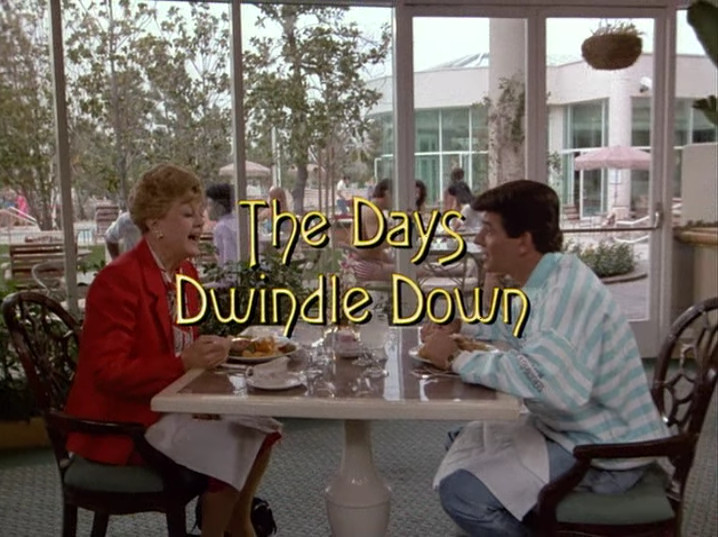
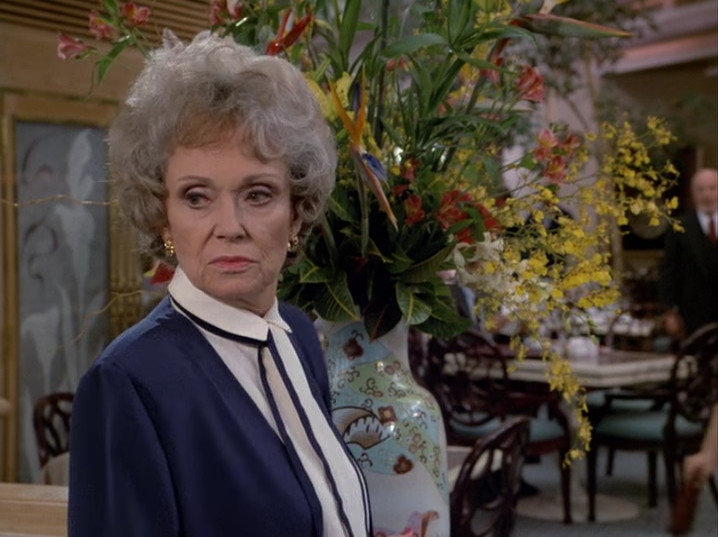

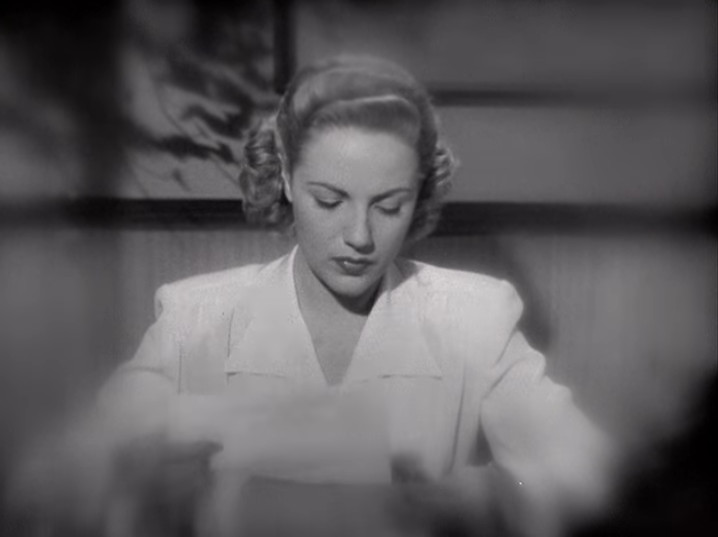
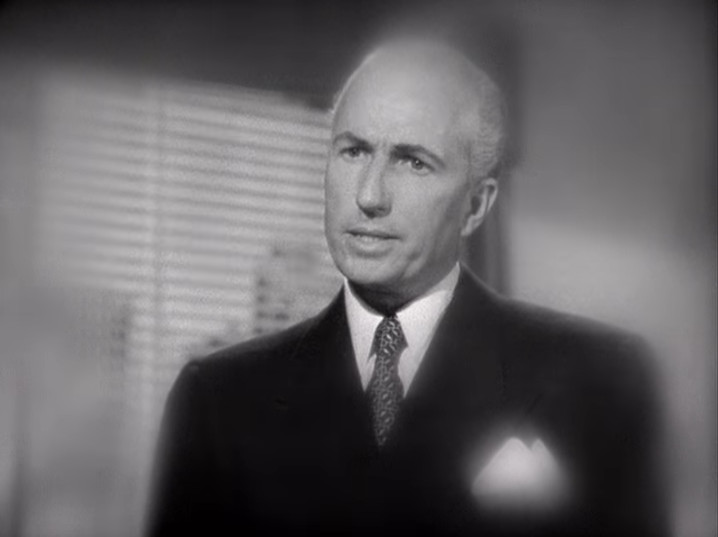


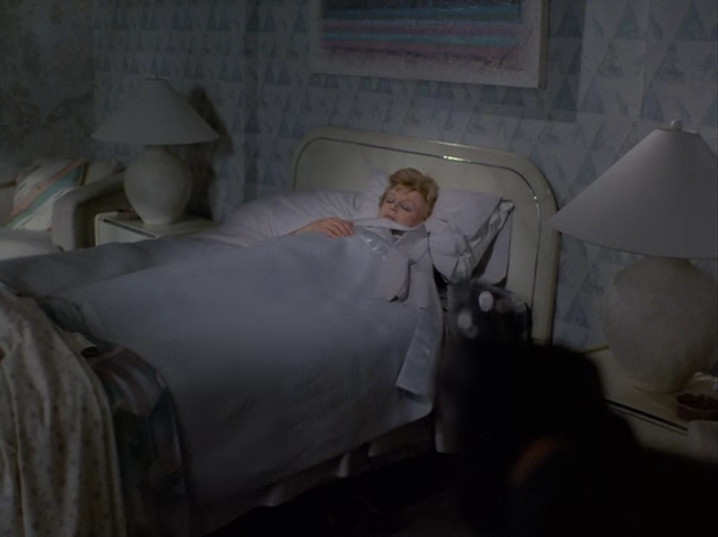

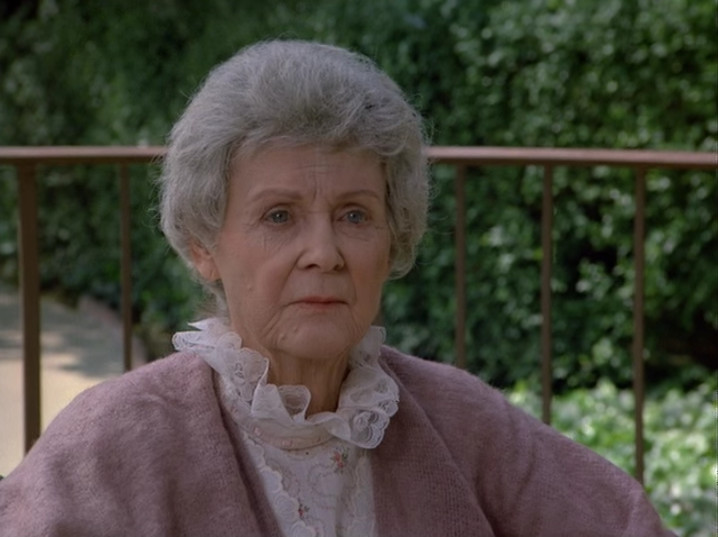
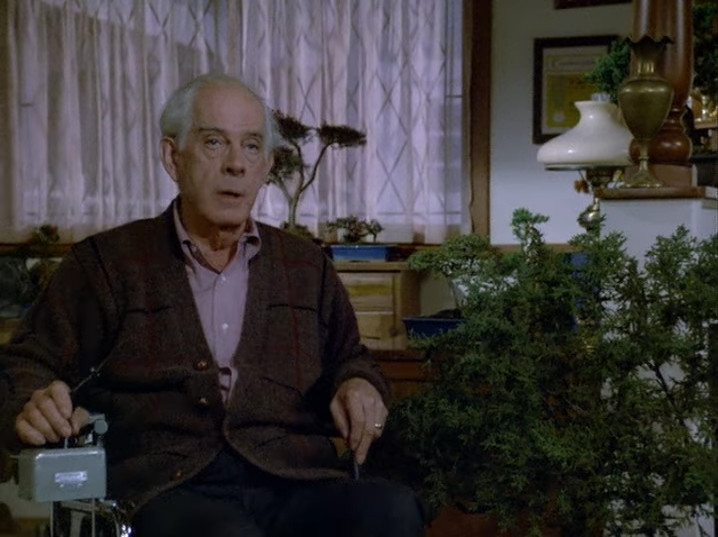


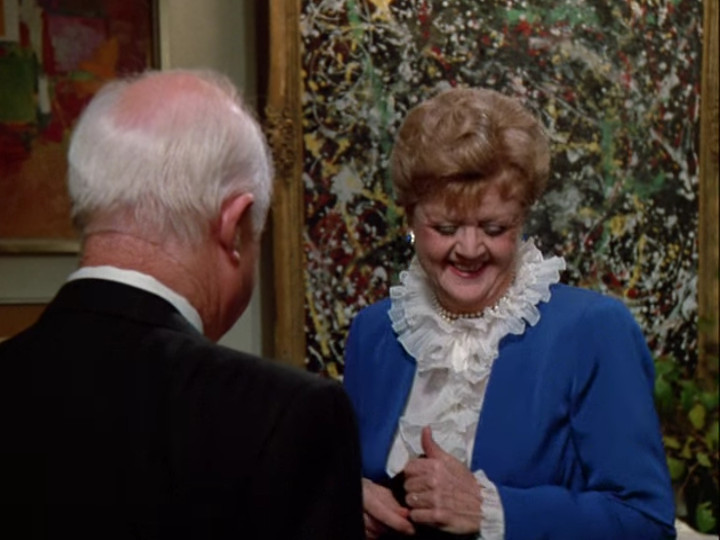
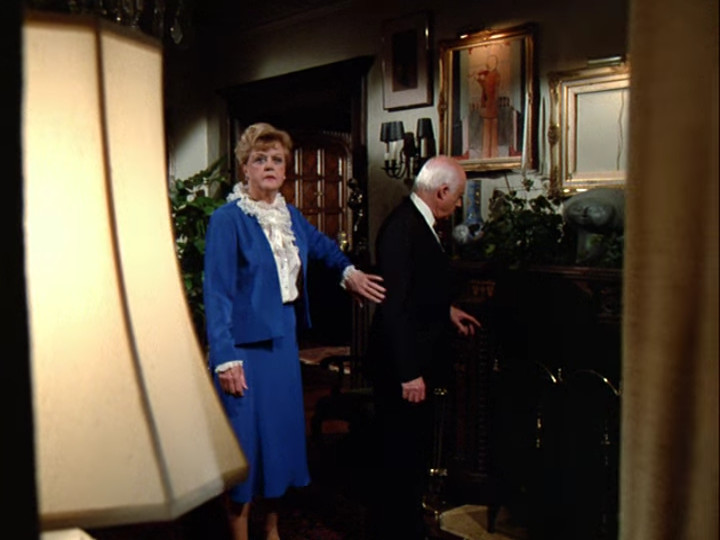
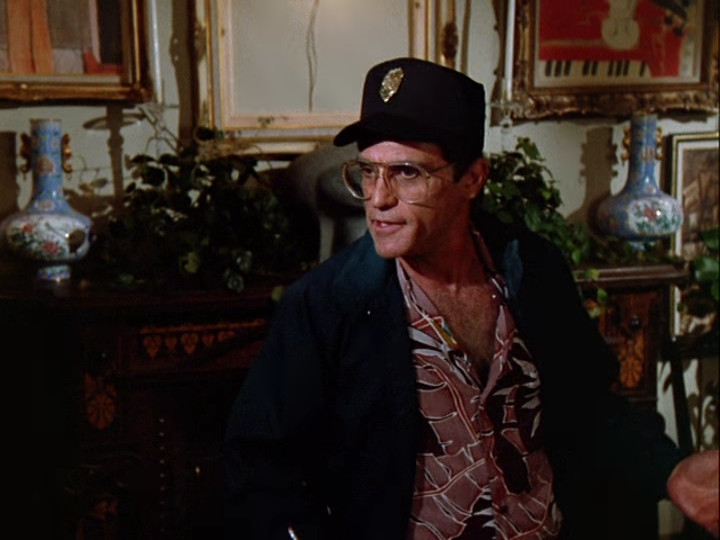
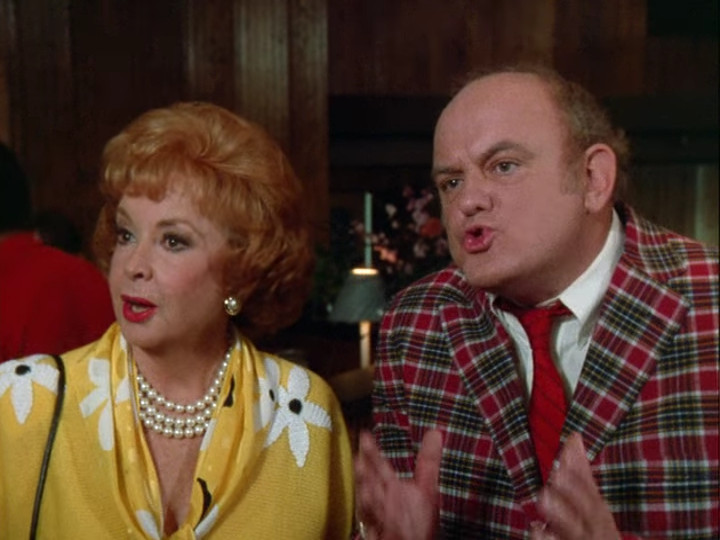

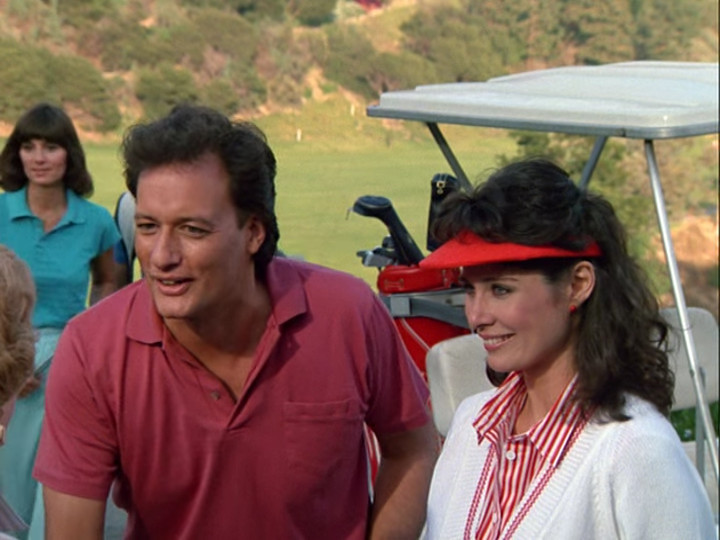

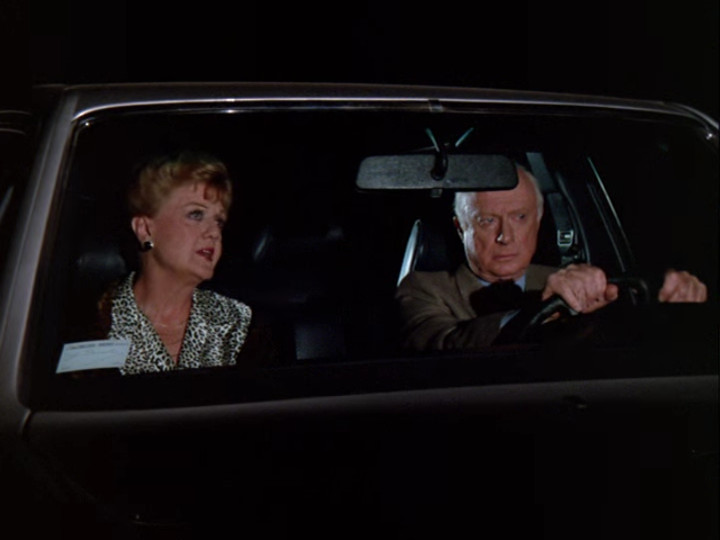


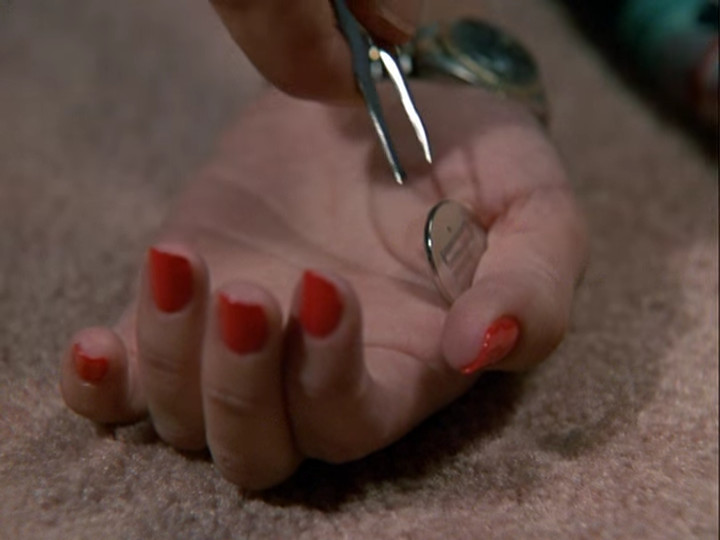

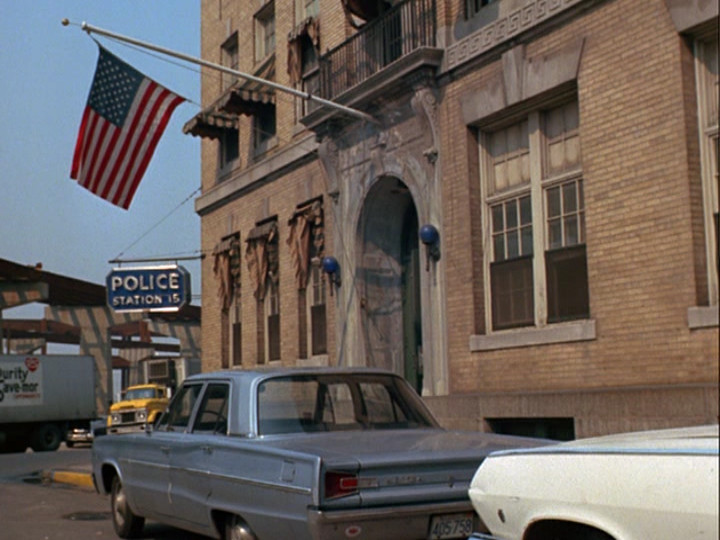


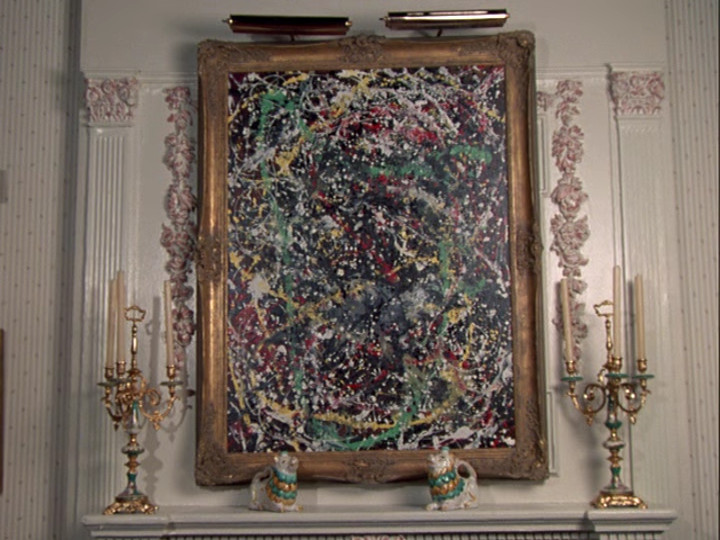

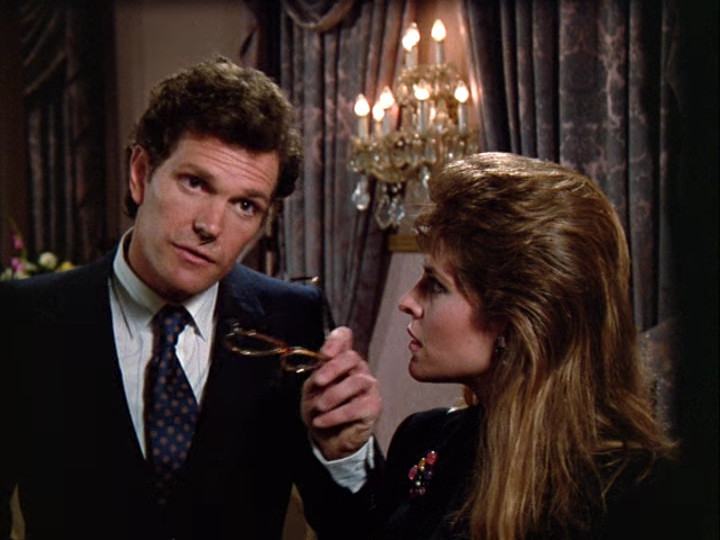
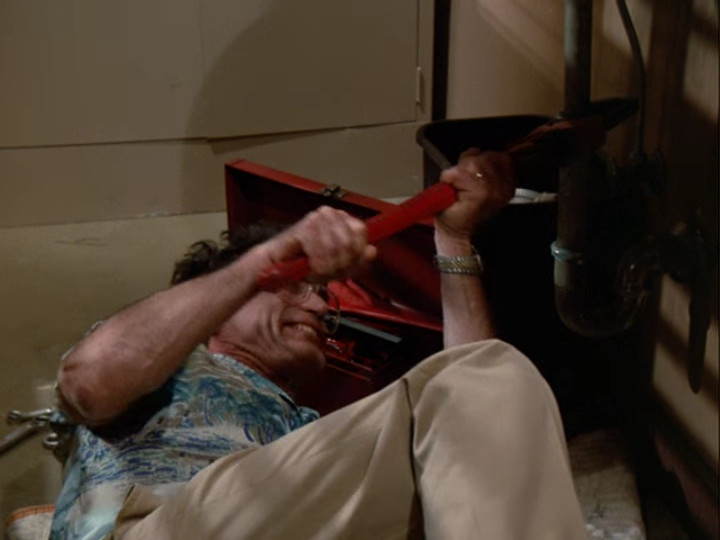


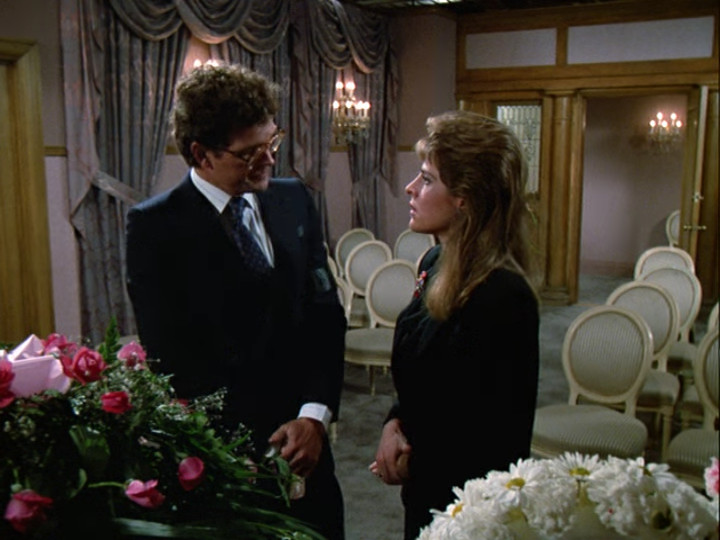
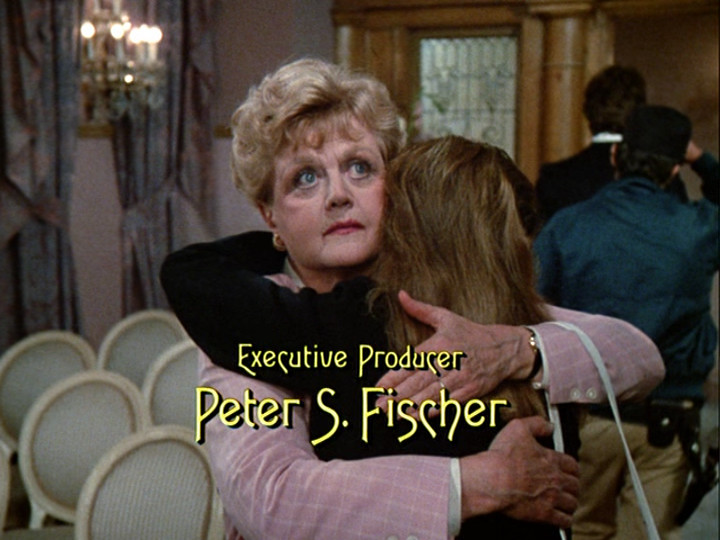


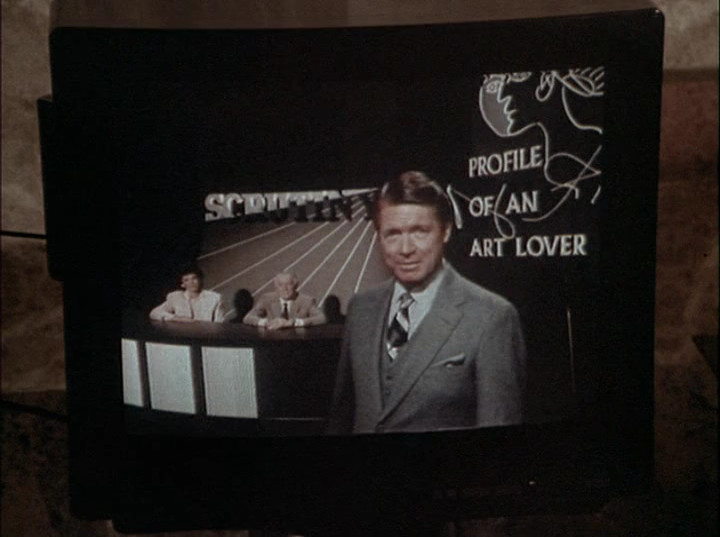
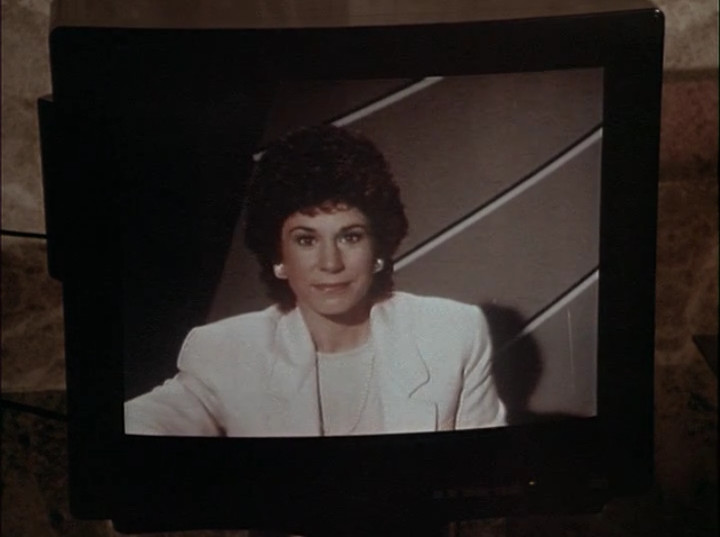
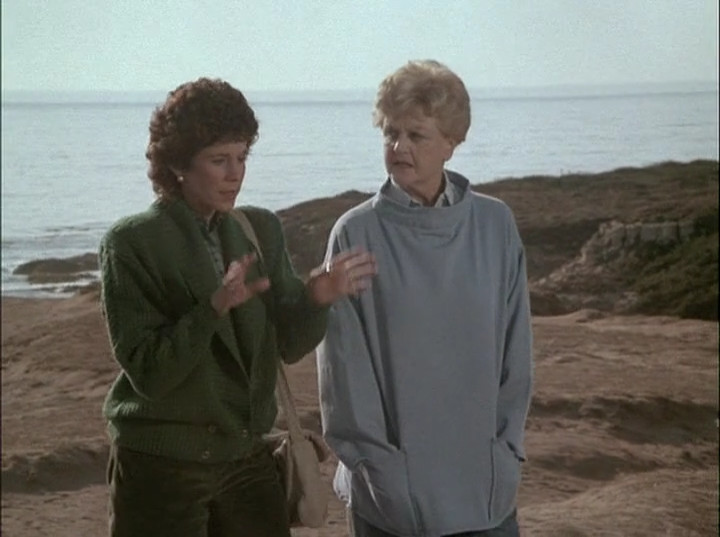


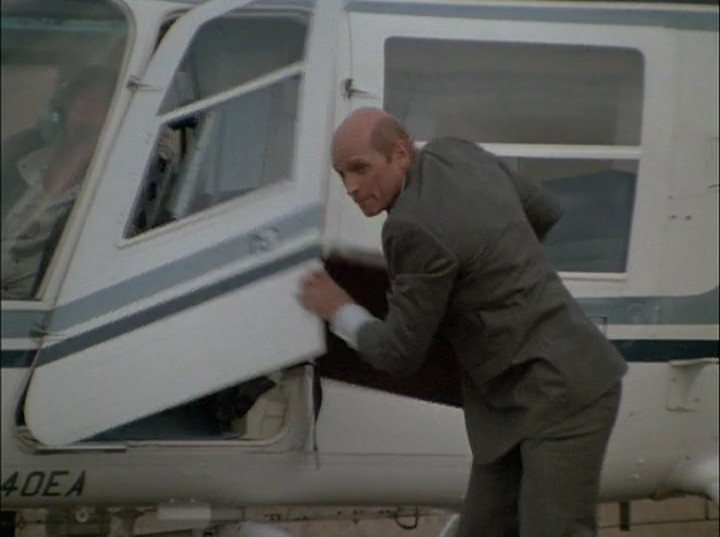
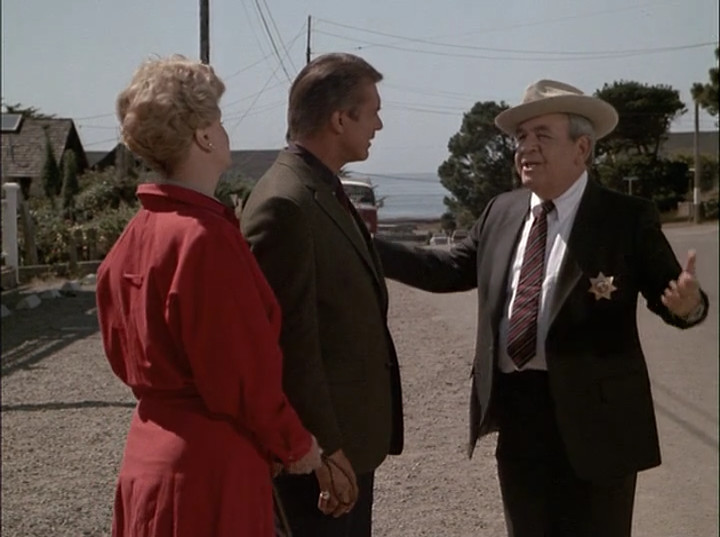
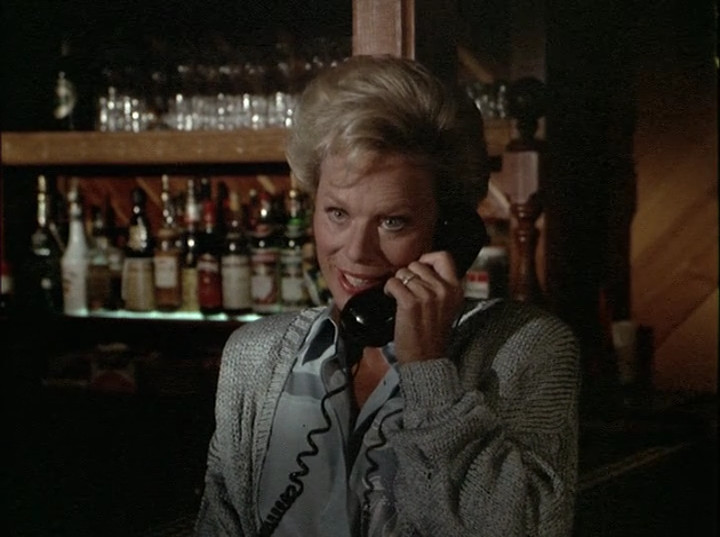








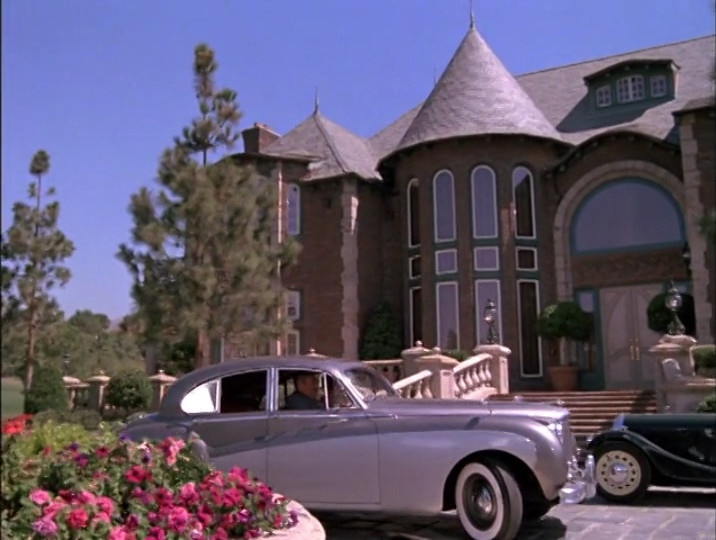







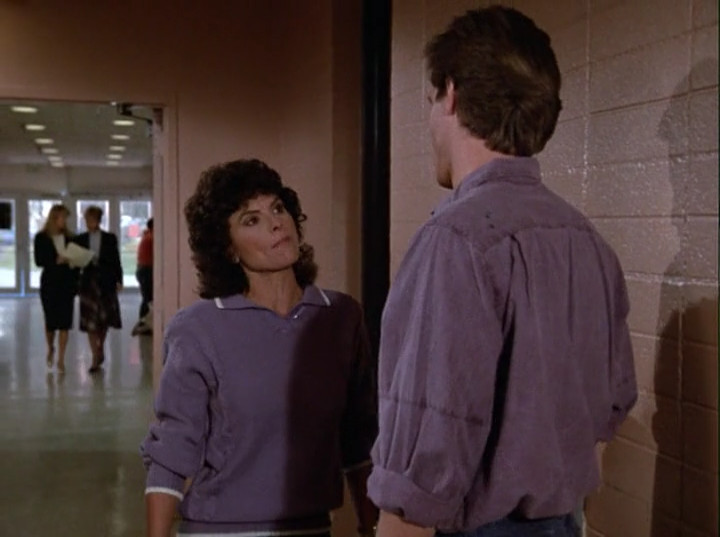


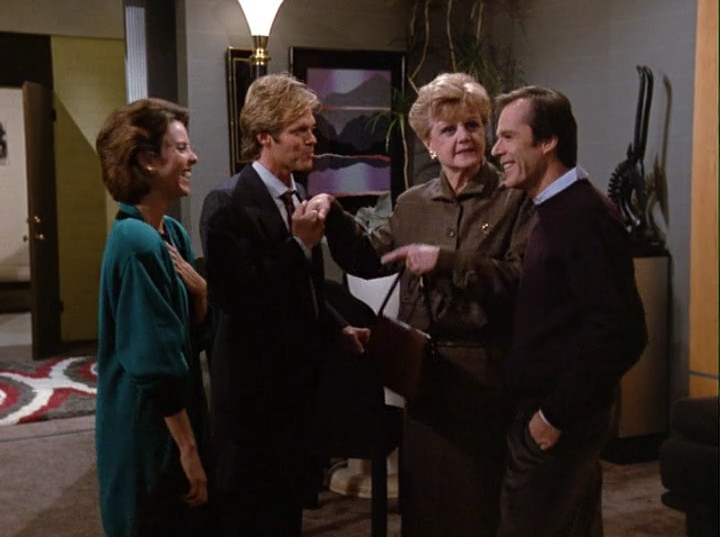
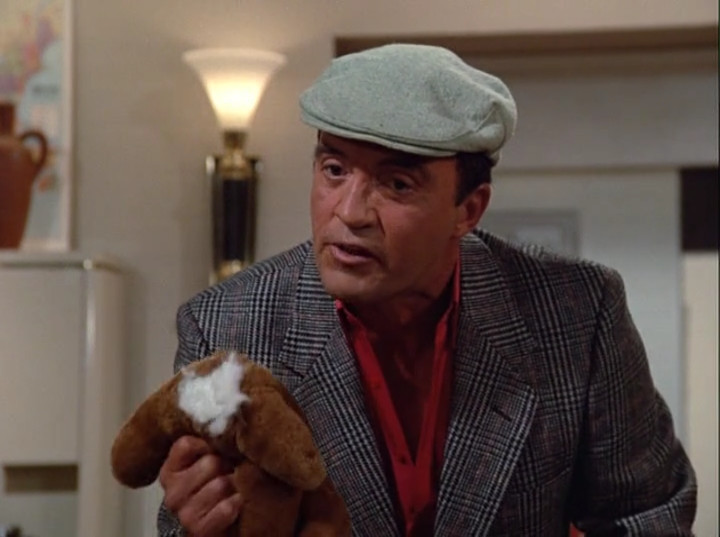


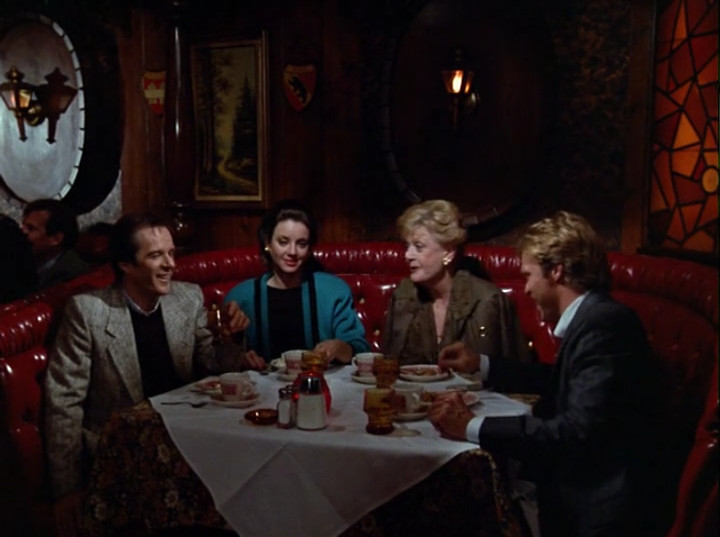


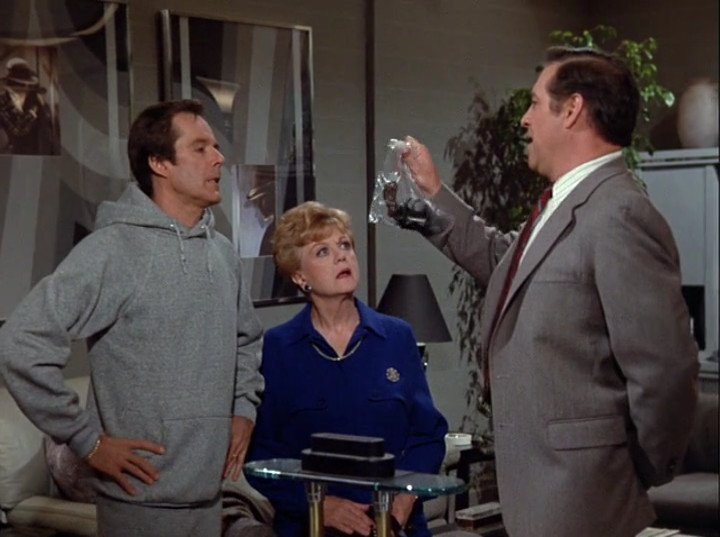
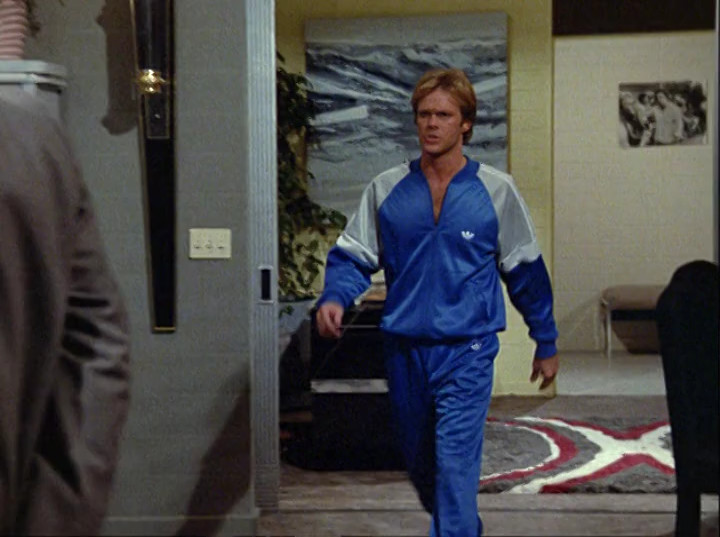

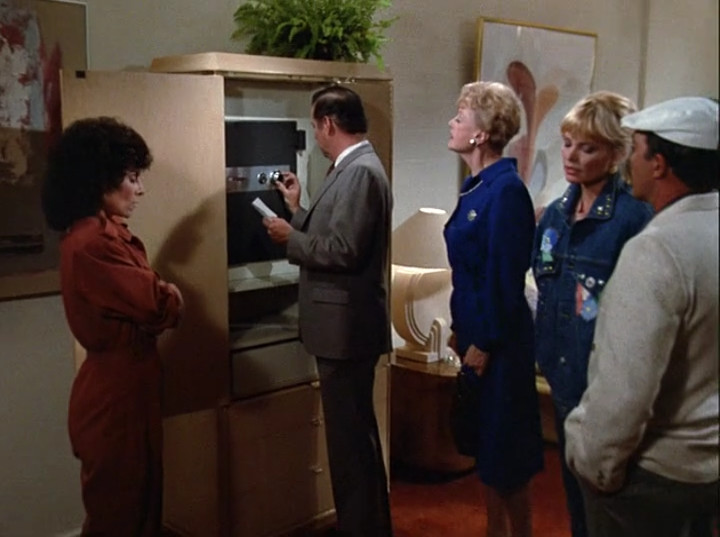


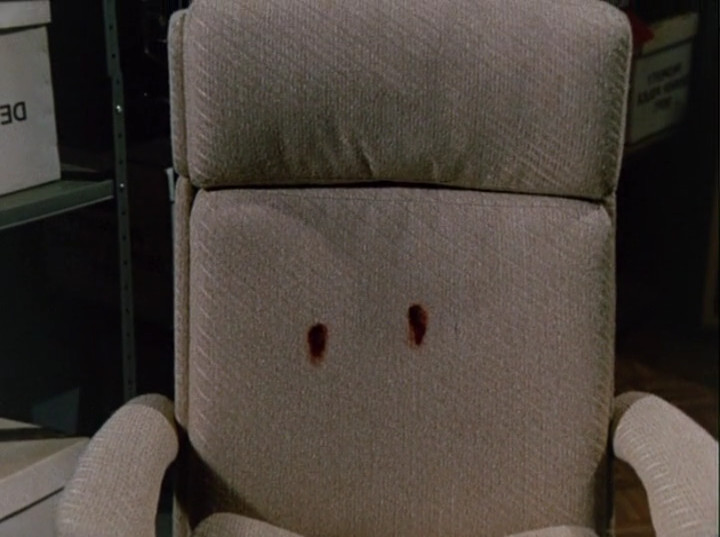
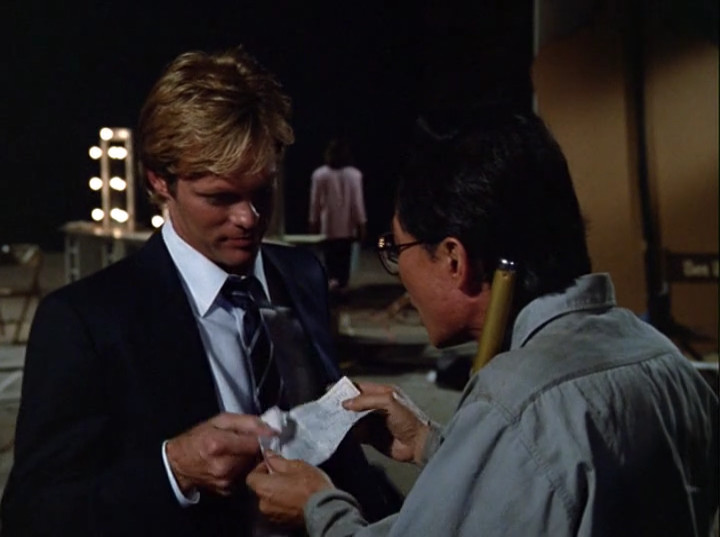
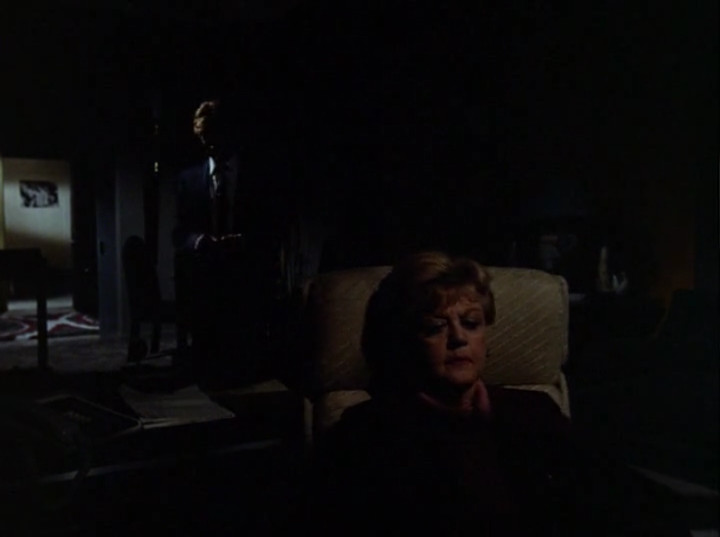

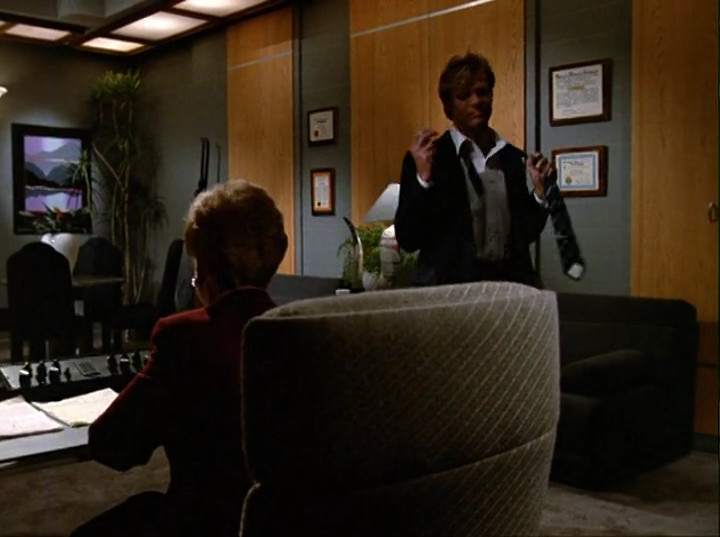
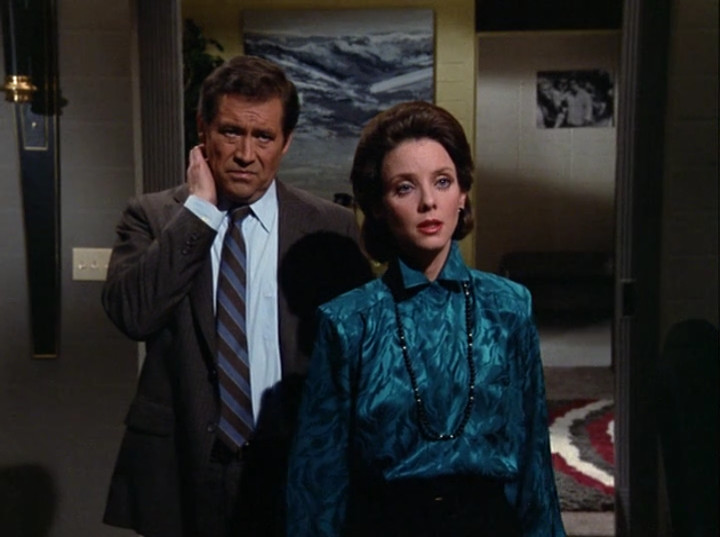


 Chris Lansdown
You must be logged in to post a comment.