Clue, which goes by the name Cluedo in Britain, is a very fun game that has had an enormous number of versions and a very enjoyable, if quite odd, movie based on it.
If you don’t know, the presmise of Clue is that Mr. Boddy has been murdered in a mansion by one of the six guests: Mrs. White, Mr. Green, Mrs. Peacock, Professor Plum, Colonel Mustard, and Miss Scarlet. (The characters in the screenshot are in that order, left-to-right.) Each player (the game works for three to six players) plays one of the suspects and goes around the board collecting clues, and trying to figure out who killed Mr. Boddy, in which room they killed him, and with what weapon.
This may make a little more sense if you look at the board:
When you consider the problem of trying to make a murder mystery board game that remains interesting when played more than once, the game mechanic is rather brilliant. Each suspect, room, and weapon has a card. You group each kind of card together and shuffle them, then you randomly pick one of each kind and, without looking, put it in the solution envelope (placed in the center of the board). You then, to the best of your ability, evenly distribute the rest of the cards (now combined and reshuffled) among the players. They then take turns rolling a die and moving that many squares, going to the various rooms of the mansion. From a room you can guess that room and any player or weapon that you like (officially, you “suggest” them); you then go counter-clockwise and the first player that has one of the three shows one of the cards that matches the guess to the guesser (without revealing it to the other players). Who answered the query gives limited information to the other players, depending on what they already know and what cards they have, giving material for logical deductions. When a player thinks they know the solution they state it as an accusation, then (without showing them to the other players) look at the cards in the solution envelope. If they’re right, they win. If they’re wrong, they’re now out of the game except for answering the suggestions of other players. If everyone understands the rules and pays attention, the game moves quickly and is a lot of fun, since you stand to learn something on every person’s turn. Indeed, if you’re good, you learn more from the rest of the players’ turns (taken together) than from your own.
The game was developed by Anthony E. Pratt in 1943 while he worked in a tank factory during the second world war. He was inspired by a game called “Murder” that he and friends would play during the inter-war years where people would sneak around rooms and the murderer would sneak up behind them and “kill” them. That and the great popularity of detective fiction at the time.
It would take a number of years before it was actually published, though. He brought it to Waddingtons, a British maker of card and board games founded in 1904 as a general printer that got into games in 1922. It was eventually bought out by Hasbro in 1994. Waddingtons made a number of changes to the initial concept, most of them being to simplify it a bit (such as reducing the number of characters down to six). Something I find very interesting is that its initial marketing focused on the detective aspect, to the point where they even licensed Sherlock Holmes’ likeness from the estate of Sir Arthur Conan Doyle:
Another change by Waddingtons was the name. Pratt had simply called his game “Murder,” after the house party game that he and his friends used to play during the inter-war period. The name Cluedo was a portmanteau of Clue and Ludo, the later being the popular name in England of a board game Americans tend to know better as Pachisi. (Ludo is Latin and means, “I play.”) Since Ludo was not well known in America—the game was licensed to Parker Brothers for distribution in the US—the name was shortened to Clue for the American version.
There have been many editions of Clue since the original, many of them updated and more modern. The one that I own (pictured earlier) is a “classic” edition which comes in a wooden fake book. (It was a gimmick used for a variety of classic board games but works particularly well for Clue.) There’s a great deal to be said for the classic version because the game is so suggestive of the golded-age detective stories which inspired it and upon which it is (ever so loosely) based. The dinner party in a mansion is rather tied to this time period because people don’t really have dinner parties anymore. There’s so much more to do, these days.
This was actually an interesting needle that the movie needed to thread. Why would there be a dinner party with such different people in a large house? The movie partially solved this by using an earlier time period—the mid 1950s (it was specifically set in 1954). The other thing it did (spoilers ahead) was to make them all blackmail victims who were meeting each other for the first time. This was an interesting approach to giving everyone a motive for killing Mr. Boddy.
The other problem that the movie had, and only partially solved, was how on earth can it be a mystery whether a man was shot, stabbed, strangled, or bludgeoned to death? This is a place where, I think, the movie could have done a little better. It is a solvable problem, at least in the context of trying to solve the crime before the police arrive. (The solution would be to have people trying to frame others and so attack the fresh corpse with someone else’s weapon.)
The movie is rather interesting for another reason, though: it has a nod towards the replayability of the board game. Instead of having a single ending, it actually has three endings. As a gimmick during release, each movie theater was sent one of the endings at random. Fortunately for the recorded version, it was released on VHS long before DVDs were a thing and so they had to figure out something to do for the VHS version. What they came up with was to present one ending, then put in a silent-movie style text cards saying:
And then, after the second ending, we get:
I really like this version. It has style, it’s cool, and it also is an interesting way of poking fun at how mysteries are often indeterminate until some clinching evidence at the reveal. But it also is a great nod to how the board game doesn’t have a single solution.
I don’t know how much the movie led to interest in the board game—I can say that it did for me, but I don’t know many other people for whom it did. But I do know that there were versions of the board game which used art from and based on the movie. And in the 1980s it was kind of a big deal to have a feature film based on your thing—not many things did.
And that does point, too, to the answer to what got me looking into this in the first place: the game changed its art and style fairly often throughout its history. There were, in the last few decades, a rash of various brands trying to distance themselves from their history and from the past, but Clue was not, so far as I can tell, meaningfully caught up in that. It started with an aesthetic that was, at the time it was developed, relatively modern (except for the Sherlock-Holmes-alike, but that was a specific character rather than meant to be referencing a time period) and it changed throughout its history in ways that were contemporary. It also had a variety of tie-in versions, perhaps the most obvious being the Scooby-Doo version (still for sale on Amazon as of the time of this writing):
Having said that, I’ll take the classic version any day.
On the sixth day of October in the year of our Lord 1985, the second episode of the second season of Murder, She Wrote aired. Titled Joshua Peabody Died Here… Possibly, it is set in Cabot Cove. (Last week’s episode was Widow, Weep For Me.)
The scene opens on a construction site:
But all is not well here, as there’s a great deal of noise from the many people who are protesting it. After some general milling about and shouting, we meet one of the characters who is organizing the protest:
His name is David. We see him here leading everyone to sit down in front of the truck driving into the construction site.
We also meet Kowalski, who is in charge of the construction, and Harry Pierce, who is a real estate agent but is generally involved in promoting the sale and development of real estate as the plot of an episode may require and is an agent of the developer in some vague, unspecified way.
Harry Pierce is played by John Astin, by the way, who is best known for playing Gomez Adams on the TV show The Addams Family. (The Addams Family ran from 1964-1966, so by the time of this episode it had been almost twenty years since Astin had played the character.)
Harry goes over and talks to David. We establish that Harry thinks that this will be great for Cabot Cove because of all of the tourists it will bring in, though not why on earth he thinks that a twenty story luxury hotel will bring tourists in. Hotels are not usually destinations in themselves and Cabot Cove hardly seems like the kind of place to bring in more guests then residents given how little there is to do here.
David claims that Harry snuck the hotel by the zoning board when half the members were out of town. Harry takes exception to this, pointing out that they had a qorum. Which is a pretty reasonable point—quorums exist for a reason.
Sheriff Amos Tupper then arrives to deal with the uproar.
There isn’t time for a discussion, though, before somebody calls out, “Hey look! Down there!” and everyone runs to look down there.
Presumably it wasn’t the camera that they were looking at, but we don’t find out because the scene then shifts to Seth’s house:
I love the “& Surgeon” as if you might be walking along the road needing an organ removed but not know where to go.
Seth replaces Captain Ethan Cragg as Jessica’s close friend for Cabot Cove episodes. Supposedly this was due in part to Angela Lansbury pushing for it because she didn’t think Jessica had anything in common with the uneducated and taciturn fisherman who often took care of her plumbing, but the town doctor does make a certain amount more sense than a fishing captain since the doctor can be called in to check out the episode’s corpse and thus is a natural part of the episode rather than a fifth wheel merely there for comic relief.
Anyway, we’re introduced to their relationship by Jessica being there looking like she’s a patient:
But despite her back pain, she’s actually here for sympathy because she’s having trouble with her book.
Arthur is trapped in the belfry. His brother Charles is on his way to the minister. Alice is in the shower. And the killer is climbing up the stairs…
Seth interrupts to ask Jessica, “Exactly how long have you had these symptoms?”
Jessica doesn’t get to respond because Amos barges in and interrupts, saying, “Listen, Seth. If you can tear yourself loose from killing off your patients you gotta get over to Main Street quick, and bring your bag.”
I’m not sure how this construction site, which doesn’t seem to be next to anything, is on “main street,” but in any event Amos drives Seth and Jessica to the construction site, where we finally find out what everyone was looking at in the hole that is, presumably, where the foundation for the hotel will one day be laid, once they dig past the loose dirt and hit rock.
Amos figures that this has to be the remains of Joshua Peabody (Cabot Cove’s most famous revolutionary war hero—though whether he existed at all is the subject of debate, with Amos being strongly on the pro- side while Seth is partisan to the con- side).
When Harry tries to hurry things up, Jessica points out that, while it could be Joshua Peabody, it could also be a murder victim and this the site of a murder. (The skull has a large hole in it.) Amos decides that she’s right as soon as he realizes that this means that he can make the construction crew refrain from disturbing the bones.
David then goes home and we get some family life—his kid got in a fight with another kid in the gym because the other kid was making fun of David. His wife wishes David could have stayed out of these kinds of protests just once. Etc. He then gets a call from Jessica because he’s an antiques dealer. She’s examining a long rifle and reads him the inscription, “Phelps and Handley, Liverpool.” David tells her that it was issued to the British army starting in 1762. (Amos seems to regard this as evidence in favor of his Joshua Peabody theory, though why a revolutionary war soldier would have a rifle used by the British is never considered.)
The scene shifts to the other end of the call, where Jessica, Seth, Amos, and Harry are in Seth’s office as Seth takes measurements of the bones. There’s a bunch of arguing and yelling—I’m not sure why TV writers think that yelling makes for good TV—but the important part is that Jessica suggests that the corpse might be quite a lot more recent than Joshua Peabody. She suggests one of the militiamen from the recreations of the battle of Cabot Cove that used to be held until twelve years ago.
We then get a scene with Harry, Kowalski, and Henderson Wheatley (who is the developer putting up the money for the construction of the hotel). There’s some bickering amongst them which is unpleasant to watch, then finally they’re interrupted.
Wheatley is in the center while his laywer is on the left.
It turns out that they’re having this meeting in the hotel lobby, because we meet some more characters (they were the interruption) as they walk in to check into their rooms:
Her name is Del Scott, and she’s some kind of reporter. A hard-boiled one, specifically, who casually insults the subjects of her reporting (she repeatedly calls Wheatley a crook). The two men behind her are nameless and we never see them again.
We then get a scene of Wheatley, outside, ordering his lawyer around a bit, culminating in telling him to, by noon, get a court order to resume work immediately.
And on that bombshell, we go to commercial. Had you been watching back in 1985, you might have seen a commercial like this:
When we come back, we see Jessica coming out of the Cabot Cove courthouse for some reason.
As she leaves, Del Scott stops her on the street and asks her opinion, as Cabot Cove’s most famous citizen, on Henderson Wheatley’s latest construction project. Jessica replies that she’s famous for her books, not for her opinions and, in any event, this is a town matter, not one of national interest.
As they walk, Del tells Jessica about how she’s hated Wheatley for his sub-standard construction ever since she was covering the weather in Pittsburgh (that seems like the kind of detail that often comes up later—especially because as someone covering the weather in Pittsburgh she’d only have reason to hate Wheatley if a relative was killed in one of his buildings or something like that). Jessica suggests Del talk to someone like David Marsh, who would be far more eloquent on the subject than Jessica. She already tried, though, and Marsh declined. He even requested that they not film him at the construction site, though his request was too late. (This suggests that Marsh doesn’t want to be seen on national TV, perhaps because he’s a wanted fugitive who’s living under a false identity. Alternatively, that he’s someone in the witness protection program.)
The scene then shifts to a couple of hayseeds who are telling Amos that the bones don’t belong to Joshua Peabody, but to Uriah Pickett.
When Amos asks who they’re talking about, the man says that Uriah was a farmer from over “at the Blue Hill.” He disappeared fourteen years ago come April, same time as the fighting, as she recalls. Amos then replies that Uriah didn’t disappear, he ran away to Portland with a red-haired manicurist who used to work for Thelma Hatcher. (How he knows this so clearly when a moment ago he didn’t know who Uriah was, he does not say.)
This meeting is then interrupted by Ellsworth Buffum from Kennebunkport.
He’s the vice-president of the Joshua Peabody Society. He’s hear to take charge of the last remains of Joshua Peabody.
Amos is interrupted before he can respond by an important phone call and has to leave in a hurry.
The emergency turns out to be fighting down on the construction site. Or, rather, protesters standing in the way of heavy equipment and people shouting at each other. When Amos arrives the lawyer hands him the court order that construction should resume immediately. Ellseworth Buffum then calls attention to an injunction which he has from another court stopping all work until a historical examination is completed.
Later, at dinner in Jessica’s house, Seth and Jessica discuss the dinner Seth made (Jessica says it has too much basil while Seth says that there’s no basil in it) and also the corkscrew Jessica has, which Seth dislikes and Jessica says works perfectly well if you know how to use it. Also, Jessica couldn’t find anything in historical records to prove that Joshua Peabody actually existed and Seth says that the skeleton was of a man with a bad back—a problem with his fourth and fifth vertebrae.
Also, David Marsh gave Seth a scrap that was pried loose from what was left of the guy’s uniform:
The idea that something this old and buried for hundreds of years would be just kept in someone’s pocket and handed around like this is absurd, but I suppose we can take this to just be the prop department saving on making some kind of realistic case for it. And, of course, what possible full sheet of paper could this have been a scrap of?
When Seth presents Jessica with a seven-layer cake that they’re going to have for desert, Jessica then gets the inspiration to dig underneath where the skeleton was found for other artifacts. How no one else came up with this idea, I can’t imagine. But it doesn’t much matter, because the actual reason that Jessica and Amos go to the site of the body is to find the murder that this episode is really about:
And on this bombshell, we fade to black and go to commercial.
When we get back from commercial, Seth is giving Amos the results of examining the fresh corpse. Wheatley probably died between 4am and 5am, having been shot at close range. (Also, it came up before the commercial break, but it started raining at 2am, at which point Amos came over and put the tarp over the place where the skeleton had been found and under which Wheatley had been found, to preserve evidence from the skeleton. They made a point of establishing it, so presumably someone is going to know something they shouldn’t about it.)
Amos also notes that Wheatley’s car is here and Kowalski sleeps in a motor home on the premises, so he’ll need to interview him.
Amos is prevented in finding Kowalski by Del Scott coming up and interviewing him.
I’d ask why on earth this is in the episode except that her first question explains it:
Would you describe your feelings when you removed the tarp and discovered Mr. Wheatley’s body?
Unless she was the one who put Wheatley under the tarp, she’d have had no way of knowing that it had been under a tarp. It was clearly established that the tarp only showed up a few hours prior to the murder and Jessica and Amos thoroughly uncovered the body when they discovered it, long before Del and her film crew showed up.
In the next scene Jessica ovearhears the lawyer and Kowalski arguing in Kowalski’s trailer with the door open. The lawyer shouts:
You knew what was going on here. You knew the whole scam. Now, I’m the attorney on this corporation. You’ll get not one dime from me.
Jessica then discovers Wheatley’s tie clip, close to Kowalski’s trailer. When Amos comes up and asks what she thinks it’s doing here, her guess is that it fell off when Wheatley’s corpse was carried to the excavation. (Jessica thinks he was shot elsewhere and brought to the construction site.)
Later in the day, Jessica goes and examines the construction site and finds that one one the bulldozers has a busted tread, the wheelbarrow next to Kowalski’s trailer has a dirty handle, and Kowalski has a cut on his hand. He then tells her that she’s trespassing and she does an innocent old woman routine, then leaves.
When Jessica gets to town she’s in time to break up some fighting between David Marsh’s son and another kid. Then, as there’s general bickering, FBI Special Agent Fred Keller shows up…
…and arrests David Marsh, noting that his name is actually Daniel Martin. They’ve been after him for seventeen years.
Harry recognizes the name Daniel Martin as a “nutcase Vietnam protester”. Fred explains that, fourteen years ago, Martin bombed a federal courthouse. Amos shows up and tells Agent Keller that David is actually his prisoner, as he’s arresting him for the murder of Henderson Wheatley.
Amos explains his case—he found a note in Wheatley’s office that Wheatley discovered that David had planted the skeleton to slow down construction. David was also seen in the vicinity of the hotel at the same time that the night clerk at the hotel saw Wheatley leave the hotel. He takes David into custody, which Agent Keller isn’t too happy about, but does not stop.
The scene then shifts to Jessica and Seth in Seth’s office when Agent Keller comes in (he had an appointment with Seth). He explains that they didn’t get a chance to fingerprint Daniel Martin, but they were able to obtain his early medical records and he’s hoping that Seth can compare them with his records of David Marsh to make a positive identification. Seth looks at the medical records, but refuses to give Agent Keller a copy of David Marsh’s medical records. Keller is frustrated but assures them that he will get his man, with or without their cooperation.
After he leaves, Seth hints to Jessica that David really is Daniel Martin, and on that bombshell we go to commercial.
When we come back, Jessica is talking with David in jail, where he admits to her that he is Daniel Martin, though he denies being involved in the courthouse bombing. (The day of the courthouse bombing, he was living in Cabot Cove.)
Jessica then goes and finds Kowalski, who has moved his mobile home to a scenic overlook for some reason. Jessica brought him a salve for the cut on his hand and she insists on applying it for him, which for some reason he agrees to.
As they talk, Jessica says that she couldn’t help but notice the shabby state of the construction equipment and that it must have been difficult working for a man with so little regard for his employees.
Kowalski said that it was. Wheatley’s poorly maintained equipment got several friends of his killed. He names two examples: Bobby Scotto in Pittsburgh and Harry Pateki in Detroit (an elevator cable rusted through and dropped him 32 floors).
Of course, it’s hard to not notice that “Scott” and “Scotto” are very similar last names.
Oh, and Wheatley never paid any of the construction workers on this job; unlike before, money now seems to have been in short supply.
Over at the Sheriff’s office, Amos hands Jessica a paper that came over what sounds like a teletype machine and says that Wheatley owed money all over town. Apparently, Amos believes that the lawyer might be responsible, but Jessica doesn’t buy it. Even if the lawyer had a motive, he had no reason to hide the body on the excavation site. Hiding it there felt almost like a symbolic gesture to her.
Amos then reflects on the case and says that it goes to show that if you have something in your past, eventually it will come out. It just doesn’t pay to try and change your name.
At the words, “change your name” Jessica perks up and, presumably, realizes that it might pay to change your name if you’re changing it to sound better as the weather girl on a Pittsburgh TV station. However, Jessica only asks Amos to stop Kowalski from leaving town and to bring him back if he’s already left.
Jessica stops by the library to get some photocopies of news stories (I assume to prove that Daniel Martin alias David Marsh had an alibi for the courthouse bombing). She then calls the hotel and asks for Del Scott’s room. She gets Del and says that she’ll make a statement on Del’s news program. She’ll meet her at the construction site in an hour.
In the interview, she ambushes Del with her relation to Robert Scotto who was killed in Pittsburgh, where Del came from. Del cuts the interview short saying that it has no news value but Jessica keeps going. Jessica phoned the Pittsburgh hall of records and Robert Scotto had a younger sister, named Della Scotto. She then tells Del what happened: at 4am she called Wheatley saying that she had evidence that David Marsh had planted the skeleton. When he let her into his room so she could show him the evidence, she shot him. (How the hotel clerk saw Wheatley leave at 4am if Del killed him in his room, Jessica doesn’t say.)
Del breaks down and says that it is true that her brother died because Wheatley was too cheap to keep his crane in good repair. It broke and dropped four tons of I-beams on her brother. She admits hating him but denies having killed him. Jessica, however, insists that she did. And that after she killed him she put him in the construction site because it seemed symbolic—a grave that he dug for himself.
When the subject of evidence comes up, Jessica points out that Del knew about the tarp despite it being placed on the grave site at 2am and having been removed before her crew got there.
Del then, through tears, says that she tried for years to prove Wheatley’s guilt honestly but every time she got close he bribed witnesses and suppliers. He bought off the people he needed to so that she could never get him. She finishes with, “I’m not proud of what I did, Mrs. Fletcher, but don’t ask me to be sorry.”
In the next scene Jessica and Seth go to the antique shop, where Agent Keller is arresting the now-free Daniel Martin/David Marsh. Jessica shows Keller a newspaper clipping that places David in Cabot Cove the day before the bombing. Jessica then shows him another clipping about a “Joey Fawcett.”
(It’s interesting that the props people didn’t bother to change the text of the newspaper that they used for this but only made up the headline.)
Jessica says that, clearly, the guy must have fallen and hit his head and died, and at least ten dozen people will swear that Joey Fawcett was actually Daniel Martin.
Agent Keller asks what happened next—the good citizens of Cabot Cove shoveled dirt over him?
Seth replies that there’s no accounting for what folks are here are libel to do.
Seth then hands Keller the fractured femur of the skeleton from the dig and invites Keller to compare it with his x-rays of Daniel Martin. Keller does so and it doesn’t match, which Seth tries to explain as the x-rays of Daniel Martin being from before he was fully grown.
Keller then says:
You know, a man must be very special to have people willing to stand up before an agent of the United States Department of Justice and each of them willing to risk charges of perjury, obstruction of justice and harboring a fugitive. Not many men have friends like that.
He then tells David that he (Keller) was wrong and has been pursuing a dead man, and leaves. Before Keller fully gets into his car, he tells Seth that he might want to brush up on his anatomy. The bone he showed Keller was an arm bone, not a leg bone.
After he drives off, Seth remarks that he didn’t think that Keller was that smart.
Seth then says that one good thing has come of this, though. Now that they’ve proved that the bones belong to Daniel Martin, they can put the Joshua Peabody nonsense to rest.
Jessica tells Seth that’s going too far and they laugh and we go to credits.
It was definitely good to be back in Cabot Cove again. Even though it’s a minority of episodes, Cabot Cove keeps Murder, She Wrote grounded. And it’s nice to meet Seth. As much as I did like Claude Akins as Captain Ethan Cragg, Seth is better. And as the town doctor he fits better with murder mysteries, too. This is discussed a bit in a New York Times article from October 27, 1985 which gives a bit of insight into this change:
The weekly arguments between Mr. Fischer and Miss Lansbury come because she wants to expand the character. When the series began, Jessica Fletcher was a substitute schoolteacher riding her bicycle in Cabot Cove, Me., who had written one detective novel. Now, as the famous author of a half-dozen best-sellers, ”She must avoid at all costs being sophisticated or jaded or superior,” says Mr. Fischer.
”She must consort with people of a certain intellectual level,” says Miss Lansbury, who fought ”tooth and nail” against Jessica’s relationship with the owner of a Cabot Cove fishing boat who also served as her handyman, a recurring character last season. ”There’s something wrong with Jessica if she enjoys spending more than 15 minutes a week with that man,” says Miss Lansbury.
The character has been dropped and replaced by a doctor (played by William Windom) with whom Jessica plays chess. Miss Lansbury has also ”fought and won a battle” against the network, which wanted to supply her with a sidekick. ”The whole basis of the show is that Jessica is a middle-aged woman alone,” says Miss Lansbury, ”and the network wanted to have a character joined at the hip who drove a car for me.” She has also resisted a serious romance, though, for a while last season, it seemed as though a different murderer was falling in love with her every week. ”I said no to those slight romantic liaisons. It makes her seem as though she has round heels,” says Miss Lansbury, using a British expression that decribes a woman who tumbles quickly into bed.
Seth being a good change is about the only positive thing I can say for this episode. The problem that most galls me is that it had far more loose ends than tied up ends. The biggest loose end, of course, being how on earth the skeleton—whoever it is—became buried under eight feet of ground on a cliff by the shore. The only way for it to have happened would have been for someone to have buried him quite remarkably deep for a grave, because dirt does not accumulate at anything like the rate of four feet per century, to say nothing of half a foot per year if this really was from a reenactor. You can easily tell this by going to a cemetery with two hundred year old tombstones and noting that they’re not buried under six feet of dirt.
And how on earth was this skeleton uncovered in a way that anyone noticed? A large, deep cut like this would be done with earth moving equipment. That doesn’t lend itself to noticing dirt-colored bones, even if by pure luck you happened to excavate right above the skeleton, exposing it, rather than picking it up in the excavator’s scoop.
And then there’s the way that the identity of the skeleton is never decided and, in fact, just dropped. The skeleton is hugely important to the episode; it drives most of what happens. And, after a few initial snippets about a British musket near to it and a scrap of paper that is oddly durable, we get nothing more. Everyone just stops caring about it.
I also don’t know why David Marsh/Daniel Martin is supposed to be a sympathetic character. All we know about him is that he’s against an absurdly large hotel in a place that would have great trouble filling it to a quarter capacity, leads a protest that Jessica is sympathetic to though it’s not clear why she should be, is always causing trouble in Cabot Cove, and fifteen years ago he did a bunch of “nutty” Vietnam war protest stuff. Oh, and his son gets into an awful lot of fights. I’m not seeing what we’re supposed to like about this guy. Are we even sure he didn’t plant the skeleton? He certainly was the person in Cabot Cove with the most access to things that can be planted to lend credibility to the “find” and we’ve established that he isn’t scrupulously honest. (Just as a side note: how would tiny little Cabot Cove support an antiques dealership?)
We also get a villain in the episode with all of the sophistication and nuance of Luten Plunder from Captain Planet. So far as I can tell, Henderson Wheatley cheats because he would rather be corrupt than honest. Are we really to believe that it costs more to settle a worker’s death, repair a broken crane, clean up dropped I-beams, suffer delays during which people get paid but work doesn’t get done, and bribe all manner of people to cover it up than it would be to just repair the crane’s cable before it breaks? People do skimp on necessary maintenance when they’re short of money and, instead of doing the things that will reliably make them more money, hope that things will work out until they have the money to cover the repairs. People don’t skimp on necessary when they’re rich because paying for maintenance is much cheaper than paying for repairs. An ounce of prevention is worth a pound of cure to the rich as well as to the poor. In fact, one of the ironic things about poverty is that it’s more expensive to be poor because the rich can avoid all sorts of major expenses by paying much smaller ones to prevent the big expenses from being necessary. All of which makes the character of Wheatley being so rich he can get away with anything not make any sense in the episode.
Especially because it’s actually a plot point that he isn’t so rich. They very clearly established that money was in short supply on this job. They even went so far as to have the lawyer angrily yell at Kowalski that he (Kowalski) knew what the scam was when he started the job. But once Kowalski shares the useful information of “Robert Scotto” having been killed through Wheatley’s negligence, this is entirely dropped.
Overall, this episode is a mess. We don’t get our body until right before the mid-point commercial break, the victim is a cardboard cutout of evil, the supposedly sympathetic characters aren’t sympathetic, and most of the interesting plot threads are dropped for no reason. Heck, we even get unambiguous evidence of who the killer is less than a minute and thirty seconds (not counting the commercial break) from finding the body, making the rest of the investigation obviously pointless.
Oh well. Next week we’re in New York City for Murder in the Afternoon.
On the twenty ninth day of September in the year of our Lord 1985, the first episode of the second season of Murder, She Wrote aired. Set in the tropics, it’s titled Widow, Weep For Me. (Last season’s finale was Funeral At Fifty Mile.)
This must have been very exciting for the cast and crew of Murder, She Wrote because a second season means that you’re a success. Of course, a second season in no way guarantees a third, and they would have no way of knowing, at this point, that Murder, She Wrote would run for a total of twelve seasons. It’s also an interesting time for viewers because TV shows would often change fairly substantially between the first and second seasons. The lead-up to the second season was a time to take stock of what worked and what didn’t, what could be improved, and what needed to be streamlined. So now we find out whether all of that made it better or worse.
After the establishing shot of someplace that’s supposed to be the tropics but could be California with a few tiki torches in the foreground, we then get an opening scene of a wealthy woman who writes a letter to Jessica, posts it in the hotel post box, then gets murdered.
We then see the figure wearing all-black raise a knife that he had previously used to jimmy open the door from the balcony:
(I’ve upped the exposure; the original was very dark)
I love how often burglars in Murder, She Wrote wear all black clothing, including black gloves. I suppose it would, actually, help one to hide in shadows, though I can’t help but think that it would look a bit odd while you’re on your way to those shadows.
The hand plunges down and we smash-cut to a wave crashing on the rocks at Cabot Cove:
Instead of seeing Cabot Cove, though, we then cut to a white limousine pulling up to the same hotel. A moment later, Jessica gets out, speaking in her best rich-woman accent:
She asks the man in the uniform to see to her matched luggage. They’re unmarked, and she’d like to leave with them in the same condition.
At the desk, she lays it on quite thick. Evidently, she’s trying to give the impression of a rich, self-important woman.
A woman named Myrna Montclair then approaches Jessica and introduces herself.
Jessica (who is going by the name Mrs. Canfeld, from Nebraska) asks if they’ve met before and is sure that they have. Myrna suggests that Jessica might be recognizing her from her previous career—the movies.
(The actress playing Myrna is Cyd Charisse, who was, perhaps, most famous for being the leading lady opposite Fred Astair in two MGM movies, though she did a lot of other things too and I’m not very familiar with her career. Here’s a clip of her dancing with Fred Astaire in the movie 1953 The Bandwagon🙂
It’s very interesting that they lamp-shade the fact that Cyd Charisse would have been recognizable by having the character be a former movie star.
Anyway, Jessica continues to lay on the “self-important rich woman” shtick. She lays it on quite thick; this shot gives a sense of just how thick Jessica is laying it on:
Up in her hotel room, Jessica takes off the ridiculous turban and reads the letter we saw the woman in the opening write. Before I get to that, I have to say that the outfit looks better without the turban:
I really wonder why those were a thing.
Anyway, the letter says:
Jessica, I’m in trouble. Desperately need your help and advice. I sense a terrible danger, but I can’t leave the island. Will explain when you arrive. –Antoinette
Jessica’s thinking about what she just read is interrupted by a man who calls her “Madam Fletcher” in a French accent:
His name is Chief Inspector Claude Rensselaer, of the Island Police. He then reminds her that they spoke on the phone. (He warned her to not come.)
He’s concerned for her safety as she’s showed up in a manner designed to invite trouble. Jessica explains that Antoinette’s last act was to ask for her help and she’s not going to ignore that request. The two were very close—like sisters—until five years ago when Antoinette’s husband died and Antoinette tried to lose herself in travel, parties, love affairs, and drink.
The Chief Inspector tells her that she was killed by a thief—he’s been operating in the area recently—but Jessica cannot accept that. He says that it is widely known that the victim wrote Jessica a letter right before she died and this might put Jessica in danger. Oddly, Jessica doesn’t point out that this would only be true if the inspector is wrong and it wasn’t just a thief after jewelry who snuck into the room after the letter was posted. Instead, she just explains that’s why she came under the assumed name of Marguerite Canfield (who the Chief Inspector remarks is a famous recluse).
He also asks if she realizes that all of the gaudy jewelry makes her a target for the thief and Jessica replies that she certainly hopes so. Then she asks what they have actually found out.
He says that they have no physical evidence and those who knew Antoinette best all have alibis. Jessica then gets a list from the Chief Inspector of who those people are.
We then meet the first person on the list, Eric Brahm, the hotel manager:
He tried to put the moves on “Mrs. Canfield,” though according to the Chief Inspector he tries that on all unattached ladies in the hotel.
Speaking of unattached ladies, Jessica meets Alva Crane at the roulette table:
Shortly after they introduce themselves, a timer goes off and Alva says that she needs to take her blood pressure medication. As she fumbles in her purse for the medication, we get a closeup of a key in her purse:
I’ve no idea what this is supposed to be a clue for, but they never show us a closeup in Murder, She Wrote without it being important. This one is a bit odd because this was during the time when hotels would use keys rather than disposable key-cards, so we would expect her to have a key in her purse.
After she gives a bit of chatter, a couple comes up, the woman obviously drunk.
She places a bet on number seventeen, as seventeen is the number on her classroom door in Curtis Road Elementary School in Davenport, Iowa. (She loses, of course. It comes up number twenty two.)
When she tries to place another bet the man tells her that it’s time to go to bed and she marvels to the older women that this beautiful man is with her.
After they depart, a middle-aged man with an Irish accent walks up and introduces himself as Michael Haggerty.
There’s a bit of witty dialog—she asks if they’ve been introduced and he says that he believes he just accomplished that formality—then he invites Jessica (as Maggie Canfield) to join him on the terrace and for some reason she accepts. He’s charming and claims to be a man of independent means, saying something vague about the British police thinking that he and some friends of his robbed the bank of England of a million pounds.
Later on, as they’re walking, Jessica asks about the man with the schoolteacher and Michael says that he is “Sven Torvald”. A few years ago he won two gold medals for skiing. These days he a member of the international jet set. A bit of conversation later, as Michael is inviting Jessica to go tour a waterfall with him, a thief grabs Jessica’s purse and runs. Michael gives chase but is knocked down by another man who claims that it was an accident.
The man who knocked Michael down, allowing the thief to get away, turns out to be Sheldon Greenberg, the head of hotel security. When Jessica asks why he’s been watching her all evening, he says that it was because he was worried that something like this might happen because she wears her jewelry so conspicuously. He then excuses himself to go report the theft to the police.
Oddly, we don’t fade to black when going to commercial, but, regardless, had you been watching back in 1985, you might have seen a commercial like this:
When we get back, Jessica calls Inspector Rensselaer. She asks him if Sheldon Greenberg really did report the theft of her purse, and he tells her that Greenberg has not. She asks what he knows about Greenberg and Rensselaer says that he doesn’t know much, but his credentials check out. He had been a New York City policeman for twenty years with a good record.
After this phone call Jessica spies the drunk woman from the night before running along, stops her, and introduces herself. The woman’s name is Veronica Harrold. She’s on the trip because she won it at a supermarket giveaway. The funny thing is that she doesn’t even remember entering. Also, it was a vacation for one—she met Sven here.
Veronica gets on to reminiscing. The woman who died—Antoinette—was super nice to her on the first day she got here. When Jessica (still posing as Maggie Canfeld) remarks that this was very nice of her, Veronica replies that it was, but also a little strange—it was as if Antoinette had singled her out. Antoinette didn’t get along well with Sven, though.
Veronica then notices Miss Montclair standing by the tennis courts in a tennis outfit and talks about how beautiful she is and how much she (Veronica) loved her (Miss Montclair) in her movies. She saw The Sin of Andrea Crown six times. (Miss Montclair played a woman whose husband is cheating on her so she systematically kills all of his mistresses. This is invented for this episode; it has nothing to do with the movies Cyd Charisse was in, so far as I can tell.)
This is interupted by Sven coming up. He’s rented a boat at the marina and thought they might do some scuba diving. Veronica thinks this is a great idea and excuses herself to Jessica.
The scene then shifts to the hotel manager’s office, where the hotel manager tells Michael Haggerty that he’s checked and there is no Michael Haggerty associated with the whiskey importing business, which puts him in a distressing position since Michael has run up a casino obligation of more than ten thousand pounds under false credentials.
Michael replies that he won’t explain; his using an alias is a personal quirk. However, he hands the hotel manger a cashier’s check for twenty five thousand pounds and tells him that it should ease his misgivings.
It’s a bit odd that he’s made it out to the hotel manager personally, rather than to the hotel, but in any event this does ease the hotel manager’s misgivings and the scene ends.
In the next scene Jessica notices the hotel security man talking, in the lobby of the hotel, with the man who stole her purse the night before.
After the man in the striped shirt leaves and Greenberg goes into her office, Jessica goes in and confronts him. He claims that he found it (full of cash, no less) after scouring the grounds for a few hours, but Jessica asks about him talking with the thief.
Instead of answering, he shows Jessica one of her books with her picture on the back. (I love how in Murder, She Wrote all of Jessica’s books have a large picture of her on the back cover instead of a blurb or book reviews. This wasn’t super-common, though it did happen in the 1980s, perhaps most prominently with Danielle Steele.)
He had her purse stolen because he wasn’t certain she wasn’t Marguerite Canfeld and wanted to look at her passport to be sure.
The conversation then takes a strange turn as he seems to take her presence personally—that she came to make him look bad. Jessica responds by flattering him and even suggesting that she would make him a character in her next book. He takes this well, saying that he’s read all of her books and they’re good, so he offers to help her if there’s anything he can do.
Jessica then calls Inspector Rensselaer and asks if they can meet someplace where they won’t be seen. He says he will meet her in a private place in Turtle Bay in 30 minutes. (Why she can’t just say what she wants to say over the phone, which is not much less private, she does not say. Also, it’s a bit odd that he says he knows where it is but doesn’t tell her where it is.)
There’s then a scene where the hotel manager has a conversation with miss Myrna Montclair, who turns out to be his wife but they’re keeping it secret because of company policy. He tells her that they will be able to go public in few months at the most, suggesting, I think, that he’s supposed to be a suspect for the robberies. Which, of course, guarantees that he’s innocent.
We then cut to Jessica waiting for a cab but Michael Haggerty drives up and insists on giving her a ride, which for some reason she accepts. After Michael passes the correct turn, Jessica asks him to stop the car but he says that he needs a minute to lose the person following them, first. After some evasive maneuvers, he does.
He then pulls up to an overlook and talks with Jessica. She asks if he knew Antoinette and he did, including that she had two marriages, the first of which her father paid to have annulled. When Jessica says it’s curious that he knows that because her marriage to Leon Savitch was a secret she shared with no one, he remarks that it’s interesting that she knows the first husband’s name and asks who the hell she is, adding that he once met Marguerite Canfeld many years ago, and unless she’s grown five inches in the intervening time, Jessica is definitely not Marguerite Canfeld.
And on this bombshell we fade to black and go to commercial.
When we get back, Sergeant D’arcy (who was the one following them) pulls up and asks Jessica, by her real name, if she’s fine, to which she replies that she is. Haggerty takes note of the name. D’arcy shows Jessica his badge and asks her to come with him immediately. The Inspector wants to see her at the hotel—there’s been another murder.
Back at the hotel, Jessica meets up with Rensselaer, who mentions that it wasn’t luck that Sergeant D’arcy caught up with them—he took the precaution of having a homing device put into Michael Haggerty’s car before they drove off. (When Jessica replies, “of course, the doorman,” Rensselaer replies, “let’s keep that our little secret”.)
The victim is a Alva Crane, who was murdered at around six in the morning.
Jessica disagrees that this is the work of a professional thief—Alva Crane’s jewels were good fakes, but they were fakes. And if Jessica could spot that they were fakes, surely a professional thief could, too.
They then check out whether Alva Crane was merely wearing fake jewels to keep the real ones safe or if she actually had little worth stealing. They do this by taking the key which was in her purse, but now is on her dresser, which turns out to be the key for her hotel safe deposit box.
When they open the safe deposit box they don’t find anything of value—only about $1,000 in American money. Greenberg disagrees with Jessica about Alva Crane’s jewels being fakes, though. He thinks that they were real—unlike the jewels that Jessica was wearing.
The subject of fake jewels that someone can spot with the naked eye is rather interesting, because it was somewhat iffy in 1985 and certainly didn’t last much beyond it. In the late 1970s, cubic zirconia became commercially available and high quality cubic zirconia is exceedingly difficult to distinguish from real diamonds with the naked eye—and almost impossible to tell while someone is wearing them, where you can’t control the lighting and angles to see the subtle differences with diamonds. (Synthetic sapphires, rubies, and emeralds were all widely available by the 1960s and the only way to distinguish them from their natural variants is by their lack of flaws—but a lack of flaws is also what you find in more expensive natural gemstones.)
Prior to the 1970s, it was the case that glass might be used as fake diamonds and the trained eye might spot them. If you’ve seen references to “paste” jewels, by the way, it was to this. “Paste” referred to heavily leaded crystal because of the way in which it was made—the ingredients in the leaded glass were mixed as a paste prior to firing in order to ensure uniform mixing. By 1985 leaded crystal glass had largely been replaced by cubic zirconia as fake diamonds, though one might plausibly stretch this that an older lady might have fake jewels she bought at least five or six years before, and hasn’t seen the need to upgrade.
I should add, because most people’s experience with cubic zirconia is with low-grade cubic zirconia, that there are 5 basic grades which are related to the quality of manufacturing (zirconium oxide tends to be monocrystaline a room temperature, not cubic structured; dopants such as yttrium or calcium oxide are used to stabilize the cubic structure at room temperature, each manufacturer having their own recipe). The lowest grade might be sold at prices that teenagers shopping in malls could afford, and consequently his is often what people think of when they think of cubic zirconia. Not only was the recipe used in making these grades chosen for economic efficiency rather than clarify of the resulting gemstone, they were generally machine cut and received only some polishing. The stuff sold in jewelry stores as fake diamonds would be the highest grade, hand-cut, and thoroughly polished. It’s this high-end cubic zirconia that is difficult to distinguish from diamond with the naked eye. It’s also the kind that a rich woman getting a cheap copy made of real jewelry would get when she asked her jeweler to make the copy.
Considering mysteries written today: this is a plot point that isn’t plausible since the widespread commercial availability of moissanite—which simply cannot be distinguished from diamonds by the visible light spectrum, even with tools. Moissanite can be distinguished from diamond, but the tools to do so use electrical and fluorescent properties, not visible light. (Moissanite cost around 10% what diamonds did by the early 2000s and have come down even more significantly in cost since the patents on their manufacture expired in 2018.) In a mystery written today, a person would only be able to spot fake jewels if the fake jewelry was an heirloom piece, made decades before.
Getting back to the episode, Jessica asks Greenberg to explain his theory of the case and he obliges. He suspects the hotel manager, Eric Brahm. He was sucking up to both of the women who died and he’s always on the lookout to make money—always trying to put together some scheme or other.
Jessica then goes and interviews Eric Brahm, the hotel manager. He reveals that everyone knows who she really is, now, so Jessica drops the act and asks forgiveness for having been deceitful. Brahms is understanding, saying that it was probably a wise precaution. She then denies helping the police, but does have one question—could Alva Crane have been wearing paste jewels because she was in financial trouble? Brahm assures her that Alva was extremely solvent—her security holdings are worth millions. And, not only that, her checks were good.
When Jessica gets back to her room, Michael Haggerty is waiting for her. When she asks how he got in, he replies that it’s another of his talents that are best left unexplained. He asks why she was hiding letters from Antoinette and Jessica asks how he knew Antoinette. He explains that didn’t know her, he only knew of her, and says that they should go elsewhere to talk. Which turns out to be a golf course:
There is, I think, a certain wisdom in going to wide open places to have a private conversation. It would be very unlikely for people who want to listen in to have planted microphones in the grass. They are, perhaps, a bit close to the shrubbery, but then they’re moving, so no one hiding in a shrub will overhear much.
He then reveals that Antoinette gave birth to a child six months after the annulment of her marriage to the poet Leon Savitch. Her very wealthy father was furious and refused to recognize the issue of a non-marriage. He threatened to cut her off without a cent unless she gave the child up for adoption. Michael then explains that now, with “the hot breath of his maker warming down the back of his neck” he’s seeking to atone for past sins and searching for the grandchild.
Jessica says that the grandchild would be Veronica Harrold, and Michael praises her deductive skill. The contest idea was the old man’s idea. He’s dying, but still has his wits about him. When Jessica asks how long he’s been working for the old man, Michael replies, “off and on for ten years or more.” He’s done odd jobs that required discretion or involved risk.
Jessica asks, “like robbing the Bank of England?”
Haggerty replies, “You may well laugh, Ma’am, but I actually had to do that once, some years back, by order of the Prime Minister. I was attached to MI5.” (MI5 is the domestic counterpart to MI6, Britain’s more famous intelligence service.)
After thinking some things through, Jessica says that they must go to the marina at once. (Clearly, she suspects Sven, though what danger Veronica could be in I’ve no idea since Sven couldn’t inherit anything from her as a boyfriend and she’d have had no time to make out a will in his favor.)
On the way, Jessica mentions to Michael that several of the letters were mailed from alpine ski resorts. And one of the letters mentions having met a delightful young man there. They’ve spent nights sharing secrets and shutting out the rest of the world. Jessica explains that if this was Sven and Antoinette in a drunken moment told him about her daughter, this would certainly explain Sven suddenly becoming romantically involved with an Iowa school teacher and also why Antoinette and Sven didn’t get along.
When Michael points out that Sven has no reason to kill Veronica, Jessica says that it might be something worse than that. (You don’t see many references to “a fate worse than death” in the 1980s.)
They get to the docks just as Sven and Veronica’s boat is pulling in, and Veronica announces that she and Sven are going to be married in the morning.
Michael and Jessica confront Sven with his acquaintance with Antoinette. Michael adds that the wedding will have to wait until after Sven has had a chat with the police about a murder. At this, Sven tries to run. Michael heads him off and they both end up in the water with Michael holding Sven by the shirt.
And on this bombshell we fade to black and go to commercial.
When we get back, Sven is being interrogated in Inspector Rensselaer’s office, along with Michael Haggerty (Jessica is off comforting Veronica). Sven confirms that Antoinette did tell him about her daughter one night, while she was drunk. He ran into her again on this island, saw Antoinette with Veronica, and put two and two together. However, he denies killing Antoinette, and the scene ends with that.
As Jessica is comforting Veronica, Veronica recalls some useful information that Sven couldn’t have committed the first robbery as he showed up two days after it (the robbery was the day after Veronica arrived).
Jessica goes to see Eric Brahm and interrupts the ending of a meeting with an investigator from the company which insured Alva Crane’s missing jewels. This conclusively proves that the jewels were real, or at least that she owned real jewels. It does make me wonder who contacted the insurance company to file the claim, but it’s usually best not to ask after trifles like this in Murder, She Wrote. After the investigator leaves, Jessica lets Eric know that they won’t find Alva’s jewels in Sven Torvald’s room, as he didn’t arrive until three days after the first robbery.
Brahm then suspects that Jessica suspects him and tells her that he’s planning to fire Sheldon Greenberg—not only is he a total incompetent, but his accuastions against Brahm are beyond the pale. Myrna then shows up and tells Jessica that Brahm was sharing her bed and her affections at the time that Alva Crane was murdered. There’s a really funny bit where she says, “If you’re shocked, Mrs. Fletcher” and Jessica interrupts to say, emphatically, “Oh, I’m not.” Myrna goes on to say that they’re married and have been for nearly a year, which Jessica responds to with “My congratulations to you both, belatedly,” which shows she hadn’t deduced that they were married, which means that, clearly, she thought that Myrna was a loose woman. Fortunately, Myrna doesn’t seem to notice the implication.
When Myrna says that Eric has been trying to put together a hotel on the Mexican Riviera, Eric adds that it may take longer, now. The thing that’s holding it up is money—they key to everything. At the mention of a key, Jessica realizes the solution to the murders, and hurriedly excuses herself to go call Inspector Rensselaer.
She then drops in on Sheldon Greenberg, who is packing up his things—Brahm already fired him. Jessica asks if Eric Brahm had a master key to the safe deposit boxes but Greenberg says no, there’s only one and it never leaves his possession.
Jessica then reveals that it was Greenberg who killed the women, in order to steal their jewelry. Her proof is that Alva kept the key to her safe deposit box inside of a small change purse in her larger purse, but when her body was discovered the key was lying on her dresser, in plain sight. And since Greenberg hadn’t mentioned it, the user must have been him, since no one could have gotten into the box without both Alva and Greenberg’s key at the same time.
As Greenberg reaches for a gun in his desk drawer, Michael Haggerty walks in with a small cloth bag and tells him that the authorities got a search warrant and went through his luggage. Even removed from their settings, the gems will be easy enough to trace to their owners.
Why they authorities let Michael hold the jewels for this confrontation, he does not say.
As Greenberg starts reaching for his gun again, Jessica cautions him not to, and the camera pulls up to Inspector Rensselaer, holding a gun:
(I’ve upped the exposure since the original was quite dark.)
This is dramatic but a bit silly, as he’s directly between Jessica and Michael, it would have been impossible for Greenberg to not see him as he was reaching for the gun in his drawer.
Greenberg gives up and says, “A million bucks. Thanks, lady. I could have lived like a king.”
I can’t help but mention that his math is a bit off. If he tried to live off of this for ten years, that would mean he’d have to make due on $100,000 per year (just under $302,000 in 2025 dollars). If he was staying at hotels the entire time, he’d be able to afford one that cost $273/day ($834 in 2025 dollars)—assuming he could photosynthesize or otherwise do without food. That’s hardly living like a king. To live like a king, he’d need to blow it all in one year, or perhaps in an even shorter time span.
Anyway, the next morning Jessica bids farewell to Veronica. After that, Michael bids Jessica a fond farewell, and we go to credits.
This was a curious episode to start off the second season with. On the one hand, I can see how they could have thought of it as pulling out all the stops. We have an interesting exotic location. We have Jessica pretending to be a rich recluse to solve the murder of a friend who wrote to her right before being murdered. We have the intrigue of a long-lost child. We have a jewel thief who has killed multiple times. We have a charming and mysterious Irishman. We even have a dapper police inspector with a delightful accent.
And yet, the impression I have when it’s over is not that this was a special episode. I’m not entirely sure why.
I think part of it is that I found the character of Marguerite Canfeld insufferable. To be fair, she was probably intended to be insufferable. But pretend-insufferable is still insufferable. Jessica dropped the character roughly halfway through the episode, but that was, really, far too late.
Thinking it over, though, I think that the biggest problem with this episode is that its parts do not relate to each other. Antoinette was murdered for her jewels and it was a complete coincidence that she was meeting her long-lost daughter, that her former boyfriend was now wooing her daughter, and that she sent a letter to Jessica moments before she was murdered. While it is true that red herrings are a staple of murder mysteries, they’re not supposed to be the majority of the story and they’re certainly not supposed to be the most interesting parts.
It’s even worse that this makes Jessica wrong without ever acknowledging it. Jessica repeatedly told Inspector Rensselaer that she can’t accept that Antoinette’s murder was just a coincidence after sending Jessica that the letter saying that she sensed danger. Her being convinced that the motive for Alva Crane’s murder was more than simple robbery is pretty iffy, too. About the only defense possible for it is that the motive was mildly complex robbery rather than simple robbery; that’s not an impressive defense. But Jessica goes on to say that the robbery was a cover for another motive, and here she was simply wrong. She never acknowledges either mistake, I think because it would highlight how much the solution turned out to be uninteresting. (Also, Jessica’s mistakes were not the result of the murderer being clever but simply because the unbelievable coincidences turned out to be true anyway.)
Now that I write that, it occurs to me that that may well be as big a problem as is most of the episode being a red herring. When you get down to it, the solution to the murders is that a person in a position of trust is abusing this trust to steal jewels. This is ordinary crime, and not very interesting. The only mildly clever thing about it was that the guy with the master key to the safe deposit boxes had to kill his victims in order to cover that he was using the master key. But this problem only cropped up immediately before the solution—and if you blinked, you’d miss that it even was a problem. For a mystery to be satisfying, you need to puzzle over the mystery throughout the story then receive a satisfying explanation to it. The puzzle should not be why the solution made sense, requiring you to remember seemingly unimportant bits of dialog to figure out that there was even a problem that the solution solved.
As far as characters go, there’s really only two: Michael Haggerty and Veronica Harrold, and Veronica is only barely more than a rural schoolteacher stereotype, which leaves us with Michael Haggerty. He’s a fun enough character; he does the “man of mystery” fairly well. Interestingly, Len Cariou, the actor who played him, played Sweeney Todd in the same production of Sweeney Todd: The Demon Barber of Fleet Street that Angela Lansbury played Nellie Lovett in, and reportedly the two actors became friends. It would be interesting to know if this had anything to do with Len Cariou’s casting.
Inspector Rensselaer is played by an extremely charismatic actor, but there isn’t much to the part. It feels like half his lines are “Madam Fletcher!” Shelley Greenberg is mostly annoying. Eric Brahm and Myrna Montclair are tolerable, though the attempt to use them as suspects falls flat, at least to me. “The hotel manager was seen talking to a guest” is remarkably poor evidence of… anything. And their secret marriage because of company policy couldn’t motivate anything that happened other than, perhaps, motivating robbery, but since the episode spends all of its time insisting that robbery was not the motive, they’re simply not plausible as suspects until after the real murderer has been caught. Alva Crane was fun for the one scene she was in, but all of her lines could have been cut and nothing about the episode would need to be changed, which is to say that she was just there, she wasn’t a part of the story. At least not when alive. Oh, and I nearly forgot that, technically, Sven Torvald was in this. He’s very structurally important, but he’s practically a non-entity in all of the scenes he’s in.
Which reminds me, why on earth did Sven try to run away before the last commercial break? The only thing he had to hide was his relationship to Antoinette, but the only person he had to hide that from was Veronica and running away, if anything, confirmed it to her. I mean, I get that the reason it’s in the episode was to go to commercial break on an exciting cliff hanger, but there was no payoff because, with him not being guilty of any crime, there couldn’t have been a payoff. It made life worse for Sven, and I don’t see how it could have seemed like a good idea to him at the time.
Through a series of coincidences, some of which I will discuss soon because they come from beginning to read the compilation Rivals of Sherlock Holmes, which contains a number of detective stories from, roughly, 1892 through 1910, I discovered the existence of the novel Disappeared From Her Home by C.L. Pirkis. Published in 1877, it has been called a detective story, and though it is not a detective story in the modern sense of the term, it is not unreasonable that it is described that way. I find that very interesting.
If I had to summarize the plot to Disappeared From her Home in a sentence despite having only skimmed a half dozen chapters from it, I would say (spoilers ahead): a young woman out for her morning walk disappears and later seems to turn up dead while one of her two suitors figures out what actually happened to her, including finding her alive in France.
This makes it sound more like a modern mystery than it really is; it’s roughly equal parts melodrama and adventure story, at least as far as I can tell from the bits I’ve read. Unfortunately, I’m not really very interested in reading the whole thing because the style is so overwrought. (A metaphor I take from wrought iron that has been wrought far beyond what is necessary for beauty.) I’m far from an expert, or even knowledgeable, about Victorian melodrama, but as far as I can tell from various bits of it that I’ve read, it seems like some time after the ascension of Queen Victoria to the throne of England, English people developed a great passion for huge emotions described in complicated and somewhat understated language. This certainly wasn’t the case in the early 1800s, at the time of Jane Austen. (Pride & Prejudice was written around 1796 and published in 1813.)
It also doesn’t seem to have been an overly long-lasting style; Conan Doyle didn’t write in it, for example, so it was on the wane in the final decades of Queen Victoria’s reign. (I should note that R. Austin Freeman, writing in the first decade of the twentieth century, did write in a Victorian melodramatic style, so it didn’t entirely disappear by this time.) Another data point is that Father Brown, written in 1910, was not written in this style at all. That said, it occurs to me that the Father Brown stories were all short stories, and perhaps Victorian Melodrama was more a style of novels than of short stories. The short stories that C.L. Pirkis wrote, starting in 1893, about “Loveday Brooke, Lady Detective,” were not in a melodramatic style, or at least nowhere near to the degree that Disappeared From Her Home was.
Anyway, it’s very interesting to find a mystery story almost midway between Poe’s Murder on the Rue Morgue and Conan Doyle’s A Study in Scarlet, but while it does certainly center on a mystery, it’s not a detective story, and I have my doubts that it was part of the development of the detective story as we know it today.
An interesting feature of it, by the way, is that it did, in fact, have a detective in it. The father of the missing girl hired a detective who interviewed people and tracked down clues. This makes sense, historically, since the famous Pinkerton detective agency was founded in 1850, and though it was American, it would make sense if there were people doing similar work in England. The detective is not very important to the story, though. It is not the detective to finds the girl; in the parts I skimmed it’s not even necessarily the case that the information he found was all that useful to the suitor who actually found the girl.
The other thing that really distinguishes it from a proper detective story, in my view, is that it doesn’t seem to have anyone who is really trying to deceive the world. The daughter is convinced to go to France, but this simple, and there is a mystery about it primarily because she is convinced to not tell her father so that he doesn’t stop her. There is no effort at concealment past not bothering to send him a telegram or a letter, so far as I saw, and the suitor who solved the case did not match wits with anyone who was trying to prevent its solution. (To be fair, plenty of golden age mysteries were investigating accidents or other mysteries where there was no attempt at concealment, but these were, in general, not the best of the golden age stories.)
I do not know if I will look into Disappeared From Her Home or other such Victorian mystery stories. (It seems to be the case that a person going missing leading to the revelation of dark family secrets was a popular kind of story for a while.) Mostly, because I doubt that they actually are in the lineage of detective stories. But it is very interesting to have learned that they exist.
The Red-Headed League is, justly, one of the most famous Sherlock Holmes stories. But while it is mostly known for the cleverness of the plot, I really appreciate that its structure shows how thieves are often their own worst enemies.
The most notable quality of a thief is that they are not willing to do the just work to get what they want. Outside of a highly developed economy this mostly means that they are not willing to build, or husband animals, or plant crops, or spin or weave or whatever it takes to get what they want. Within a developed economy this means that they’re not willing to pay for what they want with money that they have earned. And while most of the time this means that they take money from others, it also means that they are not above getting people to do work and then not paying them. And this was the downfall of the Red-Headed League.
The reason that Sherlock Holmes foiled the bank robbery for which the Red-Headed League was set up is that Mr. Jabez Wilson came to him to find out what the Red-Headed League was about. The reason that Mr. Jabez Wilson came to Sherlock Holmes was because the Red-Headed League was summarily dissolved and all efforts to try to contact the representative of the Red-Headed League showed that something underhanded had taken place. The reason that the Red-Headed League was dissolved was because the tunnel that they were digging into the bank had been completed. They no longer needed Mr. Wilson out of the way so they invested no more time or money in him. I think it is not coincidence that this took place on the day that Mr. Wilson was to be paid for the previous week’s work. Had Mr “Duncan Ross” of the Red-Headed League showed up and paid Mr. Jabez Wilson the four pounds, Mr. Wilson would have gone home happy that Saturday and not contacted Holmes.
Saving four pounds cost the thieves £30,000.
On its face this might sound stupid but the brilliant part of the story is that it is stupid in exactly the sort of way that thieves often are. It’s not that they didn’t think of this at all; they did and just thought it sufficient for Vincent Spaulding to tell Mr. Wilson to wait for a letter in the mail. That is, they trusted that instead of spending money (and thereby doing work) they could instead trick Mr. Wilson into doing what they wanted.
This is excellent symbolic structure in the story because the fundamental problem with stealing is that it does not actually work; stealing is killing the goose that lays the golden eggs. If only the criminals had been a bit more diligent, they would have gotten away with it… means, in the end, that they would have succeeded if they were not the sort of people who are thieves.
(There are always exceptions; the world is only ever partially fallen because, to be completely fallen, it would have to not exist. You will occasionally find people who are oddly virtuous in pursuit of some vice, but it is always a temporary thing. Vice is a degenerative disease because virtue is only ever maintained through constant renewal, and the renewal comes from aiming at something higher. When someone gives up on the higher aim to the point of becoming a career criminal, they have abandoned the source of renewal that will maintain their virtue. And so they will degenerate.)
Dr. John Watson, the celebrated friend and biographer of Sherlock Holmes, has been portrayed and regarded in many ways, though rarely have they been flattering. The attitude may, perhaps, have been best summed up in one of Fr. Ronald Knox’s ten commandments for detective fiction:
The stupid friend of the detective, the Watson, must not conceal any thoughts which pass through his mind; his intelligence must be slightly, but very slightly, below that of the average reader.
This conception of Watson as a “stupid friend” may have reached its climax in the portrayal of Dr. Watson by Nigel Bruce, who played the character opposite to Basil Rathbone’s Sherlock Holmes.
This description by Loren Estleman of Nigel Bruce’s Watson, which I saw quoted on Wikipedia, is an exaggeration, but not a great exaggeration:
If a mop bucket appeared in a scene, his foot would be inside it, and if by some sardonic twist of fate and the whim of director Roy William Neill he managed to stumble upon an important clue, he could be depended upon to blow his nose on it and throw it away.
But neither of these are really true to the character of Watson. This can be seen most clearly, I think, in The Hound of the Baskervilles, which shows Watson at his finest. Watson actively investigates, in Holmes’ absence, with intelligence and confidence. He finds useful clues. All of which makes sense, because Watson is a doctor.
If you consider what a doctor does, you will quickly see that it is very similar to what a detective does. People come to the doctor with their problems. They have a few clues as to what has gone wrong, though these are normally called by the medical jargon, “symptoms.” The doctor will then interrogate the patient about things things which have happened—things which may seem to the patient irrelevant or unimportant. He may probe the patient’s body to gain further evidence. He then uses his imagination to think of what might be wrong that caused these symptoms and gather further, more directed evidence, to prove or disprove this hypothesis. Once he is confident, he or the patient or both will act on this and—if he was right—bring a resolution to the problem, or at least as much of a resolution as the situation allows. This is also a description of what a consulting detective does.
Holmes is more intelligent than Watson; he has also developed quite a good deal more specialized knowledge than Watson, and for these reasons can solve problems which are impenetrable to Watson. But he is not completely unlike Watson. Indeed, it is this similarity, though in different fields of application, which allows Watson to appreciate Holmes’ genius. Most people were irritated by Holmes, but Watson could follow Holmes’ explanations, once he gave them, and appreciate how he could have done it if he had only done a better job. That is to say, the thing which allowed Watson to appreciate Holmes was the fact that Watson was, himself, a detective of middle-rate skill. Which is no small thing.
The modern world is so accustomed, because of the cheapness of digital reproduction, to having the best that we have lost sight of the value of anything but the best. This has gotten so bad we often turn our nose up at the second-best and treat third-best as if it meant third-rate. When we look at the Olympics we care who won the gold medal and sometimes give a thought to who won the silver medal, but often look at the bronze medal as if it was a consolation prize or participation trophy. And yet, for most groups of Olympic medalists, if you were to re-run the event ten times on ten different days, all three of the competitors would probably win gold at least once and all three would take bronze at least once. No one is so outstanding that he does not have a bad day and everyone near the top occasionally has good days. And, more to the point, the bronze medalist would, on any normal day, be able to beat virtually anyone you put him up against. That is to say, he may have taken third place, but he’s still first-rate.
This is where people go wrong with Watson, I think. Watson was not Holmes’ stupid friend. Watson was Holmes’ intelligent friend. So much so that in Watson’s area of specialization—medicine—Holmes always deferred to Watson’s judgement. Watson did not come close to the heights that Holmes could reach, within Holmes’ area of specialization, but there is a very good reason why Holmes confided in Watson and not in other men. Watson was intelligent enough, and enough of a detective, that he could appreciate Holmes.
Indeed, this is what made Watson such an excellent biographer of Sherlock Holmes. He was low enough that he could make Holmes relatable to the common man but high enough that he could understand Holmes when he explained himself—unlike the common man. Watson does not appear in a good light when standing next to Holmes, but when he was on his own many people came to Watson with their troubles and through his own intelligence and knowledge he helped them.
Recently, I’ve been watching both the Jeremy Brett Sherlock Holmes as well as the David Suchet Hercule Poirot series and it was really born in upon me what an enormous leap in technology there was from the 1890s to the 1920s. These hit more in the TV shows than in the stories, I think, because the TV shows add in all of the clothing and set decoration which is visually necessary but which prose does not need to describe. But of course the differences in the prose description are immense, too.
Perhaps the biggest difference is the ubiquity of the telephone in Poirot. People do pay calls on each other, of course, but they also call each other on the telephone quite frequently. There were, in Holmes’ day, telegrams, and the mail was picked up and delivered several times a day such that in some cases a letter written in the morning might, under favorable circumstances, find its way to its recipient by the evening, but quite often by the morning of the following day. But as fast as these things were, the telephone is enormously faster. This speed shrinks the world—which is to say that Sherlock Holmes lived in a bigger world than did Hercule Poirot.
You can also see this in the ordinary manner of transportation: Sherlock Holmes took horse-drawn cabs within London and trains to everywhere else. Hercule Poirot mostly took cars and only occasionally took trains. But Poirot also flew on airplanes and took steam ships.
That last part probably needs a little elaboration, since ships have sailed since before the birth of Christ and in Sherlock Holmes’ time there were plenty of passenger ships sailing and sometimes steaming around. But the thing is, you very rarely see Holmes take any of these, for the excellent reason that ships were, at that time, still dangerous. By Poirot’s time, the quality of ships and of navigation had improved significantly; taking a vacation on a ship was a much more reasonable thing for a gentleman to do in the 1920s and 1930s than in the 1890s.
Steam ships are a bit of an oddity among these methods of transportation, as they are somewhat analogous to moving islands. But cars and aeroplanes also shrink the world.
Consider this bit from The Copper Beeches:
By eleven o’clock the next day we were well upon our way to the old English capital. Holmes had been buried in the morning papers all the way down, but after we had passed the Hampshire border he threw them down and began to admire the scenery. It was an ideal spring day, a light blue sky, flecked with little fleecy white clouds drifting across from west to east. The sun was shining very brightly, and yet there was an exhilarating nip in the air, which set an edge to a man’s energy. All over the countryside, away to the rolling hills around Aldershot, the little red and grey roofs of the farm-steadings peeped out from amid the light green of the new foliage.
“Are they not fresh and beautiful?” I cried with all the enthusiasm of a man fresh from the fogs of Baker Street.
But Holmes shook his head gravely.
“Do you know, Watson,” said he, “that it is one of the curses of a mind with a turn like mine that I must look at everything with reference to my own special subject. You look at these scattered houses, and you are impressed by their beauty. I look at them, and the only thought which comes to me is a feeling of their isolation and of the impunity with which crime may be committed there.”
“Good heavens!” I cried. “Who would associate crime with these dear old homesteads?”
“They always fill me with a certain horror. It is my belief, Watson, founded upon my experience, that the lowest and vilest alleys in London do not present a more dreadful record of sin than does the smiling and beautiful countryside.”
“You horrify me!”
“But the reason is very obvious. The pressure of public opinion can do in the town what the law cannot accomplish. There is no lane so vile that the scream of a tortured child, or the thud of a drunkard’s blow, does not beget sympathy and indignation among the neighbours, and then the whole machinery of justice is ever so close that a word of complaint can set it going, and there is but a step between the crime and the dock. But look at these lonely houses, each in its own fields, filled for the most part with poor ignorant folk who know little of the law. Think of the deeds of hellish cruelty, the hidden wickedness which may go on, year in, year out, in such places, and none the wiser. Had this lady who appeals to us for help gone to live in Winchester, I should never have had a fear for her. It is the five miles of country which makes the danger.
The flaw in the argument is that people in cities are, for the most part, indifferent to the sufferings of their neighbors. People rarely call the police and do not want to get involved. And cities attract people who want to find participants in their favorite vices, while no one goes out to the country to find people with whom to take their favorite recreational drugs and engage in sexual practices with strangers. This is all quite beside the point, though. Holmes is quite right that, in his day, the houses in the country were quite isolated. But this ceases to be true in the age of the telephone. Hercule Poirot lives in a smaller world than does Sherlock Holmes.
These are very half-formed thoughts and I have no strong conclusion. But this interests me greatly, and I think it’s worth paying attention to.
On the seventeenth day of March in the year of our Lord 1985 the eighteenth episode of the first season of Murder, She Wrote aired. Set just outside of Cabot Cove, it was titled Murder Takes the Bus. (Last week’s episode was Footnote to Murder.)
The episode actually begins with Jessica and Amos discussing their travel plans to some kind of meeting of the Maine Sheriff’s Association. Since the car isn’t working and they’ll have to take the bus, they’re likely to miss the hors d’oeuvres, which disappoints Amos greatly.
But they should be there in time for the drawing—they’re giving away a big screen TV—and Amos feels that it’s his lucky night. (At the time, a “big screen TV” would have been a large, heavy cathode ray tube TV whose screen measured around thirty inches, or perhaps a little bigger. There were projection televisions of the time that might measure up to sixty inches, but they were extremely uncommon, especially because they had pretty poor picture quality, even by the standards of the day.)
At the bus stop we meet a few characters. Here’s Cyrus Leffingwell. He’s got a thick Maine accent and likes local busses because you can sit back and enjoy yourself.
Also, from the smell of the air (and the occasional bit of thunder that we can hear) he predicts that it will be raining in twenty minutes.
A moment later the bus comes and people begin to board. Jessica is surprised to see a new bus driver, as a fellow named Andy Reardon normally runs this route. The bus driver explains that Andy has the flu.
There are not a great many people on the bus, but we get a look at a few of them.
This is Kent and Miriam Radford. Kent is a professor. Miriam recognizes Jessica—she’s a fan.
Sure enough, the storm overtakes the bus and it begins to rain hard before long.
Also, probably not entirely by coincidence, but unusual for Murder, She Wrote, the first shot we get of the bus driver’s face coincides with the guest star credit for the actor playing him.
As the bus makes its way through the stormy night, it comes up to the state prison, where a man who has been standing in the rain hails the bus. We know it’s the state prison because of an establishing shot of a helpful sign:
The man gets on looks around, noticing something that gives him pause.
He’s going to Portland and doesn’t have a ticket, but apparently on this bus line you can pay the fair in cash. Which he does. After receiving his change, he silently walks to an available seat and sits down.
Jessica notices the book he’s holding.
The original shot was very dark and I could barely make out the title, so I edited it to increase the exposure. It’s a well-worn copy of The Night the Hangman Sang. (So far as I can tell, that’s not a real book.)
A bit later, they run into an obstruction. A man in a yellow raincoat boards the bus for a moment to explain that powerlines are down and while they can get through, they need to be very careful. There is also a fair amount of flooding. The road is open, but the guy doesn’t know for how long it will remain so.
Quite unusually for Murder, She Wrote, we’re about five minutes into the episode and still getting the occasional credit. This is quite the slow opening, though the suspensful music helps by letting us know that it is going somewhere.
After a while of the bus continuing on its journey, Miriam gets up from her seat and sits in one behind Jessica and introduces herself. She’s a huge fan and tells Jessica that she’s in Miriam’s top ten most stolen list—Miriam is a librarian. They’ve had to replace Jessica’s books dozens of times over the years.
Some time later, a man who just got out of a broken-down car hails the bus. He gets on and inquires the fair to Portland.
The bus driver asks if he was the one following the bus for quite some time and he replies that he was—he thought it would be safer with the bus taking the brunt of the storm. He adds that he’s now sorry that he passed the bus and finds a seat.
As he puts his coat into the overhead compartment, he inadvertently reveals that he’s carrying a gun.
Jessica notices, and some sinister music plays.
Some time later, the bus pulls up to a diner. The bus driver calls back to the passengers that they seem to be having some engine trouble. They’re welcome to get out and stretch their legs while he checks it out.
As the passengers shuffle off the bus, Jessica notices the name of the bus driver.
Inside the diner, as the people from the bus file in, we get some characterization. The owner of the diner is surprised to see them—he heard on the radio that the road was closed—but friendly. The professor (Kent) says some extremely nerdy things which confirm his professorhood. There’s also a little bit of bickering, which helps to establish how much people would rather get to their destination than be inconvenienced.
When Amos gets up to look at the menu, Jessica notices something in the bus out the window.
I’ve upped the brightness in the dark areas a bit, but even so, you can’t really tell who those people are. They do seem to be having a bit of an argument, though—there are some angry gestures.
A while later, after Jessica and Amos finished the pie that they ordered shortly after coming in, the bus driver comes in and says that they’re not leaving soon, he just needs to rest for a bit. Amos goes to a payphone outside to call Portland and let them know what’s up—it turns out Jessica is supposed to give a speech at the event—and Jessica goes out to the bus to get the book she was reading and forgot to bring in with her.
On the bus there is only the man who was picked up just outside of the prison, apparently asleep. When Jessica tries to wake him for some reason, his head lolls over and it turns out that he’s dead.
And on that bombshell, we fade to black and go to commercial.
Had you been watching in 1985, you might have seen a commercial like this:
When we come back from commercial break, Jessica has brought Amos and they’re examining the body. He suggests notifying the bus driver and not moving anything until the coroner arrives. Jessica convinces Amos to at least do a little investigating, even though he’s out of his jurisdiction, because the killer had to be one of the people on the bus and it will be some time until the authorities arrive.
Amos consents and checks the corpse’s pockets, but there’s nothing in them.
Jessica remarks that it’s ironic that the man should be killed the very day he’s released from prison. I don’t see how it’s ironic in any way, but they had to work in that he was recently released from prison somehow. Anyway, Amos objects that he could have been a visitor or a weekend guard. Jessica doubts it, though. He’s wearing a new suit, he has on new shoes, and paid for his bus fair with crisp new bills.
Looking around, they find his wallet on the floor. It contains the man’s release paper—his name turns out to be Gilbert Stoner—some money, an out-of-date driver’s license, and a photograph. Jessica concludes that someone was looking for something. Then she notices that Gilbert’s suitcase is missing.
She then looks down at the body and in a flash of lightning she notices some smudge marks on his neck and on the collar of his shirt.
Just then Miriam comes onto the bus to get a book. She then sees the corpse, screams, and nearly faints.
The scene then shifts to some time later with Kent comforting his wife and her crying about how awful it was. Cyrus then walks in and says that he tried to call the police but the phone line appears to be dead.
The owner of the store brings out some coffee for everyone and tells them that it’s on the house (an expression meaning that the store is paying for and there’s no charge to the people receiving it).
Amos then gets up and introduces himself. While he has no jurisdiction here, he has an obligation to assume authority until the local police arrive, and he hopes that they will cooperate.
Jessica then remembers where she heard the name “Gilbert Stoner” before. It was during some research she did for a book. He was involved in a robbery in a bank in Augusta. (Augusta is a town in Maine, about fifty miles north-east of Portland.) This rings a bell for Amos—the Danvers Trust Company.
The owner of the diner speaks up, saying that he remembers that being all over the TV for weeks…
…about fifteen years ago.
Kent then rattles off some information about it. Three men pulled it off but were apprehended. Cyrus concurs, though he says, “at least one of them was.”
At Jessica’s prompting, Amos then asks for everyone’s names, why they were on the bus, and where they were at the time of the killing. There is some grumbling at this and someone remarks that, “Obviously, he thinks that one of us killed him.”
Amos replies, “I think ‘obvious’ is the right word, sir. Unless, of course, this Stoner fellow somehow managed to reach up behind his head and stab himself in the back of the neck with a 10-inch screwdriver.”
Amos sometimes has a way with words.
Kent and Miriam introduce themselves—he’s an associate professor of Mathematics and she’s a college librarian (the head librarian, she points out). They’re on their way to Boston to do some research. Kent says that he was in the “video alcove” playing “Road Hog.”
Cyrus says that Kent is telling the truth—he heard Kent playing the game while he (Cyrus) was in the gift shop. Why a diner would have a gift shop, no one says. Cyrus mentions that he’s from Woonsocket, Rhode Island, is a retired mailman, and has no idea who the poor dead fellow is.
We then meet a young couple who have been on the bus and occasionally bickered in terms sufficiently suspicious-sounding that I was immediately convinced that they’re red herrings.
He’s Steve Pascal and the woman is his wife. Her name is Jane. He’s a computer engineer and they’re on their way to Portland. She was inside the whole time and he was outside trying to use the public phone. He couldn’t get through and eventually the line went dead.
Jessica interrupts to say that she saw him through the window having a heated discussion with Stoner on the bus. Pascal replies that it wasn’t heated at all—they just exchanged a few words, no more.
We then meet Joe Downing.
He’s captain of the fishing trawler MarySue, out of Gloucester. (Somebody had fun with the names, here.) He’s going back to his boat after having visited family, and like Cyrus, had never heard of Stoner before. He was in the bar, having a drink. (Earlier, he asked the owner of the diner if it was possible to get a drink and the diner owner said yes, but he’d need a few minutes to open the bar. This diner has a remarkable number of amenities.)
We then meet the guy who got on the bus after his car broke down. His name is Carey Drayson. He was in the men’s room drying off his clothes on the radiator. He adds that if his car hadn’t skidded off of the road, he wouldn’t have been there.
Jessica asks why he’s carrying a gun and in response he shows Amos his permit to carry a concealed weapon. He’s a jewelry salesman and needs to protect himself since he carries valuable jewels in the case he keeps with him.
The Sheriff then asks the bus driver about the screwdriver. He replies that he left the toolbox open in the front of the bus and anybody could have taken the screwdriver out. He was working on the engine the entire time so he wouldn’t have seen. He thought he heard some people get on and off the bus, and he heard some raised voices, but he didn’t pay attention.
Jessica then questions Steve Pascal. She says that he was lying about his conversation with the victim being peaceful. She further says that his resemblance to one of the people in the photograph that the victim was carrying is probably more than coincidental.
Without saying anything Steve gets up and takes a look at the photo.
I can’t say that I see the resemblance.
He looks for a bit, then says that he doesn’t have to answer Jessica’s questions, or anybody else’s either and walks off.
Jane (his wife) comes and looks at the photo. She protests that she knows that Steve didn’t kill Stoner. Amos asks who the man in the photograph is—he doesn’t specify which of the three he means—and she replies that “he” was Steve’s father. He was killed in the Danvers robbery along with an innocent bystander. The innocent bystander was a woman, but she doesn’t know more than that. Stoner and the other man got away, but they caught stoner three days later. They never caught the other man and never recovered the money from the robbery.
Jessica goes to investigate and we get some shots of various parts of the diner.
Jessica ascertains that the Road Hog video game makes plenty of noises as if one is playing even while no one is there—that was fairly common for arcade games of the time.
We also see a bit of what I assume is the gift shop:
Down at the end of the hallway is a door leading to the outside:
Amos counts it up and nearly every area anyone was in at the time of the killing has a door to the outside (the bar and kitchen do as well). Which means that anyone could have done it. They then decide to check outside.
In the bus, Amos notices a light on that concerns him. It suggests that a “damper switch” is on. (Amos mentions that he worked as a bus driver for a summer before he joined the police force.) Jessica then goes around checking the doors and finds that the door to the kitchen is unlocked. She checks the next door (the one to the hallway) but before she can open it she notices some clothing on the ground. As she investigates the door open and Steve is there, glaring at her and looking as ominous and menacing as humanly possible.
And on that bombshell, we fade to black and go to commercial.
When we get back from commercial Steve says that he wanted to talk to Jessica and she replies that she thought he might. He apologizes for losing his temper but he didn’t kill Stoner. She doesn’t acknowledge this but instead asks him to help her get the suitcase inside—it is Stoner’s, and getting wetter by the minute.
Inside, she and Amos inspect the clothing while Steve and his wife watch. After they don’t find anything, Jessica asks what the argument was about.
Steve said that the bank robbery ruined his life—he was in junior high when his father died and from that moment on he was the son of a thief—and he took the bus because he wanted to meet Stoner and demand his father’s share of the money. But when he met Stoner, he found that he was a wreck of a man. The robbery destroyed Stoner’s life as it had Steve’s father’s, and he (Steve) decided then and there that he wasn’t going to let it destroy his, so he just walked away.
Jessica asks how Steve knew that Stoner would be released today. In reply, Steve pulls out the newspaper clipping that announced it. Amos reads the clipping aloud, as it gives some more details. The innocent bystander who was killed was Julie Gibbons, who was 16.
The coincidence of the girl’s last name and the bus driver’s last name is not lost on anyone. And Amos tells Jessica that he had figured out who did it half an hour ago—presumably a reference to what he found out when he investigated the bus.
Back in the main part of the diner, Amos makes a citizen’s arrest of Ben Gibbons. He explains that he noticed that the damper switch was thrown—and explains that the damper switch is to be used only in an emergency of the engine running away. Once it is thrown, the engine cannot be restarted until the damper switch is reset by hand. The damper switch reset is way in the back of the bus and cannot be reached except by some kind of tool like a very long screwdriver. Which Amos takes to mean that the bus driver needed to take the screwdriver out himself and so no one else took it because he had it the whole time.
There are some flaws in this logic. While the damper switch being thrown does suggest that Ben threw it in order to waylay the bus, if the damper switch had not yet been reset by the time Amos inspected it, that means that Ben did not reset the damper switch and so there was no reason to conclude that he must have had the screwdriver. Also, Ben wearing a rain coat suggests that he was working outside the bus, and Amos seemed to go outside when he saw the damper switch light and excused himself to go look at something. So to murder Stoner inside the bus, Ben would have had to take out the long screwdriver then go inside the bus to murder Stoner then leave the screwdriver there for some reason. All quite possible, but none of that is an obvious conclusion from Ben having sabotaged the bus.
Anyway, Jessica interrupts to ask Ben a question about the Danvers case—she points out the last name of the girl who was killed. He admits that Julie Gibbons was his daughter. He dreamed about revenge every day since she died. When he heard about Stoner’s release he switched routes with the regular bus driver and did fake the breakdown. He worked on the damper until Stoner was alone. Then when he went back in the bus, Stoner was sleeping like a baby. This enraged him so much that he stabbed Stoner in the neck with the screwdriver.
When Cyrus says thanks God that this ordeal is over, Jessica gives him the bad news that it isn’t. Ben may be convinced that he killed Stoner, but Stoner wasn’t sleeping when Ben stabbed him. He was already dead. There was very little blood on the screwdriver and around the wound because he had been dead at least fifteen or twenty minutes already and the blood had begun to settle in the lower parts of the body. She’s convinced that the coroner’s report will show that Stoner died of strangulation.
After Amos goes outside to try the pay phone again (the line is still out) the Diner owner remembers that his son has a CB radio in the back room. He has no idea how to use it but if anyone here does, they’re welcome to try. Carey Drayson, the jewel seller, says that he knows. He, Amos, and the owner of the diner go off to try. Jessica notices that Carey left his briefcase on the table.
Some time later, when Carey is alone in the room trying to hale someone on the CB, Jessica comes in and remarks that he’s awfully careless with his jewels, if indeed there are any in his briefcase, which she doubts. When she asks if Sheriff Tupper can take a look in it, he says not to bother and hands her his real business card.
This diner has an amazing variety of rooms in it.
He’s an investigator for the company which insured the Danvers Trust robbery. He was assigned to follow Stoner in the hopes of being led to the money. That’s been made more difficult, but he holds out hope that if they find the killer it might lead to the money. Jessica, however, isn’t so sure that it’s that simple.
Back in the main room Jessica and Amos discuss the case over coffee. Clearly, somebody was looking for something in Stoner’s briefcase, but did they find it? And where was the overcoat and the book? Why weren’t they with the suitcase?
On a hunch, Jessica says that they need to go back to the bus. There, Jessica realizes that Stoner’s body isn’t in the seat he was sitting in on the trip. He had been sitting several rows back. In that seat, Jessica finds the overcoat and the book.
Back inside, Jessica examines the book. She finds it very strange that while the dust jacket is in tatters, some of the pages aren’t even cut. (Books printed in print runs, as all of the books back in the 1980s were, use extremely large sheets of paper that are then folded up into signatures and cut. This cutting process is occasionally imprecise and leaves a folded edge intact, requiring the reader to cut it himself. By the 1980s this kind of manufacturing defect was rare, but not unheard of. I can recall having to cut a page, once.)
The power then fails. The owner of the diner tells everyone to not worry—he has a generator out back. He and Amos go together to get it started. In the dark, someone leaves the room but we can’t see who. Moments later, a shot rings out and Jessica says that it came from the office where Mr. Drayson is. The power comes back on as she gets to the office. As Amos arrives, we see Jessica examining a wound in Mr. Drayson’s arm.
This has to be the most spacious storage closet a diner has ever had.
As others come in, the diner owner notices that someone smashed up the CB radio.
Jessica adds that whoever it is now has the gun. And on that bombshell, we fade to black and go to commercial.
When we come back, Amos searches each person but no one has the gun.
As Jessica is bandaging up Casey, Captain Downing takes over the work when Casey complains of pain, explaining that a sailor needs to know how to care for himself and his mates, since when you’re at sea you’re an island unto yourself, so to speak. Jessica admires his work. I can’t help but think that this means that he’s the culprit and gave himself away by tying a landlubber’s knot rather than a seaman’s knot, or something like that, but Jessica doesn’t say.
She then notices that Stoner’s book has disappeared. After a bit of discussion, Jessica accuses Miriam of stealing it because it was rare and she knew its value. (Miriam has made small talk more than once about how little money she and her husband have.) Insulted, Kent dumps Miriam’s knitting bag out on the table to prove Jessica wrong, only to prove her right.
Miriam took it because it’s extremely rare and worth nearly $2,000. It would be worth more but the dust jacket and binding are in terrible condition.
Jessica finds the part about the binding interesting because Stoner clearly didn’t buy the book to read it. She examines the binding and finds that a safe deposit key had been stashed in it.
Jessica then asks Captain Downing if that’s what he had been looking for. She then adds, “Or should I say Mr. Downing, or whatever your name really is. I think you can drop the pretense of being a sailor. A real sailor would have tied a square not, not a granny, as you did.”
(Square knots and granny knots are very similar, but the square knot reverses the direction of the second wrap-over from the first and results in a more secure knot.)
Captain Downing then pulls the gun out of Amos’ overcoat—Amos exclaims at this and Captain Downing replies that he figured Amos wouldn’t look in his own pocket. A gust of wind blows open the door, distracting Downing, and Amos and Steve, working together, manage to overpower him.
When the situation is resolved, Downing exclaims that they won’t be able to pin Stoner’s murder on him. Stoner was already dead when he searched his things for the key. He admits to being the third partner, but Stoner double-crossed him and hid the money. He protests that it is absurd to think that he killed Stoner under these circumstances, though, when he’s stuck here like a rat in a cage. All the authorities needed to do was find out who he was and his motive would put him away.
Jessica then figures it out. She says that Downing is telling the truth and Amos was right all along. It was Ben Gibbons who killed Stoner. She thinks he didn’t mean to kill Stoner, but it can be proved. There were grease marks on Stoner’s collar—which never would have been there if Ben had merely stabbed Stoner, as he said.
Ben sits down and confesses. He hadn’t originally meant to kill Stoner. He just wanted him to know how much hurt he had caused. But Stoner was cold. He said he didn’t care about some dumb kid that got in the way and he’d done his time and there was nothing anybody could do. This enraged Ben so much he grabbed Stoner by the neck and didn’t let go until Stoner was dead. When the rage passed he realized what he had done and that he was no better than Stoner had been. When he saw the Captain get on the bus he figured he was a goner, but to his amazement the captain only rifled through Stoner’s things and stole his suitcase. After a few minutes of wondering what to do, he realized that he needed to stab Stoner with the screwdriver. The coroner would figure out that wasn’t how Stoner died, so that was the only way to escape, since the police would surely look into people’s backgrounds and prior relationships.
The next day, in better weather, the local police take Ben into custody. Cyrus Leffingwell remarks to Jessica that he feels sorry for Ben. Jessica concurs, saying that a good lawyer may be able to make the case of temporary insanity, and that perhaps it would be justified. Leffingwell asks if she and Sheriff Tupper will be joining them on the bus but she informs him that they’re going back to Cabot Cove so he bids her a fond farewell and she says that the pleasure of their acquaintance was all hers.
Amos then comes up and fills her in on what they missed in Portland. When Jessica didn’t show up one of the Sheirffs who loves the sound of his own voice ad-libbed a speech for over an hour. And he knew that they should have been there for the drawing for the big-screen TV. When Jessica tells him that she’s sorry for him, but he’ll survive without it, he replies that it wasn’t his name which came up, it was hers.
And on Jessica’s reaction to that we go to credits.
I really liked this episode. I mean, how do you not love a mystery set on a dark and stormy night?
Actually, it’s not that hard, given that plenty of bad mysteries have been set on dark and stormy nights, but none the less it is a great element to a story. And the broken down bus at the diner really cements the isolation and gives us the fun of a very limited cast of characters and short windows of opportunity. It even has a minor flavor of Murder on the Orient Express to it, in how many characters turn out to be related to the dead man.
The downside to the great setting with the tight constraints that really increase the intrigue is that it makes the writer’s job much harder, and they were at the limits of their ability. For example, why did the bus driver wait until Stoner was alone? There was no great likelihood of him ever being alone. It was established that Stoner was afraid of his former partner and the best way to avoid being alone with his former partner was to avoid being alone. Now, there was no way for the bus driver to know that Stoner’s former partner would be on the bus, but people in storms don’t usually try to isolate themselves.
I do think that this can be worked out, though. If the bus driver had done research and found out that this diner was the world’s largest diner with a maze of rooms, after enough hours waiting it would have been reasonable for him to take breaks from working on the engine and people will eventually find some way to entertain themselves, so he could probably have eventually found a way to get at Stoner that at least wasn’t too likely to be overheard, even if just because everyone had drifted to different places and nowhere had more than a few people in it. Which should have been sufficient for his purposes, if he really only wanted to tell Stoner how much pain he had caused and wasn’t originally planning to kill him.
But why did Stoner remain alone on the bus? He had no reason to and significant motivation to not do that. Speaking of people who probably shouldn’t have been on the bus, why did Steve bring his heavily pregnant wife on the bus to confront Stoner? Also, why did he wait until the bus broke down? He’d have had no way to know that the bus would brake down and it would be far more natural to go sit next to Stoner shortly after he got on the bus. That would have prevented Stoner from getting away, while waiting for a bus station would have made it easy for Stoner to refuse to talk to Steve.
The safe deposit box key is also a problem. Safe deposit boxes require the regular payment of a fee to maintain them. There are grace periods and such, but there’s no way that Stoner was able to pay them from prison for fifteen years. Among other things, if he tried, the authorities would have found out about the safe deposit box and issued a warrant for it. And while there are grace periods for abandoned safe deposit boxes, after fifteen years the contents of the box would have been long-ago escheated to the state. Even before that, the bank would have opened and inventoried the abandoned safe deposit box. Since that would have been only a year or so after a notorious bank robbery, there’s a good chance they’d take a look for obvious things like consecutive serial numbers and contacted the police to check. Banks are required to report transactions over $10,000, so the discovery of $500,000 in cash would certainly raise a few eyebrows. This last part is pretty fixable, though—instead of a key to a safe deposit box Jessica could have found a map to where the money was wrapped in several layers of sealed plastic bags and buried in a chest. That would have been a lot more fun, too.
Which brings me to the question of who killed Stoner. I think that it was a pity that it turned out that the bus driver actually killed Stoner. It would have been more fun if it had been the Captain. A simple revenge killing isn’t properly the subject of a murder mystery. A proper murder mystery is based on the misuse of reason towards some end that should be thwarted. (Revenge for a killing that the criminal justice system will never address is enough of a grey area to make it less fun.) Had the captain been the murderer, it would have been more fitting in this regard. And despite the captain’s protestations, it would not have been stupid to have killed Stoner at the diner. No one knew that there was any connection between them—that’s the whole reason that the captain was never caught. He could also have had a double-motive: he could have been reasonably prosperous and afraid of Stoner blackmailing him. The statute of limitations would have been up but it coming out that he had been part of a bank robbery gang that got an innocent girl killed would have cost him quite a lot—respectable people would have wanted nothing to do with him. Some people will do a lot to avoid losing social status.
One final nit I have to pick is the question of how did everyone know that Stoner would take this bus? They established that it was made public when Stoner would be released, but in 1985 it would not have been easy to find out that the only thing someone released from that prison can do is to take the bus and that there’s only one bus which comes through in the evening. Which is, itself, a bit odd, since prison releases usually happen in the morning and one could reasonably expect some kind of regular transportation to and from the prison for staff and visitors. Those would mostly be local busses, of course, so this could probably be fixed by having people in the know aware that Stoner needed to get to Portland as fast as possible and so would wait for the one bus coming through that would take him there. I do understand why, for brevity, they didn’t address this—I like to describe Murder, She Wrote as a sketch of a murder mystery—but even under the best of conditions it is a bit of a problem.
Speaking of it being a sketch of a murder mystery, they never explained Stoner’s relationship to Julie Gibbons’ death. Jane describes it as, “[Steve’s father] was killed during the Danvers robbery. Along with an innocent bystander. A woman.” The newspaper article that talks about Stoner’s release says, “During the thieves’ escape attempt, an innocent bystander, Julie Gibbons, 16, was killed, along with one of the criminals, Everett Pascal.” They’re both rather conspicuously in the passive voice, but it sounds more like Julie was shot by the police when they were shooting at the robbers, not like the robbers killed her. Which would still make the robbers morally responsible for her death, but probably wouldn’t make them responsible for it in their eyes, making Stoner’s provocative response unlikely. “Hey, I’m sorry about your daughter’s death, but I wasn’t the one who shot her—the people who shot her were shooting at me, and I really wish she hadn’t been near us. She seemed like a good kid.” That kind of thing can go a long way to making an angry father less dangerous, and Stoner certainly gave the impression of a coward. Plus, had he actually directly killed the girl during an armed bank robbery, he probably would not have gotten out of prison after just fifteen years.
Setting the plot aside, there were a number of good characters in this episode. Cyrus Leffingwell was a lot of fun. It’s always nice to have an imperturbable character with sense in a murder mystery (other than the detective). Steve was played a bit too angry for my taste, but I very much liked his character arc. Carey Drayson had the beginnings of a good character, though after establishing him the episode mostly just uses him as a plot point and nothing more. The characters of Kent and Miriam were also interesting—they were big characters full of personality, but who had nothing to do with the murder. It’s helpful to have some counterpoint characters in a story. It’s both good for the story and also serves the practical point of not making the murderer obvious by being the only character. Of course, the temptation for the writer is often in the opposite direction—of making the murderer barely a character at all. Which is closer to what we got here—Ben Gibbons didn’t have much of a personality, though Michael Constantine did convey a lot of anguish non-verbally.
On the tenth day of March in the year of our Lord 1985, the seventeenth episode of Murder, She Wrote aired. Set in New York City, it was titled Footnote to Murder. (Last week’s episode was Sudden Death.)
After some establishing shots of New York City while wistful piano music plays, we then come to a small diner where a poet is composing a poem:
Why go on alone, rejected… with Cupid’s turgid rights neglected?
He then pulls out a gun and Jessica, walking in, says, “You’re going to kill yourself, Horace. Those cigarettes will be the death of you.” (The gun is revealed to be a souvenir lighter.)
It turns out that they’ve both been nominated for literary awards (Horace for poetry, Jessica for mystery), which is why they’re in town. He also asks after some women and Jessica replies that he left Cabot Cove strewn with broken hearts last summer.
After a bit of establishing that he’s got no money, they head off to the award ceremony.
Before we get there, though, we get an scene of a blue collar schlub who just came home…
…and sees something in the newspaper which upsets him. (To set the mood, the establishing shot was from outside, through his rain-covered window.) He puts the newspaper down, visibly angry, and grabs his keys. As he’s leaving, the camera zooms in on the newspaper article which so upset him:
If you look very closely, you can see that under the picture of the man are the words “Hemsley Post” and “Master of Ceremonies”. We can’t make anything else out, so that must be what upset him. That said, I don’t think that anyone would have been able to read this on broadcast television during the moment it was on the screen, so it couldn’t be too important.
We then meet another character, who is doing pushups. Or rather, half-pushups. (He doesn’t get lower than his elbows.) He manages seven before a knock on his door interrupts him. The camera then switches to an establishing shot through his window, and we hear thunder.
They are establishing the heck out of the rain. Perhaps someone’s umbrella is going to be significant in the episode?
The person at the door turns out to be Tiffany Harrow, the assistant awards coordinator.
Stills don’t do justice to how happy she is to meet him.
His name, by the way, is Hemsley Post. The picture of him in the newspaper must be several years old.
You can see him admiring her shoulder pads
In addition to the detail that, upon hearing the knock at the door he skipped from seven to twenty in his count (and raised the volume at which he said “twenty”), we get a sense of his character from the enthusiastic way he helps her out of her coat, unasked.
She thanks him for being the master of ceremonies and remarks that it’s a pity that he’s not up for an award himself. He replies that even the mighty oak must let a little light fall on the saplings. (This is probably the writers’ way of letting us know that he’s a washed-up literary titan who hasn’t written anything of importance for years.)
After he offers her a drink and she declines, her gaze falls on something that might well be the manuscript to a novel. We get a closeup of it, so we know it’s important:
These closeups are always interesting, but a bit conflicting. On the one hand, they mark the important clues out with no subtlety. On the other hand, they are careful to try to give us no context, so there is still something to figure out. It was necessary, given what broadcast TV was like. Don’t get me wrong; the quality of the image of broadcast TV was often pretty good, given the low resolution of TVs of the day. But it could also be fairly bad, especially if weather was unfavorable and the viewer had an cheap, old, or especially a cheap and old TV.
I tried to re-create an example of how bad it could get, going from memory:
Sometimes it wasn’t this good.
She then remarks that everyone is talking about his new, unpublished novel. He replies that it’s quite the best thing he’s ever done. It’s the definitive novel on the Vietnam war. (He puts it back in the briefcase and closes the briefcase as he says this.) When she says that she’d love to read it, he replies that no one has read it, not even his publisher. This is, in fact, the only copy.
But then his tone changes and tender music starts playing and he says that perhaps if she came back tonight, after the party, he could read some of it to her. She replies, in a seductive voice, that she finds great literature stimulating.
Then his wife knocks at the door.
He greets her by saying, “Alexis, my darling. I wasn’t expecting you.”
To which she cooly replies, “Obviously not.”
Tiffany is delighted to meet her, then leaves. Alexis doesn’t seem to care but gets straight to the point: she heard that he got a six figure advance on his new book and she’d like to discuss the $264,000 she’s lent him over the last six years. (She wants it immediately; her lawyers have drawn up a contract.)
They reminisce a bit about old times—he brings up a safari in Kenya—but she rebuffs his invitation to come back for a drink, and leaves on a threat to have her lawyers eviscerate him in court if he doesn’t sign the contract.
The scene then shifts to the lobby of a hotel, where we meet Adrian Winslow, though only after another establishing shot of the pouring rain outside.
That’s not academic garb, it’s just a flashy scarf and a dark overcoat.
He’s being interviewed by a reporter asking whether his latest book, Pericles at Parnasses, is a metaphor for the communist “witch hunts” of the 1950s. (To be fair to them, before the fall of the Soviet Union in 1991, the number and extent of communist spies in the USA, particularly in the 1930s through 1950s, was not well known in the USA.) Anyway, he rebuffs this idea, having already stated that “history as literature” is a challenge suitable for his talents. A young woman comes up and asks for his autograph then asks if he’d read a short story of hers, but he declines, saying that his attorney will not let him read unsolicited manuscripts.
As a fun fact, Adrian is played by Robert Reed, who is best known for playing Mr. Brady on the show The Brady Bunch (which ran from 1969 through 1974). The way Mr. Reed plays Adrian is quite interesting. It’s hard to convey in words, but take the most pompous, full-of-himself person you know, at 50% more pomposity, and you’ll possibly imagine Adrian in his more modest moments.
The scene then shifts to the men’s room, where Hemsley is combing his hair in the bathroom mirror. The blue collar schlub from earlier walks in and tells Hemsley that he wants to speak with him. Hemsley is contemptuous until the sclub mentions that his name is Frank Lapinski. There’s a bit of a physical altercation where Lapinski proves to be far more adept at hand-to-hand combat than Hemsley is.
As he’s holding Hemsley in a painful arm-lock and reciting his complaint—that he’s waited four months for some kind of answer then suddenly reads that Hemsley has a new novel and should probably kill Hemsley and likely will if he can prove that Hemsley stole his book—a stranger walks in to the men’s room. Hemsley calls out to get security because he’s being robbed. Lapinski gets in one more threat, deftly deals with the security guard who walks in, then makes his getaway. (As an interesting detail, Hemsley detains the security guard from giving chase, explaining that he’s fine and the guy didn’t get anything. Ostensibly, it’s not worth the security guard risking his safety, though clearly Hemsley doesn’t want the guy caught.)
The scene shifts to Horace and Jessica walking in the lobby of the hotel where the conference is going on (the same lobby we saw Adrian in). The same woman who asked Adrian for his autograph approaches them, recognizes Jessica, and asks for her autograph, too.
She also asks Jessica to read her short story. Jessica is a little reluctant, but accepts. She gives Jessica the manuscript—her name and address are on the cover. Jessica reads her name, Debbie Delancy, and says that it has a certain ring to it. She replies that she thought it sounded literary when she made it up.
Jessica and Horace then make their way to a reception for the authors before the main event, and we start off seeing this through a rain-covered window, too.
There is thunder, as well. While in other shows it might just be cool atmosphere—storms are perfect for murder mysteries because they tend to isolate people—Murder, She Wrote usually doesn’t usually waste something like atmosphere when it comes to clues. The storm must be a clue.
That said, it is interesting atmosphere, too.
Anyway, we get the dialog from Adrian with the woman he’s talking to. He is congratulating her on her tenth week on the best seller list.
Her name is Lucinda Lark. We also learn that the name of her book is Woman Unleashed and it’s apparently a (somewhat) high-brow romance novel. Adrian can’t keep the politeness up for long, though, and when she says that her next book is going to be more literary, he scoffs and she, offended, excuses herself.
We then see Jessica and Horace run into Tiffany Harrow. Horace offers her a drink, calling it an offering on the altar of beauty, and she accepts it. When Jessica says that it’s nice for writers to get to meet each other like this, she explains that she’s not a writer—writers mostly starve, while the real power is in publishing. She correctly identifies Jessica as being in mystery and Horace as being in poetry, then excuses herself, handing the drink back to Horace.
We then see Hemsley, saying that the greatest novels have always been about war.
Those are amazingly gothic windows.
I find it interesting how much taller he is than everyone else. I don’t know that it means anything, but at the same time they chose their camera angle to emphasize it.
Anyway, Adrian hears him talking and comes over, asking him what the new book is about. When Hemsley says that it’s the definitive novel on the Vietnamese war, Adrian replies that this is remarkable since Hemsley only spent a week in Vietnam as a correspondent for Playboy. (Playboy was a pornographic magazine which was either widely regarded for its articles or else many people were willing to pretend that its articles were great in order to explain why they purchased it. I cannot say which it was from my own knowledge, but for whatever it is worth, I did not hear this claim made about other pornographic magazines of the time.)
Anyway, Hemsley is not one to take this lightly. He replies, “At least it’s not that prissy drivel you write, Adrian. Greek boys, mincing about.”
After a few more barbs traded, Hemsley tells Adrian that he gave him a good trashing ten years ago and is willing to do it again. Adrian replies that ten years ago he (Adrian) didn’t have a black belt. Presumably he means the rank of black belt in Karate, rather than owning an item-of-clothing belt which is black, since most dress belts at the time were black and this minor bit of fashion trivia would not have been interesting.
After a bit of protracted staring, Hemsley merely says “Hmph” and walks away.
He walks over to the bar, where Horace is making up poetry for Lucinda, who seems enraptured.
Is her dress made from window curtains? And where are the shoulder pads?
When she asks what it means, Horace replies that he has no idea.
To be fair, that accurately represents a lot of poetry from the 1900s.
Hemsley then interrupts and tries to engage Lucinda in conversation, which Horace doesn’t take well. He insults Hemsley’s most recent (published) novel as having bad grammar, so Hemsley punches Horace. After another visual gag of Horace lighting a cigarette with his novelty lighter than looks like a handgun and Hemsley fearing for his life, only to become more angry when he realizes the gun isn’t real, Jessica scolds Horace and Hemsley until they stop fighting.
The scene then transitions to the next day with a vertical wipe, and after an establishing shot of the hotel, we see Jessica walk up to a door carrying an umbrella and knock. The person who opens the door doesn’t seem too happy to see her.
Jessica apologizes saying that she thought that this was Mr. Post’s room. The man says that it is, and Jessica explains that she thinks she picked up Mr. Post’s umbrella the previous night, after the party. She was hoping that he had her umbrella. I guess this is why they established the heck out of it being raining the night before.
The man says that perhaps he does, and invites her to come in.
That’s when we discover that Hemsley Post is no more.
We then get a close-up shot of the murder weapon:
I could be mistaken, but that looks like a sword-handle to an umbrella. I wonder if one of the suspects—perhaps Horace—had a sword-umbrella.
Then after a reaction shot from Jessica, we fade to black and go to commercial.
Had you been watching in 1985, you might have seen a commercial like this:
When we come back, we get another establishing shot of the building:
These establishing shots are quite interesting. They gave viewers time to run back from whatever they were doing during the commercial break, of course, but they also give a lot of feel for the location. Most episodes set in New York City could really have been set anywhere, and it’s mostly in establishing shots that we get the sense that we’re in New York City. (That and whatever actors do a New York accent—Murder, She Wrote was rarely consistent with accents.)
Anyway, the man who opened the door turns out to be Melvin Comstock, an assistant district attorney. He asks Jessica if the sword stuck in the victim is her umbrella. She tells him, sourly, that it isn’t. Anyway, he’s taking personal charge of the case, but he introduces the homicide detective who would otherwise have been in charge.
Here, his name is Lt. Meyer. Of course, if you ever watched Murder, She Wrote after the fourth season, you’ll recognize him as Sheriff Metzger, who replaced Amos after Amos retired. Given that Metzger was a cop in New York City before coming to Cabot Cove, I wonder why they didn’t just keep the character he already played. Perhaps “Meyer” didn’t have the right sound to it.
Jessica asks about the manuscript to Post’s latest novel, but it’s not in the room. In looking for it, Lt. Meyer does find a key, however. It’s to room 2441, which is in some other hotel because there’s no twenty fourth floor in this one. Jessica also notices a smudge of lipstick on the pillow on the bed, and a copy of Woman Unleashed, signed by the author, on the nightstand. (The message, “To the old master from his humble disciple, Lucinda Lark” was dated the day before, that is, the day of the awards ceremony and, presumably, the day of the murder. I don’t think that dating inscriptions is at all a common practice and Lucinda certainly didn’t seem to be the type to know what the date even was, but I doubt that this really matters.)
Jessica then finds a pair of glasses in the bed, saying that she wondered what Hemsley was reading, since there was no book in evidence. Comstock is spending most of his time on the phone arranging publicity and is uninterested in this discovery. He’s equally uninterested in the threatening letter on Hemsley’s desk from Frank Lapinski. Keeping this letter is a bit of an odd thing to do and bringing it with him on this trip—Lapinski couldn’t possibly have known the hotel that Hemsley was staying at to send it to him at the hotel—was even stranger. I can’t imagine Hemsley intended to write back, and the other possible motives for bringing this letter are even less plausible. I suppose he brought it because murder mysteries need clues, which was uncharacteristically selfless of him.
Anyway, Comstock gets tired of Jessica being around and collects her things—inadvertently putting the glasses Jessica found into her purse—and shoves her out the door. The scene then changes to Horace being interrogate in Comstock’s office. The odd thing is that we get an establishing shot of a building that I really doubt that Comstock’s office is in:
For reference, here’s the google maps view of One Hogan Plaza, which is where the NYC district attorney’s office is:
You’ll notice that it’s a wide building, with no more than five or six floors, not a skyscraper with forty or fifty floors. I suppose that there was no stock footage available of this building.
Anyway, it turns out that the sword umbrella belonged to Horace—he bought it at an antique store on second avenue because it was raining. His accounting for his whereabouts is a bit vague—he went to the hotel bar after the ceremony and then everything was blank until he woke up at noon.
Jessica then tells Comstock that it’s obvious that someone took Horace’s umbrella by mistake.
After some haranguing by Jessica, Comstock asks Meyer whose room the key was to and it turns out to be Tiffany Harrow. She’s waiting outside, so they bring her in. She gave Hemsley the key so he’d remember her room number—he’d offered to show her the manuscript and she didn’t want to go to his room. He never showed up, though. She waited, then ended up going to dinner with Adrian Winslow.
After she leaves, Comstock grills Horace and asks him whether he did or did not kill Hemsley Post. Horace replies that, to be strictly honest, he doesn’t remember. Comstock says that’s good enough for him and has Meyer book Horace on Murder One (that is, murder in the first degree).
After insulting Comstock a bit and vowing to find the real killer, Jessica follows Meyer and Horace out to the elevator and discusses the case. Meyer tells her that everyone knows that Comstock is a real jerk but he is in charge. Unfortunately, Horace had gotten into the elevator and Meyer didn’t, and the elevator closes. Meyer then notices this and runs for the stairs.
And on that bombshell, we go to commercial.
When we come back, Horace wanders out of the elevator and sees a uniformed officer, who he tells that he’s not sure he belongs here. The officer tells him to tell it to the judge and to get back in line—a line that turns out to be for some kind of prostitution bust, but they drew a judge who doesn’t want the customers, only the prostitutes. So the men are dismissed and this includes Horace—over his protests. But the officer tells him to go, so he goes.
In the next scene Jessica is in a phone booth at her hotel, leaving a message for Horace at his hotel, then she spies Tiffany Harrow. Jessica manages to get Tiffany to tell her about we saw in the opening scenes with Tiffany, Hemsley, and Hemsley’s wife (mostly off camera, but not entirely, since TV shows in their second half hour need to recap for people who were watching something else during the first half hour).
Jessica then goes to visit Hemsley’s wife. This is one of those cases where Jessica is oddly confrontational and accusatory. It’s especially odd as her intelligence of Mrs. Post visiting her husband was that she visited him before the ceremony—and he was obviously quite alive at the ceremony. Anyway, Jessica asks if she was the woman whose intimate company Hemsley had shortly before his death and she replies that writing wasn’t the only thing that Hemsley couldn’t do lately, though it didn’t stop him from trying.
Back at her hotel Jessica runs into Horace in the revolving door and there’s a comedy bit where they both revolve several times before finally ending up in the same place. He tells her that they let him go and Jessica pays no attention, saying that he’s got to go turn himself in right away.
At Mr. Comstock’s office, he’s interviewing Lucinda Lark. Jessica and Horace walk in on Comstock asking Lucinda to sign his copy of Woman Unleashed. After clearing up that Horace didn’t escape, he was lost, Jessica begins haranguing Comstock about beginning a real investigation. For example, what about the inscription in Lucinda’s book?
Lucinda explains that this was a mistake. She had signed it before and just wrote the wrong date—she’s not very good with numbers. She then adds that, while she’s sure no one would suspect her, in any event she has an alibi—she spent the evening and the entire night with Horace.
In the hallway, as Jessica and Horace are leaving, after Horace laments having spent the night with Lucinda and not being able to remember, Jessica tells Horace that Lucinda might have made up their tryst just to give herself an alibi. If so, it’s not much of an alibi since he doesn’t remember it. But it does serve to give Horace an alibi. Anyway, Jessica is off to Brooklyn.
In Brooklyn, she tracks down Frank Lapinski. After some chitchat in which he denies knowing Hemsley Post, Jessica asks him why, if he never knew Post, he was sending him threatening letters. Frank says that she has him mixed up with someone else and excuses himself.
Jessica then runs into someone who asks her if she needs help and he turns out to be an acquaintance of Frank’s. From him, Jessica learns that Frank wrote a book about Vietnam. She then asks if she can get a cab around here and the man laughs. He directs her to a phone booth. Jessica thanks him and goes to the phone book as ominous music plays.
Superman would have found this telephone booth useless.
As she looks for some coins in her purse with which to place a phone call, she notices the pair of glasses that Comstock shoved into her purse that morning and remarks that they’re not hers.
Anyway, her first phone call is to Comstock, who isn’t very impressed, but listens. The scene then shifts to Jessica walking into a bookstore and the music shifts from ominous to cheerful, with nothing having happened. We then see why Jessica went to this bookstore:
I love the headshot of Robert Reed back in the 1970s.
This is an interesting way of conveying that his books are not very popular.
She doesn’t even bother to buy his book; she just asks where he had dinner and confirms that it was not with Tiffany Harrow. (He explained that he had dinner at the Four Seasons and the young man with him was a newspaper reporter.) When he deduces that she’s trying to solve the case herself, he begins discussing it with her and says that Alexis Post is a much better suspect than Horace. Contrary to what she says, Hemsley dumped her, not the other way around. Which is why she gave him so much money.
It also comes up that Adrian used to be Hemsley’s private secretary. He’s then called away by someone who actually wants to buy a book and the scene ends.
Back her hotel Jessica runs into Debbie Delancy. She asks what Jessica thought of her story.
That’s a nice sweater.
Jessica apologizes, saying that she’s been frightfully busy, and besides Debbie only gave it to her yesterday. She promises that she will read it, though.
Jessica then goes to see Tiffany Harrow, who’s reading a manuscript in her room. Jessica pushes in, past Tiffany’s protests, and asks if she has Jessica’s umbrella. Interestingly, while she doesn’t, she does have someone else’s umbrella. Jessica then confronts Tiffany with Adrian’s denial of having dinner together. Oddly, Tiffany says that she was worried about her key being found at the murder scene and that Adrian said he would tell everyone that they would have dinner together. This seems unlikely, since Adrian was surprised that Tiffany said she’d had dinner with him, but Jessica lets it go and instead asks about the manuscript she was reading.
Tiffany then shows it to her. It’s an autobiography of an old movie star. (Tiffany is considering going out on her own and representing it herself.)
Jessica then asks what Tiffany was actually doing the night before and Tiffany said that when Hemsley didn’t show up, she took some sleeping pills and went to bed. “Life in the fast lane can be a little lonely.”
The scene then shifts to Frank Lapinski’s apartment, where Comstock and Lt. Meyer show up with a search warrant. Lapinkski slams the door in their face, grabs a briefcase, then goes out the fire escape. He doesn’t make it far, though, as uniformed police offers box him in and arrest him. The briefcase contains Hemsley’s manuscript and Lapinski confesses to killing Post.
And on that bombshell, we fade to black and go to commercial.
When we come back from commercial we get an establishing shot of the New York city streets, we follow one car, then cut to rear projection of Jessica and Horace in a driverless cab.
Maybe the Cabbie is just missing the right half of his body.
Horace is saying that stealing someone’s novel is a dastardly thing to do and he doesn’t blame Lapinski one bit. Jessica says that, despite Lapinski’s confession, something is wrong. There are too many other people with motives covering their tracks.
Horace then asks about the manuscript that “that girl” (Debbie Delancie) gave Jessica. Is it any good, or should he not ask?
Jessica replies that it’s not bad. It’s a beginner’s story about a teenage girl remembering how she felt about her brother going off to the war. (That doesn’t sound like much of a plot, but it’s really here to draw our attention to the brother going off to war—since a novel about Vietnam has been central to much of what has happened.)
Jessica then notices the glasses that are still in her purse. She remarks that she can’t imagine how they got into her bag, but she should give them back to Mr. Comstock. She suspects that they belonged to Hemsley.
Horace takes them and looks at them, then says he doubts that. He then puts them on…
Horace is right. These are quite girly.
And says that if Hemsley Post had bought glasses, he would expect him to buy something more macho.
Jessica then realizes what she wasn’t able to put her finger on and asks the cabbie to stop the car. She gets out, gives Horace cab money, then goes to see an optometrist.
After some minor humor about her previous optometrist learning his craft at the Braille Institute—Jessica is pretending that the glasses are hers—Jessica asks him to mount the lenses in new frames. She then hurries off.
We then see who she went to meet—this late in the episode, there’s a 98% chance that it’s the killer—and it turns out to be Debbie Delancie. There’s a contrivance where Jessica swaps the glasses in the new frame for Debbie’s glasses and she doesn’t notice at all, confirming that the glasses at Post’s room were Debbie’s.
Jessica then confronts Debbie with the fact that Frank was arrested the night before for killing Hemsley Post—Debbie had been at a Cabin the day before and hadn’t seen any newspapers since she got back—and Debbie becomes distraught. Frank Lapinski is her brother—the brother the story is about. After Jessica reveals the deception about the glasses, Debbie tells her what happened.
She didn’t mean to kill Post. He had seen her approaching other writers about his story and so he approached her. He asked her up to his hotel room after the party. She knew what he had in mind; she wasn’t sure what she was going to do—talk to him, or just grab the manuscript and run—but she wasn’t prepared for the way that he just jumped on her like an animal. He apparently took Horace’s sword-umbrella by mistake. In the scuffle she grabbed it and tried to use it to defend herself, but when he tried to pull it away from her all he got was the umbrella part, thus unsheathing the blade. She fell back on the couch, holding it in front of her…
If you look very closely you can kind of see the sword.
…then he walked forward and impaled himself on it.
After he fell over, dead, she took the manuscript and gave it to Frank. Hemsley had stolen the novel almost word-for-word.
She then says that she has to go to the police—she can’t let Frank lie for her. Jessica replies that she should tell them everything that happened and that Jessica thinks that she has a strong case for self-defense.
Jessica takes Debbie’s hand to comfort her, then the scene shifts to the awards ceremony—which I thought must have already happened since they had the pre-ceremony reception the day before—and Horace and Jessica leave the room together, both having won in their categories. Horace laments that the award is brass and wood, making it unhockable (that is, unsellable at a pawn shop).
They then go to a concession stand and Horace pulls out his souvenir pistol lighter to light his cigarette and the woman at the concession stand screams, ducks, and presses an alarm button. Jessica tells Horace that he should probably give up smoking and we go to credits.
This was a fun episode. Not only was there a lot of comedy, but most of it landed. They took the idea of a gathering of literary gods on publishing’s Mount Olympus and had fun with it. I do suspect that when I first saw this episode as a young child I took all of this seriously, as an adult I can see that they leaned into the absurdity.
To be fair, while the literary world was never as much like the golden age of Hollywood stars as it is made out to be, there was a lot more money and prestige in it back in the 1980s—and in the decades preceding it, which many viewers of Murder, She Wrote in the 1980s would remember. When Hemsley said that his new novel was going to be the definitive novel on the Vietnam war, he was referring to something real. There is a sense in which Catch-22 was the definitive novel on the Vietnam war (in spite of the fact that it was set in World War 2 and published before the USA became involved in Vietnam). It shaped how people thought about the Vietnam war and gave people a language to talk about the Vietnam war through references to it.
To be fair, there aren’t really definitive novels of things as complex as wars, but there are sometimes novels that are influential enough that one might at least talk about them in this way without being ridiculous. All Quiet on the Western Front, for example, constitutes much of what many people know about the first World War—even if they haven’t actually read it and only saw parts of the movie.
And this is the sort of thing that Footnote to Murder alludes to. It’s especially interesting in this context because it has many of the hallmarks of the classic great house dinner party mystery. We have a number of important people who are mostly strangers to each other who have temporarily gathered. There is money there, though in this case it comes from whatever publisher or trade association is hosting the event. And we even get a storm, though its only purpose seems to be to establish a reason for everyone to have an umbrella.
As far as the mystery goes, I think that the choice of Debbie Delancy as the killer was interesting. On the one hand, they did a good job of making her present and unobtrusive—always there, but you don’t really think of her as a suspect. But the problem is that they didn’t connect her to the story other than by being there. Nothing happens where she knows more than she should about something related to her motivation. She never shows up to something that wouldn’t be strictly necessary for her cover story but is for her real purpose. There was never anything more to her than met the eye. To be fair, her glasses do change on the second day, but that’s a clue, not a connection.
Her actual motivation was solid. It makes sense that, Post having stolen her brother’s novel, she thought that she might have a better chance of getting it back than he did. Even if she was wrong, she could easily have believed herself more clever than him and also more capable of deceiving Hemsley Post with her feminine wiles.
While the overall story and the characters were reasonably solid, the details weren’t. About the only clue that actually makes sense were Debbie’s glasses, which Jessica found in Hemsley’s bed with no reading material around. I’ve already mentioned that it doesn’t make sense for Hemsley to have carried Frank Lapinski’s threatening letter with him and it there’s no plausible way for it to have been delivered to Hemsley’s hotel room—and a man with creditors and no income is not overly likely to have his mail forwarded to him. This is more than a little problem since without the letter, there would have been no way to find out about Frank Lapinski.
The umbrella is another problem with the story. I know that they established the heck out of it raining that night, justifying why everyone at the reception had an umbrella. So far, so good. Except for Horace’s umbrella. According to his story he bought the umbrella from an antique shop because it was raining. While this would not be impossible, and Horace is quite impulsive, he’s not the sort of person to be shopping in an antique shop and notice that it’s raining, and he’s also not the kind of person who could afford an umbrella in an antique store anyway. They were careful to establish that he had no money—he said he’d buy Jessica a cup of coffee but couldn’t afford to. Later in the episode there’s a gag where Jessica gives Horace money for cab fare and he uses it to stop at a liquor store rather than go to his destination.
There were also a number of threads which were simply never addressed, one way or another. For one thing, it seems that no one took their own umbrella home the night of the reception but no one’s umbrella was ever returned to them. That’s not critical, obviously, but it would have been nice for at least someone to get their umbrella back, or at the very least find out where it went, since it was so pivotal to the plot.
It’s also an issue that the solution to the case did nothing to satisfy Jessica’s problem with accepting Frank Lapinski’s confession. She said that it bothered her that there were so many other people with motives to kill Hemsley Post who are covering their tracks. Which is fair enough, though unless the solution was a Murder On the Orient Express style conspiracy, that objection would still apply to everyone except the killer. But with Debbie as the killer, it applies with full force—all of the people with motives who were covering their tracks had nothing to do with the death of Hemsley Post. That is a flaw with this episode in microcosm: there were a lot of threads, but they were only next to each other, not connected.
Having said that, this episode was a lot of fun to watch. It had good characters in an enjoyable setting. The premise supported the cast of interesting characters. There were also a lot of jokes, many of which landed. It wasn’t perfect, but I’d definitely put it in the top 20% of episodes.
On the twenty fourth day of Feburary in the year of our Lord 1985, the fifteenth episode of the first season of Murder, She Wrote aired. Titled Tough Guys Don’t Die, set in Boston. Mostly. It was also Murder, She Wrote‘s first foray into the hard-boiled American detective genre. (Last week’s episode was Paint Me a Murder.)
The scene opens with a hard-boiled private detective named Archie Miles talking on the phone. He’s telling someone about a doctor.
He’s interrupted by Alma, the agency’s secretary.
She tells him that she has to leave because she’s got a date and she’ll see him tomorrow.
He goes back to giving facts, including about a hospital administrator and a cop who worked a case. We then see who’s on the other end of the phone call: Jessica.
Unfortunately, it’s a very cold case. Archie tells her that the “Danbury Scalpel Murder” is a fine idea for a book, but the case was 25 years ago and there just isn’t much information. The only possible lead is a nurse, Martha Clay, who was on duty “that night.” The only thing is that it means driving to a small town in Vermont and he’s got two other cases. Jessica says that anything he can do would be greatly appreciated and Archie says that if it’s that important to her, he’ll do it.
I don’t know if the cold case is going to be relevant to the murder—someone killing the victim in order to stop the investigation—but if it is, this is a cool setup for that. It doesn’t make much sense for it to be Jessica’s investigation, though. She’s a fiction writer. What would she do with the details of a real case? First off, for excellent reasons of liability, all fictional works start off with a short notice saying something to the effect of “this work is fictional and any coincidence to persons living or dead is entirely coincidental.” If you base your work on the real life of recognizable people who are still alive, you open yourself up to all manner of liability. Not to mention that by potentially harming innocent people’s reputations, you’d be quite irresponsible.
On top of that, real life is almost never as entertaining as fiction. That is, after all, why we like to read fiction. The actual details of a real murder are going to be messy, with most of them not meaning anything interesting. Trying to stick overly closely to the events of real life would really hobble a good mystery writer. (True Crime, while it does exist, is a very different genre, and frankly Jessica, for all her faults, is probably too honest to write in it.)
They hang up and Archie starts dictating into a recording device about what he was doing (presumably for billing, later). He pauses when he hears the sound of keys at the door. Archie calls out to ask who’s there but gets no answer. When he goes to investigate, whoever it was shoots him twice.
After some credits, we then got an establishing shot of a construction site with a sign saying “This Building Under Construction By Santini Developers” and then the camera pans over to a small booth where Santini himself picks up a phone call. (In TV fashion, he answers a phone call with his own name rather than “hello.” While not realistic, this is very helpful to the audience.)
On the advice of the person on the other end of the phone line, Santini picks up his newspaper and thumbs through several pages to find the one he was told to look at:
He tells the person on the phone, “I think this was the guy who was following me. Whadaya know? Guess we don’t have to worry about him anymore, huh?”
The scene then cuts to a plane landing.
It’s not just any plane, it’s a Concorde. They were the first super-sonic passenger liner. They stopped being flown back in 2003, but they didn’t have a terrible run, their first commercial flight being in 1976. In 1985 they looked like they were going strong and were quite a status symbol—a ticket on a Concorde might cost two to three times as much as a first class ticket on a sub-sonic airplane. Whoever just got off of this thing is very important.
Moments later, we find out who is so important.
The woman on the right is Priscilla, and she’s the one who just got off the Concorde. She just arrived from Paris, where she made a deal for the Duvalier group to publish a French edition of her magazine, Femininity. The woman on the left is Erin Carey. She’s the magazine’s designer.
A man walks up and greets Priscilla.
His name is Gavin and Priscilla acts like he’s even more important than she is. She introduces him to Erin.
Gavin says that they need to talk. Erin goes off to wait in the limo. Gavin then explains that, a week ago, a private detective came around the university asking questions about him, her, and their marriage. He then shows her a clipping from “yesterday’s newspaper” which is the same story that the construction guy read.
He says that they need to do something—he doesn’t want all that dredged up—and she asks what? He’s got no idea since there’s nothing obvious to do, and she suggests that they just wait and see, then invites him to dinner. For old time’s sake?
He declines, saying he has to get back for a faculty meeting, but perhaps next time.
Back in Cabot Cove, Jessica spots a car conspicuously parked opposite her house with Jerry Orbach parked in it.
I’m sure we’ll learn the character’s name soon enough.
Jessica decides to go for a bike ride and slowly rides past the car. He holds his newspaper up to his face to hide it. Once she’s sufficiently gone he gets out of the car and walks into her house and starts looking around.
Jessica then asks him from another room if he’s looking for anything special.
He sighs and identifies himself as Harry McGraw, and that she’s one of his clients.
Harry fills her in on Archie’s death. He doesn’t think that Jessica killed Archie, but someone involved in her case might have. (Archie was “bird dogging” three cases.)
Harry McGraw talks in a staccato style; he’s every bit the American hard boiled detective of the kind that’s been parodied a thousand times, perhaps best by Calvin of Calvin & Hobbes:
“I’ve got eight slugs in me, one’s head and the rest are bourbon” is one of the all-time great hard-boiled detective lines. Of course, another is “dead men are heavier than broken hearts” and it’s not much of a line, so the competition isn’t very fierce.
Anyway, Jessica objects that if he wanted information from her, all he had to do was to call her and ask. He replies that that’s not his style.
There’s a bunch more to the conversation and Harry is tough and blunt and staccato, but it doesn’t add much besides the fact that Harry plans to get even with whoever killed his partner, which we could already assume from his presence. That’s one of the things I don’t like about American hard-boiled detective stories—it’s mostly atmosphere without substance.
Jessica then visits Archie’s widow, wherever in the world she is. (I assume a suburb of Boston, but they don’t say.)
She doesn’t want to talk to Jessica when Jessica expresses her condolences, to the point of rudeness. Did she murder her husband, perhaps?
We then meet another character, who’s performing surveillance on the construction site:
His name is Ray and he works for Harry, who just pulled up behind him,. Ray gets out and walks over to Harry’s car. They make some smalltalk about Santini (who is still in his tiny little office). We’re never given a shot with both the car and Santini’s shack, but when we’re shown Santini’s office from Harry’s perspective its oddly close, making me question how competent these guys are at surveillance.
Right after Ray drives off, Santini leaves his office and gets into his car. Harry follows him oddly close. He turns into an alley and Harry follows him with about three car-lengths between them into what seems exceedingly likely to be a trap.
And what turns out to be a trap, moments later. After several cars box him, construction workers (they’re wearing hard hats) pull Harry out of his car and beat him up.
The next morning Harry goes to his office where Jessica is waiting for him with all of the files on the Danbury Scalpel murder case. She wants to go through them with Harry but he’s not interested. The chit-chat does give us a little bit of backstory as to what the Danbury Scalpel murder case was: “Rich lawyer acquitted of hospital murder by sharp lawyer. Was he really innocent?” Harry answers his own question with “Who cares?” The doctor in question died nine years ago.
They also go through the other cases. Harry thinks that Santini is high on the suspect list but Jessica doesn’t buy it. Had Santini shot Archie, he’d hardly have stopped at only punching Harry.
The other case is a background investigation of Priscilla Daniels. Jessica recognizes the name because, for the past two years, she’s been asking Jessica to write an article for her magazine.
The scene then shifts to someplace that’s supposed to be a police station but vaguely reminds me of a living room in an upscale trailer park.
Jessica listens to the tape of Archie’s recording that he made when he died. We already heard this live, so there’s nothing new for us.
Lt. Starkey is the one who played the tape for her.
Jessica asks why the police investigation isn’t going more actively if Archie was as beloved as she’s been led to believe (he used to be a cop and taught at the police academy). Lt. Starkey closes the door and tells her, in words he will deny if she repeats, that everyone loved Archie and that’s precisely why they’re going to stay out of Harry McGraw’s way.
And on that bombshell we fade to black and go to commercial.
Had you been watching back in 1985, you might have seen a commercial like this:
When we come back from commercial, we get an establishing shot of a big city that zooms in on one of the top floors of a skyscraper, then we cut to Harry McGraw coming out of an elevator disguised as a Texan:
He puts on some sunglasses to hide the large bruise around his eye then walks up to a secretary. In a Texan accent he claims to be a business magnate from Texas with an appointment to see Priscilla. The secretary says that an underling will meet with him because Priscilla is tied up in an important meeting.
That important meeting turns out to be with Jessica. Priscilla is delighted that she’s finally accepted the idea of an article, which she says will be “a major coup.” I assume that this is against her rival magazines; I don’t know how much an article by J.B. Fletcher would really appeal to the sort of people who read a magazine called Femininity, but I suspect that the more important part of this is that it burnishes Jessica’s credentials in our eyes. (On the other hand, it might be such a coup. Women seem to be generally interested in other women just for being women in a way that males aren’t interested in other males.)
Priscilla then launches into a pitch for the article she wants Jessica to write. But before I describe that, I just want to mention that I love Priscilla’s office.
I don’t mean that I want this office for myself. Rather, it’s fascinating as a piece of characterization. It’s so big that it has two large oriental area rugs on top of its wall-to-wall carpet. You could subdivide it into two offices and they would both be luxuriously large. Her desk is an old fashioned writing desk with no computer on it but plenty of stationary. She has an enormous potted plant that looks lush and tropical and exotic. The other half of her cavernous room has a right-angle sofa and an armchair around an antique-looking coffee table. The large painting above the sofa seems to be abstract, and there are floor-length paintings or painted screens against one wall. The main part of the room has at least ten-foot ceilings. This is quite the room to have at the top of a skyscraper. They’re certainly laying on Priscilla’s status and success—and her desire to show it off—quite thick.
Anyway, the piece that Priscilla wants is a major piece about how a woman past forty can fend of the sharks infesting the literary waters, relying solely on her guts and her sense of identity as a woman. (I think that this is meant to be parody.)
Jessica replies that that sounds very colorful, but what she had in mind was a remembrance of her marriage. Jessica then goes on about how great Frank was. It will be interesting to find out what Jessica’s angle is, because a blind man could see this article makes no sense for the magazine she’s pitching it to.
Priscilla is, as you might imagine, unenthusiastic about Jessica’s idea for the piece. “Fem is a now magazine aimed at the now woman trying to cope in a man’s world.”
Jessica apologizes for wasting Priscilla’s time and Priscilla folds and accepts the article Jessica wants. Perhaps Jessica just wanted the article to be one she would enjoy writing, if she had to write it in order to conduct the investigation. It being such a terrible fit doesn’t seem to have had any practical consequence.
The meeting is interrupted by Priscilla’s secretary, who buzzes in and says that “Davis Randolph” is on the line and says that it’s urgent. Priscilla looks confused for a moment, then says she’ll call him back. (I’m not sure who Davis Randolph is, but I assume we’ll find out, since the only reason to have this call in the scene is to let Jessica know about him.)
Priscilla then invites Jessica to the fifth anniversary celebration the next day and she accepts.
On the way out to the elevator (Priscilla walks her) they run into Harry in his Texan disguise walking with the underling he was foisted off on. Jessica recognizes him, of course, but goes along with the act and takes her leave. This scene is a comedy bit, I believe. Pricilla asks about his black eye and he replies, “Oh, just a minor disagreement about my parentage, ma’am. Nothin’ serious.”
When Jessica gets back to her hotel room that night, Harry is waiting for her in the dark.
Jessica just switched the lights on.
When Jessica asks how he got in, he replies that a two year old with a paperclip could jimmy the lock on her door. Jessica takes this in stride, remarking that breaking in is a very bad habit of his.
This is some curious characterization—somewhat at odds with Jessica’s normal dislike of people entering her private spaces without permission—but I think it’s mostly to set the tone as American Hard Boiled.
Anyway, they then have a (verbal) fight where Harry demands that Jessica stop investigating the case because she is getting in his way. How she’s getting in his way is unspecified, because she isn’t, but I guess American Hard Boiled stories need lots of shouting and disagreement.
Anyway, the upshot is that Jessica stands up to him enough that he invites her to come over to the office the next day and they’ll look over the files together.
The next day in the office, Jessica remarks that there’s nothing in the file to say who the client is that paid for them to investigate Priscilla. Harry says that’s because they don’t know who the client is. Archie accepted a $1000 retainer in cash and all the rest of them know is that the client’s initials were “EPF”.
Jessica then mentions the call from Davis Randolph. Harry identifies him as a “political finance chairman.” (This would be somebody in charge of raising money for political campaigns.) Jessica then recalls some rumors she’s heard about Priscilla considering running for a senate seat which is coming free next year. Harry suggests that the “EPF” hired them to scrape up dirt to head off her potential senate run.
(Of course, the most probable thing is that Priscilla hired them to see what could be found out about her in order to make sure that there was a point into going to the trouble and expense of running. If the private detectives could find whatever her dark secret is, then surely the opposition could, too. If not, then she might be able to run safely.)
Ray then comes into the office and Harry introduces him to Jessica. Ray gives some info on Santini’s bank accounts and then says that they need to get another guy because they haven’t been able to run down Santini’s girl and he and Harry need some sleep.
The scene then shifts to nighttime, at the fifth anniversary party for Femininity magazine. There, Jessica is talking with Gavin, who says that he’s still in love with Priscilla and always has been, which is why they’ve enjoyed such a marvelous divorce. The problem is that he’s wedded to the halls of academia and she’s totally committed to the magazine. Jessica says she heard a rumor that Priscilla was considering running for public office and this is the first that Gavin’s heard of it.
The camera pans over to Priscilla, who was standing oddly close to this conversation, when a Judge Carter Lambert comes over and greets Priscilla.
She must know him well because she refers to him as “Carter, you old fox.”
She then introduces Judge Lambert to Jessica, and he turns cold. “Oh yes, the writer.” Jessica replies, enthusiastically, “You can’t imagine how much I’ve wanted to meet you, Judge Lambert.” It turns out that he was the defense attorney in the Danbury Scalpel murder trial. He’s got zero interest in discussing the case. She says that it was one of the highlights of his career, securing the aquittal of a prominent physician, but he replies, “while the world whispered about perjured testimony and manufactured evidence.” Which explains why he’s uninterested in discussing it. He adds, “if you go ahead with this book of yours, be sure you clearly understand our libel laws.”
I can’t help but note that this is still rather strange since Jessica is a fiction writer, not a historian. Is she going to write a fictionalization of it with some of the people still living? That sounds irresponsible, to say nothing of being legally dangerous. Is she venturing out of her normal genre to write history? Either way, I can’t help but think that this is just a red herring. His response is perfectly reasonable—who doesn’t have entirely innocent episodes in their life that they’d rather forget—and with everyone else dead, it’s hard to believe that there’s a motive. Plus, it just feels off. Jessica is spending too much time on it, and Murder, She Wrote prefers twists.
Priscilla notices the way that Judge Lambert walked off and asks what it was about. Jessica explains, then tells Priscilla about the detective and asks if he might have been hired by someone who wanted to thwart her political ambitions. Priscilla replies that she doesn’t know anything about the murdered detective. Jessica points out that she didn’t say that the detective was murdered and on that bombshell we go to commercial.
When we come back, we’re at Harry’s office. Jessica tells Harry that she knows who hired him to investigate Priscilla: Priscilla did. Jessica explains that she clearly new Archie and that EPF probably stands for “Editor and Publisher of Femininity.” Harry thinks this is plausible, since it clearly is. Well, except that “EPF” business. That would be a ridiculous way to make an acronym. Harry suggests that Jessica follow the lead on the Danbury Scalpel murder while he retraces Archie’s footsteps in the college town.
In the next scene Jessica is helping Archie’s widow to move boxes of stuff—she’s going to stay with her sister for a while until she gets her bearings—but is in a better mood and shows Jessica a note that Archie had in his jacket.
The scene then shifts to Jessica arriving by bus in Vermont to follow up on the lead. She meets a woman named Miss Cargill in an office right next to the bus stop.
Jessica asks if she ever knew Martha Clay (the nurse that Archie mentioned). At the name, Miss Cargill becomes agitated and says that she never heard the name. Jessica says that she’d be about sixty and Miss Cargill shouts that she said she doesn’t know her and wants to be left alone. She then runs off. A man comes out and asks what’s wrong.
He’s Milt Sudberry. He says that Leora (Miss Cargill) just lost both of her parents a month ago and is still grieving. They both died in a fire—they ran a nursing home. They died trying to save the others. Jessica asks if the Mrs. Cargill who died was named Martha, and she was.
When she leaves the building she runs into Judge Lambert.
Since she won’t let sleeping dogs lie, he offers to drive her back to Boston and explain the case to her. Tom Cargill was the real killer in the Danbury Scalpel murder.
When they pull up to Harry’s office in Boston, Judge Lambert asks if he’s going to see this story on the best seller list and Jessica replies that the writer in her wants to say yes, but it’s probably best if it remains an unresolved mystery. Judge Lambert takes her hand and gently says, “you’re quite a lady.”
In the office, Jessica tells Harry about the Danbury Scalpel murder and why they can cross it off. Tom Cargill was in the hospital visiting his girlfriend and recognized the victim as the man who’d rape his sister the year before but was acquitted on a technicality. The sister committed suicide a few months later. When Cargill saw the rapist he snapped and stabbed the rapist. Circumstantial evidence pointed to the physician, who was innocent. Tom Cargill had told then-just-a-lawyer Lambert, who was in a quandry because, during the War, Tom had saved his life. Which is why he faked the evidence to get the physician aquitted. Harry asks if, abbreviating the saying, “all’s fair” and Jessica replies, “Well, in this case, perhaps so.”
I’d say that this is out of character for Jessica, but since Tom Cargill is dead, I think Jessica is enough of a consequentialist that her Kantian categorical-imperative leanings can overlook something as relatively minor as faking evidence to get a definitely innocent man acquitted. And while she would probably insist that Tom Cargill turn himself into the authorities and throw himself on the mercy of the court, he’s dead so it’s a moot point.
Harry actually brings this up, asking why it’s fine for Tom Cargill to kill the rapist but not for him to kill the guy who murdered Archie. Jessica answers that Tom Cargill is now dead and beyond punishment, so it’s a moot point. So my guess was right.
After Harry mentions that Priscilla held a press conference at 6pm to deny all rumors that she’s running for political office, he gets a phone call from Ray to say that someone tried to shoot him while he was doing surveillance on Santini.
And on that bombshell we fade to black and go to commercial.
When we get back from commercial, Harry and Jessica meet up with Ray at Lt. Starkey’s office.
There’s some quick back-and-forths but the upshot is that a car pulled up, a guy got out who Ray didn’t see because he was blinded by the headlights, and he ducked just in time when he saw the guy’s arm come up in a threatening way. He thought Santini was in his office but there was a window in the back of the shed which was wide open, so Santini could have gotten out at any time. (That said, Santini doesn’t seem like the kind of guy to do his own dirty work.) Ballistics on the slugs match the ones that killed Archie.
When Harry leaves, Starkey tells him to not do anything stupid. Harry asks if that’s official or just friendly advice. Starkey replies, “both.”
Harry answers, “You know me, Starkey. I never shot a rattlesnake that didn’t bite me first,” and leaves.
Something bothers Jessica and she has Ray take her back to the office. He calls Alma, but when they get to the office she’s not there, so Ray takes his keys out and opens the door. They jangle rather conspicuously as he finds the right key.
As she asks for all three files, Alma comes in. Ray leaves to catch up with Harry as Alma offers to put on some coffee, which Jessica gratefully accepts.
As Jessica is looking through one of the files she notices something strange.
Jessica runs over to Priscilla’s apartment. Jessica asks her why she decided against seeking political office and she denies everything. When Jessica asks if she’d received a blackmail threat within the last twenty four hours, Gavin walks down the stairs and answers yes.
Priscilla’s apartment is even more remarkable than her office, by the way.
I can’t even begin to imagine living somewhere like this. I can only assume the set designers laughed the entire time they built this stage.
Gavin explains the story. Seventeen years ago Priscilla became pregnant with his child while she was a grad student and he was a young professor married to someone else. Priscilla had an abortion. The timing would place this in 1968, when abortion was still illegal in Massachusetts (and many of the surrounding states). Later, after his divorce, they were married, but complications associated with the abortion made her sterile, so they couldn’t have any more children together.
Archie did find this out and this morning a man who didn’t identify himself called her saying he had a copy of the hospital records and wanted a quarter of a million dollars to keep quiet. So she decided to not run.
Jessica goes to the police station where she runs into Lt. Starkey. Just as he’s asking if it can wait because he’s tired, Santini drives up, pulls a barely-conscious Harry out of his back seat, pushes him towards Starkey, and says “I’m pressing assault charges against this gum ball.”
In Lt. Starkey’s office, Santini explains that he just found out that his wife hired the detective agency because she worries about everything—she worries if the morning newspaper is late. He explains why he’s been disappearing a lot. Three years ago they had a sailboat down at the marina. It got destroyed in a storm. He’s been working with a boat guy to build a duplicate to surprise her with for their twentieth wedding anniversary.
When Santini leaves, Starkey notes that they just lost their best suspect in Archie’s murder. Jessica says that actually, she has an idea. Jessica borrows Harry’s keys to go back to the office and says that she’ll need some help to prove it.
Back at the office, Jessica is reading files when Ray comes in. She locked the door, forcing him to unlock it, causing the same key jangling as before. After a bit of discussion of the events with Mr. Santini, Jessica accuses him of killing Archie. He killed Archie in order to use the material in Priscilla’s file for blackmail, which Archie would never have gone along with.
When he asks if Jessica can prove it, she plays the tape of Ray coming in just now, and also the tape of Archie being killed. The sound of the keys jangling before the door is unlocked is identical. Jessica points out that Alma locked the door after leaving, as she always did, meaning that the killer had to be someone with a key.
Ray replies, “You’re a clever lady, but you’re also pretty dumb,” and pulls his gun on her.
From off-screen Harry replies, “You’re not so smart yourself, Ray.”
Ray lays down his gun and Harry says, “You better pray you get convicted, Ray, because that’s the only way you’re going to see your next birthday.”
In the final scene Harry offers to drive Jessica home to Cabot Cove rather than let her take the bus. He also suggests that she give up writing books and take up being a private detective. “McGraw & Fletcher. Your brains, my knuckles.”
Jessica says that it sounds nice, but she declines anyway. Harry then says that it’s 124 miles to Cabot Cove and he can be very persuasive. Jessica laughs and we go to credits.
I have a very hard time being objective about this episode because I really don’t like the American hard-boiled detective genre, except in brief parodies like the Calvin & Hobbes strip I quoted above. Even Dead Men Don’t Wear Plaid was a bit much for me, funny as it was. The Maltese Falcon was my favorite in the genre (the book; I haven’t seen the movie except for clips) but even that I didn’t love and this episode is far more in the style of Raymond Chandler than Dashiell Hammett. It’s all atmosphere without substance.
Take Raymond Chandler’s most famous line, “dead men are heavier than broken hearts.” (They even put it on his tombstone.) It sounds good but in context it’s just an argument for why someone had to have a good reason to move a corpse. But obviously someone has to have a good reason to move a corpse; it’s not the kind of thing you do for fun. More important than the physical exertion is the fact that you might leave traces of yourself on the corpse or get traces of the corpse on yourself and even without that it will be more than a little awkward if anyone walks in on you while you’re moving the corpse. So, yes, it does require a bit of physical exertion to move corpses around, but that’s hardly the most important observation to make about moving corpses. It’s all style without substance.
Style without substance does describe the episode, too. Take the plotline about Jessica researching a twenty five year old murder: this kind of thing can be an interesting premise for why murders are happening in the present. But Jessica researching a book makes no sense. Obscure details of the case would be useless for a work of fiction based on the real events, not the least of which reason being that they’re probably boring. The “True Crime” genre mostly deals with this by sprucing details up with interesting speculation but a work of fiction is composed of a sequence of events, not a bunch of speculation. (I don’t mean that true crime presents a single narrative as speculatively true, I mean that it indulges in a great deal of “here’s this thing where we don’t know what it means, but maybe it means X. Could it be that Y?” etc. The speculative nature is what makes it interesting.)
It’s worth noting that this is not the case because real life is boring. Real life is not boring at all. What real life is, is extremely complex. Murder mysteries, for all that their plots are complex in comparison to simpler forms of fiction like drama and comedy, are enormously simplified in comparison to everyday life. This is nowhere so evident as in how, aside from a few red herrings, most of the evidence relates in some way to the actual crime. Real life is far more complicated than that; people who single-mindedly pursue a task do a hundred unrelated things a day because no one actually pursues a single goal. They have breakfast because they’re hungry. They blow their nose because it’s stuffed. They scratch an itch because it is itchy. The multiplicity of our actions are related to the multitude of our goals.
Anyway, it’s in keeping with style-over-substance that the episode never gives the slightest consideration to Jessica being a fiction writer and this plotline making no sense.
There’s also the curious issue of Ray murdering Archie in order to blackmail Priscilla then blackmailing her at the worst possible time (from his perspective). The correct time to blackmail Priscilla would be when she’s declared her candidacy and is deeply committed and close to winning the election. When she hasn’t even announced her candidacy makes it far cheaper and easier for her to decide that politics isn’t for her and just never declare rather than pay the blackmail. (Which, in fact, she did.) And they didn’t even use this to give Ray a minute to lament that he did it all for nothing, since the blackmail didn’t even work.
Next week we’re some undisclosed not-Cabot-Cove location where Jessica inherits shares of a football team, in Sudden Death.
On the tenth day of February in the year of our Lord 1985, the thirteenth episode of Murder, She Wrote aired. Titled My Johnny Lies Over the Ocean, it’s set on an ocean cruise. (Last week’s episode was Murder to a Jazz Beat.) Unusually, the episode begins with a kind of dream sequence.
Pictured in the title sequence and with blurring around the edges because this is a dream, Pamela Crane, one of Jessica’s nieces goes for a swim in a pool. She doesn’t spend long in it, gets out, then walks into her house and finds her husband dead, with a gun in his hand.
She then wakes up in a mental hospital. The dream sequence turns out to be a nightmare of something that happened months ago. A nurse calms her down and she goes back to sleep.
The scene then shifts to the next day, where her father, Dr. McGill, is talking with the doctor in charge of Pamela’s case.
He’s releasing Pamela, and Dr. MacGill has his doubts, but he’s a surgeon, not a psychiatrist, so he’s willing to trust the unnamed doctor who’s releasing Pamela. The doctor goes on to say that the boat cruise that Dr. MacGill is sending Pamela on is just what she needs—sun, fresh air, and the companionship of her favorite aunt.
That favorite aunt is, of course, Jessica. Dr. MacGill is her brother, which means we’ve finally met an actual blood-relative of Jessica’s.
As they are discussing this they walk up to a place where Pam is waiting by a car. It’s a bit counter-intuitive that this discussion would happen after Pam is already waiting outside, but also curious is the palatial nature of this mental hospital:
I don’t think it is meant to convey much, past, perhaps, that Dr. MacGill is a successful surgeon. It may just be part of the general rule that if the setting doesn’t matter much to the plot, pick a visually interesting setting.
Dr. MacGill and his daughter greet each other and hug, and the scene shifts to the cruise ship.
Man, cruise ships were so much smaller in the 1980s. This is probably an exaggeration, but you might be able to fit this cruise ship in the on-deck pool of modern cruise ships.
(The limo isn’t for Dr. MacGill and Pamela, it’s for another set of passengers.)
Those passengers are Andrea:
And her husband, George:
Looking at the ship, she tells him, with a smile, that she’s almost glad that the talked her into this. Breaking stereotypes, she goes off to make one final call to the office before the trip to make sure that there are no emergencies. (In the 1980s, the character trait of being a work-addict who has to constantly check in at the office and can’t enjoy himself because Business is all he can think about was usually given to the husband.)
On her wait to make this call, she runs into Marshall (Dr. MacGill), Pam, and Jessica. Marshall is taking pictures of his sister and daughter:
It’s a little odd to have bothered to attach the flash to the camera for taking outdoor pictures during the day (it would normally be removed when the camera is put into the camera bag for transport), but I suppose it makes the camera look more imposing, and possibly on 1980s-era TVs, more like a camera even if there’s static.
Marshall than says he wishes he could get a picture of the three of them just as Andrea is walking by. He stops her and asks her to take the picture, which she does, but says she has no idea how to work a camera. It’s easy, though, you just aim and press the button, as Marshall assures her, and she does.
Marshall then gives Pam the camera and tells her that there are several more rolls of film in her bag. He also mentions that they’ve got developing facilities onboard the ship, I think the implication being that they should periodically send him pictures at the various ports the ship puts into.
As he’s wishing his sister and daughter a fond goodbye, two more characters come up in a taxi which pulls in hastily, tires screeching.
If you didn’t recognize the two comediennes, you would be able to tell that they’re the comic relief from the way that they bicker. (One of them thinks the boat is leaving without them and calls to it to wait for them.)
Later, as the ship is under way, Jessica and Pam are walking on deck and a young man bumps into Pam.
His name is Russell Tompkins, though we won’t learn that for a while. He apologizes and is obviously quite taken with Pam but can’t think of anything to say, so after awkwardly trying to think of something for a few moments, he excuses himself.
Pam goes off to get film developed while Jessica goes to cash some traveler’s checks. I mention this mostly because I find it interesting that it is now a historical curiosity but at the time was a commonplace activity.
For those who don’t know: traveler’s checks (or traveller’s cheques, if you prefer that spelling) were a means of bringing money while travelling to foreign places which were used before the use of international credit and debit cards became easy. The traveller would, for a fee, deposit money with a bank that would issue the checks. The checks had two lines for signatures on them, one to be signed at the time of issuance and one at the time of use. The bank guaranteed that if the signatures matched, the check would be paid, even if they were stolen. The double-signature offered some protection against theft, since the checks would be worthless unless the thief couldn’t successfully forge a signature to match, possibly in front of the merchant who would be accepting them. They could be cashed in the local currency, rather than the issuing currency, which is why foreign merchants would accept them. They were also a slightly safer way to carry cash than actual cash, because of the double-signature involved was a little more protection than cash would be. It was also the case that for higher values, traveler’s checks were less bulky can cash.
As Jessica hands the check to the purser to cash, she mentions that she hopes that she didn’t cause inconvenience—she’s sure her publisher used its influence to get her on the cruise at the last minute. The purser reassures her that she didn’t cut ahead in line—the cruise is only 90% booked.
The purser further explains that the ship is old and has just been refurbished, and this is a “shakedown” cruise which was only added to the schedule a month ago. They were taking last-minute bookings through yesterday.
When Jessica returns to her room, she finds Pam crying. She had been reading her husband’s last letter to her, which was a kind of extended suicide note. As Jessica comforts Pam we get some backstory. Johnny had financial trouble, and had always been secretive. He was adopted and was ashamed that his birth mother had been an unwed teenager—Pam had only found that out four months after their wedding.
Pam asks Jessica to read the letter—she hasn’t shared it with anyone else, yet—but after handing it to Jessica they’re interrupted by room service, who brings them a bottle of champagne. The crewman, who is a living Italian stereotype named Ramon provides a bit of comic relief for a minute, then leaves. When he’s gone Pam reads the card that came with the champagne and is trouble. It says, “Bon voyage, Pepper. Have a lovely trip.”
“Pepper” was a pet name that Pam’s deceased husband had for her—he was the only one who called her that.
One grave look and a quick establishing shot of the ship under way at sea at night later, the scene shifts to the dining room. The two comedy relief ladies walk in and see the Maitre d’, who tells them their table number.
Carla, the one in red, spots a wealthy man (“An Oklahoma Cattle King”) and bribes the Maitre d’ to assign them to his table. He complies, though it’s unclear whether he’s actually doing it because of the bribe or if it’s generally acceptable to make seating requests. Since most people on a cruise don’t know each other, it’s hard to imagine it can make much difference which table people are seated at or, for that matter, that the cruise has any way to assign people to tables other than randomly.
As they’re shown off to their table, George Reed spots Jessica and wants to meet her and introduce Andrea to her. Andrea is a little shy but goes along with it. When they get to Jessica’s table, George professes to be a big fan. He introduces Andrea, but Jessica says that they’ve already met and Andrea then recalls the photo she took for them by the dockside.
A small amount of chitchat later, Jessica invites them to join her and Pam for dinner, but George declines as he doesn’t want to intrude. As they walk off, Jessica notices that the nice young man who bumped into them earlier is eating alone and suggested inviting him to join them. Pam admonishes Jessica to not try to set her up and Jessica unconvincingly professes that the thought never entered her mind.
As they start looking at their menus, Pam notices a special, paper-clipped to her menu.
This was Johnny’s favorite meal; Pam made it up and never shared the recipe with anyone. She’s shaken and gets up, scattering silverware and knocking over a glass, drawing attention. After she runs off the Maitre d’ comes over and asks what’s wrong. Jessica asks whose idea the special was (it was clipped to her menu, too). The Maire d’ says that it was no one’s idea as it’s not on their menu and must be someone’s idea of a joke. Strangely, he seems angry at Jessica for having had the temerity to have this joke played on her, and after ripping up the card he walks off.
As much as this is an interesting part of the mystery, I do have to say that the recipe is not very complex. Stuffing chicken is a common enough idea and while cheese is probably more common than nuts, nuts aren’t too far behind. And mushrooms are well known for going well with chicken, at least if you’ve sauteed them in wine first.
Anyway, Jessica looks baffled by the news that this item was not on the menu, so much so that she takes off her glasses, then we fade to black and go to commercial.
Had you been watching back in 1985, you might have seen a commercial like this:
When we come back from commercial, after an establishing shot of the ship underway at night, Jessica is in the purser’s office, asking the purser if it’s possible to find out who sent the anonymous champagne.
The purser looks it up in her filing cabinet and it turns out that it was an unsigned note with cash enclosed. (Enclosing cash was far more common in the 1980s than it is now; it’s not odd that the purser didn’t think that suspicious.) They give us a closeup of the note:
Jessica pulls out Johnny’s suicide note and the handwriting matches. Or, I should say, seems to match. The way that Johnny was found dead, by Pam, in the opening sequence, leaves no doubt that he is genuinely dead. Jessica says that she’s going to keep the note requesting the champagne and walks off.
Later that night Pamela is walking alone on the deck when she hears the name “Pepper” whispered in what sounds like a man’s voice. We cut between eerie moments of Pam trying to find the voice and Jessica back in the cabin trying the champagne that was sent. Why, I’m not entirely sure, since if it was purchased with cash and an anonymous note, it would have been selected and delivered by the ship’s staff and couldn’t possibly be tampered with. Of course, enough strange things are happening that it may be wisest to take nothing for granted, even the seemingly impossible.
After a little bit of comic relief on deck with one of the comediennes who is walking with the “Oklahoma Cattle King,” Jessica comes up and asks if they’ve seen Pam. Jessica describes Pam as “very pretty, blonde.” I find this description interesting. Maybe I’m just being put off by the giant 1980s hair and overly red makeup, but in any event, with opinions of beauty varying so much I would have used a more objective description, such as mentioning her height and hair style. Which suggests to me that this might be a way to play up the character for the audience. Be that as it may, they’re interrupted by the sound of a woman screaming.
It turns out to be the other comedienne, who is frightened at the sight of Pam lying unconscious on the ground. I’m not sure why she screamed at this—screaming is usually a fear reaction—but it was dramatically useful. Jessica and the young man who admired Pam, Russell Tompkins, rush up and the Russell, after ascertaining that she’s alive, called out to get the ship’s doctor.
The scene then shifts into the ship’s infirmary where the doctor finishes applying a bandage to Pam’s forehead, remarking that it was a bad fall but could have been worse. As he walks off the Captain, played by Leslie Nielson, questions Pam.
At the Captain’s request Pam tells the story; the only part we didn’t see for ourselves was that she was pushed down the stairs. That said, since we just got back from commercial break this is a good way to catch up anybody who just flipped to this channel.
Jessica asks that Pam spend the night in the infirmary. The ship’s doctor says that it would be best since she lost some blood. This is convenient to the plot but a little silly—how much blood can she have possibly lost through a cut on her forehead? Anyway, the captain agrees and Jessica asks that a constant guard be posted, to which the captain reluctantly agrees. Jessica then asks if she can speak with the Captain privately.
Back in his office, Jessica shows him the notes. The Captain agrees that the handwriting on the notes is identical, though Jessica suggests it might also be an excellent forgery. Since Johnny was known to be quite unambiguously dead, that really is the only option, but Jessica doesn’t mention this. Jessica suggests that the champagne be “tested” but the Captain incredulously points out that they don’t have the kind of facility that would test for “poison” aboard. (Given that there are thousands of poisons, even if they had a forensic laboratory on board, it would be far more productive to feed some to a mouse and see if it dies. It’s one thing to test for specific poisons based on symptoms, it’s quite another to test for every possible poison.)
Anyway, the Captain is a bit taken aback by the scope of the problem. There are 680 people aboard the ship. Jessica suggests that they can narrow the suspect list down considerably. Whoever is after Pam must have booked after Jessica did, and since Jessica booked only four days ago, there can’t be that many people who did that.
The Captain looks at the records and only about a dozen people booked after Jessica did. He shows her the list, remarking that it’s amazing what computers can do, nowadays. Jessica also requests 24 hour protection for Pamela and the Captain agrees.
The next morning she runs across George and Andrea. Andrea asks after Pam and Jessica tells her that it was just an accident. Pam was climbing the stairs and just slipped. I’m not sure why Jessica is lying, but I suppose it’s less awkward than admitting the truth. Or perhaps the idea is to put the killer off his guard.
In the next scene Jessica and Pam are walking along the deck discussing the case. There’s a moment of humor about the bodyguard who’s following them—for some reason Pam wasn’t told about this—but we do get a bit of backstory. Johnny’s adoptive parents died in a car crash several years ago. There is a bit of a lead with his adoptive mother, though—several months before he died she contacted him. She wrote a note and asked to meet, but she never showed up.
Shortly after this comes out, Russell Tompkins shows up and asks Pamela how she’s feeling. Jessica invites him to join them on their walk, pressures him into accepting, then immediately remembers she has an appointment for which she is late and runs off. This is close to the least subtle I’ve seen Jessica be.
This does segue us into Jessica using the ship’s radio phone to call her brother Marshall and ask him to do some digging into Johnny’s birth mother. She suggests contacting Marshall’s drinking buddy Judge Willis and getting him to help in view of the extraordinary situation. Marshall agrees, and tells Jessica that, though it doesn’t seem to mean anything, Pam’s house was broken into a couple days ago and nothing seems to be missing.
After the phone call she and the Captain discuss the situation. If the person terrorizing Pam is Johnny’s biological mother, that narrows the list down from the original twelve who booked after Jessica to women in their 40s who booked after Jessica, which are the two comic relief women and Mrs. Andrea Reed. The Captain won’t believe that Andrea is terrorizing Pam. He’s known her for years and the Reeds even honeymooned about his ship last year. “If she’s insane then I am too,” he declares. To which Jessica responds, “That’s precisely what the Bordens said about their daughter Lizzie.”
For those who don’t know, Lizzie Borden was accused (and acquitted) of the murder of her parents, and about whom the poem was written:
Lizzie Borden took an axe and gave her mother forty whacks. When she saw what she had done, she gave her father forty-one.
As Jessica prepares to leave, the Captain tells her that there is a fourth candidate: the purser, Miss Shelley. She’s forty three years old and three days ago the scheduled purser took ill and Miss Shelley volunteered to replace him and was quite insistent about it.
And on that bombshell the scene fades to black and we go to commercial.
As Pam and Russel Tompkins get acquainted, Jessica, elsewhere on the ship, receives the developed pictures Pam had put in the day before. Then the PA system pages “Passenger Pepper Crane” and directs her to the purser’s office. Pam runs off, and Jessica, hearing it, runs to the purser’s office.
In the purser’s office, the purser is confused as to why Pam is yelling at her about a practical joke, but upon hearing her name she says that she doesn’t know about any joke but they did receive a telex for her.
It says REMEMBER DARLING, UNTIL DEATH DO US PART, “JOHNNY”
Upon reading it, Pamela faints.
I’m a bit unclear as to why they paged “Pepper Crane” when the telegram is addressed to “Pamela Crane,” and it doesn’t seem like we’re going to get an explanation Perhaps this is just be a mistake that the prop department made. The scene shifts to sick bay where the Captain orders that no one is to come in or out unless it’s an emergency. Jessica then suggests that they have a talk with Miss Shelley.
Miss Shelley explains that she took the assignment because she needed an escape from a difficult relationship. The man’s name is Geoffrey Windom, but don’t call his house because his wife will answer. She also looked into the “telex” and it was placed several days ago with orders to delay transmission until today. The sender remained anonymous.
Jessica then goes off to find the two comedy relief comediennes to interrogate them in her inimitable, subtle style. By which I mean that Jessica pretends to be dim-witted and superstitious. After a bit of small-talk she tells the women that they were able to get on the ship at the last minute because it’s a “jinx ship,” which explains how many things have been going wrong for her. A mention of their travel agent prompts them to explain their backstory—they had been planning a longer vacation the following year but then the company policy changed and they couldn’t save vacation, so they had to use it or lose it. This ship was the only one they could book on such short notice.
As George Reed passes, Jessica excuses herself to talk to him. She says that it’s urgent that she talk to his wife, and he says that Andrea has been sleeping in the cabin. That alarms Jessica, since a little bit ago one of the stewards had been sent to find all of the suspects and he checked Andrea’s cabin and couldn’t find her.
They rush off to her cabin and discover that she’s dead.
We then get a closeup of the items on the floor by her hand:
Jessica takes George back to her cabin. When the Captain comes in, they’re looking through photographs. They show the Captain the paper that was clutched in Andrea’s hand. It was a photograph of Pam with Johnny:
There were a lot of other photos, all taken with a telephoto lens, in her luggage. There was also a copy of Johnny’s birth certificate and a sample of Johnny’s handwriting.
George then narrates the events of the last few hours. They were sunning themselves on the deck when they heard the page asking her and two other women to come to the Captain’s office. She suddenly became agitated and said that she didn’t want to talk to anyone, especially to the Captain. She said she was going to their cabin to lie down. He offered to go with her but she refused.
This is interrupted by Jessica getting a phone call on the radio phone in the Captain’s office. It’ turns out to be’s from Jessica’s brother Marshall with the information Jessica had requested. Johnny Crane had been born to a seventeen year old high school student named Andrea Jeffries.
George confirms that Jeffries was Andrea’s maiden name.
The Captain concludes the case is over, which Jessica seems to accept. She walks with George Reed out of the office. He remarks that she’s been very understanding, given all that Andrea put her niece through. Jessica comforts him, saying that once the authorities find the private detective who took the photos, the case will be closed. George is surprised at this and says that he’s certain that Andrea took the photos herself since she was an expert photographer. As he walks off, Jessica looks concerned.
Jessica meets Pam in the infirmary. When Pam remarks she feels bad for Andrea, to be so unhappy as to do that kind of thing, Jessica replies that Andrea wasn’t unhappy at all. She was a bright, hard-working woman who made a mistake early in her life, but she didn’t deserve to be murdered. When Pam asks by whom Andrea was murdered, Jessica says that it was by her husband, but she’s just not sure how to prove it.
And on that bombshell we fade to black and go to commercial.
When we come back from commercial Jessica tries to talk the Captain into detaining George Reed, which the Captain flatly refuses to do simply upon Jessica’s say-so. I’m really not sure why Jessica was asking for George Reed to be detained, since it was hardly likely that he would jump overboard and escape by swimming, especially when he didn’t think that anyone suspected him.
We then cut to George Reed in his cabin, pouring himself a drink and talking to a photo of his dead wife. He toasts to love and fortune, and elaborates on the fortune part, looking forward to having all the money himself. Then there’s a knock at the door and Jessica calls out to him.
When he opens the door, we see Jessica pretending to be drunk.
Angela Lansbury is a talented actress, so it’s a decent impression of someone pretending to be drunk in an over-the-top way. She accuses George of murdering Andrea, and shows him the evidence—the photo she took of Jessica, Pam, and Marshall right before the trip.
This contradicts Andrea being an expert photographer, as George said, proving that he killed her.
George says that there’s a reasonable explanation and invites her in, but she refuses. She staggers off and George grabs a bright red jacket then follows her. The chase takes surprisingly long for how slowly a pretend-drunk woman staggers, and then George finally catches up with Jessica and tries to kill her, throwing an arm around her neck. Jessica then throws him over her shoulder and Pam and Jessica step out of a nearby doorway, and Pam takes a picture of him on the ground. He looks up and the “Jessica” he tried to murder turns out to be Russell Tompkins in a blond wig and the same coat and hat Jessica had been wearing.
The next day the ship’s crew delivers George Reed to the local authorities.
I’m not sure where the cruise could have made it to where the authorities where panama hats, shorts, and knee-high socks that’s one day away from where the cruise departed, but then it’s also slightly strange that they’re handing George Reed over to the local authorities. The murder was committed, so far as we can tell, in international waters and so far as we know the ship was flying a US flag so it is the responsibility of the United States to prosecute the crime.
The Captain then greets Mrs. Fletcher. He informs her that George Reed made a full confession. Jessica says that she can’t help but think that Andrea would still be alive if they had only come to the truth sooner. The Captain doubts it; George had been planning this for months. His original plan had been to terrorize Johnny but Johnny died too soon for that. By the time he realized the plan would work just as well on Pam, Pam had entered the sanitarium, so he had to wait for her to come out.
The Captain then says he owes Jessica an apology and offers to take her to dinner. She makes a joke about one something the comic relief Italian Stewards, Ramone, had said, they both laugh, and we go to credits.
I think that this is a very clever episode. I have to admit that I thought that the culprit was the purser, and I really didn’t see it coming that George Reed was going to murder his wife. It’s actually quite rare for a Murder, She Wrote to put the first murder after the second commercial break, but even apart from that, it had me convinced that the mystery was primarily about who was tormenting Pam. It built it up well, laying in clues and keeping the suspense going.
That’s not to say that the plot was flawless. A lot of the plot hinged on the person tormenting Pam having followed them to the cruise, but how could George have done that? He could hardly have kept a twenty four hour watch on the sanitarium in order to know that she made plans with Jessica for a cruise. Are we supposed to assume that he bugged her telephone? I don’t see how he could have. Or did he bribe the psychiatrist handling Pam’s case to tell him of any travel plans Pam might make? That hardly seems likely. But that just about runs the gamut of ways he could have known about Pam’s plans. This seems especially hard to justify because he would have had no reason to assume that Pam was going to go on a cruise at all. The most natural thing would be to expect Pam to go home after her stay in the sanitarium.
Which actually brings up a curious question: why did he follow Pam onto the cruise? If we assume he somehow got the knowledge that it doesn’t seem possible for him to have had, why didn’t he just wait until Pam was back? He wasn’t in a particular rush.
That said, the cruise probably would have been better than killing his wife randomly, had Jessica not been aboard. Well, I’m not sure. On the one hand, the cruise gives a much better chance of Andrea being “caught” which really helps to explain her “suicide,” but without Jessica I’m not so sure that would have happened. It seems equally possible that without Jessica, Andrea being the one terrorizing Pam wouldn’t have been discovered, and her suicide is hard to explain apart from her being caught. That said, it might still have worked since he could present all of the evidence of her having been obsessed with Pam and on the cruise, recognizing Pam would be fairly easy since she made herself conspicuous on several occasions. On balance, if we ignore the impossibility of George knowing that Pam was going on this cruise, I think it does make sense that he followed her.
That said, I do wonder how he dealt with Andrea being paged. She would have no reason to not immediately obey the summons, since she had no idea she was implicated, and it would be difficult for George to persuade her to go to her room and have a poisoned drink first. I suppose the best explanation is that he happened to have killed her right before the summons, and was just making the most of the coincidence when he was telling Jessica and the Captain the story.
So, overall, I think the plot held together quite well except for the part where George knew that Pam was going on this cruise at the last minute. And unfortunately the entire plot depended on that. They did, at least, bury this plot hole pretty well. About the only way to have made this work that I can think of would have been to have George have taken steps to forge some kind of connection or acquaintance with Johnny and Pamela Crane, which would entail the setup having been longer. That would provide a way for them to have been notified, though it possibly could have made them more direct suspects and reduced the degree to which “it was somebody who booked after us.” On the other hand, that was only ever the assumption because they had nothing else to go on, and it could have been worked such that they still assumed that.
Leaving that aside, I think they did a great job of leading us to believe that the culprit was the purser. She always had an explanation, but also always seemed to be at the center of what was going on. It was some top-notch misdirection.
The unbelievable coincidences were also kept to a minimum. In fact, the only one I can think of was that Jessica and Pam just happened to pick, at the last minute, a cruise captained by a man that had captained many cruises that Andrea had taken, including her honeymoon cruise. That seems too much of a coincidence to be believed, but it also was kind of a throwaway line that didn’t affect the plot in any way.
Speaking of the Captain, he was an interesting character. I can’t really convey it in my description of the episode but Leslie Nielsen has tremendous charisma which he brought to the role of the Captain. So much so that it’s hard to separate out the character as written from Leslie’s portrayal of him. As the primary authority figure with which Jessica interacted, he was somewhere in between the typical two extremes of asking Jessica to investigate and asking her to keep her nose all the way out of the investigation. I can’t help but think that apart from Leslie’s charisma he wouldn’t have been very interesting. There’s a lesson, there, I think, about improving merely functional characters with interesting characterization. I think that can be overdone, though. For example, Ramone, the Italian stereotype was certainly given traits beyond what were necessary for his very minor function of delivering champagne and searching for the suspects, but it was mostly just annoying. I think that the important thing is that the characterization must be related to their function in the story. The Captain was concerned both with the individual passenger (Pam) as well as with his hundreds of other passengers, as well as his responsibility to the cruise liner. Ramone being an Italian stereotype was as relevant as having a dancing bear on stage.
I think it worth noticing, too, what the setting of the ship contributed: it gave a closed circle of suspects like you get in the classic mystery setting of the remote mansion. That always makes mysteries interesting; it reminds me of Chesterton’s dictum that the limits of an artistic work make it interesting; the frame is part of the painting. This kind of closed environment gives us something of a tight frame around the painting. It draws our attention closer to the details. Which made it especially interesting that the episode had such an element of misdirection to it as to who the victim of the episode was.
Overall, I think that this was a good episode and a very interesting one.
Next week we’re on a private Mediterranean island for Paint Me a Murder.
Sometimes in murder mysteries, the plot will involve the murderer making a bad choice. Sometimes this is picking a bad time to put their plan into action. Sometimes this is thinking that something would work that wouldn’t, or predicting that someone would react to their plan in a way that they didn’t. Sometimes this is just coming up with a bad plan. So, what are we to make of this? Are any of them legitimate or are they all bad storytelling?
With the exception of a completely bad plan, I think that they can be legitimate, but I do want to elaborate on the counter-argument first. The most fundamental problem with the murderer making a bad choice is that it spoils the denouement. In the denouement, the detective takes the tangled mess woven by the intelligence of the murderer and sets it out, rationally, so that things now make sense. This is spoiled by the murderer making a bad choice because it is intrinsically impossible to give a good explanation for a bad decision. It is possible, of course, to give a good explanation for a good decision made upon mistaken premises which works out badly because the mismatch with reality has consequences, but that’s not a bad decision.
Against this, the writer of detective fiction must balance that every clue for the detective to find is, by definition, a mistake on the part of the murderer who does not want to be caught. The weakness of all detectives is the perfect murder—a murder in which no clues are left. The heart of detective fiction is that the perfect murder is not really possible since murder is wrong. Someone who uses murder as a tool is a fallen creature and fallen creatures do not commit only a single sin, since sin warps and deforms the soul. Very commonly this takes the form of the murderer assuming that he can control all circumstances so as to leave no clues and the world being out of his control intrudes and causes clues to be left, in effect punishing him for his hubris.
And here we see, I think, why it can be legitimate for the murderer to have simply made a bad decision: the murderer already made a bad decision in making the decision to murder someone, even apart from the morality of it, because the murderer should have known his limitations and that it is not possible to fully control the circumstances as he needs to in order to get away with it.
But not all bad decisions are created equally. A bad decision may be legitimate as far as the structure of the art form goes, but yet not be artistically interesting. The problem with a fundamentally bad plan is that it is irrational at approximately every level, and so there is nothing for the detective to explain. “And then he put hot sauce in the coffee because he thought it was poisonous. When that didn’t work, he bought his father another hat in the hope that two hats would cause his father to die of a broken heart. When that didn’t work, he tried dying the new hat green to give his father a heart attack by freight, even though his father was blind…” You could, perhaps, make this work in a slapstick comedy like the movie Murder By Death, but then Murder By Death was only sometimes funny.
I suspect that the line which demarcates artistically acceptable bad choices from artistically unacceptable bad choices is how commonly that kind of bad choice is made. Picking a sub-optimal time, under stress, to put a reasonable plan into motion is the kind of bad choice that anyone might make. Trying to use hot sauce to poison someone isn’t. The examination of partial mental breakdown is far more artistically interesting, because we all live among that, than is the examination of near-complete mental breakdown.
On the third day of February in the year of our Lord 1985, the twelfth episode of Murder, She Wrote aired. Titled Murder to a Jazz Beat, it’s set in New Orleans. (Last week’s episode was Broadway Malady.)
The opening shot was actually a closer-in shot of the paddle boat behind the bridge. Even in the 1980s paddle boats were antiquated; screw-driven propellers are more efficient and less bulky. The paddle boat was iconic of the Mississippi river, though, so it makes perfect sense that our establishing shots have one. Mysteries frequently make use of iconography. There is something very fitting about suggestive imagery in a genre that’s all about interpreting clues. Murder, She Wrote, in particular, also made heavy use of types and archetypes to convey more in the relatively short time that it had. (Upbeat Jazz music plays over these images, solidifying the New Orleans feel.)
The episode begins with Jessica in a cab.
The cabbie, Lafayette, is explaining that the secret to good gumbo is using stale beer to make the fish stock, because that makes for an excellent roux. Jessica is polite, but not super interested. She does like his outlook on life, though, which is that if you spend your time with good food, good friends, good music, and good conversation, a man can’t die no ways but happy.
When Jessica observes that he’s a philosopher, he offers to take her on a tour of the city (off the meter) so they can keep talking and there isn’t a man alive who knows New Orleans better than he does. Jessica is tempted, but has her obligations. Specifically, she needs to be at the TV station to tape a segment for New Orleans Today. When Lafayette asks if she’s a celebrity, she replies “I sincerely hope not. But, uh, the taping starts in six minutes.” Lafayette asks her why she didn’t say so before, then takes a shortcut (which starts by going the wrong way down a one-way street).
The establishing shots in Murder, She Wrote are interesting because they do so much of the heavy lifting for the set decoration, and this one is no exception:
Lafayette screeches up with two minutes to spare. He tells Jessica that he’ll drop her luggage off at her hotel, and they’ll meet up later for sightseeing.
When Jessica gets inside, she goes to the stage, which is empty. The stage, by the way, is quite interesting from the perspective they show it:
This angle does a very good job of highlighting how fake the stage is; it’s a tiny oasis of New Orleans themed decoration in a larger sea of functional production that could be anywhere.
We then meet Jonathan, the man who is going to interview her.
He’s surprised to see her, because the taping is in two days. Jessica checks her pocket calendar and it turns out she’s transposed the dates of two engagements. At the moment, she’s supposed to be forty minutes into dedicating a new school library.
Jonathan is excited for the opportunity to show Jessica New Orleans and all it has to offer in terms of food and entertainment, since she’s clearly going to be in town for a few extra days. Which he does.
We then meet some Jazz musicians. Here’s Eddie Walters:
He appears to be a personal assistant to “Ben.” He’s got to get the coffee he’s holding to Ben while it’s still hot. Ben doesn’t like it when it’s not hot. (Eddie speaks in a halting and inarticulate way that suggests he’s got some kind of intellectual impairment.)
And then we meet Ben (Coleman), who’s giving an interview:
He’s in the middle of saying that there’s no denying that luck played a big part in his move to Vegas, but so did a lot of hard work. The woman sitting next to him is Lisa.
We then meet Dr. Aaron Kramer:
He’s Ben’s manager. And not too happy with something, though it’s not made clear what. If Lisa turns out to not be Ben’s wife, then it might be her.
Shortly after this, Jonathan comes up to the table and introduces Jessica to Ben and Aaron. There is small talk and the topic of the upcoming move to Las Vegas comes up. At the mention of this, two of Ben’s band-mates come up and angrily bring up the subject of whether they’re coming with him.
The guy on the right is named Eubie, the one on the left is Jimmy. Ben and Aaron try to avoid the subject, but eventually admit that they and another musician (Hec) are being dropped from the group in Vegas. Eubie feels betrayed. He spent sixteen years helping Ben and feels he’s owed gratitude. Instead, Ben insults him. When Eubie says that he aught to kill Ben, Ben insults him further, saying that he doesn’t even have the guts to do it.
I think we can tell who’s going to die in this episode.
Aaron promises the guys that he will take care of them—he’s got other groups. They leave, disappointed, but partially consoled.
Jonathan asks Aaron if this will interfere with the taping that night and Aaron assures them that it won’t—they’re all professionals and will fulfill their duties, whatever their private disappointments. He then invites Jessica to attend and Jonathan assures Aaron that she will.
Back stage, at the venue for the evening, if you can call it “that”back stage”, since the venue is a barn, we meet Callie.
She’s Ben’s wife. So it’s likely Aaron was indeed unhappy because Ben was fooling around with Lisa at the table earlier. Anyway, Eddie, Ben’s factotum, gives her a flower. Eddie, incidentally, speaks haltingly, and like he has some kind of mild mental impairment.
They discuss the latest news—she heard it from Eubie. Eddie is upset about Ben cheating on Callie.
Callie takes it more in stride, though. “Ben’s latest? She won’t last longer than any of the others.”
Eddie says that sometimes he doesn’t like Ben much, and Callie says that sometimes she doesn’t either. But then adds, “but we can’t help loving him, can we?”
Jessica and Jonathan have come early and go backstage to visit Ben and Aaron. On their way, they hear the two men shouting at each other in an office. (The barn has been sub-divided to provide a few rooms.) Aaron leaves and runs into them, embarrassed. After some minor talk about this, Aaron shows them to their seats.
After they’re gone, Ben comes out of the office and runs into Callie. They have some ambiguous dialog where Callie tells Ben if he wants to be free all he has to do is say so and he says that it’s not that simple and she knows why. So, yeah, Ben is definitely not long for this episode.
We then get a minute or two of the concert itself, then, at the end, there’s a special song, where Ben plays a song from his famous mentor, “Sweetman” Buddy Brunson, using Brunson’s famous clarinet. (Until this point, Ben had been playing a saxophone.) A minute or so into this song, Ben collapses. A doctor who was in the audience rushes up and, after taking his pulse, pronounces him dead.
After a few reaction shots in which everyone expresses surprise and dismay, we fade to black and go to credits.
Had you been watching back in 1985, you might have seen a commercial like this:
When we come back from commercial, Jonathan tells Jessica, “it’s like something out of one of your books.” Jessica gravely replies, “As a matter of fact, it is.”
The doctor who pronounced him dead remarks that it’s a pity for someone so young to die of a “coronary,” but Jessica is having none of it. The drained color around his lips and feint blue on the moons of his fingers suggests that it was poison, which she’s sure an autopsy will show.
When the doctor says that he’s not conversant with poisons, Jessica says that it’s unlikely that he would be with this one—it’s a very deadly, fast acting, and rare poison. Jonathan recognizes the book of hers this featured in. It’s called, “Murder on the Amazon.”
When Callie hears the word “poison,” she slips the coffee cup that Ben drank from right before he started playing into her purse. A moment afterwards, the police arrive.
They’re led by Detective Lieutenant Simeon Kershaw.
He asks who called them in and the doctor introduces himself. It doesn’t really make sense for the doctor to have called the police since he would have been with the body and wouldn’t have known where the telephone was, but I suspect that this is just TV economy—saving the money of hiring another actor to be the person who called the police. The doctor mentions Jessica’s theory, and Lt. Kershaw is extremely offended that she offered an opinion without being a medical pathologist.
In the ensuing conversation, we find out that the poison is an obscure curare derivative. This is curious because curares (curare is a family of plant alkaloids) are ineffective orally and must be introduced intravenously. Hence their popularity for being used to tip arrows and blowgun darts for hunting. (It does you no good to kill your food with a poison that will kill you when you eat it.)
Anyway, he suspects Jessica of a publicity stunt and says that an autopsy costs time and money, and if the coroner doesn’t find anything, he’s going to charge her and Jonathan with obstructing a police investigation. “Do you still say poison?”
Jessica starts to reply, “In chapter 18…” but he cuts her off and says, “Ten O’Clock tomorrow. My office.” He then walks out of the barn. It’s a dramatic exit, but more than a little strange that he evinces no interest in investigating anything at the scene of the death.
An older man, named Carl Turnbull, then walks in and talks with Jonathan.
He demands to know why he had to get a call from the cameraman instead of Jonathan. They have less than an hour to get the tape edited for the 11:00 news. Jonathan will have none of showing the footage of Ben dying on the news and they agree to see the station manager to settle the dispute. Aaron offers to drive Jessica to her hotel while the two men hurriedly walk off.
We then cut to Jessica investigating where the cup had been.
Aaron gives Jessica a ride, but they stop to have a “nightcap” since “sleep won’t come easily.”
At some restaurant they talk for a bit and Aaron explains that he wishes he could make music but can’t, all he can do is appreciate it, so he tries to help the various starving musicians make a little money, which is difficult because there are so many talented musicians in New Orleans. Many of his groups tour, as well as play locally. He lists them, and Jessica notes that Ben’s group just got back from playing in South America.
The next morning Jessica is in the Lt’s office where he plays her a tape of the 11 O’Clock news from last night where they showed the footage of Ben Coleman dying. The Lt. blames Jonathan for it, but he comes in and tells the Lt. that he (the Lieutenant) would have done well in the old west, being quick on the draw but none too bright. The station manager sided with Turnbull, so Jonathan quit.
He doesn’t seem to have gotten much sleep last night either, and looks the worse for wear.
Lt. Kershaw apologizes to him. When Jonathan tells him that he’ll be making another mistake if he doesn’t listen to Jessica, Kershaw tells him to stuff it, as he had a long night too. He pulls out a copy of Murder on the Amazon and tosses it on his desk, explaining that he roused a bookstore owner from sleep to get it. He tells Jessica that it’s not half bad. And this morning when the coroner called to say “heart attack,” he told him to check the “inner lining of the liver” and, sure enough, it was just like in her book.
Jessica graciously accepts his apology.
Oddly, no mention is made of the fact that curare paralyzes the voluntary muscles, not the involuntary muscles, so victims die of asphyxiation, not heart failure. I guess this is a very derived derivative of curare.
Lt. Kershaw also mentions that Ben had traces of narcotics in his system. The Lt. isn’t surprised; when he first met Ben, Ben was a “two bit street punk.” He adds that they were tipped that one or two of the band members might have been doing some smuggling, but they could never catch them.
Lt. Kershaw also recounts the story of how, fourteen years ago when he was just a beat cop, he had Ben and his brother dead to rights in a liquor store holdup where the clerk was killed, but they couldn’t obtain a conviction because Callie—then Ben’s girlfriend—swore that they were with her at the time. He muses that the brother died in a street fight a couple years later, and now Ben got his.
Jessica wonders how the poison was introduced. She asks if any marks were found on the body and Lt. Kershaw ridicules the idea of a poisoned dart blown from a trumpet. Jonathan asks if it could have been in his coffee. Kershaw says that he thought of that but the cup is missing. Jessica then points out that three cameras were rolling, so perhaps the killer was caught on tape.
This leads us to the next scene, at the TV station, where Jessica, Lt. Kershaw, and Jonathan (plus an extra playing the equipment operator) review the tapes. As they go over it repeatedly, Jessica notices something.
During the clarinet performance, Callie takes a drink from Ben’s cup. Which clearly proves that the coffee couldn’t have been poisoned.
And on that bombshell, we fade to black and go to commercial.
When we come back, Jonathan suggests that maybe Callie didn’t actually drink the coffee, but was just faking it. Lt. Kershaw suggests that perhaps the poison was elsewhere. But if that was the case, Jessica asks, why did the coffee cup disappear?
At this point Turnbull shows up and asks what they’re doing there since Jonathan isn’t an employee of the station anymore. Then he notices Lt. Kershaw and changes his tune. Jessica then says that she was going to make public a theory she had about Ben Coleman’s death on Jonathan’s show, but since he doesn’t have a show anymore, she’ll have to go to a competing station.
Turnbull is alarmed at this and says that shouldn’t be necessary. He’s sure that Jonathan’s program can be easily reinstated. Jessica then wishes him a good day.
This is a very strange turn of events, given that Jonathan wasn’t fired, he quit out of principle. Jessica getting him his show back suggests that his principle of not being willing to work with people who would air the footage of Ben Coleman dying on camera no longer applies. If so, Jonathan has very short-lived principles and it’s doubly weird that Jessica initiated this move which relies on his principles being so short-lived.
Jessica then walks out as Turnbull assures her that it can be straightened out and begs her to not leave. On their way out, Kershaw asks Jessica what her theory is, and Jessica replies that she’s still working on the theory, but she found Turnbull so insufferable that she just had to say something.
Later that day, Jonathan calls her from a payphone to relay the latest news on the investigation. Kershaw is checking all the chewing gum he can find at the barn. He believes Callie poisoned Ben because Ben only bought three tickets for Las Vegas. One for himself, one for Eddie, and one for his new girlfriend. Kershaw believes that Callie was going to be dumped like the rest, found out, and killed Ben in revenge. Jessica is dubious, though. You can’t get rid of a woman who saved you from a murder charge in the same way you can get rid of a trumpet player.
Jonathan invites Jessica to go have lunch to celebrate his show being back on the air, which confirms that this wasn’t just a thing to tweak Turnbull, Jonathan’s principles really didn’t last a full day.
Jessica declines, though, because she needs to make good her boast to Turnbull about having a theory to make public. Accordingly, she goes and finds Lafayette the cab driver. She asks if he knows where Eubie, Jimmy, and Hec are. Lafayette, making good his boast about knowing New Orleans better than any man living, takes her right to them. They’re in a restaurant auditioning for a spot as the restaurant’s entertainment.
They’re none too happy to talk to Jessica, and when the subject of Aaron saying that he’d get them work comes up, they explain that Aaron is a terrible businessman and can’t really get anyone work. When Jessica says that he must have something going for him, since he managed to keep on going, Eubie suggests she keep that kind of talk to herself. She might get someone in trouble with it.
Jessica then runs into Aaron outside and relays the news that the audition didn’t go wonderfully. He offers to give Jessica a lift, but Lafayette butts in. When he refers to Aaron as “Mr Kramer,” Aaron asks, “Do I know you?” Lafayette responds that there’s no reason he should, but he knows all about Aaron. Jessica tells Lafayette it’s OK and accepts the ride from Aaron.
In the car, Jessica accuses Aaron of smuggling, and he confesses to it. He’s not much of a business manager, and smuggling was a way to keep things going during lean times—to put a few dollars into the pockets of musicians when they weren’t working. Jessica says that there is no excuse for smuggling drugs, but Aaron exclaims that it wasn’t drugs—drugs are what customs always looks for. His fight with Ben Coleman was actually about drugs; Ben brought some in on almost every trip and if he’d gotten caught, it would have ruined everything.
But he didn’t kill Ben. There was no point. It wasn’t going to last anyway; the way Ben was going he was probably going to burn out in less than a year.
Aaron is also certain that Callie didn’t kill Ben. She loved him and would have gone through hell for him. In fact, that’s what she’s been doing for the last sixteen years.
That night, at a wake for Ben (which is being held at the barn where he died—I assume because it saved on set costs), Eddie puts the clarinet in the casket with Ben.
After he does this, Callie tells Eddie that it’s time to go, but Eddie doesn’t want to. Moments later, the police arrive and Aaron is arrested for smuggling. After Aaron is led away, Kershaw says that he figures Aaron killed Ben, too. He had motive and opportunity, and did it with the clarinet.
When he picks up the clarinet to collect it as evidence, Eddie gets deeply upset. He says that Ben told him to never let anyone touch it, and that Kershaw must put it back. Callie tries to calm him down but it doesn’t work; he’s inconsolable and uniformed officers are forced to restrain him.
When they drag Ben outside, Kershaw explains to Jessica and Jonathan.
It couldn’t have been the coffee, and they tested every spec of gum they could find and the poison wasn’t there, so there was only one other place it could have been: on the reed of the clarinet.
And on that bombshell, we fade to black and go to commercial.
When we come back from commercial, Jessica, Jonathan, and Lt. Kershaw are in Kershaw’s office. He lays out the case of Aaron being a smuggler, which Jessica doesn’t argue with since she knows that he is. But she still doesn’t see how that makes him a murder suspect.
Kershaw says that Aaron had a contract with Ben and Ben threatened to tell the authorities about the smuggling if Aaron didn’t let him out of it. When asked, Jonathan says that the Buddy Brunson tribute song (the one for which Ben switched to the clarinet) was Aaron’s idea.
Jessica counters that it wasn’t Aaron who smuggled in the poison, since at the time he didn’t know that he was going to be blackmailed. Her guess is that Ben Coleman was the one who smuggled in the poison. (Presumably to kill Callie, since he was planning to drop her but couldn’t leave her alive to take revenge by recanting Ben’s alibi for the convenience store murder.)
Then Kershaw gets a call from the lab. There was no trace of poison on the reed. There was nothing at all; it was absolutely clean. Kershaw is perplexed by this, as is Jessica. Why the lack of saliva doesn’t immediately indicate to them that the reed was changed out, I don’t know. Possibly because there’s still five minutes left in the episode, so it can’t end now.
The next scene is at the station where Jessica and Jonathan are going to tape the show. Turnbull shows up and says that the show is going to be aired live and he hopes Jessica is ready to deliver on her promise. I guess Turnbull has been repurposed as the station manager because that’s cheaper than hiring a another actor to play the station manager. Anyway, while Jonathan argues with Turnbull, Jessica watches a denture cleanser commercial being filmed.
(They’re showing off removing blueberry stains from dentures.)
Somehow, this commercial gives Jessica the crucial insight into how Ben was murdered. She then runs off and calls for a taxi. By coincidence, the taxi she hails is driven by Lafayette. When he asks where she wants to go, she says “Saint Charles Cemetery.”
At the cemetery the funeral is going on in New Orleans style.
The band is playing a lively version of When the Saints Go Marching In. They start marching off, and lead all of the mourners away except for Callie and Eddie.
Eddie is upset that Aaron let the police take the clarinet, and Jessica explains that Lt. Kershaw was only doing his duty. He thought that Aaron had killed Ben by poisoning the clarinet reed. Eddie says that he couldn’t have; only he and Ben were allowed to touch the clarinet. Jessica says that she knows.
Callie tries to get Eddie to leave, but Jessica tells her that she knows who killed Ben. Callie denies this, but Jessica doesn’t care and just explains. Callie took the coffee cup off of the piano. She did this, not because it was poisoned, but because it wasn’t. He was poisoned via the clarinet reed, but via the reed that was on the instrument when Ben played it, not the fresh reed that was replaced on the clarinet after the murder. (Jessica points out that Ben drank black coffee right before he played, so the reed should have been stained, but it wasn’t, proving the reed had been replaced.)
When Jessica gently tells Eddie that he replaced the reed to hide the poison, he confesses. Ben had always been a good friend to him. Ben wasn’t nice to many people, but he was never not-nice to Eddie. A long time ago, Ben, Eddie, and Ben’s brother did a real bad thing, and Callie told the police that they were with her. He and Ben loved her for it. But then Ben didn’t love her anymore. He wanted to leave Callie behind, but thought she would tell the police that she’d lied. He got the poison in South America to kill Callie so he could leave her without going to jail, and told Eddie about this plan. Eddie couldn’t let him do that to Callie. He told Ben Callie would never hurt them, but Ben wouldn’t believe him. When he told Callie about Ben’s plan, Callie didn’t believe him. So he didn’t see any other way to keep Ben from killing Callie except to kill Ben. He then says that Ben didn’t love Callie anymore, but he still did. He repeats the last part several times as he breaks down crying and puts his head on Callie’s shoulder.
And on that sad note, we go to credits.
This is an interesting episode which has a lot of strong points. The mystery features the always-fun plot element of the victim having been caught in his own trap, or at least killed because of his own plan to murder someone else. And it’s done well. Additionally, this episode has an interesting setting (mostly in terms of music) and several vivid characters.
One big issue to consider in this episode is the poison: as a rare south-American poison, it is allowed to have any properties that the author wants it to. This can be easily abused if the properties of the poison are revealed toward the end of the story, but it has no major fair-play implications if all of the properties of the poison are immediately identified, as they were in this episode. The only major consideration is that it turns the episode into fantasy, just as much as if the killer had used a ray-gun or a magic want to kill the victim. (Just as much, but far more plausibly, since there are, undoubtedly, a great many poisons that we don’t know about.) It’s also a bit annoying that the writers got the properties of curare wrong, though this could be worked around by having Eddie have known Ben had a cut in his mouth.
That said, the identification of the poison was a bit fraught. It’s extremely implausible that a poison which kills within a minute would have time to do anything detectable to the lining of the liver, since blood circulation stops at death. Also, what lining of the liver? The liver is a dense organ that processes the blood. It’s not a pouch that stores stuff on the inside that it would have a lining, like the stomach or intestines.
In any event, the major effect of the poison being an obscure South American poison is that it effectively limited the circle of suspects to the band plus Aaron, which was useful. It’s a little unfortunate that it just happens to be the same poison that Jessica wrote about in one of her books but the killer didn’t know this. It would have been more interesting if the killer had gotten the idea from Jessica.
There are several characters in this episode which are worth considering. Let’s start with Jonathan, who’s a very vivacious character but also a bit strange within the episode. He serves two main functions: on a technical level he’s the primary connector between Jessica and the mystery. That doesn’t, in itself, make him a compelling character, but his broad range of connections that enables this is played up; people who know everyone are often interesting because they’re rare and this form of social connection is a kind of power. He also adds energy because of his boundless enthusiasm for all of the culture of New Orleans. Much of a setting being powerful is about how the characters react to it; this is a bit like how it was said of Fred Astair and Ginger Rogers that she gave him sex appeal and he gave her class.
Lafayette is another fascinating character. He’s a character with far more ability than is required for the job he performs. The thing about that is that it’s very rare in efficient economies with a lot of job mobility as has existed in the United States to a great degree after the second world war. It’s not universal, so it’s possible to find someone who’s just hard up on his luck, but in post-war America while it’s not completely unbelievable it just doesn’t ring true. What you can have, though, is someone who is simply content with what he has and who works a job he doesn’t find stressful in order to pay the bills and give him as much time to spend in a way he enjoys as he likes. The actual economics of driving a cab are a bit iffy, here, but he is portrayed as someone who enjoys meeting people, so I think it works. And they do lean into this with his character; he has an easy-going manner and a marked enthusiasm for enjoying the simple pleasures of life.
Lt. Kershaw is a striking character. Police lieutenants are often one-note characters in Murder, She Wrote and he’s got far more depth than most. He takes Jessica seriously and is willing to admit when he’s wrong. He is not passive, though, and does real investigation for himself. While he certainly doesn’t carry the episode, giving the police character some depth gives the whole story far more depth. Several real characters playing against each other makes for a far richer story because it creates a lot of possibilities.
Aaron Kramer is also a curious character. I’m not sure exactly how far we’re supposed to take the things he says as reliable, but he at least portrays himself as a lover of Jazz music who will do almost anything to help out the artists he can’t help by being competent as a manager. That kind of love is interesting. They keep it from getting too dark by having him smuggle things to avoid taxes rather than smuggling harmful things such as drugs, and tax evasion is, certainly, a much nobler way to make money than are highly addictive drugs, but at the same time struggling musicians are, perhaps, a dubious cause. It is interesting that he ends up paying for this approach to supporting the music that he loves with what is likely to be a lengthy prison sentence.
Callie isn’t a major character in this story, but she is still interesting. We’re left wondering why she has such a profound devotion to Ben Coleman. We certainly didn’t see him as having any redeeming qualities. But we didn’t see a lot of him, which is why this works. Her devotion raises a question which his relatively little screen time leaves possible there’s an answer to.
Having described the many interesting characters, one unfortunate thing about this episode is that none of them get closure. We last saw Jonathan when Jessica left him right before his newly reinstated show was going to air live. We last saw Lt. Kershaw when he was arresting the wrong man. We last saw Aaron when he was arrested for smuggling and was falsely accused of murdering Ben. We last saw Lafayette when he drove Jessica to the cemetery and was still hopeful he’d get to give her a tour of New Orleans. In none of the cases does the last time we see the character feel like the last time. That’s not the end of the world, and it’s particularly forgivable in a Murder, She Wrote episode which crams quite a lot into 48 minutes of screen time.
I’m in two minds about Eddie being the murderer. I didn’t really like the character, since he had the kind of hollywood intellectual impairment which feels extremely fake. Like with Forest Gump, it’s a kind of affectation of speech rather than an actual intellectual state. Eddie’s limitations are whatever the authors want them to be in the moment. On the other hand, having the murderer be the victim’s devoted friend is very interesting when it’s done well, and it’s done reasonably well, here. Eddie’s devotion is given an explanation—Ben was never not nice to him, which might well count for a lot to someone who was often picked on because of his intellectual disability—as is his being willing to murder his friend. He just couldn’t let Ben murder Callie. And I do like the touch that they hinted at this when Jessica said she guessed that it was Ben who bought the poison.
Back in the 1980s, at least on the east coast of America (for television was broadcast over radio waves in those days, and i grew up on the east coast), there were television stations called “public television stations.” They distinguished themselves from ordinary stations in that they were (ostensibly) not-for-profit. They received funding from various places, including members, and didn’t have commercial breaks during shows. These stations were (generally) members of PBS, the Public Broadcasting Service, which made most of the programming that they showed, often in coordination with local member stations.
On such show was Mystery!, which was a spinoff of Masterpiece Theatre that focused on mystery and crime genres, mostly British-made. Mystery! was a hosted show—host segments are enormously helpful in adapting shows with their own running time to the running time of the show—and during most of the 1980s the host was Vincent Price. The show also had a fascinating opening title sequence, which was an animation based on the artwork of Edward Gorey. Someone put up a clip on YouTube which was clearly transferred from a VHS tape. The quality isn’t very good, but this isn’t too far off from how it might have been back in 1984, depending on what your reception was like, or if you were watching it taped:
The Edward Gorey intro segment is fascinatingly rich with symbolism. The murder mystery genre is very frequently decorated in symbolism, as I discussed about the cover of my Complete Sherlock Holmes. It’s night time, we have a grave stone, we have flashlights, we have a dinner party, we have a murder, we have a detective hiding behind a pillar, we have a great house—it all reminds us of the potential of the mystery genre and sets us up to be in the mood to enjoy whatever is coming.
The host segment is also interesting, as far as setting us up to enjoy what comes. First, we have the phenomenon of human attention. If one person shows interest in something, we are far more likely to find it interesting ourselves.
We also have the parasocial aspect of the host segment. We feel like Vincent is a friend who is also interested, and will watch it with us. Later, when Diana Rigg hosted Mystery!, when she’d say “Goodnight” at the end, my father would half-jokingly respond, “Goodnight, Diana.” Television in the 1980s had a very powerful parasocial aspect because, in part, of its social aspect. Especially in the early 1980s, families normally had a single television and people would gather around it to watch together. The parasocial feeling of interacting with the person on the screen was thus amplified by the real social aspect of the human beings sitting around you. It’s not just that you felt the company of fellow human beings, but also that they also “knew” the person on the screen, and that person was someone you could talk about with others. They didn’t just feel like a friend, but like a member of the family.
The introductory segment also serves to talk up what we will see. In this one, Vincent Price talks at some length about the greatness of Sherlock Holmes and even reads from a book by an expert.
And then we have the set decoration. It’s not so easy to see in this recording, but it’s a dilapidated opulence. We’re given that the sense that it’s a room in a great house, and there are a great many things in it which would have been expensive when they were bought, but that wasn’t recently and they’ve seen better days. I’ve written about this in Mysteries and Changing Society, but it’s worth pointing out again that great houses falling into disrepair are a wonderful setting for a murder mystery. The thing was designed for many more people than currently live in it, and this gives a lot of scope for people to do things unobserved, plenty of places to hide things, and plenty of things to be important without anyone knowing that they’re important.
I also think it’s worth mentioning that Mystery! also had an outro:
On the thirtieth day of December in the year of our Lord 1984, the eighth episode in the first season of Murder, She Wrote aired. Called Death Casts a Spell, it is set in a resort on the shores of Lake Tahoe. (Last week’s episode was Death Takes Curtain Call.)
After some introductory shots of what could be Las Vegas if, like me, you have to look up Lake Tahoe to know what it’s about, we meet one of the main characters of the episode, The Amazing Cagliostro. His first line is, “Ladies and Gentlemen, observe the power of hypnosis!” He is a stage hypnotist, and has his volunteers pretend to be their favorite animals after he claps his hands. The volunteers do so with great enthusiasm.
The young lady pictured pretends to be a chicken, while a woman standing next to her pretends to be an elephant, using one arm to represent its trunk.
Hypnotism is an interesting subject about which a great deal can be said, but to keep things brief, and oversimplifying: hypnosis was developed by the Scottish doctor James Braid in the mid-1800s (inspired by demonstrations from Mesmerists who claimed to have special magnetic powers). After much research he published a book called Neurypnology in which he described his research and called for others to take up research into the possible medical applications of hypnosis. I’m still not very clear on how hypnosis progressed in the public eye from there, but it seemed to have gotten a huge boost with the 1952 case of “Bridey Murphy,” where a Colorado woman under hypnosis “remembered” one of her past lives, when she was an Irish woman named Bridey Murphy. This was described in a popular book which was then made into a popular movie which inspired a bunch of horror movies using hypnosis to access past lives in various forms. Probably the best known of these was the 1957 movie I Was A Teenage Werewolf, starring Michael Landon. There was a great deal of interest in “paranormal activity” in the 1960s and 1970s and hypnosis certainly fit well enough in that category. (I can recall hypnosis showing up as the crux of a mystery at least once on Scooby Doo.)
I do not know when interest in hypnosis (as quasi-magic) waned, but I can’t remember it being talked about much in the 1990s and I suspect that Murder, She Wrote was on the tail end of the trend with this episode. Which makes sense, since its main demographic (older people, at least if you go by all the commercials that used to run with it for denture cream and term life insurance where there’s no physical and you can’t be turned down) tended to either catch trends later or else remember older trends like they were just yesterday.
Anyway, we then meet some more characters.
In the audience is Joan, who works for Jessica’s editor.
By the bar are two reporters:
Their names are Bud Michaels (on the left) and Andy Townsend (on the right). Bud thinks that Cagliostro is a “two bit fraud.” (According to an inflation calculator, that would make him a six bit fraud in 2024 dollars.)
We then meet two more characters:
His name is Joe Kellijian. Hers is Regina (they’re married). She’s explaining to him that the reason she’s having an affair with Cagliostro is that he’s controlling her with hypnosis. Joe doesn’t buy it, pointing out that hypnosis isn’t magic mind control and can’t make people do things they’re completely unwilling to do. She does admit that she’s attracted to Cagliostro but never intended to do anything about it. The idea that she’s attracted to Cagliostro strains credulity, but it’s not the most unrealistic thing they’ve done in Murder, She Wrote.
Anyway, Joe turns out to be the owner/manager of the hotel, and in the next scene he tells Cagliostro that this was his last night. Cagliostro points out that his contract entitles him to a million dollars over the next three years whether he performs or not. Joe thinks it’s worth it to get rid of him. Cagliostro says that this may cost him more than money, it may cost him “the fair Regina”. At this Joe attacks Cagliostro, but is stopped by Cagliostro’s bodyguard. I find it curious that Cagliostro has a bodyguard but Joe has no security staff. Joe swears “I will get you” to Cagliostro. I do not know whether Joe will get him, but I am quite confident at this point that Cagliostro is going to be killed. We’ve got at least two suspects established (Bud and Joe) and Jessica hasn’t even shown up.
That said, the very next thing that happens is that Jessica shows up at the front desk. She’s in room 1241, which has a lakeside view. They don’t need a credit card from her because they’ve arranged to bill her publisher. She asks for the room number of Miss Marilyn Dean, who is her editor. As the hotel clerk goes to look it up, Joan comes up to greet her, explaining that Marilyn won’t be there until the next day. She then takes Jessica over to the hotel restaurant, where it turns out that Joan lured Jessica over under false pretenses to suggest that Jessica write a book with Cagliostro as a character.
She doesn’t quite come out and say this; she pitches it as Marilyn’s idea and Jessica sees through her.
Joan comes clean and then starts to realize what a terrible idea this was. She even sent a telegram to the head of publishing company because she was so sure Jessica would love the idea she’d never considered what might happen if Jessica didn’t. Why she lured Jessica to an expensive lakeside resort to pitch an idea rather than just call her on the telephone, she is not asked and does not explain.
Jessica takes pity on her, though. Diana Canova, who played Joan, was thirty one at the time the episode aired but she plays the character as if she’s somewhere between twenty one and eleven, and Jessica’s soft spot for impetuous children takes hold. She tells Joan that she’ll stay the night, then the next day Joan can call up Mr. Winfield (the owner of the publishing company) and tell him that Jessica wasn’t interested. Joan is incredibly relieved, though I don’t particularly see how this is going to solve any of Joan’s problems because she’ll still need to give some explanation for why she spent the company’s money on flying Jessica out to a fancy hotel on Lake Tahoe without authorization. That’s not a minor thing.
Anyway, this conversation is broken up by Cagliostro coming into the hotel with his assistant and bodyguard. Oh, I should mention that somewhere in the conversation Joan slips in the background that Cagliostro came from England a few years ago, but no one knows anything about his past. Regina comes in and orders a drink from the bar. While she waits for it, Cagliostro motions to her to come sit next to him, but instead she leaves. Right after this Bud and Andy walk up and Bud says, in a loud drunken voice, that he’s still wait for an interview. Cagliostro says that he never gives interviews. Bud asks if this is because he has too many skeletons in his closet? What about Surrey Street? And when’s the last time he saw Reggie Downs? Cagliostro then threatens Bud with his bodyguard and Bud then blusters about how he and other reporters will eventually uncover the truth.
Cagliostro then makes Bud an offer. In his suite, in half an hour, he’ll give Bud every details of his past life, as well as any other journalists who wish to be there, providing that they can remember it—his one condition is that he will hypnotize them first. This will prove that Cagliostro is the world’s greatest hypnotist, as no other hypnotist can permanently prevent someone from remembering what they hear. And with that, Cagliostro leaves.
Joan is beside herself with excitement and says to Jessica, “What about that? You couldn’t write that scene if you tried!” Jessica agrees, though not, perhaps, in the spirit in which Joan meant it.
Joan then rushes off. Bud tells Andy that he’s not going, he’s going to go up to his room and pass out, but Andy is going. Bud tells him to “go round up some of the local boys and call his bluff.” He then staggers off.
As Cagliostro is entering his hotel room Joan rushes up and tells him that J.B. Fletcher is in the hotel. Cagliostro says that he’d be honored to have her attend and Joan is tickled pink. She promises that they’ll be there and rushes off to get Jessica.
Back in the hotel, Andy approaches Jessica and introduces herself. He tells Jessica he hopes that she’ll attend Cagliostro’s session but Jessica says that she won’t. She’s “going to go to bed the old fashioned way”. On her way to her hotel room she’s stopped by a woman playing slots who recognizes Jessica as “Nurse Beecham” from the show Doctors After Hours.
I think that the costume designer was told “turn the gaudy up to 11.” (Or would have been, had Spinal Tap not come out on December 2 of 1984, making it impossible to reference during the filming of this episode.) She’s trying to drag Jessica to meet the ladies of her bridge club who are at the craps table when Jessica thinks she spies a way out of this. She sees Andy walking to the elevator and calls his name. He doesn’t hear, though, and takes the elevator, Jessica’s chance of politely escaping going up with him. Jessica then notices that the woman has one of her books, all of which have a giant picture of Jessica on the back rather than a blurb about the book. Jessica shows it to her and insists that she is, in fact, J.B. Fletcher and wrote this book. The woman gets angry, declares she isn’t, and storms off. It’s an amusing scene, though I’m still finding the explicit comedy routines that you find int he first season a little jarring. It will be interesting to see when they get rid of them.
Joan then runs in and tells Jessica that they’re in. Jessica refuses, but Joan wins her over by saying, “as a writer, aren’t you the least bit curious?”
At Cagliostro’s room, where Jessica notably isn’t present, he begins. He hypnotizes the journalists present, testing that they are hypnotized by shoving down on each one’s outstretched arm.
Once he has verified that they are all hypnotized because they adequately resist, he tells them that they will only remember that he said important and revealing things about himself, but no details. He then tells them to lower their arms then begins his story. “Now, my story begins in a small flat in London, not far from Trafalgar Square, in 1972.”
Cagliostro has to be at least in his sixties (the actor, José Ferrer, was 72), so it’s a bit odd that his story starts a mere twelve years ago. If we conservatively place Cagliostro at 60, he would have been 48 when his story began. It doesn’t really matter, though, because we are not going to find out what his story was. At least not from him.
We cut to Jessica and Joan coming out of the elevator and running into the bodyguard who is standing outside. He apologizes but says that he couldn’t open the door if he wanted to because he doesn’t have the key. We then hear a loud crashing noise and the bodyguard becomes very concerned.
With excusably convenient timing (in a one-hour TV show) the hotel owner happens to show up in the elevator and asks what’s going on. When they explain, he uses his master key to open the door and they find out what happened.
We then pan over the hypnotized journalists, Joan feints, we fade to black, and go to commercial.
Just for fun, here’s the kind of commercial you might have seen had you been watching when this was aired:
When we come back from commercial break, we see Cagliostro being zipped up in a body bag. Shortly after, we meet the detective in charge of the case, Lt. Bergkamp.
(Lt. Bergkamp is the one in the suit.) As they’re waiting for a psychologist to come bring the people out of hypnosis, Jessica comes in.
Jessica points out that it’s very odd that the glass is broken so far away from the door handle—too far away to do anyone on the outside any good. While the detective considers this the psychiatrist comes in and diagnoses the people as being under hypnosis. He’s got no ideas for how to bring them out of hypnosis, so Jessica suggests playing a tape of Cagliostro bringing people on stage out of hypnosis, and perhaps that would bring the witnesses out of hypnosis too.
I find it amusing that Murder, She Wrote is taking such a magical approach to hypnosis, as if it’s impossible to get someone out of the hypnotic state except by the person who put them into it. (Interestingly, in James Braid’s experiments, entering hypnosis wasn’t about a person’s voice at all, but rather about fixing the eyes on a slightly elevated place until exhaustion of some of the relevant nerves took place. He also found bringing people out of hypnosis to be no trouble at all.)
For those who weren’t alive in 1984 or don’t remember what the technology was like, here’s the device they used to play it back (it was the same device as had been used by Joan to record it):
This works and the journalists all wake up. They are confused, having no idea what happened or why the police are present, and Lt. Bergkamp tells them that the psychiatrist will explain everything to them if they’ll just follow him.
The next morning Joan catches up with Jessica, who is jogging in her track suit and neck towel.
I can’t remember whether this was high fashion in the mid-1980s. I’m inclined to say that it was, but I was little at the time and have never been very fashion-minded. If I recall correctly, I had a shirt with similar horizontal stripes, though I remember this more from my mother showing me pictures than on my own.
They basically make small talk and it’s established that Jessica is interested and wants to investigate.
The scene then shifts to Dr. Yambert’s hotel. We get an establishing shot of his wall with his credential.
Yambert clarifies that the people did not have their memories erased, but blocked—by a powerful post-hypnotic suggestion. A memory lock, if you will.
His entire office is interesting, too:
Jessica doesn’t seem to believe in hypnotism, and Yambert offers to hypnotise her, just as a demonstration. Interestingly, he has her close her eyes and listen to his voice to enter the hypnotic state, which is kind of backwards from Braid’s method. Anyway, this goes about how you’d expect if you’ve ever seen a scene of a person who doesn’t believe they can be hypnotized who then is. (If you haven’t, the person believes that they weren’t hypnotized, then is presented with the evidence that they were and is comedically embarrassed.)
In the next scene the bodyguard shows up at Regina’s room and says, “Now that he’s dead, we have a little matter of money to discuss.” And on that bombshell, we fade to black and go to commercial.
For variety, here’s a denture cream ad from 1984:
When we come back, we start with an establishing shot of beautiful Lake Tahoe.
These establishing shots don’t last long, but they’re actually quite important to the show. They help to give us a sense of being someplace special, which makes the rest of the episode work. Murder mysteries are always a little far fetched and being someplace special helps in making the suspension of disbelief easier.
These establishing shots did, of course, also give people a moment to rush back from the bathroom or the kitchen when the person still in the room would call out “it’s back on!”
After wandering through the Casino portion of the hotel a bit—Lake Tahoe straddles the border between California and Nevada and the resorts on the Nevada side feature lots of gambling—Jessica finds Andy. Jessica asks Andy about Bud Michaels—he was visibly intoxicated. Andy said that it was weird, because Bud drinks like a fish but normally never shows it, and last night he was drunk after a couple of shots.
Andy thinks that Bud was faking it in order to give Andy a shot at a big story, the way that Andy’s father used to do for Bud (presumably the giving Bud a shot at a big story, not faking being drunk).
Jessica then visits the scene of the crime where people are making an enormous amount of noise while they do something or other to the walls. Lt. Bergkamp is upset that he heard about Jessica’s book from Joan, and Jessica assures him that the book is a figment of Joan’s imagination, though if she was going to write one he wouldn’t come off like a fool since she thinks he’s doing a fine job under the circumstances. This placates Bergkamp, who then talks about the case.
They have one lead, the hotel owner. Jessica agrees he’s got a great motive but it will be nearly impossible to explain him getting off of the elevator only seconds after she and Joan and the bodyguard heard the glass break. (Oddly, Jessica knows about the affair between Regina and Cagliostro and the owner’s public threats against Cagliostro.) When Bergkamp suggests the owner had an accomplice, Jessica raises the question of how the accomplice could have gotten out of the room, as the balcony seems like the only way to do that, and that doesn’t seem very possible.
After a scene in which Bud tells Andy to stop talking to Jessica because Bud wants to solve the crime, Jessica goes to see Cagliostro’s assistant.
Her name is Sheri Diamond. Jessica grills her about Cagliostro, and Sheri doesn’t mind answering questions.
She explains the history between Cagliostro and Michaels. Back in London, Michaels was trying to prove that Cagliostro was using hypnosis for blackmail, but Cagliostro tricked Michaels into printing provable lies and then sued Michael’s “wire service” for libel, winning a large award. Then Michaels and his bureau chief were fired. We also find that she didn’t like Cagliostro but a job’s a job and this is better than where he found her—she was a stripper. “A daring young lady who took it all off on the flying trapeze”.
Though she describes it as a worse job than working for Cagliostro, she seems to remember it fondly as she admires her own figure in the mirror.
In the next scene Joan learns this too, by overhearing Andy talking to Sheri’s former employer on the phone, though she only hears the trapeze part, not the stripper part.
Jessica then goes to see Bud Michaels. Oddly, he’s sunning himself on a lounge chair while reading a newspaper. In the shade while wearing a full suit.
I have no idea what this is supposed to tell us about his character. He jokes that he allows himself one hour of fresh air a day and still has another fifteen minutes as Jessica sits down beside him.
Jessica asks him why he pretended to be drunk the night before and didn’t attend Cagliostro’s meeting. He laughs and says that he “knew it would be a sideshow” and didn’t want to lower himself to Cagliostro’s level. Jessica asks him if he had an alibi and he asks how he was supposed to get into the room. Then both of them have their attention attracted by something high up on the hotel building. The camera shows us the building, then zooms in.
Bud Michaels says, “I’ll be damned,” and Jessica then decides to go investigate.
Bud watches her go with that kind of face that’s meant to make us suspect him:
That said, if you’ve been watching Murder, She Wrote for any length of time, this is a major tip-off that he’s definitely not the murderer.
When Jessica gets to the top of the roof, Lt. Bergkamp is there with some men and a climbing apparatus which is presumably supporting the man who is rappelling down. Also, Joan is there for some reason.
Sheri then shows up because Joan invited her.
It then turns out that Sheri has a fear of heights and leaves. Which Joan misinterprets as guilt.
Jessica then points out that Sheri had no motive—she gained nothing but unemployment—and also it took several men a great deal of time to set up the “contraption”. How was Sheri supposed to have done that in the half hour between Cagliostro’s invitation and his death?
On the one hand, these are fair points. On the other hand, it hardly seems necessary to use such a giant machine to rappel down to Cagliostro’s balcony. On the third hand, without such a machine it would have been very hard to get back up again. On the fourth hand, she could have lowered herself to the ground after the murder, and collected the ropes (or whatever was left above) before anyone thought to check for them.
Jessica then runs into the owner of the hotel and accuses him of the crime in her usual passive-aggressive way and he replies that he didn’t need to kill Cagliostro to get back at him. He talked with his attorneys and they realized that there was a morals clause in the contract which meant that he could kick Cagliostro to the curb without paying him a cent. He also, for some reason, denies that his wife killed Cagliostro. (He says that they were together in a conjugal way right before he went up to Cagliostro’s suite.)
Later, when Jessica is talking with Joan, Jessica summarizes the problem: those inside didn’t have motives, and those with motives couldn’t get inside.
Joan excuses herself to go call a friend of a friend of a friend who may know something about Cagliostro’s bodyguard, and as she leaves Jessica then sees Regina looking extremely suspicious. Jessica asks a man on a motorcycle where to find a taxi and he says one will be around in a minute. Jessica says that will be too late because she wants to follow the cream-colored car. The man says, “like in the movies? Get on!” And he gives Jessica a ride.
This is the second bit of humor in the episode. I find it interesting to include two comedic sections, though this one mostly happens with scarier music. They follow at a distance and see the payoff from Regina to the bodyguard.
And on that bombshell, we go to commercial.
Here’s a Green Giant commercial which you might have seen, back in the day:
When we get back, Jessica confronts Regina in her hotel room. It’s quite a nice room.
I think this set decoration does a good job of establishing how rich and important Regina is. Anyway, Jessica got there under false pretenses—she told Regina she had proof of her husband’s innocence. When Jessica says that she saw the payoff to the bodyguard, Regina assumes that Jessica is blackmailing her too. There’s some discussion, but basically it turns out that Regina couldn’t get out of the affair with Cagliostro and offered the bodyguard a lot of money to kill Cagliostro. They had a meeting to discuss the details, which it turns out that the bodyguard had recorded.
Jessica then discusses the case with Lt. Bergkamp and Joan. When Jessica objects to Sheri has having no motive, Bergkamp says that when the bodyguard was nabbed at the state line with the money, he told them everything he knew and it turns out that Sheri was in love with Cagliostro but was “too available to be interesting.” Joan thinks this is a great concept, and Jessica replies that it might be a great concept for a book, but not a great case for a Jury. It’s too far-fetched.
Bergkamp then complains that he’s got no case in spite of having six eye-witnesses and five suspects. The witnesses, he adds, were intelligent, competent newspapermen but can’t say a word and might as well have been deaf, dumb, and blind.
At that, we get the music that indicates a clue just happened and Jessica gets a flash of insight. For some reason she has Bergkamp repeat the part about how the witnesses might as well have been deaf, dumb, and blind. Jessica then says, “that’s it! I think we may have found a way of solving our problem.”
In the next scene we see Joan drinking with Bud. Joan tells him that they’ve solved the case and he asks who did it. She begins to tell him about Sheri Diamond then we cut to Lt. Bergkamp asking Andy for his help, because they’ve narrowed it down to one suspect but don’t have conclusive evidence. Andy is willing to help but doesn’t remember anything. Bergkamp tells him that’s not it. They found a hypnotist who thinks he can break Cagliostro’s memory lock. He’ll need to put Andy “under.” Andy says that’s great and asks who did it. Bergkamp says that he can’t say; for Andy’s testimony to be valid he has to tell them.
They meet in Cagliostro’s room in twenty minutes, where the hypnotist then hypnotizes Andy and tells him that he remembers everything with crystal clarity, then asks Andy what happened the last time he was in this room. Andy says that he heard Calgiostro’s voice, then heard someone at the window. Then suddenly… and we see a flashback where Sheri comes in in a black outfit and stabs Cagliostro, then smashes the glass with a poker from the fireplace then leave.
Lt. Bergkamp tells him to bring Andy out, as they’ve heard enough. The hypnotist tells him “when I snap my fingers, you will awaken and remember everything you’ve seen.”
Andy blinks and exclaims that he can remember everything that happened. It was Sheri and she escaped out that window!
Jessica then comes forward and says that it didn’t happen that way. They planted the story of Sheri with Bud Michaels since he would tell Andy about it. It couldn’t have been Sheri. After a severe fall last year, she’s been treated by a psychiatrist for a severe fear of heights.
Jessica then reveals that the hypnotist is Jake Callucci, the blackjack dealer from the casino nextdoor.
He doesn’t know the first thing about hypnosis. Dr. Yambert coached him in what to say. Andy wasn’t in a trance just now, and he wasn’t in a trance the night before. “You cleverly discovered how to outwit Cagliostro’s most powerful tool—his voice.” He put earplugs in his ears before he came up to the room, making himself temporarily deaf. (That’s why he didn’t hear Jessica calling to him during the comedy bit with the woman in the gaudy clothes.)
When Andy says, “no wonder you’re a writer, you’ve got one hell of an imagination,” Jessica replies that Lt. Bergkamp confirmed that he bought his earplugs in the giftshop. When she says that she’s sure that some digging around will turn up a connection with Cagliostro, Andy sighs and confesses. His father was Bud Michaels’ bureau chief. He OK’d the article that Cagliostro sued Michaels for, so his career was destroyed along with Bud Michaels’ career. He couldn’t face starting over again, so he killed himself. He’d wanted to kill Cagliostro for years, but could never figure out how. But when this thing dropped into his lap, the whole plan came to him, “just like that!” He snapped his fingers when he said that, then remembered the connection to hypnotism and says, sadly, “I forgot to count to three.”
We then go to a closing scene where Bergkamp is thanking Jessica as she’s leaving the hotel. He tells her that he’s probably going to call her the next time he has a tough case. After he leaves Joan comes running out and tells Jessica that the owner of the publishing house is ecstatic and the sales people are wild about the story. That is, if Jessica will write it. Jessica replies, surprisingly, “Oh, alright. I give up. Look, it’s an interesting puzzle.” Joan then says that there’s one slight problem. They hate “the new ending” and love it with Sheri as the killer. Would Jessica mind bending the truth just a little?
Jessica asks, “A little?”
Joan nods her head, then Jessica looks perplexed and we go to credits.
This episode is very difficult to separate from the subject of hypnosis. Hypnosis drives almost every aspect of the story and it’s treated largely as an effective, if limited, form of magic. I’m really not sure what to do with that, since it’s not what hypnosis is and it’s not symbolic of anything real, either.
Frankly, this episode has a lot of flash to it, but it doesn’t really hold together, even if we grant the magical nature of hypnotism. One of the big driving forces of the episode is Cagliostro’s mysterious past, but we learn nothing of his mysterious past. Moreover, given that he’s clearly demonstrated to actually be as powerful a hypnotist as he makes himself out to be, what mysterious past is he supposed to have had? There was a suggestion that he used hypnosis to blackmail people, but if so, that was just something he did and it had no bearing on anything in this story. We might as well have learned that he cheated on a test at school or had an affair with a woman who died in a plane crash or once put walnuts in brownies (culinary context: if one must put something in brownies it is acceptable to put milk chocolate chips in brownies, but never walnuts or any other kind of nut). None of this has to do with the plot because the reason Cagliostro gets murdered is about his non-mysterious, recent past.
This also brings up the issue of how Andy Townsend killed Cagliostro. One generally needs a great willingness to suspend disbelief when it comes to more intricate murders, but Andy’s method is more than a bit far-fetched. This isn’t so much of a problem to enjoying the story as a story, but it really is quite outside of the play-fair rules of mystery, which Murder, She Wrote generally presents itself as following. Hypnosis doesn’t work just by the sound of a person’s voice, and earplugs don’t completely cut out sound. There is, therefore, no way for us to know that this episode will treat hypnosis as purely about hearing the hypnotist and gift store earplugs as making a person perfectly deaf. Moreover, are we really to suppose that Andy managed to fake his way into the demonstration without being able to hear anything? Cagliostro clearly talked with him since he began by saying that it’s a pity that Bud Michaels wasn’t there, but Andy is his representative. These kill the play-fair aspect of it, but they’re not too important to just enjoying the story as a story. But are we really to suppose that Andy has wanted to kill Cagliostro for years and couldn’t think of a means? There was no obvious connection between the two men; had Andy shot him with a rifle from a few hundred yards away, it’s extremely unlikely he’d have been caught. He also could have sent him poisoned chocolates, supposedly from a female admirer. And all this could have been worked into the story; there could have been several failed attempts on Cagliostro’s life, which might also explain why he retained the services of a bodyguard.
I don’t think that we can just let the episode’s approach to hypnosis go, though. The fact that they treat it as magic is irksome. And just to be clear: they really treat it as magic. Cagliostro hypnotizes people purely with his voice, on stage, but of all of the people who hear him, only the people he means to hypnotize get hypnotized. Only the hypnotist who cast the spell on the journalists can free them from it—a fact Jessica takes advantage of in suggesting that they re-play a previous time he cast the “dispell magic” spell. At the end, they have a blackjack dealer from a nearby casino say all the correct words to hypnotize someone, but he’s not a real wizard so it doesn’t work. Hypnotist might as well be a Dungeons & Dragons player class.
Now, there’s nothing intrinsic that prevents a murder mystery from also being in the fantasy genre; with a careful design of the magic in one’s universe, as well as a design of the particular environment, one could have a viable murder mystery in a wizard school or other fantasy setting. The issue, I think, is that anyone setting out to do that would define their magic far more carefully at the outset because they would know that would be required to have an enjoyable mystery. This episode misuses the trust of the audience, since we assume that something so central to the plot is the thing we know in the real world if the writers don’t clarify. If the writer of a mystery wants to make arsenic a health cure or chocolate a deadly poison, that’s not the end of the world, as long as the writers lets us know early enough that we don’t make mistakes because we’re assuming the story is referring to the normal referents of words like “arsenic” or “chocolate”. Otherwise, it’s not playing fair. It’s not hard to fool a man who trusts you by lying to him.
The characters of this episode are fairly vivid, but I don’t think that any of them are great. For example, Bud Michaels leaps off the screen in his first scene as a washed up drunk. You instantly know the type. But then he falls apart. He tells Andy he wants to solve the crime before Jessica, but then does absolutely nothing to solve the case. When Jessica finds him, he’s sunning himself in the shade in a business suit, and after trying to look suspicious as Jessica walks off, his only other part in the episode is to collect some disinformation to feed to Andy. Joan is vividly an impetuous ingenue, but she has zero character development and character growth is the only way an ingenue is a satisfying character. Joe Kellijian is very vividly a jealous husband, but he’s never anything more than that single note. Regina Kellijian is more interesting, since she seems to actually want to be faithful to her husband and even partially achieves it. Finding out that she went so far as to try to hire a hit-man to kill Cagliostro would have added depth, if the scene where she reveals it weren’t treated simply as an exposition-dump to close out a red herring.
Something I’m really curious about is why Andy put the break in the glass so far away from the door handle. He wasn’t in a hurry until after he broke the glass and there was no discernible benefit to it—it didn’t lend itself to any kind of red herring. All it served to do was to cast doubt on someone coming in from outside. I can see no reason Andy would want to do that. And on some level the writers realized this since they never mentioned it again. I suppose it only existed to establish Jessica’s credentials with Lt. Bergkamp and, once it served its purpose, was discarded.
Looking for positives: the big thing that I think this episode has going for it is the setting. Lake Tahoe is an alpine lake with beautiful water and gorgeous surroundings, and the hotel they picked for the episode is delightfully luxurious. As I said in Fun Settings for a Murder Mystery, a fun setting can be a huge boost to a murder mystery, and in this case I think it is. The remote setting also has some of the benefits of the classic setting of a dinner party in a mansion—the closed set of suspects and a sense of community.
I think that they also had the potential for an interesting character in Regina Kellijian. A woman having an affair to wants to be faithful to her husband and will go so far as to hire a killer to get rid of her lover has the potential to be a very interesting character. And you don’t need magical hypnotism to achieve this. A far more traditional (and realistic) approach would be to have the man she’s adulterating her marriage with blackmailing her. Also traditional would be having the man have some power over someone she cares about, such as a brother or close nephew.
There were a few comedic bits in this episode, but they’re toning down the ridiculous stuff and I think after this episode things become more… grounded.
A thing which comes up in murder mysteries about clever murders (that is, murders which were cleverly planned and executed, as opposed to those merely covered up well) is the murderer using the same technique again and being sloppier the second time (or the third or fourth). There is an interesting psychological insight in this.
The first time a person tries something, they’re new to it and everything is scary. When it succeeds, they then evaluate how it went. Most people do this primarily to figure out how to improve, but one naturally also takes stock of where one spent unnecessary work in order to streamline the process. The same thing applies to murderers. They pay attention to what people noticed but couldn’t figure out and take extra care to not leave those clues. But they also can’t help but be aware of what no one noticed. Human nature being what it is, it will be very hard for them to put the same level of effort into covering up things that weren’t a problem last time, and they will likely leave these same clues again, possibly even stronger. Maybe no one noticed the cigarette butt that they forgot to pick up; they will be all the more likely to not remember to pick up the cigarette butt next time.
But what the murderer can’t know is why no one noticed. Perhaps they didn’t notice by accident. Perhaps they did notice but thought it didn’t mean anything because it could too easily be a coincidence. Perhaps they noticed and there was some circumstance the murderer didn’t know about that explained the clue away.
To continue with the example of the cigarette butt, in the first case, maybe the cigarette butt was dropped in a place where it blended in or it was disguised by a leaf falling over it or by rain distorting the paper and making it look older than it was. In the second murder, the cigarette butt might be dropped in a place where it stood out more and got noticed. In the second case, suppose it was a relatively common brand of cigarette, though not super common. Showing up in one place barely registers because it might have been anyone. But showing up in both places seems far less likely and attracts attention. In the third case, suppose that, unknown to the murderer, the first victim smoked the same brand of cigarettes as the murderer. He would have thought that the butt was not noticed, when in fact it was noticed and it was only a coincidence that it was not thought important.
The first and third of these may or may not apply to any given repeat of a murder technique, but the second of them necessarily does. Or at least it necessarily does if someone believes that they two murders are connected. When the detective believes that the two murders are connected, he will begin to look for similarities between them, which makes a different set of facts stand out than when investigating just one.
A very good example of this which comes to mind is in Three Act Tragedy. (spoilers follow) The murderer actually tried out his method of murder once in a condition in which he was very protected, which did show a kind of good sense in that, if there were flaws in the method, it would have been revealed to him when it was virtually impossible to bring home the crime to him. But what he didn’t count on was that the act of testing out the method of murder produced two instances of the method being used which could be compared; this produced clues which would not have existed otherwise. And, unfortunately for the murderer, one of the main connections between the two events was him. It’s true that he took pains to conspicuously not be at the scene of the second murder, but the second victim was so connected to him that the connection could not be avoided.
There is also, of course, the problem that murderers never count on the fact that the more times you try something, the more likely you are to eventually be unlucky. In Three Act Tragedy it is a pure accident that a doctor who recognizes the symptoms of nicotine poisoning happens to be present when the victim dies.
An interesting corollary to this is that a good way to use a “perfect” murder technique in a detective story that still allows the detective to catch the murderer is to have the murderer use it more than once. That lets you enjoy the cleverness of the technique without ruining it by making it done poorly or not actually that good. It allows the murderer to be brilliant—in devising the murder—and his flaw to be his bad judgement and/or laziness. Either goes well with the flaws intrinsic to a murderer.
On the sixteenth day of December in the year of our Lord 1984, the eighth episode of Murder, She Wrote aired. Titled Death Takes a Curtain Call it’s set in both Boston and Cabot Cove. (Last week’s episode was We’re Off to Kill the Wizard.)
Unusually, the title card above is from a minute or so into the episode. The episode actually begins with an establishing shot of Jessica’s house:
(The exterior of Jessica’s house was played by the Blair House Inn in Mendocino, California, as was the coastline and many other exterior shots since shooting in rural Maine was too expensive.)
Inside the house Jessica and Ethan are listening to the news on Jessica’s kitchen television as Ethan tries a slice of apple pie which Jessica just baked.
The news reporter says that police tangled with anti-communist protesters outside the venue where the Rostov Ballet was going to give a preview performance this afternoon. Ethan asks about the slice of pie with urgency but Jessica waves him away as she gets closer and concentrates on the TV. The news then shows a woman shouting that it’s the USA, not communist Russia, and they have a right to be heard saying that the ballet should be banned. Oddly she’s named, though she isn’t shown clearly. (Her name is Velma Rodecker, and she’s called one of the protest leaders.)
After she cries out that the ballet should be banned because we don’t want red culture here, Ethan remarks that it’s enough to spoil a man’s appetite. I never took Ethan for a communist sympathizer, but you never did know about people back then.
Anyway, it comes out that Jessica is going to that performance because someone by the name of Leo Peterson invited her. After a bit of small talk of her asking how the pie is and him saying, “delicious, as always. I’d have told you if it wasn’t” and Jessica saying that she’s sure that he would, we then cut to the Boston and the title card.
Jessica and a man we presume to be Leo Peterson walk into the ballet house and as Leo presents his tickets, his gaze is caught by a gruff looking man who is watching everyone. His name will turn out to be Major Anatole Karzof.
Leo looks troubled, and the man politely tips his hat.
Inside, they meet a young man by the name of Mr. Eddington who is both the president of the arts council and also handing out programs. Jessica met him a while ago and he’s delighted to see her again. She introduces Leo, who compliments him on the choice of the Rostov ballet.
After a little small talk he hands Jessica a program and then hands Leo a program from the bottom of the deck.
It’s not subtle, but they couldn’t have been subtle back then, given television quality. I can’t help but wonder how subtle they would be if they were shooting it now, with modern high definition and no static from radio broadcasts.
Anyway, Jessica notices this completely unsubtle gesture and they walk off.
We then meet a character backstage who tells somebody how to tie a rope, then goes and hits on one of the ballerinas.
He asks her to come with him, and about ten feet over from where she was, he asks her name.
It’s Irina.
Anyway, he hits on her in an absurdly clumsy way, including pawing her to her obvious discomfort, when he’s grabbed from behind by someone his own size.
Obviously a member of the KGB sent to guard the dancers, his name is Sergei Berensky and he warns the guy to not associate with members of the company. The jerk in the argyle sweater isn’t impressed, though, and walks off.
Irina then goes into the dressing room of the star ballerina and ballerino, Natalia and Alexander Masurov (husband and wife). She embraces Natalia and asks if she’s nervous.
She is because she and her husband are going to defect to America. Irina tells her not to be afraid and Natalia thanks her for being such a good friend and that their good wishes will be with her always. They both kiss her on the cheek and wish her well in the future.
Irina seems a little embarassed by Alexander’s kiss on her cheek, but this might just be fear of the KGB because she’s already been there for like thirty seconds. At the backstage call of “three minutes” she excuses herself and runs off.
In the audience Jessica asks Leo if he’s seen the Rustov ballet before and he says yes, many years ago. She asks if this was why he was favored with a special invitation to this performance and he replies, guardedly, “perhaps.” Jessica then notices something written in his program.
I’m not sure why the single number nineteen would be written down in a program when it could be easily worked into conversation, but in any event, the plot thickens. Something is clearly up.
Jessica sees it and tries to ask him about it but he hushes her because the ballet is starting. As the curtain opens we see Alexander and Natalia, so they’re clearly not defecting quite yet.
Backstage, Sergei warns the guy in the argyle sweater to stay away from Irina again, and again to no avail.
A bit later Jessica notices the arts director wandering off and Leo notices too.
Outside, Velma Rodecker, the anti-communist protestor, bangs on a door in an alleyway and demands entry. Presumably no one is actually hearing her.
In my extremely limited experience of theaters, it’s fairly rare to have back entrances manned during a performance, since they’re really only convenient ways of making certain kinds of deliveries. Though down this large a flight of stairs, it’s probably more of a fire escape than anything else.
Anyway, after a while she concludes that this won’t work and starts to leave, but on her way out notices a second floor window being opened.
Inside, this seems to have been done by the arts director, who may have been seen by Sergei.
A moment later, Leo excuses himself to Jessica, saying that he’ll be right back.
He’s still gone when the triumphant finale comes and the lights go down and the curtains close. When they come back up a moment later, as everyone is giving them a standing ovation, the ballerinas are in a line and bow.
Then the ballerinos come out and bow.
The older KGB agent (the one with the silver beard) speaks into a walkie talkie saying that Alexander and Natalia are not on stage, and to check on their dressing room. Sergei answers in the affirmative and goes off to do it.
Just then, Velma runs on stage, calling on the people to wake up because the Russian tour is only an excuse!
An excuse for what? To bring more communists into our midst. I’m not sure, but I think that this is meant to be amusing because, at that very moment, the communists are working hard to not permit two communists to leave and go into America’s midst.
Security guards then rush on stage and drag her off.
Leo then comes in and tells Jessica that they must leave and now. He rushes Jessica off. In the lobby she protests that the parking exit is not the way that they’re going, but he tells her to nevermind.
There’s then a scene of major Karzof looking down, as if having seen them, but he doesn’t look like he’s somewhere he could have seen them. Anyway, another KGB agent rushes in and asks what happened. He tells him to clover the exits and close down the theater, because Alexander and Natalia are missing. They walk off.
The argyle sweater guy then walks in and looks at where Major Karzof was looking and the camera pans out to show us what he was looking at.
Sergei is dead!
Oddly, we don’t fade to black. Instead, we cut to Peter and Jessica rushing off in a hurry to a car.
Somehow, Jessica manages to recognize their chauffeur, despite only having seem him on stage from a distance.
When she gets into the back seat, Natalia is there. Alexander starts the car and drives off, and we fade to black and go to commercial.
When we come back, after an establishing shot of Chicago, the scene is of the car driving along is Boston in glorious rear projection:
Natalia is reaching across Jessica and saying, “it is wonderful to finally meet you, dear Uncle.” He kisses her hand and replies something in Russian.
Leo asks Jessica to forgive him for involving her; he thought that a single man—with an accent, no less!—at a ballet would arouse too much suspicion, so he invited her. Natalia thanks her, as they’ve been planning this escape since she was a little girl.
After Leo says that they must go to federal authorities to seek asylum for Alexander and Natalia, Jessica says that by now their absence must have been noticed and there might be news, so they have Alexander turn on the radio. Fortunately it’s tuned to a news station which is broadcasting the news of Sergei Berensky’s death (from stabbing) in Natalia and Alexander’s dressing room. They are being sought by federal authorities.
There’s some discussion, including Natalia translating the news into Russian for Alexander (who apparently speaks no English), and Natalia assures Leo and Jessica that they had no part in Sergei’s death. They never even went to their dressing room and never saw Berensky.
Jessica says that they should go to the police right now because if Natalia and Alexander are innocent, they have nothing to fear. For a bright, worldly woman, sometimes Jessica can be a complete idiot.
Leo points out how this is madness and if the KGB gets their hands on Natalia and Alexander they will drag them back to Russia and there is no such thing as a fair trial there.
Jessica says that if it’s a matter of delaying their surrender, she’s willing to be an accomplice to that, and says to take them back to Cabot Cove. She’ll telephone Ethan and explain the situation, then stay here and try to solve the murder (technically, she says, “find out what I can”).
Back at the theater, an FBI agent and Major Karzof are interviewing Argyle Sweater Guy when Jessica comes up and asks who’s in charge and the FBI agent and Major Karzof both reply, “I am.” The FBI guy tells Argyle Sweater Guy that they’ll talk to him later and he leaves.
The FBI guy walks up to Jessica and introduces himself. Chief Agent O’Farell of the FBI.
When he asks what he can do for her, she begins to explain that she was in the audience, and Major Karzof notes that she was with a distinguished gentleman. Anyway, it comes up that she’s J.B. Fletcher the mystery writer and Major Karzof is a huge fan. He’s delighted to meet her and introduces himself in full, Major Anatol Karzof, Committee for State Security. She corrects this to “KGB”, to which he replies “Well, if you prefer.” KGB was just an acronym for the Russian name, Комитет государственной безопасности, which is romanized to Komitet gosudarstvennoy bezopasnosti (note the initial letters in the romanized version), so he was just introducing himself in English.
Anyway, O’Farrell interrupts to say that unless she has some relevant knowledge about what happened, he’s going to have to ask her to leave. Fortunately for Jessica Major Karzof is a huge fan and says that he would welcome her observations in the matter as she has remarkable powers of deduction.
O’Farrell is not pleased by this and says, hotly, that he wouldn’t welcome them and this is his turf. Karzof begins to shout back, “I would—” but then catches himself, moderates his tone, and finishes his sentence, “hope, in the spirit of cooperation, in this instance you might defer to my request, eh?” By the end of the sentence he’s quite friendly and charming.
O’Farrell gives in, says, “suit yourself, major,” and walks off.
This places Jessica in a very interesting position since she clearly doesn’t like the KGB but on the other hand is indebted to Major Karzof for being allowed to investigate. Karzof says to her, “I feel as if I already know you from the many hours I have spent absorbed with your books.”
Jessica says that he’s very kind, but it is unfortunate that Russia doesn’t see fit to pay authors royalties. Karzof laughs and replies, “that is a capitalist invention. Come, shall we investigate the scene of the crime?”
Karzof was the first to find Berensky. He was face down, with a jeweled dagger in his back. The dagger was part of Alexander Mazarov’s costume. He sent Berensky to find Natalia and Alexander, and apparently he found them. There was a struggle with Natalia and Alexander stabbed him. He knows that there was a struggle because there were nail marks on Berensky’s face.
Jessica then says that while that is sound, surely there must be other suspects. The major, for instance. Realizing that the dancers slipped away and nothing short of murder could prevent it, he might have killed his own man to prevent their seeking asylum.
Karzof is deeply amused. It’s wrong, but brilliant, he says. He then asks if she’s staying in the city and she says that she hand’t planned to, but under the circumstances she thinks that she will. He then recommends the hotel where he’s staying, and leads the way out.
In her hotel room, Jessica pleads with Ethan, over the phone, for Ethan to take the young Russians in. Despite having been established as a communist sympathizer—or perhaps, because of it—he’s reluctant, but he never really had a chance of having it his way, and eventually agrees. (Oddly, Ethan is taking this call from a payphone.)
Jessica says goodbye as she hears someone knocking on her door. The knocking is very loud and insistent. When she opens it it’s major Karzof, who apologizes for knocking so loudly and explains it’s an old habit from his days in the militia. Some people were reluctant to answer the buzzer. Jessica replies that she’s glad she opened the door before he kicked it down. He chuckles and this and tells her that the lab reports are in he thought she might like to come with him to police headquarters. Which she would.
At police headquarters, someone dumps out the stuff which Berensky had in his pockets and Major Karzof remarks, pensively, “Isn’t it sad how a man’s whole life can be reduced to a pile of trinkets?” No one replies, but Jessica, looking through the police report, says to him, “Now here’s something interesting, Major. The victim’s handkerchief was found in his pocket, stained with his own blood.”
Jessica notes that this disproves the Major’s theory that Berensky was scratched while struggling with Natalia as Alexander stabbed him in the back. Chief Agent O’Farrell isn’t impressed, but Karzof agrees with Jessica that it’s absurd that Berensky wiped his face with his handkerchief after having been fatally stabbed, so the face scratching must have happened earlier.
Chief Agent O’Farrell does not contradict this, and instead asks if the report mentions green fibers, as from a sweater, caught on the watch band. Jessica points out that Velma Rodecker was wearing a green sweater. She’s currently locked up “upstairs” and so a sergeant is dispatched to see if the fibers caught on the watch that the Chief Agent was inspecting match her sweater. Jessica adds, sotto voce, that the sergeant might as well check under Velma’s fingernails while he’s at it. Major Karzof chuckles approvingly at this.
The scene then shifts to the hotel where Jessica and the Major are staying. While they’re in the elevator, the Major asks Jessica if this will be valuable material for a new novel. Jessica, I think aware that this research is her cover story, says that it certainly has the right ingredients. A murdered Soviet agent and the disappearnce of two world-famous ballet stars. Karzof asks her, smiling and laughing, to not forget the wise and venerable chief of state security who solves the murder and brings to justice the misguided betrayers of the homeland. The elevator stops at his floor and he asks her if she would like a nightcap. Jessica says that she’s had a very long day and needs to get to sleep, but she would like to take a rain-check. Karzof, ever-genial, replies, “You have a rain-check,” and walks off.
Jessica doesn’t go to her room, though; she instead visits Mr Eddington, the president of the arts counsel (the man who handed Leo the brochure from the bottom of the deck).
Jessica tells him about how she saw him deal with the program from the bottom of the deck, and he explains the importance of it not getting out that he was involved in the defection or the Soviets will never cooperate with the arts counsel again. Given her assurance of confidentiality, he explains that his father was the American officer who arranged for Leo’s defection from the Soviet army during the fall of Berlin in World War 2. He was, then, Leonid Petrovich, a dancer with a burgeoning reputation that was cut short by the tragic accident which gave him his limp.
This backstory doesn’t really have anything to do with the mystery, but it’s nice world-building. This kind of thing really helps to flesh out the world and make it feel more real, which helps the mystery to feel important.
His participation in the defection (which is relevant to the mystery) was relatively minor. He opened a window in the musician’s room and Leo was to bring a change of clothes for Natalia and Alexander and leave them in a locker—locker number 19, which was the significance of the number scribbled on Leo’s program. There was one small hitch—when he left the musician’s room, Berensky saw him from the far wing. He remembers because Berensky was holding a handkerchief to his face for some reason.
Jessica bids him adieu and, declining his offer of a lift, walks back to her bus. She’s followed, which she notices, and ducks into a doorway and catches up to the man following her. When he turns around she asks if he’s looking for someone, Major Karzof drives up and tells the agent to leave. He hopes she was not startled, and she replies she wasn’t and thanks him for the bodyguard. She wouldn’t have dared to walk the streets alone if she didn’t know that Mr. Nagy was following her. Karzof then tells her that it was a waste of time to interview Mr. Eddington. The fibers in his watch match those of Velma Rodecker’s sweater and traces of his skin were found under her fingernails, as Mrs. Fletcher suggested.
I don’t know how they could have confirmed it was Berensky’s skin under her fingernails, back in 1984—they didn’t have DNA analysis then. About the best they could say was that the blood types matched, but unless they gave Berensky an extremely rare blood type such as O-, that wouldn’t mean much. This may just be a matter of the writer assuring us of facts to save time over proving them, since he’s only got 48 minutes to work with.
Jessica asks if Velma has been arrested for the murder and Karzof says that she has. He adds that, while he has no sympathy for a neurotic anti-communist, he regards it as a most depressing development.
And on that bombshell, we fade to black and go to commercial.
When we come back from commercial we’re in Cabot Cove.
Amos walks over to Alexander, who is in disguise. He asks if Ethan is around, and, after pausing for a moment in obvious panic because he speaks no English, Alexander says, “Ah, yup.”
Amos then introduces himself, and Alexander guardedly answers everything with “yup.” At that moment Ethan spots this and interrupts, explaining that this is his new deck hand, since the cod are biting so well. Ethan navigates the conversation, hinting to Al whether to say “nope” or “yup” for a bit until he’s able to maneuver Amos away by offering him a cup of coffee. There’s a cute bit where Amos remarks that “Al” seems like a nice sort, and Ethan replies, “a might too gabby for my taste.” This is a fun use of the stereotype of Maine fisherman as being very reserved with people they don’t know. Amos also asks if Ethan’s seen any suspicious characters around, and explains about the “Rusky toe dancers” who’ve defected but there’s a warrant on them because they murdered someone. Ethan keeps his reply to saying that he doesn’t know if he’d know a Russian if he saw one. Amos also spots Natalia, who’s helping someone elsewhere at the docks, and gives her a cover story of her being Niels Larsen’s cousin.
I sure hope that Niels is in on this, because in a small town like Cabot Cove news would get around fast if he’s not.
The scene then shifts back to Boston where Jessica is having breakfast with Major Karzof. He jovially reports that Velma Rodecker is deriving intense pleasure from her newfound notoriety. He does think that she is guilty, though. Jessica isn’t so sure—she has reservations about how Velma got the dagger. Karzof explains she had the opportunity because the dagger—part of Alexander’s costume—is not worn in the final scene, so it would have remained in the dressing room.
Jessica notices Irina, who is at a table with some of the other ballerinas, and the Major offers to introduce them. Jessica would like that, so he politely calls her over and she comes very sheepishly—which is, I assume, how most people come when the KGB calls them. She’s very sad about Natalia and Alexander, as well, and Jessica expresses her condolences because she, too, knows what it is to lose a friend. Major Karzof thanks Irina, and she meekly leaves. Jessica then says that, with the crime solved, it’s time for her to head home. Major Karzof says that it is farewell only, not goodbye. After Jessica walks off, a KGB agent comes to Karzof and tells him that Velma Rodecker has decided to talk.
Back in Cabot Cove, Amos meets Jessica at the bus and she gives him the news about Velma. She asks about Ethan and Amos says that he’s showing his new hand the ropes. Amos says that he’s a friendly fellow, who sounds like he’s from around Bangor. (While Cabot Cove’s location was never given, it’s generally depicted as being in the south-west of Maine and certainly on the coast. Bangor is about twenty miles inland in the north-east of Maine.)
Jessica rushes off to find Ethan and after bickering with him about how he hid the Mazurovs—Amos thinks that Natalia is a Swede from Minnesota—she discusses how they have to make new arrangements because The police, the FBI, and the KGB might descend on the town at any moment, since Velma certainly isn’t the killer.
That night at dinner they’re interrupted by a young man who knocked on the door. He was looking for Ethan, as he’d just put into the harbor with a blown gasket and heard that Ethan might have one to sell him.
Ethan doesn’t and suggests that he try Gus Harker over at Rockwater Bay. The young man is disappointed and asks if he can use Jessica’s phone to call over there to make sure that they have one before he starts hitchin’ in that direction. Interestingly, he’s got a Maine accent, unlike about 90% of the inhabitants of Cabot Cove.
He notices the places at table and asks if she’s expecting company. Jessica replies that they are a bit late—you know what babies can be. She points him to the telephone and asks if he’s from Down East. He replies that no, Ma’am, he’s born and bred in Maine, up near Bar Harbor. (Not that it matters, but Bar Harbor is, as the name suggests, on the coast, a little further north-east than Bangor.)
He makes his phone call while Jessica comes out and watches the TV with Ethan. It’s a news program which reviews what we already know, and shows a clip of the curtain call of the ballet where Natalia and Alexander failed to appear. They’ve shown us this clip of the ballerinas taking their bow after the curtain more than once, so it must be important:
I showed that clip before when it was from the audience’s perspective, but it’s interesting to look at it now, as shown on a TV. If you look, you can see how round the screen was. The screen curvature was a function of the distance of the screen from the electron gun in the cathode tube since it was helpful to have every point on the screen equidistant from the electron gun. That said, it distorted things as they were viewed, which you can see pretty well here. It helps to explain the closeups on clues.
A moment later the male dancers come out, but not a single male dancer other than Alexander is a character so it must be the female dancers that hold the clue. Since about the only thing we can see in this clip is the number of dancers, there’s a good chance that that’s the clue. Let’s compare to how many dancers there were at the beginning of the ballet:
It’s not super clear, here, but there aren’t many shots where it is. There are certainly six of them, though, meaning that not every ballerina in white was on stage during the curtain call.
Anyway, the young man comes out, saying that Gus does have the seal, so he better get headed on over there now. Jessica bids him farewell and Leo comes out as soon as the door is closed because this is television and we can’t spend the time to wait a realistic amount of time for him to no longer be within earshot. I think we should assume that, had this been a book, Leo would have waited for Jessica to give a signal that all was clear.
In response to Leo’s question if he’s gone, Jessica says yes, but not to Gus Harker’s. Down East is slang for Maine (or, more specifically, the coast of Maine, at least according to Wikipedia), and someone born and bred in Maine would certainly know that. He’s not who he says he is, so who, then, is he? Jessica says that we’ll soon find out, and she’s got a strong suspicion that he’s done something to her telephone.
And on that bombshell we fade to black and go to commercial.
When we come back it’s the next day and Jessica is on the phone talking to Letitia (the local operator), saying that she needs to make a call to Boston. She’s interrupted by a heavy knocking at her door. When she opens it, it’s Amos, Major Karzof, and someone else.
(I’m sure it would be more obvious in the blu-ray if they ever make one, but even in the DVD version you can see that the backdrop is a painting. The interior of Jessica’s house is, of course, in a sound stage, so it must be this way, but I don’t think we’d have noticed in broadcast quality.) Amos mentions that it wasn’t him doing the knocking, but I think we all knew that. Major Karzof is not so jovial this time; he and his associate have a warrant to search her house.
While Amos and the KGB agent go on their fruitless search, Karzof explains why he’s searching here. Velma Rodecker had an interesting story to tell. After she struggled with Berensky he threw her out of the theater. She then discovered an open window in the musician’s room. She then saw Leo (though she didn’t know his name) slip in through the window with a viola case and take out of it two costumes which he put into a locker. He matched the description of “Mr Peterson” and a quick check with the soviet embassy revealed Leo Peterson’s real name, history, and relationship to Natalia.
Amos and the KGB agent come back to report that there is no sign of the Mazurovs and Major Karzof asks Jessica to give the Mazurovs a message, should she meet them, unlikely as that may be, that if they turn themselves in the Soviet government will give them a fair and just trial. Leo Peterson walks in at this point and finishes the sentence, saying, “after which they will be executed.” He then announces that he’s prepared to give himself up and make a full confession. He then says that he killed Berensky so that his niece and nephew would have time to escape.
Jessica tells the Major to not listen to him. It’s a noble gesture, but it’s not true. Major Karzof dryly replies, “Obviously. Arrest him anyway, Sheriff. He is guilty of obstructing justice.”
As he goes to leave (he is the last one out the door) Jessica asks him if that was really necessary. He replies, gravely, “Ours is a war of attrition, Mrs. Fletcher. That was a warning shot across your bow. Don’t be deceived by my gentle manner. I beg of you.”
Jessica, alone in the house, then makes her call to Boston, which goes to the argyle sweater guy, now wearing a pink short-sleeve button-down shirt.
Ah, the 1980s. Still not as bad as the 1970s, fashion-wise, but it certainly had its weird choices. He answers the phone, “stage manager,” which is about as close as we’ve gotten to his name. We don’t hear what Jessica says, then he merely answers, “yeah” and calls Irina, who is at the theater for some reason.
We hear the telephone call as an overlay to the young man with the Maine accent who didn’t know that “Down East” was a nickname for Maine in his boat is listening in to it over radio equipment.
This is some fairly sophisticated equipment, by the standards of 1984. Radio was quite advanced by this time, but an easily concealed transmitter powered off of a battery would require fairly sensitive equipment to pick up. Unless they’re meant to be using Soviet super-technology. In 1984 the Cold War was was still almost seven years from over and we had a tendency to over-estimate the state of Soviet technological prowess.
Anyway, Jessica tells her that Natalia asked her to call Irina and tell her that they’re safe. She adds that Alexander also sends a message (in Russian, of course, since Alexander speaks no English). She then tries to pronounce the Russian and adds she hopes that she said it correctly, she doesn’t know what it means. At this Irina perks up quite a bit. She says, “if only I could be there.” Jessica suggests that “Mr Flemming” might be able to be of some assistance. That might possibly be argyle sweater guy, though how Jessica would know his name I do not know.
The next day we get some ominous music as Jessica’s morning run is spied on.
He goes off to report to Major Karzof, who is at the Sheriff’s office becoming increasingly frustrated with, and disappointed in, Amos. Karzof then gets a phone call that Irina has gone missing, to his greater frustration.
That night we get a scene of Irina and Argyle sweater guy in a car. (They save on rear projection by having it be completely dark.) She calls him Mr. Flemming to his face, so that must be what his name is. When they get to Jessica’s house Irina gets out and goes to the door and Mr. Flemming follows. Irina declares that Natalia’s bravery has inspired her and she wants to joint Natalia and Alexander in living in freedom. Jessica says that this is great and that she needs to go make a phone call. Argyle sweater guy (I can’t get used to “Mr. Flemming”) asks what’s wrong with the phone in this room and Jessica answers, “Well, that phone isn’t bugged.”
This phone call is to Ethan. Jessica tells him to take Alexander and Natalia to his boat.
The pretend-Mainer radios to Chief Agent O’Farrell with the opening, “Flotsam to Sand Castle.” So I guess he’s American, not Russian, and the stuff I said about Soviet super-technology doesn’t apply. I guess it was FBI super-technology. (If this was the FBI, I wonder why they didn’t tap her phone at the phone office, since they would have the jurisdiction to do that and it would be easier and cleaner.)
Anyway, as Jessica is setting the table for Irina and Argyle Sweater Guy, the doorbell rings. It turns out to be Amos and Major Karzof. Jessica asks if they forgot to search her fruit cellar and Karzof cuts off Amos who was in the middle of saying “come to think of it—”. He briefly says that he was informed she has visitors from Boston, and goes to talk to Irina.
He asks her what she’s doing here and if she knows what the penalty for shielding a murderer is. Irina protests that Alexander didn’t kill anyone and tries to pin the blame on Argyle Sweater Guy. He killed Berensky out of jealousy because he wanted Irina for himself.
Jessica, however, isn’t buying it. Argyle Sweater Guy had nothing to fear from Berensky because Irina was in love with Alexander Mazurov. Major Karzof says that this is incorrect and that Alexander’s affair with Irina ended when he took up with Natalia. But Irina protests that this is wrong and Alexander still loves her. She then asks Jessica to tell him the message which Alexander gave her. Oddly, she doesn’t give Jessica a chance. She immediately repeats it in Russian, then translates to English. “I will love you always.”
Jessica then apologizes for lying. Alexander didn’t send that message. She only said he did. Leo gave her the words, so she could trick Irina into revealing her true feelings for Alexander.
As you might imagine, Irina is disappointed.
When Major Karzof asks why, Jessica explains that it was her motive for killing Berensky. This dawned on her when she finally realized what was wrong with the curtain call—it was asymmetrical because a ballerina was missing. She sensed that they were going to defect and when she saw them leave the stage, she ran after them. More specifically, she hoped to stop the man she loved from running out of her life. But she found their dressing room empty. Berensky came in shortly after her and told her that they were gone. There was still one way to prevent their escape. In her desperation she picked up Alexander’s dagger and—
“Stop!” cries Irina. “Stop. Please stop.” Through sobs she says that she just wanted Alexander back. She didn’t think and didn’t know what she was doing.
After crying a bit, she composes herself and says, resignedly, that it makes no difference anymore. She then looks at Major Karzof and says, “Take me back.” He merely looks at her, and Jessica says, “Child, he has no jurisdiction here.” She then asks Amos to be gentle with her. Amos gently replies, “Yes Ma’am. I sure will.” He escorts Irina out.
After a moment, Argyle Sweater Guy says, “Well, if no one objects, I’ll just get the hell out of here.” Jessica tartly replies, “I was about to suggest the same thing, Mr. Fleming. Goodnight.”
Major Karzof, who stayed behind, says, “So, J.B. Fletcher has wrapped up another mystery. Rather neatly done, I might say.”
Jessica demurs, since she did leave poor Mr. O’Farrell on an empty boat. But then, he shouldn’t have tapped her phone. Major Karzof laughs at this. And what of Natalia and Alexander Mazurov?
Jessica replies that they’re on their way to Portland to turn themselves in as defectors seeking sanctuary.
Karzof replies, “I thought as much.”
“You could have tried to stop them,” Jessica observes.
Karzof smiles and holds up his hands helplessly. “Well… I did what I could.” He chuckles then adds, “let them live in peace.”
Jessica asks, “and what about you, Major? Have you ever thought of living in peace?”
He looks grim and replies, “As a loyal citizen of the Soviet Union, I will pretend that I did not hear that.”
He then lightens his tone and asks, “Tell me, how is the fishing around here?” Jessica tells him that it’s marvelous and asks if he fishes. Of course he does, every chance he gets. Jessica suggests, enthusiastically, that perhaps he could stick around for a few days.
Karzof chuckles at this. “Hm. A few days.” He smiles, then sighs and says, sadly, “Unfortunately, days have a way of growing into years.”
He bids her farewell and says that he’s looking forward to her next novel. She says that she’d like to send him a signed copy, if it won’t compromise him in the Kremlin.
He laughs and says, “Sometimes, a man likes to be compromised. Eh?”
He then kisses her hand and we go to credits.
This was one of the great Murder, She Wrote episodes. A big part of that was William Conrad’s performance as Major Karzof. Conrad has a beautiful, rich, sonorous voice and if his Russian accent isn’t perfect, it’s plenty good enough for 1980s television. His performance is magnificent and he imbues the character with real depth. That said, the writers gave him a good character to play, which should not be overlooked.
Major Karzof is an ambiguous figure in a difficult position. On the one hand, you don’t become a major in the KGB entrusted with guarding performing artists in America without a decent record of being trustworthy. On the other hand, (if you’re not a fool) you don’t become a man in his sixties without developing a certain amount of cynicism of politics and human institutions. And in any event, but especially in the latter case, you don’t last into your sixties in the KGB in the Soviet Union without a reasonable amount of cunning. But, of course, you also can’t be too idealistic.
Major Karzof threads this needle well. His words, especially anywhere they can be overheard, are very officially correct. His manner is very genial, but he is also clear that this is a facade. Well, not precisely a facade. He certainly wants to be pleasant, but will not let that get in the way of doing his duty, however unpleasant that is. This reminds me a bit of Winston Churchill’s famous comment defending his politeness in the declaration of war against Japan he gave to the Japanese ambassador, that if you have to kill a man it costs nothing to be polite.
The mystery is good, though not perfect. A dagger is a weapon that can kill a man, and Irina is an athlete, not a sedentary older woman. Ballerinas, though thin, tend to be surprisingly strong for their size, and it’s quite plausible that Irina could actually kill a man with a dagger, provided of course that it was sharp. American prop weapons tend to not be sharp but it’s believable that Soviet props would be sharp. Irina’s motivation is a bit thin, of course—striking out in a moment of blind desperation to keep the man she loved in her life is unlikely, but of course murder is always unlikely. If you exclude organized crime and gang violence, murder is just extremely rare. But it does happen, unfortunately, and so all murder mysteries will be unlikely because they describe very rare events. Incidentally, that’s one reason mystery writers need to move their detectives around a lot. If you want someone to encounter a bunch of rare events, moving him around helps to make it more believable, since these rare events are still rare locally.
The solving of the mystery is done quite well, especially with the interleaving of the solving of the mystery with the hiding of the defectors. Making Major Karzof a fan of Jessica’s worked well, especially because he had his reasons to play this up in order to keep Jessica close in order to keep an eye on her, since he clearly has his suspicions of her friend. You never quite knew where you stood with Major Karzof, and he certainly liked to keep it that way. And so the mystery started off with the Mazurovs as the chief suspects, as it had to. (It’s a nice touch that it had to both because of the needs of the story but also because of the intention of the murderer, even if the intention was confused and panicked.)
Then Jessica visits the director of the arts counsel and gets evidence which she cannot share with anyone. That sets Jessica up in an interesting position because she cannot cooperate with anyone on the official investigation. Of course, at the time she doesn’t really want to, so this is no major inconvenience. But it also sets up the plot to come.
Then Major Karzof tells Jessica about the evidence pointing towards Velma Rodecker, which gives a big twist. But of course we know it can’t be Velma both because it’s way too early in the episode and because of the evidence given to Jessica by the arts counsel director. Jessica clearly knows this, but it makes a perfect excuse for her to go to Cabot Cove without looking suspicious. This is probably partially wasted because Major Karzof is habitually suspicious of everyone, but it still works very nicely.
And it gives Jessica time to prepare for when Major Karzof and his crew descend on Cabot Cove the next day.
When Major Karzof comes to Cabot Cove, we get a very interesting development of his character, and of his relationship with Jessica. Before, he had been purely genial and almost fawning on Jessica. Now, he acknowledges her as an adversary. To be fair, we got a hint of that with Karzof having an agent following Jessica and showing up himself when he said that he was going to bed. Here he becomes explicit, though he always preserves proprieties. I love, for example, his preface of the message he asked Jessica to give to the Mazurovs: “If you should, by some chance, happen to encounter the Mazurovs, as unlikely as that may be,” Of course, he knows full well that she’s taking part in hiding them. Moreover, she knows that he knows, and he’s well aware of that, too.
I also love the warning he gives her a few moments later, when she asks if having Leo arrested was really necessary: “Don’t be deceived by my gentle manner. I beg of you.”
He is a KGB agent who does not like to be cruel. But that does not mean that he will refuse to be cruel if it’s necessary. You don’t become a KGB major by being shy.
It raises the interesting question of why he brought Jessica on, and why he’s treating her as he is. They don’t spell it out—it would not be in the Major’s character to be unambiguous on the point—but my favorite theory is that solving the murder is his primary concern and he knows that he’s at a significant disadvantage in solving it here in America where the KGB is openly hated. Recognizing that Jessica is at least tied to the people hiding the Mazurovs, he knows that she’s in a position to solve the murder and that putting pressure on her about the Mazurovs will motivate her to get the job done.
Another aspect of this episode which interests me is how cruel Jessica is to Irina. Lying to her that Alexander said he still loves her in order to trick her into running to Cabot Cove so she could set her up and confront her. And whether it was her original intent or not, it was crushing Irina with the knowledge that Jessica lied and Alexander didn’t say this that got Irina to confess. She is as hard and willing to be cruel as Major Karzof. Yes, afterwards, she takes a comforting manner to Irina and asks Amos to be gentle with her, but how is this different than the gentle manner of Major Karzof? The two have more in common than Jessica would like to admit. And another point to Major Karzof as a great character, I think he knows it.
Though Jessica might know it; there’s a hint of it in her line, after she said that the Mazurovs are on their way to Portland to turn themselves in as defectors seeking sanctuary and Karzof replied, “I thought as much.” She says, “You could have tried to stop them.” There’s almost a hint of reproach in her voice.
And after this, and after he drops the mask for a moment and says, candidly, “let them live in peace,” she is genuinely affectionate towards the Major. So perhaps she does recognize having more in common with him than she’d care to admit.
Still, I think the best line is right before the end, when Jessica invites him to stay for a few days to enjoy the fishing and he is at first excited, then sadly sighs and says, “Unfortunately, days have a way of growing into years.” He does elaborate, but he has a family back home. He has friends and responsibilities back home. They would all suffer if he chose to stay. It gives Major Karzof an element of nobility and a great deal of depth.
On the ninth day of December in the year of our Lord 1984, the seventh episode of Murder, She Wrote aired. It was called We’re Off to Kill the Wizard. (Last week’s episode was Hit, Run, and Homicide.)
There’s a man inside the car who is on a car phone talking to someone named Horatio.
For those who weren’t alive in the 1980s, a car phone was a cell phone actually build into the car. This worked better than hand-held cell phones for several reasons, but the primary one was that it had a better antenna and could be powered by the car’s generator. Cell phones in this era were analog devices, and not very different than talking over a radio only with private channels. They were also extremely expensive and pretty rare. This means that this guy is rich and important.
Anyway, the guy promises Horatio that he will do whatever it takes to bring Mrs. Fletcher back with him.
The scene then shifts to Jessica working on a bicycle while two kids look on.
The boy’s name is Billy. The girl’s name is Cindy. You can just see their mother in the background. She walks up a moment later, after Billy rides off on the repaired bicycle. (Apparently their father couldn’t figure out how to fix it and was ready to junk it. Jessica has one just like it back home in Maine. Given that this is a BMX-style children’s bicycle, I assume that the similarity is that her bicycle also has two wheels.)
Her name is Carol Donovan and she’s Jessica’s niece (her children share her last name). She says that Jessica’s flight to Kansas City has been confirmed, but won’t she consider staying longer?
Jessica replies that she won’t because a good guest is like Haley’s comet: seen and enjoyed seldom and briefly. Right after her lecture, she goes straight home.
This is interrupted by the car pulling up and the guy on the car phone stepping out of it. His name is Michael Gardner and he’s an ardent admirer of Jessica and her work. His employer, whose name is Horatio Baldwin, who goes by the stage name Horrible Horatio, desperately wants to meet her. Little billy is excited at the mention of Horrible Horatio. He runs theme parks throughout the country and today he’s got an opening of a new venture, Horatio’s House of Horrible Horrors (or words to that effect). Little Billy and his sister are so desperate to go that Jessica relents and accepts, despite obviously hating the idea.
It’s apparently medieval themed.
The scene opens with a monk in a cart being led to a gallows. The monk is Horatio Baldwin, and he protests that it’s all a big mistake. He keeps protesting as he’s led onto the gibbet and the noose is fitted round his neck. His cries for help are eventually answered by a robin-hood like figure standing on the wall.
He swings in on that rope and wrestles with the executioner. Unfortunately for Horatio, in their tussle they knock into the lever which operates the trap door, and Horatio falls. The crowd is aghast, but then Horatio appears, laughing, at the top of the castle and assures everyone that he’s fine. The crowd applauds.
Michael Gardner approaches Jessica and her niece and grand-niece and grand-nephew and asks how they enjoyed the show. Jessica says that she found it appalling, I think because she’s morally opposed to fun. Or perhaps it pains her to see children enjoying themselves at something other than a founder’s day picnic. Anyway, Michael says that Horatio is ready to meet her and he’ll arrange for the rest of the family to tour the park.
Horatio meets her in an underground office.
He looked better in the robes, but then most people do. He also has a kind of British accent, which is never explained. He tells her that it was good of her to come and she replies, “How could I not? I had two loaded children pointed at my head.” She says that she doesn’t want to be rude but wants to get away as soon as possible.
When he says that it must seem odd to have an office complex beneath the park, she says, “perhaps you have an aversion to sunshine.”
Jessica isn’t usually this rude and I don’t know why she’s so desperate to get away from her niece, Horatio, and the entire city. It’s an odd choice for the writers because it’s just unpleasant without adding anything. I think this may be because of the idea many screenwriters had that there must be “conflict” which they took to mean everyone hating each other, rather than somebody having some goal that they can’t easily achieve.
Horatio is then accosted by Nils Highlander.
He doesn’t care that Baldwin is busy; he’s been busy for weeks but won’t be so busy if the city shuts him down for safety violations. This upsets Nils because it’s his name on the building permits and his reputation that’s at stake. I’m pretty sure that’s not how it works unless Nils is in charge of the safety situation and directly responsible for it, making the safety violations his fault. I suppose that they’re trying to set it up that Horatio personally intervened and forced the people who report to Nils to introduce safety violations in the rides in spite of what their boss was telling them. You know, like highly successful businessmen do. Because that benefits them somehow. They enjoy micromanaging operations in order to create fodder for lawsuits.
Horatio yells at Nils and he leaves. Horatio then directs Jessica to his office and she pauses and asks if he’s lured her here in order to offer her some kind of job. Why she thinks this I can’t image unless it’s because she’s read the script. Anyway, Horatio responds, “Mrs. Fletcher. Please allow me the seduction before you cry rape.” Jessica smiles at this and they walk off to his office.
Somebody sticks his head out of the door this was said next to.
The name on the door is “Arnold Megrim” so perhaps that’s this character’s name. I’m sure we’re going to see more of him later.
The way to Horatio’s office is through an antechamber with Horatio’s secretary.
Her name is Laurie Bascomb. Horatio instructs her to see that they’re not interrupted, though before they go into Horatio’s office she mentions that he had an important call from “Mr. Carlson”.
He replies, “I’ll be the judge of which calls are important, Miss Bascomb.”
The dialog isn’t realistic, of course; the goal is to paint the characters as efficiently as possible, not to scenes in which it’s possible to suspend disbelief. That’s a pity because it’s possible to do both and many Murder, She Wrote episodes do, but at least we’ve learned that Horatio is the scum of the earth.
Before they go in, Jessica spots one of her books on Laurie’s desk and offers to sign it for her. Laurie says she’d be honored if Jessica did and mentions that she’s trying to write a book herself. Horatio is impatient at this, of course, because his success up til now has been achieved by alienating everyone he wants something from. Or because we’re supposed to hate him. One of those two. Probably the first one.
The scene then shifts to a different office where we meet another character.
His name is Phil Carlson. Arnold (the guy who stuck his head into the hallway before) comes in and says that J.B. Fletcher actually came, but Phil is unimpressed. Arnold turns out to be worried, not impressed. This means another park, more red ink, and more falsified accounts. Phil tells him that if he doesn’t like the job, he should quit. Arnold says that he can’t quit, anymore than Phil can. Phil says that he doesn’t want to quit, though, since he’s going to be made a vice president tomorrow. Arnold replies that he was promised a vice presidency two years ago, before Horatio snatched it away.
This is definitely how businesses work, especially successful businesses.
To be fair, people do sometimes cheat and do illegal things, and murder mysteries will, by their nature, tend to focus on those cases because it provides more suspects (as the above was meant to do) and more intrigue. That said, the hurried pace and frank discussions where people are entirely open about doing illegal things feels cartoonish.
Anyway, as Arnold leaves he says, “he’ll do the same to you, Phil, just watch.” Given that Phil will find this out tomorrow, this seems unnecessary. Phil will certainly find out soon enough, one way or another. Phil considers this after Arnold leaves, though, and then we go back to Jessica in Horatio’s office.
Horatio’s idea is “Horatio Baldwin Presents: J.B. Fletcher’s Mansion of Murder and Mayhem.” He promises her a panoply of blood and gore, chills and thrills. The kids will love it!
Obviously, Jessica hates this because she’s a schoolmarm scold whenever it comes to physical violence, but I find this weird because it’s a complete misunderstanding of the murder mystery genre. Jessica may be a literary titan who’s work is known to three quarters of humanity and is to (almost) everyone’s taste, but the among the one quarter who doesn’t know her work is the majority of people who want to go to haunted houses for fake gore and jump scares. It just makes no sense at all to try to base a haunted house theme park on a mystery writer’s books. Horatio should be even more against this idea than Jessica is, since he has better reason.
There’s an interesting bit of conversation in which Horatio says that violence is money in the bank and Jessica is appalled. He asks her where she gets her moral outrage from. He’s read her books and they’re in the same business. She replies that she writes her books for people who read, while he stages his bloodbaths for tots who have not yet learned to differentiate his sordid charades from the real world.
This is idiotic, of course, but I’ve finally remembered that back in the 1980s there was a kind of woman (whom Jessica is meant to portray) that was deeply upset by portrayals of violence in the media, thinking that it would destroy civilization and debase everyone into barbarians. Tipper Gore comes to mind as one of the champions of this line of thinking. They were wrong, especially in their expectation that graphic violence would become pervasive. Graphic violence is not interesting to most people; even to the people who find it interesting it doesn’t tap into any strong instincts in the way that explicitly sexual content does. And that’s where I have a real antipathy to the people who were only against graphic violence. A particularly stupid catchphrase for this kind of idiocy was, “I’d rather a child watch two people making love than two people trying to kill each other.” Jessica never said it, but she might have; this is one of those aspects of Jessica’s character which I didn’t notice when I was a child but notice all too well now—Jessica wasn’t a good woman. She was a shrewish scold with no real principles except for a strong dislike of unpleasantness. It’s a real pity, but on the plus side it only ruins the occasional episode.
Anyway, this speech by Jessica is idiotic, in particular, because children so young they can’t tell that fake blood is fake don’t buy tickets to parks. In fact, Horatio’s parks almost guaranteedly have a minimum age for admission without a parent for simple practical reasons. He’s running amusement parks, not daycares.
This stupid exchange goes on for a bit longer, giving us an excuse to find out that Horatio has a button on his desk that locks his door. He had it installed to keep people out but uses it to lock Jessica in when she tries to storm off, but relents when she threatens legal action. This is obviously only here in order to establish its existence for later. I really wish that the writer for this episode, Peter S. Fisher, had tried on this one. He wrote Lovers and Other Killers and (aside from the scene with Jessica, the baby, and the nuns) it was much better written.
After he unlocks the door Jessica leaves and Horatio calls someone by the name of “Mickey” on the phone, telling him that they’re going to need his special brand of research in order to convince Jessica to agree to the mystery-novel-blood-and-gore theme park. This is so dumb I had trouble typing it.
Fortunately things pick up in the next scene, which is that night. A security guard at the park hears a gunshot and runs off to investigate. He’s joined by another security guard and they go into the anteroom to Horatio’s office. They wonder what Horatio is doing there this late at night and where Laurie Bascomb is because she never leaves until he does.
They check the door and Horatio has it bolted from the inside. They knock, but no one answers. The security guards wonder what to do and one recalls that (Phil) Carlson is still here and so they give him a call on the phone in Laurie’s office. Why they’re consulting the architect, I don’t know, but he directs them to break down the door, using the fire ax if necessary, and he’s on his way.
The guard does as he is bid and breaks down the door with the fire ax, then enters through it.
They don’t enter very far, though, when they see Horatio.
The camera zooms in so we can see the gun in his hand. The guards then walk up and take a look.
The one asks the other if he’s dead, and the other simply replies, “I don’t know.”
As they start to lean in to take a pulse, Phil calls to them from the door.
Phil walks in, looks at Horatio, then we fade to black and go to commercial.
When we come back from commercial break, little Billy is talking to his father about how great a day he had at Horrible Horatio’s Medieval House of Horrible Horrors. He’s telling his father about how everyone thought that the guy really got hung when Jessica interrupts to correct Billy that the correct word is “hanged.” Drapes are hung, people are hanged.
(The father’s name is Bert, btw.) This important lesson over, the phone rings and it’s for Bert. Apparently he’s been assigned to the investigation of Horrible Horatio’s Suspicious Suicide. Also, the Captain wants to talk to Jessica. Jessica expresses her conviction that it’s not a suicide since Horatio was not the kind of man to kill himself, and they’re off.
When we get to the scene of the crime we meet the Captain.
Played by delightful character actor John Shuck, the character’s full name is Captain Davis (he never gets a first name).
Anyway, while the physical evidence rules out murder, Horrible Horatio took a blow to the back of the head which was the cause of death, not the gunshot. So we’ve got ourselves a locked room mystery!
The Captain wants Jessica’s opinion on it because she creates such ingenious plots in her books. She has a way of creating “impossible” murders that are not really impossible. So he’s hoping that creativity will help here.
I don’t know why, but Jessica always responds negatively to this kind of request for help. Approximately as negatively as she does to police detectives who don’t want her to stick her nose in when she offers help unasked. I don’t know why the writers thought that this was a good idea, because it was a bad idea.
In this case Jessica isn’t as bad as she was in Hooray for Homicide; all she says is, “I’m sorry to disappoint you but I don’t have a clue.” No offers of help or anything, or even an expression of interest.
The next morning as Jessica comes back from her morning run in a full body sweat suit she finds the newspaper at the door and looks at it.
(The full headline is “Mystery Surrounds Baldwin Death.” I can’t really make out the text of the article but from the words I can make out it’s clearly got nothing to do with the episode. Presumably this was just stuff pasted over a real newspaper. Also, it’s curious that they used the actress’s head shot rather than taking a picture of her with the haircut she had in this episode.)
As an amusing bit of scenery inspection, here’s the front of the house as Jessica runs up to it:
Now, here’s what we can see out the door when Jessica walks in:
Let’s do that computer-enhance stuff of what’s over Jessica’s shoulder:
Not as good as in the movies, but it will do. We can clearly see that the interior, if it’s not just a sound stage, is very much not of the building that the exterior was of. If this is a sound stage, I’m impressed with how much they were able to make it look like there’s a real outdoors outside that door.
Anyway, when Jessica comes in, she immediately picks up the phone and calls the airport reschedule her airplane flight to a later one and then get a flight returning in the evening.
We then cut to the inside of one of Horrible Horatio’s rides.
The lips move a bit as a recording of Horrible Horatio’s voice plays, telling guests that they’ll have some moments of panic but they were warned. I’m not sure whether it’s Horrible Horatio’s face and voice because he was that much of a megalomaniac/celebrity or because it saves money on casting. Maybe a bit of both.
After a few lines, it begins to slow down and eventually stops. Phil and Nils come up to it and Nils says that it’s not the relays, he’s already checked that on another machine. They open it and begin to look into its guts when Jessica walks up looking for Phil.
Jessica asks Nils if he got his problem from yesterday solved and he sourly replies that he’s got no problems, he just does his job the best he can. A phone rings and he excuses himself, explaining that he programmed his phone to forward his calls here.
Jessica talks with Phil a bit and they discuss how literally everyone who’d ever met Horatio is a suspect, at least as far as motive goes. Phil concludes by saying that, personally, he thinks that Horatio did the world a big favor, but if not, let him know who to thank. He then excuses himself as having work to do.
Jessica then goes to the airport, where Michael Gardner intercepts Jessica. He’s armed and shows her his gun by way of persuading her to come with him. Jessica does, though she protests it’s not because of the gun but because her curiosity was piqued. This is weird because she says it insincerely, but it’s completely implausible that Gardner would actually shoot Jessica in front of dozens of witnesses, so it kind of has to be true.
They board a private airplane, where Jessica meets Horatio’s widow, Erica Baldwin.
There’s some small talk in which Jessica mentions that Erica has buried four husbands so far, according to her nephew, Bert. It also comes up that she used to be a showgirl. There’s also a bit where she asks if it would surprise Jessica if she said that she loved Horatio very much, and when Jessica assures her that it would, she replies, “then I won’t say it.”
Jessica asks about Michael’s attachment to her and she explains, “for the past two years, Horatio chose a celibate life. With Michael’s cooperation, I didn’t.”
Technically “celibate” means unmarried. What she actually meant was “continent” or “abstinent.” For some reason Jessica doesn’t correct her on this point of English.
Anyway, the conversation turns to the police suspecting murder and Jessica says that she’s concerned for Laurie Bascomb, and they’re very mistaken if they think that they can get her to stop investigating. On the contrary, though, Erica so much doesn’t want her to stop that she’s prepared to offer Jessica $100k ($297,766.38 in 2024 dollars) if she can prove that Horatio didn’t commit suicide. Eleven months ago he took out a life insurance policy worth two million dollars. This won’t pay if it’s suicide. He hardly seems the kind to have paid money which would only benefit other people, but life insurance policies are necessary to murder mysteries, so it’s fine.
Oh, and when Jessica says that she neither needs nor wants Erica’s money, Erica replies, “then give it to the starving orphans. They do.”
As everyone buckles up for takeoff, Jessica says that she doesn’t have the faintest idea how she can prove Horatio didn’t kill himself.
In the next scene Jessica returns to her Niece’s house via a taxi. After some apologies about them being worried and Jessica saying she tried to call the house which explains nothing that we saw, it turns out that they have company—Laurie Bascomb. She comes up to Jessica and says that she wanted to call her and doesn’t know what to do. Jessica tells her that it’s alright, but Laurie says that it’s not alright. “Horatio Baldwin is dead and I killed him.”
And on that bombshell we fade to black and go to commercial break.
When we get back, Jessica is pouring coffee for Laurie as we clear up that it’s not actually true that she killed Horatio Baldwin, she just feels responsible because she left her desk early. This absurd justification for the cliffhanger before commercial break feebly explained, we then get a flashback as to what happened.
Laurie wanted to quit because she couldn’t stand how Horatio used people, but he threatened her. He would reveal certain things about her past if she quit. She followed him into his office, then ran out back into hers and he followed her. He told her that she’d never work again but she didn’t care, she just wanted to get away. He laughed at her and went back into his office, shutting the door behind him. She heard the bolt slam into place at a quarter to seven.
Bert picks up on the blackmail and Jessica points out that if he was blackmailing her, he might have been blackmailing others. Laurie says that he had files on Phil, Arnold, Nils—all his key people. Laurie didn’t know where they were kept, though.
Jessica suggests in his office, given all of his security precautions. This is ridiculous, of course, since he has theme parks and consequently offices throughout the country—this one is only his latest—and that doesn’t even matter because the best place to keep something like incriminating evidence you probably won’t have to use would be in a safe deposit box in a bank, not in the office of your latest theme park. That’s not very convenient for a TV episode, though, so he will have kept it here as a character quirk.
Bert and Jessica go to Horatio’s office to search for a secret compartment for the blackmail files. Captain Davis comes in and asks why Bert didn’t arrest Laurie Bascomb. Before Bert can answer, Phil comes in and asks what’s going on.
The blocking of this is kind of interesting. I’m not sure why they’d arrange these people like this, especially with Phil coming between Bert and the Captain. It feels like it suggests something, but I’m not sure what.
Anyway, Bert answers and says that they’re searching for a hiding place. Phil says that no one could have hidden in here, but Bert says that they’re searching for files. The Captain asks what files and Bert explains about the blackmail. While this is going on, Jessica examines Horatio’s desk and finds the hiding place.
Well, not quite, but she’s on the trail. She wonders why Horatio has a builtin thermostat on his desk. She then notices that it is covered in soot. Jessica then strikes a match on the strange match-holder on Horatio’s desk right next to the thermometer…
…and holds it up next to the thermostat. When the thermostat reads hot enough, his desk slides open, revealing an empty compartment. Horatio was an inveterate gadgeteer, so this is in character! Also, the compartment is empty and the files are gone!
Phil is deeply skeptical of the murder theory, then excuses himself. No one asked him to be there so there was no need to excuse himself, of course.
When he’s gone, Jessica remarks, “for a man whose career has been steeped in illusion, Mr. Carlson has a very closed mind.” Jessica then suggests that they should find whoever did the research for Horatio, since Horatio was unlikely to do his own dirty work.
The scene then shifts to the airport where Arnold Migram is trying to board a flight to Mexico City. There is apparently a sting operation to catch him, for some reason, as the woman at the desk presses a special button to signal the guards that Arnold is there. The guards then apprehend Arnold, though not without a minor chase. As part of that chase, Arnold trips and his briefcase falls, opens, and an enormous number of bills pop out and start blowing in the wind. Some onlookers come to help, but Arnold rushes to it and starts scooping up bills, saying, “This is my money!” over and over again.
Back at police headquarters he swears at the money is his because Horatio owed it to him for ten years of servitude. In the briefcase there’s also the blackmail documentation of him embezzling money, though he says he never took it, it was his associate, Wanda Perlstein. Also, he has no idea how the blackmail documentation got there.
Jessica asks why he ran. He ran because he received a phone call saying that the police had Horatio’s files on him and would be around to pick him up. Bert notes that it was also a phone call that alerted airport security to pick Arnold up. He says this as if it being a phone call suggests it’s the same person, since normally you’d expect the airport to be told by a registered letter or by someone having rented an airplane that does skywriting. This, at least, explains the sting operation to get Migram, at least if we’re willing to believe that airports in the 1980s arrested people on the say-so of anonymous phone calls.
Migram asks if he can go because he’s worried about his cat, and Bert says that’s fine but he shouldn’t go anywhere they can’t find him. You know, like he just tried to do. But Migram says that he can’t anymore because they have all of his money.
After Migram leaves, Jessica looks through the blackmail documentation and wonders if it’s accurate. For example, the dirt on Phil is that he fled to Canada during the Vietnam Crisis, which is hardly a devastating revelation. Also, there’s one person who’s conspicuously absent—Michael Gardner, the business manager.
That night Michael Gardner, wearing a bright red robe over his pajamas, in hotel room on a high floor, hears a cat mewing from his balcony and goes to investigate. When he finds that it’s a tape recorder a figure dressed in black grabs him from behind and throws him off the balcony.
The figure then retrieves the tape recorder and leaves. We fade to black and go to commercial.
The next day Bert talks it over with Carol. As a curious bit of character development, they begin their conversation with him saying that she’s sexy in the morning and her saying that he’s finally noticed. She asks whether Michael Gardner really killed himself and Bert says that there’s no way to know. Interestingly (to Bert), his real name was Mickey Baumgardner, and he was a former private investigator who worked for Horatio digging up dirt. (I’d always thought that “Mickey” was a nickname for Michael, making this not much of an alias.) Also, he was apparently trying to dig up dirt on Jessica, which amuses Carol to no end. Bert asks where Jessica is and Carol says she went over to the house of horrors.
He wants to talk to Jessica so he’s sorry to miss her. There’s a private line into the office so he calls it. It actually goes to Laurie’s desk, and the security guard who had stopped in picks it up and transfers the line in to Horatio’s office where Jessica is.
After Jessica is done with the call she’s about to leave but then gets an idea and picks up the phone, takes off the back cover, and looks at it.
One of the red wires has been cut. Jessica then gets an idea. Talking with the security guard, she establishes that there are two lines, 1998 and 1999, and if 1998 is busy, the call is automatically kicked over to 1999. Like if you use 1998 to call 1999. She demonstrates, and on Laurie’s phone 1998 doesn’t light up and in Horatio’s office the phone doesn’t ring for 1999.
Ned (the security guard) asks what this is all about and Jessica says that she just figured out who killed Horatio and how it was done.
Ned then goes and visits Phil, giving him a note saying that Mrs. Fletcher stopped by and wants him to call her at her Niece’s house. He obligingly does so. She tells him that Michael Gardner had some microfilm that he had hidden. Her nephew thinks she’s bonkers but she knows exactly where it is and so does he—in the attraction that’s not quite working right. She asks if they can meet in forty minutes with the blueprints? It will take that long to get across town. Phil says sure.
This is silly, but since it’s clearly just a setup, it’s fine.
Phil then immediately goes to the ghoulish head of Horatio and turns it on for atmosphere, because when you’re trying to find hidden microfilm you want all of the circuits to be live. Anyway, he finds something he takes to be microfilm and as he does, Jessica, off to the side, says, “How wonderful, Mr. Carlson. You’ve found our prize.”
Jessica then explains that Phil killed Horatio because Horatio didn’t make him a vice president and also had some sort of really bad dirt on him which he replaced before planting the blackmail files in Arnold Migram’s briefcase. He used call forwarding to make it seem like Horatio was killed in a locked room, as Jessica had to seem forty minutes away. That and some misdirection.
Phil says that she’s clever and pulls out a gun. Jessica tells him that he can’t expect to get away with murder and he replies, “But I already have.”
He then shoots and a sheet of glass shatters. It turns out that it was just a mirror and Jessica was safely out of harm’s way. Bert, after cocking his pistol, tells Carlson to freeze and drop the gun. There’s an entire crowd who was watching, apparently, including armed backup.
Phil complies.
Jessica walks up and, after thanking Nils because the illusion was perfect, Phil says that she got lucky that he didn’t know about the microfilm. Jessica takes it from him and says, “Oh, this? No, this is just a roll of negatives from my trip last year to Spain.”
Back in Horatio’s office, Bert explains Jessica’s theory (he gives her credit).
After Laurie left, Phil came to Horatio’s office and Horatio and he quarreled because Horatio reneged on the promotion. Somehow Horatio was struck on the head, possibly when he fell. Carlson thought quickly. He got the gun he kept in his own office, then forwarded his phone to Horatio’s office. He disconnected the light under the line in Laurie’s office. He went into the office and bolted the door. He also disconnected the bell on Horatio’s phone. He then put the gun in Horatio’s hand and shot him in the head.
When the security guards called Phil, the call was forwarded to Horatio’s office where Phil took it. He then moved to the shadows next to the bolted door (there’s a cabinet there which is quite concealing) and pulled the black turtleneck sweater he had been wearing up over his head. There isn’t a great picture of this area of the room; the best one I can find is actually from a flashback when Laurie is telling the story of her fight with Horatio when she quit:
The cabinet is big enough and that corner of the room dark enough to make concealment plausible. When the guards broke in they were focused on Horatio. After they walked up to the desk and while their attention was on Horatio he quietly left the room behind them. In the corridor he got rid of his sweater (for some reason) and rushed back towards the office, calling as he did so.
Jessica remarks that it might have worked, had it not been for their medical examiner.
Later at the airport Bert and Laurie are dropping off Jessica. (Apparently, Jessica forbade Bert from bringing Carol and the kids to say goodbye to Jessica because she hates public goodbyes.)
Laurie tries to thank her and Jessica says that the best way to do that is to start writing that book she’s wanted to write. Laurie says that unfortunately she needs to find a job, and Jessica gives her the check that Erica Baldwin gave her for proving her husband’s death wasn’t suicide. Jessica has already endorsed it over to Laurie.
Jessica then tells Bert, “see you next year” and walks off to her flight.
There’s then a very weird scene where Laurie opens the check as Jessica leaves and is overwhelmed. She hugs Bert for some reason, and mouths “thank you” to Jessica, who is a bit far away to shout to. Jessica smiles and waves back, and we go to credits.
The mystery in this episode was pretty neat. Locked room mysteries only ever have so many solutions, of course—either the room wasn’t really locked, the victim wasn’t dead until after people broke in, or the murderer hid out and left after people broke in. Each of these has variants, though, and it’s in these variations that people can be clever, which this episode was.
It did play a little unfairly with us by not really showing the part of the room that could hide the murderer until late in the episode, but it did show us the guards being focused on the body in a way that might have let someone slip out behind them, so I wouldn’t go so far as to say that it cheated.
In terms of locked-room solutions, I would say that this one is decent, though not brilliant. They do a fairly good job of piling on the evidence that Horatio was alone, or at least that Phil wasn’t in the room. In general they don’t stretch plausibility too much to do it. Phil’s hiding place was pretty concealing and if he chose his time well, he probably could have snuck out behind the guards. He was taking a big risk that they both came in but he didn’t have many options since he had never intended to kill Horatio. Probably the biggest risk was in firing the shot with no clear indication of where it came from. In an underground complex with neither of the guards nearby they’d have no way of knowing which office it came from and with Phil being the only person known to be working late one would expect them to check on him first. Him not being in his office would certainly be a problem. (And you can’t solve this by having the guards nearby since then you’d have expected them to hear Horatio and Phil fighting.) That said, since this wasn’t planned it works for him to take his best chance and the only reason that there’s a mystery is because it happened to work out. It’s fine for the murderer to be audacious and lucky… at first.
It’s also interesting that we’re seven episodes into Murder, She Wrote and have met two nieces and a (female, niece-aged) cousin of Jessica’s. (I didn’t start with the pilot, but that has Jessica’s favorite nephew, Grady, so we can bring the relatives up to four at the expense of considering this the eighth episode.) Throughout the twelve seasons of the show we would only get about twenty relatives of Jessica’s, which is an average of 1.67 relatives per season. We’re currently averaging just under one relative per two episodes. I think that this may have contributed to the perception that Jessica had hundreds of nephews and nieces, since with (around) 260 episodes, the current rate would give us almost 110 relatives. Obviously, the rate of new relatives will go down pretty quickly.
There are a few odd choices in this episode, such as having Horatio’s widow offer Jessica one hundred large to do what she was going to do anyway. It didn’t make her a suspect and I don’t know that else it was supposed to add to the story otherwise.
There’s also the ridiculous business stuff. I really don’t know what to make of it; it’s so absurd that it’s tempting to think it was meant as comedy, except that the serious part of the plot depends on it. A businessman who runs his business by hiring key people at reduced salaries because he’s blackmailing them is not, strictly speaking, impossible. But how much money could he save this way? If he pays his top people $50k instead of $100k, this isn’t much of a savings when you take into account the fifty people making $10k each for each person at the top. Amusement parks are labor-intensive, especially when you include maintenance, security guards, etc. And what sort of quality of employee will you get if you only hire people who’ve done blackmail-worthy things in their life? It would be one thing if Horatio took over a business he didn’t know how to run and was basically managing its decline, but that’s not what’s portrayed. Horrible Horatio is a celebrity who built an empire. Again, anyone can do any evil, but this is just not in character. Someone making money hand-over-fist on his way up would very believably over-extend himself then be desperate to try to cover things, but that’s not what was depicted. Horatio, as we saw him, was still on his way up.
Also, if Horrible Horatio was in financial trouble to the point of cutting corners on safety for his slow-moving flat rides past barely-moving animatronics, why did he go to the expense of building an underground office complex? Excavating enough ground to fit a dozen large offices and then putting a roof on top of it which can hold an uncovered dirt floor (that gets really heavy in the rain) and multi-story buildings would cost a fortune.
And getting back to the issue of character consistency, Horatio was simultaneously charming and went out of his way to pointlessly antagonize people. It is generally good advice to “never make enemies for free” and Horatio gave out being his enemy like he was Santa Claus, if you’ll pardon me mixing my metaphors. It was helpful in establishing suspects, but it felt very much at odds with the charming bits.
This episode was a bit rushed and a bit silly, but at least it was not wacky, so I think that we’re starting to see Murder, She Wrote settle in to what it would be for the main part of its run. It was common for TV shows to need a half dozen episodes or so to find its footing, so we’re not doing too bad.
Next week we’re in both Boston and Cabot Cove for Death Takes a Curtain Call.
On the twenty fifth day of November in the year of our Lord 1984, the sixth episode of Murder, She Wrote aired. Titled Hit, Run, and Homicide, it’s set in Cabot Cove. (Last week’s episode was Lovers and Other Killers.)
After some pretty establishing shots of the California coast we’re pretending are the coast of Maine, the camera zooms in on Jessica riding her bicycle along the coast road into town. In town she nearly runs into another person on a bicycle who isn’t looking where he’s going. Jessica has to ring her bicycle bell and call out to him to avoid a collision. Despite having seen him coming from like fifty feet away and there being almost no one on the road.
The camera angles are cut very tight to ensure we don’t notice how easily Jessica could have avoided him. Anyway, his name is Daniel and he’s an inventor. He wasn’t looking where he was going because he has a ridiculous device in his bicycle which monitors his heart rate and blood pressure and tells him how fast he’s going. Unfortunately, it says 22 miles per hour while he’s stopped, so it’s not working.
We learn from this that he’s an absent-minded brilliant inventor. And from the ensuing conversation that the founder’s day picnic is coming up because actual founder’s day (which was last week) was rained out. Jessica wants him to come, but he has a house guest.
The scene shifts to the picnic. There’s various talk, including Jessica talking to someone about how the founder of Cabot Cove, Captain Joshua Wayne, was a pirate who fought on the side of the British during the revolutionary war.
This discussion is interrupted by some guy who runs up to the field shouting for help as a car chases him. He eventually tries to climb up a chainlink fence but the car drives into it (gently) and he falls onto the car’s hood. The car then drives off. A closeup allows us to see that it has no driver.
In the next scene, Captain Ethan Craig tells Sheriff Amos Tupper that there was no one driving the car but Amos thinks that Ethan was drunk. When Ethan asks if everyone at the founder’s day picnic was drunk, Amos responds that it was mass hysteria. Amos then goes into the Cabot Cove Hospital to see the victim and we meet the man who was chased.
His name is Charles Woodley and he came up from Boston to meet an old friend, Daniel O’Brian (the absent-minded inventor). According to the doctor he has no broken bones but he’s in traction for some reason. Anyway, Daniel used to work for his company, Wompco Electronics. Daniel invited Charles and his former partner up to visit. When he got to Daniel’s house Daniel wasn’t there and his cab had left, so we walked into town and a kid told him about the picnic.
In the next scene Jessica stops by Daniel’s house with a pie.
The woman’s name is Katie Simmons and she’s Daniel’s house guest.
We then meet two more characters:
His name is Tony. Her name is Leslie Alder. They just got in a few days ago, which is why Jessica didn’t know that he was in town. They’re going to get married and Leslie has read Jessica’s books and is a fan.
I love the size of her shoulder pads.
Leslie has some stops to make in Portland—she’s in sales—and will drop Tony off somewhere on her way. (They’re staying in town at the old Hanset place.)
As Jessica and Katie go into Daniel’s workshop, we get a view of it.
It’s interesting to consider what a high tech workshop looked like in 1984. Truth to tell, not that radically different from what it would look like now, at least by TV standards. Cathode ray tubes instead of LCDs in some places, and fewer circuit boards, but people still prototype with the kinds of stuff that they did back in the 1980s. Advances in electronics have tended to concentrate in production rather than in prototyping, though I don’t want to oversell this. Someone with money these days would have a high end oscilloscope and a computer-connected multimeter, not to mention small single-board computers lying about.
In the conversation that ensues we learn that Tony met Leslie a month ago and it’s been a whirlwind courtship. Given that there’s probably money in the family, this is, of course, suspicious.
Katie’s here to recruit Daniel for a job in Memphis, Tennessee. The topic shifts to the odd happenings earlier in the day and it comes out that Daniel hates Woodley and his partner Merrill. In his words, the only thing he’d invite them to was a hanging party, and only then if he had charge of the ropes. He storms out and when Jessica asks Katie what all that was about, we cut to another scene.
In this new scene, a man who we presume is Merrill shows up by a chartered boat and asks Ethan for directions to a taxi.
He’s got a southern accent and is looking for the hospital. Ethan helpfully points in the direction of the hospital, which is only a mile away (as opposed to the train station, where the taxis are, which is two miles away). I hadn’t realized that Cabot Cove was so big before, but, truth to tell, it probably won’t be so big again. This episode just wants Merrill to have to walk a long distance.
As Merill walks along the deserted road on the way to the hospital he sees the station wagon which attacked the founder’s day picnic. Once he’s sufficiently ahead of it, the driverless car starts chasing Merrill down at low speed and finally runs him over. Well, it’s about to when we fade to black and go to commercial. This is, of course, more sanitary and shows no blood, but I can’t help thinking that it’s convenient that it also requires no special effects.
When we come back from commercial, Ethan brings Jessica the news of Merrill’s death. No one saw it happen but later a kid saw the driverless car going north on a nearby road. Ethan asks Jessica to go help Amos and she agrees.
Jessica goes and talks to Amos and suggests some questions to ask in a round-about, manipulative way. (Though you could interpret this as helping Amos to save face.) She also points out that Woodley is into electronics and probably knows a lot about remote control, which is the only way that a driverless car could be operated.
(Of course, back in the early 1980s the TV showing the remote operator what the car saw so it would be possible to steer it would probably have been big enough to be seen, but I’m guessing the writers didn’t think of that.)
Also interesting to consider is that if Woodley is the killer, it means he had to have an accomplice when he had the car attack him. My top pick would be Katie, though Leslie is a definite possibility as well.
Anyway, Amos invites Jessica to join him in interrogating Woodley and Jessica agrees.
Back at the hospital, the nurse chides Woodley for having lowered his tension again.
I’m guessing that this is supposed to be him having his leg in traction. Why, I have no idea, since the doctor clearly said that he had no broken bones. That said, this isn’t at all how traction works, so I guess that kind of balances it out.
(Traction used weights on pulleys to pull on the limb on both sides of a broken bone in order to balance out the muscles contracting so that the parts of the bone, which were likely to be sharp, don’t get shoved into stuff that isn’t supposed to have sharp bone shoved into them.)
What they’ve got on Woodley is basically just a leg rest; all it’s doing is elevating his leg in the same way a stack of pillows would. If he had some sort of bruise or swelling, elevation might help (a little) to promote healing. I think that the actual purpose is just to make it look like a hospital room since there’s not much in the way of other props to convey that. Though why Woodley is even in a hospital room is a bit under-specified. Even in the 1980s I don’t think that they’d be very likely to keep someone overnight who has no injuries and just has some (unspecified) pain. I was going to say that they’d just give him Tylenol and send him home, but back then they probably would have given him opiates. They were still handing those out like candy in the 1980s.
The conversation doesn’t really turn up anything useful except that the technology for a remote control car has existed for years and in fact Daniel once built a remote control car for Woodley.
After Jessica and Amos leave, the nurse comes in. Woodley unpleasantly remarks, “Here comes little mammy sunshine,” whereupon the nurse pulls on the cord elevating Woodley’s leg further and he screams in pain. I’m guessing he has a pulled hamstring. Why he’s hospitalized for a pulled hamstring, I cannot say. I can’t even say for a story reason. Perhaps he’s the murderer and trying to distract us by giving himself an alibi. Except with a remote control car, being in a particular location isn’t an alibi.
The scene then shifts to another cookout, this time at Daniel’s house. According to Daniel, he designed a remote control car a dozen years ago. The discussion makes this sound like it’s actually an autonomous car, but I doubt it’s meant to be that. Katie remembers the car Daniel designed and it was great. Even had a built-in protection system against collisions. (Clearly the car that killed Merrill didn’t have that.)
In the next scene, Jessica talks to Letitia, who runs the local phone company, and gets Daniel’s confidential phone records (by asking Letitia to break confidentiality because trust me). Jessica then goes to confront Daniel. Instead she finds Katie and tells her about the phone records. In the last week Daniel’s house made two calls to Boston. One is just to a bank, the other was to Charles Woodley’s private office. Katie recognizes the number because she used to work for Woodley. Katie seems crestfallen that Daniel lied, but Jessica points out they only know that the calls came from the house.
Jessica then asks why Daniel was fired, and the explanation was that he was a futuristic genius. That’s not much of a cause for firing someone, but there can’t really be much of a cause that preserves Daniel as a successful genius. When he was fired, they tried to take all of his designs and Daniel hired a lawyer and lost most of his money suing to get his designs back. Katie then goes on about how Daniel couldn’t hurt a fly. To prove this point, Daniel brings out his latest invention—an ultrasonic bug deafener which is supposed to drive aphids into other people’s yards in order to protect his roses.
For some reason this ultrasonic noise makes a bunch of dogs run up and start digging around the roses, which is played for comic effect.
Later, Tony and Leslie are over at Jessica’s place for dinner with Ethan. They discuss the days’ activities, which was a large, fruitless search for the car which covered most of the area around Cabot Cove. Amos thinks that the car was smuggled out of the area in a moving truck. Jessica asks if they checked the stretch of woods just east of the old Gentry farm. Ethan is dismissive because it’s so overgrown you couldn’t hide a tricycle in it, but Jessica says that she jogs every morning and knows that there are at least a dozen ways in and out of it.
The next morning Jessica shows up at Amos’s office to argue over looking there. Amos is being a world-class idiot and refuses to investigate. Jessica decides to investigate on her own. Of course, she finds the car. In fact, she finds it riding in on a bicycle. Oddly, she’s signaled to the location by someone with a black glove using a mirror to catch Jessica’s eye.
(This screenshot was taken a moment after a blinding flash of light.)
The path Jessica is riding her bicycle on is wide enough to fit two cars side-by-side, so I have no idea what Ethan said that this area would be inaccessible even to a tricycle. Anyway, Jessica finds the car in a large clearing.
I think that this is meant to look like an artistic shot but I suspect it’s the best way to disguise that wherever this was actually shot was not an overgrown wood. As Jessica goes up to investigate, we see a black van pull up along some other, presumably nearby, road. Foolishly, Jessica gets in the murder car.
A mysterious figure with a black glove flips the “door” switch which closes the door.
I love TV control panels. This is a ridiculous user interface unless it was specifically designed to trap Jessica, in which case I wonder why it has separate door and lock switches. Anyway, the figure locks the car, Jessica finds she can’t get out, and the car starts up and begins to drive. The van follows like fifty feet behind. Jessica tries to overpower the wheel but fails. The car drives mostly at about fifteen miles per hour but we get tons of screeching tire sounds like it’s going sixty.
As Jessica is being driven through town Ethan spots her as he’s driving by in his truck, turns around, and begins pursuit. Eventually they come out the other end of town and are on the coast road.
At some point the car Jessica’s in starts driving off the road and towards the cliff by the light house. Suddenly, right as the car is about to drive off the cliff and the music has us at a fever pitch, the gloved hand in the black van flicks the brakes switch and the car stops. The gloved figure in the van turns everything off and they can open the car. The van drives off, but not before Ethan sees it.
At Sheriff Tupper’s office, Amos says that the remote control device is a lot like the one Daniel invented. They also found a bunch of Daniel’s papers in the back of the station wagon. Amos is afraid this obviously planted evidence means that he’s going to have to bring Daniel in for accusing questioning.
Back at Daniel’s house, he’s going through his files looking for the papers they found in the back of the station wagon. Jessica asks Tony if he and Leslie went directly home last night and they didn’t. They stopped off at Daniel’s house and saw Daniel and Katie. Jessica asks if they happened to mention Jessica’s idea about the location of the driverless car and he says that he did.
Daniel then finds the papers, which means that Amos has to bring him in because the device in the car looks exactly like Daniel’s designs. As Amos takes Daniel in and sad music plays, Leslie drives up.
That night Leslie tells Tony that Daniel has been acting strangely. She thinks they should arrange to have a psychiatrist examine him.
I’m really starting to think that she’s in league with Woodley and Katie is a misdirection by the writers. Leslie’s sales business is so vague it could easily be a pretense, but the problem is that the writers would be this vague even if it’s real so we can’t tell whether that’s a clue or just the writers being lazy. If she is in league with Woodley, pretending the clue is actually the writers’ laziness is pretty cheesy.
The next day Jessica discusses Daniel with Katie. We find out that Woodley and Merrill were in a 50/50 partnership where Merrill provided the money and Woodley ran the company. Now Woodley gets everything, though there are rumors that the company is in financial trouble.
Jessica visits Daniel in jail and they talk about Daniel’s troubles. Tony got him a lawyer who wants a psychiatric evaluation to try for a plea of temporary insanity. Also, they lay the grounds for a romantic sub-plot between Daniel and Katie.
In the next scene Jessica is walking her bicycle (which has a flat tire) along murder road (i.e. the same road Merrill was killed on) when Tony picks her up. They discuss the case a little, but then we get the real reason for this scene: Tony has to stop for gasoline. The gauge has been unreliable and he doesn’t know how much gasoline he has and with Leslie going back and forth to Portland, it might not be much. The gasoline only costs $7.08, which with a national average gasoline price in 1984 of $1.13 and the vehicle they’re in probably getting around 20 miles to the gallon, means that the car’s only been driven around 125 miles since it was last fueled up.
This could mean anything or nothing since Leslie might have refueled anywhere along the trip, but I think this is a clue against her and I suspect that Jessica thinks so too because she suddenly “has something in her eye” and asks if there’s a tissue in the glove box. This allows Jessica to look at the rental slip which has the mileage the car was rented at written on it.
Jessica then takes a tissue and pretends to get the pretend thing out of her eye.
Back at home Daniel looks over his workshop as sad music plays. Then Tony shows up to take Daniel to the psychiatric evaluation. Katie weeps as if he’s going off to be executed, and as they drive off we fade to black and go to commercial break.
When we get back from commercial break Jessica is buying groceries at the local grocery store. I can still remember when there were little grocery stores which looked like this:
It’s a distant memory and I far prefer modern supermarkets with their vastly better selection, but this does bring back memories of when I was a tiny child.
Anyway, there’s an arcade game in back which Ethan is playing and his loud complaining attracts Jessica’s attention. Jessica talks to Ethan as he plays and it comes up that the same van was seen at the picnic. By who, I don’t know—certainly not by us. Jessica works out that it’s the control van. I’m not sure why they have Jessica work this out so much later than we are shown it, but obviously Jessica is correct.
They then get in an argument over the video game and Jessica plays it. We see this from the perspective from the inside of the video game screen, which is a great shot:
They bicker like an old married couple as they always do. When Ethan says that Jessica should ease off the speed until she has the hang of it, she suddenly realizes the solution to the mystery and leaves.
In the next scene Tony and Leslie pull up in their rental car and ask the Sheriff “what’s this all about?” The this is explained to be a reconstruction of the events of the picnic. Mr. Woodley has agreed to help in the reconstruction. Leslie asks about this and Amos points out who he is—the guy with the cane.
Apparently they take hamstring pulls very seriously in Cabot Cove.
Anyway, the goal is to jog people’s memories and Amos thought that Tony should be here since he’s Daniel’s nephew (and Daniel is suspected of the crime). As Tony goes to talk to Jessica, the black van drives up and ominous music plays.
There’s a bit of chitchat then Amos and Woodley, who are walking over to take their places, are surprised by the driverless car coming onto the field and chasing Woodley again. He throws away his cane and runs as fast as he can away from the car, just as he did on the founder’s day picnic.
Leslie looks at the black van, then decides that she has to do something and runs over to it as Woodley is calling out to her to stop it. When she looks inside, Jessica signals to Ethan to stop the driverless car.
Jessica then asks Leslie why she rushed over to the car and Leslie said that she thought she might drive it onto the field and in the way of the driverless car to protect Woodley. She chose this one because it’s bigger than her own car. Jessica replies that it certainly is bigger, but probably doesn’t get the gas mileage of her car. Jessica then points out that she never went to Portland—the car mileage proves that.
Leslie begins to blame Woodley, who tells her to shut up because the Sheriff doesn’t have any evidence against them and they should keep it that way (he’s not quite so explicit). Leslie protests that if she goes, then Woodley goes too.
That night at dinner with Ethan, Daniel, and Katie, Jessica explains how she figured it out from the video game. She kept crashing into everything, even when she slowed down. Then she thought about the speed of the driverless car and how slow it went. Had the person remotely driving it wanted to kill Woodley, it would have overtaken him easily. While it is true that Leslie drove the car slowly so as to not hurt Woodley, Jessica’s experience with the video game actually suggested the opposite—that the driver went slow because it’s hard to drive a car remotely, not because they wanted to spare Woodley. All’s well that ends well, I guess.
Anyway, it was a simple plan motivated by money. Woodley would control the entire company with Merrill out of the way and Leslie would, as Tony’s wife, control Daniel’s estate once he was ruled insane for killing Merrill. While Daniel didn’t think the estate was worth much, there were designs in it which were the key to a multi-million dollar contract Woodley had just signed and he needed control of them. Also, it was Leslie who made the phone call to Woodley’s number in order to frame Daniel.
With everything explain, Daniel proposes marriage to Katie as Ethan and Jessica excuse themselves to go play the video game. There’s a tournament on and Ethan, as the reigning champion, feels obliged to defend his title. Jessica asks if she can join in, and warns Ethan that she’s been practicing. He asks how much practicing and we go to credits.
I really can’t tell why this feels like a stupid episode. The basic bones of it are decent—Daniel has a treasure he doesn’t know he has and Woodley and Leslie are acting in concert on a plan to get it. That’s a decent murder mystery plot worthy of a golden age mystery. I suspect that it’s the remote control car which is at the center of the story. I’m not entirely sure why, though.
I think part of it is just the high-tech nature of it doesn’t feel right. Murder mysteries are supposed to be about human nature, which doesn’t change over time. By introducing a high tech component, it breaks the feeling of universality. But I think that another part of it is that the technology wouldn’t have worked back in the day.
It’s not the remote control part—that was, in fact, doable in 1984. It would have been expensive, but it would have been doable. It would have been nearly impossible in the way that they portrayed, though, since what they showed was remotely driving a car just by looking at it from a distance. Translating vectors to frames of reference you’re not in is an incredibly difficult skill to master, especially in unfamiliar circumstances (very few people can drive toy remote control cars, which use that kind of control, without tons of practice). I seriously doubt that any normal person could accomplish it while driving their own car, as would have had to have happened when Jessica was being driven around. It’s almost a detail that it would be basically impossible to do when you can’t see the car you’re controlling because it’s around a bend, as we saw happening during parts of the scene in which Jessica is driven, or as had to have happened during the founder’s day picnic since the van certainly wasn’t following the car then.
Fun fact: at roughly the same time on TV there was a show called Knight Rider about Michael Knight and his intelligent, self-driving car Kit. The special effect for Kit driving himself around with no driver was accomplished, not with remote control, but by having a special version of the trans am they were using for Kit that had no driver’s seat and a stunt man driving the car leaning back and wearing a trans am seat cover. These days it’s really obvious on the Knight Rider blu-ray but back in the early 1980s TVs weren’t high-res or clear enough to tell. I have a suspicion that they did something similar for this episode.
I asked my teenage son why this premise seems so ridiculous, and I think he made a good point: buying a car where the license plate and registration aren’t traceable to you, getting it to Cabot Cove, and setting it up to be driven by remote control (to say nothing of sufficiently practicing controlling it) would be expensive and time-consuming. If you have this kind of time and money to commit murder, there are many better, more reliable methods. Even if you take into account the desire to frame an inventor, this should still shouldn’t crack the top ten on the murderer’s list of possible means.
Leaving that aside, there are, of course, some loose ends. How did Woodley and Leslie know each other? This plan required quite a lot on Leslie’s end—she had to marry Tony for years as well as murder Merrill. That’s a heck of a plan for two people to enter into. Woodley is the one who had the requisite knowledge to come up with it, while Leslie did approximately all of the work. I feel like it should come out that she’s actually Woodley’s daughter, or something like that. They needed some kind of strong connection in order to cooperate like this, and a romantic connection feels wrong for several reasons.
Another loose end is the question of how Leslie and Woodley knew the area well enough to hide the driverless car in a location that only Jessica knew was accessible, and only because of her jogging habits. This is so glaring a problem that it really should have been a clue. For example, Leslie having been around a lot since getting to know Tony could have explained how it wasn’t only Daniel who could have known about the hiding place. Or else that Woodley couldn’t have been acting alone, since he didn’t have time to find that hiding spot.
Their plan to kill Merrill was also a bit… improbable. I mean that even if we set aside the driverless car. The plan involved persuading Merrill to take a chartered boat into Cabot Cove and then waiting in ambush along a deserted road from the docks to the hospital. Had Merrill been able to find a taxi or even just gotten a lift from someone, they wouldn’t have been able to kill him. Again, I’m forced to wonder how they knew Cabot Cove so well.
Here, by the way, is the front of the Cabot Cove hospital:
There is about twenty five feet of building to the left of the door. This is established with a shot that follows Ethan and Amos as they walk-and-talk. This screenshot from a moment earlier might help to show this:
The bush (or small evergreen tree) you can see on the right in this screenshot is the same as the one you can see to the left of Amos in the shot with the door. It’s clearly not a big building. The way that they frame it, I wouldn’t be surprised if it was actually a single-story building and they’re trying to pretend that it’s a multi-story building. That blue thing on the left is a postal drop box. Here, by the way, is the very beginning of the scene, right before Ethan and Amos round the corner of the building:
I love the sign saying “NO PARKING DOCTORS ONLY” in front of some gravel.
I don’t really know why this hospital would be located a mile away from the docks, which seem to be the center of Cabot Cove. I suppose that this is just part of how the size of Cabot Cove changes radically depending on the needs of the episode. Sometimes it’s a small town where everyone knows each other and sometimes it’s big enough to support a high school with a full football team. In this episode they put the hospital a mile out of town along a deserted road; I expect that in some episodes the nearest hospital is going to be in another, larger own.
Another loose end is why Leslie lured Jessica into the car only in order to drive her to the edge of a cliff then stop. I can’t see how this benefited her at all and—though no one remarked on it—it probably gave Daniel an alibi since he was likely with Katie. For that matter, Katie could probably give him an alibi for the founder’s day picnic and the murder of Merrill, too, since they were constantly spending time together. Until it was revealed that there was a control van which had to be nearby, that probably didn’t matter much, but once that was revealed, that kind of alibi would be significant.
Technically it’s a loose end that they never so much as mentioned who the vehicle or license plate was registered to. On the other hand, I assume that Woodley and Leslie took the elementary precaution of not using their own vehicle for this, or at least not one traceable to them, so I’m inclined to overlook this as just saving time.
I really want to say some positive things about this episode because I think that the clues about Leslie were pretty well done and I feel like there has to be more positive things to say about this episode, but I can’t think of anything.
Well, I do like the Cabot Cove scenery. That’s always nice. The world-building of the small town where everyone knows everyone else is really fun. TV shows with recurring characters and locations leaned heavily into the parasocial aspect of television and for Murder, She Wrote that mostly meant the Cabot Cove episodes. The parasocial aspect of television is enjoyable, even if it’s not always the healthiest thing. But as long as we recognize it for what it is, I think it can be safely enjoyed.
So far, Murder, She Wrote is off to a pretty shaky start. Deadly Lady was solid, but every episode since then has featured something wacky. Lovers and Other Killers kept the wackiness to a few scenes, but in this episode we’re back to weird gimmicks. It’s been long time since I’ve seen the episodes coming up, but looking over the list I think that the show is going to settle down soon. I’m looking forward to that because wacky doesn’t work for Murder, She Wrote.
On the eighteenth day of November in the year of our Lord 1984, the fifth episode of Murder, She Wrote aired. Titled Lovers and Other Killers, it is set in a university in Seattle. (Last week’s episode was It’s A Dog’s Life.)
The opening is unusual for Murder, She Wrote; it begins with a burglar dressed all in black and with a flashlight (that’s the bright spot in the opening card above) rummaging around. Then the burglar goes into a room with a large safe that he starts trying combinations on when a rich older woman walks in.
The burglar hides and the woman goes up to her nightstand where we get this shot of her telephone and some pictures next to it:
Presumably that’s her son, but the camera spends some time on it, possibly to give her backstory before she’s murdered in a minute. She tries to call someone but doesn’t get them. She then notices the rummaging (opened drawers and crumpled clothes) and investigates it. She picks up a very sentimental music box, whose song tinkles as the burglar creeps up behind her, waits for her to turn around and notice him…
…then strangles her with her pearl necklace.
When the old woman falls dead to the floor, we cut to an establishing shot of the Seattle airport. (The unusual thing about this opening was its length—it was over two minutes long. Well, that and actually having a murder within the first ten minutes.)
We then cut to the interior where Dr. Edmund Gerard (played by Peter Graves) is talking on the phone with his assistant, Amelia.
The subject is Jessica, who Edmund says was not on the plane. He asks her if there was any call about it and gives the background that Jessica said she was definitely going to be on this flight and might be coming with someone. He then spots Jessica and tells Amelia to ignore the call.
We then get to see Jessica and who she brought:
It’s then revealed that the person she was going to bring was Marylin Dean, her editor. The child is named Buddy, and Jessica then hands Buddy to two Chinese nuns.
At least, they’re dressed as nuns and Jessica speaks Mandarin Chinese to them and they respond in Chinese. When she introduces Edmund to them, in English, they greet him in Chinese. They then say goodbye and leave. Edmund calls off to them, “Sayonara” and Jessica scolds him that they’re Chinese, not Japanese.
I cannot imagine what the point of this scene is or how it was supposed to work; why on earth are there Chinese nuns in an airport in Seattle with a baby, and why did they randomly hand that baby to Jessica for a few minutes as they are getting off the airplane? Why would they show us something this strange with no explanation? When did Jessica learn to speak Mandarin? Why do the nuns understand English but not even attempt to speak it? Leaving aside all of the questions of how this is supposed to have happened, what on earth is it supposed to tell us about the characters? Are we supposed to believe that Jessica speaks most languages? Is this supposed to establish that Jessica has such a trustworthy face that random strangers will just hand babies to her and trust her with them to meet up with them later so that they can… I can’t even imagine what two nuns would have to do such that they can’t take turns holding the baby while the other one does it. This is just bizarre.
I suppose the best thing to do is to pretend that this didn’t happen. It’s still early days in Murder, She Wrote and perhaps they were just trying out wackiness. (Perhaps this was meant as a reference to the 1980 slapstick comedy Airplane! in which Peter Graves played the captain who got food poisoning.)
Jessica and Edmund leave and look for Jessica’s luggage. On the way to her luggage we get some backstory. Jessica is in town to deliver a lecture at the university and Edmund knows her from before she was famous. He’s now the Dean of Students at this (unnamed) major university in Seattle.
We then shift scenes to Edmund’s office at the university, where Jessica and Edmund talk with his secretary, Amelia. Apparently Jessica needs a secretary at her hotel, and while Amelia offers to help her, she explains that she needs a full time secretary and Amelia clearly has her hands full. According to the conversation which ensues, she handles Edmund’s personal bills as well as his school work. To prove this, she asks him if he really bought an inflatable raft, and he stammers that he might want to go camping some day. When she tells Jessica that it’s a wonder that Edmund has any money left, he remarks, “There she goes, acting like a wife again.”
Then we get this reaction shot (which will also serve to introduce her):
This distresses her, but then she notices Jessica and she starts laughing as if it didn’t sting. She covers by telling Jessica that she’ll post the secretarial job and one of the grad students will jump at it.
The scene then shifts to outdoors where Jessica and Edmund walk and talk. We learn that they used to hang out in the basement of Kappa Gamma Chi, which suggests that they went to university together. She spent most of her time with Frank, though, and Edmund jokes that she chose the wrong one. Jessica replies that Frank said the same thing—he had a morbid sense of humor. She also asks Edmund if he realizes that Amelia is in love with him, and he dismisses this as nonsense.
The scene shifts to Jessica’s hotel room at night, when there’s a knock on her door. She opens it, but with the chain still on. His name is David Tolliver and he’s here about the job as secretary.
Jessica is taken aback that he’s a young man; he asks if he can come in and she says no. Then she thinks better of this and lets him in. He is bold and presumptuous and apologizes for the late hour by saying that he wanted to beat the crowd and walks to her typewriter and gives a sample of his skills—he types very quickly, accurately, and without looking at the typewriter. He’s a smooth talker and takes the angle that people tend to be prejudiced against male typists.
Jessica humors him, but says that she would feel more comfortable with an older woman. Given that the actor who plays David was 29 at the time of the episodes and he certainly looks no younger than 24, I’m not sure how much older the woman was supposed to be than David is. This job was posted at a university. Did she expect one of the professors to take the job?
Anyway, he smooth talks her and she gives him the job. As he’s about to leave, she asks a curious question: “wouldn’t you rather attend the lectures?” He replies, “Well, actually, Mrs. Fletcher, my tastes in literature run from Vonnegut to Hesse.” Jessica looks a bit taken aback and he wishes her a good night.
Vonnegut is best known for Slaughterhouse Five, while Hesse is best known for Steppenwolf. If you’re not familiar with them (I had to look up Slaughterhouse Five on Wikipedia) they’re nothing at all like murder mysteries and generally quite dark. Which raises the question of why on earth David wanted the job.
Oh, David is also the guy in the pictures in the scene of the old woman getting murdered, so presumably that was his mother. This is our first glimmer of how that opening scene ties in with the rest of the episode.
The scene then shifts to the next day, with Jessica giving her lecture.
In fact this isn’t so much a lecture as a performance; she’s performing a dialog (with voices) between two characters.
We then get one of the most famous moments, or at least one that was included in the credits very memorably:
The crowd laughs, and we got a shot of the crowd. It’s large, as we might expect, though not quite the packed auditorium I had expected:
I guess we can chalk that up to extras being expensive.
Jessica then goes on for a bit explain some ludicrously complicated plot where Little Nell wasn’t deadly because she (Nell) was in a wheelchair and the victim was shot in the temple, the bullet coming out of the base of the skull, a downward trajectory.
This makes it slightly odd that Jessica points, not at her temple, but at her forehead:
She then asks the audience to say, all together, who the killer is, since it couldn’t have been Little Nell, and there was a confused bunch of different answers, to which Jessica answers, “by George, I think you’ve got it. At least some of you.” At which point she looks like she’s done and everyone applauds enthusiastically.
It’s a great showcase of Angela Lansbury’s acting talent, but it’s bewildering if you take it seriously as a lecture. Are we actually to believe that the university invited a guest lecturer to walk them through the plot of a murder mystery, acting it out as she went? This is really more of an act to be put on as student life entertainment, not an academic lecture. While it’s true that universities will give a lot of leeway on what counts as an academic lecture to famous people, even so, it’s not generally a straight-up theatrical performance.
I get that TV needs to be lively but they had the option of opening the scene with her closing remarks, rather than giving us part of the lecture. Realistically, they had a ton of options. And even TV audiences of the 1980s could stand a single relatively dry sentence which sounds sufficiently erudite to establish the lecturer’s status as an intellectual giant. Like the Chinese nuns at the beginning of the episode, this just doesn’t make any sense.
By the way, a downward trajectory through the skull ruling out the killer having been in a wheelchair doesn’t really work because the head is movable. You can get the same trajectory through the skull if the victim was looking down and the murderer was below him. Which you could easily get from a person standing in front of a person sitting in a wheelchair. (This could, of course, be excluded by the bullet having struck the ground shortly behind the victim, but she didn’t say that.) This is kind of just nitpicking, though I do have a point: TV writers of the 1980s were really lazy. Somehow, this worked for them, which I’m still trying to figure out.
And, of course, right after she’s done a bell sounds and the students start to leave. I’d say that the writers had never been to college—or perhaps the editor—but it was also a hallmark of 1980s TV that they thought that the average viewer was an idiot so they would get things wrong just because they thought that the idiots watching would expect it to be wrong.
Speaking of idiots, some guy by the name of Todd Lowery walks up and tells Jessica that her lecture was mind-boggling.
With that jacket, there’s nothing he can be but a professor, which he turns out to be—of English. He tells Jessica that he and his wife are both big fans—and his wife is very tough to fool. Jessica replies, “Well, I guess I’ll just have to try harder.” This is weird since he was complimenting her, implicitly saying that she managed to fool Emily.
Todd’s eye is then caught by a young woman who just came in the door waving at him.
Both Jessica and Todd notice this, and Todd excuses himself. Edmund walks up and congratulates Jessica, saying that her talk was a triumph.
This interests me more than it would most people, I think, because I was quite young when I first saw this and didn’t know to take it as exaggeration. A line from Tom Francis’ parody script for an episode of Murder, She Wrote might help to explain:
JESSICA’S LOVELY FRIEND: It’s so lovely to see you Jessica! How is your book tour going?
JESSICA: Very well, thank you. I am a literary titan known to over 75% of humanity and my work is to everyone’s taste.
When I was less than a decade old, I thought that this was an entirely realistic characterization of a novelist’s popularity. Further cementing this was how much the family I grew up in loved books; my mother, in particular, had a fierce love of (good) novels and so this kind of general love for an author just seemed realistic to me. It was only much later that I realized that, with incredibly rare exceptions, this isn’t even slightly realistic. J.K. Rowling may have had success like this, and maybe a few authors like Stephen King or Tom Clancy did. Jessica doesn’t seem nearly as exceptional as they are, though. For one thing, she’s in the mystery genre. It’s popular, but it’s only back in the golden age when someone might be literary-titan-popular in the mystery genre. And that was mostly just Agatha Christie.
I guess part of the problem is that we see Jessica too closely and she’s portrayed as too normal. She never has to deal with being famous, or with being popular; she only gets the benefits of it when it’s relevant. She never concerns herself with what people like in her books; she just writes whatever she likes and everyone loves it. She doesn’t even promote her books. There are no writers in this universe who are not as popular as her. None of this is really a criticism of Murder, She Wrote—Jessica’s being a writer was not really the point of the show. It’s just interesting for me to consider what led me as a child to conclude that this was normal for successful authors and thus the yardstick by which to measure one’s own success as a novelist. And to be clear, I’m not trying to blame Murder, She Wrote. It wasn’t a children’s show and children get all sorts of strange ideas when they watch stuff made for grown-ups. It’s mostly just interesting to see how sub-ten-year-old me misunderstood structures in the writing that were mostly there as excuses to get Jessica involved in the mystery or access to clues.
Anyway, I have a great deal of trouble believing that this talk was a triumph; very few lectures in the history of the world have been triumphs and I simply can’t believe that one which ends with play-acting a scene in which a character mistakenly accuses another of murder and then Jessica points out what’s wrong with the accusation and part of the class figures out who the murderer is with no analysis as to why could be a triumph of anything, whatever exactly the lecture was supposed to be about. (How to write murder mysteries, how to make money with murder mysteries, how to enjoy reading murder mysteries—we’re just never told what the basic subject of the lecture was.)
She asks Edmund about their dinner appointment but he has to beg off because of a faculty meeting. The idea of a same-day emergency faculty meeting is completely absurd. This could easily have been written as Jessica asking if they could do dinner and him saying that he couldn’t, or even explaining that he wasn’t able to get the faculty meeting moved because everyone’s schedules conflicted and they couldn’t find an alternate date. This is just sloppy because the writers were lazy. I suspect that part of this is that they expected that in a TV show no one would pay attention anyway, but at some point people should do their craft well just for the sake of doing it well. God sees a thing done well, even if 99% of the audience doesn’t.
The scene then shifts to Jessica getting home, where David is sitting on a couch reading a book. I wouldn’t normally bother with a screenshot of the book, but this one is very interesting:
Of course, this being television in the 1980s, everything has to be huge to be visible on most TVs. As I’ve discussed elsewhere, the resolution of less expensive TVs wasn’t great and a lot of people had to deal with static due to atmospheric conditions since the TV signals were all broadcast over radio waves. So details like the back cover being entirely a picture of Jessica rather than text meant to sell the book works to make sure that everyone understands that this is Jessica’s book. The fact that it saves trouble writing a back cover that most people wouldn’t have been able to read is purely secondary, I’m sure.
Anyway, it has to be said that The Corpse Danced at Midnight is one of the all-time great titles for a murder mystery. It’s richly suggestive and just sounds great to say. I do fear that it would be very hard to pay off in a book, so it’s good that we never get read selections from the novel or a plot synopsis, but man is it a great title.
Borrowing from the fact that I have actually seen this episode before, the character of David makes my skin crawl every time he’s on screen and he’s supposed to. The actor does a great job of making him both charming and impatient for reciprocation in a way that makes him seem predatory. This is particularly good at setting him up as a suspect in the murder of whoever it is who’s going to get killed, but it does make him an unpleasant character to watch and so I’m going to summarize the parts with him more briefly than usual.
He finished the work hours ago and doesn’t explain what he’s still doing around. He then invites Jessica to dinner, which she declines since she’s uninterested in college student food. He suggests something much fancier, and when Jessica asks if he can afford that he replies, “no, but you can.”
Somehow this results in Jessica taking David to dinner, where he romances her.
As they’re about to leave, and as Jessica tells David that it’s a very nice car he drives and replies that it’s a reflection of the man, Lt. Andrews of the Seattle police walks up and asks David if he would mind coming down to police headquarters because they would like to ask him some questions about the murder of Allison Brevard several nights ago. When David says that he does mind going to police headquarters, Lt. Andrews asks if he would like to come voluntarily or if he would prefer to be placed under arrest, and on that bombshell we go to commercial.
When we get back from commercial break David and Jessica are walking out of the police station. David assures her that it was routine questioning but Jessica objects that two hours is not routine questioning. David says that they are questioning everyone who knew Allison Brevard and he was number 48 on a list of 50. Apparently she surprised a burglar and was killed in a struggle; there were black wool fibers under her fingernails, presumably from the murderer’s sweater.
Here, by the way, is the car he drives:
A reflection of the man, indeed. He assures Jessica that it’s nothing to be concerned about and drives off. They’re followed by what I assume is an unmarked police car.
The next day Jessica goes to the police station and runs into Lt. Andrews, who she was looking for. He’s amused when she says that David said that it was merely routine questioning, but stops being amused when she says that of course it wasn’t, since he’d soon run out of unmarked police cars if he put surveillance on every casual suspect.
He says that she looks like a nice lady and warns her to stay away from David. She’s surprised that he thinks that she’s romantically interested in David and explains she’s only been in the city two days and hired him as a secretary. Notwithstanding, she doesn’t think that he’s a killer. There’s some arguing back and forth in which it comes out that David had been seeing Allison Brevard for several months and she’s the one who gave him the car. After some more bickering, Lt. Andrews angrily drives off, saying that he doesn’t know why David killed Allison, guys like that play by their own rules.
Jessica goes back to her hotel room, where she is surprised and disconcerted to discover David. He gets to the typewriter and asks if she’s ready to start and she says that they should skip today. He explains about Allison Brevard—he has a story where everything she gave him was innocent, largely paid back, and the extent of their relationship was that he found her company delightful, but that’s it. (Jessica doesn’t know about the photos of him on her nightstand, so she doesn’t ask and he offers no explanation about that.) Jessica is noncommittal and still wants to skip today. When asked about the next day, she says that she’s not sure. He asks if he should call first and she says yes. As he leaves, she asks him to never let himself into her room like that again. He replies, “Word of honor.” It is, of course, very doubtful that his word of honor is worth anything.
In the next scene she’s talking with Edmund. When they get back to his office David is waiting to talk to him. He says that he knows that the police have been to see him and he wants to assure the Dean that he had nothing to do with Allison Brevard’s death. Edmund says he’s relieved to hear it, but it’s a pity that he doesn’t have an alibi for the time of the murder. David protests that he was home, alone, studying all night. He asks for the benefit of the doubt and Jessica says that he has it as far as she’s concerned. Tonight, she’s going to do a ton of writing so the next day he’s going to have scads of typing to do.
I really wonder how that’s supposed to work, given that Jessica notoriously composes on a typewriter herself. I don’t think that we’re supposed to ask what she’s doing with a secretary given that she never uses one at home. Nor are we supposed to ask why David would bother to talk to assure the Dean of Students at a large university that he had nothing to do with the murder. It’s not like they’re going to have a personal relationship, or even have met before unless David had been in trouble.
Anyway, David thanks her and leaves, and Edmund says that that was a mistake. Jessica says that while David is obviously something of a con man and perhaps a liar, she doesn’t think that he’s a killer. If he had killed Allison, surely he would have set himself up with some kind of alibi?
In the next scene Jessica receives a phone call from the pretty girl who waved at Professor Lowery after Jessica’s triumphal lecture. She’s in a bar and says that she’s an anonymous friend of David Tolliver’s and she can prove he had nothing to do with the death of Allison Brevard. She is, supposedly, taking a hell of a chance just making the phone call and doesn’t want to give her name, but she will meet Jessica at 10pm tonight at an abandoned warehouse by the docks, number 33.
When she hangs up an angry looking man walks up and asks her who she was talking to, and if it was “that man” again.
It turns out that his name is Jack, her name is Lila, and they’re still married, though from the sound of it, not for long. They fight, then the scene ends.
That night, despite protesting that she had no intention of meeting anyone anywhere, Jessica shows up, alone, at the abandoned warehouse in a taxicab. As Jessica enters the dark warehouse, a car, off in the distance, starts up and drives away as very ominous music plays. We get more ominous music as Jessica walks through the abandoned warehouse filled with stacked boxes until she finds the body of Lila. Actually, I got a little head of myself. Lila is still alive when Jessica finds her, walking towards Jessica with a very surprised look on her face, but then she falls down dead and we see the bloody wound in her back.
And on that bombshell, the screen fades to black and we go to commercial break.
When we come back, after a few seconds of walking around to make sure that the viewer who stayed behind called to everyone else that the commercials are over and the show is back on, Lt. Andrews tells a detective named Lou to go pick up David and find out where he’s been for the last few hours. He then hands Jessica a cup of coffee and asks if she heard anything. Jessica thinks that Lt. Andrews isn’t making sense in thinking that David did it since this would mean killing his alibi. Lt. Andrews counters that David may not have had an alibi, got the girl to say that he did, then killed her so she couldn’t say otherwise. Jessica is impressed by this theory, but unfortunately for Lt. Andrews Lou comes back and says that the surveillance team say that David’s been home all night and never left.
The scene then shifts to the police station where David, in a magnificent sweater, is saying that he told Lila to not call Jessica because of her jealous husband.
Sweaters in the 1980s were amazing things. Anyway, David claims that he and Lila had been seeing each other off and on and it was finally turning into something, which is why the talk of him and Allison Brevard was so much nonsense. This, of course, presupposes that David was the kind of man to not string an old rich woman along for gifts while also seeing a young, attractive woman for her body. Which he clearly was.
The next day Jessica goes to see Edmund but he’s not in. Amelia is quite cold to her and she takes the opportunity to tell Amelia that she’s not competition. She and Edmund are old friends, but that’s it. Amelia tries to demur but Jessica points out it would take a blind person to not see Amelia’s feelings for Edmund. She asks Amelia to let her be an ally and thinks that all Edmund needs is a nudge, and encourages Amelia to give it. Amelia thanks her and says that she’s sorry about David Tolliver, she’s always liked him. Jessica advises her to not write him off just yet; she thinks he’s innocent.
Jessica then goes to see Lila’s husband (now widower). In the course of Jessica impolitely grilling him, it comes out that David and Lila were just friends. There’s also a great exchange where he says, “You ask a lot of questions,” and Jessica replies, “I’m nosy.” He then asks her if it isn’t time for her to be in class, she looks at her watch, and runs off. How on earth he knew when her lecture was, I have no idea, and I doubt that the writers do, either. This is especially weird because he’s the kind of guy to say, generically, “Don’t you have somewhere else to be?” which would have served just as well.
At the lecture, Jessica says that she wants to do something a bit different. Let’s put ourselves in the shoes of the murderer. This is, of course, highly necessary for someone who wants to write decent murder mysteries, but in this case it’s just a ploy for her to thinly veil grilling professor Lowery. I guess this is supposed to make Jessica look clever but it really just makes her look cruel. If she had any decency, she’d have waited for a private moment to do this.
When she gets home she gets a note from David that she got a phone call saying that professor Lowery wants to meet her at 9pm—it’s urgent and confidential. That night at 9pm, as she’s going through the dark, abandoned building, taking the stairs because the elevator is out of order, a shadowy figure at the top of the stairs pushes her down.
This is another scene which shows up in the opening credits. It looks cool, which is a good way to mask the switch to a stunt double to get pushed down the stairs. At the bottom of the stairs Jessica is groggy, but hears David’s voice, then sees him, but blurry, and passes out. We cut to an ambulance, where David is with her as she’s being taken to the hospital. David heard about her thing with Lowery after he left the note and she was gone by the time he got back to the apartment, so he went to follow her. He got to the English building just as she screamed. He didn’t see who pushed Jessica—he didn’t see anyone.
In the hospital room, Edmund and Lt. Andrews show up. Edmund accuses David of having attacked Jessica and he denies it. He swears that he didn’t do it. Edmund asks if he’s telling the truth, just as he’s telling the truth when he said that he was with Lila the night that Allison Brevard was murdered. When David protests that he was, Edmund replies, “No, young man, she was not with you. Because that night she was with me.” And after a few startled reaction shots, on that bombshell we fade to black and go to commercial.
The next day Jessica is with Edmund at breakfast. He summarizes. A few months ago Lila came looking for a job and Todd Lowery needed a teaching assistant so he put her in touch. (This isn’t at all how teaching assistantships work, but whatever.) After a while Lila wanted to get out of the affair but Todd wouldn’t let her—whatever that means. In an affair with a married man, it’s not the married man who has the power in the relationship. No one considers this, though. Edmund thinks that Todd Lowery is more subtle than Lila’s husband, but just as dangerous. She came to Edmund for help and somehow this turned sexual. Eventually they met at the Lumberjack Inn, which is out of town and not exactly a campus hangout. They were there on the night Allison Brevard was killed. He remembers because they were almost run off of the road by a speeding car. It was almost as if the driver were trying to threaten them, or to warn them. When queried, he doesn’t remember the color; something dark like blue or black. He was confident that they weren’t followed. Lila was so scared of her husband she was always watching to make sure that they weren’t followed.
Incidentally, he pays the check for breakfast and the camera draws our attention to the fact that he paid by credit card.
Here in the year of our Lord 2024 this would hardly be worth mentioning, but it was far more unusual back in 1984. Incidentally, I love the generic credit card, “BankMaster”. Very similar to MasterCard at the time, but just different enough for legal reasons. Incidentally, this suggests he was very likely to put the hotel bill on his credit card, which means that Amelia would have seen it. It was established early on that she read his credit card bills very carefully. Anyway, Edmund says that his affair with Lila was foolish but that it did serve a useful purpose, which is to expose David Tolliver for the liar and the killer that he is. Jessica doesn’t question the liar part but it doesn’t escape her notice that this is hardly proof that David killed Allison Brevard.
Jessica then goes and pays a visit to professor Lowery. He asks how she’s doing and says that he had nothing to do with the phone call, which Jessica says she was already sure was the case. He thanks her for her little charade the day before because it knocked sense into him and he was up all night talking with his wife and next week they’re going to go on vacation together and try to patch things up. (This is an unusual university indeed if professors can just take vacations in the middle of a semester.) Jessica is delighted for him. She asks the color of his car by way of lying that she saw a student nick his blue sedan, but his wife dropped him off this morning and they drive a yellow station wagon.
On her way across campus she’s accosted by Lt. Andrews, who tells her that David has been released. The burglary division got some leads on the jewels that were stolen from Allison Brevard. They backtracked these through a fence to a “three-time loser who was on parole.” This tree-time loser gave a complete confession to the murder.
When Jessica gets back to her hotel room, David is there, waiting for her.
Andrew Stevens, who played David, is an impressive actor. He combines so many things, here, but more than anything looks amazingly like a shark about to eat her.
Jessica is not pleased to see him having let himself in when she wasn’t there. They fight a bit, but at one point he protests that the note really was because he got a call and the person who called asked him to take a message, said it was urgent. This catches Jessica’s attention. He said, “Person” not Lowery, or even “he”. This suggests something to Jessica.
Jessica then goes to Edmund’s office. He’s not there, only Amelia is, and Jessica tells her that she needs to speak to Edmund as soon as possible. She just got back from talking with Lt. Andrews, who is going to get a warrant for Edmund’s arrest for the murder of Lila Shroeder. He has no alibi. She tries to trick Amelia into acknowledging she knew about Edmund and Lila but Amelia feigns ignorance. She does get Amelia to admit that she drives a dark blue car but she denies knowing where the Lumberjack Inn is.
Jessica stops trying to get Lila to confess and starts presenting evidence. She tells Amelia that she’s lying. She had to know about the Lumberjack Inn because she pays Edmund’s credit card bills. When she first met Amelia she was confronting Edmund about a charge on his credit card bill. She then asks why Amelia called her hotel with a disguised voice, luring her to Lowery’s office. Was it to kill her?
Amelia says no, she just wanted to frighten her. That’s why she dressed in black, to make her think it was David. The police were satisfied but Jessica just wouldn’t let it alone. She then recounts the night of the murder—she had come to confront Lila but Lila was just leaving when she got there so she followed her, all the way into the warehouse. Lila spotted her and laughed. She knew why Amelia was there and threatened to tell Edmund. Amelia flew into a rage, grabbed a longshoreman’s hook, and lashed out at Lila, apparently after Lila turned her back to Amelia for some reason. Her story is interrupted by spotting Edmund, who had silently walked up.
Edmund quietly says, “Amelia, for God’s sake… why?” Amelia almost whispers back, “because I love you.” Edmund is stunned and says, “I had no idea.” Amelia replies, “No. None at all.”
It almost looks like they’re going to go to closing credits but instead the scene shifts to the Seattle airport. As Jessica is looking at postcards David shows up with a stuffed bear for her. There’s some back and forth where he tries to push for a relationship and Jessica turns him down. He has the wits to try to part amicably and says, “even casual acquaintances find a way to say goodbye.” So Jessica says, “Goodbye, David. And I do wish you well.” He replies, “And I, you. You know, I was enjoying the writing. Send me a copy of the book when it’s finished?” She replies, “I may do better. You may end up being a character.” He laughs at this and asks, “And what would I be? A victim? A Suspect? Killer?”
Jessica replies, solemnly, “I don’t know. I haven’t made up my mind yet.” She then turns and leaves. As she walks off David’s smile is replaced by an angry stare and we go to credits.
The actor who played David Tolliver did a masterful job making him look like a manipulative psychopath (in the clinical sense). And, structurally, it was very interesting to run two concurrent mysteries—one, the mystery of David Tolliver and whether he killed Allison Brevard; the other the mystery of who killed Lila Shroeder. The only real problem with this is that a manipulative psychopath makes my skin crawl and I can barely stand to watch the scenes with David in them. In some cases I resorted to skipping a few seconds at a time with subtitles on.
I’ve got to say, that as much as the episode did have its plot holes, it had an interesting structure which suggests answers for at least some of the plot holes. For example, how did David Tolliver hear of the job posting before everyone else? Amelia thinking of Jessica as a rival and wanting to do her harm explains this beautifully. If she knew David Tolliver would try to prey on Jessica, tipping him off about the job posting—and perhaps not even making the posting public until Jessica had time to say that it was filled—makes perfect sense. It also deepens Amelia’s character nicely.
Another example of something that the structure solves is the weird fact of Allison Brevard having pictures of David on her nightstand but him being completely unmoved by her murder. At first that helps to make it look like he’s guilty, but since he’s a psychopath who tries to seduce older women, it explains both that he was successful with her and also why he was unmoved by her death despite not being involved—psychopaths, by definition, don’t have feelings like that. Further, it makes sense why he would downplay his relationship with Allison so much rather than acting shaken up by her tragic loss—he had moved on to trying to seduce Jessica and the last thing that you want, when trying to convince someone that you’ve fallen in love with them, is another recent lover.
That said, there are things which have no obvious explanation, such as why Jessica wanted a secretary at all given that she famously composed her novels on her typewriter or why she just accepted David rather than interviewing anyone else.
I have a bunch of questions about Lila, too. For one thing, what on earth qualified her to be a teaching assistant for Todd Lowery? Teaching assistants are normally grad students who work as teaching assistants (in their field) in order to pay for grad school. We have zero indication that Lila has a degree in English, and while being young and married to an ex-olympian-hopeful doesn’t rule it out, it hardly makes it more likely, either. But that’s not an arrangement that will pay her in cash—teaching assistantships are pair for by remitting tuition for grad school. Setting that aside, how on earth did she just show up to the office of the Dean of Students, and why did he know about an opening for a teaching assistant? The Dean of Students isn’t Dean of the college. He’s Dean of students. Setting that aside, how did she start an affair with Edmund when she went to him for help in breaking off an affair with Todd Lowery? “I’m trying to get out of a sexual relationship with a controlling older man” is not exactly sexy. Setting that aside, given that she had broken off the affair with Lowery and had started an affair with Edmund, why did she show up after Jessica’s first lecture and to make eyes at Todd Lowery?
Also—and this one is not at the level of plot hole—how on earth were Lila and David friends? People can happen to be friends and in a TV murder mystery we have to be ready to accept some level of coincidence, but it would be nice to have some sort of backstory explaning how the wife of a swim jock and a grad student studying unspecified studies when he’s not romancing older women ever ran into each other.
Obviously, we’re not going to get answer to those questions, so it is what it is. Leaving those things aside, I do really like the plot construction that the manipulative psychopath turns out to be totally innocent of all of the crimes in the story. He seems sinister, of course, and is the sort of person who certainly could have committed the crimes. But he didn’t need to, and in the end, didn’t. There’s a nice kind of commentary in this on human nature, that we want evil to be perpetrated by someone easily recognized as evil, when in reality evil is often done by people who look very innocent.
Not literally by fifty year old secretaries with longshoreman’s hooks, of course. In the 1980s it would have been the extremely rare fifty year old female secretary (i.e. office worker) who had the upper body strength to kill someone with a hook. It’s a great tool for lifting things but an incredibly awkward weapon, making it require far more strength than a purpose-build weapon would need, and given that they were not, generally, needle-sharp, it would require quite a lot of force to plunge it deep into a human body through clothing. (In the 1980s, an older female office worker would almost certainly never have stepped foot in a gym with dumbbells or the kind of strength training equipment necessary to develop the upper body strength required to kill a person with a longshoreman’s hook.) This isn’t as bad as the episode where the victim was killed with a tuning fork through a sweater by a middle-aged woman whose arms weren’t much thicker than the tuning fork, but it’s still well outside the realm of the probable.
But if fifty year old female secretaries very rarely kill people in a way that a twenty five year old male dock worker would find difficult, they do sometimes hate people enough to do it if they could (and get away with it). In reality they’re far more likely to use poison, and far more likely still to use passive-aggressive techniques like reputation destruction, but nice people can wish to do great evil and sometimes go fairly far in their attempts to make it real while staying safe. This is the fundamental truth that this episode gets at. If evil were limited to obvious psychopaths like David Tolliver then we’d all be safe because people like him are pretty easy to spot. He was very smooth, but not subtle. Amelia was subtle.
I grew up with Jeremy Brett as the quintessential Sherlock Holmes and I still think that he is—especially his early portrayals of Holmes. In my youth, though, I met people who held that Basil Rathbone was the quintessential Holmes. Eventually this intrigued me enough to look into it.
Basil Rathbone played Holmes fourteen times, though (from what I’ve read) only the first two were big(ish) budget movies which attempted to the faithful to the Conan Doyle stories. The first, and by some accounts, the greatest, of the Basil Rathbone Holmes movies was The Hound of the Baskervilles. So I bought a copy and watched it.
I can definitely see the attraction to Basil Rathbone’s portrayal of Holmes. It doesn’t have Jeremy Brett’s energy and intensity, but he probably looks the part a little more than Jeremy Brett did and he does portray Holmes’ intelligence and confidence as well as Brett did.
The movie itself was curious. There were a few parts which were more faithful to the original story than in the Jeremy Brett version, but for the most part it was considerably less faithful. I think that the unfaithful parts were primarily about making the movie shorter—it had a running time of only an hour and twenty minutes. (The Jeremy Brett version was a full twenty five minutes longer.)
The section with the escaped convict was shortened; we heard nothing about the escaped convict before we saw him and he was discovered almost immediately, as was the connection between Barryman and the convict. In the novel, this formed a considerable part of the initial mystery which Watson investigated. They also omitted Watson’s investigations of the figure who turned out to be Holmes; they had Holmes show up as a peddler trying to sell odds and ends and then leave a note for Watson to come to his hut. Oh, and they also omitted Laura Lyons and completely left out the question of the murder of Sir Charles Baskerville. (I think that this omission is why they added Stapleton trying to shoot Sir Henry with a revolver in London; it gave Holmes a reason to go to Baskerville Hall that wasn’t investigating Sir Charles’ death.)
Also curious was the choice to turns Stapleton’s “sister” into his actual sister. And they had her marry Sir Henry Baskerville. It’s tempting to think that this was meant to make the story more exciting by introducing an uncomplicated romance into the story, but I think that it may have been more about trying to shorten the story. By making turning the relationship into an uncomplicated romance they needed to spend considerably less time on it.
By contrast, I think that the change from exposing Sir Henry to danger from fog to exposing Sir Henry to danger from a broken carriage wheel (and Holmes and Watson arriving late) was really just about saving money. In 1939, it would have been expensive to create a convincing amount of fog. Not impossible, of course; dry ice was commercially manufactured in the US starting in 1925 and putting dry ice into water is a decent way of producing a fair amount of fog. (There are others, and I couldn’t easily find the history of them to know when they were first produced.)
I suspect that cost savings is also why they didn’t get a particularly large dog nor did they put any kind of glowing material on him. (I actually wonder whether they put glowing material on the dog in the Jeremy Brett version; the effect looks a bit weird and it’s possible that it was applied in post-production.)
I’m at a loss to explain why, after Sir Henry Baskerville was mauled by the hound and Holmes and Watson shot the hound, they then had Holmes get imprisoned in the hound’s cave, Stapleton go to Sir Henry and tell Watson Holmes wanted him, then Stapleton try to poison Sir Henry only for Holmes to show up and knock the glass out of Sir Henry’s hand. The speech that Dr. Mortimer gave about how Sherlock Holmes is the greatest Englishman and every man, woman, and child in England sleeps better knowing that Sherlock Holmes is watching over them—that’s not quite the speech, but it’s of that ilk. Anyway, The reason for that speech also escapes me.
For all that, it’s an enjoyable movie.
The timing of it is interesting to consider. It came out in March of 1939, which places it shortly before the start of World War 2 and almost two years before America would enter the war. The Great Depression was in many ways over (at least by economic metrics) though people did not think of the hard times as having past. It had been thirty-seven years since The Hound of the Baskervilles had been published and twelve years since the final Holmes short story was published (The Adventure of Schoscombe Old Place). This, too, may have had an influence on all of the changes. When a thing is sufficiently new, people are more inclined to variation for the sake of it; if you want the original it’s reasonably fresh itself. When enough time passes, faithfulness to the original becomes more valued.
I don’t want to overstate that; true fans of a work will always look for faithfulness in movie adaptations and when things come out of copyright there are always very loose adaptations because that’s easier than writing original stories. For all that, though, I think that there is something to what I said, and the timing of the Basil Rathbone version had some influence on how much of it was changed.
That said, it is interesting to note that—according to Wikipedia—this was the first Holmes film to be set in Victorian times, rather than to be made contemporaneous.
Unfortunately, I don’t have the grand conclusion that I feel like I should have at this point. It’s an interesting film; mostly at this point for historical reasons. I can’t imagine preferring this to the Jeremy Brett version. On the other hand, it probably did help to increase Sherlock Holmes’ popularity; it’s possible for movies to help readership of a book among people who never saw the film. I certainly recommend it if you’re interested in the history of film, detective fiction, or both.
The cover art for mystery novels is interesting. Unlike many other popular genres, whose covers feature images depicting the characters in the book doing something which might possibly happen in the book (that part is, admittedly, less common), the covers of mystery novels are frequently iconography. Consider the cover to this Barnes & Noble complete Sherlock Holmes (bought twenty some-odd years ago):
The most prominent is Holmes himself, of course, in his iconic deerstalker cap, inverness coat, and with the curved pipe made iconic for him by William Gillette.
There is also London Bridge, which so far as I know never featured in a Holmes story. Well, not the London Bridge, but a London bridge. That’s actually Tower Bridge. It’s a newer bridge, downstream of London Bridge. It still never featured in a Holmes story, so far as I know, but it is very iconic of London.
There are the buildings of late Victorian London with the smoke coming out of their chimneys and also a street lamp. Also the great Clock Tower (renamed in 2012 to Elizabeth Tower), with the clock popularly known as Big Ben. I don’t believe that it ever featured in a Sherlock Holmes story, either. Like Tower Bridge, though, it is symbolic of London, and Holmes is inextricably bound up with London.
There are also a few symbols of Holmes himself—the curved pipe above the tea pot and the violin. These are quite straight forward.
Then there are symbols of some of the mysteries, or at least of mysteries in general. Starting in the lower left we have an old fashioned key. Certainly keys have fit into Sherlock Holmes stories, though they also work as symbols of detective fiction in general—the detective is always seeking the clue which is the key to the mystery. On the lower right we have a diamond, presumably the blue carbuncle, though it might be a more generic diamond symbolizing the wealth for which people commit crimes.
A little higher we have a silver tea pot—certainly the British in Sherlock Holmes’ time drank a lot of tea. I don’t recall a tea pot being crucial in a Holmes story, though I feel like I might just be forgetful, here. They can easily fit into issues of poisoning, though.
Then we have a smoking gun. What could be more iconic of a murder mystery than a smoking gun? Well, a knife dripping blood, perhaps, but it’s close. There were many Holmes stories featuring guns, though of course the Problem of Thor Bridge comes to mind.
In the top left we have footprints—oh, what can be more iconic of a golden age mystery than footprints? Holmes certainly identified more than his fair share of footprints in the stories.
And then, in the top right, we have Holmes’ powerful magnifying lens. Or, more colloquially, his magnifying glass. What an icon of Sherlock Holmes!
He used a powerful magnifying lens a few times in the stories, of course. Even if he didn’t, it would be such a great symbol, though. A magnifying glass represents sight, as well as focus. One of the great themes of Holmes instructing Watson in his methods is, “you saw, but you did not observe.” There was something similar in a Poirot story, though I can’t find it at the moment. Poirot was remarking that it is not enough to see the facts, you must understand them, or else the pigeons would be the greatest detectives since they see everything that goes on.
The magnifying glass does also symbolize powerful vision, since it makes details greater, but I think that the focus is of greater symbolic importance since the intrinsic tradeoff of the magnifying glass is that you see some things more clearly at the expense of seeing other things not at all. When you look through a magnifying glass, you have a very narrow field of view. It is thus imperative that you look at the right things. And it is that quality of judgement which is really the epitome of the detective, or at least of the most interesting kind of detective. There are the Dr. Thorndykes of the world who do their chemical analyses and present the findings, or even the Encyclopedia Browns of the world who just know an enormous number of facts which occasionally come in handy. But the greatest detectives are those who can see what other men see and understand it where they don’t. And few things represent that as well as does a magnifying glass, since any man can use it, but few know where to look with it.
On the twenty eighth day in October of the year of our Lord 1984, the third episode of Murder, She Wrote aired. Titled Hooray for Homicide, it is mostly set in Los Angeles but begins in Cabot Cove. (Last week’s episode was Birds of a Feather.)
After a few scenes of waves breaking on the rocks and an establishing shot of Jessica’s house, we then see a figure rocking in a rocking chair, looking out the window. A stealthy figure holding a rope in its hands creeps up behind the rocking chair and the music turns ominous.
Suddenly, the figure throws the rope around the neck of the figure and begins to strangle it. The music hits hard and then the camera angle shifts so we can see who the murder is, and it’s Jessica! The figure is only a few pillows, a sheet, and a hat.
She considers for a moment, then is disappointed and shake’s her head. Walking back to her kitchen, she calls out that she’s decided to go back to the bayonet because it’s cleaner. The camera pans enough and reveals Ethan working on the pipes under Jessica’s sink. Jessica then sits down at her table and types on her typewriter. She’s not at it long before the phone rings. It’s someone named Agnes, who tells her that one of her books is being talked about on television. Jessica, accordingly, turns the TV on and watches. A producer is being interviewed about his newest movie, a film adaptation of Jessica’s book The Corpse Danced at Midnight. When asked if this will be another hit, the producer says that the movie will have everything that young audiences want: music, sex, and violence. When asked if it’s too much violence—he names a scene where a psychotic killer uses a flame thrower on a group of brake dancers—Jessica can take no more and rushes to the phone to call her publisher, saying that she’s going to put a stop to this nonsense even if she has to fly out to Hollywood. We jump cut, of course, to an airplane landing on a runway.
This is an interesting approach to starting the episode. It takes about three minutes and gives us a bit of Jessica in Cabot Cove and also Jessica as a mystery writer. We didn’t get any of that in last week’s episode, so it’s nice to refresh it, even though we’re going to spend the remaining 44 minutes in Hollywood. I also suspect it was necessary because the main thrust of the episode is Jessica’s old fashioned small-town values vs. the modern world. It’s a nice theme, even if in most episodes Jessica doesn’t have old fashioned or small-town values.
Jessica’s first stop in Hollywood is at her lawyer’s office. They are Carr, Strindberg & Roth. The lawyer to whom she’s speaking is Mr. Strindberg and he tells her that the film is box office magic.
It’s a combination of Porky’s, Halloween, and Flashdance. His advice is that she should follow it up quickly. She’s not very receptive to this advice and just wants to know what her legal rights to stop the producer are. He’s got no idea because he only makes deals, he doesn’t remember what deals he made in the past, so he’ll assign someone to dig up her contract and they’ll be in touch.
I love the idea that their filing system is so bad that they cannot readily find active contracts.
Jessica accepts this flimsy excuse to move the plot along and goes to the movie studio itself. As she’s arguing with the guard at the gate who won’t let her in without a pass, a Miss Marta Quintessa, who is coming into the lot, overhears the argument and tells the guard to put Mrs. Fletcher down as her guest. Amidst Jessica’s thanks we find out that Marta is the costume designer for The Corpse Danced at Midnight.
The scene then shifts to the dressing room of the lead actress.
Her name is Eve Crystal. The producer, Jerry Lydecker, is there to confront her about lying to him and not telling him that she canceled her lessons with her drama coach. She meant to tell him, honest. He tells her that he knows that she’s seeing some guy, and he wants her to stop. He lays great emphasis on how important he is to her career and how she’ll have no time for anyone else when she’s a big star.
Then we go to Marta Quintessa telling Jessica how much she loved her book…
…and how little she loved the screenplay. When Jessica said that she never saw it, Marta gives her a spare copy which she has in her large purse.
Then the scene shifts to introduce the screenwriter.
He asks why Jerry doesn’t return his calls and Jerry replies that it’s nothing personal, he doesn’t return anyone’s calls. After appreciating that line, the screenwriter gets to why he’s there: the contract came through and the points that he was supposed to get for writing the screenplay on the cheap weren’t in it. (Points are a percentage of profits.) What happened?
Lydecker explains how he wasn’t worth the points because of his backstory: he had an oscar nomination when he was twenty five but is an aging wunderkind who burned out on booze and pills by the time he was thirty. The screenwriter admits to being a recovering alcoholic, but he’s also a damn good screenwriter. Lydecker counters that he had to do a page-one rewrite, and the screenwriter counters that it was to remove every line that required acting talent so he could cast his playmate as the star. At this, Lydecker tells him to get off studio grounds. As he leaves, the screenwriter tells him “Remember: the picture’s not over till the credits roll.”
At this point I think that we can tell that Lydecker is going to get killed as we’ve already got two potential suspects set up. The scene with the screenwriter is a bit… weird. Normally, a screenwriter doesn’t write a screenplay before he has a contract. It is possible to write a spec script, of course—”spec” is short for “speculation” and means that the screenwriter writes it and then tries to sell it. But the key part, there, is that they sell it. Before the movie company does anything with it. A movie company never starts filming before they have a contract which secures the right to use a screenplay. They need this to protect themselves. It would not be hard for a screenwriter to find a lawyer to take on the copyright infringement lawsuit that would result from filming a movie based on someone’s screenplay without an agreement to let them do it. It would be trivial to register the copyright ahead of time, too, in which case there are presumptive triple damages. Trying to use copyrighted material without an agreement which permits this is so dumb no one in Hollywood even considers trying to do it. So yeah, the screenwriter has a grievance, but it makes no sense. And it’s not like it would have been hard to come up with a real grievance. People get shafted all the time in Hollywood.
Anyway, Marta and Jessica walk onto the tail end of the scene and after some painfully insincere pleasantries from Marta to Lydecker, she introduces Jessica. Jessica asks to talk to him and they make an appointment for after lunch.
Jessica then sneaks into the sound stage where filming is going to happen and sees the director coaching Eve about the scene they’re about to do.
She’s not sure why her character’s boyfriend wants to have sex in a cemetery. The director explains that it’s an act of defiance. His friends have just been brutally murdered and he wants to defy death with an act of joy. As far as people pretending that smut is art goes, that’s top notch.
Also, yes, that is John Astin who played Gomez in The Adams Family.
The male lead comes in, also in a bathrobe. Unlike Eve, he has no questions so they clear the set for the nude scene and start filming.
Jessica leaves, incredulous, and we go to her meeting with Lydecker, who is arguing that nudity is necessary for the story. It reveals Jenny’s character. Jessica objects that in her story, “Jenny” was “Johnny,” the ten year old son of a Presbyterian minister.
Some arguing later, Lydecker reveals that he bought the rights to the book, not for the book itself or because it was a best-seller, but just for the title. To be fair to him, it’s a great title. A much better title to a murder mystery than to a horror film, I think it needs to be said, but a great title. Anyway, Lydecker points out that he bought all of the rights and can do whatever he wants. Jessica then tells him she’ll do whatever she has to do in order to stop the picture from being made, though of course her phrasing is such that the police will take it to have been a threat to kill him.
Incidentally, Jessica uses an interesting phrase to say that she doesn’t accept the situation: “Just because the Almighty gave people a taste for lobsters doesn’t mean that He gave lobsters a taste for being boiled alive.” It almost sounds like an old Downeast (a slang term for Maine) saying, but it’s just too wordy. Angela Lansbury does yeoman’s work making it sound natural, but let’s just say that when you google this phrase, the only things which turn up are quotations from this episode.
In the next scene, the low-level person from Carr, Strindberg & Roth shows up.
He’s Norman Lester, a junior member with the firm. He’s brought a copy of the contract with the publisher. Jessica reads it, in spite of Norman’s protests that it’s in legalese, and is chagrined to learn that Mr. Lydecker was right and she signed away all rights to interfere with the film. Jessica concludes that there’s nothing to do but to give Lydecker an apology.
There’s no explanation given as to why Jessica signed this contract. All they do is hang a lampshade on it by having Jessica say, “I can’t believe I signed this.” Yeah, that makes two of us. I suppose that’s the screenwriter asking us for a gimme, and what else are we going to do?
So Jessica goes to see Mr. Lydecker, but he’s not in. The secretary tells her to call Lydecker tomorrow, but Jessica replies, ominously, “What I must do cannot be done on the telephone.” I wonder who they’re going to suspect when Lydecker turns up dead?
Jessica goes looking for Lydecker on the sound stage and it looks interesting.
Other than light through a blue filter I don’t know what could be casting that blue light in and the ominous fog is just as unlikely. Also, I’m unclear on why she’s continuing to look around here since it’s obviously deserted. She wasn’t told that Lydecker was here and normally when you’re looking for a live person and come into a place that obviously doesn’t contain a living soul you look elsewhere rather than investigate every nook and cranny.
Fortunately for the plot, though, Jessica looks around to see if Lydecker is hiding.
When she gets near the “cemetery,” she finds him:
TK insert picture
And we go to commercial break.
When we get back, Jessica spots a clue…
…then runs into a security guard as she’s going for help. Literally. She bounces off a bit. He then asks her what she’s doing and she says, in the most guiltily unconvincing voice possible, that she was going to try to find the police because there’s been a dreadful accident on the stage.
The security guard, understandably, doesn’t believe her—I think he suspects her of being a thief—and brings her by the arm to go investigate the accident. Jessica points out Lydecker’s body and tells the guard that she thinks Lydecker was hit on the head with a heavy urn right next to him. The security guard uses his radio to call in the murder, then grabs Jessica and adds that he thinks he’s got the killer.
In the next scene police Lt. Mike Hernandez is examining the body. I guess the guard let her go when the police arrived without actually putting her in their custody, because after a few moments Jessica walks in and begins examining the crime scene.
The music is appropriately comedic. Lt Hernandez asks her whether she’s lost something and she tells him about the gold button. It’s not there now, though. Jessica doesn’t understand it because she was only gone for thirty seconds. She speculates that the killer was hiding behind the set, saw her find it, then retrieved it while she was going for help.
When Lt Hernandez asks who she is and she introduces herself, he recognized her name from the book the movie is based on, though he had mistakenly thought that J.B. Fletcher was a man. Jessica explains that the ‘B’ is for ‘Beatrice.’
Just as an aside, while male authors sometimes don’t like their first names and use initials, such as Clive Staples Lewis or Gilbert Keith Chesterton, when it comes to murder mysteries I’ve gotten the impression that women are more likely to go with initials than men are. In her autobiography, Agatha Christie mentions that she wanted to do that (or use a pseudonym, I forget which) because she didn’t think the books would sell with a woman’s name on them. Her publisher (A) thought that they would and (B) thought that “Agatha Christie” was a great name for an author. In retrospect, she admitted that the publisher was right and she was wrong.
Anyway, it turns out that Lt. Hernandez is thrilled to meet her—he’s a writer himself, though he hasn’t sold anything yet, but there is interest in his screenplay for a TV movie—and he asks her if she has any theories. Jessica then says that she leaves theories to the experts and she’s only a mystery writer, not a detective.
This is basically a bald-faced lie that she contradicted with looking for the button and will soon be contradicting again, so I’ve no idea why she said it. I guess the idea is to try to reluctantly draw her into the investigation, but that’s a bit silly after the previous two episodes we’ve seen. I’d say that it might be early days and they haven’t figured the character out, but they will occasionally, if rarely, do this throughout the rest of the show.
Anyway, Marta and the director come in. They had been in the women’s wardrobe discussing costumes and don’t know what happened—which they find out fairly directly. Marta is very affected and nearly faints. When Lt. Hernandez asks if either of them would know of someone with a motive to kill Lydecker, the director replies, “Anyone? Try everyone. Would the suspects please form a double line.”
The director then asks whether Eve shouldn’t be told. She left right after filming wrapped. He’d tell her but he has to talk to the studio executives. Marta says that there was no love lost between her and Eve, so it would probably be worse if she told Eve. Lt. Hernandez assigns the task to Jessica, which seems ludicrous, but she agrees.
Eve lives at Jerry’s beach house and the police give Jessica a ride there.
When she gets there, Jessica finds Eve drunk. After Jessica explains who she is and turns down several offers of alcohol and various kinds of recreational drugs, she asks where Jerry is and Jessica almost breaks the news to her but then decides that Eve needs to sober up first so she’ll understand. So she gives Eve a cold shower and some coffee, then breaks the news of Lydecker’s death. Eve is reluctant to believe it and takes it hard. She finally asks what happened, an accident or what, and Jessica tells her that somebody killed him. She’s devastated and hugs Jessica, who holds her as we fade to commercial break.
When we come back, Jessica is mobbed by reporters as she’s going back to her hotel room. Lt. Hernandez is with her and comes into her hotel room. He remarks on how nice it is, and she concurs.
As well she should; this is palatial. That said, I think it’s best to let this one go because small sets are very difficult to light without casting harsh shadows. It’s doable, but it requires effort, which is expensive. It’s the sort of thing that’s more worth it on movies.
He has some questions, one of which is whether she touched the urn. Someone went to the trouble of wiping the finger prints off of it, which an ordinary killer in a hurry wouldn’t think to do, but a mystery writer might. This isn’t his idea, mind. His Captain doesn’t have his writer’s mind and keen insight. He just sees that she had motive, means, and was caught leaving the scene of the crime. Jessica admits that when it’s put this way, she does sound like a suspect. He tells her that if she has any ideas, now is the time to share them.
She tells him, quite firmly, that she has no intention of trying to help him solve this murder. Quite a tone change from the previous two episodes, and again, this is basically a bald-faced lie. I don’t see how she expects him to believe it since she met Lt. Hernandez while she was trying to help solve the murder by finding an important clue (the button). Anyway, she is leaving tomorrow on the noon flight, unless that’s no longer an option.
Lt. Hernandez doesn’t directly answer that but instead said that he thought she’d want to stick around to see what Ross (the director, now also the new producer) does with the movie. That plus a look with a lot of subtext convinces Jessica to stick around.
The next day she is on the studio lot and meets the writer. He loved her book and is sorry he couldn’t have put more of it into his screenplay. (Ross invited the writer back, which is why he’s here.) The writer dishes on Ross; he’d spent a long time with no project until this one and he was originally the producer. Then Lydecker horned in, installed Eve, and forced Ross to withdraw as producer.
Lydecker’s death was a stroke of good luck for everyone. With this movie, they can now make it big. He takes her into the sound stage to show her.
Oh my. (Some pop/rock and roll music is playing, and there’s dancing.)
I looked it up and the music video to Michael Jackson’s Thriller was shown for the first time on MTV in December of 1983, less than a year before this episode aired. It seems a stretch to suggest it, I know, but it might have been an influence.
If you’ve never seen it, btw, it’s a bit long but definitely part of the cultural landscape which influenced this episode:
Anyway, Jessica runs into Marta, who remarks that Jessica looks bewildered. Jessica merely remarks that she thought that there was supposed to be a high school marching band parade and Marta says that the schedule has been changed since Eve said that her costume wasn’t ready. There was nothing actually wrong with it, though, she just likes to make Marta’s life difficult. The implication is that Eve is a prima donna, though it is also possible that the real reason she complained was that her uniform was missing a gold button. They are the sort of thing you find on high school marching band uniforms.
Jessica remarks that Marta said that there was no love lost between Marta and Eve, and Eve starts to give examples. On the first day of shooting, in a scene in which she was supposed to be drinking, someone put real vodka into her glass. Eve turned bright red and accused Marta of doing it. Why her? Because, before Eve wiggled her way into Lydecker’s heart, Marta used to live at Lydecker’s beach house. Jessica is enlightened.
Lt. Hernandez then comes in with Lydecker’s secretary and asks her to point out who threatened Lydecker in front of her and she identifies Jessica. She then repeats both of Jessica’s incriminating lines (about doing whatever needs to be done, and how what she needs to do cannot be done over the telephone). Lt. Hernandez then arrests Jessica, who is very surprised.
At the station he reveals that he isn’t actually arresting her, this was just a charade to throw off the real killer and give Jessica a chance to “do her thing.” Well, not a charade, exactly. On the secretary’s testimony she’s been upgraded to the prime suspect by the DA, but Lt. Hernandez still has faith that she’ll find the real killer and clear herself. This finally convinces Jessica to start solving the murder.
In the next scene, Norman the lawyer shows up at Jessica’s hotel and she puts him to work doing research on Eve’s medical history, the screenwriter’s alcoholism, the director’s financial status, and Marta’s relationship with Jerry Lydecker. While he does that research, Jessica has some stuff to do at the studio.
Since Norman mentioned that she’s been banned from the studio lot as a disruptive influence, she sneaks in on a tour bus, wearing a big hat. She finds Norman’s uncle who happens to be a camera operator in one of the small private theaters on the studio (people do have odd connections all over the place in Hollywood) and she watches what Mr. Lydecker was watching shortly before he was killed. It contains a scene with Eve in it where she is making out the lead actor. The scene is called (for some reason, with a snap board, which is only used for sound synchronization) and they continue to make out. Even after someone walks up asking them to stop because they need to move on.
Jessica has what she needs and leaves. She finds the male lead on the movie, which I think may be the same guy that Eve was making out with in the footage that Jessica just watched. Jessica tells him that she was just watching some rushes and he was wonderful. The buttering up works wonderfully and he offers to give Jessica a signed picture of himself to take back to Vermont with her. Jessica gratefully accepts. She then probes and finds out that he and Eve are, indeed, an item.
Jessica then goes to the wardrobe department.
She runs into a plump middle-aged woman named Eleanor, who is working on a costume. A little gossip later, she finds out that Marta and the director left the wardrobe department, on the day of the murder, before the police sirens. Also, Marta left first, they didn’t leave together. Jessica then gets a look at the old costumes and notes that there’s no drum majorette’s costume. Eleanor knows who took it and didn’t bring it back. (She may tell Jessica but if so it’s not on camera.)
We next see Jessica investigating Eve’s trailer when her repeated knock doesn’t bring anyone to the door. As she’s snooping around, the director bursts out of some of the clothes, knocks Jessica down as he rushes past her, and runs away. As Jessica gets out of the trailer and calls out, “Stop that man!” we go to commercial.
When we get back, Norman happens to round a corner in front of the director, hears Jessica’s call, and tackles him. Lt. Hernandez and another police officer arrive on the scene. They search the director and find the gold button in the director’s pocket. Lt. Hernandez takes this to mean that Ross was planting the gold button in Eve’s trailer. He arrests Ross and takes him away.
Norman congratulates Jessica on finding the real killer and clearing herself, but she still wants the information she sent him to find. He did find it, so he gives it to her. Ross was over-extended including a mortgage on his house. The screenwriter successfully kicked drugs but still has an alcohol problem. Eve has diabetis mellitus and takes oral medication. Marta used to be Lydecker’s mistress and once threatened to turn him into shish kabob for fooling around with younger women.
Norman suggests that they have a party for her solving the case and Jessica says that a party is a great idea. The next scene is at the beach house with all of the suspects (except for Ross, of course, who is in police custody).
I can’t imagine how they’d all agree to come to this party, so it’s probably a good thing that they didn’t try to explain. Various people propose toasts, and Jessica’s toast is to Ross, who was wrongfully accused of murder. Marta and the screenwriter then excuse themselves. Next Scott (the male lead) makes his excuses and leaves, insincerely saying that he’ll call her.
That leaves just Jessica and Eve.
Jessica tells her that (according to his confession) while Jessica was busy with the guard, Ross came onto the scene by another entrance, knew at once who killed Lydecker, took the button, polished the urn, and left as he came in.
Jessica tells Eve that there’s still time to tell her story to Lt Hernandez. Lydecker caught on that she was having an affair with her co-star, right before he went to the set to discuss the costumes she didn’t like, which was why she was wearing the drum majorette costume at the time.
Eve starts talking.
Lydecker wanted to drop Scott from the movie. Moreover, he was going to try to ruin Scott’s career by spreading it around that he was fired for not learning his lines, not showing up on time, etc. So she had to do something; she hit him with the urn. She didn’t know she’d lost a button, she drove to the beach house in the costume.
Jessica says that this was why Ross couldn’t find the costume in her dressing room. He was trying to put the button back on it when Jessica walked in on him. It wasn’t to protect Eve so much as to protect the picture. He desperately needed a success and couldn’t afford to have his star arrested for murder.
Jessica admits that Eve’s pretending to be drunk fooled Jessica. She adds that people don’t give Eve enough credit as an actress. She only thought about it later and realized that real drinkers don’t mix scotch whiskey with diet cola. And then there was the story about her turning red from vodka—there’s a diabetic medication which will do that. Jessica realized Eve was just faking being drunk to give herself an alibi.
When Jessica asks if Eve wants to make the phone call to the police or wants Jessica to do it, Eve gets pensive and replies, “It’s funny. I never wanted to be a movie star. That was Jerry’s idea. I’d have done anything for him. Jerry. Scott. I sure know how to pick ’em, don’t I, Mrs. Fletcher?”
And with that, we go to credits.
It’s often the case that the writers of a TV show don’t really know what the show wants to be at first and Murder, She Wrote certainly seems to be no exception to that. This episode is quite at odds with the previous two as far as Jessica wanting to investigate the murder. Frankly, I can’t imagine why the writers ever thought it would be interesting to have the main character keep wanting to not do what we want to see her do. It’s not like in an action film where there are moral reasons for the hero to try everything else before using violence.
The episode is also quite comedic in nature, almost to the point where you can’t take it seriously. Approximately everything about the movie is satire that pushes well past the point of plausibility. In the 1980s, slasher films were low budget films. They could be popular enough and certainly could be profitable—Halloween grossed $70M on a budget of $300K—but they weren’t prestigious and generally weren’t shot on sound stages or had hundreds of custom-made costumes by workers in a costume department. (In Halloween, many of the actors wore their own clothes.)
I’m not sure how much the things the episode gets wrong about movies would impact its satire/plausible balance among the average viewer. For example, the interview with Lydecker that gets Jessica onto a plane makes no sense. The interviewer asks Lydecker about the scene in which the psychopath uses a flame thrower on a gang of break dancers. There was no way for him to know that since it wasn’t in the book and movies don’t hand their scripts out to the public and B-movie producers don’t give national TV interviews about specific scenes in a movie which is only partway through principal photography. The scene is funny, but so detached from reality that to me it only registers as parody.
Now, it may well have been meant as parody. I kind of think that it was. But that’s a bit strange coming after the previous two episodes, which certainly had moments of humor but were serious. And then, given how much of this episode was a parody, it ended on a serious note rather than with a joke.
It’s also curious to see that when we get to something that the writers (presumably) know a lot about—Hollywood—the episode is no more realistic than it’s about things that they almost certainly know nothing about. Big business, for example. And it’s not just a case of sacrificing realism for the demands of the plot. They just don’t care. There are all sorts of things which would have been no harder to make realistic. To give an example: Lydecker could have broken promises he assured the screenwriter didn’t need to be in the contract, rather than a contract coming through after principle photography already started and it being talked about as if the screenwriter had no choice about whether to accept it.
The mystery was also a little bit thin in this episode. There was a single clue—the button—and it was never explained how this clue got where it was. Yes, they established it was from the costume that Eve was wearing, but how did it come off? There was no struggle and Eve just hit Lydecker with the nearest object to hand and he went down immediately. Nothing there would have ripped a button off of her costume. And the thing is, a clue like a button should have some relationship to the crime. This is just an artistic thing—buttons do sometimes randomly fall off for no observable reason—but random events are far less satisfying. A button randomly falling off is better than the murderer accidentally leaving his wallet at the scene of the crime, but they’re both towards the bottom of the barrel.
Actually, I’m being a bit unfair when I say that was the only clue—there was also the clue that Eve never drunk alcohol. And, I suppose, there was the clue that Eve was having an affair with her co-star. That last one came quite late, though.
I’m not sure what to make of Norman reporting that Eve has diabetes. On the one hand, diabetics shouldn’t drink a lot of alcohol, but on the other hand plenty of diabetics do things which aren’t great for their health. And either way, how on earth did Norman find this out? Even in the 1980s doctors didn’t just give out medical information on their patients to random strangers. And how was he supposed to get that information? Call up every doctor in the county and ask if she’s their patient? This isn’t an insuperable problem, but it does feel more than a little far-fetched.
Eve’s character is a bit weird in this episode, too. She seems to want to be a good actress, but then at the end she says that she never wanted to be an actress—that was Lydecker’s idea. She would have done anything for him. Except for not publicly cheat on him with her co-star, apparently. Be that last part as it may, why on earth did Lydecker take a non-actress girlfriend and turn her into an actress? And in films with sex scenes? For a jealous man, this is an obviously counter-productive thing to do. I find his speech about how, when she’s a big star, she won’t have time for anyone but him. Why did he get her into acting? Had she just been his wife, she’d have had a lot more time to be around him and be put into the arms of younger men quite a bit less.
I also can’t help but comment on her motive for murder. I usually don’t do this in Murder, She Wrote because limiting murder mysteries to to realistic motives for murder would tend to make them monotonous and predictable (at least if by “realistic” we mean “common”). However, hearing that her lover intended to ruin the career of her other lover has a much safer solution than murder: she could have threatened to leave Lydecker if he spread rumors about Scott. On any realistic appraisal, being fired from a low budget slasher film wouldn’t hurt anyone’s career if Lydecker left it at that. Which makes me wonder why they didn’t have Lydecker attack her in a rage and she strike him in fear. That would be more common for later Murder, She Wrote episodes and would explain the button better.
Oh well.
Looking at things that worked, I do think that the humor worked as humor, if not always as the setup for a murder mystery.
I enjoyed the character of Lt. Hernandez. I’m conflicted over whether he was a simple character or a Colombo-style clever man pretending to be simple. I’d far prefer him to be the latter, though the way that he needed Jessica to point out his grounds for searching the director makes me fear it might be the former. All the talk about what his Captain and the DA think would have worked very well as a Colombo-style ruse. The way he answered Jessica asking if she was free to go home with his sly answer of thinking she’d want to see what was going on which worked some intriguing clues into his reasoning felt Colombo-like. The problem with my preferred theory was that it had no payoff—no moment where the mask was dropped. I think that’s a real pity.
It might be objected that if the police are smart there’s nothing for Jessica to do and it’s Murder, She Wrote not Murder, Somebody Else Solved. While the point about the titles is correct, it’s not actually a problem to have an intelligent police officer as long as Jessica has access to some clues which he doesn’t have. It would also give Jessica an opportunity to have an intelligent conversation with someone, which would be a nice change of pace.
Another strong point of the episode are the characters of Marta Quintessa and the screenwriter. They were both likable. They had personalities which felt real. I appreciated that they got good send-offs which made them feel like characters with a future.
I also liked the beginning of the episode. It was nice to have Jessica start out at home. I appreciate the grounding that provides. I also appreciated the episode showing her working on the plot to one of her books. A big part of the fun of murder mysteries is thinking about them and it was nice to see Jessica thinking about her plot and not merely typing away at her typewriter.
After a bit of googling, I found an interesting post on a blog called Murder, She Watched. (As a side note: female fans of Murder, She Wrote have a definite leg up when it comes to naming their writing about it.) It contains Jessica’s family tree as portrayed on all the episodes.
(Out of respect, I’m only posting a thumbnail. You have to go to her blog for a legible version, which she clearly put a lot of work into.)
Some of the notes on it confirm a suspicion I have about this project: a lot of the episodes are very vague about Jessica’s connection to her relatives. Many of them we don’t get last names or maiden names on, so there are a lot of possible family trees which would match.
Another interesting thing which I learned from the chart and should have known but never thought of is that Grady Fletcher, Jessica’s favorite nephew and far-and-away most often shown relative, is actually Frank’s nephew and only related to Jessica by marriage.
One other thought on this is that Jessica actually had a lot fewer nieces than one gets the impression she has. Murder, She Watched counted twenty relatives seen on screen, of whom only eleven are adult nieces or nephews (I’m not counting the two young children of one of Jessica’s nieces). That’s actually less than one per season.
On the fourteenth day of October in the year of our Lord 1984 the second episode of Murder, She Wrote aired. Titled Birds of a Feather, it features one of Jessica’s nieces and takes place in San Francisco. (Last week’s episode was Deadly Lady.)
We open with a man in an ugly track suit jogging on a road next to the sea. A man in a white suit gets out of his small car and starts jogging next to the man in the track suit, saying that they need to talk.
The man in the white suit needs his money, and the man in the track suit says that the man in the white suit will get it when he’s finished. We learn that the man in the white suit is named Howard, and that he won’t get a time unless he is “there” tonight. Howard is unhappy but accepts this answer and the man in the track suit runs off.
When he gets to his car, it turns out that another man in a white suit is waiting for him.
Well, a man in a white jacket, at least. His name is Mike. He calls the guy in the brown track suit Al. Mike thought that they had a deal, and Al says that they do, Mike just needs to be patient. Mike says that he’s been patient for six months and he thinks that Al is just pulling his chain. Al asks if he got the money, and Mike replies that that’s his problem. Al then tells him to be careful. Things have been going real good, but he can live without Mike. Mike pokes Al in the chest for emphasis as he replies that anybody can live without anybody. Mike then leaves.
The dialog is intentionally vague to stir up the audience’s curiosity. If we want to learn what this is all about we won’t change the channel or go to bed early. Ironically, though, it’s actually far more realistic than the exposition one normally finds at the beginning of episodes. A typical show might begin with, “Well, if it isn’t Al Drake, manager of my favorite night club.” “Hi there Mike Dupont. Still hoping to buy out the contract of my lead act?” No one actually talks like that, though through exposure we come to accept it. I find it amusing that the realism is an accidental byproduct.
The scene then cuts to a young woman named Victoria who’s talking to a priest about her upcoming wedding.
It’s going to be a very simple wedding. Intimate. The priest says that they can still make it festive, with flowers on both sides of the alter, but Victoria says that she’s allergic to flowers.
When the priest asks exactly how intimate this wedding will be, she says that she just arrived from NY, her Aunt just arrived from Maine, and then just Howard and maybe a few of his friends.
Yes. That Howard.
He comes in a minute later and apologizes for being late, saying that traffic was terrible when he came from the office. Victoria tells him about dinner reservations she made and a minor fight ensues as he says that he can’t make it. In the fight we get a little backstory that he’s been busy every night for the last five nights.
The scene then shifts to Victoria and Jessica at the restaurant, where a small joke about the lobsters being Maine lobsters is made before they’re shown to their table. (The lobsters aren’t active; when Jessica asks if he’s sure that they’re Maine lobsters he says that they’re flown in fresh every day. Jessica says that perhaps the lobsters have jet lag.)
It’s an interesting restaurant.
Not very crowded, despite this being, in theory, a dinner engagement. That’s cheaper to film, of course. It’s very fancy in a dimly lit, hard-to-see-the-details kind of way. There were real restaurants like that back in the 1980s and for all I know, still are. It’s cheaper to look fancy if people can’t look to closely at the fancy stuff, both in TV and in real life.
Over dinner, Victoria tells Jessica about her history with Howard—she met him about a year ago in New York City. He was acting in an off-broadway show. He works in insurance (as his latest job—he had been a cab driver in New York), but aspires to be an actor. Then she breaks down and tells Jessica about her worries. She’s been in town five days but they haven’t gone out at night even once. And she went to Howard’s office the day before to surprise him and they told her that Howard hadn’t worked there for a month. Jessica says, knowingly, “Oh,” and takes a drink of wine.
She drinks it as if she wants the alcohol in it. I know I’m skipping ahead a bit, but this is very unusual for Jessica. (She rarely drinks except to comment on how fine the extremely rare wine which requires a refined palate to enjoy is.) I guess they’re still feeling the character out at this point.
Anyway, yesterday, Howard had circles under his eyes and smelled like perfume. And today he lent her a handkerchief and the lipstick on it was not her shade. And matches from a nightclub were all over his apartment. She’s considered going to the nightclub, but if she loves Howard, how can she justify spying on him?
Jessica replies, “For your own peace of mind, I think you have to.” Her tone suggests that this is sage advice, but it really isn’t. She could have said, “You can do it for Howard’s sake. If there’s something he’s afraid to tell you about, you can have the courage for him.” Or, “For the sake of the children you may have with Howard, you owe it to them to make sure you can both go through with the marriage.” Or “marriage shouldn’t be entered into with secrets and if he’s not strong enough to tell you his secrets, you should do it for him in case it’s something you can accept.” All of these actually address Victoria’s concern. Jessica’s reply that Victoria just needs to be more selfish is… bad advice.
The scene cuts to the night club, which is a relatively classy place.
Before long the camera goes to Al, who is filling in for the host, and a well-dressed man named Patterson walks in.
It turns out that he’s the agent for Freddy, a comedian with a four-year contract at the club. Al’s interpretation of their contract is that Freddy can’t do anything else, while Patterson’s interpretation is that Freddy is free to do other stuff on the side. Patterson recently got Freddy on a talk show and now he’s hot. Al, however, is unmoved, except in the sense that he says “this is what we have courts for” and walks off.
Jessica and Victoria come in. They ask for a table for two but the host says that he can seat them next Thursday. Victoria then identifies Al as being in charge from some posters on the wall and walks up to him, explains that she and her Aunt want a table, and then explains how famous Jessica is. Al sees to it that they’re seated immediately.
I’d like to pause to take note of what she actually says. Assuming that she’s telling the truth—and I suspect that she is—Jessica has six best-seller books, was on a talk show this morning, and will meet the mayor the next day. Since the pilot episode depicts Jessica’s first book being published, obviously a lot of time has passed between the pilot and the main series.
The first act we see is Freddy York, the performer whose agent showed up and talked with Al a few minutes ago.
His shtick is that he plays the drums as his own backup and does the rim-shots for his own jokes. His outfit is really amazing; I believe it’s intended to be sincere. The episode was shot in 1984, which was only four years after the 1970s when collars like this were hot stuff. I suspect it’s meant to indicate that he’s a little stuck in the past, but not very much. His jokes, incidentally, aren’t terrible, though they are neither very witty nor very classy. After a few of them, we cut to a glamorous older woman walking in.
It turns out that this is Al’s wife. Since Al’s last name is Drake, she’s Mrs. Drake. The host greets her very politely, but there’s a bit of ice in the air. When he asks if Al is expecting her, she replies she very much doubts it. She’s shown to her table immediately, of course. Once she’s on her way to her table, the host grabs a bus boy and tells him to go find Al and tell him that his wife is here.
As the busboy is looking for Al back stage, he runs into a woman who asks him what he’s doing back stage.
We actually saw her before and it seemed so minor an interaction I didn’t think it worth mentioning. She had some banter with Al before Freddy’s agent came in. Since she may play a bigger role than I anticipated: her name is Barbara. Anyway, she tells the busboy to go back to the front and she’ll tell Al.
The moderately funny comedian who does his own rim shots tells a final joke—which Mrs. Drake applauds vigorously—then he profusely tells the crowd that they’re beautiful, wonderful, and every good thing, then takes his leave. Jessica then asks Victoria if she’s noticed that there’s something a little off about this club. Victoria doesn’t know what Jessica means. Frankly, neither do I.
Somebody in a silver dinner jacket then introduced the “chanteuse” they’ve all been waiting for.
After a few introductory bars and the length of time it takes to sing “There’s a somebody I’m longin’ to see. I hope that he turns out—” we hear a scream. Then a female figure in a fancy dress runs off the stage and through the crowd, towards the front door. Right behind it, Barbara runs onto the stage and calls out, “Stop him! He’s a murderer!”
A police officer shows up at the front door cutting off that exit, so the figure then tries several other avenues of escape before crashing into Jessica and Victoria’s table. His wig falls off and we get to see who it is.
It’s a surprise, though it shouldn’t be. This is exactly the kind of twist that TV shows of the 1980s loved, all the more, right before a commercial break. Which is what happens after some shocked recognition between Howard and Victoria and Jessica being surprised that this is Howard.
We come in from commercial to an establishing shot of a police car driving with its sirens on, followed by an interior of the club in confusion. Amidst the confusion we do learn that Al was shot.
Howard is being kept locked in a room with a security guard keeping watch on the door. Victoria comes up and persuades the guard to let her in. She’s so happy that it turns out the thing he was hiding was just a job that most of what they do is kiss until Lt. Novak shows up and is surprised to see them passionately embracing. He takes it in stride, however, and merely asks the security guard which one is the suspect (“the tall one”) then directs that he be taken down to the station and booked.
The scene then shifts to the scene of the murder, with Lt. Novak entering and taking charge.
His manner is very matter-of-fact. Interviewing the assembled crowd of people, he asks who saw the murder and Barbara answers that she did, or, rather, she walked past the open door and saw Howard standing over Al holding the gun. The Lt. looks at the ground and sees a gun. Picking it up with a pencil he remarks that, having a smooth grip, they may get some fingerprints from it.
This musing is interrupted by the sound of a bird—a white cockatoo—cawing and then Jessica interrupts to ask if Lt. Novak noticed a small white feather on Al’s jacket. Instead of answering, the Lt. asks her to leave. The manner is curious; he asks if she’ll do him a big favor and she eagerly replies that she’ll do anything at all to help. He then asks her to get out of here and she is crestfallen. Apparently, by now, Jessica is used to joining the police on murder investigations.
The scene changes to the next day, at the police station, in Lt. Novak’s office, with Lt. Novak finishing interviewing Freddy York (in the same clothes as he was wearing on the night before). After signing his statement, Freddy express his lack of sympathy and leaves. Right after, Jessica knocks on the door and enters. Novak doesn’t want to talk with her but she uses her clout and fame to bully him into cooperating.
He relents and gives her a brief infodump. The suspect was seen standing over the body holding the gun. The only fingerprints on the gun belong to the suspect. It was common knowledge that he’d been arguing with Al Drake about money. The gun was stolen from a pawn shop about six months ago, in New York city, where Howard lived at the time.
She asks if he conducted a nitric acid test to determine whether Howard fired the gun. He replies that they haven’t gotten to it yet, and she tells him that he’d better get to it soon because after a few hours the test is meaningless. (According to Wikipedia, this is accurate. Gunshot residue tends to only last on living hands for 4-6 hours since it is easily wiped off by incidental contact with objects.) Since the murder took place the previous night and it is now past sunrise, the crucial window has already expired, so it’s a bit weird that Jessica is telling the Lt. to get to the gunshot residue test soon. (A nitric acid solution is used to swab the area to be tested as the first step, which is, I believe, why she’s referring to it as a nitric acid test.)
She then demands to see Howard and doesn’t take ‘no’ for an answer.
Howard is brought to the Lt.’s office, who gives them privacy for some reason. Howard is confused since he’s never met Jessica before, but she takes charge. Jessica directly asks him if he killed Al Drake and he says he did not, Al was dead when he walked into the room. He had just finished his act and went into Al’s office to get his money and quit. This is a bit odd because we saw the act right before Al was found dead and it was Freddy’s comedy routine. (I suspect that this is just a plot hole and not a hole in his story.) We get a flashback which seems plausible enough with Howard having a one-sided conversation with Al for a bit, since Al was facing the wall, and he only realized that Al was dead when he turned Al’s chair around to make him talk to him. Since this may be important later (someone may have thought Al was alive when he was actually dead), let’s look at how the chair was when Howard entered the room:
You can’t see anything that indicates that Al is dead, but on the other hand this is a very weird thing for a living man to do. If you came into a room and saw a man sitting in a chair motionless staring at a dark wall, I think you’d be a lot more likely to check on him than to just assume he’s lost in thought. That said, there’s a good chance that this indicates a significantly earlier time of death.
Anyway, after finally turning the chair around when he got tired of Mr. Blake “ignoring” him, he staggers around in shock for a bit, notices it’s incriminating that he’s holding the gun that probably shot Mr. Blake, then Barbara comes in the door, sees the scene, and screams, at which point Howard panics and bolts.
Jessica says that she’s quite relieved because there’s only been one killer in the family, in 1777, and the red coat shot first. She then pivots to wondering what Barbara was doing in the office and Howard bowdlerizes to “Everyone knew that she and Mr. Drake worked late. A lot. Together.”
Jessica knowingly says, “I get the idea.”
She then says that she’s got the name of a very good lawyer and asks if there’s anything else he needs, to which he sheepishly replies, “pants.”
The scene then shifts to Jessica on the phone with Lt. Novak, presumably some time later. He lets her know that they’ve narrowed the time of the murder down to between 9:50 and 10:05. Jessica asks if that isn’t a bit precise for a medical examiner and he replies that it didn’t come from the medical examiner, it’s when York was performing and the banging of his drums covered the sound of the shot.
There’s an interesting exchange which follows the end of their conversation. Lt. Novak asks his assistant, “What is it about that woman that makes me nervous?” The assistant replies, “I think she’s kind of cute.”
I find it interesting because it’s explicitly framing Jessica’s investigations. The police are officially not thrilled with Jessica investigating, but we—the audience—know that this is a mistake on their part. The assistant thus provides some ambiguity here. It certainly makes more sense than Amos Tupper taking both roles, as he did in Deadly Lady.
The scene changes to Jessica at the club during the day. She runs into Freddy’s agent for some reason. He asks if she has an agent on the west coast, but she does. He directs her to where she can find Barbara (she asked), and then takes a moment to look suspicious for the camera.
I think that the equivalent of this, in a novel, is to give us a glimpse into the characters thoughts which is highly misleading if taken out of context, which is how we get it. “‘I hope she doesn’t find out,’ he thought.” Then later we discover it was a different ‘she’ and the thing to not find out was something completely unrelated—if the book is halfway decently constructed, a red herring that the detective uncovers and this explains “why you were acting so funny when I spoke about [name].” It’s a bit of a cheap trick, but it does make the viewer/reader feel like they need to keep on their toes, which they want to feel like.
We then see Mrs. Blake talking to two men—the host and someone I don’t recognize. The upshot is that she’s intending to run things now that Al is gone. She also picks a fight with their leading female impersonator, who storms off to his dressing room. She yells at him to never turn his back on her and follows. Once they’re in his dressing room and close the door their manner changes entirely, they embrace, and passionately kiss. And on that bombshell, we go to commercial break.
When we get back, Jessica walks into Freddy’s dressing room by mistake, where he’s sitting at his mirror for some reason. He says that it’s too bad about Howard, the kid’s got talent and not just at wearing dresses. He makes some jokes about how his own talent is wasted in a dump like this; in Las Vegas a llama who’s part of an act has a better dressing room that he does. Jessica says that it’s not so bad and at least he’s got a window with a great view. He jokes that it’s his manager, Patterson: he couldn’t get Freddy any more money so he got him a window. When he asks if Jessica wanted to see him about something she excuses herself for intruding and leaves.
When Jessica finally finds Barbara, Mrs. Drake is firing her.
Jessica catches her carrying a box full of her stuff out of the office and offers to give her a lift in the taxi she’s in. Barbara accepts.
Jessica reads Barbara as a gossipy sort of woman and so plays a gossip herself. She shares the news that Al was already dead when Howard got there and Barbara accepts it without question. She goes on to say that she wouldn’t be surprised if Mrs. Drake did it. She also is aware of the affair she’s having with the female impersonator (his name is Mike). He was actually trying to buy the club. She also could believe that Mr. Patterson killed him because Freddy was under a seven year contract.
She gets out at her apartment and the scene shifts to Mike waiting near the ocean for Mrs. Drake. I’ve just realized that Mike was the second guy who talked to Al at the very beginning of the episode. Asking Mike if he raised the money was probably a reference to buying the club.
Anyway, he complains that Mrs. Drake kept him waiting and asks if this is a sign of things to come. She’s apologetic and gets to the point: she wants to know if he killed Al (which, she professes, wouldn’t make any difference to her if he did). Funnily enough, he had the same question for her, and it also wouldn’t make any difference to him if she did. After some closeups in which the actors try to look as suspicious as humanly possible, the scene ends.
This sort of scene will become a staple of Murder, She Wrote episodes, especially towards the middle. Once you notice them it becomes way easier to figure out who the murderer is: whoever doesn’t get a closeup of them looking suspicious.
In the next scene Jessica catches up with Lt. Novak at the club. She inquires about the nitric acid test and it came back negative. The Lt. says that Howard could have been wearing gloves when he shot Al and Jessica points out that if he was, there wouldn’t have been finger prints all over the gun and he can’t have it both ways.
Jessica then questions Lt. Novak’s theory about the gunshot being masked by Freddy’s drum act, so they do some experimentation with the assistant firing a gun in the murder room and Jessica and Lt. Novak in front of the stage with various amounts of noise being produced, and no matter how much noise, they still hear the shot. Lt. Novak takes that to mean that the only possible explanation is it being covered by the sound of Freddy’s drums. Why they tested every other source of noise except for Freddy’s drums isn’t explained.
Anyway, Freddy comes out and demands to know what’s going on—is Mrs. Fletcher suggesting that one of them killed Al? At that moment a string of heavy stage lights falls down almost killing Jessica and Freddy.
Freddy dives in front of the lights, Jessica steps back to avoid them. When the camera finds Freddy he’s on the ground holding his neck in great pain, probably from the dive and landing on the ground.
The scene then shifts to Jessica knocking on the door of Lt. Novak’s apartment the next morning. She woke him up but is only very slightly concerned at this given that Lt. Novak has been working all night again. She needs to talk to him about Howard.
He’s friendlier than normal, explaining that his hates-everyone approach is just his office persona. They go over the list of possible suspects, but for some reason he’s convinced that Howard is guilty. I don’t really get this because it’s at odds with his theory that the drums covered the sound of the gun—unless he’s willing to postulate that, after shooting Al, Howard just stood around holding the gun for up to a quarter of an hour.
Anyway, after Jessica goes over some facts which incriminate other suspects including the affair between Mrs. Drake and Mike—which Lt. Novak didn’t know—he tells her that she’d have made a great cop but asks her to leave the policing to the police. She responds that she wouldn’t dream of interfering, which is odd because she’s very clearly happy to interfere, for example demanding that Lt. Novak do a nitric acid test and demanding that he take time out of the investigation to talk to her or she’ll badmouth him on television.
Anyway, he clarifies that her interfering isn’t what he’s worried about. Lab results indicate that the lights falling wasn’t an accident. The rope was eaten through with acid. Jessica’s interpretation was that someone was trying to kill Freddy York. Lt. Novak’s interpretation was that she was the target. We get a wide-eyed reaction shot from Jessica then switch scenes to a courtroom where Howard is bailed out. Jessica apparently posted bail for him, since she tells him that if he jumps bail the state of California has an option on her next four books.
In the hallway as they are leaving, Jessica asks Howard if he saw Mrs. Drake backstage during Freddy’s performance and he’s sure that he didn’t, but he did see her come in the stage door just before he went on. This isn’t very helpful to us because we never saw him on stage and there wasn’t really a time for him to have been on stage, but it helps Jessica because she isn’t deterred by plot holes in the same way that the audience is.
Accordingly, she goes and visits Mrs. Drake, who is playing golf. In between insincere condolences Jessica asks if Mrs. Drake saw her husband shortly before he died and she said that she didn’t, she came in during Freddy’s set. Jessica replies that it’s strange, then, that someone said they saw her come in before Freddy’s set. Mrs. Drake takes offense at this and says that she didn’t kill her husband, and if Jessica insists on sticking her nose where it doesn’t belong, she should look into Freddy York. His contract was a personal services contract with Al, not with the club, and when she brought Freddy flowers in the hospital, Freddy gave her notice that he was quitting.
I do need to partially take back what I said about us never seeing Howard on stage. Just in case I missed something I went back and it looks like Howard actually was on stage a little before Jessica and Victoria came in. If you look closely during the opening shot at the club, you can see Howard on the stage:
You never see him clearly and almost immediately the camera pulls back and focuses on other things. And we’re looking at this in DVD quality. In broadcast quality back in 1984, it would have been extremely hard to make that out as Howard. Anyway, this introduces a timing problem. Howard confronted Al Drake after Freddy York’s set was over, but according to Howard, also, “I finished my act, then I went back to his office to quit and get my money.” In the flashback he was wearing his stage costume. This means he spent the entire length of Freddy’s performance doing nothing before he went to confront Al.
Anyway, Jessica takes Mrs. Drake’s story about visiting Freddy in the hospital to mean that Freddy is well enough to receive visitors and decides to pay a visit to Freddy herself. Accordingly, the scene shifts to the hospital, where Freddy and his agent are drinking champagne and celebrating all of the great things they’re going to do now that Freddy is free. Jessica walks in and Bill Paterson (the agent) basically yells at her to stop investigating, since neither he nor Freddy killed Al, and Freddy was not only on stage when it happened, someone later tried to kill him with the lights. Jessica replies that that’s a bit of a puzzler, since Mike thinks the lights were an attempt to kill him, Lt. Novak thinks that they were an attempt to kill Jessica, and Bill thinks that they were an attempt to kill Freddy. And on that… bang snap… we go to commercial break.
When we get back, Jessica is walking to her hotel room while Howard and Vicki argue over whether they should postpone the wedding (Howard says yes until he’s cleared, Vicki says no, they should get married right away). They ask Jessica what she thinks and what she thinks is that she needs a nap. Vicki asks if the builders working away in the room next to Jessica’s won’t keep her awake.
Jessica replies that right now she could sleep through Armageddon. She then tells them that she promises that they will get to the bottom of this. She’s sure she’s overlooking something, and it will come to her if she get some sleep.
Jessica goes and lies down, but contrary to her imagined ability to sleep through Armageddon, all of the power tools do keep her up. She then holds the pillow over her ears…
…and comes to a realization of what she had been overlooking.
She then shows up in Lt. Novak’s apartment. What she had forgot was the small white feather on Al Drake. Drake wasn’t shot during Freddy’s performance because the killer used a silencer! When Lt. Novak objects that they don’t make a silencer for that kind of gun, Jessica says that it wasn’t a metal silencer. It was a pillow. That explains the small white feather, which didn’t come from the cockatoo in Drake’s office. (It was an office pet.)
They then go to the scene of the murder and Lt. Novak picks up the pillow in the office and it has no bullet hole. But, Jessica points out, the pillow wasn’t there on the night of the murder. Don’t take her word for it, look at these police photos. When asked how she got police photos, Jessica says that his assistant, Charlie, gave them to her. He really is a very nice man.
Anyway, this shows that the pillow that’s there now was placed there after the investigation, presumably because the one that was there had to be removed because it was damaged when it was used to muffle the sound of the shot.
Jessica then asks Lt. Novak to take part in an experiment. They go to the stage and she has Lt. Novak stand in a precise location on the stage, then goes backstage and drops some sandbags on him. Or would have, had Lt. Novak not stepped out of the way when he heard the sandbags descending. She points out that he heard it, and he replies that of course he did, he’s not deaf. Jessica replies, “and neither was Freddy York.”
At this, Freddy steps out from back stage, applauding. He tells Jessica that she’s quite a performer. She says that it was quite a performance that he put on, diving off the stage when he didn’t have to.
Freddy counters that all she’s proved is that he could have staged the falling lights.
I’m not sure how she’s supposed to have proved that. All she proved—to the degree that she proved anything—was that Freddy was able to get out of the way of the lights because he would have heard them. But that was never at issue. He did get out of the way of the lights, so he got out of the way somehow, and hearing them just as Lt. Novak did is as good a way as anything else. Weirdly, though, it required no proof that he could have staged the lights because the rope was eaten through with acid, which he could have put on the rope before coming out on stage, because anybody could have put the acid on the rope before Freddy came out on stage.
Anyway, he goes on to say that this doesn’t prove that he had anything to do with what happened to Al Drake and while Freddy would love to stick around, he’s got to fly to Vegas—he hopes his arms don’t get tired. He then tells them that they’re beautiful and leaves.
Jessica motions to Lt. Novak to follow, and they do.
In Freddy’s dressing room Jessica points out that the pillow which was used to replace Al’s pillow was from Freddy’s dressing room because it is sun-faded, just like his settee, and it’s the only one that is because Freddy’s is the only dressing room in the building with a window. (The pillow does have a lighter side, though until Jessica said that it was sun-faded I thought it was just two-toned.)
Somehow it being the pillow from Freddy’s dressing room which was used to replace Al Drake’s pillow in the days following the murder means, conclusively, that Freddy is the murderer. Luckily for Jessica Freddy can’t see any way out of this logic and admits it. “It’s my luck. It’s my dumb luck. Half the people in this club wanted Drake dead, and your niece’s boyfriend’s gotta get tagged for it. I knew you were trouble as soon as I saw you. What was I gonna do? Spend the rest of my life working in this rinky-dink club? You ever try to tell jokes when someone’s got their hand on your throat?”
Jessica shakes her head and says, “Surely, murder isn’t the answer.”
This prompts Freddy into a monologue.
You call it murder. I call it a career move. Look at me. What do you see? I’m not just another comedian. I’m Freddy York. I’m the first guy who did his own rim shots. I’m like the Edison of Comedy. I’m Robert Fulton on the drums. So Al Drake sees me one Sunday night. He says, “Kid, you’re good. Here’s a long-term contract. It’s your shot. Your big break.” He broke my spirit. That man broke my heart. I couldn’t let him do that. I’m a creative genius. Fair is fair. He gave me a shot. I gave him a shot. Ba dum bum. Should’ve shoved you under that stage light.
When Lt. Novak asks him why he rigged the lights, he merely replies that Novak should ask Jessica. She says the obvious, that he thought the charges against Howard would get dropped and a murder attempt on him would point suspicion elsewhere. Freddy then says, “Boy, you are good. I mean, you are really, really good. You ever think of taking your act on the road? You should play Vegas. That reminds me, I better cancel my tickets. Doesn’t look like I’m going. It’s too bad. I could’ve knocked ’em dead.”
Jessica nods and says, gently, “I’m sure you would have.”
We then cut to the wedding ceremony for Howard and Victoria. There are a few curious things about it; one is that we come in on “by the power vested in me by the state of California, I now pronounce you man and wife.” But this is in a church and it’s a priest who’s performing the ceremony. Those are the words spoken by a justice of the peace at a state ceremony. It’s interesting that here in 1984 they’re so hard-core secular.
The other interesting thing is the guest list:
It’s just the people from the episode, none of whom had a connection to Howard or Victoria. A cynical man might think that this was mostly done just to save money on casting.
I might be that man.
Anyway, after the vows are over and the guests congratulate the couple, Bill Patterson comes up the isle and tells Howard that he’s been on the phone for an hour and got him a job on a soap opera for two days a week. It starts on Monday.
Victoria is all for it but Howard is ambivalent because it means canceling the honeymoon in Hawaii which Jessica had given them as a wedding present. Howard asks Jessica what they should do and she replies that she usually doesn’t give advice (which causes Lt. Novak to shake his head in disbelief behind her), but she thinks they should go for it.
Then everyone cheers and we go to credits.
This was a very interesting episode. Quite different from Deadly Lady. It was far less of a classic mystery and perhaps a bit closer to a typical Murder, She Wrote episode. Jessica is nosy more than clever, most of the investigation was of red herrings, and Jessica solves it at the end in a moment of inspiration which gives the audience time to figure it out first.
It also had some really big plot holes. Bigger than I’m used to seeing on Murder, She Wrote.
Right at the very beginning, the intended wedding between Victoria and Howard makes no sense. Somehow Victoria and Howard are getting married in a day or two and she’s discussing basic initial planning with the priest. He’s literally never met the groom and doesn’t care; his only concern is interior decoration and some brief rehearsal. Very brief, in fact, because he has to get to chorus rehearsal in five minutes. There is literally only one person from her side of the family coming, and that’s Jessica. No parents, siblings, cousins, aunts, uncles, or friends—just Jessica. Howard also has no family, though for all she knows he could have a few friends he’s made in the last six months. None of this bothers Victoria because she’s head-over-heels in love with Howard and would do anything, absolutely anything, for him. Howard’s lying to her about his job and having various indications that he’s having an affair with another woman only very slightly ruffles her, though it in no way deters her from going through with the wedding.
And somehow, this doesn’t bother Jessica in the slightest.
The timing of Howard’s performance is basically irreconcilable with the presented facts. He seems to have waited around, in the dress he didn’t like wearing, for the entire length of Freddy York’s performance doing absolutely nothing before he angrily went into Al Drake’s office to demand his money and quit.
Howard’s certainty at seeing Mrs. Drake come in right before his performance also goes nowhere, which is probably because it couldn’t have gone anywhere. What could Mrs. Drake have done, back stage, for however long it took Howard to perform, before leaving and re-entering through the front door? If we’re to believe that Howard was right, then presumably it was to visit Mike. Which seems more than a little far-fetched. She could hardly have hoped to be unobserved during such a busy time. And since this is a night club, they had plenty of time for hanky panky during the day.
Speaking of timing, there’s kind of a plot hole with how they filmed the episode. Al is alive and well in front of the club when he directs the host to give Victoria and Jessica a table. They walk directly to their table and Freddy York is introduced and starts his act within ten seconds of them sitting down (in a continuous shot). Al would have had to have sprinted to his office in time for Freddy to shoot him, and then Freddy would have had to sprint on stage, and I doubt that even that would have worked. Timing it, it’s twenty four seconds from when we last saw Al alive to when the curtain parted as the announcer came out to introduce Freddy and we catch a glimpse of Freddy behind the curtain. (The announcer would have seen if Freddy was absent and wouldn’t have announced him if he didn’t see him before stepping out through the curtain, but seeing Freddy is even more certain.) Granted, there were two cuts, but they were very clearly meant to cover continuous time. Twenty four seconds is not much time to sprint to his office in order to get murdered in his chair. (There was even less time for Freddy to have murdered Al after his set, though it’s clearly established that’s not what he did.) So there’s no way that Freddy could have done it. Which is great. I don’t think that there can be a bigger plot hole than “the murderer couldn’t have done it.”
Oh well.
Moving on, what was the whole thing about Barbara telling Mr. Blake that his wife is at the club, then not doing that? I suppose she’s meant to and this is the reason why she went to his office, but it was over a minute of screen time between when that happened and when we hear the scream. Also—and I had to go back and double check to remember this—she isn’t in a hurry to go find Al. In fact, she watches the bus boy leave then peers to make sure that he’s gone.
I can think of no reason whatever that she could want to get rid of the bus boy. Yet she was more concerned with that than with telling Al his wife was here. What was that about? I doubt that the writers knew, either. And the whole thing where Jessica wanted to find out why Barbara was at Al’s office and so saw Howard with the gun? Completely dropped. Jessica never found out that Barbara was carrying a message for the bus boy.
When Jessica meets Lt. Novak, her manner suggests that she expects him to know who she is and to want her help. It’s meant to set up her being disappointed when Lt. Novak tells her to get lost, but it feels weird. She’s old enough to know that it requires some introduction to put yourself into someone else’s business, and that the police don’t do murder investigations for fun.
It’s not a plot hole, just a bit of sloppy writing, but nothing ever comes of Al’s corpse having been facing the wall. He couldn’t have been shot in that position. Freddy had to have turned him around after shooting him. The only reason to have turned him around was to make it look like he was alive when he was already dead. Yet absolutely nothing comes of it. (This is the sort of thing I mean when I say that Jessica isn’t as clever as in Deadly Lady. An observation like that would have been an obvious point in her favor with Lt. Novak.)
Then there’s the “scientific testing” of the hypothesis that the sound of the gun shot was masked by Freddy’s drum playing, which didn’t involve testing that hypothesis. I suppose that they were testing the related hypothesis that other things could have covered the sound, but why did they never test whether Freddy’s playing would have covered it? Especially for the people back stage, where the gun would have been closer to them than Freddy’s drums? Guns are very, very loud. Far louder than drums.
I guess it was OK that Freddy staged the thing with the lights nearly falling on him and Jessica, but why on earth did Lt. Novak remain convinced that Howard did it after that? Howard was in police custody at the time. Why did Jessica not point this out?
And why was the stuff with the pillow supposed to be remotely convincing? The pillow being sun-faded in a way that exactly matches the settee in Freddy’s dressing room and in no other room works to prove that the pillow came from Freddy’s dressing room, but how on earth does that prove that Freddy murdered Al Drake? The pillow was placed there after the police investigation was over, which means that anyone could have done it. You can make an argument that the murderer would have had to use his own pillow in some sort of exigent circumstance, but not when the murderer was replacing a pillow at his leisure. The murderer would have had to be an idiot to use his own dressing room’s pillow. (Unless he was going for a double-bluff by trying to make it look like someone was trying to frame him.) If I were making a list of the top ten airtight cases, I doubt that I would include: “Somehow, long after the victim was dead, your office pillow wound up on the victim’s couch. How do you explain that, if you didn’t kill him!”
This is an especially big problem when you consider what they don’t have: a pillow with a bullet hole in it. They don’t even have anyone testifying that Al’s settee definitely had a pillow on it shortly before he was killed. In short, there’s no evidence that a pillow was involved in the murder.
And this is leaving out the fact that a pillow only makes a gun very slightly quieter. I’ve seen people test it and a gun with a pillow in front of it is is perceptibly less loud. You could definitely pick it out in blinded A/B testing. But that’s about it. It’s still around the threshold for causing hearing damage. But this is just a subset of TV silencers, which work about 1000 times better than real silencers—part of why people who know what they’re talking about tend to call them “sound suppressors” rather than “silencers”. To get an actually quiet gun which only goes “ffft” you need a specially designed silencers with multiple rubber wipers the bullet shoots through (making it require replacement after a few shots). And that only works if you use specially loaded sub-sonic bullets. Ordinary bullets, which travel much faster than the speed of sound, make a loud bang because all hypersonic objects do. Only sub-sonic bullets have the possibility of being quiet and the trade-off is that they have far less power in them. That is, they’re less likely to be lethal. This is just part of TV fantasy, though, so there really isn’t a point in complaining that TV silencers are magic, and if we’re allowing TV silencers, I suppose we need to be forgiving of TV pillows, too.
It’s really lucky that Al didn’t think of any of this and just confessed.
The importance of that confession in Murder, She Wrote is often overlooked, I think. It’s nice when the evidence is clear, but it’s absolutely crucial when it’s not. When the evidence is as flimsy as it often is, the only thing that makes Jessica look smart is the proof that she’s right which a confession offers. Otherwise she’d seem over-confident in wild guesses.
Incidentally, this is one major reason it bugs me so much when people suggest, as if it’s clever, that Jessica was wrong about who did it or committed the murders herself. The murder always confesses. Always. This is like suggesting the clever twist in Harry Potter that Harry was deathly afraid of brooms which is why you never saw him touch one! It’s brilliant! Except for the part where he did touch them, prominently, so this is stupid. Or imagine this wonderful idea where in Star Trek Kirk is really Spock, in disguise. That’s why you never see them in the same room together! Except that you see them together in the same room in every episode.
It’s really easy to be clever if you don’t let facts get in the way.
Anyway, with all that said, and not taking any of it back: it was still fun to watch this episode. A lot of that comes down to the acting. Some of it is the pacing, though. Even when not much is happening, you always feel like something is about to happen, which keeps your interest. And I think it does a decent job of making you forget all of the stuff that was never paid off or flat-out contradicted the conclusion. I also suspect that ending on a happy note for Howard and Victoria helps that. A murder investigation produces a liminal space in which normal life can’t happen. That liminal state also allows us to look into things we normally would not be able to see, which is where most of the fun of a murder mystery comes from. The resumption of normal life with something like a wedding definitively closes that liminal state—it brings us over the threshold and back into normality. It’s not required, but I suspect that it greatly helps the story to feel satisfactory. Even when it shouldn’t.
Next week we move south along the coast to Los Angeles in Hooray for Homicide.
A topic I keep coming back to is the changing focus of detective fiction. Murders on the Rue Morgue (generally held to be the start of the genre) was, in the original sense of the term, empirical. That is, Dupin reasoned to the solution only from the direct evidence of his senses. By the time of Sherlock Holmes, though, when the genre really comes alive, Holmes uses all manner of scientific investigation to supplement the evidence of his senses.
Starting only fifteen years later and still very much in the early days of the golden age of detective stories, Dr. Thorndyke barely looks at things except through a microscope or camera. Most of his analyses are chemical analyses. He was wildly popular and his whole shtick was being on the cutting edge of technology.
Even where this was pushed back against, as it would start to be in the 1910s, the alternatives were still presented as something new. Father Brown did not use a microscope, but he used human psychology in a way no one had before. Poirot did not get down on all fours with a magnifying glass, but he emphasized order and method as no one had yet done.
I’ve heard the claim often enough I’m willing to believe it that part of the detective craze of the late 1800s was a series of highly publicized failures by the police in the early and mid-1800s. Scotland Yard was founded in 1829. (More accurately, the Metropolitan Police were; they only expanded their buildings to address on Scotland Yard and thus gained the name later on.) While they, like the Sûreté they were based on, reduced crime, they far from got rid of it. Being organized for that purpose, their failures would be all the more noticeable. Another possible factor is the rise of newspapers. Already popular in the 1700s, in the 1800s technological progress made them cheaper and easier to run than ever, as well as cheaper to distribute. I don’t have hard facts, so take this with a grain of salt, but I believe that newspapers proliferated and became more popular throughout the 1800s. Newspapers hungered for news, the more sensational the better, and were not shy of publicizing police failures.
A history of prominent police failure produced an appetite for stories of people with greater abilities. This worked together with the improvements of technology (in which I include greater availability) such as magnifying lenses and refined chemicals for chemical analysis to produce a hope for improvements.
In this environment, detective stories emerged with fictional accounts of people who used new methods of logic and deduction as well as the latest advances in forensic science. This makes sense; it also makes sense of how little interest there seems to be at present for fictional depictions of people using the latest technology to catch criminals. Thrill as the police detective sends a sample off to the lab for the latest and most advanced test and waits for a month for the results to come back!
I do not know who could thrill to that.
Which puts us, now, in the curious position of the art of detection being something of a throwback, or even an anti-technological genre. In the twenty first century, what is interesting about detection is what anyone can do with the resources of an ordinary person. This does not exclude technology, but if a modern detective takes a photograph and zooms in on it to show a detail, the interesting part is the detail that they noticed, not the photograph itself. In the days of Dr. Thorndyke, the photograph fascinated readers and the loving care with which he set up the apparatus and took the photographs was the focus of the tale. In court, he provided transparent photographs of footprints to be super-imposed over each other to show that they could not match; this was described in detail. He then mentioned off-handedly that the number of nails in the two footprints was different, though the patterns of the nail was indeed similar. In a modern detective story, this kind of attention to detail is far more interesting than the fact of photographs.
I don’t think that this is primarily about relatability, though. The most interesting part of the detective story is not the clues, but the investigation. A detective solving a puzzle in complete isolation would really just be the story of a lab technician doing his job, even if he does it creatively. The investigation involves the people principally concerned in the crime. For these people, the crime, until it is solved, creates a strange, liminal state. The investigation takes advantage of this liminal state and exposes it, allowing the revelation of character and human nature that would stay veiled under normal circumstances. Modern technology can be used to create this, though only by its conclusions. It is not interesting to discuss a detective taking dozens of samples with q-tips and carefully putting them into sterile plastic bags. It is not interesting to discuss a lab technician unsealing the plastic bags and swirling the q-tip in a solvent, adding reagents, then putting it on a shelf with a label for the next day to look at it, or placing it in a PCR machine and hitting the “start” button. But it is interesting when the results come back and it shows that the DNA of someone descended from the victim was found at the scene of the crime. (As long as there’s more than one person descended from the victim, or the only person who is has an unbreakable alibi, or the detective is convinced that the only person known to be descended from the victim is innocent.) They’re interesting because they create a liminal space where things can’t go on as they had (someone is going to get hanged or go to jail) but we don’t know what’s on the other side of that threshold and it’s important to find out.
There is, however, a genre, or perhaps a sub-genre, or perhaps it would be better to say a thread, of detective fiction which is definitely anti-technological. I think that this is mostly accidental, but one of the great sins of modern technology, or more accurately modern man’s use of modern technology, is hubris. Modern forensic technology is claimed to be infallible, or at least is generally regarded as infallible. Modern science is often spelled with a capital ‘S’ and claims unquestioning authority. More often, people who are not scientists and who are doing no science spell it with the capital ‘S’, say that it must be unquestioningly believed, and also state firmly that it says whatever it is they want it to say. Against this hubris, sane people have an instinct to rebel and one such outlet is in detective stories. Teams of experts come in with their fancy machines and high tech laboratories an a human being using nothing but the eyes and wits God gave him is able to figure out what they missed. It’s only one kind of detective story, but if you want to see the proud humbled, detective fiction is eminently fit for the purpose.
On the seventh day of October in the year of our Lord 1984 the first regular episode of Murder, She Wrote aired. Unlike the pilot episode of the series, it was set in Cabot Cove and was called Deadly Lady.
The lady to which the title is referring is a hurricane as the giant wave in the overly dark opening scene suggests. (My guess is that it’s so dark in order to disguise a model set; the coastline of Cabot Cove was played by Mendocino, California and it would probably be difficult to get a hurricane at a convenient time in California, since they don’t occur on the west coast of the USA. (To be fair, they can get cyclones, which are basically the same thing, but waiting around for one would be impractical and getting helicopter photography during one would be of dubious safety.))
After the establishing shot and opening credits we go to Jessica typing on her typewriter.
The lights flicker, then go out. As Jessica gets some matches and an oil lamp, we hear knocking and a male voice. Jessica goes to the door and opens it. It turns out to be a friend of hers named Ethan. She upbraids him that he shouldn’t be out of doors on a night like this.
He replies, “I know that, woman. You think I’m a nitwit?” She replies that he shouldn’t ask questions he doesn’t want answered, and after a bit of banter we find out that he’s here to check on Jessica and provide some exposition. It’s a real bad hurricane and the coast guard is picking up signals from some fools in a yacht. No one can get out to them before the storm clears, so they’re on their own.
His exposition delivered, he bids Jessica a good night and leaves to go to his own bed.
The next scene opens with clear blue skies and Jessica taking a morning jog along the docks. She meets a fisherman sorting through something who tells her that Ethan went out about an hour ago to see if he could help the people on the yacht. He couldn’t say what happened to them because he lost radio contact with them. Jessica asks him to have Ethan call her when he gets back.
She then jogs home to find a strange man trimming her hedges.
She tries to explain to him that her yard is private property but he only remonstrates with her about having let weeds get a toe-hold in her garden. His name is Ralph and he’s mighty hungry but doesn’t believe in taking handouts, so he’ll happily work for his breakfast. After a bit of discussion, they agree and Jessica cooks him some eggs and bacon after he finishes with the hedges.
As they sit down to eat Ralph claims to have been hoboing around for about as long as he can remember, but he’s not a bum, he works for what he gets. He then recognizes her from a book on her counter, saying that he read it and it was a good book.
Jessica tells him to sit down to breakfast as she points out the problems with his story. First, the book is a pre-publication copy and not available to the public yet. Second, his clothes may be faded but they are exquisitely tailored. Third, the term is “boin'” not “hoboing.” Fourth, there’s an imprint on his wrist from where a wristwatch used to be. She asks where he has it stashed.
He grins and pulls the watch out. It’s rather expensive looking. He says that he didn’t steal it and Jessica replies that she didn’t think that he did.
Ralph comes clean or makes up a more plausible story, we’ll find out later. He has been hoboing, just not for very long. He was just forced into retirement and decided that he wanted to see America “from the ground up.”
He asks if Jessica is mad and she replies that she’s willing to stick to their arrangement if he wants to do work around the house. They’re then interrupted by a call from Amos Tupper. Ethan just came in with the yacht and something peculiar has happened. Murder, peculiar. Jessica says she’ll be right there. Ralph is surprised to hear about a murder in this town. Jessica excuses herself and Ralph says that he’ll keep busy outside, but watches her go out of her window and doesn’t seem to be in a hurry to get outside.
Jessica gets down to the dock and after a bit of pointless bickering between Ethan and Amos, Amos explains to Jessica what’s up. Some rich fellow, by the name of Steven Earl—he sells cosmetics and Jessica recognizes the name, “Mark of Earl”—was out sailing with his four daughters and last night, during the storm when… Ethan interrupts him demanding that the “girls” tell their story and Jessica concurs.
Amos agrees and introduces Jessica to the “girls” and asks them to tell Jessica their story, but Jessica insists on meeting them first.
First is Nancy Earl, who goes by Nan.
Jessica admires her sweater and asks if she knitted it herself. She didn’t, but she did design it. Jessica thinks it’s lovely. Next Maggie Earl comes forward and introduces herself.
She’s read Jessica’s latest book and it was a hoot. Jessica thanks her, saying that it was a hoot to write. Then comes Lisa Earl Shelby. Her husband has been notified and is on his way.
Jessica thinks this is nice. And finally there’s Grace Earl Lamont.
Her husband hasn’t been notified and isn’t coming. She last saw him four years ago.
Which rounds out the lot. Jessica then suggests that they would be more comfortable “inside,” I presume because it’s cheaper to film indoors than on a dock.
Anyway, they left Bridgeport (I assume, Connecticut) four days ago. They thought surely the storm would blow out to sea, this far north, but when they realized their mistake it was too late. Around midnight they were huddled in the cabin in their boat when they realized that their father was still topside. Lisa was the first one up, then Grace after her. Lisa was almost to her father when Grace saw a huge wave come over the boat and knock their father off.
It then turns out that we’re here because Grace asked the Sheriff how soon they could expect a coroner’s inquest, which he thought a mite suspicious. Given the suspicious circumstances, he’s not very inclined to hold an inquest until he has a body. Ethan says that, given the tides, the body should show up within a day or so.
The four daughters walk off. Amos asks Jessica what she thinks and she says that she doubts that any of them will be wearing black for long. Amos asks about the death—one hundred million dollars is a whale of a motive. Ethan accuses him of reading too many of Jessica’s books, but Amos retorts that he hasn’t read any of them.
Jessica leaves them to invite the four women to stay at her house, but they decline as they already have hotel reservations. Most of them walk off but Jessica gets a moment with Grace. She extends her condolences and Grace says that none of them will miss their father. He broke up her marriage and has prevented Nan from getting into any relationships, and turned Maggie into “a dull hausfrau.” There’s really no love lost between any of them. She then excuses herself.
Jessica watches her go with a look of perplexity.
And we go to commercial break.
When we get back, Jessica comes home on her bicycle and goes into her house. She calls to Ralph but he’s not inside. A phone call comes in and it’s Latisha from the phone company letting Jessica know the charges for her call to Paris. She finds Ralph outside resting in her hammock and listening to Mozart on his walkman since the weeding was done and there’s not much else he can do without supplies. She asks him about the call. At $9.97, it must have been a short call to France, she says. He clarifies that it’s Paris, Kentucky—he has a friend who is a horse breeder down there, and he will take care of the charges.
He then takes her to look at some rotten wood on the inside of the house which needs some putty and paint. He can fix it but it will take $10-$15 in supplies. Jessica says it’s a bargain and goes to get the money. While she does this, Ralph admires a pipe that was sitting out on a table. It belonged to Frank—Jessica’s husband who died years ago. He remarks, pensively, “I guess besides a good meal, the thing I enjoy most is a good pipe.” After confirming that it was her husband’s, he compliments Frank’s taste in pipes. It’s an excellent Meerschaum.
Jessica then offers it to him, perhaps because she was touched by the sappy background music which has been playing since Ralph started looking at the pipe. He tries to refuse but she presses him. “I want you to have it. Better you should smoke it than it should sit there gathering dust.” She looks like she’s about to cry and hurries off.
Ralph puts it in his pocket and the scene then shifts to a helicopter landing in a grassy field. Lisa runs up to it and greets her husband. They proceed immediately to the Sheriff’s office.
His concern is that the death of Steven Earl could throw Mark of Earl cosmetics into a financial tail-spin. He wants an immediate inquest so that the reins of leadership can smoothly pass on to Steven Earl’s successor.
This attitude—that corporations are like feudal baronies on the borderlands and that stability comes from the loyalty of the soldiers to the individual under whose banner they will fight—is something we’re going to see a fair amount of on Murder, She Wrote. I don’t know how much the writers actually believed it and how much it was just an excuse to move the plot along because they need dramatic tension. In reality, large profitable companies do not live by their day-to-day stock prices and those stock prices can’t lose 99% of their value from a few days or even a few weeks of uncertainty in who the CEO is. Companies—and especially large, established companies—take a long time to develop their products and marketing campaigns. It is possible for an army to get a significant advantage over another because uncertainty in leadership causes one to stay where it is rather than repositioning itself when the one with active leadership moves, but there’s nothing that can happen to a large cosmetics company that requires a response within hours or it could be devastated. It’s just not a thing.
Anyway, Amos stands on his insistence that there will be no inquest until they have a body, and we go back to Jessica talking with Ralph.
Ralph tells Jessica about how he lost his wife years ago, and for a long time couldn’t bear to think about it. He asks if she has children and she replies that she and Frank were never blessed that way. He repeats the word blessed and chuckles. He then gets up and leaves because he has things to do, bidding Jessica a good night. After he leaves she goes to do the dishes and after unplugging the drain in her sink sees the water swirling down the drain and gets an inspiration. She runs over to the docks where she finds Ethan. She needs his help and advice. The help seems to largely consist of letting her have a map and a compass, which she uses to draw a circle on the map.
Ethan’s advice seems to primarily consist of saying, “Well, I’ll be a skinned lizard” and then asking Jessica how she knew. Her answer is, “Didn’t it seem strange to you that those girls knew exactly where they were in the middle of a storm?”
A call to Amos Tupper and a trip over to the local hotel later and Jessica confronts the four sisters with the fact that at midnight, in the location they said they were at (3 miles due east of Monhegan Island), they would have been in the eye of the hurricane and there would have been no waves to sweep anyone over. Lisa makes the extremely obvious statement that they must have been mistaken as to their location but Maggie won’t have it. She confesses to murdering her father.
Their father didn’t die the night before, but rather two nights before. Maggie and her father were alone on deck, he was drunk, and they fought as usual. She has a gun in her purse she keeps for protection and when he came at her she fired, twice. When the sisters got up on deck there was blood everywhere and his pipe was still warm, but he wasn’t there. Amos arrests her.
Amos, as we will get to know about him, will arrest anyone at the drop of a hat. That said, this time it seems pretty justified.
Jessica isn’t satisfied but can’t explain it. Then a newspaperman comes it with a fresh edition about the millionaire who drowned. Jessica looks in it and sees the photo of Steven Earl—an old photo, taken from the dusk jacket of his autobiography called Grease Paint Millionaire about how he started as an actor and got into makeup almost by accident. Jessica asks if the book was old and the newspaperman says perhaps twenty years out of print.
Jessica goes to her house (with Ethan) looking for Ralph but can’t find him. Some comedic misunderstandings later, Jessica explains to Ethan that Ralph is Steven Earl. Ethan thinks that she’s batty, but agrees to help her look around Cabot Cove for him.
Unfortunately, Ralph/Steven Earl is found by some kids the next morning.
And with the reveal of the body we go to the midpoint commercial break.
When we get back Nan and Lisa identify the body with Amos Tupper. Then Jessica arrives as they’re leaving the chapel where the body is. Then a car screams up and parks. A man gets out who Nan recognizes as “Terry.” He says that he just heard the news in Kentucky and flew right in. Lisa explains to Jessica that he isn’t a relative but would like to be—about a year ago he and Nan were engaged and then he just walked out of her life.
Jessica goes inside and identifies the body as Ralph. This angers her and she swears vengeance in her folksy way.
Then there’s an unpleasant scene between Lisa and her Husband in their hotel room which doesn’t really advance the plot but is there to make them both seem like suspects.
Then we go to the Sheriff’s station and he brings Maggie out to interview her with Jessica present. He tells her that the body was found, shot twice in the chest, just as she described. She’s shocked and says that it’s impossible. He can’t be dead. He left the yacht on an inflatable raft he hid away before they left. It—the trip, everything—was all a scheme to unmask a fortune hunter named Terry Jones.
A year ago he paid Terry half a million dollars to disappear but after suffering a heart attack six months ago he was afraid Terry would show up again when he was dead. So they cooked up this scheme in order to lure Terry out of the woods so Steven could prove to Nan what a terrible guy Terry is. How, Maggie does not say, because I can see no plausible way for that to work, especially without revealing how Steven paid him to leave, which he wanted to keep from Nan. “My beloved daughter, I faked my death, causing you tremendous grief, in order to lure your former fiance to come back to you, which he did. Don’t you see how this proves he is the one who doesn’t really love you?” He could try to gussy that up, but it does not seem plausibly persuasive. Nor loving.
Anyway, Amos isn’t buying any of it but Jessica is, and leaves Amos to wait for the coroner to tell him what Jessica already knows. She bicycles over to the hotel to look for Terry Jones but he and Nan went to the church about twenty minutes ago. As Jessica leaves she encounters Maggie, who was released because the shots that killed her father didn’t come from her gun. Lisa’s husband tries to tell Jessica to butt out of a family affair, but Jessica retorts that Steven Earl was no stranger to her. She wishes him a good day in a way that makes it clear that she very much hopes he will have a bad day—somewhere far away from her.
We then see Terry talking with Nan in a cemetery. He claims to her that he left because her father threatened to ruin him if he didn’t. She’s not buying it.
He proposes to her and she doesn’t know what she wants to do. She says she needs to be alone and walks off.
As she does, Jessica rides up on her bicycle and greets Terry. With little formality, she tells him that he lied when he said he heard about the death this morning. In reality, he heard it from a phone call yesterday from Steven Earl. He replies that the guy on the phone said he was a reporter, but it might have been Earl—he was a good actor. Terry explains that he flew into Portland last night and to his surprise found Nan waiting for him. Maggie had told her about their father’s plan to trap Terry. He says that some people, like Maggie, secretly believe in him. He and Nan spent the night together at a hotel near the airport. She left early in the morning, he slept in. When he heard the news of Steven Earl’s real death, he immediately came to be by Nan’s side.
Jessica then goes to the Sheriff’s office but Amos isn’t there. She overhears a conversation with one of his deputies and someone else on the radio that Amos is down at Cotter’s Beach with a search party because he got an anonymous note shoved in the mailbox which said that there were funny goings-on at about 10pm the night before.
Jessica goes down to Cotter’s Beach and asks Amos to see the note, which he shows her, but the camera does not show us. Then one of the searchers runs up because he found a pair of new-looking pink high-heel shoes half-buried in the sand. One had a heel broken off of it. Jessica remarks that half-buried means half-exposed and scampers off. After a few moments of searching next to where the shoes were, she finds the missing heel.
Amos praises Jessica for finding it and says that all they have to do now is to find to whom the shoes belong. Jessica says that without doubt they belong to Nan and we go to commercial break.
When we come back from commercial break, Jessica and Amos are in Nan’s room as Nan is searching for the shoes. She never unpacked them and yet is somehow certain that they were here last night. Amos shows her the shoes and she identifies them as hers—she designed them and had them custom made.
Jessica asks Nan to try them on. Nan doesn’t understand, but complies. Presumably this is so that Jessica can get a look at the bottom of Nan’s foot (the shoe fits, but we knew that before she tried it on):
I assume that the thing Jessica was looking for are scratches or something like that, since if Nan was there and broke a heel and lost both of her shoes she’d have had to scramble over the rocks barefoot and she’s a city slicker with, presumably, tender feet. Let’s zoom in:
I can’t see any sign of scrambling over cliffs, though the resolution really isn’t wonderful for that. Presumably Jessica will confirm this soon. Anyway, Amos takes the fact that the shoe fits to mean that he has to arrest her for the murder of her father. Jessica objects saying that Nan isn’t guilty, then gets an idea and advises Amos to take Nan into custody. Jessica then asks Amos and Nan to keep the evidence absolutely confidential.
The scene then shifts to the Sheriff’s office, where Terry Jones shows up, angry that Nan has been arrested. He protests that there’s no way Nan could have killed her father because she was with him. Amos suggests that perhaps they were in it together. The Portland hotel desk clerk saw them check in but didn’t see either of them leave. They easily could have snuck back to Cabot Cove and committed the murder together. Terry starts to panic and says that he didn’t have anything to do with Steven Earl’s death, but if Nan did kill him before she came to Terry, he would have no idea. Amos says that he better not, since in Maine being an accessory to murder is about as bad as being the murderer. But as long as he’s here, Amos sees no reason why Terry can’t see Nan. Terry then excuses himself, saying that he has business to take care of, and beats a hasty retreat.
Amos then goes to the door to the jail cells, which this conversation took place next to, opens it, and asks Nan (who walks out) whether she heard it. Finally disillusioned about Terry, Nan replies, “Yeah. I heard it.”
The scene then shifts to the hotel, where Lisa, her husband, Maggie, and Grace come back, all of them laughing and perhaps a bit drunk. Lisa’s husband is shouting in jubilation. They’ve all been celebrating Maggie’s exoneration. Jessica breaks the news about Nan’s arrest. When asked why, Jessica lies and tells them that the Sheriff found a heel from a shoe, which Nan admitted was hers, on the beech very near where the body of their father was found, but the shoes are missing. Jessica then says she knows how sisters are, and how they trade clothes, and asks if it’s possible if one of them wore those shoes.
Lisa asks if Jessica wants to search their rooms and Jessica says, “something like that.” Lisa replies not without a warrant, and not by Jessica, then leaves with her husband. Grace says that she has nothing to hide and so Jessica can search her room if she wants. Maggie says that Jessica can search her room, too, but she and Nan are different shoe sizes and besides, she doesn’t wear pink.
Later, Maggie walks Jessica out of the hotel and Jessica tells Maggie that she’s exhausted and will sleep in late. She also says that the Sheriff will be over later and asks Maggie to give the Sheriff a bag that she was holding (we were not shown what was in it).
The scene then shifts to Jessica’s house where a gloved hand breaks the window to Jessica’s door, reaches through, and opens it. The dark figure who belongs to the gloved hand then slowly and softly walks in and starts walking upstairs but stops when it hears creaking. It reverses course and then Jessica calls out, “that wasn’t very thoughtful.”
The figure walks up and we see who it is.
I like the TV burglar outfit Maggie is wearing. Also, this turns the title of the episode into a curious pun.
She asks, “You were expecting me, weren’t you?”
Jessica replies, “You know I was.”
In fact, Maggie wasn’t sure. But she looked inside of the bag and found a blue heel to a shoe and figured that it was a message. She asks if she slipped and Jessica points out that she said that she doesn’t wear pink, but Jessica never mentioned the color of the shoes.
Jessica adds that if it makes Maggie feel any better, she knew Maggie was guilty because everything pointed to an obvious framing of Nan. Maggie objects that it wasn’t obvious; Nan and Terry could have done it. Jessica points out that the shoes prove that she didn’t; had she lost her shoes her feet would have been scratched, which she found they were not when she asked Nan to try on the shoes.
Anyway, once it was clear that Nan was being framed, it was also clear who did it: the only person with the requisite knowledge to set up the frame by telling Nan about Terry Jones’ arrival at Portland.
Maggie tells Jessica that she’s very clever but Jessica demurs. She was merely logical; Maggie was the clever one. Confessing to the murder knowing that the police investigation would exonerate her was brilliant.
Maggie then explains her motive. She spent her whole life taking care of her father, making a home for him, keeping the peace, and for what? The only one who her father actually loved was Nan. After a bit of crying, she apologizes to Jessica for having to murder her in order to get away with the murder of her father. She explains her plan: it will look like she surprised a burglar who killed her in a struggle.
Jessica chides her for this plan. For one thing, they don’t have burglars in Cabot Cove. Second, and perhaps more to the point, the moment the back window was broken she called Sheriff Tupper, who has been listening in to the whole conversation. Jessica then moves some dead flowers in a wicker basket to reveal the phone off its hook.
I must confess, given how low they were speaking, Amos couldn’t have heard much, but this is enough to dissuade Maggie from murdering Jessica. Jessica picks up the phone and says that Maggie wants to give herself up, then hands Maggie the phone so she can confirm this with him.
The scene shifts to the next morning, at the hotel, where Nan and Jessica are talking as Nan goes to her taxi. She tells Jessica that she understands how her sisters feel but her father was actually a decent man. Jessica concurs, reminding Nan that she did know him, if only for a short time. Jessica summarizes, saying that in her experience if you give love, that’s what you get back. Nan laughs and says, “Not always.” She then considers that her father was right about Terry and she didn’t see it, but Jessica tells her not to be too hard on herself. Terry was a very clever young man and she pities whoever gets him next.
Nan bids her farewell and gets in her taxi, then Ethan pulls up in his pickup truck and offers to take Jessica out to fish for sea bass, as he’s heard that they’re biting. Jessica accepts and tells Ethan that she’s going to teach him some of the finer points of deep-sea angling. As the pickup drives off, Ethan asks if that means that she’s going to want him to bait her hooks, too, and she replies, “Of course. You always do, don’t you?”
Then we go to credits.
This was a very interesting episode. While there was also a pilot episode that aired the week before, this was still very much an introductory episode. More, perhaps, than the pilot, since this episode took place in Cabot Cove while the pilot took place in New York City. That is arguable, since most Murder, She Wrote episodes don’t take place in Cabot Cove (in most seasons it’s between a quarter and a third), but still something to consider. Another sense in which this is an introductory episode is that it’s the first regular-length episode, so it’s the first time we’re seeing what the show is really going to be like. It’s also quite likely to be the first time many people saw the show since there are all sorts of reasons to not see the pilot. (Among other things, people would take their guesses as to what they would like when a new TV seasons rolled round but they might be disappointed and try other shows. Plus there would be recommendations from people who did watch the pilot, etc.)
This being an introductory episode manifests itself in all sorts of ways, but part of it is that they put a lot of effort into showing how clever Jessica is. In particular, she shows off her deductive skill far more than she would come to later. For example, before the first commercial break she tells Ralph why he’s “full of clam chowder” with a four-point list of observations. She sees through the sisters’ story about their father being washed away in the storm by plotting their location on a map with a compass. She rushes off and finds the missing heel from the shoes and off-handedly knows that they belong to Nan. And all this is well before she solves the mystery. In later episodes Jessica will do a fair amount of investigation, but it’s rare that the next bit of investigation comes from clever deduction from the previous piece of investigation. In this episode each step follows from Jessica having been clever in a way we can clearly see. I suspect that this faded in no small part because it’s hard to write, but that’s a pity because it’s a lot of fun.
There’s another interesting aspect to this being an introductory episode, which is that they’re trying to paint Jessica’s personality. I think you can really see the influence of Miss Marple on the initial conception of Jessica in this episode.
(This is probably a subject that merits its own post, but if you’re not aware: Miss Marple was one of the main inspirations for Jessica Fletcher. The creators acknowledge this if you watch the special features, but even without that, it would be obvious. Miss Marple was both an old woman who lived in a small, obscure village solving crimes and also an extremely popular detective. The last Miss Marple novel was published in 1976, a mere eight years before Murder, She Wrote first aired. There’s also an interesting connection with the title of Murder, She Wrote. There was a 1961 movie based upon the Miss Marple novel The 4:50 From Paddington which did not use the book’s title. Instead, it used the title: Murder, She Said.)
In contrast with later episodes, Jessica seems far more embedded in the Cabot Cove community. This is not so much about people knowing her, but rather that she seems to be a part of it, and more importantly, it seems to be a part of her.
Another interesting thing is that she seems to have small-town manners. Small town manners tend to be more oriented around building relationships because in a small town you’re fairly likely to see people again. Plus you meet few enough people you have the time and energy to spend on them. Cosmopolitan manners, by contrast, tend to assume more between people but at the same time have an emotional distance that is maintained because actually getting to know people or forming relationships is work that is quite likely to not pay off since for any given person you’re not very likely to ever see them again. Before too long, Jessica would have cosmopolitan manners, but in this episode she had small-town manners. You can see this in the way she insisted on being introduced to the four sisters before hearing their story. You can also see this—to some degree—in the way she related to Ralph. She had neither cosmopolitan easiness nor cosmopolitan coldness.
When we come to the episode itself, it’s something of a mixed bag. The plot is interesting, though the events which form the mystery don’t hold together overly well. Starting with the boat trip: how did Steven Earl convince all four of his daughters to go on a boat trip with him? Nan might be willing to do it out of affection and Maggie did it as part of the plan to murder her father, but why on earth did Lisa or Grace consent to the trip?
Then we come to the faked death. I can’t help but ask why Steven Earl thought that faking his death was a good idea. In theory this was to draw Terry out of cover, but I can see no possible purpose drawing Terry out of cover would actually serve. Steven knew where Terry was—he had this phone number—so it wasn’t about finding Terry. And I don’t see any way this could possibly convince Nan that Terry was a bad guy. About the only possible good this could serve was proving to Steven that he still had to worry about Terry, but that’s really more about how Nan feels about Terry rather than whether Terry is interested in Nan. Further, the right way to handle that would be to set up something with his lawyers where Terry would get periodic payments, made by the lawyers, if he stayed away from Nan, so this could carry on after Steven’s death.
But if we pass over this and just accept that he wanted to fake his death, I can see no possible explanation for the faking of his death being done by pretending that Maggie shot him. Unless, of course, that wasn’t his plan but Maggie’s. She did this faking long after he had rowed away. It is possible that she was supposed to say that he had fallen overboard or something like that. He was long gone so she could say anything she wanted and since this was premeditated she could have brought the fake blood and then staged it as she described to Amos. The question is never asked, though Steven’s reaction to hearing that the supposed murder was actually just an accident makes this seem like it was not what was intended.
The character of Ralph/Steven Earl is another issue within this episode. Ralph was interesting, though that is limited by how much of what he said was lies. There’s the further problem that it’s hard to make the parent of bad children out to be sympathetic. Children are their own people, of course, and one bad child may be misfortune. Several bad children sounds like bad parenting. Especially when the children seem to have bad principles and worse manners. Basically, spoiled children have to be spoiled by someone, and there’s no way for that to happen which lets the father off the hook.
The murder itself was clever, and there were a decent number of twists and turns. They did a pretty good job of making Maggie the least likely suspect without making her being the murderer seem completely unbelievable. I’m not sure that Maggie hating her father made all that much sense, and I especially think that they never justified Grace thinking that their father ruined Maggie’s life. She told Jessica that he turned Maggie into a “Hausfrau” but I don’t see how he could have. It is not believable that Steven Earl was such a regular homebody that he was constantly around to dominate Maggie’s time, or that he kept an elaborate home which he made her constantly clean because he was too cheap to hire any help. It would make more sense that she tried to earn his love by being a “hausfrau” and it didn’t work and she resented him for it. To some degree they did hint at this in Maggie’s confession, though her saying, “I hated him for what he did to me” undermined that.
I think that this was less of a big deal here than it might be in later episodes because this episode was more about the investigation than it was about the murder.
The character of Amos Tupper is also curiously inconsistent in this episode. For most of it he seems annoyed by Jessica’s interference. This is hard to reconcile with the fact that Jessica is involved because he asked for her help. Even more, he told the sisters that Jessica is there because she’s a “good friend of mine who from time to time I like to look to for advice.”
Ethan is also a curious character. Clearly a long-time friend of Jessica’s, he’s got a great voice but it is annoying how much he bickers with everyone, especially Amos. To a great degree this was just the nature of television at the time. Conflict makes people less likely to change the channel, which was the all-pervading fear of TV writers.
One thing I think a pity is that Jessica didn’t have any female friends. I suspect that this was because male-female interactions always have a bit of electricity to them, even where they are completely non-sexual, in a way that male-male and female-female interactions don’t. That ever-present fear of the viewer changing the channel probably meant that the energy always needed to be turned up to 11.
That said, it’s possible that this hits differently, now, watching the episodes via DVD where I’m extremely unlikely to change the channel and there isn’t just one family TV that someone might want to change the channel on “just for a minute”. That makes for a different viewing environment, too. The overall more stressful environment of the one family TV in the living room was more stressful, and so the energy on everything being turned up probably seemed less unnecessarily high-energy. Oh well.
All told, as a first episode, I think that Deadly Lady was pretty good. Next week we’re going to San Francisco for Birds of a Feather where one of Jessica’s many nieces is going to get married.
On the twelfth day of January in the year of our Lord 1986, the Murder, She Wrote episode Trial By Error aired. It was the thirteenth episode of the second season. (I’m reviewing this one out of order because I just served on a jury, though in a civil trial, not a criminal trial, so I thought it would be fun to review this episode while the memory is still quite fresh.)
The show opens at the scene of an accident. A red sports car has slammed into a telephone pole. The driver is out, not very injured, and seems to have sustained only minor injuries. The passenger is his wife and is in very bad condition. There’s a tense moment as the rescuers use the jaws of life to remove the door so that they can get her out. When they get the door off, she’s alive but very injured.
She doesn’t seem able to move. They put her on a gurney and move her towards the ambulance. As they do, the distraught husband asks repeatedly if she’s going to die while no one answers him.
Laying on the gurney, she sobs to her husband, “I don’t understand.” He replies, “it was the kid on the bike. I swerved to avoid him.”
The scene then shifts to the hospital while some guy in green scrubs (possibly a doctor) talks to the distraught husband. He says that, according to the EMTs, he fractured his collarbone. The husband says that he’s fine. The doctor then asks the husband if he wants to be with his wife and he says no.
“I can’t look at her, knowing that I’m the one who…”
The doctor says that he understands. He then relays that if the guy’s wife wakes up, it won’t be for several hours. She does have a good chance of pulling through, but it’s also likely that she’ll never walk again due to severe spinal damage.
The husband, whose name turns out to be Mark Reynolds, exclaims, “Oh, my God!” and runs away.
We next see the husband in a bar. He takes a seat next to a woman in red, who is concerned for him.
She has absolutely enormous shoulder pads, since this is the mid 80s. As they’re talking to each other about the accident, a weird creepy guy comes into the bar and looks intently at them.
A few moments later, when a waiter comes up and asks for his order, he asks, “Who’s that talking to Becky Anderson?”
Several hours later Becky notices the time and says she has to go. She offers to give him a lift to the hospital but he says that he can’t face his wife until the morning. She then offers to make him a cup of coffee, and at first he refuses, but then he accepts and the two leave together.
The creepy guy comes and sits down where they were and we learn from the bartender that his name is Mr. Detweiler. He says that this looks like a sympathy jump in the making and the bartender disagrees. Detweiler asks for another beer then goes and makes a phone call.
The call is for the man in blue, whose name is Cliff. It turns out that Becky is his estranged wife on a trial separation and he’s very incensed when Detweiler tells him that she just picked up some guy at the bar and they’re going back to her place. As he leaves the apartment he announces that he’s going to “kill that broad.”
The scene fades to an establishing shot of a courthouse, then we go to the interior where a judge is charging a jury. Apparently, Reynolds is charged with the murder of Cliff Reynolds, while his defense is that he killed Reynolds in self defense. It’s a TV charging of the jury, containing information that the audience needs but making no reference to the law that the jury must consider, nor any instructions on how to consider testimony, etc.
As the judge is speaking, the camera slowly pans over the jury. Then we find out why. Somehow Jessica is already the foreman of the jury, despite deliberations not having started yet. (That’s not impossible, since the jury could have decided on who their foreman was at any time when they were together outside of the courtroom, but I don’t see how the judge would have known that since judges are careful to not talk to the jury about the case except inside the courtroom and on the record.) The judge then sends them out to deliberations.
There is some initial discussion, wherein several people firmly express the opinion that it’s an open-and-shut case and they’ll be done with their deliberations very soon. Jessica then takes charge of the discussion since she’s the foreman—which, as far as I can tell, is just a TV thing. Perhaps it’s different on criminal juries, but our instructions were that the foreman’s only role was to write any questions we had for the judge (they had to be submitted in writing) and to read the verdict. Turning the foreman into an authority figure makes the scene more tense, or at least makes it easier for Jessica to take charge, but this seems to be purely a dramatic thing.
One of the jurors suggests that everyone is in agreement so they should just take a vote immediately. Jessica replies, “Don’t you think that we should examine the evidence first?”
This makes a ton of sense from the perspective of a TV show which skipped to the jury room and needs to tell the story in flashbacks. In real life it would be very reasonable for any of the jurors to reply that they already examined the evidence during the trial, as it was being presented. Important evidence does not go by in a flash during a trial. Trials are slow and methodical even when there is no repetition. If the lawyers involved are even slightly competent, any important evidence will be repeated and there’s plenty of time to examine the evidence presented during the trial itself, plus plenty of time to think about it after one goes home for the day. I found it hard to think about anything else when I went home, and that was just a civil trial over breech of contract.
That’s not to say that deliberation is pointless. On the contrary, thinking things through with other people can be highly profitable. My issue, here, is that Jessica says what she did as if no one at the table knows what the evidence is. That’s absurd. There were more realistic ways to try to get the flashbacks started.
Anyway, another juror declares that the evidence shows that Mark is innocent, and this begins some general discussion. One juror declares that the only thing that Reynolds is guilty of is picking the wrong time to go bed with another man’s wife. At this point another juror objects that this is putting too little weight on the fact that Mark was in bed with another man’s wife—and killed that man when he walked in.
They end this commotion by taking a vote. They do this anonymously, with folded pieces of paper. I’m not sure why they do this; presumably because it’s more dramatic. In real life, since the next step is for people to try to persuade each other of their point of view, it’s very helpful to know who you’re talking to and of whom you’re asking questions. It is the duty of a jury to try to reach a verdict so it’s not like staying out of the fray is a responsible option. And once you start arguing for a conclusion, everyone will know how you voted anyway.
The vote is nine in favor of not-guilty, two in favor of guilty, and one undecided.
Jessica suggests that they start reviewing the evidence now that they know where they stand. Finally, the flashbacks can begin.
They start with a flashback to some testimony about how Mark Reynolds felt and why he went to the bar. He felt guilty and wanted to die and went to the bar to get drunk and drown out reality. On cross-examination, the DA asks him why he went to that particular bar, since there were six closer to the hospital. He asks if it was to meet Becky Anderson.
Several jurors discount this for some reason which is not clear to me, then they move on to recalling Mark’s later testimony. He and Becky went back to Becky’s place, then as they were naked in bed together they heard a noise. Mark got up and put his pants on, then Becky’s husband barged through the door holding a gun. Mark fought him for it.
They struggled into the next room and over to the fireplace. In the struggle the gun went off, then Mark picked up a poker from the fireplace and hit Cliff on the head with it, hard. Then Becky called the police and they came and picked Mark up. He used his phone call, not to call a lawyer, but to call the hospital, where they told him that his wife had died without regaining consciousness.
We come back from the flashback to some fighting among the jury. One of the jurors is utterly convinced that Mark Reynolds is guilty as sin and lying, though he only knows it by his gut. He says that they can stay there until Christmas if everyone wants, but he will never change his mind. (They go to commercial break on this statement.) I wish I could say that this part sounds like dramatic exaggeration but something similar happened on the jury on which I served. It didn’t have as much impact because the jury in a civil trial in Pennsylvania only requires ten jurors to agree in order to reach a verdict, but I can say from experience it is possible to have people who are convinced of a conclusion and will neither listen to persuasion nor attempt to persuade others, and their inability to even begin to try to convince others (possibly due to a lack of relevant social skills) can make them angry. I could easily see how the heightened tension of a murder trial could make them even more angry.
Anyway, after a bunch of angry shouting, Jessica talks them into reviewing more evidence.
They go to a flashback of Becky Anderson’s testimony. Becky says that not only was she separated from her late husband, but she had a restraining order against him. This is a bit remarkable since a restraining order generally requires evidence of physical danger to get. Further, the DA presses her on the reason for the divorce. She says that it was irreconcilable differences but the DA then asks if Cliff counter-sued for divorce on the grounds of infidelity. All of this is dramatic, but at the same time hard to square with Cliff having believed that they were only on a trial separation. I don’t see how one can counter-sue for divorce on the grounds of infidelity and expect that you’ll remain married and get back together in a few months. The existence of a restraining order is also hard to square with a “trial separation.” There’s then some pointless questioning about how many men she’s picked up from bars. The defense objects and the judge sustains it, admonishing the DA. The odd thing about this is that the only point which makes sense for the DA to make is that she never picks up men, making his theory that she and Mark already knew each other more likely. It’s played as if he was trying to paint her as a slut, but that’s the opposite of what he would want to do.
Back in the jury room they fight a bit more. Someone refers to Mark as rich and used to having his own way and another juror objects that it was the wife who was rich, not Mark. After some bickering and insults, they go to a flashback of the testimony of a Mr. Fenton Harris (played by Alan Hale Jr. who is probably best known for playing the Skipper on Gilligan’s Island).
Incidentally, while this part of my experience is not something to generalize from, while some jurors did express offense, none of us ever insulted any of the other jurors. The one juror who picked her words badly and gave offense made a point, after she realized it, of being more careful. This is only practical; in order to get out of deliberations and in order to get a verdict which one thinks is just, one needs to persuade the people to whom one is speaking. Open insults are too obviously a way to spend a long time then return no verdict, making the whole thing a colossal waste of time. It’s one thing to give up a lot of time and inconvenience one’s family and co-workers to help justice be done. It’s another thing to do it for no benefit to anyone. That said, after we decided on a verdict and were waiting around to return it some people compared this experience of jury duty to other times that they’d served and one told of a time she was on a criminal trial where some of the jurors were openly accusing other of the jurors of being racists. (They did not return a verdict and it was declared a mistrial.)
Mr. Fenton runs a motel called the Bide-A-Wee. It’s located about fifteen miles out of town, on Route 37. In his business it’s a good practice never to recognize the customers, but he does recognize Mark. He came to the hotel somewhere between four to six times. He thinks he saw Becky once with Mr. Reynolds, but she didn’t come into the office; she stayed outside in the car.
This generated a ton of talking in the courtroom and the judge had to bang his gavel, calling for order in the court. (I don’t know if the judge in our trial even had a gavel; he certainly never banged it nor did anyone lack the self control talk audibly about what a witness just said.)
The DA concluded by asking about the timing, which put it about three months before Mark Reynolds and Becky Anderson claim to have met for the first time.
We then come back to the jury room, where they discuss the fact that Mr. Fenton only thinks that he saw her but isn’t sure. I’m not sure why no one brings up how difficult it would be, from inside an office, to recognize someone sitting in a car. For one thing, this would require the office to have a clear view of where Mark parked. This would be entirely under Mark’s control (assuming he was driving), which would mean that Mark was unbelievably careless while trying to be discrete. Even apart from that, seeing someone you don’t know, inside a car, well enough to be able to recognize them months later, in a different context—that’s really hard to do even under favorable circumstances.
Anyway, they argue and bicker for a while.
Eventually Jessica points out that if Becky and Mark knew each other beforehand, that their pretending to meet at a bar where Becky was a regular and where many of Cliff’s friends were known to hang out meant that they meant to be seen and to attract Cliff’s attention.
They then flash back to the testimony of the guy Cliff was living with (they were fishing buddies). When questioned, he said that Cliff had no gun when he left to confront Becky.
Jessica says that this is puzzle piece number one: where did Cliff get the gun? It was midnight when he got the call. He couldn’t have bought it.
With the help of some flashbacks to the testimony of a ballistics expert as well as just general recall, Jessica establishes that the gun had the fingerprints of both Mark and Cliff on it but no other fingerprints, that a nitrate test showed that both men had held the gun when it was fired, that only one shot was fired, and that a matching bullet had been taken out of the wall.
After some more bickering and insults (which, frankly, are beginning to feel like an attempt to pad out the episode), they then proceed to consider the testimony of Becky Anderson’s neighbor.
When he came home Cliff’s car was in the way and he had to park in the street. He didn’t say anything because Cliff Anderson had a volatile temper; it was a good thing that Mark Reynolds grabbed that poker because if he hadn’t, when he looked through the window a few hours later it would have been Mark’s body taken out on a stretcher, not Cliff’s.
No one remarks on the several hours between when the guy tried to park and when he was looking through the window and seeing Cliff’s body being removed. Instead, we just get some remarks on how reliable it was to get Cliff to show up angry, then a flashback of the DA’s closing argument where he gives his theory of what happened. The two were not in bed, they were waiting for Cliff. Cliff came in, then as he went to talk to his wife, Mark killed him in cold blood. Mark had the gun, not Cliff, and used it after Cliff was dead to create a claim of self defense.
We come back to the jury room and as people are starting to agree that it was murder, Jessica says that the one thing that she’s willing to believe is that Cliff did bring the gun himself. She reminds them about the testimony of a traffic officer from a year ago who stopped Cliff and confiscated a gun in his glove box. Jessica says that a man like Cliff would almost certainly have gotten another gun soon after. Jessica doesn’t explain why she’s only just thought of that now when she listed it as a puzzle piece only a few minutes before.
After some more bickering and insults, which have crossed the point of being tiresome, Jessica points out that they’ve been overlooking something. According to the paramedics, Mark had broken his collarbone in the accident. How, then, was he able to successfully struggle with Cliff for the gun? The paramedics testified that his left arm was practically useless, yet the powder traces were on his left hand.
They then go back to a bunch of angry bickering.
Then Jessica says that one of the people made a good point, that it seems a bit ludicrous that these two people with Mark’s wife lying critically ill in a hospital bed chose this particular night to lure Becky’s husband to his death.
They then go back to a bunch of angry bickering.
Jessica then says that there is a third possibility between Mark murdering Cliff and Mark killing him in self defense, which none of them have yet considered. Instead of stating it, she brings up the time discrepancy between Mark and Becky’s timeline and what the neighbor said. She then says that this leads to only one inescapable conclusion, and only one possible verdict.
We then go to the court, where the jury returns the verdict of Not Guilty.
They get the basic procedural stuff wrong, I think just because they want to skip it for the sake of brevity.
Jessica then approaches the DA, who says that he guesses he might as well not bother going after Becky Anderson. Jessica says that it’s more important now than ever and asks if they can meet in his office in thirty minutes. She then asks him to have Becky and her lawyer present. He asks what this is about and Jessica explains off-camera.
The next scene is thirty minutes later, in the DA’s office. Jessica is late for some reason which is never explained and doesn’t add anything. They might really have wanted to pad this episode out, which is the opposite of most episodes of Murder, She Wrote where they don’t have the time to fit everything in.
The DA’s office has a curious layout, with his desk in an anteroom to the conference table (I think that this is just a standard Murder, She Wrote set that they repurposed to be the DA’s office). Anyway, over a fairly protracted discussion with a lot of interruptions by Becky and her lawyer, Jessica explains what really happened. For brevity I’m going to present it together with bits that Becky added toward the end:
Mark and Becky were lovers but Mark’s wife of less than a year had all the money. Mark wanted both, so he tried to murder his wife, who never wore a seatbelt, by slamming their car into a telephone pole, passenger-side first. This is what she meant by asking him “Why?”—she was asking him why he tried to kill her. Later, at the hospital, when he heard that she might regain consciousness (and incriminate him), he panicked and called the one person whose help he could rely on—Becky. They arranged to meet at the bar then for her to take him home so she—a supposed stranger—could give him an alibi for when he had to go back to the hospital and finish his wife off.
Unfortunately for them, Cliff found out and came to Becky’s apartment demanding to know where the man was. When he finally believed that no one was there, he demanded to know who the man was. Cliff became abusive and threatened to find the man and kill him, and then to kill her. As part of this, he threw Becky to the ground she picked up the poker and struck him in self defense. Half an hour later Mark came back from finishing his wife off in the hospital by smothering her with a pillow. He told Becky that, in his wife’s weakened condition, she died almost instantly. Their problem now was that they couldn’t let anyone know that Cliff had found Becky alone so they came up with the idea that Mark had been the one to kill Cliff in self defense. In fact, this was an even stronger alibi than just spending time with her.
Becky admits everything and takes a plea deal from the DA because he really wants Mark.
After this, in some building which I assume is meant to be the same building as both the courthouse and where the DA’s office is, Mark runs into Jessica and thanks her for her verdict. She says that there’s no need—the satisfaction is knowing that the right thing has been done. Mark then says that he’ll always remember her. Jessica replies, “Oh yes, I’m quite sure you will.”
He makes it about ten steps towards the exit when two police officers arrest him. He looks over his shoulder at Jessica.
She looks at him.
Then she turns and begins to walk away and we go to credits.
This was an interesting episode, and not just because I got the chance to compare it with my recent service on a jury. As Murder, She Wrote goes, it’s more of a pure puzzle than many of the episodes are. As a puzzle, it’s well constructed. The story is set up in such a way that we’re operating within a framing that the murderer chose, though with some additional clues that came about despite the murderer’s efforts. Within the framing the murderer provided, the story together with the facts the murderer tried to exclude don’t really make sense. That’s an excellent setup for a murder mystery.
My biggest complaint about this episode is the incessant bickering. It got so bad that they even gave one of the characters the role of the audience in telling one of the worst offenders to shut up. To some degree this is an artifact of the medium; television needed to be maximally compelling at all times out of the constant fear that viewers would change the channel. One way writers tried to cope with this was to create as much conflict as possible, since conflict tends to demand the attention of people who see it and makes us want to see if it’s resolved. It’s a cheap trick and hurt the episode, but the temptation to it was, perhaps, understandable. It’s a good lesson, I think, in how the accidents that can give rise to good things can also impose limitations on them.
A much smaller complaint is that the episode didn’t entirely take its premise of being about jury room deliberations seriously. This is always forgivable in little things for practical reasons, such as the judge’s instructions being for the audience, not the jury. A skilled writer could have done a better job making it for both, but forgiveness is a highly practical virtue in a fallen world, and this is a very minor thing, more or less on the level of how characters don’t need to use the bathroom on television. Less minor is that the jury tended to act like they hadn’t heard a piece evidence until a flashback of it happened. This was practical, but false to how juries actually work. Unless jurors are shirking their duty, they are actively listening to testimony and trying to fit it in and make sense of it as they hear it. This is part of why each side in the case has an opening statement—in their opening statement they explain the framing of the evidence that they propose so that jurors can do this kind of analysis. The jurors in this case, except for Jessica, had conclusions, but no independent thoughts.
Well, that’s not quite true. A Mr Lord made the point that picking the night of Mark’s car accident which killed his wife to lure Cliff Anderson to his death would have been a crazy plan. He didn’t explain, but he was right that it was too filled with contingencies that had to happen correctly for Cliff Anderson to die at all, and if they didn’t work out, the couple would have then been in a terrible position to try to kill Cliff again.
Other than that, I can’t think of an example of a juror having an independent thought from Jessica. Which is a pity, because Jessica navigating actual thoughts instead of meaningless ranting and insults would have been more interesting.
All that said, the presentation of the case was quite interesting. We get about six minutes of the case as it happens, which throws a lot at us, then we move to a retrospective examination in the jury/court room. This change of perspective is, on its own, an interesting setup. There’s less to keep track of and it presents itself as more of a challenge to try to remember it. The flashbacks which follow, and present further evidence, are also very clearly delineated as evidence being presented. In a normal Murder, She Wrote episode, while clues are given, they are disguised as being part of the action which is there to move the plot forward (while red herrings tend to be held out as obvious evidence). In a normal episode it’s easy to sit back and watch the action, as it were. Here, our attention is focused.
I also like how the episode misdirects us on the question of who the principle murderer is and who the accomplice is. With the initial setup, if Mark and Becky had actually planned to kill Becky’s husband, she would be the murderer and Mark the accomplice. The reversal to Mark being the principal murderer and Becky the accomplice, and for a different death, was an extremely well-done bit of misdirection.
I’m not sure whether a jury-room setting could be made to work for a novel. As I’ve mentioned, TV is really, structurally, a short story. I think a jury-room short story would be very doable. It would be difficult to actually get a detective on to a jury for a murder trial—previous experience that might bias you is a for-cause strike and both sides have an unlimited number of for-cause strikes. Still, it could be fun. I think that the main thing to take from this episode in terms of story construction—since very few people are writing short stories these days—is the interesting structure of the framing provided by the murderer vs. the correct framing, especially with regard to a putative victim and a real victim and a putative principal murder vs. the real principal murderer.
Just as a side note, I found it amusing that two of the witnesses had Maine accents (Mr. Fenton and the next-door neighbor) while the rest had standard Californian accents. That’s typical of Murder, She Wrote episodes set near Cabot Cove. So few people try for Maine accents that it sounds a bit weird when someone actually does one. It makes me wonder how the few guest actors who did Maine accents ended up doing them.
Oh, one final thought on the episode: a big part of the mystery and twists and turns of the case was done by how the episode directed our attention throughout. We saw Mark when his shoulder was injured but then we saw him months later, healed up, before we saw the flashback in which we saw the actor (with a perfectly good shoulder) wrestling for the gun. This made it a lot easier to forget this crucial piece of evidence and for it to be a revelation when Jessica reminds us of it. It’s a good lesson in the importance of being careful to direct the audience’s attention away from the important things so they will feel fooled when the detective reveals the solution.
A second final thought on the episode: while most episodes feel rushed, this episode actually took its time, which I think also helped. It took its time so much it may have run into the opposite problem of a normal episode, and actually included things for padding. Towards the end the bickering felt really pointless. That said, the bickering was annoying but not too hard to ignore, and I really appreciated the less rushed pace. It could have been used better, but it gave characters more time for characterization, making the episode feel a bit richer, I think.
I recently read Agatha Christie’s Poirot novel, Appointment With Death. I was very annoyed with how much it reminded me of the Hamish MacBeth novel, Death of a Gossip. First, because this is entirely the wrong way around. Death of a Gossip was published forty seven years after Appointment With Death. It’s just an accident that I happened to read them out of chronological order. Also, though I didn’t find Appointment With Death satisfying, it was a much, much better book than was Death of a Gossip. (If you’re curious, here’s what I wrote about Death of a Gossip and here’s what I wrote about Appointment with Death.)
(Spoilers follow, of course.)
I doubt that Death of a Gossip was based on Appointment with Death, but it is a weird coincidence that both of them feature the victim being a cruel older woman who likes to torment people with old secrets who is killed by a female American social climber during a private appointment the victim made with the female American social climber in order to taunt the murderer with the secret.
Admittedly, Lady Westholme (the murderer in Appointment with Death) reminded me more of the victim in Death of a Gossip than the murderer. And the murder was premeditated in Appointment with Death while it was… probably spontaneous (even though that introduces a bunch of major plot holes) in Death of a Gossip.
I can’t help but wonder if this similarity made me enjoy Appointment With Death less than I otherwise would have had the similarity to a bad mystery not occurred to me.
Come to think of it, there’s also a minor similarity to the Murder, She Wrote episode Showdown in Saskatchewan. That episode features a former officer of a prison who recognized someone who used to be an inmate there, and paid with his life for his extraordinary memory for faces.
It’s an interesting problem to consider that lesser books which steal from classics may hurt our enjoyment of the classics if we read them out of order.
I recently read Agatha Christie’s novel Appointment With Death. Published in 1938, it was the sixteenth novel featuring Hercule Poirot. Despite it being very well done, I find it a strangely unsatisfying book. Curiously, I’m inclined to say that I find it unsatisfying because it does such an excellent job of following play fair rules, and even of following G.K. Chesterton’s (good) advice on writing mysteries. That is, I think it does such a good job as a puzzle that it suffers as a novel. (note: spoilers follow.)
There is the issue that the subject is somewhat intrinsically a downer. A family is tormented by their cruel mother who holds the purse strings and was so heavily manipulated that none of them decided that there are more important things than money and struck off on their own. (To be fair, as one of the characters pointed out, they had no skills and it was during the Great Depression, which was a particularly difficult time to find employment as an unskilled laborer.)
I think that the thing which really made the solution unsatisfying was that it was—basically—unrelated to the main plot. Most of the book was taken up with Sarah King and the Boyntons and their obsession with getting free of Mrs. Boynton. Now, to be fair, this is practically the ideal when it comes to detective-novel-as-puzzle stories. That it turns out that the murder was really about something that was in front of our face but we didn’t notice would be how many people would describe the goal of a detective story, or at least a classic, golden-age detective story. The problem comes down to an unwritten rule of this type of detective story: if a red herring is completely unrelated to the solution, it must be a minor part of the story.
The connection between the red herring and the solution does not need to very strong. It suffices, for example, that the red herring helped to give the murderer opportunity. Another possible connection is that the murderer used the red herring as cover. In extremis, the murderer can even use the red herring as a red herring (the original red herrings were smoked fish dragged across a scent trail to try to fool hounds). This would consist of bringing the red herring to the attention of the detective when he should know that it isn’t related, which would then be evidence that he has some motive, leading the detective to him.
What I find disappointing about Appointment With Death is that most of the book is an unrelated red herring. Nothing that any of the suspects did was in any way related to the murder, which had taken place before all of their actions anyway. Indeed, the victim had specifically gotten them out of the way.
Now, there was a great deal of interesting detection in getting all of the Boynton family out of the way; I very much enjoyed how this culminated in Poirot pointing out how strange it was that a servant went to fetch Mrs. Boynton because none of her family did, suggesting that they all knew that she was already dead and didn’t want to be the one to have to officially find out. It was also a well-crafted inter-relationship of everyone suspecting each other, motivating these actions. This part was all great, but it was really a different book from figuring out who killed Mrs. Boynton. Once it was all cleared away, Poirot them brings out the evidence of who killed her. This, I think, is really my objection. There was no need, story wise, to clear everything else up before bringing out this evidence. So much so, the revelation of all of the evidence related to the killing of Mrs. Boynton was in its own chapter.
This evidence that Lady Westholme was the murderer stood on its own and didn’t need any of the family’s muddling to be cleared away first. It would have worked equally well to have shown the evidence that it was Lady Westholme who killed Mrs. Boynton, then afterwards to explain why everyone lied in giving the wrong time of death. It would have been far more satisfying, I think, if it would not have worked equally well in that order.
In a sense, this gets at the same problem as I discussed in my post about a Star Trek: Deep Space Nine scene. In the scene, one character asks another about what was true in all the things he said. The other replies that it was all true. “Even the lies?”
“Especially the lies.”
Now, Deep Space Nine never paid that line off, but this is a decent way of describing the ideal in a mystery. The evidence should be available and everyone but the brilliant detective should misunderstand it. But they should not completely misunderstand it. The pinnacle of achievement in a mystery story is for the author to come up with a way in which even the lies are true. That, I think, is what makes it a truly human drama and not merely a puzzle.
The way that Appointment With Death was written, it was really two stories that interleaved with each other but did not relate to each other. One is a novel about an unhappy family, the other is a short story about the correct interpretation of an ambiguous statement.
There’s also a curious aspect to reading this story now, in the year of our Lord 2023, with it having been published in 1938. Agatha Christie couldn’t have known this but the book was published very shortly before World War 2. It contains an epilogue set five years later, which would place it in the heart of the war. Yet in the epilogue everyone is happy. This could work if the main story was set several years before, say, in 1934. With the Boyntons being Americans, the care-free atmosphere could make sense in 1939 since America was not to (officially) join the war until December of 1941. This would not be unreasonable. And there is precedent for the books being set out of their publication order. In an afterword in Murder in Mesopotamia, published in 1936, which explicitly sets it right before Murder on the Orient Express, which was published in 1934.
Anyway, This is no fault of the construction of the book, of course, but it still makes it a little bit of a weird experience to read it.
Having recently watched the Murder, She Wrote episode Deadpan with my oldest son, the superficially far-fetched motive for murder became a subject of conversation. I pointed out how it amounted to the motive being narcissistic injury and the murderer was portrayed as a raging narcissist so it did have psychological truth to it. The issue, I suspect, is that the murder was complex and clever and it doesn’t feel true to life that someone who could plan in this careful and patient way could take this kind of insult so seriously that he would change the course of his life over it and then eventually murder the person who insulted him so many years later.
But then it occurred to me, this may be a bias that in real life we’re only familiar with the motives of murderers who are caught. There are unsolved murders. For all we know, people do carry twenty year long grudges and eventually kill people because of them in carefully planned ways but they plan the murders well enough that they never get caught, so we never find out why they did it. (This may be especially true of poisons which mimic death by natural causes; absent a brilliant detective to bring the poisoning to light, these deaths would never even be known as murders.)
I’m not saying that it does happen frequently; it would be absurd to argue from a lack of evidence that they happen at all to the conclusion that they happen frequently. That said, it is not much better an argument that the lack of evidence means that they never happen. I get why it’s easy to make that latter argument, though. The death of people who are not old and sick is rare, so murder must be rare, and it is not easy to believe that rare things are real. Further, most obvious murders take place in cities and seem to be intertwined with criminal gangs or with semi-professional thieves, so a murder like one sees in this episode of Murder, She Wrote must be extremely rare, since it was an obvious murder. (This, incidentally, is probably why so many clever murderers try to pass off their murders as having been committed by thieves as adjuncts to the theft.) But this is a mere prejudice; it is the mistake of going from statistical certainty to real certainty. It is like going from the fact that for any given man it is vanishingly unlikely that he will ever be president of the United States to concluding that there are no presidents of the United States.
Of course, it doesn’t actually matter if the thing is realistic; being realistic is not the point of murder mysteries. What matters in murder mysteries is being logically consistent. Murder mysteries must have no plot holes (I mean, as an ideal). Murder Mysteries do not need to be historical documentaries with the names changed. Indeed, the latter would largely defeat the purpose of fiction.
Modern fiction has, for the last several centuries, adopted the art of using fake details to lend an air of reality to stories. This is fun, but it can be misleading. The reason why we read stories is because they condense the events they describe into intelligible patterns, so that we can learn to recognize these patterns in real life where the far greater level of detail makes it harder to see the patterns in real life for what they are.
In real life, people do carry grudges which harm relationships for decades. It’s more often against family members than against newspaper critics, but that doesn’t matter to the symbolism. Indeed, making it less familiar can make it easier to see since it gets past the defenses people have erected to fool themselves into believing that they are not behaving as badly as they are. For the more common case of people reminding themselves of these truths lest the fall into them, a less common presentation can help to make the pain feel unreal while the intellectual lesson is not diminished.
That said, you never do know. It is always possible that murder mysteries are more realistic than we give them credit for because we don’t have the brilliant detectives, in real life, to bring these crimes to light.
I was recently watching the interesting documentary Being Poirot and was reminded of the very strange decision that the series which starred David Suchet made in their version of Murder on the Orient Express to cast Poirot as deeply angry at the killers and appalled by their lack of respect for the law which had failed to punish the murder of young Daisy Armstrong. What perplexes me is that this agrees neither with the book nor with Poirot’s general style.
In the book, Poirot propounds two solutions. The first is that Mr. Rachett was killed by an assassin who boarded the train, killed him an hour earlier than everyone thought because of an explanation having to do with clocks not having been changed for the time zone, and then who got off before the train got stuck in the snow.
After Poirot propounds this theory and explains away various objections that people have, Dr. Constantine objects.
Then everyone jumped as Dr. Constantine suddenly hit the table a blow with his fist.
“But no,” he said. “No, no, and again no! That is an explanation that will nto hold water. It is deficient in a dozen minor points. The crime was not committed so—M. Poirot must know that perfectly well.”
Poirot turned a curious glance on him.
“I see,” he said, “that I shall have to give my second solution. But do not abandon this one too abruptly. You may agree with it later.”
Then, after Poirot reveals the real solution, he gives it to M. Buoc, a director of the Wagon-Lit company, and Dr. Constantine, to decide which is the right solution.
Poirot looked at his friend.
“You are a director of the company, M. Buoc,” he said, “What do you say?”
M. Buoc cleared his throat.
“In my opinion, M. Poirot,” he said, “the first theory you put forward was the correct one—decidedly so. I suggest that that is the solution we offer to the Yugo-Slavian police when they arrive. You agree, Doctor?”
“Certainly I agree,” said Dr. Constantine. “As regards the medical evidence, I think—er—that I made one or two fantastic suggestions.”
“Then,” said Poirot, “having placed my solution before you, I have the honor to retire from the case…”
Does that sound like Poirot being deeply conflicted? It certainly doesn’t sound like that to me.
I do not understand the weird obsession that many TV writers have with trying to turn detectives into Javert from Les Miserables, obsessed with the law over justice. Even weirder, David Suchet suggested that for Poirot this was a conflict between his Catholic faith and his idea of what was right. But the Catholic faith, while it places a very high value on obedience to legitimate authority, does not hold civil law to be identical with justice, or that civil law is the highest good, or that the only right to justice in all cases belongs exclusively to civil law, or that civil law must always and everywhere be maximally cooperated with, or anything necessary for this to be a fight between Poirot’s Catholic faith and his morals.
To be fair to him, David Suchet, though Christian, is not Catholic, so it is understandable if he is not sufficiently familiar with Catholic moral philosophy. Still, I can’t help but wonder where he got this idea. from.
It certainly wasn’t from the book.
Also, this was not the first time that Poirot decided that the blunt instrument of the police would do more harm than good if they knew all that he knew. He even made that decision while he was still on the Belgian police force (in The Chocolate Box, published in 1923, more than 10 years before Murder on the Orient Express).



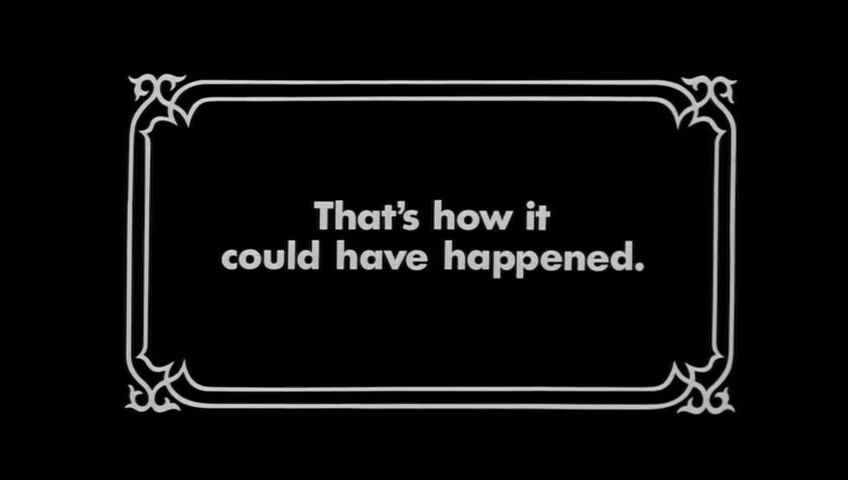
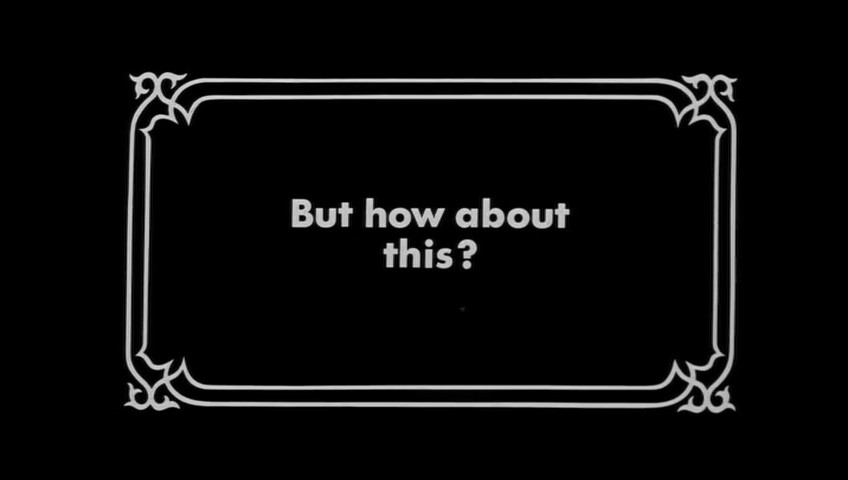
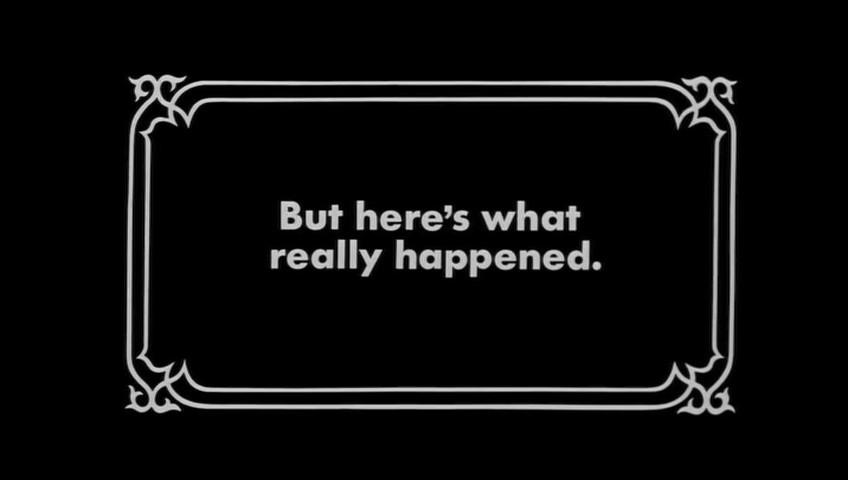

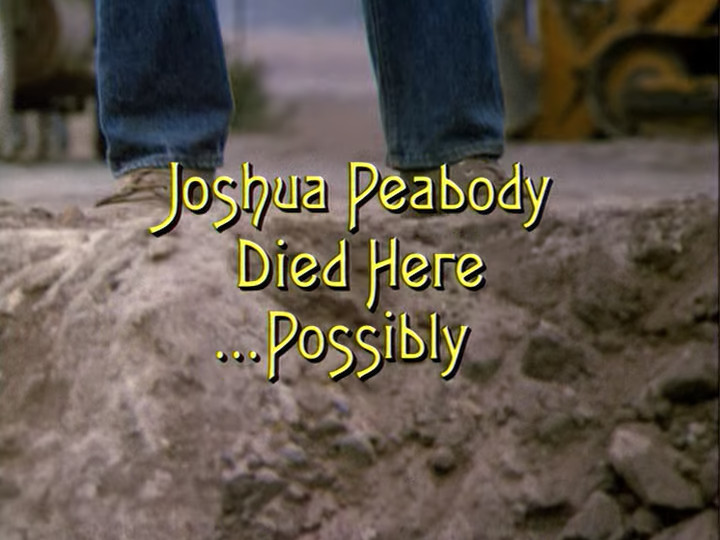

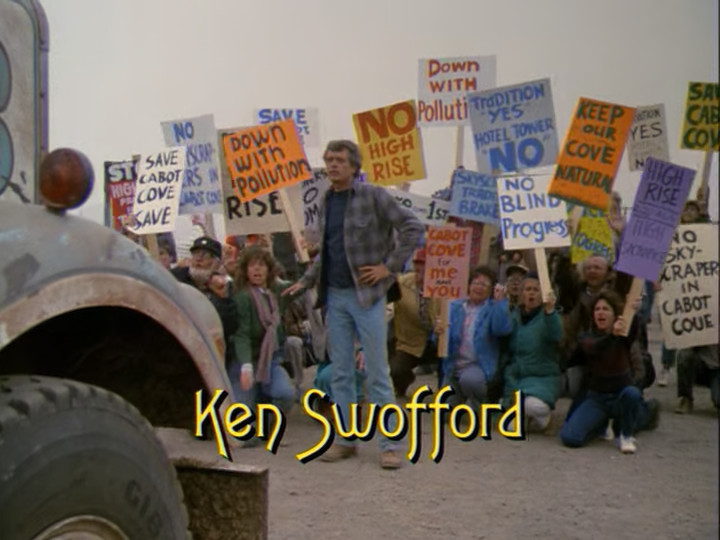
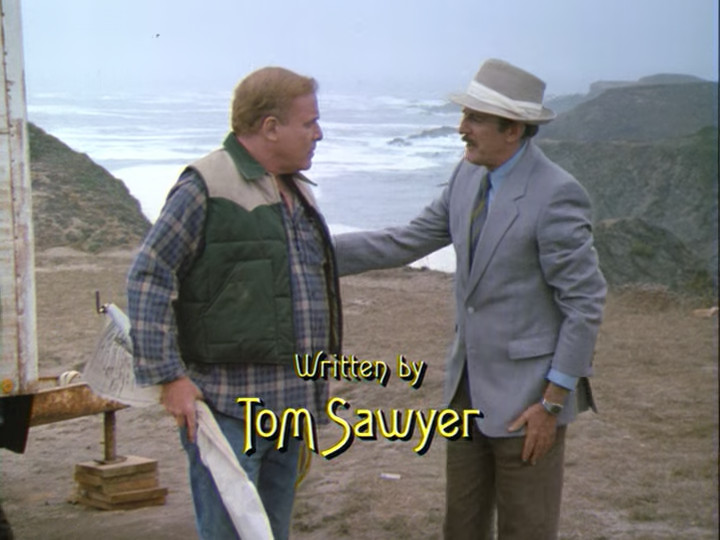


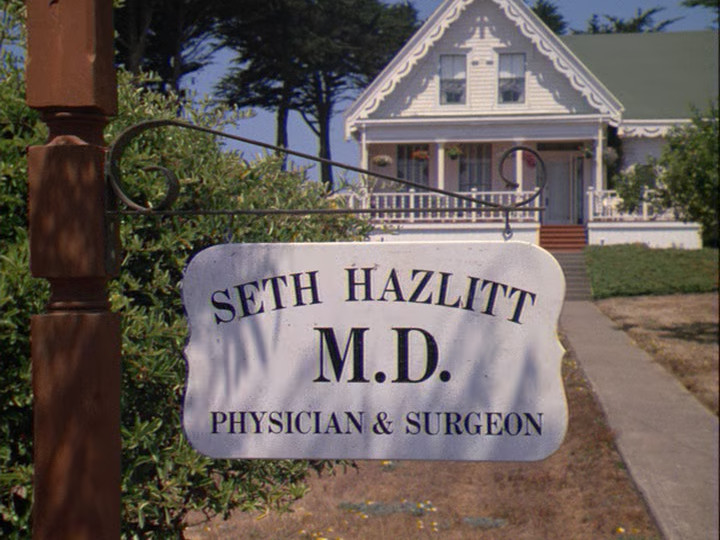

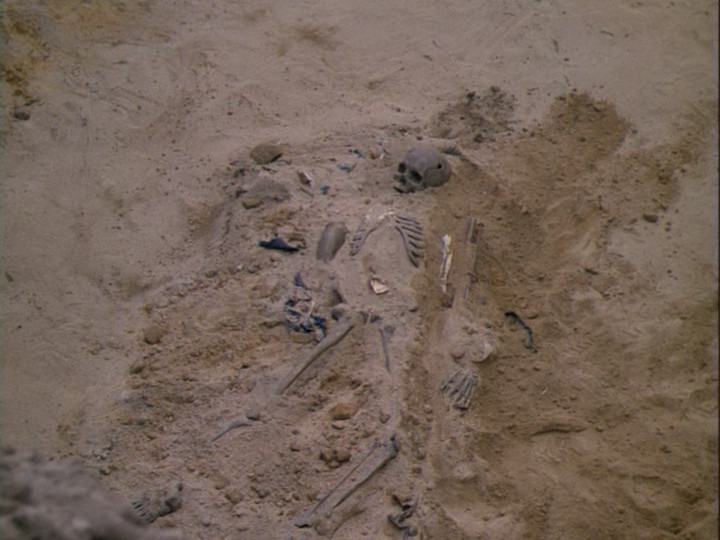


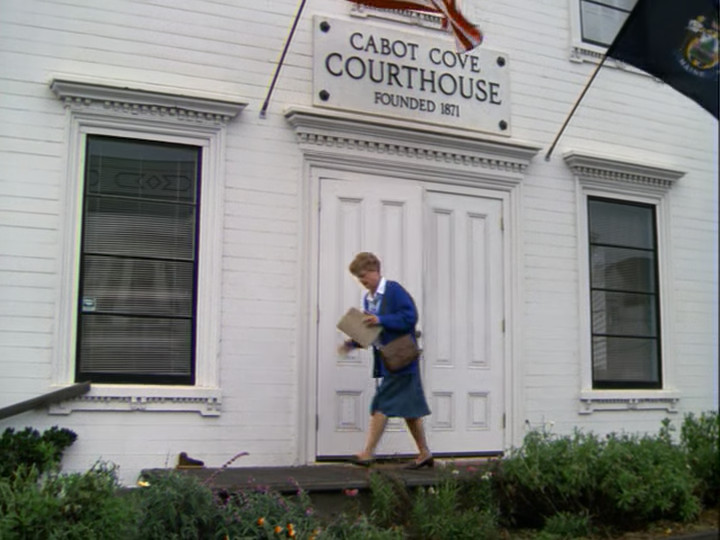

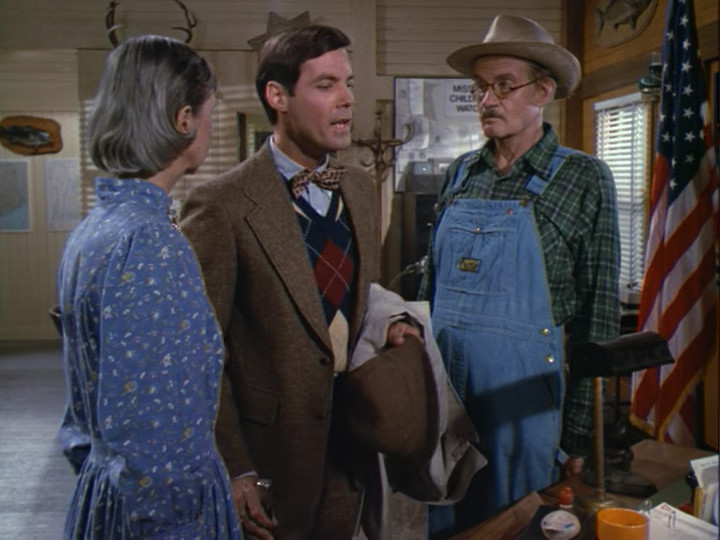


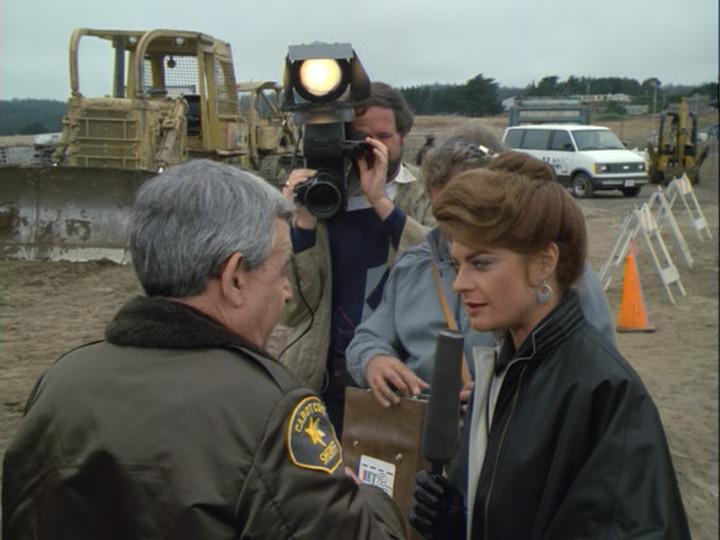


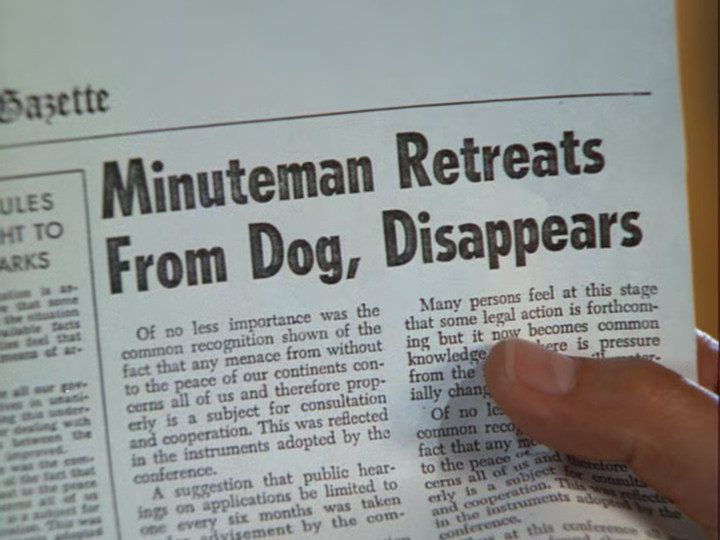
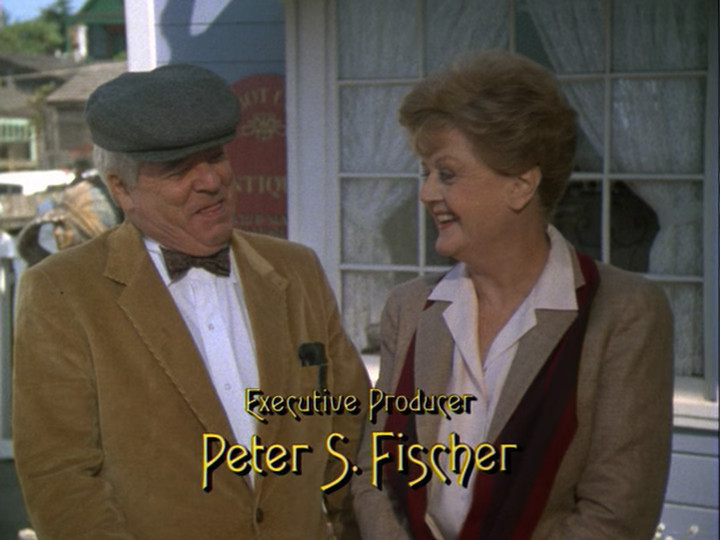
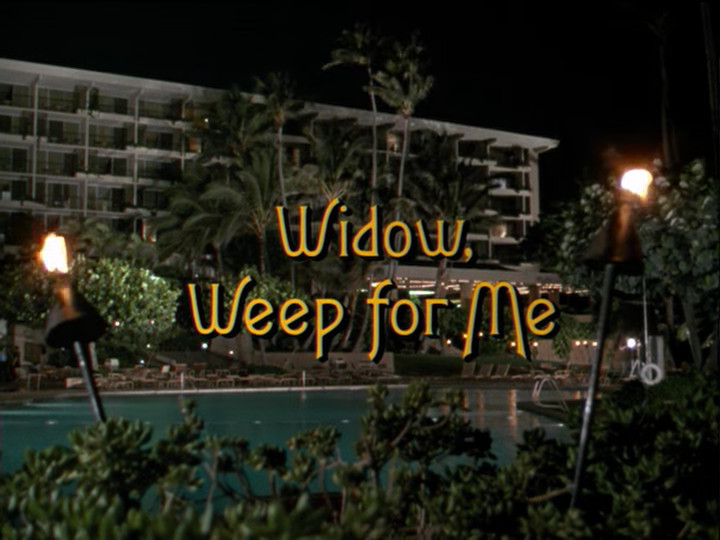

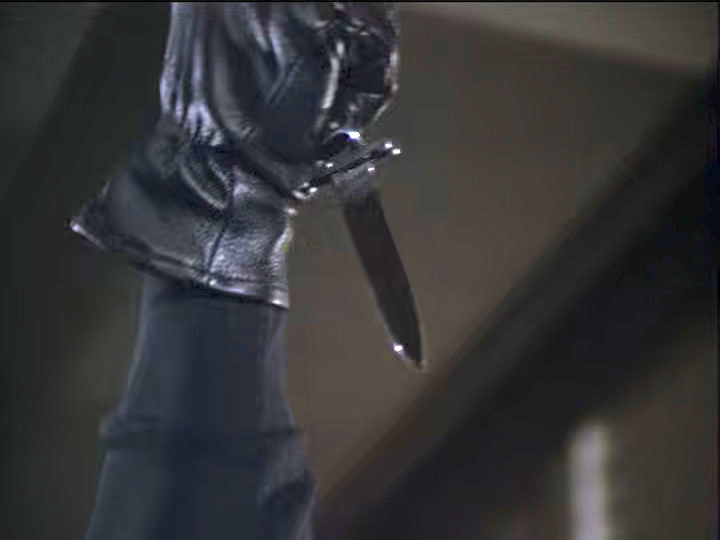


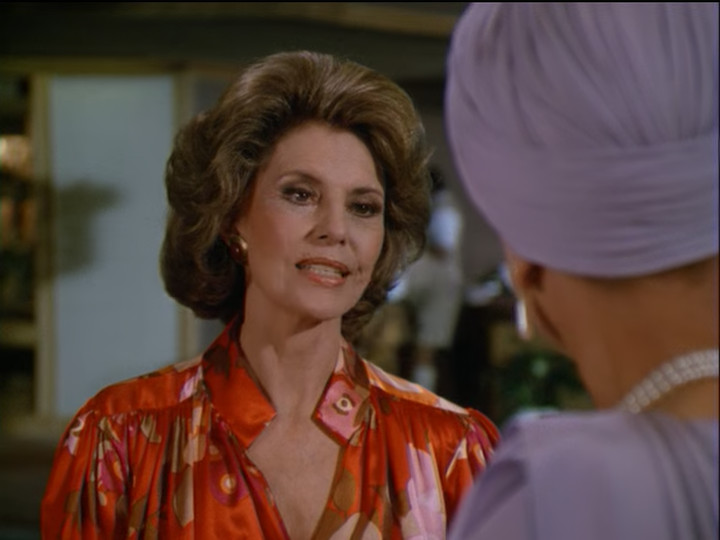


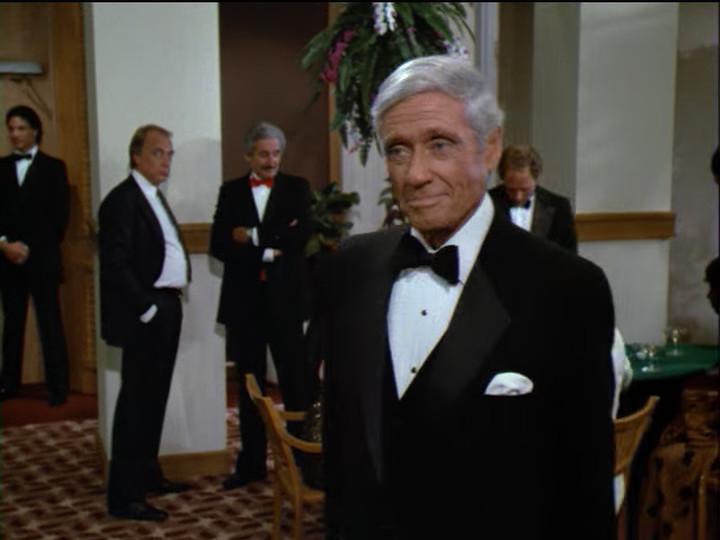
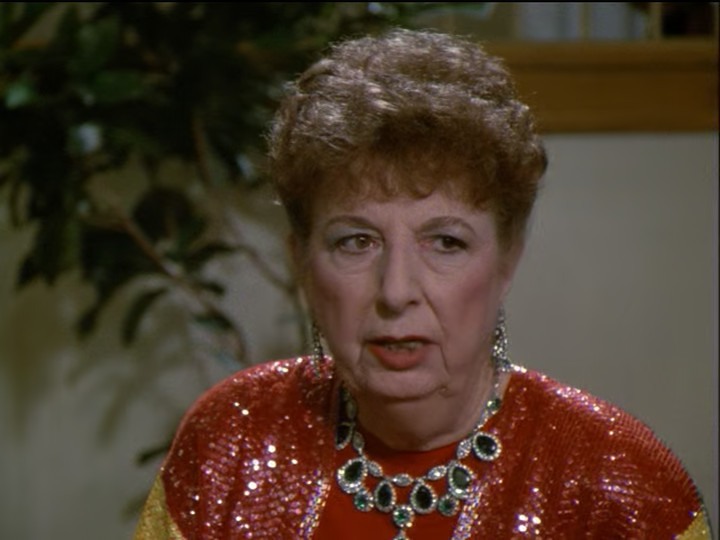
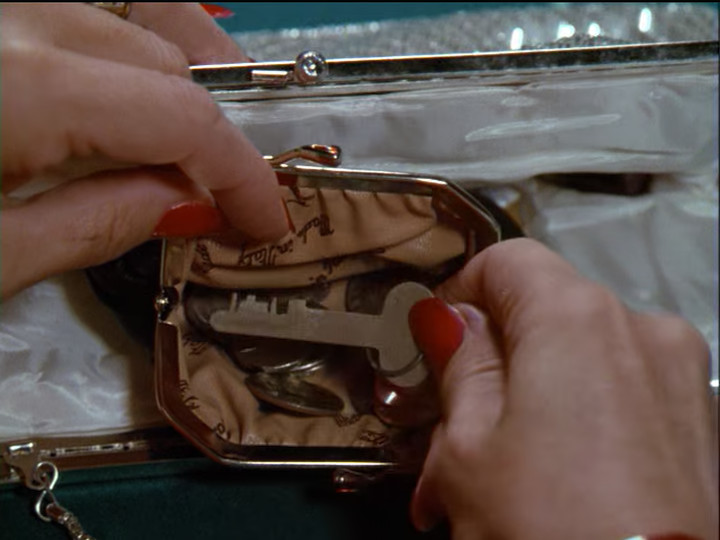


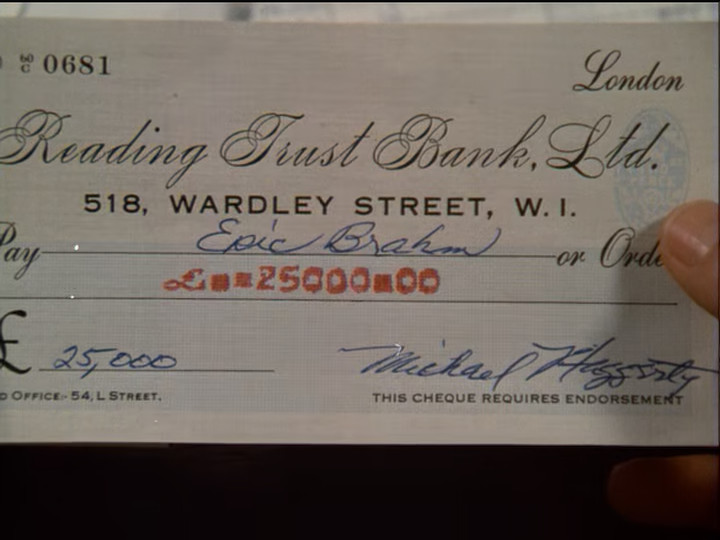


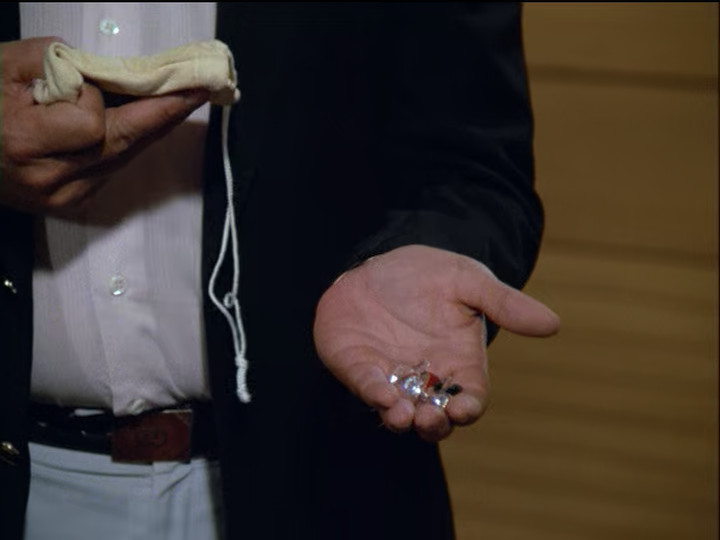
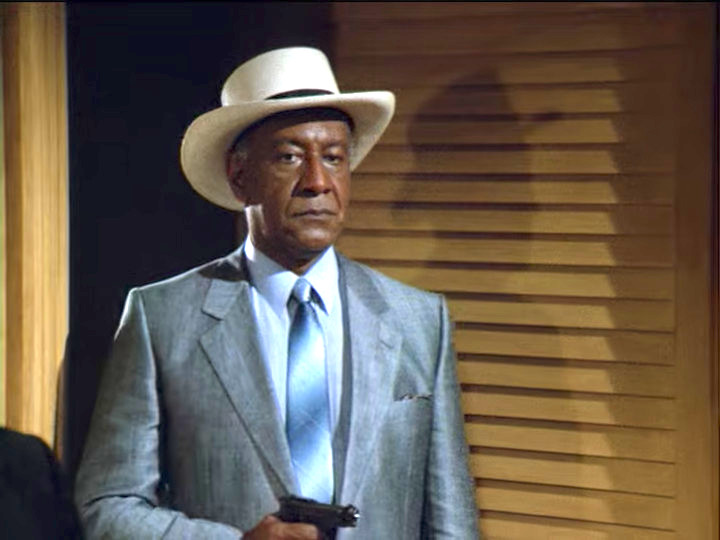
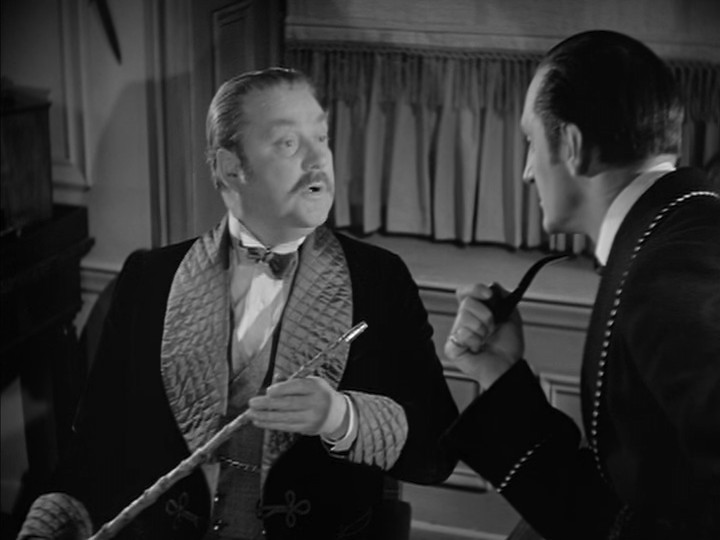

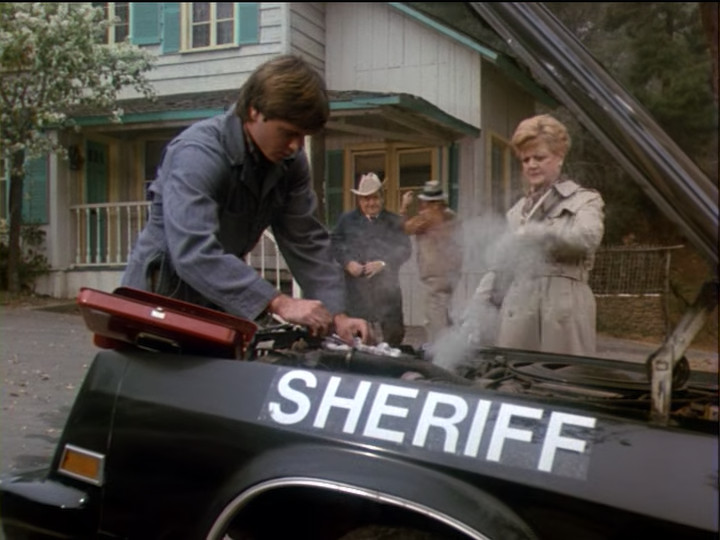
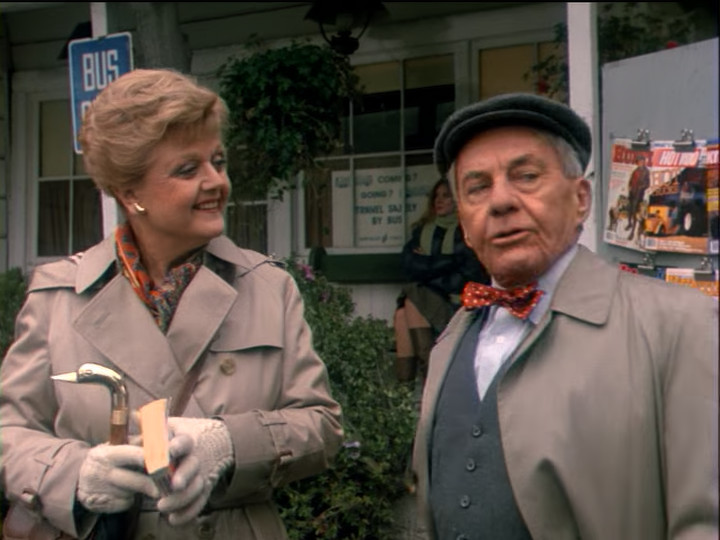





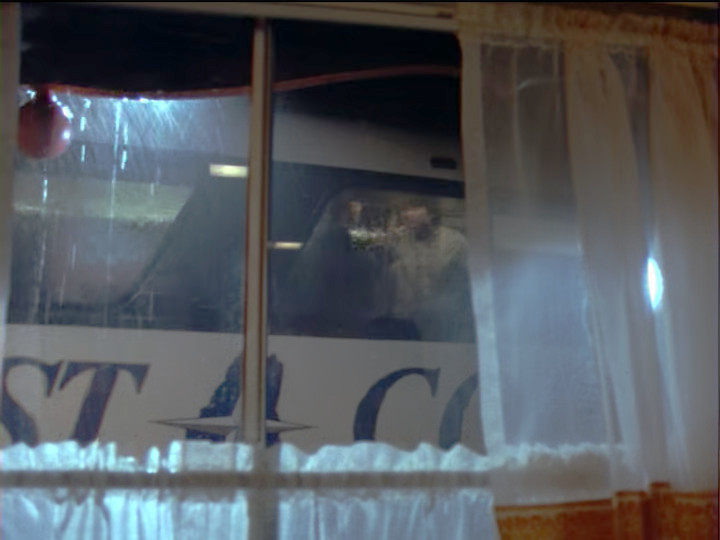


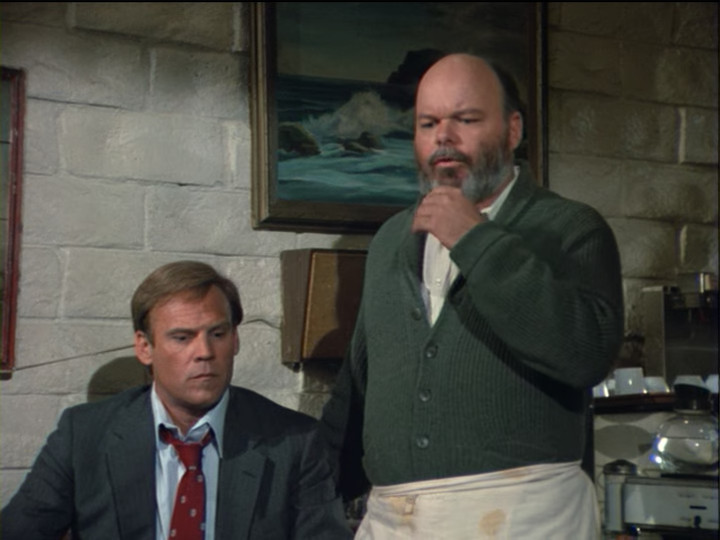
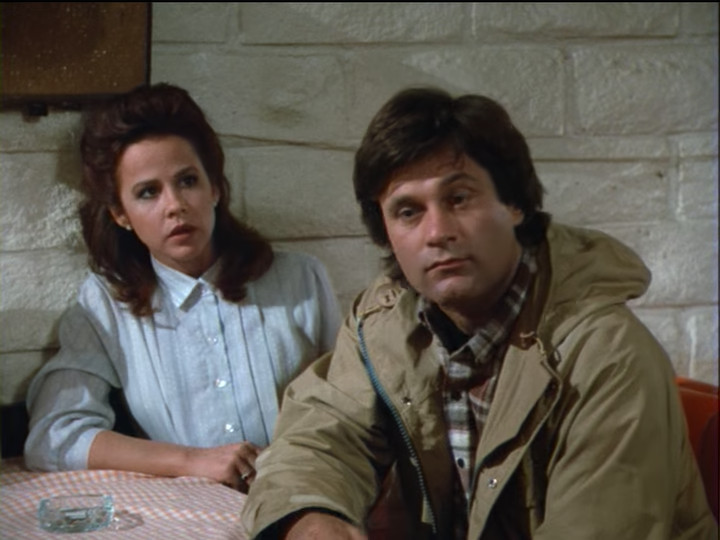

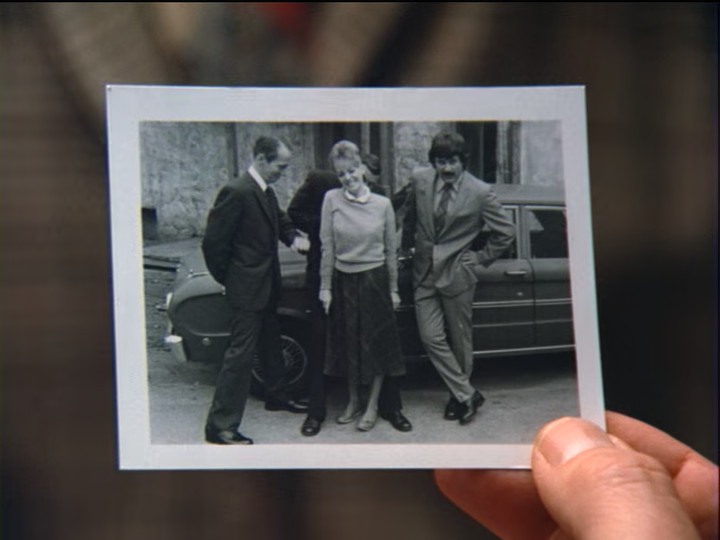
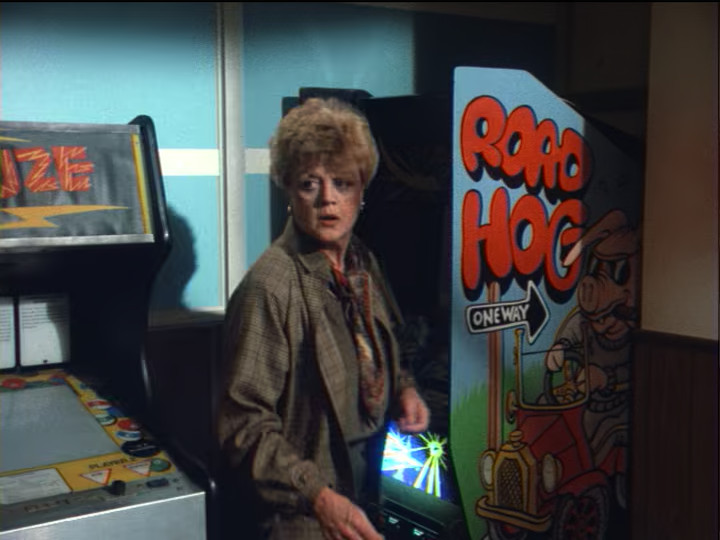
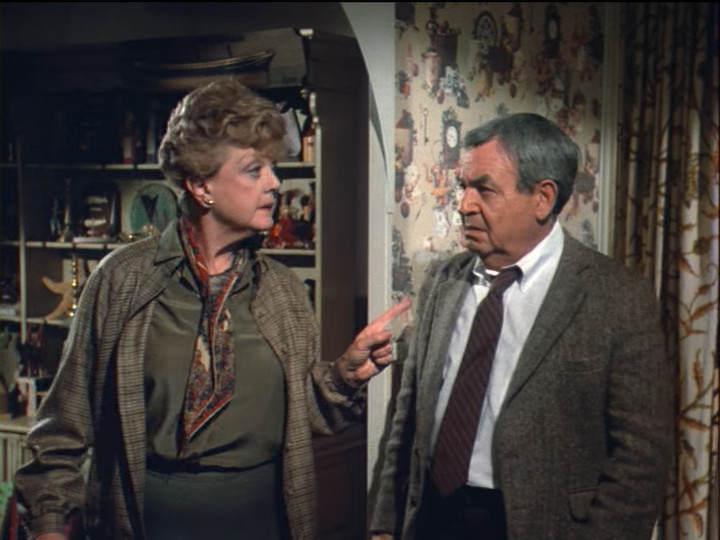
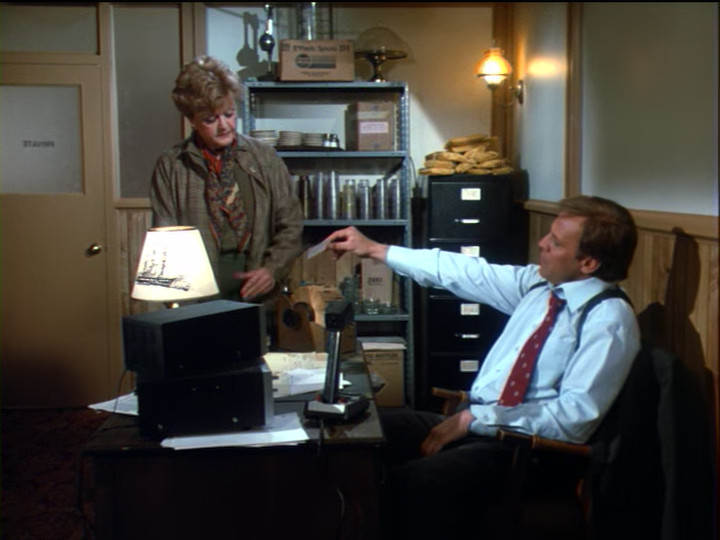



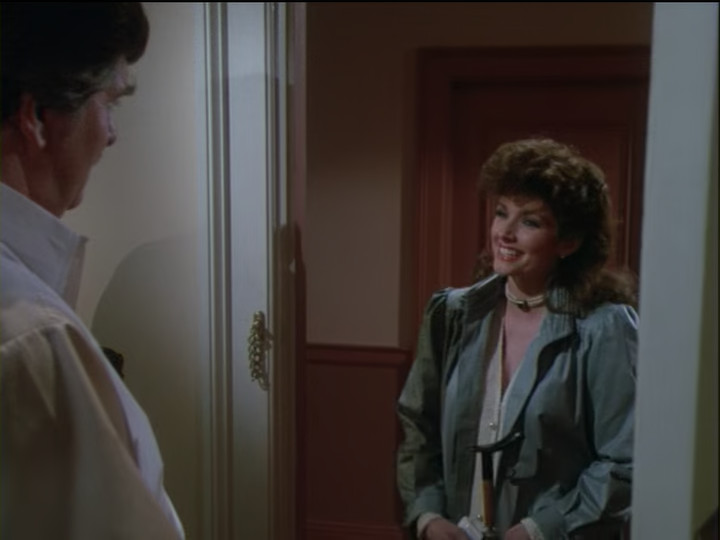


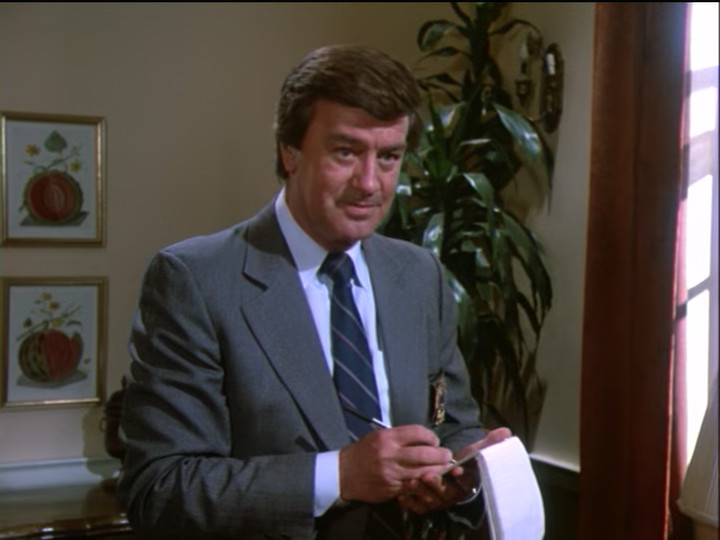



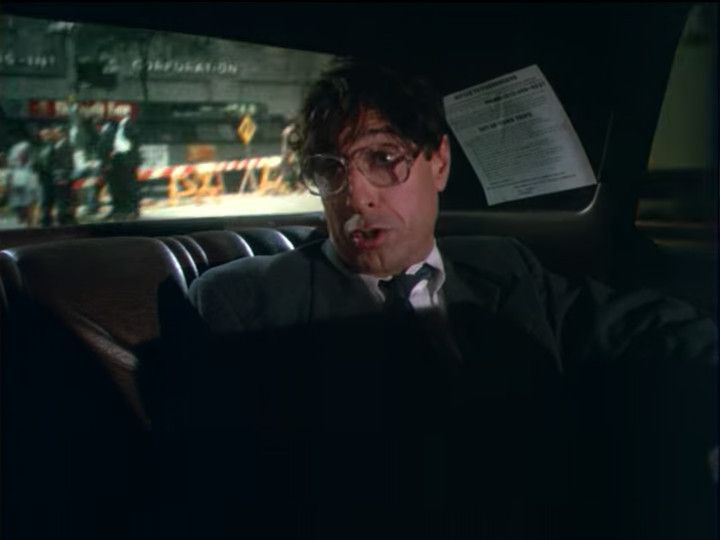

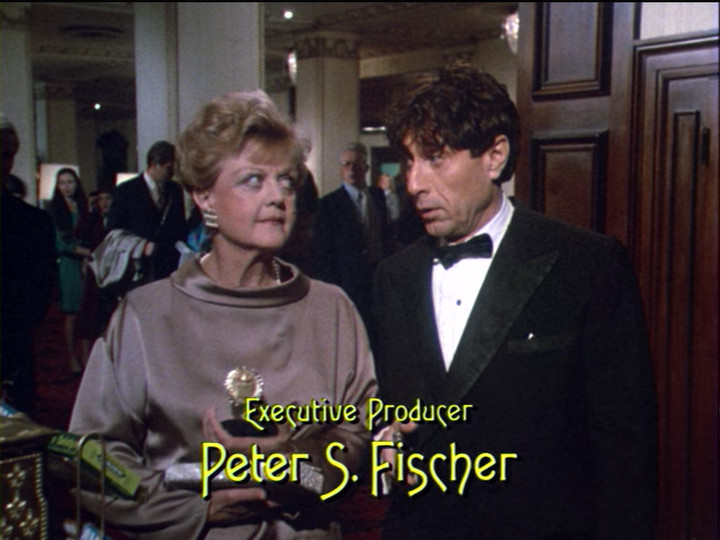

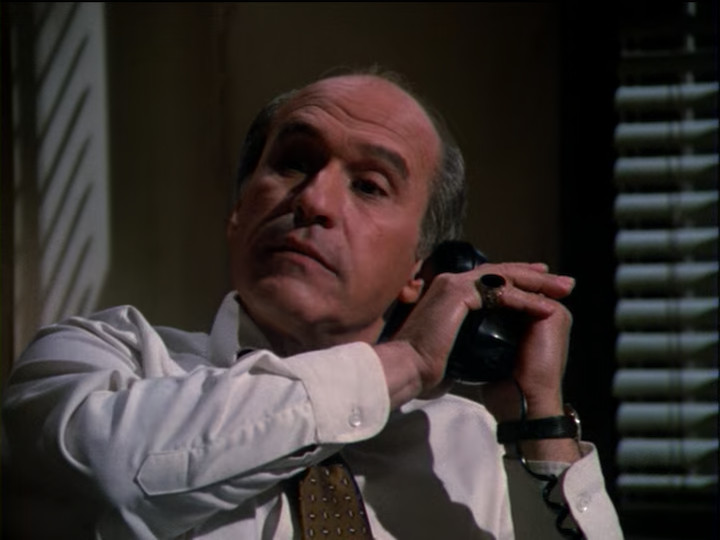
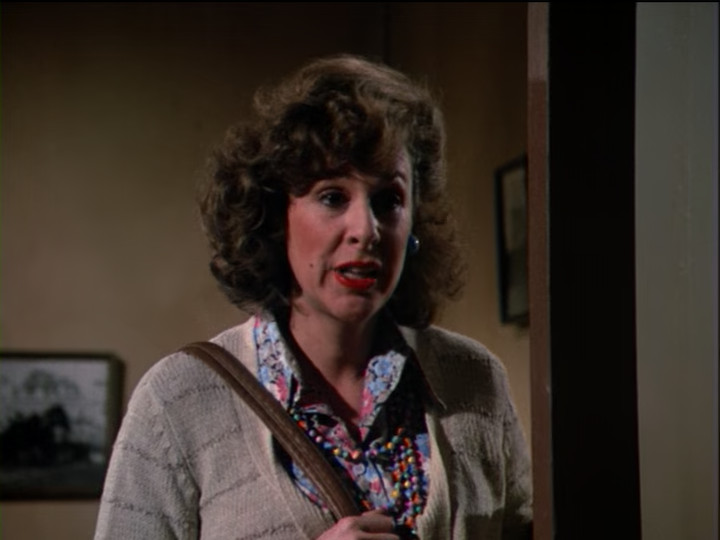
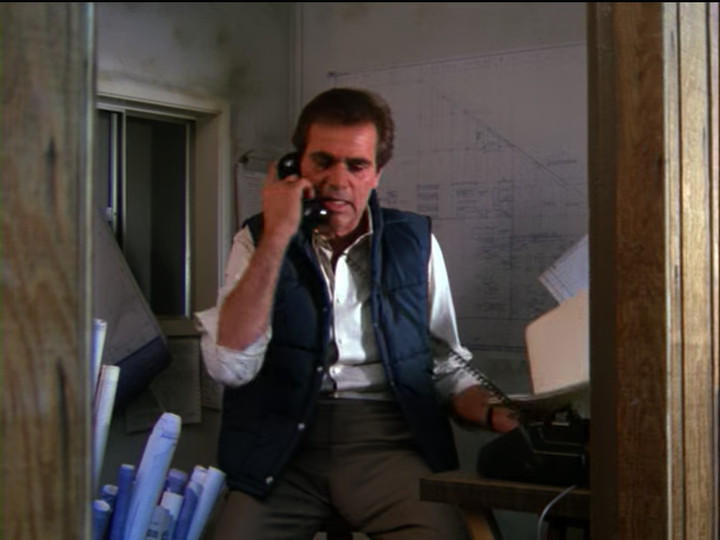
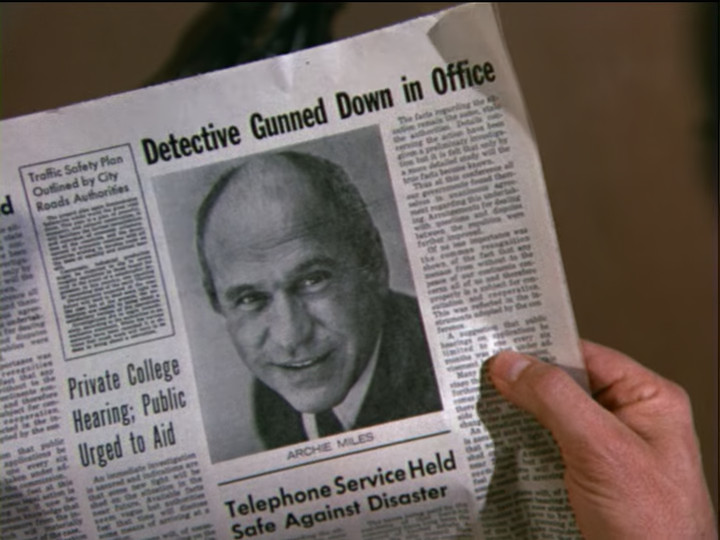

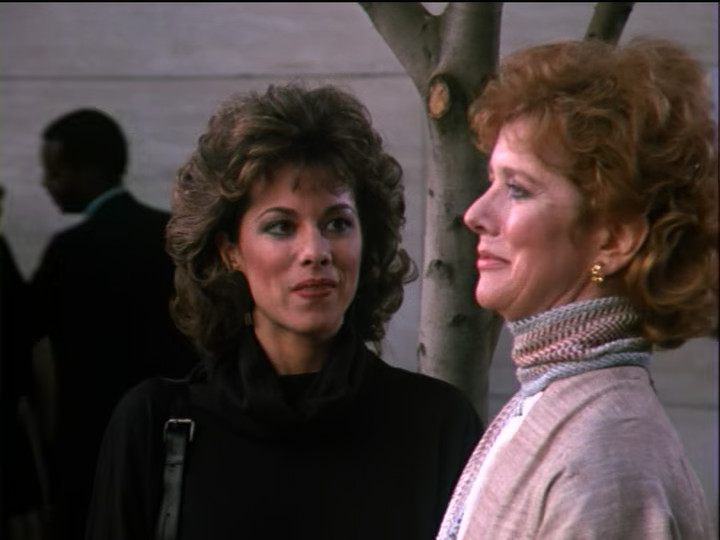


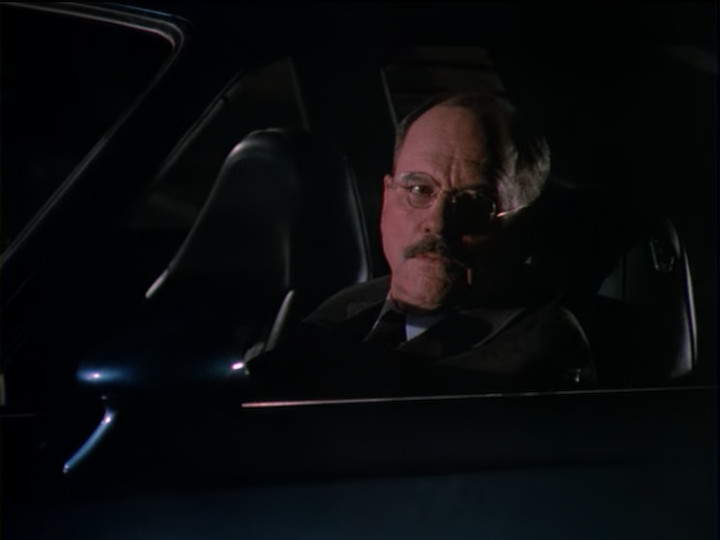


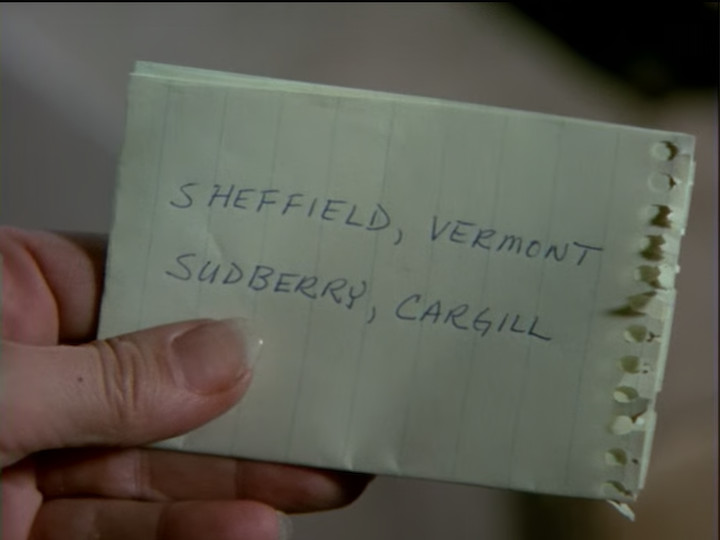
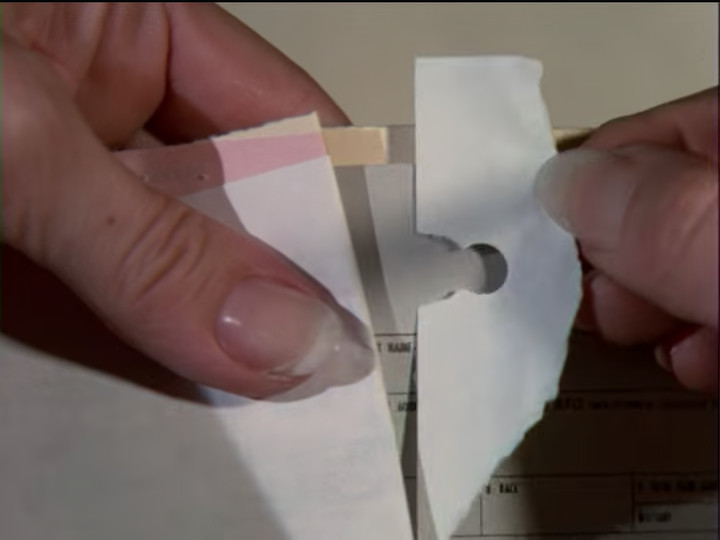
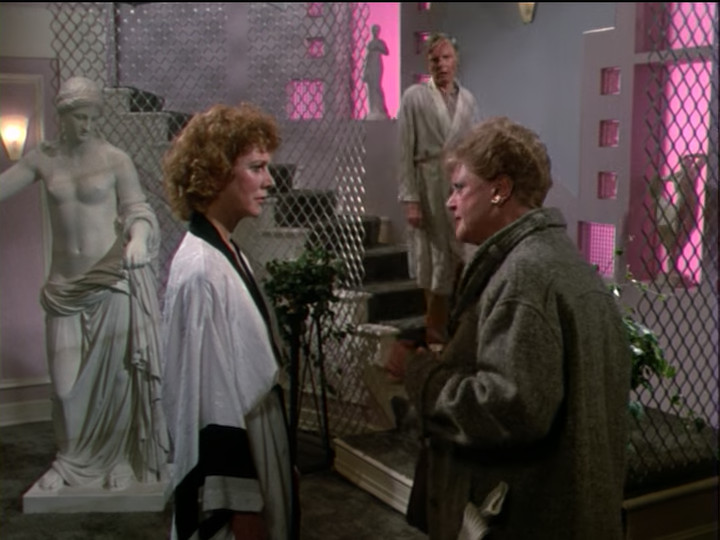


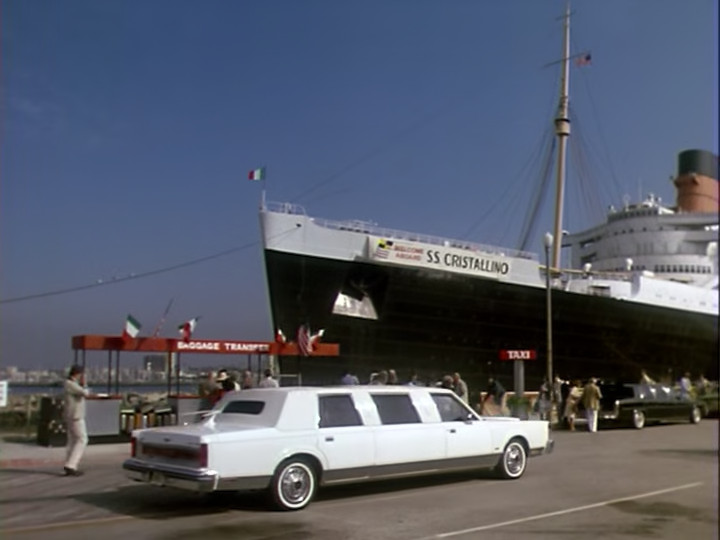


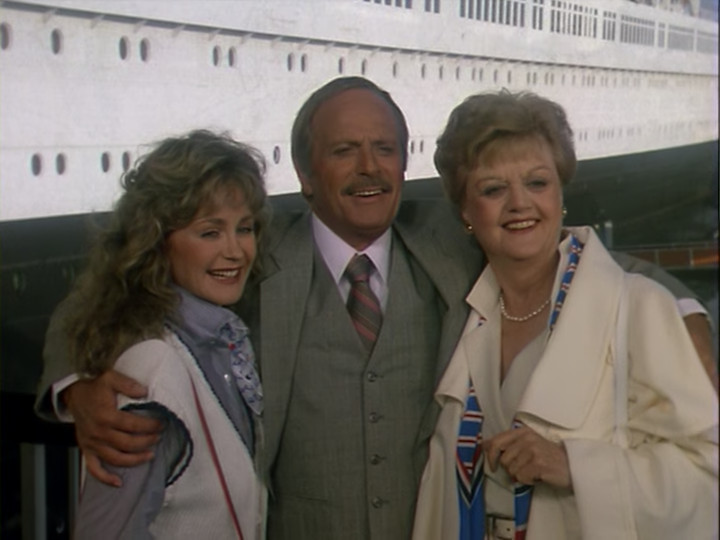


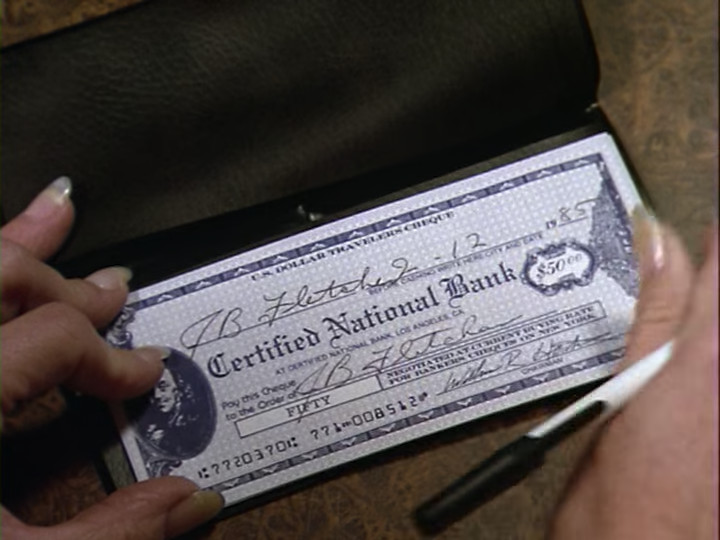

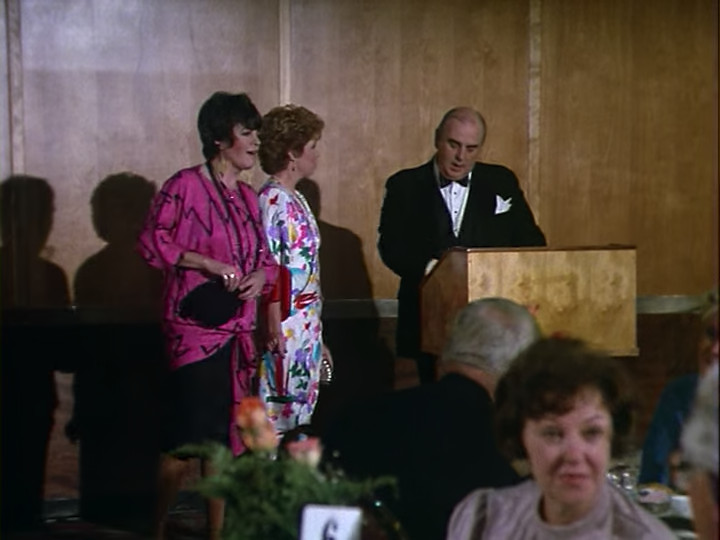


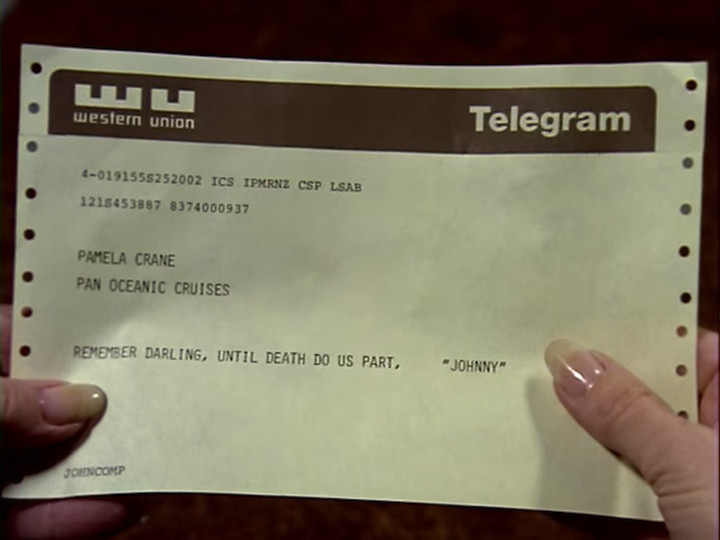

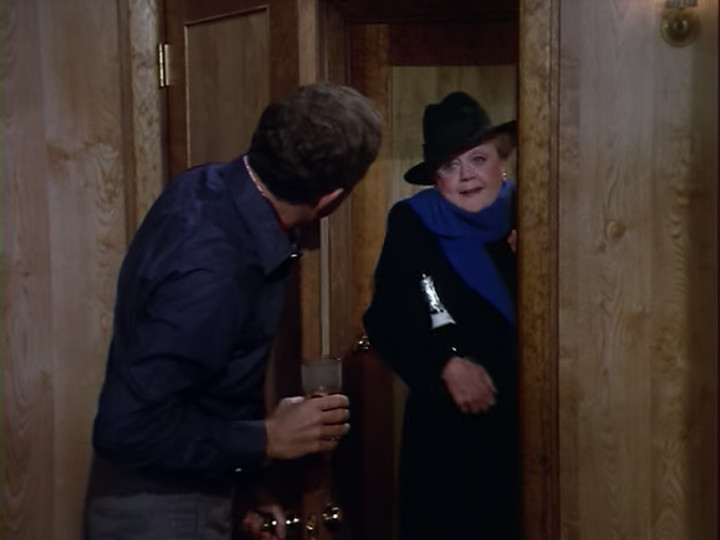




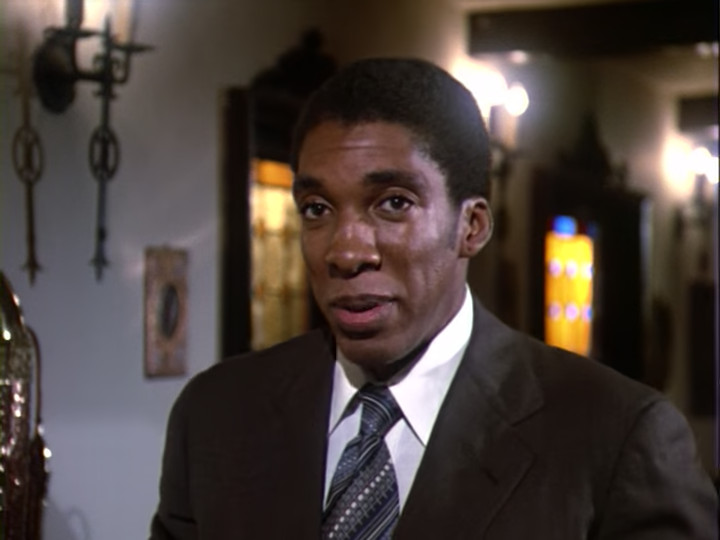



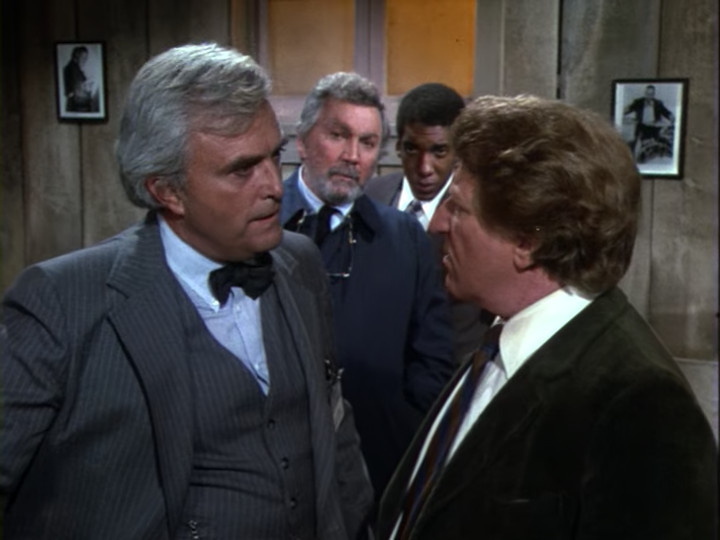
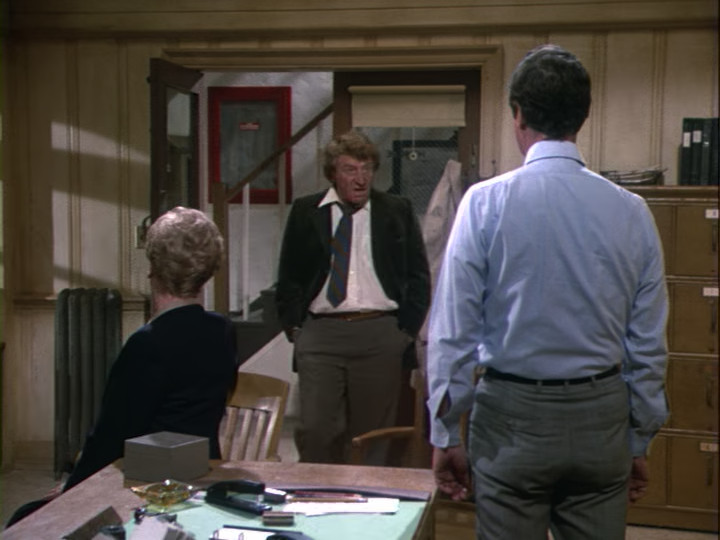

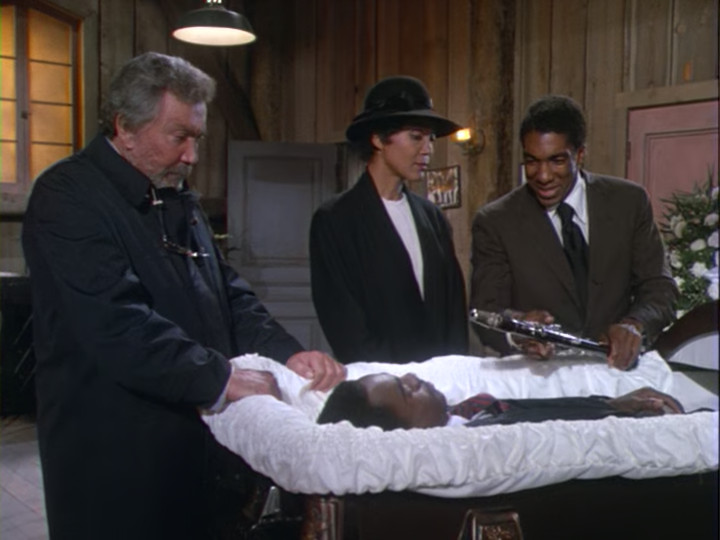


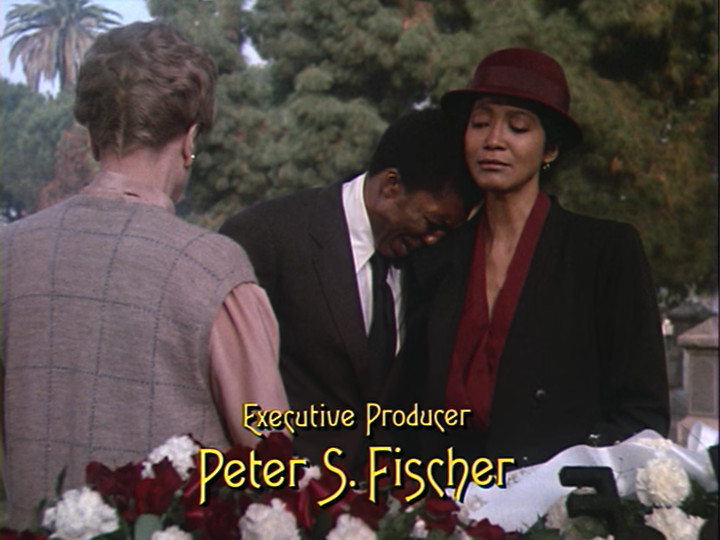

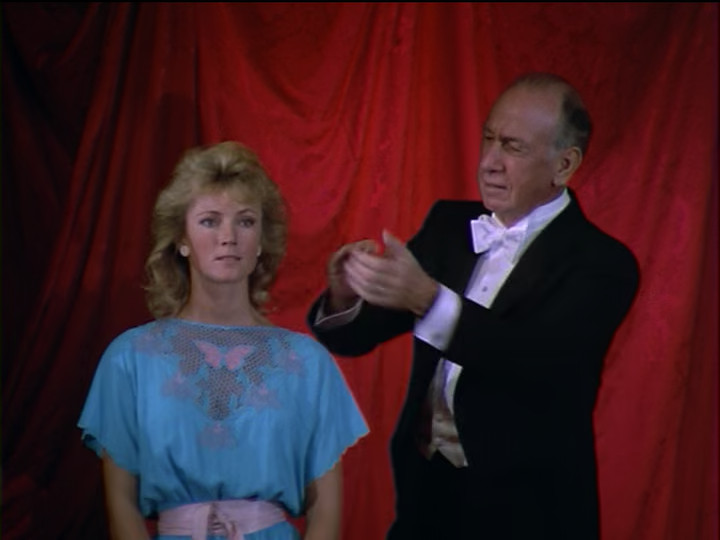
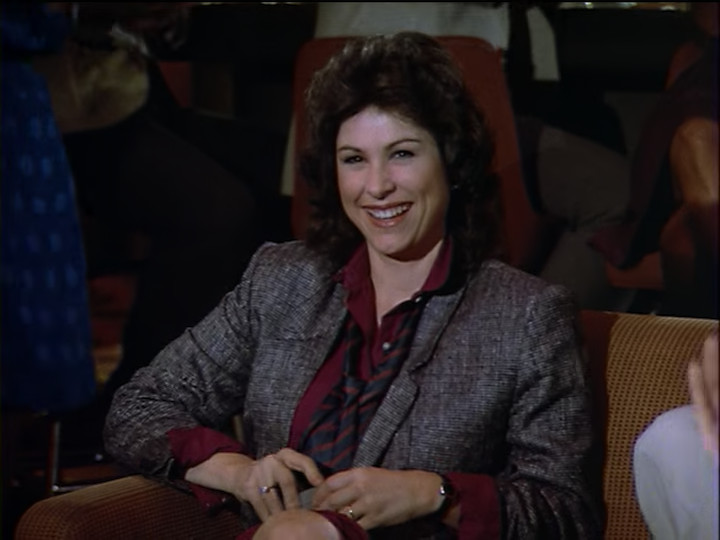


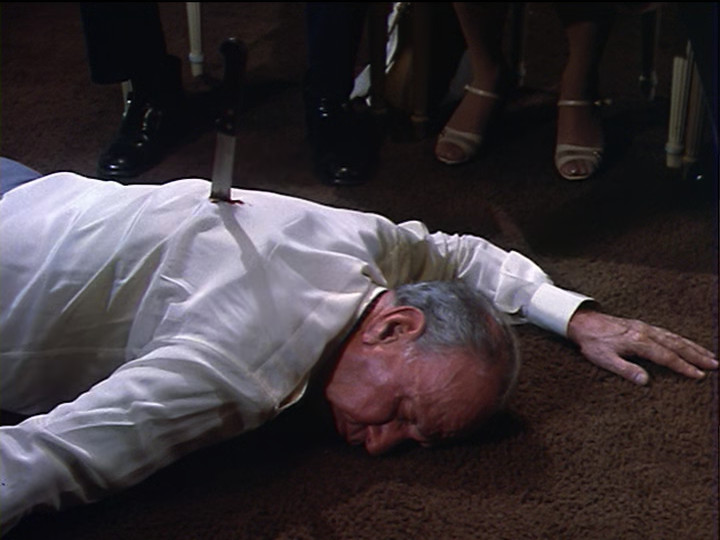

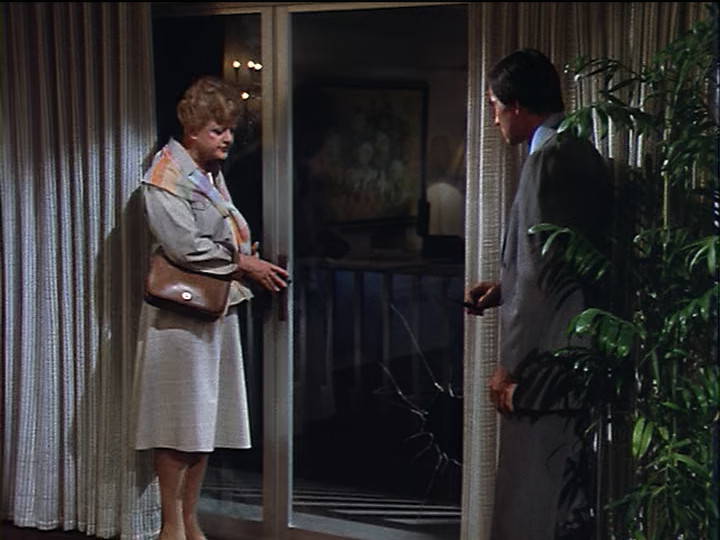


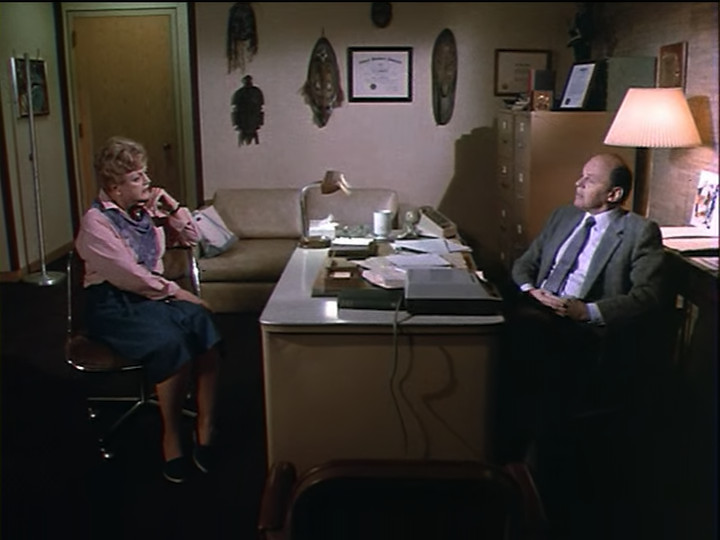


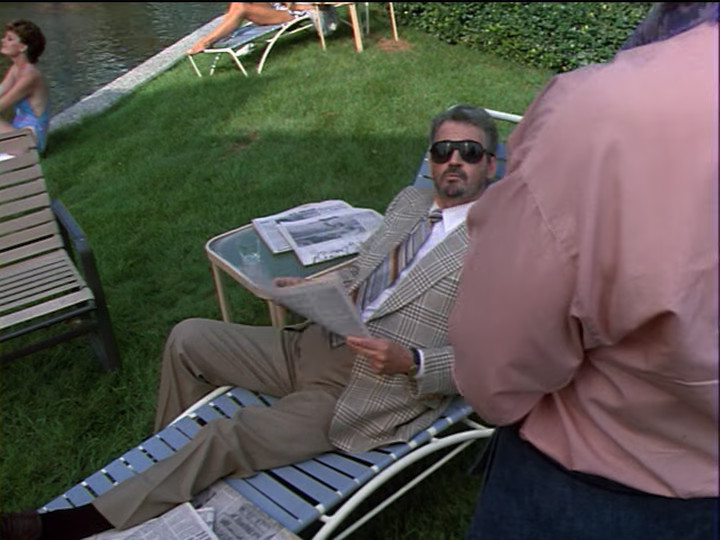


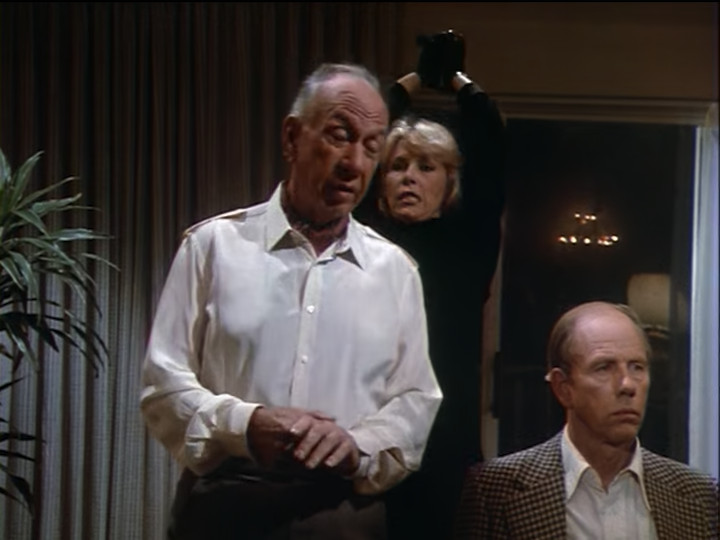
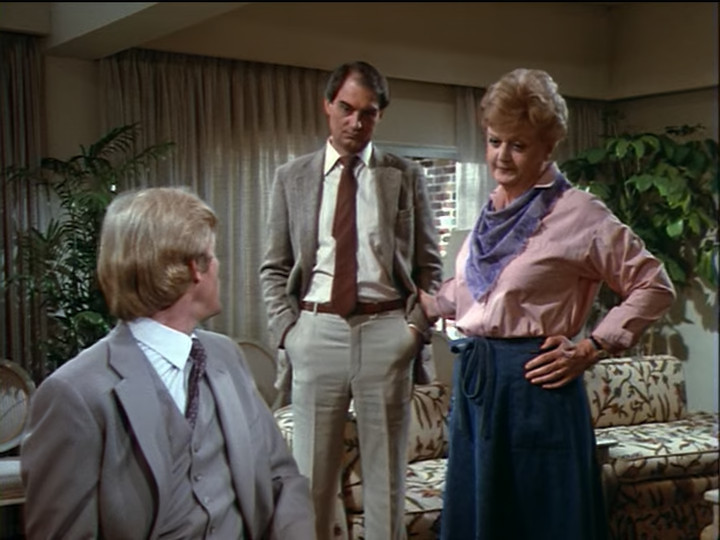


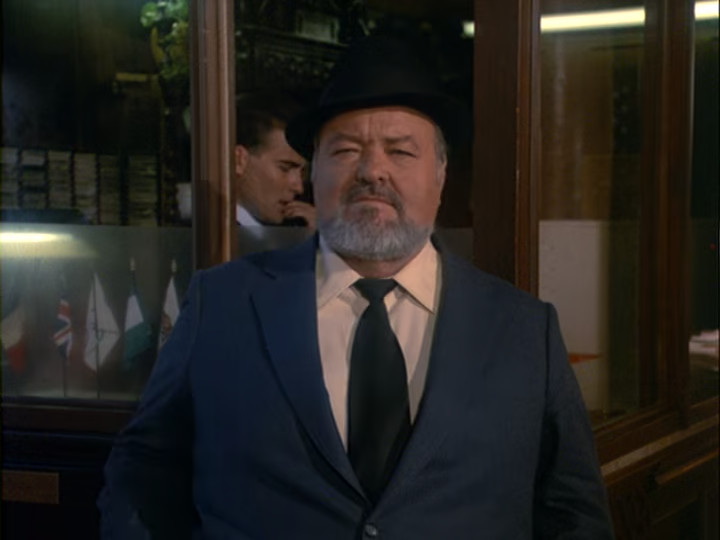




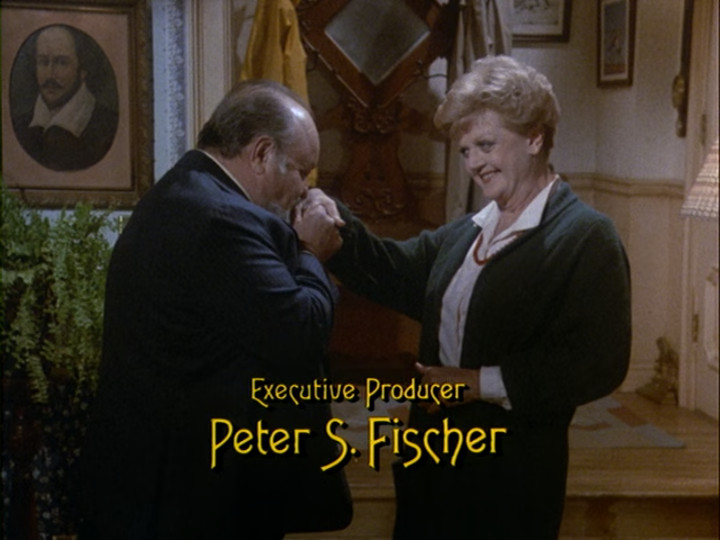

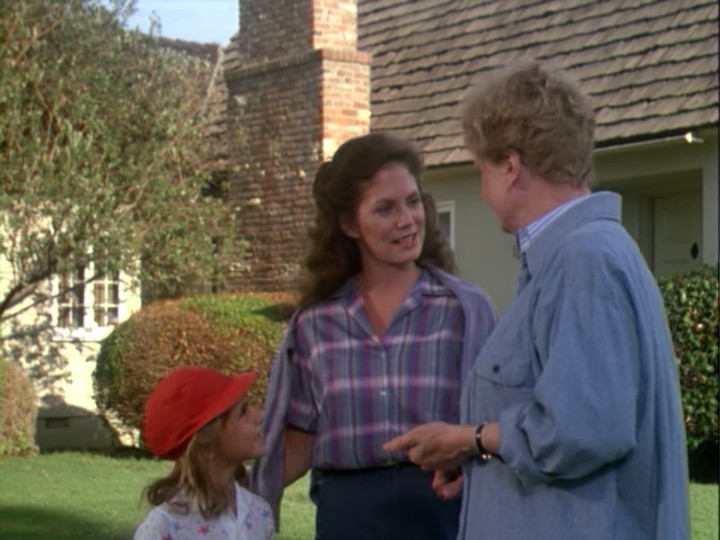
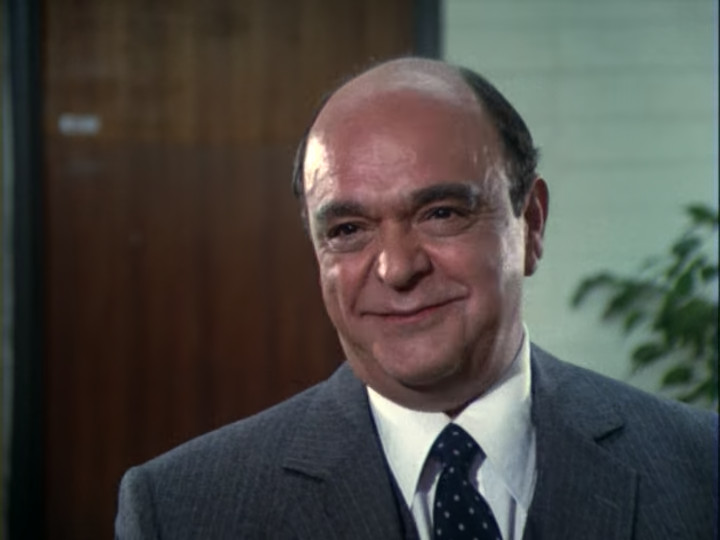
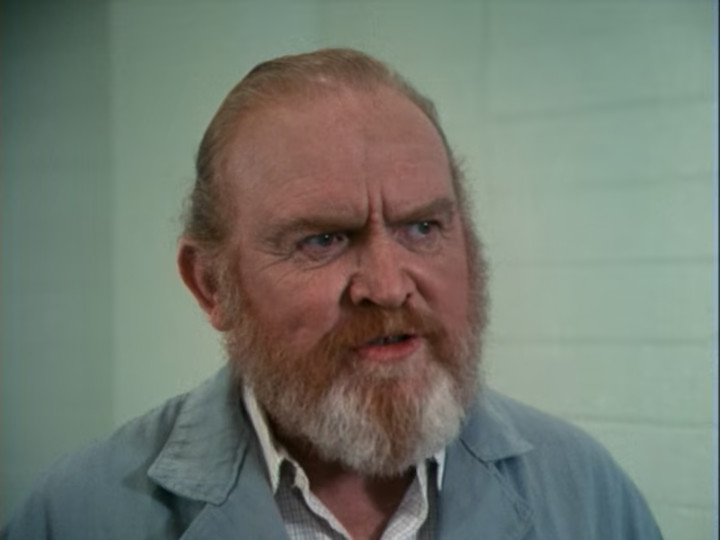

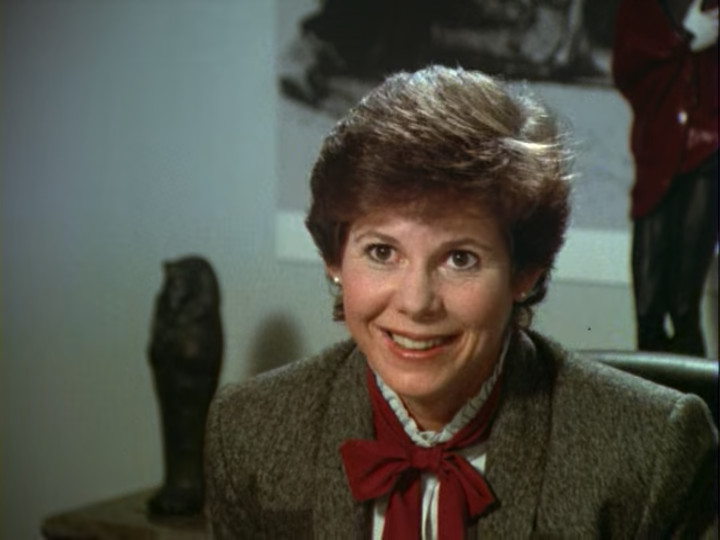


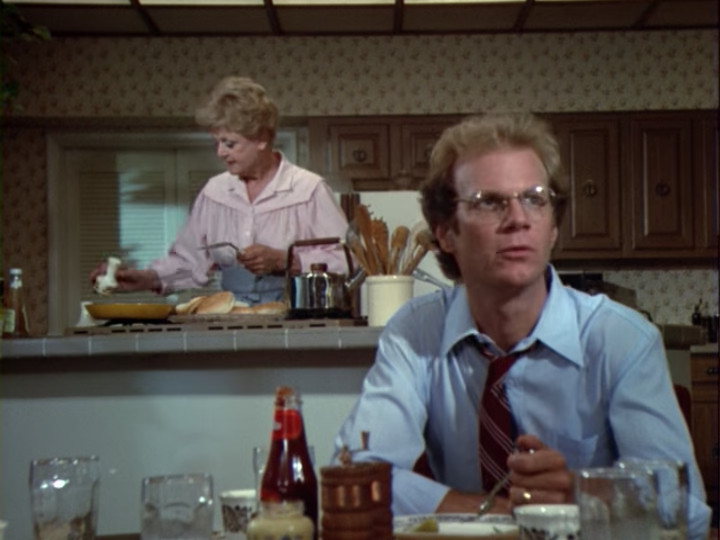
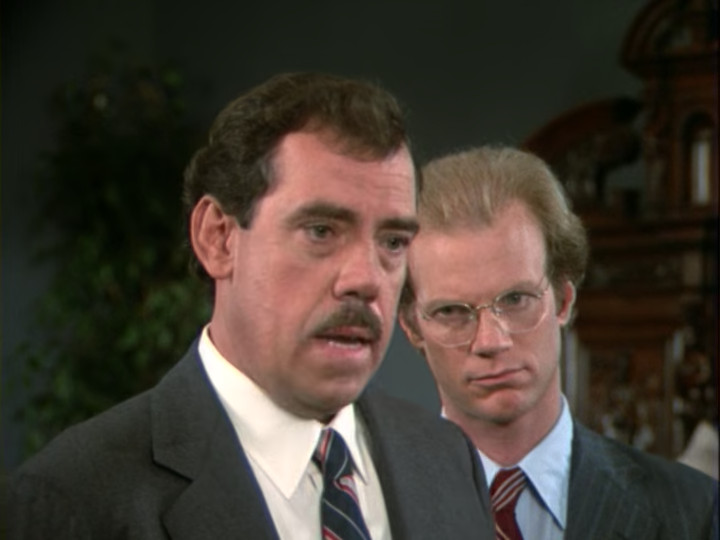

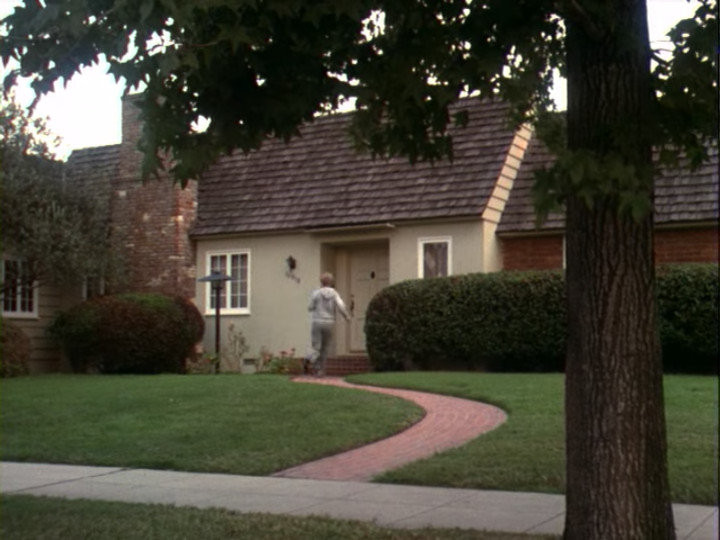




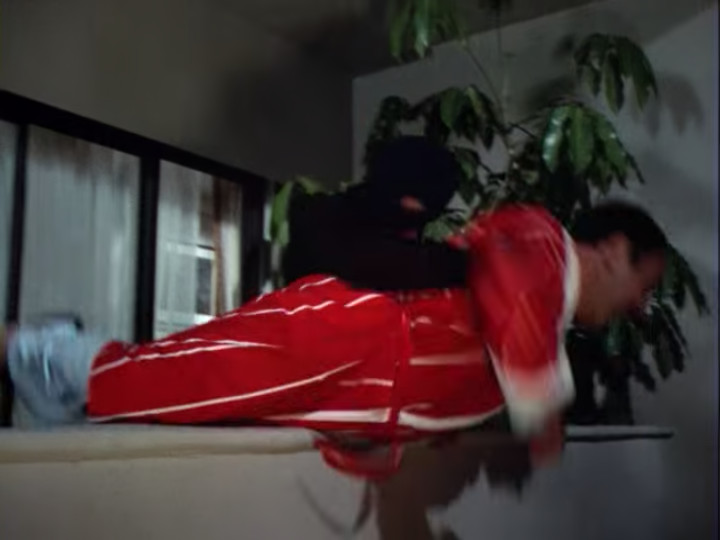


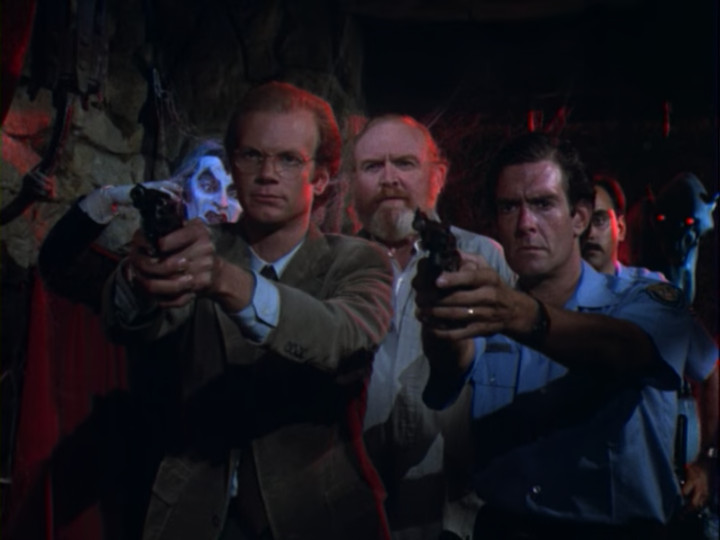





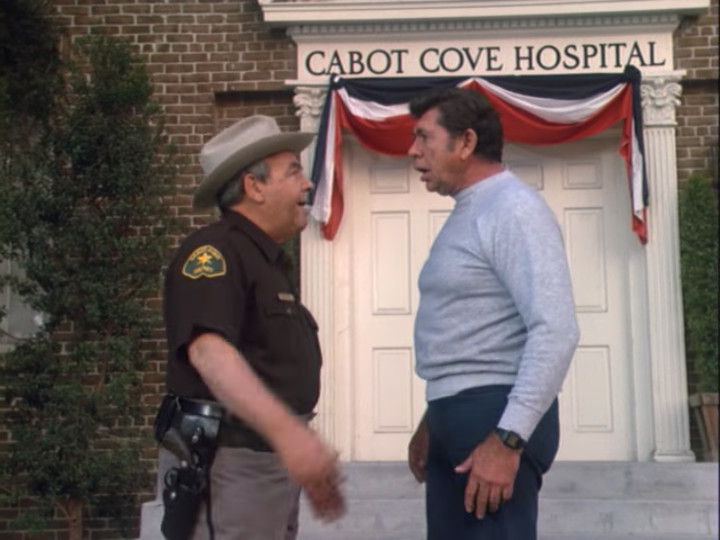


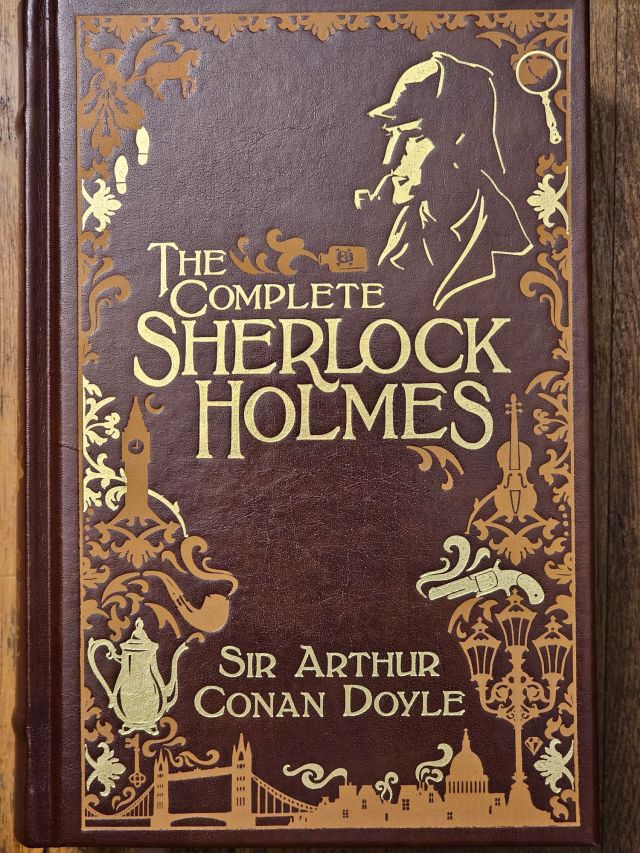

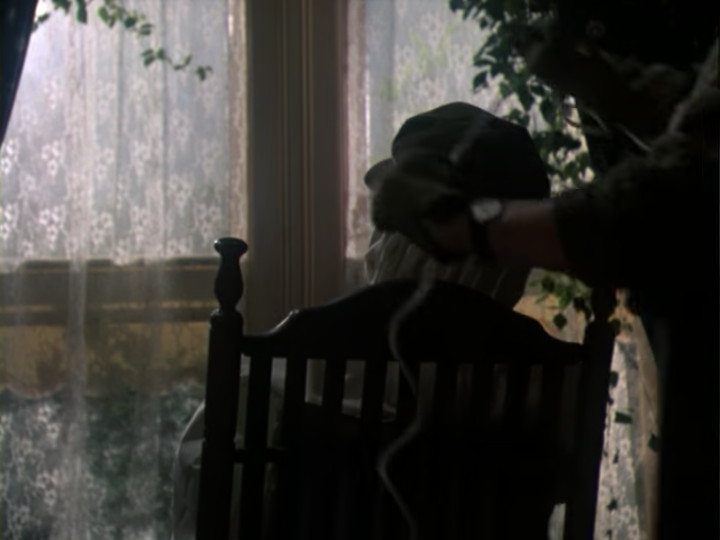


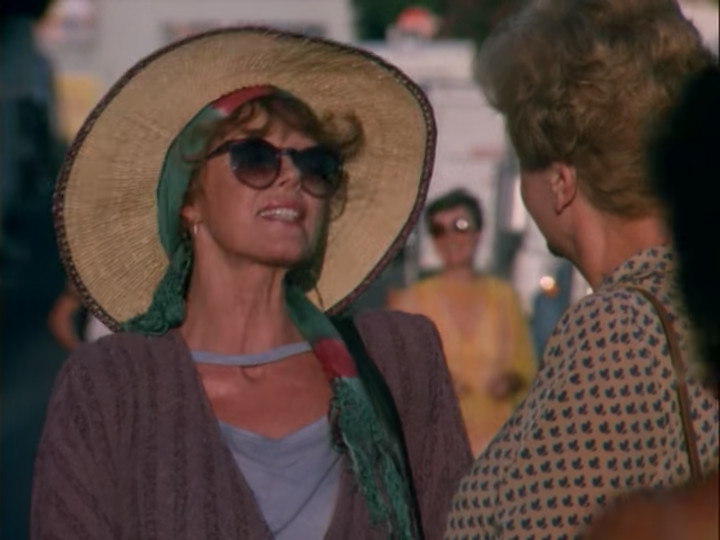


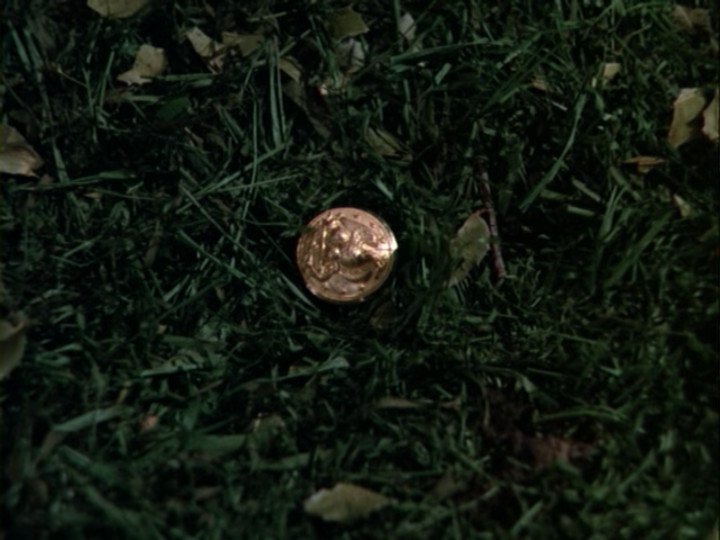





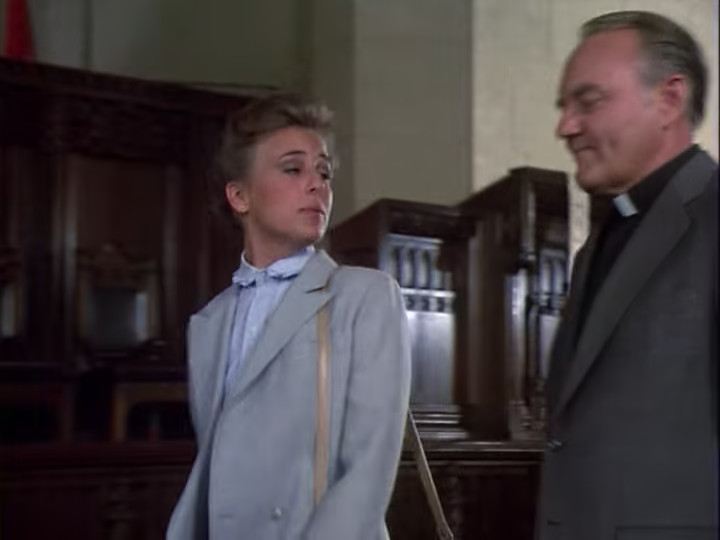
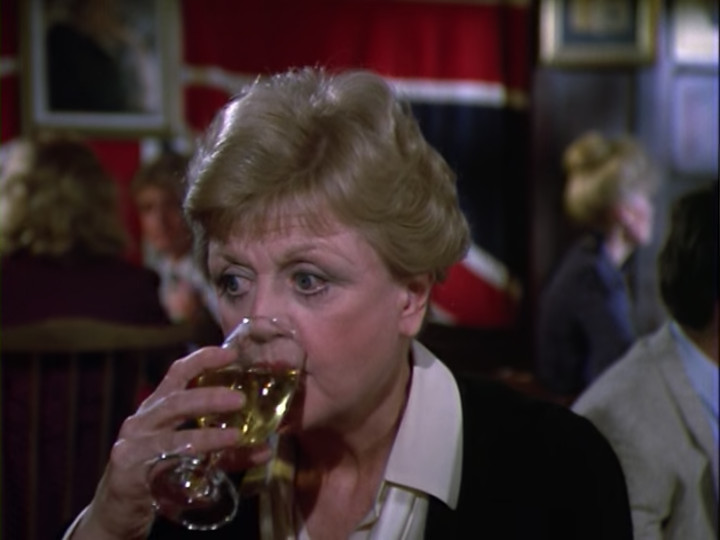






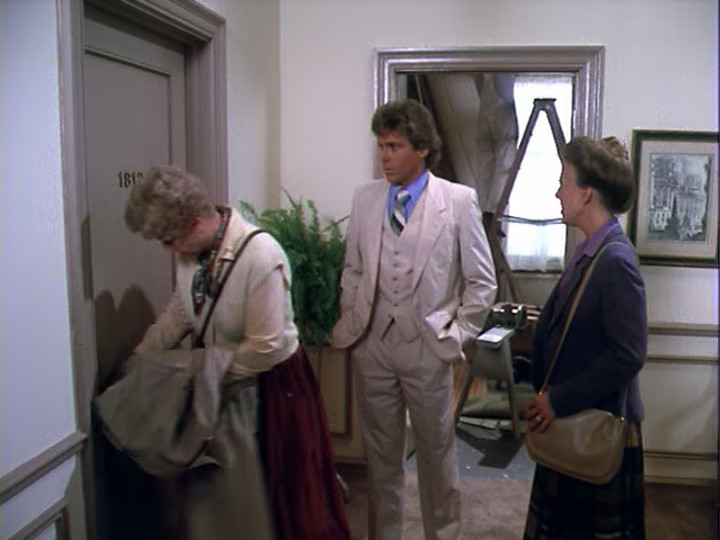


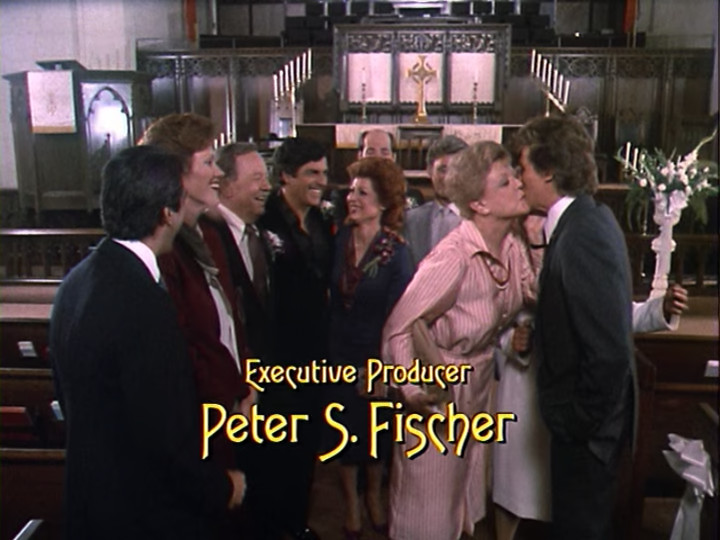
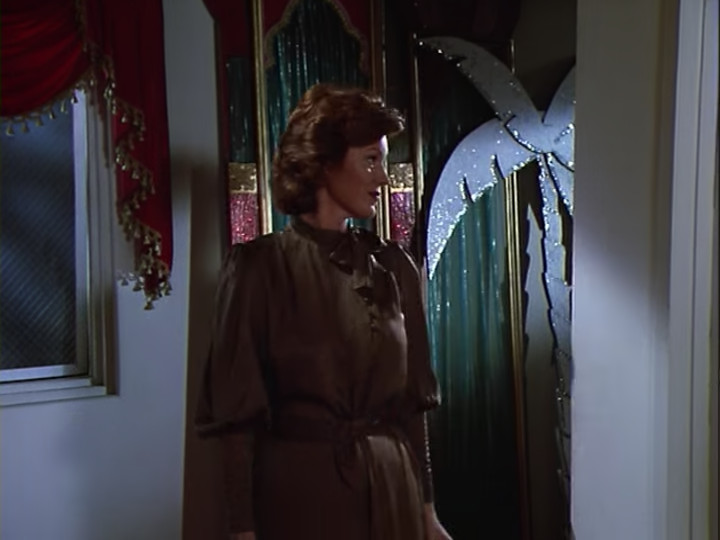


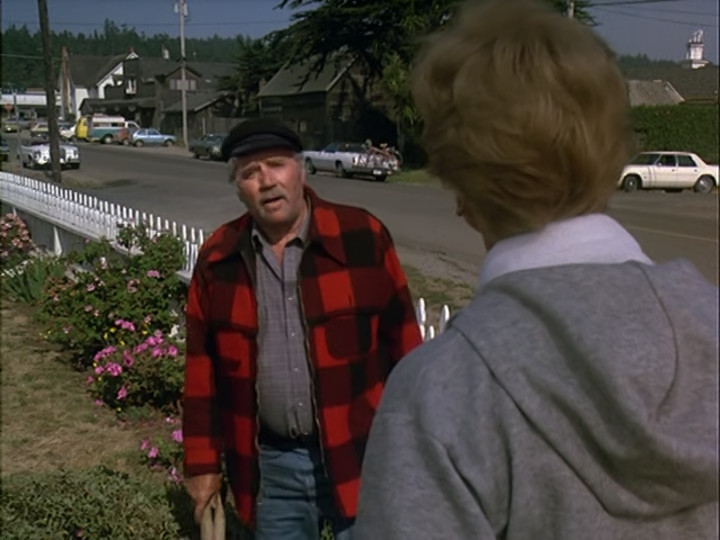


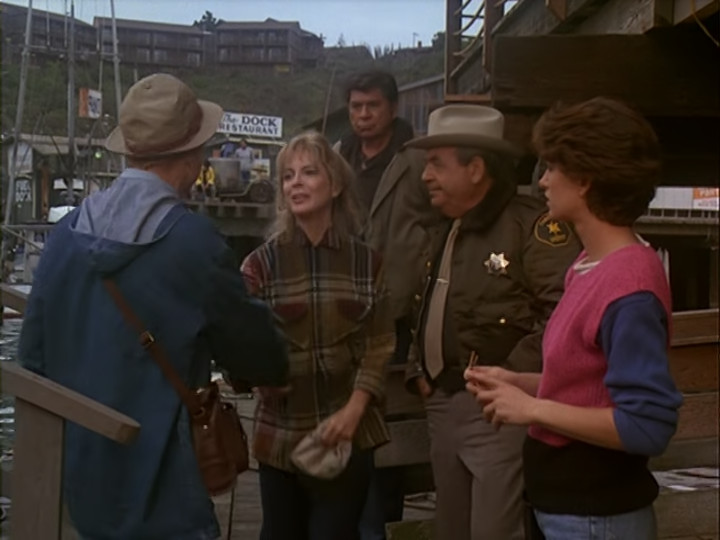
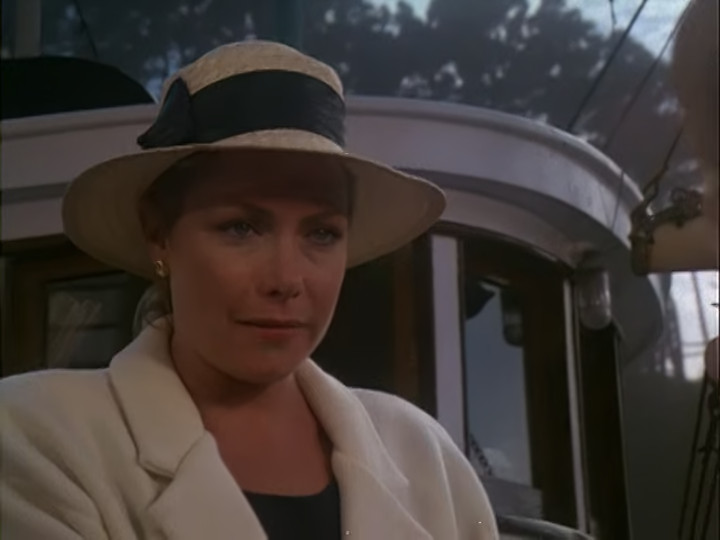
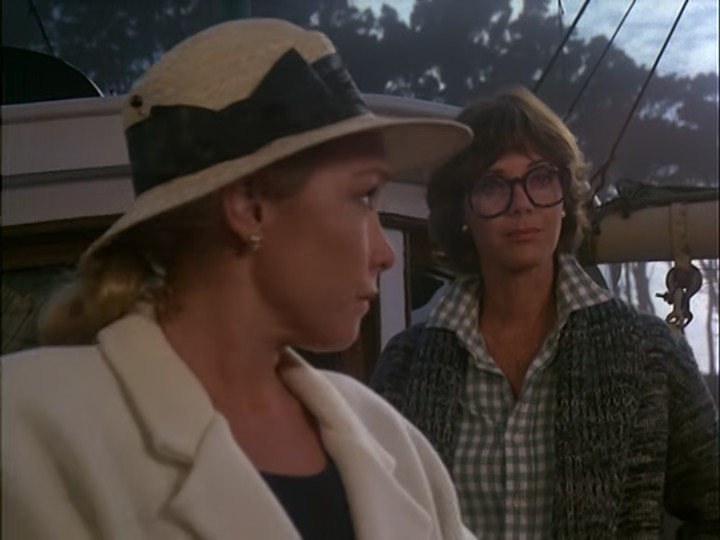
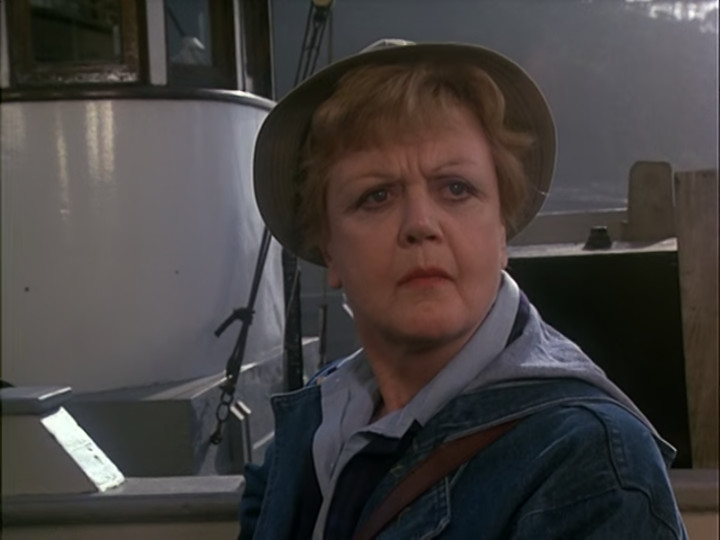
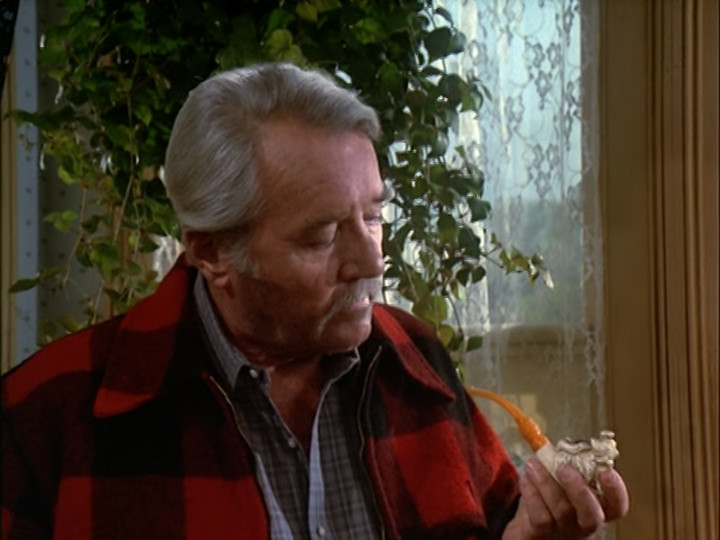


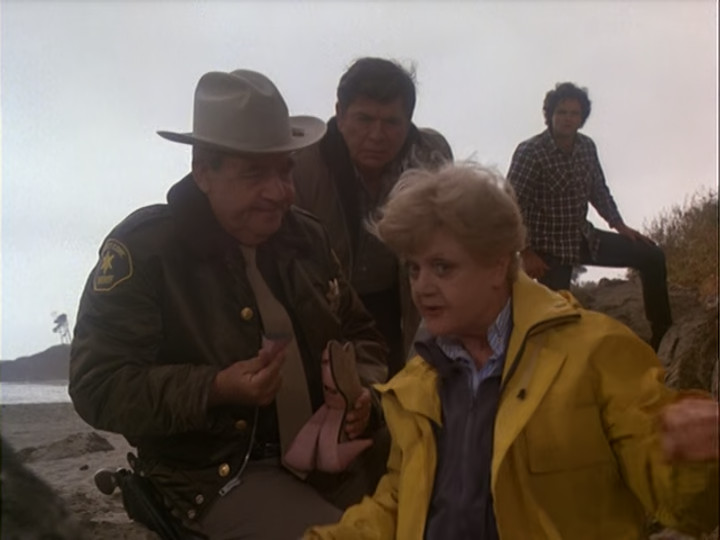


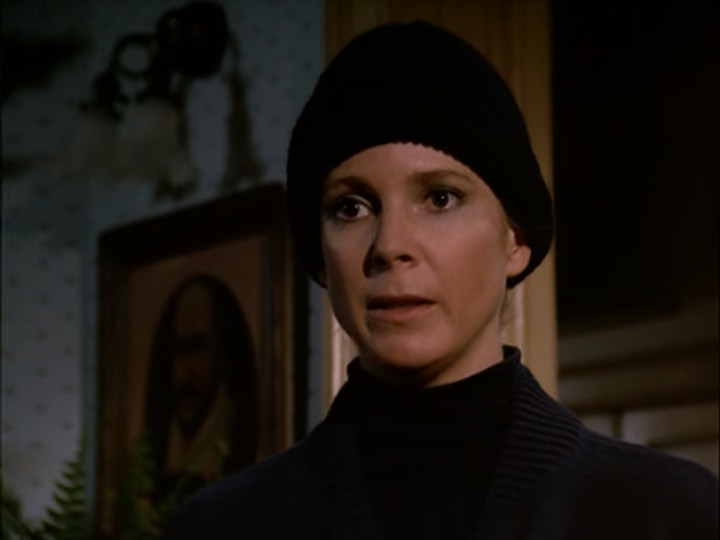



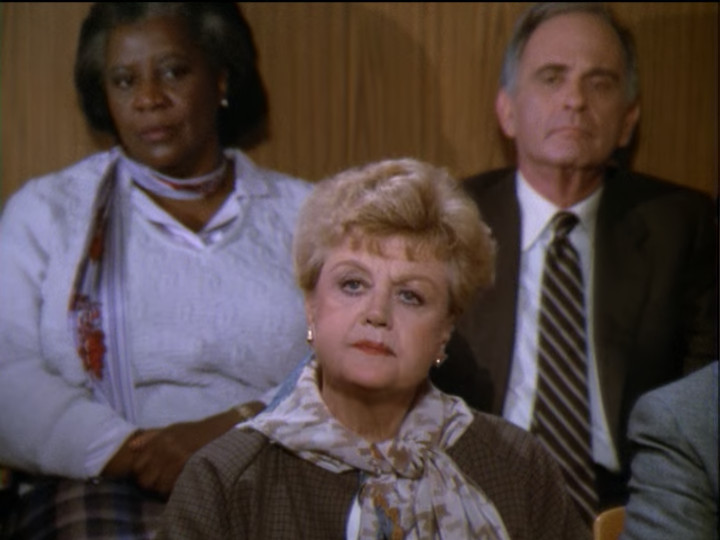


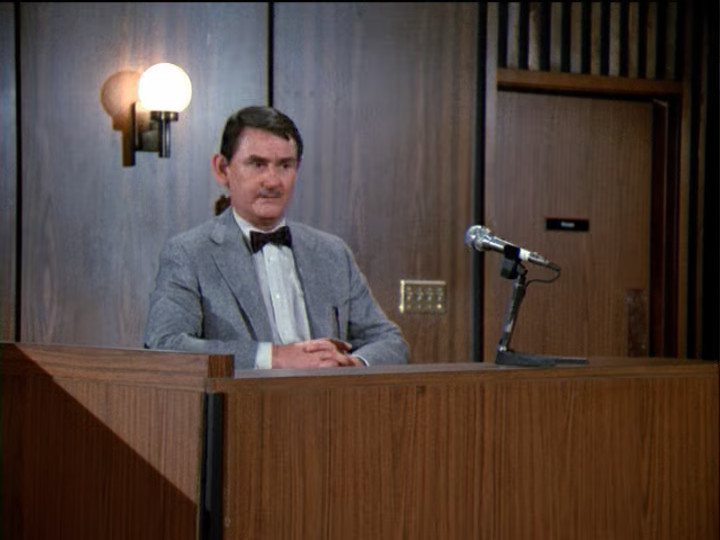


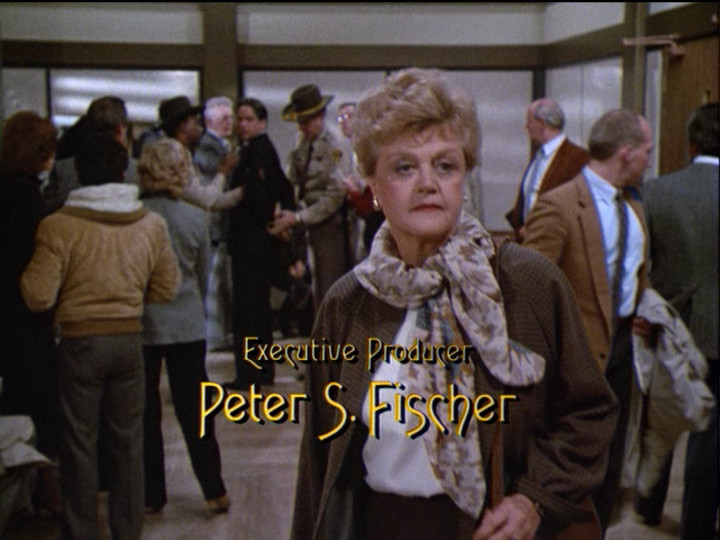
 Chris Lansdown
You must be logged in to post a comment.