Announcing my new murdery mystery, The Dean Died Over Winter Break:
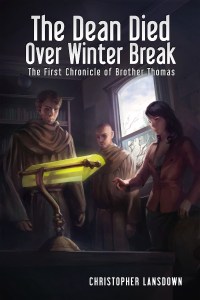
It’s available on amazon for $2.99 (or $9.99 for the paperback).
You can also watch the video on YouTube:
Announcing my new murdery mystery, The Dean Died Over Winter Break:
It’s available on amazon for $2.99 (or $9.99 for the paperback).
You can also watch the video on YouTube:
Or you can watch it on YouTube:
Some thoughts on the uses and abuses of paraphrasing someone’s argument. The original YouTube video:
A conversation with Dr. Steve Turley about what religious societies really look like. On YouTube:
Some thoughts on the meaning of Ash Wednesday. You can also view it on YouTube:
This is a complement to last year’s thoughts:
A comedic sketch poking fun at the atheist YouTuber Logicked. This one probably works better with the video:
An explanation of the Christian concepts of natural and unnatural within a fallen world. Also available on YouTube:
In which I talk about the curious sort of just-so stories which atheists tell in order to discredit miracles without having to actually look at them. You can of course watch it on YouTube:
I talk about the concept of fictional “canon” and how there really is no such thing, so it’s not worth worrying about. You can also watch this on YouTube:
I spoke with publisher, author, 4th Degree blackbelt (Shin Nagare Karate), Dojo owner, programmer, husband, and father of four Russell Newquist about reader expectations and how they influence how the reader perceives a work of fiction. (This is related to my post Predictability vs. Recognizability.) As with previous conversations we’ve had, we also talked about a lot of other things too. You can also watch the video on YouTube, if you prefer:
Some thoughts about the way that the fall of Anakin Skywalker as presented in Star Wars: Revenge of the Sith, and using it to illustrate lessons about real life.
Some thoughts on historical fiction and our perspective on history. In particular, how knowing the outcome of history makes it hard to relate to the things historical people worried about, and how this colors our view of them and their actions. You can also watch this on YouTube:
I had the great pleasure of talking for over an hour with The Frank Friar. Father Nicholas is a Carmelite friar who ministers in New York City. We talked about how he became a friar and a priest, and plenty of other things along the way. If you don’t subscribe to him on YouTube, I recommend doing so. He makes some really great videos reflecting on spirituality which I’ve gotten a lot from. You can of course also watch the conversation on YouTube:
You should never judge a book by its cover, but sometimes you should judge a movie by its title. In this episode I talk about why I judged The Last Jedi as not being worth seeing. This is somewhat a followup on my post Star Wars Movie Titles. You can also watch the video on YouTube:
Apparently there’s a popular type of video for YouTube atheists to do where they answer the question, “If you became convinced that God exists, would you worship him?” I explain what they’d actually do if they came to believe in God. You can also view the video on YouTube:
I’m fond of Chesterton’s piece The Shop of Ghosts where he meets Father Christmas. You can also listen to me reading it on YouTube:
The Distributist made a video (which is very worth watching) called Atheist Hacks:
While I don’t disagree with anything he said, I do think he was missing one purpose that the atheist hacks serve within the skeptical community. So I made this video. You can watch it on YouTube instead of listening to it, if you prefer:
I had the pleasure of having the always-interesting science fiction author Mr. John C Wright (who blogs at scifiwright.com) on my show. It was a somewhat wide-ranging conversation, though it stuck (in my mind) surprisingly closely to the topic we set out to talk about throughout. It’s also available on YouTube:
It’s popular to think of joking as completely harmless (probably in reaction to the people who can’t tell the difference between a joke and a serious philosophical position), but while joke are not the same thing as policy papers, that does not mean that they are always harmless. I take a look at the conditions in which joking about evil can predispose one toward evil. Of course you can watch it on YouTube instead:
I’ve occasionally seen references to using science to construct morality, so I discussed why this is impossible. (This is also a position which any who believes in scientisim—that the only source of knowledge is science—is forced into if they don’t want to hold morality and all associated human actions, such as law and criminal justice, to be completely irrational. They’re not going to want to do that because then they’d be holding that all the most important things in life are irrational.) And of course you can view this on YouTube:
Arad and I talked about art from a Nietzschean perspective. You can watch the discussion on YouTube:
The distributist made a very interesting video on the sex abuse scandal in Hollywood:
Towards the end he brought up a very interesting point about Hollywood’s current anything-goes morality being replaced by a more strict feminist morality, and touched upon the idea that this might be self-defeating because a puritanical morality dominating would result in Hollywood ceasing to make the sort of movies from which it derives its power.
But this also brought up another very interesting point: if you leave aside the particulars of feminism, a sleazeball has a very strong interest in aligning himself with vocal proponents of morality because it gives him cover for his misdeeds. If the vocal proponents of morality (in this case, feminism) ceased to give the cover, the powerful sleazeballs would cease to have a reason to support the vocal proponents of that morality. Or in short, it’s possible that the only reason Hollywood supports feminism as it does is as a cover for its sins and if feminism were to cease to provide that cover, Hollywood would cease to support feminism. It’s an interesting idea, and I invited the Distributist onto my channel to talk about it. I think it was an interesting conversation. You can also watch it on YouTube, if you prefer:
A viewer asked me to talk about this parable, so I did. You can also watch the video on YouTube:
Some thoughts about smiling as a form of communication. You can also watch the video on YouTube:
Arad, who runs the channel Zarathustra’s Serpent, is a Nietzsche scholar. We had a discussion about what Nietzsche’s philosophy actually was. And as usual, you can watch it on YouTube:
This is a follow-up to an earlier response I made. The first part is A Response to Logicked. You can also view this episode on YouTube:
A look at the problem with voluntarism, and why it’s so very, very wrong. (Voluntarism being the idea that morality comes from God’s will, not from his intellect.) Of course you can watch it on YouTube:
Also includes a bonus explanation as to why freedom is found in doing God’s will. You can also watch the original on YouTube:
A discussion with my old friend Max Kolbe about his atheist days. I actually met Max when he was an atheist running a popular blog on politics and news (and other things), and still remember the post when he announced that he was no longer an atheist. As I recall, the wording was very simple: “He is risen.”
I’ve always found the idea of religion as bad science to be absurd, so I decided to have some fun with it. You can watch the video on YouTube:
Or you can watch it on YouTube:
I’ve always found the idea of “the God of the gaps” rather strange. In this video I look at the history of it and consider why anyone even thinks about this strange idea. Or you can watch it on YouTube:
 Chris Lansdown
You must be logged in to post a comment.