
Programmed to Overeat?

One of the causes that you will see put forward as to why so many people are overweight, fat, or obese is that we evolved for a food-scarce environment and now live in a food-rich environment, so our natural inclination to eat everything available and store fat for the lean times is no longer adaptive. This hypothesis has a natural conclusion about how to not get fat: limit what you eat and always be hungry. To lose weight, limit what you eat even more and always be hungrier until you’re thin, then just limit what you eat and always be hungry.

Like the idea that carbs are more filling that fats because carbs have 4 Calories per gram while fats have 9 Calories per gram, so carbs take up more room in your stomach, this is one of those ideas that’s strange that anyone says with a straight face, at least if they’ve spent more than a few days living as a human being. Because if you have any experience of living as a human being, this is just obviously false. And there’s a super-obvious thing which disproves both: dessert.

Observe any normal people eating dinner and they will eat until they are full and don’t want to eat anymore. Then bring out some tasty treats like pie, ice cream, etc. and suddenly they have room in their stomach after all. This simple experiment, which virtually all people have participated in themselves in one form or another, irrefutably disproves both of those hypotheses.

You can also easily see this if you have any experience of animals which actually do eat all food that’s available until they physically can’t, such as the cichlid fish called the Oscar.

By Tiia Monto – Own work, CC BY-SA 4.0, https://commons.wikimedia.org/w/index.php?curid=53098090

You feed oscars feeder fish, and they will keep eating them until there is no more room left in their stomach, throat, and mouth. They, literally, only stop eating once their mouths are full and fit nothing more in them. They then swim around with several tails sticking out of their mouth until their stomach makes room and they can move everything down.

That’s what a hunger signal with no feedback mechanism to stop because the creature evolved in a food-scarce environment looks like. (Oscars who are fed a lot grow extremely rapidly and very large.)

But you can also disprove this from the other direction. Yes, lots of people are fat, but they’re not fat-mouse fat.

Fat mouse was created by lesioning the part of the brain responsible for satiety. Fat mouse then kept eating and eating, without stop, rapidly ballooning into nearly being spherical. (Incidentally, are we to believe that normal mice eat have a satiety limit to their eating because mice evolved in a food-rich environment? When you look at field mice, is “abundant food” really the first thing that comes to mind?)

Now, it’s possible to attempt to save the food-scarce-environment hypothesis by modifying it, saying that we’re genetically predisposed to being fat and unhealthy because that worked out in a food-scarce environment, but not too fat, for whatever reason. This suffers from being arbitrary, but then it is the prerogative of evolution to be arbitrary (obviously nothing needs to make any sense if you’re an atheist, but for the rest of us the influence of fallen angels on evolution, within the limits God permits them to work, has the same result—that’s one of the things that confuses atheists).

Of course, the problem with even this modified hypothesis is that there are plenty of naturally thin people and if you talk to them they’re not constantly hungry and denying themselves the food needed for satiety at every moment.

There’s also the problem of the timing of the rapid fattening of the population. Yes, it took place at a time when food was abundant, but there have been sections of the population for whom food is abundant as far back as there is recorded history. They were not all obese. More recently, in the 1800s, upper middle class and rich people could easily afford enough food to get fat on, yet they were not all obese. And in much of history, when food was scarce, people’s preferences in women were for plump women. Just look up paintings of Venus:

Which makes sense in that context—when people mostly don’t have enough food, women who manage to be plump in this environment are healthier, can have more children, survive the rigors of pregnancy, take care of the children, etc. Hence when painting a goddess of beauty, they painted her to the standards of their day and made her plump. But they didn’t make her obese.

To be fair, you can find the venus of willendorf:
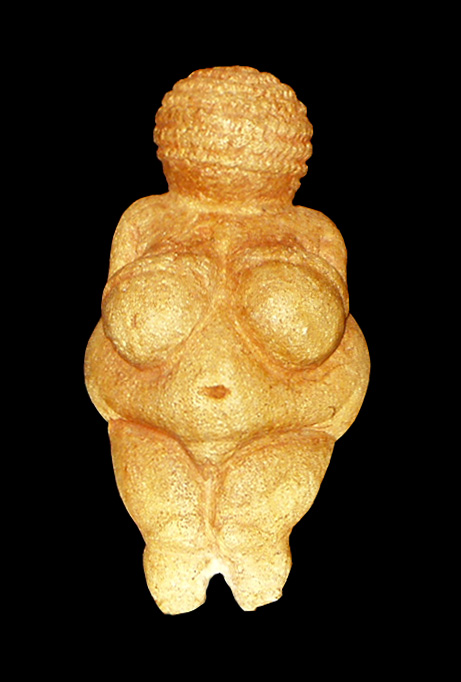
By Oke – Own work, CC BY-SA 3.0, https://commons.wikimedia.org/w/index.php?curid=1152966

But this dates to a time (30,000 years ago) from which food was supposed to be scarce and—so the hypothesis goes—no one actually looked like that because they were in the environment their constant food cravings were adapted to.

Ultimately, what I find so odd about the programmed-to-overeat hypothesis of modern obesity is not that it’s obviously false. It’s that it’s obviously false and the people who push it have clearly never considered the evidence against it.

You don’t see this with, for example, Young Earth Creationists. They have explanations for why radio-isotope dating doesn’t work and how geology is all wrong and fossil records are being misinterpreted because the dinosaurs were all animals that didn’t make it onto the Ark, etc. etc. etc. Say what you want about Young Earth Creationists, they at least take their ideas seriously.

As far as I can tell, the people saying that we’re programmed to overeat are just saying things.

Stupid Things Said About Saturated Fat

Dietary saturated fat has been blamed for all manner of health problems, but the evidence for this ranges from low quality to complete garbage. That the evidence quality is low is not surprising, since there are good reasons to believe that saturated fat is healthy for humans.

The first and most important reason is that saturated fat is the kind of fat that humans make if they have extra carbohydrates or proteins around and need to store the energy. And that’s going to be a large fraction of the carbs we eat. And when I say a large fraction, I do mean large. A 200 pound athlete would be able to store about 500 grams of glycogen in his muscles and another 100 grams in his liver. (And less than 10g of glucose in his bloodstream, which tends to be nearly constant anyway, so we can ignore this.) But the thing is: these are very rarely empty, especially if one regularly eats carbs. And if you’re following any kind of normal American diet, you’re eating a lot of carbs. If you follow the USDA food pyramid and eat a 2000 Calorie diet (which is the Calorie requirements of a small person who isn’t very active) you’re probably eating at least 250 grams of carbohydrate per day. So your glycogen stores will start off mostly full, and while your body will try to get rid of the glucose by using it in muscles, in your brain, etc., it can’t do that very quickly and needs to get rid of the glucose very quickly, so the overwhelming majority of it will get converted to fat. (This is less true for people who spend most of the day moving, such as people who work some kinds of manual labor jobs, but that’s not typical. And humans love to rest after eating.)

(Whether a large fraction of the protein one eats gets converted to fat depends on whether one gets an unusually high amount of protein in one’s diet. Most people can’t use more than about 1 gram of protein per pound of lean bodymass per day, but most people also eat less than that in protein.)

Oh, I should mention that it’s actually very normal for the human body to use fat as fuel. When insulin isn’t high to try to make cells take up glucose, and in that process suppressing the fat cells from putting fatty acids into the blood, our fat cells regularly break fat (which is insoluble in water) down into fatty acids (which are soluble in water) and put them in our bloodstream so we have a constant, dependable supply of energy. Like anything which can be said about biology in human language this is a massive oversimplification, but at its level of generality it’s correct and important.

Anyway, the primary output of denovo lipogenesis (making fat from scratch) is palmitic acid, which is a saturated fatty acid. This can be converted into other fatty acids such as stearic acid (another saturated fat) and oleic acid (an omega-9 unsaturated fat) and many others, but human beings—and mammals in general—tend to leave it as palmitic acid, then take three of them and attach them to a glycerin spine, making them fat. We do this because it allows them to store very compactly without needing any water around them, which is extremely weight-efficient. This is important for animals because moving weight requires energy, so the lighter we can store the energy the more efficient it is. Saturated fats pack together especially well, which is why animals with very high energy needs like mammals prefer them.

So believing that saturated fat is bad for us requires believing that our bodies turn most of the carbohydrates we take in into something that’s bad for us.

Incidentally, this all happens in the liver. Since fats are insoluble in water (they don’t form a solution; this is why oil floats at the top of water rather than dissolving in it like salt), the liver can’t get these fats to the rest of the body by just sticking them in the bloodstream. That would be a disaster. So it creates transport crates for the fats called “lipoproteins”. These start out as VLDL—Very Low Density Lipoprotein. They’re very low density because they’re crammed full of fats, which is less dense than water. These transport crates are then dumped into the bloodstream where the proteins on the outside enable it to interact nicely with the water in our blood and move about without causing problems. These transport crates do something which can be analogized to docking at cells and then the cells take some of the fats inside. As this process happens the lipoproteins shrink and their density goes up. Thus they eventually turn into plain old “LDL” (low density lipoprotein). Interestingly, High Density Lipoprotein (HDL) is not caused by them becoming depleted; instead HDL is made empty in the liver and sent out to collect cholesterol and related molecules.

Interestingly, dietary fats get transported by a different system. The intestines create a similar but larger kind of lipoprotein transport crate called a chylomicron. These shuttle dietary fats from the intestines through the blood to our cells.

In both cases, you can see that idea that “saturated fat congeals and clogs your arteries” is nonsense, even apart from saturated fat congealing at room temperature, not body temperature. The most liquid fat in the world would be terrible to have in one’s blood since it doesn’t mix with water, and the human body doesn’t do that. The fats don’t matter at all as they’re being transported.

Where they can matter is once they’ve been added to fat cells and the fat cells break them down into fatty acids and put those into the blood. (This is a tightly regulated process to make sure that energy is available at all time.) That’s because these fatty acids, in addition to being an energy source, also are precursors for hormones and also can interact with various receptors. (This is where things like omega-3 versus omega-6 come in.)

This is also why you see claims that eating large amounts of saturated fat induces insulin resistance in rats. Now, before we proceed, I do want to mention that it’s important to remember that, while animal models can be useful, rats aren’t humans and their exact dietary requirements are a bad guide for the ideal diet for human beings. You shouldn’t feed bears, pigs, dogs, or cats like rats for optimal health, and there’s no reason to believe should feed us like rats (or bears, pigs, dogs, or cats), either. (You can’t feed us like cows—we’re not build to get a meaningful number of Calories from fibrous plant matter.) So these studies on rats are, at best, interesting. That very large grain of salt taken, what the studies find is that various kinds of fats which are pro-inflammatory, when taken in large quantities, promote inflammation which can induce insulin resistance. The study I linked to found that the effect went away for saturated fat if the rats were fed about 10% of their fat as fish oil, which is rich in omega-3 fatty acids like DHA and EPA, which are anti-inflammatory. That is, it’s all about the net effect of the entire diet, not one particular component and not about the fact that the fats are fats. (Again, in rats; how pro- or anti-inflammatory the various fatty acids are in humans may be similar or very different, on a per-molecule basis. And there’s probably significant individual variation, too.)

Inflammation, by the way, is not at all bad. Inflammation is a very useful reaction; it’s how our bodies deal with damage such as clotting in a cut, immune responses to foreign invaders, muscle damage from exercise, and so forth. The problem is when pro-inflammation factors dominate to produce more inflammation than is necessary for the circumstances. Quite a few problems happen when a balanced system becomes imbalanced.

Incidentally, while palmitic acid (the dominant fatty acid in mammal-produced fat) seems to be mildly pro-inflammatory, omega-6 fatty acids may be significantly more pro-inflammatory. And they’ve been making up a much larger proportion of western diets—especially of American diets—since the introduction of corn oil and other heavily processed seed oils.