Censorship We Will Always Have With Us

There’s probably a sense in which this is a continuation of Is Philosophy for Private Gardens?

Most people are not equipped to deal with hearing contradictory opinions on fundamental subjects. Once you accept that, a great deal of human history makes sense, and especially recent reactions to a free-for-all in which everyone became allowed to trumpet their opinions into the public sphere. And if you don’t think that this is new, recall that for most of its history blasphemy was a punishable offense in the United States. And in fact this was most of the world for most of its history. Publicly proclaiming what the ruling powers found offensive was illegal to various degrees in most places and most times.

Of course, this has never meant that offensive opinions weren’t held, simply that they tended to go underground. But going underground poses a problem, because how do people who don’t already know that they share a view share that view?

They came up with ways to communicate subtly.

That is to say, they got around censorship laws by not being explicit. They did things like write out the argument but left the conclusion unstated. Or they talked about parallel situations. I’m told that this is a popular approach in China—when one wants to criticize the Chinese government, one writes a historical drama in which the villain is doing the same thing as the present government. Since China has a very long history, one can find a suitable bit of real history for almost any narrative, I’ve heard, and since the present government holds itself to be in distinction to the previous dynasties, it’s not in a great place to complain about depicting how awful the previous governments which the present government overthrew were.

Getting around censorship is of course a neutral thing; it has been used by heretics to spread lies to undermine truth as well as by saints to spread the truth to undermine lies. That is to say, it’s just a tool. So I think as society degenerates further, it’s a tool very much worth studying.

In service of which, here are a few elements of avoiding censorship which seem to be useful:

  1. Don’t argue directly with the powerful. It attracts their attention. It also makes them assume everything you say is against them.
  2. Make your arguments without stating your conclusion. Someone intelligent enough to understand how the conclusion follows from the argument is intelligent enough to supply what the conclusion actually is. Those who aren’t will get no benefit from the argument anyway. But the unintelligent oppressors won’t realize what you’re saying.
  3. Talk more about first principles than about specifics. This can be over-done, but if you can win people over on first principles the specifics will be relatively easy. If they’re not won over on first principles, they’re not likely to be persuaded on specifics. If a man doesn’t first love God, it’s pointless to argue with him about loving his fellow man.

Nothing is foolproof, of course. #2 was, as I understand it, the approach used by Averroes, but unfortunately for him Al-Ghazali understood and exposed him. Still, I think that these things are worth bearing in mind and developing further, the more dangerous it becomes to be explicit.

What Are Christians to Make of Jordan Peterson?

Or you can watch the video on YouTube:

I should not that Jordan Peterson has identified as Christian, but in the same interview he said that he’s agnostic as to whether the resurrection happened (i.e. he neither affirms nor denies it), so while my statement in this episode isn’t perfectly accurate, I think it’s essentially accurate from a traditional Christian perspective. At mass every Sunday we say the Nicene Creed. And I think that Jordan Peterson himself would think what I said was fair from the perspective from which I was speaking.

Keeping Our Eyes Fixed on God

The Frank Friar reflects about keeping our eyes on God as discussed by Br. Lawrence of the Resurrection:

For Br. Lawrence, our treasure is God.  All actions we say or do, must be pointed to this treasure.

It’s a topic I’m very fond of; it’s related to the instruction to “pray always”. The really interesting question is how to do this? One approach (which is a good one) sounds like this:

For him even the most mundane task  can be blessed by God and offered up for the Divine Glory… Thus, as we journey through our day, I believe Br. Lawrence would ask us to take minute, then during that minute to actively think about whatever it is that we are doing.  When we understand, what it is we are doing, then we can begin to see if we are eye keeping our eyes fixed on God.

There is a another—related—way to look at this, which I’m not sure how to describe, but is something to the effect of fully considering what we’re doing. It is probably not the intention, but when I hear language about offering up our tasks for divine glory (which is common language), it sounds to me as if there is somehow a way in which the task is not involved in the divine glory but can be made so. Now of course no one would say, if it was put this way, that there is anything which does not serve God’s good purposes, but even so, there seems to me to be a tension between doing things well and always thinking about God; one can’t put one’s full attention in two different places at once.

And I think the key to resolving this tension is that one does not need to put one’s attention away from creation to put it on God. This is because all things in creation point to God. There is nothing in creation which, if seriously considered, is not fundamentally about God. Clouds and ships and chairs and dust all point to the one who makes them in every instance of their existence; each thing, insofar as it is good, is a reflection of God. It seems to me, then, that the most effective way of turning a task into a prayer is to take the effort to truly be present in the task; to really focus on the task as it is in itself, which is to say to focus on it as it is part of God’s creation. All of creation exists relationally; truly it is not good for man to be alone. And neither man nor dust is alone; God has put us together.

The problem comes in when we think of our tasks only as a means to an end, because that means we consider our tasks not in themselves but in ourself; when we focus on our goals we think only of things as they relate to us and our purposes. We may wash the dishes worse if we fold our hands in prayer while washing them—with what would we wipe the dish if not our hands?—but we will not wash the dishes worse for considering the dish we’re washing instead of absent-mindedly thinking of something else. The dishes want to tell us of God, if only we’ll listen. Perhaps the most effective way to be always praying, while we do the dishes, is to pray with the dishes instead of ignoring them.

Atheists often want to concentrate on the secular, because they think this is a common ground with believers where they don’t have to hear about our faerie-stories. They are, in this, gravely mistaken. The secular world all shouts about the glory of God, if only we’ll stop talking inside our heads about what we want, and listen to it.

There is a sense—a very limited sense—in which holy places are the enemy of sanctity, for holy means “set aside”. In this fallen world it is good that there are places we set aside to do nothing but think of God; still, I think it’s a worthwhile goal to figure out how to make that unnecessary because there is no place where God is forgotten.

Direct Relationship vs. Sacramental Mediation

Fr. Ayre started a twitter thread on the misapprehension of sacramentality like this:

(Read it all for context. Also, in this post all references to The Church are to the fullest sense of The Church, i.e. the mystical body of Christ, i.e. all people, angels, etc. who in the end love God including those who may only come to know Christ after their death, such as Abraham or Moses and we hope as stated in the Catechism of the Catholic Church all those who through no fault of their own do not know Christ or his church but following the dictates of their conscience sincerely seek God.)

I think a lot of the problem is that the Church is necessary as a mediatrix for a full relationship with Christ, but not for just any relationship with Christ. That is to say, a relationship with Christ is not only through his Church. You can see this in the prayer which Christ himself gave us. It begins “Πάτερ ἡμῶν.” Literally: “Father ours”. Jesus himself taught us to pray directly to the father. Our primarily relationship is directly with God. But, our secondary relationship is indicated in that second word: ours. We are to pray directly to God, with our fellow creatures, that is, with the Church.

However, in the modern era, only one one of those two words is deeply felt. And this is all the more so because we live in a polyculture. Human beings by nature live in small family groups; we’re not made for widespread dissension. Some of us are better at handling it than others, but most aren’t good at it and so naturally try to compromise. That is, they try to find common ground, or put more depressingly, they try to go to the lowest common denominator. The extreme of this is atheism, where people figure that everyone agrees on secular things, at least, so let’s just get rid of the spiritual part and all agree. Within Christianity and especially in America we’re plagued with Protestantism; people’s natural desire to compromise in the practical sense leads people to compromise in the worse sense of damage.

This is especially the case given that what many protestants believe is some variant of Believe or Burn. Long story short: Martin Luther turned faith from living according to truth into an abstract pledge of allegiance to Christ in theory but (often) in practice to the dominant culture. The Church as mediatrix is—if one isn’t paying attention—awfully close to “pledge allegiance to the group or burn in hell”. This makes unmediated relationship with Christ all the more attractive, since believe-or-burn is repulsive.

But I think all this points to the way to recover sacramentality. Jesus said that he came that we might have life and have it to the full, not merely that we might just barely scrape by. The natural virtue people in the modern age most need to develop is courage. It takes courage to strive for living to the full instead of just scraping by. Scraping by is safe precisely because it is minimal. The less you do, the less you can do wrong. We need to remind people that the less that they do, the less that they do right, and life is fundamentally about doing right and only incidentally about not doing wrong.

I think that in this, too, humor might be helpful. What are we to make of a man who is willing to be tortured and executed for Christ, but can’t bring himself to tell his sins to a priest? What are we to make of a man who is willing to be beaten instead of renounce the name of Christ, but isn’t willing to listen to a few bad hymns in order to eat his body and drink his blood? What are we to make of a man who won’t judge a woman who abandoned her husband and children to take up with her new lover, but who will judge someone for gossiping about that woman?

So in conclusion, that I think that reinforcing the sense of the Church as mediatrix of Christ will be done most effectively by calling on people to be courageous. I don’t think anyone really objects to loving their fellow man in principle, I think that most of the time they’re just too scared.

Though like all things it traces its origin back to having faith—that is, trust—in God. Our fellow men are imperfect, and if we pray with them they may screw up our prayers. If we use the sacraments, we may have to wait or get them before we understand or all manner of imperfections. At the end of the day, like in all things, the only solution is to do our best and trust the rest to God. And in this specific case, if we trust God, what have we to fear from our fellow men?

The Fall of the Simpsons


Over on his blog, Brian Niemeier comments on a video talking about the rise and fall of The Simpsons. This to me is the crux:

…The Simpsons was a reaction against a long-gone age that would have eventually exhausted its fuel supply, anyway.

Matt Groening & co. set out to deconstruct the conservative establishment’s vision of post-Reagan America. Along the way they became the establishment, which is always fatal to subversive projects.

The lesson for writers: undermining traditional culture can be good for a quick buck and fleeting fame.

This stands (somewhat) in contrast to the video which Brian describes, in which (at the end) Super Eyepatch Wolf says:

And that’s what The Simpsons is: one of the purest and most raw expressions of social and political unrest… and despite what it’s become and how it’s all ended, I can’t help be so glad that we got those early seasons. It was a show that shaped a generation and transformed entertainment as we know it.

I think that of the two, Brian is far more correct. And I think that Super Eyepatch Wolf is actually rather dangerously wrong. Satire is a nice vacation from the main work of fiction, but it should never be the main work of fiction. I shudder to think what a generation shaped by satire would be like, though in a sense we’re living it out. It’s the spiritual equivalent of people who grew up eating nothing but frosted donuts: lazy, flabby, and useless, they’re terribly warped versions of what a human being should be.

Actually, rather ironically, The Simpsons later years is described as “Zombie Simpsons,” but this seems largely to be what became of people who grew up on The Simpsons. Unable think or feel anything sincerely, they know nothing but a desire to destroy those who can think. Perhaps it shouldn’t be such a surprise that zombie shows are extremely popular these days; it’s a metaphor for what a generation who grew up on tearing down ideals became. I was recently in a discussion about the live action Beauty and the Beast where someone mentioned that the live action movie would probably have had to be darker for it to be something that a modern writer could write and have it work. I asked, something like this (paraphrased from memory, embellished a bit):

Gaston introduces Belle to heroin and she gets hooked. She falls in love with The Beast who tries to help her kick her addiction but she can’t and eventually goes back to Gaston, who pimps her out to pay for her heroin. She’s eventually killed by a customer and the Beast, learning about this, kills Gaston in a murderous rage, then commits suicide before the police arrive. The last part is witnessed by a pretty young girl who just arrived in the city looking to become an actress, and she asks a man nearby who turns out to be the brother of Gaston what happened, and he charmingly comforts her from the scene and invites her out to coffee. As the movie closes, we get the sense that the story will be played out again, no one having learned anything.

Here was Russell’s response:

https://twitter.com/rnewquist/status/899724125228466176

In a sense he’s right; that’s part of why I like cheerful, adventurous fiction: I’m very familiar with dark. But the thing is, dark is really easy. It’s practically no work at all. Just start telling a story and keep making it go wrong. You could almost train a monkey to do it. Everyplace there is order, break it. Everywhere there is hope, crush it. The only thing approximating creativity in going dark is figuring out how to prolong things before you kill everyone except for the people who most deserve it. Given that most dark works seem to contain plot holes anyway, this is the epitome of easy; it only pretends to be hard because there’s a constant sense of violation of decency that requires a certain amount of willpower (or sheer degeneracy) to continually violate.

This is the problem with growing up on satire; it’s too easy. It trains people to not do the hard work of having a good time.

All Is Grace, That Is, All Is Gift

If one spends a few moments looking at creation, one of the first things one will notice is that one sees it. Creatures exist in relation to each other. This need not be so; it would be possible for God to create each creature in a way that has only a direct relationship with God and nothing else; it could be enough for a creature to be born into the everlasting beatific vision and nothing else. And yet that didn’t happen, or at least didn’t happen to us. Why not?

Before I give an answer, I should not that it is foolishness to try to give an account for the actions of God as if one can know the mind of God, and though I’m a fool I’m not that much of a fool, so the answer I’m going to give should not be understood in that sort of sense. Neither I nor any creature can give a comprehensive answer to why God did anything, except the very general answer, because it is good. Which can also be phrased, out of love. If we want to be more specific, we are limited to noting one or more particular types of goodness which are contained within an action of God, and that is how my answer should be understood. The purposes of God I cannot know, but one sort of good which God does I can know. And it is absurd to suppose that God does anything by accident.

A theme running throughout creation is that of delegation. God could create each person individually, but instead he gives it to parents to be his act of creating their children. God could give each of us all the knowledge we’re capable of understanding, but instead he gives us speech so that we can tell truth to each other, and be his act of giving us knowledge. All of our interactions with other creatures—at least where we do rightly—involve us being some sort of gift to them. This is itself a sort of theosis; we not only know God, which we could do if it was just us-and-God, but we actually become incorporated into God’s goodness.

This also helps explain how evil acts which seem positive are none the less negative (since evil is a privation of good): it was given to all of us so as to order the world for the benefit of all others; to shoot a man with a gun is to fail to order the world for his benefit.

As I said above, I don’t claim anything so ridiculous as this being all that God is doing, but it seems inarguable that it is something which God is doing, and it seems to me to obviate a number of questions of the form, “why is God hidden?”, or “why doesn’t God act?” God isn’t hidden. God did act. You were just distracted by the man waving his arms.

This is All Wrong, Except Maybe “Jewish”

So I saw this recently on Twitter, and I’m in the mood to tear it apart:

Christianity:
The belief that some cosmic Jewish Zombie can make you live forever if you symbolically eat his flesh and telepathically tell him that you accept him as your master, so he can remove an evil force from your soul that is present in humanity because a rib-woman was convinced by a talking snake to eat from a magical tree.

This is an entirely incorrect description of orthodox Christianity except for—depending what is meant—the “Jewish” part. Let’s go through it step by step, at least as long as I have the patience for it:

The belief

Christianity is a religion, not merely a belief. It is a way of fundamentally orienting one’s life. Christianity has beliefs, for example we Catholics recite many of the core ones every Sunday by saying the Nicene Creed. This isn’t merely nit-picking, because it borders too much on believe-or-burn nonsense. Christianity is about living in accordance with the truth, not merely knowing it.

that some cosmic

This makes it sound like Jesus is some sort of energy being like a marvel comic book character such as Galactus or Eternity or The Living Tribunal. Those are all contingent beings. Nope, wrong.

Jewish

As long as this means that he was a descendent of Abraham, etc. fine. If it is meant to deny that he was also a Christian, no.

zombie

A zombie is a dead body which has be animated by an evil spirit. Or if it’s a scientific zombie it’s a corpse which is walking around because the writers don’t know anything about science and have no idea how viruses/radiation/respiration/muscle activation/etc. work. This has nothing to do with a person who has come back to life.

can make you live forever

Eternal life refers to living to the full in eternity, not to never dying. This is opposed to being in hell—the “in” referring to being in a state, and the “hell” to the state of rejecting God/goodness/truth/beauty—in eternity. Not dying is, depending on what you mean by it (and how you understand the dormition of Mary), reserved for Mary and a few old testament figures. It has no relationship to the Christian faithful.

if you symbolically eat his flesh

The eucharist is not a symbol but in fact the real presence of Christ, and you really eat his flesh and drink his blood. They have the outward form of bread and wine. The Orthodox just say “it’s a mystery” while Catholics explain in somewhat more technical language that the substance of the bread and wine chance while the accidents (such as the atoms which composed the bread and wine) remain. Then we say it’s a mystery. But in both cases, we affirm that this is real and not a symbol, though its reality is not something you can detect with your eyes or tongue.

and telepathically

Prayer is not telepathy. That the one creating all things as they unfold knows everything that is happening has nothing to do with whatever sci-fi you’re thinking of with telepathy.

tell him

Nothing in Christianity depends on what you say to Jesus. This comes back to the first point; Christianity is about action. The content of faith is works; it is not everyone who says “Lord Lord” but the one who does the will of the father, etc. We accept the salvation which God freely gave to us out of his generosity by living in according with that salvation, and reject it by living as if it is not true. This is like any other gift; if someone gives you $20 for your birthday, you accept the gift by spending the money, and reject it by never spending the money.

you accept him as your master

Partially this is wrong because of the above; it’s not any pledge of allegiance that saves, but rather the living out of the acceptance of salvation. Further, this is not accepting a master in an earthly sense where one is property to another’s benefit, but rather living in according with the one who made us and therefore being ourselves to the maximum extent possible given the nature he gave us.

so he can remove

Salvation is positive, not negative. Sin is itself a privation, that is, a deprivation of part of our reality as a human being. Sin does not have a reality to itself; it is like a shadow. The act of salvation is the act of repairing us—of restoring to us that part of ourself which we have destroyed through sin.

an evil force

Sin—original or otherwise—is not an evil force. It is a diminishment of the person. It is a warping, a twisting, of that which is straight just like a broken arm is not something being added to the arm but something being removed from it. Original sin, specifically, is a hereditary problem in that one can’t give what one hasn’t got, and so a lack of perfection is passed on. This is often talked about in a positive way simply because our language works better that way; this is the same way we talk about the “shape” of a shadow despite the fact that it is the light around the shadow which has a shape, not the shadow itself.

from your soul

Again, salvation is the adding to you of that perfection which is missing, not a removal of something which was added.

that is present in humanity because a rib-woman

All women have ribs. I presume this is meant to refer to a literal reading of the book of Genesis as if it were a historical-biological textbook. It isn’t, stop doing that. It refers to God walking in the cool of the evening. God doesn’t have a body. It refers to God asking where Adam and Eve are. God knows everything. This is mythology, not a type of textbook that wouldn’t exist for thousands of years. It was describing important things, not irrelevant details. Our modern fixation on irrelevant details to the exclusion of wisdom produces nothing but misreadings when applied to anything written before several hundred years ago and many things written since. Limit your reading of books as if they are biology textbooks to actual biology textbooks.

was convinced by a talking snake

See above; the serpent is generally understood to represent spiritual powers that wish us harm, such as Satan.

to eat from a magical tree.

Magic has absolutely nothing to do with it. Again, reading the book of Genesis as if you are reading a modern biology textbook is just trying to misunderstand it. The tree in question is the tree of knowledge of good and evil. Now, what happens when you eat something? It becomes a part of you. To make good and evil a part of you means that you are doing evil. Talking about “eating from a magic tree” is on the level of reading a cartoon book made for kindergarteners. The story of the fall of man in Genesis talks about how human beings chose evil over perfection when tempted by powers which deceived them. It’s a richly complex story the exegesis of which takes many pages, but to talk about “a magical tree” is to utterly and completely misunderstand it, worse than to think that evolution is about “survival of the fittest” as if that means “everything gets bigger, smarter, faster, and stronger all the time”. It’s a complete misunderstanding on the level of a children’s cartoon book. If you can read this blog post, you can do better than that.
Starting to Automate the Podcast

As you may know, I’ve got a podcast version of my youtube channel where I extract the audio and put it up. Specifically, I use the wordpress functionality to have a category dedicated to the podcast where I embed the audio which wordpress.com hosts on my account and the RSS feed of that category is the podcast.

Putting up each episode is some work and I’m both lazy and a programmer so I’ve written a perl script to use ffmpeg to extract the audio into an mp3 file then upload it to my wordpress blog. I don’t have it actually composing the post yet, but I might add that later, depending on whether it seems like less work, given that each episode does need a description and a link to the original video.

If you’re in this exact situation, feel free to hit me up for the script. It’s in perl and you need to run CPAN to install XML::RPC, but that’s really easy.

Could the Star Wars Prequels Have Been Saved?

Since I love to talk about timely things, I figured I’d bring up whether there was any way the Star Wars prequels could have been saved with less than a near-total rewrite. My position, though I’m not completely certain of this, is: no.

I say near-total rewrite because I did think that two things were done well in the prequels:

  1. Anakin Skywalker as a nine year old was portrayed as very kind-hearted and generous. This was a great contrast to who he would become.
  2. The fall of Anakin Skywalker into Darth Vader was far more realistic than it was believable.

That aside, I don’t think anything in the Prequels which wasn’t necessitated by the original trilogy is salvageable. For example:

  1. Episode 1 was about a trade embargo on an insignificant planet. Given that the Republican Senate represented so many planets that it was impossible to see all of the senators in the same shot, this is the wrong scale to start the empire on.
  2. The virgin birth of Anakin Skywalker. No. Put down the Joseph Campbell until you’re old enough to know how much of it is just Campbell trying to excuse himself from being Christian.
  3. The insanely coincidental nature of the Jedi meeting Anakin Skywalker at all. You only get to base your plots on coincidences this unlikely if you are explicit God is behind it or if you’re writing history not fiction. The principle is the same: the only author who gets to do highly unlikely coincidences is the author of all that is.
  4. A midichlorianometer: absolutely not under any circumstances. Space  wizards do not use anything-ometers.
  5. Anakin as most powerful Jedi ever: this makes no sense with Darth Vader basically being an enforcer for the Emperor and taking orders from grand admirals.
  6. The Jedi council won’t train Anakin, the most powerful force user of all time: no one is this stupid.
  7. Qui Gonn has Obi-Wan promise to train Anakin: Nope. Watch the original movies again. Training Anakin was an act of hubris, not duty.
  8. Defeating the Trade Alliance by a slapstick accident: no.
  9. All robots fall down when the central computer explodes: no.
  10. Anakin as an angsty teenager: no. You do not set the fall of a good character to an evil character in his teenage years because he was manipulated as a child by a parental figure.
  11. Anakin as an angsty teenager: no. he’s a space wizard who routinely fights assassins as part of an organized military. He does not have typical high-school woes. His life has meaning and purpose which is obvious to him since he’s not being kept as a neotenic child long past physical maturity.
  12. Anakin as angsty teenager: no. When you have the potential to be the most powerful force user of all times and are a member of an order of space wizards, you focus on developing your power, you don’t whine constantly.
  13. Anakin as angsty teenager: still no. This is a story for an audience, we don’t need to pay money to hear teenagers complain about how their lives aren’t perfect. There’s a good change we’re at the movies to get a few blessed hours relief from hearing that.
  14. Anakin as continual rebel who doesn’t fit in: Maybe, but not this way. People who don’t fit in because they are loners don’t just sign up to be a lackey in the opposite cause.
  15. Anakin in love with Padme: the age difference is way too big at their age, there’s no reason she waited for him, and she never showed any interest in him. Having been established as a woman of deep devotion to duty, she would have had more respect for his vows, even if he didn’t, especially given that she didn’t seem to find him attractive and those two people having a romance was insane.
  16. Anakin’s arm getting cut off: No. That sort of thing doesn’t run in the family. Stupid callback.
  17. Anakin’s arm getting cut off: No. If you’re building the character up to fall from grace due to pride, you don’t teach him humility partway through.
  18. A completely unexplained clone army. Thanks!: No. No one is this stupid.
  19. [stuff so boring I cant even remember it]: no.
  20. Anakin Skywalker kills the kiddies while storm troopers handle the adult Jedi: Are you kidding me? What’s the point of making him the most powerful Jedi ever if he never actually fights any Jedi?
  21. “Give up, Anakin, I’ve got the high ground.”: No. This means nothing to people who can force jump over 50 feet in the air and even with normal swords and no force jumping in no way makes up for Anakin being a massively better sword fighter and more powerful force user. Plus is the high ground even an advantage with light sabers? The lower Jedi can defend everything the higher Jedi can reach, but can attack the ankles of the higher Jedi. It’s much harder to fight with recently amputated feet.
  22. Obi-Wan can defeat Darth Vader: Well then what was all that stuff about virgin birth and off-the-scale midichlorian count about? At the end of the third movie Anakin accomplished nothing that other Jedi couldn’t have bested. And the storm troopers murdered the Jedi instead of Darth Vader helping to hunt down and destroy the Jedi Knights? There’s no way to make this compatible with the best of the original trilogy.

But perhaps the least salvageable part of the prequels was the way that the Jedi Knights were turned into Lawful Neutral Buudddhiiiiistttsssss Iiiiiiiiiiiin Spaaaaaaaaace. You can’t be the guardians of peace and order and be lawful neutral. You can’t be a guardian of what you don’t value. Yoda’s famous line, “War not make one great” means nothing if that’s just because Yoda doesn’t believe that there is such a thing as greatness. In short, the prequels make a complete mess of the original trilogy by making the Jedi order something so awful that it should have been extinguished. There’s simply nothing you can do with that.

Is Philosophy for Private Gardens?

A friend of mine who is a philosophy professor was discussing the current decline of civilization with me and made an interesting remark: philosophy may have to go back to the gardens. He explained that until the middle ages, when Christendom created the universities, philosophy was a private thing carried out among friends in places they would not be overheard, like in gardens.

Some would write, of course; there’s a reason why we have Plato’s writings, after all. But historically philosophy was not an overly safe practice and was best done where it would not be misunderstood. And of course a common approach in those who did write was to write very obliquely, leaving it to clever readers to figure out the implications of what they said while less clever readers would take things at face value or not even notice that anything of significance was said. Of course that didn’t always work out well; unfortunately for Avicenna, Al Ghazali could understand him and exposed him.

Still, it’s something to think about as the modern world degenerates. It’s possible that philosophy will retreat into the gardens again. Like all things it will probably me mixed in its effects; it’s just possible that Shakespeare wouldn’t have written so many excellent plays if he could legally have written Catholic prose.

Beauty and the Beast

Yesterday on Twitter Russell Newquist and I had an interesting conversation about Beauty and the Beast (which branched off an interesting conversation with the publisher of Cirsova Magazine—if you’re on twitter, you can see the start here). Russell and I disagreed on some specifics, but we did agree that the Disney’s animated Beauty and the Beast was set in a historical context but written to modern sensibilities. Twitter doesn’t make nuanced argument easy, so I’m going to present my take as a coherent idea here and invite Russell to give his more-than-140-characters-at-a-time take in response. (Though if you’re looking forward to that as much as I am steel yourself for possible disappointment—he seems to think that being the father of four young children and working a full time job and running two businesses is some sort of excuse for not blogging about everything I’d like to read.)

It is my contention that in the animated movie Gaston is a proud man. Now, I mean that in the sense of the vice of pride, i.e. of having a wrong opinion of the importance of the self. Pride is often confused with vanity and arrogance, as well as—most frustratingly—with a proper opinion of the self in defiance of excessive modesty. That last one is actually properly described as humility, and if it is counter-intuitive that it can require humility to be immodest, none the less it is true. Vanity is an excessive care for what others think of oneself, and obvious Gaston is a vain man, but that’s not relevant to the moment. Vanity can be highly functional in social circumstances, so it’s very hard to disentangle from a reasonable concern for the implications of the perceptions of others. Let’s just set that aside. Arrogance is acting as if one is superior, but it is only a social sin if one really is superior. Beauty and the Beast makes it fairly clear that Gaston really is superior in the ways in which he acts like he’s superior—it is reasonably established that in a wrestling match no one can bite like Gaston, etc. But the proud aspect is that Gaston acts like he’s royalty, when he’s as much a peasant as anyone else in the village. This is somewhat difficult to pin down, exactly, since Beauty and the Beast seems to be set in an early 19th century village in the late medieval period. (By which I mean: it’s anachronistic.) Still, there is the strong suggestion of feudalism and no hint of upward social mobility, which makes Gaston’s thinking of himself like royalty as highly misplaced. Even remarkable peasants are still peasants.

This is a complicated matter, but relates to the way in which european aristocracies were never thought, within Christendom, to be moral aristocracies. As such, a man who was specially brave or strong or what-have-you was not out of place by being a commoner, and this did not entitle him to higher rank. That the members of his village don’t resent him thinking himself so far above them is an aspect of our modern sensibilities. We’re used to the idea of a meritocracy along the lines of economic output, while the peasants of Gaston’s time should have been more resentful at him thinking himself so high above people he was born equal to. (Not that there was no social mobility, but it was very uncommon and was won on the battlefield in extremis.) That said, the people of the village don’t seem to mind.

As such, by any worldly estimation, Gaston is quite a catch for a young woman. He would clearly be a good provider as well as raise his wife’s social status. He was good looking and confident, so he would be attractive. And yet Belle wasn’t interested in him. Why?

There are two possible explanations, the likely one and the one I prefer. The likely one is that the writers need Belle to not be together with Gaston so they tip their hand and wink at the audience and show that he’s actually unlikable. Gaston is depicted with tell-tale signs that he’s going to end up a fat slob in a soiled white a-shirt reminiscing about how great he was back in highschool. Granted, none of that fits in with the story at all, but it’s clearly the archetype being referenced. I picked “no one bites like Gaston” up above for a reason: this is one of the ways in which the writers tip us off that Gaston is really awful. Why on earth would he cheat in wrestling? That the people singing his praises sing his praises about this too turns them into toadies whose high opinion of Gaston is worthless. Also the gulf between Gaston and LeFou—his closest friend and a bumbling fool who worships the ground Gaston walks on—tells us that Gaston is actually insecure and constantly needs to reassure himself he’s actually worthwhile at all. Those are very recognizable signs; we’ve all seen them in dozens of utterly unrealistic high school football player bullies.

The reason Belle isn’t interesting in Gaston that I like is that she’s a young woman who studied during a time in which much of what there was to read was religious. Specifically: Christian. Being an intelligent young woman of learning, she’d be well aware that pride is the deadliest of the sins, and that the purpose of marriage is to get to heaven while raising saints. Not how most people in her time would have thought of it, but very reasonably how a well educated person of her time would have thought of it. Now if you cast your mind over the story of saints, and especially of female saints, a woman who refused an advantageous marriage because the offered husband was a bad man who loved himself more than God would not be out of place. Saints’ stories are unusual, but Belle was an unusual woman.

And it is in the sense of my preferred interpretation of why Belle is not interested in Gaston that I hold that Beauty and the Beast is written to modern sensibilities: the modern world doesn’t understand pride or even sin in general and nor does it understand trying to avoid sin.

As an addendum, on the subject of whether Gaston would have been attractive to Belle, Gaston’s pride might would come off as confidence in one or a small number of meetings, and as the PUA who lurk in the shadows of the internet like to say: women are attracted to confidence. But PUA spend most of their time in clubs and other venues where everyone is a stranger to everyone else. Gaston would be known to Belle for many years and years of acquaintance tend to erase the confusion of outward similarities. A proud man eventually gives himself away over the course of months, let alone years. Further, given that Gaston does not seem to be a man of strong moral character, it is likely that he would have danced in the hay with the young women of the village who whole-heartedly sang Gaston’s praises, which to a woman of character and Christian principle would have reduced Gaston’s appeal as the years wore on. This would, perhaps, make Belle an exception to the general behavior of fallen humanity, but the whole reason we’re watching a movie about her is that her story is exceptional.

Be Careful How You Flesh Out Villains

In Star Wars (Episode IV), Darth Vader was what you might call a cardboard cutout of a villain. We never had any inkling of his motivations, hopes, desires, or fears; we knew nothing of his inner life at all. Yet Vader was a great villain. This goes against a doctrine in fiction which became popular in my youth that “two dimensional” villains were bad. Villains must have backstory and motivation!

Where did the doctrine of the three dimensional villain go wrong? It went wrong by not understanding perspective. A cardboard cutout is uninteresting because you can clearly see that the two dimensions are all there is to it. A shadow, by contrast, is interesting, because you know that there is something far more complicated to the shadow which you’re just not seeing. Further, villains are very difficult to make interesting for the very simple reason that in reality evil is banal. “The banality of evil” is, I believe, a phrase coined by the philosopher Hannah Arendt when she observed (and possibly interviewed) the leaders of the Nazis after the fall of the Third Reich. They had done monstrous amounts of evil, but were utterly unimpressive as people. Not only unimpressive in their persons, they were unimpressive even in their hatred. The men who had (through orders given to others) murdered millions of Jews didn’t even hate the Jews particular more than other people. It seemed like there should be something equally grandiose to the magnitude of the evil done, but there were just some small, unimpressive, even pathetic, men. This of course follows necessarily from the fact that evil is a privation of good. A man can be very, extremely good, but the maximum amount of nothing he can be is, well, nothing.

All of this adds up to the fact that realistic villains are very hard to make interesting. That is perhaps why so many people, in their desperation to do so, turned their villains into misunderstood heroes. It is not impossible to make genuinely interesting villains who are fleshed out—of these, Shakespeare’s Iago is the greatest—but the fact that it is hard means that those who are not up to the task should not try. In cases where you can’t show something, it is best to only hint at it. Readers have imaginations of their own, and if you give them an outline they will flesh it out, with more imaginative readers fleshing it out better than you would have. And even where they don’t, people can be content to not know everything, trusting that what they don’t know is rationally consistent. And as long as you don’t give inconsistent details in your shadow, that’s possible. It’s also where so many villains in the 1990s (and beyond) went wrong—they were fleshed out in ways that were completely incompatible with their actions.

The most egregious example which comes to mind is the Reavers in Firefly/Serenity. When they were mysterious, it was possible for them to be part of some ultra-satanic cult of madmen. Once they were turned into scientific zombies, they became ridiculous. Once fleshed out as victims of a peace-drug experiment, it made precisely no sense how they could cooperate well enough to pilot space ships, even space ships they didn’t take the best care of. The problem with high technology is that it requires complex maintenance. The Firefly would, fairly often, have gone nowhere had it not been for Kylie’s work in engineering. Somehow we’re to believe that rage-monsters managed to keep spaceships going with less work? Why? Did the rage-monsters luck into brand-new spaceships which could go ten thousand light years before their first scheduled maintenance? How did the drug-addled rage monsters even manage to navigate from one place to another? Because they were flesh out badly, there is no rational consistency possible for the viewer to imagine exists.

In short, the golden rule of story telling is: only flesh out what you can flesh out well.

You Rarely Know What Good You Do

I’m going to tell the story of when one friend helped out another despite there being several years and over 300 miles between action and effect. (I’m going to use pseudonyms because why trespass on someone’s privacy needlessly? They’ll recognize this story, but they already know it.)

I’ll call my friends Lucybelle and Beatrice. Lucybelle and Beatrice met each other swing dancing. Lucybelle had been swing dancing for a number of years when Beatrice started, and she was quite good at it and widely admired. She was also an enthusiastic, generous person who loved to help newcomers to the lindy hop scene. She was also a very positive person: she tended to appreciate the awkward, self-conscious dancing of people in their first year or two of lindy hop more than the beginners did themselves. Now, you might think that this was a beginner’s dream, but in fact the combination often seemed too good to be true. How could the best dancer in the scene possibly enjoy watching you dance when your dancing feels nothing like what you feel like when you watch her dance? The same also applied to male dancers; how could the best female dancer in the room actually enjoy dancing with a beginner like me when she can have her pick of skilled partners?

These doubts were natural on the part of beginners of both sexes, but Lucybelle would eventually win everyone over with persistence. Over time, her actions were consistent with her professions and not really with any other explanation, so one came to believe that she was sincere. Which she was. All things in this world eventually come to an end, however, and after a few years both Lucybelle and Beatrice moved away to different places and didn’t really keep in touch.

Several years after that, Beatrice was progressing in a team sport, building up her strength and skill. As it happened, there was a highly skilled player on the team, who had played for many years before Beatrice, and who was, like Lucybelle, a very enthusiastic person who was very encouraging of people less skilled than her. I’ll call her Celerity. But again, the same problem emerged: Celerity was so good, and she was so positive, surely she couldn’t think anyone who wasn’t on her level any good and surely she didn’t mean any of her compliments? Surely she was just a nice person who wanted to make other people feel good?

As Beatrice was telling me about this one day, I reminded her of Lucybelle. She thought the same things about Lucybelle, at first, didn’t she? And she turned out to be wrong because Lucybelle wasn’t trying to blow sunshine up anybody’s orifices, she simply took the trouble to say the good things she thought where most people don’t give themselves that trouble. We all notice when others do things well, but most of the time it would be awkward or unusual to say anything, and in any event expressing an opinion exposes one to the risk of being thought foolish for that opinion. When something’s really bad it’s easy to complain about it, but if things are going well, it’s easy to tell ourselves that people already know that they’re doing a good job so why should we expose ourselves to the slings and arrows of outrageous fortune by drawing attention to ourselves with speech. Lucybelle had the courage to open her mouth when she had good things to say, I pointed out to Beatrice, and if you think about it, doesn’t that sound true of Celerity, too?

Beatrice thought about it and admitted that I was right, and finally accepted the compliments from Celerity. Lucybelle had ended up helping Beatrice to be happy, though she hadn’t seen her in years and had no way of knowing that any such thing would ever happen.

In general, I think most people recognize that we plant seeds which may one day sprout. But equally important—perhaps more important—is that we sometimes till the soil so that someone else can plant a seed that would never have taken in hard ground. Planting a seed is the work of a moment, but tilling is a long effort. We’d all like to see the fruits of our labor, but I think it’s important to remember that most of us are not harvesters. We usually don’t see the fruits of our labors, but that’s only because we’ve moved on to tilling a different field by the time the crops have grown.

The Origin of Rights

In the aftermath of the enlightenment which emphasized the rights of man, the fact that a world which thinks only of rights will fall apart is something of a problem. But the enlightenment gives no framework for reconciling rights and responsibilities, which has left many people very unsure of how to try to reconcile them. It’s actually quite simple as long as you look at the problem in the right way. The key to the whole mess is that rights come from responsibilities.

Obviously rights come from God, since all things come from God, but they don’t come directly from God. The most proximal intermediary in giving human beings rights is the responsibilities that they were given. Whatever a man has a responsibility to do, he has a right to do.

Consider, for example, feeding himself. A man has a responsibility to feed himself. Because of this, he has a right to the things intrinsically necessary to do it, such as the right to own property with which to get for himself food, the right to do the labor necessary to procure food, and so on.

Now, It is important to distinguish what is intrinsically necessary to fulfill a responsibility from what may be accidentally necessary. If I don’t happen to have any bread on hand, that doesn’t automatically give me a right to your bread because it is an accident of circumstances that you have bread on hand while I don’t. A responsibility conveys the rights that anyone would need in order to fulfill a task, not what would be necessary only for one person in some particular moment.

And this is the origin of all rights. Parental rights originate from the parental responsibility to care for one’s child. Speech rights originate from the responsibility to tell the truth. Religious rights originate from the duty to worship God.

Once you look at rights this way, the problem of reconciling them with responsibilities—or of reconciling conflicting rights—becomes a non-issue. Responsibilities exist in a hierarchy, and so whenever a right and a responsibility conflict, or when two rights conflict, one merely has to look at the responsibility from which the right derives and compare it to the other responsibility—or the responsibility from which the other right derives—and always fulfill the more important responsibility over the less important responsibility.

This also very neatly solves the problem of how to strongly defend rights without becoming a libertine. Because you never want to be this guy:

Why Is Determinism Attractive?

I used to assume that people believed in determinism (that human beings do not have free will) merely as a consequence to materialism, and that they weren’t really invested in it. More recently, however, I’ve come to suspect that it is determinism which they are primarily attracted to, and atheism is a way to achieve that determinism. (Not so explicitly, of course.)

One strong reason I suspect this is that we have direct, unequivocal experience of free will. If there wasn’t a strong attraction to determinism, this experience would render anything which contradicted free will simply unbelievable. (And for many people, it does just that.) So there must be some deeply compelling reason to want to disbelieve in free will. What can it be?

Before I answer that question, I want to note that there are several belief systems which denied free will, since there is a hint to the answer of this question in that fact. Hinduism is varied, but at least according to the hindu philosophers the monism of everything being God leaves no room for individual free will. Free will implies the existence of sin, but since everything is God nothing can be sin. (Ordinary hindus probably do believe in free will, I should note.) Buddhism does not believe in free will, which is just one of its many contradictions. (By Buddhism I mean the original Buddhism of Siddhartha Gautama which was a reaction against his failure to achieve happiness as a hindu yogi; I’m not talking about more modern, often syncretic Buddhisms.) And very interestingly, Martin Luther didn’t believe in free will either. In fact he wrote a whole book about how there’s no such thing as free will. (On the Bondage of the Will. It’s a terrible book.)

Now, what do all these things have in common, and what do they have in common with materialism? They are all reductionist systems. They all posit that reality is less than it seems, in some manner or other. But curiously only two of them are atheistic; the other two are theistic. This suggests that what people really object to is not God, but other people. And indeed, that makes sense in reductionist systems. People are messy. There are so many of them, and if they’re free they’re not explicable by a small number of easily understood rules.

To be content with understanding the universe but not being able to comprehend it (that is, to stand in right intellectual relationship to it but not to be able to fit it inside of one’s head) requires humility, and more than anything it requires trust. Trusting God, specifically (which seems to me to have been Martin Luther’s big hangup). So I suspect something like the following rule is the case:

Those who cannot trust God cannot deal with the existence of their fellow men, and will seek some philosophical means of getting rid of their fellow men as important.

In practice, the really thorny part of one’s fellow human beings is their free will. Thus to any such creature who finds trust in God to be impossible, determinism will have a huge appeal.

(As a post-script, I should note that reducing men to their base instincts is merely a less rigorous way of accomplishing the same denial of free will; wherever you find a man who reduces all men’s actions to greed or lust, you have found a man who doesn’t trust God.)

The Adventurous Exploit of the Cave of Ali Baba

The Adventurous Exploit of the Cave of Ali Baba is a very strange Lord Peter story. It’s primarily an adventure story, though it has minor elements of mystery to it. The mystery is primarily about how Lord Peter plans to get out of the trap he walked into, so in a sense it’s backwards from the normal situation in which somebody has used their intellect to mess things up and the detective uses his intellect to put them back together; here Lord Peter has used his intellect and we watch the villains try to match wits with him. As I’ve noted in other reviews of short stories, this will contain spoilers. That said, I don’t think that the story will be all that surprising.

The story begins with the announcement of the death of Lord Peter Wimsey on a hunting trip in Tanganyika. I don’t really like that sort of device, myself, though it’s really just an annoyance because no one believes for a moment that Lord Peter was actually killed off at the beginning of a Lord Peter Wimsey story. But this device also stretches one’s imagination to the breaking point. It seems very out of character for Lord Peter Wimsey to pretend to be dead for over two years in order to catch a criminal gang. Granted, it is supposed to be a superlative criminal gang, but at the same time it is limited to 50 members who don’t know each other. And this presents real problems.

Even granted that most of its members are among the most capable in the world—and Lord Peter got in pretending to be an ex-footman whose only real value was in knowing the household routine of a number of great houses—fifty people is still not enough to silently carry out executions in prisons and other things like that. To carry out executions in a jail one would need at an absolute minimum two men on the inside. But they can’t work together if they don’t know each other, since they would have to act with the authority they have. The rule that no one knows who anyone else is (save Number One, who knows everyone) severely limits the sorts of conspiracies which can be undertaken. Also a problem for the gang is that there is more than one jail in London. I suppose this could be solved by having assassins who can sneak into and out of the jail to perform an execution, but that does nothing to restore credibility to the story. The society does not train people in secret schools and with only fifty members most of whom are skilled at performing robberies, they will have more than a hard time recruiting uber-assassins. The problems go on; fifty men can do a lot, but they can’t be everywhere, especially in England during the interwar period when telephones were relatively new inventions.

Which brings us to the science fiction element of the story: the voice-activated sliding door. Certainly this is very possible today, and if one is willing to stretch a bit it is possible that it could have been done using the technology of the 1920s. How one could do it using the technology of the 1920s that allows more than one try, I don’t know, and certainly the explanation of a needle tracing vibrations gives no clue. That mechanism could work once, perhaps by depositing a conductor. Actually, come to think of it, if the needle and the trace were conductive, the thing could be hooked up to a timer which will activate if the needle closes the circuit for a minimum amount of time. That could give most of the desired properties, though I will also note that the thing would require an enormous amount of precision. Granted, Lord Peter could pay for such precision, but delicate and experimental machinery is an odd thing to gamble a man’s life on. Granted, a very bad man. In any event such technology lacks the wow factor it would have had to readers in the 1920s. And further, it seems a bit gratuitous. Maybe it’s just a long history of wildly complicated plans in fiction together with most plans that are even mildly complicated going terribly wrong in real life, but the whole thing seems needlessly elaborate without having a corresponding coolness to make the reader not care about the over-elaboration. This may perhaps be related to the way that such a door would now just be expensive but not at all technologically difficult; that would remove the coolness but not the original elaborateness. Alas, not all stories are meant for the ages. On the plus side, the ones that aren’t tell us more about the time period they were written in, since they don’t transcend their time.


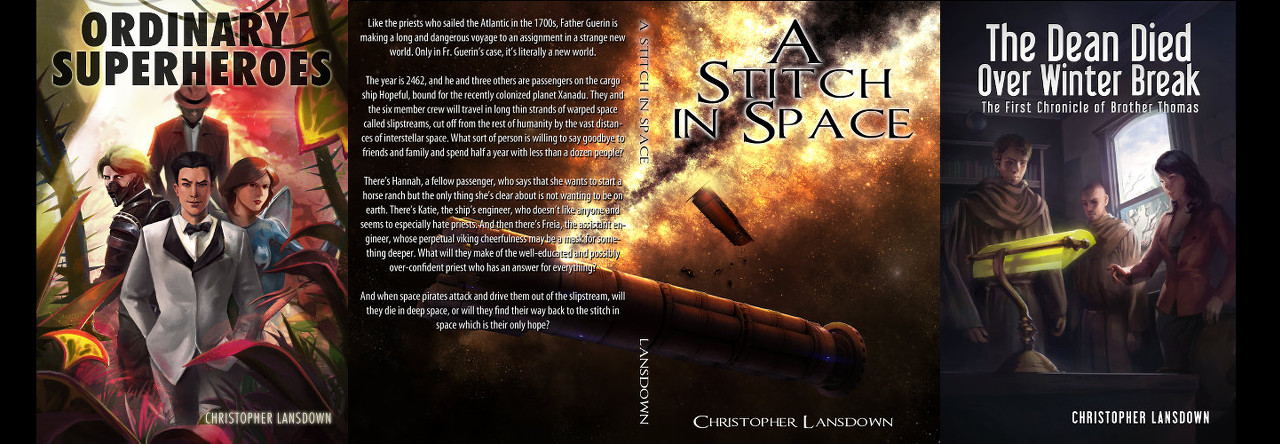
If you enjoy Lord Peter Wimsey stories even half as much as I do, please consider checking out my murder mystery, The Dean Died Over Winter Break.

The Unsolved Puzzle of the Man with No Face

The Unsolved Puzzle of the Man with No Face is a short story featuring Lord Peter Wimsey. According to this book it was originally published in 1924. (Incidentally, in googling for the original publication date I discovered this interesting chronology of Lord Peter’s life. Also curious is that it appears to have been republished in Great Detective volume 1. So far as I know it was first collected in Lord Peter Views the Body in 1928. Short stories, at the time, seem to have lived interesting lives.) As usual with short stories, this post about it will contain spoilers. Go read it now if you haven’t yet, it’s not the best story but it’s worth the time.

As with some of the other Lord Peter short stories, The Unsolved Puzzle of the Man with No Face is fairly long. In my copy which isn’t small it takes up 30 pages. Like The Undignified Melodrama of the Bone of the Contention it almost verges into being a novella, and it feels like it. As I’ve said the classic murder mystery short story involves a complicated setup, the sleuth announcing that he’s solved it (letting the reader know he’s gotten all the clues he’s going to get) followed by the sleuth explaining the solution. This has been endlessly varied, of course, but it does generally hold. There’s far more story and characterization in The Unsolved Puzzle of the Man with No Face, and it takes its time to allow one to enjoy them. In many ways this story could easily have been written as a full-length novel; it would have taken fairly little re-jiggering to add in some additional characters as well as false trails and smaller mysteries to solve—without fundamentally altering the structure. As it stands it is somewhat reminiscent of Have His Carcase, though only in the setting of the murder—a lonely beach near a seaside resort with a body discovered with only one set of footprints. Have His Carcase was considerably more mysterious, since there was the lingering question of whether the death was suicide which was not a concern here, but I can’t help but wonder if Sayers liked the setting enough to do it over again.

The story also features her odd fascination with artists and their single-minded devotion to the truth of their art. I’d call it a theme except it’s really just taken as a fact that is relied upon but doesn’t mean anything. I’m mostly ignorant of art history, but the inter-war period was I think the last time when such an idea might have been tenable. I don’t think that it was long afterwards that art transcended beauty, then meaning, and when meaning left so of necessity did truth. I believe technique has also been left behind, though of course one can always find people painting in older styles which aim for things like beauty using disciplined techniques. In my very limited experience, however, these people don’t tend to be as pretentious as artists are reputed to have been in the early 1900s. I think part of it is that the early 1900s saw artists trying to replace religion in the fashion of the superman which Nietzsche had identified as necessary for mankind to continue after the death of God. Those artists who seek beauty these days tend, I think, to be religious, and consequently see no need to try to replace God.

Be that as it may, the most interesting part of the story, from the perspective of considering all of Sayers’ work, is that Lord Peter lets the murderer get away with the murder because of some combination of the victim being a bad man and the artist being a great artist. Now, I’m often fond of endings where the detective solves the case but does not bring people to punishment because that would not be the best balance. This is perhaps best epitomized when Sherlock Holmes lets a thief go because he has already suffered enough, and explains to Watson, “Scottland Yard does not retain me to supply their deficiencies.” I may write such a story myself, some day. This ending is very unsatisfying, though, because the man being a good painter seems rather the reverse of a reason to let him get away with murder. That said, much of my reaction is a reaction to the odd sort of idolatry shown towards art in much of what I’ve read from the early 1900s, so I may perhaps not be judging it fairly. On the other hand, when Lord Peter says:

“What is Truth?” said Jesting Pilate. No wonder, since it is so completely unbelievable….I could prove it…if I liked…but the main had a villainous face, and there are few good painters in the world.

I actually rather doubt the “I could prove it” part. It’s true that he could prove parts of his story—with some detective work he could probably prove that the painter was in the same seaside area as the murder, and he could probably prove from the painter’s painting several years ago of the beach where the murder took place that the painter had been there years before. But beyond that, I don’t think that Wimsey could prove much. There was no hard evidence linking the painter to the murder scene on the day of the murder; the best he could do is hope that the owner of the garage where the murderer dropped off the victim’s car could recognize the painter, but at best that would be difficult in an era when photographs are hard to come by. And though it wasn’t something talked about much in Wimsey stories, witness identification of people who the witness doesn’t know is notoriously unreliable. So, while Wimsey could probably put together a case, it would be a very circumstantial one at best.

Though re-reading the lines I do suspect that Wimsey was primarily motivated by how the victim had it coming, and less that the artist was a great artist; it was established that the victim was a bad man, though not a criminal. It is, none the less, very unsatisfying. A detective letting a murderer go should not be done lightly, and here it almost feels like Sayers simply took the easy way out after painting herself into the corner of not having any really hard evidence. That said, real-life jurious are notoriously willing to convict people based upon relatively flimsy evidence. Then again, fiction is supposed to be more believable than real life.

In short, it’s worth a read, but I doubt I’ll be re-reading it much.


If you enjoy Lord Peter Wimsey stories even half as much as I do, please consider checking out my murder mystery, The Dean Died Over Winter Break.

The Learned Adventure of the Dragon’s Head

I recently got a collection of Lord Peter Wimsey short stories. I’ve already reviewed The Undignified Melodrama of the Bone of the Contention. It has elements which remind me of the current pulp revolution, which made me curious as to its publication. Unfortunately, publication information is not easy to come by; why books which collect short stories don’t see fit to include this information I cannot fathom. Anyway, this book says that The Learned Adventure of the Dragon’s Head was first published in volume 61 of Pearson’s (a literary magazine) in June of 1926, so I don’t know if it would technically count as a pulp, but despite being about Lord Peter Wimsey, it definitely has pulpy elements. Since it’s approximately impossible to discuss short stories without giving spoilers, I will simply give a spoiler warning here and then discuss the story with spoilers. I do recommend the story—it was an enjoyable read.

(This is your last chance to go read it before spoilers, just so you know.)

We might loosely divide the story up into three acts. In the first act Lord Peter is in an old book shop with his ten year old nephew, who buys a damaged version of an old book which would be valuable in good condition. In the second act, a man approaches Wimsey and tries to buy and then steal the book. In the third act, Wimsey goes off to the home of the original owner and discovers that the book may be the key to a family legacy of pirate treasure.

The first act is rather prosaic, and has probably the most familiar elements of Lord Peter novels—interesting characters and engaging dialog. One gets the most flavor of Lord Peter’s banter when he is not active, so this is the part of the story which has the most Lord Peter flavor.

In the second act we get to see Lord Peter’s burglar alarms which, given the publication date of 1926, verge on being science fiction. The action was over relatively quickly, but in an expert fashion which reminded me of the supreme competence of the man of bronze, Doc Savage. Not nearly as over-the-top as Doc Savage, but then compared to Doc Savage most things are barely a fifth of the way up. Still, a theme in short stories from the time seems to have been hero worship; short stories are often forced to do a lot of telling rather than showing and there was clearly an appetite for the glories of achievement through hard work in those days. There was also, interestingly, a reference to Sexton Blake (in the quality of the rope-work used to tie up intruders). Mystery has always been a self-referential genre; it is a very long-standing tradition for fictional detectives to reference other fictional detectives as fiction. I think it works within mystery fiction better than it would in most other genres, which do better to pretend that their genre doesn’t exist within the fictional world in which they’re set. Science fiction characters should not, as a rule, read science fiction novels, just as sorcerers shouldn’t read fantasy novels and people in a love story shouldn’t read romance novels. (There are exceptions to every rule, of course, but I suspect that these are sensible rules.)

The third act takes place in the decaying family estate from which the book came to the book seller. It’s also interesting to note that while modern retrospective dramas such as Downton Abbey or The Crown take place in families which still have money and therefore can afford the miniature villages which great houses could be—if they could afford to employ most of the villagers—when mysteries of the early 1900s were set in great houses, it was usually in great houses that were falling apart from (relative) poverty and neglect. This is no accident, of course. A house that is lived in has its secrets, but many of them can be found out simply by asking, and even the ones that can’t are often at least partially known by people who weren’t supposed to know them. A house that had been lived in requires investigation to find out most of its secrets. There’s also a much wider scope for motives to strange actions in a decaying great house since a functioning great house takes care of most of its occupants’ needs.

In The Learned Adventure of the Dragon’s Head, the almost mandatory unkempt gardens  and Chinese pagodas symbolizing the bad taste of someone who came into money later in life are actually a key to the mystery. This is, I think, a good example of Chesterton’s dictum that the culprit should be, whenever possible, someone we would never suspect. Chesterton warned of the problem of there being only one person we’ve never suspected making that person the obvious culprit, of course, and praised Conan Doyle’s story Silver Blaze as being the best example of this trick (spoiler alert), since the horse’s presence is completely explained by the owner keeping horses for racing. In the same way, though the scenery isn’t a murderer, it is hiding the treasure and I think it a very good construction that the scenery we assume exists only to denote the conventional bad taste of a progenitor actually served the progenitor’s purpose; in a man-made lake the burier of the treasure actually made his little Islands to correspond to an ancient map in an ancient book. This may be the only example I know of in which the treasure map came first and the treasure was buried according to it. It is an ingenious device for disguising the treasure map.

Overall I strongly recommend this short story; unlike the previous one I reviewed I do expect to re-read it on occasion.


If you enjoy Lord Peter Wimsey stories even half as much as I do, please consider checking out my murder mystery, The Dean Died Over Winter Break.

tddowb

The Undignified Melodrama of the Bone of the Contention

I was recently given a complete collection of the Lord Peter Wimsey short stories. Some of the Lord Peter novels are among my favorite detective fiction—especially those involving Harriet Vane—but oddly I hadn’t really enjoyed the few Lord Peter short stories I had read. My mother—who introduced me to Lord Peter—gave me the collection saying that it was a mixed bag and I had the bad luck of picking the worst of them.

As I’ve mentioned before, in detective fiction short stories have a very different structure than novels do, not merely because the normal differences between the two media, but because a completely different sort of story is possible in a short story. Specifically: the puzzle. A short story permits a complex setup which is then unraveled in the end to the (possible) astonishment of the reader but a novel simply doesn’t permit of that sort of story. The thread can’t be stretched that far without breaking; there is no possible excuse for the detective spending so long without revealing what he knows. (TV shows have this problem, though TV episodes are more similar to short stories, and solve it by having the detective suddenly remember or realize something, in order to give the viewer time to figure the solution out.)

The Undignified Melodrama of the Bone of Contention is interesting in that it’s almost a very short novela rather than a long short story; certainly it lingers on the characters and atmosphere in a way that is more the domain of novels. The characters and atmosphere being one of the strengths of Lord Peter this is a point in its favor, but it never really fleshes the characters out enough for any of them to be really likable. I know that likability can be overrated; perhaps it’s better to say that we never really learn enough about the characters for any of their concerns to matter. Lord Peter views his surroundings with a sort of detached air and nothing counterbalances this. This is true of almost all of the Lord Peter stories, but in the good ones he has some other character to counter-balance this with attachment. Even where that isn’t Harriet Vane, as in, for example, Clouds of Witness, there is still the fact that people Wimsey cares about care whether Wimsey’s brother will be hanged for murder. Here, Wimsey doesn’t want to be involved and gets dragged in by others who don’t want to be involved either. This doesn’t ruin the story, but it certainly doesn’t help.

The mystery itself is really several (related) mysteries, but they’re not at first obviously related to each other. Even that would be fairly normal, except that there is no particular reason to solve the first mystery except for the sheer curiosity of Lord Peter. Granted, a ghostly coach passing in the night would arouse curiosity, but at the same time the solution simply drops when Lord Peter discovers it. It has no significance at the time. In fact that’s probably my real complaint: the story never sets up the mystery properly; everything happens and then we’re presented with the mystery and its solution in rapid succession. On the other hand, I will say that I appreciated Lord Peter ruling out a supernatural explanation of the ghostly coach not on a priori grounds since that would be unsound, but because the apparition didn’t bother his horse at all, as one would expect a ghost to. It was a nice touch of rationality in a character who does not believe in the supernatural (Sayers famously said that Lord Peter would consider it an impertinence to believe he had a soul).

Overall I enjoyed reading the The Undignified Melodrama of the Bone of Contention, but it’s hard for it not to be marred by comparison to Sayers’ best work. I recommend reading it, but I doubt that I will reread it often.


If you enjoy Lord Peter Wimsey stories even half as much as I do, please consider checking out my murder mystery, The Dean Died Over Winter Break.

tddowb

MST3K: Werewolf

As an avid Mystery Science Theater 3000 fan (I own nearly 30 of the boxed sets of DVDs), Werewolf is one of my favorites. I saw some references in online material to the episode being a bit edited—which was fairly common for MST3K—and I noticed that I could get the original on DVD inexpensively so I decided to go for it and see what the differences were. Of special concern to me was whether any of the jokes depended on the edits, because that would seem a bit like cheating.

First, I’m happy to report that none of the jokes were cheated. Well, that’s not quite true; there was one joke which had a little bit of context which was edited out, though of course one never knows whether it was the MST3K editors who removed it for the edited-for-TV editors who removed it. That joke was when Natalie tells Paul, “you may just be our last hope” and (IIRC) crow says, “maybe some day they’ll tell us what he’s their last hope for“. Earlier in the film there’s a scene in the original in which Natalie tells Paul that they’re running out of research funding and their efforts to secure more have failed, and Paul offers to use his writer’s talents to try to help them write better grant proposals in order to secure funding. Or maybe to use his connections. It’s not made explicit, as I recall. However, there is also a scene left in the MST3K version where Natalie tells Yuri that Paul is going to try to help them get more research funding, so the editing wasn’t exactly unfair to the movie here, though it certainly wasn’t helpful.

Some of the editing tightened the movie up and made it better; in the original there are some endless driving through the desert scenes a bit reminiscent of the credit-scene-without-the-credits in Manos: The Hands of Fate (though not as long as in Manos). Most of what was cut out were some sub-plots which did make the movie overall better though weren’t related anything Mike and the bots said. For example, there’s a sub-plot where the real estate agent is into Paul and he (gently) rejects her advances and so she tells him to walk home and leaves. This explains why Paul is at the party alone and in a position to meet Natalie. It also somewhat explains what the real estate agent is doing back at Paul’s house later to be brutalized by Paul-as-werewolf.

Overall, my impression was that while the original movie was more complete, it was also more sloppily edited; so, basically, something of a wash. I do recommend watching the original if you get a chance, if for no other reason that you see the raw materials that went into making such a good episode of MST3K. It’s not a high priority item, though, as it’s about 90%-95% the same movie, and certainly the main plot is 99%+ the same. It still doesn’t explain why Natalie became a werewolf at the end of the movie, though. (I’ve never understood why the crew makes fun of how obvious it is that she was a werewolf; the setup as we slowly pan in was a bit telegraphed, perhaps, but nothing in the movie really led up to her being a werewolf.)

Review: The Rage Against God

I just finished reading Peter Hitchens’ book, The Rage Against God. It’s an interesting book—and I do recommend it—but it’s very much not what I expected. For one thing, it’s a far more personal book than I expected. Which may well speak more to my expectations than to the book; the subtitle is “how atheism led me to faith.” But what I think I was more legitimately surprised about was how much the book was about culture.

The Rage Against God is divided into three parts:

  1. A Personal Journey Through Atheism
  2. Addressing the Three Failed Arguments of Atheism
  3. The League of the Militant Godless

Chapters 1-5 are about England’s (I suppose technically I should say Brittain’s, but I’m not sure) declining society, and how much Christianity was woven into England’s culture so that as people became disillusioned with their culture they threw Christianity out as well. In many ways in these chapters the eponymous rage against God seems to be primarily a displaced rage against parents. In fact Mr. Hitchens mentions something I’ve seen noted by many other rebels born in the generation he was: they never expected to get away with it. And they seem to carry with them a deep sense of betrayal that the adults let them get away with their rebellion. In essence, they are angry at the authority figures in their young lives for being so small. This is very specific to England, but while America did not suffer the decline of its status as a once-great power, it did suffer from the realization of how awful racism is that had a very similar effect in undermining authority, and at approximately the same time. And I’m told that other european countries had their own losses in confidence because of the authority figures who led them into devastating wars.

None of this is something I can relate to; having grown up in the 1980s there was no longer anyone left to respect so it was not possible to lose my respect for them, and I think that this is true of others of my generation as well. It is an interesting window into the atheism of an older generation, though.

Interestingly the three arguments which Hitchens addresses in part 2 are largely cultural ones:

  • “Are conflicts fought in the name of religion conflicts about religion?”
  • “Is it possible to determine what is right and what is wrong without God?”
  • “Are atheist states not actually atheist?”

The second question need not be cultural, but his answer is largely cultural, in that he draws the answers from failed societies. Which is, of a course, a legitimate and persuasive answer, but it is a social answer rather than a personal one.

The third part is a more in-depth look at what the viciously atheist regime of the Soviet Union was like, and the degree to which modern atheists seem to be calling for exactly what was done there, though without being willing to admit that it’s what they’re calling for. This is a problem I’ve encountered with atheists myself. They’re generally quite unwilling to think through their ideas and more infuriatingly often pat themselves on the back for being unwilling to do so, though usually with some sort of positive spin. But Mr. Hitchens brings up, if obliquely, a very pressing problem in a democracy, or really anywhere with changing demographics: how people behave when a minority may have no predictive value whatsoever as to how they will behave if they are in the majority. And as any even casual student of history knows, every regime requires an executive branch—whatever it is named—and that executive branch will be staffed not by the general population but by people who desire power. The question, therefore, is not what the average person will do if given power, but what they will tolerate a co-believer with power doing.