Several years ago, a British feminist by the name of Louise Perry wrote a book called The Case Against the Sexual Revolution. I haven’t read the book, but I’ve read a bunch of things Ms. Perry has written, including her own description of the book. She is careful to explain that she does not want to return to the sexual morality of before the sexual revolution, just to avoid the excesses of the sexual revolution. And I recently read an essay (originally published in 2022) which discusses the book, by libertine writer Bridget Phetasy, titled I Regret Being a Slut. She, too, does not want to return to traditional sexual morality, she just doesn’t like the results of the sexual revolution either. And neither of these women is at all unique.
In both cases, their writing is a bit like a man who talks about how it’s exhilarating to jump off a building, but not to hit the ground, so it’s best to continually fall past the seventh floor. That might be the point in one’s fall which is the most fun, but that doesn’t mean it’s sustainable.
The problem with this kind of thinking—it applies to all libertines who want the benefits of self-control without the downsides of self-control—is that it is, at its core, utilitarianism. There are many problems with utilitarianism (see Why Consequentialism Doesn’t Work), but the relevant problem is that it has no power to motivate people. Forgoing certain short-term benefit for the sake of uncertain long-term gain is very tricky to justify. And even if you can, a justification which is best done in a complicated Excel spreadsheet will, at best, be lifeless and dull, even if it does manage to convince someone in the abstract. And that’s ignoring the problem that, since we can’t know the probabilities with any certainty, you can always doubt the conclusion by quibbling with some of the numbers.
To put it more concretely, forgoing certain short-term benefit for uncertain long-term benefit only makes sense under one of two conditions:
Extreme optimism
A principle which says that you should even if it doesn’t benefit you
Very few people are extremely optimistic, for the simple reason that, in a secular sense, it’s stupid to be that optimistic. Lots of people are unlucky. And there’s a further problem: if you’re this optimistic, you might just as easily be optimistic that you can have both the short-term and long-term benefits.
That only leaves option #2: principle. But principles are exactly the thing that the libertines don’t want.
To take it back to the example from which this started: the libertine feminist advocating for sexual restraint is in the awkward position of saying that people should be free to have as much sex as they want before marriage, if they even want to get married, but they shouldn’t want sex before marriage and should want to get married because that works out better in the long run. The problem is that, if something actually does work out better in the long run, it means that you’re wise to do it and foolish to not do it. And it’s bad to be foolish.
That’s the thing which always sabotages this kind of quasi-libertine in the end: they want people to make good decisions about everything except for who to associate with. Because the only people who willingly associate with fools are other fools1. Deciding who we depend on is very nearly the most important decision we can make; asking people to exercise good judgement except for in their associations is nonsensical. Doubly so when it’s a particular kind of association that you want them to exercise good judgement on.
If a person has been sexually promiscuous, and it is accepted that sexual promiscuity is bad judgement, it means that the person has bad judgement. This is, by the way, as true of men as of women. If you read old literature instead of modern pornography set in older times, you will find that a male being sexually continent was praiseworthy and expected, while being sexually promiscuous was something he was quite desirous of hiding. The only difference was that a male was, typically, not dependent on forming a marriage to pay for his upkeep because there was a great deal of difficult work to be done in the world (soldiering, sailing, and the like) and so even as an outcast from polite society he could at least feed himself on his own. Also, people just didn’t care as much what happened to males. (You can find stories where a male who does need to make a good marriage will go to great lengths to hide his promiscuity, such as the King of Bohemia in the Sherlock Holmes story, A Scandal in Bohemia.)
Anyway, the point is that you can’t have a society in which it is accepted that only fools with poor self control are sexually promiscuous and it’s also considered just fine to be sexually promiscuous if a person wants to be. You can see this exact problem with alcohol. No one wants to associate with a drunkard (except for other drunkards2) and anyone considering marriage with a drunkard will be warned off of it by all of their friends and family. The same is true of gambling addictions, or narcotic addictions. In fact, you will be very hard pressed to find any behavior that is generally regarded as extremely foolish where only low-self-control people engage in it that people would not try to dissuade someone from marrying into.
Which is why a libertine cannot make an effective case for self-control. If they manage to make it, the world will cease to be one in which people can freely do whatever the libertine is trying to discourage.
I don’t have much patience for people who discuss sex and marriage without relation to children and child-rearing, but there is something especially tiresome about people trying to do so in order to promote things which are much better argued in reference to children and child-rearing. Perhaps this is done in order to soothe the reader; to lull her into a false sense of security so she’ll actually hear the authoress out. I have my doubts that any such deception will work, and I gravely doubt that it will work in the long-term, because it will damage the trust placed in the authoress.
Though perhaps, for the intended audience, this is one of those “white lies” like the stereotypical answer to the stereotypical woman asking her stereotypical husband whether a stereotypical hideous dress she is going to wear anyway looks good. Perhaps no one believes it, so no one will be deceived, but the willingness to tell the superficial lie signifies that the person is on the other’s side. “I’m only telling you to exercise a bit of self control. I’m not telling you that you have to believe in God or listen to your grandma or do anything for anyone else.”
Well, there are a lot of very weak and timid people in the world.
1. And saints who are trying to help them. But there aren’t many saints to go around, and they don’t associate in the same way anyway. A saint may well take on the company of a young fool and advise them, but the saint doesn’t marry the young fool or depend on them in any other way.
In America, Thanksgiving and Christmas tend to be occasions for family gatherings with a large meal. People often talk while they eat, and when people are done eating and only talking, it is extremely common to see the women of the family get up and start clearing the plates away while the males continue to talk. Around this time, a few unpleasant women who don’t understand human beings very well will write articles complaining about this. So for the sake of young people who might be taken in by one of those articles, I will explain what’s going on.
Unless you’re really into cooking, making thanksgiving dinner isn’t actually a lot of work. It takes perhaps fifteen minutes to put the turkey on a tray, season the skin, and put it in the oven at 325F for 3-5 hours (depending on size). Mashed potatoes or if you have better taste mashed sweet potatoes are another fifteen minutes of work. Bread, you can easily just buy at the store. If you’re not making it from scratch, add another fifteen minutes for the stuffing. Putting that all together, it’s an hour of work for a single person. That’s not trivial, but it’s not that much work. I’ve done significantly more work than that for minor dinner parties, and it’s not more work than one might do barbecuing food at a cookout. Cleaning up a dozen plates from a table is, if you’re doing it yourself, perhaps five minutes. If you have a dishwasher (as everyone who writes articles complaining that men talk instead of helping does), add another five minutes for scraping food off of plates and loading them into the dishwasher. If this is a major amount of work for you which might break you unless you get help, as the kids would say, you’re NGMI (not gonna make it).
Of course, that’s not what’s going on. Except for the occasional host with significant health problems—and the family member with significant health problems almost never hosts family gatherings—the host of family gatherings is not overwhelmed by the work involved and doesn’t need help. The reason why all the women help is because this is an expression of female social bonding. Identifying ways to help each other and helping unasked is a way that women reinforce their social bonds. When there’s nothing to do, asking, “what can I do to help” is a next best thing, which is why you will see it asked even when there’s obviously nothing to do to help. The point isn’t the actual work, but the affirmation of the social bond in the offer. This is also why the typical response is, “there’s nothing right now,” followed by a list of what’s going on. The point of this is not the actual inventory, but the affirmation of the bond by sharing concerns and implicitly inviting the other woman to help monitor them. (There’s actually a bit of an art to this because a woman can give offense by usurping some decision-making in her effort to help; young women generally watch their elders navigate this and learn the art by the time they’re old enough to take part as adults.) This is why when one woman gets up and starts to collect plates, the rest of the women jump up and start collecting plates too—they are affirming their social bonds by all working together.
This type of social bonding is markedly different from male social bonding, which can be readily observed at a cookout, where it’s traditionally the males who do most of the work. Males can, without giving offense, make a perfunctory offer of assistance to the male host, but mostly they don’t because assuming that another man can handle everything is a sign of respect. Further letting the male host do whatever grilling and other work is involved in hosting without interference is also an implicit sign of respect. Males will, however, make a point of hanging out with and talking to the host, because conversation about interesting subjects is a primary way adult males affirm social bonds.
So at the big family meal, when the women clean the plates together and the males keep talking, both are engaging in their sex’s typical form of social bonding. The two groups bond with each other by the men showing appreciation for the (in truth, quite small) labor of the women, and the women bond with the males by enabling the conversation which is maintained. The males can be rude by taking the generosity of the women for granted, the women can be rude by interrupting the conversation with work that can easily be left for after people are done talking.
The unpleasant women who write articles complaining about this dynamic at social gatherings are people with poorly developed social skills that don’t know how male social dynamics work and who assume that female social dynamics are the only social dynamics and so regard males as dysfunctional women. So they’re trying to guilt them into being functional women. (They’re also trying to parasocially bond with other women with poor social skills who don’t understand the full range of social dynamics by communal complaining.)
There’s a great meme that goes around on occasion, which is a motivational poster of some kind with the words:
We do these things not because they are easy, but because we thought they would be easy.
If you’re not familiar, it’s a reference to a line from JFK’s famous speech, justifying the moon program:
We choose to go to the Moon in this decade and do the other things, not because they are easy, but because they are hard; because that goal will serve to organize and measure the best of our energies and skills, because that challenge is one that we are willing to accept, one we are unwilling to postpone, and one we intend to win, and the others, too.
There is truth in Kennedy’s approach—it is the basic foundation of how we teach children—but it is extremely rarely done by adults for the simple reason that adults usually have better things to do. The truth is that the moon shot program wasn’t really about human advancement. It was a massive game of capture-the-flag played with the Soviets as a PR stunt, which is why we and they both stopped shortly after the US captured the flag (by which I mean, planted a flag on the moon).
Which gets us back to the original quote: there are a lot of times when somebody does something useful because he thought it was going to be a lot easier than it turned out to be, but by the time he put a lot of time into it he found that the harder version was actually worth doing, especially because he was now in a place to do it with a lot less work than if he was starting from scratch. And this is an example of what I would call a useful mistake. Another example would be what Larry Wall, inventor of the Perl programming language, famously called the three principle virtues of a Perl programmer.
Those virtues were: laziness, impatience, and hubris. These are, of course, rhetorical, since laziness, impatience, and hubris are actually vices. What Larry meant (and explained in his own words) was that there are things that look like these things, but are actually good habits. What he called laziness is really foresight; good design so as to avoid having to do excess work in the future. What he called impatience is really ambition, or the desire to solve problems—to not be willing to sit through endless drudge-work when it was possible to write a program to do the drudge-work instead. And what he called hubris was really faith—the faith that one could see the task through to its conclusion. “I can do this,” in spite of not (yet) being able to point to conclusive evidence that you can.
The ideal would be, of course, to have a perfectly accurate estimation of both the amount and difficulty of the work to be done, and also of one’s ability to get it done. We very rarely achieve perfection, though, and so choosing the kind of failure mode we want is important. Would we prefer to fail at our estimations in a way that makes us start more projects, or start fewer projects? That is, is it better to waste time when we make imperfect estimations of difficulty and our ability, or to leave undone things we could have accomplished? I think that there is much to be said for the former, because we can always give up when it turns out that something was too difficult for us, and this will help to refine our skill at estimating difficulty. If we bias our failures towards leaving things undone, there’s no reason we’d ever decide to start up, and there will be nothing giving us feedback about our accuracy of estimating difficulty.
So I think that there’s a lot to be said for slightly under-estimating how hard things will be; your life will tend to be better off for it. And to counter-balance people saying that you should be humble about your abilities, this is just being humble about your ability to estimate how difficult something is. Ultimately, when it comes to worthwhile things, we never know what we’re getting ourselves into, so we have to live by the faith that something good will come of our efforts. This is really just making the decision to have some faith.
J.D. Vance once made the observation that the real danger of social media isn’t living in an echo chamber, it’s only being exposed to the most extreme versions of the positions of people who disagree with us. I think that this is an important insight, and speaks to how it is important to seek out the reasonable version of extreme views that we see made fun of. That said, there are two kinds of extremists, and the more reasonable version is only important for one of them.
Let’s start with that kind: the extremist who is a monomaniac. This kind of extremist is extreme because he has abandoned most kinds of good in life and cares only about one kind of good. To make up an example so as to not be accidentally controversial, let us suppose that there is a man who loves the color blue. If he merely loves blue, but loves other things as well, he may well have many blue things in his house but he will not seek to paint the whole world blue, because he knows that trees and grass need to be green, and have their own value. If he was a monomaniac in his love for blue, he would not recognize the good of grass and trees and so would not care that they need to be green to achieve it (I’m speaking of photosynthesis, not of their aesthetics), and so he would seek to pain the grass and trees green, and would kill them. This kind of extremist, though highly concentrated online, is rare in real life. Most people love more than one kind of goodness, and so no matter how much free reign they are given to realize their ideal world, they will balance out competing goods and not wreck the world. These kinds of reasonable people are important to seek out. (I should also note that this highly simplified form of extremist is not what one typically meets online; I need to explain the other kind before I can clarify further.)
The other kind of extremist is a man who is dedicated to a philosophy of life and is not afraid of the opinions of his fellow man, but takes his philosophy to its logical conclusion. This is the Catholic saint, the Protestant Puritan, the Buddhist ascetic, and the Soviet dictator. People who are not extremists of this kind are not people who balance out goods, but merely people who lack the courage of their convictions. They do not live out their philosophy of life, not because they think it lacks something, but because they lack something. Most of the time, it’s social sanction that they lack. That’s why, for this kind of extremist, it is precisely the extremists you should pay the most attention to. If society were ever to adopt their beliefs, it would become more like them.
Now that I’ve explained the second kind of extremist, I can describe where you are actually most likely to meet the first kind of extremist: as someone posing as the second kind of extremist. The technical term for this is a heretic, though it’s an unpopular word with baggage, so let’s stick to “monomaniacal extremist.” For that same reason I will avoid religious examples, so let’s take a secular one: environmentalism. There are plenty of people who want to take care of the planet on which we live in a balanced way. They consider measures to ensure that we don’t poison our water supply, but also consider other goods like industrial production, nice housing, having pets, growing food, and a myriad of other goods that need to balance each other out. Then you have the monomaniac who only loves nature where it has not been affected by human beings, and so champions anything that removes human influence, at the fullness of expression being the human self-extinction project.
This example also shows the importance of distinguishing the two types of extremist. On the one hand, it is important to figure out that the monomaniacal environmentalist merely hates people, he doesn’t love the environment as one good among many, and so he does not represent the views or policies or much of anything of the people who merely consider clean air and water and an interesting variety of wildlife to be goods to balance out among other goods. On the other hand, the people who are members of the human self-extinction project are merely the monomaniacal environmentalists with the courage of their convictions. One should not ignore the human self-extinction people and seek out the more moderate “strangle the economy with regulation” environmentalists because those are only distinguished from the human self-extinction people by being unwilling to say what they really mean.
I recently read The Communist Manifesto (in English translation, of course) since from time to time I read primary sources and I literally have great difficulty actually believing how bad it is. It does not really contain either a political philosophy or an economic philosophy; it has a few scant elements of these, and is about as much a considered work of political philosophy as is Star Trek: The Next Generation.
For those not familiar, Star Trek: The Next Generation was a TV show set in the twenty fourth century where it is a post-scarcity world in which everyone has an unlimited amount of whatever they want without effort. In TNG (as it is commonly called for brevity) this is accomplished through free energy by unspecified means coupled with “replicators” that can make anything, instantly, with no cost. (I believe various unauthoritative technical manuals suggest there is some hidden feed-stock of protons, neutrons, and electrons, but there is never any kind of limit to what replicators can replicate, and there are episodes where feed stock is clearly not required.) I bring this up not as a tangent, but as oddly similar: it is fairly clear, from TCM (as I will call The Communist Manifest, for brevity) as well as several FAQs (which Marx called a “catechism”) that Marx believed that the industrial revolution was bringing about a post-scarcity world.
TCM was published when Marx was 30 years old, and I’ve been told it’s not why he was influential—that was Capital, or Das Kapital, as it is often known, or Capital: A Critique of Political Economy, which is it’s full title. That book is around 1,000 pages long, and I don’t find it even slightly plausible that communists read the whole thing, so I’m still quite unsure of what to make of it. I’m willing to believe that Capital did flesh Marx’s ideas out somewhat, since they were basically only a few partial bones in TCM. Capital was published when Marx was 48, and presumably the intervening 18 years and the extra 970 pages lent themselves to a little more thought. I have trouble believing much, since the author of TCM was clearly not a thoughtful man.
It’s difficult to even critique TCM because there’s so little to it. It begins with the idea that the key to understanding history is class conflict, which is just wrong. That’s not the key. It mostly doesn’t even apply. It’s like saying that the key to understanding history is belts. I mean, yeah, you can identify belts at times and places in history, but if you think that they’re the key to understanding history you’re just a moron (assuming you’re older than fifteen; if you are fifteen you just need to think about this more). There is no single key to understanding history, because human history is as complex as human beings. And if there was a single key, interdependence would unlock quite a lot more of history than class conflict would.
Marx’s arguments are often beyond asinine, too. When he tries to address objections to abolishing the family, he starts by saying that families don’t really exist anyway so nothing will be lost. He defends all women being held in common, rather than marrying, by saying that the bourgeoisie has extramarital affairs so often that they effectively hold all women in common anyway. This is just rhetoric, not an argument, and it’s not even good rhetoric. Moreover, it’s rhetoric where actual ideas would be most natural, highlighting that there are no ideas.
To give another example of idiocy: among the general points that a communist system would have (there are only 10), Marx says that factories will be interspersed with agriculture such that there will no longer be a town/country distinction. This is only starting to become sort-of possible in certain types of manufacturing with modern high-end 3D printers in low-volume markets. In Marx’s time, when factories were enormous and required the labor of a huge number of people, this was pure insanity. Ignoring how factories would get in the way of farmers, this would require either factories so small as to be unproductive or absolutely enormous commutes to work at a time when horse was the dominant form of transportation. To say nothing of the great difficult of transporting raw materials to random locations and finished goods from them. (Factories were often on rivers because river transport is so much cheaper than overland transport; they were often near each other because one factory’s output might be used as an input by another, and not needing to transport these goods hundreds of miles was far more efficient.) If you even begin to try to work through what randomly locating factories throughout the countryside would entail in terms of transport and coordination, of the running of rail lines through farm fields and so on, it becomes immediately clear that Marx never gave a moment’s thought to what this goal would entail.
And that’s a theme of TCM. There is zero thought given to how to accomplish… anything. For example, he states that all property will be owned by the state, but he never so much as raises the question of how the state will say what will be done with its property, let alone provide even a hint of an outline of an answer to the question.
Incidentally, this is a point which a lot of people sympathetic to socialist rhetoric seem to miss: any form of socialism where the means of production are owned by The People is necessarily totalitarian, for the simple reason that if The People own the means of production, they clearly will have to say what gets done with their means of production. That computer in the apartment in which you live—that can be used to write things, so the people should get to say what their computer gets used to write. The oven in the common area of the apartment building in which you live produces cooked food, so The People should say what food their oven is used to cook.
Socialist-sympathizers will balk at this and say that all manner of things are excluded from ownership by The People, but all they’re doing is saying that what they actually want is only a little bit of socialism—often, in practice, only socialism of the things that they don’t want to own, but then most human beings are hypocrites.
Anyway, Marx says nothing in TCM about how The People (or The State) will say what happens with all of its property. He gives not a word to how this will, in his way of looking at things, only set up a new class conflict between the bureaucrats and the civilians, or between the politicians and the civilians, since clearly you can’t say what happens to everything by direct democracy. Especially since nations will fade away and there will only be one worldwide government.
A world government is, of course, a recipe for minimum accountability, but that requires some minimum of knowledge of how human beings work, which was clearly beyond Marx, or perhaps against his beliefs; but I would have expected him to at least give some vague hints about how the world government is supposed to work, even if it was beyond him to say how it wouldn’t work and what to do to correct against its failings.
There’s a popular myth that science progressed because of a revolution in the way people approach knowledge. This is a self-serving myth that arose in the 1600s by people who wanted to claim special authority. This is why they came up with the marketing term “The Enlightenment” for their philosophical movement. If you look into the actual history of science, scientific discoveries pretty much invariably arose a little while after the technology which enabled their discovery was invented.
There is a reason we did not get the heliocentric (really, Copernican) theory of the solar system until a little while after the invention of the telescope. There is a reason why we did not get cell biology until a little while after the invention of the microscope. If you dig into the history of specific scientific discoveries, it’s often the case that several people discovered the same thing within months of each other and the person we credit with the discovery is generally the one who published first.
This is not to say that there are never flashes of insight or brilliance. So far as I can tell Einstein’s theory that E=mc2 was not merely the obvious result of measuring things using new technology. That said, it would almost certainly never have happened had radioactivity not been discovered a decade earlier, which would not have been possible without certain kinds of photographic plates existing (radioactive decay was discovered by Henri Becquerel and Marie Curie in the 1890s as they were studying phosphorescence and exposed photographic plates wrapped in black paper, which showed that something else was going on besides phosphorescence, many further experiments clarified what was going on by the time Einstein was working on the mass-energy equivalence).
Which gets me to modern science: there are a lot of things that we want to know, for which the relevant technology does not seem to exist. Nutrition is a great example. What are the long-term health effects of eating a high carbohydrate diet? How can you find out? It’s not practical to run a double-blind study of one group of people eating a high carbohydrate diet and the other eating a low-carbohydrate diet for fifty years. The current approach follows the fundamental principle of science (assume anything necessary in order to publish): it studies people for a few weeks or months, and measures various things assumed to correlate perfectly to good long-term health. That works for publishing, but if you’re more concerned with accuracy to reality than you are with being able to publish (and if you’re reading the study, you have to be), that’s more than a little iffy. Then if you spend any effort digging into the actual specifics, let’s just say that the top ten best reasons to believe these assumptions are all related group-think and the unpleasantness of being in the out-group. (Please actually look into this for yourself; the only way you’ll know what happens if you don’t just take people’s word for something is by not taking their word for it, including mine.)
And the problem with science, at the moment, when it comes to things like long-term nutrition is that the technology to actually study it just isn’t there. (It’s different if you want to study things like acute stimulation of muscle protein synthesis related to protein intake timing or the effects on serum glucose in the six hours following a meal.) And when the technology to do good studies doesn’t exist, all that can exist are bad studies.
This is why we see so much of people turning to anecdotes and wild speculation. Anecdotes and wild speculation are at least as good as bad studies. And when the bad studies tend to cluster (for obvious reasons unrelated to truth) on answers that seem very likely to be wrong, anecdotes and wild speculation are better than bad studies.
That doesn’t mean that anecdotes and wild theories are good. It would be so much better to have good studies. But we can’t have good studies just because we want them, just as people before the microscope couldn’t have cell biology no matter how much they wanted it. The ancient Greeks would have loved to have known about bacteria and viruses, but without microscopes, x-ray crystallography, and PCR, they were never going to find out about them.
As in Astonishing Incompetence, I’ve waited until now to talk about this so that my post can be about the incompetence and not the politics: Tim Walz, when he was a Vice Presidential candidate, played a game of Madden Football with Alexandra Ocasio Cortez which was streamed on the streaming service Twitch. Afterwards, Tim Walz put out a hastily-deleted tweet:
The text was:
@AOC can run a mean pick 6—and I can call an audible on a play.
And we both know that if you take the time to draw up a playbook, you’re gonna use it.
I’m going to explain a bit of backstory before we get into the barely-believable incompetence of this tweet as messaging. The context unavoidably mentions politics, but I will do my absolute best to present the context in a completely neutral way, I promise, because the politics is not at all the point of this post.
The second half of the tweet was a reference to “Project 2025” which was a plan drawn up by the think-tank The Heritage Foundation, which President Trump disavowed and Democrats claimed was his plan. (Who is more correct about this is not the subject of this post.) This tweet was part of the effort of Democrats to convince people that Project 2025 was, in fact, Trump’s plan.
A further bit of backstory is that Tim Walz claimed to have been a football coach. (It turned out that he was an assistant high school football coach. For the sake of non-Americans: in both cases I mean American football.) This use of Madden, and of Walz’s putative familiarity with football, was generally understood to be part of the Democrats’ strategy to appeal to male voters.
So we finally come to the first half of the tweet, which defies belief. I have seen very little football and don’t know much about the game, so I had to look the terms up. To “run” a play is to have a plan, communicated to the players, which they then implement. A “pick 6” is where the football is thrown by the team who has possession and intercepted by the opposing team, who then conveys it to the throwing team’s end zone, scoring 6 points. (Most of the time, teams only score points when they begin play with possession of the ball.) You cannot “run a pick 6” of any kind, mean or otherwise. (“Mean,” in this context, is a metaphor for being well-planned and well-executed.) I mean, technically you could, but that would constitute trying to lose the game, since it would mean having your quarterback throw the ball not to your players, but to the opposing team, and then stand aside to let them get to your end zone. There is no normal circumstance in which you do that intentionally, and letting your opponent score points can never be described as “mean,” not even metaphorically. He clearly had no idea what the term meant. (Making it even worse, by the way, is that “pick 6” definitionally requires the scoring of six points, while the Madden football game that Walz and AOC streamed ended a 0-0 tie, meaning that no pick 6 happened, intentional or otherwise.)
That was widely talked about because it’s absurd in any context, but the incompetence of communication doesn’t stop there. I also looked up what it means to “call an audible.” It means for the quarterback to throw out the planned play in part or in whole in favor of what he’s making up on the spot and telling people. (Hence, “audible”—he has to say the new plan because it wasn’t a pre-arranged one.) While it is quite possible for a quarterback to intentionally call an audible, the coach can’t, by definition, and moreover this is exactly the opposite of what the second half of his tweet is saying. It makes exactly no sense to cite your ability to throw out a plan in favor of improvisation as your source of knowledge that “if you take the time to draw up a playbook, you’re gonna use it.”
I don’t know football well enough to say whether there were worse terms that Walz could have picked in order to make his point, but there can’t be many. It boggles the imagination as to how Walz (or an intern who clearly knows nothing about football) wrote this tweet. If you just check out Wikipedia’s page on American football plays, there is a long list of plays, by name, with descriptions. It would take only a few minutes to scroll through and find two plays which sound kind of cool. Also of note: neither the words “audible” nor “pick” appear on the page. So how did this tweet get written? How did someone go to the trouble of finding out that “pick 6” and “audible” are words associated with football without taking the extra ninety seconds to find out what they mean?
Like with the Al Smith dinner video (linked in the first paragraph), this level of incompetence is right at the border of my ability to believe it. Well, it used to be beyond it, but then this clearly happened, so I had to adjust the border of what level of incompetence I find believable. But wow. I’m a cynical man, and yet it turns out: not cynical enough.
I’m hoping that enough time has passed that I can talk about Kamala Harris’s video that she sent to the Al Smith dinner in lieu of attending without it being political. Whatever you think of her or Donald Trump, or her policies or his policies, all but a few people recognize that she ran a terrible campaign. And though which was the most incompetent part of it is debatable, I think it was her video submission to the Al Smith dinner, and I think it’s interesting to look at how incompetent it was, because it was a level of incompetence we rarely see from adults. But I’ve waited until now because I want to talk about the incompetence, not the politics, of it.
For those who don’t know, the Al Smith dinner is a charity dinner hosted by the Catholic diocese of New York City which happens every four years to raise money for Catholic charities in New York. Since the 1950s, it has been a tradition for both major nominees for President to attend and for them to make jokes, both about themselves and the other candidate. Only two candidates have ever not attended. The first was Walter Mondale, who lost the election in a landslide to Ronald Reagan. (Mondale received only 40.6% of the popular vote and won only the electors of Washington D.C. and Minnesota.) The second was Kamala Harris, who sent a short, theoretically comedic, video in lieu of attending. This is the video that I want to discuss.
And to explain the point of view from which I want to talk about it: back in college, I was a writer and actor in one of our small university’s two competing sketch comedy shows (we would put on three or four shows a semester). What I want to look at is the creative decisions which went into this from the perspective of comedy and effective communication.
To begin at the meta level: the very act of sending a video instead of attending was a strange thing to do, but though it was taken as an insult by attendees of the dinner, it probably could be a defensible choice. If so, it was the last defensible choice.
The video begins with Harris saying “Your Eminence, and distinguished guests, the Al Smith dinner…” when a sixty year old woman in a Catholic schoolgirl outfit runs behind her. As Harris continues to say, “…provides a rare opportunity to set aside partisanship…” when the figure walks behind her again and says, “so cool.” At this, Harris notices and asks what’s going on and who that was. The woman runs up, shakes Kamala’s hand, and introduces herself multiple times out of excitement. She’s Mary Katherine Gallagher.
For those who don’t know—and I didn’t until looking it up—this was a character invented in 1995 for the long-running comedic TV show Saturday Night Live. The character was used until 2001, and was the star of the 1999 movie Superstar (“superstar” was a catchphrase of the character). Superstar made $30.6M on a $14M budget, which wasn’t bad, but was hardly a big hit.
So, right off the bat, we have the bizarre decision to bring in a pinch hitter. That will, necessarily, make Harris look weak, no matter how good the pinch hitter is. This is a counter-intuitive choice, given that she’s running for chief executive of the United States; a role for which virtually everyone agrees strength is a virtue. Then there’s the aspect of the pinch hitter being a long-forgotten character from SNL—a comedic show famous for going years at a stretch without being funny. Comedy rarely ages well and SNL’s brand of comedy tends to age especially badly. And it had been 23 years since the character was last a regular on SNL.
Then there’s the issue of this being a character designed to make fun of Catholics to a secular audience being used at a Catholic charity dinner. That is such an extraordinarily bad choice; it’s only a notch or two better than telling the archbishop to go “f” himself.
Then there’s the ancillary issue brought on by it being more than a quarter century since the character was introduced: this parody of a Catholic schoolgirl is being played by a sixty year old woman. Yes, she has professional makeup, but even professional makeup artists can’t make a sixty year old look like a sixteen year old. And there is very little that’s more pathetic than watching someone old enough to be a grandparent sincerely pretend to be a teenager. I mean, just look at this:
Having said that, I looked up some clips of the character twenty five years ago, and frankly she wasn’t convincing back then, either:
To be clear: there’s nothing in the world wrong with being a sixty year old woman. Which is why sixty year old women shouldn’t pretend to be sixteen.
Anyway, Mary Katherine is incredibly excited to meet Kamala; she can barely speak for the excitement. More collected, Kamala responds that it’s very nice to meet Mary Katherine, but right now she’s trying to record her speech for tonight’s dinner. Mary Katherine replies that she knows, she’s Catholic, and tonight is one of the biggest dinners next to the last supper.
I suspect that this was supposed to be a laugh line but there’s no actual joke there. Perhaps the joke is that she’s comparing a mere charity dinner to one of the most important events within Christianity, but then the joke is that Mary Katherine is an impious idiot. Since she shouldn’t even be here (whether you’re talking about in-story or in-reality), that’s not a joke. That’s just character development of a character meant to insult Catholics.
Kamala replies that it’s an important dinner and an important tradition that she’s so proud to be a part of.
Mary Katherine then says that sometimes when she gets nervous she sticks her fingers in her armpits, squeezes them, then smells her fingers. She suits the action to the words and Kamala looks on with a faint air of disgust. Mary Katherine then says, “but that’s gross.” Yes, in fact, it is. Which is entirely inappropriate to the entertainment of a dinner. I mean, having looked up vintage clips, it was never a good joke. But it’s a particularly bad joke now.
Kamala then says, “So tell me something. Um. I’m giving a speech. Do you have some thoughts about what I might say tonight?”
This is an awful transition into the main part of the sketch. Comedy is not supposed to be realistic, but the parts that aren’t jokes are supposed to have some kind of internal logic that the jokes get to play off of. Here the premise is that Kamala had so little idea of what to say—despite having started recording—that she’s asking a random idiot for advice merely because this random idiot happens to be Catholic. This implies that this random idiot is literally the first Catholic Kamala has been able to find. Given that about 20% of Americans identify as Catholic, the best case is that Kamala is portraying herself as hopelessly out of touch. She’s also portraying herself as recklessly unprepared. That could be a funny setup for jokes at her own expense, but that’s not at all what she’s trying to set up. “Are you here to give me advice on what I should say?” would have been way better. It would imply an appropriate level of annoyance, it would not imply she was unprepared or knows no Catholics, and it makes a certain amount of sense as possibly the fastest way to get rid of the person in front of her, which also implies superiority, not being a subordinate. And that took me two seconds to come up with. I may have some skills as a comedy writer, but there are a lot of people who are far, far better at it than I am.
And this awful transition is so unnecessary. The framing story of Mary Katherine running around and interrupting the recording was stupid. They could easily have had Mary Katherine being brought in as an expert on Catholicism and Kamala being skeptical. That would have been a massively better framing story, both for how Kamala would want to portray herself as a presidential candidate (competent) and as a setup for jokes.
Anyway, Mary Katherine replies in a rapid-fire monotone, “My feelings on what you should say tonight would be best expressed in a monologue from one of my favorite made-for-TV series.”
This is Mary Katherine’s face while she delivers the monologue:
Kamala then says, “OK, let’s hear it.” We then get the monologue:
Don’t you see, man? We need a woman to represent us. A woman brings more heart. More compassion. And think how smart she must be to become a top contender in a field dominated by men. It’s time for a woman, bro. And with this woman, we can fly.
Wow, that’s a real thigh-slapper alright. It’s a good thing they brought a comedian on as a pinch hitter to deliver jokes like that.
Kamala asks what series that’s from and Mary Katherine replies that it’s from “House of Dragons, now streaming on HBO Max”. So we get product placement in a recorded video message for a charity dinner. How can a human being have judgement that bad? Did HBO sponsor this video?
Kamala then transitions to the next joke, asking, “is there anything that you think that maybe I shouldn’t bring up tonight?”
Speaking as someone who wrote sketch comedy: transitions to different topics for jokes are not easy, so I’m not unsympathetic. At the same time, they’re important, and I don’t understand why the writer put no effort into this transition. “Is there anything I should avoid saying?” is an unnatural question, except perhaps when you’re prepping for an intimate dinner with someone and you’re expecting a wide range of subjects. Unnatural transitions ruin the suspension of disbelief that helps to make the jokes funny. A much better transition to things to not say would be to bring up something and have her say “oh no, don’t say that.” You’d want it to not be insulting, so maybe something like, “I was thinking of complementing the cardinal on his dress,” to which Mary Katherine could reply, “Oh no, don’t call them dresses, they don’t like that,” at which point the question, “is there anything else I should avoid” would be natural.
Anyway, after the unnatural transition, Mary Katherine gives a terrible setup for Kamala to make a joke. She says, “Um, well, don’t lie. Thou shalt not bear false witness to thy neighbor.”
As she misquotes the ten commandments, she folds her hands as if in prayer.
In both versions of the commandment she’s trying to quote (the Ten Commandments appear both in Exodus and Deuteronomy, slightly differently), the actual commandment is to not bear false witness against your neighbor. If you’re going to quote someone’s holy texts, it’s insulting to lazily get it wrong. And this was recorded. They could have done another take if the actress flubbed her line.
Kamala then responds, “Indeed. Especially thy neighbor’s election results.”
So we’ve gotten to the first real joke in this sketch, and it is, at least, funny. The humor is marred by the delivery not making any grammatical sense, though. I don’t mean that people listening will be picking apart the grammar; that’s not how people listen to things. But grammar that actually works makes it easy to immediately understand what’s being said, and sudden reveals are important to humor. Slowing the listener’s comprehension down with nonsensical grammar makes the reveal slower and thus less funny. There’s a reason why “wits” refers both to people who are funny and to quick thinking. And again: this is a recorded skit with multiple camera angles they cut between. If an actor flubbed her line, they could just do another take. When you are presenting something edited, the bar is higher because it’s so much easier to get everything right since you only need to get each individual part right once out of maybe twenty tries.
If you care enough to try more than once, that is.
Also, and this is a general thing: it’s an absolutely terrible idea to say that you won’t lie because to bring up the subject at all is to imply that you would lie if you thought you could get away with it. There is no way to have Mary Katherine tell Kamala to not lie that doesn’t sound like she thinks Kamala might lie. Which brings up the question: why does she think Kamala might lie?
This is especially the case given that she points her finger at Kamala accusingly when she says, “don’t lie.”
When this joke is over, Mary Katherine hastily adds, “just so you know, there will be a fact checker there, tonight.” Kamala says, “Oh, that’s great. Who?” Mary Katherine says, solemnly, “Jesus.” Kamala nods and smiles… well, look for yourself:
She doesn’t agree, or point out that Jesus is always watching, or… do anything. She just smiles awkwardly as if she doesn’t believe it and wants to move on. About the only way for this to be a joke is if the punchline is that Mary Katherine believes that Christianity is true. That my work at an atheist charity dinner, but it’s a terrible joke to try to pull off at a Catholic charity dinner.
Mary Katherine then hastily adds, “and maybe don’t say anything negative about Catholics.”
Again, this implies that, but for this advice, Kamala would say negative things about Catholics. That may well be true, but why advertise the fact to Catholics? She’s already skating on thin ice by not even showing up; suggesting that she would lie and disrespect Catholics by unnecessarily denying that she would do either is a bad idea and pointless because it’s not even part of a (funny) joke. While only a fool would shop for a vehicle at Honest Bob’s Reliable Used Cars That Definitely All Work, at least it makes for an interesting logo because there are enough words to do something with, graphic-design wise. Plus, Honest Bob only needs enough fools to pay the bills, and there’s no shortage of fools in the world. He doesn’t need the majority of the population to come buy a car from him.
Kamala then replies, “I would never do that no matter where I was.” So far, fine, though it was a bad idea to bring it up in the first place. But then it turns out that this is the setup to a joke, or at least to what I’m pretty sure someone thought was a joke:
“That would be like criticizing Detroit, in Detroit.”
This is a reference to a remark Donald Trump made in a speech to the Detroit Economic Club, where he said, “The whole country will be like — you want to know the truth? It’ll be like Detroit. Our whole country will end up being like Detroit if she’s your president.”
It’s a reference to what Trump said, but it’s not a joke about it. There’s no contrast, no twist, no juxtaposition of anything. There’s no wit. It just mentions it.
Worse, it contradicts what she just said about never insulting Catholics no matter where she was. Criticizing Detroit in Detroit is not like criticizing Catholics anywhere. If anything Kamala might do was like criticizing Detroit in Detroit, it means she will insult Catholics, just not here.
They then move on to the next bit without attempting a transition. Mary Katherine asks, “Does it bother you that that Trump guy insults you all the time? Because it really bothers my friends and me.”
This is dumb on several levels. For one thing, the character of Mary Katherine Gallagher, so far as I’ve been able to tell, doesn’t have friends. She’s a socially awkward teenager who does things like smell her armpits when she’s nervous. Further, she’s a Catholic schoolgirl. Is she really supposed to be following politics so closely that she knows what Trump says about Kamala? And at the same time, it’s ridiculously partisan; you have to have your head pretty far up the democratic party’s backside to think that Kamala doesn’t constantly insult Donald Trump. That’s not compatible with the level of naiveté involved in this question. The point of all of this is not to say that the character is unrealistic—comedy is not supposed to be realistic—but that it doesn’t have any kind of internal consistency. Now, you can violate internal consistency to make a joke, such as an when illiterate character who never wrote a book suddenly extensively quotes Aristotle, but violating internal consistency in your setup undermines your jokes.
Kamala replies, “Oh Mary Katherine, it’s very important to always remember: you should never let anyone tell you who you are. You tell them who you are.”
I mean, OK. That’s not the worst advice in the world, though taken literally it means never listening to feedback and even when not taken literally it suggests never being open to the idea that you’re wrong or should change, but it’s not good advice, and it’s not a joke.
Mary Katherine then quotes a Taylor Swift song, saying “haters gonna hate hate hate hate hate; shake it off.”
Kamala replies with the next line from the song: “Shake it off.”
After another round of each saying “shake it off,” an assistant walks on and starts to drag Mary Katherine off.
As she pulls on Mary Katherine, the assistant says, “Madam Vice President, they’re ready.”
They’re ready? “They” haven’t been ready the whole time? I guess the writers forgot that the skit started with Kamala beginning her address and being interrupted by Mary Katherine. And are we really to suppose that someone only just noticed that Mary Katherine was here? Why would Kamala want to pretend that she’s surrounded by incompetents?
And what is the story supposed to be? Were “they” not ready when Kamala started the first time? If so, why was she giving the address to people who weren’t ready? Or are we supposed to pretend that the address she’s about to give will be a live video call? But we’ve been watching this and Kamala told Mary Katherine that she was trying to record her speech “for tonight’s dinner.” So who is now ready? There’s no way that “Madam Vice President, they’re ready,” makes any sense. And that’s on top of the absurdity that Kamala was recording her speech without someone operating the camera and teleprompter, or that if there were, they weren’t ready during the ongoing recording, or that they had no reaction of any kind to Mary Katherine.
Anyway, Mary Katherine then pulls away from the assistant and says, “one more thing: don’t worry if you make a mistake because Catholic people are very forgiving.”
We all make mistakes, but that (literally) goes without saying. Bringing it up suggests that the normal level of “we all make mistakes” is insufficient. That’s not the kind of thing you want to suggest when you’re trying to impress people. Especially when you’ve already got one strike against you because you brought in a pinch hitter to help you with something that should be easy to do on your own.
Perhaps this was meant to try to encourage the Catholics at the Al Smith dinner to forgive her for not showing up?
Anyway, Mary Katherine then adds another one more thing: “don’t forget to say Supahhstaaaaaaaa!”
This is apparently a callback to the character’s catchphrase (“superstar”) which was also, you will recall, the title of the movie she featured in. I can’t imagine who fondly recalls this character from twenty five years ago, but Kamala’s reaction suggests that she does. Does she really expect anyone at the Al Smith dinner to remember this character fondly, such that her out-of-context catchphrase will bring the happiness of recalling good times?
Kamala then thanks Mary Katherine, who replies, “Thank you, Momala!” as she finally leaves. Who thought that calling Kamala “Momala” in this context was a good idea? It’s not funny, and Kamala Harris was running to be the commander in chief of the armed forces of the United States. One of her campaign planks was making the armed forces the most lethal fighting force in the world. Projecting a “mom” image is directly counter to this. (Not necessarily so a “mother” image. “Mom” is specifically about the tenderness between a mother and her children. “Mom” does not encompass the entirety of motherhood and has no suggestion of a mother willing to defend her children. “Mother” can be very different depending on context; “mom” specifies a context. If Kamala is “mom” to the whole country, this means that she’s tender and indulgent to rapists, murderers, and home-grown terrorists. It’s a political question whether she would have been indulgent to them, and I’m not here considering that political question. It’s simply a question of messaging that she was not trying to project that image in her campaigning and so projecting it here is mixed messaging.)
After Mary Katherine finally leaves, Kamala then goes up to the main camera where the sketch started and begins again, “Your Eminence, and distinguished guests, the Al smith dinner provides a rare opportunity to set aside partisanship…”
I don’t get why she’s repeating this part, as if all of this really happened and she’s now actually recording what will be played from the start. This certainly is not funny, and it’s annoying to anyone with a functioning memory.
Her serious remarks, which, including the repeated opening, last 1 minute and 13 seconds, are anodyne remarks about how the Catholic Church does good work for the poor and needy, concluding with “God bless you and may God bless America.” This part was fine. Better, in fact—no less funny and far less cringey.
I am a deeply cynical man and I still can’t believe that this video got made. How did it even get past the proposal stage? When Kamala decided to skip the Al Smith dinner but not entirely skip it, and to do this by sending a video, why didn’t she just get a scriptwriter who can do humor, or else a comedian, to just write a five minute monologue? Who on earth proposed, “let’s bring back a quarter-century old SNL parody of Catholic schoolgirls as a pinch hitter” and why wasn’t she laughed out of the room? I mean, I obviously she wasn’t laughed out of the room because no one on Kamala’s staff has a sense of humor. But why wasn’t this proposal just immediately dismissed? How can it have possibly sounded like a good idea? Is Kamala Harris so incredibly insecure that she’d rather show up next to a sixty year old woman sincerely playing a sixteen year old girl than stand in front of a camera on her own and read a few jokes? Or did someone think that getting an aged comedian with a reasonably successful career to reprise a an ancient SNL character was some kind of tour de force? Look at how socially powerful Kamala is because of who will show up to help her?
And once this got made, no one looked at the result and thought, “this is awful, let’s try again?”
What I really find astonishing is that this awful, nonsensical almost joke-free farce was considerably more work than a bland, unremarkable monologue would have been. People tend to use the term “mediocre” as a criticism, but being mediocre is, in fact, greatly superior to being abysmal.
There are two things which are meant by inflation, the first being the primary cause of the second. The first is an increase in the money supply. This is the straightforward meaning of “inflation,” it’s like more air being blown into a balloon—the balloon gets bigger. The second meaning is a universal increase in prices. An increase in the amount of money without an increase in the amount of goods and services to buy with them means that more money is chasing the same amount of goods and services, so the prices of them will rise until an equilibrium is reached.
How It Happens
The main cause of inflation is the creation by a government of money faster than the increase of goods and services. (The latter is, generally, caused by increases in economic productivity, chief of which is an increase in population.) Colloquially this is referred to as governments “printing money,” though it’s been many decades since the majority of money existed as printed currency. This is possible because virtually all people use what is called a “fiat currency,” that is, a currency which exists because a government said that it does. This is a reference to the latin translation of the first words of God after creating the heavens and the earth, when the earth was a formless void and darkness was over the deep: fiat lux. (“Let there be light,” is the common English translation.)
Prior to fiat currencies, which were widely adopted in the 1900s, precious metals tended to be used as currencies. These do increase, though their increases are limited by the amount of them that can be found. That said, while it is far harder to inflate a currency through mining precious metals, it has happened in history, though usually only on a local scale.
Why It’s Bad
If a government announced a date on which it would double the money supply and on that date doubled the money supply instantly and instantly handed the money out uniformly to people according to how much they already had, such that everyone received an extra dollar for every dollar he had, everyone would double their prices and other than the math for transactions being slightly harder and everyone selling anything facing the inconvenience of printing up new price tags, nothing would change. That is not, however, how governments do it.
What they universally do, because it is a fallen world, is to give themselves the money and not tell anyone that they did. They then spend this in order to be able to buy more than what the taxes they brought in would allow them to. This slowly filters into the economy, raising prices first in the places where they are buying things, then rippling out as those people buy from their suppliers. (Since governments rarely do this exactly uniformly, it also has a tendency to create economic bubbles where increased demand gets met with increased production and then demand falls off, but that’s a story for another day.) If they stop making the new money, eventually these ripples go throughout the economy, everyone has more money, prices are increased, and a new equilibrium is reached. But people are impacted; the people who have not yet received income increases have to pay more before they receive more, and often have to dip into their savings to make up the difference. Anyone who has saved is penalized for this savings, because they receive nothing extra for their savings and their savings is now worth less. Thus governments inflating the currency is a kind of stealth taxation. (This is why it was an excellent idea, when it became clear that the government’s response to COVID was to create massive amounts of new money, to make any large purchases of durable goods with one’s savings, locking in that value before the stealth taxation hit. E.g. buying a weight set, a new car, a new water heater, re-roofing one’s house now rather than in a year, etc.)
Other Causes of Universal Price Increases
There is another causes of universal price increases besides inflation: a contraction in the amount of goods and services available for purchase while the supply of money stays the same. This can be caused by the population shrinking, but that has been (so far) pretty uncommon in human experience. Not unheard of, but uncommon.
A more common cause of the contraction in goods and services are wars: wars consume large fractions of the productive capacity of people and literally throw the results away. Granted, they often throw them away for military purposes, as in the shooting of bullets or the dropping of bombs. Still, bullets and bombs are not economically productive. Further, soldiers at war are not part of the economy, and thus their labor is removed from the economy.
Another cause of a contraction in goods and services is the expansion of the regulatory state. Regulators do not produce anything (besides regulation). People who are employed as regulators are, therefore, not contributing to economic production and the more people who are shifted from the economy to the regulatory state, the smaller the pool of laborers and the fewer goods and services there will be to purchase. (This is not a value judgement on regulation; experience has shown that some regulation is necessary for the common good; it just must be understood that regulation is in no sense free.)
Another cause of a contraction in goods and services is the limitation of the resources to produce them. For example, if energy policy reduces the amount of energy available to the economy, fewer goods and services will be able to be produced. This can be effected either through the direct limitation of energy production or by the taxation of energy production.
One of the great things about science is that, when done properly, it’s easy to scrutinize it. So whenever you see someone cite a scientific study, always look into it. A friend recently gave me a link to this article in the NY Post titled, A Third of Women Only Date Men Because of the Free Food: Study. (note: he didn’t endorse it, just provided it for context).
If you look at the article, it links to this article in The Society for Personality and Social Psychology. This article describes the study in slightly more detail, but we need to look at the actual study, which is titled Foodie Calls: When Women Date Men for a Free Meal (Rather Than a Relationship).
So, first question: what was the study? (There were actually two, since my purpose is to illustrate why one should read the original paper critically, for brevity I’m going to only discuss the first study; go read the paper for the second one.) It was a survey of 820 women on Amazon’s Mechanical Turk service who were paid $.26 to answer a survey. (If you’re not familiar, Mechanical Turk is Amazon’s service where people are paid small amounts to do extremely short, simple tasks; it works because Amazon streamlines the process of getting many small tasks in succession so it’s worth it to the people doing it.) These were then filtered down to 698 self-identified heterosexual women. They were given personality questions as well as the question which makes the headline.
Have you ever agreed to date someone (who you were not interested in a relationship with) because he might pay for your meal?
Right off the bat, I dislike the phrasing on this because I’m used to “date” as a transitive verb meaning to be in a relationship with someone where the couple regularly go on dates. Which would make this question nonsense because it would be asking whether the women have been in a relationship with someone they were not interested in a relationship with. Clearly, by “date someone” they mean “go on a date with someone,” but this weird usage is going to influence how people respond. Among the possible reactions is to interpret the question more loosely, which means that both “yes” and “no” answers will mean a wider variety of things depending on how the responder interpreted the question.
And that’s apart from the way that people may well vary in interpreting the question. I could easily see women interpreting this to mean, “Did you ever go on a date with a man who hadn’t piqued your interest but, since he was paying for the meal, you thought you’d give him a chance to see if he improved on acquaintance?”
If what they wanted to ask was whether the woman ever intentionally misled a man into thinking she was open to a relationship with him when all she wanted as free food, why didn’t they ask that? Because such harsh language would color the results? Because if they said what they actually meant women might be embarrassed to admit it? So what was the goal? To try to trick them into revealing the truth?
I’m going to get back to that in a moment, but let’s take a short break to point out that when you read the paper, a third of women answered positively to the question, which only asks if they’ve ever done this even once. The study had a followup question about frequency; 20% of the women who went on a “foodie call” did so frequently or very frequently; since that’s 20% of 33%, that works out to 6.6% of all women. This is a long ways away from “a third of women only date men because of the free food.”
But back to the question: I imagine that people would try to defend the ambiguous language because words lie “deceive” imply judgement, and so will discourage respondents. Perhaps, but that’s because the thing being described is bad. Anyway way that the person understands of describing the intentional deception of a person to defraud them out of material goods will sound bad, because it is bad. The only way to make it sound not-bad is to phrase it in such a way that the respondent doesn’t know what you’re talking about.
Which gets me to the bigger point about this kind of psychological research: the simple expedient of phrasing your question ambiguously guarantees you publishable results. There’s no need to engage in p-hacking or other statistical tricks. Unlike with some of the stricter sciences like biology, getting fake results can be done with everything being completely above-board. It’s a great racket, which is why it will keep going for quite some time. Which is why you should never trust a summary of the results. Always track down the study and find out what the actual questions were.
Always question science. Good science is made to be questioned.
On the third day of February in the year of our Lord 1985, the twelfth episode of Murder, She Wrote aired. Titled Murder to a Jazz Beat, it’s set in New Orleans. (Last week’s episode was Broadway Malady.)
The opening shot was actually a closer-in shot of the paddle boat behind the bridge. Even in the 1980s paddle boats were antiquated; screw-driven propellers are more efficient and less bulky. The paddle boat was iconic of the Mississippi river, though, so it makes perfect sense that our establishing shots have one. Mysteries frequently make use of iconography. There is something very fitting about suggestive imagery in a genre that’s all about interpreting clues. Murder, She Wrote, in particular, also made heavy use of types and archetypes to convey more in the relatively short time that it had. (Upbeat Jazz music plays over these images, solidifying the New Orleans feel.)
The episode begins with Jessica in a cab.
The cabbie, Lafayette, is explaining that the secret to good gumbo is using stale beer to make the fish stock, because that makes for an excellent roux. Jessica is polite, but not super interested. She does like his outlook on life, though, which is that if you spend your time with good food, good friends, good music, and good conversation, a man can’t die no ways but happy.
When Jessica observes that he’s a philosopher, he offers to take her on a tour of the city (off the meter) so they can keep talking and there isn’t a man alive who knows New Orleans better than he does. Jessica is tempted, but has her obligations. Specifically, she needs to be at the TV station to tape a segment for New Orleans Today. When Lafayette asks if she’s a celebrity, she replies “I sincerely hope not. But, uh, the taping starts in six minutes.” Lafayette asks her why she didn’t say so before, then takes a shortcut (which starts by going the wrong way down a one-way street).
The establishing shots in Murder, She Wrote are interesting because they do so much of the heavy lifting for the set decoration, and this one is no exception:
Lafayette screeches up with two minutes to spare. He tells Jessica that he’ll drop her luggage off at her hotel, and they’ll meet up later for sightseeing.
When Jessica gets inside, she goes to the stage, which is empty. The stage, by the way, is quite interesting from the perspective they show it:
This angle does a very good job of highlighting how fake the stage is; it’s a tiny oasis of New Orleans themed decoration in a larger sea of functional production that could be anywhere.
We then meet Jonathan, the man who is going to interview her.
He’s surprised to see her, because the taping is in two days. Jessica checks her pocket calendar and it turns out she’s transposed the dates of two engagements. At the moment, she’s supposed to be forty minutes into dedicating a new school library.
Jonathan is excited for the opportunity to show Jessica New Orleans and all it has to offer in terms of food and entertainment, since she’s clearly going to be in town for a few extra days. Which he does.
We then meet some Jazz musicians. Here’s Eddie Walters:
He appears to be a personal assistant to “Ben.” He’s got to get the coffee he’s holding to Ben while it’s still hot. Ben doesn’t like it when it’s not hot. (Eddie speaks in a halting and inarticulate way that suggests he’s got some kind of intellectual impairment.)
And then we meet Ben (Coleman), who’s giving an interview:
He’s in the middle of saying that there’s no denying that luck played a big part in his move to Vegas, but so did a lot of hard work. The woman sitting next to him is Lisa.
We then meet Dr. Aaron Kramer:
He’s Ben’s manager. And not too happy with something, though it’s not made clear what. If Lisa turns out to not be Ben’s wife, then it might be her.
Shortly after this, Jonathan comes up to the table and introduces Jessica to Ben and Aaron. There is small talk and the topic of the upcoming move to Las Vegas comes up. At the mention of this, two of Ben’s band-mates come up and angrily bring up the subject of whether they’re coming with him.
The guy on the right is named Eubie, the one on the left is Jimmy. Ben and Aaron try to avoid the subject, but eventually admit that they and another musician (Hec) are being dropped from the group in Vegas. Eubie feels betrayed. He spent sixteen years helping Ben and feels he’s owed gratitude. Instead, Ben insults him. When Eubie says that he aught to kill Ben, Ben insults him further, saying that he doesn’t even have the guts to do it.
I think we can tell who’s going to die in this episode.
Aaron promises the guys that he will take care of them—he’s got other groups. They leave, disappointed, but partially consoled.
Jonathan asks Aaron if this will interfere with the taping that night and Aaron assures them that it won’t—they’re all professionals and will fulfill their duties, whatever their private disappointments. He then invites Jessica to attend and Jonathan assures Aaron that she will.
Back stage, at the venue for the evening, if you can call it “that”back stage”, since the venue is a barn, we meet Callie.
She’s Ben’s wife. So it’s likely Aaron was indeed unhappy because Ben was fooling around with Lisa at the table earlier. Anyway, Eddie, Ben’s factotum, gives her a flower. Eddie, incidentally, speaks haltingly, and like he has some kind of mild mental impairment.
They discuss the latest news—she heard it from Eubie. Eddie is upset about Ben cheating on Callie.
Callie takes it more in stride, though. “Ben’s latest? She won’t last longer than any of the others.”
Eddie says that sometimes he doesn’t like Ben much, and Callie says that sometimes she doesn’t either. But then adds, “but we can’t help loving him, can we?”
Jessica and Jonathan have come early and go backstage to visit Ben and Aaron. On their way, they hear the two men shouting at each other in an office. (The barn has been sub-divided to provide a few rooms.) Aaron leaves and runs into them, embarrassed. After some minor talk about this, Aaron shows them to their seats.
After they’re gone, Ben comes out of the office and runs into Callie. They have some ambiguous dialog where Callie tells Ben if he wants to be free all he has to do is say so and he says that it’s not that simple and she knows why. So, yeah, Ben is definitely not long for this episode.
We then get a minute or two of the concert itself, then, at the end, there’s a special song, where Ben plays a song from his famous mentor, “Sweetman” Buddy Brunson, using Brunson’s famous clarinet. (Until this point, Ben had been playing a saxophone.) A minute or so into this song, Ben collapses. A doctor who was in the audience rushes up and, after taking his pulse, pronounces him dead.
After a few reaction shots in which everyone expresses surprise and dismay, we fade to black and go to credits.
Had you been watching back in 1985, you might have seen a commercial like this:
When we come back from commercial, Jonathan tells Jessica, “it’s like something out of one of your books.” Jessica gravely replies, “As a matter of fact, it is.”
The doctor who pronounced him dead remarks that it’s a pity for someone so young to die of a “coronary,” but Jessica is having none of it. The drained color around his lips and feint blue on the moons of his fingers suggests that it was poison, which she’s sure an autopsy will show.
When the doctor says that he’s not conversant with poisons, Jessica says that it’s unlikely that he would be with this one—it’s a very deadly, fast acting, and rare poison. Jonathan recognizes the book of hers this featured in. It’s called, “Murder on the Amazon.”
When Callie hears the word “poison,” she slips the coffee cup that Ben drank from right before he started playing into her purse. A moment afterwards, the police arrive.
They’re led by Detective Lieutenant Simeon Kershaw.
He asks who called them in and the doctor introduces himself. It doesn’t really make sense for the doctor to have called the police since he would have been with the body and wouldn’t have known where the telephone was, but I suspect that this is just TV economy—saving the money of hiring another actor to be the person who called the police. The doctor mentions Jessica’s theory, and Lt. Kershaw is extremely offended that she offered an opinion without being a medical pathologist.
In the ensuing conversation, we find out that the poison is an obscure curare derivative. This is curious because curares (curare is a family of plant alkaloids) are ineffective orally and must be introduced intravenously. Hence their popularity for being used to tip arrows and blowgun darts for hunting. (It does you no good to kill your food with a poison that will kill you when you eat it.)
Anyway, he suspects Jessica of a publicity stunt and says that an autopsy costs time and money, and if the coroner doesn’t find anything, he’s going to charge her and Jonathan with obstructing a police investigation. “Do you still say poison?”
Jessica starts to reply, “In chapter 18…” but he cuts her off and says, “Ten O’Clock tomorrow. My office.” He then walks out of the barn. It’s a dramatic exit, but more than a little strange that he evinces no interest in investigating anything at the scene of the death.
An older man, named Carl Turnbull, then walks in and talks with Jonathan.
He demands to know why he had to get a call from the cameraman instead of Jonathan. They have less than an hour to get the tape edited for the 11:00 news. Jonathan will have none of showing the footage of Ben dying on the news and they agree to see the station manager to settle the dispute. Aaron offers to drive Jessica to her hotel while the two men hurriedly walk off.
We then cut to Jessica investigating where the cup had been.
Aaron gives Jessica a ride, but they stop to have a “nightcap” since “sleep won’t come easily.”
At some restaurant they talk for a bit and Aaron explains that he wishes he could make music but can’t, all he can do is appreciate it, so he tries to help the various starving musicians make a little money, which is difficult because there are so many talented musicians in New Orleans. Many of his groups tour, as well as play locally. He lists them, and Jessica notes that Ben’s group just got back from playing in South America.
The next morning Jessica is in the Lt’s office where he plays her a tape of the 11 O’Clock news from last night where they showed the footage of Ben Coleman dying. The Lt. blames Jonathan for it, but he comes in and tells the Lt. that he (the Lieutenant) would have done well in the old west, being quick on the draw but none too bright. The station manager sided with Turnbull, so Jonathan quit.
He doesn’t seem to have gotten much sleep last night either, and looks the worse for wear.
Lt. Kershaw apologizes to him. When Jonathan tells him that he’ll be making another mistake if he doesn’t listen to Jessica, Kershaw tells him to stuff it, as he had a long night too. He pulls out a copy of Murder on the Amazon and tosses it on his desk, explaining that he roused a bookstore owner from sleep to get it. He tells Jessica that it’s not half bad. And this morning when the coroner called to say “heart attack,” he told him to check the “inner lining of the liver” and, sure enough, it was just like in her book.
Jessica graciously accepts his apology.
Oddly, no mention is made of the fact that curare paralyzes the voluntary muscles, not the involuntary muscles, so victims die of asphyxiation, not heart failure. I guess this is a very derived derivative of curare.
Lt. Kershaw also mentions that Ben had traces of narcotics in his system. The Lt. isn’t surprised; when he first met Ben, Ben was a “two bit street punk.” He adds that they were tipped that one or two of the band members might have been doing some smuggling, but they could never catch them.
Lt. Kershaw also recounts the story of how, fourteen years ago when he was just a beat cop, he had Ben and his brother dead to rights in a liquor store holdup where the clerk was killed, but they couldn’t obtain a conviction because Callie—then Ben’s girlfriend—swore that they were with her at the time. He muses that the brother died in a street fight a couple years later, and now Ben got his.
Jessica wonders how the poison was introduced. She asks if any marks were found on the body and Lt. Kershaw ridicules the idea of a poisoned dart blown from a trumpet. Jonathan asks if it could have been in his coffee. Kershaw says that he thought of that but the cup is missing. Jessica then points out that three cameras were rolling, so perhaps the killer was caught on tape.
This leads us to the next scene, at the TV station, where Jessica, Lt. Kershaw, and Jonathan (plus an extra playing the equipment operator) review the tapes. As they go over it repeatedly, Jessica notices something.
During the clarinet performance, Callie takes a drink from Ben’s cup. Which clearly proves that the coffee couldn’t have been poisoned.
And on that bombshell, we fade to black and go to commercial.
When we come back, Jonathan suggests that maybe Callie didn’t actually drink the coffee, but was just faking it. Lt. Kershaw suggests that perhaps the poison was elsewhere. But if that was the case, Jessica asks, why did the coffee cup disappear?
At this point Turnbull shows up and asks what they’re doing there since Jonathan isn’t an employee of the station anymore. Then he notices Lt. Kershaw and changes his tune. Jessica then says that she was going to make public a theory she had about Ben Coleman’s death on Jonathan’s show, but since he doesn’t have a show anymore, she’ll have to go to a competing station.
Turnbull is alarmed at this and says that shouldn’t be necessary. He’s sure that Jonathan’s program can be easily reinstated. Jessica then wishes him a good day.
This is a very strange turn of events, given that Jonathan wasn’t fired, he quit out of principle. Jessica getting him his show back suggests that his principle of not being willing to work with people who would air the footage of Ben Coleman dying on camera no longer applies. If so, Jonathan has very short-lived principles and it’s doubly weird that Jessica initiated this move which relies on his principles being so short-lived.
Jessica then walks out as Turnbull assures her that it can be straightened out and begs her to not leave. On their way out, Kershaw asks Jessica what her theory is, and Jessica replies that she’s still working on the theory, but she found Turnbull so insufferable that she just had to say something.
Later that day, Jonathan calls her from a payphone to relay the latest news on the investigation. Kershaw is checking all the chewing gum he can find at the barn. He believes Callie poisoned Ben because Ben only bought three tickets for Las Vegas. One for himself, one for Eddie, and one for his new girlfriend. Kershaw believes that Callie was going to be dumped like the rest, found out, and killed Ben in revenge. Jessica is dubious, though. You can’t get rid of a woman who saved you from a murder charge in the same way you can get rid of a trumpet player.
Jonathan invites Jessica to go have lunch to celebrate his show being back on the air, which confirms that this wasn’t just a thing to tweak Turnbull, Jonathan’s principles really didn’t last a full day.
Jessica declines, though, because she needs to make good her boast to Turnbull about having a theory to make public. Accordingly, she goes and finds Lafayette the cab driver. She asks if he knows where Eubie, Jimmy, and Hec are. Lafayette, making good his boast about knowing New Orleans better than any man living, takes her right to them. They’re in a restaurant auditioning for a spot as the restaurant’s entertainment.
They’re none too happy to talk to Jessica, and when the subject of Aaron saying that he’d get them work comes up, they explain that Aaron is a terrible businessman and can’t really get anyone work. When Jessica says that he must have something going for him, since he managed to keep on going, Eubie suggests she keep that kind of talk to herself. She might get someone in trouble with it.
Jessica then runs into Aaron outside and relays the news that the audition didn’t go wonderfully. He offers to give Jessica a lift, but Lafayette butts in. When he refers to Aaron as “Mr Kramer,” Aaron asks, “Do I know you?” Lafayette responds that there’s no reason he should, but he knows all about Aaron. Jessica tells Lafayette it’s OK and accepts the ride from Aaron.
In the car, Jessica accuses Aaron of smuggling, and he confesses to it. He’s not much of a business manager, and smuggling was a way to keep things going during lean times—to put a few dollars into the pockets of musicians when they weren’t working. Jessica says that there is no excuse for smuggling drugs, but Aaron exclaims that it wasn’t drugs—drugs are what customs always looks for. His fight with Ben Coleman was actually about drugs; Ben brought some in on almost every trip and if he’d gotten caught, it would have ruined everything.
But he didn’t kill Ben. There was no point. It wasn’t going to last anyway; the way Ben was going he was probably going to burn out in less than a year.
Aaron is also certain that Callie didn’t kill Ben. She loved him and would have gone through hell for him. In fact, that’s what she’s been doing for the last sixteen years.
That night, at a wake for Ben (which is being held at the barn where he died—I assume because it saved on set costs), Eddie puts the clarinet in the casket with Ben.
After he does this, Callie tells Eddie that it’s time to go, but Eddie doesn’t want to. Moments later, the police arrive and Aaron is arrested for smuggling. After Aaron is led away, Kershaw says that he figures Aaron killed Ben, too. He had motive and opportunity, and did it with the clarinet.
When he picks up the clarinet to collect it as evidence, Eddie gets deeply upset. He says that Ben told him to never let anyone touch it, and that Kershaw must put it back. Callie tries to calm him down but it doesn’t work; he’s inconsolable and uniformed officers are forced to restrain him.
When they drag Ben outside, Kershaw explains to Jessica and Jonathan.
It couldn’t have been the coffee, and they tested every spec of gum they could find and the poison wasn’t there, so there was only one other place it could have been: on the reed of the clarinet.
And on that bombshell, we fade to black and go to commercial.
When we come back from commercial, Jessica, Jonathan, and Lt. Kershaw are in Kershaw’s office. He lays out the case of Aaron being a smuggler, which Jessica doesn’t argue with since she knows that he is. But she still doesn’t see how that makes him a murder suspect.
Kershaw says that Aaron had a contract with Ben and Ben threatened to tell the authorities about the smuggling if Aaron didn’t let him out of it. When asked, Jonathan says that the Buddy Brunson tribute song (the one for which Ben switched to the clarinet) was Aaron’s idea.
Jessica counters that it wasn’t Aaron who smuggled in the poison, since at the time he didn’t know that he was going to be blackmailed. Her guess is that Ben Coleman was the one who smuggled in the poison. (Presumably to kill Callie, since he was planning to drop her but couldn’t leave her alive to take revenge by recanting Ben’s alibi for the convenience store murder.)
Then Kershaw gets a call from the lab. There was no trace of poison on the reed. There was nothing at all; it was absolutely clean. Kershaw is perplexed by this, as is Jessica. Why the lack of saliva doesn’t immediately indicate to them that the reed was changed out, I don’t know. Possibly because there’s still five minutes left in the episode, so it can’t end now.
The next scene is at the station where Jessica and Jonathan are going to tape the show. Turnbull shows up and says that the show is going to be aired live and he hopes Jessica is ready to deliver on her promise. I guess Turnbull has been repurposed as the station manager because that’s cheaper than hiring a another actor to play the station manager. Anyway, while Jonathan argues with Turnbull, Jessica watches a denture cleanser commercial being filmed.
(They’re showing off removing blueberry stains from dentures.)
Somehow, this commercial gives Jessica the crucial insight into how Ben was murdered. She then runs off and calls for a taxi. By coincidence, the taxi she hails is driven by Lafayette. When he asks where she wants to go, she says “Saint Charles Cemetery.”
At the cemetery the funeral is going on in New Orleans style.
The band is playing a lively version of When the Saints Go Marching In. They start marching off, and lead all of the mourners away except for Callie and Eddie.
Eddie is upset that Aaron let the police take the clarinet, and Jessica explains that Lt. Kershaw was only doing his duty. He thought that Aaron had killed Ben by poisoning the clarinet reed. Eddie says that he couldn’t have; only he and Ben were allowed to touch the clarinet. Jessica says that she knows.
Callie tries to get Eddie to leave, but Jessica tells her that she knows who killed Ben. Callie denies this, but Jessica doesn’t care and just explains. Callie took the coffee cup off of the piano. She did this, not because it was poisoned, but because it wasn’t. He was poisoned via the clarinet reed, but via the reed that was on the instrument when Ben played it, not the fresh reed that was replaced on the clarinet after the murder. (Jessica points out that Ben drank black coffee right before he played, so the reed should have been stained, but it wasn’t, proving the reed had been replaced.)
When Jessica gently tells Eddie that he replaced the reed to hide the poison, he confesses. Ben had always been a good friend to him. Ben wasn’t nice to many people, but he was never not-nice to Eddie. A long time ago, Ben, Eddie, and Ben’s brother did a real bad thing, and Callie told the police that they were with her. He and Ben loved her for it. But then Ben didn’t love her anymore. He wanted to leave Callie behind, but thought she would tell the police that she’d lied. He got the poison in South America to kill Callie so he could leave her without going to jail, and told Eddie about this plan. Eddie couldn’t let him do that to Callie. He told Ben Callie would never hurt them, but Ben wouldn’t believe him. When he told Callie about Ben’s plan, Callie didn’t believe him. So he didn’t see any other way to keep Ben from killing Callie except to kill Ben. He then says that Ben didn’t love Callie anymore, but he still did. He repeats the last part several times as he breaks down crying and puts his head on Callie’s shoulder.
And on that sad note, we go to credits.
This is an interesting episode which has a lot of strong points. The mystery features the always-fun plot element of the victim having been caught in his own trap, or at least killed because of his own plan to murder someone else. And it’s done well. Additionally, this episode has an interesting setting (mostly in terms of music) and several vivid characters.
One big issue to consider in this episode is the poison: as a rare south-American poison, it is allowed to have any properties that the author wants it to. This can be easily abused if the properties of the poison are revealed toward the end of the story, but it has no major fair-play implications if all of the properties of the poison are immediately identified, as they were in this episode. The only major consideration is that it turns the episode into fantasy, just as much as if the killer had used a ray-gun or a magic want to kill the victim. (Just as much, but far more plausibly, since there are, undoubtedly, a great many poisons that we don’t know about.) It’s also a bit annoying that the writers got the properties of curare wrong, though this could be worked around by having Eddie have known Ben had a cut in his mouth.
That said, the identification of the poison was a bit fraught. It’s extremely implausible that a poison which kills within a minute would have time to do anything detectable to the lining of the liver, since blood circulation stops at death. Also, what lining of the liver? The liver is a dense organ that processes the blood. It’s not a pouch that stores stuff on the inside that it would have a lining, like the stomach or intestines.
In any event, the major effect of the poison being an obscure South American poison is that it effectively limited the circle of suspects to the band plus Aaron, which was useful. It’s a little unfortunate that it just happens to be the same poison that Jessica wrote about in one of her books but the killer didn’t know this. It would have been more interesting if the killer had gotten the idea from Jessica.
There are several characters in this episode which are worth considering. Let’s start with Jonathan, who’s a very vivacious character but also a bit strange within the episode. He serves two main functions: on a technical level he’s the primary connector between Jessica and the mystery. That doesn’t, in itself, make him a compelling character, but his broad range of connections that enables this is played up; people who know everyone are often interesting because they’re rare and this form of social connection is a kind of power. He also adds energy because of his boundless enthusiasm for all of the culture of New Orleans. Much of a setting being powerful is about how the characters react to it; this is a bit like how it was said of Fred Astair and Ginger Rogers that she gave him sex appeal and he gave her class.
Lafayette is another fascinating character. He’s a character with far more ability than is required for the job he performs. The thing about that is that it’s very rare in efficient economies with a lot of job mobility as has existed in the United States to a great degree after the second world war. It’s not universal, so it’s possible to find someone who’s just hard up on his luck, but in post-war America while it’s not completely unbelievable it just doesn’t ring true. What you can have, though, is someone who is simply content with what he has and who works a job he doesn’t find stressful in order to pay the bills and give him as much time to spend in a way he enjoys as he likes. The actual economics of driving a cab are a bit iffy, here, but he is portrayed as someone who enjoys meeting people, so I think it works. And they do lean into this with his character; he has an easy-going manner and a marked enthusiasm for enjoying the simple pleasures of life.
Lt. Kershaw is a striking character. Police lieutenants are often one-note characters in Murder, She Wrote and he’s got far more depth than most. He takes Jessica seriously and is willing to admit when he’s wrong. He is not passive, though, and does real investigation for himself. While he certainly doesn’t carry the episode, giving the police character some depth gives the whole story far more depth. Several real characters playing against each other makes for a far richer story because it creates a lot of possibilities.
Aaron Kramer is also a curious character. I’m not sure exactly how far we’re supposed to take the things he says as reliable, but he at least portrays himself as a lover of Jazz music who will do almost anything to help out the artists he can’t help by being competent as a manager. That kind of love is interesting. They keep it from getting too dark by having him smuggle things to avoid taxes rather than smuggling harmful things such as drugs, and tax evasion is, certainly, a much nobler way to make money than are highly addictive drugs, but at the same time struggling musicians are, perhaps, a dubious cause. It is interesting that he ends up paying for this approach to supporting the music that he loves with what is likely to be a lengthy prison sentence.
Callie isn’t a major character in this story, but she is still interesting. We’re left wondering why she has such a profound devotion to Ben Coleman. We certainly didn’t see him as having any redeeming qualities. But we didn’t see a lot of him, which is why this works. Her devotion raises a question which his relatively little screen time leaves possible there’s an answer to.
Having described the many interesting characters, one unfortunate thing about this episode is that none of them get closure. We last saw Jonathan when Jessica left him right before his newly reinstated show was going to air live. We last saw Lt. Kershaw when he was arresting the wrong man. We last saw Aaron when he was arrested for smuggling and was falsely accused of murdering Ben. We last saw Lafayette when he drove Jessica to the cemetery and was still hopeful he’d get to give her a tour of New Orleans. In none of the cases does the last time we see the character feel like the last time. That’s not the end of the world, and it’s particularly forgivable in a Murder, She Wrote episode which crams quite a lot into 48 minutes of screen time.
I’m in two minds about Eddie being the murderer. I didn’t really like the character, since he had the kind of hollywood intellectual impairment which feels extremely fake. Like with Forest Gump, it’s a kind of affectation of speech rather than an actual intellectual state. Eddie’s limitations are whatever the authors want them to be in the moment. On the other hand, having the murderer be the victim’s devoted friend is very interesting when it’s done well, and it’s done reasonably well, here. Eddie’s devotion is given an explanation—Ben was never not nice to him, which might well count for a lot to someone who was often picked on because of his intellectual disability—as is his being willing to murder his friend. He just couldn’t let Ben murder Callie. And I do like the touch that they hinted at this when Jessica said she guessed that it was Ben who bought the poison.
There are a lot of stupid secular theories abounding today, such as red pill dating advice or mimetic-rivalry-hoe-phase-theory, which receive a lot of criticism from people who are sane. But this criticism usually has no effect because, to believers in these theories, it amounts to nitpicking. This is because they are secular people trying to explain religious truths. Their theories are (necessarily) secular and when you try to explain religious truths with secular theories, the theories have to be idiotic, for the same reason that if you jam a square peg into a round hole, it will end up as a very funny looking square.
The religious truths that people are trying to explain are the necessity of having ideals and the impossibility of achieving the ideals, or to give them their proper names, everything has a nature and it is a fallen world. God created the world to be perfect, but the world chose sin over perfection, but God has not abandoned the world and is working to save it. Within this religious framing, it’s easy to explain why it is that we must strive to achieve perfection and also why we must accept quite a bit of imperfection. You do not need to throw out the ideal for one which seems achievable, and you do not need to worry (overmuch) about not achieving it.
This framework is not available to secular people. Secular people can, of course, have lofty ideals and, in pure pragmatism, accept that no one achieves it and keep going anyway. Most people want some kind of rational relationship between their thoughts and actions, even if they are completely incapable of expressing that rational relationship in words. So for the vast majority who can’t just hold incompatible beliefs with no explanation, they either come up with an explanation (which doesn’t make sense if you look at it too closely) or alter the beliefs.
Red pill dating and hoe-phase-theory are the same basic philosophical move of throwing out the ideal and substituting one that they think is achievable. The benefit to this is that trying to achieve the ideal is actually a rational activity since the ideal is achievable. The downside, of course, is that it’s an evil ideal.
Modern ideas about marriage are the opposite, though with a bit of a twist. Modern ideas of marriage demand the perfect realization of the ideal, which is no small part of why so many people aren’t marrying (though by no means the only cause). The twist is that the ideal is modified to one which makes sense within the secular worldview, so we get marriage not as a covenental relationship or as the mutual self-sacrifice of the parents for the sake of their children, but as a thing which is supposed to be mutually fulfilling. That is, marriage is supposed to fill both parties up so that they are happy. And this happiness is increasingly demanded; where it is lacking this is taken as a sign that the marriage isn’t real and so divorce is just recognizing the reality of the failure to form a real marriage. This is not particularly more sane than the red pill dating ideas, though its insanity is less spectacular.
I am reminded of a wonderful section of G.K. Chesterton’s novel Manalive, about being happy in marriage:
“But really, Michael, really, you must stop and think!” cried the girl earnestly. “You could carry me off my feet, I dare say, soul and body, but it may be bitter bad business for all that. These things done in that romantic rush, like Mr. Smith’s, they– they do attract women, I don’t deny it. As you say, we’re all telling the truth to-night. They’ve attracted poor Mary, for one. They attract me, Michael. But the cold fact remains: imprudent marriages do lead to long unhappiness and disappointment– you’ve got used to your drinks and things–I shan’t be pretty much longer–“
“Imprudent marriages!” roared Michael. “And pray where in earth or heaven are there any prudent marriages? Might as well talk about prudent suicides. You and I have dawdled round each other long enough, and are we any safer than Smith and Mary Gray, who met last night? You never know a husband till you marry him. Unhappy! of course you’ll be unhappy. Who the devil are you that you shouldn’t be unhappy, like the mother that bore you? Disappointed! of course we’ll be disappointed. I, for one, don’t expect till I die to be so good a man as I am at this minute– a tower with all the trumpets shouting.”
“You see all this,” said Rosamund, with a grand sincerity in her solid face, “and do you really want to marry me?”
“My darling, what else is there to do?” reasoned the Irishman. “What other occupation is there for an active man on this earth, except to marry you? What’s the alternative to marriage, barring sleep? It’s not liberty, Rosamund. Unless you marry God, as our nuns do in Ireland, you must marry Man–that is Me. The only third thing is to marry yourself– yourself, yourself, yourself–the only companion that is never satisfied– and never satisfactory.”
(It must be born in mind that Michael Moon is his own character and not a mouthpiece for Chesterton; Michael does have some good points among his mad ramblings, even if he doesn’t have the fullness of appreciation of the committed single vocation.)
But his fundamental point is quite sound: it is a mistake to try, as one’s primary goal, to be happy in that earthly sense of the word happiness. There will always be pain and sorrow and trials, and worst of all we will let ourselves and each other down. The big thing is whether we always pick ourselves up again. But happiness is a terrible goal in marriage, because marriage exists to accomplish wonderful things—making new people and teaching them how to be human—and trying to be happy gets in the way of accomplishing things. There’s so much more to aim for in this life than happiness.
Happiness in the sense of smiling and having a good time and enjoying yourself, that is. Happiness in the sense of the Greek makarios, which can also be translated as “blessed”—that’s quite a different thing. But in that sense, it’s important to remember that this is a painting of the happiest man alive:
I’m sure that Chesterton has said it before me, but the problem with reasonable goals is that they always end up being completely unreasonable. And that’s because this world is about God, and so doesn’t make sense on its own. And every attempt to make sense of it in itself, without reference to God, will fail in one of only a few ways.
My title is a little over-broad, as there is Modern art which isn’t bad. But a large enough fraction of it is to justify the title, and I’d like to talk about why that is. Because it’s not an accident.
The first reason is that Modern art arose from Modern Philosophy, which jettisoned the idea of truth. (If you only know a little bit about Modern Philosophy this might sound odd; a few hundreds more hours of reading it will clear things up.) Since beauty, like truth and goodness, is a kind of apprehension of being, the rejection of truth was also a rejection of beauty. Art without beauty quickly becomes very strange, and also bad. That is, it becomes deconstructive. There is a thing which can be called deconstruction whose purpose is to give insight into the inner workings of something good, in order to better be able to appreciate it or to make goodness oneself; this is not what happens, though sometimes in the early stages it is what people pretend is going on. A complete rejection of truth and beauty means that deconstruction can only be for the purpose of destruction; the only enjoyment the feeling of power which comes from ending something which is good. Of course, not all Modern art embodies this perfectly. God is the only one who accomplishes all things according to His will, so human artists with bad intentions sometimes fail and make good art by accident. And, of course, not all Modern artists even fully buy into the idea.
The other major reason why Modern art is bad is because it is a status symbol of the upper classes. Well, not just that it’s a status symbol, because they don’t have to bad. Ideally, status symbols are good, and can be when the highest quality is limited in availability. Ermine furs and imperial purple dyes were both high-status and beautiful in the days when they were incredibly hard to get. The problem is when beauty becomes cheap, as modern chemistry has largely rendered it. Exclusive items with quality can still go together, as in the case of fancy wrist watches or luxury cars. But cheap reproduction and efficient markets have made beautiful art (relatively) easy to come by, so the only way for art to become exclusive is to artificially limit it to only certain producers. Modern art, being ugly, helps in this, because people won’t pick the selected artists by accident, that is, merely because they happen to like the art. Because no one naturally likes the art. High status people train themselves to enjoy the art because enjoying it confers status.
You can learn to enjoy Modern art, but the same skill would allow you to enjoy any random patch of dirt on the ground. Dirt is actually interesting stuff, if you take the time and trouble to look closely at it. But dirt is common; dirt is cheap. It’s dirt cheap, in fact. In consequence, few people have the humility to learn to appreciate dirt. If you learn to appreciate dirt, you will probably be happier, but no one but you and God will know it.
On the thirteenth day of January in the year of our Lord 1985, the tenth episode of the first season of Murder, She Wrote aired. Titled Broadway Malady, it’s set in New York City. (Last week’s episode was Capitol Offense.)
The episode begins with the retired actress Rita Bristol…
…watching an old black-and-white movie that she starred in.
A young woman named Patti walks in and guesses that the movie is “Holiday in San Jose” but it’s actually “Moon Over Rio.” Moon over Rio was not a real movie, but I suspect that the clip was from a real movie that Vivian Blaine, the actress who played Rita Bristol, was in. The clip looked quite real.
“Oh look at me,” she says. “I was always a pushover for that bilge we cranked out, even while we were doing it. Were we ever that innocent?”
The young woman objects, “Mama, that’s not bilge. It’s terrific!”
Then Rita’s other child, her son Barry, comes in.
He announces that the play with both mother and daughter is going to happen on Broadway. “Si Parrish finally came through!” Rehearsals start in six weeks.
Some time later, over in Cabot Cove, Jessica gets a phone call from Grady. He’s gotten a job as the bookkeeper on the play that Rita Bristol is in. He tells Jessica that on her upcoming trip to the city (she’s coming to meet with her publisher) he’ll get her into the rehearsals and she’ll get to meet Rita Bristol. Also, she’ll get to meet his new girlfriend, Kate.
The scene then shifts from Grady, back stage, on the phone with Jessica, to Rita Bristol on the stage complaining about the scenery being in the way. She goes on a tirade about the general lack of skill of the production. This gets her into a fight with the director, who is unimpressed by Rita.
“I only know what I see, and it’s just laying there,” he says.
After this, backstage, Barry asks Rita if she wants him to fire the director, but Rita says no. Unfortunately, he’s the best there is. She does wish he’d be less hard on Patti. Rita’s not so sure about trying to make a comeback at her age, but Patti is terrific and she’ll do anything to help her career.
Later that night Jessica arrives and Grady meets her. He introduces his latest girlfriend, Kate Metcalf.
She’s Patti’s understudy.
Grady then ropes Jessica into going to a celebration dinner with Rita Bristol and the other important cast and production people. In fact, the dinner involves almost every character that will be in this episode, though we haven’t officially met them all yet. The setting is a fancy Italian restaurant, or at least I assume that it is since the waiter has a thick Italian accent.
I believe the photos on the wall are supposed to be of movie and Broadway stars. We then meet the man financing the play, Si Parrish:
Investment banking was becoming a bit of a bore, so he decided to get into theater.
Then, at the mention of Jessica being a writer, we meet the two writers of the play:
(They are worried that Jessica is being brought on to replace them.)
There’s a bit of back and forth in which Si thinks Jessica writes romance novels and Rita corrects him. I’m not sure if this is meant for humor or as a sneaky way of reminding viewers that Jessica is a mystery writer and hence why the title of the show is what it is. You’d expect people to know by now, but TV was always on the lookout for new viewers, who had no choice but to start in media res.
Barry then makes a speech in which he praises his mother and raises a toast to his sister. (The director conspicuously doesn’t raise his glass.) He also adds a small announcement, that Si is so confident in the show that they’re not going to try it out in Boston, they start Broadway previews in two weeks. The director rolls his eyes and Si, sotto voce, tells him to keep his negativity to himself.
Outside the restaurant, after dinner, Si offers Jessica a ride home, which she accepts. He also offers a ride to Barry and Patti, but Barry declines, saying that his car is only a block away.
As Barry and Patti go into an alleyway to get to the parking garage, a man jumps out.
“Your Money and your jewels, lady, fast!” he says.
Before either of them can react, he shoots Patti, who falls down.
Barry looks at Patti for a moment, then pulls his own gun and shoots the man, who crumples to a heap on the ground. As Barry cradles his sister in his arms, a crowd gathers, we fade to black, and go to commercial.
Here’s a commercial you might have seen, had you been watching the episode back in 1985:
When we come back from commercial, Barry is at the police station, on the phone with his mother , to whom he says that he’ll be there as soon as bail can be arranged.
The detective is Sgt. Moreno. Barry then conveys the news that the bullet nicked Patti’s spine and they don’t know if there will be permanent damage, or even if she’ll live. Barry is in trouble for using a concealed firearm to kill the guy who shot his sister. The Sgt. tells him that had he used the bad guy’s weapon, or even his bare hands, he’d have gotten a pat on the back, but the concealed firearm is a problem. Though the Sergeant does, personally, consider him a hero. (Barry explains he bought the gun after being mugged three times in the last 8 months.)
For context, this was during the NYC crime wave of the 1960s and 1970s which carried through the 1980s. (It began reversing in the early 1990s.) This was part of a broader trend in violent crime which gave us action figures like Dirty Harry.
A uniformed officer brings Sgt. Moreno a piece of paper, which he looks at, then tells Barry that he’s free to go, as the DA knows where to find him if he wants to file charges. Barry thanks him, but he replies, “No, thank you. You gave me one less bum to worry about.”
The scene then shifts to Jessica’ hotel room, where Grady is reading a news story about the shooting.
I find it interesting that this was just a story on the inside of the paper. I suppose that even Murder, She Wrote couldn’t pretend that in New York City of the 1980s a mugging would be front-page news.
Grady is also watching a news show about it, in which a strange man who had been preaching on the street next to the alley is being interviewed by the news.
He mentions two facts which catch Jessica’s attention. The first is that the shooting started immediately, and that a three-card monty dealer was even closer and took off like a flash when the shooting started. We hear that Patti remains in critical condition and that the drifter has been identified as “Manny Farkus.”
Jessica is bothered by what the strange man said. If it’s true, Patti was shot before either she or her brother had a chance to do anything (which we in fact did see was true). Which suggests that the motive wasn’t her money or jewelry.
Jessica then goes to the police station where she harangues Sgt. Moreno about the case. He’s unmoved, though, so Jessica says that she’ll do the investigation herself.
Incidentally, we’re shown the piles of paper on his desk to convey how busy he is:
It’s a nice touch that his nameplate is all but hidden.
Also interesting is that he quotes statistics at her to disprove her assassination theory; eleven people were shot yesterday, which is the number who are supposed to be shot each day. It really drives home the context of the crime wave.
This takes the form of Jessica visiting Rita Bristol. It seems that Jessica was invited because Rita could really use company. Jessica is willing to lend a sympathetic ear, but she’s surprised Rita wouldn’t prefer a friend. Rita explains that the funny thing about stardom is that, when your star fades, you discover how few friends you actually have. And she had fallen into alcoholism, which didn’t help. The few friends who didn’t disappear she chased off. She also lost two marriages and almost drove her children away until she became sober, seventeen years ago.
She breaks down crying about Patti and Jessica comforts her.
We then cut to Jessica finding the guy who does three card monty outside of the alleyway. She does this by finding a woman who plays three card Monty, who Jessica is sure knows the guy for reasons not explained to us. She takes out a $100 bill, rips it in half, and gives it to the woman, telling her that she’ll give the guy she’s looking for the other half, and what they decide to do with their halves is up to them.
Jessica walks off looking very self-satisfied.
It works, because the next seen is of her talking to the three card monty player at some street restaurant.
He confirms that the mugger shot immediately after demanding money and jewels but before giving her any time to comply. This strikes him as very amateurish, since it would involve wasting time to have to rifle through her pockets for the stuff to steal after having drawn attention to himself with the gunshot.
Back at police headquarters, Jessica harangues Sgt. Moreno some more, and he gives her the file on Manny Farkus.
He had no known address and his fingerprints were not on file with the FBI. There was no possible connection with Patti Bristol. Sgt. Moreno thinks that the three card monty guy was right: he was just an amateur mugger. And on that bombshell, we fade to black and go to commercial.
We come back from commercial at the hospital, where Jessica and Rita are going to visit Patti. They’re met in the hallway by a doctor in scrubs who jumps straight to giving her the news that Patti is going to make a full recovery—there will be no paralysis. Rita is overjoyed and goes to see her daughter.
We then cut to Barry, on stage, giving a speech to the cast and crew thanking them for their effort and hoping that they’ll all be able to work again some day. Right as this concludes the director comes in with the famous actress, Lonnie Valerian.
She’s willing to take over Patti’s role. Barry’s none too happy at this, but at Si’s request says that he will ask his mother if she’s willing to do it.
Back at Grady’s apartment, Jessica tells him and Kate that Patti’s first words to her mother were, “Mom, I want you to go on.” The conversation over dinner includes Grady mentioning that it seemed like the director had been planning to replace Patti for weeks. (Lonnie, in expressing her willingness to take the part, mentioned the lyrics to a song that had been cut two weeks before.)
Conversation then turns to the shooting of Patti, and Jessica just can’t get it go. Right when she admits that there’s no connection between Manny Farkus and anyone in the play, she sees him on TV.
To make sure we believe her, the camera zooms in on the TV, with a much clearer shot of him:
It’s interesting that they gave us two different shots, one where it’s harder for us to see but Jessica identifies him, and one where it’s quite clear that Jessica is right. This might be a technique for making us more impressed with Jessica, since she can spot the clue before we can, and we’re given immediate confirmation that she’s right in order to cement the impression.
Anyway, she goes and rents a tape of the movie and brings it to Sgt. Moreno. The movie was made fourteen years ago. He was credited as Morley Farmer, but of course that’s a stage name. The Screen Actor’s Guild gave Jessica the name of Morley’s agent. Sgt. Moreno refuses to follow this up—he’s too busy and as far as he’s concerned the case is closed—so Jessica vows to investigate herself.
Jessica meets Morley Farmer’s agent, Lew Feldman, who is played by the inimitable Milton Berle.
He last saw Morley two years ago. Like a lot of Lew’s clients his ability to get work was spotty, especially since the Catskills dried up. (The Catskills are a mountain range in southern New York, contiguous with the Poconos in eastern Pennsylvania; before air conditioning was common, people from NYC would often go to resorts in the Catskills and Poconos for the summer to escape the heat and accompanying spread of disease. This resulted in a ton of seasonal work for entertainers.)
Morley was mostly a failure as an actor. The last thing Lew saw of him was in an off-off broadway one-man act that Morley wrote for himself, which was the worst thing that Lew had ever seen. He’s confident that Morley never met Patti Bristol; the Bristols are a class act and Morley was a schlepper who failed at everything he tried. Jessica asks for a list of Morley’s credits and Lew says that will take a few hours, but he’ll get it for her.
Lew then gives Jessica the last address that he had for Morley, and Jessica goes to investigate.
While she does, the scene shifts to the stage where rehearsals are taking place. Rita is unhappy at how Patti’s part has grown considerably now that it’s not Patti’s part, and she lashes into the director for the way he clearly wanted to get rid of Patti. She points out that he and Lonnie Valerian got lucky with Patti getting shot. She asks if his plan had been to make Patti so miserable she dropped out? After storming off, Barry says that he’s pulling his mother out of the production and a big argument ensues with the director. After the director points out that Barry was riding his mother’s coat-tails just as much as his sister—he didn’t get on-broadway on his own abilities as a producer—Barry punches him. As he walks off, Grady tries to talk to him about Si Parrish, and that there seems to be a problem.
The scene shifts to Jessica and Grady in a horse-drawn cab in central park.
This is kind of a strange place to have a conversation, but I suppose that there is, at least, little danger of being overheard. I can’t help but wonder if this is a deliberate reference to Sherlock Holmes, since the hansom cab is Holmes’ most iconic form of transportation.
Anyway, this morning when Grady when to get the books from Si Parrish for the weekly audit, he grabbed some papers he probably wasn’t supposed to. It looks like Si Parish has double-sold the show, meaning that he will be out an enormous amount of money if the show is a success but will pocket the extra money if the show is a flop. Jessica can’t believe it, since Si Parrish seems like such a gentleman, but in any event this gives him a whopping good motive to have Patti shot.
That night, Grady drives Jessica to the address that Lew gave her for Morley Farmer.
There are two things interesting in this shot. The first is the location, which actually looks quite nice except for the poor illumination and the poster boards with writing on them. I think that this is meant to be a very bad neighborhood.
The other interesting thing is Grady’s car. Grady is normally shown as a a struggling young man, if a skilled accountant, and it’s very unclear how he would own a red convertible sports car. To say nothing why he would own it—that hardly seems like his personality, except perhaps that he does like to try to impress women.
And for once, Jessica doesn’t go into a dangerous place alone. (Grady goes with her.)
The woman—no idea who she is—is astounded by the idea that Morley had mugged someone. According to her, he had just run into an “angel.” That is, into some idiot who said he was about to come into a lot of money and that he’d produce Morley’s movie. She has no idea who it was, but the money guy was going to let Morley direct and play the lead. Jessica takes alarm at this and they leave. She sends Grady to wait at Lew Feldman’s table at the restaurant until Lew gives him all of Morley’s credits, while she takes a cab to go check on Rita Bristol, who she believes is in a great deal of danger.
At Rita’s place the doorman lets Jessica in after smelling gas they find Rita on the floor of the kitchen.
I really want to know who designed her kitchen; a free standing oven like that in front of cabinets whose doors are too close to be able to open all the way seems extremely impractical. As the doorman opens the windows, Jessica turns off the gas then bends down and takes Rita’s pulse, after which she notices an empty pill bottle next to her. After saying oh dear, we get a panning shot.
This is a very strange kitchen; as far as I can tell it has no sink. Anyway, we then fade to black and go to commercial.
When we come back from commercial, we see an ambulance driving on the street, its sirens flashing, then we cut to the hospital where most of the major characters in the episode are waiting in a hallway.
I wouldn’t normally include this screenshot, but the framing is interesting. It’s a sort of tableau of the characters, only two of whom does it make sense to be here. And i f it makes no sense for the director to be here, it makes even less sense for Lonnie Valerian to be here. This may be related to catching people up after several minutes of commercials, or possibly to making people who just switched channels feel a little more like they know the characters. Or perhaps it’s just to visually convey how important whatever is going on is, for both aforementioned groups of people.
Anyway, Grady walks in and sits down next to Jessica. Rita’s not in good condition, but apparently she’s at least not dead. Si starts asking the director if he knows anyone who can replace Rita if worse comes to worst. Barry takes offense at this and Si defensively says that he’s concerned for the actors and chorus people. Jessica then whispers to Grady that he was right; Si needs the show to start or he’ll have to give back the investor’s money. I’m not sure if that’s true, but it at least does tend to exonerate Si, since trying to kill your two leading ladies isn’t conducive to a play opening. It would have been much better for him to kill them after opening night.
Jessica adds that Si Parrish doesn’t have the money; Jessica’s “tedious attorneys” play squash with Si Parrish’s “tedious attorneys” and the word on the squash court is that Si made a number of disastrous investments lately.
The doctor then comes out and says that Rita’s vital signs have stabilized for the moment, but gas, alcohol and barbiturates are a bad combination and it could go either way. He suggests that they go wait downstairs, grab a cup of coffee, and he’ll let them know the moment that there’s any change.
Jessica then asks Grady for the list of credits for Morley Farmer from Lew, which Grady hands her:
We don’t get to see the whole sheet, but Morley hardly seems like a complete failure. In the part I can read, he was in two episodes of one show, nine episodes of another, and was a guest star in a bunch of others. That’s better than many of the actors with bit parts in Murder, She Wrote episodes—the actors, I mean, not characters.
I also find it curious that this is an official-looking document and not a bunch of names scribbled on a napkin. Perhaps an agent keeps this kind of sheet for his clients to give to people who might want to cast him. Anyway, Jessica seems to recognize something from it, and we cut to the waiting room where all of the characters in the hallway, except Jessica, are. Various people say things either of blaming themselves or comfort, then Jessica comes in. Almost immediately, Barry is called to intensive care.
The scene then shifts to Rita’s apartment, where Jessica is pouring Barry coffee and he is saying that he can’t believe it. They make some small talk until Jessica starts saying (in an accusatory voice) that Rita didn’t kill herself. She always kept a coffee pot going, but when Jessica found her the coffee pot was empty and cleaned. She believes it had been laced with a strong sedative to knock Rita out. Then “alcohol was forced into her system” and the gas jets were opened. (Jessica doesn’t elaborate on how you force alcohol into the system of an unconscious person, so I suppose we are supposed to assume it’s not just possible, but practical.) Jessica then converts the accusatory tone into an outright accusation.
To that, she adds an accusation of trying to kill Patti. It was about the money. He not only wanted his mother’s money, but he wanted all of it.
When Barry denies this, Jessica starts imitating Rita Bristol, asking Barry why he’s lying to her. She reminds him of when he was a production assistant 12 years ago on Guns Over Abilene, in which Morley Farmer acted. He also worked with Farmer two years ago, “on location in Colorado.”
She keeps pestering him with facts and assertions, doing her best nagging-mother/Rita-Bristol impression, and Barry starts to forget who he’s talking to, shouting, “You can’t do this! You can’t spoil everything for me! Not anymore.” With some more nagging, he smashes the things on the mantle.
He then stares at the picture of his mother in her heyday up above the mantle.
He slowly says, “I can’t remember when I didn’t want to see her dead.”
Jessica asks if it was lucky that the director brought in Lonnie Valerian, and Barry agrees that it was.
Barry then tries to explain himself. “Do you have any idea what it was like, to be Rita Bristol’s little boy? To have a self-involved, penny-pinching lush for a mother? She never gave a damn about me. She hardly even admitted that I was alive.”
This goes on for a bit; Jessica doesn’t believe him and he explains further what a terrible mother Rita was. Finally he grabs Jessica and makes as if to throw her off of the balcony.
He’s interrupted by Rita calling his name from a door to the bedroom that just opened.
Pretending that she was dead was Jessica’s idea; the doctor cooperated and Rita was so, so sure that Jessica was wrong. He slumps and cries on her shoulder while she apologizes that he never knew how much she loved him. We then cut to the play on the stage with mother and daughter singing.
Grady is backstage and on the phone with Jessica. He holds it out so she can hear the music and singing. Jessica, back in Cabot Cove, says that it’s marvelous.
The set decoration here is interesting. Jessica has her phone immediately next to her typewriter, I believe in her kitchen, and on the desk she has her own books, though with the spines faced away from her. I presume that was for the audience’s sake, but in broadcast quality I don’t know that many people would have been able to read the spines; we can barely read them in DVD-quality.
According to Grady the show is fabulous and is going to be a huge success. Jessica observes that this is going to be big trouble for Si Parish, and Grady agrees, saying that the DA has been talking to him since 10am.
Jessica asks how Kate is doing and Grady says that there’s not much to tell. She ran off with some TV weatherman from Pittsburgh. Jessica expresses her sympathy and Grady tells her to not worry about it. She was OK; they didn’t have much in common. “But wait till you meet Francesca. Aunt Jess, she’s beyond belief.”
When Grady asks how soon Jessica can get down to New York City, she laughs and we go to credits.
This is an interesting episode. It leans very hard into the nostalgia that Murder, She Wrote was often known for. The washed up actress making a successful comeback is also very much in the dominant theme of Murder, She Wrote: that old things are still valuable.
The plot is quite solid in this one, possibly at the expense of the murderer being relatively obvious. Once it was established that Si Parrish desperately wanted the play to open (then fail) he was eliminated as a suspect. Aside from Barry, the only other person with a motive was the director. (Though if you really want to stretch things there was also Lonnie Valerian. Since she’s established as a highly successful actress, this seems too slim a motive, even for Murder, She Wrote.) And they could have gone in the direction of the director being the murderer, at least until the attempt on Rita’s life. That said, he wasn’t nearly so good a suspect. In particular, he had no plausible control over Barry and Patti going down that alleyway. (This could be worked around if it was obvious that they would, but that would really need to have been established as a pattern and that would require the mugging to have happened after a rehearsal.) Barry, by contrast, had complete control over where they would go after the dinner.
I don’t think that it was painfully obvious that it was Barry, though, and it’s a bonus that, at the end of the episode, it feels like there was only one possible suspect. I think that the actor did a good job of looking distraught over the things happening to his mother and sister, which was a good bit of misdirection. I think it also helped that the connection between Barry and Morley Farmer was obscured until the end. This does bring up some issues with fair play, but they’re not huge.
There were a few loose ends in this episode, but they were pretty minor. The main loose end, I think, is where the name “Manny Farkus” came from. Jessica said that the name “Morley Farmer” was a stage name, but it was used consistently by Morley’s agent as well as the people who knew him in the building where he lived. I almost wonder if this wasn’t more about having some name by which people could refer to him in the episode rather than being any kind of plot point. The names “Morley Farmer” and “Manny Farkus” sound similar enough that the audience might easily confuse them, and “Manny Farkus” is dropped as soon as the name “Morley Farmer” is introduced. As I said, this is a pretty minor point, though it would also have been easy enough to have fixed it.
The other loose end would have been how Barry convinced Morley Farmer to murder his sister. We’re given enough to figure it out—Barry told Morley that he would come into the money if he got rid of his sister—but it does feel a little at odds with what little of Morley’s character we’re given and a few lines about how he persuaded Morley would have been nice.
Despite this, I think my judgement is that this is a merely average episode of Murder, She Wrote. It works. It is entertaining. But it doesn’t grab one.
I think this is because there are no stand-out characters. This may be a personal quirk, of course. I don’t generally find show-business people to be sympathetic characters. Further, I generally don’t find people whose children turned out terrible to be sympathetic characters. Don’t get me wrong; children are their own people and make their own choices for which they are responsible. One bad child is easily chalked up to a personal choice. All of the children turning out bad seems… unlikely to be in spite of good parenting. Especially when the parent is known to have been a bad parent.
I do like the character of Grady Fletcher, but he’s not much in this episode and isn’t enough to redeem it. (And Grady is generally given some grating personality characteristics, too, which are a big too on-display for my taste.)
The one non-showbiz character (other than Grady) which we’re given is Sergeant Moreno, but he’s mostly just in the episode as comic relief and to provide a few bits of exposition. Still, it’s a decent enough mystery.
There’s a cartoon going around which shows a man pointing at his computer and calling out, “Honey, come look! I’ve found some information all the world’s top scientists and doctors missed!” It’s been roundly and deservedly criticized, but I’d like to focus on a few points I haven’t been touched on.
The first point is the level of generality that is used (“all the world’s”) when “top” scientists and doctors are all specialists. If the guy may have discovered some information about whether dietary fructose causes insulin resistance, what does it matter whether the world’s greatest geologists don’t know this? Who cares whether the best heart surgeons know it? Would anyone be surprised if the world’s greatest ophthalmologist knows nothing about it? The cartoon makes it sound like tens of thousands of brilliant people have all been studying the exact question the guy has been researching, but the reality of specialization is that the number of people who are actively studying whatever exactly the guy may have found may well number less than a dozen. There’s no guarantee that this small handful of people are among the best and the brightest, except in the narrow sense that someone who took bronze in a competition with only three people in his division is the best in the world who showed up at that meet.
This, of course, is even assuming that anyone is actively studying the field. The inclusion of “doctors” suggests that what the man has found relates to health, and the number of things being studied in health is absolutely dwarfed by the things that there are to study. It’s entirely possible that there are no experts in the specific subject that the guy believes he’s found information in because no one has funded research into it in the last twenty years. And even if they had, it’s entirely possible to be an expert in only one aspect of a subject; a scientist who conducted the world’s greatest trial on the effect of aspirin in reducing heart attack incidence may be completely ignorant as to whether it’s effective for treating lower back pain.
Then we come to the thorny problem that many people are not courageous enough to consider: who has declared these people to be the world’s top scientists and doctors? Was it themselves? In theory, there is no one more qualified to identify the best in a field than the best in the field. But, of course, a man saying that he’s the greatest is worthless. So is it the world’s average doctors and scientists? But how do they know that these other people are better than they are? How did they even form this opinion? Where would a heart surgeon get the information necessary to know how good another heart surgeon is? Do they, in their copious free time, watch each other perform surgery? And what of researchers? Are we to suppose that scientists drop in and conduct audits of each other’s labs to see how well they’re actually conducting their research? Or does this all come from people who are not experts at all, observing? That might be valid for doctors like heart surgeons for whom we can collect easily evaluated data such as “how often was the surgery successful” and “how often did the patient die on the table”. Though even there, any system which relies on measurement can be gamed. A surgeon can look fabulous by only accepting the healthiest patients compared to one who takes on the riskiest patients. And most fields in science and medicine do not admit of even this kind of measurement. No one expects everyone with chronic back pain to become pain free, and the only reliable way to judge a doctor’s nutritional advice is to wait until all his patients die and see how old they were, and what their qualify of life was over the years. Since they may well outlive the doctor, this is useless.
So suppose you find a doctor who says that fructose induces insulin resistance and you need to limit your sugar intake, while a government-sponsored doctor says that you should eat as much fructose as you want but limit your fat intake. How do you know that the government-sponsored doctor is the top doctor and not merely the doctor with the best political connections? How do you know that the doctor with the plain office is not, in fact, the top doctor, in terms of ability?
People really want infallible oracles that they can query for whatever knowledge they want, but it’s just not available.
And, truth to tell, even if they found it, most people would reject it because they wouldn’t like the answers that it gives.
A debate which comes up from time to time is about why are most artists “progressives” and is this because conservatives don’t have artistic talent. There is, perhaps, something to be said for the idea that the kind of extreme creativity involved in artistic work tends to be unbalancing to a person’s sense of how the real world works, so a wildly creative person is more apt to believe absurd things (like socialism) will work in the real world, but I doubt that this explains the majority of what causes the tremendous skew towards progressivism in the arts. For that, we need to look at selective pressures, envy, and the defense against envy.
First, let’s consider selective pressures. Most of what is called conservatism is about producing the best environments possible for the raising of children. This puts all sorts of restraints on parents and communities for the sake of children. Included in these is needing to earn one’s living in a reliable way, because children (and sometimes a spouse) are relying on one to provide their living for them. The arts, in general, are an extremely unreliable way to earn a living. There’s an excellent reason that the words “starving” and “artist” go so well together. Thus there is a massive selective pressure against people who value family and the raising of children. And the talents that underlie art can, generally, be put to more practical uses, and practical uses pay better. This is especially true if the person with artistic talent has other talents, too.
From this we can see that it’s no accident that a large fraction of artists come from broken homes. Not only does coming from a broken home make a person less likely to understand the value of raising children well (though it can have the opposite effect), it also makes them more likely to seek attention. Putting the talents which underlie art to practical use tends to get you a paycheck but not nearly so often praise. (Don’t get me wrong, people can make art out of love. But it takes a lot of love. It takes a lot less love if you also have a deep-seated psychological need for approval.)
There is a secondary selective pressure on art to appeal to buyers or (in the case of advertising-subsidized art) viewers. This can be done through quality, but it is easier to do it through adding pornography. There is an absurdly large market for pornography that comes with social sanction or plausible deniability. Just check out the short film It’s Not Porn, It’s HBO. The success that this kind of pseudo-pornography brings allows for bigger budgets which makes for higher quality in the output (largely by being able to pay more people to work on it).
The other major thing to consider is envy. If you study history for even a few minutes, one of the most dominant themes you will find is that if somebody put in the work to make something worth having, someone else wants to take it from him rather than make it himself. This gets modified slightly when it comes to competition, where envy wants to win by dragging down others. “He did not deserve first place, I did.” You see this kind of envy constantly in third-rate artists. And progressivism is practical just codified envy; the progressive ideal is that all men are equal by dragging down any who are ahead, justified by fairy tales about how they only got ahead by cheating. This explains why third rates artists are so often progressives. But what of first-rate artists?
Here we come to the universal need of the successful to defend against envy. On an international scale, the primary defense against envy is a powerful army. On an international scale, if you want to steal what others have built, you must take it with an army, and their army being large enough to defeat your army protects them. This does not work within a nation, though, where the state retains to itself most of the use of violence. There are still defenses against envy using direct violence, such as front doors with locks and the police. But within a nation the envious can work within the legal system to enact laws to use this machinery of the state to take what belongs to others and give it to themselves. This is the reason why the rich are usually politically connected; as long as the laws are crafted in a way to allow loopholes, it doesn’t matter what the law is meant to achieve. And this is why, wherever you have a progressive party with enough power, the rich are always members of the progressive party. But it’s not the only reason. It also defends them against excessive envy being directed at them, personally. And this is why we see successful artists being progressives—it (partially) defends them against the envy of third rate artists.
(It should be noted that the individual political views of the artists making it don’t matter very much on collaborative projects, because most artists, and especially most progressive artists, will do whatever they are paid to do. The people who made movies were not wonderfully better people during the days of the Hayes Code, they just did what the men with the money told them to do, and that happened to be to make morally decent movies. So they did. It’s very easy to find the documentation that they didn’t want to.)
A look at the entire season, now that it’s over. A look at the basic facts about the world it gets wrong, plot holes, and considering it as “Frozen meets Kill Bill”.
I must begin by confessing that I’ve never seen The Taming of the Shrew and only have read most of it. What I have seen performed is the 1953 movie Kiss Me Kate. It’s very funny and I highly recommend it, by the way. Anyway, it motivated me to look into the actual play by Shakespeare, and it’s a rather extraordinary one. It’s very hard to know what to make of it.
The first thing to note about the play is that it’s a comedy. But it’s not merely a comedy, it’s an utterly absurd comedy. So it’s not necessarily the case that it is possible to make anything of it; part of the comedy may be that it is nonsensical.
The play begins with a very strange framing story, where a tinker by the name of Christopher Sly is drunk and a Lord notices him and has his servants play a practical joke on Sly that he is, in fact, a lord who for the last seven years has been affected by a madness, thinking he is a tinker. Then a troupe of players happens by the lord has the troupe of players put on the main play for him. We never heard of Christopher Sly or the lord again. The framing story is simply dropped after the introduction.
There is a main plot and a sub-plot in the play-within-a-play (which I will henceforth just refer to as the play, since that’s what it really is). The main plot is about Petruchio and Katherine (the titular Shrew). The sub-plot is about Katherine’s younger sister Bianca and her suitors. I say main plot and sub-plot, but the latter takes up about as much time as the former. It also involves various suitors pretending to be tutors and a servant pretending to be a suitor and, frankly, it’s so absurd I have a hard time keeping track of it.
All of this is the context for the taming of the shrew to which the title refers. It seems unlikely that we’re meant to take it seriously. For all that, though, there does seem to be a mildly realistic foundation to the absurdity.
When Katherine is called a shrew, this has nothing to do with different time periods having different ideas of decorum or it being considered, in Shakespeare’s time, immodest for a woman to speak her mind. Kate is an outright bully. She ties up and beats her younger sister out of jealousy (she claims that as her motivation) and physically attacks her music teacher for daring to try to correct her fingering on the lute. She is sharp-tongued in the sense of gratuitously insulting people. Her behavior would not be acceptable in any culture, in any time period. (Imagine a stereotypical Marines drill instructor, except with everyone, not just recruits.)
Petruchio is not a virtuous character, but he is, at least, polite to his social equals. And he is cunning. Moreover, he takes a liking to Katherine precisely because she has a powerful personality. The “taming” of Katherine is, perhaps, an apt metaphor, because her behavior is outright antisocial (in modern times it would be criminal). What it consists of is where there seems to be a minor element of truth underlying the absurd humor: Kate becomes content when she finally finds a man who she can’t intimidate. It is true that women do not, as a rule, like a husband who they can easily overpower. (For those who are young: that’s not because marriage is a Nietzschean power struggle, it’s because life is difficult and a man who can be easily overpowered can be easily hurt by accident when a woman is concentrating on other things, such as caring for young children, and feminine instincts don’t protect against this. The reverse is not nearly so important, since masculine instincts do include being gentle to the mother of his children, though even there, only so much; males do not usually want a wife so delicate relative to their force of personality that they can easily hurt her by accident, either.)
It is often said that when it comes to husbands and wives, opposites attract. This is true of many qualities, but certainly not of all qualities. You tend to find “assortive mating” (i.e. similarities attracting) in things like education, social status, and intelligence. A truth underlying the absurd humor of The Taming of the Shrew is that you also find assortive mating with force of personality. People with big, forceful personalities tend to get along better with a husband or wife who also has a big, forceful personality. When it comes to what two human beings get along well, there are no absolutes. But this is a trend you readily see.
The Taming of the Shrew seems to take this then turn it up to eleven.
But it should be remembered that it is an absurd play, and should not be taken too seriously.
On the sixth day of January in the year of our Lord 1985, the ninth episode of the first season of Murder, She Wrote aired. Called Capitol Offense, it takes place in the swamps of Washington, D.C. (Last week’s episode was Death Casts a Spell.)
It opens with a congressman talking with some lobbyists in a richly furnished room. We’ll find out later that the taller one is Roy Dixon and the shorter one (mostly obscured in the picture below) is Harry Parmel. The congressman (getting a drink) is Dan Keppner.
For some reason the woman serving drinks has a camera in her lighter, which she uses to take pictures of the congressman doing nothing incriminating. He’s drunk, but that won’t show up in photographs, especially photographs from tiny cameras using 1980s technology.
A few moments later Congressman Joyner shows up and tries to take Dan “home.” The lobbyists try to get him to stay and Joyner unloads into them, calling them rattlesnakes and saying that the next day he will make a full complaint to the house ethics committee. For what, I cannot imagine and he does not say because he immediately has a heart-attack and dies. (As the scene closes, someone says to call an ambulance and someone else replies, “No. No ambulance.” The waitress then takes a picture of them over the body with her cigarette lighter.)
The scene then shifts to Cabot Cove, where Jessica answers her door to an aid from the governor. Congressman Joyner was found by his housekeeper dead in his bed this morning. Why on earth the other congressman and the lobbyists moved the body will, I presume, be something Jessica has to figure out, but it seems quite absurd on its face.
Anyway, the long and short of the rest of the conversation is that Jessica is named as Joyner’s replacement on an interim basis, until an upcoming primary takes place, so Jessica is off to Washington, D.C.
Before Jessica shows up, we see her soon-to-be-secretary, Diana Simms, answering the phone:
For once, I can actually believe the set decoration.
We then see Jessica arriving in town. She’s been picked up from the airport by Joe Blinn, the Media Liaison Officer.
Joe’s job is to get her name in the papers, or to keep it out, whichever she prefers.
On the way in to her office in the capitol building, she meets congressman Keppner. He asks to stop by later to discuss the Maine cannery bill and others.
Inside her office she meets Diana. Diana tells her that her resignation is already on Jessica’s desk but she’s prepared to work closely with Jessica’s incoming staff. Jessica retains Diana, however, for pretty obvious reasons. This is portrayed as Jessica being pure and honest, but it’s a little absurd to expect a mystery writer from Maine who is only serving for a few weeks to hire her own staff.
Right after Jessica crumples up Diana’s resignation letter and throws it in the trash next to her desk, Harry Parmel comes in and introduces himself.
He tries to invite Jessica to lunch, but Diana signals to not accept. After he leaves, she tells Jessica, “Most lobbyists are good people. They know the rules. Harry not only breaks the rules, he’s never heard of them.”
Later that night, Dan Keppner calls Jessica from a payphone in a bar. He’s sorry if he woke her, but there’s something he really needs to talk to her about. Jessica asks if it can be in the morning and he says sure, and makes an appointment to have breakfast.
He goes outside the bar and runs into Marta Craig. She was the bartender with the camera-lighter.
She tells him that she’s scared about the other night and moving the body. She then hands him a photograph of Keppner and the lobbyists crouched over Joyner’s body.
We then fade to some guy.
He kind of looks like he’s following Jessica, except that he loses her and she turns up behind him. When she asks who he is, he flashes his badge and introduced himself as Detective Lieutenant Avery Mendelsohn. He tells Jessica that he’s following her in the hopes of finding out who killed Congressman Joyner. And on that bombshell, we fade to black go to commercial.
Here’s a Northwestern Mutual life insurance commercial you might have seen, had you been watching on that fateful night in January of 1985:
When we come back the Detective Lieutenant is massaging his foot while talking to Jessica in the lobby. He says that maybe Joyner wasn’t murdered, but somebody moved the body. When people move a body, he asks himself why. After a bit of a comedic routine about taking pain medicine for his bad back, his stomach gurgles, and he says that perhaps he’s making something out of nothing, but when his stomach starts to growl, it’s a sure sign there’s a fox loose in the china shop. He then pauses in perplexity as his own metaphor and takes his leave.
It’s unlike Murder, She Wrote to run an investigation of a crime we saw in the beginning of the episode, Columbo-style. I guess we’re still in early-first-season experimentation.
Later that morning congressman Keppner wakes up in an alley with a bum going through his pockets:
He chases the bum away then runs after the bum and a passing police car notices him and picks him up. They have a photo of him for some reason.
At the police station Detective Lieutenant Mendelsohn is interviewing the congressman. Apparently, Marta Craig is dead. She was beaten to death in her apartment some time the night before. His jacket was found in her apartment and his hands have blood on them, so he’s got some questions to answer.
Back at Capitol Hill, Jessica is talking with Diana about the cannery bill, which would permit the building of a fish cannery on McHenry’s Point, which is only a few miles from Cabot Cove. It’s a classic case of business interests vs. the environmentalists. (Given that this is 1985, the business interests are supposed to be the bad guys.) Congressman Joyner was going to vote against the measure. Jessica says that she may also vote against it, after she’s shifted through the testimony herself and had a chance to make up her own mind. No mention is made of the opinion of the people from the congressional district she is representing.
Jessica then asks Diana where Joyner was the night before his body was found and there was nothing on his schedule but Diana remembers that Harry Parmel invited him to a party that evening but Joyner turned him down.
There’s then a bit of congress-related stuff where Jessica attends a committee meeting where testimony is heard from one of the lobbyists. This involves some digs at how things are done in Washington, including people reading out their prepared testimony. This was very much in the style of a kind of quasi-populism that was popular in the 80s and early 90s. The post-war consensus was breaking down and people who grew up with it didn’t know what to make of what government looks like when not everyone agrees, and one popular explanation was that there was just some imperfection in the system, and if common folks with common sense were put in charge, everything would be fine.
It was certainly a seductive idea at the time, but it’s absurd if you think about it for more than a few seconds. If common folks with common sense would do such a great job, and the populace was not to blame for the failures of democracy, then why does the populace not elect these common folks with common sense?
Anyway, back in Jessica’s office, Joe Blinn is remonstrating with Jessica for not having lunch with Kaye Sheppard, who is “the empress of Washington gossip, syndicated in 98 papers.” After this bit, the Lieutenant is waiting in Jessica’s office. He asks about her breakfast date with Keppner. Jessica says that she overslept and he never showed up. It’s not like Jessica to oversleep; she’s normally a very early riser. Frankly, I’m a bit surprised that we didn’t get any shots of Jessica jogging around D.C. in her sweat suit. Anyway, he tells her that they’re holding Keppner for the murder of Marta Craig. His feet hurt, which is a sign that something isn’t exactly kosher, so he asks if she can spare him a minute.
In the next scene Jessica is talking with Keppner in the Lieutenant’s office, explaining that it was dumb to move Joyner’s body but he was too drunk to think straight. No explanation is offered for why it seemed like a good idea to him drunk, because I don’t think that there can be one. Anyway, he explains that Marta was at the party where Joyner died and last night met him at the bar he called Jessica from (he doesn’t remember which) and showed him a photograph of him over Joyner’s body. He went with her to her apartment and had a drink—ginger ale. That’s the last thing he remembers.
He says that the key to her apartment was planted on his jacket and the Lieutenant says that doesn’t explain the blood and makeup found on his shirt. He says that he doesn’t understand it but he’s not a killer. He turns to Jessica and begs her to believe him. And on that bombshell, we fade to black and go to commercial.
When we come back from commercial break, Jessica views the body. After being suitably disgusted and the Lt. saying that he told her it wasn’t pretty, Jessica says that Keppner certainly didn’t kill Marta. While there was blood and makeup on his shirt, there wasn’t that much, and there was only blood on his hands—no makeup. Had he beaten her as severely as she was beaten, he’d have had both blood and makeup on his hands.
Jessica has the Lt. take off his coat then demonstrates how the killer—who had blood and makeup on his hands—would have moved the unconscious body of congressman Keppner.
Thus explaining the blood and makeup found on Keppner’s shirt. The Lt. is impressed and says, “maybe you should have been a cop.” She replies, “I am a cop, when I’m at a typewriter.” He replies, “you’re not at a typewriter now.”
In the next scene we’re back at Jessica’s office and Diana is giving us some backstory on Keppner, with Joe filling some details in. He used to be an alcoholic, then recovered about 6 years ago—attended meetings, etc. Then a few months ago his wife left him, took the kids, and went to New York. Keppner started drinking again. Jessica then tells Diana and Joe that Keppner was framed, very clumsily, and assigns Joe to dig up everything possible on Marta Craig since he’s an expert in this town. Joe protests that he’s not a detective, but promises to do his best.
The next scene is at a restaurant where Roy Dixon (the lobbyist from the first scene) is waiting for a senator to show up and Harry Parmel comes in and tells him that his job doesn’t include covering up murders, before, during, or after the fact, and at the first sign of trouble, he covers his own rear end, not anyone else’s. This is clearly meant to implicate Dixon, who then tries to look guilty for the camera.
Which, of course, means that he definitely didn’t do it. The murderer never tries to look guilty for the camera.
In the next scene Diana gets home and is started to see a man standing there. But only for a moment, then she recognizes him. He’s a lobbyist we only saw for a few seconds who Diana directed Jessica to treat rudely. His name is Thor, and he comforts Diana about the news about Marta.
After embracing her, he tells her that some photos came in the mail. He shows her one.
She says that he showed her these photos a week ago and said that they were faked and she believed him. He then says that they came with a note.
The music then turns dramatic and we get a dramatic closeup of Diana. I don’t know what that’s supposed to mean. Possibly nothing more than this is supposed to be important. We still have almost twenty minutes to go in this episode so perhaps they will pay this off.
The scene then shifts to Marta Craig’s apartment.
Jessica observes that Marta lived very well for a secretary. Jessica says that she didn’t know the woman—all she knew was what was on the police report, which wasn’t very much.
The Lt. incredulously asks, “you call two charges of extortion and blackmail, ‘not very much?'”
While the Lt. makes small talk about how he should have been a doctor, Jessica finds a picture in a frame which has Diana in it.
Jessica has then seen enough and they leave. She asks the Lt. to drop her off at the library of congress, though the next scene is at a restaurant called Sans Souci. Apparently she accepted Kaye Sheppard’s invitation after all.
(This was in the era before people called their pets emotional support animals to bring them to places where animals weren’t allowed, so her having a cat in a restaurant (which is a health code violation) is a sign of her enormous importance.)
It turns out that Jessica is there because Kaye sent her a note saying that she has information that might help Jessica about Marta Craig’s murder. She does have a price for her information, though. When Jessica solves the case, she wants an exclusive.
Kaye’s sources tell her that Marta was playing both sides of the aisle. Also, three nights ago, Marta came running out of the Watergate hotel and Roy Dixon came running after her and looked mad enough to kill.
Back at Jessica’s office, Joe comes in and reports what he learned about Marta. She had six jobs in the last four years and did the party circuit 5-6 nights per week. That’s all he learned. Also, Diana called in sick after lunch.
After Joe leaves for a “hot date,” congressman Keppner comes in. He thanks Jessica for all she did for him but asks her to not go to any more trouble. He’s decided that he’s not going to seek reelection. He’s got a phone call into someone or other to make that official. Jessica talks him out of it, and to instead go back to New York and to see his wife and talk to her and find out what she thinks about whether he should seek reelection. “She might surprise you. Women in love do that.” Keppner hugs her and tells her that this is the first time in 8 weeks he’s felt good about himself. He then says that he’s going to cancel his call, but he will stay around an extra day to vote against whatever Ray Dixon (the lobbyist) wants him to vote for.
That night, Jessica visits Diana at home. Diana doesn’t want to let Jessica in, but Jessica politely forces herself in, saying she has some important questions about the cannery bill. She then says that perhaps they can ask Thor to help. Jessica suggests asking him to come out of the bedroom. (She points out the heavily used ashtray and the no smoking sign on the desk in Diana’s office.)
Thor asks how she knew it was him. Jessica explains that she noticed a Lion’s head tie pin Thor was wearing during the moment she met him in the hall when Diana was rude to him, then she noticed it was the same as on the cheerleading costume that Diana and Marta wore in the picture in Marta’s apartment, and went to the library of congress and dug up an old yearbook and found that the three had gone to school together.
We then get a bit of backstory: they used to be good friends with Marta, but then Marta started hanging out with the wrong crowd. She worked with Harry Parmel and men like him, working the “party circuit”. They didn’t say anything because they were scared. Thor figured he’d be at the top of the suspect list. And on that rather tepid bombshell, we fade to black and go to credits.
When we come back, Thor is showing the photos to the Lt. in his office. He points out that they’re faked, which you can tell because he’s clearly unconscious in the photo. Marta had asked him up to her place and he had one drink—she must have drugged him. Diana says that Thor wanted to show the police the photos but she stopped him since it would cost him his lobbying job at the ecological foundation at which he works since they’re very publicity-shy.
The Lt. says that they can go. But, of course, don’t leave town.
After they’re gone, he remarks that the case is very complicated, but it seems to him that with all of the bad stuff that Marta was into, it’s likely that the guy she worked for is the one who beat her to death. Jessica asks why she says “guy,” since it could just as easily have been a woman.
In the next scene Joe is driving Jessica around and gives her a bit more information on Marta. At 6:30 she had lunch with a married mid-level man from the state department. They left separately, and she picked up Keppner at around 9:30 outside the Stockman’s bar. She had no close friends and had no known associates.
In the hall of congress Dixon runs into Jessica. She presses him on Marta, he denies knowing her, Jessica says that he’s very good at lying—it’s a difficult skill—and he says that they play a game in this town. Those good at it get things done. It’s the amateurs who get hurt.
Back in her office, Jessica finds out that the vote starts in less than two hours, then says she has to go out and to not let them start the vote without her.
Some time later, when the committee meeting started, Jessica finds Joe and brings him into her office and tells him that she got a great lead from Kaye Sheppard. It seems a jilted boyfriend of Marta’s was hanging around her apartment when she brought Dan home with her. A few minutes later the boyfriend saw another man go inside. He didn’t get a good look, but Jessica says that it had to be Ray Dixon. He must have the photos that Marta took of Joyner. They need to get into his penthouse. Right now she needs to go to the committee meeting, but she wants him to meet her afterwards. They’ll talk to the Lt. and get a court order.
Jessica arrives at the committee meeting and has some brilliant idea that solves all problems (including jobs for her community) while still sticking it to Ray Dixon. And everyone claps when she’s done talking because her common-sense speech was so common-sensical and brilliant and moral and good.
Over at Ray Dixon’s penthouse, Joe breaks in to plant the photographs Jessica expects to find. Unfortunately for him, Jessica and the Lt. are waiting for him. The Lt. isn’t impressed with the hiding spot that Joe had chosen and remarks, “Give us cops a little credit. Ray Dixon would have been smarter than that.”
Jessica admits that she was baffled until this morning. She asks Joe what happened—did Marta get greedy? He still protests his innocence, so Jessica asks Joe what happened to the fancy driving gloves he had been wearing the first time she met him. He stopped wearing them after Marta was killed. Clearly that’s because he wore them when he beat Marta to death. It’s almost impossible to get blood and makeup out of suede, so he had to get rid of them.
That’s only part of it, though. He slipped up badly when he said the name of the bar that Marta picked up Keppner from. It wasn’t in the police report and Keppner didn’t remember it. They checked with the bartender and the waitress who worked at Stockman’s Bar that night and neither remember Keppner, so the only person Joe could have learned it from was Marta herself.
Joe is done in by this. His confession starts out interestingly
I’m no different than anyone else in this town, Mrs. Fletcher. You buy and you sell. People. Legislation. Influence. There’s a price tag on everything and everyone. And I was doing real well, too. Until Marta got just a little bit too big for her pantyhose.
When he’s done, Jessica asks him if he thought that he was the only one allowed to buy and sell. After he’s led away by the uniformed officer present, the Lt. asks Jessica if he can take her out to lunch. There’s a deli run by a friend of his cousin Sadie and they make a lox and cream cheese platter you could die from…
And with that, we freeze frame and go to credits.
Well, this episode definitely doesn’t make my top ten favorites list. Hollywood is never good when it touches politics, and Murder, She Wrote was no exception. It’s not that was unrealistic. It was, but TV was generally unrealistic about everything. It’s how smugly self-satisfied Hollywood always is. Hollywood is generally populated by the worst people, and they’re convinced that they’re the best, and their self-congratulations are quite grating. For example, after Jessica’s speech about re-using canneries that have closed down even if it’s less profitable and the round of applause from everyone, the committee unanimously voted against the bill. It’s really unpleasant to watch narcissists convinced that everyone loves them taking a victory lap in their own imaginations.
About the only thing to learn from this episode is: don’t do this.
The one decent thing in this episode is the character of Detective Lieutenant Avery Mendelsohn. This is as much the actor who plays him as the character, but he was quite likable. It’s also the case that non-stupid detectives who work with Jessica tend to be more fun.
As far as the plot goes, there are fewer plot holes (in a strict sense) because the episode doesn’t explain much. Why did they move Joyner’s body? The closest thing to an explanation which we’re given is, “I was too drunk to think straight.” There’s some vague hints that Keppner shouldn’t have been at the party, but there’s no obvious reason why that would have been compromising. And even if there was, all that would have to happen would be for Keppner to leave before the ambulance arrived.
We’re never given any kind of explanation for why Dan Keppner has puppydog-like faith in Jessica. It’s so strong that despite having spoken only a half dozen words with her, he drunkenly calls her up at her hotel—how on earth did he get the number and memorize it?—and plans to confess to moving Joyner’s body to her the next morning.
And why did Marta bring Keppner to her apartment and drug him? She drugged Thor to take incriminating pictures of him in bed with her. She didn’t need incriminating pictures of Keppner in bed with her since she already had incriminating pictures of him over Joyner’s dead body at, presumably, a place he shouldn’t have been.
It’s a huge coincidence that Diana and Thor happened to be friends with Marta Craig, though on the other hand nothing came of this coincidence, so it doesn’t matter much. Much more important to the plot is the enormous coincidence that Marta happened to be working for congressman Joyner’s media liaison officer. That’s part of why Joe is such a surprise murderer at the end—there was no on-screen connection to the victim other than living in the same large city. We do get on-screen clues that Joe was the murderer, though as clues go not wearing driving gloves in a later scene isn’t a great one. Especially since driving gloves weren’t really a thing in the 1980s. Cars had had steering wheels that were comfortable in bare hands for enough decades that the practice had long since died out (outside of racing).
We’re also given no explanation as to why Joe picked the night he did to kill Marta. Normally, someone getting “too big for her pantyhose” is not an urgent matter, and he didn’t pick a great time for it. (To be fair to him, we’re only on episode 9, but I’d have waited until the mystery writer who’d solved at least 8 real life murders prior to this had gone home.)
Also given no explanation is why Joe tried to frame Keppner and why, if he did frame Keppner, he dragged him out to an alley to do it. Leaving Keppner at the scene of the crime would have more directly connected him to the crime, and also would have been less risky since Joe wouldn’t risk being seen dragging an unconscious body outside.
Another loose end in the story is the threatening note that Thor got with a second copy of the picture of him with Marta. Who was supposed to have sent that? So far as I can see, the only person who had any motive was Roy Dixon (or Harry Parmel), but the only person with opportunity was Joe Blinn. And they made a big deal out of this. It was so important they showed us a closeup.
Oh, well. It must be said, one consequence of being given no explanations for anything is that none of the explanations we didn’t get contradict anything that happened—or each other. It’s not a great way to avoid plot holes, but it does, technically, work.
Back in the 1980s, at least on the east coast of America (for television was broadcast over radio waves in those days, and i grew up on the east coast), there were television stations called “public television stations.” They distinguished themselves from ordinary stations in that they were (ostensibly) not-for-profit. They received funding from various places, including members, and didn’t have commercial breaks during shows. These stations were (generally) members of PBS, the Public Broadcasting Service, which made most of the programming that they showed, often in coordination with local member stations.
On such show was Mystery!, which was a spinoff of Masterpiece Theatre that focused on mystery and crime genres, mostly British-made. Mystery! was a hosted show—host segments are enormously helpful in adapting shows with their own running time to the running time of the show—and during most of the 1980s the host was Vincent Price. The show also had a fascinating opening title sequence, which was an animation based on the artwork of Edward Gorey. Someone put up a clip on YouTube which was clearly transferred from a VHS tape. The quality isn’t very good, but this isn’t too far off from how it might have been back in 1984, depending on what your reception was like, or if you were watching it taped:
The Edward Gorey intro segment is fascinatingly rich with symbolism. The murder mystery genre is very frequently decorated in symbolism, as I discussed about the cover of my Complete Sherlock Holmes. It’s night time, we have a grave stone, we have flashlights, we have a dinner party, we have a murder, we have a detective hiding behind a pillar, we have a great house—it all reminds us of the potential of the mystery genre and sets us up to be in the mood to enjoy whatever is coming.
The host segment is also interesting, as far as setting us up to enjoy what comes. First, we have the phenomenon of human attention. If one person shows interest in something, we are far more likely to find it interesting ourselves.
We also have the parasocial aspect of the host segment. We feel like Vincent is a friend who is also interested, and will watch it with us. Later, when Diana Rigg hosted Mystery!, when she’d say “Goodnight” at the end, my father would half-jokingly respond, “Goodnight, Diana.” Television in the 1980s had a very powerful parasocial aspect because, in part, of its social aspect. Especially in the early 1980s, families normally had a single television and people would gather around it to watch together. The parasocial feeling of interacting with the person on the screen was thus amplified by the real social aspect of the human beings sitting around you. It’s not just that you felt the company of fellow human beings, but also that they also “knew” the person on the screen, and that person was someone you could talk about with others. They didn’t just feel like a friend, but like a member of the family.
The introductory segment also serves to talk up what we will see. In this one, Vincent Price talks at some length about the greatness of Sherlock Holmes and even reads from a book by an expert.
And then we have the set decoration. It’s not so easy to see in this recording, but it’s a dilapidated opulence. We’re given that the sense that it’s a room in a great house, and there are a great many things in it which would have been expensive when they were bought, but that wasn’t recently and they’ve seen better days. I’ve written about this in Mysteries and Changing Society, but it’s worth pointing out again that great houses falling into disrepair are a wonderful setting for a murder mystery. The thing was designed for many more people than currently live in it, and this gives a lot of scope for people to do things unobserved, plenty of places to hide things, and plenty of things to be important without anyone knowing that they’re important.
I also think it’s worth mentioning that Mystery! also had an outro:
On the thirtieth day of December in the year of our Lord 1984, the eighth episode in the first season of Murder, She Wrote aired. Called Death Casts a Spell, it is set in a resort on the shores of Lake Tahoe. (Last week’s episode was Death Takes Curtain Call.)
After some introductory shots of what could be Las Vegas if, like me, you have to look up Lake Tahoe to know what it’s about, we meet one of the main characters of the episode, The Amazing Cagliostro. His first line is, “Ladies and Gentlemen, observe the power of hypnosis!” He is a stage hypnotist, and has his volunteers pretend to be their favorite animals after he claps his hands. The volunteers do so with great enthusiasm.
The young lady pictured pretends to be a chicken, while a woman standing next to her pretends to be an elephant, using one arm to represent its trunk.
Hypnotism is an interesting subject about which a great deal can be said, but to keep things brief, and oversimplifying: hypnosis was developed by the Scottish doctor James Braid in the mid-1800s (inspired by demonstrations from Mesmerists who claimed to have special magnetic powers). After much research he published a book called Neurypnology in which he described his research and called for others to take up research into the possible medical applications of hypnosis. I’m still not very clear on how hypnosis progressed in the public eye from there, but it seemed to have gotten a huge boost with the 1952 case of “Bridey Murphy,” where a Colorado woman under hypnosis “remembered” one of her past lives, when she was an Irish woman named Bridey Murphy. This was described in a popular book which was then made into a popular movie which inspired a bunch of horror movies using hypnosis to access past lives in various forms. Probably the best known of these was the 1957 movie I Was A Teenage Werewolf, starring Michael Landon. There was a great deal of interest in “paranormal activity” in the 1960s and 1970s and hypnosis certainly fit well enough in that category. (I can recall hypnosis showing up as the crux of a mystery at least once on Scooby Doo.)
I do not know when interest in hypnosis (as quasi-magic) waned, but I can’t remember it being talked about much in the 1990s and I suspect that Murder, She Wrote was on the tail end of the trend with this episode. Which makes sense, since its main demographic (older people, at least if you go by all the commercials that used to run with it for denture cream and term life insurance where there’s no physical and you can’t be turned down) tended to either catch trends later or else remember older trends like they were just yesterday.
Anyway, we then meet some more characters.
In the audience is Joan, who works for Jessica’s editor.
By the bar are two reporters:
Their names are Bud Michaels (on the left) and Andy Townsend (on the right). Bud thinks that Cagliostro is a “two bit fraud.” (According to an inflation calculator, that would make him a six bit fraud in 2024 dollars.)
We then meet two more characters:
His name is Joe Kellijian. Hers is Regina (they’re married). She’s explaining to him that the reason she’s having an affair with Cagliostro is that he’s controlling her with hypnosis. Joe doesn’t buy it, pointing out that hypnosis isn’t magic mind control and can’t make people do things they’re completely unwilling to do. She does admit that she’s attracted to Cagliostro but never intended to do anything about it. The idea that she’s attracted to Cagliostro strains credulity, but it’s not the most unrealistic thing they’ve done in Murder, She Wrote.
Anyway, Joe turns out to be the owner/manager of the hotel, and in the next scene he tells Cagliostro that this was his last night. Cagliostro points out that his contract entitles him to a million dollars over the next three years whether he performs or not. Joe thinks it’s worth it to get rid of him. Cagliostro says that this may cost him more than money, it may cost him “the fair Regina”. At this Joe attacks Cagliostro, but is stopped by Cagliostro’s bodyguard. I find it curious that Cagliostro has a bodyguard but Joe has no security staff. Joe swears “I will get you” to Cagliostro. I do not know whether Joe will get him, but I am quite confident at this point that Cagliostro is going to be killed. We’ve got at least two suspects established (Bud and Joe) and Jessica hasn’t even shown up.
That said, the very next thing that happens is that Jessica shows up at the front desk. She’s in room 1241, which has a lakeside view. They don’t need a credit card from her because they’ve arranged to bill her publisher. She asks for the room number of Miss Marilyn Dean, who is her editor. As the hotel clerk goes to look it up, Joan comes up to greet her, explaining that Marilyn won’t be there until the next day. She then takes Jessica over to the hotel restaurant, where it turns out that Joan lured Jessica over under false pretenses to suggest that Jessica write a book with Cagliostro as a character.
She doesn’t quite come out and say this; she pitches it as Marilyn’s idea and Jessica sees through her.
Joan comes clean and then starts to realize what a terrible idea this was. She even sent a telegram to the head of publishing company because she was so sure Jessica would love the idea she’d never considered what might happen if Jessica didn’t. Why she lured Jessica to an expensive lakeside resort to pitch an idea rather than just call her on the telephone, she is not asked and does not explain.
Jessica takes pity on her, though. Diana Canova, who played Joan, was thirty one at the time the episode aired but she plays the character as if she’s somewhere between twenty one and eleven, and Jessica’s soft spot for impetuous children takes hold. She tells Joan that she’ll stay the night, then the next day Joan can call up Mr. Winfield (the owner of the publishing company) and tell him that Jessica wasn’t interested. Joan is incredibly relieved, though I don’t particularly see how this is going to solve any of Joan’s problems because she’ll still need to give some explanation for why she spent the company’s money on flying Jessica out to a fancy hotel on Lake Tahoe without authorization. That’s not a minor thing.
Anyway, this conversation is broken up by Cagliostro coming into the hotel with his assistant and bodyguard. Oh, I should mention that somewhere in the conversation Joan slips in the background that Cagliostro came from England a few years ago, but no one knows anything about his past. Regina comes in and orders a drink from the bar. While she waits for it, Cagliostro motions to her to come sit next to him, but instead she leaves. Right after this Bud and Andy walk up and Bud says, in a loud drunken voice, that he’s still wait for an interview. Cagliostro says that he never gives interviews. Bud asks if this is because he has too many skeletons in his closet? What about Surrey Street? And when’s the last time he saw Reggie Downs? Cagliostro then threatens Bud with his bodyguard and Bud then blusters about how he and other reporters will eventually uncover the truth.
Cagliostro then makes Bud an offer. In his suite, in half an hour, he’ll give Bud every details of his past life, as well as any other journalists who wish to be there, providing that they can remember it—his one condition is that he will hypnotize them first. This will prove that Cagliostro is the world’s greatest hypnotist, as no other hypnotist can permanently prevent someone from remembering what they hear. And with that, Cagliostro leaves.
Joan is beside herself with excitement and says to Jessica, “What about that? You couldn’t write that scene if you tried!” Jessica agrees, though not, perhaps, in the spirit in which Joan meant it.
Joan then rushes off. Bud tells Andy that he’s not going, he’s going to go up to his room and pass out, but Andy is going. Bud tells him to “go round up some of the local boys and call his bluff.” He then staggers off.
As Cagliostro is entering his hotel room Joan rushes up and tells him that J.B. Fletcher is in the hotel. Cagliostro says that he’d be honored to have her attend and Joan is tickled pink. She promises that they’ll be there and rushes off to get Jessica.
Back in the hotel, Andy approaches Jessica and introduces herself. He tells Jessica he hopes that she’ll attend Cagliostro’s session but Jessica says that she won’t. She’s “going to go to bed the old fashioned way”. On her way to her hotel room she’s stopped by a woman playing slots who recognizes Jessica as “Nurse Beecham” from the show Doctors After Hours.
I think that the costume designer was told “turn the gaudy up to 11.” (Or would have been, had Spinal Tap not come out on December 2 of 1984, making it impossible to reference during the filming of this episode.) She’s trying to drag Jessica to meet the ladies of her bridge club who are at the craps table when Jessica thinks she spies a way out of this. She sees Andy walking to the elevator and calls his name. He doesn’t hear, though, and takes the elevator, Jessica’s chance of politely escaping going up with him. Jessica then notices that the woman has one of her books, all of which have a giant picture of Jessica on the back rather than a blurb about the book. Jessica shows it to her and insists that she is, in fact, J.B. Fletcher and wrote this book. The woman gets angry, declares she isn’t, and storms off. It’s an amusing scene, though I’m still finding the explicit comedy routines that you find int he first season a little jarring. It will be interesting to see when they get rid of them.
Joan then runs in and tells Jessica that they’re in. Jessica refuses, but Joan wins her over by saying, “as a writer, aren’t you the least bit curious?”
At Cagliostro’s room, where Jessica notably isn’t present, he begins. He hypnotizes the journalists present, testing that they are hypnotized by shoving down on each one’s outstretched arm.
Once he has verified that they are all hypnotized because they adequately resist, he tells them that they will only remember that he said important and revealing things about himself, but no details. He then tells them to lower their arms then begins his story. “Now, my story begins in a small flat in London, not far from Trafalgar Square, in 1972.”
Cagliostro has to be at least in his sixties (the actor, José Ferrer, was 72), so it’s a bit odd that his story starts a mere twelve years ago. If we conservatively place Cagliostro at 60, he would have been 48 when his story began. It doesn’t really matter, though, because we are not going to find out what his story was. At least not from him.
We cut to Jessica and Joan coming out of the elevator and running into the bodyguard who is standing outside. He apologizes but says that he couldn’t open the door if he wanted to because he doesn’t have the key. We then hear a loud crashing noise and the bodyguard becomes very concerned.
With excusably convenient timing (in a one-hour TV show) the hotel owner happens to show up in the elevator and asks what’s going on. When they explain, he uses his master key to open the door and they find out what happened.
We then pan over the hypnotized journalists, Joan feints, we fade to black, and go to commercial.
Just for fun, here’s the kind of commercial you might have seen had you been watching when this was aired:
When we come back from commercial break, we see Cagliostro being zipped up in a body bag. Shortly after, we meet the detective in charge of the case, Lt. Bergkamp.
(Lt. Bergkamp is the one in the suit.) As they’re waiting for a psychologist to come bring the people out of hypnosis, Jessica comes in.
Jessica points out that it’s very odd that the glass is broken so far away from the door handle—too far away to do anyone on the outside any good. While the detective considers this the psychiatrist comes in and diagnoses the people as being under hypnosis. He’s got no ideas for how to bring them out of hypnosis, so Jessica suggests playing a tape of Cagliostro bringing people on stage out of hypnosis, and perhaps that would bring the witnesses out of hypnosis too.
I find it amusing that Murder, She Wrote is taking such a magical approach to hypnosis, as if it’s impossible to get someone out of the hypnotic state except by the person who put them into it. (Interestingly, in James Braid’s experiments, entering hypnosis wasn’t about a person’s voice at all, but rather about fixing the eyes on a slightly elevated place until exhaustion of some of the relevant nerves took place. He also found bringing people out of hypnosis to be no trouble at all.)
For those who weren’t alive in 1984 or don’t remember what the technology was like, here’s the device they used to play it back (it was the same device as had been used by Joan to record it):
This works and the journalists all wake up. They are confused, having no idea what happened or why the police are present, and Lt. Bergkamp tells them that the psychiatrist will explain everything to them if they’ll just follow him.
The next morning Joan catches up with Jessica, who is jogging in her track suit and neck towel.
I can’t remember whether this was high fashion in the mid-1980s. I’m inclined to say that it was, but I was little at the time and have never been very fashion-minded. If I recall correctly, I had a shirt with similar horizontal stripes, though I remember this more from my mother showing me pictures than on my own.
They basically make small talk and it’s established that Jessica is interested and wants to investigate.
The scene then shifts to Dr. Yambert’s hotel. We get an establishing shot of his wall with his credential.
Yambert clarifies that the people did not have their memories erased, but blocked—by a powerful post-hypnotic suggestion. A memory lock, if you will.
His entire office is interesting, too:
Jessica doesn’t seem to believe in hypnotism, and Yambert offers to hypnotise her, just as a demonstration. Interestingly, he has her close her eyes and listen to his voice to enter the hypnotic state, which is kind of backwards from Braid’s method. Anyway, this goes about how you’d expect if you’ve ever seen a scene of a person who doesn’t believe they can be hypnotized who then is. (If you haven’t, the person believes that they weren’t hypnotized, then is presented with the evidence that they were and is comedically embarrassed.)
In the next scene the bodyguard shows up at Regina’s room and says, “Now that he’s dead, we have a little matter of money to discuss.” And on that bombshell, we fade to black and go to commercial.
For variety, here’s a denture cream ad from 1984:
When we come back, we start with an establishing shot of beautiful Lake Tahoe.
These establishing shots don’t last long, but they’re actually quite important to the show. They help to give us a sense of being someplace special, which makes the rest of the episode work. Murder mysteries are always a little far fetched and being someplace special helps in making the suspension of disbelief easier.
These establishing shots did, of course, also give people a moment to rush back from the bathroom or the kitchen when the person still in the room would call out “it’s back on!”
After wandering through the Casino portion of the hotel a bit—Lake Tahoe straddles the border between California and Nevada and the resorts on the Nevada side feature lots of gambling—Jessica finds Andy. Jessica asks Andy about Bud Michaels—he was visibly intoxicated. Andy said that it was weird, because Bud drinks like a fish but normally never shows it, and last night he was drunk after a couple of shots.
Andy thinks that Bud was faking it in order to give Andy a shot at a big story, the way that Andy’s father used to do for Bud (presumably the giving Bud a shot at a big story, not faking being drunk).
Jessica then visits the scene of the crime where people are making an enormous amount of noise while they do something or other to the walls. Lt. Bergkamp is upset that he heard about Jessica’s book from Joan, and Jessica assures him that the book is a figment of Joan’s imagination, though if she was going to write one he wouldn’t come off like a fool since she thinks he’s doing a fine job under the circumstances. This placates Bergkamp, who then talks about the case.
They have one lead, the hotel owner. Jessica agrees he’s got a great motive but it will be nearly impossible to explain him getting off of the elevator only seconds after she and Joan and the bodyguard heard the glass break. (Oddly, Jessica knows about the affair between Regina and Cagliostro and the owner’s public threats against Cagliostro.) When Bergkamp suggests the owner had an accomplice, Jessica raises the question of how the accomplice could have gotten out of the room, as the balcony seems like the only way to do that, and that doesn’t seem very possible.
After a scene in which Bud tells Andy to stop talking to Jessica because Bud wants to solve the crime, Jessica goes to see Cagliostro’s assistant.
Her name is Sheri Diamond. Jessica grills her about Cagliostro, and Sheri doesn’t mind answering questions.
She explains the history between Cagliostro and Michaels. Back in London, Michaels was trying to prove that Cagliostro was using hypnosis for blackmail, but Cagliostro tricked Michaels into printing provable lies and then sued Michael’s “wire service” for libel, winning a large award. Then Michaels and his bureau chief were fired. We also find that she didn’t like Cagliostro but a job’s a job and this is better than where he found her—she was a stripper. “A daring young lady who took it all off on the flying trapeze”.
Though she describes it as a worse job than working for Cagliostro, she seems to remember it fondly as she admires her own figure in the mirror.
In the next scene Joan learns this too, by overhearing Andy talking to Sheri’s former employer on the phone, though she only hears the trapeze part, not the stripper part.
Jessica then goes to see Bud Michaels. Oddly, he’s sunning himself on a lounge chair while reading a newspaper. In the shade while wearing a full suit.
I have no idea what this is supposed to tell us about his character. He jokes that he allows himself one hour of fresh air a day and still has another fifteen minutes as Jessica sits down beside him.
Jessica asks him why he pretended to be drunk the night before and didn’t attend Cagliostro’s meeting. He laughs and says that he “knew it would be a sideshow” and didn’t want to lower himself to Cagliostro’s level. Jessica asks him if he had an alibi and he asks how he was supposed to get into the room. Then both of them have their attention attracted by something high up on the hotel building. The camera shows us the building, then zooms in.
Bud Michaels says, “I’ll be damned,” and Jessica then decides to go investigate.
Bud watches her go with that kind of face that’s meant to make us suspect him:
That said, if you’ve been watching Murder, She Wrote for any length of time, this is a major tip-off that he’s definitely not the murderer.
When Jessica gets to the top of the roof, Lt. Bergkamp is there with some men and a climbing apparatus which is presumably supporting the man who is rappelling down. Also, Joan is there for some reason.
Sheri then shows up because Joan invited her.
It then turns out that Sheri has a fear of heights and leaves. Which Joan misinterprets as guilt.
Jessica then points out that Sheri had no motive—she gained nothing but unemployment—and also it took several men a great deal of time to set up the “contraption”. How was Sheri supposed to have done that in the half hour between Cagliostro’s invitation and his death?
On the one hand, these are fair points. On the other hand, it hardly seems necessary to use such a giant machine to rappel down to Cagliostro’s balcony. On the third hand, without such a machine it would have been very hard to get back up again. On the fourth hand, she could have lowered herself to the ground after the murder, and collected the ropes (or whatever was left above) before anyone thought to check for them.
Jessica then runs into the owner of the hotel and accuses him of the crime in her usual passive-aggressive way and he replies that he didn’t need to kill Cagliostro to get back at him. He talked with his attorneys and they realized that there was a morals clause in the contract which meant that he could kick Cagliostro to the curb without paying him a cent. He also, for some reason, denies that his wife killed Cagliostro. (He says that they were together in a conjugal way right before he went up to Cagliostro’s suite.)
Later, when Jessica is talking with Joan, Jessica summarizes the problem: those inside didn’t have motives, and those with motives couldn’t get inside.
Joan excuses herself to go call a friend of a friend of a friend who may know something about Cagliostro’s bodyguard, and as she leaves Jessica then sees Regina looking extremely suspicious. Jessica asks a man on a motorcycle where to find a taxi and he says one will be around in a minute. Jessica says that will be too late because she wants to follow the cream-colored car. The man says, “like in the movies? Get on!” And he gives Jessica a ride.
This is the second bit of humor in the episode. I find it interesting to include two comedic sections, though this one mostly happens with scarier music. They follow at a distance and see the payoff from Regina to the bodyguard.
And on that bombshell, we go to commercial.
Here’s a Green Giant commercial which you might have seen, back in the day:
When we get back, Jessica confronts Regina in her hotel room. It’s quite a nice room.
I think this set decoration does a good job of establishing how rich and important Regina is. Anyway, Jessica got there under false pretenses—she told Regina she had proof of her husband’s innocence. When Jessica says that she saw the payoff to the bodyguard, Regina assumes that Jessica is blackmailing her too. There’s some discussion, but basically it turns out that Regina couldn’t get out of the affair with Cagliostro and offered the bodyguard a lot of money to kill Cagliostro. They had a meeting to discuss the details, which it turns out that the bodyguard had recorded.
Jessica then discusses the case with Lt. Bergkamp and Joan. When Jessica objects to Sheri has having no motive, Bergkamp says that when the bodyguard was nabbed at the state line with the money, he told them everything he knew and it turns out that Sheri was in love with Cagliostro but was “too available to be interesting.” Joan thinks this is a great concept, and Jessica replies that it might be a great concept for a book, but not a great case for a Jury. It’s too far-fetched.
Bergkamp then complains that he’s got no case in spite of having six eye-witnesses and five suspects. The witnesses, he adds, were intelligent, competent newspapermen but can’t say a word and might as well have been deaf, dumb, and blind.
At that, we get the music that indicates a clue just happened and Jessica gets a flash of insight. For some reason she has Bergkamp repeat the part about how the witnesses might as well have been deaf, dumb, and blind. Jessica then says, “that’s it! I think we may have found a way of solving our problem.”
In the next scene we see Joan drinking with Bud. Joan tells him that they’ve solved the case and he asks who did it. She begins to tell him about Sheri Diamond then we cut to Lt. Bergkamp asking Andy for his help, because they’ve narrowed it down to one suspect but don’t have conclusive evidence. Andy is willing to help but doesn’t remember anything. Bergkamp tells him that’s not it. They found a hypnotist who thinks he can break Cagliostro’s memory lock. He’ll need to put Andy “under.” Andy says that’s great and asks who did it. Bergkamp says that he can’t say; for Andy’s testimony to be valid he has to tell them.
They meet in Cagliostro’s room in twenty minutes, where the hypnotist then hypnotizes Andy and tells him that he remembers everything with crystal clarity, then asks Andy what happened the last time he was in this room. Andy says that he heard Calgiostro’s voice, then heard someone at the window. Then suddenly… and we see a flashback where Sheri comes in in a black outfit and stabs Cagliostro, then smashes the glass with a poker from the fireplace then leave.
Lt. Bergkamp tells him to bring Andy out, as they’ve heard enough. The hypnotist tells him “when I snap my fingers, you will awaken and remember everything you’ve seen.”
Andy blinks and exclaims that he can remember everything that happened. It was Sheri and she escaped out that window!
Jessica then comes forward and says that it didn’t happen that way. They planted the story of Sheri with Bud Michaels since he would tell Andy about it. It couldn’t have been Sheri. After a severe fall last year, she’s been treated by a psychiatrist for a severe fear of heights.
Jessica then reveals that the hypnotist is Jake Callucci, the blackjack dealer from the casino nextdoor.
He doesn’t know the first thing about hypnosis. Dr. Yambert coached him in what to say. Andy wasn’t in a trance just now, and he wasn’t in a trance the night before. “You cleverly discovered how to outwit Cagliostro’s most powerful tool—his voice.” He put earplugs in his ears before he came up to the room, making himself temporarily deaf. (That’s why he didn’t hear Jessica calling to him during the comedy bit with the woman in the gaudy clothes.)
When Andy says, “no wonder you’re a writer, you’ve got one hell of an imagination,” Jessica replies that Lt. Bergkamp confirmed that he bought his earplugs in the giftshop. When she says that she’s sure that some digging around will turn up a connection with Cagliostro, Andy sighs and confesses. His father was Bud Michaels’ bureau chief. He OK’d the article that Cagliostro sued Michaels for, so his career was destroyed along with Bud Michaels’ career. He couldn’t face starting over again, so he killed himself. He’d wanted to kill Cagliostro for years, but could never figure out how. But when this thing dropped into his lap, the whole plan came to him, “just like that!” He snapped his fingers when he said that, then remembered the connection to hypnotism and says, sadly, “I forgot to count to three.”
We then go to a closing scene where Bergkamp is thanking Jessica as she’s leaving the hotel. He tells her that he’s probably going to call her the next time he has a tough case. After he leaves Joan comes running out and tells Jessica that the owner of the publishing house is ecstatic and the sales people are wild about the story. That is, if Jessica will write it. Jessica replies, surprisingly, “Oh, alright. I give up. Look, it’s an interesting puzzle.” Joan then says that there’s one slight problem. They hate “the new ending” and love it with Sheri as the killer. Would Jessica mind bending the truth just a little?
Jessica asks, “A little?”
Joan nods her head, then Jessica looks perplexed and we go to credits.
This episode is very difficult to separate from the subject of hypnosis. Hypnosis drives almost every aspect of the story and it’s treated largely as an effective, if limited, form of magic. I’m really not sure what to do with that, since it’s not what hypnosis is and it’s not symbolic of anything real, either.
Frankly, this episode has a lot of flash to it, but it doesn’t really hold together, even if we grant the magical nature of hypnotism. One of the big driving forces of the episode is Cagliostro’s mysterious past, but we learn nothing of his mysterious past. Moreover, given that he’s clearly demonstrated to actually be as powerful a hypnotist as he makes himself out to be, what mysterious past is he supposed to have had? There was a suggestion that he used hypnosis to blackmail people, but if so, that was just something he did and it had no bearing on anything in this story. We might as well have learned that he cheated on a test at school or had an affair with a woman who died in a plane crash or once put walnuts in brownies (culinary context: if one must put something in brownies it is acceptable to put milk chocolate chips in brownies, but never walnuts or any other kind of nut). None of this has to do with the plot because the reason Cagliostro gets murdered is about his non-mysterious, recent past.
This also brings up the issue of how Andy Townsend killed Cagliostro. One generally needs a great willingness to suspend disbelief when it comes to more intricate murders, but Andy’s method is more than a bit far-fetched. This isn’t so much of a problem to enjoying the story as a story, but it really is quite outside of the play-fair rules of mystery, which Murder, She Wrote generally presents itself as following. Hypnosis doesn’t work just by the sound of a person’s voice, and earplugs don’t completely cut out sound. There is, therefore, no way for us to know that this episode will treat hypnosis as purely about hearing the hypnotist and gift store earplugs as making a person perfectly deaf. Moreover, are we really to suppose that Andy managed to fake his way into the demonstration without being able to hear anything? Cagliostro clearly talked with him since he began by saying that it’s a pity that Bud Michaels wasn’t there, but Andy is his representative. These kill the play-fair aspect of it, but they’re not too important to just enjoying the story as a story. But are we really to suppose that Andy has wanted to kill Cagliostro for years and couldn’t think of a means? There was no obvious connection between the two men; had Andy shot him with a rifle from a few hundred yards away, it’s extremely unlikely he’d have been caught. He also could have sent him poisoned chocolates, supposedly from a female admirer. And all this could have been worked into the story; there could have been several failed attempts on Cagliostro’s life, which might also explain why he retained the services of a bodyguard.
I don’t think that we can just let the episode’s approach to hypnosis go, though. The fact that they treat it as magic is irksome. And just to be clear: they really treat it as magic. Cagliostro hypnotizes people purely with his voice, on stage, but of all of the people who hear him, only the people he means to hypnotize get hypnotized. Only the hypnotist who cast the spell on the journalists can free them from it—a fact Jessica takes advantage of in suggesting that they re-play a previous time he cast the “dispell magic” spell. At the end, they have a blackjack dealer from a nearby casino say all the correct words to hypnotize someone, but he’s not a real wizard so it doesn’t work. Hypnotist might as well be a Dungeons & Dragons player class.
Now, there’s nothing intrinsic that prevents a murder mystery from also being in the fantasy genre; with a careful design of the magic in one’s universe, as well as a design of the particular environment, one could have a viable murder mystery in a wizard school or other fantasy setting. The issue, I think, is that anyone setting out to do that would define their magic far more carefully at the outset because they would know that would be required to have an enjoyable mystery. This episode misuses the trust of the audience, since we assume that something so central to the plot is the thing we know in the real world if the writers don’t clarify. If the writer of a mystery wants to make arsenic a health cure or chocolate a deadly poison, that’s not the end of the world, as long as the writers lets us know early enough that we don’t make mistakes because we’re assuming the story is referring to the normal referents of words like “arsenic” or “chocolate”. Otherwise, it’s not playing fair. It’s not hard to fool a man who trusts you by lying to him.
The characters of this episode are fairly vivid, but I don’t think that any of them are great. For example, Bud Michaels leaps off the screen in his first scene as a washed up drunk. You instantly know the type. But then he falls apart. He tells Andy he wants to solve the crime before Jessica, but then does absolutely nothing to solve the case. When Jessica finds him, he’s sunning himself in the shade in a business suit, and after trying to look suspicious as Jessica walks off, his only other part in the episode is to collect some disinformation to feed to Andy. Joan is vividly an impetuous ingenue, but she has zero character development and character growth is the only way an ingenue is a satisfying character. Joe Kellijian is very vividly a jealous husband, but he’s never anything more than that single note. Regina Kellijian is more interesting, since she seems to actually want to be faithful to her husband and even partially achieves it. Finding out that she went so far as to try to hire a hit-man to kill Cagliostro would have added depth, if the scene where she reveals it weren’t treated simply as an exposition-dump to close out a red herring.
Something I’m really curious about is why Andy put the break in the glass so far away from the door handle. He wasn’t in a hurry until after he broke the glass and there was no discernible benefit to it—it didn’t lend itself to any kind of red herring. All it served to do was to cast doubt on someone coming in from outside. I can see no reason Andy would want to do that. And on some level the writers realized this since they never mentioned it again. I suppose it only existed to establish Jessica’s credentials with Lt. Bergkamp and, once it served its purpose, was discarded.
Looking for positives: the big thing that I think this episode has going for it is the setting. Lake Tahoe is an alpine lake with beautiful water and gorgeous surroundings, and the hotel they picked for the episode is delightfully luxurious. As I said in Fun Settings for a Murder Mystery, a fun setting can be a huge boost to a murder mystery, and in this case I think it is. The remote setting also has some of the benefits of the classic setting of a dinner party in a mansion—the closed set of suspects and a sense of community.
I think that they also had the potential for an interesting character in Regina Kellijian. A woman having an affair to wants to be faithful to her husband and will go so far as to hire a killer to get rid of her lover has the potential to be a very interesting character. And you don’t need magical hypnotism to achieve this. A far more traditional (and realistic) approach would be to have the man she’s adulterating her marriage with blackmailing her. Also traditional would be having the man have some power over someone she cares about, such as a brother or close nephew.
There were a few comedic bits in this episode, but they’re toning down the ridiculous stuff and I think after this episode things become more… grounded.
In artistic works, I’ve heard, throughout my life, on the subject of how it’s not a good ideal to try to be totally original, “mediocrity borrows, genius steals.” For most of my life I had one interpretation of this, then recently realized another which was probably more in the spirit in which the phrase was intended. I’d like to share both because I think both interpretations have an aspect of the truth in them.
The interpretation of the maxim which I first took was that mediocre authors are overly worried about originality and so only take a little bit of an idea from an earlier work. This can pose a few problems. The most obvious is that they put the originality that they do have in the wrong place, such as where they’re not good at it. Suppose a man is good at writing dialog and characterization but not plot; if he takes the plot of a classic story and adds in characters that make sense to it in a different setting, he might write a story well worth reading. If he instead tries to come up with most of the plot it will probably be filled with plot holes and not be the sort of thing any good characters can be written within.
Another problem that this can have is that by not taking enough of the original idea, you may not have a viable idea. Imagine borrowing only Romeo from Romeo and Juliet, or Van Helsing but not Dracula. It would be comical to borrow Inigo Montoya from The Princess Bride but for there to be no six-fingered man and for his father to be alive and well.
The moral of this interpretation is that if you’re going to take something from another story: commit. Take as much as makes for a good story in your story, then add what you’ve got to contribute. And this is quite reasonable. Human beings are not so greatly different from each other that no one ever does similar things, or similar circumstances never arise.
The interpretation of this maxim which occurred to me recently is very different, and is primarily about the effect of taking story elements from another story. When a mediocre story takes elements from an earlier story, it is said to borrow them because people primarily associate them with the earlier story and note the similarity as the later one being similar to the original. When the story which takes elements from an earlier story is genius, these elements come to be regarded as belonging to the later story. There are tons of examples of this in songs—whenever anyone things of the song Respect, they think of Aretha Franklin, not Otis Redding. When they think of I Will Always Love You they think of Whitney Huston, not Dolly Parton. You can see this in stories, too. There are all sorts of things historians attest William Shakespeare based many of his plays on and aside from those specialists who dig through ancient manuscripts, no one knows what they were, because it doesn’t matter.
Mark Twain once had one of his characters give the advice, “endeavor so to live that when you come to die, even the undertaker will be sorry.” In a similar vein, if you’re going to take story elements from another story, do such a good job with them that everyone is glad you did and the original author, if he’s still alive, is proud to have helped.
It is frequently commented upon how women, when it comes to meeting men with romantic ends in mind, prefer to be approached rather than to do the approaching. Very relatedly, when it comes to marriage most women prefer to be proposed to rather than to propose marriage. Much of the commentary on this misses some important considerations, which we can loosely call: Why and How. (N.B. the following is going to be oversimplified because I’m writing a short post, not a long book.)
When people talk about the Why of women preferring men to take the initiative in meeting and marriage, this is often discussed either in terms of women preferring male leadership or else avoiding the risk of rejection. While these are not things to dismiss out of hand and may be part of a woman’s experience of it, there is also a cogent reason not much talked about: women have tremendous power to get men to do things. Before the modern fairy tale that women were downtrodden chattel with less agency than a child’s pet goldfish, people generally recognized that women have an amazing power to get men to do what they want. (Consider, e.g., the story of Samson and Delilah.) This power isn’t magic and requires effort on the part of the woman, and therein lies the problem. Throughout having children and raising them, a woman will at times be busy or tired and need to rely on her husband but not have the time or energy to use her power to persuade him. If she only has him because she overpowered him during courtship, he may well leave when times get hard. It is, therefore, much better if “husband” is a volunteer position. How do you ensure that somebody is volunteering for a difficult job? Making them take the first steps is a pretty good way to do it. That is typical of most people and organizations who take volunteers.
This brings us to the How, because it clarifies the goal that the How is the means to achieve. The point of the man initiating romance is not really about women wanting things to just happen to them. A few probably do, of course—there are men who don’t want to make decisions or take risks. The point is to ensure that the husband is husband by choice and not because the woman steamrolled him into it. To achieve this, the woman only needs to leave the man steps which he has to take on his own. She can do all sorts of active things so long as she leaves him active things to do as well. And if you look at the advice which older women used to give to younger women, it was full of very active steps in courtship which had the characteristic of supporting a man volunteering for the role of husband rather than overpowering him into it. For example, it is full of things which suggest to the man that his approach would be welcomed. This can be things like smiling at all times when smiling is appropriate (as distinct from only sometimes, when it is an unconscious reaction), making sure to be seen laughing at his jokes, and making opportunities for him to conveniently approach by not always having friends too close. The reverse is not nearly so important; the only main consideration in getting rid of a man a woman is not interested in is avoiding causing actual offense. The reverse of the examples I gave certainly will accomplish those goals, though outright leaving for someone else’s company (within the bounds of ordinary politeness) are not out of the question since there is no great importance to whether “not-husband” is a volunteer position.
This aspect of Why also clarifies the ways in which the How can go wrong. One of the more common ways, according to what I’ve heard, is women turning making space for a man to volunteer into complete passivity. This is your classic “wall flower,” who sits on the sidelines doing nothing. In more modern times, this might even take the form of a woman staying on the internet and not leaving her house, which is even less likely to lead to a relationship with a man. There are really two aspects to this mistake: the first is that this results in half as much energy being put into a relationship forming, and all other things equal, twice as much energy being put into something happening makes it twice as likely to happen. The second thing it gets wrong is that men don’t hunt women. Well, some do, of course, but those are the men wise women avoid. Decent men want “wife” to be a volunteer position, too, so they are on the lookout for women who actually want them. The most pronounced form this takes is looking for signs of interest and receptivity from the woman. And, famously, many men aren’t good at picking up on these signs if they’re subtle. A woman who wants to be approached by a man, or who wants the man to escalate the relationship (including to marriage) needs to indicate this receptivity to the man, and moreover, needs to pay attention to whether he notices those indications of receptivity and increase the “volume” if he isn’t noticing them. This is quite active and, indeed, a fair bit of work. Once she is confident that he has noticed this receptivity, it then becomes time for interpreting his action or inaction to it. If he clearly understands she is receptive but he does nothing to progress the relationship towards marriage and children, he isn’t volunteering and it’s time for the woman to move on to find someone who will volunteer for the job. And it’s worth emphasizing that what constitutes clarity and what constitutes pushing varies very considerably and has to be adapted to the specific individual. A highly perceptive man might find only mild subtlety to be quite pushy, while a very unperceptive man might take at face value, “are you going to ask me to marry you? Because if not, I like you a lot but it will probably be best for both of us if we move on so you can find someone you will ask to marry you and I can find someone who will ask me.” There is an almost unbelievable variety in human beings, and when dealing with a particular human being you have to figure out their particularity. The only general rule is that it’s usually better to err on the side of “too little” and escalate than on the side of “too much” and pull back.
There’s quite a lot on the subject I’ve left off, of course. As I said in the beginning, this is a post and not a book.
Since I’m talking about the movie Mary Poppins, I’d like to mention that my favorite character in it is Bert. He shows up quite a bit, doing various things. He’s quite the jack-of-all-trades, and this competence is the basis of his character. This knowledge is not mere practical knowledge, though, he’s also wise. For example, he can read the signs of the times:
His wisdom comes up in other places; he helps Mr. Banks figure out what Mary Poppins taught him, for example.
But what I really like about Bert, more than anything else, is his humility. You can see this best when he’s a chimney sweep. Consider his song:
Chim chiminey chim chiminey chim chim chereee A sweep is as lucky, as lucky can be. Chim chiminey chim chiminey chim chim cheroo Good luck will rubs off, when I shakes hands with you. Or blow me a kiss. And that’s lucky too.
Now as the ladder of life has been strung you might think a sweep’s on the bottom-most rung though I spends me time in the ashes and smoke in this whole wide world there’s no ‘appier bloke.
Sweeping chimneys is an extremely dirty job. (It can be worse; ash is actually caustic when mixed with water.) Very few people would take it by choice and rich people always hire someone else to sweep their chimneys for them. But there is a freedom afforded in going where other men will not follow, and Bert takes the good that the life of the chimney sweep has to offer without resentment.
He also is without envy. Mr. Banks is a rich man, while Bert is a poor man, but Bert appreciates what he has and is happy. He even works to the good of Mr. Banks. When the children are afraid of their father, he reconciles them to him. He helps them to see things from their father’s perspective so that they are able to understand how he tries to love them.
In fact, Bert is the happiest character in the whole movie and his goodness is inseparable from his happiness. A character’s happiness being inseparable from their goodness is the mark of a well-done character. (Both in happy and miserable characters.)
When it comes to Christ figures in movies, a British nanny with a talking umbrella in a musical for Children is not, perhaps, where one would first look. And yet, I think a strong case can be made that Mary Poppins is, in fact, a Christ figure. She’s not a complete representation of Christ, of course, but then most Christ figures aren’t. (Aslan in The Lion, The Witch, and the Wardrobe is the only one I can think of who is. And he’s not so much a Christ figure as, well, Christ, just in a different universe.)
If you look at the basic structure of the movie, the Banks’ home is in chaos. They do not value things in the right order, with the things of highest important at the top, and so the relations between all the people are in disarray and they do not get along. In this dysfunction Mary Poppins enters, literally descending from the heavens. She does all things rightly (she is practically perfect in every way), and calls all of the people around to live their life well. That is, she calls sinners to repentance. She demonstrates, with wonders, that she is no mere sage, but someone having authority beyond that of human authority. After restoring a right ordering to the things that the people value, which reconciles them to each other, she then departs, because if she were to stay they could not do the work they’re supposed to do. She departs by ascending back to the heavens from which she came.
As I said, she’s obviously not a complete Christ figure. For one thing, she doesn’t heal anyone. The blind don’t see, the lame don’t walk, and the deaf don’t hear. Also, she atones for no one’s sins. That’s kind of a big one.
None the less, this is an interesting lens through which to view the film, and I think it can help one to get true things out of it.
In his masterpiece Orthodoxy, G.K. Chesterton discussed at some length madmen, and how they are rational but with a very narrow rationality. As he put it:
Every one who has had the misfortune to talk with people in the heart or on the edge of mental disorder, knows that their most sinister quality is a horrible clarity of detail; a connecting of one thing with another in a map more elaborate than a maze. If you argue with a madman, it is extremely probable that you will get the worst of it; for in many ways his mind moves all the quicker for not being delayed by the things that go with good judgment. He is not hampered by a sense of humour or by charity, or by the dumb certainties of experience. He is the more logical for losing certain sane affections. Indeed, the common phrase for insanity is in this respect a misleading one. The madman is not the man who has lost his reason. The madman is the man who has lost everything except his reason.
He goes on to say:
Perhaps the nearest we can get to expressing it is to say this: that his mind moves in a perfect but narrow circle. A small circle is quite as infinite as a large circle; but, though it is quite as infinite, it is not so large. In the same way the insane explanation is quite as complete as the sane one, but it is not so large. A bullet is quite as round as the world, but it is not the world. There is such a thing as a narrow universality; there is such a thing as a small and cramped eternity; you may see it in many modern religions. Now, speaking quite externally and empirically, we may say that the strongest and most unmistakable MARK of madness is this combination between a logical completeness and a spiritual contraction. The lunatic’s theory explains a large number of things, but it does not explain them in a large way.
My experience of antisemitism is exactly this kind of madness. Antisemites are wrong that the Jews control the world, but the chief thing that strikes you, if you ever try to argue with such a lunatic, is how incredibly small the world he lives in is. They often play a kind of “where’s Waldo” game of spotting Jewish people in vicinity of important events, which they’re so caught up in that they never stop to ask what part the Jew they’ve identified played in the event. If they watched the movie Forest Gump (whose conceit was that a man named “Forest Gump” happened to be in the vicinity of every important public event in the lives of the baby boomers) and they applied the same logic, they would conclude it was a movie about the man who ruled the world.
There is a strange intellectual collapse that goes on when a man becomes an antisemite. I suspect that the causality runs from the mental collapse to antisematism; the man grows tired of living in a complex world and so retreats into the fantasy of the world being easily intelligible, and for various historical reasons the Jews make excellent fodder for this kind of fantasy.
I want to be clear, since this is the internet, that I do not explain the thing in order to excuse it. I’m interested in the explanation because understanding what has gone wrong is the first step in trying to help someone, if they can be helped.
A thing which comes up in murder mysteries about clever murders (that is, murders which were cleverly planned and executed, as opposed to those merely covered up well) is the murderer using the same technique again and being sloppier the second time (or the third or fourth). There is an interesting psychological insight in this.
The first time a person tries something, they’re new to it and everything is scary. When it succeeds, they then evaluate how it went. Most people do this primarily to figure out how to improve, but one naturally also takes stock of where one spent unnecessary work in order to streamline the process. The same thing applies to murderers. They pay attention to what people noticed but couldn’t figure out and take extra care to not leave those clues. But they also can’t help but be aware of what no one noticed. Human nature being what it is, it will be very hard for them to put the same level of effort into covering up things that weren’t a problem last time, and they will likely leave these same clues again, possibly even stronger. Maybe no one noticed the cigarette butt that they forgot to pick up; they will be all the more likely to not remember to pick up the cigarette butt next time.
But what the murderer can’t know is why no one noticed. Perhaps they didn’t notice by accident. Perhaps they did notice but thought it didn’t mean anything because it could too easily be a coincidence. Perhaps they noticed and there was some circumstance the murderer didn’t know about that explained the clue away.
To continue with the example of the cigarette butt, in the first case, maybe the cigarette butt was dropped in a place where it blended in or it was disguised by a leaf falling over it or by rain distorting the paper and making it look older than it was. In the second murder, the cigarette butt might be dropped in a place where it stood out more and got noticed. In the second case, suppose it was a relatively common brand of cigarette, though not super common. Showing up in one place barely registers because it might have been anyone. But showing up in both places seems far less likely and attracts attention. In the third case, suppose that, unknown to the murderer, the first victim smoked the same brand of cigarettes as the murderer. He would have thought that the butt was not noticed, when in fact it was noticed and it was only a coincidence that it was not thought important.
The first and third of these may or may not apply to any given repeat of a murder technique, but the second of them necessarily does. Or at least it necessarily does if someone believes that they two murders are connected. When the detective believes that the two murders are connected, he will begin to look for similarities between them, which makes a different set of facts stand out than when investigating just one.
A very good example of this which comes to mind is in Three Act Tragedy. (spoilers follow) The murderer actually tried out his method of murder once in a condition in which he was very protected, which did show a kind of good sense in that, if there were flaws in the method, it would have been revealed to him when it was virtually impossible to bring home the crime to him. But what he didn’t count on was that the act of testing out the method of murder produced two instances of the method being used which could be compared; this produced clues which would not have existed otherwise. And, unfortunately for the murderer, one of the main connections between the two events was him. It’s true that he took pains to conspicuously not be at the scene of the second murder, but the second victim was so connected to him that the connection could not be avoided.
There is also, of course, the problem that murderers never count on the fact that the more times you try something, the more likely you are to eventually be unlucky. In Three Act Tragedy it is a pure accident that a doctor who recognizes the symptoms of nicotine poisoning happens to be present when the victim dies.
An interesting corollary to this is that a good way to use a “perfect” murder technique in a detective story that still allows the detective to catch the murderer is to have the murderer use it more than once. That lets you enjoy the cleverness of the technique without ruining it by making it done poorly or not actually that good. It allows the murderer to be brilliant—in devising the murder—and his flaw to be his bad judgement and/or laziness. Either goes well with the flaws intrinsic to a murderer.
I recently read Carrie Fisher’s memoirs, Wishfully Drinking.
If in the medium you’re reading this the blurb on the front is too small, it reads, “Funny as hell… Get someone to read this rollicking book aloud to you.” This quote is attributed to Entertainment Weekly.
I don’t know what’s wrong with Entertainment Weekly, but if you have any capability for sympathy with a human being who is suffering, this book is anything but funny or rollicking. Yes, Carrie Fisher makes jokes about her various experiences. Yes, she was witty. But I think that, with a few exceptions, to laugh at it you’d need a heart of stone.
And I thought that My Wicked, Wicked Ways was depressing. (Admittedly, I only read about 10% of that; it’s a much longer book.)
Of course, not everyone in Hollywood is awful. It just seems that way because modern media with it’s almost free reproduction means that the only thing that matters in Hollywood is charisma in front of a camera. (because slight advantages can translate to enormous increases in sales, with no major downsides.) When you select that hard for a single trait that isn’t the product of a constellation of virtues, it’s unsurprising that you won’t get specially virtuous people. And of course fame is very dangerous to the soul; ordinary people do not do well with it.
These days one periodically hears about how someone or something is a “threat to democracy,” often from people who are also in favor of things that go against the democratically enacted constitution, laws, safeguards, popular votes, etc. of their nation. The curious thing is that they’re not hypocrites: they’re just using a different definition of democracy than you are. But it’s not a new one.
What they mean by democracy is, roughly, that their guy is in power. But not in a self-serving way. They genuinely believe that the overwhelming majority of people agree with them and so anything which goes against what they want is thwarting the will of the people.
This kind of thinking is nothing new. You see it in all of the communist dictatorships which called themselves “Democratic.” This was not mere branding; they actually believed it. The essence of democracy, they said, is not voting, but rule by the people. Wherever you have voting the people get hoodwinked, lied to, cheated, etc. Wherever they elect representatives, the representatives are bribed, lied to, etc. etc. Thus the will of the people is never enacted, but often things that they do not want are. True democracy is doing the will of the people, which requires a strong leader who is not beholden to special interests, who is immune to the lies of the rich, etc. etc.
This is the sense in which the people who scream about threats to democracy use the word “democracy.” This is in strong contrast to the understanding that the rest of us have, which is the sense that Winston Churchill was talking about when he famously said that democracy is the worst form of government, aside from all of the others that have been tried in this world of sin and woe. This sense of democracy is, basically, using voting as a non-violent proxy for war. This is why it has things like a constitution which is difficult to change which provides safeguards against the worst vicissitudes of short-term victories. If people are to agree to be bound by this proxy for a war with real weapons they may be able to win, they must be guaranteed a limit to what the people who win by voting are allowed to do. Those limitations and safeguards make no sense to the democrat who only cares about the will of the people, because they can only mean, to him, the thwarting of the will of the people.
A review of The Acolyte episode 8. The final, heart-breaking episode of Disney’s “Star Wars” show, The Acolyte. Yes, it’s terrible, but it’s interestingly terrible. And laughable, too.
In the penultimate episode of Disney’s new show The Acolyte, in theory a “star wars” show, we finally get the big reveal… that the witches were slightly more evil than we were shown in episode 3. Also, the Jedi were telling the truth when they said they thought the planet was uninhabited??? I discuss the morality presented and how this episode that only makes the witches look worse was supposed to make the Jedi look bad.
C.S. Lewi’s book The Screwtape Letters is a real masterpiece when it comes to modern wisdom literature. It’s filled with psychological insights into how we go wrong and fool ourselves while doing it. There’s one insight in particular I want to talk about, though it also is found, at least in part, in Lewis’s essay The Dangers of National Repentance, which is included in the collection God in the Dock. That insight is: when we concentrate our effort on abstract goodness, we give ourselves the space for actual evil.
Though it’s not ideal—being a saint is ideal—most of us keep a mental tally sheet of good that we do vs. bad that we do, and as long as the good column has significantly more marks in it than the bad column, we figure that we’re doing already. We could stand some improvement, but everyone can, so if there’s hope for anyone, there’s probably hope for us, too. A major weakness of this approach is how it makes all good and evil equivalent—it all comes down to a tally mark. When we put down a tally mark in the good column for something abstract like being “in favor” of something good, like reducing pollution, and also a tally mark in the bad column for something real, like being rude to a family member and making their day worse, this comes out even in our mind. But being “in favor” of reducing pollution does no one any good, while being rude to our family member does a real person real harm.
Of course, our abstract good is usually not quite that abstract. We can come up with trivial and easy but concrete things to do ostensibly in aid of our abstract good, such as (to continue my example) recycling a piece of paper or remembering to turn off the lights when we leave a room. The actual amount of good from this is absolutely trivial, but it counts as a tally mark and the technically-greather-than-zero effort we put in makes it feel justified to put it down as a tally mark.
I think that this is becoming increasingly important as so much of life moves online and ignoring the real people that we interact with becomes ever easier, together with abstractions all requiring greater-than-zero effort like posting about something. You can call it “raising awareness” or “owning the libs” or “calling out stupidity” or any other flavor of virtual-doing-something, but if you never pause to consider the actual amount of good done to actual people—and social media’s making disconnect of not knowing who’s reading what we post makes it easy to not do this—it’s way, way too easy to fool yourself into thinking that you’re being good when you’re only pretending to be good, and to use this pretend good to justify the real harm that you do, especially if it isn’t bad enough to cause permanent physical damage to anyone.
To give this a vivid image to summarize what I mean: the people I know who are in favor of increasing taxes and putting that money into public welfare programs have walked past 100% of the beggars in the street asking for help that we’ve passed together without giving them anything.

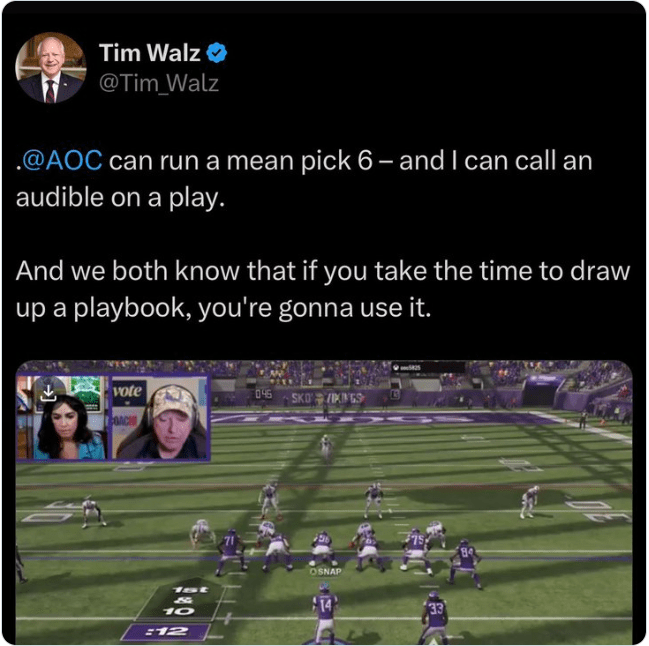










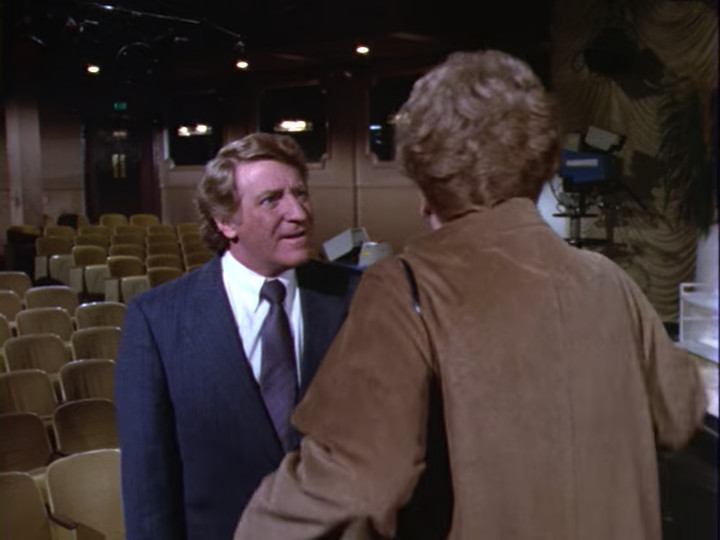
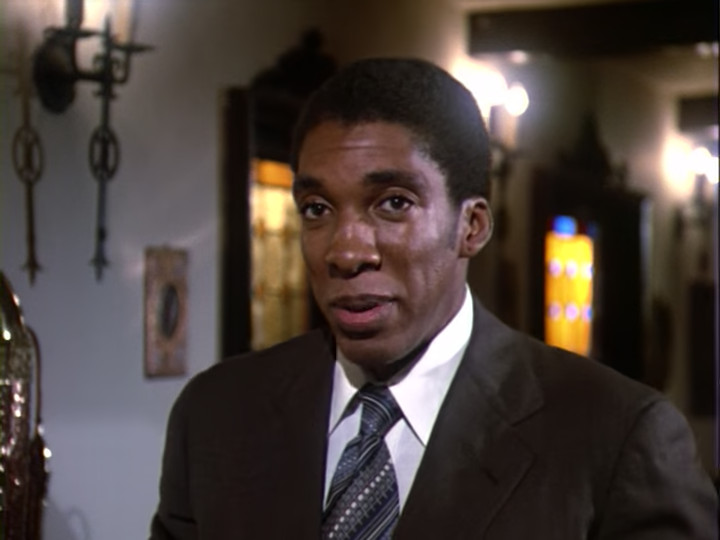


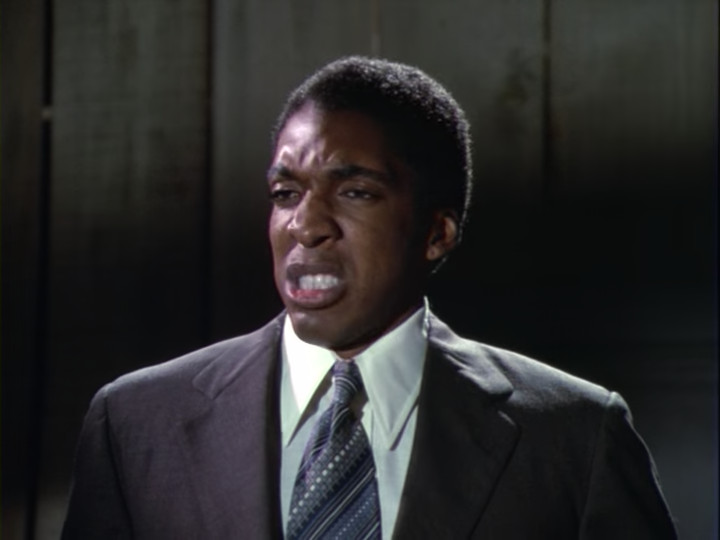

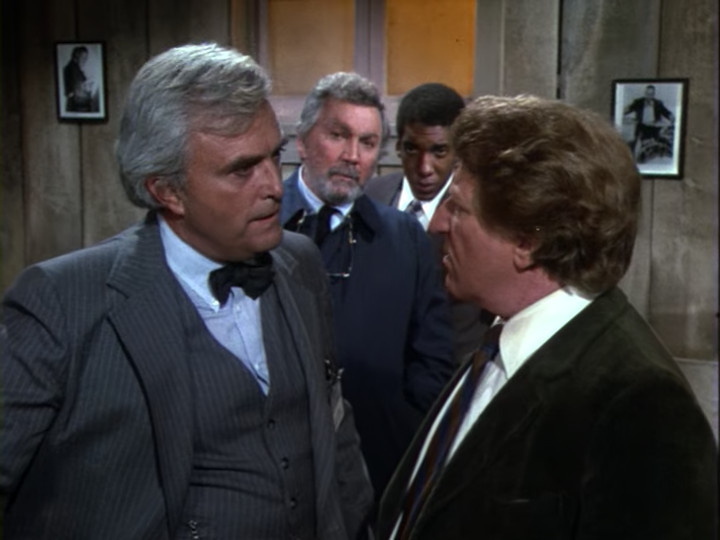
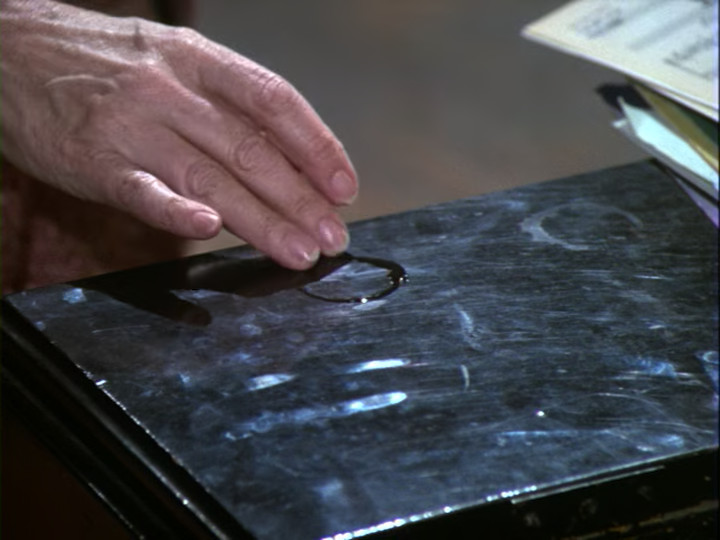

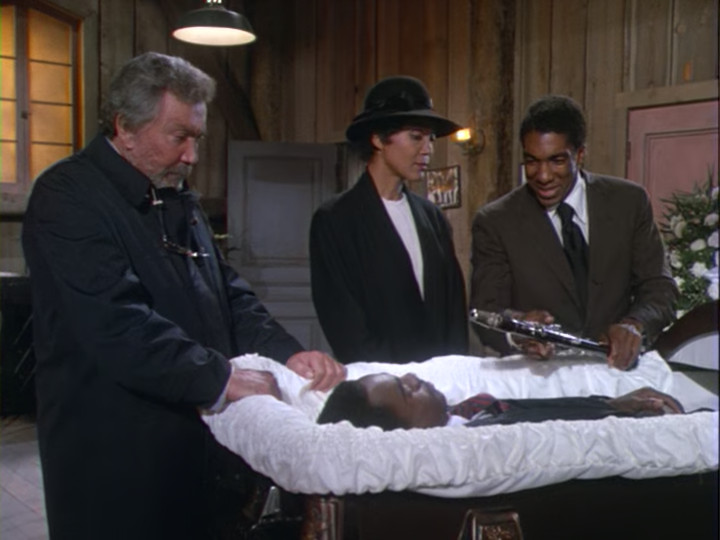






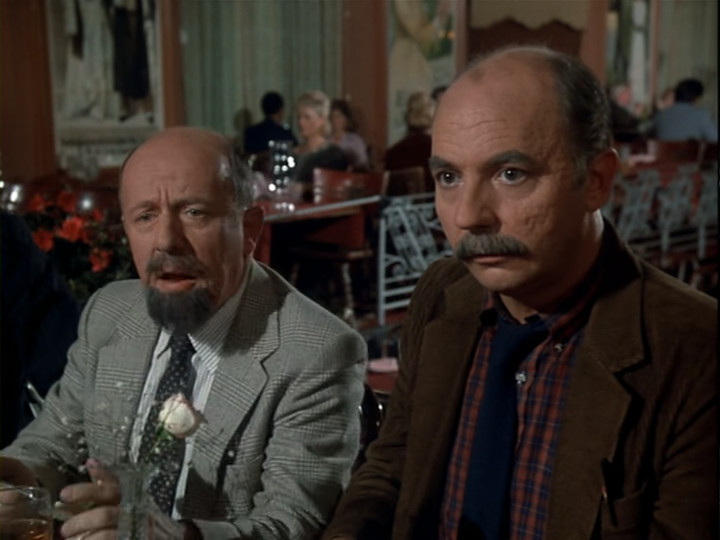
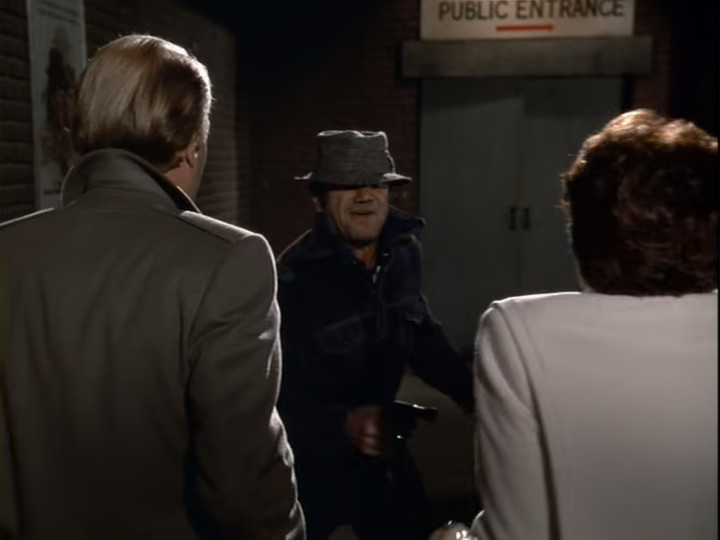



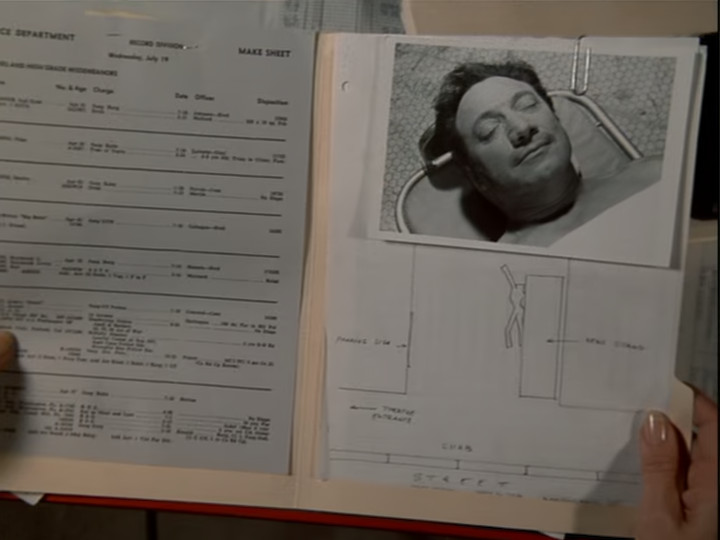
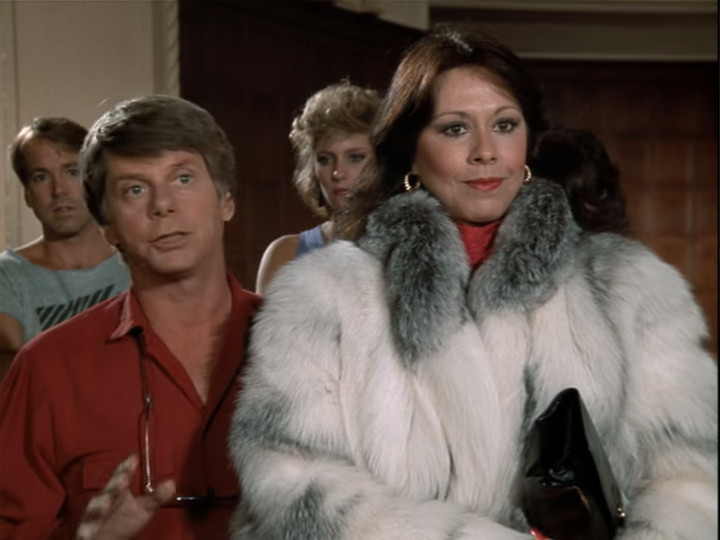
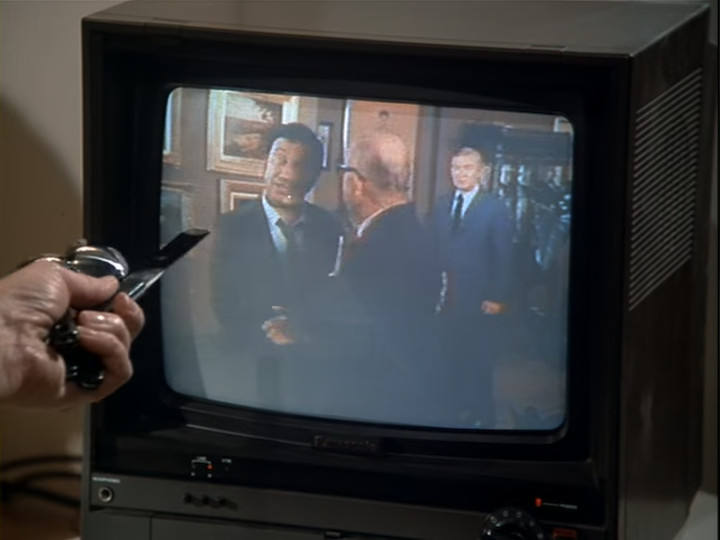
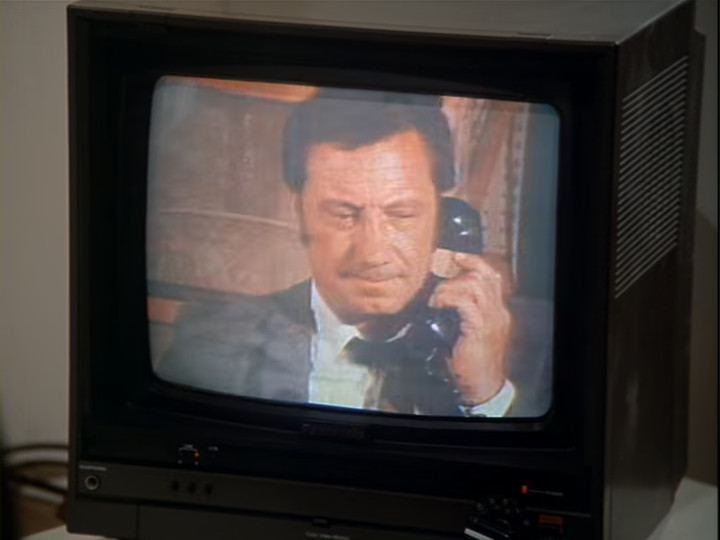

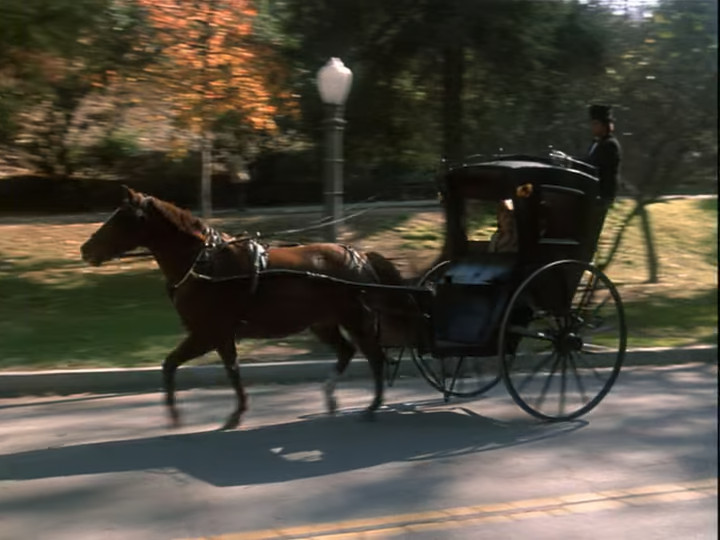


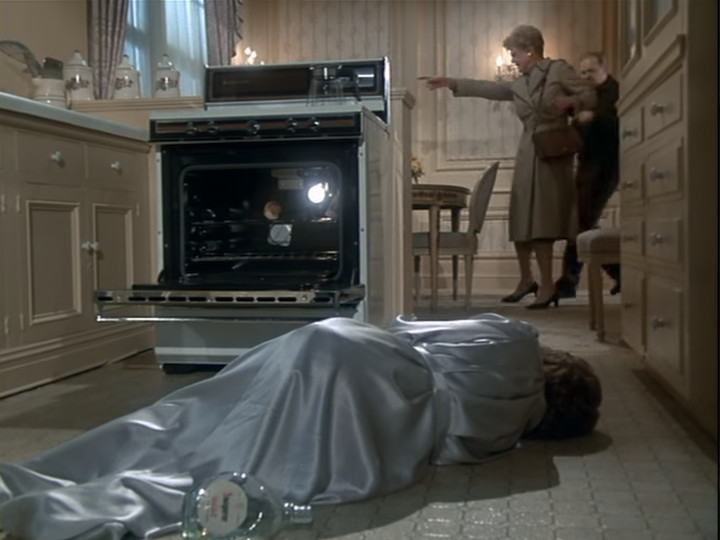


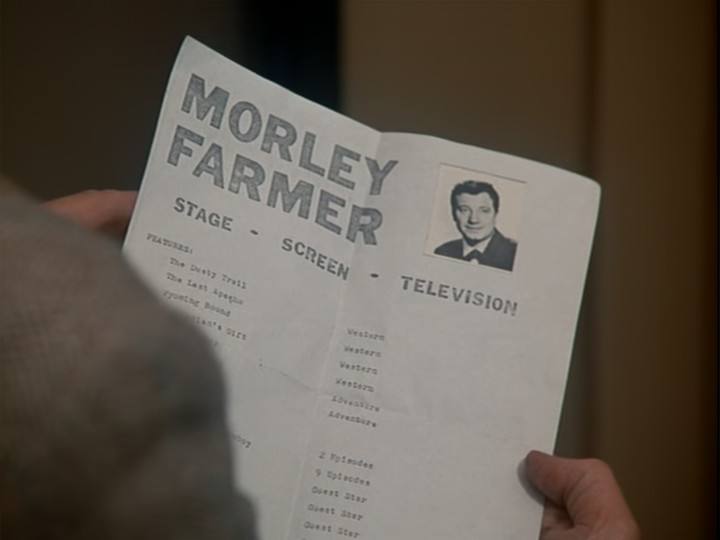


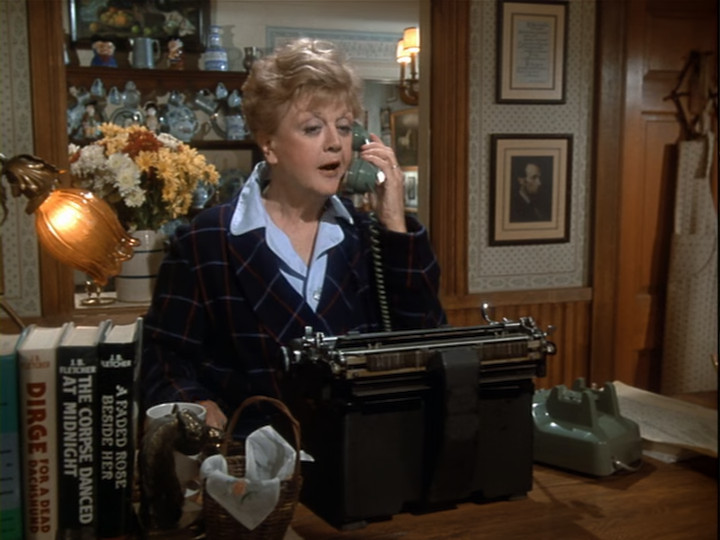


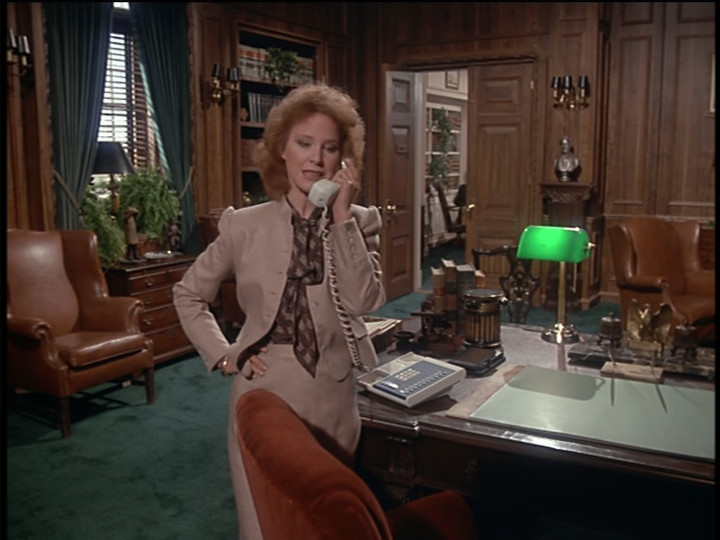
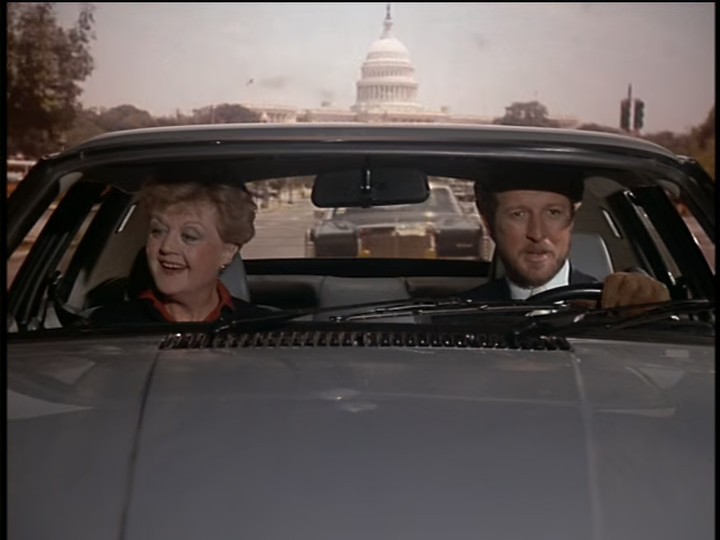



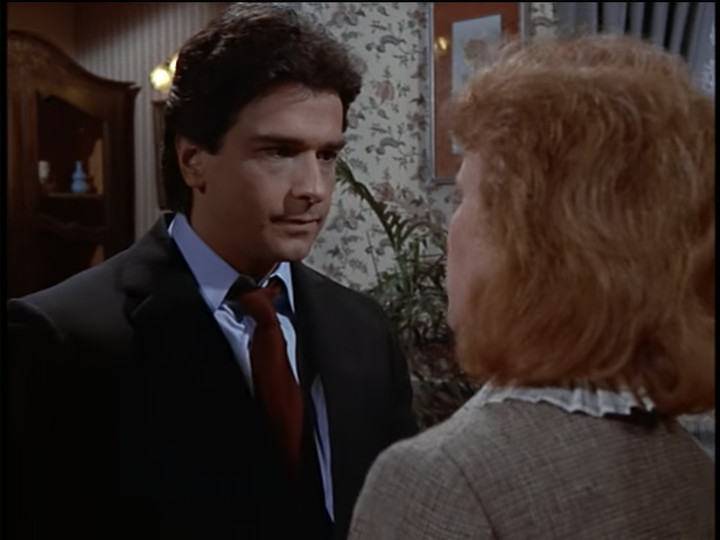
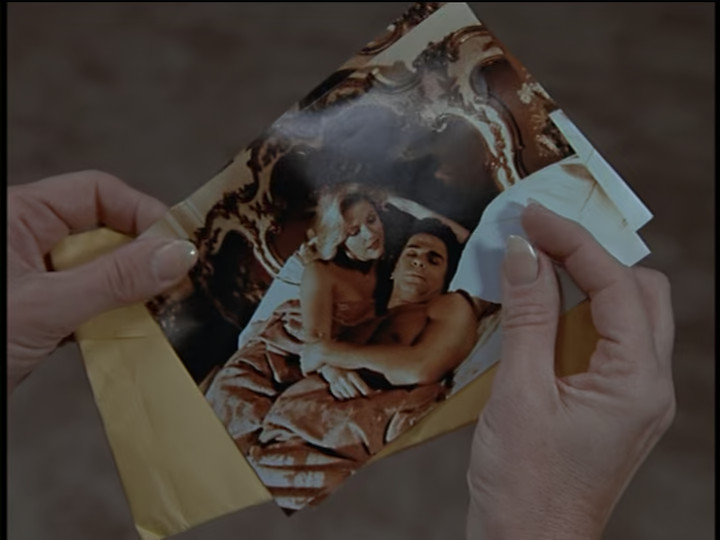

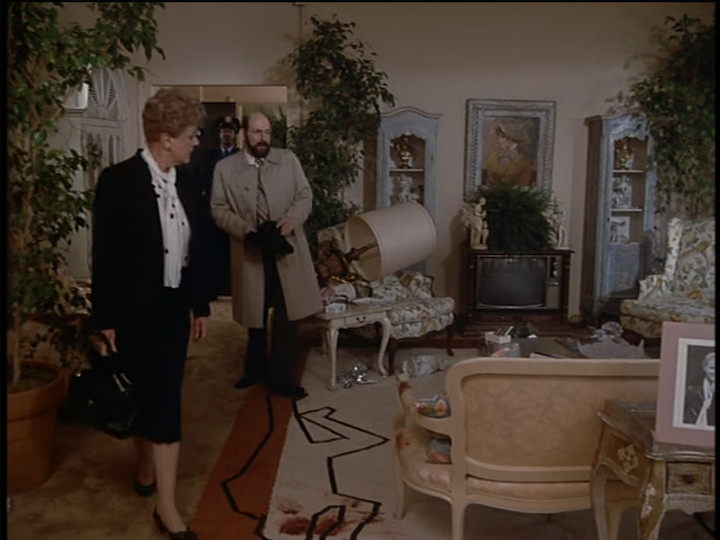
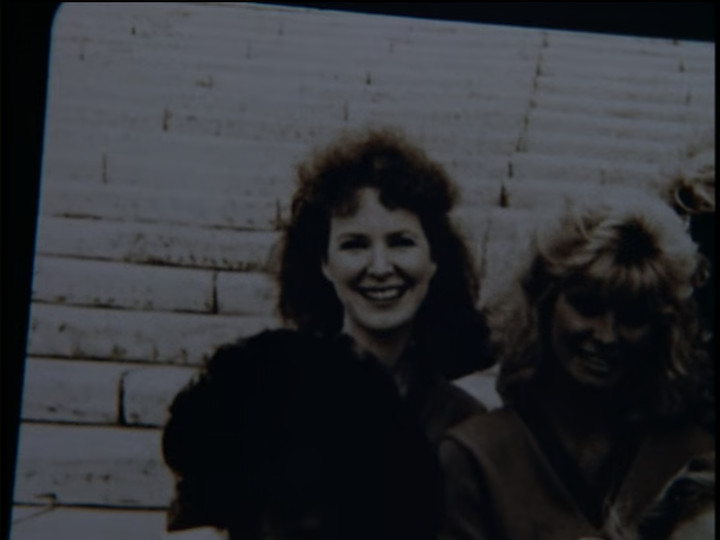
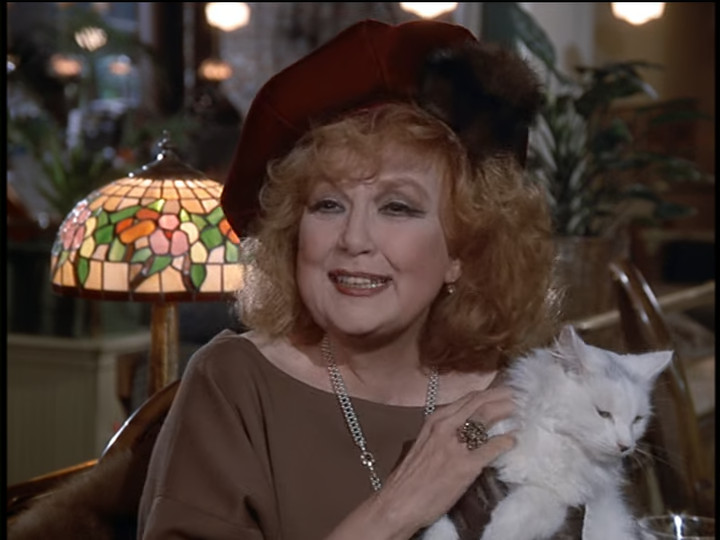

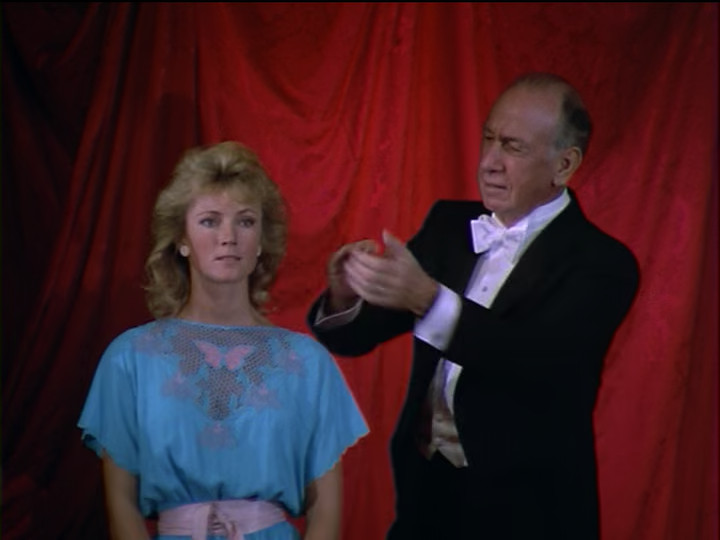
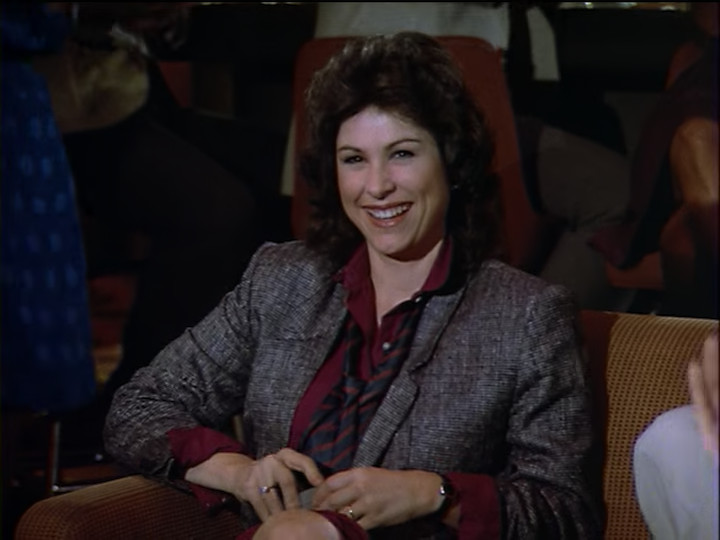


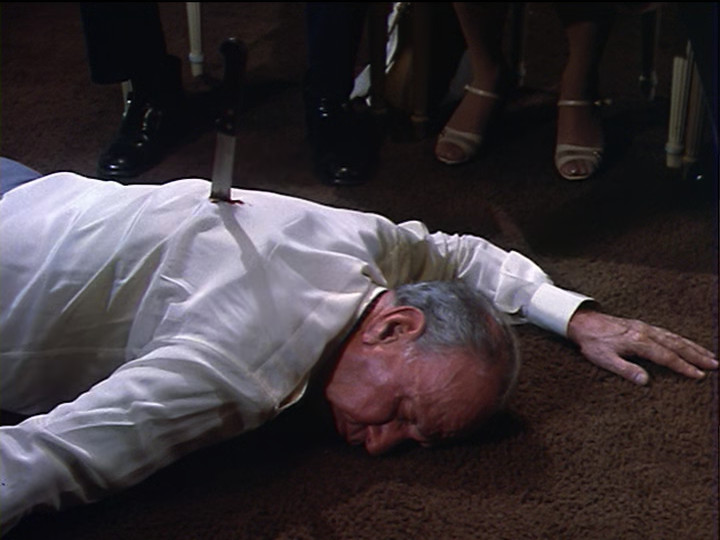

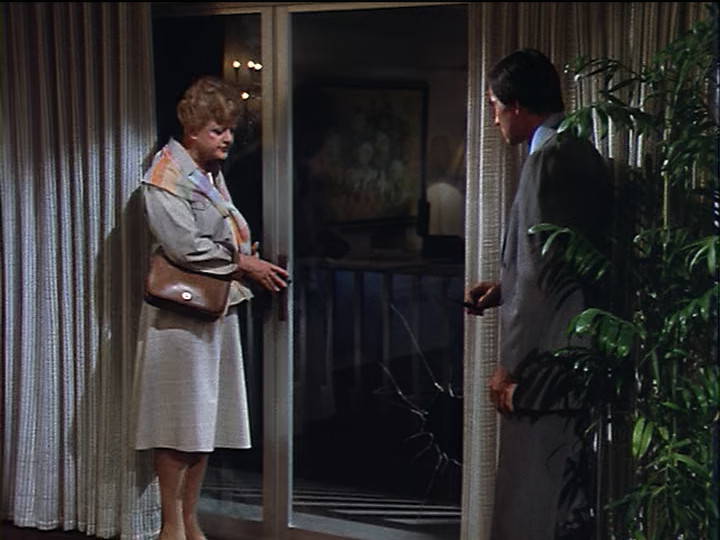








 Chris Lansdown
You must be logged in to post a comment.