
One of the causes that you will see put forward as to why so many people are overweight, fat, or obese is that we evolved for a food-scarce environment and now live in a food-rich environment, so our natural inclination to eat everything available and store fat for the lean times is no longer adaptive. This hypothesis has a natural conclusion about how to not get fat: limit what you eat and always be hungry. To lose weight, limit what you eat even more and always be hungrier until you’re thin, then just limit what you eat and always be hungry.
Like the idea that carbs are more filling that fats because carbs have 4 Calories per gram while fats have 9 Calories per gram, so carbs take up more room in your stomach, this is one of those ideas that’s strange that anyone says with a straight face, at least if they’ve spent more than a few days living as a human being. Because if you have any experience of living as a human being, this is just obviously false. And there’s a super-obvious thing which disproves both: dessert.
Observe any normal people eating dinner and they will eat until they are full and don’t want to eat anymore. Then bring out some tasty treats like pie, ice cream, etc. and suddenly they have room in their stomach after all. This simple experiment, which virtually all people have participated in themselves in one form or another, irrefutably disproves both of those hypotheses.
You can also easily see this if you have any experience of animals which actually do eat all food that’s available until they physically can’t, such as the cichlid fish called the Oscar.

You feed oscars feeder fish, and they will keep eating them until there is no more room left in their stomach, throat, and mouth. They, literally, only stop eating once their mouths are full and fit nothing more in them. They then swim around with several tails sticking out of their mouth until their stomach makes room and they can move everything down.
That’s what a hunger signal with no feedback mechanism to stop because the creature evolved in a food-scarce environment looks like. (Oscars who are fed a lot grow extremely rapidly and very large.)
But you can also disprove this from the other direction. Yes, lots of people are fat, but they’re not fat-mouse fat.

Fat mouse was created by lesioning the part of the brain responsible for satiety. Fat mouse then kept eating and eating, without stop, rapidly ballooning into nearly being spherical. (Incidentally, are we to believe that normal mice eat have a satiety limit to their eating because mice evolved in a food-rich environment? When you look at field mice, is “abundant food” really the first thing that comes to mind?)
Now, it’s possible to attempt to save the food-scarce-environment hypothesis by modifying it, saying that we’re genetically predisposed to being fat and unhealthy because that worked out in a food-scarce environment, but not too fat, for whatever reason. This suffers from being arbitrary, but then it is the prerogative of evolution to be arbitrary (obviously nothing needs to make any sense if you’re an atheist, but for the rest of us the influence of fallen angels on evolution, within the limits God permits them to work, has the same result—that’s one of the things that confuses atheists).
Of course, the problem with even this modified hypothesis is that there are plenty of naturally thin people and if you talk to them they’re not constantly hungry and denying themselves the food needed for satiety at every moment.
There’s also the problem of the timing of the rapid fattening of the population. Yes, it took place at a time when food was abundant, but there have been sections of the population for whom food is abundant as far back as there is recorded history. They were not all obese. More recently, in the 1800s, upper middle class and rich people could easily afford enough food to get fat on, yet they were not all obese. And in much of history, when food was scarce, people’s preferences in women were for plump women. Just look up paintings of Venus:
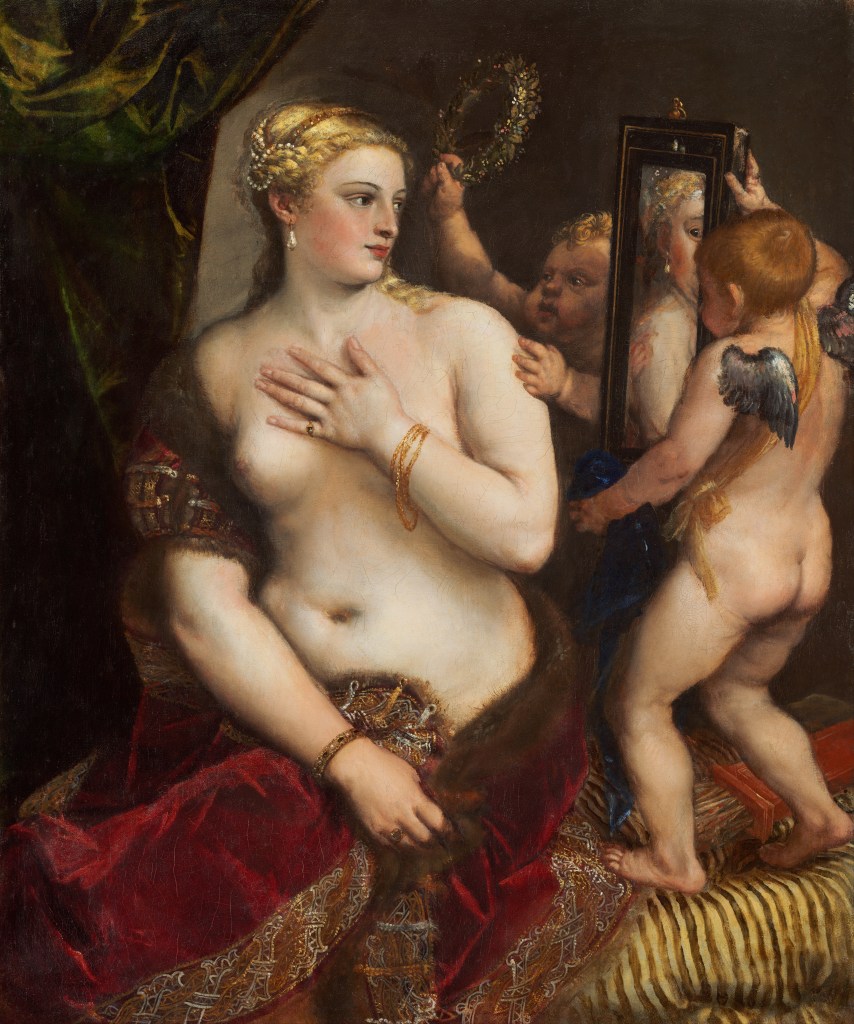
Which makes sense in that context—when people mostly don’t have enough food, women who manage to be plump in this environment are healthier, can have more children, survive the rigors of pregnancy, take care of the children, etc. Hence when painting a goddess of beauty, they painted her to the standards of their day and made her plump. But they didn’t make her obese.
To be fair, you can find the venus of willendorf:
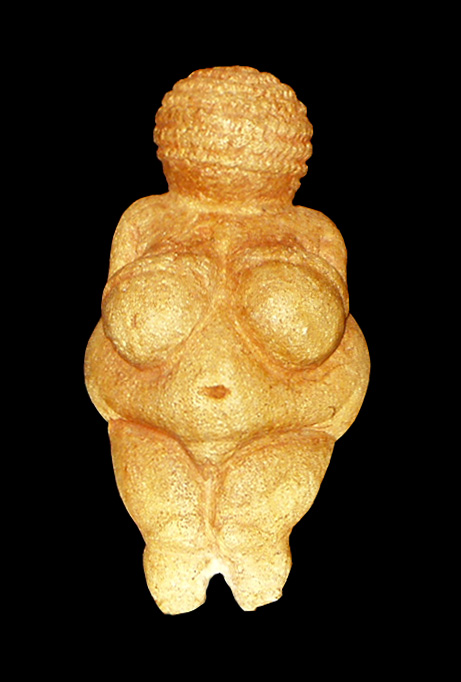
But this dates to a time (30,000 years ago) from which food was supposed to be scarce and—so the hypothesis goes—no one actually looked like that because they were in the environment their constant food cravings were adapted to.
Ultimately, what I find so odd about the programmed-to-overeat hypothesis of modern obesity is not that it’s obviously false. It’s that it’s obviously false and the people who push it have clearly never considered the evidence against it.
You don’t see this with, for example, Young Earth Creationists. They have explanations for why radio-isotope dating doesn’t work and how geology is all wrong and fossil records are being misinterpreted because the dinosaurs were all animals that didn’t make it onto the Ark, etc. etc. etc. Say what you want about Young Earth Creationists, they at least take their ideas seriously.
As far as I can tell, the people saying that we’re programmed to overeat are just saying things.
Discover more from Chris Lansdown
Subscribe to get the latest posts sent to your email.
 Chris Lansdown